Polls show that Democrats and Republicans in battleground states want to hear more from candidates about the climate crisisMost Americans feel unease or alarm about the climate crisis and, in both red and blue states, want to know how political leaders are going to fix it. But in midterm election campaigns across the US, candidates have responded to this desire with near silence.People in the US have this year endured a record hot summer as well as soaring costs, equating to roughly $2,000 per h
Polls show that Democrats and Republicans in battleground states want to hear more from candidates about the climate crisis
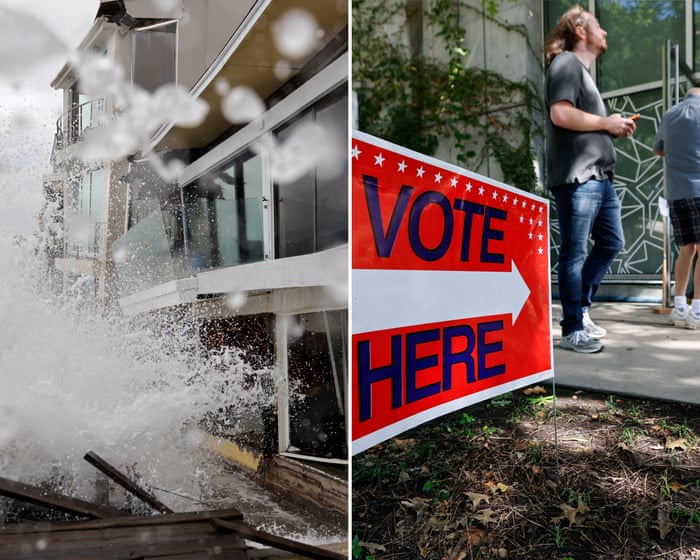
Most Americans feel unease or alarm about the climate crisis and, in both red and blue states, want to know how political leaders are going to fix it. But in midterm election campaigns across the US, candidates have responded to this desire with near silence.
People in the US have this year endured a recordhot summer as well as soaring costs, equating to roughly $2,000 per household, in extra energy and mortgage payments, due to the country’s dependence on a fossil fuel supply scrambled by Donald Trump’s decision to attack Iran.
Liability lawsuits have held tobacco, oil and pharma companies to account in the past. AI investors won’t ignore this threatThe most basic function of government is to protect people from harm. Two growing phenomena – the climate crisis and AI – pose escalating risks of extraordinary harm.The climate crisis is already causing floods, wildfires, drought and record heat. AI agents are already escaping super-secure environments to hack into systems they’re supposed to avoid.Robert Reich, a former U
Liability lawsuits have held tobacco, oil and pharma companies to account in the past. AI investors won’t ignore this threat
The most basic function of government is to protect people from harm. Two growing phenomena – the climate crisis and AI – pose escalating risks of extraordinary harm.
The climate crisis is already causing floods, wildfires, drought and record heat. AI agents are already escaping super-secure environments to hack into systems they’re supposed to avoid.
Robert Reich, a former US secretary of labor, is a professor of public policy emeritus at the University of California, Berkeley. He is a Guardian US columnist and his newsletter is at robertreich.substack.com. His new book, Coming Up Short: A Memoir of My America, is out now in the US and in the UK
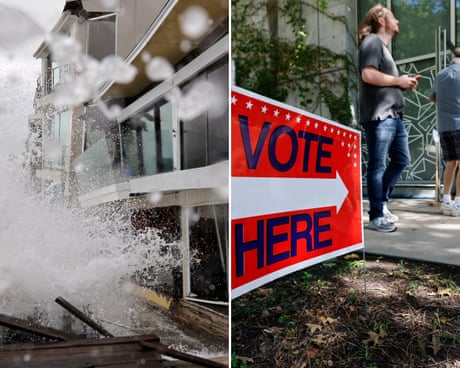
A mix of natural disasters could all befall the state at once as it finds itself in the crosshairs of the climate phenomenonOn a cloudless autumn afternoon, sunlight sparkled on the water that had quietly swallowed a busy intersection to the north of San Francisco, as the surrounding rush-hour traffic slowed to a painful crawl.There were no crashing waves or storm surges to blame for the flood. Marin county was one of many areas up and down the California coast affected by high tides last week,
A mix of natural disasters could all befall the state at once as it finds itself in the crosshairs of the climate phenomenon
On a cloudless autumn afternoon, sunlight sparkled on the water that had quietly swallowed a busy intersection to the north of San Francisco, as the surrounding rush-hour traffic slowed to a painful crawl.
There were no crashing waves or storm surges to blame for the flood. Marin county was one of many areas up and down the California coast affected by high tides last week, as parts of the Pacific swelled with excess warmth.
For-profit water corporations, federal cuts and climate crisis are ‘supercharging water rate hikes’, study co-author saysUS households are paying 62% more for drinking water than they did a decade ago – outpacing inflation, grocery prices and household incomes, according to a new study.Food & Water Watch, a Washington DC-based non-profit, analyzed 2025 billing data from the 500 largest community water systems in the US, which together serve about 155 million people, or 45% of the country’s p
For-profit water corporations, federal cuts and climate crisis are ‘supercharging water rate hikes’, study co-author says
US households are paying 62% more for drinking water than they did a decade ago – outpacing inflation, grocery prices and household incomes, according to a new study.
Food & Water Watch, a Washington DC-based non-profit, analyzed 2025 billing data from the 500 largest community water systems in the US, which together serve about 155 million people, or 45% of the country’s population. The analysis compared current rates with data from a similar Food & Water Watch survey conducted in 2015. The study does not include wastewater or storm water charges, which are often billed separately from drinking water service.
Court starts new term hearing Suncor Energy and ExxonMobil’s attempt to stop lawsuits at state levelThe US supreme court begins its new nine-month term hearing arguments Monday in a high-stakes case in which big oil companies are attempting to strike a fatal blow against lawsuits that seek to hold them accountable for the climate crisis.In Suncor Energy versus the County Commissioners of Boulder County, local officials in Boulder are suing Suncor Energy and ExxonMobil in state court to force the
Court starts new term hearing Suncor Energy and ExxonMobil’s attempt to stop lawsuits at state level
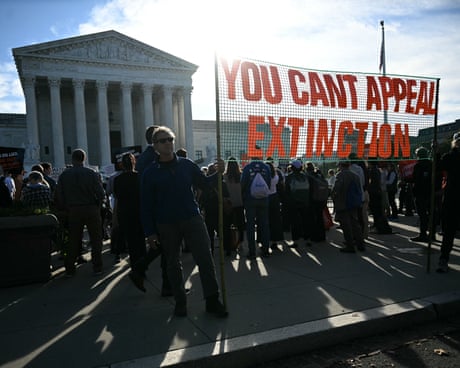
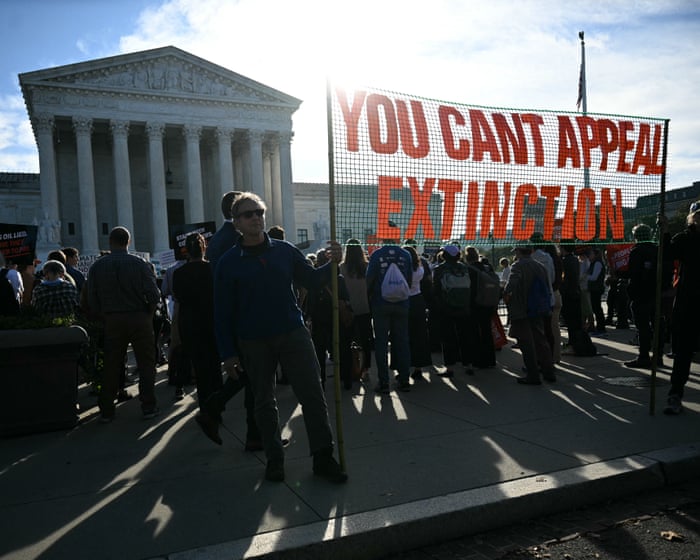
The US supreme court begins its new nine-month term hearing arguments Monday in a high-stakes case in which big oil companies are attempting to strike a fatal blow against lawsuits that seek to hold them accountable for the climate crisis.
In Suncor Energy versus the County Commissioners of Boulder County, local officials in Boulder are suing Suncor Energy and ExxonMobil in state court to force the companies to share a portion of the costs that climate change has imposed on local taxpayers. However, Exxon and Canada-based Suncor are arguing that federal law prevents state courts from hearing Boulder’s climate change lawsuit.
In Denmark, the sea can’t breathe
For more than four months, Brian, a commercial fisherman in his late 40s, had been waiting for the weather conditions to be right for us to go fishing outside Bagenkop, a small harbor town on the southern tip of the Danish island of Langeland.
“One more problem has come up,” Brian told me over the phone in early May. “I have lost my fishing license." He was no longer allowed to sell fish for a living. Instead of preparing his boat to go out to sea and to
For more than four months, Brian, a commercial fisherman in his late 40s, had been waiting for the weather conditions to be right for us to go fishing outside Bagenkop, a small harbor town on the southern tip of the Danish island of Langeland.
“One more problem has come up,” Brian told me over the phone in early May. “I have lost my fishing license." He was no longer allowed to sell fish for a living. Instead of preparing his boat to go out to sea and to show me how fishing in Denmark had changed over his lifetime, Brian was now removing the registration number from its hull.
Across Denmark, coastal fishing communities are shrinking as catches decline. At the same time, warming seas, overfishing and pollution are putting increasing pressure on marine ecosystems.
“Plenty of fish in the sea”? Not anymore, say UN experts, with 35% of the world’s marine fish stocks being fished faster than they can be biologically replaced. Today, more than half of the fish we consume worldwide comes from fish farms.
This summer, sea temperatures along Denmark’s beaches reached 28 degrees Celsius, a record high. On September 2, the UN Environment Program warned that the world is likely to cross 1.5 C of warming above pre-industrial levels within the next few years. As the climate warms, the pressure on marine ecosystems grows.
In August, Iceland voted not to restart accession talks with the European Union, in part because of concern that it would lose sovereign control of its fishing industry. While fishing is not as major a part of Denmark’s GDP as it is Iceland’s, the EU’s impact has meant independent Danish fishermen have struggled to survive in the face of corporate competition.
For Brian, though, it’s about more than regulations. It is about watching the ocean he grew up with slowly disappear.
Nets covered in black slime
His story reflects a larger shift happening along the Danish coastline. Coastal fishermen, once a central part of the country’s history, are a vanishing breed.
For Brian, it was never about the money. Even when he was a teenager and he told his father he wanted to be a fisherman, his father said it was a bad idea. But the pull of the sea was irresistible. His life as a fisherman began as a hobby, accumulating experience and knowledge just by spending as much time as possible on water. He learned how to read the currents, the weather, and fish movements through experience rather than education. In 2019, despite the uncertainty surrounding the industry, he bought a commercial fishing boat. “When I started as a teenager, there were fish everywhere,” he said. But over the years, the numbers have dwindled starkly. Every few years, another Danish harbor became economically unsustainable. First Bogense, then Kerteminde, later Nyborg and Spodsbjerg. Each one of them followed the same pattern: fewer fish, declining landings, and growing questions about whether it was possible for small fisheries to continue their operations.
While working on this story, I spoke to ten small-scale Danish fisheries across the country. Half of them said they do not expect to still be fishing five years from now. In 2019, they said, ten nets could bring in between 150-200 kilos of plaice on a single trip. Two years later, the same nets would return with only two kilos. As the catches became smaller, so did the possibility of keeping a commercial license. Brian no longer caught and sold enough fish to keep his permit.
One day still stands out to him as perhaps the single worst he has experienced at sea. He had three nets in the water. The first one he hauled in looked normal. The second held fewer fish than expected. Then he started pulling in the third — the net was completely empty and covered in thick, black slime.
Marine biologist Stiig Markager told me that what Brian saw was a tell-tale sign of oxygen depletion. In 2025, around 40% of Danish marine areas were affected by low oxygen levels. Oxygen depletion happens when too many nutrients, mainly nitrogen and phosphorus from agriculture and wastewater, enter the sea. These nutrients fuel large algae blooms.
When the algae die and sink to the seabed, bacteria begin decomposing them, consuming enormous amounts of oxygen in the process. Climate change exacerbates the problem. “Warmer water contains less oxygen. At the same time, biological processes speed up when temperatures rise.” In practice that means algae grow faster, oxygen is consumed more quickly, and deep waters struggle to recover. Together, these processes reinforce each other. “When oxygen disappears, it damages the seabed ecosystem,” Markager said.
A new global study argues that aquatic deoxygenation is approaching an “unsafe space” and should be considered a potential tenth planetary boundary. The global ocean has lost around 2% of its oxygen over the past 50 years. The consequences for marine life are catastrophic, forcing either flight or suffocation.
Marine biologists have studied oxygen depletion in the Danish seas for decades. But, Brian says, “fishers are often the first people to see the effects of that depletion, directly in their nets.” It is a first-hand experience, fishers say, that is often discounted or ignored. Many independent coastal fishers say they feel increasingly excluded from political conversations about the ocean, despite spending their working lives at sea.
Source: DCE – Danish Centre for Environment and Energy, Aarhus University, Oxygen depletion in Danish waters, 2014–2025.
“It feels like we’re not really welcome anymore,” Brian said. He believes small-scale fisheries like his are being pushed out while decisions about the seas are increasingly made by those on land. “I think they don’t want so many people out there seeing what’s actually happening.”
For years, debates about oxygen depletion in Denmark have become deeply political. Marine scientist Stiig Markager says that the results of environmental research have repeatedly clashed with agricultural and political interests. “There is complete opposition from agriculture and from Venstre (a major center-right political party) to making research publicly available,” he said. “There is a clear political strategy from Venstre that there must be no interference with agriculture.”
According to Markager, tensions between environmental researchers and agricultural interests intensified during the early 2000s, as scientists linked nitrogen runoff from farming to oxygen depletion in Danish waters. Despite decades of plans and political promises, Markager says, the recovery many researchers hoped for never fully arrived.
For this story, I also contacted both the Minister of Environment and the Minister for Food, Agriculture and Fisheries to ask for an interview about the state of Danish waters and the future of small-scale fishing. Neither had time to answer questions.
“When I started as a teenager, there were fish everywhere.” Brian said in BK Kar“Fishers are often the first people to discover oxygen depletion, directly in their nets,” Brian explained."I have lost my fishing license," Brian said on a phone call.
What remains is behind glass
One harbor that has felt the impact of the changing nature of Danish waters is Bønnerup Strand, which has transformed from a fishing town into a tourist destination. The harbor now features an ice cream shop, a hot dog kiosk, a seafood restaurant, and a mini golf course. The iconic blue Danish fishing boats are conspicuous only by their absence. Instead, boats built for leisure, not commercial fishing, are docked at the harbor.
Along the quay, an outdoor exhibition has been installed behind glass panels. It started last year, created by a local group of volunteers trying to preserve what Bønnerup Strand used to be. The pictures show fishing nets piled high, men in blue overalls, boats unloading their catch, and fish laid out in crates.
Movement. Noise. Purpose. It was a harbor bustling with life. Hans, in his 60s now, was once a fisherman in Bønnerup Strand. He walks past the diorama and tells me that twenty years ago “there were 60 or 70 fishing boats here, now there are two.” Some of the independent fishers chose to leave, their lives no longer making economic sense. Others lost their licenses. The rest have disappeared, not all at once, but gradually. Some left before it was too late, others had their boats seized by the bank when their revenue became too low. “Quite a lot of my colleagues had their boats taken by them," says Hans, referring to banks who repossessed boats because independent fishermen no longer made enough money to pay for them.
You could say that the gradual suffocation of the Danish seas began in 1909 with the invention of the artificial nitrogen fertilizer that transformed global agriculture. Artificial fertilizer rapidly became central to modern-day farming. By 1959, nearly 75% of farms were using fertilizer to increase crop production. At first, the growing amounts of nitrogen entering the sea did not appear harmful. During the 1960s and 70s, the extra nutrients actually increased algae and plankton growth, creating more food for some fish species. “There were actually more fish,” says Markager, the marine scientist, “but by the mid-1980s, the consequences had become impossible to ignore.”
Fish auction hall, Esbjerg, 1968. Tonny Sørensen. Esbjerg harbor, 1972. Knud Rasmussen.Fish auction, Esbjerg, 1934. Gustav Bjerknæs .
On October 8, 1986, on Danish television fishermen in Gilleleje were seen pulling dead lobsters from the sea. The images became the subject of alarmed national conversation. For the first time, the public saw what oxygen depletion meant for life beneath the surface of the sea.
Hans, the fisherman from Bønnerup Strand, told me he was part of the television coverage himself. “Fishers had talked about pollution long before the dead lobsters,” he said. “But suddenly people started paying attention.” The public outrage pushed Denmark to act. In 1987, the country introduced its first Water Environment Plan, aiming to reduce phosphorus emissions from wastewater by 80% and nitrogen emissions by 50% within five years. For many fishers and marine scientists, it became the first real sign that the environmental crisis in Danish waters was finally being taken seriously. During the 1990s, nitrogen and phosphorus pollution declined significantly. Water in several fjords and coastal areas became clearer, and conditions slowly began improving. For a moment, it appeared the damage could still be reversed.
But by the early 2000s, many coastal fisheries were once again experiencing declining catches and, with it, a growing uncertainty about the future. Hans was one of those affected. Coming from a family that had fished for five generations, the harbor was never a tourist destination for Hans. It was a way of life. But on a sunny Friday in April back 2005, he sailed out to Kattegat for plaice. He knew it was over. “I said to my employee: “this is the last trip. I start working on land from Monday.”” He had made the decision months earlier, as the numbers of fish dwindled and regulations tightened.
It wasn’t an easy choice, but he had four children to think of. Climate change had taken away his livelihood. “You can’t do anything about it,” he said. “If you think too much about it, you go crazy.” Researchers describe this kind of environmental grief as solastalgia, the distress caused by watching a familiar environment change beyond recognition. Unlike homesickness, solastalgia happens while still remaining in the same place. For coastal fishers, the sea remains physically present, but the ecosystem they once knew and depended on, is disappearing.
Adapting has always been part of the job, says Hans. “There has always been a species that disappeared and then another one came.” But eventually, nothing was replacing what was lost anymore.
Hans in his shop, Møllefisk.
In 2002, marine scientists Stiig Markager and Peter Bondo Christensen from DMU, the Danish Environmental Research Institute, published research showing that around 75% of Denmark’s nitrogen emissions originated from agriculture through waterways and atmospheric pollution. The findings intensified tensions between marine scientists, politicians, and agricultural organizations about who was responsible for the declining marine environment.
In response to the worsening marine crisis, Denmark established DMU in 1989 to monitor oxygen depletion, nutrient pollution, and ecological changes beneath the surface. But their findings were inconvenient. By 2007, after nearly two decades as an independent institution, DMU was folded into Aarhus University as part of a wider restructuring of Denmark’s research sector. The decision sparked criticism from several environmental researchers and organizations, who feared the changes could weaken the independence of Danish environmental monitoring.
“Agriculture succeeded in closing DMU,” former researcher Bo Normander told the media. “Nature has lost.” In 2015, the Danish government introduced the controversial Landbrugspakke, easing environmental regulations on fertilizer use in an effort to increase agricultural production.
Critics warned that the policy could worsen nitrogen pollution in Danish waters at a time when oxygen depletion remained a recurring problem. In the years that followed, researchers from Aarhus University reported rising nitrogen emissions instead of the reductions politicians had promised. Markager argues that despite decades of environmental warnings, nitrogen pollution reductions largely stalled. While nitrogen pollution in Danish waters declined significantly after the first Danish Water Environment Plans in the 1980s and 1990s, researchers say the reductions have largely stagnated over the last 20-25 years.
Now, Denmark is trying to reverse that trend. In the first week of September, the country passed a historic new law changing how agricultural nitrogen is regulated. The law will take effect in 2027 and represents a significant tightening of the rules introduced in 2015.
Under the system introduced in 2015, farmers were allowed to fertilize closer to what was considered the agronomic optimum for their crops, while still operating within nationally defined nitrogen quotas and other rules. The new system moves in the opposite direction. Instead of relying primarily on broad national rules, nitrogen regulation will increasingly take the environmental sensitivity of individual areas into account.
Where a farm is located will thus matter much more. The requirements will vary depending on factors such as whether fields drain towards vulnerable rivers or coastal waters, and whether they lie above areas important for groundwater and drinking-water protection. For farmers, this means that the amount of nitrogen they can use will become more restricted in areas where the surrounding environment is particularly vulnerable.
For fishermen like Brian and Hans, the law represents a change they have long been asking for: an attempt to redress the damage done to Danish seas.
“I don’t think we’ll have fish out here ever again.” said Hans Fisker, owner Møllefisk at Bønnerup Strand“Quite a lot of my colleagues had their boats taken by them." Boat on land, Bønnerup Strand.
But understanding how the water became polluted is more complicated than it first appears. Much of the pollution data commonly referred to in public debates focuses on point-source pollution, which emanates from identifiable sources like wastewater treatment plants, industrial discharge, and fish farms, and is generally easier to measure. But most nitrogen pollution in Danish waters actually comes from diffuse sources, mainly agricultural runoff carried from fields through rainwater, rivers, groundwater, and the atmosphere. Unlike point sources, diffuse pollution is far harder to measure directly and comes with greater uncertainty in the data. As a result, wastewater pollution can often appear to be the biggest issue, even though agriculture remains the dominant source of nitrogen input into Danish waters.
For Hans, the consequences appear almost irreversible. These days, the fish often do not return. “There are still plaice here, but they’re too thin. They don’t gain weight.” Scientists point to several overlapping causes, and the suggested solutions are just as diverse. Activists call for stricter rules, fishers say there are already too many. Farmers reject blame, and governments insist wastewater is already being purified. Plenty of fingers are being pointed, but the problem remains.
Hans doesn’t expect it to change. “I don’t think we’ll have fish out here ever again.” These days, he’s on the other side of the industry, buying catch from fisheries and selling it to customers. “People have to get used to the fact that we don’t always have everything available on demand. With a changing climate, fish shops may no longer offer cod, salmon, or plaice like we’ve been used to.” Instead, he says, squid is becoming the new normal.
Still, while independent fisheries disappear, the demand for fish continues to grow. Instead of restoring the ocean, parts of the fishing industry are increasingly moving onto land.
In northern Denmark, companies like Skagen Salmon are now raising fish entirely inside closed artificial systems, where the water, oxygen, and temperature are carefully controlled. Outside, Skagen Salmon looks like a factory. No windows, just a large grey box near the coastline.
If the building had windows, the fish inside could look out at the sea. But these fish will never see, taste, or feel those waters. Instead, they are raised in artificial tanks until they reach market size. They are then slaughtered and sold to supermarkets and fish shops across the country.
https://youtu.be/XKDIe7PXMCw
Video from Skagen Salmon recirculating aquaculture system (RAS), by Victoria Jensen.
In the flatlands of Italy’s Po Valley, the decommissioned Caorso nuclear power plant can be seen for miles, the reactor looming into the sky. When Alessandro Maffini, now an assistant professor at the Polytechnic University of Milan, was growing up in the 1990s, the plant's distant silhouette captured his imagination. “The physical presence of that thing was so significant to me as a child. It was a very visible, tangible, concrete presence,” Maffini remembers. “It was like a white Duomo, there
In the flatlands of Italy’s Po Valley, the decommissioned Caorso nuclear power plant can be seen for miles, the reactor looming into the sky. When Alessandro Maffini, now an assistant professor at the Polytechnic University of Milan, was growing up in the 1990s, the plant's distant silhouette captured his imagination. “The physical presence of that thing was so significant to me as a child. It was a very visible, tangible, concrete presence,” Maffini remembers. “It was like a white Duomo, there on the horizon, always in the background.” For many others, though, it was a specter of disaster, a ghost nuclear plant — shuttered, alongside all of Italy’s nuclear power stations, in the wake of the Chernobyl accident.
“If that plant explodes, we’re all dead,” Maffini’s mother used to intone, looking out at the defunct Caorso station, once the largest in Italy. As Maffini rode his bike six miles across the countryside to get a closer look at the plant from a nearby overpass, his mother’s doom-laden words rang in his ears. Her warning scared him. It also made him want to learn more. When he left home to go to university, Maffini decided to work in nuclear physics. “Radioactivity is a strange thing,” he says. “You can’t see it, you can't hear it, you can't smell it. It leaves a lot of room for imagination, for speculation, for fear.”
Four decades on from Chernobyl, and Italy has some of the highest energy bills in Europe. The country is scrambling to disentangle itself from its dependence on Russian gas in the wake of Russia’s invasion of Ukraine, and build out its energy sovereignty. War in Iran, and a growing European consensus that turning away from nuclear power was, in the words of European Commission president Ursula von der Leyen, a “strategic mistake,” has given more impetus to the Italian government’s argument that the country needs to move past its qualms.
Last year, the Italian cabinet approved a new draft law reintroducing the prospect of returning to nuclear power. “The government has approved another important measure to ensure clean, safe, low-cost energy that can guarantee energy security and strategic independence,” the Prime Minister Giorgia Meloni announced.
Italy is already surrounded on all sides by nuclear power plants: Slovenia’s Krsko plant is 90 miles away from the border, and there are four French nuclear power plants within 110 miles. Italy is the world’s second-largest importer of electricity, with nuclear power, largely imported from France, making up 5% of its energy basket. Italy also plays host to more U.S. nuclear warheads than any other European country. An estimated 35 thermonuclear gravity bombs are stored at two NATO airbases in northern Italy, according to the Nuclear Threat Initiative.
Now, as data centers spring up in Italy’s industrial north, the country’s energy needs are expected to increase exponentially and the government is turning, albeit cautiously, to a long-held Italian taboo. Since the spring of 1986, when the most serious accident in nuclear history unfolded in Unit 4 of the Chernobyl Nuclear Power Plant in northern Ukraine, the Italian population has lived in fear of nuclear energy. It voted to shutter its once-burgeoning nuclear industry in 1987, and in 2011, after the Fukushima nuclear accident, when 94% of voters rejected government plans to revive the industry.
It is a fear that has transformed Italy’s energy fortunes, making it reliant on imports and vulnerable to volatility and price shocks.
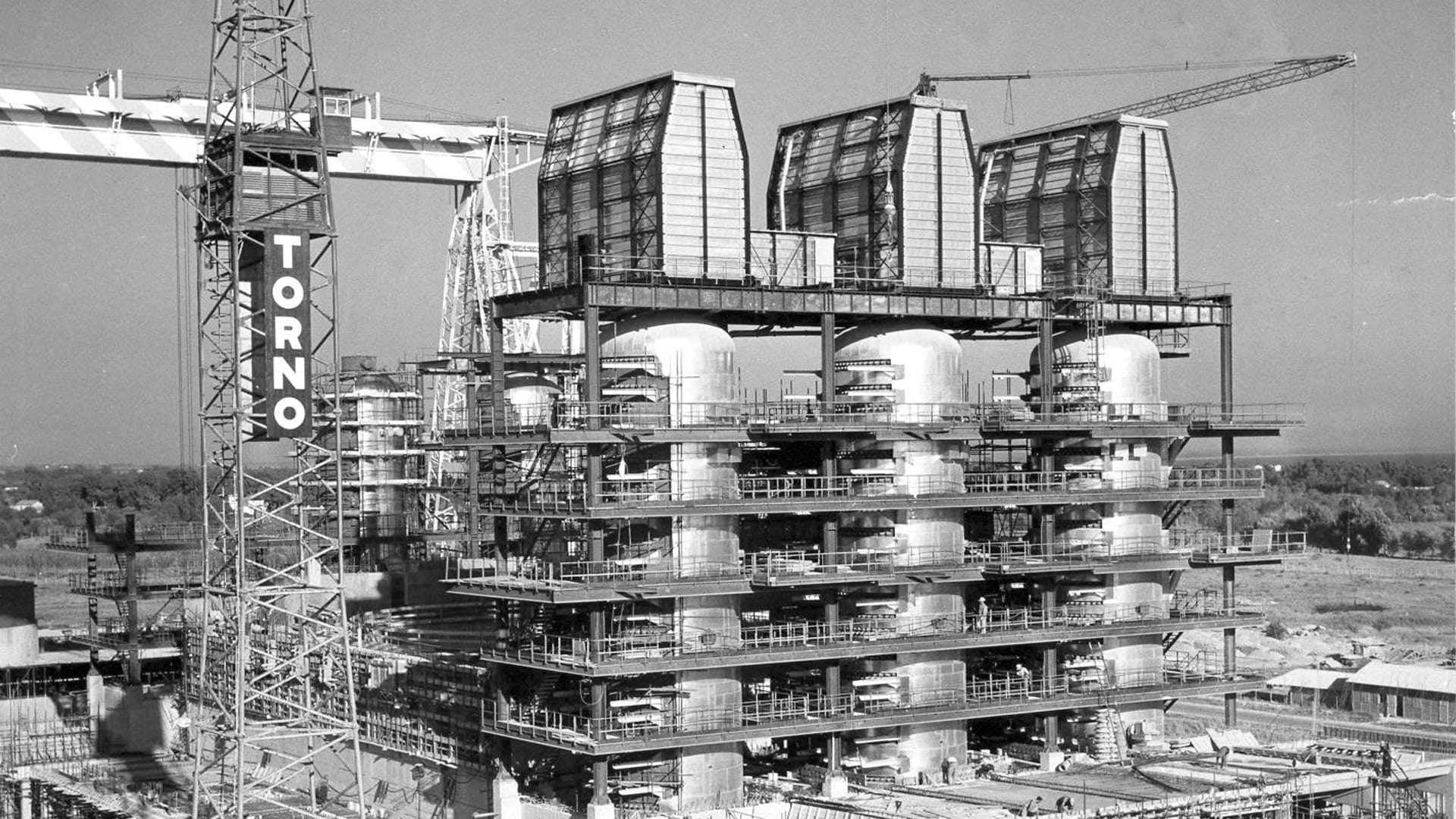
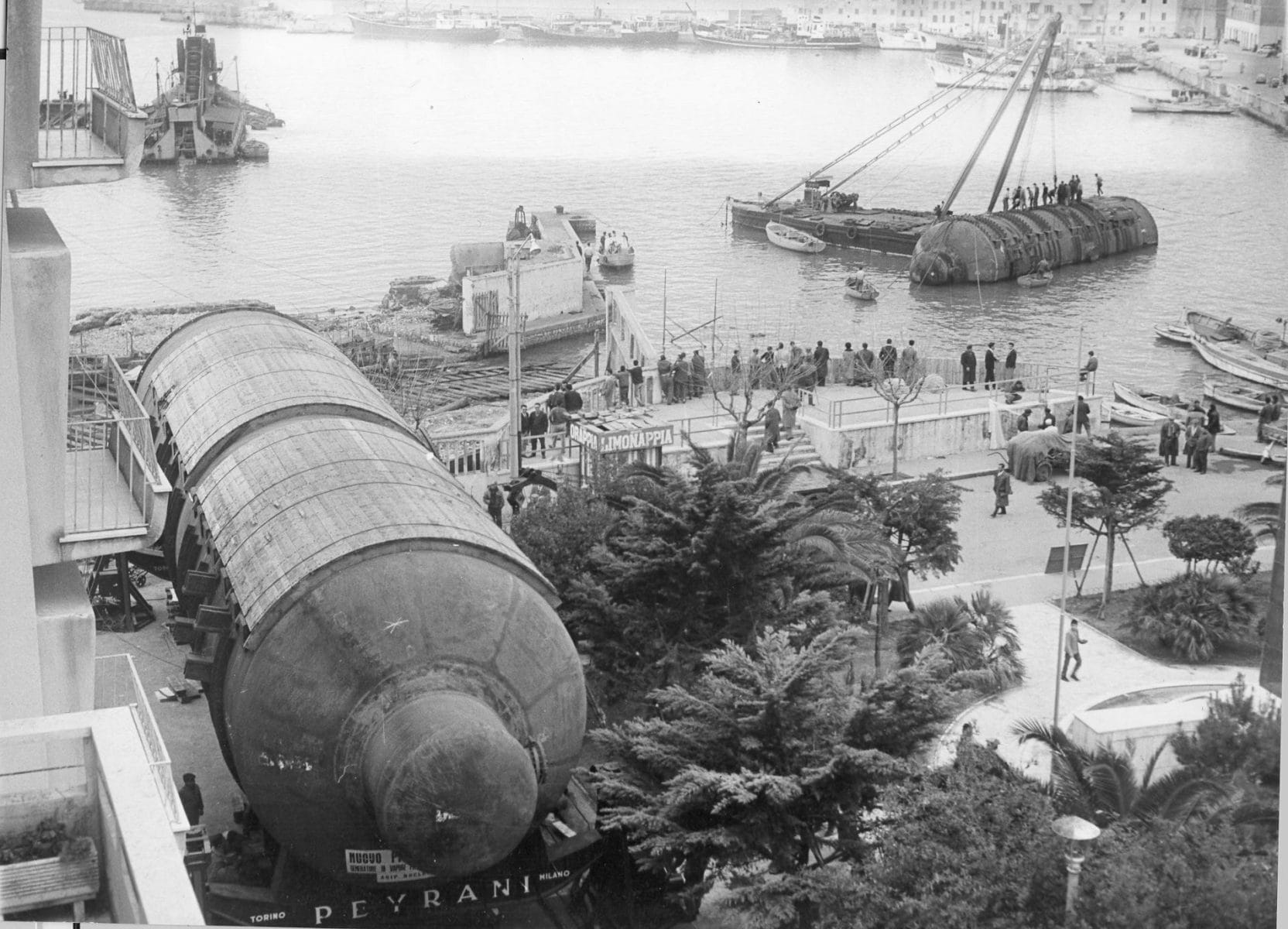
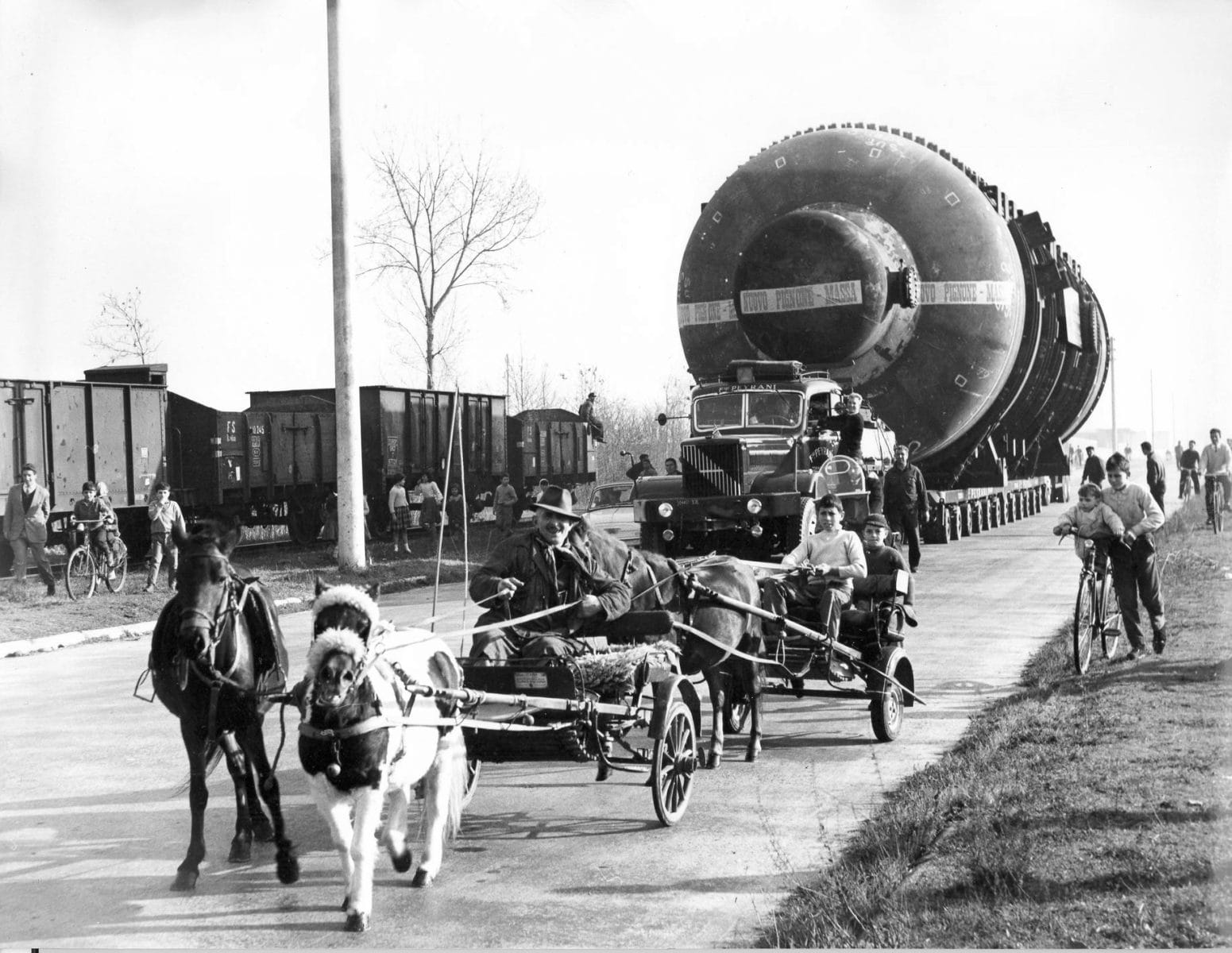
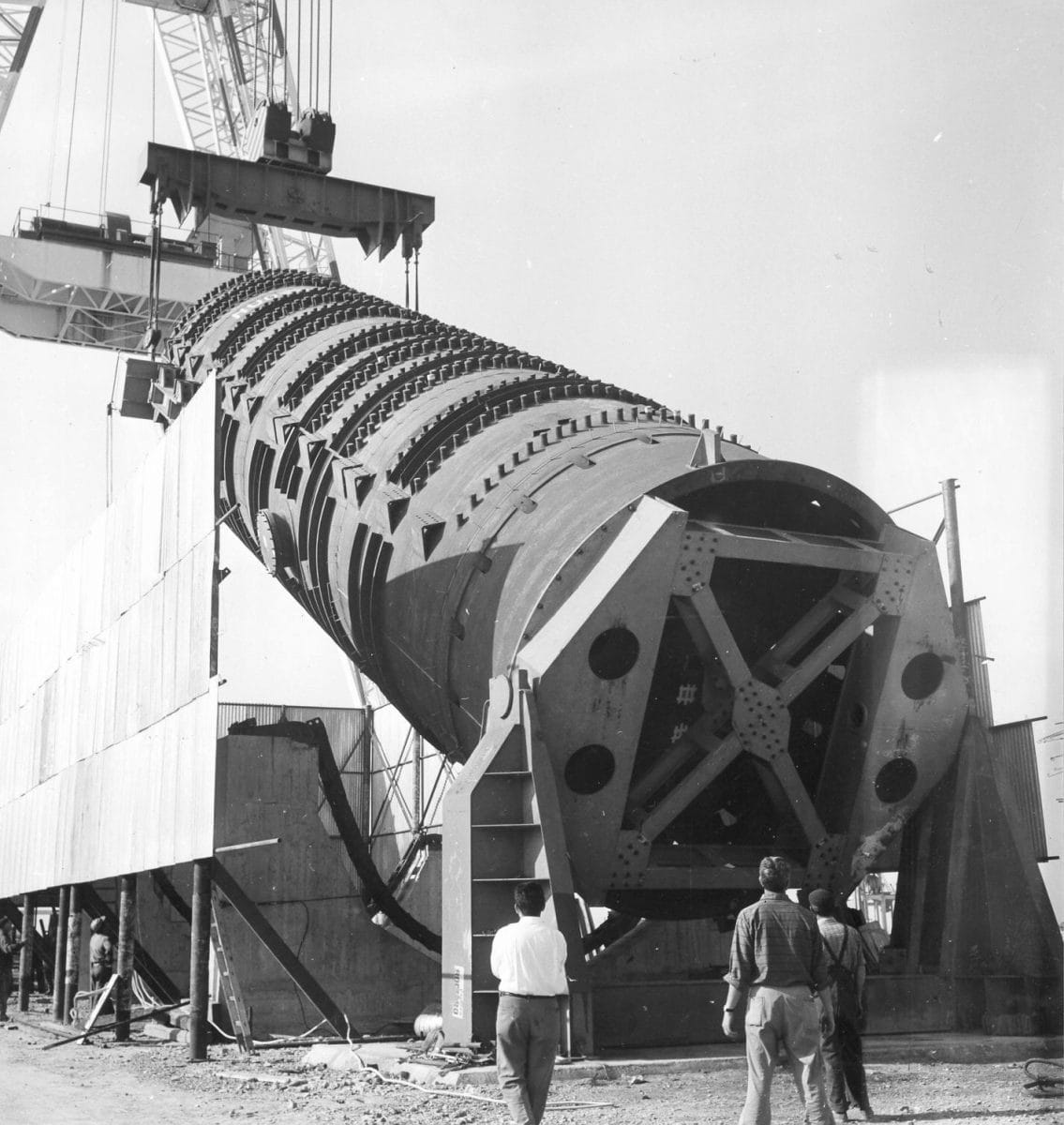
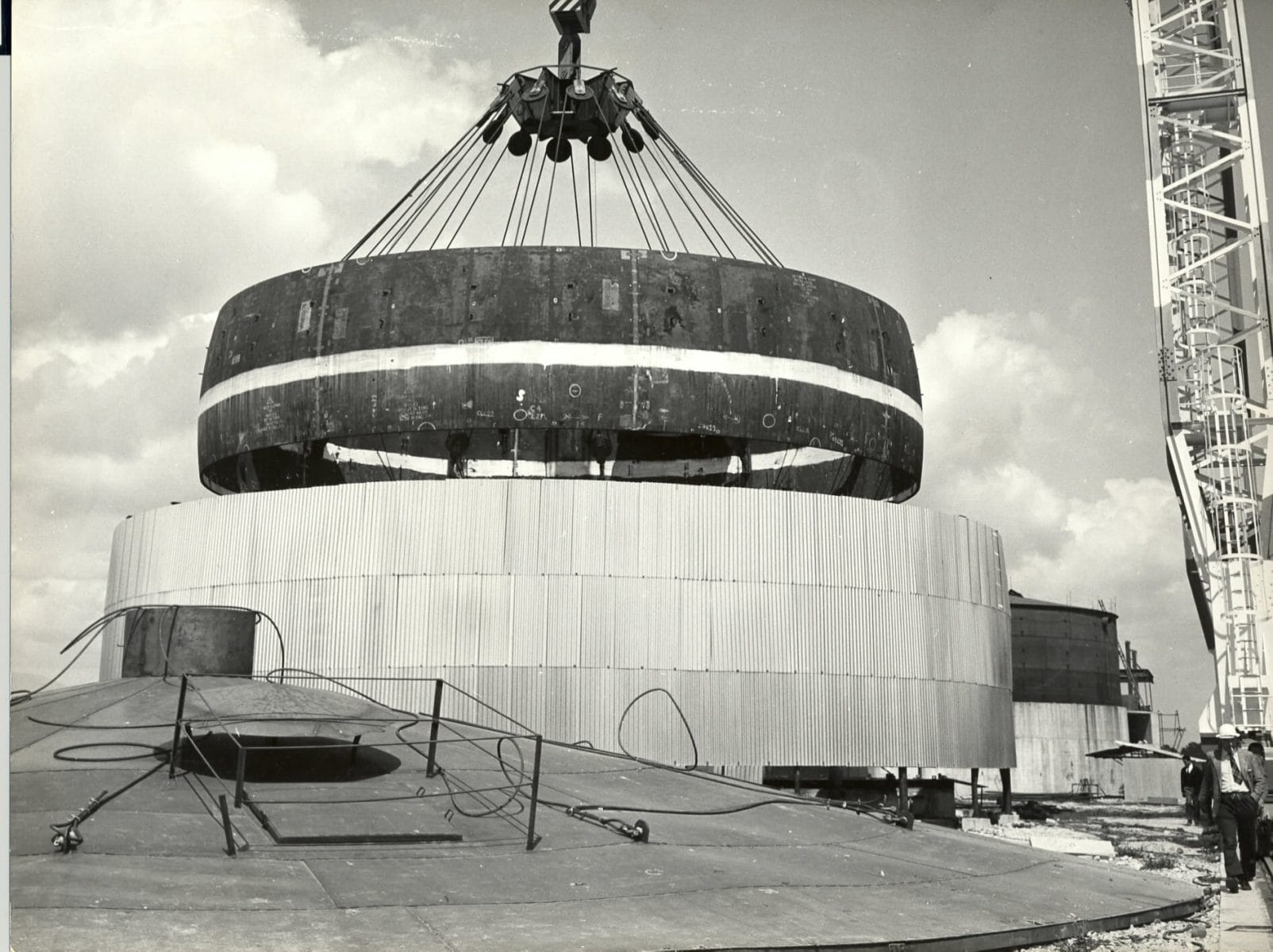
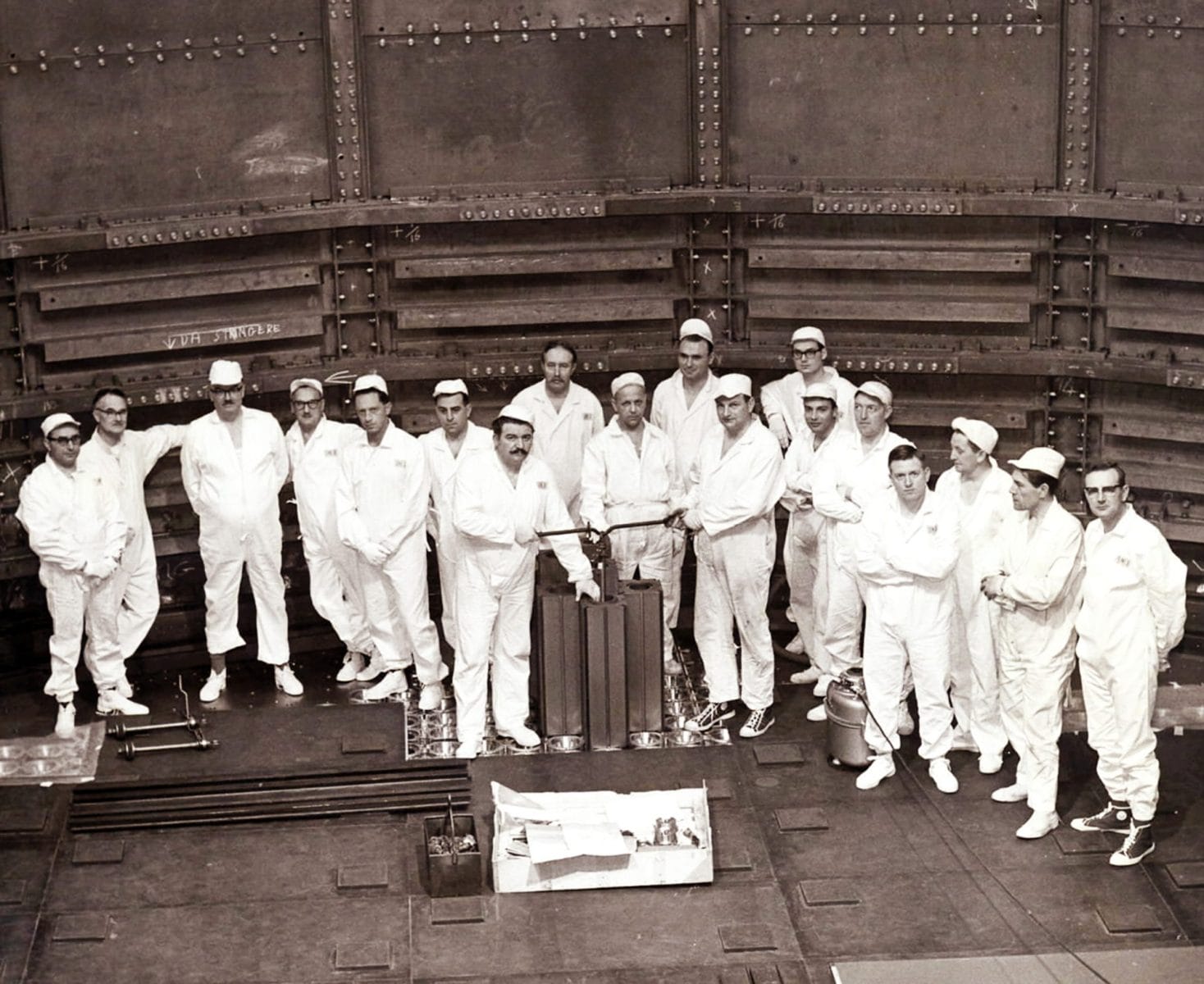
The Latina nuclear power plant during its construction in the late '50s and early '60s. Photos courtesy of SOGIN.
“The international crises of recent years have clearly demonstrated the risk of excessive dependence on imported fossil fuels or vulnerable supply chains,” said Fiorella Corrado, communications chief at Italy’s environment and energy ministry. “The government approaches this issue with great respect for the country's history and the democratic choices expressed by citizens. The 1987 and 2011 referendums profoundly impacted the national energy strategy at very different historical moments. Precisely for this reason, the point is not to ignore those choices, but to acknowledge that today's technological, climatic, industrial, and geopolitical context has radically changed.”
For Meloni’s government, the argument is not so much whether Italy needs to revive its nuclear industry, it’s whether the country is ready to shake its demons, to shake the cultural memory of what happened at Chernobyl forty years ago, a thousand miles away from Rome.
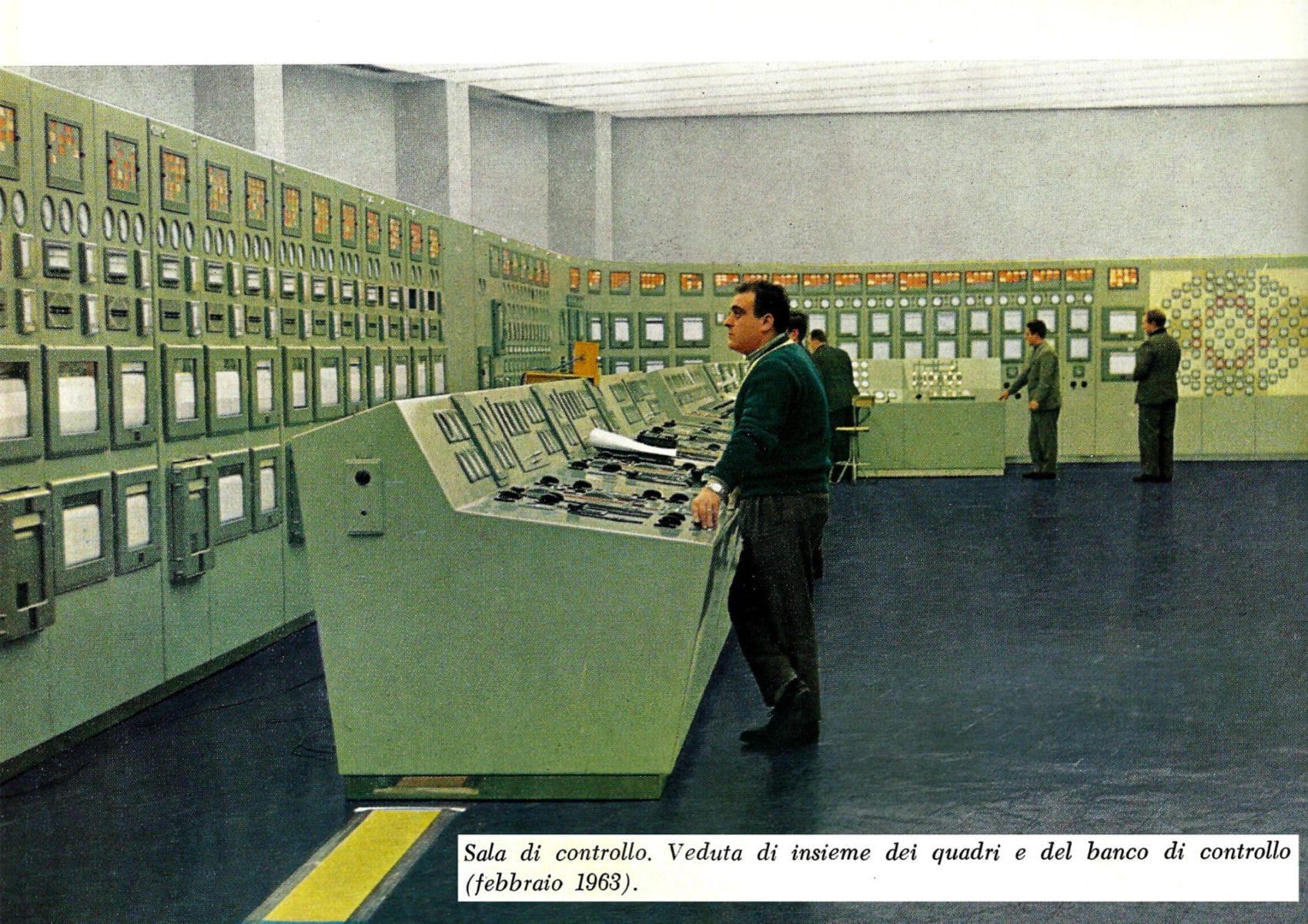
In the early hours of April 28, 1986, in the control room of the Latina nuclear power plant south of Rome, a young technician called Ruggero Dell’Aquila was working the night shift. “Everything was perfectly quiet,” he recalled. As morning broke, teletype messages from Northern Europe began to rattle in. A clerk came down from the control room with reports from the Forsmark Nuclear Power Plant in Sweden. Their monitoring stations were registering radiation spikes far above background levels, and no one knew why.
Inside the control room of the Latina power plant, 1963. Photo courtesy of Pionieri Del Nucleare.jpg
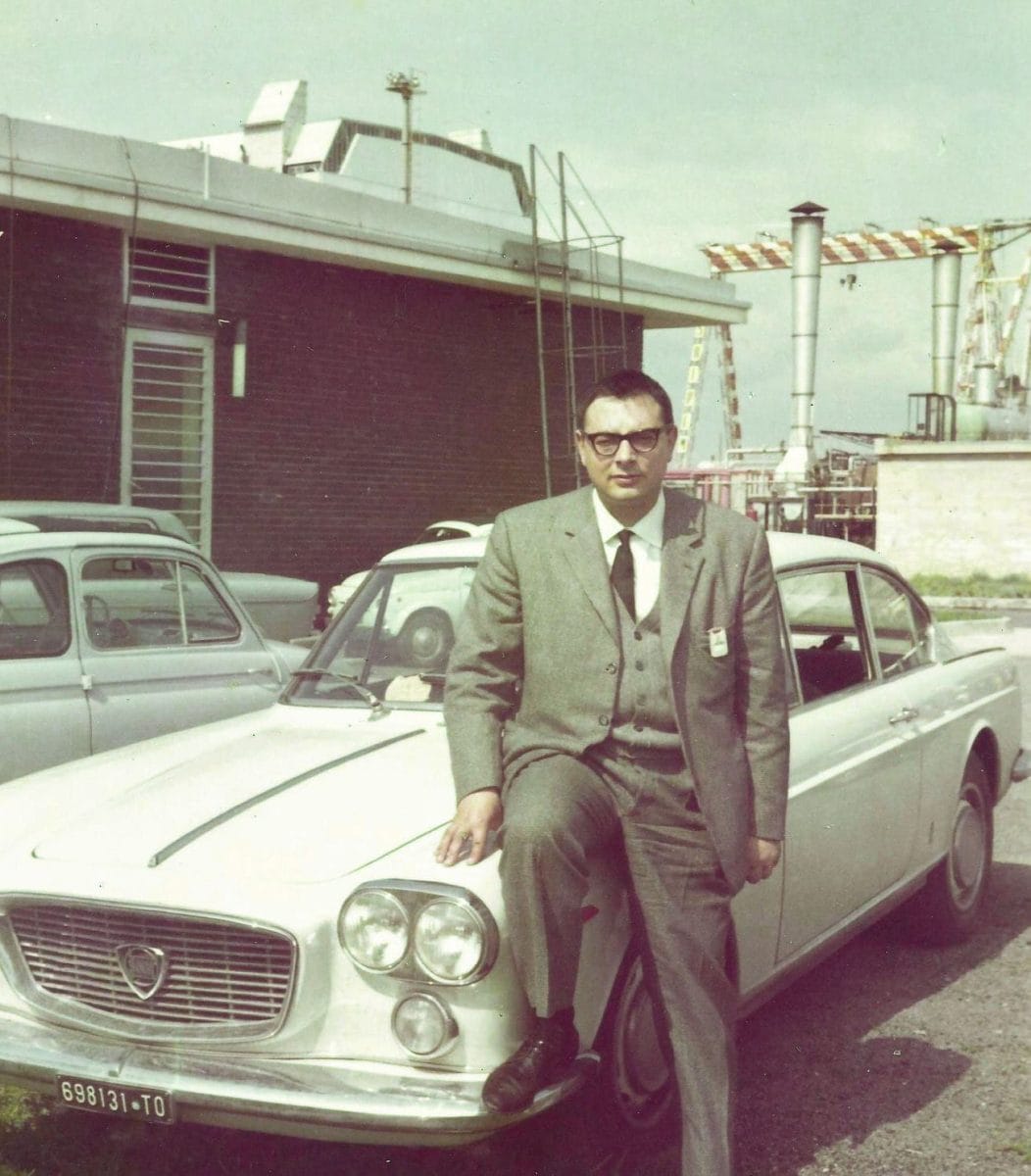
That evening, nuclear physicist Sergio Malossi, a director at the Latina plant responsible for monitoring radioactive risk, drove home. His mind was turning over what the clerks had been reporting. “He came in extremely agitated,” remembers his daughter, Roberta Malossi, who was 16 at the time. “We knew he was worried about something going wrong at the facility, but we didn’t understand.” Malossi says that her father’s first paranoid thought was that there had been a malfunction in his own plant, that radiation was leaching into the air, and that it was somehow his fault.
At 9 p.m. Moscow time — aperitivo hour in Latina — the Soviet Union announced there had been an accident at the Chernobyl nuclear plant. In the ensuing days, Italian news was full of dire warnings.
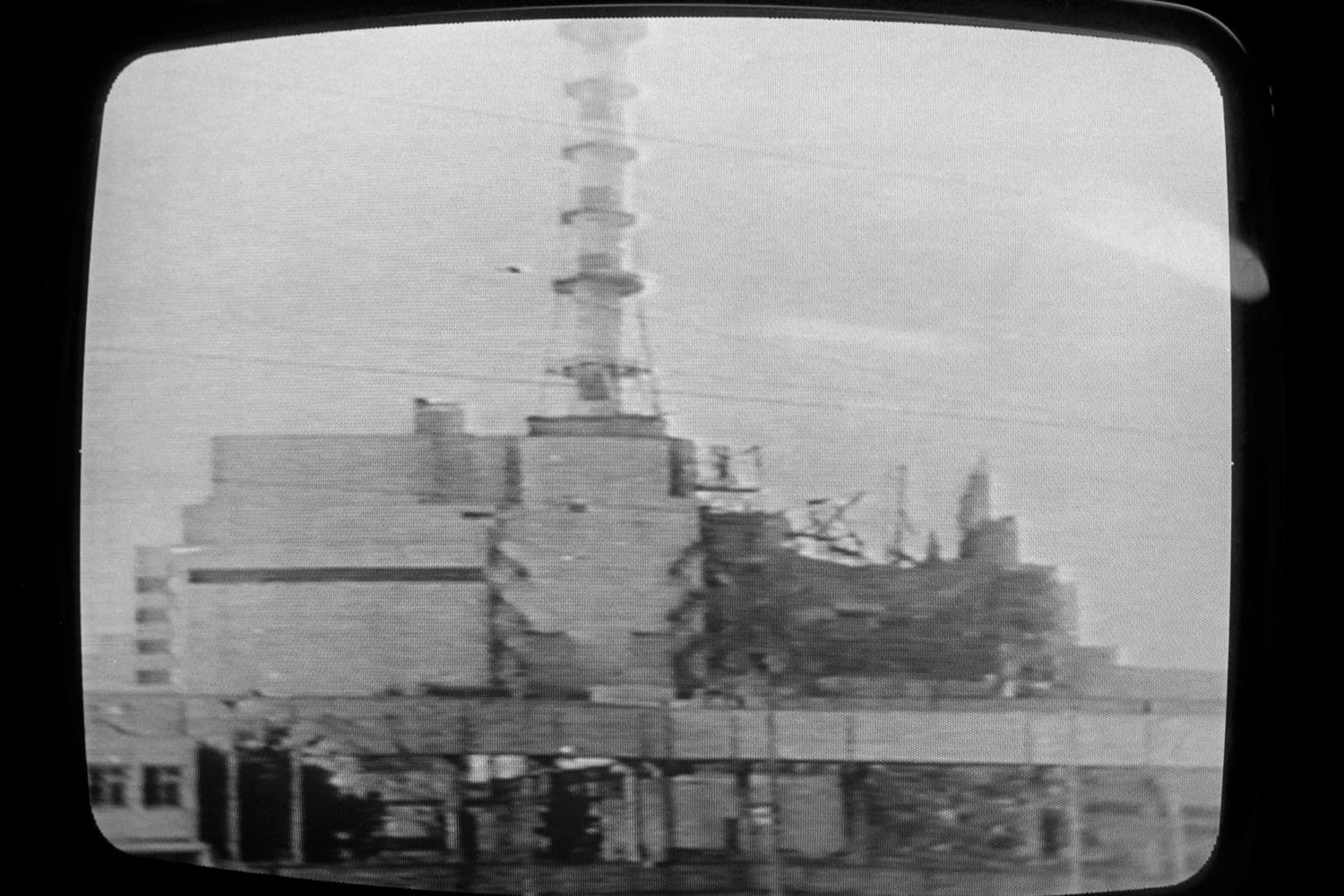
On April 30, 1986, Soviet television aired this image of the Chernobyl plant, claiming there was “no destruction, no major fires, and no mass casualties.” AFP via Getty Images.
“Television was showing these clouds that would soon reach Italy. Everyone was terrified. The only information we got was from state TV, and the news was shocking,” said Monica Tommasi, President of Friends of the Earth Italy, who was a child at the time. Radiation, the news said, would rain down on the population. “The fear from the sky,” ran one La Repubblica headline. “The cloud above us, the doubt within us,” ran another.
On the night of April 30, 1986, Italy’s nuclear monitoring stations began recording increases in radioactivity. The cloud moved over the Valley of the Po, and while the government called for calm, the country began to descend into panic. In the minds of the Italian people, the worst had happened, explained Luca Romano, a writer and activist campaigning for the return of nuclear power in Italy. “Nuclear annihilation, death by radiation, the radioactive cloud and the nuclear holocaust, had arrived,” he said. Nuclear armageddon was a fear that had gripped the West for decades. This was not a nuclear war, but in the Italian collective consciousness, that didn’t make a difference.
The reality was, says Barbara Curli, Professor of Contemporary History at the University of Turin, that “Italy was only marginally affected by the cloud.”
The cloud in northern Italy meant radioactivity levels peaked briefly, but ten days later they had fallen dramatically back down. Because this spike was short-lived, the total radiation exposure remained low. A United Nations committee report recorded that northern Italy received an additional radiation dose of about 380 microsieverts in the year following Chernobyl — less than a fifth of the normal background radiation humans absorb in a year; equivalent to taking about six transatlantic flights. It was much smaller than the doses received by neighboring countries like Bulgaria, Austria and Greece, and in the south of Italy the dose was lower still.
Nuclear Physicist Sergio Malossi, Long-time Director of the Department of Medical Physics at the Latina Nuclear plant. Photo courtesy of Pionieri del Nucleare di Latina.
Down by the Latina power plant, though, the community was shaken by events in Chernobyl, and rumors and misinformation began to spread about the fallout. The friends and family of the technician, Ruggero Dell’Aquila, started asking him if a Chernobyl-style disaster could happen at Latina, too. “Everyone was afraid, asking — ‘can it explode, can it explode?’” he recalled.
The reality was, a Chernobyl-style explosion was not possible at Latina, because its reactor lacked the unstable characteristics of the Soviet design. But this was not such an easy concept to explain.
“The problem was that a slew of journalists took over, telling lies,” Malossi said, recalling paranoid rumours about radioactivity causing mutations in nature. People started telling stories, Malossi said, about “frogs with three heads, animals and fish with four tails. Strange things. When in fact absolutely nothing like that was happening.”
The government advised people to avoid fresh vegetables and dairy products, particularly for children. Farmers destroyed crops and poured away milk. Sergio Malossi ignored the warnings, having measured radiation levels in the air himself. “My father and others from the plant brought the vegetables home and we ate them,” his daughter recalled.
It was these warnings — delivered amid a lack of clear information — that shifted public attitudes toward nuclear energy, said Renzo Colombo, 65, who was just beginning a career in nuclear engineering when the explosion happened. Now a member of Nucleare e Ragione, a nonprofit that promotes a rational approach to nuclear energy in Italy, he recalls how quickly fear took hold. “A real phobia was born, a panic about radioactivity,” he said. “And this panic marked the next 25 years.”
The months after the accident were a shadowy, uncertain period for Italians working in the nuclear industry. “I have to be honest, I felt a little guilty,” said Colombo. “As a nuclear engineer, I thought ‘what have we done?’ My colleagues and I always thought we were designing something useful for humanity. And at that moment we felt betrayed by our own profession.”
Workers at Latina nuclear plant during its construction in 1961. Photo courtesy Pionieri del Nucleare di Latina.
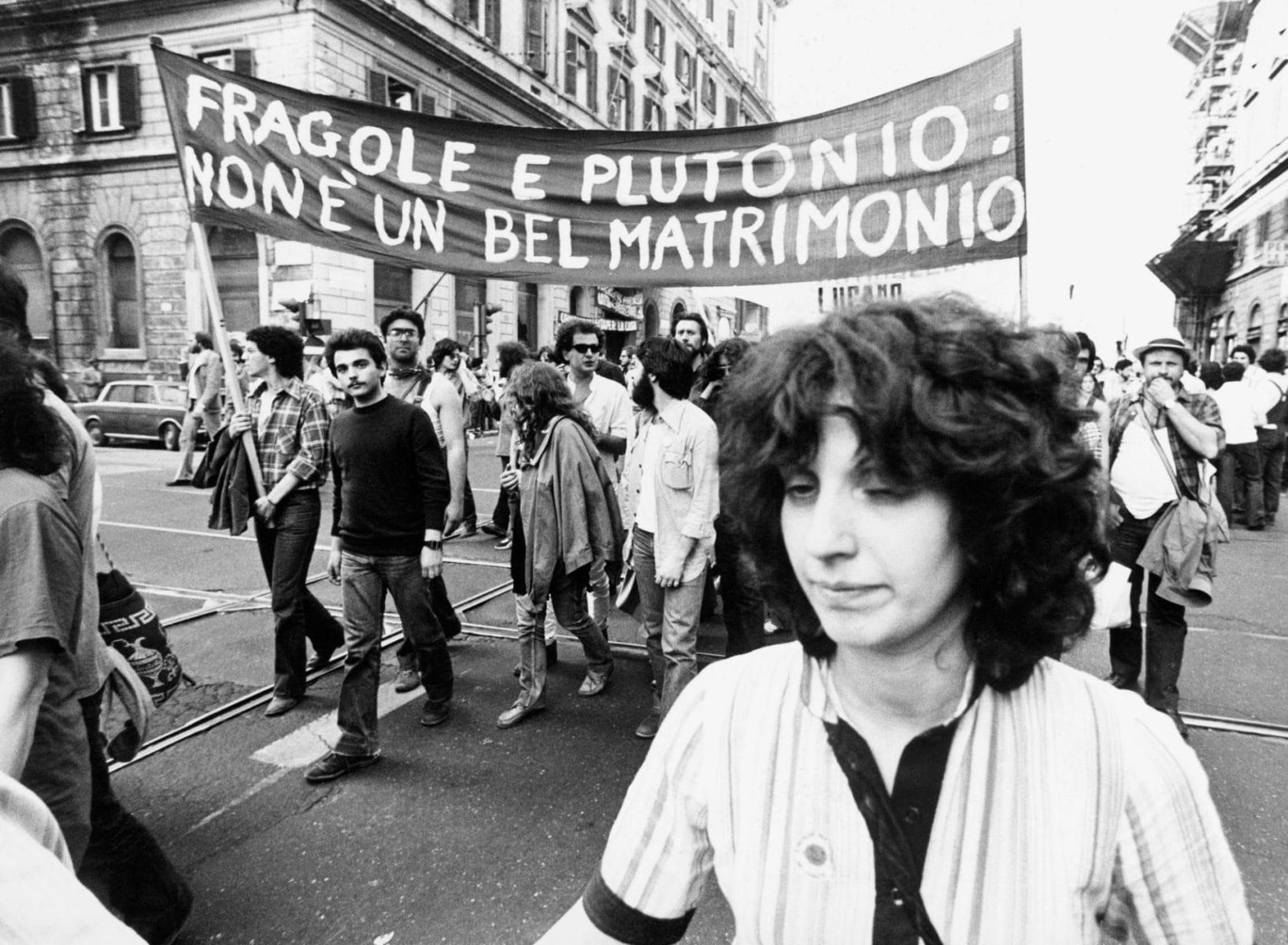
Outside Italy’s nuclear plants, crowds began to gather. A coalition of environmental groups and political parties started pushing for people to vote against nuclear power in an upcoming referendum.
This movement was not new. “Many years before Chernobyl, an environmentalist culture was born — and it didn’t just concern nuclear power, but risky industry in general,” explained Curli, the Turin historian. The anti-nuclear environmental movement, which spread across Europe in the 1970s, was particularly potent in Italy — a country rocked by violent political turmoil, organized crime, and corruption scandals. Public fears, explained Curli, were sharpened by the Seveso disaster, an accident at an industrial plant in the north of Italy in 1976 that exposed tens of thousands of people to a toxic cloud of chemicals. Nuclear power, she said, “was not perceived by public opinion as a credible policy because there's this underlying distrust in institutions.”
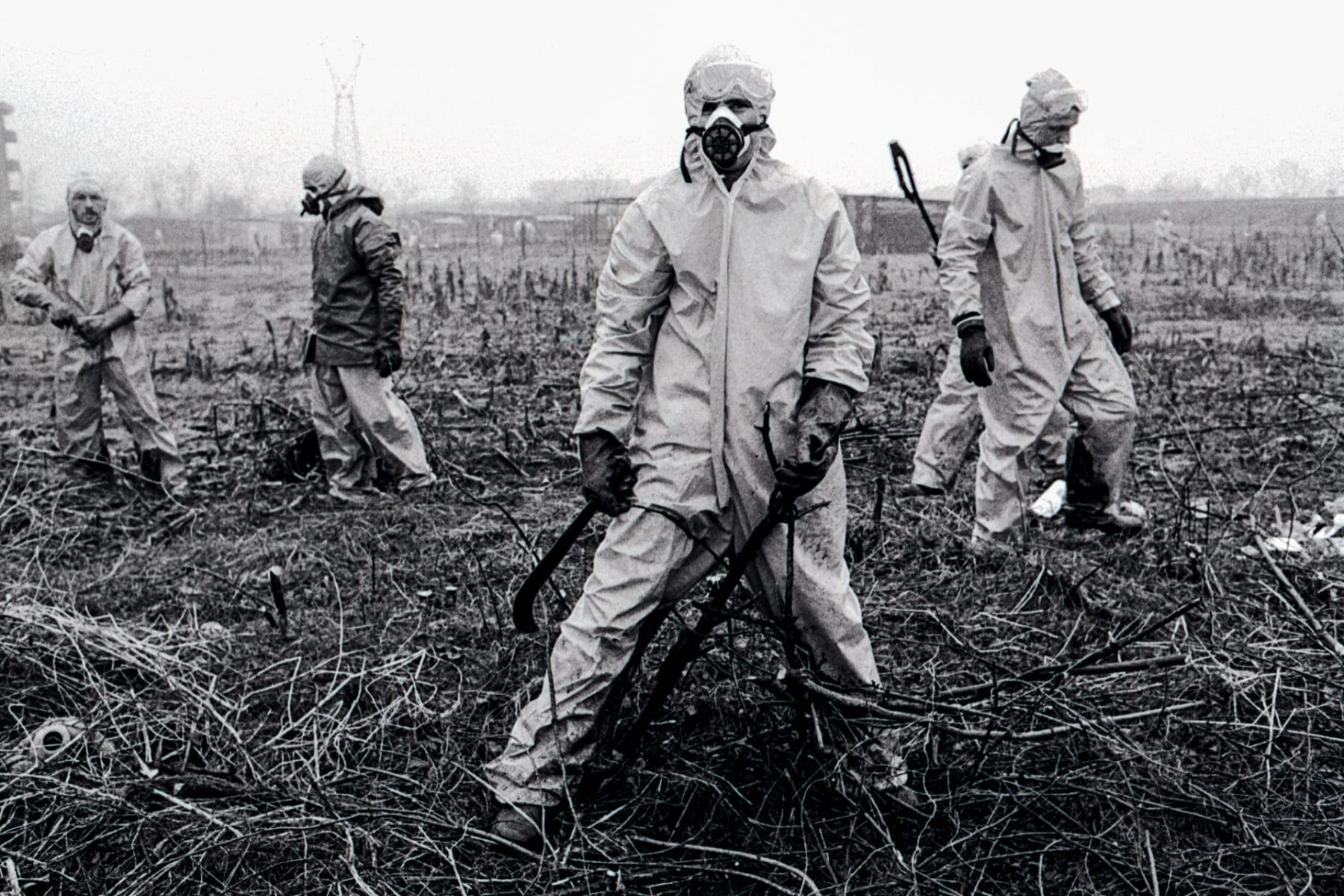
Workers in protective suits clean up the land and homes contaminated by the industrial accident at Seveso chemical manufacturing plant in 1976. Alberto Roveri/Archivio Alberto Roveri/Mondadori Portfolio via Getty Images.
In 1977, almost a decade before Chernobyl, a 10,000-strong crowd of protesters showed up at Montalto di Castro, to protest against a large new nuclear plant that was planned. A Time magazine correspondent described the activists as “an improbable mix of elegant members of the Italian nobility, radical students in American Indian garb, middle-class citizens and Christian Democratic and Communist politicians.”
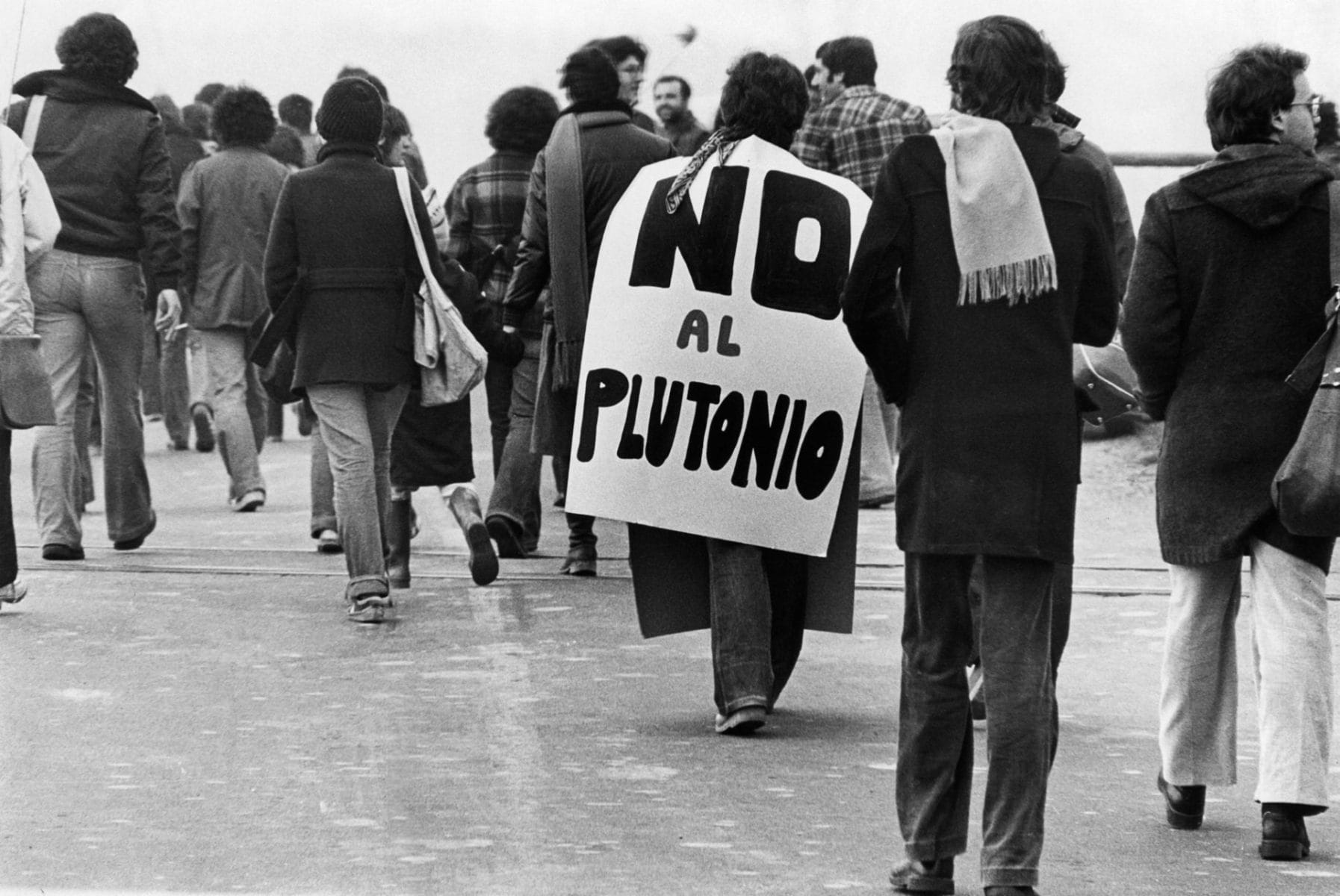
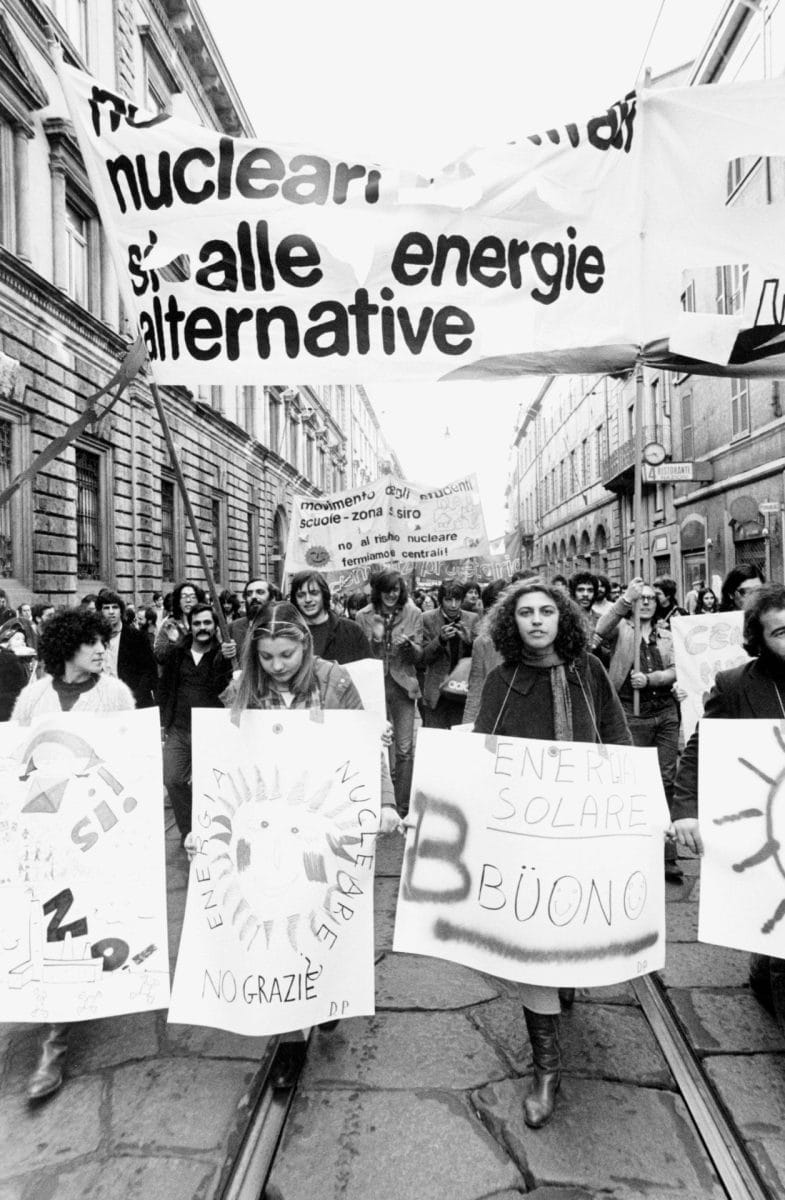
Demonstrators taking part in an anti-nuclear demonstration. Turin, 1980s. Alberto RoveriMondadori via Getty Images.Anti-nuclear protest, Milan, 1980s. Universal Archive / Universal Images Group via Getty Images.Anti-nuclear protest, Rome, 1980s. Universal Archive / Universal Images Group via Getty Images.
In the wake of Chernobyl, Renzo Colombo was working at that very same plant, helping to build the thermohydraulic cycle. By then, the station was nearly complete. “It was a beautiful plant,” Colombo said. “I loved working there.”
In November 1987, 18 months after the Chernobyl accident, the Italian government held a referendum on nuclear energy. Nearly 80% of Italians voted in favor of measures that would end the country’s use of atomic energy.
One morning, following the referendum, the Montalto di Castro plant’s director called the workers to a meeting. Colombo remembers him saying: “‘Ragazzi, gather round, I need to talk to you. I’ve just been to the ministry, and Italy has decided that we are closing all nuclear activity and will focus on coal and gas instead.’” The room went silent. “I was young,” said Colombo. “But there were people there who were older and had devoted years of their life to the nuclear field. There was just this urge to cry.”
The effect of the referendum was all-encompassing: construction was halted, and over the next three years Italy’s nuclear plants were shut down for good; its nuclear engineers scattered — many going to work abroad, or, like Colombo, re-training to work in other industries.
It was hailed as a victory for Italian environmentalism, says Curli. But the result was that there was a push to “gasify” Italy. That is, she says, “to choose the gas route — less expensive, and less demanding than nuclear power. But this made Italy almost completely dependent on Russian gas, Libyan gas, Algerian gas.” The Montalto di Castro site was converted into a fossil-fuel powered plant, running on gas and fuel oil.
Decades on from that post-Chernobyl referendum — and a second referendum in the wake of the Fukushima nuclear accident in 2011 — Italy remains in the process of dismantling its nuclear power stations, even as it now contemplates a return to nuclear power.
In the vast, cavernous belly of the Latina nuclear power plant, three workers in hazmat suits hammer away at pieces of the shielding cylinders that once protected the rest of the plant from radiation emitted from the reactor. From the viewing gallery, they look tiny in the enormous space, and the vastness of their task feels Sisyphean.
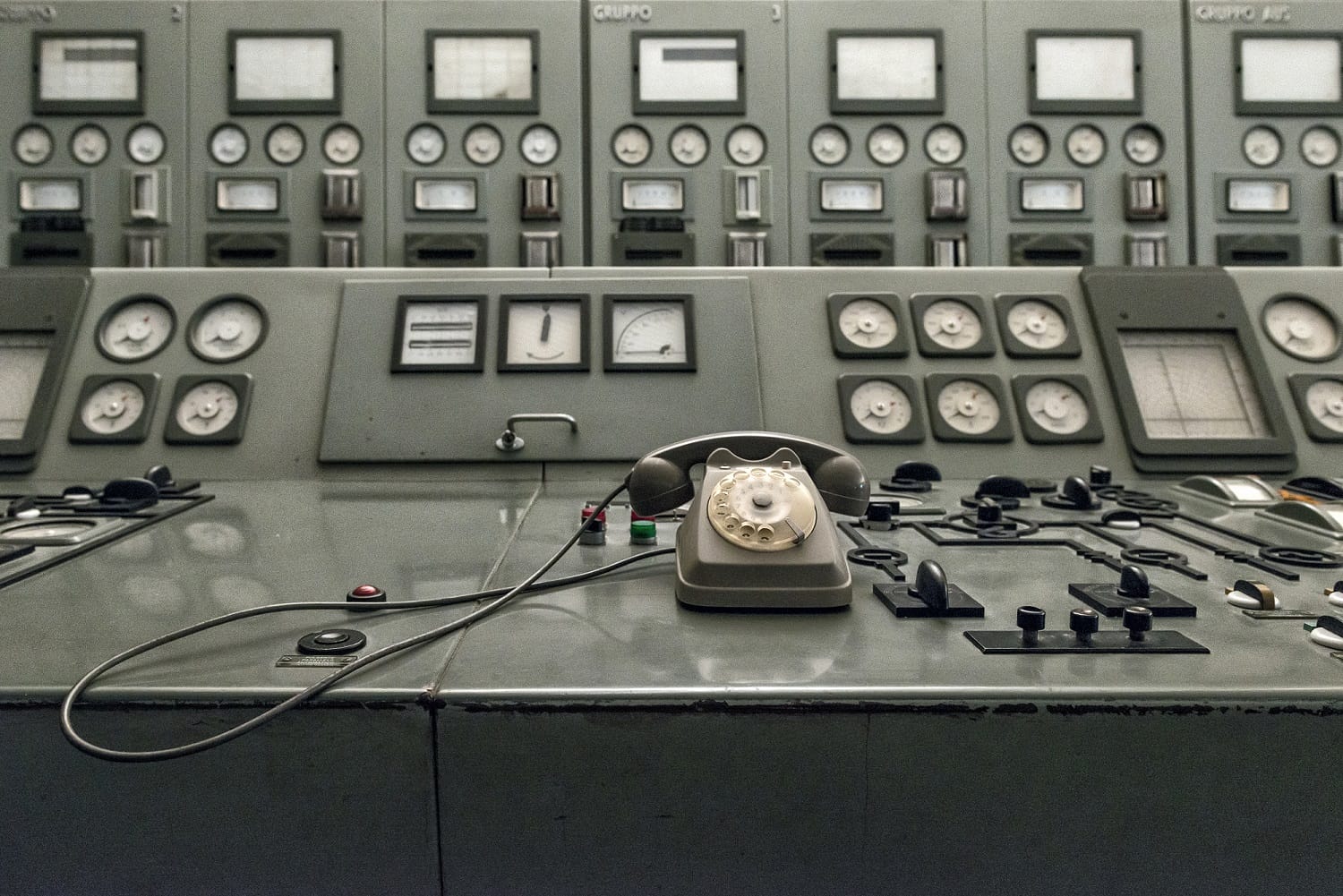
Watching them work is Enrico Bastianini, director of operations at the Latina plant. As I walk with Bastianini through the plant, we come to the old control room. When it first opened in 1963, the Latina plant was the largest nuclear power station in Europe — a feat of Italian and British engineering (the reactor was of UK design) and a symbol of Italy’s post-war industrial growth.
“We were emerging from the destruction of the war, and this was progress. And it was what allowed us to escape the economic hardships of war, and have low-cost energy,” Bastianini says.
Now, over 60 years on from when the plant opened, more than half of its existence has been spent being taken apart. Critics of nuclear power often focus on precisely this point: the long and complex process of dismantling nuclear plants, and the problem of managing radioactive waste, some of which takes millennia to decay.
There are two phases to the process of taking apart the plant. “The first phase allows us to dismantle everything that’s nuclear except the reactor. That’s because the reactor contains a huge amount of graphite,” Bastianini explains. “When we have a national repository, it can be removed. But for now, it’s safest if it stays in the first phase.”
Bastianini leads me into a deposit room where radioactive material is being stored in steel containers, inside an earthquake-resistant facility. These containers are only for temporary storage.
There were attempts in the early 2000s to establish a national nuclear waste repository at a salt mine in Basilicata in southern Italy, but huge protests forced the government to abandon its plans. Today, SOGIN, the state-owned Italian company in charge of decommissioning nuclear sites, is still actively searching for a suitable location for a permanent repository and faces considerable opposition.
Rumours and anxiety swirl around the Latina plant itself — just as they did in the 1980s, when Malossi heard stories of radioactive fish with four tails. Last April, an article by the Italian magazine L’Espresso published claims that the Latina plant could leach radioactive material into the soil. The plant vigorously denies these claims — a spokesperson for SOGIN said the company periodically checks the quality of vegetables, milk and fodder as well as air, soil and groundwater for radiation and that “as always, the results of the analyses confirm radiologically negligible environmental impacts.”
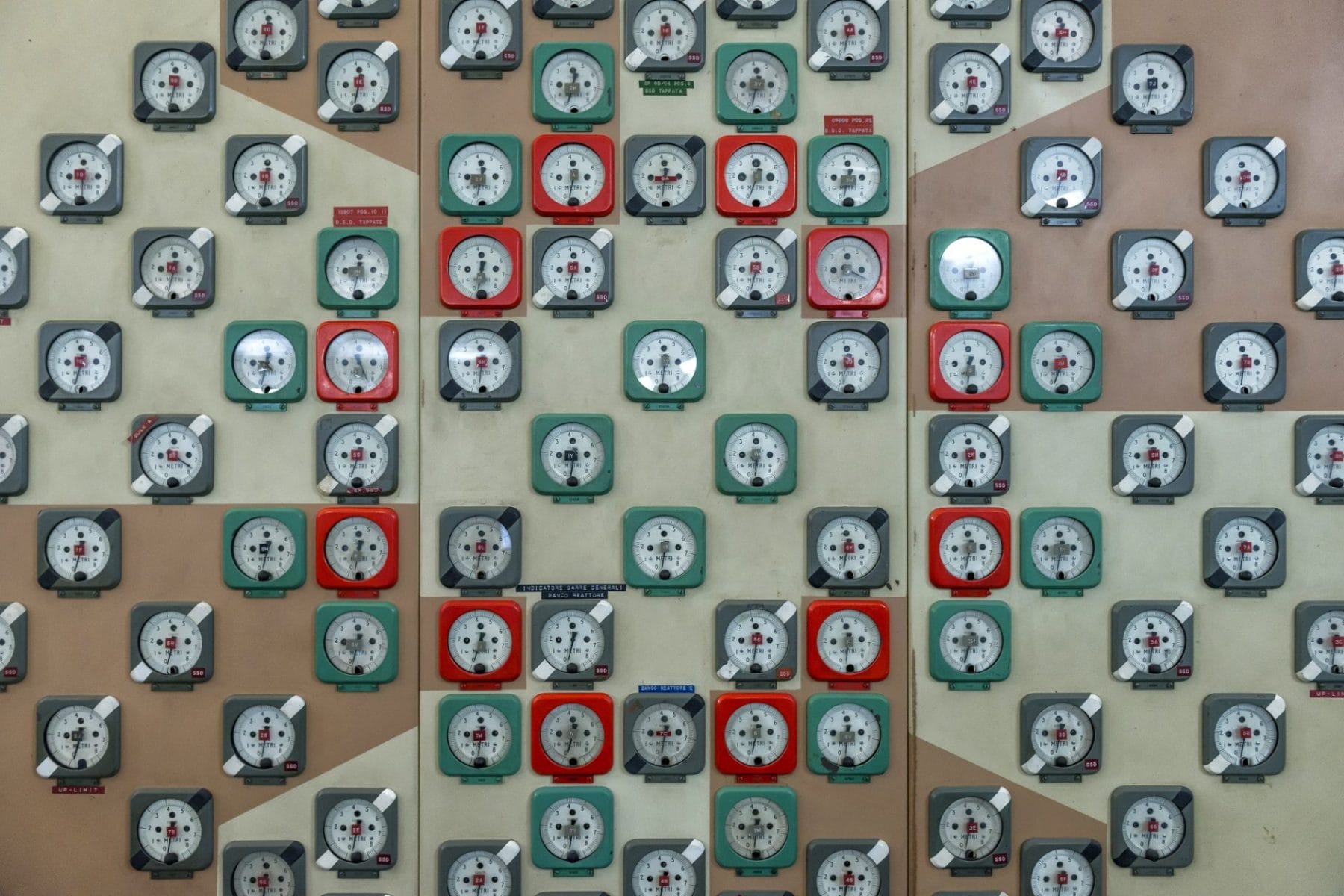
The old control room of the Latina nuclear plant. Photos courtesy of SOGIN
In the gloaming of a summer evening in Umbria, Monica Tommasi drives me through the twilight-darkened hills surrounding the medieval city of Orvieto. This land is rich in archeological and ecological heritage — filled with ancient tunnels, Etruscan caves, untapped archeological sites, wild places where wolves and boar roam. Tommasi is the President of Amici Della Terra — "Friends of the Earth" in Italian — an organization that was once the Italian chapter of the international Friends of the Earth network before breaking away in 2014. "We left, because we argued a lot," she said of the split, describing how the network "wanted to put turbines and panels everywhere, and we couldn't be in favour of that approach."
The International Friends of the Earth association was born from the anti-nuclear movement in America, where the group successfully lobbied to shut down two reactors, and has since 1969 made anti-nuclear campaigning a core part of its identity.
But Tommasi remembers precisely when she first began to reconsider nuclear power. “I started thinking about it in 2011, when I began to see that the government was investing heavily in solar and wind power, which would invade and industrialize the natural landscape,” she recalled. Many of these green transition projects have been fraught with problems in Italy — wind farm companies accused of corruption and profiteering, of erecting wind farms in areas where there’s little wind, and laying waste to nature.
For the first time, Tommasi began to think about ways to decarbonize “that don’t destroy the environment where people live and the landscape around them.”. She became intrigued by the nuclear option. “We needed to start reasoning and changing our minds,” she said.
Tommasi now advocates for a national conversation about nuclear power. “This choice must be accompanied by a public debate,” she told me, “but it isn’t happening because everyone is still afraid.”
“The future of Italy's energy sector must lie in nuclear,” she said, adding that if Italy was to continue pursuing solar and wind energy alone, “it means destroying all the natural areas that are still left.”
I asked the government to respond to allegations about how criminality, speculation and land-grabs in the renewable energy sector might be affecting Italians’ opinions on nuclear power.
“We do not believe it is appropriate to frame the energy debate by ideologically pitting nuclear power against renewables, nor should we use any administrative or criminal issues in certain sectors to discredit a technology as a whole,” said Fiorella Corrado, communications chief at Italy’s environment and energy ministry. “Nuclear power is not an alternative to renewables, but their best ally,” she said.
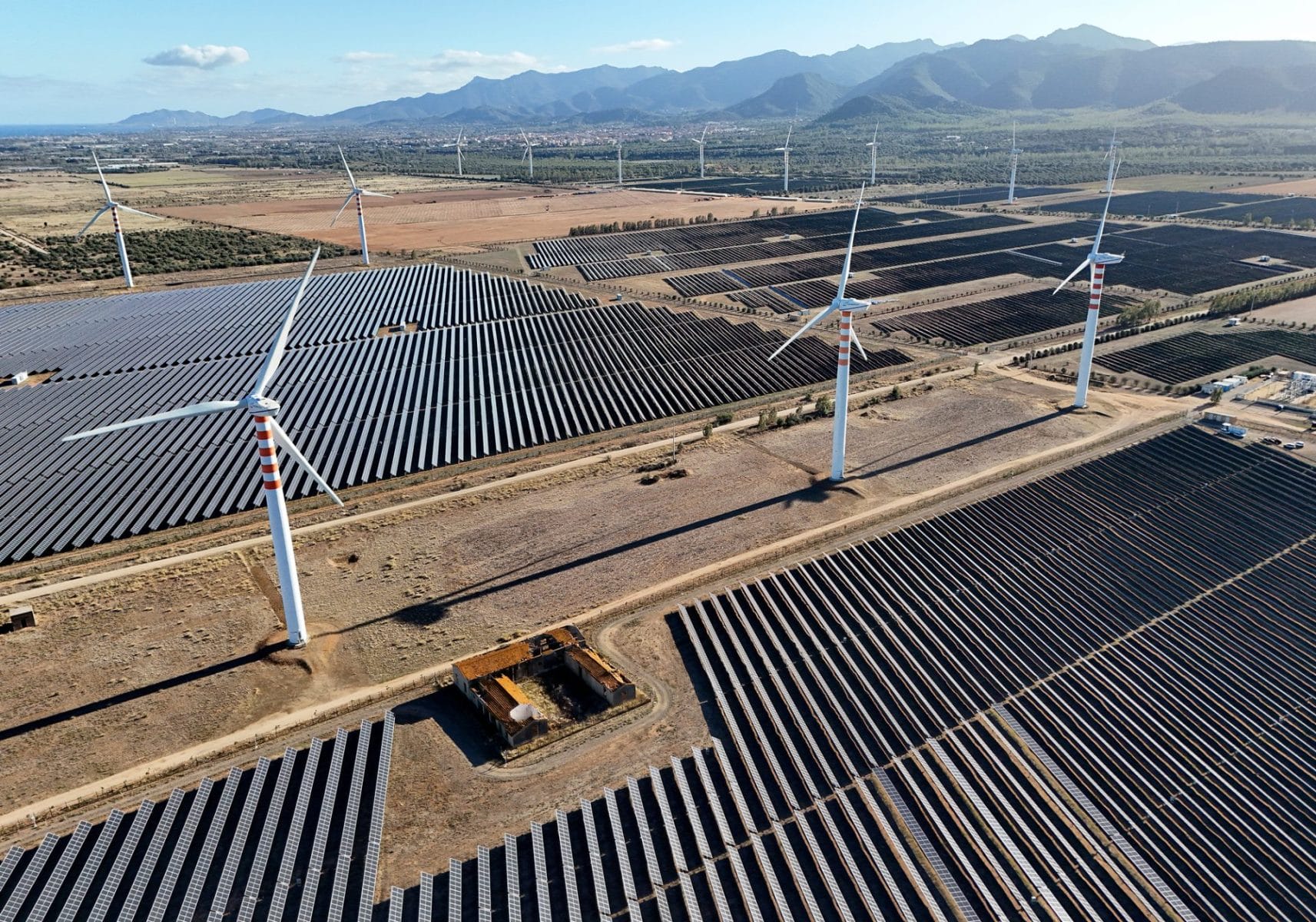
Wind turbines and solar panels near Cagliari, Sardinia, 2024. The island relies largely on coal but must phase it out by 2028 as Italy transitions to cleaner energy. Giovanni Grezzi / AFP via Getty Images.
On a warm autumn day in Rome, several thousand people gathered for an annual “climate pride” march. They brandished homemade cardboard wind turbines that spun in the breeze. Vincenzo Migliucci, 83, was among them. He worked for more than three decades for ENEL, Italy’s energy corporation, and he’s been anti-nuclear for much of his life. After the Chernobyl accident, he protested outside the nuclear plant under construction in Montalto di Castro almost every day, picketing the workers as they went through the gates.
“The wrath of God happened,” he said, referring to Chernobyl. “And when a true estimate is made, we’ll one day see how many disasters Chernobyl caused.”
Migliucci is against nuclear power plants of all types — arguing for solar panels instead — and is particularly concerned about what happens to the plants after they become obsolete and must, like the Latina plant, be slowly dismantled over decades. “The decommissioning costs a fortune; the nuclear waste repositories cost a fortune,” he said.
Subscribe to our coda currents newsletter
Insights from the Coda newsroom on the global forces that shape local crises.
He began telling me some of the stories that surround Italy’s shuttered nuclear plants. “Near the Garigliano power plant,” he told me, “a child was born with only one eye.” His own eyes widened as he pressed a finger into the middle of my forehead. “Sheep and cattle,” he said, “were born with six legs, or entirely red in colour. It’s not a myth, it’s real.”
Younger generations of Italians don’t have the same collective impressions around nuclear power, nor around Chernobyl or its aftermath, explained Luca Romano, a young pro-nuclear influencer with a quarter of a million followers on Instagram. Romano makes videos with his partner, Luiza Munteanu, about the advantages of nuclear power. The main problem he runs up against, he says, is that “we have a very low scientific literacy, the level of debate is abysmal.” And culturally, he adds, “Italy has always been a country that looks backwards rather than forwards.”
In May, the director general of the International Atomic Energy Agency visited Italy’s Lombardy region, and signed a Memorandum of Understanding with the governor to cooperate on applying nuclear science for development across the region. The choice of Lombardy was significant. It is home to Milan, and is at the heart of Italy’s digital infrastructure. Speckled with no fewer than 60 data centers, with more cropping up, Lombardy has opened itself up to Silicon Valley. Microsoft is investing billions in the area to boost its AI and cloud computing infrastructure. Amazon Web Services has committed to spending over $1 billion to expand its data center operations around Milan.
How northern Italy’s growing AI infrastructure will be powered, though, is still a problem to be solved — one that cuts to the heart of Italy’s energy dependence. Since Giorgia Meloni became prime minister in October 2022 — which coincided with the launch of ChatGPT a month later — the Italian government has been broaching the topic of nuclear power as essential to Italy's energy future. “World population and economic growth will significantly increase energy demand,” Meloni said at a sustainability summit in Abu Dhabi. “Not least due to the growing requirements arising from the development of generative artificial intelligence.”
Artificial intelligence is a “highly relevant topic,” said Corrado, the communications chief at Italy’s environment and energy ministry. “As more things run on electricity, the economy goes digital, and data centers and AI expand, demand for steady, low-emissions power will rise. Nuclear energy can help as a reliable, controllable source that works alongside renewables.”
In August, it emerged that the government had set aside €7.5 million purely for pro-nuclear communication and information campaigns directed at regions where new plants may be built. One focus of the Meloni administration is on the prospect of building small modular reactors, sometimes called “mini nukes.” They are compact fission plants, a fraction of the size of the traditional, cathedral-like nuclear power stations. They have a smaller core, and proponents argue their safety features mean there’s minimal chance of an epic, Chernobyl-scale nuclear disaster, something the government is keen to get across to voters.
Currently, only China and Russia have these small reactors up and running, but mini nuclear plants have attracted significant attention in Silicon Valley. OpenAI’s Sam Altman was chairman of Oklo, a nuclear startup focused on SMRs, while U.S. nuclear startup Kairos has signed an agreement with Google to develop these reactors to power its data centers. This month, the European Commission unveiled a strategy for rolling out small modular reactors and bringing them “online” by the 2030s.
Soon, Italy may take the first steps towards the reconstruction of a nuclear industry that has been abandoned for decades. “I believe it won't be easy to relaunch nuclear energy,” said Barbara Curli, the Turin historian. “Knowing a little about the history of nuclear power in Italy and its political dimension, I'd be quite skeptical about the possibility of relaunching nuclear power here in Italy — but let’s see.”
A little under 1,500 miles away, in the Chernobyl exclusion zone, among wild boar, birds, and deer, radiation levels in some areas have dipped below around 0.3 microsieverts per hour, lower than background radiation levels in many European cities. Not least the eternal city of Rome.
Why Did We Write This Story?
As the U.S.-Israel war against Iran enters its second month, strikes on nuclear facilities have raised the stakes of an already catastrophic conflict. The WHO is now openly preparing for a nuclear incident it hopes will never come. Whether or not this escalates further, the fear already has a life of its own.
That is something we follow closely at Coda: how fear settles into collective memory and shapes policy long after the original crisis has passed, or even when the disaster people dreaded never fully arrived.
Isobel Cockerell takes us to Italy, one of the only industrialized nations to have dismantled its entire nuclear energy program after Chernobyl, despite being barely touched by the fallout.
This story is about nuclear power, but it is also about how fear can shape the world more than the event that caused it.

 Connexion