Connexion

Instead of a single representative, a whole team: Europe decides who will represent it in talks with Russia to end the war

EU leaders have agreed on who will represent Europe in future talks aimed at ending the war in Ukraine, European Pravda reported on 13 November, citing European Council President António Costa. He announced this at a press conference in Dublin following an informal summit of EU leaders, the media outlet reported.
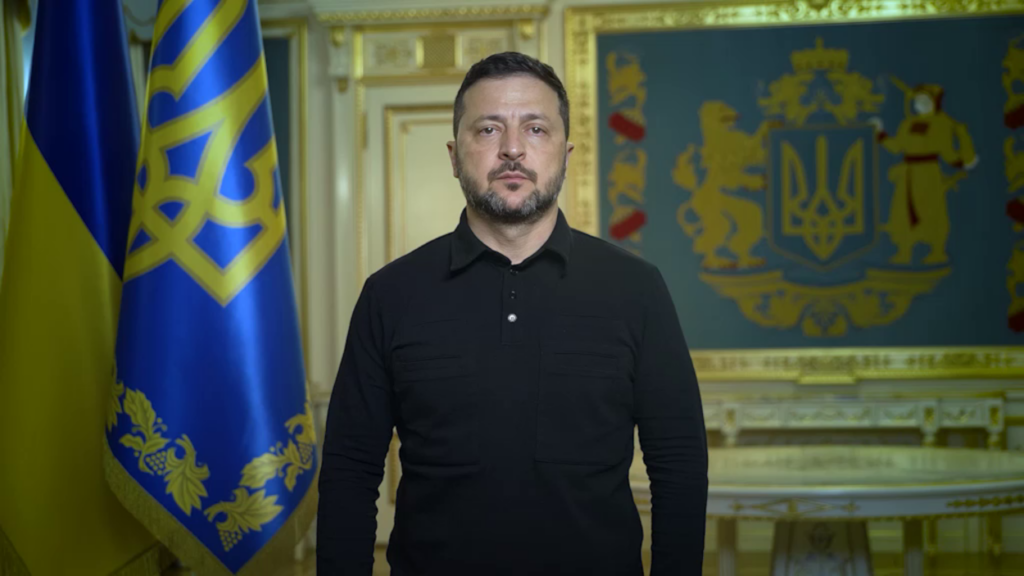
Ukrainian President Volodymyr Zelenskyy warned in Dublin that Russia seeks to reshape Europe’s security architecture and insisted that Europe must have a voice in the negotiations, Politico reported on 13 November. One point of contention was who should serve as the representative: EU institutions or individual member states. European Union leaders have opted for a group format of representation instead of appointing a single representative.
EU and E5 countries to form a joint negotiating team
According to Costa, the representatives will include EU institutions and the E5 group of countries: Germany, France, the United Kingdom, Italy and Poland.
He stressed that the EU’s positions and principles in the negotiations remain well known, and that the European team will continue to coordinate its actions while maintaining full unity.
According to Costa, the EU’s position is clear: Europe’s security begins with Ukraine’s security. He also reaffirmed the EU’s support for all diplomatic initiatives aimed at bringing Russia to the negotiating table.
Why a team?
Costa said that the EU had supported all peace initiatives from the very beginning, particularly those led by US President Donald Trump, RTÉ reported on 13 November. He said there was apparently fresh momentum to move peace talks forward and that the European Union was fully engaged in supporting them. Costa stressed that, to achieve this, the European side needs to work together as a united team.
“Just an example, if you look for the special envoy from President Trump, and not one, there are two. If you look for the Ukrainian delegation, I think is three or four people?” Costa said.
Costa said that this format was normal, especially when it comes to Europe, as the European Union has its own competences. He also stressed the important role of the Coalition of the Willing in providing security guarantees to Ukraine after a peace agreement, adding that the two need to work together.
“For this, it’s essential to have a team and to speak with only one voice and is what we agreed to do, and is why how we are working. This we will continue,” the senior official explained.
Zelenskyy urged the EU to choose anyone—Politico
The EU wants to be involved in negotiations on Ukraine but has struggled to decide who should represent the bloc. Before the team was selected, diplomats and officials told Politico that they were divided into at least three camps, the outlet reported on 13 November.
The candidates discussed included António Costa, EU High Representative for Foreign Affairs and Security Policy Kaja Kallas, and the E3 group of countries (France, Germany and the United Kingdom).
At the same time, Zelenskyy urged the bloc not to delay the decision and to appoint a negotiator by the end of November, Politico reported.
Russia seeks to reshape Europe's security architecture
Ahead of the talks in Abu Dhabi on ending the war, Russian presidential aide Yury Ushakov warned that Europe would not be invited to the negotiating table, the Russian outlet Vesti reported on 28 October.
Ukrainian negotiator David Arakhamia said that the talks in Abu Dhabi had “good momentum” towards reaching an agreement by the end of the year, Al Jazeera reported on 11 November. He also stressed that the next round of talks should be held in a multilateral format involving Europe, rather than involving only Ukraine, the US and Russia.
Kremlin officials are currently willing to involve Europe in future peace talks only to discuss dismantling the post-Cold War European security architecture, rather than ending the war in Ukraine, the Institute for the Study of War (ISW) reported on 13 November.
On 12 November, Ushakov said that during Putin’s meeting with US President’s Special Envoy Steve Witkoff and Jared Kushner, the Russian president recalled Moscow’s vision of the key principles of an indivisible security architecture, which Russia had presented in 2021. These include NATO’s non-expansion, a ban on deploying “threatening” weapons systems near Russia’s borders, and a return to the NATO force posture that existed when the NATO-Russia Founding Act was signed.
Ushakov also said that Moscow intends to add “certain new considerations” to its list of demands.
Europe faces growing security threats and uncertainty over US support
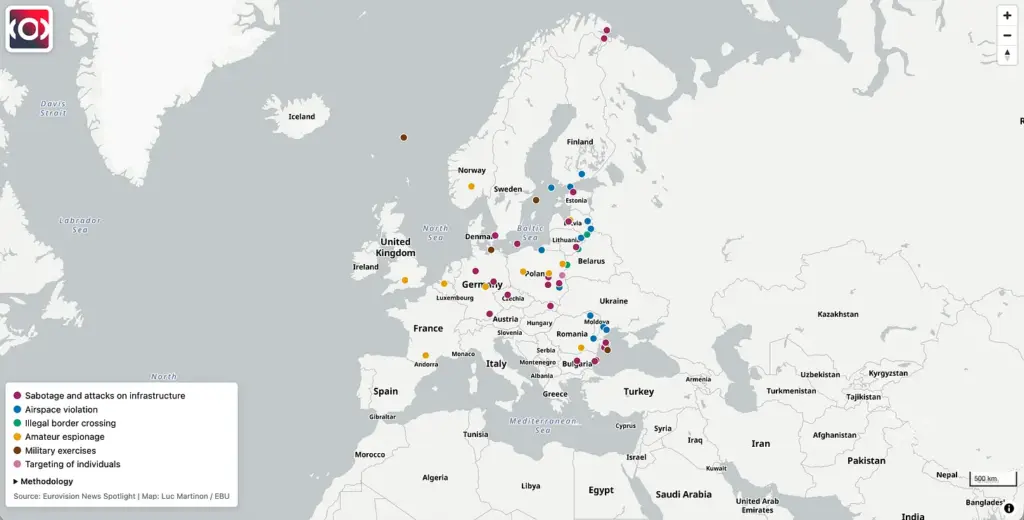
This is happening amid a growing threat to NATO from Moscow. European intelligence chiefs have warned that Russia may be preparing to take more decisive action against NATO, including sabotage, drone attacks and possible limited incursions into alliance territory, The Guardian reported on 20 September.
Eastern European NATO leaders are increasingly questioning whether the US would come to their aid in the event of a Russian attack, amid the Trump administration's unpredictable rhetoric and uncertainty over Washington's future commitments to the alliance, The Guardian reported on 27 June.
Read Also
-
Ukrainian pilot wipes out Russian assault-troop staging point with US-made precision GBU-39 bombs before next attack
-
Russia’s energy war against Ukraine follows a pattern, Zelenskyy says. One oblast has taken 131 hits since September
-
Ukraine is hitting Russian oil, petrochemicals, and strike bases, likely to make up for scarce interceptors, ISW says


















 Тим часом у російських аеропортах – справжній апокаліпсис через нальоти дронів останніми днями.