Officials in Mississippi City Fire Police Chief Over Racist Texts

© Senatobia Police Department, via Facebook

© Senatobia Police Department, via Facebook
Incumbent, 80, beats back challenge from Seth Moulton, who argued Markey was too old to be effective at his job
Senator Ed Markey won the Democratic primary in Massachusetts on Tuesday, beating back a challenge from Seth Moulton, a congressman who tried to unseat him by arguing to voters his opponent was too old to be effective at his job.
Massachusetts is heavily Democratic, making the senator favored to win a third full term in the November general election, where he faces the Republican nominee, John Deaton.
Continue reading...
© Photograph: Kenneth Martin/ZUMA Press Wire/Shutterstock

© Photograph: Kenneth Martin/ZUMA Press Wire/Shutterstock

© Photograph: Kenneth Martin/ZUMA Press Wire/Shutterstock
In a major LGBTQ+ rights victory, the justice department cannot force the state to ban trans girls from women’s sports
A federal judge has dismissed the Trump administration’s lawsuit challenging California’s policy of allowing transgender youth to play on sports teams that match their gender, a major loss for Donald Trump and the Department of Justice (DoJ).
The justice department had been fighting for a year to force California to ban trans girls from women’s sports, with the president directly singling out one trans track and field athlete in online attacks and regularly mocking trans athletes in his speeches.
Continue reading...
© Photograph: Jessica Christian/San Francisco Chronicle via Getty Images

© Photograph: Jessica Christian/San Francisco Chronicle via Getty Images

© Photograph: Jessica Christian/San Francisco Chronicle via Getty Images
Acting secretary picked for top role as critics accuse president of overworking sailors during war with Iran
Donald Trump said Tuesday that he is nominating acting navy secretary Hung Cao for the permanent job, giving the navy combat veteran the nod as concerns have emerged that some sailors have been stretched to the limit during the Iran war.
Cao has been serving as acting navy secretary since John Phelan departed the job unexpectedly and without explanation in late April.
Continue reading...
© Photograph: Anna Moneymaker/Getty Images

© Photograph: Anna Moneymaker/Getty Images

© Photograph: Anna Moneymaker/Getty Images
Government talks up pact but Venezuelan opposition alarmed that democracy yet to return after Maduro exit
Trump administration officials on Tuesday defended a highly contentious deal giving the US control of a significant chunk of Venezuelan oil reserves, arguing that the sweeping agreement would help stabilize and rebuild democracy in the shattered South American country while giving Washington vital access to strategic crude reserves.
Last week, Donald Trump announced a “groundbreaking” deal that would give the US “majority” control over 65bn barrels – roughly one-fifth – of Venezuela’s oil reserves.
Continue reading...
© Photograph: Pedro Mattey/AP

© Photograph: Pedro Mattey/AP

© Photograph: Pedro Mattey/AP
Markwayne Mullin says officers could be deployed ‘if there is a threat to that polling place or we’re serving a warrant’
US homeland security secretary Markwayne Mullin on Tuesday said that federal immigration and customs enforcement (ICE) officers could be deployed to polling sites across the country.
Speaking to reporters in New York, Mullin said: “ICE isn’t there to patrol the polling places. We’re there to enforce specific threats.”
Continue reading...
© Photograph: Ted Shaffrey/AP

© Photograph: Ted Shaffrey/AP

© Photograph: Ted Shaffrey/AP
Sudden departure of Daniel Driscoll comes after Pentagon chief removed senior officers and blocked promotions, prompting warnings of a leadership crisis
A senior Senate Democrat accused Pentagon secretary Pete Hegseth of having “hollowed out” the army’s senior ranks after its top civilian leader resigned after months of internal clashes with Hegseth.
No official reason was given for army secretary Daniel Driscoll’s departure after 18 months on the job, while thousands of US soldiers are deployed in the Middle East. In a statement on Monday night, White House spokesperson Anna Kelly said Driscoll had been “highly effective in advancing President Trump’s agenda”, citing his work on “readiness and lethality” and his role in Russia-Ukraine negotiations.
Continue reading...
© Photograph: Anna Moneymaker/Getty Images

© Photograph: Anna Moneymaker/Getty Images

© Photograph: Anna Moneymaker/Getty Images
Proposal offers look at how state department could enforce Trump order targeting what it calls ‘birth tourism’
The US state department has proposed requiring parents applying for passports for their children to provide proof of their own citizenship or immigration status as part of Donald Trump’s latest effort to limit birthright citizenship.
The draft guidance, reviewed by Reuters, is the first detailed look at how the state department could enforce Trump’s 6 August executive order targeting what it calls “birth tourism” and broadening historical exceptions to birthright citizenship.
Continue reading...
© Photograph: Charles-McClintock Wilson/Getty Images

© Photograph: Charles-McClintock Wilson/Getty Images

© Photograph: Charles-McClintock Wilson/Getty Images
Erin Piacenti, a 32-year-old vice-president at the bank, was killed in Tuesday stabbing in New York City, officials say
A corporate vice-president at Bank of America was killed in a stabbing in New York City’s Times Square, the second-biggest US lending bank said on Tuesday about a random incident that took place in broad daylight in the bustling heart of Manhattan.
The incident had brought the streets of the crowded area to a halt on Monday as emergency vehicles swarmed between the skyscrapers.
Continue reading...
© Photograph: Xinhua/Shutterstock

© Photograph: Xinhua/Shutterstock

© Photograph: Xinhua/Shutterstock
Harold Lucas, sentenced to death over 1976 murder, killed by lethal injection as state continues execution rush
A Florida man convicted of killing a 16-year-old girl who rejected his romantic advances and wounding two of her friends was executed Tuesday evening.
Harold Gene Lucas, 74, was pronounced dead at 6.18pm following a three-drug injection starting at 6pm at Florida state prison near Starke, authorities said.
Continue reading...
© Photograph: Curt Anderson/AP

© Photograph: Curt Anderson/AP

© Photograph: Curt Anderson/AP
British far-right pundit breaks silence on ICE arrest and deportation and says he was ‘really, really terrified’
Milo Yiannopoulos, the British far-right commentator who was arrested last week by Immigration and Customs Enforcement (ICE) officers in Louisiana and deported to the United Kingdom, has broken his silence about the experience, saying that “for the first time I know what it feels like to be really, really terrified”.
Yiannopoulos on Tuesday appeared on Piers Morgan Uncensored, a YouTube show presented by Piers Morgan, the British broadcaster and media personality. Yiannopoulos, 41, described the experience in the US as “humiliating and disorientating”, “physically degrading” and “frightening”.
Continue reading...
© Photograph: Geoff Caddick/AFP/Getty Images

© Photograph: Geoff Caddick/AFP/Getty Images

© Photograph: Geoff Caddick/AFP/Getty Images

Ukrainian President Volodymyr Zelenskyy warned airlines, insurers, and other aviation stakeholders on 1 September that Russian airspace is becoming increasingly dangerous as Ukrainian drones operate deeper inside the country.
The warning comes as Ukraine has increasingly carried out long-range drone strikes deep inside Russia, targeting military, energy, industrial, and other infrastructure. Russian authorities have repeatedly reported temporary airport closures and flight disruptions during drone attacks as part of air defense measures.
“We want to warn every airline that uses Russian airspace, every insurer, and everyone who still uses Russia’s key airports: Russian airspace is becoming completely unsafe,” Zelenskyy said.
Zelenskyy said Ukraine does not intend to threaten civilian aviation or civilian aircraft, but warned that the growing presence of drones over Russia means airlines must account for the risks.
“We in Ukraine do not want innocent lives to be lost. That is why we are warning our partners: the safe days in Russia’s skies are over,” he said.
Zelenskyy accused Russian authorities of failing to properly inform airlines about the risks, saying they have not adequately communicated the growing danger posed by drones in Russian airspace.
“Although the Russian authorities are not properly informing people about this, Russian airspace will effectively be closing,” Zelenskyy said, arguing that Russia’s war against Ukraine is making its own airspace unsafe.
Zelenskyy warned that the growing scale of Ukrainian drone operations over Russia will have to be factored into aviation risks. “There will simply be drones in Russia’s skies on a scale that has to be taken into account,” he said.
He called on foreign ambassadors in Ukraine and Russia to relay the warning to their governments, and said Ukraine’s Foreign Ministry and other institutions would provide international organizations with information about the risks to Russian airspace.
“Drone-infested skies are no place for civilian aviation,” Zelenskyy said.
The warning highlights a stark difference between the two countries. Ukraine has kept its airspace closed to civilian aviation since Russia launched its full-scale invasion in February 2022.
The risk is familiar to Ukraine. Russian forces have repeatedly attacked Ukrainian airports and aviation infrastructure during the full-scale invasion, making the continued operation of civilian aviation impossible.
Russia is also responsible for the 2014 downing of Malaysia Airlines Flight MH17 over occupied eastern Ukraine, which killed all 298 people aboard, showing the danger Russia’s military activities can pose to civilian aviation.
Russia, meanwhile, has continued operating major airports and regular passenger flights despite Ukrainian drones increasingly reaching deep into its territory. EASA has warned that Russian air defenses responding to Ukrainian drone and missile attacks could pose risks to civilian aircraft, including through misidentification, particularly around major airports.
Russian authorities have repeatedly restricted or suspended flights at Moscow and other airports during Ukrainian drone attacks. The disruptions have generally come as Russia activates air defenses against drones targeting military, energy, industrial, and logistics infrastructure.
Russia has also moved toward broader restrictions on civilian aviation. In June, Russia imposed new restrictions on light aircraft around Moscow and neighboring regions, while regular passenger and charter flights remained exempt.
The result is a growing disruption to Russian aviation even as Moscow continues to keep its main passenger airspace open: Ukrainian drones are not being used to target civilian aircraft, but their increasing presence is making normal aviation operations more difficult and forcing Russia to restrict or suspend flights during attacks.
Michigan Senate candidate accuses vice-president of ‘dog whistle’ and says Republican policies are true evil
Abdul El-Sayed, the Democratic US Senate candidate in Michigan, has hit back at Republican vice-president JD Vance’s onslaught against him, saying it is “evil” to deprive people of healthcare and affordable groceries.
Vance, in a Monday speech that railed against undocumented immigrants, cast El-Sayed as representative of “terrible evil” and as someone who fights for “one group at the expense of others”.
Continue reading...
© Composite: Getty Images, AP

© Composite: Getty Images, AP

© Composite: Getty Images, AP

The Rassvet communications satellites Moscow launched in July are likely to have shorter operational lifespans than planned because atmospheric drag increases at their current altitudes, the Institute for the Study of War (ISW) reported.
Moscow accelerated Rassvet’s deployment after its forces lost unauthorized Starlink access in February. A complete network could support battlefield communications and remotely controlled strikes against Ukraine, but existing satellites provide only brief connectivity windows. The latest setback will likely delay continuous coverage, ISW assessed.
Russian forces had relied heavily on unauthorized Starlink terminals for frontline communications, drone operations, and command-and-control. Ukraine and SpaceX blocked them on 5 February, disrupting Russian communications and assaults across several sectors. A Russian-controlled network could reduce Moscow’s dependence on SpaceX and illicit supply chains for terminals.
None of the 16 satellites launched on 19 July had reached 550 kilometers as of 31 August, according to N2YO tracking data cited by ISW. Many remained between 300 and 400 kilometers, some were gradually losing altitude, and at least two were reportedly heading toward atmospheric reentry.
ISW identified 550 kilometers as the altitude reached by the successful first-batch satellites, while reporting 870 kilometers as Rassvet’s intended operational altitude. At lower altitudes, satellites must use more fuel to counter greater atmospheric drag, shortening their operating lives.
Of the 32 Rassvet satellites launched in 2026, only 12—all from the first batch launched on 24 March—reached sustainable altitudes. They remained at roughly 550 kilometers and provided two daily connectivity windows over Ukraine totaling up to 90 minutes, ISW reported.
Russia needs at least 200–300 working satellites for stable, round-the-clock coverage, presidential defense-technology adviser Serhii “Flash” Beskrestnov assessed. Bureau 1440 plans “dozens” more launches and “hundreds” more satellites, but Russia depends on the scarce, costly Soyuz-2.1b rocket.
Only six to eight Soyuz-2.1b launches of all types have occurred since 2022, limiting Russia to a maximum of 128 Rassvet satellites over four years at that rate, ISW assessed.
Ukraine struck the Progress Space Rocket Center, which builds Soyuz-type vehicles, on 14–15 August and attempted to strike Plesetsk Cosmodrome on 23 August, ISW noted. Both Rassvet batches launched from Plesetsk, showing Ukraine can threaten the rockets and launch infrastructure required to expand the constellation, the institute assessed.
Rassvet, meaning “Dawn,” is a low-Earth-orbit broadband constellation developed by Bureau 1440 as Russia’s domestic alternative to Starlink. Its 5G-based satellites are intended to provide high-speed, low-latency internet independently of SpaceX.
Although initially designed for civilian communications, a mature network could provide Russian forces with battlefield connectivity, command-and-control links, and connections to long-range drones. Moscow aims to place 292 satellites in orbit by the end of 2027 and 924 by 2035.
Two people shot dead and suspect later died in hospital after shooting in parking lot of Venture-N bar
Authorities in Tucson, Arizona, are investigating a shooting outside a gay bar that left three people dead as a possible hate crime.
The shooting occurred shortly after midnight on Monday in the parking lot of Venture-N, according to Tucson police. The suspect, identified by police as 44-year old Ousman Ceesay, allegedly killed 42-year-old Vincent Anthony Siqueiros and 33-year-old Cameron Davis Capara.
Continue reading...
© Photograph: Google Maps

© Photograph: Google Maps

© Photograph: Google Maps

Former Ukrainian Defense Minister Mykhailo Fedorov has announced the launch of a new defense technology company, with Palantir CEO Alex Karp set to become its first major investor.
The venture comes after Fedorov’s five months as defense minister ended with his dismissal in July, a decision that triggered weeks of protests demanding his return. He is now taking his focus on drones, AI and other military technologies into the private sector, while partnering with a company whose growing role in warfare and government data has also drawn criticism.
Fedorov announced the venture on X on 1 September with little other information, saying more details would be released soon.
In a video released alongside the announcement, Karp said he and Fedorov had worked together for five years and that he was excited to help turn Ukraine’s experience of modern warfare into products for allied countries.
“Our ambitious new project will strengthen Ukraine and help build a safer future for the entire world,” Fedorov wrote.
Fedorov, 35, became one of the most prominent figures in Ukraine’s drive to use technology to transform its military during the full-scale war. Before becoming defense minister, he served as minister of digital transformation, where he helped build Ukraine’s digital government infrastructure and became closely associated with the country’s rapid adoption of drones and other military technologies.
He became defense minister in February 2026 and spent roughly five months in the post before President Volodymyr Zelenskyy dismissed him on 15 July as part of a broader government reshuffle. The dismissal reportedly followed a prolonged conflict between Fedorov and then-Commander-in-Chief Oleksandr Syrskyi over the direction of Ukraine’s military. Zelenskyy later said the relationship between the two had broken down.
Fedorov had pushed for a more technology-driven military, including greater use of drones, robotics, artificial intelligence and data-based decision-making. During his tenure, his team also pursued changes to defense procurement and logistics.
His dismissal triggered rare wartime protests across Ukraine. Demonstrators in Kyiv and several other major cities demanded his reinstatement, arguing that his removal threatened the military-technology reforms they credited with improving Ukraine’s ability to fight Russia.
The protests continued for roughly a month but failed to reverse the decision. Parliament approved Yevhenii Khmara as defense minister on 19 August.
The movement later lost momentum after Fedorov called for wartime elections, a position that protesters rejected amid the ongoing war. The episode nevertheless made his dismissal an unusually public political dispute, with supporters defending his record while Zelenskyy and others pointed to disagreements over military leadership and policy.
Since leaving the Defense Ministry, Fedorov has remained focused on defense technology rather than returning to another Ukrainian government position.
In late August, Italian Defense Minister Guido Crosetto said he had offered Fedorov a position as an adviser on modern warfare and defense innovation. Fedorov agreed to provide advice remotely and on a non-staff basis, while keeping his main work focused on Ukraine’s defense-tech sector.
Fedorov has also been working to establish a defense-tech investment fund and has been seeking US investors for it. During a working trip to Washington in August, he pitched a fund that would not only invest in existing Ukrainian defense-tech companies but also build new ones around technologies he considers critical to the war.
He identified three priorities: battlefield robots that can replace soldiers in the most dangerous positions, jet-powered interceptor drones capable of countering Russia’s faster attack drones, and inexpensive AI-enabled missiles.
Fedorov also proposed helping the United States develop an attack-drone fleet in exchange for additional Patriot interceptor missiles for Ukraine. He described the idea as a potential trade, but it is his own proposal rather than an agreement with the US government, and he no longer holds a government position that would allow him to negotiate such a deal.
In a recent Reuters interview, Fedorov also emerged as a more outspoken critic of Ukraine’s wartime trajectory, saying that “it looks as though we’re gradually, slowly losing.” His comments came after his dismissal and amid his continuing disagreements with the military leadership over the direction of Ukraine’s war effort.
The new company announced on 1 September appears to build on this work, moving from plans to invest in and create defense-tech companies toward establishing a company of Fedorov’s own.
Karp’s involvement connects Fedorov’s new venture to one of the world’s largest defense and intelligence technology companies.
Palantir develops software for large-scale data analysis, artificial intelligence and military and government operations. Its products are used to integrate data from different sources and support operational planning and decision-making. Palantir has also worked with Ukraine during the full-scale war, including on AI and data-analysis initiatives.
The company has become increasingly involved in military technology, while also facing criticism over its work with governments and armed forces. Its ties to Israel and its role in military applications, particularly in relation to the war in Gaza, have generated protests and scrutiny over the use of AI and data technologies in warfare.
Palantir has faced separate concerns in the UK over its access to sensitive government and health data, with critics questioning how effectively safeguards around such information can be independently verified.
For Fedorov, the partnership marks a shift from trying to change Ukraine’s military from inside government to building defense technology outside it. For Karp and Palantir, the investment offers a direct connection to a former Ukrainian defense minister whose team worked on military technologies during a war that has rapidly changed how drones, AI, robotics and data are used on the battlefield.
Exclusive: financial disclosures from Emil Michael – who also reaped millions from xAI stock earlier this year – show he sold his Perplexity stock for up to $25m
The top Pentagon official overseeing military artificial intelligence policy, who reaped profits earlier this year of up to $24m selling his private investment in Elon Musk’s AI company, has now sold his holdings in another AI company for between $5m and $25m, according to records seen by the Guardian. (Federal financial records show ranges of dollar values rather than specific figures.)
Earlier this year, the Guardian disclosed that the official, Emil Michael, had profited handsomely from his investment in Musk’s xAI in January, with a gain of between 400% and 4,800%.
Continue reading...
© Photograph: Tierney L Cross/Bloomberg via Getty Images

© Photograph: Tierney L Cross/Bloomberg via Getty Images

© Photograph: Tierney L Cross/Bloomberg via Getty Images
Outgoing congressman Thomas Massie urges justice department to launch immediate investigation
An outgoing Republican congressman accused billionaire Leon Black and David Copperfield, the illusionist, of being co-conspirators of the accused late sex trafficker Jeffrey Epstein, and repeated a call for the Department of Justice to launch an immediate investigation into the men, among others.
Thomas Massie, a Kentucky Republican who recently lost his primary to a challenger backed by Donald Trump, named several friends and associates of Epstein on the floor of the House in his bid to “shame” the Department of Justice to investigate a group of men and one woman who Massie called “perpetrators” of Epstein’s crimes. He also noted that, nearly one year after Trump signed the Epstein Transparency Act, which led to the release of millions of so-called “Epstein files”, millions more have yet to be publicly disclosed.
Additional reporting by Anna Betts
Continue reading...
© Photograph: Al Drago/Reuters

© Photograph: Al Drago/Reuters

© Photograph: Al Drago/Reuters

An explosives-laden drone aimed at a Ukrainian cargo aircraft at Leipzig/Halle Airport was part of a Russian state operation, Interior Minister Alexander Dobrindt said on 1 September.
Germany has moved from suspecting foreign sabotage to formally blaming Russia for the Leipzig attack. The finding has prompted diplomatic and security measures against Moscow while the criminal investigation continues.
Police investigations, the attack pattern, and intelligence findings established Russian responsibility, Dobrindt said. The drones' configuration, components, explosives, and detonation systems resembled those used in other Russian hybrid operations—covert sabotage and disruption below the threshold of open war—and in Russia's war against Ukraine, Foreign Minister Johann Wadephul said.
The first drone, carrying explosives, was found near a Ukrainian cargo aircraft on the evening of 4 August and defused. Investigators believe a DHL freighter may have collided with a second drone while aborting its landing after the airport closed; that drone was never recovered. A third drone was found on 14 August in a field at Kabelsketal, where investigators subsequently discovered roughly 50 grams of suspected military explosive.
Leipzig/Halle is an international freight hub used by Ukrainian Antonov aircraft and NATO's strategic airlift program, through which allies charter heavy transport aircraft to move oversized military cargo.
Berlin will close the Bonn consulate on 18 September, end the operating agreement for the Russian House, a Moscow-backed cultural center, tighten entry controls for Russian nationals, seek to add more targets to EU sanctions lists, and pressure Russia's shadow fleet—opaquely owned tankers used to move Russian oil outside Western restrictions. Wadephul also summoned the Russian ambassador. Russia's Berlin embassy will remain open.
Russian Foreign Ministry spokesperson Maria Zakharova told Interfax that Moscow would respond to Germany's “anti-Russian action,” without specifying how.
NATO Secretary General Mark Rutte said the alliance stood in full solidarity with Germany, and European Commission President Ursula von der Leyen described Berlin's measures as a strong response.
Dobrindt said Germany expects further Russian hybrid attacks. The Leipzig incident follows a widening campaign of suspected Russian sabotage across Europe, including a 2024 incendiary-device attack at the same airport that Western security officials suspected Russian intelligence organized.
Euromaidan Press reported on 12 August, citing Die Zeit, that footage showed an explosives-laden quadcopter striking the wing of a parked Ukrainian Antonov An-124 before falling without detonating. The article also noted that a US Defense Department official told CNN that Washington assessed the drone belonged to Russian intelligence.
On 25 August, EP reported, citing Tagesschau’s NDR/WDR/SZ investigation, that investigators had expanded the case to three drones and found the third with suspected military explosive nearby in Kabelsketal, 10 days after the original attempt.
Continuing resolution to approve government spending until 11 December passes 370-48 and will now go to Trump
The US House of Representatives on Tuesday approved legislation to prevent a government shutdown through the midterms, as both parties opted to defuse a volatile dispute ahead of the November elections that will decide the balance of power in Congress for the final two years of Donald Trump’s presidency.
A continuing resolution (CR) authorizing government spending until 11 December passed the House by a 370-48 vote, with only 19 Republicans and 29 Democrats in opposition. Had it not passed, lawmakers would have had until the end of September to approve new funding or face a government shutdown.
Continue reading...
© Photograph: Jim Lo Scalzo/EPA

© Photograph: Jim Lo Scalzo/EPA

© Photograph: Jim Lo Scalzo/EPA
Experts say more bears are wandering into human's homes and shops in search of food, due to drought-driven food shortages across the US west
Continue reading...
© Photograph: Colorado Springs Fire Department via Reuters

© Photograph: Colorado Springs Fire Department via Reuters

© Photograph: Colorado Springs Fire Department via Reuters

Wolfgang Kubicki, chair of Germany’s pro-business liberal Free Democratic Party (FDP), proposed that Berlin summon Russia’s ambassador and use the prospect of Taurus missiles for Ukraine as leverage against further hybrid attacks during an appearance on German broadcaster ntv.
Kubicki’s proposal does not change German policy. The FDP has no seats in the Bundestag, Germany’s federal parliament, while Chancellor Friedrich Merz has ruled out supplying the missiles. However, it recasts military aid to Ukraine as a potential cost Moscow would face for hybrid attacks inside Germany. Berlin has since formally blamed Russia for the Leipzig/Halle operation that prompted his remarks.
Kubicki said “a reasonable person” would tell the ambassador that Germany had so far withheld Taurus missiles. If the hybrid threat continued, Berlin should do everything possible to ensure Ukraine received the weapons it needed to defend itself against Russia, he added.
Taurus, the weapon Kubicki spoke about, is a German-Swedish cruise missile launched from military aircraft, with a range exceeding 500 kilometers. Ukraine has sought it for years to strike military targets far behind Russian lines.
Germany refused to supply Taurus missiles in 2025 while funding hundreds of Ukrainian-made long-range systems. Merz again ruled out a transfer in March, arguing that Ukrainian weapons were more effective.
Germany formally blamed Russia on 1 September for the attempted drone attack at Leipzig/Halle Airport and said it would close the Russian consulate in Bonn and terminate the agreement under which the Russian House cultural center operates in Berlin, DW reported. Interior Minister Alexander Dobrindt cited evidence from German and allied intelligence services, as well as investigations across Europe. Russia has denied involvement.
The operation that prompted Kubicki’s warning involved an explosives-laden drone that struck the wing of a Ukrainian Antonov An-124 heavy cargo aircraft on the evening of 4 August but failed to detonate, Die Zeit reported. The airport handles civilian freight and NATO logistics, while Ukraine’s Antonov Airlines uses it as a base.
Investigators later found evidence that three drones were involved and discovered about 50 grams of suspected military explosive near the runways.
Attacks on Iran’s Revolutionary Guard and reprisals against US bases in Middle East quash hopes that flare-up last weekend was limited in nature
The US has launched new airstrikes on Iranian targets, prompting counter strikes by Tehran targeting American interests in Bahrain, Kuwait, Jordan and Iraq, and fuelling concerns about a wider renewal of hostilities.
The US Marine Corps base Camp Titin in Jordan was targeted for an “intense ballistic missile attack”, Iran’s Revolutionary Guards (IRGC) said early on Wednesday, according to Iranian news outlet Tasnim.
Continue reading...
© Photograph: Amirhosein Khorgooi/AP

© Photograph: Amirhosein Khorgooi/AP

© Photograph: Amirhosein Khorgooi/AP
ICE spokesperson says Loreto Javar failed to disclose criminal conviction in Philippines when he applied for visa
A 76-year-old man holding permanent US residency and grappling with stage four prostate cancer is reportedly being held in Immigration and Customs Enforcement (ICE) detention in Tacoma, Washington.
Federal immigration officials detained Loreto Javar during his US citizenship interview in Tukwila, Washington, in June. Javar, a Filipino national, moved to the US in 1995 and has lived in the country with his wife and daughter ever since.
Continue reading...
© Photograph: David Ryder/Getty Images

© Photograph: David Ryder/Getty Images

© Photograph: David Ryder/Getty Images
Exclusive: Two congressmembers respond to revelations of government snooping on journalists, non-profits and unions
Two congressional Democrats asked a government watchdog on Tuesday to investigate the Trump administration’s use of an obscure law to secretly collect records on journalists, non-profits and unions without judicial oversight.
The request from the Oregon senator Ron Wyden and the representative Pramila Jayapal of Washington seen by the Guardian comes amid mounting scrutiny over the way the Department of Homeland Security (DHS) recently used its power to issue administrative summonses related to customs matters to make extraordinary unilateral demands for information. They sent their request to the government accountability office (GAO), the non-partisan congressional watchdog.
Continue reading...
© Photograph: Annabelle Gordon/Reuters

© Photograph: Annabelle Gordon/Reuters

© Photograph: Annabelle Gordon/Reuters

Ukrainian president Volodymyr Zelenskyy marked the start of the academic year with children at a Kyiv Oblast school rebuilt after Russian forces destroyed it in 2022, before an air attack forced their first lessons into the shelter on 1 September 2026, the Kyiv Oblast Military Administration said.
Knowledge Day, Ukraine’s traditional start of the academic year, fell during the full-scale invasion for the fifth time. Russia’s war now determines whether children can learn alongside their classmates: local security and shelter access govern classroom returns, while about 200,000 pupils near the front will remain fully remote.
Around three million pupils began the 2026–2027 academic year, including roughly 240,000 first-graders, 10% fewer than a year earlier, Member of Parliament Iryna Borzova of the Verkhovna Rada’s Committee on Youth and Sports told Ukrinform. Most will learn in person or through a blended format, but some 200,000 children near the front will study entirely online, she said.
More than 82% of school pupils and preschoolers can access shelters, Education Minister Andrii Butenko said. The government has allocated UAH 6 billion this year to expand access to shelters and other educational safety infrastructure.
Russian forces destroyed the school Zelenskyy visited in March 2022. It reopened only last autumn with a shelter and backup power, according to the Kyiv Oblast Military Administration.

Zelenskyy said Russia had spent the preceding two weeks attacking infrastructure partly to disrupt the start of the academic year.
Ahead of Knowledge Day, Kyiv Oblast Military Administration head Tymur Tkachenko advised schools in high-risk communities not to hold mass opening ceremonies. Each school was to decide whether to proceed based on the security situation in its community.
“First and foremost, there must be safety,” Tkachenko said. If a ceremony went ahead, he recommended holding it directly in a shelter where possible. For events outside shelters, attendance was not to exceed the capacity of the nearest protective facility, and schools were told to avoid large gatherings of pupils, parents, and staff.
Ukraine’s 2026 Knowledge Day began after six consecutive days of Russian attacks on Kyiv and its surrounding region, culminating overnight in a massed missile and drone strike. Eight people were killed, and seven were injured, including three children, while civilian infrastructure was damaged across five Kyiv districts.
Russia’s invasion has turned school safety and reconstruction into central parts of Ukraine's education policy. By September 2024, more than 3,500 educational institutions had been damaged and nearly 400 destroyed, with the World Bank estimating that almost $14 billion would be needed to rebuild them.
Attacks on Ukraine’s energy system have also left classrooms without heat or electricity, forcing prolonged holidays and renewed distance learning.
Buddy Stephens, who was featured on Last Chance U, publicly criticized his school and league hierarchy
A college football coach who rose to prominence in a Netflix documentary series about student athletes trying to make the big time on their final opportunity has been fired after publicly calling officials “idiots” for changing the structure of the league in which his team competed.
Buddy Stephens, the coach in question, starred in the first two seasons of the gritty reality show Last Chance U that chronicled the struggles endured by football players at East Mississippi Community College (EMCC) as they juggled academics, challenging home lives and their full-contact sport in their efforts to reach the NFL.
Continue reading...
© Photograph: Eric Charbonneau/Invision for Netflix/AP

© Photograph: Eric Charbonneau/Invision for Netflix/AP

© Photograph: Eric Charbonneau/Invision for Netflix/AP
Canadian PM is set to retaliate against tariffs levied by Donald Trump and criticized US officials over insults
Mark Carney has rebuked Donald Trump’s administration and urged officials in Washington to “start being serious” amid escalating trade tensions between the US and Canada.
Days before Canada is due to retaliate against Trump’s sweeping tariffs with its own duties on US goods, the Canadian prime minister criticized US officials for insulting his country. “It is beneath their office,” he said.
Continue reading...
© Photograph: Jim Watson/AFP/Getty Images

© Photograph: Jim Watson/AFP/Getty Images

© Photograph: Jim Watson/AFP/Getty Images
This weekend, Rodrigo raised millions for charities that benefit women and girls, and she has previously been vocal about Gaza and ICE. With free speech increasingly under threat, her peers should take note
Donald Trump, the 80-year-old president of the United States, spent his weekend whining about a lake and posting memes of Donald’s Ducks. While he was busy with his ducks, Olivia Rodrigo, a 23-year-old pop star, spent her weekend trying to Make America Somewhat Decent Again. On Saturday, Rodrigo hosted the inaugural Daisy Chain Fields festival, bringing together female artists to raise money for women-focused non-profits which have had their funding slashed by the Trump administration. The festival raised $10m (£7.4m) which Melinda French Gates matched, bringing the total to $20m.
In a perfect world a singer holding a benefit concert for feminist charities wouldn’t be radical stuff. But we don’t live in a perfect world, do we? We live in hell. Trump has successfully bullied US institutions into doing his bidding. Universities have defunded diversity, equity and inclusion programmes, many media outlets have kowtowed to the US’s self-styled king and tech CEOs have jumped into bed with him. Women’s rights are going backwards globally and our civil liberties are under attack.
Continue reading...
© Photograph: Christopher Polk/Billboard/Getty Images

© Photograph: Christopher Polk/Billboard/Getty Images

© Photograph: Christopher Polk/Billboard/Getty Images
US senator says that project, a key part of Trump’s voting restrictions, is ‘perilously rushed and potentially unlawful’
A new system to screen millions of mail-in ballots for this November’s US midterm elections was thrown together so hastily, and tested so little, that a single scanning glitch could see entire batches of ballots turned away, a whistleblower has told Congress.
The project – a key part of Donald Trump’s new restrictions on voting – is “perilously rushed and potentially unlawful”, according to the US senator Richard Blumenthal, who disclosed the warning in a letter to David Steiner, the postmaster general, on Tuesday.
Continue reading...
© Photograph: Bonnie Cash/UPI/Shutterstock

© Photograph: Bonnie Cash/UPI/Shutterstock

© Photograph: Bonnie Cash/UPI/Shutterstock
Massachusetts woman does not deny fatally strangling her three children but says postpartum psychosis led her to it
The judge has told the jury in the Lindsay Clancy trial to keep deliberating after it said it was unable to come to a unanimous decision in the controversial case of the mother who killed her three children.
Clancy, a former labor and delivery nurse in Massachusetts, does not deny strangling her children but says postpartum psychosis led to her actions. Prosecutors argue she knew what she was doing. Clancy, 36, has pleaded not guilty by reason of lack of criminal responsibility.
Continue reading...
© Photograph: Greg Derr/The Patriot Ledger/Reuters

© Photograph: Greg Derr/The Patriot Ledger/Reuters

© Photograph: Greg Derr/The Patriot Ledger/Reuters
Authorities have charged Ryan Bassham after the deadly explosion at the marijuana extraction facility he owns
An Oklahoma man has been charged with murder after a large explosion at a marijuana extraction facility that killed two of his employees and damaged surrounding businesses, prosecutors said on Monday.
Ryan Bassham, 35, turned himself in this weekend after being charged with two counts of first-degree murder in Thursday’s blast at Solos Extracts near Tulsa, authorities said. The explosion at about 1am partially tore the roof from a building, crumpled doors and scattered debris around an industrial park.
Continue reading...
© Photograph: KFOR/AP

© Photograph: KFOR/AP

© Photograph: KFOR/AP
Nearly 80 people have been rescued, and two people confirmed dead, after flood hit national park
A US border patrol technical search team is expected to deploy in the Grand Canyon, as authorities continue the search for at least one missing person after a fatal flash flood washed through the national park over the weekend.
Authorities are rushing to scour the area as more heavy rain and thunderstorms in weather forecasts threaten additional debris flows, flash floods or rock falls.
Continue reading...
© Photograph: Ian Maule/AFP/Getty Images

© Photograph: Ian Maule/AFP/Getty Images

© Photograph: Ian Maule/AFP/Getty Images

US Treasury Secretary Scott Bessent told Russian Finance Minister Anton Siluanov that “nothing is possible until the war is over” during their 31 August meeting, a source familiar with the exchange told Reuters.
Siluanov’s return marked the first in-person G20 appearance by Russia’s finance minister since 2022, raising European concerns that Moscow was being treated as a normal partner again. Bessent’s response indicated that renewed contact would not bring economic relief while the war continues, although Washington announced no new sanctions or steps to enforce existing ones.
Bessent and Siluanov met on the sidelines of a G20 finance meeting, a forum of major economies, in Asheville, North Carolina. A US official said the talks focused on President Donald Trump’s peace plan for Ukraine. Russia’s Finance Ministry said it discussed Russian-American financial cooperation and work within the G20.
The condition also covered agreements in other areas, Reuters’ source said. Reuters did not specify what form of economic relief Bessent meant. Asked why Washington received Siluanov, White House spokesman Kush Desai said to AFP that the administration was working with Russia to end the bloodshed.
Siluanov last joined a G20 finance meeting virtually in April 2022, prompting Western officials to walk out.
European officials were preparing further sanctions against Moscow, and German Finance Minister Lars Klingbeil said they wanted Washington’s cooperation. He called Siluanov’s reception a “quite troubling” signal and said relations with Russia could not be normalized while the war continued, Reuters reported.
Klingbeil said European officials agreed that dialogue could help deliver a frank message to Moscow. They nevertheless refused to join the customary group photograph with Siluanov, which organizers ultimately took without him.
Washington sanctioned major Russian oil companies in October 2025. After the US-Israeli war with Iran disrupted supplies through the Strait of Hormuz, however, the Treasury issued temporary licenses allowing Russian oil already at sea to reach buyers.
Bessent defended the relief as a way to prevent a sharper oil price spike, while senators warned that it increased Moscow’s war revenue, Euromaidan Press reported. The waiver briefly lapsed in mid-May before Bessent extended it for another 30 days, despite telling European allies he would not do so, according to Politico.
The licenses were intended to stabilize global supplies but also kept revenue flowing to Moscow. Washington has not announced a new Russia-related enforcement measure or timetable following Bessent’s meeting with Siluanov.
Ex-Maga supporters unpack their role in bolstering Trump’s platform and share what brought them to the Leaving Maga non-profit support network
Since Donald Trump’s first presidential campaign a decade ago, “Make America Great Again” (Maga) has evolved from a slogan into an identity, one that claims to center conservative, “America first” values and relies on lies and conspiracy theories to stay afloat. And while Maga has survived impeachments, indictments and a lost election, some devotees are walking away – and doing so loudly.
Rich Logis, a former Trump campaign volunteer, left Maga in 2022, publishing a public apology to help others see that it was OK to challenge the movement. The overwhelming response led him to found the non-profit Leaving Maga, a network of support groups and meetups for people to unpack their role in bolstering Trump’s platform. Logis said he doesn’t persuade people to leave; he just gives them a place to land when they do. The group’s billboard campaign, now running in 27 states, is built around a simple message: “Having doubts? You are not alone.”
Continue reading...
© Composite: The Guardian/Getty Images

© Composite: The Guardian/Getty Images

© Composite: The Guardian/Getty Images
Navigating app surpasses Google and Apple Maps on top-downloaded US chart after posting ‘we’re not changing it’
A pioneering online mapping app that defied Donald Trump by refusing to rename Lake Ontario has become the most in-demand navigation tool in the US.
MapQuest, which was openly dismissive of the president’s 27 August executive order directing federal agencies to refer to the smallest of the Great Lakes as “Lake America” amid a trade spat with Canada, leapfrogged rivals Google Maps and Apple Maps to top the most-downloaded list, as first reported by TechCrunch.
Continue reading...
© Photograph: MapQuest

© Photograph: MapQuest

© Photograph: MapQuest

A city in Oklahoma tried to charge a farmer more than $17,000 to fulfill a public records request for information related to a proposed data center and the farmer’s arrest at a city council meeting. Now, in a win for the farmer, the State’s attorney general has stepped in and told the city to drop the fees and “provide access promptly” to the documents.
Farmer Darren Blanchard attended a meeting about Project Mustang — a proposed 225 acre data center in Claremore, Oklahoma — in February and planned to speak in opposition to the project. He left in handcuffs after the city council ordered him arrested for going 30 seconds over his allotted three minute speaking limit.
Claremore charged Blanchard with trespassing, a municipal crime with a $200 penalty. Blanchard pleaded not guilty, hired an attorney, and vowed to fight the charges on free speech grounds. As part of his defense, Blanchard and his lawyers filed a public records request asking the bodycam footage from the arrest and city records related to previous disturbances at public meetings. Claremore told Blanchard and his lawyers that they’d be happy to fulfill his request, but it would cost $17,125.44.
Katie Griffin, one of Blanchard's lawyers, filed a complaint with the Oklahoma Attorney General about the fees and requested someone at the State take a look. Claremore sent its own letter to the AG, outlining why it thought the fees were justified. “The City knows and is aware that any documents released to Mr. Blanchard and to those associated with him, regardless of the privacy implications of individuals named in such documents, are subject to wide distribution, including on social media,” said Claremore’s lawyers in a copy of the letter obtained by 404 Media.
Claremore’s lawyers also complained that Griffin wouldn’t narrow the focus of her request.“Her persistence in maintaining an overly onerous request demonstrates that this dispute has nothing to do with transparency and likely has everything to do with causing excessive time/money expense to the City in order to generate public sympathy for her client and negative publicity for the City,” Claremore’s lawyers said.
Blanchard’s legal team told 404 Media this statement “is affirmatively false” and that they had, in fact, narrowed the scope of the original request. “In response to our narrowed request, RFR raised the City of Claremore's fee estimate for the production of these records from $16,540.44 to $17,125.44. No further requests for clarification have been received by Mr. Blanchard's legal team from RFR to date,” Blanchard’s legal team said.
The bulk of the fees Claremore wanted to charge are for a legal review of 2,800 records related to Blanchard’s arrest and Claremore’s relationship with security contractors and Rogers State University where the meeting took place. Claremore said that the legal review “to ensure that all information which must be withheld relating to members of the public and the City’s personnel is redacted in order to protect their privacy” would cost $16,540.44.
Claremore also wanted to charge a fee of $585 for a 15 hour search — roughly what it costs to employ a city clerk for two days. To do otherwise, the city argued, would cause “excessive disruption to its essential functions,” according to a letter Claremore’s lawyers sent to the Oklahoma Attorney General’s office.
Anthony Sykes, an Assistant Attorney General for Oklahoma, didn’t accept Claremore’s argument, according to a copy of his response obtained by 404 Media. Sykes explained that Oklahoma’s laws only allowed the City to charge for “direct costs of record copying, or mechanical reproduction.” A public body can charge fees for records requests, but only for the direct cost of searching and copying. Critically, if it charges fees at all it must disclose them publicly.
“The City has not posted a schedule of fees as required by the Open Records Act. Having failed to give the requisite notice of the fees charged for public access to City records, the City is foreclosed from charging search fees,” Sykes said. “If I were to conclude otherwise, there would be no incentive for public bodies to comply with the statute. They could simply ignore what the ORA requires and charge what they deem reasonable on a case-by-case basis.”
“I also note that the City also failed to explain how 15 hours of staff time would cause ‘excessive disruption’ of its ‘essential functions,’ such that a search fee would be statutorily permissible in the first place,” Sykes added in a footnote. “Similarly, the City has not provided any justification for charging the hourly rate of the City Clerk — as opposed to a less costly member of the Clerk’s staff — to search for the records.”
Claremore also said it had found more than 10 hours of bodycam footage from Blanchard’s arrest but, again, needed time to review it “to ensure all available redactions are made to protect the privacy of the public and City personnel,” Claremore’s lawyers said. “Much of the footage at issue in Ms. Griffin’s request was taken in a very crowded room and features an incalculable number of people. A review of this footage by legal counsel is required in order to determine what, if any, portions should be redacted as required by law.” 404 Media acquired a portion of the bodycam footage from Blanchard’s arrest and published it in June.
Sykes told Claremore to release the footage without a lengthy review and redaction process. “The footage sought here is of a public meeting attended by scores of people,” he said in his response to the City. “No one in attendance had any reasonable expectation of privacy, and the City has not identified any provision of state or federal law that justifies redaction of any portion of the footage [...] the City should be able to provide access promptly.”
Blanchard’s legal team told 404 Media it was “grateful for the intervention of the Attorney General's Office in this matter and their favorable advisement advocating for governmental transparency and compliance with the Open Records Act.”
“Mr. Loeffler [one of Claremore’s lawyers] responded to our correspondence timely to indicate that he anticipates the City of Claremore will be finished assembling these records ‘soon.’ He did not provide a date certain by which these records would be made available,” Blanchard’s legal team said. “He also informed us that the video footage of Mr. Blanchard's arrest is ready to be picked up from the Claremore Police Department. Mr. Loeffler did not indicate how long those records had been available.”
Blanchard’s case is one of a number of people who’ve been arrested at public city meetings in the past year. Police arrested a high school teacher in Kansas for clapping during the public comment period of a city meeting about data centers. The city charged them with interfering with law enforcement and later dropped the case. In Texas a man was arrested in his driveway a week after he’d said “bullshit” during a public city meeting.
The City of Claremore, Oklahoma did not return 404 Media’s request for comment.
Update 9/2/26: This story has been updated to include comments from Blanchard’s legal team.

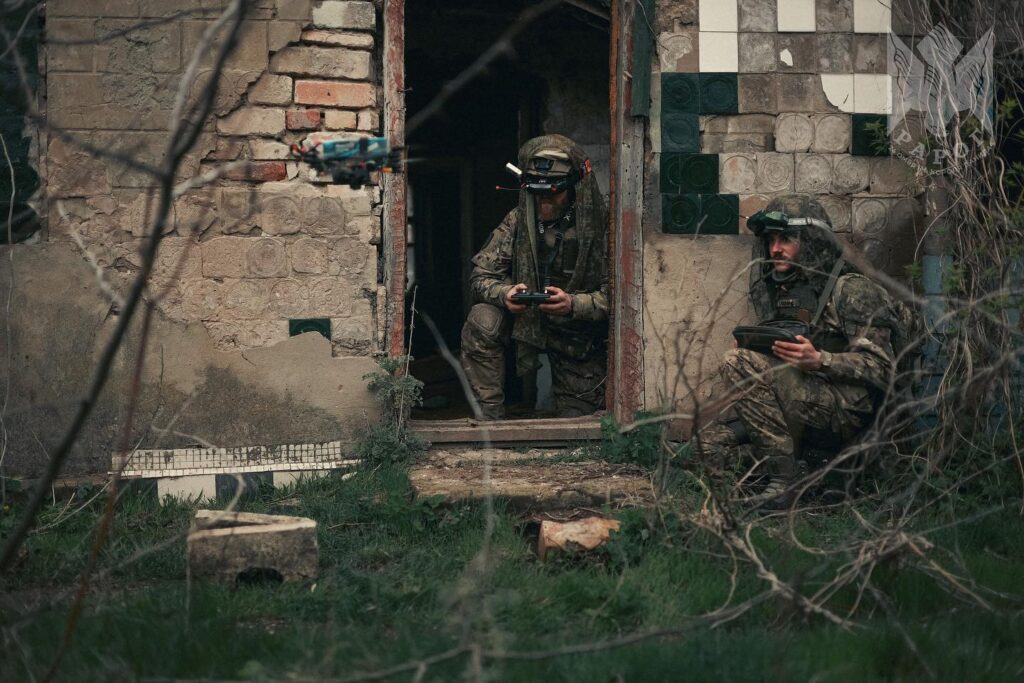
Ukraine's Armed Forces are forming the 446th Separate Unmanned Systems Brigade, which is recruiting servicemembers while formation continues, MilitaryLand reported. The new unit joins a force that hit 32,485 Russian personnel over the summer alone, the Unmanned Systems Forces (SBS) reported on 1 September.


Ukraine is facing a shortage of military personnel, yet the Armed Forces are forming their second separate unmanned systems brigade this year. The force's commander wants unmanned systems covering the entire front at tactical, operational, and strategic depths.
Military personnel from other units can apply for a transfer through Army+, according to MilitaryLand.

The first of the two was the 445th Separate Unmanned Systems Brigade Chata, whose formation became known in July. Both units are recruiting for posts running from operators of ground robots, FPV, bomber, and interceptor drones to psychological-support officers, analysts, and accountants, Militarnyi reported.
The deployment of such units is part of the Ukrainian Armed Forces' broader effort to increase the number of unmanned systems in the military. Ukrainian drones accounted for about 96% of Russian casualties in March—33,988 of roughly 35,000 killed or severely wounded—Zelenskyy said in April.

The expansion of unmanned systems brigades is part of a broader effort initiated by Robert Brovdi, callsign Madyar, to increase the role of the SBS within Ukraine's Defense Forces, Militarnyi notes.


Brovdi told Reuters in June that he wants to raise the drone forces from about 2.5% of Ukraine's armed forces to 5%, a goal he first stated publicly in September 2025. At that share, the drone units accounted for roughly a third of Russian losses over the previous 12 months, according to figures the force gave Reuters, which said it could not verify them independently.
Then Commander-in-Chief of the Armed Forces of Ukraine Oleksandr Syrskyi described unmanned systems as one of the key factors shaping modern warfare. Current Commander-in-Chief of the Armed Forces of Ukraine Mykhailo Drapatyi stated that one of his priorities is the development and scaling of the unmanned component.
Overall, the SBS struck 58,465 targets in August, its own tally for 1–31 August shows.
Suspect Tyler Robinson to be tried for aggravated murder, felony charge that carries death penalty sentence in Utah
A Utah judge ruled Tuesday that the man accused of killing Charlie Kirk must stand trial for aggravated murder, a felony charge that makes him eligible for the death penalty if convicted.
After several hours of closing arguments in Provo, Utah, judge Tony Graf ruled there is sufficient evidence to try Tyler Robinson, 23, who has been charged with the murder of one of the US right’s most prominent figures.
Continue reading...
© Photograph: Bethany Baker/Pool The Salt Lake Tribune/AP

© Photograph: Bethany Baker/Pool The Salt Lake Tribune/AP

© Photograph: Bethany Baker/Pool The Salt Lake Tribune/AP
Spectacular Villa Aurora, which was nearly destroyed in last year’s fires, leading the recovery as Pacific Palisades emerges from a dark chapter
A hillside villa that served as a cultural hub for German writers and artists fleeing the Nazis and narrowly escaped destruction in last year’s Los Angeles wildfires reopened its doors to the public this weekend, marking the latest milestone in the city’s slow recovery from one of the darkest chapters in its history.
Hundreds of friends of the Villa Aurora, a 1920s Spanish Mediterranean house that has taken on a second life as a cultural center with a fierce commitment to artistic freedom, international dialogue and democracy, crowded into the house on Sunday to mark the resumption of speaker events and artistic residencies.
Continue reading...
© Photograph: Photo by Mike Kelley, Courtesy of Villa Aurora

© Photograph: Photo by Mike Kelley, Courtesy of Villa Aurora

© Photograph: Photo by Mike Kelley, Courtesy of Villa Aurora

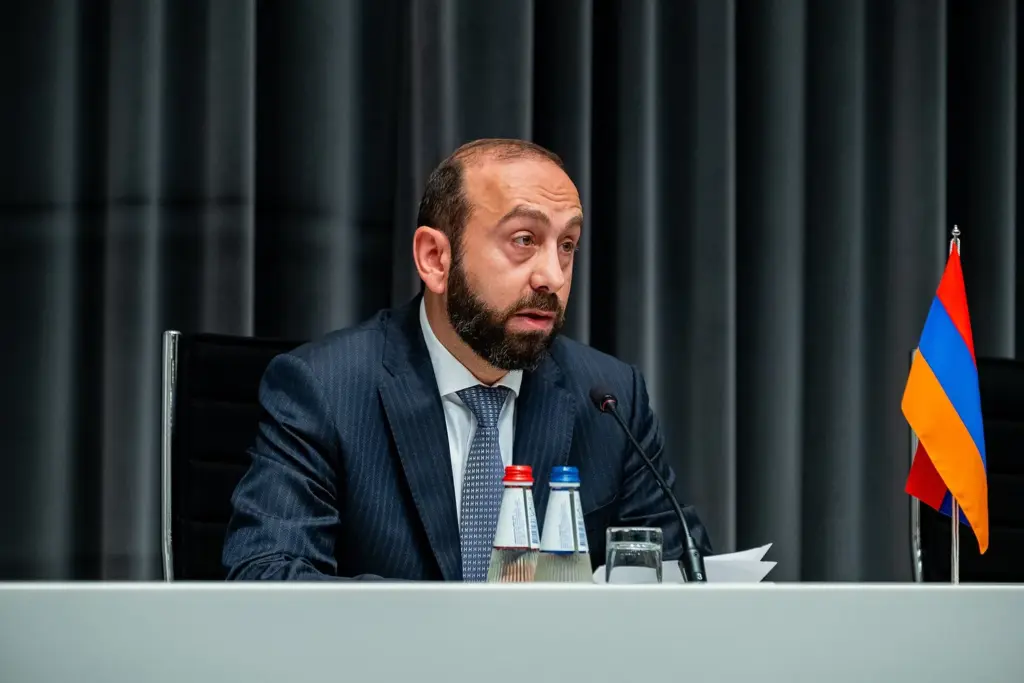
Foreign Minister Ararat Mirzoyan said in an interview aired on 31 August that Russia remains "more than a strategic partner" because existing treaties make the two countries allies, adding that the change in the government program's wording should not be interpreted as an end to that relationship.
Mirzoyan was responding to Armenia's new 2026–2031 government program, which replaces the "strategic ally" and "strategic partnership" language used in the previous five-year plan with a commitment to "transform and deepen" relations with Russia. The previous program referred to an "Armenian-Russian strategic alliance" and pledged to strengthen "allied relations and strategic partnership" with Moscow.
Prime Minister Nikol Pashinyan explained on 27 August that keeping the strategic-partnership language would raise questions about why Russia and the Russia-led Collective Security Treaty Organization had failed to fulfill their security obligations to Armenia in 2022.
Armenia has removed the language of alliance from its government program without ending the treaties, CSTO membership, or energy ties that still bind it to Moscow.
Azerbaijan attacked Armenian territory near Jermuk in September 2022, striking positions inside sovereign Armenia rather than the disputed Nagorno-Karabakh region. Yerevan invoked Article 4 of the Collective Security Treaty, the clause treating an attack on one member as an attack on all, and requested assistance. The alliance sent a fact-finding mission but no troops. requested military assistance. Armenia froze its participation in the CSTO at all levels in 2024, stopped financing it, and has boycotted its summits and military exercises.
Armenian trust in Moscow had deteriorated further by September 2023, when Azerbaijan retook Nagorno-Karabakh after a brief offensive and Russian peacekeepers deployed to the region did not intervene. Armenian officials accused them of failing to protect the enclave's population.
Yerevan has since moved closer to the European Union. In March 2025, Armenia's parliament passed a law to launch the accession process, though Pashinyan has said any actual membership would require a referendum, and Armenia has not applied to join.
Even so, Armenia remains heavily dependent on Russia for energy. Russia supplied the bulk of Armenia's natural gas in 2021, and Armenia imports all of its nuclear fuel from Russia, leaving it effectively reliant on imported fuel for nearly 70% of its electricity, according to the International Energy Agency. The country remains a member of the Russian-led Eurasian Economic Union.
Mirzoyan acknowledged that strains had emerged in recent years, citing statements by Russian officials, coverage in Russian media, and Moscow's restrictions on imports of Armenian goods. He called for relations to be made "healthier" and returned to a course of "mutual respect," and said Yerevan did not want a "war of words" with Moscow. Pashinyan said on 1 September that he expected to meet Russian President Vladimir Putin later that day in Bishkek.

On 1 September 2026, Latvia banned imports of Russian- and Belarusian-made books, clothing, toys, and other consumer goods, including shipments routed through third countries, Latvian Public Media reported.
The restricted goods were worth approximately €12.5 million ($14.5 million) in 2025, or 6.5% of Latvia’s remaining imports from the two countries. Although modest economically, the measure goes beyond EU-wide sanctions and advances Riga’s effort to deny Moscow and Minsk revenue during Russia’s war against Ukraine.
The restrictions cover the following:
Latvia’s Cabinet approved the final product list on 25 August following a Foreign Ministry proposal, completing restrictions parliament authorized on 23 July.
The ban applies regardless of whether the products arrive directly or through another country. Russian- and Belarusian-made goods may still transit Latvia on their way to other EU markets, Meduza reported.
Food and beverages are not covered. The restrictions are scheduled to remain in force until 1 July 2027 and will be reviewed annually.
The Foreign Ministry said the measure is also intended to limit the entry of Russian propaganda material. The targeted products accounted for only 0.05% of Latvia’s total imports in 2025, according to Euronews.
Latvia’s combined imports from Russia and Belarus have already fallen by 91%, from €2.13 billion ($2.47 billion) in 2022 to €193 million ($224 million) in 2025, according to Latvian Public Media. Much of that decline followed the country’s departure from Russian energy supplies and the Baltic states’ disconnection from the Russian and Belarusian electricity grids.
The latest prohibition blocks consumer goods that Brussels has not collectively banned.
Latvian Prime Minister Andris Kulbergs previously pledged to eliminate the country’s remaining commercial links with Russia and Belarus, although pharmaceutical exporters were expected to remain exempt.
In August, Latvia also resumed publishing a monthly register of businesses trading with either country, naming 171 companies. Inclusion on the list does not itself indicate a sanctions violation.

Russia's Zircon runs on two solid-propellant motors, a booster and a sustainer, Ukraine's military intelligence (HUR) said in a breakdown of the missile's structure and components. That leaves no room for the scramjet Moscow advertised, Defense Express wrote.
Russia presented Zircon as a hypersonic missile capable of penetrating modern air defenses. HUR says it instead uses solid-propellant motors, which Defense Express reads as demolishing Moscow's claims about a superweapon. The intelligence agency also listed an Altera programmable chip and a TriQuint amplifier among the missile's components, the same finding investigators keep making in Russian weapons.
HUR published an interactive 3D model of Zircon through its War&Sanctions database, the latest in a series on Russian ballistic weapons. The agency said the recorded maximum speed to date does not exceed Mach 6.8—about seven times the speed of sound—and that the missile does not hold it through the whole flight. Russia claims Mach 9 at some stages of flight. Zircon carries a roughly 120-kilogram warhead.

Defense Express reported that a 2010 contract with solid-fuel specialist NPO Iskra indicates that this propulsion system was planned from the earliest stages of Zircon's development.
Zircon is a Russian anti-ship missile developed for surface ships and nuclear-powered submarines. Russia later adapted it for Bastion-M coastal launchers amid difficulties operating its Black Sea Fleet, HUR said.
Ukrainian forensic experts first confirmed Russia had fired a Zircon at Kyiv in February 2024. Defense Express reported that Ukraine intercepted two more over the capital the following month. Russia has continued using Zircon against land targets: in February 2026, it launched four at Ukraine’s power grid, of which Ukrainian air defenses downed two.
Solid fuel does not make Zircon slow: Mach 6.8 is still hypersonic. A scramjet draws oxygen from the atmosphere to sustain hypersonic flight; Zircon instead flies on self-contained rocket motors. HUR calls it a ballistic missile rather than the hypersonic cruise missile Russia advertised, and notes its onboard computer is the type fitted to all Russian ballistic missiles. Defense Express says the trajectory may be aeroballistic and the motor possibly dual-pulse, given the range Russia wanted from a missile that had to fit a ship's launch silo.
Russian President Vladimir Putin claimed in 2019 that the missile could reach Mach 9 and travel 1,000 kilometers, up from earlier official figures of Mach 6 to 8 and 400 to 500 kilometers. A year earlier, the former head of its manufacturer said it flew on a jet engine, Defense Express said.
In February 2024, Kyiv's forensic institute concluded from the debris that the engine was air-breathing rather than solid-fuel, and Defense Express went further the following month, reporting from its own sources that Russia had built a working scramjet. The outlet has since appended a correction to that article, noting that HUR found a solid-fuel 3L2211 motor from NPO Iskra where the scramjet was supposed to be.
HUR identified two components from US manufacturers inside Zircon: a programmable gate array from Altera, now part of Intel, and a TGA2704 amplifier from TriQuint Semiconductor, now Qorvo. It also mapped 70 companies involved in its production, along with their personnel and foreign manufacturing equipment.
The finding fits a wider pattern. Investigators have found Western electronics in Russia's UMPK glide-bomb kits and traced at least 28 foreign parts from 15 companies in the Kh-101 that struck Kyiv's Okhmatdyt children's hospital.
A 2026 examination found 62 US-made parts in an Iskander missile, while a Russian Geran drone combined a Soviet missile with Western electronics and a Chinese modem.
PEN America study details verbal and physical threats to librarians, funding cuts and proliferation of book bans
Public libraries in the US are “at breaking point” because of an onslaught of political interference, harassment and ideological censorship, a new report published on Tuesday said.
Book bans, cancelled story hours, attacks on librarians, funding cuts and the undoing of libraries’ independent governance are examined by the free expression advocacy group PEN America in its study called Out of Circulation: Expanding Censorship in Public Libraries.
Continue reading...
© Photograph: Juliana Yamada/Los Angeles Times/Getty Images

© Photograph: Juliana Yamada/Los Angeles Times/Getty Images

© Photograph: Juliana Yamada/Los Angeles Times/Getty Images
Girls Gone Bible is on tour in the US, touting a regressive ideal of femininity through discussions of abstinence and mental health struggles
At first glance, the crowd gathering outside a music venue in Red Bank, New Jersey, could have passed for a group of sorority rush hopefuls – or Ella Langley fans on their way to the country star’s show. Most of them were under the age of 30. They wore cowboy boots, maxi sundresses and soft, bouncy blowouts, scrolling on their phones outside the doors as they waited for friends to arrive.
But one accessory gave them away: the Bibles they toted. These women were there to pray.
Continue reading...
© Photograph: Jessie Wardarski/AP

© Photograph: Jessie Wardarski/AP

© Photograph: Jessie Wardarski/AP
Questions over Trump’s ballroom and other structures might not feel urgent. But when his reign ends, Trumpism must be repudiated
On Monday, a majority on the supreme court found a technical way to overrule a lower court’s imperative to stop work, while not taking a stance on whether the whole enterprise might be illegal to begin with. Preservationists, the majority held, appear to lack legal grounds for filing a suit blocking Trump’s ballroom; that means construction will proceed, even if none other than John Roberts, in a dissent, held that “those responsible” were breaking the rules in deciding “what to build up at the People’s House”. The solicitor general, John Sauer, is on record claiming that 65% of the project is completed (of course, he might have exaggerated – such things are known to have happened in Trump administrations). Either way, it is thus likely that there will be a massive structure next to the original White House; and, given that the ruling will embolden the president dramatically to change Washington DC’s landscape by spending money never approved by Congress, we might be cursed with a triumphal arch as well. All of which raises the question: what to do with a monstrous architectural legacy in post-Trump America?
Some might dismiss the question as a bit of a luxury problem. After all, a war that also demonstrates the ongoing disempowerment of Congress keeps dragging on; ICE continues its cruel day-to-day work; Trump is trying every tactic to make the midterms go his way. But the built environment, and especially the civic landscape of a capital, is never just an afterthought. Buildings and monuments make values visible, as the philosopher Susan Neiman once put it. And the decision to leave Trump’s structures in place as if his reign had just been another normal era in US history is not neutral – just like leaving Confederate monuments in place is not neutral.
Jan-Werner Müller is a Guardian US columnist and a professor of politics at Princeton University
Continue reading...
© Photograph: Manuel Balce Ceneta/AP

© Photograph: Manuel Balce Ceneta/AP

© Photograph: Manuel Balce Ceneta/AP
First big storm of season could reach hurricane force and is expected to bring potentially heavy rains and flooding
Tropical Storm Edouard headed toward the US Gulf coast early on Tuesday and was expected to strengthen significantly – possibly reaching hurricane force – before bringing potentially heavy rains and flooding into parts of Texas and Louisiana.
The storm was upgraded on Monday night from a tropical depression, and forecasters with the National Hurricane Center (NHC) expect it will make landfall in Texas later on Tuesday.
Continue reading...
© Photograph: NOAA/AP

© Photograph: NOAA/AP

© Photograph: NOAA/AP

Indonesia's Foreign Ministry is verifying reports that Russia recruited one of its citizens into its armed forces to fight against Ukraine, the Indonesian state news agency Antara reported on 31 August. Ukraine named eight Indonesians serving in the Russian army.
Indonesian diplomatic missions are running the verification together with other government agencies, Foreign Ministry spokesperson Yvonne Mewengkang said on 31 August. She said information on the man's identity, citizenship status, and recruitment process "still requires further confirmation." Mewengkang added that Indonesia would not treat a confirmed enlistment as anything the state endorsed or authorized.
Russia feeds foreign recruits into the illegal war it started against Ukraine. The Indonesian government is checking whether its nationals were trafficked, misled, or hired through fake vacancies before they ended up in uniform. Anyone shown to have been deceived that way will get whatever protection Indonesian law allows, Mewengkang said.
Indonesian law contains clear provisions on citizens who join foreign militaries, and the consequences are severe, including the potential loss of Indonesian citizenship once the facts have been fully verified, according to the ministry.
Ukraine's Foreign Intelligence Service reported on 27 August that it has obtained documents on at least eight Indonesian citizens recruited into the Russian army. Recruiters offer high pay, non-combat work, and fast-tracked Russian citizenship, and many of those who sign have no idea where they will be sent, the service said.

Each foreigner fills a personnel gap at the front and doubles as propaganda about supposed global support for the war, according to the same report.
Kyiv had documented the identical model working earlier on citizens of Nepal, Cuba, Kenya, and India.
Ukrainian intelligence data show that Russia uses the recruitment of foreigners to fill out its personnel. Russia has taken in at least 27,000 foreign nationals from more than 130 countries since February 2022, a joint report by the International Federation for Human Rights and Truth Hounds found in April.
More than a quarter of the 459 Peruvians who joined Russian forces are dead or unaccounted for, official figures show, with the missing far outnumbering the confirmed dead. A Colombia-registered recruiter sent Peruvians into the war on a welcome bonus that never arrived.

India has confirmed cases among its own nationals, and Ukrainian intelligence has counted hundreds of dead Africans in Russian units. Ghana accused Russia of luring its citizens into the war after Kenya and South Africa raised the same complaint.
Rollback of ‘roadless rule’ expected to benefit companies US Forest Service chief, Tom Schultz, previously lobbied for
Donald Trump this month announced plans to rescind a landmark rule that has protected old-growth forests in the US for 25 years. If finalized, the rollback is expected to benefit the companies that Tom Schultz, chief of the US Forest Service, represented in his previous roles as a timber industry lobbyist and executive, according to research by consumer advocacy non-profit Public Citizen.
The Roadless Area Conservation Rule, more commonly known as the “roadless rule”, was adopted in 2001 to limit development in roughly 45m acres of national forest. Industry interests and Republican representatives have long lobbied for the rule’s rescission, which would open up those swaths of untouched land to road construction, drilling and logging.
Continue reading...
© Photograph: The Washington Post/Getty Images

© Photograph: The Washington Post/Getty Images

© Photograph: The Washington Post/Getty Images