A global reporting effort by The New York Times included many twists and turns, from surprising photos and shipment records to a big break through astonishing tips from sources.
A global reporting effort by The New York Times included many twists and turns, from surprising photos and shipment records to a big break through astonishing tips from sources.
“I was unfaithful to my wife,” Jensen Huang, Nvidia’s chief executive, said in a message to the company. “My actions hurt her and our children. There is no excuse for what I did. I am deeply sorry.”
Oscar-nominated director delivers a thoroughly unserious biopic, wasting Christian Bale and Sienna Miller’s talentsJohn Madden was a beloved American original, the burly football coach who segued easily from Super Bowl burnout to television darling to the last name in gaming as the NFL was overtaking baseball as the national pastime. When he wasn’t crashing into family rooms on football Sundays and Thanksgivings to break down the game’s rough complexities into fun-sized morsels, he was pressing
Oscar-nominated director delivers a thoroughly unserious biopic, wasting Christian Bale and Sienna Miller’s talents
John Madden was a beloved American original, the burly football coach who segued easily from Super Bowl burnout to television darling to the last name in gaming as the NFL was overtaking baseball as the national pastime. When he wasn’t crashing into family rooms on football Sundays and Thanksgivings to break down the game’s rough complexities into fun-sized morsels, he was pressing flesh with everyday Americans while barnstorming the country in his Madden cruiser – the coach bus he depended on to compensate for his well-documented fear of flying.
That the Madden video game franchise outlived the avuncular Minnesotan, whose death at age 85 in 2021 was mourned throughout the sport, is as much a testament to his singular knack for teaching the game’s fundaments as it is to his willingness to bring his classroom to students, wherever they might huddle. But Madden, a new Amazon biopic that can’t decide whether it’s serious or slapstick, has drawn all the wrong lessons.
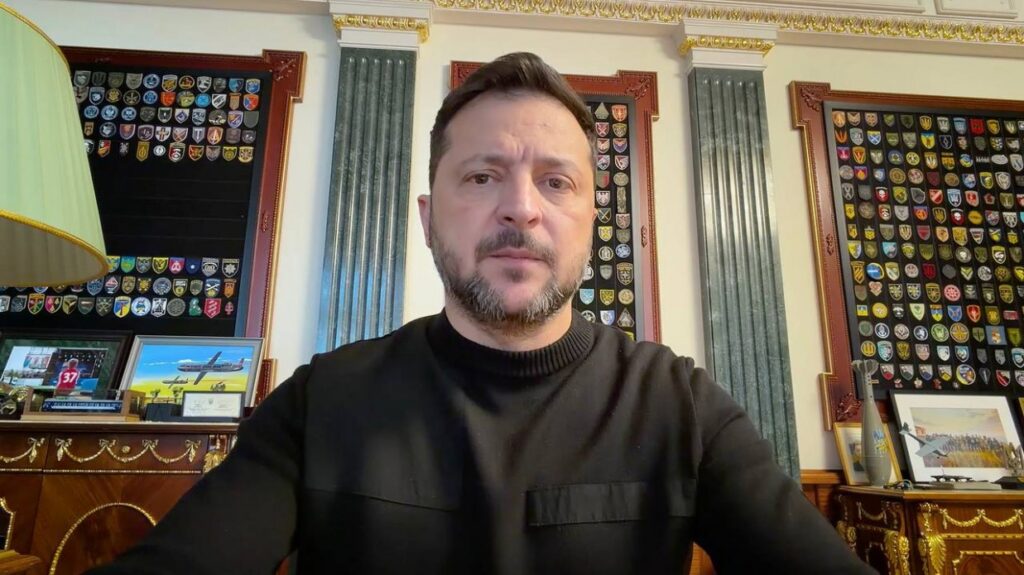
Ukraine must put a "just and tough" end to Khimprom, a drug cartel led by a Russian citizen, President Volodymyr Zelenskyy wrote on 17 November. He discussed the cartel investigations with Ukraine's acting top prosecutor, after an anti-corruption case that caught the cartel's leader on tape reached the security service and police.
Russia keeps fighting Ukraine along the front line and hitting Ukrainian cities with drones and missiles, while Kyiv negotiates to join the European Union. Br
Ukraine must put a "just and tough" end to Khimprom, a drug cartel led by a Russian citizen, President Volodymyr Zelenskyy wrote on 17 November. He discussed the cartel investigations with Ukraine's acting top prosecutor, after an anti-corruption case that caught the cartel's leader on tape reached the security service and police.
Russia keeps fighting Ukraine along the front line and hitting Ukrainian cities with drones and missiles, while Kyiv negotiates to join the European Union. Brussels ties those talks to the rule of law, and Kyiv can't close any negotiating chapter until it meets interim targets on courts, corruption, policing, and democratic institutions. In October, Kyiv and Brussels agreed to set up a joint task force to speed up the rule-of-law and anti-corruption reforms that gate membership. A cartel accused of trying to buy people in the very agencies meant to stop it shows what those reforms are up against.
The president wants punishment nobody can dodge
Zelenskyy and acting Prosecutor General Anton Kovalskyi went over the work of the Prosecutor General's Office in the two months since Kovalskyi took charge, and the investigations into what the president called the Khimprom gang.
"The inevitability of punishment is the principle that must become the best answer to the criminal activity of Khimprom and the people linked to this structure," Zelenskyy wrote.
Acting Security Service of Ukraine (SBU) head Oleksandr Poklad proposed internal steps to strengthen the service, Zelenskyy wrote in a separate post on 17 November. The president ordered a plan for them and said there were also answers to "weighty personnel questions."
A Russian-built drug network inside Ukraine
In April, Ukraine's National Police tied Khimprom to U420, a chain of shops it says sold drugs, and said the cartel's network had grown to 105 distribution points across the country. Khimprom's leader is a Russian citizen known as "Mexican," and police counted more than 30 violent crimes the gang committed or ordered.
Why now: the trail reached the security service
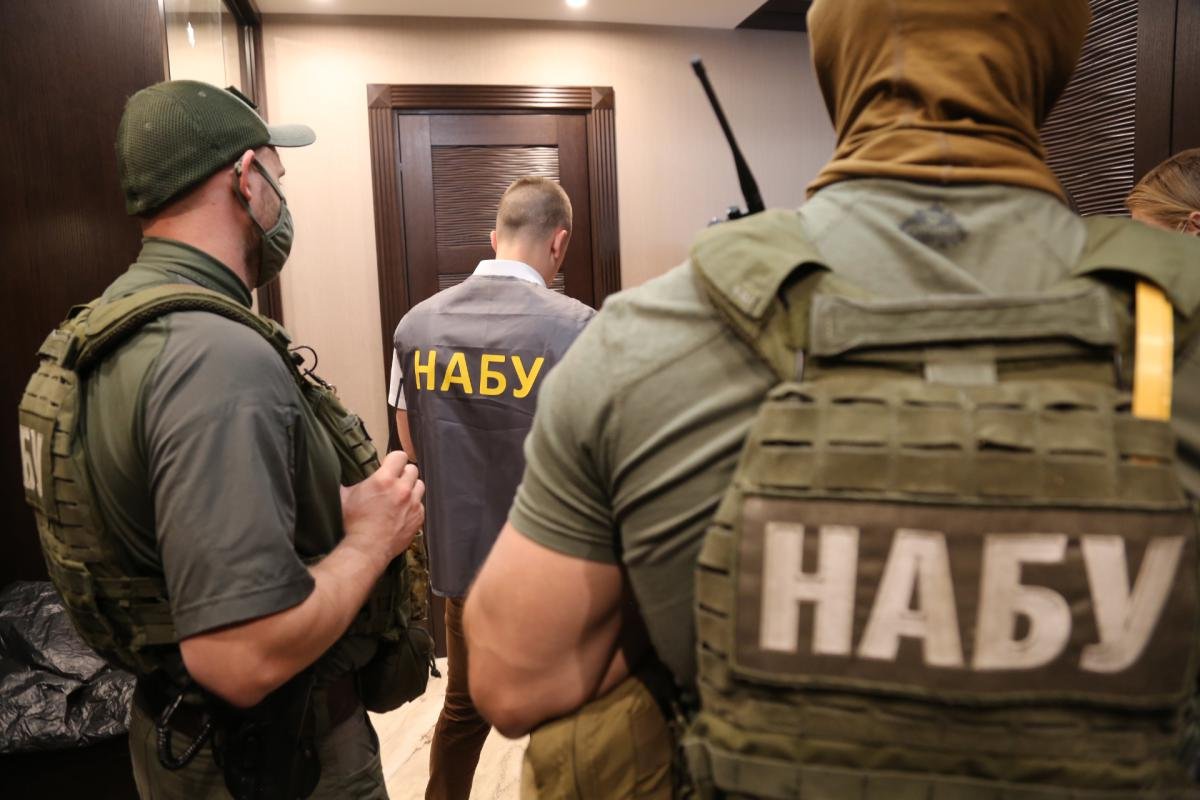
On 4 November, detectives from the National Anti-Corruption Bureau (NABU) detained SBU Major General Serhii Duka, suspected of shielding a group that investigators say ran or protected scam call centers, drug sales, and a fake-euro workshop. Two police officers are also among the five people NABU charged. On the investigators' recordings in the same case, Khimprom's leader offered $2 million to remove Dmytro Torhalo, the police's anti-drug chief, investigative outlet Slidstvo.Info reported. Torhalo confirmed the cartel leader had threatened him. The leader also discussed bribing then-Interior Minister Ihor Klymenko, a NABU unit head said.
Serhii Duka (center), a general in the Security Service of Ukraine (SBU), being detained by anti-corruption detectives at a cottage in Roslavychi, Kyiv Oblast, Ukraine, 4 November 2026. Photo: DR, via NV
Duka left custody on 13 November after 1,612 payments covered the bail the court had set, Ukrainska Pravda reported, citing its sources. The outlet's sources had said SBU officers in the regions were pressed to pay. Duka told a parliamentary inquiry on 18 November that nobody had forced anyone to collect the money.
On 7 November, Zelenskyy called that week's news about the SBU "frankly shameful" and asked lawmakers to make security officers declare their wealth again. He also said Kyiv had raised Khimprom with the United States. On 10 November, Kovalskyi ordered an internal check on whether prosecutors helped return property seized from scam call centers and U420, his office said.
Explore further
Investigators say prosecutors shielded scam call centers. Their office has now fired eight people and is checking how its ex-chief left Ukraine
On Friday, Zelenskyy told reporters the cartel had already entered Poland and was trying to enter Germany, and that Ukraine needed foreign law enforcement, primarily the US, to stop it, Interfax-Ukraine reported. Anti-corruption officials told him they had nothing linking Klymenko, now secretary of Ukraine's National Security and Defense Council, to Khimprom, he said.
Police officers at a U420 shop, part of the chain linked to the Khimprom drug cartel. Photo: National Police of Ukraine
A prosecutor's office with a record of its own
Kovalskyi, previously Khmelnytskyi Oblast's chief prosecutor, became acting prosecutor general by decree on 17 September. His predecessor, Ruslan Kravchenko, left Ukraine while anti-corruption agencies investigated alleged protection of scam call centers.
The residents of the Hollywood Hills have sued Los Angeles, saying the city has not done enough to address the dangerous conditions created by tourists vying for a glimpse of the iconic Hollywood sign.
The residents of the Hollywood Hills have sued Los Angeles, saying the city has not done enough to address the dangerous conditions created by tourists vying for a glimpse of the iconic Hollywood sign.
The residents of the Hollywood Hills have sued Los Angeles, saying the city has not done enough to address the dangerous conditions created by tourists vying for a glimpse of the iconic Hollywood sign.
The residents of the Hollywood Hills have sued Los Angeles, saying the city has not done enough to address the dangerous conditions created by tourists vying for a glimpse of the iconic Hollywood sign.
The espionage concerns that led to Jensen Huang’s ouster at Nvidia highlight a core challenge to diplomacy between Washington and Beijing on A.I. advancement.
The espionage concerns that led to Jensen Huang’s ouster at Nvidia highlight a core challenge to diplomacy between Washington and Beijing on A.I. advancement.
The espionage concerns that led to Jensen Huang’s ouster at Nvidia highlight a core challenge to diplomacy between Washington and Beijing on A.I. advancement.
The espionage concerns that led to Jensen Huang’s ouster at Nvidia highlight a core challenge to diplomacy between Washington and Beijing on A.I. advancement.
The airing of a fight over advanced A.I. chips shows how much the Nvidia scandal has deepened fissures inside the government, just as President Trump heads to a critical meeting with his Chinese counterpart.
The airing of a fight over advanced A.I. chips shows how much the Nvidia scandal has deepened fissures inside the government, just as President Trump heads to a critical meeting with his Chinese counterpart.
President Trump acknowledged on Monday that the Treasury and commerce secretaries had been at odds over how hard to crack down on a loophole that has allowed China to access advanced A.I. chips through data centers in other countries.
So far, President Trump has indicated that he does not plan to press the Chinese leader about U.S. intelligence findings that a Chinese spy targeted Jensen Huang.
So far, President Trump has indicated that he does not plan to press the Chinese leader about U.S. intelligence findings that a Chinese spy targeted Jensen Huang.
When President Trump travels to China for another meeting with Xi Jinping at the Asia-Pacific Economic Cooperation, Jensen Huang is not expected to be at his side.
Estonia will close all road border crossing points with Russia from 1 December following an attempted sabotage attack against an Estonian defense industry company that Tallinn says was ordered by Russia's military intelligence service, the GRU, Estonian Foreign Minister Margus Tsahkna announced on 15 November.
The decision follows an attempted arson attack on Threod Systems, an Estonian company that manufactures reconnaissance and attack drones. Estonian authorities say the operation wa
Estonia will close all road border crossing points with Russia from 1 December following an attempted sabotage attack against an Estonian defense industry company that Tallinn says was ordered by Russia's military intelligence service, the GRU, Estonian Foreign Minister Margus Tsahkna announced on 15 November.
The decision follows an attempted arson attack on Threod Systems, an Estonian company that manufactures reconnaissance and attack drones. Estonian authorities say the operation was organized by Russian intelligence, making the incident the latest in a series of suspected Russian sabotage operations targeting European security and defense infrastructure.
Estonia has three road crossings with Russia: Narva, Luhamaa, and Koidula. The closure is intended to limit Russia's ability to conduct hostile activities inside Estonia and prevent sanctions circumvention, Tsahkna said.
The attempted attack took place during the early hours of 14 November at Threod Systems' premises in Viimsi, north of Tallinn. The company produces long-range reconnaissance and attack drones, as well as electro-optical intelligence, surveillance, and reconnaissance systems.
According to Estonia's Internal Security Service, Russian military intelligence ordered the operation. Eight Latvian citizens were detained in connection with the attempted attack.
The suspects allegedly tried to break into the company's property to cause an explosion and set the building on fire. Threod Systems' security personnel and Estonian law enforcement prevented the attack, averting significant damage.
Prime Minister Kristen Michal said the operation was intended to make Estonia afraid, weaken its resolve, and undermine its support for Ukraine, according to ERR. He described it as part of Russia's broader hybrid warfare campaign against Europe.
Following clear evidence that Russia’s military intelligence service GRU, ordered a sabotage attack against an Estonian defence industry company, Estonia will close all Estonian-Russian border crossing points as of 1 December.
Russia must understand that hostile actions against…
The attempted attack on Threod Systems comes amid a wider campaign of suspected Russian sabotage and other covert operations across Europe. Targets have included defense manufacturers supplying Ukraine, military logistics networks, energy facilities, communications infrastructure, and critical undersea cables.
The broader pattern includes arson, attempted bombings, espionage, cyberattacks, suspicious drone activity, and operations designed to disrupt infrastructure and intimidate countries supporting Ukraine.
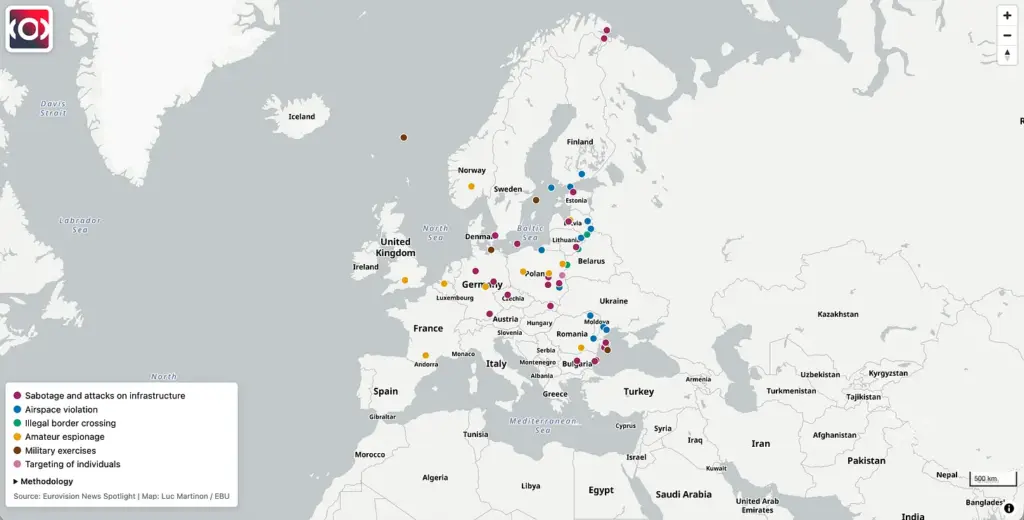
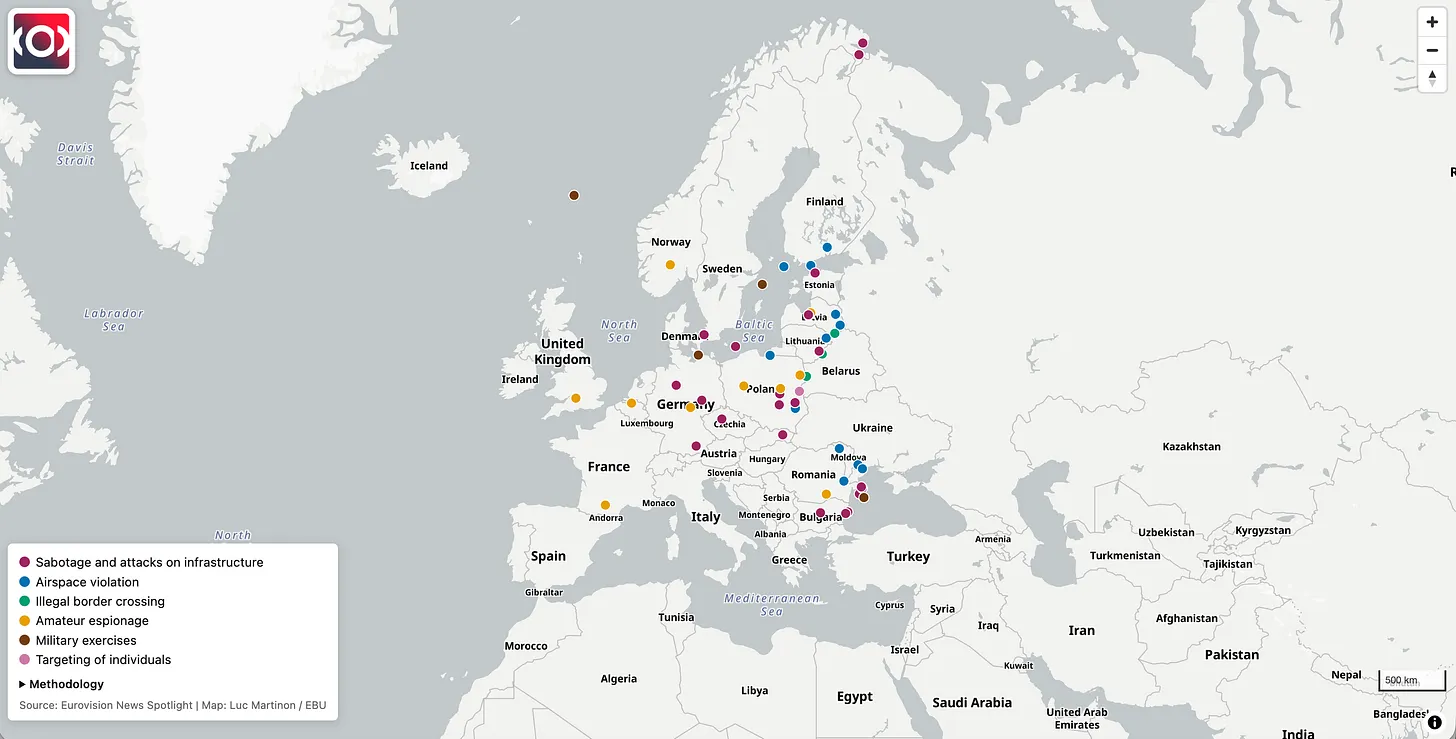
A recent investigation by 17 European public broadcasters documented hundreds of reported hybrid incidents linked to Russia across 17 countries between April and October 2026. European security officials have warned that these operations aim to weaken support for Ukraine, disrupt defense production and supply chains, and undermine public confidence in governments' ability to protect their countries.
Physical hybrid incidents linked to Russia in 17 European countries, 1 April to 15 October 2026; many points stand for clusters of incidents. Map: Luc Martinon/ EBU, Eurovision News Spotlight
Russia denies responsibility for such operations.
Estonia tightens security along Russian border
Tsahkna said he had informed his counterparts in Finland, Latvia, and Lithuania about the border closure.
The government says closing them will make it harder for Russian intelligence operatives to exploit cross-border movement and will also help prevent sanctions circumvention.
The decision adds to Estonia's broader efforts to restrict Russia's ability to operate inside the country while maintaining its support for Ukraine. Tsahkna said Estonia would continue responding to attempts to intimidate or undermine its security.
As retirees live longer, governments need to spend more on pensions. That makes it harder to fund other services, spurring protests like those in France.
As retirees live longer, governments need to spend more on pensions. That makes it harder to fund other services, spurring protests like those in France.
U.S. intelligence agencies believe a woman who had an affair with Jensen Huang was a Chinese asset. But there is much more that they are still assessing about her role.
U.S. intelligence agencies believe a woman who had an affair with Jensen Huang was a Chinese asset. But there is much more that they are still assessing about her role.
U.S. intelligence agencies believe a woman who had an affair with Jensen Huang was a Chinese asset. But there is much more that they are still assessing about her role.
U.S. intelligence agencies believe a woman who had an affair with Jensen Huang was a Chinese asset. But there is much more that they are still assessing about her role.
The 46th president defends his decision to run for re-election, which many in his party now regard as a mistake, and revisits the disastrous debate that forced him to end his campaign.
The 46th president defends his decision to run for re-election, which many in his party now regard as a mistake, and revisits the disastrous debate that forced him to end his campaign.
Former President Joseph R. Biden writes in his memoir that he felt he had a handle on the challenges facing him before he dropped out of his run for re-election.
Polish prosecutors have sent a Ukrainian citizen to trial for helping Russian intelligence attack rail line No. 7, which runs from Warsaw to Poland's border with Ukraine, the National Prosecutor's Office said on 12 November. Volodymyr B. faces life in prison.
Russia's war against Ukraine comes with a sabotage campaign against the countries that help it, and the railways that carry help to Ukraine are among its targets. In November 2025, Poland blamed Moscow for an explosion on the Warsa
Polish prosecutors have sent a Ukrainian citizen to trial for helping Russian intelligence attack rail line No. 7, which runs from Warsaw to Poland's border with Ukraine, the National Prosecutor's Office said on 12 November. Volodymyr B. faces life in prison.
Russia's war against Ukraine comes with a sabotage campaign against the countries that help it, and the railways that carry help to Ukraine are among its targets. In November 2025, Poland blamed Moscow for an explosion on the Warsaw–Lublin line, sent 10,000 troops to guard critical infrastructure, and closed Russia's last consulate in the country. Russia's services ran the attacks through Ukrainian citizens. That lets Moscow hit the route Ukraine relies on and, at the same time, feed Poles a story about the Ukrainians who fled its war. Reports of hate crimes against Ukrainians in Poland rose by over 30% in the first half of this year.
A ride to the tracks
According to the indictment, in September 2025 Volodymyr B. drove another Ukrainian, Yevhenii I., to the areas of Mika and Gołąb, two villages on line No. 7 southeast of Warsaw. The trip let Yevhenii I. scout the terrain and pick the spots for the explosives, a camera recording the tracks, and a metal element on the rails, prosecutors say.
He is charged with taking part in Russian intelligence activity against Poland and with aiding two Ukrainian citizens, Oleksandr K. and Yevhenii I., in sabotage on railway infrastructure. The attackers aimed to seriously intimidate many people and sway public opinion, the indictment says.
Explore further
17 public broadcasters mapped Russia’s hybrid war on Europe. Germany: four dots
A blast under a freight train
On 15 November 2025, Oleksandr K. and Yevhenii I. placed explosives on the tracks at Mika and set them off under a passing freight train, prosecutors say. Between 1 October and 16 November, the two men also fixed two specially made metal elements to the tracks at Gołąb that could have derailed passing trains.
The Mika charge was military-grade C4, set off through a 300-meter cable, Prime Minister Donald Tusk said at the time. It damaged the floor of a freight wagon but did not derail the train. Tusk said Moscow wanted to spread panic and anti-Ukrainian sentiment in Poland.
A broken rail under a freight wagon near Mika station, Garwolin County, Poland, November 2025. Photo: miejskireporter.pl
Both men left Poland on 16 November 2025. Tusk said they crossed into Belarus at the Terespol border crossing. Poland has issued arrest warrants, European arrest warrants, and Interpol red notices for them.
In custody since November 2025
Officers of Poland's Central Bureau of Investigation detained Volodymyr B. on 20 November 2025. Two days later, prosecutors charged him, and a court ordered him held in custody, the National Prosecutor's Office said then.
The rail route from Warsaw through Lublin toward Ukraine's border, with the blast site near Mika, southeast of Warsaw, Poland
The indictment went to the Regional Court in Warsaw on 28 October. The investigation, run by national prosecutors with Poland's Internal Security Agency and the Central Bureau of Investigation, continues. In November 2025, prosecutors said they were working to identify everyone else involved.
US commerce secretary faces sack as questions emerge over senior Trump officials’ knowledge of alleged Chinese spy’s ties to Jensen HuangUS politics – live updatesThe US commerce secretary, Howard Lutnick, is facing growing pressure over his apparent lack of action over the Nvidia spying scandal as other Trump administration officials publicly raise questions over his decisions.Scott Bessent, the US treasury secretary, blamed Lutnick’s commerce department for the fact the US had not imposed expo
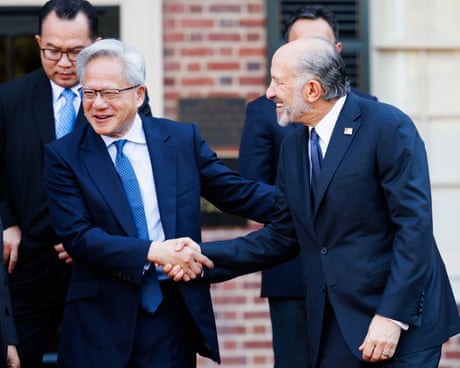
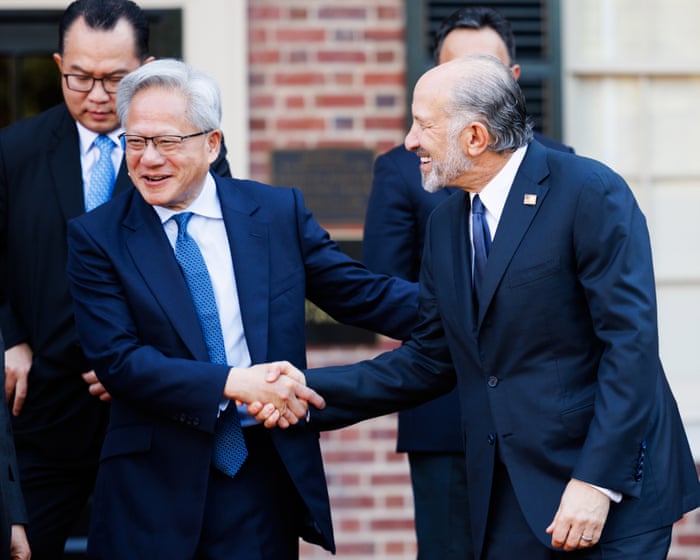
The US commerce secretary, Howard Lutnick, is facing growing pressure over his apparent lack of action over the Nvidia spying scandal as other Trump administration officials publicly raise questions over his decisions.
Scott Bessent, the US treasury secretary, blamed Lutnick’s commerce department for the fact the US had not imposed export restrictions on certain Nvidia chips to China.
Critics say Howard Lutnick, the commerce secretary, and his department have shielded Nvidia as concerns have grown over A.I. chip sales to firms like Megaspeed.
Critics say Howard Lutnick, the commerce secretary, and his department have shielded Nvidia as concerns have grown over A.I. chip sales to firms like Megaspeed.
Howard Lutnick has frequently clashed with top officials over how to regulate sales of advanced technology to Asia, particularly Nvidia’s chip sales in the region.
Critics say Howard Lutnick, the commerce secretary, and his department have shielded Nvidia as concerns have grown over A.I. chip sales to firms like Megaspeed.
Critics say Howard Lutnick, the commerce secretary, and his department have shielded Nvidia as concerns have grown over A.I. chip sales to firms like Megaspeed.
Howard Lutnick has frequently clashed with top officials over how to regulate sales of advanced technology to Asia, particularly Nvidia’s chip sales in the region.
The revelations surrounding Jensen Huang, who resigned from Nvidia over extramarital affairs, inspired social media posts using the very technology his company helped develop.
The revelations surrounding Jensen Huang, who resigned from Nvidia over extramarital affairs, inspired social media posts using the very technology his company helped develop.
Ukraine meets Russian ballistic missiles with “empty Patriot systems” because the interceptors it seeks keep going to the Middle East, leaving it in most cases with nothing to shoot the missiles down, President Volodymyr Zelenskyy told Denmark’s parliament on 11 November.
Ukraine needs Patriots and the European SAMP/T to stop Russia’s ballistic missiles, which Russia fires at Ukrainian cities and at the power grid that keeps people warm in winter. Those strikes are intensifying. On 7 No
Ukraine meets Russian ballistic missiles with “empty Patriot systems” because the interceptors it seeks keep going to the Middle East, leaving it in most cases with nothing to shoot the missiles down, President Volodymyr Zelenskyy told Denmark’s parliament on 11 November.
Ukraine needs Patriots and the European SAMP/T to stop Russia’s ballistic missiles, which Russia fires at Ukrainian cities and at the power grid that keeps people warm in winter. Those strikes are intensifying. On 7 November, Russia launched 36 missiles on ballistic paths in one night, and Ukraine downed four, Zelenskyy wrote. That single night equaled about a quarter of October’s total. Russia fired ballistic missiles again on the night of 12 November, and Ukraine’s Air Force reported downing none of them. The Patriot shortage itself is months old: in October, Ukraine downed 11 of the roughly 150 ballistic missiles Russia fired, about 7%, according to Air Force figures. What is new is that Europe’s backup appears to be thinning too.
A day earlier, Italian Defense Minister Guido Crosetto told reporters that Italy has Aster missiles it needs to keep for itself, and declined to say what Rome’s new aid package for Kyiv contains. The Asters set aside for Ukraine are reportedly exhausted, and Rome may in effect suspend deliveries, as Germany did with Patriot systems, the Italian daily Il Sole 24 Ore reported on 11 November.
What Ukraine still has against ballistic missiles
Ukraine’s air force has two SAMP/T batteries, and few Asters reach them. Ukraine has received about 12 Patriot missiles a month from the US this year, Zelenskyy told journalists on 27 October. The 500 PAC-3s Washington approved may take years to arrive.
At the same time, Kyiv is going after the launchers. Ukrainian forces have hit eight Russian ballistic missile systems since September and destroyed three, a minister said in October. Ukraine has also asked the E5 group, which includes Italy and Germany, to consider handing over 10% of their Patriot and IRIS-T interceptors in exchange for deliveries Kyiv has already contracted, Ukraine’s Defense Ministry said on 26 October.
Zelenskyy pitches FREYJA in Copenhagen
In the same speech, Zelenskyy urged Danish lawmakers to back FREYJA, the joint European anti-ballistic program, which he said 11 countries have joined. Its office is ready to open in Copenhagen together with Norway, he said. Ukraine says it has finished its part of the project, while partners are still working on their share, and the program runs on an early-2027 clock.
Nvidia CEO Jensen Huang’s affair must be the costliest fling in human history – and a preview of what awaits when the tech bubble burstsOne thing we all know about the tech billionaires is they are super-smart. We know this largely because they never stop telling us. The “cognitive elite”, to use their favoured phrase, are entitled to shape our future without our say-so. When Elon Musk goes hiring, he wants “super-high-IQ small-government revolutionaries”. Long before they got private jets, what
Nvidia CEO Jensen Huang’s affair must be the costliest fling in human history – and a preview of what awaits when the tech bubble bursts
One thing we all know about the tech billionaires is they are super-smart. We know this largely because they never stop telling us. The “cognitive elite”, to use their favoured phrase, are entitled to shape our future without our say-so. When Elon Musk goes hiring, he wants “super-high-IQ small-government revolutionaries”. Long before they got private jets, what fuelled these boys was faith in their own brainpower. As a teenager, Jensen Huang wooed his future wife, Lori, thus: “If you do homework with me every Sunday, I promise you you’ll get straight As.”
Jensen Huang, the Nvidia chief executive, and Alice Huang in Taipei, Taiwan, in 2024. American officials say that a spy agency recruited her to collect intelligence on Mr. Huang.
That the United States suspected Nvidia’s leader was a Chinese spy target underscores the deep distrust between the two powers, even as their leaders try to stabilize ties.
That the United States suspected Nvidia’s leader was a Chinese spy target underscores the deep distrust between the two powers, even as their leaders try to stabilize ties.
A lesson from the US midterms is that electorates are repelled by the arrogant mega-rich buying democracy. This is a fight Labour can afford to pick For most people, $224m (£168m) is a lot of money, especially if you spend it and get nothing in return. But Elon Musk is richer than most people. In fact, there is no one richer.As the wealthiest of the US’s tech oligarchs Musk could afford to blow huge sums on a failed bid to prop up Republican candidates in Texas, his adoptive home state, in last
A lesson from the US midterms is that electorates are repelled by the arrogant mega-rich buying democracy. This is a fight Labour can afford to pick
For most people, $224m (£168m) is a lot of money, especially if you spend it and get nothing in return. But Elon Musk is richer than most people. In fact, there is no one richer.
As the wealthiest of the US’s tech oligarchs Musk could afford to blow huge sums on a failed bid to prop up Republican candidates in Texas, his adoptive home state, in last week’s midterm congressional elections. He is reported to have spent a further $250m failing to engineer results in other races.
Before Jensen Huang boarded Air Force One en route to Beijing, the president was reminded of intelligence showing that he was in a relationship with a woman believed to be a Chinese spy.
Before Jensen Huang boarded Air Force One en route to Beijing, the president was reminded of intelligence showing that he was in a relationship with a woman believed to be a Chinese spy.
Jensen Huang, Nvidia’s chief executive, during President Trump’s state visit to Beijing in May. He was not included initially, but joined at the last minute at Mr. Trump’s invitation.
Ukrainian forces likely attacked Russia's 123rd Aircraft Repair Plant in Staraya Russa overnight, Ukrainian Telegram channel Exilenova+ reported. The plant services the Il-76 transports and Il-78 refueling tankers of Russia's air force, and drones already hit it in March. Before dawn, blasts also shook occupied Sevastopol, while a railway bridge collapsed under a freight train in Russia's north.
Ukraine's long-range drones no longer go only after Russian oil. Over the past year, they ha
Ukrainian forces likely attacked Russia's 123rd Aircraft Repair Plant in Staraya Russa overnight, Ukrainian Telegram channel Exilenova+ reported. The plant services the Il-76 transports and Il-78 refueling tankers of Russia's air force, and drones already hit it in March. Before dawn, blasts also shook occupied Sevastopol, while a railway bridge collapsed under a freight train in Russia's north.
Ukraine's long-range drones no longer go only after Russian oil. Over the past year, they have also hit factories that make parts for Russian warplanes and plants that overhaul its transport and radar aircraft. Russia flies a largely Soviet-era fleet that is hard to replace, and much of it already waits for repairs. Leaked Russian documents showed that 143 of its 368 military Antonovs needed repair. Every hit on a repair line works against the planes Moscow uses to move troops and cargo, refuel bombers, and watch the sky.
Novgorod's governor admits an industrial site was damaged
A series of explosions rang out in Novgorod Oblast. Ukrainian Telegram channel Krymsky Veter said drones hit the plant and started a fire, though the consequences were still unknown. Monitoring channel Supernova+ posted video and reports of fire trucks heading toward the plant.
A series of explosions was heard in Novgorod Oblast.
Ukrainian Defense Forces likely targeted the 123rd Aircraft Repair Plant.
The facility repairs and services military transport aircraft operated by the rf, including Il-76, Il-78 and L-410 aircraft, as well as aircraft… pic.twitter.com/YdAwxMsg3c
Novgorod Oblast Governor Aleksandr Dronov claimed air defenses had repelled a "massive" drone attack. He admitted that an "industrial facility" was damaged but did not name it. Drone debris damaged two dacha houses, and no one was hurt, he added.
Explore further
Ukraine hit a second Russian aviation plant in two days — after Aviastar in Ulianovsk, now the 123rd plant in Novgorod Oblast
Russia's Defense Ministry claimed it downed 155 drones overnight over eight Russian regions, Novgorod Oblast among them, and occupied Crimea. In its daily summary, the ministry also claimed four Rusty Dagger cruise missiles were shot down, without saying where, Russian state news agency RIA Novosti reported. The ministry later deleted that post from its official channel, Exilenova+ said. Ukraine's General Staff has not commented on the Staraya Russa attack.
A fire in Staraya Russa, Novgorod Oblast, Russia, overnight on 10 November 2026. Photo: Krymsky Veter
A repeat target 640 km from Ukraine's border
Staraya Russa lies about 640 km from the Ukrainian border. Its plant repairs and maintains Il-76 military transports, Il-78 aerial refueling tankers, L-410 light transports, and aircraft engines.
Drones already went after it on 17 March. They hit hangars for Il-76 aircraft, and Ukraine's General Staff said an A-50 early warning plane suffered confirmed damage. Atesh partisans said they had burned three electronic warfare towers on the drones' route beforehand.
An Il-76MD under repair at the 123rd Aircraft Repair Plant in Staraya Russa, Novgorod Oblast, Russia, 2015. Photo: fotografersha/LiveJournal
Blasts in occupied Sevastopol and a collapsed bridge in Russia's north
In occupied Sevastopol, locals heard heavy gunfire and explosions near Kamyshova and Kazachya bays and Cape Fiolent before dawn, Krymsky Veter reported. The channel said there was an impact near Kazachya bay. Cape Fiolent hosts two battalions of an anti-aircraft missile regiment, a radar company, and a Black Sea Fleet electronic warfare center, it noted. Russian occupation head Mikhail Razvozhaev claimed eight drones were downed and no city infrastructure was damaged.
A collapsed railway bridge span over the Viled River and derailed tank cars, Arkhangelsk Oblast, Russia, 10 November 2026. Photo: Supernova+
In Arkhangelsk Oblast, a span of a railway bridge over the Viled River collapsed at 05:10 local time and derailed cars of a freight train. Governor Aleksandr Tsybulsky called it an "incident" and said no one was hurt, while passenger trains were held up. The train's tank cars were empty, Dmitry Rozhin, first deputy head of the Arkhangelsk Oblast government, said. Neither official named a cause.
Exilenova+ wrote that sabotage was being considered, which remains unconfirmed. Ukrainian Telegram channel DroneBomber passed on reports that partisans had blown up the bridge.
A fire at the likely impact site in occupied Donetsk, Ukraine, 9 November 2026. Photo: Exilenova+
On the evening of 9 November, a likely missile strike hit a former asphalt-concrete plant in occupied Donetsk, DroneBomber reported. Russian forces probably used it as a base for vehicles and troops, the channel said. Exilenova+ shared video of what it suggested was the moment of the strike.
Ukrainian President Volodymyr Zelenskyy has sent parliament an urgent bill that would make security service officers declare their wealth again, the Verkhovna Rada's website shows. It follows a week of anti-corruption wiretaps in which investigators linked senior security and police officers to a criminal gang. The detectives behind the case now say the public has seen only a small part of it.
Russia's war has put Ukraine's security and police agencies at the heart of national defense,
Ukrainian President Volodymyr Zelenskyy has sent parliament an urgent bill that would make security service officers declare their wealth again, the Verkhovna Rada's website shows. It follows a week of anti-corruption wiretaps in which investigators linked senior security and police officers to a criminal gang. The detectives behind the case now say the public has seen only a small part of it.
Russia's war has put Ukraine's security and police agencies at the heart of national defense, from catching Russian agents to keeping order far from the front. How clean those agencies are also shapes Ukraine's road into the European Union. Brussels ties membership talks to rule-of-law reforms, and its latest roadmap set no date for Kyiv to join. Ukraine and the EU have set up a joint task force to speed up the anti-corruption reforms that gate accession. Watchdogs, though, have warned that the independent anti-corruption agencies Brussels insists on are under strain.
Zelenskyy calls the news shameful and asks for a fast vote
Zelenskyy first spoke about the case in his evening video on 7 November. He called that week's news about the Security Service of Ukraine (SBU) "frankly unpleasant, frankly shameful, absolutely unacceptable things." The service had already dismissed officials, and more personnel decisions would follow, he said. He added that Kyiv had raised the Khimprom drug cartel at the center of the case with the United States. He also asked lawmakers to pass the declarations bill without delay, so that officers' lifestyles and assets are open to checks.
The bill rewrites the anti-corruption law's wartime rules for servicemembers, its text shows. Troops of the Armed Forces, the National Guard, the Border Guard Service, and several other forces could still file within 90 days after martial law ends or they leave the service. For servicemembers in other state bodies, the delay would apply only while they take part in combat. They would have to file within 90 days of leaving it, and a return to combat would not restart that clock.
Some posts would get no delay at all. They include draft offices, military medical boards, and defense procurement, as well as senior jobs such as heads of law enforcement agencies and their deputies. The bill also spells out whose declarations may stay hidden for security reasons and when they must become public, Liga reported, citing its explanatory note. Some servicemembers who haven't filed since 2021 would get 90 days to do so, the outlet said.
Explore further
Ukraine’s prosecutor general resigns as the watchdogs he was appointed to leash close in
Restoring declarations for officers who don't fight is a condition of IMF, EU, and G7 support, and Zelenskyy first promised it on 16 September.
Detectives say the darkest part is still hidden
Oleksandr Abakumov, head of a detective unit at the National Anti-Corruption Bureau of Ukraine (NABU), wrote on Facebook on 9 November that the published material is only the tip of the iceberg, Hromadske Radio reported.
"We showed only what we could show without harming the investigation. A significant part of the materials cannot be made public for now. And believe me, the darkest part of this corruption iceberg still remains under water," Abakumov wrote.
He said that in the case's second stage, investigators served notices of suspicion on the first five members of a new criminal organization. Investigators believe it involved at least 12 people.
On 10 November, acting Prosecutor General Anton Kovalskyi ordered an internal inquiry into whether prosecutors helped return property seized from scam call centers and the U420 drug-shop network, his office said.
Explore further
Investigators say prosecutors shielded scam call centers. Their office has now fired eight people and is checking how its ex-chief left Ukraine
Lawmakers want security chiefs to explain themselves
In parliament, former president and opposition leader Petro Poroshenko backed faction leaders who demanded a hearing of the law enforcement chiefs tied to the case, his European Solidarity party said. "It is no longer corruption, it is no longer theft of money, it is state power growing together with bandits," he told lawmakers.
Ukraine’s parliament, the Verkhovna Rada, in Kyiv, Ukraine. Illustrative photo: Vadim Chuprina/Wikimedia Commons
Fedir Venislavskyi, a member of parliament's national security committee, said the committee would question acting SBU head Oleksandr Poklad behind closed doors on 9 November, Espreso reported. He said the SBU's role in the case posed "a direct threat to Ukraine's national security."
Opposition lawmaker Mykola Kniazhytskyi told Radio NV that his European Solidarity faction would back the bill. He argued that the real trouble lies in how officials are appointed. "The problem is largely in personnel policy, in the absence of competitions," he said.
Security service staff chip in for a jailed general's bail
On 6 November, the High Anti-Corruption Court ordered SBU Major General Serhii Duka, suspected of shielding the group, held for 60 days or released on UAH 65 million ($1.4 million) bail. Two days later, Ukrainska Pravda reported that SBU officers in the regions were being told to pay toward it. Operatives were to send UAH 50,000 ($1,100), and section and department heads UAH 150,000 ($3,300), the outlet's law enforcement sources said. The outlet also noted that UAH 15 million ($330,000) in bail for another suspect, police colonel Volodymyr Tsenov, was paid on 6 November.
Serhii Duka (center), a general in the Security Service of Ukraine (SBU), being detained by anti-corruption detectives at a cottage in Roslavychi, Kyiv Oblast, Ukraine, 4 November 2026. Photo: DR, via NV
By early afternoon on 9 November, 800 payments totaling UAH 22 million ($484,000) had reached the court's account, Slidstvo.Info reported, citing court sources. Duka's lawyer, Yurii Sukhov, confirmed the collection but said there was no fixed sum for the "voluntary donation." By the morning of 10 November, the bail had been paid only in part, the court told Interfax-Ukraine.
Tsenov lives in a mansion with a pool and a gym outside Kyiv, bought by his father, a former senior Interior Ministry official, Hromadske found. The family owns three houses, three apartments, and four hectares of land, most of which Tsenov and his relatives attributed to years of savings.
Slidstvo.Info also found a 2018 photo of Vitalii Rybalko, known as Boxer and suspected of taking part in attacks on people, relaxing with police officer Oleksandr Demianchuk in what appears to be Alanya, Türkiye. Rybalko posted it on Russian social network VKontakte.
Vitalii Rybalko (left) and Oleksandr Demianchuk on a boat, apparently in Alanya, Türkiye, 2018. Photo: Rybalko/VKontakte, via Slidstvo.Info
A 2017 photo on the same page shows him with Andrii Osipov, whom investigators consider the group's leader.
President Trump told reporters Monday that he believed Jensen Huang’s account and said he did not recall receiving a briefing warning him about Mr. Huang’s liaison.
President Trump told reporters Monday that he believed Jensen Huang’s account and said he did not recall receiving a briefing warning him about Mr. Huang’s liaison.
Jensen Huang, the chief executive of Nvidia, seen earlier this year. His relationship with a suspected spy for Beijing has rattled his company, the powerhouse chipmaker that is driving the data center boom powering the U.S. economy.
Colorado’s leftward shift, the presence of evangelical Christian groups in the state and a flood of ballot measures have made it a fertile testing ground for ideological battles.
The secretary of state’s role in drafting a secret memo highlights how top officials were concerned by this past spring about Jensen Huang’s relationship with a woman tied to Chinese intelligence.
The secretary of state’s role in drafting a secret memo highlights how top officials were concerned by this past spring about Jensen Huang’s relationship with a woman tied to Chinese intelligence.
A memo circulated this past spring warning top Trump administration officials that Nvidia’s chief executive, Jensen Huang, was in a close relationship with a Chinese spy.
A memo that circulated among U.S. policymakers cited intelligence that Alice Huang, a Chinese executive who developed a relationship with Nvidia’s leader, was an asset of Beijing’s Ministry of State Security.
A memo that circulated among U.S. policymakers cited intelligence that Alice Huang, a Chinese executive who developed a relationship with Nvidia’s leader, was an asset of Beijing’s Ministry of State Security.
Ukraine’s National Anti-Corruption Bureau (NABU) has charged five people in a new episode of its Carthage case, the bureau said. Investigators say the group ran or shielded scam call centers, drug sales, and a fake-euro workshop. Judges have ruled on two suspects, while the most senior one, a security service general, still waits.
As Ukraine fights off Russia’s full-scale invasion, Brussels has tied its EU membership talks to reforms that include independent anti-corruption agencies, a
Ukraine’s National Anti-Corruption Bureau (NABU) has charged five people in a new episode of its Carthage case, the bureau said. Investigators say the group ran or shielded scam call centers, drug sales, and a fake-euro workshop. Judges have ruled on two suspects, while the most senior one, a security service general, still waits.
As Ukraine fights off Russia’s full-scale invasion, Brussels has tied its EU membership talks to reforms that include independent anti-corruption agencies, a condition watchdogs flagged as under strain. Carthage is the bureau’s hunt for officials allegedly paid to let scam call centers rob people in Ukraine and abroad, and it now reaches the police and security service meant to stop them.
The general called Akim
On 4 November, NABU detectives detained Serhii Duka, a major general in the Security Service of Ukraine (SBU). A source in the Specialized Anti-Corruption Prosecutor’s Office (SAP) told BBC News Ukrainian that he was held under Article 208 (detention without a prior court order). Investigators say Duka is Akim from their tapes, who helped the group with problems in the SBU, the Prosecutor General’s Office, and the police. When the gang paused its call centers last summer, he allegedly told its leader to change addresses and “go partisan.”
Explore further
“If you’re gonna f*ck, f*ck a queen, if you’re gonna steal, steal a million”: Ukraine’s anti-corruption bureau says senior official ran criminal ring inside Prosecutor General’s Office
Detectives found Duka at a cottage in Roslavychi, Kyiv Oblast, owned by the family of business partners of a relative with ties to Russia, investigative outlet Slidstvo.Info reported.
NABU unit head Oleksandr Abakumov described armed men at the windows and Duka with a pistol, who then smashed his phones with a hammer on a balcony and destroyed a hard drive. Fighters from Alfa, the SBU’s special forces, then arrived in vans. Abakumov called it absurd that the unit came to shield the general from detectives.
The same day, SBU head Oleksandr Poklad said he had fired two senior officials involved in the case, without naming them. The Anti-Corruption Action Center, a Kyiv watchdog, called Duka a key player in the July 2025 attack on NABU, when the SBU searched its detectives. SAP planned to ask a court on 6 November to keep Duka in custody, BBC News Russian reported.
Where the other four suspects stand
Mezha, an anti-corruption center, matched the tapes’ nicknames to the people NABU and SAP charged. The charge list names Andrii Osipov, a repeat convict known as Kryminal (“Criminal”), as the organizer.
On 5 November, the High Anti-Corruption Court ordered Vitalii Rybalka, called Boxer in NABU’s video, held for 60 days without bail, Radio Svoboda reported. The video mentions people being beaten with a hammer. Rybalka denied any part in that and called the suspicion far-fetched, but admitted he knows Osipov. Osipov, jailed in another case, faces the same court next week.
Vitalii Rybalka, called Boxer on NABU’s video, in the High Anti-Corruption Court, Kyiv, 5 November 2026. Photo: Daryna Kolomiiets/RFE/RL
The same court ordered Volodymyr Tsenov, known as Price, held unless he posts bail of UAH 15 million ($330,000). A senior National Police investigator, he is also suspected of taking a bribe.
The fifth suspect, Oleksandr Demianchuk, called Consultant, is a police detective in Kyiv Oblast. No ruling on him was reported by Friday morning.
Detectives also searched Kyiv Oblast police chief Andrii Rubel but did not charge him, Abakumov told Ukrainska Pravda. Rubel ran the National Police’s strategic investigations department from October 2022 to April 2026. NABU suspects he may have acted so as not to notice the crimes, Abakumov said.
Volodymyr Tsenov, known as Price, in the dock of the High Anti-Corruption Court, Kyiv, 5 November 2026. Photo: Anti-Corruption Action Center
What the gang allegedly planned
The tapes show a plot to attack Denys Bihus, an investigative journalist, over his reporting on U420, a shop chain suspected of selling drugs. Participants also discussed how to stop a man who wanted to tell NABU that evidence against one of its detectives might have been faked.
Explore further
Zelenskyy suspends prosecutor general who charged the bureau probing his own office
The leader of the Russian drug cartel Khimprom, called Mexican, offered $2 million on the recordings to remove Dmytro Torhalo, the National Police’s anti-drug chief, Slidstvo.Info reported. Torhalo confirmed Mexican threatened him.
The cartel leader also discussed bribing then-Interior Minister Ihor Klymenko to keep the cartel’s drugs off the banned list, Abakumov said in the same interview. Middlemen suggested offering people close to the minister a share of the business instead.
Dmytro Torhalo, head of the National Police’s anti-drug department, whom the Khimprom cartel leader offered $2 million to remove. Photo: Slidstvo.Info/National Police
Police push back, the Presidential Office responds
Andrii Nebytov, a deputy head of the National Police, wrote that the tapes date from September 2025 to April 2026, when police were already tracking Khimprom with Interpol and the US Drug Enforcement Administration. Deal plans existed, he said, but police dismantled U420.
Presidential Office head Kyrylo Budanov said after the searches that the law is the same for everyone.
NABU and SAP launched Carthage in September against an official in the Prosecutor General’s Office suspected of shielding call centers. Prosecutor General Ruslan Kravchenko then resigned and left Ukraine. His office has since fired eight people.
Hundreds of garment factories were shut down this week as workers in the country, the world’s second-largest exporter of clothing, demonstrated for higher pay.
Hundreds of garment factories were shut down this week as workers in the country, the world’s second-largest exporter of clothing, demonstrated for higher pay.
After its sometime allies were ousted in elections in Hungary and Serbia, Moscow has seized on Poland’s constitutional standoff in its effort to weaken Europe’s support for Ukraine.
After its sometime allies were ousted in elections in Hungary and Serbia, Moscow has seized on Poland’s constitutional standoff in its effort to weaken Europe’s support for Ukraine.
A coalition of Ukrainian civil society organizations coordinated by the Agency for Legislative Initiatives presented its third shadow report on Ukraine’s progress under EU accession Chapters 23 and 24 in October. It rates Ukraine’s anti-corruption progress as “limited” and says attempts to pressure anti-corruption staff have not stopped.
The European Commission presents its yearly assessment of Ukraine’s progress toward membership on 4 November. Kyiv can’t close any negotiating chapter
A coalition of Ukrainian civil society organizations coordinated by the Agency for Legislative Initiatives presented its third shadow report on Ukraine’s progress under EU accession Chapters 23 and 24 in October. It rates Ukraine’s anti-corruption progress as “limited” and says attempts to pressure anti-corruption staff have not stopped.
The European Commission presents its yearly assessment of Ukraine’s progress toward membership on 4 November. Kyiv can’t close any negotiating chapter until it meets interim benchmarks in these two and on democratic institutions. The EU has made the independence of the National Anti-Corruption Bureau (NABU) and the Specialized Anti-Corruption Prosecutor’s Office (SAPO) a condition for membership. Signs of pressure on their investigators can cost Ukraine a better anti-corruption score, European Pravda suggests.
Suspensions, detentions, and suspected bugs
The report covers September 2025 to July 2026. That period began weeks after parliament passed a law curtailing NABU and SAPO’s independence in July 2025. Lawmakers restored most of their guarantees nine days later, following public protests. The first incident the report lists came six weeks later.
In September 2025, a Kyiv court suspended a NABU detective over an allegedly false asset declaration. Ukrainska Pravda identified him as Vitalii Tiebiekin. The court set bail at nearly UAH 3 million (about $73,000), an amount the report says breaches the Criminal Procedure Code.
Five days later, the Prosecutor General’s Office announced a new suspicion against a NABU detective already in custody on suspicion of aiding Russia. Ukrainska Pravda identified him as Ruslan Mahamedrasulov. Investigators from the Security Service of Ukraine (SBU) and the State Bureau of Investigation ran that case.
In October, NABU said SBU officers had searched the relatives of another detective.
The pressure continued into 2026:
February: NABU said that, according to preliminary data, officers of a law enforcement agency had tried to install surveillance equipment in the home of a unit head who is part of the Midas investigation team. SBU officers could have been behind it, SAPO chief Oleksandr Klymenko said at a briefing that day.
March: SBU officers detained a NABU employee at a checkpoint near Sumy while he was on duty there, NABU said. He was released the next day, according to Suspilne. The SBU said he warranted extra checks because he came from occupied territory, didn’t name his workplace, and had Russian numbers in his phone.
June: NABU found devices that could have been used for covert surveillance in another unit head’s apartment. Men posing as law enforcement had told the neighbor upstairs that a Russian spy lived below him, and NABU said its detectives identified one of them as a serving SBU officer.
The report says the incidents may indicate indirect political pressure intended to obstruct high-level corruption investigations.
Plea deals drive the court’s growth. Legal fixes stall
At the same time, the report credits the High Anti-Corruption Court (HACC) with better results. In 2025, it adjudicated 114 cases involving 180 people, up from 88 cases involving 137 people in 2024, and issued 109 verdicts, compared with 77. However, 72 of the 2025 verdicts came through plea agreements, while verdicts after trial slipped from 39 to 37.
Plea deals made up the entire rise in verdicts by Ukraine’s High Anti-Corruption Court in 2025, while verdicts after trial slipped from 39 to 37. Infographic: Euromaidan Press, based on the Shadow Report 2026
Structural limits remain. NABU still relies on the SBU to intercept communications. The authors recommend extending its jurisdiction to all top officials, particularly the head and deputy heads of the President’s Office. SAPO says the legal grounds for its first external audit arose in March 2026, but the rules still set no scope for the audit and no deadline for forming its commission.
Meanwhile, the 2026–2030 Anti-Corruption Strategy remains stalled. The parliamentary anti-corruption committee unanimously recommended adopting it at first reading in July, the report notes.
On 22 October, however, lawmakers dropped it from the agenda again for “lack of votes,” MP Yaroslav Zhelezniak said on his Facebook. Days earlier, Ukraine and the EU had set up a joint task force to accelerate rule-of-law and anti-corruption reforms.
Warsaw police have arrested a man suspected of stabbing two Ukrainians on a bus over their nationality, police said. A court ordered him held in custody, and the charges he faces carry long prison terms.
Russia's full-scale war drove nearly a million Ukrainians to seek protection in Poland, and attacks on them for their nationality grew this year. Polish police received 180 reports of hate crimes against Ukrainians in the first half of 2026, over 30% more than a year earlier.
Police
Warsaw police have arrested a man suspected of stabbing two Ukrainians on a bus over their nationality, police said. A court ordered him held in custody, and the charges he faces carry long prison terms.
Russia's full-scale war drove nearly a million Ukrainians to seek protection in Poland, and attacks on them for their nationality grew this year. Polish police received 180 reports of hate crimes against Ukrainians in the first half of 2026, over 30% more than a year earlier.
Police tracked the suspect to a forest
The attack took place on a Warsaw city bus in mid-October. The attacker stabbed and slashed two passengers, both Ukrainian citizens, and fled before police arrived. Both victims went to hospital with multiple stab and cut wounds. Police found that he attacked them because of their nationality.
Officers quickly identified the suspect but spent days locating him. The 30-year-old was hiding and living in a forest in Warsaw's northern Bielany district, where police detained him last weekend.
Old shed in a wooded area of Warsaw's Bielany district, from the police release on the arrest of the suspect in the bus knife attack on two Ukrainians, October 2026. Photo: Warsaw Police
He faces three charges. Two concern the bus attack: attempting to cause grievous bodily harm, and causing injuries lasting more than seven days. The third covers threats against another man at a Warsaw venue in August 2024.
Police said he acted as a repeat offender, within five years of serving a prison term for a similar crime. The charges carry three to 20 years in prison. At prosecutors' request, a court ordered him held for three months.
This year's attacks on Ukrainians in Poland
In early August, Ukraine's ambassador to Poland, Vasyl Bodnar, said anti-Ukrainian remarks and attacks had risen by about 30%. Days later, people rallied in 22 Polish cities against violence toward Ukrainians and other minorities.
Explore further
Poland paused a military aid package over Lviv’s vote honoring WWII nationalists, Ukrainian source says. Polish ministry denies it
Other recent cases this year include:
In late July, police in Wrocław detained two of three men suspected of beating a young Ukrainian couple.
On 14 August, a woman allegedly attacked a Ukrainian girl and her younger brother in a Bydgoszcz park after hearing them speak Ukrainian. Prosecutors charged her four days later.
In September, a man punched a 20-year-old Ukrainian tourist in the head at a crossing in central Warsaw, knocking him unconscious. Police detained the attacker, who gave no motive.
Tensions rose again in late September, when a Ukrainian man allegedly killed a priest in a knife attack at a monastery in Jarosław. Bodnar said some Polish politicians and journalists used it to argue for deporting Ukrainians.
Meanwhile, police in southwestern Poland detained a Russian citizen suspected of spying, after catching him photographing trains and railway infrastructure. Russia's suspected sabotage campaign keeps reaching Poland and the rest of Europe, and Ukraine's intelligence warned last week that Russia may stage sabotage in Eastern Europe and try to pin it on Kyiv.
The Higher Regional Court in Düsseldorf has ordered two 19-year-old Germans held pending extradition to Bulgaria, which accuses them of setting fire to Starlink antennas at a satellite ground station near Sofia, the court and Düsseldorf prosecutors said on 29 October. The men, from Duisburg and Moers, were arrested on 23 October, German prosecutors told Reuters.
As Russia presses its war on Ukraine, Starlink keeps Ukraine’s drone units and front-line troops connected, and its ground sit
The Higher Regional Court in Düsseldorf has ordered two 19-year-old Germans held pending extradition to Bulgaria, which accuses them of setting fire to Starlink antennas at a satellite ground station near Sofia, the court and Düsseldorf prosecutors said on 29 October. The men, from Duisburg and Moers, were arrested on 23 October, German prosecutors told Reuters.
As Russia presses its war on Ukraine, Starlink keeps Ukraine’s drone units and front-line troops connected, and its ground sites in Europe have become targets. Within a month, fires and attempted fires hit Starlink sites in Poland, Bulgaria, and Lithuania, and Warsaw and Vilnius have linked them to Russia. The Bulgarian case now has its first arrests, and Sofia says the same pair struck another EU country, which would make it more than a one-off.
Sofia says the pair struck another EU country on 18 October
Bulgarian Interior Minister Ivan Demerdzhiev said he expected both suspects to be handed over to Bulgaria, and that the same two carried out a similar attack in another EU member state on 18 October, the state news agency BTA reported on 28 October. He did not name the country outright, but went on to cite Lithuania’s prime minister on an attempted arson there.
Overnight on 18 October, intruders tried to set fire to a Lithuanian company that stores Starlink equipment used by Ukraine, but tipped-off guards foiled the attempt. Lithuania’s prime minister called it part of Russia’s hybrid war.
Bulgarian Prime Minister Rumen Radev said the suspects had been detained in Germany several days earlier, and that disclosing their names sooner would have let them flee. The opposition wants to know whether a foreign security service warned Bulgaria at least a week before the attack, and how two 19-year-olds could enter the country and leave unnoticed. Parliament has failed three times to gather a quorum for a sitting to hear Radev and the security chiefs.
The suspects refuse a quick handover
The two did not agree to a simplified extradition, and the court will rule later on whether handing them over is admissible, according to the court’s statement carried by the dts news agency. Any extradition is to be approved only on the condition that, after a final sentence, they are offered a transfer back to Germany to serve it. Their lawyers plan to contest the Bulgarian warrant, dpa reported.
Explore further
17 public broadcasters mapped Russia’s hybrid war on Europe. Germany: four dots
Bulgarian prosecutors say the pair crossed from Serbia as tourists on 9 October, set fire to eight antennas at the Plana teleport south of Sofia, and drove back to Serbia the same night. They were charged in absentia, a Sofia court confirmed European arrest warrants for them, and they face three to 12 years in prison if convicted.
Sofia City prosecutors announced the arrests on 27 October and said German authorities are gathering evidence for the case under a European investigation order. The pre-trial investigation continues, they said.
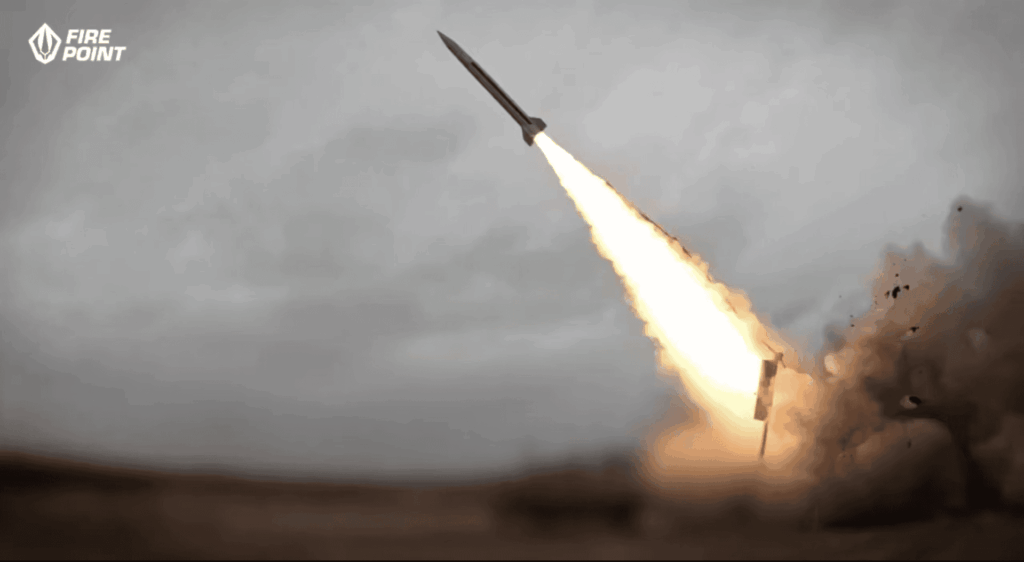
Ukraine has finished its share of FREYJA, a joint European project to build a system against ballistic missiles, President Volodymyr Zelenskyy told journalists on 17 October, Ukrinform reported. He added that Kyiv wants to test the first system as soon as possible.
Ukraine still relies on US-made Patriot interceptors to stop Russian ballistic missiles. Zelenskyy told ABC News on 23 October that Ukraine had received only 24 of them from the US in three months, while it needs 350 a month
Ukraine has finished its share of FREYJA, a joint European project to build a system against ballistic missiles, President Volodymyr Zelenskyy told journalists on 17 October, Ukrinform reported. He added that Kyiv wants to test the first system as soon as possible.
Ukraine still relies on US-made Patriot interceptors to stop Russian ballistic missiles. Zelenskyy told ABC News on 23 October that Ukraine had received only 24 of them from the US in three months, while it needs 350 a month on average. FREYJA can not close that gap soon, because the system is still in development.
Ukraine’s missile and launcher, partners’ radars and sensors
Zelenskyy said the partners’ share of the work, with 10 countries taking part, is still underway. He also said he had discussed the project with French President Emmanuel Macron, and he named Norway as a key partner.
Explore further
Ukraine’s missile, Europe’s sensors—FREYJA enters active development on an early-2027 clock
Zelenskyy did not say what the partners still have to deliver. In August, he said Ukraine is capable of making the missile and launcher, while partners would supply critical components such as radars and sensors.
One part not made in Ukraine
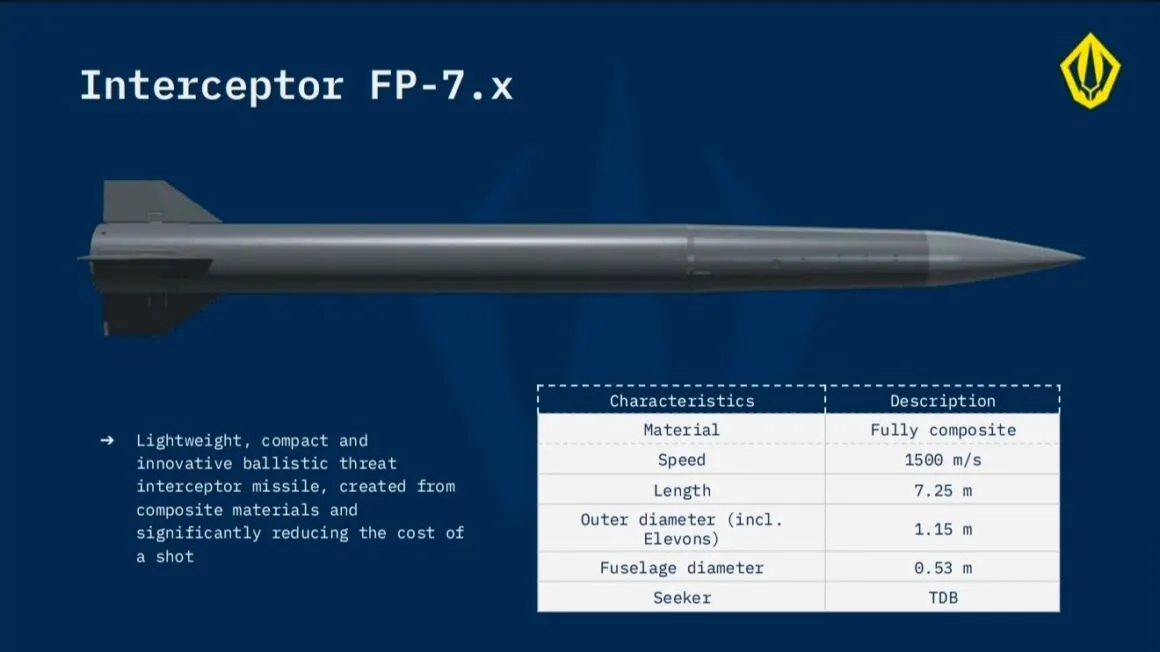
In May, Fire Point co-founder and chief designer Denys Shtilerman said all components of the FP-7.x interceptor are made in Ukraine except one. “As for that one part we don’t manufacture in Ukraine, we’ve contracted a certain quantity of it. We already have it,” he said, but did not name the part.
In June, however, Shtilerman told the Financial Times that mass production depended on an infrared seeker Fire Point hoped to get from Germany’s Diehl Defence. Neither statement says whether the seeker is that one part.
Fire Point co-founder Iryna Terekh said in September that FREYJA was going through testing and technical integration in combat conditions in Ukraine. The company plans its first intercept of a ballistic target by mid-2027.
The official timeline has since moved closer. On 21 October, Zelenskyy wrote that officials had identified where to speed up so FREYJA reaches testing by the end of this year. A test is still a step short of an intercept.
L’intelligence artificielle facilite désormais la création de fausses images intimes à caractère sexuel, mais les lois et les mécanismes de protection peinent à suivre. Un nouveau rapport réalisé par IVADO et l’Eon Institute, qui compare les réponses du Canada et du Mexique, constate que les victimes se heurtent encore à d’importants obstacles pour obtenir justice. […]
L’intelligence artificielle facilite désormais la création de fausses images intimes à caractère sexuel, mais les lois et les mécanismes de protection peinent à suivre. Un nouveau rapport réalisé par IVADO et l’Eon Institute, qui compare les réponses du Canada et du Mexique, constate que les victimes se heurtent encore à d’importants obstacles pour obtenir justice. […]
Journalists from 17 European public service broadcasters, coordinated by the European Broadcasting Union’s (EBU) Eurovision News Spotlight network, published an interactive map on 23 October 2026. It documents hybrid incidents linked to Russia across 17 European countries between 1 April and 15 October. Journalists compiled a database of hundreds of reported incidents, categorizing each by type and the source and strength of its alleged links to Russia, then verifying them through open-sou
Journalists from 17 European public service broadcasters, coordinated by the European Broadcasting Union’s (EBU) Eurovision News Spotlight network, published an interactive map on 23 October 2026. It documents hybrid incidents linked to Russia across 17 European countries between 1 April and 15 October. Journalists compiled a database of hundreds of reported incidents, categorizing each by type and the source and strength of its alleged links to Russia, then verifying them through open-source research.
The map comes as officials warn the campaign is growing. On 28 September, EU foreign policy chief Kaja Kallas said in Brussels that Russia was planning more acts of sabotage to divide societies and intimidate them into abandoning their support for Ukraine. The points on the map represent an incomplete list of publicly known cases attributed to Russia or suspected of being linked to it, the report states.
The map covers airspace violations, sabotage attempts, “disposable” agents with no formal intelligence training, migration used as a weapon, and Russian military activity near or across European borders. It excludes cyberattacks, influence operations, and espionage by trained intelligence officers.
The EBU calls the result a very conservative estimate, not an official tally. Russia has consistently denied responsibility for the incidents. Many single points represent several incidents of the same type in one area or in quick succession. In Moldova, for example, Defense Minister Anatolie Nosatîi said on 30 September that the government had recorded 84 drone incursions.
Four German incidents are on the map, out of many more
The map shows four incidents in Germany, according to BR.
The four incidents in Germany on the EBU hybrid war map, 2 August to 14 September 2026. Other dots mark Russia-linked incidents in neighboring countries. Map: Luc Martinon/EBU, Eurovision News Spotlight; edited by Euromaidan Press
On 2 August, German authorities arrested a 33-year-old Ukrainian man in Thuringia on suspicion of photographing a Bavarian weapons manufacturer for a foreign intelligence service as part of an alleged sabotage plot.
On 4 August, a drone carrying explosives and a detonator struck the wing of a Ukrainian An-124 cargo plane at Leipzig/Halle Airport but failed to explode.
On 3 September, attackers threw firebombs from a car onto a construction site next to defense firms in Munich, and German security authorities suspect Russian intelligence.
On 14 September, investigators learned of a crashed drone found near the Bundeswehr’s Wunstorf air base.
Internal papers from the new Joint Hybrid Defense Center, seen by Correctiv, record 163 suspected sabotage cases in 2026 up to 19 August. The targets included rail lines, military facilities, substations, and radio masts. The same papers record 1,034 drone overflights of critical infrastructure, military sites, and defense companies, and 25 espionage investigations. The papers cover possible attacks by Russia, China, and Iran, and media did not report a breakdown of the sabotage cases by country.
European leaders sound the alarm over Russian hybrid attacks
On 15 April, Swedish civil defense minister Carl-Oskar Bohlin said pro-Russian groups had moved from denial-of-service attacks to attempts at destructive cyberattacks, including one on a Swedish power plant in 2025. On 1 September, German Foreign Minister Johann Wadephul named Russia as the perpetrator of the Leipzig attack and accused Moscow of “blatant hostility” toward Germany.
On 18 September, French President Emmanuel Macron said Russia’s hybrid attacks would not go unanswered and ordered a plan to protect France’s critical infrastructure. On 1 October, German Chancellor Friedrich Merz said Germany was preparing for new hybrid attacks, “including serious ones.” NATO Secretary General Mark Rutte on 14 October called the attacks a sign of Russian weakness at a press conference in Tallinn and said NATO would react where needed without being “rattled.”

 Connexion