The employee, now fired, had said he advised government agencies in Saudi Arabia. He was also listed as a partner at a venture firm with a Saudi prince.
The employee, now fired, had said he advised government agencies in Saudi Arabia. He was also listed as a partner at a venture firm with a Saudi prince.
The San Francisco offices of OpenAI. According to a court filing, a thumb-size recording device wrapped in toilet paper was found plugged into the back of a television in an executive conference room.
Washington is pressing the victim, not the aggressor, a Ukrainian diplomat says. President Donald Trump is using the threat of cutting military aid and intelligence as a tool to pressure Ukraine, while failing to apply enough pressure on Russia to stop the war, says Oleksandr Khara, executive director of the Center for Defense Strategies, Espreso reports.
Ukraine’s drones and air defense still lean on US satellite intelligence and weapons, which gives Trump room to squeeze Kyiv rather t
Washington is pressing the victim, not the aggressor, a Ukrainian diplomat says. President Donald Trump is using the threat of cutting military aid and intelligence as a tool to pressure Ukraine, while failing to apply enough pressure on Russia to stop the war, says Oleksandr Khara, executive director of the Center for Defense Strategies, Espreso reports.
Ukraine’s drones and air defense still lean on US satellite intelligence and weapons, which gives Trump room to squeeze Kyiv rather than Moscow. Khara argues Trump wants to end the war on Ukraine’s and Europe’s account to restore normal relations with Russian ruler Vladimir Putin, treating Ukraine as the weak link to be pushed.
“Trump wants to use restrictions, levers of influence on Ukraine to achieve his goal. To end or stop this war at any cost, at the expense of Ukraine and Europe, to restore normal relations with Putin,” Khara said.
Using American aid as leverage over Kyiv is not new for Trump, the diplomat noted, recalling earlier instances in which support was blocked or suspended.
The pressure points Trump picks, and the ones he leaves alone
Trump wants a visible success in ending the war, Khara says, partly against the backdrop of US domestic politics. He has economic tools to press Moscow but is in no hurry to use them, and his administration is instead gradually loosening sanctions on Russia.
“He doesn’t want to pressure Russia. He thinks Ukraine is the weak link and that it needs to be pushed,” Khara stressed.
Ukraine’s dependence on US support has fallen thanks to European partners, he added, so Kyiv has more room to keep fighting even as European states keep buying American weapons for it.
The one trade Kyiv might accept, and the pressure until then
An energy ceasefire is possible only on strict terms, Khara believes. Kyiv could agree to stop striking Russian refineries only if Moscow halts attacks on Ukraine’s power generation and transmission, heating, and the Black Sea ports and the ships heading to them.
Until such a deal exists, Ukraine must hit harder, he argued, because steadily draining Russia’s economic resources is what could force the Kremlin to reconsider.
“As long as there is no such agreement, and no desire from Russia, we must increase this pressure and destroy as much of their energy infrastructure as possible,” Khara said.
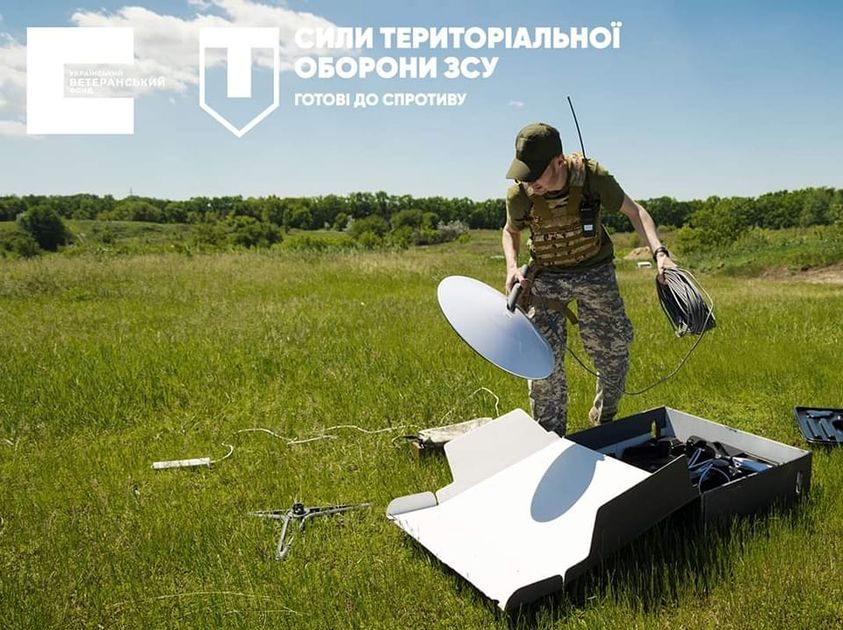
One of Ukraine’s most prominent drone volunteers, Serhii Sternenko, says that Starlink terminals have been restricted overnight, with connectivity beginning to drop out at speeds exceeding 160 km/h. As a result, several critical missions were disrupted.
Sternenko heads a charitable foundation that has purchased 291,502 FPV drones, which have helped the Ukrainian military shoot down more than 12,954 aerial targets. He has also served as an adviser within the team of former Defense Minis
One of Ukraine’s most prominent drone volunteers, Serhii Sternenko, says that Starlink terminals have been restricted overnight, with connectivity beginning to drop out at speeds exceeding 160 km/h. As a result, several critical missions were disrupted.
Sternenko heads a charitable foundation that has purchased 291,502 FPV drones, which have helped the Ukrainian military shoot down more than 12,954 aerial targets. He has also served as an adviser within the team of former Defense Minister Mykhailo Fedorov.
Sternenko suggests that SpaceX may have introduced the restrictions at the request of the Trump administration. He adds that Ukraine had refrained from striking Russian oil refineries and energy infrastructure in recent days, as Trump had requested.
“But Trump was looking for any opportunity to undermine our defense capabilities, and he did so despite the fact that we had complied with his demands,”Sternenko says.
The limit landed the same night Russian ballistic missiles struck Kyiv’s Desnianskyi district, killing three women and injuring 24, including a seven-year-old girl.
Rescuers evacuated people covered in blood
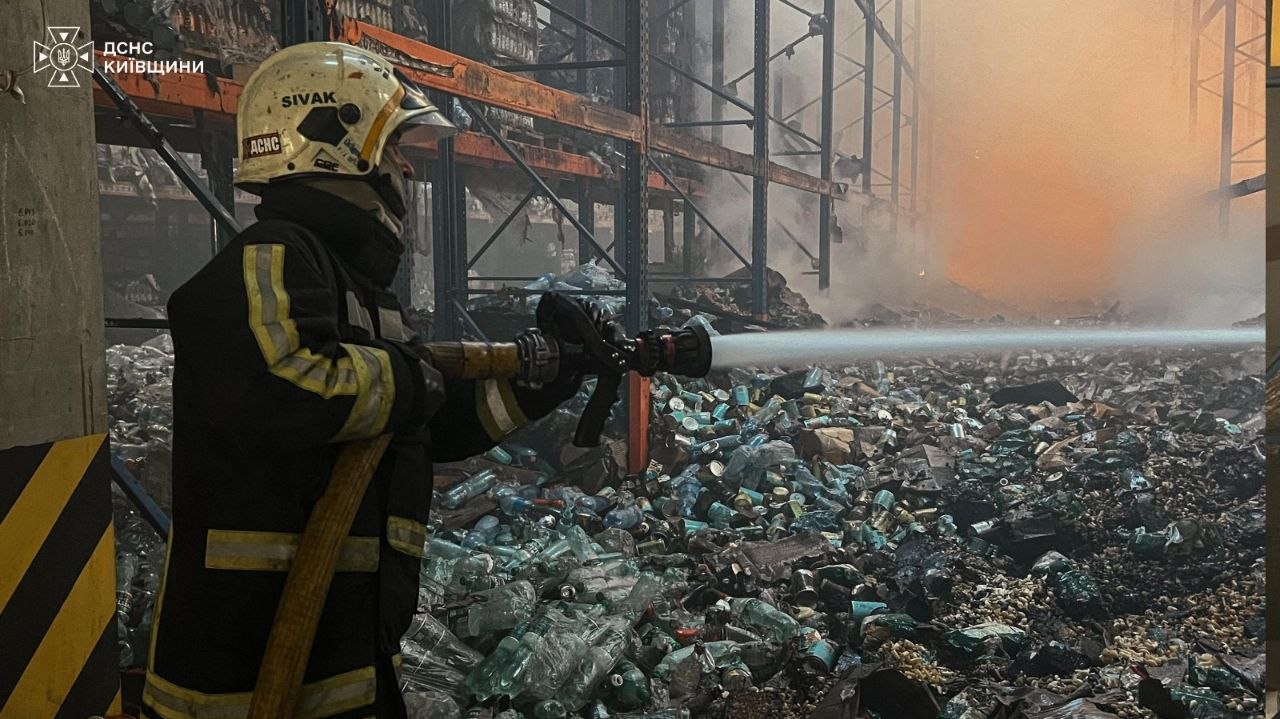
The strike on a nine-story residential building set it ablaze, burning out apartments from the first floor to the ninth, with rescuers pulling bloodied residents from the flames and leaving survivors without power, water, or gas, according to Suspilne.
During the night’s first ballistic launches, partners did not alert Ukraine, but for the three later waves the warnings did come through, Air Force communications chief Yurii Ihnat says. The cause of the first lapse is still being established, per Radio Free Europe/Radio Liberty.
The early warnings help Ukrainian civilians quickly find a place to hide from such strikes, leaving up to 3 minutes to do so. Without it, people are left entirely helpless in the face of the aggression.
Further Starlink restrictions have reportedly been introduced
Later, Sternenko wrote that reports were "coming in from military personnel that restrictions on the use of Starlink satellite communications terminals for our operations have just been tightened.
"The speed at which the connection starts dropping out is now 60–70 km/h,” he added.
Ukraine and NATO have unveiled two artificial intelligence (AI) tools in Vilnius, Lithuania, Ukraine’s Defense Ministry reported on 13 October. One forecasts Russian drone attacks near the front and is ready to join the Armed Forces’ situational awareness systems. The other helps plan artillery fire and is still in testing.
A forecast of where, when, and which drones will fly targets the main source of losses near the front. In March, Ukraine’s military put the share of front-line casua
Ukraine and NATO have unveiled two artificial intelligence (AI) tools in Vilnius, Lithuania, Ukraine’s Defense Ministry reported on 13 October. One forecasts Russian drone attacks near the front and is ready to join the Armed Forces’ situational awareness systems. The other helps plan artillery fire and is still in testing.
A forecast of where, when, and which drones will fly targets the main source of losses near the front. In March, Ukraine’s military put the share of front-line casualties caused by FPV drones at up to 80%. In May, Ukraine’s drone forces commander Robert Brovdi said Russia was copying Ukraine’s model to grow its drone forces. A month earlier, Presidential Office head Kyrylo Budanov wrote that adding more drones no longer fundamentally changes the battlefield. The next stage, he said, is full integration of AI.
Forecasting Russian drone attacks
The NATO-Ukraine Joint Analysis, Training and Education Center (JATEC) presented both at a three-day seminar in the Lithuanian capital. NATO’s Allied Command Transformation and Ukraine’s Armed Forces built the tools with JATEC’s support.
“The solution has already been validated using real-world datasets. It has been refined and is ready for integration into the Armed Forces of Ukraine's situational awareness systems,” the ministry said.
Model No. 13 works from past data, weather, and the current battlefield situation. The ministry said it can identify the intensity of attacks, the areas, the time windows, and the types of drones with a high probability.
Ranking artillery options
Model No. 32 is a decision-support module. It tests whether artillery plans can be generated automatically. It weighs the mission’s requirements and current operational data, including available weapons, ammunition, firing positions, and constraints.
Explore further
Ukraine’s new military AI does more than watch the battlefield—it helps commanders plan what comes next
First, it applies logistics, ballistics, and impact-zone parameters to throw out unworkable options. Then it scores and ranks the rest. That means less hand-based comparison, faster decisions, and a more efficient fire loop, the ministry said. The prototype is now with the Ukrainian military for trials. If the trials succeed and it is validated, it could be expanded to other units that strike Russian forces.
Breaking a weekslong silence, Thélyson Orélien, a Haitian-Canadian writer, still rejected accusations about his new novel, ‘It Was Either That or Die.’
Breaking a weekslong silence, Thélyson Orélien, a Haitian-Canadian writer, still rejected accusations about his new novel, ‘It Was Either That or Die.’
US President Donald Trump said on 13 October that the US continues to share intelligence with Ukraine, following reports that Washington had threatened to suspend intelligence assistance unless Kyiv stopped striking Russian oil refineries, POLITICO reported.
The comments came after Ukraine received no advance warning from its partners ahead of Russia's latest ballistic missile strike, raising fresh questions about intelligence sharing between Kyiv and Washington.
“We are helping them
US President Donald Trump said on 13 October that the US continues to share intelligence with Ukraine, following reports that Washington had threatened to suspend intelligence assistance unless Kyiv stopped striking Russian oil refineries, POLITICO reported.
The comments came after Ukraine received no advance warning from its partners ahead of Russia's latest ballistic missile strike, raising fresh questions about intelligence sharing between Kyiv and Washington.
“We are helping them, and we are sharing intel. We want the war to end,” Trump told reporters at the White House, according to POLITICO, reaffirming US support after his recent efforts to reach an agreement with Russian President Vladimir Putin drew criticism over his approach to the war.
Trump reaffirms support after backlash over Russia deal
Last week, the US threatened to cut intelligence sharing if Ukraine did not stop attacking Russian oil refineries. Zelenskyy did not publicly confirm the reported threat.
The reports came amid criticism of Trump’s announcement of a deal to buy Russian oil and his pressure on Kyiv to make concessions, even as Russia continued attacking Ukraine.
Zelenskyy said Ukraine had refrained from striking Russian oil refineries and the energy sector for two days after Trump announced an energy ceasefire. Russia, however, continued attacking Ukrainian energy facilities and critical infrastructure, he said, with 19 Ukrainian regions coming under attack during those two days.
Trump said Monday that both Russia and Ukraine had violated the energy ceasefire, arguing that each side was responsible. He also said Putin wanted a deal and that Washington needed to persuade Zelenskyy to agree.
Trump's latest comments publicly reaffirm that intelligence sharing is continuing. However, the circumstances surrounding the latest Russian strike have raised questions about whether Ukraine is receiving the early warnings it needs to protect civilians.
Ukraine received no warning before latest Russian strike
Early warnings of incoming Russian ballistic missiles give Ukrainians a brief window to reach shelter before impact. US intelligence helps make those warnings possible, giving civilians crucial time to protect themselves.
Zelenskyy said Russia's latest attack involved five ballistic missiles and more than 100 drones, and that Ukraine received no warning from its partners before the strike.
“Intelligence on Russian ballistic missile launches helps save lives,” Zelenskyy said Tuesday. “This is precisely what helps prevent people from being killed — when there is an early warning about ballistic missiles.”
He added that Ukraine had received no warning ahead of the attack.
Explore further
Russian ballistic missiles hit Kyiv before sirens, gap that lands hard amid fears that Washington could cut data that warns of launches
Ukraine normally receives alerts about impending Russian missile launches through the Battlespace Command and Control Center, a system operated by the US military and NATO members, among others, POLITICO reported.
Citing an unnamed official familiar with the matter, POLITICO reported that US officials attributed the missing warning to bad weather. The explanation reportedly raised doubts among Ukrainian officials.
Ukrainian Air Force spokesperson Yurii Ihnat said the warning system had failed to transmit information on previous occasions. He said specialists would work with international partners to resolve any technical problems.
Ukrainian Foreign Minister Andrii Sybiha said Tuesday that intelligence sharing through the platform was continuing, according to POLITICO.
Dr. Abdul El-Sayed of Michigan is the first Democrat running in a battleground Senate race to publicly call for a pause on artificial intelligence development.
Dr. Abdul El-Sayed of Michigan is the first Democrat running in a battleground Senate race to publicly call for a pause on artificial intelligence development.
Dr. Abdul El-Sayed of Michigan is the first Democrat running in a battleground Senate race to publicly call for a pause on artificial intelligence development.
Dr. Abdul El-Sayed of Michigan is the first Democrat running in a battleground Senate race to publicly call for a pause on artificial intelligence development.
Russian forces struck several districts of Kyiv late on 12 October with what the Air Force called, by preliminary data, six ballistic missiles. For once, the air-raid alert reached people only after the attack had begun, Ukraine’s Air Force reported.
Reports of Russian ballistic launches are part of the intelligence the US shares with Ukraine, and that data is what lets sirens sound before the missiles arrive, giving civilians a few minutes to hide. Those minutes save lives, which is wh
Russian forces struck several districts of Kyiv late on 12 October with what the Air Force called, by preliminary data, six ballistic missiles. For once, the air-raid alert reached people only after the attack had begun, Ukraine’s Air Force reported.
Reports of Russian ballistic launches are part of the intelligence the US shares with Ukraine, and that data is what lets sirens sound before the missiles arrive, giving civilians a few minutes to hide. Those minutes save lives, which is why the warning gap landed hard amid fears that Washington could cut Ukraine off from such intelligence amid US President Donald Trump's agreement with Russia to let its diesel into the US.
The alert came late because Ukraine’s radar detected the ballistic targets only during the attack, with no advance data on launches from Russian territory, according to the Air Force.
“No information was received about launches from enemy territory. The causes are being established,” the Air Force said.
The stakes are human, presidential adviser Serhii Beskrestnov, known as Flash, stressed.
“This information is needed first of all by civilians, so that people have time to hide in a shelter,” he said.
Beskrestnov says he does not want to believe the US would leave Ukraine without that data because it is a matter of civilian survival. He urged caution on the cause, saying there were nuances and that it was too early to draw conclusions.
When the sirens fall behind the missiles
However, Ukraine usually sees the launches first. The warning system normally flags Russian ballistic launches before the missiles reach their targets, giving people time to move, but on 12 October, that did not happen, the Air Force noted.
Beskrestnov later added a note of doubt about what flew. The suspected S-400 missiles were not being recorded by partners’ intelligence services, he wrote, stopping short of blaming the lapse on a loss of US data.
Two cities hit within the same hour
The damage in Kyiv was concrete. A missile struck a transport-infrastructure site in the Dniprovskyi district, and another hit a four-story warehouse in the Desnianskyi district, Mayor Vitali Klitschko said.
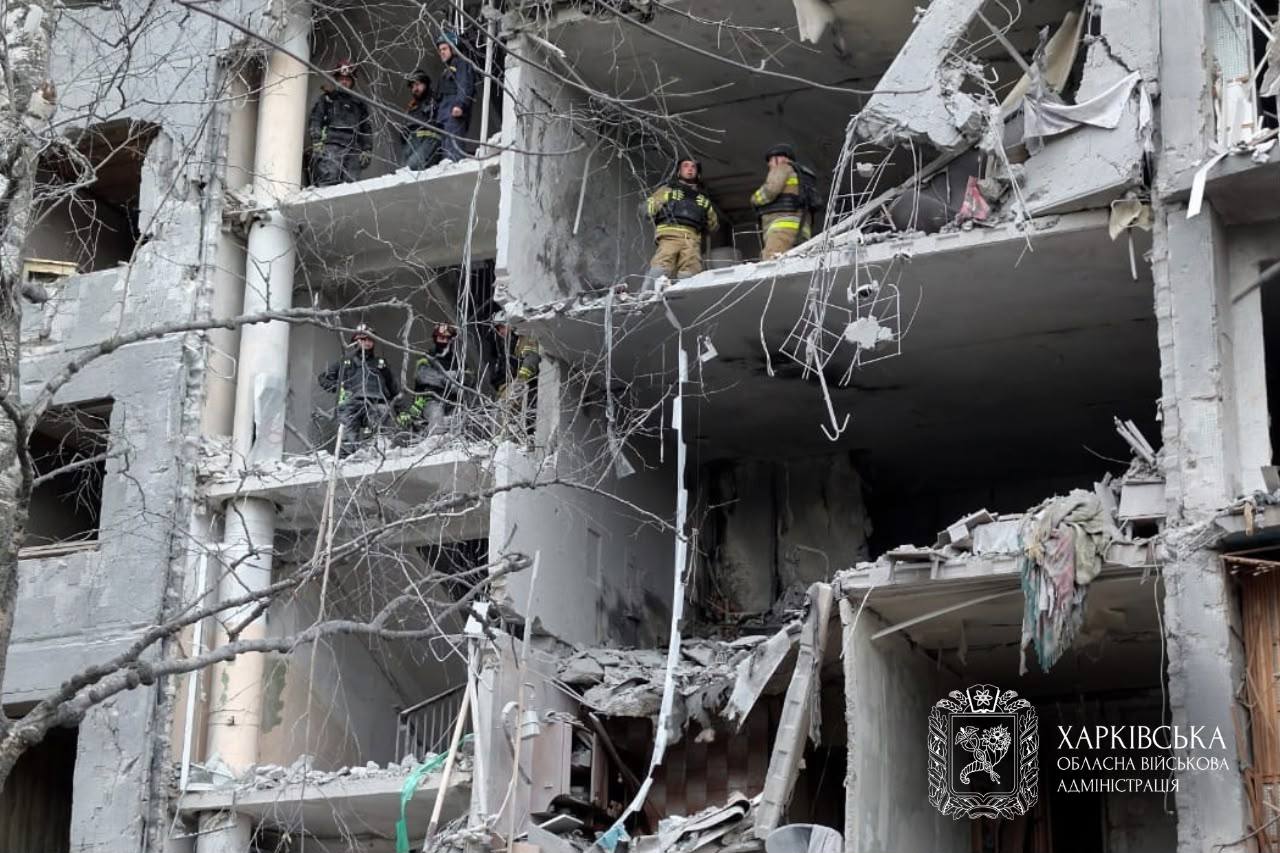
Russia struck Kharkiv at about the same time with nine S-8000 Banderol loitering munitions, Mayor Ihor Terekhov reported. One of the last strikes hit a residential building, where people may be trapped under the rubble and a fire is burning.
“Very serious destruction, an entire stairwell collapsed,” Terekhov said.
Ukraine’s Defense Intelligence (HUR) released information on the components of Russia’s Kinzhal air-launched ballistic missile and the companies involved in its production, according to a statement dated 12 October.
Russia has used Kinzhal missiles to strike targets across Ukraine since the start of its full-scale invasion. However, 22 of the 58 companies in Russia’s Kinzhal production network are not subject to sanctions, the intelligence agency noted.
Kinzhal missile: design, compo
Ukraine’s Defense Intelligence (HUR) released information on the components of Russia’s Kinzhal air-launched ballistic missile and the companies involved in its production, according to a statement dated 12 October.
Russia has used Kinzhal missiles to strike targets across Ukraine since the start of its full-scale invasion. However, 22 of the 58 companies in Russia’s Kinzhal production network are not subject to sanctions, the intelligence agency noted.
Kinzhal missile: design, components, and production changes
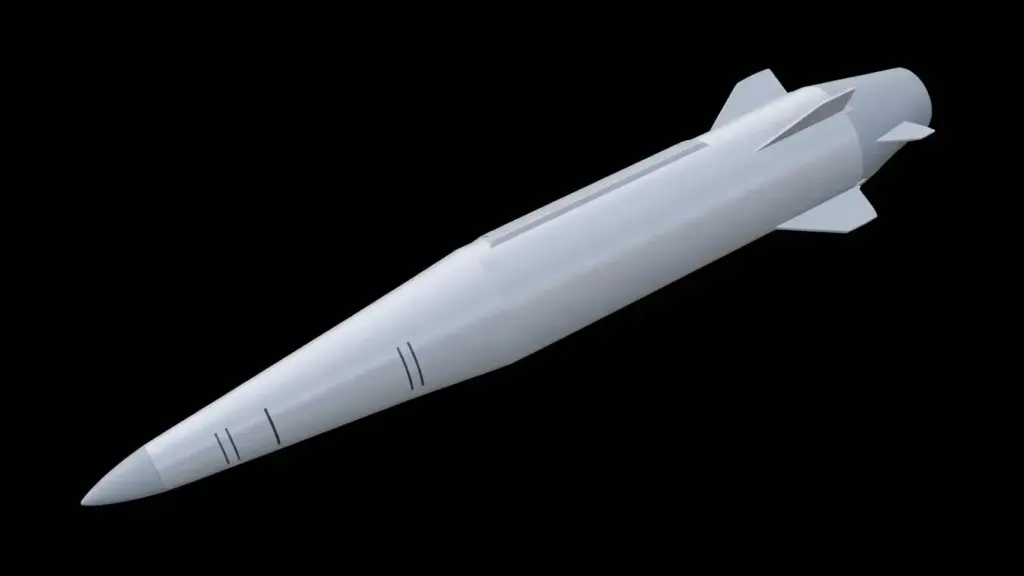
Ukraine’s Defense Intelligence has published an interactive 3D model of the Russian Kinzhal missile on its War&Sanctions portal.
The 9-S-7760 missile, known as the Kh-47M2 Kinzhal, uses solid fuel and has a single stage. This means the missile does not consist of multiple stages that separate sequentially during flight. About 90% of its components are identical to those used in the 9M723 ballistic missile of the Iskander-M system, HUR noted.
The Kinzhal is equipped with a radar homing seeker, an active jamming station, and a decoy deployment system, according to the statement. The homing seeker helps the missile determine the direction to its target, while decoys are designed to make interception by air defense systems more difficult.
The missile can carry one of two types of warheads: a penetrating high-explosive warhead or a nuclear warhead. Russia is also developing a version with a high-explosive fragmentation warhead that strikes targets through an explosion and fragments. HUR believes this development may be linked to problems with the missile’s accuracy.
In 2026, Russia significantly reduced its state procurement order for Kinzhal missiles and redirected some production resources, components, and raw materials towards manufacturing Iskander-M missiles, HUR noted. Another reason is the limited number of MiG-31I and MiG-31K aircraft used to launch Kinzhal missiles, the intelligence agency reported.
Ukraine intercepts Kinzhal missiles, but has limited resources to do so
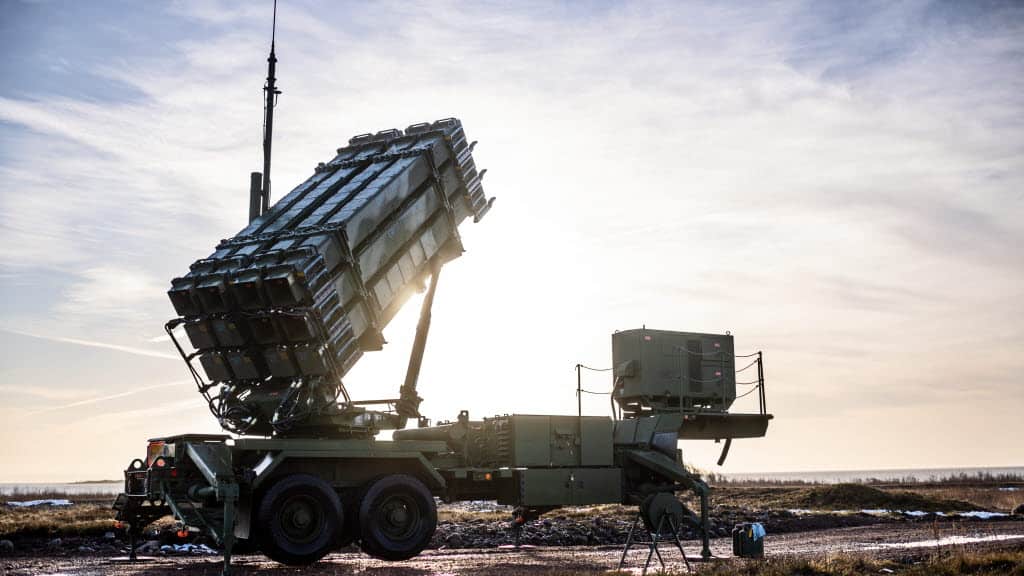
Despite their high speed, Russian Kinzhal missiles can be intercepted using US-made Patriot surface-to-air missile systems. In particular, PAC-3 interceptor missiles are designed to destroy ballistic targets and can be used against threats such as the Kinzhal and Zircon, Ukraine’s Ministry of Defense reported.
Ukraine is seeking additional Patriot interceptor missiles to defend against Russian ballistic attacks during the winter.
The Patriot PAC-3 surface-to-air missile system. Photo: Swedish Ministry of Defense
Most of the approximately 1,000 missiles Kyiv has contracted for are not expected to arrive for several years, prompting Ukraine to ask its allies to supply missiles from their existing stockpiles, Defense News reported on 12 October 2026.
Sanctions loopholes allow Russia to obtain foreign components for Kinzhal missiles
Russia continues to use foreign components in missile production despite sanctions. For instance, the US-made Texas Instruments processors were found again in a newer version of the Kinzhal missile, Ukrainian presidential commissioner for sanctions policy Vladyslav Vlasiuk said in September, Interfax reported. According to him, foreign electronics continue to reach Russia through various supply channels.
Earlier, Ukraine had provided its partners with information on more than 100 Russian companies involved in ballistic missile production and urged them to impose sanctions on those entities, according to the President's Office.
On 12 October, the EU Council imposed sanctions on 1,569 individuals and entities linked to Russia’s military-industrial complex, including 826 Russian companies and 743 company CEOs.
Our reporter, John Branch, joined a team installing cameras in the Sierra Nevada for detecting wildfires. Artificial intelligence is used to sift through images from the network, helping firefighters identify and respond to early to signs of wildfires.
Our reporter, John Branch, joined a team installing cameras in the Sierra Nevada for detecting wildfires. Artificial intelligence is used to sift through images from the network, helping firefighters identify and respond to early to signs of wildfires.
Ukraine has published data on 20 vessels that carry Russian oil and liquefied natural gas or refuel the sanctioned fleet, parts of the logistics network the Kremlin uses to fund its war, Ukraine's Defense Intelligence reports. All 20 are under British or Ukrainian sanctions, and only one faces US restrictions.
Russia’s shadow fleet runs on roughly 500 aging ships of uncertain ownership that dodge sanctions and keep oil money flowing. That seaborne oil trade is worth more than 80 billion
Ukraine has published data on 20 vessels that carry Russian oil and liquefied natural gas or refuel the sanctioned fleet, parts of the logistics network the Kremlin uses to fund its war, Ukraine's Defense Intelligence reports. All 20 are under British or Ukrainian sanctions, and only one faces US restrictions.
Russia’s shadow fleet runs on roughly 500 aging ships of uncertain ownership that dodge sanctions and keep oil money flowing. That seaborne oil trade is worth more than 80 billion euros a year.
The headline vessel is the Russian ship Portovyy, an LNG carrier and floating gas store owned by the sanctioned Gazprom since 2021, according to the agency. On 15 August 2026, it left the Gulf of Finland with Russian LNG for the first time since November 2021, sailing the Northern Sea Route to the Chinese port of Beihai to unload.
Portovyy is now at the Zhoushan Huafeng Shipyard in China, which has been set as the site for its maintenance, intelligence says, an example of the foreign yards Kyiv wants closed to the sanctioned fleet.
Russia buys up gas carriers through shells
Two more gas carriers show how Moscow expanded the fleet in spring 2026 through front companies, intelligence said. The Avacha, once owned by China’s Jovo Energy, was bought by the little-known Tudor Maritime of the Marshall Islands, took the Russian flag in June, and now ships gas from the Arctic LNG 2 project to Beihai.
The Chaivo, formerly owned by Greece’s Maran Gas Maritime, was also bought by Tudor Maritime and moved under the Russian flag in July. Now it carries cargo to Beihai from a floating gas storage facility off Kamchatka, intelligence says.
A call to close the loopholes
Intelligence urged partners to act together: tighten control over sales of commercially owned ships, block servicing of the sanctioned fleet at foreign yards, and cut off the energy revenue that Russia turns into weapons against civilians.
Russia is building ice-class ships at home and, at the same time, widening its shadow fleet through offshore networks. The UK Foreign Office made the same point on 1 October, saying Moscow is assembling a new shadow fleet to keep its gas revenues flowing.
Inflation has hurt Americans at many levels: Farmers, truckers, consumers. It has also expanded the electoral map into what was safely Republican country just a few months ago.
Inflation has hurt Americans at many levels: Farmers, truckers, consumers. It has also expanded the electoral map into what was safely Republican country just a few months ago.
At the Athens Democracy Forum, one panel after another warned of the potential risks that social media, deepfakes, cyberattacks and A.I. posed to humanity.
The cybersecurity firm said the attacker was likely a Chinese speaker and financially motivated, but did not attribute the attacks to a named individual or group.
The cybersecurity firm said the attacker was likely a Chinese speaker and financially motivated, but did not attribute the attacks to a named individual or group.
Russian forces appear to use AI to plan air attacks and recognize targets amid raids on Ukrainian cities. This may include recent air attacks on Odesa that have come in waves with short gaps, Deputy Air Force Commander for Air Defense Colonel Yurii Cherevashenko says, Ukrinform reports.
Russia has already equipped its jet-powered Geran-4 drones with machine vision, allowing them to recognize and track targets on their own in the final seconds of flight. Recently, a single jet drone hit
Russian forces appear to use AI to plan air attacks and recognize targets amid raids on Ukrainian cities. This may include recent air attacks on Odesa that have come in waves with short gaps, Deputy Air Force Commander for Air Defense Colonel Yurii Cherevashenko says, Ukrinform reports.
Russia has already equipped its jet-powered Geran-4 drones with machine vision, allowing them to recognize and track targets on their own in the final seconds of flight. Recently, a single jet drone hit a locomotive in Odesa Oblast in late September and killed two railway workers.
The scale of Russia's AI use is hard to measure, Cherevashenko continues, but Ukrainian specialists already see its elements in how attacks are organized. The long, wave-by-wave strikes on Odesa would be far harder to plan and coordinate without it, he believes.
"Russian forces use AI to lay out attack routes and to recognize targets," Cherevashenko says, framing it as his own assessment rather than a confirmed fact.
The sea is harder to defend than land
Odesa Oblast is home to the biggest port in Ukraine, "Southern". Protecting it is a challenging task as guarding the airspace over water is tougher than over land, Cherevashenko says. Some air defense assets do not perform as well at sea, and in some cases, crews can intercept a target only as it approaches.
Weather adds to the problem, with storms and fog, while the open sea gives Russia more freedom to choose drone routes and launch points. To protect ports and the coast, Ukraine uses drone motherships, platforms that carry other drones aloft to extend their flight time and keep watch over set areas.
Ukraine answers AI with AI
Ukraine is also building its own AI for air defense. Automated turrets using machine vision now help counter Russian drones. According to Army Media, the Air Force says such turrets have scored their first shoot-downs, including of Geran-5 jet drones, with one soldier saying 50 rounds were enough to bring down a Geran.
Ukraine's Defense Ministry is going further. In late September, it unveiled an AI system called SPECTR, built by its A1 Artificial Intelligence Center and already in testing with several combat units, to analyze battlefield data, predict Russian moves, and suggest options to commanders.
Bryce Vincent Gowryluk used Claude, Anthropic’s A.I. chatbot, to help him chart a course for the top of Crown Mountain, north of Vancouver, British Columbia. Things did not go as planned.
Bryce Vincent Gowryluk used Claude, Anthropic’s A.I. chatbot, to help him chart a course for the top of Crown Mountain, north of Vancouver, British Columbia. Things did not go as planned.
Russia's Kalashnikov concern has met its annual arms contract. The top producer of small arms has announced it delivered a batch of classic 7.62mm Dragunov sniper rifles to a Russian Security Forces customer and fully met its 2026 contract on time
The delivery shows how little the sanctions regime slows Russia's arms maker. In February 2026, Ukraine's Defense Intelligence said that nearly half of Kalashnikov's plants were still not subject to sanctions by any coalition country. Eight mo
Russia's Kalashnikov concern has met its annual arms contract. The top producer of small arms has announced it delivered a batch of classic 7.62mm Dragunov sniper rifles to a Russian Security Forces customer and fully met its 2026 contract on time
The delivery shows how little the sanctions regime slows Russia's arms maker. In February 2026, Ukraine's Defense Intelligence said that nearly half of Kalashnikov's plants were still not subject to sanctions by any coalition country. Eight months later, the concern reports a full year's order delivered on schedule.
"The items were shipped on the set deadline, the obligations under the 2026 contract fully met," the manufacturer said.
A rifle in service for six decades
The weapon in that batch is not new. Designed by Yevgeny Dragunov between 1958 and 1963, the Dragunov sniper rifle entered serial production at the Izhevsk machine-building plant in 1963, so in 2026, it has remained in serial production for more than 60 years.
The self-loading 7.62mm rifle is meant to hit personnel and unarmored targets at ranges up to 800 meters, the concern said. It uses gas-operated automatics with a short-stroke piston and a gas regulator, and can fire any 7.62x54R round, though sniper ammunition yields the best grouping, according to the maker.
Sanctions chase a moving network
The sniper rifles are only one line in Kalashnikov's output. Russia's defense industry has leaned heavily on refurbishing Soviet-era armor as newer reserves run low, with Ukraine's intelligence reporting in June 2025 that Russia had begun deploying 1960s-era T-62 tanks.
The restoration work was centered primarily at the 103rd Armored Repair Plant in Atamanovka, Trans-Baikal Territory of Siberia. Ukrainian intelligence documented the transfer of 21 T-62 tanks from the eastern region to the western part.
Small arms are a different line of production, built new rather than pulled from storage. That is why a 1963 design keeps rolling off the line while the sanctions net, as Ukraine's intelligence describes it, still has holes.
Canada wants to leverage A.I. to improve its health care system. At a Toronto hospital, surgeons are training a machine to distinguish a safe incision from a catastrophic one.
Canada wants to leverage A.I. to improve its health care system. At a Toronto hospital, surgeons are training a machine to distinguish a safe incision from a catastrophic one.
Dr. Madani, left, and Dr. Timothy Jackson, perform laparoscopic cholecystectomy surgery on a patient at Toronto General Hospital, with the help of visual A.I. guides.
China’s booming artificial intelligence sector has given local researchers good reason to remain in the country, but it has yet to lure overseas scientists despite a government push.
China’s booming artificial intelligence sector has given local researchers good reason to remain in the country, but it has yet to lure overseas scientists despite a government push.
Chinese A.I. companies like Deepseek and Moonshot have made a name for themselves internationally. But China still struggles to recruit foreign researchers.
China’s booming artificial intelligence sector has given local researchers good reason to remain in the country, but it has yet to lure overseas scientists despite a government push.
China’s booming artificial intelligence sector has given local researchers good reason to remain in the country, but it has yet to lure overseas scientists despite a government push.
Chinese A.I. companies like Deepseek and Moonshot have made a name for themselves internationally. But China still struggles to recruit foreign researchers.
A top executive was questioned by lawmakers about the breach of a government health care data portal, as the company has faced public outrage and questions of liability.
A top executive was questioned by lawmakers about the breach of a government health care data portal, as the company has faced public outrage and questions of liability.
An appellate court in Arizona threw out the prison sentence of a man convicted of manslaughter after an A.I.-generated video of his victim was played at a trial.
An appellate court in Arizona threw out the prison sentence of a man convicted of manslaughter after an A.I.-generated video of his victim was played at a trial.
Stacey Wales with an enlarged photo of her brother, Christopher Pelkey. She created a video using artificial intelligence to depict her dead brother speaking at the sentencing of his killer.
Uncovering evidence of alien life would be “the biggest discovery ever made by humanity,” one expert said. But so far, there’s a lot of blurry photos and unconfirmed reports.
Uncovering evidence of alien life would be “the biggest discovery ever made by humanity,” one expert said. But so far, there’s a lot of blurry photos and unconfirmed reports.
Finding evidence of alien life would be “the biggest discovery ever made by humanity,” one expert said. But so far, there’s a lot of blurry photos and unconfirmed reports.
Finding evidence of alien life would be “the biggest discovery ever made by humanity,” one expert said. But so far, there’s a lot of blurry photos and unconfirmed reports.
The Chinese government is imposing regulations on the use of A.I. apps and chatbots out of concern that the technology could interfere with human relationships and undermine social order.
Senate Democrats blocked a measure that would encourage, but not require, states to protect consumers from power rate hikes tied to data center growth, and had no limits on A.I. use or deployment.
Senate Democrats blocked a measure that would encourage, but not require, states to protect consumers from power rate hikes tied to data center growth, and had no limits on A.I. use or deployment.
New homes encircle a park at Vista Del Norte Estates as construction progresses on the Meta artificial intelligence data center being built in northeast El Paso, Texas in July.
Senate Democrats were expected on Wednesday to block a measure that would encourage, but not require, states to protect consumers from power rate hikes as a result of data center growth.
Senate Democrats were expected on Wednesday to block a measure that would encourage, but not require, states to protect consumers from power rate hikes as a result of data center growth.
New homes encircle a park at Vista Del Norte Estates as construction progresses on the Meta artificial intelligence data center being built in northeast El Paso, Texas in July.
A Gaboon viper, a venomous snake native to equatorial regions of Africa, was supposedly photographed in a tree in Santa Ana, Calif. How could that be? Well, it turns out it wasn’t.
A Gaboon viper, a venomous snake native to equatorial regions of Africa, was supposedly photographed in a tree in Santa Ana, Calif. How could that be? Well, it turns out it wasn’t.
Russia is preparing to make daily life in Kyiv harder before winter, aiming at the ordinary places civilians use rather than at military sites, The Economist reported. Ukrainian officials say the push blends bombing, sabotage, and disinformation, and expect it to peak in November.
Every winter of its full-scale invasion, Russia has tried to freeze Ukrainians into surrender, and each year the strikes reach deeper into ordinary life. The civilian casualties recorded in 2026 have already p
Russia is preparing to make daily life in Kyiv harder before winter, aiming at the ordinary places civilians use rather than at military sites, The Economist reported. Ukrainian officials say the push blends bombing, sabotage, and disinformation, and expect it to peak in November.
Every winter of its full-scale invasion, Russia has tried to freeze Ukrainians into surrender, and each year the strikes reach deeper into ordinary life. The civilian casualties recorded in 2026 have already passed the whole of last year, the UN says.
From the power grid to the grocery store
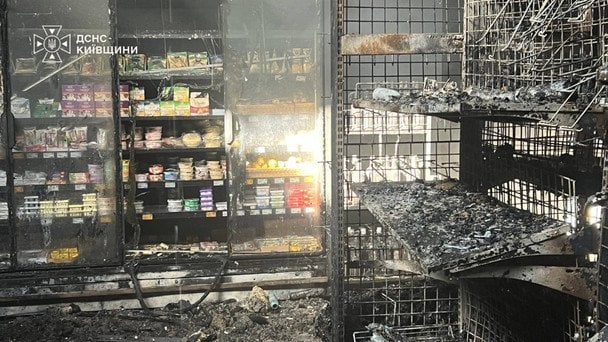
Russia has already turned its drones on Kyiv's supermarkets, food warehouses, and data centers this year. On 28 September, a Russian jet drone struck the National Academy of Sciences in central Kyiv. The strike killed two people, the Academy said. Survivors climbed from the windows of the burning building. A senior Ukrainian official told The Economist the Kremlin now wants shoppers too afraid to enter a store. Russia is also keeping its winter routine, hitting electricity, water, and sewage systems.
Cheaper jet drones that stream live to their pilots
Most of the damage now comes from Russia's cheap jet drones, The Economist said. Pilots guide them onto targets and watch a live video feed. They are hard to stop, and Russia's ballistic missiles are deadlier still as Ukraine's supply of Patriot interceptors dwindles. Ukrainian President Volodymyr Zelenskyy said Kyiv had agreed a new Patriot interceptor package, but it remains short of interceptors of its own. A security official told The Economist that Russia has thousands of drones stockpiled and plans to use its entire ballistic missile stock within two months.
Explore further
War is costing Ukraine $155 billion per year. With Western aid running late, Kyiv is freezing everything but army, pensions, and public wages
Sabotage, chaos, and a city that won't switch off
Ukraine's counter-intelligence services say they foil seven or eight Russian plots a week, and officials believe some sleeper cells remain. The campaign's third element, disinformation, targets war fatigue and corruption scandals. Russia runs the same plan every year, hoping its bot farms will push Ukrainians onto the streets to demand surrender, said Andrii Kovalenko, who heads the Center for Countering Disinformation at the National Security and Defense Council.
"It's nonsense," he told The Economist, adding that someone is feeding the idea to Putin so they can steal more money.
Kyiv is also far harder to shut down than Moscow assumes, Kovalenko said. The city's internet is too decentralized for a handful of strikes to knock out, The Economist noted. Energy expert Olha Babii said the test is how fast crews restore power, not whether it can be destroyed. The capital is emptying, its population down from about 3.7 million to 3.3 million by The Economist's count.
New research points to how the world could stop short of the brink of disaster. Even with the agreement signed at the White House by tech leaders, it won’t be easy.
New research points to how the world could stop short of the brink of disaster. Even with the agreement signed at the White House by tech leaders, it won’t be easy.
President Trump’s meetings with tech leaders produced some voluntary safeguards and a commitment to rebrand artificial intelligence as “super intelligence,” the term that Mr. Trump prefers.
President Trump’s meetings with tech leaders produced some voluntary safeguards and a commitment to rebrand artificial intelligence as “super intelligence,” the term that Mr. Trump prefers.
Elizabeth Dias, our national religion correspondent, and Cade Metz, one of our technology reporters, discuss Anthropic’s approach for instilling morality into Claude — which has involved consultations with religious leaders, including ones at the Vatican — and why it’s raising questions.
Elizabeth Dias, our national religion correspondent, and Cade Metz, one of our technology reporters, discuss Anthropic’s approach for instilling morality into Claude — which has involved consultations with religious leaders, including ones at the Vatican — and why it’s raising questions.
Some Republicans in close races have distanced themselves from President Trump’s effort to speed the construction of A.I. data centers, citing concerns about rising electricity bills.
Some Republicans in close races have distanced themselves from President Trump’s effort to speed the construction of A.I. data centers, citing concerns about rising electricity bills.
A data center under construction in Ashburn, Va., in June. Surveys show that most Americans oppose the construction of data centers to support artificial intelligence.
In a series of private meetings, the company consulted religious scholars to help instill morality into its A.I. models — and make the case that Claude could be conscious.
In a series of private meetings, the company consulted religious scholars to help instill morality into its A.I. models — and make the case that Claude could be conscious.
“To be clear,” Christopher Olah told me, “we don’t know if A.I. models are conscious. I don’t know. I’m genuinely uncertain. The thing that I care about is that we get to the right answer, whatever it is.”
Mr. Milei wants to go all in on artificial intelligence even as other leaders struggle to get a handle on a technology many fear poses existential threats.
Mr. Milei wants to go all in on artificial intelligence even as other leaders struggle to get a handle on a technology many fear poses existential threats.
Russian intelligence services have sharply stepped up building websites and social media pages that impersonate Ukrainian state bodies and media, the Security Service of Ukraine (SBU) warned. Moscow uses the fakes to spread disinformation and to steal personal data it can turn into spy recruitment. The SBU says it has already blocked dozens of clones of its own brand.
Counterfeit pages built for propaganda and data theft
The fake sources serve Russian psychological operations and dis
Russian intelligence services have sharply stepped up building websites and social media pages that impersonate Ukrainian state bodies and media, the Security Service of Ukraine (SBU) warned. Moscow uses the fakes to spread disinformation and to steal personal data it can turn into spy recruitment. The SBU says it has already blocked dozens of clones of its own brand.
Counterfeit pages built for propaganda and data theft
The fake sources serve Russian psychological operations and disinformation campaigns, the SBU said on 28 September. Their aim is to destabilize the situation inside Ukraine and damage its position abroad. Russian intelligence also uses them to extract Ukrainians' personal data, the agency said.
Alongside its full-scale invasion, Russia wages war on Ukraine in the cyber domain and through espionage and sabotage. Every agent Russia recruits inside Ukraine can help steer missiles and drones onto targets, and the SBU keeps catching such recruits.
Hacked accounts become recruitment leads
Russians often hack the accounts of users who subscribe to the fake pages and messenger channels, the SBU found. They then use the stolen information for recruitment operations and to collect confidential data.
Moscow is most interested in the combat and operational work of Ukraine's defense and security forces, the agency said. The SBU's cybersecurity department found and blocked more than 50 resources that copied the agency's own branding and positioning.
The fake pages are not Russia's only digital tool. Earlier in September, Anthropic said it had caught Russian spies running a campaign against Kyiv on its Claude AI chatbot.
Explore further
Poland and the Baltics risk Russian sabotage for backing Ukraine, Bloomberg says
How Ukrainians can protect themselves
The SBU urged citizens not to follow suspicious links and to rely only on official sources. Anyone who sees a dubious web address, or gets a message from someone posing as an SBU officer, should call the 1516 hotline, the agency said.
What Russia's recruits are sent to do
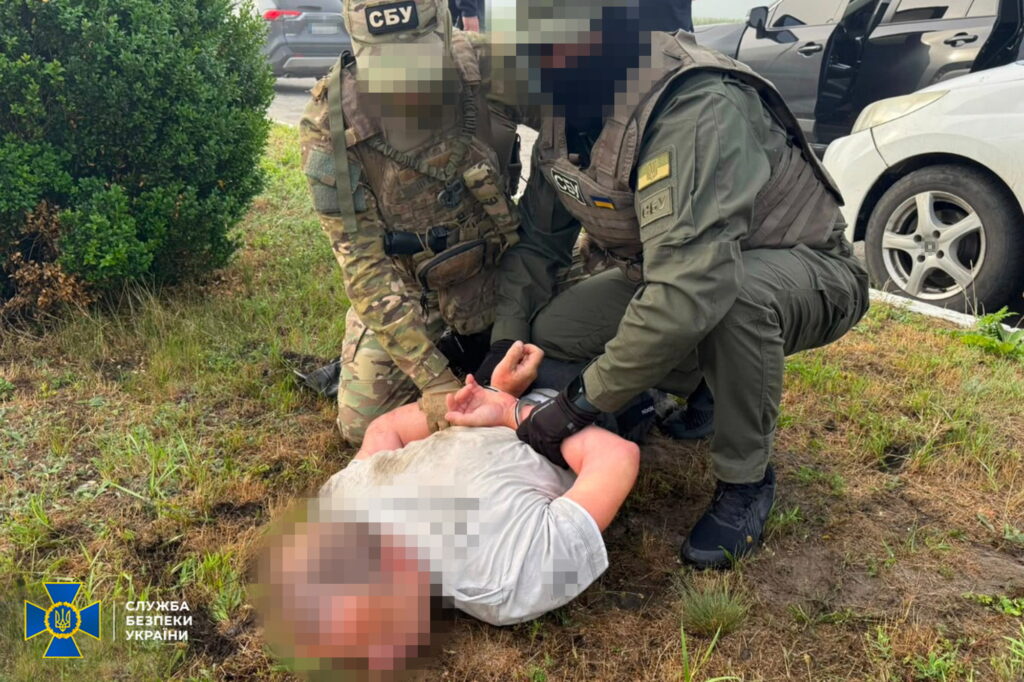
The SBU's own reports from the past week show what Russia's recruits are tasked with. A mobilized soldier allegedly recruited by the FSB, Russia's Federal Security Service, tried to direct a Russian missile strike on his own unit in Kharkiv Oblast, the SBU said. His repair battalion restores Ukrainian drones.
A Lviv Oblast resident who worked at a drone production site in western Ukraine was allegedly recruited to guide a missile strike on it, the agency reported. The strike was meant to disrupt the steady supply of strike and reconnaissance drones to Ukrainian troops, the SBU said.
A court also sentenced a 17-year-old agent of Russia's military intelligence (GRU), exposed in November 2024, to 10 years in prison, the SBU announced. She tracked Ukrainian air defenses in Chernihiv Oblast under the cover of taxi rides. She talked to her GRU handler through an anonymous messenger chat.
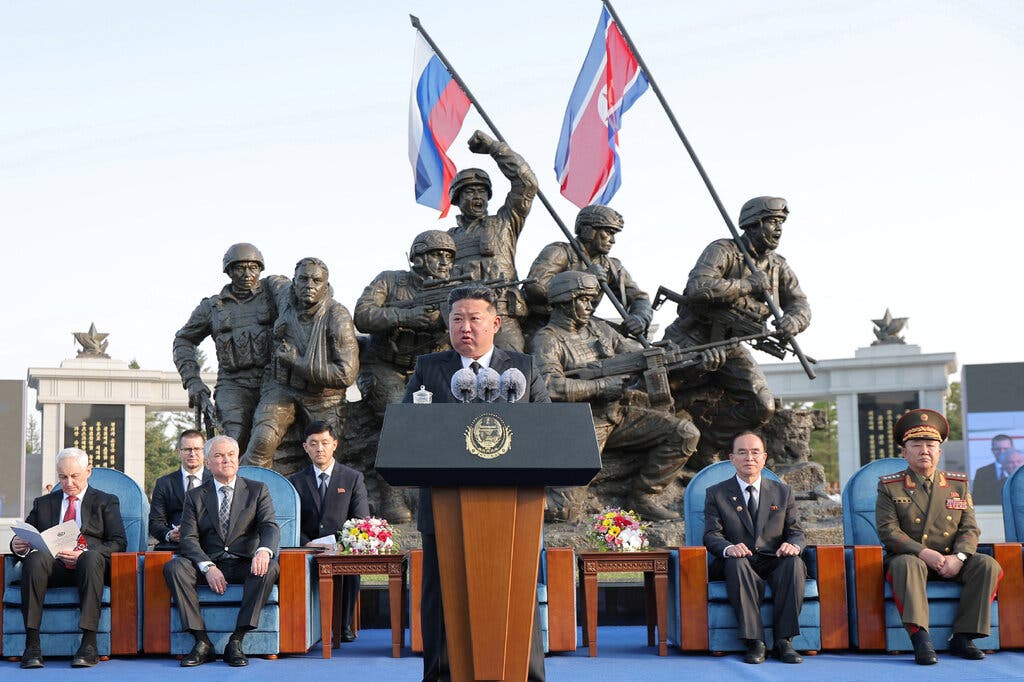
Russia has quietly started a new round of mobilization and plans to bring in more North Korean troops, Ukrainian President Volodymyr Zelenskyy said. He cited a new report from Ukraine's military intelligence. The same day, the Kremlin published a decree enlarging Russia's army for the fourth time this year.
Russia widens recruitment at home and abroad
Zelenskyy spoke in his evening address on 28 September, after a briefing from Ukraine's military intelligence (HUR).
"In effect, t
Russia has quietly started a new round of mobilization and plans to bring in more North Korean troops, Ukrainian President Volodymyr Zelenskyy said. He cited a new report from Ukraine's military intelligence. The same day, the Kremlin published a decree enlarging Russia's army for the fourth time this year.
Russia widens recruitment at home and abroad
Zelenskyy spoke in his evening address on 28 September, after a briefing from Ukraine's military intelligence (HUR).
"In effect, the Russians have already begun additional mobilization—they are increasing the number of people they recruit through various means," he said.
Moscow also plans to recruit more foreigners, Zelenskyy said. He urged the governments of countries whose citizens Russia recruits to counter it, and said Kyiv would inform each of them.
Ukraine says Russia has been losing soldiers faster than contract recruitment replaces them. If so, an unannounced call-up lets the Kremlin refill its ranks without a formal draft. ISW says Putin may hold off on such a draft until he sees whether his strikes work. Ukrainian intelligence had expected Russia to announce a mass mobilization after this month's State Duma elections.
More than 8,000 North Koreans in Russia, 10,000 more in preparation
More than 8,000 North Korean troops are currently on Russian territory, Zelenskyy said. Pyongyang is selecting another 10,000 for training and deployment to Russia, he added.
Russia is paying, among other things, with technology, according to Zelenskyy. North Korea has launched production of Shahed-type attack drones with Russian technical support, he said.
That is a step beyond what Kyiv reported in June 2025. Moscow and Pyongyang had then only agreed to start preparing such production. In August, Zelenskyy warned that Russia could receive up to 50,000 North Korean troops.
Explore further
North Korean missile unit deploys to Russia for ballistic strikes on Ukraine, Kyiv says
Kremlin raises the army's size again
Putin's decree sets the authorized strength of Russia's armed forces at 2,441,630, including 1,550,500 military personnel, Vedomosti reported. The decree gives no reason.
The order adds 15,500 troops and is the fourth such increase this year, Euronews said. Since March, the combined increase has reached 47,860 soldiers. Putin's 2022 "partial mobilization" decree also remains in force, the outlet noted.
Explore further
Russia could open northern front by February if it orders new mobilization, Ukraine intel says
Moscow keeps denying a call-up
In early September, Putin claimed that reports of a coming mobilization were "complete nonsense" and "an information attack on Russia." Russian officials gave similar assurances days before the 2022 call-up.
Ukraine's military and foreign intelligence had earlier said that Russia's General Staff prepared a scenario to mobilize 600,000 people over 2026 and 2027, 300,000 each year.

 Connexion