❌

Vue normale

Trump says Russia agreed to supply millions of tons of diesel to US and global markets as he blames Ukraine for fuel price hikes driven by Iran war

9 octobre 2026 à 15:45

Trump Putin meeting in Alaska

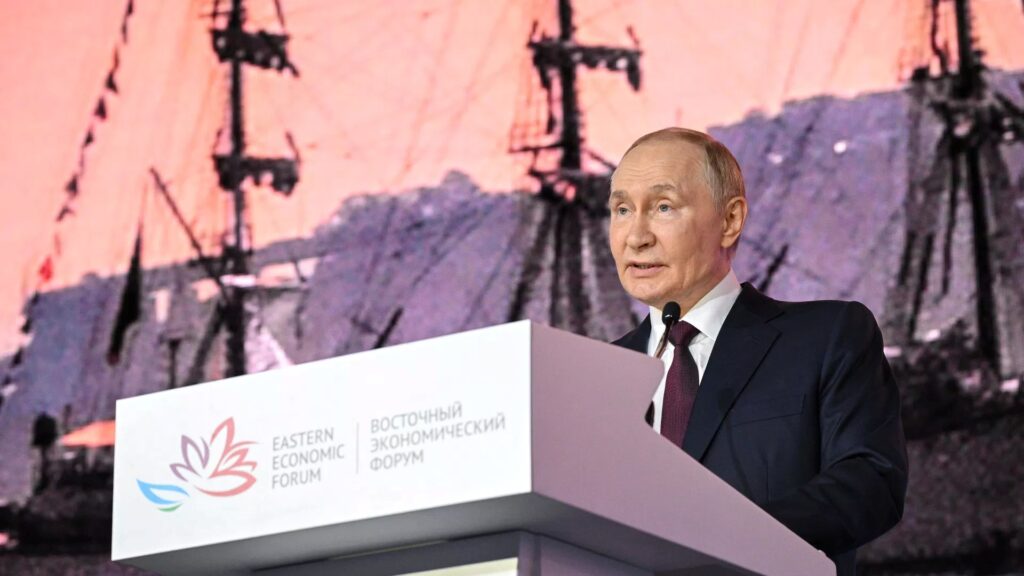
US President Donald Trump announced a deal with Russian President Vladimir Putin for Moscow to supply millions of tons of diesel fuel to American and global markets. 

The announcement would give Russia a major opportunity to sell fuel abroad at a time when Ukraine is targeting its oil industry to deprive Moscow of revenue and disrupt the resources sustaining its invasion. The US president has increasingly called for Ukraine to halt strikes on Russian oil infrastructure in recent weeks, blaming Ukraine for high fuel prices in the US.

Trump’s push for Kyiv to halt those attacks, alongside his effort to secure Russian fuel supplies, risks undermining Ukraine’s campaign to put economic pressure on the Kremlin while the US seeks to contain the fallout from its war with Iran.

Trump promises millions of tons of diesel from Russia

In a 9 October post on Truth Social, Trump said Russia would immediately supply more than 300,000 tons of diesel, followed by another 500,000 tons in November and 1 million tons shortly afterward. He also announced a possible additional delivery of 3 million tons, conditional on the state of Russian refineries.

“Diesel Prices for Americans and, indeed, the World, will be COMING DOWN, IN RECORD NUMBERS, AND FAST!” Trump wrote, describing lower fuel prices as a top priority for American farmers, ranchers, and truckers.

Trump's announcement did not explain how the promised volumes would be reconciled with the condition of Russian refineries amid ongoing Ukrainian strikes, which he cited as a factor determining the timing of later deliveries.

Trump has pressed Ukraine to stop targeting Russian refineries

The announcement comes after Trump repeatedly blamed Ukrainian strikes on Russian oil infrastructure for worsening global diesel shortages and driving up fuel prices.

Ukraine has continued targeting Russian oil facilities as part of its campaign to undermine Moscow's war economy. Ukrainian strikes have damaged refining capacity, contributed to fuel shortages inside Russia, and forced Moscow to restrict fuel exports. 

Kyiv has argued that the attacks put pressure on Russia's ability to finance and sustain its war against Ukraine.

Iran war drives fuel prices higher, not Ukraine

The rise in US fuel prices stems largely from the US-Israeli war with Iran and its disruption of global energy supplies, according to Reuters. The conflict has disrupted shipping through the Strait of Hormuz, a strategic waterway through which roughly one-fifth of the world's oil supplies normally pass, pushing energy prices higher. 

Trump has nevertheless blamed Ukraine's refinery strikes for rising fuel costs while pressing Kyiv to halt them.

Ukraine's attacks on Russian oil infrastructure are intended to weaken Moscow's war economy. By contrast, the disruption to global energy shipments stems largely from the conflict with Iran. 

Zelenskyy warns Russian diesel deal would fund further attacks on Ukraine

Ukrainian President Volodymyr Zelenskyy warned later on 9 October that allowing Russia to sell petroleum products abroad without securing a lasting de-escalation agreement would help finance Moscow's war against Ukraine.

“Allowing Russia to sell petroleum products is an investment in a war that must be ended, not prolonged,” Zelenskyy said, responding to Trump's announcement of a proposed Russian diesel supply deal.

Zelenskyy said Ukraine's strikes on Russian oil refineries and other oil facilities were a response to Russia's years-long campaign against Ukrainian energy infrastructure. He offered a reciprocal arrangement under which Ukraine would stop striking Russian refineries if Russia stopped destroying Ukrainian energy facilities, saying the United States had sufficient leverage to secure such an agreement.

“Ukraine will not burn Russian oil refining facilities if Russia does not destroy our energy infrastructure,” Zelenskyy said.

He also urged Washington to maintain pressure on Moscow, including sanctions under the proposed Graham legislation, and to continue supporting Ukraine's defense. Zelenskyy argued that easing sanctions without a clear, sustained de-escalation agreement would signal weakness and give Russia more time and resources to continue the war.

“Gifts to Putin will not bring peace,” Zelenskyy said, warning that Russia would respond to diesel supplies with further terror and attacks. He called on the United States to pursue a reciprocal de-escalation agreement and press Russia to stop its attacks on Ukrainian energy infrastructure.

  • ✇Euromaidan Press
  • Head of Russian military propaganda network to be expelled from Montenegro over suspected anti-EU operation
    Montenegro has ordered the expulsion of Mikhail Zvynchuk, head of the pro-Kremlin military information network Rybar, and four other Russian citizens over national security concerns following a security operation targeting suspected Russian hybrid influence activities, Vijesti reported on 9 October. Zvynchuk is the founder and head of Rybar, a prominent Russian military-focused information network known for its Telegram channels covering Russia's war against Ukraine. The network promote
     

Head of Russian military propaganda network to be expelled from Montenegro over suspected anti-EU operation

9 octobre 2026 à 15:08

Mikhail Zvynchuk, head of the pro-Kremlin military information network Rybar. Screenshot: RuTube via Novaya Gazeta Europe

Montenegro has ordered the expulsion of Mikhail Zvynchuk, head of the pro-Kremlin military information network Rybar, and four other Russian citizens over national security concerns following a security operation targeting suspected Russian hybrid influence activities, Vijesti reported on 9 October.

Zvynchuk is the founder and head of Rybar, a prominent Russian military-focused information network known for its Telegram channels covering Russia's war against Ukraine. The network promotes pro-Kremlin narratives and has been associated with Russian propaganda and influence operations.

Montenegrin police announced on 9 October that the five Russians had their residence rights revoked and were ordered to leave the country on national and internal security grounds. 

Montenegro investigates suspected Russian hybrid activity

The operation involved Montenegro's police and National Security Agency (ANB), which seized drones, high-resolution recording equipment, cameras, and several mobile phones for further examination, according to Vijesti.

According to Montenegrin authorities, the five had arrived in the country less than two days before the operation. The investigation is being conducted with support from international partners.

Montenegrin police identified the five Russian citizens as Zvynchuk, his wife Valeria Zvynchuk, Sergei Belous, Pavel Lekatorchuk, and Kira Doroshenko. Authorities said the case had been referred to prosecutors in Podgorica and Kotor.

The European Union has sanctioned Zvynchuk over activities that undermine or threaten Ukraine's territorial integrity, sovereignty, and independence. He has also been sanctioned by the United Kingdom, Switzerland, Australia, and Ukraine, according to Vijesti.

Suspected influence operation targeting EU integration

Vijesti reported, citing security sources, that Montenegrin authorities suspected the group of planning a documentary intended to undermine public support for the country's European integration.

According to the outlet, the planned material would portray Montenegro's expected alignment of its visa policy with EU standards as a politically imposed measure that threatens tourism, economic stability, and national interests.

Security services had monitored the group's arrival before carrying out the operation in Risan, in the Bay of Kotor area, Vijesti reported. The equipment seized from the group will undergo expert analysis to establish its intended purpose and use in Montenegro.

Medvedev threatens imprisoning “European and American idiots” for prisoner exchanges

Former Russian President Dmitry Medvedev responded to the operation by suggesting Moscow might need to expand its pool of prisoners to exchange for Europeans and Americans to secure Zvynchuk's return.

“We will probably have to replenish our pool of prisoners for exchange with European and American idiots,” Medvedev said, according to Vijesti.

Montenegro, a NATO member and EU candidate, has aligned itself with EU sanctions against Russia following Moscow's full-scale invasion of Ukraine in 2022. The expulsion comes amid broader European concerns over Russian intelligence activity, propaganda, and other forms of hybrid interference. 

Ukraine suffered 10 times fewer casualties than Russia in Vivaldi counteroffensive, veteran says. Ukraine’s innovations in drone and ground robot tactics are changing frontline warfare

9 octobre 2026 à 12:10

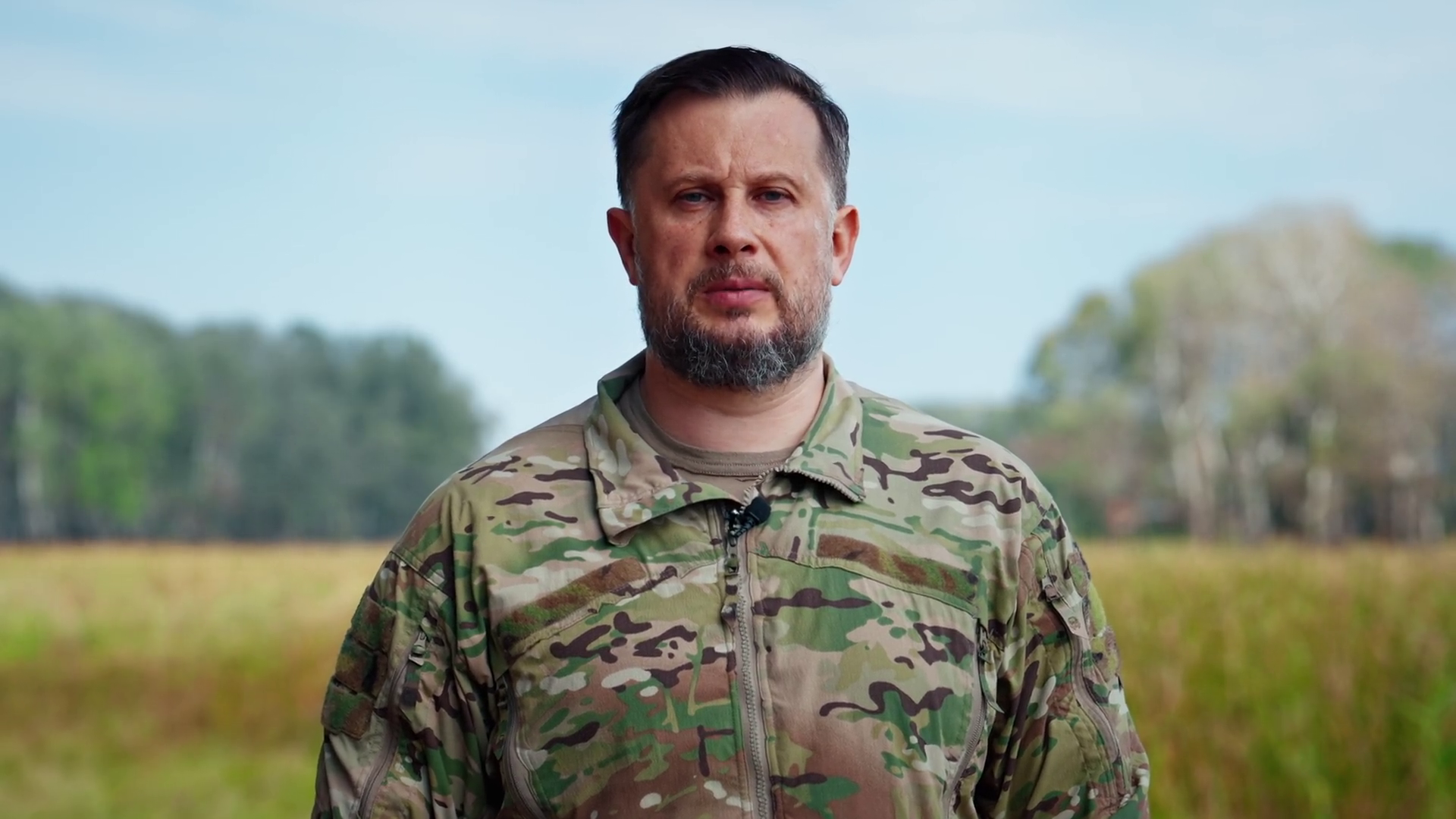
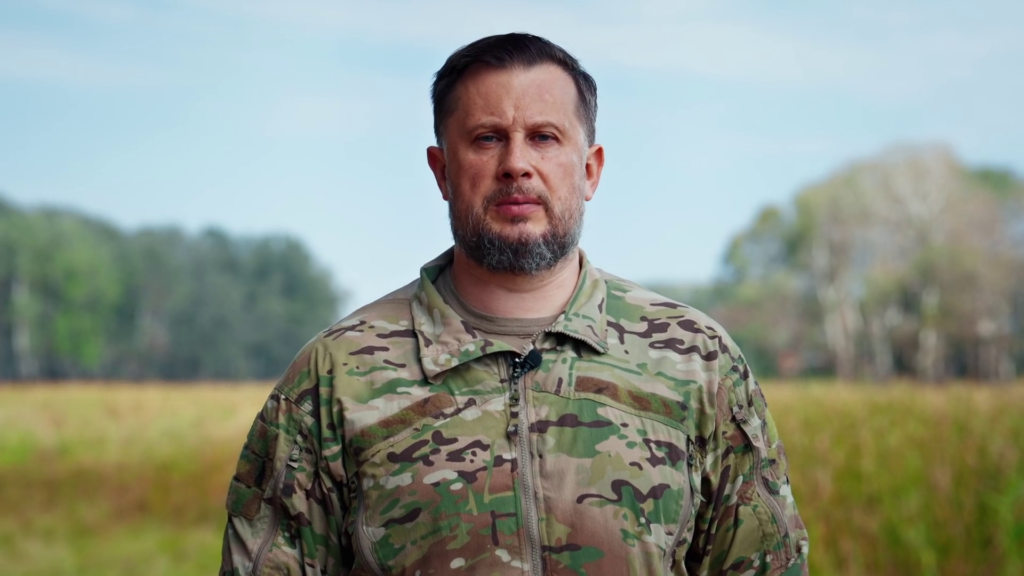
Ukraine's Third Army Corps commander Brigadier General Andrii Biletskyi announcing "Operation Vivaldi," 15 September 2026. Screenshot from video: Ukraine's Third Army Corps

Ukrainian assault troops suffered more than 10 times fewer casualties than Russian forces during Operation Vivaldi, a Ukrainian military veteran said on 9 October, describing the ratio as unprecedented and highlighting Ukraine’s improved ability to protect its soldiers during offensive operations.

The counteroffensive has been a significant Ukrainian success, reclaiming territory in northern Donetsk Oblast and disrupting Russia’s plans to advance toward Sloviansk and Kramatorsk. The reported casualty ratio points shows Ukraine’s ability to make offensive gains while reducing the human cost of assaulting fortified positions.

Yevhen Dykyi made the remarks in an interview with Radio NV, saying the results showed how Ukrainian forces had learned to limit losses while attacking defended Russian positions.

Protecting troops during offensive operations

Dykyi said the casualty ratio was one of the operation’s most important outcomes.

He said that Ukrainian assault troops suffered more than 10 times fewer casualties than Russian forces during the counteroffensive.

“That speaks volumes. We have learned how to protect our people, and that is extraordinarily vital,” he added.

Operation Vivaldi disrupted Russia’s advance in Donetsk

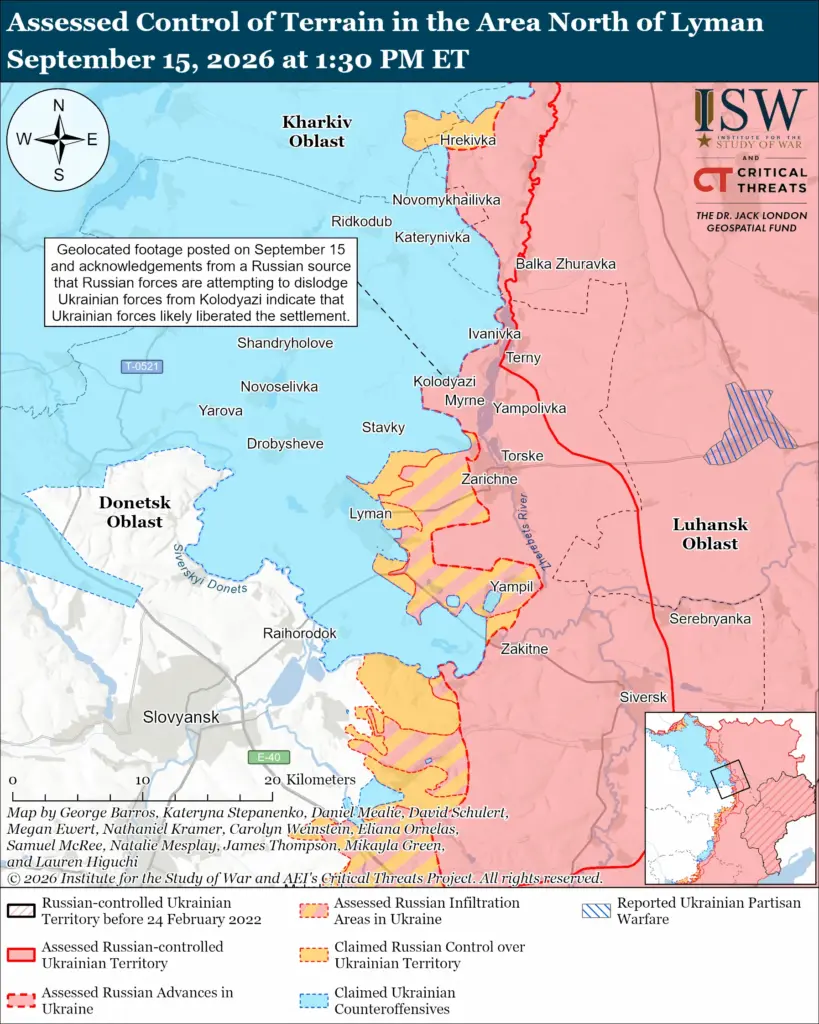
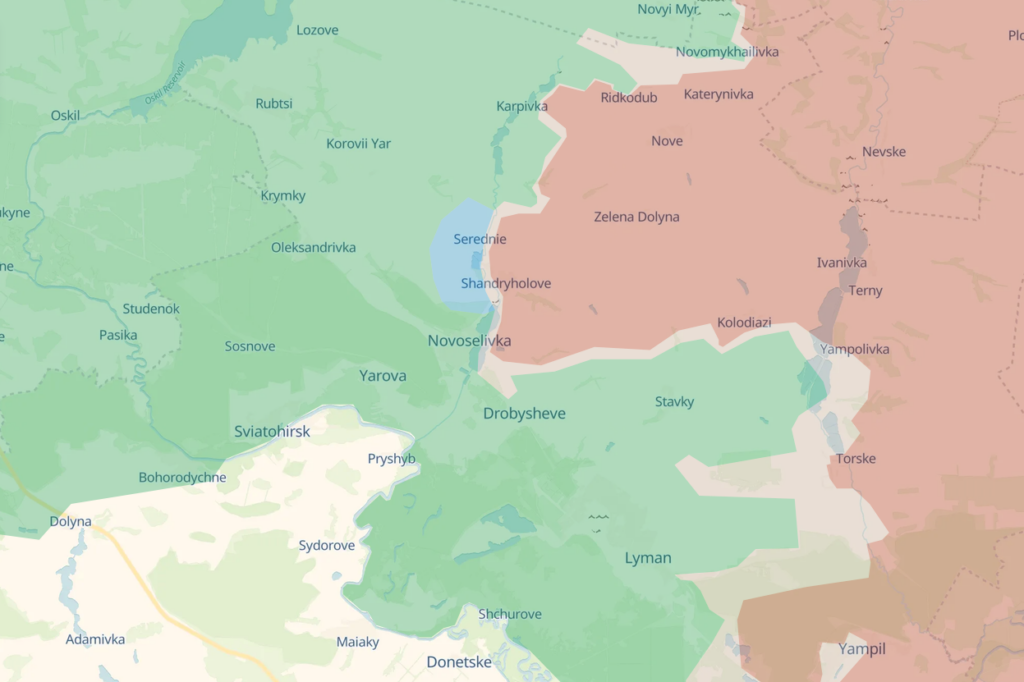
The Third Army Corps launched Vivaldi in mid-September in northern Donetsk Oblast, near Lyman, where Russian forces had spent months trying to advance toward Ukraine’s fortified cities of Sloviansk and Kramatorsk.

The operation aimed to clear Russian troops from positions north of Lyman and disrupt Moscow’s plans to encircle the remaining Ukrainian-held parts of Donetsk Oblast. Ukraine’s Third Army Corps announced the counteroffensive on 15 September, initially reporting that its forces had cleared Russian infiltrators from several settlements and liberated Serednie.

By 30 September, Ukraine had regained 176 square kilometers of territory during the operation, according to figures cited by the Ukrainian presidential office. Ukrainian authorities also reported that their forces had captured around 250 Russian soldiers and inflicted more than 5,000 Russian casualties, including killed and wounded. 

The counteroffensive also disrupted Russia’s effort to advance behind Ukraine’s fortified defensive line. By threatening Russian positions north of Lyman, Ukrainian forces complicated Moscow’s plans to encircle the Sloviansk-Kramatorsk area rather than attack its defenses head-on.

Unmanned systems help limit casualties

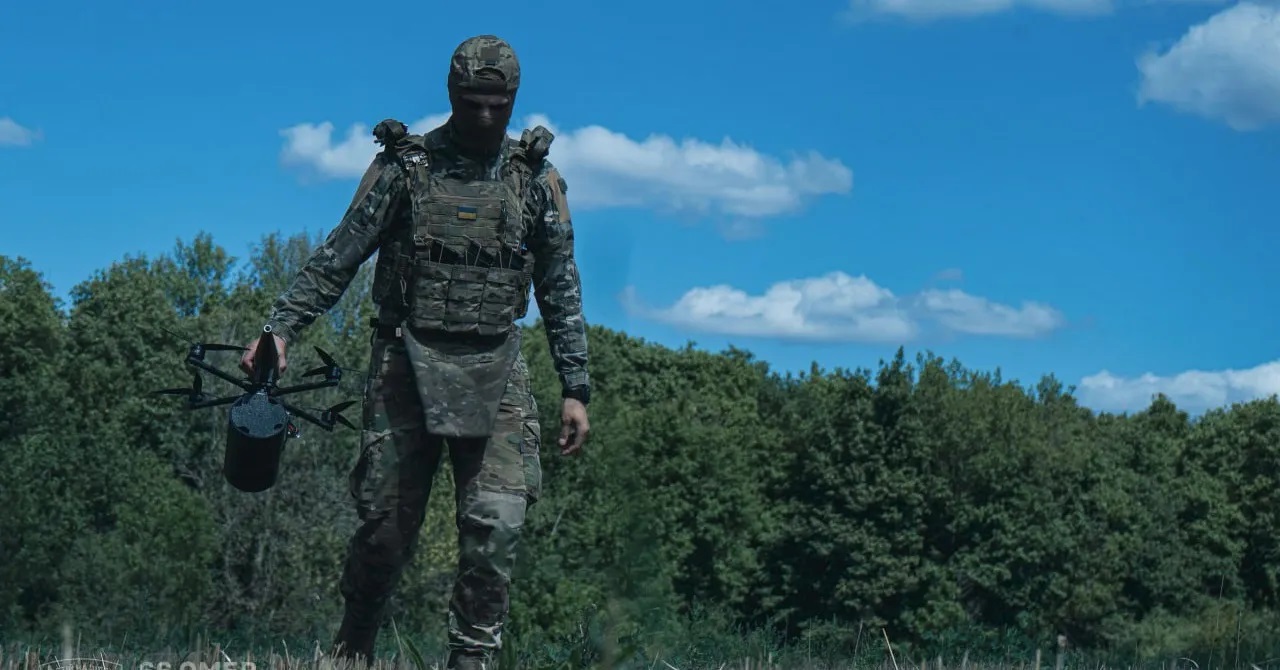
A key feature of Vivaldi has been the use of unmanned systems to attack fortified Russian positions before Ukrainian infantry moves in. Ukrainian forces deployed ground robots carrying grenade launchers to fire into Russian shelters, while explosive ground vehicles were used to destroy bunkers and strongpoints.

In one reported tactic, heavy drones delivered kamikaze ground robots more than 10 kilometers behind Russian lines, allowing Ukrainian operators to attack positions without exposing infantry to direct fire.

For the first time, Ukraine has dropped ground robots behind Russian lines from the air amid the Operation Vivaldi, protecting Ukraine's fortress cities in Donetsk Oblast. Source: The scheme by the 3rd Army Corps
Explore further

Ukraine is saving Donetsk Oblast with world’s first-of-its-kind operation: Vivaldi counteroffensive drops robots directly from heavy bombers 10 kilometers behind Russian lines

  • ✇Euromaidan Press
  • Blackouts return to Kyiv as Russia prepares to freeze civilians over the winter
    Power outages have returned to Kyiv after Russian attacks damaged the energy infrastructure supplying the capital, with authorities warning that the situation could worsen as Russia intensifies its campaign against Ukraine’s energy system ahead of winter. Russia has repeatedly targeted Ukraine’s power, heating, and other critical infrastructure to disrupt the systems civilians depend on and create a humanitarian crisis during winter. Ukrainian officials have repeatedly warned that this
     

Blackouts return to Kyiv as Russia prepares to freeze civilians over the winter

8 octobre 2026 à 14:35

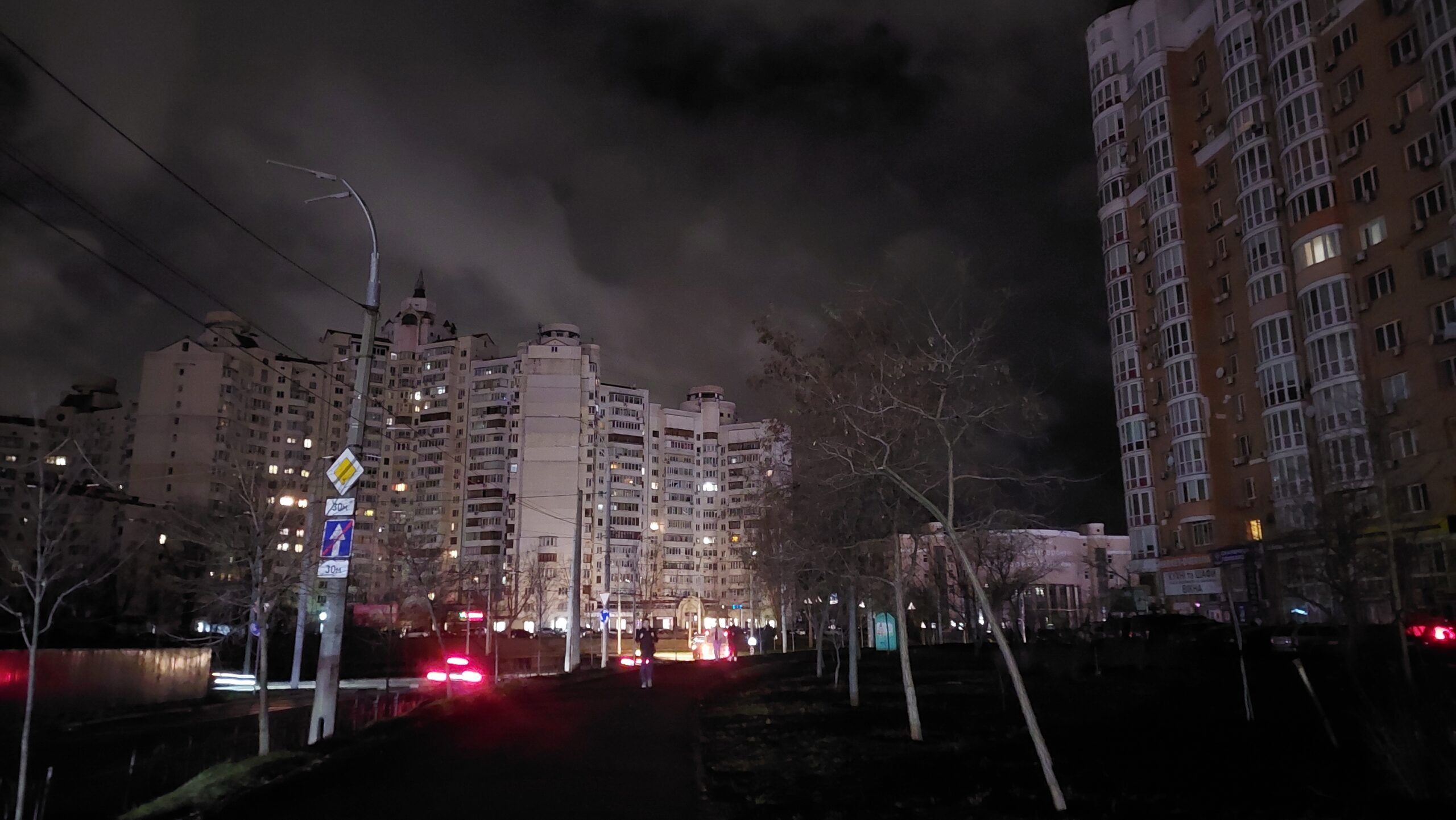
Kyiv building during a blackout following Russian attacks on energy infrastructure, 7 October 2026. Photo: Yan Dobronosov

Power outages have returned to Kyiv after Russian attacks damaged the energy infrastructure supplying the capital, with authorities warning that the situation could worsen as Russia intensifies its campaign against Ukraine’s energy system ahead of winter.

Russia has repeatedly targeted Ukraine’s power, heating, and other critical infrastructure to disrupt the systems civilians depend on and create a humanitarian crisis during winter. Ukrainian officials have repeatedly warned that this winter will be especially severe, as Russia has expanded its strike capabilities since the summer and Ukraine continues to face shortages of air-defense systems needed to protect its energy infrastructure.

Ukrenergo said on 8 October that emergency outages were being imposed in parts of Kyiv and Kyiv Oblast because of falling voltage in the high-voltage network. Previously announced hourly schedules were suspended, with predictable schedules to resume once the system stabilizes.

In the evening, further disruption came after a Russian attack on an energy facility important to Kyiv. Energy Minister Denys Shmyhal said that energy workers were working to restore power.

Kyiv has been under Russian attack throughout the day, with four people killed and 19 injured.

The attack continues into the evening of 8 October, with air raid alerts active across most of the country.

Kyiv loses power, water, and public transport

The damage throughout the day quickly spread beyond electricity.

The Kyiv City Military Administration said power disruptions temporarily halted metro trains and escalators. Part of the capital’s public transport system was also suspended because of the lack of electricity.

Reduced power to water infrastructure caused lower pressure on the right bank of the Dnipro, particularly in the Holosiivskyi, Sviatoshynskyi, Solomianskyi, and Shevchenkivskyi districts. Some buildings could temporarily lose water, the administration warned.

Russia is hitting the energy system as winter approaches

The outages come as Russia has stepped up attacks on Ukraine’s energy infrastructure ahead of the heating season.

Ukrenergo said Russian attacks had caused new power outages in Donetsk, Kharkiv, Sumy, and Zaporizhzhia oblasts. The company said damaged equipment was already limiting the grid’s ability to supply consumers and warned that further Russian strikes could rapidly change the situation.

For 9 October, Ukrenergo announced all-day power restrictions in affected regions, including hourly outages for some consumers. Industrial and business consumers will also face restrictions. The company urged Ukrainians to conserve electricity, particularly during the evening peak from 5 p.m. to 10 p.m.

Ukraine’s energy authorities have been warning about the consequences of repeated Russian attacks for months. In late September, Prime Minister Serhii Koretskyi said attacks on energy facilities had been occurring almost daily since the summer, with the September 29–30 attack marking the first massive combined strike on the energy system since the previous heating season.

The renewed strikes mark the beginning of Russia’s winter campaign against the energy system, with Russian missiles and drones increasingly targeting power-generation and transmission infrastructure in Kyiv and surrounding regions.

During blackouts, apartment blocks in Kyiv are mostly dark, with scattered lights from apartments with battery-powered sources. Generators power businesses on the ground floor. Street lights are largely off.
Explore further

Behind the black windows: How Kyiv survives a winter in the dark

Russia has openly threatened another winter of blackouts

The campaign follows years of Russian attacks aimed at disrupting the infrastructure that keeps Ukrainian homes heated and supplied with electricity and water during the winter.

In August, Russia’s Defense Ministry openly taunted Ukrainians over its attacks on energy-related infrastructure, posting images of attack drones with the message that Ukrainians would “get a freeze” in winter. 

Russia’s strategy has repeatedly linked attacks on electricity infrastructure to disruptions in heating and water supplies. This makes damage to the power grid particularly consequential as temperatures fall: a strike on an electrical facility can leave not only homes without lights, but also affect water pumps, heating systems, transportation, and other essential services.

The return of blackouts to Kyiv before the heating season is fully underway is an early indication of the pressure Russia’s renewed energy campaign is putting on Ukraine’s civilian infrastructure.

https://twitter.com/EuromaidanPress/status/2108182631217074459/

80% of Moldovans say country is unprepared for attack as Russian drones flow into its airspace, but few back NATO membership

8 octobre 2026 à 11:36

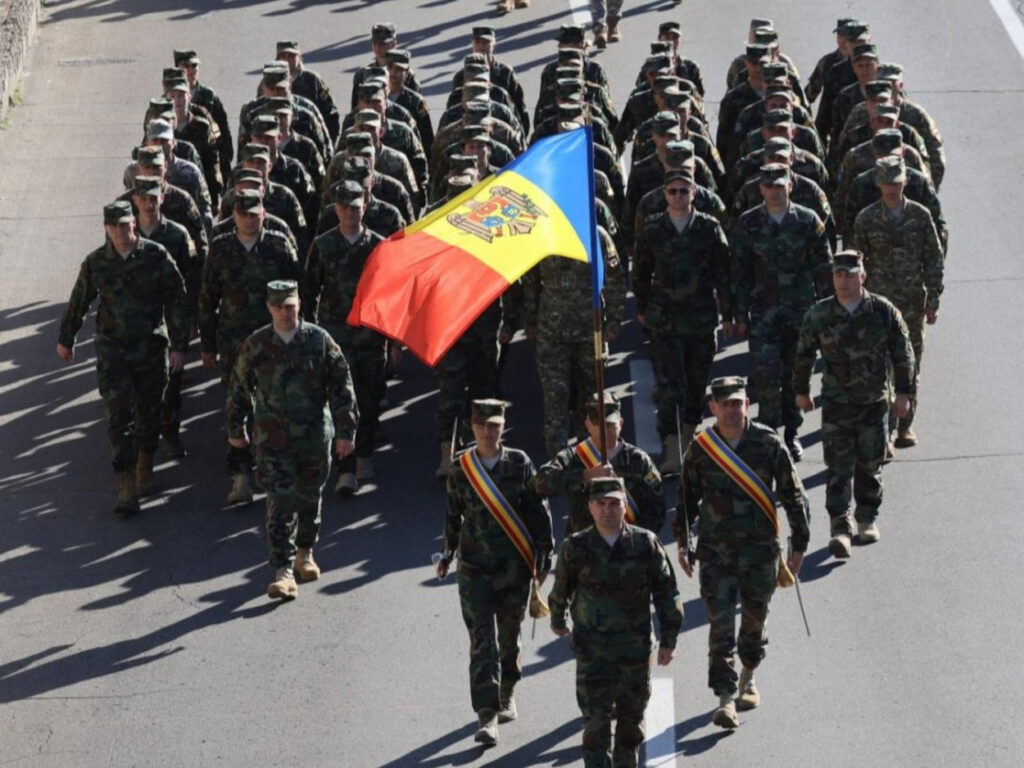
Moldovan soldiers. Photo: Moldovan Army via NewsMaker

More than 80% of Moldovans believe the country is not prepared to withstand external aggression, according to a CBS AXA poll presented ahead of the Moldova Security Forum 2026, NewsMaker reports. 

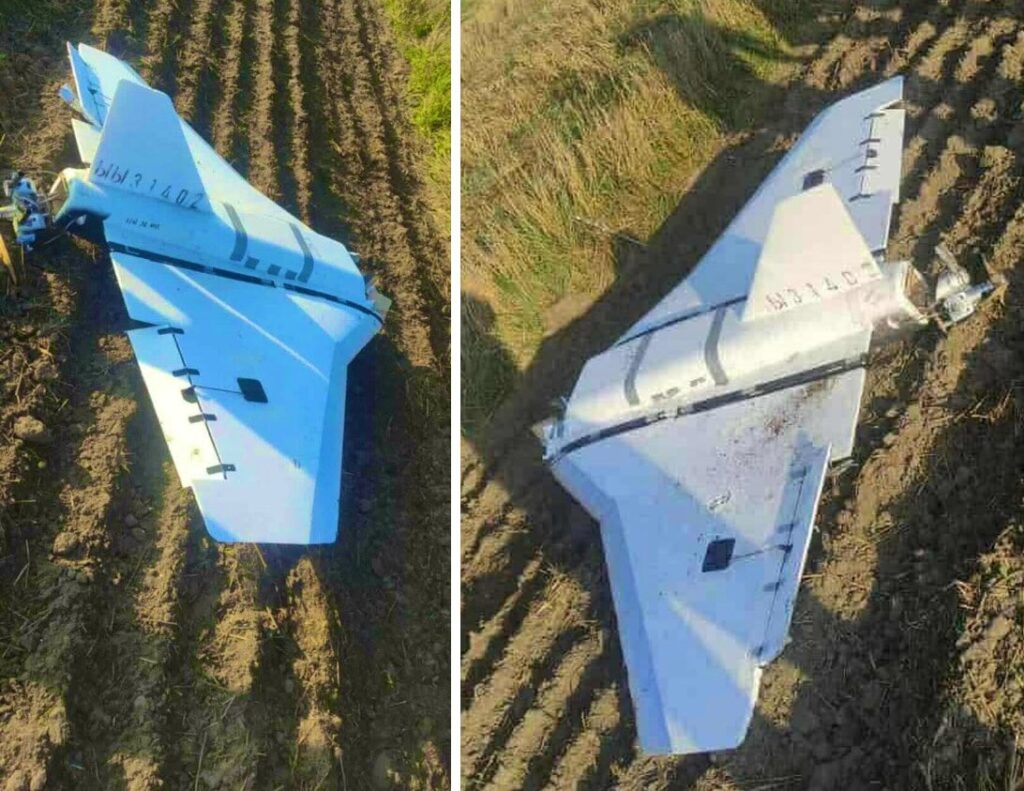
The findings come as Moldova has faced a sharp increase in Russian drone incursions linked to Russia’s war against Ukraine. Moldova recorded 44 airspace-violation incidents in the first nine months of 2026, compared with 17 in all of 2025. Authorities have reported Russian drones crossing Moldovan airspace, while drone and missile debris has also fallen on Moldovan territory.

According to NewsMaker, more than 60% of those surveyed said Moldova is completely unprepared for a possible armed attack, while nearly 24% described its preparedness as weak.

Moldovans see country as unprepared for attack

The survey found that 82% of respondents also do not feel sufficiently informed or prepared to know what to do in a major crisis. According to CBS AXA Deputy Director Vasile Cantarji, respondents tend to trust specialized emergency institutions more than Moldova’s main state institutions.

More than half said they trust Moldova’s General Inspectorate for Emergency Situations, while 35% expressed trust in the church. Trust in the government, parliament, and courts was much lower, at roughly 4–6%.

The findings come as Moldova faces a security environment shaped by Russia’s war against Ukraine, hybrid threats, energy dependence, and disinformation. Moldova’s government has supported Ukraine and strengthened security cooperation with European partners, while repeatedly condemning Russia’s war and its spillover effects.

The repeated drone incursions are now increasingly exposing Moldova to risks from the war next door.

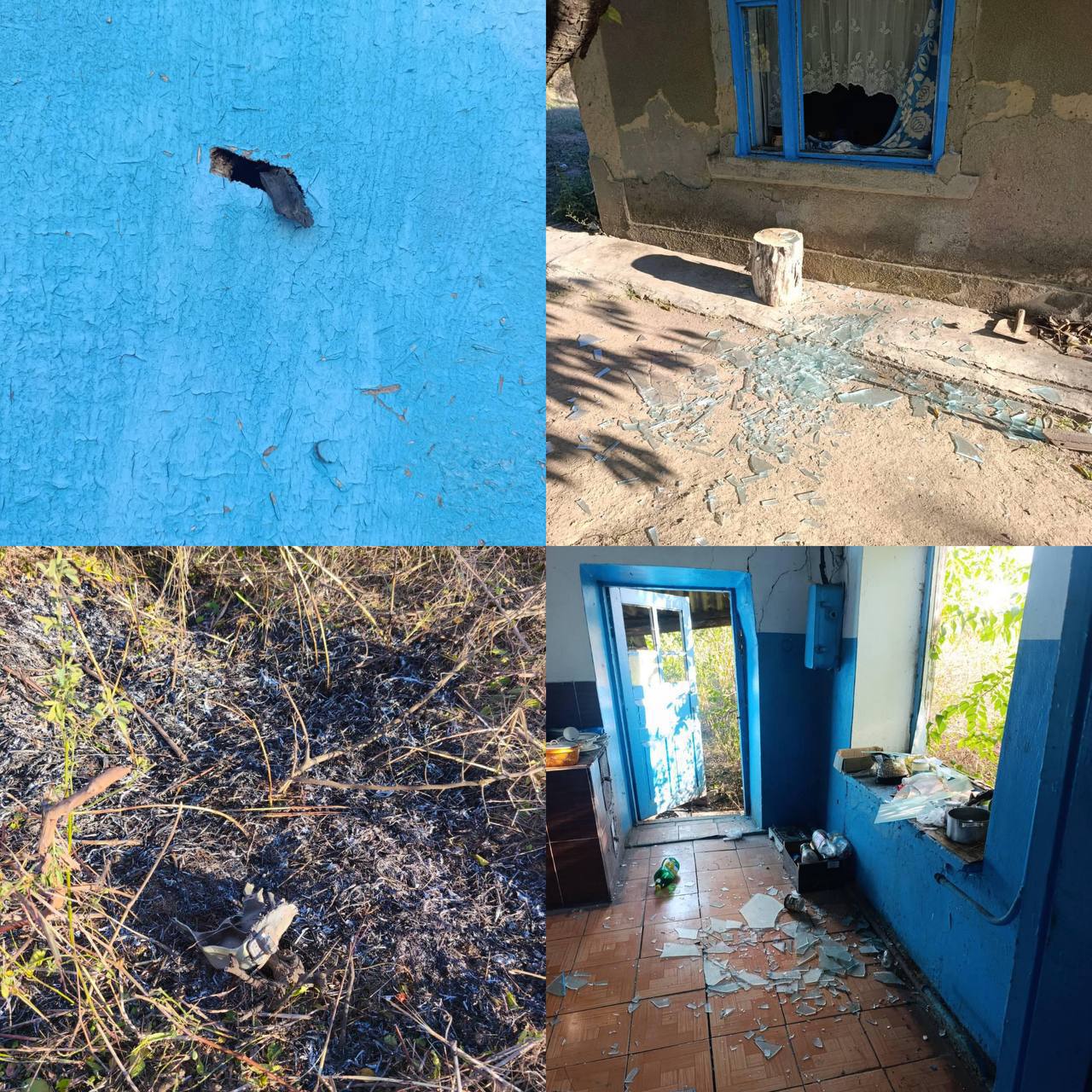
Fragments of Russian drones or missiles that struck Moldovan territory on 3 October 2026. Photo: Moldovan Police via Newsmaker
Explore further

Three Russian missiles and two drones strike Moldovan territory in morning attacks on neighboring Ukraine. Moldova is increasingly exposed to the risks of Russia’s war next door

Most favor neutrality over NATO membership

Despite the widespread perception that Moldova is poorly prepared for external aggression, only about 4% of respondents said joining NATO would be the right way to make the country safer.

Around 45% instead favored maintaining Moldova’s neutrality. At the same time, six in 10 respondents said Moldova needs continued external support to strengthen its security and defense.

Nearly two-thirds considered cooperation with the European Union and Romania important for Moldova’s development.

Moldova’s constitution establishes permanent neutrality, while the country has been deepening security and defense cooperation with European partners.

EU seen as preferred source of emergency assistance

The poll also asked whom Moldova should turn to for help during a major disaster such as an earthquake or flood.

About 33% selected EU countries, followed by Russia at roughly 16% and Romania at 15%. The CIS, NATO, UN, and Ukraine each received support from 4% or fewer respondents.

War in Ukraine is one of several security concerns

Respondents identified a range of threats to Moldova’s security, with internal problems ranking alongside external risks.

Corruption was cited by more than 15% of respondents, while poverty was named by 13.5%. Just over 13.5% identified the war in Ukraine as a security risk. Energy dependence and disinformation were each cited by nearly 10%.

Other concerns included economic instability, crime, and external aggression.

CBS AXA conducted the survey from August 25 to September 9 among 2,009 Moldovans aged 18 and older. The reported margin of error is 2.2%. NewsMaker published the findings on October 7.

Moldova strengthens protection at Ukrainian border

Moldovan authorities are now responding to the Russian drone threat by creating protected areas at border crossings with Ukraine where border guards, officials, and civilians can shelter during potential drone attacks, Interior Minister Daniela Misail-Nikitin said on October 7, according to NewsMaker.

Authorities are also moving Moldovan personnel from joint checkpoints located on Ukrainian territory back to Moldova. The measures follow an incident at the Palanca–Maiaki–Udobne crossing in which a Moldovan border guard was injured by a falling projectile.

Transnistria adds another security challenge

Moldova also faces a longstanding security problem in Transnistria, a breakaway region along the country’s eastern border with Ukraine. The region declared independence from Moldova in 1990 and has remained outside Chisinau’s control since a brief war in 1992.

Transnistria is not internationally recognized as an independent state. Russia maintains a significant troop presence there and has long supported the separatist authorities, making the region a persistent source of tension between Chisinau and Moscow. 

  • ✇Euromaidan Press
  • Polish SIM cards found inside Russian drones in Poland, raising new questions over 2025 incursion
    Polish SIM cards were found inside some of the Russian drones that entered Polish airspace during a mass incursion in September 2025, Polish outlet RMF24 reported, citing findings from a Polish prosecution investigation. SIM cards can allow drones to connect to local cellular networks for functions such as communications, data transmission, telemetry, or navigation-related services. However, investigators have not said what the Polish SIM cards found in the Russian drones were used for.
     

Polish SIM cards found inside Russian drones in Poland, raising new questions over 2025 incursion

8 octobre 2026 à 10:50

sim cards downed drones expose russia's months-long plan target poland lithuania russian gerbera crashed 10 2025 @warnewspl1 defense express download ukraine news ukrainian reports

Polish SIM cards were found inside some of the Russian drones that entered Polish airspace during a mass incursion in September 2025, Polish outlet RMF24 reported, citing findings from a Polish prosecution investigation.

SIM cards can allow drones to connect to local cellular networks for functions such as communications, data transmission, telemetry, or navigation-related services. However, investigators have not said what the Polish SIM cards found in the Russian drones were used for. The details remain classified.

The SIM cards were discovered in some of the Russian Gerbera drones recovered after the incursion, RMF24 reported.

Investigators have not disclosed whether the SIM cards were stolen or obtained illegally.

The investigation into the September 9–10, 2025 incursion was ultimately closed after prosecutors failed to identify those responsible for violating Polish airspace.

More than 30 drones entered Poland

The incursion took place overnight on September 9–10, 2025, during a large Russian missile and drone attack on Ukraine. More than 30 Russian Gerbera drones entered Polish airspace from the east and came down at 27 locations across the country, according to RMF24.

Polish forces intercepted and shot down multiple drones, with the Territorial Defense Forces deployed to search for wreckage and other objects that came down on Polish territory. Poland also maintained contact with NATO command throughout the operation.

The incident prompted Poland to close four airports – Warsaw Chopin, Warsaw-Modlin, Rzeszów-Jasionka and Lublin – because of the military activity. 

Polish officials described the airspace violations as unprecedented and a serious threat to national security. The incident marked the first time since Russia's full-scale invasion of Ukraine that Polish forces had used weapons against Russian aerial objects that entered the country's airspace.

The mass incursion subsequently became the subject of a criminal investigation into the violation of Polish airspace and the threat to public safety.

Investigation closed without identifying perpetrators

After months of investigation, Polish prosecutors closed the case because they were unable to identify the perpetrators, according to Lublin District Prosecutor’s Office spokesman Marcin Kozak, as cited by RMF24.

Most of the case files, including the justification for the decision, are classified.

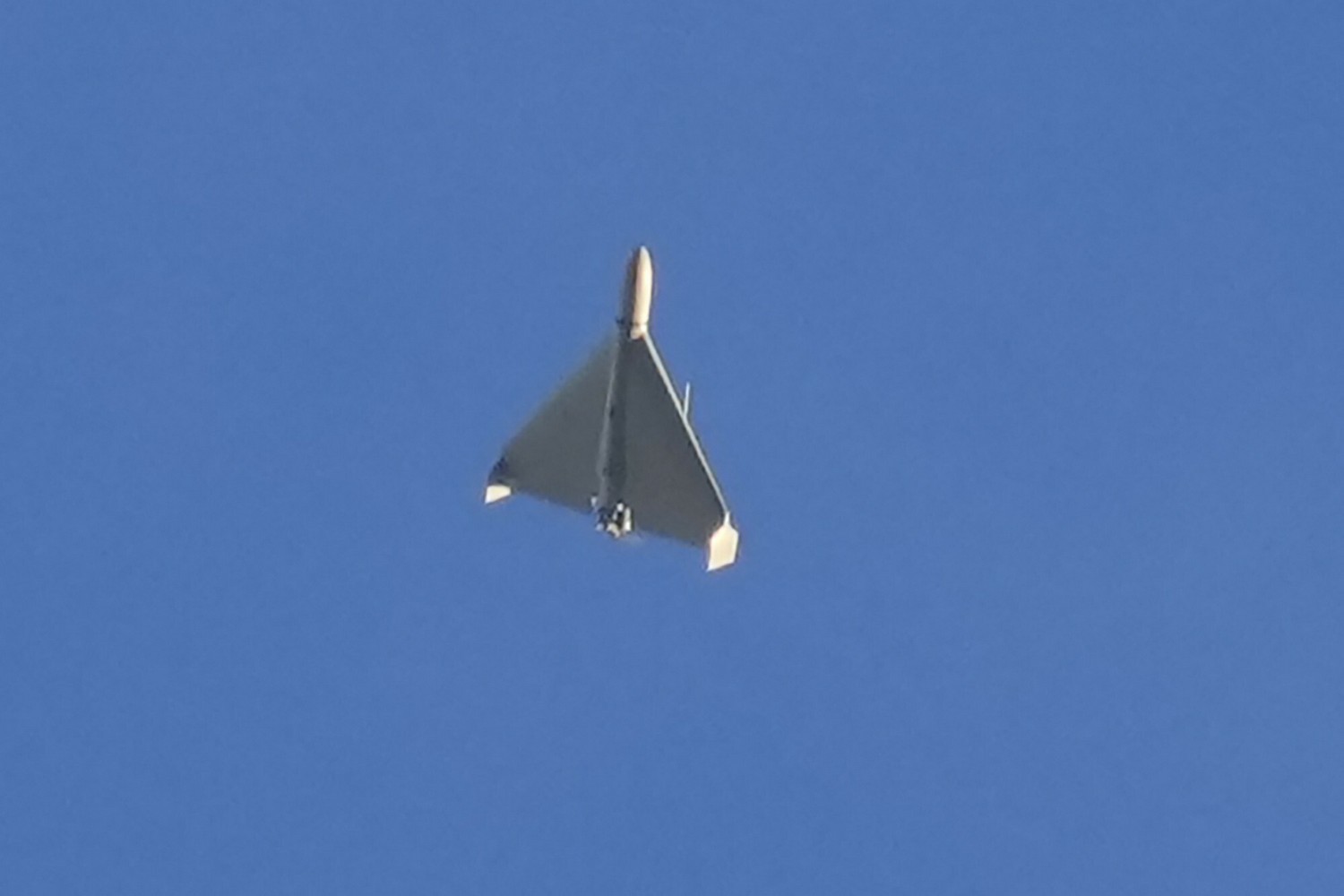
shahed-136 Geran-2 iranian airborne A drone is seen in the sky seconds before it attacked buildings in Kyiv, Ukraine, on Oct. 17, 2022. The Russian military has been using the Iranian Shahed exploding drones to strike Ukraine's vital infrastructure for more than a year. (AP Photo/Efrem Lukatsky/EastNews
Explore further

Last September, Poland downed four of 19 Russian drones. This September, drone reached NATO’s missile shield in Redzikowo, and troops guarding it called 112

Prosecutors cleared Poland's military response

Investigators also examined whether the Polish military had responded properly to the drone incursion.

According to RMF24, prosecutors concluded that the military acted in accordance with procedures. Polish troops had the right to use force and shoot down hostile objects, and prosecutors found no irregularities in their response.

The investigation was therefore closed both over the failure to identify the perpetrators and over the assessment of the Polish military's actions.

  • ✇Euromaidan Press
  • As Russia expands attacks on Kyiv, Ukraine prepares to hit Moscow’s oil industry harder in response
    Ukraine will intensify strikes on Russian oil refineries in response to Moscow’s expanded campaign against Ukrainian infrastructure, Ukrainian President Volodymyr Zelenskyy said in an interview with Reuters on 3 October. Russia has increased attacks on Kyiv in recent weeks, hitting energy and telecommunications infrastructure, roads, railways, and bridges across the Dnipro. Zelenskyy said Ukraine would respond by targeting the Russian energy infrastructure that helps finance the war.
     

As Russia expands attacks on Kyiv, Ukraine prepares to hit Moscow’s oil industry harder in response

3 octobre 2026 à 14:30

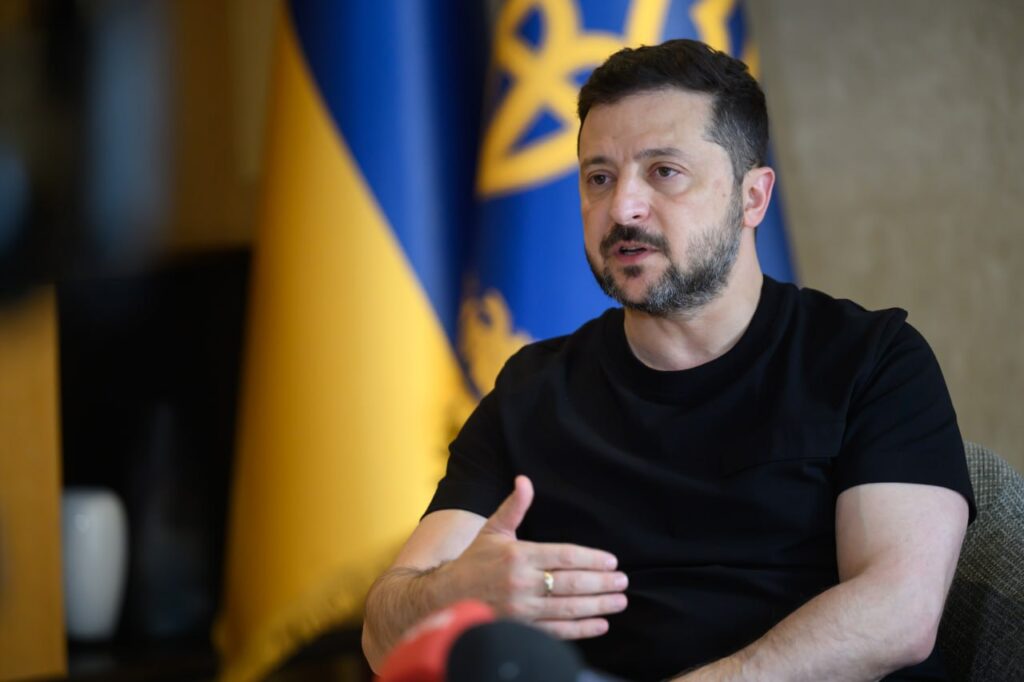
Ukrainian President Volodymyr Zelenskyy, 8 August 2026. Photo: Zelenskyy on Telegram

Ukraine will intensify strikes on Russian oil refineries in response to Moscow’s expanded campaign against Ukrainian infrastructure, Ukrainian President Volodymyr Zelenskyy said in an interview with Reuters on 3 October.

Russia has increased attacks on Kyiv in recent weeks, hitting energy and telecommunications infrastructure, roads, railways, and bridges across the Dnipro. Zelenskyy said Ukraine would respond by targeting the Russian energy infrastructure that helps finance the war.

Russia expands attacks on Kyiv

Russian forces have broadened their strikes on infrastructure in and around Kyiv in recent weeks, with attacks increasingly affecting systems that support civilian life.

Zelenskyy said Ukrainian intelligence obtained documents indicating that Russian authorities had approved a broader policy for targeting infrastructure, including logistics, roads, schools, and hospitals. He said the goal is to put pressure on residents to leave Kyiv and other major cities.

Russia has also begun targeting bridges across the Dnipro, which connect the eastern and western parts of the capital.

Ukraine targets Russia’s war economy

Ukraine plans to keep striking Russian oil refineries because they generate revenue that supports Moscow’s war effort, Zelenskyy said.

The policy puts Kyiv at odds with US President Donald Trump, who has urged Ukraine not to attack Russian oil facilities, arguing that such strikes contribute to higher global diesel prices.

Zelenskyy said he sees no indication that Moscow is prepared for either peace talks or an agreement to halt attacks on energy infrastructure.

Ukraine’s “long-range sanctions” hit targets supporting Russia’s war machine in Samara and Bryansk oblasts, including positions of Iskander missile crews, President Volodymyr Zelenskyy said. He also reported new “results” in the Black Sea.

Zelenskyy said the strikes came in… pic.twitter.com/4OFHaJ2bH7

— Euromaidan Press (@EuromaidanPress) October 3, 2026

Ukraine prepares for a new wave of air attacks

Ukraine is also preparing for intensified Russian attacks on its energy system over the winter. Ukrainian officials say Russia has stockpiled hundreds of ballistic missiles for a new campaign against electricity and other critical infrastructure.

Russia has also expanded its use of fast jet-powered Geran drones, launching dozens each day since the summer.

Ukrainian F-16s and MiG aircraft are intercepting around 60% of these drones, according to Zelenskyy, but ammunition for their 20 mm cannons is running low. Ukraine is increasing the use of electronic warfare and expects a first shipment of small, inexpensive air defense missiles designed to counter the jet-powered drones later in October.

Ukraine is developing five interceptor drone models to counter Russian Shaheds. Two have already undergone testing, with Zelenskyy putting their current interception rate at around 30%.

Ukraine expands its strike capabilities

Ukraine is also expanding its long-range strike capabilities. It has used its domestically produced FP-7 ballistic missile in combat for the first time, with a range of about 250 kilometers, while work continues on the longer-range FP-9.

At the same time, Kyiv is working with European partners to secure additional funding for its defense needs. Ukraine has found financing to order drones for early 2027 and is working to close a $27 billion gap in this year’s defense budget through its own resources, bilateral assistance, and financing linked to the EU’s €90 billion loan package.

Zelenskyy said Ukraine’s ability to sustain its defense and expand its strike capabilities will remain central as Russia prepares for another winter campaign.

  • ✇Euromaidan Press
  • Russia strikes second major Kyiv bridge in two days as attacks disrupt movement across the capital
    Russia struck Kyiv’s Northern Bridge with a drone on 3 October, damaging the roadway and overhead trolleybus lines, Kyiv Mayor Vitali Klitschko said. Two people were injured, one of whom was hospitalized. The strike came one day after repeated Russian drone attacks on the Southern Bridge, which damaged its support structures, road surface and subway infrastructure and forced its closure. The attacks caused severe traffic disruption across Kyiv, with major roads gridlocked and some peopl
     

Russia strikes second major Kyiv bridge in two days as attacks disrupt movement across the capital

3 octobre 2026 à 09:15

Kyiv's Northern Bridge connecting the city's two sides across the Dnipro River. Photo via Wikimedia Commons

Russia struck Kyiv’s Northern Bridge with a drone on 3 October, damaging the roadway and overhead trolleybus lines, Kyiv Mayor Vitali Klitschko said. Two people were injured, one of whom was hospitalized.

The strike came one day after repeated Russian drone attacks on the Southern Bridge, which damaged its support structures, road surface and subway infrastructure and forced its closure. The attacks caused severe traffic disruption across Kyiv, with major roads gridlocked and some people reportedly walking across bridges.

Another key bridge targeted

The Northern Bridge connects Kyiv’s Obolon and Troieshchyna districts and is one of the capital’s major routes across the Dnipro.

Damage to its roadway and trolleybus network adds another disruption to Kyiv’s transport system after the attacks on the Southern Bridge. The Northern and Southern bridges are among the capital’s key crossings between its eastern and western banks.

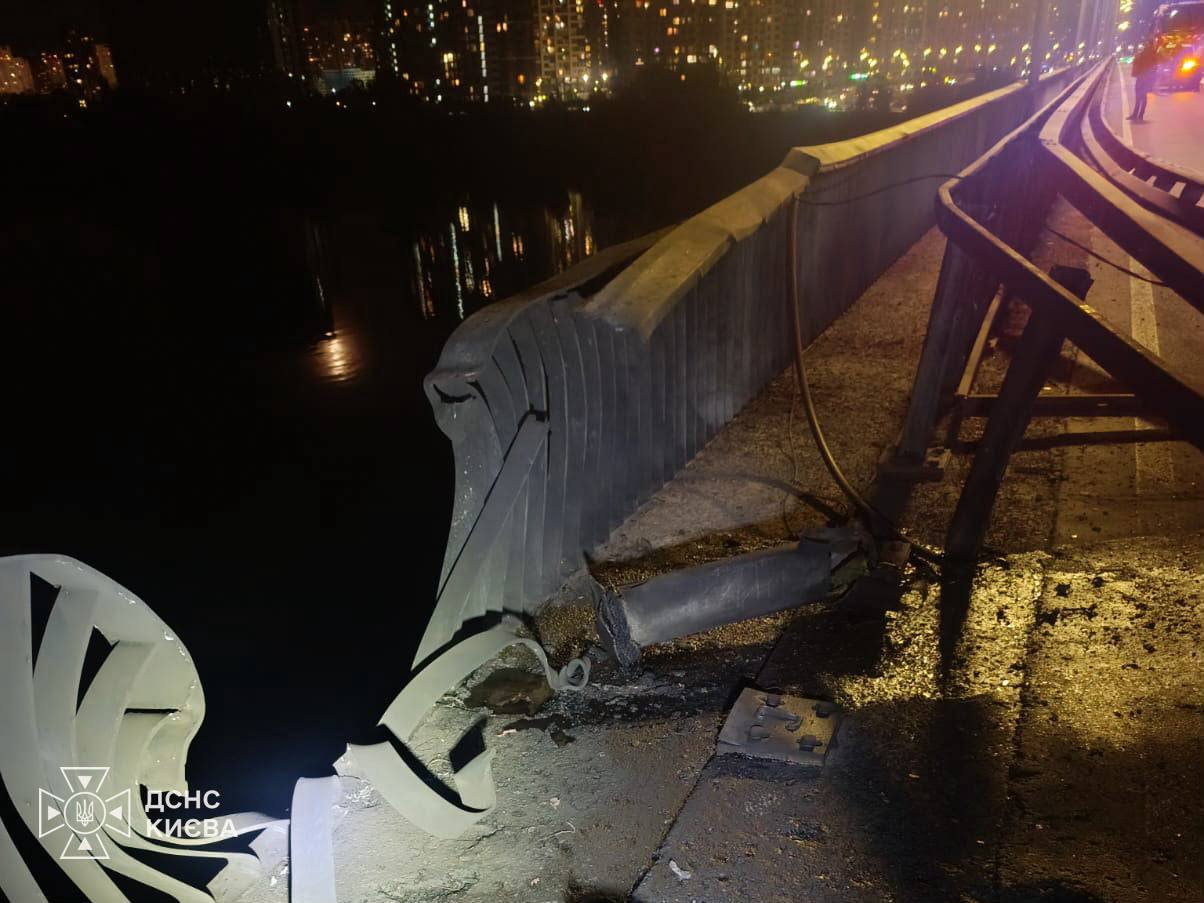
Damage to Kyiv's Southern Bridge connecting the left and right banks of the city following several Russian drone strikes on 1-2 October, 2026. Photo: Ukraine's State Emergency Service
Explore further

Russia repeatedly attacks bridge connecting Kyiv’s two sides across the Dnipro river, disrupting transport across the capital

Kyiv changes bridge restrictions

Kyiv authorities announced temporary changes to bridge traffic rules following the attacks.

During air raids, traffic on the Southern Bridge will be restricted for 15 minutes in the direction from the right bank to the left bank, while traffic in the opposite direction will remain open. On the Podilskyi-Voskresenskyi Bridge, traffic in both directions will stop for 15 minutes when an air-raid alert is announced or lifted.

The Northern, Darnytskyi, Paton and Metro bridges will operate without restrictions during air raids, according to the Kyiv City Military Administration.

Russia’s repeated strikes on Kyiv’s Southern Bridge are now severely disrupting traffic across the capital.

Major roads are gridlocked, with some people reportedly walking across bridges as traffic comes to a standstill. Photos from Suspilne show the resulting congestion on… pic.twitter.com/7SyYG0WOCO

— Euromaidan Press (@EuromaidanPress) October 2, 2026

Russia intensifies attacks on Kyiv

The bridge strikes come amid an intensifying Russian aerial campaign against Kyiv. Russian drones and missiles have increasingly targeted the capital in recent weeks, damaging residential buildings, schools and infrastructure and disrupting daily life.

The attacks on the bridges add a different dimension to that campaign, directly disrupting movement between Kyiv’s two banks. With multiple crossings affected within days, the strikes have already translated into major traffic disruptions for the city’s residents.

Three Russian missiles and two drones strike Moldovan territory in morning attacks on neighboring Ukraine. Moldova is increasingly exposed to the risks of Russia’s war next door

3 octobre 2026 à 08:14

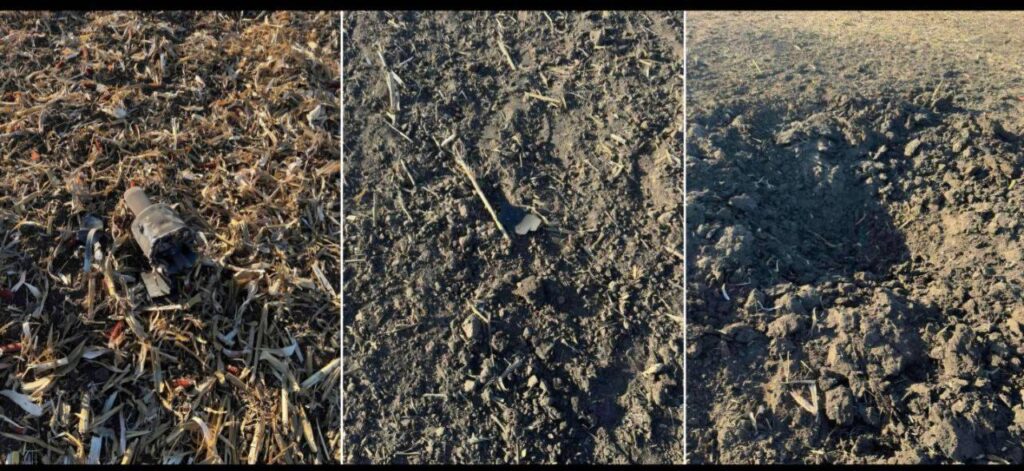
Fragments of Russian drones or missiles that struck Moldovan territory on 3 October 2026. Photo: Moldovan Police via Newsmaker

Three Russian missiles and two drones crossed Moldova’s airspace and exploded on Saturday morning, Moldovan Defense Minister Anatolie Nosatîi told TVR Moldova.

Moldova has seen a dramatic increase in Russian drone incursions in recent weeks as Russia ramps up near-constant drone attacks across Ukraine.

The five incidents occurred between 7:45 and 8:00 a.m., with explosions and debris reported across several districts. Moldova’s Foreign Ministry condemned the airspace violation.

Explosions and debris reported across Moldova

The Moldovan authorities initially said that five drones had crossed the country’s airspace before Nosatîi clarified that the five incidents involved three missiles and two drones. President Maia Sandu said the missiles were Banderol-type missiles, according to NewsMaker.

Nosatîi said the incidents had been documented and that evidence recovered at the sites could be presented to Russia’s ambassador.

Moldova’s Foreign Ministry said Russia’s war against Ukraine continues to create concrete threats for the country and condemned the violation of its airspace.

moldova counted 39 russian drone incursions eight months against 17 all 2025 · post maia sandu chairs meeting moldova's national security council 21 2026 sandu/facebook ukraine news ukrainian reports
Explore further

Moldova counted 39 Russian drone incursions in eight months, against 17 in all of 2025

According to NewsMaker, fragments were found outside Căușeni, near Dubovca in Hîncești District, between Delacău and Puhăceni in Anenii Noi District, and near Crocmaz in Ștefan Vodă District.

Near Crocmaz, an explosion in a vineyard field caused a vegetation fire and damaged windows at a nearby agricultural facility. Fragments were also found near Constantinovca in Căușeni District, where an explosion caused another vegetation fire.

Map of Russian attacks on Moldova, 3 October 2026. Map from social media

Moldova’s Defense Ministry later reported a sixth unauthorized flight over the country that did not result in an explosion. The object entered Moldovan airspace at 8:04 a.m. from the direction of Udobne, Ukraine, and exited a minute later toward Biliaivka, Ukraine. 

Fragments of Russian drones or missiles that struck Moldovan territory on 3 October 2026. Photo: Moldovan Police via Newsmaker

Moldova seeks stronger air defenses

Asked why the weapons were not intercepted, Nosatîi said Moldova was taking measures to strengthen its air-defense capabilities and acquire interception systems.

He said the drones are sophisticated and fast, adding that Moldova, like Ukraine, is learning how to defend against them. He also said Moldova needs additional resources to protect its 1,212-kilometer border with Ukraine and monitor its airspace.

romania's jets shoot down bulgaria's navy blows up moldova only now funding air defense russia hits ukraine · post moldovan president maia sandu kyiv anniversary chernobyl nuclear disaster 26 2026
Explore further

Moldova is investing in air defense against the Russian drones crossing from Ukraine—Romania shoots down the ones that reach it

Moldovan authorities urged residents not to approach or touch any fragments they find, but to mark the location and notify police or the military so the area can be secured and the debris neutralized.

41 Ukrainians made the long journey from occupation to Ukrainian-controlled territory after enduring Russian pressure, detention and control

2 octobre 2026 à 14:31

Ukrainians who were brought from Russian-occupied territories to Ukrainian-controlled territory, August-September 2026. Photo: Dmytro Lubinets

Ukraine helped 41 citizens escape from Russian-occupied territories into Ukrainian-controlled territory in August and September, including four children and five teenagers, Ukrainian Ombudsman Dmytro Lubinets said.

For many, the crossing marked the end of months or years under Russian occupation and the beginning of their return to life in government-controlled Ukraine.

They returned to Ukraine via Belarus through the Mokrany-Domanove crossing in Ukraine's Volyn Oblast.

From occupation to safety

Lubinets described several cases among those who returned.

One family was able to leave after the father was released from Russian captivity. Their older son remains in captivity, while the woman and her younger son had been under the control of occupation authorities and, according to their account, were previously taken to a detention facility under the pretext of providing medical care and subjected to forced treatment.

A young medical worker was evacuated shortly before she could have been mobilized into Russia’s armed formations, according to Lubinets.

Another returned man had been detained several times in occupied territory and held in basements. His Ukrainian passport had also been confiscated.

Help continues after the crossing

For those returning, reaching Ukrainian-controlled territory is only the first step. The Ombudsman’s Office and partner organizations provide assistance with restoring documents, financial support, temporary accommodation, psychological and social services, and onward travel.

The office said that, in August and September, its joint project with Caritas Ukraine provided assistance to 1,140 people, including people evacuated from occupied territory.

Ukraine’s efforts to facilitate returns are taking place against a broader problem of displacement from occupied territory. A 2026 UN report documented forcible transfers and deportations from areas occupied by Russia, as well as barriers that make it difficult for displaced Ukrainians to return.

The Mokrany-Domanove crossing is one of the routes through which Ukrainians can return to government-controlled territory, making it a key part of Ukraine’s effort to bring civilians home from occupation.

Others are still waiting to leave

Lubinets said his office continues receiving requests from people seeking to leave occupied territory and works with Ukrainian, international and third-country partners to find routes out.

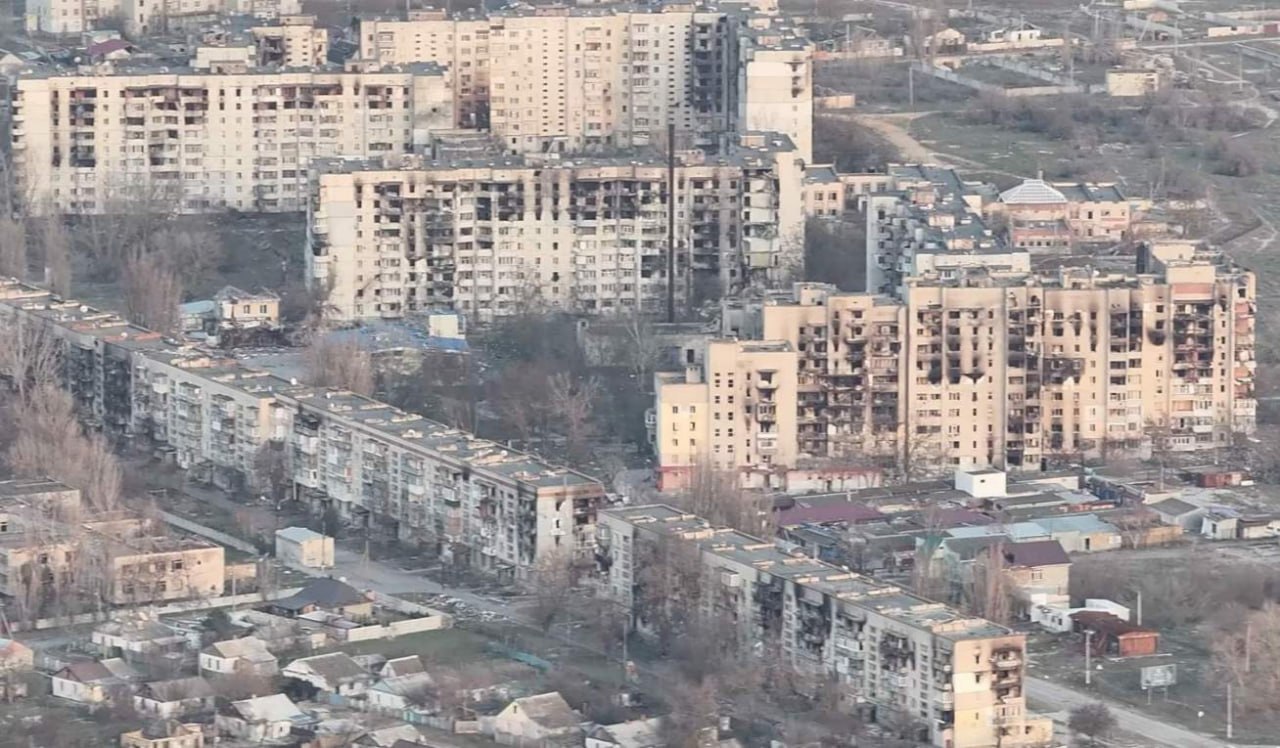
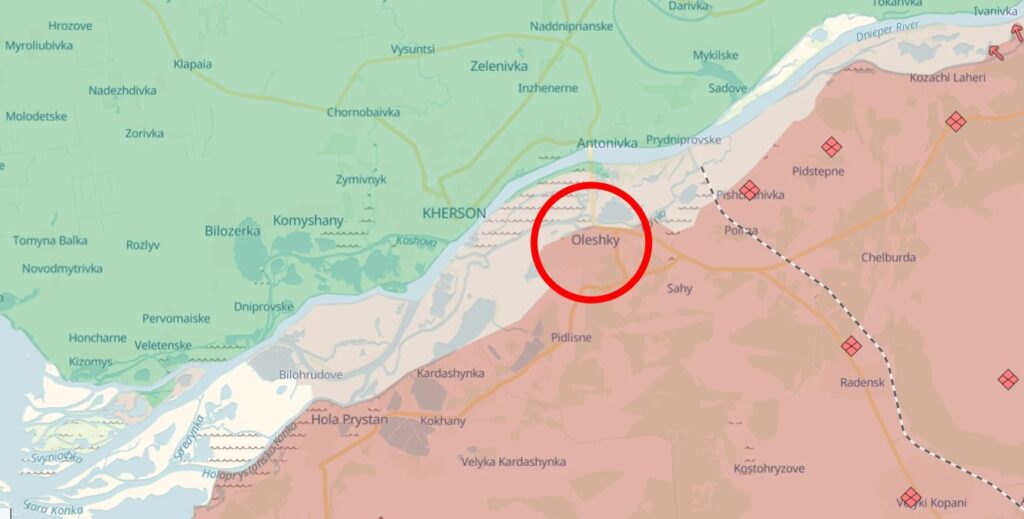
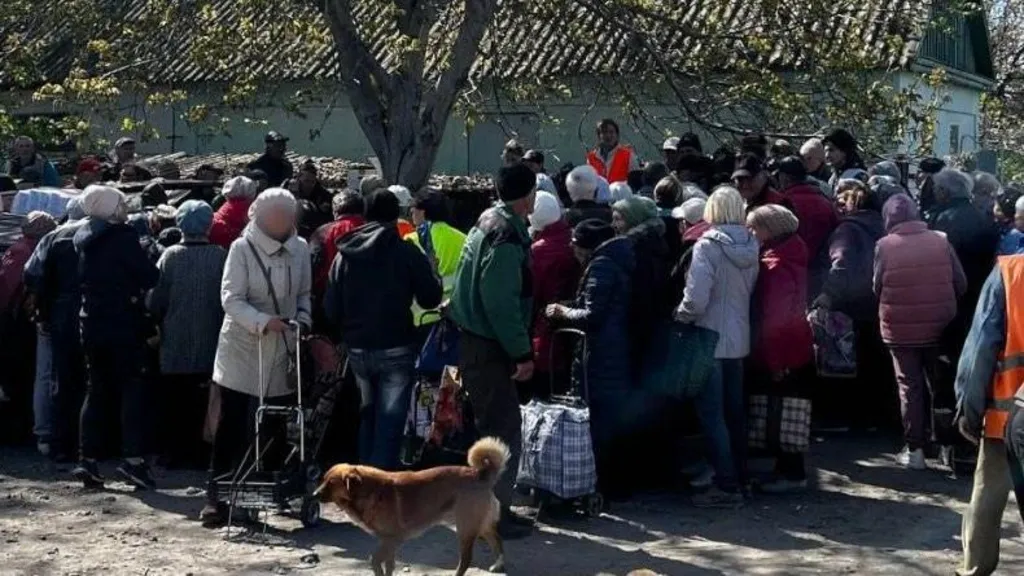
Lubinets noted that the situation remains particularly difficult in Oleshky and surrounding settlements in Kherson Oblast, where Ukrainian authorities say elderly people, people with disabilities, sick residents and families remain without reliable access to food, water, medicine, healthcare and communications. Recent reporting has put the number of civilians still in Oleshky at around 2,000, including about 50 children.

Oleshky, Kherson Oblast, has been under Russian occupation since 2022, following Russia’s capture of the city during the initial phase of its full-scale invasion of Ukraine. Photo: Dmyto Lubinets
Explore further

Thousands are starving in occupied Oleshky. People have no food, no way out, and Russian forces bomb incoming aid

  • ✇Euromaidan Press
  • Russia retaliates after Hungary expels 10 diplomats, deepening Budapest-Moscow rift since Orbán’s ouster
    Russia has ordered Hungarian diplomatic staff to leave the country weeks after Hungary expelled 10 Russian diplomats over activities Budapest said were incompatible with their diplomatic status, Euronews reported.  The tit-for-tat expulsions mark a significant change in relations between Budapest and Moscow following Viktor Orbán’s 16-year rule as Hungarian Prime Minister. Russia’s Foreign Ministry summoned Hungary’s chargé d’affaires Gábor Gergics on 1 October and informed him that
     

Russia retaliates after Hungary expels 10 diplomats, deepening Budapest-Moscow rift since Orbán’s ouster

2 octobre 2026 à 13:44

Péter Magyar waves the Hungarian flag at Tisza party's supermajority victory rally in Budapest, 12 April 2026

Russia has ordered Hungarian diplomatic staff to leave the country weeks after Hungary expelled 10 Russian diplomats over activities Budapest said were incompatible with their diplomatic status, Euronews reported. 

The tit-for-tat expulsions mark a significant change in relations between Budapest and Moscow following Viktor Orbán’s 16-year rule as Hungarian Prime Minister.

Russia’s Foreign Ministry summoned Hungary’s chargé d’affaires Gábor Gergics on 1 October and informed him that staff at the Hungarian embassy in Moscow and consulates in St Petersburg and Kazan would have two weeks to leave. Moscow described Hungary’s September expulsion as “baseless and openly unfriendly,” according to Euronews.

Hungary stands by expulsions

Hungary expelled 10 Russian diplomats on 8 September, citing activities it said were unacceptable for diplomats under the Vienna Convention. The government did not publicly provide details of the alleged activities.

Budapest said it was not seeking an escalation but would maintain its decision, while also saying its diplomatic missions in Russia would continue operating.

The expulsions come as Hungary’s foreign policy shifts under Prime Minister Péter Magyar, who took office after Viktor Orbán’s Fidesz lost the April election. Magyar’s government has moved to strengthen Hungary’s alignment with the EU and NATO while maintaining what it describes as pragmatic relations with Moscow.

A break with the Orbán era

Under Orbán, Hungary maintained unusually close relations with Russia compared with other EU members. Budapest continued cooperation with Moscow after Russia’s full-scale invasion of Ukraine, and Orbán repeatedly opposed or delayed EU measures related to Ukraine.

The new government has taken a different position. In September, Hungary expelled the 10 Russian diplomats, and its new foreign policy doctrine identified Russia as a threat to Hungary’s security. Earlier, the government’s guidance for its UN delegation condemned Russia’s war against Ukraine and affirmed Ukraine’s sovereignty and right to self-defense, according to Euronews.

The shift has not amounted to a complete break with Moscow. Magyar has said Hungary will pursue pragmatic relations with Russia, while Budapest continues to seek concessions from Kyiv over the rights of Hungary’s minority in Ukraine.

Ukrainian grandmother detained in Kazakhstan at Russia’s request while trying to bring grandson back to Ukraine

2 octobre 2026 à 12:03

Russian and Kazakh flags fly as plane contrails form the Russian tricolour above Astana, Kazakhstan, 27 November 2024. Photo via Wikimedia Commons

Kazakhstan detained Ukrainian citizen Liubov Rozhanska in Astana on 1 October at Russia’s request, after she traveled there to receive her grandson, a Ukrainian boy whose father has sought his return to Ukraine, Deutsche Welle (DW) reported.

Russia accuses Rozhanska of attempting to abduct the child and is seeking her detention through the Collective Security Treaty Organization (CSTO), a Russia-led security alliance that includes Kazakhstan. 

She could now face deportation to Russia, despite never having entered the country, according to her lawyers cited by DW. 

A Ukrainian child Russia wants to keep

The case involves a boy born in Odesa in 2018. His mother took him from Ukraine to Russia’s Kaliningrad Oblast in 2021, before Russia’s full-scale invasion. In 2022, she and the child obtained Russian citizenship.

The boy’s Ukrainian father challenged the child’s residence in court. In March 2025, Ukraine’s Supreme Court ruled that the boy should live in Odesa with his father.

According to Rozhanska’s lawyer, Oleksii Pryanishnikov, the boy’s stepfather and step-grandfather contacted her in July 2026 about arranging the child’s transfer to his Ukrainian father and grandmother.

By August, a Kaliningrad court had issued a warrant to detain Rozhanska in connection with an alleged attempt to abduct the child. Russian investigators were also preparing documents to seek her extradition through the CSTO, according to documents cited by DW.

Rozhanska then traveled to Astana and was detained at the airport after arriving from Istanbul.

Kazakh lawyer Riza Nurbaeva told DW that Rozhanska did not know about the Russian criminal case and had never entered Russia. She said the Ukrainian was detained under the Kaliningrad court’s warrant.

Lawyer alleges political motive

Pryanishnikov described the detention as a “planned operation” by Russia’s Federal Security Service and alleged that it has a political dimension connected to Russia’s war against Ukraine.

His allegation comes in the context of Russia’s documented transfer and deportation of Ukrainian children to Russia and efforts to assimilate them into Russian society, grant them Russian citizenship and sever their ties to Ukraine.

In this case, Russia is using international legal mechanisms to potentially prevent a Ukrainian child from returning to his father in Ukraine.

Rozhanska is currently being held in a Kazakh pretrial detention center. A court hearing is expected within three days, according to DW.

Russia repeatedly attacks bridge connecting Kyiv’s two sides across the Dnipro river, disrupting transport across the capital

2 octobre 2026 à 10:34

Damage to Kyiv's Southern Bridge connecting the left and right banks of the city following several Russian drone strikes on 1-2 October, 2026. Photo: Ukraine's State Emergency Service

Russian forces have repeatedly struck Kyiv’s Southern Bridge with drones since 1 October, disrupting one of the capital’s main routes between the left and right banks of the Dnipro.

The strikes are part of a broader intensification of Russian drone attacks on the capital. In recent weeks, Russia has begun launching daily attacks involving jet-powered Geran drones, increasingly disrupting everyday life in Kyiv.

The Southern Bridge is an important road and rail crossing over the Dnipro. It carries road traffic between Kyiv's left and right banks and also forms part of the city's metro network.

The bridge was fully closed to traffic following the latest attacks, while restrictions were also introduced on the Metro and Paton bridges, according to Suspilne. Public transport has been diverted to alternative routes, while the disruptions have caused major traffic congestion across Kyiv.

Update 17:50: Kyiv Mayor Vitali Klitschko said Russian forces have struck the Southern Bridge again on the evening of 2 October. The bridge remains closed to road traffic and metro services following several previous attacks. Emergency services are heading to the site.

Bridge targeted repeatedly

The Southern Bridge came under attack multiple times on 1 October and was targeted again during the overnight attack into 2 October.

Ukrainian President Volodymyr Zelenskyy said Russian forces struck the bridge several times with drones during the night. He said the attacks were part of a larger Russian barrage involving more than 100 attack drones, nearly 50 of them jet-powered Gerans.

The bridge has not been destroyed, but the repeated strikes have forced authorities to limit its use and reorganize traffic across the Dnipro.

Ukrainian analyst Andrii Kovalenko said the Southern Bridge is difficult to destroy with the weapons Russia is using. However, he said such strikes can damage the bridge enough to disrupt its normal operation, while the resulting disruption can also be used to spread panic.

Russia’s repeated strikes on Kyiv’s Southern Bridge are now severely disrupting traffic across the capital.

Major roads are gridlocked, with some people reportedly walking across bridges as traffic comes to a standstill. Photos from Suspilne show the resulting congestion on… pic.twitter.com/7SyYG0WOCO

— Euromaidan Press (@EuromaidanPress) October 2, 2026

Zelenskyy: Russia is targeting bridges and critical infrastructure

Zelenskyy said Russia's intensified attacks are part of a broader effort to disrupt life in Ukrainian cities and damage infrastructure beyond individual military targets.

Citing Ukrainian intelligence and people he said are close to Russian President Vladimir Putin, Zelenskyy claimed Putin said in early September: “Now, there are no rules.” Zelenskyy said Russia had failed to occupy Ukraine and was therefore turning to mass attacks and killings.

“They want to destroy our bridges and, as we understand it, our data centers, internet, mobile networks, hospitals, kindergartens, schools, universities – everything,” Zelenskyy said.

He added that Russia wants to force Ukrainians to leave their cities. “They want people to flee their cities, and we need to do everything to save our people and our cities,” he said.

A key crossing for Kyiv disrupted

The bridge’s closure puts additional pressure on the capital's other bridges. On 2 October, traffic on the Metro Bridge was restricted to one lane toward the right bank, while traffic from the right bank toward the left was restricted on the Paton Bridge.

Several bus routes were diverted to other bridges. Kyiv authorities reported major traffic jams on the city's main roads as the restrictions disrupted normal movement between the two sides of the capital.

Metro service across the Southern Bridge also remains tied to an assessment of the structure. Kyiv Mayor Vitali Klitschko said on Friday the metro can resume crossing the bridge during yellow-level air alerts after experts provide an assessment confirming its condition.

Part of a wider campaign against Kyiv

The bridge strikes came alongside attacks on civilian areas of Kyiv. A Russian drone hit the upper floors of a 25-story residential building in the Darnytskyi district on 2 October, causing a fire on the 24th and 25th floors.

One person was killed and two were injured. The attack also damaged buildings and vehicles in the Holosiivskyi district.

A Russian drone struck a 25-story residential building in Kyiv’s Darnytskyi district this morning.

According to President Volodymyr Zelenskyy, Russia launched more than 100 attack drones at Ukraine overnight, including nearly 50 jet-powered drones.

In Kyiv, the strike caused a… pic.twitter.com/jiGjJeUgVf

— Euromaidan Press (@EuromaidanPress) October 2, 2026

The growing frequency of jet-powered Geran attacks is making the impact of Russian strikes increasingly visible beyond individual damage sites. Repeated attacks on infrastructure such as the Southern Bridge can disrupt transportation and daily routines across the capital even when the targeted structures are not destroyed.

  • ✇Euromaidan Press
  • Russian troops enter homes and threaten starving Oleshky residents for food and alcohol, officials say
    Residents who have recently escaped Russian-occupied Oleshky describe being subjected to threats, intimidation, and exploitation by Russian soldiers, according to the head of the Oleshky City Military Administration. Oleshky is facing severe shortages of food, water, and medicine, with around 1,500 civilians, including up to 50 children, still trapped in the Russian-occupied city with no safe way out. Tetiana Hasanenko told Ukrinform on September 29 that people escaping the city on f
     

Russian troops enter homes and threaten starving Oleshky residents for food and alcohol, officials say

29 septembre 2026 à 16:59

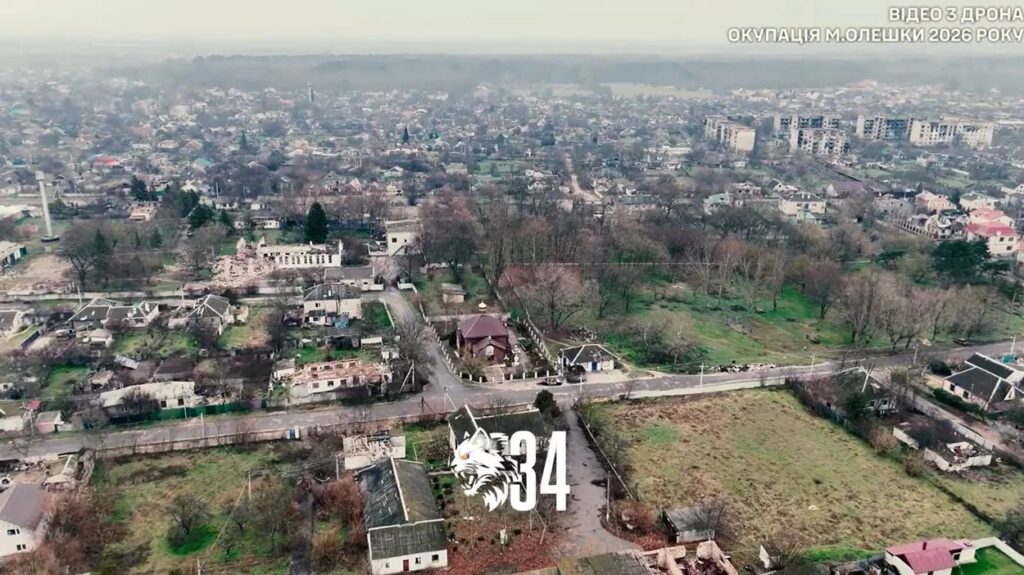
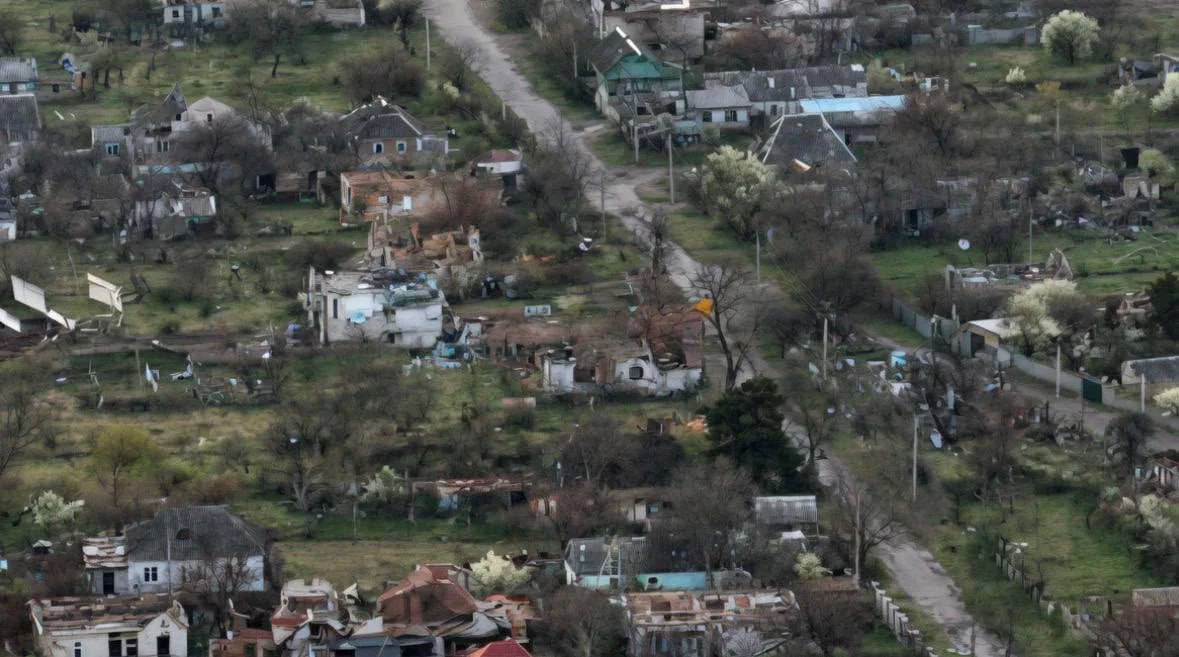
Aerial view of Russian-occupied Oleshky, in Ukraine's Kherson Oblast. Photo via ArmyInform

Residents who have recently escaped Russian-occupied Oleshky describe being subjected to threats, intimidation, and exploitation by Russian soldiers, according to the head of the Oleshky City Military Administration.

Oleshky is facing severe shortages of food, water, and medicine, with around 1,500 civilians, including up to 50 children, still trapped in the Russian-occupied city with no safe way out.

Tetiana Hasanenko told Ukrinform on September 29 that people escaping the city on foot were severely weakened and had lost up to 15 kilograms. She said those who managed to leave described not only hunger, but also abuse by Russian troops.

“They were really fleeing from hunger and from abuse,” Hasanenko told Ukrinform.

Russian troops threaten residents for food and alcohol

According to Hasanenko, Russian soldiers are entering residents’ homes, taking them over, and forcing the civilians living there to feed them despite having little food themselves.

“They move in and demand that people feed them and give them alcohol,” she said, adding that some of the soldiers appeared to be drug or alcohol users.

She described one family’s account in which a Russian soldier allegedly locked them in a shower while in an apparently intoxicated state and threatened to throw a grenade at them.

Another woman reportedly told Ukrainian officials that a Russian soldier threatened to kill her because the homemade wine she gave him was sour.

“They move in and demand to eat and drink,” Hasanenko said.

Oleshky, Kherson Oblast, has been under Russian occupation since 2022, following Russia’s capture of the city during the initial phase of its full-scale invasion of Ukraine. Photo: Dmyto Lubinets

Residents face hunger and mines

The accounts come as Oleshky in Ukraine’s Kherson Oblast faces a severe humanitarian crisis. Ukrainian authorities say around 1,500 people remain in the occupied city, including up to 50 children, with residents lacking reliable access to food and water.

Those trying to escape face minefields around the city. Hasanenko said some residents have attempted to leave on foot and that there are people who have failed to return after entering mined areas.

She said one family tried to return because children had been left behind at home but never made it back.

Recent escapees have reportedly lost 10–15 kilograms, with some leaving only after becoming severely weakened by hunger.

Russian troops accused of using civilians as cover

Hasanenko also said Russian soldiers are deliberately living in civilian homes to protect themselves.

By occupying homes and remaining among local residents, she said, Russian troops are effectively using civilians as a “human shield” because they fear for their own safety.

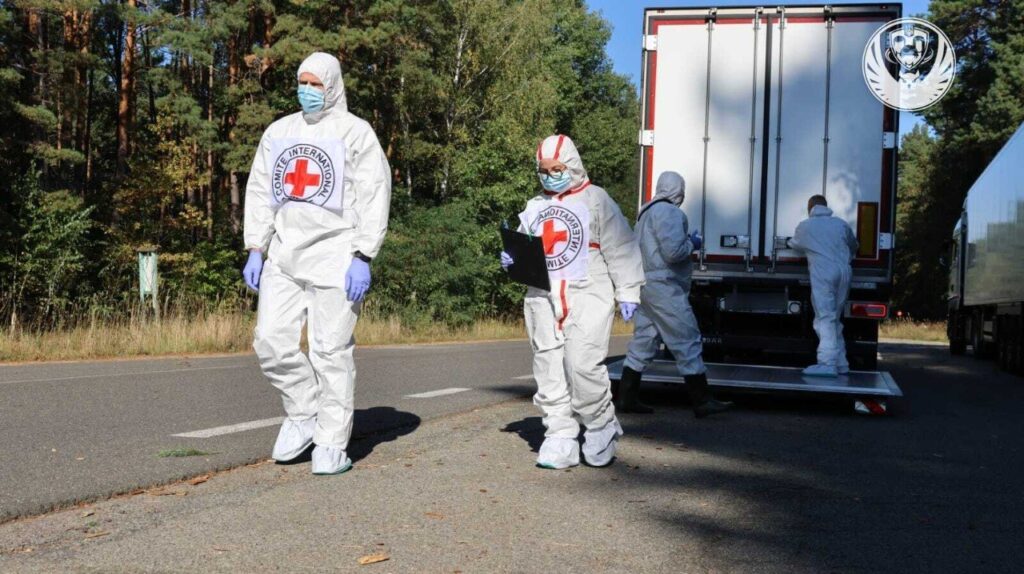
Ukraine has been seeking an organized evacuation of civilians from Oleshky and has said the International Committee of the Red Cross is prepared to participate if Russia agrees to the necessary arrangements. Russia has not confirmed its readiness to allow such an evacuation.

Russian-occupied Oleshky, in Ukraine's Kherson Oblast.
  • ✇Euromaidan Press
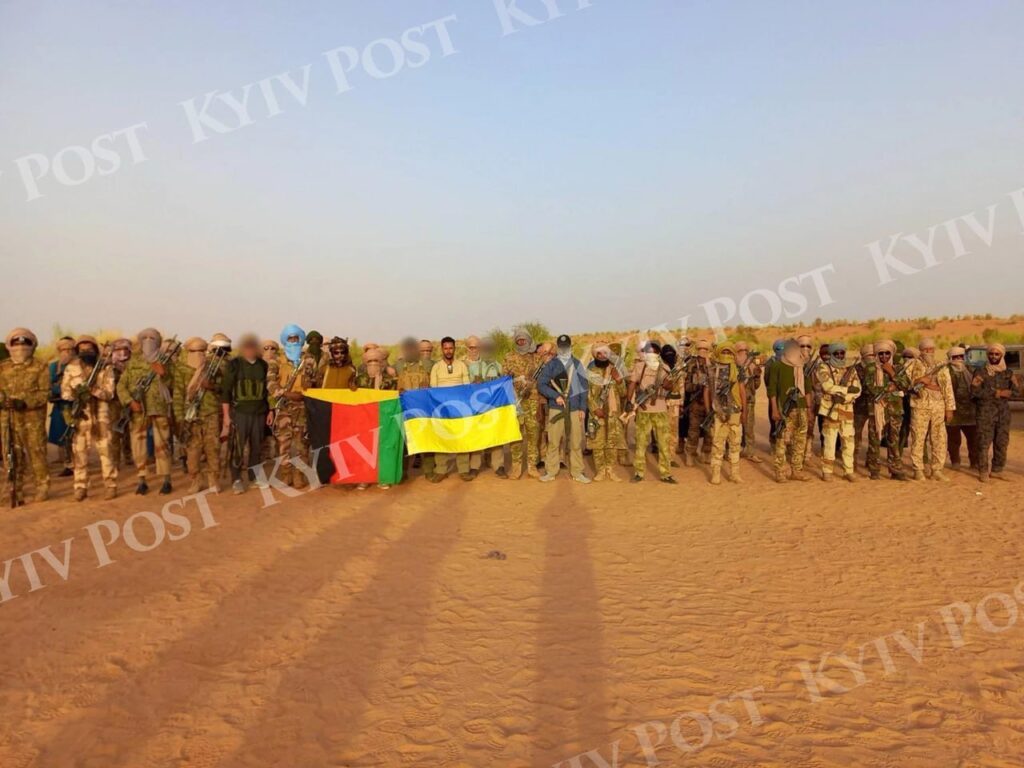
  • Russian mercenaries blew off African prisoners’ legs to practice battlefield medicine, Wagner fighter says
    A former Wagner fighter captured by Ukraine has described alleged training sessions in Mali where Russian mercenaries used African prisoners as live subjects, deliberately inflicting severe injuries so recruits could practice battlefield medicine and killing. Training built around real victims The fighter told Ukrainian journalist Dmytro Karpenko that Wagner instructors brought captured Africans to training sessions and turned them into human practice targets. “We gathered for med
     

Russian mercenaries blew off African prisoners’ legs to practice battlefield medicine, Wagner fighter says

29 septembre 2026 à 15:40

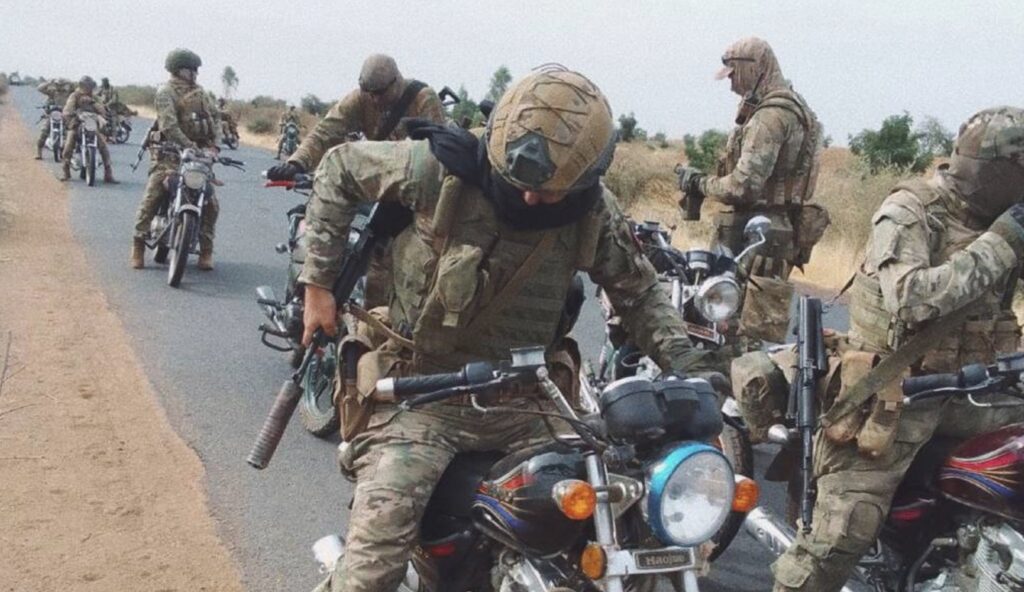
Russian "Wagner" mercenaries in Mali, 2023-2024.

A former Wagner fighter captured by Ukraine has described alleged training sessions in Mali where Russian mercenaries used African prisoners as live subjects, deliberately inflicting severe injuries so recruits could practice battlefield medicine and killing.

Training built around real victims

The fighter told Ukrainian journalist Dmytro Karpenko that Wagner instructors brought captured Africans to training sessions and turned them into human practice targets.

“We gathered for medical training, and they brought in a captured terrorist. They tied a block of TNT to his leg. They set it off, everyone moved away, and of course his leg was blown off,” he said.

The recruits then practiced stopping the resulting bleeding. According to the fighter, the prisoner was later shot in the artery near his armpit so they could practice the same procedure on his arm.

The prisoner died after the training.

In another session, he said, instructors had a prisoner's leg chopped off with an ax so recruits could practice applying a tourniquet under realistic conditions.

“They cut off his leg. Then they put on the tourniquet – everything as if it were an extreme situation, so everything would be realistic,” he said.

‘Here, strike the heart’

The alleged exercises also included training in how to kill.

The fighter said another prisoner was drugged before recruits were taught how to kill someone with a knife.

“They showed us how to kill with a knife to the heart. They chose two people who were willing and said: ‘Here, strike the heart,’” he said.

The fighter said all three prisoners died during the exercises.

A former Wagner fighter captured by Ukraine, who described alleged abuses committed by Russian mercenaries in Mali in interview with Ukrainian journalist Dmytro Karpenko. Screenshot from video: Dmytro Karpenko

From Mali to Ukraine

The testimony comes from a Russian mercenary who joined Wagner in 2023 and was sent to Mali that September via Syria. He said around 120–130 recruits traveled with him and that Wagner paid them $3,000 a month.

Wagner was a Russian paramilitary formation that operated as a deniable arm of the Kremlin in Ukraine, Syria, and Africa. After Wagner chief Yevgeny Prigozhin's death in 2023, the group's independent role was largely dismantled, with many of its fighters and operations brought under Russian state control. Its African operations were increasingly taken over by Russia's state-run Africa Corps.

The mercenary remained in Mali until April 2024. After returning to Russia, he signed a contract with the Russian Defense Ministry in August 2025 and was assigned to the 14th Separate Special Forces Brigade, which is subordinate to Russia's military intelligence agency, the GRU.

He was subsequently captured by Ukrainian forces.

A record of alleged abuses

The account has not been independently verified, but it adds to years of allegations of serious abuses by Wagner and other Russian personnel in Africa.

Wagner fighters have long faced allegations of abuses in Africa, including killings and violence against civilians. In Mali, the group became a key part of Russia’s military presence after the country’s military junta turned to Moscow for support, with Wagner fighters operating alongside Malian forces. Ukrainian intelligence has also documented and targeted Wagner’s activities in Africa.

The pattern of alleged abuses has continued under Russia’s Africa Corps, the Kremlin-controlled force that replaced Wagner in Mali. Human Rights Watch reported in August 2026 that Africa Corps fighters summarily killed nine civilians, including four children, beat dozens of others, and burned and looted homes in central Mali. In June, the group also carried out airstrikes that killed eight civilians, including three children.

  • ✇Euromaidan Press
  • Russia ordered arson attack on Estonian military robot-maker supplying Ukraine, Estonia confirms
    Estonia says Russia ordered the August arson attack on Milrem Robotics’ Tallinn premises, an Estonian defense company supplying Ukraine with military ground robots. Russian sabotage operations have been expanding across Europe in recent months, targeting companies, infrastructure and supply chains connected to Ukraine’s defense effort. European authorities have linked or investigated suspected Russian involvement in arson and other sabotage attempts in several countries, as Moscow seeks
     

Russia ordered arson attack on Estonian military robot-maker supplying Ukraine, Estonia confirms

29 septembre 2026 à 14:04

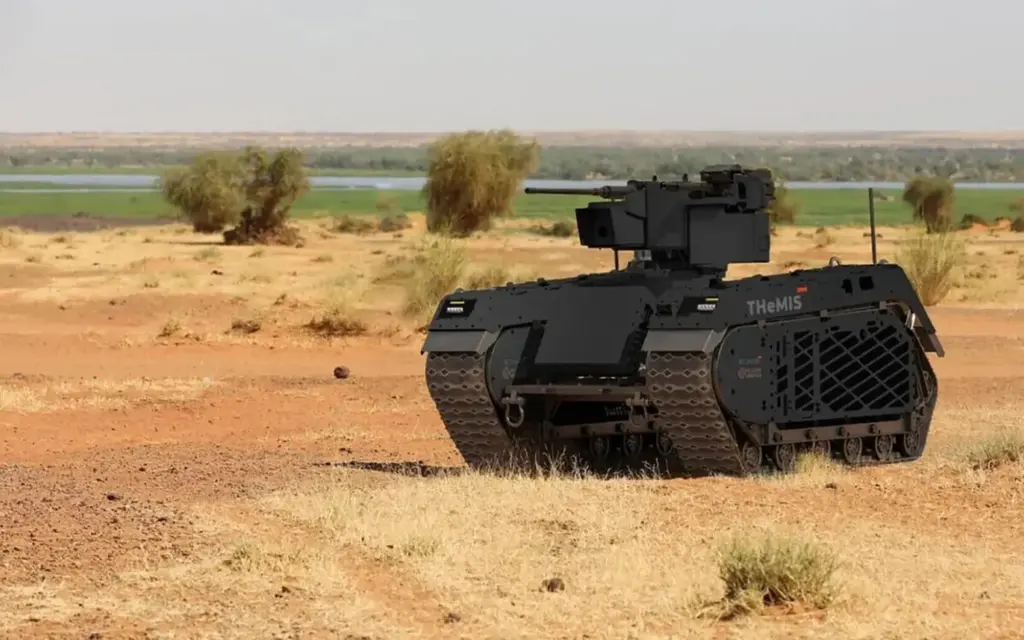
TheMIS on a dry plain

Estonia says Russia ordered the August arson attack on Milrem Robotics’ Tallinn premises, an Estonian defense company supplying Ukraine with military ground robots.

Russian sabotage operations have been expanding across Europe in recent months, targeting companies, infrastructure and supply chains connected to Ukraine’s defense effort. European authorities have linked or investigated suspected Russian involvement in arson and other sabotage attempts in several countries, as Moscow seeks to disrupt support for Ukraine and intimidate its European backers.

Foreign Minister Margus Tsahkna said on 29 September that information gathered by Estonia’s Internal Security Service showed the fire at Milrem’s Tallinn premises on the night of 14–15 August was a Russian intelligence-directed sabotage operation. Estonia summoned Russia’s chargé d’affaires over the attack.

Three suspects detained

Estonian authorities had already detained three suspects in connection with the arson, with the suspects apprehended in Latvia. Tsahkna said the perpetrators had been taken into custody and no longer posed a threat to Estonia.

Russia’s attempts to divide, intimidate and sow confusion will fail.

Every act of sabotage only strengthens Allied resolve, increases pressure on Russia and reinforces support for Ukraine.

We will continue to expose, deter and respond. No stone will be left unturned. https://t.co/JfdSbAUGi1

— Margus Tsahkna (@Tsahkna) September 29, 2026

When the investigation was first announced in August, Estonian authorities had not publicly established a Russian connection or disclosed evidence linking Moscow to the fire.

Milrem supplies robots to Ukraine

Milrem Robotics makes THeMIS unmanned ground vehicles, which have been used by Ukrainian forces since 2022 for tasks including transporting ammunition, food and other supplies, evacuating wounded troops, and mine clearance.

The company said in August that the fire had not disrupted its production or deliveries to Ukraine. More than 200 of its robotic systems are expected to be operating in Ukraine by the end of 2026, including more than 150 vehicles funded by the Netherlands.

The attack is part of a growing series of suspected sabotage operations targeting companies and facilities connected to Ukraine’s defense effort. In August, Slovak authorities foiled an attempted arson attack on a Ukrainian drone factory, while European investigations have also examined suspected Russian involvement in attacks on defense-related facilities in Czechia, Lithuania and Bulgaria.

Estonia says sabotage will not weaken Ukraine support

Tsahkna said Russia’s campaign is intended to intimidate European countries, divide allies and weaken their support for Ukraine.

“Russia’s sabotage campaign will not achieve its objectives,” the Estonian Foreign Ministry said, adding that Estonia and its allies would continue increasing pressure on Russia and supporting Ukraine.

Tsahkna said Estonia would respond to the attack by increasing both its support for Ukraine and pressure on Russia.

  • ✇Euromaidan Press
  • Belgium rushes three F-16s to Ukraine as Russia expands its drone and missile assault
    Ukraine is set to receive three more F-16 fighter jets from Belgium by the end of 2026, Ukrainian President Volodymyr Zelenskyy said, as Russia intensifies its missile and drone attacks on Ukrainian cities. The aircraft are particularly valuable as Russia increases its use of Shahed/Geran drones, including faster jet-powered variants that are harder for Ukraine’s cheaper interceptor drones to stop. Russia’s growing aerial campaign is already placing additional pressure on Ukraine’s limi
     

Belgium rushes three F-16s to Ukraine as Russia expands its drone and missile assault

29 septembre 2026 à 12:34

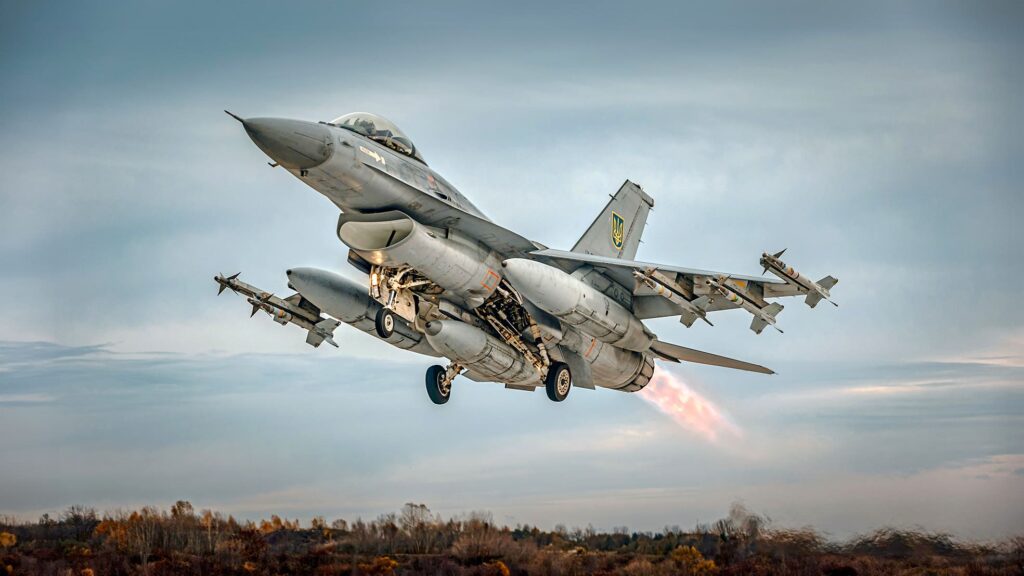
A Ukrainian Air Force F-16AM Fighting Falcon fighter jet takes off armed with AIM-9 Sidewinder air-to-air missiles. Photo: Ukrainian Air Force\X

Ukraine is set to receive three more F-16 fighter jets from Belgium by the end of 2026, Ukrainian President Volodymyr Zelenskyy said, as Russia intensifies its missile and drone attacks on Ukrainian cities.

The aircraft are particularly valuable as Russia increases its use of Shahed/Geran drones, including faster jet-powered variants that are harder for Ukraine’s cheaper interceptor drones to stop. Russia’s growing aerial campaign is already placing additional pressure on Ukraine’s limited air-defense resources.

Zelenskyy said the aircraft will be delivered through an accelerated process. Ukraine has already received urgent F-16 ammunition from Belgium and other partners, including Spain.

“As Russia escalates its attacks every day, we need to increase our capabilities to shoot down aerial targets and protect people,” Zelenskyy said.

F-16s help counter Russia’s air campaign

Ukraine received its first F-16s in 2024 after an 18-month international effort to secure the aircraft and train Ukrainian pilots. The jets have since become an important part of Ukraine’s air defense.

Ukrainian F-16s are used primarily to intercept Russian cruise missiles and attack drones, while also carrying out electronic warfare and other missions. In one January 2025 mission, a Ukrainian F-16 pilot shot down six Russian cruise missiles.

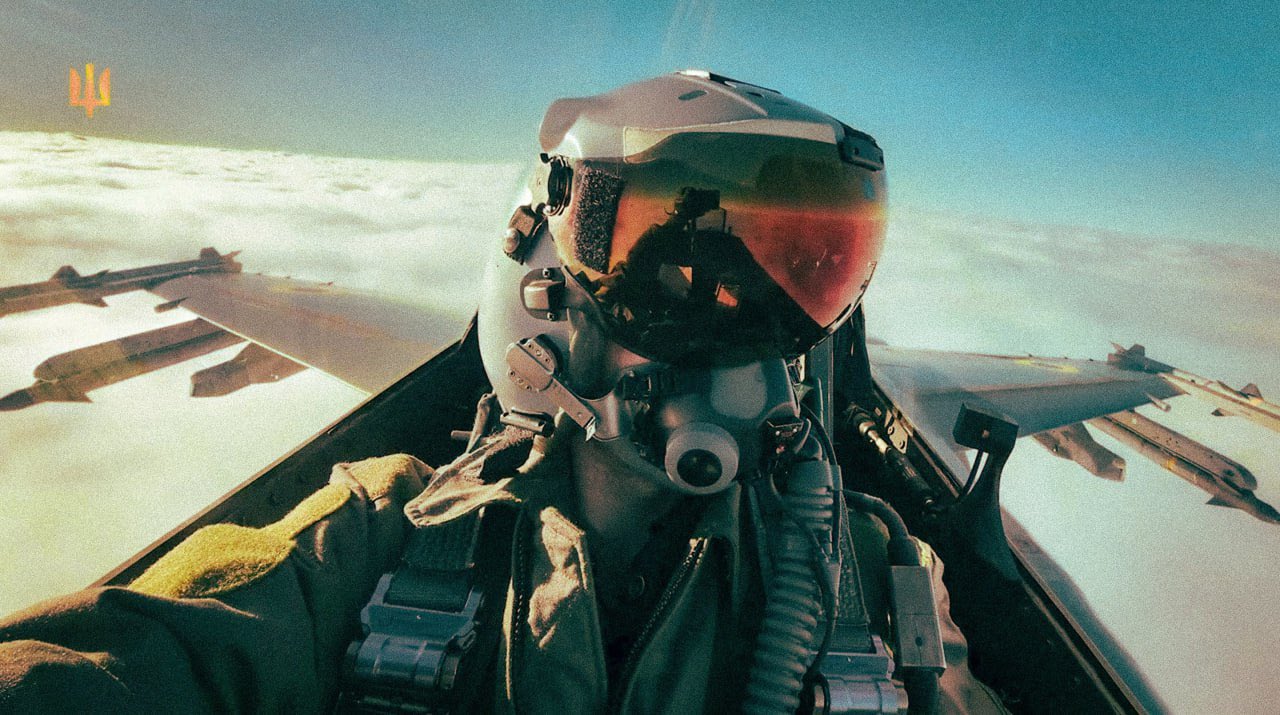
Ukrainian F-16 pilot
Explore further

Allies supplied the F-16s — Ukrainian pilots figured out the tactics

F-16s can also carry precision-guided bombs and air-to-air missiles, allowing them to support strikes against Russian forces and other targets near the frontline. Ukrainian pilots have developed tactics for using the aircraft despite Russia’s dense air-defense network.

For Ukraine, the additional jets therefore provide both another layer against Russia’s expanding aerial attacks and additional capacity for combat operations on the frontline.

Russia raises its war budget by 27% and expands the army again – both to new records – even as its budget deficit widens and oil revenues fall

29 septembre 2026 à 11:14

russia pulling strategic reserves prop up failing offensive hur says — 20000 troops less than one month its own losses · post russian soldiers fighting ukraine sputnik 29015058_0_1 60_3072_1888_1920x0_80_0_0_39d39d77ce429d32e9ff0408ae7775aejpg news

Russia plans to sharply increase military spending in 2027 while expanding the authorized size of its armed forces, according to budget documents seen by Reuters and a report by Novaya Gazeta Europe.

The developments point to Moscow preparing to expand its war effort into next year, even as its battlefield gains remain limited and its campaign increasingly relies on missile and drone attacks against Ukrainian cities and civilian infrastructure. It is also doing so as the Russian government faces a widening budget deficit and falling projected oil and gas revenues.

Russia plans 27% increase in 2027 defense spending despite widening budget deficit

Russia plans to spend 17.1 trillion rubles ($202.6 billion) on defense in 2027, according to government documents reviewed by Reuters. That is about 27% more than the 13.5 trillion rubles originally budgeted for defense in 2027 and would be the highest level of military spending since Russia launched its full-scale invasion of Ukraine in February 2022.

The documents project total defense spending of 50 trillion rubles over the next three years. The actual amount Russia will spend on defense in 2026 is classified, Reuters reported, while some military-related spending can be recorded under other parts of the state budget.

The planned increase comes alongside worsening fiscal pressures. Russia has raised its forecast for the 2026 budget deficit to 3.2% of GDP, from an earlier estimate of 1.6%, according to Reuters. Overall government spending is expected to rise 13.2% this year to 48.6 trillion rubles, or 20.9% of GDP.

The government also expects to increase net borrowing by 26% in 2026 to 5 trillion rubles and withdraw 459 billion rubles from its National Wealth Fund, Reuters reported. Its forecast for 2026 oil and gas revenues has been cut to 7.6 trillion rubles from 8.9 trillion.

Russia is reportedly planning new tax increases for 2027 to help cover the growing deficit. A new windfall tax on metals and mining companies is expected to bring in about 200 billion rubles a year, according to the documents. State debt is projected to rise to 21.7% of GDP in 2027, above the 20% level Russian authorities have previously considered safe.

The draft budget is expected to be submitted to Russia's parliament by October 1.

Army staffing also reaches new high

At the same time, Russian President Vladimir Putin has again increased the authorized size of the country's armed forces.

Putin signed a decree raising the official staffing level of the Russian Armed Forces to 2.44 million people, including 1.55 million military personnel, Novaya Gazeta Europe reported on September 28. The increase is 15,500 personnel compared with the previous decree issued in August.

It is the fourth increase in the authorized size of the Russian military in 2026 and the seventh since the beginning of the full-scale invasion of Ukraine, according to Novaya Gazeta Europe. Before the invasion, the authorized force stood at 1.90 million people, including 1.01 million military personnel.

Russia shifts more of the war into the air

The increases in military staffing and spending come as Russia continues to pursue its maximalist war aims despite limited battlefield progress. The Institute for the Study of War assessed on September 27 that Russia's frontline has remained largely static in recent months and that the Kremlin is increasingly relying on long-range missile and drone strikes as part of its effort to force Ukraine to capitulate during the winter of 2026–27.

ISW assessed that Putin may be trying to make Ukraine's infrastructure and air defense capacity buckle under sustained Russian strikes rather than relying solely on further territorial gains. The institute also said the Kremlin may delay a large-scale mobilization while it assesses whether its expanded long-range strike campaign can achieve its objectives.

The planned increase in military spending and the repeated expansion of the armed forces show that Moscow is preparing to sustain and expand its war effort into 2027, even as its forces make limited territorial gains in Ukraine.

  • ✇Euromaidan Press
  • For the 17th or 18th time, Putin promised to take Donetsk “in a few months” – Zelenskyy
    Russian President Vladimir Putin has again told US officials that Russia can capture Ukraine’s Donetsk Oblast within several months, according to Ukrainian President Volodymyr Zelenskyy. Speaking to the UN General Assembly on 24 September, Zelenskyy said this was the latest in a long series of similar promises as Russia has spent nearly five years trying to seize the region. He said Putin has made such promises 17 or 18 times, repeatedly pushing the deadline further back. He contrast
     

For the 17th or 18th time, Putin promised to take Donetsk “in a few months” – Zelenskyy

24 septembre 2026 à 15:36

Ukrainian President Volodymyr Zelenskyy speaks during the UN General Assembly in New York on 24 September 2026. Photo: Ukrainian President's Office

Russian President Vladimir Putin has again told US officials that Russia can capture Ukraine’s Donetsk Oblast within several months, according to Ukrainian President Volodymyr Zelenskyy.

Speaking to the UN General Assembly on 24 September, Zelenskyy said this was the latest in a long series of similar promises as Russia has spent nearly five years trying to seize the region. He said Putin has made such promises 17 or 18 times, repeatedly pushing the deadline further back.

He contrasted those promises with Russia’s heavy battlefield losses and relatively limited territorial gains.

Russia has paid a huge price for its Donetsk offensive

Zelenskyy said Russian forces suffered 248,964 troops killed or severely wounded between January and August 2026.

He said Russia had captured only slightly more than 1,000 square kilometers of Ukrainian territory this year, while Ukraine had already liberated a significant portion of those gains.

Zelenskyy presented the figures as the human cost of Putin’s continued attempt to seize Donetsk, arguing that Russia is paying an enormous price for relatively limited territorial gains.

“Always the same: ‘Just a few more months,’” Zelenskyy said, adding that Putin would again fail to meet his latest deadline.

The Russian offensive is also facing a recent setback in northern Donetsk. Ukraine launched Operation Vivaldi in September to clear Russian infiltrators and retake ground near Lyman, disrupting Russia’s plan to encircle the fortified cities of the Donetsk “Fortress Belt.”

Ukrainian forces have reported retaking several settlements and clearing up to 125 square kilometers in the operation, although the full scope of the offensive remains undisclosed.

Ukraine's Third Army Corps commander Brigadier General Andrii Biletskyi announcing new developments in "Operation Vivaldi," 20 September 2026. Screenshot from video: Ukraine's Third Army Corps
Explore further

Ukraine retakes ground in a region Russia has fought for years to capture. “Vivaldi” is only getting started but is already “one of the most important victories for Ukraine in 2026”

Zelenskyy also warned that Russia’s ambitions extend beyond Donetsk. After saying Putin would again fail to capture the region, he said Russia would continue seeking other Ukrainian cities, naming Odesa, Kharkiv and Dnipro, while also pointing to Russian pressure on Moldova and threats toward Poland and the Baltic states.

Russia continues to pour missiles and drones into Ukraine

The battlefield campaign has been accompanied by a sustained Russian long-range attack campaign against Ukrainian cities and infrastructure.

Since the beginning of 2026, Russia has launched more than 2,100 missiles against Ukraine, including more than 950 ballistic missiles, according to Zelenskyy.

Ballistic missiles are particularly difficult for Ukraine to counter because it has a limited supply of interceptors capable of engaging them. Russia’s heavy use of ballistic weapons is therefore contributing directly to civilian deaths and infrastructure destruction.

Over the first eight months of the year, Russia also used 63,000 attack drones of various types, Zelenskyy said. More than 7,700 were jet-powered Geran drones, which he described as particularly destructive and dangerous.

The newer jet-powered drones are faster and more advanced than earlier Shahed-type models, making them harder to intercept and adding to the pressure on Ukraine’s air defenses as Russia attacks cities and infrastructure.

Zelenskyy said Russia was using the drones continuously to disrupt economic activity and normal life in Ukrainian cities, including by making it harder for children to attend school.

The figures show the scale of the Russian campaign beyond the front line. Alongside its ground offensive, Russia is using sustained missile and drone strikes to kill civilians, destroy infrastructure, and exhaust Ukraine’s air-defense resources.

North Korean troops add to Russia’s war effort

Zelenskyy also highlighted North Korea’s direct involvement in Russia’s war, saying its troops have suffered heavy losses while gaining battlefield experience alongside Russian forces.

He said North Korea’s military capabilities were also benefiting from its cooperation with Russia, pointing to improvements in its ballistic missiles and drone capabilities.

Ukraine recently transferred two North Korean prisoners of war to South Korea. Zelenskyy said capturing the soldiers alive had been difficult and described one prisoner’s attempt to take his own life after realizing he was about to be captured.

He said the soldiers had been conditioned to believe they had to die rather than surrender.

“Do you really want to give such a force more time to learn how to fight?” Zelenskyy asked.

Zelenskyy calls for de-escalation before winter

Zelenskyy separately warned that Russia could again target Ukraine’s energy and heating infrastructure this winter.

Russia has already intensified attacks on Ukraine’s energy system ahead of the cold season.

Russia has also explicitly threatened to “freeze” Ukraine this winter, with its Defense Ministry linking the threat to attacks on Ukrainian infrastructure. The country spent much of the previous winter dealing with the consequences of Russian strikes on power and heating infrastructure, including blackouts and disruptions to heat supplies.

Zelenskyy said Ukraine expects the coming winter to be difficult but warned that if Russia continues attacking Ukraine’s energy and heating systems, Ukraine will make the winter painful for Russia as well.

He called for steps toward de-escalation before winter, saying that diplomacy and military strength were both needed to end the war.

  • ✇Euromaidan Press
  • Russian-linked software sold to US government as CEO allegedly hid Russian control – two now arrested
    The US has arrested the CEO of Virginia-based digital forensics company Oxygen Forensics and a Russian national over allegations that they concealed the company’s Russian ownership and the fact that its software was developed in Russia while selling it to US government agencies, according to the US Justice Department. The case highlights a potential route through which Russian-linked networks could seek access to sensitive US institutions: concealing Russian ownership and influence behi
     

Russian-linked software sold to US government as CEO allegedly hid Russian control – two now arrested

24 septembre 2026 à 14:20

A tablet with cybersecurity forensics software from Oxygen Forensics. Photo via Militarnyi

The US has arrested the CEO of Virginia-based digital forensics company Oxygen Forensics and a Russian national over allegations that they concealed the company’s Russian ownership and the fact that its software was developed in Russia while selling it to US government agencies, according to the US Justice Department.

The case highlights a potential route through which Russian-linked networks could seek access to sensitive US institutions: concealing Russian ownership and influence behind seemingly legitimate American companies.

Lee Reiber, 55, and Oleg Sergeyevich Davydov, 52, are charged with conspiracy to commit wire fraud. The US Justice Department alleges that five Russian nationals, including Davydov, owned and controlled Oxygen Forensics through a Cyprus-based holding company, while its software was developed by a team in Russia.

Software sold to US government agencies

According to the criminal complaint, Oxygen Forensics presented itself to US agencies as an independent American company with no foreign ownership or control.

The company sold digital forensic software used to recover and analyze data from electronic devices to the US Department of War and three Department of Homeland Security components: the Secret Service’s National Computer Forensics Institute, Homeland Security Investigations, and the DHS Office of Inspector General.

The National Computer Forensics Institute awarded Oxygen Forensics a five-year contract in September 2024. The award file included a certification from Reiber stating that the company had no immediate or highest-level owner, according to the affidavit.

The Justice Department alleges that this was false. The Russian owners allegedly continued to make significant company decisions, set Reiber’s compensation, control payments and retain signatory authority over bank accounts after their names were removed from public corporate filings.

Russian software development allegedly concealed

The complaint says the same five Russian nationals also owned a Russian company founded by Davydov in 2000, previously known as Oxygen Software and now called MKO Systems.

According to the affidavit, the Russian company developed the software used by Oxygen Forensics, with developers working in Russia under Davydov’s direction. MKO Systems also sold its software in Russia under different product names to customers that reportedly included the Federal Security Service (FSB), the Russian Investigative Committee and the Russian Ministry of Internal Affairs.

After the US expanded sanctions against Russia in 2022 following Russia’s full-scale invasion of Ukraine, the Russian owners allegedly agreed with Reiber to conceal both the company’s ownership and its Russian development operations.

Reiber was installed as CEO, president and chairman in March 2022, while the Russian owners were removed from the company’s public filings, according to the Justice Department.

The complaint alleges that the arrangement did not end the Russian owners’ control. One of them was later appointed to the company’s board using a Turkish identity, according to the affidavit.

OSINT investigators had traced Russian software links

Militarnyi separately reported that OSINT investigators from InformNapalm had previously traced corporate and technological links between Oxygen Forensics and Russia’s Oxygen Software, now known as MKO Systems.

According to Militarnyi, the Russian company’s products were supplied to Russian security and law-enforcement agencies, including the FSB and Ministry of Internal Affairs. The investigation traced a common corporate and technological origin between the Russian and US software ecosystems.

CEO allegedly denied Russian involvement

The Justice Department says Reiber repeatedly certified to US authorities that the company had no foreign ownership or control.

In March 2026, he allegedly told DHS personnel that no Russian was involved in developing Oxygen Forensics’ software and that no one in Russia had access to its development environment. Days later, he published a statement saying the company had no development presence in any restricted jurisdiction.

The complaint alleges that the software was in fact written and managed by a team in Russia, using a cloud environment administered by one of the Russian owners.

The affidavit also describes a November 2023 exchange in which Reiber allegedly told the Russian owners that public reporting about the company’s Russian connections could jeopardize a pending US government contract.

Arrests and seizures

Reiber was arrested in Idaho on 20 September and released on bond after appearing in federal court. Davydov was arrested the same day at London Heathrow Airport before boarding a flight to Istanbul. The US says it will seek his extradition.

Separately, a federal judge authorized the seizure of Oxygen Forensics’ corporate bank accounts, around 57 domains and other cyber infrastructure allegedly used in the scheme. The domains and related infrastructure were seized on 20 September.

The case is being investigated by the US Department of Commerce’s Bureau of Industry and Security, with assistance from the Department of War Office of Inspector General’s Defense Criminal Investigative Service.

Each could face up to 20 years in federal prison if convicted.

  • ✇Euromaidan Press
  • EU approves nearly €3 billion for Ukraine as Kyiv meets more reform targets
    The European Union has approved nearly €3 billion in new funding for Ukraine, including nearly €800 million provided for the first time through the Ukraine Support Loan. The payment is the eighth regular disbursement under the EU’s Ukraine Facility. The funding will support Ukraine’s budget, recovery, modernization, and reform efforts as the country continues to fight Russia’s full-scale war and pursue EU membership. Ukraine meets 88% of targets due so far The latest payment follo
     

EU approves nearly €3 billion for Ukraine as Kyiv meets more reform targets

24 septembre 2026 à 13:44

EU summit Ukraine cyprus zelenskyy

The European Union has approved nearly €3 billion in new funding for Ukraine, including nearly €800 million provided for the first time through the Ukraine Support Loan. The payment is the eighth regular disbursement under the EU’s Ukraine Facility.

The funding will support Ukraine’s budget, recovery, modernization, and reform efforts as the country continues to fight Russia’s full-scale war and pursue EU membership.

Ukraine meets 88% of targets due so far

The latest payment follows Ukraine’s completion of 10 targets under its Ukraine Plan, the roadmap for reforms and investments linked to the Ukraine Facility. Ukraine has now completed 84 of the 95 targets required under the plan so far, according to the Council of the EU.

Funding under the Ukraine Facility is tied to Ukraine meeting these targets. It is intended to strengthen Ukraine’s macro-financial stability, keep public administration running, and support recovery and modernization.

The Ukraine Facility entered into force in March 2024 and provides more than €50 billion in grants and loans for Ukraine through 2027.

Norway adds €92 million

The EU also amended Ukraine’s plan to include approximately €92 million in non-repayable support from Norway.

Norway is the first non-EU country to contribute to Pillar I of the Ukraine Facility, which provides support through Ukraine’s reform and investment plan.

Sweden has provided more than €253 million in additional voluntary contributions over the past year, while the UK recently contributed more than €17 million to Pillar II, the Ukraine Investment Framework.

Ukraine has received more than €32 billion

Following the latest disbursement, Ukraine will have received more than €32 billion through the Ukraine Facility since mid-2024.

More than €40 billion of the facility’s total funding is earmarked for reforms and investments under the Ukraine Plan, with payments tied to Ukraine’s progress toward the agreed targets.

Russia could launch limited attacks on NATO in coming months, escalating hybrid warfare without being ready for full-scale conflict, Denmark warns

24 septembre 2026 à 12:13

Danish soldiers

Russia is likely to intensify its hybrid war against the West, including more frequent sabotage and cyberattacks that could cause greater damage and casualties, Denmark’s Defence Intelligence Service (DDIS) said in a new assessment published on 24 September.

The assessment says Russia has become increasingly willing to take risks against European and NATO countries, even while its full-scale war against Ukraine continues. DDIS also assesses a low but growing risk of Russia carrying out a limited military attack against one or more NATO countries bordering Russia in the coming months.

Russia preparing to escalate hybrid attacks

DDIS said Russia’s hybrid attacks have increasingly shifted from attempts to create fear and weaken support for Ukraine toward efforts to directly disrupt Western assistance to Kyiv.

This includes sabotage targeting defense companies and railway transport carrying military equipment to Ukraine. The Danish intelligence service expects Russia to carry out such attacks more frequently and with greater consequences.

Future operations could include destructive cyberattacks capable of disrupting critical societal functions and sabotage attacks with a high risk of casualties, according to the assessment.

DDIS also cited the foiled drone attack against Leipzig/Halle Airport in Germany as an example of Russia’s growing willingness to conduct operations against targets in Europe. German authorities said the attack had been planned by Russia over several months.

German Federal police officer protecting the city
Explore further

Germany suspects Russian intelligence behind arson attack as hybrid warfare threat grows across Europe

Growing risk of a limited attack on NATO

The Danish intelligence service assesses that there is a low but growing risk Russia could launch a limited military attack against one or more NATO countries bordering Russia.

Such an attack could take the form of isolated long-range strikes against infrastructure supporting Ukraine. Russia could also use Ukrainian-made drones in a false-flag operation or deploy a limited number of troops, potentially without national insignia.

DDIS says Russia could attempt such an operation even while continuing its war against Ukraine and without having the forces needed for a regional war against NATO.

The purpose, according to the assessment, could be to divert European resources away from Ukraine and create divisions within NATO if Moscow believes the alliance would struggle to agree on a collective response.

Russia would likely try to ensure that any military attack remained below the threshold that would trigger a full NATO response. DDIS warns, however, that Russia may be uncertain about what would trigger such a response.

tusk polish prime minister
Explore further

After CIA head’s visit to Moscow, Poland’s PM warns Russia is preparing to escalate war. He puts critical window at seven or eight months

No signs of an imminent Russian invasion

Despite the increased risk of limited attacks, DDIS says it sees no indications that Russia is preparing to invade one or more NATO countries.

The agency considers a full-scale Russian invasion of NATO “highly unlikely,” but says it cannot be ruled out. If Russia decided to launch such an invasion, DDIS estimates it would need at least six months to build up the necessary forces.

The intelligence service also says Russia would need several months to build up forces near a NATO border before a limited military deployment, making such preparations difficult to conceal.

A Danish military helicopter, illustrative image. Photo: Denmark’s Armed Forces
Explore further

Russian warship fires flares at Danish military helicopter as Moscow’s provocations escalate

Russia under pressure from Ukraine’s attacks

The assessment says Russia is currently under more pressure than at any other point in its war against Ukraine.

Ukraine’s sustained long-range strikes are causing increasing damage deep inside Russia, while Russian forces are suffering heavy losses for marginal territorial gains. Moscow is also facing economic pressure from military spending, international sanctions and Ukrainian strikes against Russian energy infrastructure.

DDIS assesses that there is no prospect of Russia achieving a major breakthrough in Ukraine over the next six months. At the same time, it says Putin is highly unlikely to compromise on his fundamental objectives in the war.

The agency says Russia believes Europe will develop a stronger independent military capability by 2030, which Moscow could view as an increasing threat. This could create what DDIS describes as a window of opportunity for Putin to attempt to change Europe’s security order.

  • ✇Euromaidan Press
  • Ukraine and Hungary have a rare moment of cooperation, agreeing to build fuel storage beyond Russia’s reach
    Ukraine’s Naftogaz has signed a memorandum with Hungarian energy company MOL to build fuel storage facilities in Hungary near the Ukrainian border, creating additional reserves outside the reach of Russian strikes. Acting Naftogaz CEO Sergiy Fedorenko said the project will diversify fuel supply routes and provide storage capacity outside areas exposed to Russian attacks. He said this could make fuel supplies more reliable for Ukrainian consumers while also expanding cross-border energy
     

Ukraine and Hungary have a rare moment of cooperation, agreeing to build fuel storage beyond Russia’s reach

20 septembre 2026 à 15:04

Ukraine’s Naftogaz has signed a memorandum with Hungarian energy company MOL to build fuel storage facilities in Hungary near the Ukrainian border, creating additional reserves outside the reach of Russian strikes.

Acting Naftogaz CEO Sergiy Fedorenko said the project will diversify fuel supply routes and provide storage capacity outside areas exposed to Russian attacks. He said this could make fuel supplies more reliable for Ukrainian consumers while also expanding cross-border energy infrastructure.

The agreement was announced during the Carpathian Economic Forum, held as part of the first summit of the Carpathian Eight regional cooperation format.

Why Ukraine needs fuel storage outside the country

Russia has repeatedly targeted Ukraine’s fuel infrastructure, including oil and gas production facilities, filling stations, and other sites needed to supply fuel across the country. These attacks increase in the lead up to and during winter months, where the impacts on civilians are especially severe.

Naftogaz said Russian attacks destroyed 37 of its filling stations during the first seven months of 2026. The company said fuel availability is particularly important for emergency services, medical teams, public transport, and communities near the front line.

Russia has also attacked Ukraine’s oil and gas production facilities. In August, Naftogaz said a major Russian attack damaged seven Ukrnafta production facilities and forced some of them offline, reducing oil and gas production.

Storing fuel in Hungary would give Ukraine additional reserves beyond the reach of these attacks and another route for bringing petroleum products into the country if domestic infrastructure is damaged.

Fedorenko said the agreement could make fuel supplies to Ukrainian consumers more reliable while supporting the development of energy infrastructure connecting the two countries.

Ukraine-Hungary ties improve

The deal comes as Kyiv and Budapest have begun rebuilding relations following years of tensions under former Hungarian Prime Minister Viktor Orbán.

Péter Magyar replaced Orbán as Hungary’s prime minister in 2026, and the new government has moved toward closer cooperation with Ukraine, although major disagreements remain. 

In June, Ukrainian Foreign Minister Andrii Sybiha described the relationship as entering a “new page” after Kyiv and Budapest reached an agreement addressing longstanding disputes over the rights of Hungary’s ethnic minority in Ukraine. 

The two countries have since continued talks on normalizing relations. In September, the relationship was showing tentative signs of improvement, including progress on minority-rights issues and preparations for a meeting between Ukrainian President Volodymyr Zelenskyy and Magyar.

Energy cooperation has already featured in the renewed dialogue. During a Ukrainian government visit to Budapest in 2025, the two sides discussed Hungarian participation in modernizing Ukraine’s energy infrastructure and agreed to continue economic cooperation.

The improvement in relations has not eliminated disagreements. Hungary continues to block progress on parts of Ukraine’s EU accession process, citing concerns over the rights of Hungary’s ethnic minority in Ukraine.

The planned fuel-storage facilities therefore mark a practical area of cooperation between the two countries at a time when Russia’s attacks are making secure fuel supplies increasingly important for Ukraine.

Russia has already destroyed more than two-fifths of Ukraine’s modern warehouse space as it escalates attacks on economic infrastructure – FT

20 septembre 2026 à 13:43

Photo: State Emergency Service of Kyiv Oblast

Russia has destroyed 2.1 million square meters of Ukraine’s modern warehouse space out of a total 5 million, wiping out more than two-fifths of the country’s storage capacity as Moscow expands its air campaign against Ukraine’s economy, according to the Financial Times.

Russia is increasingly targeting the infrastructure that keeps Ukraine’s economy running and its citizens supplied, including warehouses, distribution centers, railways, fuel stations, and other logistics facilities. By hitting these sites far from the front line, Russia is disrupting the supply of everyday goods and making it harder for Ukrainians to find what they need.

Around 900,000 square meters of warehouse space has been destroyed in recent months alone, according to Ukrainian entrepreneur Ruslan Shostak, founder of the Eva and Varus retail chains, cited by the Financial Times.

Russia is destroying Ukraine’s warehouse capacity

The loss of warehouse space is creating problems for businesses across Ukraine.

Russian strikes have hit warehouses and distribution centers belonging to major Ukrainian retailers, pharmaceutical companies, publishers, and logistics operators.

One recent strike destroyed a warehouse belonging to toy retailer Budynok Ihrashok near Kyiv, FT reported. The facility was hit by a jet-powered drone and caught fire, but firefighters were unable to intervene while Russian drone attacks were continuing.

The company now plans to distribute its inventory among smaller warehouses and its network of 67 stores rather than rely on a single large distribution center.

The destruction of large warehouses is forcing companies to rethink how they store and distribute goods, increasing costs and making supply chains more vulnerable to further attacks.

Ukrainian firefighters respond to a blaze at warehouses hit by a Russian drone strike in Kyiv Oblast’s Brovary district, 18 August 2026. Photo: Ukraine's State Emergency Service
Explore further

Kyiv stockpiles food and water as Russia’s new aerial tactics threaten a brutal winter

The attacks are spreading across Ukraine’s economy

Warehouses are not the only economic infrastructure being targeted.

Russian drones have increasingly struck railway infrastructure in western Ukraine, while fuel stations are also being hit farther from the front line. These attacks can disrupt the movement of goods even when they do not directly destroy the businesses producing them.

The result is a widening pressure on Ukraine’s logistics network. Companies must find alternative storage and transport routes while operating under the continuing threat of Russian airstrikes.

The attacks are part of Russia’s broader long-range air campaign against Ukraine’s civilian infrastructure. Moscow is increasingly using drones and missiles to hit economic targets deep inside Ukraine, putting strain on the systems that allow the country’s economy to function during the war.

  • ✇Euromaidan Press
  • Europe gave Russia years to perfect its aerial killing. Ukraine is paying the price. Europe may be next.
    For years, Ukraine’s air defenses blunted Russia’s attempts to terrorize its cities from the sky. Now, after four years of adaptation, Moscow is fielding faster drones, massing ballistic missiles, and finding new ways to overwhelm a Ukrainian air-defense network running short of the interceptors needed to stop them. Russia’s aerial campaign is becoming harder to contain just as its attacks are killing more Ukrainian civilians. July recorded at least 437 civilian deaths, the highest mont
     

Europe gave Russia years to perfect its aerial killing. Ukraine is paying the price. Europe may be next.

20 septembre 2026 à 12:27

The image shows a giant crater formed by a Russian missile in Kyiv on 3 June 2026. Source: Ukraine's State Emergency Service

For years, Ukraine’s air defenses blunted Russia’s attempts to terrorize its cities from the sky. Now, after four years of adaptation, Moscow is fielding faster drones, massing ballistic missiles, and finding new ways to overwhelm a Ukrainian air-defense network running short of the interceptors needed to stop them.

Russia’s aerial campaign is becoming harder to contain just as its attacks are killing more Ukrainian civilians. July recorded at least 437 civilian deaths, the highest monthly toll since the early months of the full-scale invasion, with UN monitors pointing to Russian missile and drone attacks as a key factor.

That shift is visible most clearly in Russia’s rapidly expanding use of jet-powered Geran drones. These drones can exceed 400 km/h, making them significantly harder to intercept than the slower, propeller-driven Shaheds Ukraine has spent years learning to counter. Russia reportedly launched as many as 2,850 jet-powered drones in August alone.

Ukrainian President Volodymyr Zelenskyy has warned that Russia’s escalation with the new drones is becoming “increasingly terrorist” and called for urgent efforts to develop defenses against them.

While Ukraine’s Western partners have taken steps to strengthen its air defenses, Russia has spent the same period adapting and expanding its ability to attack from the air. The gap is becoming increasingly visible in the skies over Ukrainian cities.

Ukrainian civilians are already paying the price

Russia has increasingly turned its ability to strike deep inside Ukraine into a weapon against civilian life itself: hitting residential areas, fuel stations, railways, energy infrastructure and other sites across cities far from the front.

Since late August, Kyiv has faced near-continuous Russian drone attacks, with Russia increasingly sending waves of drones against the capital throughout the day and night. The shift has made air-raid alerts, explosions and disruptions to daily life a near-constant reality.

For Ukrainians, Russia’s evolving aerial campaign is measured in destroyed homes, injuries, deaths, and lives permanently changed. 

In Kyiv, it has also changed everyday life: explosions interrupt sleep and work, people run for shelter as strikes unfold overhead, and the threat of another attack is never far away.

And the pressure is no longer confined to Kyiv. Kharkiv, Odesa, Sumy and Zaporizhzhia are all facing increasingly sophisticated combinations of drones and missiles.

The danger is not simply that Russia is launching more weapons. It is that Moscow has spent years learning which weapons can penetrate Ukraine’s defenses, how to combine them, and how to force Ukraine to spend its most valuable interceptors.

Zelenskyy’s warning captures the urgency: “You cannot simply wait for Russia to perfect its repertoire of killings.”

Emergency workers respond to a Russian strike on a shopping center in Kharkiv, Ukraine, on 28 August 2026. Photo: Ukraine’s State Emergency Service

Russia is adapting faster than Ukraine can rebuild its shield

The jet-powered Geran is only one part of the problem.

Russia has also dramatically increased its use of ballistic missiles. Reuters reported that 228 ballistic and hypersonic missiles were launched in July and the first eight days of August, with more than half being inaccurate RM48U training missiles repurposed for combat. 

Ukraine has virtually exhausted its US-made Patriot interceptors, the only systems in its arsenal capable of reliably intercepting Russia’s ballistic missiles, while Moscow continues launching them at a high tempo.

The result is a more complex aerial threat: fast drones that are difficult to intercept, ballistic missiles that are extremely difficult to stop, and large waves of cheaper weapons that can force Ukraine to expend scarce defensive ammunition.

Ukraine is developing new ways to counter them, including interceptor drones specifically designed to hunt down the jet-powered Gerans. But Ukraine is developing these systems as Russia is already deploying its new weapons at scale.

money engineering what stands between ukraine russia's fastest drones zelenskyy says · post russia’s new “geran-4 seeker” shahed variant geran-4 news ukrainian reports
Russia’s new “Geran-4 Seeker” jet-powered Shahed drone variant. Source: Wild Hornets

Western countries have continued providing air-defense assistance. Canada, for example, announced a C$350 million package for interceptors earlier this month. But Ukrainian officials continue to say that deliveries remain far below what is needed to protect the country from Russia’s expanding aerial campaign.

Russia has spent years expanding the weapons it can use against Ukraine, while Ukraine and its partners are still racing to develop and supply the systems needed to stop them.

The threat Europe helped Russia develop

Some of Ukraine’s Western partners are now confronting a threat Russia has spent years developing over Ukraine: an increasingly sophisticated aerial arsenal that could eventually be turned against them.

European officials and defense analysts are increasingly warning that NATO countries themselves lack enough air and missile defenses to deal with a large Russian attack. 

Latvia’s President Edgars Rinkēvičs recently said Europe is not sufficiently prepared for the kind of drone and aerial warfare Russia has developed in Ukraine, including because of delays in supplying Ukraine with critical air-defense systems.

Those concerns are no longer hypothetical. On 14 September, an Italian NATO fighter jet shot down a Russian-made Geran-2 drone over Lithuania after it entered the country from Belarus. Poland and Romania have also faced Russian drone incursions since 2025.

italian jets destroyed drone over lithuania first shootdown country · post lithuanian military police site near pratkūnai where nato fighters shot down kaišiadorys district 15 2026 d umbrasas / lrt
Lithuanian military police at the site near Pratkūnai where NATO fighters shot down a drone, Kaišiadorys district, Lithuania, 15 September 2026. Photo: D. Umbrasas / LRT

This creates a problem that is partly of Europe’s own making. Russia has had more than four years to refine its drones, missiles, production lines and tactics while Ukraine’s partners have often been too slow to provide enough weapons to counter those systems as they were developed and deployed at scale.

In that same period, many European countries continued trading with Russia, particularly in fossil fuels, allowing Moscow to keep generating revenue from European markets even as those same governments were providing military aid to Ukraine.

The result is a Russian aerial arsenal that is more capable than the one Ukraine faced in 2022 – while some of the countries now worried about a future Russian threat lack the air defenses needed to protect themselves.

Western governments helped Ukraine fight Russia’s air war, but not at a scale or speed sufficient to prevent Russia from adapting. 

Ukrainian civilians are paying the price for the time Russia was given to expand and refine its aerial warfare. Now, Europe is having to prepare for the possibility that those capabilities could one day be used against it. 

Ukraine retakes ground in a region Russia has fought for years to capture. “Vivaldi” is only getting started but is already “one of the most important victories for Ukraine in 2026”

20 septembre 2026 à 07:03

Ukraine's Third Army Corps commander Brigadier General Andrii Biletskyi announcing new developments in "Operation Vivaldi," 20 September 2026. Screenshot from video: Ukraine's Third Army Corps

Ukraine’s Third Army Corps says its forces have liberated Shandryholove and Derylove and established full control over Drobysheve in Donetsk Oblast as part of its ongoing “Vivaldi” offensive.

Ukraine is taking the initiative in northern Donetsk, where Russia has spent years trying to seize the remaining Ukrainian-held territory. By retaking ground and disrupting Russian logistics, the “Vivaldi” counteroffensive could complicate Moscow’s plans for a broader offensive in the Donbas.

According to the corps, Ukrainian forces and attached units have regained control of 125 square kilometers during the first two phases of the operation, including 50 square kilometers that had been under Russian occupation.

The corps said the operation has also inflicted more than 3,000 Russian personnel losses across the two phases, including 800 more during the latest phase. 

Ukraine expands gains in “Vivaldi” offensive

The Third Army Corps said its forces captured Shandryholove and Derylove and established full control over Drobysheve during the second phase of the offensive.

The offensive is aimed at degrading Russian forces operating in the area, with the corps saying it is targeting elements of Russia’s 20th and 25th Combined Arms Armies and 1st Guards Tank Army.

Brigadier General Andrii Biletskyi, commander of the Third Army Corps, said Ukrainian assault groups are preceded by drones and unmanned ground vehicles.

The corps said its heavy bombers have been used to deliver kamikaze ground robots more than 10 kilometers behind Russian lines. Artillery and drone units have targeted Russian command posts, communications nodes, logistics, crossings, and reserves.

Ukrainian air defense and electronic warfare units have also helped shield the area of operations, according to the corps.

The operation involved units from the 60th Mechanized Brigade, 125th Heavy Mechanized Brigade, 3rd Assault Brigade, KRAKEN, the 3rd Separate Reconnaissance Battalion, and the corps’ 25th Anti-Tank Battalion, along with attached units.

Soldiers of Ukraine's Third Army Corps. Photo: Ukraine's Third Army Corps
Explore further

“Only the first season” – Ukraine unveils secret counteroffensive in a region Russia has been trying to seize for 12 years

“One of the most important victories for Ukraine in 2026”

Open-source analyst Clément Molin, who has tracked the offensive using publicly available information, described the developments as highly significant.

“This is one of the most important victories for Ukraine in 2026, which will delay the offensive on northern Donbas,” Molin said.

After 4 months of the Lyman counter-attack, Ukraine 🇺🇦 3rd Army Corps managed to cut Russian 🇷🇺 salient north of Lyman and liberate more than 200 km2

This is one of the most important victory for Ukraine in 2026 which will delay the offensive on northern Donbas

🧵THREAD🧵1/20⬇ pic.twitter.com/PybB6jO9DO

— Clément Molin (@clement_molin) September 8, 2026

He also cautioned against claims that a large Russian grouping had been encircled, while assessing that Ukrainian advances had put pressure on Russian positions and supply routes.

The information surrounding the operation has remained limited, with Ukrainian forces maintaining operational security around their movements.

The Third Army Corps said the offensive is continuing and that further developments are expected soon.

  • ✇Euromaidan Press
  • Ukraine’s long-range strikes reach Moscow’s fuel supply as Russia votes in State Duma elections
    Ukraine launched a massive long-range drone attack on Moscow and Moscow Oblast overnight on 20 September, striking a major Russian oil refinery and a logistics facility, according to Ukrainian President Volodymyr Zelenskyy. Ukraine is increasingly targeting Russian oil refineries, logistics hubs, and other strategic infrastructure that helps generate the fuel, revenue, and supplies Russia needs to sustain its war against Ukraine. Striking them allows Kyiv to put pressure on Russia’s war
     

Ukraine’s long-range strikes reach Moscow’s fuel supply as Russia votes in State Duma elections

20 septembre 2026 à 06:05

Smoke over Moscow after a mass Ukrainian drone attack on an oil refinery and logistics facility, 20 September 22026. Screenshot from video: Zelenskyy

Ukraine launched a massive long-range drone attack on Moscow and Moscow Oblast overnight on 20 September, striking a major Russian oil refinery and a logistics facility, according to Ukrainian President Volodymyr Zelenskyy.

Ukraine is increasingly targeting Russian oil refineries, logistics hubs, and other strategic infrastructure that helps generate the fuel, revenue, and supplies Russia needs to sustain its war against Ukraine. Striking them allows Kyiv to put pressure on Russia’s war economy and military logistics far beyond the front line.

The Moscow Oil Refinery was among the facilities hit. Moscow Mayor Sergei Sobyanin confirmed that an object at the refinery was damaged, while OSINT analysis by ASTRA of eyewitness footage also identified the refinery as one of the attack’s targets.

Zelenskyy said the strikes were carried out using a range of Ukrainian long-range weapons and targeted infrastructure that generates revenue for Russia’s war effort.

The attack took place on the second day of Russia’s three-day State Duma elections, with voting taking place across the country from 19 to 21 September.

Moscow refinery targeted

Zelenskyy said Ukrainian forces struck “one of the key enterprises of the Russian oil industry” in the Moscow region, along with a logistics facility.

The Moscow Oil Refinery is operated by Gazprom Neft and is located in Moscow’s Kapotnya district. According to information cited by ASTRA, it can process 11 million tons of oil annually and supplies about 40% of Moscow’s fuel market and 70% of the Moscow region’s gasoline and aviation fuel needs.

Sobyanin said an object on the refinery’s territory was damaged and that there were no casualties there.

Ukraine’s long-range campaign

Zelenskyy said Ukraine used FP-1, RZ-100, MICH-2000, Palianytsia, Vendetta, Liutyi, Bars, Flamingo, Sich, and Pelican systems in the operation.

He thanked the Security Service of Ukraine, Unmanned Systems Forces, Special Operations Forces, military intelligence, and Foreign Intelligence Service for their involvement.

“The billions of dollars” generated by such facilities help sustain Russia’s military machine, Zelenskyy said, framing the strikes as part of Ukraine’s effort to reduce Russia’s ability to finance and wage its war.

He also said Moscow should end its war rather than build layered air defenses using systems taken from other Russian regions.

Russian authorities report casualties

Russian officials claimed the overnight attack caused two deaths and six injuries across Moscow Oblast.

Governor Andrei Vorobyov claimed Russian air defenses and electronic warfare systems intercepted or suppressed 249 drones across 17 municipal districts between 3 and 5 a.m.

Vorobyov also claimed that a drone strike in Sofyino damaged six apartments in a three-story building, killing a 44-year-old woman and injuring five people. Another person was reportedly killed in a private house in the Orekhovo-Zuyevsky district.

In Ramenskoye, Russian authorities reported a fire at a 21-story apartment building and said about 400 people were evacuated.

Sobyanin separately claimed that the attack was intended to disrupt Russia’s State Duma elections, which were taking place on 20 September. Ukrainian authorities did not say that this was the purpose of the strikes.

Russia is using inaccurate missiles that can miss by hundreds of meters to attack Ukrainian cities – and plans to scale them up

18 septembre 2026 à 15:26

russia's arctic bases sit near-naked air defenses vanish guard moscow refineries burning inland · post s-400 defense missile launcher vehicles 2018 file sergei malgavko/tass rferl ukraine news ukrainian reports

Russia has begun using large numbers of a missile originally designed as a training target for air-defense crews, despite the weapon being significantly less accurate than the ballistic missiles Russia normally uses for precision strikes. The RM48U is now being launched against targets in Ukraine from S-400 air-defense systems.

The development comes as Russia has sharply increased its use of ballistic missiles against Ukrainian cities in recent months, while Ukraine faces a critical shortage of the interceptors needed to defend against them. Russian forces had more than tripled their monthly ballistic missile launches between April and July, according to Ukrainian military intelligence, as Ukraine's stocks of Patriot interceptors have dwindled.

More than half of the 228 ballistic and hypersonic missiles Russia launched in July and the first eight days of August were RM48Us, according to Ukrainian data reviewed by Reuters in an investigation published on 18 September.

A training missile turned into an inaccurate weapon

The RM48U was originally developed as a training target to help Russian air-defense crews practice intercepting incoming threats. It was not designed as a precision ground-attack missile.

Ukrainian investigators told Reuters that the missile is less powerful and less accurate than the Iskander, Russia's main short-range ballistic missile. They estimate that RM48Us deviate from their intended targets by around 300 meters on average.

The missiles nevertheless follow a high-speed ballistic trajectory when used in combat, making them difficult for Ukrainian air defenses to intercept.

Russia launches the RM48U from S-400 systems, repurposing part of its air-defense arsenal for offensive strikes.

russia's arctic bases sit near-naked air defenses vanish guard moscow refineries burning inland · post s-400 defense missile launcher vehicles 2018 file sergei malgavko/tass rferl ukraine news ukrainian reports
Explore further

Ukraine strikes two Russian S-400 launchers in Bryansk. The same systems were used to attack Kyiv overnight.

Russia is using inaccurate missiles at scale

The number of RM48U launches increased sharply during the summer.

Russia launched 158 ballistic and hypersonic missiles against Ukraine in July, according to Ukrainian data reviewed by Reuters. Of those, 87 were RM48Us.

Russia then launched another 36 RM48Us among 70 ballistic and hypersonic missiles fired during the first eight days of August.

July was the highest month for Russian ballistic and hypersonic missile launches since the start of the full-scale invasion, according to the Ukrainian data.

The surge in RM48U use also coincided with a major decline in Russia's use of Iskanders. Russia launched more than 100 Iskanders in June but only 38 in July.

The shift indicates that Russia is using the less capable RM48U to sustain its ballistic missile campaign to continue causing indiscriminate destruction in Ukrainian cities while conserving more capable weapons.

RUSI analyst Sidharth Kaushal told Reuters that this allows Russia to preserve missiles such as Iskanders, as well as other more advanced weapons, for future attacks.

Less accurate does not mean less dangerous

The RM48U's poor accuracy has already had deadly consequences.

Ukrainian investigators concluded that an RM48U struck a railway platform in the Brovary district of Kyiv Oblast on 5 August, killing eight people. 

According to Ukrainian prosecutors cited by Reuters, the missile's warhead also scatters metal fragments over a wide area.

The attack illustrates the danger of Russia using a weapon that was never designed for precision strikes in populated areas. Even when the missile misses its intended target, its large deviation can leave civilians and civilian infrastructure within the affected area.

Russia denies deliberately targeting civilians and says it strikes military and other strategic targets.

Russia plans to produce more

Ukraine's military intelligence told Reuters that Russia plans to produce 480 RM48U missiles in 2026, more than twice the 200 produced last year.

That would give Russia a growing supply of a relatively simple ballistic weapon that can be used alongside its more sophisticated missiles.

The large-scale deployment of the RM48U represents a new development in Russia's ballistic campaign: a missile built to serve as a training target for air-defense crews is now being used as an offensive weapon against Ukraine.

At a time when Ukraine is struggling to replenish the scarce interceptors needed to stop Russia’s ballistic missiles, Moscow is expanding the range of weapons it can use to strike Ukrainian cities, killing more civilians and destroying more civilian infrastructure with each escalation.

“A warning to companies that remain”: Russia takes control of Nestlé and Auchan’s assets – companies that stayed in Russia following the full-scale invasion of Ukraine

18 septembre 2026 à 12:03

putin at the eastern economic forum in vladivostok on 5 september 2025

Russia has placed the Russian assets of French retailer Auchan, Swiss food giant Nestlé, and the former Leroy Merlin chain under temporary management, stripping the companies of effective control over their businesses in the country.

Foreign companies have long been urged to leave Russia because their continued operations generate revenue for a state waging war against Ukraine. They also face growing risks of asset seizure, legal and financial liabilities, and reputational damage as the Kremlin increasingly uses foreign-owned businesses as political leverage.

Russian President Vladimir Putin signed the decree on 17 September, transferring the assets to L.E.V. Management, a little-known Russian company. The decree also covers Russian assets linked to French logistics companies FM Logistic and Bati Logistics.

The measure does not formally change ownership. However, the companies' Russian assets are now controlled by the Kremlin-appointed administrator, and similar temporary-management arrangements have previously preceded forced sales or transfers to Russian buyers.

L.E.V. Management is headed by Andrei Krayushkin, a Russian Interior Ministry major general who previously served as first deputy head of the ministry's migration department.

According to Reuters, the Kremlin justified the move by pointing to the companies' ties to countries Russia considers "unfriendly." Kremlin spokesperson Dmitry Peskov said the countries involved are actively supporting Ukraine and participating in actions against Russia.

Companies warned they could lose their assets

The move comes after years of warnings to Western companies that remained in Russia carried an increasing risk of expropriation.

Denys Svyrydenkov, a representative of the B4Ukraine coalition, told Euromaidan Press that the organization had repeatedly contacted Auchan, Nestlé, and Leroy Merlin, warning them that their Russian assets could be seized.

"We repeatedly warned these companies about the serious and growing risks of continuing to operate in Russia, including the possibility of losing their businesses through nationalisation," Svyrydenkov said.

According to Svyrydenkov, the companies defended their continued presence in Russia by arguing that they provided essential goods and protected the livelihoods of Russian employees.

He rejected both arguments, saying Russia is largely self-sufficient in food and that Western sanctions do not prevent food or humanitarian goods from reaching the country. He also pointed to Russia's severe labor shortage and historically low unemployment, arguing that alternative employment opportunities are widely available.

"By staying, they were effectively running businesses that were no longer truly theirs," Svyrydenkov said.

Auchan and Nestlé remained in Russia

The three companies took different approaches after Russia launched its full-scale invasion of Ukraine in February 2022.

Auchan did not leave Russia and continued operating its large retail network. It currently has around 230 stores across 100 Russian cities. The chain's Russian turnover reached 127 billion rubles ($1.5 billion) in the first half of 2026, according to The Moscow Times.

Nestlé also remained, but reduced its Russian operations. The company halted investments, withdrew some brands including KitKat and Nesquik, and said it did not intend to profit from its Russian business. It still operates six production sites in Russia, making products including coffee, confectionery, baby food, and pet food.

Leroy Merlin's owner announced its departure from Russia in 2023. Its Russian legal entity was renamed Le Monlid, while its stores now operate under the Lemana Pro brand.

Nestlé said on 18 September that it was assessing its options and would take "all necessary steps" to protect its rights and ensure business continuity, particularly for its employees.

auchan mall russia newsru 95f5d5a4-920d-11ef-a84f-02420a0000c9_930
Auchan mall in Russia. Illustrative image: News.ru

A warning to companies still operating in Russia

The seizure reflects a broader pattern that has emerged since Russia began using temporary administration to take control of Western-owned businesses.

Companies including Danone, Carlsberg and Finnish energy firm Fortum have previously seen their Russian assets placed under state control. Reuters reported that Russia had seized more than $50 billion in foreign assets by 2025.

Svyrydenkov said the latest move was "more than predictable," arguing that Russia has repeatedly used Western companies' exposure to its domestic market as leverage.

"The Kremlin's seizure of the Russian assets of Auchan, Nestle and the former Leroy Merlin reinforces a reality that has been evident for years: Russia is a hostile and unpredictable environment where foreign companies' assets remain at the mercy of an authoritarian regime," he said.

He warned that companies remaining in Russia face the possibility of sudden expropriation while also continuing to generate economic activity inside a country waging war against Ukraine.

"The latest asset seizures should serve as a warning to all companies still operating in Russia: waiting for the Kremlin to decide the fate of your business is not a risk-management strategy," Svyrydenkov said.

Thousands are starving in occupied Oleshky. People have no food, no way out, and Russian forces bomb incoming aid

17 septembre 2026 à 17:54

Oleshky, Kherson Oblast, has been under Russian occupation since 2022, following Russia’s capture of the city during the initial phase of its full-scale invasion of Ukraine. Photo: Dmyto Lubinets

Oleshky, a Ukrainian city under Russian occupation in Kherson Oblast, is facing a severe humanitarian crisis, with more than 6,000 people, including around 200 children, potentially trapped there, according to Ukrainian Ombudsman Dmytro Lubinets.

Civilians are going without food, drinking water, medicine, and other basic necessities while facing daily shelling and drone attacks, Lubinets said.

The crisis has become so desperate that some residents are trying to escape on their own without waiting for an organized evacuation, crossing mined fields because they see no other way out. They risk being killed by mines or Russian drones, but are attempting to leave because staying in Oleshky has become even more dangerous.

“People need to be saved,” Lubinets said, describing the city as a “death trap.”

Thousands remain trapped

Lubinets said his office has received 176 appeals concerning the humanitarian situation in the temporarily occupied territories of Kherson Oblast and has verified 358 people who urgently need assistance to safely leave the area.

He stressed that these are only people his office has managed to identify. Based on the population of Oleshky and the surrounding area, more than 6,000 people may still remain there, including around 200 children, he said.

The civilians remaining in the city are effectively in a “gray zone,” according to Lubinets. They face daily shelling and drone attacks while lacking food, drinking water, medicine, and other essential assistance.

“The stories make your blood run cold. And so there is only one task — to get our people out of this deadly danger,” Lubinets said.

Residents, many elderly and carrying shopping trolleys, gather outdoors in occupied Oleshky, Kherson Oblast.
People in Oleshky wait for food supplies. Hola Prystan is near Oleshky. Photo: BBC

“There is real hunger there”

Other reporting indicates that the shortages have persisted for months. According to Kherson Regional Military Administration head Oleksandr Prokudin, food deliveries to Oleshky have almost completely stopped, while Russian forces prevent residents from evacuating.

Natalia Soboleva, an Odesa volunteer who tracks the situation in Oleshky, told Espreso that residents are gathering grass and searching through destroyed basements for food.

“There is hunger there, real hunger,” she said.

The blockade has also affected humanitarian efforts. Soboleva said Russian forces attacked humanitarian vehicles attempting to bring food and water into the city. During the latest reported attempt on 1 September, Russian troops shelled four volunteer vehicles.

The crisis in Oleshky has been independently documented by international organizations and media. The UN, Human Rights Watch and the OSCE have all reported severe shortages of food and medical care, dangerous conditions for civilians, and restrictions on humanitarian aid and evacuation.

Occupied Oleshky.
Explore further

International monitors confirm Russia’s blockade of occupied Oleshky, where the living starve and the dead go unburied

Russia has not confirmed evacuation, so civilians risk mines to escape

The ombudsman said some people are now trying to leave independently. They are crossing mined areas despite the risk of being killed by a mine or targeted by a drone because they do not see another way to escape.

This desperation has also been documented by Human Rights Watch, which said there is no organized evacuation route from Oleshky and that people attempting to leave face Russian military checkpoints and a dangerous journey through occupied territory.

Lubinets said Ukraine has been pressing for an organized humanitarian evacuation.

Ukraine and Russia had previously reached agreements and established clear procedures for such a mission, he said. Lubinets also secured the International Committee of the Red Cross’ readiness to participate within its mandate.

Ukraine prepared a list of people for evacuation and coordinated with its Security and Defense Forces to establish a ceasefire during the humanitarian mission.

But Russia has not confirmed its readiness to carry out the evacuation, according to Lubinets.

Explore further

Mined in, starved out, hunted from above—life in the towns Russia demands at the peace table

Months ago, he said, he informed international organizations, including the United Nations and the ICRC headquarters in Geneva, about the critical situation and called for assistance to prevent mass deaths.

Lubinets said his office continues to collect and verify information and coordinate with the ICRC, international organizations and Ukrainian authorities. It is also continuing to press Russia for an urgent evacuation of civilians remaining in Oleshky.

The situation is difficult to independently verify because Oleshky is under Russian occupation and access to the city is severely restricted. But reports of the humanitarian crisis have been corroborated by the UN, Human Rights Watch, the OSCE and other international organizations, as well as Ukrainian and international media.

EU pledges €3.3 billion for Ukraine, von der Leyen says “more is coming” as Russia’s escalating air war makes life in Ukrainian cities increasingly difficult

17 septembre 2026 à 16:40

EU Commission President Ursula von der Leyen says Europe will provide Ukraine with another €3.3 billion for missiles and drones as Russia intensifies attacks on Kyiv and seeks to make daily life in Ukraine's cities impossible.

Ukraine has repeatedly appealed to its partners for more air defense as Russia develops increasingly sophisticated ways to attack Ukrainian cities, while Ukraine’s stocks of air-defense interceptors have fallen to critically low levels.

Following a call with President Volodymyr Zelenskyy, von der Leyen said the EU would disburse the funds on 18 September. She also said the EU had approved funding for Patriot air defense systems through its Ukraine Support Loan.

Ukraine needs more air defense

Russia has increasingly combined large numbers of attack drones with ballistic and cruise missiles, forcing Ukraine to defend vast areas while facing shortages of high-end interceptors.

The most difficult targets are Russia’s ballistic missiles, which can reach Ukrainian cities within minutes and require specialized systems such as Patriot to intercept. Ukraine has repeatedly called for more Patriot batteries and interceptors as Russia increases missile attacks.

Ukraine also needs additional air defense capabilities to counter Russia’s increasingly sophisticated drone attacks. Russia is deploying faster, more advanced Geran-type drones that are more difficult to intercept, increasing pressure on Ukraine’s already limited air-defense stocks.

Von der Leyen said the EU had approved funding for Patriot systems last week, but acknowledged that “clearly more is needed.”

The new €3.3 billion package will fund the procurement of missiles and drones for Ukraine, strengthening its ability to defend against Russian attacks.

I just had a phone call with President @ZelenskyyUa.

Tomorrow we will disburse €3.3 billion for missile and drones in Ukraine.

Full read-out ↓https://t.co/UYDT9vn3zC

— Ursula von der Leyen (@vonderleyen) September 17, 2026

Europe proposes joint air defense development

Von der Leyen also announced that the EU is prepared to use remaining funds from its Security Action for Europe (SAFE) program to launch a new joint EU-Ukraine defense initiative.

The proposed program would focus on developing a European air and missile defense system, building on the jointly developed anti-ballistic Freya system.

The goal is to combine Ukraine’s battlefield experience and defense innovation with European technology and industrial capacity, according to von der Leyen.

The announcement comes as Ukraine is trying to strengthen its air defenses ahead of another winter of Russian attacks, when strikes against energy and other critical infrastructure could have an especially severe impact on civilians.

title · post ursula von der leyen during ukraine recovery conference gdańsk poland 2026 news ukrainian reports
Explore further

The EU has billions in unspent defense funds. It wants to use them for projects with Ukraine

Von der Leyen calls for broader support

Von der Leyen said the EU has already mobilized nearly €15 billion for Ukraine in 2026, with additional support planned. She added that “more is coming.”

She also said Ukraine needs to complete reforms in the Verkhovna Rada to unlock further funding and continue its path toward EU membership.

“Europe is stepping up,” von der Leyen said. “Now others must step up their support too.”

  • ✇Euromaidan Press
  • Russia’s war has devastated Donetsk Oblast, with losses already exceeding $26 billion
    Donetsk Oblast’s preliminary economic losses from Russia’s full-scale invasion exceeded 1.08 trillion hryvnias ($26 billion) as of 1 August 2026, according to data provided by the Donetsk Regional Military Administration to Radio Free Europe/Radio Liberty’s Donbas.Realities project. Donetsk Oblast has been at the center of Russia’s war against Ukraine since 2014, with the frontline running through the region and Ukrainian-controlled towns facing daily Russian attacks since 2022. Only ab
     

Russia’s war has devastated Donetsk Oblast, with losses already exceeding $26 billion

17 septembre 2026 à 16:01

Damaged residential buildings in Kostiantynivka, Donetsk Oblast, 9 April 2026. Photo: UA Land Forces

Donetsk Oblast’s preliminary economic losses from Russia’s full-scale invasion exceeded 1.08 trillion hryvnias ($26 billion) as of 1 August 2026, according to data provided by the Donetsk Regional Military Administration to Radio Free Europe/Radio Liberty’s Donbas.Realities project.

Donetsk Oblast has been at the center of Russia’s war against Ukraine since 2014, with the frontline running through the region and Ukrainian-controlled towns facing daily Russian attacks since 2022. Only about 30% of the oblast remains under Ukrainian control.

Industry accounts for most losses

According to the administration, businesses in the region’s real economy suffered more than 1.08 trillion hryvnias in losses, including lost profits, Donbas.Realities reported.

Industry accounted for 909.4 billion hryvnias ($22 billion) of the estimate, while the electricity and gas sectors suffered 156.5 billion hryvnias ($3.8 billion) in losses.

Agriculture accounted for 11.8 billion hryvnias ($285 million), transport for 1.5 billion hryvnias ($36 million), and other sectors for another 1 billion hryvnias ($24 million).

The losses among businesses operating in the social sphere were separately estimated at 100 million hryvnias ($2.4 million).

Emergency workers responding to the aftermath of a Russian airstrike on a residential building in Kramatorsk, Donetsk Oblast, Ukraine, on 4 August 2026. Photo: Ukraine's State Emergency Service

Full extent of damage remains unknown

The administration said its Department of Economy is collecting and consolidating information on losses caused by Russia’s invasion.

The regional administration said the figure is likely incomplete, as ongoing fighting and the scale of destruction make it impossible to determine the full extent of the damage.

“Determining the full extent of material damage caused in Donetsk Oblast is currently impossible,” the administration said, citing ongoing hostilities, the scale of destruction, limited access to damaged or destroyed sites, and the loss of documentation from occupied territories and areas of active fighting.

The administration emphasized that the figures are preliminary estimates and do not represent the region’s full material losses.

A final assessment can only be made after the security situation stabilizes and temporarily occupied territories are liberated, allowing authorities to properly document and assess the damage, it said.

Ruins in Kostyntynivka, Donetsk Oblast, May 2025.
Ruins in Kostyntynivka, Donetsk Oblast, May 2025. Photo: 93rd Brigade

Most of Donetsk Oblast remains under Russian control

About 30% of Donetsk Oblast remains under Ukrainian control, according to the regional administration.

The region has been a major battlefield throughout the full-scale war, with Russian forces continuing to attack Ukrainian-controlled areas while large parts of the region remain occupied.

The scale of the damage in Donetsk Oblast forms part of the much broader economic cost of Russia’s invasion. At the beginning of 2026, Ukrainian authorities and international organizations estimated Ukraine’s overall losses since the start of the full-scale invasion at more than $195 billion, Donbas.Realities reported.

  • ✇Euromaidan Press
  • Russia kills captain of Tanzanian-flagged ship in latest attack on civilian shipping in Black Sea
    Russia killed the captain of a Tanzanian-flagged civilian vessel and wounded three crew members in a drone strike in the Black Sea on 17 September, Ukraine’s Ministry for Restoration, Infrastructure and Transport said. The ministry said Russia is “systematically attacking Ukrainian ports, port infrastructure and civilian commercial vessels,” threatening both people and international shipping in the Black Sea. The vessel was heading toward one of Ukraine’s ports when it was attacked.
     

Russia kills captain of Tanzanian-flagged ship in latest attack on civilian shipping in Black Sea

17 septembre 2026 à 15:20

russian black sea attacks low danube waters push eu seek alternative routes ukrainian grain exports · post civilian bulk carrier golden leo ablaze after missiles hit left odesa cargo corn

Russia killed the captain of a Tanzanian-flagged civilian vessel and wounded three crew members in a drone strike in the Black Sea on 17 September, Ukraine’s Ministry for Restoration, Infrastructure and Transport said.

The ministry said Russia is “systematically attacking Ukrainian ports, port infrastructure and civilian commercial vessels,” threatening both people and international shipping in the Black Sea.

The vessel was heading toward one of Ukraine’s ports when it was attacked. The condition of the ship is still being assessed.

Foreign vessels repeatedly targeted

The latest attack follows a series of Russian strikes on foreign-flagged vessels serving Ukrainian ports.

In July, Russia struck the Turkish-owned bulk carrier GOLDEN LEO with cruise missiles as it left Odesa carrying grain, killing 10 people.

Russia also attacked two foreign-flagged cargo ships with drones in June, killing one sailor and injuring five others as the vessels were leaving Ukrainian ports.

In August, a Russian strike on port infrastructure in Odesa damaged a Togo-flagged civilian vessel and injured four people.

Attacks threaten Ukraine’s maritime trade

The repeated attacks have also disrupted Ukraine’s maritime trade route.

In July, Russian strikes on civilian cargo ships brought traffic through the Black Sea corridor close to a standstill at the height of the harvest, with shipowners temporarily stopping vessels from entering Ukrainian ports.

The Ukrainian ministry called for an international response and coordinated action to strengthen the protection of civilian shipping and the security of international logistics routes.

  • ✇Euromaidan Press
  • Ukraine receives 252 bodies as repatriation remains one of the few functioning channels with Russia
    Ukraine has received the bodies of 252 people killed in the war, the Coordination Headquarters for the Treatment of Prisoners of War reported on 17 September. The return of the dead remains one of the few channels that still functions between Kyiv and Moscow during Russia’s war against Ukraine. Each handover allows families of missing Ukrainians to identify and bury their relatives. According to the Russian side, the bodies belong to Ukrainian citizens, including military personnel.
     

Ukraine receives 252 bodies as repatriation remains one of the few functioning channels with Russia

17 septembre 2026 à 14:35

Ukraine receives the bodies of 252 people killed in the war as part of a repatriation from Russia, 17 September 2026. Photo: Coordination Headquarters for the Treatment of Prisoners of War

Ukraine has received the bodies of 252 people killed in the war, the Coordination Headquarters for the Treatment of Prisoners of War reported on 17 September.

The return of the dead remains one of the few channels that still functions between Kyiv and Moscow during Russia’s war against Ukraine. Each handover allows families of missing Ukrainians to identify and bury their relatives.

According to the Russian side, the bodies belong to Ukrainian citizens, including military personnel. Ukrainian authorities will now carry out forensic examinations and identification procedures to establish the identities of those returned, the Coordination Headquarters said.

Bodies to undergo identification

The repatriation was carried out through joint work by Ukraine’s Coordination Headquarters for the Treatment of Prisoners of War, the Security Service of Ukraine’s Joint Center, the Armed Forces, Interior Ministry, Ombudsman’s Office, Missing Persons Commissioner’s Secretariat, State Emergency Service, and other security and defense structures.

The International Committee of the Red Cross assisted with the repatriation.

Ukrainian military personnel are transporting the bodies to designated state facilities, where law enforcement and forensic experts will conduct the necessary examinations and identification.

Repatriations continue amid stalled peace talks

The latest repatriation follows the return of 261 bodies to Ukraine on 13 August. 

The return of fallen Ukrainian soldiers has accelerated since peace talks resumed in early 2025 and has become a recurring process, making repatriation operations one of the few areas of continued humanitarian cooperation between Ukraine and Russia amid the war.

  • ✇Euromaidan Press
  • No missiles intercepted again: Russia strikes Kyiv water infrastructure amid warnings of harsher winter attacks
    Russia launched a large-scale missile and drone attack on Ukraine overnight on 17 September, striking Kyiv, Zaporizhzhia, and Odesa Oblast, among other regions. The attack damaged civilian infrastructure in Kyiv, including apartment buildings and educational facilities, while water infrastructure was also affected. Kyiv mayor Vitali Klitschko reported 20 people injured, including at least two children. Water infrastructure hit as winter concerns grow The overnight strikes affected
     

No missiles intercepted again: Russia strikes Kyiv water infrastructure amid warnings of harsher winter attacks

17 septembre 2026 à 11:44

Apartment buildings in Kyiv damaged from an overnight Russian attack on 17 September 2026. Photo: Ukraine's State Emergency Service

Russia launched a large-scale missile and drone attack on Ukraine overnight on 17 September, striking Kyiv, Zaporizhzhia, and Odesa Oblast, among other regions.

The attack damaged civilian infrastructure in Kyiv, including apartment buildings and educational facilities, while water infrastructure was also affected. Kyiv mayor Vitali Klitschko reported 20 people injured, including at least two children.

Water infrastructure hit as winter concerns grow

The overnight strikes affected Kyiv’s water infrastructure, temporarily disrupting water supply on the left bank and reducing pressure in some areas on the right bank.

Kyivvodokanal said its specialists restored operations and that water supply is now fully functioning across the capital.

The damage comes as Ukrainian authorities have warned that Russia could target critical water infrastructure as winter approaches, potentially adding another major threat to civilians alongside attacks on Ukraine’s electricity and heating systems.

Russia has repeatedly used winter strikes to target Ukraine’s critical infrastructure, particularly electricity and heating, leaving civilians without power, heat, and basic services during freezing weather. 

This winter is expected to bring a heavier campaign: Russia has intensified its attacks since the summer, increasingly targeting food-related infrastructure and supplies in addition to energy facilities.

No missiles intercepted, once again

Russia launched ballistic and cruise missiles alongside 157 Shahed-type attack drones and decoy drones, according to Ukraine’s Air Force.

The ballistic missiles included Iskander-M, S-400 and North Korean KN-23 missiles launched from Russia’s Bryansk and Voronezh oblasts. Russia also launched four Kalibr cruise missiles and Oniks missiles.

Ukraine’s air defenses reported destroying or suppressing 131 aerial targets, but none of the ballistic weapons were among those intercepted. The 131 targets consisted of seven Bandеrol/Dan-T missiles and 124 Shahed, Gerbera, and other drones.

Once again, Ukraine intercepted none of the Russian ballistic missiles, underscoring the country’s shortage of high-end air-defense interceptors needed to defend against Russia’s increasing ballistic missile attacks.

However, Ukraine’s General Staff reported strikes on two of the S-400 systems that Russia uses to launch ballistic missiles from Bryansk Oblast. 

russia's arctic bases sit near-naked air defenses vanish guard moscow refineries burning inland · post s-400 defense missile launcher vehicles 2018 file sergei malgavko/tass rferl ukraine news ukrainian reports
Explore further

Ukraine strikes two Russian S-400 launchers in Bryansk. The same systems were used to attack Kyiv overnight.

Kyiv hit across several districts

Kyiv police reported damage in the Darnytskyi, Dniprovskyi, and Solomianskyi districts.

Apartment buildings, educational facilities, a municipal building, vehicles, and railway tracks were damaged. Most of the 16 injured people were residents of a damaged 16-story apartment building in Dniprovskyi district.

The victims included a 10-year-old girl and a 12-year-old boy.

Kyiv’s military administration also reported a strike on a warehouse building in Podilskyi district.

Russian attacks on Kyiv have injured 20 people today, with five hospitalized.

A blast wave damaged apartment buildings in the Dniprovskyi district, while a car caught fire at another location.

Scenes like these are becoming a daily occurrence in the capital.

📷Ukraine’s State… pic.twitter.com/bez0pOPghN

— Euromaidan Press (@EuromaidanPress) September 17, 2026

The Air Force said Russian missiles and attack drones hit 36 locations across Ukraine, while debris from intercepted targets fell at five locations.

Russia damaged the Berestyn station building and a Kyiv commuter stop in an overnight strike on the railways

A Russian drone hit the station at Berestyn in Kharkiv Oblast before dawn on 17 September, and passengers and staff sat out the attack in shelters, Ukraine's national… pic.twitter.com/OaeAaO58eX

— Euromaidan Press (@EuromaidanPress) September 17, 2026

Russia also hits Odesa and Zaporizhzhia

Russia’s overnight attack on Odesa Oblast continued for much of the night, injuring seven people, including children aged four and 13, Odesa Oblast Governor Oleh Kiper reported.

One Russian drone struck a high-rise apartment building in Odesa, destroying 10 apartments on the 14th–16th floors and damaging 11 cars. Three people were injured there, including the four-year-old child. 

Other strikes damaged at least five residential buildings, a kindergarten, a dormitory, a restaurant’s outdoor area, warehouses, garages, and cars. An elderly woman and the 13-year-old child were among four other people injured.

A Russian overnight attack on Odesa Oblast injured 7 people, including 2 children, after a strike hit a 19-story apartment building.

A private home in the region was also destroyed, while a kindergarten, cars, garages, and warehouses were damaged.

Once again, Russian strikes… pic.twitter.com/pHZQlDOcKM

— Euromaidan Press (@EuromaidanPress) September 17, 2026

Zaporizhzhia was also hit by Russian missiles, with three people injured – a woman and two men. The missiles struck industrial facilities, partially damaging buildings and causing a fire at one site.

Later in the day, Russia attacked the village of Storchove in Zaporizhzhia Oblast with guided aerial bombs. One bomb hit a private house and outbuildings, killing a 51-year-old woman and injuring a 70-year-old man. The strike destroyed property the family had accumulated over decades, according to the Zaporizhzhia Regional Military Administration.

Russia also struck a passenger bus in Zaporizhzhia with an FPV drone near a public transport stop. Five people were injured. A regional official said Russia had “once again chosen not a military target, but people who were simply traveling about their business.”

A Russian FPV drone struck a passenger bus carrying people in Zaporizhzhia, right near a public transport stop. Three people were reportedly injured.

“Russians once again chose not a military target, but people who were simply going about their daily lives,” a Zaporizhzhia… pic.twitter.com/VRZcch4PRH

— Euromaidan Press (@EuromaidanPress) September 17, 2026
  • ✇Euromaidan Press
  • Ukraine strikes two Russian S-400 launchers in Bryansk. The same systems were used to attack Kyiv overnight.
    Ukrainian forces struck two Russian S-400 launchers in Russia’s Bryansk Oblast on 16–17 September, Ukraine’s General Staff reported. These same systems were used to launch missiles at Kyiv last night. Ukraine faces severe shortages of high-end air-defense interceptors capable of countering Russia’s ballistic missiles, making strikes on the launchers themselves increasingly important. Russia has used S-400 systems to launch missiles at Ukrainian cities, including Kyiv, so destroying thes
     

Ukraine strikes two Russian S-400 launchers in Bryansk. The same systems were used to attack Kyiv overnight.

17 septembre 2026 à 10:09

russia's arctic bases sit near-naked air defenses vanish guard moscow refineries burning inland · post s-400 defense missile launcher vehicles 2018 file sergei malgavko/tass rferl ukraine news ukrainian reports

Ukrainian forces struck two Russian S-400 launchers in Russia’s Bryansk Oblast on 16–17 September, Ukraine’s General Staff reported. These same systems were used to launch missiles at Kyiv last night.

Ukraine faces severe shortages of high-end air-defense interceptors capable of countering Russia’s ballistic missiles, making strikes on the launchers themselves increasingly important. Russia has used S-400 systems to launch missiles at Ukrainian cities, including Kyiv, so destroying these systems can reduce Russia’s ability to carry out future attacks.

S-400 missile systems hit

The General Staff said Ukrainian Defense Forces struck two S-400 launchers near Vygonichi in Bryansk Oblast as part of a series of attacks on Russian military targets.

The strikes took place as Russia launched another major overnight attack against Ukraine. According to Ukraine’s Air Force, Russian forces used S-400, Iskander-M and KN-23 ballistic missiles launched from Bryansk and Voronezh oblasts, among other weapons.

The S-400 is a Russian long-range surface-to-air missile system designed to detect and engage aircraft and missiles. It was originally designed for air defense, but Russia has also used S-400 systems to launch ballistic missiles for strikes against Ukrainian cities, including Kyiv.

Kyiv Oblast was among the main targets of last night’s Russian attack.

Smoke rises from a Russian Bastion missile system position in occupied Crimea after a Ukrainian strike on 16 August 2026. Screenshot from video: Ukrainian Navy
Explore further

One alternative to air defense: Ukraine strikes Russian Bastion system used to attack Ukrainian cities from Crimea

Ukraine targets Russian military infrastructure

The S-400 launchers were among several Russian military targets struck by Ukrainian forces on 16–17 September, the General Staff reported.

Near occupied Donetsk, Ukrainian forces hit a Russian site used to store, prepare, and launch attack drones. They also struck Russian logistics warehouses in Kurakhivka, Nova Mariivka, and Luhansk.

Ukrainian forces additionally hit Russian personnel concentration areas near Strilkove in occupied Kherson Oblast and Druzhne in occupied Luhansk Oblast.

The General Staff said operations against key Russian military targets are continuing.

  • ✇Euromaidan Press
  • Ukrainian partisans claim sabotage at Russian plant supplying missiles Moscow uses to bomb Ukrainian cities
    Pro-Ukrainian partisan movement ATESH says it sabotaged the power supply to a Russian semiconductor plant in Voronezh that produces electronic components used in Russia’s missiles and air defense systems. Targeting such suppliers can hit Russia’s ability to sustain its missile campaign: disrupting production of critical electronic components can slow the replenishment of weapons used to strike Ukrainian cities. In a statement published on 16 September, ATESH said one of its agents in
     

Ukrainian partisans claim sabotage at Russian plant supplying missiles Moscow uses to bomb Ukrainian cities

16 septembre 2026 à 09:17

Fire apparently breaking out at an electrical substation supplying the VZPP-S plant in Voronezh. Photo: ATESH

Pro-Ukrainian partisan movement ATESH says it sabotaged the power supply to a Russian semiconductor plant in Voronezh that produces electronic components used in Russia’s missiles and air defense systems.

Targeting such suppliers can hit Russia’s ability to sustain its missile campaign: disrupting production of critical electronic components can slow the replenishment of weapons used to strike Ukrainian cities.

In a statement published on 16 September, ATESH said one of its agents infiltrated an electrical substation near the Voronezh Semiconductor Devices Plant-Sbor­ka (VZPP-S) and destroyed the main distribution cabinet supplying the facility. The movement said the agent escaped the city after the operation.

VZPP-S is a Russian producer of semiconductor devices, integrated circuits and power modules. Ukraine’s military intelligence lists the company as part of Russia’s defense-industrial supply chain and says it has produced electronic components for Kh-101 cruise missiles, Iskander-K missiles and Pantsir-S1 air defense systems.

ATESH claimed the sabotage caused a major voltage surge and shut down production workshops. The movement said full power was not restored for several weeks, causing delays in deliveries of components for Russian weapons and, consequently, delays in missile and air defense production.

The movement’s claims have not been independently verified.

Ukrainian partisans claim they knocked out power to a Russian plant supplying electronics for Kh-101 and Iskander-K missiles.

The target is part of the industrial chain that keeps Russia’s missile strikes on Ukrainian cities supplied – and ATESH says production was disrupted for… pic.twitter.com/afbJonCxQT

— Euromaidan Press (@EuromaidanPress) September 16, 2026

ATESH is a pro-Ukrainian partisan movement operating in Russian-occupied territories and inside Russia. It says it recruits local residents and Russian military personnel to conduct sabotage, gather intelligence and pass information to Ukraine. The movement regularly publishes claims of attacks and acts of sabotage against Russian military and defense-industrial targets, though individual operations are often difficult to independently verify.

The plant has already been targeted

The reported sabotage comes after the VZPP-S facility was struck in a Ukrainian attack in June.

Ukraine’s military intelligence says VZPP-S produces components for the Kh-101, including transistor assemblies and matrices used in the missile’s electronic systems. It also says the company supplies semiconductor components for the onboard computer of the 9M727 cruise missile used by the Iskander-K system, as well as components for the Pantsir-S1’s television channel.

Ukraine's General Staff has confirmed the attack on the chip plant in Voronezh.

Videos from the site show at least two distinct fires at the facility.https://t.co/5gQVb99HwK

📹via @bayraktar_1love https://t.co/4lluMzWHRA pic.twitter.com/yBoyuuhbGq

— Euromaidan Press (@EuromaidanPress) June 22, 2026

The company itself describes VZPP-S as a major Russian producer of electronic components, with more than 900 products in serial production.

ATESH said it delayed publication of its claim to protect its agent.

  • ✇Euromaidan Press
  • Ukraine’s Vivaldi counteroffensive disrupts Russia’s plan to encircle Donetsk Fortress Belt – ISW
    Ukraine’s Operation Vivaldi has disrupted Russia’s plan to encircle Ukraine’s heavily fortified “Fortress Belt” in Donetsk Oblast, the Institute for the Study of War (ISW) assessed, adding that Ukrainian forces have likely made additional gains beyond those publicly disclosed by Kyiv. The assessment comes a day after Ukraine’s Third Army Corps publicly confirmed that it is conducting a counteroffensive against Russian forces north and northwest of Lyman. ISW said the Ukrainian gains hav
     

Ukraine’s Vivaldi counteroffensive disrupts Russia’s plan to encircle Donetsk Fortress Belt – ISW

16 septembre 2026 à 07:07

Ukraine's Third Army Corps commander Brigadier General Andrii Biletskyi announcing "Operation Vivaldi," 15 September 2026. Screenshot from video: Ukraine's Third Army Corps

Ukraine’s Operation Vivaldi has disrupted Russia’s plan to encircle Ukraine’s heavily fortified “Fortress Belt” in Donetsk Oblast, the Institute for the Study of War (ISW) assessed, adding that Ukrainian forces have likely made additional gains beyond those publicly disclosed by Kyiv.

The assessment comes a day after Ukraine’s Third Army Corps publicly confirmed that it is conducting a counteroffensive against Russian forces north and northwest of Lyman. ISW said the Ukrainian gains have rendered Russia's plan to encircle the Fortress Belt from the north and south unfeasible.

Third Army Corps commander Brigadier General Andrii Biletskyi said on 15 September that Ukrainian forces had cleared Russian infiltrators from several settlements and liberated Serednie. The corps said its forces had cleared 75 square kilometers of Russian infiltrators and de-occupied another 10 square kilometers during the first phase of the operation.

Biletskyi said the operation, dubbed “Vivaldi,” was conducted under information silence and warned that the first phase was only one of four planned “seasons.”

Ukraine’s gains appear larger than initially disclosed

ISW assessed that Ukrainian forces have likely made additional gains beyond those announced by Biletskyi, with Russian sources beginning to acknowledge the deterioration of their position in the area.

In particular, Russian forces have been shelling Ukrainian positions in Kolodyazi, northeast of Lyman, according to geolocated footage. A prominent Russian milblogger also acknowledged that Russian forces were trying to push Ukrainian troops out of Kolodyazi – what ISW described as a “coy acknowledgement” that Ukrainian forces have likely liberated the settlement.

Russian sources have continued to report worsening conditions for Russian forces both north and south of Kolodyazi.

ISW also corroborated the Third Army Corps’ account of growing Russian logistical problems, noting that Ukrainian strikes have disrupted supplies for Russian forces in the Borova and Lyman directions. The corps said the pressure was severe enough that Russia moved some logistics and support elements across the state border into Russia’s Voronezh Oblast.

Soldiers of Ukraine's Third Army Corps. Photo: Ukraine's Third Army Corps
Explore further

“Only the first season” – Ukraine unveils secret counteroffensive in a region Russia has been trying to seize for 12 years

Vivaldi disrupts Russia’s plan for the Fortress Belt

The operation’s broader significance lies in its effect on Russia’s campaign in Donetsk.

Russia has made capturing the remaining Ukrainian-held parts of Donetsk Oblast a central military objective, with its forces seeking to advance toward the heavily fortified cities of the Donetsk “Fortress Belt” from several directions.

The Russian military had also sought to create a northern route around the Fortress Belt through the Lyman area. ISW now assesses that Ukraine’s gains north of Lyman have made that plan unfeasible.

The institute said the Ukrainian counteroffensive will delay Russia’s planned offensive toward Sloviansk, the major objective Moscow had been expected to pursue after capturing Lyman.

Map: ISW

Russian sources acknowledge setbacks

According to ISW, a prominent Kremlin-affiliated Russian milblogger similarly acknowledged that Ukraine’s gains will delay the Russian offensive toward Sloviansk and warned that the northern flank of Russian forces operating southeast of Lyman and east of Kramatorsk is now vulnerable to Ukrainian counterattacks and interdiction.

The Russian milblogger also claimed that Russian forces had lost positions south of Lyman and were struggling to recapture positions inside the city itself.

Russian sources have blamed the setbacks on the military’s culture of producing “beautiful reports” – exaggerated accounts of battlefield advances that can distort higher-level operational planning.

Another prominent milblogger reportedly claimed that some Russian commanders were attempting to conceal losses by rapidly assembling assault groups from inadequately trained personnel to retake lost positions.

Russia still presses its offensive elsewhere

Despite the setbacks around Lyman, ISW said Russian forces continue prioritizing frontal attacks against the Fortress Belt from the south and efforts to encircle it from the southwest, rather than advancing toward the cities from the east.

The institute said Russia may still be adjusting to the loss of the Lyman salient and the initiative in the area. It also assessed that Russian forces could seek to cut Ukrainian ground lines of communication to the Fortress Belt from the west.

For Ukraine, meanwhile, the counteroffensive is also undermining Russia’s ability to present advances in Donetsk as evidence of battlefield momentum.

And the full extent of Vivaldi remains unknown.

Biletskyi said the 85 square kilometers publicly disclosed by the corps represented only the first “season” of the operation, invoking Vivaldi’s Four Seasons.

“Vivaldi, as is known, has four seasons. And this is only the first one,” Biletskyi said on 15 September.

  • ✇Euromaidan Press
  • Russian general killed in Ukraine weeks after telling Putin Kostiantynivka was captured
    Russian Major General Anton Grunis, the commander who told Russian President Vladimir Putin that Russian forces had fully captured Kostiantynivka despite Ukrainian troops still defending the city, has been killed in the war against Ukraine, according to Russian media reports. Grunis was awarded the Hero of Russia title just weeks before his death, after commanding Russian forces on the Kostiantynivka front. He had reported the city’s supposed capture to Putin in July, even as Ukrainian
     

Russian general killed in Ukraine weeks after telling Putin Kostiantynivka was captured

16 septembre 2026 à 05:42

Russian Major General Anton Grunis. Screenshot from video: Madyar / Telegram

Russian Major General Anton Grunis, the commander who told Russian President Vladimir Putin that Russian forces had fully captured Kostiantynivka despite Ukrainian troops still defending the city, has been killed in the war against Ukraine, according to Russian media reports.

Grunis was awarded the Hero of Russia title just weeks before his death, after commanding Russian forces on the Kostiantynivka front. He had reported the city’s supposed capture to Putin in July, even as Ukrainian forces continued to hold positions there.

Robert “Madyar” Brovdi, commander of Ukraine’s Unmanned Systems Forces (SBS), confirmed Grunis’s death on 16 September, saying Ukrainian forces killed the general on 12 September in occupied Donetsk Oblast.

Madyar said the operation was carried out by the “Rarog” unit of Ukraine’s 427th Separate Regiment of Unmanned Systems. 

Several Russian sources have also confirmed Grunis’s death, according to Ukrainska Pravda and RBC-Ukraine.

Madyar said Grunis is the seventh confirmed Russian commander at the brigade, division, or army level killed by Ukraine’s SBS “Birds” units.

The Russian general who told Putin that Russian forces had captured Kostiantynivka has been killed in Ukraine.

Major General Anton Grunis reported the city’s supposed capture to Vladimir Putin in July, in a major announcement Russia presented as a battlefield victory. Ukrainian… pic.twitter.com/ba3kzsBJ9p

— Euromaidan Press (@EuromaidanPress) September 16, 2026

The general who declared Kostiantynivka captured

Grunis commanded Russia’s 4th Separate Guards Motor Rifle Brigade, which has been fighting on the Kostiantynivka front, according to Ukrainska Pravda.

In July, Grunis personally reported to Putin that Russian forces had supposedly fully captured Kostiantynivka. Russia’s Chief of the General Staff Valery Gerasimov made a similar claim.

Ukraine rejected the announcement, saying its troops were still conducting defensive operations inside the city. Kostiantynivka remains contested as of 16 September.

RBC-Ukraine reported that Russian troops have entered parts of the city, but Ukrainian forces continue to hold positions in its southern, central, and northern areas. Ukraine’s General Staff reported 18 Russian attacks on the Kostiantynivka axis over the previous day.

Kostiantynivka is the southernmost major city in Ukraine’s fortified defensive belt in Donetsk Oblast, with Druzhkivka, Kramatorsk, and Sloviansk farther north. Russia has been trying to capture it since 2025.

Destroyed Kostiantynivka
Explore further

Kostiantynivka: Why one city in Donbas matters so much that Putin lies about having captured it

Killed weeks after receiving Hero of Russia title

Grunis was awarded Russia’s highest state decoration shortly before his death. On 27 August, Russian Defense Minister Andrei Belousov presented him with the Gold Star of the Hero of the Russian Federation for what Russia described as his “courage and heroism,” according to Ukrainska Pravda.

Grunis graduated from the Kazan Suvorov Military School in 1996 and fought in Chechnya and against Georgia, Ukrainska Pravda reported. He retired from active service in 2021 but returned to the Russian military after the start of the full-scale invasion.

The 4th Separate Guards Motor Rifle Brigade was formed in 2014 from Russian-backed armed formations in occupied Luhansk, including the Prizrak group, before being integrated into Russia’s regular military structure, according to Ukrainska Pravda.

“Only the first season” – Ukraine unveils secret counteroffensive in a region Russia has been trying to seize for 12 years

15 septembre 2026 à 16:34

Soldiers of Ukraine's Third Army Corps. Photo: Ukraine's Third Army Corps

Ukraine’s Third Army Corps has revealed details of an offensive operation in northern Donetsk Oblast, saying its forces cleared Russian infiltrators from several settlements and liberated the village of Serednie.

Russia has made seizing the entirety of Donetsk Oblast both a battlefield and diplomatic priority of its invasion of Ukraine, repeatedly trying to break through heavily fortified Ukrainian defensive lines while demanding that Kyiv withdraw from the remaining Ukrainian-held territory in negotiations. Despite years of fighting and sustained Russian assaults, Moscow has failed to capture the entire oblast, and Ukraine is now conducting an offensive of its own.

The operation, dubbed “Vivaldi,” was conducted under a period of information silence and involved Ukrainian drone, reconnaissance, special operations, infantry, and other units working under a unified tactical command. The corps said the first phase cleared 75 square kilometers of Russian infiltrators and liberated another 10 square kilometers of territory.

The announcement was made by Third Army Corps commander Brigadier General Andrii Biletskyi on 15 September. 

Ukraine targets Russian infiltration

According to the corps, the operation focused initially on Russian troops that had infiltrated Ukrainian positions and settlements in the area.

Ukrainian forces cleared Novoselivka, Oleksandrivka, Yarova, the outskirts of Korovyi Yar, and liberated Serednie, the corps said. It described the total area cleared or retaken as 85 square kilometers.

The operation brought together units from the 60th and 125th Mechanized Brigades, the Third Assault Brigade, the KRAKEN special unit, and other formations of the Third Army Corps, alongside attached units from the 66th Mechanized Brigade, Ukraine’s Special Operations Forces, the military intelligence unit Artan, and the State Border Guard Service.

The corps said the operation was coordinated by a joint headquarters that brought special operations and reconnaissance units under a single tactical plan specifically to counter Russian infiltrators, whom it referred to as “flagovtyky.”

Frontline situation around Serednie, northern Donetsk Oblast, Ukraine, 15 September 2026. Map: DeepState

Russian logistics pushed back across the border

The Ukrainian operation also targeted Russian logistics supporting the front.

The corps said its drone units cut Russian supply routes and struck fuel infrastructure and storage facilities that had been supporting Russian forces.

According to the Ukrainian military, Russian forces subsequently moved the supply of fuel and lubricants out of Ukraine and into Russia’s Voronezh Oblast after a pipeline and fuel depots were destroyed.

The corps claimed Russian forces lost around 1,500 personnel during this phase of the operation, as well as more than 12,000 drones and hundreds of armored vehicles, artillery systems, and other vehicles.

‘This is only the first season’

Biletskyi said the operation’s ultimate objective has been the subject of speculation in open sources, with some reports suggesting Ukrainian forces could be seeking to reach the Chornyi Zherebets River.

He declined to confirm that objective, instead emphasizing the name of the operation.

“Our operation is called Vivaldi. And Vivaldi, as is known, has four seasons. And this is only the first one,” Biletskyi said.

The remarks suggest Ukraine does not consider the actions revealed on 15 September to be a standalone tactical operation, although the corps did not disclose what its next phase will involve.

The Third Army Corps said further details would be released in subsequent official statements.

A Ukrainian soldier carries an FPV drone.
Explore further

Ukraine’s secret counteroffensive takes the pressure off Sloviansk

Donetsk remains Russia’s main territorial objective

Donetsk Oblast is central to Russia’s territorial demands in Ukraine. Moscow claims the entire oblast as Russian territory despite not controlling all of it, and has demanded that Ukraine withdraw from the remaining Ukrainian-held territory in Donetsk as part of peace talks.

The Donbas region – consisting of Donetsk and neighboring Luhansk oblasts – has been a battleground since Russia’s 2014 invasion, and capturing the remaining Ukrainian-held territory has remained the Kremlin’s core objective throughout the full-scale invasion since 2022.

  • ✇Euromaidan Press
  • Russian warship fires flares at Danish military helicopter as Moscow’s provocations escalate
    A Russian frigate fired two flares at a Danish military helicopter during a routine photographic mission in international waters off Denmark, with one flare passing close to the aircraft, Denmark’s armed forces said. The incident comes amid a growing series of confrontational incidents involving Russia and NATO countries, as Western officials warn that Moscow is becoming increasingly willing to test the alliance’s defenses and intimidate its members. Flare passed close to Danish heli
     

Russian warship fires flares at Danish military helicopter as Moscow’s provocations escalate

15 septembre 2026 à 15:03

A Danish military helicopter, illustrative image. Photo: Denmark’s Armed Forces

A Russian frigate fired two flares at a Danish military helicopter during a routine photographic mission in international waters off Denmark, with one flare passing close to the aircraft, Denmark’s armed forces said.

The incident comes amid a growing series of confrontational incidents involving Russia and NATO countries, as Western officials warn that Moscow is becoming increasingly willing to test the alliance’s defenses and intimidate its members.

Flare passed close to Danish helicopter

The Danish Fennec helicopter was conducting routine photographic coverage of the Russian frigate when the ship fired two flares at it, according to Denmark’s Armed Forces. The incident occurred off Gedser, at the southern tip of Denmark, on 14 September.

One of the flares passed close to the helicopter. The Danish military did not report any injuries or damage and said it had no further comment on the incident.

Flares are pyrotechnic devices normally used as attention signals at sea.

Danish Foreign Minister Lars Løkke Rasmussen called the incident “completely unacceptable” and said Russia’s ambassador had been summoned for talks.

Prime Minister Mette Frederiksen called it “reckless action from Russia towards Danish military” during a routine overflight, saying Russian actions were intended to “intimidate and divide.”

PM Mette Frederiksen: ”Reckless action from Russia towards Danish military during a routine overflight yesterday. Russian actions are meant to intimidate and divide. They will not succeed. We will not waver.”

— Statsministeriet (@Statsmin) September 15, 2026

Russia’s ambassador to Denmark, Vladimir Barbin, disputed Copenhagen’s account, telling DR that Moscow would investigate and accusing the Danish helicopter of provocative actions near the Russian frigate.

Another incident in a growing pattern

The episode comes as Russia’s behavior toward NATO countries has become increasingly confrontational in recent months.

NATO fighters have repeatedly been scrambled over Russian military aircraft in the Baltic region, while European countries have dealt with airspace incidents, suspected Russian drones and other security threats linked to the war against Ukraine.

On 15 September, NATO aircraft also shot down a drone over Lithuania after it entered the country’s airspace from the direction of Belarus. The drone was believed to have been carrying an explosive device.

NATO spokesperson Allison Hart described the Danish incident as “another irresponsible Russian action” intended to intimidate the alliance, adding that NATO would continue defending its territory and supporting Ukraine.

The incidents are unfolding as Russia continues its full-scale war against Ukraine and expands pressure beyond the battlefield. Western officials have increasingly warned that Moscow is using military intimidation and other forms of pressure against European countries while testing how far it can push NATO without triggering a direct confrontation.

The flare incident comes amid a broader deterioration in European security, with Russian military activity increasingly creating dangerous encounters with NATO forces.

  • ✇Euromaidan Press
  • Finland approves second-largest defense package for Ukraine as Russia’s next brutal winter campaign looms
    Finland will send Ukraine its 34th package of military assistance, worth around €290 million, as Ukraine continues to defend itself against Russia’s full-scale invasion. The package comes as Ukraine faces sustained Russian attacks and prepares for another winter of war, when the demands on its military and air defenses are expected to grow further. Kyiv continues to rely on its European partners to replenish equipment and strengthen its ability to withstand Russia’s prolonged campaign.
     

Finland approves second-largest defense package for Ukraine as Russia’s next brutal winter campaign looms

15 septembre 2026 à 14:09

Finland will send Ukraine its 34th package of military assistance, worth around €290 million, as Ukraine continues to defend itself against Russia’s full-scale invasion.

The package comes as Ukraine faces sustained Russian attacks and prepares for another winter of war, when the demands on its military and air defenses are expected to grow further. Kyiv continues to rely on its European partners to replenish equipment and strengthen its ability to withstand Russia’s prolonged campaign.

Finland responds to Ukraine’s urgent needs

Finnish President Alexander Stubb approved the package on 15 September following a proposal from the government. It is the second-largest defense package Finland has provided to Ukraine since Russia launched its full-scale invasion.

The Finnish Ministry of Defense said the package contains military equipment that Ukraine has urgently requested.

Finland is withholding details about the contents, delivery method and schedule for operational security reasons and to ensure the equipment reaches Ukraine safely.

The latest package brings the total value of Finnish defense equipment delivered to Ukraine since the start of the full-scale invasion to approximately €3.6 billion.

Finnish Defense Minister Antti Häkkänen said Finland has based its military assistance throughout the war on Ukraine’s needs, combining equipment from Finnish military stocks with purchases from the country’s defense industry.

Ukraine faces another difficult winter

The timing of the new package is particularly important as Ukraine approaches its fifth winter since Russia launched its full-scale invasion.

Russia has repeatedly used the colder months to intensify attacks on Ukraine’s energy system and other critical infrastructure, seeking to put additional pressure on the Ukrainian population while the country continues fighting at the front.

During blackouts, apartment blocks in Kyiv are mostly dark, with scattered lights from apartments with battery-powered sources. Generators power businesses on the ground floor. Street lights are largely off.
Explore further

Behind the black windows: How Kyiv survives a winter in the dark

Ukrainian officials and European partners have warned that Russia is preparing to maintain or intensify its attacks during the coming winter. Ukraine therefore needs to enter the season with sufficient military equipment to defend its cities and infrastructure while continuing operations against Russian forces.

The winter also creates additional demands on Ukraine’s civilian and military systems. Damage to energy infrastructure can affect heating, electricity and water supplies, while continued Russian attacks require Ukraine to devote resources to protecting infrastructure and responding to strikes.

Finland also supports its own defense industry

Some of the equipment in the new package will be procured from Finnish defense companies rather than taken from existing military stocks.

Häkkänen said this allows Finland to support Ukraine while also strengthening the capacity of its domestic defense industry.

Finland said both Ukraine’s needs and the resources of the Finnish Defense Forces were taken into account when approving the package.

The new delivery underscores Finland’s continued commitment to helping Ukraine sustain its defense as Russia’s war enters another winter.

  • ✇Euromaidan Press
  • Russia has damaged 500+ Ukrainian locomotives as attacks on railways reach Polish border
    Russia again struck railway infrastructure near Ukraine’s border with Poland overnight, directly hitting another locomotive in Volyn Oblast, Ukrainian Foreign Minister Andrii Sybiha said on 15 September. He appealed to Ukraine’s partners for urgent help replacing locomotives damaged or destroyed by Russian strikes. The latest strike adds to a rapidly growing toll on Ukraine’s railway fleet. More than 500 Ukrainian locomotives have been damaged or completely destroyed since Russia launch
     

Russia has damaged 500+ Ukrainian locomotives as attacks on railways reach Polish border

15 septembre 2026 à 13:09

A locomotive damaged by a Russian strike on railway infrastructure in Ukraine’s Volyn Oblast near the Polish border, 15 September 2026. Photo: Ukraine's State Emergency Service

Russia again struck railway infrastructure near Ukraine’s border with Poland overnight, directly hitting another locomotive in Volyn Oblast, Ukrainian Foreign Minister Andrii Sybiha said on 15 September. He appealed to Ukraine’s partners for urgent help replacing locomotives damaged or destroyed by Russian strikes.

The latest strike adds to a rapidly growing toll on Ukraine’s railway fleet. More than 500 Ukrainian locomotives have been damaged or completely destroyed since Russia launched its full-scale invasion, Sybiha said. More than half of those losses have occurred this year alone, as Russian attacks on railways have intensified and increasingly reached western Ukraine.

Ukraine’s railway system remains essential for civilian travel, evacuating people from frontline areas and transporting goods across the country. Recent attacks show that Russia is increasingly putting even these routes at risk far from the front.

Russia once again struck Ukraine’s railway network, setting a locomotive on fire overnight in Volyn.

Russia is increasingly attacking Ukraine’s civilian railway infrastructure and targeting the western border region more frequently.

📷Ukraine’s State Emergency Service pic.twitter.com/kIwCkXusLx

— Euromaidan Press (@EuromaidanPress) September 15, 2026

Ukraine asks partners for locomotives

Sybiha said Ukraine urgently needs replacement locomotives and called on international partners to help provide equipment compatible with Ukraine’s 1,520 mm rail gauge, as well as financing to accelerate the purchase of new locomotives.

“Ukraine’s railway keeps the country moving,” Sybiha said, pointing to its role in civilian evacuations, essential cargo transport, and the movement of grain and other critical goods.

The appeal reflects a problem that is becoming harder to solve through repairs alone. With more than 250 locomotives reportedly damaged or destroyed in 2026, Ukraine needs to replace rolling stock while continuing to repair infrastructure under attack.

“Supporting Ukraine’s railway resilience will help avert a humanitarian crisis,” Sybiha said.

As Russia expands its attacks against transport routes deeper inside Ukraine, keeping the railway running is becoming not only a matter of logistics, but of maintaining the country’s basic civilian mobility and economic stability.

Russia continues its systematic attacks to disrupt logistics across Ukraine. Last night, another locomotive was directly hit in a Russian strike on railway infrastructure near the Polish border in Ukraine’s Volyn oblast.

Since the start of the full-scale invasion, over 500… pic.twitter.com/KVj3cj7ed0

— Andrii Sybiha 🇺🇦 (@andrii_sybiha) September 15, 2026

Russia is taking aim at trains and railway infrastructure

The latest strike came only days after a Russian drone hit the locomotive of a passenger train in Volyn Oblast, just two kilometers from the Polish border.

That 13 September attack was part of two consecutive days of Russian strikes on railway infrastructure across Ukraine. A drone also struck railway facilities in Lutsk, while another hit railway infrastructure in Vinnytsia Oblast.

Emergency responders work at the scene after a Russian drone struck a passenger train in Lutsk, Ukraine, on 12 September 2026. Photo: Ukraine's State Emergency Service
Explore further

Russia strikes passenger train near Polish border as drone swarms reach deeper into western Ukraine

The attacks are part of a broader expansion of Russia’s long-range drone campaign against transport and logistics infrastructure deep inside Ukraine. Railway stations, tracks, locomotives, and other infrastructure are increasingly being exposed to Russian drone strikes even in regions far from the battlefield.

The proximity of the latest attacks to Poland is particularly notable. Russia has also struck Ukrainian border crossings with Moldova and Romania in recent weeks, while Polish Prime Minister Donald Tusk warned on 10 September that Ukrainian crossings with Poland could also come under attack.

  • ✇Euromaidan Press
  • Russia keeps hitting Kyiv’s gas stations. Now they get military air-threat tracking
    Gas stations across Kyiv Oblast will receive access to a military air-awareness system to help them respond more quickly to Russian drone attacks, Kyiv Oblast military administration head Tymur Tkachenko said on 15 September. The move comes as Russian forces increasingly target fuel infrastructure during their attacks on Ukrainian cities. Two gas stations were hit in Kyiv on 15 September, killing one person and injuring 11, while at least three other Ukrnafta stations in the capital hav
     

Russia keeps hitting Kyiv’s gas stations. Now they get military air-threat tracking

15 septembre 2026 à 12:33

A gas station in Kyiv after being struck by a Russian drone on 15 September 2026. Photo: Ukraine's State Emergency Service

Gas stations across Kyiv Oblast will receive access to a military air-awareness system to help them respond more quickly to Russian drone attacks, Kyiv Oblast military administration head Tymur Tkachenko said on 15 September.

The move comes as Russian forces increasingly target fuel infrastructure during their attacks on Ukrainian cities. Two gas stations were hit in Kyiv on 15 September, killing one person and injuring 11, while at least three other Ukrnafta stations in the capital have been struck since 10 September.

The new system will allow designated gas-station employees to see real-time information about the movement of Russian aerial targets rather than relying only on the general air-raid alert. This should give stations more time to suspend operations, protect employees, and move customers away from danger.

Gas stations are becoming a recurring target

The attacks on Kyiv’s gas stations are part of a broader pattern. More than 300 gas stations across Ukraine have been attacked since the current wave began, according to Ukraine’s Energy Ministry, with strikes increasingly reaching deeper into the country.

In Kyiv, Russian forces have repeatedly used drones against fuel stations over the past week. The 15 September attack hit two more stations during a wider wave of around 200 drones launched against Ukraine.

russian drones killed man injured eight kyiv hitting two gas stations · post firefighter extinguishes burning shop ukrnafta station struck drone ukraine 15 2026 police5280922930982363336 news ukrainian reports
Explore further

Russian drones killed a man and injured eight in Kyiv, hitting two gas stations

The targeting of fuel infrastructure adds another dimension to Russia’s campaign against Ukraine’s civilian supply system. Gas stations are not only businesses but critical points in the country’s transportation and fuel network, making repeated attacks capable of affecting both public safety and civilian mobility.

Tkachenko said the new air-awareness access is intended to give businesses “maximum available tools” to detect threats earlier and react in time.

He also urged drivers to follow gas-station employees’ instructions during air raids, as the facilities adapt their operations to the growing threat.

  • ✇Euromaidan Press
  • Ukraine successfully tests interceptor against faster Gerans as Russia floods its skies with drones
    Ukraine has successfully tested another interceptor designed to counter Russia’s increasingly common jet-powered Geran attack drones, President Volodymyr Zelenskyy said on 15 September. The test comes as Russia rapidly expands the use of faster jet-powered Gerans, creating a new problem for Ukraine’s air defenses: these drones give defenders less time to detect and engage them while allowing Russia to maintain large-scale attacks. A successful interceptor could give Ukraine a cheaper, s
     

Ukraine successfully tests interceptor against faster Gerans as Russia floods its skies with drones

15 septembre 2026 à 11:57

money engineering what stands between ukraine russia's fastest drones zelenskyy says · post russia’s new “geran-4 seeker” shahed variant geran-4 news ukrainian reports

Ukraine has successfully tested another interceptor designed to counter Russia’s increasingly common jet-powered Geran attack drones, President Volodymyr Zelenskyy said on 15 September.

The test comes as Russia rapidly expands the use of faster jet-powered Gerans, creating a new problem for Ukraine’s air defenses: these drones give defenders less time to detect and engage them while allowing Russia to maintain large-scale attacks. A successful interceptor could give Ukraine a cheaper, scalable way to counter that threat without relying as heavily on scarce high-end air-defense missiles.

Zelenskyy said Commander-in-Chief Mykhailo Drapatyi reported the successful test, during which the new interceptor struck a Russian Geran drone.

The system still reportedly needs further work, including improvements to some aspects of its control. But the successful test marks another step in Ukraine’s effort to develop a new layer of air defenses against Russia’s faster drones.

Russia is making its drone attacks faster and larger

Russia has sharply expanded its use of jet-powered Gerans in recent months, adding a faster and more difficult-to-intercept threat to its large-scale drone campaign.

Geran is Russia’s designation for its domestically produced Shahed-derived attack drones, with newer jet-powered variants representing a major upgrade over the earlier propeller-driven models.

Zelenskyy recently said Russia launched around 2,100 drones against Ukraine last week, alongside nearly 1,700 guided aerial bombs and 78 missiles. The attacks have increasingly targeted energy facilities, railway infrastructure, businesses, and residential areas.

The newer Gerans are faster than earlier Shahed-derived drones and can reach targets deep inside Ukraine. Their speed gives Ukrainian air defenses less time to detect, track, and engage them.

Russia has also changed how it uses its drones. Rather than concentrating attacks almost exclusively overnight, Russian forces have increasingly launched waves during the day as well, keeping Ukrainian cities under repeated air-raid alerts.

The result is a growing challenge not only of interception, but of scale. Ukraine must defend a large territory against increasingly large drone barrages while preserving more sophisticated air-defense missiles for ballistic missiles and other threats.

Geran-5 (Above) and Geran-4 (Below)
Geran-5 (above) and Geran-4 (below). Image: TurDef

Ukraine is building a new layer of air defense

Ukraine has already been racing to develop such systems. In late August, Defense Minister Yevhen Khmara said four potential interceptor systems capable of shooting down jet-powered Gerans had undergone field testing. Ukraine was aiming to bring them to the required level and eventually produce thousands of units.

Today’s announcement shows that effort continues to produce concrete results.

Ukraine is also expanding other parts of its counter-drone network. Zelenskyy said the country is increasing purchases of electronic warfare equipment and reorganizing mobile fire groups and air-defense positions.

The goal is to build enough layers to cope with Russia’s evolving drone campaign: electronic warfare, mobile fire teams, traditional air defenses, and increasingly specialized interceptors.

Russia is making its drones faster and launching them at greater scale. Ukraine’s response is now moving beyond adapting existing defenses toward developing weapons specifically designed to catch them.

  • ✇Euromaidan Press
  • Ukraine’s drone campaign is changing where Putin goes – now his flagship forum is being moved out of Sochi
    Russian President Vladimir Putin has moved his flagship foreign policy conference from Sochi to Moscow Oblast amid growing concerns over Ukraine’s long-range drone strikes, the Financial Times reported on 15 September. The decision is likely an indirect acknowledgment of the impact of Ukraine’s ongoing deep-strike drone campaign. Russian officials may not publicly admit that Ukrainian drones pose a serious threat, but their actions suggest otherwise: Putin has increasingly avoided areas
     

Ukraine’s drone campaign is changing where Putin goes – now his flagship forum is being moved out of Sochi

15 septembre 2026 à 11:11

Russian President Vladimir Putin has moved his flagship foreign policy conference from Sochi to Moscow Oblast amid growing concerns over Ukraine’s long-range drone strikes, the Financial Times reported on 15 September.

The decision is likely an indirect acknowledgment of the impact of Ukraine’s ongoing deep-strike drone campaign. Russian officials may not publicly admit that Ukrainian drones pose a serious threat, but their actions suggest otherwise: Putin has increasingly avoided areas within range of Ukrainian drones, and now a major Kremlin event is being moved out of Sochi because of security concerns.

The annual Valdai Discussion Club meeting was originally planned for Sochi, but the venue was changed after Putin’s security service insisted on the move, according to four people familiar with the decision cited by the FT. Some 120 guests had already received invitations to the Black Sea resort before being informed of the change in August.

Putin has not visited Sochi since the Valdai conference there in early October 2025. Since then, Ukraine has significantly stepped up its long-range drone campaign against Russia. The change is stark compared with 2021, when Putin visited the Black Sea resort 24 times, according to the FT.

Ukraine is targeting the defenses behind Russia’s rear

Ukraine has repeatedly demonstrated its ability to strike targets in Russia’s rear. Its drones have reached energy and logistics infrastructure thousands of kilometers from Ukraine, while Sochi and other areas of Russia’s Black Sea coast have come under repeated attack.

The latest strike came on 13–14 September, when Ukraine’s Defense Forces hit the 92N6 multifunction radar of a Russian S-400 air defense system in Sochi, according to Ukraine’s General Staff. The radar tracks aerial targets and guides the S-400’s missiles, making it a critical component of the system defending the area.

The strike followed a 4 September Ukrainian attack on Sochi that hit two fuel depots and an air defense position near the Abkhazia border. Satellite imagery later showed nine destroyed fuel storage tanks and damage at the air defense position.

Fires broke out at two fuel depots in and beside Sochi, southern Russia, after drones struck overnight

One is a Rosneft depot in the resort's Adler district, the other a Lukoil site on the federal territory of Sirius, reported the Russian news Telegram channel Astra, which… pic.twitter.com/JqXiw2pRYG

— Euromaidan Press (@EuromaidanPress) September 4, 2026

Putin’s movements show the threat is changing

The relocation also fits a broader pattern in Putin’s movements. The Russian president has spent much of his time in Moscow, St Petersburg and his residence near Lake Valdai in Novgorod Oblast, while making more trips east of the Urals – areas farther from Ukraine’s long-range drone reach.

The Valdai forum will still take place from 28 September to 1 October, but now in Moscow Oblast rather than Sochi. Putin traditionally attends the final day and holds a lengthy question-and-answer session.

The Kremlin does not need to say Ukrainian drones are a serious threat. Moving Putin’s major foreign-policy forum away from Sochi says it for them.

  • ✇Euromaidan Press
  • Ukraine’s fight against Russia reaches Africa as Ukrainian drone specialists support forces battling Moscow
    Ukraine is expanding its military activity beyond the war’s main battlefield, with Ukrainian drone specialists helping forces fighting Russian troops in Mali and operating in other parts of Africa, according to CNN. The deployments mark a growing effort by Kyiv to challenge Russia in regions where Moscow has expanded its own military presence. Ukrainian forces are using expertise developed during the full-scale invasion, particularly in drone warfare, to support partners operating again
     

Ukraine’s fight against Russia reaches Africa as Ukrainian drone specialists support forces battling Moscow

13 septembre 2026 à 12:27

Tuareg rebels Mali Ukraine Wagner

Ukraine is expanding its military activity beyond the war’s main battlefield, with Ukrainian drone specialists helping forces fighting Russian troops in Mali and operating in other parts of Africa, according to CNN.

The deployments mark a growing effort by Kyiv to challenge Russia in regions where Moscow has expanded its own military presence. Ukrainian forces are using expertise developed during the full-scale invasion, particularly in drone warfare, to support partners operating against Russian troops.

Around 15 Ukrainian drone specialists are reportedly deployed in northern Mali, where they are supporting the Tuareg-led Azawad Liberation Front in its fight against Russian forces and Mali’s military government. Several Ukrainian specialists are also reportedly operating in Sudan and Libya, according to a Ukrainian intelligence source cited by CNN.

Ukrainian drone specialists in Mali

The Ukrainian personnel in northern Mali are not directly fighting on the front line, CNN reported. Instead, they are helping train local forces and supporting their drone operations against Russian and Malian government forces.

The cooperation centers on the Tuareg-led Azawad Liberation Front, which has been fighting Mali's military government and Russian forces operating alongside it.

Ukraine's involvement with the Tuareg rebels dates back to at least 2024. After a July 2024 ambush near Tinzaouaten killed dozens of Wagner and Malian troops, Ukrainian military intelligence spokesperson Andriy Yusov said the rebels had received “necessary information.” Kyiv later denied that it had provided substantial assistance.

The relationship has since developed further. CNN reported that Ukrainian specialists assisted the rebels during fighting earlier this year, when Tuareg and al-Qaeda-linked militants attacked Russian forces and forced them to withdraw from the area around Kidal.

The cooperation does not reflect a broader political or ideological alignment between Kyiv and the Tuareg. Ukrainian personnel told CNN that the two sides are working together because they face a common enemy: Russian forces.

“Culture and religion are different, but when you are being attacked by the same idiots, ideological differences fade into the background,” a Ukrainian Defense Intelligence source told CNN.

The source said that operations against Russian forces abroad can also serve Kyiv’s war effort at home by putting additional pressure on Moscow.

“It puts pressure on them. This whole story has both psychological and real results,” he said.

The Ukrainian presence in Mali also appears to have a training role extending beyond the Tuareg. A Ukrainian Defense Intelligence source familiar with the operations told CNN that troops from Chad, Niger and Burkina Faso had previously traveled to Mali to receive drone training from Ukrainian soldiers.

Challenging Russia's African foothold

Russia has significantly expanded its military presence in Africa since the withdrawal of French and other Western forces from the Sahel.

The Africa Corps, which grew out of Wagner after the death of Wagner chief Yevgeny Prigozhin, has become an important instrument of Moscow's influence in the region. Russian forces provide military support to authoritarian governments including Mali's while helping protect regimes that have pushed out Western forces.

For Ukraine, supporting forces fighting Russia in Africa provides another way to put pressure on Moscow outside Ukraine.

A Ukrainian intelligence source told CNN that overseas deployments also allow Kyiv to use the military expertise it has accumulated during the war as a tool of foreign policy and build security relationships with other countries.

Russian soldiers.
Explore further

Russia’s Africa Corps fighters killed in Mali ambush amid accusations of civilian killings

Ukraine's military footprint extends further

Mali and Sudan are part of a wider Ukrainian effort to deploy military expertise abroad.

Ukraine has also developed a military presence in Libya. An RFI investigation published in March reported that more than 200 Ukrainian officers and technical specialists were based at three locations in western Libya with the approval of the Tripoli-based government.

CNN has now confirmed, citing Ukrainian sources, that Ukrainian naval-drone specialists have used a military base in Misrata to launch attacks against Russian shadow-fleet vessels while training Libyan forces.

The Arctic Metagaz Russian shadow fleet vessel on fire in the Mediterranean following a reported marine drone strike.
Explore further

Ukrainian troops in Libya: a launchpad for Mediterranean strikes on Russian shadow fleet – RFI

Ukrainian teams have also traveled to several Middle Eastern countries to train local forces in countering Shahed-type drone attacks from Iran, which intensified its drone campaign after the start of the US-Iran war earlier this year. Such deployments build on Ukraine's extensive experience defending against Russia's large-scale drone campaigns.

The activities point to a broader shift in how Ukraine is using its wartime capabilities. Drone warfare developed to defend Ukrainian territory is increasingly being used to build partnerships, support forces fighting Russia and pursue Russian military and economic interests far beyond the front line.

For Moscow, that creates a new challenge as it tries to expand its own military footprint abroad.

  • ✇Euromaidan Press
  • Russia strikes passenger train near Polish border as drone swarms reach deeper into western Ukraine
    Russia struck a passenger train just two kilometers from Ukraine’s border with Poland on 13 September, as Moscow continued a second day of attacks on Ukraine’s railway network and expanded strikes against transport and logistics infrastructure far from the front line. Russia is increasingly using its expanding drone fleet to reach transport, logistics, industrial and civilian infrastructure deep inside Ukraine. Western regions, long considered safer because of their distance from the fr
     

Russia strikes passenger train near Polish border as drone swarms reach deeper into western Ukraine

13 septembre 2026 à 09:10

Emergency responders work at the scene after a Russian drone struck a passenger train in Lutsk, Ukraine, on 12 September 2026. Photo: Ukraine's State Emergency Service

Russia struck a passenger train just two kilometers from Ukraine’s border with Poland on 13 September, as Moscow continued a second day of attacks on Ukraine’s railway network and expanded strikes against transport and logistics infrastructure far from the front line.

Russia is increasingly using its expanding drone fleet to reach transport, logistics, industrial and civilian infrastructure deep inside Ukraine. Western regions, long considered safer because of their distance from the front, are now seeing strikes on railways and border crossings, making even civilian travel and routes out of the country increasingly dangerous.

The latest attack took place in Ukraine’s north-western Volyn Oblast, near the Yahodyn border crossing with Poland. According to Ukraine’s state railway operator Ukrzaliznytsia, a Russian drone struck the locomotive of a passenger train.

A monitoring team detected the threat in advance and warned the train crew, preventing casualties. The railway operator said trains to Warsaw and back were already running again after the strike, although with significant delays.

A gas station was also struck in a Russian drone strike near the Yahodyn crossing, causing a large fire, according to UNN, adding to the danger around a key transport route between Ukraine and Poland.

Poland also issued an air-raid alert for areas near the Ukrainian border, including Włodawa, Łęczyński and Świdnik counties and the cities of Chełm and Krasnystaw.

The attacks came alongside Russian strikes on railway infrastructure in several other parts of Ukraine.

A Russian drone struck a Kyiv–Warsaw passenger train just two kilometers from Ukraine’s border with Poland on 13 September, as Russia continued a second day of attacks on Ukraine’s railway network.

The strike hit the train’s locomotive in Volyn Oblast near the Yahodyn border… pic.twitter.com/vb9FuOJTQ5

— Euromaidan Press (@EuromaidanPress) September 13, 2026

Update: Diplomatic train may have been Russian drone’s target

Update 19:00: Ukrzaliznytsia later said a diplomatic train carrying security advisers from several EU member states and former European leaders, including former UK Prime Minister Boris Johnson, had been at Yahodyn shortly before the strike. Another train at the station during the attack carried former CIA Director David Petraeus.

Ukrzaliznytsia said the Russian drone may have been targeting the diplomatic train, which departed earlier than scheduled as railway staff adjusted train movements in real time because of the ongoing threat of Russian strikes. The operator said it continues to change routes and schedules as tracks are damaged or blocked by attacks.

Russia targets railways across Ukraine

Ukrzaliznytsia said this was the second consecutive day of Russian attacks on the railway network.

On 12 September, Russian drones struck railway facilities in Lutsk, Volyn Oblast, including a passenger train, as well as Fastiv, Kyiv Oblast. Passengers were evacuated after the threat was detected.

Ukrzaliznytsia said its monitoring center and railway personnel remain on heightened alert as Russia continues targeting the network. Evacuations and diversions have caused delays on several routes, including services toward Dnipro, Zaporizhzhia and Kryvyi Rih.

Russia also attacked a railway infrastructure site in Vinnytsia Oblast on 13 September, according to Ukraine’s State Emergency Service. 

Russia’s drone campaign is expanding

Russian attacks are increasingly reaching critical infrastructure and civilian areas across Ukraine. Ukrainian President Volodymyr Zelenskyy said Russia struck energy facilities, railway sites, businesses and residential buildings during the latest wave of attacks, including missile and drone strikes on Odesa.

Zelenskyy said Russia had launched around 2,100 drones against Ukraine in the past week, alongside nearly 1,700 guided aerial bombs and 78 missiles.

He said Russia is using jet-powered Geran drones to “destroy the economy and destroy people’s lives.”

Russia has sharply increased its use of upgraded Geran attack drones in recent months, which are faster than earlier versions and can cover the long distances needed to strike targets deep inside Ukraine. Their growing speed and scale are putting additional pressure on Ukraine’s air-defense system, which has to detect and intercept large numbers of drones across the country.

“Russia’s terrorism is a common threat for many,” Zelenskyy said, arguing that the threat must be defeated in Ukraine rather than allowed to spread further into Europe.

Border crossings increasingly targeted

The strike near Yahodyn comes after Russia began targeting Ukrainian border crossings farther from the front line.

Since late August, Russian forces have struck at least five Ukrainian crossings with Moldova and NATO member Romania. The crossings handle civilian traffic, trade and logistics that are increasingly important to Ukraine as the war continues.

On 9 September, Russian drones struck the Starokozache crossing with Moldova, killing two civilians and injuring three others. One Russian drone entered Moldovan airspace and flew toward Romania, prompting NATO aircraft conducting air-policing duties to scramble.

Russia also struck the Orlivka ferry crossing on the Romanian border twice in early September.

The attacks prompted growing concern in Poland. On 10 September, Polish Prime Minister Donald Tusk said Poland expected Russia could target Ukrainian border crossings with Poland as Moscow expands its strikes against transport and logistics routes.

Tusk said Poland had received intelligence indicating that similar attacks could occur against crossings involving other countries. He also warned that Poland and Europe needed to prepare for different scenarios along Europe’s eastern flank.

The strike near Yahodyn came only three days after that warning.

Polish Prime Minister Donald Tusk
Explore further

Poland expects Russia to target border crossings as attacks on Ukraine escalate – Russia has already hit crossings with Moldova and Romania

“Russia is trying to expand the geography of its terror”

Ukrainian Foreign Minister Andrii Sybiha said Russia was deliberately expanding the geography of its attacks.

“Moscow tries to expand the geography of its terror,” Sybiha said, arguing that Russia is trying to turn the entire territory of Ukraine into a battlefield as it fails to achieve its objectives on the front.

He said Moscow was targeting “civilians, trains, and the infrastructure that keeps the country moving.”

Sybiha called for stronger air defenses, interceptors and counter-drone capabilities, as well as measures targeting Russia’s drone production and supply chains.

In a separate statement after the Yahodyn attack, Sybiha said Russia’s strikes near the Polish border were “not just a continuation of its attacks on our state borders.”

“This is Putin’s terror ‘knocking’ directly on the doors of the EU and NATO. Russian barbarians are at your gate, dear partners,” he said, urging European countries to respond with stronger sanctions.

Moscow tries to expand the geography of its terror. Unable to achieve its goals on the battlefield, Russia attempts to make the entire territory of Ukraine a battlefield and turns to systematic attacks against civilians, trains, and the infrastructure that keeps the country… pic.twitter.com/Kw85G0DEHM

— Andrii Sybiha 🇺🇦 (@andrii_sybiha) September 12, 2026

Attacks moving closer to NATO

Estonian Foreign Minister Margus Tsahkna said members of his ministry had been stuck at the same Ukrainian-Polish border crossing only hours before the latest images emerged because of the Russian drone threat.

“Russia’s attacks are becoming more intense and moving ever closer to NATO and the EU,” Tsahkna said.

❌