❌

Vue lecture

Ukraine’s former defense minister, dismissed suddenly, has announced Army of Robots. He says target is $10,000 per unit and need is tens of thousands

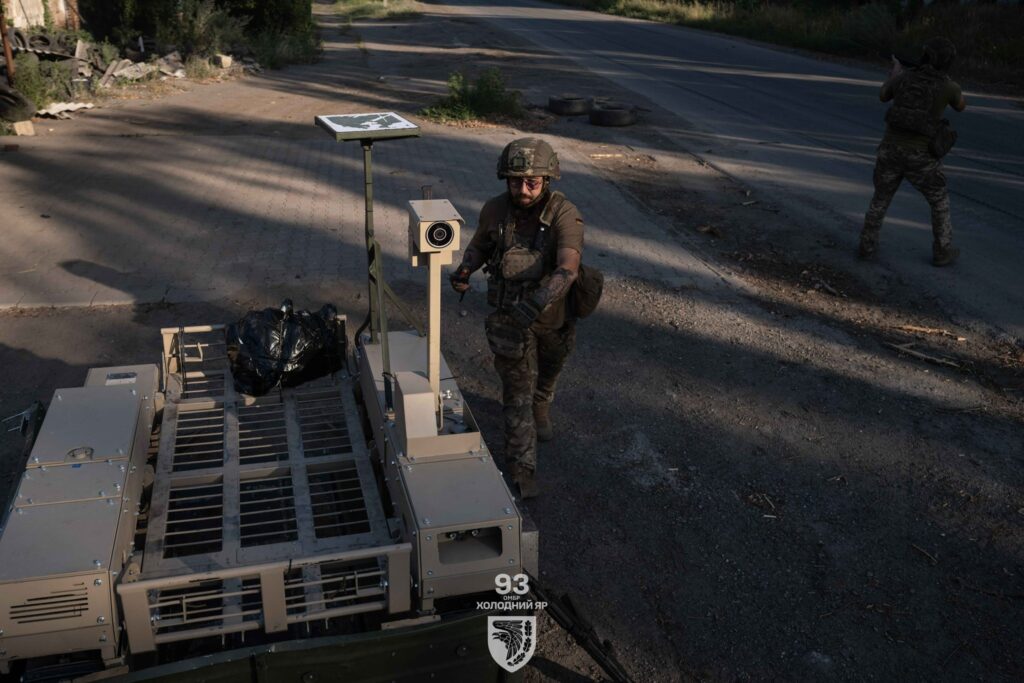
An armed ground robot. Photo: 93rd Brigade

The robots Ukraine wants to throw into its deadliest fights should cost as little as $10,000 each, Mykhailo Fedorov says. The former defense minister has set out the first stage of his Army of Robots: cheap, simple humanoid-like machines that would take over an infantry's most dangerous jobs, with tens of thousands needed, he said on Telegram, citing his own interview with Forbes.

On 26 September, Fedorov, who continues to work on military tech reforms despite his sudden and unexpected dismissal, announced the creation of the Army of Robots.

Humanoid robots would carry ammunition and pull out the wounded, lay and clear minefields, scout, hold positions, and strike, taking the roles that today cost soldiers their lives.

Potential need amounts to thousands

"Our main goal is to save lives. A human should not take risks where a machine can do the job," Fedorov says.

At the first stage, it will not be a classic humanoid but a simpler humanoid-like robot that can be produced quickly and scaled up, he adds.

Such a machine should perform some of an infantryman's tasks directly on the battlefield.

Today, such platforms cost $40–70 thousand on average. For mass use in war, Ukraine needs something much cheaper: the target is $10–20 thousand per unit, he believes.

"The potential need is tens of thousands of such machines," Fedorov continues.

Next come prototypes

The former defense minister adds that he and his team are already working with teams that have ready-made MVPs and are designing solutions.

"Next come prototypes, simulations, model training, and finding the right combination of hardware and software," he explains.

The Army of Robots is not a single product but an ecosystem that will unite companies, startups, engineers, R&D, and capital around the robotization of the front.

"Our task is to get from prototype to mass product as quickly as possible," he adds.

  •  

Europe wants drones that actually work in war, so Ukrainian maker is moving in to build them in Belgium and Luxembourg

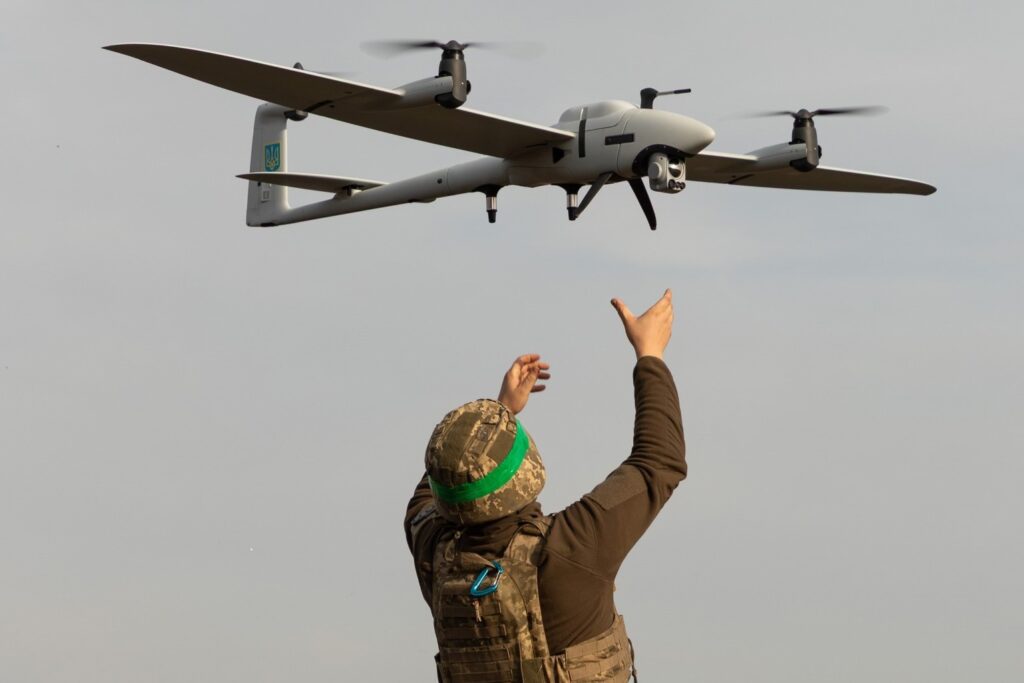
A Ukrainian soldier with a drone. Source: SBS

A Ukrainian drone maker is preparing to build unmanned systems in the heart of western Europe. TAF Industries and Luxembourg's LUXUAV have signed a memorandum to jointly develop, industrialize, and field weapons in Belgium and Luxembourg, under the Build with Ukraine initiative, TAF said.

The deal is part of Build with Ukraine, an initiative that enables Ukrainian arms manufacturers to take their operations to a new level by scaling up production beyond the country’s borders. This involves exporting Ukrainian military technologies to partner countries that support Ukraine financially and politically. In return, joint production lines will be established on their territory, according to Ukraine's Arms Council.

The deal targets the Benelux

The memorandum is a first step, TAF said, with joint work on autonomous systems in the two countries to follow. The aim is to move from signed intent to shared production lines and fielded drones.

TAF Industries, a Ukrainian unmanned-systems maker, and LUXUAV, a Luxembourg defense-tech firm, plan to develop, industrialize, and deploy drone solutions across Luxembourg and Belgium, pooling Ukraine's battlefield experience with European manufacturing muscle.

Build with Ukraine spreads west

TAF's chief executive, Volodymyr Zinovskyi, framed the memorandum as a way of "combining Ukrainian innovations, proven by war, with European industrial and technological capabilities," arguing that European security now depends on industry, states, and research working across borders.

Belgium has already contracted a Ukrainian producer to build drones and counter-drone systems on Belgian soil.

Europe wants the know-how

The timing fits Europe's new urgency. Russian drones have strayed into Polish, Romanian, and Moldovan skies in recent weeks, and member states scrambling to build defenses increasingly look to Ukraine, the one country fighting a mass drone war, for the technology and the lessons.

Earlier, Polish Prime Minister Donald Tusk warned of very difficult weeks and months ahead, “linked to Russia’s extremely aggressive stance toward Ukraine," according to TVP Info. As he emphasized, Polish security services were on heightened alert due to the situation along the country’s eastern border.

  •  

Russia’s 2026 deficit nearly doubles to a record $88 billion, and its new budget plans three more years in the red

russia's 2026 deficit nearly doubles record $88 billion its new budget plans three more years red · post russian president vladimir putin brics summit kazan 23 2024 holding commemorative banknote

The Russian government has submitted a draft federal budget for 2027–2029 to the State Duma, Meduza reported on 30 September, citing TASS. In all three years, Russia's expenditures will exceed its revenues, the outlet noted.

Russia's finances have been eroding since it launched its full-scale invasion of Ukraine. To keep paying for the war, the Kremlin has drained its reserves, borrowed more, and pushed tax burdens onto residents and businesses, while the wider economy stalls.

The government listed social obligations, including aid to those who fought in its war against Ukraine and their families, along with defense needs among the budget's priorities, while its press release left out the planned cuts to social spending and the rise in military spending, Meduza noted, citing The Bell.

Spending will exceed revenue by about 2% of GDP a year

Russia's federal budget for 2027 sets spending at 48.8 trillion rubles ($585 billion) and revenue at 43.3 trillion ($519 billion), the Russian government stated, leaving a deficit of 5.5 trillion rubles ($66 billion). It claimed the draft is "balanced" and that healthcare spending will rise compared with 2026.

Deficits of 5.1 trillion rubles ($61 billion) in 2028 and 5.3 trillion ($64 billion) in 2029 are also planned, about 2% of GDP a year, Meduza noted.

This year's deficit is now set to reach a record 7.345 trillion rubles ($88 billion), nearly double the previous forecast of 3.785 trillion ($45 billion), The Moscow Times reported on 1 October. To help close the gap, Moscow plans an array of tax hikes for 2027–2029 to fund military spending. Already by May, its four-month deficit had run 50% above what it had planned for the whole year.

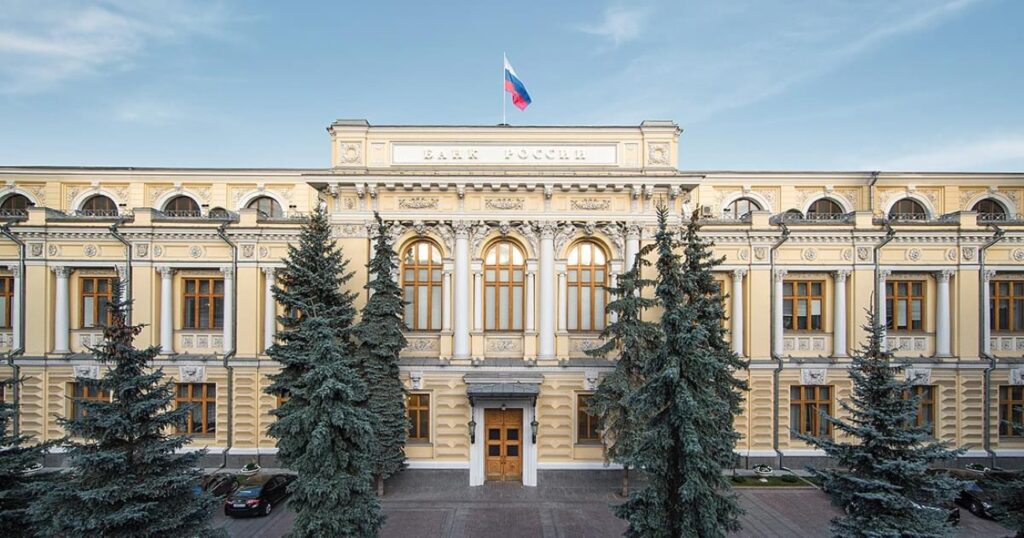
Head office of the Central Bank of the Russian Federation in Moscow.
Head office of the Central Bank of the Russian Federation in Moscow. Photo: Central Bank of Russia

Even as the deficit widens, Russia plans its highest defense spending since the full-scale invasion began: 17.1 trillion rubles ($202.58 billion) in 2027, 27% more than the 13.5 trillion originally planned.

Only 2.3 trillion rubles ($28 billion) of that sum is itemized in public documents, and 34.9% of all 2027 spending will be classified, the highest share in at least 12 years, exiled outlet Vyorstka reported. The Duma is expected to hold the first of three readings on 29 October, the date proposed by Budget Committee chairman Andrei Makarov, Interfax reported.

  •  

Russia lost 2026-record 46,230 troops in September by Ukraine’s count, as fighting around Donetsk fortress cities grinds on

The Ukrainian "Hunter" HIMARS crew destroys enemy artillery systems, UAV positions, staging areas, and logistics hubs. Source: The 148th Separate Zhytomyr Artillery Brigade, Air Assault Forces, 8th Corps of the Air Assault Forces of the Armed Forces of Ukraine.

Russia lost more troops in September than in any other month this year, hitting the record, by Ukraine's count. The General Staff put last month's Russian casualties at 46,230, a 2026 record and 45.8% above January's.

At the same time, Russia's strikes on Ukraine's rear escalated in September and are climbing again in October. The result is a grind that bleeds Russia on the ground while Ukrainian cities absorb the blows from above.

Losses span the whole front

"Ukraine's Defense Forces continue to inflict systemic and tangible losses on the Russian occupation forces in personnel and equipment along the entire line of contact," the General Staff says.

The toll climbs all year

The monthly figures have risen almost without pause. After a dip to 26,090 in February, Russian losses climbed through the spring and summer, 39,290 in June, 42,860 in July, 42,020 in August, before last month's high.

The record reaches down to a single day: the General Staff counted 2,090 Russian casualties in the 24 hours to 28 September, which British Defense Intelligence assessed as the highest daily toll since the full-scale invasion, one of only four days to top 2,000, the other three in 2024.

British intelligence tied the high rate to intense fighting around the fortified belt of Donetsk cities, especially near Dobropillia.

Meanwhile, Kyiv is also continuing its Vivaldi Operation near Lyman, and its latest mission used ground robots, each carrying two Bullspike grenade launchers to launch an attack on Russian positions and then detonate inside their shelters.

Kyiv reads the climb

Across the war, Ukraine says it has put roughly 1.5 million Russian troops out of action, a toll that has bought little ground as the months-long summer offensive stalled short of its goals.

"Every attempt to pressure our positions ends for the enemy in disproportionate losses of wounded and killed," the General Staff says.

The figures are Kyiv's own and cannot be independently checked: they count the Russians' wounded and killed but never their own.

  •  

Two rubles for the army for every one on welfare, schools, and hospitals: Russia’s 2027 wartime budget

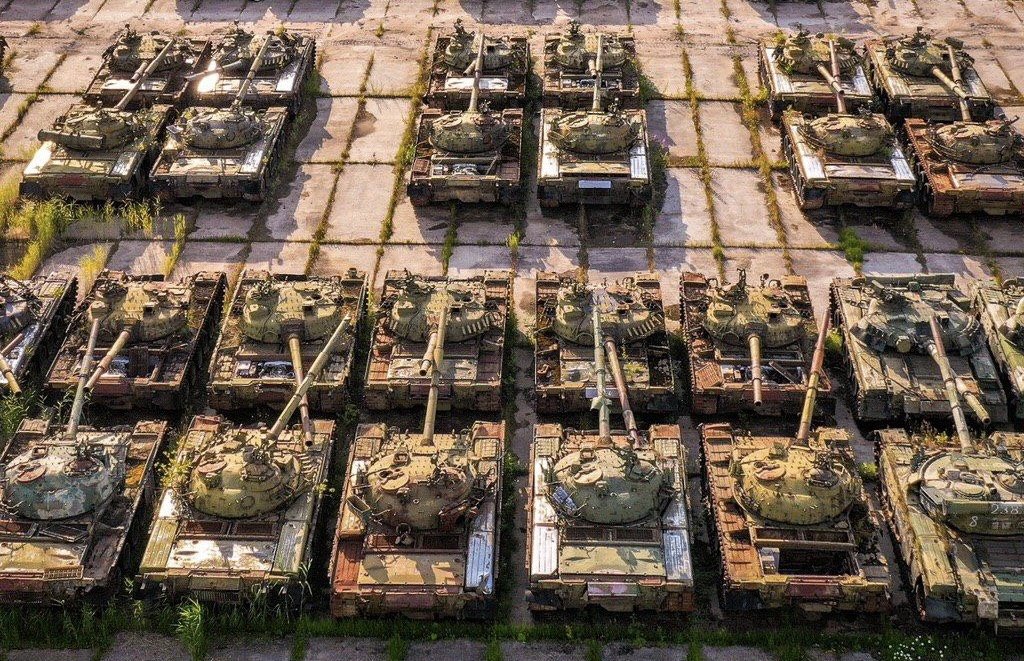
Stored Soviet-era T-72 tanks at a Russian depot.

Russia's spending on everything except the military, security forces, and interest on its debt will fall next year to about 9% of GDP, its lowest level since 2005, Alfa-Bank analysts estimated, The Moscow Times reported on 30 September. The war will take a record share of the 2027 budget while welfare, schools, and hospitals face cuts. Analysts see stagnation and slow decay rather than collapse.

Russia's economy is not on the brink of collapse, but it is stalling: output grew just 0.6% in the first half of 2026, civilian industry kept shrinking while military plants expanded, and one economist expects stagnation for the foreseeable future. The proposed budget comes as Russia faces a wider deficit and rising borrowing needs, while the government is increasing military spending to its highest level since the start of its full-scale war against Ukraine in 2022.

Civilian spending at its lowest share since 2005

Non-interest, non-defense spending stood at just over 10% of GDP this year and last, around 12% in 2023–2024, and 13% in 2021, the last year before the full-scale invasion, Alfa-Bank's analysts calculated. It peaked at 16–18% of GDP in 2009–2010. The analysts called the new structure of spending a "challenge."

The war takes a record share

The "national defense" line will receive 17.1 trillion rubles ($202.6 billion) in 2027, according to budget documents seen by Reuters and carried by The Moscow Times. That is 35% of all federal spending, a record since Soviet times, Alfa-Bank's analysts noted. The sum is about 27% more than Moscow originally planned, part of 50 trillion rubles ($592 billion) in defense spending projected over 2027–2029. Early this year, Russia was already pouring nearly half of its budget into the military as revenue fell.

Welfare, schools, and hospitals face cuts

Key civilian lines will lose 900 billion rubles ($10.7 billion) to pay for the war. Compared with the current budget law, social support will fall 7%, education 6%, healthcare 6.8%, and environmental protection 5.8%. Spending on the "national economy," which covers roads, other infrastructure, and subsidies for agriculture and other sectors, will drop 7.4%, according to a second Reuters report. The Finance Ministry has planned a further 2 trillion rubles ($23.7 billion) in cuts for 2028, Reuters reported.

Explore further

Russo-Ukrainian war, day 1679: Russia raises its war budget by 27% to a record as it looks to grow its war in 2027

For every budget ruble spent on social policy, healthcare, and education in 2027, two will go to the army, police, Rosgvardia, and the security services, Aleksandra Prokopenko, a senior fellow at the Carnegie Russia Eurasia Center in Berlin, wrote. Combined with higher taxes, tariffs, inflation, and sanctions, such a budget dooms the economy to stagnation, she argued. Aleksandr Kolyandr of Eurasia Group likened the approach to the Soviet Union's and described Russia's economy as being in a "stage of rot."

greece blocked gas ban france italy softened entry ban—now brussels tries 1600 companies helping russia's war · post 9 parade moscow 2025 youtube/kremlin grate patriotic warr shitshow ukraine news ukrainian
Explore further

Russia’s four-month budget deficit hit $75.4 billion — 50% above what Moscow planned for entire year

More borrowing, more debt

To cover the gap, the Finance Ministry has raised its 2027 borrowing plan by 2.3 trillion rubles ($27 billion), and next year almost every tenth budget ruble will go to interest on state debt. Debt servicing is projected to take 9.4% of total spending in 2027 and 10.6% in 2029, according to Reuters.

The squeeze builds on strains already visible. Moscow has raised its 2026 deficit forecast to 3.2% of GDP, cut its expected oil and gas revenue, and plans a windfall tax on metals and mining companies, while state debt is projected to pass the 20% of GDP level authorities consider safe. Earlier this year, it told its regions to raise taxes on residents and businesses to plug a record budget hole.

Sergii Marchenko
Explore further

EU wants reforms before more money. Kyiv wants Europe to touch Russia’s frozen billions

Ukraine faces its own funding gap

The Russian spending plans come as Kyiv faces a $27 billion funding gap in its 2026 military spending. Prime Minister Serhii Koretskyi said on 1 September that the shortfall included funding needed for financial support for Ukrainian service members, according to the Cabinet of Ministers of Ukraine.

Ukraine's total war-related expenditures, including Western military aid delivered as hardware, are projected to reach $155 billion in 2026, with the government seeking to close the $27 billion gap to support military operations into early 2027, Koretskyi said on 30 September.

  •  

Ukraine’s steel output fell 57% and may hit zero next month. Expert says saving it comes down to four steps, and they’re Brussels’ to make

Ukraine's steel industry, one of the pillars of its wartime economy, may produce almost no steel at all next month. Output fell 57.3% in August under Russian strikes and could approach zero in October, and the recovery of giants like Zaporizhstal and ArcelorMittal Kryvyi Rih depends less on Kyiv than on Brussels, says Stanislav Zinchenko, director of the GMK Center, the center for industrial, mining, and metals sector expertise, in an analysis for ThePage.

Steel is Ukraine's second-largest foreign-currency earner and a prop for the hryvnia, employing more than 70,000 people directly and another 250,000 in related industries, and paying close to $1 billion a year in taxes.

Russian missile strikes on the big plants, compounded by an energy crisis, closed ports, and EU competition, have cut production to a fraction and threaten to halt it, Zinchenko says.

He calls it the worst crisis the industry has faced since independence, "a perfect storm" that has struck all at once. The sector supplies 6% of Ukraine's GDP and 13% of its foreign-currency earnings.

Output could hit zero

The fall has been precipitous. In August, steel output dropped 57.3 percent year on year to 277,000 tonnes and pig iron 65.6%, Zinchenko says. Across eight months, the decline is 12.5%, and he warns that October could bring output to zero. Exports have cratered too: iron ore down 27% over eight months, long rolled steel down 45.8%, semi-finished products down 76% in a single month, and pig-iron exports halted entirely.

September may yield just 100,000 to 150,000 tonnes of steel, he says. Four producers bore the brunt: Zaporizhstal, Kametstal, ArcelorMittal Kryvyi Rih, and Interpipe.

Rebuilding breaks new ground

"No one in the world has learned how to rebuild metallurgical giants after missile strikes," Zinchenko says.

In reality, it means technical audits, clearing rubble, and ordering unique new equipment, at a cost the plants cannot meet after four and a half years of war spent at a loss or at zero margin, their reserves gone.

Three steps for Kyiv

Zinchenko sets out three moves the state could make at once to stabilize the industry:

  • Frontline rail. Give steelmakers priority access to locomotives from the state railway Ukrzaliznytsia within 150 kilometers of the front, so the product can still be moved out.
  • Energy parity. Scrap or soften the rule forcing industry to import 80% of its electricity, which leaves plants paying European prices they cannot match.
  • Market protection. Tax scrap-metal exports to keep raw material for decarbonization at home, and curb Turkish imports that undercut Ukrainian steel.

However, the recovery depends not on Kyiv, but on Brussels

Recovery is impossible without international funds and guarantees. No one will provide loans to enterprises on foreign capital markets during the war. No one will invest in recovery "into a void," the expert says.

He names four steps that would support the industry:

  • A recovery fund. A dedicated fund for the steel industry, modeled on those partners built for Ukraine's energy sector, to pool grants and cheap loans.
  • A safe sea corridor. Reopen the deepwater ports, as Ukraine managed in 2023 and 2024; without them, rail costs make exports unprofitable.
  • No EU quotas. Remove the European Union's restrictive quotas and tariffs on Ukrainian metal.
  • A CBAM exemption. Free Ukrainian steel, for the duration of the war and reconstruction, from the EU's carbon border levy, which Zinchenko says would otherwise finish off its competitiveness.

Meet those, he says, and bringing the plants back to baseline could take three to six months, with a full rebuild one to two years.

  •  

Ukraine solves riddle of metal “whiskers” on new Russia’s drones. They aren’t clever sensor

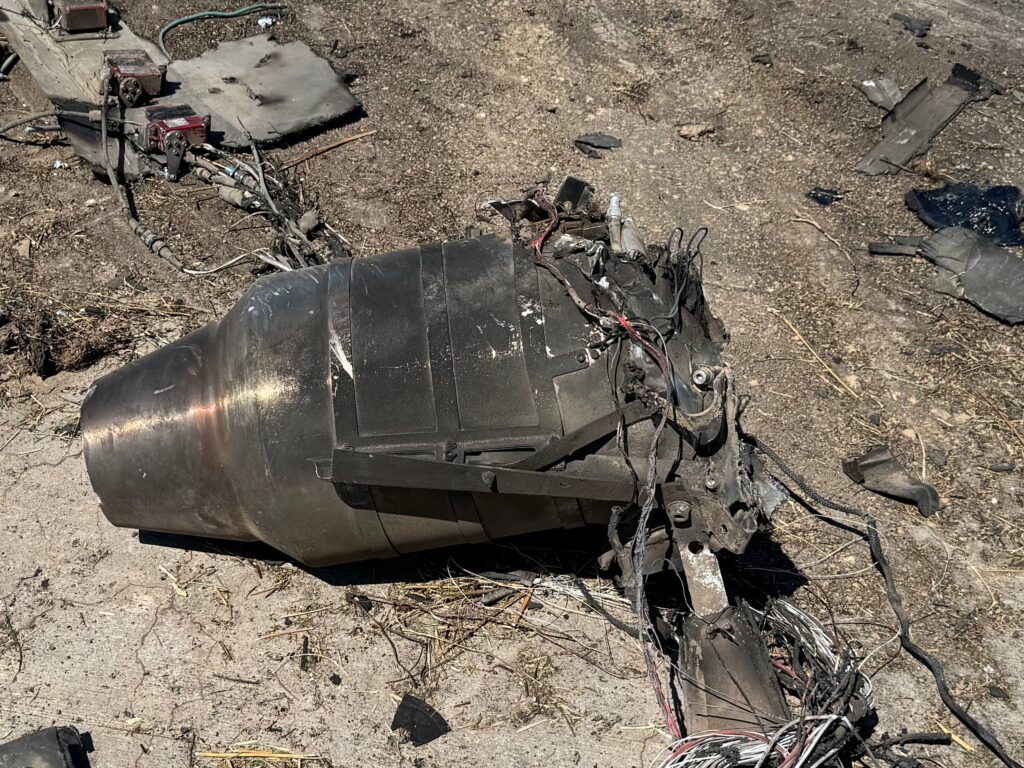
A Russian jet-powered drone. Source: Flash

Ukraine has cracked the riddle of strange metal "whiskers" that appeared on Russian jet-powered drones striking Kyiv, and they don't appear to be some clever new sensor. They are a simple mechanical detonator, a metal tube, and a rod that, on impact, closes a circuit to set off the warhead, Serhii "Flash" Beskrestnov, presidential adviser, says, ending online guessing about the strange devices.

Photos of Russian drones with long metal prongs jutting from the nose had set off speculation about what they were for. The answer, Flash explains, is low-tech: when the prong hits something, the contact closes, and the charge goes off, with no sensors or electronics.

That simplicity sits against a more worrying trend: Russia is steadily upgrading what its drones carry, from the mix of warheads on the jet-powered Geran-4 and Geran-5 to a new charge designed to sever power pylons.

A contact closes the circuit

"It's all mechanically simple, no sensors or complex detectors," Flash says, commenting on the "whiskers".

It is the kind of crude, cheap fuze that suits a weapon meant to be built and spent in the thousands, where cost matters more than finesse.

Russia upgrades the warheads

Russia's jet drones, now built at roughly 3,000 a month, have become the dominant threat in its nightly campaign. The day when Flash published his "whiskers" post, Russia hit Kyiv with another round of drone strikes, hitting a school, a café, and warehouse buildings across the capital. The children inside the school were in its shelter. Fires broke out across two districts, and one person in the city was wounded.

On 28 September, Russia struck Kyiv's Academy of Sciences, which has a century-old history.

On the same day, Dmitry Peskov, Kremlin spokesperson, said Ukraine must "pay a price" for its actions in recent months and calls Russia's intensified strikes "part of this price."

  •  

Belgium will send three F-16 fighter jets, but maintenance delays may keep Ukraine from using them

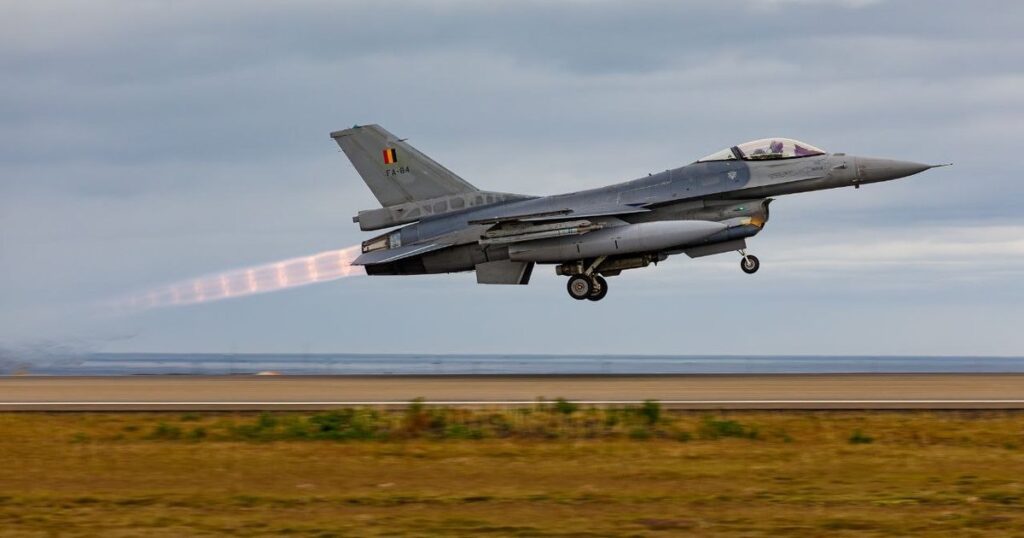
belgium send three f-16 fighter jets maintenance delays keep ukraine using · post belgian jet belgium-f-16-takes-off news ukrainian reports

Less than 50% of the F-16 fighter jets delivered to Ukraine may be operational, Defense Express reports, citing a Wall Street Journal (WSJ) editorial published on 29 September. On the same day, Ukrainian President Volodymyr Zelenskyy said that Belgium would deliver three F-16 fighter jets this year.

F-16s are used extensively to intercept Russian cruise missiles and drones. As the number of Russian attacks has increased, these aircraft have become particularly important for Ukraine. However, the jets Ukraine receives are old, and keeping them flying takes regular maintenance, extra work, and hard-to-find parts.

Routine inspections are taking as long as 40 weeks in Belgium, retired US Navy Rear Admiral Mark Montgomery told the WSJ.

The maintenance process for these aircraft for Ukraine is lengthy

A likely reason for the problem is the lengthy maintenance process handled by Belgian company Sabena Aerospace Engineering, according to the WSJ, whose questions the company declined to answer. This process, according to Defense Express's estimates, takes 6–20 times longer than maintenance in the United States, which usually takes between 2 and 6 weeks. Ukraine uses the services of the Belgian company, meaning its F-16s are not being serviced quickly enough.

Ukrainian F-16 armed with SDB bombs and AIM-120 and AIM-9 missiles.
Ukrainian F-16 armed with SDB bombs and AIM-120 and AIM-9 missiles. Photo via Militarnyi

Delivering three additional fighter jets will not significantly help the Ukrainian military until the issue with aircraft maintenance times is resolved, Defense Express notes. The lengthy turnaround may be caused by a large maintenance backlog at the company, limited capacity, or logistical constraints, and older jets may need extra work and scarcer parts.

The delivery is part of an earlier commitment. Belgium plans to provide seven fighter jets this year: three for operational use and four for spare parts, Belgian Defense Minister Theo Francken said in June.

"I'll propose to the government to send all our F-16s to Ukraine in the coming years. It depends on having the F-35s in place because, of course, we have DCA [dual-capable aircraft] capacity. We have our role in the nuclear doctrine of NATO," Francken said.

Belgium has pledged its entire F-16 fleet of 53 aircraft as F-35s replace them, according to Defense Express.

F-16s in Ukraine have already shot down several thousand Russian aerial targets

F-16s operated by Ukrainian pilots have shot down more than 3,150 aerial targets. These include 666 cruise missiles and around 2,500 drones of various types. The aircraft have also carried out more than 650 strikes against Russian ground targets, Lieutenant General Anatolii Kryvonozhko, Commander of the Ukrainian Air Force, said during a meeting between a Ukrainian Air Force delegation and representatives of Lockheed Martin on 29 September.

At the meeting, Conor McGuire, Lockheed Martin's head of F-16 capability development, highly praised the combat use and operation of F-16s by Ukrainian pilots and the entire ground aviation personnel. He also expressed his intention to help Ukrainians enhance the capabilities of the existing platform, the statement said.

  •  

Cops Can Bypass iPhone’s Automatic Reboot to Get Into Locked Phones, Leaked Video Claims

Cops Can Bypass iPhone’s Automatic Reboot to Get Into Locked Phones, Leaked Video Claims

A company that makes phone hacking devices claims to have developed a solution that freezes iPhones in a state that lets cops more easily access sensitive data inside them, according to a video obtained by 404 Media.  

This is the latest salvo in the never-ending battle between Apple and companies that help cops — sometimes those in authoritarian countries — break into iPhones.

In November 2024, 404 Media revealed Apple quietly introduced a new feature in iOS that automatically reboots an iPhone that has not been unlocked for 72 hours. The idea behind this so-called “inactivity reboot” is to revert the phone to a state that makes it harder for police to break into the device, and thus extract sensitive data from it with forensics technology. 

At the time of Apple’s change, law enforcement agents expressed concern about this new feature, given that oftentimes they can’t immediately try to break into iPhones that have been seized. That could be because police are still waiting for a court authorization to do so, or there is simply a backlog of devices to unlock, for example.

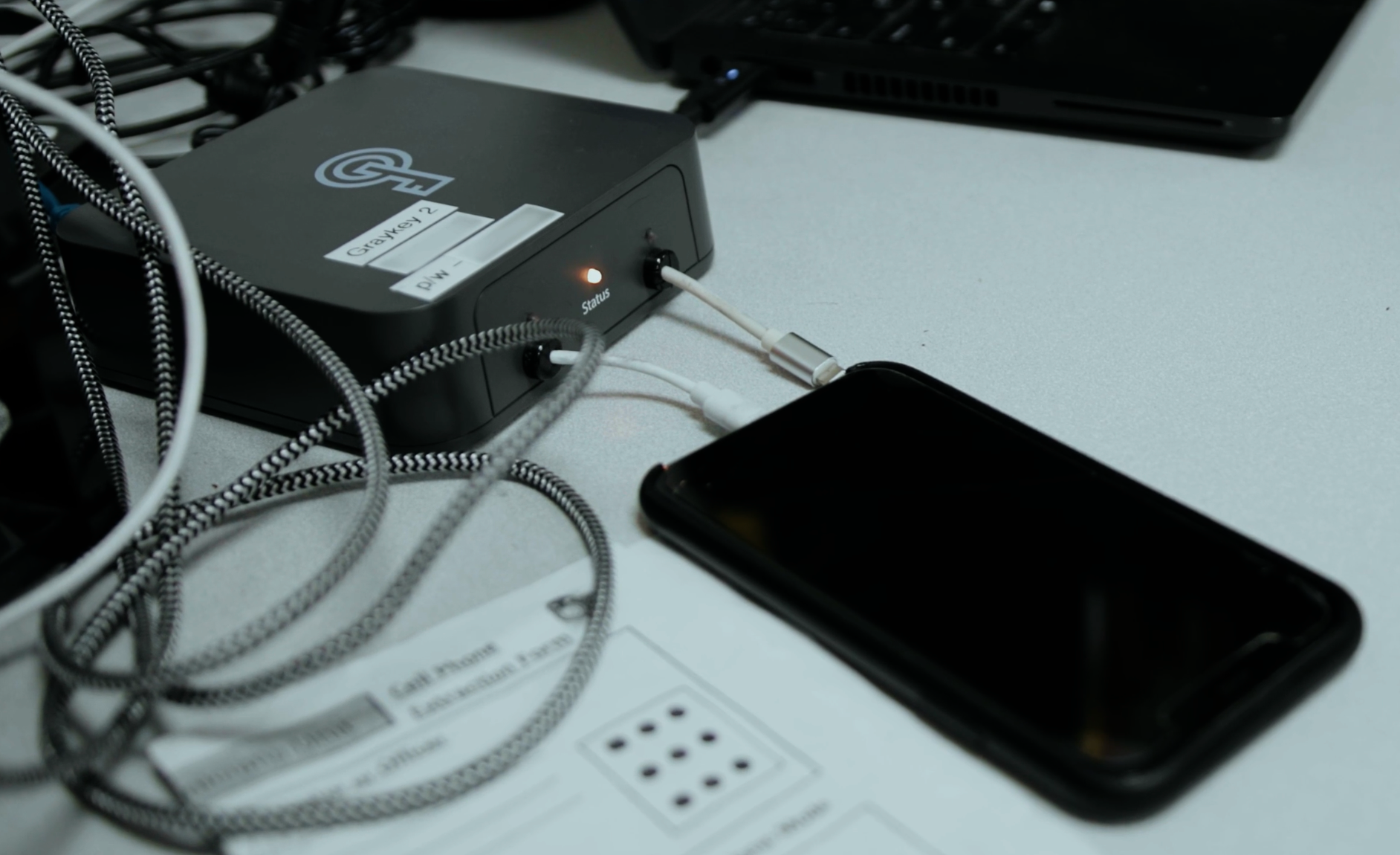
The new technology to get around inactivity reboot was developed by Magnet Forensics, the company behind GrayKey, a popular tool sold to law enforcement agencies that allows them to unlock and access data stored in iPhones and Android smartphones. Magnet has developed a new device called GrayKey Preserve and a feature for its regular GrayKey devices called Evidence Preservation Mode, according to the video. 

  •  

Ukraine is downing Russia’s fastest drones—just not often enough, and scaling up comes down to money

The image shows a fragment of a Russian drone Geran-4 in Kyiv Oblast. Source: Serhii "Flash" Beskrestnov

Ukraine is stitching together a layered answer to Russia's faster, jet-powered Shahed drones, leaning on electronic jamming, fighter jets, and a new class of homegrown interceptors, RBC-Ukraine reported. Each tool has limits, and the new interceptors still bring down only the occasional jet drone. The bottleneck now is money and factory output, not ideas.

Russia is pouring faster jet-powered drones into the air war as winter nears, a campaign Western analysts say is meant to wear Ukraine's defenses down—and holding those skies now turns on which side can keep out-producing the other's cheap weapons.

Fighter jets help, but they run on imported rounds

Electronic jamming can work against some of the drones, and Ukraine is also sending combat aircraft up after them. But aviation has a catch: the jets need air-to-air missiles and cannon rounds, and for the F-16 and Mirage those are imported and not always in stock. Flying over Kyiv adds danger to the civilians below and to the pilots, so Ukraine would rather catch the drones out on the approaches.

New interceptors are landing hits—just not enough

The newest piece is a wave of Ukrainian interceptor drones built to chase the jet versions, which fly three times faster than the propeller Shaheds. Ukrainian crews have been downing the jet Gerans in a recent run: on 19 September, presidential adviser Serhii Beskrestnov, known as Flash, confirmed one Geran-5 shot down, and in late September, operators of the National Guard's Separate Artillery Brigade brought down a Geran-4 with the Bullet interceptor made by General Cherry, the first Geran-4 that drone has downed, Ukraine's National Association of Defense Industries said. Ukrainian President Volodymyr Zelenskyy said several prototypes have proven themselves in combat.

Geran-5 in the sights of a STING S interceptor drone.
Explore further

Russia is now wiring its attack drones into one network in flight, so a single drone can scout, strike, and relay for the rest

Across all methods, Ukraine now intercepts about 57% of the jet drones Russia launches, Zelenskyy said on 28 September—a rate that has climbed but still trails the 90%-plus it manages against slower Shaheds. Kills by the new interceptors specifically remain isolated. In August, Air Force spokesperson Yurii Ihnat said jet drones can make up as much as two-thirds of the drones in some raids—though not every time. One promising route is reworking Ukraine's own long-range strike drones into interceptors. Kyiv is in talks with partners over the money; on 28 September, Ukraine's Defense Minister Yevhenii Khmara asked the EU to help finance the interceptors so enough reach the front quickly.

Hitting the launch sites and jamming the controls

Ukrainian forces strike the Russian airfields the jet drones launch from, RBC-Ukraine's sources said, though the raids have not forced Russia to abandon the attacks. On 20 August, military intelligence hit drone storage and launch sites at Primorsko-Akhtarsk, one of the launch bases RBC names, and at occupied Donetsk airfield. Ukraine also keeps going after the Belarusian relay towers Russia strings into a mesh network to steer the drones in, RBC's sources said.

  •  

A school with children, a café, warehouses: Russia’s drones hit civilian Kyiv again

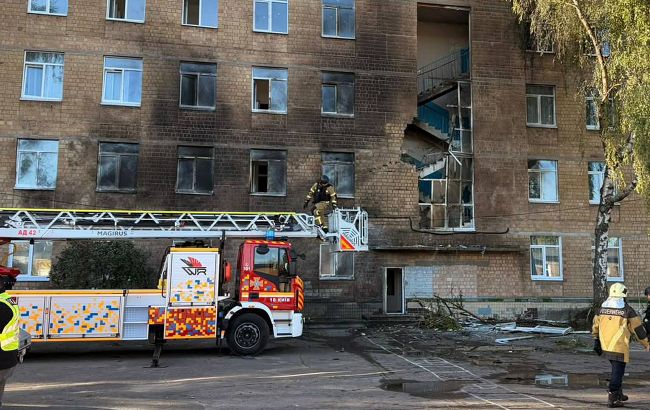
A damaged school in Kyiv following a Russian attack.

Russia hit Kyiv with another round of drone strikes from the evening of 30 September into the morning of 1 October, striking a school, a café, and warehouse buildings across the capital, the city's mayor and emergency services said. The children inside the school were in its shelter and came through unharmed. Fires broke out across two districts, and one person in the city was wounded.

Children across Ukraine now start the school year in bomb shelters, as Russian drones, missiles, and glide bombs keep hitting schools, homes, and hospitals far from the front—part of a civilian toll the UN says has already outrun all of last year's.

A school full of children, all in the shelter

A Russian drone hit a school in Kyiv's Solomianskyi district on the morning of 1 October and started a fire, Kyiv Mayor Vitali Klitschko said, adding that the children were in the shelter. More than 100 students and about 60 staff were sheltering inside, and none were hurt, police said. The jet-powered drone damaged the building's facade at third-floor level, RBC-Ukraine reported.

A school in Kyiv damaged in a Russian drone attack, 1 October 2026.
A school in Kyiv damaged in a Russian drone attack, 1 October 2026. Photo: State Emergency Service of Ukraine

A café and warehouses among the sites hit

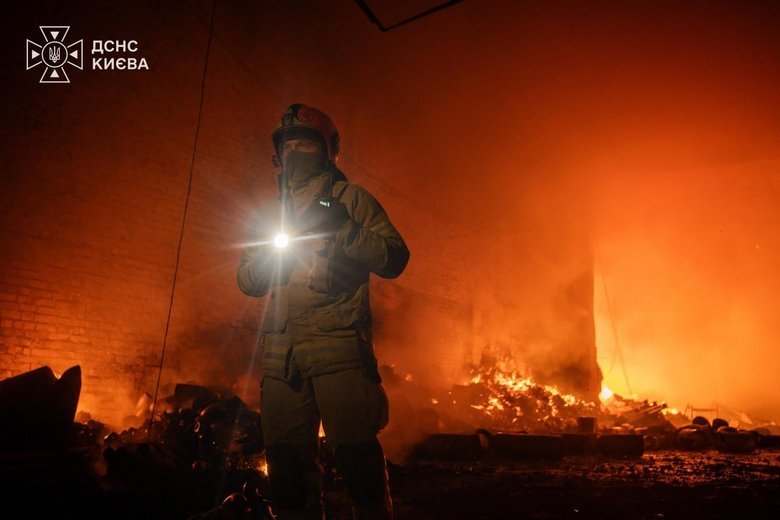
On the evening of 30 September, a Russian strike started a fire at a café on the ground floor of a residential building in Solomianskyi, while warehouse buildings burned in the northern Obolonskyi district. One person was injured in the warehouse fire and handed to medics, RBC-Ukraine reported.

42 sites damaged across Kyiv Oblast

Across Kyiv Oblast, Russian attacks over the previous 24 hours damaged 42 sites and injured six people, regional authorities reported.

A rescuer at the scene of a fire in Kyiv.
A rescuer at the scene of a fire in Kyiv. Photo: State Emergency Service of Ukraine

Kyiv is now under Russian air attack daily. On 28 September, Russian drones hit the city center in daylight, including the National Academy of Sciences, and earlier waves struck filling stations and other everyday sites across the capital.

  •  

Russian glide bombs scarred a statue of Christ and damaged a 19th-century church in Sumy

russian glide bombs scarred statue christ damaged 19th-century church sumy · post front saints peter paul ukraine after strike 29 2026 статуя ісуса христа зазнала символічних пошкоджень фото цукр захар

Russian glide bombs that struck central Sumy on 29 September damaged a 19th-century church, the city cemetery around it, and a bronze statue of Christ, NV reported, citing the diocesan outlet Pravoslavna Sumshchyna. The same strike hit a school and nearby homes. Russia kept up its attacks across Ukraine over the following night and day.

Russia continues its terror campaign against Ukrainian civilians, and churches are among its routine targets, from a church its incendiary drone burned to the ground in Donetsk Oblast to one its drone damaged in western Ukraine's Lviv. Its strikes keep landing in city centers where people live, study, and pray, as when a drone hit Kyiv's Academy of Sciences in broad daylight.

The church near the epicenter

Russia struck Sumy with four guided aerial bombs. The blast damaged the Church of Saints Peter and Paul, a national-level architectural monument that stood near the epicenter. The church belongs to the Sumy Diocese of the Ukrainian Orthodox Church (Moscow Patriarchate).

russian glide bombs scarred statue christ damaged 19th-century church sumy · post windows saints peter paul ukraine torn frames blast strike 29 2026 спасо-преображенський кафедральний собор м суми faceboo news
Windows of the Church of Saints Peter and Paul in Sumy, Ukraine, torn from their frames by the blast in the Russian strike on 29 September 2026. Photo: Transfiguration Cathedral of Sumy/Facebook

Almost the entire building was damaged, said the rector, Archpriest Mykola Holyk. The blast wave knocked out windows and broke nearly every pane.

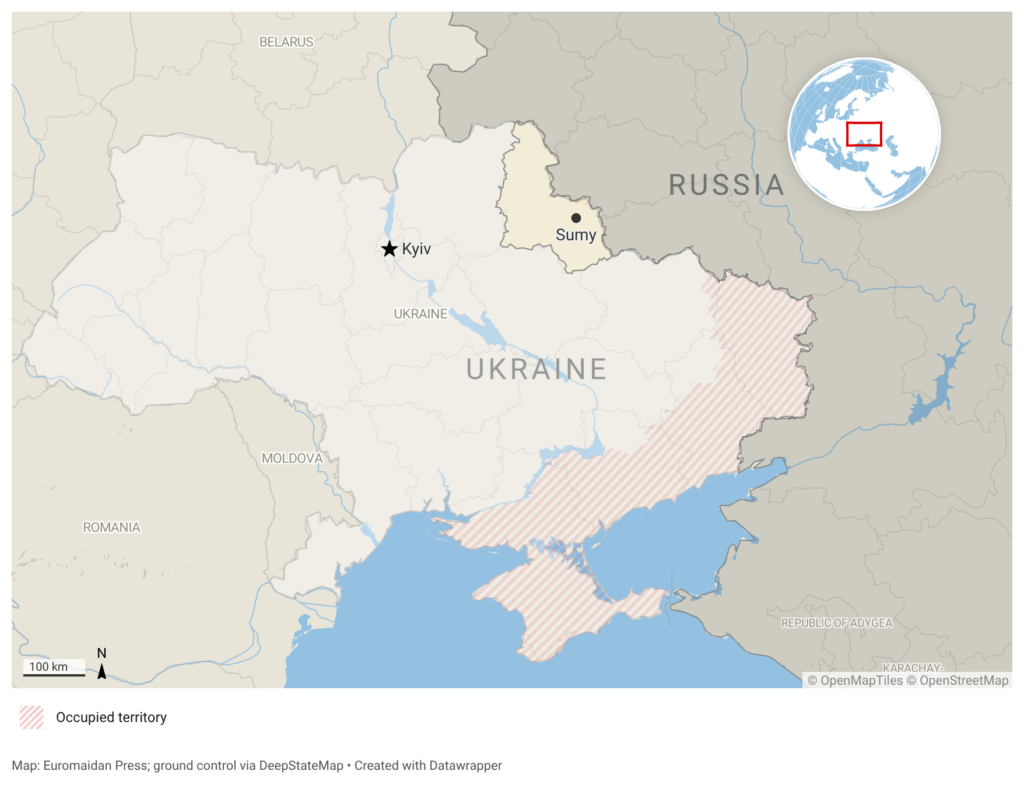
Sumy
Sumy is located only 35-40 km away from Russia's border, placing the city within the range of Russian glide bombs. Map: Euromaidan Press.

Plaster fell and the ceiling collapsed in several places. It tore out doors and wooden fittings, knocked some icons from their places, and holed the roof in many spots. Large and small fragments of the bomb pitted the walls.

russian glide bombs scarred statue christ damaged 19th-century church sumy · post grave dmytro sukhanov front saints peter paul ukraine shrapnel marks wall behind after strike 29 2026 foto спасо-преображенський
The statue of Christ on the grave of Dmytro Sukhanov in front of the Church of Saints Peter and Paul in Sumy, Ukraine, with shrapnel marks on the church wall behind it, after the Russian strike on 29 September 2026. Photo: Transfiguration Cathedral of Sumy/Facebook

Local patrons paid to build the church between 1843 and 1851, in the late classicist style.

A cut across Christ's chest

In front of the church stands a bronze statue of Christ, placed in the late 19th century on the grave of Dmytro Sukhanov, a merchant and former mayor of Sumy. Bomb fragments left a cut across the statue's chest. The statue is a local landmark of monumental art, the outlet Tsukr noted. The strike also damaged about 50 graves in the Central City Cemetery beside the church.

"The godless enemy continues to kill civilians, endanger children, and destroy schools, homes, hospitals, churches, and cemeteries," the diocese said.

russian glide bombs scarred statue christ damaged 19th-century church sumy · post window saints peter paul ukraine strike 29 2026 спасо-преображенський кафедральний собор news ukrainian reports
A window of the Church of Saints Peter and Paul in Sumy, Ukraine, damaged in the Russian strike on 29 September 2026. Photo: Transfiguration Cathedral of Sumy/Facebook

The same attack hit a school where students were sheltering, and a residential area where two people were killed and six injured, three of them children. In September, Russian strikes on Kyiv also damaged two churches belonging to the same Moscow-linked church, the Exaltation of the Cross on Podil and the Pokrova Church on Priorka.

russian glide bombs scarred statue christ damaged 19th-century church sumy · post house destroyed guided aerial bomb kovpakivskyi district ukraine overnight 1 2026 administration 1790832137-625 news ukrainian reports
A house destroyed by a Russian guided aerial bomb in the Kovpakivskyi district of Sumy, Ukraine, overnight on 1 October 2026. Photo: Sumy City Military Administration

Another day of Russian strikes

Overnight on 1 October, Russia launched 107 Shahed-type drones at Ukraine, 63 of them jet-powered, the Air Force said. Air defenses downed or suppressed 87, and drones hit 11 locations. In Sumy, a guided bomb hit private homes, injuring two women and damaging about six houses, city military administration head Serhii Kryvosheienko reported. On the morning of 30 September, a Russian strike set a shopping center in Sumy Oblast's Romny district on fire, and crews fought the blaze until late that night, the State Emergency Service said. In Kyiv on the morning of 1 October, a drone hit a school in the Solomianskyi district while children sheltered inside, Mayor Vitali Klitschko said. More than 100 students and about 60 staff were in the shelter, and no one was hurt, police said. A warehouse fire in Kyiv's Obolon district injured one person.

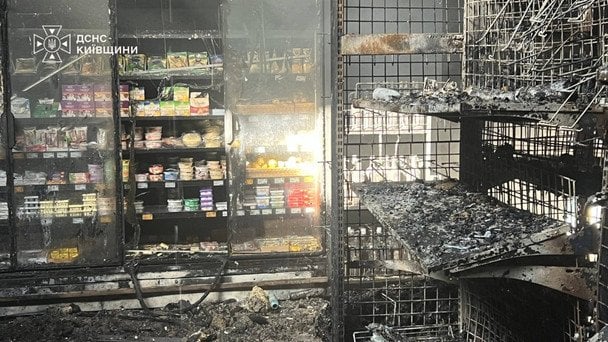
Aftermath of the Russian strike on a store in Kyiv Oblast, September 30, 2026.
Explore further

Kyiv’s supermarkets are the new front line as Russia hunts civilian life before winter

Over the past 24 hours, Russian mortar fire killed two men in Sumy Oblast's Seredyna-Buda hromada, and 15 people were injured across the oblast, the regional administration reported. A morning drone attack killed a 50-year-old man in Mykolaiv Oblast, and drones killed a 44-year-old man in Nikopol district, Dnipropetrovsk Oblast. In Kherson Oblast, Russian attacks killed one person and injured four. Eight people were hurt in Kharkiv Oblast, six in Kyiv Oblast, five in Donetsk Oblast, and three in Zaporizhzhia Oblast, according to regional authorities.

  •  

Moscow’s message to European business: your Russian assets are now leverage against your governments

moscow's message european business russian assets now leverage against governments · post kamskaya confectionery factory owned nestlé perm russia 18 2010 nestle_in_perm ukraine news ukrainian reports

The Kremlin is signaling that it will hold the Russian assets of European companies hostage to pressure Europe into rethinking its sanctions, the Institute for the Study of War (ISW) wrote on 30 September. Moscow has already put well-known European retailers and food makers under Russian "temporary management." A senior Russian official has now hinted that European banks could be next.

As Russia continues its invasion of Ukraine, it has long turned hostages and threats into weapons. Its record includes nuclear threats against Europe from its Oreshnik missile launch sites and a fresh warning over Kaliningrad. It has played games with Europe's largest nuclear plant that it occupied in 2022, applied gas and water pressure on its neighbors, and Kyiv accuses it of blackmailing the families of Ukrainian prisoners of war. Europe's companies are now one more lever in that kit.

"Let them be scared"

Russia is taking "asymmetric measures" to make Europe rethink its sanctions, a senior Russian government source with direct knowledge of the seizures claimed, Reuters reported. "Let them think about what measures they are taking and what sanctions they are introducing," the source said.

Asked whether the Russian units of Italy's UniCredit and Austria's Raiffeisen could be placed under temporary management, the source answered: "Let them be scared."

Kremlin spokesman Dmitry Peskov claimed the decisions were driven by "the increasing level of involvement of these unfriendly countries in direct battlefield hostilities" against Russia. He suggested the moves were "reversible," but added: "For now, we do not see any grounds for a reversal."

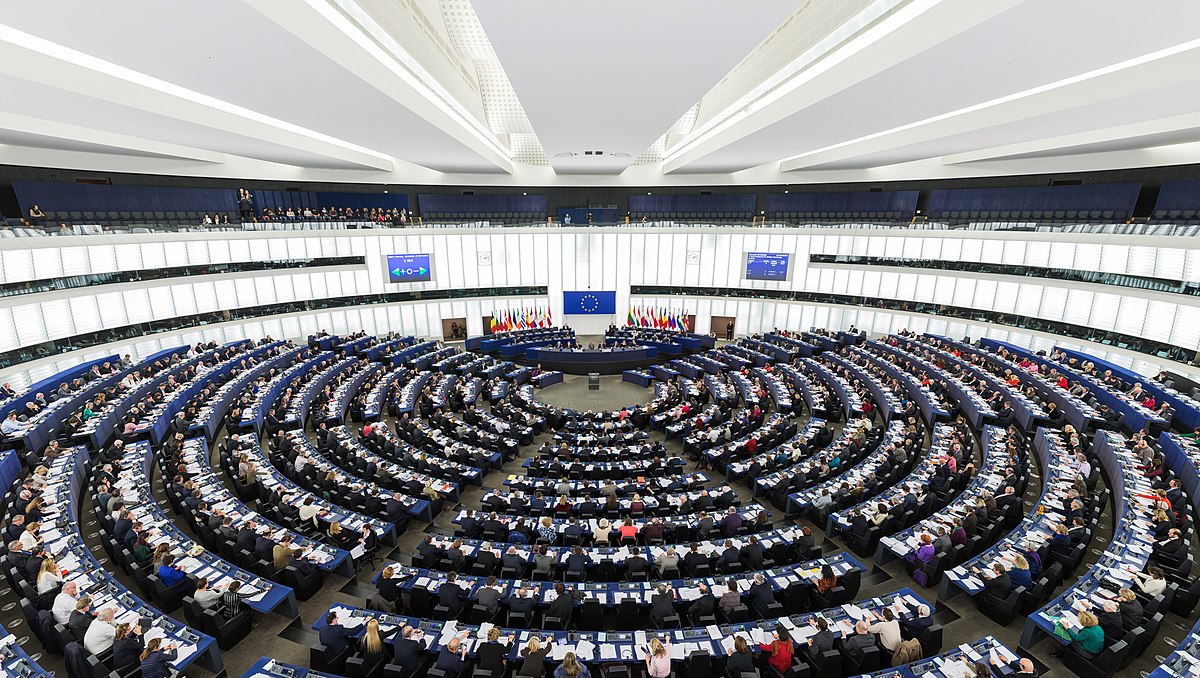
The Hemicycle of the European Parliament in Strasbourg during a plenary session in 2014.
Explore further

EU lawmakers renew push to seize frozen Russian assets as Ukraine faces its toughest winter yet with a €23 billion defense funding gap

Nestlé, Auchan, and Metro under "temporary management"

Putin's decree of 17 September placed 16 companies under the "temporary management" of a firm called L.E.V. Management, with no end date. They include the Russian units of France's Auchan and Lemana PRO, formerly Leroy Merlin, and of Switzerland's Nestlé. A second decree, on 28 September, handed the Russian assets of German wholesaler Metro AG to UK Torg Rus.

Both decrees amend Putin's April 2023 decree No. 302, which lets Moscow take over the property of firms tied to countries it labels "unfriendly." Because the "temporary" management has no expiry date, ISW considers it effectively nationalization. Independent outlet Novaya Gazeta Europe identified L.E.V. Management's director as retired Russian Major General Andrei Krayushkin.

European companies as corporate hostages

The Kremlin likely wants to use the seizures to take European companies as corporate hostages, ISW assessed. It also likely expects a temporary fiscal boost from the revenues of the seized businesses.

The strategy assumes that European firms will judge the benefits of staying in Russia to outweigh the risk of losing their assets, the think tank said. Whether a company is seized depends entirely on Moscow's relations with the country where it is headquartered, ISW added.

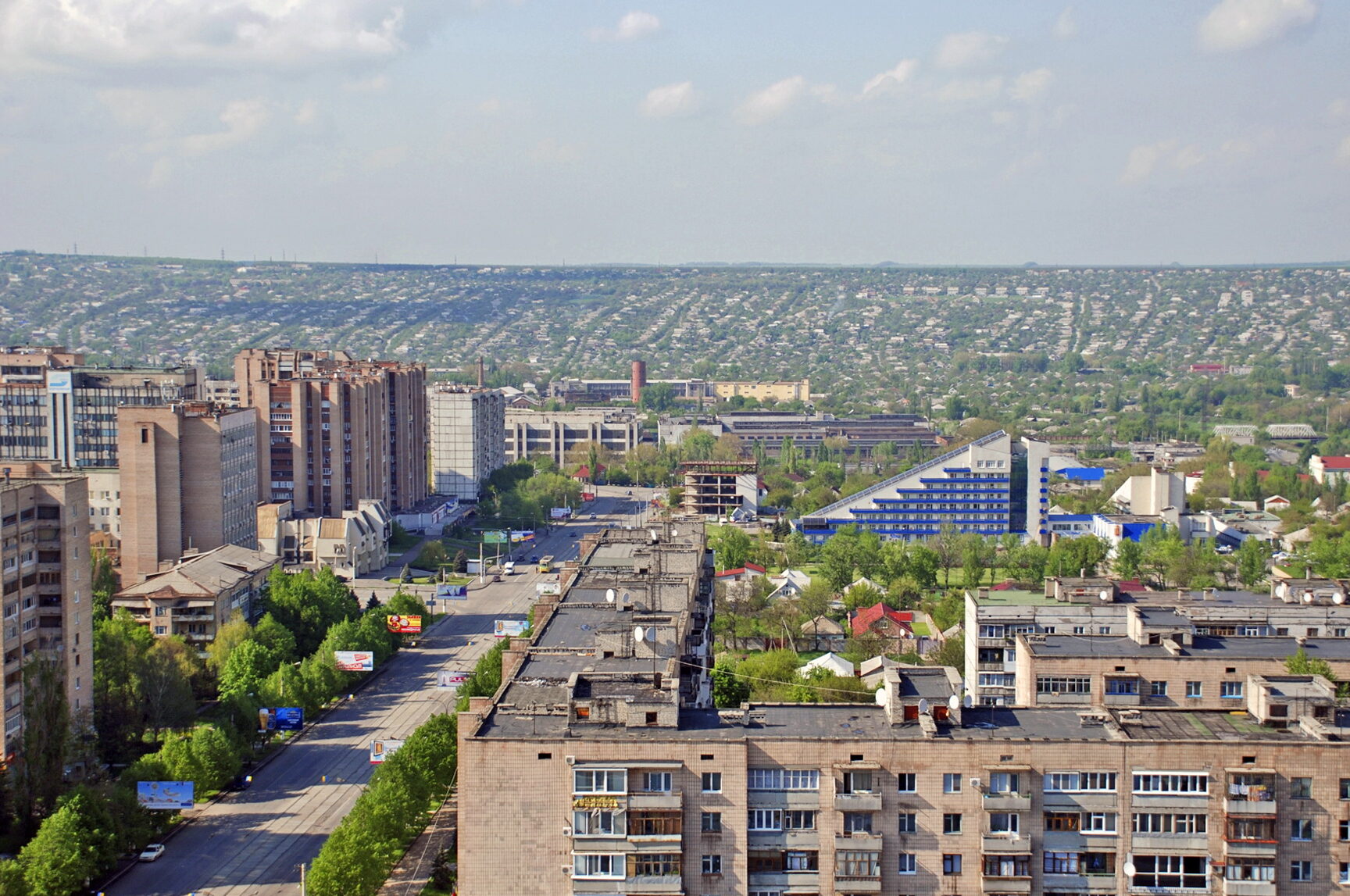
russia declares nearly 8000 luhansk apartments ownerless nationalization · post view 16th line street occupied donbasssosorg 93942 ukraine news ukrainian reports
Explore further

Russia declares nearly 8,000 Luhansk apartments “ownerless” for “nationalization”

Seizing others' property is an old Moscow habit

Since the start of the full-scale war, Russia has introduced temporary administration at 135 foreign-linked firms, mostly from EU countries, according to TASS data cited by Reuters. Earlier targets included French food group Danone and Danish brewer Carlsberg.

The method was tested on Ukraine first. Russia's proxies in occupied Donetsk and Luhansk oblasts stole most Ukrainian assets there in 2014 and 2015. In March 2017, after Ukrainian activists blocked rail trade with the occupied areas, they placed the remaining Ukrainian-registered firms under "temporary administrations," a label close to the one Moscow uses today. The published Donetsk list alone ran to 43 assets, from coal mines and ironworks to the Donbas Arena stadium. Much of the coal and steel business later ended up with firms tied to Serhii Kurchenko, a fugitive oligarch from Yanukovych's era.

  •  

There is no risk of Russia using nuclear weapons against the Baltics, Rutte assures

mark rutte

NATO Secretary General Mark Rutte, the former Dutch prime minister, said there is no risk of Russia using nuclear weapons against the Baltic States in response to a question about Moscow's warning over Kaliningrad at the Euronews Defence and Space Summit in Brussels on 30 September, according to NATO's transcript of his remarks.

Russia routinely brandishes nuclear threats as a pressure tool against Europe, and its latest one targets the Baltic. In a written warning to NATO, Moscow claimed it was ready to use nuclear weapons if the alliance tried to isolate Kaliningrad, its exclave between Poland and Lithuania.

NATO tells Moscow to stop the nuclear threats

Rutte said NATO had responded to the Russian document by making clear that it is a defensive alliance and telling Moscow to stop its nuclear threats. "This is absolutely not called for and not helpful," he said.

Asked whether "the risk of nuclear weapons being employed against the Baltics is now real?" Rutte said: "No, it's not." He said Russian President Vladimir Putin knows he cannot defeat NATO and said he did not take the threat too seriously.

Rutte added that NATO should remain calm while continuing its work, and that Russian hybrid actions in Europe would bring more support for Ukraine, not less.

"We can allow a bit of calm, but also a bit of making sure we continue with what we are doing," he said.

Moscow warns of strikes on NATO decision-making centers

The Russian document, seen by Reuters, claimed NATO was pursuing a "dangerous and reckless course" carrying "high risks of the outbreak of a direct armed conflict." It warned that Russia could strike decision-making centers in NATO member states from the start of a conflict.

NATO said none of its exercises or activities pose a threat to Russian territory and called on Moscow to end its full-scale invasion of Ukraine, refrain from increasingly reckless behavior toward NATO members, and cease its "irresponsible nuclear rhetoric," according to the alliance's written response seen by Reuters.

Russian embassies take the warning public

Russia's Embassy in Ireland repeated the nuclear warning on 29 September, claiming NATO was preparing an air and naval blockade of Kaliningrad and that Moscow would be ready to use its entire arsenal, including nuclear weapons, if NATO countries tried to isolate the exclave from the rest of Russia. The embassy also claimed Russia had no plans to escalate tensions with Europe and accused European politicians of "playing a dangerous game."

The embassy linked its warning to statements by European politicians about an increased Russian "alleged hybrid campaign against European countries." Reuters said Russian embassies in at least three European countries had issued similar statements in the previous three days.

  •  

The US has until 18 October to choose its Russia sanctions targets—if any. Kyiv’s wish list leads with the firms feeding Russia’s Starlink clone

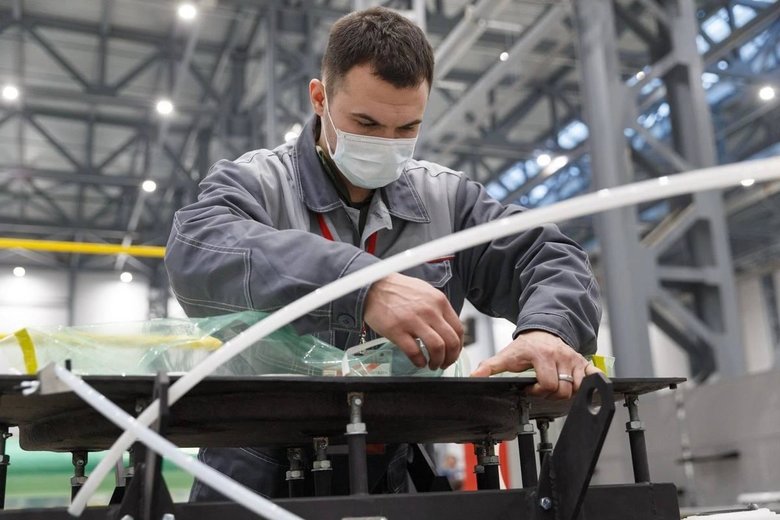
A worker at the Kronstadt UAV production plant in Dubna.

Ukraine is about to tell Washington exactly which Russian targets it wants punished under America's new sanctions law, the Associated Press reported. A senior Ukrainian diplomat said Kyiv will hand the Trump administration and Congress a wish list of companies, ships, and people this week—and at the top are the firms supplying parts for Russia's answer to Starlink.

The law requires Washington to act but lets the president waive the sanctions if he certifies that doing so serves US national interests, and the first choice falls due in weeks. For Ukraine, a measure that names no targets changes nothing on the ground—which is why the fight now is over whose names make the list before the clock runs out.

A list topped by Russia's Starlink clone

Denys Sienik, chargé d'affaires at Ukraine's embassy in Washington, said the priority is a group of Russian firms making components for Rassvet, Moscow's homegrown satellite network, which Russia hopes to complete by the end of the year—though its own officials have put the start of service in 2027. Bureau 1440, the firm building Rassvet, is not itself on US sanctions lists, but its parent company, ICS Holding, is under US blocking sanctions, according to Militarnyi. The suppliers feeding the network parts are not sanctioned, and those are the ones Kyiv wants added to the list.

Russia sped up the project after Ukraine and SpaceX cut off the Starlink terminals its troops had used without authorization at the front. If Russia completes the constellation, Sienik said, it could strike Ukraine at will with real-time information—a danger he warned would bite hardest this winter. "If these entities are not sanctioned, it will actually make this program possible for Russia and that will be a game-changer," he told reporters, Reuters reported. Kyiv wants access to Starlink inside Russia, too, so it can strike targets there.

Euromaidan Press has reported how such a network would change the battlefield: the satellites transmit in high-frequency bands that are hard to jam, and a relay overhead would feed drones and missiles fresh coordinates mid-flight, letting them fly low under air defenses that struggle to see them.

Oil tankers and attacks on US firms

Ukraine is pushing for tougher action against Russia's shadow fleet, too—the aging tankers that sell its oil around Western restrictions—and is asking the administration and American industry to publicly condemn Russian attacks on US companies' operations inside Ukraine, Sienik said.

The deadline Washington is now facing

The requests arrive as the administration faces an 18 October deadline to decide which Russian entities, if any, to sanction under the Lindsey O. Graham Sanctioning Russia and Iran Act, which US President Donald Trump signed into law on 18 September. The law directs the White House to impose tariffs on Russia's biggest oil buyers and to block its banks, officials, and tankers—but lets the president waive those measures, which is why Kyiv is lobbying for the toughest list it can get.

  •  
❌