A protest calling for a boycott of restaurants that organizers said supported Israel was overwhelmed by counterprotesters, who came to buy food from the targeted businesses.
Members of an activist group called Philly Bike on Your Left and counterprotesters confronting each other in the street during a “boycott ride” aimed at six restaurants in the Rittenhouse area of Philadelphia on Sunday.
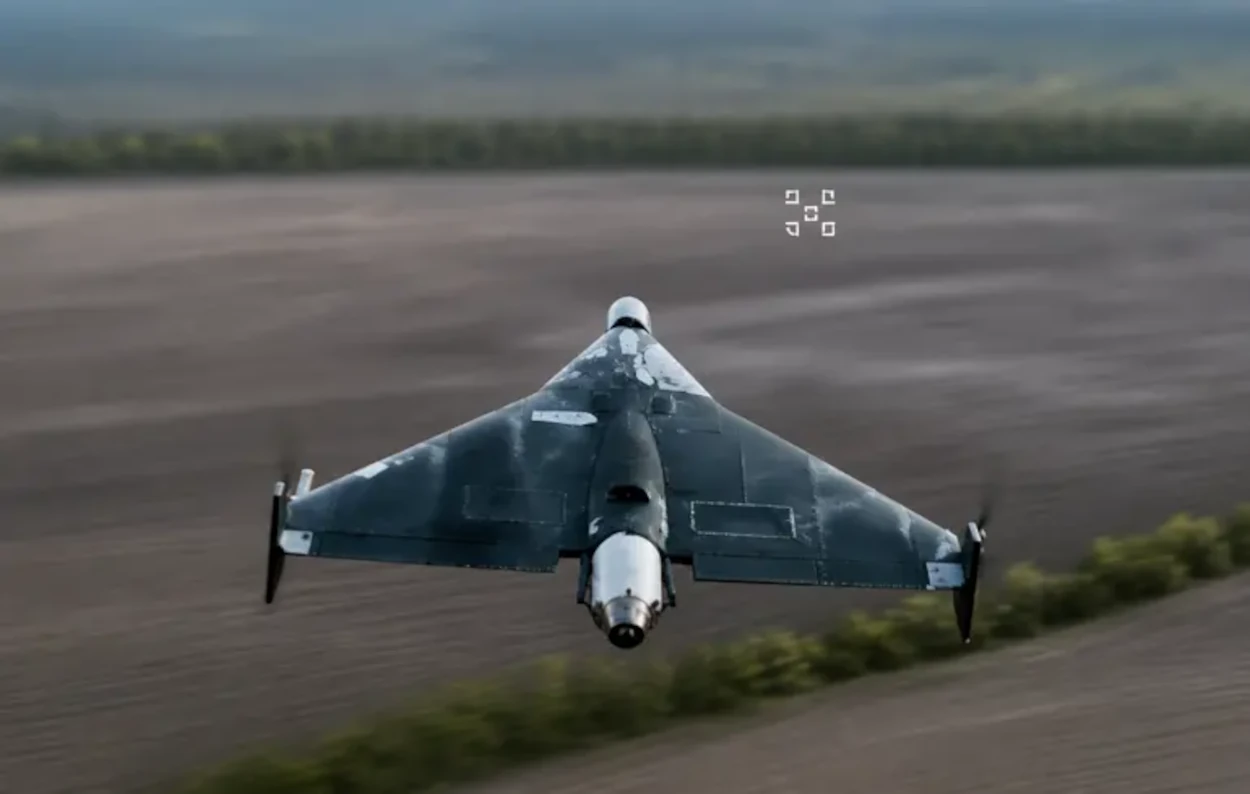
Russia attacked Ukraine overnight on 8 November with three Kh-59/69 guided missiles and 164 Shahed-type drones, 112 of them jet-powered, Ukraine's Air Force said, recording hits at 23 locations. The strikes targeted power facilities across several oblasts and left more than 600,000 customers without electricity in Dnipropetrovsk Oblast alone. A drone killed one person in a Dnipro suburb, and Russian shelling killed one in Odesa.
Russia is waging its war on Ukraine's cities as a campaign against power and heat, with winter only weeks away. This week alone, Russia fired 115 missiles, nearly 1,900 guided bombs, and more than 3,000 attack drones at Ukrainian cities and communities, President Volodymyr Zelenskyy said. On 4 November, it carried out one of its largest attacks of the war on the energy system. Zelenskyy ties the escalation to diplomacy. Russia sees diplomacy "as a subtype of aggression" and is using the strikes to build pressure on Ukraine and its partners before a new push for talks, he said on 7 November. Ukraine is also short of interceptors for its Patriot systems, and the US can help most, he added.
Dnipropetrovsk Oblast takes the hardest hit
More than 600,000 customers in five districts lost power, and hospitals switched to generators, oblast head Oleksandr Hanzha said. The Energy Ministry reported new outages in Dnipropetrovsk, Zhytomyr, Rivne, Sumy, Kharkiv, and Chernihiv oblasts. Emergency blackouts followed in Kharkiv, Poltava, and Sumy oblasts, and Kyiv Oblast switched to them by midday.
In a Dnipro suburb, a drone destroyed at least one private house, the oblast administration said. One person was killed and others were hurt, police said, and the number of injured rose to three, the oblast administration added. Strikes on Dnipro also set warehouses and trucks at a transport company on fire, it reported.
Explore further
Ukraine’s skies need interceptors. Spain’s new €437 million came out of a Madrid meeting with no list attached
Substations, heating, and a food warehouse
In Zhytomyr Oblast, strikes hit homes and heat and power facilities in four communities, including Ovruch. In the city of Zhytomyr, 140 apartment blocks were left without heating, and more than 312,000 customers in the oblast are on hourly outages, the oblast administration said. Drones destroyed the Ovruch substation, and residents should prepare for a long blackout, the Ovruch city council said.
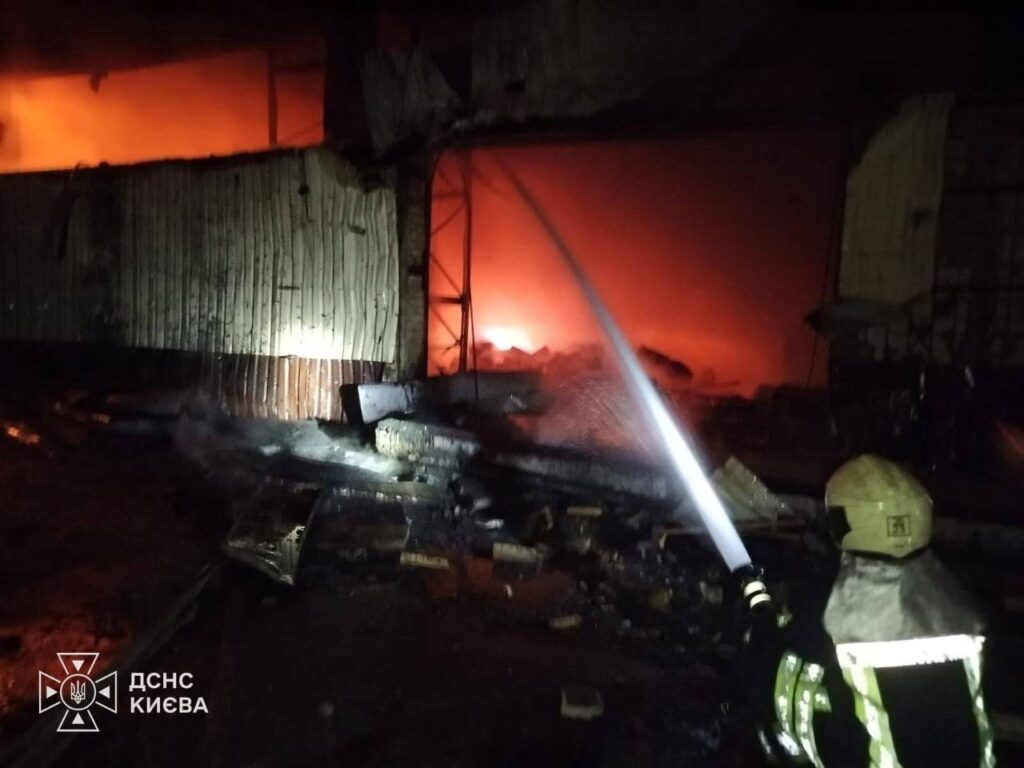
In Kharkiv Oblast, a Shahed-type drone hit critical infrastructure and cut power to about 250,000 customers, Zlatopil Mayor Mykola Baksheiev said. In Odesa, Russian shelling killed one person and damaged an administrative building. In the morning, Russia hit a food warehouse it had attacked before, starting a large fire, the oblast administration said.
Firefighters at a food warehouse hit by Russia in Odesa, Ukraine, 8 November 2026. Photo: Odesa Oblast Military Administration
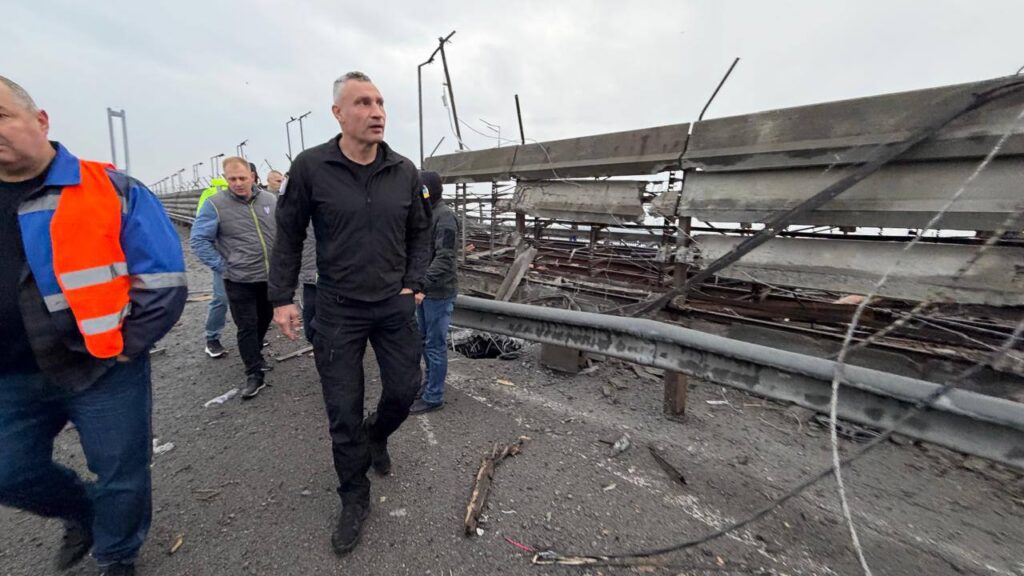
Four ballistic missiles on a Kyiv bridge
The overnight attack followed a ballistic strike on 7 November, when Russia fired 36 ballistic missiles and Ukraine shot down only four, Zelenskyy said. By preliminary data, North Korean KN-23 missiles hit one key energy facility, he added. Six ballistic missiles targeted Kyiv's Pivnichnyi (Northern) Bridge, and four hit it, Zelenskyy said in his evening address. A day earlier, he had warned, citing intelligence, that Russia was preparing a strike on the energy sector, bridges across the Dnipro, and civilian infrastructure.
The bridge was closed in both directions, Kyiv Mayor Vitalii Klitschko said. Zelenskyy ordered the Interior Ministry and the city to prepare backup transport schemes, saying none exist at city level. In October, Russia struck Kyiv's Southern Bridge, and the city began preparing backup river crossings.
Explore further
Russia was widening this bridge to four lanes for its Crimea road. Drones have now closed it
Zaporizhzhia: a nuclear plant on diesel and a strike on rescuers
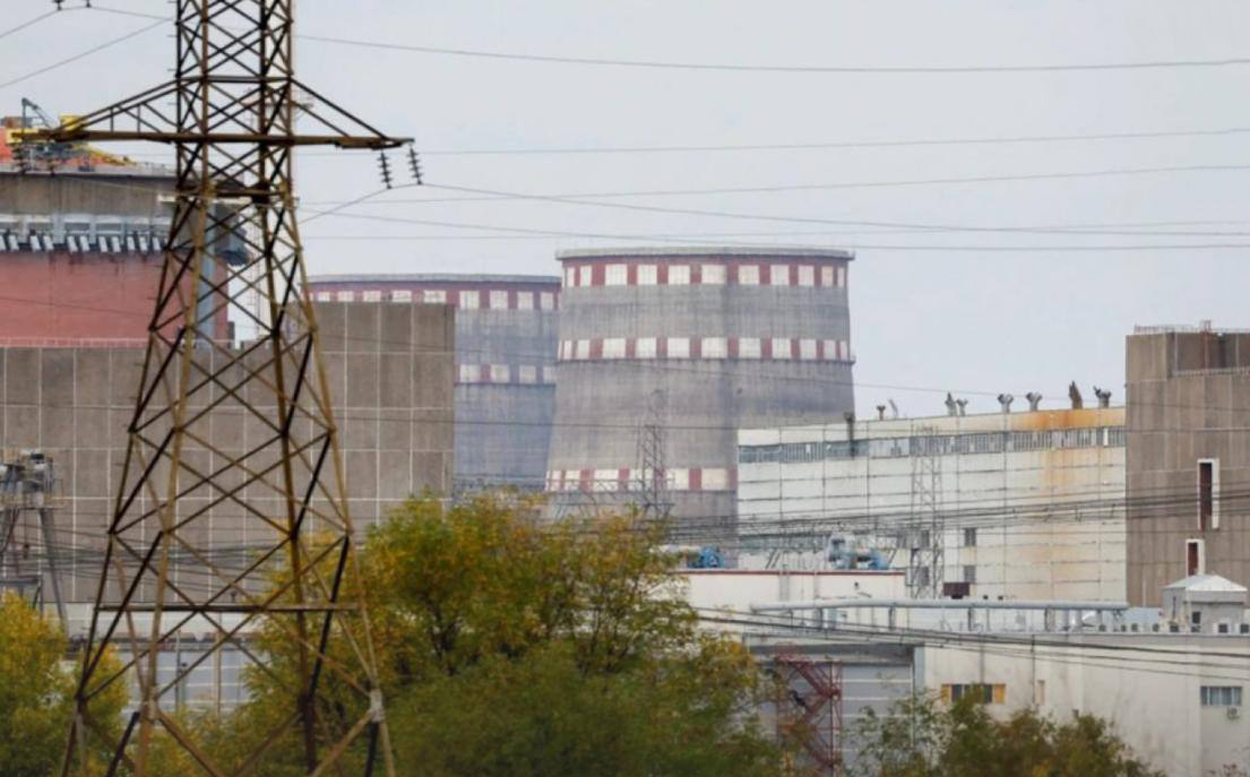
The Russian-occupied Zaporizhzhia Nuclear Power Plant lost its last external power line at 02:36 on 8 November and now runs on diesel generators alone, Ukraine's nuclear operator Energoatom said. It is the plant's 16th full blackout this year. If the generators fail or run out, the cooling of nuclear fuel is at risk, which could lead to a radiation accident, Energoatom warned.
In Komyshuvakha, also in Zaporizhzhia Oblast, a Russian drone hit rescuers on the morning of 8 November. They have been searching the site of the 2 November guided-bomb strike for a week. Rescue equipment was damaged and no one was hurt, the State Emergency Service said. So far, 55 bodies have been recovered and 45 people are still listed missing, some of whom are probably among the dead already found, the oblast administration said.
Russia is digging tunnels to keep moving under skies Ukraine controls. Underground passages up to 150 meters long now run through 20-30% of the occupied left bank of Kherson Oblast, and Russian forces on the river have switched from frontal attacks to a “hybrid” positional war, the chief of staff of Ukraine’s 34th Separate Marine Brigade, Alim Kerimov, told Krym.Realii.
Kerimov frames the change as the mark of failed offensives: Russia has slashed its ground assaults, all but abandoned Dnipro boat crossings, and leaned into bombarding Kherson’s civilians. Meanwhile, Ukrainian marines hold islands in the delta and claim to be pushing forward. As of late 2026, Russian forces control over 70% of Kherson Oblast, but its main city, Kherson, remains under Ukrainian control.
Fewer assaults, more terror
Russia has cut back its assaults and river crossings on the Dnipro axis and intensified artillery, drone, and aviation strikes, Kerimov said.
In 2025, there were up to 700 assault sorties by occupiers. Now it’s 150-200 a year. Last year, the Russians had up to 200 sorties on boats, and in the last six months, about 22.
"Why did Russia switch to a more positional hybrid war? It understands that all his offensive operations end in failure. And it simply turns to terror of civilians,” he said.
However, Russia doesn't give up its attempt to recapture Kherson, liberated in 2022. On 22 October, Russia’s amphibious landing attempt of the last offensive campaign was wiped out, with one Russian killed and three captured.
Kherson’s Governor Oleksandr Prokudin says Russia now launches up to 6,500 drone attacks a week at the region, which he also calls deliberate terror against civilians.
Tunnels under the airspace
The passages let Russian troops move where Ukraine holds the sky, according to Kerimov. His brigade hunts them around the clock.
“All these shelters and tunnels are detected and destroyed at once. For example, Oleshky, I wouldn’t say they have an extensive system there,” he stated.
There are stretches, somewhere around 20-30% of the total, on the left bank, he continued.
"That is, sections where they run, try to walk, then move into a tunnel. We have this picture, and we work in this direction day and night," he said, naming Oleshky, an occupied town on the left bank opposite Kherson.
Russian drone launch points sit 5 to 15 kilometers deep into the occupied bank.
Marines hold the islands
Despite the pressure, Ukrainian marines keep positions in the Dnipro’s island zone and are advancing, Kerimov noted, without giving coordinates.
“We have many positions on the left bank, where rotations are conducted on a permanent basis. And we are advancing in this island zone overall, and in a certain settlement on the left bank,” he said.
The advance, he added, is happening in several directions at once.
At a moment of opportunity for the party, its long-feuding factions are seizing on the midterm results to make their case for tacking to the center or to the left.
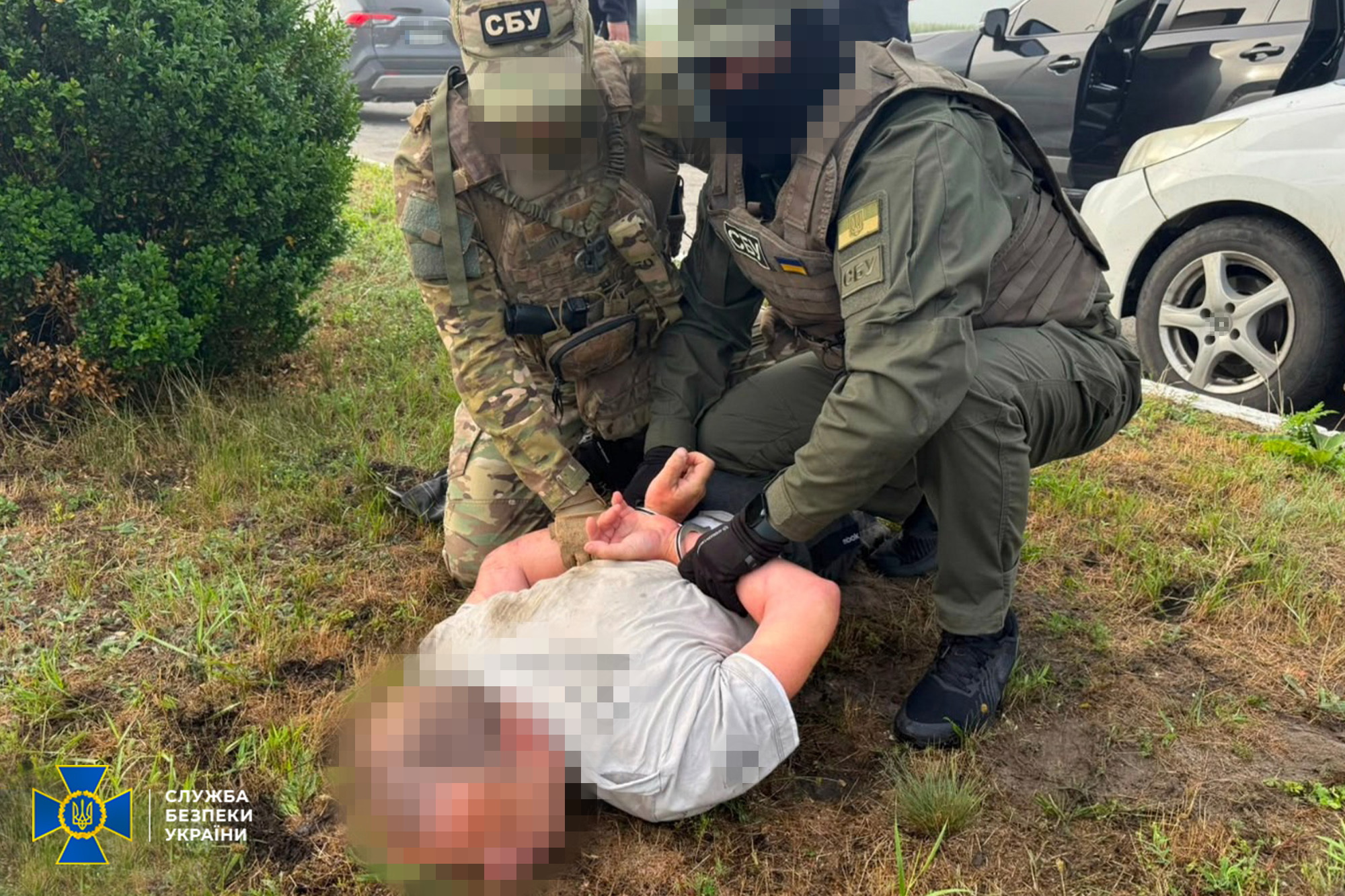
Ukraine’s Security Service (SBU) detained two Kyiv entrepreneurs it suspects of supplying the National Guard with defective combat shirts worth more than 8.6 million hryvnias (about $190,000) and of trying to bribe an officer to accept them, the agency reported on 5 November. According to the SBU, the officer reported the offer to his superiors, and its officers caught the pair as they allegedly handed over the bribe. The agency did not name the company.
Ukraine’s army needs every supply contract to deliver as it fights Russia’s full-scale invasion, and cheating on military procurement costs it twice: in money and in gear that fails soldiers at the front. Investigators have exposed such schemes before, including one in which suspects allegedly stole state funds meant for tank armor. This time, the SBU says, the alleged scheme collapsed early because the officer the suppliers approached refused the money.
Shirts unfit for the front
In August, the company signed a contract to supply 10,000 combat shirts to the National Guard. The shirts did not meet the technical specifications and were unfit for use at the front, the SBU said. According to the agency, the suppliers also delivered an incomplete batch.
The pair then allegedly offered a bribe to an official at the National Guard’s Central Support Base to overlook the defects. He immediately told his commanders, the SBU said. Its military counterintelligence, with help from the National Guard commander, detained the suspects during the handover. They are a woman who previously founded a Kyiv military equipment maker and a man representing the company.
A Security Service of Ukraine military counterintelligence officer with a suspect in the case of defective combat shirts supplied to the National Guard, Kyiv, Ukraine, November 2026. Photo: Security Service of Ukraine
Searches of their workplaces, homes, and cars turned up more than 3.5 million hryvnias (about $77,000) in cash, as well as phones and documents, the agency said. Both are in custody. They have been served notices of suspicion of obstructing the lawful activity of the armed forces and of offering a bribe as a group, and face up to eight years in prison with confiscation of property.
A general in the agency’s own ranks
The arrests come as anti-corruption investigators turn on the SBU itself. On 4 November, Ukraine’s National Anti-Corruption Bureau (NABU) detained SBU Major General Serhii Duka, whom it identifies as “Akim” in wiretaps of a group accused of running scam call centers. SBU head Oleksandr Poklad said he fired two senior officials involved in the case.
Explore further
Russia is stepping up fake Ukrainian government pages as bait for recruiting agents, Ukraine’s security service says
Suspected Russian agents caught the same week
The SBU also keeps catching people reportedly working for Russia. On 6 November, it detained a man who, the agency says, blew up the car of the head of Dnipro City Council’s Left Bank administration on Russia’s orders in April 2025. The official died of his injuries in hospital. According to the SBU, the man was recruited through an acquaintance in occupied Luhansk. He allegedly watched the victim from a hidden camera on his balcony and fixed a bomb with a motion sensor under the driver’s seat, then hid in Dnipro for more than a year and a half.
A day earlier, the agency caught an unemployed woman in Sumy who, the agency says, helped Russia’s Federal Security Service (FSB) target the front-line city. She allegedly looked for border guard bases and checkpoints and sent their photos with map coordinates, moving between four homes in a week to avoid detection. According to the SBU, she found her Russian handler while looking for easy money in Telegram chats. She has been served a notice of suspicion of treason.
Jason Reding Quiñones joins what is expected to be a succession of departures at the Justice Department after the midterm elections, including that of the leader of the national security division.
The Southern District of Florida had more than 200 lawyers when Jason A. Reding Quiñones arrived, but by the fall it fell to slightly more than half that number, after a spate of firings and resignations.
From Miami, Flávio Bolsonaro is making unfounded claims of a stolen election and plotting to sway his nation’s politics from afar, even though his party is not challenging the results.
A top adviser to President Javier Milei of Argentina met Flávio Bolsonaro, the defeated Brazilian presidential candidate, at an Argentine airport, three people involved in the operation said.
Ukrainian company NUMO Robotics has unveiled LOKO, a heavy wheeled ground robot designed for supply runs and evacuating the wounded, Militarnyi reported on 3 November. NUMO Robotics CEO Anatolii Maksymchuk says units asked for a platform that carries more per run and cuts the number of logistics trips.
On the most dangerous stretches of the front, Ukrainian ground robots now deliver ammunition, water, and food in place of soldiers, the Defense Ministry said on 7 September. In August alone they ran over 25,000 supply and evacuation missions, 3.3 times January’s count. The ministry aims to move as much frontline logistics as possible onto robots. That scale makes the robots targets. Russia has drone units that hunt supply routes, ground robots included, and more robots at the front mean more hits, a battalion commander from Ukraine’s 125th Heavy Mechanized Brigade told Liga in April. Each run a heavier robot saves is one fewer chance for those drones to hit it.
Fewer runs, bigger loads
NUMO Robotics showed LOKO at the Iron Halloween Party 2026 exhibition in Ukraine. The company built it as a platform for carrying ammunition, food, and other cargo into areas where sending people or regular vehicles carries high risk. It takes up to 500 kg (about 1,100 lb) per trip, the company says. Fold-down sides and an extra logistics module enlarge the deck for bulky loads.
Maksymchuk says units also wanted a platform that could support other ground robots, including by evacuating damaged equipment. A tow hitch lets LOKO drag damaged or stuck robots to a repair site. If needed, a smaller robot can ride on its cargo bed instead. The company says LOKO has been tested in combat, and its developers changed its design and functions based on soldiers’ feedback.
LOKO unmanned ground robotic system by NUMO Robotics. Photo: NUMO Robotics
NUMO Robotics is now preparing LOKO for codification, the Defense Ministry’s procedure that clears equipment for military use. Under its former name, Tankove Biuro, the company had its tracked NUMO robot codified in October 2025.
Specs and support
Four 1.5 kW electric motors give LOKO up to 20 km/h (about 12 mph) on hard surfaces and 12 km/h (about 7.5 mph) off-road. The maker lists an 80 km (about 50 miles) range and up to five hours of continuous work, depending on conditions. Operators can control it over Starlink, LTE, or Wi-Fi.
The company supplies a spare parts kit with its robots, so troops can replace some core components right where they operate. NUMO Robotics also promises round-the-clock support, with service infrastructure in frontline regions. It says more than 60 military units currently use its ground robots.
The death toll from Russia's bombing of an aid distribution point in Komyshuvakha rose to 37, the Zaporizhzhia Oblast Military Administration reported on 4 November. Russian attacks on 3 and 4 November killed and wounded civilians across seven oblasts. Moscow also kept hitting Ukraine's power system and aimed drones at a substation serving a nuclear plant.
Russia is running two campaigns at once this autumn: one against people in front-line towns, the other against the grid the whole country relies on. Ukraine says it intercepted a Russian plan for this winter that lists 60 critical infrastructure sites as targets for up to 1,000 missiles, drones, and bombs. Nuclear plants now produce roughly half of Ukraine's electricity, and the substations that feed them have been targeted before. Hitting those links can black out the country without striking a reactor.
Komyshuvakha's toll keeps rising
On the third day of searches, rescuers had identified 12 of the dead, while 59 people were still listed as missing, Ukraine's National Police reported. Some of the missing may be among those already found, and up to 38 more people may lie under the rubble. Ivan Fedorov, head of Ukraine's State Agency for Restoration and Infrastructure Development, said Russia hit people collecting humanitarian aid with a FAB-3000, a three-ton aerial bomb, on 2 November. Five people were injured.
Explore further
Russia strikes school where civilians recieved aid in Zaporizhzhia Oblast days after Oleshky truce. Nine more bombs hit its shelter, killing at least 26
The underground school was built to a single standard design and checked by every relevant service, but no underground school in Ukraine is designed to withstand a FAB-3000, Fedorov told a briefing, Ukrinform reported. “These were launches of nine aerial bombs, some of them quite rare 'three-thousanders',” he said. Latvian Foreign Minister Baiba Braže called for an extraordinary meeting of the UN Security Council over the strike. Latvia chairs the Council this month.
Russia kills civilians in Zaporizhzhia, Dnipropetrovsk, and Donetsk oblasts
Two Russian strikes on Vilniansk killed a woman, 52, and a man, 63, and injured a man, 59, the oblast administration reported on 4 November. A fire broke out in a five-story apartment building. Russian shelling also killed a 53-year-old man in Bilenke, in the same district. Over the previous day, Russia killed two people and injured three in Zaporizhzhia and its district, striking 51 towns and villages 857 times, Fedorov wrote.
Explore further
One of largest Russian attacks yet on Ukraine’s energy system forces emergency blackouts across regions and leaves Kyiv without water
On 3 November, Russian drones, artillery, and missiles killed two people in Dnipro and injured 38 across Dnipropetrovsk Oblast, oblast head Oleksandr Hanzha reported. Fourteen people hurt in Dnipro are still in hospital, four in serious condition. Overnight, a Russian strike set an enterprise in Dnipro on fire and injured two men.
Aftermath of a Russian attack on Dnipro, Ukraine, 3 November 2026. Photo: Dnipropetrovsk Oblast Military Administration
On 3 November in Donetsk Oblast, Russia killed one person in Kramatorsk and one in Yasnohirka, where four guided bombs also injured five, oblast head Vadym Filashkin said. Three more people were wounded in Sloviansk.
Russian drones also wounded a 69-year-old woman in Sumy Oblast and, on 3 November, three people at a farm business in Zhytomyr Oblast's Liubar community. In Rivne Oblast, a Russian attack hit a gas station and hurt a man on 3 November, and a woman was injured overnight. In Kherson, a man stepped on a Russian mine.
Explore further
Russia won’t start a nuclear war. It might cause a nuclear disaster.
Drones sent at a substation serving the Khmelnytskyi nuclear plant
During the 3 November mass attack, Russia sent three drones at a substation critical to the stable operation of the Khmelnytskyi nuclear plant, First Deputy Prime Minister and Energy Minister Denys Shmyhal said. He called it “a serious step of escalation.” Ukraine informed the International Atomic Energy Agency (IAEA), which had not commented.
Overnight on 4 November, Russia hit an energy facility, a shopping center, and homes in Odesa Oblast, the oblast administration reported. Critical infrastructure in Vinnytsia was also damaged. By late morning, Ukraine's Air Force was still tracking Russian jet-powered drones heading for Bila Tserkva, south of Kyiv.
The two countries have long been adversaries, and the United States attacked Venezuela this year, but Secretary of State Marco Rubio is starting talks on a legal agreement.
Caracas, Venezuela, earlier this year. Venezuela’s Caribbean coastline and land borders with Colombia, Brazil and Guyana make it an attractive location for potential U.S. troop deployments.
Russia is massing for a river crossing to try to take back Kherson. Its forces are preparing to dig in on the west bank of the Dnipro and build up around the Korabel district as a possible bridgehead for an assault on the city, Anastasiia Shevchenko, deputy spokesperson for Ukraine’s Southern Defense Forces, told Ukrinform.
Kherson, liberated in late 2022, has lived ever since under daily Russian fire from the occupied east bank, and its recapture is one of Russian President Vladimir Putin’s conditions for ending the war. The long-feared Russian attempt to cross the Dnipro is no longer hypothetical: on 22 October, Russian troops made the first amphibious landing attempt of the whole campaign, and it was wiped out.
The Korabel neighborhood in Kherson is commonly known as “the Island” because it is located on Quarantine Island and is surrounded on all sides by the rivers and channels of the Dnipro.
Russia’s intent, in its own words
“According to available information, the enemy is carrying out preparatory measures that may indicate an intention to further entrench on the right bank, build up forces in the Korabel area, and use it as a possible bridgehead for further actions aimed at seizing Kherson,” Shevchenko said.
Korabel, an island district linked to central Kherson by a single bridge that Russia has repeatedly bombed, still holds about 150 residents whom authorities are urging to leave. Russia recently dropped aerial bombs on its road bridge, the head of the Kherson city military administration, Yaroslav Shanko, said.
The 22 October raid that failed
That day, for the first time in its entire offensive on Kherson Oblast, Russia tried to land assault groups on the Korabel shore, Shevchenko said. Instead of a single boat it sent four, two soldiers in each, and timed the crossing to dense fog and strong wind meant to slip past Ukrainian observation.
“Russian calculation was to disperse the attention and forces of the Ukrainian defenders,” Shevchenko said.
It did not work. Two boats were destroyed before they reached Korabel and the nearby Karantynnyi Island, and the other two were hit after their crews landed. Of the four Russians who made it ashore, one was killed on the spot, and three were taken prisoner.
“In effect, the occupiers' first attempt to create a bridgehead in Kherson ended unsuccessfully. Instead of entrenching on the bank, the Russian group suffered losses,” Shevchenko said.
Ukrainian forces have accounted for the tactic and stepped up watch over the right bank of the Dnipro, and the situation is under the control of the Defense Forces.
Russia lost more troops in October than in any other month of its full-scale war, President Volodymyr Zelenskyy said on 1 November. Ukrainian forces also took back more land than Russian troops captured over the month, he added.
Russia keeps sending infantry against Ukraine's lines in Donbas and along the northern border. By summer, it was already losing more soldiers than it could recruit, Commander-in-Chief Oleksandr Syrskyi said in June. October's count shows the price climbing again, while the ground Russia gains for it shrinks.
A record month and a record day
Over October, Russia lost 54,400 troops killed and seriously wounded, Zelenskyy said, the most of any month since the full-scale invasion began. The previous monthly high, 48,670, dated from December 2024, according to the General Staff's figures.
Explore further
Ukraine suffered 10 times fewer casualties than Russia in Vivaldi counteroffensive, veteran says. Ukraine’s innovations in drone and ground robot tactics are changing frontline warfare
Russia's costliest single day came on 21 October, with 2,250 troops lost, Zelenskyy added. Over the month, Russia averaged 1,755 losses a day. The figures are Ukraine's estimates and cannot be independently verified.
A Russian region's worth of soldiers
In infographics published with the figures, the General Staff compared the toll to things Russians know. It is roughly the entire population of Chukotka, a remote Russian region in the Far East home to fewer than 50,000 people. It is also about as many soldiers as march in nine military parades on Red Square, or enough to fill about 200 Moscow subway cars. "This is the price Russia pays for its aggression," one of them reads.
More ground back than lost
Ukraine's Defense Forces liberated 96.2 km² in October, 10.4 km² more than Russian troops captured, Zelenskyy said. That puts Russia's gains for the month at 85.8 km². In mid-October, he said Ukraine had liberated more land than Russia captured since the start of fall.
Zelenskyy thanked every brigade and unit for the result. "To stop these insane losses, Russia only needs to choose a ceasefire and diplomacy," he wrote.
Russia's reported losses have climbed through 2026, and Moscow keeps looking for more men. In September, Brigadier General Denys Prokopenko warned that Russia may mobilize up to 600,000 troops for its next offensive.
Turhan Mildon, who married Alina Habba this summer, presents himself as a 29-year-old billionaire with ties to global leaders. His story has inconsistencies.
Russia’s Geran-5 jet drones have sped up to 1,000 km/h while maneuvering, Ukraine’s presidential adviser on defense technology Serhii “Flash” Beskrestnov said in Kyiv on 29 October. He added that Chinese engineers help develop Russia’s Geran drones.
When Russia moved to faster Geran versions, Ukrainian developers had to look for new ways to intercept them, Beskrestnov said, and Ukraine must learn to stay a step ahead. From 1 to 26 September, air defenses downed only 55% of Russia’s jet-powered drones. On 29 October, one such drone hit Dnipro’s railway station, and the death toll has since risen to 15. Over the past three months, air defenses downed nearly 60% of the jet-powered Geran-4, the General Staff said on 27 October, noting a shortage of guided anti-aircraft missiles. That update gave no Geran-5 figure.
A peak well above cruise speed
That peak, about 620 mph, came during maneuvers. Ukraine’s military intelligence (HUR) puts the Geran-5’s cruise speed at 450–600 km/h. By Beskrestnov’s count, the earlier Geran-3 flew at 280–300 km/h.
Explore further
Ukraine intercepts nearly 60% of Russia’s Geran-4 jet drones, General Staff says, as Kyiv races to counter evolving threat
Russia’s best engineers work against Ukraine, and China’s do too, Beskrestnov told journalists. Russia’s Alabuga drone plant sets Chinese engineers tasks such as work on the control module, he said. Key components inside Russia’s Shahed-type drones are Chinese, he said. Meanwhile, China will require licenses for Geran engines from 18 November, Ukraine’s sanctions commissioner Vladyslav Vlasiuk said. Licensing is not a ban, he stressed.
Speed is the easy part
Some interceptors are being designed to match the Geran-5’s cruise speed. US firm CHAOS Industries claims a top speed of 540 km/h for its Vespid Mk 1 interceptor. On 14 October, Ukrainian defense outlet Defense Express judged that may be enough against the Geran-5’s 450–600 km/h cruise speed.
Explore further
Russia equips Geran attack drones with image-based navigation using Google map imagery, reducing reliance on satellite navigation that Ukraine can jam, defense adviser warns
Ukrainian manufacturers have already shown jet-powered interceptor drones, Beskrestnov said. But they have run into problems with control, guidance, automatic target lock, and scaling up production. A model that flies fast is only one part of the job, he said, and an easy-to-use serial product is a different question entirely.
Russia attacked Kyiv with ballistic missiles late on 29 October, killing a man and injuring a 35-year-old woman, Kyiv city prosecutors said. The strikes damaged eight apartment blocks in Dniprovskyi district, a gas station, a restaurant, a dental clinic, warehouses, and cars. A warehouse building caught fire in Darnytskyi district, the city administration reported.
Overnight, Russia fired Iskander-M, S-400, and KN-23 ballistic missiles, four Kh-59/69 guided missiles, and 113 drones, 83 of them jet-powered, Ukraine's Air Force said. The attack mainly targeted Kyiv, Poltava, and Dnipropetrovsk oblasts. Air defenses downed three missiles and 96 drones, but strikes hit 17 locations.
Russia is waging its war on Ukraine's cities around the clock as winter approaches, striking homes, transport, and the power grid that keeps them running. On 29 October, including the late attack on Kyiv, Russian strikes killed at least 27 civilians and injured more than 140 across six regions, by EP's tally of regional authorities' reports. It was one of the deadliest days of the autumn. Most died in daylight, on a train platform in Dnipro, in an apartment block in Kremenchuk, in central Chernihiv, and under guided bombs in Izium.
Dnipro and Kyiv's right bank lose power
A Russian strike on Dnipro left more than 350,000 customers in the city and nearby towns without power, Dnipropetrovsk Oblast's administration said shortly after midnight. Water pumping stations switched to backup power. By morning, engineers had restored electricity to most customers in the oblast, but more than 200,000 were still without power.
Explore further
It was the only transport serving a village where more than 1,600 people still live: Russian forces strike a social bus with a drone in Bilenke, killing a woman and injuring other passengers
In Kyiv, equipment damaged in earlier strikes failed on the right bank, forcing emergency outages, the city administration said. Russia attacked an industrial plant in Poltava Oblast's Kremenchuk district overnight and again in the morning, with no casualties reported, the regional administration said.
A damaged one-story building and debris on the ground in Kyiv, Ukraine, after a Russian ballistic missile attack late on 29 October 2026. Photo: Kyiv City Prosecutor's Office
In the morning, a Russian drone hit a shopping center in Kharkiv's Kyivskyi district, injuring four women, Kharkiv Oblast Governor Oleh Syniehubov said. In Chernihiv Oblast, Russian drones destroyed the house of culture in Mena late on 29 October, and in the morning a drone hit a house in Bobrovytsia and injured a woman, the regional administration said. In Chernihiv itself, 37 people sought medical help after the 29 October strike on the city center that killed two 15-year-old girls, Yana and Mariia.
A burned-out car in central Chernihiv, Ukraine, after a Russian strike on 29 October 2026. Photo: Chernihiv Oblast Military Administration
Two oblasts in mourning as the Dnipro toll rises to 15
A 40-year-old man wounded in the 29 October jet drone strike on Dnipro's railway station died in hospital, raising the toll to 15, the regional administration said. Eleven people remain in hospital. Dnipropetrovsk Oblast declared 30 October a day of mourning.
A police officer near a five-story building partly destroyed by Russian guided bombs in Izium, Kharkiv Oblast, Ukraine, October 2026. Photo: National Police of Ukraine
Poltava Oblast also mourns three people killed when a Russian drone hit an apartment block in Kremenchuk on 29 October. Another 32 were injured, six of them children, the regional administration said.
Explore further
Russian jet drone hits Dnipro railway platform, killing 14 people next to a Zaporizhzhia-bound train
In Izium, Kharkiv Oblast, Russian guided bombs hit a five-story building on 29 October, killing four people and injuring 14, police reported. In Zaporizhzhia Oblast, Russian attacks killed two people in Bilenke and injured 23 across the region, 13 of them when Russia sent seven FPV drones at vehicles and public transport in Zaporizhzhia city, police said. EP reported the city faced a record number of such attacks.
The city’s Hispanic majority, news media reach and air links to Latin America have made it an ideal base for politicians escaping their home countries.
The city’s Hispanic majority, news media reach and air links to Latin America have made it an ideal base for politicians escaping their home countries.
The Ukrainian government has instructed Kyiv to establish alternative routes after Russian attacks stopped traffic on one of the capital’s main bridges. The city authorities will bear the cost of the new crossings, with Kyiv Mayor Vitali Klitschko saying the city needs an additional $22 million.
This year, Russia has launched tactics to spread panic among civilians and trigger more people to leave the country. In the latest attack, several Russia's ballistic missiles struck the Southern Bridge, used for vehicle and metro traffic, breaking a huge hole and paralyzing all the pathes. The bridge was closed. Now, there is a fear that more bridges can be targeted this way, dividing Kyiv in two parts.
The situation is urgent, as Ukrainian Transport Minister Mykola Kalashnyk says about 600,000 vehicles cross the Dnipro in Kyiv every day.
What is Kyiv’s response to the winter terror?
According to Klitschko, Kyiv convened the capital’s Defense Council on 28 October to find an answer to this difficult question.
The agenda included implementing a project to build combined water crossings over the Dnipro River and access roads to them.
“The military command will determine the locations, with approval to be granted, among others, by the Kyiv City Military Administration,” Klitschko said.
Under the government’s recommendations, the Kyiv city authorities must find $22 million for the project.
Klitschko had previously faced heavy criticism after it emerged that the city lacked sufficient shelters and last winter exposed serious shortcomings in preparing infrastructure for Russian attacks. These included a lack of alternative energy supply routes, poorly distributed energy, burst heating pipes that flooded apartments, and the inability of people with disabilities to reach shelters without elevators.
The mayor himself said the problems stemmed from the central government withholding funding, which had stalled numerous energy resilience projects and delayed their implementation.
The latest announcement also indicates that Kyiv has once again taken on the financial burden itself.
Meanwhile, Ukraine has been working with Japan on backup crossings. Tokyo has already delivered 720 meters of prefabricated bridge structures to Ukraine. The two sides are currently exploring how this equipment could be used to establish alternative crossings.
Step two: strengthening existing infrastructure
Another option is to reinforce existing bridges. City specialists are developing additional technical solutions to protect bridges across the Dnipro River, Klitschko said in his statement on 27 October, adding that proposals from the military had also been heard.
The issue of installing mobile shelters was also raised on the same day, the mayor of Kyiv said in a separate statement on his Telegram channel on 27 October. Despite intensifying Russian attacks and about, as Radio Svoboda reported in its article on 30 September, $11 million set aside in 2025, Kyiv still has only a handful of mobile shelters: LB reported in December 2025 that district tenders failed. Donors paid for the first one at a bus stop, the Kyiv City State Administration said on 15 October.
Klitschko raised the issue of shelters again after a courton 12 October ruled that local authorities must urgently install mobile shelters in public areas, including near public transport stops, parks, and squares, according to Kyiv’s Prosecutor’s Office.
Russia hits the Southern Bridge again
On 2 October, Ukrainian President Volodymyr Zelenskyy said in an interview with the Financial Times that Russian ruler Vladimir Putin had ordered the lifting of previous restrictions on airstrikes. Among new targets, according to him, were bridges, data centers, internet, mobile networks, hospitals, kindergartens, schools, and universities.
The night of 26–27 October showed what that looks like. Russia launched ballistic missile attacks in a few waves, and the second of them hit the Southern Bridge and the metro infrastructure on it, Klitschko said. The structure carries six lanes of road traffic and two metro tracks.
Rescuers work beside a fence pocked by shrapnel in Kyiv after the Russian attacks of 26–27 October 2026. Photo: DSNS Kyiv
Zelenskyy put the night’s total at 16 ballistic missiles and blamed delays in deliveries of Patriot and NASAMS interceptors: “Every such delay is a new Russian hit on one target or another.”
President Trump ensured Flávio Bolsonaro, who lost a presidential election in Brazil and faces multiple criminal investigations there, could enter the United States, U.S. officials said.
A Russian jet-powered drone hit a platform at Dnipro's railway station on 29 October, killing more than a dozen people waiting by a train, Dnipropetrovsk Oblast head Oleksandr Hanzha reported. An air alert was on, but many passengers had not left the platform. The strike came hours after another overnight Russian drone barrage across Ukraine.
Russia's air war on Ukraine leans more and more on jet-powered drones, and Ukraine's air defenses have stopped nearly 60% of the Geran-4 type over the past three months. Rail is among Russia's main targets: by late August, its strikes had damaged 492 locomotives as Moscow tried to cut Ukraine's export corridors, and in September Russia struck a passenger train near the Polish border. Civilians waiting for transport keep paying the price, and this month a Russian bomb killed 30 bus passengers in Kramatorsk.
One drone reached the platform
Around 11:00, Russia sent four jet-powered attack drones toward Dnipropetrovsk Oblast, the Air Force said. Air defenses destroyed three. The fourth hit a platform where a train stood, the state railway company Ukrzaliznytsia said.
By early afternoon, the death toll had reached 14. Another 14 people were wounded, 13 of them in hospital and six in serious condition, Hanzha reported. Among them is an 11-year-old boy. A 40-year-old man lost both legs.
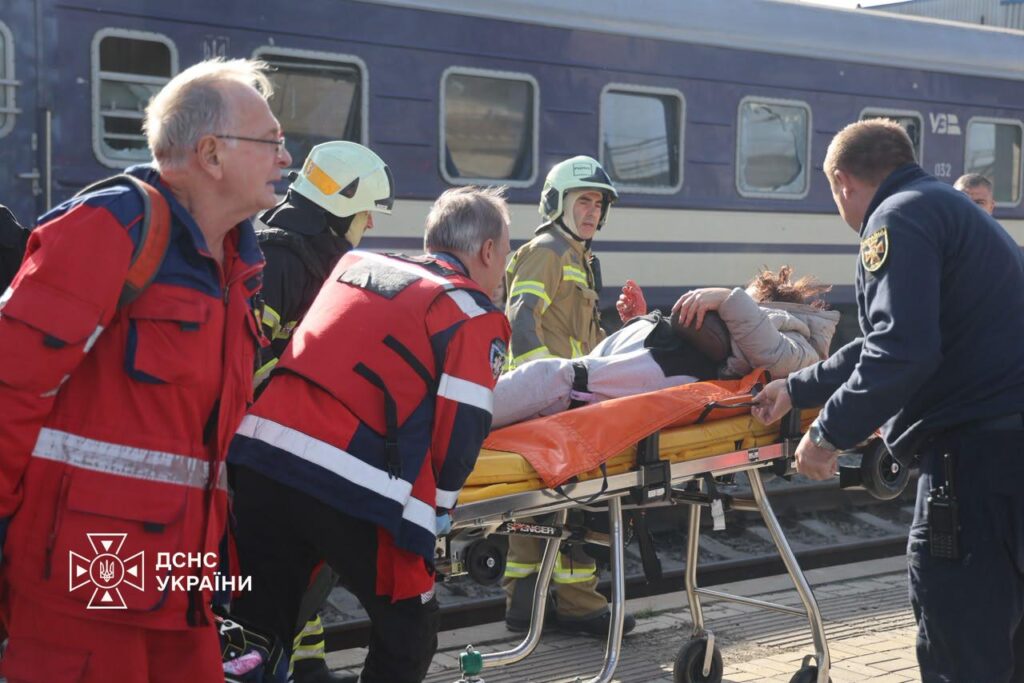
Rescuers on a platform at Dnipro railway station beside an electric train after a Russian jet-powered drone strike, Dnipro, Ukraine, 29 October 2026. Photo: State Emergency Service of Ukraine
Many stayed on the platform despite the alert
Ukrzaliznytsia's monitoring team flagged heightened danger as the jet drone approached, and train crews and the station got orders to halt traffic, the company said. An evacuation was announced on the electric train to Zaporizhzhia more than 10 minutes before the strike. The driver's assistant walked through every car, and announcements told passengers to move at least 200 meters away.
“Unfortunately, despite all this, many people were in the immediate vicinity of the train at the fatal moment of the strike, hence such a significant number of dead and wounded,” Ukrzaliznytsia wrote.
Rescuers evacuating an injured civilian from a platform at Dnipro railway station beside an electric train after a Russian jet-powered drone strike, Dnipro, Ukraine, 29 October 2026. Photo: State Emergency Service of Ukraine
Kyiv ties the strike to sanctions relief
Ukrainian President Volodymyr Zelenskyy linked the attack to the lifting of some sanctions on Russia. “How many such terrorist strikes Russia has carried out against our people since sanctions were lifted from some Russian oligarchs and energy, instead of going for de-escalation,” he wrote. Sanctions on Moscow and its war machine must not weaken while the war goes on, he added, calling for new and stronger sanctions steps from the EU, the US, and the G7.
Explore further
Russia’s sanctioned top diplomat heads to the US to campaign against the sanctions on its war
Overnight, Russia launched 112 drones
Overnight on 29 October, Russia attacked Ukraine with 112 drones, 40 of them jet-powered, the Air Force reported. Air defenses downed or suppressed 97, but drones hit seven locations.
A man stands beside a shrapnel-marked electric train at Dnipro railway station after the Russian drone strike, with bags and the blurred bodies of victims on the platform, Dnipro, Ukraine, 29 October 2026. Photo: State Emergency Service of Ukraine
In Zaporizhzhia, a Russian FPV drone hit a municipal bus in the morning, wounding a woman and a man, Zaporizhzhia Oblast head Ivan Fedorov reported. Two later Russian strikes on the city wounded two more men and damaged 15 vehicles. In Bilenke in Zaporizhzhia Oblast, Russian attacks killed a 49-year-old man.
The Brazilian congressman André Janones created a digital “army” by setting up WhatsApp groups and posting on Instagram, which helped mobilized the vote for the reelection of President Luiz Inácio Lula da Silva.
A jet carrying the Brazilian far-right senator Flávio Bolsonaro has landed in Miami, Florida, where the losing candidate in Sunday’s presidential election runoff left the airport under police escort without speaking to the press. The Gulfstream IV, registered as LV-JQW, left Guayaquil in Ecuador earlier in the day. After losing Sunday’s election to the incumbent president, Luiz Inácio Lula da Silva, Bolsonaro disappeared for more than 24 hours, until Argentina’s migration authorities said he had entered the country by land on Tuesday night
Mr. Bolsonaro, who lost Sunday’s presidential election, fled Brazil for the United States via Argentina after the police canceled his passport in relation to an investigation.
Officials in Argentina said Mr. Bolsonaro entered the country by land then flew to Ecuador. Brazilian police had asked him to hand over his passports because of his links to an investigation.
A new video transmitter for Wild Hornets’ drones, including its STING interceptors, has passed state tests, the Ukrainian drone maker told Militarnyi. The module sends a drone’s camera feed to its pilot. The company expects it to widen its interceptors’ operating radius.
Russia launched 140 Shahed-type drones at Ukraine overnight on 26 October and 280 the next night, when its main target was Kyiv, Air Force figures as of the morning show. Interceptor drones, which cost dozens of times less than the Shaheds they hunt, are one of Ukraine’s answers. The STING alone downed more than 3,000 drones in its first seven months of use, Wild Hornets says. If the company’s estimate holds, a 30 km radius would let each ground station cover more than twice the area it covers at 20 km.
What the testers checked
Specialists from the State Research Institute for Testing and Certification of Arms and Military Equipment and the Defense Ministry’s State Quality Assurance Directorate confirmed the module’s declared characteristics on three drone types, the company said. The three were the STING interceptor, the Queen of Hornets cargo platform, and the 10-inch Wild Hornets Digital anti-aircraft drone.
Some of the drones’ figures exceeded the values the company had set for them, Wild Hornets told Ukrainian defense outlet Oboronka, without saying which ones. Those figures will enter the official specifications after further field tests, it said.
More than double the power
The module, called HV VTX Pro, is part of an upgrade to Wild Hornets’ Hornet Vision digital video system. It more than doubles the transmitter’s maximum power, to 4 W. That sends a clear picture farther and makes the feed steadier in crowded airwaves and under electronic jamming, the company said.
Hornet Vision Ctrl system. Photo: Wild Hornets
Wild Hornets first described the module in August, when it was already in serial production. Its interceptors’ operating radius would grow from around 20 km to 30 km, the company said at the time. That estimate assumed good line of sight and the 360-degree antenna on its ground stations, according to a company statement Interfax-Ukraine quoted. Interception could also become at least 20% more effective against targets flying extremely low, the statement said.
Wild Hornets is a Ukrainian company that designs and builds drones, from strike FPV drones and cargo platforms to the STING, which the company says flies at up to 280 km/h to hunt Shaheds. Its drones serve with more than 100 units of Ukraine’s Defense Forces, from the army and the National Guard to military intelligence, the Air Force, and the border guard, according to Interfax-Ukraine.
Seeking new elections, María Corina Machado will need to tread carefully to avoid offending the Trump administration, while also asserting her own leadership.
President Luiz Inácio Lula da Silva won another term on Sunday, with the help of a seismic social media campaign that convinced Brazilians to reject his rival.
President Luiz Inácio Lula da Silva’s army of supporters, mobilized over a WhatsApp chat group, delivered an unexpected victory over Flávio Bolsonaro, the right-wing challenger.
President Luis Inácio Lula da Silva’s victory ended a string of election wins by right-wing candidates in Latin America. His opponent, Flávio Bolsonaro, refused to accept defeat and has fled Brazil.
Supporters of the right-wing presidential candidate Flávio Bolsonaro waved American flags and brandished a blowup doll of President Trump clutching an imprisoned President Luiz Inácio Lula da Silva at a rally last month in São Paulo, Brazil.
On Sunday, Brazilians will choose between a beleaguered left-wing incumbent and a right-wing challenger. Trade, security and democracy are on the table.
Luiz Inácio Lula da Silva, the leftist incumbent, and Flávio Bolsonaro, the right-wing challenger, face off in a narrow race that could redefine the future of Latin America.

 Connexion