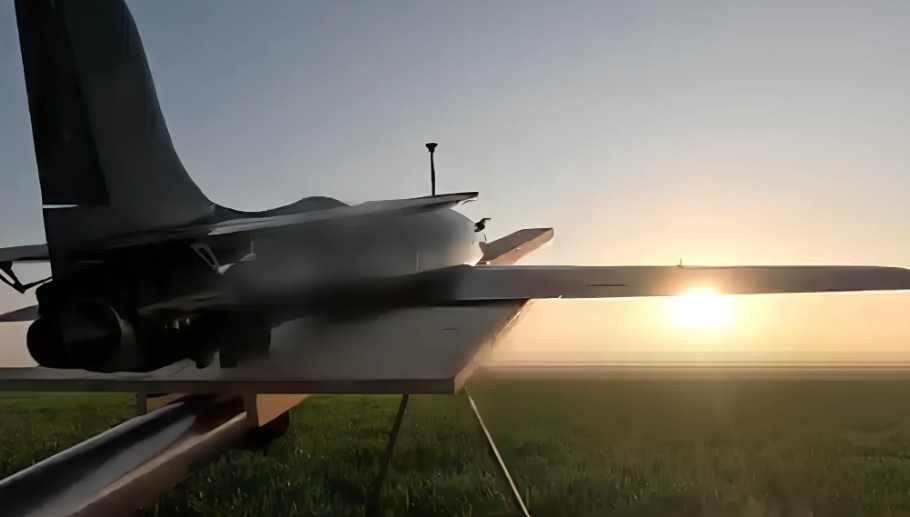
Twenty Ukrainian companies are now building jet-powered interceptors to down Russia's increasingly fast jet-powered drones. One of them, the Ukrainian-British startup Firebolt Engineering, already has an interceptor flying combat missions with two Air Force units and Ukraine's special operations forces, Defender Media reports.
Russia launched more than 2,500 jet-powered drones at Ukraine in August alone, straining air defenses built to catch the slower, piston-engine Shahed-136. Ukrainian Defense Minister Yevhen Khmara said on 30 August 2026 that four interceptor systems have cleared field testing and are being scaled toward mass production. It is unclear whether Griffen, Firebolt's drone, is among them.
Grenadyr funds a spinout
Firebolt was spun out after the UK-based investment fund Grenadyr backed the team behind the interceptor project. Grenadyr's director, Tomasz Wozniak, told the outlet that a reliable way to intercept jet-powered Shaheds "has never been more important" as Russia scales up the faster drones.
Grenadyr and Firebolt have not disclosed the size of the investment, though the fund's check ranged from $350,000 to $1.3 million.
The new company employs up to 25 people across Ukraine and the UK, split into component manufacturing, final assembly, and calibration, plus a separate R&D unit. Its CEO, who asked to be identified only as Mykola, led the interceptor project prior to the spinout.
Griffen flies, but not against jets yet
Griffen, Firebolt's first product, is a fixed-wing, jet-powered interceptor that reaches speeds above 350 km/h, altitudes above 7.5 km, and a range of up to 120 km, according to Defender Media. Mykola said the team aims to push its speed past 400 km/h through aerodynamic changes. The drone currently costs an estimated $8,300–$10,500.
Griffen still flies on Chinese engines while its British partner, Dynamic Propulsion, develops a turbojet built specifically for the drone, with test samples expected by the end of summer. Firebolt can build 30 Griffens a month and is working to add more crews to fly them, Mykola said. The drone's first confirmed kill, however, was a conventional-engine Geran — not the jet-powered variant it was designed to catch.
Autonomy waits on Ukraine's radars
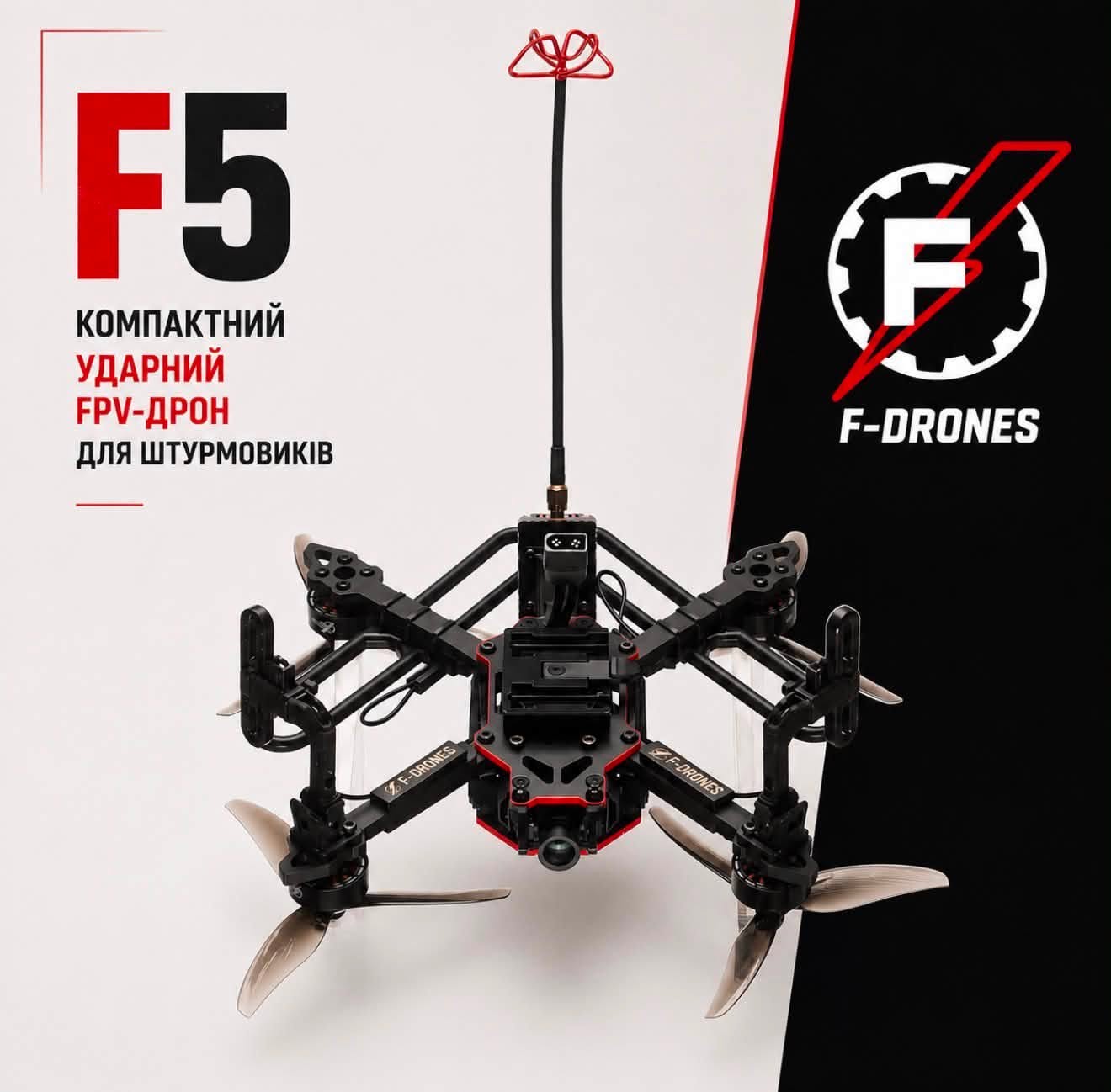
Firebolt is developing a homing system meant to let Griffen find and strike targets without an operator, a goal shared by rival interceptor makers The Fourth Law, SkyFall, and F-Drones. The system is in testing and expected to ship by default by mid-fall, Mykola said.
Full autonomy, he added, is bottlenecked by Ukraine's radar coverage, which he described as too thin and fragmented to reliably feed target data to an autonomous drone. Closing that gap, he said, depends on the state buying more radars — a decision outside Firebolt's control.
Air-raid alerts covered a record share of working hours at shopping centers across Ukraine in August. Sirens ran for 21.8 percent of the hours malls were open, the Ukrainian Council of Shopping Centers reported.
For more than a fifth of the hours malls were open to serve customers, sirens instead sent staff and shoppers to shelters. The share has more than doubled in a year. The climb is related to Russia's escalating air campaign: Moscow ran a seven-day barrage of ballistic missiles and jet-powered drones against Kyiv into early September, the kind of assault that keeps sirens running through the business day.
Every tracked measure rose
The council considers four figures: the number of alerts, the number during mall working hours, the total alert duration, and the duration during working hours. All four climbed from July to August, it says.
Five regions bear the worst of it
The five regions with the most daytime alert time, between 10 a.m. and 9 p.m., barely changed over the month, the council says. Donetsk Oblast led at 82.0 percent, followed by Sumy at 76.4, Zaporizhzhia at 71.4, Kharkiv at 60.3, and Chernihiv at 40.1.
The sharpest monthly jump fell in Kyiv and Kyiv Oblast.
Faster drones drive the sirens
Russia has switched to jet-powered drones that fly more than three times faster than the propeller Shaheds Ukraine spent three years learning to shoot down. The faster a drone reaches a city, the less time defenders have to catch it.
That is what fills the sirens. Alerts sound earlier and stay on longer, which is the shared council measure.
Ukraine races to answer them
Ukraine has four interceptor systems in field testing, built to take down jet drones, Defense Minister Yevhenii Khmarasaid on 30 August. The country now wants to bring them to standard and build them in the thousands.
Until that layer works, every jet-drone raid costs Ukraine a long air alert that empties a shopping center.
Downtime piles up over years
Since the full-scale war began, the average Ukrainian mall has lost 166.8 working days to air-raid alerts, according to the report. August 2026 alone accounted for 6.4 of them.
That is more than eight working months of shuttered trading floors, and it is still climbing.
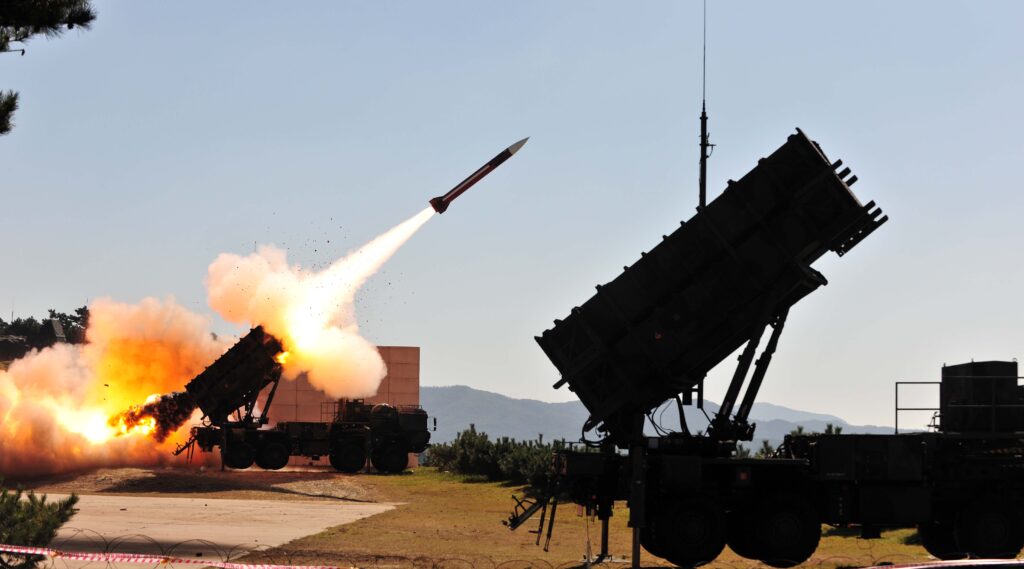
Ukraine has asked the EU to spend billions from its support loan on Patriot air-defense missiles, a request European Commission President Ursula von der Leyen confirmed the bloc is weighing. How far the money would stretch depends on a price only Washington controls.
Russia keeps firing more ballistic missiles at Ukrainian cities than the country can shoot down, the warheads hardest for its air defenses to stop. Only a US-made Patriot system can catch them, and their interceptors remain in short supply worldwide, so who pays for them and Washington that agrees or disagrees to sell them now shapes how many cities stay covered.
The exemption Kyiv needs
The European Commission has already received a payment request covering Ukraine's air defenses, including the PAC-3 interceptors that arm Patriot systems. Von der Leyen put it at "several billion euros" and said member states were reviewing it, without naming a figure.
Suspilne, citing its own sources, reported that the request seeks just over $2.3 billion, with another $4.6 billion from the loan's defense tranche going to arms manufactured in Ukraine and the EU, mostly drones.
The money would come from the EU's $104 billion support loan for 2026–27. Because PAC-3 is US technology, spending loan money on it needs an EU exemption. National representatives will take up the decision on 7 September.
What the money actually buys
Defense Express has calculated how many interceptor missiles Ukraine can get with the loan. At the $4–5 million per round the US Army pays, $2.3 billion would fund 460-580 interceptors. At the $6.61 million export price Germany paid in late 2024, about 315. At up to $12.3 million each, the US cleared for Saudi Arabia on 30 January 2026, just 190.
Why money isn't the real problem
For Ukraine, the harder question is not price but whether it can get the missiles at all. Even 315 rounds would equal about half the world's current yearly output, which the sole producer, Lockheed Martin, is straining to lift from around 600 a year to 2,000 by 2030.
Kyiv has been short of interceptors for months. In August, Zelenskyy said Ukraine reached a deal with the US for monthly Patriot deliveries, but that it still needs at least around 5% of American output to get through winter. EU Foreign Policy Chief Kaja Kallas has urged member states to hand over interceptors, especially those with shelf lives nearing their end.
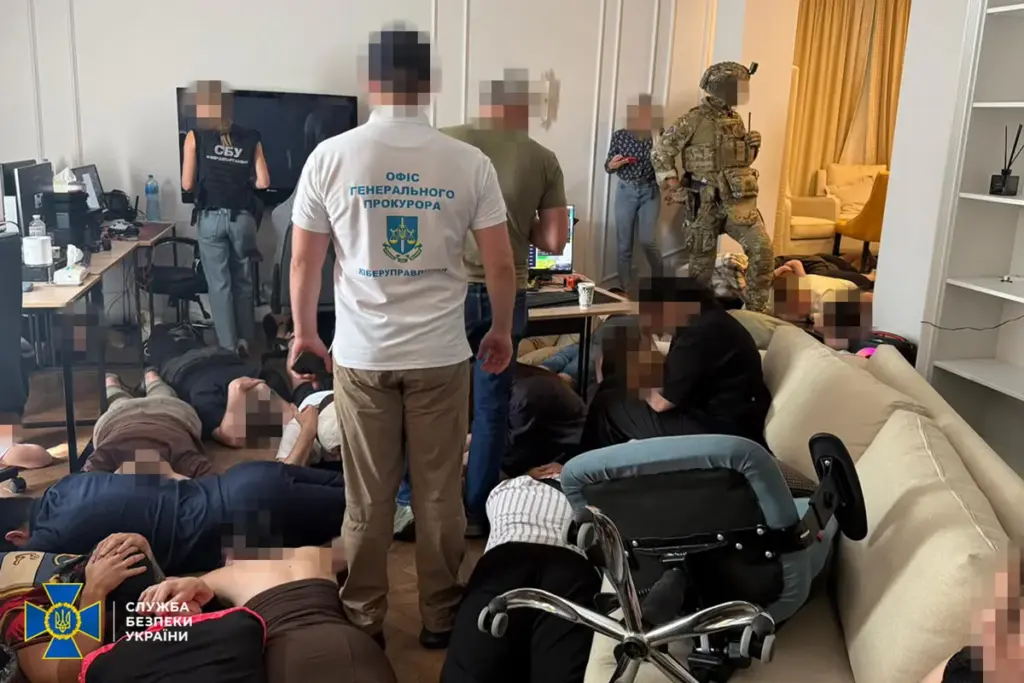
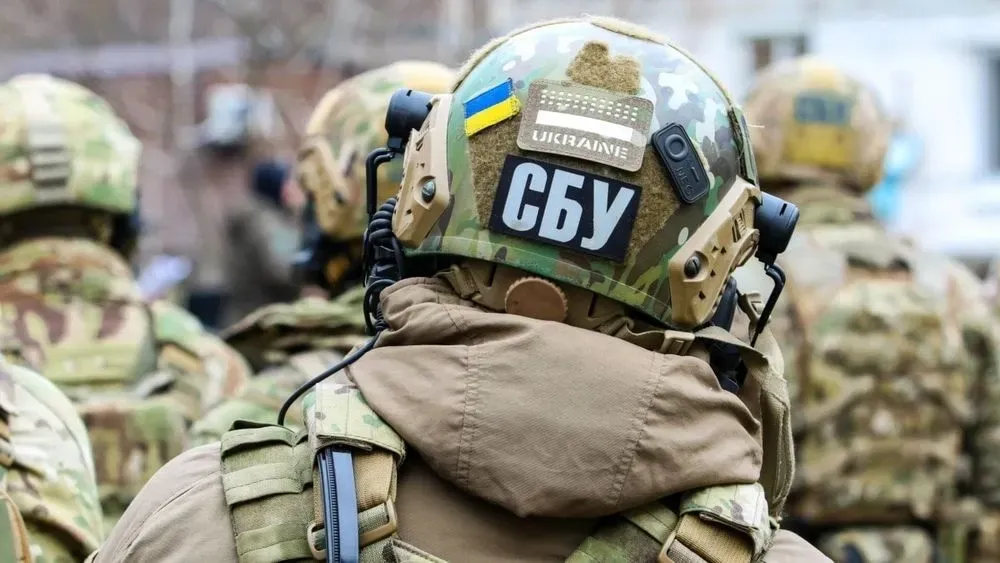
Ukraine’s Security Service (SBU) and National Police shut down a Kyiv-based network of several dozen people who allegedly used fake cryptocurrency investment platforms and malicious code to steal digital assets from citizens of EU countries, the SBU said on 1 September.
Investigators identified the alleged organizer as a 25-year-old Kyiv IT specialist, according to the SBU. The case reaches beyond Ukraine because the agency says the alleged victims were EU citizens. The agency said the network’s monthly turnover from funds obtained illegally could reach $1 million during its most lucrative periods.
The SBU said investigators had documented alleged crimes by every member of the group. However, its statement did not specify how long the network had operated, how many EU citizens were affected, which countries they lived in, or the total amount allegedly stolen.
The agency did not name any foreign law enforcement partners involved.
How the crypto ring operated
The alleged organizer of the crypto ring recruited other tech workers in the capital, the SBU said. Posing as cryptocurrency-platform representatives, they offered targets seemingly profitable ways to invest in digital assets.
The network found victims by posting about supposedly lucrative crypto projects in popular Telegram channels, then showed them fabricated trading results and fake profits to make the operation look legitimate, investigators said.
Engaged targets were sent a link to a counterfeit site that mimicked a real crypto service and were persuaded to connect their wallets and approve a transaction, the SBU said. The site carried malicious code called a “drainer” that, the agency said, let the operators withdraw the victims’ assets to addresses they controlled—emptying the wallets.
During 23 searches of the suspects’ offices and homes, officers seized phones, computers, money believed to be criminal proceeds, and 16 high-end cars, including Porsche, BMW, and Mercedes-Benz models, the SBU said.
Authorities were still deciding whether to serve notices of suspicion, while the investigation continued under the Prosecutor General’s Office, the SBU said. Those involved could face up to 12 years in prison with confiscation of property.
Ukraine’s role in combating cross-border cybercrime
Ukraine has previously joined with foreign agencies to pursue cross-border cyber threats. In April, the SBU said it worked with the FBI, EU law enforcement, and Polish counterintelligence to disrupt Russian military-intelligence spying through hacked routers. The operation blocked more than 100 servers and removed hundreds of routers in Ukraine from Russian control.
Russian losses reached one of the highest of the entire full-scale war in August, Ukraine's Defense Ministry says, citing General Staff data. Last month, Ukraine killed or wounded 42,020 invaders.
As its frontline losses climb, Russia is escalating its terror against Ukraine's civilians. Moscow uses large numbers of ballistic missiles and new jet-powered drones to do it. Russia opened its latest drone assault on 27 August, two days after CIA director John Ratcliffe arrived in Moscow, and has kept it up since.
For comparison, Russia lost 42,860 soldiers in July, 33,760 in May, and 39,290 in June, the ministry says.
Ukraine takes another step toward its goal
Ukraine's Defense Ministry states that effectively destroying Russian manpower and logistics is among its priorities, so that Russia's losses reach a level that forces it to abandon its plans of conquest.
"August's losses for the Russian army were another step toward reaching that goal," the Defense Ministry says.
Ukraine began its logistics lockdown late this May. It is a coordinated campaign to scale up medium-range drone strikes against Russian supply convoys, depots, command nodes, and air-defense systems 20 to 200 kilometers behind the front.
Russia loses more than men
Ukraine's Defense Forces also struck 13,835 vehicles and fuel tankers in August.
Over the month they hit an estimated:
89 tanks;
197 armored combat vehicles.
On top of that, 1,827 Russian artillery systems were destroyed or disabled.
"Inflicting such losses systematically raises the cost of continuing the war for Russia and forces it to spend ever more resources replacing manpower, equipment, and weapons," the ministry says.
How does Russia answer the losses?
Ukraine's Office of the President has said Russia is preparing an additional mobilization wave in 2026–2027, aiming to draft 300,000 people this year and 300,000 next. Those figures are a response to the steady rise in frontline losses, the office adds.
Meanwhile, Russian President Vladimir Putin called that information "nonsense" after the Shanghai Cooperation Organization summit in Bishkek.
At the same time, legal-aid organizations report a covert mobilization across Russia's regions and occupied territories. Over the past month and a half, residents of at least 17 Russian regions have complained of forcible detention, beatings, and coercion into signing contracts with the Russian Defense Ministry.
Kazakhstan’s privately owned Kondensat refinery will process Russian crude and return about 70% of the resulting petroleum products to Russia, Kazakh Energy Minister Yerlan Akkenzhenov said on 25 August, Radio Liberty reported.
Based on figures reported by Radio Liberty, the roughly 70% of Kondensat’s maximum gasoline output bound for Russia would amount to about 0.3% of the country’s daily summer gasoline demand. That makes the arrangement a limited stopgap rather than a solution. John Roberts of the Atlantic Council nevertheless told the outlet that even small additional supplies could help during an acute shortage, including at the front: “It helps, but it doesn’t solve the problem.”
Ukrainian drone strikes have knocked dozens of Russian refineries offline in recent months, forcing Moscow to restrict fuel exports and reimpose rationing, Radio Liberty reported. Gasoline caps returned to Moscow and St. Petersburg in August, while Rosneft reportedly limited fills to 30 liters per car at every station nationwide.
Kondensat has processed Russian oil before. The refinery began handling supplies delivered through Tatneft’s TANECO refinery in 2024, when Kazakhstan and Russia agreed to permit exports of fuel produced from Russian feedstock back to Russia. The arrangement was renewed in 2025, according to Radio Liberty.
Central Asia has no spare refining capacity that could materially change Russia’s situation, Ukrainian energy analyst Hennadiy Riabtsev told Radio Liberty’s Schemes project. Possible contributions from Kazakhstan, Kyrgyzstan, India, China, and Belarus would remain a drop in the ocean for the Russian market, he said.
Prospective suppliers also understand that Russian fuel demand supports the war effort and that assisting Moscow could carry sanctions risks, Ukraine’s presidential sanctions commissioner, Vladyslav Vlasiuk, told Schemes. Kyiv therefore does not expect a queue of countries willing to supply Russia with petroleum products, he said.
Russia’s fuel shortage gives Kazakhstan room to bargain
Russia’s shortage has spread from gas station queues to farming and public transport, with fuel-sale restrictions officially covering more than 40 regions by July, Euromaidan Press reported, citing The Moscow Times. Moscow’s export restrictions have also raised prices and tightened supplies across Central Asia.
Yet Russia’s growing dependence gives Kazakhstan additional bargaining room. Ukrainian strikes have previously prompted Russian retailer Wildberries to expand its warehousing operations in Kazakhstan, while Astana has promoted domestic competitors.
Ukraine saved more than $45 million on a single army purchase by opening it to competing bidders. The purchase was 5,000 pickup trucks, carried out through the open Prozorro tender system, Ukraine's Defense Ministry said on 2 September.
Competitive tenders of this kind saved its procurement agency nearly $362 million on non-lethal supplies in 2025, about 15 percent below expected cost, the ministry reported. The trucks are one more category moved from closed contracts to open bidding.
Volunteers used to carry this
Pickups are among the most-wanted vehicles at the front and among the longest neglected by the state, the Defense Ministry noted when it launched the tender. Until now, the need fell to volunteer drives and troops' own money.
"These are brand-new vehicles with a manufacturer's warranty, all-wheel drive, with powerful diesel engines,"Mstyslav Banik, Ukraine's deputy defense minister, said.
The trucks do everything up close
The pickups are essential for logistics, evacuation, unit mobility, and drone-crew work, former DOT director Arsen Zhumadilov said when the tender opened. That range of use is why they rank among the most-requested vehicles on the front.
The agency ran the market consultations, set the technical requirements, and vetted the suppliers for the order.
Six suppliers, not one
The order was split into lots, so six different companies will deliver the trucks rather than a single contractor. The ministry frames that as insurance: if one supplier fails, the rest still deliver. This is the largest batch of pickup trucks from the state.
The purchase began in May, so the first trucks would arrive before the cold. The full batch is due by the end of 2026.
Drones are meant to be next
Then-defense minister Mykhailo Fedorov said in May that an earlier competitive tender for 155mm shells had cut costs by more than 16 percent. The next category to move to open bidding, he said, would be FPV, mid-strike, and deep-strike drones.
Asked about reports in Ukrainian and Western media that Russia could order a mass mobilization after September’s parliamentary elections, Vladimir Putin replied: “That’s complete nonsense. It’s an information attack on Russia,” RBC reported. He was speaking after the Shanghai Cooperation Organization summit in Bishkek.
Ukraine’s military and foreign intelligence services say Russia’s General Staff has prepared a scenario for mobilizing an additional 600,000 people during 2026 and 2027—300,000 each year. Their briefing described a contingency, not an issued call-up, and did not say mobilization had begun. If activated, the agencies said, the recruits would primarily reinforce units fighting Ukraine and newly formed military units.
Ukraine’s intelligence services linked the scenario to mounting battlefield losses and a slowdown in contract recruitment. They said Russia lost roughly 240,000 personnel from January through July, including at least 140,000 killed or permanently lost, while recruiting about 232,000 contract soldiers. The figures could not be independently verified.
Russia’s military also rehearsed procedures for mobilizing residents of Kaliningrad Oblast in July, Ukrainska Pravda reported, citing The Wall Street Journal.
Reports of a possible draft have generated concern inside Russia. More than 20,000 people crossed into Georgia through the Verkhny Lars checkpoint in a single day amid fears of mobilization, as EP previously reported.
Ukraine’s warnings and Russia’s denials
Ukrainian President Volodymyr Zelenskyy said in August that Moscow planned to mobilize several hundred thousand people after the elections and roughly the same number in 2027, citing military intelligence. HUR deputy chief Vadym Skibitskyi later assessed that a call-up could provide troops for a northern offensive by February 2027, while stressing that the agency saw no preparations underway at the time.
Dmitry Medvedev, Vasily Nebenzya, and the State Duma’s defense committee have all denied plans for another mass draft. Russian officials issued similar denials shortly before Putin announced the 2022 call-up. RBC notes that the decree authorizing that mobilization was never formally revoked. No new call-up has been publicly announced or reported as underway.
Ukraine’s General Staff confirmed that Ukrainian forces struck the Novatek-Ust-Luga production complex in Russia’s Leningrad Oblast on 1 September, saying the target was hit and a fire followed. The scale of the damage remains under assessment.
Russian authorities initially acknowledged damage and a fire but did not identify the facility. Ukraine’s military intelligence later named the Novatek complex as the target, and the General Staff has now confirmed the strike and said the facility supports Russia’s armed forces. It did not explain how, nor say whether, production was disrupted.
Ukraine’s military intelligence agency, HUR, was first to identify the target, saying on 1 September that its operators had struck the complex alongside Ukraine’s Defense Forces in a joint deep-strike operation. Key elements of the site’s oil-processing installation and other equipment were hit, and a large fire broke out, the agency said. The General Staff confirmed the strike the following day.
Video of the overnight attack on the port of Ust-Luga in Russia’s Leningrad region. pic.twitter.com/dXG5XTkhab
The Novatek complex at Ust-Luga separates stable gas condensate—a liquid produced during natural gas extraction—into fuel and petroleum components and handles their shipment through the Baltic port. Its design capacity exceeds six million tons a year, the General Staff said. The plant produces light and heavy naphtha, kerosene, a diesel fraction, and a marine-fuel component.
Explore further
Drone attack damages Russia’s Baltic oil port as drone crosses Latvia into Estonia
Ukraine has repeatedly targeted the Ust-Luga port
Before Ukraine named the target, Leningrad Oblast Governor Alexander Drozdenko acknowledged infrastructure damage and a fire at Ust-Luga on 1 September, but did not identify the specific facility. HUR subsequently named the Novatek complex as the target and reported damage to key equipment.
The operation continued Ukraine’s campaign against Ust-Luga’s energy and port infrastructure. Ukrainian agencies confirmed the first strike on Novatek’s complex overnight on 24–25 March. Drones returned on 31 March, setting fuel-storage tanks ablaze, damaging a pier and pumping equipment, and temporarily halting port operations, followed by another reported attack on 7 April. Ukrainian drones last hit the port on 14 August, marking the sixth such attack there in 2026.
Estonia is automatically diverting emails using Russia’s .ru internet domain into quarantine for additional security checks before they reach state institutions connected to the country’s secure government network, Justice and Digital Affairs Minister Liisa Pakosta told Estonia's public broadcaster ERR.
The measure is intended to protect Estonian government computer systems amid a post-2022 surge in cyberattacks that officials link to Russia. It applies only to institutions operating inside the secure state network, leaving local governments and some state bodies outside.
Many Estonian residents, particularly Russian speakers, still use .ru email services, ERR noted. Because the filter is triggered solely by the address ending, legitimate messages will be screened alongside potentially malicious ones and may take longer to arrive.
Pakosta said the safeguard was necessary because cyberattacks against Estonia had increased “exponentially” since 2022 and that many were linked to Russia. She said such attacks had not succeeded against Estonia, while major public-sector cyberattacks had succeeded in both Latvia and Lithuania.
The rerouting is automatic and handled centrally, so agencies do not need to take any action, Pakosta said. A large proportion of state institutions have already moved behind the government’s unified cyber shield, while the transition continues.
Pakosta described the quarantine as one small measure within Estonia’s wider cybersecurity work. Estonia’s courts have gone further, saying they will ask parties in legal proceedings to stop using .ru addresses for official communication, according to ERR.
How the Baltic states are hardening against Russia
Estonia's email quarantine forms part of a broader Baltic effort to limit Russian influence and strengthen defenses against military, cyber, and covert threats.
Estonia, Latvia, and Lithuania are constructing a Baltic Defense Line, a planned network of bunkers, anti-tank ditches, and other barriers, along their borders with Russia and Belarus. Latvia has also banned imports of Russian and Belarusian books, clothing, toys, and other goods.
The threat extends beyond cyberattacks: an Estonian court found that Russia’s military intelligence agency, the GRU, ordered the 2024 firebombing of a Ukrainian restaurant in Tallinn, part of a wider Russian sabotage campaign targeting European supporters of Ukraine.
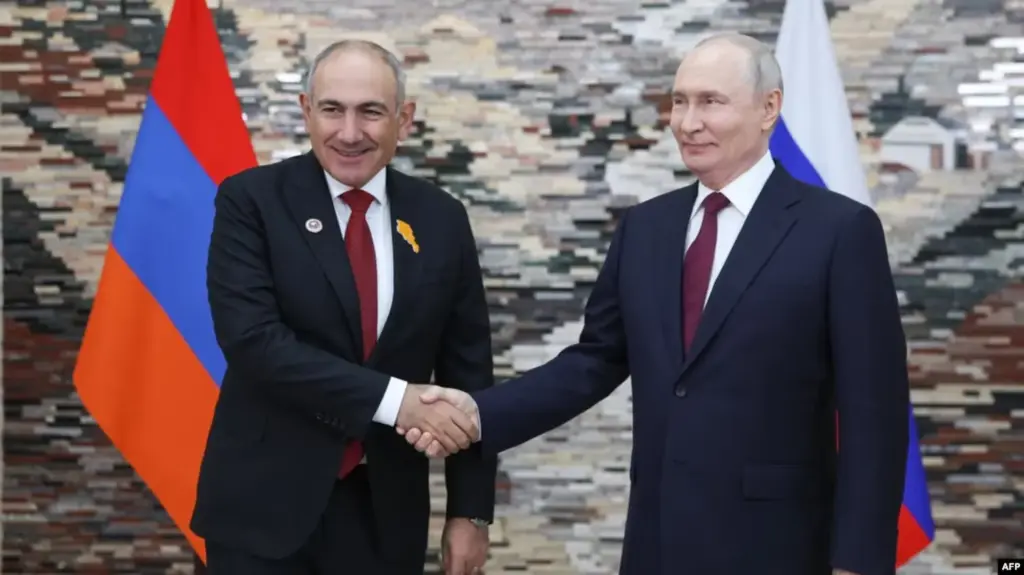
Russian President Vladimir Putinsaid Armenia's 2025 law launching the EU accession process "amounts to a declaration of withdrawal" from the Russia-led Eurasian Economic Union. Armenian Prime Minister Nikol Pashinyan replied that Armenia had filed no notice to leave and had violated none of the bloc's rules. The leaders met on 1 September in Bishkek, Kyrgyzstan, during a Shanghai Cooperation Organization summit.
The exchange turns Armenia's westward shift into an open dispute over how far it has already moved from Moscow. Yerevan is preparing an EU application and has frozen participation in Russia's military alliance, but it still belongs to the trade bloc. Russia remains Armenia's largest trade partner, accounting for about 35% of its foreign trade.
The disagreement
In the opening minutes, Putin acknowledged that Armenia's aspiration to join the EU was the country's "legitimate right," but said it "creates difficulties" given Armenia's membership in the bloc that links Russia, Belarus, Kazakhstan, Kyrgyzstan, and Armenia. He told Pashinyan that adopting a law launching the process of joining another organization "amounts to a declaration of withdrawal from ours."
Putin urged Armenia to decide quickly and repeated his call for a referendum on whether Armenia should remain in the trade bloc or pursue EU membership, telling Pashinyan to give the people a choice so the matter could be closed.
Pashinyan pushed back. He noted that the bloc's rules have no mechanism to expel a member state—only a voluntary withdrawal process requiring six months' notice—and that Armenia has filed no such notice. He told Putin the issue had not matured enough for a referendum, arguing that Armenia first needs to submit a formal EU application, receive a response, and agree on an accession roadmap.
How far Armenia has moved
Armenia's parliament passed a law launching the EU accession process in March 2025, though the government has said the law does not amount to a formal membership bid. On 24 August, Pashinyan told lawmakers that the government would begin preparing a formal application "in the near future." Armenia has also dropped the "strategic partner" label for Russia from its new government program and effectively frozen its participation in the Russian-led Collective Security Treaty Organization since early 2024.
Russia's response
Since May 2026, Moscow has imposed a series of bans on Armenian agricultural imports—including fruit, vegetables, and mineral water—citing phytosanitary concerns. The EU called the measures "economic coercion" and announced a support package of more than €50 million for Armenia in June.
Pashinyan says dialogue will continue
After the meeting, Pashinyan posted a video describing the talks as "very good" and saying the two leaders had agreed to continue a "sincere and constructive dialogue" during a future visit to Moscow. He said bilateral relations needed to be "rethought" under new circumstances.
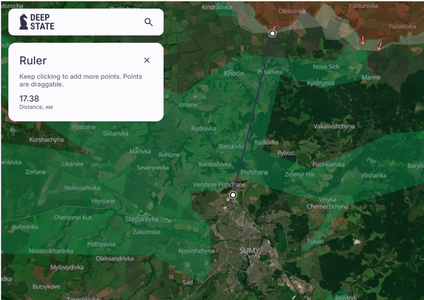
On 1 September, Russian President Vladimir Putinsaid during a conversation with journalists that Russian troops had 12 km left to reach Sumy. Censor.NET estimated from DeepState’s map that Russian forces were approximately 17 km from Sumy’s administrative boundary.
Russian military commanders have systematically exaggerated their gains on the battlefield. The Institute for the Study of War (ISW) describes such claims as part of a Kremlin information campaign aimed at creating the impression of major Russian gains. In this case, the Russian president cited exaggerated gains that, compared with his previous claims, appear to be a setback.
What Putin said
“The ‘North’ group of forces continues to create a security belt along the Russian-Ukrainian border in the border areas of the Sumy region... There are 12 km left to Sumy, to the Sumy ring road,” Putin said during the press conference.
Censor.NET reported that Russian forces were about 17 km from Sumy without specifying the reference point, while Putin did not say which section of the city’s ring road his 12 km figure referred to.
Approximate visualization of Censor.NET’s reported 17 km distance from the DeepState frontline toward Sumy. Map: DeepState / Chart: Euromaidan Press
Putin previously gave a different distance
On 28 June, during an interview with Russian propagandist Pavel Zarubin, Putin said that Russian troops had “about 10.5 km” left to reach Sumy. At the time, he also explained the offensive as the creation of a “security zone” along Russia’s border.
Putin’s claimed distance to Sumy therefore increased by approximately 1.5 km in just over two months, contradicting the Kremlin’s portrayal of a continuing advance.
Other exaggerations
In July 2026, Putin claimed that Russian forces had “completely captured” Kostiantynivka. Ukraine’s General Staff rejected the claim, saying Ukrainian forces continued defensive operations in the city. ISW also said some videos of Russian flags being raised in Kostiantynivka were likely AI-altered.
On 2 December 2025, Putin claimed that Russian forces had captured Pokrovsk in Donetsk Oblast. ISW found no evidence confirming the city’s complete capture and assessed that its fall would not enable Moscow to achieve a significant breakthrough.
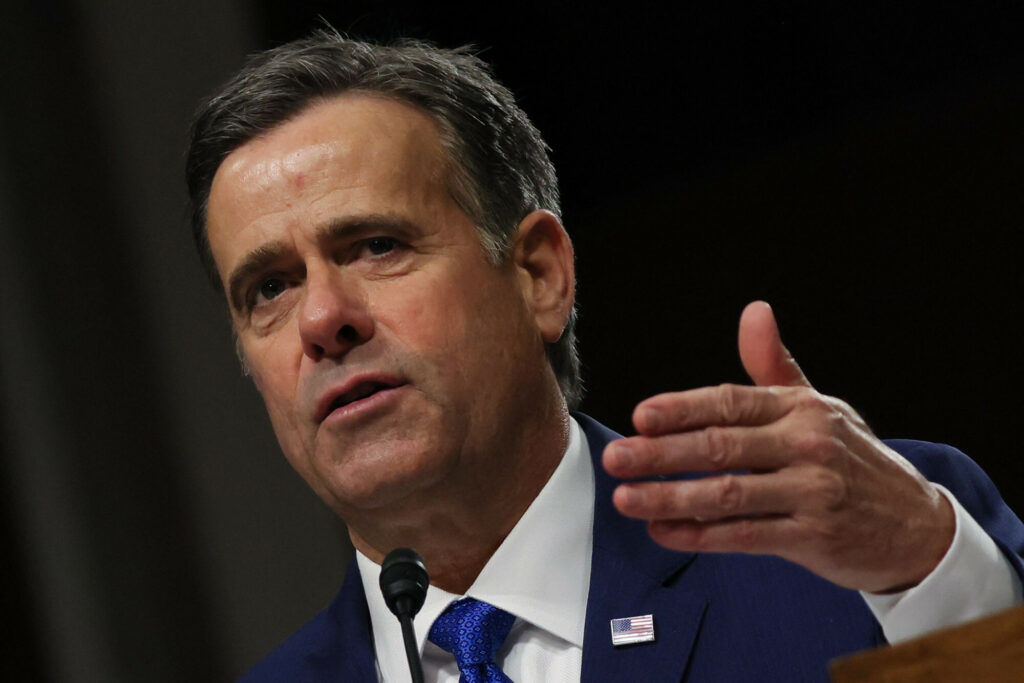
US Central Intelligence Agency Director John Ratcliffe's visit to Moscow has triggered much speculation. The main thesis is that Russia may be preparing to conduct an act of aggression against a NATO member in the relatively near term to invalidate NATO's Article 5.
According to sources cited by the Wall Street Journal, Ratcliffe delivered a warning to Russia not to attack NATO countries. Estonia, Latvia, and Lithuania were singled out in a Politico report on 26 August, citing two "sources familiar with the matter."
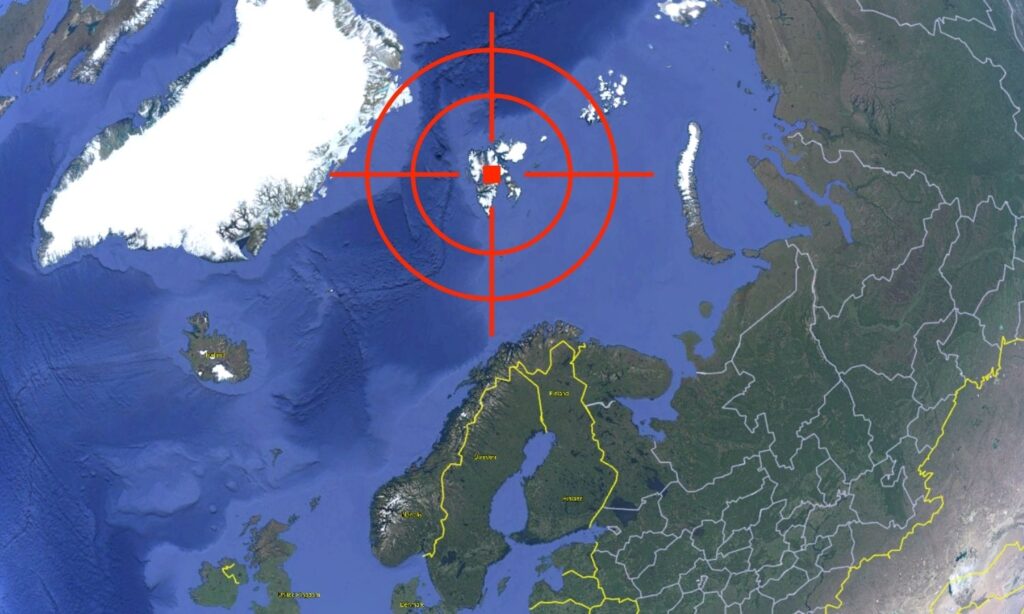
Every warning names the Baltics. Estonia, Latvia, and Lithuania are where the CIA pointed, where the intelligence assessments focus, where NATO has massed its tripwire forces. But the Baltics are defended. The one piece of NATO territory Russia could seize before anyone could stop it—and that hands hesitant Western capitals a ready-made excuse not to respond—lies far to the north. It is Svalbard.
CIA Director John Ratcliffe made the first known visit to Moscow by a serving CIA chief since 2021. Photo: Jemal Countess/AFP/East News.
The timeline
On 6 August, citing new US intelligence reports, the Wall Street Journal reported that "US intelligence is warning that Russia may attempt to test NATO's resolve by carrying out a limited strike against one of the Alliance's member states within the next few years." US intelligence assessments indicate that any action by Russia could occur between this autumn and 2029. This is only the latest in a series of warnings of the risk of war with Russia. Leaders of NATO's eastern flank countries recently issued public warnings, citing intelligence that Russia is preparing provocations on their territory.
The Institute for the Study of War (ISW) argues that a CIA director's personal visit to deliver a message is unusual and generally reserved for sensitive matters of the highest importance. Ratcliffe's arrival in Moscow on a C-17 military transport aircraft and his use of an American motorcade suggest that the US regarded its intelligence as urgent and sensitive—not a warning of a distant threat. The visit indicates concern about a much shorter timeline than the US intelligence reports of early August suggested.
Explore further
Latvia just moved from “Russia might attack” to “here’s where you report if it does”
That timeline is shaped by Europe's urgent effort to close its critical military vulnerabilities by 2030. Russia is unlikely to wait until Europe has regained its strength.
The last CIA director's trip to Moscow was in November 2021, when William Burns made a final effort to deter Russia's full-scale invasion of Ukraine. To state the obvious: Burns' effort failed—and he served a president friendly to NATO and to international law. Ratcliffe serves a president who treats Europe as a strategic adversary; his warning is unlikely to shift Moscow at all.
The threat: sub-threshold is over
The EU White Paper describes Russia as the "fundamental threat" to European security for the foreseeable future, citing its war economy, industrial mobilization, nuclear posture, and cooperation with Belarus, Iran, and North Korea.
According to assessments by several EU intelligence services, Russia's rapidly expanding military-production capacity could give it the ability to test the unity of Western countries and the effectiveness of Article 5 within the next three to five years. The US recently warned Poland that Russia is planning an armed provocation on Polish soil designed to test NATO's commitment to collective self-defense.
Let us be clear: Russia has been testing the unity of Western countries and the effectiveness of Article 5 for years already.
It is waging an ever-escalating hybrid war that could—and arguably should—have triggered Article 5 long ago. It is attacking critical infrastructure, conducting sabotage and cyberattacks, running influence and information operations, violating NATO airspace with missiles and drones, and flying UAV intelligence, surveillance, and reconnaissance missions over allied territory. On 23 August, The Telegraph reported, citing Western intelligence sources, that Russia has launched a new wave of attacks on weapons factories in Europe, recruiting members of local criminal gangs and testing NATO's response.
None of it has forced a response. That is the point. To test NATO's commitment to collective defense—rather than merely its patience—Russia must escalate beyond the sub-threshold. It must stage the one thing it has so far avoided: a military operation that forces NATO to confront Article 5.
To test NATO's commitment, Russia must ecalate—stage a military operation that forces NATO to confront Article 5
The window for doing so is closing. On 11 December 2025, NATO Secretary General Mark Rutte warned that Russia could attack a NATO country within five years, adding that the Alliance must "be prepared for the scale of war our grandparents or great-grandparents endured"—the first time since World War II that a secretary general has raised the prospect of a full-scale war on NATO soil. NATO's generals warn of war by 2029; Europe will not be ready until 2035. Russia has every incentive to act inside that gap, before it narrows.
The gap is real. These assessments have emerged against a backdrop of critical munitions shortages: Patriot interceptors, long-range precision-guided missiles, tactical ground-launched missile systems, 155mm artillery shells, and Stinger short-range surface-to-air missiles. US stocks have been badly depleted by weak defense-industrial production and by the Israel–US confrontation with Iran. NATO has since named Integrated Air and Missile Defense a top priority for the Alliance's survival and deterrence, calling for a 400 percent increase in air- and missile-defense capabilities. That is the measure of the shortfall. Worse, recent exercises have shown the Alliance is nowhere near ready to fight a drone war with Russia.
Most analysis fixes on the Baltics. In my opinion, there is a more likely scenario: the seizure of Norwegian sovereign territory in the High North.
Explore further
How Norway became a test target for Russia’s Arctic hybrid war
Why Svalbard: the tripwire it lacks
Admittedly, no intelligence service has ranked Svalbard above the Baltics. That is puzzling, given that while the Baltic states are a challenge for Russia, Svalbard is a challenge for NATO.
Estonia, Latvia, and Lithuania are defended by a standing tripwire. NATO permanent battlegroups operate in each—the UK leads in Estonia, Canada in Latvia, Germany in Lithuania—backed by a forward-defense posture built to stop any incursion at the border rather than liberate territory afterward. In response to Russian airspace incursions, drone provocations, and GPS jamming, NATO stood up the Eastern Sentry initiative; after repeated undersea cable cuts, it added Baltic Sentry to patrol the sea and guard the infrastructure. The Suwałki Gap—the 60-kilometer land corridor linking Poland to Lithuania between Belarus and Kaliningrad—is heavily fortified and rehearsed in large multinational exercises.
An attack on the Baltic countries hits allied forces on day one, forcing the Alliance to act, and it requires a force buildup that telegraphs intent and escalates toward exactly the general war Russia wants to avoid.
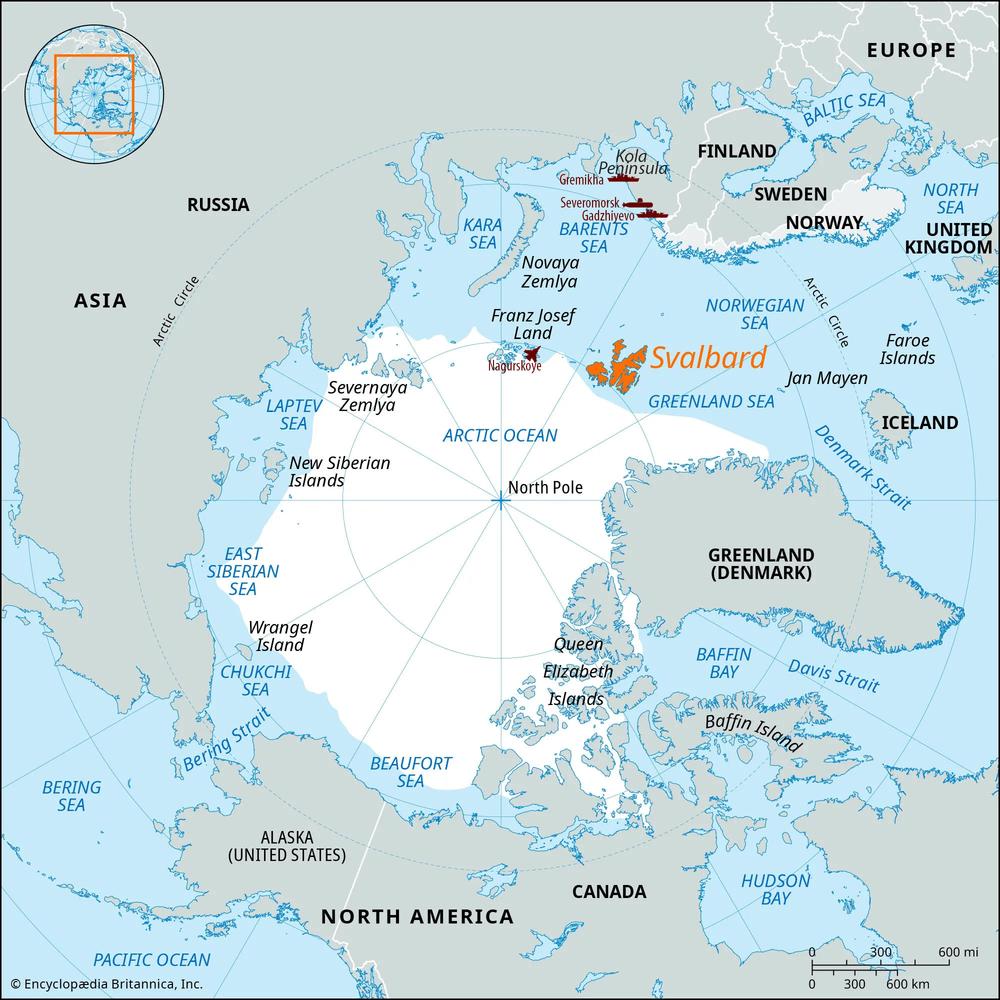
Map of selected Russian military bases in the Arctic by Encyclopedia Britannica, with edits by Euromaidan Press
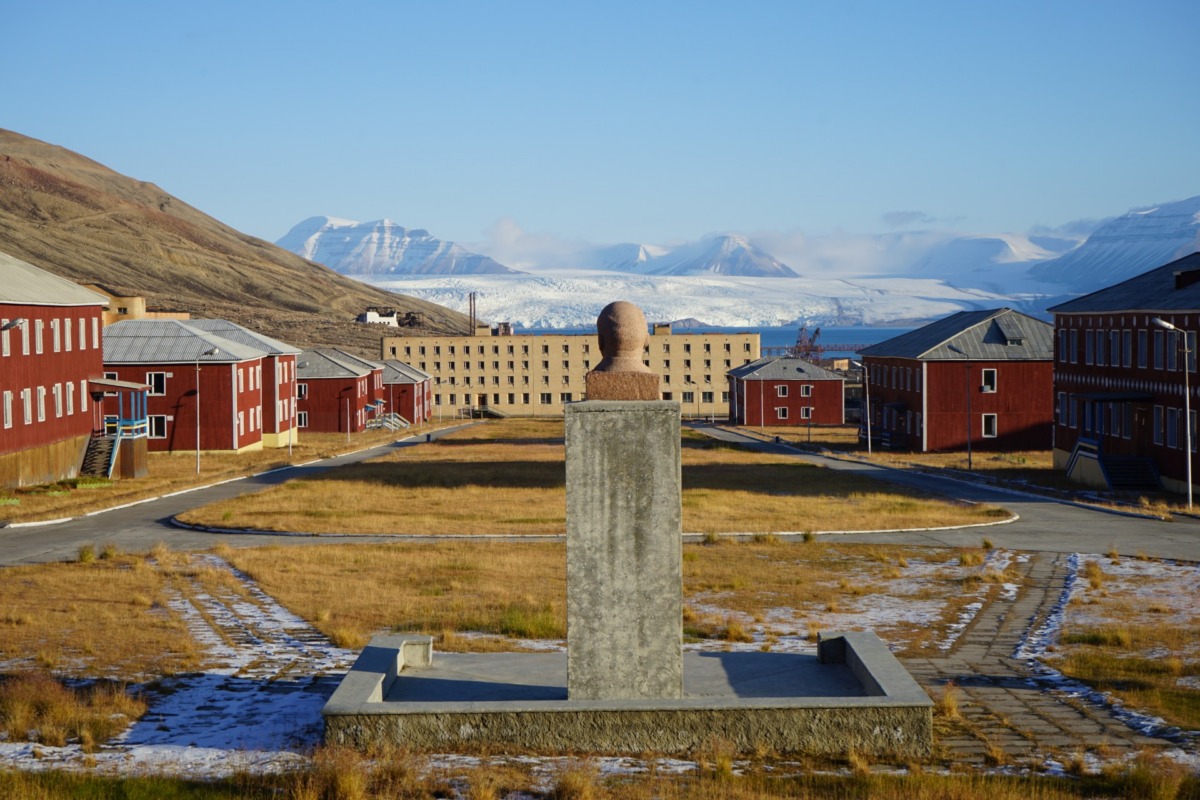
Svalbard offers the opposite. There is no permanent garrison and no fortification, because Article 9 of the 1920 Svalbard Treaty bars naval bases, fortifications, and any "warlike" use of the archipelago. Norway retains the sovereign right to defend it—Coast Guard and naval vessels call at Longyearbyen, and defensive measures under Article 5 are permitted—but there is no standing tripwire, and the treaty ensures there never will be.
That is the vulnerability: Russia can seize the archipelago by surprise and present a fait accompli before any force can reach it.
And it hands hesitant Western capitals a ready-made excuse. Svalbard is Norwegian sovereign territory, and Norway holds—correctly—that Article 5 applies to it. The land-territory question is not genuinely ambiguous; Russia manufactures the ambiguity, contesting Norway's interpretation and pointing to the treaty's demilitarized character to argue that any response is itself a violation. But in a strategic environment where Western leaders seek any reason not to engage Russia, that manufactured doubt—remote outpost, unpopulated rock, a "demilitarized" treaty—is enough.
The excuse is political, not legal. And the excuse is the objective: a visibly divided Alliance, unable to agree whether or how to respond, is the entire purpose of a Russian move against a NATO member.
If Russia achieves surprise, it will meet no opposing force. The Northern Fleet operates in the area routinely; Russia's Arctic forces—roughly 15,000 to 20,000 troops across motor-rifle and naval-infantry brigades, with cold-weather armor and layered anti-access/area-denial systems—are already in place. Svalbard sits within range of Russian tactical aviation flying from the Kola Peninsula, which could establish air control fast enough to keep NATO from landing at all.
Explore further
NATO’s generals warn of war by 2029. Europe won’t be ready until 2035.
What Russia would gain
The occupation would also pay for itself many times over, shifting the balance across the entire Arctic and North Atlantic.
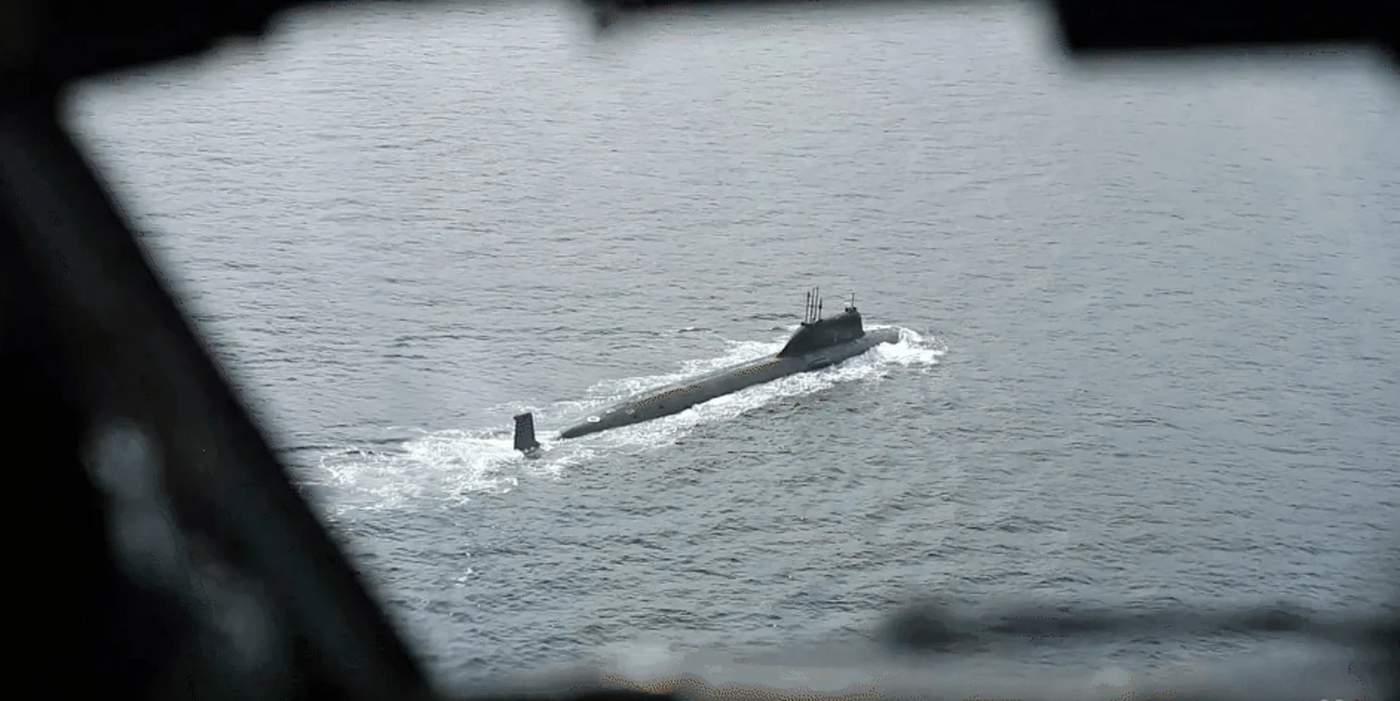
The primary military incentive is nuclear. The Kola Peninsula houses Russia's strategic ballistic-missile submarines, and holding Svalbard would close the shallow Barents Sea into a protected bastion where those submarines—the core of Russia's second-strike deterrent—could operate insulated from NATO. Control of the archipelago also locks the "Bear Gap," the stretch between Svalbard and Norway's North Cape. Anti-ship and anti-air batteries on the islands would let Russia choke off NATO surface and anti-submarine forces from the Barents Sea while guaranteeing its Northern Fleet unhindered breakout routes into the North Atlantic.
The Norwegian Coast Guard and Norwegian Customs were checking when the Russian Belomorye loaded fish to the Norwegian Silver Copenhagen in a fjord in Svalbard. Credit: Kystvatnek
The archipelago is also a forward platform. Using existing infrastructure such as Longyearbyen's airport, Russia could base tactical aircraft and long-range maritime patrol aircraft hundreds of kilometers further west than its current fields on Franz Josef Land. Seizing SvalSat—one of the world's largest commercial satellite ground stations—would let Moscow blind or repurpose a hub critical to Western environmental, civilian, and dual-use satellite operations. And by holding the "gateway to the Arctic," Russia would gain physical leverage over the western entrance to the Northern Sea Route, an increasingly viable shipping lane as the ice retreats.
These are gains Russia would want under any circumstances. They are not why Svalbard is the likely next target—that case rests on the tripwire it lacks and the window that is closing. But they explain why, of all the ways to test Article 5, this one carries no offsetting cost.
Explore further
Frozen front: Why Norway sees Ukraine as its Arctic security shield
Conclusion
The map confirms the logic. Baltic officials and government-affiliated analysts stress that NATO should take the Russian threat seriously but that their immediate assessment has not changed—there is no large-scale buildup along the Russian border with the Baltic states. The only NATO territory open to invasion without such a buildup is Svalbard.
According to the Norwegian Intelligence Service, Russia "will remain intent on preventing NATO from making military use of the archipelago" and aims "to increase Russian scope for action in Svalbard, to influence attitudes to Norwegian defence policy, to instil fear, polarisation and political apathy in the population and to undermine trust in Norwegian authorities—in addition to weakening support to Ukraine." Norway's proximity to the Arctic, its energy supply to Europe, and its role as a logistics and reception hub for allied forces all make it a target.
A limited attack on NATO's northern flank would aim to invalidate Article 5 by producing a situation the North Atlantic Council—which must vote unanimously to honor the mutual-defense clause—cannot resolve. Moscow would choose the operation most likely to leave NATO unable to unify on a decisive response, and thus unable to come to the aid of the member attacked.
A failure to invoke Article 5, or to act on it, would gut the credibility of the guarantee—one of Vladimir Putin's longest-standing strategic objectives beyond Ukraine.
Retaking Svalbard would mean moving NATO amphibious forces more than 1,000 kilometers across open ocean patrolled by Russian submarines and dominated by Russian aviation—an extremely risky and costly endeavor, with no guarantee of success. A Russian occupation would also feed an unhinged American president's fixation on Greenland, eroding Alliance cohesion further still.
Attacking the Baltics—defensively prepared, reinforced by allied forces, and offering none of Svalbard's advantages—makes no comparable sense.
The information war has already started. Russian Foreign Minister Sergei Lavrov published an article on 31 August accusing NATO of militarizing the Far North in a "direct threat" to Russian security and an attempt to turn the Arctic into a "new front" against Russia—laying the groundwork to frame any Russian move as a pre-emptive defense. The same day, Russia's Ambassador to Norway, Nikolay Korchunov, claimed that Norway's "creeping abandonment of its own guiding principles regarding foreign military activity on its territory undermines the country's sovereignty" and warned of "a slide into direct military conflict."
Forcing Article 5 requires a military act, and the one place where it can be staged is Svalbard.
NATO has committed, repeatedly and at every level from the Strategic Concept to the Secretary General, to defend "every inch of Allied territory." Svalbard is where Russia intends to prove that commitment empty.
Russia has exhausted the sub-threshold; forcing the Article 5 question now requires a discrete military act, and the window for it closes as Europe rearms. The one place that act can be staged—without a telegraphing buildup, against territory with no tripwire, offering a built-in political excuse for NATO to hesitate—is Svalbard.
That is why, if Russia moves, the logic points north.
Hans Petter Midttun, independent analyst on hybrid warfare, Non-Resident Fellow at the Centre for Defense Strategies, board member of the Ukrainian Institute for Security and Law of the Sea, former Defense Attaché of Norway to Ukraine, and officer (R) of the Norwegian Armed Forces.
Explore further
The alliance Russia fears isn’t NATO. It’s a coalition that will actually fight.
Russian propagandists used the Matryoshka disinformation network to circulate a digitally altered front page of the Polish regional weekly Przegląd Regionalny warning of a “hungry fall and winter” in Ukraine, the country’s Center for Countering Disinformation reported.
The fake turns genuine anxiety over Russian attacks on warehouses and food logistics into an unsupported prediction of mass starvation. The Center said Matryoshka routinely disguises fabricated material as reporting by established Western outlets, lending Russian narratives borrowed credibility while creating the impression that foreign media consider Ukraine’s situation hopeless.
The fabricated Przegląd Regionalny front page claimed Russian strikes would push 63% of Ukrainians to the brink of famine over a “hungry autumn and winter.” No such article ran—the real front page of that issue looked entirely different, and the circulated image was built using graphics-editing software, the Center said.
The image spread through Matryoshka, a network that dresses invented content in the mastheads of recognized Western outlets. In this case, the campaign was meant to frighten Ukrainians and weaken public confidence, according to the Center.
Although it impersonated a Polish outlet, the Center described Ukrainians—not Polish readers—as the campaign’s target: the Polish masthead supplied an apparently independent foreign voice for a Russian narrative.
The fake works because the disruption it points to is real. Russian attacks on warehouses and food logistics had destroyed up to 90% of Ukraine’s modern food storage capacity, and suppliers were moving stocks and changing delivery routes and storage methods in response, Agriculture Minister Taras Vysotskyisaid on 28 August 2026, according to Interfax-Ukraine.
Supermarket chain ATB has temporarily capped purchases of certain essential goods at 6 units of any single product per customer, citing both Russian strikes and resellers buying in bulk.
What the fake predicts, though, is not what officials expect. Presidential defense-technology adviser Serhii “Flash” Beskrestnov urged Ukrainians not to panic and said a systemic food shortage was not expected, ZN.UA reported.
How Russia spreads disinformation in Poland
Russia has repeatedly exploited Poland’s information space to turn political, economic, and security anxieties against Ukraine. Polish Deputy Prime Minister Krzysztof Gawkowskisaid Russian intelligence had offered Poles €3,000–€4,000 ($3,500–$4,600) to spread disinformation before the 2025 presidential election.
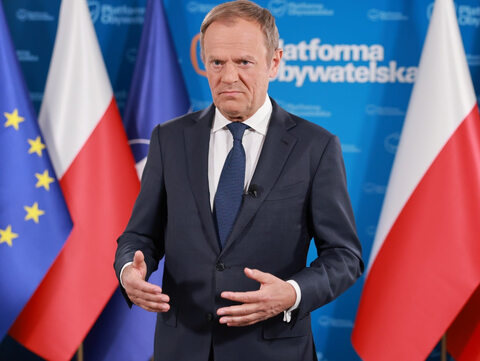
After Russian drones entered Poland that September, Prime Minister Donald Tusk said the Kremlin was using real fears and emotions to fuel anti-Ukrainian sentiment. False claims about Ukrainians living off Polish taxpayers have also fed hostility as bilateral relations frayed.
A fire at a Polish plant that makes drone parts for Ukraine's and Poland's militaries is being investigated as possible sabotage by a foreign intelligence service, Militarnyi reported. Poland's National Prosecutor's Office opened the case on two counts: foreign-intelligence activity against the country and a terrorist offense.
Fires and break-ins like this fit a widening pattern — the factories and supply lines that keep Ukraine armed are increasingly targets far from the front line. Across the continent, prosecutors keep opening the same kind of arson case against plants tied to Ukraine's defense.
A masked intruder and a two-hour fire
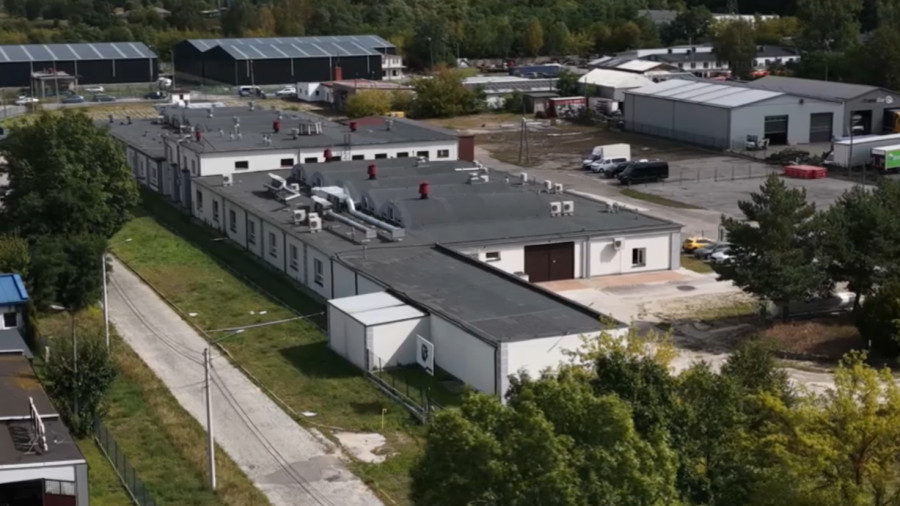
The fire started shortly after midnight on 31 August in the assembly hall of the WB Electronics plant in Skarżysko-Kamienna and spread to the storage rooms. Five crews put it out in under two hours. No one was hurt, but the storage rooms were destroyed, leaving at least 15 million zloty ($4 million) in damage. The plant had no permanent guards on site; a security company monitoring it remotely reported the fire.
Prosecutors say the blaze was set deliberately with a planted charge of flammable material, and no one has been charged. Security cameras recorded a masked person who climbed a fence and got onto the site.
Why Poland is looking at Moscow
Czesław Mroczek, deputy head of Poland's Interior Ministry, told RMF FM radio that many signs point to arson, and that a Russian trail is the obvious inference. An attack on the defense industry can suggest Russian involvement, he said, since European states have faced sabotage for years while backing Ukraine. Mroczek said protection plans for key defense plants must be richer than what this site had. No one has been detained, and investigators are still tracing how the intruder got in and who may have ordered it.
Explore further
After CIA head’s visit to Moscow, Poland’s PM warns Russia is preparing to escalate war. He puts critical window at seven or eight months
What the plant actually makes
WB Electronics is the core of WB Group, Poland's biggest private arms holding, whose firms build reconnaissance and strike drones such as the FlyEye and the Warmate. The Skarżysko-Kamienna site itself makes drone components for unmanned systems, used by both Polish and Ukrainian forces. Ukraine received FlyEye drones back in 2022 under its Army of Drones program, and in 2025 WB Group launched drone production inside Ukraine.
Ukraine's assault regiments, the troops built to storm trenches, have taken on a new role in 2026, reaching far into the Russian rear with their own strike drones, according to a feature by Ukrainska Pravda. Two of them merged their drone teams into a single experimental command and now plan deep strikes and ground assaults together, hitting the roads that feed Russian forces before the infantry moves.
Through 2026, Ukraine has turned drones into a way to choke the logistics that keep the invasion moving, backed by dedicated funding aimed squarely at the enemy's rear. The shift now under way puts that reach in the hands of the units doing the ground fighting, so the same troops who storm a position can first starve it from dozens of kilometers away.
Assault troops with a long reach
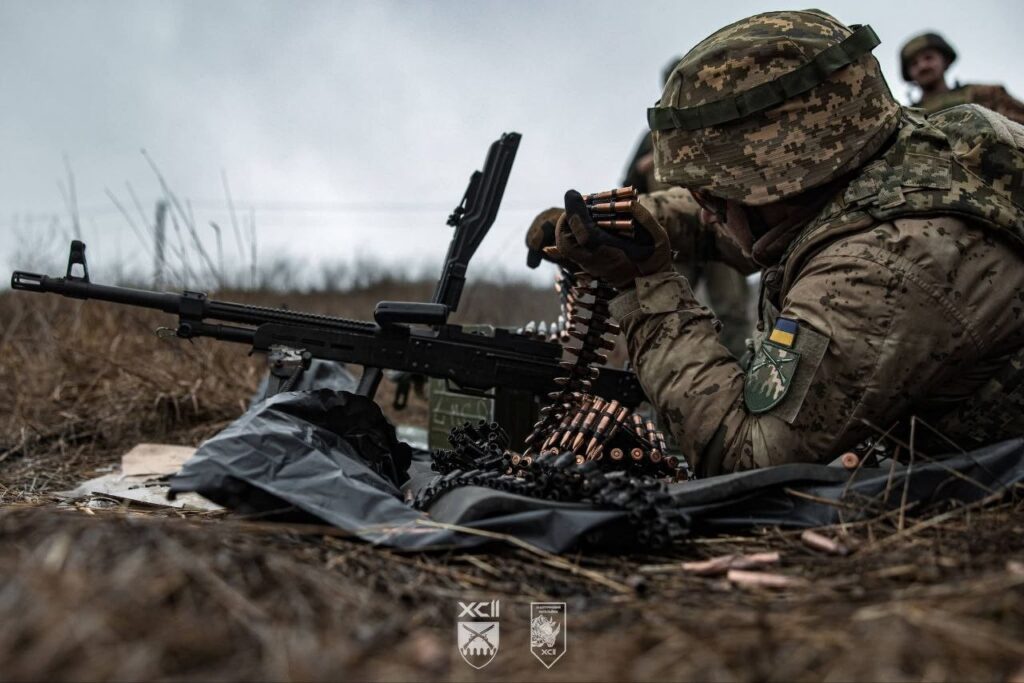
For most of the war, deep strikes behind the front belonged to specialized drone units. That is changing. The 475th Separate Assault Regiment, known as CODE 9.2, was possibly one of the first non-specialist units to run mid-strikes, flights by medium-range attack drones that hit targets 50 to 150 kilometers past the front.
Explore further
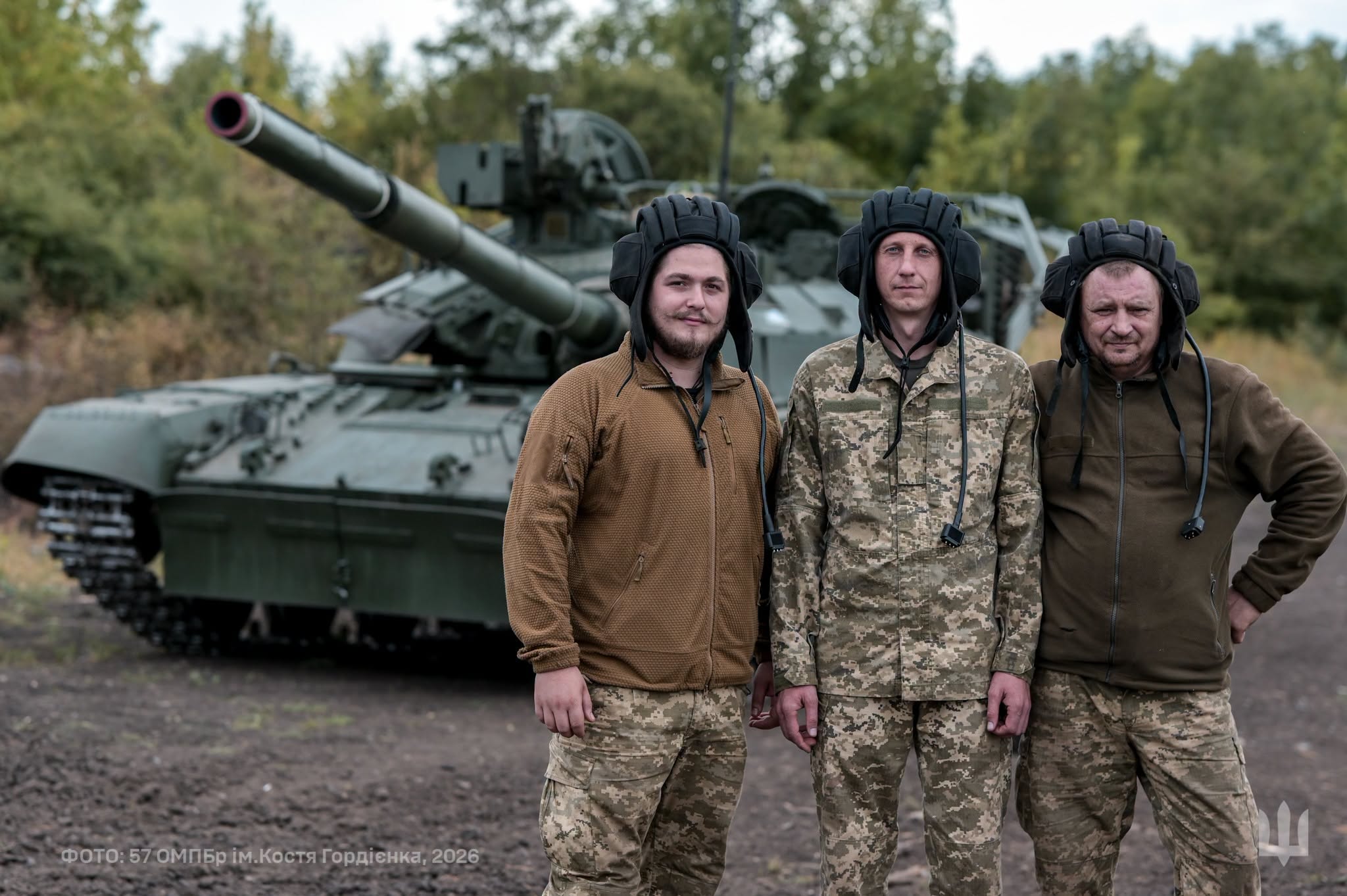
A rare Ukrainian Bulat tank turned up in a brigade that never had them
Then CODE 9.2 and the 1st Separate Assault Regiment named after Dmytro Kotsiubailo built a joint command for multidomain operations, code-named Phalanx (Falanha), so they could plan and strike as one. Before that center existed, each unit fought its own stretch of front at its own pace. In plain terms, ground units now own part of the fight far beyond their own trenches.
Drones go in before the infantry
Reporters watched a soldier follow a live feed from a mid-strike drone called Darts as it flew over occupied Zaporizhzhia Oblast toward the Tokmak–Melitopol road, one of three the report calls key for Russian forces on that stretch. Crews log every flight in Ukraine's Delta battlefield system. When several drones go down in one area, an analyst reroutes the next ones around Russian air defenses. The goal is to wear down the enemy's supply before the infantry ever advances.
Explore further
Ukrainian drone maker is pitching its new five-inch strike FPV as assault squad’s mortar
Where the shift began
CODE 9.2 launched its first mid-strikes at the end of 2025, during the Kupiansk operation, its commander Oleksandr Nastenko, call sign Flint, recalled. In the interview, the two commanders trace the center back to a build-up of heavy bomber drones, then a plan to isolate the enemy's transport and supply. For assault units, that kind of reach is recent. The regiments had already worked together earlier in 2026 to strike Russian routes into occupied Crimea, hitting bridges and trucks that keep the peninsula fed.
Zaporizhzhia’s largest shopping and entertainment complex, City Mall, will remain closed throughout September following a Russian drone strike on a neighboring hypermarket last week.
Russia’s attacks are increasingly disrupting the basic civilian life of Ukrainian cities, as strikes on shops and other commercial facilities make it harder for businesses to operate and residents to go about their daily lives. The pattern is especially pronounced in cities close to the front, where Russia is unable to seize territory but can continue attacking from the air.
City Mall announced the closure on 1 September, apologizing to visitors and saying it would provide updates on when operations could resume. The complex did not give an official reason for the decision.
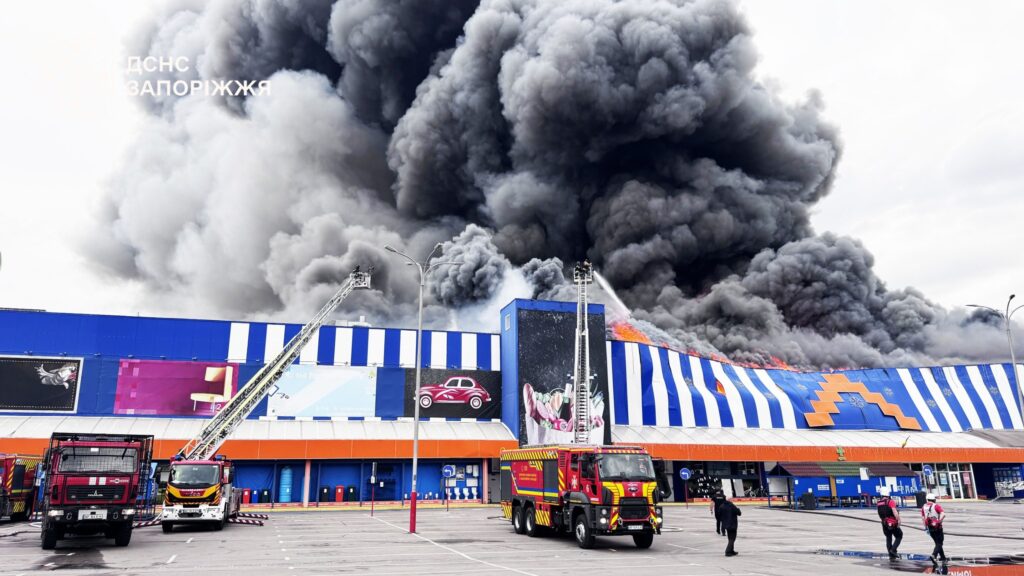
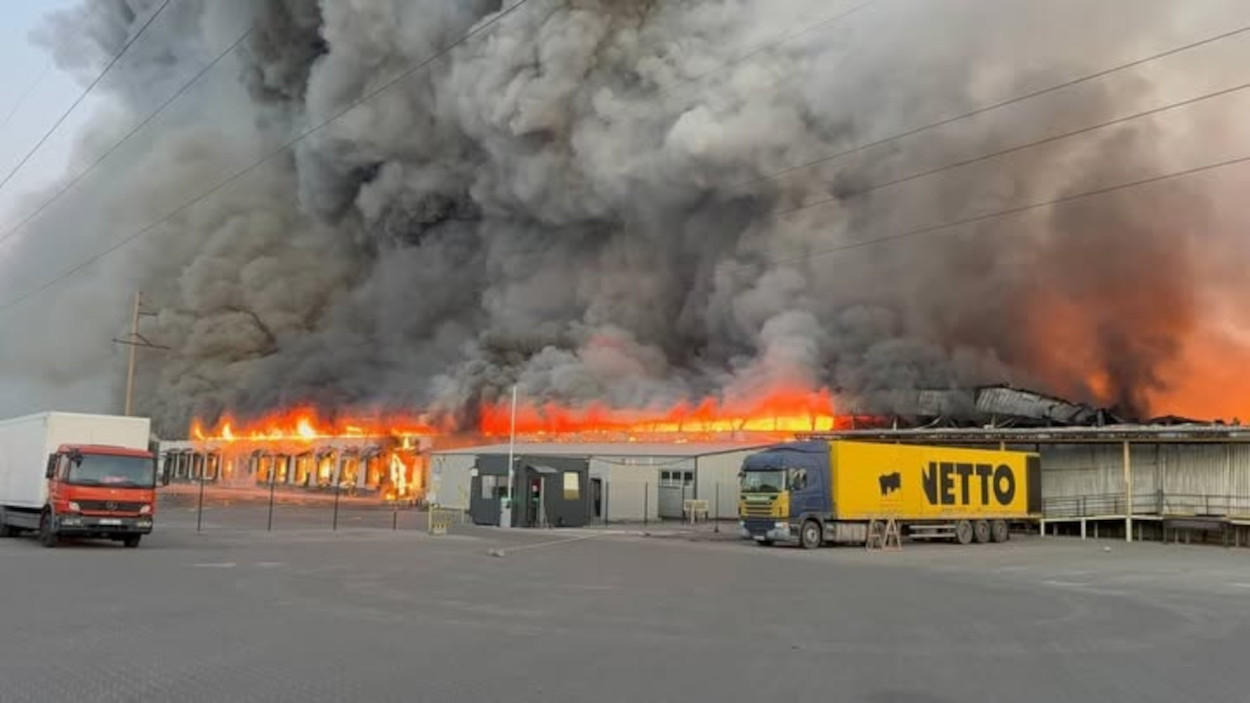
The announcement came four days after a Russian strike hit an Epicentr hypermarket located near the mall on 28 August. The attack sparked a fire covering about 2,000 square meters.
Russia targets Ukraine’s civilian economy
Shopping centers and other commercial facilities have increasingly been caught up in Russia’s attacks on Ukrainian cities.
In recent weeks, Russia has stepped up attacks on commercial sites and retail storage facilities, particularly in and around Kyiv, as well as other major cities closer to Russia and the frontlines.
On 21 August, a Russian drone strike on a shopping center in Kryvyi Rih killed at least 15 people and injured 130, including 23 children, according to local authorities. A second strike hit emergency responders about 30 minutes later as they worked at the scene.
The attacks have also hit Ukraine’s retail sector financially. As of August, three shopping centers had been destroyed and nine more damaged by Russian attacks since the beginning of 2026, with direct losses to the sector reaching 3.226 billion hryvnias ($72.5 million), according to industry data cited by Censor.NET.
Fear of attacks is also keeping shoppers away. Air raid alerts accounted for 21.8% of shopping centers’ operating hours in August, up from 20.1% in July and 9.4% a year earlier.
Explore further
Russia has burned millions of Ukrainian books, striking at the infrastructure of Ukrainian culture
Zaporizhzhia under Russian attack
For Zaporizhzhia, the pressure is particularly severe. The major city lies close to the front line and has faced sustained Russian attacks throughout the full-scale war.
Unable to seize the city through ground advances, Russia has repeatedly used missiles and drones to strike its infrastructure and civilian areas.
The result is a city where even businesses that survive direct strikes can be forced to close because of the continuing threat.
The head of the Moscow-based Russian Orthodox Church, Patriarch Kirill, personally consecrated Igor Pashentsev as bishop of Skadovsk and Oleshky after occupation authorities appointed him to lead the Skadovsk diocese, the Ukrainian outlet IPC-South reported, citing Russian sources.
The appointment advances the Russian church’s incorporation of occupied Ukrainian parishes into a Moscow-controlled structure created after Russia seized the area. Pashentsev will oversee churches across five occupied Kherson districts through a diocese IPC-South describes as operating illegally on Ukrainian territory.
Ukraine banned the Moscow-based Russian Orthodox Church from operating in the country in 2024 and established a court process for suspending Ukrainian religious groups that fail to sever Russian control. The measure targets Russian control, not Orthodox Christianity.
IPC-South says Pashentsev graduated from a Soviet military command school of chemical defense and served in the Soviet Defense Ministry’s 12th Main Directorate from 1981 to 1992. The Federation of American Scientists says the directorate stored, maintained, transported, and secured the Soviet Union's nuclear arsenal, but public records do not identify his duties there.
Ordained in 1993, Pashentsev completed the Moscow Theological Seminary in 1998, later led a Tambov diocesan office for relations with the armed forces and detention facilities, and served in the Barysh diocese. Known in the church as Joseph, he held the rank of archimandrite—a senior Orthodox monk—before his consecration.
During a Dormition liturgy—a major Orthodox feast honoring the Virgin Mary—Kirill gave Pashentsev an episcopal staff symbolizing a bishop’s authority and delivered instructions before his ministry began, Russian church accounts relayed by IPC-South said.
The Russian Orthodox Church created the Skadovsk diocese—a regional church administration—on 27 December 2023 after the occupation made it impossible for the existing Kherson diocese to oversee parishes on the Dnipro’s left bank. The new body incorporated parishes across the occupied Oleshky, Hola Prystan, Kalanchak, Skadovsk, and Chaplynka districts. IPC-South describes it as operating illegally on Ukrainian territory.
Russia weaponizes church control while suppressing other faiths
Pashentsev’s appointment is part of the Moscow Patriarchate’s wider effort to control religious life in occupied Ukraine. Religious communities that reject Kremlin authority face interrogations, threats, closures, and confiscation.
Ukraine’s Security Service has accused church structures of recruiting and training mercenaries for Russia’s military. The Institute for the Study of War, a US-based think tank, says occupation authorities also arbitrarily detain clergy and destroy places of worship while suppressing independent Ukrainian religious identity.
A shootout involving Ukrainian security personnel in Kyiv left several people wounded on 2 September, with Ukrainian authorities now saying the confrontation occurred during an investigation into an alleged Russian plot to assassinate a Russian opposition figure in Ukraine.
The incident took place overnight in Kyiv’s Dniprovskyi district, amid reports that Stepan Kaplunov, deputy commander for combat operations of the Russian Volunteer Corps (RDK), had been abducted.
Shootout follows reported abduction
Ukrainska Pravda reported, citing Kaplunov’s lawyer Taras Borovskyi, that law enforcement officers arrived at the serviceman’s home after his reported disappearance.
According to Borovskyi, Kaplunov’s fellow soldiers came to the location after being alerted, after which gunfire broke out. The lawyer also published video from the scene, Ukrainska Pravda reported.
The RDK had previously said that unknown individuals abducted Kaplunov from the courtyard of his home.
Ukraine’s State Bureau of Investigation confirmed to Ukrainska Pravda that it had received a complaint from Kaplunov’s lawyers alleging his abduction and was examining it for possible registration as a criminal proceeding.
Ukrainska Pravda, citing sources in Ukraine’s security services, reported that the confrontation involved the Security Service of Ukraine (SBU) and Ukraine’s Main Intelligence Directorate (HUR). Its sources said three HUR personnel had been wounded as of Wednesday morning.
SBU links confrontation to Russian plot
The SBU later said the confrontation occurred during an investigation into an alleged terrorist attack organized by Russia’s Federal Security Service (FSB).
The agency said its investigators were conducting a search at one of the addresses connected to the case when a group of people launched an armed attack on them. The group allegedly blocked the investigators’ vehicles with cars and attempted to prevent the search.
The SBU said its Alpha special operations unit was deployed to stop the armed resistance. Officers used their weapons, and several people who resisted were wounded, according to the agency.
The attackers were detained, the SBU said. Initial investigative work found that they belonged to one of Ukraine’s Defense Forces units, while weapons and documents were seized from them.
The agency did not identify the detainees or their military unit.
Alleged assassination attempt
Earlier on 2 September, the SBU said it and HUR had jointly foiled an FSB plot to assassinate a leader of a Russian opposition nationalist political movement who had traveled to Ukraine for Independence Day.
The SBU did not name the alleged target or provide details of the planned attack.
RBC-Ukraine, citing sources, reported that the target was Kaplunov. The outlet also reported that HUR later deleted a statement about the foiled attack.
The SBU’s later statement about the shootout did not name Kaplunov or explicitly identify the armed group involved as HUR personnel.
The Russian Volunteer Corps is a unit operating within Ukraine’s military intelligence structures and composed of Russian nationals fighting against Russia’s invasion.
Budanov calls for investigation
Kyrylo Budanov, head of Ukraine’s Presidential Office, said the incident should be thoroughly and impartially investigated, according to RBC-Ukraine.
He said no one should be allowed to abduct servicemen, open fire in Ukrainian cities, or give or carry out criminal orders with impunity.
The Prosecutor General’s Office has opened a pretrial investigation into threats against and an attempt on the life of a law enforcement officer, the SBU said.
Authorities have not publicly provided a full account reconciling the different reports surrounding the incident. Investigative actions are ongoing.
Ukraine and Russian opposition figures
Ukraine has become a base for some Russian opposition figures and anti-Kremlin activists since the start of Russia’s full-scale invasion. Some have joined Ukrainian military units or otherwise supported Ukraine’s war effort.
That has also made some of them targets for Russian intelligence operations.
Russian President Vladimir Putinsaid Moscow would “find a way to respond” if civilian “tragedies” followed President Volodymyr Zelenskyy’s warning that Ukrainian drone operations were making Russian skies unsafe. Zelenskyy told foreign airlines and insurers that the “safe moments” in Russian airspace were over.
Zelenskyy’s warning seeks to extend the cost of Russia’s war beyond damaged military and energy facilities to airlines, insurers, and travelers. It does not mean Russian airspace is legally or completely closed. However, carriers that continue flying over Russia face higher costs from repeated airport shutdowns during drone alerts, as well as the danger that military activity in Russian airspace could endanger civilian aircraft.
Putin spoke after a 1 September Shanghai Cooperation Organization summit in Bishkek, where Russia and China coordinate regional security. Zelenskyy’s warning amounted to “a bid for state terrorism” if he had made it publicly, the Russian president said, adding that Russia does not negotiate with “terrorists.” Putin also said Russian forces were preparing massive strikes on Ukraine’s energy infrastructure.
In his evening video address, Zelenskyy said Ukraine did not threaten civilian aircraft but would keep striking Russian military targets and parts of the economy supporting the war. Ukraine’s Presidential Office head Kyrylo Budanovbacked the decision, saying long-range weapons would systematically strike military targets in Russia while the invasion continued.
Explore further
“Russian airspace will effectively be closing”: Zelenskyy warns airlines Russian skies are no longer safe
Shares in Aeroflot, Russia’s national airline, fell to an intraday low of 30.36 rubles at about 20:40 Moscow time, down 5.11%, Meduza reported, citing Moscow Exchange data. The timing does not establish that Zelenskyy’s speech alone drove the decline.
Wall Street Journal correspondent Yaroslav Trofimovposted a chart of the decline on X, writing, “Aeroflot shares after Zelensky’s warning.”
European and US carriers already avoid Russian airspace, but airlines from China, Türkiye, the United Arab Emirates, and other Gulf states continue using it, Reuters reported. Aviation-risk firm Osprey Flight Solutions assessed that daily attacks deep inside Russia were nearly certain through 2026 and warned of possible misidentification.
Andrii Kovalenko, head of Ukraine’s Center for Countering Disinformation, said it was “strange” to hear terrorism accusations from “the leader of a terrorist organization masquerading as the Russian state.” Putin’s reaction showed Moscow feared pressure on its airspace, he argued.
Previous closures of Russian airspace due to Ukrainian attacks
Russian airports were repeatedly shut during Ukrainian drone alerts well before Zelenskyy’s warning. On 6 July 2025, Moscow airports canceled 171 flights while airports in five other cities suspended operations.
Large companies often need help when they hold crypto. They may have many staff members,company rules, and legal rules to follow. They also need a clear record of every payment. Forthis reason, many institutional investors use special custody companies.
Crypto custody providers keep digital assets for their clients. They protect private keys, whichare secret codes used to access crypto. They can also control who is allowed to send funds.This gives a company more control over its money.
How institutional custody works
Institutional crypto custody is different from using a personal wallet. In a company, one personmay prepare a payment and another person may approve it. Some providers ask two or threepeople to approve a large transfer. This can lower the risk of a mistake or theft.The provider may keep private keys in offline storage. This means the keys are not alwaysconnected to the internet. It may also give each team member a different role. One person canview the balance, while another can send funds.
A company can learn about fees, supported coins, and account tools when it studies differentinstitutional crypto services. It should also read information from other providers. The servicesmay look similar, but the rules and costs can be different.
How providers support Ethereum Classic
Ethereum Classic uses ETC as its coin. A custody provider must support the ETC networkbefore it can offer this asset to clients. It needs to create ETC wallet addresses and checkpayments on the network.
When a company receives ETC, the provider may wait for several confirmations. A confirmationshows that the payment was added to the blockchain. More confirmations can make thepayment harder to change. Each provider may use a different number.
Digital asset custody also gives companies a record of their ETC activity. The account can showwhen coins came in, when they went out, and who approved the payment. This is useful forreports and company checks.
What should a company check?
First, the company should check if the provider supports ETC in its country. It should ask aboutfees, withdrawal times, security, insurance, and customer support. It should also check whathappens if the network has a problem.
Institutional crypto services can make crypto easier to manage, but they cannot remove everyrisk. A company should compare several providers and choose one that fits its daily work andbudget.
This content is provided for informational purposes only and shall not be construed as financial,investment, trading, or any other form of professional advice. Nothing herein constitutes arecommendation or solicitation to engage in any transaction or investment activity.

 Connexion