The employee, now fired, had said he advised government agencies in Saudi Arabia. He was also listed as a partner at a venture firm with a Saudi prince.
The employee, now fired, had said he advised government agencies in Saudi Arabia. He was also listed as a partner at a venture firm with a Saudi prince.
The San Francisco offices of OpenAI. According to a court filing, a thumb-size recording device wrapped in toilet paper was found plugged into the back of a television in an executive conference room.
Joining a global movement, President Claudia Sheinbaum signed a decree requiring the removal of a range of material for people under 18 and held out the prospect of tougher measures.
Joining a global movement, President Claudia Sheinbaum signed a decree requiring the removal of a range of material for people under 18 and held out the prospect of tougher measures.
Jack Russell terrier that escaped from family’s cabin in September was caught in a live trapLuna, a Jack Russell terrier who eluded capture for over a month as concern for the dog’s survival mounted ahead of winter in Yellowstone national park, was caught in a live trap Wednesday and reunited with her owners.The 10-year-old dog had been spotted crossing intersections, strolling through employee housing and entering lodges through automatic doors at the sprawling national park that’s home to griz
Jack Russell terrier that escaped from family’s cabin in September was caught in a live trap
Luna, a Jack Russell terrier who eluded capture for over a month as concern for the dog’s survival mounted ahead of winter in Yellowstone national park, was caught in a live trap Wednesday and reunited with her owners.
The 10-year-old dog had been spotted crossing intersections, strolling through employee housing and entering lodges through automatic doors at the sprawling national park that’s home to grizzly bears, wolves and other predators.
Police arrested Metallica Rose Harrison, 27, after reports of a ‘distressed female’ at the Great Wolf Lodge resortA Pennsylvania woman allegedly killed her husband and her three-year-old son at a resort in the Poconos Mountains of Pennsylvania this week before attempting suicide, according to local officials.Pocono Township police responded to reports of a “distressed female” at the Great Wolf Lodge resort, with the woman identified as 27-year old Metallica Rose Harrison of Towanda, Pennsylvania
Police arrested Metallica Rose Harrison, 27, after reports of a ‘distressed female’ at the Great Wolf Lodge resort
A Pennsylvania woman allegedly killed her husband and her three-year-old son at a resort in the Poconos Mountains of Pennsylvania this week before attempting suicide, according to local officials.
Pocono Township police responded to reports of a “distressed female” at the Great Wolf Lodge resort, with the woman identified as 27-year old Metallica Rose Harrison of Towanda, Pennsylvania, by police.
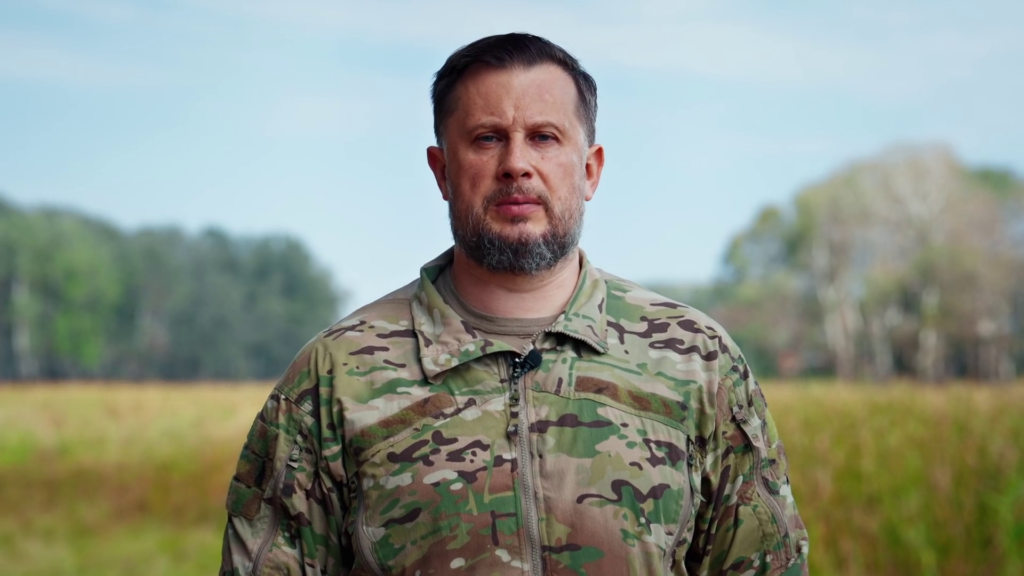
Ukraine has completed its Operation Vivaldi, aimed at protecting its fortress belt cities of Donetsk Oblast, which helped Kyiv preserve the region from Russian occupation for 12 years. Brigadier General Andrii Biletskyi, the commander of the Third Army Corps behind the operation, has reported that the fourth phase secured 101 km² of territory. Among the latest achievements is the liberation of three settlements—Zelena Dolyna, Lypove, and Kolodiazi.
The operation's main objective was to
Ukraine has completed its Operation Vivaldi, aimed at protecting its fortress belt cities of Donetsk Oblast, which helped Kyiv preserve the region from Russian occupation for 12 years. Brigadier General Andrii Biletskyi, the commander of the Third Army Corps behind the operation, has reported that the fourth phase secured 101 km² of territory. Among the latest achievements is the liberation of three settlements—Zelena Dolyna, Lypove, and Kolodiazi.
The operation's main objective was to move Ukrainian troops into more advantageous defensive positions, Biletskyi said in the first days after the operation was made public. Vivaldi has now summed up the results of all four phases: Ukraine has established full control over 16 settlements, liberated 277 km² of territory, and inflicted 8,000 casualties on Russian forces.
Ukraine worked against Russia's deadline
During Operation Vivaldi, Ukrainian forces have prevented Russian troops from outflanking the Sloviansk-Kramatorsk agglomeration and cutting the Kharkiv–Sloviansk highway, a key supply route for Ukraine’s forces in Donbas, Biletskyi says.
“We thwarted the offensive of the Zapad grouping and forced it to redeploy some units of the 1st Tank Army, which eased pressure on Kupiansk-Vuzlovyi,” Biletskyi announces.
Previously, the Institute for the Study of War noted that Russian President Vladimir Putin was confident that Russian forces would be able to seize the entire Donetsk Oblast by the end of 2026 — the Kremlin’s latest deadline for achieving this goal.
Ukraine’s military was on a mission to prevent this.
Season one: clearing russian infiltration groups
On 15 September 2026, Ukraine’s Third Army Corps announced Operation Vivaldi in northern Donetsk Oblast. During the first phase, Ukrainian troops cleared Russian groups from 75 km² of territory and liberated another 10 km².
The Third Army Corps said it had struck Russian supply routes and fuel infrastructure, prompting Russia to relocate its fuel and lubricant reserves to Voronezh Oblast. According to the corps, Russian forces lost around 1,500 troops, more than 12,000 drones, and hundreds of pieces of equipment.
Season two: liberation of Shandryholove and Derylove
On 20 September, the Third Army Corps reported the liberation of Shandryholove and Derylove and the establishment of full control over Drobysheve.
During the second season, Russian forces lost another 800 troops, bringing their total losses across the first two seasons to more than 3,000, according to the corps.
During the first two seasons of the operation, Ukrainian troops and attached units regained control of 125 km² of territory, including 50 km² that had been fully liberated.
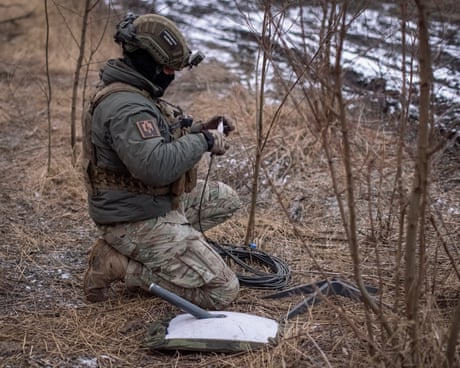
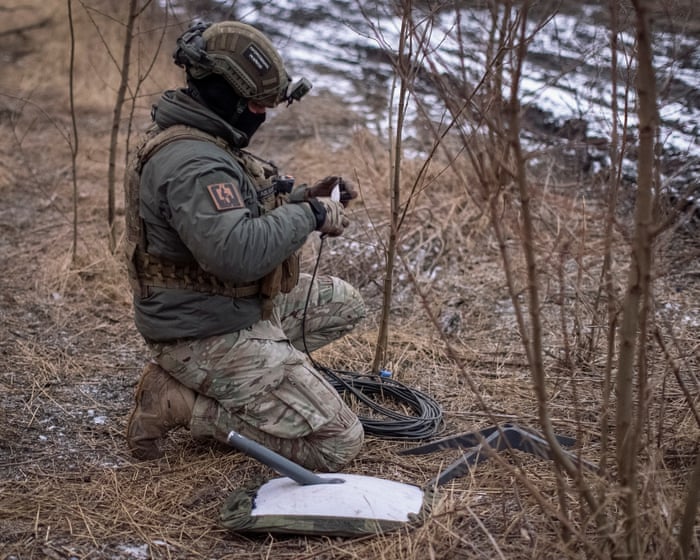
Soldiers of Ukraine’s Third Army Corps. Source: Ukraine’s Third Army Corps
The first phase of Vivaldi involved eliminating Russian groups that had infiltrated Ukrainian positions, explained the commander of a battalion in the 125th Brigade, callsign Darwin, per ArmyInform. After clearing those groups, the Defense Forces moved on to the operation’s second phase, using reconnaissance drones to detect Russian forces, he added.
For this, Ukraine used UAVs and ground robotic systems.
“The Third Army Corps was the first in the world to begin deploying ground robotic systems by air. Our heavy bombers deliver kamikaze ground robotic systems more than 10 kilometers behind enemy lines,” Biletskyi noted.
Season three: advances near Novе and Ridkodub
On 28 September, the Third Army Corps reported the liberation of Nove, Ridkodub, and Katerynivka and the restoration of control over Karpivka and Novomykhailivka. Ukrainian forces regained another 51 km² of territory, bringing the total area liberated since the start of the offensive to 176 km². Russian forces lost around 2,000 troops, and more than 250 were taken prisoner, the corps said in its summary of the operation’s third phase.
Settlements Ukraine's 3rd Army Corps says it liberated during Operation Vivaldi north of Lyman, Donetsk Oblast, Ukraine, as of 28 September 2026. Map: ISW
“The Russians were convinced that the main axis of attack was Shandryholove–Zelena Dolyna. This led it to squander its reserves in counterattacks along that very axis. The Russians slept through the actual strike, which was focused on capturing Nove,” Biletskyi said.
Operation Vivaldi aimed to disrupt Russia’s plans in Donetsk Oblast
The need for Operation Vivaldi arose amid Russian attempts to encircle Ukraine’s fortified belt in Donetsk Oblast. Ukrainian forces conducted preparatory efforts aimed at degrading Russia’s offensive capabilities, including strikes on Russian drone operators, the Institute for the Study of War reported on 9 October.
Ukrainian counterattacks in the Lyman direction and east of Sloviansk and Kramatorsk were intended to complicate Russian efforts to seize the fortified belt in Donetsk Oblast, the report noted.
The corps advanced gradually, reclaiming small areas instead of attempting a large-scale breakthrough.
With a narrow presidential election looming, President Luiz Inácio Lula da Silva and his allies claim Meta is trying to give his right-wing rival an advantage.
With a narrow presidential election looming, President Luiz Inácio Lula da Silva and his allies claim Meta is trying to give his right-wing rival an advantage.
Our national security and White House correspondent David E. Sanger breaks down why President Donald Trump struck a deal with President Vladimir V. Putin to import Russian diesel fuel in the coming months, despite having signed recent congressional legislation tightening energy sanctions on Russia.
Our national security and White House correspondent David E. Sanger breaks down why President Donald Trump struck a deal with President Vladimir V. Putin to import Russian diesel fuel in the coming months, despite having signed recent congressional legislation tightening energy sanctions on Russia.
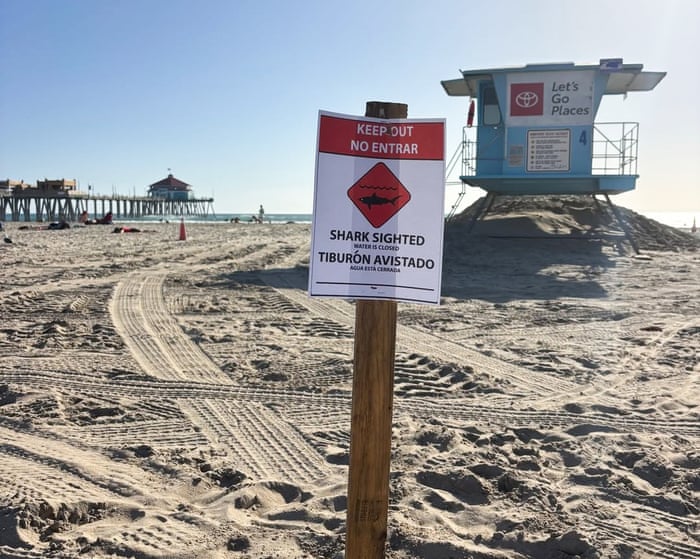
Two-mile stretch of Huntington Beach closed after sighting at location popular with surfers and swimmersA popular southern California beach was closed after a great white shark was reportedly spotted “exhibiting aggressive behavior” on Tuesday afternoon.The Huntington Beach fire department said there was a “credible report” of a 10-12ft great white shark circling near a lifeguard tower, which is considered aggressive behavior according to the city’s marine safety division’s “shark response proto
Two-mile stretch of Huntington Beach closed after sighting at location popular with surfers and swimmers
A popular southern California beach was closed after a great white shark was reportedly spotted “exhibiting aggressive behavior” on Tuesday afternoon.
The Huntington Beach fire department said there was a “credible report” of a 10-12ft great white shark circling near a lifeguard tower, which is considered aggressive behavior according to the city’s marine safety division’s “shark response protocols”.
L’affaire Thélyson Orélien a offert une publicité inespérée à l’outil de détection de l’intelligence artificielle Pangram. Entre les enthousiastes et les sceptiques, de nombreuses informations contradictoires circulent sur les réseaux sociaux. La Presse fait le point.
— Permalien
L’affaire Thélyson Orélien a offert une publicité inespérée à l’outil de détection de l’intelligence artificielle Pangram. Entre les enthousiastes et les sceptiques, de nombreuses informations contradictoires circulent sur les réseaux sociaux. La Presse fait le point.
— Permalien
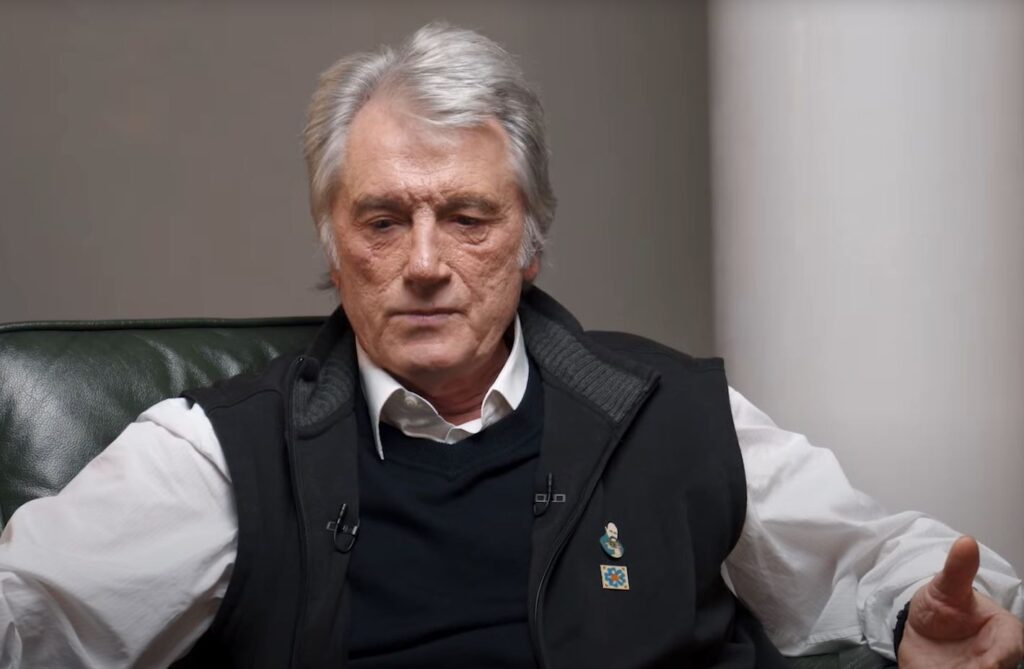
Viktor Yushchenko, Ukraine’s president from 2005 to 2010, has written an open letter to US President Donald Trump and posted it on Facebook on 14 October. Without naming it, the letter takes aim at the green light Washington gave Russian diesel trade five days earlier, after a call between Trump and Kremlin leader Vladimir Putin.
Russia banned its diesel exports in July amid a fuel crisis at home, after Ukrainian strikes on refineries had already cut those exports, and last week’s US wa
Viktor Yushchenko, Ukraine’s president from 2005 to 2010, has written an open letter to US President Donald Trump and posted it on Facebook on 14 October. Without naming it, the letter takes aim at the green light Washington gave Russian diesel trade five days earlier, after a call between Trump and Kremlin leader Vladimir Putin.
Russia banned its diesel exports in July amid a fuel crisis at home, after Ukrainian strikes on refineries had already cut those exports, and last week’s US waiver and the supply deal Trump announced with Moscow would put that fuel back on world markets while Russian strikes still kill Ukrainian civilians.
What Yushchenko says Russian fuel buys
Yushchenko wrote that Russian ballistic missiles, Iranian Shahed drones, and aerial bombs strike homes every day and night in Kyiv, Zaporizhzhia, Odesa, Dnipro, and Kharkiv. Whenever there is talk of “concessions” or deals with Putin, he wrote, the Kremlin answers with more missiles, more drones, and more bloodshed.
Explore further
Trump’s Russian diesel deal, which drew fury in Ukraine, is unlikely to lower prices, experts say
Yushchenko rejected calls for Ukraine to “restrain its strikes against the infrastructure that finances and sustains Russia’s war.”
“Money paid for Russian fuel is not an abstraction called ‘commerce.’ It finances an economy geared toward total war,” he wrote.
Nuclear arms, Pearl Harbor, and Iwo Jima
Yushchenko wrote that Ukraine inherited “one of the largest nuclear arsenals in the world” and agreed to give it up, trusting the words and signatures of great powers. In his view, by signing the 1994 Budapest Memorandum, America took on a moral responsibility toward Ukraine.
He compared trade in Russian energy to America’s trade with Imperial Japan, which included strategically important materials, before the US entered World War II. Washington hoped for years to avoid a wider war in the Pacific, he wrote, but economic pressure and diplomacy could not prevent catastrophe.
Explore further
Ukraine warns of “a new type of humanitarian crisis” as Russia aims at its biggest cities
Japan attacked Pearl Harbor on 7 December 1941. America knows how dangerous it is to believe that trade can tame an aggressor, Yushchenko wrote, adding: “History taught us that lesson at a terrible price.”
He also named two men he called Ukrainian. One was Sergeant Michael Strank, whose family, Yushchenko wrote, came from Lemkivshchyna. The son of immigrants from Czechoslovakia, Strank took part in the famous raising of the US flag on Iwo Jima, according to the Marine Corps. The other was Oleksandr Silvashko, “a Ukrainian boy from the Cherkasy region,” who, Yushchenko wrote, was the first to embrace US Lieutenant William Robertson when American and Soviet forces met at the Elbe in April 1945.
“One does not negotiate with tyrants—one stops them,” Yushchenko concluded.
The government appointed an overseer to the last big news channel critical of President Recep Tayyip Erdogan. The authorities have now replaced the leadership at five major news outlets.
The government appointed an overseer to the last big news channel critical of President Recep Tayyip Erdogan. The authorities have now replaced the leadership at five major news outlets.
Firms turning crude oil into the ‘workhorse’ fuel stand to gain most despite economic fallout from record pricesDays after Donald Trump announced a deal to import Russian diesel into the US in an effort to lower soaring pump prices, the world’s energy watchdog has warned that the global fuel shortage will drag into 2027.Trump’s temporary sanctions reprieve was criticised for offering “too little, too late” to temper the sky high pump prices triggered by the shutdown of war-damaged refineries in
Firms turning crude oil into the ‘workhorse’ fuel stand to gain most despite economic fallout from record prices
Days after Donald Trump announced a deal to import Russian diesel into the US in an effort to lower soaring pump prices, the world’s energy watchdog has warned that the global fuel shortage will drag into 2027.
Trump’s temporary sanctions reprieve was criticised for offering “too little, too late” to temper the sky high pump prices triggered by the shutdown of war-damaged refineries in the Middle East and Russia – once the world’s second-largest diesel exporter behind the US.
Ukraine and NATO have unveiled two artificial intelligence (AI) tools in Vilnius, Lithuania, Ukraine’s Defense Ministry reported on 13 October. One forecasts Russian drone attacks near the front and is ready to join the Armed Forces’ situational awareness systems. The other helps plan artillery fire and is still in testing.
A forecast of where, when, and which drones will fly targets the main source of losses near the front. In March, Ukraine’s military put the share of front-line casua
Ukraine and NATO have unveiled two artificial intelligence (AI) tools in Vilnius, Lithuania, Ukraine’s Defense Ministry reported on 13 October. One forecasts Russian drone attacks near the front and is ready to join the Armed Forces’ situational awareness systems. The other helps plan artillery fire and is still in testing.
A forecast of where, when, and which drones will fly targets the main source of losses near the front. In March, Ukraine’s military put the share of front-line casualties caused by FPV drones at up to 80%. In May, Ukraine’s drone forces commander Robert Brovdi said Russia was copying Ukraine’s model to grow its drone forces. A month earlier, Presidential Office head Kyrylo Budanov wrote that adding more drones no longer fundamentally changes the battlefield. The next stage, he said, is full integration of AI.
Forecasting Russian drone attacks
The NATO-Ukraine Joint Analysis, Training and Education Center (JATEC) presented both at a three-day seminar in the Lithuanian capital. NATO’s Allied Command Transformation and Ukraine’s Armed Forces built the tools with JATEC’s support.
“The solution has already been validated using real-world datasets. It has been refined and is ready for integration into the Armed Forces of Ukraine's situational awareness systems,” the ministry said.
Model No. 13 works from past data, weather, and the current battlefield situation. The ministry said it can identify the intensity of attacks, the areas, the time windows, and the types of drones with a high probability.
Ranking artillery options
Model No. 32 is a decision-support module. It tests whether artillery plans can be generated automatically. It weighs the mission’s requirements and current operational data, including available weapons, ammunition, firing positions, and constraints.
Explore further
Ukraine’s new military AI does more than watch the battlefield—it helps commanders plan what comes next
First, it applies logistics, ballistics, and impact-zone parameters to throw out unworkable options. Then it scores and ranks the rest. That means less hand-based comparison, faster decisions, and a more efficient fire loop, the ministry said. The prototype is now with the Ukrainian military for trials. If the trials succeed and it is validated, it could be expanded to other units that strike Russian forces.
The Hokkaido Shimbun newspaper headquarters in Sapporo, Japan on Wednesday. A journalist from the newspaper was arrested in Russia and accused of spying.
President Volodymyr Zelensky, who met with Britain’s prime minister, has said Ukraine received no warning of Russian attacks, but President Trump has said Washington is still “sharing intel.”
President Volodymyr Zelensky, who met with Britain’s prime minister, has said Ukraine received no warning of Russian attacks, but President Trump has said Washington is still “sharing intel.”
Sabrina German, a poll official in Chatham county, details a typical election day, the pressure election workers face, and fallout from 2020 disputesIt’s not that Sabrina German doesn’t have political views. But as the director of voter registration for Chatham county, Georgia, talking politics is like breakdancing in traffic. “I don’t talk politics with anyone,” says German; she knows better.America’s partisan minefield has trained much of the country – aside from that one uncle you avoid at we
Sabrina German, a poll official in Chatham county, details a typical election day, the pressure election workers face, and fallout from 2020 disputes
It’s not that Sabrina German doesn’t have political views. But as the director of voter registration for Chatham county, Georgia, talking politics is like breakdancing in traffic. “I don’t talk politics with anyone,” says German; she knows better.
America’s partisan minefield has trained much of the country – aside from that one uncle you avoid at weddings and funerals – to get pretty good at the art of political diplomacy in polite company.
Mourners carrying the body of Mahmoud Barqawi, 33, at his funeral in Amman, Jordan, on Monday. He was killed in a Houthi missile attack on King Khalid International Airport in Riyadh on Saturday.
Some of those detained accused security forces of beating them during an intense crackdown on demonstrations in India’s capital over the weekend. Police have said they followed the law.
Some of those detained accused security forces of beating them during an intense crackdown on demonstrations in India’s capital over the weekend. Police have said they followed the law.
Launch of Russian ballistic missiles on Ukraine, with no US warning, coincides with outage of Starlink managed by Musk’s SpaceXUkraine’s military has suddenly had its access to Starlink satellite internet terminals restricted as the Trump administration has increased pressure on Ukraine to halt long-range strikes on Russia’s oil industry immediately.The terminals, which are produced by Elon Musk’s SpaceX but managed by the US government, are a key component of Ukraine’s military operations and t
Launch of Russian ballistic missiles on Ukraine, with no US warning, coincides with outage of Starlink managed by Musk’s SpaceX
Ukraine’s military has suddenly had its access to Starlink satellite internet terminals restricted as the Trump administration has increased pressure on Ukraine to halt long-range strikes on Russia’s oil industry immediately.
The terminals, which are produced by Elon Musk’s SpaceX but managed by the US government, are a key component of Ukraine’s military operations and the sudden restrictions on the terminals travelling at high speeds on Tuesday evening led to the failure of several combat missions, said an adviser on military technology to Ukraine’s president, Volodymyr Zelenskyy.
The claim that strikes on Russian tech giant Yandex thinned out social media bots finds no support in the networks tracked by Ukrainian disinformation-monitoring company LetsData, co-founder Ksenia Iliuk told Euromaidan Press on 13 October. She cautioned that the strikes may still have affected networks outside the company’s view.
At the Warsaw Security Forum, Lithuania’s prime minister suggested allies should ask Ukraine to strike more Russian data centers because that might help prote
The claim that strikes on Russian tech giant Yandex thinned out social media bots finds no support in the networks tracked by Ukrainian disinformation-monitoring company LetsData, co-founder Ksenia Iliuk told Euromaidan Press on 13 October. She cautioned that the strikes may still have affected networks outside the company’s view.
At the Warsaw Security Forum, Lithuania’s prime minister suggested allies should ask Ukraine to strike more Russian data centers because that might help protect European elections from foreign interference. Bot networks are one tool of that interference, so whether the strikes mute them carries weight well beyond Ukraine.
No drop in the networks LetsData tracks
Drones hit Yandex data centers in Sasovo and Vladimir between 8 and 11 October. Ukrainian drone maker Fire Point said its FP-1 drones struck Yandex’s Kaluga site in between. On 12 October, Ukrainian President Volodymyr Zelenskyy told the Warsaw Security Forum that once Ukraine’s response reached Yandex, social media had fewer bots.
Explore further
More than 500 drones by Moscow’s count: Kh-101 fuel plant, second Yandex data center, and a far-north refinery hit
LetsData checked X and Facebook, where bot networks usually stand out clearly, Iliuk said. Its analysts looked at networks attributed to Russia’s influence ecosystem. Among them are groups of X accounts spreading domains from what she called a new wave of Doppelgänger, a Russian campaign that clones real news sites.
Those networks look unaffected, Iliuk said. None of them has stopped posting or broken its usual rhythm, she added. Some are slightly less active, but LetsData’s analysts say that is typical for them. The networks run on a weekly cycle, and the check fell in the part of the week when they post less.
A network that jumped from Germany to Ukraine
LetsData worked with two samples. One covers accounts that systematically target Ukraine, Moldova, and Armenia. The other covers bot networks the company has followed for some time that keep changing their target audience, so they have no fixed country.
Explore further
Ukrainian drones hit three of Russian tech giant Yandex’s data centers in four days. Ukraine’s president says the bots thinned out too
About two weeks ago, one network from that second sample wrote about elections in Germany and spread fake Die Welt sites, she said. It now posts about mobilization in Ukraine and shares a fake site of Ukrinform, Ukraine’s state news agency.
What the check can’t see
The company can compare only within networks whose usual behavior it knows, Iliuk said. Checking the whole internet is impossible because the scale is colossal, she said. A Cloudflare chart that circulated as evidence counted automated web requests from Yandex’s network, including its search crawlers, not social media posts, Cybernews reported.
So the networks LetsData follows show no impact, Iliuk said. That does not mean the strikes had no effect at all, she noted. They may have shown up in networks the company isn’t tracking now. LetsData will keep watching and report other signals if they appear.
District court judge Timothy Kelly was ruling after Trump administration blocked access to three outlets last monthA federal judge ordered the White House on Tuesday to continue allowing journalists from CNN, MS Now and Politico to access the building as the media coalition’s lawsuit against the Trump administration plays out.Timothy Kelly, a district court judge, had on 24 September granted a 14-day reprieve for the news organizations, which six days earlier had been banned by the president in
District court judge Timothy Kelly was ruling after Trump administration blocked access to three outlets last month
A federal judge ordered the White House on Tuesday to continue allowing journalists from CNN, MS Now and Politico to access the building as the media coalition’s lawsuit against the Trump administration plays out.
Timothy Kelly, a district court judge, had on 24 September granted a 14-day reprieve for the news organizations, which six days earlier had been banned by the president in an extraordinary move from entering the White House grounds “as a result of their constant ‘reporting’ FAKE NEWS”.
The two nations fought alongside each other during a brutal conflict in Tigray that left hundreds of thousands of people dead just a few years ago. Now they are on the brink of fighting each other.
The two nations fought alongside each other during a brutal conflict in Tigray that left hundreds of thousands of people dead just a few years ago. Now they are on the brink of fighting each other.
Members of the Ethiopian Federal Police on patrol aboard a pickup truck as they continued operations after federal forces pushed back the rebel Tigray People’s Liberation Front in Mekelle, Ethiopia, last week.

 Connexion