The authorities reported hundreds of people missing and at least 160 people killed in the border region of Nepal and Tibet, where an avalanche of mud, water, ice and rocks smashed down.
The authorities reported hundreds of people missing and at least 160 people killed in the border region of Nepal and Tibet, where an avalanche of mud, water, ice and rocks smashed down.
The agency’s top spokesman is among those on leave, according to two Trump administration officials. The agency said three people faced a misconduct investigation.
The agency’s top spokesman is among those on leave, according to two Trump administration officials. The agency said three people faced a misconduct investigation.
A 15-year-old using social media apps in Australia in July, more than half a year after the country had implemented a ban on children under 16 using many platforms.
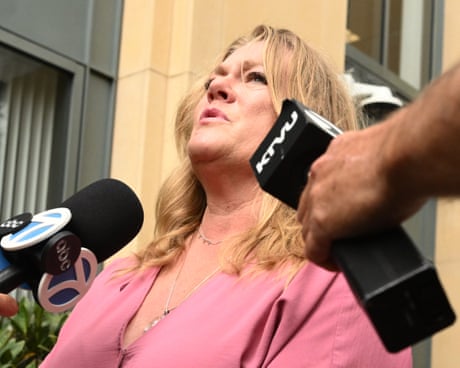
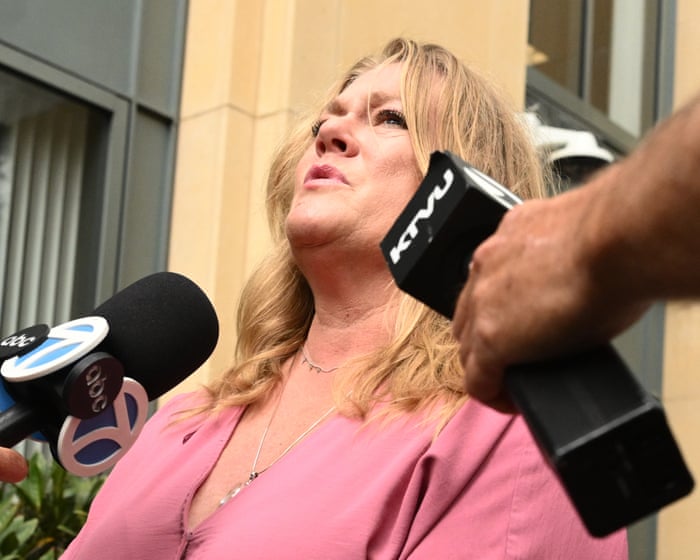
Victoria Hicks, mother of Alexandra Hicks, told reporters that she feels 'justice is possible' after Meta settled in its US trial over teen addiction. On 26 August in a Oakland, California, federal courtroom, Meta agreed to establish safeguards for teenagers and pay up to $17bn. Dozens of US states had accused the tech giant of addicting and harming children with dangerous products Continue reading...
Victoria Hicks, mother of Alexandra Hicks, told reporters that she feels 'justice is possible' after Meta settled in its US trial over teen addiction. On 26 August in a Oakland, California, federal courtroom, Meta agreed to establish safeguards for teenagers and pay up to $17bn. Dozens of US states had accused the tech giant of addicting and harming children with dangerous products
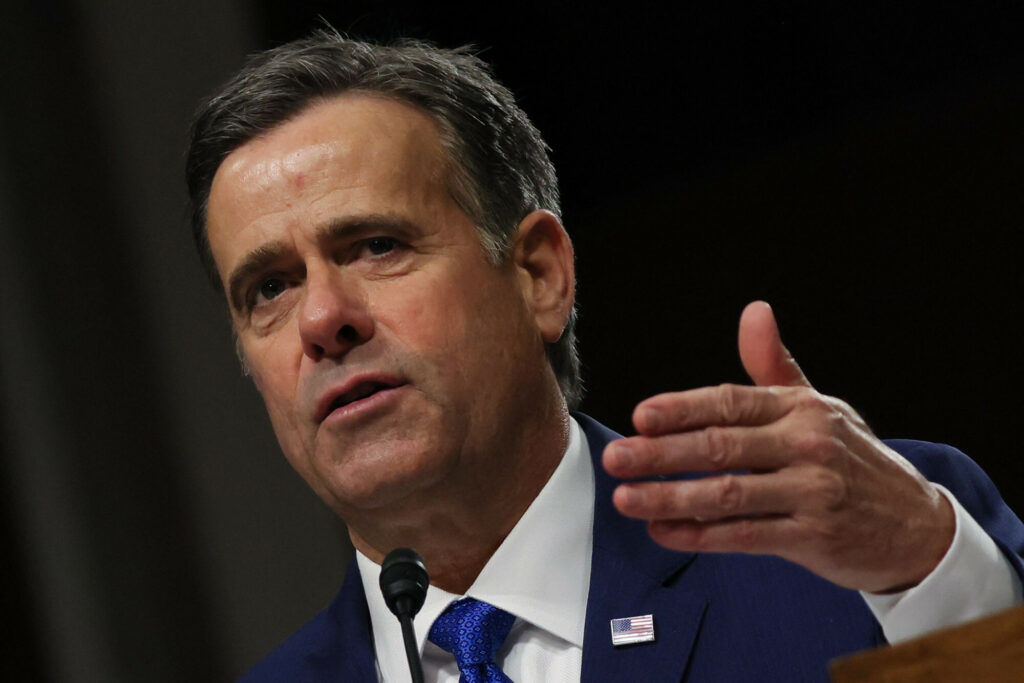
President denies visit was to gain support for Iran sanctions or due to fears that Putin plans to ‘test Nato resolve’US politics live – latest updatesDonald Trump has downplayed a visit to Moscow by the CIA director, John Ratcliffe, as “semi-routine” after he turned up in the Russian capital unannounced, triggering a wave of speculation about the reasons for his trip.Ratcliffe was reported to have flown to Moscow on a government transport plane on Tuesday in a rare visit after taking off from th
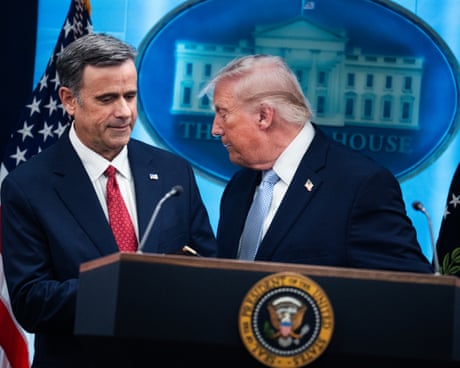
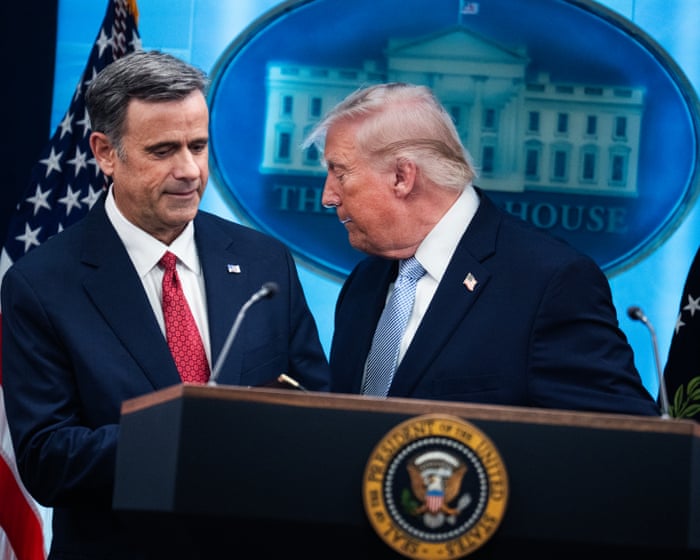
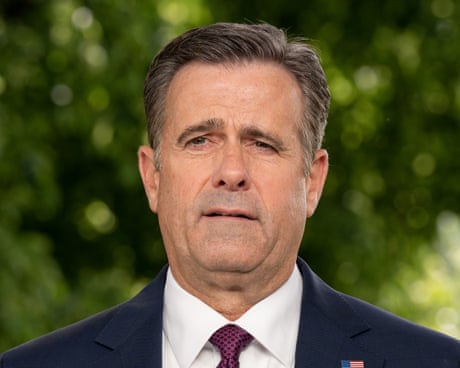
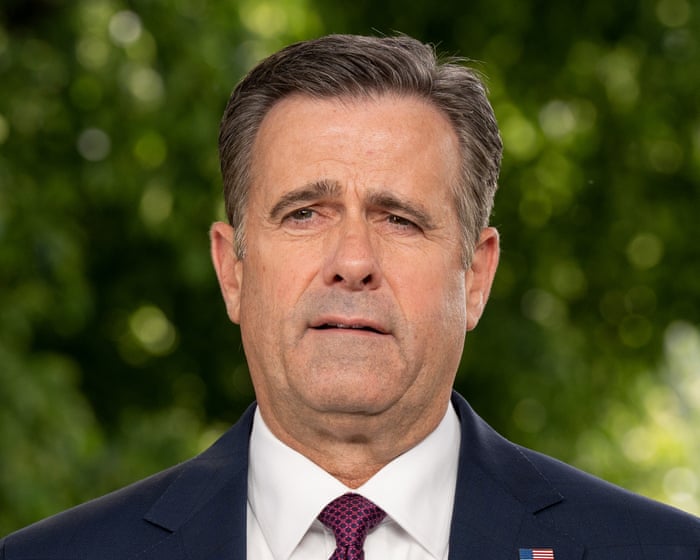
Donald Trump has downplayed a visit to Moscow by the CIA director, John Ratcliffe, as “semi-routine” after he turned up in the Russian capital unannounced, triggering a wave of speculation about the reasons for his trip.
Ratcliffe was reported to have flown to Moscow on a government transport plane on Tuesday in a rare visit after taking off from the Andrews air force base in Maryland.
The order came amid a spate of legal challenges, including one by Democratic state attorneys general, that could still result in the rules being blocked.
The order came amid a spate of legal challenges, including one by Democratic state attorneys general, that could still result in the rules being blocked.
Under its new plan, the Postal Service would not deliver mail ballots in states that do not share voter data with the agency and would deliver only ballots that meet certain criteria.
Dean Roy, 15, will appear on the ballot in November as a third-party candidate. He said his generation’s concerns, like affordability and climate change, have been ignored for too long.
Dean Roy, 15, will appear on the ballot in November as a third-party candidate. He said his generation’s concerns, like affordability and climate change, have been ignored for too long.
In this episode of Guardian Australia’s US politics podcast Decoding America, co-hosts Jonathan Yerushalmy and Reged Ahmad explore why datacentres in the US have provoked such anger – and whether that could harm Republicans in the midterms given Donald Trump is such a supporter of the growing industry.They also look at why the US and Canada are fighting over tariffs. The Canadian prime minister, Mark Carney, is pushing back and both countries could be on the cusp of a full-blown trade war.Finall
In this episode of Guardian Australia’s US politics podcast Decoding America, co-hosts Jonathan Yerushalmy and Reged Ahmad explore why datacentres in the US have provoked such anger – and whether that could harm Republicans in the midterms given Donald Trump is such a supporter of the growing industry.
They also look at why the US and Canada are fighting over tariffs. The Canadian prime minister, Mark Carney, is pushing back and both countries could be on the cusp of a full-blown trade war.
Finally: why does the Trump administration’s secretary of transportation, Sean Duffy, have his very own YouTube show – and is he the only one?
Zymire Hughes scared more than a dozen people while wearing a Chucky-style mask, the authorities said. He is being held in jail while awaiting extradition to Pennsylvania.
Zymire Hughes scared more than a dozen people while wearing a Chucky-style mask, the authorities said. He is being held in jail while awaiting extradition to Pennsylvania.
CIA Director John Ratcliffe visited Moscow on 25 August, becoming the first known serving CIA chief to travel to the Russian capital since November 2021, The Washington Post reported.
The CIA and White House did not publicly explain the mission.
The Kremlin said the unannounced trip involved “contacts between security services” but did not identify whom Ratcliffe met or what they discussed. Dmitry Peskov told Interfax that Ratcliffe did not meet with Russian Presiden
CIA Director John Ratcliffe visited Moscow on 25 August, becoming the first known serving CIA chief to travel to the Russian capital since November 2021, The Washington Post reported.
The CIA and White House did not publicly explain the mission.
The Kremlin said the unannounced trip involved “contacts between security services” but did not identify whom Ratcliffe met or what they discussed. Dmitry Peskov told Interfax that Ratcliffe did not meet with Russian President Vladimir Putin. The CIA and White House did not publicly explain the mission.
Expert raises possibility of a warning mission
Washington also asked Ukraine not to attack Moscow or St. Petersburg during the visit, Ukrainian sources told Suspilne. Kyiv was told that a senior US delegation was traveling to Russia, although officials were not initially told that Ratcliffe would be part of it.
“It is difficult to speculate because there is essentially no information,” Tartu researcher Vladimir Sazonov, an associate professor who studies Russian state ideology and information warfare, told Euromaidan Press.
Ratcliffe may have carried a warning, as William Burns did in 2021, Sazonov said. It could have concerned a possible new Russian mobilization after September’s State Duma elections or Moscow’s escalating hybrid operations against NATO.
Stalled Ukraine diplomacy and Russia’s relationship with Iran were other possible subjects. None has been confirmed.
Explore further
Russo-Ukrainian War. Day 175: Another explosion in Crimea
The last CIA visit came before Russia invaded
A US Air Force C-17 flew from Joint Base Andrews outside Washington to Riga, and then Moscow, according to flight data analyzed by The Washington Post. The aircraft remained at Vnukovo Airport for about eight and a half hours before returning to Latvia. The newspaper also verified footage of a diplomatic motorcade traveling through central Moscow.
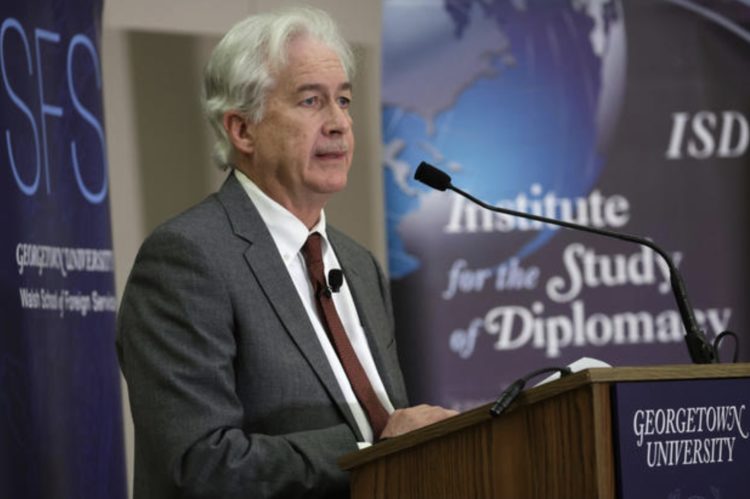
The career diplomat and former ambassador to Russia, the CIA Director, William Burns/ Source: Getty Images
Ratcliffe’s visit was the first by a CIA director since Burns traveled to Moscow in November 2021 with evidence that Russia was preparing a major attack on Ukraine.
During that visit, Burns spoke with Putin by telephone from the Kremlin because the Russian president was in Sochi. Russia launched its full-scale invasion less than four months later.
Sazonov also raised the possibility that Ratcliffe discussed Americans detained in Russia. The CIA participated in previous negotiations that freed journalists Evan Gershkovich and Alsu Kurmasheva, and former US Marine Paul Whelan, RFE/RL documented CIA involvement.
“If we do not know the answers, all we can do is ask the relevant questions,” Sazonov added.
Slovak police foiled a planned arson attack on a drone factory in the country's east, the force said on 25 August. Investigators charged three foreigners with preparing the attack on commission and seized incendiary material and equipment at the scene. The plant belongs to the Ukrainian drone maker Skyeton, Militarnyi reported.
Russia's war has an arm inside Europe that usually works without missiles against Ukraine supporters — agents and recruited locals, carrying out
Slovak police foiled a planned arson attack on a drone factory in the country's east, the force said on 25 August. Investigators charged three foreigners with preparing the attack on commission and seized incendiary material and equipment at the scene. The plant belongs to the Ukrainian drone maker Skyeton, Militarnyi reported.
Russia's war has an arm inside Europe that usually works without missiles against Ukraine supporters — agents and recruited locals, carrying out arsons, parcel fires, flying an explosive drone at a Ukrainian cargo plane in Germany, plotting against arms-industry figures — and the point of hiring strangers to light fires is that a burned production hall costs Moscow nothing it can be held to account for.
Had the attack in Slovakia gone ahead, it risked a large fire, danger to life and health, and damage on a large scale, police stated. About 70 employees could have been in the building at the time, by preliminary estimates. Property inside the production hall is worth tens of millions of euros, according to the findings so far.
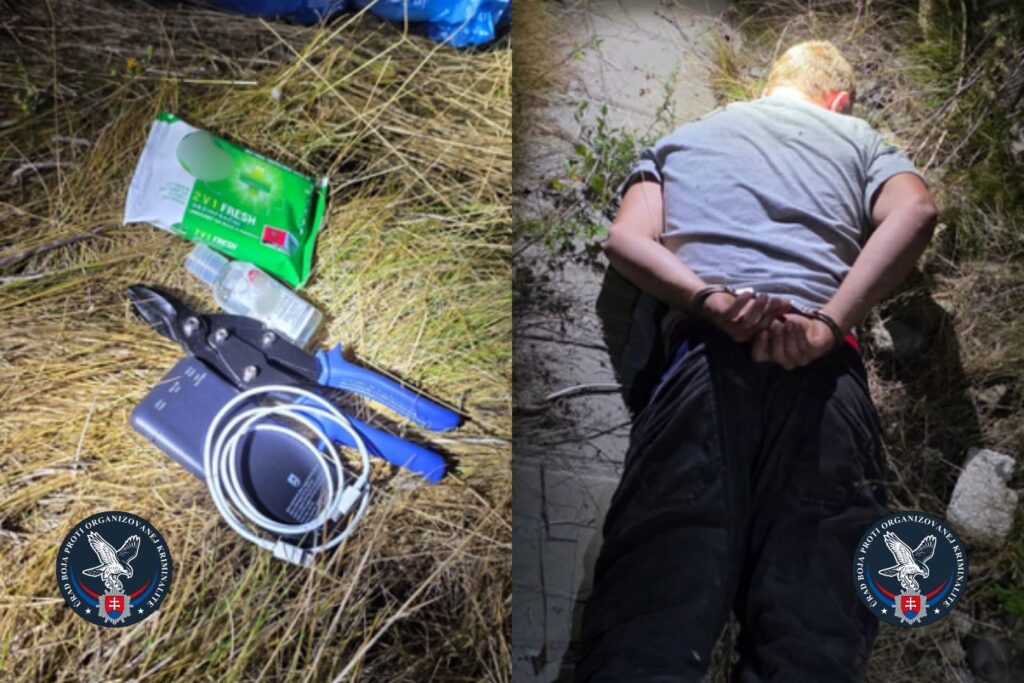
Officers seized a larger quantity of incendiary mixture, along with tools, mobile phones, an action camera, and a hand-made plan. The police Criminalistics and Expertise Institute gave a preliminary finding that the substance was a mixture of gasoline and polystyrene, commonly called napalm. Slovakia's anti-crime unit ÚBOK, part of the Police Presidium, identified the people preparing the attack and stopped it. Nobody was hurt and no property was damaged, police said.
Items seized during the operation, and one of the detained men, eastern Slovakia, August 2026. Photo: Police of the Slovak Republic
The charges, and where the three were detained
An ÚBOK investigator charged the three foreigners with preparing a particularly serious crime of general endangerment, committed as co-perpetrators on order. Officers detained two of them in Slovakia, and the investigator moved to have both taken into custody. German authorities detained the third on a European arrest warrant. The investigation continues, and the legal classification of the men's actions may still change.
Explore further
About 50 grams of suspected military explosive lay in a German field 10 days after the attempt on Ukraine’s plane
The plant, and a company Russia has already hit
Slovakia, a NATO and EU member, borders Ukraine on its eastern edge. Skyeton builds the Raybird, a fixed-wing reconnaissance drone that has served with Ukraine's Armed Forces since 2018 and stays airborne for up to 28 hours. The company began production in Slovakia in 2024, and more than €10 million in foreign investment went into the plant, one of several sites Ukrainian firms opened abroad to cut the risk of Russian attacks.
That risk is not theoretical. Russia destroyed Skyeton's Kyiv office in May, and the company said it had already spread production capacity across Ukraine and abroad in anticipation.
A Skyeton representative told Militarnyi:
"The recent attempt on our production in Slovakia is another sign that Ukrainian arms makers are already a bone in their throat, which means we are on the right path."
2024
WSJ: Russian sabotage groups suspected for arson attack on plant producing air defense systems for Ukraine
Arson against Ukraine's defense partners in Europe
Companies working for Ukraine have been hit across several countries this year and earlier.
In March, suspects who claimed a pro-Palestinian motive set fire to the Pardubice production of Archer, a Ukrainian maker of thermal imaging sights, destroying nearly all of the company's capacity in Czechia.
Estonia opened a Russian-link investigation this month into a suspected arson at a military robot maker supplying Ukraine, and Lithuania charged six people in January over an attempt to burn a factory that supplied radio-wave scanners.
A powerful explosion of undetermined cause hit EMCO, one of Bulgaria's largest private arms makers, which produces artillery ammunition for Ukraine, on 10 August.
The Syrian Democratic Forces, a Kurdish-led armed group that has lost territory and authority in recent months, will integrate with the country’s military.
The Syrian Democratic Forces, a Kurdish-led armed group that has lost territory and authority in recent months, will integrate with the country’s military.
Members of the Syrian Democratic Forces, a Kurdish-led militia that was long seen as a key American ally in Syria in the fight against the Islamic State.
Raducanu’s 2021 win played role in Sky interestSky’s tennis audience in 2025 was 60% femaleSky Sports is close to agreeing a new deal to extend its live coverage of the US Open. The three-year contract extension, which is expected to be announced when the singles draw from Flushing Meadows begins next week, will keep the tournament live on Sky until 2030.Under the terms of the new deal, Sky will broadcast more than 12 hours of live tennis each day across the extended three-week tournament, inclu
Sky Sports is close to agreeing a new deal to extend its live coverage of the US Open. The three-year contract extension, which is expected to be announced when the singles draw from Flushing Meadows begins next week, will keep the tournament live on Sky until 2030.
Under the terms of the new deal, Sky will broadcast more than 12 hours of live tennis each day across the extended three-week tournament, including the new mixed-doubles event which is taking place this week.
The Delta system pulls together battlefield data to identify targets, creating a miles-wide “kill zone.” The technology is credited with helping to cut Russian advances to a near standstill.
The Delta system pulls together battlefield data to identify targets, creating a miles-wide “kill zone.” The technology is credited with helping to cut Russian advances to a near standstill.
Officers from Ukraine’s First Separate Assault Regiment looking at live battlefield footage from drones, displayed through the Delta system, at a command bunker in eastern Ukraine in 2025.
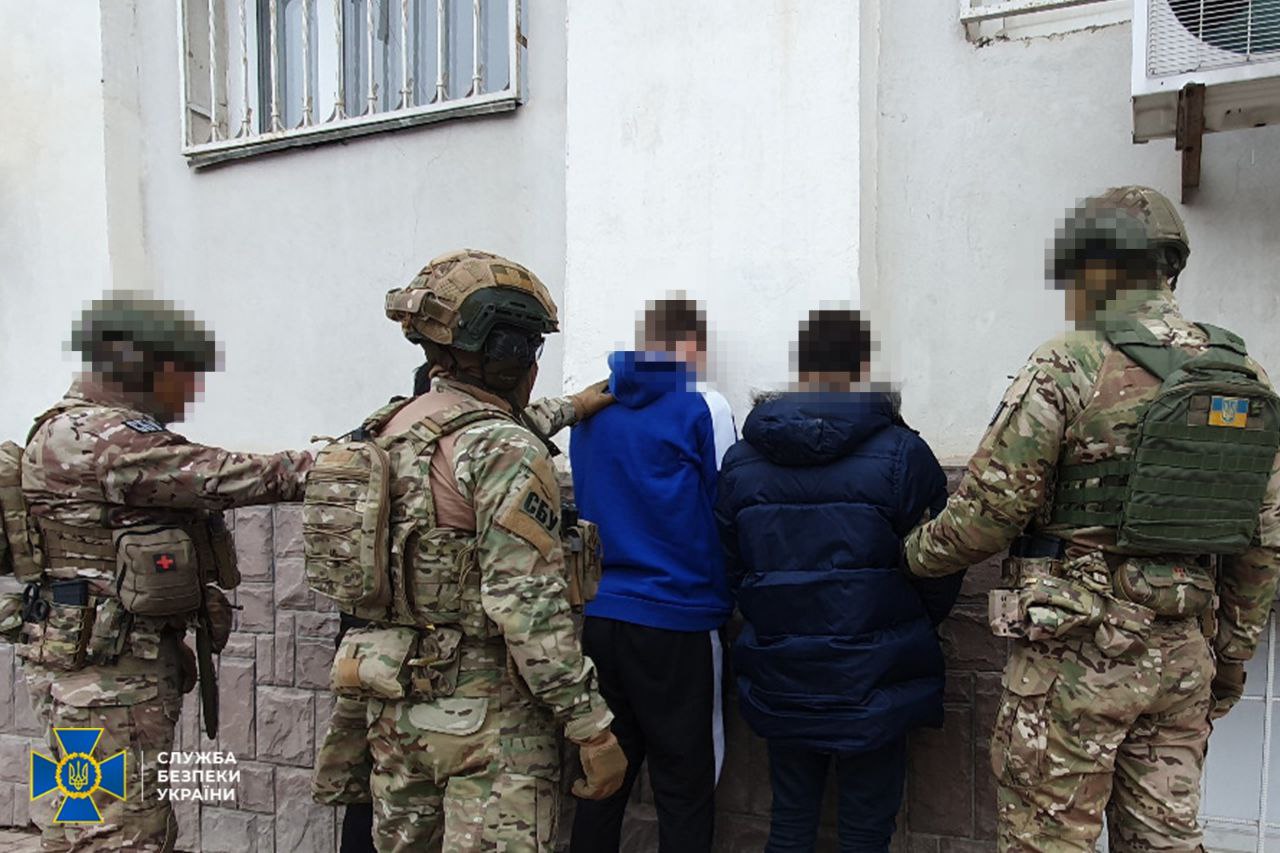
A Ukrainian court sentenced three Russian agents to 15 years each for guiding Russian strikes on Donetsk Oblast, the Security Service of Ukraine (SBU) said on 26 August. Each had been recruited to mark Ukrainian military sites or civilian targets in the east, and counterintelligence exposed them between spring 2025 and March this year. The court found all three guilty of treason committed under martial law. The SBU did not name the court or say which specific strikes th
A Ukrainian court sentenced three Russian agents to 15 years each for guiding Russian strikes on Donetsk Oblast, the Security Service of Ukraine (SBU) said on 26 August. Each had been recruited to mark Ukrainian military sites or civilian targets in the east, and counterintelligence exposed them between spring 2025 and March this year. The court found all three guilty of treason committed under martial law. The SBU did not name the court or say which specific strikes the men enabled.
Russia has spent this war turning Ukrainian civilians into spotters for its bombs — reaching them through Telegram job and drug channels, forged official summonses, relatives in occupied areas, and promises of easy money — and the SBU has opened more than 3,800 treason investigations since 2022 as of February 2026, so any single verdict stands for a caseload far larger than what reaches the news.
The informer inside the armor repair base
One of the convicted men worked at a Defense Forces repair base, and the SBU detained him in the Kramatorsk sector in April 2025. Russian services noticed him through his brother, who lives in Russia and works for the Federal Security Service (FSB), the investigation established. Recruitment through relatives in Russia or the occupied territories is a method Ukrainian counterintelligence has documented before, including inside a marine brigade on the active front.
During his own shifts at the defense enterprise, he recorded the geolocations of repair shops used to restore heavy armored vehicles for Ukraine's Armed Forces. He tried to pass the photographs and building coordinates to his Russian handler through an anonymous chat in a messenger.
The Dobropillia man who aimed 1.5-ton bombs near Pokrovsk
The second man was an unemployed resident of Dobropillia and an agent of Russian military intelligence, which noticed him through anti-Ukrainian comments in Telegram channel chats, the SBU said. The agency's counterintelligence detained him near Pokrovsk in March this year. Investigators established that he directed 1.5-ton guided aerial bombs at fortified areas and at artillery positions that keep Russian assault groups under fire control on the Pokrovsk axis. Russian forces have leaned more heavily on heavy glide bombs across this stretch of front this year, hitting fortifications and reducing towns to rubble their infantry then uses as cover.
The Kostiantynivka resident who marked his own city
The third man, recruited by the FSB, lived in Kostiantynivka, and SBU military counterintelligence exposed him in August 2025, according to the report. He approached Russian services through pro-Kremlin Telegram channels and offered them his help.
He directed Russian guided aerial bombs and small first-person-view drones at the civilian infrastructure of the front-line city, according to the case materials. He also tracked the positions of Ukrainian drone units carrying out combat tasks on the Kramatorsk axis. Russian strikes on that axis have repeatedly hit residential blocks, with prosecutors opening war-crimes investigations.
Ukrainian courts have handed down the same 15-year term in comparable cases, including for a locomotive depot engineer who mapped Ukrainian positions around Lyman.
A surrogate refused to have an abortion after the fetus was diagnosed with a serious heart problem. She fled to Texas and had the child. Now she wants a judge to give custody to her instead of the biological parents.
A surrogate refused to have an abortion after the fetus was diagnosed with a serious heart problem. She fled to Texas and had the child. Now she wants a judge to give custody to her instead of the biological parents.
The prospect that the kingdom could enrich uranium has drawn opposition from Democrats and revived concerns about nuclear proliferation in the Middle East.
The prospect that the kingdom could enrich uranium has drawn opposition from Democrats and revived concerns about nuclear proliferation in the Middle East.
Energy Secretary Chris Wright and Prince Abdulaziz bin Salman, the Saudi energy minister, in Saudi Arabia last year. The two signed an agreement last month as part of a broader package of cooperation on civilian nuclear power.
Everton Blair Jr. will serve until January in the seat long held by Mr. Scott, who died in April. Mr. Blair is not competing in the general election for the next full term in the deep-blue district.
Everton Blair Jr. will serve until January in the seat long held by Mr. Scott, who died in April. Mr. Blair is not competing in the general election for the next full term in the deep-blue district.
Stanley Druckenmiller said he was ‘proud of using it’ as wider media grapples with parameters around AI useStanley Druckenmiller, a billionaire investor, said he used artificial intelligence to pen his viral Wall Street Journal op-ed in which he sharply criticized the interference of Scott Bessent, the US treasury secretary, in the US bond market.Many news outlets, including the Guardian, covered the editorial, highlighting Druckenmiller’s rebuke of his former mentee, Bessent. As the story circu
Stanley Druckenmiller said he was ‘proud of using it’ as wider media grapples with parameters around AI use
Stanley Druckenmiller, a billionaire investor, said he used artificial intelligence to pen his viral Wall Street Journal op-ed in which he sharply criticized the interference of Scott Bessent, the US treasury secretary, in the US bond market.
Many news outlets, including the Guardian, covered the editorial, highlighting Druckenmiller’s rebuke of his former mentee, Bessent. As the story circulated online, some readers questioned rhetorical choices that resembled AI-generated text.
The 12-bath, seven-bed home near the state capital boasts a 5,000-bottle wine cellar, a pool and a tennis courtCalifornia governor Gavin Newsom has put his Sacramento-area mansion up for sale, before his term will end in January.The 12-bath, seven-bed Spanish-style home in Fair Oaks, a suburb of the California capital, hit the market on Monday with an asking price of $7.5m. The estate, which sits on a 8.2-acre (3.3-hectare) parcel of land, boasts an array of amenities including a full-size tenni
The 12-bath, seven-bed home near the state capital boasts a 5,000-bottle wine cellar, a pool and a tennis court
California governor Gavin Newsom has put his Sacramento-area mansion up for sale, before his term will end in January.
The 12-bath, seven-bed Spanish-style home in Fair Oaks, a suburb of the California capital, hit the market on Monday with an asking price of $7.5m. The estate, which sits on a 8.2-acre (3.3-hectare) parcel of land, boasts an array of amenities including a full-size tennis court, a 5,000-bottle wine cellar, a pool, a cold plunge and a hot tub, according to a Zillow listing from realtors Matthew Hindy and Nick Sadek.
The police fired water cannons at protesters in the state of Bihar, while the leaders of the ‘Cockroach’ student movement vowed to return to Delhi’s streets.
The police fired water cannons at protesters in the state of Bihar, while the leaders of the ‘Cockroach’ student movement vowed to return to Delhi’s streets.
Unannounced trip reported by US media is said to be Ratcliffe’s first known visit to Russia as CIA chiefThe CIA director, John Ratcliffe, has made an unannounced visit to Moscow, US media reported, after flight data showed an American military aircraft flew to the Russian capital, where a US diplomatic motorcade was later spotted.CBS News quoted sources familiar with the situation as confirming Ratcliffe’s trip, saying it was his first known visit to Russia as CIA chief. Axios separately confirm
Unannounced trip reported by US media is said to be Ratcliffe’s first known visit to Russia as CIA chief
The CIA director, John Ratcliffe, has made an unannounced visit to Moscow, US media reported, after flight data showed an American military aircraft flew to the Russian capital, where a US diplomatic motorcade was later spotted.
CBS News quoted sources familiar with the situation as confirming Ratcliffe’s trip, saying it was his first known visit to Russia as CIA chief. Axios separately confirmed the visit, quoting a US official.
‘A child isn’t born to commit gun violence,’ Francisco Villarruel saysFrancisco Villarruel and Gustavo Galvez sat in a park in Los Angeles reminiscing on their first boxing lesson together. They had gone to a big commercial gym, where they took turns hitting boxing pads and doing footwork exercises. They then started regularly training together.For Villarruel, 40, working out together wasn’t really about boxing. It was about giving Galvez, 19, an opportunity to open up and to mentor someone whos
‘A child isn’t born to commit gun violence,’ Francisco Villarruel says
Francisco Villarruel and Gustavo Galvez sat in a park in Los Angeles reminiscing on their first boxing lesson together. They had gone to a big commercial gym, where they took turns hitting boxing pads and doing footwork exercises. They then started regularly training together.
For Villarruel, 40, working out together wasn’t really about boxing. It was about giving Galvez, 19, an opportunity to open up and to mentor someone whose pain he understands. “ I think a lot of the traumatic scenarios that he went through are very similar to mine in my upbringing,” Villarruel said.
Deaths from disease are first in state in 35 years and just one day after Maryland declared outbreak in three countiesTwo unvaccinated individuals have died of measles in Pennsylvania, state health officials announced on Tuesday. The deaths are the first in the state in 35 years and have been announced just one day after Maryland declared a measles outbreak in three counties.Measles is one of the most contagious diseases known to medicine, and is preventable with a highly effective vaccine. Cont
Deaths from disease are first in state in 35 years and just one day after Maryland declared outbreak in three counties
Two unvaccinated individuals have died of measles in Pennsylvania, state health officials announced on Tuesday. The deaths are the first in the state in 35 years and have been announced just one day after Maryland declared a measles outbreak in three counties.
Measles is one of the most contagious diseases known to medicine, and is preventable with a highly effective vaccine.
Ukrainian investigators recovered an unencrypted American AI module from a Russian Molniya drone that killed three civilians near a Zaporizhzhia gas station on 6 July, and read the code that guided its targeting, the New York Times reported. No human operator made the final call.
Commercially sold AI boards have been turning up inside Russian strike weapons for more than a year, and autonomy is the direction both armies are moving in. What changed is the evidence rather
Ukrainian investigators recovered an unencrypted American AI module from a Russian Molniya drone that killed three civilians near a Zaporizhzhia gas station on 6 July, and read the code that guided its targeting, the New York Times reported. No human operator made the final call.
Commercially sold AI boards have been turning up inside Russian strike weapons for more than a year, and autonomy is the direction both armies are moving in. What changed is the evidence rather than the technology. Until now, autonomy had to be inferred from what a wreck lacked—an antenna, a radio trace.
Tetiana Bubynets, a 19-year-old accounting student at Zaporizhzhia National University, was declared dead at a hospital, one of her professors said. Oleksii Svirin, 41, and Roman Karpii, 48, later died of their injuries. The drone had attempted to navigate around an apartment building toward the gas station's propane tanks but struck a wall and detonated near people sheltering there.
What investigators found in the wreckage
The wreckage contained an Nvidia Jetson Orin minicomputer, an off-the-shelf AI module that costs a few hundred dollars. The chip was not encrypted. Ukrainian officials said they could read the terrain imagery loaded for visual navigation and the object-detection code that defined what the drone was trained to target, NYT reported. The drone carried no radio antennas and was flying in a wave of approximately six, none of them transmitting. A missing antenna alone would not prove self-targeting—a drone flying a preprogrammed route needs no antenna either, but it would have no use for an Nvidia chip.
Human operators had programmed the drone to fly toward the gas station and set the general target area before launch. Once near the site, the onboard system identified and selected the specific object—most likely propane tanks it had been trained to recognize—on its own, drone experts and military officials said. Vadym Kushnikov, a drone expert at the Kharkiv Aviation Institute, described the drone as "a preprogrammed tool trained in virtual reality to track specific objects," NYT reported.
Russian Molniya kamikaze drones. Photos from Russian sources via Militarnyi
Where else the Nvidia module has turned up
Kateryna Bondar, a senior fellow at the Wadhwani AI Center at the Center for Strategic and International Studies in Washington, told NYT that no earlier Russian strike by a self-targeting drone has been documented killing civilians, which would make 6 July the first such case on record. She called the Nvidia module "the best proof" that Russia was experimenting with autonomous AI.
The Jetson Orin is not new to the battlefield. The module is made by the American chipmaker Nvidia. Ukraine's sanctions on Russia's AI drone supply networks, imposed in August 2025, hit Russian, Chinese, and Belarusian drone developers and component suppliers—not Nvidia.
Ukrainian intelligence first identified the module in the V2U autonomous strike drone in June 2025, mounted in a Chinese Leetop A203 minicomputer. It has since reported Jetson-based AI modules in Russia's Lancet and Klin drones—the Klin an older Jetson TX2—and, most recently, in the S-71 Monokhrom cruise missile.
In those cases, the finding was the hardware, and what Ukrainian intelligence inferred from it. This time, the code itself was legible.
Nvidia confirmed to NYT that the photographed board was a Jetson Orin. The company said the minicomputer is a consumer-grade product "sold to students, developers and start-ups for a wide range of beneficial applications," that it does not sell the computer in Russia, and that it is widely available through resellers.
Zaporizhzhia as testing ground
Russia began test flights of AI-guided Molniya drones in May, and had begun testing self-targeting systems in the V2U several months earlier, some of those for last-mile guidance only, Ukrainian air defense experts told NYT. Local air defense officials said Russia has been aiming at civilian objects—pumps and propane tanks at gas stations—along with military recruitment centers while trying out autonomous drones in Zaporizhzhia. Why those targets were chosen for the tests is not clear.
Gas stations have been under sustained attack independently of the AI trials. Russia has destroyed approximately 200 across Ukraine since spring, around 50 in June alone, by UNITED24 Media's count.
In Zaporizhzhia, gas stations now prop plastic sheeting at odd angles around propane tanks to confuse the drones' image recognition, and Ukraine has turned to shooting down drones that electronic warfare cannot jam.
The latest opposition effort is led by Sergey Brin, a co-founder of Google, who has contributed more than $100 million this year toward California campaign efforts.
The latest opposition effort is led by Sergey Brin, a co-founder of Google, who has contributed more than $100 million this year toward California campaign efforts.
As TV spending from the opposition picks up, the campaign supporting the tax believes a network of Democratic Party activists and union members pushing its message will be an advantage.
Pennsylvania Republicans now view John Fetterman, the state’s Democratic senator, more favorably than its sitting G.O.P. senator, a New York Times/Philadelphia Inquirer/Siena poll found.
Pennsylvania Republicans now view John Fetterman, the state’s Democratic senator, more favorably than its sitting G.O.P. senator, a New York Times/Philadelphia Inquirer/Siena poll found.
A New York Times/Philadelphia Inquirer/Siena poll found Gov. Josh Shapiro leading Stacy Garrity and having support in the state for a possible presidential bid.
A New York Times/Philadelphia Inquirer/Siena poll found Gov. Josh Shapiro leading Stacy Garrity and having support in the state for a possible presidential bid.
Russian President Vladimir Putin has made inadequate drone defenses and slow repairs grounds for putting private assets under state management. His 24 August security decree opens a new way to government control over Russia’s economy.It expands a mechanism Russia has used against foreign-owned businesses since 2023, according to research by Nektorov, Saveliev and Partners (NSP), a Russian law firm that tracks state takeovers.
The text does not specify what counts as “in
Russian President Vladimir Putin has made inadequate drone defenses and slow repairs grounds for putting private assets under state management. His 24 August security decree opens a new way to government control over Russia’s economy.
It expands a mechanism Russia has used against foreign-owned businesses since 2023, according to research by Nektorov, Saveliev and Partners (NSP), a Russian law firm that tracks state takeovers.
The text does not specify what counts as “ineffective” drone protection or how quickly a facility must be restored.
A business need not lose a facility before the measure can apply. Decree No. 604 allows action over late security measures, safety violations, conduct that endangers normal operations, ineffective counter-drone steps, or delayed restoration.
The text does not specify what counts as “ineffective” drone protection or how quickly a facility must be restored. Covered sectors include energy, industry, communications, utilities, transport, logistics, and life-support infrastructure, plus any sites deemed important to Russia’s security or economic stability.
Foreign controllers are also covered, including foreign organizations and citizens controlling Russian companies. Temporary management can reach all or part of an entity’s Russian property, securities, stakes in Russian companies, and other property rights—the rule is not limited to the damaged or vulnerable facility alone.
A mobile Russian air-defense radar pictured in April 2024. Russia’s new decree lets the state take control of wider company assets when drone defenses are deemed inadequate. Photo: United Russia.
“Temporary” control has no deadline
At the same time, the text mentions no automatic return deadline. Putin must instruct the government to begin temporary management and then end it. By default, the Federal Property Management Agency assumes the owner’s powers, except for the right to dispose of the assets. The assets’ costs will be covered from its income.
Interfax published Denis Manturov’s remarks. The first deputy prime minister said the measure would be used selectively for specific security tasks and would leave formal ownership unchanged.
Komsomolskaya Pravda’s Alexander Kots raised a practical problem: Russian law, he wrote, gives businesses no instructions for defending sites against drones or cruise missiles, while barriers require extensive approvals, and private guards cannot easily be given weapons more powerful than shotguns.
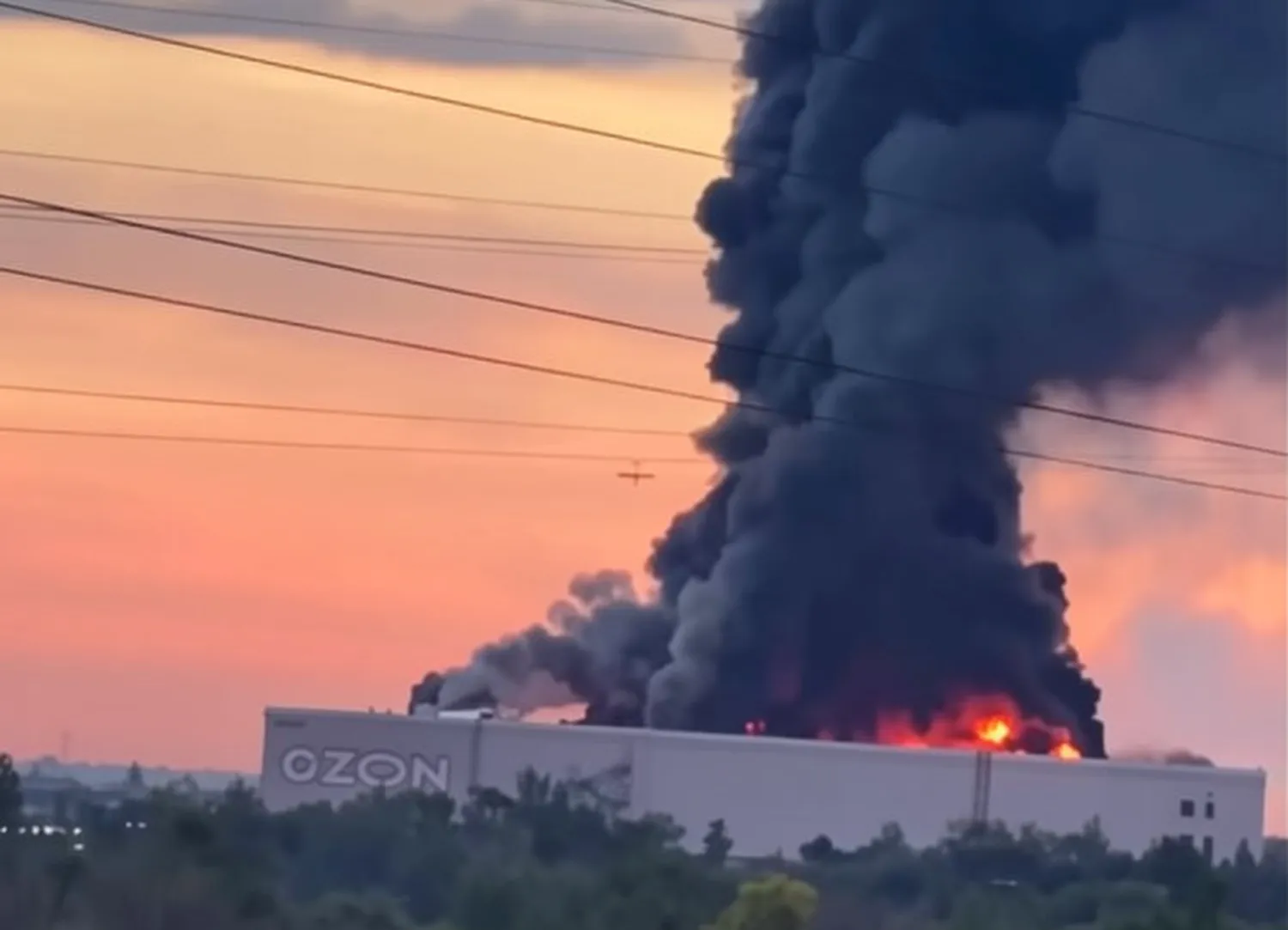
The decree followed weeks of Ukrainian attacks on Russian refineries, ports, and warehouses. Ozon reported six disruptions at its facilities after 22 August. The listed retailer’s shares fell as much as 29.09% from Friday’s close on Monday, after five weeks of strikes on privately held Wildberries.
Explore further
Why did Ozon fall as much as 29% while Russia’s market lost 2.9%?
NSP’s nationalization study records more than 100 cases since 2022 and about 6.5 trillion rubles (about $78 billion) in seized assets. It says cases averaged one court hearing and roughly two months.
The NSP temporary-management table lists several foreign-owned businesses placed under “temporary” management from 2023 whose owners still lack access because the arrangements remain indefinite.
The Australian Recording Industry Association (ARIA), which oversees the charts of the country’s most popular music, said the changes will apply from Friday.
In a smiling yet tense interview, Dr. Abdul El-Sayed, the Democratic nominee for Senate in Michigan, argued that his Republican critics were using culture-war issues to distract from Americans’ economic concerns.
In a smiling yet tense interview, Dr. Abdul El-Sayed, the Democratic nominee for Senate in Michigan, argued that his Republican critics were using culture-war issues to distract from Americans’ economic concerns.
In Trump administration’s plan, California, Arizona and Nevada face about a 20% cut to water supply over two yearsNevada filed a federal lawsuit on Monday challenging the Trump administration’s new plan for the imperiled Colorado River, launching what could become the first of many court battles over the waterway that supplies 40 million people, dozens of tribes and 5.5m acres of farm land across the American west.The federal plan, issued Friday, cut roughly 20% from the water supplied to lower
In Trump administration’s plan, California, Arizona and Nevada face about a 20% cut to water supply over two years
Nevada filed a federal lawsuit on Monday challenging the Trump administration’s new plan for the imperiled Colorado River, launching what could become the first of many court battles over the waterway that supplies 40 million people, dozens of tribes and 5.5m acres of farm land across the American west.
The federal plan, issued Friday, cut roughly 20% from the water supplied to lower basin states – Nevada, Arizona and California – over the next two years, with a potential for harsher cutbacks in the future, based on conditions.
Man, 68, was left searching for help in 116F weather after his car became stuck in mud along remote park roadA French tourist recently died in Death Valley national park after a car mishap left him stranded in 116F (47C) weather.The visitor, identified as 68-year-old Pierre Michel Formosa, was traveling with another French man along the park’s remote West Side Road when their vehicle became stuck in mud near Queen of Sheba Mine Road. Continue reading...
Man, 68, was left searching for help in 116F weather after his car became stuck in mud along remote park road
A French tourist recently died in Death Valley national park after a car mishap left him stranded in 116F (47C) weather.
The visitor, identified as 68-year-old Pierre Michel Formosa, was traveling with another French man along the park’s remote West Side Road when their vehicle became stuck in mud near Queen of Sheba Mine Road.
Arbitrator determined the Post improperly fired Karen Attiah, a union-protected employee, over social media postsAn independent arbitrator has ordered the Washington Post to rehire the high-profile opinion columnist Karen Attiah, abruptly fired by the news organization last September over comments she made on social media about Charlie Kirk, the then recently killed conservative activist.On Monday, an arbitrator ruled that the Post had violated her rights as a union-protected employee and ordere
Arbitrator determined the Post improperly fired Karen Attiah, a union-protected employee, over social media posts
An independent arbitrator has ordered the Washington Post to rehire the high-profile opinion columnist Karen Attiah, abruptly fired by the news organization last September over comments she made on social media about Charlie Kirk, the then recently killed conservative activist.
On Monday, an arbitrator ruled that the Post had violated her rights as a union-protected employee and ordered the newspaper to reinstate her and compensate her for lost wages.
The newspaper often uses the word to describe elections with progressive contenders, implying a previous whole destroyed by the left“El-Sayed and Stevens Project Party Unity After Divisive Race,” announced the New York Times on 5 August, the day the progressive Abdul El-Sayed beat out his centrist Democratic rival, Haley Stevens, in the Michigan senatorial primary. “Divisive” is now the Times’s favorite attack word, deployed repeatedly to disparage and try to undermine the astonishing recent adv
The newspaper often uses the word to describe elections with progressive contenders, implying a previous whole destroyed by the left
“El-Sayed and Stevens Project Party Unity After Divisive Race,” announced the New York Times on 5 August, the day the progressive Abdul El-Sayed beat out his centrist Democratic rival, Haley Stevens, in the Michigan senatorial primary. “Divisive” is now the Times’s favorite attack word, deployed repeatedly to disparage and try to undermine the astonishing recent advances by progressive candidates.
Four days after that first story, the Times againlanded “divisive” under “Obama and El-Sayed Discuss Unity After Ugly Michigan Primary.” El-Sayed, it asserted, had “narrowly prevailed in a divisive primary after campaigning on a progressive and anti-establishment platform”.
Ukraine celebrated 35 years of independence on 24 August, and Ukrainian President Volodymyr Zelenskyy marked the day with an address listing what the invasion has cost Russia, published by the President's Office. He said Putin is mortal and out of time to understand Ukraine, and said Ukraine will not hand over Donbas or save the Kremlin half a million soldiers. He also asked partners for sanctions and weapons strong enough to force an end to the war.
Russia has been inv
Ukraine celebrated 35 years of independence on 24 August, and Ukrainian President Volodymyr Zelenskyy marked the day with an address listing what the invasion has cost Russia, published by the President's Office. He said Putin is mortal and out of time to understand Ukraine, and said Ukraine will not hand over Donbas or save the Kremlin half a million soldiers. He also asked partners for sanctions and weapons strong enough to force an end to the war.
Russia has been invading Ukraine since 2014 and fighting a full-scale war on it since 2022, and Ukraine now supplies a growing share of the missiles and drones it fights back with, while the air defense shielding its cities still hangs on decisions taken in Washington and European capitals—which is what makes a holiday speech a statement of what Kyiv will not trade and what it needs built or delivered next.
The losses he read back to Moscow
President Zelenskyy turned from his own citizens to Russia partway through the speech.
"You wanted to take all our Ukraine, all our land; instead, you lost your oil refineries, your fleet, your profits, your entire generation that you sent into the meat grinder," he said.
A country that wanted Ukraine erased from the map, he added, is now absent from the international agenda of the future civilization.
For five years now, Russia has tried to exhaust and break Ukrainians — cutting light and heat, destroying homes, Kyiv Mayor Klitschko said on Ukraine's 35th Independence Day
"The aggressor failed to understand one fundamental thing: above all else, Ukrainians love freedom," he… pic.twitter.com/NvVVKSKIK1
He set Moscow's self-image against its filling stations.
"For 27 years, the head of Russia has talked about greatness, while Russia is standing in lines for gasoline," Zelenskyy said.
Moscow and St. Petersburg brought back gasoline rationing this month, and Rosneft capped fills at every station in the country.
On the Russian leader he was blunt.
"Putin hopes that we are tired. But we know that he is mortal," he said, adding that Putin never understood Ukraine and now will not have the time to.
A fifth Independence Day at war
Before the holiday, Russian ballistic missiles hit Kyiv and its main airport hub twice in 24 hours. A solution to Russian ballistic terror must be found, Zelenskyy said, and that gamble must not pay off.
Russia does not want peace, it wants mobilization, the president said. Ukraine will not let Moscow seize the initiative or convince Europe that surrendering Donbas ends the war. Russia keeps pushing back the dates for taking all of Donetsk Oblast and will keep pushing them back, he said.
The president called Ukraine's defense industry a giant that forges independence around the clock, and demanded more from it. Mid-range strikes cut Russian logistics and long-range weapons cut Russian profits, he said, listing Moscow, Tuapse, Tula, Ryazan, Olenya, and Omsk among the places already hit.
Explore further
Ukraine’s drones hit two Russian fighters and a spy drone—and blinded radars from occupied Crimea to Rostov
Ukraine's home-built Flamingo cruise missiles should stop being a rare species and arrive en masse: "They must 'winter' in Russia," Zelenskyy noted.
Previously, Flamingos have hit defense plants more than 1,000 km from the border, though they still appear in strikes in small numbers.
"China should no longer remain silent"
Ukraine is not asking anyone to fight for it, the president said — only for everything needed to stop the war before Putin starts the next one. He wants sanctions that make Russians howl and Moscow at a negotiating table, and said Washington has lost its illusions about Russian intentions. Europe must be Europe, he said: united, ambitious, brave.
"China should no longer remain silent," he added, saying Beijing must cool the ardor of someone who puts on a sailor's uniform and cap and talks about a nuclear strike—a description that fits Putin.
The discussions, reported by the Syrian state news agency, came days after Israel struck an air base in Syria’s northwest, the latest in a series of military interventions.
The discussions, reported by the Syrian state news agency, came days after Israel struck an air base in Syria’s northwest, the latest in a series of military interventions.
Prime Minister Andy Burnham of Britain on Monday at the tomb of the unknown soldier at Ukraine’s national military memorial cemetery in Hatne, southwest of Kyiv.
The tech giant says it does not sell the devices in Russia, but they are widely available on resale markets. When purchased that way, they are virtually impossible to track.
The tech giant says it does not sell the devices in Russia, but they are widely available on resale markets. When purchased that way, they are virtually impossible to track.

 Connexion