Ten people were sheltering in a metal structure on Mount Timpanogos in Utah during a storm on Friday when lightning struck, injuring nine people and killing one, the authorities said.
Gov. Gavin Newsom of California signed legislation that would make it illegal to interfere with ballots or election records in response to efforts by the president to restrict voting.
Gov. Gavin Newsom of California signed a package of 13 bills, including a measure that prohibits the seizure of ballots, election records or voting technology before an election is certified.
Ukrainian engineers near the front rewrite their drones' software every couple of days. A NATO army needs about six months to push the same update. That gap in speed is the central challenge for the Western trainers working with Ukrainian troops in Poland, who say Ukraine's wartime tempo is exposing how slowly the West moves in peacetime, the Business Insider reports.
Russia's war forces the Ukrainian Army to buy, train, and adapt at a pace peacetime armies are not built for, and its experience is pushing NATO to confront how much its own bureaucracy slows it down.
The alliance has studied that experience without yet fully absorbing it: in an Estonian war game last winter, a ten-person Ukrainian drone team wiped out two NATO battalions in a day.
Now NATO Secretary General Mark Rutte is calling for a large-scale transformation of the West's defense industry so its armies can react faster.
Two speeds meet in Poland
The place where those speeds collided was Camp Jomsborg, a base Norway built in an eastern Polish forest in a matter of months. There, under an operation called Legio, trainers from across northern Europe drill Ukrainian soldiers while the Ukrainians hand their front-line lessons back to NATO.
The camp sits, as its operations officer, a major identified only as John, put it, at "the mental and geographical middle point between war in the east and peacetime mechanism in the West."
A drone update tells the story
Brigadier General Atle Molde, who commands the task force, put the gap in numbers. If a Western drone needs new software, he said, "you have to send it to a Western country or a company, and an update takes six months."
In Ukraine, "they have the engineers sitting close to the front updating every two days, every two weeks, developing software, adapting it to genuine situations."
Molde said he wants to see greater initiative in innovation within Western armies, but to achieve that, "it has to be some major changes that have to be done on all levels when it comes to legislation."
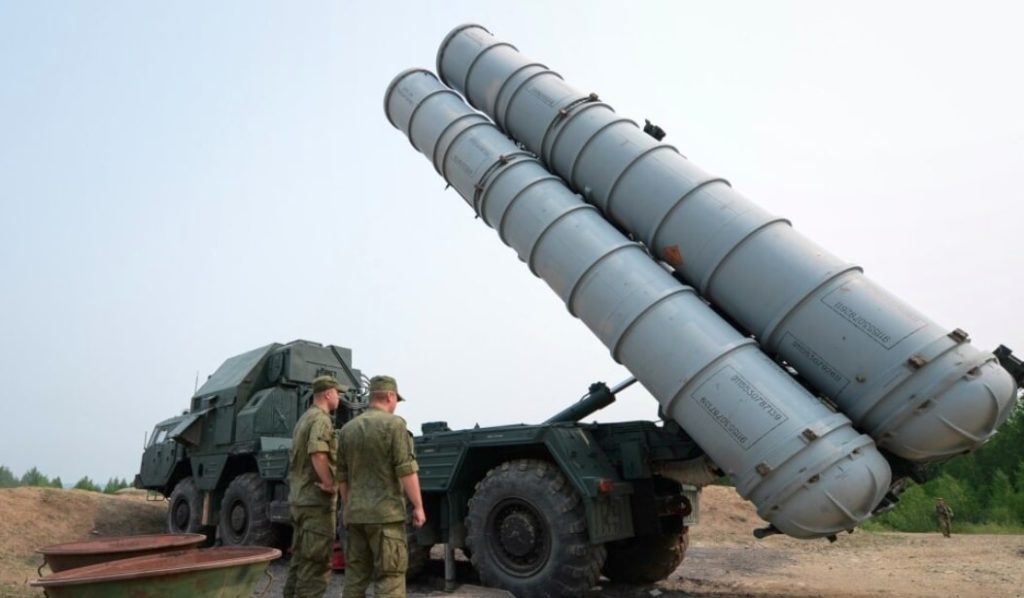
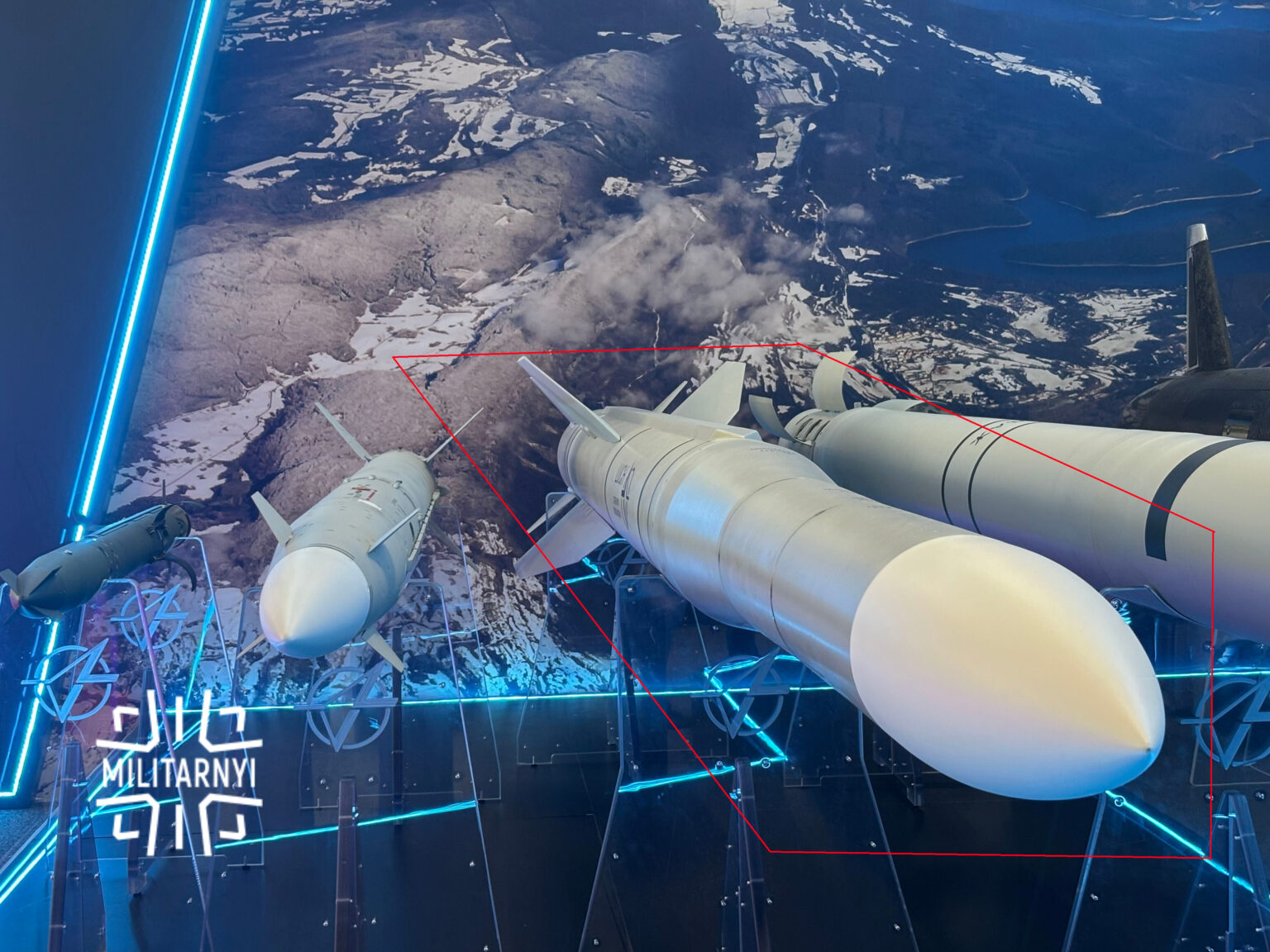
The US is preparing to sell Ukraine something unusual: American-made missiles for its Soviet S-300 air-defense systems. The missiles, labeled "S-300 Clone" in the paperwork, are part of a $2.68 billion package that the State Department approved on 18 September, financed by European partners and unused US military aid, Defense Express reports.
Ukraine has plenty of Soviet-era S-300 launchers but not the missiles to feed them. Russia will not sell more, and an earlier Ukrainian attempt to build its own went nowhere, according to Defense Mirror.
Not a Soviet 5V55 replica
At the same time, the missile itself is not actually a "clone" or replica of the Soviet 5V55. According to Defense Express's own information, this is a new development with enhanced characteristics and a different, more modern targeting guidance principle.
At the same time, the American side did not disclose the index, characteristics, or manufacturer of the missiles mentioned in the State Department's statement.
In September 2024, then-US Defense Secretary Lloyd Austin announced at the Ramstein contact group that Washington, in partnership with several European companies, was working with Ukraine to "design and build a substitute" for the Soviet S-300 and the R-27 air-to-air missile used by fighter jets, Newsweek reports. He never spelled out what that substitute would be.
Anti-radar missile project from the 1950s
The package will also include GAM-67. As for the GAM-67, despite the existence of an unrealized American anti-radar missile project from the 1950s, this is also a new development. It is intended for medium-range systems, both existing ones, including Soviet ones, and future ones.
The package also provides for modernization and maintenance: spare parts, consumables, and accessories, support during repair and return, software, transportation support, engineering, technical, and logistical services from the US government and contractors, and other related elements of logistical and program support.
Since 2010, Montreal and Quebec City have hosted the only two North American races on the International Cycling Union’s World Tour, which includes the Tour de France.
Former Senator Sherrod Brown, Democrat of Ohio, lost his 2024 re-election bid but is running for the office again against a different Republican opponent.
The young government of Nepal, a nation with a tiny carbon footprint, is seeking reparations from the world’s major economies as it bears the brunt of collapsing Himalayan glaciers.
Dog behavior experts offered a variety of explanations for why Nash the golden retriever wagged his tail and carried a toy near a man who broke into his owner’s home.
For the first time, the Pentagon reported costs incurred by each armed service. The figures are almost certainly on the low side, congressional officials said.
An apartment building that was targeted by U.S.-Israeli airstrikes in Tehran in March. The unclassified Pentagon cost estimates provided to Congress offer a rare glimpse into the financial accounting of the war.
President Trump has gotten no love back yet from Kim Jong-un. He could turn to Xi Jinping, China’s leader, to help set up a summit when Mr. Xi visits Washington next week.
President Trump and Kim Jong-un on the North Korean side of the Demilitarized Zone in 2019. For Mr. Trump, a summit with Mr. Kim would help him turn the spotlight away from the unpopular war against Iran and toward a leader-to-leader relationship that Mr. Trump has treasured since his first term.
President Trump has gotten no love back yet from Kim Jong-un. He could turn to Xi Jinping, China’s leader, to help set up a summit when Mr. Xi visits Washington next week.
President Trump and Kim Jong-un on the North Korean side of the Demilitarized Zone in 2019. For Mr. Trump, a summit with Mr. Kim would help him turn the spotlight away from the unpopular war against Iran and toward a leader-to-leader relationship that Mr. Trump has treasured since his first term.
Thirty-seven people died in the authorities’ custody, officials said. Survivors said the cell had barely any ventilation, food, or water and people began “collapsing and dying.”
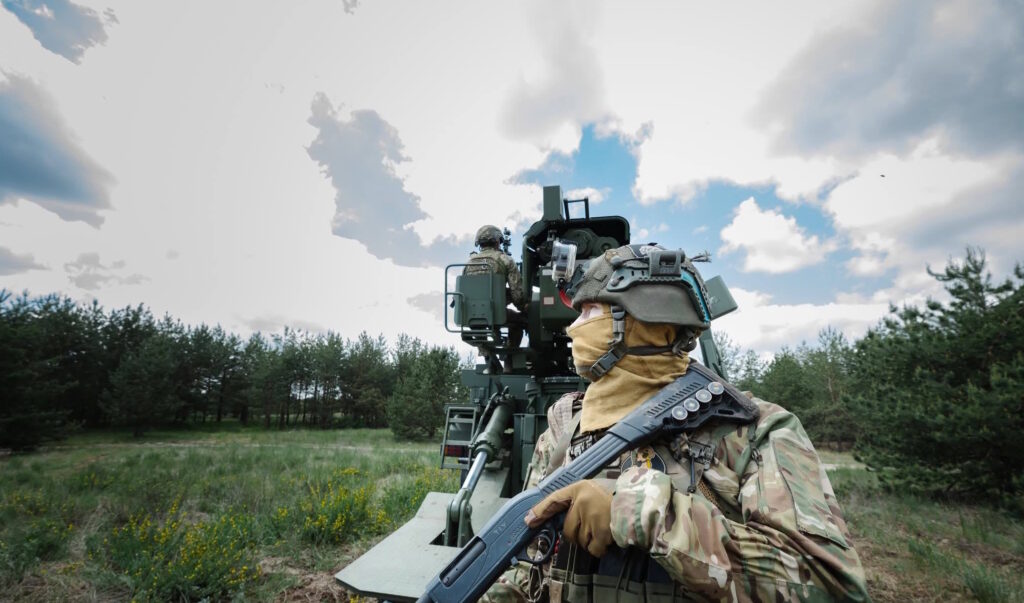
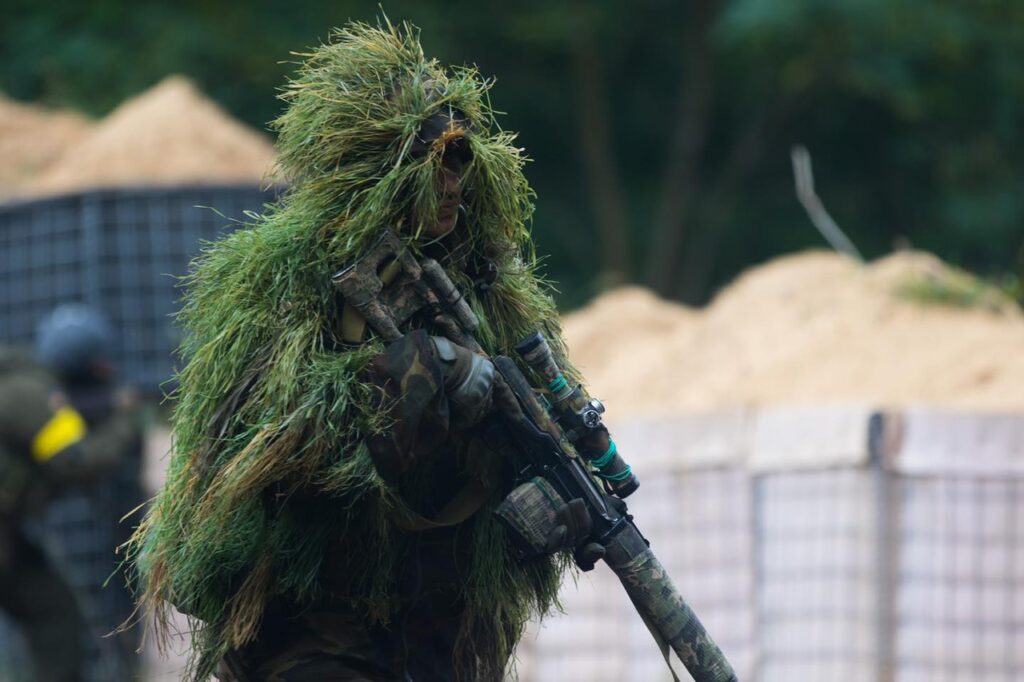
Drones get most of the attention in this war, and deservedly so—but the snipers are still out there, two Ukrainian marksmen told Army Inform, and the same drones have made their work far harder to survive. It now turns on watching, not shooting: long stretches at a hidden position, a thermal scope always running, and a constant fight to stay unseen.
Across the drone-saturated front, cheap cameras overhead have rewritten nearly every job—infantry, logistics crews, and now marksmen—so that surviving depends less on firepower than on never being seen.
The job is mostly watching
The men—a squad leader in a special-purpose sniper company, callsign Efiop, and his partner Maister—serve in the National Guard of Ukraine's 3rd Operational Purpose Brigade Spartan. Maister worked a factory milling machine before joining in 2022. He saw what Russian troops were doing, he said, and Ukrainian children started dying: he went to fight for the children, and he has a daughter of his own. A team takes a sector and holds it around the clock through a thermal scope.
"We can sit 40 days and never fire a shot. Or we go in, and in a single day we take down a lot of them," Efiop said.
His longest stint at one spot ran 48 days, and the greatest distance he has worked was 2,540 meters—more than a mile and a half.
Up to 154 pounds on your back, over 12 miles to cross
Reaching a position is often the hardest part. A sniper carries a vest, helmet, an assault rifle and the sniper rifle, and what supplies will fit—60 to 70 kilograms, or 132 to 154 pounds. They stay more than a month, and a month's worth will not go on one back. That load sometimes crosses more than 20 kilometers, over 12 miles, of open ground with no tree line to hide behind.
"You don't walk, you run," Maister said.
Lately it has eased a little: food can be dropped in by a heavy Vampire bomber drone.
Drones rewrote the rulebook
The biggest shift came from the sky. Russian drones with thermal cameras can see a bullet in flight because it is warm, Efiop said, and then burn out the position.
"They caught us like that once. We took out three, they saw where we fired from and burned the spot. We moved right away, and everyone lived," Efiop noted.
Now the snipers watch remotely from a safer place instead of lying behind the scope for hours. Once, that safer setup saved a life outright: a mortar round came in and pierced only the rifle scope.
The catastrophe set off alarms in a region with thousands of glaciers spanning eight nations. Better monitoring and cooperation between the countries could save lives, experts say.
President Lee Jae Myung of South Korea holding a news conference at the Blue House in Seoul on Friday. Mr. Lee rejected any South Korean military involvement in the Middle East conflict.
Prosecutors said the driver was impaired by drugs and ran a red light before ramming a city bus on Tuesday. Two people died. Compounding the tragedy, a news helicopter also crashed.
Vasily Nebenzya, the Russian ambassador to the United Nations, condemned what he called “the destructive path of our Western colleagues” when it came to exerting pressure on Iran.
ZVS Holding evacuated its ammunition factory in Snina, a town in eastern Slovakia, on 16 September after a fire broke out on the roof of a production building. Work stopped temporarily in the affected section, but nobody was injured, Militarnyi reported.
The Snina plant has an annual capacity of roughly 100,000 shells and plans to triple it, Noviny reported. The blaze briefly disrupted part of a facility under expansion for Europe’s ammunition buildup, although co-owner CSG expects no impact on customer deliveries. Authorities across Europe are investigating suspected Russian sabotage against defense companies, but no evidence links the Snina fire to that campaign.
ZVS Holding is owned equally by the Slovak state and the Czech defense conglomerate Czechoslovak Group (CSG). It makes 155 mm artillery shells, 120 mm tank rounds, and 30/35 mm cannon ammunition.
In December 2025, ZVS signed a seven-year framework agreement with Slovakia’s Defense Ministry to supply EU states. Purchases under the agreement may be financed through the bloc’s SAFE defense-loan program. Its Euro 58 billion ceiling represents the maximum possible value of future orders, not guaranteed purchases.
Firefighters brought the blaze under control during the afternoon. As thick black smoke rose over Snina, town officials advised nearby residents to limit time outdoors, close windows and doors, and switch off ventilation systems drawing in outside air.
Slovak Defense Minister Robert Kaliňák said the fire had not reached the plant’s production equipment and that the affected part of the building was not being used for manufacturing at the time. That section makes metal projectiles, he said.
Kaliňák said welding during the renovation may have sparked the fire, but stressed that investigators had not established the cause.
CSG said the fire started during roof repairs conducted by an external contractor. The company said the damage and cause still had to be assessed, but it did not expect the incident to affect customer deliveries, STVR reported.
Why sabotage fears shadow Europe’s arms plants
The Snina blaze was at least the fourth fire or explosion at a European ammunition facility since 10 August, after two fires struck a Bulgarian company and an explosion hit an Italian factory. No common cause has been established.
Preliminary findings pointed away from outside interference in the first Bulgarian fire. No evidence of sabotage, however, was reported after the Italian blast, and only the second Bulgarian fire remains under investigation for possible sabotage.
Czech authorities are examining a possible Russian trail behind an arson attack on a factory making drones and thermal optics for Ukraine.
Estonia has also probed suspected arson at a military-robot maker after courts documented earlier attacks directed by Russian military intelligence.
Ukraine's arms industry wants the government to scrap a steep fee on weapons exports, warning it undercuts their prices just as Europe's defense market opens, RBC-Ukraine reported. The same fee has opened a second fight in Kyiv, where parliament this week declined to turn its revenue into money for the army.
Russia's war on Ukraine has pushed Europe into rearming, and Ukraine's battle-tested arms makers are among the few that can deliver at scale right now—an opening that domestic red tape could blunt, handing the advantage to competitors just as the market grows.
A €60 billion European window—and a fee in the way
The push comes as Europe opens a major market for Ukrainian weapons. The EU's €90 billion Ukraine Support Loan for 2026-2027 reserves €60 billion for defense purchases, and partners increasingly want weapons built on their own soil. International partners report more than 200 cooperation approaches to Ukrainian firms still without a decision, according to the industry's press release. Producers link the fee fix to Build with Ukraine, a co-production push they consider strategically significant.
Explore further
Ukraine’s Build with Ukraine has 200-plus foreign cooperation bids pending decision. Its arms industry, representing 400-plus firms, wants to help fix mechanism
Parliament won't route the money to the army
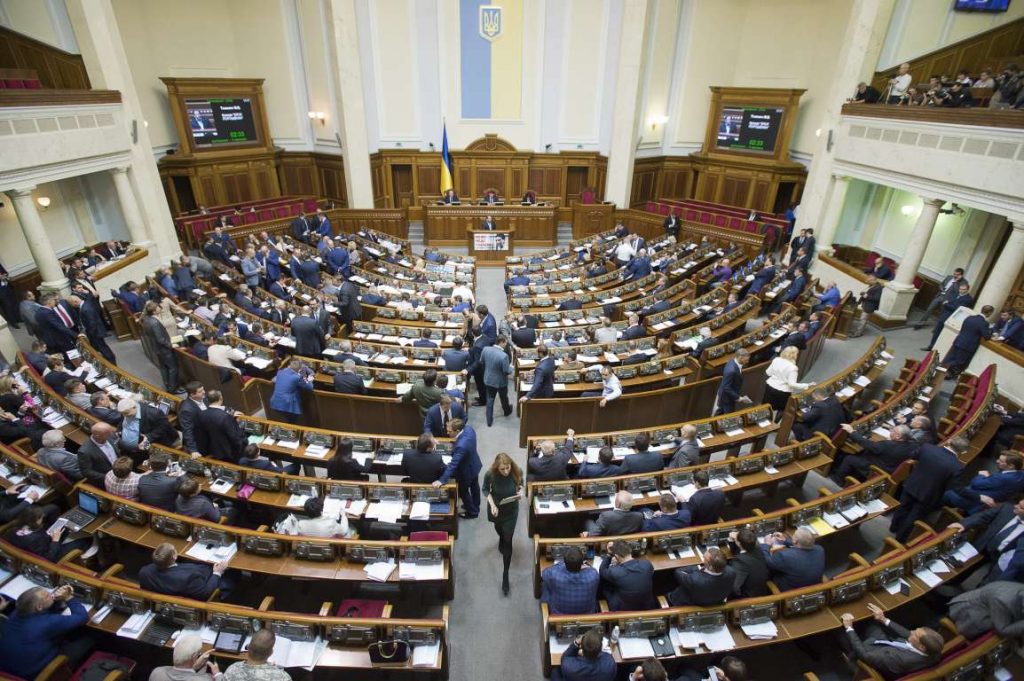
On 15 September, the Verkhovna Rada—Ukraine's parliament—rejected a bill in first reading that would have sent fee revenue collected from 1 August 2026 into a special budget fund for the Defense Ministry, half for buying, modernizing, and repairing weapons, half for soldiers' pay. The vote left the fee itself untouched, since it rests on the Cabinet resolution, and settled only that its revenue will not be earmarked for the army.
The fee producers want gone
The Ukrainian Council of Arms Manufacturers, joined by other defense and employer groups, prepared proposals to rework the July government resolution, No. 875. They want the fee—20% on finished goods and technologies, 30% on parts—cut to zero, or capped at 5%. Firms must also pay upfront, before any foreign payment lands, with no refund guaranteed if a deal collapses. A UAH 15 million (about $337,000) threshold shuts out the small test shipments new clients often begin with.
Explore further
Ukraine put an Italian-Swiss Skyguard into combat duty. The missile inside is a Cold War design derived from the American Sparrow
The fee has drawn complaints since the resolution took effect in early July. Ihor Fedirko, the council's executive director, earlier said the 30-day review window was welcome but warned it could clog into a bureaucratic queue as staff leave the agencies running it. One of the associations behind the submission calls the 30% rate on parts prohibitive, since Europe is where Ukrainian firms would undercut Chinese suppliers on price.
Ukraine has swung from banning weapons sales abroad to courting foreign buyers, and its defense sector now ranks among the country's fastest-growing industries. Wartime certification to NATO standards is turning that output into something European militaries can actually buy.
Ships unloading humanitarian aid at the Port of Havana this year. The challenges in shipping to the island nation are intensifying a humanitarian crisis.
The North Korean leader’s financial and diplomatic leverage rests on the brutal exploitation of his own people, from coal miners to diplomats, at home and abroad.
North Korea celebrated the 78th anniversary of its founding with a parade last week in Pyongyang, the capital. The country is now in one of the strongest positions it has ever been in, financially and diplomatically.
The North Korean leader’s financial and diplomatic leverage rests on the brutal exploitation of his own people, from coal miners to diplomats, at home and abroad.
North Korea celebrated the 78th anniversary of its founding with a parade last week in Pyongyang, the capital. The country is now in one of the strongest positions it has ever been in, financially and diplomatically.
Dozens more are missing after shafts collapsed on Sunday, according to a charity, which said that the chances of rescuing those trapped were “limited” because of a lack of specialized equipment.
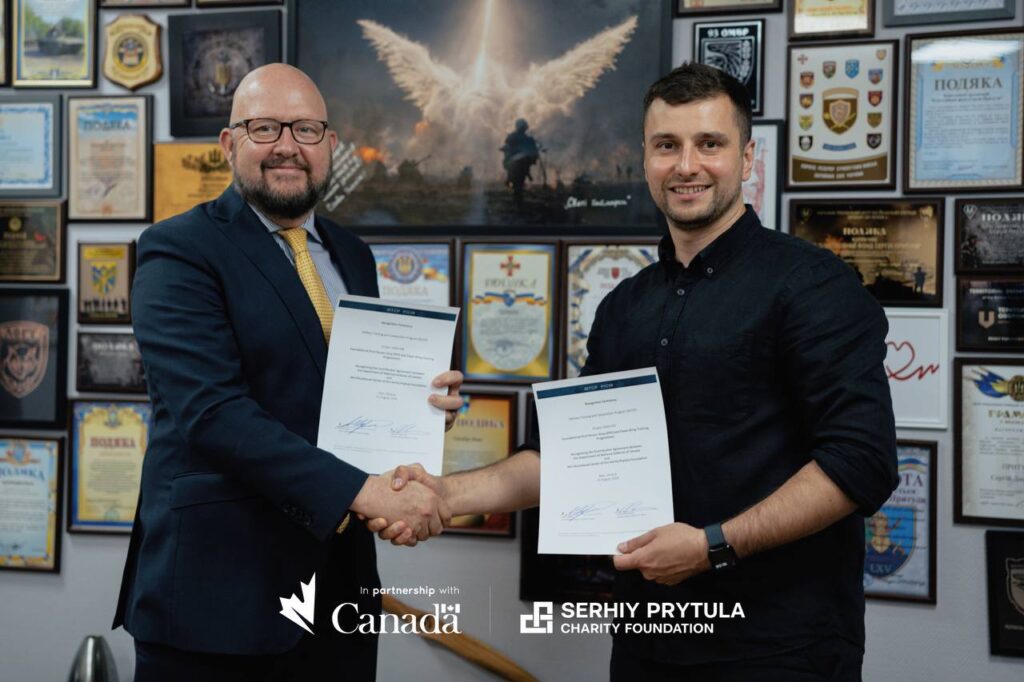
For the first time, a foreign government is paying to build a Ukrainian drone-training program. Under its Military Training and Cooperation Program, Canada has funded a 24-month course for FPV and fixed-wing drone operators at the training center of the Serhii Prytula Foundation, one of Ukraine's largest charities, the foundation said.
The money buys a system. Canada is paying to build a training cycle that can be scaled and copied, the instructors, methods, standards, and infrastructure behind the courses, so it can keep pace with a technology that changes by the month.
The arrangement runs both ways: Canada, which was slow to adopt the FPV drones now dominating the battlefield, gains access to the combat experience of the country that leads the world in drone warfare.
Canada buys a training system
The deal recognizes what Ukraine's front-line schools have built.
"This is recognition not only of our experience but of the quality and standards of our training," said Andrii Shuvalov, CEO of the Serhii Prytula Foundation.
Both sides gain from the deal
Canada's military attaché framed it as an exchange, not simply aid.
"This is a mutually beneficial partnership. Ukrainian service members will train with leading instructors, and Canada will benefit from Ukraine's deep combat and training experience," said Colonel Eric Andresen.
The problem the program targets is one every modern army now faces: technology evolves so fast that training has to keep pace, or fall behind.
The foundation brings the scale
The problem the program targets is one every modern army now faces: technology evolves so fast that training has to keep pace, or fall behind.
The Prytula Foundation, founded by the volunteer and public figure Serhii Prytula, is a credible partner given its track record. It has bought roughly $39 million in strike drones and $10 million in reconnaissance drones for Ukraine's forces, along with about $8.6 million in vehicles and some $1.9 million each in optics and communications gear, spending that has put it among the country's biggest private suppliers of the war.
Iran’s foreign minister, Abbas Araghchi, in August. In a meeting on Wednesday with Mr. Araghchi, China’s top diplomat, Wang Yi, emphasized the two countries’ partnership.
The Houthis are increasingly using artificial intelligence and other tools to produce advanced weaponry on their own, making them less reliant on Iran.
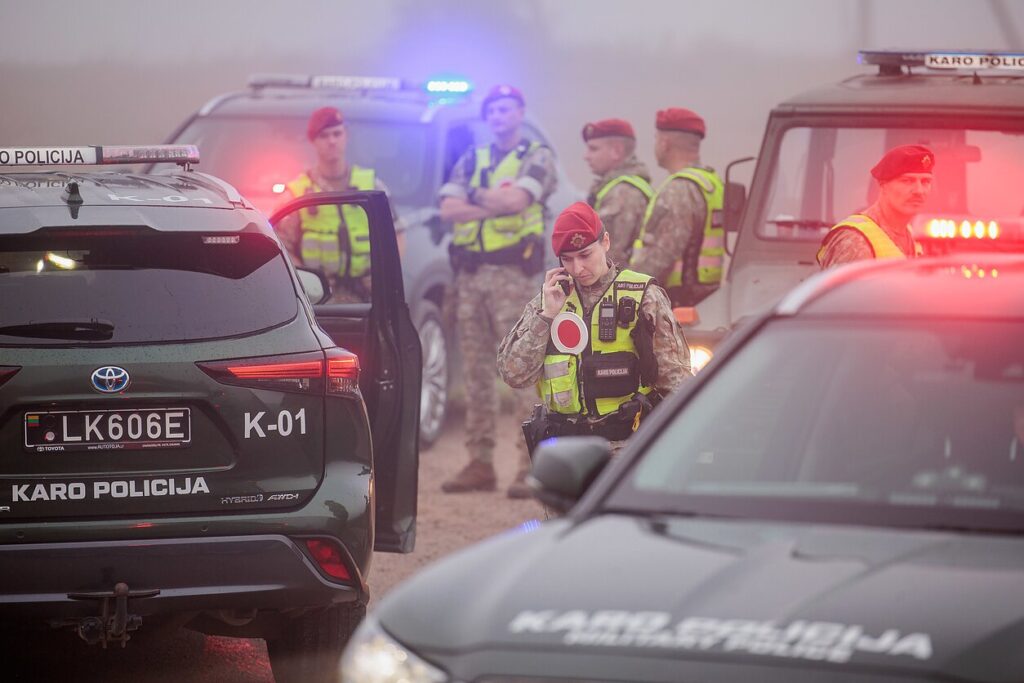
NATO fighter jets shot down a drone over Lithuania shortly after midnight on 15 September, the first time alliance aircraft have destroyed one over that country, LRT reported. The aircraft crossed in from Belarus and came down near a village in the center of the country, where military police sealed the site. Its type and operator have not been established.
Russia is fighting a war it has not confined to Ukraine, and NATO's eastern flank now absorbs the overflow — drones crossing the border, sabotage inside Europe, and warnings from Western intelligence that Moscow could turn on the alliance within a year of the fighting in Ukraine ending.
What happened over Lithuania
Lithuania's National Crisis Management Center issued a yellow air alert after midnight, first for the capital and the districts around it, then for the Kaunas region further west. Italian Air Force Eurofighter Typhoons flying NATO's Baltic air policing mission from Šiauliai Air Base destroyed the drone with missile armament, Lithuania's Defense Ministry confirmed, and the army published the first images from the crash site.
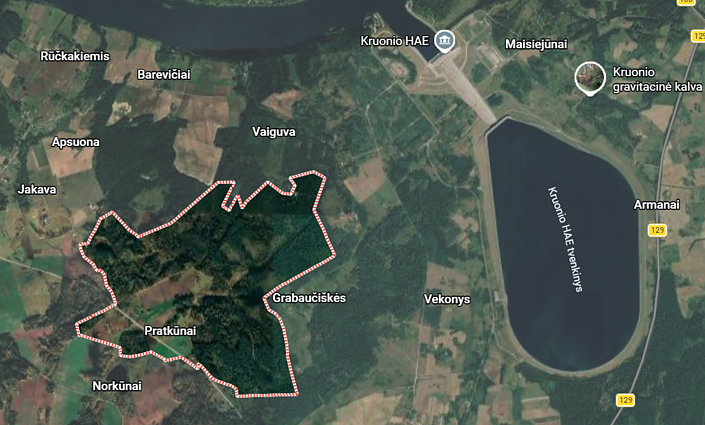
Map showing Pratkūnai in Kaišiadorys district, Lithuania, where the drone came down. Map: Google Maps via LRT
The drone was over Lithuanian territory for about half an hour, crisis center head Vilmantas Vitkauskas told LRT radio. He said there is a high probability it carried an explosive charge, though the wreckage does not yet show whether it was a combat drone. Lithuania chose a yellow alert rather than red because red is used when a strike or a fall is unavoidable, he explained, and the drone was destroyed within seconds of the air defense crews reacting, over farmland with no homes nearby.
Debris from the drone destroyed over Lithuania, found near Pratkūnai, Kaišiadorys district, 15 September 2026. Photo: Lithuanian Armed Forces via Delfi
Military and civilian police are working at the site under the Shield security plan, and the area has been fenced off and guarded. President Gitanas Nausėda thanked the allied personnel for their swift response, saying that with Russia intensifying its aggression against Ukraine such readiness is vital for the region.
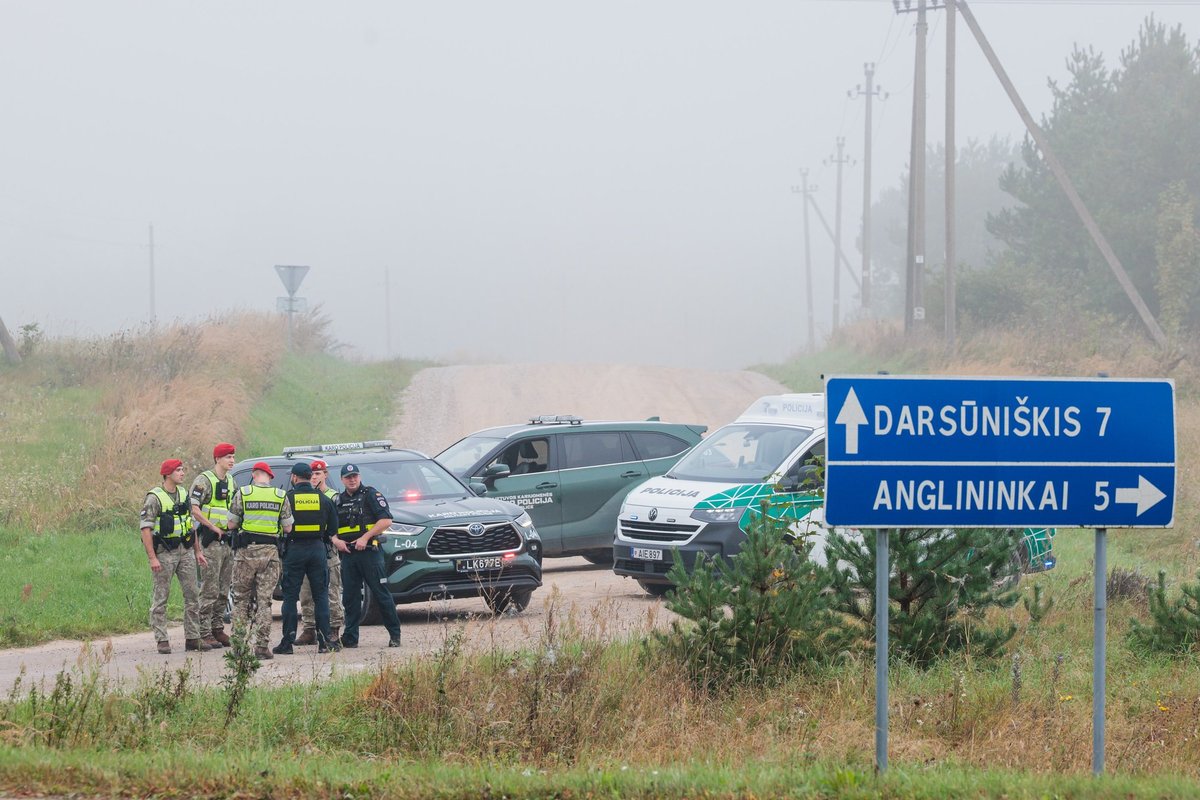
Lithuanian military police and police block the road to the site where a drone was shot down, Kaišiadorys district, Lithuania, 15 September 2026. Photo: Delfi
Whose drone it was
Nothing has been established beyond the direction it came from. The army has not commented on the drone's possible origin while the wreckage is still being collected, and the launch point also remains unreleased. Vilnius airport suspended operations during the alert, and flights from Türkiye and Iceland were delayed.
The same night as this incursion, Poland scrambled fighter jets and raised air defense readiness over Russian drone strikes on western Ukraine, and Romania did the same, with neither country recording a violation of its airspace. The day before, the Polish military recovered a drone from the Baltic Sea that its defense minister said preliminary inspection indicated was Russian and military.
A Romanian F-16 flying the same NATO mission shot down a Ukrainian strike drone over southern Estonia on 19 May, the first NATO drone shootdown in Baltic airspace. Ukrainian drones have been knocked off course into the Baltics by Russian electronic warfare, and Estonia's foreign minister has accused Russia of steering them into NATO territory deliberately.
Belarus' Defense Ministry said a command-staff exercise will run from 14 to 16 September in the Cherven and Berezino districts of Minsk Oblast. It closes a reservist training camp that began there on 25 August, part of a wider round that also took in the Vawkavysk district of Hrodna Oblast from 26 August, the ministry announced.
Under Alyaksandr Lukashenka's rule, Belarus remains Russia's closest ally in the war against Ukraine, supplying weapons, intelligence, and industrial capacity while Moscow fights. That alliance is what makes drills inside Belarus a question for its neighbors: Russia may again use Belarus to launch an attack on Ukraine or a NATO member state.
The Belarusian army is "preparing for war so that there will be no war," Belarusian ruler Lukashenka said during a visit to a military training ground in Brest Oblast on 11 September. He said the whole armed forces would be checked, up to mobilization, with some units deployed to wartime norms, while denying any intention to attack, since Belarus could not win a war against its neighbors.
Belarus prepares reservists for military missions
The exercise is meant to sharpen officers' command of subordinate territorial defense forces and drill personnel in coordinated action, and the deputy chairman of the Minsk oblast executive committee will lead it.
"Particular attention will be paid to the interaction of territorial troops with internal affairs bodies, internal troops, as well as people's militia units in the protection of important facilities, ensuring martial law and fighting enemy sabotage groups," the ministry said.
The people's militia is a volunteer reserve, and the internal troops are the Interior Ministry's own armed formations rather than part of the army.
Belarusian reservists take part in military exercises during a training camp for territorial defense command staff in Malaryta District, Brest Oblast, Belarus, in July 2026. Photo: Belarusian Defense Ministry / Telegram
Minsk steps up territorial defense training as Lithuania launches military drills
Since late March 2026, Belarus' Defense Ministry has announced at least 11 events involving territorial troops, Poland-based Belarusian broadcaster Belsat reported. Most of them were training camps, but command-and-staff exercises and drills were also held, the media outlet said.
Uladzimir Zhyhar, a representative of BELPOL, an association of former Belarusian security officers opposing Lukashenka's regime, highlighted in comments to Belsat the exercises conducted for Belarus' Interior Ministry. The Interior Ministry is preparing to suppress internal protests, while the Defense Ministry wants to conduct exercises that would, among other things, practice responding to saboteurs entering Belarus and breaches of the state border, he said.
"Why can this happen? BELPOL representatives have repeatedly said that there is currently no threat from either NATO countries or Ukraine to Belarus. Therefore, something must change around the country as a whole," Zhyhar said, adding: "And that change would bring both possible destabilization inside Belarus, meaning a threat to the regime, and the likelihood of a breach of the state border."
One scenario he sees is Belarus being drawn into a war against Ukraine or NATO countries, which would prompt a response. The skills currently being practiced by the Defense Ministry and Interior Ministry could then be needed, the expert said.
On 14 September, military exercises began in 12 municipalities in Lithuania and run until 18 September, LRT reported. The NATO member shares a 679-kilometer border with Belarus, and its troops are training to act together against military threats of various kinds, using drones, boats, and weapons.
Belarus has been militarizing steadily since 2022, holding exercises almost without pause, including joint drills with Russian forces.
A Russian state-linked espionage group ran much of its campaign against Ukraine on Claude, the AI assistant sold by US company Anthropic, which set out the case in a threat report published on 10 September, covering activity it disrupted between December 2025 and August 2026. Ukrainian government, military, and diplomatic staff recurred most often among the targets, with the drone supply chain second. Other Russian users of the same chatbot produced on-air tickers and voiceover scripts for state broadcasters, while Russian-speaking criminals went after the AI industry itself.
Russia's invasion runs on more than troops: the same war that shells Ukrainian cities also targets the networks, newsrooms, and inboxes of those backing Kyiv, pushing European states toward defenses as blunt as quarantining email from Russian domains.
Ukrainian ministries and diplomats led the target list
Anthropic tracks the group as GTG-20006 and says its attribution matches public reporting that links it to Midnight Blizzard, a hacking group the US and UK governments attribute to Russia's SVR foreign intelligence service. A Russian-speaking operator using the handle JackPoterz ran campaigns against military intelligence targets in Ukrainian and European governments, plus diplomatic and defense bodies and individuals connected to US foreign policy.
More than 20 organizations appeared in the actor's planning and live operations, from ministries and embassies to think tanks and defense companies. Ukrainian government, military, and diplomatic staff came up most often, and the operators scanned email and remote-access systems across more than two dozen Ukrainian state organizations. Russia has worked these networks all war, treating Ukrainian media as a priority cyber target.
Explore further
Ukraine’s media are top Russian cyber target: Hackers hit Ukrainian TV site with 200,000 requests in minute
Drone technology was the other target
The operators bulk-exported the mailboxes of at least two drone component manufacturers and went after a military drone maker. They also stole a complete proprietary software development kit for a drone vision system, the code and documentation engineers need to build on that hardware, then spent days pulling it apart. They recovered the product architecture, the parts list, the supplier dependencies, and details of a product the company had not announced. Military drone control and AI vision firmware drew their particular interest.
Explore further
AI against AI over Ukraine: Russia’s Shahed now sees its target, and Ukraine’s interceptor sees Shahed
To reach people indirectly, the group also compromised at least three vendors running hotel guest WiFi and redirected guests to its own servers, pushing malware at their devices and hunting for Ukrainian officials and drone manufacturers. To reach people indirectly, the group also compromised at least three vendors running hotel guest WiFi and redirected guests to its own servers, pushing malware at their devices and hunting for Ukrainian officials and drone manufacturers. Microsoft documented the same method on 31 July, calling it CaptiveCrunch and tracing it to a Midnight Blizzard sub-cluster. Russian services have tracked the weapons pipeline before, tapping private cameras in Europe to watch arms shipments bound for Ukraine.
What the chatbot did for the operation
Claude fingerprinted mail systems, built the phishing infrastructure, ran commands inside victim networks, harvested credentials, and organized hundreds of gigabytes of stolen data, Anthropic found. Automated agents also checked whether the group's implants were being detected, rewrote flagged malware until it passed, and staged it for the next intrusion. The operators also seized WhatsApp accounts and targeted at least two former high-level Ukrainian officials that way, and stole cloud email from at least eight bodies, including a national prosecutor office and a military education institute.
Russian state media used the same chatbot
Four individual operators fed state outlets, among them a former Sputnik Moldova editor-in-chief. Anthropic says content generated with Claude reached Sputnik Moldova, RIA Novosti, Sputnik en Español, Sputnik Africa, and RT's English newsroom, including fabricated claims about Moldova's President Maia Sandu before the parliamentary election of 28 September 2025.
A Russian-speaking operator in Bangui also supplied daily material to Radio Lengo Songo, a station investigators say the Wagner Group founded and funded in 2017, coordinating with RT, Sputnik Afrique, and TASS.
Explore further
Estonia quarantines emails from Russian domains over cyberattack risk
Two crews went after the AI company itself
A Russian-speaking actor moved from hotel-booking and fintech intrusions to attacking AI firms, planting instructions in one vendor's testing system and hitting roughly 30 companies in four days while chasing an unreleased Claude model. The hunt for the model failed, though the actor did take production API keys from that testing system, and Anthropic says its own systems were never breached. A Russian- and Ukrainian-speaking group meanwhile sold fake discounted access to the assistant, routing customers to a different model and stealing their logins.
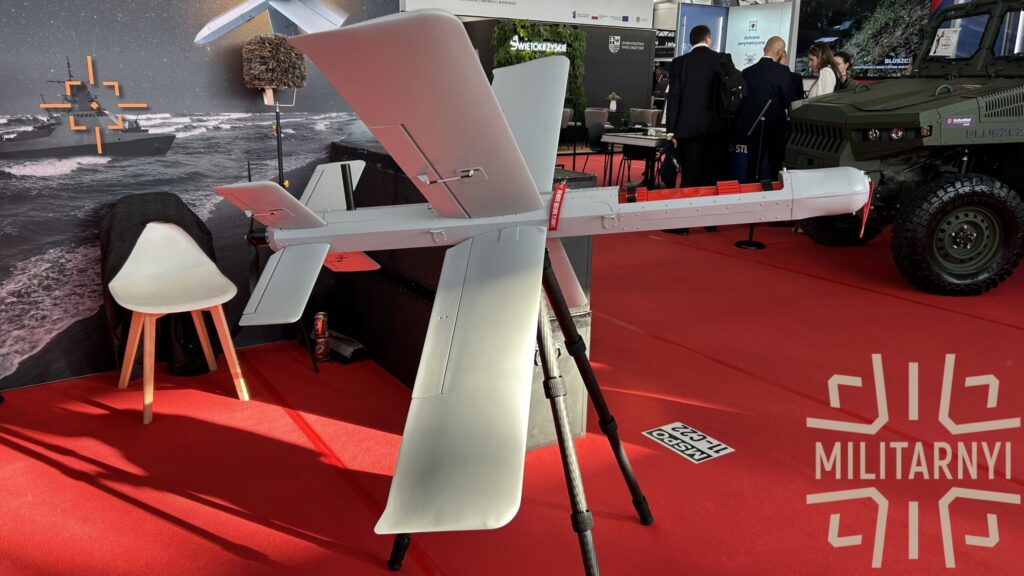
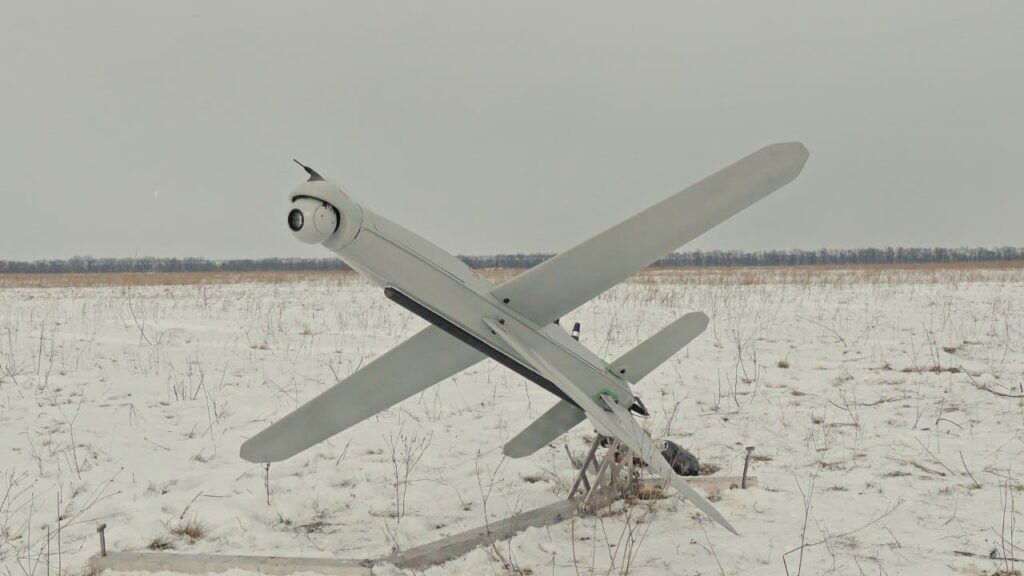
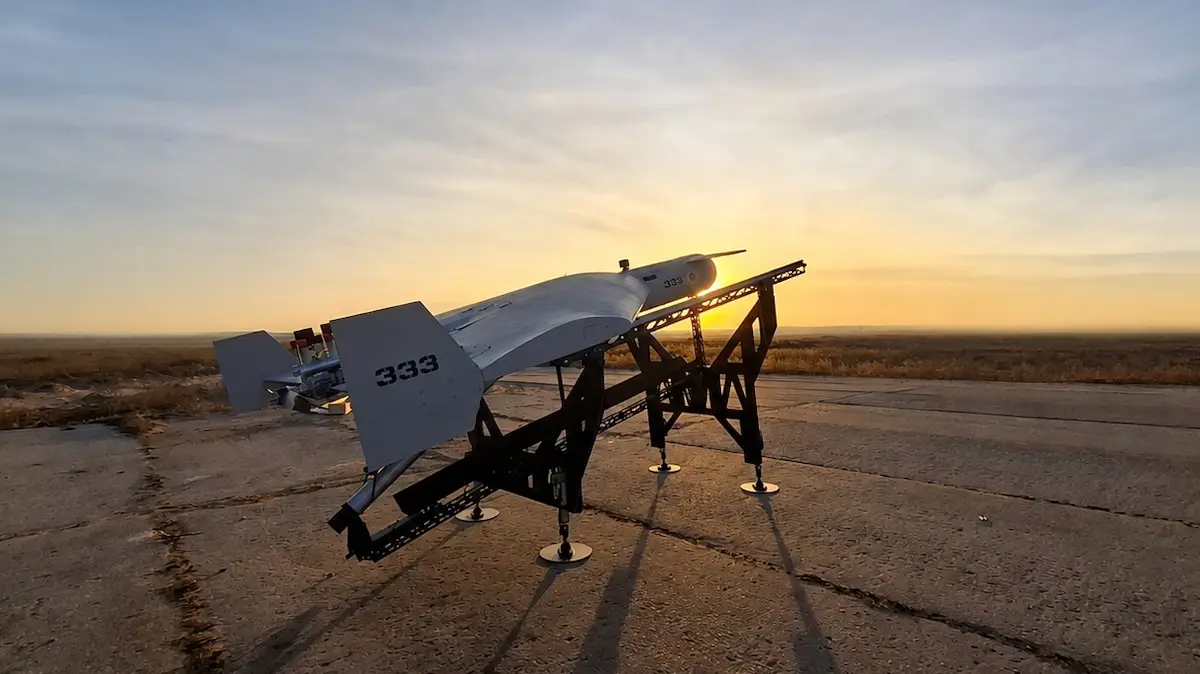
A Ukrainian company has unveiled a homegrown strike drone built to fly deep behind Russian lines, Militarnyi reported on 13 September. Octava Defence showed the new long-range aircraft—a bigger version of a drone already used in combat—at the MSPO 2026 defense expo in Kielce, Poland. The company says the smaller drone is built to keep working in electronic warfare conditions without a reliable satellite signal.
Russian jamming is one of the biggest obstacles to Ukrainian strikes deep in the rear, which is why Ukrainian makers keep building guidance that does not depend on satellite signals.
The workhorse is already in the fight
The base FLYCAT, presented in January 2026 by another Ukrainian firm, Venator Technologies, is a strike drone Ukrainian forces have used in combat since March. An improved model went into action in July and August and is now undergoing codification—entry into Ukraine's official weapons register.
Explore further
Watch first naval battle in history fought entirely by drones: Ukrainian uncrewed boat spots, fires on, and sinks Russian one in Black Sea
The company says the updated drone can fly more than 80 km, stay in the air for an hour, and carry a warhead weighing up to 3.7 kg. It is built to hunt armored vehicles, artillery, radars, and air-defense systems, as well as lighter shelters and communications gear. It can pair with a scout drone that finds the target and passes the coordinates. Several FLYCATs can also strike a single target together or hit multiple targets at once.
Nearly everything on it is built in Ukraine—the communications, navigation, guidance, and warhead. Only the engines come from abroad. Its two cameras—day-only or day-and-night—feed a terminal-guidance module that picks out the target from 2,000 m as it closes in.
The one that reaches deeper
The FLYCAT SL is a bigger, longer-range version, and it is still in testing. The company says it is built to fly more than 200 km, stay airborne for over two and a half hours, and carry a heavier load of up to 7 kg.
One of the warhead variants of the FLYCAT strike drone, shown at MSPO 2026 in Kielce, Poland. Photo: Militarnyi
That range is meant to let it go after command posts, armored vehicles, artillery, and air defenses far behind the front line.
Even as Beijing urges the United States not to hype the dangers of A.I., its own spy chief is framing the technology as a threat to the Communist Party’s security.
Today’s chatbots aren’t likely to help lone actors invent a deadly pathogen, experts say. But newer models, trained in biology, may need stronger safeguards.
As global temperature increase shoots past 1.5 degrees Celsius, the vulnerable countries that fought for that Paris Agreement target face a brutal new reality.
Talks between the United States and Iran hit a dead end weeks ago, leaving Arab countries struggling to manage their ties to Tehran amid ongoing attacks.
The EU's ambassadors failed again on 11 September to extend the bloc's sanctions on individual Russians, days before the listings lapse, according to Radio Free Europe/Radio Liberty's Europe editor Rikard Jozwiak. Slovakia wants two Russian oligarchs delisted, and France now backs the same for one of them, Alisher Usmanov. The EU listed him in 2022 as a pro-Kremlin oligarch close to Russian President Vladimir Putin.
Russia has been invading Ukraine since 2014 and waging all-out war since 2022, and sanctions are the main instrument the West has outside weapons deliveries to cut the money and the components that keep that war running. Enforcement is where it breaks down: tankers that carry oil and stolen grain without ever being listed, weapons makers whose hundreds of subsidiaries keep buying what the parent company cannot, and arbitration claims filed to force the restrictions off. Every gap left open buys Moscow more time and more ammunition.
France picks up a demand Bratislava has carried for years
Paris has called for the delisting of Usmanov, an Uzbek-born multi-billionaire under EU sanctions since the full-scale invasion in 2022, four EU diplomats told Euronews. His money came out of metals and mining and later out of telecoms and tech holdings. Usmanov denies being close to the Kremlin. Forbes ranks him 10th among Russia's wealthiest people this year, at $14.5 billion.
One diplomat, speaking anonymously because of the sensitivity of the discussions, said the request raised questions about the motive and that it "seems mostly economic reasons at play here." All four diplomats described huge frustration among other member states, against the background of Russia's widening hybrid attacks in Europe, among them the explosive-laden drone found beside a Ukrainian cargo plane at Leipzig airport. A French official said Paris supports renewing the sanctions but would not discuss the negotiations.
Explore further
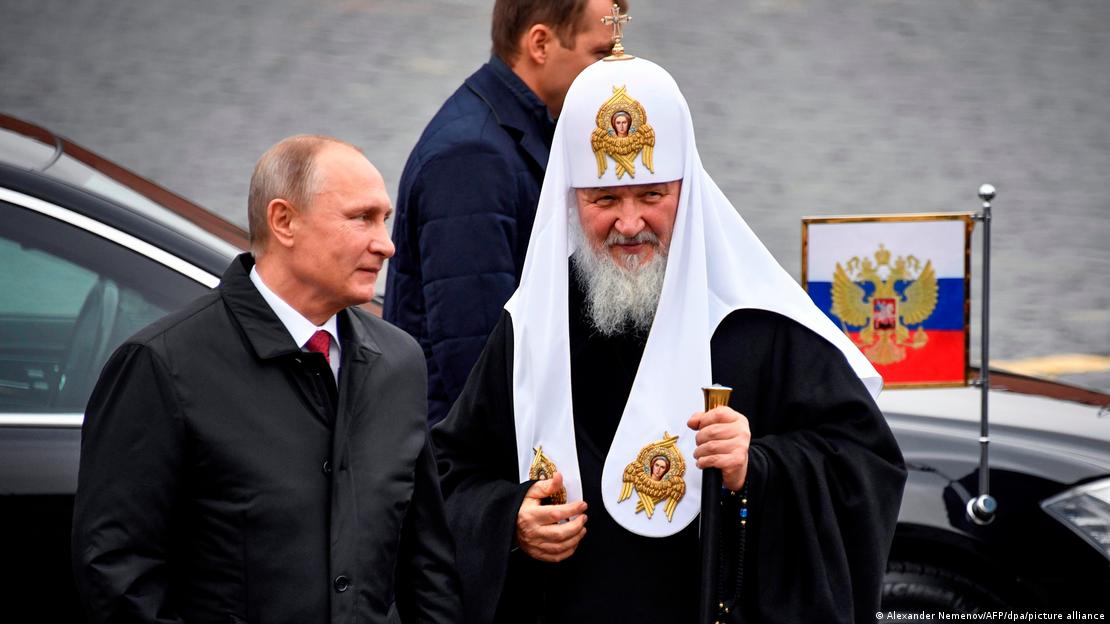
Italy joins Bulgaria in resisting EU sanctions on Patriarch Kirill
Slovakia holds out for two names
Bratislava has pushed for years to remove both Usmanov and a second Russian oligarch, Mikhail Fridman, and it repeated the demand when the sanctions were last extended in March. Slovak Prime Minister Robert Fico's government has threatened to block EU decisions on Ukraine before, and it halted all military aid to Kyiv in January. It has opposed the rollover across several ambassadors' meetings and wants the six-month review cycle kept.
Paris pitched the move as a political trade-off, wagering that Bratislava would stand by both of its delisting demands this time instead of dropping them as it did at the last renewal, Euronews reported.
Explore further
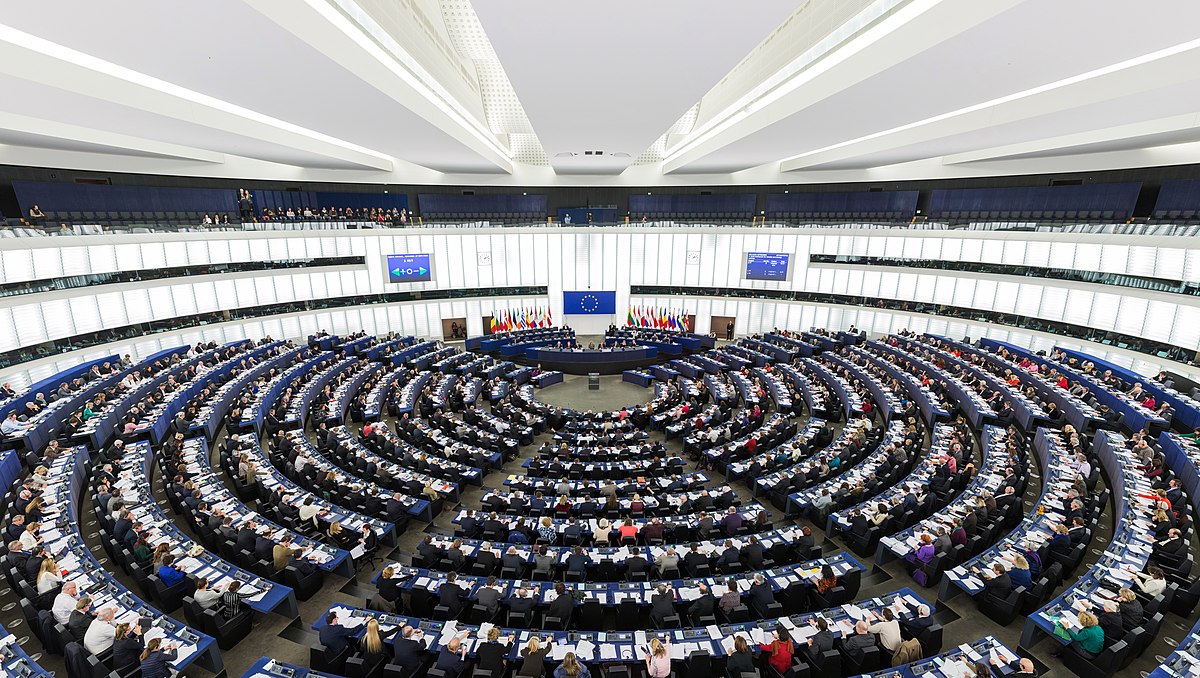
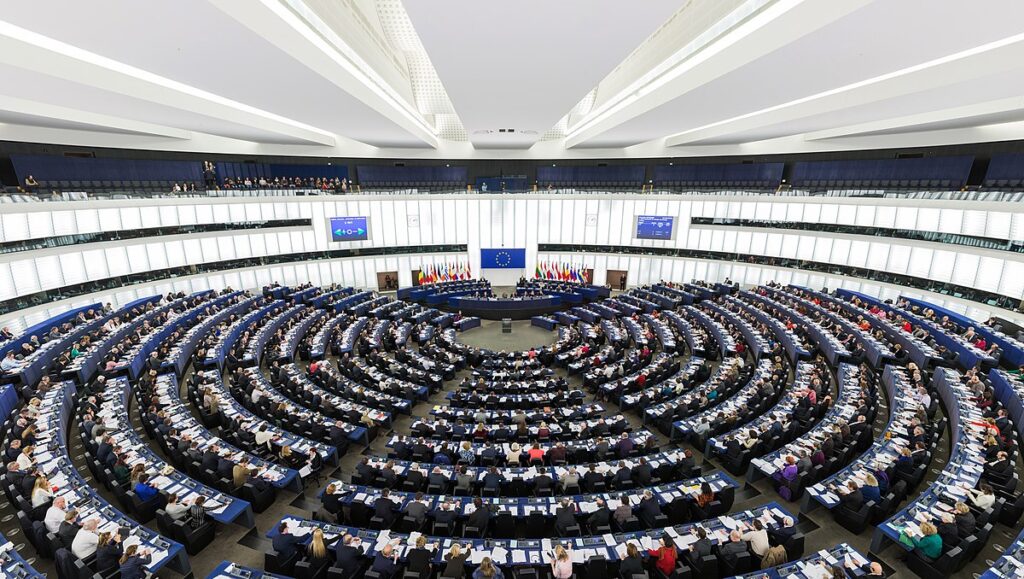
EU lawmakers renew push to seize frozen Russian assets as Ukraine faces its toughest winter yet with a €23 billion defense funding gap
What runs out on 15 September
The deadline falls on 15 September. The listings at stake cover around 2,600 people and companies by the Council's own count, while Euronews puts the whole regime at more than 3,000, from arms-industry firms to individuals the bloc blames for sustaining the war against Ukraine. Individual listings have run in six-month blocks, and a 12-month cycle is now under discussion. The bloc's economic measures switched to annual renewals over the summer, and a July package added 218 names. Renewal requires unanimity, so one capital can let everything lapse. Ambassadors return to it on Monday.
How the last delisting in Usmanov's family was arranged
Recordings of a 2024 call, published this spring, showed Russian Foreign Minister Sergei Lavrov asking Hungary's then-foreign minister, Péter Szijjártó, to help remove Usmanov's sister, Gulbahor Ismailova, from the list. The Hungarian minister replied that his country and Slovakia were submitting a delisting proposal together. Ismailova came off the list in March 2025.
For more than four months, Brian, a commercial fisherman in his late 40s, had been waiting for the weather conditions to be right for us to go fishing outside Bagenkop, a small harbor town on the southern tip of the Danish island of Langeland.
“One more problem has come up,” Brian told me over the phone in early May. “I have lost my fishing license." He was no longer allowed to sell fish for a living. Instead of preparing his boat to go out to sea and to show me how fishing in Denmark had changed over his lifetime, Brian was now removing the registration number from its hull.
Across Denmark, coastal fishing communities are shrinking as catches decline. At the same time, warming seas, overfishing and pollution are putting increasing pressure on marine ecosystems.
“Plenty of fish in the sea”? Not anymore, say UN experts, with 35% of the world’s marine fish stocks being fished faster than they can be biologically replaced. Today, more than half of the fish we consume worldwide comes from fish farms.
This summer, sea temperatures along Denmark’s beaches reached 28 degrees Celsius, a record high. On September 2, the UN Environment Program warned that the world is likely to cross 1.5 C of warming above pre-industrial levels within the next few years. As the climate warms, the pressure on marine ecosystems grows.
In August, Iceland voted not to restart accession talks with the European Union, in part because of concern that it would lose sovereign control of its fishing industry. While fishing is not as major a part of Denmark’s GDP as it is Iceland’s, the EU’s impact has meant independent Danish fishermen have struggled to survive in the face of corporate competition.
For Brian, though, it’s about more than regulations. It is about watching the ocean he grew up with slowly disappear.
Nets covered in black slime
His story reflects a larger shift happening along the Danish coastline. Coastal fishermen, once a central part of the country’s history, are a vanishing breed.
For Brian, it was never about the money. Even when he was a teenager and he told his father he wanted to be a fisherman, his father said it was a bad idea. But the pull of the sea was irresistible. His life as a fisherman began as a hobby, accumulating experience and knowledge just by spending as much time as possible on water. He learned how to read the currents, the weather, and fish movements through experience rather than education. In 2019, despite the uncertainty surrounding the industry, he bought a commercial fishing boat. “When I started as a teenager, there were fish everywhere,” he said. But over the years, the numbers have dwindled starkly. Every few years, another Danish harbor became economically unsustainable. First Bogense, then Kerteminde, later Nyborg and Spodsbjerg. Each one of them followed the same pattern: fewer fish, declining landings, and growing questions about whether it was possible for small fisheries to continue their operations.
While working on this story, I spoke to ten small-scale Danish fisheries across the country. Half of them said they do not expect to still be fishing five years from now. In 2019, they said, ten nets could bring in between 150-200 kilos of plaice on a single trip. Two years later, the same nets would return with only two kilos. As the catches became smaller, so did the possibility of keeping a commercial license. Brian no longer caught and sold enough fish to keep his permit.
One day still stands out to him as perhaps the single worst he has experienced at sea. He had three nets in the water. The first one he hauled in looked normal. The second held fewer fish than expected. Then he started pulling in the third — the net was completely empty and covered in thick, black slime.
Marine biologist Stiig Markager told me that what Brian saw was a tell-tale sign of oxygen depletion. In 2025, around 40% of Danish marine areas were affected by low oxygen levels. Oxygen depletion happens when too many nutrients, mainly nitrogen and phosphorus from agriculture and wastewater, enter the sea. These nutrients fuel large algae blooms.
When the algae die and sink to the seabed, bacteria begin decomposing them, consuming enormous amounts of oxygen in the process. Climate change exacerbates the problem. “Warmer water contains less oxygen. At the same time, biological processes speed up when temperatures rise.” In practice that means algae grow faster, oxygen is consumed more quickly, and deep waters struggle to recover. Together, these processes reinforce each other. “When oxygen disappears, it damages the seabed ecosystem,” Markager said.
A new global study argues that aquatic deoxygenation is approaching an “unsafe space” and should be considered a potential tenth planetary boundary. The global ocean has lost around 2% of its oxygen over the past 50 years. The consequences for marine life are catastrophic, forcing either flight or suffocation.
Marine biologists have studied oxygen depletion in the Danish seas for decades. But, Brian says, “fishers are often the first people to see the effects of that depletion, directly in their nets.” It is a first-hand experience, fishers say, that is often discounted or ignored. Many independent coastal fishers say they feel increasingly excluded from political conversations about the ocean, despite spending their working lives at sea.
Source: DCE – Danish Centre for Environment and Energy, Aarhus University, Oxygen depletion in Danish waters, 2014–2025.
“It feels like we’re not really welcome anymore,” Brian said. He believes small-scale fisheries like his are being pushed out while decisions about the seas are increasingly made by those on land. “I think they don’t want so many people out there seeing what’s actually happening.”
For years, debates about oxygen depletion in Denmark have become deeply political. Marine scientist Stiig Markager says that the results of environmental research have repeatedly clashed with agricultural and political interests. “There is complete opposition from agriculture and from Venstre (a major center-right political party) to making research publicly available,” he said. “There is a clear political strategy from Venstre that there must be no interference with agriculture.”
According to Markager, tensions between environmental researchers and agricultural interests intensified during the early 2000s, as scientists linked nitrogen runoff from farming to oxygen depletion in Danish waters. Despite decades of plans and political promises, Markager says, the recovery many researchers hoped for never fully arrived.
For this story, I also contacted both the Minister of Environment and the Minister for Food, Agriculture and Fisheries to ask for an interview about the state of Danish waters and the future of small-scale fishing. Neither had time to answer questions.
“When I started as a teenager, there were fish everywhere.” Brian said in BK Kar“Fishers are often the first people to discover oxygen depletion, directly in their nets,” Brian explained."I have lost my fishing license," Brian said on a phone call.
What remains is behind glass
One harbor that has felt the impact of the changing nature of Danish waters is Bønnerup Strand, which has transformed from a fishing town into a tourist destination. The harbor now features an ice cream shop, a hot dog kiosk, a seafood restaurant, and a mini golf course. The iconic blue Danish fishing boats are conspicuous only by their absence. Instead, boats built for leisure, not commercial fishing, are docked at the harbor.
Along the quay, an outdoor exhibition has been installed behind glass panels. It started last year, created by a local group of volunteers trying to preserve what Bønnerup Strand used to be. The pictures show fishing nets piled high, men in blue overalls, boats unloading their catch, and fish laid out in crates.
Movement. Noise. Purpose. It was a harbor bustling with life. Hans, in his 60s now, was once a fisherman in Bønnerup Strand. He walks past the diorama and tells me that twenty years ago “there were 60 or 70 fishing boats here, now there are two.” Some of the independent fishers chose to leave, their lives no longer making economic sense. Others lost their licenses. The rest have disappeared, not all at once, but gradually. Some left before it was too late, others had their boats seized by the bank when their revenue became too low. “Quite a lot of my colleagues had their boats taken by them," says Hans, referring to banks who repossessed boats because independent fishermen no longer made enough money to pay for them.
You could say that the gradual suffocation of the Danish seas began in 1909 with the invention of the artificial nitrogen fertilizer that transformed global agriculture. Artificial fertilizer rapidly became central to modern-day farming. By 1959, nearly 75% of farms were using fertilizer to increase crop production. At first, the growing amounts of nitrogen entering the sea did not appear harmful. During the 1960s and 70s, the extra nutrients actually increased algae and plankton growth, creating more food for some fish species. “There were actually more fish,” says Markager, the marine scientist, “but by the mid-1980s, the consequences had become impossible to ignore.”
Fish auction hall, Esbjerg, 1968. Tonny Sørensen. Esbjerg harbor, 1972. Knud Rasmussen.Fish auction, Esbjerg, 1934. Gustav Bjerknæs .
On October 8, 1986, on Danish television fishermen in Gilleleje were seen pulling dead lobsters from the sea. The images became the subject of alarmed national conversation. For the first time, the public saw what oxygen depletion meant for life beneath the surface of the sea.
Hans, the fisherman from Bønnerup Strand, told me he was part of the television coverage himself. “Fishers had talked about pollution long before the dead lobsters,” he said. “But suddenly people started paying attention.” The public outrage pushed Denmark to act. In 1987, the country introduced its first Water Environment Plan, aiming to reduce phosphorus emissions from wastewater by 80% and nitrogen emissions by 50% within five years. For many fishers and marine scientists, it became the first real sign that the environmental crisis in Danish waters was finally being taken seriously. During the 1990s, nitrogen and phosphorus pollution declined significantly. Water in several fjords and coastal areas became clearer, and conditions slowly began improving. For a moment, it appeared the damage could still be reversed.
But by the early 2000s, many coastal fisheries were once again experiencing declining catches and, with it, a growing uncertainty about the future. Hans was one of those affected. Coming from a family that had fished for five generations, the harbor was never a tourist destination for Hans. It was a way of life. But on a sunny Friday in April back 2005, he sailed out to Kattegat for plaice. He knew it was over. “I said to my employee: “this is the last trip. I start working on land from Monday.”” He had made the decision months earlier, as the numbers of fish dwindled and regulations tightened.
It wasn’t an easy choice, but he had four children to think of. Climate change had taken away his livelihood. “You can’t do anything about it,” he said. “If you think too much about it, you go crazy.” Researchers describe this kind of environmental grief as solastalgia, the distress caused by watching a familiar environment change beyond recognition. Unlike homesickness, solastalgia happens while still remaining in the same place. For coastal fishers, the sea remains physically present, but the ecosystem they once knew and depended on, is disappearing.
Adapting has always been part of the job, says Hans. “There has always been a species that disappeared and then another one came.” But eventually, nothing was replacing what was lost anymore.
Hans in his shop, Møllefisk.
In 2002, marine scientists Stiig Markager and Peter Bondo Christensen from DMU, the Danish Environmental Research Institute, published research showing that around 75% of Denmark’s nitrogen emissions originated from agriculture through waterways and atmospheric pollution. The findings intensified tensions between marine scientists, politicians, and agricultural organizations about who was responsible for the declining marine environment.
In response to the worsening marine crisis, Denmark established DMU in 1989 to monitor oxygen depletion, nutrient pollution, and ecological changes beneath the surface. But their findings were inconvenient. By 2007, after nearly two decades as an independent institution, DMU was folded into Aarhus University as part of a wider restructuring of Denmark’s research sector. The decision sparked criticism from several environmental researchers and organizations, who feared the changes could weaken the independence of Danish environmental monitoring.
“Agriculture succeeded in closing DMU,” former researcher Bo Normander told the media. “Nature has lost.” In 2015, the Danish government introduced the controversial Landbrugspakke, easing environmental regulations on fertilizer use in an effort to increase agricultural production.
Critics warned that the policy could worsen nitrogen pollution in Danish waters at a time when oxygen depletion remained a recurring problem. In the years that followed, researchers from Aarhus University reported rising nitrogen emissions instead of the reductions politicians had promised. Markager argues that despite decades of environmental warnings, nitrogen pollution reductions largely stalled. While nitrogen pollution in Danish waters declined significantly after the first Danish Water Environment Plans in the 1980s and 1990s, researchers say the reductions have largely stagnated over the last 20-25 years.
Now, Denmark is trying to reverse that trend. In the first week of September, the country passed a historic new law changing how agricultural nitrogen is regulated. The law will take effect in 2027 and represents a significant tightening of the rules introduced in 2015.
Under the system introduced in 2015, farmers were allowed to fertilize closer to what was considered the agronomic optimum for their crops, while still operating within nationally defined nitrogen quotas and other rules. The new system moves in the opposite direction. Instead of relying primarily on broad national rules, nitrogen regulation will increasingly take the environmental sensitivity of individual areas into account.
Where a farm is located will thus matter much more. The requirements will vary depending on factors such as whether fields drain towards vulnerable rivers or coastal waters, and whether they lie above areas important for groundwater and drinking-water protection. For farmers, this means that the amount of nitrogen they can use will become more restricted in areas where the surrounding environment is particularly vulnerable.
For fishermen like Brian and Hans, the law represents a change they have long been asking for: an attempt to redress the damage done to Danish seas.
“I don’t think we’ll have fish out here ever again.” said Hans Fisker, owner Møllefisk at Bønnerup Strand“Quite a lot of my colleagues had their boats taken by them." Boat on land, Bønnerup Strand.
But understanding how the water became polluted is more complicated than it first appears. Much of the pollution data commonly referred to in public debates focuses on point-source pollution, which emanates from identifiable sources like wastewater treatment plants, industrial discharge, and fish farms, and is generally easier to measure. But most nitrogen pollution in Danish waters actually comes from diffuse sources, mainly agricultural runoff carried from fields through rainwater, rivers, groundwater, and the atmosphere. Unlike point sources, diffuse pollution is far harder to measure directly and comes with greater uncertainty in the data. As a result, wastewater pollution can often appear to be the biggest issue, even though agriculture remains the dominant source of nitrogen input into Danish waters.
For Hans, the consequences appear almost irreversible. These days, the fish often do not return. “There are still plaice here, but they’re too thin. They don’t gain weight.” Scientists point to several overlapping causes, and the suggested solutions are just as diverse. Activists call for stricter rules, fishers say there are already too many. Farmers reject blame, and governments insist wastewater is already being purified. Plenty of fingers are being pointed, but the problem remains.
Hans doesn’t expect it to change. “I don’t think we’ll have fish out here ever again.” These days, he’s on the other side of the industry, buying catch from fisheries and selling it to customers. “People have to get used to the fact that we don’t always have everything available on demand. With a changing climate, fish shops may no longer offer cod, salmon, or plaice like we’ve been used to.” Instead, he says, squid is becoming the new normal.
Still, while independent fisheries disappear, the demand for fish continues to grow. Instead of restoring the ocean, parts of the fishing industry are increasingly moving onto land.
In northern Denmark, companies like Skagen Salmon are now raising fish entirely inside closed artificial systems, where the water, oxygen, and temperature are carefully controlled. Outside, Skagen Salmon looks like a factory. No windows, just a large grey box near the coastline.
If the building had windows, the fish inside could look out at the sea. But these fish will never see, taste, or feel those waters. Instead, they are raised in artificial tanks until they reach market size. They are then slaughtered and sold to supermarkets and fish shops across the country.
https://youtu.be/XKDIe7PXMCw
Video from Skagen Salmon recirculating aquaculture system (RAS), by Victoria Jensen.
More than 100 European Parliament members are urging EU leaders to revive plans to use frozen Russian assets to support Ukraine, as Kyiv faces a €23 billion shortfall in defense funding, Euronews reports.
Russia is expanding its attacks across Ukraine, with growing numbers of missiles and drones striking cities and critical infrastructure far from the front line. Kyiv expects the coming winter to be the most difficult period of the full-scale war yet, increasing the need for reliable funding to sustain air defenses, energy repairs, and the military.
A letter signed by 122 MEPs from across the political spectrum calls for a new proposal to overcome legal and financial concerns that have stalled the use of the assets. Euronews reported on the letter on 10 September.
The EU holds more than €200 billion in Russian central bank assets, most of them in Belgium. The European Commission previously proposed using the assets to back a zero-interest loan for Ukraine, but EU governments failed to reach an agreement over the legal risks, particularly concerns raised by Belgium.
Ukraine faces a major funding gap
The renewed push comes as Ukraine prepares for another year of war while its defense spending needs continue to grow.
According to the MEPs cited by Euronews, Ukraine has identified a €23 billion gap in defense funding. Kyiv needs sustained financing for weapons, ammunition, air defense, drones, and other military needs as Russia continues its war and expands the scale of its attacks.
The EU has already approved a €90 billion support loan for Ukraine, but lawmakers argue that this will not cover the country’s needs. The estimated cost of damage caused by Russia’s invasion has already surpassed €600 billion, according to the letter.
For Ukraine, securing predictable long-term funding is particularly important as it cannot rely indefinitely on individual EU governments finding additional money in their national budgets.
MEPs seek a way around legal concerns
The proposal is backed by lawmakers from the European People’s Party, Renew Europe, Socialists and Democrats, Greens/EFA, European Conservatives and Reformists, and The Left.
They are calling on the European Commission to create a new mechanism that could take on the legal obligations linked to Russia’s central bank assets. This could allow the funds to be used to support Ukraine without directly transferring the frozen assets to Kyiv.
Belgium has been the main obstacle to the previous proposal because the assets are largely held by Euroclear, a Brussels-based financial institution. The Belgian government is afraid that Russia could pursue legal action against Belgium if Moscow’s assets are used.
Explore further
Belgium blocks EU’s last-ditch push to unlock €210B of frozen Russian assets for Ukraine
The MEPs argue that Russia should ultimately bear the financial cost of the destruction caused by its invasion.
“Russia should bear the financial consequences of its war of aggression,” the letter says.
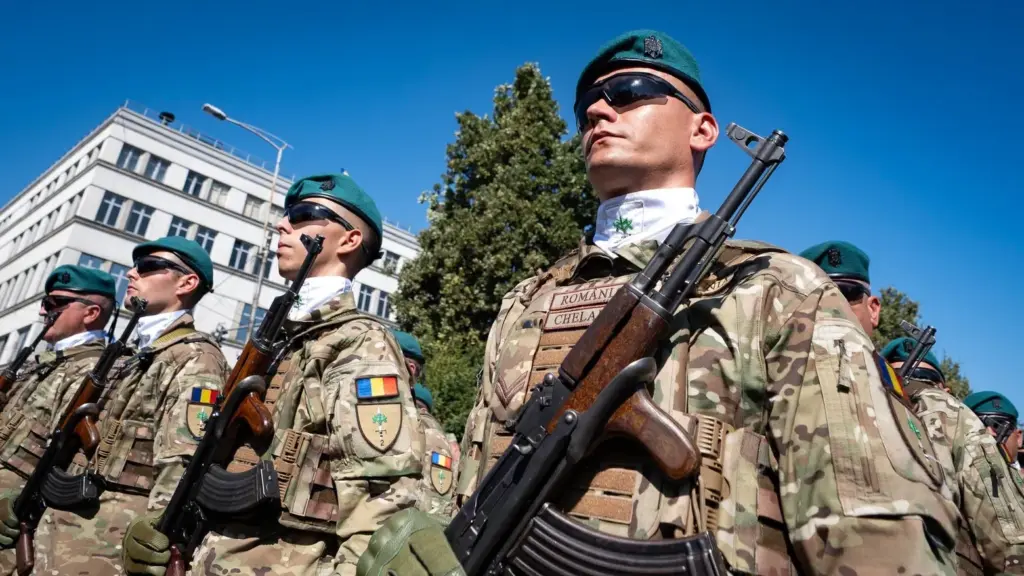
Romania’s presidential administration denied rumors circulating online that the country would send military personnel to the front in Ukraine. It called such claims “an alarmist manipulation.” Up to 20 officers are expected to join the command structure of the multinational support force, which is based in France and the United Kingdom, according to the statement.
Russia’s war against Ukraine is affecting Black Sea region states, including Romania, the Romanian presidential administration said on 9 September. Consequently, the country is taking measures to protect, first and foremost, its own citizens, the statement said. Romania is bolstering its defense capabilities against the backdrop of Russian drone airspace violations.
Why is Romania sending these military personnel?
“Romania's top priority is protecting and defending our citizens, which is why our country participates in all international formats that help achieve this major security objective,” the presidential administration explained.
It cited the Coalition of the Willing for Ukraine as one such format, which was established to provide Ukraine with a system of political and legal guarantees after a ceasefire agreement is reached. The administration said that the coalition’s work would provide guarantees of peace and stability for the entire Black Sea region.
The administration highlighted the Operational Command for the Multinational Force in Support of Ukraine, which has been operating since 2025 and which Romania plans to join. For this purpose, the president asked parliament to approve the participation of up to 20 military personnel. They will work at the headquarters and in subordinate command structures.
Bucharest stressed that these military personnel will not take part in combat operations on Ukrainian territory and that Romania will not send its combat troops to Ukraine.
Romania has supported Ukraine for years
Romania is an EU member and has supported Ukraine since the start of the full-scale invasion. The country is also ready to become a transit hub for Western peacekeeping forces, then-Romanian President Ilie Bolojan said last year. He said that supporting Ukraine is also necessary for the security of Romanian citizens.
"Our consultations confirmed Romania's principled readiness to continue supporting Ukraine. It is not just about helping a victim of aggression—an essential issue—but also about protecting our own security. If Russia's current course continues, and given this region's history, Ukraine may only be the first target," Bolojan warned.
In December of the same year, Romania allocated €50 million for Ukraine’s defense through the US-led PURL initiative. The initiative aims to purchase US weapons for Ukraine, with allies providing the funds while NATO handles the logistics.
Ukraine's Bulava strike drone can now hunt around the clock, its crews no longer switching optics between day and night. Its maker, DeViRo, showed the upgraded drone at a defense exhibition in Poland, the Military news outlet Militarnyi reported. The overhaul brings a new camera and lengthens the drone's flight time, and the developers say they substantially improved its flight characteristics. The company said every future production batch will carry the new optics.
Ukraine's war effort increasingly runs on small private firms that keep sharpening cheap drones in months, reworking weapons already in the fight rather than waiting years for a new model. A drone that sees in the dark can work the same targets after sunset that it hunts by day.
One camera for day and night
The updated loitering munition carries a multispectral optical station that lets it operate at any hour, a company representative told Militarnyi at the MSPO defense exhibition in Poland. The station packs a daytime channel and a thermal-imaging channel into one body, so crews no longer swap in different camera modules depending on the time of day. Operators flip between the two modes in the control station's software while the drone is already in the air.
Explore further
Ukraine shows a home-built missile designed to hit ballistic targets for the first time, the Koral, at Poland’s MSPO
Longer in the air, 120 to 130 km out
Bulava now stays aloft for up to 110 minutes, and its guaranteed working range runs from 120 to 130 km, with room to grow depending on conditions and crew training.
DeViRo tied the drone to a summer campaign against Russian logistics, in which it says Bulava crews cleared the way for deeper strikes.
"We knocked out enemy radars and air defenses so that deep strikes could fly as deep as possible," the company representative said.
The company says its crews took a very active part in that campaign, which hit Russian supply routes across the south.
An interceptor in the same family
DeViRo builds more than strike drones. In March, it introduced the Sokyra interceptor, a prototype built to shoot down Russian attack drones. The prototype was listed at 240 km/h, a 45 km range, 30 minutes aloft, and a 750-gram warhead at the alpha-testing stage.
Ukraine's National Guard now uses fiber-optic control for 70% of its drones, its commander said in an interview reported by Ukrinform on 9 September. Russian jamming cannot touch that link.
On a front where both sides jam radio signals around the clock, cable-guided drones have become some of the most effective weapons in the war—and Russia has turned to them too.
From radio signals to a cable
National Guard Commander Oleksandr Pivnenko gave that share on the YouTube channel LB Live. Earlier, the split ran the opposite way—about 20% fiber-optic, 80% radio-controlled.
These drones swap the radio link for a hair-thin cable that unspools as they fly, leaving Russian jammers no signal to block. The change was not smooth. Pivnenko said the National Guard first wrestled with the cable's quality and the way the drones handled. Crews have since learned to fly them for reconnaissance and strikes.
Twice as many drone-hunting crews
The force has also doubled its number of interceptor-drone crews over the past six months, Pivnenko said.
The National Guard plans to keep building those capabilities, Pivnenko added, calling the development of unmanned systems units one of its priorities. Ukraine's Defense Procurement Agency has also opened its first competitive tenders for fiber-optic and deep-strike drones, bought to Defense Ministry specifications rather than by product name. Since the full-scale invasion began, the force's drone crews had struck more than 243,000 enemy targets, Pivnenko said in late July.
Ukraine's government has moved to restore an anti-corruption safeguard it had quietly weakened — the rule that requires banks to monitor the accounts of former senior officials. It has registered a new bill, No. 16051, that rewrites the provision, Deputy Olha Vasylevska-Smahliuk says, Ekonomichna Pravda reports.
The new bill changes the rules for monitoring former PEPs: enhanced financial monitoring after leaving office must remain in place for at least 12 months and will no longer automatically end upon its expiration, Deputy Yaroslav Zhelezniak says.
After that, the bank must conduct an individual risk assessment. If the risks associated with PEP status persist, enhanced monitoring will continue until the bank determines that those risks no longer exist. The assessment must be repeated at least once a year.
The same approach is proposed for family members and close associates of former PEPs.
A tax law hid the loosening
The weak version reached the statute book by stealth. Lawmakers slipped it into an unrelated measure, the digital-platform tax law No. 15111-d, passed in June, to gather the votes they needed. Under that wording, a bank could continue monitoring a former official for more than 12 months only with documented high risk.
That reversed the burden of proof. Ukraine's European partners were caught off guard, arguing the new text no longer matched the EU directive it was meant to implement. The EU Council and European Commission urged the president not to sign, and he refused. In June, the IMF said the change pushed Ukraine's anti-money-laundering system out of the FATF standards it must meet.
Former PEP status alone cannot justify bank's refusal
At the same time, the mere fact that a person was once a PEP cannot, after the 12-month period has expired, by itself constitute sufficient grounds for a bank to refuse to provide services. If a bank nevertheless refuses to establish or maintain a business relationship, the client would have a separate right to request a review of that decision.
The difference is fundamental. Under Bill No. 15111-d, after one year, a bank would have to separately establish that the client posed a high or unacceptably high risk in order to continue enhanced monitoring.
“The new government bill, No. 16051, provides for enhanced monitoring for at least one year, after which it continues for as long as an individual assessment shows that risks associated with PEP status persist,” Vasylevska-Smahliuk adds.
A Ukrainian company has placed third in a NATO contest to find ways of keeping an enemy's airfields shut down over time. Its artificial-intelligence targeting module finished among the top three of more than 60 entries in the Persistent Airfield Denial Innovation Challenge, Ukraine's Defense Ministry said.
The challenge was run jointly by NATO Allied Command Transformation and the NATO-Ukraine Joint Analysis, Training and Education Center, the first jointly staffed NATO-Ukraine body. The result shows NATO is building a direct channel for Ukraine's combat-tested technology into its own capability development.
On the NATO side, the finalists' proposals were evaluated by representatives of the Alliance's Commands, as well as the NATO Defense Innovation Accelerator DIANA.
An AI module lands third place
Organizers received more than 60 applications and brought nine finalists to Warsaw. The Ukrainian team took third place with a module designed to enhance the autonomy and accuracy of strike systems. The Ukrainian Defense Ministry did not name the developer.
A Czech firm, LPP Holding, won with a long-range system designed to work with minimal outside control, and a Polish team came second with a plan for the pre-planned destruction of key airfield infrastructure.
JATEC feeds Ukraine's lessons to NATO
Ukrainian experts helped define the problem and judge the entries, including officers from the Air Force Command, the Unmanned Systems Forces, and the National Guard's Omega unit.
The challenge, which carried up to €250,000 in prize funding, was the second of the two bodies to run together, after a 2025 round that fast-tracked European firms to counter Russian glide bombs.
In July 2026, Russian aviation used approximately 8,000 guided aerial bombs against Ukrainian cities.
The winning solutions now move to testing and combat validation, which the Defense Ministry said will show how well they work and whether they can scale.
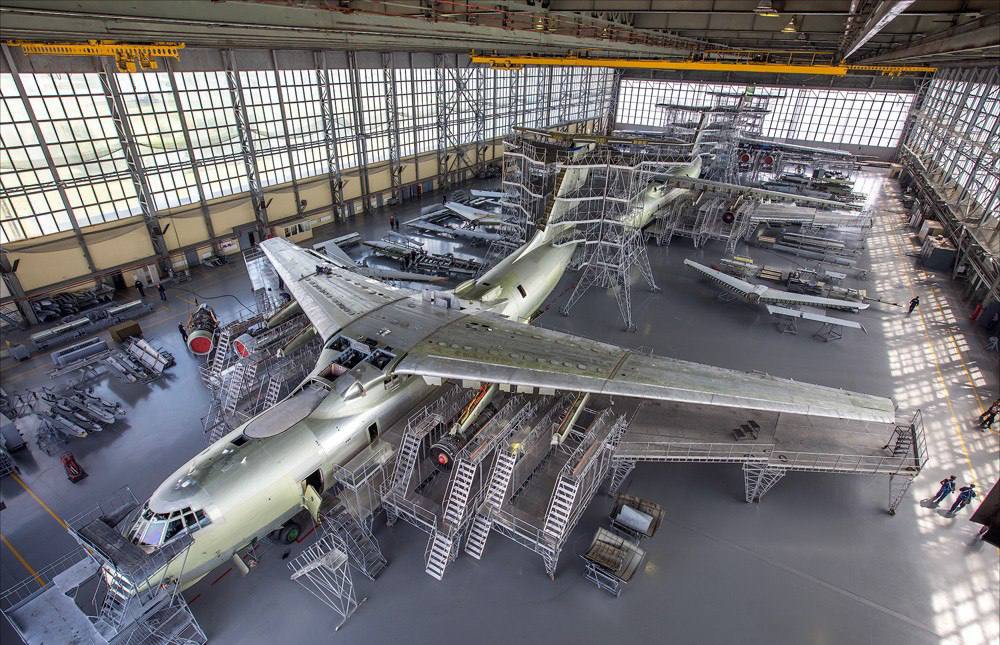
Shipping documents show how a Chinese state company kept supplying Russia's drone factories with the raw material used in its long-range attack drones, Politico reported. Chinese parts have been recovered from downed Russian drones before. These records are the first to show the raw material shipped straight to the factory—a sanctioned arm of Russia's nuclear giant Rosatom.
Russia's mass-produced attack drones run on parts sourced worldwide that keep slipping past Western export controls, and Ukrainian cities take the hits almost nightly. Kyiv has spent the war naming the foreign suppliers behind that hardware, one component at a time.
What the documents show
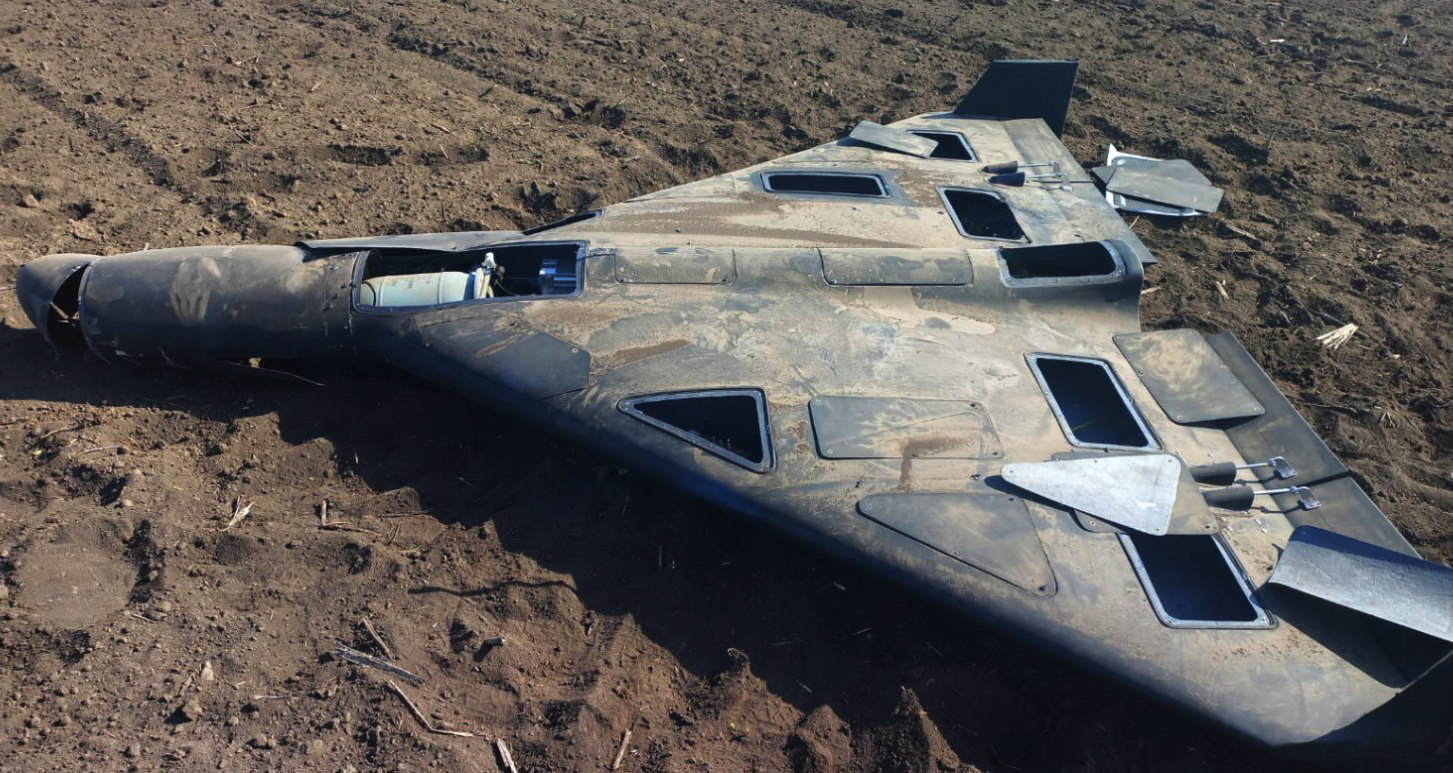
The papers trace 46 metric tons of carbon-fiber chemicals from Jilin Chemical Fiber Group to Alabuga-Volokno, a Rosatom subsidiary in Tatarstan. The exporter disguised the cargo under a customs code meant for civilian fibers like nylon, said weapons expert David Albright, who studies Russia's drone production. That precursor, polyacrylonitrile, is the raw ingredient for the light carbon fiber in Russia's Shahed-type attack drones.
Explore further
Ukraine’s new Tu-95 killer is a $48,000 copy of a drone China refused to sell
Drones of that type killed at least 15 people at a shopping mall in central Ukraine in August. Albright estimated the load could yield enough for as many as 1,300 kamikaze drones. The Kyiv-based Ukrainian Security and Cooperation Center, a think tank close to Ukraine's government, gathered the documents and shared them with Western governments. The US House Select Committee on China judged them legitimate, and Ukraine confirmed their authenticity.
Why Beijing can't plead ignorance
Alabuga-Volokno has faced Western sanctions since 2023 from the US, UK, EU, Ukraine, and others. Jilin faces none. Albright said the documents would let the State Department sanction the Chinese supplier. Serhii Kuzan, who heads the Ukrainian center, called China arguably the main and only source of these composite materials.
Former US officials rejected any idea that Beijing was unaware.
"The idea that Chinese state-owned enterprises can hide things from the Chinese government just doesn't wash," said Dennis Wilder, a former CIA deputy assistant director for East Asia and the Pacific.
Explore further
Russia’s jam-resistant drones run on a Chinese modem no one has sanctioned
Denials and a summit
Rosatom claimed it works in full compliance with the law. China's embassy in Washington called the evidence an attempt to "smear and scapegoat China," saying Beijing has never supplied lethal weapons.
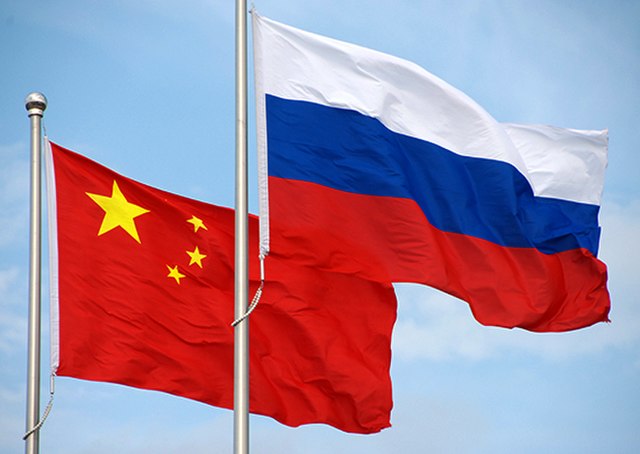
The disclosure lands as US President Donald Trump prepares to meet Xi Jinping in Washington this month. In late August, Xi told Vladimir Putin their ties were set to strengthen.

 Connexion