Vue normale

Ukraine kept this strike drone secret for two years—its maker says it has destroyed more than 350 Russian systems
17 septembre 2026 à 08:50

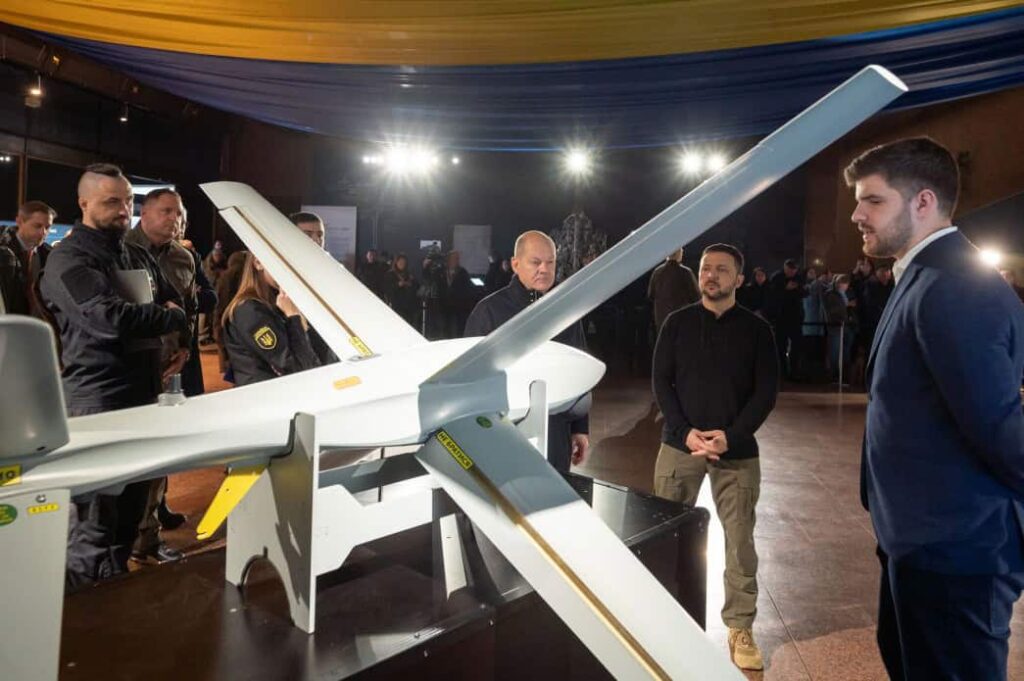
RAM-2X strike drone.

A Ukrainian drone maker has revealed it built a strike weapon it kept classified, deputy director Andrii Rymaruk told Radio NV. For two years, Ukrspecsystems, known for manufacturing Ukraine's SHARK reconnaissance drones, hid its connection to the RAM-2X strike drone, even as crews used it to hunt Russia's costly air defenses and missile launchers deep behind the front. By 2025, it had quietly become the Defense Forces' flagship mid-strike drone.

Ukraine's war on Russia's air defenses increasingly runs on drones its own industry builds and fields in secret, revealed only once they have already destroyed the enemy's costliest launchers and radars. Holding one back that long lets its crews rack up strikes before Moscow can study the weapon and build a counter—and this maker went public only once wrecked drones had reached Russian hands.

Why come out now

The RAM-2X first flew in combat in early 2024, but the maker kept its role secret. Rymaruk said the company wanted the drone and its crews to finish the job first—destroy what needed destroying—before talking. Once shot-down units reached the enemy and turned up on social media, silence no longer protected anything. So after two years, Ukrspecsystems unveiled the drone at the MSPO defense expo in Kielce, Poland.

What it kills

This is a mid-strike drone—a loitering munition that flies deep behind the lines, circles, and dives into its target. Its victims include S-400 and S-300 air defenses, the systems Russia uses to shoot down aircraft, and Iskander launchers that fire ballistic missiles at Ukrainian cities.

Rymaruk put the RAM-2X's own tally at more than 350 Russian systems destroyed since 2024, while Defender Media, which interviewed him, reported more than 1,000 targets over two years. Ukrspecsystems credits the wider RAM series, which reaches back to a fixed-wing model supplied from late 2022, with more than 450 target engagements, over 400 of them against air defenses. Today, it destroys 50 to 60 pieces of Russian equipment a month.

How far, how many

The drone has grown fast. It flew 140 km in 2024 and now hits targets up to 180 km, almost 230 km in good conditions, and a crew from the 429th Achilles unmanned-systems brigade set a range record at 215.5 km. It has spread from a few crews to about 100 military units and 250 trained teams, and one operator can fly it from anywhere in Ukraine. It also works in pairs with the SHARK-M reconnaissance drone—one finds the target, the other kills it. In July, Ukrainians crowdfunded 30 of the drones for military intelligence and the security service through Serhii Prytula's foundation.

For first time, foreign government is funding Ukrainian drone school: Canada picks foundation that has already bought Ukraine nearly $50M in drones

16 septembre 2026 à 10:24

Andrii Shuvalov, CEO of the Serhii Prytula Foundation, during a meeting with Eric Andresen, Defense Attaché at the Embassy of Canada to Ukraine. Source: The Serhii Prytula Foundation

For the first time, a foreign government is paying to build a Ukrainian drone-training program. Under its Military Training and Cooperation Program, Canada has funded a 24-month course for FPV and fixed-wing drone operators at the training center of the Serhii Prytula Foundation, one of Ukraine's largest charities, the foundation said.

The money buys a system. Canada is paying to build a training cycle that can be scaled and copied, the instructors, methods, standards, and infrastructure behind the courses, so it can keep pace with a technology that changes by the month.

The arrangement runs both ways: Canada, which was slow to adopt the FPV drones now dominating the battlefield, gains access to the combat experience of the country that leads the world in drone warfare.

Canada buys a training system

The deal recognizes what Ukraine's front-line schools have built.

"This is recognition not only of our experience but of the quality and standards of our training," said Andrii Shuvalov, CEO of the Serhii Prytula Foundation.

Both sides gain from the deal

Canada's military attaché framed it as an exchange, not simply aid.

"This is a mutually beneficial partnership. Ukrainian service members will train with leading instructors, and Canada will benefit from Ukraine's deep combat and training experience," said Colonel Eric Andresen.

The problem the program targets is one every modern army now faces: technology evolves so fast that training has to keep pace, or fall behind.

The foundation brings the scale

The problem the program targets is one every modern army now faces: technology evolves so fast that training has to keep pace, or fall behind.

The Prytula Foundation, founded by the volunteer and public figure Serhii Prytula, is a credible partner given its track record. It has bought roughly $39 million in strike drones and $10 million in reconnaissance drones for Ukraine's forces, along with about $8.6 million in vehicles and some $1.9 million each in optics and communications gear, spending that has put it among the country's biggest private suppliers of the war.

  • ✇Euromaidan Press
  • No GPS, no landmarks—how Ukraine’s drones hunt Russian spy drones far out over the Black Sea
    Ukraine is building a sea-facing layer of air defense along its southern coast, Kyrylo Liukov, head of the unmanned technologies department at the Serhii Prytula Foundation, wrote in a column for RBC-Ukraine. Winged interceptors now reach the Russian spy drones that guide strikes in the south. Russia's nightly drone strikes on Ukrainian cities have turned air defense into a race to close every corridor Russia can fly through, over land first and now over the open sea. K
     

No GPS, no landmarks—how Ukraine’s drones hunt Russian spy drones far out over the Black Sea

24 août 2026 à 08:58

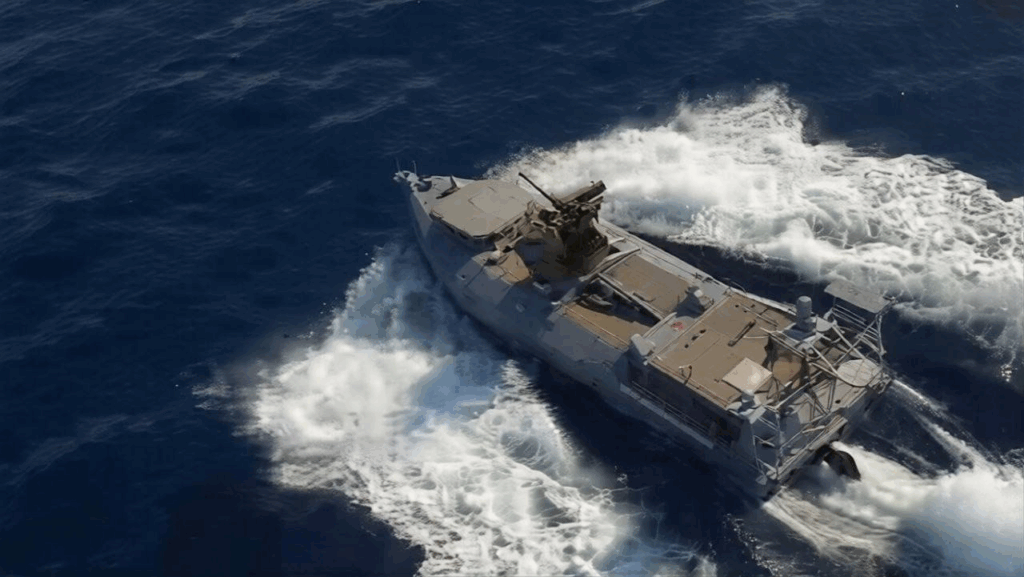
Ukraine sea drone USV machine gun naval

Ukraine is building a sea-facing layer of air defense along its southern coast, Kyrylo Liukov, head of the unmanned technologies department at the Serhii Prytula Foundation, wrote in a column for RBC-Ukraine. Winged interceptors now reach the Russian spy drones that guide strikes in the south.

Russia's nightly drone strikes on Ukrainian cities have turned air defense into a race to close every corridor Russia can fly through, over land first and now over the open sea. Kyiv does it with cheap interceptors rather than costly missiles, and keeps having to chase Russian workarounds. The sea was the stretch air defense could not reach, and it is where Russia keeps the spotters that make its Shahed swarms steerable.

Land and sea are two different fights

Defending the sky over land and over open water are two different problems, Liukov wrote. Multirotor copters are fast and simple to launch near the coast, but past roughly 25 km offshore, a multirotor is almost useless. Russia builds its mission routes so that drones cross dozens of kilometers over sea before they turn toward Ukrainian targets. Fixed-wing drones close the gap. Built like gliders, they loiter for over an hour and hold a link at 40 km and beyond, helped by an open radio horizon that land's terrain and buildings deny them.

Recon drones are the priority target for a reason. Beyond spotting and confirming hits, they work as relays in a MESH network for a group of strike drones. In that setup, Russian crews can steer Shaheds by hand right up to the moment of impact, Liukov wrote.

Southern units recently set three distance records with foundation-supplied interceptors. The 18th aviation commandant's office of Air Command South downed a Russian Orlan-30 reconnaissance drone 110 km out. It used a Wovkulaka Spitfire interceptor, the longest kill on record for that system.

The 12th Separate Special Purpose Center set the other two, flying a system from the miltech company TechnoTaras: an Orlan downed at 86 km, and a 145 km hunt measured from the takeoff point that held a stable digital link the whole way, Liukov wrote. That leaves Russia's drones exposed much farther from shore than its planners assume, he added—and if such results become routine, Russia has to pull its transit routes farther out still.

The Maiachnia beacon line

A less obvious problem was navigation, not shooting. A drone flying without GPS steers by landmarks, and over open sea, there are none. Late last year, the foundation, the 12th Separate Special Purpose Center, and TechnoTaras launched a project called Maiachnia. It strings radio beacons on the Skyline system along the coast from Ochakiv to Izmail. The beacons work on their own and keep backup power, tied to a central network that operators can adjust remotely. An operator can then track the drone even under GPS jamming, bad weather, or a temporary loss of link, and bring it home. More than five southern units now fly the foundation's winged drones.

The real stakes sit offshore—the southern ports and the Black Sea grain corridor that Russian drones threaten and that land-based copters can barely reach. Keeping Russian drones farther offshore would buy room there. But Russia is scaling up a faster, jet-powered Shahed, and the interceptor answer to it is early—so the offshore edge just won will have to be defended again.

❌