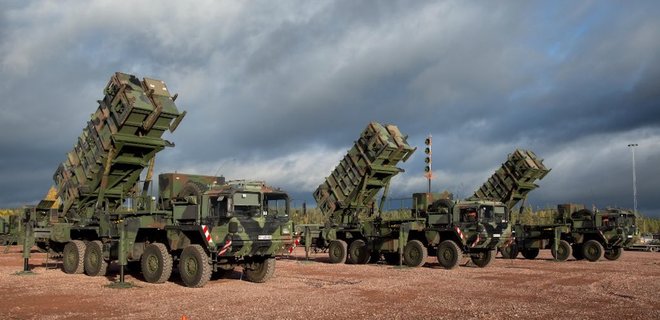
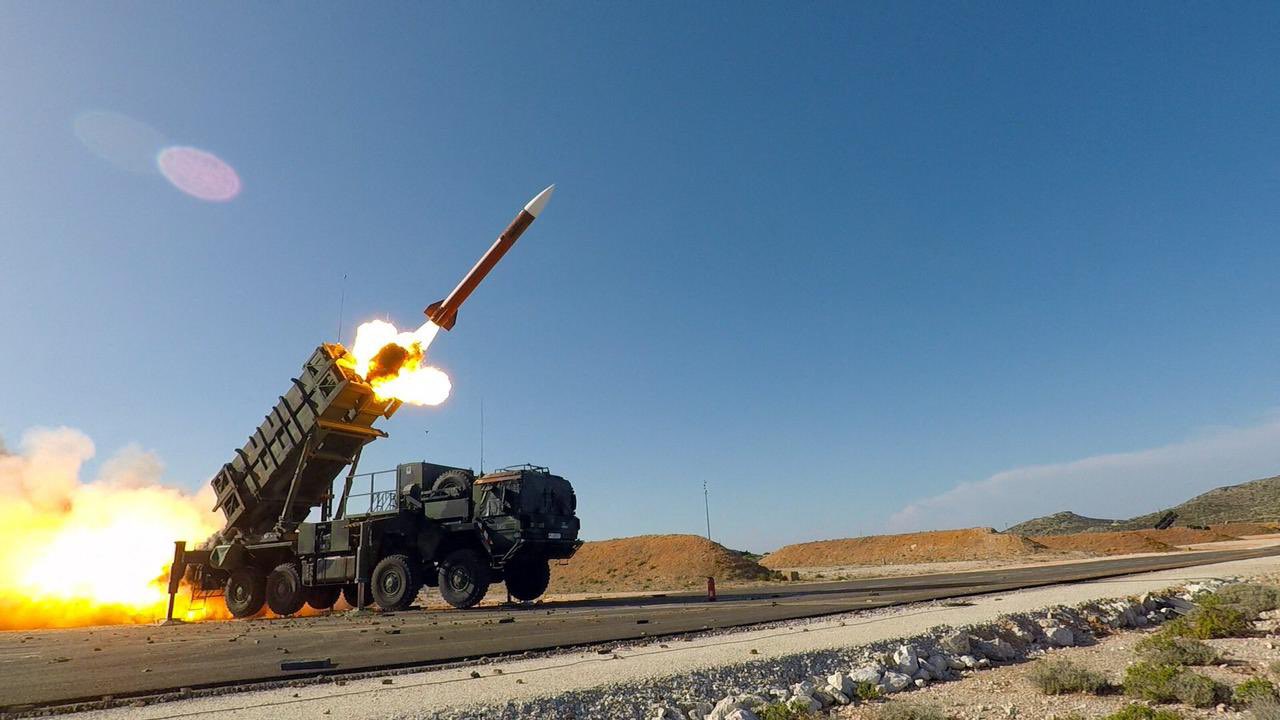
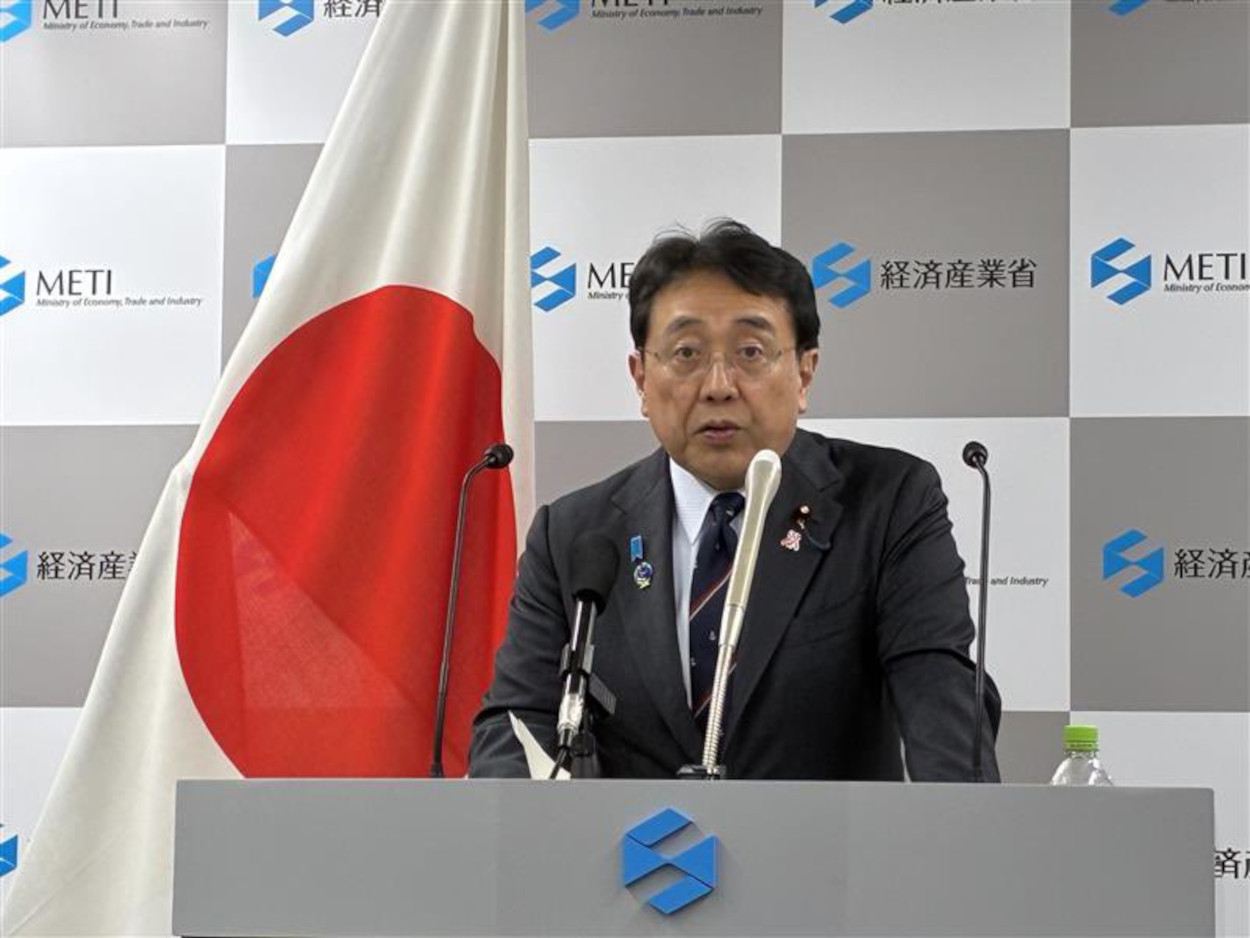
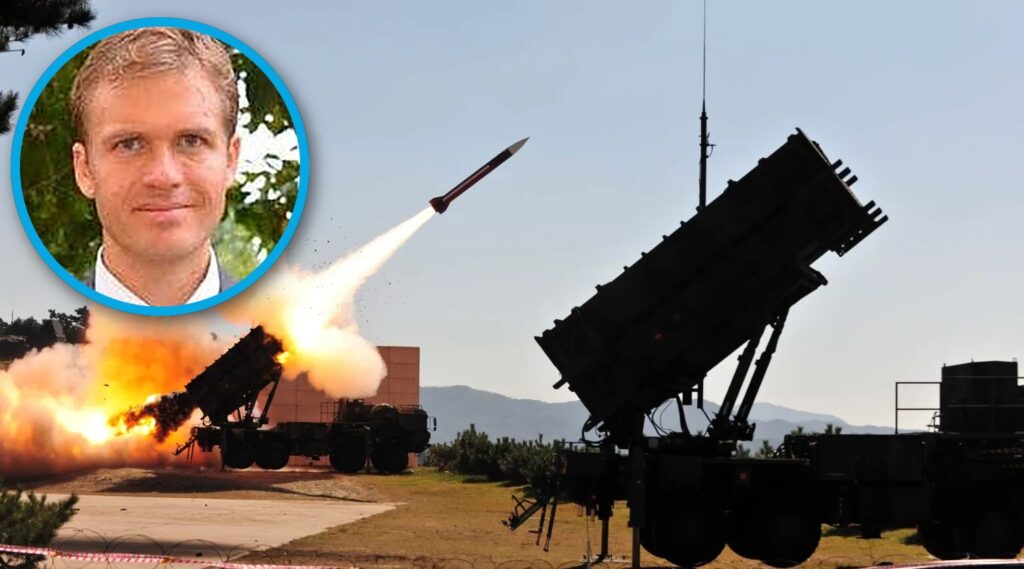
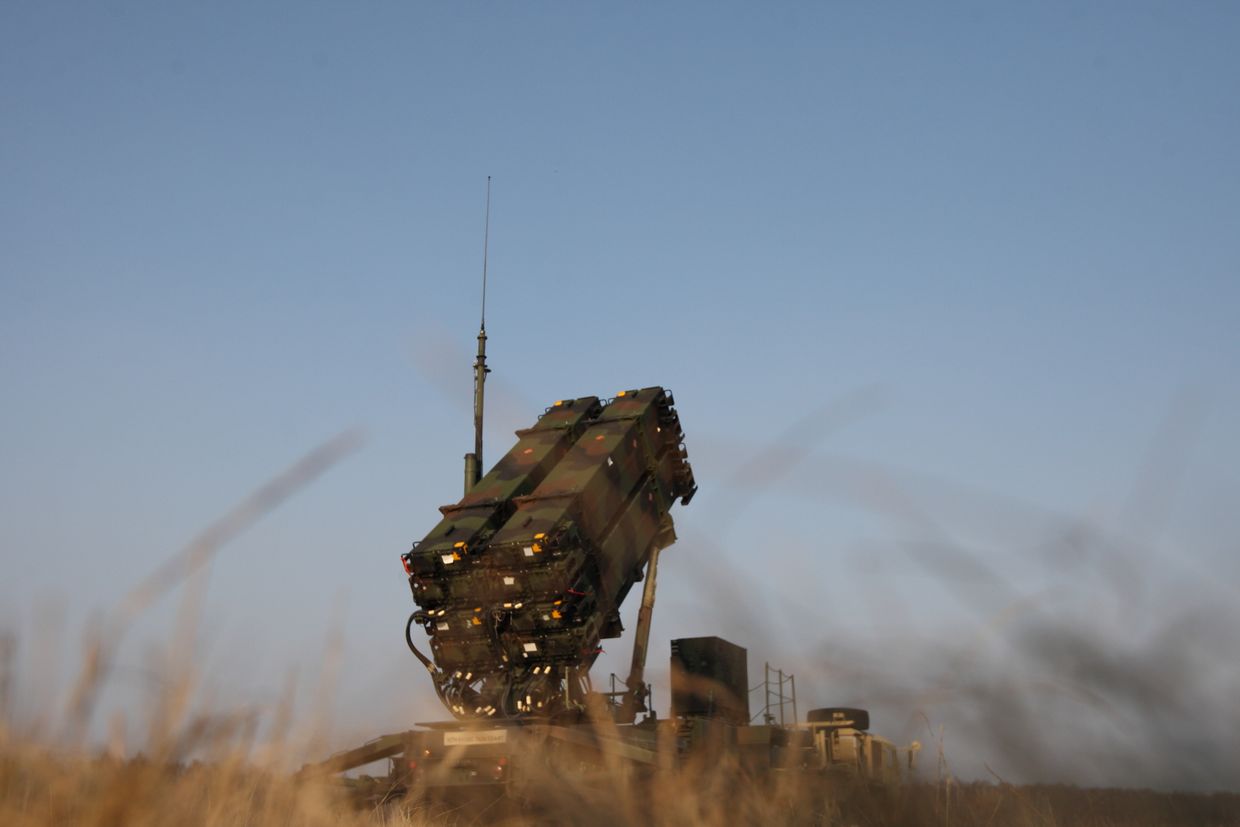
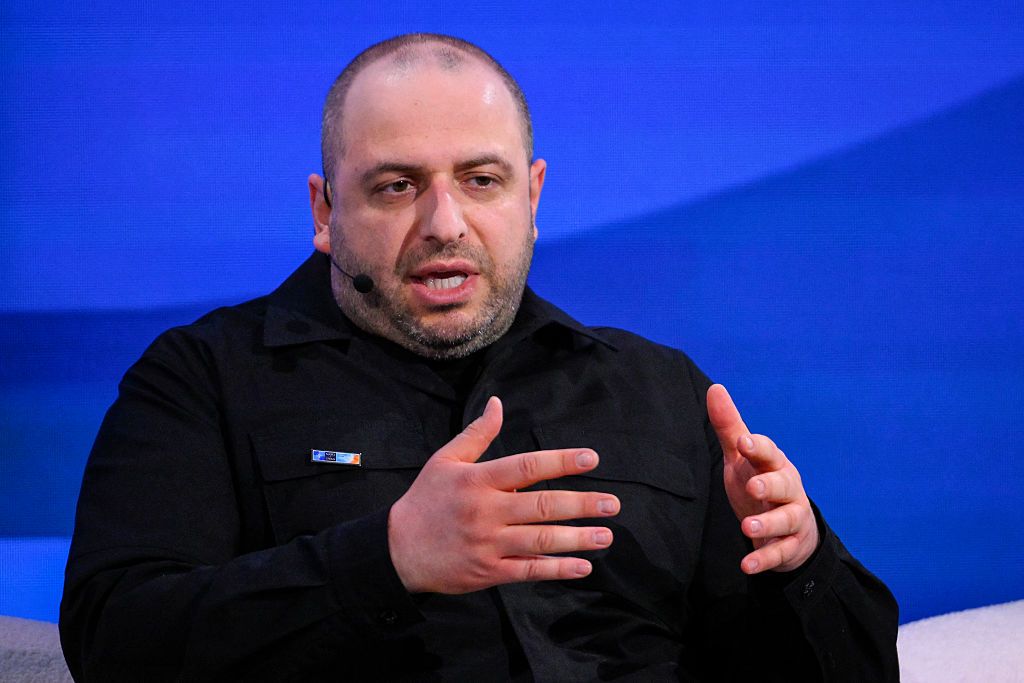
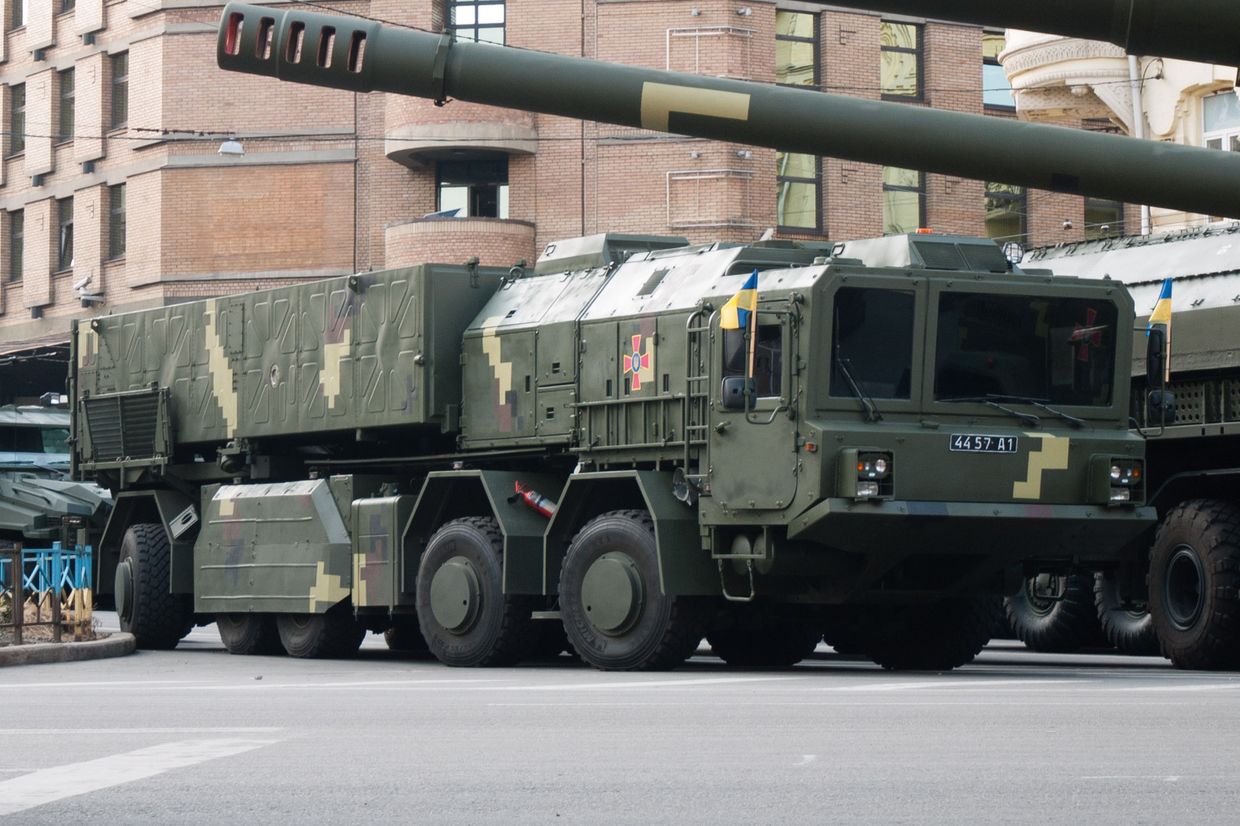
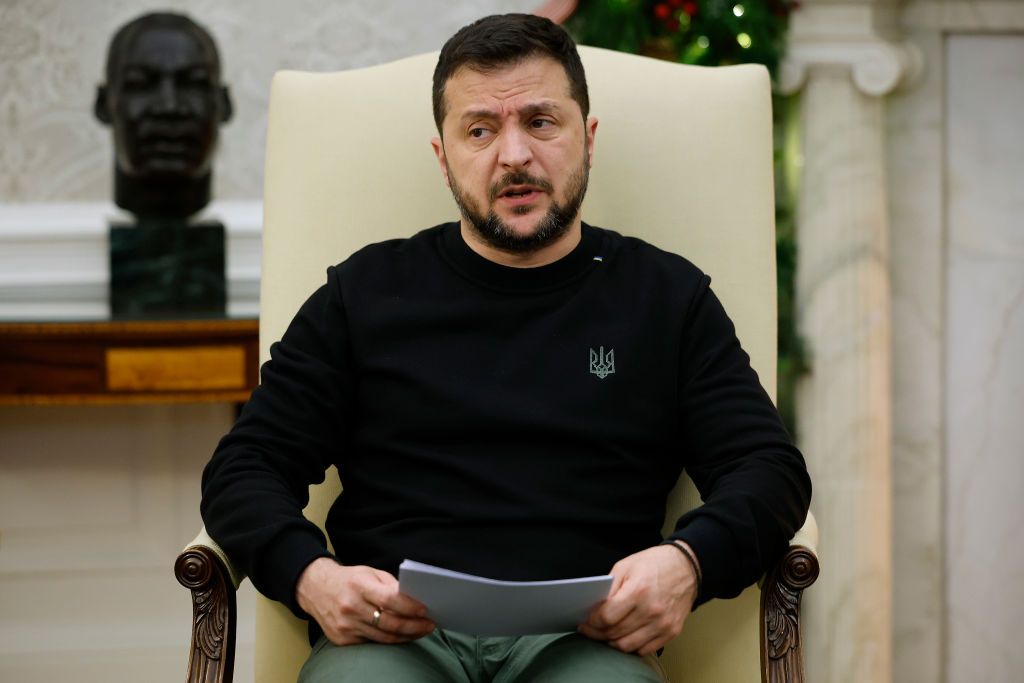
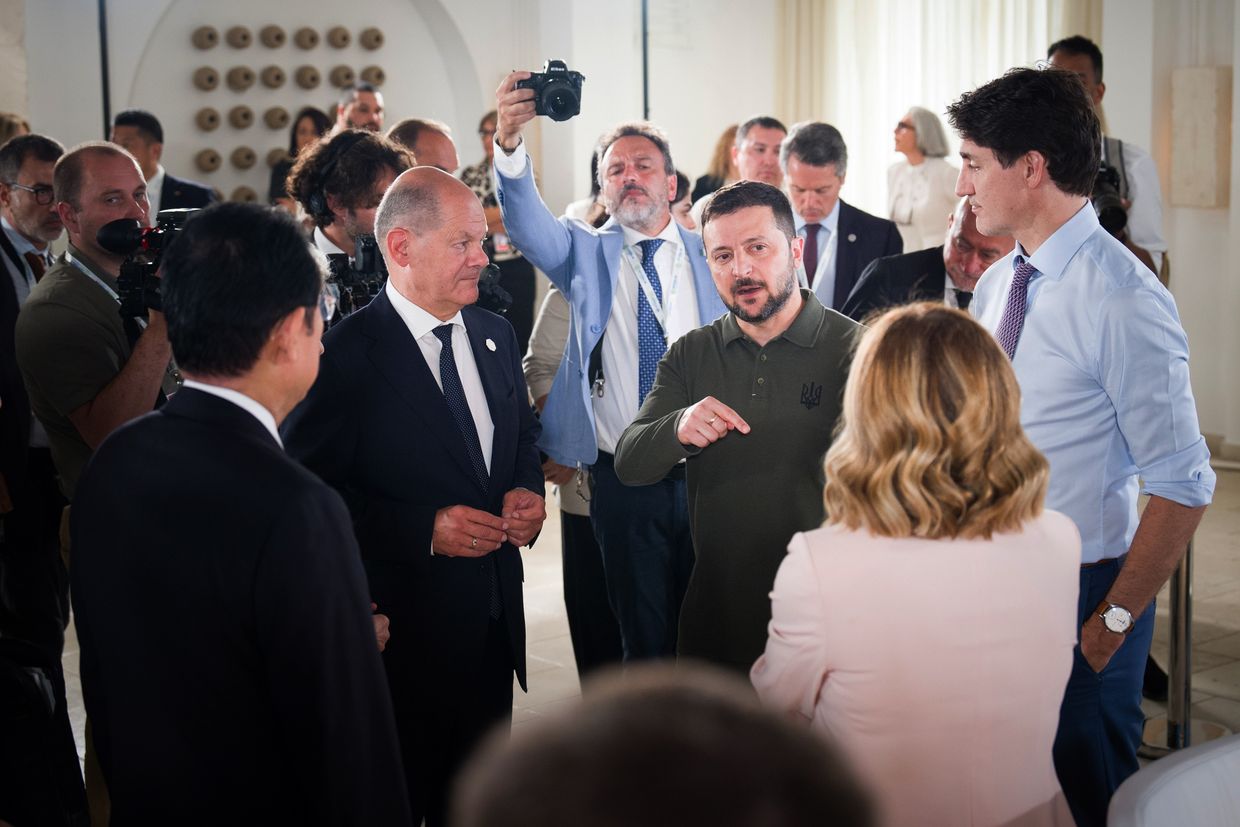
Mitsubishi is the only licensed non-US manufacturer of the advanced PAC-3 interceptor, and Zelenskyy pointed to it as a model for building Ukraine's own production capacity, speaking to journalists on 9 July. Ukrainian President Volodymyr Zelenskyy said Ukraine wants to work with Japan's Mitsubishi Heavy Industries. He also said the company demonstrates a very high level of Patriot missile production and called it perhaps the strongest example today of how a country can est
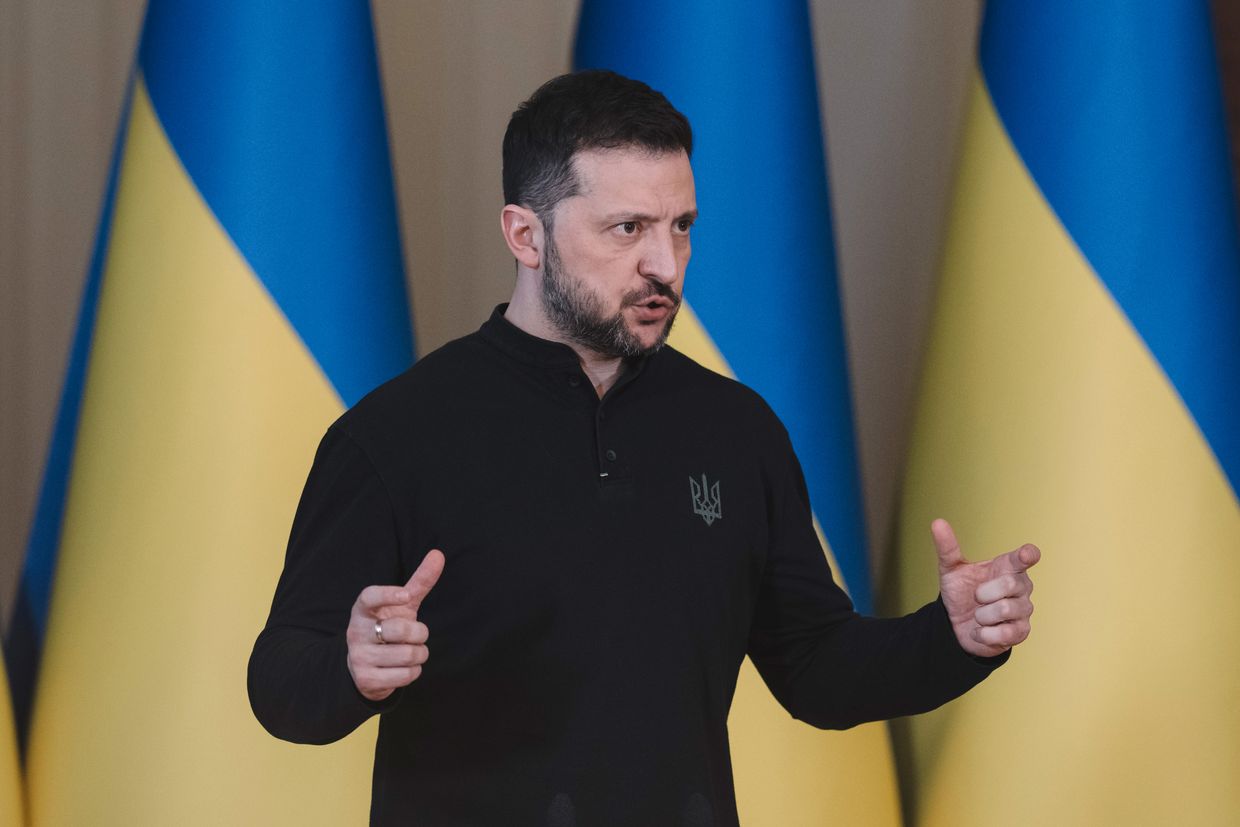
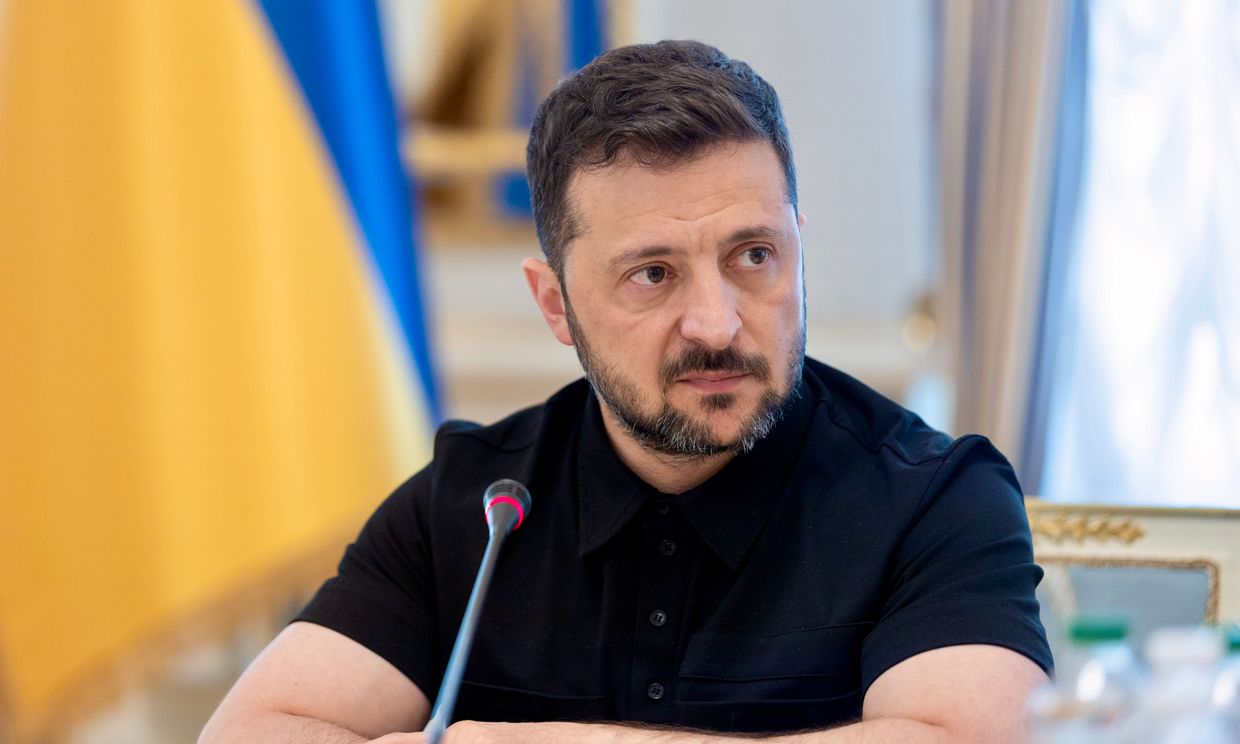
Mitsubishi is the only licensed non-US manufacturer of the advanced PAC-3 interceptor, and Zelenskyy pointed to it as a model for building Ukraine's own production capacity, speaking to journalists on 9 July. Ukrainian President Volodymyr Zelenskyy said Ukraine wants to work with Japan's Mitsubishi Heavy Industries. He also said the company demonstrates a very high level of Patriot missile production and called it perhaps the strongest example today of how a country can establish its own anti-ballistic missile production after obtaining a US license. Ukraine would like to see similar production capabilities developed domestically.
The statement came the day after Trump promised Ukraine a Patriot production license at the NATO summit in Ankara—the prerequisite that would make any Mitsubishi partnership meaningful. But Zelenskyy's interest runs into a wall his own words can't wish away: Japan's Three Principles on the Transfer of Defense Equipment and Technology bar arms transfers to countries engaged in active conflict.
When Tokyo shipped PAC-3 interceptors to the United States in November 2025, it did so on the explicit condition that they stay under US control and never reach a third country—which is why Ukraine received not a single Japanese-made interceptor from that transfer, only the US stocks it backfilled.
What Mitsubishi makes—and why Ukraine wants it
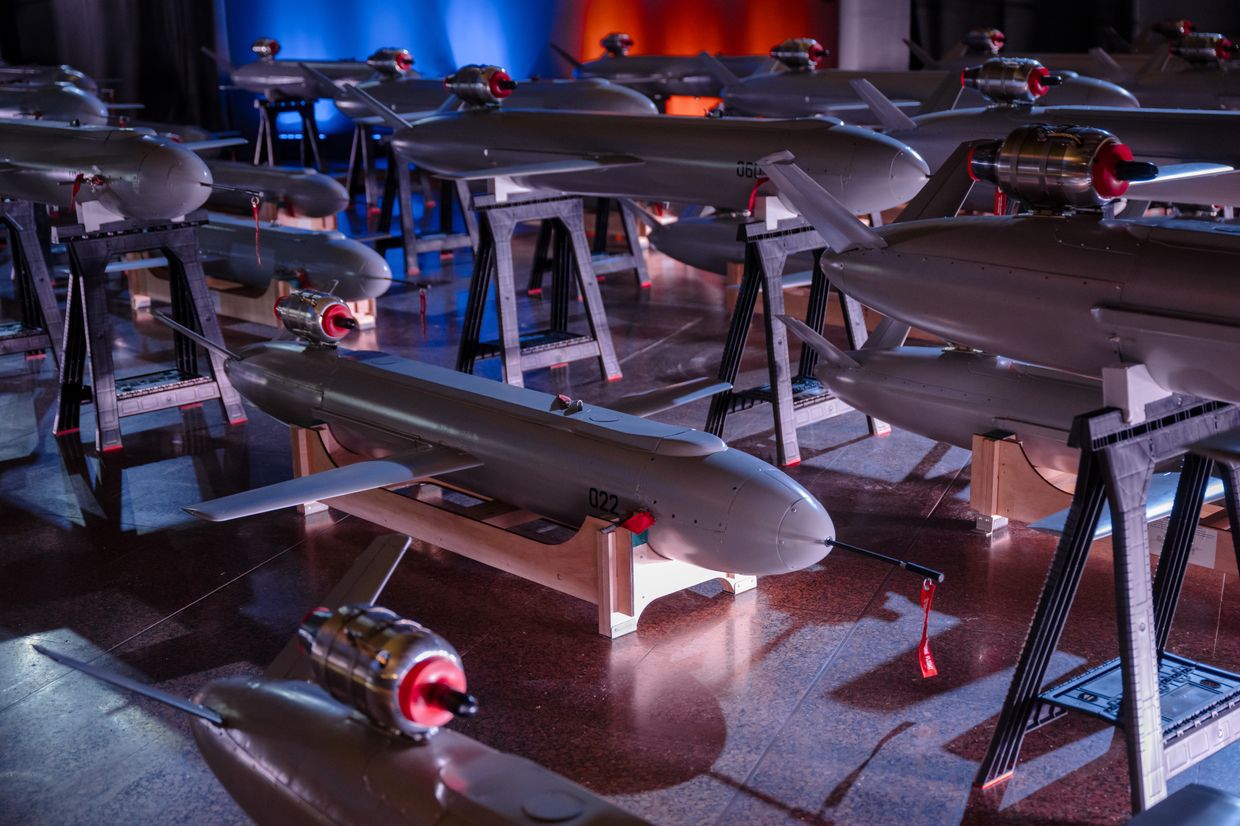
Mitsubishi Heavy Industries produces roughly 30 PAC-3 interceptors a year under license from Lockheed Martin, with the capacity to roughly double that once its main constraint—Boeing-built seekers, still in short supply—eases.
Boeing began expanding seeker production in 2023, with results expected from 2027. Japan's leverage in the Patriot supply chain runs deeper than assembly: it is the only producer of the guidance gyroscopes fitted in PAC-2 missiles—a component the US lost the ability to make domestically and had to request from Tokyo, which approved the export on 17 July 2014.
Ukraine's interest is less about buying interceptors than about copying a template: how a non-US country took an American technology license, built a domestic manufacturing base, and became an exporter of one of the most sought-after air-defense interceptors in the world.
Explore further
Ukraine rewrote the Patriot playbook—but it’s still running out of missiles
In November 2025, Japan completed its first-ever export of a finished lethal weapon since World War II—those PAC-3s —to the United States to help replenish stocks drawn down by transfers to Ukraine. Kyiv wants to be the next country to run that playbook.
The license alone won't do it
Only the US, Germany, and Japan hold the rights to produce the Patriot. Germany co-produces the PAC-2 GEM-T—a variant with limited ballistic missile defense capability—with Raytheon, but cannot independently manufacture or export the system. Japan produces under strict controls. Trump's promised license would make Ukraine the fourth government in that circle—but without a partner that has already solved the seeker, gyroscope, and scaling problems, a license on its own would take years to become missiles.
Zelenskyy's Mitsubishi comment makes the sequencing explicit: license first, then a partner who knows how to use it.
"But this depends on the desire of the Japanese side," he said — an acknowledgment that the partnership is aspirational, not agreed.
Explore further
Russia tried to secure Japanese jet fuel amid shortages. Tokyo closed the loophole
Japan loosened its arms rules—but not the part that blocks Ukraine
Japan's Prime Minister Takaichi Sanae's cabinet revised the Three Principles on 21 April, scrapping the rule that had confined finished exports to five non-lethal categories and permitting the export of lethal weapons in principle—a historic break with Japan's postwar pacifism.
But the revision did not remove the obstacle that matters for Ukraine. It kept the prohibition on transfers to countries in active conflict, allowing them only in narrow "exceptional circumstances." And it permits lethal exports to the 17 countries with which Japan holds Equipment and Technology Transfer Agreements—Australia, Germany, Sweden, the US, and 13 others.
Ukraine is not among them, so the door Japan opened this spring opened toward its partners and the Indo-Pacific, not toward a nation at war. Zelenskyy's public call is, in effect, an invitation for Tokyo to reach for the one narrow exception its rules still allows—a step its government has not chosen, and shows no sign of choosing.
Japan is stepping up drone cooperation with Ukraine to develop its own unmanned forces from Kyiv's wartime experience, and the two are building a joint drone cluster, the South China Morning Post reported. The centerpiece is a planned Japan-Ukraine Drone Cluster linking the two countries' industries. The drones are meant for Japan's defense against Russia and China, not for Ukraine.
Four years of drone warfare have turned Ukraine into a live laboratory that militaries from
Japan is stepping up drone cooperation with Ukraine to develop its own unmanned forces from Kyiv's wartime experience, and the two are building a joint drone cluster, the South China Morning Post reported. The centerpiece is a planned Japan-Ukraine Drone Cluster linking the two countries' industries. The drones are meant for Japan's defense against Russia and China, not for Ukraine.
Four years of drone warfare have turned Ukraine into a live laboratory that militaries from Washington to Tokyo now study, as cheap unmanned systems rewrite how wars are fought and won.
Inside the cluster
The proposed cluster would unite Japanese manufacturers with Ukrainian defense firms, research centers, universities, and technology companies, the South China Morning Post says. Japanese companies are also working with European partners on anti-submarine drones.
Masayuki Masuda, who heads Chinese studies at Japan's National Institute for Defense Studies, the Defense Ministry's think tank, said the world has watched warfare change since Russia's invasion, and that drones will carry "much of the fighting on the future battlefield." He credited Ukraine's strong performance largely to drones.
Explore further
Japan is sending engineers to Ukraine’s frontline — and they’re coming back with $2,500 weapon
Masuda argued that quantity now matters as much as quality. Japan's many small firms, he said, could quickly turn out cheap drones in the numbers a war might demand.
A defense turn
The cooperation is part of a wider overhaul of Japan's defense policy. In May, Tokyo sent Self-Defense Force officers to NATO's mission headquarters in Germany for the first time—to a facility that coordinates weapons deliveries and training for Ukraine. Japan also joined the Prioritized Ukraine Requirements List (PURL), the program through which allies fund US weapons for Ukraine, including Patriots. Japan, however, pledged funds only for buying non-lethal equipment from the US.
Explore further
Japan is sending soldiers to NATO’s Wiesbaden mission to study Ukraine’s emerging combat tactics
The drive is not only about Russia's war. It is also a response to China's growing military activity, with Tokyo tracking Chinese drones near the disputed Senkaku Islands, close to Taiwan, and across the South China Sea.
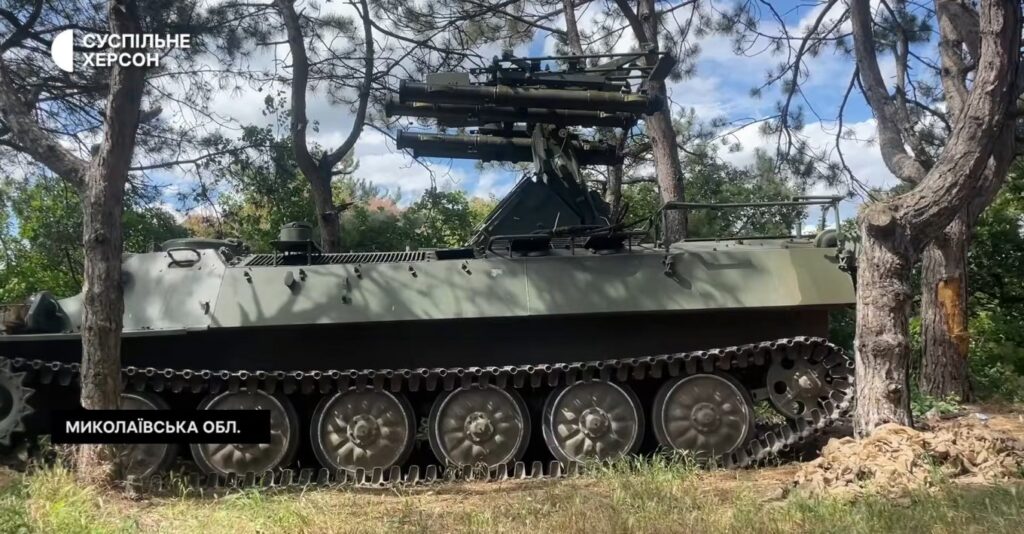
Ukraine is already producing and supplying its own RYF air defense missile systems to the armed forces. Development of the system was still underway when Russia launched its full-scale war, and despite all the challenges, the project was successfully completed and brought to serial production, Defense Express reports, citing Suspilne.
The RYF is part of Ukraine's accelerating domestic air-defense industrialization at a moment when Russia's missile-and-drone campaigns are sc
Ukraine is already producing and supplying its own RYF air defense missile systems to the armed forces. Development of the system was still underway when Russia launched its full-scale war, and despite all the challenges, the project was successfully completed and brought to serial production, Defense Express reports, citing Suspilne.
The RYF is part of Ukraine's accelerating domestic air-defense industrialization at a moment when Russia's missile-and-drone campaigns are scaling.
The RYF's laser-beam-riding guidance places it in the same technical family as the Swedish RB-70, the British Stormer, and the newer RapidRanger SAM.
Soviet Strela-10 chassis, new laser-beam-riding RK-10 missile
The Riff is built on the chassis of the Soviet-era Strela-10 (9K35) SAM, preserving the original MTLB tracked carrier, the launcher's rotating mechanism, and the operator station.
The new launcher carries four RK-10 missiles in transport-launch containers, with an optical sighting station in the middle comprising a laser rangefinder, visual and thermal-imaging channels, and the missile control system.
The RK-10 missile uses laser-beam-riding guidance, as the sighting station guides the missile to the target within a structured laser field.
The guidance type sits between the cheaper infrared-homing systems used by the original Strela-10 and the radar-guided systems used in higher-end Western SAMs. It is well-suited to engaging slow, low-flying drones, which is what the RYF has been doing in Ukrainian Navy service since January 2026.
Ukraine's air-defense build extends as Russia scales its strikes
The RYF fielding extends Ukraine's expanding stack of domestic air-defense capabilities when Russia has more than doubled its production of converted SAMs, making ballistic missile strikes harder to defend against.
There is operational irony in the choice of base platform. The same Strela-10 chassis underpinning the RYF is the SAM Ukrainian drones have been actively destroying in Russian hands.
Naval surface drones delivered FPV strikes on Russian Strela-10s in March 2025, and Ukrainian Unmanned Systems Forces continued striking Strela-10 systems through May 2026.
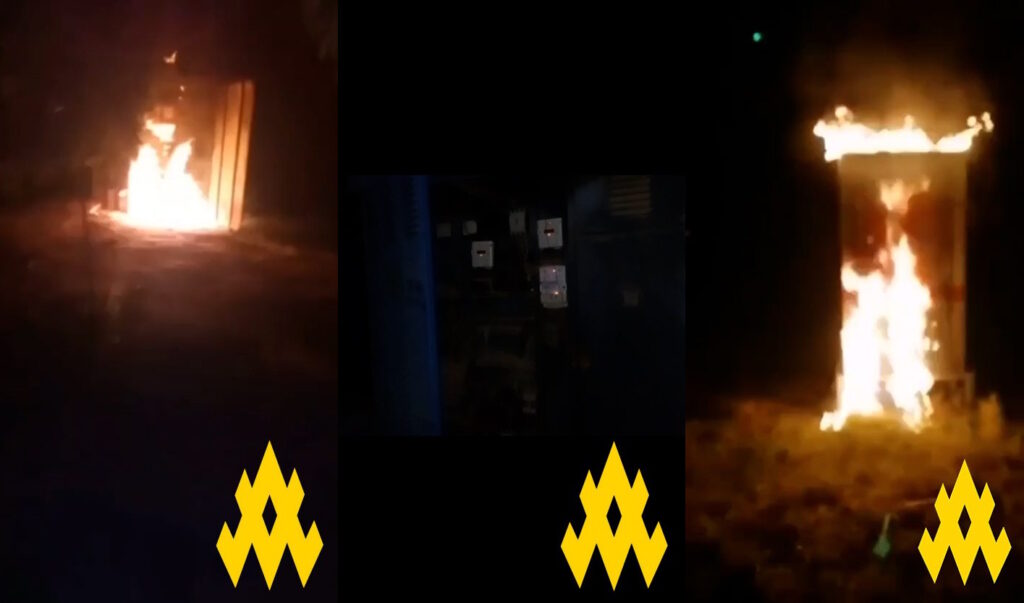
Ukrainian partisan movement ATESH has disabled energy and railway infrastructure near the Novomoskovsk Azot chemical plant in Tula Oblast, the group said. Agents destroyed a power distribution cabinet supplying the plant and burned a railway relay box on a rail line connected to the facility, causing logistical disruptions and delivery delays.
The Azot plant in Novomoskovsk is part of the EuroChem holding and is Russia's largest producer of ammonia and nitrogen fertilizers
Ukrainian partisan movement ATESH has disabled energy and railway infrastructure near the Novomoskovsk Azot chemical plant in Tula Oblast, the group said. Agents destroyed a power distribution cabinet supplying the plant and burned a railway relay box on a rail line connected to the facility, causing logistical disruptions and delivery delays.
The Azot plant in Novomoskovsk is part of the EuroChem holding and is Russia's largest producer of ammonia and nitrogen fertilizers, manufacturing ammonia, nitric acid, methanol, and mineral fertilizers, as well as chemical raw materials used in the production of explosives and ammunition, per Obozrevatel.
The plant's products are supplied to the Sverdlov State Plant in Nizhny Novgorod, where they are used to produce military-grade explosives, including HMX and RDX, which are the key components in artillery shells, according to UNITED 24.
Drone strikes hit Azot three times since May
The facility has been targeted repeatedly in recent months. Ukrainian Defense Forces struck the Azot plant on the night of 13–14 June, 2026, with NASA's FIRMS system recording a significant temperature anomaly directly over the plant's premises — the third strike on the site since 26 May, per Militarnyi.
The ATESH ground operation targeting the plant's power and rail infrastructure is separate from those aerial strikes.
ATESH expands sabotage campaign across Russian rear
ATESH, whose name means "fire" in the Crimean Tatar language, was founded in September 2022 and has emerged as one of the most prolific partisan groups operating behind Russian lines. The movement's operations have consistently focused on energy and rail chokepoints linking Russia's military-industrial rear to the front.
On 20 June, ATESH agents damaged an electrical substation in Taganrog, disrupting power to the Atlant-Aero defense plant involved in military drone production. Earlier, in March, the group disabled relay cabinets in occupied Luhansk, targeting the primary supply artery toward the Pokrovsk front, and sabotaged a power substation in Russia's Bryansk Oblast, paralyzing key military logistics facilities in the area.
Russia's most-used map service has quietly painted over scores of sensitive sites near its northwestern border, and in doing so showed where they sit, according to Militarnyi. A joint Nordic-Baltic team of reporters counted the blurred spots and traced most of them to Russia's military and arms industry. The cover-up only began after Ukrainian drones started reaching deep inside the country.
As Russia grinds on in Ukraine, it is also exerting pressure on the NATO states to
Russia's most-used map service has quietly painted over scores of sensitive sites near its northwestern border, and in doing so showed where they sit, according to Militarnyi. A joint Nordic-Baltic team of reporters counted the blurred spots and traced most of them to Russia's military and arms industry. The cover-up only began after Ukrainian drones started reaching deep inside the country.
As Russia grinds on in Ukraine, it is also exerting pressure on the NATO states to its northwest, using Kaliningrad and its border regions to lay the narrative groundwork for a future confrontation. Western intelligence agencies broadly assess that Russia is rebuilding its forces for a possible war with NATO before the decade is out, with Ukraine's continued resistance the main thing slowing that timeline
A map that hides and reveals at once
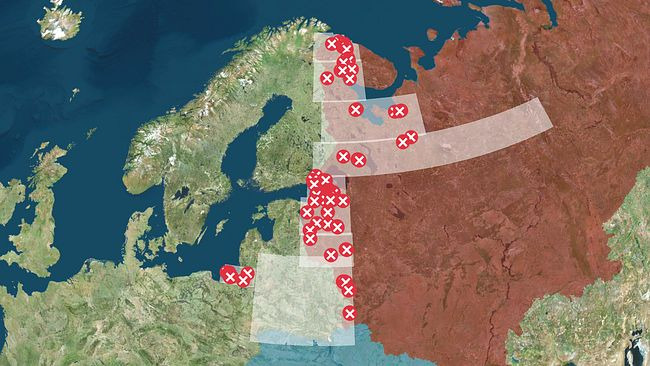
The Swedish outlet SVT Verifierar found that Yandex, Russia's main online map service, has blurred 119 objects near the western border. It ran the investigation with Denmark's DR, Norway's NRK, and the Baltic outlet Delfi. The Ukrainian outlet Militarnyi reported the count.
A map of the 119 blurred objects identified along Russia's western border. Map: Simon Krona / Mapcreator
The blurring is new. As recently as 2018, Yandex showed no pixelated patches inside Russia at all. Experts point to a "Streisand effect," the way an attempt at censorship can draw even more attention to a place than leaving it alone would.
Explore further
Swedish fighters intercept Russian Su-24 and Su-34 over Baltic Sea
What the blurs cover
Reporters sorted the 119 sites into clear groups, and the largest tie straight to Russia's war machine:
31 linked to the defense industry, repair, and research
29 air bases
16 air-defense, radar, and communications sites
12 naval bases, shipyards, and repair yards
11 logistics, fuel, and ammunition sites
6 garrisons and training grounds
4 nuclear-weapons sites
4 space-activity sites
3 nuclear power plants or nuclear-energy research sites
3 military sites of unknown purpose
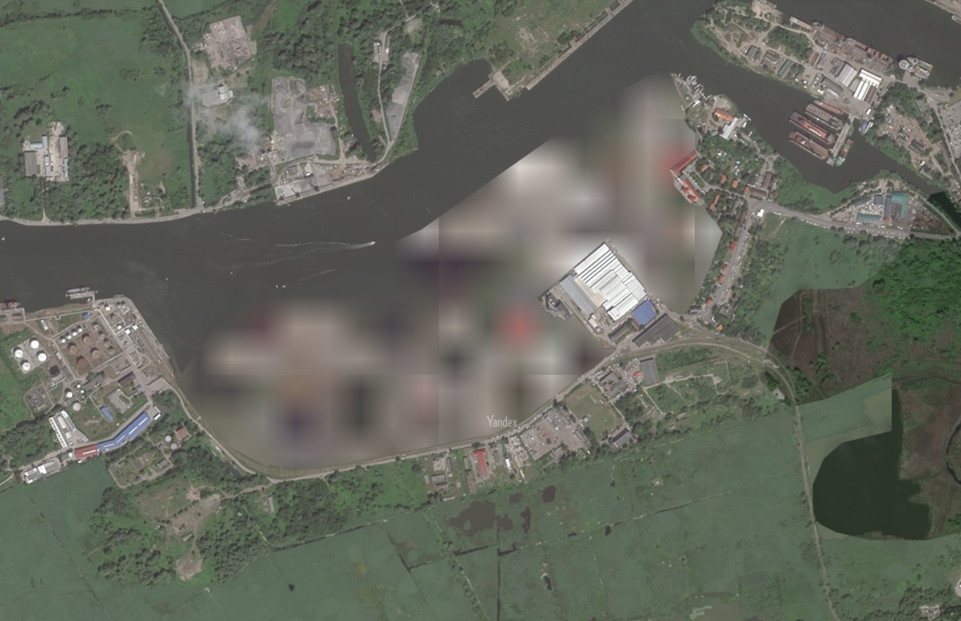
One of the clearest examples is the Yantar shipbuilding plant in Kaliningrad Oblast, reduced to a gray smear on Yandex.
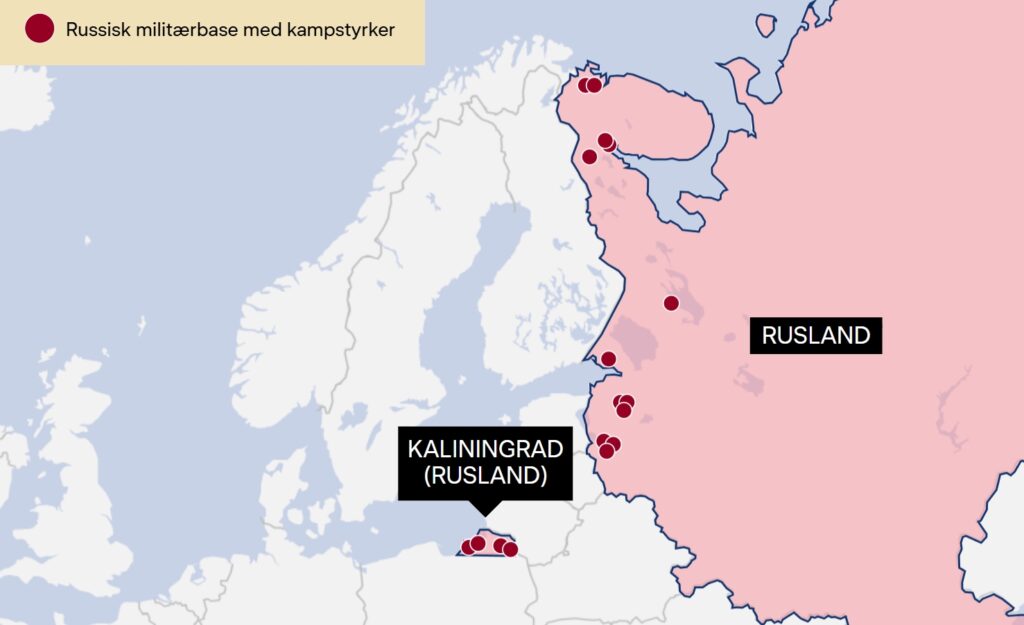
Russian military bases near NATO countries' borders as of June 2026. Map: OpenStreetMap / Sys Abrahamsen
Why the smudges appeared
The blurring traces back to Ukraine's deep-strike campaign. In December 2024, a Moscow court ordered Yandex to mask the Ryazan oil refinery after Ukraine struck it several times. A supervisory agency told the court that open map data exposed a strategically important site, and the court agreed the exposure undermined Russia's defense and slowed military supply.
A nuclear-weapons expert, Matt Korda, told the reporters the censorship was not worth the effort. Analysts can get around it through other imagery providers, he said, and adversaries can watch the same sites with their own military satellites.
Explore further
Russia can’t attack NATO right now—ISW explains what the new border bases are really for
A wider buildup behind the border
The blurred sites cluster where Russia faces its Nordic and Baltic NATO neighbors. Intelligence services in Denmark, Sweden, Norway, and Finland warn that Russia's expanding bases along the Nordic and Baltic frontier could pull the alliance and Russia into a dangerous standoff. Danish sources see signs of preparation for a possible large-scale conflict in the Baltic Sea region.
Senior officers say any first fighting could start near Denmark or the Baltic states. No firm Russian decision to attack exists, the sources stress, but the groundwork is underway. A separate satellite study found Russia building new sites for up to 115,000 troops along that border, and reviving Soviet-era garrisons near Finland.
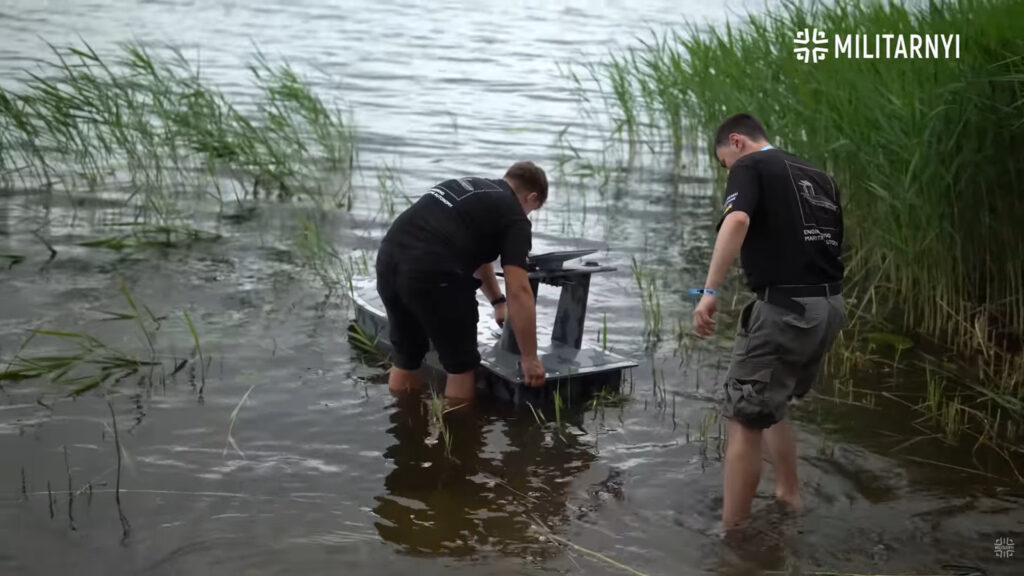
A Ukrainian startup has shown off its first weapon, a small drone boat that has already seen combat against Russian forces, Militarnyi reported. The maker presented the craft at a Kyiv conference where Ukrainian and European firms displayed their newest uncrewed sea systems. The boat is built to slip in close, strike, and, in its main form, never come back.
Ukraine pioneered modern sea-drone warfare, and each cheap, home-built craft tightens a squeeze that has already pushe
A Ukrainian startup has shown off its first weapon, a small drone boat that has already seen combat against Russian forces, Militarnyi reported. The maker presented the craft at a Kyiv conference where Ukrainian and European firms displayed their newest uncrewed sea systems. The boat is built to slip in close, strike, and, in its main form, never come back.
Ukraine pioneered modern sea-drone warfare, and each cheap, home-built craft tightens a squeeze that has already pushed a far larger navy onto the back foot. As more first-time Ukrainian firms move from prototypes to combat-proven hardware, the country's wartime workshops are turning into a draw for foreign militaries shopping for cheap, battle-tested systems.
A first product, already tested in combat
NOAH X, the developer, says the Harpun is its debut product. The company told Militarnyi the boat has already struck the Russian targets in combat. It now goes through codification, the formal process that clears a weapon for regular military use.
The platform is built for the harsh conditions of modern war. It can act on its own as a strike unit or work as part of a group of uncrewed boats. Ukraine's cheap drone boats have already driven Russia's Black Sea Fleet from its bases in occupied Crimea.
A demonstration of the Harpun surface drone during the DIH Naval Forge 2026 conference in Kyiv. Screenshot from video: Militarnyi
NOAH X showed the Harpun at the DIH Naval Forge 2026 conference in Kyiv, an event devoted to sea drones. The Ukrainian-Danish platform Defense Innovation Highway co-organized it with the Naval Drones Association and the innovation directorate of Ukraine's Armed Forces. Deputy Commander-in-Chief Brigadier General Andrii Lebedenko backed the event personally.
Explore further
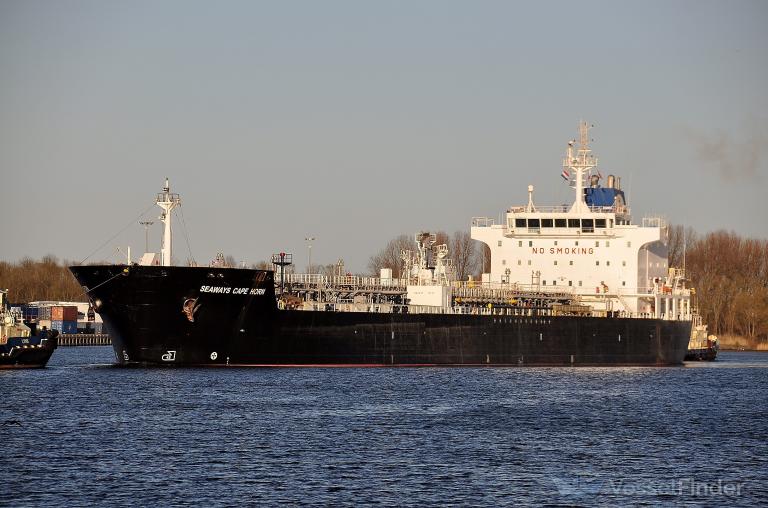
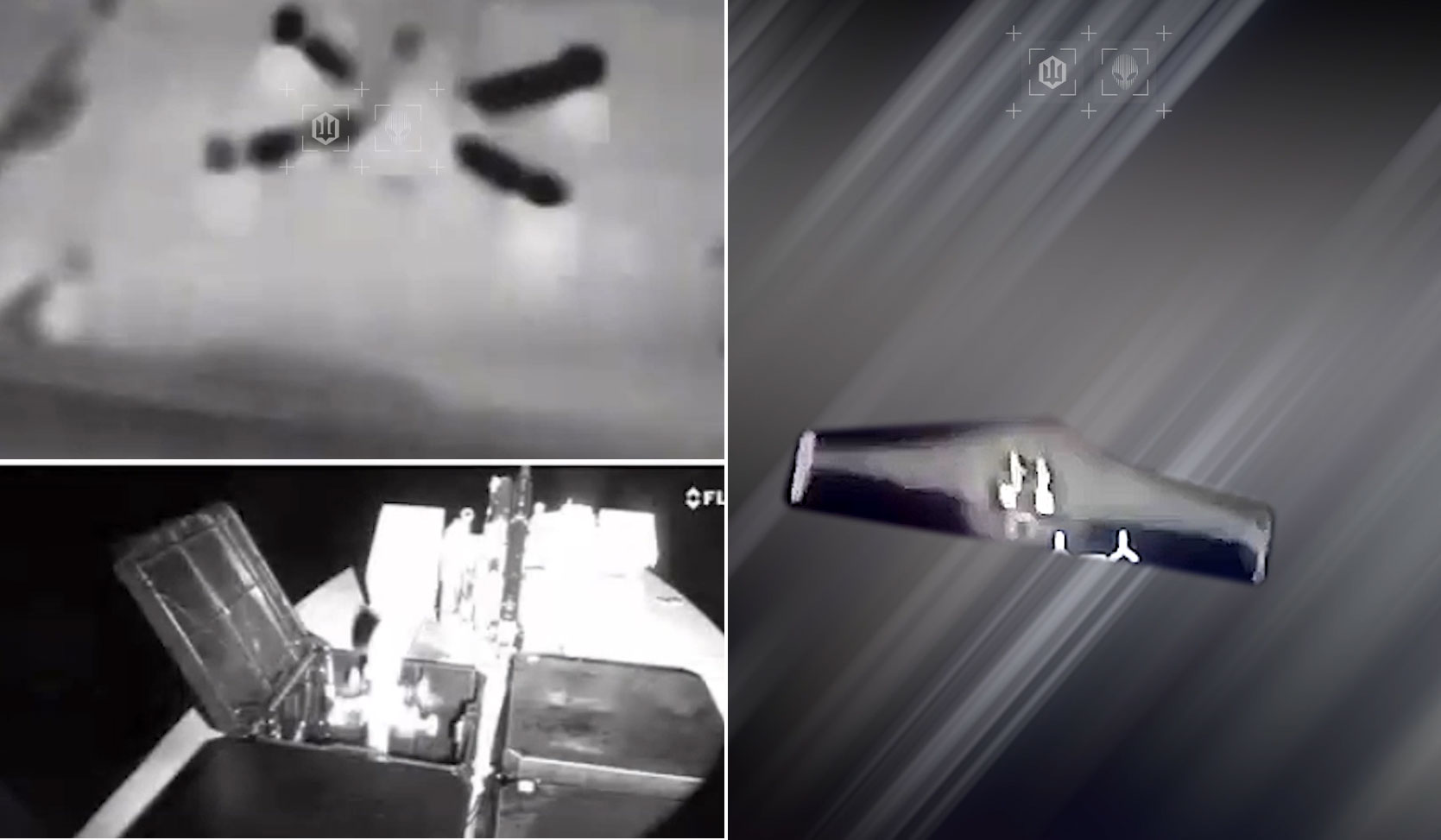
Sea drones hit Russian shadow fleet tanker as it waited for an at-sea oil rendezvous off Russia’s Black Sea coast
What the Harpun can do
The Harpun runs about two meters long and weighs roughly 100 kilograms. It carries a payload of up to 30 kilograms. A water-jet engine drives it to 35 kilometers an hour, with a range of up to 40 kilometers.
The boat can also lie in wait. In standby mode, it holds for up to 48 hours, so crews can place it early and trigger it later. Operators steer it through the universal Droid Box control system from the company DevDroid. Three parallel communication channels run at once, and the operator can switch between them in seconds if one is lost.
Two hulls: a strike weapon and a supply runner
The company describes the Harpun first as a one-way weapon.
"Its main task is to go, do the job, and not return," the NOAH X representative said.
Explore further
A boat with no crew just shot down a Shahed. Ukraine says it’s a world first
The boat can approach quietly and slowly, or sprint the full 40 kilometers, then deliver a payload the enemy "doesn't like."
A second hull trades the warhead for a cargo hold. That version runs food and ammunition to soldiers across water, where moving supplies by crewed craft is dangerous. The design can also take a sonar fit to map the seabed.
Russia's escalating missile campaign has exposed one of Ukraine's most dangerous shortages. Russian attacks killed at least 274 Ukrainian civilians in May, the UN says — the deadliest month since Moscow's full-scale invasion — and have damaged all 15 of Ukraine's thermal power plants. The weapon that most reliably stops Russia's ballistic missiles, the US Patriot, is scarce, and Ukraine's interceptor shortage has no quick fix.
That was the problem hanging over the 18 Ju
Russia's escalating missile campaign has exposed one of Ukraine's most dangerous shortages. Russian attacks killed at least 274 Ukrainian civilians in May, the UN says — the deadliest month since Moscow's full-scale invasion — and have damaged all 15 of Ukraine's thermal power plants. The weapon that most reliably stops Russia's ballistic missiles, the US Patriot, is scarce, and Ukraine's interceptor shortage has no quick fix.
That was the problem hanging over the 18 June 2026 Ramstein-format meeting in Brussels, where Ukraine's partners pledged $4 billion and signed a deal with Germany to build Freya, a Ukrainian ballistic-missile interceptor.
But neither the money nor Freya can fix the shortage soon, says Marc DeVore, a senior lecturer at the University of St Andrews who has advised the UK government on Russia's war against Ukraine.
The bottleneck is global, he says. Only five or six countries can build interceptors capable of stopping ballistic missiles, and Patriot is ordered years in advance: the US makes about 600 a year, while Russia builds around 70 ballistic missiles a month, each requiring two or three interceptors to stop.
With another hard winter approaching, Ukrainian Energy Minister Denys Shmyhal warns that the 2026–2027 heating seasoncould be as punishing as the last.
DeVore spoke to Euromaidan Press about why ballistic missiles are so hard to stop, why Freya won't reach the battlefield this winter, and why Ukraine's next interceptors may come from outside the usual Western supply chain — through sanctions, long-range strikes, and suppliers like Japan and South Korea.
This interview has been condensed and edited for clarity.
The global anti-ballistic shortage and what it portends for Ukraine
Daniel Thomas:Does anything that came out of Brussels actually fix Ukraine's supply problem?
Marc DeVore: The Freya initiative is good, and I hope it works. But there's a significant challenge here if we think globally.
There are only about five or six producers in the world of air-defense missiles with some degree of ballistic-missile interception capability: the United States and Japan, which both build the Patriot; South Korea, with the M-SAM and L-SAM; Russia, with the S-300 and S-400; China; the Franco-Italian Aster behind the SAMP/T; and the US-Israeli Arrow.
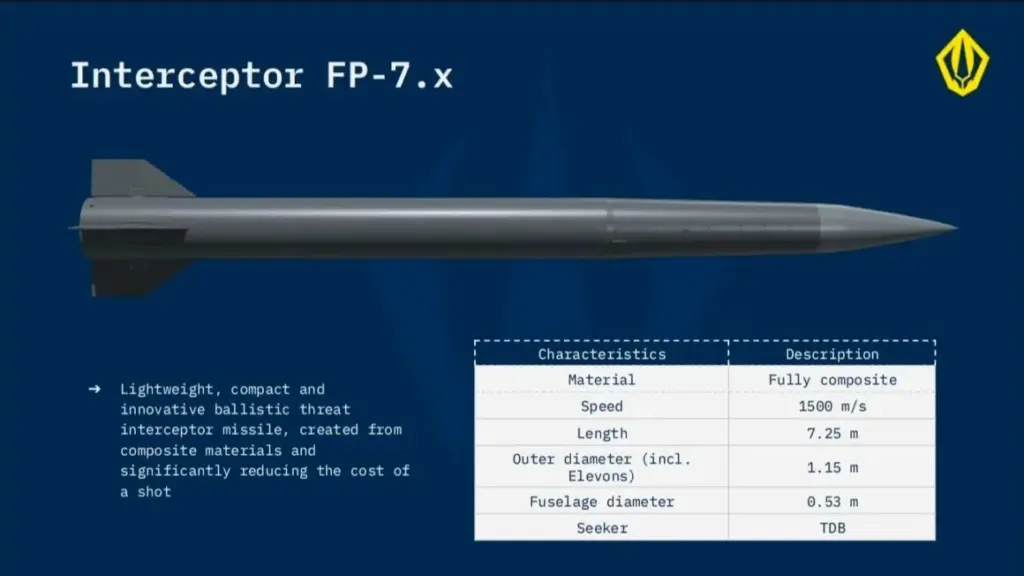
Freya system missile. Fire Point art.
These interceptors are expensive, [with a single Patriot PAC-3 interceptor running about $4 million], take years to develop, and are hard to build well, so there are significant shortages right now.
Take Patriot, the most important system for Ukraine. US production runs about 600–650 missiles a year. So far, roughly 1,600 Patriots have gone to Ukraine and another 1,900 or so to the Middle East: about 3,500 in recent wars, almost six years of production.
The big problem is that Patriots are forward-ordered by years. Even before the Iran war, the wait was about five years.
"If you had put in a commercial order for Patriots in January 2026, you would probably receive them in 2031."
So even if Europe funds a lot of Patriots, when Ukraine gets them, it depends on politics. The Trump administration may prioritize rebuilding its own stocks for a possible war with China, reassuring Gulf allies after the Iran war, or arming Taiwan. My priority would be Ukraine, but with the shortfalls and Lockheed Martin's years-long PAC-3 backlog, the US gets to choose who's first in line.
The French push SAMP/T as a viable European alternative, but it's made at maybe 100 a year, and tested far less than Patriot. Even a Franco-Italian "tiger team" aims to make just 300 a year by 2028, under half US Patriot output. The same Aster missile is in demand for European naval air defense, too, so I don't know how many reach Ukraine.
Those are the only commercially produced missiles on the table for Ukraine. As a Ukrainian or European diplomat, I'd reach out to the Japanese about buying Patriots from their line, though they make only several dozen a year, and to the South Koreans about their [home-built] interceptors, the M-SAM and longer-range L-SAM.
Ukraine has about seven Patriot batteries operational and would need around 14 to cover its territory, so even with more missiles, it's short on the radars and launchers themselves.
In that context, the Freya initiative is good, but I don't see it as a short-term fix. In Ukraine's shoes, I'd focus more on disrupting Russian missile production and launches.
Why ballistic missiles pose a harder problem than drones
Thomas:Is intercepting ballistic missiles a different order of challenge from drone production, where Ukraine has made much progress? And how realistic would it be to release Freya by this winter, a timeline that has been floating around?
DeVore: I would not bet on producing it by this winter.
Ukraine has achieved things that, before the war, any defense-industrial expert would have called impossible. What it's done with Hornets, Fire Points, Flamingos, and its cruise-missile programs has been remarkable. But the challenges of ballistic-missile interception are much, much greater.
It means building an interceptor capable of high-G maneuvers involving tight turning and integrating it with radars and guidance that can steer it to the target, historically very hard. In the first Gulf War, in 1991, the US had about a 2% success rate: probably one of the roughly 70 Patriots fired hit a Scud. It's improved a lot since then, but intercepting a ballistic missile is still very challenging.
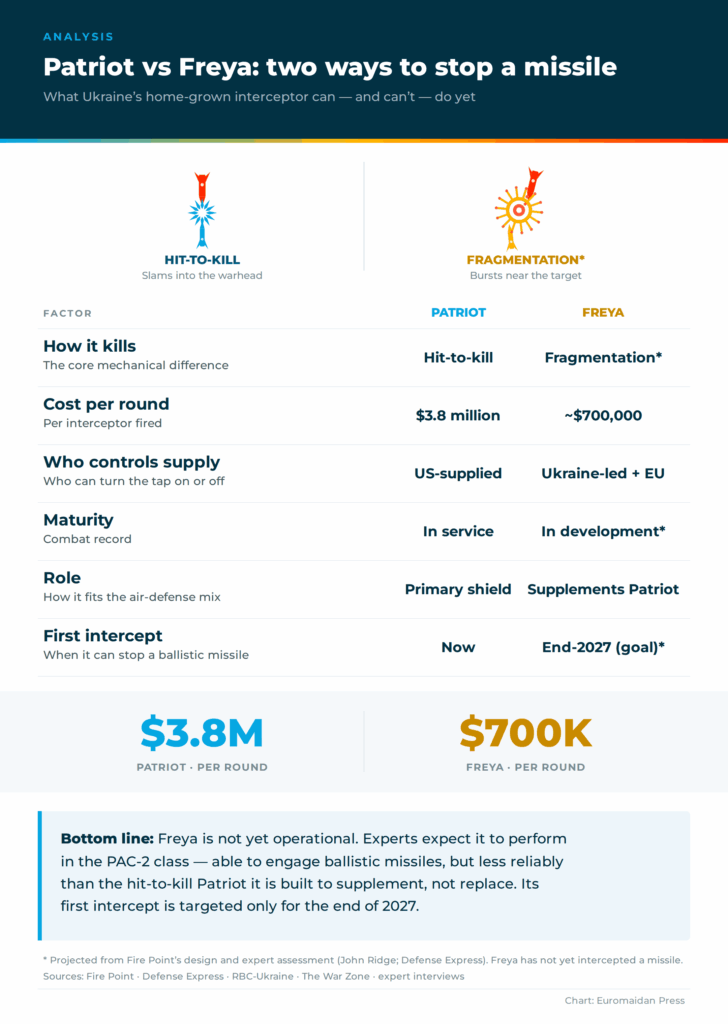
How the two interception methods differ: PAC-3 class interceptors like the Patriot destroy a target by direct impact — hit-to-kill — while blast-fragmentation interceptors, the category Freya falls into, detonate near it. Chart: Euromaidan Press
I'd be very happy if Freya were a truly operational system by December 2027; I'm fairly doubtful it'll be by December 2026.
That doesn't mean I wouldn't go forward with [Freya]. Given how critical ballistic missiles are to Russia's campaign, and the global interceptor shortage, Ukraine and its allies have to find ways past the production bottlenecks. Systems like Patriot and SAMP/T are simply too exquisite for money alone to provide enough.
But there's no silver bullet. If I were Ukraine, I'd pursue programs like Freya, push diplomatically for as many Patriots as possible—along with alternatives like the L-SAM, M-SAM, or Japanese-produced Patriots—and analyze Russia's missile production and launch ecosystem to see whether I could go after it. None of those three is a perfect solution.
Daniel Thomas:So, is making up the shortage the Iran war created within six to 12 months a tall order?
DeVore: On the positive side, Russia has the same problem producing ballistic missiles that the US has producing Patriots. Russia’s ballistic missiles still depend on fairly exquisite components and almost hand assembly. So they haven’t been able to scale up ballistic-missile production the way they’ve scaled up drones.
Sanctions, logistical strikes, and interceptors must work in tandem
Thomas:Tell me more about the other side of the coin — Russia’s own bottlenecks. Beyond exquisite, hard-to-assemble parts, what holds its missile production back?
DeVore: NAKO, a Ukrainian anti-corruption watchdog, has done a good job publicizing data on Russian missile components, especially in the Iskander and Kinzhal.
Many of the guidance components are Western-made, especially American, and are subject to dual-use sanctions.
Russia has built fairly sophisticated smuggling operations to import the chips and equipment in the quantities it needs.
A more vigilant, joined-up sanctions effort could disrupt that, but it would mean holding the original producers accountable when their parts end up in Russian hands.
This means holding a Texas Instruments, or whatever other US producer, responsible when it sells chips to an unvetted Hong Kong shell company set up months earlier to dodge sanctions.
“It doesn't help that the EU, the US, and the UK haven't harmonized their lists of prohibited dual-use components, leaving gaps the Russians can exploit.”
Russian missiles also tend to require skilled labor; Russian drones don't. The drone factory in Tatarstan is very basic, staffed largely by South Asian laborers with relatively few skills, and Shaheds are mostly built on fiberglass frames, basically the same way you'd make a surfboard. It's very low-tech.
Missiles require qualified craftspeople, so striking factories, destroying jigs, and wounding or discouraging workers from showing up could have a greater impact on missile production.
What Ukraine and its partners need to do
Thomas:To keep Russian ballistic missiles off Ukrainian cities, where should the main effort go: building more interceptors, or disrupting Russia's production chain through sanctions and deep strikes inside Russia?
DeVore: I'd ask whether I'm speaking for Ukraine or for the broader European coalition behind it. Taking the two together, I'd rank four things in order of priority.
First, go after production. The area where Ukraine can do the most good is to destroy the missiles at their source: map the defense-industrial supply chains, find the factories, and hit them as hard as possible. For something like the Kinzhal, which needs an exquisite launcher like the MiG-31, go after the launchers too. The goal is for Russia to fire fewer missiles.
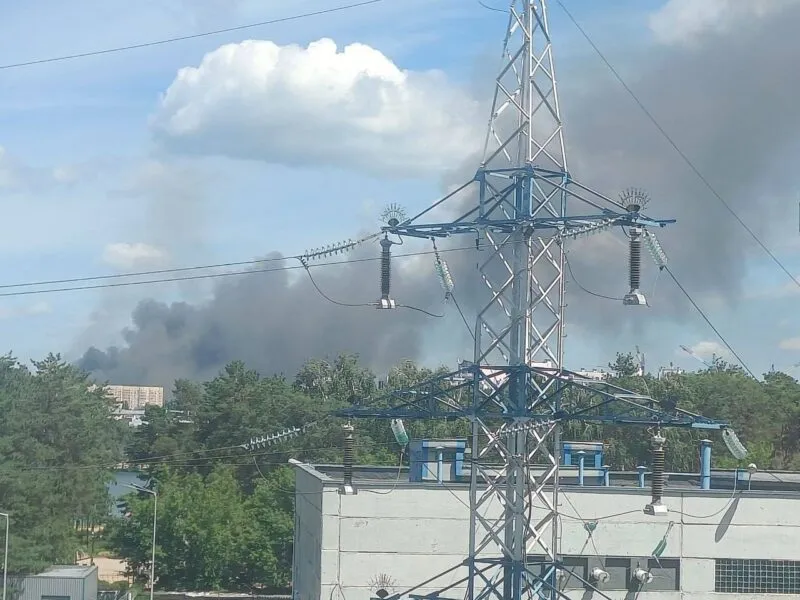
Black smoke rises over Voronezh, Russia, after a reported Ukrainian missile strike on the VZPP-S semiconductor plant, 22 June 2026. The factory supplied transistors used in Russian Iskander missiles and other advanced weapons. Photo: Exilenova+
Second, extend an air-defense zone into western Ukraine — for the broader Western coalition. Russian drones have for years transited Polish and Romanian airspace to hit Ukraine from other directions, a violation of NATO airspace. The Biden administration chose to accept this out of paranoia about escalation.
The simplest move would be for NATO to intercept any drone or missile heading toward NATO airspace with its own assets. Since no NATO country wants the debris crashing on its own territory, it makes sense to push that zone into western Ukraine, possibly as far as Odesa. If Poland and Romania, backed by Britain, France, and Germany, did that, Ukraine could pull its Patriots eastward to concentrate on protecting Kyiv and the east.
Third, concentrate diplomacy on South Korea and Japan, the two countries that could sell interceptors in the short term: Patriots from Japan's line, M-SAMs from South Korea. I'd also do everything I could to butter up the Trump administration, without putting much stock in my success there.
Fourth, make more initiatives like Freya — domestic products and innovations that can shoot down ballistic missiles. But that's the longest-term option, the slowest to bear fruit.
Why the next interceptors may come from Tokyo and Seoul
Thomas:December 2027 sounds optimistic and more feasible than December this year. Regarding South Korea and Japan, is that trend tied to Europe's broader push to decouple from the US after the war in Iran?
DeVore: Even if you didn't want to decouple from the US, you really can't buy more interceptors than the Americans have to offer at the moment.
South Korea and Japan are the two places with substantial numbers of ballistic-missile interceptors to spare, partly because neither is in the habit of selling such systems abroad. Japan's Patriot line was built for sovereign supply, not export, and any sale would still need American permission.
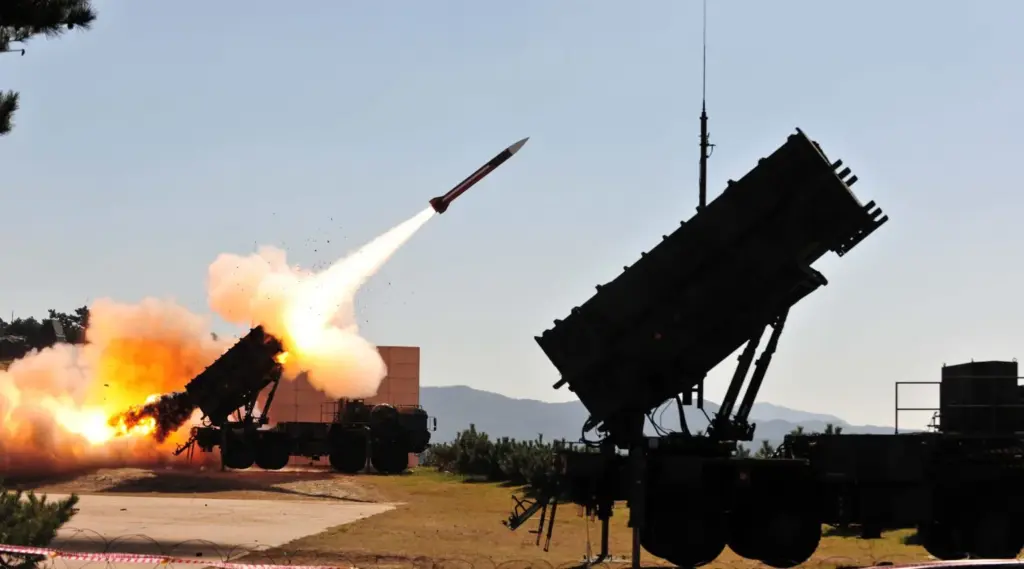
A Patriot air defense missile launcher. Source: South Korean Ministry of Defense
Japan only recently amended its constitution to allow defense exports at all, so exporting Patriots in large numbers would be novel. But it has been supportive of Ukraine's war effort, and I don't see why it wouldn't.
And the first buyer of Japanese Patriots could well be Ukraine. Japan is reluctant to get involved in the Middle East, which it sees not as a clean war of good guys and bad guys but as a complicated mess. So Ukraine, funded by Europe, has a far better shot than, say, Qatar or Saudi Arabia.
South Korea is similar: it has kept M-SAM a purely domestic program, but vigorous diplomacy might change that.
Marc DeVore is a senior lecturer at the University of St Andrews' School of International Relations, specializing in military innovation and defense-industrial matters. He has advised the UK's Foreign Office on Russia’s war against Ukraine.
This material was produced as part of a project by the Institute of Mass Information with the support of the Ministry of Foreign Affairs of the Netherlands. The content of this publication does not reflect the official position of the IMI or the Kingdom of the Netherlands.
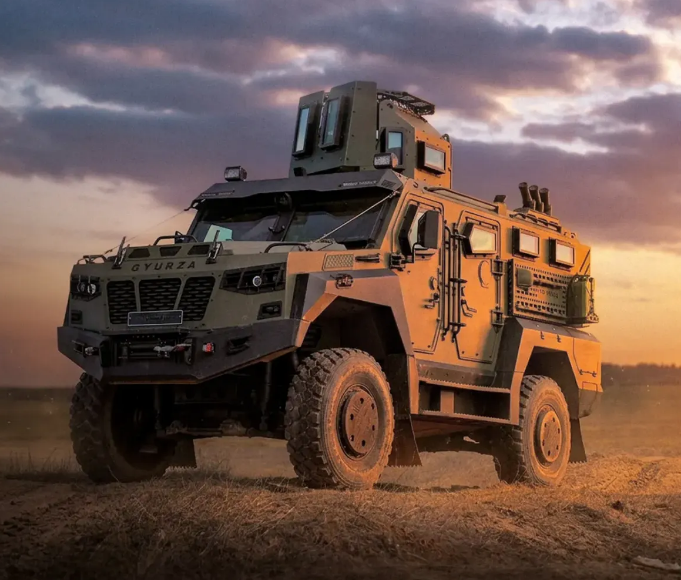
Ukraine has codified an upgraded version of the Gyurza-2 armored vehicle. The Defense Ministry has announced that the vehicle was modernized based on combat experience and feedback from front-line troops operating it.
The codification clears the upgraded Gyurza-2 for broader procurement and front-line deployment, with substantial protection upgrades from the original 2025 version, including a jump from STANAG 4569 Level 2 to Level 3a/3b mine resistance, and signals the pac
Ukraine has codified an upgraded version of the Gyurza-2 armored vehicle. The Defense Ministry has announced that the vehicle was modernized based on combat experience and feedback from front-line troops operating it.
The codification clears the upgraded Gyurza-2 for broader procurement and front-line deployment, with substantial protection upgrades from the original 2025 version, including a jump from STANAG 4569 Level 2 to Level 3a/3b mine resistance, and signals the pace at which Ukraine's domestic armored vehicle industry is iterating on combat feedback.
The Gyurza-2's total mass now exceeds 18 tonnes, with payload capacity raised to 2.5 tonnes, ground clearance to 380 millimeters, and operational range reaching 1,200 kilometers, the Defense Ministry said.
Maximum speed remains 110 kilometers per hour. Engineers strengthened the independent suspension, replaced components, and installed improved tires; the armored hull is now lined with circular anti-fragment material to reduce the risk of shrapnel to crew and troops.
The original Gyurza-2, manufactured by UkrArmoTech and presented at the IDEX 2025 defense exhibition in Abu Dhabi, was rated at STANAG 4569 Level 2 protection on a 14-tonne unladen chassis, documentedDefense Express.
The 2025 version progressed from prototype to codification in six months at a rare pace for a newly developed armored vehicle.
The Defense Ministry said the upgraded vehicle can be configured with or without a combat turret. Standard equipment now includes ventilation, air conditioning, and heating systems, a night vision complex, and a 360-degree video surveillance system with four cameras.
AI software adds optional threat detection
The upgraded Gyurza-2 can additionally be equipped with software solutions using artificial intelligence for environmental monitoring and threat detection. The ministry did not name the AI vendor or specify whether the system has been fielded with deployed units.
Ukraine accepted 1,000 weapons and military equipment samples in the first six months of 2026, which is a 50% increase over the same period in 2025, with nearly 90% of those samples produced domestically.
In June 2026, Ukraine also codified the MAC OWL "Sova" MRAP, built on the South African Mbombe 4 chassis and adapted by Ukrainian engineers with ten electronic warfare modules and STANAG 4569 Level 4a/4b mine protection.
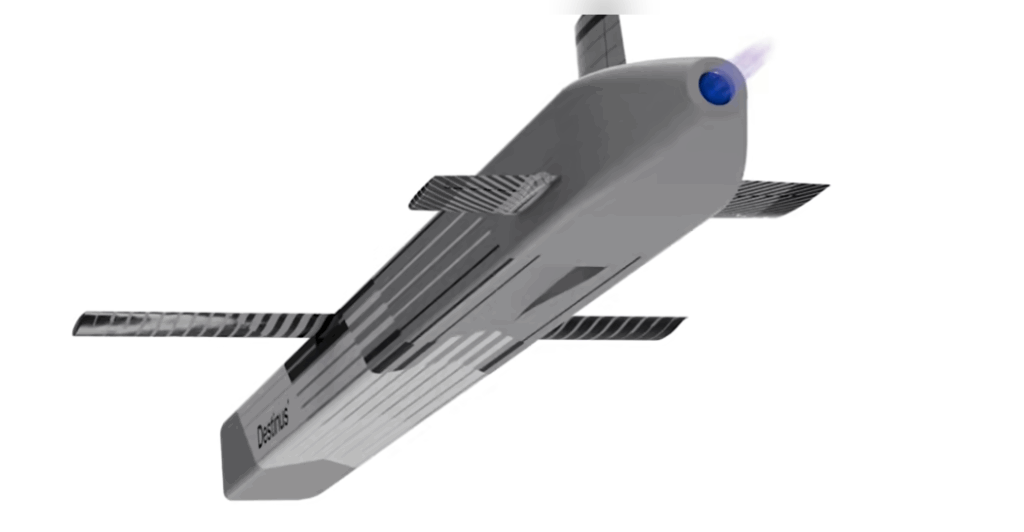
Dutch-based defense technology company Destinus will be able to deliver Ruta cruise missiles to Ukraine within a relatively short timeframe. Defense Express reports. This conclusion was drawn because, in a recent press release, it has announced the production of its 1,000th T150 engine and declared that it had achieved industrial-scale production of turbojet engines in Europe.
The engine powers Ruta Block 1 (B1) and Block 2 (B2) cruise missiles, with the production milesto
Dutch-based defense technology company Destinus will be able to deliver Ruta cruise missiles to Ukraine within a relatively short timeframe. Defense Express reports. This conclusion was drawn because, in a recent press release, it has announced the production of its 1,000th T150 engine and declared that it had achieved industrial-scale production of turbojet engines in Europe.
The engine powers Ruta Block 1 (B1) and Block 2 (B2) cruise missiles, with the production milestone coinciding with the Netherlands plans to fund approximately 700 Ruta missiles for Ukraine.
It matters because this engine was developed entirely in-house by the company and is manufactured on a production line in Europe. Chief Manufacturing Officer Sidney Berndt said the T150 production line is designed to sustain "the production of thousands of missile systems per year."
Destinus said the program addresses Europe's cruise missile production constraint through a turbojet engine developed from scratch and manufactured in-house, with vertical integration of design, tooling, supply chain, and quality control.
Ukrainian Defense Minister Mykhailo Fedorov announced during his Dutch visit in mid-June that the Netherlands is ready to finance the supply of approximately 700 Ruta cruise missiles to Ukraine, though the specific modification was not specified. During Fedorov's visit to Destinus's Hengelo facility, he was shown the Ruta B1 variant.
Berndt says production line targets thousands of missiles per year
"Producing one engine is engineering. Producing a thousand is industrial capability," Berndt said in the Destinus announcement.
It is a European production system capable of producing thousands of missile systems per year, he added.
Destinus did not disclose the proportion of European components in the T150 or the current production rate. The T150 production line is designed for continuous ramp-up, supporting both current Ruta output and planned capacity expansion through the Rheinmetall Destinus Strike Systems joint venture.
Ruta family spans 300 to 2,000 kilometers across three variants
The Ruta family comprises three variants. Ruta B1 has a range of more than 300 kilometers, carries a payload of more than 150 kilograms, and is described by Defense Express as effectively a jet-powered drone rather than a full cruise missile.
Ruta B2 has an increased range of more than 700 kilometers, a 250-kilogram payload, foldable wings, low-observability features, and the ability to launch from an aircraft.
Ruta B3, currently in development, is planned to have a 2,000-kilometer range, 250-kilogram payload, and a thermal-imaging seeker, with flight tests scheduled for 2027.
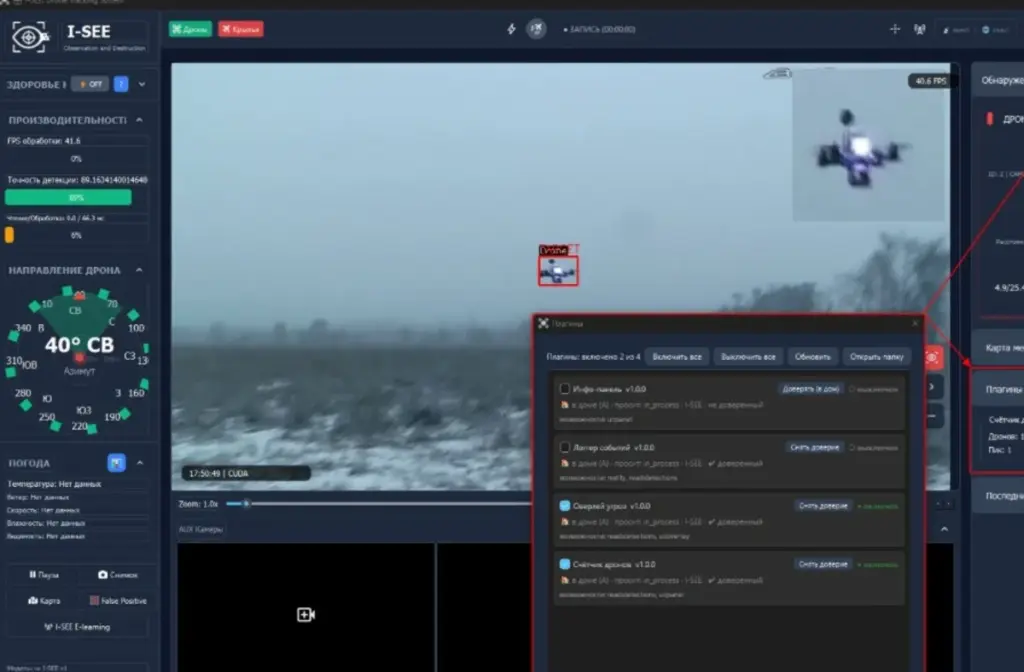
A Ukrainian company that builds a system for shooting down enemy drones has opened it up so outside engineers can upgrade it themselves, a change that could let battlefield defenses keep pace with fast-changing threats, Defence Blog reported. The system, called I-SEE, now comes with open software tools that let outsiders bolt on new weapons and features. Until now, only its maker could change it.
Russia continues to fire long-range drones at Ukrainian residential areas and
A Ukrainian company that builds a system for shooting down enemy drones has opened it up so outside engineers can upgrade it themselves, a change that could let battlefield defenses keep pace with fast-changing threats, Defence Blog reported. The system, called I-SEE, now comes with open software tools that let outsiders bolt on new weapons and features. Until now, only its maker could change it.
Russia continues to fire long-range drones at Ukrainian residential areas and civilian infrastructure every night. This pushed Ukraine to build cheap, fast-scaling defenses and to keep changing them as the threat shifts.
A system that spots and stops drones
The I-SEE platform finds, tracks, and shoots down drones, with a central program that picks targets and decides when to fire, Defence Blog reported. Right now, it uses net guns. A net gun fires a weighted net that tangles a drone's blades and brings it down. The company is testing gun turrets and signal jammers in the lab. It says small interceptor drones — which ram or blow up enemy drones — are coming soon. Before this, only I-SEE's own team could add anything new.
Explore further
Ukraine’s newest drones don’t need Starlink. Russia spends $1.5 million to jam it anyway.
Three ways outsiders can build on it
The system opens up in three ways, Defence Blog said. First, a data connection lets other software pull what I-SEE sees — where drones are, what they are, and live video — into the maps and command screens a unit already uses. Second, a starter kit makes hooking in so simple that one engineer can do it in an evening. Third, and most important, outsiders can write a small add-on and drop it in. It might add a new screen, mark up the video, or run a brand-new weapon.
Explore further
Ukraine built 90% of its newly authorized weapons itself. Year ago, it was 70%
The machine keeps the trigger
Spotting drones, picking targets, and deciding to fire all stay inside a protected core. Every add-on runs in a sealed-off space with limited reach. An add-on that controls a weapon can aim and fire that weapon on command. It cannot override a targeting choice or shoot on its own. If an add-on crashes, it fails alone, and the rest keeps running.
Why it matters on the front
Drones change faster than armies can buy new gear. A system that reached the front half a year ago can already meet drones that nobody expected. I-SEE's bet is to let units, integrators, or hired engineers build the fix in days, not months. Ukraine has raced to field cheap drone-killers, from net guns to automated turrets and interceptor drones.
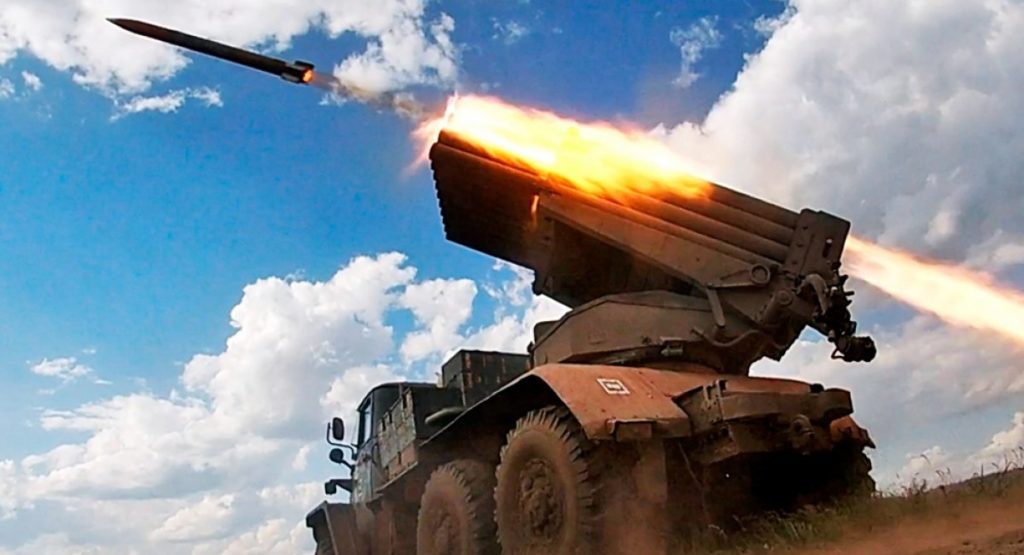
Spanish company Escribano Mechanical & Engineering (EM&E) has sent over 10,000 precision-guidance kits to Ukraine since 2023, converting unguided 122mm BM-21 Grad MLRS rockets into precision-guided munitions with 15-meter accuracy. The company representatives confirmed the delivery at the Eurosatory-2026 defense exhibition in Paris, per Defense Express.
An EW-resistant laser-guided variant developed at Ukraine's specific request achieves accuracy of under 3 meters e
Spanish company Escribano Mechanical & Engineering (EM&E) has sent over 10,000 precision-guidance kits to Ukraine since 2023, converting unguided 122mm BM-21 Grad MLRS rockets into precision-guided munitions with 15-meter accuracy. The company representatives confirmed the delivery at the Eurosatory-2026 defense exhibition in Paris, per Defense Express.
An EW-resistant laser-guided variant developed at Ukraine's specific request achieves accuracy of under 3 meters even under electronic warfare conditions, with 1,000 of these laser kits delivered by Q1 2026.
The EM&E precision kits convert Ukraine's existing inventory of Soviet-era BM-21 Grad rockets, and any compatible 122mm rocket from any manufacturer, into precision-guided munitions without dependence on a single supplier or US ITAR-controlled technology.
The system can be launched from standard Grad launchers and even single launch tubes, with an effective range of 20 to 40 kilometers depending on the base rocket.
Laser variant achieves 3-meter accuracy even under Russian electronic warfare
The laser-guided variant is slightly longer than the GNSS/INS satellite-navigation version and equipped with four independently controlled front rudders versus two on the satellite-only version. EM&E has delivered approximately 3,700 kits per year on average since 2023, with capacity potentially scaling if international demand warrants expansion.
The laser-guided variant was developed specifically at Ukraine's request to address Russian electronic warfare effectiveness against satellite-guided munitions. The variant achieves a circular error probable of under 3 meters even when operating under active Russian electronic warfare and jamming, compared to 15 meters for the GNSS/INS variant.
Spanish-Ukrainian defense industrial cooperation expands beyond Grad kits
EM&E has expanded its Ukrainian defense market presence beyond the precision-guidance kits.Ukrainian defense holding Ukroboronprom signed a memorandum with EM&E in May 2025 to jointly develop weapons and localize Spanish module production within Ukraine.
Ukrainian UAV manufacturer Skyeton separately signed a cooperation agreement with EM&E in April 2026. EM&E operates from Madrid and has systems deployed across 25 countries across the globe, with the company having grown from a small machining workshop into one of Spain's largest defense and security firms.
EM&E precision-guidance kits transform Soviet-era Grad MLRS
The BM-21 Grad MLRS, a Soviet-era 122mm multiple rocket launcher system, remains in service with militaries worldwide despite its age, due to its mass production, low cost, and operational simplicity. Both Russia and Ukraine continue to deploy Grads, with Ukraine's Defense Forces actively modernizing the platform with counter-drone protection and updated chassis platforms.
Ukraine has opened its captured Russian weapons to allied governments and defense firms through a new online platform, Ukrainian Defense Minister Mykhailo Fedorov said. The system turns seized missiles, drones, and vehicles into shared technical intelligence for partner governments, labs, and arms makers. Kyiv presents it as a way to build countermeasures faster and defend democracies.
More than four years of full-scale war have made Ukraine a leading testing. ground for ne
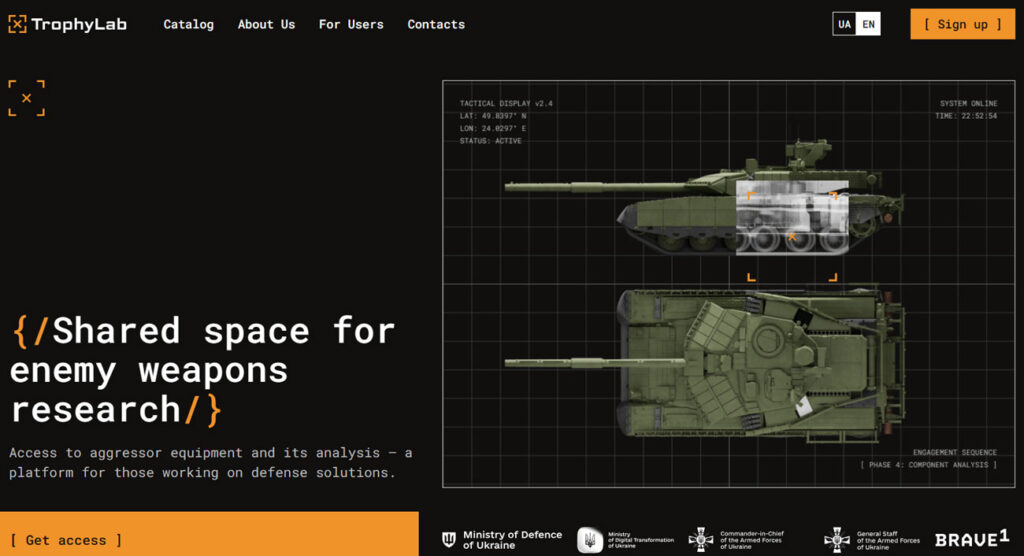
Ukraine has opened its captured Russian weapons to allied governments and defense firms through a new online platform, Ukrainian Defense Minister Mykhailo Fedorov said. The system turns seized missiles, drones, and vehicles into shared technical intelligence for partner governments, labs, and arms makers. Kyiv presents it as a way to build countermeasures faster and defend democracies.
More than four years of full-scale war have made Ukraine a leading testing. ground for new weapons, and allies increasingly look to it to learn what works and what fails.
Captured weapons, opened to the free world
The Defense Ministry calls the platformTrophyLab, the government's official site for examining seized Russian equipment.. Fedorov wrote that every seized missile, drone, and vehicle is now knowledge for the free world. Partner governments, labs, and weapons makers can dig into detailed engineering files, analyses, and the flaws in Russian systems, he said.
Kyiv set the portal up under a pilot scheme that the Cabinet signed off on. It draws on the security and military bodies that keep the seized hardware.
What partners can pull from the system
Users can reach captured samples and fragments, research from state institutions, and component analysis. Partners may also ask for the actual hardware to run their own tests. Fedorov said that step significantly shortens the development cycle for countermeasures.
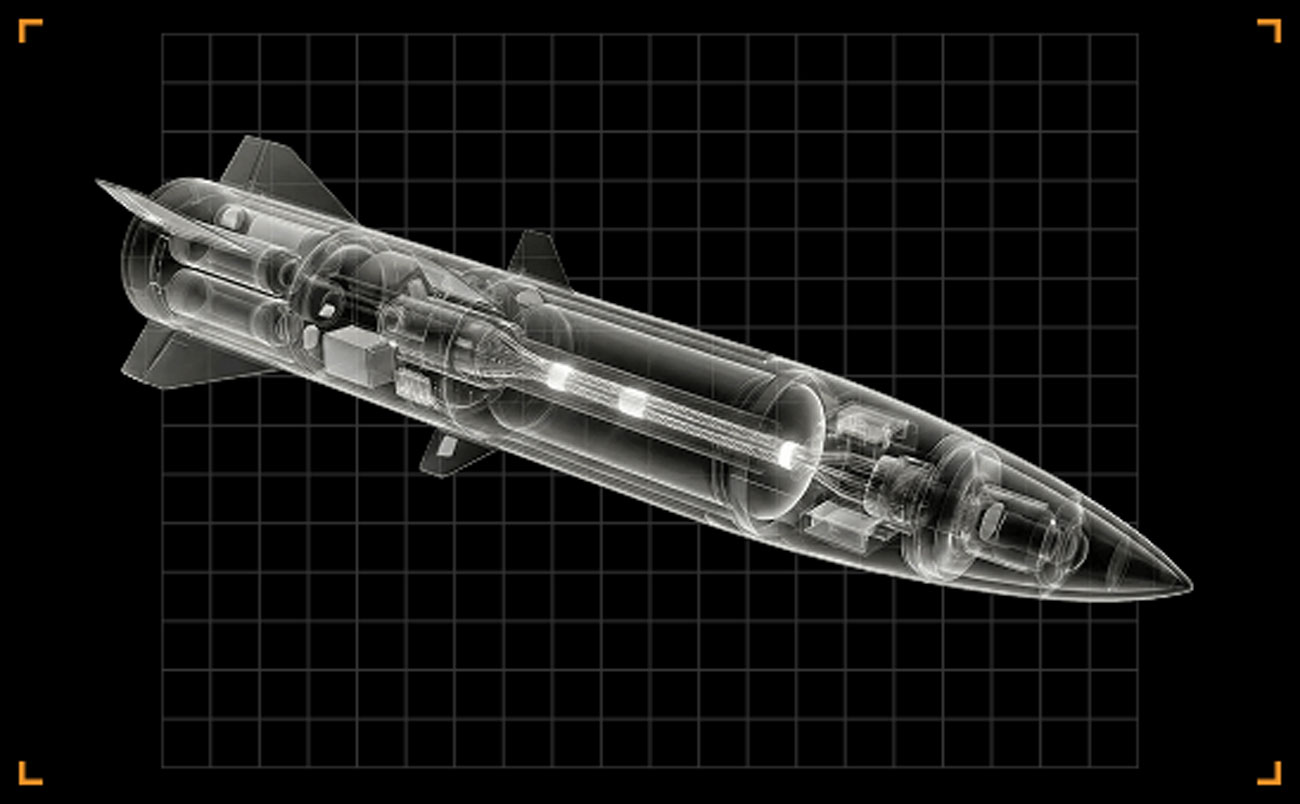
A cutaway rendering of a Russian Kinzhal hypersonic missile, as shown on Ukraine's TrophyLab platform. Illustrative image: TrophyLab/Ukraine's Defense Ministry
The site lists seized Russian systems as study material, among them a Kinzhal hypersonic missile and a T-90M tank. Its stated mission is to bring captured technology, research, and know-how together under one roof. It aims to make allied defense faster than the aggression it answers.
Ukraine launches TrophyLab: we are opening access to captured Russian weapon technologies for our global partners. Every missile, drone, and vehicle seized on the battlefield is now a source of knowledge for the free world.
Fedorov tied the launch to the wider war — the ongoing Russian invasion of Ukraine.
"What was meant to be the enemy's secret advantage is being dismantled to defend democracy," he wrote.
The Defense Ministry says it will keep converting Russia's seized hardware into a resource for engineers worldwide.
Explore further
Ukraine found Russian artillery’s weak spot and destroyed 250 systems in two nights
Drone training data shared earlier
The move follows other steps to share battlefield knowledge with partners. Ukraine recently shared data from half a million hours of frontline drone footage to train allied AI. In May, Kyiv set a new procedure for using captured Russian equipment in defense and international cooperation. It earlier opened combat datasets to international partners and launched joint programs such as Brave Germany with Berlin.
The Netherlands will allocate $590 million in military aid to Ukraine, Ukrainian Defense Minister Mykhailo Fedorov announced, per Ukrinform. In The Hague, he met with his Dutch counterpart Dilan Yeşilgöz-Zegerius.
The assistance will consist of two parts: $295 million for drone production and $295 million for the PURL American air defense initiative to buy anti-ballistic missiles.
The Netherlands financed the first PURL package at €500 million when the initiative laun
The Netherlands will allocate $590 million in military aid to Ukraine, Ukrainian Defense Minister Mykhailo Fedorov announced, per Ukrinform. In The Hague, he met with his Dutch counterpart Dilan Yeşilgöz-Zegerius.
The assistance will consist of two parts: $295 million for drone production and $295 million for the PURL American air defense initiative to buy anti-ballistic missiles.
The Netherlands financed the first PURL package at €500 million when the initiative launched in August 2025, with subsequent contributions building to today's €1 billion milestone.
Yeşilgöz-Zegerius noted that air defense matters more than ever as Russia escalates aerial attacks on Ukrainian cities, with Putin "increasingly resorting to brutal air attacks on Ukrainian cities" that cause civilian suffering.
Dutch drone production funding accelerates Build with Ukraine framework
The $295 million drone production commitment will fund procurement from the Dutch defense industry for Ukraine. The framework is part of Build with Ukraine, the broader initiative that enables Ukrainian defense companies to establish production facilities in NATO partner countries, safeguarding operations from Russian strikes while strengthening NATO defense industrial capacity.
The Netherlands previously committed €200 million in October 2025 to joint drone defense and production with Ukraine, and signed contracts to produce 600,000 drones for Ukraine under the Drone Line initiative in June 2025.
The progressive expansion of Dutch drone funding reflects what Yeşilgöz-Zegerius called the effective Ukrainian use of unmanned systems to defend the population and counter Russian attacks.
Yeşilgöz-Zegerius emphasizes Ukrainian defense of European security
In her remarks at the memorandum signing, Yeşilgöz-Zegerius emphasized that the Ukrainian Defense Forces are defending European security alongside Ukraine's freedom.
"Ukrainians often thank us for the assistance we provide, but let me make this clear once again: it is we who must thank you," Yeşilgöz-Zegerius stated.
She added that "for more than four years, brave Ukrainian service members, along with the resilient Ukrainian people," have been fighting not only for Ukraine's freedom but for the security of all Europe, including the Netherlands.
The Dutch minister also pledged continued advocacy among European allies and partners to expand assistance to Ukraine.
Ukrainian defense manufacturer AIDronesUA and Swedish technology firm Njord Technology AB have signed a Memorandum of Strategic Partnership at the Eurosatory-2026 defense exhibition in Paris, per Oboronka. The partnership scales production of the MAUL casualty evacuation, logistics, and ammunition delivery platform in Sweden.
The MAUL ground robot costs between $22,600 and $33,900 per unit, depending on the communication configuration. AIDronesUA says that MAUL was develop
Ukrainian defense manufacturer AIDronesUA and Swedish technology firm Njord Technology AB have signed a Memorandum of Strategic Partnership at the Eurosatory-2026 defense exhibition in Paris, per Oboronka. The partnership scales production of the MAUL casualty evacuation, logistics, and ammunition delivery platform in Sweden.
The MAUL ground robot costs between $22,600 and $33,900 per unit, depending on the communication configuration. AIDronesUA says that MAUL was developed and continuously refined based on real combat experience and direct feedback from Ukrainian soldiers operating the platform on the frontline.
AIDronesUA expands Ukrainian production capacity through Swedish partnership
"Together with Njord Technology AB, we plan to organize joint production of UGV MAUL on Swedish territory, which will allow expanding production capabilities and accelerating delivery of robotic systems," AIDronesUA says.
The Ukrainian company emphasizes that its priority remains meeting the needs of the Ukrainian Defense Forces, with most of the produced complexes intended for logistics, casualty evacuation, and the preservation of Ukrainian soldiers' lives.
Njord Technology brings Swedish engineering to Ukrainian battlefield experience
"The combination of Ukrainian practical experience and Swedish engineering expertise will create modern robotic solutions that improve task performance and help save lives," Njord Technology notes.
This partnership will also foster industrial cooperation between Sweden and Ukraine and create new opportunities for technological development and innovation, the company said.
The Swedish company creates autonomous solutions and AI systems, and is a member of the Swedish Security and Defense Industry Association (SOFF). The partnership joins a growing list of Swedish-Ukrainian defense industry agreements, including the Saab-Radionix sensor and defense electronics memorandum and ongoing discussions regarding potential Gripen fighter aircraft supply.
Ground robotic systems lead Ukrainian defense innovation
Ground robotic systems have become one of the most active categories of Ukrainian defense industry expansion. Ukraine ordered 25,000 ground robots for H1 2026 procurement, which is more than double the 2025 total.
Defense Minister Mykhailo Fedorov reported in March 2026 that Ukrainian ground robotics manufacturers had grown from zero to more than 100 since the start of the full-scale aggression.
Ukraine's Defense Ministry has announced that it has codified and authorized 1,000 samples of weapons and military equipment since the start of 2026. It's a 50% increase from the 659 samples authorized during the same period in 2025.
The pace of codification and the domestic share signal a substantive shift in Ukraine's wartime defense-industrial dependency, with Ukrainian defense industry capacity progressively scaling over three years of full-scale war.
Of the 1,000 sampl
Ukraine's Defense Ministry has announced that it has codified and authorized 1,000 samples of weapons and military equipment since the start of 2026. It's a 50% increase from the 659 samples authorized during the same period in 2025.
The pace of codification and the domestic share signal a substantive shift in Ukraine's wartime defense-industrial dependency, with Ukrainian defense industry capacity progressively scaling over three years of full-scale war.
Of the 1,000 samples authorized, 892 are produced in Ukraine, raising the domestic share to nearly 90%, up from 69.6% in 2025 and 74.6% in 2024.
The 1,000 samples include over 300 unmanned aerial complexes, 188 ammunition types, 128 communication systems, more than 60 electronic warfare and electronic intelligence systems, 50 ground robotic complexes, and nearly 50 armored vehicles and special armored cars.
Unmanned aerial systems lead 2026 weapons codification
"All of the codified samples have passed the necessary testing and confirmed their declared characteristics. A significant portion is already being used by Defense Forces units," the Defense Ministry stated.
The pace of codification accelerated through 2026: in May 2026 alone, the Defense Ministry codified 175 new weapons models for operational use.
The dominance of unmanned aerial complexes among the 2026 codifications reflects Ukrainian battlefield priorities — Russia's intensified Shahed-type drone strikes, Ukraine's middle-strike operations against Russian rear targets, and the operational shift toward unmanned-systems integration across combat arms.
Ukrainian manufacturers expand domestic share to 90%
The Ukrainian-made share of newly authorized weapons has risen sharply over three years of full-scale war from 74.6% in 2024 to 69.6% in 2025 to nearly 90% in 2026. The Defense Ministry emphasized that Ukrainian manufacturers are increasingly producing high-technology weapons and military equipment designed with consideration of contemporary war experience and frontline needs.
Cabinet allocates $244.6 million to boost defense capabilities
The Cabinet of Ministers additionally allocated $244.6 million in May 2026 to strengthen Ukraine's defense capabilities. Of this amount, $204.2 million is directed to new weapons procurement, modernization, and the repair of military equipment, while $40.4 million is invested in the development of the Ukrainian defense industrial complex.
The defense-industrial investment is allocated to implementing new technologies, expanding production capacity, and supporting further sector development. Fedorov took over as Defense Minister on 14 January 2026 and has focused his tenure on the technological transformation of the Ukrainian Armed Forces.
The United States has only about 25% of the Patriot missile interceptors it needs to meet Pentagon military plans, a shortage that led U.S. President Donald Trump's administration to pause a major transfer of weapons to Ukraine, the Guardian reported on July 8.The decision to halt the delivery, made on July 2, followed an internal review showing low stockpiles of critical air defense systems. The depletion was largely due to recent U.S. operations in the Middle East, including the interception o
The United States has only about 25% of the Patriot missile interceptors it needs to meet Pentagon military plans, a shortage that led U.S. President Donald Trump's administration to pause a major transfer of weapons to Ukraine, the Guardian reported on July 8.
The decision to halt the delivery, made on July 2, followed an internal review showing low stockpiles of critical air defense systems. The depletion was largely due to recent U.S. operations in the Middle East, including the interception of Iranian missiles after strikes on the American Al Udeid airbase in Qatar, according to the Guardian.
According to officials familiar with the matter, the Pentagon's munitions tracker, used to measure the minimum supplies needed for U.S. war plans, showed Patriot interceptor levels had fallen below acceptable levels. That prompted concerns that sending more to Ukraine could put U.S. defense readiness at risk, the Guardian wrote.
The freeze reportedly affected Ukraine's two key arms transfer methods: drawdowns from Pentagon stockpiles and the Ukraine Security Assistance Initiative (USAI), through which the Defense Department orders new weapons from contractors.
Because U.S. orders take priority, Ukrainian requests for new weapons, including Patriot missiles, face years-long delays.
The pause came at a critical time for Kyiv, as Russia intensifies large-scale aerial attacks on Ukrainian cities. With limited options to acquire precision-guided and other key munitions, Ukrainian forces have increasingly relied on Western-supplied air defenses to counter the growing threat.
For its latest aid package, the U.S. had planned to send dozens of Patriot interceptors, along with Hellfire missiles, air-to-air Sparrows, GMLRS rockets, and anti-tank weapons, according to the Guardian.
NBC News reported on July 4 that U.S. Defense Secretary Pete Hegseth unilaterally halted a weapons shipment to Ukraine despite internal military assessments showing the aid would not compromise American military readiness.
The assessment concluded that while some munitions stockpiles, including precision weapons, were low, they had not fallen below critical thresholds.
Amid the ongoing questions over Washington's weapons pause, Trump has apparently promised to send 10 Patriot interceptors to Ukraine, Axios reported on July 8. Sources also told the Wall Street Journal (WSJ) that Trump claimed he wasn't behind the decision to halt arms to Kyiv in a recent phone call with President Volodymyr Zelensky.
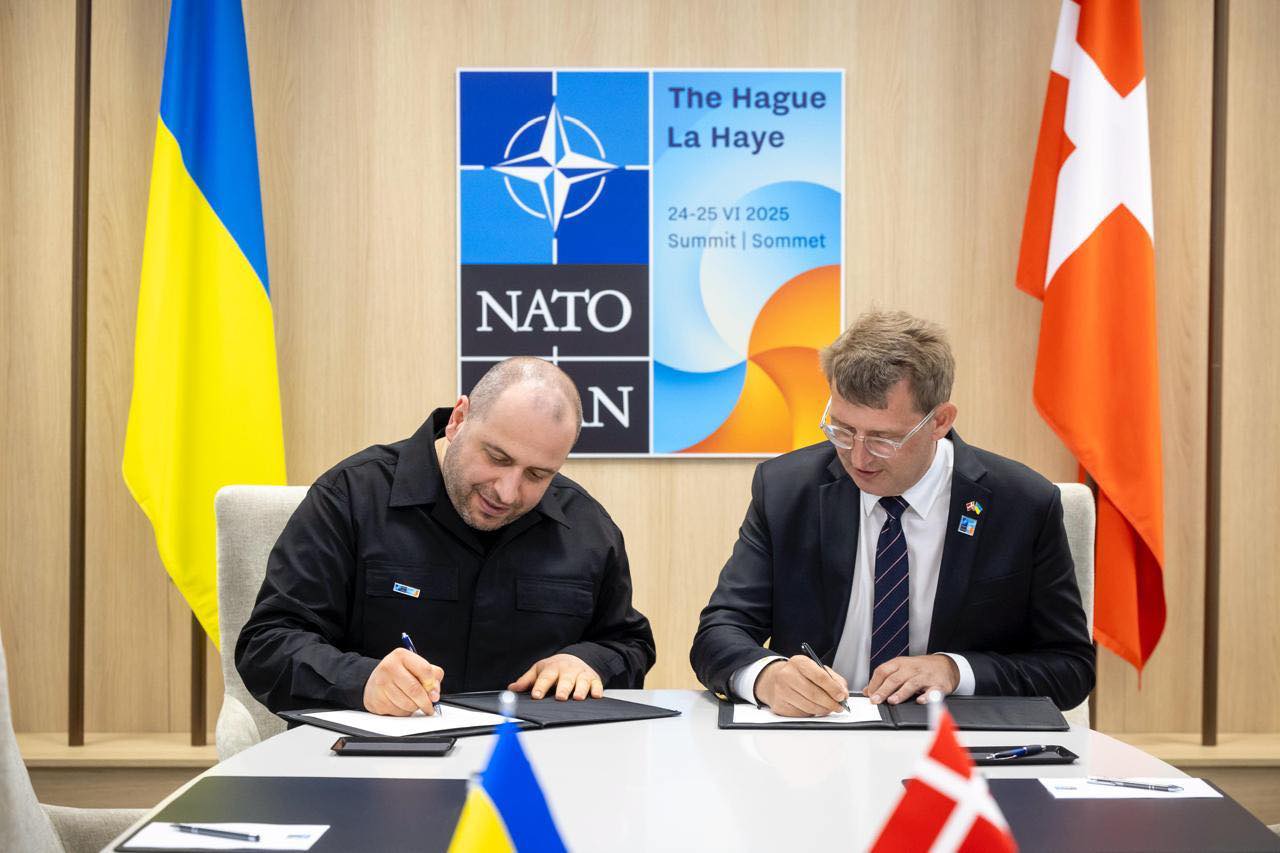
Kyiv and Copenhagen signed a landmark agreement on July 4 that allows Ukrainian defense companies to open production facilities in Denmark, Strategic Industries Minister Herman Smetanin announced. "This is a unique case of international cooperation for the Ukrainian defense industry," Smetanin wrote on Facebook, following the signing ceremony in Copenhagen alongside Danish Industry Minister Morten Bodskov.The deal marks the first time Ukrainian defense technologies will be exported abroad specif
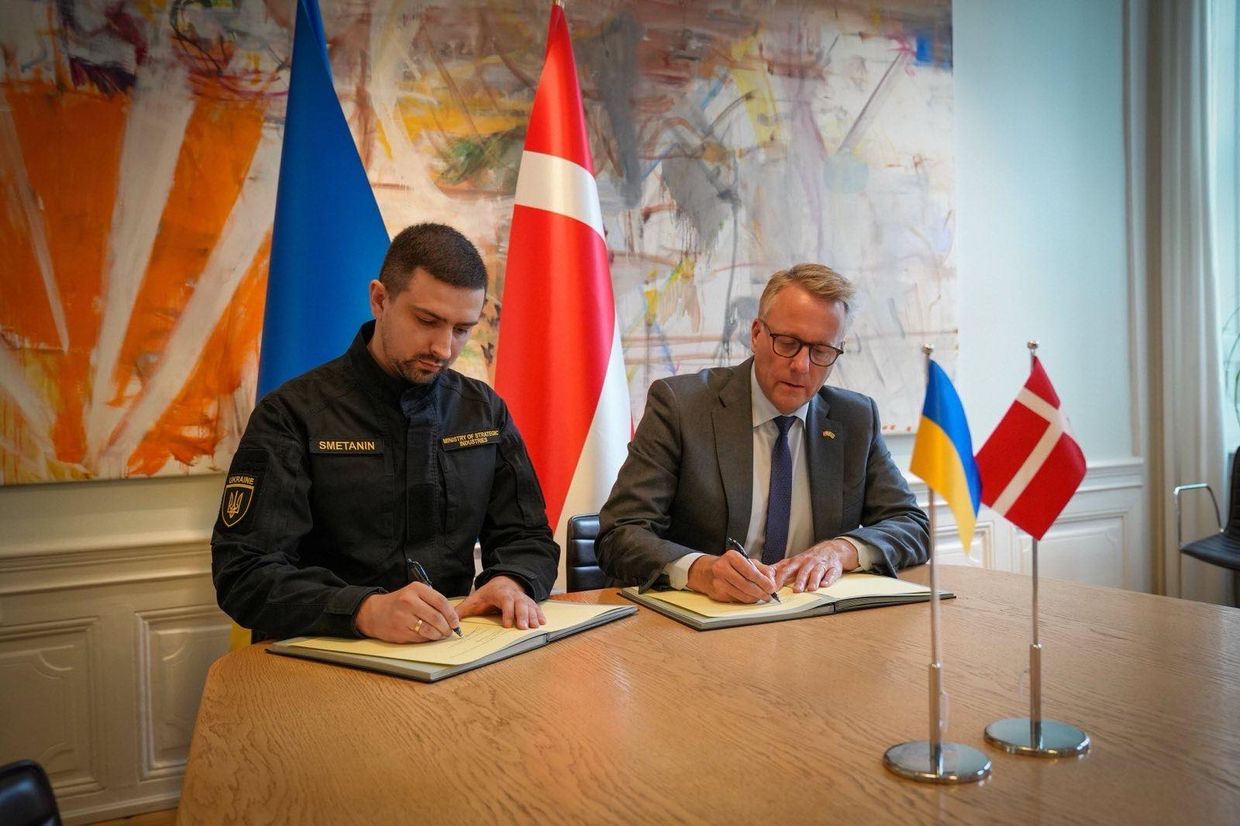
Kyiv and Copenhagen signed a landmark agreement on July 4 that allows Ukrainian defense companies to open production facilities in Denmark, Strategic Industries Minister Herman Smetanin announced.
"This is a unique case of international cooperation for the Ukrainian defense industry," Smetanin wrote on Facebook, following the signing ceremony in Copenhagen alongside Danish Industry Minister Morten Bodskov.
The deal marks the first time Ukrainian defense technologies will be exported abroad specifically for supply to Ukraine's own Armed Forces, he said.
A year ago, Denmark became the first country to fund weapons production by Ukrainian manufacturers. Now, it has become the first to host Ukrainian arms production lines on its territory, Smetanin added.
"Today, it has become the first country to which Ukraine exports its own defense technologies for production, scaling, and supply to the Ukrainian army," he said.
The agreement is part of Ukraine's broader effort to internationalize its defense production. President Volodymyr Zelensky announced on June 21 that Kyiv would soon begin exporting defense technologies and opening weapons production lines in partner countries.
To scale up domestic and international production, Zelensky has called on foreign partners to finance new projects and match Ukraine's rapidly growing manufacturing capacity.
Denmark has been a key backer of Ukraine since the start of Russia's full-scale invasion in 2022. In February 2024, Copenhagen signed a 10-year bilateral security agreement with Kyiv, pledging long-term defense cooperation until Ukraine secures NATO membership.
Skyeton Prevail Solutions, a joint venture between Ukrainian drone manufacturer Skyeton and U.K.-based defense company Prevail Solutions, will manufacture and supply Raybird drones in the U.K., the two companies announced on July 2."Skyeton — a Ukrainian unmanned aircraft systems company with 19 years of engineering pedigree, and Prevail Partners — a leading U.K. defense and security company, announced a joint venture to fast-track the volume manufacture, supply, and support for the integration
Skyeton Prevail Solutions, a joint venture between Ukrainian drone manufacturer Skyeton and U.K.-based defense company Prevail Solutions, will manufacture and supply Raybird drones in the U.K., the two companies announced on July 2.
"Skyeton — a Ukrainian unmanned aircraft systems company with 19 years of engineering pedigree, and Prevail Partners — a leading U.K. defense and security company, announced a joint venture to fast-track the volume manufacture, supply, and support for the integration of its best-in-class drone into U.K. military applications," a statement by the two companies said.
Ukraine has developed drones that have proven to be effective amid the onset of Russia's full-scale war against Ukraine in February 2022 and Russia's initial invasion of Ukraine in 2014.
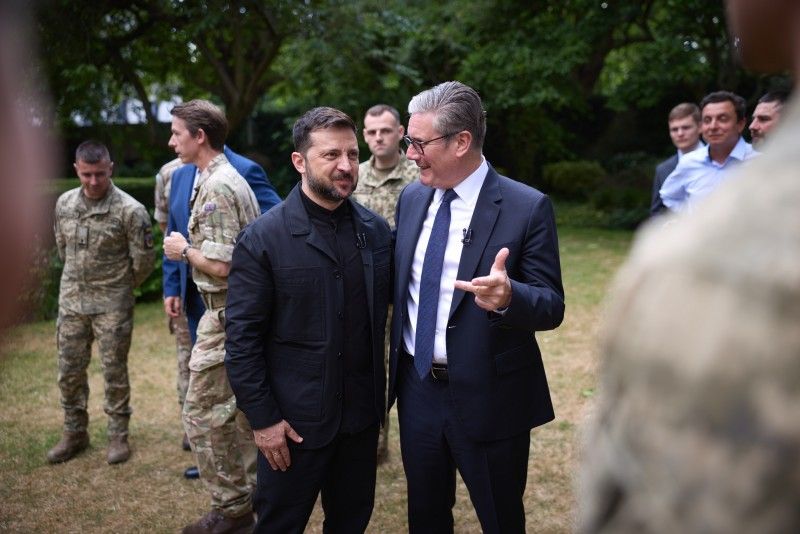
President Volodymyr Zelensky and U.K. Prime Minister Keir Starmer met in London on June 23, where the two leaders agreed to an "industrial military co-production agreement."
"The joint venture will scale the availability of Raybird with new manufacturing in the U.K. for both deployment in Ukraine and provide the necessary integration expertise from Prevail Partners for U.K. and other Western militaries," the statement said.
U.K. lawmaker Iain Duncan Smith described the move as an "important step" for U.K. drone production.
Skyeton says its Raybird drone has over 350,000 flight hours and is responsible for billions of dollars in Russian losses.
Ukraine has relied on drones to meet its own defense needs, as foreign military aid has fallen short in supplying necessary weapons and air defenses.
Ukraine is launching a joint weapons production program with members of the Ukraine Defense Contact Group (UDCG), or Ramstein summit participants, Defense Minister Rustem Umerov announced on July 1. The UDCG was formed in 2022 under former U.S. President Joe Biden to coordinate military assistance for Ukraine among about 50 of Kyiv's allies. As part of a new joint production program, new factories and weapons manufacturing facilities will be built in Ukraine and abroad, Umerov said in a social m
Ukraine is launching a joint weapons production program with members of the Ukraine Defense Contact Group (UDCG), or Ramstein summit participants, Defense Minister Rustem Umerov announced on July 1.
The UDCG was formed in 2022 under former U.S. President Joe Biden to coordinate military assistance for Ukraine among about 50 of Kyiv's allies.
As part of a new joint production program, new factories and weapons manufacturing facilities will be built in Ukraine and abroad, Umerov said in a social media post. The international sites will be UDCG member countries participating in the Ramstein-format summit.
New legal and tax regulations will also be put in place for Ukrainian weapons manufacturers, facilitating the construction of new sites and allowing them to rapidly scale up production, Umerov said.
The Defense Ministry on July 1 joined the Verkhovna Rada (Ukraine's parliament) Finance, Tax, and Customs Committee in presenting four draft laws regarding domestic weapons production "aimed at developing the industry." The legislation introduces amendments to tax, customs, and budget regulations, as well as the Criminal Code.
The first vote on the new legislative package is expected to take place in a month, according to Umerov.
"This is a new type of military-industrial cooperation, where Ukraine is an equal partner and player in the global defense market," he said.
As Ukraine scales up domestic defense production, President Volodymyr Zelensky has been lobbying foreign partners to provide funding to help match its manufacturing capacity. At the NATO summit in The Hague, Ukraine signed agreements on joint weapons production with the U.K. and Denmark. Norway also pledged to jointly develop air defense systems with Kyiv.
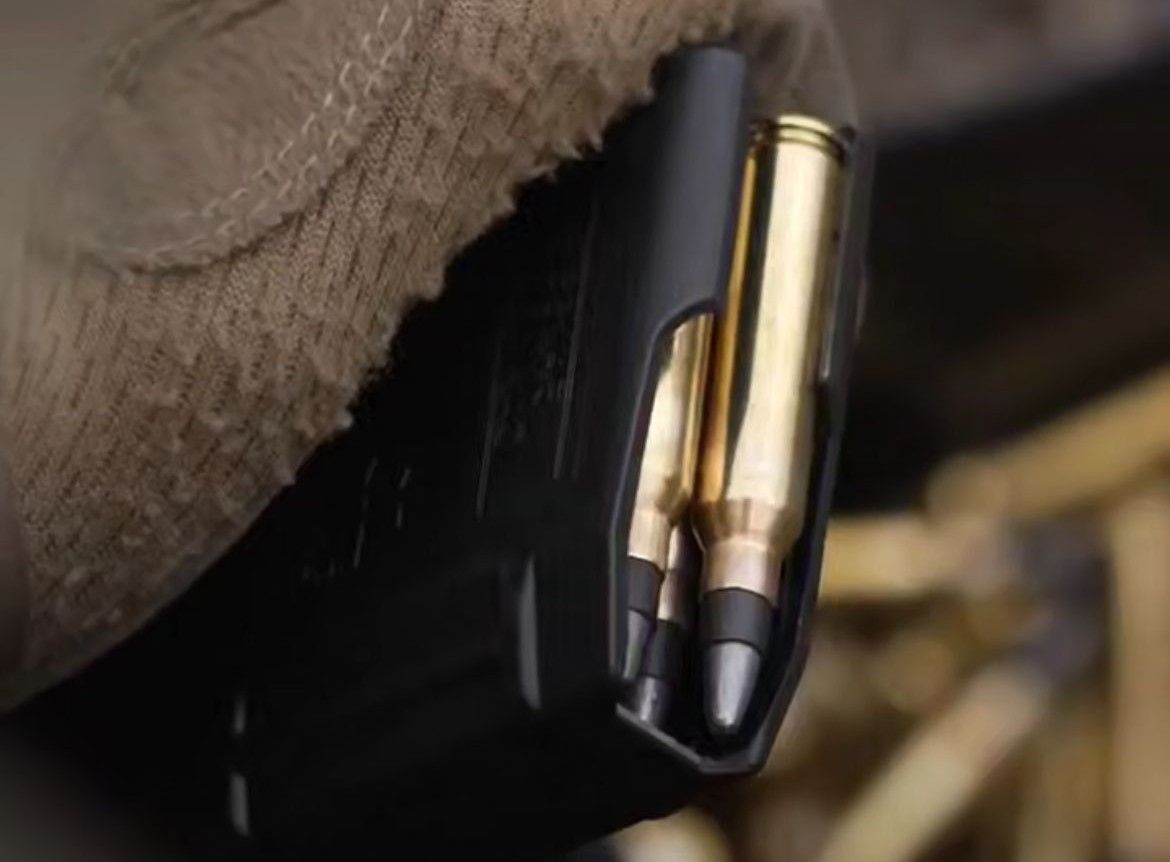
Ukraine's defense technology cluster Brave1 has launched the development of anti-drone rifle rounds, significantly increasing the chances of hitting fast-moving aerial targets, the group said in a statement on June 30.According to Brave1, the ammunition appears similar to standard rounds used in automatic rifles but features a specially designed warhead that increases the likelihood of shooting down FPV (first-person-view) drones or commercial quadcopters such as the DJI Mavic before they strike
Ukraine's defense technology cluster Brave1 has launched the development of anti-drone rifle rounds, significantly increasing the chances of hitting fast-moving aerial targets, the group said in a statement on June 30.
According to Brave1, the ammunition appears similar to standard rounds used in automatic rifles but features a specially designed warhead that increases the likelihood of shooting down FPV (first-person-view) drones or commercial quadcopters such as the DJI Mavic before they strike.
These types of drones are being used extensively on the battlefield by both Ukrainian and Russian forces. The cost-effective FPV drones have proven highly effective in destroying expensive military equipment.
The manufacturer has already codified the new rounds according to NATO standards, Brave1 said. The goal is to supply every infantry soldier with a magazine of specialized ammunition for use in case of aerial threats.
"These rounds that significantly improve the chances of hitting a moving target are a new development by Brave1," Digital Transformation Minister Mykhailo Fedorov said.
"Our common goal is to ensure that every infantryman has a magazine of such ammunition and can equip his rifle with it in case of an air threat."
Ukraine continues to scale up its drone warfare capabilities. The Defense Ministry said on March 10 that it plans to purchase 4.5 million FPV drones in 2025 at a cost exceeding Hr 110 billion ($2.6 billion), with most of the funds allocated through the Defense Procurement Agency.
President Volodymyr Zelensky has set a goal of producing at least 30,000 long-range drones in 2025.
President Volodymyr Zelensky and German Foreign Minister Johann Wadephul met in Kyiv on June 30, where the two leaders discussed Germany supplying additional IRIS-T air defense systems, joint weapons production, and strengthening sanctions against Russia, Zelensky said.Wadephul earlier said Germany is working with its defense industry, European allies, and the U.S. to secure more air defense systems for Ukraine."We are going down every path available... The German defense industry is trying to e
President Volodymyr Zelensky and German Foreign Minister Johann Wadephul met in Kyiv on June 30, where the two leaders discussed Germany supplying additional IRIS-T air defense systems, joint weapons production, and strengthening sanctions against Russia, Zelensky said.
Wadephul earlier said Germany is working with its defense industry, European allies, and the U.S. to secure more air defense systems for Ukraine.
"We are going down every path available... The German defense industry is trying to expand its capacity. We're speaking with our European partners, and I believe we must also move forward with the United States," he said.
Zelensky met with executives of German defense companies alongside Wadephul during the visit to Ukraine's capital.
"We discussed sanctions pressure on Russia, the potential for supplying new IRIS-T systems, and joint weapons production — both in Ukraine and in Germany," Zelensky said in a post to social media.
Zelensky noted Germany signalled it believes that Ukraine's future is in NATO amid Russia's war against Ukraine.
"We will continue to develop relevant military hubs and increase the presence of German companies in Ukraine. We had an in-depth discussion on interceptor drones. I am grateful for the willingness to help," Zelensky said.
Earlier in the visit, Wadephul noted that he remains in close contact with German Defense Minister Boris Pistorius to assess whether existing systems from Germany's own stockpiles can be redirected to Ukraine.
NATO's increased defense spending will lead to the "collapse" of the alliance, Russian Foreign Minister Sergei Lavrov said on June 30, despite Russian officials recently warning that Moscow's own military expenditure is driving the country towards recession.Lavrov's comments come after NATO leaders last week approved a new defense spending benchmark, committing members to spend at least 5% of GDP on defense and security-related expenditures by 2035, a goal long pushed by the U.S. and endorsed by
NATO's increased defense spending will lead to the "collapse" of the alliance, Russian Foreign Minister Sergei Lavrov said on June 30, despite Russian officials recently warning that Moscow's own military expenditure is driving the country towards recession.
Lavrov's comments come after NATO leaders last week approved a new defense spending benchmark, committing members to spend at least 5% of GDP on defense and security-related expenditures by 2035, a goal long pushed by the U.S. and endorsed by NATO Secretary General Mark Rutte.
The week previously, and in a rare public sign that all is not well in Russia, two high-ranking Moscow officials issued separate warnings about the state of the country's economy.
Russian Central Bank Governor Elvira Nabiullina and Economy Minister Maxim Reshetnikov both highlighted that amid the Kremlin's full-scale war against Ukraine, the tools Moscow once relied on to maintain wartime growth are nearly exhausted.
Polish Foreign Minister Radoslaw Sikorski on June 26 said an arms race between Russia and NATO could lead to Russian President Vladimir Putin's downfall.
"Since (Polish Foreign Minister Radoslaw Sikorski) is such a predictor, he probably foresees that a catastrophic increase in the budget of NATO countries, according to my estimates, will also lead to the collapse of this organization," Lavrov reportedly said.
Putin last week announced that Moscow plans to cut its military expenditure beginning next year, in a rebuke of NATO members' plans to increase defense spending to 5% of GDP.
"We are planning to reduce defence spending. For us, next year and the year after, over the next three-year period, we are planning for this," Putin said, though he did not provide concrete details.
"Europe is thinking about how to increase its spending, on the contrary. So, who is preparing for some kind of aggressive actions? Us or them?"
Western officials and analysts point to Russia's surging military expenditures amid its ongoing full-scale invasion of Ukraine. In 2024, Russia's defense budget reportedly rose 42% in real terms, reaching $462 billion, surpassing the combined spending of all European nations, according to the International Institute for Strategic Studies.
NATO allies have cited Russia's military buildup, sabotage campaigns, and continued aggression against Ukraine as reasons to accelerate defense investments. Rutte warned that Russia could rebuild its military capacity to threaten NATO territory within five years, urging members to act with urgency.
Lithuania has signed a memorandum with American defense firm Northrop Grumman and Norwegian Nammo to secure the production of ammunition amid Russia's war against Ukraine, the Lithuanian Defense Ministry announced on June 24."By strengthening our national defense industry, we are investing in both technological capabilities and Lithuania’s resilience to crises. This Memorandum of Understanding will allow us to better equip our armed forces and help Lithuania become an important link in internati
Lithuania has signed a memorandum with American defense firm Northrop Grumman and Norwegian Nammo to secure the production of ammunition amid Russia's war against Ukraine, the Lithuanian Defense Ministry announced on June 24.
"By strengthening our national defense industry, we are investing in both technological capabilities and Lithuania’s resilience to crises. This Memorandum of Understanding will allow us to better equip our armed forces and help Lithuania become an important link in international supply chains," Lithuanian Vice Minister of National Defense Loreta Maskalioviene said.
"The investment and expertise of our allies... will significantly contribute to strengthening of the national defense industry and security not only in Lithuania, but also in the entire region, including Ukraine. The development of the defense industry and investment in production must come without delay," Lithuanian Finance Minister Rimantas Sadzius said.
Russia's full-scale war against Ukraine has sparked concern in Europe that Russia could attack NATO's eastern flank, including Poland, the Baltic countries, and Finland.
Ukrainian intelligence has evidence that Russia is preparing new military operations in Europe, President Volodymyr Zelensky said on June 22.
The partnership will be implemented at the state-owned Giraite Armament Factory, the announcement said, adding that the factory is set to be integrated into Northrop Grumman’s international supply chains.
Northrop Grumman will supply ammunition produced in the Lithuanian defense factory to the international market.
Nammo, as a subcontractor, will provide Northrop Grumman with the 35 mm ammunition production technology.
"It will enhance national strategic autonomy in defense and deepen partnerships with NATO allies, the United States, and Norway. The planned production of ammunition is of critical importance to the Lithuanian Armed Forces, our allies, and Ukraine," Lithuanian Defense Minister Dovile Sakaliene said.
The memorandum will initiate negotiations for the production of medium caliber ammunition, ranging in size from 20-50 mm.
The Giraite Armament Factory will be provided with 35 mm ammunition production technology from the two defense firms, the announcement said.
Sakaliene noted that the new partnership will ensure an uninterrupted supply of ammunition to Lithuania's Armed Forces.
NATO is holding a summit in The Hague from June 24-25 with world leaders, including Zelensky and U.S. President Donald Trump present.
The White House has confirmed that Trump and Zelensky will hold a meeting at the NATO summit.
Defense Minister Rustem Umerov signed a Letter of Intent on June 24 with his Danish counterpart Troels Lund Poulsen to launch Ukrainian defense production in Denmark, Umerov announced on Facebook.The document envisages facilitating the deployment of Ukrainian defense companies in Denmark and integrating of the defense industries of both countries through the "Build with Ukraine" initiative.Denmark has already allocated $47 million for the project, and Ukraine's partners will provide further fund
Defense Minister Rustem Umerov signed a Letter of Intent on June 24 with his Danish counterpart Troels Lund Poulsen to launch Ukrainian defense production in Denmark, Umerov announced on Facebook.
The document envisages facilitating the deployment of Ukrainian defense companies in Denmark and integrating of the defense industries of both countries through the "Build with Ukraine" initiative.
Denmark has already allocated $47 million for the project, and Ukraine's partners will provide further funding for production.
"I thank the Danish government for its trust, steadfast support of Ukraine, and commitment to developing a deep partnership between our countries," Umerov said. "This partnership enhances the security of Ukraine, Denmark, and all of Europe — today and into the future."
The agreement between Ukraine and Denmark also provides coordination between the Danish Defense Ministry, the Business and Industry Ministry, and the Foreign Ministry to integrate Ukrainian enterprises into the European defense system.
"By providing Ukrainian defense companies the opportunity to start production in Denmark, we are creating a basis for close cooperation between defense companies in both countries. This will also provide the Danish Armed Forces with access to the latest technologies and the experience of Ukraine," Poulsen said.
Denmark has pioneered efforts to support Ukraine by investing in its defense industry, creating the so-called "Danish model" of purchasing arms for Kyiv from Ukrainian producers. Copenhagen has provided around $9.8 billion in military aid under its Ukraine Fund for the years 2023-2028.
Ukraine and the United Kingdom have reached an agreement to jointly produce drones, Defense Minister Rustem Umerov announced on June 24.Britain will finance the procurement of Ukrainian-designed drones manufactured in the UK, he added. The deal comes as Ukraine has rapidly developed its drone capabilities since 2022, evolving from modifying commercial aircraft to producing military UAVs, attack drones, and reconnaissance systems at scale.The agreement was reached between President Volodymyr Zele
Ukraine and the United Kingdom have reached an agreement to jointly produce drones, Defense Minister Rustem Umerov announced on June 24.
Britain will finance the procurement of Ukrainian-designed drones manufactured in the UK, he added.
The deal comes as Ukraine has rapidly developed its drone capabilities since 2022, evolving from modifying commercial aircraft to producing military UAVs, attack drones, and reconnaissance systems at scale.
The agreement was reached between President Volodymyr Zelensky and British Prime Minister Keir Starmer, Umerov said.
Under the three-year program, the UK will finance the procurement of a wide range of Ukrainian drones to be produced by British defense companies.
"This will enable British defense companies to rapidly design and produce state-of-the-art drones on a large scale," Umerov wrote on Facebook.
According to Umerov, all production will be directed to meet the needs of Ukraine's Defense Forces. After the war ends, the UK and Ukraine will share the produced drones between themselves.
The initiative will support the scaling of advanced technologies, increased drone production, and the integration of Ukrainian and British defense industries, Ukraine’s defense minister wrote.
Ukraine has ramped up domestic drone production over the recent years of its war with Russia, as well as the development of new missiles.
Various aerial, naval, and ground drones have been developed and often successfully used for reconnaissance, combat, and other tasks throughout the full-scale war with Russia.
In January 2025, Umerov announced that the United Kingdom would finance the production of air defense systems and long-range weapons in Ukraine.
President Volodymyr Zelensky said during NATO summit on June 24 that Ukraine has the capacity to produce over 8 million drones of various types each year, but lacks the financial backing to reach that potential, a shortfall he said must be urgently addressed to defeat Russia's growing military network."Our defense production potential has surpassed $35 billion,” Zelensky said during a speech at the NATO Defense Industry Forum in The Hague. "This includes nearly 1,000 types of products... but aro
President Volodymyr Zelensky said during NATO summit on June 24 that Ukraine has the capacity to produce over 8 million drones of various types each year, but lacks the financial backing to reach that potential, a shortfall he said must be urgently addressed to defeat Russia's growing military network.
"Our defense production potential has surpassed $35 billion,” Zelensky said during a speech at the NATO Defense Industry Forum in The Hague. "This includes nearly 1,000 types of products... but around 40% of this potential lacks proper funding. For example, we can produce over 8 million drones of different types each year, but the financing allows for far fewer."
Zelensky urged allies to scale up investments in joint weapons production, including drone technologies, artillery, and interceptors. He argued that Ukraine's defense capabilities are not only key to defending its own territory, but essential to strengthening NATO's long-term security.
"We must lead in the drone race, both in strike drones and interceptors," he said. "Please increase your investments in Ukraine and joint weapons production. All the weapons we produce become part of a new, stronger European defense and security system."
The Ukrainian president emphasized that Russia is not acting alone, but as part of a broader network of state and non-state actors, including North Korea, Iran, and Chinese companies, which support its war effort against Ukraine and pose a long-term threat to Europe.
"The source of this war and the long-term threat to Europe is Russia," Zelensky said. "But in reality, we are not just facing Russia alone. We are facing a network of state and non-state actors."
Zelensky also called on NATO members to increase defense spending to 5% of GDP and to dedicate at least 0.25% of GDP to support Ukraine's military needs directly. He thanked countries such as Germany, Norway, Sweden, and the Netherlands for their elevated commitments, but urged others to follow suit.
Zelensky warned that Russia is planning "new military operations on NATO territory" and that the war in Ukraine must be stopped now to prevent broader European conflict.
"There are no signs that Putin wants to stop this war," Zelensky said. "So long as he kills, he lives. And our intelligence confirms this."
He also appealed for a crackdown on the supply chains that allow Russia to sustain its weapons manufacturing, referring to Western-origin components found in Russian missiles, drones, and armored vehicles.
"It's not just China, also Taiwan. Some of these parts come from European countries and from the United States," Zelensky said. "Every single tool delivered to Russia's defense sector helps prolong the war and is a crime against peace."
Zelensky's speech comes as NATO leaders gather in The Hague for a high-level summit on June 24-25. NATO leaders are expected to discuss raising the alliance's defensespending target to 5% of the GDP, a proposal the U.S. has championed but from which it considers itself exempt.
Speaking on the sidelines of the NATO summit in The Hague on June 24, NATO Secretary General Mark Rutte called on alliance members to be realistic about the threats posed by Russia and China, and urging them to stay the course in supporting Ukraine."Let's not be naive," Rutte said. "You see what China, North Korea and Iran are doing in supporting the war effort of Russia ... So this is all interconnected."Rutte emphasized that while NATO faces multiple global challenges, from the war in Ukraine
Speaking on the sidelines of the NATO summit in The Hague on June 24, NATO Secretary General Mark Rutte called on alliance members to be realistic about the threats posed by Russia and China, and urging them to stay the course in supporting Ukraine.
"Let's not be naive," Rutte said. "You see what China, North Korea and Iran are doing in supporting the war effort of Russia ... So this is all interconnected."
Rutte emphasized that while NATO faces multiple global challenges, from the war in Ukraine to tensions in the Middle East and Russian influence in Africa, the alliance must be able to focus on more than one crisis at a time.
"If you can only deal with one issue at a time, you should not be in politics or defense," he said.
Rutte said NATO's role is to ensure Ukraine has the military means to stay in the fight until "serious" peace negotiations begin.
"We have to make sure that Ukraine is in the strongest possible position when real talks start," he said. "I'm not talking about these talks led by some Russian historian (Vladimir Medinsky) who wants to go back 1,000 years... That's not serious business.”
The talks he referenced, led by Russian presidential aide Vladimir Medinsky and held in Istanbul in May-June, have yielded prisoner exchange agreements but no progress toward a ceasefire or settlement. Ukraine has offered a comprehensive roadmap, but Rutte said Russia had not come to the table with serious intent.
Instead, Russia continues to reject U.S. proposed comprehensive ceasefire, and insists on its longstanding maximalist demands.
"When the time comes for serious talks, we must ensure any long-term ceasefire or peace deal is durable — so that (Russian President) Vladimir Putin will never again try to seize even one square kilometer of Ukrainian territory," Rutte said.
Rutte also stressed that Ukraine is evolving from a security consumer into a security producer. He noted that the country's "largely untapped" defense industrial base, with a potential value of up to $35 billion, is increasingly attracting European investment.
"Ukraine has one of the largest defense industries in Europe," Rutte said, adding that many countries, including Norway, Denmark, and Lithuania, are now investing in it. "That helps Ukraine, and it helps us.”
Responding to concerns over Europe's reliance on the United States, Rutte said NATO must stop "worrying so much" about U.S. commitment and instead ramp up its own military capabilities.
"There is total commitment by the U.S. President and U.S. senior leadership," Rutte said, dismissing doubts about Washington's future role in NATO. "However, it comes with an expectation that we will finally deal with this huge bubbling issue, which is that we are not spending enough as Europeans and Canadians."
Rutte strongly backed the alliance's new 5% GDP defense investment benchmark, saying increased spending must translate into ammunition stockpiles, troop recruitment, and industrial output. "The Russians are producing in three months what NATO produces in a year," he said.
Earlier, U.S. President Donald Trump accused NATO members of underfunding their militaries, pushing for raising defense spending benchmark to 5% of GDP.
In 2024, only 23 alliance members met the 2% target, according to NATO estimates. Poland was ahead of all members with 4.12% of GDP allocated to defense, followed by Estonia (3.43%) and the U.S. (3.38%).
Ukraine's state defense conglomerate Ukroboronprom and European aerospace giant Airbus have signed a trilateral cooperation memorandum at the Le Bourget International Air Show, the company announced on June 23.The agreement launches initiatives to develop maintenance and repair capabilities for Airbus aircraft operating in Ukraine among specialists at Ukroboronprom's enterprises.As part of the deal, Airbus will send representatives to Ukraine to train local specialists, who will then become cert
Ukraine's state defense conglomerate Ukroboronprom and European aerospace giant Airbus have signed a trilateral cooperation memorandum at the Le Bourget International Air Show, the company announced on June 23.
The agreement launches initiatives to develop maintenance and repair capabilities for Airbus aircraft operating in Ukraine among specialists at Ukroboronprom's enterprises.
As part of the deal, Airbus will send representatives to Ukraine to train local specialists, who will then become certified instructors for aircraft maintenance.
"Trust in our defense industrial complex, particularly Ukroboronprom and its enterprises, is growing among global high-tech companies," said Oleh Hulyak, Ukroboronprom Director General, in a press release. "This proves we have chosen the right path for development and international cooperation."
Hulyak expects new partnerships with foreign partners in aviation and other areas of the company's work.
Ukroboronprom is a leading strategic manufacturer of weapons and military hardware in Ukraine. The association unites about 100 enterprises that develop and manufacture weapons, military equipment and ammunition, including missiles, drones, armored vehicles.
The company reported a consolidated net profit of Hr 1.31 billion ($31.5 million) for the previous year as its enterprises tripled production volumes in 2024 compared to 2023, with a 36% increase in contracts.
In 2024, Ukroboronprom was rankedfor the first time in history among the top 50 global defense companies by Defense News, according to Strategic Industries Minister Alexander Kamyshin.
Norway will invest $400 million in Ukraine's defense industry to support drone and air defense missile production, President Volodymyr Zelensky said in his nightly address on June 22.The announcement followed a visit to Ukraine by Norwegian Defense Minister Tore Onshuus Sandvik."Today, Norway’s Minister of Defense visited Ukraine. A decision has been reached to invest $400 million in our production – new funding, primarily for drones," Zelensky said.Zelensky added that the two countries are also
Norway will invest $400 million in Ukraine's defense industry to support drone and air defense missile production, President Volodymyr Zelensky said in his nightly address on June 22.
The announcement followed a visit to Ukraine by Norwegian Defense Minister Tore Onshuus Sandvik.
"Today, Norway’s Minister of Defense visited Ukraine. A decision has been reached to invest $400 million in our production – new funding, primarily for drones," Zelensky said.
Zelensky added that the two countries are also working together to establish joint air defense production inside Ukraine.
"We are working together to create all the necessary conditions to produce air defense systems in Ukraine — jointly with partners, jointly with Norway," Zelensky said.
He added that Norway's largest defense company – Kongsberg Defence & Aerospace – has already opened an office in Ukraine as part of the cooperation.
"We are expediting all processes to the maximum extent," Zelensky said.
On X, Norway's defense ministry confirmed that Kongsberg has signed agreement with a major Ukrainian company to jointly develop and produce missiles for air defense systems in Ukraine.
The collaboration will focus on producing missiles for the National Advanced Surface-to-Air Missile System, or NASAMS.
"The Norwegian NASAMS system saves lives in Ukraine every day, and is crucial in protecting critical infrastructure. That is why it is important for the Norwegian Government to finance this development of cheaper missiles for the NASAMS system in Ukraine," said Minister Sandvik.
The announcement marks deepening ties between Kyiv and Oslo as Ukraine seeks to expand its domestic defense industry amid Russia’s ongoing full-scale invasion and reduced military aid from the United States.
Ukraine is asking partner countries to allocate 0.25% of their GDP to boosting Kyiv's defense production, President Volodymyr Zelensky said on June 20 at a press briefing attended by the Kyiv Independent. The president's comments come less than a week before the NATO summit in The Hague, where Zelensky will have another opportunity to discuss Ukraine's security needs with world leaders. "Ukraine is part of Europe's security, and we want 0.25% of the GDP of a particular partner country to be allo
Ukraine is asking partner countries to allocate 0.25% of their GDP to boosting Kyiv's defense production, President Volodymyr Zelensky said on June 20 at a press briefing attended by the Kyiv Independent.
The president's comments come less than a week before the NATO summit in The Hague, where Zelensky will have another opportunity to discuss Ukraine's security needs with world leaders.
"Ukraine is part of Europe's security, and we want 0.25% of the GDP of a particular partner country to be allocated to our defense industry and domestic production," Zelensky said at the briefing.
Ukraine is currently in talks with Denmark, Norway, Germany, the United Kingdom, and Lithuania on weapons development partnerships, Zelensky said.
The proposed spending target comes as Ukraine faces intensified aerial bombardments, dwindling U.S. support, and new Russian offensives. Moscow has doubled down on its maximalist ambitions in Ukraine, with Russian President Vladimir Putin insisting "all of Ukraine is ours" in remarks on June 20.
At the same time, Ukraine has demonstrated its ability to strike back at the aggressor state using its own domestically produced weapons. Operation Spiderweb, a mass attack on four key military airfields in Russia, was carried out entirely with Ukrainian drones.
Ukraine has been ramping up its defense production since the full-scale invasion in 2022. Support from Western allies has been critical to that effort, as Kyiv's defense budget does not match the capacities of domestic weapons production.
Denmark pioneered a new model of defense support when it became the first country to offer donate arms to Ukraine via direct purchases from the Ukrainian defense industry. Zelensky has said he wants other NATO members to purchase weapons from Ukraine under the Danish model.
Increased defense spending is the main item on the agenda at the upcoming NATO summit. The United States has backed a proposal to raise the spending target from the current 2% to 5% GDP.
While thus far only Spain has rejected the proposal outright, most NATO members have remained noncommittal. Poland, the Netherlands, and Sweden have expressed willingness to consider the 5% target.
Ukraine's Defense Ministry has officially approved the new domestically produced unmanned ground vehicle, known as the Termit, for front-line use, the ministry announced on June 21.The tracked robot is a next-generation version of Ukraine's existing ground-based unmanned systems already deployed across the front. These systems have supported operations by transporting supplies, conducting reconnaissance, and carrying explosives in contested areas.Termit, the newest model in the series, features
Ukraine's Defense Ministry has officially approved the new domestically produced unmanned ground vehicle, known as the Termit, for front-line use, the ministry announced on June 21.
The tracked robot is a next-generation version of Ukraine's existing ground-based unmanned systems already deployed across the front. These systems have supported operations by transporting supplies, conducting reconnaissance, and carrying explosives in contested areas.
Termit, the newest model in the series, features improved mobility and modularity. The drone can carry up to 300 kilograms and operates on various terrains thanks to its low profile, tracked design, and improved weight distribution.
Its traction battery system allows for several hours of continuous movement over dozens of kilometers. According to the Defense Ministry, Termit drones can be equipped with combat modules, used for medical evacuations, or for transporting specialized equipment as needed.
Ground drones such as Termit are being used more frequently to minimize soldier exposure to front-line risks. Since Russia's full-scale invasion in 2022, Kyiv has prioritized the development of unmanned systems across all domains — air, sea, and land.
President Volodymyr Zelensky has called for the production of at least 30,000 long-range drones in 2025, alongside expanded investment in strike-capable hybrids such as the Palianytsia and Peklo missile-drone platforms.
President Volodymyr Zelensky said on June 20 that Ukraine is rapidly developing interceptor drones to defend against increasingly frequent Russian drone attacks.In his nightly address, Zelensky said the new drones would help strengthen Ukraine's defenses against Iranian-designed Shahed drones, which Russia has been deploying in growing numbers in recent weeks."We are... making separate efforts on interceptor drones, which must strengthen our defense against Shahed attacks," he said, adding that
President Volodymyr Zelensky said on June 20 that Ukraine is rapidly developing interceptor drones to defend against increasingly frequent Russian drone attacks.
In his nightly address, Zelensky said the new drones would help strengthen Ukraine's defenses against Iranian-designed Shahed drones, which Russia has been deploying in growing numbers in recent weeks.
"We are... making separate efforts on interceptor drones, which must strengthen our defense against Shahed attacks," he said, adding that Ukraine's domestic drone production is "already delivering results."
Zelensky also noted that "production volumes of interceptors are already increasing."
Russian drone strikes across Ukraine have been breaking records in recent weeks, with nearly 500 drones and missiles launched overnight on June 9 – highlighting the urgent need for effective countermeasures.
To support Kyiv's defense industry, Zelensky said that Ukraine is working with international partners to secure additional funding and is preparing new agreements ahead of next week’s NATO summit.
Since the start of Russia’s full-scale invasion, Ukraine has focused heavily on developing and deploying advanced unmanned systems. As of April 2025, more than 95% of drones used by Ukrainian forces on the front line are domestically produced.
Both Ukraine and Russia have increasingly relied on drone warfare, employing aerial, naval, and ground-based drones for reconnaissance and combat operations – making technological innovation a critical component of the war.
Failure to provide stronger military and financial support for Ukraine could leave Europe vulnerable to growing Russian influence, meaning Europeans might have to "start learning Russian," the EU's top diplomat, Kaja Kallas, said, the Guardian reported on June 17."We know that Russia responds to strength and nothing else," Kallas said. She called Ukraine "Europe's first line of defense" and emphasized the need for continued sanctions against Russia and more aid to Kyiv.The comments come as Russi
Failure to provide stronger military and financial support for Ukraine could leave Europe vulnerable to growing Russian influence, meaning Europeans might have to "start learning Russian," the EU's top diplomat, Kaja Kallas, said, the Guardian reported on June 17.
"We know that Russia responds to strength and nothing else," Kallassaid. She called Ukraine "Europe's first line of defense" and emphasized the need for continued sanctions against Russia and more aid to Kyiv.
The comments come as Russian forces are intensifying their attacks on Ukrainian cities and the Kremlin continues to reject a push by Kyiv and its Western allies for an unconditional ceasefire.
"To quote my friend, NATO Secretary General Mark Rutte: if we don’t help Ukraine further, we should all start learning Russian," Kallas said.
Kallas cited a sharp increase in Russia's military spending, noting that Moscow is now allocating more money to defense than the EU combined, and more than its own health care, education, and social policies put together.
"This is a long-term plan for a long-term aggression," she said.
In light of this, Kallas urged governments to adopt NATO's new target of spending 5% of GDP on defense, warning of Russia's hybrid warfare tactics, including airspace violations, attacks on critical infrastructure, and covert sabotage operations within EU borders.
The 5% defense spending target is expected to be formally adopted during the upcoming NATO summit, which will take place on June 24 and 25 in The Hague. U.S. President Donald Trump has insisted that the European allies increase their defense budgets.
Earlier, Kallas said Russian President Vladimir Putin "cannot be trusted" to mediate peace while continuing to bomb Ukrainian cities and civilians, as Moscow suggested to mediate negotiations between Israel and Iran amid growing escalation.
"Clearly, President Putin is not somebody who can talk about peace while we see actions like this," she said during a June 17 briefing, after a massive Russian missile and drone strike on Kyiv killed at least 28 people and wounded over 130.
Kallas also reiterated her call for the EU to move forward with tightening the oil price cap on Russian exports, even without U.S. backing. She warned that the ongoing Israel-Iran crisis could cause oil prices to spike, boosting Russia's war revenues.
The EU is currently preparing its 18th sanctions package against Moscow, targeting energy, defense, and banking sectors. The 17th round of sanctions came into effect in May.
Russia deliberately targeted a building used by the U.S. aerospace and defense giant Boeing in a recent attack on Kyiv, the Financial Times reported on June 15. Overnight on June 9-10, Russian forces launched hundreds of drones and seven missiles in one of the biggest attacks on Ukraine, damaging buildings across the capital. One of the targets included Boeing’s office, according to two Boeing employees, three Ukrainian officials, and the head of the American Chamber of Commerce (ACC) in Ukrain
Russia deliberately targeted a building used by the U.S. aerospace and defense giant Boeing in a recent attack on Kyiv, the Financial Times reported on June 15.
Overnight on June 9-10, Russian forces launched hundreds of drones and seven missiles in one of the biggest attacks on Ukraine, damaging buildings across the capital. One of the targets included Boeing’s office, according to two Boeing employees, three Ukrainian officials, and the head of the American Chamber of Commerce (ACC) in Ukraine, whom the FT spoke with.
"This is not just an attack against Ukraine, but also an attack where American business is being hit," Andy Hunder, President of the ACC in Ukraine, which represents nearly 700 U.S. and international investors and corporate members, told the Kyiv Independent.
"This is a war against a world where American businesses are making money and thriving," he added.
The strikes on Kyiv came after Ukraine surprised Russia with Operation Spiderweb that saw hundreds of drones target four airbases in Russia and damage 41 war planes. Moscow promised to retaliate in response.
Boeing, one of the largest American companies operating in Ukraine, cooperates with the Ukrainian aerospace and defense company Antonov, with the two companies exploring several joint ventures and opportunities, including in defense.
Boeing told the FT that none of its employees were injured in the attack and that it continues to operate in Ukraine, where it employs some 1,000 people.
Antonov has also suffered from Russian strikes, as have other defense production sites. As Ukraine pushes for domestic defense production instead of relying on foreign imports, Ukrainian officials say that Moscow is attempting to hinder Ukraine’s efforts to manufacture arms.
German defense company Rheinmetall opened up a factory in Ukraine last October to produce a batch of Lynx infantry fighting vehicles. Moscow threatened the company, saying it was a legitimate target, although Rheinmetall said its facilities are well protected.
Russia has repeatedly targeted other Western businesses. Nearly half of the ACC’s members have had facilities damaged or destroyed, but 90% still continue to operate in Ukraine, Hunder said.
"The American business community is here, it continues to operate, and it's united," he added.
Germany aims to prioritize defense spending in the next EU budget while firmly opposing any increase in national contributions, according to a position paper obtained by the Financial Times (FT). As the bloc’s largest economy and top net contributor, Berlin wants EU funds to support joint arms procurement and help expand production capacity among European weapons manufacturers.The paper reportedly reflects Germany’s broader shift toward higher domestic military spending in response to Russia’s o
Germany aims to prioritize defense spending in the next EU budget while firmly opposing any increase in national contributions, according to a position paper obtained by the Financial Times (FT).
As the bloc’s largest economy and top net contributor, Berlin wants EU funds to support joint arms procurement and help expand production capacity among European weapons manufacturers.
The paper reportedly reflects Germany’s broader shift toward higher domestic military spending in response to Russia’s ongoing threat and amid calls by U.S. President Donald Trump for Europe to shoulder more of its own defense.
Berlin argues the EU budget should also fund dual-use technologies, military transport corridors, and other security-related initiatives despite current treaty restrictions on defence spending from the common budget, according to FT.
To free up funds for these priorities, Germany proposes cutting administrative costs and simplifying the EU budget structure. The government supports reducing the number of programes, granting the European Commission more flexibility to shift funds, and focusing spending on strategic areas such as cross-border infrastructure, energy security, digitalisation, and innovation.
Germany also opposes any extension of the EU’s post-Covid joint borrowing programme, stressing that repayments for the 800 billion euro fund must begin in 2028 as scheduled. While Berlin is open to discussing new EU-level revenue sources such as a carbon border levy or minimum corporate tax, it continues to reject an increase in direct national contributions to the budget, which currently total about 1% of EU GDP.
German Defense Minister Boris Pistorius said Europe must begin preparing for a gradual reduction in U.S. military support for both the continent and Ukraine, Tagesschau reported on June 13."Yes, that's right. That would be so, and we have to deal with that," Pistorius told journalists in response to a question about the U.S. potentially scaling down its support. He noted that the discussions focus on a reduction in U.S. backing rather than a full halt.The comments come after U.S. Defense Secreta
German Defense Minister Boris Pistorius said Europe must begin preparing for a gradual reduction in U.S. military support for both the continent and Ukraine, Tagesschau reported on June 13.
"Yes, that's right. That would be so, and we have to deal with that," Pistorius told journalists in response to a question about the U.S. potentially scaling down its support. He noted that the discussions focus on a reduction in U.S. backing rather than a full halt.
The comments come after U.S. Defense Secretary Pete Hegseth announced that Washington would reduce the assistance allocated to Ukraine in the next year's federal budget.
"We now have to look at how much support drops and whether Europeans can compensate for it," Pistorius added.
While the U.S. has been Ukraine's leading military backer under former President Joe Biden, the Trump administration has yet to approve any aid packages and has become increasingly disengaged from peace talks.
Pistorius's comments come amid increasing uncertainty in transatlantic relations. U.S. Ambassador to NATO Matthew Whitaker confirmed on May 16 that the United States plans to begin discussions with European allies later this year about reducing its military presence on the continent.
Speaking at a security conference in Estonia, Whitaker said the talks would begin after the NATO summit in The Hague in June.
"Nothing has been determined," Whitaker said, according to Reuters. "But as soon as we do, we are going to have these conversations in the structure of NATO."
Whitaker emphasized that any drawdown would be closely coordinated to avoid creating security gaps. Still, he reiterated U.S. President Donald Trump's position that long-standing U.S. efforts to reduce its European military footprint must now be implemented.
"This is going to be orderly, but we are not going to have any more patience for foot-dragging in this situation," he said.
In February, Hegseth reportedly told NATO allies that "stark strategic realities" prevent the United States from being primarily focused on Europe's security. Leaks reported by the Atlantic in March revealed that both Hegseth and Vice President JD Vance privately criticized European defense spending, with Hegseth allegedly expressing his "loathing of European free-loading."
Trump called on NATO member states to increase defense spending up to 5% of GDP. Ahead of the upcoming NATO summit in The Hague on June 24–25, U.S. Secretary of State Marco Rubio said that member states will have agreed to a new goal of increasing defense spending.
"We are headed for a summit in six weeks in which virtually every member of NATO will be at or above 2%, but more importantly, many of them will be over 4%, and all will have agreed on a goal of reaching 5% over the next decade," Rubio told Fox News on May 15.
Such a move would mark a historic shift, with NATO partners collectively accounting for more than half of the alliance's military capacity, according to Rubio.
Since the beginning of Russia's full-scale war against Ukraine in 2022, NATO members have significantly increased their defense spending, with countries like Poland and the Baltic nations aiming to reach the 5% target in the coming years.

 Connexion