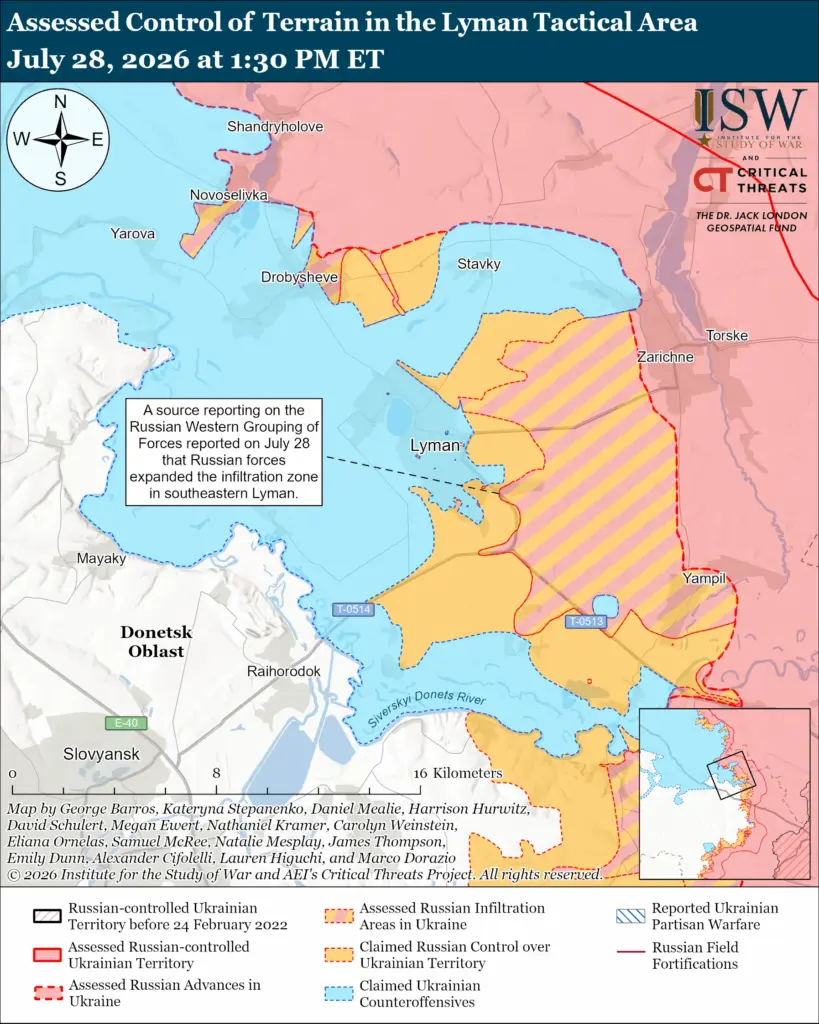
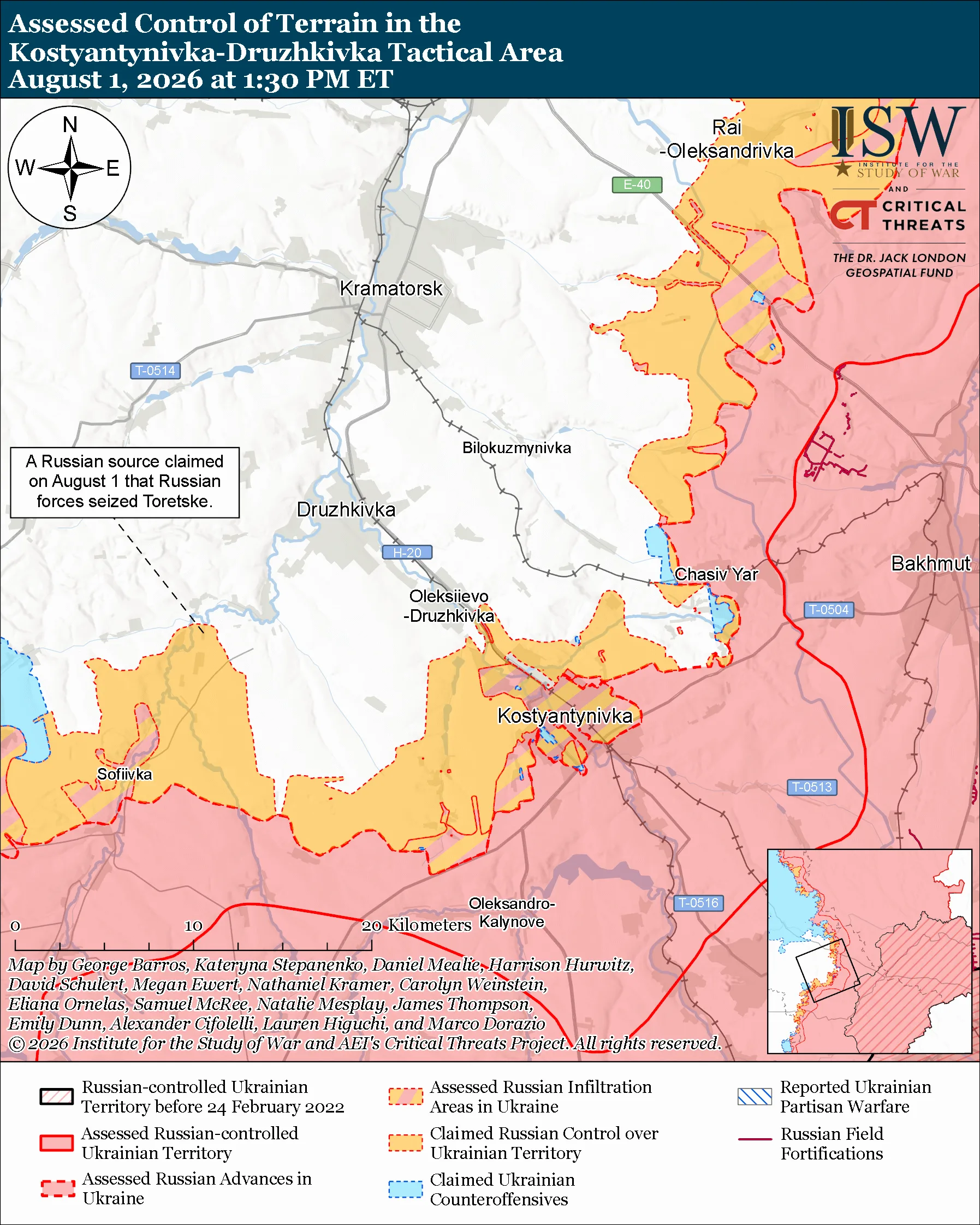
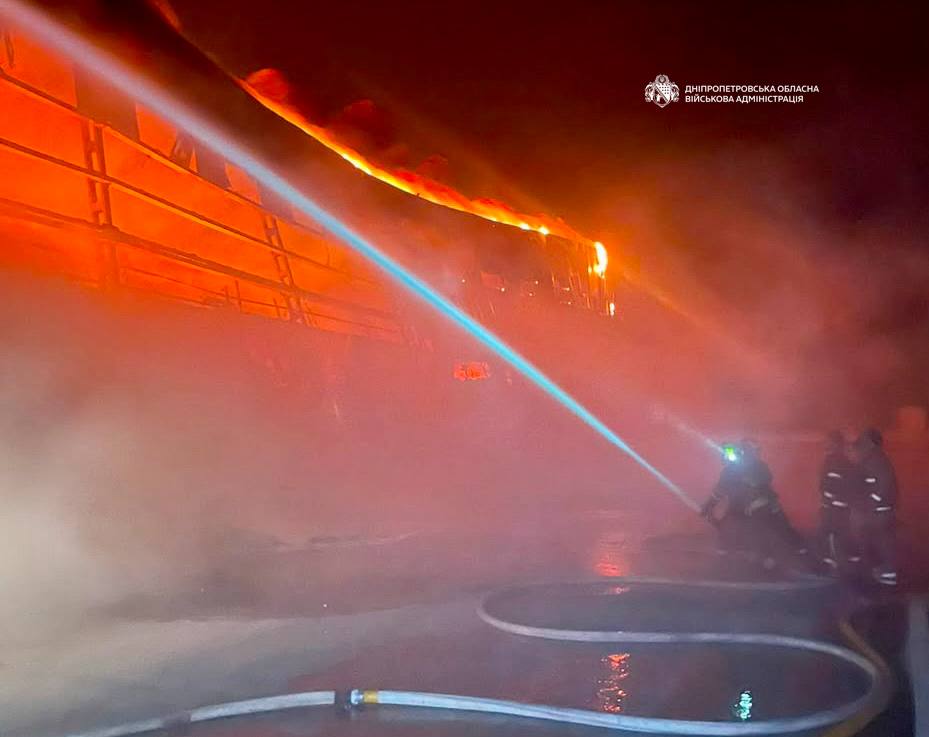
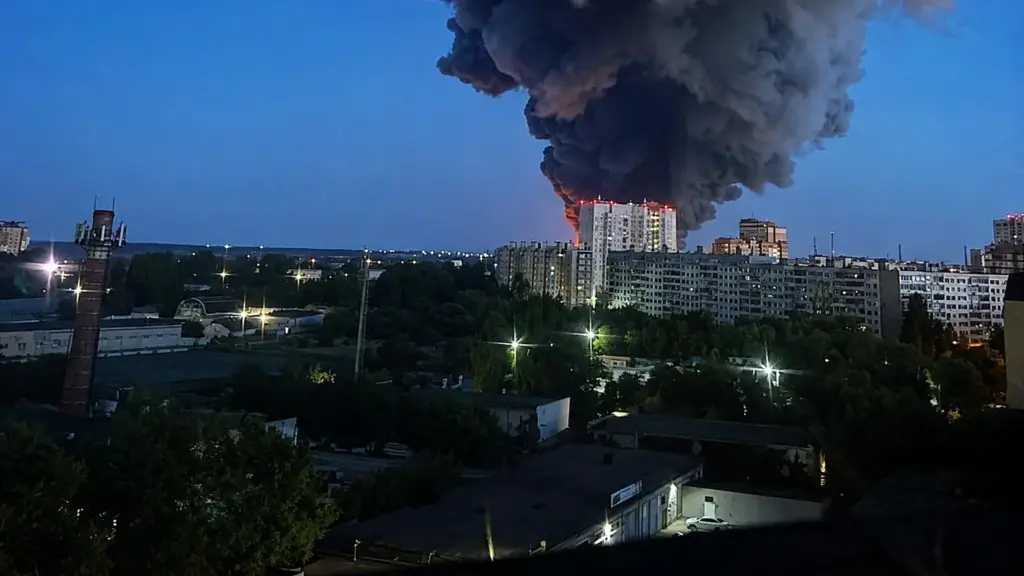
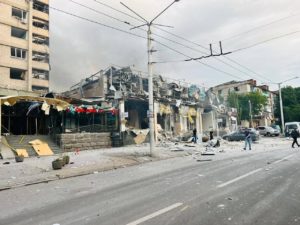
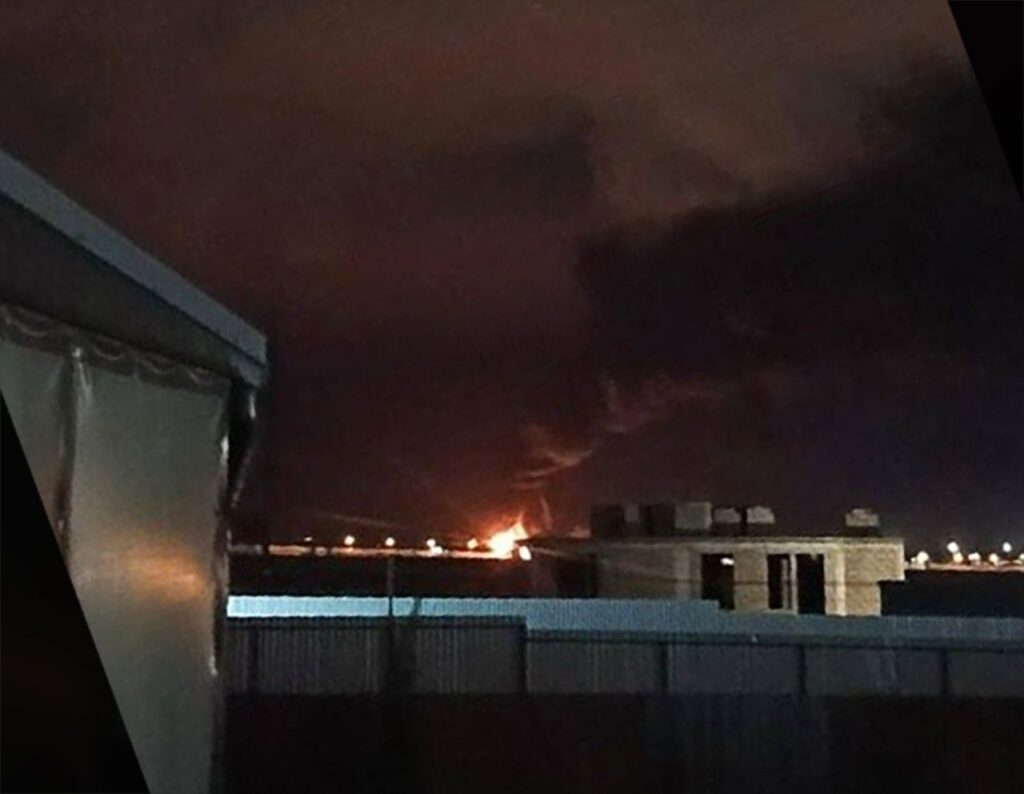
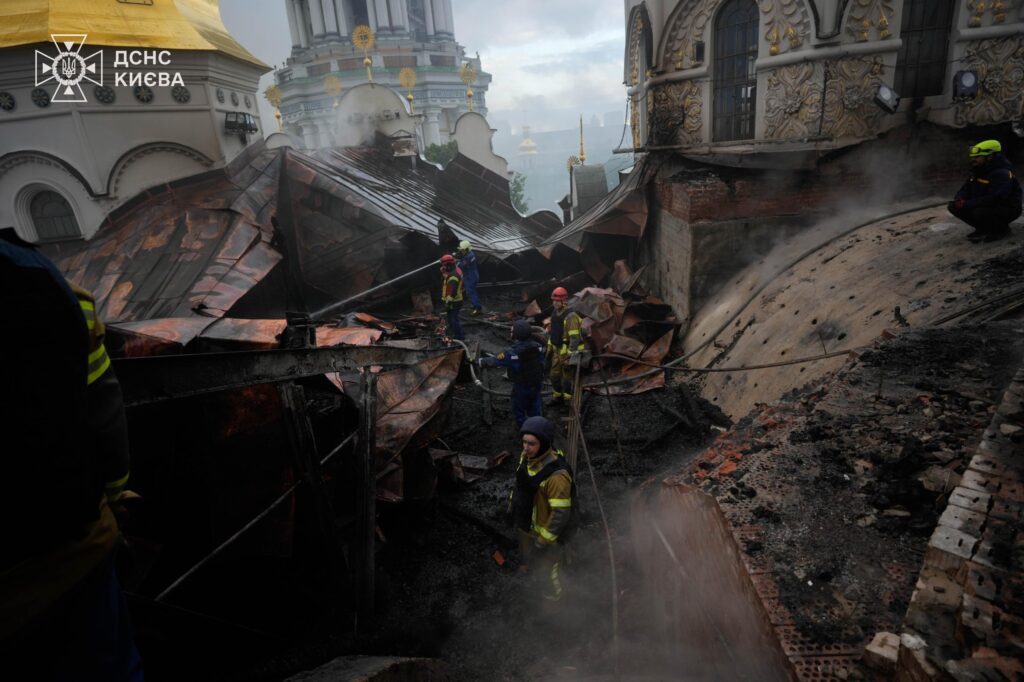
A Russian drone hit food warehouses outside Dnipro. They caught fire in a suburb of Dnipro, Oleksandr Hanzha, the head of the Dnipropetrovsk Oblast Military Administration, reported.
It is the latest in a Russian pattern of striking warehouses and food logistics that supply daily life in Ukraine.
"A large-scale fire in a suburb of Dnipro. Food warehouses caught fire because of an enemy drone attack," Hanzha said, adding that information about casualties was still be
A Russian drone hit food warehouses outside Dnipro. They caught fire in a suburb of Dnipro, Oleksandr Hanzha, the head of the Dnipropetrovsk Oblast Military Administration, reported.
It is the latest in a Russian pattern of striking warehouses and food logistics that supply daily life in Ukraine.
"A large-scale fire in a suburb of Dnipro. Food warehouses caught fire because of an enemy drone attack," Hanzha said, adding that information about casualties was still being clarified.
The region is the rear of the eastern front
Dnipropetrovsk Oblast borders Donetsk Oblast, where much of the war's heaviest fighting takes place, making the region the immediate rear of the eastern front. That position has made the oblast and the city of Dnipro frequent targets of Russian drones and missiles.
The strike fits a pattern against Ukrainian food and logistics
A drone hitting food warehouses continues a Russian terror campaign of striking the civilian infrastructure that keeps Ukrainian daily life running. Russia has repeatedly hit warehouses, sorting centers, and food and retail infrastructure across the country, from postal depots to supermarket storage, in strikes that damage supply chains and endanger the workers inside.
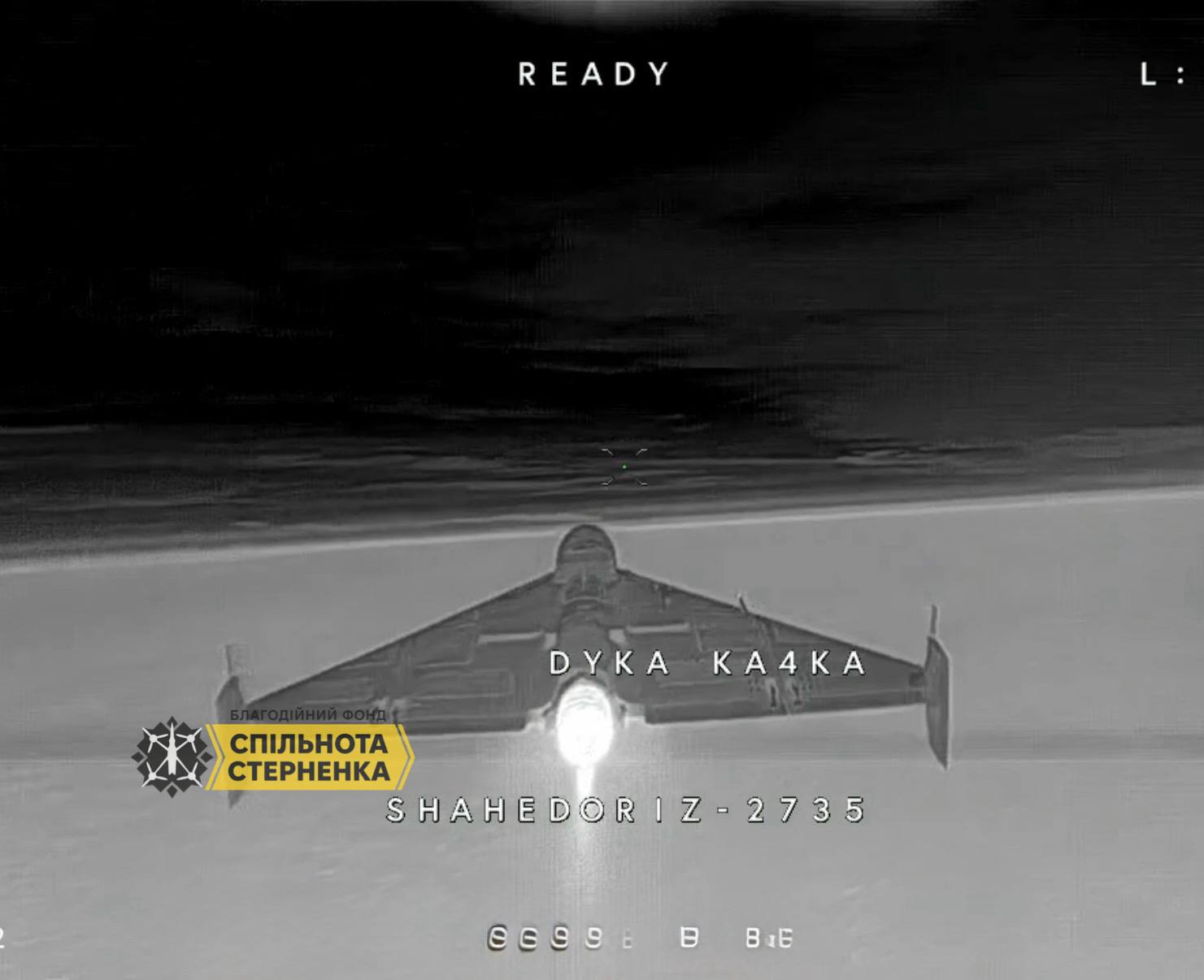
On 1 August, Russia killed a warehouse worker at Ukraine's largest online retailer with a guided jet-powered drone. The operator deliberately streamed a drone at a Rozetka building where 270 people were working at the time with a jet-powered Shahed.
Attacks on civilian objects are prohibited
If a strike targets civilian objects with no military purpose, it violates international humanitarian law. The Rome Statute and the Geneva Conventions' Additional Protocol I protect civilian objects from attack, permitting strikes only against military targets, and prohibit disproportionate attacks that cause excessive civilian harm relative to any military advantage.
Therefore, even if there was a military target nearby, it is necessary to assess the expected military advantage and whether the harm to civilian objects was excessive.
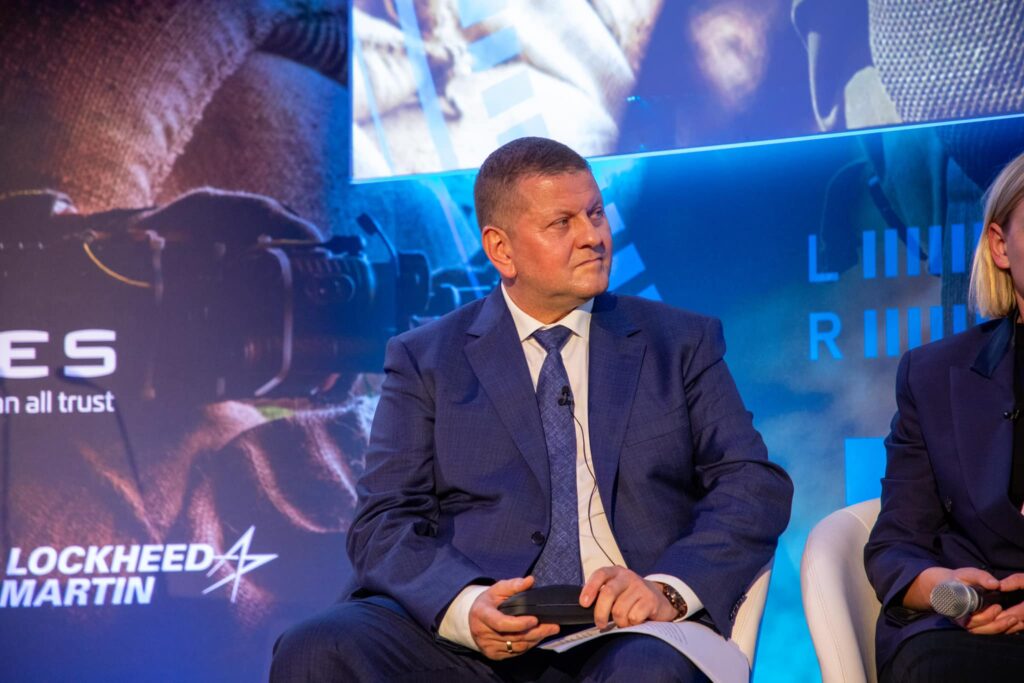
One of Ukraine's most respected generals has said out loud that the country's constitutional goal of NATO membership will never happen. Valerii Zaluzhnyi, Ukraine's ambassador to Britain, does not see Kyiv's path to NATO membership, he said in a discussion on Euro-Atlantic integration at a meeting of ambassadors in Kyiv, European Pravda reports.
The statement is striking because of who made it and from where. Zaluzhnyi, the former commander-in-chief, is, as ambassador t
One of Ukraine's most respected generals has said out loud that the country's constitutional goal of NATO membership will never happen. Valerii Zaluzhnyi, Ukraine's ambassador to Britain, does not see Kyiv's path to NATO membership, he said in a discussion on Euro-Atlantic integration at a meeting of ambassadors in Kyiv, European Pravda reports.
The statement is striking because of who made it and from where. Zaluzhnyi, the former commander-in-chief, is, as ambassador to a leading NATO member, formally part of the machinery pursuing the alliance path.
"I know NATO very well. For about 12 years, I personally worked on us mastering NATO standards and listened every year to fairy tales that said that any moment now we'd join NATO. Unfortunately, we will never join it," he said.
His case against joining
Zaluzhnyi argued the obstacle runs both ways. Ukraine cannot join at the level of development its Armed Forces have reached, "an organization that holds the doctrines of the Second World War," he said, dismissing NATO's capabilities despite the membership of Britain, the US, and others.
He was blunt about the alliance's trajectory. NATO will most likely stay in the same form it is now, he said, and would need 12 years, as Ukraine has, to reach the standards required to match even half the Russian level.
Despite this assessment, Zaluzhnyi acknowledged that "Ukraine needs technologies that are currently still held by NATO countries, including in areas such as anti-ballistic missile defense and space capabilities."
What he proposes instead
That view aligns Ukraine's security future with the European defense architecture now under discussion, the coalition of the willing, and the anti-ballistic coalitions Ukraine has helped assemble, rather than with the transatlantic alliance.
Zaluzhnyi's remarks are his own assessment, delivered in a diplomatic discussion, and Ukraine's official policy remains the constitutional Euro-Atlantic course.
One of the worst consequences of Russia's war, and of Iran's tactics, is that potential aggressors worldwide now see how much damage ballistic missiles can do to human life. So the global ballistic threat will grow, and anti-ballistic defenses must grow with it, Ukrainian President Volodymyr Zelenskyy says, according to UNIAN.
Ukraine has put a number on the shield it wants to build itself against ballistic missiles: 100 systems. These systems are planned to be built as
One of the worst consequences of Russia's war, and of Iran's tactics, is that potential aggressors worldwide now see how much damage ballistic missiles can do to human life. So the global ballistic threat will grow, and anti-ballistic defenses must grow with it, Ukrainian President Volodymyr Zelenskyy says, according to UNIAN.
Ukraine has put a number on the shield it wants to build itself against ballistic missiles: 100 systems. These systems are planned to be built as part of its FREYJA anti-ballistic project.
Zelenskyy frames the project as an answer to a threat spreading beyond Ukraine.
FREYJA is Ukraine's own interceptor, recycling a Soviet S-300 missile with a German seeker at roughly $700,000 per shot, a fraction of a $3.8 million Patriot, though its maker, Fire Point, does not target a first ballistic intercept until late 2027.
FREYJA as a shared European system
Zelenskyy pitches the Ukrainian project as Europe's future shield.
"Our FREYJA can become a common system for Europe that provides integrated protection. FREYJA will be fast to produce and tested by war," he said, offering to share all the know-how with partners if the system proves itself.
The project already has a coalition. Ten nations joined the European Anti-Ballistic Coalition in July, per Euromaidan Press, with Ukraine contributing the missile and partners supplying radars, command systems, and components Ukraine does not make.
The shield is a bet against a shortage
The 100-systems goal collides with the interceptor shortage that FREYJA is meant to solve. FREYJA has three tracks, including a transatlantic dimension and Ukraine's relationship with the US, Zelenskyy said, without disclosing details, and Ukraine needs both funding and certain components to build it.
In the meantime, Ukraine leans on the countries that already have Patriots. While Ukraine builds FREYJA and runs short on its current anti-ballistic systems, those partners that lack the production Ukraine needs but hold Patriot missiles today can invest those interceptors into Ukraine's defense, Zelenskyy said, welcoming them into the anti-ballistic coalition. The 100-system shield is the long game, while the borrowed Patriots are what keep Ukrainian skies covered until it exists.
A drone came down on a beach full of Russian holidaymakers, and the evidence points to Russia's own air defense bringing it there. On 3 August, drones attacked Krasnodar Krai, and one crashed onto a beach in Arkhipo-Osipovka near Gelendzhik, killing at least six people, three of them children, and injuring around 40, Krasnodar Governor Veniamin Kondratyev said.
Russian outlet Agentstvo and OSINT analysts assessed that the drone likely fell because of Russian air-defense
A drone came down on a beach full of Russian holidaymakers, and the evidence points to Russia's own air defense bringing it there. On 3 August, drones attacked Krasnodar Krai, and one crashed onto a beach in Arkhipo-Osipovka near Gelendzhik, killing at least six people, three of them children, and injuring around 40, Krasnodar Governor Veniamin Kondratyev said.
Russian outlet Agentstvo and OSINT analysts assessed that the drone likely fell because of Russian air-defense fire rather than a direct hit, citing gunfire audible in footage before the drone dived and an abrupt change in its flight path.
The beach sits directly in front of the Rassvet resort, a facility of NPO Mashinostroyeniya, one of Russia's key missile-manufacturing enterprises.
The warning system did not sound
Survivors say they had no notice. Local residents and holidaymakers complained that no air-raid alert sounded at all, though warning systems are installed in the village, and the Russian channel Astra also noted that no alert was heard in the region during the attack, per the reports.
People on the beach were in the open, with little chance to take cover, even if they had been warned. The absence of a siren in a resort packed at the height of the summer season left sunbathers and swimmers with no warning that a drone was overhead and being fired at.
The target was a missile maker's resort
NPO Mashinostroyeniya develops cruise missiles for the Russian army, and its Rassvet recreation base was the apparent target roughly 300 meters from where the drone came down, the Supernova Telegram channel reported.
Ukraine strikes Russian military-industrial sites across the country, and a missile-development enterprise is a legitimate military target. What turned a strike near a defense plant into a mass-casualty event on a beach was, by the analysts' account, Russian air defense knocking the drone down over the crowd rather than away from it. Ukraine had not commented on the strike.
The dynamic is one Ukraine knows intimately in reverse
Russian air-defense missiles and the debris of intercepted drones regularly fall on Ukrainian cities, killing civilians, and Ukraine has long documented how interception over populated areas kills the people it is meant to protect.
Russia's biggest online retailer is trying to stop its own workers from filming air defenses. From 3 August, Wildberries has allowed warehouse employees to bring only button mobile phones without cameras to work, a decision taken after staff began filming drones and the aftermath of their strikes and spreading the material, Russian Telegram channels reported.
The ban is a reaction to Ukrainian strikes. On 31 July, employees received a message stating that photo and vide
Russia's biggest online retailer is trying to stop its own workers from filming air defenses. From 3 August, Wildberries has allowed warehouse employees to bring only button mobile phones without cameras to work, a decision taken after staff began filming drones and the aftermath of their strikes and spreading the material, Russian Telegram channels reported.
The ban is a reaction to Ukrainian strikes. On 31 July, employees received a message stating that photo and video recording during air-raid alerts at the warehouses supposedly poses a security threat, could reveal the location of air-defense forces, and violates Russian law, according to "Ostorozhno, novosti".
Wildberries said that after workers were allowed to bring smartphones onto warehouse grounds, cases of filming drones and their attacks, and sharing that footage, were recorded.
The camera ban follows a month of burning warehouses
The timing ties the ban directly to Ukraine's campaign. Ukrainian drones destroyed eight Wildberries warehouses in July, about 15.4% of the marketplace's total storage, killing one employee at its Elektrostal facility.
Workers inside those facilities filmed the strikes as they happened, and the footage spread across social media, documenting the fires and the damage in real time. The camera ban is Wildberries' answer to remove the phones that turned its own employees into witnesses.
The stated reason is security, the effect is silence
Wildberries framed the ban as protection. To "eliminate such risks," from 3 August, only button phones without cameras are allowed at logistics centers, the company said, adding that such devices let workers stay in touch with family while meeting security requirements.
The security rationale doubles as information control. Footage of burning warehouses is evidence of a campaign hurting a flagship Russian company, and by stripping cameras from the workforce, Wildberries removes the most direct source of that evidence. The move is a quiet admission of how much the strikes have landed: a company does not confiscate its workers' phone cameras over attacks that are not doing damage.
Exclusives
Can Ukrainian forces save Sloviansk and Kramatorsk?. Sloviansk and Kramatorsk are the last big free cities in Donetsk Oblast. Can Ukrainian forces save them from a creeping Russian advance?
Repeated Russian missile-targeting failures may themselves violate the laws of war. The authors of a new Ukrainian war-crimes framework say the error-or-method question may be the wrong one—and name the evidence that would settle it.
Russia is firing more missiles a
Russian forces are creeping toward Sloviansk and Kramatorsk from the north
It could be months before the Russians can lay siege to Sloviansk, but it's unclear Ukrainian forces can stop them
Russian bombardment of the supply lines leading to and through the twin cities complicates the Ukrainian defense
A doomed Russian tank assault on 22 July along the southern approaches to the twin cities of Kramatorsk and Sloviansk, the last big free cities in eastern Uk
Russian forces are creeping toward Sloviansk and Kramatorsk from the north
It could be months before the Russians can lay siege to Sloviansk, but it's unclear Ukrainian forces can stop them
Russian bombardment of the supply lines leading to and through the twin cities complicates the Ukrainian defense
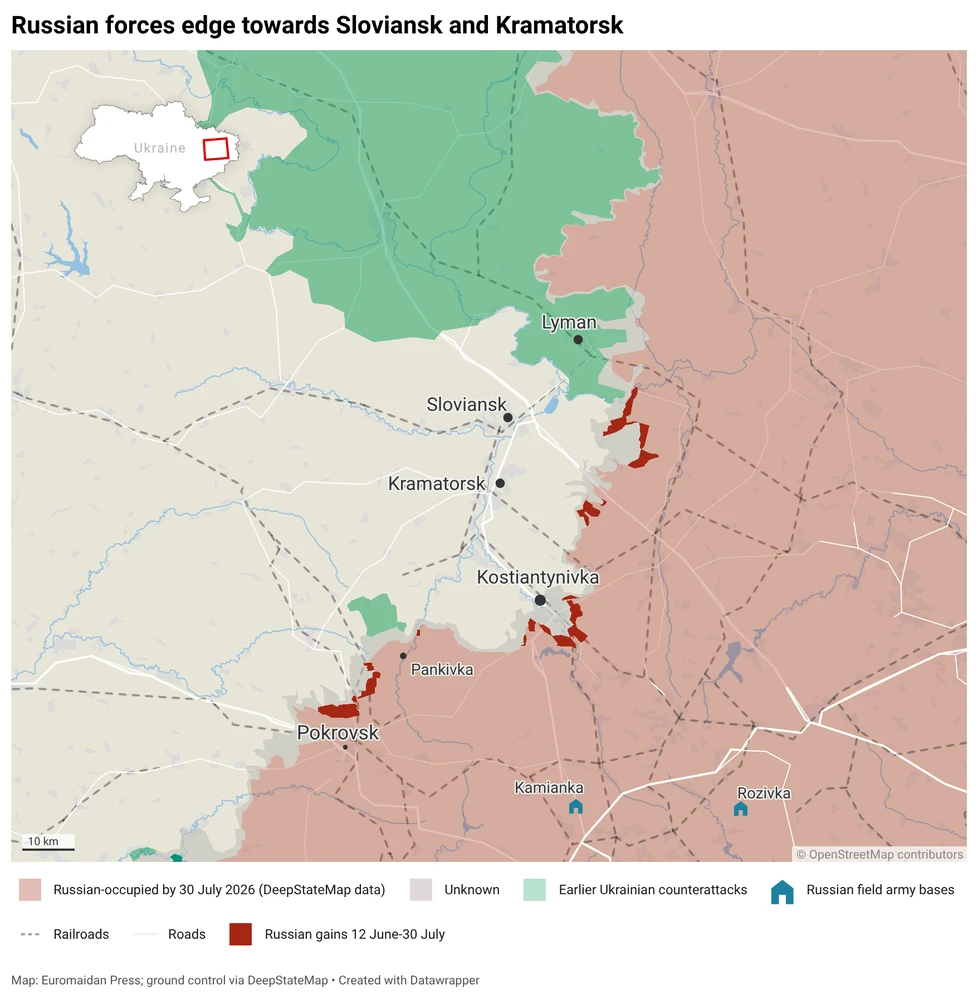
A doomed Russian tank assault on 22 July along the southern approaches to the twin cities of Kramatorsk and Sloviansk, the last big free cities in eastern Ukraine’s Donetsk Oblast, was ultimately a sideshow. The Russians’ main effort, in their long and bloody campaign to capture all of Donetsk, is playing out in the north, not the south.
The front northeast of Sloviansk “has been the most successful for the Russian army throughout 2026,” mapper Clément Molin noted.
Russian encroachment on Sloviansk and Kramatorsk, the last free cities in Donbas. Map by Euromaidan Press
The bad news for Ukraine is that its forces in the area—parts of six brigades including the 53rd, 54th and 63rd Mechanized Brigades and the 81st Air Mobile Brigade and the 117th and 120th Territorial Defense Brigades—are “insufficient,” according to Molin.
Worse, relentless Russian bombardment of the roads and paths leading to and through Sloviansk means the Ukrainians may struggle to sustain any additional brigades in the area. Assuming there are any free brigades, of course.
For months, the situation on the Sloviansk front has been deteriorating
The new Chief of the General Staff of the Ukrainian Army, Mykhailo Drapaty, must respond as the first Russian units have reached approximately 10 km east of Sloviansk and Kramatorsk.
The bombardment is intensifying. On 31 July, a Russian warplane struck the Sloviansk Chemical Plant, deep inside the city, with a 1,500-kg KAB-1500 precision glide bomb. “The city has come under increasingly heavy attacks in recent days,” AMK Mapping noted.
But the same difficult terrain, crisscrossed by the Donets Canal and dense Ukrainian fortifications, complicates Russian attacks. There are few protected approaches toward Sloviansk from the Russians’ main bases in the ruins of Siversk, 31 km to the east. And one big town town stands between the Russians and the free city: Mykolaivka.
And the Ukrainians are bombarding Russian supply lines with the same intensity that the Russians are bombarding Ukrainian supply line. It’s for those reasons that Molin expects the Russians to eventually lay siege to Sloviansk and neighboring Kramatorsk from the northeast.
But not anytime soon. “It is highly unlikely that the battle for Sloviansk will begin this year, not least because the fighting in Mykolaivka is likely to be prolonged,” Molin predicted.
Russia attacked the Slovyansk Chemical Plant with a KAB-1500 glide-bomb a short time ago.
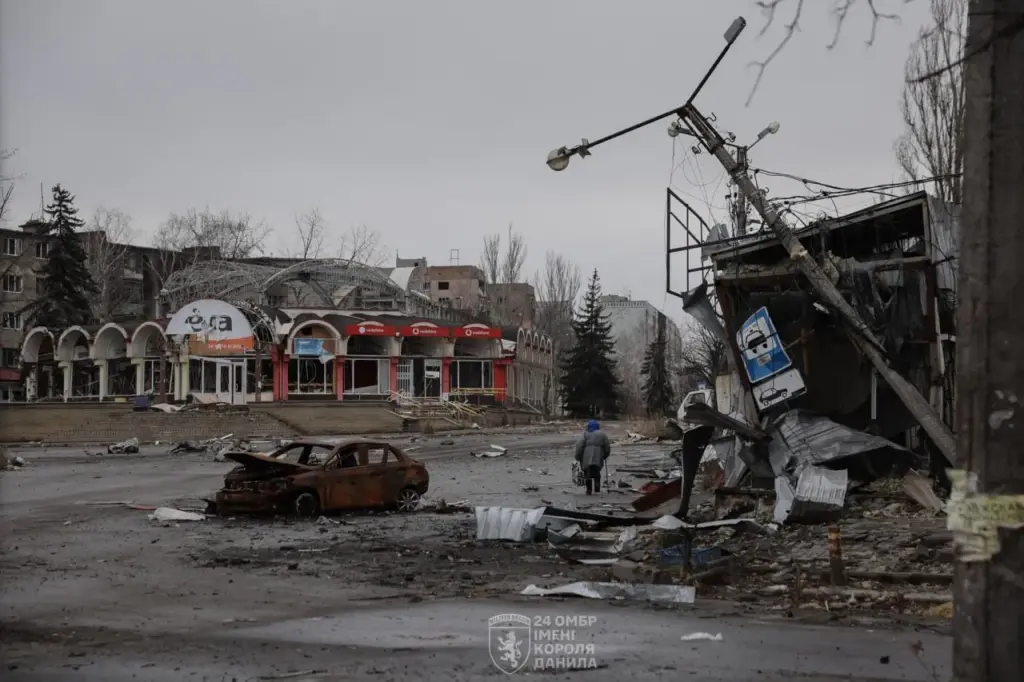
The slow pace of the Russian advance belies the worsening conditions in Sloviansk and Kramatorsk. Out of a combined pre-war population of around 440,000, just 90,000 people remain in the twin cities. The other 350,000 have fled.
As the cities slowly empty, all eyes turn to the tiny village of Rai-Oleksandrivka, 14 km east of Sloviansk. “This small village, seemingly insignificant at first glance, is actually of strategic importance, as the surrounding high ground overlooks the city of Sloviansk,” Molin explained.
“In recent weeks, Russian forces have been consolidating their hold on the village and the surrounding heights, even though Ukrainian troops still maintain positions in many areas,” Molin wrote.
Explore further
Russia took the cages off its newest tanks. The new Arena-M shield bought them a few minutes.
Russian forces are already relentlessly bombarding Ukrainian supply lines in the area with air-launched glide bombs. As Russian ground forces advance closer to Sloviansk and consolidate along key heights such as those around Rai-Oleksandrivka, they can begin aiming more tube artillery at the same supply lines, compounding the Ukrainians’ logistical problems.
The coming battle is neither won nor lost yet. But time is running out for Ukrainian forces to reset the battlefield in their favor.
If the Ukrainian command can prioritize the front, and push enough supplies to front-line positions, it might yet save Sloviansk and Kramatorsk. As Ukrainian Pres. Volodymyr Zelensky completes his reshuffle of key civilian and military leaders and a new command, that command’s attention “must shift to the Donbas,” Molin stressed.
The area under Russian control across Ukraine grew by only 36 square kilometers, which is roughly 60% of Manhattan, in July 2026, according to the Ukrainian battlefield monitoring group DeepState.
DeepState recorded the meager increase as Moscow shifts toward sending small groups and lone soldiers through Ukrainian lines under drone cover.
The new tactics have produced few territorial gains.
Russia’s stalled Donetsk advance loses pace
DeepState said the 36-sq
The area under Russian control across Ukraine grew by only 36 square kilometers, which is roughly 60% of Manhattan, in July 2026, according to the Ukrainian battlefield monitoring group DeepState.
DeepState recorded the meager increase as Moscow shifts toward sending small groups and lone soldiers through Ukrainian lines under drone cover.
The new tactics have produced few territorial gains.
Russia’s stalled Donetsk advance loses pace
DeepState said the 36-square-kilometer figure covers the entire front, not just Donetsk Oblast. It also includes corrections to data from May and June. Without those corrections, Russia’s July gains would total about 88 square kilometers.
DeepState’s figure could change again because some Ukrainian gains have not yet been added to the map for security reasons.
"At its current pace, Russia has no chance of capturing all of Donetsk Oblast, even in 2027," DeepState said.
That forecast could change if Russia launches another wave of mobilization in the fall, DeepState cautioned. Moscow's pace of advance also depends on how widely it deploys North Korean troops.
Russia made only limited progress in the hardest-hit sectors, including near Rodynske and Kostiantynivka and toward Sloviansk and Kramatorsk—the heart of Ukraine’s “fortress belt".
Dense drone coverage has also changed the battlefield. Russia’s next large attacks are unlikely to resemble the mass “meat-wave” assaults previously seen near Selydove and Kurakhove, DeepState said. Ukrainian drone crews often hunt lone Russian soldiers across vast parts of the frontline.
Russia loses more troops for shrinking gains
Russia’s limited gains on the ground came during its worst month for casualties in 2026. Ukraine’s General Staff estimated that Russian forces lost42,860 troops killed or wounded in July alone, or roughly 1,380 casualties per day. However, the figures cannot be independently verified.
Then commander-in-chief Oleksandr Syrskyi stated that Russia’s losses during the first half of 2026 exceeded the number of recruits for the first time since 24 February 2022.
The Kremlin has still not dropped its territorial demands. Russian officials insist that Ukraine surrender the entire Donbas, seeing the region as a political prize. DeepState previously noted that capturing the rest of Donetsk Oblast would take Moscow two more years of fighting and cause "a colossal number of losses."
Bloomberg reported in May that Russian leader Vladimir Putin wanted to end Russia’s war by the end of 2026, with Moscow controlling all of Donbas. Kremlin spokesperson Dmitry Peskov denied Putin had set such a deadline.
Russia is changing the drones it attacks with, and hiding the ships it can no longer use. Russian forces are using more jet-powered drones in their air attacks, effectively betting on them, Ukrainian Navy spokesman Dmytro Pletenchuk said, according to UkrInform.
The shift is toward faster, harder-to-stop drones. Russia is reducing the number of ordinary drones and increasing the jet-powered ones, betting on them first and foremost.
Jet-powered Shaheds fly faster tha
Russia is changing the drones it attacks with, and hiding the ships it can no longer use. Russian forces are using more jet-powered drones in their air attacks, effectively betting on them, Ukrainian Navy spokesman Dmytro Pletenchuk said, according to UkrInform.
The shift is toward faster, harder-to-stop drones. Russia is reducing the number of ordinary drones and increasing the jet-powered ones, betting on them first and foremost.
Jet-powered Shaheds fly faster than propeller models, giving air defenses less time to react, and Russia has used them in recent strikes, including the 1 August attack that killed a warehouse worker at the retailer Rozetka. Ballistic missiles, Pletenchuk added, remain the main challenge.
The Black Sea Fleet no longer goes to sea
Russia also still claims control of waters it cannot use. The Russians believe they exercise operational control over the Black Sea, but if you look at it purely in terms of sea sorties, they are absent, Pletenchuk said.
"The Azov Sea is out of the question now, and the Black Sea, effectively, the same," he stressed.
Russian aviation remains present and is a problem because it allows Russia to at least map the situation and makes the sea dangerous, but the fleet itself has been driven from the water.
Russia is afraid to repair its own ships
The most striking detail is what has happened to ship maintenance. Russia has repair facilities in occupied Crimea, but does not dare enter and repair ships there, because it has already learned how such repairs end.
They end with the Navy and the Armed Forces adding the "final touches," he said, so Russia periodically tows ships between bays to keep them from being finished off. Novorossiysk has some repair capacity, but docking there is very risky because a ship under repair becomes a stationary target. In practice, no one does it there either. As for small craft like Raptor and Grachonok boats, they are caught during rotations to the occupied spits and destroyed when they come into view, he added, sometimes turning back mid-route, the only patrol vessels Russia still uses.
French historical theme park company Puy du Fou, known for large-scale reenactment shows, continued pursuing a venture with associates of sanctioned Russian oligarch Konstantin Malofeyev after the EU blacklisted him, newly obtained documents indicate. The project included a planned park in Russian-occupied Crimea, The Guardian reported.
The records cast doubt on Puy du Fou’s portrayal of the later activity as an orderly withdrawal. They also detail a proposed ruble paym
French historical theme park company Puy du Fou, known for large-scale reenactment shows, continued pursuing a venture with associates of sanctioned Russian oligarch Konstantin Malofeyev after the EU blacklisted him, newly obtained documents indicate. The project included a planned park in Russian-occupied Crimea, The Guardian reported.
The records cast doubt on Puy du Fou’s portrayal of the later activity as an orderly withdrawal. They also detail a proposed ruble payment structure intended to limit the sanctions’ effect. The revelations come as the company seeks approval for a £600 million theme park in Oxfordshire, England.
Records show project continued after sanctions
The partnership itself was already public. Puy du Fou planned parks near Moscow and in occupied Crimea with Malofeyev’s investment fund.
Malofeyev founded Tsargrad, a Russian Orthodox nationalist media company. The EU and US sanctioned him as a leading financier of Russian-backed separatists in eastern Ukraine.
In the meantime, the oligarch has built a network of universities aimedat spreading Russian nationalist ideology.
Nicolas de Villiers and Malofeyev had signed terms for a joint venture on 12 July 2014.
The EU sanctioned Malofeyev 18 days later, citing his alleged financial backing for Russia’s annexation of Crimea.
Puy du Fou told the Guardian that it stopped working with Malofeyev as the sanctions regime took effect. It said withdrawing from its Russian projects and partners took slightly more than a year.
However, the records show Puy du Fou staff considering how to keep the project alive after the sanctions. It was named Tsargrad—the same name Malofeyev uses for his media company.
Staff proposed ruble payment structure
A September 2014 proposal envisioned Malofeyev financing a Russian entity. That company would transfer operating proceeds to Puy du Fou International through a ruble-denominated account. Notes said the account would “avoid probable effect of sanctions.”
A later phase envisioned an offshore company jointly owned by Malofeyev and Puy du Fou. It would hold the shows’ intellectual property and distribute dividends from the Russian venture.
The Guardian found no evidence that the proposed structure was implemented.
Still, a January 2015 budget allocated 23.5 million rubles, then almost £500,000, for casting, offices, and other costs. Records also indicate that Puy du Fou partly funded payments to employees of Malofeyev’s Marshall Capital. The United States sanctioned Malofeyev’s company in December 2014.
Correspondence about the project continued into July and August 2015. A sanctions lawyer told the Guardian that restrictions applied immediately and had no automatic wind-down period.
Puy du Fou declined to say whether it obtained a sanctions license authorizing the wind-down activity. It said it never paid a sanctioned entity and complied with French and EU law.
Political affinities behind the partnership
The partnership also reflected political and cultural affinities. The Guardian linked their relationship to shared traditionalist Catholic beliefs and far-right hostility toward Muslims and LGBTQ+ rights.
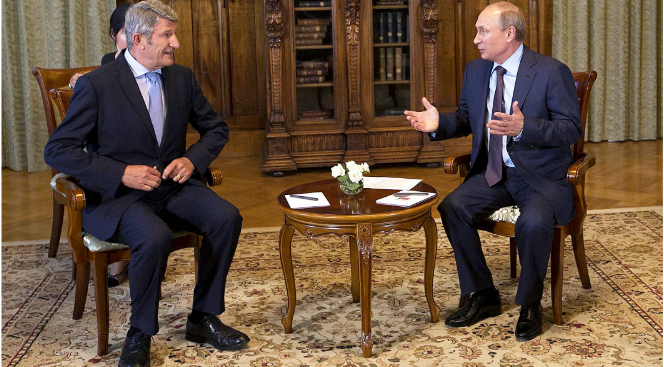
Philippe and Nicolas de Villiers met Russian President Vladimir Putin in occupied Yalta in August 2014. Philippe criticized Western sanctions and praised Putin, while Nicolas described the Russian leader as having “sweet words and sweet eyes.”
Philippe no longer runs Puy du Fou but remains a director. A 2023 Institute of Innovative Governance report, which mapped 83 pro-Kremlin figures in France. The report's findings described the former minister as a pro-Russian politician, flagging his business ties to Malofeyev, including the Crimea park contract.
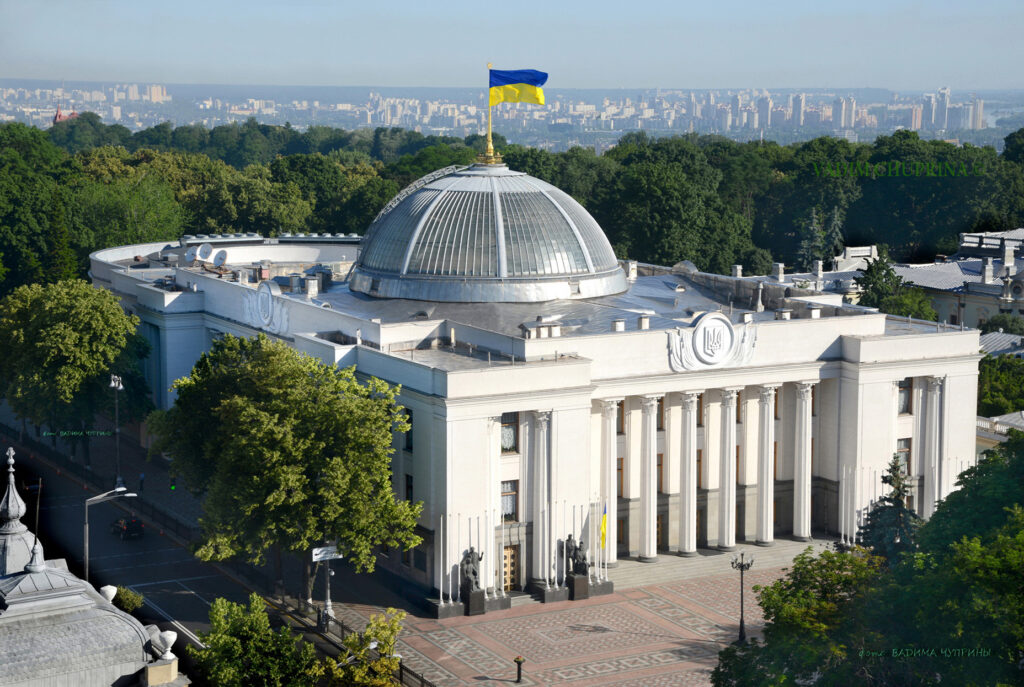
Ukraine's parliament wants a permanent seat at the center of the EU's legislature. Kyiv plans to open a representation in the European Parliament in the near future, mirroring the European Parliament's own representation already established in Ukraine, Speaker Ruslan Stefanchuk announced during a meeting of Ukraine's ambassadors, according to UkrInform.
Stefanchuk thanked colleagues in the European Parliament, noting that many initiatives began there with votes on reso
Ukraine's parliament wants a permanent seat at the center of the EU's legislature. Kyiv plans to open a representation in the European Parliament in the near future, mirroring the European Parliament's own representation already established in Ukraine, Speaker Ruslan Stefanchuk announced during a meeting of Ukraine's ambassadors, according to UkrInform.
Stefanchuk thanked colleagues in the European Parliament, noting that many initiatives began there with votes on resolutions, and that the most important decisions in support of Ukraine are prepared through cooperation with European Parliament President Roberta Metsola.
"In the very near future, we set ourselves the goal of opening a representation of Ukraine's Parliament in the European Parliament, just as the European Parliament has already opened its representation in Ukraine," he said.
The office builds on a working relationship
The representation would give permanence to an alliance that has produced results. The European Parliament has been one of the most consistent voices for Ukraine, passing resolutions on aid, sanctions, and accountability, and a standing parliamentary office in Brussels would allow Ukraine's legislature to coordinate directly with the body throughout the accession process.
The move fits Ukraine's broader push to embed itself in EU institutions as a candidate country, turning ad hoc parliamentary cooperation into a permanent presence.
Nordic, Baltic, and G7 tracks
Stefanchuk laid out other parliamentary directions. Cooperation with the Nordic and Baltic states, among Ukraine's most reliable partners, holds great prospects, and visits to Reykjavik and Helsinki are planned to strengthen that interaction, he said.
The G7 parliamentary dimension is another platform where Ukraine has steady support. Stefanchuk said he places great hopes in the G7 Speakers' Summit on 10 to 12 September in Paris, where Ukraine will participate as a full member for the fifth time.
The Crimea Platform stays on the agenda
Stefanchuk also stressed the Crimea Platform track, the diplomatic format Ukraine created to keep the occupied peninsula's return on the international agenda. He urged ambassadors to help secure the participation of their host countries' parliamentary speakers in the fifth Inter-Parliamentary Crimea Platform Forum, to be held in London in December.
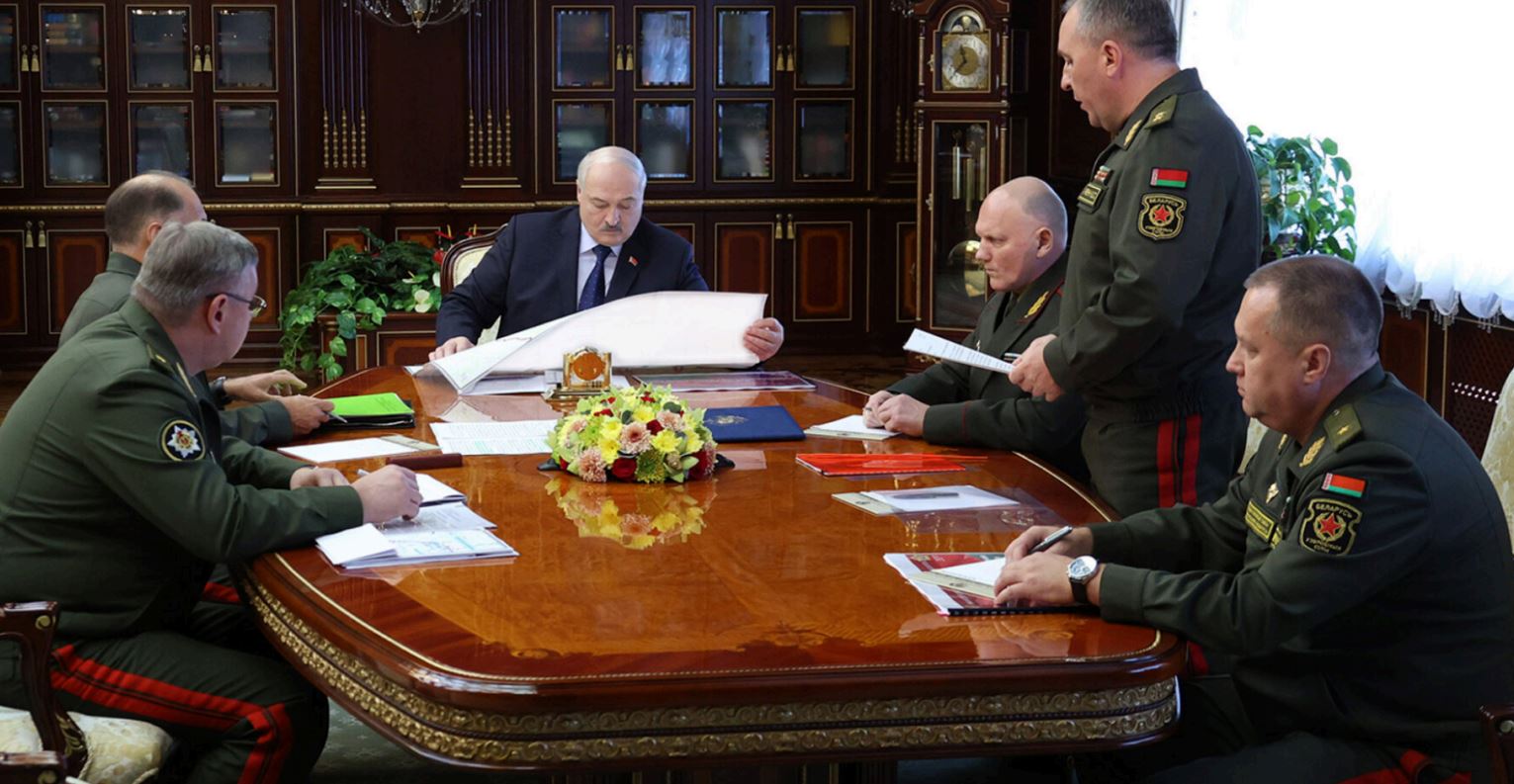
Belarus is expanding its military footprint on the Ukrainian border again, standing up a new brigade near the frontier, the commander of its Special Operations Forces said on state television. President Lukashenka insists the buildup is defensive and that Belarus will not be dragged into the war.
Russia has long treated Belarusian soil as a forward base and pressure point—a way to rattle Ukraine's north and NATO's eastern edge without spending its own overstretched arm
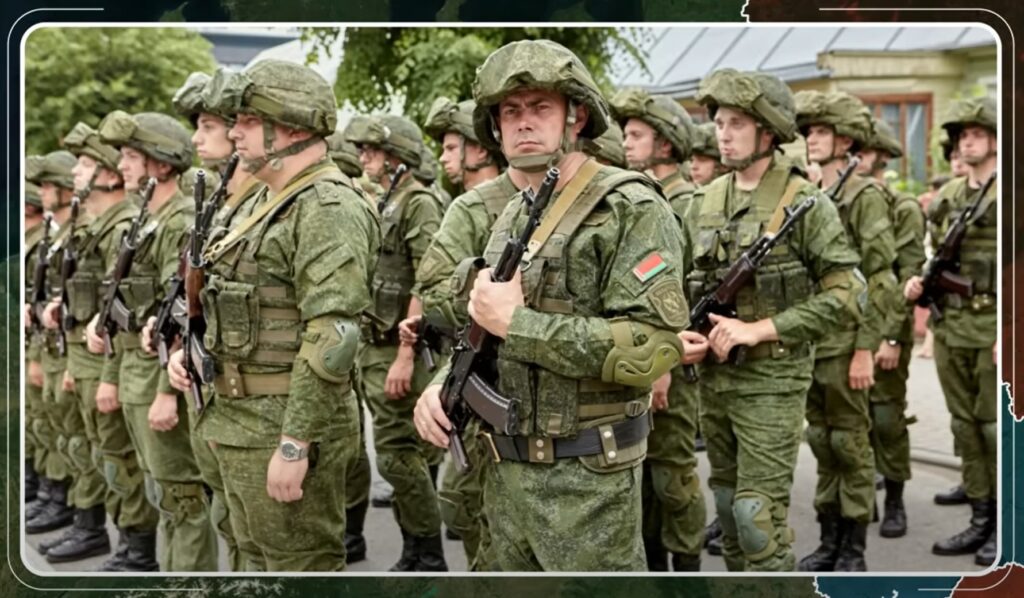
Belarus is expanding its military footprint on the Ukrainian border again, standing up a new brigade near the frontier, the commander of its Special Operations Forces said on state television. President Lukashenka insists the buildup is defensive and that Belarus will not be dragged into the war.
Russia has long treated Belarusian soil as a forward base and pressure point—a way to rattle Ukraine's north and NATO's eastern edge without spending its own overstretched army, sustained through drills, troop moves, and nuclear signaling.
A new brigade taking shape
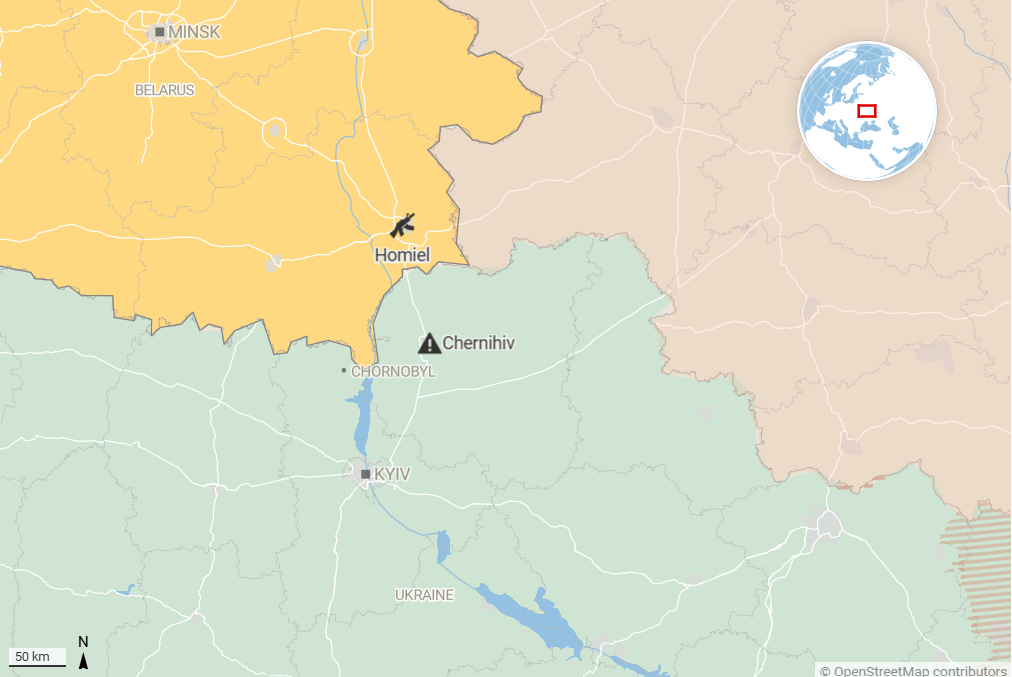
The unit is the 37th separate air-assault brigade under Belarus's Special Operations Forces—its fourth such airborne brigade. It will be based near the city of Homiel, just across from Ukraine's Chernihiv Oblast and about 40 km from the frontier. The permanent move to that base is set for 2027. Colonel Aliaksandr Ilyukevich, who commands the Special Operations Forces, laid out the plan on Belarus's Defense Ministry VoenTV channel on 2 August, Militarnyi reported.
By his account, one battalion is already formed, with a second due this year alongside reconnaissance, air-defense, and artillery units. Ilyukevich had first described that battalion back in February on another Belarusian state channel. His August appearance restated it and attached the unit's new 37th designation.
Why the northern buildup still costs Ukraine
Belarus has never put its own soldiers into Ukraine. It did hand Russia the launchpad for the 2022 drive on Kyiv, though, and it has kept the border militarized ever since—even hosting Russian hardware such as the drone relay stations Kyiv later pressed Minsk to pull.
Explore further
Belarus’s exiled opposition hands Ukraine a 30-page file on how Minsk is being readied for war
A standing brigade on the frontier still does not add up to an imminent invasion. The Institute for the Study of War (ISW) still judges a Belarusian ground assault very unlikely. However, every new unit in the north ties down Ukrainian troops and air defenses that Kyiv needs elsewhere, and it gifts Russia a threat it can activate without firing a shot—the same hybrid playbook Minsk runs against EU neighbors, funneling migrants toward Latvia.
A Ukrainian child who vanished under occupation has reappeared in a Russian uniform, fighting his own country. Oleksandr Mustiatse, who was a child in occupied Kherson Oblast after Russia's full-scale war, has joined the Russian army, Save Ukraine founder Mykola Kuleba reported.
A child from a missing persons registry was identified as an enemy soldier. Mustiatse, officially considered missing since the start of the Russian occupation and listed in the national "Childre
A Ukrainian child who vanished under occupation has reappeared in a Russian uniform, fighting his own country. Oleksandr Mustiatse, who was a child in occupied Kherson Oblast after Russia's full-scale war, has joined the Russian army, Save Ukraine founder Mykola Kuleba reported.
A child from a missing persons registry was identified as an enemy soldier. Mustiatse, officially considered missing since the start of the Russian occupation and listed in the national "Children of War" registry, appeared on social media in a Russian military uniform bearing the "Z" symbol.
He also posed with a Russian flag and shared photos from positions where he fought against Ukraine, according to the Back to Ukraine team, a monitoring project tracking missing or displaced minors in Russia's war.
The pipeline starts long before the uniform
Kuleba said Oleksandr's story shows what happens to Ukrainian children left for years under occupation. Save Ukraine speaks almost daily with children and families who escaped, and their accounts describe a systematic process that begins well before military service, he said.
Children are drawn into militarized education in kindergartens and schools, encouraged to join the Yunarmiya youth army, taught to handle weapons, and told repeatedly that Ukraine is their enemy and Russian military service is their duty.
"When this becomes the only reality a child knows for years, propaganda stops being perceived as propaganda. It becomes identity," he said.
Ukraine has documented this pipeline: Russia takes occupied children, militarizes them, and turns some back toward the country they came from.
The identification, and its uncertainty
The tracing is careful but not certain. Back in Ukraine, one post showed a car riddled with bullets, its body full of holes, matching a vehicle Oleksandr had shown earlier, and another photo showed him in a bandage, possibly after a wound.
His page had been inactive since 16 November 2025, and the team initially feared he had been killed. They later found what they believe is his new account under the name "Aleksandr Famenok", a soldier in camouflage and a balaclava, identified by comparing his eyebrows, eyes, and brow ridges to earlier photos.
That facial comparison is the team's assessment, not a confirmed identification, and EP cannot independently verify it.
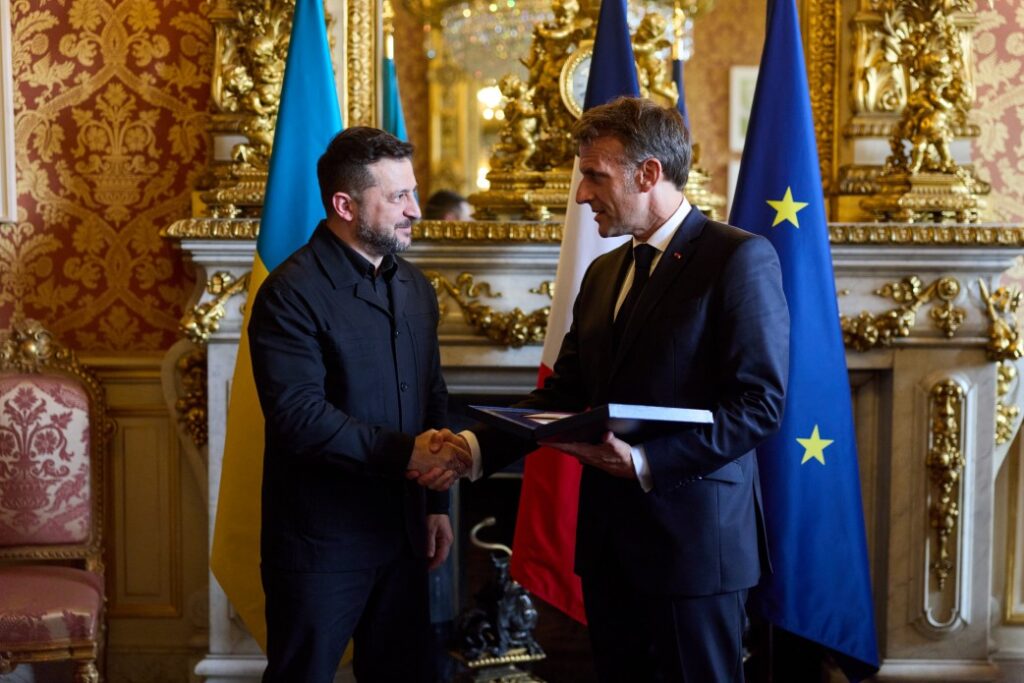
The initiative that led Europe's support for Ukraine could break up. British Prime Minister Keir Starmer has resigned, and French President Emmanuel Macron cannot contest next year's election, raising fears of a leadership vacuum that could leave Europe's pro-Ukraine coalition rudderless, the Telegraph reported. Together, the two men had brought over 30 countries into the "Coalition of the Willing" backing Kyiv.
The alarm centers on Macron's exit next year, with the boo
The initiative that led Europe's support for Ukraine could break up. British Prime Minister Keir Starmer has resigned, and French President Emmanuel Macron cannot contest next year's election, raising fears of a leadership vacuum that could leave Europe's pro-Ukraine coalition rudderless, the Telegraph reported. Together, the two men had brought over 30 countries into the "Coalition of the Willing" backing Kyiv.
The alarm centers on Macron's exit next year, with the bookmakers' favorite to succeed him being far-right National Rally leader Marine Le Pen, who has promised to pull France out of NATO's command, lift Russia sanctions, and push Ukraine toward a peace deal on Moscow's terms.
Meanwhile, Britain says it will hold the line, while France becomes the deeper worry. Starmer's successor, Andy Burnham, though light on foreign-policy experience, made President Volodymyr Zelenskyy his first face-to-face meeting as prime minister, hosting him in Portsmouth this week and promising continuity on Ukraine and NATO.
France offers Ukraine no easy successor
Both French frontrunners alarm Kyiv's backers. Le Pen's chief rival, the far-left Jean-Luc Mélenchon, has gone further, pledging to withdraw France from the Western military alliance entirely, and a Western official warned of "a big problem" for NATO should either hardliner win.
A CDU MP says Merz is "no Churchill"
The obvious candidate to fill Macron's role is doubted within his own party. German Chancellor Friedrich Merz is mired in domestic crises and a mutinous party, and Roderich Kiesewetter, an MP from Merz's own CDU, said the chancellor was "no Churchill." Germany has refused to commit troops to guarantee a ceasefire, withheld the long-range Taurus missiles, and declined to seize Russian shadow-fleet tankers.
"This is no leadership, and so who might lead Europe then? We need a Churchill... but we have no Churchill in Europe so far," he said.
The frame is the Telegraph's, and the outcomes are unsettled
Poland's Donald Tusk and Italy's Giorgia Meloni, the other members of Europe's Group of Five, have both refused to send troops and face their own elections, and neither is seen as a Macron successor. As a result, Burnham may be left to lead the coalition alone.
Ukraine set a major Russian oil terminal ablaze on the Black Sea coast. Operators of the SBS 413th "Raid" Regiment, in a joint operation with comrades from the 1st Separate SBS Center and the Security Service of Ukraine (SBU), struck the Taman maritime terminal near the village of Volna in Krasnodar Krai on 30 July, the regiment reported.
The strike destroyed a volume of fuel equal to 1,000 rail tank cars. According to updated data, 12 reservoirs, each holding 5,000 ton
Ukraine set a major Russian oil terminal ablaze on the Black Sea coast. Operators of the SBS 413th "Raid" Regiment, in a joint operation with comrades from the 1st Separate SBS Center and the Security Service of Ukraine (SBU), struck the Taman maritime terminal near the village of Volna in Krasnodar Krai on 30 July, the regiment reported.
The strike destroyed a volume of fuel equal to 1,000 rail tank cars. According to updated data, 12 reservoirs, each holding 5,000 tons, were destroyed at the Taman terminal, and the fire covered more than 17,000 square meters.
The terminal is a key southern export node
Taman is one of the most important fuel facilities in southern Russia. The terminal specializes in the transshipment and export of oil, fuel oil, diesel, and liquefied petroleum gases, operates a large tank farm, and supplies fuel to Russian forces, according to the regiment.
Destroying 12 of its tanks strikes both Russia's fuel exports and its military supply at once, the dual purpose of Ukraine's campaign against Russian oil infrastructure, which targets the refineries, depots, and terminals that turn crude into export revenue and military fuel.
Satellites confirmed the fire
The strike's effect was visible from orbit. The Ukrainian drone strikes caused a large-scale fire on the terminal's territory, recorded by the NASA FIRMS satellite fire-monitoring service.
The reported date corroborates that something large burned there, moving the claim beyond a single belligerent's word.
The unit pioneered Ukraine's long-range drone strikes
The 413th "Raid" Regiment is one of the units that started Ukraine's deep-strike campaign. In 2022, at the start of the full-scale war, a group of special operations fighters first used drone technology to reconnoiter and strike enemy forces at distances up to 500 kilometers, the origin of the regiment.
The Taman strike extends the near-nightly Ukrainian campaign that has idled a large share of Russian refining capacity and now reaches the export terminals on the coast, raising the cost of the oil trade that funds Russia's war.
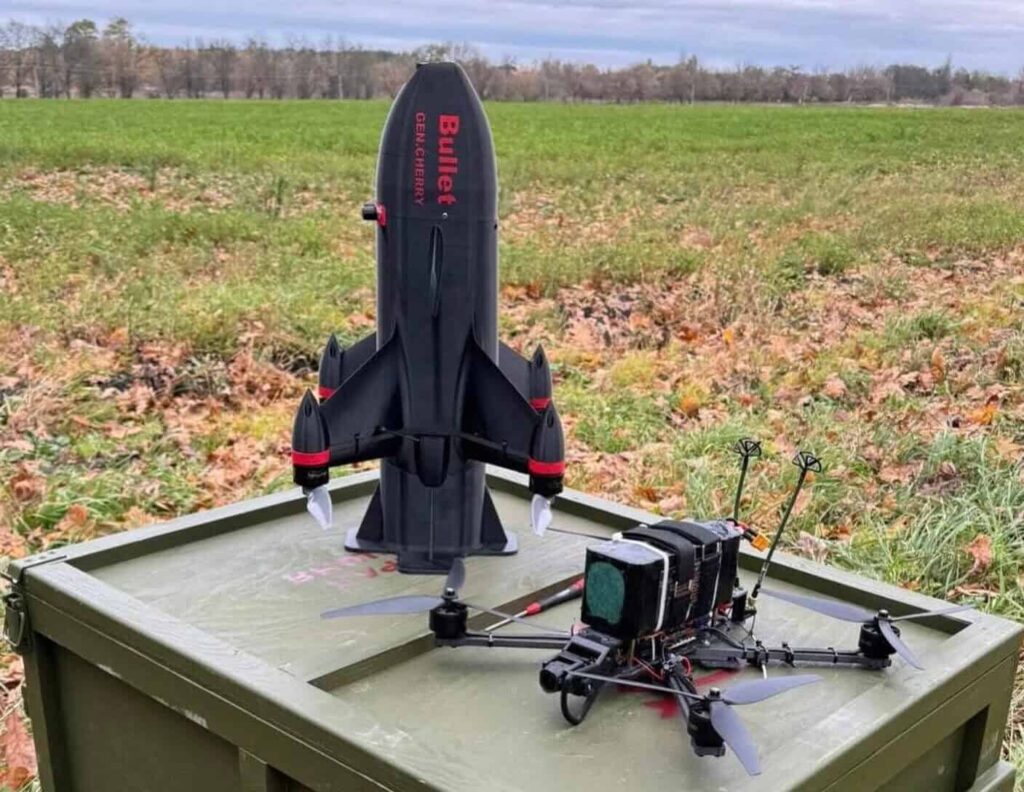
Ukraine is teaching its Shahed-hunting drone to see its target with French artificial intelligence. The Ukrainian interceptor group "General Cherry" and French firm Alta Ares have signed a memorandum to integrate AI guidance into the BULLET anti-Shahed interceptor, General Cherry announced.
The partnership pairs a combat-proven Ukrainian interceptor with Western AI. General Cherry recently received a US invitation to the Drone Dominance Program, a $1.1 billion effort to
Ukraine is teaching its Shahed-hunting drone to see its target with French artificial intelligence. The Ukrainian interceptor group "General Cherry" and French firm Alta Ares have signed a memorandum to integrate AI guidance into the BULLET anti-Shahed interceptor, General Cherry announced.
The partnership pairs a combat-proven Ukrainian interceptor with Western AI. General Cherry recently received a US invitation to the Drone Dominance Program, a $1.1 billion effort to select unmanned-systems suppliers for testing and contracts to meet US defense needs, per the War Department.
The AI keeps the target locked without GPS
The collaboration integrates two Alta Ares systems into the front-line interceptor. Pixel Lock guides the drone onto the target in the terminal phase, and Cyclop C2 guides it along the flight route, and both hold the target using computer vision and fused data from several sensors, even without a GPS signal.
That matters against Russia's jamming. An interceptor that tracks its target by vision rather than radio or satellite signal cannot be defeated by the electronic warfare Russia uses to break the control links of guided drones, which is the core problem in shooting down fast, evasive Shaheds.
Alta Ares brings NATO backing and fresh funding
The French firm arrives with a track record against exactly these threats. Alta Ares develops AI systems for the defense sector and autonomous air-intercept tools. It also won a NATO tender in spring 2025 for solutions to counter glide and guided aerial bombs, and opened an office in Ukraine that summer to work with Ukrainian developers, according to Militarnyi.
The deal runs Ukrainian combat experience into global defense
General Cherry has framed the partnership as a step toward joint work on a global security architecture informed by Ukrainian combat experience.
It is the same logic drawing US and NATO programs to Ukrainian drone-makers, the combat record that no peacetime range can produce.
The authors of a new Ukrainian war-crimes framework say the line between a Russian targeting error and a deliberate method may not matter in law: a repeated failure to spare civilians can itself be a violation, whoever the missile was meant for. That goes further than their own report, published last week.“An isolated targeting error and a method of conducting attacks are not mutually exclusive alternatives, nor is an error necessarily exculpatory,” Volodymyr Hryshko, depu
The authors of a new Ukrainian war-crimes framework say the line between a Russian targeting error and a deliberate method may not matter in law: a repeated failure to spare civilians can itself be a violation, whoever the missile was meant for. That goes further than their own report, published last week.
“An isolated targeting error and a method of conducting attacks are not mutually exclusive alternatives, nor is an error necessarily exculpatory,” Volodymyr Hryshko, deputy head of the legal department at Truth Hounds, told Euromaidan Press.
Explore further
Precision missiles hit the coordinates. Investigators ask who was still standing there
International law obliges an attacker to verify a target and to break off if it changes or the civilian cost turns excessive. Skip that, over and over, and “a recurring failure to take such feasible precautions may itself constitute a violation, regardless of whether civilian harm was specifically intended.”
The report calls this a “moving target attack”: the weapon cannot be recalled, and the target can move, disperse, or be warned before it lands. Russia’s standard defense—that a precise hit proves a lawful target—does not, the authors argue, survive that gap.
“A recurring failure to take such feasible precautions may itself constitute a violation, regardless of whether civilian harm was specifically intended.”
Volodymyr Hryshko
Victoria Amelina. Credit: Victoria Amelina via Facebook.
Error and method are not the only options
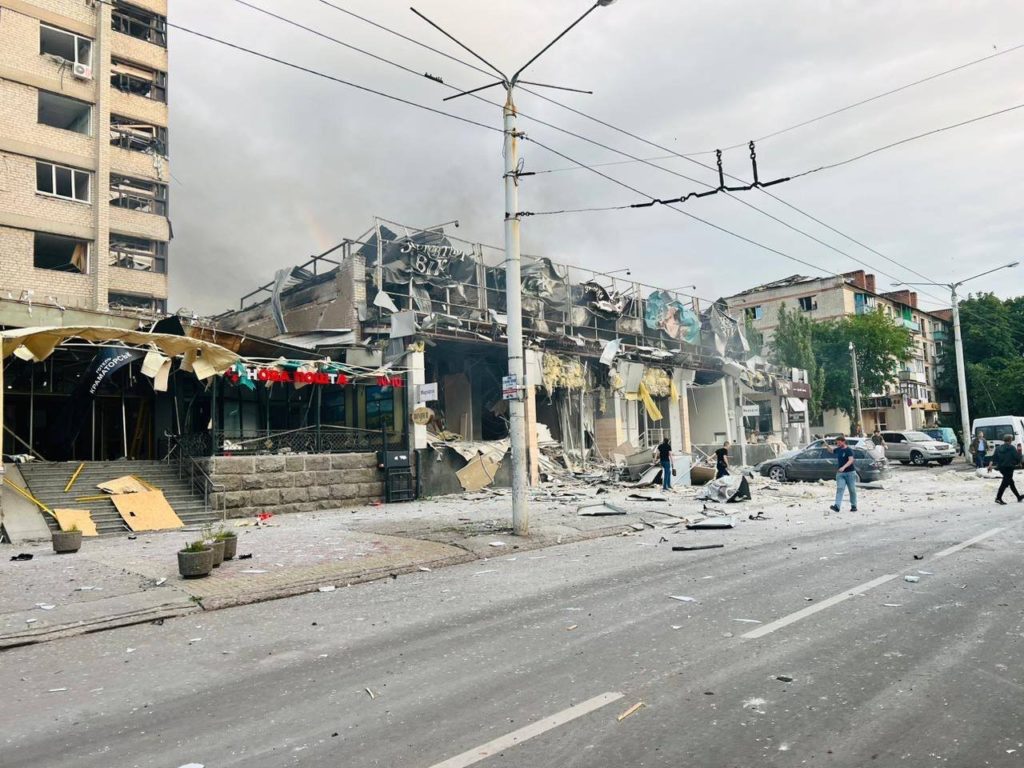
The report found a war crime in only one of its four cases—Kramatorsk, 27 June 2023, a Russian cruise missile into a pizzeria that killed 13 people, among them the novelist Victoria Amelina, who had left fiction to document Russian war crimes for Truth Hounds itself. The other three it left unresolved, and those are the ones Euromaidan Press asked about.
The four strikes are hard to read as simple accidents, said Maria Burnett, senior legal coordinator at Project Expedite Justice. Soldiers were present in each case—off duty, or at a scheduled meeting, or at an exhibition—but a temporary presence, the report argues, did not strip these places of protection.
Russian forces used precision weapons despite long gaps between the last intelligence and impact, she said, so “the risk that the target would move or disperse, while civilians remained exposed, was entirely foreseeable.” Doing it repeatedly “suggests a willingness to proceed without reliable control over whether the military objective would still be present when the missile arrived.”
The evidence that would settle it
Nothing in the open yet proves “an officially directed policy or deliberate method across the Russian armed forces,” Burnett said.
What would prove it is inside the targeting chain—the intelligence before each strike and when it was last checked, the choice of warhead, the launch order, the legal advice, the after-action report—and none of that is public. Orders or testimony from the people involved, she said, would show whether the strikes were “individual failures, a tolerated operational practice, or a formally approved policy.”
What the framework asks
The recommendations run to the International Criminal Court, the ICRC, the UN human rights office, and courts acting under universal jurisdiction: treat the interval between launch and impact as evidence, and stop reading precision as proof that a strike was lawful.
But the orders and targeting files that would prove method over error sit inside the Russian military, within reach only of investigators who can compel them. Truth Hounds is trying to build those cases on a shrinking budget—it lost the American money that had covered a third of it, and has laid off staff and shelved an archiving project.
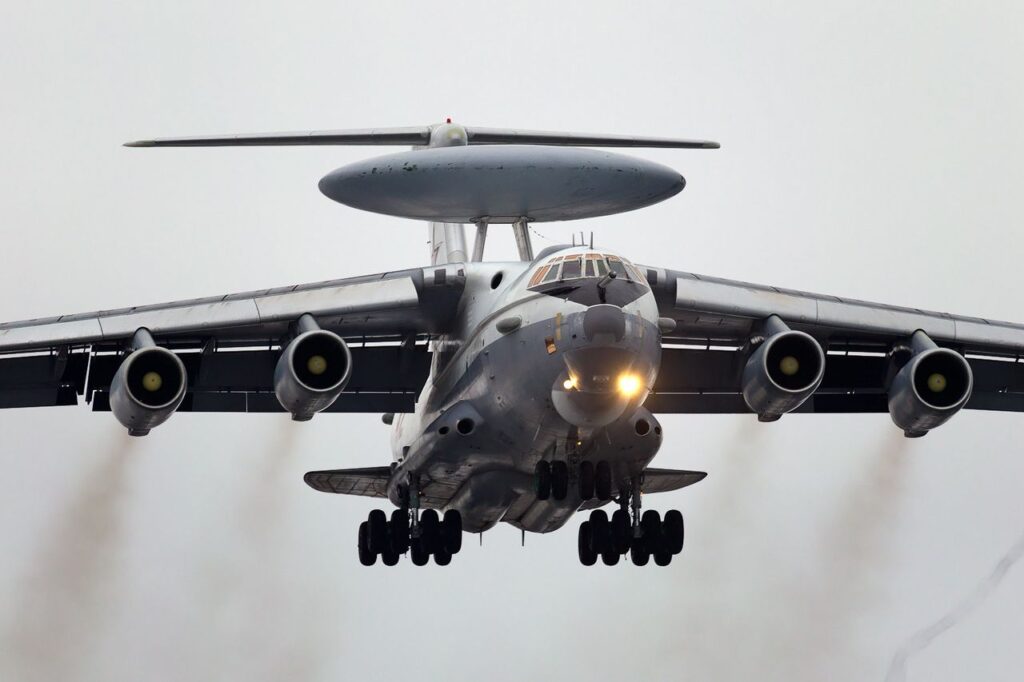
Russia has shifted its scarce fleet of A-50U airborne radar aircraft to near-daily operations, according to an analysis by Ukrainian OSINT channel Cyberboroshno. After barely flying against Ukraine for most of June, the aircraft are now patrolling almost nightly to detect Ukrainian drones, operating from airfields deep inside Russia and, on 7 July, four were airborne at once—almost the country's entire combat-ready fleet.
The shift reflects how Ukraine's expanding deep-stri
Russia has shifted its scarce fleet of A-50U airborne radar aircraft to near-daily operations, according to an analysis by Ukrainian OSINT channel Cyberboroshno. After barely flying against Ukraine for most of June, the aircraft are now patrolling almost nightly to detect Ukrainian drones, operating from airfields deep inside Russia and, on 7 July, four were airborne at once—almost the country's entire combat-ready fleet.
The shift reflects how Ukraine's expanding deep-strike campaign is forcing Russia to rely more heavily on one of its scarcest military assets. Wartime losses and sanctions have left Moscow with only a handful of combat-ready A-50Us and no quick way to replace them, making each aircraft increasingly valuable even as Russia depends on them to detect incoming cruise missiles beyond the reach of its ground-based air defenses.
From barely flying to daily duty
For most of June, Russia hardly sent its A-50U airborne radar planes up against Ukraine, according to Cyberboroshno. Its analysts studied more than 1,600 reports between 4 June and 2 August. Early in that window, the only real activity involved a repaired aircraft, tail number Red 47, returning to service.
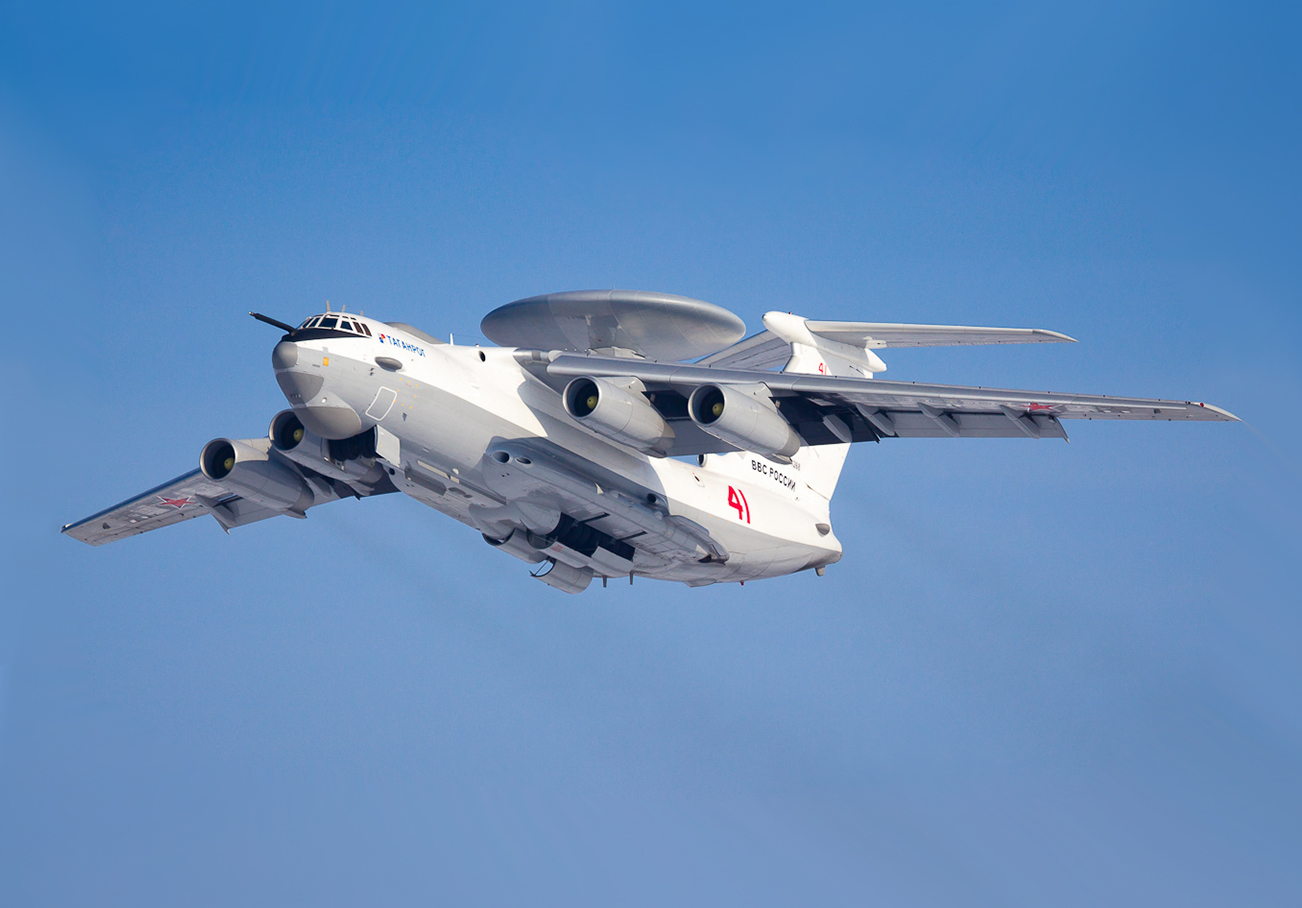
A Russian A-50U. Photo via Wikimedia Commons(Maxim Maksimov)
That changed on 23 June, when one plane began patrolling over Russia's interior above Ulyanovsk and Samara oblasts, mostly at night. Those flights continued for the rest of the period, roughly 60 sorties in all. Basing later shifted deeper into the rear, from Ivanovo and Ulyanovsk to airfields near Perm, Orenburg, and Chelyabinsk. On 7 July, Russia put four A-50U planes in the air at once—close to its entire combat-ready fleet.
Ukraine's missiles are what's driving the surge
Russia's ground defenses struggle to catch Ukraine's long-range cruise missiles, so airborne radar helps spot them early. On 4 July, Cyberboroshno said an A-50U played a decisive role in helping repel one such Ukrainian missile strike.
Explore further
Drones destroy what Russia can’t rebuild: Sole plant repairing A-50 early-warning planes
Why every one of these planes matters
The A-50U is Russia's flying radar—an airborne command post that scans the sky for hundreds of kilometers and guides fighters and missiles. Ukraine shot one down over the Sea of Azov on 14 January 2024, and says it downed the second over Russia's Krasnodar Krai on 23 February 2024.
Russia entered its all-out war with fewer than ten of these aircraft in service, and the only plant that builds and maintains them has since slid into deep losses, with a strike destroying the prototype of the successor meant to replace them. A single A-50U can track aircraft and cruise missiles out to 700 km. Every sortie forced by Ukraine’s attacks eats into the aircraft’s limited flight life and risks a plane Russia cannot replace.
July marked a break with the pattern of Russia’s long-range strike campaign. Russia launched fewer of the massive, complex salvos that defined 2024 and 2025—yet fired more missiles than in any month in years.The shift is not only in volume but in method—from occasional shock-and-awe raids to a sustained, high-tempo campaign built to grind down Ukraine's air defense before winter.
In the last two large attacks, Ukraine downed two of 36 ballistic missiles—roughly one in
July marked a break with the pattern of Russia’s long-range strike campaign. Russia launched fewer of the massive, complex salvos that defined 2024 and 2025—yet fired more missiles than in any month in years.
The shift is not only in volume but in method—from occasional shock-and-awe raids to a sustained, high-tempo campaign built to grind down Ukraine's air defense before winter.
In the last two large attacks, Ukraine downed two of 36 ballistic missiles—roughly one in twenty—for lack of Patriot interceptors.
A shift from shock-and-awe
There were fewer massive, complex strikes than usual. Ukraine faced only three large strike packages of 250 or more missiles and drones—below the usual monthly average of nearly five. More striking was the gap between the last two: 24 days, against a typical week.
Yet despite the smaller number of massive strike packages, July was Russia's heaviest missile month in years. Monthly totals vary widely, but Russia averages about 168 ballistic and cruise missiles against Ukraine per month. In July, it launched 376. So far in 2026, monthly launches are running 58% above the January-to-July total for last year, putting 2026 on course to exceed 2025’s full-year total.
And winter is approaching.
With attacks spread across many nights, Ukraine never gets the pause it needs to repair damaged infrastructure or rest its air-defense crews, and every night burns interceptors it cannot easily replace. The campaign wears down the whole system rather than any single target.
Kyiv has increasingly become the main target, but Russian strikes hit a wide swathe of Ukraine’s deep rear, driving up civilian casualties. In its largest attacks, Russia now fires from several directions at once, with a rising share of ballistic missiles.
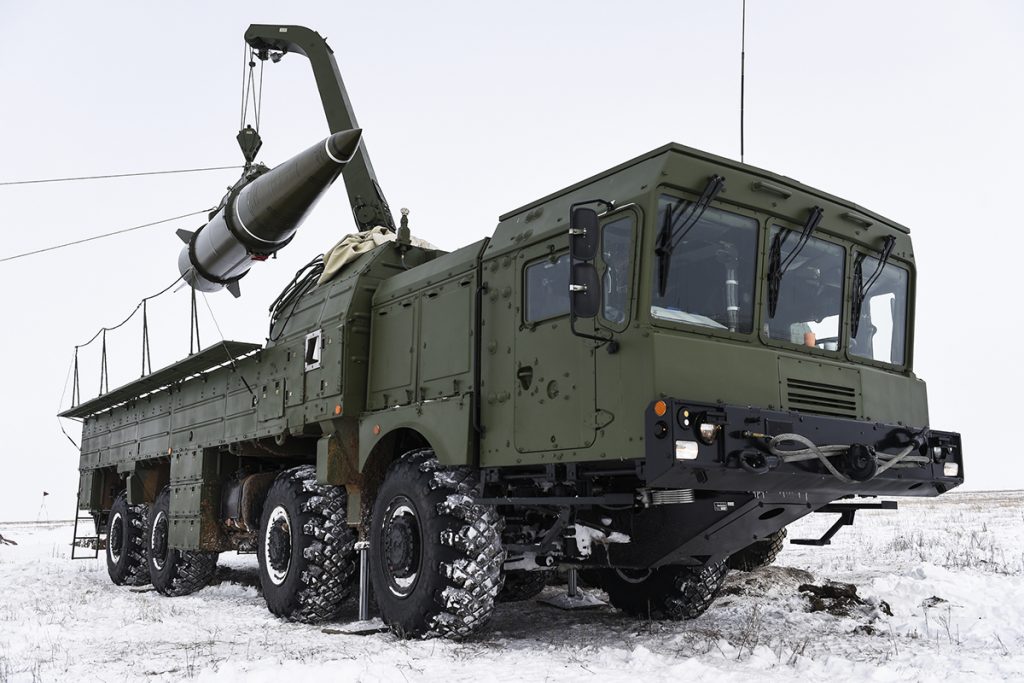
Transporter-loader vehicle 9T250 of Russia's Iskander missile system. Photo via Militarnyi.
Ballistic missiles
The surge in ballistic missile launches was one of July’s defining features. Russia is producing far more ballistic missiles than at the start of the full-scale invasion, and output has continued to rise through 2025 and into 2026. In July, a third of all missiles—126—were ballistic.
The Patriot remains Ukraine’s principal defense against ballistic missiles, and interceptor stocks are extremely limited. Ballistic missiles give far shorter warning times than cruise missiles, and their success rate is far higher. In the last two large attacks, Russia launched 36 Iskander-M/KN-23 and S-300/400 ballistic missiles. Ukraine downed two of the 36—roughly one in twenty—for lack of Patriot interceptors.
/
Since last night, response efforts have been underway in Kyiv and the surrounding region following Russia’s strike. There were numerous fires across the city. Seven districts were affected, and, as usual, the Russians struck ordinary residential buildings. Eighteen residential… pic.twitter.com/Fr8Jb4AEys
— Volodymyr Zelenskyy / Володимир Зеленський (@ZelenskyyUa) August 1, 2026
Ukraine is proposing an alternative to Patriot resupply, which the US war with Iran has sharply depleted. President Zelenskyy has asked Trump to secure Elon Musk’s permission for Ukraine to use Starlink to guide drone strikes against ballistic launchers on Russian territory—destroying them before they can fire.
The Atlantic quoted Denys Shtilerman, co-founder of the Ukrainian defense company Fire Point, arguing that Starlink-guided drones could neutralize Russia’s missile threat more effectively than interceptors: “Instead of shooting down the arrows, we would strike the archers.”
A policy shift is unlikely. Starlink is currently geofenced to Ukraine, including occupied Crimea and other oblasts. Musk has defended that restriction and said he will not let the network guide deep strikes into Russia, citing the risk of direct escalation.
Air-launched cruise missiles
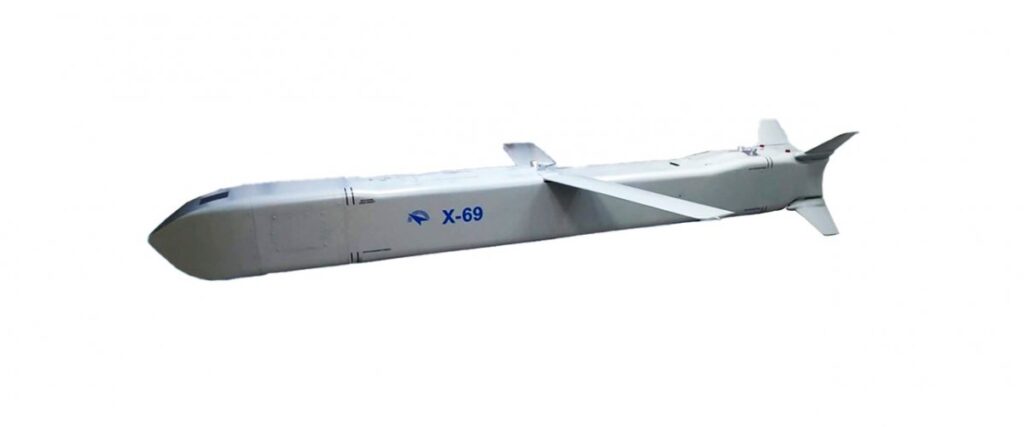
July brought another anomaly: Kh-59/Kh-69 use jumped several-fold. In 2025, Russia fired 113 of these air-launched cruise missiles. In July alone, it launched 62—more than half of last year’s total in a single month.
The jump likely reflects several converging developments rather than a single cause. Serial production, particularly of the Kh-69, is maturing, while Russia is making wider use of tactical aircraft, including Su-34s, Su-35s, and possibly Su-57s.
The Kh-69 also offers better survivability than older tactical missiles and a more cost-effective precision weapon than strategic cruise missiles. Russia is increasingly integrating it into complex strike packages designed to saturate Ukrainian air defenses.
A Russian Kh-69 air-launched cruise missile. Russia fired 62 Kh-59 and Kh-69 missiles at Ukraine in July—more than half the combined 2025 total in one month.
The Kh-69 has become Russia’s preferred tactical air-launched precision weapon—filling, in the tactical domain, the role the Kh-101 plays in the strategic one. If the trend holds, it will account for a growing share of Russia’s non-ballistic strikes through the rest of 2026.
Several recent barrages combined Iskander-M ballistic missiles, Kh-101 and Kh-59/69 cruise missiles, and Shahed drones—maximizing the complexity of the air defense problem.
Long-range drones
Long-range strike drone numbers fell. By the Ukrainian Air Force’s daily reports, Ukraine faced 4,951 strike drones—Shahed-type, Gerbera, Italmas, and “Banderol” loitering munitions. Apart from January, that is the lowest monthly figure since August 2025. Yet the interception rate was the third-lowest this year, at 86.6%.
The falling kill rate owes partly to the spread of jet-propelled drones. Russia first fielded jet-powered Shahed-type drones in early June 2025; by mid-2026, they had gone from an occasional tactic to a persistent threat, flying at 370 to more than 500 km/h—beyond the reach of many Ukrainian interceptors. Jet engines now power an estimated 15% to 20% of Russia’s active Shahed arsenal.
Explore further
Russia is now losing 95% of its Shaheds to Ukrainian interception. Moscow’s response will be jet-powered variants and border-area targeting
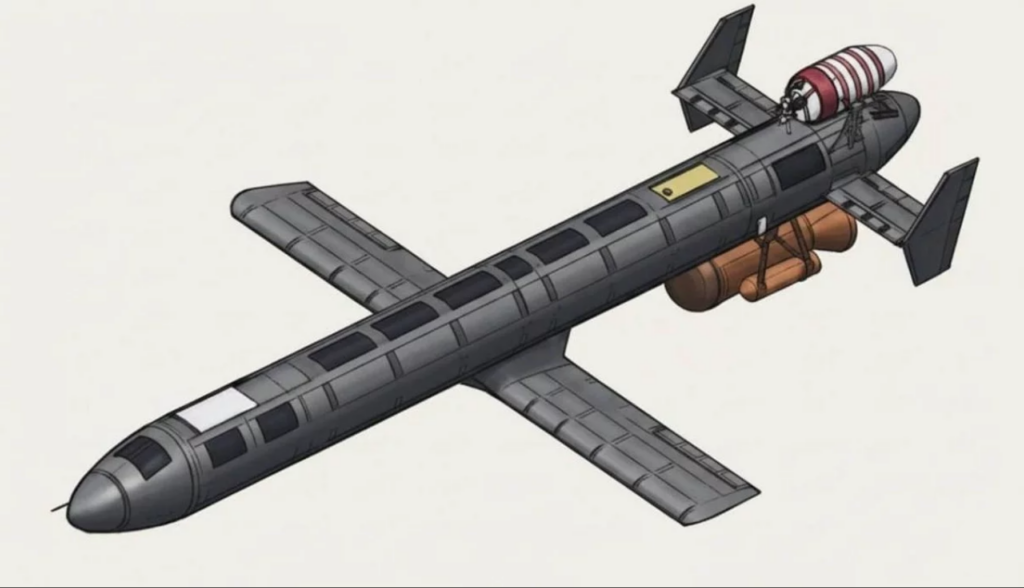
A schematic of Russia’s jet-powered Geran-5 long-range attack drone. Russia is producing up to 500 Geran-4 and Geran-5 drones a month, according to Ukrainian military intelligence. Credit: Main Directorate of Intelligence of Ukraine’s Defense Ministry.
Russia is already making up to 500 jet-powered Geran-4 and Geran-5 drones a month, with mass production of the Geran-3 expected in the second half of the year. The stated goal, according to Ukrainian intelligence, is to raise jet-powered drones to half of the total Shahed fleet—a shift that could blunt Ukraine’s interceptor-drone defense and tip the balance back toward Russia.
Cheap propeller-driven Shaheds and Gerbera decoys still pound frontline positions and border-area fuel depots, while Russia conserves its jet-propelled drones for high-value targets deep in the Ukrainian rear. Russia plans to build 60,000 long-range strike drones and another 50,000 decoys this year.
Although July’s drone numbers were the lowest since August 2025, the low interception rate meant that only January and April saw more drones reach their targets.
Implications
Air-defense depletion is becoming a primary objective. Russia is exploiting both the global shortage of Patriot interceptors and the gaps in Ukraine’s drone defenses to escalate its war of attrition.
The campaign aims less at destroying individual targets than at degrading Ukraine’s integrated air defense. Every attack forces a choice: defend Kyiv, the western logistics hubs, the frontline cities, or the energy grid—or hold interceptors in reserve. That dilemma sharpens when attacks come almost nightly rather than once a week.
Taken together, July 2026 suggests Russia is shifting from episodic mass strikes to a persistent, high-tempo campaign. Its key features:
More long-range drones and more capable missiles in production.
Greater reliance on ballistic missiles, which are hardest to intercept.
Expanded use of Kh-59/69 tactical cruise missiles, enabled by tactical aviation.
More diverse strike packages, complicating Ukrainian air-defense planning.
A sustained effort to wear down Ukrainian interceptor inventories and command systems, rather than relying on spectacular one-night attacks.
If the trend continues, Russia may sustain frequent small-to-medium mixed packages through the rest of 2026, rather than returning to the fewer but exceptionally large “record” attacks of 2024 and 2025.
Russia is capitalizing on the US and Europe’s inability to produce enough interceptors for the Patriot and SAMP/T systems—a shortfall July has thrown into sharp relief.
Ukrainian destruction and suffering will mount as the war of attrition grinds on. And Europe stands badly unprepared for a military confrontation with Russia. In principle, a Patriot battery with no interceptors left to fire is scarcely better than no battery at all.
Hans Petter Midttun, independent analyst on hybrid warfare, Non-Resident Fellow at the Centre for Defense Strategies, board member of the Ukrainian Institute for Security and Law of the Sea, former Defense Attaché of Norway to Ukraine, and officer (R) of the Norwegian Armed Forces.
Editor's note. The opinions expressed in our Opinion section belong to their authors. Euromaidan Press' editorial team may or may not share them.
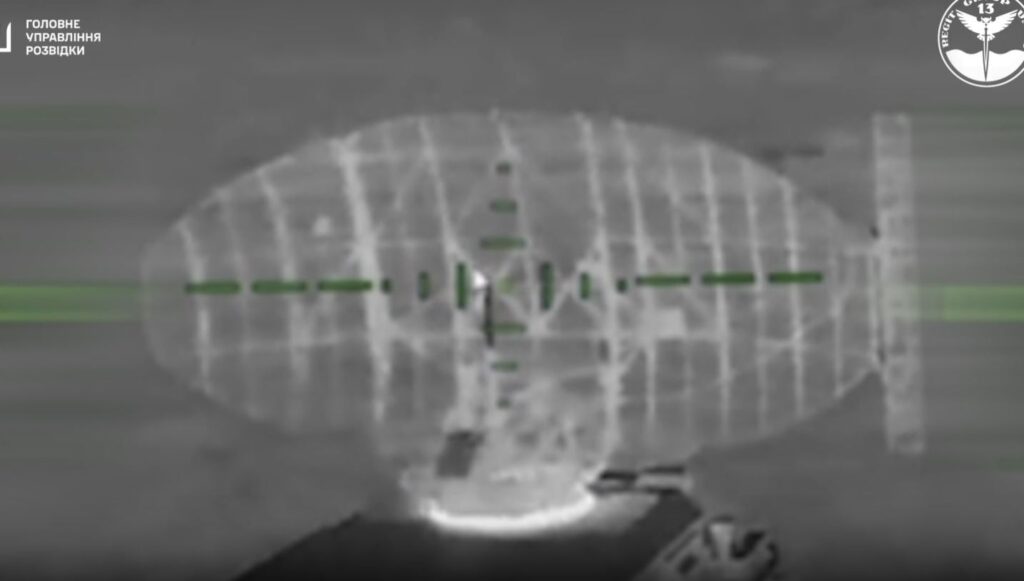
Ukraine's military intelligence turned its newest sea drones into carriers for FPV strike drones and knocked out two Russian radar targets in occupied Crimea, according to Ukraine's Main Directorate of Intelligence (HUR). The strike let its uncrewed boats reach Russian targets on land, a move the unit called a shift of the war to a new plane. HUR released footage of the operation on 3 August.
Ukraine has no significant navy now, so it built a fleet of uncrewed boats to cont
Ukraine's military intelligence turned its newest sea drones into carriers for FPV strike drones and knocked out two Russian radar targets in occupied Crimea, according to Ukraine's Main Directorate of Intelligence (HUR). The strike let its uncrewed boats reach Russian targets on land, a move the unit called a shift of the war to a new plane. HUR released footage of the operation on 3 August.
Ukraine has no significant navy now, so it built a fleet of uncrewed boats to contest a sea Russia once dominated. That improvised force keeps taking on new roles, growing from a way to sink ships into a tool that reaches the occupied peninsula itself. The radar strikes fit a wider push to raise the cost of Russia's hold on Crimea. Ukraine's forces kept hitting Russian depots and other military sites across the peninsula in early August. Every radar Ukraine burns thins the sensors Russia relies on to see and defend Crimea.
Sea drones that launched FPV drones onto land
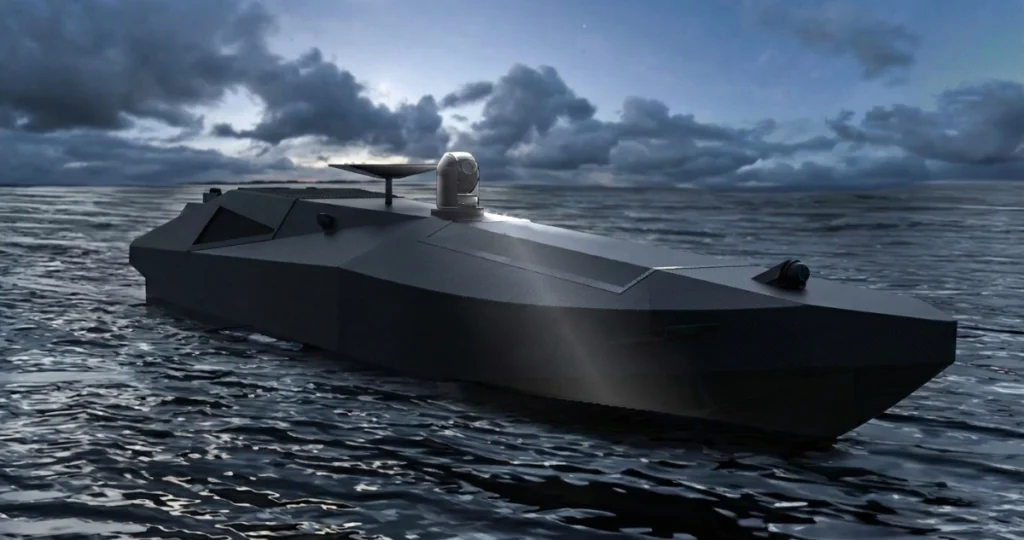
HUR's special unit Group 13 ran the operation in occupied Crimea in late July 2026, the agency reported. The operators used the newest versions of Magura naval platforms, this time set up as FPV-drone carriers, to hit Russian ground targets on the peninsula. It was the first operation to show the newest Magura's effectiveness.
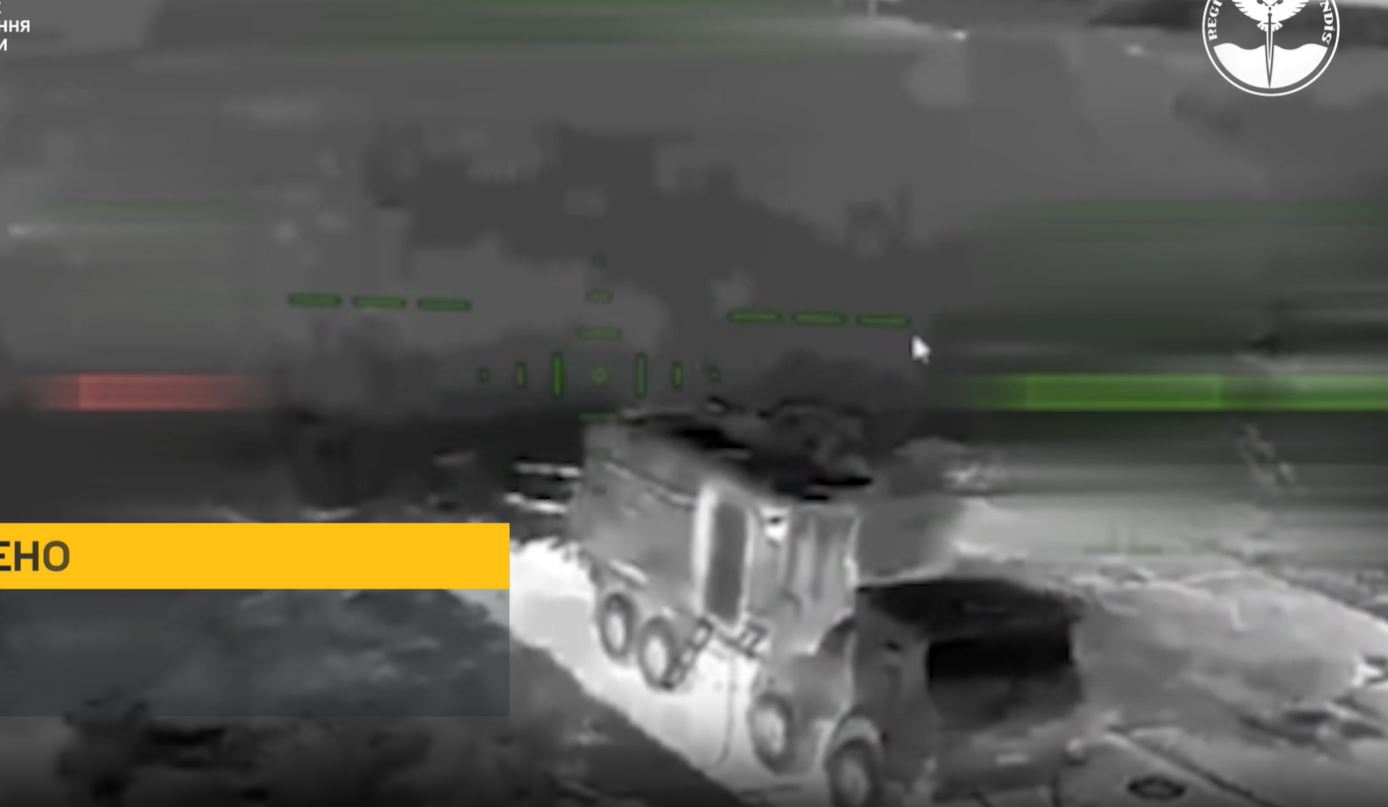
A control vehicle from a Russian Podlyot radar complex, seen from a Ukrainian FPV drone moments before the strike in occupied Crimea, late July 2026. Screenshot from video: Ukraine's Defense Intelligence (HUR)
The aerial FPV drones struck a control vehicle from a Russian Podlyot radar system. They also hit a Parol-4 radar interrogator, part of the system Russian forces use to tell friendly aircraft from hostile ones.
The footage opens with a Russian projectile fired from the Crimean coast. It streaks past a Ukrainian naval drone and misses. After a cut, a naval drone fires anti-air missiles. The video then shows an FPV aerial drone launching from a naval drone. Two FPV drones then dive into the two radar targets.
The Maguras that hunted ships now threaten land
The Group 13 commander, callsign Thirteenth, framed the strikes as a turn in the war.
"From now on our Maguras threaten the Russian occupiers on land too, a fundamental shift of the fight to another plane," he said.
At sea, Group 13 has destroyed nine Russian ships and damaged five, HUR says. It has also destroyed three enemy helicopters and damaged one, and destroyed two Russian fighter jets.
The Maguras began as kamikaze boats that were among the Ukrainian weapons that pushed Russia's Black Sea Fleet out of the northwestern sea, then grew into multi-role platforms that even downed Russian jets.
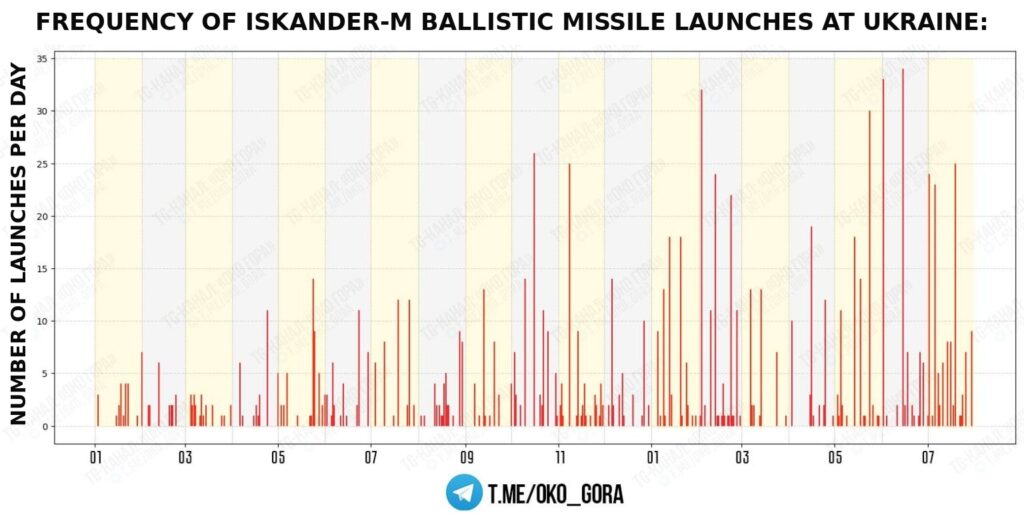
Russia fired more ballistic missiles at Ukraine in July than in any other month of 2026, around 126 of them, according to the monitoring project Oko Gora. The barrage mixed Iskander-M missiles, North Korean rounds, and air-defense missiles repurposed to hit ground targets. It climbed as Ukraine's shield against exactly these weapons kept thinning.
Russia has spent 2026 tilting its air war toward ballistic missiles, the category air defenses struggle most to stop, and th
Russia fired more ballistic missiles at Ukraine in July than in any other month of 2026, around 126 of them, according to the monitoring project Oko Gora. The barrage mixed Iskander-M missiles, North Korean rounds, and air-defense missiles repurposed to hit ground targets. It climbed as Ukraine's shield against exactly these weapons kept thinning.
Russia has spent 2026 tilting its air war toward ballistic missiles, the category air defenses struggle most to stop, and the Ukrainian interceptor gap behind that shift has no fast fix. Only a handful of countries build the interceptors that reliably kill them, and every producer is short.
July outran every month this year
The climb is steep. Russia's monthly ballistic launches ran from 74 in January to 116 in February, then fell to 39 in March, 50 in April, 86 in May, and 96 in June, before last month topped them all, the project counted. The notable addition was the S-300 and S-400 air-defense missiles fired at ground targets alongside the Iskander-M and North Korean ballistic missiles.
An Iskander-M short-range ballistic missile launcher with its missile raised, at the Army-2016 military expo near Moscow, Russia, 8 September 2016. Photo: Vitaly V. Kuzmin
The North Korean missile returned
One weapon stood out for its comeback. On 30 July, Russia used a North Korean KN-23 for the first time in a long while, striking the village of Radushne near Kryvyi Rih. The strike killed five members of one family, and the missile's reappearance suggested a fresh shipment from Pyongyang.
Interceptions returned, then collapsed
Around 14 July, Ukrainian air defenders resumed shooting down Russian ballistics, and on 9 July President Volodymyr Zelenskyy said Ukraine would soon receive a US batch of PAC-3 interceptors. By month's end the gains were gone. Ukraine's Air Force downed one missile out of 27 on 1 August, and one of nine on 30 July. As recently as June, Ukraine had stopped about four in ten ballistics, a rate that has since fallen toward zero as PAC-3 stocks run dry.
Ukrainian drones set fire to one of the largest warehouses of Russia's biggest online retailer on the morning of 3 August, according to the Ukrainian monitoring Telegram channel Exilenova+ and local authorities. The strike hit a Wildberries logistics hub in Russia's Vladimir Oblast, hundreds of kilometers from Ukraine, and touched off a fire that Russian officials and the company confirmed.
It widened a two-week Ukrainian campaign against the retail network that helps
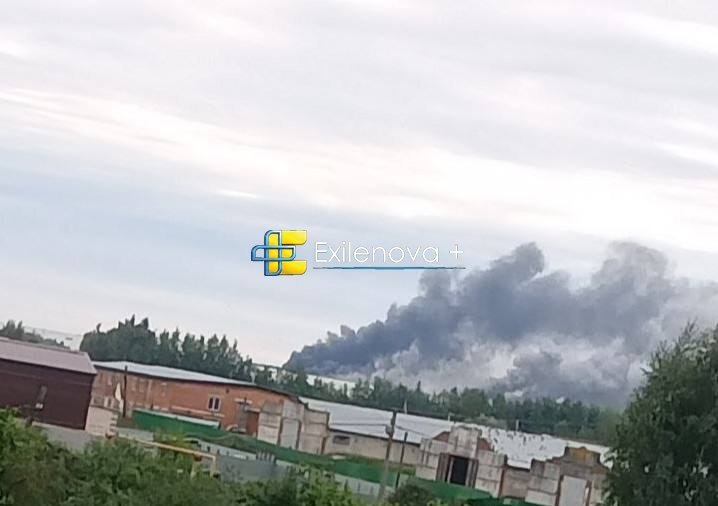
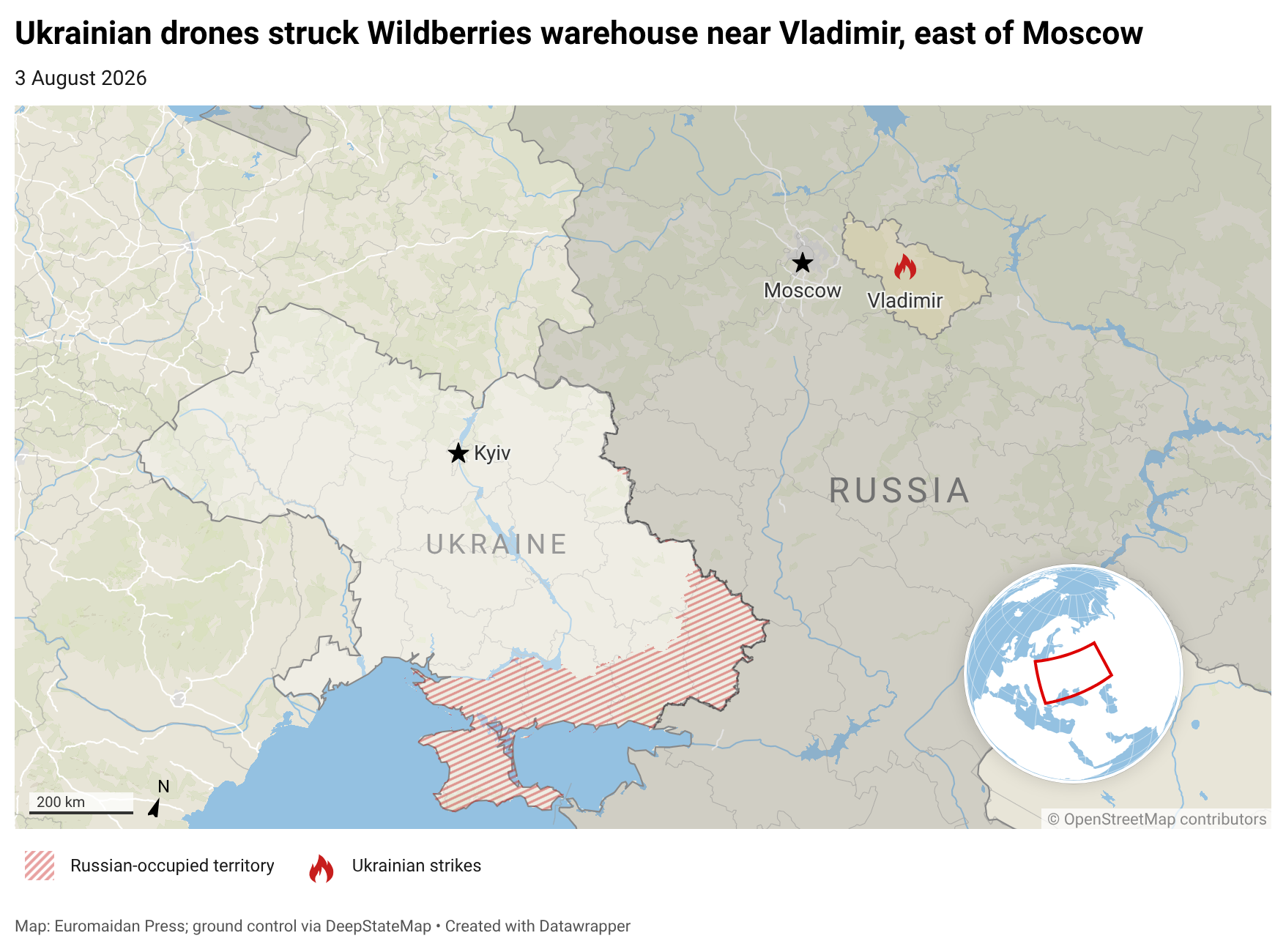
Ukrainian drones set fire to one of the largest warehouses of Russia's biggest online retailer on the morning of 3 August, according to the Ukrainian monitoring Telegram channel Exilenova+ and local authorities. The strike hit a Wildberries logistics hub in Russia's Vladimir Oblast, hundreds of kilometers from Ukraine, and touched off a fire that Russian officials and the company confirmed.
It widened a two-week Ukrainian campaign against the retail network that helps keep Russia's war economy running. For the first years of its invasion, Russia treated its interior as a safe rear. Ukraine's long-range drones have turned that rear into a target set, striking the fuel and freight networks hundreds of kilometers from the front that keep the war supplied.
Ukrainian drones burned a hub built to hold 120 million items
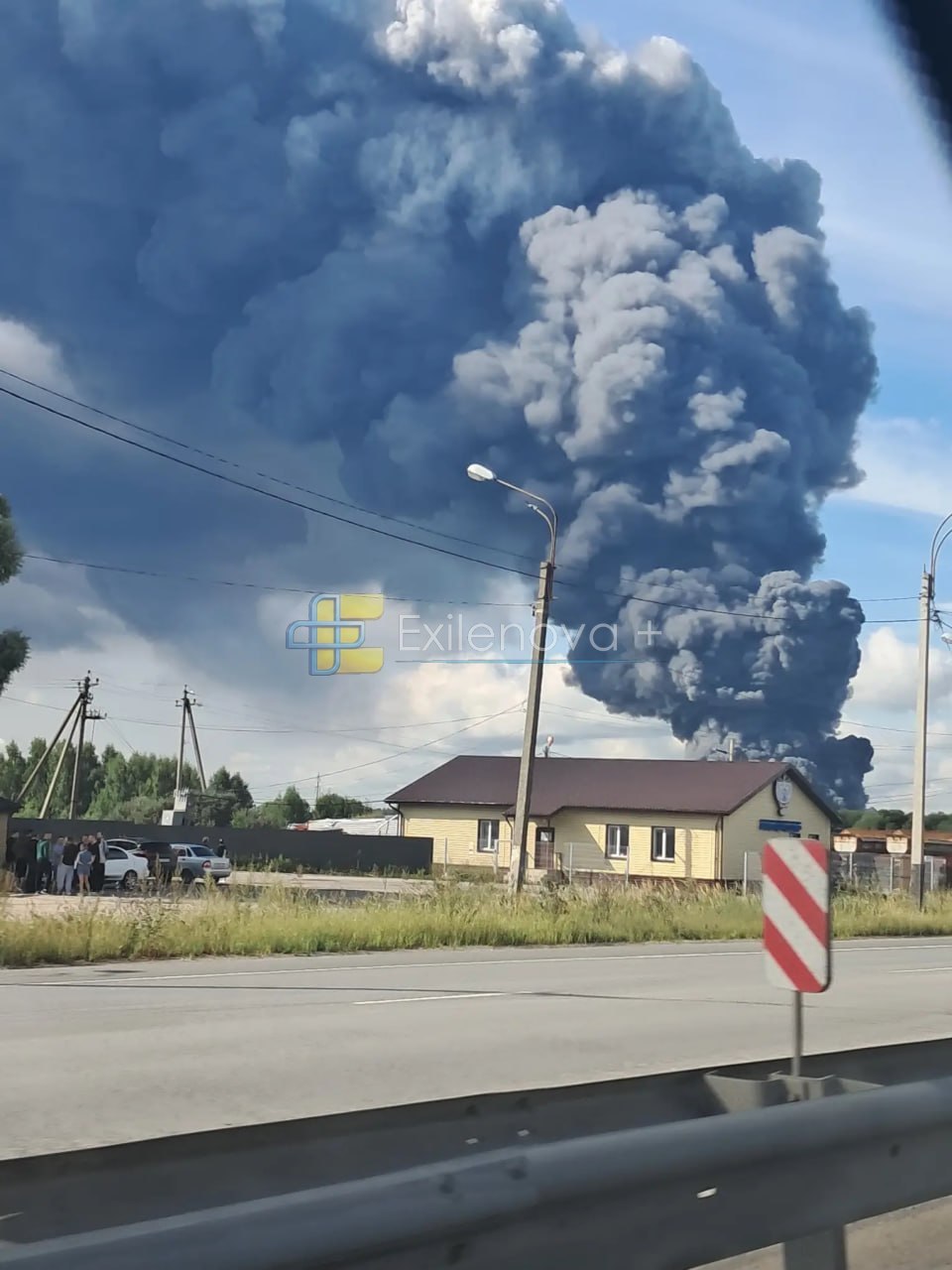
Ukrainian FP-1 attack drones struck the Wildberries logistics center in the village of Khryastovo, in Vladimir Oblast's Sobinsky district, on the morning of 3 August. Exilenova+ began reporting an ongoing attack around 07:00 local time, then geolocated videos and photos of the fire. The site sits about 580 kilometers from Ukraine's border.
The complex is one of Wildberries' largest. It spans 171,900 square meters and moves goods between the Moscow region and central, northwestern, and northern parts of European Russia. Built for more than 120 million items, it was meant to reach roughly 175,000 square meters at full capacity.
A column of black smoke towers over Khryastovo, Vladimir Oblast, Russia, seen from a roadside after a Ukrainian drone strike set a Wildberries logistics center ablaze, 3 August 2026. Photo: Exilenova+
Footage captured the moment an FP-1 drone slammed into the warehouse. The smoke rose over the site and was visible for tens of kilometers. The Ukrainian firm Fire Point, which makes the FP-1 long-range strike drone, said Ukraine's Defense Forces hit the hub with its drones. Vladimir Oblast Governor Alexander Avdeyev confirmed the strike.
Vladimir's Wildberries ablaze
This morning, drones struck another warehouse of Russia's e-commerce giant in Khryastovo, Vladimir Oblast, about 150 km east of Moscow and 580 km northeast of Ukraine.
Wildberries also confirmed a fire at the logistics center and said it had moved order intake and shipping to other sites. The Russian news Telegram channel Astra reported that one of Wildberries' largest warehouses in Vladimir Oblast halted operations after the attack and fire.
The strike extends a campaign against Russia's Amazon clone
Ukraine has spent two weeks burning the warehouses of Wildberries, Russia's biggest online retailer and its answer to Amazon. The campaign began on 18 July with strikes on hubs in Elektrostal near Moscow and Kotovsk in Tambov Oblast.
The day before the Khryastovo strike, on 2 August, Ukrainian drones hit another Wildberries hub in Samara Oblast. Ukrainian drones destroyed eight of the retailer's warehouses in July, about 15.4% of its storage, and later raids hit sites in Volgograd and Tatarstan.
Russia is still unable to break into Sloviansk and the fortified towns shielding it, months into an offensive to seize the rest of eastern Ukraine's Donetsk Oblast, the Institute for the Study of War (ISW) found. Its troops keep leaning on guided bombs and small groups of infiltrating infantry, while Ukrainian forces counterattack and hunt the drone crews harassing their supply lines. In the latest fighting the attacker moved and the front did not.
As the frontline area
Russia is still unable to break into Sloviansk and the fortified towns shielding it, months into an offensive to seize the rest of eastern Ukraine's Donetsk Oblast, the Institute for the Study of War (ISW) found. Its troops keep leaning on guided bombs and small groups of infiltrating infantry, while Ukrainian forces counterattack and hunt the drone crews harassing their supply lines. In the latest fighting the attacker moved and the front did not.
As the frontline areas are heavily saturated with killer drones on both sides, Russia's full-scale invasion has settled into a war of position where the attacker can still bomb and probe but rarely breaks through, and every stalled push costs it more men for less ground than the year before. Eastern Ukraine's chain of fortified cities is the last major barrier before the open country beyond.
Russia's drive on Sloviansk holds nothing new
Russian forces kept up offensive operations toward Sloviansk on 1 and 2 August without a confirmed advance, as Ukrainian units counterattacked, ISW says. A Russian milblogger claimed Ukrainian troops hit back near Rai-Oleksandrivka, just east of the city. Russia's TASS state news agency claimed its forces had taken and were clearing Lyman to the north, but the assessment confirmed no such capture.
The northern approach is not new. Lyman is the gateway to the Sloviansk-Kramatorsk area, and its defense has repeatedly blunted the claw Russia needs to close around the two cities. The current push is part of a Fortress Belt offensive that opened in spring and has crawled forward at heavy cost since.
Russia is using guided bombs to shape Sloviansk before its infantry moves. Vadym Lyakh, head of the city's military administration, reported a FAB-250 glide-bomb strike on the morning of 2 August. The strike fit a long-running pattern: level the buildings from the air to open a path the ground troops have not been able to take.
Russia keeps bombing other Donetsk Oblast cities in what the assessment calls the Fortress Belt to prepare later assaults. Ukraine's National Police reported that two KAB-250 guided glide bombs hit Druzhkivka on 2 August, killing two civilians and wounding two more. Farther out, Russian forces also kept attacking around Dobropillia on both days and did not advance.
Kostiantynivka holds as infantry infiltrates on foot
To the south, Russian forces attacked around Kostiantynivka on both days without a confirmed gain, ISW noted. Ukraine's General Staff logged continued fighting, and Russian bloggers claimed only small local moves to the north.
The tactic is the same one Russia has run for weeks. A Ukrainian special-forces officer reported that small groups hide in basements and ruins, waiting for reinforcements, and a Ukrainian non-commissioned officer reported that troops use dense summer foliage to conceal the approach. It echoes the assault Russia has pressed into the city for weeks, flattening it and pushing men in on foot.
Map: ISW.
Ukrainian forces are striking Russian drone control points in the near rear south of Kostiantynivka, likely in part to protect their supply roads. Ukraine's General Staff reported a strike on one such point near Berestok on 1 August. The drones reach deep: Ukrainian troops described Molniya drones flying up to 20 kilometers and aircraft-type drones up to 40 kilometers, complicating nighttime resupply through Kramatorsk and Sloviansk.
"Neither Ukrainian nor Russian forces made confirmed advances on August 2," ISW wrote regarding the situation all across the front.

 Connexion
 Army, Mykhailo Drapaty, must respond as the first Russian
  units have reached approximately 10 km east of Sloviansk and Kramatorsk.
 (@AMK_Mapping_)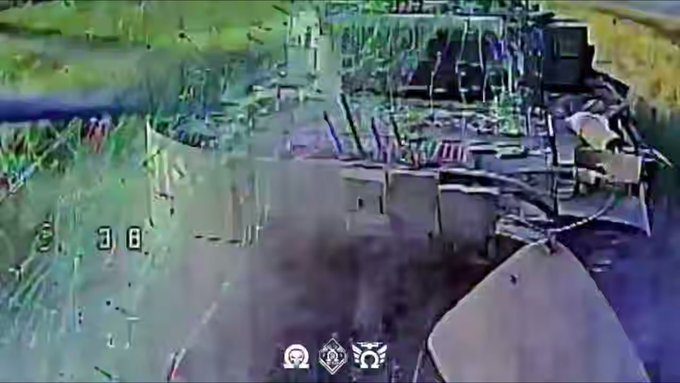





 Exilenova+