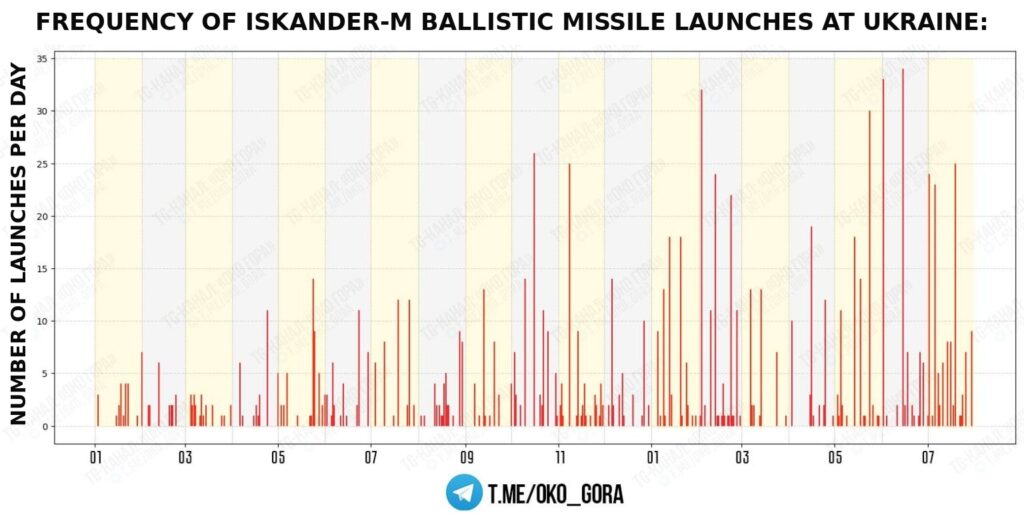
Russia fired more ballistic missiles at Ukraine in July than in any other month of 2026, around 126 of them, according to the monitoring project Oko Gora. The barrage mixed Iskander-M missiles, North Korean rounds, and air-defense missiles repurposed to hit ground targets. It climbed as Ukraine's shield against exactly these weapons kept thinning.
Russia has spent 2026 tilting its air war toward ballistic missiles, the category air defenses struggle most to stop, and th
Russia fired more ballistic missiles at Ukraine in July than in any other month of 2026, around 126 of them, according to the monitoring project Oko Gora. The barrage mixed Iskander-M missiles, North Korean rounds, and air-defense missiles repurposed to hit ground targets. It climbed as Ukraine's shield against exactly these weapons kept thinning.
Russia has spent 2026 tilting its air war toward ballistic missiles, the category air defenses struggle most to stop, and the Ukrainian interceptor gap behind that shift has no fast fix. Only a handful of countries build the interceptors that reliably kill them, and every producer is short.
July outran every month this year
The climb is steep. Russia's monthly ballistic launches ran from 74 in January to 116 in February, then fell to 39 in March, 50 in April, 86 in May, and 96 in June, before last month topped them all, the project counted. The notable addition was the S-300 and S-400 air-defense missiles fired at ground targets alongside the Iskander-M and North Korean ballistic missiles.
An Iskander-M short-range ballistic missile launcher with its missile raised, at the Army-2016 military expo near Moscow, Russia, 8 September 2016. Photo: Vitaly V. Kuzmin
The North Korean missile returned
One weapon stood out for its comeback. On 30 July, Russia used a North Korean KN-23 for the first time in a long while, striking the village of Radushne near Kryvyi Rih. The strike killed five members of one family, and the missile's reappearance suggested a fresh shipment from Pyongyang.
Interceptions returned, then collapsed
Around 14 July, Ukrainian air defenders resumed shooting down Russian ballistics, and on 9 July President Volodymyr Zelenskyy said Ukraine would soon receive a US batch of PAC-3 interceptors. By month's end the gains were gone. Ukraine's Air Force downed one missile out of 27 on 1 August, and one of nine on 30 July. As recently as June, Ukraine had stopped about four in ten ballistics, a rate that has since fallen toward zero as PAC-3 stocks run dry.
Russia struck cities across Ukraine with a mass wave of missiles and drones overnight into 30 July 2026, killing civilians, including children, and injuring dozens, according to Ukraine's Air Force, State Emergency Service, and local authorities. Rescuers dug through collapsed homes in Lviv, in the capital, and in a village near Kryvyi Rih, and one Russian cruise missile crossed the border into Poland. It was the first mass strike on Ukraine's western oblasts since Marc
Russia struck cities across Ukraine with a mass wave of missiles and drones overnight into 30 July 2026, killing civilians, including children, and injuring dozens, according to Ukraine's Air Force, State Emergency Service, and local authorities. Rescuers dug through collapsed homes in Lviv, in the capital, and in a village near Kryvyi Rih, and one Russian cruise missile crossed the border into Poland. It was the first mass strike on Ukraine's western oblasts since March.
Russia strikes Ukrainian cities and civilian infrastructure daily. Ukraine and international bodies qualify these attacks as war crimes, while Moscow denies deliberately targeting civilians. Russia has spent this year shifting its air war toward ballistic missiles, the category air defenses struggle most to stop, and the interceptor shortage behind that gap has no fast fix.
The scale of the attack
Ukraine's Air Force tracked 358 incoming weapons — 74 missiles and 284 drones of various types. Air defenses shot down or suppressed 320 of them, 55 missiles and 265 drones. The missiles included Tsirkon and Oniks anti-ship missiles, Iskander-M, S-400, and North Korea's KN-23 ballistics, and Kh-101 and Kalibr cruise missiles, alongside Shahed, Gerbera, Italmas, and decoy drones launched from four Russian regions.
The ballistic missiles remain the biggest problem for Ukraine. Of the nine Russia fired, air defenses stopped only one. Impacts landed at 20 locations, with debris falling on 13 more.
Another Russian missile and drone attack
The main target was the west of Ukraine, alongside Kyiv and other cities across the country. Some missiles hit apartment buildings, killing civilians.
The attack included drones, cruise and ballistic missiles.
President Volodymyr Zelenskyy put the current nationwide toll at eight dead and dozens wounded in the capital and across ten oblasts. He tied the losses directly to the missing air defenses.
"Protection from the Russian missile threat is the most important task for saving our people's lives," he wrote. "Untimely help, delays in supplying anti-ballistic missiles — that is exactly this destruction, exactly these casualties that, unfortunately, we have today."
A family of six killed near Kryvyi Rih
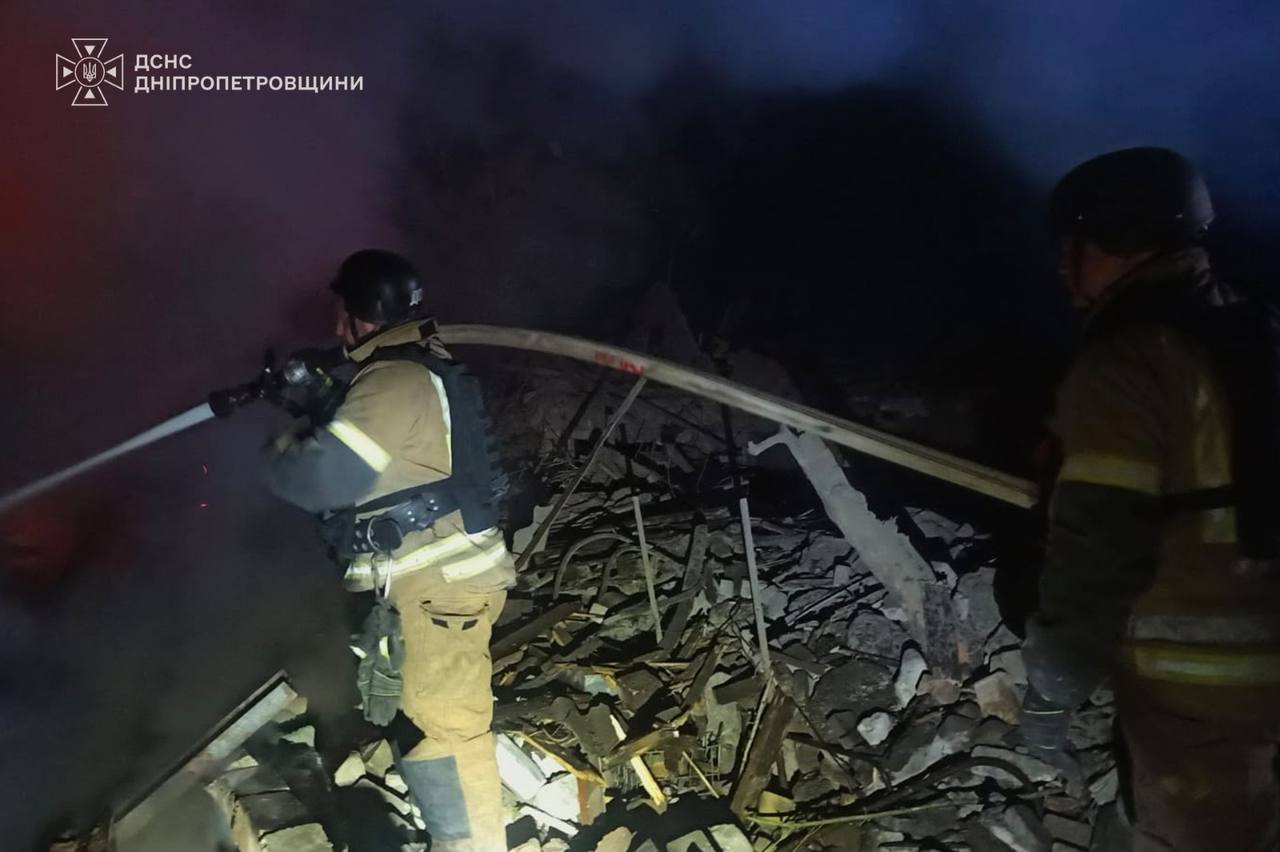
The heaviest loss of life came in Radushne, a village in Kryvyi Rih district of Dnipropetrovsk Oblast. An Iskander-M ballistic missile hit a house where a large family lived. Six people died, three of them children, and eight were wounded, the head of the Kryvyi Rih Defense Council, Oleksandr Vilkul, reported.
Rescuers extinguish a fire at the site of a Russian missile strike in Radushne, Kryvyi Rih district, Dnipropetrovsk Oblast, on 30 July 2026. Photo: State Emergency Service of Ukraine
The head of Dnipropetrovsk Oblast, Oleksandr Hanzha, named the children killed as a six-year-old girl and boys of 11 and 17. An 84-year-old woman was hospitalized in serious condition, and a 49-year-old woman and boys of 6 and 15 were taken to hospital in moderate condition. Two houses were destroyed and five damaged. Rescuers pulled two children from the rubble alive.
Russia’s missile wipes out a family home near Kryvyi Rih
Six people from one family died when an Iskander-M ballistic missile struck Radushne in Dnipropetrovsk Oblast overnight on 30 July. Three of those killed were children aged six, 11, and 17.
Lviv neighborhoods took some of the worst damage. The number of wounded recently rose to 26, with 15 hospitalized, children among them, the head of Lviv Oblast, Maksym Kozytskyi, reported. One child was in the hospital.
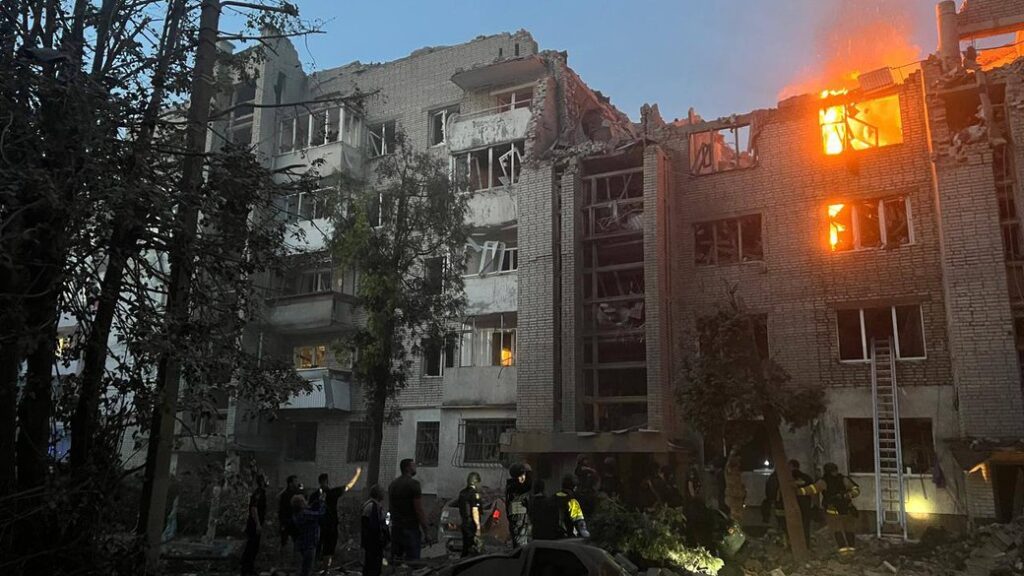
Two residential buildings on Patona and Vyhovskoho streets were hit, and more than 20 apartment buildings were damaged, along with lyceum school No. 15 — where 140 windows and four doors were blown out — and two kindergartens. Mayor Andrii Sadovyi described a direct hit and no military target anywhere near it.
"Here on Patona we see a direct missile hit. The floors have essentially been sheared off," he said. "They simply attack residential buildings, kill people directly. There are no military targets here, nothing at all."
Rescuers freed a woman, a man, and his six-year-old son from a collapsed building, the Lviv Oblast prosecutor's office said. A crane was used to lift people from a damaged five-story block through a blocked stairwell.
Lviv residents joined rescuers clearing rubble on Patona Street where a Russian missile struck the residential building
People remain trapped beneath the damaged residential building after a Russian missile strike. The rescue operation continues, with locals working alongside… pic.twitter.com/ldGTpbH0Bx
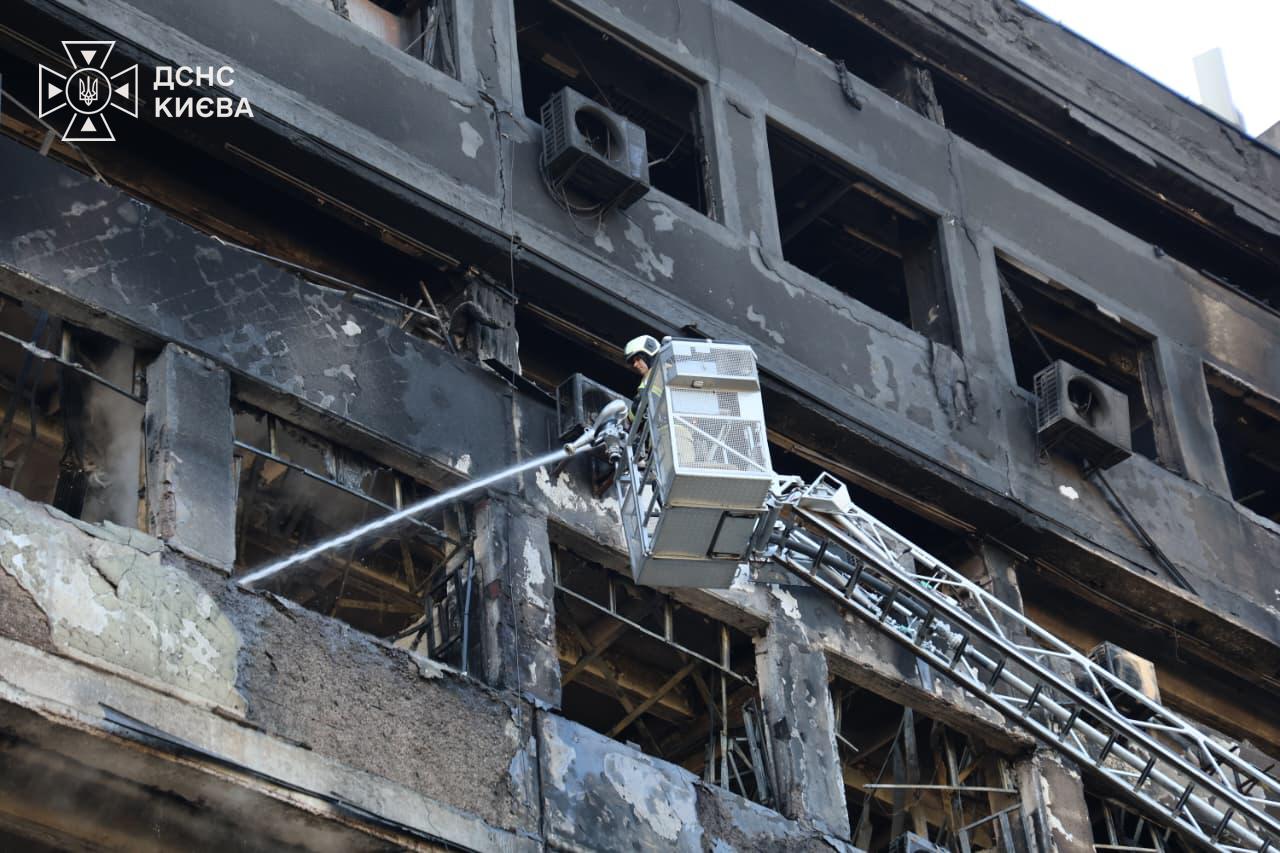
In the capital, one person died and two were hurt, the Kyiv Military Administration and the Emergency Service reported. Fires broke out in two districts: market pavilions in Obolon and a garage cooperative in Sviatoshyn, where firefighters found a body while putting out the flames and hospitalized an injured man, the emergency service said.
A firefighter douses a burned-out building after the Russian strike on Kyiv, 30 July 2026. Photo: State Emergency Service of Ukraine
In Skybyn, in Brovary district of Kyiv Oblast, a strike partly destroyed a two-story house and wounded five people, including a 16-year-old boy, the emergency service confirmed.
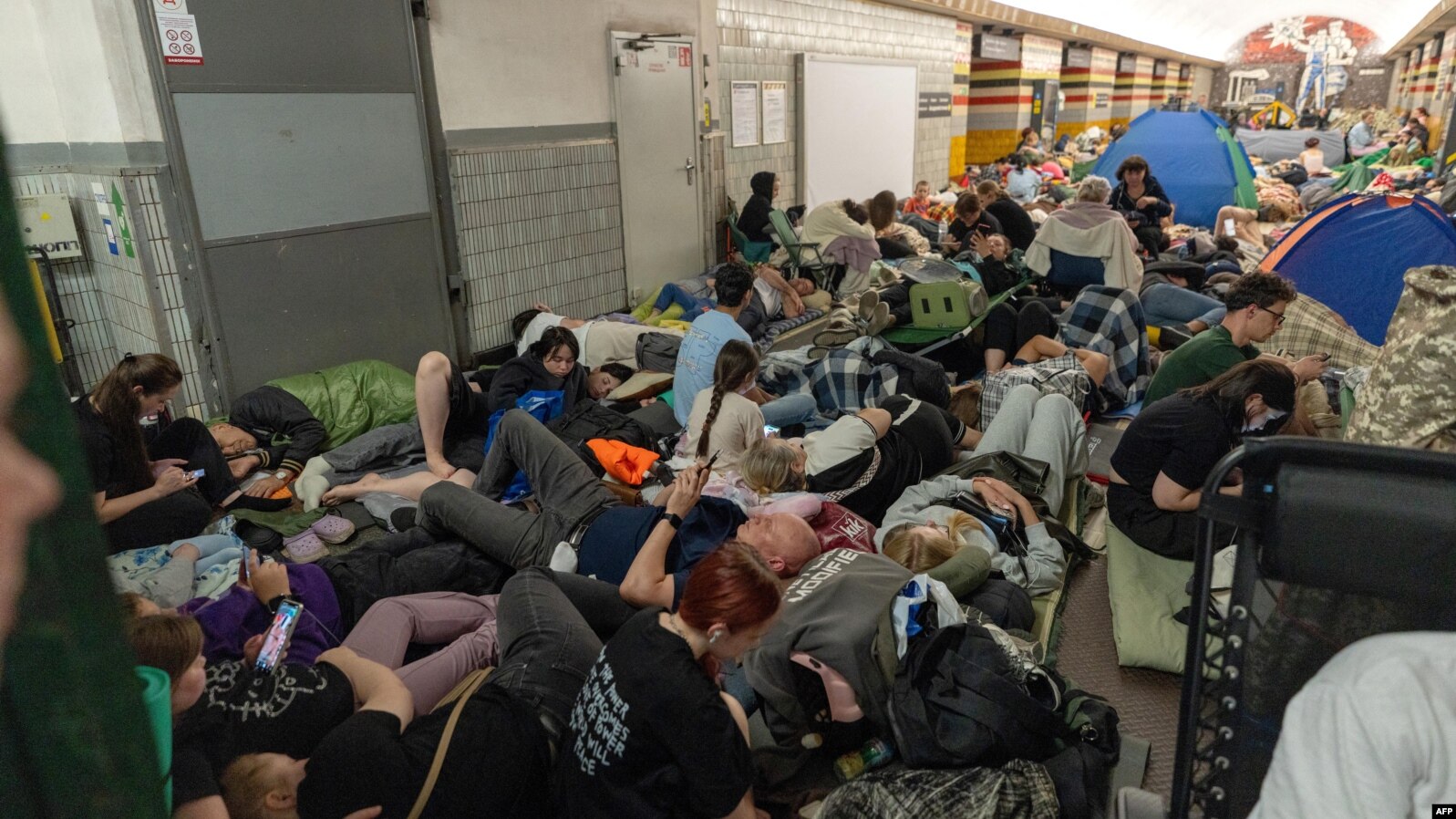
People shelter in a metro station in Kyiv during the Russian missile and drone attack, 30 July 2026. Photo: AFP
Poltava, Zhytomyr, Mykolaiv, and the coast
In Poltava district, warehouses caught fire from the strikes and one person died, the head of Poltava Oblast, Vitalii Diakivnych, said. A Nova Poshta parcel terminal was also hit, with no casualties there.
Mykolaiv Oblast came under a night of drone attacks that damaged port infrastructure, warehouses, homes, an ambulance, and an administrative building, but wounded no one, the oblast administration reported.
In Kharkiv, a jet-powered Shahed hit an industrial zone, Mayor Ihor Terekhov reported.
The Russian strikes injured three children and two adults in Zhytomyr Oblast, local authorities said.
Air defenses also worked over Kirovohrad Oblast, where a private yard was damaged in Svitlovodsk and no one was hurt, the oblast administration said.
Explore further
Moscow struggles to stockpile all the missiles it needs—so it fires them straight off the line, Ukraine says
A cruise missile in Poland
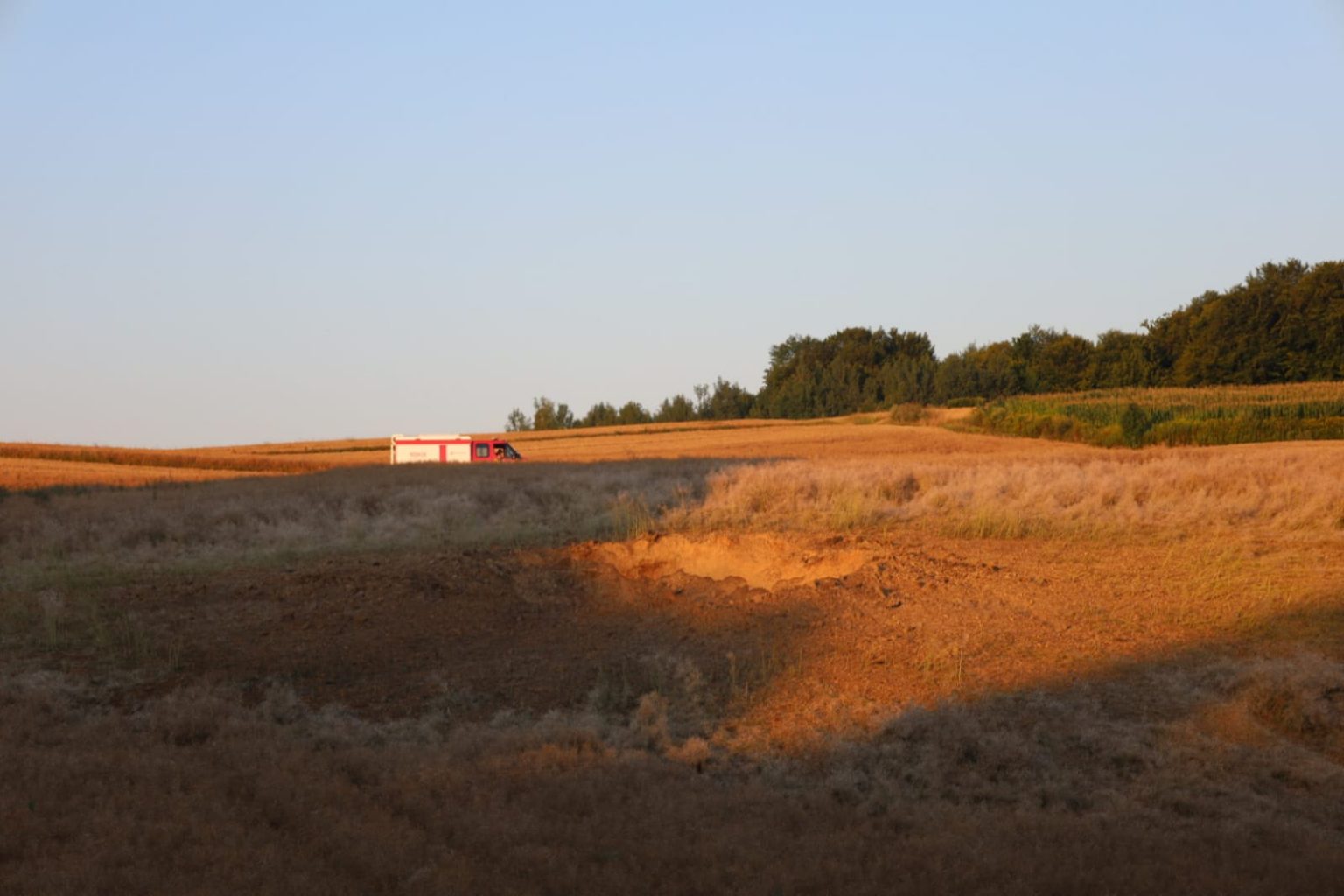
One Russian cruise missile crossed into Poland during the attack and came down in Lublin voivodeship, near the village of Targowisko, where a blast woke residents and rescuers found a crater in a field, the outlet lublin112 reported. Polish forces had put military aircraft into the air hours earlier because of Russia's long-range strikes on Ukraine, the country's Operational Command said, with fighters and an early-warning plane airborne and ground air defenses at readiness.
The site where a Russian cruise missile came down in Lublin voivodeship, Poland, on 30 July 2026. Photo: lublin112
It was not the first such incursion. In 2023 a Russian Kh-55 flew several hundred kilometers over Polish territory before it fell near the city of Bydgoszcz. Earlier in July, the Polish outlet Onet, citing intelligence and diplomatic sources, warned that Poland could become a target of Russian provocations meant to test NATO's resolve.
The Patriot is the only system in Ukraine that can reliably stop Iskander-M, Kinzhal, and Tsirkon missiles on ballistic and quasi-ballistic paths, and Ukraine is running short of its interceptors. Kyiv has urged partners to expand production. Earlier this month, US President Donald Trump said Washington could grant Ukraine a license to produce Patriot missiles, and Zelenskyy said last week that Ukraine was nearing the ability to build them and could become the third country to hold that arrangement. This, however, won't solve the issue in the short term.

 Connexion

 PPO Radar