
 Connexion
To catch Ukraine’s cruise missiles, Russia is risking the scarce A-50 radar planes it has no way to rebuild
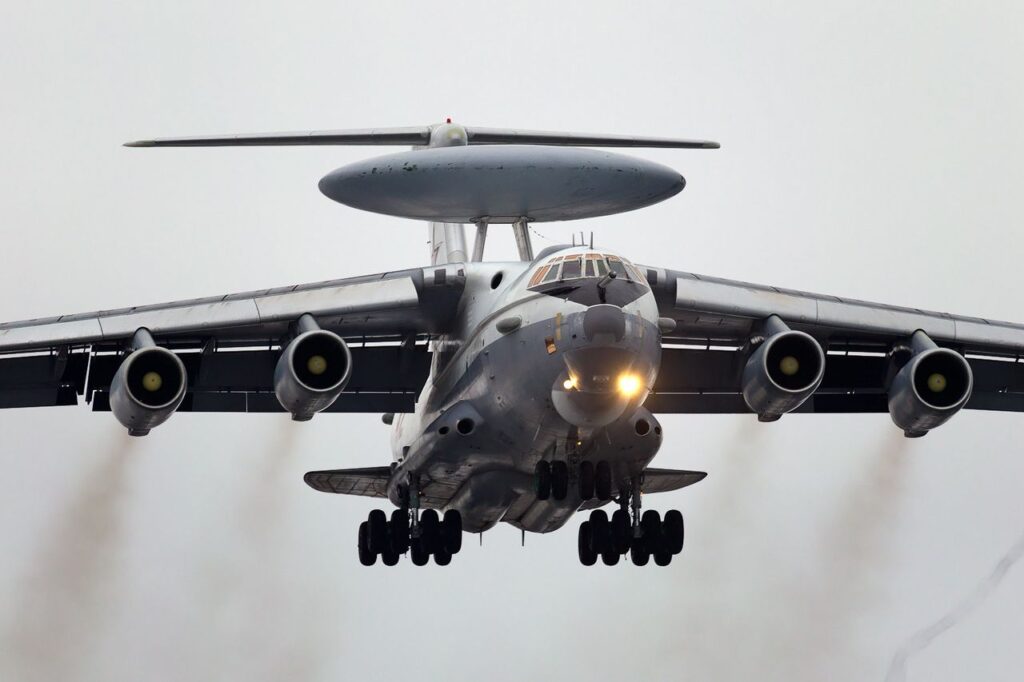
Russia has shifted its scarce fleet of A-50U airborne radar aircraft to near-daily operations, according to an analysis by Ukrainian OSINT channel Cyberboroshno. After barely flying against Ukraine for most of June, the aircraft are now patrolling almost nightly to detect Ukrainian drones, operating from airfields deep inside Russia and, on 7 July, four were airborne at once—almost the country's entire combat-ready fleet.
From barely flying to daily duty
For most of June, Russia hardly sent its A-50U airborne radar planes up against Ukraine, according to Cyberboroshno. Its analysts studied more than 1,600 reports between 4 June and 2 August. Early in that window, the only real activity involved a repaired aircraft, tail number Red 47, returning to service.
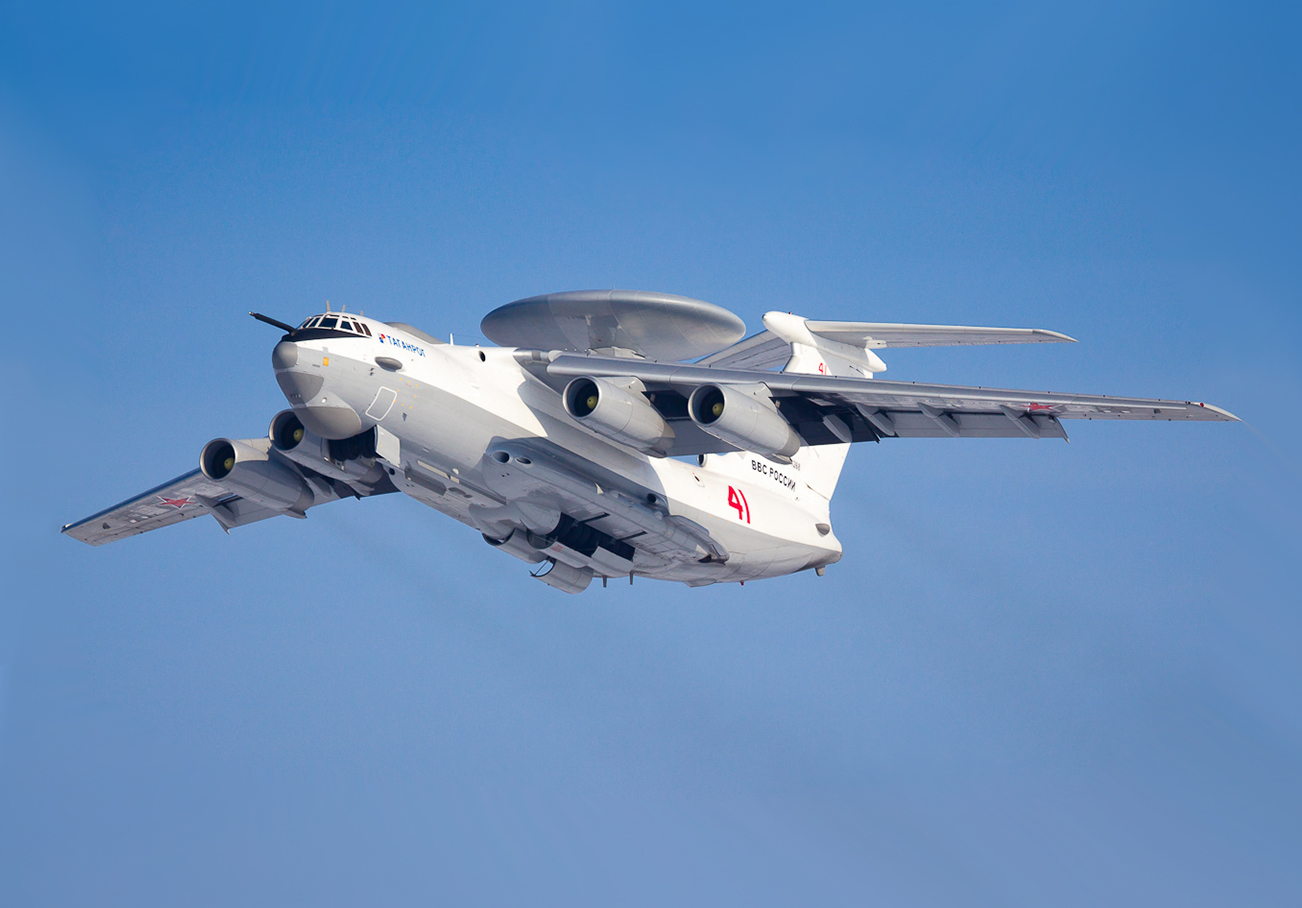
That changed on 23 June, when one plane began patrolling over Russia's interior above Ulyanovsk and Samara oblasts, mostly at night. Those flights continued for the rest of the period, roughly 60 sorties in all. Basing later shifted deeper into the rear, from Ivanovo and Ulyanovsk to airfields near Perm, Orenburg, and Chelyabinsk. On 7 July, Russia put four A-50U planes in the air at once—close to its entire combat-ready fleet.
Ukraine's missiles are what's driving the surge
Russia's ground defenses struggle to catch Ukraine's long-range cruise missiles, so airborne radar helps spot them early. On 4 July, Cyberboroshno said an A-50U played a decisive role in helping repel one such Ukrainian missile strike.
Drones destroy what Russia can’t rebuild: Sole plant repairing A-50 early-warning planes
Why every one of these planes matters
The A-50U is Russia's flying radar—an airborne command post that scans the sky for hundreds of kilometers and guides fighters and missiles. Ukraine shot one down over the Sea of Azov on 14 January 2024, and says it downed the second over Russia's Krasnodar Krai on 23 February 2024.
Russia entered its all-out war with fewer than ten of these aircraft in service, and the only plant that builds and maintains them has since slid into deep losses, with a strike destroying the prototype of the successor meant to replace them. A single A-50U can track aircraft and cruise missiles out to 700 km. Every sortie forced by Ukraine’s attacks eats into the aircraft’s limited flight life and risks a plane Russia cannot replace.
Read Also
-
Ukraine has intercepted 445,000 Russian aerial targets since 2022, but cracks in the shield are starting to widen
-
Putin gave this brigade honorary title weeks after war crimes in Bucha. It’s now hiding its own dead as “missing”
-
Russia uses old KGB trick to get rid of Ukrainian soldiers not on battlefield. It’s already tried more than 50 times this year
