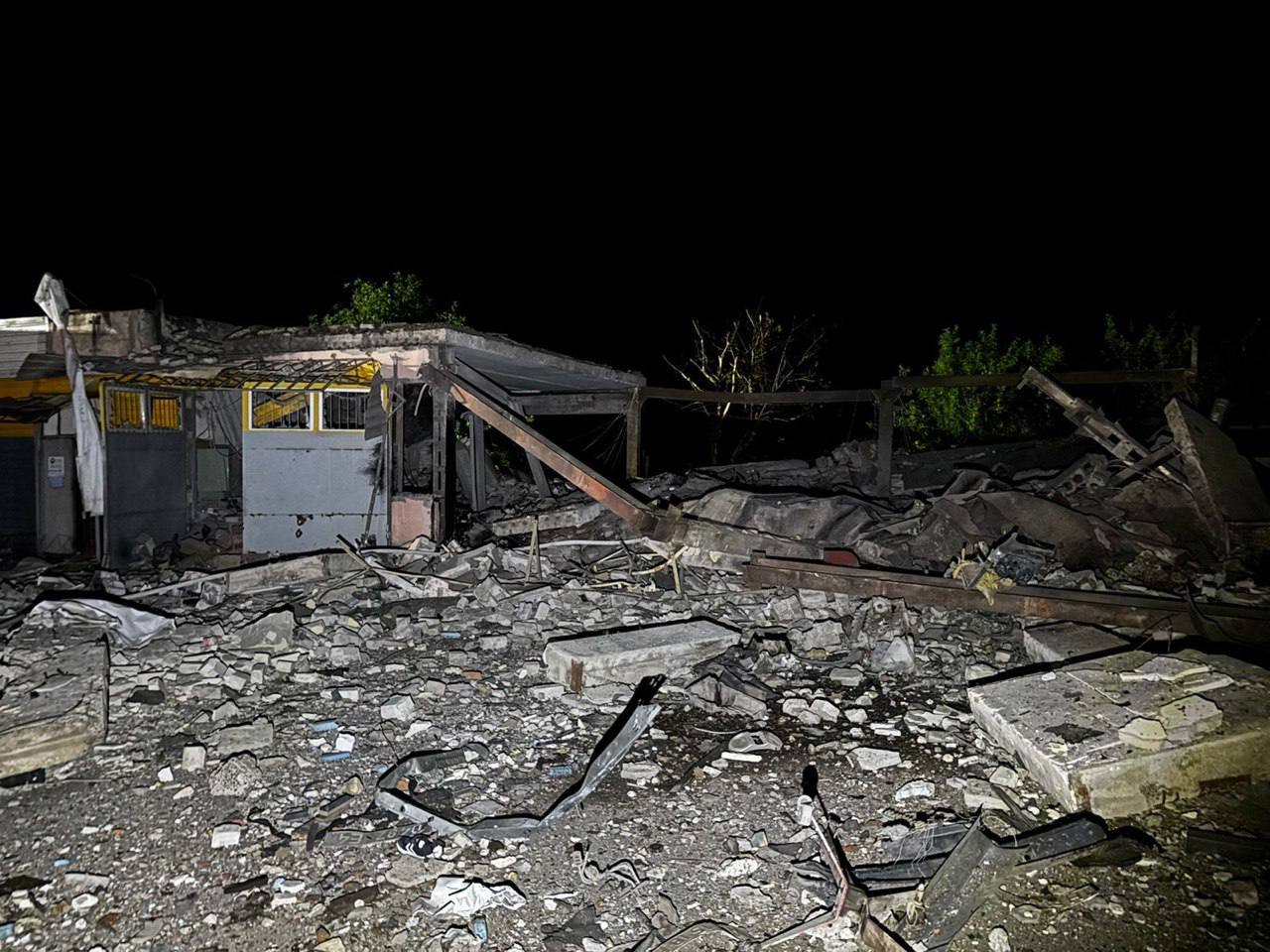
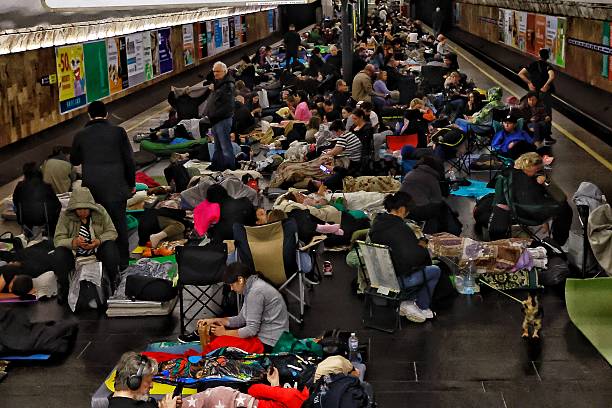
An internal U.N. analysis has found Russia responsible for a 2022 explosion at Olenivka prison, which killed over 50 Ukrainian prisoners of war (POWs), Ombudsman Dmytro Lubinets said on June 30.
"(A)n internal analysis of the U.N. showed that it was the Russian Federation that planned and carried out the attack," he said in a post to social media.
The investigation, published on June 26, reads that an "internal U.N. analysis concluded that it was the Russian Federation who planned and executed the attack," though the U.N. did not publicly acknowledge Russia's responsibility.
Russia has denied being responsible for the attack but prevented efforts by the international community to independently investigate the attack and contaminated evidence at the site, according to a report published by the U.N.
Kyiv has said that days before the July 2022 attack, Russia deliberately put Ukrainian members of the Azov Regiment, who were awaiting a prisoner exchange, in a separate part of the Olenivka prison building that was later destroyed in the explosion.
"The report identifies the weapons and ammunition that the Russian Armed Forces used to kill Ukrainian prisoners of war, and also examines in detail the planning, organization, and execution of the murder," Lubinets said.
The ombudsman noted that the U.N. fact-finding mission on Olenivka was disbanded due to a lack of security guarantees, adding that the mission has previously refused to review evidence provided by Ukraine.
Russia has repeatedly violated international conventions protecting the rights of POWs as it continues to carry out its war against Ukraine.
A Russian military court has convicted 184 Ukrainian POWs captured in Kursk Oblast of acts of terrorism, Mediazona reported on June 25.
The POWs captured in Kursk were charged with carrying out a grave terrorist act by a group of individuals, as outlined by the Russian Criminal Code.
Junior Lieutenant Yevhen Hoch was convicted of allegedly carrying out an act of terrorism by taking part in Ukraine's Kursk Oblast incursion.
Editor's note: This is a developing story and is being updated.
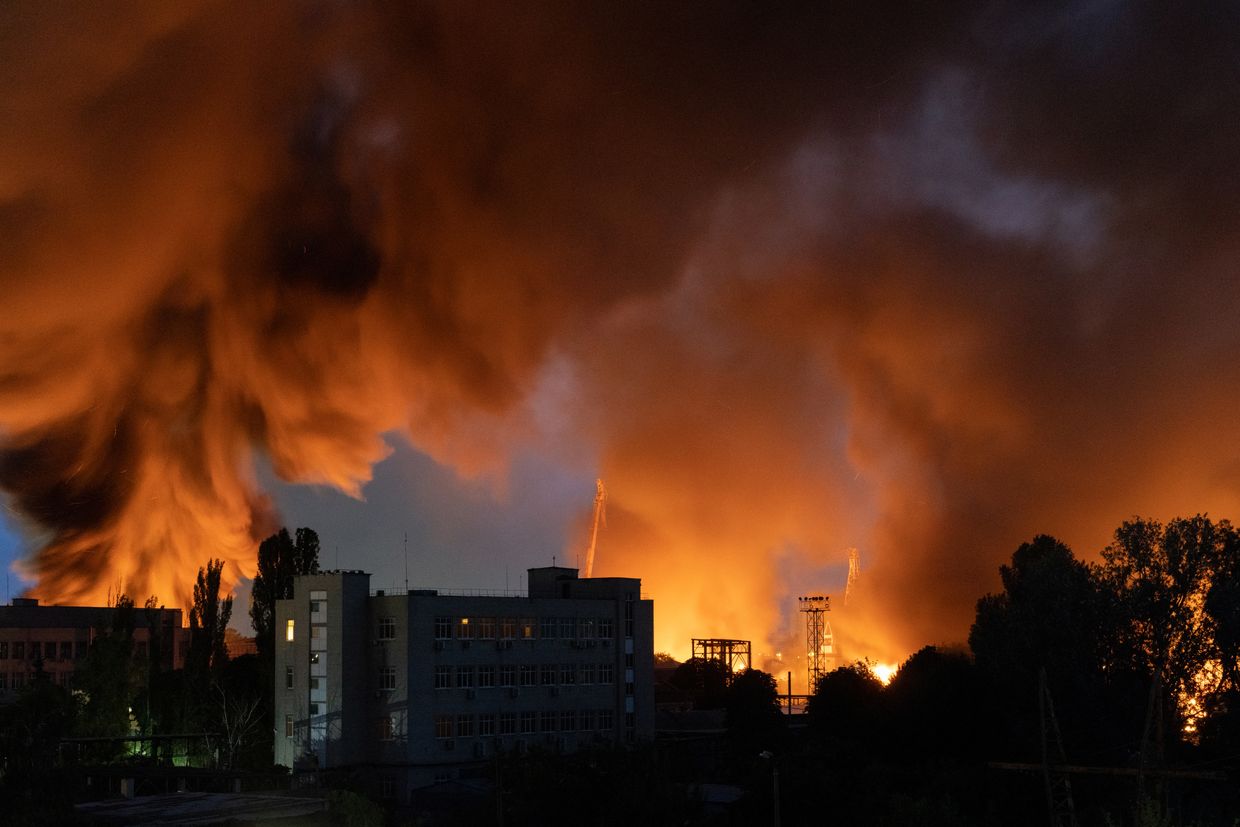
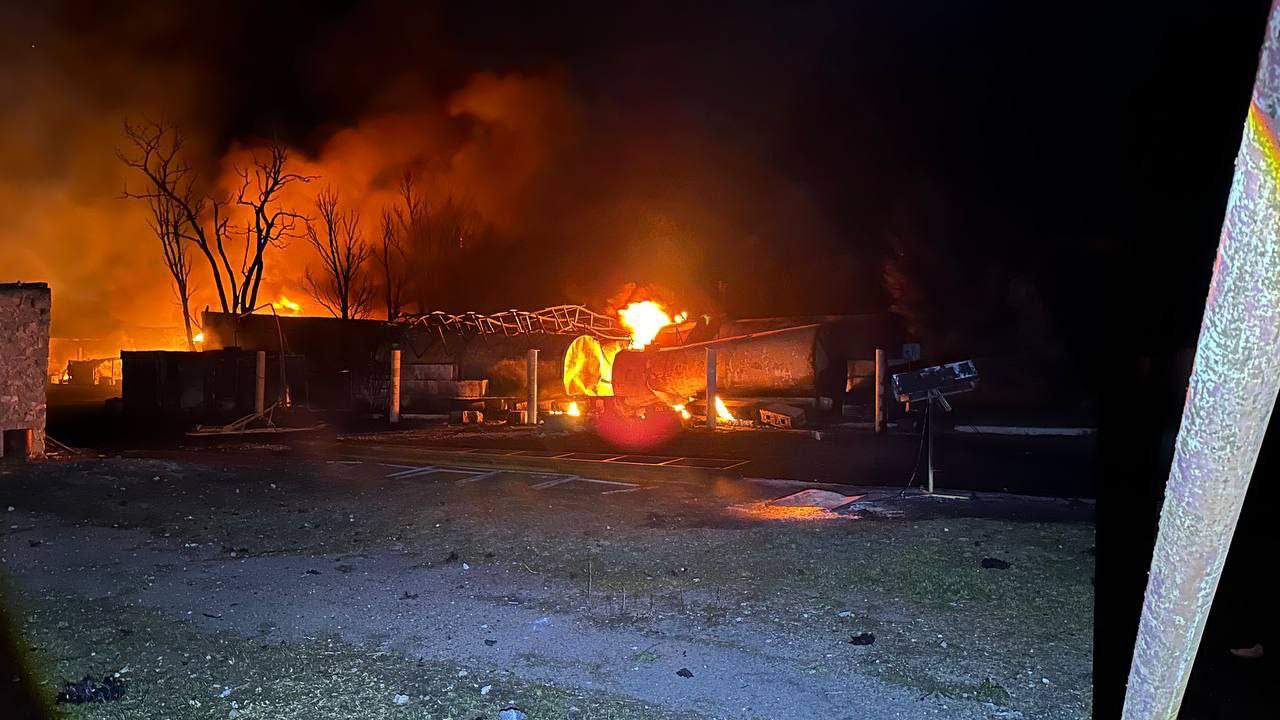
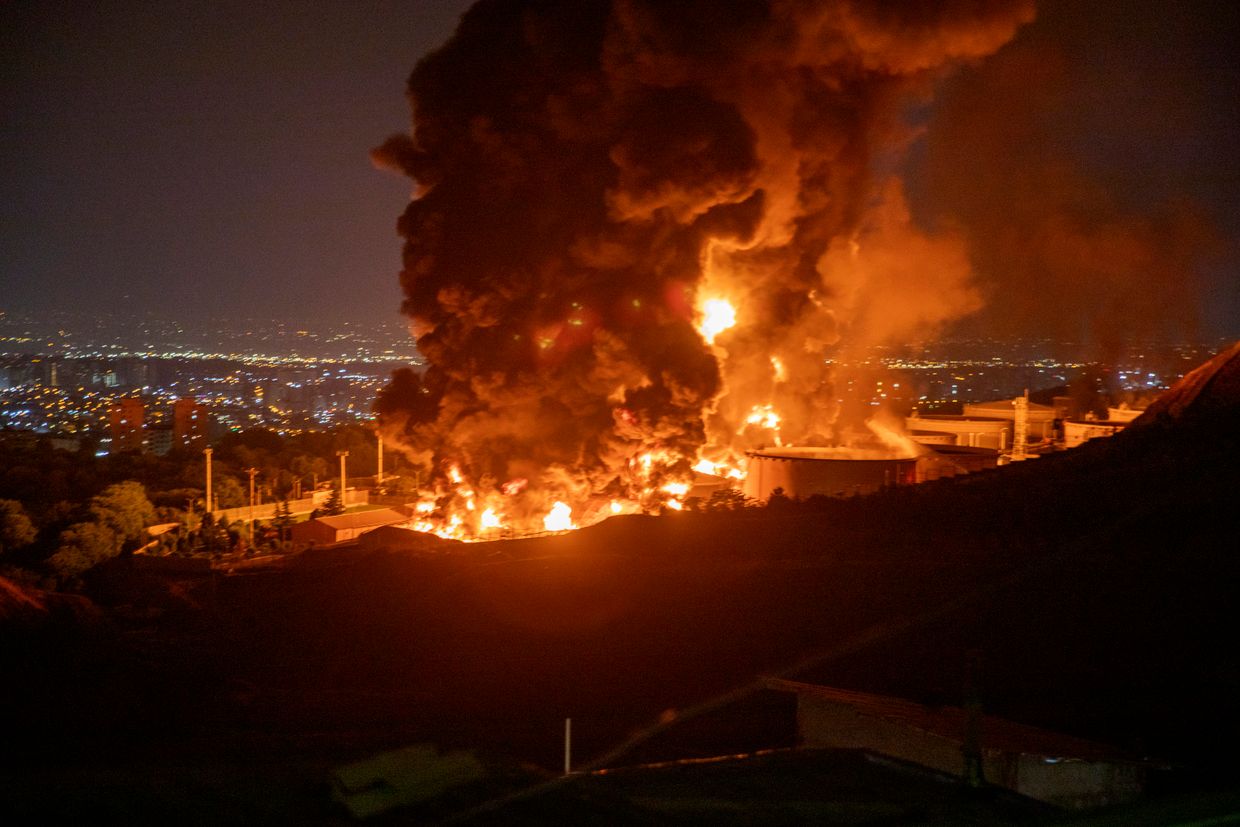
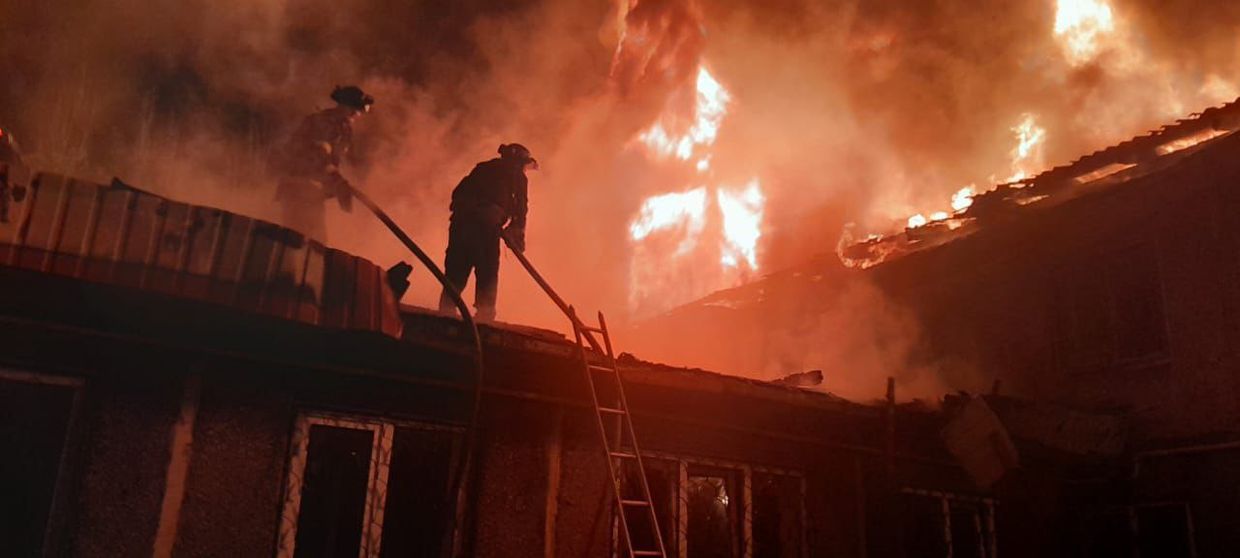
Ukrainian forces reportedly struck a Russian logistics hub and an oil depot in Russian-occupied Luhansk and a military base in occupied Donetsk on June 30 and July 1, with fires breaking out in the two cities.
"Russian logistics in temporarily occupied Luhansk are burning," head of Ukraine's Center for Countering Disinformation Andrii Kovalenko said.
The drone attack was reported by the local media, publishing what appear to be videos of the burning logistics hub and the sound of drones.
Leonid Pasechnik, head of the Russian occupation authorities in Luhansk Oblast, reported that air defenses shot down 35 of the 40 drones over Luhansk Oblast. Drone wreckage fell on the premises of an oil depot, and a woman was injured, Pasechnik claimed.
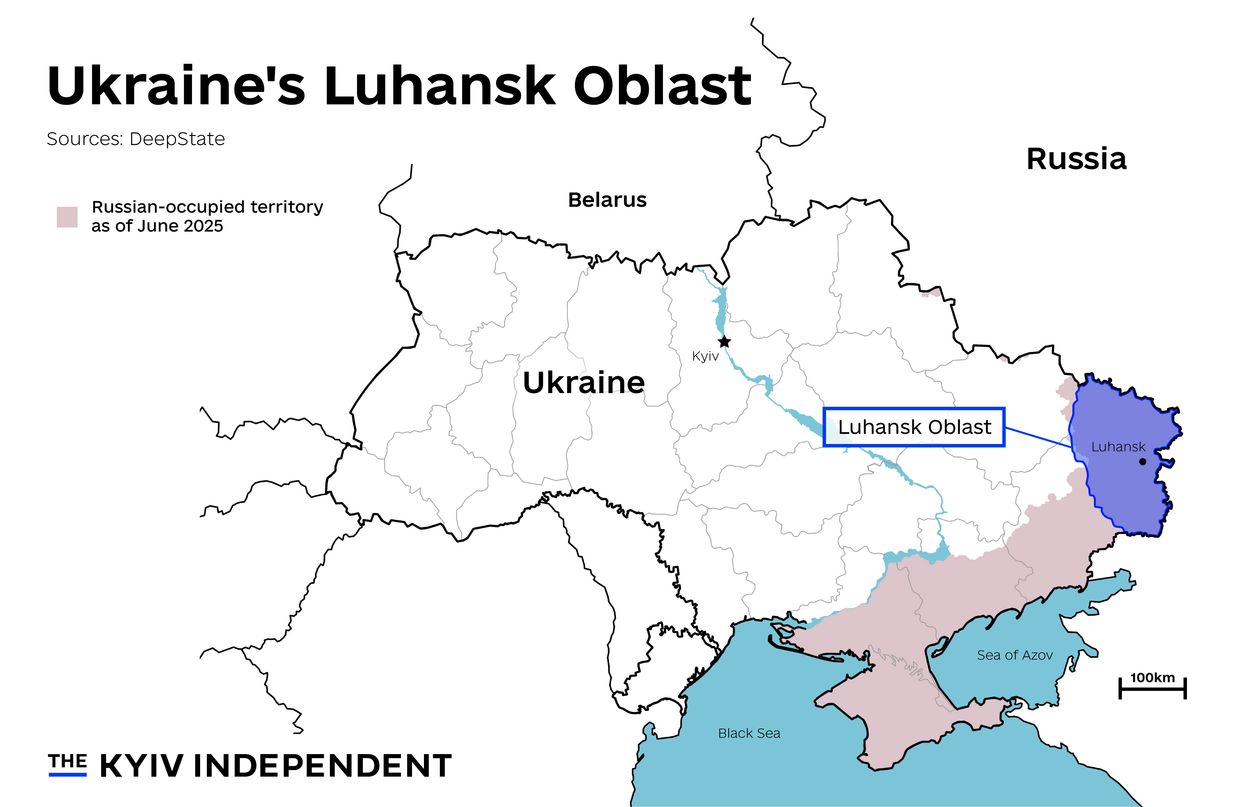
Ukraine's Luhansk Oblast (Nizar al-Rifai/The Kyiv Independent)
Overnight Ukrainian attacks were also reported in occupied Donetsk, with Telegram news channels sharing apparent footage of damaged buildings and fires in the city.
Denis Pushilin, the head of the Russian occupation authorities in Donetsk Oblast, claimed that one person was killed and three were injured in the attack. Ukrainian news channel Supernova+ reported that the attack targeted the headquarters of Russia’s 8th Combined Arms Army.
The Ukrainian military has not commented on the claims, which could not be independently verified.
Videos from occupied Donetsk after Ukrainian strike on the evening of June 30. Ukrainian analysts and media report a military facility was hit, while the “DPR” head says a woman was killed and three civilians injured
Ukraine's military regularly strikes military targets in Russian-occupied territories and deep within Russia in an attempt to diminish Moscow's fighting power as it continues its war against Ukraine.
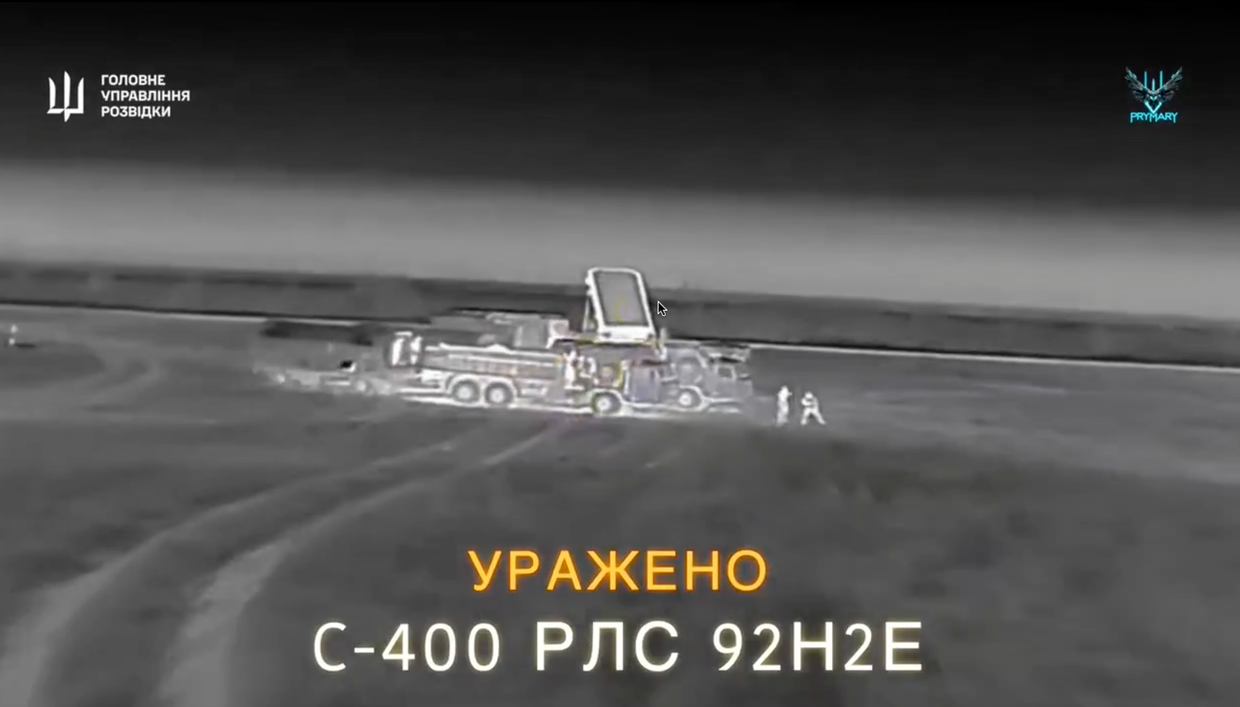
Ukraine's military intelligence (HUR) destroyed three Russian air defense systems using drones in the occupied Zaporizhzhia Oblast on June 14.
"Strike drone masters of the Department of Active Operations of the HUR of the Ukrainian defense ministry discovered and destroyed expensive air defense systems of the Russian invaders in the temporarily occupied territory of the Zaporizhzhia region," HUR reported in a post to Telegram.
A Russian Buk-M3, a Pantsyr S1, and a 9S19 Imbir radar from the S-300V air defense system were destroyed in the Ukrainian drone attack.
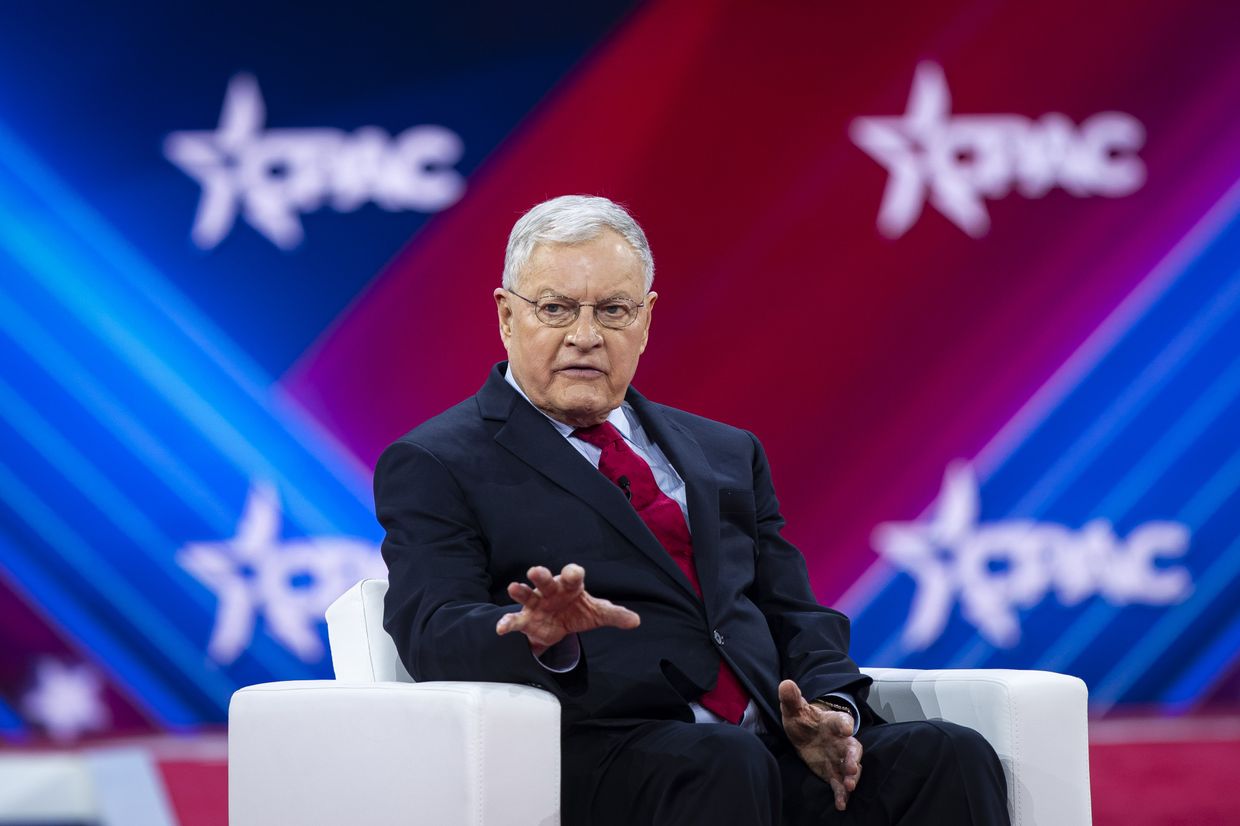
U.S. Special Representative Keith Kellogg has pushed back against Russian claims that Ukraine and the United States are responsible for delaying peace negotiations, arguing that it is Moscow that continues to obstruct efforts to end the war it initiated.
"Peskov’s recent comments on the state of negotiations are Orwellian. Russian claims that it is the U.S. and Ukraine stalling peace talks are unfounded," Kellogg said on X, citing reporting by the Kyiv Independent."
"President Trump has been consistent and adamant about making progress to end the war. We urge an immediate ceasefire and a move to trilateral talks to end the war. Russia cannot continue to stall for time while it bombs civilian targets in Ukraine.
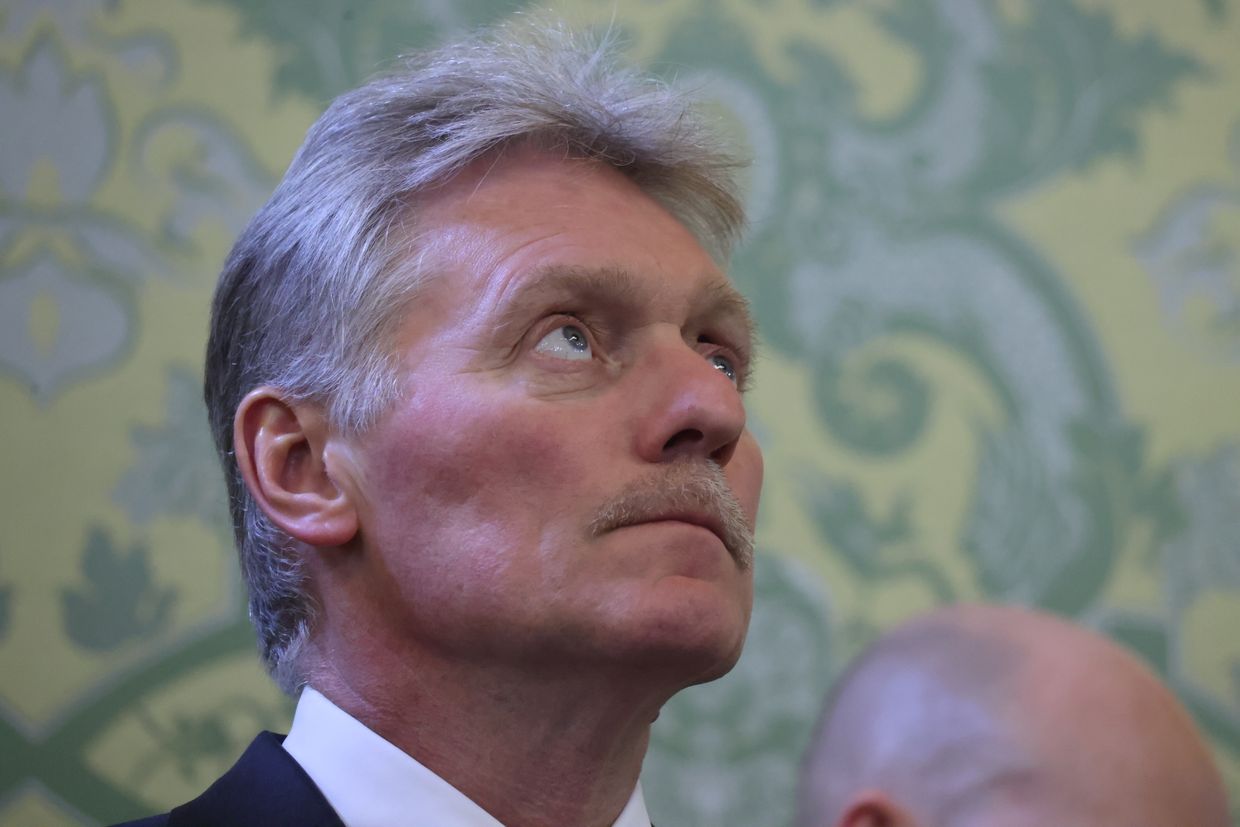
Kremlin spokesperson Dmitry Peskov on June 29 accused Washington and Kyiv of holding up progress, stating that future developments in peace talks depend on Ukraine’s stance, the effectiveness of U.S. mediation, and the situation on the battlefield.
“A lot depends, naturally, on the position of the Kyiv regime,” Peskov said in a televised interview with Belarus 1 TV, according to Reuters. “It depends on how effectively Washington's mediating efforts continue,” he added.
Peskov’s recent comments on the state of negotiations are Orwellian. Russian claims that it is the US and Ukraine stalling peace talks are unfounded. President Trump has been consistent and adamant about making progress to end the war. We urge an immediate ceasefire and a move to… pic.twitter.com/vCQoF1XEtd
Despite those remarks, Russia has rejected a U.S.-backed ceasefire proposal and continued its attacks on Ukrainian cities launching record numbers of drones against Ukrainian cities. Earlier this month, Russian President Vladimir Putin openly stated that “all of Ukraine is ours,” raising further doubts about the Kremlin’s willingness to engage in meaningful negotiations.
Peskov’s interview aired as the war moves into its fourth summer with no comprehensive ceasefire in place. Although two rounds of peace talks between Russia and Ukraine took place in Istanbul this year—on May 16 and June 2—the discussions have not led to any breakthrough on ending hostilities.
While the Istanbul meetings led to notable prisoner exchanges, they produced no tangible progress toward peace.
Editor's note: The article was updated with a statement from Ukraine's military intelligence agency.
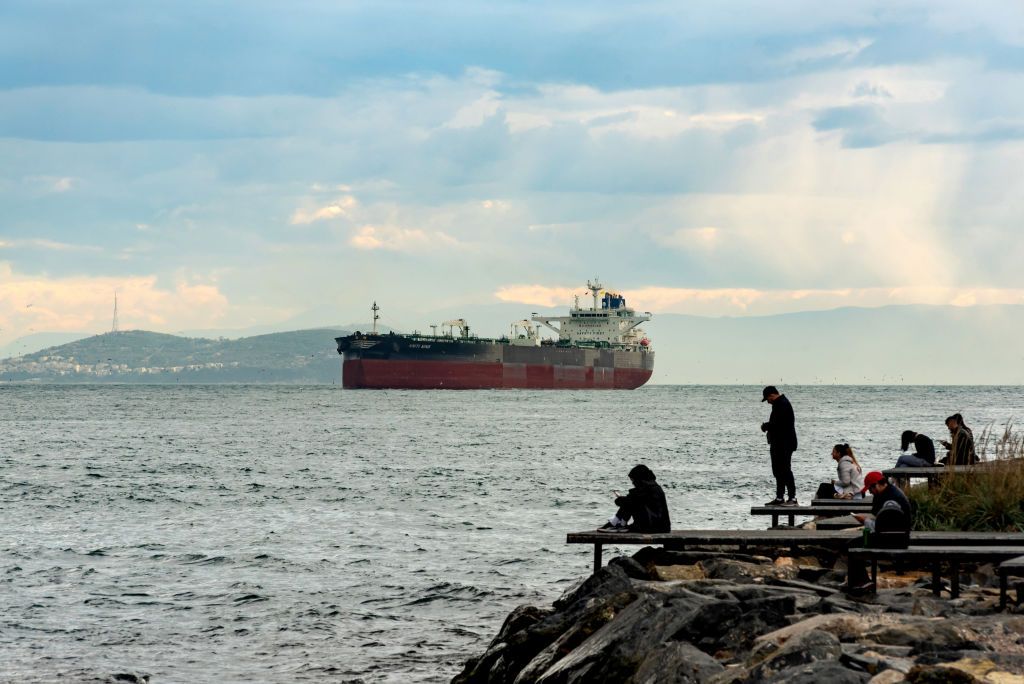
A tanker carrying 1 million barrels of oil experienced an explosion near Libya, its operator, TMS Tankers, said on June 30. The vessel, Vilamoura, is now being towed to Greece, where the extent of the damage will be assessed upon arrival.
The blast caused the engine room to flood due to water intake, though the cause of the explosion remains unclear, according to a company spokesperson.
The spokesperson confirmed that the crew is safe and no pollution has been reported.
The explosion occurred on June 27 as the vessel was departing the Libyan port of Zuwetina, some 150 kilometers (90 miles) northeast of Libyan territorial waters, Ukraine's military intelligence reported.
The incident comes amid a series of unexplained blasts targeting oil tankers that had previously visited Russian ports. In response, shipowners have started inspecting their vessels for mines using divers and underwater drones.
Vilamoura had visited Russian oil terminals twice since April, loading Kazakh-origin crude rather than Russian oil. According to Bloomberg vessel-tracking data, the tanker called at the Russian port of Ust-Luga in early April and at the Caspian Pipeline Consortium (CPC) terminal near Novorossiysk in May. Both terminals primarily handle Kazakh crude exports.
Maritime risk consultancy Vanguard Tech reported that four other vessels have been damaged by explosions since the beginning of the year. Each had recently docked at Russian ports, the firm said.
Ukraine has targeted Russian energy assets throughout the full-scale invasion, including a drone strike in February on the CPC pipeline, a route responsible for moving roughly 80% of Kazakhstan’s oil exports.
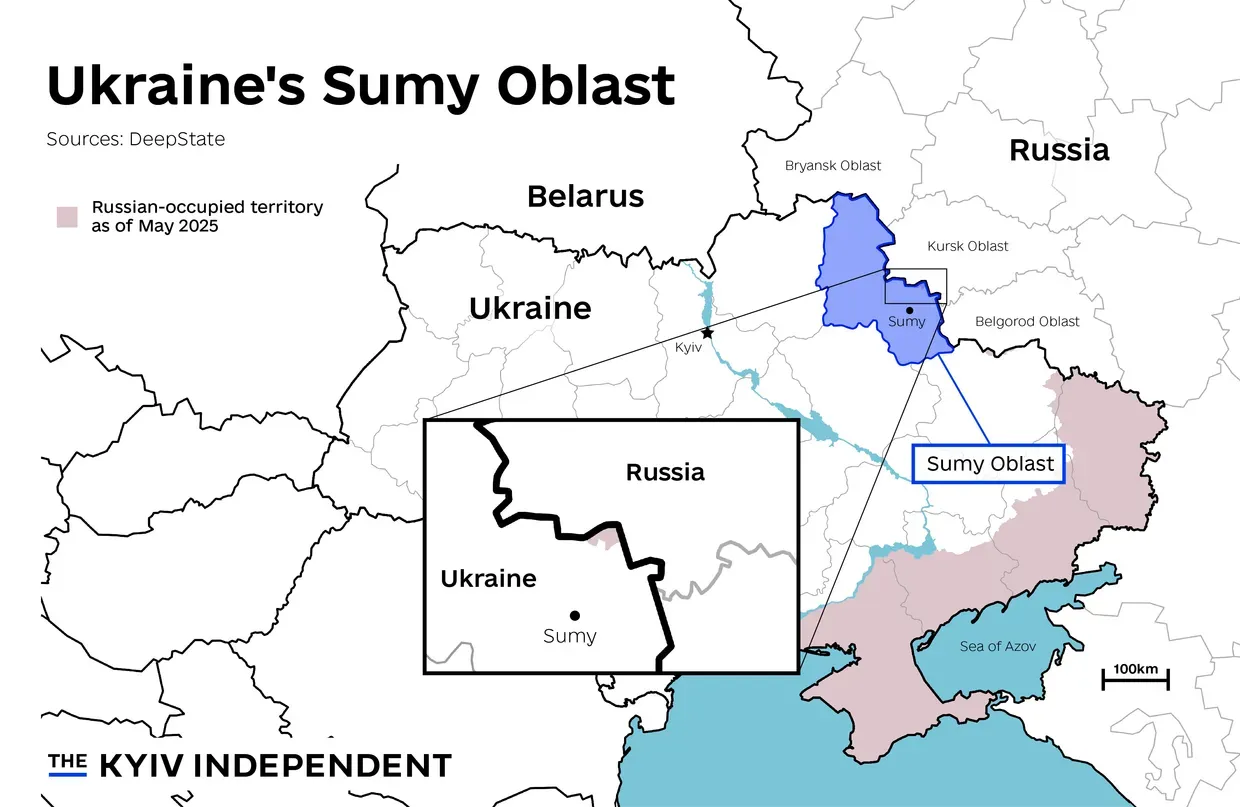
Ukrainian forces have stabilized the situation in Sumy Oblast and pushed the Russian army further away from Sumy, the region's capital, Ukraine's General Staff reported on June 30.
Moscow launched its new summer campaign in May, aiming to push deeper into Ukraine's northeastern and eastern regions and disregarding Kyiv's calls for an unconditional ceasefire.
Ukrainian troops advanced near the village of Oleksiivka, located less than 30 kilometers (18 miles) from the city of Sumy, and liberated the village of Andriivka, which had been captured by Russia in early June, the statement read.
In the meantime, Ukraine also stopped the Russian advance along the Yunakivka-Yablunivka-Novomykolayivka-Oleksiivka-Kindrativka line and the border with Russia near Kursk Oblast, according to the General Staff.
A map of Ukraine's Sumy Oblast (Nizar al-Rifal/The Kyiv Independent)
Russia has deployed its best brigades on this section of the front line and is using long-range artillery, aircraft, and attack drones, the General Staff said.
President Volodymyr Zelensky also said on June 30 that Ukrainian troops had halted the Russian offensive in Sumy Oblast.
"The Russian plan for an offensive in Sumy Oblast is not succeeding — thanks to every Ukrainian unit operating in the area," Zelensky said after a meeting with the military leadership and Defense Minister Rustem Umerov.
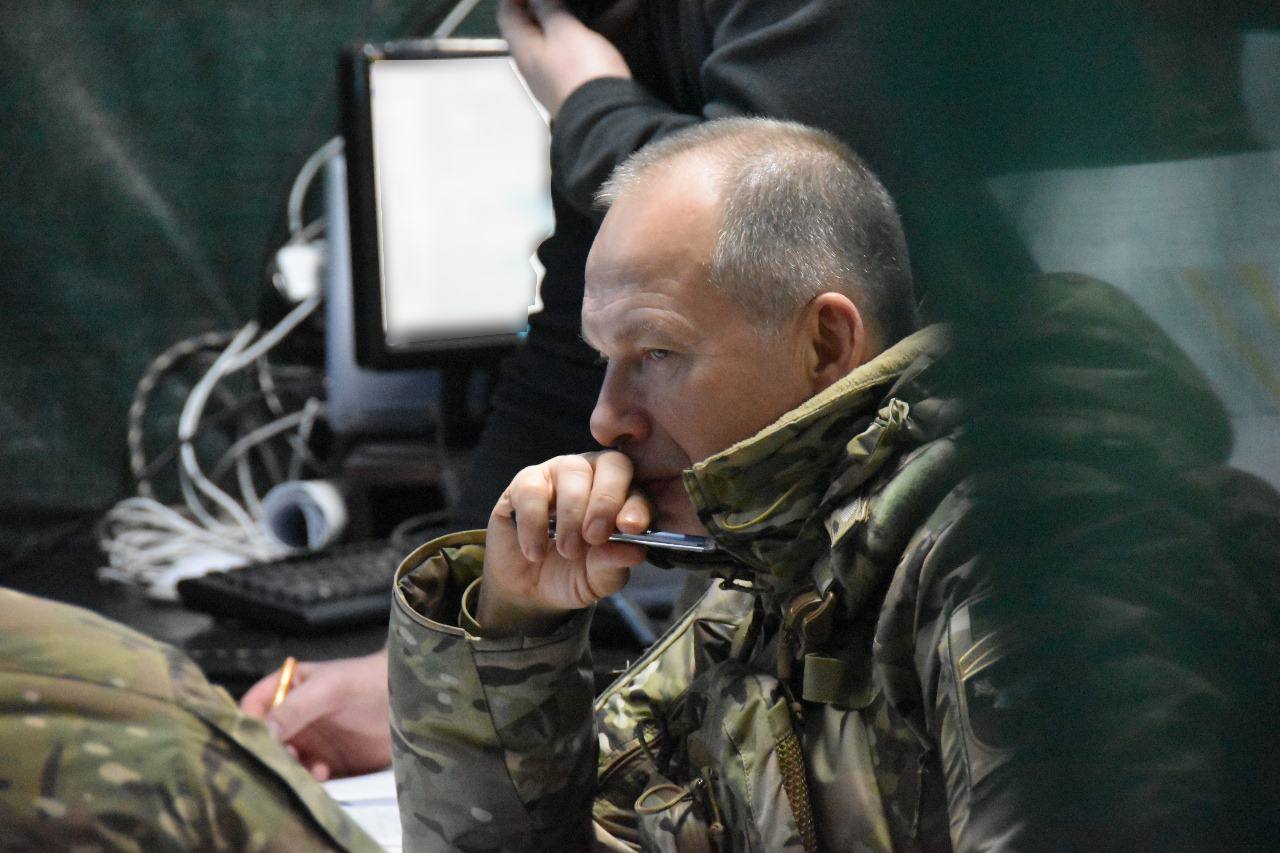
The Russian offensive's goal is to reach the administrative borders of Donetsk and Luhansk oblasts in the east and create a buffer zone in the border areas of Sumy and Kharkiv oblasts, Commander-in-Chief Oleksandr Syrskyi told journalists on June 21.
Russian forces are also attempting to fully oust Ukrainian troops from Russia's Kursk and Belgorod oblasts.
Ukraine launched a cross-border offensive into Kursk Oblast — bordering Ukraine's Sumy Oblast — last August, initially seizing 1,300 square kilometers (500 square miles) but losing the vast majority of this territory in a Russian counteroffensive earlier this year.
Moscow initially declared that it had fully liberated the region on April 26, but this claim was rejected by Ukraine and later disputed by Russian officials themselves.
The Ukrainian military on June 30 denied the latest reports that Russian troops had entered Dnipropetrovsk Oblast.
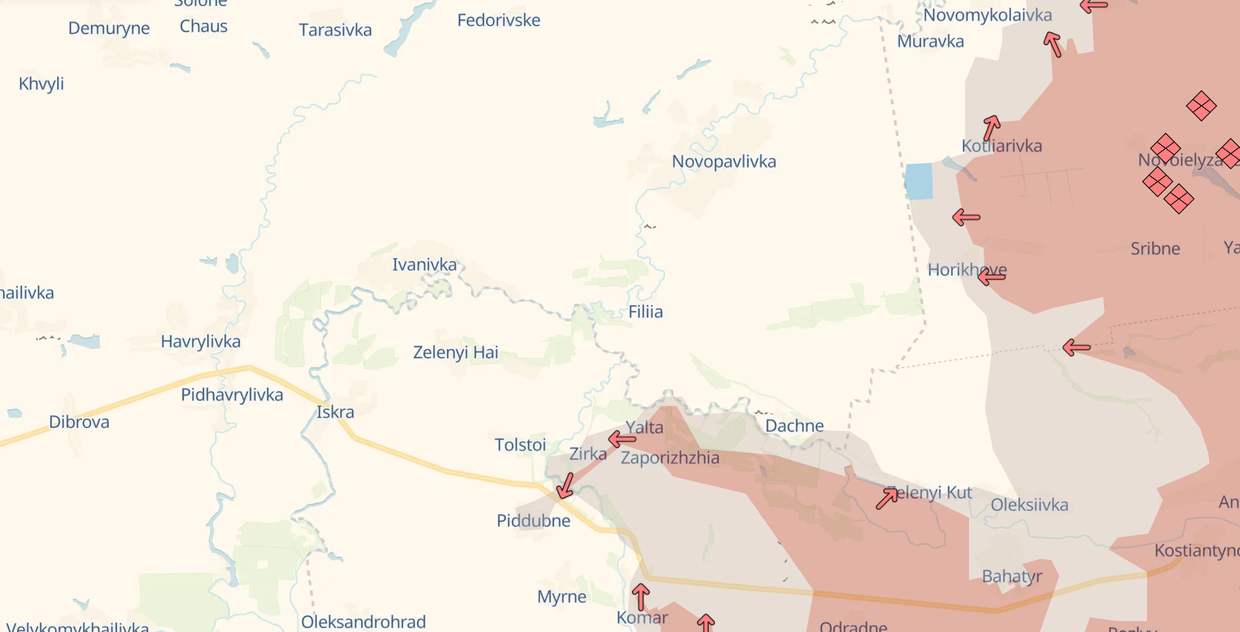
Since June 29, the Ukrainian battlefield monitoring group DeepState has marked a "gray" zone in Ukraine's Dnipropetrovsk Oblast, identifying potential fighting in this section of the front line. Near the village of Dachne in Dnipropetrovsk Oblast, the zone extends almost a kilometer into the region.
Meanwhile, Kremlin propagandists claimed on Telegram that Russian troops had captured Dachne.
The reports were denied by spokespeople of two Ukrainian brigades and the Khortytsia group of forces on June 30, Suspilne reported.
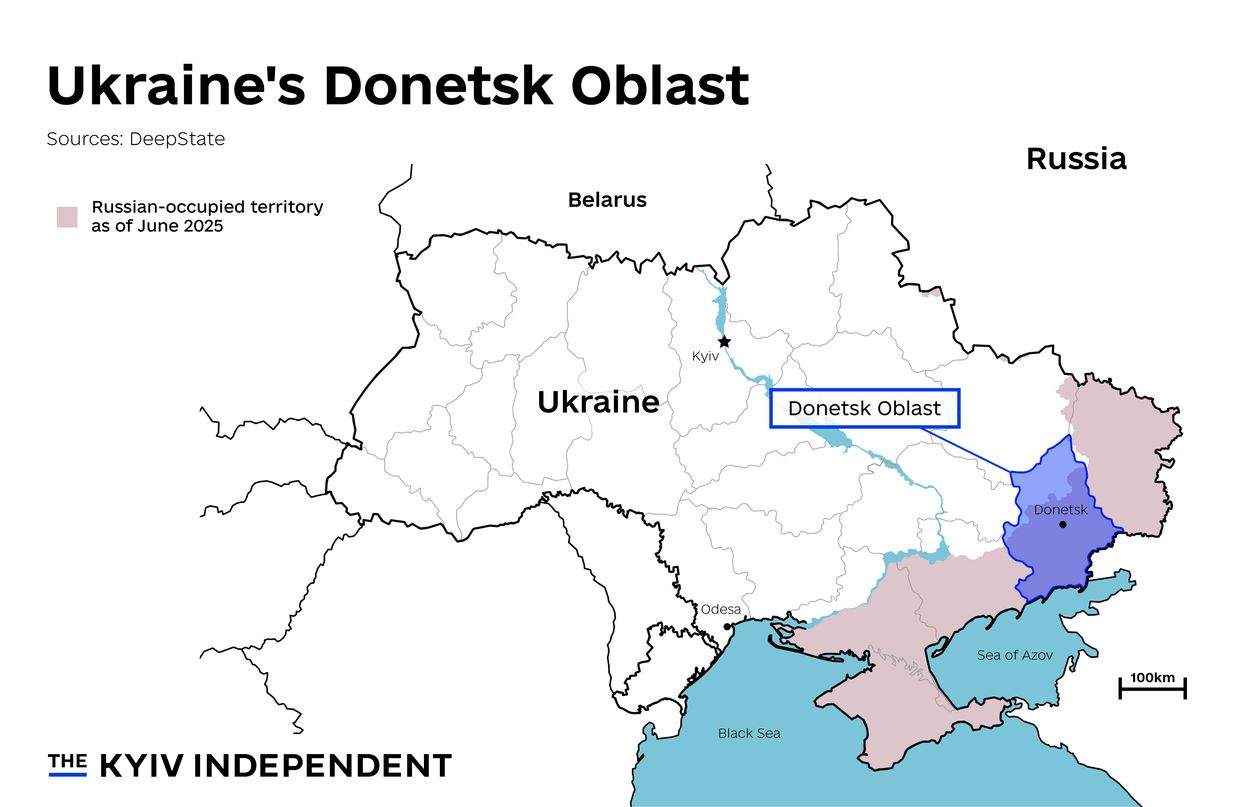
The estimated Russian advance in Donetsk Oblast as of June 29, 2025. (DeepState/OpenStreet Map)
"There are very active battles in the villages located near the administrative border of the region," Viktor Tregubov, spokesperson for Ukraine's Khortytsia group of forces, told Suspilne, adding that Ukraine is holding the defense line near the villages of Yalta, Komar, and Shevchenkove.
Tregubov added that Russian troops had not entered Dnipropetrovsk Oblast as of noon on June 30.
The press service of the 3rd brigade of the National Guard, stationed in the nearby Pokrovsk sector of the front line, also denied the information about the breakthrough.
Nazar Voitenkov, spokesperson for the 33rd Separate Mechanized Brigade, based in Zaporizhzhia Oblast, also said that the Russian army had made no advances into Dnipropetrovsk Oblast.
"We are holding the defense line. The line is constantly changing, but the enemy has not broken through," Voitenkov said.
Andrii Kovalenko, head of Ukraine's counter-disinformation center, said on Telegram that fighting is taking place near the region's administrative border, and Russian FPV (first-person-view) drones are also flying into Dnipropetrovsk Oblast,
But despite the heavy battles, there is no breakthrough, he added.
The statements come as Russian troops continue their offensive in Donetsk Oblast, pushing closer to Dnipropetrovsk Oblast — a major industrial region in central Ukraine.
In mid-June, Ukraine's military also denied reports that Russian troops had entered the region, with President Volodymyr Zelensky saying that Ukrainian troops had intercepted Russian reconnaissance units attempting to breach Dnipropetrovsk Oblast.
Editor's note: The story was updated after the Sputnik news agency disclosed the names of those detained in Baku.
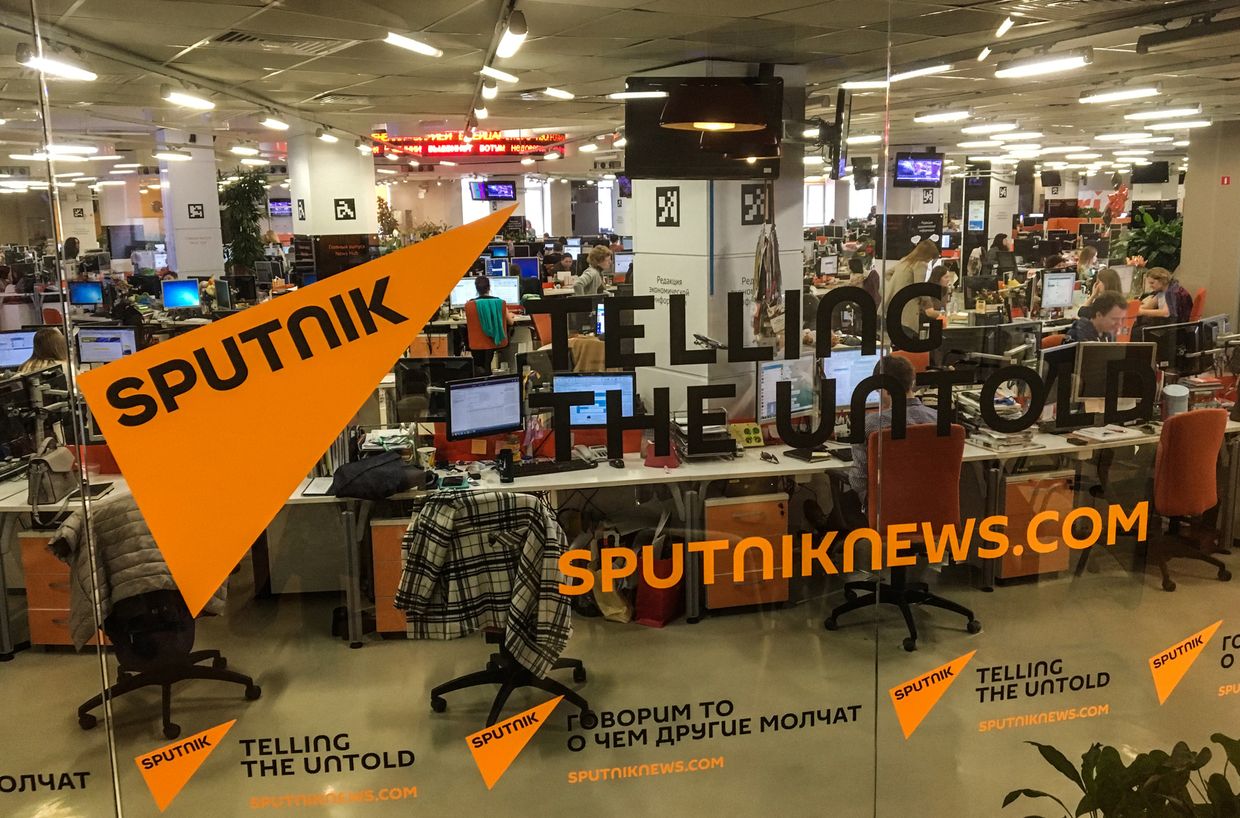
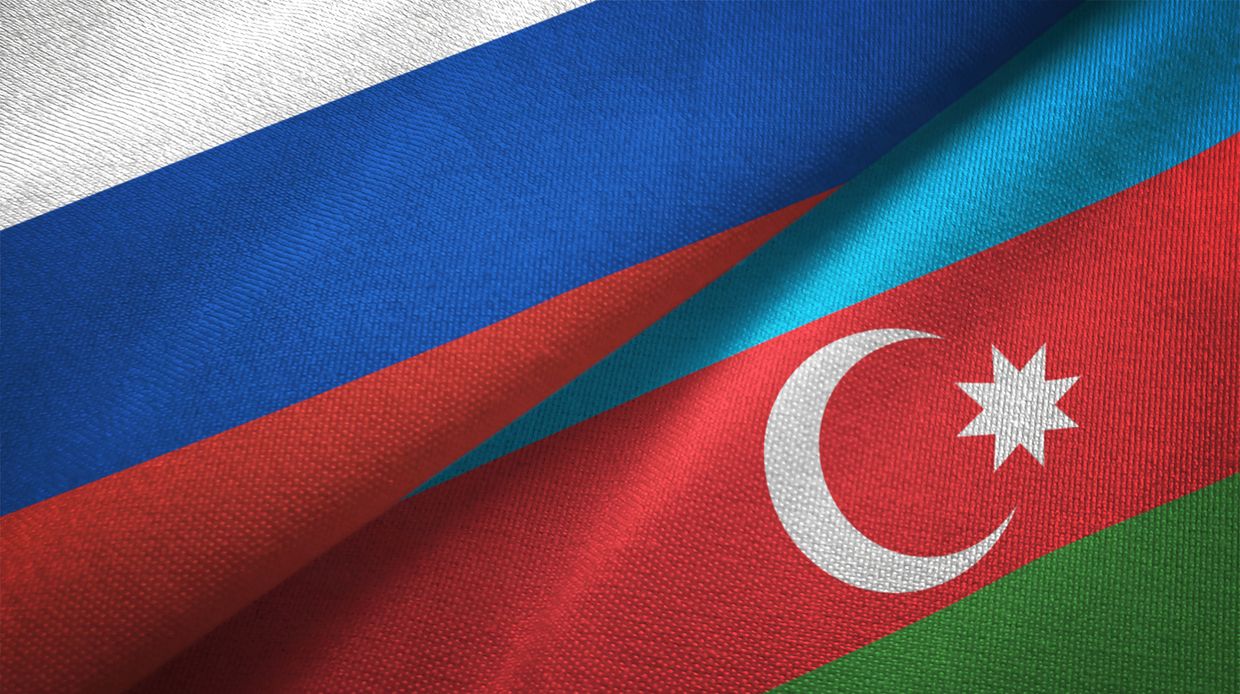
Azerbaijani police detained two alleged agents of Russia's Federal Security Service (FSB) on June 30 following searches at the Baku office of the Russian state-controlled news agency Sputnik, the Azerbaijani news outlet Apa.az reported.
Sputnik later elaborated that Igor Kartavykh, chief editor of Sputnik Azerbaijan, and Yevgeniy Belousov, managing editor, had been detained in Baku. The agency called the allegations that the detainees were FSB agents "absurd."
The move comes amid a major deterioration in Russian-Azerbaijani relations that followed the detention of over 50 Azerbaijanis as part of a murder investigation in Yekaterinburg on June 27. Two people died during the detentions, and three others were seriously injured.
The searches in the office of the Russian propaganda media outlet, which operates as a local branch of Russian state news agency Russia Today (RT), began on June 30.
The Russian propagandist Margarita Simonyan, editor-in-chief of Russia Today, said that representatives of the Russian embassy in Baku were on their way to Sputnik's office. Sputnik employees were offline and probably did not have access to phones, she added.
According to Simonyan, some of Sputnik's employees were Russian citizens.
The Azerbaijani government ordered in February that the activities of Sputnik's Azerbaijani office be suspended.
The authorities said that the move was intended to ensure parity in the activities of Azerbaijan's state media abroad and foreign journalists in the country. This meant that the number of Sputnik Azerbaijan journalists working in Baku was to be equal to the number of journalists of the Azerbaijani news agency Azertadzh in Russia.
As a result, Sputnik Azerbaijan had to reduce its staff from 40 people to one but refused to do so and continued to operate despite the Azerbaijani government's decision, according to Apa.az.
As the Russian-Azerbaijani relations deteriorate, Azerbaijan has cancelled all planned cultural events hosted alongside Russian state and private organizations, the country's Culture Ministry announced on June 29.
The announcement followed the deaths of two Azerbaijani citizens during police raids in the Russian city of Yekaterinburg.
Azerbaijan’s Foreign Ministry said on June 28 that Ziyaddin and Huseyn Safarov had died during a raid carried out by Russian authorities. Azerbaijan called the killings "ethnically motivated" and "unlawful" actions.
Baku called for the perpetrators to be brought to justice and said it expected Moscow to conduct a comprehensive investigation into the incident.
In the meantime, the Russian Foreign Ministry said that the detentions were carried out as part of an investigation into serious crimes. Foreign Ministry spokesperson Maria Zakharova claimed that these were cases related to murders committed in 2001, 2010, and 2011.
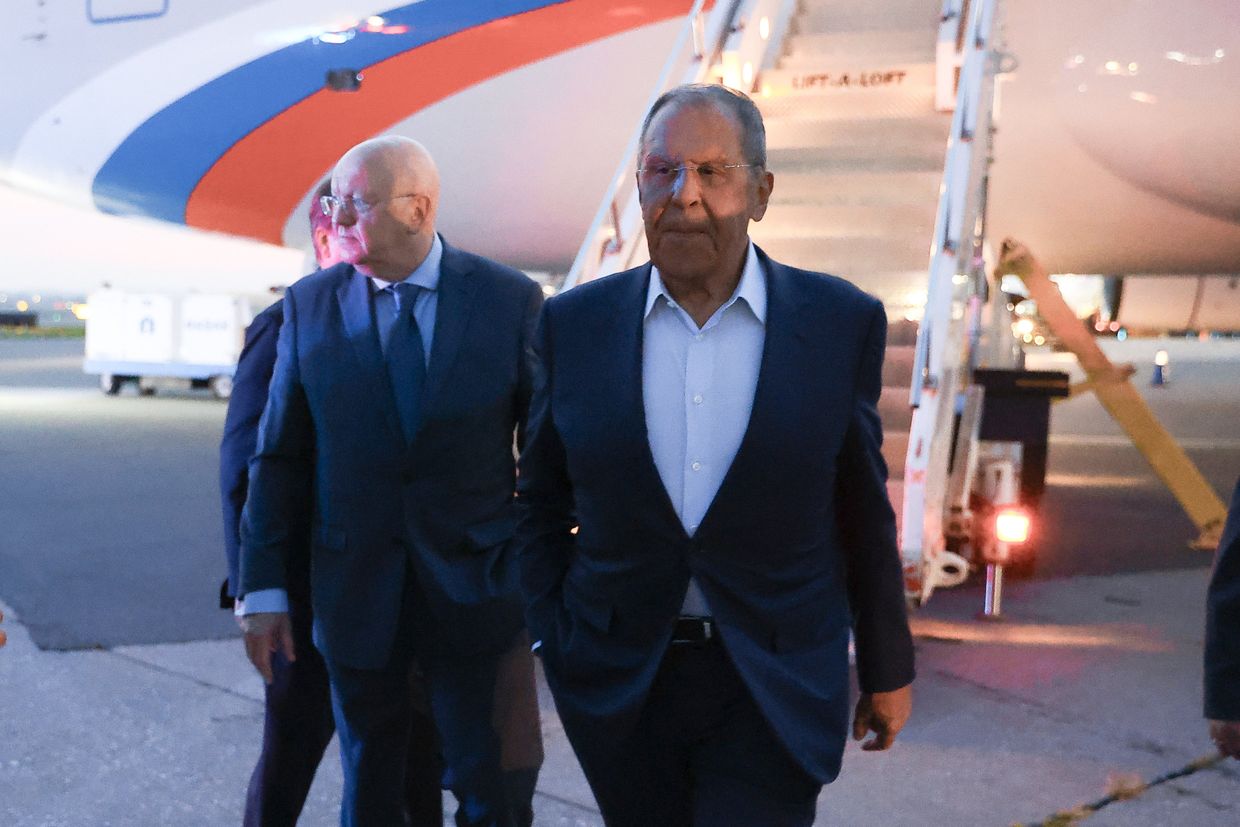
NATO's increased defense spending will lead to the "collapse" of the alliance, Russian Foreign Minister Sergei Lavrov said on June 30, despite Russian officials recently warning that Moscow's own military expenditure is driving the country towards recession.
Lavrov's comments come after NATO leaders last week approved a new defense spending benchmark, committing members to spend at least 5% of GDP on defense and security-related expenditures by 2035, a goal long pushed by the U.S. and endorsed by NATO Secretary General Mark Rutte.
The week previously, and in a rare public sign that all is not well in Russia, two high-ranking Moscow officials issued separate warnings about the state of the country's economy.
Russian Central Bank Governor Elvira Nabiullina and Economy Minister Maxim Reshetnikov both highlighted that amid the Kremlin's full-scale war against Ukraine, the tools Moscow once relied on to maintain wartime growth are nearly exhausted.
Polish Foreign Minister Radoslaw Sikorski on June 26 said an arms race between Russia and NATO could lead to Russian President Vladimir Putin's downfall.
"Since (Polish Foreign Minister Radoslaw Sikorski) is such a predictor, he probably foresees that a catastrophic increase in the budget of NATO countries, according to my estimates, will also lead to the collapse of this organization," Lavrov reportedly said.
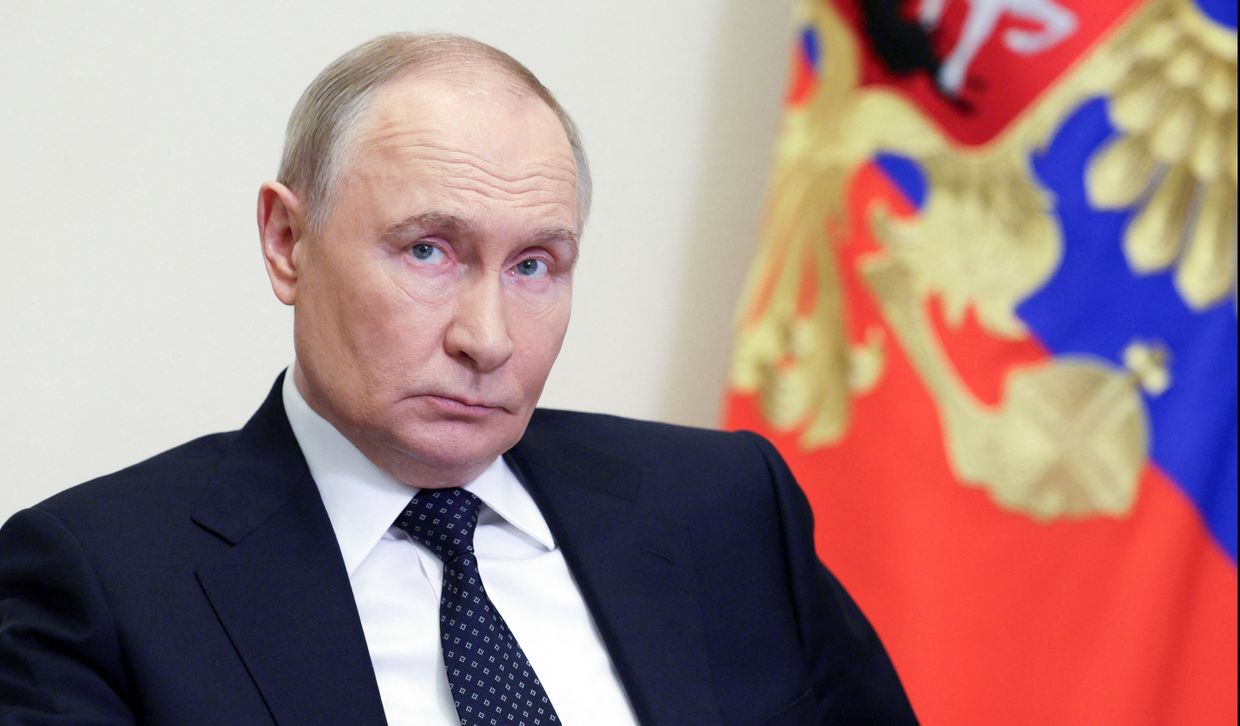
Putin last week announced that Moscow plans to cut its military expenditure beginning next year, in a rebuke of NATO members' plans to increase defense spending to 5% of GDP.
"We are planning to reduce defence spending. For us, next year and the year after, over the next three-year period, we are planning for this," Putin said, though he did not provide concrete details.
"Europe is thinking about how to increase its spending, on the contrary. So, who is preparing for some kind of aggressive actions? Us or them?"
Western officials and analysts point to Russia's surging military expenditures amid its ongoing full-scale invasion of Ukraine. In 2024, Russia's defense budget reportedly rose 42% in real terms, reaching $462 billion, surpassing the combined spending of all European nations, according to the International Institute for Strategic Studies.
NATO allies have cited Russia's military buildup, sabotage campaigns, and continued aggression against Ukraine as reasons to accelerate defense investments. Rutte warned that Russia could rebuild its military capacity to threaten NATO territory within five years, urging members to act with urgency.
Russian attacks across multiple Ukrainian regions over the past 24 hours have killed at least six people and injured 26 others, according to local officials. The strikes involved drones, artillery, and guided bombs, hitting residential areas and critical infrastructure.
According to Ukraine's Air Force, Ukrainian air defense hit 74 out of 107 drones launched overnight by Russia.
In Kharkiv Oblast, two people were killed and eight injured following attacks on six settlements, Governor Oleh Syniehubov said. Damage was reported to houses, vehicles, and civilian infrastructure across Kharkiv, Kupiansk, and Chuhuiv districts.
In Kherson Oblast, Russian forces struck residential areas and civilian infrastructure in over two dozen localities, killing two people and injuring eight others, according to Governor Oleksandr Prokudin. Damage included houses, utility systems, and communications infrastructure.
In Zaporizhzhia Oblast, one person was killed in Vasylivka district. Governor Ivan Fedorov said Russian forces launched 375 strikes on 10 settlements, damaging houses and vehicles.
In Dnipropetrovsk Oblast, three people were injured in Kryvyi Rih following drone strikes and artillery attacks, Governor Serhii Lysak reported. Fires broke out, and damage was recorded at a farm and in residential areas.
In Donetsk Oblast, at least one person was killed and four others injured, Governor Vadym Filashkin said. Multiple residential buildings, a church, and a pharmacy were damaged across Pokrovsk, Kramatorsk, and Bakhmut districts.
In Sumy Oblast, Russian attacks injured three civilians, regional authorities said. Nearly 80 strikes targeted 29 settlements, damaging houses, educational institutions, and public buildings.
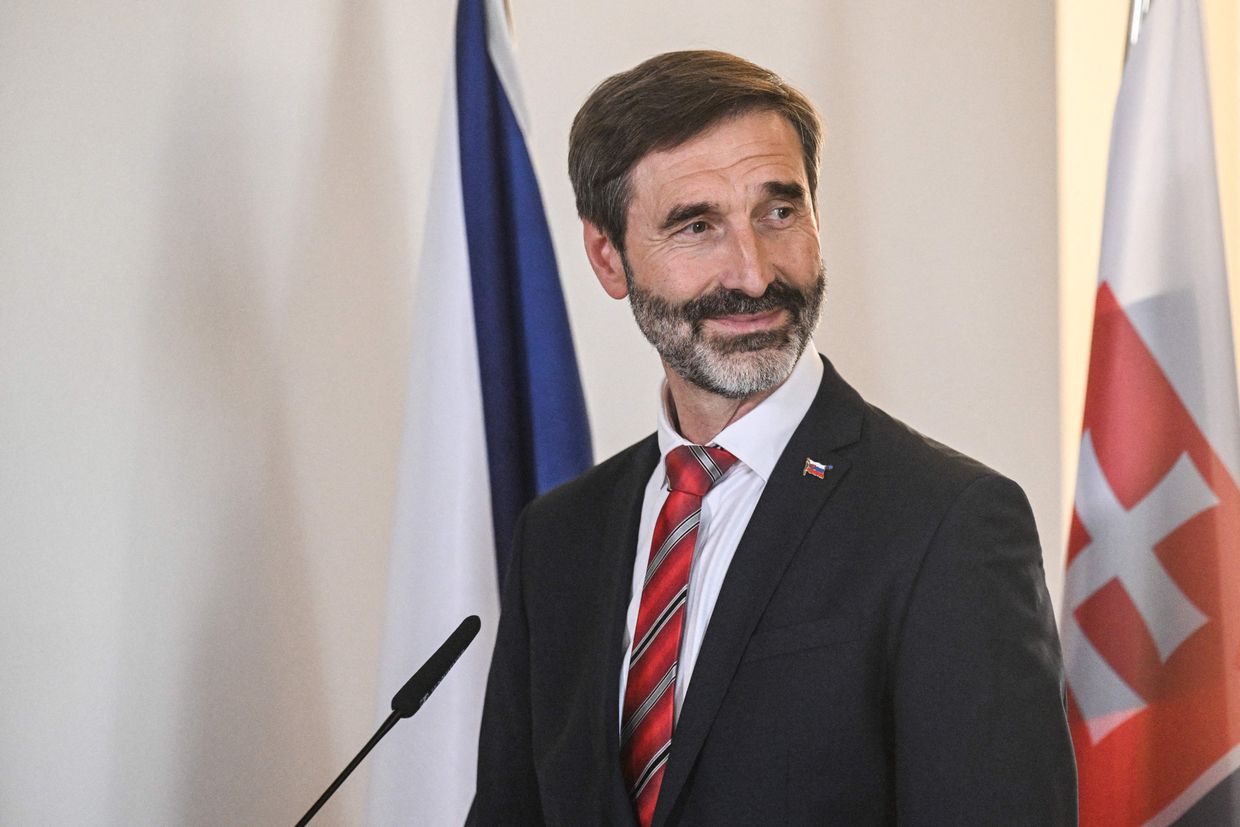
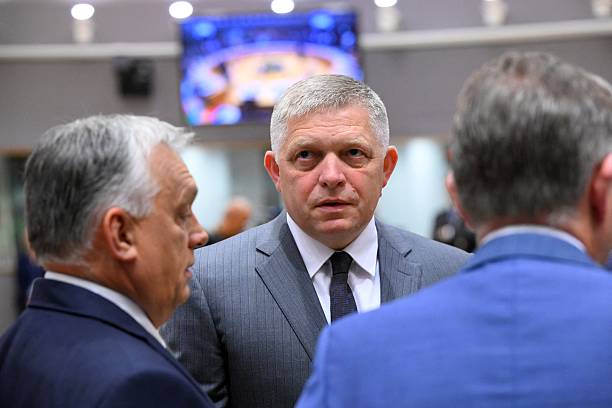
Ukrainian Foreign Minister Andrii Sybiha on June 30 rebuked Slovakia's foreign minister after he suggested the international community might "perhaps even forgive" Russia's actions and reengage in dialogue with Moscow to end the war in Ukraine.
"Russia's sense of impunity is the root cause of its crimes," Sybiha wrote in a post on X. "It's naive to expect a criminal to stop if their crime is forgiven instead of punished. Russia will hit your other cheek as well. And those who have lost no one in this war have no right to make such statements."
Sybiha's remarks came in response to comments made by Slovak Foreign Minister Juraj Blanar during a domestic media interview on June 29. Blanar argued the war in Ukraine could not be resolved militarily and called for a return to diplomacy, suggesting Russia could be forgiven.
"Let us return to respect for international law and seek ways to communicate with the Russian Federation," he said. "And perhaps even forgive everything that has happened."
Juraj, Russia's sense of impunity is the root cause of its crimes. It's naive to expect a criminal to stop if their crime is forgiven instead of punished. Russia will hit your other cheek as well. And those who have lost no one in this war have no right to make such statements. pic.twitter.com/ALLzGT6ugP
Slovakia recently requested a delay in adopting the European Union's 18th sanctions package against Russia, citing the need for further clarification on how it would impact member states, particularly in light of the EU's RePowerEU initiative to end dependence on Russian fossil fuels by 2030.
Fico's administration has distanced itself from the pro-Ukraine consensus within the EU and NATO. Since taking office in 2023, he has halted Slovak military aid to Ukraine and pursued diplomatic engagement with Russia. Earlier this year, Fico attended Russia's Victory Day Parade in Moscow and met with President Vladimir Putin — a gesture most Western leaders avoided.
Fico has dismissed the idea of meeting with President Volodymyr Zelensky, telling Slovak broadcaster STVR that Zelensky "hates me" and that such a meeting "has no significance."
Ukraine has consistently emphasized that peace can only come through justice and accountability for Russian war crimes and aggression, a position echoed by many Western governments.
Editor's note: The story was updated with comments made by Russia's Defense Ministry.
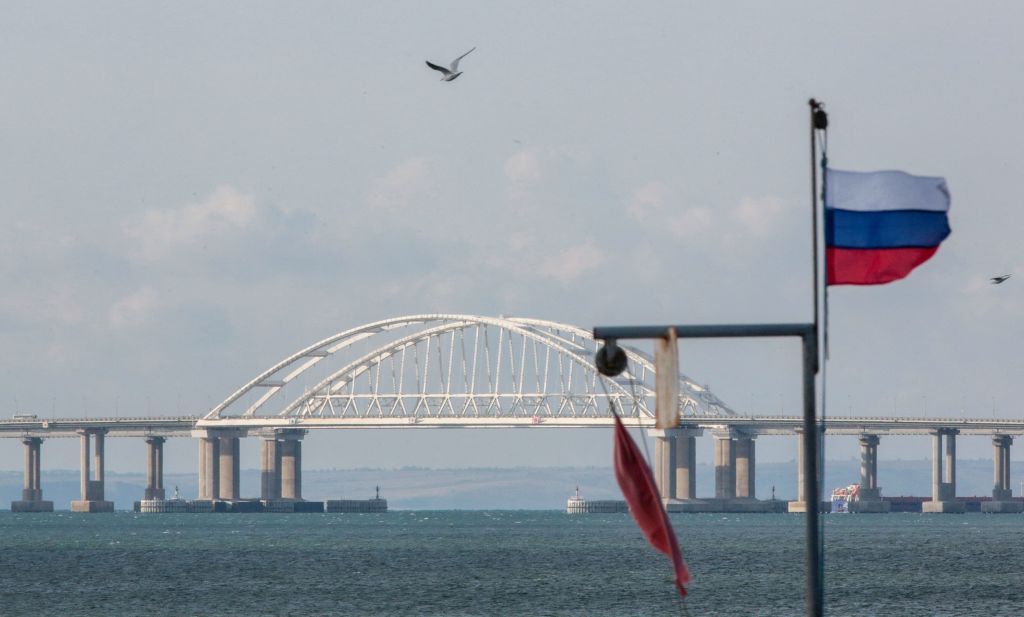
The Crimean Bridge was temporarily closed late on June 29 following reports of explosions and active air defense fire in the city of Kerch, according to local Telegram channels.
Witnesses reported hearing multiple blasts and observing Russian air defense systems in action. "Explosions heard in Kerch, Russian air defense is firing, and the lighting on the Crimean Bridge has been turned off," the Crimean Wind Telegram channel reported.
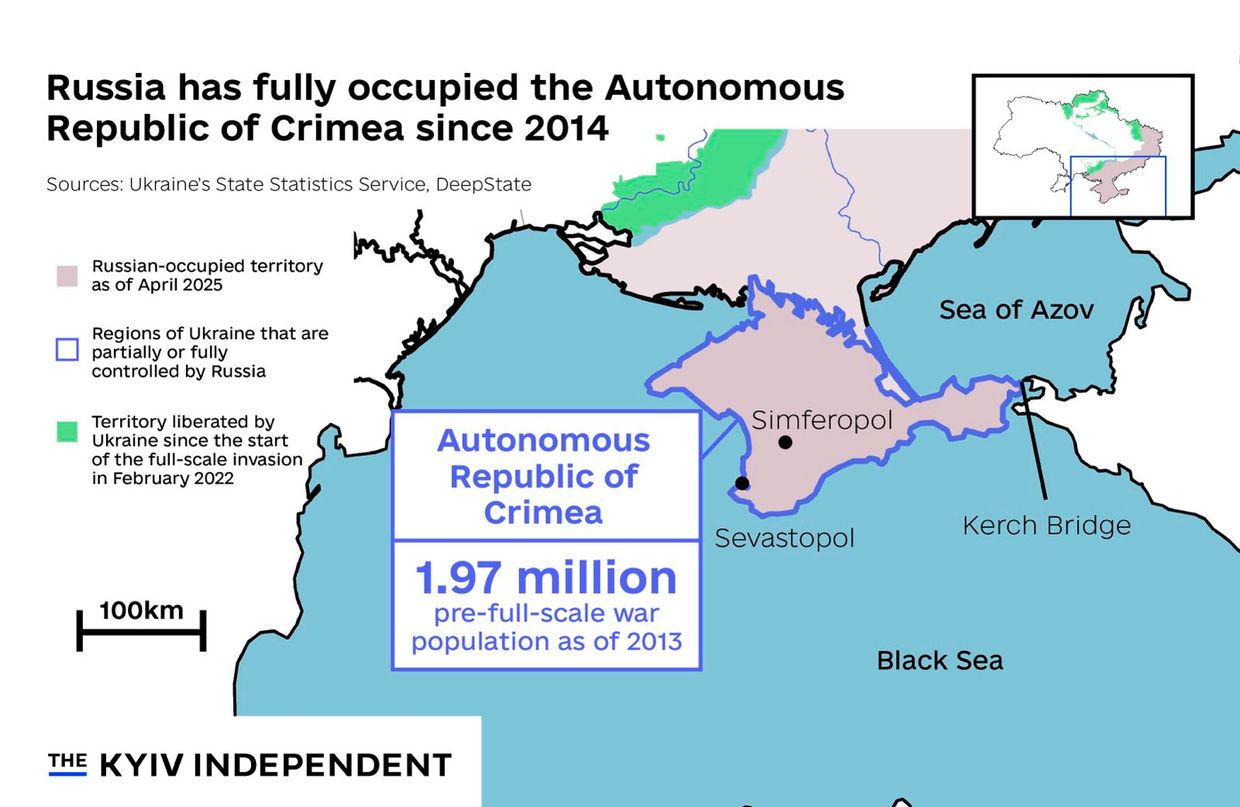
Ukraine has frequently targeted the Crimean Bridge over the course of the Russian full-scale invasion. Constructed after Russia's illegal occupation of Crimea in 2014, it is a critical supply and transport route for Russian forces to the occupied Ukrainian territories.
A map showing Russian control over Crimea and Ukrainian land on the Black Sea coast. (Nizar al-Rifai/The Kyiv Independent)
Traffic on the bridge was briefly halted, though it remains unclear whether the closure was precautionary or due to damage. Traffic reportedly resumed just over an hour later.
Russia's Defense Ministry said on June 30 that its air defense systems shot down five Ukrainian drones overnight over the Sea of Azov. It did not report any damage in Kerch or to the Crimean Bridge.
The incident follows a series of Ukrainian attacks on the Crimean Bridge. On June 3, Ukraine's Security Service (SBU) confirmed it had carried out a third strike targeting the bridge, detonating 1,100 kilograms of explosives beneath its underwater supports.
"God loves the Trinity, and the SBU always brings what is conceived to the end and never repeats itself," SBU Chief Vasyl Malyuk said in a statement at the time. The operation, he added, had been planned over several months and caused "severe" damage to the bridge's foundations without harming civilians.
Russian media later claimed a Ukrainian intelligence agent involved in preparing the explosive had been detained by the Federal Security Service (FSB).
The bridge, also known as the Kerch Bridge, previously suffered damage in Ukrainian attacks in October 2022 and July 2023. Despite these strikes, Russia has worked to maintain the bridge's operational status due to its strategic and symbolic importance.
After months of diplomatic stalling, the Kremlin on June 29 blamed Kyiv and Washington for the lack of progress in peace talks, with Kremlin spokesman Dmitry Peskov saying the pace of negotiations hinges on Ukraine's position, the effectiveness of U.S. mediation, and battlefield developments.
"A lot depends, naturally, on the position of the Kyiv regime," Peskov told Belarus 1 TV, in comments reported by Reuters, adding: "It depends on how effectively Washington's mediating efforts continue."
Russia has repeatedly refused to a U.S.-proposed ceasefire agreement, has escalated attacks on Ukrainian civilians, and Russian President Vladimir Putin declared earlier this month that "all of Ukraine is ours."
Peskov made the remarks in a televised interview, as the full-scale war enters its fourth summer with no comprehensive ceasefire in sight, and two mostly inconclusive rounds of peace talks.
Russia and Ukraine have held two rounds of face-to-face talks in Istanbul this year, first on May 16 and again on June 2, following more than three years without direct negotiations. The meetings resulted in significant prisoner exchanges, but no significant steps toward a ceasefire.
During the June 2 meeting, both sides presented proposals for ending the war, but Putin later described them as "absolutely opposite" memorandums.
Ukraine's delegation, led by Defense Minister Rustem Umerov, demanded an unconditional 30-day ceasefire, a position supported by Western partners, while Russia insisted on a 2–3-day limited truce to recover the bodies of fallen soldiers.
"Russia rejects even the very idea of stopping the killings," Umerov said after the talks. "That's why we appeal to the world: pressure is needed for real peace, not for an imitation of negotiations."
Despite the deadlock, Russia said it is open to a third round of negotiations. "In general, we are ready for this," Putin told reporters on June 27, suggesting Istanbul could again serve as the venue.
Turkish President Recep Tayyip Erdogan confirmed Ankara's willingness to host, and said efforts are underway to arrange a direct meeting between Putin and President Volodymyr Zelensky — possibly with U.S. President Donald Trump joining the talks.
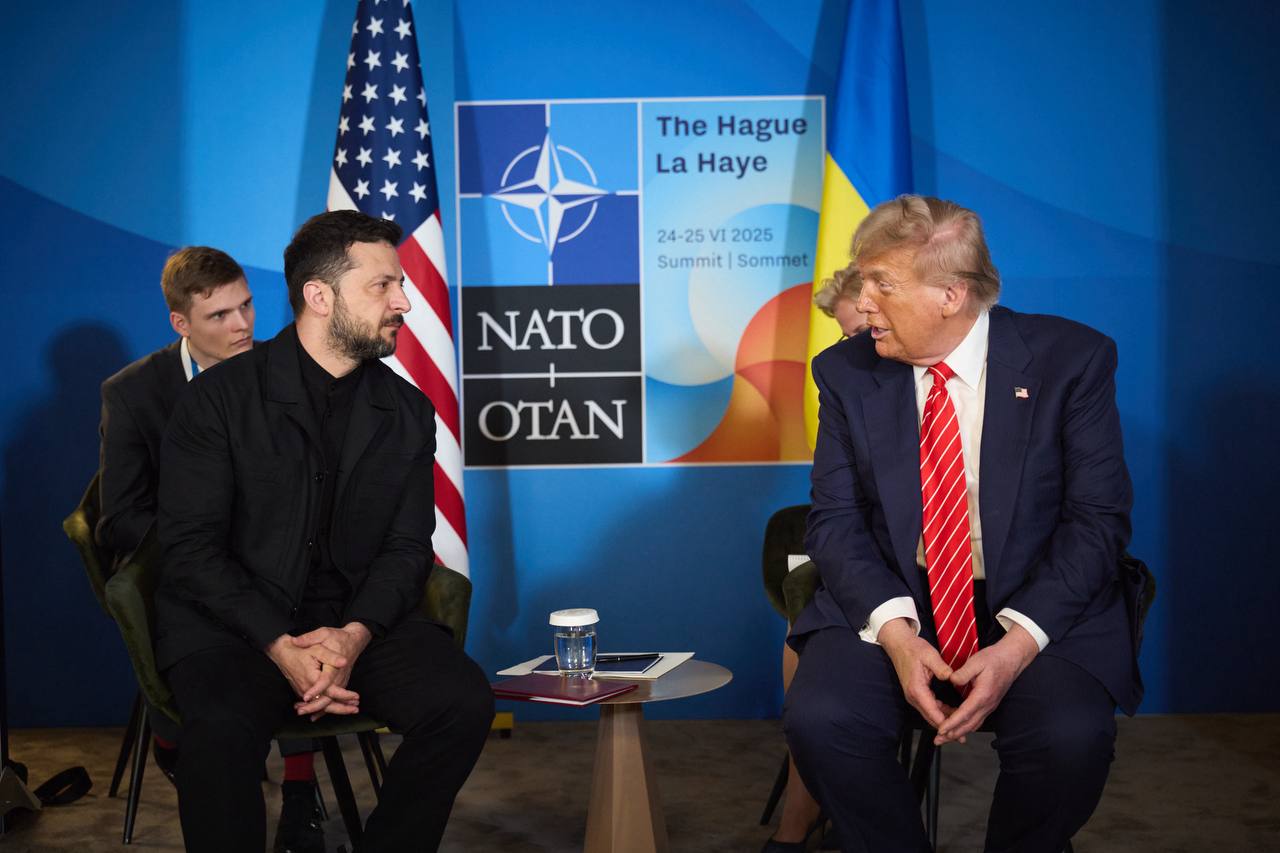
Zelensky has expressed support for a trilateral format and discussed the idea during the recent NATO summit in Brussels, where he and Trump also spoke about enhanced U.S. military assistance and co-production of air defense systems and drones.
So far, Trump has not imposed the additional sanctions on Russia he promised if peace efforts failed. "If the Istanbul meeting brings nothing, that clearly means strong new sanctions are urgently needed," Zelensky said on June 2.
While the Kremlin continues to reject a broad ceasefire, its forces are advancing in Ukraine's southeast, gaining territory in Donetsk and Dnipropetrovsk oblasts, and intensifying missile and drone strikes on civilians.
Russia has lost around 1,020,010 troops in Ukraine since the beginning of its full-scale invasion on Feb. 24, 2022, the General Staff of Ukraine's Armed Forces reported on June 30.
The number includes 1,070 casualties that Russian forces suffered just over the past day.
According to the report, Russia has also lost 10,980 tanks, 22,922 armored fighting vehicles, 53,593 vehicles and fuel tanks, 29,718 artillery systems, 1,427 multiple launch rocket systems, 1,190 air defense systems, 420 airplanes, 340 helicopters, 42,796 drones, 28 ships and boats, and one submarine.
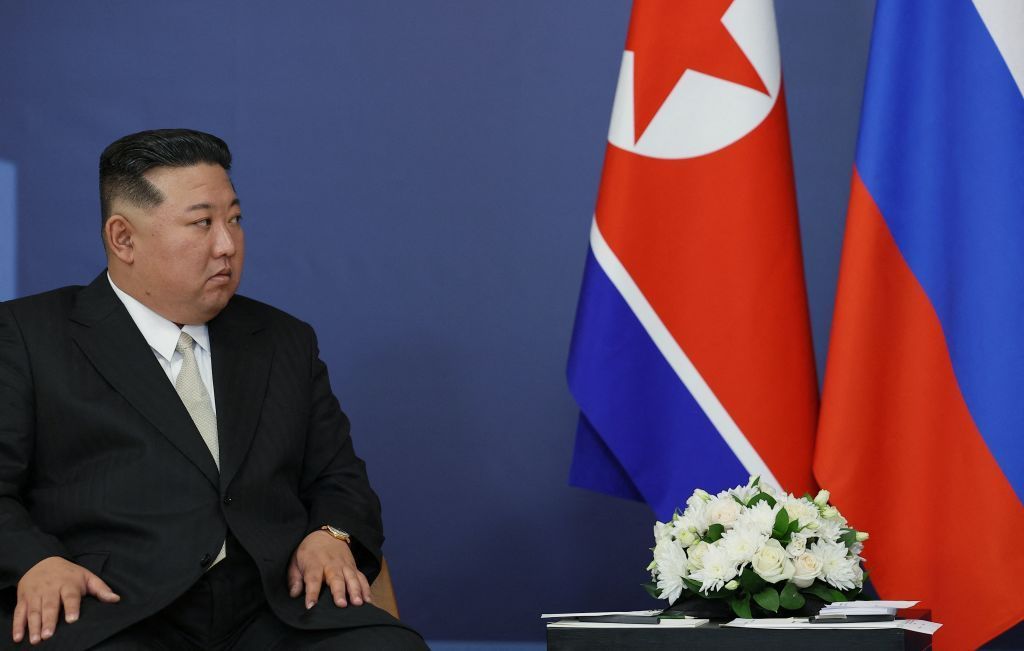
North Korean leader Kim Jong-un met with Russian Culture Minister Olga Lyubimova in Pyongyang on June 29 to discuss expanding bilateral cooperation in culture and the arts, according to North Korea’s state-run Korean Central News Agency (KCNA).
The meeting took place at the headquarters of the ruling Workers' Party of Korea's Central Committee and was also attended by Russian Ambassador to North Korea Alexandr Matsegora, KCNA reported.
Lyubimova led a Russian culture ministry delegation to Pyongyang, arriving on June 28 at the invitation of North Korea’s culture ministry to mark the first anniversary of the countries' comprehensive strategic partnership treaty.
During the meeting, Kim noted what he described as "broad and in-depth exchanges and cooperation" across various sectors since the treaty’s signing. He said these developments "have made tangible contributions to the mutual development and well-being of the two countries' peoples," according to KCNA.
Kim also emphasized the role of cultural and artistic exchange in reinforcing public sentiment and bilateral ties. "It is important for the cultural sector to guide the relations between the two countries," he said. Lyubimova, for her part, added that cultural cooperation between the countries had reached its highest level to date.
Kim’s daughter, known as Ju-ae, appeared beside him during the meeting with Lyubimova, marking her second known presence at a diplomatic event, following her attendance at a Russian Embassy function in Pyongyang in May.
The visits and meetings come amid growing North Korea-Russia engagement across multiple sectors, including military cooperation.
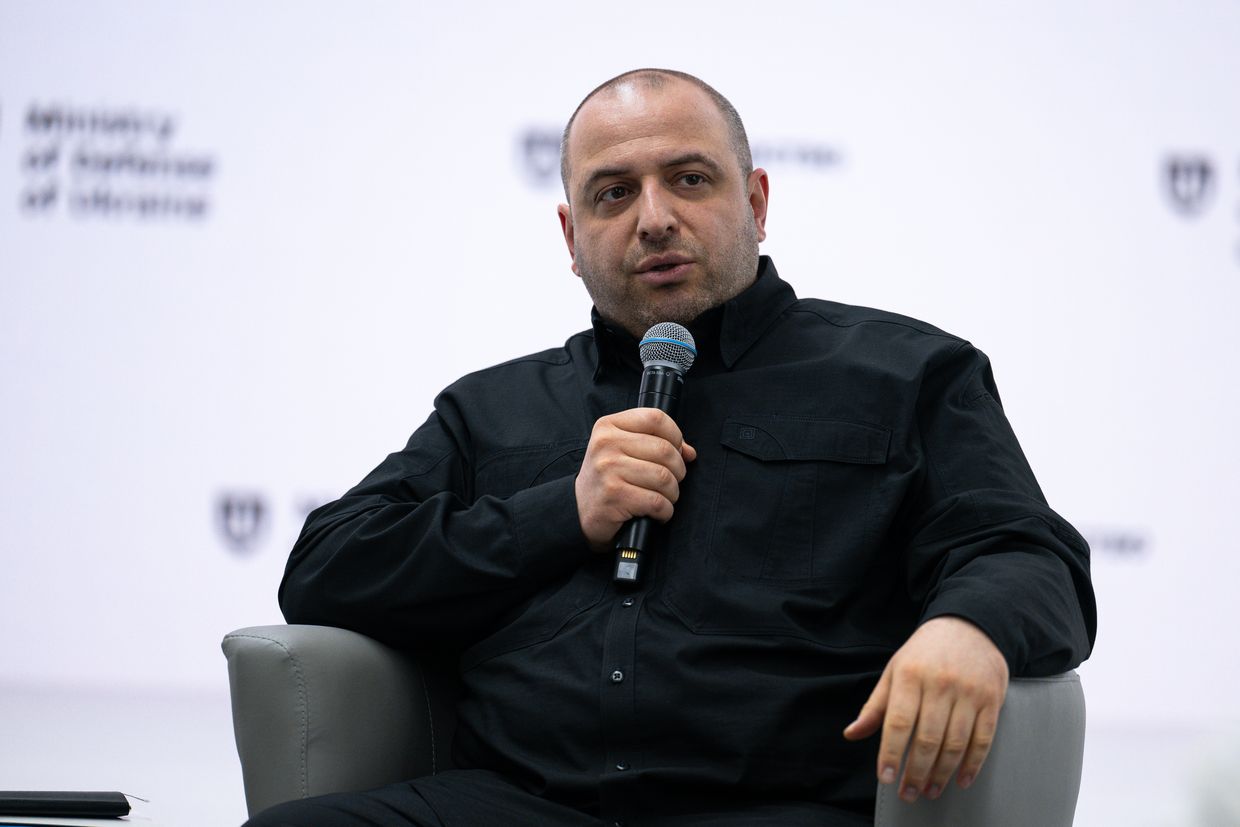
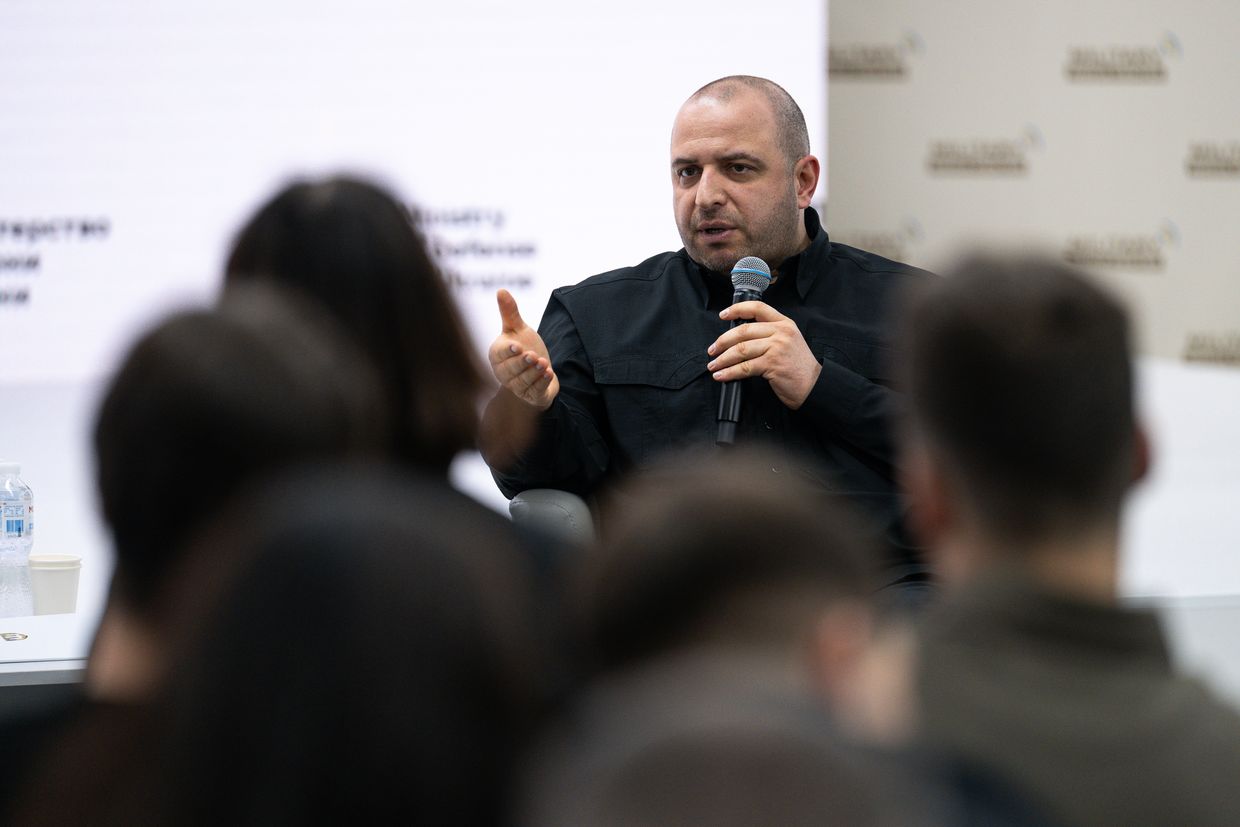
Since the two countries sinced a mutual defense treaty last June, North Korea has deployed around 11,000 elite troops to support Russia’s war against Ukraine, making up over 20% of Kim Jong-un’s "personal reserve" force, Ukrainian Defense Minister Rustem Umerov said at a June 26 press briefing.
"These are soldiers specially selected based on physical, psychological, and other criteria," Umerov said. "These units have already suffered significant losses."
Umerov added that North Korea had considered sending more troops, but doing so could further weaken its strategic reserves and pose risks to regime stability. He noted there have been four known rotations of North Korean units in Ukraine.
According to U.K. defense intelligence, North Korea has likely suffered over 6,000 casualties since troops were first deployed to Russia’s Kursk Oblast in fall 2024.
Slovakia’s Foreign Minister Juraj Blanar has suggested that the international community may need to "perhaps" forgive Russia’s actions and resume dialogue with Moscow as a means to end the war in Ukraine.
His remarks came after Slovakia requested that the adoption of the 18th package of EU sanctions against Russia be postponed until a decision is made on the consequences for the member states from RePowerEU, the European Commission's initiative to end dependence on Russian fossil fuels by 2030 in response to Russia's invasion of Ukraine.
Blanar, speaking to domestic media, said the ongoing war cannot be resolved on the battlefield and stressed the importance of diplomacy and international law. "Let us return to respect for international law and seek ways to communicate with the Russian Federation," he said on June 29. "And perhaps even forgive everything that has happened."
The comments mark another example of how Slovakia’s current leadership is diverging from the broader pro-Ukraine stance of the EU and NATO.
Under Prime Minister Robert Fico, Bratislava has adopted a more conciliatory tone toward Moscow, including continuing diplomatic engagement while most Western nations cut ties following Russia’s full-scale invasion in 2022.
Earlier this year, Fico attended Russia’s Victory Day Parade in Moscow, where he met with President Vladimir Putin. However, he dismissed the idea of engaging with President Volodymyr Zelensky.
"I see no reason to meet with the Ukrainian president," Fico said in a recent interview with Slovak broadcaster STVR. "My meeting with President Zelensky has no significance because he hates me," he added. Zelensky has not yet responded to Fico's claims.
While Fico halted Slovak military support for Ukraine upon taking office in 2023, he has paradoxically voiced support for Ukraine’s European Union membership. "Ukraine's EU membership brings more advantages than disadvantages for Slovakia," the prime minister said.
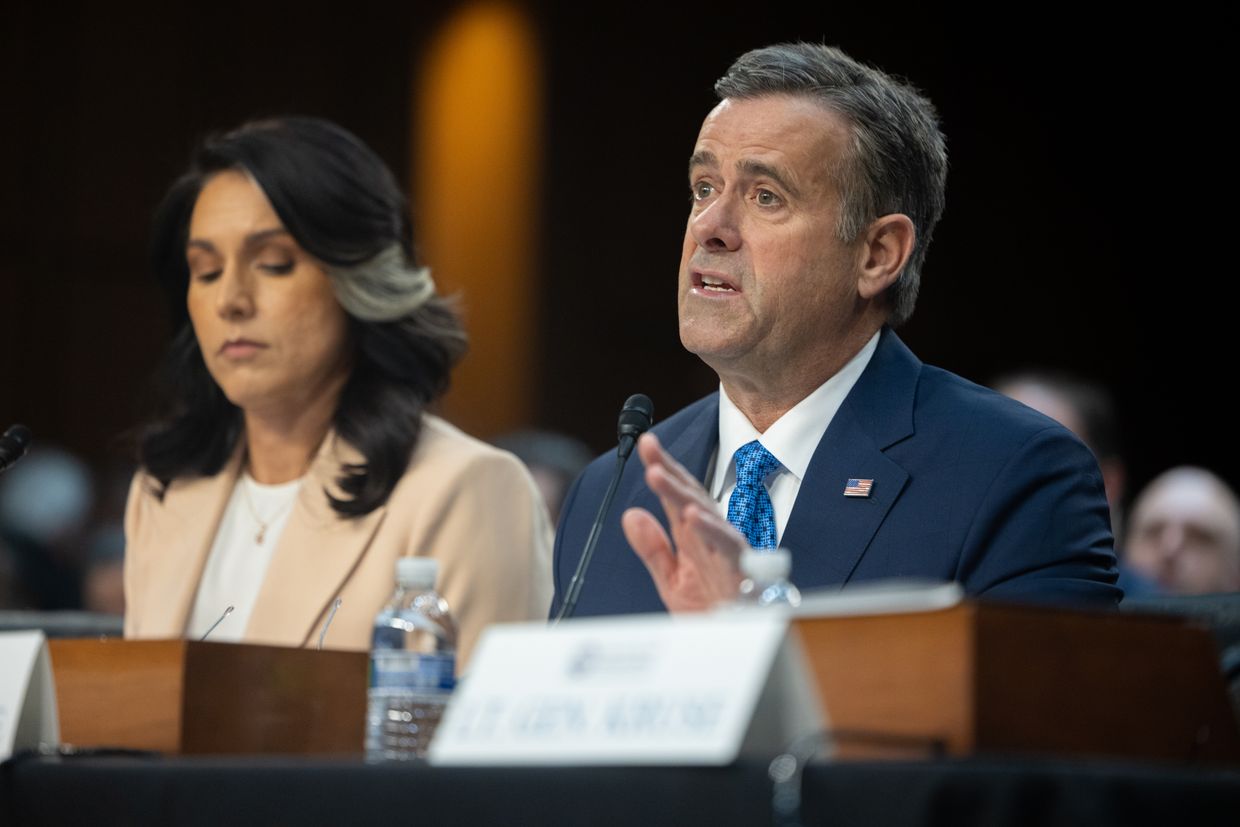
The Director of Russia’s Foreign Intelligence Service (SVR), Sergey Naryshkin, told Russian state media on June 29 that he had agreed to remain in open contact with Central Intelligence Agency (CIA) Director John Ratcliffe, following a recent phone call between the two.
"I had a phone call with my American counterpart, and we reserved for each other the possibility to call each other at any time and discuss issues of interest to us," Naryshkin said. He did not specify when the conversation took place, and Ratcliffe has not publicly confirmed the call.
Russian state media claimed the last known exchange between the two intelligence chiefs occurred in March.
The remarks come amid broader efforts by the administration of U.S. President Donald Trump to normalize relations between Washington and Moscow. During a phone call on Feb. 12, Presidents Trump and Vladimir Putin agreed to reset U.S.-Russia ties and revive dialogue on "topics of mutual interest," including a potential resolution to the war in Ukraine.
That call was followed by the first round of bilateral talks, held on Feb. 18 in Saudi Arabia—the first official meeting between U.S. and Russian officials in over three years. Both sides pledged to begin restoring diplomatic relations and to appoint senior teams tasked with negotiating a Ukraine peace agreement.
Despite these efforts, progress on peace has been limited.
Two earlier rounds of talks between Moscow and Kyiv in Istanbul failed to produce a ceasefire. On June 5, Trump declined to say when or if further sanctions on Russia might be imposed, stating only that there is a deadline “in (his) brain.”
U.S. Secretary of State Marco Rubio later told Politico that Trump would resist European pressure to toughen sanctions, arguing that doing so could jeopardize the fragile window for negotiations with the Kremlin.
Azerbaijan has cancelled all planned cultural events hosted alongside Russian state and private organizations, the country's Culture Ministry announced on June 29, over the deaths of two Azerbaijani citizens during police raids in the Russian city of Yekaterinburg.
Azerbaijan’s Foreign Ministry said on June 28 that Ziyaddin and Huseyn Safarov died during a raid carried out by Russian authorities. Azerbaijan called the killings "ethnically motivated public and deliberate unlawful actions" and said that Russia's action have "recently taken on a systematic nature."
The raid was reportedly conducted amid an investigation into an unsolved 2001 murder. Several other people were injured in the raid and a total of nine individuals were detained.
In a comment to Azerbaijani public broadcaster ITV, Sayfaddin Huseynli, the brother of the deceased, claimed that the two men were tortured to death "without any trial or investigation, despite their innocence."
The official cause of death was not immediately known.
As a result of the incident, Azerbaijani state media also reported that the government had cancelled a planned visit by Russian Deputy Prime Minister Alexey Overchuk, stating that the country "does not consider it appropriate under the current circumstances for Overchuk or any other official representative of Russia to visit."
Tensions between Baku and Moscow have continued to sour in recent months since Russia's downing of an Azerbaijan Airlines plane that killed 67 passengers. Since then, Azerbaijani lawmaker have blamed Russia for February cyberattack, and the country's President Ilham Aliyev skipped out on attending Russia’s Victory Day parade in Moscow in May.
As relations dwindle, Ukraine has sought to build relations with Baku. Ukraine’s Foreign Minister Andrii Sybiha also visited Azerbaijan in May.
In February, Aliyev's office announced it was delivering$1 million in humanitarian aid to Ukraine in the form of electrical equipment to support the country's energy grid amid Russian attacks.
Azerbaijan's primary regional foe, Armenia, also a historic ally of Moscow, has also effectively severed relations with the Kremlin.
Earlier this year, Yerevan formally signed a law to begin Armenia's accession process to the European Union. The decision comes growing rift with Russia accelerated after the Kremlin failed to prevent Azerbaijan's September 2023 offensive in Nagorno-Karabakh, leading to the mass exodus of the region's Armenian population.
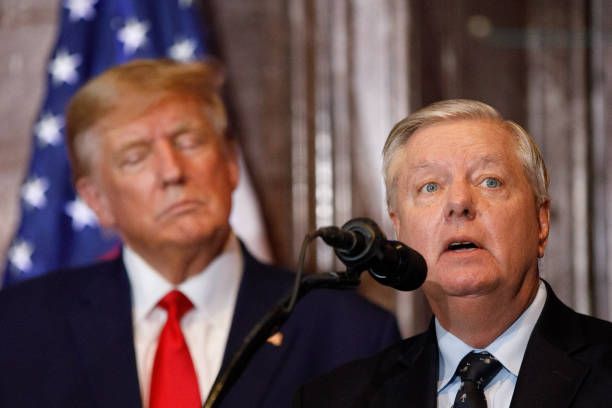
After holding a discussion with U.S. President Donald Trump, Senator Lindsey Graham said on June 29 that the U.S. president was ready for the Senate to vote on a bill to impose new sanctions on Russia.
Voting on the bill is expected to begin following the end of the July congressional break, Graham said.
"For the first time yesterday the president told me... he says, 'it's time to move your bill'," Graham said in an interview with ABC News, stressing that it would be Trump's purview as to whether the bill would ultimately be signed into law.
When asked if Graham expected Trump to sign the bill, the senator responded: "Yes, I think we're in good shape... But he has a waiver. It's up to him how to impose it."
Graham said he held the talk with Trump during a round of golf on June 28. No specific timeline was provided as to when the bill can be expected to be moved, although Congress is set to reconvene on July 9.
Signed by 84 co-sponsors, Senators Lindsey Graham (R-S.C.) and Richard Blumenthal (D-Conn.) have been working on a revised version of their bill that would impose secondary sanctions on Russian trading partners, while shielding Ukraine’s allies from penalties and making technical adjustments.
"So what does this bill do? If you're buying products from Russia and you're not helping Ukraine, then there's a 500 percent tariff on your products coming into the United States. India and China buy 70 percent of Putin's oil. They keep his war machine going," Graham explained.
Despite pressure, Trump has thus far refused to impose additional sanction against on his own accord. Amid discussion around the Senate bill, Trump has reportedly asked Graham to to soften his proposed sanctions, having previously postponed a vote on the bipartisan measure.
Amid the slow process of moving the proposed bill, Graham described the move as a "big breakthrough."
Ukraine has repeatedly urged the United States to impose additional sanctions on Russia as Moscow continues increase the frequency and magnitude of its attacks on Ukrainian cities.
Graham's comments come just hours after Hungarian Foreign Minister Peter Szijjarto claimedthat Washington lifted sanctions that hindered the expansion of the Paks Nuclear Power Plant, where Russia's state-owned energy company Rosatom is to build two new reactors.
Hungarian Foreign Minister Peter Szijjarto said on June 29 that Washington has lifted sanctions that hindered the expansion of the Paks Nuclear Power Plant, where Russia's state-owned energy company Rosatom is to build two new reactors.
"Construction of the major pieces of equipment for the Paks nuclear plant is proceeding in Russia and France," Szijjarto said, as cited by Bloomberg.
"On-site in Paks, construction can now proceed at a faster pace."
The expansion project, which has endured significant delays, is led by Rosatom and will add to the four active reactors.
The anti-Russian sanctions were imposed by former U.S. President Joe Biden's administration. The U.S. has not reacted to Szijjarto's comments so far.
Since returning to the Oval Office in 2025, U.S. President Donald Trump has tried to push Russia and Ukraine into peace talks to end the war at all costs and has not yet imposed additional sanctions on Russia for its ongoing war against Ukraine.
Meanwhile, Russia has found loopholes to circumvent sanctions, such as using its shadow fleet or relying on other financial mechanisms.
Hungary's Energy Minister Csaba Lantos said in 2023 that he expects the Paks II to be finished in 2032.
Vladyslav Vlasiuk, the Ukrainian president's commissioner for sanctions, said the situation with the expansion of the nuclear plant is "much more complicated." He accused the Hungarian foreign minister of "manipulation."
Vlasiuk explained in a Facebook post that Paks faces a sanctions exemption from the EU. The U.S. has not lifted the sanctions, though there is a new licence that offers the possibility of conducting transactions related to civilian nuclear energy that began prior to November 2024.
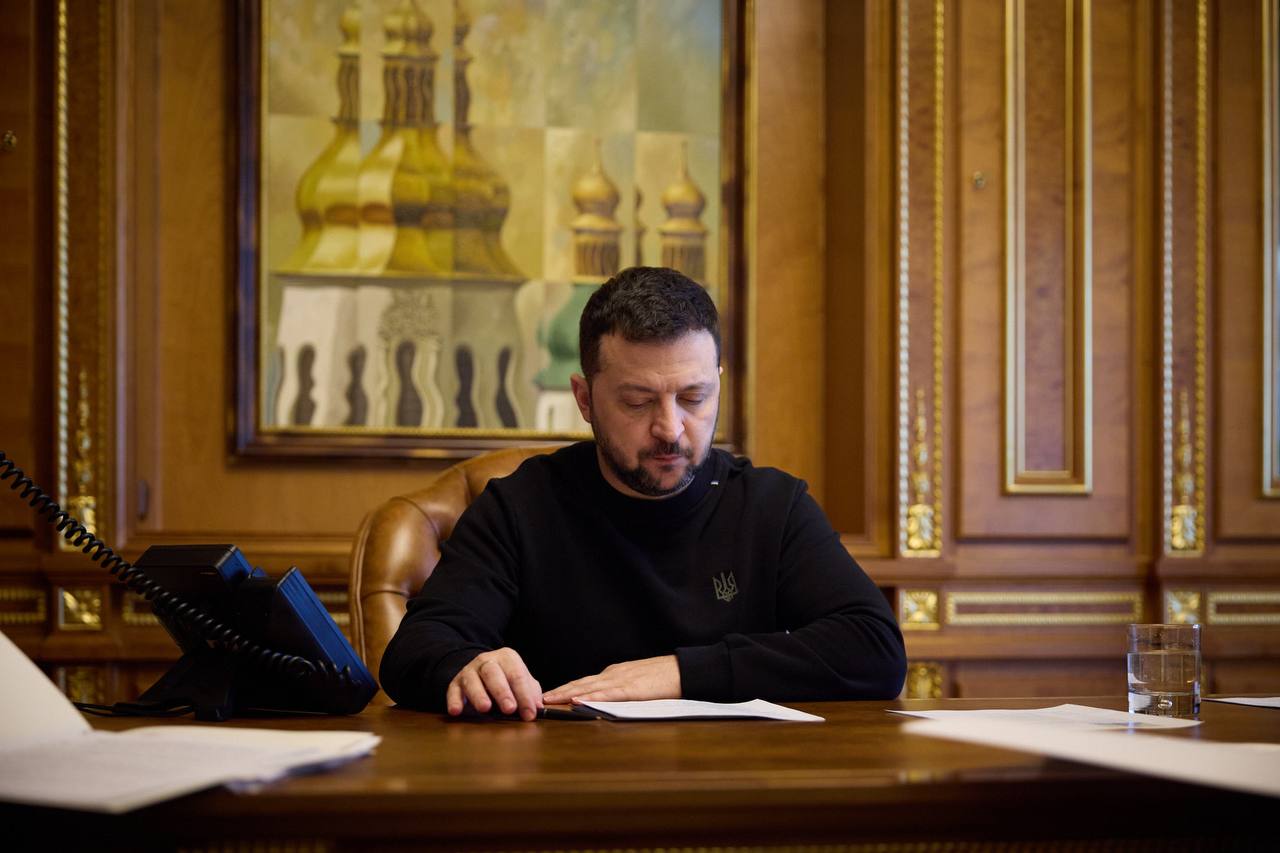
President Volodymyr Zelensky signed a decree to withdraw from the Ottawa Convention banning anti-personnel mines, a step that follows the Baltic nations and Poland's move to boost their defense as the war rages on in Ukraine.
The 1997 treaty, joined by over 160 countries, bans the use, production, stockpiling, and transfer of anti-personnel landmines in efforts to protect civilians from the scattered explosives that could still injure them long after the conflict is over.
"Russia has never been a party to this convention and uses anti-personnel mines extremely cynically," Zelensky said in justifying the decision. "And not only now, in the war against Ukraine. This is the signature style of Russian killers — to destroy life by all methods at their disposal.
Earlier in March, the Baltic states and Poland announced their intention to withdraw from the Ottawa Convention, a significant shift in defense policy that shows how countries near Ukraine are preparing for a potential war in Europe.
Anti-personnel mines are scattered across the battlefield in Ukraine, with soldiers and civilians often losing their feet or limbs due to detonations. Territories liberated by Ukraine since 2022 have been heavily covered with mines, making it extremely difficult and dangerous to clear them. Russia has used more than a dozen variants of anti-personnel mines since it launched a full-scale invasion of Ukraine in 2022, according to Human Rights Watch's June report.
In a surprise move that angered Moscow, the Biden administration in 2024 approved the provision of anti-personnel mines to Ukraine. Then Defense Secretary Lloyd Austin said it was to help Ukraine stall the Russian advances in the east as the front-line situation deteriorated.
"This is a step that the reality of war has long demanded," lawmaker Roman Kostenko, secretary of the parliament's defense committee, said in the Facebook post announcing a significant move forward in withdrawing from the major mine treaty.
Now that Zelensky signed the decree enacting the decision of the National Security and Defense Council of Ukraine, it will land on the parliament's table, Kostenko said. The dates when the decision will take effect are still unclear.
A lieutenant colonel flying a U.S.-made F-16 fighter jet was killed during the overnight aerial strike while on duty, the Air Force said on June 29.
Russia launched a "massive" missile and drone strike across Ukraine early on June 29, unleashing 537 aerial targets, including 477 drones and 60 missiles, according to the Air Force..
Maksym Ustymenko, born in 1993, was killed after shooting down seven aerial targets, the Air Force said in a statement. The Air Force added that his aircraft was damaged while he was trying to shoot down the last one, losing altitude and crashing.
"Maksym Ustymenko did his best to take the plane away from the settlement, but did not have time to eject," the Air Force said on Telegram, honoring that he died "like a hero."
"The work of Ukrainian pilots is extremely dangerous and risky, both when striking enemy ground targets and repelling air attacks," the Air Force added, saying that the F-16 pilots destroy dozens of Shahed-type drones.
In his evening address, President Volodymyr Zelensky posthumously awarded Ustymenko with the Hero of Ukraine award.
"Today, he was killed defending our skies and our people from yet another massive Russian attack... It is painful to lose people like him," Zelensky said in offering condolence to loved ones.
Russia has intensified its aerial campaign on Kyiv and other cities over the past month. Zelensky said that Russia has launched over 2,700, or roughly 9.5%, of the total number of Shahed-type drones deployed during the entire full-scale war in June alone.
Though well protected with Western air defense systems compared to other cities, Kyiv has also faced a number of deadly attacks in June, with the June 17 missile and drone strike on Kyiv killing 30.
The Air Force said that Ukraine had to use "all available means" to repel the Russian aerial attack overnight on June 29, including elite F-16 jets.
Ukraine received its first batch of F-16 jets in the summer of 2024, but it has not revealed many details about how and where they are used in operations since they are a high-priority target for Moscow. Their pilots have received months of training abroad.
Russia has lost around 1,018,940 troops in Ukraine since the beginning of its full-scale invasion on Feb. 24, 2022, the General Staff of Ukraine's Armed Forces reported on June 29.
The number includes 1,220 casualties that Russian forces suffered just over the past day.
According to the report, Russia has also lost 10,976 tanks, 22,915 armored fighting vehicles, 53,508 vehicles and fuel tanks, 29,689 artillery systems, 1,425 multiple launch rocket systems, 1,189 air defense systems, 420 airplanes, 337 helicopters, 42,624 drones, 28 ships and boats, and one submarine.
Russia is making another attempt to expand its exports of liquefied natural gas (LNG) after U.S. sanctions disrupted production at its flagship Arctic LNG 2 plant, Bloomberg reported on June 28.
Arctic LNG 2, owned by the Russian company Novatek, was envisaged as Russia's largest LNG plant and aimed to produce almost 20 million metric tons of LNG per year. The U.S. State Department targeted the Arctic LNG 2 project with sanctions in 2024.
An LNG vessel has reportedly docked at the Arctic LNG 2 facility for the first time since October, according to ship-tracking data and satellite images analyzed by Bloomberg. Data suggests that at least 13 vessels of Russia's "shadow fleet" have been assembled to potentially serve Arctic LNG 2.
These include four ice-class vessels, including the one currently docked at Arctic LNG 2. Three others are idling in the Barents Sea, along with three traditional LNG vessels. Two more vessels are being repaired in China and another two are idled in the Gulf of Finland. One ship is located near a floating storage facility in Russia's Far East.
While pipeline shipments of Russian gas to Europe have declined sharply since the full-scale invasion of Ukraine, Russia's shadow fleet — a group of aging oil tankers used to circumvent global sanctions — continues to grow.
Moscow now has more vessels at its disposal than it did last year, according to Malte Humpert, founder of the Arctic Institute think tank.
"If (Russia) can find buyers, this small fleet should be sufficient to lift cargoes," Humpert told Bloomberg.
Finding buyers may present a difficulty, due to wariness about sanctions violations. Former U.S. President Joe Biden sanctioned ships and companies connected with exports from Arctic LNG 2 in 2024, thought it is not yet clear if U.S. President Donald Trump will enforce sanctions as strictly.
Representatives of Arctic LNG 2 have continued to search for buyers in China and India, but have not yet made any sales, traders familiar with the matter told Bloomberg.
Arctic LNG 2 cut production from its gas fields to almost zero in November 2024, after halting liquefaction the previous month due to Western sanctions. The U.S. sanctioned two vessels and two entities connected to Arctic LNG 2 in September 2024, after previously targeting the project in a sweeping round of sanctions late August.
The August sanctions likely forced Novatek to scale back its operations at the facility. Novatek itself was sanctioned after the outbreak of the full-scale war in 2022.
Editor's Note: This is a developing story and is being updated.
Russia launched its largest aerial attack on Ukraine since the start its full-scale war overnight on June 29, launching 477 drones and 60 missiles towards Ukrainian cities, Ukraine’s Air Force said.
Russian missile and drone attack terrorized Ukraine overnight as air raid alarms sounded across the country, including western regions far from the front lines.
Yuriy Ihnat, a spokesperson for Ukraine's Air Force, confirmed to the Associated Press that the attack had become "the most massive airstrike" since the beginning of Russia's full-scale in February 2022.
Russia's bombardments — a fact of life after three years of full-scale war — have intensified dramatically in May and June, with mass attacks becoming more frequent and more deadly.
Ukraine's Air Force warned late in the evening on June 28 that Russia had launched three Tu-95 bombers from the Olenya military airfield in Murmansk Oblast. The Air Force also warned that multiple groups of Russian drones were heading towards various regions.
Several hours later, the Air Force reported that a Russian MiG-31K — a jet capable of carrying Kinzhal ballistic missiles — took off from Savasleyka airfield in Russia's Nizhny Novgorod Oblast. The Air Force followed this up with warnings that cruise missiles were bound for several regions, including Ternopil, Lviv, and Ivano-Frankivsk oblasts in western Ukraine.
The Operational Command of the Polish Armed Forces said it scrambled fighter jets and activated ground-based air defense units in response to the Russian aerial attacks in western Ukraine.
Explosions and strikes were reported in Mykolaiv, Kremenchuk, Zaporizhzhia, Cherkasy Oblast, Ivano-Frankivsk, and Lviv as waves of attacks came throughout the night. Some regional officials shared preliminary reports of damage and casualties even as air defense continued to operate in the area.
Civilian infrastructure was damaged and at least three people were injured in attacks on Cherkasy Oblast, Governor Ihor Taburets reported.
In Kremenchuk, Poltava Oblast, an undisclosed enterprise was hit, causing a fire, according to Governor Volodymyr Kohut.
A production facility at an unnamed enterprise in Zaporizhzhia was hit during an overnight missile attack, Governor Ivan Fedorov said. No casualties were reported.
After the alarms died down, officials in Lviv Oblast said that Russia attempted to strike critical infrastructure in the region. According to Lviv Mayor Andrii Sadovyi, these efforts were largely unsuccessful.
"Despite the complexity of this overnight combined attack, no one was injured and no civilian buildings were damaged in Lviv," he wrote on Telegram.
Mykolaiv Oblast Governor Vitalii Kim reported that Russia targeted the city overnight with ballistic missiles and Shahed drones, hitting an infrastructure facility. The strike caused a fire but no casualties.
The mass missile and drone attack comes a day after Russian President Vladimir Putin told reporters that Moscow is ready to hold another round of peace talks.
Ukrainian and Russian delegations have now held two direct talks in Istanbul, but the discussions have yielded few results outside of coordinated prisoner swaps.
Moscow refuses to budge on its maximalist ambitions in Ukraine and is unwilling to enter a ceasefire unless Kyiv preemptively agrees to surrender all foreign military aid. Putin on June 20 declared that "all Ukraine is ours" in a bombastic speech at the St. Petersburg Economic Forum.
Russian ballistics and kamikaze drones have targeted Kyiv and other Ukrainian cities with renewed ferocity, killing dozens of civilians and injuring hundreds more. Just this week, a Russian missile struck a passenger train in Dnipro, leaving 21 dead and over 300 wounded.
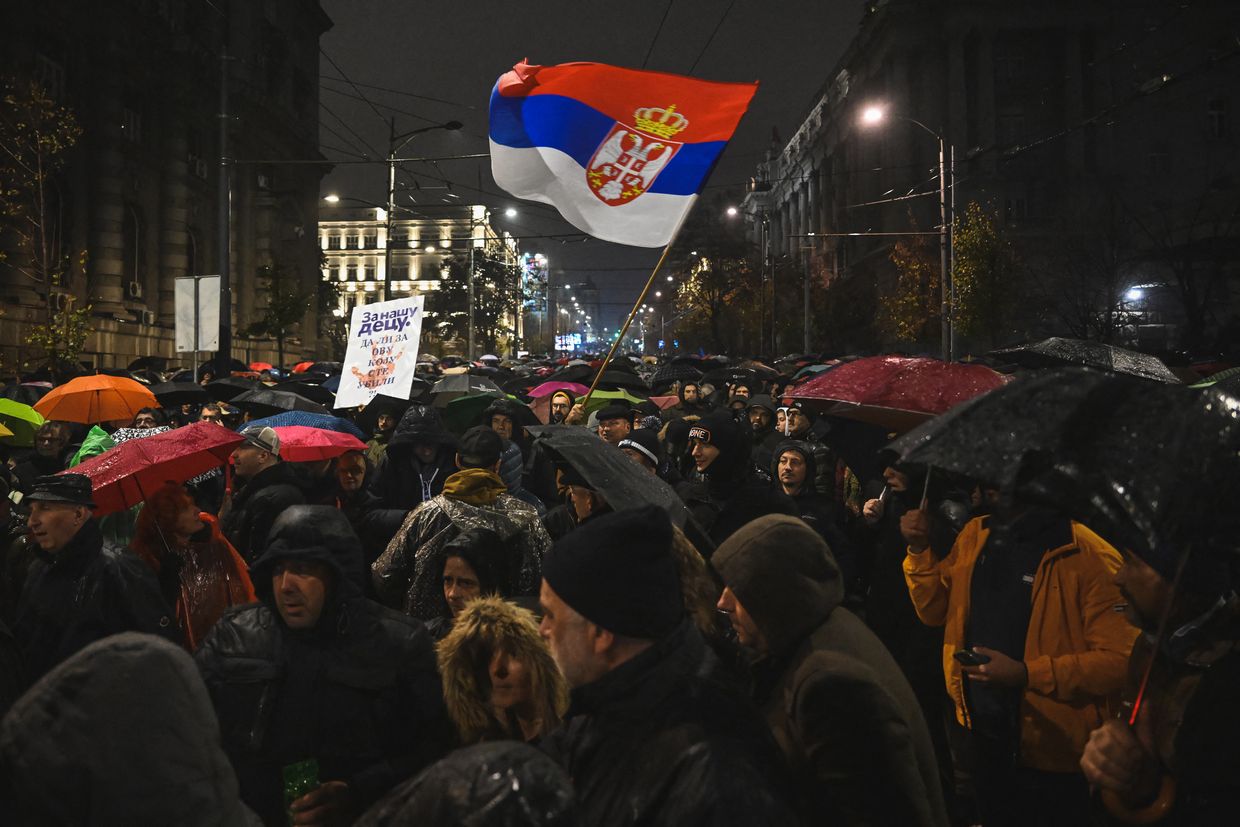
Police aggressively dispersed protestors at an anti-government rally in Belgrade, whereover 100,000 demonstrators gathered on June 28 to demand snap elections.
The rally marks the latest mass action in a protest movement that started last fall, with activists calling for an end to corruption and the 12-year rule of Serbian President Aleksandar Vucic.
Crowds in Belgrade on June 28 chanted "We want elections!" — a key demand of the movement that Vucic has consistently refused. His term ends in 2027, which is also the date of the next scheduled parliamentary elections.
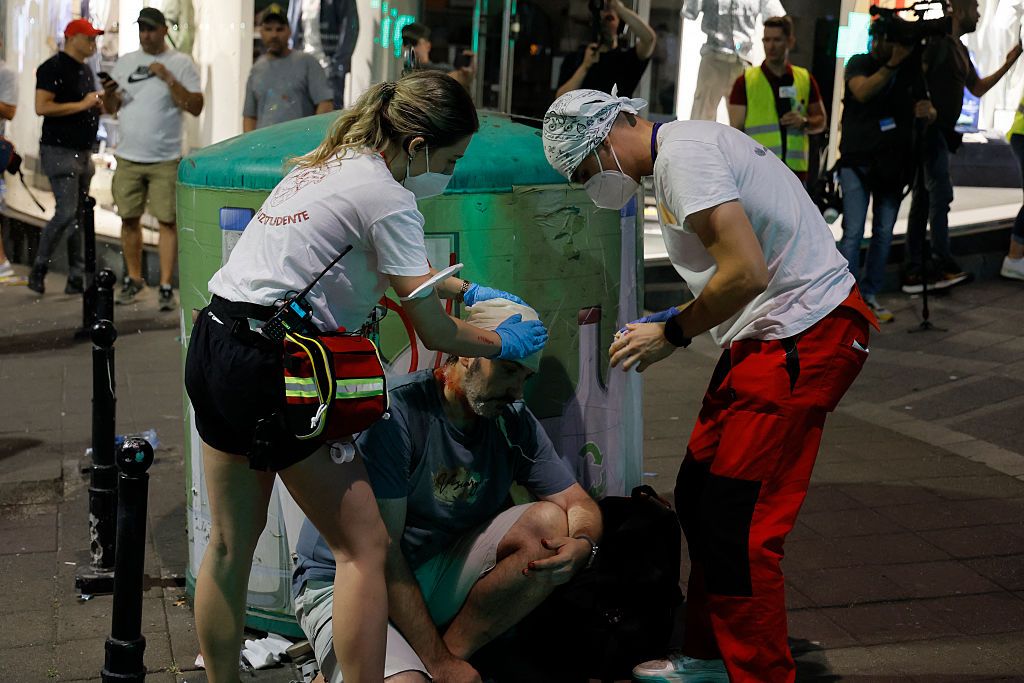
Police officers in riot gear used tear gas, pepper spray, and stun grenades to forcibly dispersed crowds, according to multiple media outlets. Dozens of protestors were detained, though the police did not provide an exat number.
Serbian Interior Minister Ivica Dacic claimed that demonstrators attacked the police.
Protestors reportedly threw eggs, plastic bottles, and other objects at riot officers blocking the crowd from entering a city park where Vucic supporters were staging a counterprotest. Vucic reportedly bused in groups of his own supporters from around the country ahead of the rally.
Vucic, a right-wing populist leader with authoritarian tendencies and warm ties with Russia, has repeatedly accused foreign states of inciting the protests in order to topple his government. He is provided no evidence to support these claims.
The current wave of protests in Serbia began in November, when a train station roof in the town of Novi Sad collapsed, killing 15. The disaster was blamed on government corruption.
While Vucic has alleged that Western powers are trying to trigger a "Ukrainian-style revolution in Serbia," the Serbian protests are not markedly pro-Ukrainian or pro-Russian. Unlike mass demonstrations in Slovakia, where activists explicitly condemned the government's Kremlin-friendly agenda, the Serbian movement is focused on Vucic's corrupt leadership.
Since Russia's full-scale invasion of Ukraine in 2022, Serbia has attempted to navigate a delicate diplomatic path between Moscow and the West. It has positioned itself as neutral in the Russia-Ukraine war and balanced its status as an EU candidate with its longstanding ties to Russia.
Vucic made his first official visit to Ukraine on June 11.
Pope Leo XIV welcomed Ukrainian Greek Catholic pilgrims to the Vatican on June 28, saying their country has been "martyred" by Russia's "senseless war."
Greek Catholicism is Ukraine's second-largest Christian denomination, with adherents making up around one-tenth of the country's population. Prevalent mainly in western Ukraine, it has retained many rituals and practices of the Orthodox Church while under the pope's jurisdiction.
"I wish to express my closeness to the martyred Ukraine — to the children, the youth, the elderly, and especially to the families who mourn their loved ones," Pope Leo said in an address to Greek Catholic pilgrims at St. Peter's Basilica.
"I share in your sorrow for the prisoners and for the victims of this senseless war."
Sviatoslav Shevchuk, Head of the Greek Catholic Church in Ukraine, was among the pilgrims greeted at the Vatican, along with other bishops, priests, and lay believers. The pilgrimage was made in honor of the Jubilee, a Catholic holy year last observed in 2015-2016. The theme of the 2025 Jubilee is "Pilgrims of Hope."
In his address, Pope Leo said that the faith of Ukrainians is being "sorely tested" by Russia's full-scale invasion.
"Many of you, since the war began, have surely asked: Lord, why all this? Where are you? What must we do to save our families, our homes and our homeland?"
The pope also offered a special blessing to mothers of soldiers killed on the front lines in Ukraine.
After Pope Leo's remarks at St. Peter's, President Volodymyr Zelensky thanked the pontiff for his support.
Thank you, Your Holiness, for your continued prayers and compassion for Ukraine and our people," Zelensky wrote on X.
"Together we must stop this wanton Russian aggression and protect innocent lives. A just peace is needed. And we would also deeply appreciate your kind help in bringing back all our people — adults and children — held in Russian captivity against their will."
Pope Leo XIV, formerly Cardinal Robert Prevost, was elected head of the Catholic Church in the conclave on May 8 after the death of his predecessor, Pope Francis. Zelensky met with Pope Leo at his inauguration mass on May 18 and described him as "a symbol of hope for peace." The two discussed the return of children forcibly deported by Russiaand other humanitarian issues.
Pope Leo has called for "a just and lasting peace" in Ukraine and has offered to host peace talks between Kyiv and Moscow at the Vatican — an offer Zelensky has welcomed and Kremlin officials have dismissed.
Early in June, Pope Leo spoke on the phone with Russian President Vladimir Putin, urging Russia to make "a gesture that would favor peace."
The pope's support for Ukraine has been viewed as a departure from his predecessor Pope Francis, whose legacy among Ukrainians was marred by his at times controversial comments about Russia. In 2024, Pope Francis called on Ukraine to have the "courage" to "raise the white flag" and negotiate with Moscow.
Editor's note: This is a developing story and is being updated.
Ukraine's military intelligence (HUR) struck on June 28 the 1060th Material-Technical Support Center in the city of Bryansk, Ukraine's General Staff said.
The facilities store a Russian missile and drone arsenal, Ukrainska Pravda reported, citing a source in HUR.
Local residents reported hearing explosions and gun fire throughout the morning of June 28. Pictures posted on social media show smoke billowing from the area of where the centre, formerly the the 120th arsenal of the Main Missile and Artillery Directorate, is located in an industrial area in the southern part of the city.
The General Staff said it was assessing the strike as extent of the damage was not immediately clear.
Bryansk Oblast Governor Alexander Bogomaz acknowledged a drone attack on the region overnight claiming that four civilians were injured in the attack, damaging ten homes and a vehicle.
Later in the morning, Bogomaz claimed that all the drones had been downed by Russian air defense unit in a separate attack, claiming that no damage had been inflicted. He did not mention the Main Missile and Artillery Directorate in his comments.
The Kyiv Independent cannot immediately verify the reports or claims made by Russian officials.
Bryansk Oblast, located in Russia's far-west, borders Ukraine's Chernihiv and Sumy Oblast, and has been the target of various Ukrainian strikes.
Ukraine's military regularly conducts strikes onto Russian and Russian-occupied territory.
Drones operated by the Security Service of Ukraine (SBU) struck the Kirovske military airfield in occupied Crimea overnight on June 28, the SBU told the Kyiv Independent. The attack destroyed Mi-8, Mi-26 and Mi-28 attack helicopters, and a Pantsyr-S1 self-propelled anti-aircraft missile and gun system, the SBU claimed.
Slovak Prime Minister Robert Fico said on June 28 that he does not intend to meet directly with President Volodymyr Zelensky, claiming that the Ukrainian president "hates" him, as relations between the two countries continue to sour.
Fico's comments come just one day after Slovakia joined Hungary in blocking an 18th package of sanctions against Russia, an unnamed EU official toldthe Kyiv Independent. Unlike Hungarian Prime Minister Viktor Orban, who has consistently opposed sanctions against Russia, Slovakia has not previously attempted to block EU sanctions.
"I see no reason to meet with the Ukrainian president," Fico toldSlovak broadcaster STVR, stressing he has better relations with Ukrainian Prime Minister Denys Shmyhal. "My meeting with President Zelensky has no significance because he hates me," he added.
Fico's comments on a potential meeting refer to talks on improving bilateral relations between the two countries, including in areas of Ukraine's EU accession as well as additional sanctions on Russia.
"I’m the Prime Minister of the Slovak Republic, and my task is to do everything to ensure that gas prices in Slovakia do not rise because of Ukraine," Fico told STVR, in reference to concerns over Slovakia's reliance on Russian gas and energy exports that were allegedly not addressed in the 18th sanctions package.
Slovakia has requested that the adoption of the 18th package of EU sanctions against Russia be postponed until a decision is made on the consequences for the member states from RePowerEU, the European Commission's initiative to end dependence on Russian fossil fuels by 2030 in response to Russia's invasion of Ukraine.
EU foreign policy decisions, including sanctions, require unanimous approval by all member states. A Slovak veto could continue to force concessions or delay enforcement in future rounds.
Despite the criticism, Fico added that "Ukraine's EU membership brings more advantages than disadvantages for Slovakia," but stressed that other officials, including Slovakian President Peter Pellegrini would handle discussions with top Ukrainian leadership.
Since taking office in 2023, Fico has also reversed Slovakia's previous pro-Ukraine policy, ending military aid to Kyiv and questioning the value of EU sanctions on Russia.
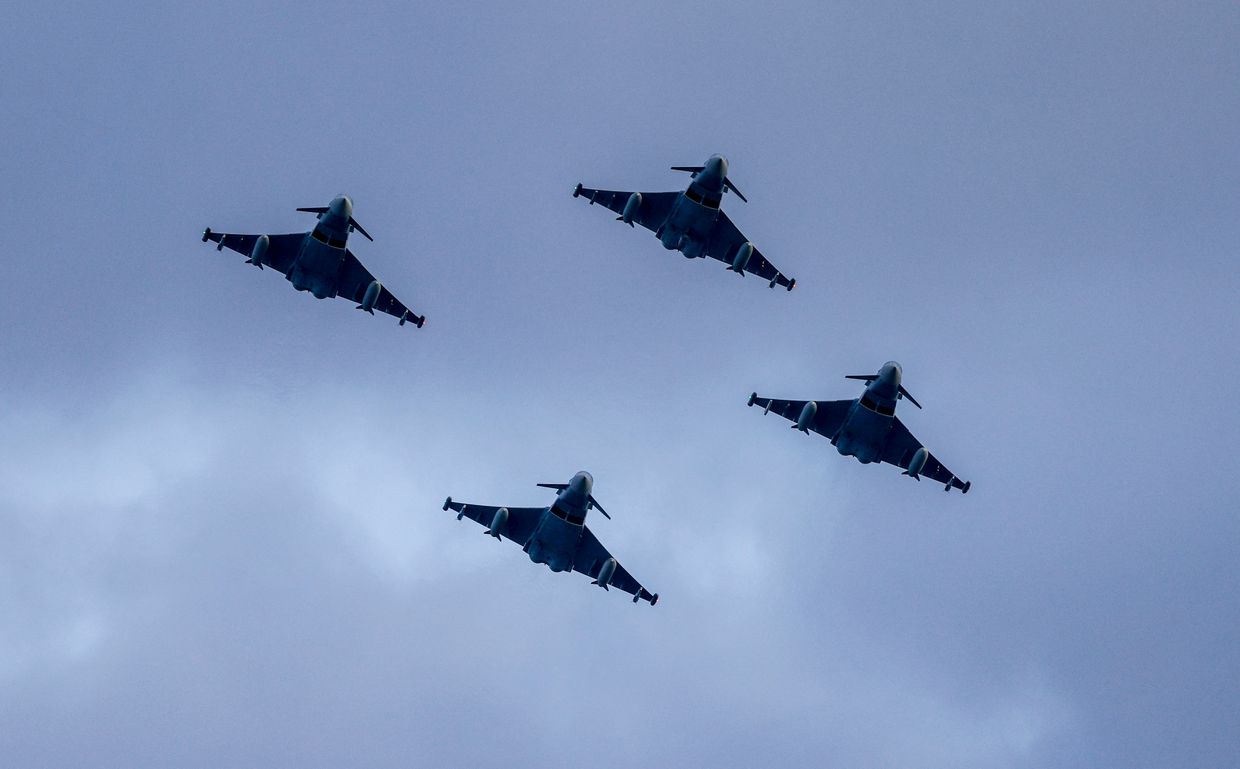
German fighter jets were scrambled to intercept a Russian Il-20 reconnaissance aircraft over the Baltic Sea near NATO airspace on the morning of June 27, the German tabloid Bild reported.
The incident adds to a series of aerial provocations reported by NATO allies since the start of Russia's full-scale invasion of Ukraine in 2022 as Moscow is suspected of using the aircraft to spy on the alliance's positions.
The Russian Il-20M, which took off from Kaliningrad with its transponder switched off, was headed west toward international airspace near Poland and Germany when it was detected by NATO radar systems.
NATO alerted the German Armed Forces’ Quick Reaction Team (QRT), prompting the launch of two Eurofighter jets to intercept the aircraft.
The German jets made visual contact with the Russian plane approximately 100 kilometers off the German coast and took a photograph of it. Despite the interception, the Il-20M did not alter its course.
The Russian aircraft eventually veered north, just 40 kilometers from the Baltic Sea island of Usedom, avoiding a breach of German airspace.
According to Bild, this was the ninth such interception mission conducted by German forces in 2025.
As Russia continues its aggression against Ukraine and poses an increasing threat to NATO, German Chancellor Friedrich Merz said in an interview with Süddeutsche Zeitung published on June 27 that he would refrain from phone calls with Russian President Vladimir Putin given the intensified attacks on Ukraine.
Merz’s predecessor, Olaf Scholz, was the first EU leader from a country supporting Ukraine to resume direct contact with Putin since the start of the full-scale invasion, speaking with him by phone in November 2024.
Editor's note: The previously published footage, provided by an SBU source, was allegedly related to a different operation and was deleted after the mistake was identified.
Drones operated by the Security Service of Ukraine (SBU) struck the Kirovske military airfield in occupied Crimea overnight on June 28, the SBU told the Kyiv Independent.
The attack destroyed Mi-8, Mi-26 and Mi-28 attack helicopters, and a Pantsyr-S1 self-propelled anti-aircraft missile and gun system, the SBU claimed.
According to the SBU, Ukraine targeted Russian aviation, air defense systems, as well as ammunition, reconnaissance and attack drones storage facilities.
Secondary explosions were heard at the airfield during the night.
The Kyiv Independent could not verify these claims.
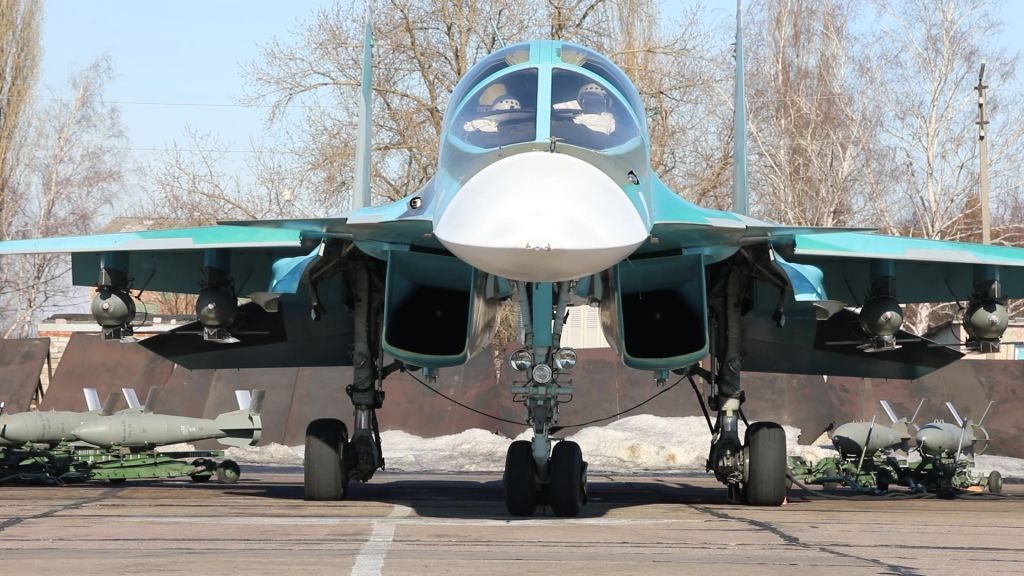
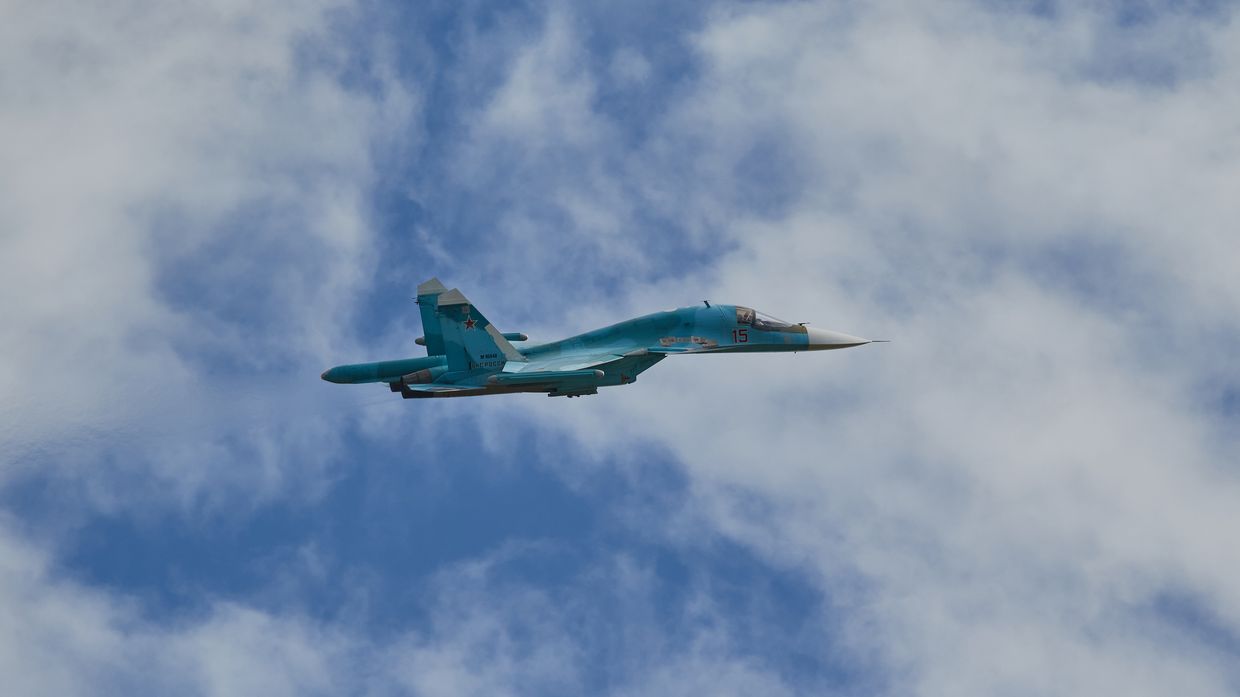
Earlier on June 27, Ukrainian drones struck four Su-34 fighter jets at the Marinovka airfield in Russia's Volgograd Oblast, according to the military.
Preliminary reports indicate that two Russian fighter jets were destroyed in the June 27 attack, and the other two were damaged. Russia uses the aircraft to bomb Ukraine.
Since the start of its full-scale war in February 2022, Russia has lost 420 airplanes and 337 helicopters, Ukraine's General Staff said in its latest update on June 28. The Kyiv Independent could not verify these figures.
Russia is returning outdated T-62 tanks to service due to mounting equipment losses in its full-scale war against Ukraine and a shortage of modern military equipment, Ukraine's military intelligence (HUR) said on June 28.
"The key factors limiting the ability to produce modern armored vehicles in Russia are a lack of industrial capacity and a shortage of imported high-tech components," the agency said.
According to HUR, the restoration of T-62 tanks is primarily carried out at a facility in the village of Atamanovka in Russia's far-eastern Zabaykalsky Krai.
Russia transferred 21 T-62 tanks from its eastern military district to the European part of the country, the intel claimed.
HUR said that Russia’s stockpile of Soviet-era tanks from the 1970s is being depleted, while most T-62s are even in worse condition after decades of open-air storage without maintenance.
Some of these tanks can also be used at the front as stationary firing points to reinforce defensive positions.
"Due to a severe shortage of modern main battle tanks such as the T-90M and T-72B3M, the deployment of T-62s is seen as a temporary but necessary measure," the statement read.
Since the start of its full-scale war in February 2022, Russia has lost 10,970 tanks, Ukraine's General Staff said in its latest update on June 28.
The Kyiv Independent could not verify these numbers.
Russia launched its new Grom-1 bomb missile at Dnipropetrovsk Oblast for the first time on June 28, but it was shot down by Ukrainian air defenses, Governor Serhii Lysak said.
The attack comes as Russian troops continue their offensive in neighboring Donetsk Oblast, pushing closer to Dnipropetrovsk Oblast — a major industrial region in central Ukraine.
In mid-June, Ukraine's military denied reports that Russian troops had entered the region, with President Volodymyr Zelensky saying that Ukrainian troops had intercepted Russian reconnaissance units attempting to breach Dnipropetrovsk Oblast.
Explosions in Dnipro were heard around 11:30 a.m. local time, shortly after the Ukrainian Air Force reported that Russia had launched guided aerial bombs.
The strike was later confirmed to have been launched from the Russian-occupied part of Zaporizhzhia Oblast.
"The target flew more than 100 kilometers and was shot down by air defense outside the city of Dnipro," the statement read.
Authorities are verifying the wreckage of the downed weapon.
To date, neither Russian guided aerial bombs nor the Grom-1 bomb missile had previously reached the city of Dnipro.
The Grom-1 is described to be a hybrid of a guided aerial bomb and a missile, developed from the Kh-38 missile platform, with an estimated range of up to 120 kilometers.
Russia regularly uses guided aerial bombs to attack front-line areas in Ukraine's east and south, as well as regional centers such as Kharkiv, Sumy, and Zaporizhzhia.
As Moscow intensifies its attacks on Ukrainian cities, earlier this week on June 24, Russian forces struck civilian infrastructure and a passenger train with ballistic missiles, killing at least 21 people and injuring more than 300 others.
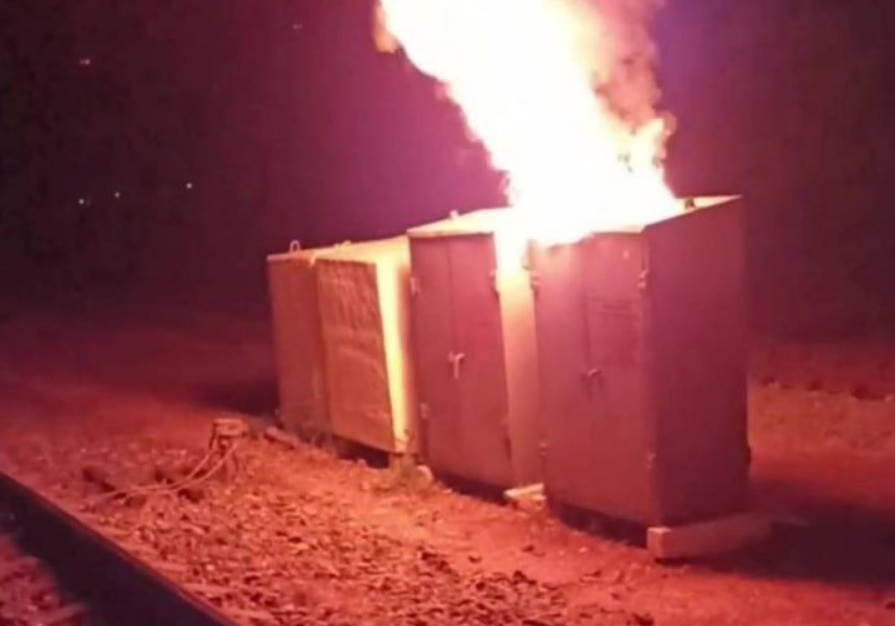
The Atesh partisan group set fire to a signal cabinet that helps control traffic on a railway line near the Russian-occupied city of Yasynuvata in Donetsk Oblast, a route used for Russia's military logistics, the group claimed on Telegram on June 28.
Yasynuvata lies some 22 kilometers (12.5 miles) from the occupied city of Donetsk and is considered to be a major railway junction in the region.
According to the group, the sabotaged section is located near Russian military units, warehouses, and industrial facilities.
Atesh said the attack disrupted the delivery of a train carrying fuel for Russian forces.
"On Ukraine's Constitution Day, we remind the occupiers that this is an independent and free country. And Donetsk will always be Ukrainian," the statement read.
The Kyiv Independent could not verify these claims.
The Atesh partisan group regularly conducts sabotage attacks in Russia and Ukraine's Russian-occupied territories.
In early June, Atesh claimed to have destroyed a signal cabinet on the new Volnovakha-Mariupol railway, which had been recently built by occupying Russian forces.
Russia has lost around 1,017,720 troops in Ukraine since the beginning of its full-scale invasion on Feb. 24, 2022, the General Staff of Ukraine's Armed Forces reported on June 28.
The number includes 1,000 casualties that Russian forces suffered just over the past day.
According to the report, Russia has also lost 10,970 tanks, 22,908 armored fighting vehicles, 53,415 vehicles and fuel tanks, 29,665 artillery systems, 1,425 multiple launch rocket systems, 1,189 air defense systems, 420 airplanes, 337 helicopters, 42,477 drones, 28 ships and boats, and one submarine.
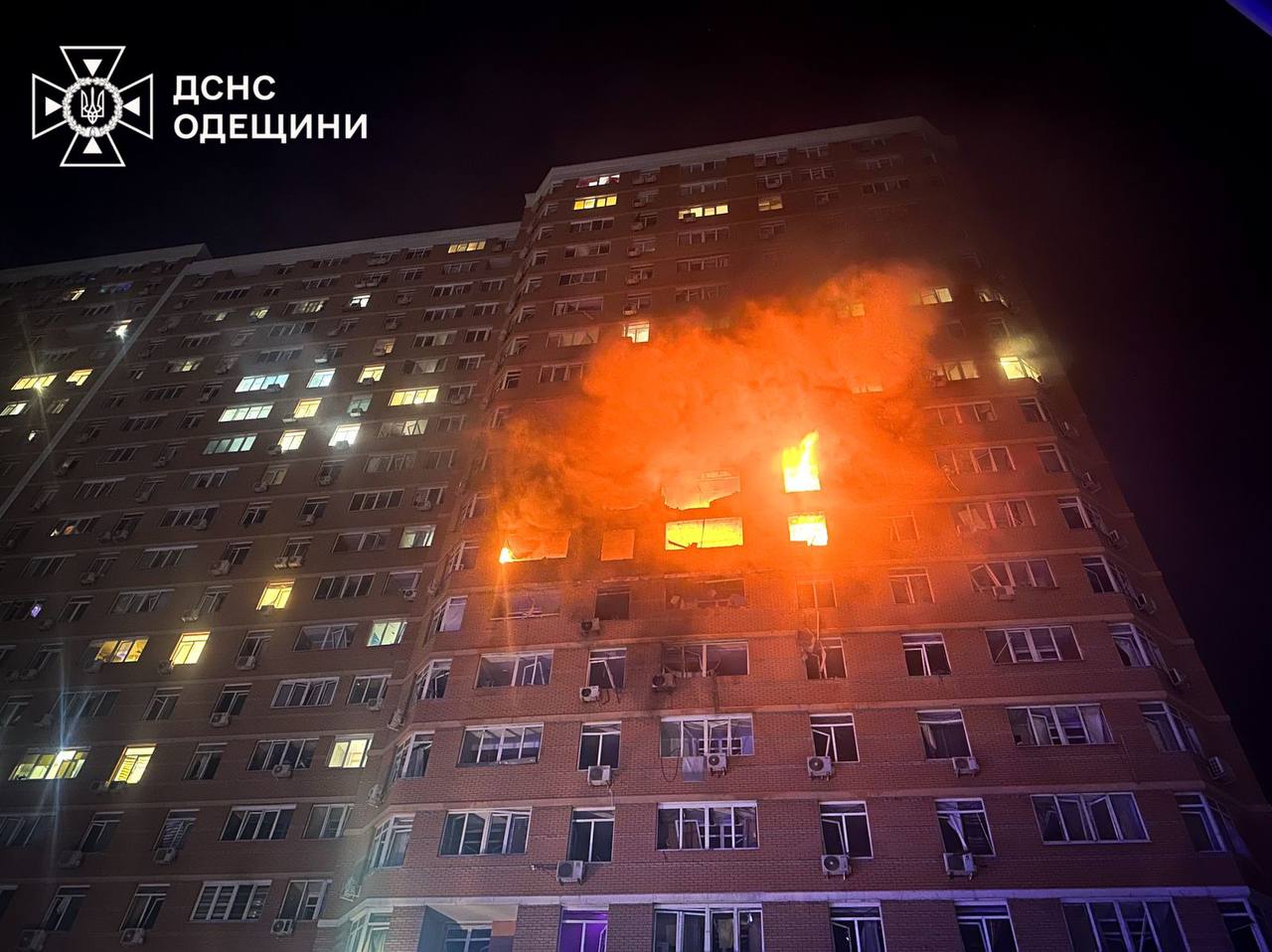
Russia attacked the southern city of Odesa overnight on June 28, killing two people and injuring at least 14 others, Ukraine's State Emergency Service reported.
The drone attack hit a 21-story building, causing a fire on the 7th, 8th, and 9th floors that left residents trapped in their apartments. First responders rescued five people, including a small child.
Two people, a married couple, were killed in the attack, Odesa Oblast Governor Oleh Kiper reported. Emergency workers recovered their bodies from the damaged building.
At least 14 other civilians were injured, including three children. Both are receiving treatment in medical facilities, Kiper said.
Ongoing air raid alarms throughout the night complicated rescue efforts, the State Emergency Service said.
Odesa, a port city on Ukraine's Black Sea coast with a population of around 1 million, has been a frequent target of Russian attacks since the full-scale invasion. A massive Russian drone strike on June 20 killed one civilian and injured 14 others, including three first responders.
Russian missile and drone attacks on Ukrainian cities have intensified dramatically in May and June.
Ukraine provides over 40% of the weapons used to defend the nation's independence against Russia's full-scale invasion, President Volodymyr Zelensky said at the State and Business Forum in Kyiv on June 27.
As Ukraine scales up domestic defense production, Zelensky has been lobbying foreign partners to provide funding to help match its manufacturing capacity.
The government and Ukrainian businesses now provide more than 40% of the weapons the country uses in its fight against Russia, Zelensky said. Business-driven innovations in technology have helped Ukraine on the battlefield, particularly in drone development.
"Thanks to Ukrainian entrepreneurship and all the conditions we have created as a state, a new sector of our domestic manufacturing has emerged and immediately become one of the world’s most advanced — the production of drones of various types," Zelensky said.
"Hundreds of companies are now involved in weapons production in one way or another."
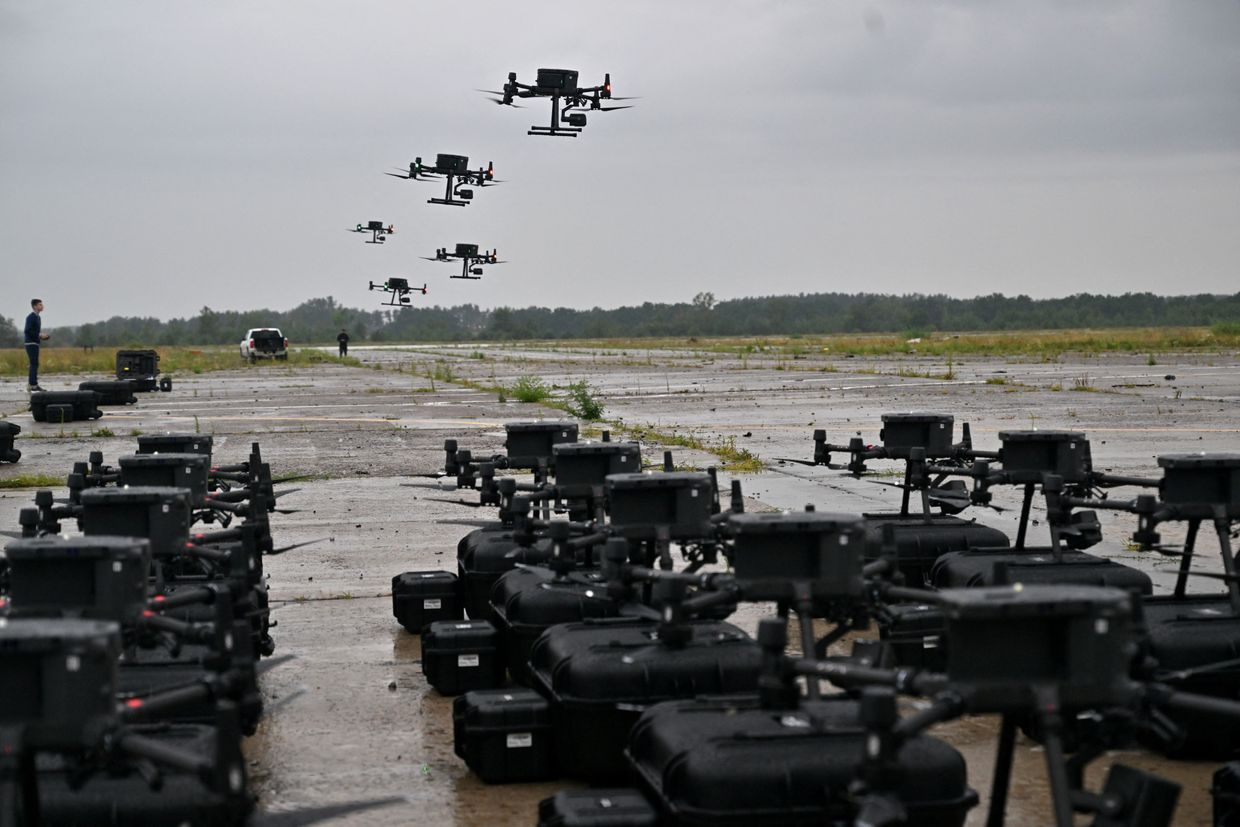
Zelensky's comments come a day after Defense Minister Rustem Umerov reported that Ukrainian companies have increased their industrial capacity in order to produce four million drones a year.
At the NATO summit in The Hague on June 24, Zelensky said Ukraine could potentially produce as many as eight million drones per year, but lacks the financial backing to achieve its full capacity. During the summit, Ukraine signed agreements on joint weapons production with the U.K. and Denmark in an effort to bridge the gap between Kyiv's capacity and current funds.
Ukraine has rapidly developed its drone capabilities since 2022, evolving from modifying commercial aircraft to producing military UAVs, attack drones, and reconnaissance systems at scale.
Pokrovsk remains the "hottest spot" along Ukraine's front lines, with Russia concentrating its largest group of personnel in that direction — a force numbering 111,000 troops, Commander-in-Chief Oleksandr Syrskyi reported on June 27.
Russia has for months focused its offensive efforts on the embattled town of Pokrovsk in Donetsk Oblast and has recently been escalating attempts to break through to neighboring Dnipropetrovsk Oblast, a region that has not yet seen combat. Ukraine denied reports that Russian forces breached the regional border in May and June.
In May, Syrskyi reported that Ukraine had stabilized the situation in Pokrovsk.
After a working visit to the Pokrovsk sector, Syrskyi on June 27 said that the city is still "the hottest spot along the entire 1,200-kilometer front line" with nearly 50 combat clashes recorded per day. It's also where Russia has concentrated the bulk of its forces in Ukraine.
Russia has amassed "about 111,000 personnel" in the Pokrovsk sector, Syrskyi said, but Ukrainian forces are holding the line.
"The enemy continues to try to break through to the administrative border of Donetsk Oblast ... Russian sabotage and assault groups were particularly active here two weeks ago," Syrskyi said.
"But they were all destroyed or neutralized, and the remnants were pushed back from the administrative border. The situation is under control."
Ukraine's Donetsk Oblast (Nizar al-Rifai/The Kyiv Independent)
Russia is attempting to break into Dnipropetrovsk Oblast not only for operational reasons, but also for performative ones, Syrskyi said.
"To achieve a psychological effect: to put the infamous 'foot of the Russian soldier' there, plant a flag, and trumpet another pseudo-'victory.'"
Syrskyi's comments echo recent remarks by Russian President Vladimir Putin, who claimed in a propaganda-heavy speech on June 20 that "wherever the foot of a Russian soldier steps is Russian land." President Volodymyr Zelensky fired back the next day, promising "Ukrainian drones for the foot of every Russian soldier."
While Putin claimed on June 27 that Moscow is "ready" for a third round of peace talks with Kyiv, the Kremlin has sent no signal that it's ready to abandon its maximalist ambitions in Ukraine.
Russia's so-called "peace memorandum" demands that Ukraine recognize Russia's annexation of Crimea, as well as Kherson, Donetsk, Zaporizhzhia, and Luhansk oblasts — none of which are fully under Moscow's control.
Zelensky's Deputy Chief of Staff Pavlo Palisa said on June 6 that Russia aims to occupy all Ukrainian territory east of the Dnipro River and advance toward Odesa and Mykolaiv in a broader plan to sever Ukraine's access to the Black Sea amid a renewed summer offensive.
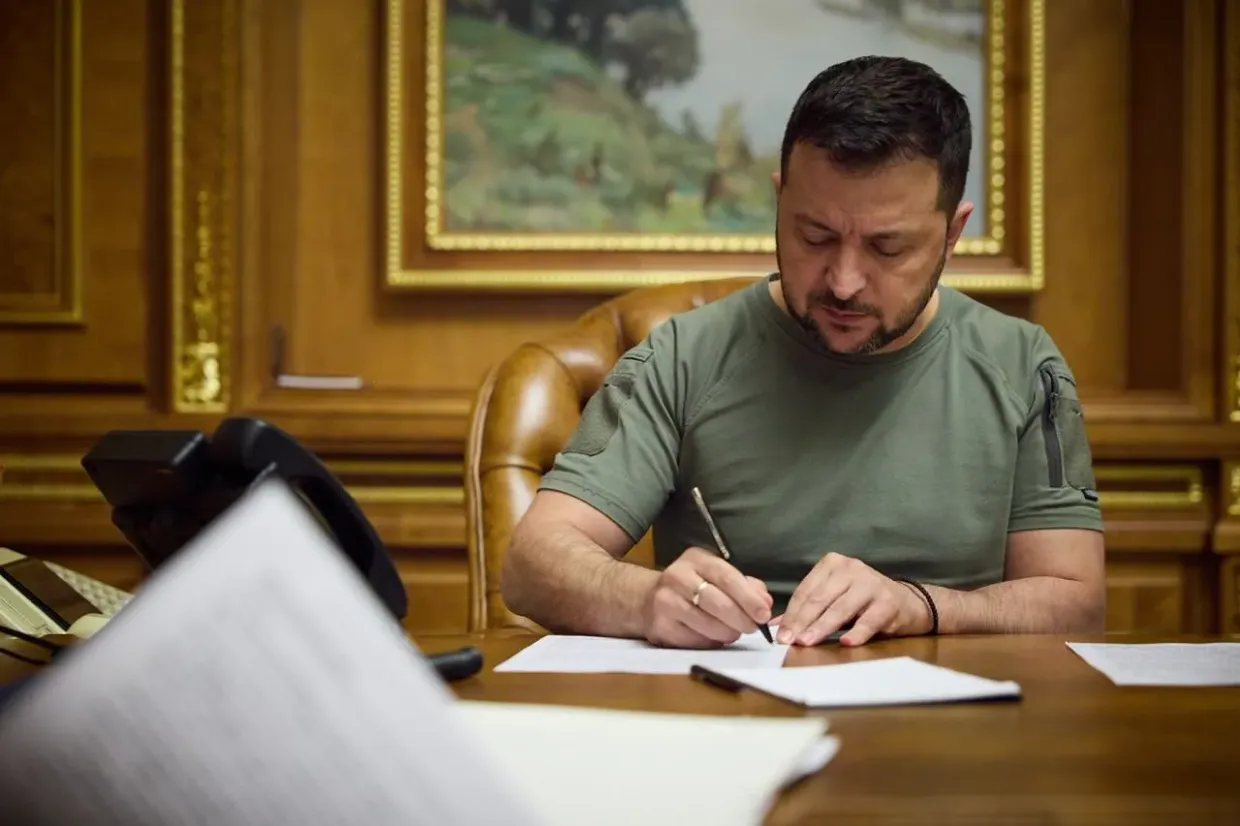
President Volodymyr Zelensky signed a decree on June 27 imposing sanctions on 52 Russian citizens as well as an additional 34 Russian companies and one Chinese entity involved in the production of Shahed-type drones and chip manufacturing machinery.
Ukraine introduced new restrictions as Russia has escalated drone attacks against Ukrainian cities over the past weeks, launching upwards of 400-500 unmanned aerial vehicles (UAVs) per night.
Individuals and legal entities subject to Ukrainian sanctions cannot do business and trade in Ukraine, cannot withdraw their capital from the country. In the meantime, their assets are blocked, as well as their access to public and defense procurement, and entry into the territory of Ukraine, among other restrictions.
Andrii Yermak, head of the Presidential Office, said on Telegram that the sanction primarily enterprises and individuals collaborating with a Shahed manufacturing facility located in the town of Yelbuga in Russia's Tatarstan.
Russia has launched thousands of cheap but effective Iranian-designed Shahed drones against Ukraine since the fall of 2022. Originally designed in Iran, Russia has since produced its own Shahed-type drones on Russian territory.
Drones have become one of the defining tools of the full-scale war, used extensively by both Ukraine and Russia for surveillance, long-range strikes, and tactical battlefield advantage.
Earlier in the day, Zelensky signeda decree to coordinate sanctions against Russia with international partners, particularly the European Union and the Group of Seven (G7).
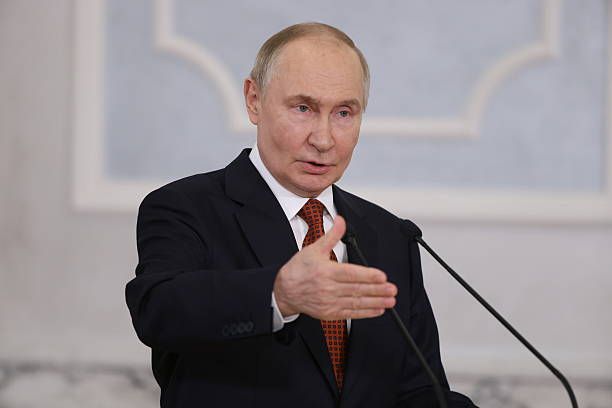
Russian President Vladimir Putin claimed on June 27 that Moscow plans to cut its military expenditure beginning next year, in a rebuke of NATO members' plans to increase defense spending to 5% of GDP.
Putin's claims will likely be met with harsh skepticism from Western officials as Russia's military spending has continued to increase throughout its ongoing invasion of Ukraine.
The Kyiv Independent cannot verify claims made by Putin. The Russian president did not provide any specifics as to how Moscow plans to cut military spending, but added there has yet to be an agreement between ministries.
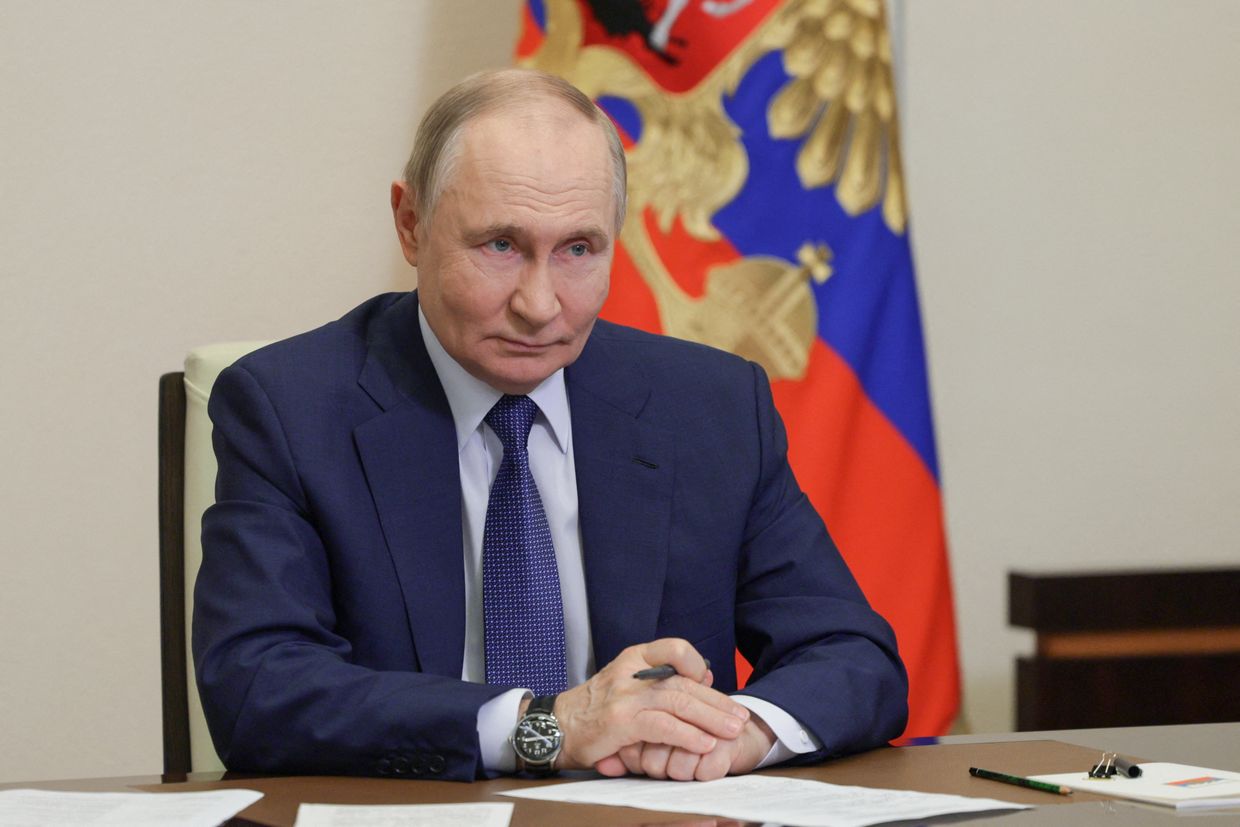
"We are planning to reduce defence spending. For us, next year and the year after, over the next three-year period, we are planning for this," Putin told reporters during a visit to Belarus. "Europe is thinking about how to increase its spending, on the contrary. So who is preparing for some kind of aggressive actions? Us or them?" Putin continued.
Putin's comments comes as NATO allies are increasingly concerned about Russia's military capabilities, including future threats to alliance members as well as ongoing sabotage efforts.
On June 25, NATO member states agreed to a new defense spending benchmark, committing to allocate 5% of their GDP annually to defense and security-related expenditures by 2035.
The decision comes as NATO allies increasingly believe Russia could rebuild sufficient military capacity to challenge the alliance within five years, with NATO Secretary General Mark Rutte warning that allies must act urgently to prepare for future threats.
"We see Russia's deadly terror from the skies over Ukraine every day. We must be able to defend ourselves from such attacks," Rutte said during a press briefing on June 23. "Our security environment has changed, and not for the better. The threats we face today demand that we do far more," he added.
Various European intelligence agencies as well as officials have increasingly delivered dire warnings about the threat emanating from Russia and Europe's current lack of preparedness. German intelligence chief Bruno Kahl told a parliamentary hearing in October that Russia will have the military capabilities to be able to attack NATO by 2030.
In 2024, Russia’s military spending surpassed the combined defense budgets of all European nations. Russia’s total defense expenditures surged by 42% in real terms amounting to $462 billion, according to the data by the International Institute for Strategic Studies (IISS).
By comparison, total defense spending across Europe, including the U.K. and EU member states, increased by nearly 12% last year to $457 billion, slightly trailing Moscow’s budget.
The Moscow Times reported in December that the Kremlin had spentan unprecedented $43 billion in the third quarter of 2024 alone.
Russia is ready to hold a third round of peace talks on the war in Ukraine, Russian President Vladimir Putin told reporters on June 27, without specifying if he would directly participate in the negotiations.
"In general, we are ready for this (next round of peace talks), we need to coordinate the place and time," Putin said.
Putin added that the talks could potentially be held in Istanbul but the details have not yet been worked out. He added that another round of talks may bring peace closer as the terms for peace outlined in the countries' peace memorandumsremain "absolutely opposite."
The latest peace talks between Russia and Ukraine took place on June 2 in Istanbul, following an earlier meeting on May 16. Despite Ukraine's insistence on a 30-day ceasefire, Russiahas repeatedly rejected the offer, proposing only a temporary 2–3-day truce in limited areas to retrieve the bodies of fallen soldiers.
While no agreement on a comprehensive ceasefire has been reached, talks have led to a few major prisoner exchanges, including a 1,000-for-1,000 swap that took place in late May and a follow-up deal for up to 1,200 prisoners from each side.
Defense Minister Rustem Umerov said during a press briefing on June 26 that it was Ukraine's goal to organize a direct meeting between President Volodymyr Zelensky and Putin during the next round of negotiation.
In previous rounds, Putin had failed to show in-person sending lower-level officials to the meeting instead — despite Zelensky's willingness for in-person talks as well pressure from the United States.
On June 26, Turkish President Recep Tayyip Erdogan said Ankara is workingto organize a meeting between Zelensky and Putin, with U.S. President Donald Trump potentially joining the talks.
Putin said on June 27 that it was "quite possible" that a meeting between himself and the U.S. president could take place. "We will be happy to prepare it," he briefly added.
Zelensky and Trump met during the NATO summit on June 25, where the two leaders discussed battlefield developments, Kyiv's need for additionalair defense systems, and the potential for co-production of drones.
Zelensky has previously voiced openness to a trilateral meeting. On May 27, he told public broadcaster Suspilne that he was ready to sit down with both Trump and Putin.
Turkey previously hosted direct peace talks in March 2022 and has remained one of the few countries with open lines to both Kyiv and Moscow.
Ukrainian drones struck four Su-34 fighter jets at the Marinovka airfield in Russia's Volgograd Oblast overnight on June 27, Ukraine's General Staff said.
The operation was carried out by the Special Forces and the Security Service of Ukraine (SBU) in cooperation with other military units, according to the General Staff.
Volgograd Oblast is located some 900 kilometers (560 miles) southeast of Moscow.
According to preliminary data, two Russian fighter jets were destroyed, and the other two were damaged. Russia uses such aircraft to bomb Ukraine, particularly to drop guided aerial bombs, the General Staff said.
The attack also caused a fire in the airfield's technical and operational unit, a facility where combat aircraft are serviced and repaired, according to the General Staff.
The Kyiv Independent could not independently verify these claims.
As Russia intensifies aerial attacks on Ukraine and the civilian death toll climbs, Ukraine has stepped up its drone attacks on Russian territory. The recent surge in drone strikes aims to disrupt airport operations, overwhelm air defenses, and mount pressure against the Russian population.
Editor's note: The story was updated with Slovak Prime Minister Robert Fico's statement voiced during the EU summit.
EU ambassadors have failed to approve the 18th package of sanctions against Russia due to opposition from Hungary and Slovakia, an unnamed EU official told the Kyiv Independent on June 27.
After the 17th package of sanctions against Russia took effect on May 20, Ukraine's allies announced the following day that another round of restrictions was already in the works. Meanwhile, officials in Hungary and Slovakia protested against the approval of new restrictions against Russia.
Unlike Hungarian Prime Minister Viktor Orban, who has consistently opposed sanctions against Russia, Slovakia has not previously attempted to block EU sanctions.
"No agreement was reached. Ambassadors will return to this issue after two reservations are removed," the source told Suspilne in a reference to the position of Slovakia and Hungary.
Slovakia has requested that the adoption of the 18th package of EU sanctions against Russia be postponed until a decision is made on the consequences for the member states from RePowerEU, the European Commission's initiative to end dependence on Russian fossil fuels by 2030 in response to Russia's invasion of Ukraine.
Slovak Prime Minister Robert Fico voiced this proposal during the EU summit, the Slovak Foreign Ministry told Suspilne.
The ambassadors also agreed to extend sectoral sanctions against Russia for six months. These sanctions encompass a broad array of economic areas, including restrictions on trade, finance, technology and dual-use goods, industry, transport, and luxury goods.
In June, the European Commission presented the 18th package of sanctions, which includes new restrictions against the Russian energy and banking sectors and transactions related to the Nord Stream gas pipeline project.
Ukraine's European allies are tightening sanctions against Russia as Moscow refuses to accept a ceasefire. Despite Russia's refusal, no new U.S. sanctions have been imposed so far.
Active fighting is still taking place around the village of Shevchenko in Donetsk Oblast, home to one of Ukraine's largest lithium deposits, a spokesperson for Ukraine's Khortytsia group of forces told the Kyiv Independent on June 27, denying reports Russia had occupied the village.
Earlier on June 26, Russia'a Defense Ministry said it had captured Shevchenko along with another other small settlements in the Velyka Novosilka region of the oblast, as Russian troops continue to push along all areas of the front line.
The spokesperson said that while Russian forces had pushed out Ukrainian soldiers on June 26, the situation is constantly evolving and subject to change several times a day.
"This is one of the two most intense directions right now," Viktor Trehubov, the spokesperson, told the Kyiv Independent.
According to the Ukrainian Geological Survey, the Shevchenkivske deposit covers nearly 40 hectares (98 acres) on the eastern outskirts of Shevchenko. Exact data on the Shevchenkivske deposit's lithium reserves are classified, but it's considered one of the most promising.
The deposit's main reserves consist of lithium ores, but it also contains other rare elements such as rubidium, cesium, tantalum, niobium, beryllium, and tin.
Ukraine is home to 20 of the world's critical minerals and metals like titanium used in the aerospace and defense industries and lithium, an essential component of electric vehicle batteries.
The U.S.-Ukraine minerals deal, signed April 30, specifically mentions lithium as one of the mineral resources that both parties could profit from extracting.
Despite the deposit's relatively small size, it could be operated by a single mine, which could make extraction more efficient, according to a Ukrainian Geological Survey data.
The survey classifies the deposit in the highest complexity category of three possible levels, which could complicate development.
According to KSE, Ukraine holds one-third of the European Union's lithium reserves and approximately 3% of global lithium reserves.
President Volodymyr Zelensky signed a decree on June 27 to coordinate sanctions against Russia with international partners, particularly the European Union and the Group of Seven (G7), the President's Office said on its website.
A day earlier, EU member states' leaders gave their political consent to extend the sanctions previously imposed on Russia for its war against Ukraine.
The EU Committee of Permanent Representatives (CORPER) also extended sectoral sanctions against Russia for another six months on June 26, European Pravda reported, citing a diplomatic source. The sanctions include restrictions against entire sectors or industries of the Russian economy or areas of operation of Russian businesses.
Meanwhile, the participants did not approve the new 18th package of sanctions, which targeted Russia's energy and banking sectors, due to Slovakia's veto.
Zelensky's June 27 decree implements a decision by Ukraine's National Security and Defense Council's (NSDC) to synchronize the sanctions against Russia with the EU and G7.
According to the document, sanctions approved by partner states must be submitted to the NSDC for consideration and approval no later than the 15th day after the partner state's decision comes into force.
The Cabinet of Ministers, the Security Service of Ukraine (SBU), and the National Bank of Ukraine must also ensure the implementation of sanctions approved by international partners in Ukraine.
After the 17th package of sanctions against Russia took effect on May 20, Ukraine's allies announced the following day that another round of restrictions was already in the works.
The push for tighter sanctions comes as Russia continues to reject ceasefire proposals and presses forward with military operations.
Russian forces struck a critical energy facility in Kherson Oblast, causing widespread power outages across several communities, Governor Oleksandr Prokudin said on June 27.
"Russia decided to plunge Kherson Oblast into darkness," Prokudin wrote on Telegram. He said the attack has disrupted electricity supply to multiple settlements.
Local power engineers are working to stabilize the situation, Prokudin said.
"I ask the residents of the region to prepare for a prolonged power outage. Power engineers are doing everything possible to stabilize the situation," he said.
Kherson and the surrounding regions have frequently come under Russian fire since Ukrainian forces liberated the city from occupation in November 2022. Russian troops continue to attack the area with artillery and drones from across the Dnipro River.
The Russian army consistently targeted Ukrainian energy infrastructure. Throughout 2024, Moscow launched 13 mass attacks with drones and missiles on Ukraine's energy infrastructure. Ukraine was forced to introduce emergency blackouts across the country.
Ukraine and Russia agreed to a partial 30-day energy truce, following consultations with the U.S. in Riyadh on March 25. Moscow violated the ceasefire more than 30 times, Foreign Ministry Spokesperson Heorhii Tykhyi said on April 16.
Ukraine is preparing to request European Union sanctions against Bangladeshi entities over importing wheat stolen from Russian-occupied Ukrainian territories, Ukraine's ambassador to India told Reuters.
In comments for Reuters published on June 27, Oleksandr Polishchuk said that Bangladesh had failed to respond to Ukrainian diplomatic appeals to stop the trade, prompting Kyiv to escalate the matter to the EU level.
"It's a crime," Polishchuk told Reuters. "We will share our investigation with our European Union colleagues, and we will kindly ask them to take the appropriate measures."
Russian forces have seized millions of tons of Ukrainian grain from occupied areas, with at least 180,000 tons looted through the port of Mariupol alone, Ukrainian Prime Minister Denys Shmyhalsaid in October 2024.
The Ukrainian Embassy in New Delhi sent multiple letters to Bangladesh's Foreign Ministry this year, requesting rejection of more than 150,000 tonnes of grain allegedly stolen and shipped from the Russian port of Kavkaz, according to documents reviewed by Reuters, shared by people familiar with the matter.
According to Polishchuk, Ukrainian intelligence showed that entities in Russia mask grain obtained from occupied Ukrainian territories by mixing it with Russian wheat before shipping it to other countries.
Bangladesh's Food Ministry, in comments to Reuters, denied the imports, saying that they banned grain deliveries originating from occupied Ukrainian territory.
Ukraine's agricultural sector has suffered approximately $80 billion in losses due to Russia's full-scale invasion, Agriculture Minister Vitalii Koval said in February.
The losses include direct damage, disrupted logistics, higher fertilizer and fuel costs, land reclamation expenses, demining costs, and impacts from occupied territories.
Editor's note: This is a developing story and is being updated.
A Russian missile strike on the city of Samar in Ukraine's Dnipropetrovsk Oblast on June 27 killed five people and injured at least 25 others, Governor Serhii Lysak said.
In a statement posted to Telegram, Lysak said most of the injured were hospitalized. Four of the victims are in serious condition, while the others sustained moderate injuries. A fire broke out following the strike, and emergency services are continuing to work at the site.
"We're doing everything possible to assist those affected," Lysak said.
The attack comes just days after Russia launched one of the deadliest assaults on Dnipropetrovsk Oblast. On June 24, missiles struck multiple locations in the regional capital of Dnipro and in the oblast, killing at least 21 people and injuring over 300 others.
The strike hit civilian infrastructure, a dormitory, a gymnasium, and a train traveling from Odesa to Zaporizhzhia, as well as the nearby town of Samarske. Two people were killed and 14 others wounded there. At least 100 victims of the Dnipro attack remain hospitalized, Lysak said.
At least two civilians were killed and 13 were injured in Russian drone and missile attacks across Ukraine over the past day, local officials reported on June 27.
According to Ukraine's Air Force, Ukrainian air defense intercepted 365 of 371 incoming Russian air weapons, including 363 Shahed-type drones, two Kinzhal ballistic missiles, and six Kalibr cruise missiles.
In Kharkiv Oblast, Governor Oleh Syniehubov said one person was killed and four were wounded in Vovchanski Khutory and Pidlyman during a Russian attack. Infrastructure damage included houses and an agricultural facility. The region also endured heavy shelling.
In Donetsk Oblast, Governor Vadym Filashkin reported one death, while three people were injured across Pokrovsk, Kramatorsk, and Bakhmut districts. Damage was observed to houses, a farm, administrative buildings, gas pipelines, and vehicles.
In Kherson Oblast, Governor Oleksandr Prokudin said four people were injured as Russian drones and artillery struck social and residential infrastructure. Seven apartment buildings and 25 houses were damaged, along with utilities and vehicles.
In Zaporizhzhia Oblast, Governor Ivan Fedorov said one person was injured when an air-dropped bomb hit a settlement in the Huliaipole district.
In Kyiv Oblast, a person was injured near Fastiv during an overnight drone and missile attack. One house was damaged each in Boryspil and Fastiv districts, while a tire repair shop and five cars were hit in Bila Tserkva. No critical infrastructure was reportedly affected, and air defense forces shot down Russian drones and missiles.
North Korea has already deployed around 11,000 elite troops to support Russia's war against Ukraine, accounting for more than 20% of North Korean leader Kim Jong Un's elite "personal reserve" force, Defense Minister Rustem Umerov said during a June 26 press briefing.
"These are soldiers specially selected based on physical, psychological, and other criteria," Umerov said. "These units have already suffered significant losses."
Umerov said intelligence indicates North Korea had considered sending additional forces to fight with Russia. However, according to Umerov, the move would further deplete its strategic reserves and increase risks to regime stability. There have been four known rotations of North Korean units deployed against Ukraine, according to Umerov.
According to a June 15 report from the United Kingdom's defense intelligence, North Korea has likely sustained more than 6,000 casualties in Russia since the deployment of troops to Kursk Oblast in fall 2024.
U.K. intelligence attributed the high casualty rate to large, highly attritional dismounted assaults.
Russia's growing military partnership with North Korea has raised concerns in Kyiv and among its allies. The two countries signed a Comprehensive Strategic Partnership Agreement in 2024. The treaty commits both countries to provide assistance if either is attacked.
Kim previously described the pact as having a "peaceful and defensive nature," framing it as a formal security guarantee between the longtime partners.
In practice, Umerov said, North Korea is bearing the military burden, while Russia has not upheld its reciprocal obligations, raising concerns within the North Korean regime.
"Russia's use of elite North Korean troops demonstrates not only a growing reliance on totalitarian regimes but also serious problems with its mobilization reserve," Umerov said. "Together with our partners, we are monitoring these threats and will respond accordingly."
Umerov added that Ukraine, working in coordination with its Western partners, is closely tracking the movement and deployment of North Korean units deployed to fight against Ukraine. He said Russia's dependence on foreign forces may signal critical shortages in its own recruitment and mobilization efforts.
According to South Korea's National Intelligence Service, North Korea is likely to send more troops to Russia over the summer. Pyongyang may also send up to 25,000 laborers to Russia to support drone production, according to the report.
The additional troop deployment would come on top of what Seoul estimates is already substantial support from North Korea, which includes the shipment of over 10 million artillery shells and ballistic missiles in exchange for economic and technical assistance from Moscow.
Ukraine's next goal in ongoing negotiations with Russia is to organize a direct meeting between President Volodymyr Zelensky and Russian President Vladimir Putin, Defense Minister Rustem Umerov said during a press briefing on June 26.
Speaking to journalists in Kyiv, Umerov, who was part of Ukrainian peace talks delegation, outlined a multi-stage negotiation process that began in January with an initiative from U.S. President Donald Trump. Umerov stressed that Ukraine welcomed the idea of a ceasefire from the outset and remains fully committed to a just peace.
"Ukraine has always remained consistent in its pursuit of peace," Umerov said. "We supported the U.S. initiative for a full ceasefire from the very beginning and demonstrated our commitment through multiple rounds of negotiations. But any dialogue must take place without ultimatums and with full respect for our country's sovereignty."
The talks unfolded in several rounds in Jeddah, Riyadh, Paris, London, and Istanbul. During the second round of negotiations in Riyadh, Ukraine communicated with Russia indirectly, through U.S. mediators. In Turkey, U.S. mediators were excluded from talks due to Russia's request, according to Umerov.
"President Zelensky's proposal to meet with Putin is aimed at showing Donald Trump that Moscow is not truly seeking peace," Mykola Kniazhytzkyi, a Ukrainian lawmaker from the European Solidarity party, told the Kyiv Independent.
"Its real goal is the destruction of Ukrainian statehood and the genocide of the Ukrainian people."
Oleksandr Merezhko, a lawmaker from Zelensky’s party and chair of the parliament's foreign affairs committee, called the proposal for a bilateral high-level meeting "an interesting political step." He said it is a logical move since "Putin decides everything in Russia."
However, the MP questioned the overall advisability of a direct meeting between Zelensky and Putin.
"It seems to me that it would be better to conduct such negotiations in a format involving not only Zelensky, but also the United States and the European Union," Merezhko said, adding that European leaders could help build a "balance of power," given the risk that the U.S. might potentially lean toward Russia.
He said that talks between the leaders should take place after the ceasefire, at least a temporary one, is in place.
"For them (Russia), negotiations are a tool of war. They have never conducted them in good faith and will never do this. In general, there is no need for negotiations, there is a need for pressure (from the West)," Merezhko said.
Umerov said Ukraine had accepted a U.S.-proposed full ceasefire across land, sea, and air in early March, but Russia has rejected the proposal.
While no agreement on a comprehensive ceasefire has been reached, talks have led to a few major prisoner exchanges, including a 1,000-for-1,000 swap that took place in late May and a follow-up deal for up to 1,200 prisoners from each side.
Umerov said the focus of recent negotiations has included humanitarian issues such as the release of civilians and children, as well as conditions for a meeting of Ukrainian and Russian leaders. He emphasized that the next stage must include top-level dialogue.
"After completing discussions on humanitarian issues, Ukraine plans to move forward to the topic of a leaders' summit for substantive dialogue," he said.
The latest peace talks between Russia and Ukraine took place on June 2 in Istanbul, following an earlier meeting on May 16. Both times, the Ukrainian delegation was led by Umerov. Despite Ukraine's insistence on a 30-day ceasefire, Russia proposed only a temporary 2–3-day truce in limited areas to retrieve the bodies of fallen soldiers. Umerov called this offer "insufficient" and accused Moscow of avoiding meaningful peace.
"Russia rejects even the very idea of stopping the killings," Umerov said following the June 2 talks. "That's why we appeal to the world: pressure is needed for real peace, not for an imitation of negotiations."
Zelensky has also criticized Moscow's limited ceasefire offers and called on Trump to follow through on promised sanctions if talks remain fruitless. Trump has repeatedly suggested that he is monitoring the peace process closely and warned that the U.S. response could change if Putin is not prepared to end the war.
No further U.S. sanctions were imposed after more than 100 days of Moscow's refusal to the proposed ceasefire.

 Connexion
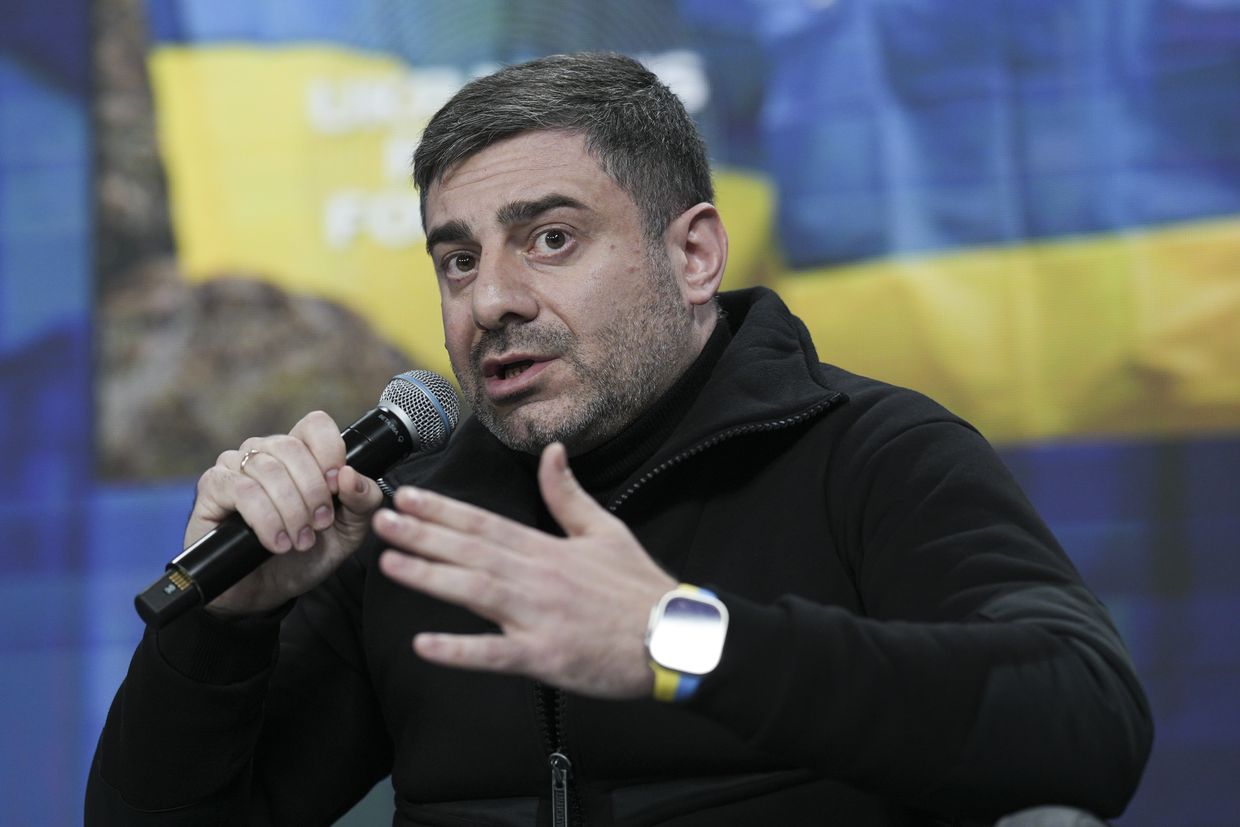
 The Kyiv IndependentYuliia Taradiuk