Vue lecture

Ukraine takes Zelenskyy’s Russian airspace warning to UN aviation body
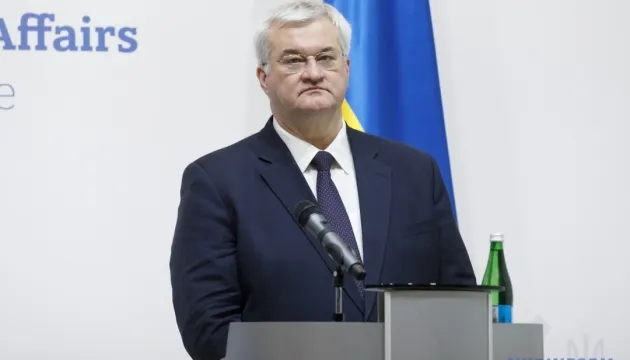
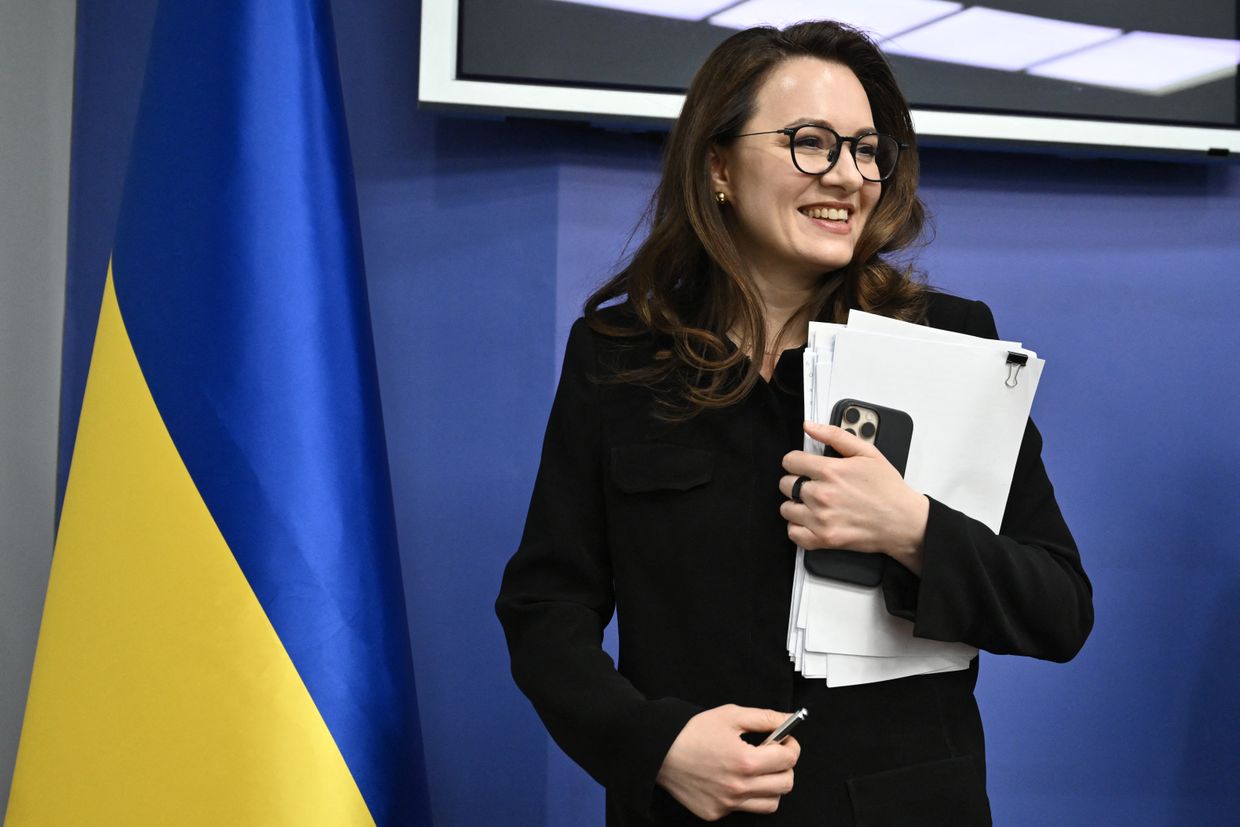
Ukrainian Foreign Minister Andrii Sybiha stands behind a lectern with a microphone and a Ukrainian flag in the background.

Ukraine formally notified the International Civil Aviation Organization (ICAO) on 2 September that Russian airspace is unsafe for civilian flights because of increased military activity, Ukrainian Foreign Minister Andrii Sybiha said. The letter behind the notification asks the organization to urge its member states to stop civil flights over Russia altogether, ZN reported.

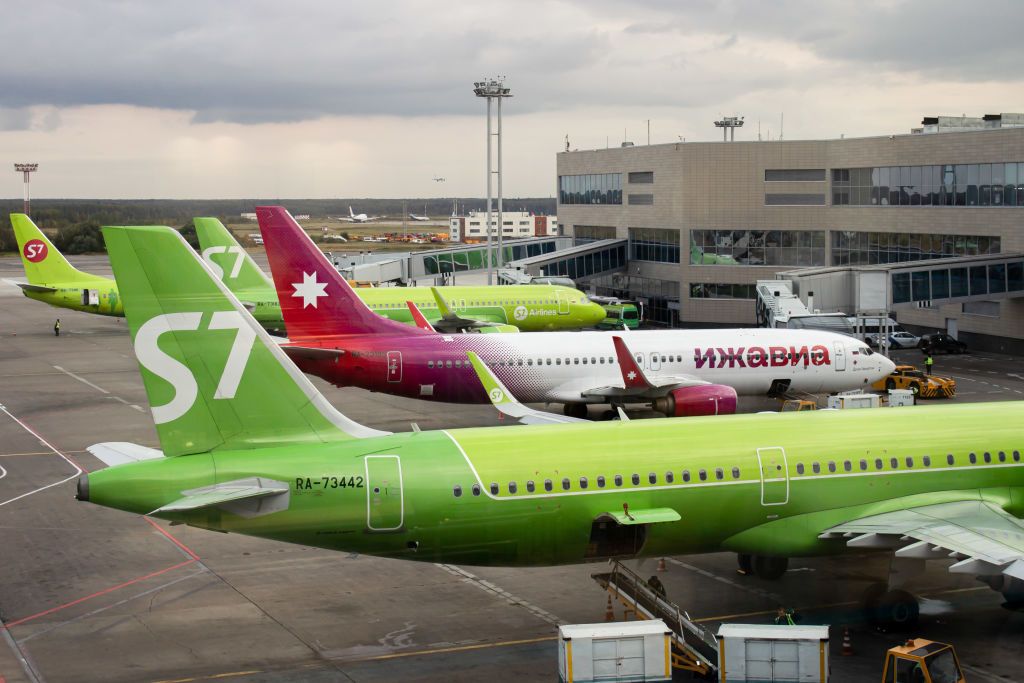
ICAO, the UN aviation agency, cannot close Russian airspace or order carriers to reroute. European and US airlines already avoid Russia's airspace, while carriers from China, Türkiye, and the Gulf states have kept flying through it. Those remaining airlines must assess the safety of flying amid drone and air defense operations. Drone alerts during reported Ukrainian attacks have repeatedly shut Russian airports and delayed hundreds of flights.

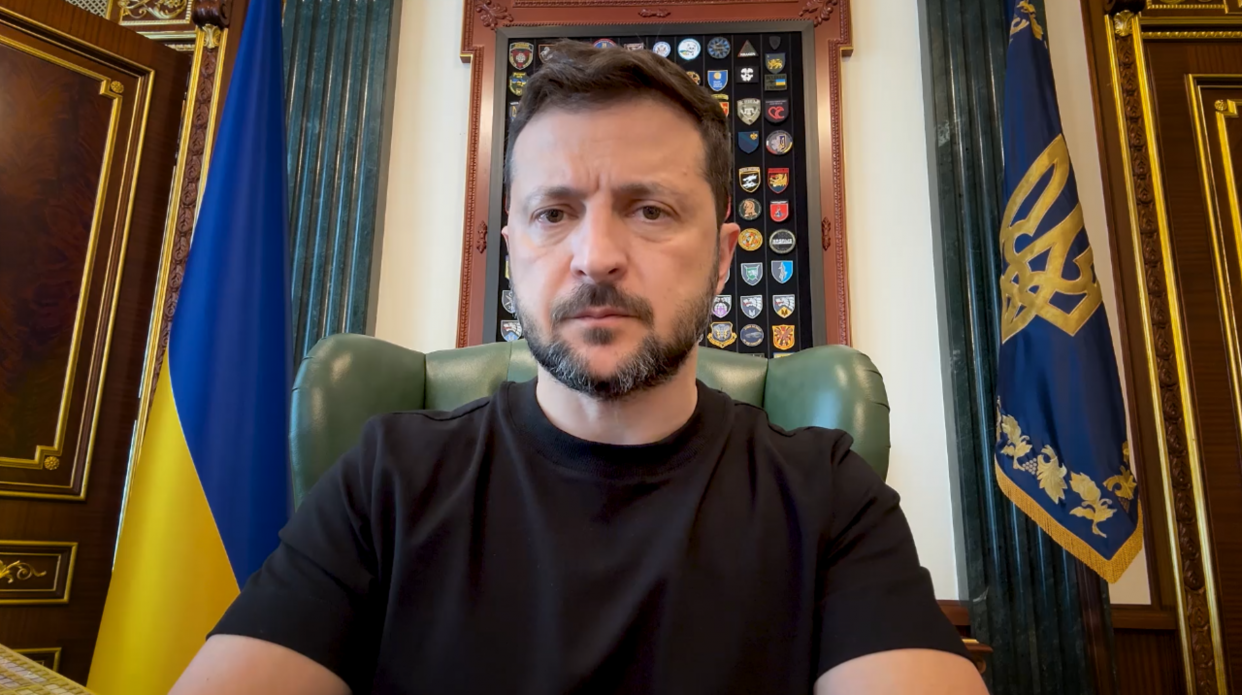
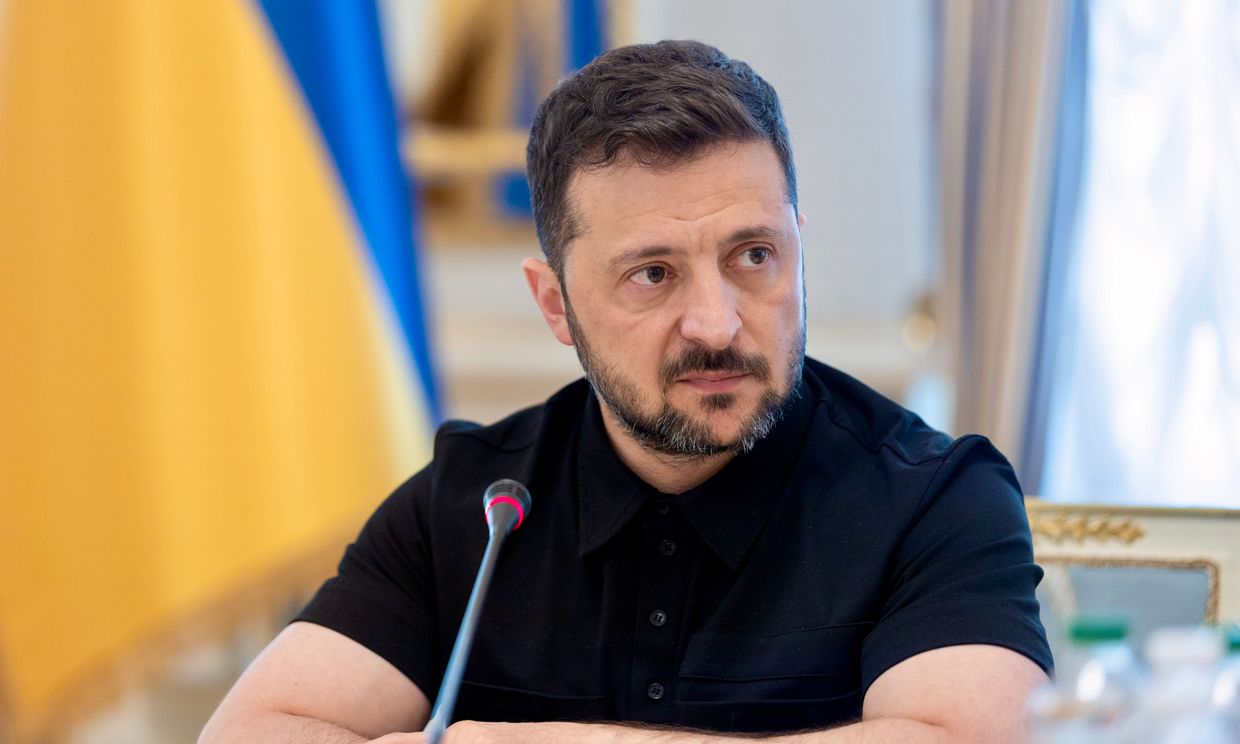
The notification follows a 1 September warning by Ukrainian President Volodymyr Zelenskyy, who told airlines, insurers, and other aviation stakeholders that Russian skies were becoming unsafe as Ukrainian drones reached deeper into the country.

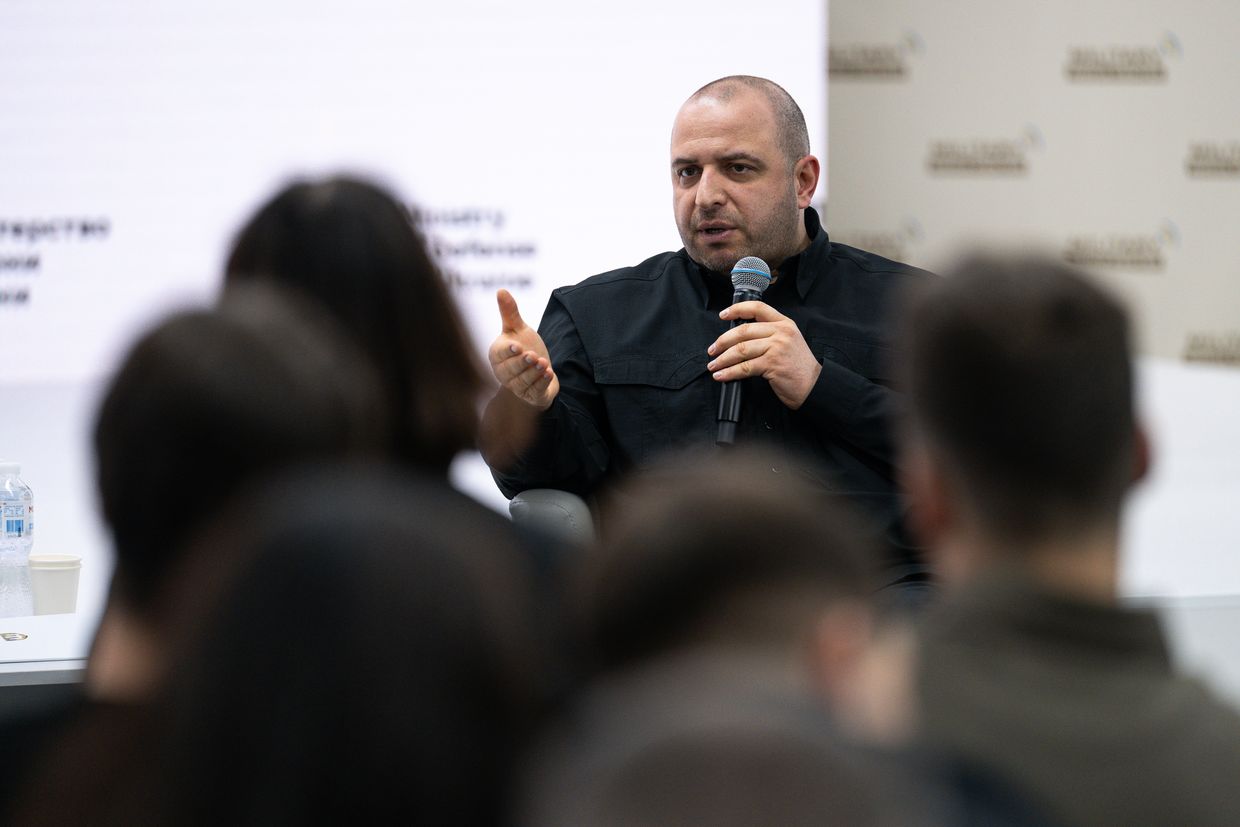
Zelenskyy said Ukraine's Foreign Ministry would pass information about the risks to international organizations. The letter to ICAO came from another office—Mykola Kalashnyk, Ukraine's minister for recovery, infrastructure, and transport, whose portfolio covers aviation.

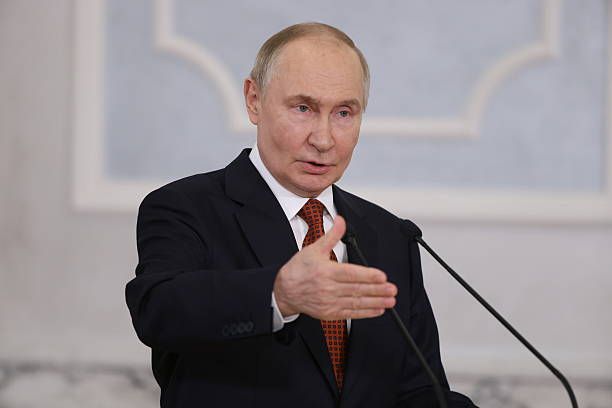
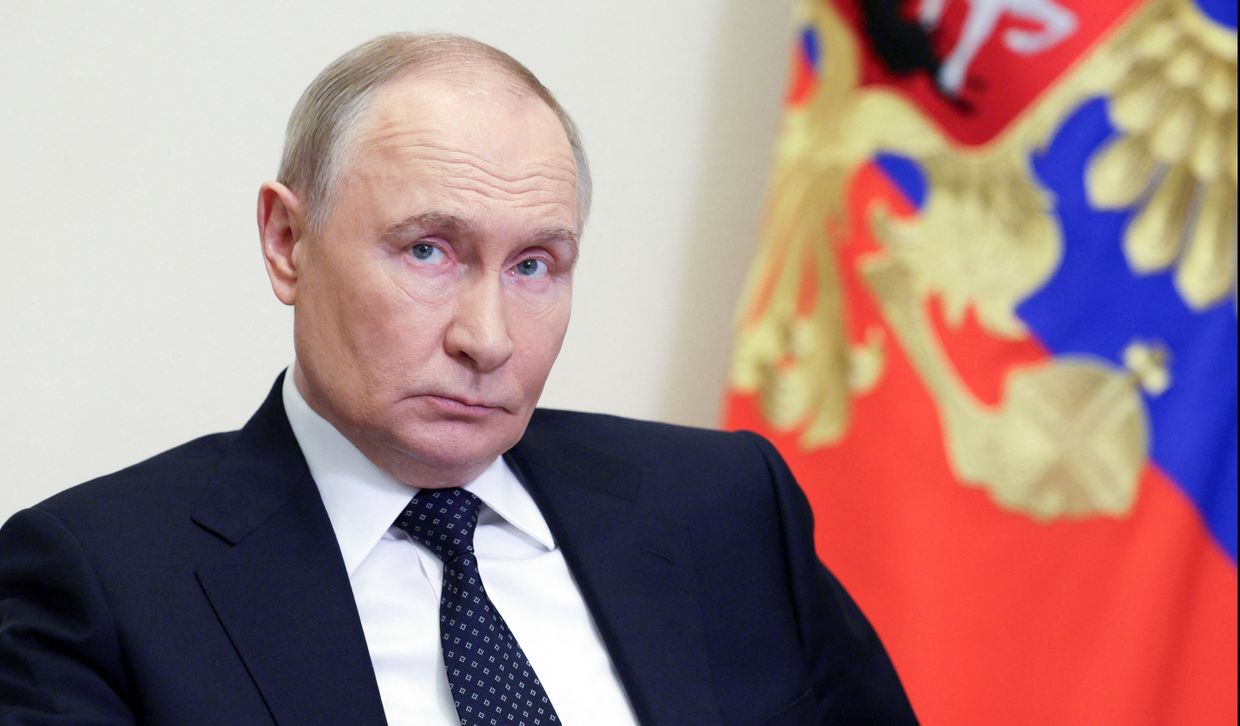
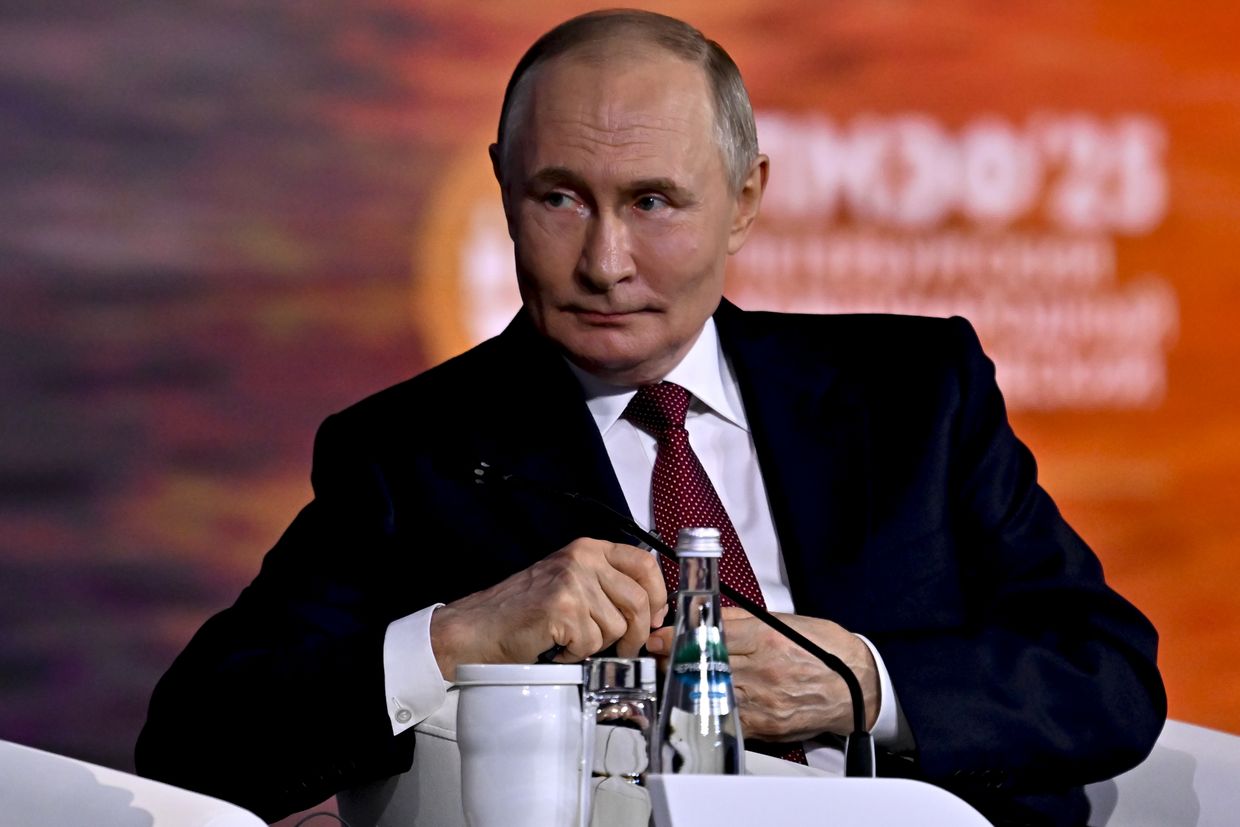
Russian President Vladimir Putin said Zelenskyy's statement amounted to "a bid for state terrorism" and that Moscow would find a way to respond if civilian "tragedies" followed.

Sybiha urged airlines to avoid Russian airspace and said the notice was meant to prevent unintended incidents, arguing that Moscow was failing to disclose the dangers its war had created. He invoked Ukraine’s inherent right to self-defense under Article 51 of the UN Charter, the provision that recognizes states’ right to defend themselves against an armed attack. The foreign minister further stated that the war was “returning home to Russia.”

In its separate statement, ICAO warned of rising threats to civil aviation worldwide. It did not mention Russia, endorse Ukraine’s assessment, or say Kyiv’s notification had prompted it.

The UN aviation body identified long-range weapons, drones, navigation-signal interference, and advanced air-defense systems as growing dangers to civilian aircraft. It reiterated that international aviation law prohibits the use of weapons against them.

ICAO urged member states to assess airspace under their control, share threat intelligence quickly, and improve military-civilian coordination.

Russian airports were already facing repeated closures

Russian airspace has not been legally or completely closed. The disruption has instead taken the form of temporary restrictions at individual airports.

From 5–7 May 2026, restrictions during reported Ukrainian attacks delayed more than 450 flights at Moscow airports, while limits at Vnukovo remained in place for nearly 18 hours.

On 6 July 2025, Moscow's Sheremetyevo airport canceled 171 flights, while airports in five other cities suspended operations. During an earlier wave on 22 May 2025, Domodedovo halted flights four times in one day and Sheremetyevo three times, while Vnukovo and Zhukovsky also restricted operations.

Airports in Kaluga, Nizhny Novgorod, Saratov, and Tambov were temporarily closed during a 27 May attack in which Moscow claimed 99 drones were intercepted. Two days later, another alert delayed 20 arrivals and 14 departures at Vnukovo, pro-Kremlin Telegram channels claimed.

  •  

For Russia and Ukraine, an Escalating Spiral With No End in Sight

Each side is using missiles and drones to try to pound the other into giving up, breeding ceaseless human suffering. But there is no sign that either country’s determination will weaken.

© Oleksandr Ratushniak/Reuters

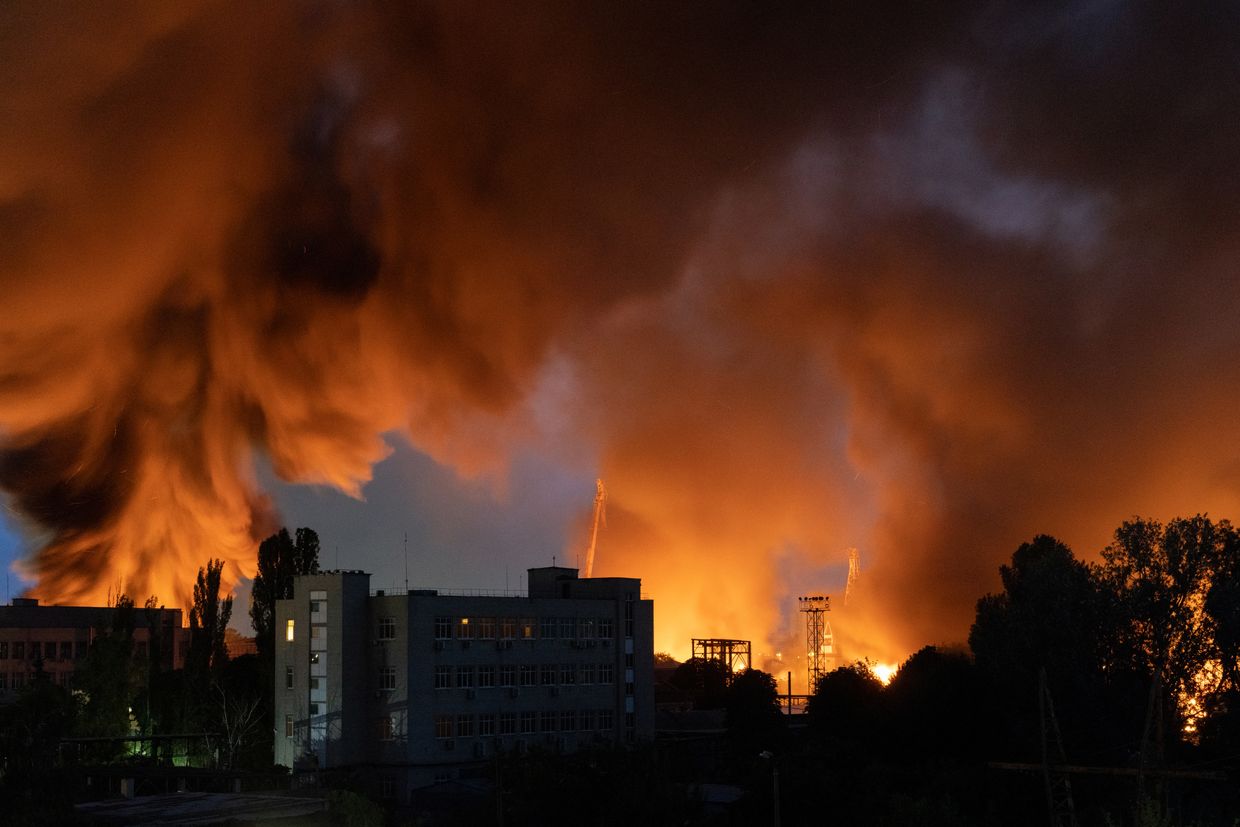
After an attack on Kyiv, Ukraine, late last month.
  •  

Putin dismisses mobilization reports as Ukraine warns Russia could call up 600,000 to war

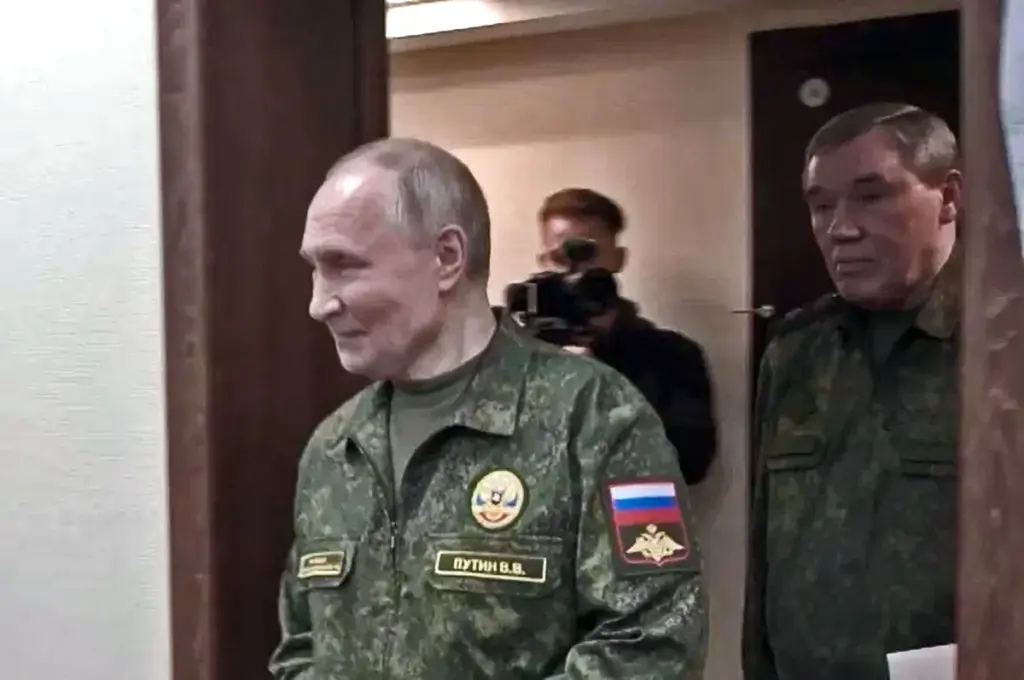
Vladimir Putin walks through a doorway in a military uniform, followed by Russian Chief of the General Staff Valery Gerasimov.

Asked about reports in Ukrainian and Western media that Russia could order a mass mobilization after September’s parliamentary elections, Vladimir Putin replied: “That’s complete nonsense. It’s an information attack on Russia,” RBC reported. He was speaking after the Shanghai Cooperation Organization summit in Bishkek.

Ukraine’s military and foreign intelligence services say Russia’s General Staff has prepared a scenario for mobilizing an additional 600,000 people during 2026 and 2027—300,000 each year. Their briefing described a contingency, not an issued call-up, and did not say mobilization had begun. If activated, the agencies said, the recruits would primarily reinforce units fighting Ukraine and newly formed military units.

Ukraine’s intelligence services linked the scenario to mounting battlefield losses and a slowdown in contract recruitment. They said Russia lost roughly 240,000 personnel from January through July, including at least 140,000 killed or permanently lost, while recruiting about 232,000 contract soldiers. The figures could not be independently verified.
Russia’s military also rehearsed procedures for mobilizing residents of Kaliningrad Oblast in July, Ukrainska Pravda reported, citing The Wall Street Journal.

Reports of a possible draft have generated concern inside Russia. More than 20,000 people crossed into Georgia through the Verkhny Lars checkpoint in a single day amid fears of mobilization, as EP previously reported.

Ukraine’s warnings and Russia’s denials

Ukrainian President Volodymyr Zelenskyy said in August that Moscow planned to mobilize several hundred thousand people after the elections and roughly the same number in 2027, citing military intelligence. HUR deputy chief Vadym Skibitskyi later assessed that a call-up could provide troops for a northern offensive by February 2027, while stressing that the agency saw no preparations underway at the time.

Dmitry Medvedev, Vasily Nebenzya, and the State Duma’s defense committee have all denied plans for another mass draft. Russian officials issued similar denials shortly before Putin announced the 2022 call-up. RBC notes that the decree authorizing that mobilization was never formally revoked. No new call-up has been publicly announced or reported as underway.

  •  

Russia says Armenia’s EU accession law means leaving Moscow-led trade bloc. Yerevan disagrees

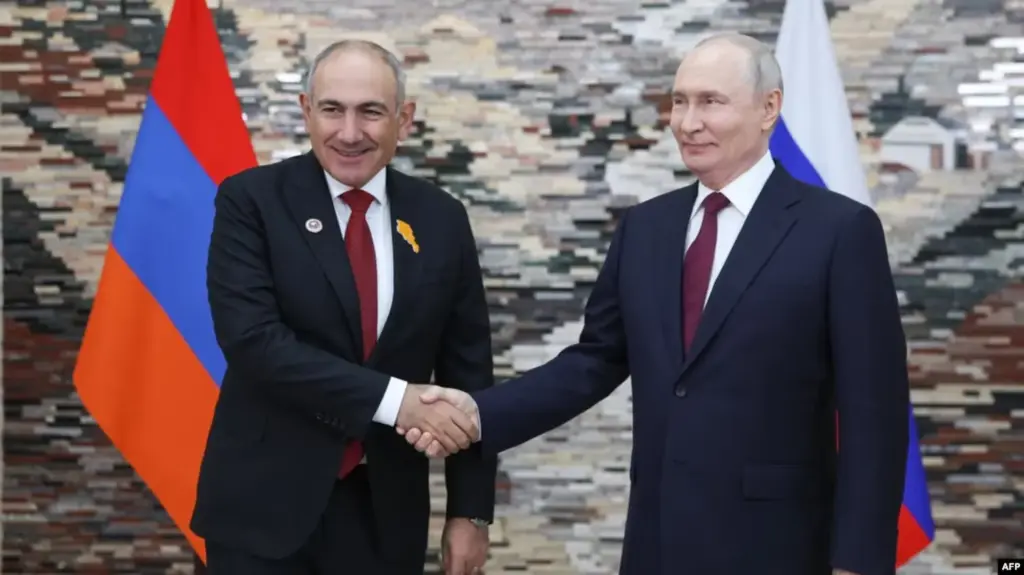
Nikol Pashinyan and Vladimir Putin meet in Bishkek

Russian President Vladimir Putin said Armenia's 2025 law launching the EU accession process "amounts to a declaration of withdrawal" from the Russia-led Eurasian Economic Union. Armenian Prime Minister Nikol Pashinyan replied that Armenia had filed no notice to leave and had violated none of the bloc's rules. The leaders met on 1 September in Bishkek, Kyrgyzstan, during a Shanghai Cooperation Organization summit.

The exchange turns Armenia's westward shift into an open dispute over how far it has already moved from Moscow. Yerevan is preparing an EU application and has frozen participation in Russia's military alliance, but it still belongs to the trade bloc. Russia remains Armenia's largest trade partner, accounting for about 35% of its foreign trade.

The disagreement

In the opening minutes, Putin acknowledged that Armenia's aspiration to join the EU was the country's "legitimate right," but said it "creates difficulties" given Armenia's membership in the bloc that links Russia, Belarus, Kazakhstan, Kyrgyzstan, and Armenia. He told Pashinyan that adopting a law launching the process of joining another organization "amounts to a declaration of withdrawal from ours."

Putin urged Armenia to decide quickly and repeated his call for a referendum on whether Armenia should remain in the trade bloc or pursue EU membership, telling Pashinyan to give the people a choice so the matter could be closed.

Pashinyan pushed back. He noted that the bloc's rules have no mechanism to expel a member state—only a voluntary withdrawal process requiring six months' notice—and that Armenia has filed no such notice. He told Putin the issue had not matured enough for a referendum, arguing that Armenia first needs to submit a formal EU application, receive a response, and agree on an accession roadmap.

How far Armenia has moved

Armenia's parliament passed a law launching the EU accession process in March 2025, though the government has said the law does not amount to a formal membership bid. On 24 August, Pashinyan told lawmakers that the government would begin preparing a formal application "in the near future." Armenia has also dropped the "strategic partner" label for Russia from its new government program and effectively frozen its participation in the Russian-led Collective Security Treaty Organization since early 2024.

Russia's response

Since May 2026, Moscow has imposed a series of bans on Armenian agricultural imports—including fruit, vegetables, and mineral water—citing phytosanitary concerns. The EU called the measures "economic coercion" and announced a support package of more than €50 million for Armenia in June.

Pashinyan says dialogue will continue

After the meeting, Pashinyan posted a video describing the talks as "very good" and saying the two leaders had agreed to continue a "sincere and constructive dialogue" during a future visit to Moscow. He said bilateral relations needed to be "rethought" under new circumstances.

  •  

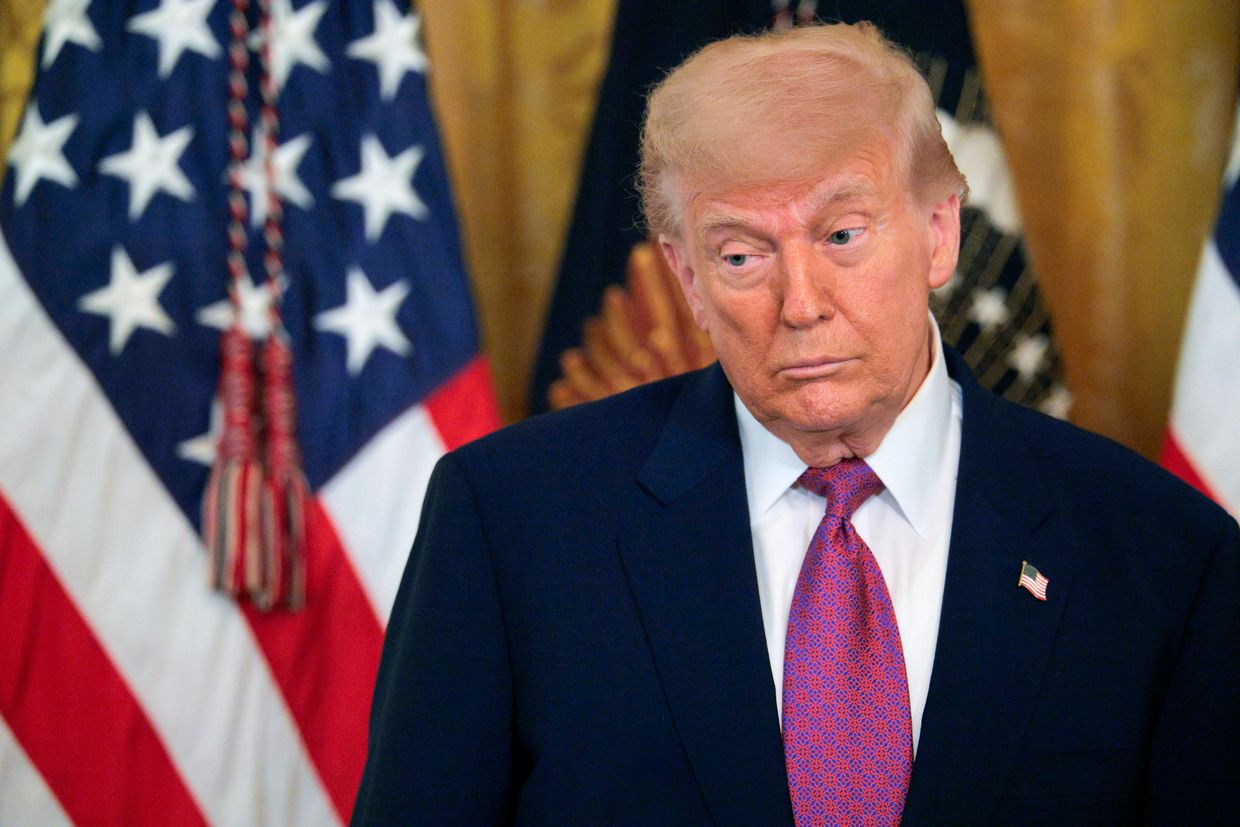
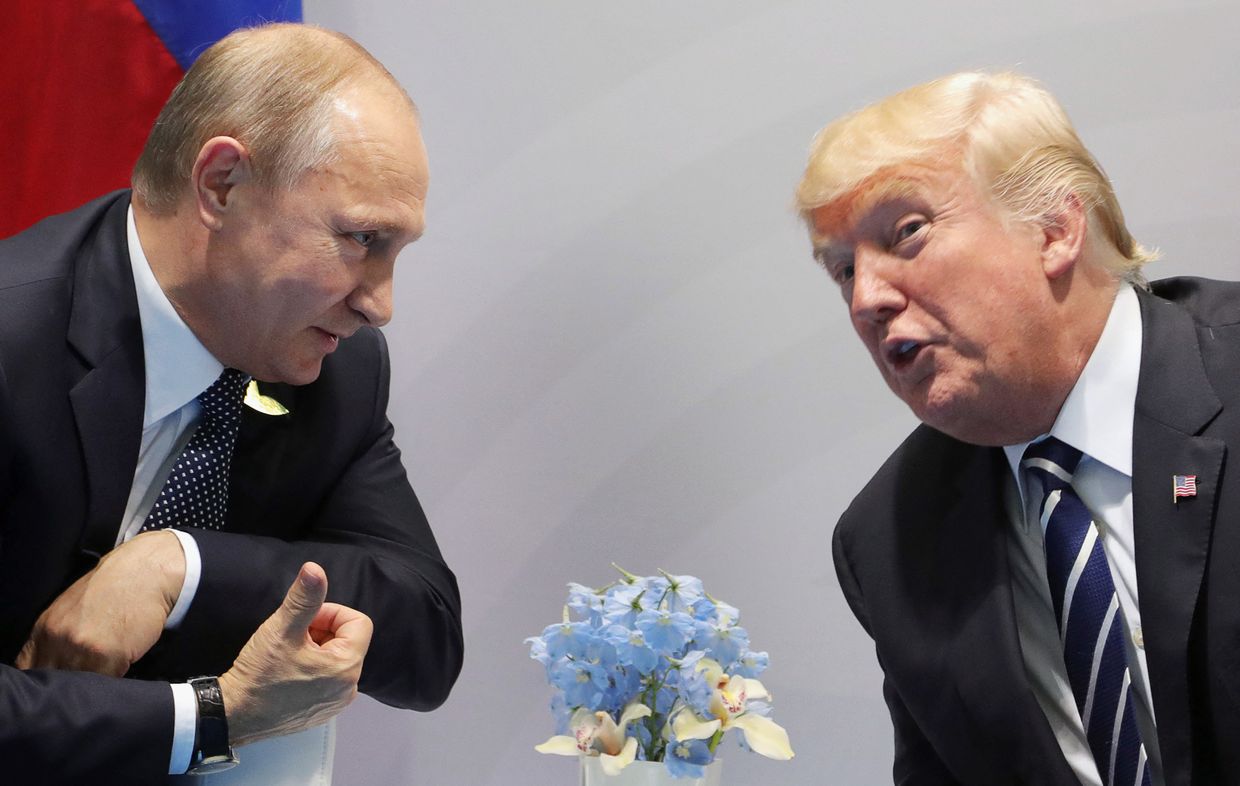
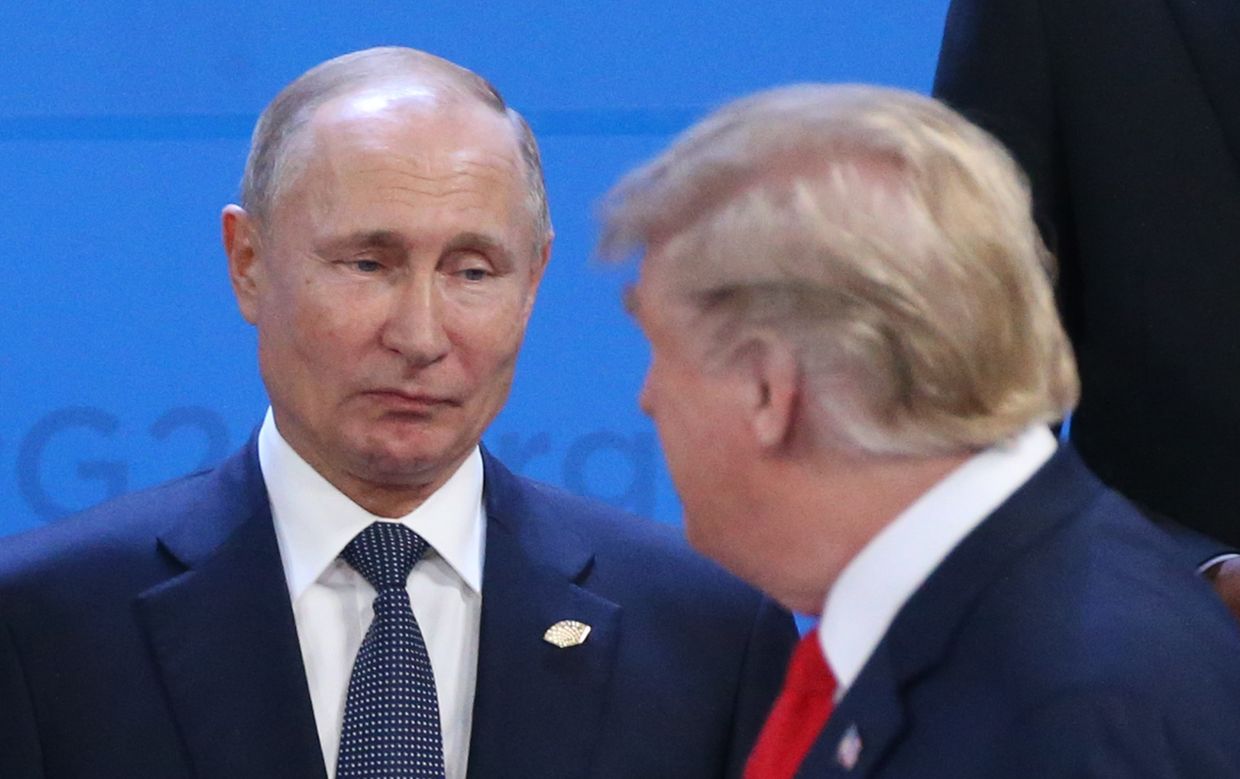
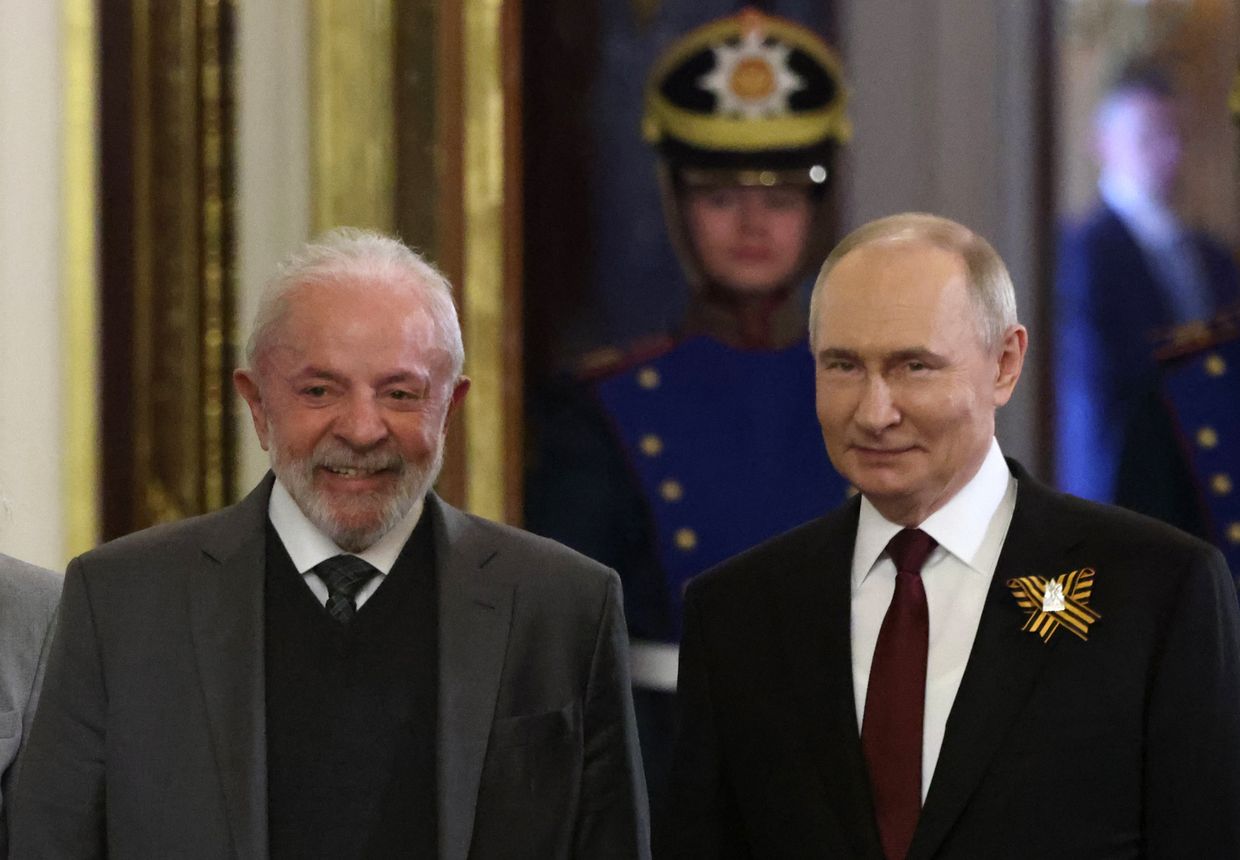
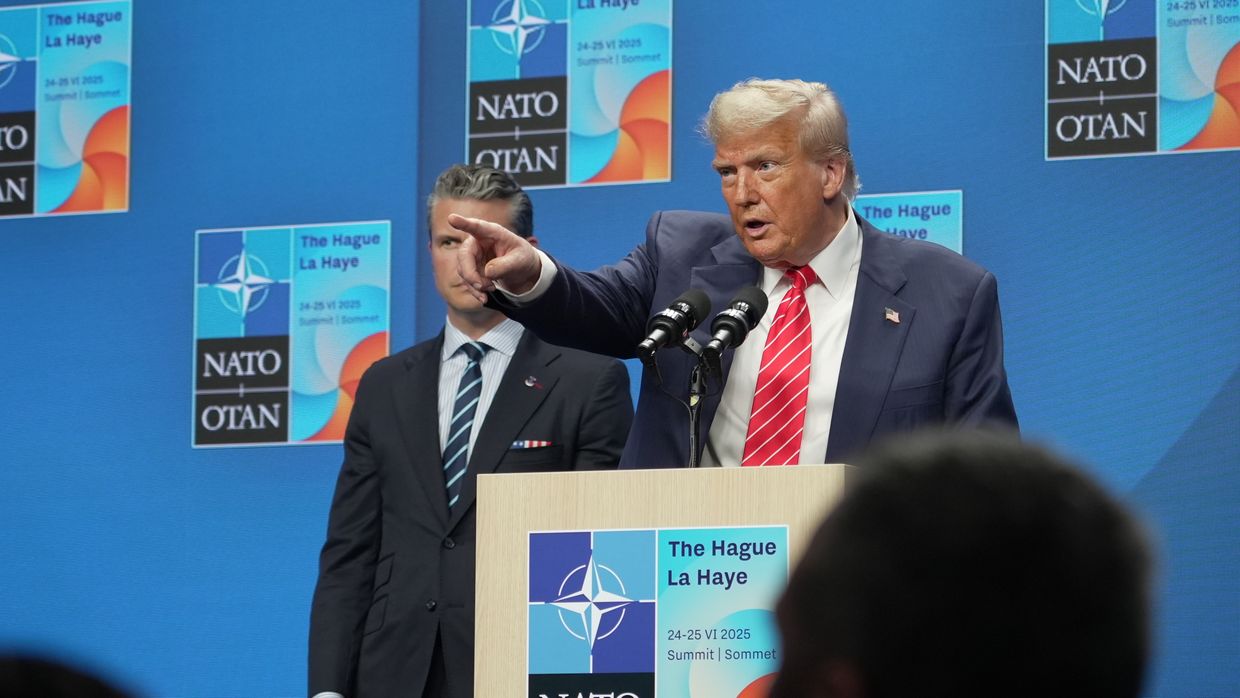
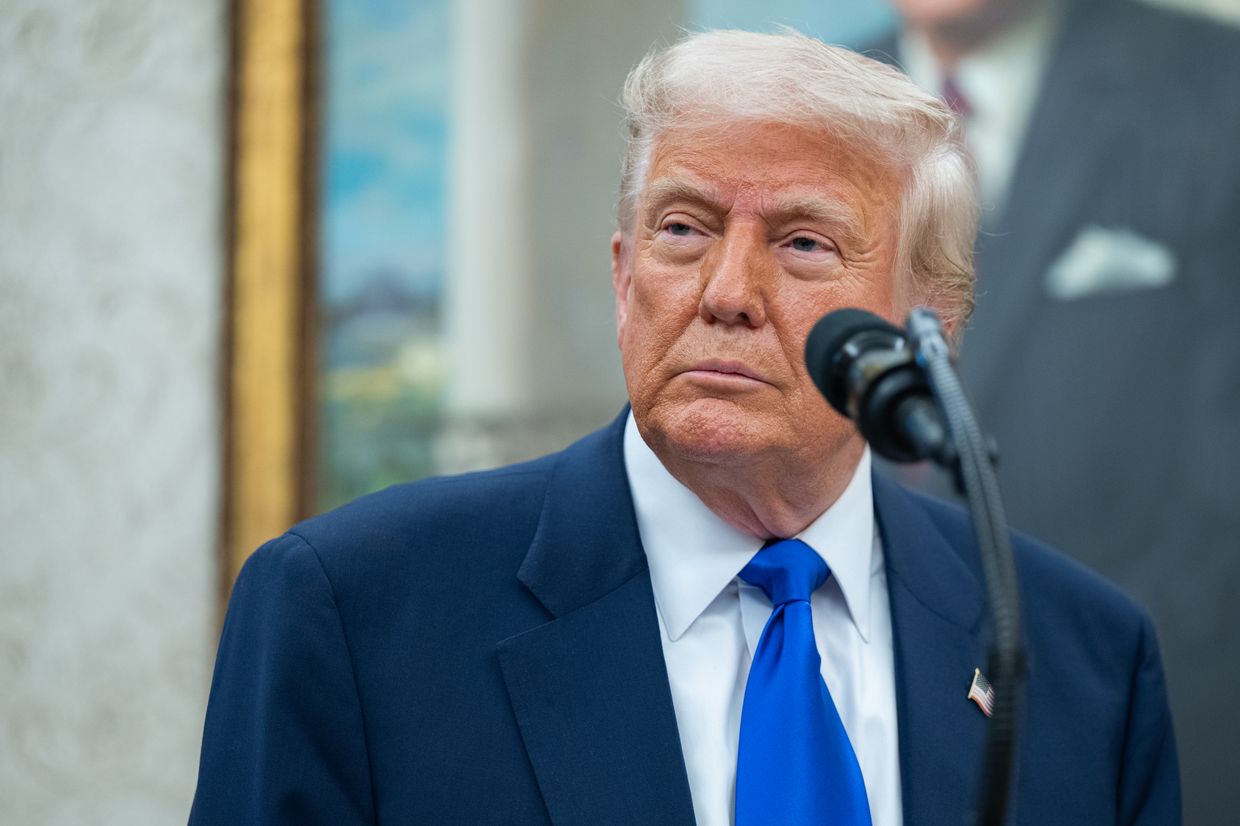
What’s really behind Trump’s deference to Putin?

Whether or not US president fits the definition of a Russian asset, his actions align closely with the Kremlin’s interests

Don’t get This Is Europe delivered to your inbox? Sign up here

Could Donald Trump be a Russian asset? The headline on a review in the Guardian of my new book Betrayal has provoked heated international debate. Written by the historian Lawrence Freedman, the piece generated thousands of comments from across Europe and beyond on social media. Many people responded with a single word: “Duh!”

Trump’s relationship with Vladimir Putin is the biggest mystery in international politics. In 2017 I wrote a book called Collusion, which set out Moscow’s operation to support and cultivate Trump, going back decades. The US president, of course, denies links with Russia. But in his second term, his behaviour towards Putin has been as weird and perplexing as during his first.

Continue reading...

© Photograph: Thilo Schmülgen/Reuters

© Photograph: Thilo Schmülgen/Reuters

© Photograph: Thilo Schmülgen/Reuters

  •  

Putin says Russia is 12 km from Sumy—1.5 km farther than in June

Russian President Vladimir Putin in the Russian army command center, 26 October, 2025. Screenshot from video.

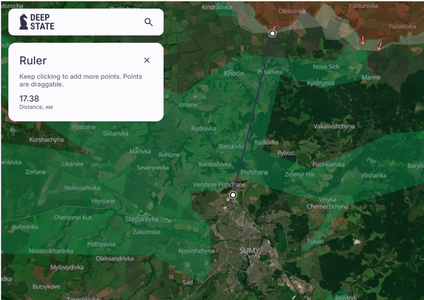
On 1 September, Russian President Vladimir Putin said during a conversation with journalists that Russian troops had 12 km left to reach Sumy. Censor.NET estimated from DeepState’s map that Russian forces were approximately 17 km from Sumy’s administrative boundary.

Russian military commanders have systematically exaggerated their gains on the battlefield. The Institute for the Study of War (ISW) describes such claims as part of a Kremlin information campaign aimed at creating the impression of major Russian gains. In this case, the Russian president cited exaggerated gains that, compared with his previous claims, appear to be a setback.

What Putin said

“The ‘North’ group of forces continues to create a security belt along the Russian-Ukrainian border in the border areas of the Sumy region... There are 12 km left to Sumy, to the Sumy ring road,” Putin said during the press conference.

Censor.NET reported that Russian forces were about 17 km from Sumy without specifying the reference point, while Putin did not say which section of the city’s ring road his 12 km figure referred to.

Approximate visualization of Censor.NET’s reported 17 km distance from the DeepState frontline toward Sumy. Map: DeepState / Chart: Euromaidan Press

Putin previously gave a different distance

On 28 June, during an interview with Russian propagandist Pavel Zarubin, Putin said that Russian troops had “about 10.5 km” left to reach Sumy. At the time, he also explained the offensive as the creation of a “security zone” along Russia’s border.

Putin’s claimed distance to Sumy therefore increased by approximately 1.5 km in just over two months, contradicting the Kremlin’s portrayal of a continuing advance.

Other exaggerations

In July 2026, Putin claimed that Russian forces had “completely captured” Kostiantynivka. Ukraine’s General Staff rejected the claim, saying Ukrainian forces continued defensive operations in the city. ISW also said some videos of Russian flags being raised in Kostiantynivka were likely AI-altered.

On 2 December 2025, Putin claimed that Russian forces had captured Pokrovsk in Donetsk Oblast. ISW found no evidence confirming the city’s complete capture and assessed that its fall would not enable Moscow to achieve a significant breakthrough.

  •  

Putin calls Zelenskyy’s airspace warning “state terrorism” as shares in Russia’s national airline fall 5%

Vladimir Putin stands behind a lectern during a press conference, with the RIA Novosti logo visible above him.

Russian President Vladimir Putin said Moscow would “find a way to respond” if civilian “tragedies” followed President Volodymyr Zelenskyy’s warning that Ukrainian drone operations were making Russian skies unsafe. Zelenskyy told foreign airlines and insurers that the “safe moments” in Russian airspace were over.

Zelenskyy’s warning seeks to extend the cost of Russia’s war beyond damaged military and energy facilities to airlines, insurers, and travelers. It does not mean Russian airspace is legally or completely closed. However, carriers that continue flying over Russia face higher costs from repeated airport shutdowns during drone alerts, as well as the danger that military activity in Russian airspace could endanger civilian aircraft.

Putin spoke after a 1 September Shanghai Cooperation Organization summit in Bishkek, where Russia and China coordinate regional security. Zelenskyy’s warning amounted to “a bid for state terrorism” if he had made it publicly, the Russian president said, adding that Russia does not negotiate with “terrorists.” Putin also said Russian forces were preparing massive strikes on Ukraine’s energy infrastructure.

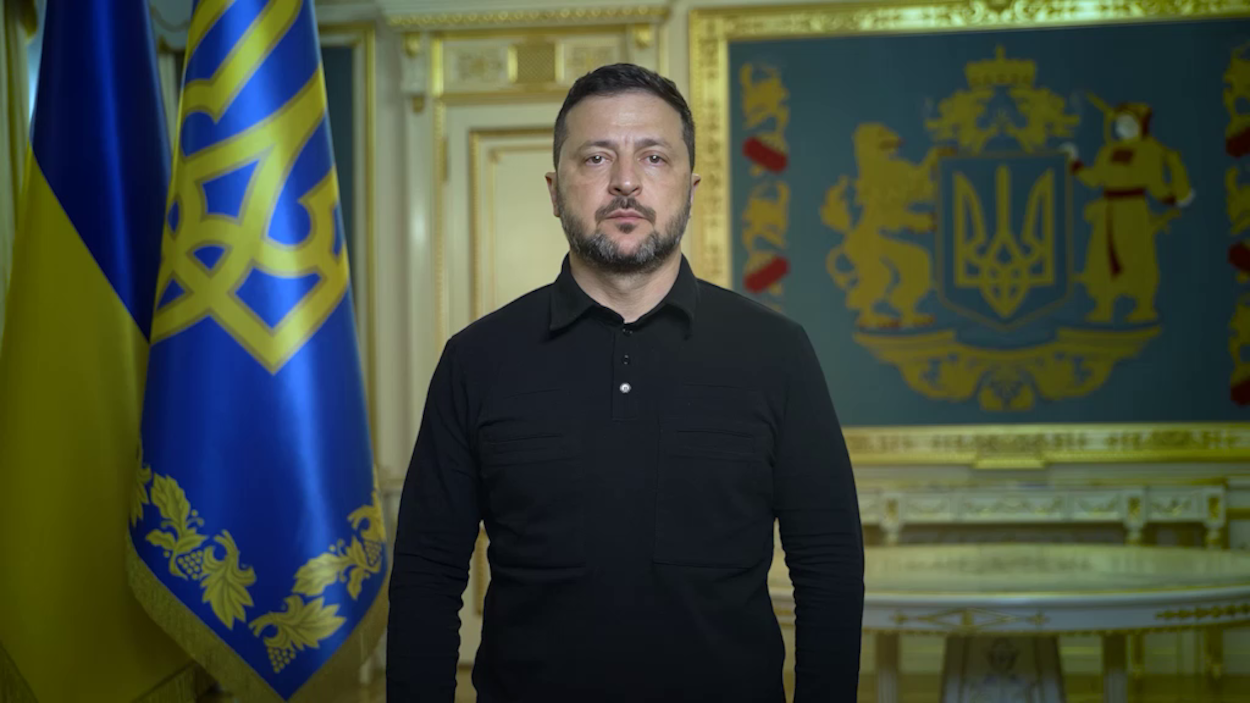
In his evening video address, Zelenskyy said Ukraine did not threaten civilian aircraft but would keep striking Russian military targets and parts of the economy supporting the war. Ukraine’s Presidential Office head Kyrylo Budanov backed the decision, saying long-range weapons would systematically strike military targets in Russia while the invasion continued.

Ukrainian President Volodymyr Zelenskyy during his evening address, 1 September 2026. Screenshot from video: Zelenskyy
Explore further

“Russian airspace will effectively be closing”: Zelenskyy warns airlines Russian skies are no longer safe

Shares in Aeroflot, Russia’s national airline, fell to an intraday low of 30.36 rubles at about 20:40 Moscow time, down 5.11%, Meduza reported, citing Moscow Exchange data. The timing does not establish that Zelenskyy’s speech alone drove the decline.

Wall Street Journal correspondent Yaroslav Trofimov posted a chart of the decline on X, writing, “Aeroflot shares after Zelensky’s warning.”

Aeroflot shares after Zelensky’s warning. https://t.co/L7h2S99jqT pic.twitter.com/Q80gPfYWlo

— Yaroslav Trofimov (@yarotrof) September 1, 2026

European and US carriers already avoid Russian airspace, but airlines from China, Türkiye, the United Arab Emirates, and other Gulf states continue using it, Reuters reported. Aviation-risk firm Osprey Flight Solutions assessed that daily attacks deep inside Russia were nearly certain through 2026 and warned of possible misidentification.

Andrii Kovalenko, head of Ukraine’s Center for Countering Disinformation, said it was “strange” to hear terrorism accusations from “the leader of a terrorist organization masquerading as the Russian state.” Putin’s reaction showed Moscow feared pressure on its airspace, he argued.

Previous closures of Russian airspace due to Ukrainian attacks

Russian airports were repeatedly shut during Ukrainian drone alerts well before Zelenskyy’s warning. On 6 July 2025, Moscow airports canceled 171 flights while airports in five other cities suspended operations.

A 27 May attack closed airports serving Moscow and several other cities after Russia claimed it intercepted 99 drones. Another wave caused flight disruption and mobile internet outages around Moscow, while a 29 May alert again halted flights at Moscow airports.

More recently, Russian authorities restricted operations at Moscow airports during Ukrainian drone attacks, delaying more than 450 flights

  •  

Putin Pledges Increased Strikes in Ukraine and Support for Iran

The Russian president promised continued retaliation against the Ukrainians and “full solidarity” with Iran.

© Atta Kenare/Agence France-Presse — Getty Images

Pedestrians walking past a mural of Iran’s slain supreme leader, Ayatollah Ali Khamenei, in downtown Tehran on Monday.
  •  

China or the U.S.? Two Meetings Offer Competing Showcases of Global Power.

As Xi Jinping gathered with the leaders of Russia and Iran, Europe challenged the Trump administration at the G20, offering a split-screen view of a changing world.

© Vyacheslav Oseledko/Agence France-Presse — Getty Images; Sam Wolfe/Reuters

/
  •  

Summit With Russia, India and Iran Shows Leverage Wars Have Given Xi of China

A two-day conference of the 10-nation Shanghai Cooperation Organization in Kyrgyzstan shows the limits of U.S. economic warfare.

© Pavel Mikheyev/Reuters

Xi Jinping, the Chinese leader, center, and the Kyrgyz president, Sadyr Japarov, left, during a welcoming ceremony in Bishkek, Kyrgyzstan, on Monday.
  •  

Far Right Is Poised to Win in a German State, but Fight Over Power Won’t End There

State and federal leaders are trying to avoid sharing sensitive intelligence with the Alternative for Germany should it take power in a state’s elections next week.

© Fabrizio Bensch/Reuters

The Alternative for Germany campaigning in Berlin on Wednesday. The party is expected to do well in another part of Germany in elections on Sept. 6., possibly enough to take power there.
  •  

Why Putin Is Fighting On, Even as His Problems Multiply

There is little sign that public exhaustion, economic headwinds or increased Ukrainian strikes are changing the Russian leader’s view that he will eventually achieve victory.

© Pool photo by Alexander Zemlianichenko

Russian President Vladimir Putin has suggested that despite Moscow’s challenges, he believes Kyiv’s situation is worse.
  •  

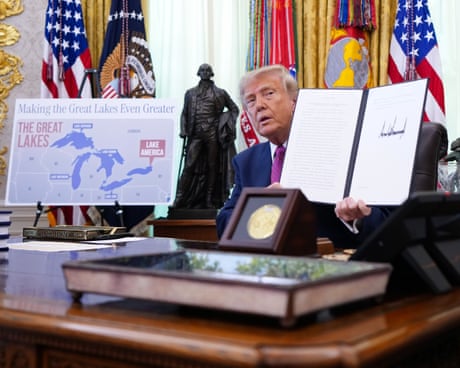
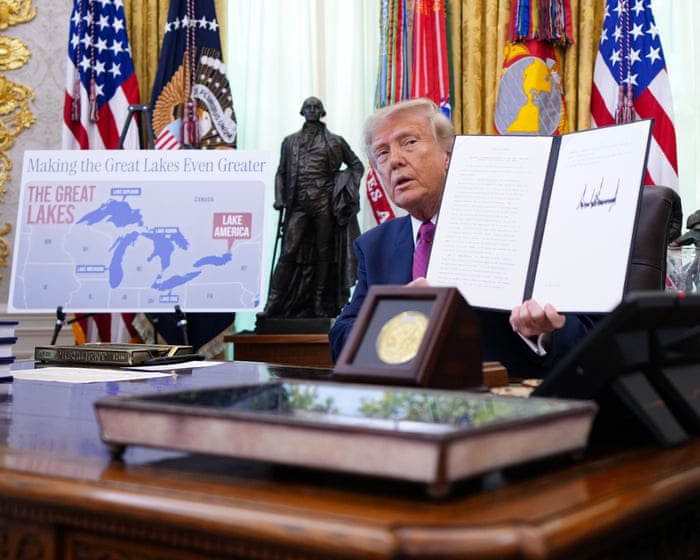
Canadian prime minister and New York lawmaker denounce Trump’s move to rename Lake Ontario as Lake America – as it happened

This live blog is now closed.

On Wednesday, Trump officially signed a proclamation on Wednesday that suspends higher tariffs on 300,000 metric tons of foreign beef imports for 90 days. This comes after backlash to the proposal – designed to lower grocery costs for Americans in the run-up to the November midterms.

Several Republicans – in states with sizable cattle farming industries – have criticized the policy, saying it is a short term solution that will stymie ranchers’ ability to rebuild their herds.

Four leading livestock and agricultural organizations also wrote a letter to the president on Wednesday urging him to reverse course.

“Flooding the market with discounted foreign beef is not the way to rebuild the American cattle herd, strengthen food security, or lower grocery bills in a lasting way,” the groups wrote.

Donald Trump will begin his day in Washington, before traveling to Houston, Texas where he’ll headline a Republican National Commitee (RNC) fundraiser, and help boost Ken Paxton — the state’s attorney general and Republican nominee for Senate.

A reminder that Paxton beat long serving Senator John Cornyn in the GOP primary earlier this year after receiving Trump’s endorsement. Paxton is set to face Democratic state lawmaker James Talarico in November.

Continue reading...

© Photograph: Andrew Harnik/Getty Images

© Photograph: Andrew Harnik/Getty Images

© Photograph: Andrew Harnik/Getty Images

  •  

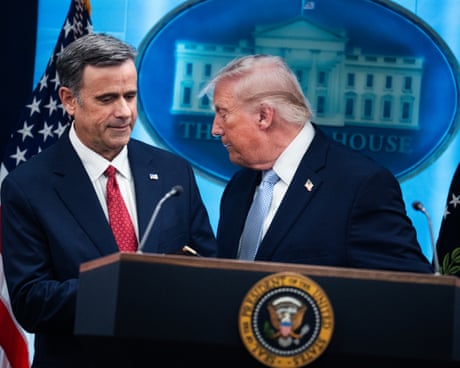
Trump downplays Moscow visit by CIA director as ‘semi-routine’

President denies visit was to gain support for Iran sanctions or due to fears that Putin plans to ‘test Nato resolve’

Donald Trump has downplayed a visit to Moscow by the CIA director, John Ratcliffe, as “semi-routine” after he turned up in the Russian capital unannounced, triggering a wave of speculation about the reasons for his trip.

Ratcliffe was reported to have flown to Moscow on a government transport plane on Tuesday in a rare visit after taking off from the Andrews air force base in Maryland.

Continue reading...

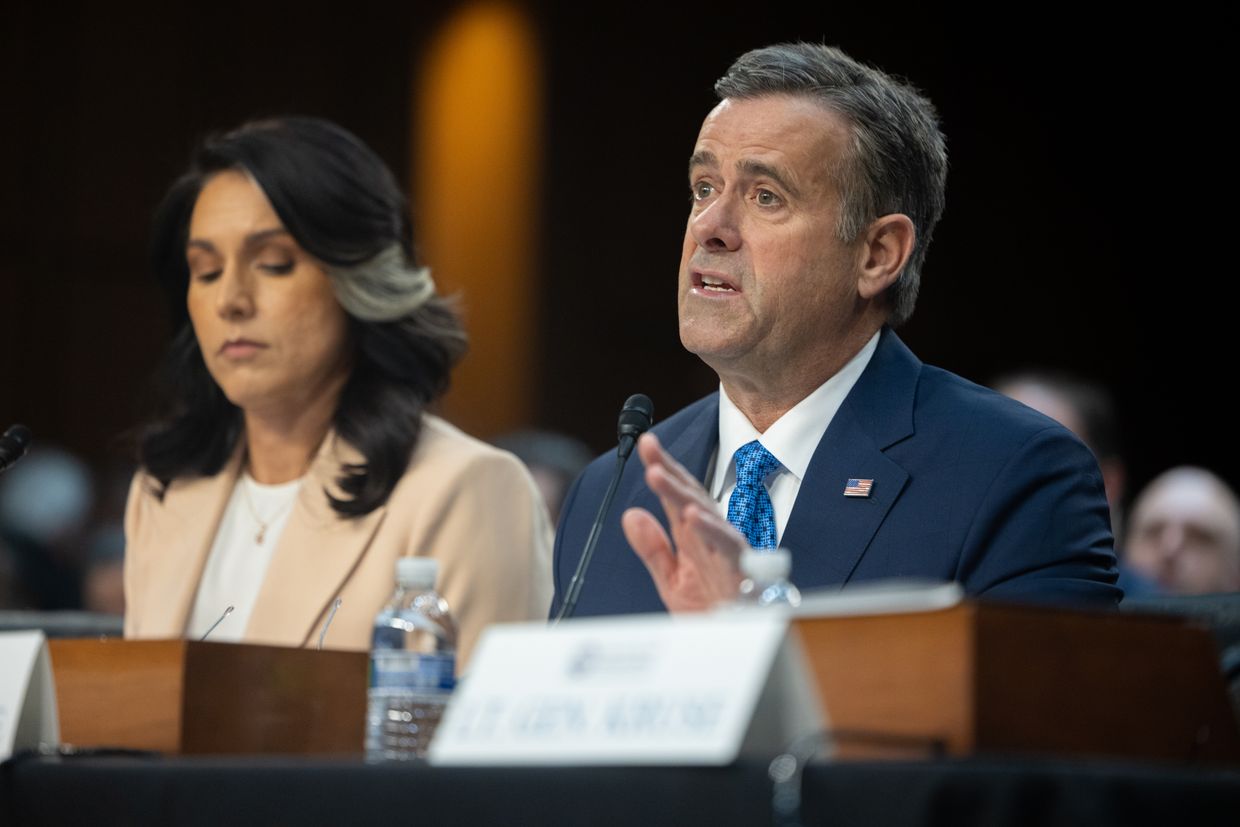
© Photograph: Tom Williams/CQ-Roll Call, Inc/Getty Images

© Photograph: Tom Williams/CQ-Roll Call, Inc/Getty Images

© Photograph: Tom Williams/CQ-Roll Call, Inc/Getty Images

  •  

Russia turns failed drone defenses into grounds for state control of company assets

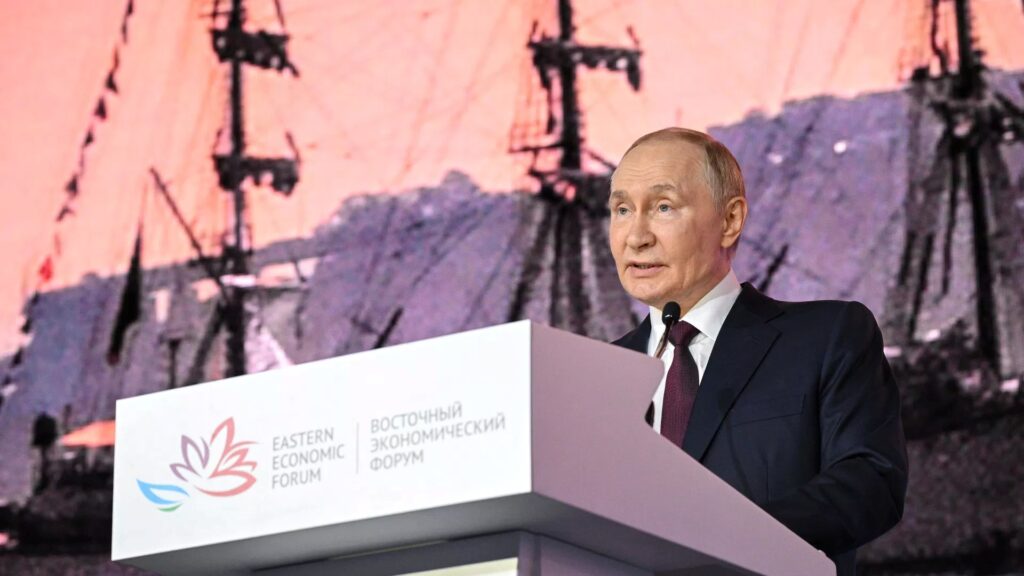
putin at the eastern economic forum in vladivostok on 5 september 2025

Russian President Vladimir Putin has made inadequate drone defenses and slow repairs grounds for putting private assets under state management. His 24 August security decree opens a new way to government control over Russia’s economy.

It expands a mechanism Russia has used against foreign-owned businesses since 2023, according to research by Nektorov, Saveliev and Partners (NSP), a Russian law firm that tracks state takeovers.

The text does not specify what counts as “ineffective” drone protection or how quickly a facility must be restored.

A business need not lose a facility before the measure can apply. Decree No. 604 allows action over late security measures, safety violations, conduct that endangers normal operations, ineffective counter-drone steps, or delayed restoration.

The text does not specify what counts as “ineffective” drone protection or how quickly a facility must be restored. Covered sectors include energy, industry, communications, utilities, transport, logistics, and life-support infrastructure, plus any sites deemed important to Russia’s security or economic stability.

Foreign controllers are also covered, including foreign organizations and citizens controlling Russian companies. Temporary management can reach all or part of an entity’s Russian property, securities, stakes in Russian companies, and other property rights—the rule is not limited to the damaged or vulnerable facility alone.

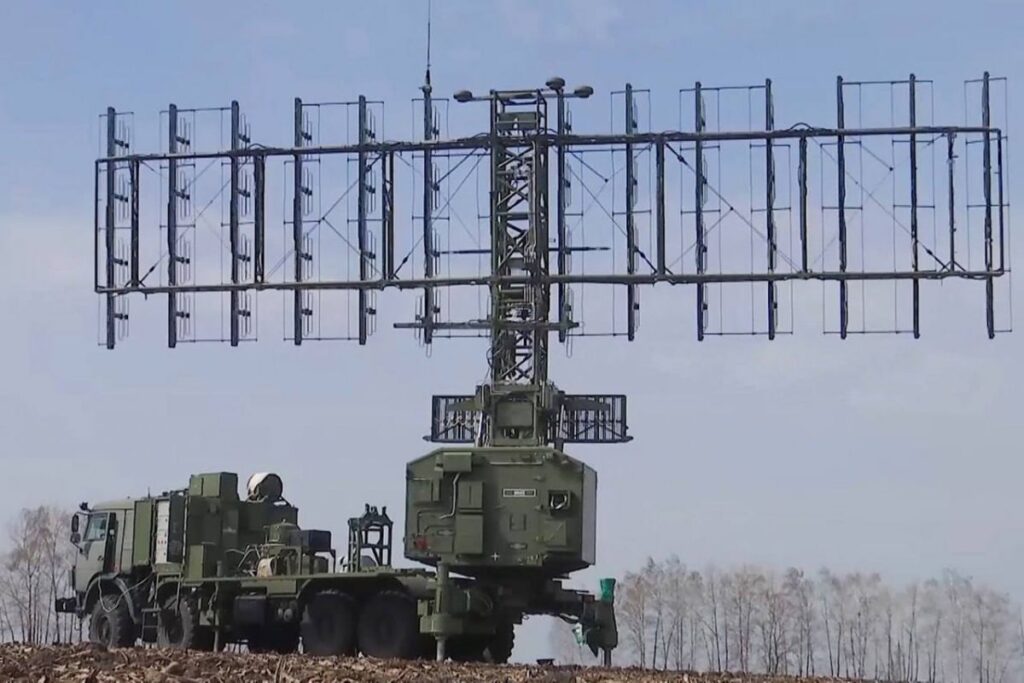
russian mobile air-fefense radar
A mobile Russian air-defense radar pictured in April 2024. Russia’s new decree lets the state take control of wider company assets when drone defenses are deemed inadequate. Photo: United Russia.

“Temporary” control has no deadline

At the same time, the text mentions no automatic return deadline. Putin must instruct the government to begin temporary management and then end it. By default, the Federal Property Management Agency assumes the owner’s powers, except for the right to dispose of the assets. The assets’ costs will be covered from its income.

Interfax published Denis Manturov’s remarks. The first deputy prime minister said the measure would be used selectively for specific security tasks and would leave formal ownership unchanged.

Komsomolskaya Pravda’s Alexander Kots raised a practical problem: Russian law, he wrote, gives businesses no instructions for defending sites against drones or cruise missiles, while barriers require extensive approvals, and private guards cannot easily be given weapons more powerful than shotguns.

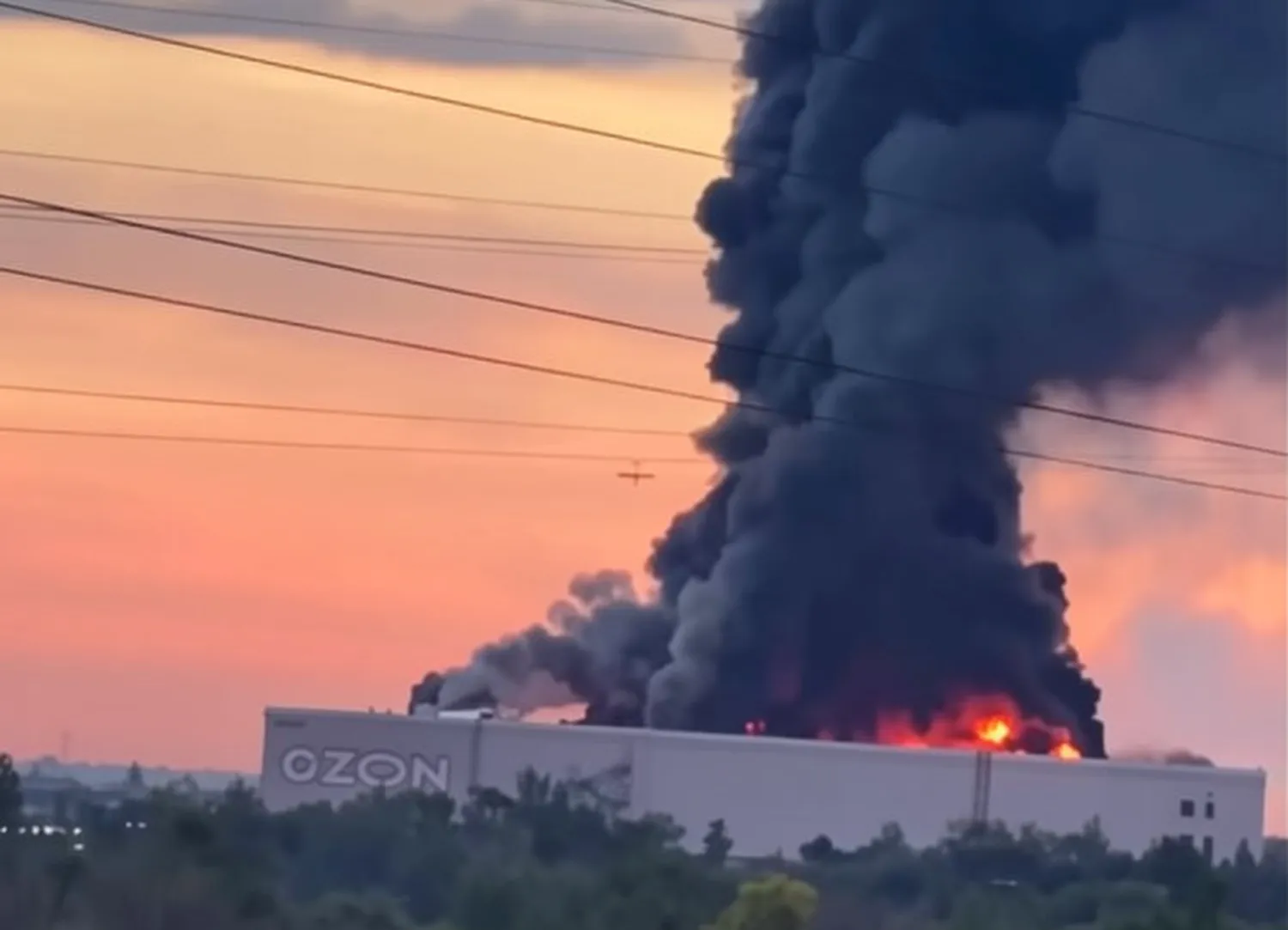
The decree followed weeks of Ukrainian attacks on Russian refineries, ports, and warehouses. Ozon reported six disruptions at its facilities after 22 August. The listed retailer’s shares fell as much as 29.09% from Friday’s close on Monday, after five weeks of strikes on privately held Wildberries.

Thick black smoke and flames rise from an Ozon warehouse in Chapayevsk, Russia, at sunset.
Explore further

Why did Ozon fall as much as 29% while Russia’s market lost 2.9%?

Refining hit two-decade lows as strikes forced Russia to import gasoline, while a sixth Ust-Luga attack since March struck the country’s largest Baltic port.

NSP’s nationalization study records more than 100 cases since 2022 and about 6.5 trillion rubles (about $78 billion) in seized assets. It says cases averaged one court hearing and roughly two months.

The NSP temporary-management table lists several foreign-owned businesses placed under “temporary” management from 2023 whose owners still lack access because the arrangements remain indefinite.

  •  

Russia grinds up the eastern approach to Sloviansk after its northeastern push stalled

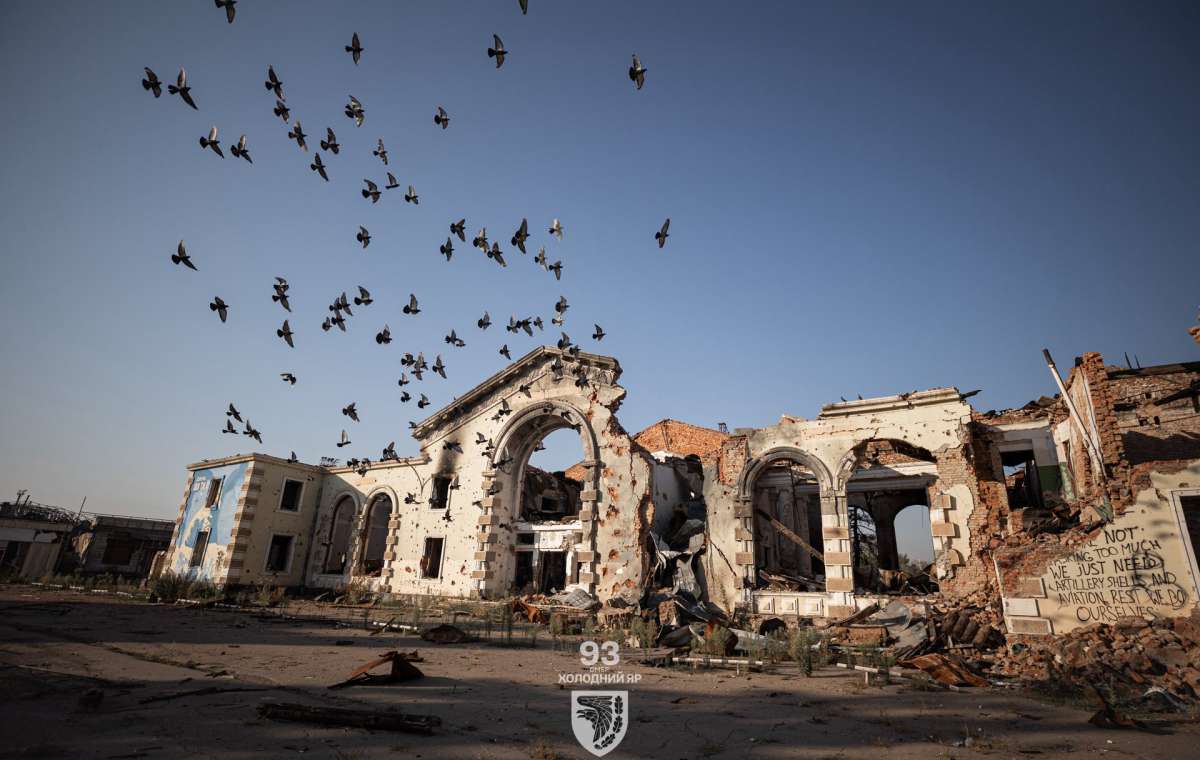
The aftermath of the destruction following one of the strikes in Sloviansk

Russian forces have gained ground on the eastern approaches to Sloviansk and continue to prioritize an eastern route toward the city, according to the Institute for the Study of War (ISW). Their earlier push from the northeast had bogged down, and Russia now aims to set up a future assault on one of the last major cities Ukraine still holds in Donetsk Oblast. A quick move on the city itself remains extremely unlikely, ISW said.

Russia's 2026 summer campaign in the east has advanced through field edges and small villages rather than the breakthroughs the Kremlin keeps promising, the grinding pattern that has defined the fighting across Donetsk Oblast for years.

Destroyed Kostiantynivka
Explore further

Kostiantynivka: Why one city in Donbas matters so much that Putin lies about having captured it

The eastern approach

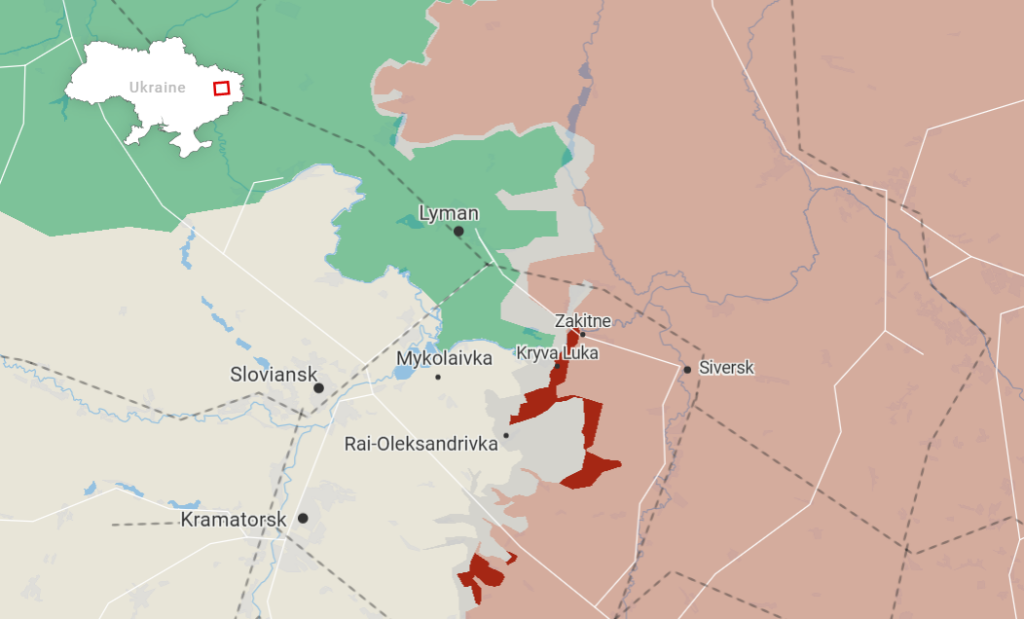
Ukrainian military observer Kostiantyn Mashovets reported that Russian forward units are advancing across several tactical areas at once in the Sloviansk direction. He said the command of Russia's 3rd Combined Arms Army rushes assault infantry forward right after each successful infiltration. Russian troops reached the southeastern edge of Pyskunivka, east of Sloviansk, from the east and northeast, moving off positions they had seized on the southern bank of the Siverskyi Donets, Mashovets said. Zakitne lies northeast of Pyskunivka and Kryva Luka southeast of it, and ISW read the advance as evidence Russia has consolidated positions in both.

They also infiltrated the southern and southeastern outskirts of Mykolaivka from western Rai-Oleksandrivka. ISW assessed that Russia is running a dual effort to connect its units near Kryva Luka with those at Rai-Oleksandrivka, so it can assault Mykolaivka from dominant terrain to the east and south at once. Mashovets added that other Russian groups slipped through three settlements along the E-40 Bakhmut-Sloviansk highway, trying to hold the western bank of the Siverskyi Donets-Donbas Canal and reach the river just east of the city.

ISW observed reports on 23 August that Ukrainian forces repelled a Russian infiltration attempt in Mykolaivka.

Oleksandr Borodin, spokesperson for Ukraine's 3rd Army Corps, said the Lyman direction falls in his corps' zone and that Russia's goal there is to half-encircle the Sloviansk-Kramatorsk agglomeration from the flank—first securing bridgeheads across the rivers, then cutting logistics. He called those plans unrealistic:

"We have quite serious defensive positions there and have been preparing for a long time. The capabilities they currently have to try to accomplish this task are insufficient even to come close to achieving such a goal."

Why Moscow switched directions

Russia prioritized attacking Sloviansk from the northeast through Lyman when it opened its spring-summer 2026 offensive, but that effort has largely stalled. The Siverskyi Donets River, which loops north and northeast of the city, together with a web of canals, handed Ukrainian defenders a natural moat. So Russian commanders now treat Mykolaivka as a key prize. Taking it would let them strike west toward Sloviansk from the east, skirting the water obstacles that blocked the northeastern route.

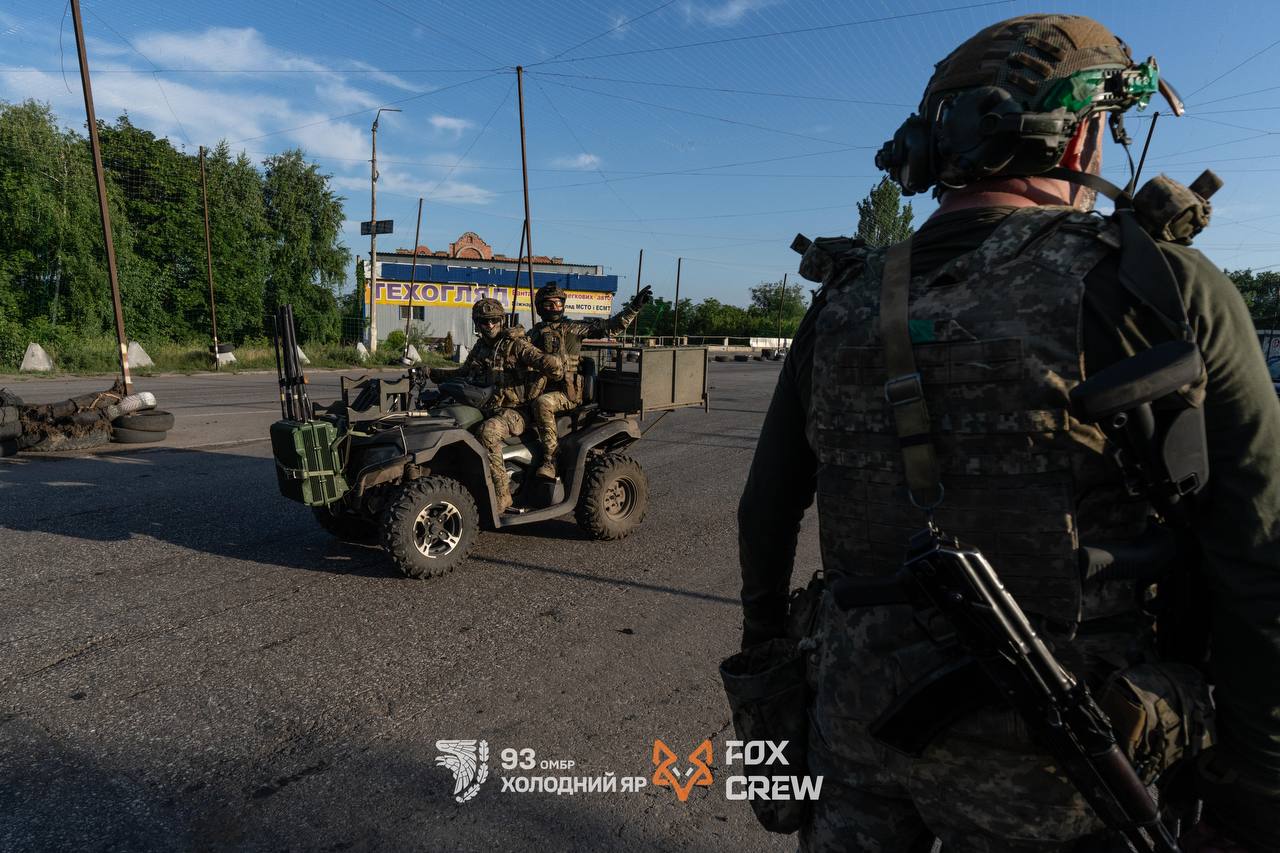
Soldiers of the 93rd Separate Mechanized Brigade’s Fox Crew prepare for a logistics run near the Kramatorsk–Kostiantynivka road in Donetsk Oblast. The unit, once focused on anti-tank warfare, now uses strike drones to disrupt Russian supply lines. Credit: 93rd Separate Mechanized Brigade / Fox Crew.
Explore further

Ukrainian intelligence units will not help: Analyst warns that once Russia breaks into Sloviansk and Kramatorsk, reinforcing them only delays inevitable

A slow road into the Fortress Belt

Sloviansk anchors the northern end of Ukraine's Fortress Belt, a chain of fortified cities that has blunted Russian advances in Donetsk Oblast since 2014. ISW cautioned that Russian forces are extremely unlikely to make fast gains west of Mykolaivka, since they still need to seize several more settlements first.

Ukraine's President Volodymyr Zelenskyy said on 23 August that Putin has ordered his army to seize all of Donetsk Oblast by 31 December. By ISW's count, it is the 15th such deadline since 2022, and Russia has missed every one that has come due.

Zelenskyy put Russia's frontline casualties this year at around 267,000, including about 155,000 killed, and said 70% to 80% of them fall in the Kostiantynivka direction. Russia holds about 79.89% of Donetsk Oblast, by ISW's count, and Zelenskyy said the Kremlin is preparing to mobilize around 300,000 men after the 18–20 September State Duma elections, partly to reinforce Donetsk and Luhansk oblasts.

  •  

How a Trump Envoy Uses Vodka and Dirty Jokes to Conduct U.S. Diplomacy

The diplomat, John Coale, says his personalized approach gets results and matches the president’s style. Critics contend he is giving up too much to an authoritarian leader.

© Mindaugas Kulbis/Associated Press

John Coale, the U.S. special envoy to Belarus, was on hand last year in Lithuania for the arrival of released prisoners from Belarus.
  •  

Russia’s UN envoy denies reports of post-election mass mobilization

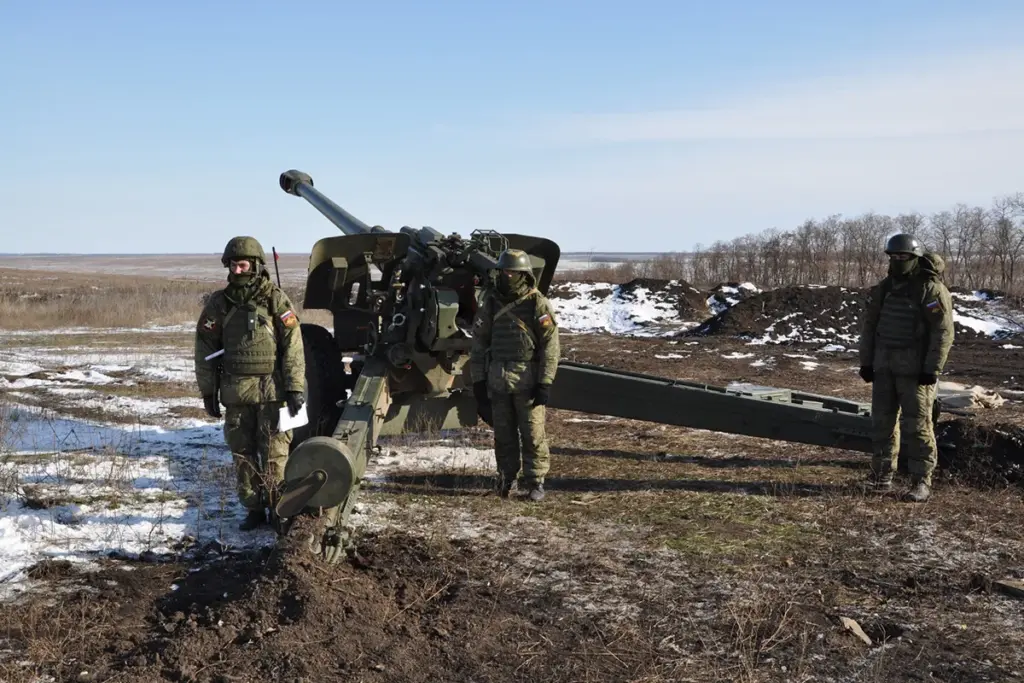
Russian soldiers stand beside a field artillery gun in a snow-covered position.

Russian UN Ambassador Vasily Nebenzya denied reports that Moscow could launch another mass mobilization after September’s parliamentary elections, saying none was planned or expected “as far as I know,” The Moscow Times reported

Russia has avoided another draft since its 2022 mobilization triggered protests and an exodus, relying instead on contract soldiers. Ukraine says those recruits no longer replace battlefield losses, and Moscow may mobilize several hundred thousand people after the elections. That could replenish its forces and support new offensives, although Ukrainian intelligence sees no preparations now.

Nebenzya’s remarks followed a question about more than 20,000 people crossing Russia’s Verkhny Lars border checkpoint into Georgia in one day amid fears of post-election mobilization, Meduza reported.

His comments extend a series of Russian denials. Deputy Security Council Chairman Dmitry Medvedev dismissed reports of another mobilization as “nonsense” in late July. The State Duma’s defense committee said a mass compulsory call-up was not under consideration because the army was recruiting contract soldiers, The Moscow Times reported.

Russia has avoided another mass draft since its September 2022 mobilization triggered protests and an exodus. Officials had also denied that mobilization was planned shortly before President Vladimir Putin announced it, Meduza noted.

Russian government seeks new wartime penalties

Moscow is separately seeking penalties for people and companies that ignore mobilization and military-supply orders issued by regional authorities. The bill would not itself order a new call-up.

The government submitted it to the State Duma, the lower house of Russia’s parliament, on 20 August, The Moscow Times reported. Companies could face fines of up to 1 million rubles or suspension for up to 90 days.

Russian law already punishes such defiance in areas under martial law but imposes no nationwide penalty elsewhere in Russia, according to the bill. Its authors said a “significant number” of violations had been recorded.

Ukraine says a new draft could provide troops for a northern offensive

President Volodymyr Zelenskyy said on 11 August, citing Ukrainian military intelligence, that Russia planned to mobilize several hundred thousand people after the elections and roughly the same number in 2027.

HUR, Ukraine’s military intelligence agency, later assessed that a post-election mobilization could enable Russia to build a strike force for a northern offensive by February 2027. Its deputy chief, Vadym Skibitskyi, stressed, however, that the agency currently sees no evidence that such preparations have begun.

  •  

Barred From Ballot, a Party Becomes a Vessel for Russians’ Discontent

The spotlight on the country’s only antiwar party has brought a spark to what had looked like another dull, tightly controlled election campaign.

© Tatyana Makeyeva/Agence France-Presse — Getty Images

Nikolai Rybakov during an appeal of his party’s disqualification before the Russian Supreme Court on Monday.
  •  

NYT: France, Germany and UK build joint format to secure Europe a place in Ukraine peace talks

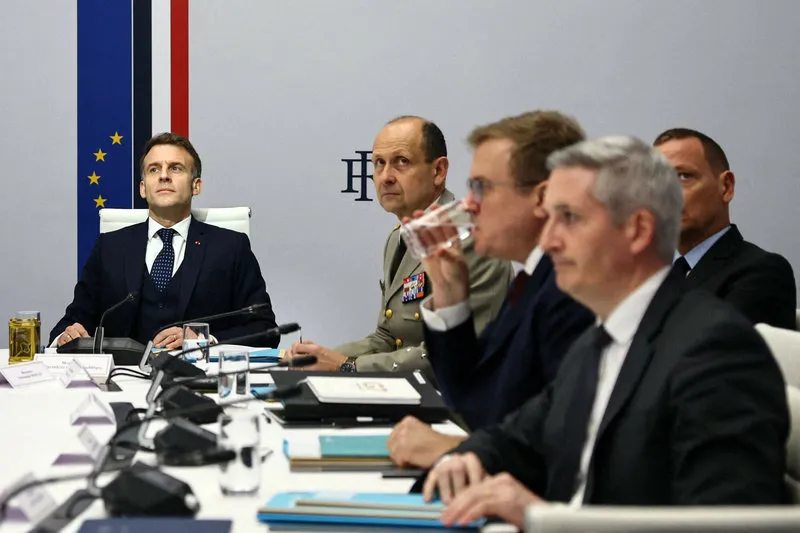
French President Emmanuel Macron sits with military officers and government officials during a Coalition of the Willing meeting in Paris on 24 February 2026.

France, Germany, and the UK are working to create a format representing Europe in talks over Russia’s war against Ukraine, The New York Times reported on 15 August, citing five European officials. Known collectively as the E3, the three countries would support Ukraine’s position and protect European interests in any settlement.

The initiative is Europe’s attempt to secure a place in talks the US is expected to lead. The three governments fear that Washington and Moscow could reach a deal without them, although Europe would have to enforce sanctions, decide how to use frozen Russian assets, and help protect Ukraine afterward. European officials also doubt Washington will stay committed to serious negotiations.

The officials expect Washington to lead negotiations with Moscow. The E3 wants to become the core group supporting Ukraine, following Kyiv’s request that it prepare for talks. France and Germany are shaping the position, while Britain fears damaging relations with Trump.

Poland, Italy, and the Nordic countries would be consulted, with the EU later involved. Some Baltic states and Hungary do not trust France and Germany to represent them. London called the discussion speculative.

The Coalition has rehearsed a force but not agreed to deploy it

The E3 forms the core of the Coalition of the Willing. At a 7 June meeting with President Volodymyr Zelenskyy, its leaders backed an immediate ceasefire and legally binding guarantees, including the deployment of a multinational force.

More than 600 British troops rehearsed with French paratroopers and an Italian platoon in February for a possible deployment. They could form the core of a 10,000-strong force pledged by London and Paris after a ceasefire.

Yet some members reportedly made Russia’s consent a condition for deploying troops, effectively giving Moscow a veto. Bulgaria has left, and Germany has not committed troops. The Coalition’s leadership is also shifting after Keir Starmer’s resignation and ahead of Emmanuel Macron’s departure in 2027.

Ukraine talks still misunderstand Russia's intentions

European officials see few signs that Vladimir Putin is ready for serious negotiations, the NYT reported. A separate EU attempt to open direct contact with Moscow divided member states.

Experts told Euromaidan Press that Russia uses peace processes to stall, press maximalist demands, and improve its battlefield position. Moscow also dismissed a Black Sea ceasefire proposal after Kyiv offered a mutual halt to attacks on civilian targets.

Ukraine’s partners risk mistaking Russia’s presence at talks for a willingness to compromise. Former Ukrainian diplomat Iuliia Osmolovska warned that Moscow also benefits from failed negotiations by exhausting Western governments until they pressure Kyiv to concede.

Before 2022, Russia signed 26 ceasefires in eastern Ukraine; none lasted more than two weeks. A pause can bank concessions, rotate troops, and let Moscow resume fighting from a stronger position.

  •  

Russia Campaigned to Derail Moldova’s Pro-Western Government

In Moldova, Moscow paid Orthodox priests, conducted a vote-buying scheme and set up training camps on election interference — all in an effort to derail the Western-leaning government.

© Vadim Ghirda/Associated Press

Police officers in Chisinau, the Moldovan capital, watching protesters gather outside the electoral commission after the polls closed for parliamentary elections in 2025.
  •  

Japan weighs sanctions after Putin’s first visit to disputed Kuril Islands

Vladimir Putin visits Etorofu island,

Japan is considering new sanctions on Russia after President Vladimir Putin made his first visit to the disputed Kuril Islands on 13 August, a senior Japanese Foreign Ministry official told reporters, according to Kyodo News.

Putin traveled to Iturup — Etorofu in Japanese — the largest of the four Russian-held islands Japan claims as its own, days after overseeing Russian Pacific Fleet exercises in the Far East. It is the first time a Russian president or prime minister has set foot on the islands. Tokyo summoned Russia's ambassador and lodged a formal protest, calling the visit "totally unacceptable." Prime Minister Sanae Takaichi said the islands are "an inherent part of Japanese territory both historically and under international law."

The Institute for the Study of War assesses that the Kremlin is likely using the visit to deter Japan from adopting a more assertive defense posture, and to discourage EU seizures of Russian shadow-fleet vessels — tying a Pacific island dispute directly to the pressure campaign around Russia's war on Ukraine.

An 80-year-old dispute, reopened on Tokyo's clock

Russia and Japan have never signed a peace treaty ending World War II, entirely because of the Kurils. The Soviet Union seized the four southernmost islands — Iturup, Kunashir, Shikotan, and the Habomai islets — in the war's final weeks, expelling the Japanese residents. Japan calls them the Northern Territories and has never dropped the claim.

Putin's visit lands as Tokyo's posture toward Moscow hardens. Japan's 2026 Defense White Paper, published earlier this month, named Russia as one of the country's principal threats — a paper Putin criticized directly on Wednesday, saying the islands became Russian territory "as a result of World War II" and accusing Japan of imposing "unprovoked sanctions" over what he called the "Ukraine conflict."

The timing cuts against the diplomatic track Tokyo pursued for years. Under former Prime Minister Shinzo Abe, Takaichi's political mentor, Japan met Putin 27 times seeking a peace treaty, and in 2018 the two sides agreed to accelerate talks on a 1956 declaration that would have returned Shikotan and the Habomai islets after a treaty was signed. Russia's full-scale invasion of Ukraine froze those talks in 2022, and Putin's visit closes even the pretense that they might resume soon.

Ukraine has already staked out a position in the dispute: Kyiv's parliament in 2022 recognized the islands as Japanese territory, and President Zelenskyy signed a decree affirming Japan's sovereignty over its "Northern territories" — a reciprocal gesture in the broader alignment between Kyiv and Tokyo against Moscow.

What Japan is weighing

A Foreign Ministry official said only that Tokyo is "considering what step to take going forward," with an additional sanctions package under consideration. No specifics on scope or target have been announced.

The precedent for a symbolic response exists: in 2010, then-President Dmitry Medvedev became the first Russian head of state to visit the islands, traveling to Kunashir — a visit that also drew formal protest without derailing bilateral contact entirely. Putin's visit as president is a harder marker, arriving alongside Russia's sustained war footing rather than a peacetime dispute.

  •  

Putin Visits Islands Seized From Japan in World War II, Angering Tokyo

Prime Minister Sanae Takaichi of Japan has been a public critic of Mr. Putin, who has denounced her country’s sanctions against Russia over the Ukraine war.

© Pool Sputnik Kremlin, via Associated Press

  •  

Trump’s Plane Switch Ruse Pales in Comparison With Putin’s Secrecy

President Trump’s Air Force One subterfuge pales in comparison to the secrecy surrounding Russia’s president, whose fixation on security has reached new heights in recent years.

© Gavriil Grigorov/Sputnik

A Russian state media photo of President Vladimir Putin in his office in the Kremlin last month. The secrecy around Mr. Putin’s movements means journalists have resorted to tracking his activity by assessing the wilting of the plants in his office.
  •  

Ex-Marine Robert Gilman, Freed by Russia After 4 Years in Prison, Arrives in the U.S.

Russia released Robert Gilman on “a humanitarian basis,” President Trump said. Mr. Gilman’s family had said he was in dire physical condition.

© Vladimir Lavrov/Reuters

Robert Gilman in April. He had been sentenced by a Russian court to 10 years in prison.
  •  

'They have to be able to defend themselves' — Trump says US will send additional weapons shipments to Ukraine, criticizes Putin

'They have to be able to defend themselves' — Trump says US will send additional weapons shipments to Ukraine, criticizes Putin

The United States will send "more weapons" to Ukraine amid intensified Russian strikes, U.S. President Donald Trump told reporters on July 7, adding that he is disappointed in Russian President Vladimir Putin.

"We're gonna send some more weapons we have to them, they have to be able to defend themselves, they're getting hit very hard now," Trump said alongside a U.S. and Israeli delegation at the White House.

The U.S. halted weapons shipments to Ukraine amid a capability review, the White House and Pentagon previously confirmed, with Trump later denying the pause.

Trump previously said he was disappointed in Putin for not making progress to end Russia's war against Ukraine, following a phone call between the two leaders on July 3.

On July 7, Trump again said he was unhappy with Putin for failing to cooperate with U.S. efforts to end the war in Ukraine.

"It's a horrible thing, and I'm not happy with President Putin at all," Trump said. "I'm disappointed frankly that President Putin hasn't stopped."

He noted that the additional assistance the U.S. will supply to Ukraine will mainly consist of defense weapons amid increased Russian attacks.

"They're getting hit very hard. We're gonna have to send more weapons, your defensive weapons primarily, but they're getting hit very, very hard. So many people are dying in that mess," Trump said.

Later on July 7 the Pentagon released a statement confirming more weapons would be sent to Ukraine.

"At President Trump's direction, the Department of Defense is sending additional defensive weapons to Ukraine to ensure the Ukrainians can defend themselves while we work to secure a lasting peace and ensure the killing stops," it read.

‘Neither side wasted time’ — Ukraine’s economy minister on minerals deal negotiations with Trump’s ‘business-oriented’ administration
Ukraine’s Economy Minister Yuliia Svyrydenko says her task is simple — to get the investment fund behind the closely watched minerals deal with the U.S. off the ground, and prove its detractors wrong. “There are so many criticisms from different parties that this fund is just a piece of paper we can put on the shelves — that it won’t be operational,” Svyrydenko, who is also Ukraine’s first deputy prime minister, tells the Kyiv Independent at Ukraine’s Cabinet of Ministers on July 4, the morning
'They have to be able to defend themselves' — Trump says US will send additional weapons shipments to Ukraine, criticizes PutinThe Kyiv IndependentLiliane Bivings
'They have to be able to defend themselves' — Trump says US will send additional weapons shipments to Ukraine, criticizes Putin

"Our framework for POTUS to evaluate military shipments across the globe remains in effect and is integral to our America First defense priorities."

President Volodymyr Zelensky has previously said he and Trump discussed supplying Ukraine with additional Patriot missile systems following a phone call between the two on July 4.

Zelensky described his recent phone call with Trump as "the best conversation in all this time" in an evening address on July 5.

"Patriot (missiles) are key to protection from ballistic (missiles). We discussed several other important issues that our teams will work out in detail at meetings in the near future," he said.

Trump described his July 3 conversation with Putin as disappointing, saying that the call "didn't make any progress" in stopping Russia's war against Ukraine.

"I'm very disappointed with the conversation I had today with President Putin," Trump told journalists. "Because I don't think he's there. And I'm very disappointed.  I don't think he's looking to stop this fighting."

Pentagon spokesperson Sean Parnell confirmed on July 2 that some military assistance to Ukraine has been halted as the U.S. Defense Department conducts a review of foreign aid deliveries.

"This capability review... is being conducted to ensure U.S. military aid aligns with our defense priorities... We see this as a common-sense, pragmatic step towards having a framework to evaluate what munitions are sent and where," Parnell said.

Despite the Pentagon announcement, Trump did not acknowledge a halt in U.S. weapons shipments to Ukraine.

"Why did you pause weapons shipments to Ukraine?" a reporter asked Trump as the U.S. president prepared to board Air Force One on July 3.

"We haven't," Trump replied. "We're giving weapons."

Ukraine war latest: Russian airports cancel nearly 300 flights amid drone attacks on Russia
Key developments on July 7: * Russian airports cancel nearly 300 flights amid drone attacks on Russia * BRICS summit statement condemns attacks on Russian railways, avoids urging Russia to cease war efforts in Ukraine * Ukrainian drone strike hits major oil refinery in Russia’s Krasnodar Krai, HUR source claims * Ukraine confirms drone strike on Russian chemical plant near Moscow * Russia strikes conscription offices in Kharkiv and Zaporizhzhia, Ukraine says Several Russian airports have
'They have to be able to defend themselves' — Trump says US will send additional weapons shipments to Ukraine, criticizes PutinThe Kyiv IndependentThe Kyiv Independent news desk
'They have to be able to defend themselves' — Trump says US will send additional weapons shipments to Ukraine, criticizes Putin
  •  

Russian transport minister fired by Putin reportedly shoots himself dead

Russian transport minister fired by Putin reportedly shoots himself dead

Editor's note: This is a developing story and is being updated.

Russia's former Transport Minister Roman Starovoit shot himself dead in Odintsovo following his dismissal by President Vladimir Putin on July 7, the pro-government newspaper Izvestia reported, citing unnamed sources.

Starovoit's ouster came after nearly 500 flights were grounded at major Russian airports on July 5–6 due to security threats from Ukrainian drone attacks.

The following day, an explosion aboard the Eco Wizard tanker at the Ust-Luga port in Leningrad Oblast triggered an ammonia leak, adding to the crisis engulfing Russia's transportation sector.

Starovoit, sanctioned by Ukraine and Western countries for his role in the war against Ukraine, had served as governor of Russia's Kursk Oblast before being appointed transport minister in May 2024.

According to Russian media, Starovoit's body was found near Moscow. Preliminary findings suggest that the suicide may be linked to a possible criminal case.

Media outlets report that the former minister shot himself using an honorary firearm he had received from the Interior Ministry in 2023.

According to media reports, former Kursk Oblast official Aleksei Smirnov, who had previously served as Starovoit's deputy, had provided testimony implicating Starovoit. Smirnov himself was arrested earlier on suspicion of embezzling 1 billion rubles (over $12 million) during the construction of defensive structures in the border region.

An investigation into the large-scale theft of state funds in Kursk Oblast is currently underway, with several of Starovoit's former deputies remaining under suspicion, including Smirnov, who briefly served as acting governor.

State-controlled RIA Novosti, citing Russia's Investigative Committee, reported that Starovoit's body was discovered inside his private vehicle with a gunshot wound. Investigative teams from Russia's Main Investigative Directorate are reportedly working at the scene to determine the exact circumstances. The primary theory under consideration is suicide.

The timing of the death remains unclear. Andrei Kartapolov, head of the State Duma Defense Committee, confirmed the death to RTVI, stating only that it occurred "quite some time ago," without elaborating further.

Death of top Russian oil executive fuels fresh scrutiny of elite’s ‘window falls’
The unexplained death of a top Russian oil executive on July 4 is fueling renewed scrutiny over the rising number of high-profile Russian officials and businessmen who have died under mysterious circumstances, specifically, have fallen out of windows. Andrei Badalov, vice president of Transneft, Russia’s largest state-controlled pipeline transport company,
Russian transport minister fired by Putin reportedly shoots himself deadThe Kyiv IndependentTim Zadorozhnyy
Russian transport minister fired by Putin reportedly shoots himself dead
  •  

After airport chaos, tanker blast, Putin fires Russian transport minister

After airport chaos, tanker blast, Putin fires Russian transport minister

Russian President Vladimir Putin dismissed Transport Minister Roman Starovoit on July 7, following a series of high-profile disruptions to Russia's aviation and shipping sectors.

The official decree was published on Russia's legal information portal. No reason was given, but Starovoit's departure comes after nearly 300 flights were grounded at major Russian airports on July 5–6 due to security threats from Ukrainian drone attacks.

Adding to the turmoil, an explosion aboard the Eco Wizard tanker at the Ust-Luga port in Leningrad Oblast caused an ammonia leak on July 6, prompting an emergency response.

Starovoit, sanctioned by Ukraine and Western countries for his role in the war against Ukraine, had served as governor of Russia's Kursk Oblast before being appointed transport minister in May 2024.

According to the Russian state-controlled newspaper Vedomosti, Deputy Transport Minister Andrei Nikitin, a former Novgorod Oblast governor, is a leading candidate to replace Starovoit.

On July 6, the Russian Federal Aviation Agency confirmed that 287 flights were delayed or canceled at Moscow's Sheremetyevo Airport, St. Petersburg's Pulkovo Airport, and Nizhny Novgorod's Strigino Airport due to safety concerns from drone activity.

Kyiv's drone campaign, which has increasingly disrupted civilian air travel in Russia, is part of Ukraine's broader strategy to undermine Russia's logistics far beyond the front line.

Russian authorities said the ammonia leak at Ust-Luga was "minor," but the pro-Kremlin Telegram channel, Baza, reported that an unexplained explosion preceded the incident.

The Eco Wizard tanker is believed to be part of Russia's "shadow fleet" — a network of vessels used to bypass international sanctions on Russian oil and chemical exports. Five tankers have been damaged by explosions at Russian ports since the start of 2025.

The Kremlin has not made a formal statement on the minister's dismissal.

Death of top Russian oil executive fuels fresh scrutiny of elite’s ‘window falls’
The unexplained death of a top Russian oil executive on July 4 is fueling renewed scrutiny over the rising number of high-profile Russian officials and businessmen who have died under mysterious circumstances, specifically, have fallen out of windows. Andrei Badalov, vice president of Transneft, Russia’s largest state-controlled pipeline transport company,
After airport chaos, tanker blast, Putin fires Russian transport ministerThe Kyiv IndependentTim Zadorozhnyy
After airport chaos, tanker blast, Putin fires Russian transport minister
  •  

China may ask Russia to attack NATO if Taiwan is invaded, Rutte says

China may ask Russia to attack NATO if Taiwan is invaded, Rutte says

If China attacks Taiwan, Beijing may ask Moscow to open a second front against NATO states, NATO Secretary General Mark Rutte said in an interview with The New York Times (NYT) published on July 5.

Fears of escalating Chinese military intervention in Taiwan have risen sharply since Russia launched its full-scale invasion of Ukraine in February 2022. The war has served as a possible model of how both Taipei and the international community might respond if Beijing decides to invade.

"There's an increasing realization, and let's not be naive about this: If Xi Jinping would attack Taiwan, he would first make sure that he makes a call to his very junior partner in all of this, Vladimir Vladimirovich Putin, residing in Moscow, and telling him, 'Hey, I'm going to do this, and I need you to keep them busy in Europe by attacking NATO territory,'" Rutte said.

"That is most likely the way this will progress. And to deter them, we need to do two things. One is that NATO, collectively, being so strong that the Russians will never do this. And second, working together with the Indo-Pacific — something President (Donald) Trump is very much promoting," Rutte added.

Western officials and analysts point to Russia's surging military expenditures amid its ongoing full-scale invasion of Ukraine.

In 2024, Russia's defense budget reportedly rose 42% in real terms, reaching $462 billion, surpassing the combined spending of all European nations, according to the International Institute for Strategic Studies.

NATO allies have cited Russia's military buildup, sabotage campaigns, and continued aggression against Ukraine as reasons to accelerate defense investments.

Rutte previously warned that Russia could rebuild its military capacity to threaten NATO territory within five years, urging members to act with urgency.

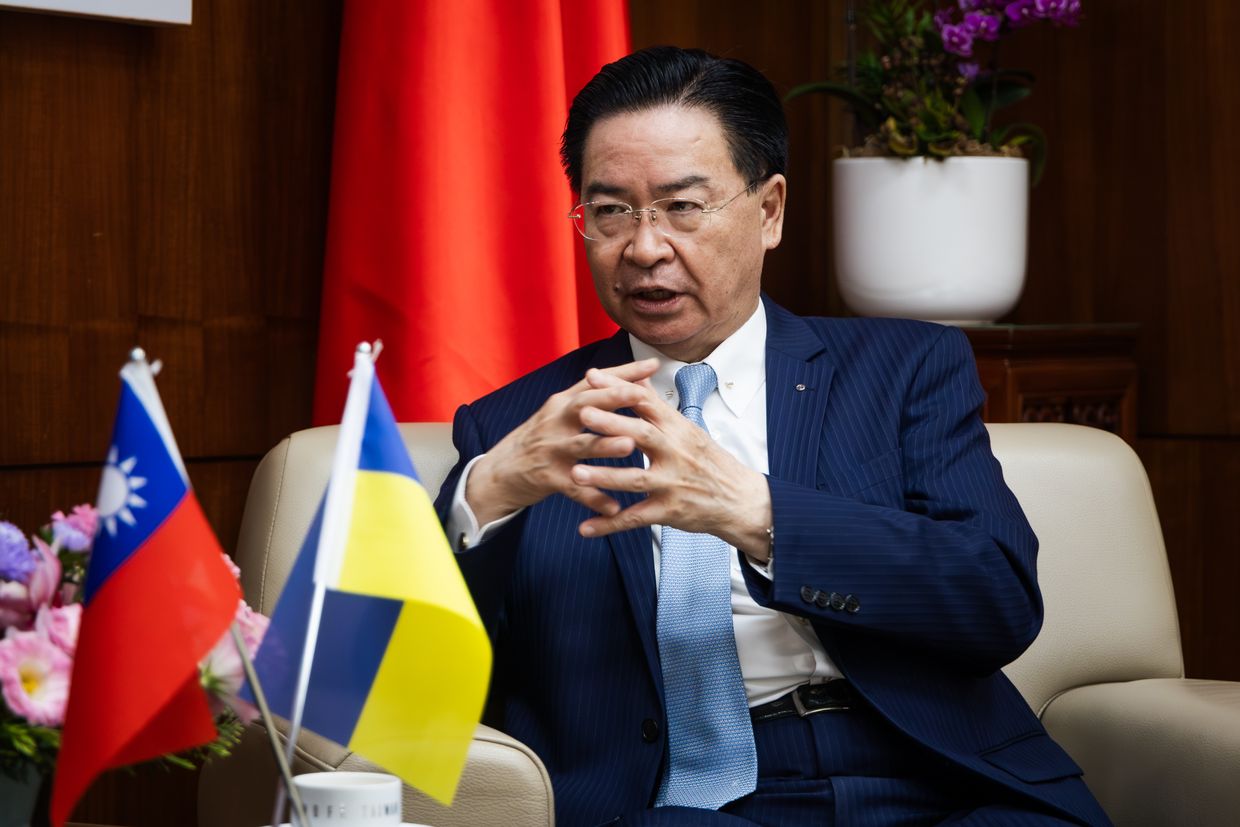
Taiwan’s FM: ‘If Russia can do that to Ukraine, China might do the same to Taiwan’
The start of Russia’s full-scale war against Ukraine was a wake-up call for Taiwan, with the island nation believed to be the next conflict zone in case of Kyiv’s defeat. Two years in, Taiwanese Foreign Minister Joseph Wu still believes that the island’s future is dependent
China may ask Russia to attack NATO if Taiwan is invaded, Rutte saysThe Kyiv IndependentAsami Terajima
China may ask Russia to attack NATO if Taiwan is invaded, Rutte says
  •  

Trump says Putin 'wants to keep killing people,' signals US may send Patriots to Ukraine

Trump says Putin 'wants to keep killing people,' signals US may send Patriots to Ukraine

Editor's note: This story has been updated with additional comments by U.S. President Donald Trump.

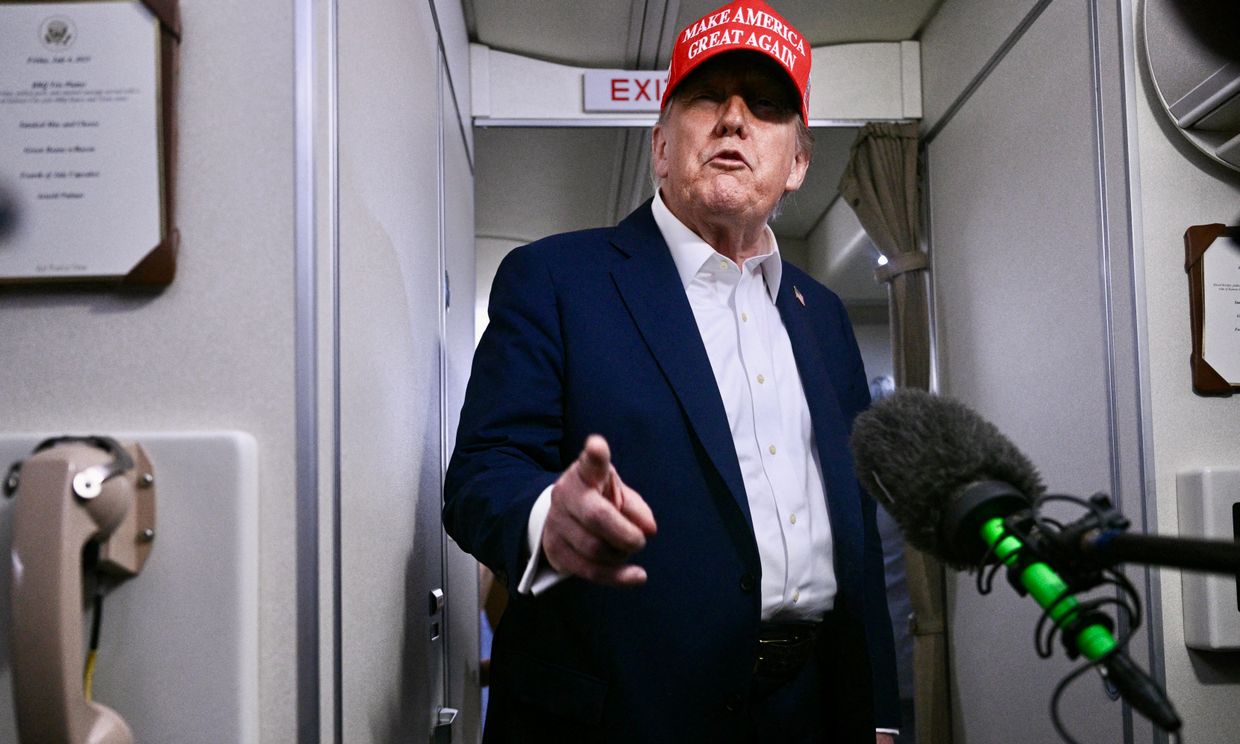
U.S. President Donald Trump said on July 5 that Russian President Vladimir Putin does not appear interested in ending the war in Ukraine, according to a comment made onboard Air Force One.

Trump reiterated that he was "very unhappy" with the July 3 phone call between the two leaders.

"It just seems like he wants to go all the way and just keep killing people. It's not good. I wasn't happy with it," Trump told reporters.

The call, which lasted about an hour, was confirmed by the Kremlin to have focused on Ukraine. Putin reportedly told Trump that Russia would continue pursuing its "goals" in the war.

Trump's remarks follow a sharp escalation in Russian missile and drone attacks across Ukraine that have killed and injured hundreds of civilians in recent weeks.

The strikes have hit multiple regions, destroying civilian infrastructure amid persistent calls from Ukraine, the U.S., and Europe for an unconditional ceasefire.

When asked if he can end Russia's war against Ukraine, Trump said, "I don’t know. I can’t tell you whether or not that’s going to happen."

Trump agreed when asked if ending the war is a priority, saying, "Yes. I’d like to see it happen."

The day after his call with Putin, the U.S. president spoke by phone with President Volodymyr Zelensky and said the two had a "very strategic" conversation.

"We talked about different things... I think it was a very, very strategic call," Trump said. When asked about supplying Patriot air defense systems to Ukraine, he replied, "Yeah, we might."

"They're going to need something because they're being hit pretty hard," Trump added.

The statement comes as the U.S. Defense Department has paused deliveries of several key weapons systems, including Patriot missiles and precision-guided munitions, prompting concern in Kyiv.

While Trump has said he wants to help Ukraine, his administration has not imposed new sanctions on Russia since taking office and has not approved additional aid packages.

The U.S. president has instead directed strikes against Iran, targeting three nuclear facilities in June in response to regional escalations, a move critics say contrasts with his cautious approach toward Moscow.

When asked why he appears tougher on Tehran than Moscow, Trump told reporters, "No, I think I'm tougher on Russia than I am on Iran."

Despite two rounds of face-to-face talks between Moscow and Kyiv in May and June in Istanbul, no agreement on a ceasefire has been reached. The negotiations have only resulted in prisoner exchanges, as Moscow continues to push for maximalist demands in peace talks.

  •  

'I'm very disappointed,' Trump says after phone call with Putin

'I'm very disappointed,' Trump says after phone call with Putin

U.S. President Donald Trump said he was "very disappointed" with Russian President Vladimir Putin following a phone call on July 3, during which the two leaders discussed the ongoing war in Ukraine.

Trump told reporters he "didn't make any progress" and accused Putin of showing no willingness to stop the fighting.

Trump also said that he is planning to talk to President Volodymyr Zelensky on July 4.

"I'm speaking to President Zelensky tomorrow in the early morning, and I'm very disappointed with the conversation I had today with President Putin," Trump told journalists. "Because I don't think he's there. And I'm very disappointed.  I don't think he's looking to stop this fighting."

Later on July 4, Kremlin spokesperson Dmitry Peskov said Russia "is paying close attention to all of Trump's statements," but added Moscow will continue its full-scale war in Ukraine because "it is not yet possible to achieve goals through diplomatic means."

The hour-long conversation between Trump and Putin marked the sixth time the two leaders have spoken since Trump took office in January. According to Kremlin aide Yury Ushakov, Putin reiterated that "Russia will continue to pursue its goals," refusing to back down from what the Kremlin calls the "root causes” of the conflict.

The White House did not issue a readout of the call. Trump provided few additional details, only saying the discussion covered "a lot of things" and confirming no progress had been made on securing a ceasefire.

The call came just hours before one of the largest Russian aerial assaults on Ukraine in recent months. According to Zelensky, air raid sirens began sounding across Ukraine almost simultaneously with media reports about the Trump-Putin call.

"Russia is once again demonstrating that it is not going to end the war and terror," Zelensky said. "The first air raids in our cities and regions began yesterday, almost simultaneously with the start of media discussions of President Trump's phone call with Putin."

Overnight on July 4, Russian forces launched more than 550 aerial weapons, including over 330 Iranian-type Shahed drones and multiple types of missiles, across Ukraine, with Kyiv as the main target. At least 23 people were injured in the capital, where fires broke out in multiple districts and air pollution reached dangerous levels.

Zelensky renewed calls for increased military assistance from Ukraine's partners, especially the delivery of U.S.-made Patriot missile systems.

"Patriots and their missiles are real defenders of life," he said.

Despite Ukraine's urgent appeals, the U.S. Defense Department has paused shipments of Patriot systems and other key munitions, citing the need to replenish domestic stockpiles. Ukrainian officials have warned that such delays threaten to embolden Russia and intensify attacks on civilians.

Putin tells Trump Russia won’t back down from its war aims in Ukraine
The hour-long conversation between the two presidents focused on Russia’s war in Ukraine and the situation in the Middle East, according to Kremlin aide Yury Ushakov.
'I'm very disappointed,' Trump says after phone call with PutinThe Kyiv IndependentTim Zadorozhnyy
'I'm very disappointed,' Trump says after phone call with Putin
  •  

Trump says he 'didn't make any progress' with Putin following phone call

Trump says he 'didn't make any progress' with Putin following phone call

U.S. President Donald Trump told reporters on July 3 that he "didn't make any progress" on ending the war in Ukraine during his call with Russian President Vladimir Putin earlier in the day.

"We had a call. It was a pretty long call. We talked about a lot of things," Trump said ahead of his flight to an Iowa event.

When asked if he had made any progress with Putin on the call, Trump responded: "No, I didn't make any progress with him today at all."

The two leaders held an hour-long conversation early in the on July 3 focused on Russia's war in Ukraine and the situation in the Middle East. The call marks the sixth conversation between the two men since Trump took office in January.

Kremlin aide Yury Ushakov told reporters earlier in the day that Putin said "Russia will continue to pursue its goals" in the war against Ukraine.

"Our president said that Russia will pursue its goals, specifically addressing the root causes that led to the current situation, and will not back down from these objectives," Ushakov added.

The White House did not provide a read out of the meeting, and Trump did not provide further comment on the phone call.

Since taking office, Trump has attempted to broker a ceasefire between Ukraine and Russia to no avail. Despite two rounds of negotiations between Kyiv and Moscow, Putin has refused to implement a ceasefire, citing his maximalist demands.

While Trump has expressed frustration with Russia's continued aggression, his administration has not imposed new sanctions nor taken steps to pressure the Kremlin directly.

Putin's message came amid a surge of Russian drone and missile attacks across Ukraine that have killed and injured hundreds of civilians in recent weeks.

The strikes have destroyed numerous infrastructure as Russia intensifies its assault despite repeated calls from Kyiv, Washington, and European leaders for an unconditional ceasefire.

The phone call also came just a day after the U.S. Defense Department paused shipments of key weapons systems to Ukraine, including Patriot air defense missiles and precision-guided munitions. Ukraine's Foreign Ministry has warned that the delay undermines defense efforts and risks emboldening Russia to escalate further.

President Volodymyr Zelensky, speaking from Denmark earlier in the day, said that achieving peace would require direct talks between national leaders.

The president described Trump and Putin as "completely different people" but emphasized that only Putin makes decisions in Russia.

"In Russia, only Putin makes decisions, which is why we need a meeting at the leadership level if we want to have peace," Zelensky said.

Putin tells Trump Russia won’t back down from its war aims in Ukraine
The hour-long conversation between the two presidents focused on Russia’s war in Ukraine and the situation in the Middle East, according to Kremlin aide Yury Ushakov.
Trump says he 'didn't make any progress' with Putin following phone callThe Kyiv IndependentTim Zadorozhnyy
Trump says he 'didn't make any progress' with Putin following phone call


  •  

Russia becomes first country to recognize Afghanistan's Taliban government

Russia becomes first country to recognize Afghanistan's Taliban government

Russia became the first country to recognize the Taliban as the ruling government of Afghanistan on July 3, Russia's Foreign Ministry announced.

"We believe that the act of official recognition of the government of the Islamic Emirate of Afghanistan will give impetus to the development of productive bilateral cooperation between our countries in various fields," the Foreign Ministry said in a statement.

The Taliban, an Islamist militant group, seized control of Afghanistan in August 2021 following the withdrawal of U.S. and NATO forces, toppling the Western-backed government.

Despite its control over the country, the Taliban-led administration has not been formally recognized by any other state due to its failure to meet international commitments on human rights, governance, and counter-terrorism.

Russian state media outlet TASS reported that Russian President Vladimir Putin made the final decision based on advice from Foreign Minister Sergey Lavrov.

As relations with Western governments fell apart following Moscow's full-scale invasion of Ukraine in February 2022, the Kremlin has increasingly looked to work closely with totalitarian regimes, including North Korea and Iran, to advance economic and military partnerships.

In recent years, Moscow has expanded engagement with the Taliban, deepening trade ties and investing in Afghan infrastructure. The Taliban also regularly participates in Russian economic and educational forums.

In recent months, Russia's Supreme Court ruled to suspend the ban on dealings with the Taliban, and Russia's State Duma passed legislation in December 2024 allowing the possibility of removing organizations from the list of banned terrorist groups.

Putin has previously referred to the Taliban as "allies," while Foreign Minister Sergey Lavrov has called them "sane people."

The Taliban, however, continues to enforce strict Islamic law, banning women from education, restricting social interactions, and carrying out the public stoning of women to death.

Ukraine war latest: Putin tells Trump Russia won’t back down from its war aims in Ukraine
Key developments on July 3: * Putin tells Trump Russia won’t back down from its war aims in Ukraine * Deputy commander of Russian Navy killed in Ukrainian strike in Kursk, Russian official confirms * Ukraine signs major drone co-production deal with US Swift Beat, Zelensky announces * Russia targets Ukrainian conscription offices to disrupt mobilization, military spokesperson says after Poltava attack * ‘One of Russia’s most critical targets’ — Ukraine confirms strike on missile battery pl
Russia becomes first country to recognize Afghanistan's Taliban governmentThe Kyiv IndependentThe Kyiv Independent news desk
Russia becomes first country to recognize Afghanistan's Taliban government


  •  

Putin tells Trump Russia won't back down from its war aims in Ukraine

Putin tells Trump Russia won't back down from its war aims in Ukraine

During a phone call with U.S. President Donald Trump on July 3, Russian President Vladimir Putin said "Russia will continue to pursue its goals" in the war against Ukraine, Kremlin aide Yury Ushakov said.

The hour-long conversation between the two presidents focused on Russia's war in Ukraine and the situation in the Middle East, according to Ushakov.

"Trump once again emphasized the need to end military hostilities as soon as possible. Vladimir Putin noted that Russia continues to seek a political negotiated solution to the conflict," Ushakov said.

"Our president said that Russia will pursue its goals, specifically addressing the root causes that led to the current situation, and will not back down from these objectives."

The Kremlin aide added that the two leaders discussed cultural diplomacy, specifically the exchange of films promoting what Ushakov described as "traditional values close to Russia and the U.S. presidential administration."

In response, U.S. President Donald Trump said later in the day that he "didn't make any progress" on ending the war in Ukraine during his call with Putin.

"No, I didn't make any progress with him today at all," told reporters in response to questions about the call.

Putin's message came amid a surge of Russian drone and missile attacks across Ukraine that have killed and injured hundreds of civilians in recent weeks.

The strikes have destroyed numerous infrastructure as Russia intensifies its assault despite repeated calls from Kyiv, Washington, and European leaders for an unconditional ceasefire.

The phone call also came just a day after the U.S. Defense Department paused shipments of key weapons systems to Ukraine, including Patriot air defense missiles and precision-guided munitions. Ukraine's Foreign Ministry has warned that the delay undermines defense efforts and risks emboldening Russia to escalate further.

President Volodymyr Zelensky, speaking from Denmark earlier in the day, said that achieving peace would require direct talks between national leaders.

The president described Trump and Putin as "completely different people" but emphasized that only Putin makes decisions in Russia.

"In Russia, only Putin makes decisions, which is why we need a meeting at the leadership level if we want to have peace," Zelensky said.

According to Ushakov, the presidents did not discuss the possibility of a meeting, but "the idea is in the air," and they agreed to continue communication.

Moscow and Kyiv have held two rounds of face-to-face talks in Istanbul this year, first on May 16 and again on June 2, following more than three years with no direct negotiations.

The meetings resulted in several prisoner exchanges, but no steps toward a ceasefire.

While Trump has expressed frustration with Russia's continued aggression, his administration has not imposed new sanctions nor taken steps to pressure the Kremlin directly.

As Trump ‘loses interest’ in Ukraine, Kyiv scrambles to clarify extent of U.S. military aid pause
When the U.S. Department of Defense (DOD) halted the transfer of critical air defense missiles and other weapons to Ukraine, Kyiv and its partners were caught off-guard and are now left scrambling for clarity on the scope and length of the Trump administration’s decision. The White House confirmed the halt after a July 1 report by Politico said shipments were paused due to concerns over the size of domestic stockpiles. The decision “was made to put America’s interests first following a DOD rev
Putin tells Trump Russia won't back down from its war aims in UkraineThe Kyiv IndependentAndrea Januta
Putin tells Trump Russia won't back down from its war aims in Ukraine
  •  

Putin, Macron hold first call since 2022, discuss wars in Ukraine, Middle East

Putin, Macron hold first call since 2022, discuss wars in Ukraine, Middle East

Editor's note: The story was updated as the President's Office confirmed that following the call with Vladimir Putin, Emmanuel Macron also called Volodymyr Zelensky.

French President Emmanuel Macron and his Russian counterpart Vladimir Putin held a call on July 1 for the first time since 2022, discussing Russia's war against Ukraine and the conflict in the Middle East, the Kremlin's press service reported.

The conversation between the two leaders took place as the Russian army continues to advance along the front line, trying to gain a foothold in Sumy Oblast and enter Dnipropetrovsk Oblast.

Moscow has repeatedly rejected the U.S.-backed ceasefire proposal, stalling peace talks with Ukraine.

Following the call with Putin, Macron also called Zelensky to discuss his conversation with the Russian president, a source in the President's Office told the Kyiv Independent.

The call between Zelensky and Macron was "constructive," the source added. Putin's position remained unchanged: he does not show any willingness to end the war in Ukraine, according to the source.

The call between Putin and Macron lasted over two hours, BFM TV reported, citing the Elysee Palace.

During the conversation with Macron, Putin called Russian war "a direct consequence of the policy of Western powers" that "ignored Russia's security interests, created an anti-Russian bridgehead in Ukraine," the Kremlin said.

Macron, in turn, noted France's unwavering support for Ukraine's sovereignty and territorial integrity, Suspilne reported, citing the Elysee Palace.

The French president also called for "a ceasefire to be established as soon as possible and for negotiations to begin."

The leaders will continue to discuss Russia's war in Ukraine, according to the Elysee Palace.

The presidents also discussed the situation in the Middle East regarding the Iranian-Israeli conflict and the U.S. strikes on Iranian nuclear facilities.

Macron frequently called Putin in the first year of Russia's full-scale invasion of Ukraine. Their previous call took place in September 2022.

Russia-Iran alliance wavers as Tehran suffers major blows
Tehran, Russia’s main ally in the Middle East, has been dealt a heavy blow as Israel dismantled its network of proxies and then struck targets in Iran. The recent Iranian-Israeli war, which ended with a ceasefire on June 24, showed that the regional balance of power has shifted in Israel’s favor. This could have a major impact on Russian-Iranian relations as Moscow will have to recalibrate its approach to the region. Russian-Iranian cooperation is likely to continue but Iran’s ability to help
Putin, Macron hold first call since 2022, discuss wars in Ukraine, Middle EastThe Kyiv IndependentOleg Sukhov
Putin, Macron hold first call since 2022, discuss wars in Ukraine, Middle East
  •  

'Russia cannot continue to stall for time' while bombing Ukrainian civilians, Kellogg says

'Russia cannot continue to stall for time' while bombing Ukrainian civilians, Kellogg says

U.S. Special Representative Keith Kellogg has pushed back against Russian claims that Ukraine and the United States are responsible for delaying peace negotiations, arguing that it is Moscow that continues to obstruct efforts to end the war it initiated.

"Peskov’s recent comments on the state of negotiations are Orwellian. Russian claims that it is the U.S. and Ukraine stalling peace talks are unfounded," Kellogg said on X, citing reporting by the Kyiv Independent."

"President Trump has been consistent and adamant about making progress to end the war. We urge an immediate ceasefire and a move to trilateral talks to end the war. Russia cannot continue to stall for time while it bombs civilian targets in Ukraine.

Kremlin spokesperson Dmitry Peskov on June 29 accused Washington and Kyiv of holding up progress, stating that future developments in peace talks depend on Ukraine’s stance, the effectiveness of U.S. mediation, and the situation on the battlefield.

“A lot depends, naturally, on the position of the Kyiv regime,” Peskov said in a televised interview with Belarus 1 TV, according to Reuters. “It depends on how effectively Washington's mediating efforts continue,” he added.

Peskov’s recent comments on the state of negotiations are Orwellian. Russian claims that it is the US and Ukraine stalling peace talks are unfounded. President Trump has been consistent and adamant about making progress to end the war. We urge an immediate ceasefire and a move to… pic.twitter.com/vCQoF1XEtd

— Keith Kellogg (@generalkellogg) June 30, 2025

Despite those remarks, Russia has rejected a U.S.-backed ceasefire proposal and continued its attacks on Ukrainian cities launching record numbers of drones against Ukrainian cities. Earlier this month, Russian President Vladimir Putin openly stated that “all of Ukraine is ours,” raising further doubts about the Kremlin’s willingness to engage in meaningful negotiations.

Peskov’s interview aired as the war moves into its fourth summer with no comprehensive ceasefire in place. Although two rounds of peace talks between Russia and Ukraine took place in Istanbul this year—on May 16 and June 2—the discussions have not led to any breakthrough on ending hostilities.

While the Istanbul meetings led to notable prisoner exchanges, they produced no tangible progress toward peace.

Smashing previous monthly record, Russia launches 5,337 kamikaze drones against Ukraine during June
Russia launched a record 5,337 Shahed-type drones against Ukraine in June, according to data from the Ukrainian Air Force and Dragon Capital, smashing the previous record of 4,198 set in March. Russia’s bombardments, a fact of life after three years of full-scale war, have intensified dramatically in May
'Russia cannot continue to stall for time' while bombing Ukrainian civilians, Kellogg saysThe Kyiv IndependentYuliia Taradiuk
'Russia cannot continue to stall for time' while bombing Ukrainian civilians, Kellogg says
  •  

US, Russian spy chiefs agree to keep direct line open, Moscow says

US, Russian spy chiefs agree to keep direct line open, Moscow says

The Director of Russia’s Foreign Intelligence Service (SVR), Sergey Naryshkin, told Russian state media on June 29 that he had agreed to remain in open contact with Central Intelligence Agency (CIA) Director John Ratcliffe, following a recent phone call between the two.

"I had a phone call with my American counterpart, and we reserved for each other the possibility to call each other at any time and discuss issues of interest to us," Naryshkin said. He did not specify when the conversation took place, and Ratcliffe has not publicly confirmed the call.

Russian state media claimed the last known exchange between the two intelligence chiefs occurred in March.

The remarks come amid broader efforts by the administration of U.S. President Donald Trump to normalize relations between Washington and Moscow. During a phone call on Feb. 12, Presidents Trump and Vladimir Putin agreed to reset U.S.-Russia ties and revive dialogue on "topics of mutual interest," including a potential resolution to the war in Ukraine.

That call was followed by the first round of bilateral talks, held on Feb. 18 in Saudi Arabia—the first official meeting between U.S. and Russian officials in over three years. Both sides pledged to begin restoring diplomatic relations and to appoint senior teams tasked with negotiating a Ukraine peace agreement.

Despite these efforts, progress on peace has been limited.

Two earlier rounds of talks between Moscow and Kyiv in Istanbul failed to produce a ceasefire. On June 5, Trump declined to say when or if further sanctions on Russia might be imposed, stating only that there is a deadline “in (his) brain.”

U.S. Secretary of State Marco Rubio later told Politico that Trump would resist European pressure to toughen sanctions, arguing that doing so could jeopardize the fragile window for negotiations with the Kremlin.

‘Putin cannot stop’ – Estonian foreign minister says war in Ukraine existential for Russian president
As Russia continues to intensify its onslaught on Ukraine more than three years into the full-scale invasion, Kyiv faces a new challenge – keeping its Western allies, namely the new U.S. administration, engaged in the struggle. This became clear during the NATO summit in The Hague on June 24-25, where
US, Russian spy chiefs agree to keep direct line open, Moscow saysThe Kyiv IndependentMartin Fornusek
US, Russian spy chiefs agree to keep direct line open, Moscow says
  •  

Despite escalating war plans, Putin claims Russia will cut military spending starting in 2026

Despite escalating war plans, Putin claims Russia will cut military spending starting in 2026

Russian President Vladimir Putin claimed on June 27 that Moscow plans to cut its military expenditure beginning next year, in a rebuke of NATO members' plans to increase defense spending to 5% of GDP.

Putin's claims will likely be met with harsh skepticism from Western officials as Russia's military spending has continued to increase throughout its ongoing invasion of Ukraine.

The Kyiv Independent cannot verify claims made by Putin. The Russian president did not provide any specifics as to how Moscow plans to cut military spending, but added there has yet to be an agreement between ministries.

"We are planning to reduce defence spending. For us, next year and the year after, over the next three-year period, we are planning for this," Putin told reporters during a visit to Belarus. "Europe is thinking about how to increase its spending, on the contrary. So who is preparing for some kind of aggressive actions? Us or them?" Putin continued.

Putin's comments comes as NATO allies are increasingly concerned about Russia's military capabilities, including future threats to alliance members as well as ongoing sabotage efforts.

On June 25, NATO member states agreed to a new defense spending benchmark, committing to allocate 5% of their GDP annually to defense and security-related expenditures by 2035.

The decision comes as NATO allies increasingly believe Russia could rebuild sufficient military capacity to challenge the alliance within five years, with NATO Secretary General Mark Rutte warning that allies must act urgently to prepare for future threats.

"We see Russia's deadly terror from the skies over Ukraine every day. We must be able to defend ourselves from such attacks," Rutte said during a press briefing on June 23. "Our security environment has changed, and not for the better. The threats we face today demand that we do far more," he added.

Various European intelligence agencies as well as officials have increasingly delivered dire warnings about the threat emanating from Russia and Europe's current lack of preparedness. German intelligence chief Bruno Kahl told a parliamentary hearing in October that Russia will have the military capabilities to be able to attack NATO by 2030.

In 2024, Russia’s military spending surpassed the combined defense budgets of all European nations. Russia’s total defense expenditures surged by 42% in real terms amounting to $462 billion, according to the data by the International Institute for Strategic Studies (IISS).

By comparison, total defense spending across Europe, including the U.K. and EU member states, increased by nearly 12% last year to $457 billion, slightly trailing Moscow’s budget.

The Moscow Times reported in December that the Kremlin had spent an unprecedented $43 billion in the third quarter of 2024 alone.

‘Putin cannot stop’ – Estonian foreign minister says war in Ukraine existential for Russian president
As Russia continues to intensify its onslaught on Ukraine more than three years into the full-scale invasion, Kyiv faces a new challenge – keeping its Western allies, namely the new U.S. administration, engaged in the struggle. This became clear during the NATO summit in The Hague on June 24-25, where
Despite escalating war plans, Putin claims Russia will cut military spending starting in 2026The Kyiv IndependentMartin Fornusek
Despite escalating war plans, Putin claims Russia will cut military spending starting in 2026


  •  

Russia ready to hold third round of peace talks with Ukraine, Putin says

Russia ready to hold third round of peace talks with Ukraine, Putin says

Russia is ready to hold a third round of peace talks on the war in Ukraine, Russian President Vladimir Putin told reporters on June 27, without specifying if he would directly participate in the negotiations.

"In general, we are ready for this (next round of peace talks), we need to coordinate the place and time," Putin said.

Putin added that the talks could potentially be held in Istanbul but the details have not yet been worked out. He added that another round of talks may bring peace closer as the terms for peace outlined in the countries' peace memorandums remain "absolutely opposite."

The latest peace talks between Russia and Ukraine took place on June 2 in Istanbul, following an earlier meeting on May 16. Despite Ukraine's insistence on a 30-day ceasefire, Russia has repeatedly rejected the offer, proposing only a temporary 2–3-day truce in limited areas to retrieve the bodies of fallen soldiers.

While no agreement on a comprehensive ceasefire has been reached, talks have led to a few major prisoner exchanges, including a 1,000-for-1,000 swap that took place in late May and a follow-up deal for up to 1,200 prisoners from each side.

Defense Minister Rustem Umerov said during a press briefing on June 26 that it was Ukraine's goal to organize a direct meeting between President Volodymyr Zelensky and Putin during the next round of negotiation.

In previous rounds, Putin had failed to show in-person sending lower-level officials to the meeting instead — despite Zelensky's willingness for in-person talks as well pressure from the United States.

On June 26, Turkish President Recep Tayyip Erdogan said Ankara is working to organize a meeting between Zelensky and Putin, with U.S. President Donald Trump potentially joining the talks.

Putin said on June 27 that it was "quite possible" that a meeting between himself and the U.S. president could take place. "We will be happy to prepare it," he briefly added.

Zelensky and Trump met during the NATO summit on June 25, where the two leaders discussed battlefield developments, Kyiv's need for additional air defense systems, and the potential for co-production of drones.

Zelensky has previously voiced openness to a trilateral meeting. On May 27, he told public broadcaster Suspilne that he was ready to sit down with both Trump and Putin.

Turkey previously hosted direct peace talks in March 2022 and has remained one of the few countries with open lines to both Kyiv and Moscow.

Putin under pressure to declare war on Ukraine, but experts say Russia isn’t ready
Despite suffering over 1 million casualties, pounding Ukrainian cities nightly with missiles and drones, and committing countless war crimes, one startling fact about Russia’s full-scale invasion remains — Moscow has yet to officially declare war on Ukraine. In February 2022, Russian President Vladimir Putin described what he believed was going to be a swift victory and the capture of Kyiv within days as a “special military operation.” Nearly three-and-a-half years later, the Kremlin is stuck
Russia ready to hold third round of peace talks with Ukraine, Putin saysThe Kyiv IndependentChris York
Russia ready to hold third round of peace talks with Ukraine, Putin says


  •  

Ukraine seeks Zelensky-Putin meeting as next step in ceasefire negotiations

Ukraine seeks Zelensky-Putin meeting as next step in ceasefire negotiations

Ukraine's next goal in ongoing negotiations with Russia is to organize a direct meeting between President Volodymyr Zelensky and Russian President Vladimir Putin, Defense Minister Rustem Umerov said during a press briefing on June 26.

Speaking to journalists in Kyiv, Umerov, who was part of Ukrainian peace talks delegation, outlined a multi-stage negotiation process that began in January with an initiative from U.S. President Donald Trump. Umerov stressed that Ukraine welcomed the idea of a ceasefire from the outset and remains fully committed to a just peace.

"Ukraine has always remained consistent in its pursuit of peace," Umerov said. "We supported the U.S. initiative for a full ceasefire from the very beginning and demonstrated our commitment through multiple rounds of negotiations. But any dialogue must take place without ultimatums and with full respect for our country's sovereignty."

The talks unfolded in several rounds in Jeddah, Riyadh, Paris, London, and Istanbul. During the second round of negotiations in Riyadh, Ukraine communicated with Russia indirectly, through U.S. mediators. In Turkey, U.S. mediators were excluded from talks due to Russia's request, according to Umerov.

"President Zelensky's proposal to meet with Putin is aimed at showing Donald Trump that Moscow is not truly seeking peace," Mykola Kniazhytzkyi, a Ukrainian lawmaker from the European Solidarity party, told the Kyiv Independent.

"Its real goal is the destruction of Ukrainian statehood and the genocide of the Ukrainian people."

Oleksandr Merezhko, a lawmaker from Zelensky’s party and chair of the parliament's foreign affairs committee, called the proposal for a bilateral high-level meeting "an interesting political step." He said it is a logical move since "Putin decides everything in Russia."

However, the MP questioned the overall advisability of a direct meeting between Zelensky and Putin.

"It seems to me that it would be better to conduct such negotiations in a format involving not only Zelensky, but also the United States and the European Union," Merezhko said, adding that European leaders could help build a "balance of power," given the risk that the U.S. might potentially lean toward Russia.

He said that talks between the leaders should take place after the ceasefire, at least a temporary one, is in place.

"For them (Russia), negotiations are a tool of war. They have never conducted them in good faith and will never do this. In general, there is no need for negotiations, there is a need for pressure (from the West)," Merezhko said.

Putin under pressure to declare war on Ukraine, but experts say Russia isn’t ready
Despite suffering over 1 million casualties, pounding Ukrainian cities nightly with missiles and drones, and committing countless war crimes, one startling fact about Russia’s full-scale invasion remains — Moscow has yet to officially declare war on Ukraine. In February 2022, Russian President Vladimir Putin described what he believed was going to be a swift victory and the capture of Kyiv within days as a “special military operation.” Nearly three-and-a-half years later, the Kremlin is stuck
Ukraine seeks Zelensky-Putin meeting as next step in ceasefire negotiationsThe Kyiv IndependentChris York
Ukraine seeks Zelensky-Putin meeting as next step in ceasefire negotiations

Umerov said Ukraine had accepted a U.S.-proposed full ceasefire across land, sea, and air in early March, but Russia has rejected the proposal.

While no agreement on a comprehensive ceasefire has been reached, talks have led to a few major prisoner exchanges, including a 1,000-for-1,000 swap that took place in late May and a follow-up deal for up to 1,200 prisoners from each side.

Umerov said the focus of recent negotiations has included humanitarian issues such as the release of civilians and children, as well as conditions for a meeting of Ukrainian and Russian leaders. He emphasized that the next stage must include top-level dialogue.

"After completing discussions on humanitarian issues, Ukraine plans to move forward to the topic of a leaders' summit for substantive dialogue," he said.

The latest peace talks between Russia and Ukraine took place on June 2 in Istanbul, following an earlier meeting on May 16. Both times, the Ukrainian delegation was led by Umerov. Despite Ukraine's insistence on a 30-day ceasefire, Russia proposed only a temporary 2–3-day truce in limited areas to retrieve the bodies of fallen soldiers. Umerov called this offer "insufficient" and accused Moscow of avoiding meaningful peace.

"Russia rejects even the very idea of stopping the killings," Umerov said following the June 2 talks. "That's why we appeal to the world: pressure is needed for real peace, not for an imitation of negotiations."

Zelensky has also criticized Moscow's limited ceasefire offers and called on Trump to follow through on promised sanctions if talks remain fruitless. Trump has repeatedly suggested that he is monitoring the peace process closely and warned that the U.S. response could change if Putin is not prepared to end the war.

No further U.S. sanctions were imposed after more than 100 days of Moscow's refusal to the proposed ceasefire.

Facing manpower shortage, Ukrainian brigade turns to women in first-ever female recruitment drive
Editor’s note: This article originated as a winning story idea in a vote by members of the Kyiv Independent’s community. Join our community today and join our exclusive members-only Discord channel, where you can discuss and suggest stories, ask our journalists questions, and more. “Her strength is her
Ukraine seeks Zelensky-Putin meeting as next step in ceasefire negotiationsThe Kyiv IndependentNatalia Yermak
Ukraine seeks Zelensky-Putin meeting as next step in ceasefire negotiations
  •  

Erdogan says Trump ready to join Zelensky-Putin talks in Turkey

Erdogan says Trump ready to join Zelensky-Putin talks in Turkey

Turkish President Recep Tayyip Erdogan said Ankara is working to organize a meeting between President Volodymyr Zelensky and Russian President Vladimir Putin, with U.S. President Donald Trump potentially joining the talks, Reuters reported.

Speaking after his meeting with Trump, Erdogan said on June 26 that the U.S. president expressed interest in participating if the meeting were to take place in Turkey.

"He said,'If Russian President Vladimir Putin comes to Istanbul or Ankara for a solution, then I will also come,'" Erdogan told reporters. "We will hold the necessary contacts and, God willing, realize this meeting as soon as possible."

Zelensky and Trump met during the NATO summit on June 25, where the two leaders discussed battlefield developments, Kyiv's need for additional air defense systems, and the potential for co-production of drones.

Zelensky has previously voiced openness to a trilateral meeting. On May 27, he told public broadcaster Suspilne that he was ready to sit down with both Trump and Putin.

Putin has claimed he is also willing to meet, but did not attend previous talks proposed in Istanbul, opting instead to send lower-level delegates to peace discussions held on May 16.

The Kremlin has long sought to portray Zelensky as "illegitimate", with spokesperson Dmitry Peskov in February claiming that any talks must consider "legal aspects" of his mandate.

Turkey previously hosted direct peace talks in March 2022 and has remained one of the few countries with open lines to both Kyiv and Moscow. The latest round of direct talks on June 2 was held in Istanbul.

Trump gets king’s treatment at NATO summit while Ukraine sits on the sidelines
THE HAGUE, Netherlands — As NATO leaders convened in The Hague for a two-day summit on June 24–25, allies and Kyiv braced for the first annual meeting since U.S. President Donald Trump’s return to office. With the Israel-Iranian conflict dominating the news and the summit agenda focused on
Erdogan says Trump ready to join Zelensky-Putin talks in TurkeyThe Kyiv IndependentMartin Fornusek
Erdogan says Trump ready to join Zelensky-Putin talks in Turkey
  •  

Ukraine, Council of Europe sign historic agreement to establish tribunal on Russian aggression

Ukraine, Council of Europe sign historic agreement to establish tribunal on Russian aggression

Ukraine and the Council of Europe signed a historic agreement on June 25 to establish a Special Tribunal for the Crime of Aggression, marking a major step toward holding Russia's leadership accountable for launching the full-scale invasion in 2022.

The agreement was signed by President Volodymyr Zelensky and Council of Europe Secretary General Alain Berset during a ceremony in Strasbourg, France – following more than three years of diplomatic efforts and deliberation.

Speaking at the Parliamentary Assembly of the Council of Europe (PACE), Zelensky thanked the assembly and underscored the importance of justice.

"Everyone responsible for this war must be held to account," he said. "Every war criminal must face justice – including Putin... the crime of aggression must be recorded, judged, and punished."

Zelensky also praised PACE for its "real leadership" in taking a stand against Russia and developing the tribunal.

"It was here in this assembly, that the first call for such a tribunal was made," Zelensky said. "The idea was born here – and now it’s gaining real support from partner countries in Europe and beyond."

The Special Tribunal will be established within the framework of the Council of Europe and will have the mandate to prosecute senior Russian leaders for the crime of aggression – defined as the decision to use armed force against another state, in violation of the United Nations Charter.

President Zelensky has long advocated for the creation of the tribunal, emphasizing the need to bring Russian President Vladimir Putin and other senior officials to justice. Ukrainian prosecutors have documented thousands of war crimes committed by Russian forces, including attacks on civilians, cultural landmarks, medical facilities, and reports of torture and forced deportations.

The tribunal is intended to close a key legal gap in existing international accountability mechanisms.

While the International Criminal Court (ICC) has jurisdiction to investigate war crimes, crimes against humanity, and genocide in Ukraine – and has already issued arrest warrants for Putin and Maria Lvova-Belova, the Russian official overseeing the forced deportation of Ukrainian children to Russia – it cannot examine the crime of aggression due to jurisdictional constraints.

The new tribunal will complement the ICC's efforts by specifically targeting high-level officials responsible for starting the war – such as Putin and his inner circle.

In addition to the special tribunal, the Council of Europe’s Ukraine-related work  includes the Register of Damage – an initiative that has already received more than 34,000 claims detailing losses and harms resulting from Russia's full-scale invasion.

The establishment of the register, and now the special tribunal, are important steps to ensure justice for Ukraine and its people.

Zelensky, Trump hold talks on NATO summit sidelines
“We covered all the truly important issues,” President Volodymyr Zelensky said. “We discussed how to achieve a ceasefire and a real peace. We spoke about how to protect our people. We appreciate the attention and the readiness to help bring peace closer.”
Ukraine, Council of Europe sign historic agreement to establish tribunal on Russian aggressionThe Kyiv IndependentKateryna Denisova
Ukraine, Council of Europe sign historic agreement to establish tribunal on Russian aggression
  •  

Putin to skip BRICS summit in Brazil due to ICC arrest warrant

Putin to skip BRICS summit in Brazil due to ICC arrest warrant

Russian President Vladimir Putin has decided not to attend the upcoming BRICS summit in Brazil due to an arrest warrant issued by the International Criminal Court (ICC), Russian president's foreign policy aide Yuriy Ushakov said on June 25.

"This is related to certain difficulties in the context of the ICC’s demands, as you know, and precisely in this context, the Brazilian government was unable to take a clear position that would allow our president to participate in this meeting," Ushakov said.

Brazil is a member of the ICC and a signatory to the Rome Statute, meaning it is obliged to arrest Putin if he enters the country.

The BRICS summit, which is scheduled to take place on July 6–7, will be attended by Russian Foreign Minister Sergey Lavrov, according to Ushakov. Putin is expected to participate remotely via video.

BRICS, composed of Russia, China, India, Brazil, and other nations, is a group of emerging economies often portrayed as a counterweight to the Western-led world.

The ICC issued a warrant for the Russian leader's arrest in March 2023 over the illegal deportation of Ukrainian children during Russia's full-scale invasion of Ukraine.

In November 2024, Putin skipped the G20 summit in Brazil and sent Lavrov instead.

Earlier in June, Moscow said that Putin had received an official invitation to attend the G20 summit in South Africa, another ICC member state. The event is scheduled to take place in Johannesburg from Nov. 22 to 23.

In September 2024, Putin made a rare visit to Mongolia, which is also a signatory of the ICC, prompting criticism over the non-enforcement of the warrant.

‘It’s possible’ — Trump on Putin’s territorial ambitions beyond Ukraine
“I consider him (Russian President Vladimir Putin) a person I think is misguided,” U.S. President Donald Trump said speaking at a NATO press conference in The Hague on June 25.
Putin to skip BRICS summit in Brazil due to ICC arrest warrantThe Kyiv IndependentKateryna Denisova
Putin to skip BRICS summit in Brazil due to ICC arrest warrant
  •  

Trump says Putin called him to offer help with Iran

Trump says Putin called him to offer help with Iran

U.S. President Donald Trump said on June 24 that his Russian counterpart Vladimir Putin had called him and offered to help resolve the conflict between Iran and Israel, Fox News reported.

"As you know, Vladimir called me up. He said, can I help you with Iran? I said, 'no, I don't need help with Iran. I need help with you.' And I hope we're going to be getting a deal done with Russia, which is a shame. Six thousand soldiers died last week," Trump told journalists while heading to a NATO summit.

Trump's remarks come as The Hague hosts the NATO summit on June 24-25, at which the American leader is expected to meet Ukraine's President Volodymyr Zelensky.

Trump added he would like "to see a deal with Russia," which recently launched a new summer offensive against Ukraine, disregarding calls by Kyiv and its Western partners for an unconditional ceasefire.

The U.S. president did not provide further details on a potential deal with Russia.

Russia has deepened military and political ties with Tehran during the full-scale invasion of Ukraine.

Iran has supplied Moscow with thousands of Shahed attack drones used in routine strikes on Ukrainian cities.

Russia and Iran have cooperated to develop their own nuclear programs as both countries face Western sanctions. Russia supplied Iran with the Middle East's first nuclear power plant despite objections from the West.

Tensions between Iran and Israel had already been rising after Iran launched missile strikes on Tel Aviv and other Israeli cities on June 13, killing multiple civilians, including five Ukrainian nationals. The attack came in retaliation for Israeli military action.

Following several days of escalating conflict, Trump announced a ceasefire between Israel and Iran, but it was violated within hours of the American president's statement.

‘Dead and wounded everywhere’ — at least 160 casualties as Russia strikes Dnipro with ballistic missiles, hits civilian train
Russia launched a deadly missile attack on the Ukrainian city of Dnipro on June 24, striking civilian infrastructure and a passenger train, local officials reported.
Trump says Putin called him to offer help with IranThe Kyiv IndependentAnna Fratsyvir
Trump says Putin called him to offer help with Iran
  •  

After 40 months of waging full-scale war on Ukraine, Putin condemns 'unprovoked aggression against Iran'

After 40 months of waging full-scale war on Ukraine, Putin condemns 'unprovoked aggression against Iran'

Russian President Vladimir Putin has condemned U.S. strikes on Iran as "completely unprovoked aggression," more than three years into his completely unprovoked full-scale invasion of Ukraine.

Putin made the comments at the Kremlin during a meeting with Iran's Foreign Minister Abbas Araghchi on June 23, after U.S. President Donald Trump's announcement of successful air strikes on three nuclear facilities in Iran, Fordow, Natanz, and Esfahan, conducted in coordination with Israel over the weekend.

"The completely unprovoked aggression against Iran has no basis and no justification," Putin said, adding that Russia "is making efforts to provide assistance to the Iranian people."

Since Russia launched its full-scale invasion of Ukraine, Moscow has killed tens of thousands of Ukrainian civilians, and the true extent of the death toll is simply not known.

Russia's full-scale invasion of Ukraine was a clear and direct violation of both international law and the UN Charter.

Earlier on June 23, President Volodymyr Zelensky on highlighted Russia's hypocrisy for describing U.S. strikes on Iran as "grossly violating international law" just hours before launching yet another deadly mass missile and drone strike on Ukraine.

"After the strikes on Iran's nuclear facilities, there was an uproar from Moscow," Zelensky said.

"The Russian leadership demonstratively condemned the 'missile and bomb' actions. Today, Moscow is silent — after its own army launched a cynical attack using Russian-Iranian 'Shaheds' and missiles on civilian infrastructure in Kyiv and other cities."

Moscow on June 22 condemned the recent U.S. strikes against Iranian nuclear facilities.

"The irresponsible decision to subject the territory of a sovereign state to missile and bomb strikes, no matter what arguments are used, is grossly violating international law, the U.N. Charter, and the resolutions of the U.N. Security Council," the Russian Foreign Ministry said in a statement.

Overnight on June 23 a devastating Russian missile and drone strike on Kyiv killed at least 7 people and injured dozens more, including children.

The attack was one of the largest air assaults on the capital this year, with 368 aerial weapons launched, including 159 Iranian-made Shahed drones and 16 missiles, according to Ukraine's Air Force.

Russia has deepened military and political ties with Tehran since and Iran has supplied Moscow with thousands of Shahed-type attack drones used in routine strikes on Ukrainian cities, as well as short-range ballistic missiles.

Russia and Iran have cooperated to develop their own nuclear programs as both countries face Western sanctions. Russia supplied Iran with the Middle East's first nuclear power plant despite objections from the West.

Russia pulls its scientists out of Iranian nuclear plant, as Israeli strikes threaten decades of collaboration
Israel’s strikes on Iranian nuclear facilities have alarmed none more than Russia, the country that first brought nuclear power to Iran in defiance of Western objections. We’re “millimeters from catastrophe,” said Kremlin spokeswoman Maria Zakharova on June 18 in response to a bombing campaign that Israel launched against
After 40 months of waging full-scale war on Ukraine, Putin condemns 'unprovoked aggression against Iran'The Kyiv IndependentKollen Post
After 40 months of waging full-scale war on Ukraine, Putin condemns 'unprovoked aggression against Iran'
  •  

Iran's top diplomat to meet Putin in Moscow after US air strikes on nuclear sites

Iran's top diplomat to meet Putin in Moscow after US air strikes on nuclear sites

Iran's Foreign Minister Abbas Araghchi confirmed that he plans to travel to Russia on June 22 to meet with Russian President Vladimir Putin following the recent U.S. strikes on Iranian nuclear facilities.

The statement was made during Araghchi's press conference in Istanbul on June 22, according to Associated Press.

"We enjoy a strategic partnership and we always consult with each other and coordinate our positions," Araghchi said with reference to Russia.

Araghchi also said that there is "no red line" that the U.S. has not crossed in its recent actions against Iran.

Earlier that day, Russia condemned the U.S. strikes against Iranian nuclear facilities, calling them a violation of international law and Iran's sovereignty, a statement in stark contrast to Russia's full-scale war against Ukraine.

The Russian Foreign Ministry urged a response from the U.N. Security Council, saying that "the confrontational actions of the U.S. and Israel must be collectively rejected."

Tehran provides Moscow with ballistic missiles and thousands of Shahed attack drones for its war against Ukraine as part of Russia and Iran's close strategic partnership.

Russia and Iran have cooperated to develop their own nuclear programs as both countries face Western sanctions. Russia supplied Iran with the Middle East's first nuclear power plant despite objections from the West.

Russia pulls its scientists out of Iranian nuclear plant, as Israeli strikes threaten decades of collaboration
Israel’s strikes on Iranian nuclear facilities have alarmed none more than Russia, the country that first brought nuclear power to Iran in defiance of Western objections. We’re “millimeters from catastrophe,” said Kremlin spokeswoman Maria Zakharova on June 18 in response to a bombing campaign that Israel launched against
Iran's top diplomat to meet Putin in Moscow after US air strikes on nuclear sitesThe Kyiv IndependentKollen Post
Iran's top diplomat to meet Putin in Moscow after US air strikes on nuclear sites
  •  

'Ukrainian drones for the foot of every Russian soldier' — Zelensky responds to Putin's threat to conquer all Ukraine

'Ukrainian drones for the foot of every Russian soldier' — Zelensky responds to Putin's threat to conquer all Ukraine

President Volodymyr Zelensky on June 21 responded to Russian President Vladimir Putin's recent statements on Ukraine, saying that Ukraine intends to defend itself and that the government had made several decisions to bolster security in light of the Kremlin's threats.

Putin said "all of Ukraine" belongs to Russia in a speech on June 20 at the St. Petersburg International Economic Forum, pointing to Moscow's maximalist territorial ambitions in Ukraine.

"Wherever the foot of a Russian soldier steps is Russian land," he said.

In his evening address on June 21, Zelensky described Putin's speech as a "performance" but said Ukraine was taking the threats seriously.

"But when a murderer says he wants to kill, we take it seriously and will respond together with our partners," Zelensky said.

"I hope with all our partners," he added, likely referring to the United States' diminishing support for Ukraine under U.S. President Donald Trump.

Zelensky said he held meetings with Vasyl Maliuk, head of the Security Service of Ukraine (SBU), Commander-in-chief Oleksandr Syrskyi, and Foreign Minister Andrii Sybiha about how to bolster Ukraine's defense and international support.

"Of course, we will find Ukrainian drones for the foot of every Russian soldier," he said. "Of course, Ukraine will defend itself."

The Ukrainian government has made several decisions in light of Russia's overt threats, Zelensky said. These include a complete diplomatic overhaul and transformation of Ukraine's Foreign Ministry, intensified efforts to coordinate international sanctions, and more funding for drone development.

Kyiv's instructions for the SBU remain confidential, Zelensky said.

Russia ‘afraid to admit’ scale of losses, trying to hide by dumping soldiers’ bodies on Ukraine, Zelensky says
Ukrainian authorities have confirmed that at least 20 of the bodies Russia returned as Ukrainian were actually Russian soldiers, President Volodymyr Zelensky said.
'Ukrainian drones for the foot of every Russian soldier' — Zelensky responds to Putin's threat to conquer all UkraineThe Kyiv IndependentTim Zadorozhnyy
'Ukrainian drones for the foot of every Russian soldier' — Zelensky responds to Putin's threat to conquer all Ukraine
  •  

Russian economy recession warnings 'greatly exaggerated,' Putin claims, denies war in Ukraine 'killing' growth

Russian economy recession warnings 'greatly exaggerated,' Putin claims, denies war in Ukraine 'killing' growth

President Vladimir Putin claimed on June 20 that Russia's economy is strong despite war and sanctions, brushing off mounting warnings from his own officials about stagnation and looming recession.

Speaking at the St. Petersburg International Economic Forum, Putin was asked about reports that the ongoing war in Ukraine was "killing" the Russian economy.

"Rumors of my death are greatly exaggerated," he replied, quoting American writer Mark Twain.

The president claimed that Russia has outpaced global economic growth over the past two years, allegedly expanding by over 4% annually.

"Our most important task is to ensure the economy's transition to a balanced growth trajectory," Putin said. "At the same time, some specialists and experts point to the risks of stagnation and even recession. This should not be allowed under any circumstances."

The statement came just a day after Central Bank Governor Elvira Nabiullina warned on that Russia's wartime economic momentum is fading fast. She said the economy is approaching the limits of its growth potential, adding that previously effective tools are now exhausted.

Economy Minister Maxim Reshetnikov echoed the concerns, telling a separate forum audience on June 19 that Russia is "on the verge of a transition to recession." He emphasized that recession is not inevitable and that "everything depends on our decisions."

Moscow has experienced rapid inflation and historically high interest rates amid its full-scale invasion of Ukraine. The central bank raised rates repeatedly to combat inflation, but on June 6, it made its first cut in nearly two years, from 21% to 20%.

Putin has criticized the central bank's tight monetary policy for choking off private investment, especially in non-defense sectors.

Despite Putin's optimistic rhetoric, analysts attribute Russia's economic slowdown to sustained international sanctions, falling oil prices, rising wartime spending, and supply disruptions.

Russia's ever-mounting losses on the battlefield which recently passed the 1 million mark are also likely contrbuting to the economic turmoil as the Kremlin is having to pay people to sign up to fight rather than introduce what would be a hugely unpopular mass mobilization.

According to an analysis by economist Janis Kluge, Russia's daily bill just for sign-up bonuses is $24 million.

The ballooning bills come at a time when Russia's economy is already under huge strain from Western sanctions and falling oil and gas revenues.

"The implications for Russia are grave," energy security analyst Wojciech Jakobik wrote in an op-ed for the Kyiv Independent this week.

‘All of Ukraine is ours’ — Putin on Russia’s territorial ambitions in Ukraine
Editor’s Note: This story was updated with comments from Foreign Minister Andrii Sybiha. Russian President Vladimir Putin said “all of Ukraine” belonged to Russia in a speech on June 20 at the St. Petersburg International Economic Forum, amid increasingly aggressive official statements about Moscow’s final territorial ambitions in Ukraine. Putin’s
Russian economy recession warnings 'greatly exaggerated,' Putin claims, denies war in Ukraine 'killing' growthThe Kyiv IndependentKateryna Hodunova
Russian economy recession warnings 'greatly exaggerated,' Putin claims, denies war in Ukraine 'killing' growth
  •  

'Absolutely insane' — Zelensky condemns Russian offensive in Sumy Oblast amid Moscow's maximalist demands

'Absolutely insane' — Zelensky condemns Russian offensive in Sumy Oblast amid Moscow's maximalist demands

President Volodymyr Zelensky on June 20 condemned Russia's attempts to advance in Sumy Oblast, as Moscow intensifies its rhetoric of maximalist demands toward Ukraine.

"The Russians had various plans and intentions there — absolutely insane, as usual. We are holding them back and eliminating these killers, defending our Sumy Oblast," Zelensky said in his evening address.

Russian President Vladimir Putin, earlier on June 20, claimed that "all of Ukraine" belonged to Russia, citing the Kremlin's propaganda talking points. Moscow regularly claims that Russians and Ukrainians are "one people."

Putin singled out Sumy, saying that "the city of Sumy is next, the regional center. We don't have a task to take Sumy, but I don't rule it out."

Ukraine's northeastern Sumy Oblast borders Russia and regularly faces Russian shelling as well as drone and missile attacks.

"There was a meeting of the Staff — a very detailed report on the frontline. Particular attention was paid to the Sumy Oblast, to operations in the border areas. I am grateful to our units for their resilience," Zelensky said.

Ukraine continues efforts to work with its allies to increase investment in defense production, he said.

"The volume of support this year is the largest since the start of the full-scale war," Zelensky noted.

Ukraine and Russia held direct peace talks in Turkey on May 16 and June 2. The efforts were largely inconclusive, with Moscow reiterating maximalist demands towards Ukraine.

The two sides were able to agree on large-scale prisoner exchanges. Despite the efforts, Russia has intensified drone and missile attacks on Ukraine.

On June 17, a Russian drone and missile attack on Kyiv killed 30 people and injured another 172. The nearly nine-hour-long strike saw Moscow's forces launch large numbers of drones and missiles at Ukraine's capital.

Ukraine war latest: Kyiv calls on West to isolate Moscow after Putin claims ‘all of Ukraine’ belongs to Russia
Key developments on June 20: * “All of Ukraine is ours” — Putin on Russia’s territorial ambitions in Ukraine * Ukraine, Russia carry out 2nd prisoner swap this week under Istanbul deal * “Massive” Russian drone attacks on residential buildings in Odesa kill 1, injure 14 * Ukraine imposes new sanctions on Russian, Chinese, Belarusian
'Absolutely insane' — Zelensky condemns Russian offensive in Sumy Oblast amid Moscow's maximalist demandsThe Kyiv IndependentThe Kyiv Independent news desk
'Absolutely insane' — Zelensky condemns Russian offensive in Sumy Oblast amid Moscow's maximalist demands
  •  

'All of Ukraine is ours' — Putin on Russia's territorial ambitions in Ukraine

'All of Ukraine is ours' — Putin on Russia's territorial ambitions in Ukraine

Editor's Note: This story was updated with comments from Foreign Minister Andrii Sybiha.

Russian President Vladimir Putin said "all of Ukraine" belonged to Russia in a speech on June 20 at the St. Petersburg International Economic Forum, amid increasingly aggressive official statements about Moscow's final territorial ambitions in Ukraine.

Putin's claim was based on the false narrative often pushed both by himself as leader and by Russian propaganda that Russians and Ukrainians are "one people."

The narrative has long figured prominently in Putin's rhetoric, often brought up as justification for its aggression in Ukraine.

In July 2021, just half a year before the full-scale invasion, the Russian leader stoked fears of a larger attack when he wrote and published an essay on the "historical unity of Russians and Ukrainians."

In response to the speech in St Petersburg, Foreign Minister Andrii Sybiha condemned Putin’s comments as "cynical," saying it showed “complete disregard for U.S. peace efforts."

"While the United States and the rest of the world have called for an immediate end to the killing, Russia's top war criminal discusses plans to seize more Ukrainian territory and kill more Ukrainians," he wrote in a post on X.

Putin made several other statements at the forum, some contradictory, about Moscow's aims in the war going forward.

"Wherever the foot of a Russian soldier steps is Russian land," Putin said, directly implying Russia's intention to continue occupying more than just the five Ukrainian regions that Moscow has illegally laid claim to: Donetsk, Luhansk, Zaporizhzhia, and Kherson oblasts, as well as the Autonomous Republic of Crimea.

Sybiha said that "Russian soldier's foot" brings only "death, destruction, and devastation." He accused Putin of indifference toward his own troops, calling him “a mass murderer of his own people.”

"He already disposed one million Russian soldiers in a senseless bloodbath in Ukraine without achieving a single strategic goal. One million soldiers. Two million feet," the minister said.

"And, while Putin is busy sending Russian feet to invade other countries, he is bringing Russians inside the country to their knees economically."

Russia just accidentally admitted to its staggering troop losses in Ukraine
A senior Russian official on June 19 inadvertently confirmed the staggering troop losses incurred by Moscow’s forces during its full-scale invasion of Ukraine. In an interview with CNN, Russian Ambassador to the U.K. Andrey Kelin was asked about Moscow’s maximalist intentions in Ukraine and its ability to recruit enough
'All of Ukraine is ours' — Putin on Russia's territorial ambitions in UkraineThe Kyiv IndependentChris York
'All of Ukraine is ours' — Putin on Russia's territorial ambitions in Ukraine

As per the "peace memorandum" presented by the Russian delegation at the last round of peace talks in Istanbul on June 2, Moscow demands Kyiv recognize the oblasts as Russian and hand over all territory not yet controlled by Russian forces into occupation, including the regional capitals of Kherson and Zaporizhzhia.

Asked whether Russia aimed to seize the regional center of Sumy in Ukraine's northeast, Putin said that while such a mission has not been assigned, he wouldn't rule it out.

Russian ground attacks into Sumy Oblast have intensified along the northeastern border in the past weeks, having first crossed the border after Ukraine's withdrawal from most of its positions in Kursk Oblast in March.

Russian troops have moved 10-12 kilometers (6-8 miles) deep into the region, according to Putin.

"The city of Sumy is next, the regional center. We don't have a task to take Sumy, but I don't rule it out," Putin said.

Sybiha urged the West to ramp up military aid to Ukraine, tighten sanctions against Russia, designate Moscow a terrorist state, and "isolate it fully."

"His cynical statements serve only one purpose: to divert public attention away from the complete failure of his quarter-century rule," the minister added.

Since March, Russia has reportedly taken control of about 200 square kilometers (80 square miles) in northern Sumy Oblast, including roughly a dozen small villages, according to open-source conflict mapping projects.

As of May 31, mandatory evacuations had been ordered for 213 settlements.

In May, Russian President Vladimir Putin ordered his military to create a so-called "security buffer zone" along the border with Ukraine, while Zelensky said on May 28 that Moscow had massed 50,000 troops near Sumy.

In a separate interview with Bild on June 12, Zelensky dismissed Moscow's claims of significant territorial gains as "a Russian narrative" aimed at shaping global perceptions. He stressed that Ukrainian forces have managed to hold off a renewed offensive for nearly three weeks.

When asked if Moscow requires the complete capitulation of Kyiv and the Ukrainian leadership, Putin denied this, saying that Russia instead demands the "recognition of the realities on the ground."

The statement follows a consistent line from Russian officials since the return of U.S. President Donald Trump brought new momentum to the idea of a quick negotiated peace in Ukraine.

Projecting a winning position on the battlefield and gaining confidence from Trump's frequent anti-Ukrainian rhetoric and refusal to approve further military aid to Kyiv, Moscow has stuck to maximalist demands, refusing the joint U.S.-Ukraine proposal of a 30-day unconditional ceasefire along the front line.

On June 18, in an interview to CNN, Russian ambassador to the U.K. Andrei Kelin said that while Russian forces were advancing on the battlefield and taking more Ukrainian, there was no incentive to stop, and that Kyiv must either accept Moscow's peace terms now or "surrender" after losing much more.

With no new US aid packages on the horizon, can Ukraine continue to fight Russia?
The U.S. has not announced any military aid packages for Ukraine in almost five months, pushing Kyiv to seek new alternatives. But time is running out quickly as Russian troops slowly advance on the eastern front line and gear up for a new summer offensive. “While Ukraine’s dependence on
'All of Ukraine is ours' — Putin on Russia's territorial ambitions in UkraineThe Kyiv IndependentKateryna Hodunova
'All of Ukraine is ours' — Putin on Russia's territorial ambitions in Ukraine
  •  
❌