❌

Vue normale

Robots won’t replace armored vehicles, says Ukrainian company that builds both. It reveals one job they can’t do
30 septembre 2026 à 17:48

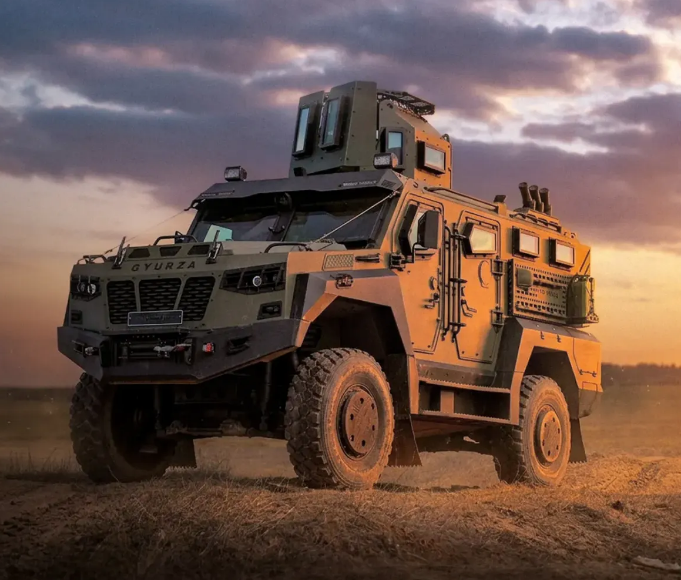
Ukraine's Gyurza-2 armored vehicle. Source: The Ukrainian Defense Ministry

Robots will not replace armored vehicles on the battlefield, says a company that builds both. Ground robots are a new tool that lets Ukraine distribute risk more smartly, but they cannot do everything a crewed armored vehicle can, above all pulling wounded soldiers out under fire, says Ukr Armo Tech's chief executive Hennadii Khirhii, in an interview with RBC-Ukraine.

Ukraine has a serious shortage of armored vehicles, from evacuation carriers to tracked fighting vehicles, with the focus shifting to hulls that offer heavy mine protection and built-in electronic warfare. For medical-evacuation armor alone, Khirhii says, the deficit is often put at 80 percent.

Robots can ease some of that, hauling ammunition and supplies to the front without risking a crew, but they are a complement, not a substitute, a view frontline commanders also confirm.

Robots share the load, not replace it

Where a robot can do the job, Khirhii says, there is no sense sending in heavy armor and the people inside it to face danger. For carrying ammunition or food, unmanned ground vehicles are useful. But evacuating the wounded is different: that usually needs, at least for the second leg, a protected medical vehicle in which care can begin on the move, with room for transfusions and resuscitation that a robot's capsule cannot provide.

"A UGV doesn't cancel the armored vehicle, just as the drone didn't cancel artillery," he says.

The limits show at evacuation

Ukraine has leaned hard into robotic logistics and casualty evacuation, running more than 100,000 such missions this year to keep medics and crews off exposed roads, but the robots themselves now draw Russian drone and artillery fire, and they cannot replace medical personnel.

One commander has called ground robots too slow for evacuation and easy targets, arguing brigades still need staffed evacuation teams and light-armored vehicles.

Commanders want both

The lesson from the front is not robots instead of armor, but robots alongside it. What matters, Khirhii says, is a smart combination of machines for each mission, with people's safety and the task's practicality first. The front today needs both armored vehicles and ground robots, he continues, and it needs a great amount of both.

Ukrainian combat simulator, used to train more than 500,000 troops, can now be ordered from NATO’s supply catalogs by single code

30 septembre 2026 à 15:12

L7 founder Ihor Bielov. Source: L7 Simulators

A Ukrainian combat simulator can now be found and ordered in NATO's supply catalogs by a single code. L7 Simulators, whose trainers have prepared more than 500,000 Ukrainian troops, has had its entire lineup NATO-codified, with each device assigned a 13-digit NATO Stock Number, Defender Media reports.

L7's more than 50 trainers, from the Browning M2 to the Stinger to the NLAW, now carry those codes, and the company can codify new ones itself, opening the door to government procurement in Ukraine and across the alliance. It is another Ukrainian defense maker stepping toward NATO's standards and supply chain.

Every trainer gets a NATO number

A NATO Stock Number is a unique 13-digit code, a kind of military barcode for supplies, that lets defense logistics systems across the alliance identify, catalog, and purchase equipment. Every simulator in L7's catalog now has one, and the firm has also won the status to assign numbers to its future products directly, rather than starting the process over for each one.

The code identifies, not certifies

The company is careful about what the step does and does not mean. Codification is not a certification that the product meets NATO's technical standards, L7 stresses, but rather a mechanism for unambiguously identifying an item within the shared defense-logistics system.

The firm entered that system in December 2024, when its UNITS training platform, already cleared for use by Ukraine's Defense Ministry, received the first number.

Half a million have trained on them

L7's range runs to more than 50 types of trainers, tied together in a single ecosystem the company calls UNITS: fire-training systems, anti-tank and air-defense simulators, and trainers for unmanned aircraft, with models for the Stinger, NLAW, Carl Gustaf, RPG-7, and SPG-9 among them.

The simulators are used by the armed forces, the National Guard, and other security agencies, and more than 500,000 service members have trained on them, with over 70,000 of them free of charge at the company's own training center.

  • ✇Euromaidan Press
  • Most drone interceptors ram or explode. This Ukrainian one just throws a net—six shots to a module
    A Ukrainian defense company has shown a new way to knock FPV drones out of the sky, unveiling a net-firing interceptor at the IT Arena tech conference in Lviv, dev.ua reported. The system, called Mangal and developed by Phantom Defense, is still a prototype—the company says the first production units could reach the market in a few months. Ukraine's counter-drone work has turned into a crowded contest, with firms racing to field jammers, interceptor drones, and net-throwers that can blu
     

Most drone interceptors ram or explode. This Ukrainian one just throws a net—six shots to a module

30 septembre 2026 à 06:31

Modular FPV drone interceptor “Mangal” by Phantom Defence. September 2026.

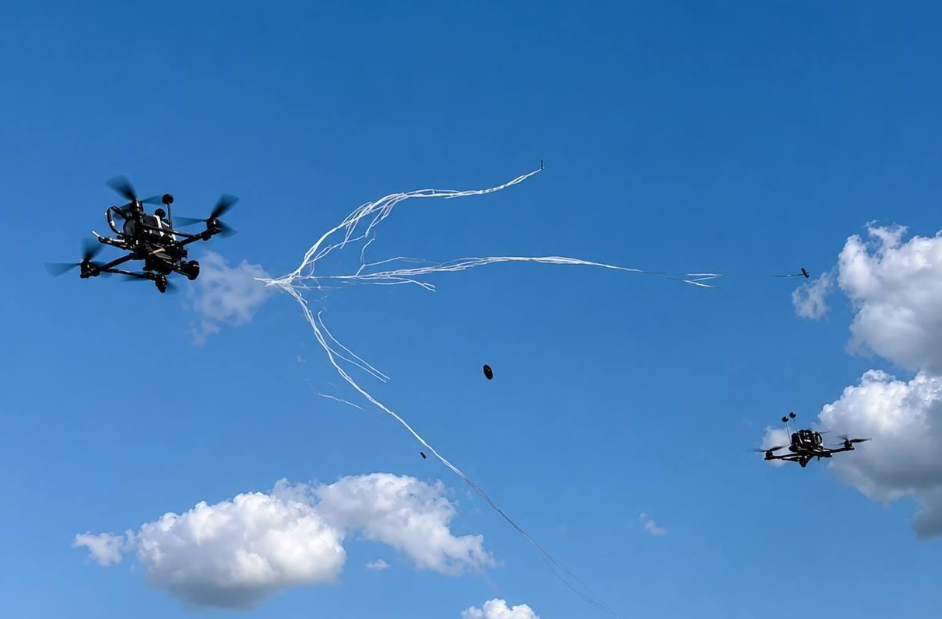
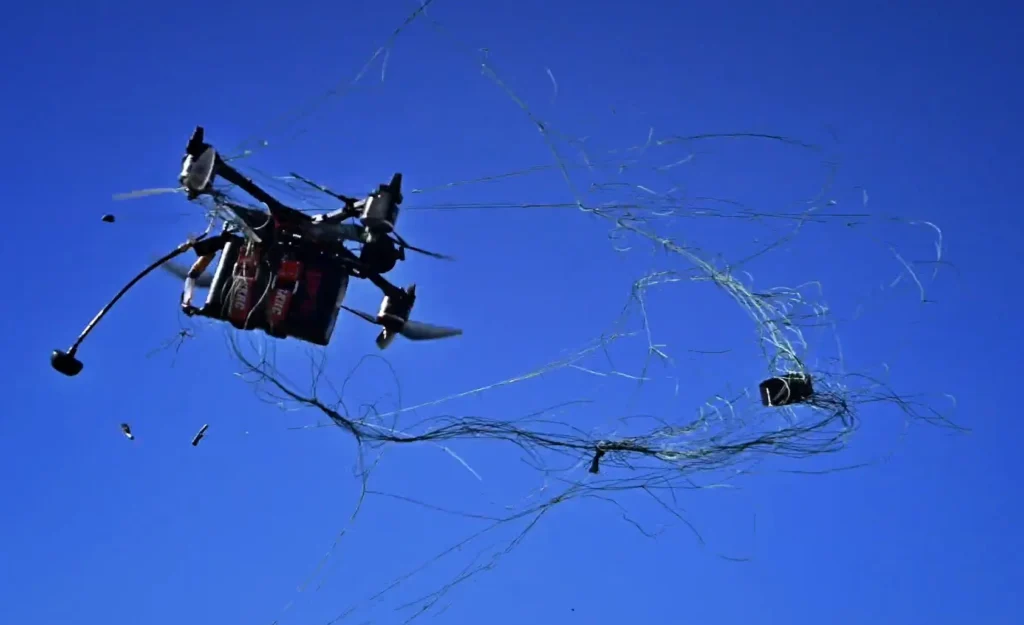
A Ukrainian defense company has shown a new way to knock FPV drones out of the sky, unveiling a net-firing interceptor at the IT Arena tech conference in Lviv, dev.ua reported. The system, called Mangal and developed by Phantom Defense, is still a prototype—the company says the first production units could reach the market in a few months.

Ukraine's counter-drone work has turned into a crowded contest, with firms racing to field jammers, interceptor drones, and net-throwers that can blunt Russia's growing use of cheap FPVs.

What Mangal does

Phantom Defense designed the modular launcher to defend positions, vehicles, and other targets against enemy drones. It fires a special net weighted with sinkers. The net opens the moment it fires, tangling the drone and dragging it down. One module holds six charges. Two cameras give the crew a clearer view, and the system can detect targets on its own, which speeds up how fast an operator spots a threat. Crews can fix Mangal in place to guard checkpoints, trenches, or infrastructure, or bolt it onto a vehicle.

Why a net

FPV drones—aircraft a pilot flies straight into a target—have become a routine danger along the front. A small, fast drone is hard to hit with a single round. A net spreads as it travels, so it is more forgiving to aim. Neither Phantom Defense nor the outlets covering the launch have said how far Mangal's net can reach.

he Ukrainian company WINFLY unveiled the WINFLY Spider, an interceptor equipped with a net-launcher. Source: Militarnyi
Explore further

Ukraine’s newest interceptor doesn’t ram its target. It nets it for $27, then flies home to catch another

Other net-based counters

Other developers are turning to nets too. The WINFLY Spider is an interceptor drone that snares a target in a net and returns to its launch point intact, at about $27 a shot. That lets one aircraft make repeated intercepts instead of being spent on a single kill. Scan Horizon comes from Postup Solutions, a firm registered in Wrocław, Poland, and pairs a net launcher from Ukrainian company Ptashka Drones. Its net reaches about 30 meters. Contra Drone, meanwhile, has shown interceptor missiles that can reportedly carry net warheads alongside other options.

  • ✇Euromaidan Press
  • Russia ordered arson attack on Estonian military robot-maker supplying Ukraine, Estonia confirms
    Estonia says Russia ordered the August arson attack on Milrem Robotics’ Tallinn premises, an Estonian defense company supplying Ukraine with military ground robots. Russian sabotage operations have been expanding across Europe in recent months, targeting companies, infrastructure and supply chains connected to Ukraine’s defense effort. European authorities have linked or investigated suspected Russian involvement in arson and other sabotage attempts in several countries, as Moscow seeks
     

Russia ordered arson attack on Estonian military robot-maker supplying Ukraine, Estonia confirms

29 septembre 2026 à 14:04

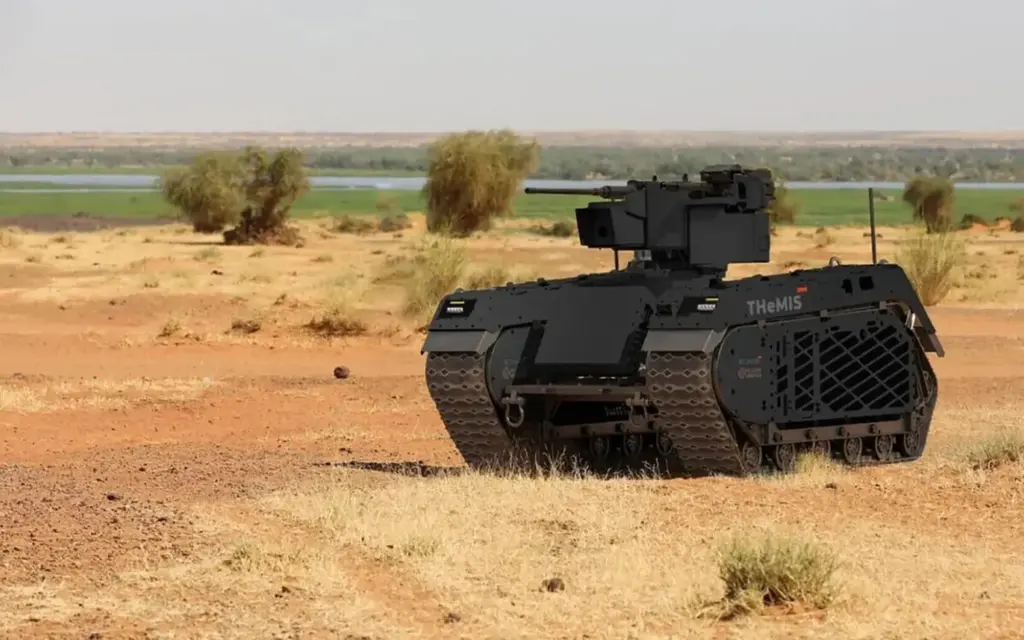
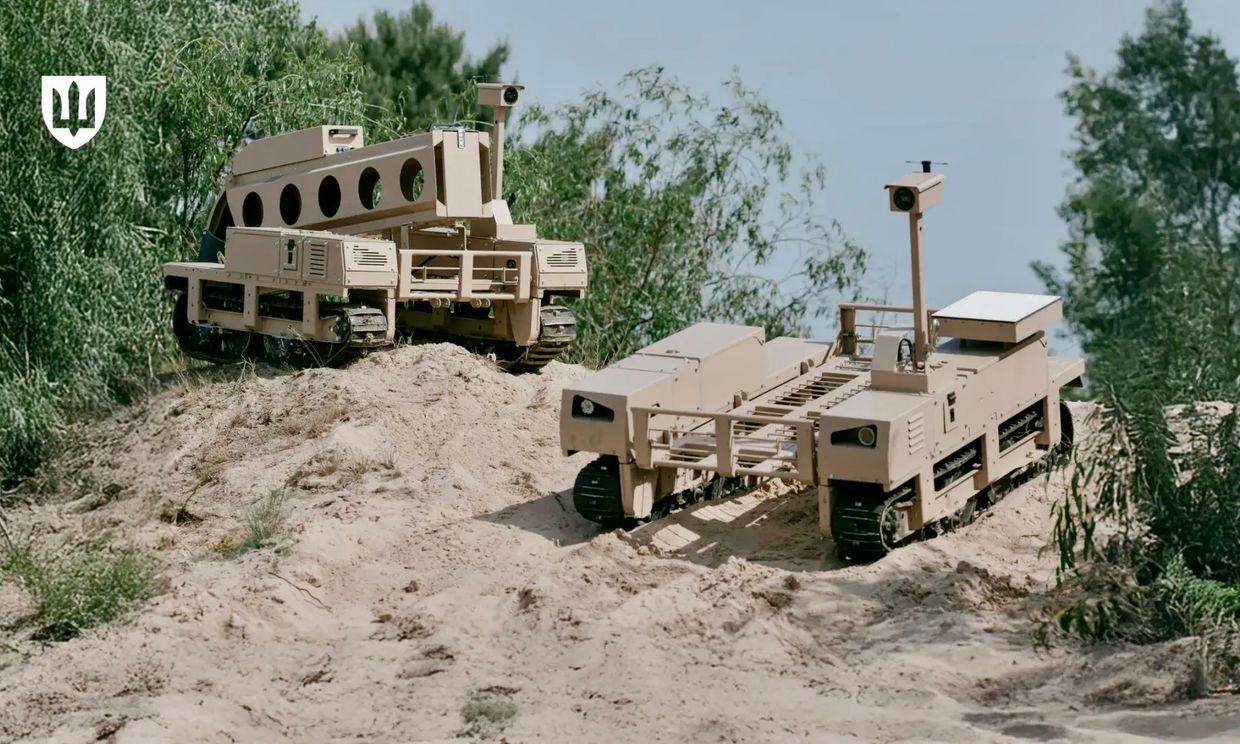
TheMIS on a dry plain

Estonia says Russia ordered the August arson attack on Milrem Robotics’ Tallinn premises, an Estonian defense company supplying Ukraine with military ground robots.

Russian sabotage operations have been expanding across Europe in recent months, targeting companies, infrastructure and supply chains connected to Ukraine’s defense effort. European authorities have linked or investigated suspected Russian involvement in arson and other sabotage attempts in several countries, as Moscow seeks to disrupt support for Ukraine and intimidate its European backers.

Foreign Minister Margus Tsahkna said on 29 September that information gathered by Estonia’s Internal Security Service showed the fire at Milrem’s Tallinn premises on the night of 14–15 August was a Russian intelligence-directed sabotage operation. Estonia summoned Russia’s chargé d’affaires over the attack.

Three suspects detained

Estonian authorities had already detained three suspects in connection with the arson, with the suspects apprehended in Latvia. Tsahkna said the perpetrators had been taken into custody and no longer posed a threat to Estonia.

Russia’s attempts to divide, intimidate and sow confusion will fail.

Every act of sabotage only strengthens Allied resolve, increases pressure on Russia and reinforces support for Ukraine.

We will continue to expose, deter and respond. No stone will be left unturned. https://t.co/JfdSbAUGi1

— Margus Tsahkna (@Tsahkna) September 29, 2026

When the investigation was first announced in August, Estonian authorities had not publicly established a Russian connection or disclosed evidence linking Moscow to the fire.

Milrem supplies robots to Ukraine
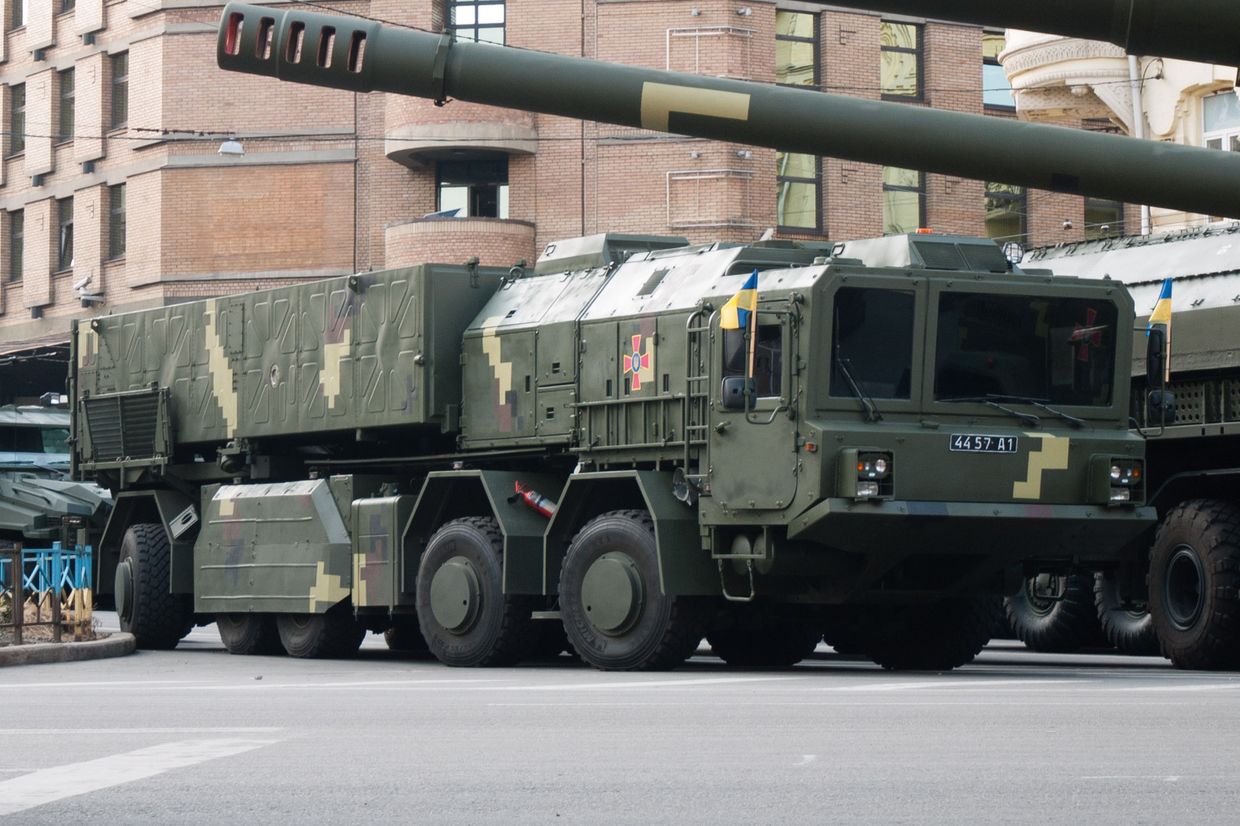
Milrem Robotics makes THeMIS unmanned ground vehicles, which have been used by Ukrainian forces since 2022 for tasks including transporting ammunition, food and other supplies, evacuating wounded troops, and mine clearance.

The company said in August that the fire had not disrupted its production or deliveries to Ukraine. More than 200 of its robotic systems are expected to be operating in Ukraine by the end of 2026, including more than 150 vehicles funded by the Netherlands.

The attack is part of a growing series of suspected sabotage operations targeting companies and facilities connected to Ukraine’s defense effort. In August, Slovak authorities foiled an attempted arson attack on a Ukrainian drone factory, while European investigations have also examined suspected Russian involvement in attacks on defense-related facilities in Czechia, Lithuania and Bulgaria.

Estonia says sabotage will not weaken Ukraine support

Tsahkna said Russia’s campaign is intended to intimidate European countries, divide allies and weaken their support for Ukraine.

“Russia’s sabotage campaign will not achieve its objectives,” the Estonian Foreign Ministry said, adding that Estonia and its allies would continue increasing pressure on Russia and supporting Ukraine.

Tsahkna said Estonia would respond to the attack by increasing both its support for Ukraine and pressure on Russia.

  • ✇Euromaidan Press
  • A Ukrainian firm now rents out drone jammers by the day—but the deposit is the device’s full price
    Ukrainian defense-tech firm BlueBird Tech has begun renting out its Hrets electronic-warfare jammers by the day, in what it calls Ukraine's first such service, the company said on 29 September 2026. Electronic-warfare gear—the devices that scramble the radio links attack drones rely on—is normally bought outright, renting lets a user take a system for a single mission or test it before committing. The pull is a war where cheap first-person-view (FPV) drones have made portable jamming a
     

A Ukrainian firm now rents out drone jammers by the day—but the deposit is the device’s full price

29 septembre 2026 à 13:50

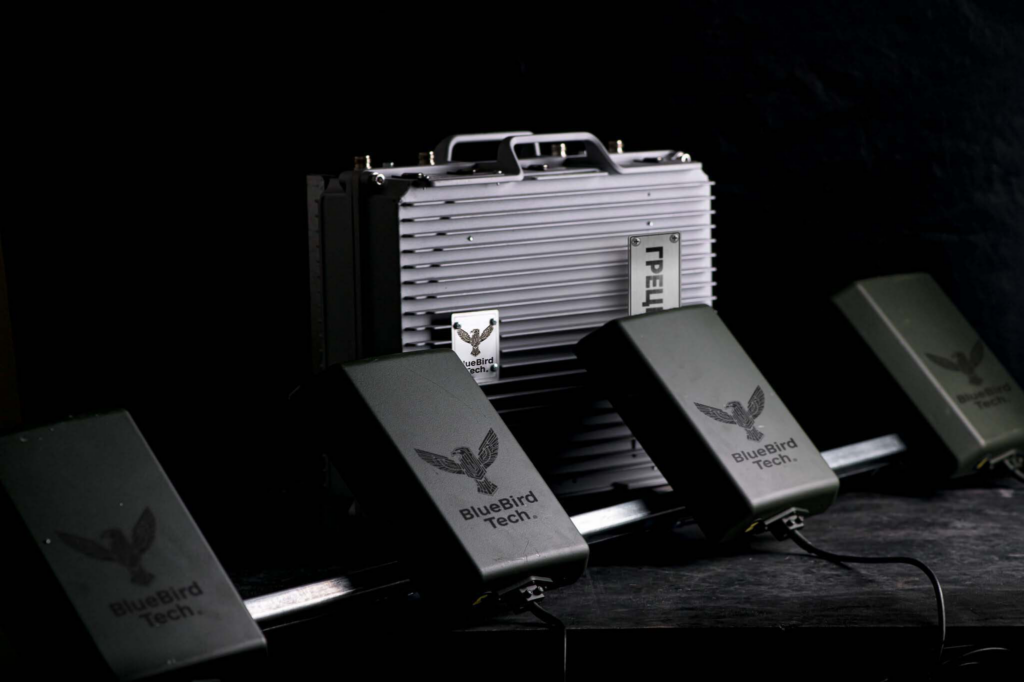
Hrets electronic-warfare jammers.

Ukrainian defense-tech firm BlueBird Tech has begun renting out its Hrets electronic-warfare jammers by the day, in what it calls Ukraine's first such service, the company said on 29 September 2026. Electronic-warfare gear—the devices that scramble the radio links attack drones rely on—is normally bought outright, renting lets a user take a system for a single mission or test it before committing.

The pull is a war where cheap first-person-view (FPV) drones have made portable jamming a routine need, one many users face only for a stint.

How renting works

After paperwork and a deposit equal to the device's full price, the system is handed over, and that handover counts as day one. Each day's rent is then drawn from the deposit, return the system working and undamaged and the renter gets back what is left. Keep it long enough that the fees add up to the full price, and the jammer passes to the renter automatically. Renting is open to individuals, companies, charities, and volunteer groups.

Three models, and what each one jams

The Hrets XL is a modular FPV jammer built from two to 10 working modules, priced case by case. The vehicle-mounted Hrets 4MC is an anti-drop system that jams DJI Mavic-type quadcopters—the drones Russian forces use to drop munitions—for about $56 a day. The lightweight Hrets 4M jams FPV drones at a stated 70 to 400 meters for about $67 a day. One Ukrainian firm has even packed detection, decoding, and jamming of an FPV signal into a single device.

Seventeen makers head to Michigan to test bomber drones for the Pentagon, and Ukrainian firms are back in field, some under US partners

25 septembre 2026 à 13:58

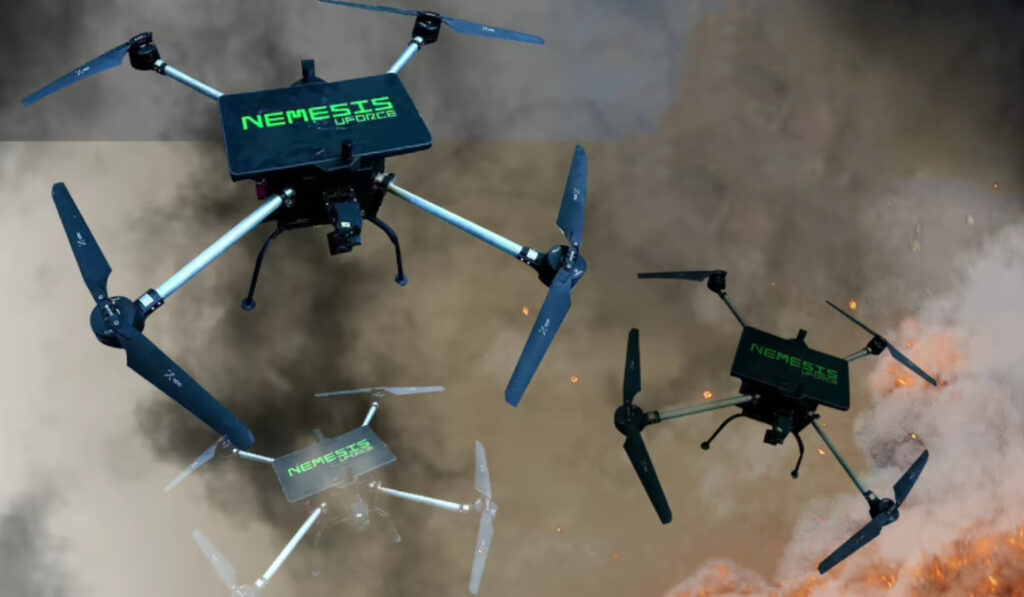
Ukrainian Nemesis heavy drone. Source: Militarnyi

Ukrainian drone makers are getting another shot at a Pentagon contract, this time for bomber drones. Seventeen companies, including Ukrainian firms and Western partners fielding Ukrainian designs, will test bomber drones at Camp Grayling in Michigan in October, the next stage of the Pentagon's Drone Dominance program, Defender Media reported.

The Phase 2.5 Bomber Qualifier is the latest round of the Pentagon's drive to buy combat-tested drones at scale, and Ukrainian makers are again in the field, some through US-registered partners, because Pentagon rules bar direct sales from foreign firms.

This time, the target is bombers, the drones that drop munitions on what is below them.

Seventeen makers head to Michigan

The contest runs at Camp Grayling, a Michigan training range, and organizers call it the hardest and fastest-paced stage of the program yet. Each company must bring at least six fully built systems.

The testing splits into two parts: a Bomber Qualifier, which the makers conduct themselves, and a Bomber Gauntlet run by US soldiers. Organizers have not published details of a third mission. Winners of the wider program earn Pentagon supply contracts.

Ukrainian bombers make the list

The invited firms include UFORCE USA Services, Grim Tech, Gurzuf Defence, UA Defense Tech, Skycutter, and UDD Tech Corp. Which models they will bring is not yet clear.

UFORCE is known for its Nemesis bombers. Grim Tech showed a light bomber, the Grim-18, at the MSPO defense expo in Poland this month, and Gurzuf builds heavy bombers, including the Ayudag-6, which recently set a Ukrainian payload record for multirotor drones at 130 kilograms.

A second try after a US sweep

In the program's last phase, the Pentagon picked five winners in each of two categories, and all were American, though a Ukrainian firm had reached the second round and, by industry accounts, Ukrainian designs were incorporated into some Western entries. For Ukraine's makers, the bomber round is another chance to turn battlefield-proven hardware into a US contract.

Zelenskyy asks Japan for air-defense technology and offers Ukraine’s drones in return, while courting Chile to expand Ukraine’s reach in Latin America

24 septembre 2026 à 06:43

Volodymyr Zelenskyy and Sanae Takaichi at a meeting in New York.

Ukrainian President Volodymyr Zelenskyy has used the UN General Assembly in New York to court partners outside Ukraine's NATO core, pitching air-defense cooperation with Japan and drone cooperation with Chile, Ukrainska Pravda reported. In a single day of bilateral talks, he met Japan's Prime Minister Sanae Takaichi, Chile's President José Antonio Kast, and UK Prime Minister Andy Burnham.

The meetings turned on shielding civilian infrastructure before winter and trading Ukraine's battlefield-tested technology for capabilities it still needs. More than four years into Russia's war, a nation that entered the war reliant on donated arms now iterates drones faster than many of its Western backers, and that expertise has become leverage in its own diplomacy.

Zelenskyy pitches Ukraine's know-how for Japan's air-defense tech

In their first summit meeting, Zelenskyy cast the relationship as a two-way exchange.

"Ukraine is ready to share its experience and technologies on a mutually beneficial basis," he said.

While Japan has advanced technologies for protecting lives, particularly in air defense, that could carry Ukraine through the winter if Russia again rejects talks, the President's Office reported.

Ukraine walks into winter with two air-defense problems. It is still testing home-built interceptors to catch Russia's jet-powered drones. And it does not have enough Patriot interceptors to stop ballistic missiles over its cities. Japan holds the key to the second one.

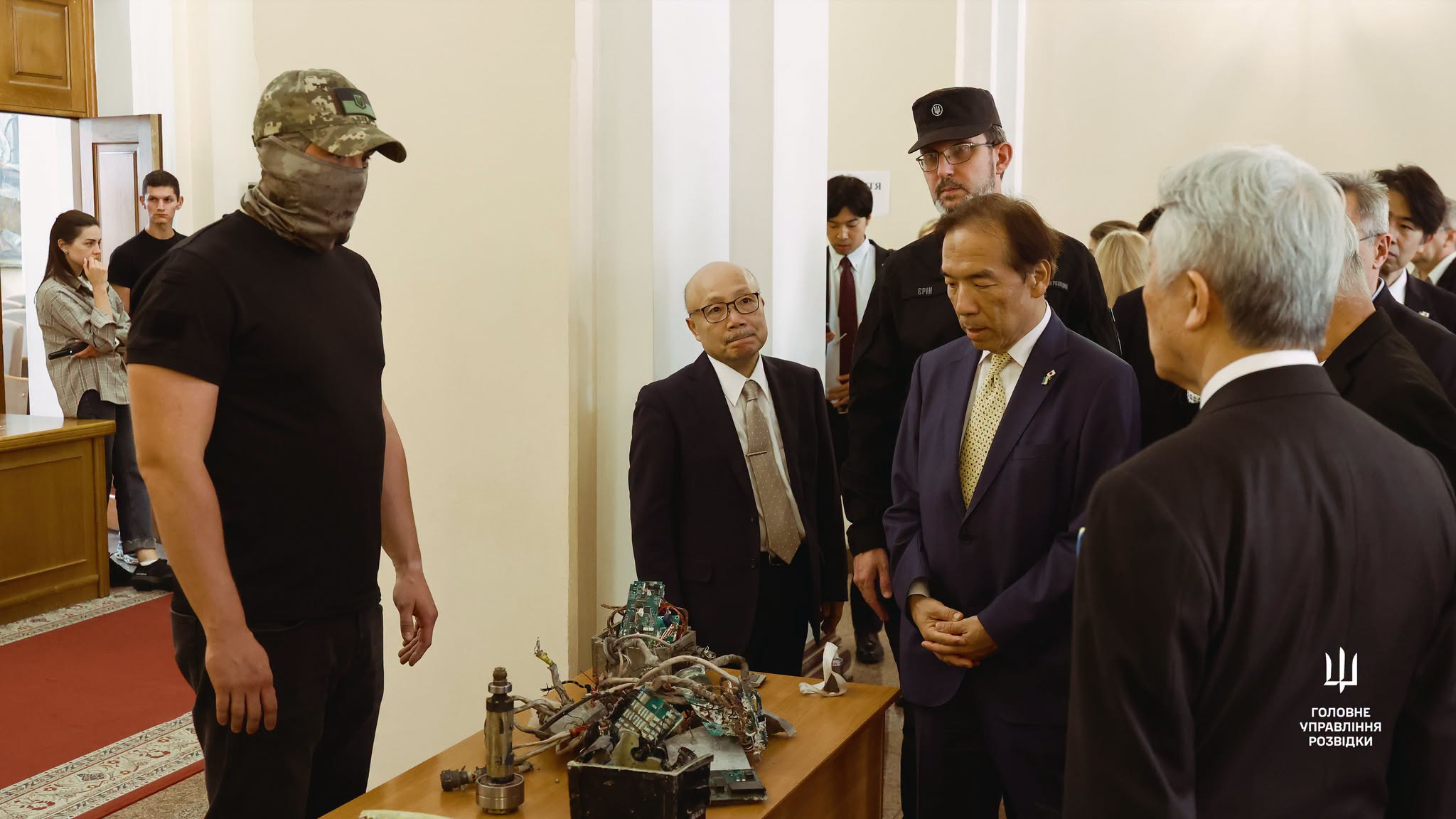
Ukraine's Defense Intelligence has given Eisuke Mori, speaker of Japan's House of Representatives, a close look at a North Korean weapon: the components of a ballistic missile Russia fired at Ukraine. Source: Ukraine's Defense Intelligence
Explore further

North Korea has fired around 150 ballistic missiles at Ukraine, learning from each one. Same missiles threaten Japan, and Kyiv just shows its speaker what is inside them

Mitsubishi Heavy Industries runs the only plant outside the US licensed to assemble the PAC-3, the advanced Patriot interceptor. Japan is also the sole maker of the guidance gyroscopes inside older PAC-2 missiles. It has already shipped Japanese-made PAC-3s to the US to refill stocks drained by transfers to Ukraine, and Zelenskyy has floated Mitsubishi as the model for Ukraine's own Patriot line.

The exchange runs both ways. Russia keeps pressing Japan over the Kuril Islands the Soviet Union seized in 1945. Against that backdrop, Ukraine's combat-tested drones could appeal to Tokyo. Kyiv offers the drone know-how it now leads in, and asks for the air-defense edge Japan already has.

Zelenskyy also thanked Tokyo for its sanctions on Russia, energy packages, and humanitarian projects, and Takaichi assured him of continued support. Zelenskyy invited her to Ukraine, including the Kyiv-Pechersk Lavra, which Japan helped restore after a Russian drone strike in June.

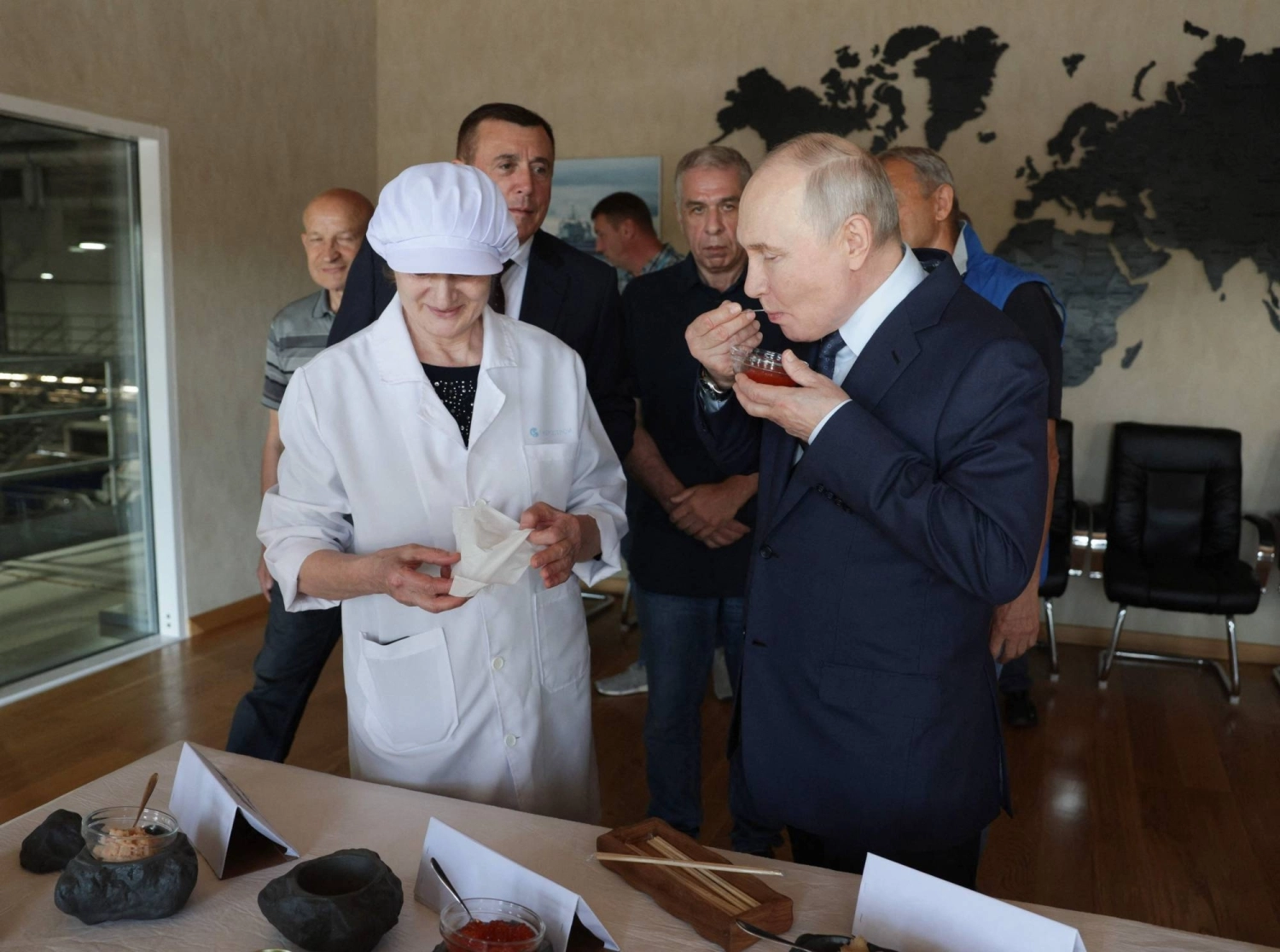
Vladimir Putin visits Etorofu island,
Explore further

Japan weighs sanctions after Putin’s first visit to disputed Kuril Islands

Chile opens a door to Latin America

With Kast, Zelenskyy discussed deepening security and drone-technology ties and thanked Chile for backing Ukraine at international forums and for helping return Ukrainian children abducted by Russia. He welcomed Santiago's willingness to help expand Ukraine's presence across Latin America, calling it an opening for "even more promising opportunities," and invited Kast to visit.

Building on ties already in place

Both partnerships rest on existing ground. Japan, barred by its own laws from sending lethal weapons, has delivered generators, transformers, and non-lethal gear, pledged a $6 billion package for 2026, and agreed to help rebuild the Lavra through UNESCO. Talks in Tokyo in July recast Ukraine as a security partner rather than an aid recipient.

Chile joined the coalition to bring abducted Ukrainian children home and, in an April call, heard Zelenskyy float a security arrangement modeled on Ukraine's Gulf-state pacts. The outreach tracks Kyiv's drive to turn its wartime industry into an export business under its "Drone Deals" framework.

Ukraine’s new drone ferries FPV drones deep behind Russian lines and releases them there. It costs about $9,900 and does three other jobs too

23 septembre 2026 à 10:38

Kara, Ukraine's new drone ferries FPV drones deep behind Russian lines. Source: Defender Media

A Ukrainian company has disclosed a small aircraft that can bomb a target, relay radio signals, carry FPV drones behind enemy lines, or strike on its own. The KARA, a fixed-wing drone made by Ukrskytechnology, is listed on Ukraine's state Brave1 Market in three tiers, from a bare airframe to a ready-to-fly aircraft, Defender Media reported.

One airframe does the work of several, and it goes for some $9,900. The marketplace it sits on, Brave1 Market, has processed more than $235 million in orders, lists over a thousand products, and lets frontline units buy gear even before a weapon clears formal codification.

One airframe does four jobs

What the KARA does depends on how it is kitted out. Fitted one way, it drops cargo; another, it works as a signal repeater to extend a unit's radio reach; another, it ferries FPV drones deep into the enemy rear to be released; and another, it carries out strikes itself. Buyers choose among an empty glider they equip themselves, a Plug-N-Play version with basic electronics installed, and a Ready-To-Fly model.

The drone flies light and far

The specifications are modest but flexible, according to Ukrskytechnology. The KARA has a tactical radius of 70 kilometers, and a stated endurance of 2.5 hours, cruises at 90 kilometers per hour and tops out at 120, and works at 200 meters but can climb to 3,000.

It runs on either an electric motor or a combustion engine, and carries two payload blocks of up to three kilograms each under the wing. Launched by catapult and landing like a plane, it takes 10 minutes to set up.

The marketplace lists it now

The KARA is being prepared for codification, the formal approval that clears a weapon for standard state procurement, but it does not have to wait for that to reach the front. Brave1 Market was built precisely so that units can buy proven kit fast, without waiting on the slow pipelines of the past, and the KARA is already there for the price of a used car.

  • ✇Euromaidan Press
  • A former US nuclear-sub commander, a Ukrainian fund, and a plan to shield Odesa with drone swarms
    TAF Industries signed a joint-venture memorandum with Danish firm Upteko for production but says bureaucracy is slowing the process. Meanwhile, Resist.UA agreed to invest in BlueShadow, a Danish maritime-defense startup whose founder commanded a US nuclear submarine and whose engineering team works largely in Ukraine, Defender Media reported. Ukraine's defense industry has outgrown much of its own 2022-era hardware in two years of rapid wartime iteration, but a government fee of 20-30%
     

A former US nuclear-sub commander, a Ukrainian fund, and a plan to shield Odesa with drone swarms

23 septembre 2026 à 10:05

CEO of BlueShadow Charlie Maher with Resist.UA founder Roman Sulzhyk.

TAF Industries signed a joint-venture memorandum with Danish firm Upteko for production but says bureaucracy is slowing the process. Meanwhile, Resist.UA agreed to invest in BlueShadow, a Danish maritime-defense startup whose founder commanded a US nuclear submarine and whose engineering team works largely in Ukraine, Defender Media reported.

Ukraine's defense industry has outgrown much of its own 2022-era hardware in two years of rapid wartime iteration, but a government fee of 20-30% on export permits and over 200 stalled co-production bids have left the country's foreign arms sales far behind battlefield demand. Deals like the two in Denmark route Ukrainian technology into allied markets without waiting for Kyiv's export apparatus to catch up.

Ukrainian first-person-view drones, made on Danish soil

Drone maker TAF Industries plans to produce its first batch in Denmark by the end of 2026, through a joint venture with local firm Upteko. The two signed a memorandum in August 2026, but paperwork on both sides has slowed things down.

"We need to pass a fairly large number of bureaucratic procedures to make it possible," chief business development officer Mykhailo Diachenko told NordicDefenceWatch.

He called the year-end target reachable, "though maybe it will look more like a miracle."

TAF wants footholds in other countries that support Ukraine. It has started the process in Norway and is negotiating with Sweden's Recas. Diachenko said the goal is local production plus sharing Ukrainian combat experience and technology with European partners. TAF builds FPV drones, with capacity near 1 million units a year.

A Ukrainian fund bets on Odesa's sea defense

Ukrainian fund Resist.UA signed a letter of intent to invest an undisclosed sum in Danish maritime-defense startup BlueShadow's €2 million ($2.29 million) pre-seed round, the company announced. BlueShadow's software collects data from maritime sensors, commercial feeds, and open sources, merges them into a single operational picture, and uses AI to detect threats, Defender Media reported.

The company has also built an open software platform it says can help intercept Shahed-type drones. BlueSentry, designed to protect ports, offshore wind farms, undersea cables, and maritime borders from hybrid attack, is one product that the company plans to launch in the Baltic and North seas in October. BlueDragon, now in prototype testing with Defense Ministry certification targeted for late 2026 and deployment planned for spring 2027, is designed to defend Odesa with autonomous swarms of armed sea drones meant to shoot down Russian attack drones.

Founder Charles Maher is a former US Navy submarine commander who ran a nuclear-powered boat, Defender Media reported. Almost his entire engineering team works in Ukraine, drawing on more than 15 Ukrainian suppliers. Resist.UA this summer launched Resist 2.0, an Estonia-based fund aiming to raise €50 million for Ukrainian defense-tech companies.

Arms makers in Ukraine sign first 26 deals in program that lets them lease equipment for 5% of cost, with state paying other 95%

22 septembre 2026 à 16:11

An FPV drone snared by a net fired from a Chipa net gun, developed by BlueBird Tech. Photo: BlueBird Tech via Defense Blog

Ukraine's defense makers have signed the first 26 deals under a program that lets them lease or rent new equipment, with the right to subsequently purchase it into ownership, while the state covers most of the bill. The preferential-leasing scheme has channeled about $2 million so far, with producers paying just 5% of the leasing fee and the state covering the rest, the Defense Ministry said.

For many Ukrainian arms makers, the bottleneck is not orders but the cash to expand fast enough to fill them, Deputy Defense Minister Hanna Hvozdiar says, and the program is the state's answer.

Producers can lease equipment, machinery, automation equipment, transportation, and even factory space, paying 5 percent per year while the state subsidizes the rest, up to about $11 million per contract over five years.

The state covers most of the cost

Beyond capping the borrower's rate at 5 percent, the contracts can defer lease payments for up to a year, easing the squeeze while new equipment is bought and installed.

Only companies that hold "critically important" status in the defense sector, a label the state gives firms it deems essential to the war effort, can take part. The 26 deals are only the first, the ministry said, with the program still open to new applicants.

Three banks run the leasing

The Defense Ministry launched the program in April and named Ukreximbank, PUMB, and MTB Bank as the first authorized lessors, it said. In August, it spelled out what producers can lease, from machines, mobile production platforms, and technological gear to the non-residential real estate a plant needs to run.

Ukraine races to scale production

The leasing program is one piece of a broader drive to get money flowing to Ukraine's defense industry so it can produce more, faster. The government has been building financing tools around the sector, including a push by former Defense Minister Mykhailo Fedorov to raise the country's largest defense-tech venture fund.

Defender Media: Ukraine’s battle-tested drone makers reach no top slot in Pentagon’s $1.1 billion Drone Dominance program, but some Ukrainian technology wins anyway

19 septembre 2026 à 11:46

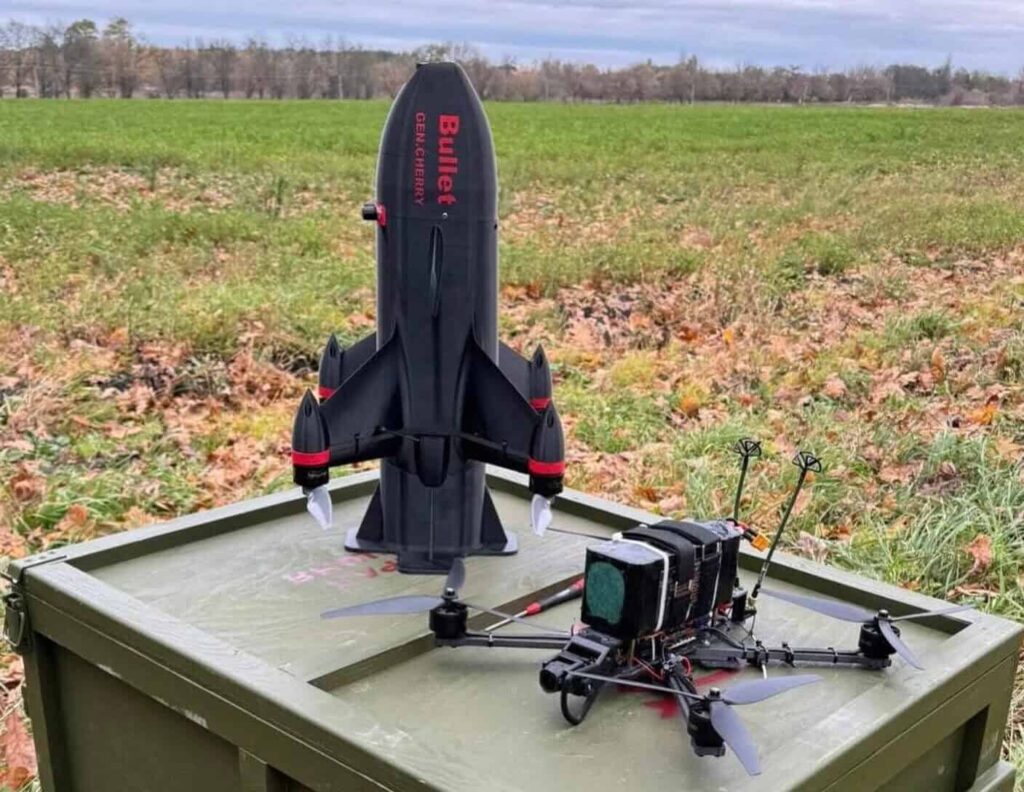
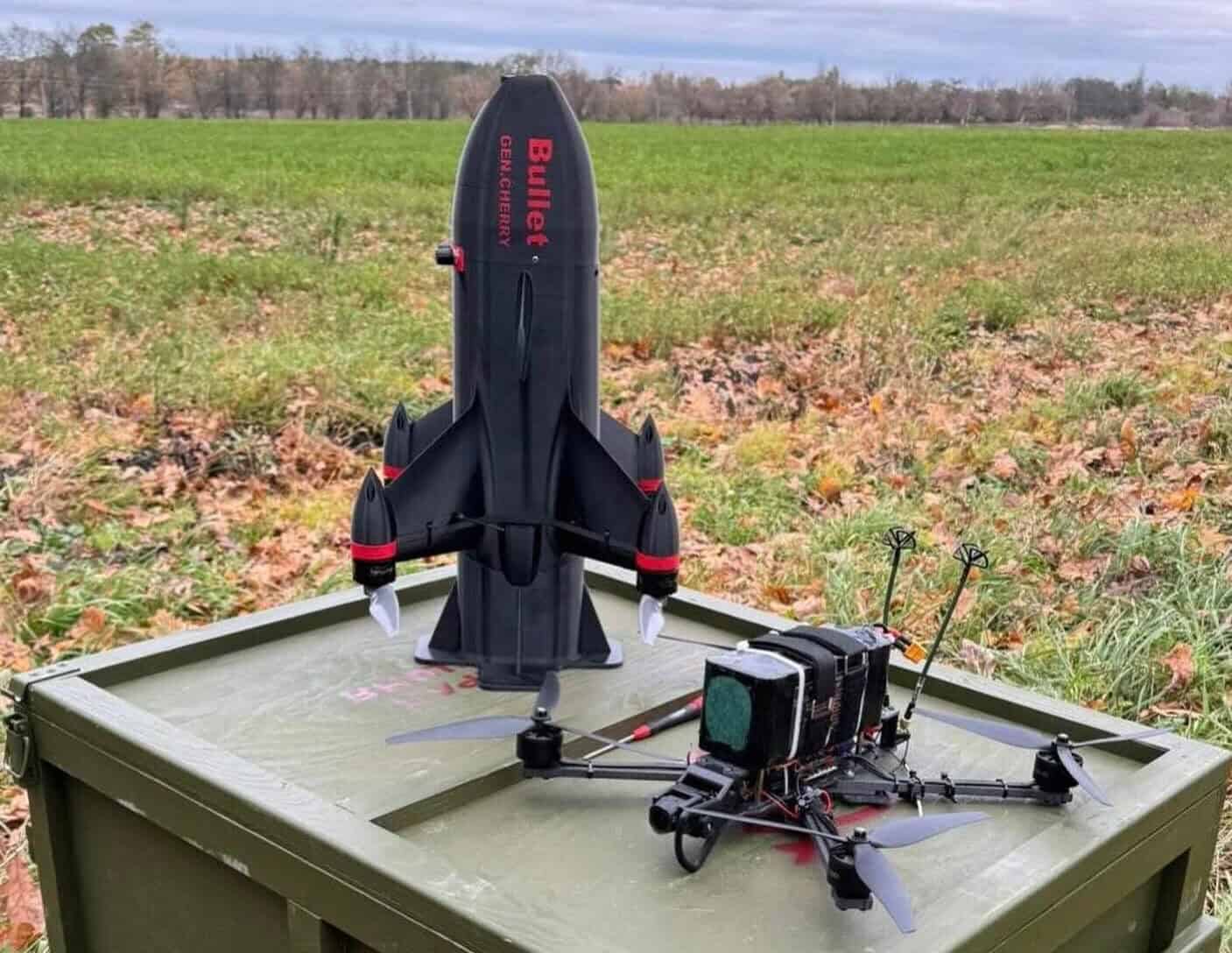
interceptor drones General Cherry (Chereshnia)

Ukraine's battle-tested drone makers did not win a single top slot in the Pentagon's latest drone contest. But some Ukrainian technology won anyway, competing quietly under the names of Western partners, The Defender Media reports.

The Pentagon's $1.1 billion Drone Dominance program does not allow direct purchases from Ukrainian firms, which must set up a US legal entity to bid.

The Ukrainians who competed under their own names were hampered by export licenses, the hunt for non-Chinese components, and visa issues, and none of the four cracked the top five in either category.

American firms sweep the top slots

The Pentagon picked five winners each in two categories, long-range strikes out to 15 kilometers and close-in assault. Eric Schmidt's Perennial Autonomy topped the long-range field with its Hornet drone, on 80.1 points, and Neros led the close-in category with 88.1. Neros already supplies Ukraine with 6,000 of its Archer FPV drones.

The rest of the winners, from ORQA's US arm to XTEND and ModalAI, were American as well. All will receive Pentagon supply contracts, with order sizes to be set later.

Ukrainians win under other flags

The Ukrainian firms that announced their entries, F-Drones, General Chereshnya, Grim Tech, and Stellarion, all missed the cut, though General Chereshnya had reached the program's second round earlier in the year.

Bureaucracy tripped the open entrants

Stellarion laid out what went wrong. Getting export permits and moving hardware took so long that integrating American parts, including warheads, and adapting the finished system on schedule became "complicated," its representatives said.

Finding NDAA-compliant, non-Chinese components ate up more time, and visa delays kept its specialists from fixing technical problems on site.

Firms that missed the top five can enter later rounds: a Gauntlet 2.5 contest for bomber drones is set for October, and a third phase begins in February 2027, with missions built to test control of several drones at once.

  • ✇Euromaidan Press
  • Fire temporarily shuts part of Slovak ammunition plant amid plans to triple capacity
    ZVS Holding evacuated its ammunition factory in Snina, a town in eastern Slovakia, on 16 September after a fire broke out on the roof of a production building. Work stopped temporarily in the affected section, but nobody was injured, Militarnyi reported. The Snina plant has an annual capacity of roughly 100,000 shells and plans to triple it, Noviny reported. The blaze briefly disrupted part of a facility under expansion for Europe’s ammunition buildup, although co-owner CSG expects no i
     

Fire temporarily shuts part of Slovak ammunition plant amid plans to triple capacity

17 septembre 2026 à 12:01

Thick black smoke billows from the roof of the ZVS Holding ammunition plant in Snina beside an extended crane.

ZVS Holding evacuated its ammunition factory in Snina, a town in eastern Slovakia, on 16 September after a fire broke out on the roof of a production building. Work stopped temporarily in the affected section, but nobody was injured, Militarnyi reported.

The Snina plant has an annual capacity of roughly 100,000 shells and plans to triple it, Noviny reported. The blaze briefly disrupted part of a facility under expansion for Europe’s ammunition buildup, although co-owner CSG expects no impact on customer deliveries. Authorities across Europe are investigating suspected Russian sabotage against defense companies, but no evidence links the Snina fire to that campaign.

ZVS Holding is owned equally by the Slovak state and the Czech defense conglomerate Czechoslovak Group (CSG). It makes 155 mm artillery shells, 120 mm tank rounds, and 30/35 mm cannon ammunition.

In December 2025, ZVS signed a seven-year framework agreement with Slovakia’s Defense Ministry to supply EU states. Purchases under the agreement may be financed through the bloc’s SAFE defense-loan program. Its Euro 58 billion ceiling represents the maximum possible value of future orders, not guaranteed purchases.

Firefighters brought the blaze under control during the afternoon. As thick black smoke rose over Snina, town officials advised nearby residents to limit time outdoors, close windows and doors, and switch off ventilation systems drawing in outside air.

Slovak Defense Minister Robert Kaliňák said the fire had not reached the plant’s production equipment and that the affected part of the building was not being used for manufacturing at the time. That section makes metal projectiles, he said.

Kaliňák said welding during the renovation may have sparked the fire, but stressed that investigators had not established the cause.

CSG said the fire started during roof repairs conducted by an external contractor. The company said the damage and cause still had to be assessed, but it did not expect the incident to affect customer deliveries, STVR reported.

Why sabotage fears shadow Europe’s arms plants

The Snina blaze was at least the fourth fire or explosion at a European ammunition facility since 10 August, after two fires struck a Bulgarian company and an explosion hit an Italian factory. No common cause has been established.

Preliminary findings pointed away from outside interference in the first Bulgarian fire. No evidence of sabotage, however, was reported after the Italian blast, and only the second Bulgarian fire remains under investigation for possible sabotage.

Czech authorities are examining a possible Russian trail behind an arson attack on a factory making drones and thermal optics for Ukraine.

Estonia has also probed suspected arson at a military-robot maker after courts documented earlier attacks directed by Russian military intelligence.

  • ✇Euromaidan Press
  • Kyiv’s arms industry wants to kill the export fee. Parliament just refused to route that money to the army
    Ukraine's arms industry wants the government to scrap a steep fee on weapons exports, warning it undercuts their prices just as Europe's defense market opens, RBC-Ukraine reported. The same fee has opened a second fight in Kyiv, where parliament this week declined to turn its revenue into money for the army. Russia's war on Ukraine has pushed Europe into rearming, and Ukraine's battle-tested arms makers are among the few that can deliver at scale right now—an opening that domestic red t
     

Kyiv’s arms industry wants to kill the export fee. Parliament just refused to route that money to the army

17 septembre 2026 à 10:09

Novator armored vehicles

Ukraine's arms industry wants the government to scrap a steep fee on weapons exports, warning it undercuts their prices just as Europe's defense market opens, RBC-Ukraine reported. The same fee has opened a second fight in Kyiv, where parliament this week declined to turn its revenue into money for the army.

Russia's war on Ukraine has pushed Europe into rearming, and Ukraine's battle-tested arms makers are among the few that can deliver at scale right now—an opening that domestic red tape could blunt, handing the advantage to competitors just as the market grows.

A €60 billion European window—and a fee in the way

The push comes as Europe opens a major market for Ukrainian weapons. The EU's €90 billion Ukraine Support Loan for 2026-2027 reserves €60 billion for defense purchases, and partners increasingly want weapons built on their own soil. International partners report more than 200 cooperation approaches to Ukrainian firms still without a decision, according to the industry's press release. Producers link the fee fix to Build with Ukraine, a co-production push they consider strategically significant.

interceptor drones General Cherry (Chereshnia)
Explore further

Ukraine’s Build with Ukraine has 200-plus foreign cooperation bids pending decision. Its arms industry, representing 400-plus firms, wants to help fix mechanism

Parliament won't route the money to the army

On 15 September, the Verkhovna Rada—Ukraine's parliament—rejected a bill in first reading that would have sent fee revenue collected from 1 August 2026 into a special budget fund for the Defense Ministry, half for buying, modernizing, and repairing weapons, half for soldiers' pay. The vote left the fee itself untouched, since it rests on the Cabinet resolution, and settled only that its revenue will not be earmarked for the army.

The fee producers want gone

The Ukrainian Council of Arms Manufacturers, joined by other defense and employer groups, prepared proposals to rework the July government resolution, No. 875. They want the fee—20% on finished goods and technologies, 30% on parts—cut to zero, or capped at 5%. Firms must also pay upfront, before any foreign payment lands, with no refund guaranteed if a deal collapses. A UAH 15 million (about $337,000) threshold shuts out the small test shipments new clients often begin with.

Launch of an Aspide 2000 surface-to-air missile from a Spanish Skyguard-Aspide air defense system
Explore further

Ukraine put an Italian-Swiss Skyguard into combat duty. The missile inside is a Cold War design derived from the American Sparrow

The fee has drawn complaints since the resolution took effect in early July. Ihor Fedirko, the council's executive director, earlier said the 30-day review window was welcome but warned it could clog into a bureaucratic queue as staff leave the agencies running it. One of the associations behind the submission calls the 30% rate on parts prohibitive, since Europe is where Ukrainian firms would undercut Chinese suppliers on price.

Ukraine has swung from banning weapons sales abroad to courting foreign buyers, and its defense sector now ranks among the country's fastest-growing industries. Wartime certification to NATO standards is turning that output into something European militaries can actually buy.

Ukraine kept this strike drone secret for two years—its maker says it has destroyed more than 350 Russian systems

17 septembre 2026 à 08:50

RAM-2X strike drone.

A Ukrainian drone maker has revealed it built a strike weapon it kept classified, deputy director Andrii Rymaruk told Radio NV. For two years, Ukrspecsystems, known for manufacturing Ukraine's SHARK reconnaissance drones, hid its connection to the RAM-2X strike drone, even as crews used it to hunt Russia's costly air defenses and missile launchers deep behind the front. By 2025, it had quietly become the Defense Forces' flagship mid-strike drone.

Ukraine's war on Russia's air defenses increasingly runs on drones its own industry builds and fields in secret, revealed only once they have already destroyed the enemy's costliest launchers and radars. Holding one back that long lets its crews rack up strikes before Moscow can study the weapon and build a counter—and this maker went public only once wrecked drones had reached Russian hands.

Why come out now

The RAM-2X first flew in combat in early 2024, but the maker kept its role secret. Rymaruk said the company wanted the drone and its crews to finish the job first—destroy what needed destroying—before talking. Once shot-down units reached the enemy and turned up on social media, silence no longer protected anything. So after two years, Ukrspecsystems unveiled the drone at the MSPO defense expo in Kielce, Poland.

What it kills

This is a mid-strike drone—a loitering munition that flies deep behind the lines, circles, and dives into its target. Its victims include S-400 and S-300 air defenses, the systems Russia uses to shoot down aircraft, and Iskander launchers that fire ballistic missiles at Ukrainian cities.

Rymaruk put the RAM-2X's own tally at more than 350 Russian systems destroyed since 2024, while Defender Media, which interviewed him, reported more than 1,000 targets over two years. Ukrspecsystems credits the wider RAM series, which reaches back to a fixed-wing model supplied from late 2022, with more than 450 target engagements, over 400 of them against air defenses. Today, it destroys 50 to 60 pieces of Russian equipment a month.

How far, how many

The drone has grown fast. It flew 140 km in 2024 and now hits targets up to 180 km, almost 230 km in good conditions, and a crew from the 429th Achilles unmanned-systems brigade set a range record at 215.5 km. It has spread from a few crews to about 100 military units and 250 trained teams, and one operator can fly it from anywhere in Ukraine. It also works in pairs with the SHARK-M reconnaissance drone—one finds the target, the other kills it. In July, Ukrainians crowdfunded 30 of the drones for military intelligence and the security service through Serhii Prytula's foundation.

Ukraine’s Build with Ukraine has 200-plus foreign cooperation bids pending decision. Its arms industry, representing 400-plus firms, wants to help fix mechanism

16 septembre 2026 à 11:40

interceptor drones General Cherry (Chereshnia)

Ukraine's largest arms-industry group says it is backing the country's drive to sell and co-produce weapons abroad, while pressing the government to fix two separate obstacles in its way. The Council of Defense Industry, which represents more than 400 companies, wants a costly new export-permit fee and a stalled joint-production program to be upgraded, it said on Facebook.

The two problems are distinct. Resolution 875, the wartime rules for shipping arms abroad, charges a 20-30 percent fee on export permits, which the industry says prices Ukrainian goods out of the market.

The export fee bites

Resolution 875, adopted in July, was intended to streamline exports, with a 30-day review period and a streamlined path for partner countries. But the fee has choked it: only about 10 small export contracts have been signed since exports began, and not one permit has been issued under the new rules, Militarnyi reports.

"Resolution 875 in its current form contains provisions that could substantially worsen the competitiveness of Ukrainian producers," the group says.

Build with Ukraine is a separate track

The program lets producers export their technology and set up joint production abroad, reaching EU markets, financing, and infrastructure, while partners fund weapons production inside Ukraine.

The program lets producers export their technology and set up joint production abroad, reaching EU markets, financing, and infrastructure, while partners fund weapons production inside Ukraine. Talks are underway with Denmark, Norway, and Germany.

President Zelenskyy has said $43 billion was raised for Ukraine's defense industry in 2025, floated a goal of partner states each spending 0.25 percent of their GDP on it, and stressed that no Ukrainian technology will reach countries tied to Russia.

The Council, whose ecosystem spans more than 360 manufacturers, 28 drone-pilot schools, and 20 defense venture funds, says it is ready to help refine the mechanism.

  • ✇The Kyiv Independent
  • US only has 25% of Patriot missiles needed for war plans, Guardian reports
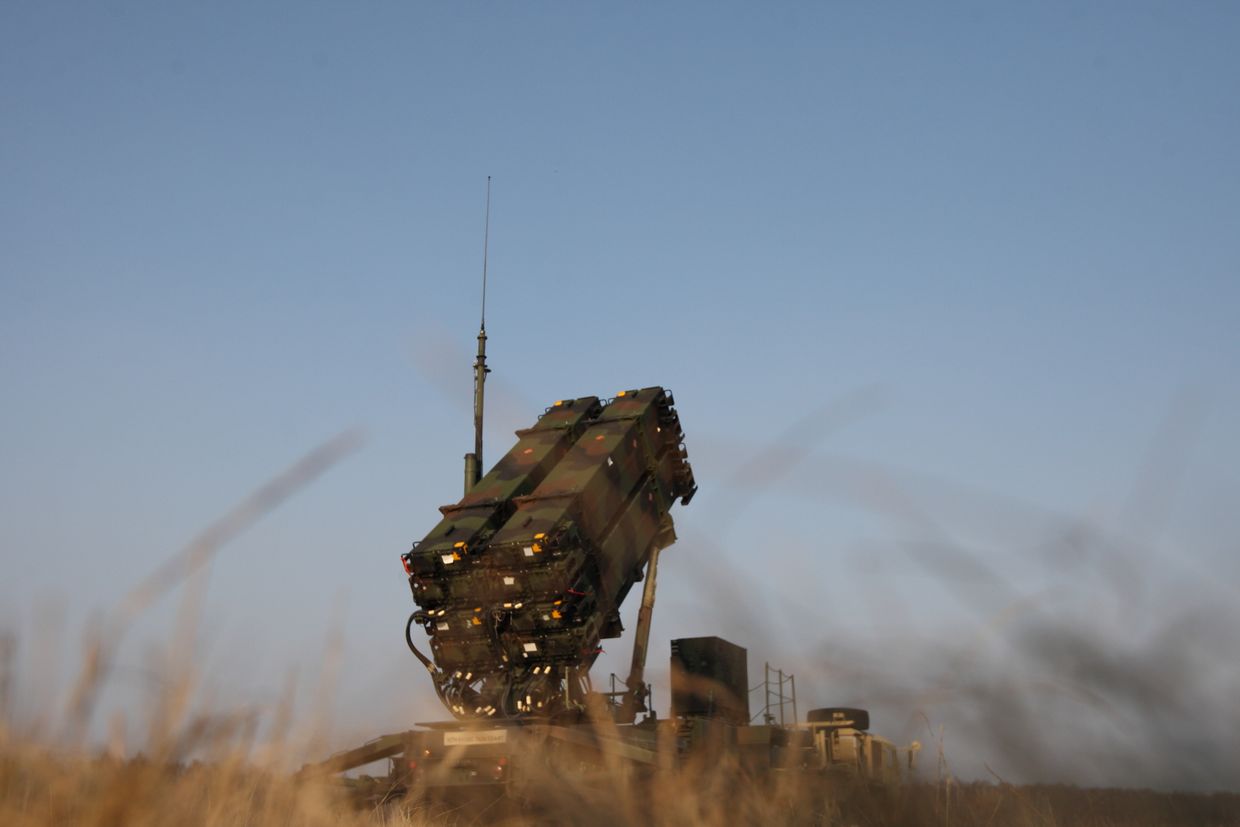
    The United States has only about 25% of the Patriot missile interceptors it needs to meet Pentagon military plans, a shortage that led U.S. President Donald Trump's administration to pause a major transfer of weapons to Ukraine, the Guardian reported on July 8.The decision to halt the delivery, made on July 2, followed an internal review showing low stockpiles of critical air defense systems. The depletion was largely due to recent U.S. operations in the Middle East, including the interception o
     

US only has 25% of Patriot missiles needed for war plans, Guardian reports

8 juillet 2025 à 15:17
US only has 25% of Patriot missiles needed for war plans, Guardian reports

The United States has only about 25% of the Patriot missile interceptors it needs to meet Pentagon military plans, a shortage that led U.S. President Donald Trump's administration to pause a major transfer of weapons to Ukraine, the Guardian reported on July 8.

The decision to halt the delivery, made on July 2, followed an internal review showing low stockpiles of critical air defense systems. The depletion was largely due to recent U.S. operations in the Middle East, including the interception of Iranian missiles after strikes on the American Al Udeid airbase in Qatar, according to the Guardian.

According to officials familiar with the matter, the Pentagon's munitions tracker, used to measure the minimum supplies needed for U.S. war plans, showed Patriot interceptor levels had fallen below acceptable levels. That prompted concerns that sending more to Ukraine could put U.S. defense readiness at risk, the Guardian wrote.
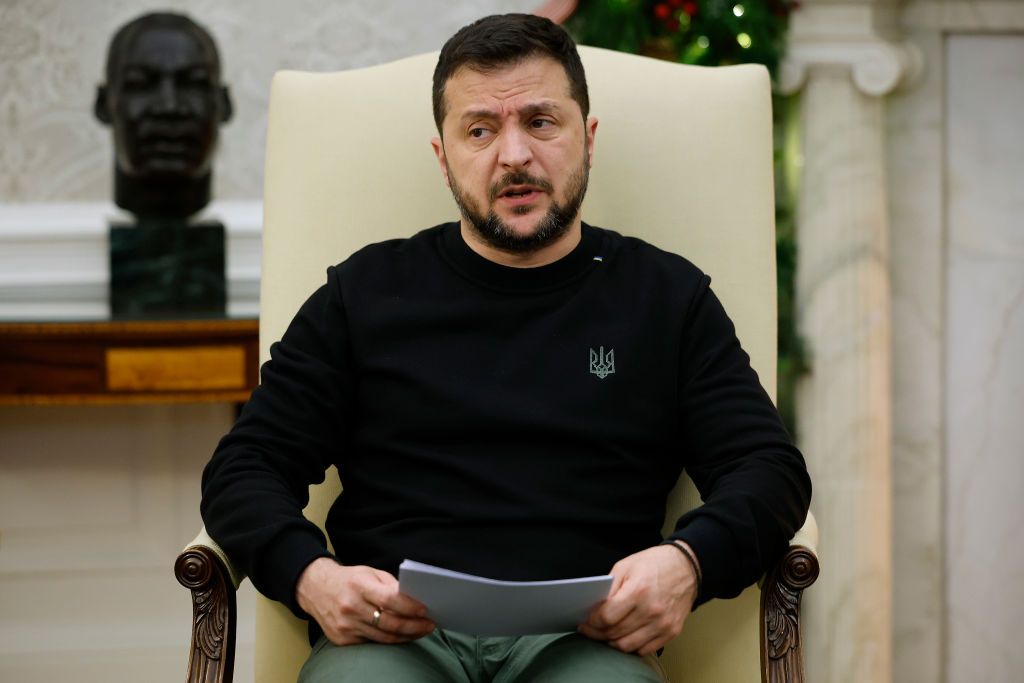
The freeze reportedly affected Ukraine's two key arms transfer methods: drawdowns from Pentagon stockpiles and the Ukraine Security Assistance Initiative (USAI), through which the Defense Department orders new weapons from contractors.

Because U.S. orders take priority, Ukrainian requests for new weapons, including Patriot missiles, face years-long delays.

The pause came at a critical time for Kyiv, as Russia intensifies large-scale aerial attacks on Ukrainian cities. With limited options to acquire precision-guided and other key munitions, Ukrainian forces have increasingly relied on Western-supplied air defenses to counter the growing threat.

For its latest aid package, the U.S. had planned to send dozens of Patriot interceptors, along with Hellfire missiles, air-to-air Sparrows, GMLRS rockets, and anti-tank weapons, according to the Guardian.

NBC News reported on July 4 that U.S. Defense Secretary Pete Hegseth unilaterally halted a weapons shipment to Ukraine despite internal military assessments showing the aid would not compromise American military readiness.
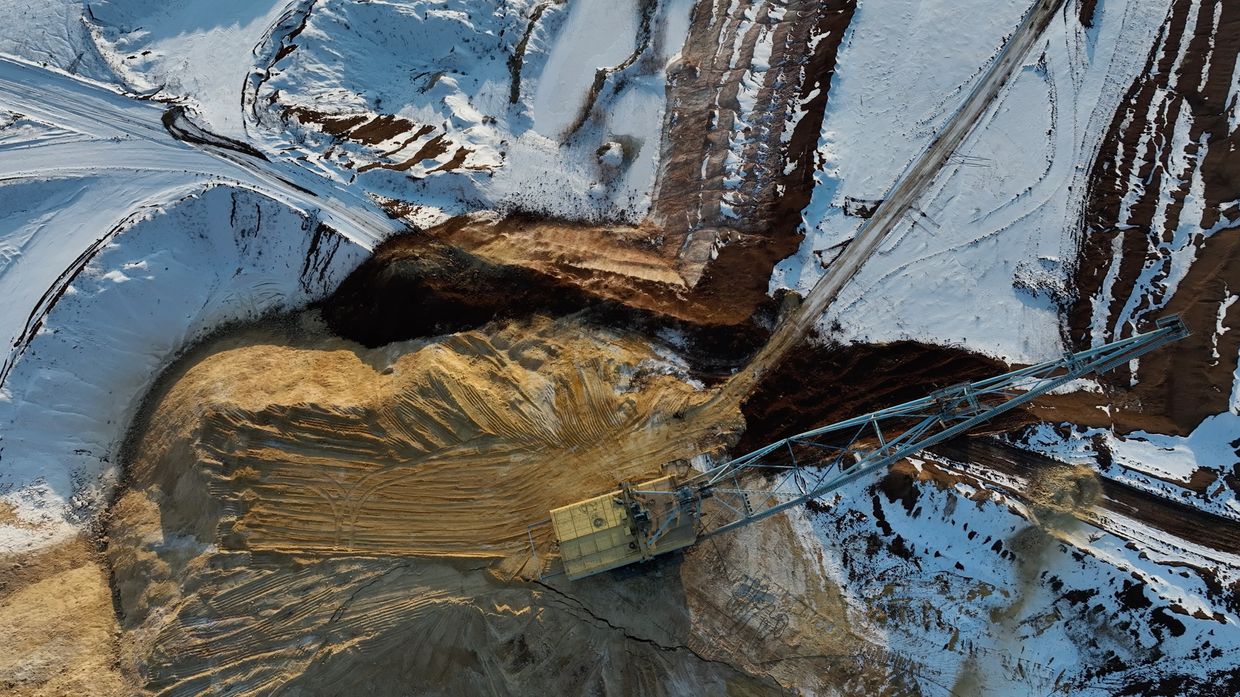
The assessment concluded that while some munitions stockpiles, including precision weapons, were low, they had not fallen below critical thresholds.

Amid the ongoing questions over Washington's weapons pause, Trump has apparently promised to send 10 Patriot interceptors to Ukraine, Axios reported on July 8. Sources also told the Wall Street Journal (WSJ) that Trump claimed he wasn't behind the decision to halt arms to Kyiv in a recent phone call with President Volodymyr Zelensky.

How to enter Ukraine’s defense market: A short guide for foreign companies
Editor’s Note: The opinions expressed in the op-ed section are those of the authors and do not purport to reflect the views of the Kyiv Independent. For editorial coverage of Ukraine’s weapons procurement, the country’s Defense Ministry and the scandal-ridden Defense Procurement Agency click on the links
US only has 25% of Patriot missiles needed for war plans, Guardian reportsThe Kyiv IndependentVladyslav Bandrovsky
US only has 25% of Patriot missiles needed for war plans, Guardian reports
  • ✇The Kyiv Independent
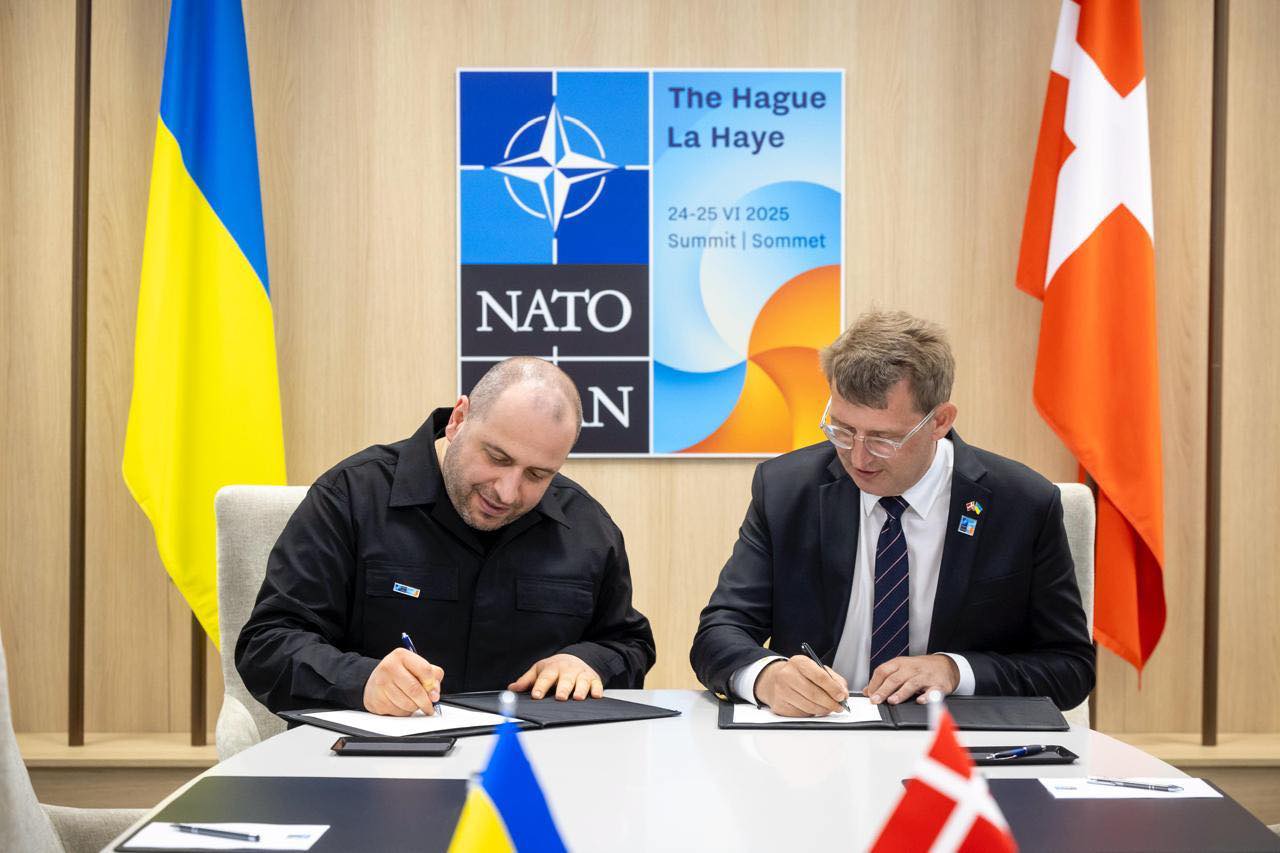
  • Ukraine, Denmark sign deal to launch Ukrainian military production on Danish soil
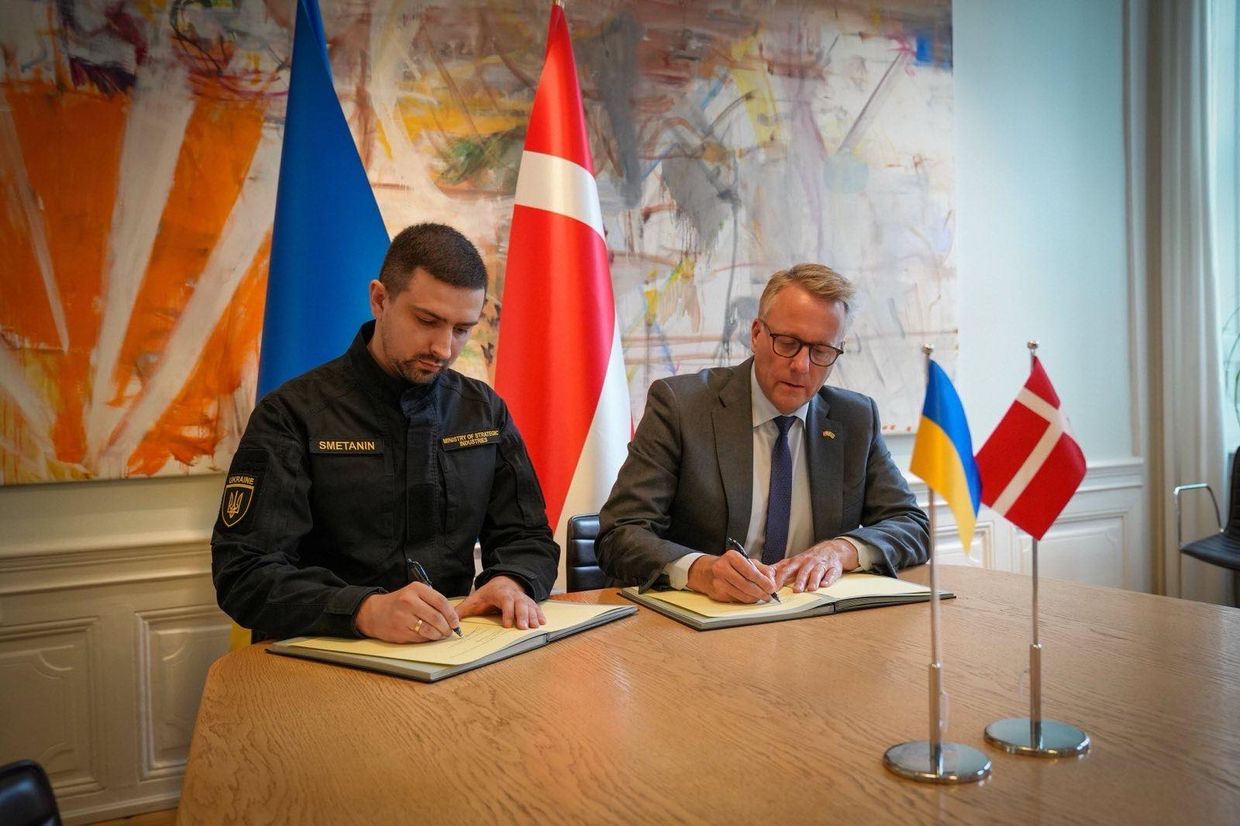
    Kyiv and Copenhagen signed a landmark agreement on July 4 that allows Ukrainian defense companies to open production facilities in Denmark, Strategic Industries Minister Herman Smetanin announced. "This is a unique case of international cooperation for the Ukrainian defense industry," Smetanin wrote on Facebook, following the signing ceremony in Copenhagen alongside Danish Industry Minister Morten Bodskov.The deal marks the first time Ukrainian defense technologies will be exported abroad specif
     

Ukraine, Denmark sign deal to launch Ukrainian military production on Danish soil

4 juillet 2025 à 12:26
Ukraine, Denmark sign deal to launch Ukrainian military production on Danish soil

Kyiv and Copenhagen signed a landmark agreement on July 4 that allows Ukrainian defense companies to open production facilities in Denmark, Strategic Industries Minister Herman Smetanin announced.

"This is a unique case of international cooperation for the Ukrainian defense industry," Smetanin wrote on Facebook, following the signing ceremony in Copenhagen alongside Danish Industry Minister Morten Bodskov.

The deal marks the first time Ukrainian defense technologies will be exported abroad specifically for supply to Ukraine's own Armed Forces, he said.

A year ago, Denmark became the first country to fund weapons production by Ukrainian manufacturers. Now, it has become the first to host Ukrainian arms production lines on its territory, Smetanin added.

"Today, it has become the first country to which Ukraine exports its own defense technologies for production, scaling, and supply to the Ukrainian army," he said.
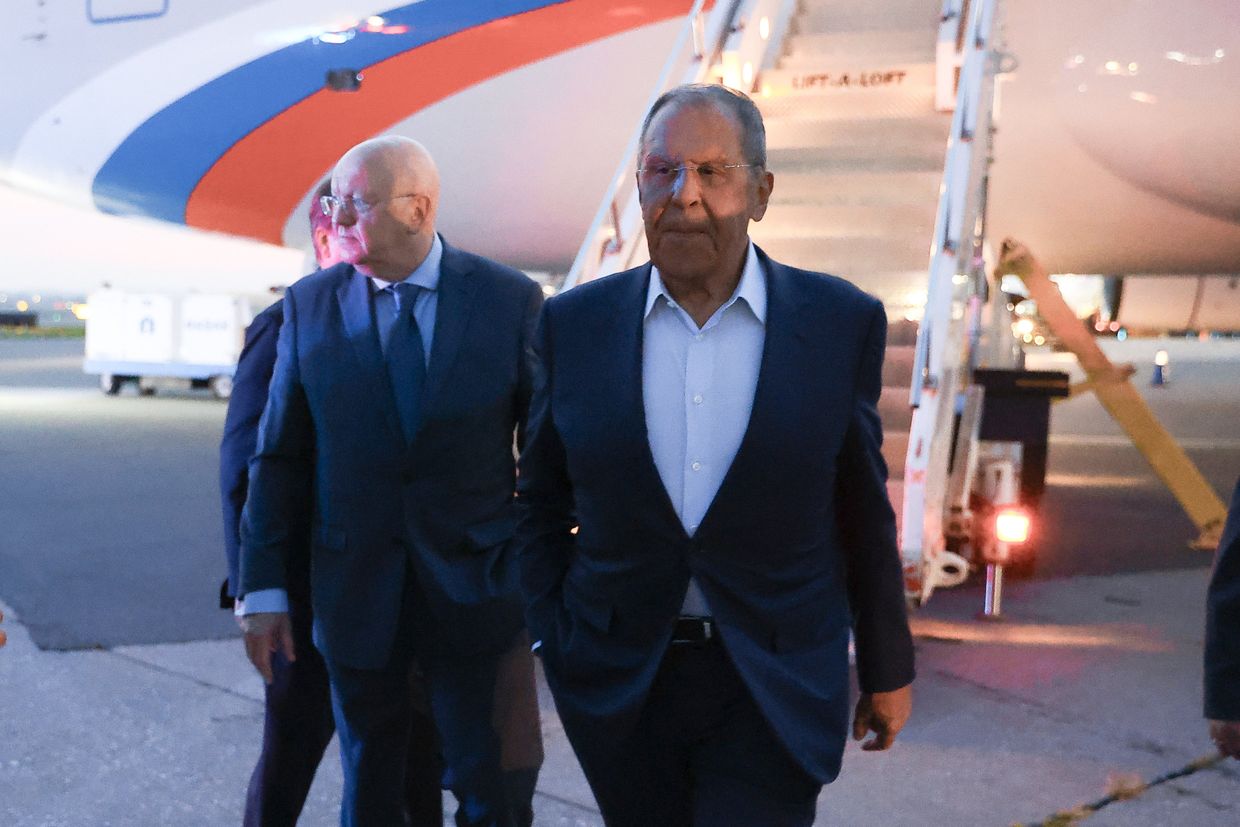
The agreement is part of Ukraine's broader effort to internationalize its defense production. President Volodymyr Zelensky announced on June 21 that Kyiv would soon begin exporting defense technologies and opening weapons production lines in partner countries.

To scale up domestic and international production, Zelensky has called on foreign partners to finance new projects and match Ukraine's rapidly growing manufacturing capacity.

Denmark has been a key backer of Ukraine since the start of Russia's full-scale invasion in 2022. In February 2024, Copenhagen signed a 10-year bilateral security agreement with Kyiv, pledging long-term defense cooperation until Ukraine secures NATO membership.

‘Nothing but terror and murder’ — Russia pounds Kyiv with record overnight drone, missile attack, 1 dead, 23 injured
Fires broke out across the city as Russia attacked the capital overnight on July 4. At least 23 people have been injured, with 14 of the victims hospitalized.
Ukraine, Denmark sign deal to launch Ukrainian military production on Danish soilThe Kyiv IndependentKateryna Hodunova
Ukraine, Denmark sign deal to launch Ukrainian military production on Danish soil
  • ✇The Kyiv Independent
  • Raybird drones to be built in UK in new joint venture with Ukraine
    Skyeton Prevail Solutions, a joint venture between Ukrainian drone manufacturer Skyeton and U.K.-based defense company Prevail Solutions, will manufacture and supply Raybird drones in the U.K., the two companies announced on July 2."Skyeton — a Ukrainian unmanned aircraft systems company with 19 years of engineering pedigree, and Prevail Partners — a leading U.K. defense and security company, announced a joint venture to fast-track the volume manufacture, supply, and support for the integration
     

Raybird drones to be built in UK in new joint venture with Ukraine
3 juillet 2025 à 00:47
Raybird drones to be built in UK in new joint venture with Ukraine
Skyeton Prevail Solutions, a joint venture between Ukrainian drone manufacturer Skyeton and U.K.-based defense company Prevail Solutions, will manufacture and supply Raybird drones in the U.K., the two companies announced on July 2.
"Skyeton — a Ukrainian unmanned aircraft systems company with 19 years of engineering pedigree, and Prevail Partners — a leading U.K. defense and security company, announced a joint venture to fast-track the volume manufacture, supply, and support for the integration of its best-in-class drone into U.K. military applications," a statement by the two companies said.

Ukraine has developed drones that have proven to be effective amid the onset of Russia's full-scale war against Ukraine in February 2022 and Russia's initial invasion of Ukraine in 2014.

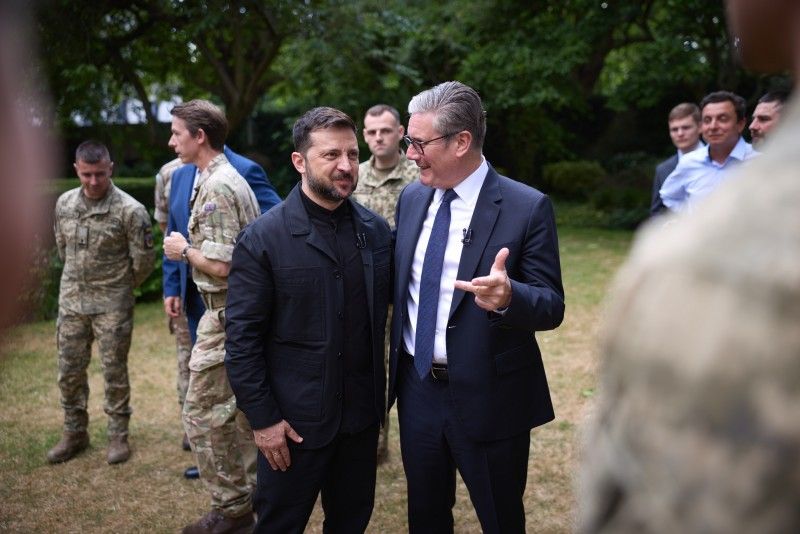
President Volodymyr Zelensky and U.K. Prime Minister Keir Starmer met in London on June 23, where the two leaders agreed to an "industrial military co-production agreement."

"The joint venture will scale the availability of Raybird with new manufacturing in the U.K. for both deployment in Ukraine and provide the necessary integration expertise from Prevail Partners for U.K. and other Western militaries," the statement said.

U.K. lawmaker Iain Duncan Smith described the move as an "important step" for U.K. drone production.

Skyeton says its Raybird drone has over 350,000 flight hours and is responsible for billions of dollars in Russian losses.

Ukraine has relied on drones to meet its own defense needs, as foreign military aid has fallen short in supplying necessary weapons and air defenses.

Ukraine’s new interceptor UAVs are starting to knock Russia’s long-range Shahed drones out of the sky
Russia’s Shahed drone swarms are pummeling Ukraine on a nightly basis, inflicting ever more death and destruction in cities that had managed to carve out some sense of normalcy amid wartime. Civilian alarm has grown. With traditional air defense stockpiles running low, the government is banking on newly created
Raybird drones to be built in UK in new joint venture with UkraineThe Kyiv IndependentKollen Post
Raybird drones to be built in UK in new joint venture with Ukraine
  • ✇The Kyiv Independent
  • Ukraine to launch joint weapons production program with Ramstein summit countries
    Ukraine is launching a joint weapons production program with members of the Ukraine Defense Contact Group (UDCG), or Ramstein summit participants, Defense Minister Rustem Umerov announced on July 1. The UDCG was formed in 2022 under former U.S. President Joe Biden to coordinate military assistance for Ukraine among about 50 of Kyiv's allies. As part of a new joint production program, new factories and weapons manufacturing facilities will be built in Ukraine and abroad, Umerov said in a social m
     

Ukraine to launch joint weapons production program with Ramstein summit countries

1 juillet 2025 à 17:14
Ukraine to launch joint weapons production program with Ramstein summit countries

Ukraine is launching a joint weapons production program with members of the Ukraine Defense Contact Group (UDCG), or Ramstein summit participants, Defense Minister Rustem Umerov announced on July 1.

The UDCG was formed in 2022 under former U.S. President Joe Biden to coordinate military assistance for Ukraine among about 50 of Kyiv's allies.

As part of a new joint production program, new factories and weapons manufacturing facilities will be built in Ukraine and abroad, Umerov said in a social media post. The international sites will be UDCG member countries participating in the Ramstein-format summit.

New legal and tax regulations will also be put in place for Ukrainian weapons manufacturers, facilitating the construction of new sites and allowing them to rapidly scale up production, Umerov said.

The Defense Ministry on July 1 joined the Verkhovna Rada (Ukraine's parliament) Finance, Tax, and Customs Committee in presenting four draft laws regarding domestic weapons production "aimed at developing the industry." The legislation introduces amendments to tax, customs, and budget regulations, as well as the Criminal Code.

The first vote on the new legislative package is expected to take place in a month, according to Umerov.  

"This is a new type of military-industrial cooperation, where Ukraine is an equal partner and player in the global defense market," he said.

As Ukraine scales up domestic defense production, President Volodymyr Zelensky has been lobbying foreign partners to provide funding to help match its manufacturing capacity. At the NATO summit in The Hague, Ukraine signed agreements on joint weapons production with the U.K. and Denmark. Norway also pledged to jointly develop air defense systems with Kyiv.

  • ✇The Kyiv Independent
  • Ukraine developing new anti-drone ammunition to counter Russian aerial attacks
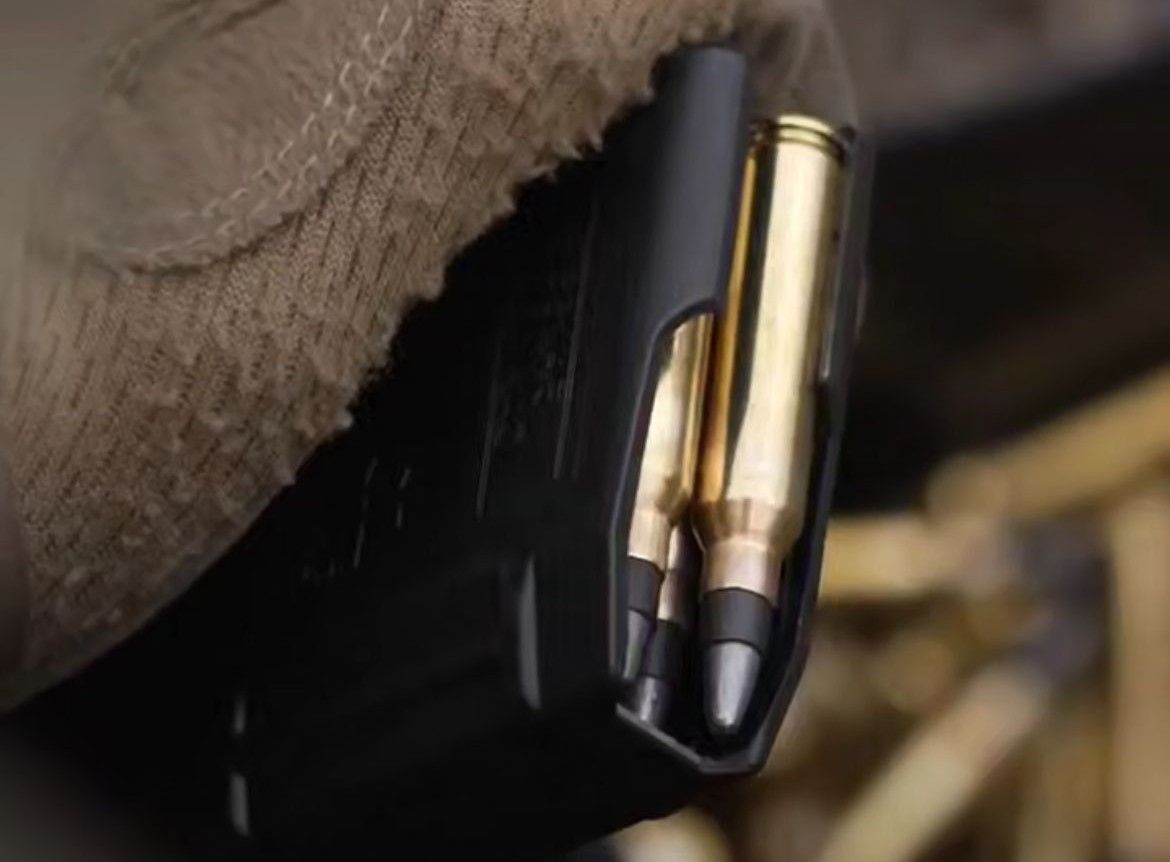
    Ukraine's defense technology cluster Brave1 has launched the development of anti-drone rifle rounds, significantly increasing the chances of hitting fast-moving aerial targets, the group said in a statement on June 30.According to Brave1, the ammunition appears similar to standard rounds used in automatic rifles but features a specially designed warhead that increases the likelihood of shooting down FPV (first-person-view) drones or commercial quadcopters such as the DJI Mavic before they strike
     

Ukraine developing new anti-drone ammunition to counter Russian aerial attacks

1 juillet 2025 à 02:30
Ukraine developing new anti-drone ammunition to counter Russian aerial attacks

Ukraine's defense technology cluster Brave1 has launched the development of anti-drone rifle rounds, significantly increasing the chances of hitting fast-moving aerial targets, the group said in a statement on June 30.

According to Brave1, the ammunition appears similar to standard rounds used in automatic rifles but features a specially designed warhead that increases the likelihood of shooting down FPV (first-person-view) drones or commercial quadcopters such as the DJI Mavic before they strike.

These types of drones are being used extensively on the battlefield by both Ukrainian and Russian forces. The cost-effective FPV drones have proven highly effective in destroying expensive military equipment.

The manufacturer has already codified the new rounds according to NATO standards, Brave1 said. The goal is to supply every infantry soldier with a magazine of specialized ammunition for use in case of aerial threats.

"These rounds that significantly improve the chances of hitting a moving target are a new development by Brave1," Digital Transformation Minister Mykhailo Fedorov said.

"Our common goal is to ensure that every infantryman has a magazine of such ammunition and can equip his rifle with it in case of an air threat."

Ukraine continues to scale up its drone warfare capabilities. The Defense Ministry said on March 10 that it plans to purchase 4.5 million FPV drones in 2025 at a cost exceeding Hr 110 billion ($2.6 billion), with most of the funds allocated through the Defense Procurement Agency.

President Volodymyr Zelensky has set a goal of producing at least 30,000 long-range drones in 2025.

Tired of military aid delays, Ukraine has designed its own ballistic missile — and it’s already in mass-production
Ukraine announced on June 13 that its short-range Sapsan ballistic missile would go into mass production, a major development in Kyiv’s ongoing efforts to domestically produce the weapons it needs to fight Russia’s full-scale invasion. As Ukraine faces growing challenges in securing weapons from Western partners, and Russia continues launching
Ukraine developing new anti-drone ammunition to counter Russian aerial attacksThe Kyiv IndependentYuliia Taradiuk
Ukraine developing new anti-drone ammunition to counter Russian aerial attacks

Zelensky, German FM discuss supplying IRIS-T air defenses, joint weapons production, strengthening Russia sanctions

1 juillet 2025 à 00:44
Zelensky, German FM discuss supplying IRIS-T air defenses, joint weapons production, strengthening Russia sanctions

President Volodymyr Zelensky and German Foreign Minister Johann Wadephul met in Kyiv on June 30, where the two leaders discussed Germany supplying additional IRIS-T air defense systems, joint weapons production, and strengthening sanctions against Russia, Zelensky said.

Wadephul earlier said Germany is working with its defense industry, European allies, and the U.S. to secure more air defense systems for Ukraine.

"We are going down every path available... The German defense industry is trying to expand its capacity. We're speaking with our European partners, and I believe we must also move forward with the United States," he said.

Zelensky met with executives of German defense companies alongside Wadephul during the visit to Ukraine's capital.

"We discussed sanctions pressure on Russia, the potential for supplying new IRIS-T systems, and joint weapons production — both in Ukraine and in Germany," Zelensky said in a post to social media.

Zelensky noted Germany signalled it believes that Ukraine's future is in NATO amid Russia's war against Ukraine.

"We will continue to develop relevant military hubs and increase the presence of German companies in Ukraine. We had an in-depth discussion on interceptor drones. I am grateful for the willingness to help," Zelensky said.

Earlier in the visit, Wadephul noted that he remains in close contact with German Defense Minister Boris Pistorius to assess whether existing systems from Germany's own stockpiles can be redirected to Ukraine.

Loss of Ukraine lithium deposit to Russia won’t impact minerals deal, says investor
Russian troops have taken over the site of one of Ukraine’s most valuable lithium deposits near the village of Shevchenko, Donetsk Oblast, as Russia ramps up its summer offensive. While Ukrainian troops control territories near the site, the deposit is now under Russian occupation, Roman Pohorilyi, founder of open-source
Zelensky, German FM discuss supplying IRIS-T air defenses, joint weapons production, strengthening Russia sanctionsThe Kyiv IndependentDominic Culverwell
Zelensky, German FM discuss supplying IRIS-T air defenses, joint weapons production, strengthening Russia sanctions

Amid Russian economy warnings, Lavrov says NATO's increased defense spending will lead to 'collapse' of alliance

30 juin 2025 à 06:30
Amid Russian economy warnings, Lavrov says NATO's increased defense spending will lead to 'collapse' of alliance

NATO's increased defense spending will lead to the "collapse" of the alliance, Russian Foreign Minister Sergei Lavrov said on June 30, despite Russian officials recently warning that Moscow's own military expenditure is driving the country towards recession.

Lavrov's comments come after NATO leaders last week approved a new defense spending benchmark, committing members to spend at least 5% of GDP on defense and security-related expenditures by 2035, a goal long pushed by the U.S. and endorsed by NATO Secretary General Mark Rutte.

The week previously, and in a rare public sign that all is not well in Russia, two high-ranking Moscow officials issued separate warnings about the state of the country's economy.

Russian Central Bank Governor Elvira Nabiullina and Economy Minister Maxim Reshetnikov both highlighted that amid the Kremlin's full-scale war against Ukraine, the tools Moscow once relied on to maintain wartime growth are nearly exhausted.

Polish Foreign Minister Radoslaw Sikorski on June 26 said an arms race between Russia and NATO could lead to Russian President Vladimir Putin's downfall.

"Since (Polish Foreign Minister Radoslaw Sikorski) is such a predictor, he probably foresees that a catastrophic increase in the budget of NATO countries, according to my estimates, will also lead to the collapse of this organization," Lavrov reportedly said.

Putin last week announced that Moscow plans to cut its military expenditure beginning next year, in a rebuke of NATO members' plans to increase defense spending to 5% of GDP.

"We are planning to reduce defence spending. For us, next year and the year after, over the next three-year period, we are planning for this," Putin said, though he did not provide concrete details.

"Europe is thinking about how to increase its spending, on the contrary. So, who is preparing for some kind of aggressive actions? Us or them?"

Western officials and analysts point to Russia's surging military expenditures amid its ongoing full-scale invasion of Ukraine. In 2024, Russia's defense budget reportedly rose 42% in real terms, reaching $462 billion, surpassing the combined spending of all European nations, according to the International Institute for Strategic Studies.

NATO allies have cited Russia's military buildup, sabotage campaigns, and continued aggression against Ukraine as reasons to accelerate defense investments. Rutte warned that Russia could rebuild its military capacity to threaten NATO territory within five years, urging members to act with urgency.

As Ukraine bleeds, Western opera welcomes back pro-Putin Russian singer Anna Netrebko
More than three years into Russia’s full-scale war against Ukraine, many Western cultural institutions that had distanced themselves from Russian artists as a gesture of solidarity with Ukraine are now reversing course. The U.K.’s Royal Ballet and Opera House announced on June 23 that its 2025-2026 cinema
Amid Russian economy warnings, Lavrov says NATO's increased defense spending will lead to 'collapse' of allianceThe Kyiv IndependentKate Tsurkan
Amid Russian economy warnings, Lavrov says NATO's increased defense spending will lead to 'collapse' of alliance
  • ✇The Kyiv Independent
  • Lithuania signs memorandum with Northrop Grumman, Nammo amid Russian threat to regional security
    Lithuania has signed a memorandum with American defense firm Northrop Grumman and Norwegian Nammo to secure the production of ammunition amid Russia's war against Ukraine, the Lithuanian Defense Ministry announced on June 24."By strengthening our national defense industry, we are investing in both technological capabilities and Lithuania’s resilience to crises. This Memorandum of Understanding will allow us to better equip our armed forces and help Lithuania become an important link in internati
     

Lithuania signs memorandum with Northrop Grumman, Nammo amid Russian threat to regional security

24 juin 2025 à 21:25
Lithuania signs memorandum with Northrop Grumman, Nammo amid Russian threat to regional security

Lithuania has signed a memorandum with American defense firm Northrop Grumman and Norwegian Nammo to secure the production of ammunition amid Russia's war against Ukraine, the Lithuanian Defense Ministry announced on June 24.

"By strengthening our national defense industry, we are investing in both technological capabilities and Lithuania’s resilience to crises. This Memorandum of Understanding will allow us to better equip our armed forces and help Lithuania become an important link in international supply chains," Lithuanian Vice Minister of National Defense Loreta Maskalioviene said.

"The investment and expertise of our allies... will significantly contribute to strengthening of the national defense industry and security not only in Lithuania, but also in the entire region, including Ukraine. The development of the defense industry and investment in production must come without delay," Lithuanian Finance Minister Rimantas Sadzius said.

Russia's full-scale war against Ukraine has sparked concern in Europe that Russia could attack NATO's eastern flank, including Poland, the Baltic countries, and Finland.

Ukrainian intelligence has evidence that Russia is preparing new military operations in Europe, President Volodymyr Zelensky said on June 22.

The partnership will be implemented at the state-owned Giraite Armament Factory, the announcement said, adding that the factory is set to be integrated into Northrop Grumman’s international supply chains.

Northrop Grumman will supply ammunition produced in the Lithuanian defense factory to the international market.

Nammo, as a subcontractor, will provide Northrop Grumman with the 35 mm ammunition production technology.

"It will enhance national strategic autonomy in defense and deepen partnerships with NATO allies, the United States, and Norway. The planned production of ammunition is of critical importance to the Lithuanian Armed Forces, our allies, and Ukraine," Lithuanian Defense Minister Dovile Sakaliene said.

The memorandum will initiate negotiations for the production of medium caliber ammunition, ranging in size from 20-50 mm.

The Giraite Armament Factory will be provided with 35 mm ammunition production technology from the two defense firms, the announcement said.

Sakaliene noted that the new partnership will ensure an uninterrupted supply of ammunition to Lithuania's Armed Forces.

NATO is holding a summit in The Hague from June 24-25 with world leaders, including Zelensky and U.S. President Donald Trump present.

The White House has confirmed that Trump and Zelensky will hold a meeting at the NATO summit.

‘Like any technology, it’s a race’ — UK’s largest ammo maker rebooting chemistry to break NATO’s dependence on explosive imports
Russia’s war in Ukraine has drained Western ammunition stocks. Despite years of claimed weapons ramp-ups, NATO’s arms manufacturing is still not refilling those stocks apace, let alone making it to Ukraine in needed mass. The West has come to recognize that these shortages are due to the offshoring
Lithuania signs memorandum with Northrop Grumman, Nammo amid Russian threat to regional securityThe Kyiv IndependentKollen Post
Lithuania signs memorandum with Northrop Grumman, Nammo amid Russian threat to regional security
  • ✇The Kyiv Independent
  • Kyiv, Copenhagen aim to launch Ukrainian defense production in Denmark
    Defense Minister Rustem Umerov signed a Letter of Intent on June 24 with his Danish counterpart Troels Lund Poulsen to launch Ukrainian defense production in Denmark, Umerov announced on Facebook.The document envisages facilitating the deployment of Ukrainian defense companies in Denmark and integrating of the defense industries of both countries through the "Build with Ukraine" initiative.Denmark has already allocated $47 million for the project, and Ukraine's partners will provide further fund
     

Kyiv, Copenhagen aim to launch Ukrainian defense production in Denmark

24 juin 2025 à 15:33
Kyiv, Copenhagen aim to launch Ukrainian defense production in Denmark

Defense Minister Rustem Umerov signed a Letter of Intent on June 24 with his Danish counterpart Troels Lund Poulsen to launch Ukrainian defense production in Denmark, Umerov announced on Facebook.

The document envisages facilitating the deployment of Ukrainian defense companies in Denmark and integrating of the defense industries of both countries through the "Build with Ukraine" initiative.

Denmark has already allocated $47 million for the project, and Ukraine's partners will provide further funding for production.

"I thank the Danish government for its trust, steadfast support of Ukraine, and commitment to developing a deep partnership between our countries," Umerov said. "This partnership enhances the security of Ukraine, Denmark, and all of Europe — today and into the future."

The agreement between Ukraine and Denmark also provides coordination between the Danish Defense Ministry, the Business and Industry Ministry, and the Foreign Ministry to integrate Ukrainian enterprises into the European defense system.

"By providing Ukrainian defense companies the opportunity to start production in Denmark, we are creating a basis for close cooperation between defense companies in both countries. This will also provide the Danish Armed Forces with access to the latest technologies and the experience of Ukraine," Poulsen said.

Denmark has pioneered efforts to support Ukraine by investing in its defense industry, creating the so-called "Danish model" of purchasing arms for Kyiv from Ukrainian producers. Copenhagen has provided around $9.8 billion in military aid under its Ukraine Fund for the years 2023-2028.

‘Like any technology, it’s a race’ — UK’s largest ammo maker rebooting chemistry to break NATO’s dependence on explosive imports
Russia’s war in Ukraine has drained Western ammunition stocks. Despite years of claimed weapons ramp-ups, NATO’s arms manufacturing is still not refilling those stocks apace, let alone making it to Ukraine in needed mass. The West has come to recognize that these shortages are due to the offshoring
Kyiv, Copenhagen aim to launch Ukrainian defense production in DenmarkThe Kyiv IndependentKollen Post
Kyiv, Copenhagen aim to launch Ukrainian defense production in Denmark
  • ✇The Kyiv Independent
  • UK to fund joint drone production with Ukraine
    Ukraine and the United Kingdom have reached an agreement to jointly produce drones, Defense Minister Rustem Umerov announced on June 24.Britain will finance the procurement of Ukrainian-designed drones manufactured in the UK, he added. The deal comes as Ukraine has rapidly developed its drone capabilities since 2022, evolving from modifying commercial aircraft to producing military UAVs, attack drones, and reconnaissance systems at scale.The agreement was reached between President Volodymyr Zele
     

UK to fund joint drone production with Ukraine

24 juin 2025 à 11:09
UK to fund joint drone production with Ukraine

Ukraine and the United Kingdom have reached an agreement to jointly produce drones, Defense Minister Rustem Umerov announced on June 24.

Britain will finance the procurement of Ukrainian-designed drones manufactured in the UK, he added.

The deal comes as Ukraine has rapidly developed its drone capabilities since 2022, evolving from modifying commercial aircraft to producing military UAVs, attack drones, and reconnaissance systems at scale.

The agreement was reached between President Volodymyr Zelensky and British Prime Minister Keir Starmer, Umerov said.

Under the three-year program, the UK will finance the procurement of a wide range of Ukrainian drones to be produced by British defense companies.

"This will enable British defense companies to rapidly design and produce state-of-the-art drones on a large scale," Umerov wrote on Facebook.

According to Umerov, all production will be directed to meet the needs of Ukraine's Defense Forces. After the war ends, the UK and Ukraine will share the produced drones between themselves.

The initiative will support the scaling of advanced technologies, increased drone production, and the integration of Ukrainian and British defense industries, Ukraine’s defense minister wrote.

Ukraine has ramped up domestic drone production over the recent years of its war with Russia, as well as the development of new missiles.

Various aerial, naval, and ground drones have been developed and often successfully used for reconnaissance, combat, and other tasks throughout the full-scale war with Russia.

In January 2025, Umerov announced that the United Kingdom would finance the production of air defense systems and long-range weapons in Ukraine.

  • ✇The Kyiv Independent
  • Ukraine can produce 8 million drones annually but needs funding, Zelensky says at NATO summit
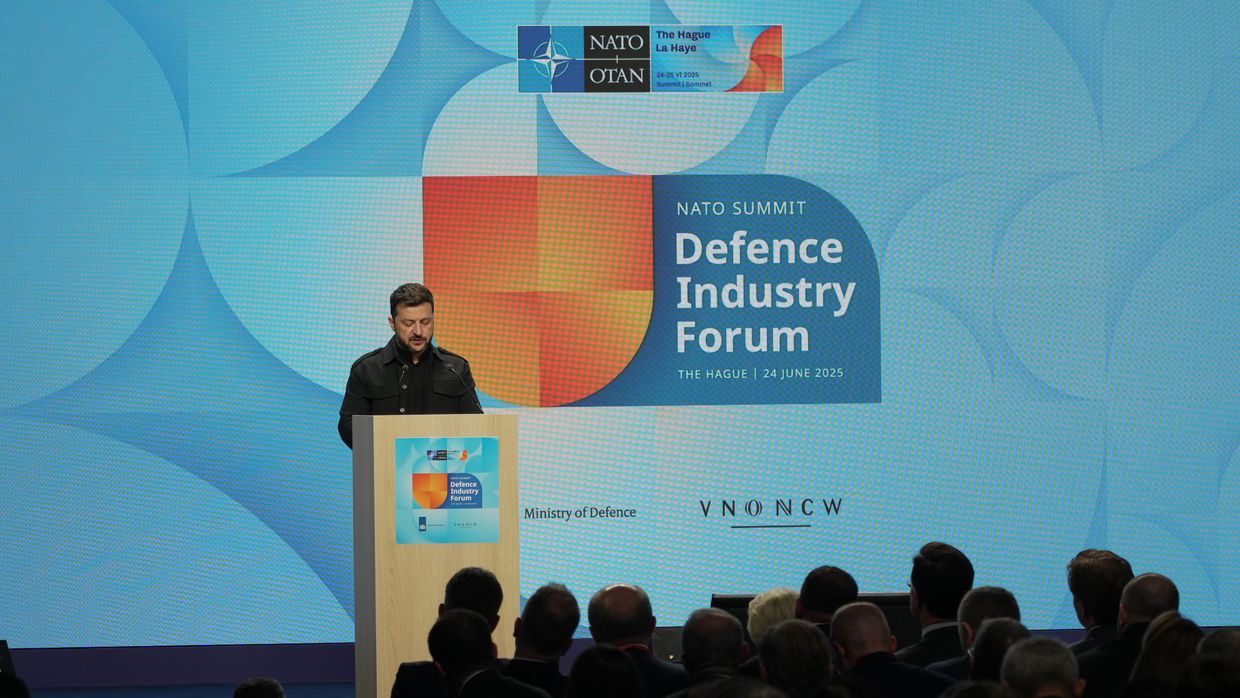
    President Volodymyr Zelensky said during NATO summit on June 24 that Ukraine has the capacity to produce over 8 million drones of various types each year, but lacks the financial backing to reach that potential, a shortfall he said must be urgently addressed to defeat Russia's growing military network."Our defense production potential has surpassed $35 billion,” Zelensky said during a speech at the NATO Defense Industry Forum in The Hague. "This includes nearly 1,000 types of products... but aro
     

Ukraine can produce 8 million drones annually but needs funding, Zelensky says at NATO summit

24 juin 2025 à 09:09
Ukraine can produce 8 million drones annually but needs funding, Zelensky says at NATO summit

President Volodymyr Zelensky said during NATO summit on June 24 that Ukraine has the capacity to produce over 8 million drones of various types each year, but lacks the financial backing to reach that potential, a shortfall he said must be urgently addressed to defeat Russia's growing military network.

"Our defense production potential has surpassed $35 billion,” Zelensky said during a speech at the NATO Defense Industry Forum in The Hague. "This includes nearly 1,000 types of products... but around 40% of this potential lacks proper funding. For example, we can produce over 8 million drones of different types each year, but the financing allows for far fewer."

Zelensky urged allies to scale up investments in joint weapons production, including drone technologies, artillery, and interceptors. He argued that Ukraine's defense capabilities are not only key to defending its own territory, but essential to strengthening NATO's long-term security.

"We must lead in the drone race, both in strike drones and interceptors," he said. "Please increase your investments in Ukraine and joint weapons production. All the weapons we produce become part of a new, stronger European defense and security system."

Why can’t the West match Russia’s ammunition production?
Editor’s Note: This article has been updated to reflect new details of BAE Systems’ new chemical process that the company confirmed to the Kyiv Independent after initial publication. The West is failing to catch up to Russia’s production of the most basic unit of war for the past half-millennium — gunpowder.
Ukraine can produce 8 million drones annually but needs funding, Zelensky says at NATO summitThe Kyiv IndependentKollen Post
Ukraine can produce 8 million drones annually but needs funding, Zelensky says at NATO summit

The Ukrainian president emphasized that Russia is not acting alone, but as part of a broader network of state and non-state actors, including North Korea, Iran, and Chinese companies, which support its war effort against Ukraine and pose a long-term threat to Europe.

"The source of this war and the long-term threat to Europe is Russia," Zelensky said. "But in reality, we are not just facing Russia alone. We are facing a network of state and non-state actors."

Zelensky also called on NATO members to increase defense spending to 5% of GDP and to dedicate at least 0.25% of GDP to support Ukraine's military needs directly. He thanked countries such as Germany, Norway, Sweden, and the Netherlands for their elevated commitments, but urged others to follow suit.

Zelensky warned that Russia is planning "new military operations on NATO territory" and that the war in Ukraine must be stopped now to prevent broader European conflict.

"There are no signs that Putin wants to stop this war," Zelensky said. "So long as he kills, he lives. And our intelligence confirms this."

He also appealed for a crackdown on the supply chains that allow Russia to sustain its weapons manufacturing, referring to Western-origin components found in Russian missiles, drones, and armored vehicles.

"It's not just China, also Taiwan. Some of these parts come from European countries and from the United States," Zelensky said. "Every single tool delivered to Russia's defense sector helps prolong the war and is a crime against peace."

Zelensky's speech comes as NATO leaders gather in The Hague for a high-level summit on June 24-25. NATO leaders are expected to discuss raising the alliance's defensespending target to 5% of the GDP, a proposal the U.S. has championed but from which it considers itself exempt.

Zelensky is expected to meet U.S. President Donald Trump during the summit.

Zelensky plans to meet Trump at NATO summit in The Hague
Upon arrival in The Hague on June 24, Andriy Yermak, head of Ukraine’s presidential office, said he held a “substantive” discussion with U.S. Secretary of State Marco Rubio about the upcoming Zelensky-Trump meeting.
Ukraine can produce 8 million drones annually but needs funding, Zelensky says at NATO summitThe Kyiv IndependentAnna Fratsyvir
Ukraine can produce 8 million drones annually but needs funding, Zelensky says at NATO summit

  • ✇The Kyiv Independent
  • 'Let's not be naive' — Rutte urges NATO to face Russia, China threats, pledges support for Ukraine
    Speaking on the sidelines of the NATO summit in The Hague on June 24, NATO Secretary General Mark Rutte called on alliance members to be realistic about the threats posed by Russia and China, and urging them to stay the course in supporting Ukraine."Let's not be naive," Rutte said. "You see what China, North Korea and Iran are doing in supporting the war effort of Russia ... So this is all interconnected."Rutte emphasized that while NATO faces multiple global challenges, from the war in Ukraine
     

'Let's not be naive' — Rutte urges NATO to face Russia, China threats, pledges support for Ukraine

24 juin 2025 à 05:26
'Let's not be naive' — Rutte urges NATO to face Russia, China threats, pledges support for Ukraine

Speaking on the sidelines of the NATO summit in The Hague on June 24, NATO Secretary General Mark Rutte called on alliance members to be realistic about the threats posed by Russia and China, and urging them to stay the course in supporting Ukraine.

"Let's not be naive," Rutte said. "You see what China, North Korea and Iran are doing in supporting the war effort of Russia ... So this is all interconnected."

Rutte emphasized that while NATO faces multiple global challenges, from the war in Ukraine to tensions in the Middle East and Russian influence in Africa, the alliance must be able to focus on more than one crisis at a time.

"If you can only deal with one issue at a time, you should not be in politics or defense," he said.

Rutte said NATO's role is to ensure Ukraine has the military means to stay in the fight until "serious" peace negotiations begin.

"We have to make sure that Ukraine is in the strongest possible position when real talks start," he said. "I'm not talking about these talks led by some Russian historian (Vladimir Medinsky) who wants to go back 1,000 years... That's not serious business.”

The talks he referenced, led by Russian presidential aide Vladimir Medinsky and held in Istanbul in May-June, have yielded prisoner exchange agreements but no progress toward a ceasefire or settlement. Ukraine has offered a comprehensive roadmap, but Rutte said Russia had not come to the table with serious intent.

’100 days of Russian manipulations’ — Ukraine blasts Moscow over disregarding US ceasefire effort
A hundred days since the U.S. and Ukraine agreed on a ceasefire, “Russia continues to choose war,” Foreign Minister Andrii Sybiha said on June 19, urging international pressure to push Moscow toward peace.
'Let's not be naive' — Rutte urges NATO to face Russia, China threats, pledges support for UkraineThe Kyiv IndependentMartin Fornusek
'Let's not be naive' — Rutte urges NATO to face Russia, China threats, pledges support for Ukraine

Instead, Russia continues to reject U.S. proposed comprehensive ceasefire, and insists on its longstanding maximalist demands.

"When the time comes for serious talks, we must ensure any long-term ceasefire or peace deal is durable — so that (Russian President) Vladimir Putin will never again try to seize even one square kilometer of Ukrainian territory," Rutte said.

Rutte also stressed that Ukraine is evolving from a security consumer into a security producer. He noted that the country's "largely untapped" defense industrial base, with a potential value of up to $35 billion, is increasingly attracting European investment.

"Ukraine has one of the largest defense industries in Europe," Rutte said, adding that many countries, including Norway, Denmark, and Lithuania, are now investing in it. "That helps Ukraine, and it helps us.”

Responding to concerns over Europe's reliance on the United States, Rutte said NATO must stop "worrying so much" about U.S. commitment and instead ramp up its own military capabilities.

"There is total commitment by the U.S. President and U.S. senior leadership," Rutte said, dismissing doubts about Washington's future role in NATO. "However, it comes with an expectation that we will finally deal with this huge bubbling issue, which is that we are not spending enough as Europeans and Canadians."

Rutte strongly backed the alliance's new 5% GDP defense investment benchmark, saying increased spending must translate into ammunition stockpiles, troop recruitment, and industrial output. "The Russians are producing in three months what NATO produces in a year," he said.

Earlier, U.S. President Donald Trump accused NATO members of underfunding their militaries, pushing for raising defense spending benchmark to 5% of GDP.

In 2024, only 23 alliance members met the 2% target, according to NATO estimates. Poland was ahead of all members with 4.12% of GDP allocated to defense, followed by Estonia (3.43%) and the U.S. (3.38%).

‘If we don’t help Ukraine further, we should start learning Russian,’ EU diplomacy chief says
Top EU diplomat Kaja Kallas cited a sharp increase in Russia’s military spending, noting that Moscow is now allocating more money to defense than the EU combined, and more than its own health care, education, and social policies put together.
'Let's not be naive' — Rutte urges NATO to face Russia, China threats, pledges support for UkraineThe Kyiv IndependentAnna Fratsyvir
'Let's not be naive' — Rutte urges NATO to face Russia, China threats, pledges support for Ukraine

  • ✇The Kyiv Independent
  • Aerospace giant Airbus to train Ukrainian specialists in aircraft maintenance
    Ukraine's state defense conglomerate Ukroboronprom and European aerospace giant Airbus have signed a trilateral cooperation memorandum at the Le Bourget International Air Show, the company announced on June 23.The agreement launches initiatives to develop maintenance and repair capabilities for Airbus aircraft operating in Ukraine among specialists at Ukroboronprom's enterprises.As part of the deal, Airbus will send representatives to Ukraine to train local specialists, who will then become cert
     

Aerospace giant Airbus to train Ukrainian specialists in aircraft maintenance

23 juin 2025 à 12:14
Aerospace giant Airbus to train Ukrainian specialists in aircraft maintenance

Ukraine's state defense conglomerate Ukroboronprom and European aerospace giant Airbus have signed a trilateral cooperation memorandum at the Le Bourget International Air Show, the company announced on June 23.

The agreement launches initiatives to develop maintenance and repair capabilities for Airbus aircraft operating in Ukraine among specialists at Ukroboronprom's enterprises.

As part of the deal, Airbus will send representatives to Ukraine to train local specialists, who will then become certified instructors for aircraft maintenance.

"Trust in our defense industrial complex, particularly Ukroboronprom and its enterprises, is growing among global high-tech companies," said Oleh Hulyak, Ukroboronprom Director General, in a press release. "This proves we have chosen the right path for development and international cooperation."

Hulyak expects new partnerships with foreign partners in aviation and other areas of the company's work.

Ukroboronprom is a leading strategic manufacturer of weapons and military hardware in Ukraine. The association unites about 100 enterprises that develop and manufacture weapons, military equipment and ammunition, including missiles, drones, armored vehicles.

The company reported a consolidated net profit of Hr 1.31 billion ($31.5 million) for the previous year as its enterprises tripled production volumes in 2024 compared to 2023, with a 36% increase in contracts.

In 2024, Ukroboronprom was ranked for the first time in history among the top 50 global defense companies by Defense News, according to Strategic Industries Minister Alexander Kamyshin.

‘It was impossible to look at’ — Russian mass missile, drone attack on Kyiv kills at least 9, injures 33
Russia launched a wave of missile and drone attacks on Kyiv and surrounding region overnight on June 23.
Aerospace giant Airbus to train Ukrainian specialists in aircraft maintenanceThe Kyiv IndependentLucy Pakhnyuk
Aerospace giant Airbus to train Ukrainian specialists in aircraft maintenance

  • ✇The Kyiv Independent
  • Norway to invest $400 million in Ukraine's drone, air defense missile production
    Norway will invest $400 million in Ukraine's defense industry to support drone and air defense missile production, President Volodymyr Zelensky said in his nightly address on June 22.The announcement followed a visit to Ukraine by Norwegian Defense Minister Tore Onshuus Sandvik."Today, Norway’s Minister of Defense visited Ukraine. A decision has been reached to invest $400 million in our production – new funding, primarily for drones," Zelensky said.Zelensky added that the two countries are also
     

Norway to invest $400 million in Ukraine's drone, air defense missile production

22 juin 2025 à 18:42
Norway to invest $400 million in Ukraine's drone, air defense missile production

Norway will invest $400 million in Ukraine's defense industry to support drone and air defense missile production, President Volodymyr Zelensky said in his nightly address on June 22.

The announcement followed a visit to Ukraine by Norwegian Defense Minister Tore Onshuus Sandvik.

"Today, Norway’s Minister of Defense visited Ukraine. A decision has been reached to invest $400 million in our production – new funding, primarily for drones," Zelensky said.

Zelensky added that the two countries are also working together to establish joint air defense production inside Ukraine.

"We are working together to create all the necessary conditions to produce air defense systems in Ukraine — jointly with partners, jointly with Norway," Zelensky said.

He added that Norway's largest defense company – Kongsberg Defence & Aerospace – has already opened an office in Ukraine as part of the cooperation.

"We are expediting all processes to the maximum extent," Zelensky said.

On X, Norway's defense ministry confirmed that Kongsberg has signed agreement with a major Ukrainian company to jointly develop and produce missiles for air defense systems in Ukraine.

The collaboration will focus on producing missiles for the National Advanced Surface-to-Air Missile System, or NASAMS.

"The Norwegian NASAMS system saves lives in Ukraine every day, and is crucial in protecting critical infrastructure. That is why it is important for the Norwegian Government to finance this development of cheaper missiles for the NASAMS system in Ukraine," said Minister Sandvik.

The announcement marks deepening ties between Kyiv and Oslo as Ukraine seeks to expand its domestic defense industry amid Russia’s ongoing full-scale invasion and reduced military aid from the United States.

Ukraine war latest: ‘Ukrainian drones for the foot of every Russian soldier’ — Zelensky responds to Putin’s threat to conquer all of Ukraine
Key developments on June 21-22: * ‘Ukrainian drones for the foot of every Russian soldier’ — Zelensky responds to Putin’s threat to conquer all of Ukraine. * 3 killed, 14 wounded as Russia strikes Ukrainian military training facility. * Russia seeks to advance along almost entire eastern front, Ukraine holding ground in Kursk Oblast,
Norway to invest $400 million in Ukraine's drone, air defense missile productionThe Kyiv IndependentSonya Bandouil
Norway to invest $400 million in Ukraine's drone, air defense missile production
  • ✇The Kyiv Independent
  • Ukraine asks allies to earmark 0.25% of GDP for joint defense production, Zelensky says
    Ukraine is asking partner countries to allocate 0.25% of their GDP to boosting Kyiv's defense production, President Volodymyr Zelensky said on June 20 at a press briefing attended by the Kyiv Independent. The president's comments come less than a week before the NATO summit in The Hague, where Zelensky will have another opportunity to discuss Ukraine's security needs with world leaders. "Ukraine is part of Europe's security, and we want 0.25% of the GDP of a particular partner country to be allo
     

Ukraine asks allies to earmark 0.25% of GDP for joint defense production, Zelensky says

21 juin 2025 à 12:03
Ukraine asks allies to earmark 0.25% of GDP for joint defense production, Zelensky says

Ukraine is asking partner countries to allocate 0.25% of their GDP to boosting Kyiv's defense production, President Volodymyr Zelensky said on June 20 at a press briefing attended by the Kyiv Independent.

The president's comments come less than a week before the NATO summit in The Hague, where Zelensky will have another opportunity to discuss Ukraine's security needs with world leaders.

"Ukraine is part of Europe's security, and we want 0.25% of the GDP of a particular partner country to be allocated to our defense industry and domestic production," Zelensky said at the briefing.

Ukraine is currently in talks with Denmark, Norway, Germany, the United Kingdom, and Lithuania on weapons development partnerships, Zelensky said.

The proposed spending target comes as Ukraine faces intensified aerial bombardments, dwindling U.S. support, and new Russian offensives. Moscow has doubled down on its maximalist ambitions in Ukraine, with Russian President Vladimir Putin insisting "all of Ukraine is ours" in remarks on June 20.

At the same time, Ukraine has demonstrated its ability to strike back at the aggressor state using its own domestically produced weapons. Operation Spiderweb, a mass attack on four key military airfields in Russia, was carried out entirely with Ukrainian drones.

Ukraine has been ramping up its defense production since the full-scale invasion in 2022. Support from Western allies has been critical to that effort, as Kyiv's defense budget does not match the capacities of domestic weapons production.

Denmark pioneered a new model of defense support when it became the first country to offer donate arms to Ukraine via direct purchases from the Ukrainian defense industry. Zelensky has said he wants other NATO members to purchase weapons from Ukraine under the Danish model.

Increased defense spending is the main item on the agenda at the upcoming NATO summit. The United States has backed a proposal to raise the spending target from the current 2% to 5% GDP.

While thus far only Spain has rejected the proposal outright, most NATO members have remained noncommittal. Poland, the Netherlands, and Sweden have expressed willingness to consider the 5% target.

Pro-Russian ‘peace protestors’ set to descend on NATO summit
Dutch protesters who regularly call for an end to military aid to Ukraine will descend on The Hague next week to protest the upcoming NATO summit, which is set to take place on June 24-25. The group will protest against NATO alongside several other organizations and has urged supporters on
Ukraine asks allies to earmark 0.25% of GDP for joint defense production, Zelensky saysThe Kyiv IndependentLinda Hourani
Ukraine asks allies to earmark 0.25% of GDP for joint defense production, Zelensky says
  • ✇The Kyiv Independent
  • Ukraine approves Termit ground drone for battlefield deployment
    Ukraine's Defense Ministry has officially approved the new domestically produced unmanned ground vehicle, known as the Termit, for front-line use, the ministry announced on June 21.The tracked robot is a next-generation version of Ukraine's existing ground-based unmanned systems already deployed across the front. These systems have supported operations by transporting supplies, conducting reconnaissance, and carrying explosives in contested areas.Termit, the newest model in the series, features
     

Ukraine approves Termit ground drone for battlefield deployment

21 juin 2025 à 10:56
Ukraine approves Termit ground drone for battlefield deployment

Ukraine's Defense Ministry has officially approved the new domestically produced unmanned ground vehicle, known as the Termit, for front-line use, the ministry announced on June 21.

The tracked robot is a next-generation version of Ukraine's existing ground-based unmanned systems already deployed across the front. These systems have supported operations by transporting supplies, conducting reconnaissance, and carrying explosives in contested areas.

Termit, the newest model in the series, features improved mobility and modularity. The drone can carry up to 300 kilograms and operates on various terrains thanks to its low profile, tracked design, and improved weight distribution.

Its traction battery system allows for several hours of continuous movement over dozens of kilometers. According to the Defense Ministry, Termit drones can be equipped with combat modules, used for medical evacuations, or for transporting specialized equipment as needed.

Ground drones such as Termit are being used more frequently to minimize soldier exposure to front-line risks. Since Russia's full-scale invasion in 2022, Kyiv has prioritized the development of unmanned systems across all domains — air, sea, and land.

President Volodymyr Zelensky has called for the production of at least 30,000 long-range drones in 2025, alongside expanded investment in strike-capable hybrids such as the Palianytsia and Peklo missile-drone platforms.

Russia ‘afraid to admit’ scale of losses, trying to hide by dumping soldiers’ bodies on Ukraine, Zelensky says
Ukrainian authorities have confirmed that at least 20 of the bodies Russia returned as Ukrainian were actually Russian soldiers, President Volodymyr Zelensky said.
Ukraine approves Termit ground drone for battlefield deploymentThe Kyiv IndependentTim Zadorozhnyy
Ukraine approves Termit ground drone for battlefield deployment
  • ✇The Kyiv Independent
  • Ukraine developing interceptor drones to counter Russian attacks, Zelensky says
    President Volodymyr Zelensky said on June 20 that Ukraine is rapidly developing interceptor drones to defend against increasingly frequent Russian drone attacks.In his nightly address, Zelensky said the new drones would help strengthen Ukraine's defenses against Iranian-designed Shahed drones, which Russia has been deploying in growing numbers in recent weeks."We are... making separate efforts on interceptor drones, which must strengthen our defense against Shahed attacks," he said, adding that
     

Ukraine developing interceptor drones to counter Russian attacks, Zelensky says

20 juin 2025 à 22:40
Ukraine developing interceptor drones to counter Russian attacks, Zelensky says

President Volodymyr Zelensky said on June 20 that Ukraine is rapidly developing interceptor drones to defend against increasingly frequent Russian drone attacks.

In his nightly address, Zelensky said the new drones would help strengthen Ukraine's defenses against Iranian-designed Shahed drones, which Russia has been deploying in growing numbers in recent weeks.

"We are... making separate efforts on interceptor drones, which must strengthen our defense against Shahed attacks," he said, adding that Ukraine's domestic drone production is "already delivering results."

Zelensky also noted that "production volumes of interceptors are already increasing."

Russian drone strikes across Ukraine have been breaking records in recent weeks, with nearly 500 drones and missiles launched overnight on June 9 – highlighting the urgent need for effective countermeasures.

To support Kyiv's defense industry, Zelensky said that Ukraine is working with international partners to secure additional funding and is preparing new agreements ahead of next week’s NATO summit.

Since the start of Russia’s full-scale invasion, Ukraine has focused heavily on developing and deploying advanced unmanned systems. As of April 2025, more than 95% of drones used by Ukrainian forces on the front line are domestically produced.

Both Ukraine and Russia have increasingly relied on drone warfare, employing aerial, naval, and ground-based drones for reconnaissance and combat operations – making technological innovation a critical component of the war.

‘Massive’ Russian drone attacks on residential buildings in Odesa kill 1, injure 14
Russian forces struck residential buildings in Odesa overnight on June 20, killing a civilian and injuring at least 14 others, including three emergency workers, Ukraine’s State Emergency Service reported.
Ukraine developing interceptor drones to counter Russian attacks, Zelensky saysThe Kyiv IndependentDmytro Basmat
Ukraine developing interceptor drones to counter Russian attacks, Zelensky says
  • ✇The Kyiv Independent
  • 'If we don't help Ukraine further, we should start learning Russian,' EU diplomacy chief says
    Failure to provide stronger military and financial support for Ukraine could leave Europe vulnerable to growing Russian influence, meaning Europeans might have to "start learning Russian," the EU's top diplomat, Kaja Kallas, said, the Guardian reported on June 17."We know that Russia responds to strength and nothing else," Kallas said. She called Ukraine "Europe's first line of defense" and emphasized the need for continued sanctions against Russia and more aid to Kyiv.The comments come as Russi
     

'If we don't help Ukraine further, we should start learning Russian,' EU diplomacy chief says

19 juin 2025 à 03:39
'If we don't help Ukraine further, we should start learning Russian,' EU diplomacy chief says

Failure to provide stronger military and financial support for Ukraine could leave Europe vulnerable to growing Russian influence, meaning Europeans might have to "start learning Russian," the EU's top diplomat, Kaja Kallas, said, the Guardian reported on June 17.

"We know that Russia responds to strength and nothing else," Kallas said. She called Ukraine "Europe's first line of defense" and emphasized the need for continued sanctions against Russia and more aid to Kyiv.

The comments come as Russian forces are intensifying their attacks on Ukrainian cities and the Kremlin continues to reject a push by Kyiv and its Western allies for an unconditional ceasefire.

"To quote my friend, NATO Secretary General Mark Rutte: if we don’t help Ukraine further, we should all start learning Russian," Kallas said.

Kallas cited a sharp increase in Russia's military spending, noting that Moscow is now allocating more money to defense than the EU combined, and more than its own health care, education, and social policies put together.

"This is a long-term plan for a long-term aggression," she said.

In light of this, Kallas urged governments to adopt NATO's new target of spending 5% of GDP on defense, warning of Russia's hybrid warfare tactics, including airspace violations, attacks on critical infrastructure, and covert sabotage operations within EU borders.

The 5% defense spending target is expected to be formally adopted during the upcoming NATO summit, which will take place on June 24 and 25 in The Hague. U.S. President Donald Trump has insisted that the European allies increase their defense budgets.

Earlier, Kallas said Russian President Vladimir Putin "cannot be trusted" to mediate peace while continuing to bomb Ukrainian cities and civilians, as Moscow suggested to mediate negotiations between Israel and Iran amid growing escalation.

"Clearly, President Putin is not somebody who can talk about peace while we see actions like this," she said during a June 17 briefing, after a massive Russian missile and drone strike on Kyiv killed at least 28 people and wounded over 130.

Kallas also reiterated her call for the EU to move forward with tightening the oil price cap on Russian exports, even without U.S. backing. She warned that the ongoing Israel-Iran crisis could cause oil prices to spike, boosting Russia's war revenues.

The EU is currently preparing its 18th sanctions package against Moscow, targeting energy, defense, and banking sectors. The 17th round of sanctions came into effect in May.

Putin says he’s ready to meet Zelensky if West ‘stops pushing’ Ukraine to fight
Russia wants to end the war in Ukraine “as soon as possible,” preferably through peaceful means, and is ready to continue negotiations — provided that Kyiv and its Western allies are willing to engage, Vladimir Putin said.
'If we don't help Ukraine further, we should start learning Russian,' EU diplomacy chief saysThe Kyiv IndependentOlena Goncharova
'If we don't help Ukraine further, we should start learning Russian,' EU diplomacy chief says
  • ✇The Kyiv Independent
  • Russian strike hit Boeing office in Kyiv in deliberate attack on US business, FT reports
    Russia deliberately targeted a building used by the U.S. aerospace and defense giant Boeing in a recent attack on Kyiv,  the Financial Times reported on June 15. Overnight on June 9-10, Russian forces launched hundreds of drones and seven missiles in one of the biggest attacks on Ukraine, damaging buildings across the capital. One of the targets included Boeing’s office, according to two Boeing employees, three Ukrainian officials, and the head of the American Chamber of Commerce (ACC) in Ukrain
     

Russian strike hit Boeing office in Kyiv in deliberate attack on US business, FT reports

15 juin 2025 à 10:14
Russian strike hit Boeing office in Kyiv in deliberate attack on US business, FT reports

Russia deliberately targeted a building used by the U.S. aerospace and defense giant Boeing in a recent attack on Kyiv,  the Financial Times reported on June 15.

Overnight on June 9-10, Russian forces launched hundreds of drones and seven missiles in one of the biggest attacks on Ukraine, damaging buildings across the capital. One of the targets included Boeing’s office, according to two Boeing employees, three Ukrainian officials, and the head of the American Chamber of Commerce (ACC) in Ukraine, whom the FT spoke with.

"This is not just an attack against Ukraine, but also an attack where American business is being hit," Andy Hunder, President of the ACC in Ukraine, which represents nearly 700 U.S. and international investors and corporate members, told the Kyiv Independent.

"This is a war against a world where American businesses are making money and thriving," he added.

The strikes on Kyiv came after Ukraine surprised Russia with Operation Spiderweb that saw hundreds of drones target four airbases in Russia and damage 41 war planes. Moscow promised to retaliate in response.  

Boeing, one of the largest American companies operating in Ukraine, cooperates with the Ukrainian aerospace and defense company Antonov, with the two companies exploring several joint ventures and opportunities, including in defense.

Boeing told the FT that none of its employees were injured in the attack and that it continues to operate in Ukraine, where it employs some 1,000 people.

Antonov has also suffered from Russian strikes, as have other defense production sites. As Ukraine pushes for domestic defense production instead of relying on foreign imports, Ukrainian officials say that Moscow is attempting to hinder Ukraine’s efforts to manufacture arms.

German defense company Rheinmetall opened up a factory in Ukraine last October to produce a batch of Lynx infantry fighting vehicles. Moscow threatened the company, saying it was a legitimate target, although Rheinmetall said its facilities are well protected.

Russia has repeatedly targeted other Western businesses. Nearly half of the ACC’s members have had facilities damaged or destroyed, but 90% still continue to operate in Ukraine, Hunder said.

"The American business community is here, it continues to operate, and it's united," he added.

With no new US aid packages on the horizon, can Ukraine continue to fight Russia?
The U.S. has not announced any military aid packages for Ukraine in almost five months, pushing Kyiv to seek new alternatives. But time is running out quickly as Russian troops slowly advance on the eastern front line and gear up for a new summer offensive. “While Ukraine’s dependence on
Russian strike hit Boeing office in Kyiv in deliberate attack on US business, FT reportsThe Kyiv IndependentKateryna Hodunova
Russian strike hit Boeing office in Kyiv in deliberate attack on US business, FT reports
  • ✇The Kyiv Independent
  • Berlin wants more defense, no budget hike in EU plan, FT reports
    Germany aims to prioritize defense spending in the next EU budget while firmly opposing any increase in national contributions, according to a position paper obtained by the Financial Times (FT). As the bloc’s largest economy and top net contributor, Berlin wants EU funds to support joint arms procurement and help expand production capacity among European weapons manufacturers.The paper reportedly reflects Germany’s broader shift toward higher domestic military spending in response to Russia’s o
     

Berlin wants more defense, no budget hike in EU plan, FT reports

14 juin 2025 à 23:47
Berlin wants more defense, no budget hike in EU plan, FT reports

Germany aims to prioritize defense spending in the next EU budget while firmly opposing any increase in national contributions, according to a position paper obtained by the Financial Times (FT).

As the bloc’s largest economy and top net contributor, Berlin wants EU funds to support joint arms procurement and help expand production capacity among European weapons manufacturers.

The paper reportedly reflects Germany’s broader shift toward higher domestic military spending in response to Russia’s ongoing threat and amid calls by U.S. President Donald Trump for Europe to shoulder more of its own defense.

Berlin argues the EU budget should also fund dual-use technologies, military transport corridors, and other security-related initiatives despite current treaty restrictions on defence spending from the common budget, according to FT.

To free up funds for these priorities, Germany proposes cutting administrative costs and simplifying the EU budget structure. The government supports reducing the number of programes, granting the European Commission more flexibility to shift funds, and focusing spending on strategic areas such as cross-border infrastructure, energy security, digitalisation, and innovation.

Germany also opposes any extension of the EU’s post-Covid joint borrowing programme, stressing that repayments for the 800 billion euro fund must begin in 2028 as scheduled. While Berlin is open to discussing new EU-level revenue sources such as a carbon border levy or minimum corporate tax, it continues to reject an increase in direct national contributions to the budget, which currently total about 1% of EU GDP.

High stakes, low resolve: What Ukraine can expect from the upcoming G7 Leaders’ Summit
As world leaders prepare to gather in the remote community of Kananaskis in Alberta, Canada for the Group of Seven (G7) Leaders’ Summit on June 15-17, Russia’s war in Ukraine once again holds center stage — but views on how to address the three-year conflict diverge sharply. In the five months
Berlin wants more defense, no budget hike in EU plan, FT reportsThe Kyiv IndependentDmytro Basmat
Berlin wants more defense, no budget hike in EU plan, FT reports
  • ✇The Kyiv Independent
  • Europe must prepare for US scaling down support for Ukraine, Pistorius says
    German Defense Minister Boris Pistorius said Europe must begin preparing for a gradual reduction in U.S. military support for both the continent and Ukraine, Tagesschau reported on June 13."Yes, that's right. That would be so, and we have to deal with that," Pistorius told journalists in response to a question about the U.S. potentially scaling down its support. He noted that the discussions focus on a reduction in U.S. backing rather than a full halt.The comments come after U.S. Defense Secreta
     

Europe must prepare for US scaling down support for Ukraine, Pistorius says

13 juin 2025 à 08:41
Europe must prepare for US scaling down support for Ukraine, Pistorius says

German Defense Minister Boris Pistorius said Europe must begin preparing for a gradual reduction in U.S. military support for both the continent and Ukraine, Tagesschau reported on June 13.

"Yes, that's right. That would be so, and we have to deal with that," Pistorius told journalists in response to a question about the U.S. potentially scaling down its support. He noted that the discussions focus on a reduction in U.S. backing rather than a full halt.

The comments come after U.S. Defense Secretary Pete Hegseth announced that Washington would reduce the assistance allocated to Ukraine in the next year's federal budget.

"We now have to look at how much support drops and whether Europeans can compensate for it," Pistorius added.

While the U.S. has been Ukraine's leading military backer under former President Joe Biden, the Trump administration has yet to approve any aid packages and has become increasingly disengaged from peace talks.

Pistorius's comments come amid increasing uncertainty in transatlantic relations. U.S. Ambassador to NATO Matthew Whitaker confirmed on May 16 that the United States plans to begin discussions with European allies later this year about reducing its military presence on the continent.

Speaking at a security conference in Estonia, Whitaker said the talks would begin after the NATO summit in The Hague in June.

"Nothing has been determined," Whitaker said, according to Reuters. "But as soon as we do, we are going to have these conversations in the structure of NATO."

Whitaker emphasized that any drawdown would be closely coordinated to avoid creating security gaps. Still, he reiterated U.S. President Donald Trump's position that long-standing U.S. efforts to reduce its European military footprint must now be implemented.

"This is going to be orderly, but we are not going to have any more patience for foot-dragging in this situation," he said.

In February, Hegseth reportedly told NATO allies that "stark strategic realities" prevent the United States from being primarily focused on Europe's security. Leaks reported by the Atlantic in March revealed that both Hegseth and Vice President JD Vance privately criticized European defense spending, with Hegseth allegedly expressing his "loathing of European free-loading."

Trump called on NATO member states to increase defense spending up to 5% of GDP. Ahead of the upcoming NATO summit in The Hague on June 24–25, U.S. Secretary of State Marco Rubio said that member states will have agreed to a new goal of increasing defense spending.

"We are headed for a summit in six weeks in which virtually every member of NATO will be at or above 2%, but more importantly, many of them will be over 4%, and all will have agreed on a goal of reaching 5% over the next decade," Rubio told Fox News on May 15.

Such a move would mark a historic shift, with NATO partners collectively accounting for more than half of the alliance's military capacity, according to Rubio.

Since the beginning of Russia's full-scale war against Ukraine in 2022, NATO members have significantly increased their defense spending, with countries like Poland and the Baltic nations aiming to reach the 5% target in the coming years.

Ukraine bracing for ‘painful’ reduction in US military aid after Hegseth announces cuts
Editor’s note: For security reasons, the real names of the soldiers mentioned in this story have not been used. A reduction in U.S. military aid to Ukraine would be “painful” and could have potentially “dire consequences” for the global order, Ukrainian lawmakers and soldiers have told the Kyiv Independent.
Europe must prepare for US scaling down support for Ukraine, Pistorius saysThe Kyiv IndependentKateryna Hodunova
Europe must prepare for US scaling down support for Ukraine, Pistorius says
❌