The United Kingdom has imposed new sanctions on Russian individuals and an organization involved in the use and transfer of chemical weapons in Ukraine, the British government announced on July 7.According to the updated sanctions list published on the U.K. government's official website, the new measures target Russia's Scientific Research Institute of Applied Chemistry, as well as Lieutenant General Alexei Rtishchev, head of Russia's Radiological, Chemical and Biological Defense Troops, and his
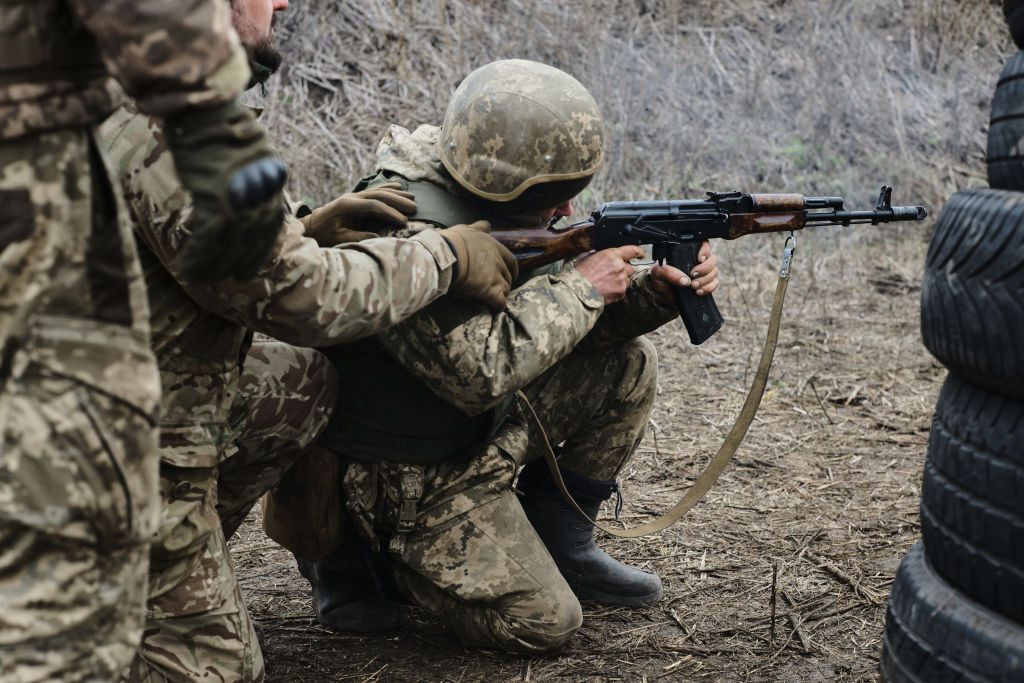
The United Kingdom has imposed new sanctions on Russian individuals and an organization involved in the use and transfer of chemical weapons in Ukraine, the British government announced on July 7.
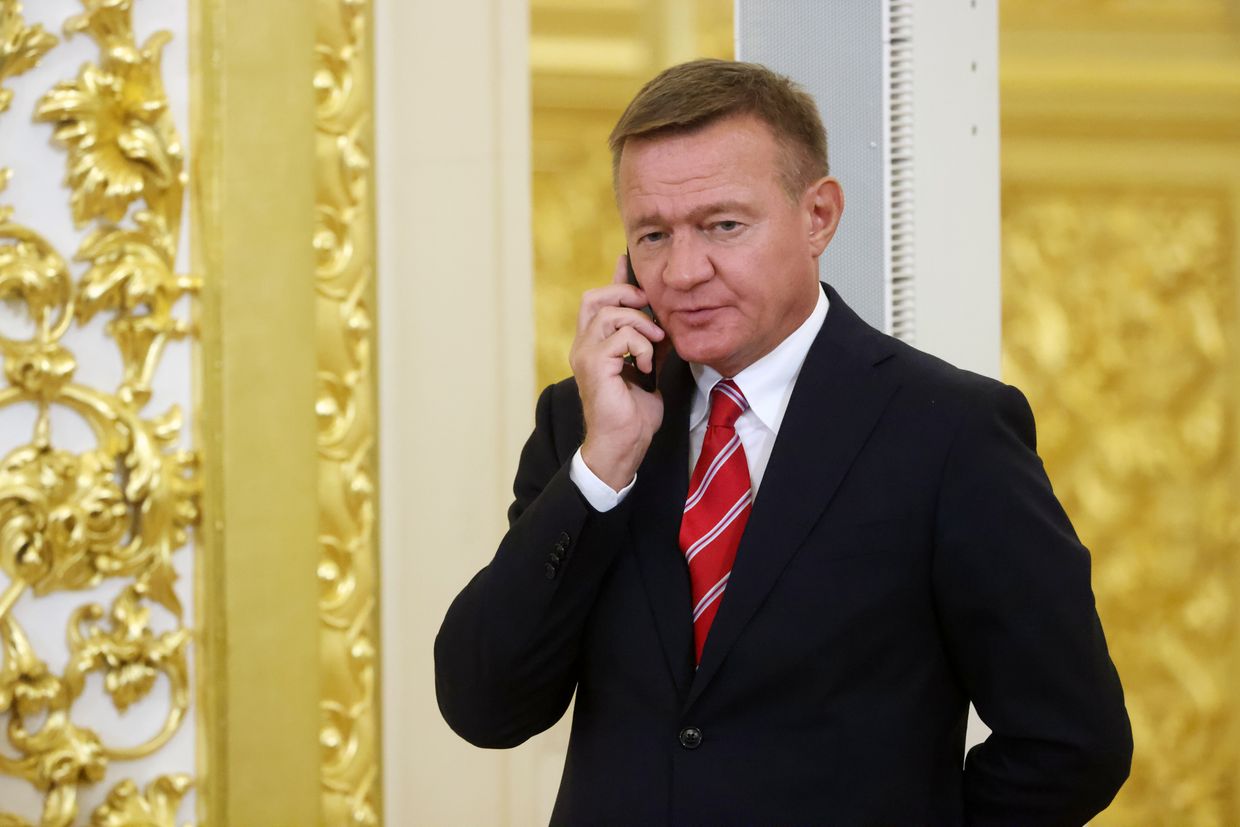
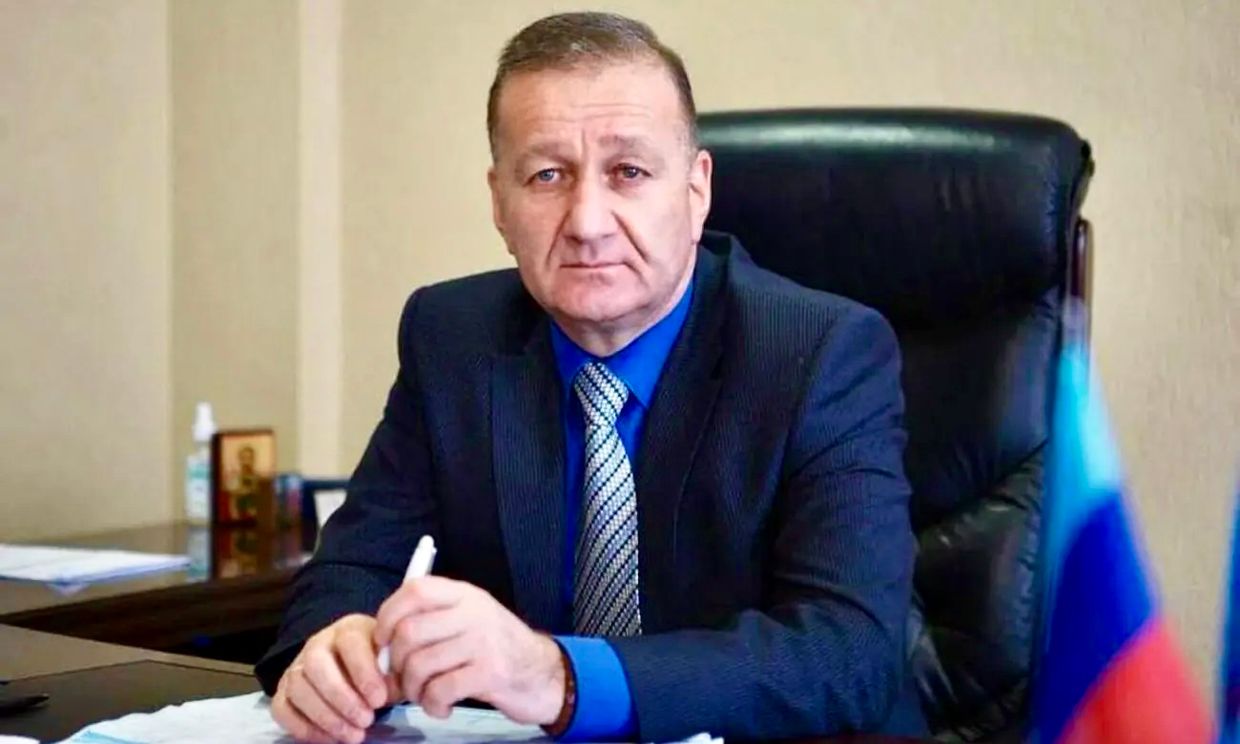
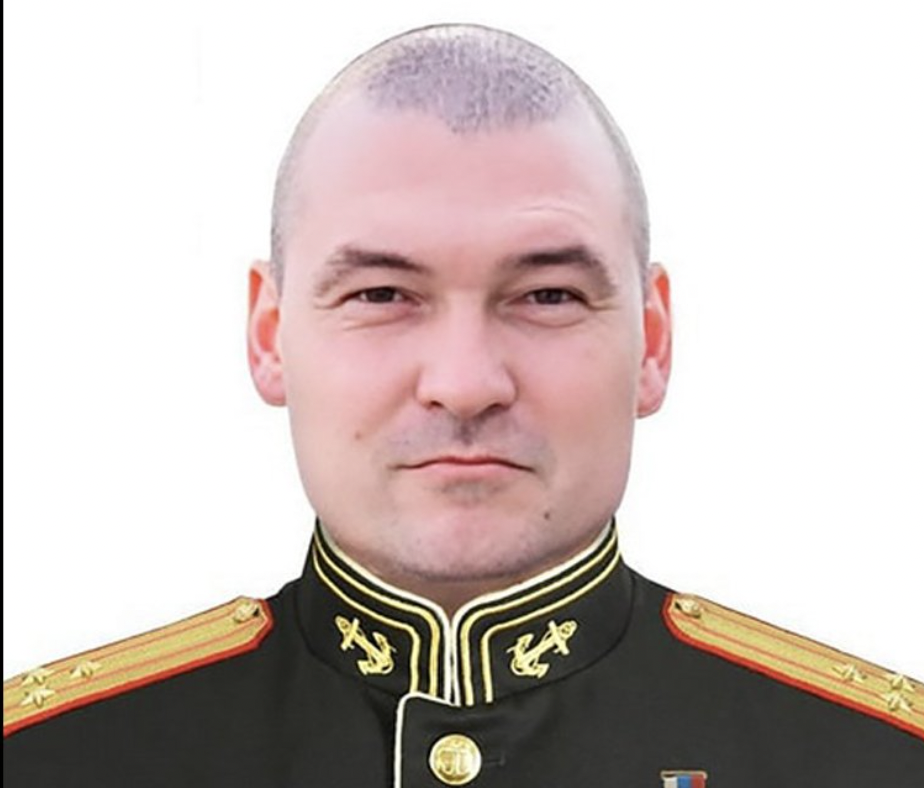
According to the updated sanctions list published on the U.K. government's official website, the new measures target Russia's Scientific Research Institute of Applied Chemistry, as well as Lieutenant General Alexei Rtishchev, head of Russia's Radiological, Chemical and Biological Defense Troops, and his deputy, Andrei Marchenko.
The U.K. government said that both of them "have been responsible for, engaging in, providing support for, or promoting prohibited activity related to chemical weapons."
The Scientific Research Institute of Applied Chemistry was sanctioned for providing Russia's military with handheld chemical grenades, which have been used against Ukrainian Armed Forces.
The new British sanctions come amid growing international concern over Russia's escalating use of banned chemical agents in its war against Ukraine.
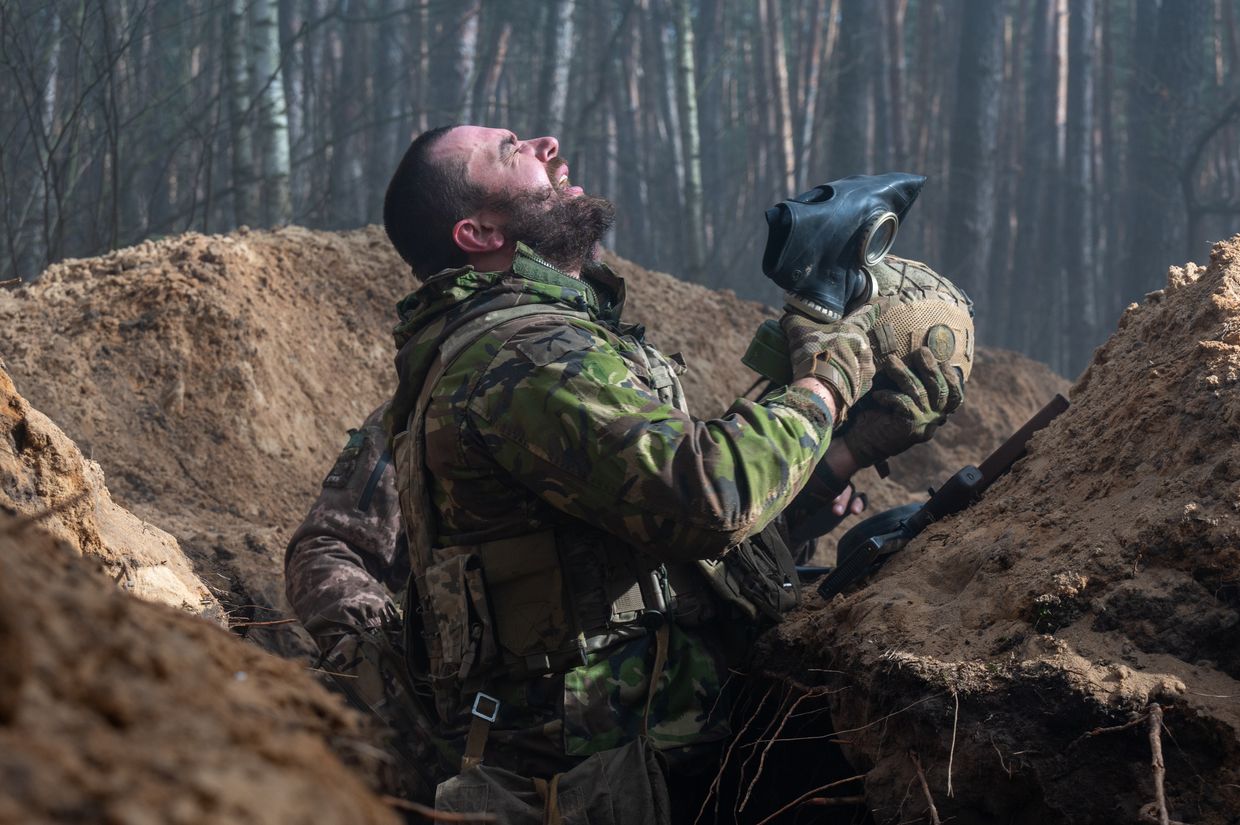
On July 4, the Netherlands Military Intelligence and Security Service (MIVD) reported that Russian troops are increasingly deploying chemical weapons— including chloropicrin, a highly toxic World War I-era agent, in the field.
The agents are reportedly dropped by drones to flush Ukrainian soldiers from trenches, leaving them exposed to further drone or artillery strikes. While Russia previously used tear gas, the confirmed use of chloropicrin, a substance banned under international law, is "absolutely unacceptable," Dutch Defense Minister Ruben Brekelmans said.
Ukrainian authorities say Russia has conducted more than 9,000 chemical attacks since the full-scale invasion began in 2022. At least three Ukrainian soldiers have reportedly died from direct exposure.
The European Bank for Reconstruction and Development (EBRD) will enable Ukrainian banks to provide up to 900 million euros ($1.05 billion) in new loans by sharing credit risks, the EBRD announced in a press release on July 7.The loans will target companies in agribusiness, manufacturing, pharmaceuticals, transport and logistics, as well as energy security projects.The mechanism will be announced at the Ukraine Recovery Conference (URC) in Rome on July 10-11. This represents the largest risk-shar
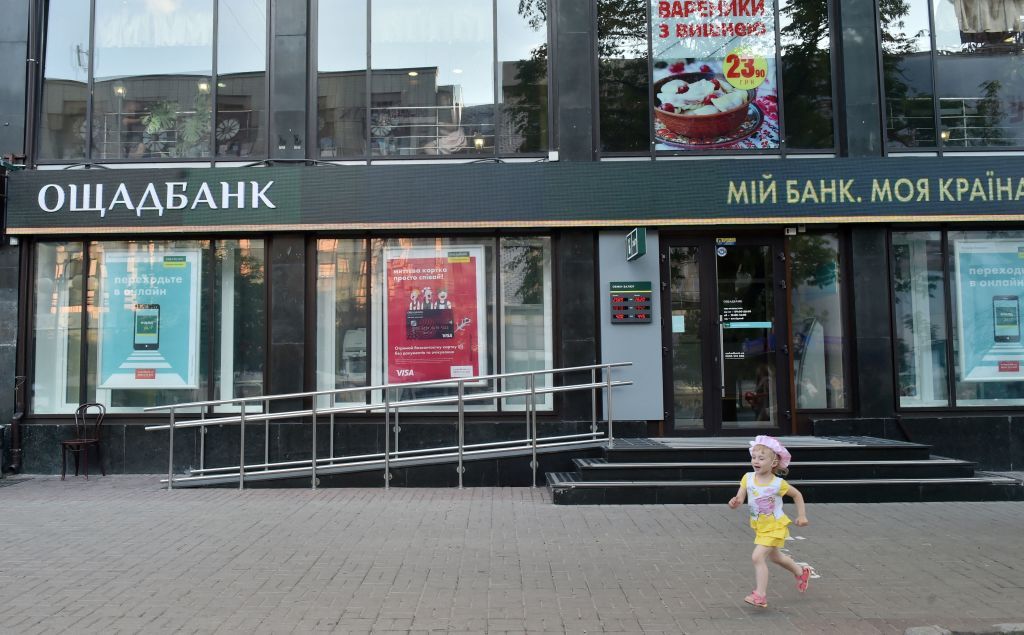
The European Bank for Reconstruction and Development (EBRD) will enable Ukrainian banks to provide up to 900 million euros ($1.05 billion) in new loans by sharing credit risks, the EBRD announced in a press release on July 7.
The loans will target companies in agribusiness, manufacturing, pharmaceuticals, transport and logistics, as well as energy security projects.
The mechanism will be announced at the Ukraine Recovery Conference (URC) in Rome on July 10-11. This represents the largest risk-sharing facility implemented in Ukraine since the war began, according to the EBRD's press release.
Russian forces have damaged most of Ukraine's thermal power plants and about 30% of power stations, disrupting nearly two-thirds of the country's total electricity generation, the bank says.
The EU, together with other EBRD donors, has developed plans to de-risk renewable energy investments to attract more private capital, which they will announce at the URC.
Nearly one-third of EBRD's wartime financing to Ukraine — 2.4 billion euros ($2.8 billion) — has gone to the energy sector. This includes support for state-owned electricity transmission and gas companies, as well as financing for hydropower and small-scale distributed generation.
In a pre-URC press release, the EBRD also expressed interest in supporting the development of a natural graphite deposit in Ukraine following the U.S.-Ukraine minerals agreement. Graphite is a strategic material used in batteries and defense applications.
The bank will launch the second phase of digitizing Ukraine's paper-based geological data archive to make information about mineral deposits more accessible, the EBRD reports.
Since Russia's full-scale invasion in 2022, the EBRD has invested over 7.2 billion euros ($8.4 billion) in Ukraine's economy.
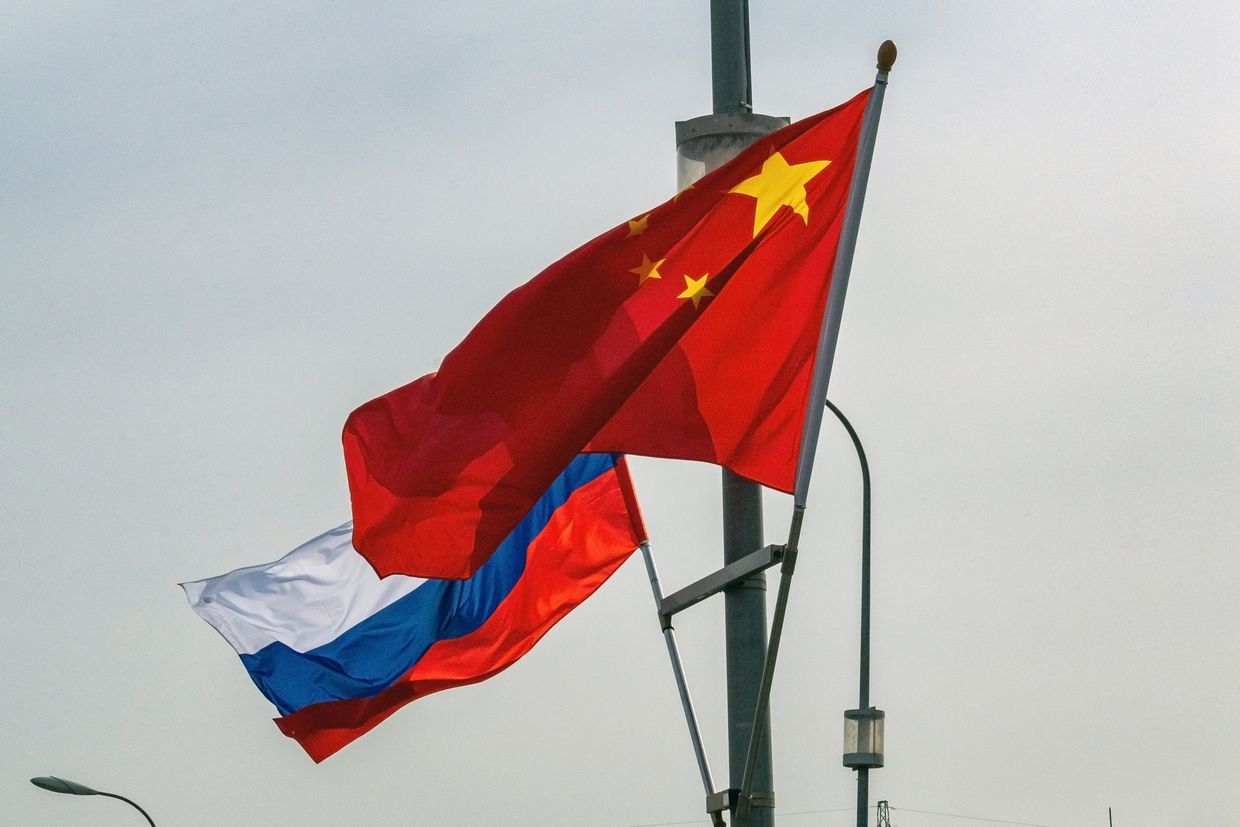
Russia’s growing ability to sustain weapons production despite Western sanctions is being driven by a flow of Chinese components and materials, Vladyslav Vlasiuk, the Ukrainian president’s commissioner for sanctions, told journalists on July 7.Vlasiuk’s statement comes as Russia escalates its drone and missile strikes on Ukraine, while the U.S. continues to hold back on imposing tougher sanctions against Moscow and foreign-made components are still being found in Russian weapons used in the atta
Russia’s growing ability to sustain weapons production despite Western sanctions is being driven by a flow of Chinese components and materials, Vladyslav Vlasiuk, the Ukrainian president’s commissioner for sanctions, told journalists on July 7.
Vlasiuk’s statement comes as Russia escalates its drone and missile strikes on Ukraine, while the U.S. continues to hold back on imposing tougher sanctions against Moscow and foreign-made components are still being found in Russian weapons used in the attacks.
Ukraine has previously documented that Chinese companies have contributed electronics and materials used in the production of these drones.
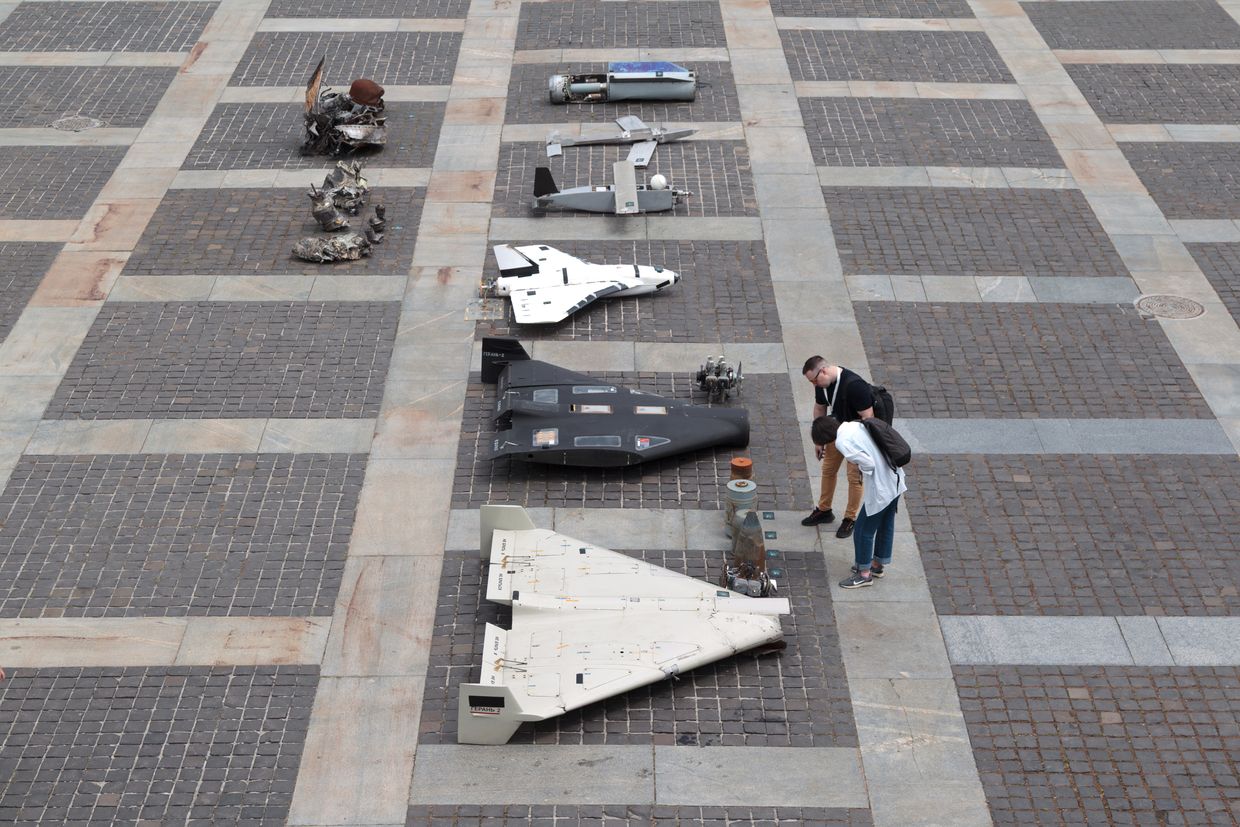
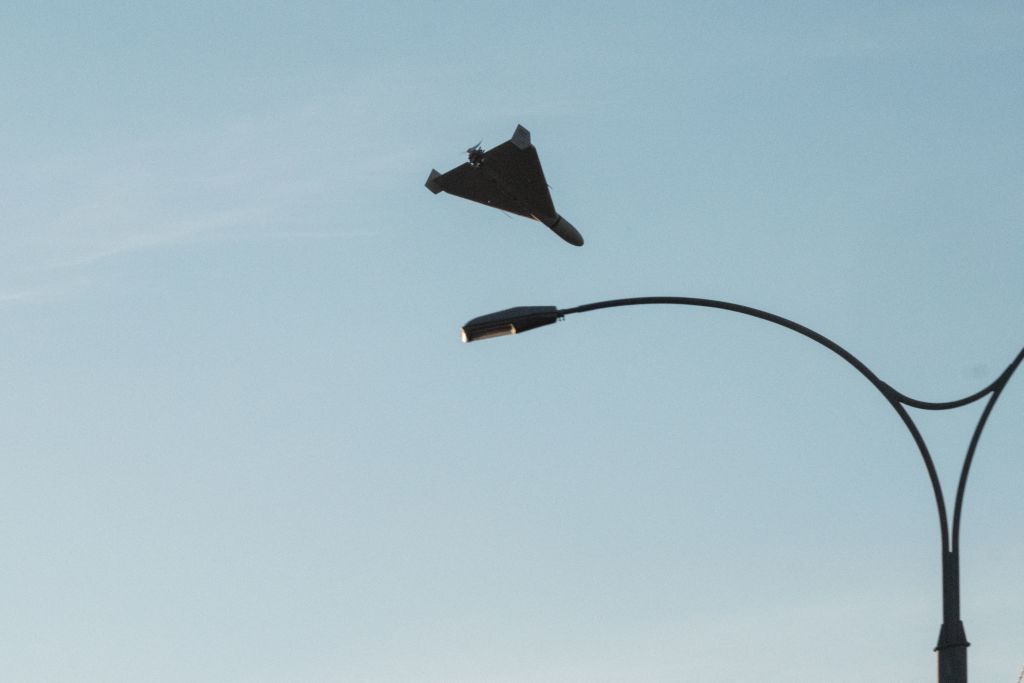
Just days earlier, after a large-scale Russian attack on July 4, Foreign Minister Andrii Sybiha shared on social media a photo of a component from a Shahed-136/Geran-2 combat drone discovered in Kyiv. According to Sybiha, the part was manufactured in China and delivered recently.
"The trend of China’s (role) is increasing," Vlasiuk told journalists.
He said that the presence of Chinese-made components and materials in Russian weapons is on the rise, adding that Beijing is expanding its technological capabilities and can now replicate some American technologies.
What an irony. Following tonight's massive Russian air attack on Ukraine, we discovered in Kyiv a component of a Russian-Iranian "Shahed-136"/"Geran-2" combat drone, which was made in China and supplied just recently.
When asked by Kyiv about the Chinese parts found in Russian weapons, Beijing responded by claiming that such support is "non-lethal," the president's commissioner for sanctions said.
Beijing remains one of Russia's key wartime partners, helping Moscow evade Western sanctions and emerging as the leading supplier of dual-use goods used by the Russian defense industry.
In April, President Volodymyr Zelensky said that China, alongside Iran and North Korea, is supplying weapons to Russia.
His remarks followed reports that Ukrainian soldiers had captured Chinese nationals fighting together with Russia's army in Donetsk Oblast. Later, Zelenskyrevealed that at least "several hundred" Chinese nationals are fighting on Russia's side in Ukraine.
Ukraine has already sanctioned several Chinese companies tied to Russia’s war effort.
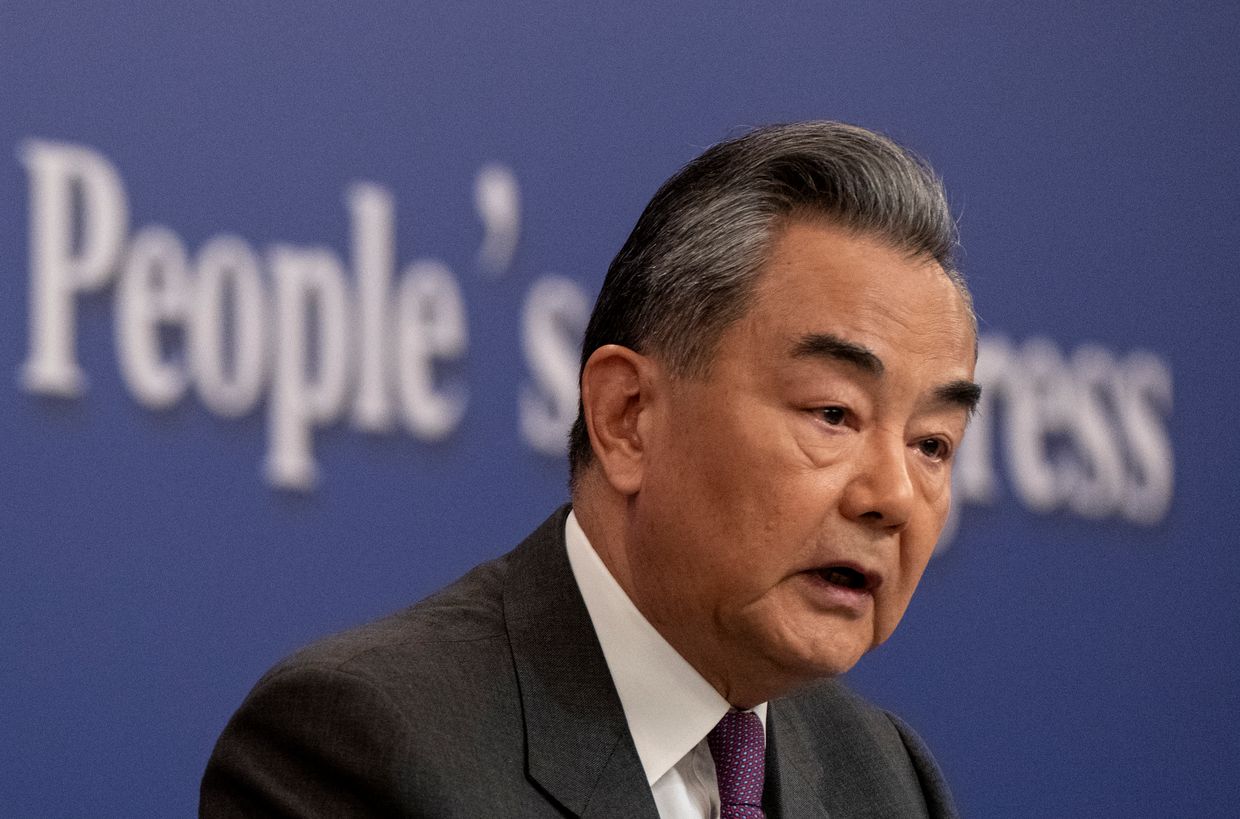
The South China Morning Post reported that China's Foreign Minister Wang Yi reportedly told the EU's top diplomat Kaja Kallas on July 3 that the country cannot afford for Russia to lose the war in Ukraine amid fears Washington would shift focus towards Beijing.
Editor's note: This story was updated with the latest information from the Kharkiv Oblast Prosecutor's Office.Russian drones struck Ukrainian conscription offices in the cities of Kharkiv and Zaporizhzhia early on July 7, injuring at least three people in Kharkiv, while also damaging military infrastructure, Ukraine's Ground Forces said. At least one soldier was wounded in Zaporizhzhia. The attack comes as Russia increases its efforts to disrupt mobilization in Ukraine. "As a result of the attac
Editor's note: This story was updated with the latest information from the Kharkiv Oblast Prosecutor's Office.
Russian drones struck Ukrainian conscription offices in the cities of Kharkiv and Zaporizhzhia early on July 7, injuring at least three people in Kharkiv, while also damaging military infrastructure, Ukraine's Ground Forces said. At least one soldier was wounded in Zaporizhzhia.
The attack comes as Russia increases its efforts to disrupt mobilization in Ukraine.
"As a result of the attack, (Russian) drones hit the building of the Kharkiv conscription office and the surrounding area, as well as near the Zaporizhzhia conscription office," the Ground Forces said.
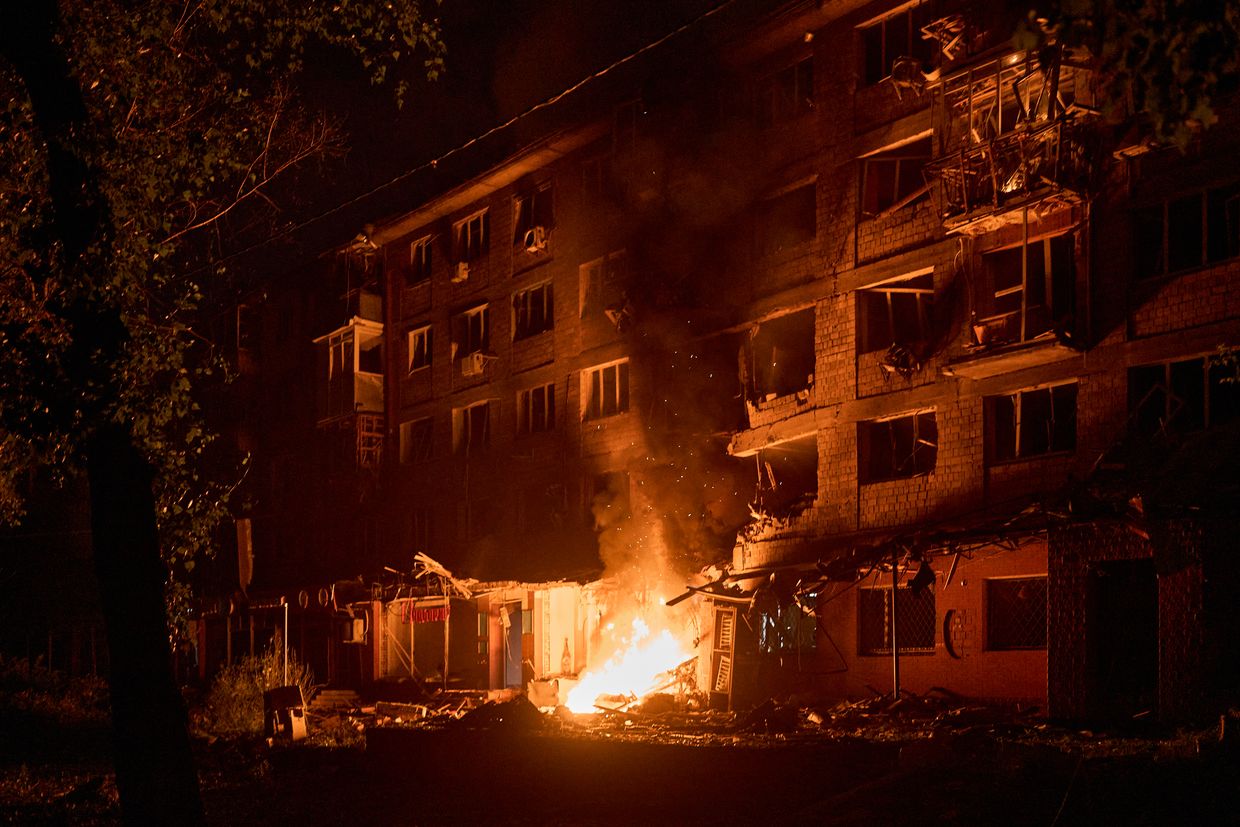
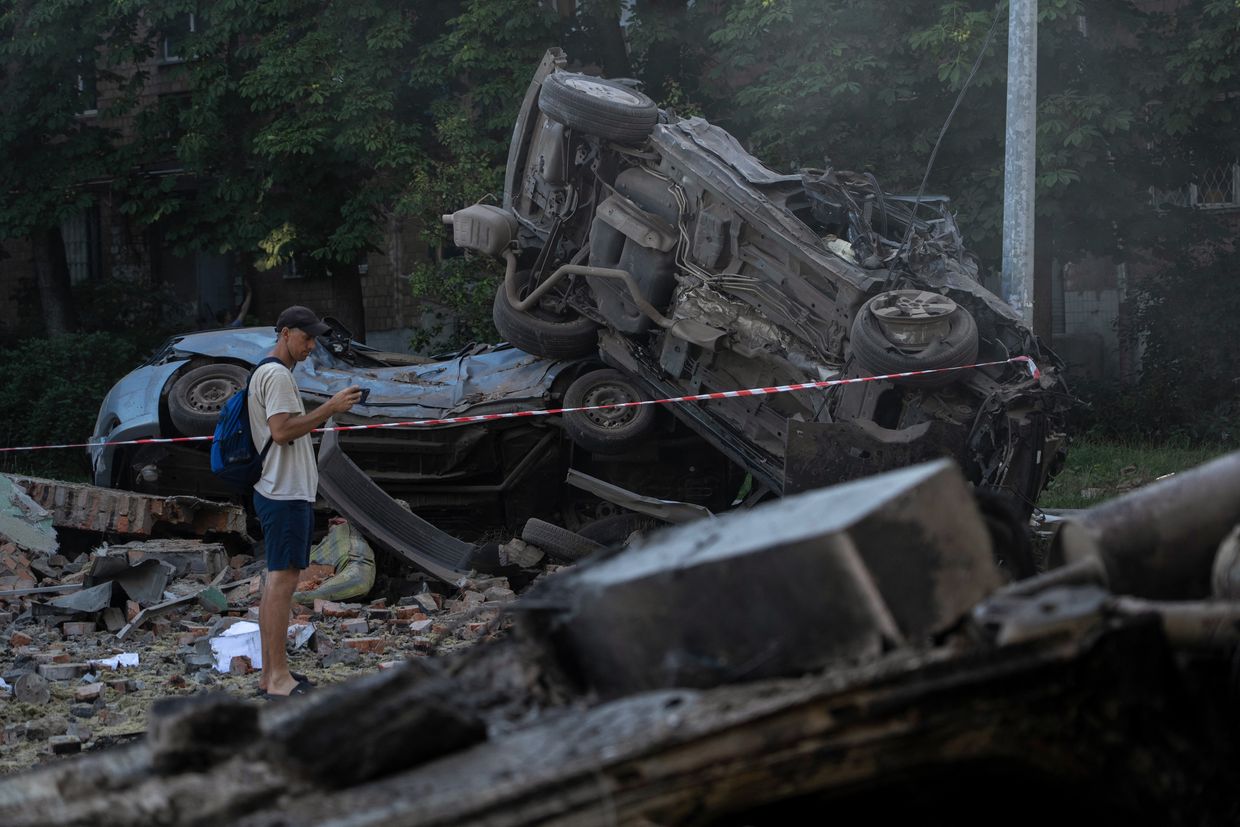
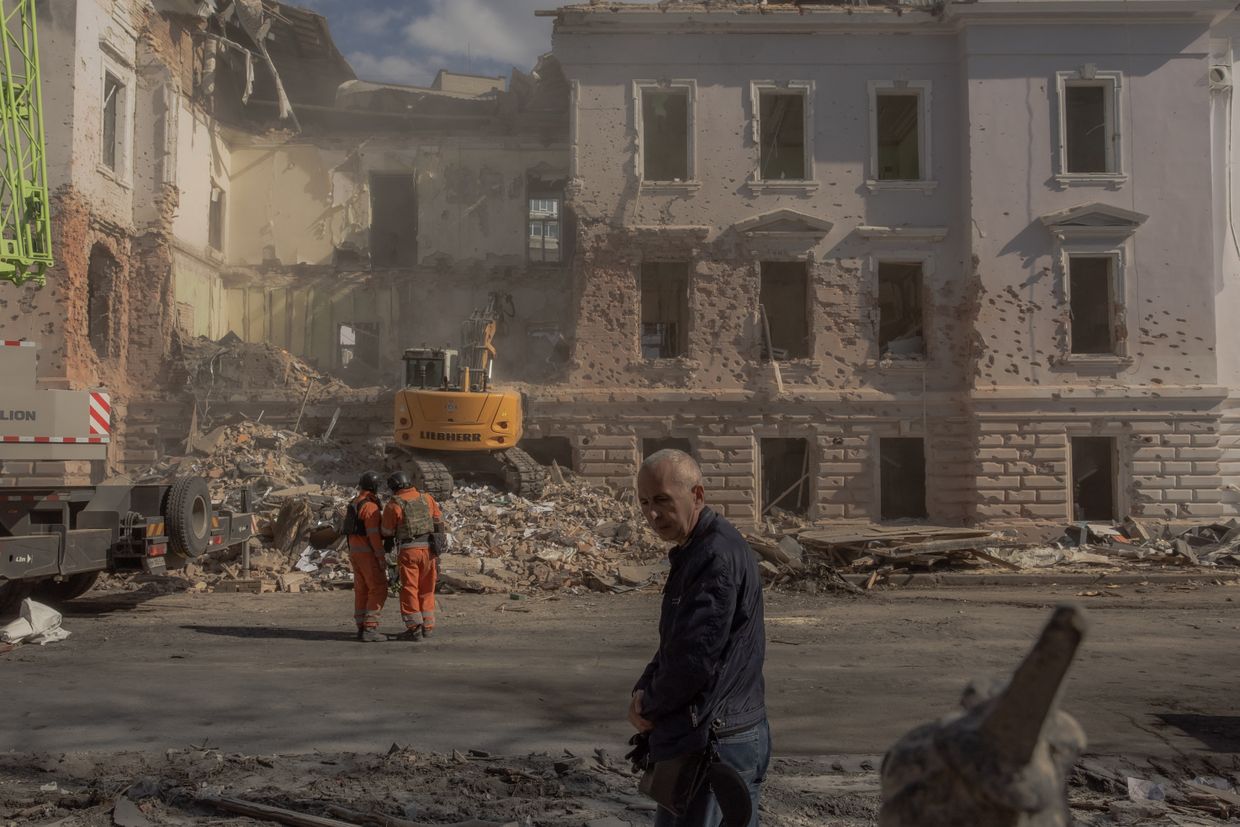
Two other districts of Kharkiv came under attack that same day, in which one woman was killed and over 80 people, including eight children, were reported injured or suffered shock in Kharkiv, according to the local prosecutor's office.
The strikes are the latest in what Ukrainian military officials describe as a deliberate Russian campaign to target enlistment infrastructure and undermine mobilization efforts.
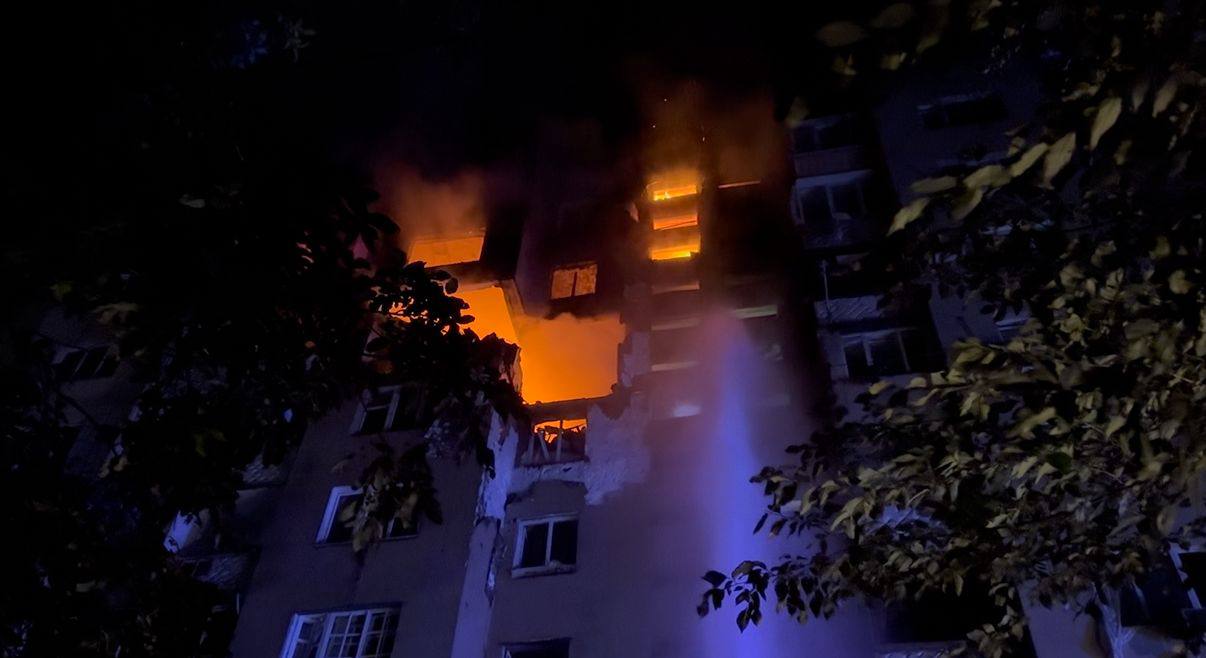
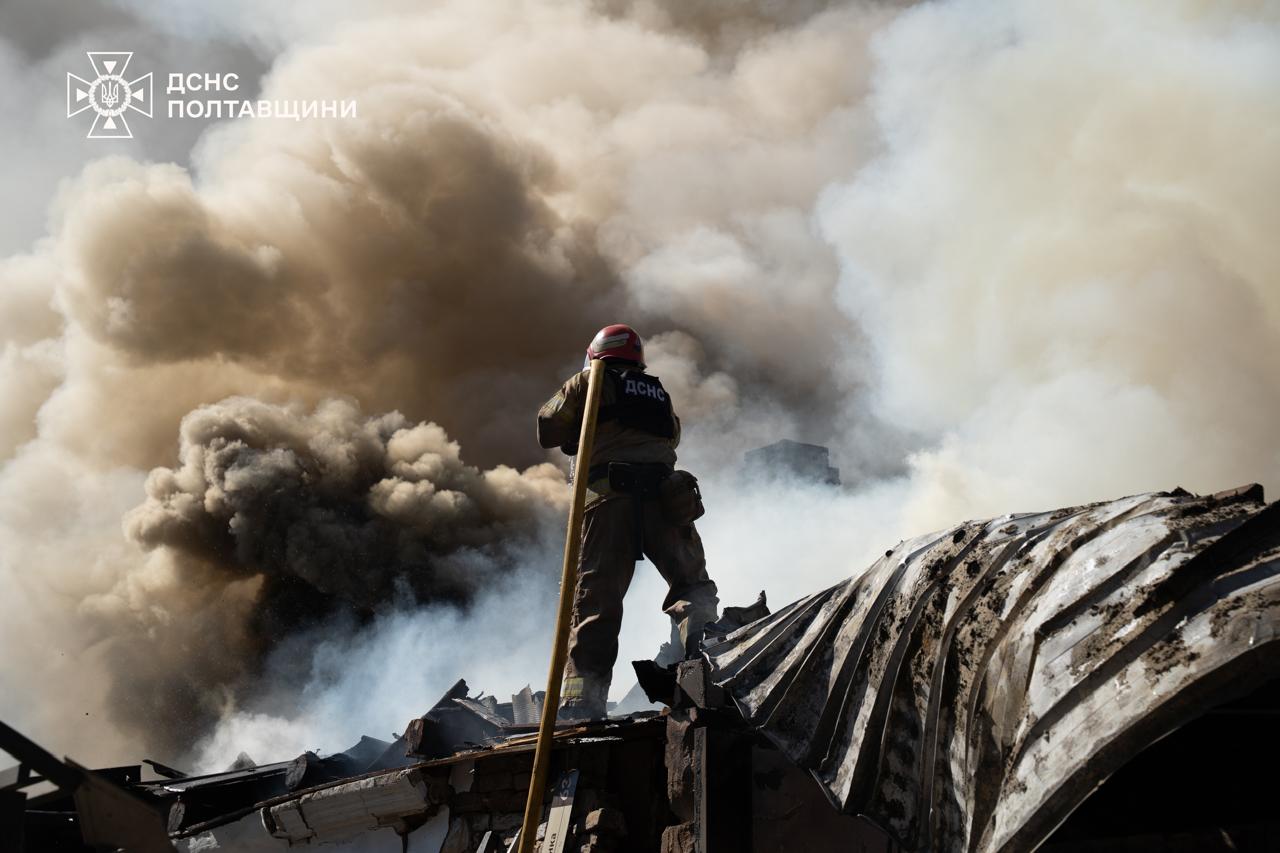
On July 3, a deadly Russian strike on the central city of Poltava killed two people and injured 47 others. The attack caused a fire at the city's military conscription office and heavily damaged nearby civilian buildings, including civilian houses.
Speaking on national television after the Poltava attack, Ukraine's Ground Forces spokesperson Vitalii Sarantsev said Russia was intentionally striking enlistment centers to disrupt Ukraine's ability to replenish its Armed Forces.
"We will continue to strengthen our army, train our troops, and involve more people in defense to deliver a strong response to the enemy," Sarantsev said.
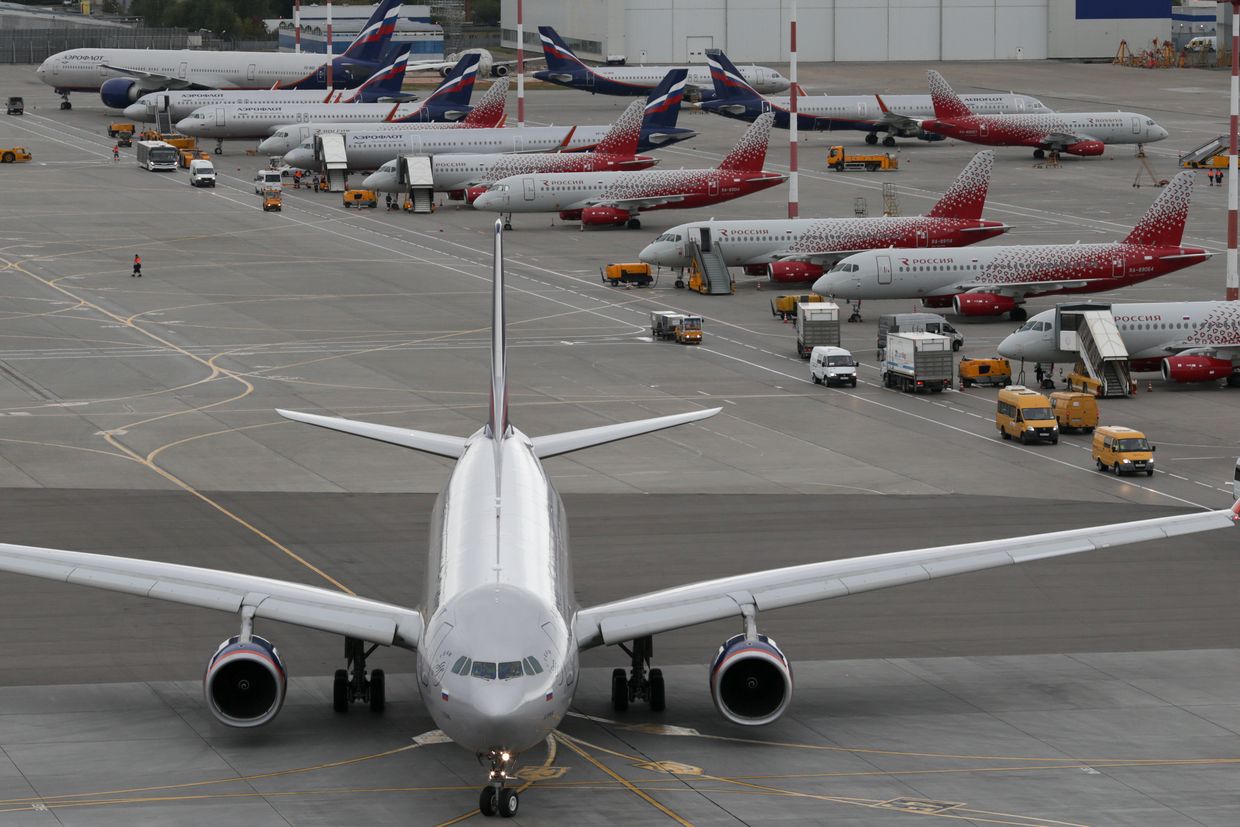
Major shutdowns at Russia's key airports on July 5–6 caused by Ukrainian drone attacks could cost Russian airlines around 20 billion rubles ($254 million), the pro-Kremlin outlet Kommersant reported on July 7, citing airline representatives and industry experts. Since the start of mass disruptions on July 5, a total of 485 flights were canceled, 88 were diverted to alternate airports, and another 1,900 were delayed across major hubs, according to Russia's aviation agency Rosaviatsiya.The drone a
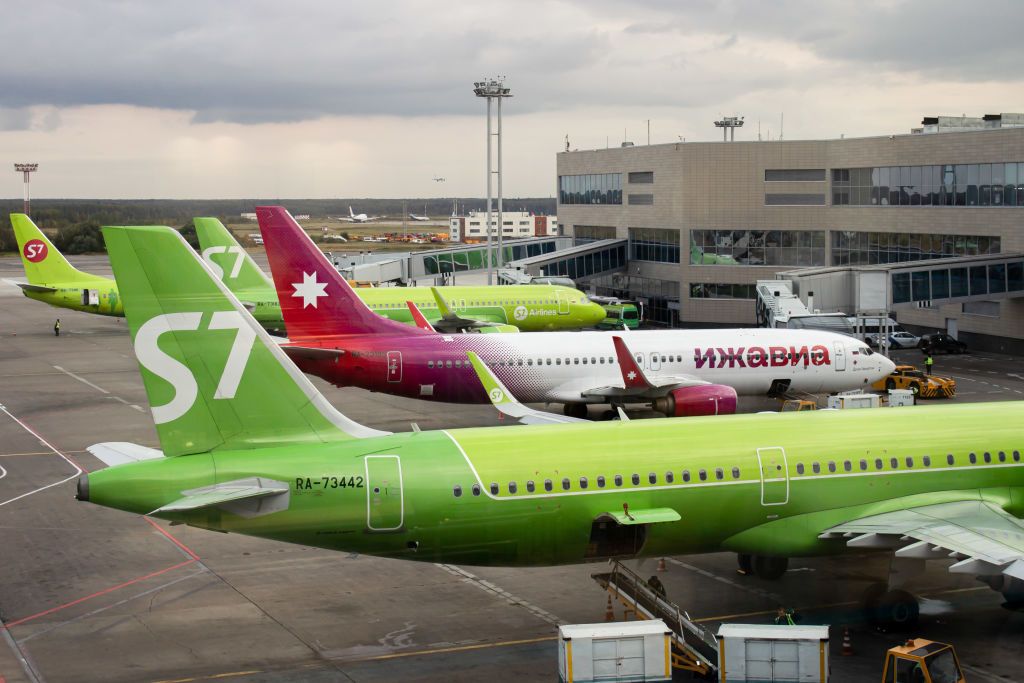
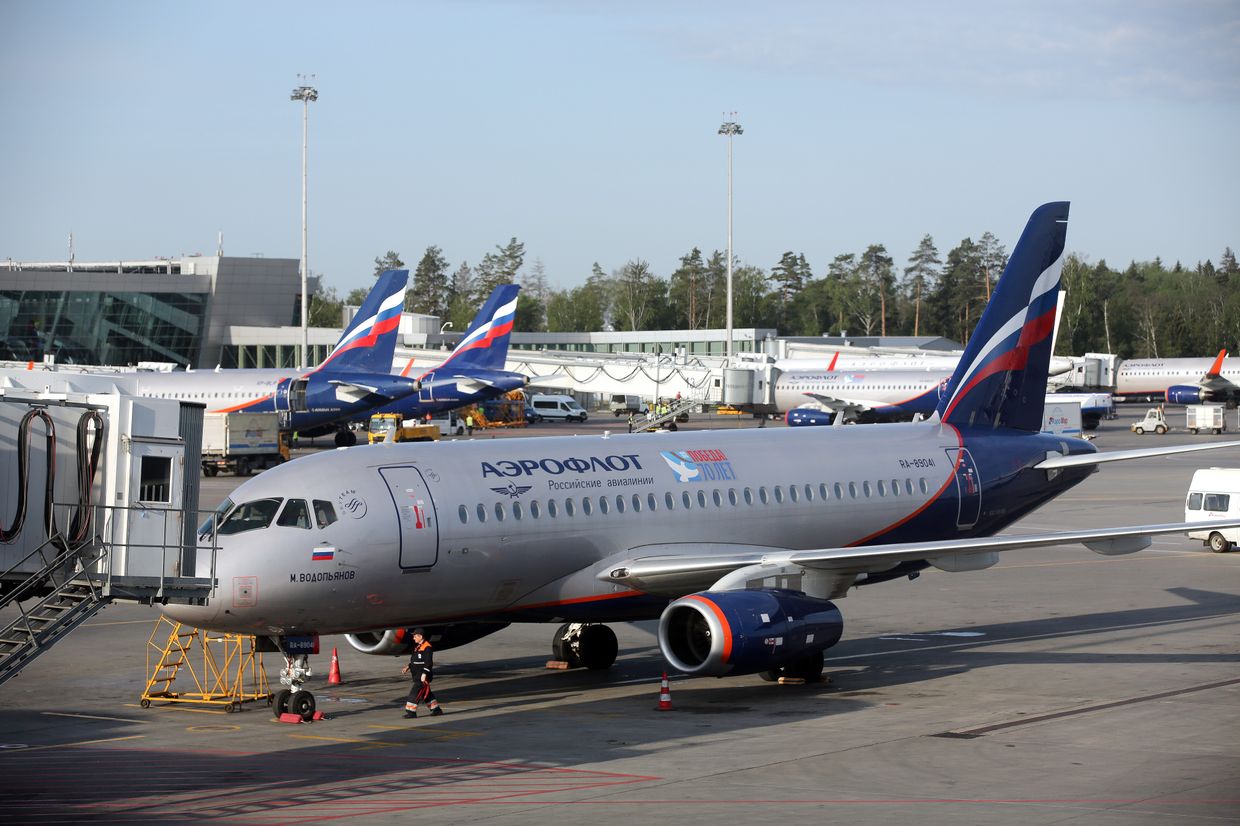
Major shutdowns at Russia's key airports on July 5–6 caused by Ukrainian drone attacks could cost Russian airlines around 20 billion rubles ($254 million), the pro-Kremlin outlet Kommersant reported on July 7, citing airline representatives and industry experts.
Since the start of mass disruptions on July 5, a total of 485 flights were canceled, 88 were diverted to alternate airports, and another 1,900 were delayed across major hubs, according to Russia's aviation agency Rosaviatsiya.
The drone attacks prompted operational shutdowns that triggered widespread logistical and economic consequences. Over 94,000 passengers were housed in hotels, 43,000 refunds were processed, and hundreds of thousands of vouchers for food and drinks were issued.
The estimated financial toll includes direct airline losses from canceled Boeing 737-800 flights, which can run between 15 million and 23 million rubles ($190,000–$292,000) each depending on the route, as well as costs for delays, diversions, and passenger care.
Experts say the true cost could be far higher. Dmitry Datsykov of EXPO.UAV estimated tens of billions of rubles in additional indirect losses, including missed connections, taxi and hotel losses, and supply chain disruptions.
Ukraine has not publicly claimed responsibility for the disruptions but has acknowledged that its drone strategy aims to undermine Russian logistics and force the war's consequences closer to the Russian public.
The economic fallout comes amid growing scrutiny of Russia's transport sector. On July 7, President Vladimir Putin dismissed Transport Minister Roman Starovoit following the aviation chaos and a high-profile ammonia leak at the Ust-Luga port.
The Kremlin has increasingly struggled to protect critical infrastructure from Kyiv's deep-strike drone campaign, which in recent months has expanded to include refineries, radar plants, and now Russia's busiest airports.
Editor's note: This is a developing story and is being updated.Russia's former Transport Minister Roman Starovoit shot himself dead in Odintsovo following his dismissal by President Vladimir Putin on July 7, the pro-government newspaper Izvestia reported, citing unnamed sources.Starovoit's ouster came after nearly 500 flights were grounded at major Russian airports on July 5–6 due to security threats from Ukrainian drone attacks.The following day, an explosion aboard the Eco Wizard tanker at the
Editor's note: This is a developing story and is being updated.
Russia's former Transport Minister Roman Starovoit shot himself dead in Odintsovo following his dismissal by President Vladimir Putin on July 7, the pro-government newspaper Izvestia reported, citing unnamed sources.
Starovoit's ouster came after nearly 500 flights were grounded at major Russian airports on July 5–6 due to security threats from Ukrainian drone attacks.
The following day, an explosion aboard the Eco Wizard tanker at the Ust-Luga port in Leningrad Oblast triggered an ammonia leak, adding to the crisis engulfing Russia's transportation sector.
Starovoit, sanctioned by Ukraine and Western countries for his role in the war against Ukraine, had served as governor of Russia's Kursk Oblast before being appointed transport minister in May 2024.
According to Russian media, Starovoit's body was found near Moscow. Preliminary findings suggest that the suicide may be linked to a possible criminal case.
Media outlets report that the former minister shot himself using an honorary firearm he had received from the Interior Ministry in 2023.
According to media reports, former Kursk Oblast official Aleksei Smirnov, who had previously served as Starovoit's deputy, had provided testimony implicating Starovoit. Smirnov himself was arrested earlier on suspicion of embezzling 1 billion rubles (over $12 million) during the construction of defensive structures in the border region.
An investigation into the large-scale theft of state funds in Kursk Oblast is currently underway, with several of Starovoit's former deputies remaining under suspicion, including Smirnov, who briefly served as acting governor.
State-controlled RIA Novosti, citing Russia's Investigative Committee, reported that Starovoit's body was discovered inside his private vehicle with a gunshot wound. Investigative teams from Russia's Main Investigative Directorate are reportedly working at the scene to determine the exact circumstances. The primary theory under consideration is suicide.
The timing of the death remains unclear. Andrei Kartapolov, head of the State Duma Defense Committee, confirmed the death to RTVI, stating only that it occurred "quite some time ago," without elaborating further.
Long-range Ukrainian drones struck the Ilsky oil refinery in Russia's Krasnodar Krai on July 7, hitting one of the facility's technological workshops, a source in Ukraine's military intelligence (HUR) told the Kyiv Independent. Located roughly 500 kilometers (311 miles) from Ukrainian-controlled territory, the refinery is among the largest in southern Russia, producing over 6 million tons of fuel annually. It is involved in the reception, storage, and processing of hydrocarbons and distributes r
Long-range Ukrainian drones struck the Ilsky oil refinery in Russia's Krasnodar Krai on July 7, hitting one of the facility's technological workshops, a source in Ukraine's military intelligence (HUR) told the Kyiv Independent.
Located roughly 500 kilometers (311 miles) from Ukrainian-controlled territory, the refinery is among the largest in southern Russia, producing over 6 million tons of fuel annually.
It is involved in the reception, storage, and processing of hydrocarbons and distributes refined products via road and rail. The refinery is part of Russia's military-industrial complex and plays a direct role in supporting Moscow's war effort, the source said.
The Russian regional operational headquarters claimed that "drone debris" fell on the oil refinery.
The strike marks a renewed wave of Ukrainian attacks on Russian oil infrastructure, following a months-long pause since March. On July 1, Ukrainian drones struck the Saratovorgsintez oil refinery in Russia's Saratov Oblast.
Kyiv has targeted dozens of refineries, oil depots, and military-industrial sites since the start of Russia's full-scale invasion in 2022. Winter drone attacks forced at least four Russian refineries to temporarily shut down.
This is the second known strike on the Ilsky refinery. Ukrainian drones, operated by the Security Service (SBU) and Special Operations Forces (SSO), previously targeted the facility on Feb. 17, causing a fire.
Krasnodar Krai, a strategic region along Russia's Black Sea coast, has increasingly come under Ukrainian drone attacks as Kyiv extends the range of its strikes deep into Russian territory.
Editor's note: This story was updated with a statement made by Ukraine's General Staff. Ukraine's military confirmed on July 7 that it targeted a chemical plant in Russia's Moscow Oblast used for producing ammunition and explosives, the General Staff said.The plant, located 88 kilometers (55 miles) northeast of Moscow, produces industrial and military-grade chemicals, including explosives, ammunition components, and aircraft protection systems. Established in 1915, the plant is one of the city's
Editor's note: This story was updated with a statement made by Ukraine's General Staff.
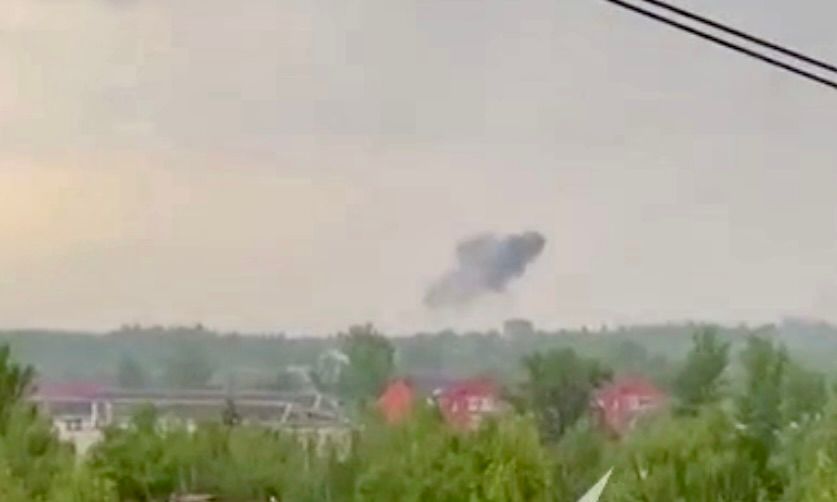
Ukraine's military confirmed on July 7 that it targeted a chemical plant in Russia's Moscow Oblast used for producing ammunition and explosives, the General Staff said.
The plant, located 88 kilometers (55 miles) northeast of Moscow, produces industrial and military-grade chemicals, including explosives, ammunition components, and aircraft protection systems.
Established in 1915, the plant is one of the city's largest employers and plays a key role in Russia's defense-industrial complex. Its location in Krasnozavodsk places it roughly 530 kilometers (329 miles) from the Ukrainian border.
It is affiliated with the Russian state defense conglomerate Rostec and supplies the Defense Ministry, Interior Ministry, Federal Security Service (FSB), and other law enforcement agencies.
Residents of Moscow region report attack on chemical plant
Krasnozavodsk residents report an attack on the Krasnozavodsk chemical plant in local chat groups.
Moscow Oblast authorities have not officially confirmed the attack. Russia's Defense Ministry claimed that air defenses intercepted or destroyed 91 Ukrainian drones across multiple regions, including eight over Moscow Oblast.
In a statement released later on July 7, Ukraine's General Staff confirmed that units from its Unmanned Systems Forces, in coordination with other elements of the Defense Forces, carried out a precision strike against the Krasnozavodsk Chemical Plant.
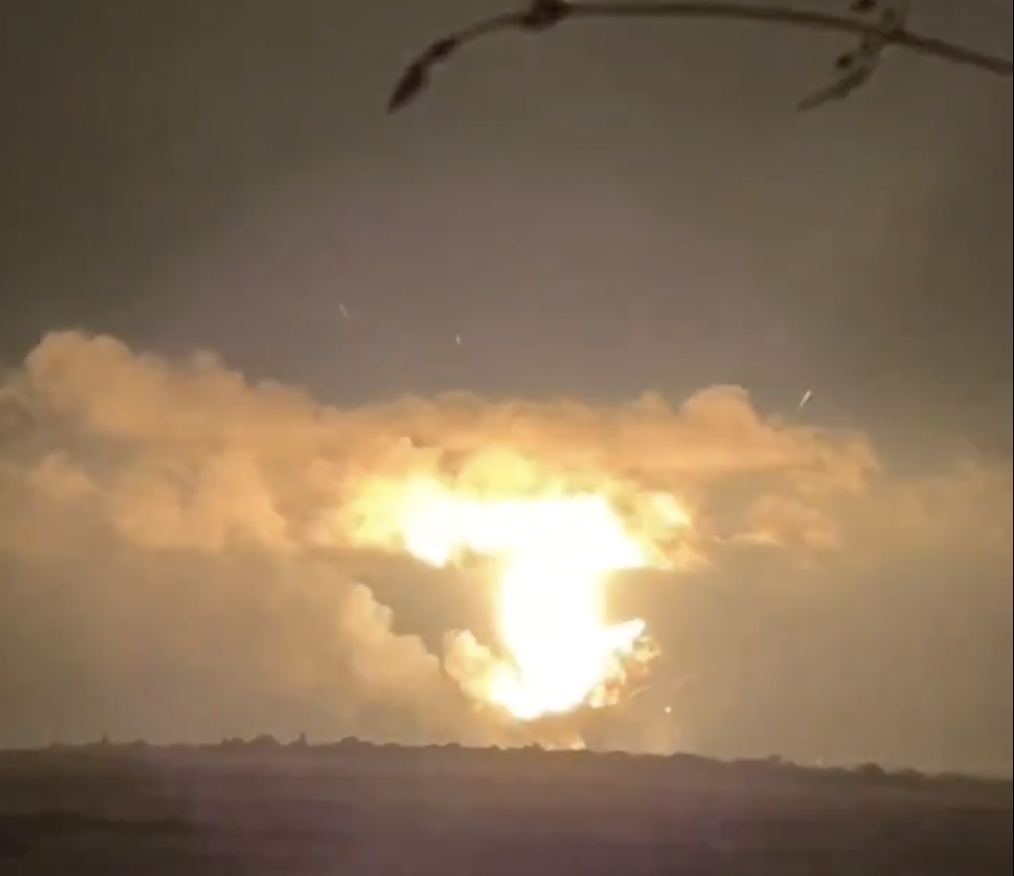
The facility was specifically targeted to disrupt Russia's ability to produce explosive materials and ammunition, including thermobaric warheads used in Shahed-type drones.
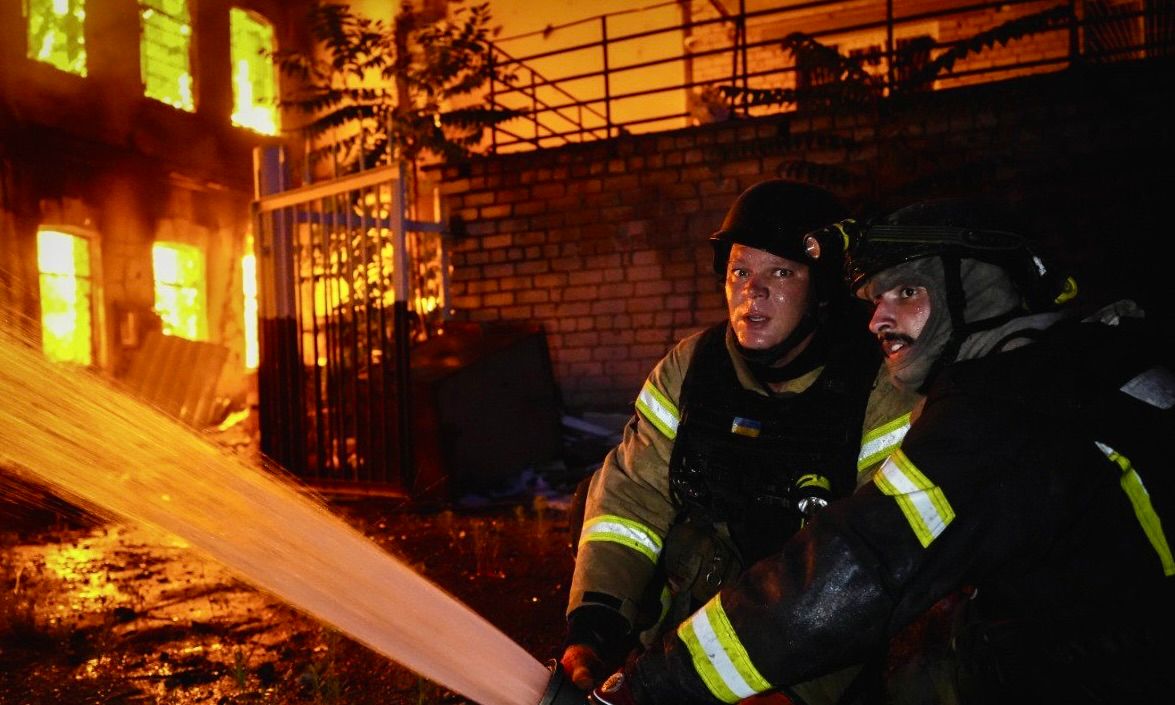
"A series of explosions was recorded in the area of Krasnozavodsk, and firefighting equipment was seen moving through neighboring settlements," the statement read. The results of the strike are still being assessed, it added.
The Kyiv Independent could not independently verify the reports.
The reported strike comes as part of Ukraine's broader campaign to disrupt Russian logistics, weapons production, and supply lines far behind the front line.
In recent months, Ukrainian drones have hit multiple industrial and military sites across Russia, including oil depots, airfields, and electronics facilities.
At least 12 civilians were killed and 69 others injured in Russian attacks across Ukraine over the past 24 hours, regional authorities reported on July 7.Ukraine's Air Force said Russia launched 101 drones overnight, including Iranian-designed Shahed-type attack drones, as well as four S-300/400 guided missiles. Air defenses intercepted 75 drones, while another 17 likely served as radar-jamming decoys.The drone and missile assault was countered using aviation, electronic warfare, mobile fire tea
At least 12 civilians were killed and 69 others injured in Russian attacks across Ukraine over the past 24 hours, regional authorities reported on July 7.
Ukraine's Air Force said Russia launched 101 drones overnight, including Iranian-designed Shahed-type attack drones, as well as four S-300/400 guided missiles. Air defenses intercepted 75 drones, while another 17 likely served as radar-jamming decoys.
The drone and missile assault was countered using aviation, electronic warfare, mobile fire teams, and air defense systems, the military said.
The heaviest casualties occurred in Donetsk Oblast, where seven civilians were killed — four in Kostiantynivka, two in Druzhkivka, and one in Novohryhorivka — and 15 others were injured, Governor Vadym Filashkin reported.
In Kharkiv Oblast, 27 people were injured, including three children, according to Governor Oleh Syniehubov. At least three victims remain hospitalized in moderate condition, and the number may rise.
Russian forces also attacked critical and residential infrastructure in Kherson Oblast, killing two civilians and injuring nine, Governor Oleksandr Prokudin said.
Two more civilians were killed in Sumy Oblast in a drone strike, local authorities said. Another person was injured. In Odesa Oblast, one civilian was killed and infrastructure was damaged in an attack on the regional capital, Governor Oleh Kiper reported.
In Zaporizhzhia, at least 12 people were injured in separate attacks throughout the day, including 10 during a drone strike on the city center, Governor Ivan Fedorov said.
Five civilians were injured in Dnipropetrovsk Oblast — two women and three men — in the latest wave of attacks, according to Governor Serhii Lysak.
The mass strikes come amid Russia's continued rejection of ceasefire proposals and its growing use of aerial assaults to pressure Ukrainian defenses.
Kyiv has repeated its urgent appeals to Western partners to ramp up deliveries of air defense systems to protect civilian areas from drone and missile attacks.
Russian President Vladimir Putin dismissed Transport Minister Roman Starovoit on July 7, following a series of high-profile disruptions to Russia's aviation and shipping sectors.The official decree was published on Russia's legal information portal. No reason was given, but Starovoit's departure comes after nearly 300 flights were grounded at major Russian airports on July 5–6 due to security threats from Ukrainian drone attacks.Adding to the turmoil, an explosion aboard the Eco Wizard tanker at
Russian President Vladimir Putin dismissed Transport Minister Roman Starovoit on July 7, following a series of high-profile disruptions to Russia's aviation and shipping sectors.
The official decree was published on Russia's legal information portal. No reason was given, but Starovoit's departure comes after nearly 300 flights were grounded at major Russian airports on July 5–6 due to security threats from Ukrainian drone attacks.
Adding to the turmoil, an explosion aboard the Eco Wizard tanker at the Ust-Luga port in Leningrad Oblast caused an ammonia leak on July 6, prompting an emergency response.
Starovoit, sanctioned by Ukraine and Western countries for his role in the war against Ukraine, had served as governor of Russia's Kursk Oblast before being appointed transport minister in May 2024.
According to the Russian state-controlled newspaper Vedomosti, Deputy Transport Minister Andrei Nikitin, a former Novgorod Oblast governor, is a leading candidate to replace Starovoit.
On July 6, the Russian Federal Aviation Agency confirmed that 287 flights were delayed or canceled at Moscow's Sheremetyevo Airport, St. Petersburg's Pulkovo Airport, and Nizhny Novgorod's Strigino Airport due to safety concerns from drone activity.
Kyiv's drone campaign, which has increasingly disrupted civilian air travel in Russia, is part of Ukraine's broader strategy to undermine Russia's logistics far beyond the front line.
Russian authorities said the ammonia leak at Ust-Luga was "minor," but the pro-Kremlin Telegram channel, Baza, reported that an unexplained explosion preceded the incident.
The Eco Wizard tanker is believed to be part of Russia's "shadow fleet" — a network of vessels used to bypass international sanctions on Russian oil and chemical exports. Five tankers have been damaged by explosions at Russian ports since the start of 2025.
The Kremlin has not made a formal statement on the minister's dismissal.
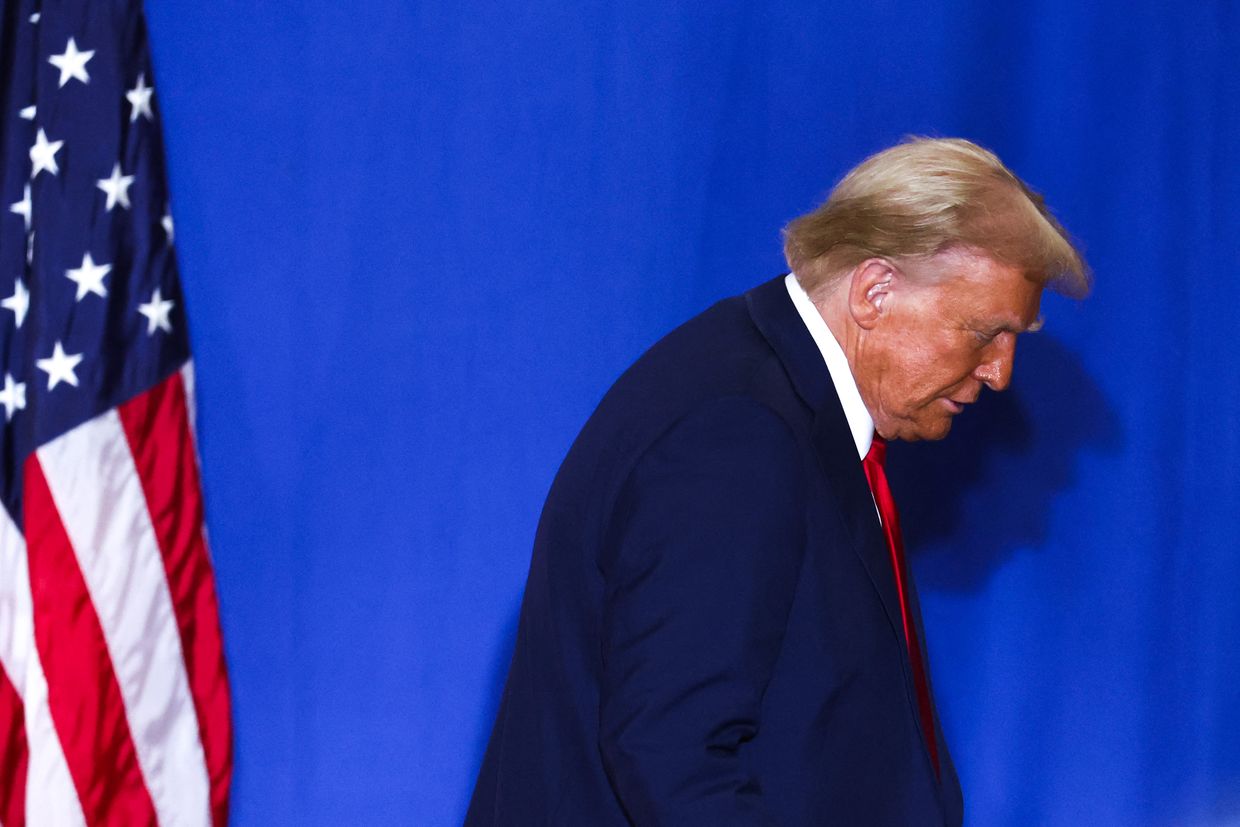
U.S. President Donald Trump said on July 6 that his administration is "helping a lot" when it comes to Ukraine, defending his approach to the ongoing war."I am helping Ukraine. I'm helping it a lot," Trump told reporters when asked in Washington why the U.S. does not support Ukraine as strongly as it supports Israel.The comment follows a growing outcry in Kyiv over the U.S. Defense Department's decision to pause deliveries of key weapons, including Patriot air defense missiles and precision-guid
U.S. President Donald Trump said on July 6 that his administration is "helping a lot" when it comes to Ukraine, defending his approach to the ongoing war.
"I am helping Ukraine. I'm helping it a lot," Trump told reporters when asked in Washington why the U.S. does not support Ukraine as strongly as it supports Israel.
The comment follows a growing outcry in Kyiv over the U.S. Defense Department's decision to pause deliveries of key weapons, including Patriot air defense missiles and precision-guided munitions.
Ukrainian officials have warned that the delay leaves the country more vulnerable to intensified Russian missile and drone attacks, which have killed and injured hundreds of civilians in recent weeks.
While Trump has repeatedly said he wants to end the war and support Ukraine, his administration has not imposed new sanctions on Russia since he took office in January and has yet to approve additional military assistance packages.
Instead, the Trump administration has prioritized military action in the Middle East. The U.S. launched air strikes on three nuclear sites in Iran on June 21, a move critics say stands in contrast to Washington's cautious posture toward Moscow.
Speaking on Air Force One on July 5, Trump expressed frustration over his July 3 phone call with Russian President Vladimir Putin.
"It just seems like he wants to go all the way and just keep killing people," Trump said.
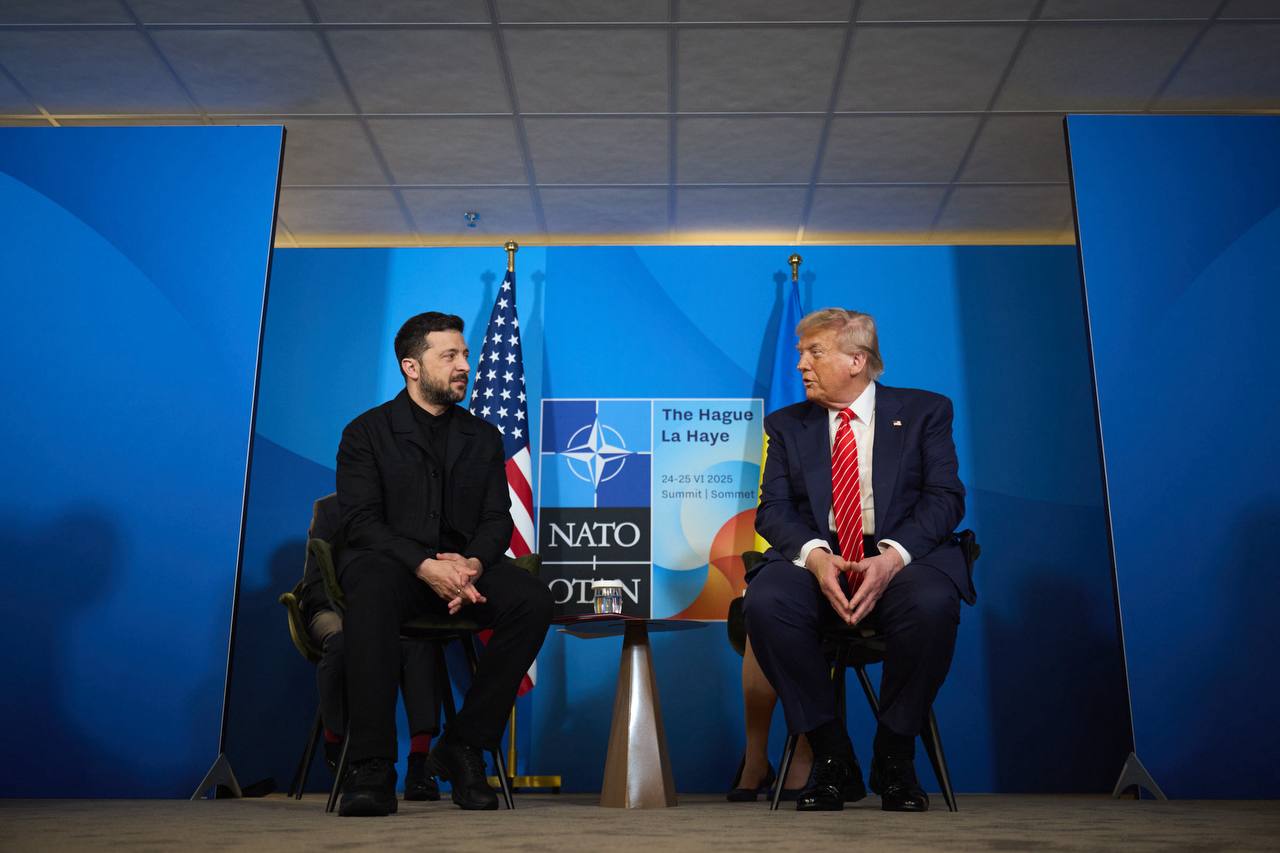
Trump also spoke with President Volodymyr Zelensky on July 4 in what the U.S. president later described as a "very strategic" call. Trump said the two discussed Ukraine's urgent need for air defenses.
"They're going to need something because they're being hit pretty hard," Trump said, adding that supplying Patriot systems was a possibility.
Despite those comments, there have been no new authorizations for weapons deliveries, and Trump's administration has continued to avoid direct economic pressure on Moscow.
Two rounds of direct talks between Russia and Ukraine held in Istanbul in May and June led only to prisoner exchanges, with no breakthrough on ending hostilities. Moscow has maintained maximalist conditions while rejecting calls for an unconditional ceasefire.
Russia has lost 1,027,540 troops in Ukraine since the beginning of its full-scale invasion on Feb. 24, 2022, the General Staff of Ukraine's Armed Forces reported on July 7.The number includes 1,100 casualties that Russian forces suffered over the past day.According to the report, Russia has also lost 10,995 tanks, 22,963 armored fighting vehicles, 54,370 vehicles and fuel tanks, 29,993 artillery systems, 1,432 multiple launch rocket systems, 1,192 air defense systems, 421 airplanes, 340 helicopt
Russia has lost 1,027,540 troops in Ukraine since the beginning of its full-scale invasion on Feb. 24, 2022, the General Staff of Ukraine's Armed Forces reported on July 7.
The number includes 1,100 casualties that Russian forces suffered over the past day.
According to the report, Russia has also lost 10,995 tanks, 22,963 armored fighting vehicles, 54,370 vehicles and fuel tanks, 29,993 artillery systems, 1,432 multiple launch rocket systems, 1,192 air defense systems, 421 airplanes, 340 helicopters, 44,058 drones, 28 ships and boats, and one submarine.
Russian attacks on two towns in Donetsk Oblast left five people dead and another injured on July 6, Governor Vadim Filashkin reported. Russia attacked the front-line towns of Kostiantynivka and Druzhkivka.In Kostiantynivka, Russian airstrikes and missile attacks killed four people and injured another person, Filashkin said. The heavy attacks also damaged 14 homes, four high-rise buildings, an administrative building, a car, and five power lines. In Druzhkivka, a Russian first-person-view (FPV) d
Russian attacks on two towns in Donetsk Oblast left five people dead and another injured on July 6, Governor Vadim Filashkin reported.
Russia attacked the front-line towns of Kostiantynivka and Druzhkivka.
In Kostiantynivka, Russian airstrikes and missile attacks killed four people and injured another person, Filashkin said. The heavy attacks also damaged 14 homes, four high-rise buildings, an administrative building, a car, and five power lines.
In Druzhkivka, a Russian first-person-view (FPV) drone killed one person and damaged equipement.
Filashkin warned that both Kostiantynivka and Druzhkivka are "under constant enemy fire" and urged residents to relocate.
"It is dangerous to stay here! Evacuate to safer regions of Ukraine!" Filashkin wrote on Telegram after the attack.
In late June, Filashkin reported that Kostiantynivka, in easternDonetsk Oblast, faces an imminent "humanitarian catastrophe." The town lies just 10 to 15 kilometers (6 to 9 miles) from several areas currently occupied by Russian forces, according to battlefield mapping siteDeepState.
Kostiantynivka has come under intensifiedattack in recent months as Moscow pushes westward beyond its gains around other nearby towns.
Editor's note: The story was updated with the latest reports from Mykolaiv and Sumy.Russian attacks against Ukraine have killed at least six civilians and injured at least 25 others over the past day, regional authorities reported on July 6.Russian forces launched four S-300 anti-aircraft missiles from Russia's Kursk Oblast and 157 Shahed drones from Russia's Shatalovo, Millerovo, and Primorsk-Akhtarsk airfields, as well as from Russian-occupied Crimea, against Ukraine overnight, according to Uk
Editor's note: The story was updated with the latest reports from Mykolaiv and Sumy.
Russian attacks against Ukraine have killed at least six civilians and injured at least 25 others over the past day, regional authorities reported on July 6.
Russian forces launched four S-300 anti-aircraft missiles from Russia's Kursk Oblast and 157 Shahed drones from Russia's Shatalovo, Millerovo, and Primorsk-Akhtarsk airfields, as well as from Russian-occupied Crimea, against Ukraine overnight, according to Ukraine's Air Force.
Ukraine's air defense shot down 98 drones, while another 19 disappeared from radar without causing any damage, according to the statement. Drones that disappear from radar before reaching their targets are often decoys that Russia launches alongside real drones to overwhelm Ukraine's air defense.
In Kharkiv Oblast, Russian forces attacked 13 settlements, killing two people and injuring 11 others, Governor Oleg Syniehubov reported.
An 8-year-old boy was killed, while a 3-year-old boy, a 40-year-old man, and a 36-year-old woman suffered injuries in the village of Odnorobivka.
In the town of Kupiansk, a 59-year-old man was killed, while a 56-year-old man, a 57-year-old woman, and two women aged 65 were injured due to the Russian strikes.
In Kharkiv, the regional capital, a 46-year-old woman and a 2-year-old girl suffered injuries.
The casualties were also reported in the villages of Prykolotne and Shyroke, where a 66-year-old man and a 27-year-old woman were injured.
In Donetsk Oblast, Russian forces killed a person in the town of Myrnohrad, and another person was killed in the village of Andriivka, according to Governor Vadym Filashkin.
In Andriivka, two people suffered injuries. Two more people were injured in the town of Siversk, and another one in the city of Pokrovsk.
In Kherson Oblast, Russia targeted 32 settlements, including the regional center of Kherson, over the past day. As a result of the attacks, two people were killed and three others were injured, Governor Oleksandr Prokudin reported.
In Mykolaiv Oblast, Russian drones attacked the port infrastructure in the regional center of Mykolaiv, damaging the power grid and warehouses.
A 31-year-old woman was injured and hospitalized, while a 35-year-old man, who also suffered injuries in the attack, was treated at the scene, according to Governor Vitalii Kim.
In Sumy Oblast, a Russian FPV drone attacked the Khotyn community, hitting a car and injuring a 49-year-old man, the local military administration reported. He was hospitalized.
In Dnipropetrovsk Oblast, a 39-year-old woman was injured in the attack against the Nikopol district. Russia targeted the area with FPV (first-person-view) drones and artillery, according to Governor Serhii Lysak.
In Zaporizhzhia Oblast, Russian strikes injured an 89-year-old woman in the village of Yurkivka, the local military administration reported.
In Kyiv Oblast, Russia attacked the Vyshhorod district, injuring a 35-year-old man. He suffered shrapnel wounds, the local military administration reported.
In Poltava Oblast, Russian drones struck the city of Kremenchuk, hitting an enlistment office and a neighboring house. The attack caused a fire, but no casualties were reported, according to the local military administration.
Ukraine's Emergency Service also reported that Russia had carried out double-tap attacks in the cities of Kharkiv and Kherson when rescuers arrived at the impact sites. As a result of the attacks, tanker trucks were damaged, but no rescuers were injured.
Russia has lost 1,026,440 troops in Ukraine since the beginning of its full-scale invasion on Feb. 24, 2022, the General Staff of Ukraine's Armed Forces reported on July 6.The number includes 1,180 casualties that Russian forces suffered over the past day.According to the report, Russia has also lost 10,992 tanks, 22,956 armored fighting vehicles, 54,252 vehicles and fuel tanks, 29,960 artillery systems, 1,430 multiple launch rocket systems, 1,192 air defense systems, 421 airplanes, 340 helicopt
Russia has lost 1,026,440 troops in Ukraine since the beginning of its full-scale invasion on Feb. 24, 2022, the General Staff of Ukraine's Armed Forces reported on July 6.
The number includes 1,180 casualties that Russian forces suffered over the past day.
According to the report, Russia has also lost 10,992 tanks, 22,956 armored fighting vehicles, 54,252 vehicles and fuel tanks, 29,960 artillery systems, 1,430 multiple launch rocket systems, 1,192 air defense systems, 421 airplanes, 340 helicopters, 43,825 drones, 28 ships and boats, and one submarine.
Russia's economy, which defied initial sanctions and saw growth propelled by massive military spending and robust oil exports, is now showing significant signs of a downturn. Recent economic indicators are flashing red, with manufacturing activity declining, consumer spending tightening, and inflation remaining stubbornly high, straining the national budget, the Wall Street Journal (WSJ) reported on July 4. Russian officials are openly acknowledging the risks of a recession. Economy Minister Max
Russia's economy, which defied initial sanctions and saw growth propelled by massive military spending and robust oil exports, is now showing significant signs of a downturn.
Recent economic indicators are flashing red, with manufacturing activity declining, consumer spending tightening, and inflation remaining stubbornly high, straining the national budget, the Wall Street Journal (WSJ) reported on July 4.
Russian officials are openly acknowledging the risks of a recession. Economy Minister Maxim Reshetnikov warned last month that Russia was on the "verge of a recession," while Finance Minister Anton Siluanov described the situation as a "perfect storm." Companies, from agricultural machinery producers to furniture makers, are reducing output. The central bank announced on July 3 it would debate cutting its benchmark interest rate later this month, following a reduction in June.
While analysts suggest this economic sputtering is unlikely to immediately alter President Vladimir Putin’s war objectives—as his focus on "neutering Ukraine" overrides broader economic concerns—it exposes the limits of his war economy.
The slowdown indicates that Western sanctions, though not a knockout blow, are increasingly taking a toll. If sanctions intensify further or global oil prices fall, Russia’s economy could face more severe instability. This downturn undermines Putin's strategic bet that Russia can financially outlast Ukraine and its Western allies, suggesting Moscow may struggle to finance the war indefinitely.
Experts warn that Russia's economic growth model, overly reliant on military spending, is unsustainable and necessitates a contraction of civilian economic capacities to free up workers for the war machine, which is not a viable long-term strategy. Putin recently dismissed suggestions that the war is stifling the economy, echoing Mark Twain by stating reports of its death "are greatly exaggerated." However, he also cautioned that a recession or stagflation "should not be allowed under any circumstances."
After a brief recession in 2022, military spending, which accounts for over 6% of gross domestic product this year (the highest since Soviet times) and approximately 40% of total government spending, had propped up Russia’s economy and blunted the impact of Western sanctions. Russia’s ability to reroute oil exports to China and Beijing’s support with electronics and machinery provided additional economic stimulus. This created an economic paradox: the most sanctioned major economy was, for a period, growing faster than many advanced economies.
However, this military spending "sugar rush" fueled runaway inflation, compelling the central bank to raise interest rates to a record 21% to try and tame it. Higher interest rates increased borrowing costs for businesses, curbing investment, expansion plans, and squeezing profits. The economic comedown has already begun.
Official data shows Russian GDP growth slowed to 1.4% in the first quarter compared to a year earlier, down significantly from 4.5% in the fourth quarter of 2024. S&P Global’s purchasing managers’ index indicated Russia’s manufacturing sector contracted at its sharpest rate in over three years in June, and new car sales dropped nearly 30% year-over-year in June.
Businesses across Russia are feeling the effects, according to the WSJ. Rostselmash, the country’s largest producer of agricultural machinery, announced in May it would cut production and investment, and pull forward mandatory annual leave for its 15,000 employees due to a lack of demand. In Siberia, electricity grid operator Rosseti Sibir stated it was on the verge of bankruptcy due to high debt, halting investments and proposing tariff hikes for industrial users.
While some analysts argue the Russian banking system remains stable, others warn of increasing instability. A recent report by the Washington, D.C.-based Center for Strategic and International Studies (CSIS) highlighted risks from a government decision to control war-related lending at major Russian banks. The state could direct banks to offer preferential loans, potentially forcing the government to absorb losses if high interest rates prevent companies from meeting obligations.
The Moscow-based Center for Macroeconomic Analysis and Short-Term Forecasting also assessed in May that the risk of a protracted systemic banking crisis in 2026 was "moderate" and growing.
These economic challenges intensify pressure on the Kremlin by reducing its financial capacity to fund its war in Ukraine. The government has operated with a budget deficit throughout the war and projects this will continue for at least two more years. This fiscal strain could provide an opening for Western nations to implement more powerful sanctions.
Falling oil prices present another significant risk for Russia, as energy sales account for about a third of its budget revenues. The price of Russian crude has consistently remained below the level assumed in this year’s budget, and Russia’s oil-and-gas revenue in June fell to its lowest level since January 2023, according to Finance Ministry data.
Ukraine struck a critical Russian military-industrial site overnight on July 5 that produces components for high-precision weapons used by Moscow to attack Ukraine, the General Staff of Ukraine's Armed Forces reported. The site in question is JSC VNIIR-Progress, a Russian state institute that specializes in developing electronic warfare (EW) systems, including the Kometa antenna arrays, used to jam satellite, radio, and radar signals.The institute is located in Cheboksary, Chuvash Republic, abou
Ukraine struck a critical Russian military-industrial site overnight on July 5 that produces components for high-precision weapons used by Moscow to attack Ukraine, the General Staff of Ukraine's Armed Forces reported.
The site in question is JSC VNIIR-Progress, a Russian state institute that specializes in developing electronic warfare (EW) systems, including the Kometa antenna arrays, used to jam satellite, radio, and radar signals.
The institute is located in Cheboksary, Chuvash Republic, about 1,200 kilometers (745 miles) away from the Ukrainian border.
The Kometa antenna is used in Shahed-type drones, Iskander-K cruise missiles, and guided aerial bomb modules — all high-precision weapons used by Russia to strike civilian and military targets across Ukraine.
The General Staff confirmed that Ukrainian weapons reached the target area but said final damage assessments were still underway.
The VNIIR-Progress institute has been sanctioned by both the United States and the European Union for its role in supporting Russia's war effort.
The Iskander-K is a precision-guided cruise missile with a range of up to 500 kilometers (311 miles), frequently used by Russia to target civilian areas. Shahed drones have become a central part of Moscow's airstrike tactics since late 2022 due to their low cost and high payload.
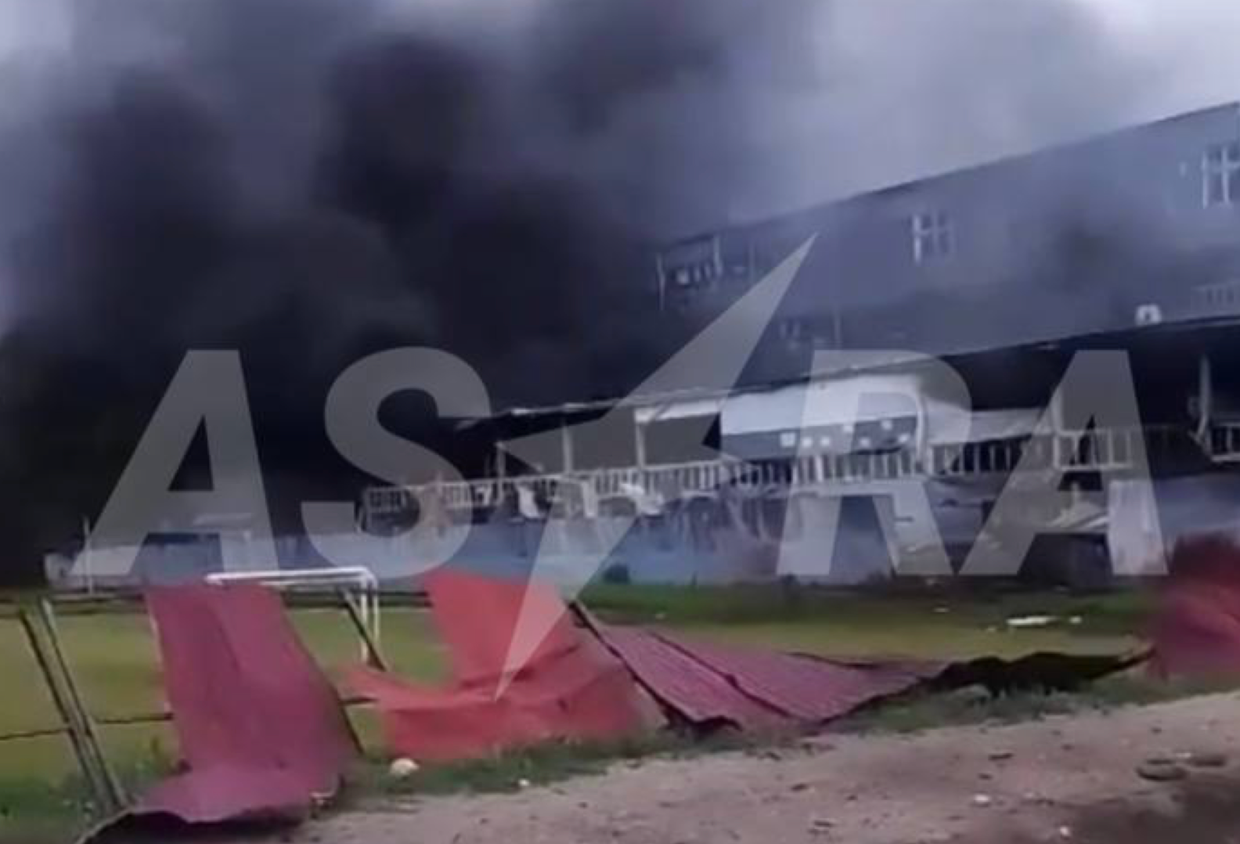
Located on the Volga River, Cheboksary is the capital of the Chuvash Republic and lies deep inside Russian territory. Russian independent media outlet Astra and local Telegram channels earlier reported explosions in the city overnight.
Russia's Defense Ministry claimed to have shot down two drones over the region.
This marks the second known Ukrainian drone strike on VNIIR-Progress. On June 9, explosions and fires were also reported at the facility following another drone attack.
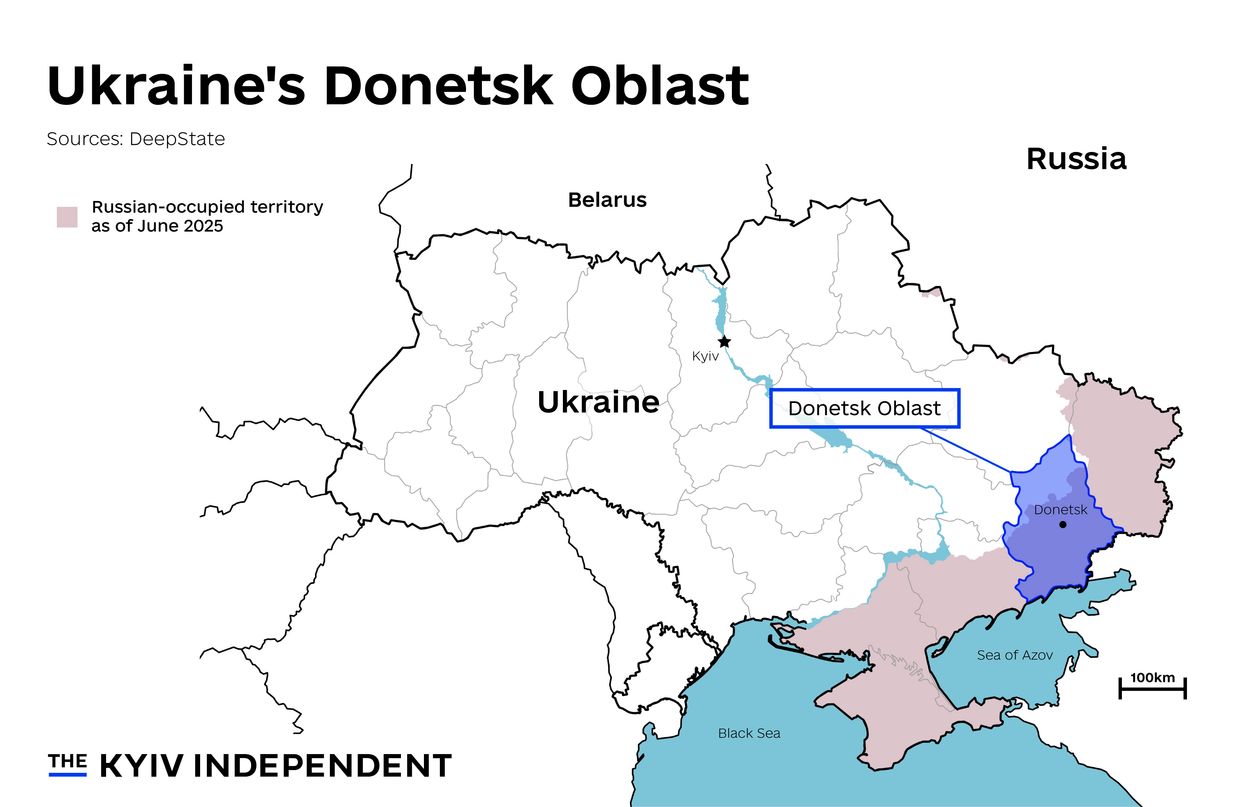
Russian forces have occupied the villages of Zelenyi Kut and Novoukrainka in Donetsk Oblast, located near the administrative border with Dnipropetrovsk Oblast, the battlefield monitoring platform DeepState reported on July 5.Russian forces are attempting to push further west, according to DeepState.Donetsk Oblast has been a central battlefield since the start of Russia's full-scale invasion in February 2022 in Ukraine. While Dnipropetrovsk Oblast lies further west and has not seen significant Ru
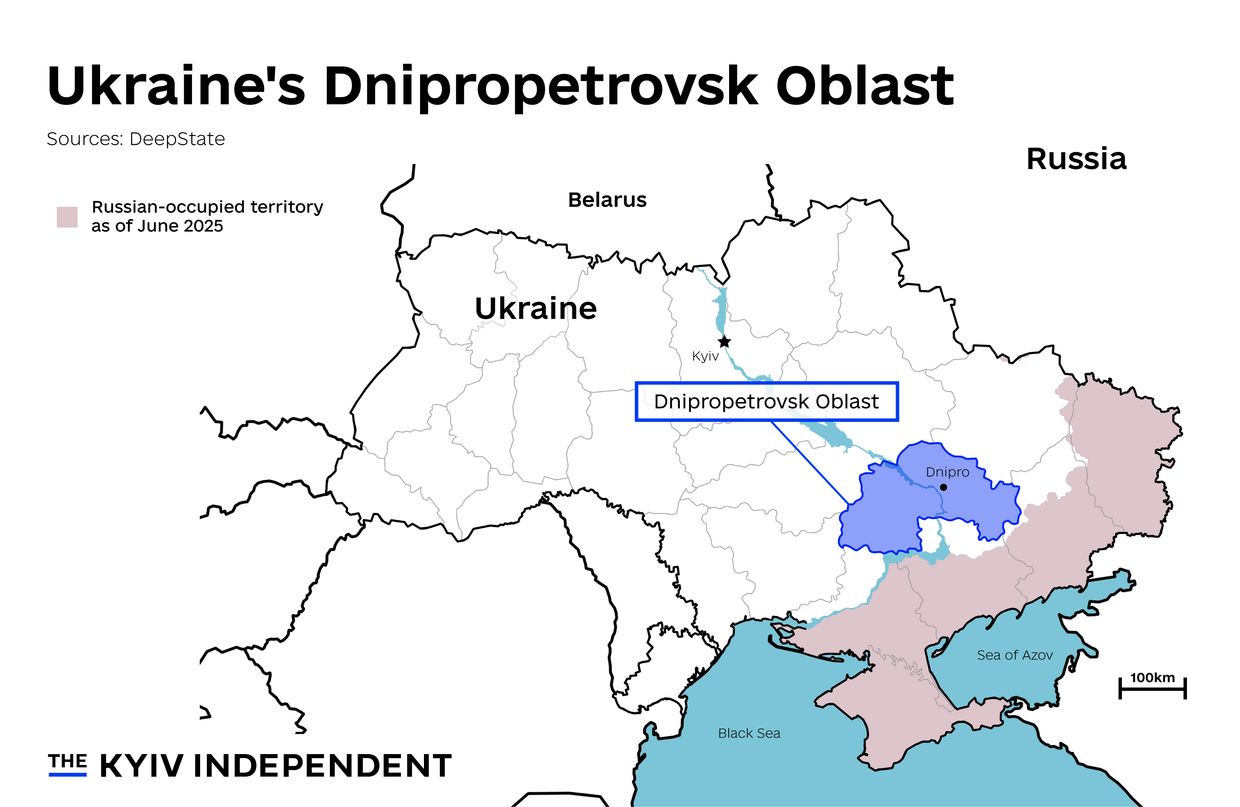
Russian forces have occupied the villages of Zelenyi Kut and Novoukrainka in Donetsk Oblast, located near the administrative border with Dnipropetrovsk Oblast, the battlefield monitoring platform DeepState reported on July 5.
Russian forces are attempting to push further west, according to DeepState.
Donetsk Oblast has been a central battlefield since the start of Russia's full-scale invasion in February 2022 in Ukraine. While Dnipropetrovsk Oblast lies further west and has not seen significant Russian incursions, it is frequently targeted with missile, drone, and aerial bomb strikes.
Russian troops have been escalating their assaults in the area and are attempting to breach into Dnipropetrovsk Oblast.
"The situation around Dachne is pretty intense," DeepState wrote on Telegram, referring to the nearby front-line settlement in Dnipropetrovsk Oblast.
Ukrainian forces have deployed reinforcements, but Russian units, relying on numerical advantage and constant infantry assaults, have breached some defenses in the area, DeepState said.
Ukraine's military has not officially confirmed the loss of the settlements.
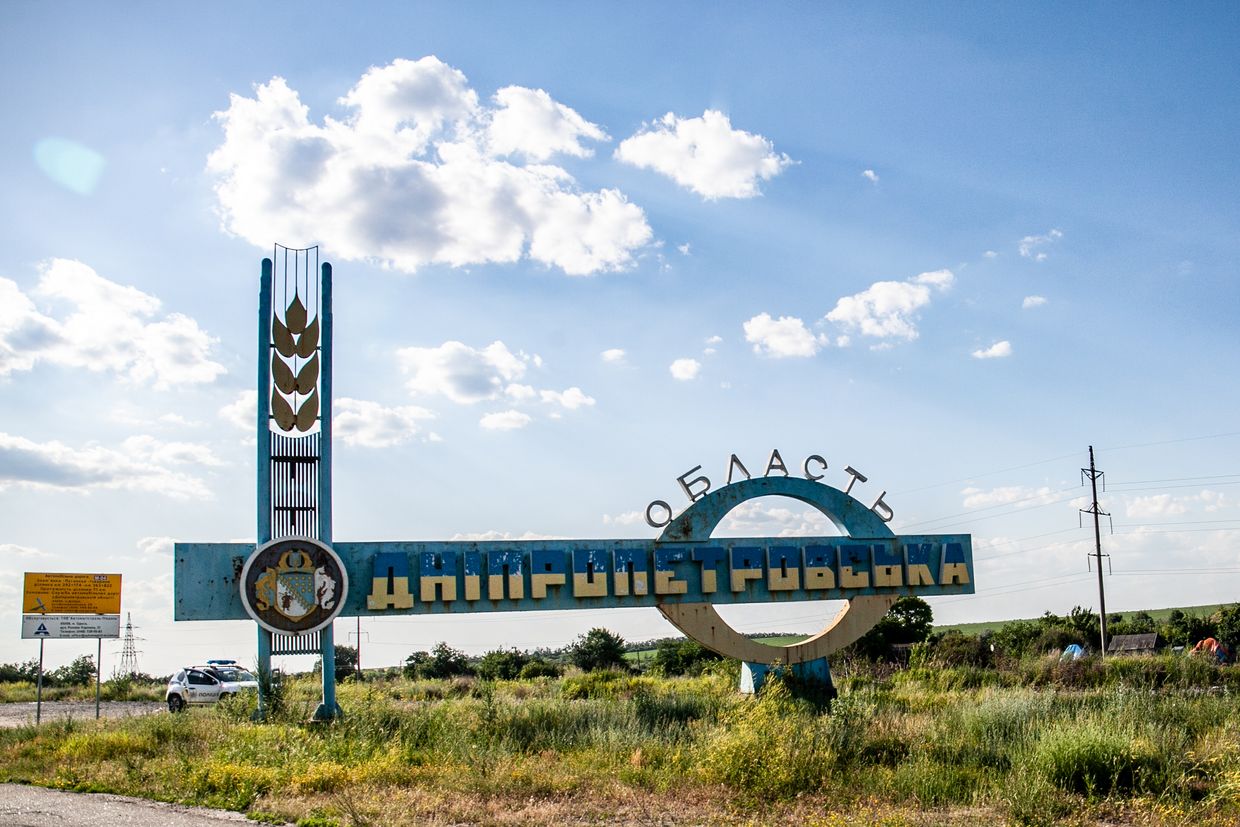
Ukraine's Dnipropetrovsk Oblast (Nizar al-Rifai/The Kyiv Independent)
Russia's Defense Ministry claimed Novoukrainka was captured as early as June 29, though that assertion was not independently confirmed at the time.
On July 2, Ukraine dismissed Russian claims of advancing into Dnipropetrovsk Oblast, calling them disinformation. It said that a small Russian reconnaissance unit briefly entered the village of Dachne, took photos with a Russian flag, and was then "eliminated."
Ukrainian military spokesperson Viktor Trehubov said in mid-June that Russia was escalating attacks in the Novopavlivka sector — in the western part of Donetsk Oblast — and trying to breach into Dnipropetrovsk Oblast.
DeepState analysts suggest Moscow views an incursion into Dnipropetrovsk Oblast as symbolically significant and a propaganda opportunity, while for Ukraine, holding the administrative line is a strategic priority.
Oleksandr Syrskyi, commander-in-chief of Ukraine's Armed Forces, said on July 5 that he had visited the front line in Kharkiv Oblast, warning of a growing threat of renewed Russian offensives in northeastern Ukraine.According to Syrskyi, Russian troops are ramping up attacks in the sector using large numbers of troops. Over the past week, Ukrainian troops have repelled more than 60 Russian assaults in the area, with "about a dozen battles continuing to rage every day," Syrskyi said."Russian forc
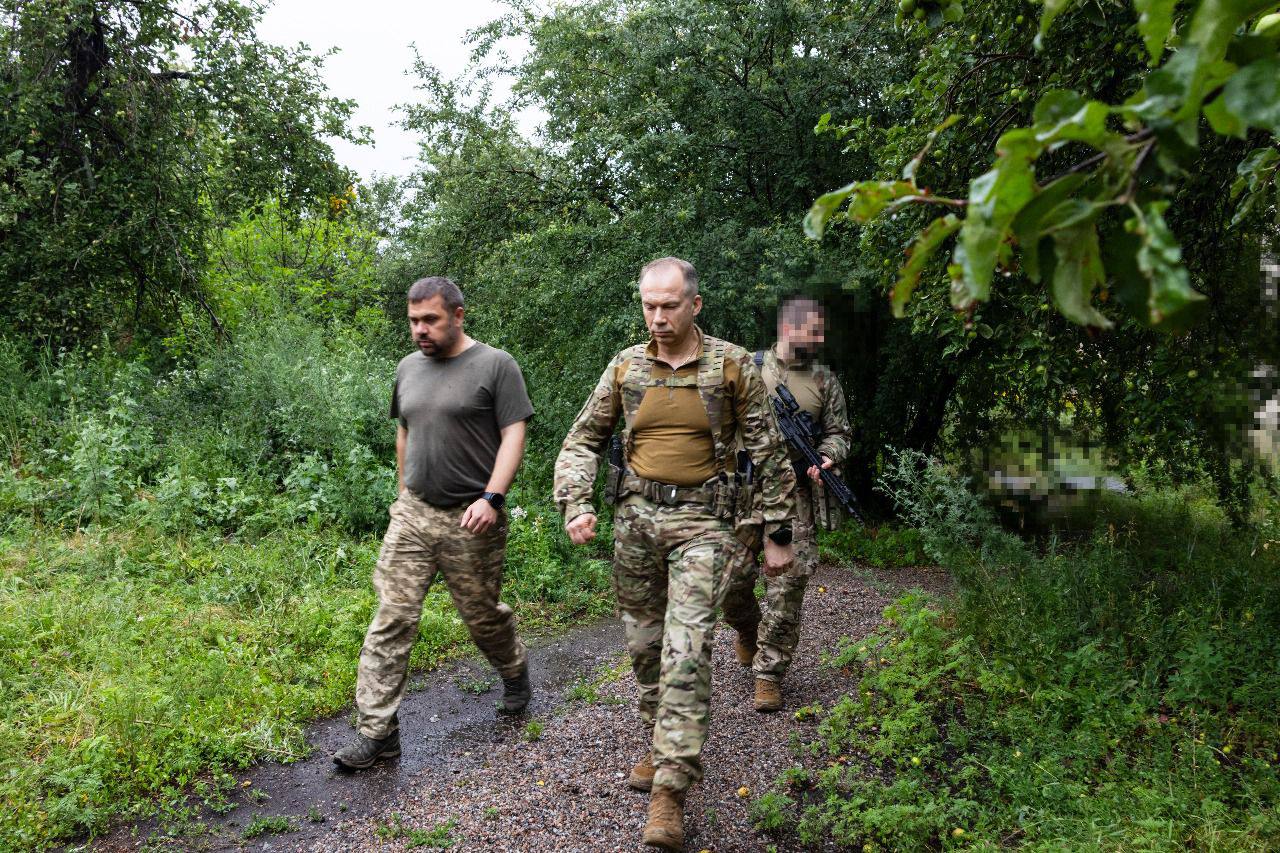
Oleksandr Syrskyi, commander-in-chief of Ukraine's Armed Forces, said on July 5 that he had visited the front line in Kharkiv Oblast, warning of a growing threat of renewed Russian offensives in northeastern Ukraine.
According to Syrskyi, Russian troops are ramping up attacks in the sector using large numbers of troops. Over the past week, Ukrainian troops have repelled more than 60 Russian assaults in the area, with "about a dozen battles continuing to rage every day," Syrskyi said.
"Russian forces are trying to overwhelm us with quantity, but we must be vigilant and apply effective tactical and technological solutions to prevent the invaders from advancing," he said in a Telegram post.
Syrskyi said he had reviewed battlefield situation in the area, identifying unit needs, and issuing updated tactical orders.
Syrskyi said he was coordinating closely with Joint Forces Commander Major General Mykhailo Drapatyi.
Kharkiv Oblast, located in northeastern Ukraine, borders Russia and includes the country's second-largest city. It has been a frequent target of Russian assaults and missile attacks since the full-scale invasion began in February 2022.
Since Ukraine's successful counteroffensive in the northeast in the fall of 2022, Russia has occupied less than 5% of Kharkiv Oblast, along the region's eastern edge.
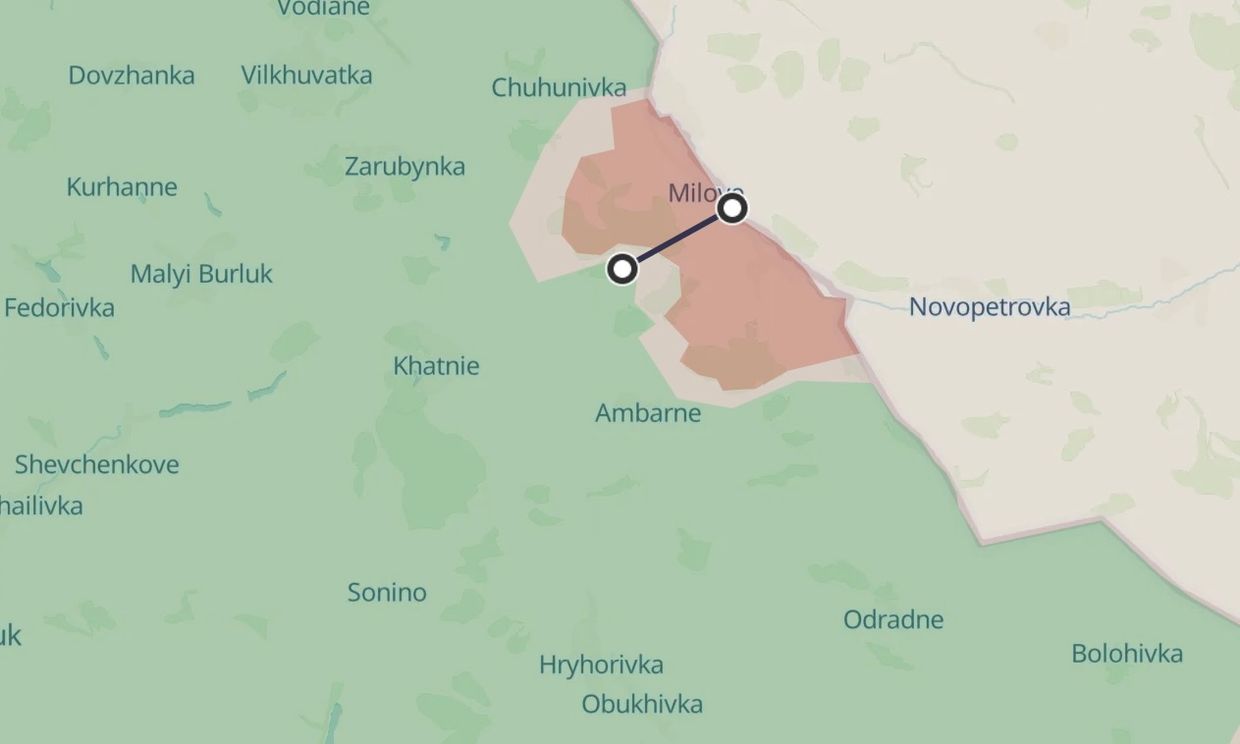
The Ukrainian battlefield monitoring platform DeepState reported on July 4 that Russian forces had advanced up to 3 kilometers (1.86 miles) into Kharkiv Oblast near the border village of Milove, opening yet another front in the northeast.
The estimated Russian advance in Kharkiv Oblast, Ukraine, as of July 5, 2025. (DeepState / OpenStreetMaps)
On July 4, Pavlo Shamshyn, spokesperson for Ukraine's operational-tactical group "Kharkiv," said that the number of Russian assault operations in the sector had sharply increased.
Fighting remains intense near the town of Vovchansk and surrounding villages. Shamshin said Russian troops are advancing in small groups of three to 10 soldiers, relying on drone support.
Andrii Pomahaibus, chief of staff of Ukraine's 13th National Guard Khartiia Brigade, said in May that Russia had been massing forces near the border, possibly preparing for a new offensive in the sector.
Despite repeated calls from Ukraine, the U.S., and European leaders for an unconditional ceasefire, Russia has continued ground attacks along the front and long-range missile and drone strikes targeting Ukrainian cities and infrastructure.
Russia's largest airports experienced hours-long flight delays and cancellations on July 5, as authorities imposed temporary restrictions due to a reported threat of Ukrainian drone attacks, the pro-Kremlin Telegram channel Shot reported. Ukraine hasn't commented on the report. Kyiv's drone campaign, which has increasingly disrupted civilian air travel in Russia, is part of Ukraine's broader strategy to undermine Russia's logistics far beyond the front line.Some passengers in Russia reported wai
Russia's largest airports experienced hours-long flight delays and cancellations on July 5, as authorities imposed temporary restrictions due to a reported threat of Ukrainian drone attacks, the pro-Kremlin Telegram channel Shot reported.
Ukraine hasn't commented on the report. Kyiv's drone campaign, which has increasingly disrupted civilian air travel in Russia, is part of Ukraine's broader strategy to undermine Russia's logistics far beyond the front line.
Some passengers in Russia reported waiting more than 10 hours on July 5 as their flights were being delayed, according to Shot.
Departures at Moscow's Sheremetyevo Airport were halted for several hours, delaying over 20 flights. At St. Petersburg's Pulkovo Airport, roughly 50 flights were delayed and more than 20 canceled.
Leningrad Oblast Governor Alexander Drozdenko said that two drones were shot down south of St. Petersburg, prompting a temporary suspension of operations at Pulkovo Airport.
The disruptions followed a wave of Ukrainian drone attacks overnight, which targeted military and industrial infrastructure in at least six Russian regions.
The Russian Defense Ministry said it intercepted 42 drones within three hours, mainly over the Belgorod, Bryansk, and Kursk oblasts near the Ukrainian border.
Novaya Gazeta Europe reported in May that at least 217 temporary airport closures have occurred across Russia since Jan. 1 due to drone threats, more than in 2023 and 2024 combined.
A similar wave of strikes ahead of Russia's Victory Day in May led to massive delays, affecting an estimated 60,000 travelers.
Russia is seeking to involve Laos in its war against Ukraine under the pretense of humanitarian cooperation, Ukraine's military intelligence (HUR) claimed on July 5.According to the agency, Moscow is organizing the deployment of a combined unit of military engineers from the Lao People's Armed Forces to Russia's Kursk Oblast, allegedly to help with demining operations.Ukraine initially captured 1,300 square kilometers (500 square miles) of Russian territory during a cross-border offensive to Kur
Russia is seeking to involve Laos in its war against Ukraine under the pretense of humanitarian cooperation, Ukraine's military intelligence (HUR) claimed on July 5.
According to the agency, Moscow is organizing the deployment of a combined unit of military engineers from the Lao People's Armed Forces to Russia's Kursk Oblast, allegedly to help with demining operations.
Ukraine initially captured 1,300 square kilometers (500 square miles) of Russian territory during a cross-border offensive to Kursk Oblast but lost most of it during a Russian counteroffensive this year, which was supported by North Korean troops.
Laotian authorities have reportedly agreed to send up to 50 engineers to support Russian efforts. In addition, Laos is said to be offering free rehabilitation services to wounded Russian soldiers.
"Russia, under the guise of humanitarian rhetoric, is trying to legalize the presence of foreign military contingents on its territory, effectively using them to wage war against Ukraine," HUR said.
This comes amid broader efforts by the Kremlin to recruit foreign personnel. Russia has drawn heavily on fighters from Asia and Africa, as well as North Korea.
Ukraine has captured multiple foreigners fighting for Russian forces. an April investigation by Russian independent outlet Important Stories identified more than 1,500 foreign fighters from 48 countries who had joined Russia's war.
Laos, a landlocked Southeast Asian country bordering China, Vietnam, and Thailand, has not commented on HUR's claim. The country maintains close ties with both Moscow and its ally Beijing.
At least four civilians were killed and 37 others injured in Russian attacks across Ukraine over the past 24 hours, regional authorities reported on July 5.Russia launched 322 drones overnight, including Iranian-designed Shahed-type attack drones, according to Ukraine's Air Force. Air defenses intercepted 292 drones, while another 135 dropped off radars, likely used as decoys to overwhelm Ukrainian systems.The attack was repelled using aviation, electronic warfare, mobile fire teams, and air def
At least four civilians were killed and 37 others injured in Russian attacks across Ukraine over the past 24 hours, regional authorities reported on July 5.
Russia launched 322 drones overnight, including Iranian-designed Shahed-type attack drones, according to Ukraine's Air Force. Air defenses intercepted 292 drones, while another 135 dropped off radars, likely used as decoys to overwhelm Ukrainian systems.
The attack was repelled using aviation, electronic warfare, mobile fire teams, and air defense systems.
In Donetsk Oblast, Russian strikes killed two civilians and injured four more, Governor Vadym Filashkin said. In Kharkiv Oblast, one person was killed and 15 injured, including two children, according to Governor Oleh Syniehubov.
In Kherson Oblast, 11 civilians were injured as Russian forces targeted residential areas and other civilian infrastructure, Governor Oleksandr Prokudin reported.
A 49-year-old postal worker was injured in Chernihiv Oblast by a first-person-view (FPV) drone, Governor Viacheslav Chaus said. The man sustained shrapnel wounds while delivering mail.
In Dnipropetrovsk Oblast, four civilians, two men and two women, were injured in Russian strikes, Governor Serhii Lysak reported.
In Zaporizhzhia Oblast, an 84-year-old man was killed, and two others — a 54-year-old man and a 10-year-old boy — were injured, Governor Ivan Fedorov said.
The latest strikes come as Russia continues to escalate its aerial campaign and reject calls for a ceasefire. Ukrainian officials have repeatedly urged Western partners to bolster Ukraine's air defense capabilities amid persistent drone and missile strikes.
Editor's note: This story has been updated with additional comments by U.S. President Donald Trump.U.S. President Donald Trump said on July 5 that Russian President Vladimir Putin does not appear interested in ending the war in Ukraine, according to a comment made onboard Air Force One.Trump reiterated that he was "very unhappy" with the July 3 phone call between the two leaders. "It just seems like he wants to go all the way and just keep killing people. It's not good. I wasn't happy with it,"
Editor's note: This story has been updated with additional comments by U.S. President Donald Trump.
U.S. President Donald Trump said on July 5 that Russian President Vladimir Putin does not appear interested in ending the war in Ukraine, according to a comment made onboard Air Force One.
Trump reiterated that he was "very unhappy" with the July 3 phone call between the two leaders.
"It just seems like he wants to go all the way and just keep killing people. It's not good. I wasn't happy with it," Trump told reporters.
The call, which lasted about an hour, was confirmed by the Kremlin to have focused on Ukraine. Putin reportedly told Trump that Russia would continue pursuing its "goals" in the war.
Trump's remarks follow a sharp escalation in Russian missile and drone attacks across Ukraine that have killed and injured hundreds of civilians in recent weeks.
The strikes have hit multiple regions, destroying civilian infrastructure amid persistent calls from Ukraine, the U.S., and Europe for an unconditional ceasefire.
When asked if he can end Russia's war against Ukraine, Trump said, "I don’t know. I can’t tell you whether or not that’s going to happen."
Trump agreed when asked if ending the war is a priority, saying, "Yes. I’d like to see it happen."
The day after his call with Putin, the U.S. president spoke by phone with President Volodymyr Zelensky and said the two had a "very strategic" conversation.
"We talked about different things... I think it was a very, very strategic call," Trump said. When asked about supplying Patriot air defense systems to Ukraine, he replied, "Yeah, we might."
"They're going to need something because they're being hit pretty hard," Trump added.
The statement comes as the U.S. Defense Department has paused deliveries of several key weapons systems, including Patriot missiles and precision-guided munitions, prompting concern in Kyiv.
While Trump has said he wants to help Ukraine, his administration has not imposed new sanctions on Russia since taking office and has not approved additional aid packages.
The U.S. president has instead directed strikes against Iran, targeting three nuclear facilities in June in response to regional escalations, a move critics say contrasts with his cautious approach toward Moscow.
When asked why he appears tougher on Tehran than Moscow, Trump told reporters, "No, I think I'm tougher on Russia than I am on Iran."
Despite two rounds of face-to-face talks between Moscow and Kyiv in May and June in Istanbul, no agreement on a ceasefire has been reached. The negotiations have only resulted in prisoner exchanges, as Moscow continues to push for maximalist demands in peace talks.
Russia has lost 1,025,260 troops in Ukraine since the beginning of its full-scale invasion on Feb. 24, 2022, the General Staff of Ukraine's Armed Forces reported on July 5.The number includes 1,050 casualties that Russian forces suffered over the past day. According to the report, Russia has also lost 10,990 tanks, 22,953 armored fighting vehicles, 54,148 vehicles and fuel tanks, 29,921 artillery systems, 1,428 multiple launch rocket systems, 1,191 air defense systems, 420 airplanes, 340 helicop
Russia has lost 1,025,260 troops in Ukraine since the beginning of its full-scale invasion on Feb. 24, 2022, the General Staff of Ukraine's Armed Forces reported on July 5.
The number includes 1,050 casualties that Russian forces suffered over the past day.
According to the report, Russia has also lost 10,990 tanks, 22,953 armored fighting vehicles, 54,148 vehicles and fuel tanks, 29,921 artillery systems, 1,428 multiple launch rocket systems, 1,191 air defense systems, 420 airplanes, 340 helicopters, 43,609 drones, 28 ships and boats, and one submarine.
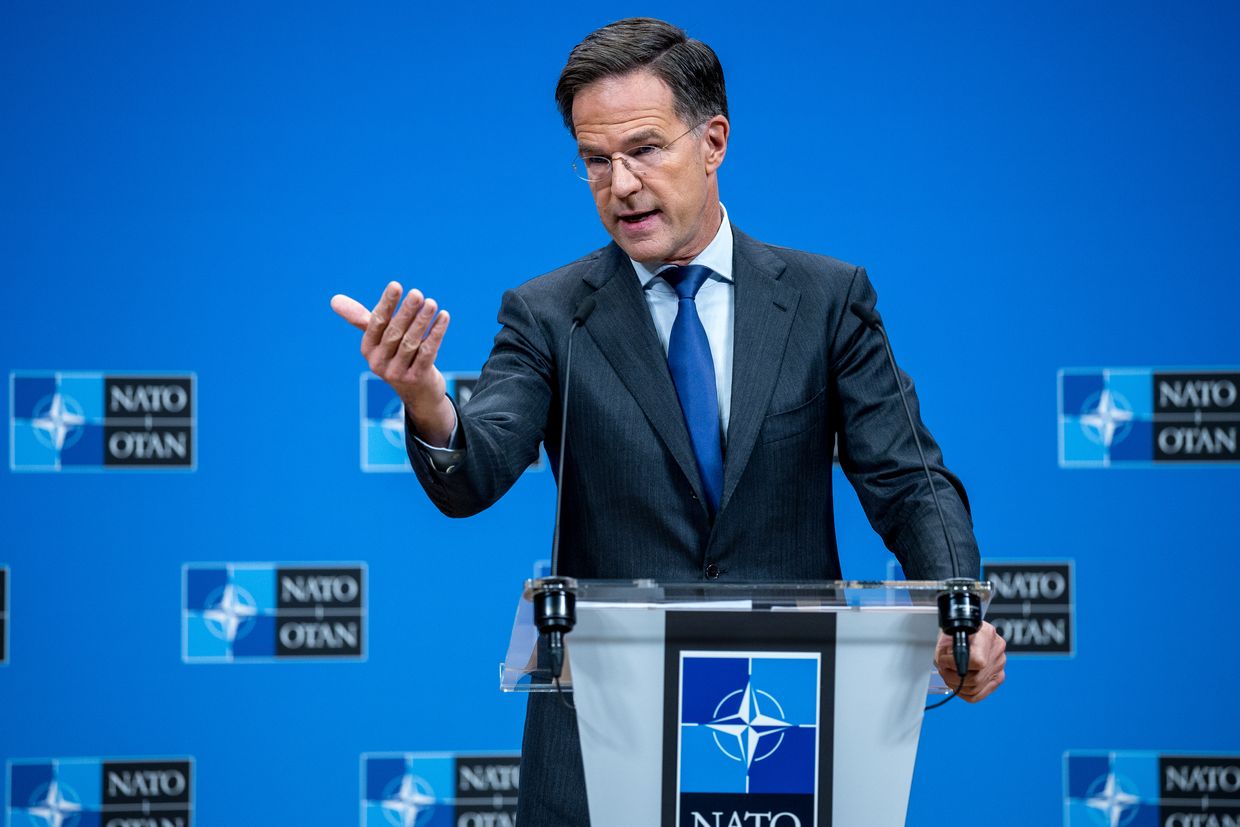
NATO Secretary General Mark Rutte on July 4 called on the United States to show "flexibility" in its military aid to Ukraine, after Washington unexpectedly paused some weapon deliveries citing concerns over dwindling domestic stockpiles. The Pentagon's decision to halt transfers of artillery rounds and air defense systems coincides with a significant escalation in Russian attacks on Ukrainian cities, exposing critical vulnerabilities in Ukraine's air defense capabilities as current US funding ne
NATO Secretary General Mark Rutte on July 4 called on the United States to show "flexibility" in its military aid to Ukraine, after Washington unexpectedly paused some weapon deliveries citing concerns over dwindling domestic stockpiles.
The Pentagon's decision to halt transfers of artillery rounds and air defense systems coincides with a significant escalation in Russian attacks on Ukrainian cities, exposing critical vulnerabilities in Ukraine's air defense capabilities as current US funding nears expiration this summer.
"The US has to make sure that the stockpiles are at the level we need for the U.S. to have, because they are crucial for our collective defense," Rutte told reporters on July 4. "At the same time, of course, we hope for the flexibility, we have to make sure also that Ukraine can move forward."
The Pentagon announced the aid pause this week, citing a review of U.S. stockpiles as it assesses the need to conserve weapons for other potential security threats. This move comes as Russia intensified its air campaign, unleashing record drone and missile strikes on Kyiv and other major urban centers overnight.
President Volodymyr Zelensky spoke with U.S. President Donald Trump by phone Friday, aiming to persuade the U.S. leader to resume deliveries and increase weapon sales to the country. Trump expressed disappointment following his latest conversation with Russian counterpart Vladimir Putin, which produced no progress toward a ceasefire in Russia's war against Ukraine, now in its fourth-year.
Given Russia's apparent unwillingness to pursue a ceasefire, allies must "be sure" Ukraine "has what it needs to stay in the fight," Rutte emphasized. He spoke after a ceremony welcoming Air Force General Alexus Grynkewich, the new commander of U.S. military forces in Europe and top NATO military commander.
Grynkewich acknowledged the ongoing discussions, adding: "We’ll see more play out of the next week or two." He also announced a 90-day review of U.S. forces in Europe, examining potential future US posture in the region.
A broader US military review is expected later this summer, potentially outlining significant reductions in Europe. This prospect has already raised concerns among European NATO allies, who say they have received no prior information about these plans.
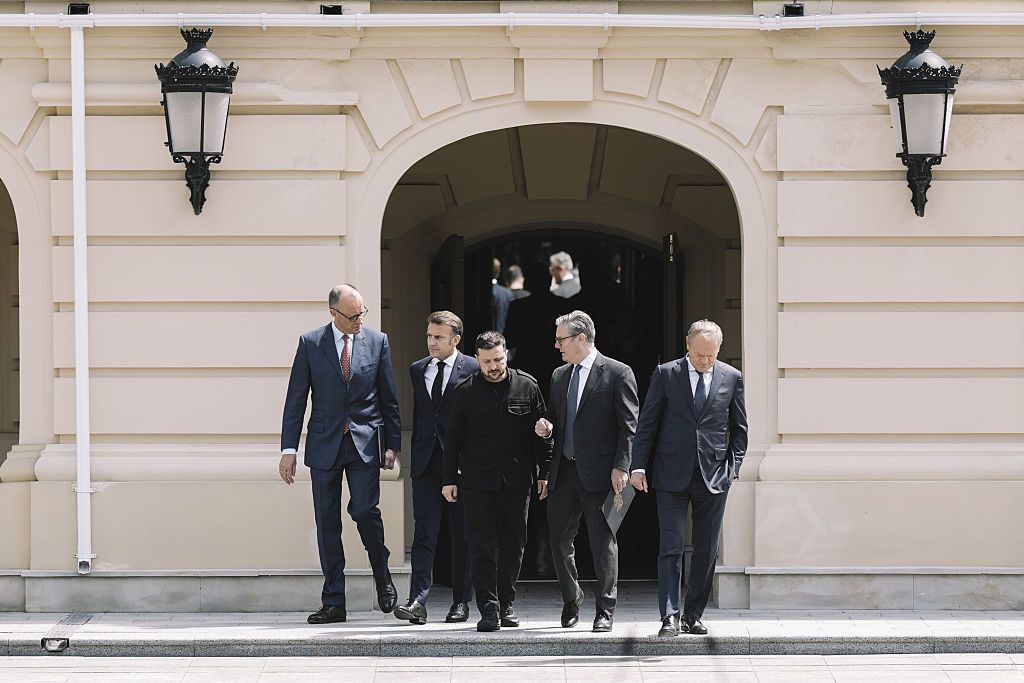
The British and French-led "coalition of the willing" is set to meet in the U.K. next week, Politico reported on July 4."On the agenda, there's how to maintain Ukraine in a capacity to fight, how to increase pressure on Russia, and how to continue the work on the next steps," an unnamed French official told Politico.As Washington's intensified efforts to broker a ceasefire in Russia's war against Ukraine failed, two rounds of largely inconclusive peace talks between Kyiv and Moscow took place in
The British and French-led "coalition of the willing" is set to meet in the U.K. next week, Politico reported on July 4.
"On the agenda, there's how to maintain Ukraine in a capacity to fight, how to increase pressure on Russia, and how to continue the work on the next steps," an unnamed French official told Politico.
As Washington's intensified efforts to broker a ceasefire in Russia's war against Ukraine failed, two rounds of largely inconclusive peace talks between Kyiv and Moscow took place in Turkey.
Following various failed attempts to obtain a ceasefire or peace deal, the coalition will meet again on July 10.
The French official told Politico that the priorities of the "coalition of the willing" have not changed, and will continue to focus on Ukraine's military needs.
The meeting will be led by U.K. Prime Minister Keir Starmer and French President Emmanuel Macron, with President Volodymyr Zelensky and various leaders joining virtually, the official said.
The "coalition of the willing" has met repeatedly to determine potential security guarantees and a peacekeeping force for Ukraine. Leaders of 31 nations met in Paris on March 27 at a summit for the coalition.
Several countries, including France and the U.K., which lead the coalition, have pledged to send troops on the ground to enforce a potential ceasefire.
Germany is weighing a massive defense procurement plan worth up to 25 billion euros ($29.4 billion) to supply thousands of combat vehicles for NATO's expanding force structure, Bloomberg reported on July 4, citing unnamed sources familiar with the matter. The proposed purchases are part of a broader pan-European effort to boost deterrence against Russia, as Western leaders warn of the growing risk of a large-scale war within five years.Berlin is reportedly considering purchasing up to 2,500 GTK
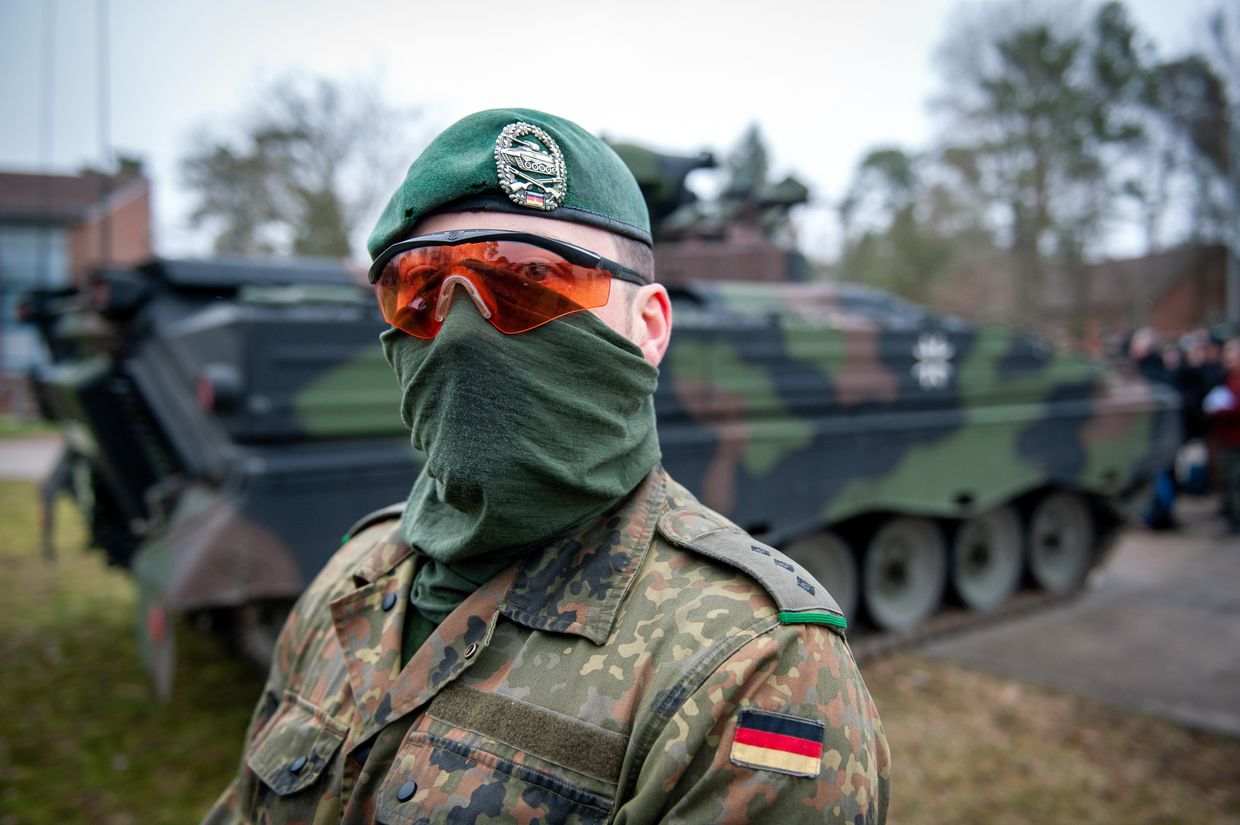
Germany is weighing a massive defense procurement plan worth up to 25 billion euros ($29.4 billion) to supply thousands of combat vehicles for NATO's expanding force structure, Bloomberg reported on July 4, citing unnamed sources familiar with the matter.
The proposed purchases are part of a broader pan-European effort to boost deterrence against Russia, as Western leaders warn of the growing risk of a large-scale war within five years.
Berlin is reportedly considering purchasing up to 2,500 GTK Boxer armored vehicles and up to 1,000 Leopard 2 battle tanks. The purchase would equip up to seven new brigades that Germany has pledged to form under NATO's force generation plans for the next decade.
The Leopard 2 tanks are produced by KNDS Deutschland and Rheinmetall, while the Boxer is made by ARTEC, a joint venture of the same companies. Leopard 2 tanks have been supplied to Ukraine and tested in combat.
Final pricing and quantities are still under negotiation, and the projected cost could fall below 25 billion euros ($29.4 billion) depending on procurement timelines and contract terms.
German Defense Minister Boris Pistorius and top Bundeswehr officials are reviewing the plans, with legislative approval expected by the end of the year, Bloomberg reported.
Germany has faced pressure from NATO and Washington to meet its alliance commitments, including the newly adopted pledge to spend at least 5% of GDP on defense by 2035.
The initiative, endorsed on June 25 at the NATO summit, reflects concern over Russia's wartime economy, military buildup, and destabilization efforts across Europe.
A Russian missile and drone strike on Odesa on July 3 damaged the building of the Chinese Consulate General, Foreign Minister Andrii Sybiha said on July 4."Following tonight's massive Russian air attack on Ukraine, we discovered in Kyiv a component of a Russian-Iranian Shahed-136/Geran-2 combat drone, which was made in China and supplied just recently," Sybiha wrote on X. "And right on the eve, the Chinese Consulate General's building in Odesa suffered minor damage."The July 3 assault on Odesa k
A Russian missile and drone strike on Odesa on July 3 damaged the building of the Chinese Consulate General, Foreign Minister Andrii Sybiha said on July 4.
"Following tonight's massive Russian air attack on Ukraine, we discovered in Kyiv a component of a Russian-Iranian Shahed-136/Geran-2 combat drone, which was made in China and supplied just recently," Sybiha wrote on X.
"And right on the eve, the Chinese Consulate General's building in Odesa suffered minor damage."
The July 3 assault on Odesa killed two people and injured six others. China has not publicly acknowledged the incident or reported any damage to its diplomatic premises in the city.
The Shahed-136 drone, a loitering munition used by Russia in its attacks on Ukrainian cities, has been assembled in large numbers in Russia with components sourced globally.
Ukraine has previously documented that Chinese companies have contributed electronics and materials used in the production of these drones.
Beijing remains one of Russia's key wartime partners, helping Moscow evade Western sanctions and emerging as the leading supplier of dual-use goods used by the Russian defense industry.
China's Foreign Minister Wang Yi reportedly told EU foreign policy chief Kaja Kallas on July 3 that Beijing cannot afford for Russia to lose the war in Ukraine, according to the South China Morning Post, which cited unnamed sources familiar with the conversation.
The reported statement adds to growing concerns in Kyiv over China's expanding role in supporting Russia's war effort. President Volodymyr Zelensky has repeatedly accused China of siding with Moscow.
As Russian-Chinese relations deepen, Russian President Vladimir Putin is expected to visit China in September for the Shanghai Cooperation Organization summit, where he is scheduled to meet with Chinese leader Xi Jinping.
President Volodymyr Zelensky and U.S. President Donald Trump held a phone conversation on July 4, agreeing to strengthen Ukraine's air defenses, Zelensky announced on Telegram.The call came as Russia escalated its aerial campaign across Ukraine, including an overnight July 4 attack that struck Kyiv and several other regions, injuring at least 23 civilians and sparking dozens of fires in the capital."Today we discussed the situation: Russian air strikes and, more broadly, the situation on the fro
President Volodymyr Zelensky and U.S. President Donald Trump held a phone conversation on July 4, agreeing to strengthen Ukraine's air defenses, Zelensky announced on Telegram.
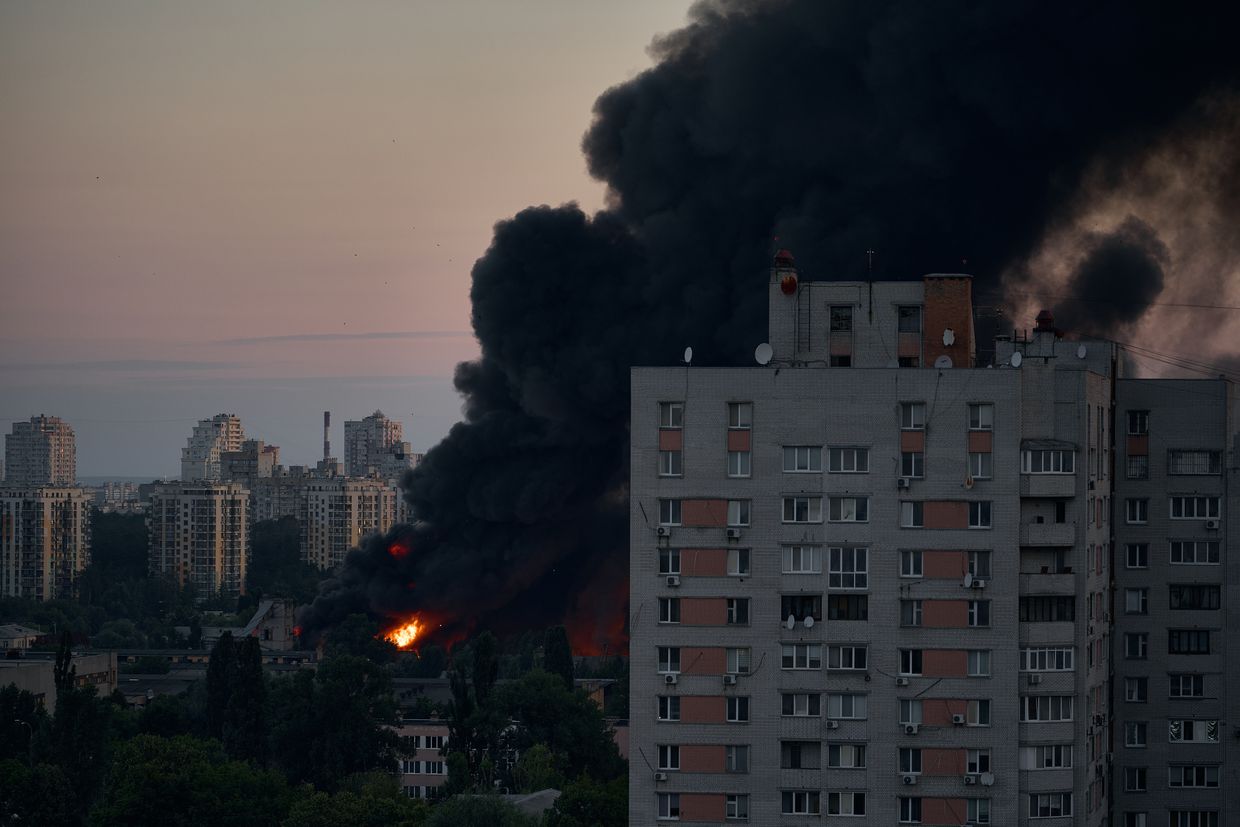
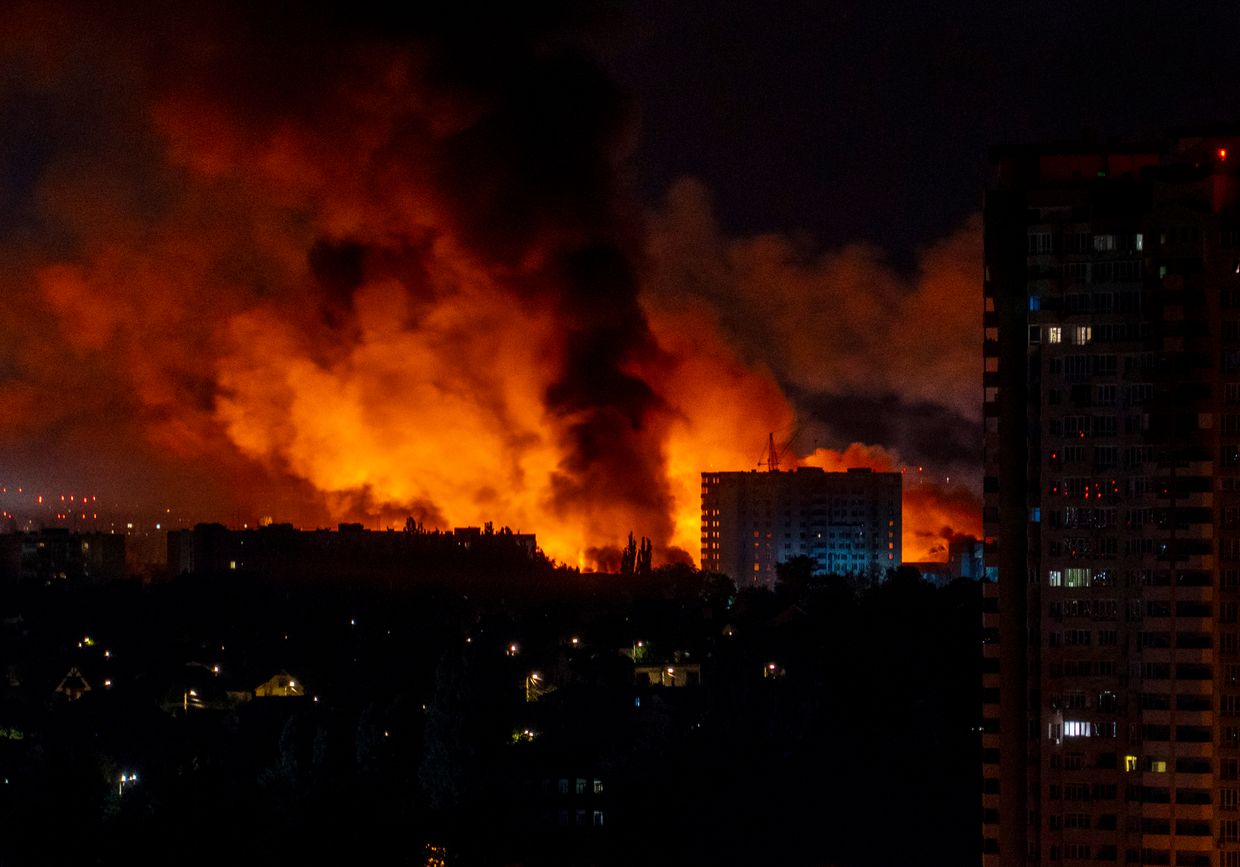
The call came as Russia escalated its aerial campaign across Ukraine, including an overnight July 4 attack that struck Kyiv and several other regions, injuring at least 23 civilians and sparking dozens of fires in the capital.
"Today we discussed the situation: Russian air strikes and, more broadly, the situation on the front lines. President Trump is very well informed," Zelensky said.
"We discussed air defense options and agreed to work on increasing airspace protection. We agreed on a meeting between our teams."
Zelensky said the two leaders also discussed Ukraine's defense industry potential and explored possibilities for direct cooperation with U.S. partners.
"We are ready for direct projects with America and believe that this is extremely necessary for security, especially with regard to drones and related technologies," he added.
Trump told Zelensky that the U.S. is willing to assist Ukraine with air defense amid intensified Russian strikes, Axios reported, citing unnamed sources. The call between the two presidents reportedly lasted about 40 minutes.
This conversation followed a phone call between Trump and Russian President Vladimir Putin on July 3, during which the Kremlin said Putin reaffirmed that "Russia will continue to pursue its goals" in its war against Ukraine despite U.S. calls for a ceasefire.
Trump told reporters on July 3 that he was "very disappointed" by the conversation with Putin.
"I don't think he's there... I don't think he's looking to stop this fighting."
The call also followed the U.S. Defense Department's decision to pause shipments of key weapons systems to Ukraine, including Patriot missiles and precision-guided artillery rounds. Kyiv has warned that the delay threatens to weaken its air defenses and emboldens Moscow.
Despite repeated expressions of frustration about Russia's continued aggression, Trump's administration has yet to impose new sanctions or approve additional aid for Ukraine since taking office in January.
While Russia and Ukraine resumed direct talks in Istanbul this year, the two rounds of negotiations — on May 16 and June 2 — have yielded only prisoner exchanges and no progress toward a ceasefire.
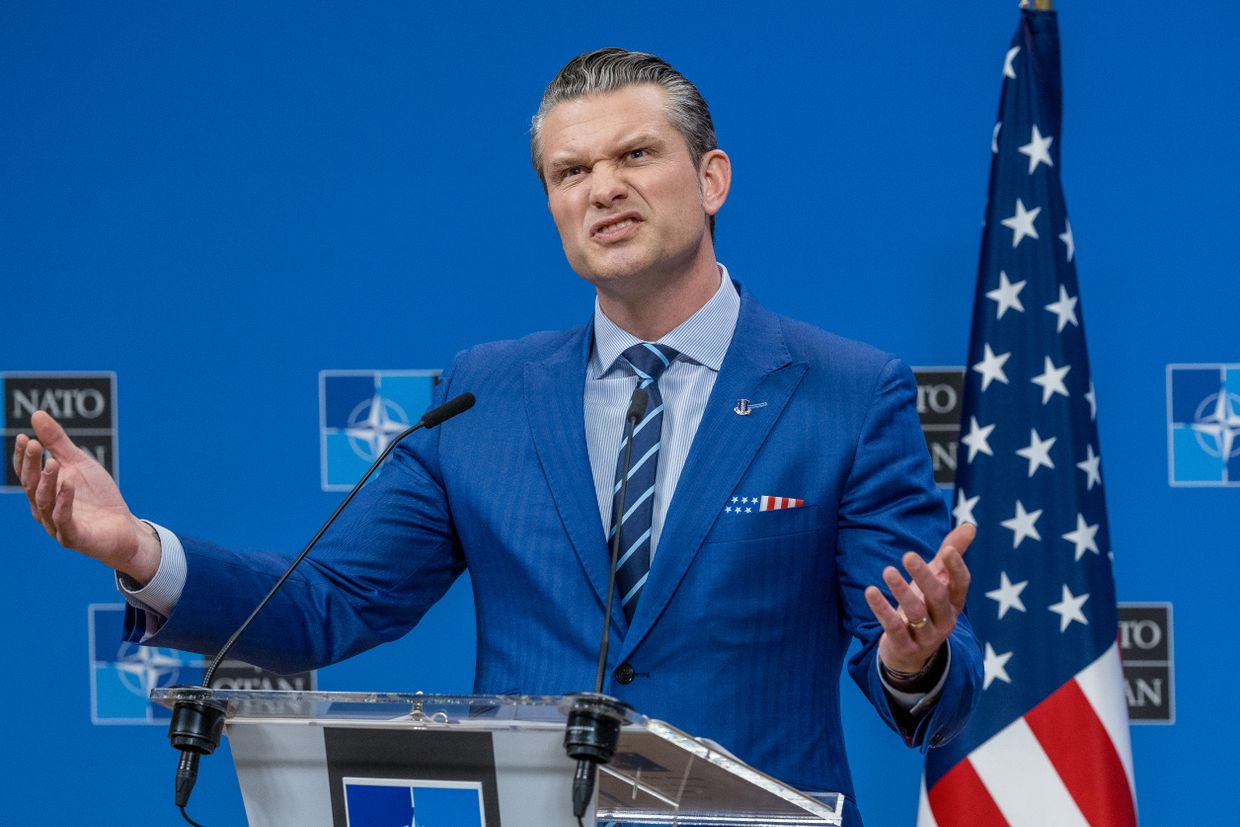
U.S. Defense Secretary Pete Hegseth unilaterally halted a weapons shipment to Ukraine on July 2 despite internal military assessments showing the aid would not compromise American military readiness, NBC News reported on July 4, citing three U.S. officials.The pause in aid, which included critical air defense systems and ammunition, reportedly caught the State Department, members of Congress, Ukraine, and key European allies off guard.Ukraine suffered one of the largest attacks on July 4, with P
U.S. Defense Secretary Pete Hegseth unilaterally halted a weapons shipment to Ukraine on July 2 despite internal military assessments showing the aid would not compromise American military readiness, NBC News reported on July 4, citing three U.S. officials.
The pause in aid, which included critical air defense systems and ammunition, reportedly caught the State Department, members of Congress, Ukraine, and key European allies off guard.
Ukraine suffered one of the largest attacks on July 4, with President Volodymyr Zelensky calling for more air defense to protect civilians in the cities. The attack on Kyiv killed one person and injured 23 more.
A senior U.S. military review had concluded that while some munitions stockpiles, including precision weapons, were low, they had not fallen below critical thresholds, according to NBC. Despite this, Hegseth opted to stop the shipment. This is reportedly his third such move since February.
"We are not at any lower point, stockpile-wise, than we’ve been in the three-and-a-half years of the Ukraine conflict," Congressman Adam Smith the top Democrat on the House Armed Services Committee, said. Smith, who said his staff reviewed the Pentagon's figures, called the justification "disingenuous."
The shipment reportedly included dozens of Patriot interceptors, 155 mm artillery rounds, Hellfire missiles, guided missile systems (GMLRS), Stinger and AIM air-to-air missiles, and grenade launchers.
Two sources told NBC that some of the weapons had already been loaded onto trucks in Poland when the halt was ordered.
Zelensky recently called Patriot systems "real defenders of life," since Patriot missile systems are the best air defense in Ukraine's arsenal. They are considered to be the most effective measure against Russian ballistic missiles like Iskander and Kinzhal.
Pentagon spokesman Sean Parnell described earlier the decision as part of a broader "capability review" to ensure U.S. forces remain equipped.
The halt has initiated debate over the future of U.S. support for Ukraine.
Lawmakers from both parties, including Republican Congressman Michael McCaul, expressed frustration at the lack of advance notice. "Now is the time to show Putin we mean business," McCaul wrote on X.
Republican Congressman Joe Wilson also reacted to the halt, warning of its consequences amid Russia's ongoing strikes.
"As Americans begin to enjoy the sounds of fireworks in celebration of our Nation's Independence, war criminal (Russian President Vladimir) Putin, who is losing his pathetic war, resorts to scorched earth tactics across Ukrainian cities that predate Moscow's existence," Wilson wrote.
Wilson said he is "confident the Department of Defense will advance President Trump’s objectives stated at The Hague to send additional air defense and approved weapons to help stop this absolute depravity, as allies have and must continue doing at a rapid pace."
Republican Congressman Brian Fitzpatrick has requested an emergency White House briefing, warning the decision could cost lives.
Trump has denied that the U.S. paused shipments on July 3, contradicting both Pentagon confirmation and reporting.
"We haven't," Trump told a reporter. "We're giving weapons." He also claimed the Biden administration had "emptied out our whole country" and insisted Washington must prioritize its own defense.
Russia is escalating the use of chemical weapons against Ukrainian forces, the Netherlands Military Intelligence (MIVD) reported on July 4.Russian troops use banned chemical agents as psychological warfare to panic Ukrainian forces, forcing soldiers from dugouts and trenches with gas grenades dropped by drones, making them easy targets for subsequent drone or artillery attacks.According to MIVD report, it was previously known that Russia usesd tear gas, but now intelligence has confirmed the use
According to MIVD report, it was previously known that Russia usesd tear gas, but now intelligence has confirmed the use of chloropicrin — a substance that can kill in high concentrations in enclosed spaces.
Use of of chloropicrin, banned under international law, was discovered by the Netherlands Military Intelligence and Security Service (MIVD) and General Intelligence and Security Service (AIVD) together with the German foreign intelligence service BND.
The Kyiv Independent previously reported rising chemical attacks, but Ukraine could not accurately identify the chemical substances due to lack of equipment.
The U.S. State Department had already reported in May that Russian forces have used the chemical agent chloropicrin in Ukraine. The May 1 announcement was part of a larger statement about the introduction of new U.S. sanctions against more than 280 individuals and entities.
For now, the original statement has been removed from the U.S. State Department website.
Russia is using this type of weapon more frequently and "with ease," says MIVD Director Vice Admiral Peter Reesink.
Dutch Defense Minister Ruben Brekelmans, who announced the news to the Dutch parliament, called the situation "absolutely unacceptable," calling for "more sanctions, isolation of Russia and unwavering military support for Ukraine."
"We are making this public now because Russia's use of chemical weapons must not become normalized," Brekelmans said. "If the threshold for using this type of weapon is lowered, it is dangerous not only for Ukraine but also for the rest of Europe and the world."
Since the start of the full-scale invasion in 2022, Russia has conducted over 9,000 chemical attacks. At least three Ukrainian soldiers have died directly from exposure to toxic substances, according to Ukraine's Ministry of Defense.
Dutch intelligence has established that Russian military leadership actively facilitates chemical attacks, and the use of banned substances has become standard practice for Russian forces.
Moscow is also increasing investments in chemical weapons programs, expanding research and recruiting new scientists, MIVD and AIVD observe.
The U.S. has accused Russia of deploying chloropicrin, often used in agriculture and widely weaponized as a “vomiting agent” during World War I.
Editor's note: This is a developing story and is being updated.A new prisoner of war (POW) exchange with Russia has taken place, bringing home another group of Ukrainian defenders held in Russian captivity, many since 2022, President Volodymyr Zelensky confirmed on July 4."Our people are home. Most of them had been in Russian captivity since 2022," Zelensky said in a statement. According to Ukraine's Land Forces, the group includes prisoners categorized as "wounded and seriously ill," those "und
Editor's note: This is a developing story and is being updated.
A new prisoner of war (POW) exchange with Russia has taken place, bringing home another group of Ukrainian defenders held in Russian captivity, many since 2022, President Volodymyr Zelensky confirmed on July 4.
"Our people are home. Most of them had been in Russian captivity since 2022," Zelensky said in a statement.
According to Ukraine's Land Forces, the group includes prisoners categorized as "wounded and seriously ill," those "under the age of 25," and civilians.
The Coordination Headquarters for Prisoners of War confirmed that this latest exchange was carried out under President Zelensky's directive, and included defenders of Mariupol held since 2022, as well as civilians who had been illegally sentenced or deprived of liberty.
"Today, our defenders are returning, those who fought for Ukraine in various regions: Donetsk, Mariupol, Luhansk, Kharkiv, Kherson. These are soldiers of the Armed Forces, the National Guard, the State Border Guard Service, the State Special Transport Service, and also civilians," Zelesnky said.
"Ukraine's goal is to free all our people from Russian captivity."
The exchange follows five swaps that occurred in June under the Istanbul deal reached between Ukraine and Russia on June 2. The agreement provided for the regular release of severely ill and wounded POWs from both sides, as well as the repatriation of the bodies of fallen soldiers.
Previous swaps have brought home service members from the Armed Forces, National Guard, and State Border Guard Service, many of whom were captured in 2022 during the Russian invasion.
Recently released Ukrainian prisoners of war returned home following a POW exchange with Russia on July 4, 2025. (The Coordination Headquarters for Prisoners of War / Telegram)
Recently released Ukrainian prisoners of war returned home following a POW exchange with Russia on July 4, 2025. (The Coordination Headquarters for Prisoners of War / Telegram)
Recently released Ukrainian prisoners of war returned home following a POW exchange with Russia on July 4, 2025. (The Coordination Headquarters for Prisoners of War / Telegram)
Recently released Ukrainian prisoners of war returned home following a POW exchange with Russia on July 4, 2025. (The Coordination Headquarters for Prisoners of War / Telegram)
Recently released Ukrainian prisoners of war returned home following a POW exchange with Russia on July 4, 2025. (The Coordination Headquarters for Prisoners of War / Telegram)
Recently released Ukrainian prisoners of war returned home following a POW exchange with Russia on July 4, 2025. (The Coordination Headquarters for Prisoners of War / Telegram)
"Exchanges must continue, and I thank everyone who makes this possible," Zelensky said. "Ukraine's goal is to free all our people from Russian captivity. I thank everyone who helps make that happen."
Russia's Defense Ministry confirmed the exchange on July 4, without disclosing the number of soldiers returned.
Previous exchanges have focused on individuals with serious medical needs resulting from injuries and harsh conditions in captivity. Some previously released prisoners had defended Mariupol during the 2022 siege, while others fought in regions including Donetsk, Luhansk, Kherson, and Kyiv oblasts.
The Istanbul agreement followed months of stalled negotiations and was hailed as a humanitarian breakthrough despite the lack of broader political progress.
As part of the deal, Moscow pledged to return the remains of up to 6,000 Ukrainian service members and civilians. Ukrainian authorities say Russia has already transferred over 6,000 bodies in recent weeks.
Ukraine continues to advocate for a full-scale "all-for-all" exchange, a proposal that Russia has so far rejected. Still, both sides have carried out smaller, phased swaps, sometimes multiple in a single week.
U.S. President Donald Trump's Special Envoy Steve Witkoff is pushing to lift U.S. energy sanctions on Russia, Politico reported on July 4, citing two people familiar with the matter. The move is part of a broader debate within Trump's administration over how to engage with Moscow amid the ongoing war in Ukraine.While Witkoff is reportedly advocating for the easing of energy sanctions, others in the administration disagree. Interior Secretary Doug Burgum favors reducing U.S. reliance on Russian i
U.S. President Donald Trump's Special Envoy Steve Witkoff is pushing to lift U.S. energy sanctions on Russia, Politico reported on July 4, citing two people familiar with the matter.
The move is part of a broader debate within Trump's administration over how to engage with Moscow amid the ongoing war in Ukraine.
While Witkoff is reportedly advocating for the easing of energy sanctions, others in the administration disagree. Interior Secretary Doug Burgum favors reducing U.S. reliance on Russian imports rather than expanding trade, according to Politico.
Despite pledging during his campaign to end the war in Ukraine in "24 hours," Trump has made little progress on securing a ceasefire. After nearly seven months of his presidency, and several peace talks between Russia, Ukraine, and the United States, no ceasefire agreement has been reached.
Moscow continues intensifying its attacks against Ukrainian cities. Russia launched one of the largest aerial attacks on Ukraine on July 4, hours after Russian President Vladimir Putin had a phone conversation with Trump.
When journalists asked if he had made any progress with Putin on the call, Trump responded: "No, I didn't make any progress with him today at all."
Europe's energy sector is a central issue in the debate. According to Politico, Moscow is in early talks with Washington about potentially restarting the Nord Stream pipeline project, with backing from U.S. investors. The development has sparked concern in Brussels.
One senior EU official reportedly warned that Trump and Putin appear to be aiming to "divide the European energy market and create (separate) spheres of influence."
Witkoff, a real estate developer-turned-envoy, has raised eyebrows in Washington and abroad over his handling of high-level talks with Russia. As reported by NBC News in May, he has relied on Kremlin-provided translators during multiple meetings with Putin, including a visit to Moscow on April 26, just a day after a Russian missile attack killed 12 people in Kyiv.
Trump's administration has so far refrained from imposing new sanctions against Russia, even as Putin continues to reject calls for a ceasefire.
Life for children in Ukraine has become increasingly dangerous and deadly, according to the latest U.N. figures, which show a threefold jump in the number of deaths and injuries among children over the three months ending in May. From March through May, 222 children were killed or injured, compared to 73 in the preceding three months, according to a press release from the U.N. Humanitarian Aid Organization for Children (UNICEF) on July 4. The statement noted that "the ongoing use of explosive we
Life for children in Ukraine has become increasingly dangerous and deadly, according to the latest U.N. figures, which show a threefold jump in the number of deaths and injuries among children over the three months ending in May.
From March through May, 222 children were killed or injured, compared to 73 in the preceding three months, according to a press release from the U.N. Humanitarian Aid Organization for Children (UNICEF) on July 4.
The statement noted that "the ongoing use of explosive weapons in populated areas has been particularly deadly and destructive."
"There is no respite from the war for children across Ukraine," UNICEF Regional Director for Europe and Central Asia, Regina De Dominicis, said. "The situation for children is at a critical juncture, as intense attacks continue to not only destroy lives but disrupt every aspect of childhood."
Recent months have seen some of the war's deadliest attacks on civilians, as Russia steps up its aerial strikes on civilian areas and launches record numbers of drones. Russia has dramatically increased its production of these weapons and is now capable of launching in a single night as many drones as it did over an entire month in early summer 2024.
U.S. President Donald Trump said he was "very disappointed" with Russian President Vladimir Putin following a phone call on July 3, during which the two leaders discussed the ongoing war in Ukraine. Trump told reporters he "didn't make any progress" and accused Putin of showing no willingness to stop the fighting.Trump also said that he is planning to talk to President Volodymyr Zelensky on July 4. "I'm speaking to President Zelensky tomorrow in the early morning, and I'm very disappointed with
U.S. President Donald Trump said he was "very disappointed" with Russian President Vladimir Putin following a phone call on July 3, during which the two leaders discussed the ongoing war in Ukraine.
Trump told reporters he "didn't make any progress" and accused Putin of showing no willingness to stop the fighting.
Trump also said that he is planning to talk to President Volodymyr Zelensky on July 4.
"I'm speaking to President Zelensky tomorrow in the early morning, and I'm very disappointed with the conversation I had today with President Putin," Trump told journalists. "Because I don't think he's there. And I'm very disappointed. I don't think he's looking to stop this fighting."
Later on July 4, Kremlin spokesperson Dmitry Peskov said Russia "is paying close attention to all of Trump's statements," but added Moscow will continue its full-scale war in Ukraine because "it is not yet possible to achieve goals through diplomatic means."
The hour-long conversation between Trump and Putin marked the sixth time the two leaders have spoken since Trump took office in January. According to Kremlin aide Yury Ushakov, Putin reiterated that "Russia will continue to pursue its goals," refusing to back down from what the Kremlin calls the "root causes” of the conflict.
The White House did not issue a readout of the call. Trump provided few additional details, only saying the discussion covered "a lot of things" and confirming no progress had been made on securing a ceasefire.
The call came just hours before one of the largest Russian aerial assaults on Ukraine in recent months. According to Zelensky, air raid sirens began sounding across Ukraine almost simultaneously with media reports about the Trump-Putin call.
"Russia is once again demonstrating that it is not going to end the war and terror," Zelensky said. "The first air raids in our cities and regions began yesterday, almost simultaneously with the start of media discussions of President Trump's phone call with Putin."
Overnight on July 4, Russian forces launched more than 550 aerial weapons, including over 330 Iranian-type Shahed drones and multiple types of missiles, across Ukraine, with Kyiv as the main target. At least 23 people were injured in the capital, where fires broke out in multiple districts and air pollution reached dangerous levels.
Zelensky renewed calls for increased military assistance from Ukraine's partners, especially the delivery of U.S.-made Patriot missile systems.
"Patriots and their missiles are real defenders of life," he said.
Despite Ukraine's urgent appeals, the U.S. Defense Department has paused shipments of Patriot systems and other key munitions, citing the need to replenish domestic stockpiles. Ukrainian officials have warned that such delays threaten to embolden Russia and intensify attacks on civilians.
President Volodymyr Zelensky called for more air defence for Ukraine after a massive drone and missile attack on Ukraine's capital overnight on July 4.According to Zelensky, as U.S. President Donald Trump and Russian President Vladimir Putin were talking on the phone on July 3, air raid sirens blared across Ukraine. "Moreover, the first air raids in our cities and regions began yesterday almost simultaneously with the start of media discussions of President Trump's phone call with Putin," Zelens
President Volodymyr Zelensky called for more air defence for Ukraine after a massive drone and missile attack on Ukraine's capital overnight on July 4.
According to Zelensky, as U.S. President Donald Trump and Russian President Vladimir Putin were talking on the phone on July 3, air raid sirens blared across Ukraine.
"Moreover, the first air raids in our cities and regions began yesterday almost simultaneously with the start of media discussions of President Trump's phone call with Putin," Zelensky wrote.
"This was one of the most large-scale air attacks – deliberately massive and cynical... Russia is once again demonstrating that it is not going to end the war and terror."
The overnight attack struck Kyiv and several other regions, injuring at least 23 people and setting off dozens of fires in Ukraine's capital. Russian forces launched more than 550 aerial weapons, including over 330 Iranian-type Shahed drones and multiple types of missiles, including ballistic missiles, Zelensky said.
Firefighting efforts and debris removal are still ongoing after another Russian strike. This was one of the most large-scale air attacks – deliberately massive and cynical. In total, 550 targets were launched, including at least 330 Russian-Iranian “shaheds”, along with missiles,… pic.twitter.com/vnn31oST0z
— Volodymyr Zelenskyy / Володимир Зеленський (@ZelenskyyUa) July 4, 2025
Kyiv was the main target. Ukraine's military said it shot down 270 aerial threats, while 208 additional drones were jammed by electronic warfare. Interceptor drones also downed dozens more, Zelensky said, calling their growing use a key defense priority.
Zelensky stressed the need for continued and increased military aid from allies, especially air defenses. "Patriots and their missiles are real defenders of life," Zelensky said. "It is very important to maintain the support of partners in ballistic missile defense."
Despite Russia's escalating attacks and Ukraine's desperate need for air defense munitions, the U.S. has decided to halt shipments of Patriot missiles and other promised weapons to Kyiv, claiming it needs to secure its own stockpiles.
Kyiv residents and emergency crews at the site of Russian attack on July 4, 2025. Russia targeted the capital throughout the night with drones and missiles, causing fires across the city. (Ukraine's State Emergency Service / Telegram)
Firefighters respond at an attack site in Kyiv after Russia launched a mass attack overnight on July 4, 2025. (Ukraine's State Emergency Service / Telegram)
Smoke rises over the residential district after a Russian drone and missile attack in Kyiv, Ukraine, on July 4, 2025. (Yurii Stefanyak / Global Images Ukraine via Getty Images)
Beyond Kyiv, strikes also hit the Dnipropetrovsk, Sumy, Kharkiv, Chernihiv, and Kyiv oblasts, according to Zelensky. Fires and damage were reported in nearly every district of the capital, including residential buildings, schools, medical facilities, and railway infrastructure.
Local authorities described the night as "terroristic." Kyiv Mayor Vitali Klitschko reported fires in at least five districts. Air quality in the city remained dangerously poor by morning, as noted by the Ministry of Environmental Protection.
Meanwhile, Russian state media reported that during the Trump-Putin call, Putin reiterated his determination to continue pursuing the Kremlin's goals in Ukraine, despite mounting international calls for a ceasefire.
Zelensky called on Ukraine's allies, particularly the United States, to apply massive and immediate pressure on Russia. "We need to ensure that for every such attack on people and lives, they (Russia) feel the corresponding sanctions and other blows to their economy, their earnings, their infrastructure," he said. "Only this can bring faster change."
Editor's note: This story was updated with a statement made by Ukraine's General Staff.Drones struck multiple targets in Russia overnight on July 4, including a high-value defense facility in the southern Rostov region, according to Andrii Kovalenko, head of the counter-disinformation center at Ukraine’s National Security and Defense Council.Kovalenko said a drone hit the Azov Optical and Mechanical Plant in the town of Azov, Rostov Oblast. The facility reportedly manufactures critical component
Editor's note: This story was updated with a statement made by Ukraine's General Staff.
Drones struck multiple targets in Russia overnight on July 4, including a high-value defense facility in the southern Rostov region, according to Andrii Kovalenko, head of the counter-disinformation center at Ukraine’s National Security and Defense Council.
Kovalenko said a drone hit the Azov Optical and Mechanical Plant in the town of Azov, Rostov Oblast. The facility reportedly manufactures critical components for the Russian military, including sights, rangefinders, thermal imaging systems, and fire control equipment for tanks, infantry fighting vehicles, ships, and aircraft.
"Despite the difficult night, there is also good news. There were attacks on facilities in Russia, particularly in Moscow and Rostov regions," Kovalenko wrote. "This is where the 'eyes' for Russian armored vehicles are assembled."
Overnight on July 4, Russia launched a massive drone and missile assault on multiple Ukrainian cities, with Kyiv as the primary target. At least 23 people were injured in the capital amid widespread destruction and high levels of air pollution.
Ukraine's General Staff later confirmed that its drone units, operating in coordination with other elements of the Defense Forces, also struck the Scientific Research Institute of Applied Chemistry (FNTs NIIPKh) in Sergiyev Posad, Moscow Oblast.
The military said the facility is involved in the production of thermobaric warheads for Shahed-type drones and plays a critical role in Russia's airstrike capabilities.
"We confirmed that our munitions hit the target," the General Staff said. "A fire and heavy smoke were detected in the area of the facility." The full extent of the damage is still being assessed.
Russian officials also confirmed drone strikes across several regions.
Yuriy Slyusar, acting governor of Rostov Oblast, said a number of towns in the region were struck by drones. In the city of Azov, the attack reportedly damaged several cars and shattered windows in residential buildings. Debris from one drone allegedly fell onto a local stadium.
In the village of Dolotinka, a drone strike reportedly caused the collapse of a section of a residential apartment building, killing an elderly woman. Authorities said 20 residents were evacuated from the damaged structure.
In Sergiyev Posad in Moscow Oblast, four explosions were reported around 5 a.m. near the Zvezdochka neighborhood, accompanied by the sound of drone engines, according to local residents. Oksana Yerokhanova, head of the district, said a power substation was damaged in the incident.
Two people were injured in Sergiyev Posad, according to Governor Andrei Vorobyov.
Russia's Defense Ministry later claimed that air defense systems had intercepted or destroyed 48 Ukrainian drones overnight. According to the ministry, 26 were downed over Rostov Oblast, 12 over Kursk Oblast, six over Belgorod Oblast, three over Oryol Oblast, and one over Lipetsk Oblast.
The Kyiv Independent could not independently verify these claims.
Russia has lost 1,024,210 troops in Ukraine since the beginning of its full-scale invasion on Feb. 24, 2022, the General Staff of Ukraine's Armed Forces reported on July 4.The number includes 1,120 casualties that Russian forces suffered over the past day.According to the report, Russia has also lost 10,988 tanks, 22,946 armored fighting vehicles, 53,999 vehicles and fuel tanks, 29,865 artillery systems, 1,428 multiple launch rocket systems, 1,191 air defense systems, 420 airplanes, 340 helicopt
Russia has lost 1,024,210 troops in Ukraine since the beginning of its full-scale invasion on Feb. 24, 2022, the General Staff of Ukraine's Armed Forces reported on July 4.
The number includes 1,120 casualties that Russian forces suffered over the past day.
According to the report, Russia has also lost 10,988 tanks, 22,946 armored fighting vehicles, 53,999 vehicles and fuel tanks, 29,865 artillery systems, 1,428 multiple launch rocket systems, 1,191 air defense systems, 420 airplanes, 340 helicopters, 43,303 drones, 28 ships and boats, and one submarine.
China's Foreign Minister Wang Yi reportedly told the EU's top diplomat Kaja Kallas on July 3 that the country cannot afford for Russia to lose the war in Ukraine amid fears the U.S. would shift focus towards Beijing, the South China Morning Post (SCMP) reported, citing sources familiar with the conversation.As the war in Ukraine drags on, Wang's reported comments suggest that Russia's war in Ukraine may serve China's strategic needs as focus is deviated away from Beijing's mounting preparation t
China's Foreign Minister Wang Yi reportedly told the EU's top diplomat Kaja Kallas on July 3 that the country cannot afford for Russia to lose the war in Ukraine amid fears the U.S. would shift focus towards Beijing, the South China Morning Post (SCMP) reported, citing sources familiar with the conversation.
As the war in Ukraine drags on, Wang's reported comments suggest that Russia's war in Ukraine may serve China's strategic needs as focus is deviated away from Beijing's mounting preparation to launch its own possible invasion into Taiwan.
China has been a key ally to Russia during its full-scale war, helping Moscow evade Western sanctions and becoming the leading source of dual-use goods fueling the Russian defense industry.
U.S. President Donald Trump, who has not managed to broker a promised ceasefire between Moscow and Kyiv, has long viewed China as the United States' main adversary and is predominantly focused on relations between the two nations.
In June, Bloomberg reportedTrump is pulling back from pressuring China over its support for Russia’s war effort, instead prioritizing other aspects of the U.S.-China relationship. The publication reported that the administration lowered the issue of Russia's war against Ukraine on its list of foreign policy priorities and is focusing on bilateral issues with Beijing, though they noted Trump could still shift course.
The frankness of Wang's reported admission was greeted with surprise by EU official, according to Hong Kong-based SCMP, amid China's past public statements in favor of a peace deal. Two sources familiar with the meeting told SCMP that they believed Wang was providing Kallas with a lesson in realpolitik during the four-hour encounter.
Wang on July 3 again reportedly rejected Western accusations that it was providing funding and weaponry to support Moscow's war effort in Ukraine.
President Volodymyr Zelensky has repeatedly accused Beijing of providing weaponry to Moscow. On May 29, Zelensky said that China had stopped selling drones to Ukraine and Western countries while continuing to supply them to Russia.
Wang's comments come amid waning support from Kyiv's main military backer, the United States. On July 1, the U.S. Defense Department paused shipments of key weapons systems to Ukraine, including Patriot air defense missiles and precision-guided munitions.
As Russian-Chinese relations continue to grow, Russian President Vladimir Putin agreed to meet Chinese President Xi Jingping in September in China for the Shanghai Cooperation Organization summit.
U.S. President Donald Trump told reporters on July 3 that he "didn't make any progress" on ending the war in Ukraine during his call with Russian President Vladimir Putin earlier in the day."We had a call. It was a pretty long call. We talked about a lot of things," Trump said ahead of his flight to an Iowa event.When asked if he had made any progress with Putin on the call, Trump responded: "No, I didn't make any progress with him today at all."The two leaders held an hour-long conversation ear
U.S. President Donald Trump told reporters on July 3 that he "didn't make any progress" on ending the war in Ukraine during his call with Russian President Vladimir Putin earlier in the day.
"We had a call. It was a pretty long call. We talked about a lot of things," Trump saidahead of his flight to an Iowa event.
When asked if he had made any progress with Putin on the call, Trump responded: "No, I didn't make any progress with him today at all."
The two leaders held an hour-long conversation early in the on July 3 focused on Russia's war in Ukraine and the situation in the Middle East. The call marks the sixth conversation between the two men since Trump took office in January.
Kremlin aide Yury Ushakov told reporters earlier in the day that Putin said "Russia will continue to pursue its goals" in the war against Ukraine.
"Our president said that Russia will pursue its goals, specifically addressing the root causes that led to the current situation, and will not back down from these objectives," Ushakov added.
The White House did not provide a read out of the meeting, and Trump did not provide further comment on the phone call.
Since taking office, Trump has attempted to broker a ceasefire between Ukraine and Russia to no avail. Despite two rounds of negotiations between Kyiv and Moscow, Putin has refused to implement a ceasefire, citing his maximalist demands.
While Trump has expressed frustration with Russia's continued aggression, his administration has not imposed new sanctions nor taken steps to pressure the Kremlin directly.
Putin's message came amid a surge of Russian drone and missile attacks across Ukraine that have killed and injured hundreds of civilians in recent weeks.
The strikes have destroyed numerous infrastructure as Russia intensifies its assault despite repeated calls from Kyiv, Washington, and European leaders for an unconditional ceasefire.
The phone call also came just a day after the U.S. Defense Department paused shipments of key weapons systems to Ukraine, including Patriot air defense missiles and precision-guided munitions. Ukraine's Foreign Ministry has warned that the delay undermines defense efforts and risks emboldening Russia to escalate further.
President Volodymyr Zelensky, speaking from Denmark earlier in the day, said that achieving peace would require direct talks between national leaders.
The president described Trump and Putin as "completely different people" but emphasized that only Putin makes decisions in Russia.
"In Russia, only Putin makes decisions, which is why we need a meeting at the leadership level if we want to have peace," Zelensky said.
Editor's note: This is a developing story and is being updated.Explosions rocked the city of Kyiv for more than seven hours overnight on July 4, as Russia launched a record missile and drone attack targeting the capital and other cities across Ukraine. At least one person was killed, and 23 others injured in Kyiv. Mayor Vitali Klitschko said 14 people had been hospitalized, while Tymur Tkachenko, head of the Kyiv City Military Administration, in the afternoon confirmed a body had been found duri
Editor's note: This is a developing story and is being updated.
Explosions rocked the city of Kyiv for more than seven hours overnight on July 4, as Russia launched a record missile and drone attack targeting the capital and other cities across Ukraine.
At least one person was killed, and 23 others injured in Kyiv. Mayor Vitali Klitschko said 14 people had been hospitalized, while Tymur Tkachenko, head of the Kyiv City Military Administration, in the afternoon confirmed a body had been found during rescue operations.
"Today’s attack was like the worst nightmare come to life," Kyiv resident Olha Vershynina told the Kyiv Independent at the site of damaged residential buildings in the capital's Solomianskyi district. "Because when the strike happened, the lights went out and glass came crashing down on my head.
"It was terrifying. Our entire building was shaking."
President Volodymyr Zelensky said Russia launched a record 550 drones and missiles during the seven-hour barrage. Kyiv Independent journalists on the ground heard multiple rounds of explosions in the city beginning around 8 p.m. local time on July 3 and continuing into the early hours of July 4
The attack damaged apartment buildings, businesses, a school, a medical facility, railway lines, and other civilian infrastructure in multiple districts. Fires blazed across the city, making the air dangerous to breathe.
Tymur Tkachenko, head of the Kyiv City Military Administration, warned residents to close their windows due to dangerous levels of "combustion products" in the air.
"Russia, a terrorist country, has wreaked havoc," Tkachenko wrote on Telegram. "The Russians bring nothing but terror and murder. That is a fact."
Liliia Kuzmenko, 23-years-old and eight months pregnant, moved to Kyiv a month ago with her husband from the embattled city of Pokrovsk, Donetsk Oblast.
"The kind of explosions I heard here were unlike anything I heard in Pokrovsk. It’s just beyond words," she told the Kyiv Independent. "Fortunately, everything in our apartment is intact. But in others, the windows were blown out, and everything fell apart."
"Russia is once again demonstrating that it is not going to end the war and terror."
Ukraine's Air Force reported that Russia had launched a ballistic missile towards Kyiv at around 12:30 a.m, and then additional missiles around 2:30 a.m.
"This time was truly terrifying.," Maria Maznichenko, a pensioner who lives in Kyiv's Solomianskyi district. "The explosions kept coming. Shaheds drones were flying in every minute, like a swarm of bees — one after another. It was very frightening."
Flames and smoke billow from buildings in Kyiv, Ukraine, on July 4, 2025, during mass Russian drone and missile strikes. (Oleksii Filippov/AFP via Getty Images)
As officials reported real-time updates on damage and casualties amid the ongoing assault, Kyiv Independent reporters in the city said that smoke from explosions clogged the air even in neighborhoods far from the attack sites.
The massive assault came hours after a phone call between Russian President Vladimir Putin and U.S. President Donald Trump, during which Putin reaffirmed that "Russia will continue to pursue its goals" in Ukraine despite calls for a ceasefire from the West.
"The first air raids in our cities and regions began yesterday almost simultaneously with the start of media discussions of President Trump's phone call with Putin," Zelensky said in a post on social media on July 4.
"This was one of the most large-scale air attacks – deliberately massive and cynical... Russia is once again demonstrating that it is not going to end the war and terror."
Tkachenko reported that an earlier drone strike damaged a residential building in the city's Obolon district, causing a fire to break out on the roof.
In the Sviatoshynskyi district, drone wreckage caused fires at storage facilities and hit the courtyard of a 16-story apartment building, Klitschko said. Vehicles in the area caught fire after the attack. Another fire broke out at a business in the district due to falling drone debris.
In the Dniprovskyi district, drone debris fell near a school and several residential buildings, Tkachenko reported.
Fires also broke out in the Solomianskyi district, Klitschko said. An administrative building was in flames after the attack, as were storage facilities and a garage. Debris damaged "non-residential buildings" in the area.
A damaged civilian home burns in Kyiv, Ukraine, on July 4, 2025, after being hit by a kamikaze drone during a mass drone and missile attack by Russia. (Kostiantyn Liberov/Libkos/Getty Images)Local residents take cover in a metro station used as a shelter in Kyiv, Ukraine, on July 4, 2025, during a mass drone and missile attack by Russia. (Kostiantyn Liberov/Libkos/Getty Images)
Klitschko reported another fire on the first floor of an 8-story residential building in the Shevchenkivskyi district, but said the building was not inhabited. Another fire broke out at a business in the same district.
A medical facility in the Holosiivskyi district was damaged in the attack, Klitschko said.
Ukrainian Railways (Ukrzaliznytsia) said that the attack damaged rail infrastructure in Kyiv and cautioned residents to expect delays due to diverted routes.
Polish Foreign Minister Radoslaw Sikorski said that the consular section of Poland's embassy in Kyiv was damaged during Russia's attack on Kyiv. "I just spoke with Ambassador (Piotr) Lukasiewicz; everyone is safe and unharmed," Sikorski said.
He added that Ukraine urgently needs air defense systems.
Russia also targeted other regions of Ukraine with overnight attacks. Downed drones struck property and a vehicle in the city of Poltava, regional Governor Volodymyr Kohut reported. The strike injured two people.
A man looks at the wreckage of cars in Kyiv, Ukraine, on July 4, 2025, after mass Russian drone and missile strikes. (Oleksii Filippov/AFP via Getty Images)A large plume of smoke covers Kyiv, Ukraine, on July 4, 2025, after a mass drone and missile attack by Russia. (Kostiantyn Liberov/Libkos/Getty Images)
Kyiv and other major Ukrainian cities have faced intensified drone and missile strikes in recent weeks, with Russia deploying Iranian-designed Shahed drones in record numbers.
Russia on June 17 launched one of its largest attacks against Kyiv since the start of the full-scale war, killing 28 people and injuring 134 others. Less than a week later, ballistic missiles and kamikaze drones assailed the city in another mass strike.
Ukrainian officials have warned that continued attacks are aimed at wearing down air defense systems and terrorizing civilians.
Despite Russia's escalating attacks and Ukraine's desperate need for air defense munitions, the U.S. has decided to halt shipments of Patriot missiles and other promised weapons to Kyiv, claiming it needs to bolster its own stockpiles.
Ukraine’s Oschadbank won an appeal against Russia on July 1 after the Paris appeals court rejected Moscow’s challenge to a 2018 arbitration ruling ordering compensation for losses due to Russia's annexation of Crimea, the bank announced in a press release on July 3.The Paris Court of Appeal upheld the November 2018 arbitration tribunal decision requiring Russia to compensate Oschadbank for damages incurred when Moscow annexed the Ukrainian peninsula in 2014.The ruling orders Russia to pay more t
Ukraine’s Oschadbank won an appeal against Russia on July 1 after the Paris appeals court rejected Moscow’s challenge to a 2018 arbitration ruling ordering compensation for losses due to Russia's annexation of Crimea, the bank announced in a press release on July 3.
The Paris Court of Appeal upheld the November 2018 arbitration tribunal decision requiring Russia to compensate Oschadbank for damages incurred when Moscow annexed the Ukrainian peninsula in 2014.
The ruling orders Russia to pay more than $1.5 billion in damages and an additional 300,000 euros ($330,000) in legal costs to Ukraine's largest state-owned bank, according to a press release.
"The victory proves that efforts to force the aggressor state to answer legally for damages caused by the occupation of part of Ukraine's territory have good prospects," said Rosa Tapanova, a member of Oschadbank's supervisory board.
Oschadbank Chairman Serhii Naumov said it's the first Ukrainian bank to win such a case against Russia.
The decision follows Oschadbank's recent seizure of over 87 million euros ($102 million) in Russian assets in France as part of its campaign to recover war-related losses. The bank has been pursuing Russian assets across multiple jurisdictions to enforce the arbitration award.
"We understand that the Russian Federation will never voluntarily comply with the court's decision, and we are prepared for a long struggle," said Arsen Miliutin, deputy chairman of Oschadbank's management board.
"At the same time, we are confident that we will win, and Russia will pay not only the amount of damages caused, but also interest for all this time."
The Oschadbank victory adds to a growing list of Ukrainian legal wins against Russia. On June 23, Naftogaz CEO Serhii Koretskyi announced that an international arbitration tribunal in Switzerland had ordered Russia's Gazprom to pay the Ukrainian state energy company $1.37 billion after the Russian firm stopped fulfilling contract obligations in May 2022.
During a phone call with U.S. President Donald Trump on July 3, Russian President Vladimir Putin said "Russia will continue to pursue its goals" in the war against Ukraine, Kremlin aide Yury Ushakov said.The hour-long conversation between the two presidents focused on Russia's war in Ukraine and the situation in the Middle East, according to Ushakov."Trump once again emphasized the need to end military hostilities as soon as possible. Vladimir Putin noted that Russia continues to seek a politica
During a phone call with U.S. President Donald Trump on July 3, Russian President Vladimir Putin said "Russia will continue to pursue its goals" in the war against Ukraine, Kremlin aide Yury Ushakov said.
The hour-long conversation between the two presidents focused on Russia's war in Ukraine and the situation in the Middle East, according to Ushakov.
"Trump once again emphasized the need to end military hostilities as soon as possible. Vladimir Putin noted that Russia continues to seek a political negotiated solution to the conflict," Ushakov said.
"Our president said that Russia will pursue its goals, specifically addressing the root causes that led to the current situation, and will not back down from these objectives."
The Kremlin aide added that the two leaders discussed cultural diplomacy, specifically the exchange of films promoting what Ushakov described as "traditional values close to Russia and the U.S. presidential administration."
In response, U.S. President Donald Trump said later in the day that he "didn't make any progress" on ending the war in Ukraine during his call with Putin.
"No, I didn't make any progress with him today at all," told reporters in response to questions about the call.
Putin's message came amid a surge of Russian drone and missile attacks across Ukraine that have killed and injured hundreds of civilians in recent weeks.
The strikes have destroyed numerous infrastructure as Russia intensifies its assault despite repeated calls from Kyiv, Washington, and European leaders for an unconditional ceasefire.
The phone call also came just a day after the U.S. Defense Department paused shipments of key weapons systems to Ukraine, including Patriot air defense missiles and precision-guided munitions. Ukraine's Foreign Ministry has warned that the delay undermines defense efforts and risks emboldening Russia to escalate further.
President Volodymyr Zelensky, speaking from Denmark earlier in the day, said that achieving peace would require direct talks between national leaders.
The president described Trump and Putin as "completely different people" but emphasized that only Putin makes decisions in Russia.
"In Russia, only Putin makes decisions, which is why we need a meeting at the leadership level if we want to have peace," Zelensky said.
According to Ushakov, the presidents did not discuss the possibility of a meeting, but "the idea is in the air," and they agreed to continue communication.
Moscow and Kyiv have held two rounds of face-to-face talks in Istanbul this year, first on May 16 and again on June 2, following more than three years with no direct negotiations.
The meetings resulted in several prisoner exchanges, but no steps toward a ceasefire.
While Trump has expressed frustration with Russia's continued aggression, his administration has not imposed new sanctions nor taken steps to pressure the Kremlin directly.
Ukraine signed a major deal with U.S. company Swift Beat to co-produce hundreds of thousands of drones this year, President Volodymyr Zelensky announced on July 3 during his visit to Denmark.The long-term strategic partnership agreement was signed by Ukraine's Defense Minister Rustem Umerov and Eric Schmidt, the CEO of Swift Beat, in Denmark on the same day. Under the deal, the company will produce various kinds of unmanned aerial vehicles for Ukraine, including those designed to intercept Russi
Ukraine signed a major deal with U.S. company Swift Beat to co-produce hundreds of thousands of drones this year, President Volodymyr Zelensky announced on July 3 during his visit to Denmark.
The long-term strategic partnership agreement was signed by Ukraine's Defense Minister Rustem Umerov and Eric Schmidt, the CEO of Swift Beat, in Denmark on the same day.
Under the deal, the company will produce various kinds of unmanned aerial vehicles for Ukraine, including those designed to intercept Russian drones and missiles, reconnaissance, attack, and other drones, Zelensky said in a statement published on the website of the President's Office.
"The key priority is interceptor drones that have already proven effective in Ukraine," Zelensky said. "We've tested models from several companies, and now we're signing serious contracts."
Swift Beat will increase its production capacity, aiming to produce hundreds of thousands of drones for Ukraine this year, with plans to scale up production in 2026, according to Zelensky.
"Modern drones will be supplied to Ukraine as a priority, on special terms and at cost," Zelensky said.
The announcement comes just a day after the U.S. Defense Department (DOD) has halted shipments of some air defense missiles and other weapons previously promised to Kyiv. Ukraine has been trying to negotiate buying U.S. weapons for months after U.S. President Donald Trump, who has opposed military aid to Kyiv, took office in January.
Swift Beat has a significant presence in Ukraine, according to Zelensky's office. It specializes in autonomous AI-powered drones and cooperates with Ukrainian engineers and the military, conducting drone testing on Ukrainian territory, the statement reads.
Zelensky arrived in Denmark on July 3 to mark the country's assumption of the rotating presidency of the Council of the European Union.
Zelensky also said that during his visit, he plans to raise the issue of political blockages hindering Ukraine's path to joining the European Union.
"We're ready to open three accession clusters and want to start with one now, in the very near future. But political blockages remain, purely political," he said.
Denmark's King Frederik (C), President Volodymyr Zelensky (L), and Denmark's Prime Minister Mette Frederiksen (R) in Aarhus, Denmark, on July 3, 2025. (Ida Marie Odgaard / Ritzau Scanpix / AFP)
While EU member states agreed to take into account the European Commission's assessment that Ukraine is ready to open the first, Fundamentals cluster, the process remains stalled due to Hungary's refusal to grant unanimous support.
Ukraine applied for EU membership in 2022 and was granted candidate status shortly thereafter, but full negotiations require the approval of all 27 EU member states.
Denmark has been a key backer of Ukraine since the start of Russia's full-scale invasion in 2022. In February 2024, Copenhagen signed a 10-year bilateral security agreement with Kyiv, pledging long-term defense cooperation until Ukraine secures NATO membership.
Zelensky said he expects Denmark to expand its financial support for Ukraine's drone and missile production initiatives.
"What we've just signed requires significant funding. I'm counting on our relationship with Denmark," the president said.
The Ukrainian president will also participate in official events commemorating Denmark's presidency of the Council. According to Danish broadcaster DR, the events will be attended by Denmark's royal family, government officials, and EU leaders.
A midday explosion in the center of Russian-occupied Luhansk killed Manolis Pilavov, the city's former Russian-installed mayor, Russian state news agency TASS reported on July 3.Pilavov headed the occupation administration of Luhansk city from December 2014 until stepping down in November 2023. He had been wanted in Ukraine since 2015 on charges including attempting to violently overthrow the constitutional order and violating Ukraine's territorial integrity.The blast occurred around noon local
A midday explosion in the center of Russian-occupied Luhansk killed Manolis Pilavov, the city's former Russian-installed mayor, Russian state news agency TASS reported on July 3.
Pilavov headed the occupation administration of Luhansk city from December 2014 until stepping down in November 2023. He had been wanted in Ukraine since 2015 on charges including attempting to violently overthrow the constitutional order and violating Ukraine's territorial integrity.
The blast occurred around noon local time, according to TASS. Three people were reportedly injured, one of them in serious condition.
Ukraine has not commented on Pilavov's reported death. Explosions targeting collaborators and occupation officials have become more frequent in recent months.
Pilavov, born in 1964, held several posts in the local Luhansk administration before Russia occupied parts of Ukraine's eastern Luhansk Oblast in 2014.
He served as a city council member representing the now-banned pro-Russian Party of Regions and later actively supported the local Russian occupation administration.
Ukrainian authorities say Pilavov participated in separatist propaganda events and encouraged support for Moscow's proxy occupation structures shortly after Russian-backed militants took control of parts of Luhansk Oblast in 2014.
Luhansk remains under Russian occupation, with its city center and government institutions controlled by Kremlin-installed proxies.
Ukraine's Security Service (SBU) detained a Ukrainian Air Force major suspected of spying for Russian Federal Security Service (FSB), the agency reported on July 3.The alleged spy, arrested during a special operation in Lviv Oblast, was reportedly recruited through his ex-wife, a former military officer now cooperating with Russian forces in occupied Melitopol.According to the SBU, the officer was gathering coordinates of operational airfields, logistics hubs, and maintenance centers used by Ukr
Ukraine's Security Service (SBU) detained a Ukrainian Air Force major suspected of spying for Russian Federal Security Service (FSB), the agency reported on July 3.
The alleged spy, arrested during a special operation in Lviv Oblast, was reportedly recruited through his ex-wife, a former military officer now cooperating with Russian forces in occupied Melitopol.
According to the SBU, the officer was gathering coordinates of operational airfields, logistics hubs, and maintenance centers used by Ukrainian combat aircraft. If successful, Russia intended to launch missile and drone strikes on those locations.
The SBU said the operation was coordinated with Ukraine's Commander-in-Chief and that the agent was supervised by Aleksandr Belodedov, an officer in the FSB's Alpha special operations unit.
Authorities said they intercepted the agent before any damage was done, documenting his communication with Russian intelligence and securing military sites at risk.
The suspect has been charged with high treason committed during wartime by a group of individuals under Ukraine's Criminal Code. He remains in custody and faces life imprisonment with asset seizure.
His ex-wife was also charged in absentia for treason during wartime.
Ukrainian drones struck a Russian ammunition depot in occupied Donetsk Oblast overnight on July 3, setting off a series of huge explosions, Ukraine's State Security Service said on July 3."Starting at 10 p.m., explosions rang out at the depots, followed by a powerful secondary detonation of ammunition and a fire," the SBU said in a post on social media. According to the SBU, the ammunition depot is located in the occupied Ukrainian city of Khartsyzsk, near Donetsk, which is "of important strateg
Ukrainian drones struck a Russian ammunition depot in occupied Donetsk Oblast overnight on July 3, setting off a series of huge explosions, Ukraine's State Security Service said on July 3.
"Starting at 10 p.m., explosions rang out at the depots, followed by a powerful secondary detonation of ammunition and a fire," the SBU said in a post on social media.
According to the SBU, the ammunition depot is located in the occupied Ukrainian city of Khartsyzsk, near Donetsk, which is "of important strategic importance, as it is used by the Russians as a rear base."
"The enemy has placed command posts, logistics centers, and ammunition depots there. All of them are legitimate military targets," the statement added.
Unconfirmed videos posted to social media show a fire already burning followed by a large explosion and shockwave.
— Illia Ponomarenko 🇺🇦 (@IAPonomarenko) July 2, 2025
Elsewhere on July 3, Ukraine confirmed strikes on the Energia factory in Russia's Lipetsk Oblast overnight, a facility that produces components for missiles and drones, including batteries for the Iskander missile system and cruise missiles.
Andrii Kovalenko, head of the Counter-Disinformation Center at Ukraine's National Security and Defense Council, confirmed the strike, calling Energia "one of the most critical targets for Russia."
Ukraine's Donetsk Oblast (Nizar al-Rifai/The Kyiv Independent)
According to Kovalenko, the facility manufactures batteries for missile guidance and glider modules, including for the Iskander system and cruise missiles.
Ukraine's military regularly strikes military targets in Russian-occupied territories and deep within Russia in an attempt to diminish Moscow's fighting power as it continues its war against Ukraine.
On the evening of June 30, Ukraine similarly struck a command post of the 8th Combined Arms Army of the Russian Armed Forces in the Russian-occupied part of Donetsk Oblast.
Russia has for months focused its offensive efforts on the embattled town of Pokrovsk in Donetsk Oblast and has recently been escalating attempts to break through to neighboring Dnipropetrovsk Oblast, a region that has not yet seen combat.
Editor's note: This is a developing story and is being updated.A deputy commander of Russia's navy has been killed in a Ukrainian strike in Kursk Oblast, a Russian official confirmed on July 3.Major General Mikhail Yevgenyevich Gudkov was killed alongside his deputy and several other Russian soldiers, Oleg Kozhemyako, governor of Russia's Primorsky Krai, said in a post on social media.According to Russian milbloggers, 22 people in total were killed as a result of a Ukrainian HIMARS strike in Rus
Editor's note: This is a developing story and is being updated.
A deputy commander of Russia's navy has been killed in a Ukrainian strike in Kursk Oblast, a Russian official confirmed on July 3.
Major General Mikhail Yevgenyevich Gudkov was killed alongside his deputy and several other Russian soldiers, Oleg Kozhemyako, governor of Russia's Primorsky Krai, said in a post on social media.
According to Russian milbloggers, 22 people in total were killed as a result of a Ukrainian HIMARS strike in Russia's Kursk Oblast bordering Ukraine. Kyiv has yet to comment on the attack.
Gudkov was appointed deputy commander-in-chief of the Russian Navy in March 2025. Prior to that, he led the 155th Separate Marine Brigade, which has been involved in combat operations against Ukraine.
Ukraine has accused the 155th Separate Marine Brigade of committing numerous war crimes. According to the country's Air Assault Forces, members of the brigade are responsible for executing prisoners of war and humiliating captured Ukrainian soldiers.
Gudkov held the titles of Hero of Russia and Hero of Primorye, Russia's far eastern region where he previously served, Kozhemyako said.
HIMARS, whose prowess became a popular motif of internet memes, was a game-changer for Ukraine when they first arrived in the summer of 2022.
Initially supplied with GMLRS rockets with a range of around 70 kilometers, they allowed Ukraine to target Russian forces on the other side of the front line far more accurately than they had previously.
In the fall of 2023, the U.S. began supplying Kyiv with an older model of ATACMS – fired from HIMARS launchers – with a range of around 165 kilometers, greatly increasing the range that Ukraine could strike within.
Russia's high-ranking military officials have been killed on a regular basis throughout the full-scale invasion — a recent report from BBC Russia identified ten generals 10 generals and 524 lieutenant colonels and colonels.
Ukrainian forces launched a cross-border incursion into Russia's Kursk Oblast in August 2024, making it the first large-scale invasion of Russian territory by foreign troops since World War II. The move was intended to disrupt a planned Russian offensive targeting Ukraine's Sumy Oblast and to relieve pressure on the Donetsk front.
Since then, Ukraine claims it has inflicted 63,402 Russian troop casualties in the oblast, including 25,625 killed and 971 captured. Ukrainian forces also say they have destroyed or damaged over 5,664 pieces of Russian military equipment in the area.
Russia retook most of the lost territory during a renewed offensive in March 2025, supported by North Korean troops.
At least three people were killed and 34 injured across Ukraine in Russian drone and missile attacks, Ukrainian regional officials reported on July 3. Ukraine's Air Force reported that Russia used 52 drones launched from several directions, including Oryol, Millerovo, and Primorsko-Akhtarsk. Air defenses destroyed 40 of them, including 22 shot down and 18 jammed electronically. In Donetsk Oblast, three people were killed and at least nine injured in multiple settlements, Governor Vadym Filashkin
At least three people were killed and 34 injured across Ukraine in Russian drone and missile attacks, Ukrainian regional officials reported on July 3.
Ukraine's Air Force reported that Russia used 52 drones launched from several directions, including Oryol, Millerovo, and Primorsko-Akhtarsk. Air defenses destroyed 40 of them, including 22 shot down and 18 jammed electronically.
In Donetsk Oblast, three people were killed and at least nine injured in multiple settlements, Governor Vadym Filashkin said. Damage was reported to residential buildings, cars, and utility infrastructure across Pokrovsk, Kostyantynivka, and other towns.
In Kherson Oblast, Russian forces shelled over 30 towns and villages, wounding nine civilians, Governor Oleksandr Prokudin said. Strikes hit both residential neighborhoods and critical infrastructure. One person was hospitalized in Kherson city after being hit by a drone.
In Dnipropetrovsk Oblast, seven civilians were injured, including a 17-year-old girl, as Russia used artillery and drones to strike Nikopol and Synelnykove districts, Governor Serhii Lysak said. Fires broke out in wheat fields, and residential buildings and infrastructure were damaged.
In Odesa, five people were injured, including two children aged 7 and 9, in a Russian drone strike on a residential building, Governor Oleh Kiper reported. Several apartments were destroyed or damaged.
In Zaporizhzhia Oblast, one person was injured and nine settlements were struck over 430 times in the past 24 hours, Governor Ivan Fedorov said. The attacks included airstrikes, FPV drones, and artillery, causing damage to houses and infrastructure.
In Kharkiv Oblast, two people were injured in separate strikes, Governor Oleh Syniehubov said. Civilian infrastructure was damaged in multiple areas, including houses and vehicles.
Editor's note: This item has been updated to include the statement from Ground Forces spokesperson Vitalii Sarantsev. A Russian strike on Poltava, central Ukraine, killed two people and injured 47 others on the morning of July 3, local and military officials said.The attack, which occurred around 9 a.m. local time, sparked fires and damaged civilian infrastructure, according to Governor Volodymyr Kohut and Ukraine's Ground Forces.The State Emergency Service reported that 84 emergency workers, in
Editor's note: This item has been updated to include the statement from Ground Forces spokesperson Vitalii Sarantsev.
A Russian strike on Poltava, central Ukraine, killed two people and injured 47 others on the morning of July 3, local and military officials said.
The attack, which occurred around 9 a.m. local time, sparked fires and damaged civilian infrastructure, according to Governor Volodymyr Kohut and Ukraine's Ground Forces.
The State Emergency Service reported that 84 emergency workers, including psychologists, pyrotechnicians, and medics, were deployed at the site of the attacks. Firefighters extinguished the fires, cleared the rubble, and rescued 10 people from the damaged buildings.
According to the statement of Ukraine's Ground Forces, one of the strikes caused a fire at the Poltava conscription office, a local military facility. A separate strike near the Poltava conscription office set fire to a private residential property, authorities said.
Speaking on national television, Ukraine's Ground Forces spokesperson Vitalii Sarantsev said that Russia was deliberately targeting conscription offices to disrupt Ukraine's mobilization efforts.
"We will continue to strengthen our army, train our troops, and involve more people in defense to deliver a strong response to the enemy," Sarantsev said.
This wasn't the first time Russia has been linked to such attacks. Back in February, Moscow recruited the man who carried out a deadly bombing at a military enlistment office in the city of Rivne in northwestern Ukraine.

 Connexion
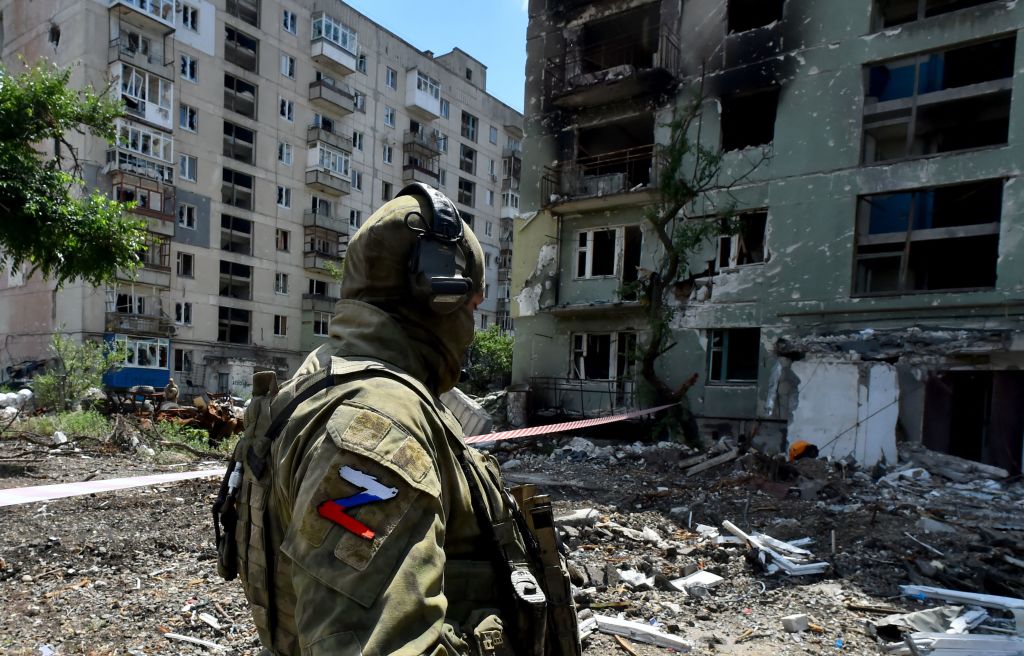
 The Kyiv IndependentLiliane Bivings