Whenever a new technology is created, it will, without exception, immediately be used to harass girls and womenYou may be familiar with rule 34 of the internet, which states that if something exists or can be imagined, there will almost certainly be online porn of it. Now let me introduce my rule 35: whenever a new technology is created, it will, without exception, immediately be used to harass girls and women.See, for example, Meta’s “pervert glasses”. As anyone could have foreseen, putting a t
Whenever a new technology is created, it will, without exception, immediately be used to harass girls and women
You may be familiar with rule 34 of the internet, which states that if something exists or can be imagined, there will almost certainly be online porn of it. Now let me introduce my rule 35: whenever a new technology is created, it will, without exception, immediately be used to harass girls and women.
See, for example, Meta’s “pervert glasses”. As anyone could have foreseen, putting a tiny camera and microphone into smartglasses would immediately lead to people using them to record and harass women. Lo and behold, that is exactly what happened. So-called manfluencers have filmed themselves trying to flirt with women in public spaces and then uploaded the footage to TikTok. The women in these videos are often not aware they’ve been recorded until their identities are shared online and they are harassed by strangers. And what’s Meta doing about this? It’s instituted a few bans and made some privacy updates, but doesn’t seem to have an appetite to properly solve the problem. Indeed, at the Meta Connect 2026 keynote, Mark Zuckerberg did not feel the need to apologize to the women whose lives have been upended by his technology.
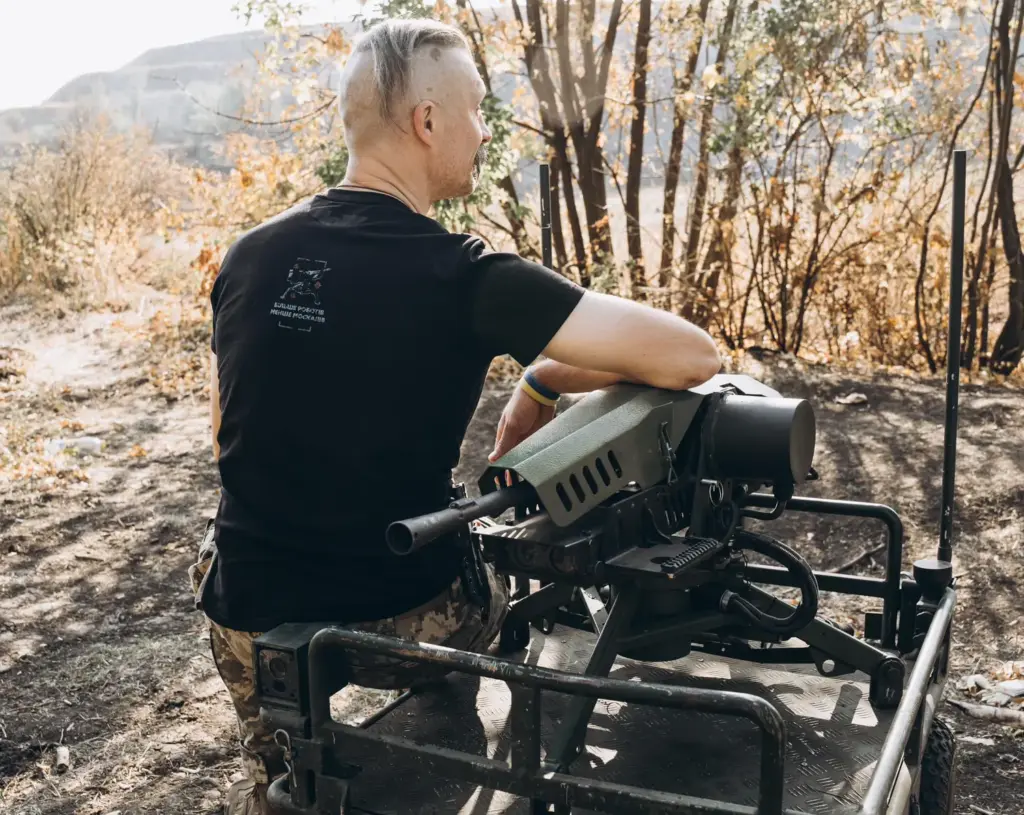
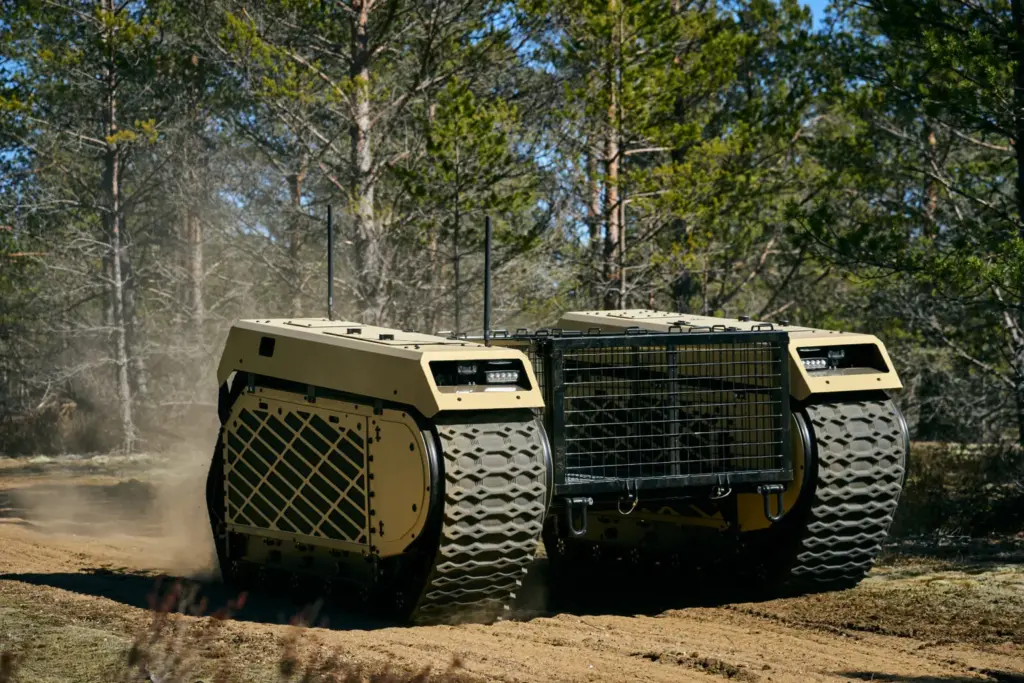
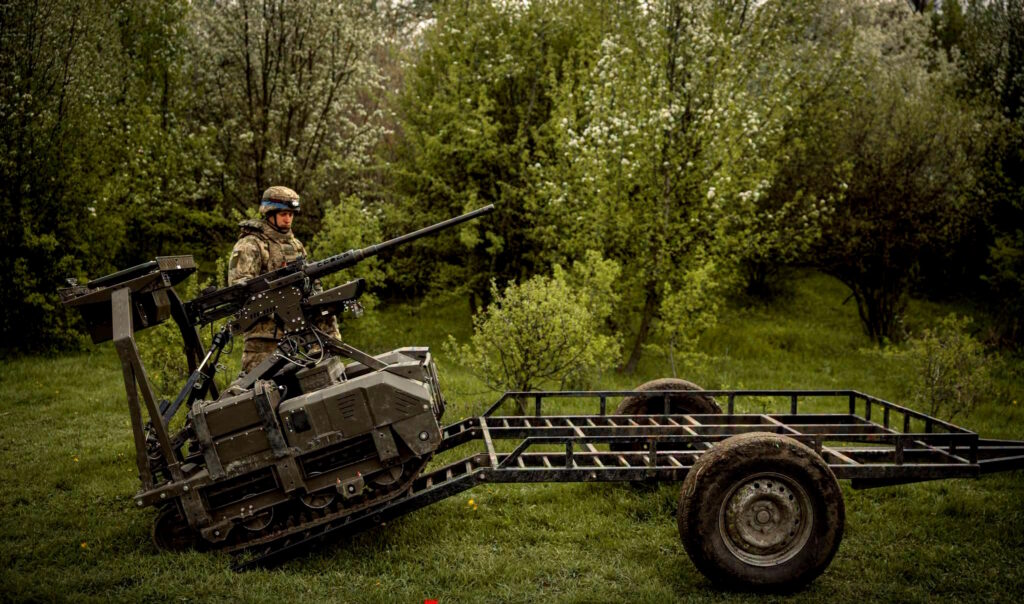
Ukraine’s six-wheeled Frodo ground robot fired on targets during a demonstration in Kharkiv Oblast for the Pomsta (Revenge) Border Guard Brigade, a border guard detachment posted on Facebook. Frodo made its public debut only on 30 September.
Ukraine had contracted more than 22,000 ground robots for 2026 by July, mostly logistics carriers, with combat models the smallest group, the Defense Ministry said. Frodo’s first reported mission was an evacuation. The demo shows its armed version t
Ukraine’s six-wheeled Frodo ground robot fired on targets during a demonstration in Kharkiv Oblast for the Pomsta (Revenge) Border Guard Brigade, a border guard detachment posted on Facebook. Frodo made its public debut only on 30 September.
Ukraine had contracted more than 22,000 ground robots for 2026 by July, mostly logistics carriers, with combat models the smallest group, the Defense Ministry said. Frodo’s first reported mission was an evacuation. The demo shows its armed version to a fighting brigade, the kind of robot Ukraine has ordered least.
What the armed version carries
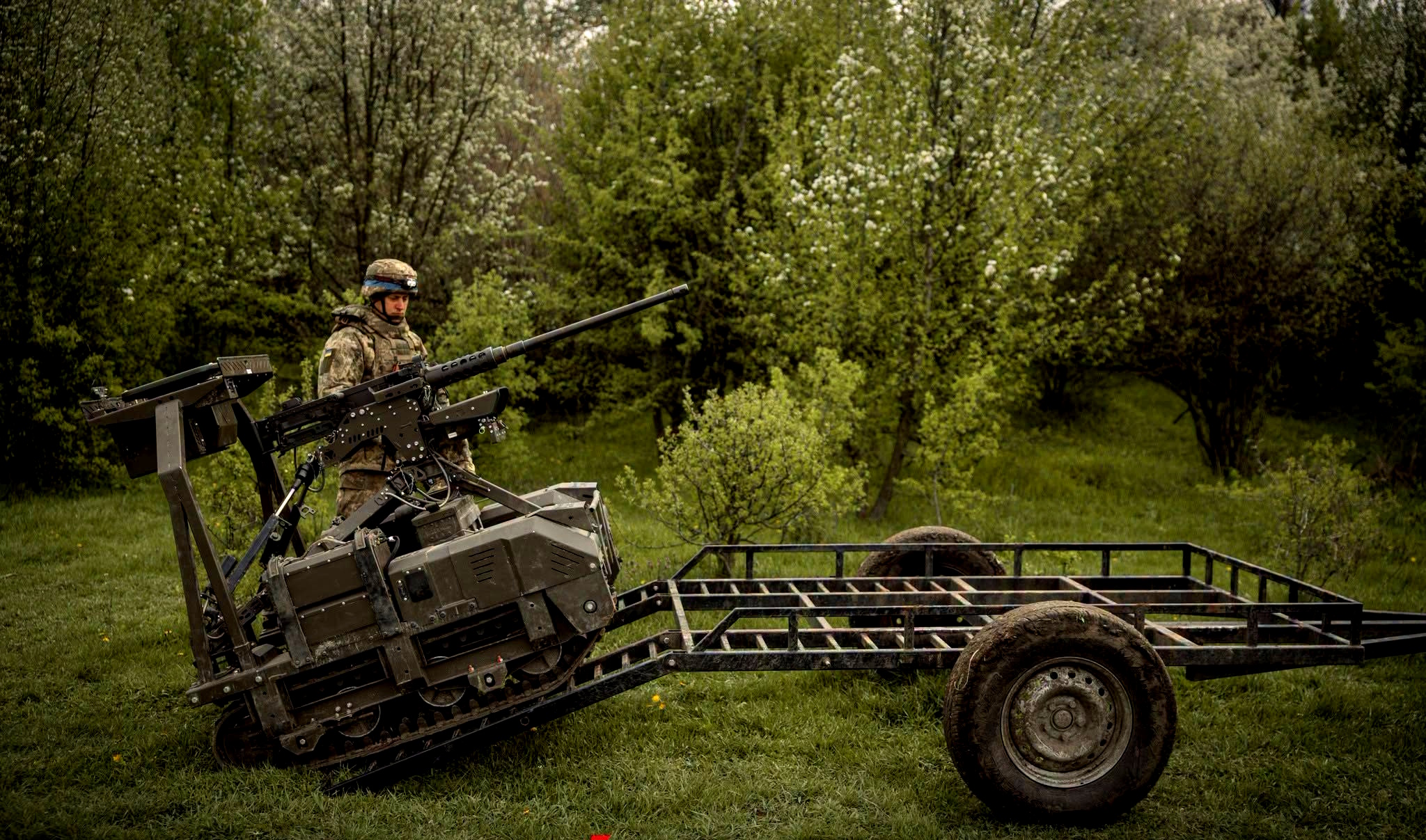
The platform completed its tasks at a training ground in near-combat conditions, said the 3rd Border Guard Detachment named after Hero of Ukraine Colonel Yevhenii Pikus. The Buria turret mounted on Frodo can fire either a Mk 19 automatic grenade launcher or a Browning M2 heavy machine gun. It engaged targets at up to 1.3 km (0.8 mile), the detachment said.
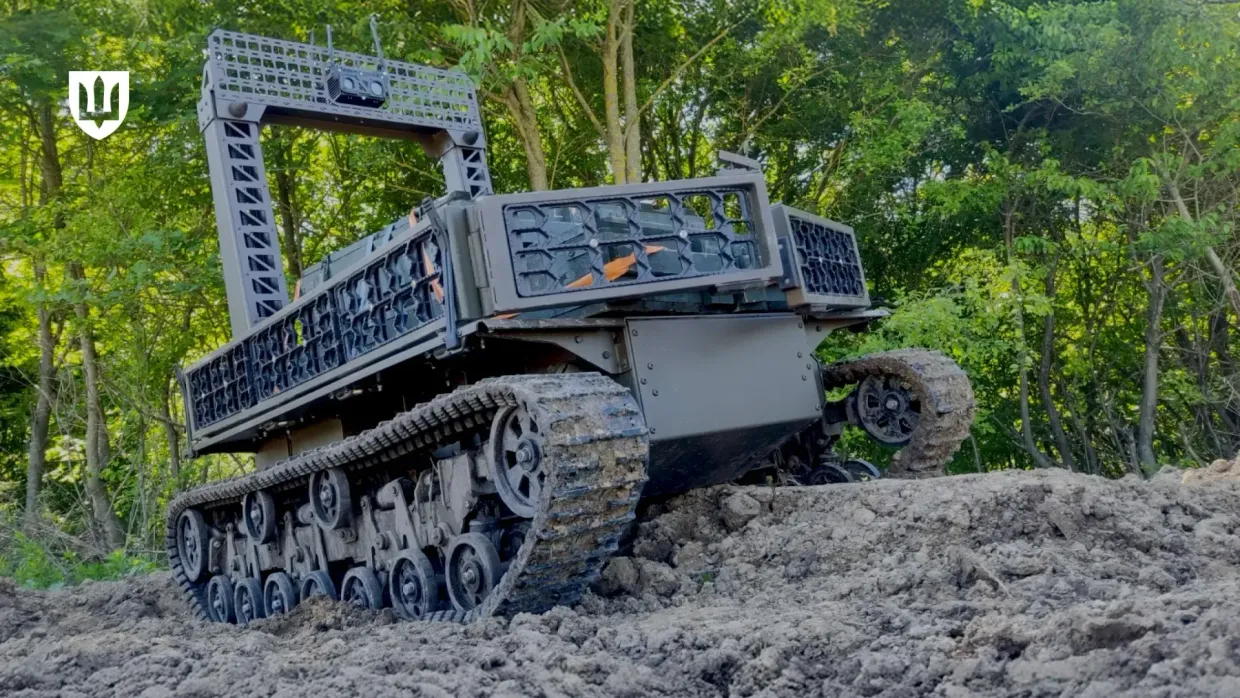
Frodo ground robotic vehicle (UGV). Screenshot from a video by the 3rd Border Guard Unit
The 47-kg (104-lb) module has a ballistic calculator, stores up to 256 targets, aims in three seconds, and has a stated autonomous run time of up to 48 hours, the post said. Frodo is rated for up to 150 km (93 miles) on paved roads and 75–80 km (47–50 miles) over rough terrain, the post added. A Frontline Robotics Zoom reconnaissance drone flew reconnaissance during the test.
The developer, Frontline Robotics, describes its core philosophy as arriving fast, doing the job, and leaving very fast—hit and run, the detachment’s post said. Familiarizing the brigade’s soldiers with such systems aims first and foremost to preserve personnel’s lives and health, the detachment said.
A robot first reported as a medevac
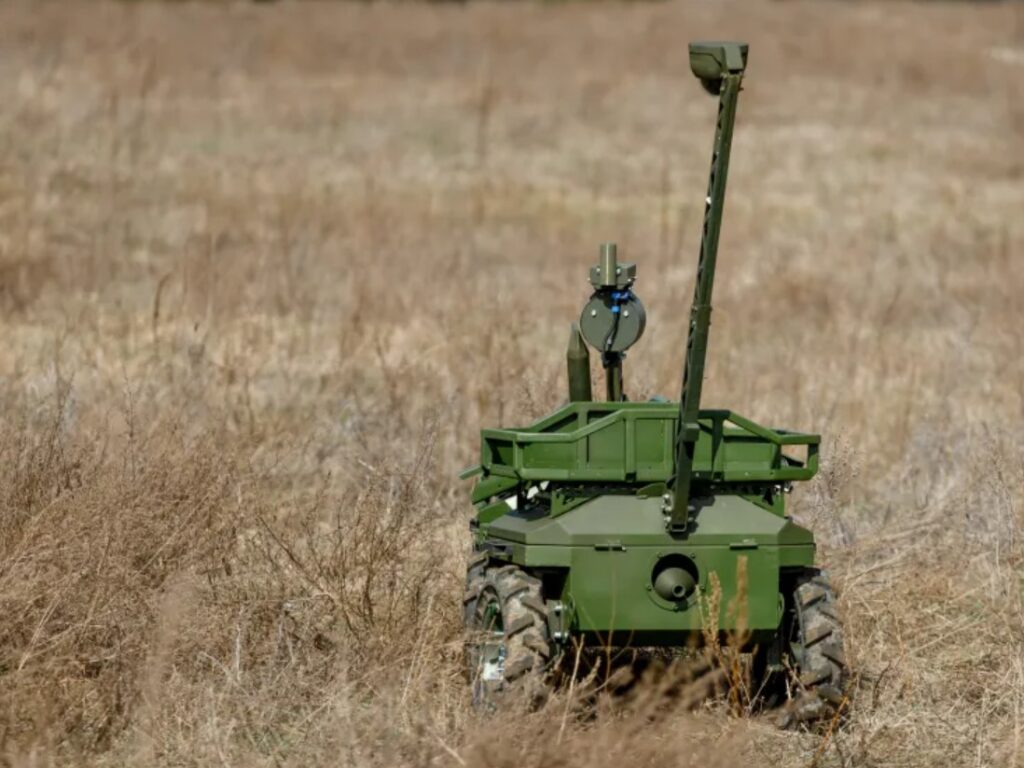
Frontline Robotics told Militarnyi at the unveiling that Frodo had passed Defense Ministry codification and was built for logistics, evacuation, and strike missions. The robot reaches 40 km/h (25 mph) and carries up to 200 kg (441 lb) of payload, or 400 kg (882 lb) at most, the company said. A single soldier can swap its batteries.
The 92nd Assault Brigade used an early test unit to evacuate a wounded soldier, Frontline Robotics told Militarnyi. An operator, callsign Tango, named the robot’s speed and its ability to handle complex maneuvers as its main advantages, Militarnyi reported.
Let’s briefly deconstruct a viral or soon to be viral story out of Cologne, Germany regarding an incident in which a “remotely controlled robot grabs 16-year-old's buttocks” and “performed thrusting movements against her,” according to police.I have begun to see this story percolate around the English-speaking internet because it is absurd and not good, and has already been aggregated to hell by social media meme pages with essentially zero information other than this absurd police image: The Co
Let’s briefly deconstruct a viral or soon to be viral story out of Cologne, Germany regarding an incident in which a “remotely controlled robot grabs 16-year-old's buttocks” and “performed thrusting movements against her,” according to police.
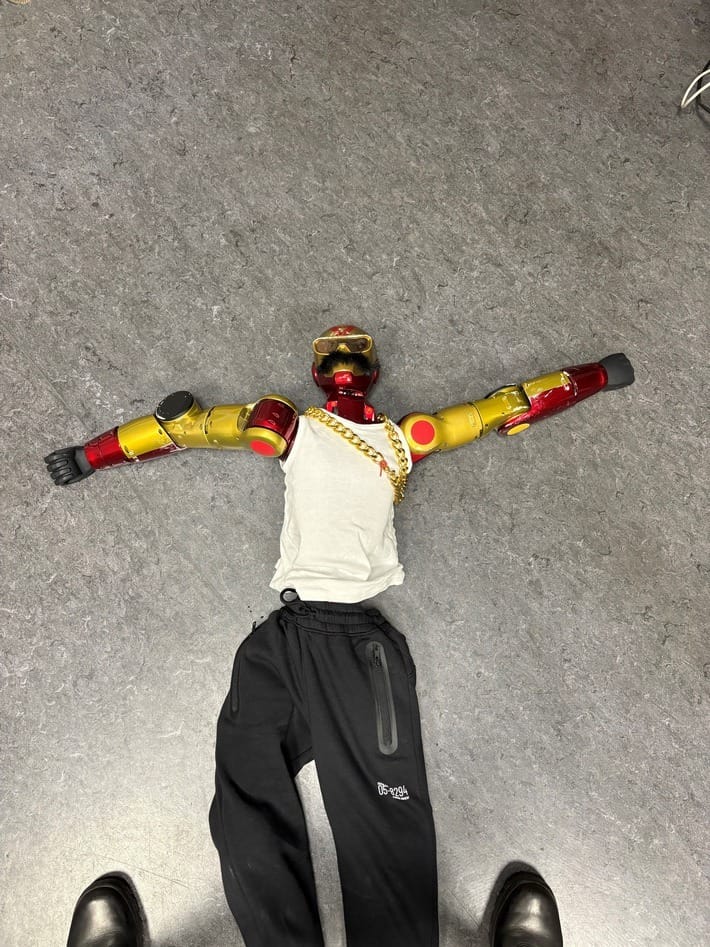
I have begun to see this story percolate around the English-speaking internet because it is absurd and not good, and has already been aggregated to hell by social media meme pages with essentially zero information other than this absurd police image:
The Cologne Police did not exactly help matters by issuing a short press release that treats the robot as mysterious, the circumstances as mysterious, and the evidence as “unusual.” The Cologne Police’s Facebook post featuring a photo of the mustachioed robot reads “A red-gold robot triggered a police operation on the Cologne Ring on Sunday night (October 11). The device is said to have touched a 16-year-old girl's buttocks and performed thrusting movements against her […] The police are now investigating how the robot worked at the time of the assault and whether someone was deliberately controlling its movements. Emergency services seized the robot and two mobile phones from the suspect. The police are investigating on suspicion of defamation on a sexual basis.”
Coverage by even well-resourced outlets like CNN, CBC, and the BBC have almost no information beyond the police press release, which is lazy and stupid, because it is possible to figure out everything that happened here with three seconds of clicking around the internet. The Associated Press wrote that the entire phenomenon is "new territory" for the police, which, I'm sorry to say, men using tech to harass women on livestreams in 2026 is not "unusual" or "new territory" and hasn't been for many years.
The English coverage of the incident looks like this:
In fact, with a small amount of Googling and/or clicking around social media, it is easy to find out everything you would ever need to know about the robot and what happened here.
The tl;dr is that a 16-year-old German Twitch IRL livestreamer named Agaamuza has been streaming himself using an off-the-shelf $5,000 robot from a company named Unitree to walk around Cologne and bother people outside of bars in the way that extremely annoying Twitch livestreamers and TikTok stars have been doing for years. In a recent livestream, Agaamuza or one of his friends uses the robot to grab a girl’s ass, the boys laugh about it, and the police get involved. Twitch has temporarily suspended his channel from streaming but because of the social media clipping economy, there are zillions of videos of the streamers and the robot percolating across Instagram, YouTube, and TikTok.
On the actual internet where real people click around and don't regurgitate police statements and pretend they're reporting the news, you can see the entire arc of what happened, which now includes an hour-long "statement" Twitch video in which Agaamuza streams with the robot dressed in striped prison clothes.
The slightly longer version: For at least a few weeks, Agaamuza and his friends put a mustache and giant chain necklace on the robot, call him “Ahmad the Robot,” and film people’s reactions to the robot thrusting, dancing, punching the sky, walking into stores, etc. Most of these videos are annoying but not illegal. They are very much a part of YouTube / Twitch “prank” culture, in which men—almost always men—film themselves hitting on women, interviewing people outside of bars, and doing stupid shit in public. Agaamuza and “Ahmad the Robot” have become minor characters in the German Twitch streaming world over the last few weeks.
The robot in question is the Unitree R1, which costs between $4,900 and $5,900 depending on the specific model. Unitree is a Chinese robot company that makes the R1 and a robot dog that has become vaguely popular among people who are excited about humanoid robots and gadget YouTubers. Unitree is kind of a Boston Dynamics-esque company in that it makes lots of YouTube videos of its robots doing cartwheels and backflips and fighting other robots, and regularly goes viral for it. The capabilities of the R1 robot are not a secret and can be found in any number of YouTube videos or on Unitree’s website (which is to say that the R1 is not a mysterious harassment or spy robot as it has been portrayed in some of the aggregations of this story I’ve seen).
The robot, but not the incident in question
Anyways, over the weekend while live-streaming, Agaamuza or one of his friends has the robot walk into a group of girls standing on the street in Cologne. “Oh my god oh my god Ahmad,” one of the streamers says, as they walk the robot directly into a girl’s ass. One of the girls says “Oh my god stop.” The boys say “Hey, he wants to meet you, do you want to meet him?” The girls say no. The robot begins thrusting its arms in the air (the girls have moved away at this point), and the streamers start screaming “no brother, no bro oh man.” The girls tell the streamers to leave them alone and then walk away.
In his statement video, Agaamuza says that the robot simply ran into the girl and didn't grope her. The robot certainly did run into her, the whole thing was harassing and annoying; in the United States, these sorts of things happen on Twitch constantly, generally with no consequences.
What happened is bad, and is not much different than the types of clips of men harassing women that go viral all the time on social media, many of them filmed or streamed surreptitiously using Meta’s AI glasses. What actually is unusual about this case is that the police appear to actually be taking it seriously.
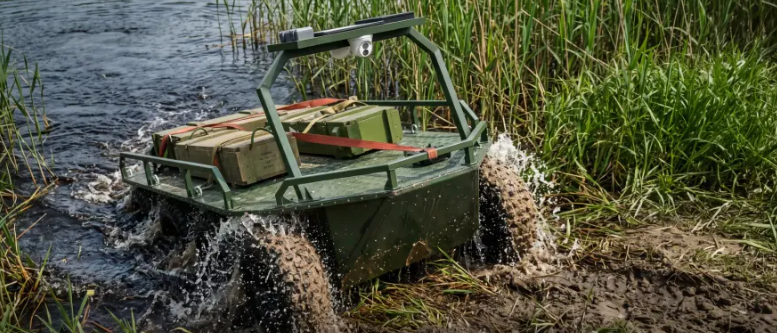
Ukraine’s amphibious ground robot UNEX UGV can tow artillery guns, its project lead said in a video interview, Militarnyi reported on 13 October. The electric platform from ABRIS Design Group (ABRIS DG) also swims, climbs, and hauls cargo on its own deck.
The Defense Ministry’s robot tally, kept in its DELTA system, counts supply and evacuation runs. It logged 25,143 of them in August, a monthly figure that has climbed all year. In April, then-Defense Minister Mykhailo Fedorov said the
Ukraine’s amphibious ground robot UNEX UGV can tow artillery guns, its project lead said in a video interview, Militarnyi reported on 13 October. The electric platform from ABRIS Design Group (ABRIS DG) also swims, climbs, and hauls cargo on its own deck.
The Defense Ministry’s robot tally, kept in its DELTA system, counts supply and evacuation runs. It logged 25,143 of them in August, a monthly figure that has climbed all year. In April, then-Defense Minister Mykhailo Fedorov said the goal was for robots to handle all frontline logistics. A robot that brings a gun and its shells to a position adds artillery moves to that workload.
A gun behind, shells aboard
The robot can pull a gun or another wheeled vehicle of up to 10 metric tons (about 22,000 lb), the project lead said. Ammunition can ride aboard, so the gun and its rounds reach the position together. No crew has to go with them, he said, and the team has already demonstrated the setup. On its own deck, ABRIS DG says, the robot carries up to 1.7 tons (3,750 lb) on land and 1.25 tons (2,760 lb) on water.
ABRIS DG said US Army testers ran UNEX through scenarios that included towing Joint Light Tactical Vehicles (JLTVs), which are armored US military trucks. The trials took place at the Army’s XTech competition in Vilseck, Germany, in March 2026. UNEX was picked as one of five winners, the company said.
Swims, climbs, backtracks
The robot can float for more than an hour. The team has already crossed the Desna River and narrow stretches of the Dnipro with it, the project lead said. Ultra-low-pressure tires spread its weight over soft ground and swamps. ABRIS DG says it climbs obstacles up to one meter (3.3 ft) high and drives out of water onto ice.
Explore further
Ukraine turned ground robots into a frontline workhorse. Its first competitive tender may reward cheap copies over proven machines, an officer warns
Operators steer it via Starlink or radio. An escort drone can add an overhead view to the robot’s own cameras. If the link drops, the robot retraces its route to where the signal last held.
It runs on a Ukrainian-made 78 kWh battery. The project lead puts its work time at up to six hours and its range at up to 120 km (75 miles), with a top speed of 20 km/h (12 mph). Load and terrain cut into those figures, he added. With a generator now in development, a mission should stretch to about 12–14 hours, he said.
The robot is not built for the zero line, the project lead said. It works 20–30 km behind the front, at night, where armor would add little. Developers also plan demining and air defense versions. Ukraine’s Defense Ministry codified the robot and cleared it for use in its forces in April 2025.
Ukraine has turned ground robots into a frontline workhorse, and the state is now trying to buy them at scale through its first competitive, ministry-spec tender. Viktor Pavlov, an officer of the 3rd Separate Assault Brigade's UGV battalion, laid out the risks of that model to Army Inform, the Defense Ministry's outlet, in an interview. Once a robot clears the military's technical requirements, price becomes the main criterion, Pavlov says. The order is split into lots, and no maker can ta
Ukraine has turned ground robots into a frontline workhorse, and the state is now trying to buy them at scale through its first competitive, ministry-spec tender. Viktor Pavlov, an officer of the 3rd Separate Assault Brigade's UGV battalion, laid out the risks of that model to Army Inform, the Defense Ministry's outlet, in an interview. Once a robot clears the military's technical requirements, price becomes the main criterion, Pavlov says. The order is split into lots, and no maker can take more than half a class. He warns the model may not tell a cheap, makeshift machine from one that actually survives at the front.
Robots now handle the war's deadliest chores—driving supplies through kill zones and reaching the wounded where people can't—and Ukraine has already contracted more than 22,000 for 2026. How the military buys them now shapes whether the push yields machines troops trust or a stockpile of cheap ones they don't.
From disposable drones to the next mass weapon
Aerial drones became disposable, mass-produced weapons years ago. Ground robots—the tracked and wheeled machines that haul supplies, pull out the wounded, and attack Russian positions—are only now reaching serial state supply. In August, the Defense Procurement Agency (DOT), the body that buys Ukraine's arms, opened its first competitive tenders for logistics and strike robots built to specs set by the Defense Ministry. Pavlov, founder of Ukraine's UGV School, calls it an experimental format that can work where market prices are inflated. Splitting the order into lots also gives smaller engineering teams a real chance, he said, because many large producers are already busy with state contracts.
Explore further
New Vivaldi tactic: Ukraine’s ground robots, each carrying two Bullspike grenade launchers, attack Russian positions and then detonate inside their shelters
Why the lowest bid may beat the best robot
A tender rewards the cheapest product that formally meets the requirements, not the best one, Pavlov said. A thermal camera, for example, can be listed as desirable rather than mandatory, so a maker chasing the lowest price will most likely leave it off. On any given feature the machines diverge—suspension, cameras, comms channels, a winch—one has it, another doesn't, yet both can land in the same class.
The machines themselves are very different. One carries 250 kilograms, another up to 349, but both fall into the "200-plus" category. Unlike FPV drones, which share standard sizes and parts, ground robots have no common frame—Ukraine fields many local variants. Pavlov compared the choice to picking an iPhone over a cheaper Android: on paper the features match, but soldiers know which machine they can run and repair.
Explore further
Four ground robots for one evacuation: Russia is targeting Ukraine’s robotic medevac missions
He also fears the model punishes innovation. A company can spend 18 months and a 20-person team building a robot, then watch a rival copy it, skip the research costs, and undercut it. A design troops already know how to run and repair—like the Ratel—is a known quantity. An untested bargain can break down mid-mission with no spare parts.
A mixed system, not tenders alone
Price competition should be one tool, not the only one, Pavlov argued. New robots should first reach units through pilot buys, letting soldiers test them and say what works. Proven systems can then be contracted in bulk, with tenders saved for classes where the offers are truly comparable. Ukraine's robots are too varied, he said, and what units need can't always be squeezed onto a spec sheet.
The robots Ukraine wants to throw into its deadliest fights should cost as little as $10,000 each, Mykhailo Fedorov says. The former defense minister has set out the first stage of his Army of Robots: cheap, simple humanoid-like machines that would take over an infantry's most dangerous jobs, with tens of thousands needed, he said on Telegram, citing his own interview with Forbes.
On 26 September, Fedorov, who continues to work on military tech reforms despite his sudden and unexpected
The robots Ukraine wants to throw into its deadliest fights should cost as little as $10,000 each, Mykhailo Fedorov says. The former defense minister has set out the first stage of his Army of Robots: cheap, simple humanoid-like machines that would take over an infantry's most dangerous jobs, with tens of thousands needed, he said on Telegram, citing his own interview with Forbes.
On 26 September, Fedorov, who continues to work on military tech reforms despite his sudden and unexpected dismissal, announced the creation of the Army of Robots.
Humanoid robots would carry ammunition and pull out the wounded, lay and clear minefields, scout, hold positions, and strike, taking the roles that today cost soldiers their lives.
Potential need amounts to thousands
"Our main goal is to save lives. A human should not take risks where a machine can do the job," Fedorov says.
At the first stage, it will not be a classic humanoid but a simpler humanoid-like robot that can be produced quickly and scaled up, he adds.
Such a machine should perform some of an infantryman's tasks directly on the battlefield.
Today, such platforms cost $40–70 thousand on average. For mass use in war, Ukraine needs something much cheaper: the target is $10–20 thousand per unit, he believes.
"The potential need is tens of thousands of such machines," Fedorov continues.
Next come prototypes
The former defense minister adds that he and his team are already working with teams that have ready-made MVPs and are designing solutions.
"Next come prototypes, simulations, model training, and finding the right combination of hardware and software," he explains.
The Army of Robots is not a single product but an ecosystem that will unite companies, startups, engineers, R&D, and capital around the robotization of the front.
"Our task is to get from prototype to mass product as quickly as possible," he adds.
Robots will not replace armored vehicles on the battlefield, says a company that builds both. Ground robots are a new tool that lets Ukraine distribute risk more smartly, but they cannot do everything a crewed armored vehicle can, above all pulling wounded soldiers out under fire, says Ukr Armo Tech's chief executive Hennadii Khirhii, in an interview with RBC-Ukraine.
Ukraine has a serious shortage of armored vehicles, from evacuation carriers to tracked fighting vehicles, with the focu
Robots will not replace armored vehicles on the battlefield, says a company that builds both. Ground robots are a new tool that lets Ukraine distribute risk more smartly, but they cannot do everything a crewed armored vehicle can, above all pulling wounded soldiers out under fire, says Ukr Armo Tech's chief executive Hennadii Khirhii, in an interview with RBC-Ukraine.
Ukraine has a serious shortage of armored vehicles, from evacuation carriers to tracked fighting vehicles, with the focus shifting to hulls that offer heavy mine protection and built-in electronic warfare. For medical-evacuation armor alone, Khirhii says, the deficit is often put at 80 percent.
Robots can ease some of that, hauling ammunition and supplies to the front without risking a crew, but they are a complement, not a substitute, a view frontline commanders also confirm.
Robots share the load, not replace it
Where a robot can do the job, Khirhii says, there is no sense sending in heavy armor and the people inside it to face danger. For carrying ammunition or food, unmanned ground vehicles are useful. But evacuating the wounded is different: that usually needs, at least for the second leg, a protected medical vehicle in which care can begin on the move, with room for transfusions and resuscitation that a robot's capsule cannot provide.
"A UGV doesn't cancel the armored vehicle, just as the drone didn't cancel artillery," he says.
The limits show at evacuation
Ukraine has leaned hard into robotic logistics and casualty evacuation, running more than 100,000 such missions this year to keep medics and crews off exposed roads, but the robots themselves now draw Russian drone and artillery fire, and they cannot replace medical personnel.
One commander has called ground robots too slow for evacuation and easy targets, arguing brigades still need staffed evacuation teams and light-armored vehicles.
Commanders want both
The lesson from the front is not robots instead of armor, but robots alongside it. What matters, Khirhii says, is a smart combination of machines for each mission, with people's safety and the task's practicality first. The front today needs both armored vehicles and ground robots, he continues, and it needs a great amount of both.
A Ukrainian ground robot drove toward the front, reached the water in its path, and kept going, swimming across with ammunition and food aboard and no soldier at risk. It ran the first logistics mission with an amphibious ground robot, covering more than 40 kilometers over land and water to resupply positions, the Defense Ministry said.
Water is one of the front's quiet chokepoints: rivers, canals, and marshes that stop ground robots and force risky detours, and that air resupply cannot
A Ukrainian ground robot drove toward the front, reached the water in its path, and kept going, swimming across with ammunition and food aboard and no soldier at risk. It ran the first logistics mission with an amphibious ground robot, covering more than 40 kilometers over land and water to resupply positions, the Defense Ministry said.
Water is one of the front's quiet chokepoints: rivers, canals, and marshes that stop ground robots and force risky detours, and that air resupply cannot always solve. The amphibious robot drives like a normal ground vehicle, then switches to swimming in seconds, letting one machine cross terrain that halts the rest.
It is the latest of Ukraine's battlefield-robot firsts, which this year have included air-dropping robots behind Russian lines.
Water stops the others
The robot was developed through Brave1, Ukraine's state-backed defense-innovation cluster, which links developers with the military and government.
The one such robot gains additional capabilities to carry out missions across different terrains.
A first-ever logistics mission on an amphibious UGV: the robot covered 40 kilometers across land and water.
Operators of the "Alter Ego" unit (93rd Brigade) deployed the robotic system across mixed terrain. Facing water obstacles, the UGV seamlessly switched to swimming mode to… pic.twitter.com/rH8waq04a4
For this operation, the system was refined over several months in close cooperation with the military, taking into account real tasks, operational experience, and the specifics of frontline terrain. The Brave1 defense innovation cluster provided grant support for the system, helping bring the solution to practical use.
The ministry says it is "expanding the capabilities of robotic systems" so soldiers have more tools for the fight.
Robots with grenade launchers
Earlier, Ukraine employed a new tactic during its major Operation Vivaldi in Donetsk Oblast. During the 3rd Army Corps' offensive, fighters from the world's first experimental unit of unmanned ground-strike vehicles, "NC13", upgraded their kamikaze ground drones with grenade launchers.
During the operation, UGVs equipped with two Bullspike grenade launchers attacked Russian positions, then detonated directly inside their shelters. The occupiers believed they were being attacked by an entire assault group. In reality, they were being torn apart by robots from the 3rd Assault Corps.
Ukraine has employed a new tactic during its major Operation Vivaldi in Donetsk Oblast. During the 3rd Army Corps' offensive, fighters from the world's first experimental unit of unmanned ground-strike vehicles, "NC13", have upgraded their kamikaze ground drones with grenade launchers.
Vivaldi is the counteroffensive the corps is running near Lyman in northern Donetsk Oblast. Over its first two "seasons," the 3rd Army Corps and attached units have retaken more than 125 square kilometer
Ukraine has employed a new tactic during its major Operation Vivaldi in Donetsk Oblast. During the 3rd Army Corps' offensive, fighters from the world's first experimental unit of unmanned ground-strike vehicles, "NC13", have upgraded their kamikaze ground drones with grenade launchers.
Vivaldi is the counteroffensive the corps is running near Lyman in northern Donetsk Oblast. Over its first two "seasons," the 3rd Army Corps and attached units have retaken more than 125 square kilometers, half of it de-occupied outright, and inflicted more than 3,000 casualties on Russian forces.
Through this offensive operation, the 3rd Army Corps, commanded by Brigadier General Andrii Biletsky, disrupted Russian forces' plans to encircle the fortress-belt cities in Donetsk Oblast from the north and south. Among them are Sloviansk, Kramatorsk, Druzhkivka, and Kostiantynivka. These cities have helped hold back Russian forces since 2014.
From intensive training to the world-first operations
The NC13 unit has been through Bakhmut, Avdiivka, and other of the toughest sections of the front.
Among its achievements: the world's first robotic assault carried out without infantry involvement, resulting in the capture of two Russian soldiers, a sabotage operation in the enemy's rear — blowing up a crossing and disrupting an offensive — using UGVs alone, and Ukraine's first fully robotic defense of a position for 45 days without involving infantry.
"No one in the history of warfare has used this kind of tactic before," the soldiers commented on the offensive.
The defenders say that a lack of combat experience is no barrier to joining the unit. Every recruit goes through an intensive training course led by experienced instructors.
Grenade launchers were developed based on the Soviet RPG-22
During the operation, UGVs equipped with two Bullspike grenade launchers attacked Russian positions, then detonated directly inside their shelters. The occupiers believed they were being attacked by an entire assault group. In reality, they were being torn apart by robots from the 3rd Assault Corps.
Ukrainian troops armed ground robots with grenade launchers and sent them to storm Russian positions during Operation Vivaldi near Lyman
The robots fired into Russian shelters at close range, then detonated inside them 3rd Army Corps, NC13 Unit pic.twitter.com/rjekIYxPbA
"Yes, the UGVs carry out three tasks at once: they strike, they exert psychological pressure, and they clear the position. And most importantly, this happens without risk to our infantry," the force says.
The Bullspike grenade launchers were developed based on the Soviet RPG-22 anti-tank grenade launcher, which was previously manufactured under license by a Bulgarian defense company.
According to data from the manufacturer's website, the Bullspike RPG has a maximum aimed firing range of 350 meters, a direct-fire range of 150 meters, and armor penetration of 400 mm, Militarnyi reports.
The total weight of the launch unit, together with the 72.5 mm PG-22 grenade, is 3.4 kg. The length of the launcher is 780 mm.
The manufacturer states that the Bullspike-AT round is designed to destroy tanks, self-propelled artillery, and other armored vehicles, as well as to target enemy personnel located in bunkers, field fortifications, and urban-type brick fortifications.
The robots were controlled by operators from a safe shelter dozens of kilometers from the line of contact.
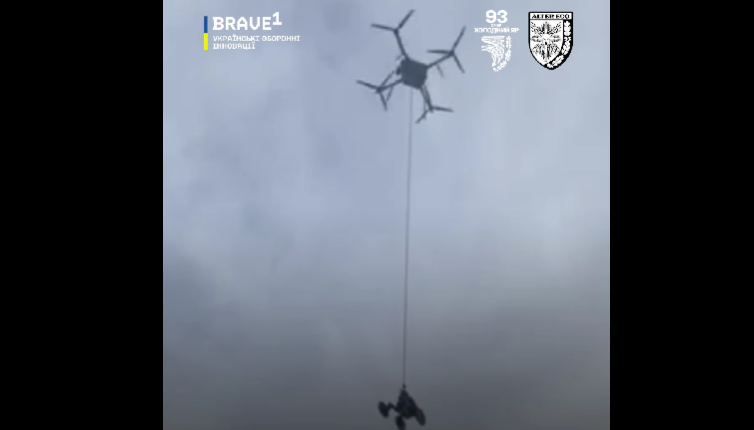
Earlier, for the first time in the world's history, the 3rd Army Corps dropped ground robots behind Russian lines from the air. The soldiers behind the mission say their heavy drones delivered kamikaze unmanned ground vehicles more than 10 kilometers into the Russian rear during the "second season" of Operation Vivaldi, letting Ukrainian troops flank them and clear another 40 square kilometers.
The person who built Ukraine's "Army of Drones" is now building an "Army of Robots". Myhailo Fedorov, the former defense minister, has launched a private-sector push to robotize the war, wanting machines to take the deadliest jobs, evacuating the wounded, laying and clearing mines, and fighting, so soldiers come home, he wrote, announcing the effort at the IT Arena conference in Lviv.
The pitch rests on a track record. Fedorov's Army of Drones, launched in 2022, helped make drones the w
The person who built Ukraine's "Army of Drones" is now building an "Army of Robots". Myhailo Fedorov, the former defense minister, has launched a private-sector push to robotize the war, wanting machines to take the deadliest jobs, evacuating the wounded, laying and clearing mines, and fighting, so soldiers come home, he wrote, announcing the effort at the IT Arena conference in Lviv.
The pitch rests on a track record. Fedorov's Army of Drones, launched in 2022, helped make drones the weapon behind more than 95 percent of Ukraine's battlefield hits. Over 700 makers now building them, and he is betting robotization is the next such leap.
Army of Robots is meant to be an ecosystem, not a company: investing in defense-tech firms, standing up R&D, testing with troops, and scaling fast, whatever works. Fedorov is running it from outside government, having left the defense ministry in July and started building a defense-tech company backed by Palantir chief Alex Karp.
Robots take the deadliest jobs
Fedorov's vision is a battlefield where machines go first. A sensor spots a threat, then a robot enters the danger zone, he says. Humanoid robots would carry ammunition and pull out the wounded, lay and clear minefields, scout, hold positions, and strike, taking the roles that today cost soldiers their lives. For now, it is a vision more than a fielded capability: Fedorov is describing where he wants the battlefield to go, not a robot force already in the fight.
The Army of Drones sets the model
The aim, Fedorov says, is to gather the best engineers, combat experience, and capital and point them at one goal: making robots fight instead of people. The obstacle is Russia, which he said has learned to quickly copy and scale military technology, so Ukraine must keep inventing the next cycle before the enemy does.
"Russia will stop only when we can break its backbone," he says, arguing that it will take Western capital, world-class engineers, and private initiative.
Ukrainian soldiers have built a drone that carries a combat ground robot into battle and drops it where needed, a trick the US has pursued but never fielded. The Alter Ego battalion of the 93rd Mechanized Brigade has paired a bomber drone with a purpose-built robot, the Desantnyk, and took it from idea to combat in 10 days, the Brave1 defense cluster said.
The system answers a problem that has long hobbled ground robots: getting them to the fight over mined, cratered terrain they cannot
Ukrainian soldiers have built a drone that carries a combat ground robot into battle and drops it where needed, a trick the US has pursued but never fielded. The Alter Ego battalion of the 93rd Mechanized Brigade has paired a bomber drone with a purpose-built robot, the Desantnyk, and took it from idea to combat in 10 days, the Brave1 defense cluster said.
The system answers a problem that has long hobbled ground robots: getting them to the fight over mined, cratered terrain they cannot cross on their own.
A drone carries the robot dozens of kilometers behind the lines and drops it precisely, in a pairing engineers call a "marsupial", one carrier delivering another. The US worked on such systems for more than 30 years, Brave1 said.
And it is not alone: the 3rd Army Corps has been air-dropping robots behind Russian lines in its Vivaldi offensive.
A drone carries the robot in
The Desantnyk is a compact wheeled platform. Alter Ego built a way to release it accurately from a heavy bomber drone, dropping it well beyond the range a ground robot could reach on its own. It lands deep in the enemy rear and drives on to its target. The point is to spare the robot the most dangerous, exposed leg of the journey.
Confirmed kills follow fast
According to Brave1, just 10 days passed from the idea to its first combat use, and the Desantnyk has already carried out confirmed strikes: the unit used it to destroy Russian shelters and troops. Only a handful of Ukrainian units have mastered the tactic so far.
Brave1 moves it to production
The defense cluster, a state platform for scaling battlefield inventions, said it took notice of the Desantnyk and helped the battalion find a manufacturer to move it from prototypes to serial production and out to other units.
Ukraine's Third Army Corps says it became the first military unit in the world to use ground robots for mine clearance inside a live offensive, sending the machines ahead of its infantry into the deadliest sectors to keep soldiers out of the line of fire, Censor.NET reported. The corps built the capability from nothing during its Operation Vivaldi counteroffensive in Donetsk Oblast.
Keeping soldiers alive has become the organizing principle of how Ukraine fights, and handing the jobs mo
Ukraine's Third Army Corps says it became the first military unit in the world to use ground robots for mine clearance inside a live offensive, sending the machines ahead of its infantry into the deadliest sectors to keep soldiers out of the line of fire, Censor.NET reported. The corps built the capability from nothing during its Operation Vivaldi counteroffensive in Donetsk Oblast.
Keeping soldiers alive has become the organizing principle of how Ukraine fights, and handing the jobs most likely to kill them to ground robots is how an army that refuses to treat its people as expendable defends the line.
Robots cleared 30 km of routes in two nights
On the Shandryholove axis, the robots cleared 30 kilometers of routes in two nights—work that two companies of sappers would have needed a full week to finish. The corps reported no losses among its sappers there. Announcing the operation's second phase, corps commander Brigadier General Andrii Biletskyi said protecting personnel drives how his troops plan and fight:
"People often ask, but what about our losses? My answer: we minimize them by every possible means. In assault operations, drones and ground robots always move ahead of the infantry," he said.
Robots clear most of the mines and mine Russian routes in return
The corps says it built the system from scratch and scaled it from a single squad up to the entire corps, arguing that manual clearing would be impossible across open terrain swept by fire. Ground robots now lift roughly 60% of the anti-personnel mines in its area of responsibility. They also work in reverse, remotely mining Russian advance routes—one crew can lay up to 200 meters a day, cutting off enemy reserves. The same machines carry frontline logistics, evacuating the wounded and hauling in provisions and equipment.
Operation Vivaldi continues in Donetsk Oblast, where the corps recently air-dropped robots behind Russian lines. Its advance has disrupted Russia's plan to encircle the fortified belt of Donetsk cities. In the second phase, the Third Army Corps liberated Shandryholove and Derylove and took full control of Drobysheve. Across the operation's first two phases, it has retaken 125 square kilometers.
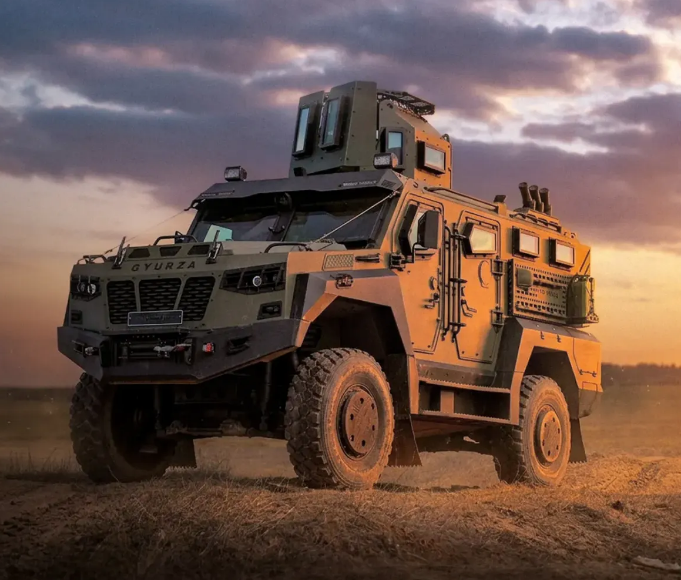
Ukraine's 425th Separate Assault Regiment Skelya is converting American-made armored vehicles into remotely operated platforms as part of its "remote infantry" concept, head of the regiment's innovation support group Edhar Vinnik wrote in an exclusive column for 24 Kanal. The approach rests on a simple principle: if a machine can do the job, no soldier should risk their life doing it, Vinnik argued. The regiment established an Innovation Center to develop unmanned systems and robotic platf
Ukraine's 425th Separate Assault Regiment Skelya is converting American-made armored vehicles into remotely operated platforms as part of its "remote infantry" concept, head of the regiment's innovation support group Edhar Vinnik wrote in an exclusive column for 24 Kanal. The approach rests on a simple principle: if a machine can do the job, no soldier should risk their life doing it, Vinnik argued. The regiment established an Innovation Center to develop unmanned systems and robotic platforms, Militarnyi reported.
The M1117 is the second vehicle Skelya has converted to unmanned control—after completing the Novator armored car in June—and the regiment's approach won a Defense Ministry DELTA innovation competition on 31 August 2026, earning approximately $33,700. The pattern suggests Ukraine's cheapest path to unmanned ground capability may not run through purpose-built robots but through vehicles already in service, upgraded with off-the-shelf hardware.
M1117 conversion nears completion
The regiment is in the final stages of converting the American M1117 Guardian into a remotely controlled platform. The 4x4 vehicle has been in Ukrainian service since 2023.
"The project of remote control of the American armored wheeled vehicle M1117 is in the final stage," Vinnik said.
This is Skelya's second such conversion. In June, the regiment completed a similar project with the Novator armored car. The Novator received multiple communication channels: Starlink, LTE, and Silvus radio systems. Vinnik argued the conversions prove that remote control can scale to any vehicle in service, if the hardware supports it.
Software ties the system together
Without adequate software, all unmanned platforms would remain isolated machines, Vinnik noted. The regiment's IT Innovation Department develops proprietary software for coordinating unmanned systems. One solution replicates functionality similar to R2D2—a network data-relay infrastructure that enables remote equipment operation. Using off-the-shelf routers cut the cost roughly fourfold.
"Without adequate software, all these drones and ground systems would remain just separate machines," Vinnik said.
The cost reduction matters for scalability, Vinnik argued. A technology that exists in one copy is a demo—one cheap and reliable enough for hundreds of crews is a capability. The regiment measures its progress by one number, he wrote: how many soldiers were not sent where they could be killed or wounded.
Why old armor gets a second life
The M1117 Guardian—built on the Cadillac Gage Commando chassis from the Vietnam War era—exemplifies the trend. The regiment's Innovation Center, established in autumn 2025, won a Defense Ministry DELTA innovation competition on 31 August 2026. Skelya's approach reflects a broader Ukrainian trend of converting existing vehicles into unmanned platforms rather than building robots from scratch. The National Guard's Khartiia Corps earlier converted a 12-ton US-made M113 armored personnel carrier into an unmanned platform for remote demining and logistics, fitting it with anti-drone armor and a mine flail. Ukraine is also rebuilding Soviet BRDM-2 armored scouts into remotely operated robotic platforms, and three units recently received Kaban—a bolt-on kit that turns ordinary vehicles into uncrewed ones.
Ukraine's Third Army Corps dropped kamikaze ground robots on Russian command nodes identified by reconnaissance during Operation Vivaldi, a corps intelligence officer told Radio NV. The strikes aimed to break command coordination and force Russia to divert combat troops to guard its own headquarters, while a parallel campaign destroyed a diesel pipeline that fed about half the daily fuel needs of Russia's entire West grouping.
Russia's full-scale war against Ukraine is now in its fifth
Ukraine's Third Army Corps dropped kamikaze ground robots on Russian command nodes identified by reconnaissance during Operation Vivaldi, a corps intelligence officer told Radio NV. The strikes aimed to break command coordination and force Russia to divert combat troops to guard its own headquarters, while a parallel campaign destroyed a diesel pipeline that fed about half the daily fuel needs of Russia's entire West grouping.
Russia's full-scale war against Ukraine is now in its fifth year, with Moscow pushing simultaneously along the front and striking cities behind it with drones, cruise and ballistic missiles, and glide bombs. The Vivaldi operation is the first time Ukraine has publicly shown how a reconnaissance-to-robot strike chain works against command nodes without risking infantry, a method that could be replicated across other sectors where Russia's coordination depends on forward headquarters within drone range.
Reconnaissance identified command nodes, robots hit them
One of the tasks set by corps commander Brigadier General Andrii Biletskyi was to disrupt command and communications in the Russian chain of command, the officer said. Brigade and corps reconnaissance identified areas where a strike could break Russian control.
"Reconnaissance of the brigades and the corps identified such areas that could affect the disruption of enemy command. It was into these areas that robots were dropped to create panic, disrupt command, and prevent the enemy from being effective," the officer told Radio NV.
To protect their command posts from the robots, Russian forces had to pull in additional personnel—troops that could not then be used to resist the Third Corps' ground assault.
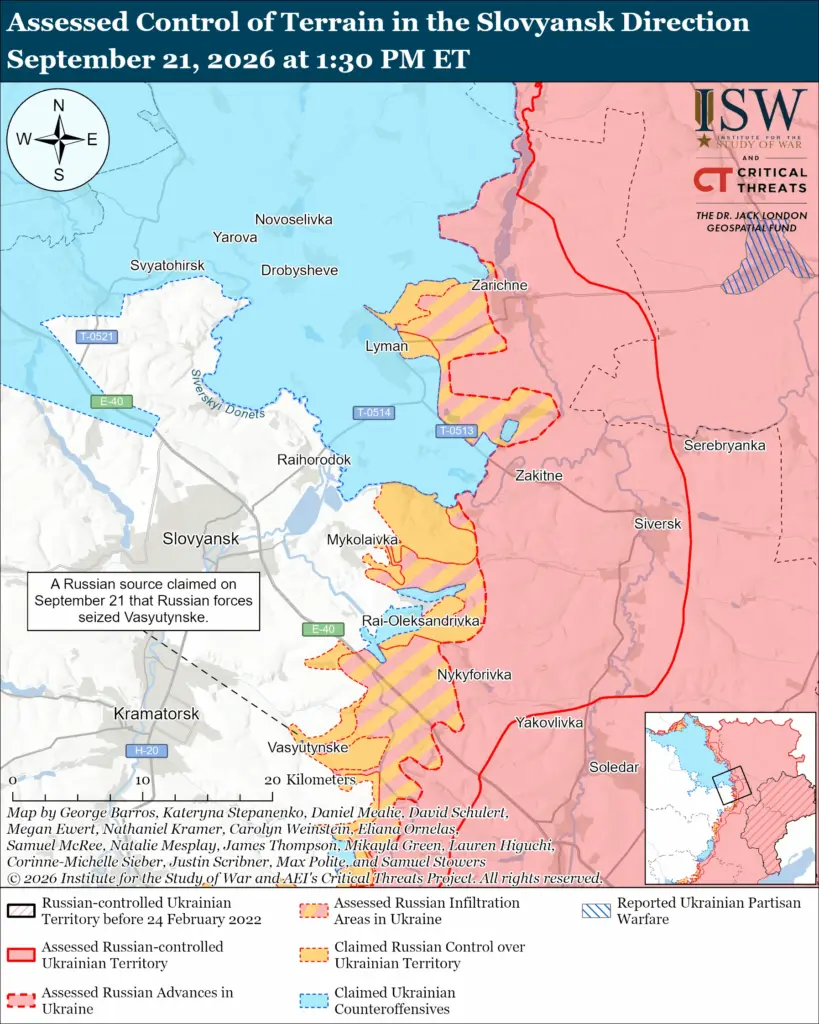
Map: ISW
The Third Corps announced on 20 September that heavy bomber drones delivered kamikaze ground robots more than 10 km behind Russian lines, calling it a world first.
The same intel operation identified a frontline diesel pipeline
The same intelligence operation uncovered a pipeline running from Voronezh Oblast to temporarily occupied Luhansk Oblast. The pipeline carried finished diesel, not crude oil, and supplied about 50% of the daily fuel needs of Russia's forces on the direction, the officer said.
The corps struck both the intake point where fuel entered the pipeline and the output point where it was loaded onto tankers. The strikes forced Russia to dismantle the pipeline entirely. Russian forces now truck fuel from Voronezh Oblast, a 400 km supply run.
The pipeline's destruction affected not just the Lyman direction but the entire West grouping, including the Kupiansk and Borova directions, the officer said. The logistical disruption left frontline Russian drone units unable to refuel generators to charge batteries, and electronic warfare systems had to operate in a reduced mode.
Repair bases struck, 250 km logistics detour
Third Corps intelligence also located the repair base of Russia's 20th Army and its 144th Division. Ukrainian strikes during the preparatory phase forced Russia to relocate the base to Voronezh Oblast, increasing the repair route to 250 km.
Russia's 20th Army and its 144th Division, reinforced by assault detachments from the First Tank Army, remain the main strike force on the Oskil-Sviatohirsk direction, the officer said. The First Tank Army has been sending additional assault units to stabilize the Russian defensive line after Vivaldi, but these reinforcements are taking critical losses on logistics routes before reaching the combat zone.
Rubikon pulled out, Russian drone units at 70–90% strength
The officer said the corps headquarters specifically targeted Russia's most effective drone formations. During the preparatory phase, the elite Russian drone unit Rubikon was identified as a critical threat that could isolate the area of operations and obstruct Ukrainian maneuver.
Ukrainian reconnaissance located and passed targeting data to strike assets. Rubikon suffered heavy losses in equipment and personnel, and a senior Russian commander—misjudging the Third Corps' offensive potential—pulled the unit to rear areas for recovery at what turned out to be the worst possible moment, just as Ukraine's assault began.
Russian drone units on the direction are now staffed at 70–90%, the officer said. The corps is working to degrade their capability through targeted strikes on launch sites, pilot positions, and logistics in the second and third echelons.
Four seasons, two public
The officer said Russia's current task is to stabilize its defensive line, restore its observation network, and bring in additional reserves for counterattacks. Russia does not have enough personnel and will have to pull troops from training grounds before they finish their courses, shortening training cycles.
Operation Vivaldi has at least four "seasons," of which only the first two have been made public. The operation's name refers to Italian baroque composer Antonio Vivaldi, and The Four Seasons is his best-known set of four violin concerti.
Biletskyi confirmed the liberation of Shandryholove, Derylove, and full control over Drobysheve on 20 September, bringing the total to 40 km² of freed territory in the second season alone. Russian losses have reached an estimated 3,000 personnel overall, over 12,000 drones in the first season, and hundreds of vehicles, according to the Third Corps. ISW assessed that the operation disrupted Russia's plan to encircle the fortress belt of Donetsk cities—Sloviansk, Kramatorsk, Druzhkivka, and Kostiantynivka.
The Defense Ministry has approved the Ukrainian-made ground-based robotics complex "Murakha" ("Ant") for combat operations, the ministry announced on June 28. Since 2024, Ukraine has been scaling up robotics development in hopes that mass production of unmanned ground vehicles (UGVs) will "minimize human involvement on the battlefield." The Murakha is a tracked robotic platform designed to support front-line units working under challenging conditions, such as under enemy artillery and in heavily
The Defense Ministry has approved the Ukrainian-made ground-based robotics complex "Murakha" ("Ant") for combat operations, the ministry announced on June 28.
Since 2024, Ukraine has been scaling up robotics development in hopes that mass production of unmanned ground vehicles (UGVs) will "minimize human involvement on the battlefield."
The Murakha is a tracked robotic platform designed to support front-line units working under challenging conditions, such as under enemy artillery and in heavily mined terrain, the Defense Ministry said.
Its larger size makes it one of Ukraine's leading UGVs in terms of load capacity. The Murakha can reportedly carry over half a ton of weight across dozens of kilometers. It can also cross difficult terrain and shallow water.
According to the Defense Ministry, the Murakha's multiple control channels allow it to function successfully even in areas of the battlefield where Russian electronic warfare (EW) systems are operating.
Mobile robots are capable of performing several tasks on the battlefield, including offensive and defensive activities, evacuation of the wounded, logistical support for units, and mining and demining.
In April, the Defense Ministry unveiled the D-21-12R UGV, a ground-based robot equipped with a machine gun.

 Connexion











 3rd Army Corps, NC13 Unit