The candidates for Ohio governor have significant policy differences, but the campaign ads have been strikingly personal, with exaggerated portrayals of one candidate as a con artist and the other as a drunk.
The candidates for Ohio governor have significant policy differences, but the campaign ads have been strikingly personal, with exaggerated portrayals of one candidate as a con artist and the other as a drunk.
Russian missiles and drones destroyed 13 million Ukrainian books this summer, The Guardian reported. That is about a third of all books printed in Ukraine this year, the government estimates.
Russia is striking civilian warehouses, including those where publishers store their books. The uncertainty is pushing publishers toward safe international bestsellers, Publishers Weekly reported. "We'll all end up fed up with safe, non-risky books—if there are still publishers around to publish th
Russian missiles and drones destroyed 13 million Ukrainian books this summer, The Guardian reported. That is about a third of all books printed in Ukraine this year, the government estimates.
Russia is striking civilian warehouses, including those where publishers store their books. The uncertainty is pushing publishers toward safe international bestsellers, Publishers Weekly reported. "We'll all end up fed up with safe, non-risky books—if there are still publishers around to publish them," said Iryna Baturevych, co-founder of the publishing news outlet Chytomo.
Millions of Ukrainian books on fire
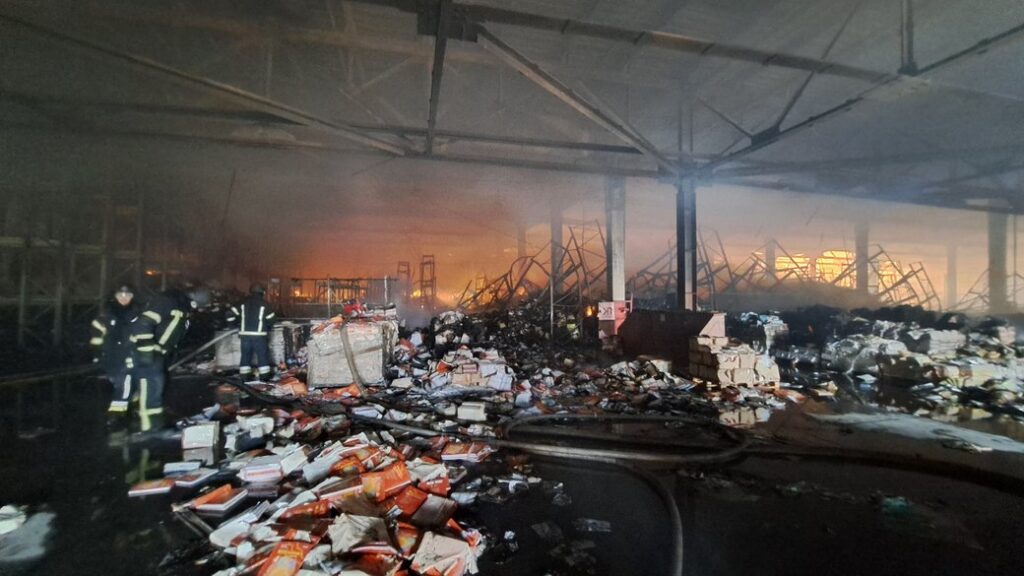
Ranok is one of Ukraine's largest publishing houses and a leader in children's literature and school textbooks. On one day in August, Russia destroyed more than 85% of its stock, The Guardian reported.
Viktor Kruhlov, the publisher's co-founder and chief executive, was on the warehouse floor at its headquarters in Kharkiv. The facility, built on the site of a former bread factory, covered about 10,000 m².
Together with five senior colleagues, he was discussing plans for the upcoming school year, the peak of the distribution season. Moments after the meeting began, a strike hit about 30 meters from where the staff had gathered. Kruhlov heard an explosion and almost at once saw a huge fire. As colleagues tried to put out the flames, a second strike came, and he realized there could be a third and a fourth, so the staff evacuated. Fifty people were on shift that day, and no one was injured, Kruhlov told The Guardian.
Eight million books, including 628,000 new school textbooks, were in the warehouse at the time. None could be saved. Firefighters battled the blaze for a week.
Several editorial staff members who saw the remains of the warehouse for the first time looked shaken as they recognized fragments of books they had helped create.
"When you see what was produced with your brain, with your hands, with your imagination, spoiled by Russia, it's an awful feeling," Kruhlov said.
He predicted shortages at Ranok's stores this fall, when the books in stock run out and there is nothing to replace them.
Literature is part of Ukrainian identity
Kruhlov is convinced that Russia deliberately targeted the book warehouse, but Bohdana Laiuk, Ukraine's deputy culture minister, sees the strikes as part of Russia's broader campaign against warehouses, The Guardian wrote.
"They cannot occupy Kyiv. So they target warehouses around Kyiv to take the possibility of everyday life from us—and books are part of everyday life," she said.
Books also matter to Russia's occupiers, Laiuk said.
"When the Russians occupy, the first thing they do—and we know this from the areas that were occupied and then liberated in 2022 in the Kherson and Kharkiv regions—is to go to the libraries, take the Ukrainian language books out, and destroy them," Laiuk said.
One of the Russian history textbooks that Russian troops brought to a school in Kherson Oblast, summer 2024. Photo: Ivan Antypenko
Before 2022, about 70% of the Ukrainian book market consisted of Russian-language titles, most of them imported from Russia.
Russian dominance in Ukrainian publishing developed over centuries, from tsarist bans on publishing in Ukrainian in the 19th century to Soviet Russification. Ukrainian writers were purged, and Ukrainian literature stayed in the shadow of Russian literature, the article notes.
Laiuk calls the dominance of Russian books a form of colonialism. Russia deliberately built its own information space in Ukraine through books, media, and television, she argues, so that everything would be ready for it once its tanks arrived.
Even after independence, a commercially successful Ukrainian-language novel was long seen as unlikely. But at the start of the full-scale invasion in 2022, Ukrainian bookstores stopped selling Russian imports, and interest in Ukrainian literature grew, from 1920s classics and poetry to contemporary authors and translations.
"So people are asking: what does it actually mean to be Ukrainian? Literary culture gives us the place to understand who we are," Laiuk told The Guardian in 2023.
The future of Ukrainian literature is uncertain
Ranok is now rushing to reprint textbooks and bestsellers: schools need the former, while sales of popular titles will help the publisher make up for lost revenue.
Shelves at the renovated Ranok bookstore during its opening in Rivne, June 2022. Photo: Rivne City Council
For debut authors and writers of less commercial or experimental books, the situation is particularly difficult. Even before the strike on Ranok's warehouse, some publications had been delayed by attacks on printing infrastructure.
Ksenia Shpak's debut novel, an urban fantasy about a girl displaced from eastern Ukraine to the Carpathians, was due out in February 2025 but was published only that November, the article says. Half of the print run was in Ranok's Kharkiv warehouse when it was attacked.
It was her first published book, and Shpak fears the publisher will now focus on bestsellers and reprint her novel only if money allows. The Ukrainian book market is also feeling demand level off and the cost of living rise, she said.
Despite the loss of 8 million books, Kruhlov remained optimistic. Looking over the ruined warehouse in Kharkiv, he said he planned to rebuild everything—and to do it better.
Ukraine continues to demine its 132,000 square kilometers of potentially hazardous territory. During the last month, Defense Ministry demining units cleared 1,347 hectares of that liberated territory, the ministry said.
In September, Tymur Pistryuha, head of the Board of the Ukrainian Deminers Association, said that Ukraine is the most heavily mined country in the world — a fact recognized by the international community. The contaminated area continues to grow with every day of the war,
Ukraine continues to demine its 132,000 square kilometers of potentially hazardous territory. During the last month, Defense Ministry demining units cleared 1,347 hectares of that liberated territory, the ministry said.
In September, Tymur Pistryuha, head of the Board of the Ukrainian Deminers Association, said that Ukraine is the most heavily mined country in the world — a fact recognized by the international community. The contaminated area continues to grow with every day of the war, Suspilne reports.
Ukraine clears 483,366 explosive devices overall
During the month, Ukraine surveyed and cleared 339.84 hectares of agricultural land, 21.31 kilometers of roads, 40.4 kilometers of railway tracks of mines and explosive remnants of war.
In total, in September, demining specialists detected and destroyed 364 explosive devices. Since the beginning of Russia’s full-scale invasion, 483,366 such devices have been detected and destroyed.
Such missions are conducted by several structures at once. Among them are the Main Directorate for Mine Action, Civil Protection and Environmental Safety, and the Defense Ministry, which engages demining units of the Armed Forces of Ukraine and the State Special Transport Service in clearing liberated territories of explosive remnants of war.
Explosive ordnance disposal units of the National Police of Ukraine and pyrotechnic units of the State Emergency Service of Ukraine are also involved in demining operations.
Those deminers now fly drones fitted with special magnetometers that register changes in the Earth's magnetic field, picking out hidden metal from the air and keeping sappers off ground that may be sown with mines.
New plan for mass demining
To make the process more effective, the government has approved a procedure under which the Ministry of Defense’s Mine Action Center will prepare a single national humanitarian demining plan every year, while the National Mine Action Authority will approve it.
The plan will be prepared according to a clear timetable for everyone involved in the process, including government authorities, demining operators, and local communities. The Mine Action Center will collect data on contaminated areas, local communities' needs, and demining operators' capacities, and use this information to develop humanitarian demining plans.
Ukraine's Security and Defense Forces have "put out of action" more than 51% of Russia's oil refining capacity through recent long-range strikes, Defense Minister Yevhenii Khmara said in a statement published by the Defense Ministry on 4 October. These "carefully thought-out" actions were aimed at "bleeding the Russian war machine" and "destroying its military-economic potential," Khmara said.
Ukraine treats Russia's refineries as a priority target because their revenue helps fund the w
Ukraine's Security and Defense Forces have "put out of action" more than 51% of Russia's oil refining capacity through recent long-range strikes, Defense Minister Yevhenii Khmara said in a statement published by the Defense Ministry on 4 October. These "carefully thought-out" actions were aimed at "bleeding the Russian war machine" and "destroying its military-economic potential," Khmara said.
Ukraine treats Russia's refineries as a priority target because their revenue helps fund the war. Even Russian President Vladimir Putin claimed on 1 October that the strikes had cost Russia 1% of its GDP and had "partially" achieved their goal, Interfax reported.
The ministry did not publish how it calculated the figure.
"The consequences of Ukrainian operations are not always visible immediately. But the effect accumulates and produces a tangible result," the ministry said.
Ukrainian deep strikes continue to bring the war to Russian territory
The ministry named eight recently struck facilities, among others. One of them is the Moscow Oil Refinery, which Ukraine targeted in a massive drone attack on the night of 20 September, Ukrainian President Volodymyr Zelenskyy said. The refinery, operated by Gazprom Neft in Moscow's Kapotnya district, supplies about 40% of Moscow's fuel market and 70% of the Moscow region's demand for gasoline and aviation fuel, according to Russian news Telegram channel Astra.
Another was KINEF, which Ukraine has attacked repeatedly. It is Russia's second-largest oil refinery by capacity, and the Ukrainian military struck it on the night of 30 August, setting off a fire at the facility.
Fire reported at Russia's Kirishi/KINEF oil refinery following an overnight Ukrainian drone attack, 29–30 August 2026. Photo: Exilenova+
The ministry also named the Yaroslavl, Perm, Ilsky, Saratov, and Syzran refineries and the Ust-Luga port complex.
Ukraine triples production and procurement of long-range drones—and this is not the end
This year, Ukraine has tripled the production and procurement of long-range attack drones, the ministry said.
"This is not the limit. We will continue to scale up deep-strike capabilities," the statement said.
International cooperation is part of that push. Berlin will fund the production of additional DeepStrike-class long-range drones in Ukraine, German Defense Minister Boris Pistorius said after a meeting of the Ukraine Defense Contact Group on 15 April. The sides also agreed to jointly develop and produce a medium- and long-range drone system.
Ukraine and Germany also signed an agreement on the joint production of Bars drones, Ukrainian Foreign Minister Andrii Sybiha said on 8 July. The Bars' modular design allows it to be used for deep strikes, among other missions.
Bars jet-powered drone. Photo: Museum of the Russian-Ukrainian War
Oil refinery output has fallen
Russian refineries cut crude oil processing by 14% in the first nine months of the year compared with the same period last year amid Ukrainian drone attacks, according to calculations by two industry sources.
Experts' estimates of the decline differ widely. In August, Serhii Vakulenko of the Carnegie Russia Eurasia Center put it at 25–28%, while Russian economic commentator Vyacheslav Shiryaev put it at 65–70%, according to Defense-Aerospace.
Fuel production data give a more concrete picture: in July, Russia's gasoline and diesel output was about a quarter to a third lower than in March 2026, the outlet reported.
In a tough new ad for the Democrat running against Representative Jeff Crank, the brother and sister-in-law of Virginia Giuffre say the congressman refused to meet with them.
In a tough new ad for the Democrat running against Representative Jeff Crank, the brother and sister-in-law of Virginia Giuffre say the congressman refused to meet with them.
The justices began their new term with a landmark dispute over whether local governments can hold oil companies liable for damages from climate change.
The justices began their new term with a landmark dispute over whether local governments can hold oil companies liable for damages from climate change.
The growing use of walk-and-talk social videos can be traced to Zohran Mamdani’s successful campaign for mayor of New York City. But not all candidates are naturals on camera.
The growing use of walk-and-talk social videos can be traced to Zohran Mamdani’s successful campaign for mayor of New York City. But not all candidates are naturals on camera.
Beni Rae Harmony, 24, has been ‘a trusted voice for the MAGA movement as a White House correspondent’, White House saysThe White House has defended a newly hired press aide who posed for a holiday photograph in 2021 wearing a “Fuck Joe Biden” T-shirt and holding a rifle.Beni Rae Harmony, the new assistant White House press secretary, revealed on Friday that she was going to work for Donald Trump just days after covering him as a correspondent for Real America’s Voice, a partisan rightwing outlet
Beni Rae Harmony, 24, has been ‘a trusted voice for the MAGA movement as a White House correspondent’, White House says
The White House has defended a newly hired press aide who posed for a holiday photograph in 2021 wearing a “Fuck Joe Biden” T-shirt and holding a rifle.
Beni Rae Harmony, the new assistant White House press secretary, revealed on Friday that she was going to work for Donald Trump just days after covering him as a correspondent for Real America’s Voice, a partisan rightwing outlet originally created as a video podcast platform for the president’s former adviser Steve Bannon.
An online spot for Mr. Hilton, the G.O.P. candidate, is full of sexual innuendo that has befuddled Republicans and Democrats watching the race for governor in California.
An online spot for Mr. Hilton, the G.O.P. candidate, is full of sexual innuendo that has befuddled Republicans and Democrats watching the race for governor in California.
An appellate court in Arizona threw out the prison sentence of a man convicted of manslaughter after an A.I.-generated video of his victim was played in court.
An appellate court in Arizona threw out the prison sentence of a man convicted of manslaughter after an A.I.-generated video of his victim was played in court.
Stacey Wales with an enlarged photo of her brother, Christopher Pelkey. She created a video using artificial intelligence to depict her dead brother speaking at the sentencing of his killer.
The state hasn’t elected a Democrat to the Senate in nearly a century. Economic challenges during President Trump’s second term, as well as other factors, have put it in play.
The state hasn’t elected a Democrat to the Senate in nearly a century. Economic challenges during President Trump’s second term, as well as other factors, have put it in play.
The Rev. Adam Hamilton, left, and Senator Roger Marshall of Kansas are currently tied roughly at 45 percent, according to a New York Times/Siena University poll.
German Chancellor Friedrich Merz arrived in Kyiv on an unannounced visit on 4 October and announced more than €1.3 billion ($1.5 billion) in new German support for Ukraine, Ukrainian President Volodymyr Zelenskyy said at a joint press conference. Part of the money will fund interceptors against Russia's jet-powered drones, as Russian drones struck Kyiv again during Merz's visit. Merz also pledged to speed up Ukraine's EU accession and announced a Coalition of the Willing meeting in Berlin
German Chancellor Friedrich Merz arrived in Kyiv on an unannounced visit on 4 October and announced more than €1.3 billion ($1.5 billion) in new German support for Ukraine, Ukrainian President Volodymyr Zelenskyy said at a joint press conference. Part of the money will fund interceptors against Russia's jet-powered drones, as Russian drones struck Kyiv again during Merz's visit. Merz also pledged to speed up Ukraine's EU accession and announced a Coalition of the Willing meeting in Berlin this winter.
Russia now attacks Kyiv and other Ukrainian cities daily, increasingly with jet-powered drones that outrun the cheap interceptors built for slower Shaheds. That leaves Ukraine dependent on scarce air defense missiles and on partners willing to pay for new weapons fast.
A package aimed at Russia's jet drones
The €1 billion ($1.13 billion) military part of the package includes funding for joint production of interceptor drones against jet-powered drones, Merz said. Recent technological progress means the new interceptors can quickly enter serial production, he added.
"This will quickly and noticeably strengthen Ukraine's air defense," Merz said.
The package also includes long-range weapons, combat drones, and satellite equipment, which Merz said should help Ukraine destroy Russian launchers more effectively. A separate €350 million ($394 million) will go to Ukraine's energy sector before winter, covering generators, transformer substations, and repair kits, Liga reported.
Ukrainian President Volodymyr Zelenskyy and German Chancellor Friedrich Merz at the building of the National Academy of Sciences of Ukraine in Kyiv, damaged by a Russian drone strike on 28 September, 4 October 2026. Photo: Office of the President of Ukraine
The two countries also signed an agreement on counter-drone cooperation, Merz said. He stressed that the help runs both ways, with German defense companies learning from Ukraine's war experience. The broader deal also covers joint development of weapons with a range of more than 1,000 km, Reuters reported.
Explore further
Russia’s drones keep targeting the bridges Kyiv can’t easily replace—now the Northern crossing is cratered
Among interceptor drones, the Bars has so far shown the best results, downing up to 30% of its targets, Zelenskyy said. He expects the first results from small missiles designed to counter jet drones in the second half of October.
"We will not be intimidated"
Before the visit, Russia's Foreign Ministry warned foreign nationals and diplomats against staying in Ukraine and threatened new massive strikes on Kyiv. Merz arrived by train with Economy Minister Katherina Reiche and a delegation of German business executives.
"Despite the threats that have reached us from Moscow in recent days, I came today... This shows: we will not let ourselves be intimidated," Merz said.
Merz and Zelenskyy visited the National Academy of Sciences, where a Russian drone killed two people and injured seven on 28 September, the State Emergency Service and the Office of the President said. An air-raid alert sounded while they spoke with rescuers, and emergency service chief Andrii Danyk showed Merz the movement of Russian drones in real time. The same day, a Russian drone hit Kyiv's Northern Bridge again.
"I can only repeat it once again from this point: Mr Putin, put an end to this senseless war," Merz said during the visit. "We are ready for talks, we are ready to discuss bringing this war to an end, but these barbaric attacks on the civilian population of Ukraine must stop," he added, Reuters reported.
Explore further
NYT: France, Germany and UK build joint format to secure Europe a place in Ukraine peace talks
Zelenskyy called the chancellor's presence despite the alert "a needed and brave signal" from Merz personally and from all of Germany.
EU path and a Berlin meeting
Germany wants to speed up Ukraine's EU accession and is working toward that in Brussels, Merz said. He welcomed Zelenskyy's assurances on rule-of-law and anti-corruption reforms, which he said matter for further financial aid. Together with France and the UK, Germany plans to host a Coalition of the Willing meeting in Berlin this winter to coordinate further support, he added.
Ukrainian Foreign Minister Andrii Sybiha greets German Chancellor Friedrich Merz on his arrival in Kyiv, 4 October 2026. Photo: Andrii Sybiha/X
The trip was Merz's second to Ukraine as chancellor and his fourth since the full-scale invasion. He arrived just as his standing at home is slipping: the far-right AfD reached 30% for the first time in an INSA poll for Bild, while Merz's CDU/CSU fell to a record low of 18%. Days earlier, Merz had directly accused the AfD of having "Russian backers."
A replacement FlyDubai plane, carrying passengers who were on an aircraft from Dubai to Tel Aviv that made an emergency landing in Saudi Arabia, arrives at Ben Gurion International Airport in Israel, last week.
Democrats competing in historically conservative territory in the midterms are more aggressively responding to Republican attacks casting them as extreme.
Democrats competing in historically conservative territory in the midterms are more aggressively responding to Republican attacks casting them as extreme.
It was the latest mixed messaging from President Trump, who regularly votes by mail, but has made baseless claims that the practice is “inherently corrupt.”
It was the latest mixed messaging from President Trump, who regularly votes by mail, but has made baseless claims that the practice is “inherently corrupt.”
Nicole Linton was found guilty of six counts of second-degree murder, which included the death of an unborn child, related to a 2022 crash in Los Angeles.
Nicole Linton was found guilty of six counts of second-degree murder, which included the death of an unborn child, related to a 2022 crash in Los Angeles.
Nicole Linton in Los Angeles Superior Court in 2022. Prosecutors said she had sped through a red light like a “high-speed missile” in 2022 and crashed into multiple vehicles.
In a new ad, the wife of Ken Paxton, who is divorcing him for alleged adultery, tells Texas voters to focus on the “whole team,” not “individual players.”
In a new ad, the wife of Ken Paxton, who is divorcing him for alleged adultery, tells Texas voters to focus on the “whole team,” not “individual players.”
Roger Fortson was shot by deputy when he opened door with gun in hand after a false domestic disturbance callA Florida jury recently found former sheriff’s deputy Eddie Duran not guilty of manslaughter with a firearm in the fatal shooting of Roger Fortson, a Black US air force airman who was killed inside his apartment after authorities responded to an unfounded report of a domestic disturbance.An Okaloosa county jury acquitted Duran, 38, on Thursday after about two hours of deliberations. He ha
Roger Fortson was shot by deputy when he opened door with gun in hand after a false domestic disturbance call
A Florida jury recently found former sheriff’s deputy Eddie Duran not guilty of manslaughter with a firearm in the fatal shooting of Roger Fortson, a Black US air force airman who was killed inside his apartment after authorities responded to an unfounded report of a domestic disturbance.
An Okaloosa county jury acquitted Duran, 38, on Thursday after about two hours of deliberations. He had faced up to 30 years in prison if convicted.
Ukraine has stopped paying veterans to go to the gym because of the economic crisis looming in the country, the war, Russian strikes, and the lack of reforms needed to receive extra funds from the EU. The Veteran Sports program, which provided veterans and combat participants with about $33 per quarter toward a nearly monthly gym membership, was suspended on 1 October after the state found no funds for it, the Ministry of Veterans Affairs said.
The suspension is a telling sign of Ukrain
Ukraine has stopped paying veterans to go to the gym because of the economic crisis looming in the country, the war, Russian strikes, and the lack of reforms needed to receive extra funds from the EU. The Veteran Sports program, which provided veterans and combat participants with about $33 per quarter toward a nearly monthly gym membership, was suspended on 1 October after the state found no funds for it, the Ministry of Veterans Affairs said.
The suspension is a telling sign of Ukraine's budget squeeze, and the ministry puts it plainly: defense comes first, so the money for everything else runs short. It fits a wider government decision to freeze non-essential spending and fund only the army, pensions, and public wages.
The program proved far more popular than planned, drawing more than 800,000 users and costing over double its budget.
Defense takes the money
"The main priority of state spending remains the country's defense. Under these conditions, the state budget's ability to finance other areas is limited," the ministry said.
Launched in 2026 with about $13 million for an expected 100,000 recipients per quarter, and roughly 300,000 applications over three, the program instead saw more than 800,000 uses. Payments passed $27 million, more than twice what was set aside.
The crisis runs deeper
The squeeze has two main drivers. Russia's intensifying strikes on Ukraine's energy and infrastructure are pushing the war's cost higher and battering the economy.
And billions in Western money sit on hold: Kyiv has struggled to complete the reforms the EU set out before releasing roughly $20 billion in aid, and the prime minister has admitted that part of it is late because Ukraine missed commitments to its partners.
The ministry plans a 2027 restart
Ukraine intends to bring the program back in 2027, this time for good, said Deputy Veterans Minister Ruslan Prykhodko.
"We have to account for real demand, fix the shortcomings we saw this year, and make the use of funds more targeted," he said.
In next year's budget, Ukraine would provide significantly more funds, he added. In the meantime, the ministry says it is talking to the sports community and businesses about covering the gap for veterans, with concrete proposals to come.
Hundreds of schools will suspend some or all classes on Monday, the education minister said, as students protest conditions in the education system. Thousands of protesters have been arrested and hundreds of people injured.
Hundreds of schools will suspend some or all classes on Monday, the education minister said, as students protest conditions in the education system. Thousands of protesters have been arrested and hundreds of people injured.
Four people were rescued after being adrift in a life raft in the South Pacific. One of them said he thought he had a better chance of winning the lottery than of being hit by a whale.
Four people were rescued after being adrift in a life raft in the South Pacific. One of them said he thought he had a better chance of winning the lottery than of being hit by a whale.
Fuel costs are biting for crop growers, trucking firms and a host of other industries as Iran war stokes record pricesJoe Hamilton farms corn and soybeans on 2,500 acres in Indiana’s Delaware county. Next week, when his soybean harvest kicks off, four tractors, two combine harvesters and five semi-trucks will roar to life.And with that, a record bill for about 9,000 gallons of diesel awaits him. Continue reading...
Fuel costs are biting for crop growers, trucking firms and a host of other industries as Iran war stokes record prices
Joe Hamilton farms corn and soybeans on 2,500 acres in Indiana’s Delaware county. Next week, when his soybean harvest kicks off, four tractors, two combine harvesters and five semi-trucks will roar to life.
And with that, a record bill for about 9,000 gallons of diesel awaits him.
A FlyDubai plane carrying passengers from an earlier flight that had been forced to divert after a cockpit attack, arriving near Tel Aviv on Wednesday.
John Steinbeck’s hometown of Salinas is the least affordable city in the US for the middle class, a recent Brookings Institution analysis found Nestled between two mountain ranges at the crook of central California’s coastline sits a valley known as the “salad bowl of the world”.Farm workers stoop over neatly lined rows of crops off Highway 101 to harvest more than half of the nation’s supply of lettuce and nearly a third of its strawberries. The soil here is so rich that author John Steinbeck m
John Steinbeck’s hometown of Salinas is the least affordable city in the US for the middle class, a recent Brookings Institution analysis found
Nestled between two mountain ranges at the crook of central California’s coastline sits a valley known as the “salad bowl of the world”.
Farm workers stoop over neatly lined rows of crops off Highway 101 to harvest more than half of the nation’s supply of lettuce and nearly a third of its strawberries. The soil here is so rich that author John Steinbeck made the Salinas valley the promised land in his literary depictions of people chasing the American dream: immigrants, farm workers, westward-moving hopefuls, hungering for a better life.
Our reporting revealed how Mexican criminal groups are relying on teenagers and young adults in border states like Arizona to help supply their weapons.
Our reporting revealed how Mexican criminal groups are relying on teenagers and young adults in border states like Arizona to help supply their weapons.
Two teenage American weapons traffickers — who provide weapons to Mexico’s deadly drug cartels — practice shooting at targets in the desert outside of Phoenix, Ariz.
President Trump personally directed the use of taxpayer money for ads praising his presidency, according to people familiar with the matter. Our White House correspondent, Maggie Haberman, explains.
President Trump personally directed the use of taxpayer money for ads praising his presidency, according to people familiar with the matter. Our White House correspondent, Maggie Haberman, explains.
Judge unseals bodycam footage from officers who responded to 911 from McDonald’s in PennsylvaniaPolice bodycam footage released Friday shows the moment officers located and arrested Luigi Mangione at a Pennsylvania McDonald’s in connection with the shooting death of United Healthcare CEO Brian Thompson in Manhattan.In one video, officers ask Mangione to lower the face mask he was wearing to hide his identity. Continue reading...
Judge unseals bodycam footage from officers who responded to 911 from McDonald’s in Pennsylvania
Police bodycam footage released Friday shows the moment officers located and arrested Luigi Mangione at a Pennsylvania McDonald’s in connection with the shooting death of United Healthcare CEO Brian Thompson in Manhattan.
In one video, officers ask Mangione to lower the face mask he was wearing to hide his identity.
Newly released police bodycam footage shows officers in Altoona, Pennsylvania, approaching, searching and arresting Luigi Mangione at a McDonald's on 9 December 2024 in connection with the shooting death of United Healthcare CEO Brian Thompson. The Guardian has edited the video from multiple cameras to show the moments of the arrest Continue reading...
Newly released police bodycam footage shows officers in Altoona, Pennsylvania, approaching, searching and arresting Luigi Mangione at a McDonald's on 9 December 2024 in connection with the shooting death of United Healthcare CEO Brian Thompson. The Guardian has edited the video from multiple cameras to show the moments of the arrest
Health screenings and criminal background checks may go only so far in identifying pilots who have become radicalized or try to hide their mental health issues, experts said.
Health screenings and criminal background checks may go only so far in identifying pilots who have become radicalized or try to hide their mental health issues, experts said.
In the United States, pilots undergo a criminal history check as well as a threat assessment to see if they have ever been flagged as a “person of interest” in federal law enforcement databases.
The country was shaken after nearly 30 people were killed in two separate mass shootings. South Africans are demanding greater government intervention.
The country was shaken after nearly 30 people were killed in two separate mass shootings. South Africans are demanding greater government intervention.
Massachusetts Bay Transportation Authority are now considering setting trained falcons on the urban birdsThe mass transit authorities in the greater Boston region are clawing around for ways to mitigate the excessive local pigeon population – or more graphically, pigeon poo all over stations – and have swooped on the possibility of setting trained falcons on them.The Massachusetts Bay Transportation Authority (MBTA), the public system commonly known as “the T”, issued a “request for information”
Massachusetts Bay Transportation Authority are now considering setting trained falcons on the urban birds
The mass transit authorities in the greater Boston region are clawing around for ways to mitigate the excessive local pigeon population – or more graphically, pigeon poo all over stations – and have swooped on the possibility of setting trained falcons on them.
The Massachusetts Bay Transportation Authority (MBTA), the public system commonly known as “the T”, issued a “request for information” (RFI) last month from falconry experts on the potential use of birds of prey, such as falcons, to control the crowds of urban birds widely considered a public nuisance.
Prosecutors want remote testimony for witnesses unable or unwilling to travel to Guantánamo. The defense wants jurors to be told that, guilty or innocent, the defendant will not go free.
Prosecutors want remote testimony for witnesses unable or unwilling to travel to Guantánamo. The defense wants jurors to be told that, guilty or innocent, the defendant will not go free.
After the co-pilot stabbed the captain, two pilots who were seated in the cabin intervened alongside passengers and safely landed the Boeing 737 in Saudi Arabia.
After the co-pilot stabbed the captain, two pilots who were seated in the cabin intervened alongside passengers and safely landed the Boeing 737 in Saudi Arabia.
A FlyDubai plane carried passengers to Tel Aviv on Wednesday after a midair cockpit attack on their earlier flight. Two other pilots who were seated in the cabin safely landed that plane.
Support for 37-year-old Jonathan Kreiss-Tomkins could upend the governor’s race in the heavily Republican stateThis July, Jonathan Kreiss-Tomkins spent four days and 450 miles (725km) wending his way down the Yukon River in a 24ft Alweld skiff, a flat-bottomed aluminum boat built for shallow Alaska rivers.Starting in Koyukon Athabascan country, he passed through Indigenous Deg Hit’an communities like Anvik, before ending among the Yup’ik villages of the lower river, Russian Mission and Pilot Sta
Support for 37-year-old Jonathan Kreiss-Tomkins could upend the governor’s race in the heavily Republican state
This July, Jonathan Kreiss-Tomkins spent four days and 450 miles (725km) wending his way down the Yukon River in a 24ft Alweld skiff, a flat-bottomed aluminum boat built for shallow Alaska rivers.
Starting in Koyukon Athabascan country, he passed through Indigenous Deg Hit’an communities like Anvik, before ending among the Yup’ik villages of the lower river, Russian Mission and Pilot Station among them. The boat carried him through 11 villages – some only reachable by water or small plane, andmost with fewer than 300 residents, and fewer still who could recall the last time they had seen a candidate for Alaska governor, Republican, Democrat or independent.
As the Republicans try to hold their majority, the Senate Leadership Fund is diverting resources to Kansas, which has become a growing concern for the party.
As the Republicans try to hold their majority, the Senate Leadership Fund is diverting resources to Kansas, which has become a growing concern for the party.
Economies in Latin America and Europe rely on American diesel. Stopping exports could tip some countries into recession, hurting trade with the United States.
Economies in Latin America and Europe rely on American diesel. Stopping exports could tip some countries into recession, hurting trade with the United States.
A FlyDubai plane carrying Israeli passengers who had earlier been aboard another FlyDubai aircraft that made an emergency landing in Saudi Arabia approaches Ben Gurion International Airport near Tel Aviv on Wednesday.
The Coast Guard has intercepted two small boats it says were carrying illegal fuel to Cuba as the United States enforces a fuel blockade aimed at Cuba’s Communist government.
The Coast Guard has intercepted two small boats it says were carrying illegal fuel to Cuba as the United States enforces a fuel blockade aimed at Cuba’s Communist government.
As LeBron James and other NBA stars wholeheartedly embrace the murk of betting and prediction markets, the San Antonio Spurs’ 22-year-old cornerstone has drawn a refreshing lineIf the song from LeBron James’s agonizing Polymarket ad is as stuck in your head as mine thanks to the commercial playing during every YouTube video and HBO show (all I wanted to do was rewatch The Leftovers), let Victor Wembanyama be your antidote. At the Spurs’ practice on Thursday, San Antonio Express-News columnist Mi
As LeBron James and other NBA stars wholeheartedly embrace the murk of betting and prediction markets, the San Antonio Spurs’ 22-year-old cornerstone has drawn a refreshing line
If the song from LeBron James’s agonizing Polymarket ad is as stuck in your head as mine thanks to the commercial playing during every YouTube video and HBO show (all I wanted to do was rewatch The Leftovers), let Victor Wembanyama be your antidote. At the Spurs’ practice on Thursday, San Antonio Express-News columnist Mike Finger asked Wembanyama if he would ever partner with a sports betting firm. It couldn’t have been easier for the 22-year-old to say yes. The NBA displays ads for both FanDuel and DraftKings, in addition to hawking betting odds on its broadcasts. Until the streaming service met its end a few months ago, plenty of NBA games streamed exclusively on FanDuel Sports Network. Then there are Wembanyama’s legendary peers: James is the new face of Polymarket; Kevin Durant reads FanDuel odds and invests in Kalshi; Giannis Antetokounmpo is a Kalshi shareholder.
“Absolutely not,” Wembanyama said instead. “I will never do that. Honestly, I think it’s very sad to see some players promote it. Everybody does whatever they want, but without me.”

 Connexion