Russia lost more troops in October than in any other month of its full-scale war, President Volodymyr Zelenskyy said on 1 November. Ukrainian forces also took back more land than Russian troops captured over the month, he added.
Russia keeps sending infantry against Ukraine's lines in Donbas and along the northern border. By summer, it was already losing more soldiers than it could recruit, Commander-in-Chief Oleksandr Syrskyi said in June. October's count shows the price climbing again, while the ground Russia gains for it shrinks.
A record month and a record day
Over October, Russia lost 54,400 troops killed and seriously wounded, Zelenskyy said, the most of any month since the full-scale invasion began. The previous monthly high, 48,670, dated from December 2024, according to the General Staff's figures.
Explore further
Ukraine suffered 10 times fewer casualties than Russia in Vivaldi counteroffensive, veteran says. Ukraine’s innovations in drone and ground robot tactics are changing frontline warfare
Russia's costliest single day came on 21 October, with 2,250 troops lost, Zelenskyy added. Over the month, Russia averaged 1,755 losses a day. The figures are Ukraine's estimates and cannot be independently verified.
A Russian region's worth of soldiers
In infographics published with the figures, the General Staff compared the toll to things Russians know. It is roughly the entire population of Chukotka, a remote Russian region in the Far East home to fewer than 50,000 people. It is also about as many soldiers as march in nine military parades on Red Square, or enough to fill about 200 Moscow subway cars. "This is the price Russia pays for its aggression," one of them reads.
More ground back than lost
Ukraine's Defense Forces liberated 96.2 km² in October, 10.4 km² more than Russian troops captured, Zelenskyy said. That puts Russia's gains for the month at 85.8 km². In mid-October, he said Ukraine had liberated more land than Russia captured since the start of fall.
Zelenskyy thanked every brigade and unit for the result. "To stop these insane losses, Russia only needs to choose a ceasefire and diplomacy," he wrote.
Russia's reported losses have climbed through 2026, and Moscow keeps looking for more men. In September, Brigadier General Denys Prokopenko warned that Russia may mobilize up to 600,000 troops for its next offensive.
Turhan Mildon, who married Alina Habba this summer, presents himself as a 29-year-old billionaire with ties to global leaders. His story has inconsistencies.
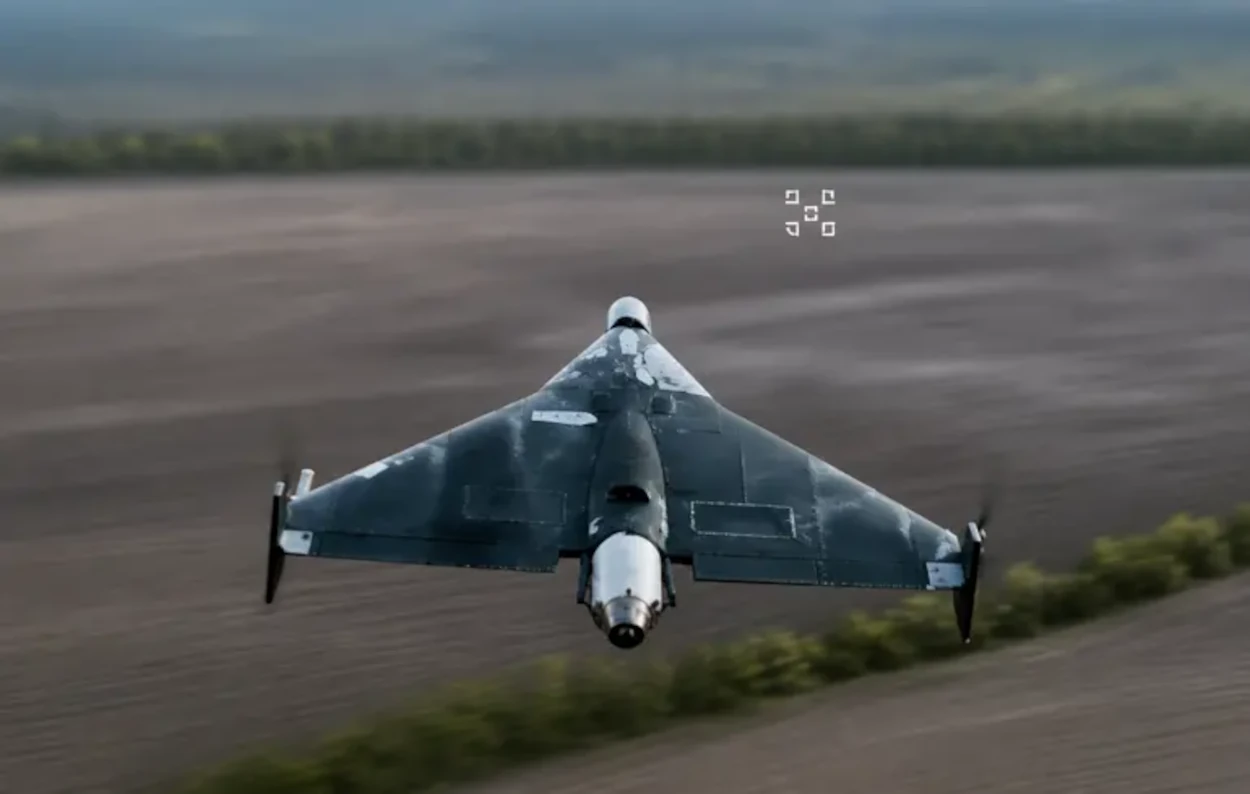
Russia’s Geran-5 jet drones have sped up to 1,000 km/h while maneuvering, Ukraine’s presidential adviser on defense technology Serhii “Flash” Beskrestnov said in Kyiv on 29 October. He added that Chinese engineers help develop Russia’s Geran drones.
When Russia moved to faster Geran versions, Ukrainian developers had to look for new ways to intercept them, Beskrestnov said, and Ukraine must learn to stay a step ahead. From 1 to 26 September, air defenses downed only 55% of Russia’s jet-powered drones. On 29 October, one such drone hit Dnipro’s railway station, and the death toll has since risen to 15. Over the past three months, air defenses downed nearly 60% of the jet-powered Geran-4, the General Staff said on 27 October, noting a shortage of guided anti-aircraft missiles. That update gave no Geran-5 figure.
A peak well above cruise speed
That peak, about 620 mph, came during maneuvers. Ukraine’s military intelligence (HUR) puts the Geran-5’s cruise speed at 450–600 km/h. By Beskrestnov’s count, the earlier Geran-3 flew at 280–300 km/h.
Explore further
Ukraine intercepts nearly 60% of Russia’s Geran-4 jet drones, General Staff says, as Kyiv races to counter evolving threat
Russia’s best engineers work against Ukraine, and China’s do too, Beskrestnov told journalists. Russia’s Alabuga drone plant sets Chinese engineers tasks such as work on the control module, he said. Key components inside Russia’s Shahed-type drones are Chinese, he said. Meanwhile, China will require licenses for Geran engines from 18 November, Ukraine’s sanctions commissioner Vladyslav Vlasiuk said. Licensing is not a ban, he stressed.
Speed is the easy part
Some interceptors are being designed to match the Geran-5’s cruise speed. US firm CHAOS Industries claims a top speed of 540 km/h for its Vespid Mk 1 interceptor. On 14 October, Ukrainian defense outlet Defense Express judged that may be enough against the Geran-5’s 450–600 km/h cruise speed.
Explore further
Russia equips Geran attack drones with image-based navigation using Google map imagery, reducing reliance on satellite navigation that Ukraine can jam, defense adviser warns
Ukrainian manufacturers have already shown jet-powered interceptor drones, Beskrestnov said. But they have run into problems with control, guidance, automatic target lock, and scaling up production. A model that flies fast is only one part of the job, he said, and an easy-to-use serial product is a different question entirely.
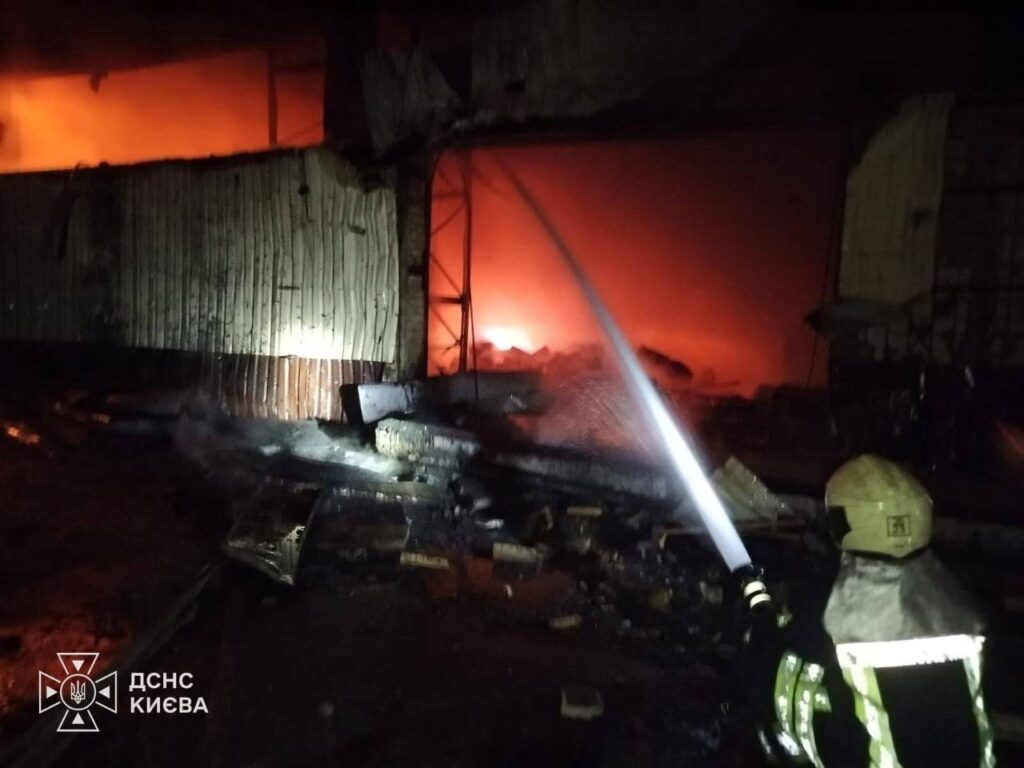
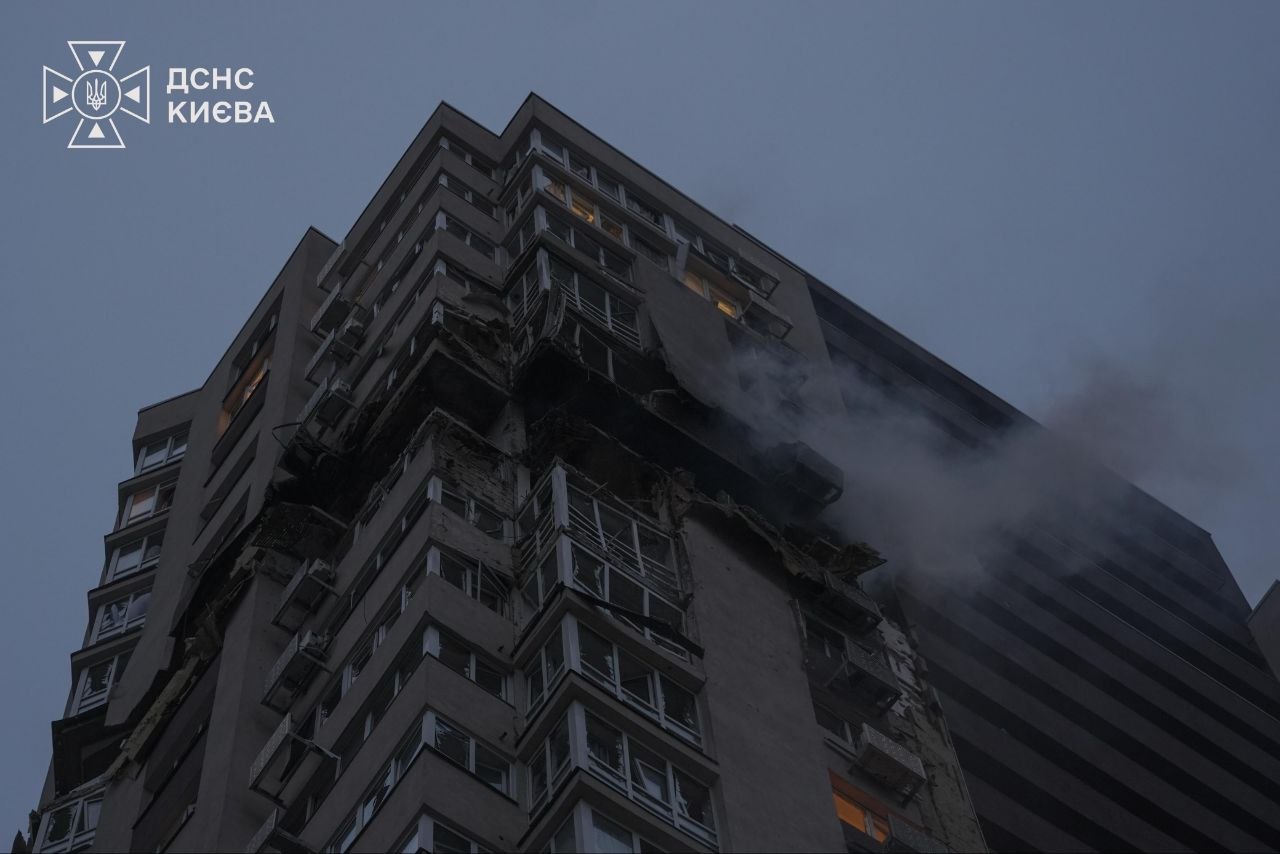
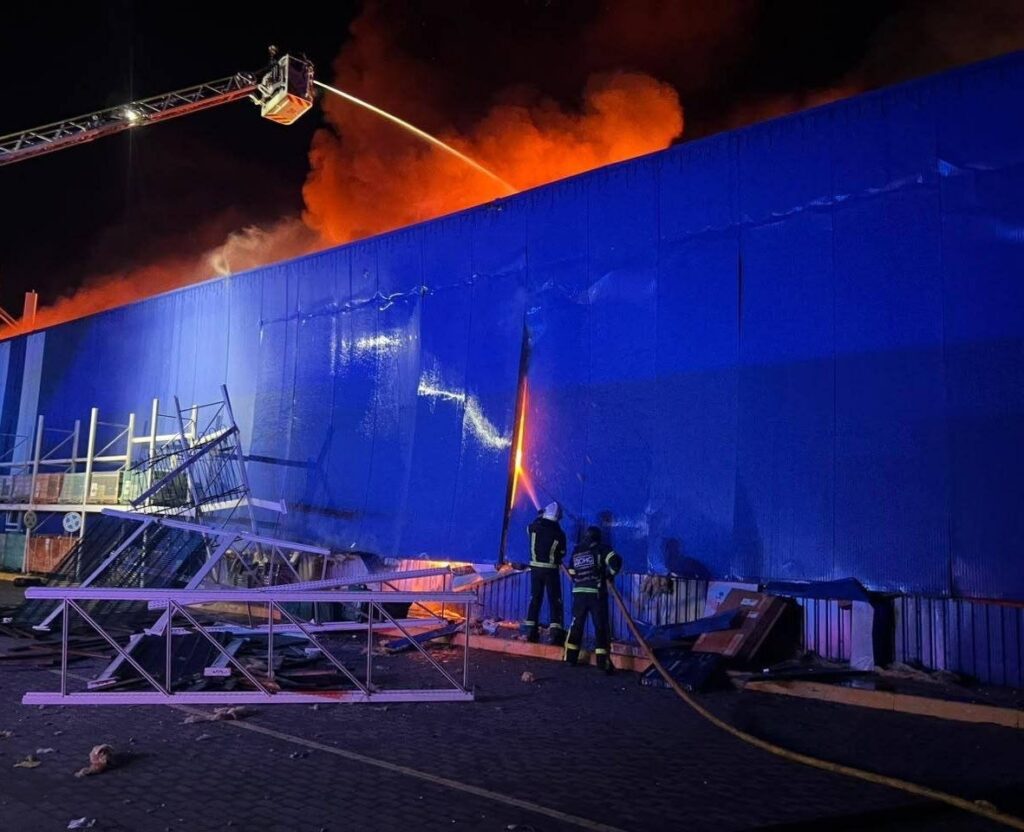
Russia attacked Kyiv with ballistic missiles late on 29 October, killing a man and injuring a 35-year-old woman, Kyiv city prosecutors said. The strikes damaged eight apartment blocks in Dniprovskyi district, a gas station, a restaurant, a dental clinic, warehouses, and cars. A warehouse building caught fire in Darnytskyi district, the city administration reported.
Overnight, Russia fired Iskander-M, S-400, and KN-23 ballistic missiles, four Kh-59/69 guided missiles, and 113 drones, 83 of them jet-powered, Ukraine's Air Force said. The attack mainly targeted Kyiv, Poltava, and Dnipropetrovsk oblasts. Air defenses downed three missiles and 96 drones, but strikes hit 17 locations.
Russia is waging its war on Ukraine's cities around the clock as winter approaches, striking homes, transport, and the power grid that keeps them running. On 29 October, including the late attack on Kyiv, Russian strikes killed at least 27 civilians and injured more than 140 across six regions, by EP's tally of regional authorities' reports. It was one of the deadliest days of the autumn. Most died in daylight, on a train platform in Dnipro, in an apartment block in Kremenchuk, in central Chernihiv, and under guided bombs in Izium.
Dnipro and Kyiv's right bank lose power
A Russian strike on Dnipro left more than 350,000 customers in the city and nearby towns without power, Dnipropetrovsk Oblast's administration said shortly after midnight. Water pumping stations switched to backup power. By morning, engineers had restored electricity to most customers in the oblast, but more than 200,000 were still without power.
Explore further
It was the only transport serving a village where more than 1,600 people still live: Russian forces strike a social bus with a drone in Bilenke, killing a woman and injuring other passengers
In Kyiv, equipment damaged in earlier strikes failed on the right bank, forcing emergency outages, the city administration said. Russia attacked an industrial plant in Poltava Oblast's Kremenchuk district overnight and again in the morning, with no casualties reported, the regional administration said.
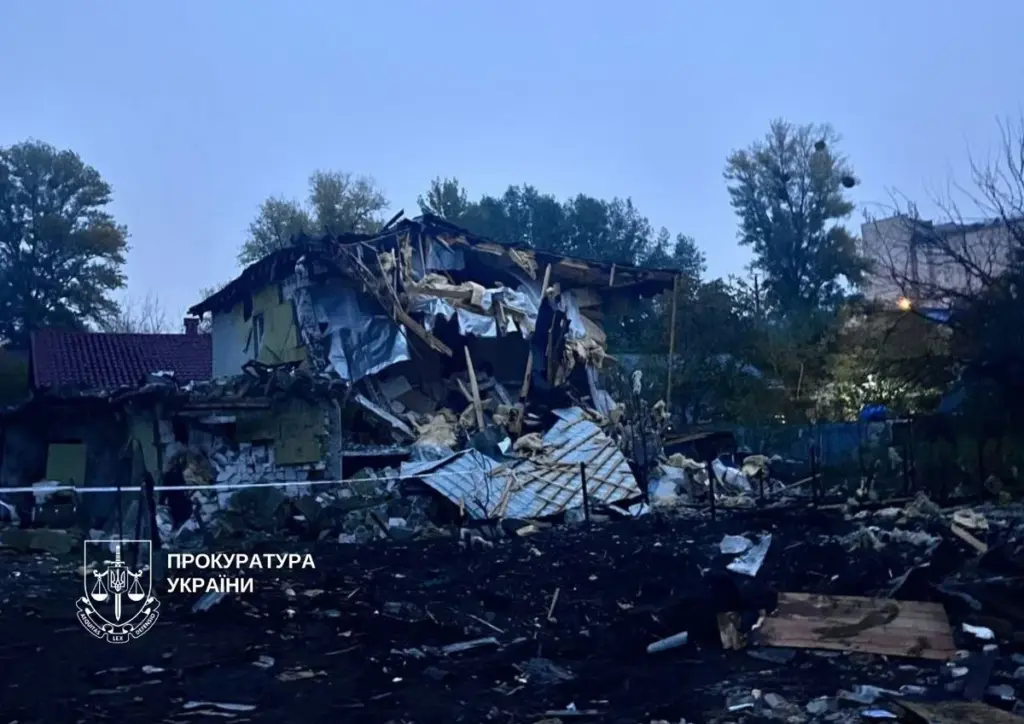
A damaged one-story building and debris on the ground in Kyiv, Ukraine, after a Russian ballistic missile attack late on 29 October 2026. Photo: Kyiv City Prosecutor's Office
In the morning, a Russian drone hit a shopping center in Kharkiv's Kyivskyi district, injuring four women, Kharkiv Oblast Governor Oleh Syniehubov said. In Chernihiv Oblast, Russian drones destroyed the house of culture in Mena late on 29 October, and in the morning a drone hit a house in Bobrovytsia and injured a woman, the regional administration said. In Chernihiv itself, 37 people sought medical help after the 29 October strike on the city center that killed two 15-year-old girls, Yana and Mariia.
A burned-out car in central Chernihiv, Ukraine, after a Russian strike on 29 October 2026. Photo: Chernihiv Oblast Military Administration
Two oblasts in mourning as the Dnipro toll rises to 15
A 40-year-old man wounded in the 29 October jet drone strike on Dnipro's railway station died in hospital, raising the toll to 15, the regional administration said. Eleven people remain in hospital. Dnipropetrovsk Oblast declared 30 October a day of mourning.
A police officer near a five-story building partly destroyed by Russian guided bombs in Izium, Kharkiv Oblast, Ukraine, October 2026. Photo: National Police of Ukraine
Poltava Oblast also mourns three people killed when a Russian drone hit an apartment block in Kremenchuk on 29 October. Another 32 were injured, six of them children, the regional administration said.
Explore further
Russian jet drone hits Dnipro railway platform, killing 14 people next to a Zaporizhzhia-bound train
In Izium, Kharkiv Oblast, Russian guided bombs hit a five-story building on 29 October, killing four people and injuring 14, police reported. In Zaporizhzhia Oblast, Russian attacks killed two people in Bilenke and injured 23 across the region, 13 of them when Russia sent seven FPV drones at vehicles and public transport in Zaporizhzhia city, police said. EP reported the city faced a record number of such attacks.
The city’s Hispanic majority, news media reach and air links to Latin America have made it an ideal base for politicians escaping their home countries.
The city’s Hispanic majority, news media reach and air links to Latin America have made it an ideal base for politicians escaping their home countries.
The Ukrainian government has instructed Kyiv to establish alternative routes after Russian attacks stopped traffic on one of the capital’s main bridges. The city authorities will bear the cost of the new crossings, with Kyiv Mayor Vitali Klitschko saying the city needs an additional $22 million.
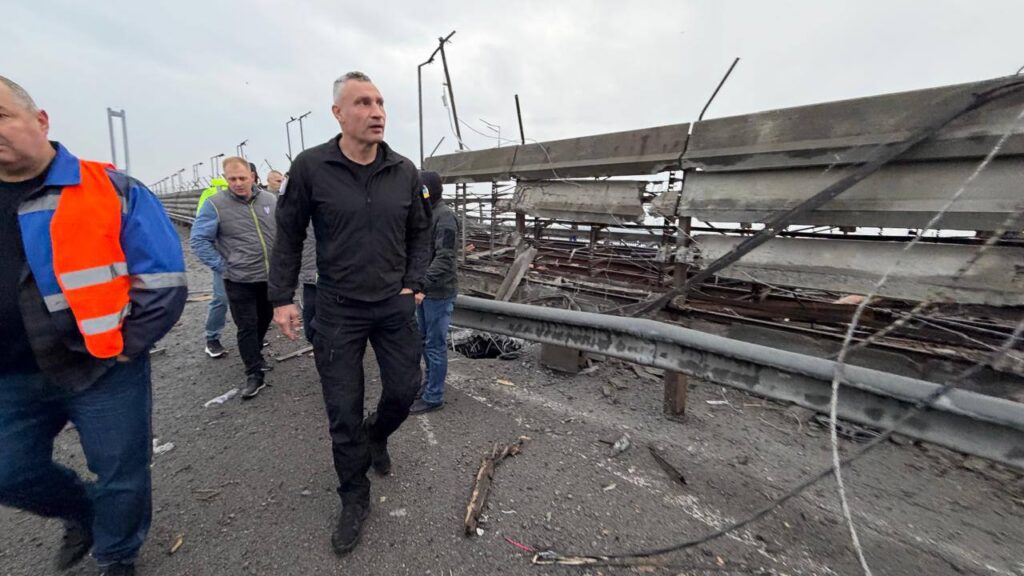
This year, Russia has launched tactics to spread panic among civilians and trigger more people to leave the country. In the latest attack, several Russia's ballistic missiles struck the Southern Bridge, used for vehicle and metro traffic, breaking a huge hole and paralyzing all the pathes. The bridge was closed. Now, there is a fear that more bridges can be targeted this way, dividing Kyiv in two parts.
The situation is urgent, as Ukrainian Transport Minister Mykola Kalashnyk says about 600,000 vehicles cross the Dnipro in Kyiv every day.
What is Kyiv’s response to the winter terror?
According to Klitschko, Kyiv convened the capital’s Defense Council on 28 October to find an answer to this difficult question.
The agenda included implementing a project to build combined water crossings over the Dnipro River and access roads to them.
“The military command will determine the locations, with approval to be granted, among others, by the Kyiv City Military Administration,” Klitschko said.
Under the government’s recommendations, the Kyiv city authorities must find $22 million for the project.
Klitschko had previously faced heavy criticism after it emerged that the city lacked sufficient shelters and last winter exposed serious shortcomings in preparing infrastructure for Russian attacks. These included a lack of alternative energy supply routes, poorly distributed energy, burst heating pipes that flooded apartments, and the inability of people with disabilities to reach shelters without elevators.
The mayor himself said the problems stemmed from the central government withholding funding, which had stalled numerous energy resilience projects and delayed their implementation.
The latest announcement also indicates that Kyiv has once again taken on the financial burden itself.
Meanwhile, Ukraine has been working with Japan on backup crossings. Tokyo has already delivered 720 meters of prefabricated bridge structures to Ukraine. The two sides are currently exploring how this equipment could be used to establish alternative crossings.
Step two: strengthening existing infrastructure
Another option is to reinforce existing bridges. City specialists are developing additional technical solutions to protect bridges across the Dnipro River, Klitschko said in his statement on 27 October, adding that proposals from the military had also been heard.
The issue of installing mobile shelters was also raised on the same day, the mayor of Kyiv said in a separate statement on his Telegram channel on 27 October. Despite intensifying Russian attacks and about, as Radio Svoboda reported in its article on 30 September, $11 million set aside in 2025, Kyiv still has only a handful of mobile shelters: LB reported in December 2025 that district tenders failed. Donors paid for the first one at a bus stop, the Kyiv City State Administration said on 15 October.
Klitschko raised the issue of shelters again after a courton 12 October ruled that local authorities must urgently install mobile shelters in public areas, including near public transport stops, parks, and squares, according to Kyiv’s Prosecutor’s Office.
Russia hits the Southern Bridge again
On 2 October, Ukrainian President Volodymyr Zelenskyy said in an interview with the Financial Times that Russian ruler Vladimir Putin had ordered the lifting of previous restrictions on airstrikes. Among new targets, according to him, were bridges, data centers, internet, mobile networks, hospitals, kindergartens, schools, and universities.
The night of 26–27 October showed what that looks like. Russia launched ballistic missile attacks in a few waves, and the second of them hit the Southern Bridge and the metro infrastructure on it, Klitschko said. The structure carries six lanes of road traffic and two metro tracks.
Rescuers work beside a fence pocked by shrapnel in Kyiv after the Russian attacks of 26–27 October 2026. Photo: DSNS Kyiv
Zelenskyy put the night’s total at 16 ballistic missiles and blamed delays in deliveries of Patriot and NASAMS interceptors: “Every such delay is a new Russian hit on one target or another.”
President Trump ensured Flávio Bolsonaro, who lost a presidential election in Brazil and faces multiple criminal investigations there, could enter the United States, U.S. officials said.
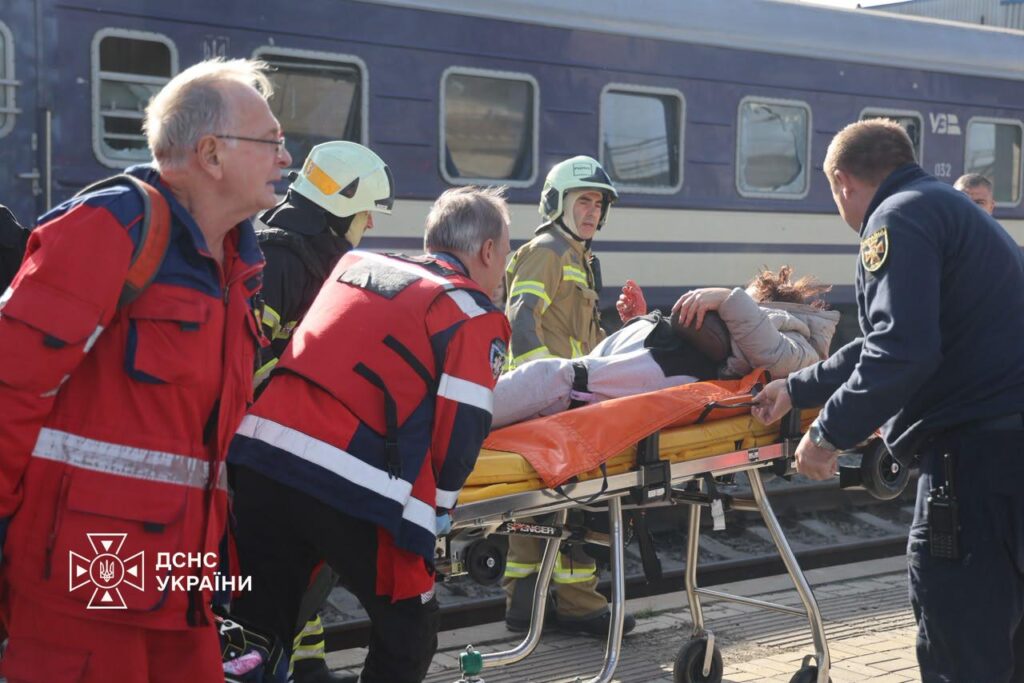
A Russian jet-powered drone hit a platform at Dnipro's railway station on 29 October, killing more than a dozen people waiting by a train, Dnipropetrovsk Oblast head Oleksandr Hanzha reported. An air alert was on, but many passengers had not left the platform. The strike came hours after another overnight Russian drone barrage across Ukraine.
Russia's air war on Ukraine leans more and more on jet-powered drones, and Ukraine's air defenses have stopped nearly 60% of the Geran-4 type over the past three months. Rail is among Russia's main targets: by late August, its strikes had damaged 492 locomotives as Moscow tried to cut Ukraine's export corridors, and in September Russia struck a passenger train near the Polish border. Civilians waiting for transport keep paying the price, and this month a Russian bomb killed 30 bus passengers in Kramatorsk.
One drone reached the platform
Around 11:00, Russia sent four jet-powered attack drones toward Dnipropetrovsk Oblast, the Air Force said. Air defenses destroyed three. The fourth hit a platform where a train stood, the state railway company Ukrzaliznytsia said.
By early afternoon, the death toll had reached 14. Another 14 people were wounded, 13 of them in hospital and six in serious condition, Hanzha reported. Among them is an 11-year-old boy. A 40-year-old man lost both legs.
Rescuers on a platform at Dnipro railway station beside an electric train after a Russian jet-powered drone strike, Dnipro, Ukraine, 29 October 2026. Photo: State Emergency Service of Ukraine
Many stayed on the platform despite the alert
Ukrzaliznytsia's monitoring team flagged heightened danger as the jet drone approached, and train crews and the station got orders to halt traffic, the company said. An evacuation was announced on the electric train to Zaporizhzhia more than 10 minutes before the strike. The driver's assistant walked through every car, and announcements told passengers to move at least 200 meters away.
“Unfortunately, despite all this, many people were in the immediate vicinity of the train at the fatal moment of the strike, hence such a significant number of dead and wounded,” Ukrzaliznytsia wrote.
Rescuers evacuating an injured civilian from a platform at Dnipro railway station beside an electric train after a Russian jet-powered drone strike, Dnipro, Ukraine, 29 October 2026. Photo: State Emergency Service of Ukraine
Kyiv ties the strike to sanctions relief
Ukrainian President Volodymyr Zelenskyy linked the attack to the lifting of some sanctions on Russia. “How many such terrorist strikes Russia has carried out against our people since sanctions were lifted from some Russian oligarchs and energy, instead of going for de-escalation,” he wrote. Sanctions on Moscow and its war machine must not weaken while the war goes on, he added, calling for new and stronger sanctions steps from the EU, the US, and the G7.
Explore further
Russia’s sanctioned top diplomat heads to the US to campaign against the sanctions on its war
Overnight, Russia launched 112 drones
Overnight on 29 October, Russia attacked Ukraine with 112 drones, 40 of them jet-powered, the Air Force reported. Air defenses downed or suppressed 97, but drones hit seven locations.
A man stands beside a shrapnel-marked electric train at Dnipro railway station after the Russian drone strike, with bags and the blurred bodies of victims on the platform, Dnipro, Ukraine, 29 October 2026. Photo: State Emergency Service of Ukraine
In Zaporizhzhia, a Russian FPV drone hit a municipal bus in the morning, wounding a woman and a man, Zaporizhzhia Oblast head Ivan Fedorov reported. Two later Russian strikes on the city wounded two more men and damaged 15 vehicles. In Bilenke in Zaporizhzhia Oblast, Russian attacks killed a 49-year-old man.
The Brazilian congressman André Janones created a digital “army” by setting up WhatsApp groups and posting on Instagram, which helped mobilized the vote for the reelection of President Luiz Inácio Lula da Silva.
A jet carrying the Brazilian far-right senator Flávio Bolsonaro has landed in Miami, Florida, where the losing candidate in Sunday’s presidential election runoff left the airport under police escort without speaking to the press. The Gulfstream IV, registered as LV-JQW, left Guayaquil in Ecuador earlier in the day. After losing Sunday’s election to the incumbent president, Luiz Inácio Lula da Silva, Bolsonaro disappeared for more than 24 hours, until Argentina’s migration authorities said he had entered the country by land on Tuesday night
Mr. Bolsonaro, who lost Sunday’s presidential election, fled Brazil for the United States via Argentina after the police canceled his passport in relation to an investigation.
Officials in Argentina said Mr. Bolsonaro entered the country by land then flew to Ecuador. Brazilian police had asked him to hand over his passports because of his links to an investigation.
A new video transmitter for Wild Hornets’ drones, including its STING interceptors, has passed state tests, the Ukrainian drone maker told Militarnyi. The module sends a drone’s camera feed to its pilot. The company expects it to widen its interceptors’ operating radius.
Russia launched 140 Shahed-type drones at Ukraine overnight on 26 October and 280 the next night, when its main target was Kyiv, Air Force figures as of the morning show. Interceptor drones, which cost dozens of times less than the Shaheds they hunt, are one of Ukraine’s answers. The STING alone downed more than 3,000 drones in its first seven months of use, Wild Hornets says. If the company’s estimate holds, a 30 km radius would let each ground station cover more than twice the area it covers at 20 km.
What the testers checked
Specialists from the State Research Institute for Testing and Certification of Arms and Military Equipment and the Defense Ministry’s State Quality Assurance Directorate confirmed the module’s declared characteristics on three drone types, the company said. The three were the STING interceptor, the Queen of Hornets cargo platform, and the 10-inch Wild Hornets Digital anti-aircraft drone.
Some of the drones’ figures exceeded the values the company had set for them, Wild Hornets told Ukrainian defense outlet Oboronka, without saying which ones. Those figures will enter the official specifications after further field tests, it said.
More than double the power
The module, called HV VTX Pro, is part of an upgrade to Wild Hornets’ Hornet Vision digital video system. It more than doubles the transmitter’s maximum power, to 4 W. That sends a clear picture farther and makes the feed steadier in crowded airwaves and under electronic jamming, the company said.
Hornet Vision Ctrl system. Photo: Wild Hornets
Wild Hornets first described the module in August, when it was already in serial production. Its interceptors’ operating radius would grow from around 20 km to 30 km, the company said at the time. That estimate assumed good line of sight and the 360-degree antenna on its ground stations, according to a company statement Interfax-Ukraine quoted. Interception could also become at least 20% more effective against targets flying extremely low, the statement said.
Wild Hornets is a Ukrainian company that designs and builds drones, from strike FPV drones and cargo platforms to the STING, which the company says flies at up to 280 km/h to hunt Shaheds. Its drones serve with more than 100 units of Ukraine’s Defense Forces, from the army and the National Guard to military intelligence, the Air Force, and the border guard, according to Interfax-Ukraine.
Seeking new elections, María Corina Machado will need to tread carefully to avoid offending the Trump administration, while also asserting her own leadership.
President Luiz Inácio Lula da Silva won another term on Sunday, with the help of a seismic social media campaign that convinced Brazilians to reject his rival.
President Luiz Inácio Lula da Silva’s army of supporters, mobilized over a WhatsApp chat group, delivered an unexpected victory over Flávio Bolsonaro, the right-wing challenger.
President Luis Inácio Lula da Silva’s victory ended a string of election wins by right-wing candidates in Latin America. His opponent, Flávio Bolsonaro, refused to accept defeat and has fled Brazil.
Supporters of the right-wing presidential candidate Flávio Bolsonaro waved American flags and brandished a blowup doll of President Trump clutching an imprisoned President Luiz Inácio Lula da Silva at a rally last month in São Paulo, Brazil.
On Sunday, Brazilians will choose between a beleaguered left-wing incumbent and a right-wing challenger. Trade, security and democracy are on the table.
Luiz Inácio Lula da Silva, the leftist incumbent, and Flávio Bolsonaro, the right-wing challenger, face off in a narrow race that could redefine the future of Latin America.
The Trump administration says Canadian officials are trying to sway the midterm elections for Democrats. Prime Minister Mark Carney says those claims have “no merit.”
President Trump with Prime Minister Mark Carney of Canada at the Group of 7 summit in Evian-les-Bains, France, in June. Mr. Carney has said that his government was ready to “drop everything” to negotiate an end to its costly trade war with the United States.
American soldiers awaited a visit by Defense Secretary Pete Hegseth and the White House border czar, Tom Homan, last year near the United States-Mexico border at Sunland Park, N.M.
President Trump says Venezuela is not ready for elections, and he focuses instead on its oil. But Secretary of State Marco Rubio is nudging talks between opposing politicians.
Dinorah Figuera, left, Delcy Rodríguez and Jorge Rodríguez during a meeting at the Miraflores presidential palace in Caracas on Thursday, in a photo released by the Venezuelan presidency.
Deep in cattle country, voter sentiments in an evangelical stronghold help explain why the country’s leftist president is the underdog in Sunday’s election.
Russian missiles and drones killed one person and injured 24 in Kyiv overnight on 22 October, the Kyiv City Prosecutor’s Office said. Damage spread across six of the city’s districts, the city military administration reported.
The strike came hours after Kremlin aide Yuri Ushakov said Putin had told Witkoff that Russia was “in principle” ready to resume three-way talks with the US and Ukraine in mid-November. President Volodymyr Zelenskyy read the overnight attack as a sign that Russia’s attitude has not changed. A day earlier, Russian drones killed two people in a 24-story Kyiv apartment block.
21 ballistic missiles in three waves
Russia fired 21 ballistic missiles at Kyiv overnight, Zelenskyy said. The barrage came in three waves, around 22:00, at about 02:00, and around 03:30.
Aftermath of Russia’s overnight attack on Kyiv. Photo: Office of the Prosecutor General of Ukraine
Across Ukraine, air defenses downed or suppressed 181 of 210 Russian drones, the Air Force said. Its report did not mention any ballistic missiles shot down.
One killed in the Dniprovskyi district
The only death in Kyiv came in the Dniprovskyi district, on the city’s left bank. There, Russian strikes destroyed 13 detached houses on several streets, prosecutors said. Police said the man killed was 48 and that six people were injured in the district, four of them children, the youngest aged five.
Of the injured, five are minors and two are young children, and prosecutors reported acute stress reactions among them. A 16-year-old boy is in hospital with a closed head injury, prosecutors said. Sixteen of the injured were hospitalized, the city military administration said. The final number of injured is still being established.
Explore further
Not just the grid: Russia struck a 24-story block, a university, and warehouses overnight, and four people are dead
Ambulance station and monastery damaged
In the Holosiivskyi, Obolonskyi, Pecherskyi, and Sviatoshynskyi districts, the attack damaged eight apartment buildings, prosecutors said. It also damaged a building-supply hypermarket, a restaurant, a monastery building, a post office, and office premises.
In Pecherskyi, Russia damaged an ambulance station and six ambulances, Kyiv Mayor Vitali Klitschko wrote. The State Emergency Service said eight people were injured in that district, three of them children, and reported damaged transport infrastructure in the Darnytskyi district.
Aftermath of Russia’s overnight attack on Kyiv. Photo: National Police of Ukraine
Bridge closed, metro line split
The strikes damaged metro infrastructure on the Pivdennyi (Southern) Bridge, Kyiv Metro said. As of the morning, green-line trains ran in two sections, Syrets–Vydubychi and Osokorky–Chervonyi Khutir. Inspections and repairs would continue after the all-clear, the metro said.
Oleksii Biloshytskyi, head of Ukraine’s Patrol Police Department, announced that traffic across the bridge toward the left bank was temporarily closed. The city is adding buses on routes 22 and 91, the city administration said. Russian drones had already hit the bridge repeatedly in early October.
Brazil spent years targeting electoral lies on the internet. Now, artificial intelligence is stumping the election authorities and reshaping a high-stakes race.
Russian drones struck a 24-story apartment building in Kyiv, a university building in Kremenchuk, warehouses, and hypermarkets overnight on 21 October, killing two people in the capital and an elderly couple near Kharkiv, Ukrainian officials said. The attack went well beyond Ukraine’s power grid, hitting places where people live, study, and shop. Over the past day, Russian strikes also killed three more civilians and injured dozens across several oblasts.
Russia has kept up nightly drone and missile attacks on Ukrainian cities through the autumn, mostly aimed at the energy system. It struck Ukraine’s energy 76 times during a US-declared truce, and fired 39 ballistic missiles at the grid three days after Washington announced it. This time the targets also included homes, a university, warehouses, and shops.
Overnight, Russia launched 186 Shahed-type and other attack drones, 88 of them jet-powered, along with Iskander-K cruise missiles, Ukraine’s Air Force said. Air defenses downed or jammed 150 drones. Hits were recorded at 27 locations, and debris fell at 13 more.
Two killed on the 20th floor in Kyiv
A drone hit a 24-story residential building in Kyiv’s Sviatoshynskyi district at the level of the 20th floor, starting a fire, Mayor Vitali Klitschko said. The fire spread over about 70 square meters, and rescuers found the bodies of two people while clearing debris, the State Emergency Service said. Two people were injured and hospitalized, Klitschko said, including a 46-year-old man who was walking past the building, according to the police.
A rescuer carries a cat out after a Russian drone strike on an apartment building in Kyiv, 21 October 2026. Photo: State Emergency Service of Ukraine
In the Desnianskyi district, seven parked cars caught fire, the State Emergency Service said; police put the number at about 10. The evening before, drones hit a warehouse building in Desnianskyi and a transport facility in Solomianskyi district.
An elderly couple killed near Kharkiv
In the village of Korotych near Kharkiv, Russian drones killed an 81-year-old woman and an 83-year-old man, Kharkiv Oblast Governor Oleh Syniehubov said. Rescuers recovered their bodies from the rubble of their house, the State Emergency Service said. Eleven people, including a two-month-old boy and an eight-year-old girl, were treated for acute stress, and 13 houses were damaged.
A house destroyed by a Russian drone strike in Korotych, Kharkiv Oblast, 21 October 2026. Photo: State Emergency Service of Ukraine
A university, warehouses, and hypermarkets
In Kremenchuk, a drone hit a building of the Mykhailo Ostrohradskyi National University, setting it on fire, the State Emergency Service said. Three people were injured, including a 16-year-old who was hospitalized with a concussion, Poltava Oblast Governor Vitalii Diakivnych said. In the Poltava community, drones damaged an administrative building and warehouses.
Firefighters put out a fire at an enterprise in Lviv district after a Russian attack, 21 October 2026. Photo: State Emergency Service of Ukraine
In Lviv Oblast, an attack set fire to an enterprise in a village in Lviv district and injured two people, while a house was damaged in a neighboring village, the State Emergency Service said. In Uman, drones hit a hypermarket and damaged a hotel, injuring one person, Cherkasy Oblast Governor Ihor Taburets said.
A hypermarket in Uman damaged by a Russian drone strike, 21 October 2026. Photo: Cherkasy Oblast Military Administration
On the evening of 20 October, a drone hit an Epicentr hypermarket in Pervomaisk, Mykolaiv Oblast, injuring eight people, acting Governor Heorhii Reshetilov said. Russia also struck a hypermarket in Rivne Oblast several times that day, injuring four and forcing rescuers to pull back while they fought the fire, the State Emergency Service said.
More dead and injured over the past day
The overnight strikes followed a day of attacks. In Kyiv, Russian strikes on 20 October killed one person and injured 21, three of them seriously, Klitschko said. An administrative building caught fire, rescuers freed four people trapped on its upper floors, and a healthcare facility was damaged, the State Emergency Service said. In Dnipropetrovsk Oblast, two men were killed and seven people injured that day, regional officials said.
In Kharkiv Oblast, Russian attacks over the past day injured 11 more people in Kharkiv, Derhachi, and Shestakove, Syniehubov said. In Kherson Oblast, 13 people were injured, three of them children, the regional administration reported. In the Chernihiv region, an 89-year-old woman and a young woman were hurt in strikes on villages and on Novhorod-Siverskyi, Governor Viacheslav Chaus said, and a 21-year-old woman was injured in the Sumy community, according to the Sumy regional administration.
More than 5,000 subscribers lost power in Volyn Oblast’s Lutsk district, Governor Roman Romaniuk said. In Ternopil Oblast’s Kremenets district, 7,949 subscribers remained without power after earlier Russian strikes on energy facilities, the regional administration reported.
Russia attacked Kyiv with ballistic missiles in two waves overnight on 18–19 October. Information from partners did not arrive before the first wave, at around 23:00, Air Force spokesperson Yurii Ihnat said on national television. A warning came before the second wave, at around 03:00, but the window was short, he told NV.
Hours earlier, Ukrainian President Volodymyr Zelenskyy told NBC that US warnings of Russian ballistic launches were working again after three days without them, and that only the United States has that intelligence. Those warnings have for years given Ukrainian authorities several minutes to sound alarms and let civilians reach shelters before ballistic missiles hit.
“Once again, a Russian ballistic attack in several waves overnight, and once again there was no warning from partners,” Zelenskyy wrote. It was at least the third ballistic strike on Kyiv in a week to begin without warning from partners, following attacks on 12 October and 13 October.
Metro station damaged on Kyiv’s left bank
One person was killed and eight injured in Kyiv, Ukrainian Prime Minister Serhii Koretskyi said. A strike damaged a metro station on Kyiv’s left bank, and debris broke the rails beside it, Mayor Vitali Klitschko said. City authorities said the damaged station was above ground, closed Chernihivska and Lisova stations, and said red-line trains would run only between Akademmistechko and Darnytsia. The attack also damaged a 25-story building, a medical facility, and the Cosmo Multimall shopping center in the Solomianskyi district, NV reported, and Zelenskyy said a school was hit too.
The attack also damaged one of Ukraine’s main ice arenas, on Shalett Street in Kyiv, which hosts Ukrainian championship hockey games and youth training, hockey Telegram channel Flamingo reported. Parts of the facade, metal structures, and roof were damaged, but the ice surface showed no significant visible damage, according to preliminary information, Suspilne reported.
Damage in 11 oblasts, three missing in Irpin
Koretskyi said energy and infrastructure were the main targets, with damage in 11 oblasts. Russia also hit warehouses of medicines, railway stations, shops, and homes, he said. In Kyiv Oblast, Russian strikes injured six people in Irpin, including three children, and three more were missing, oblast head Tymur Tkachenko said. In Kharkiv Oblast, six people were injured, including two children, Koretskyi said. In Rivne Oblast, four people were injured, and one of them was hospitalized, regional police reported.
Zelenskyy said that more than 10 energy facilities were damaged and at least 550,000 families lost power. Ukrenergo reported new outages in 10 oblasts: Volyn, Zhytomyr, Rivne, Ternopil, Khmelnytskyi, Vinnytsia, Kirovohrad, Kharkiv, Odesa, and Mykolaiv. In Volyn Oblast, about 15 jet-powered Shahed-type drones targeted the region, and around 66,000 customers were without power on the morning of 19 October, oblast head Roman Romaniuk said. Kovel, Manevychi, and Lutsk were hit hardest, and no casualties were reported. In Vinnytsia Oblast, a critical infrastructure facility in Koziatyn was damaged, and power there would stay unstable for some time, city council secretary Iryna Repalo said, Suspilne reported.
Zelenskyy said Russia fired 16 ballistic missiles at Kyiv and Kyiv Oblast. The Air Force reported that Russia also used Iskander-K cruise missiles and 269 drones, and that by 09:00 air defenses had shot down or suppressed four Iskander-K cruise missiles and 243 drones. Its preliminary count did not list any ballistic missiles among the intercepted targets.
Rubio denies any pause and points to a software problem in Ukraine’s warning system
On 19 October, Rubio told reporters in Samarkand, Uzbekistan, that “there’s been no pause” in intelligence-sharing with Ukraine, Reuters reported. He said he did not know where Zelenskyy was getting such claims and that he should focus on ending the war. He also said he did not know whether a failure had happened the previous night, but that a few nights earlier there had been a software problem with “their early warning system,” and that US European Command was looking into the strikes, The Guardian reported. US officials had not mentioned a software glitch before, and in at least one case Ukraine was told that bad weather over southern Russia had hidden launch preparations, the newspaper noted.
Ihnat said Ukrainian specialists and their partners were working to establish why information about the first launch had not arrived. He added that similar gaps had occurred during earlier attacks.
Zelenskyy wrote that when missile supplies for Ukraine’s air defense are blocked while Russia gets sanctions relief or delays, “this is, unfortunately, a denial of reality on the part of partners.” A night earlier, Russia had hit Ukraine’s energy system again, while Ukrainian drones set fire to St. Petersburg’s oil terminal despite Washington’s pressure to stop refinery strikes.
Blocked from entering her country, Venezuela’s opposition leader spoke with The Times about her efforts to return and her relationship with the Trump administration.
Russia has found a way to cut Ukraine’s power lines that no repair crew can undo. A unique power transmission tower that a Russian drone cut down at the Dnipro River crossing in Kyiv cannot be restored, Ukrenergo board chairman Vitaliy Zaichenko says, as the grid operator rushes to build alternative ways to keep electricity flowing, Interfax reports.
Russia has spent the war trying to switch off Ukraine’s lights. Now, it is widening the campaign before winter with a new tactic: drones that slice through the steel towers carrying high-voltage lines.
“Everyone has seen the video showing the destruction of one of the unique power transmission towers at the crossing over the Dnipro in Kyiv. It was severed, and it is impossible to restore it,” Zaichenko continues.
He adds that now the company is developing new technical solutions "on the fly, and very fast." It will start the procedures for those solutions from 15 October, he notes. Russia’s use of drones able to sever metal towers is a new and serious challenge for Ukraine’s power engineers.
Zaichenko did not say when the tower was hit. On 30 September, Russia first used a jet-powered drone carrying a 40-kilogram charge built to cut steel towers, and that evening an eyewitness filmed one striking a power line tower in Kyiv, which cut electricity in parts of three districts, Informator reported.
When the spare parts are as scarce as the targets are plentiful
Rebuilding is colliding with a global shortage. Ukrenergo faces serious difficulties getting backup equipment, Zaichenko explains, because the whole world’s energy system is expanding at once and everyone needs the same hardware.
“There is a real problem with equipment. The global power system is expanding, and everyone needs energy equipment. There is a tough queue,” Zaichenko says.
Ukraine has faced such challenges since August 2026, when Russia began launching its jet-powered drones. Kyiv still has no effective solution against them and relies more on a mix of air defenses, such as automated turrets and interceptor drones.
Kyiv has also engaged over 100 private air defense system brigades to protect its enterprises in the ranks of the Ukrainian Air Forces.
Ukraine’s Security Service (SBU) detained two men suspected of scouting targets for Russian strikes on Sloviansk and Dnipro, the agency reported on 14 October. Catching both early let it secure Ukrainian reserve command posts and the gas stations the alleged agents had been hunting, the agency added.
Sloviansk anchors the northern end of the Fortress Belt, the chain of fortified cities that has held Ukraine’s defense of Donetsk Oblast since 2014. Russia is pushing to seize them, and its aircraft bombed a residential area of Sloviansk on 11 October. Where Ukrainian convoys stop and troops gather is exactly what Russian handlers allegedly asked these suspects to supply.
A gas station worker suspected of filming convoys
The first suspect worked at a gas station complex in Sloviansk, Donetsk Oblast. Russian intelligence allegedly reached him through a former classmate who left for Russia after the full-scale invasion and now works for its special services, the SBU said. He then allegedly used his phone to secretly film Ukrainian army convoys at or near gas stations. He was allegedly supposed to send the photos and videos to Russia to help it prepare a targeted strike. He also allegedly drove his own car around other gas stations and bridges that the Defense Forces use for logistics.
Spotted through Telegram comments
The second suspect, a former Pokrovsk resident, moved to Dnipro in 2024 and settled in a dormitory. Russian intelligence noticed him through pro-Kremlin comments he posted in Telegram chats, investigators say. A female handler in Russia allegedly tasked him with guiding missile and drone attacks on places in the city where Ukrainian troops and equipment were concentrated. He allegedly scouted on foot or took public transport to reach outlying districts.
Explore further
Ukrainians think their own security service is calling—it’s Russia recruiting saboteurs
Officers seized computers and smartphones containing evidence of the men’s alleged work for Russia. Both are suspected of treason under martial law and of unauthorized dissemination of information on Ukrainian troop movements or deployment, under Articles 111(2) and 114-2(2) of the Criminal Code. They remain in custody without bail and face up to life imprisonment with confiscation of property. The SBU’s office for Donetsk and Luhansk oblasts ran the operation under the Donetsk Oblast Prosecutor’s Office.

 Connexion