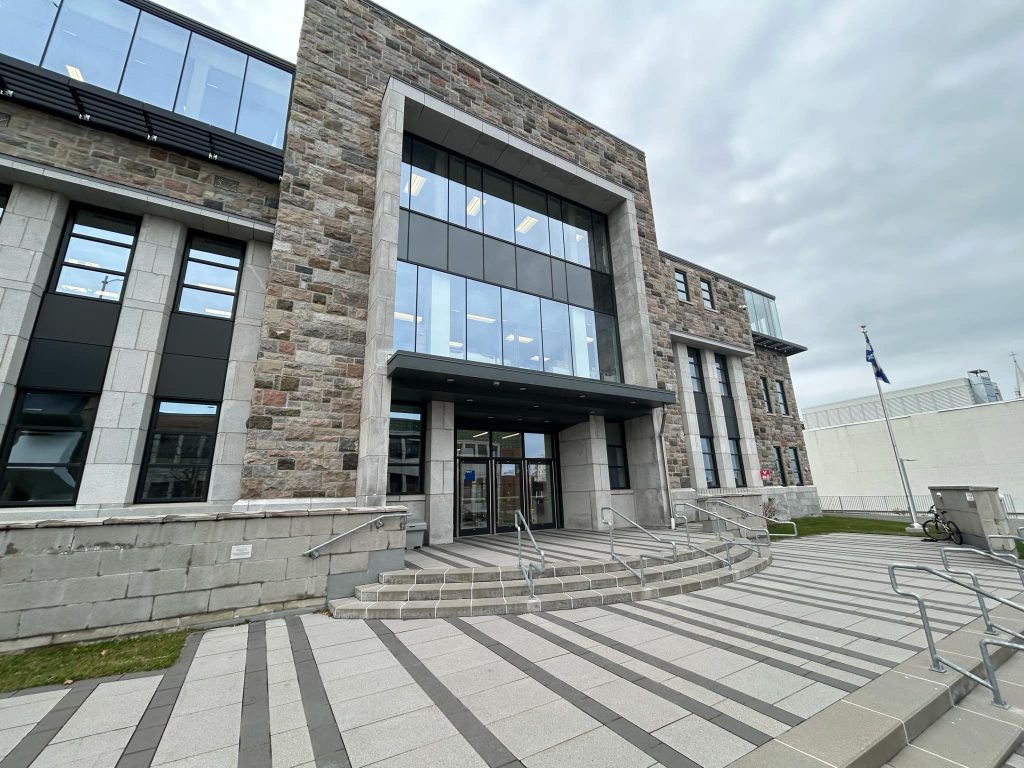
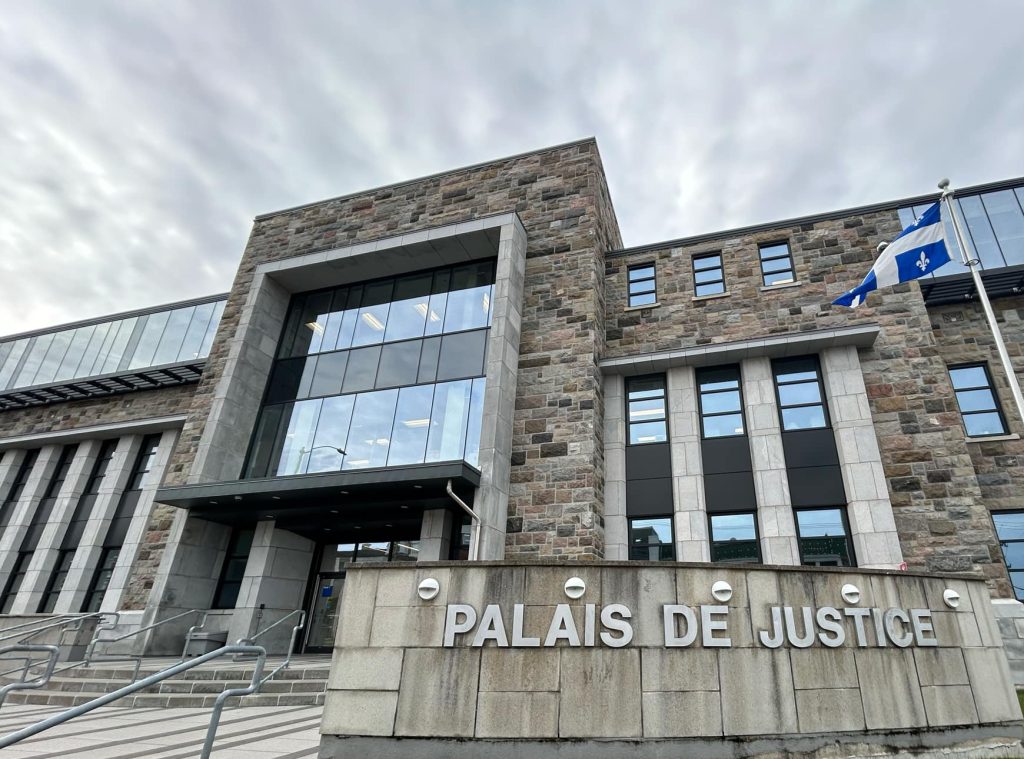
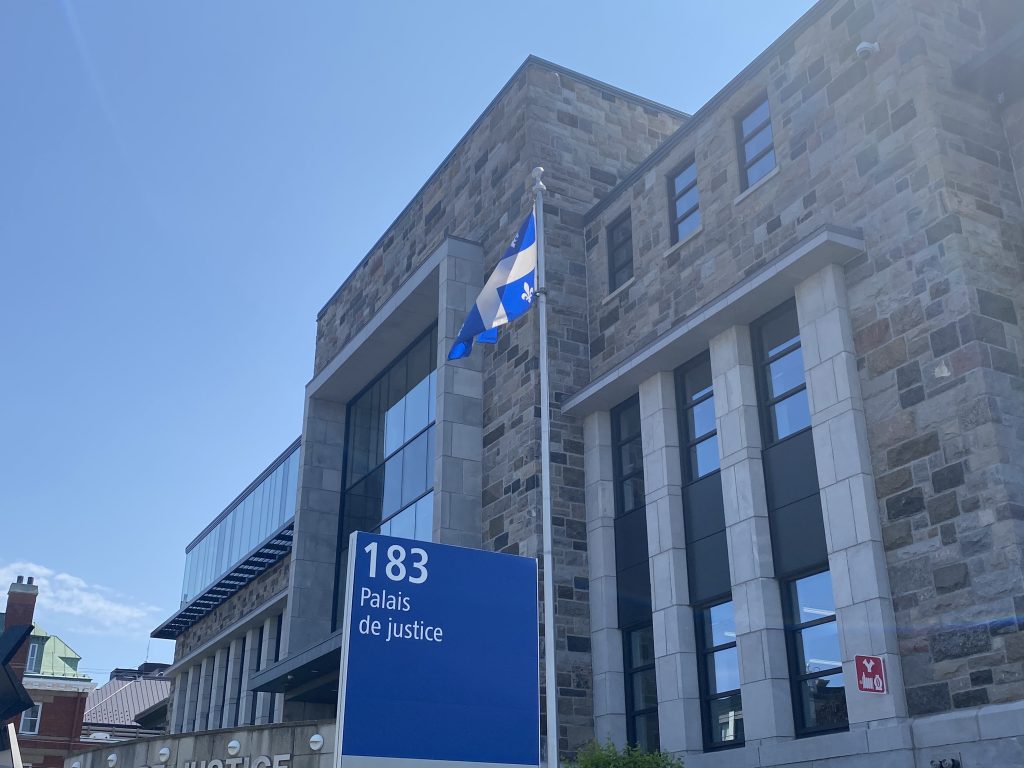
Deux des cinq individus arrêtés dans la nuit du 4 au 5 octobre à la suite d’une introduction par effraction survenue dans une résidence de la rue Principale à Saint-Gabriel-de-Rimouski, étaient de retour en cour ce vendredi (9 octobre) au palais de justice de Rimouski pour leur enquête sur remise en liberté.
Elle a été reportée dans les deux cas au 14 octobre devant le juge de garde, puisqu’il n’y a pas de terme régulier la semaine prochaine à Rimouski.
Marc Arthur Kelian Bineli Mvogo, 18 ans, qui n’avait pas d’avocat à ses deux premières comparutions, est représenté par Me Maude Barrière, qui a comparu par vidéoconférence et mentionné qu’elle devait discuter avec la procureure de la Couronne, Me Annie-Claude Breton.
Le dossier de Mathias Charafeddine, 18 ans, avait été reporté de lundi à ce vendredi pour enquête sur la mise en liberté et orientation/déclaration. Il n’avait pas d’avocat lors de sa première comparution et il est demeuré détenu.
Deux autres accusés
Deux autres hommes sont accusés dans cette affaire. Ils sont aussi détenus et ils reviendront en cour dans les prochaines semaines.
Steven Loumbou, 18 ans, est représenté par Me Juliette Levasseur qui a demandé de reporter l’enquête caution au 23 octobre pour prendre connaissance du dossier.
Me Damir Musaefendic, du bureau de l’aide juridique, représente Xavier Pellerin, 20 ans, dont l’enquête sur remise en liberté est reportée au 19 octobre.
Les quatre accusés ont renoncé à la tenue de leur enquête caution dans le délai de trois jours ouvrables prévu au code criminel.
Introduction par effraction
Les quatre hommes ont comparu une première fois lundi en fin de journée sous un chef d’accusation d’introduction par effraction dans une maison d’habitation et d’y avoir commis un acte criminel, soit des voies de fait armées.
La procureure de la Couronne, Me Annie-Claude Breron, maintient son objection à leur remise en liberté formulée lundi.
Ils restent donc détenus en attendant leur retour à la cour pour leur enquête sur remise en liberté, mais aussi pour l’orientation et déclaration, c’est-à-dire pour l’enregistrement d’un plaidoyer et le choix du type de procès désiré.
Un 5e accusé est d’âge mineur (16 ans). Il a comparu lundi dernier devant le tribunal de la jeunesse. Son statut de mineur protège son identité.
Selon les premiers éléments de l’enquête, des suspects se seraient introduits dans l’habitation avant d’agresser les deux occupants.
Les victimes, un homme et une femme dans la quarantaine, ont subi des blessures importantes et ont été transportés à l’Hôpital régional de Rimouski.
L’enquête policière a permis d’établir que cet événement ne serait pas attribuable au hasard. « Les informations recueillies jusqu’à maintenant indiquent plutôt que les victimes auraient été visées de façon spécifique », mentionne le corps policier.
Europe will not loosen its pressure on Russia after the US-Russia diesel deal, EU Foreign Policy chief Kaja Kallas says. She has announced that EU foreign ministers will approve the bloc’s largest set of sanctions against Russia’s war machine since the full-scale invasion on 12 October.
Washington has just eased the pressure on Russia, letting Russian diesel back onto world markets and handing Moscow more money to wage war. This comes as Russian strikes have killed more than 80 Ukrainian civilians in two days, 22 of them on Russian President Vladimir Putin's birthday on 7 October.
Moreover, Russia has stepped up its hybrid attacks against Europe, both EU Member States and NATO Allies. It is now the time to tighten sanctions, not loosen them, Kallas says.
“Suspending sanctions on Russian diesel provides Moscow with more revenues to wage war. This is not the time to ease pressure on Russia, and Europe won’t,” she claims.
A split with Washington
On 9 October, Trump claimed he had agreed with Putin to put more than 300,000 tons of Russian diesel on world markets immediately.
President Volodymyr Zelenskyy called the deal a weak decision by strong partners, arguing that Russia turns oil-product revenue into weapons against Ukraine's civilians, according to the BBC.
The package aims at the missile chain
On 7 October, EU ambassadors approved the 22nd package of sanctions, with about 1,700 listings, Ukrainian President’s Commissioner for Sanctions Policy Vladyslav Vlasiuk notes. It is expected to be formally approved on 12 October.
This package contains the largest number of sanctions targeting Russia’s defence industry. Of these, 60% were drawn from Ukrainian decrees and proposals. The package includes measures targeting machine tools, Lancet drones, ballistic weapons, and related technologies.
“The core of the package is Russia’s missile programme and electronic components: electronics, capacitors, resistors, and semiconductors. It also covers electronic warfare, shipbuilding, and explosives,” Vlasiuk says.
It took just a few weeks from Ukraine's decision to the European one.
"But we are already working on further measures, including sectoral sanctions targeting energy, the defense industry, finance, and trade,” he stated.
The National Park Service notified a court of the plan as part of continuing litigation over the president’s proposal to create a “champion-level” course.
A group of demonstrators used a house of worship known as a gurdwara as a staging ground before their long-shot effort to reach a locked-down protest site in New Delhi.
Protests against sweeping revisions to India’s voter rolls have broken out in New Delhi. The police met earlier protests with an extraordinary show of force.
Ukraine’s prosecution service has dismissed eight people named in connection with an anti-corruption probe into the alleged protection of scam call centers, acting Prosecutor General Anton Kovalskyi reported. His office is also running internal checks on several officials linked to the case. A separate probe covers the trip abroad of his predecessor, who left Ukraine in September.
Ukraine’s main prosecution service is auditing itself while the country’s anti-corruption agencies investigate an alleged scheme run from inside it. The National Anti-Corruption Bureau (NABU) and the Specialized Anti-Corruption Prosecutor’s Office (SAPO) allege that a PGO official set up a criminal organization in mid-2025. They say it drew in serving prosecution employees and unofficial associates, took bribes for leaving scam call centers alone, and laundered the proceeds. The investigation is called Operation Carthage.
A probe from the outside, an audit from the inside
Ukraine’s main prosecution service is auditing itself while the country’s anti-corruption agencies investigate an alleged scheme run from inside it. The National Anti-Corruption Bureau (NABU) and the Specialized Anti-Corruption Prosecutor’s Office (SAPO) allege that an official of the Prosecutor General’s Office (PGO) set up a criminal organization in mid-2025. They say it drew in serving prosecution employees and unofficial associates. The group allegedly took bribes for leaving scam call centers alone and then laundered the proceeds. The case is known as Operation Carthage, Espreso reported.
Dismissals and polygraph tests
Seven of the eight dismissed people worked at the PGO, Kovalskyi said. Separately, four people were removed from administrative posts, including the heads of the IT department and the cybercrime directorate. Kovalskyi said 24 prosecutors took polygraph tests. The results went to a commission running an internal investigation. He wrote that trust in the prosecution service would be restored not through announcements of change but through consistent, balanced decisions and concrete results.
Explore further
Zelenskyy suspends prosecutor general who charged the bureau probing his own office
The internal probe concerning former Prosecutor General Ruslan Kravchenko covers his trip abroad. Investigators are checking whether he followed established procedure and how the business trip was organized. Kravchenko left Ukraine in an official car on the night of 13–14 September, Ukrainska Pravda reported, citing law enforcement sources. He explained his departure as an official trip to Lithuania.
On 14 September, Kravchenko announced he had signed a notice of suspicion against NABU director Semen Kryvonos. That evening, his own office said Kryvonos had never been properly served and that the register entries were cancelled.
On 15 September, lawmakers backed Kravchenko’s resignation 317–0. Two days later, President Volodymyr Zelenskyy assigned Kovalskyi the duties of prosecutor general by decree. Before that, Kovalskyi headed the Khmelnytskyi Oblast Prosecutor’s Office.
Two Carthage figures under internal review
The PGO completed an internal investigation into Aidyn Khudiiev, a former deputy department head, Kovalskyi said. Its findings will go to the Qualification and Disciplinary Commission of Prosecutors, and the PGO abolished his post. SAPO prosecutor Mykola Karas told a court hearing that detectives seized $50,000 at Khudiiev’s workplace during the Carthage searches.
Explore further
Ukraine’s chief prosecutor fled. Politicians still choose the man who can prosecute them.
The PGO is also investigating Serhii Kropyva, former deputy head of its international cooperation department. NABU detained him on 4 September, the first day of the operation. The internal probe looks at whether he used his powers for private interests and interfered in other prosecutors’ work. The PGO’s General Inspectorate has filed a disciplinary complaint against him with the same commission, and his post was also abolished.
Correspondence suggests that Ms. Guilfoyle, the U.S. ambassador to Greece and former fiancée of Donald Trump Jr., asked a G.O.P. donor to pay off her credit card.
Kimberly Guilfoyle and the president’s sons Donald Trump Jr. and Eric Trump were previously paid by the donor, Eric Deters, to speak at pro-Trump events he held in Kentucky.
A planned protest against a sweeping voter roll revision prompted police to order a virtual shutdown of New Delhi, the capital. The country’s highest court intervened.
Trois des cinq individus arrêtés dans la nuit du 4 au 5 octobre à la suite d’une introduction par effraction survenue dans une résidence de la rue Principale à Saint-Gabriel-de-Rimouski, étaient de retour en cour ce mercredi (7 octobre) au palais de justice de Rimouski pour leur enquête sur remise en liberté, qui a été reportée dans tous les cas.
Seulement deux des trois accusés étaient représentés par un avocat pour cette 2e comparution. Steven Loumbou, 18 ans, est représenté par Me Juliette Levasseur, qui a demandé de reporter l’enquête caution au 23 octobre pour prendre connaissance du dossier.
Me Damir Musaefendic, du bureau de l’aide juridique, représente Xavier Pellerin, 20 ans, dont l’enquête sur remise en liberté est reportée au 19 octobre.
Marc Arthur Kelian Bineli Mvogo,18 ans, n’avait pas trouvé d’avocat. Son enquête sur la mise en liberté est reportée à ce vendredi 9 octobre.
Les trois accusés ont renoncé à la tenue de leur enquête caution dans le délai de trois jours ouvrables prévu au code criminel.
Introduction par effraction
Les trois hommes ont comparu une première fois, lundi en fin de journée, sous un chef d’accusation d’introduction par effraction dans une maison d’habitation et d’y avoir commis un acte criminel, soit des voies de fait armées.
La procureure de la Couronne, Me Annie-Claude Breron, maintient son objection à leur remise en liberté formulée lundi. Ils restent donc détenus en attendant leur retour à la cour pour leur enquête sur remise en liberté, mais aussi pour l’orientation et déclaration, c’est-à-dire pour l’enregistrement d’un plaidoyer et le choix du type de procès désiré.
Le dossier de Mathias Charafeddine, 18 ans, qui fait face à la même accusation, a été reporté au 9 octobre pour enquête sur la mise en liberté et orientation/déclaration. Il n’avait pas non plus d’avocat lors de sa première comparution et il est demeuré détenu.
Un 5e accusé est d’âge mineur (16 ans). Il a comparu lundi devant le tribunal de la jeunesse. Son statut de mineur protège son identité.
Selon les premiers éléments de l’enquête, des suspects se seraient introduits dans l’habitation avant d’agresser les deux occupants.
Les victimes, un homme et une femme dans la quarantaine, ont subi des blessures importantes et ont été transportées à l’hôpital.
L’enquête policière a permis d’établir que cet événement ne serait pas attribuable au hasard. « Les informations recueillies jusqu’à maintenant indiquent plutôt que les victimes auraient été visées de façon spécifique », mentionne le corps policier.
A man who was detained at Miami International Airport on Sunday appeared nervous and had an “unexplained bulge” around his pelvis, according to a criminal complaint.
Counterterrorism police said the men were found inside the perimeter of R.A.F. Molesworth, a base used by the United States, raising concerns about security.
A 42-year-old man tried unsuccessfully to fire a gun, then wielded a knife before he was shot inside the Fred D. Thompson U.S. Courthouse and Federal Building, the police said.
Two 14-year-old boys were killed when an explosive device detonated in the evening in the Konotop district of Sumy Oblast, according to the statement by Oleh Hryhorov, head of the Sumy Regional Military Administration. The children encountered the dangerous device in a field, suffered severe injuries, and died at the scene, the statement said.
In 2022, Russian forces occupied parts of Sumy Oblast, but Ukraine liberated the region in April. Russia intensified its offensive again in 2025. Today, mines, unexploded ordnance and Russian drones shot down over the region pose a danger, as their warheads can detonate after falling. Overall, 146 children in Ukraine have suffered mine-related injuries, former Interior Minister Ihor Klymenko reported in April. For example, two months ago, an 11-year-old boy and a 15-year-old boy in Sumy Oblast were injured when an explosive device detonated.
Hryhorov expressed his condolences to the parents and relatives of the victims and urged people to remain cautious:
“Please be as careful as possible and remind children: do not approach unknown or suspicious objects, touch them, or try to move them. Take care of yourselves and your loved ones,” Hryhorov said.
Demining efforts continue in Sumy Oblast
On 24 February 2022, Russian forces entered the territory of Sumy Oblast. The first battles in the region took place that same day. In particular, Russian forces attempted to break through to Sumy, but Ukrainian troops repelled the offensive. On 11 April 2022, Ukraine restored control over the entire Sumy region.
As early as 7 June 2022, deminers were working in the Konotop, Sumy, and Okhtyrka districts, according to the Government Portal. That day, they surveyed areas and neutralized explosive devices.
The work of deminers remains deadly dangerous. In September 2024, two pyrotechnicians from Dnipropetrovsk Oblast were hit by a mine while demining Sumy Oblast: one died, while the other was hospitalized. In July 2025, deminer Oleh Petrenko was killed during humanitarian demining operations in Shostka District when a Russian FPV drone detonated, the State Emergency Service of Ukraine reported. Another pyrotechnician was injured, the statement said.
Nevertheless, the work continues despite the danger. In 2025, State Emergency Service deminers in the Sumy Oblast found and neutralized 5,283 explosive devices, the agency said in April. Sumy Oblast ranked sixth among all Ukrainian regions by this figure.
Twenty-two percent of Ukraine’s territory is potentially contaminated with explosive devices — more than 133,000 square kilometers, former Interior Minister Ihor Klymenko reported in April this year. Since the beginning of the full-scale invasion, State Emergency Service and National Police deminers have surveyed more than 248,000 hectares of territory and found more than 1 million 112 thousand explosive devices, the statement said.
A judge in London said that a “significant error” had been made in the granting of search warrants in an investigation into Andrew Mountbatten-Windsor.
Officers at an entrance to Sandringham Estate in Norfolk, eastern England, in February after Andrew Mountbatten-Windsor’s arrest. He was later released without charge and has denied wrongdoing.
TikTok se retrouve au cœur d’une nouvelle controverse aux États-Unis. Une plainte judiciaire rendue publique hier par la procureure générale de l’État de New York, Letitia James, accuse la plateforme d’avoir volontairement fourni à des milliers d’utilisateurs, dont des enfants et des adolescents, de fausses fonctionnalités de sécurité. Ces personnes croyaient avoir activé des outils […]
Alex Bradette, de Fermont, arrêté le 9 juin à Saint-Joseph-de-Lepage après avoir notamment traversé la rivière Mitis et quitté les lieux d’une sortie de route survenue à Saint-Octave-de-Métis, pourrait plaider coupable le 23 octobre prochain au palais de justice de Rimouski.
Sa nouvelle avocate, Me Juliette Levasseur, a évoqué cette possibilité, lundi, lors que les dossiers de son client revenaient pour fixer une date pour tenir son enquête sur remise en liberté.
« Je dois rencontrer mon client. Il est possible qu’on annonce d’autres intentions, mais on ne renoncera pas à l’enquête caution tout de suite », a-t-elle mentionné au juge de la Cour du Québec, Éric Morin.
Me Levasseur a comparu par Teams alors que son client détenu était présent physiquement au palais de justice de Rimouski.
L’accusé de 29 ans est détenu depuis son arrestation, le 9 juin. Rappelons que la détention préventive purgée avant l’imposition d’une peine est comptabilisée à 1,5 jour par jour.
Bradette a comparu une première fois la journée de son arrestation, au palais de justice de Rimouski, pour répondre à de nombreuses accusations. Le ministère public s’est alors objecté à sa remise en liberté.
Selon la dénonciation obtenue par Le Soir.ca, l’homme est accusé d’avoir conduit un véhicule avec les capacités affaiblies, d’avoir refusé d’obtempérer à un ordre de se soumettre à l’éthylomètre, sans excuse raisonnable et de conduite dangereuse.
Alex Bradette doit aussi répondre d’avoir agi de manière et avec l’intention de provoquer la peur chez une personne associée au système judiciaire, de harcèlement envers la même personne, d’avoir volontairement entravé les agents de la paix dans leurs fonctions et de méfaits sur une autopatrouille.
Il fait aussi face à deux chefs d’accusation de bris de probation.
Embardée et délit de fuite
Les policiers de la Sûreté du Québec sont intervenus à la suite d’une embardée impliquant un véhicule survenue sur la route du Grand-Remous, à Sainte-Octave-de-Métis.
À leur arrivée sur les lieux, les policiers ont constaté qu’aucun occupant ne se trouvait à bord du véhicule. Des démarches ont rapidement été entreprises afin de localiser la ou les les personnes impliquées.
Dans le cadre de l’intervention, Bradette a été localisé dans le secteur du 4e Rang, à Saint-Joseph-de-Lepage, après avoir notamment traversé la rivière Métis.
A top aide to Ambassador Mike Huckabee skewed information to portray the Netanyahu government in a favorable light, according to multiple officials and documents obtained by The Times.
Lawmakers in the capital were forcibly removed for a second consecutive day as police cracked down on demonstrations against the deletion of voter names.
Police detaining Indian opposition leader Rahul Gandhi, during a protest organized by opposition parties demanding the resignation of Chief Election Commissioner Gyanesh Kumar, in New Delhi, India, on Wednesday.
Israel had threatened to close the British Consulate in East Jerusalem, a center of outreach to Palestinians for decades. A last-minute agreement means a smaller diplomatic service will remain.
Ukrainian rescuers are still pulling bodies from a collapsed apartment block in Pryluky. A Russian missile strike on the five-story residential building in the city of Chernihiv Oblast that borders both Russia and Belarus killed 19 people, including five children, and injured 55, Ukraine's State Emergency Service reported on 7 October.
Russia hit Kyiv and a dozen other regions overnight. Air defense downed five ballistic missiles, 39 cruise missiles, and 117 drones, while missiles and drones hit 18 locations, the Air Force said. The nationwide strike killed at least 24 people, including four children.
Among the dead in Pryluky were three one-year-old boys, Oleksandr, Kyrylo, and Serhii, and eight-year-old Maksym, President Volodymyr Zelenskyy says. Seven of the injured are children. Some residents are still unreachable, and all emergency services are working at the site. Russia keeps using missiles against Ukrainian cities and civilians by deliberate choice, he states.
"My condolences to all the families and loved ones," Zelenskyy says.
The strike comes on Putin's birthday
The attack came on Russian President Vladimir Putin's birthday on 7 October.
"Continuing to use missiles against Ukraine, against our people, our children, is an absolutely conscious choice of terror. This is what Moscow chooses despite all our efforts with partners to bring peace closer," Zelenskyy says.
He urges partners to increase pressure on Russia and bolster defense support for Ukraine, saying it is important that world leaders understand this and that the world not remain silent.
A pattern of strikes on Chernihiv Oblast
Pryluky, about 150 kilometers east of Kyiv, lies in a region Russia has hit repeatedly. The overnight barrage also damaged civilian and utility infrastructure across the Pryluky community, the city council said.
Ukraine had seen the attack. The day before, Zelenskyy warned that intelligence indicated a massive Russian strike was in preparation. Russia fired about 70 missiles overnight, killing two people each in the capital Kyiv and in the cities of Kremenchuk and Oleksandriia in addition to the Pryluky dead.
La date retenue pour la tenue des plaidoiries dans le premier procès de Ronald Audet, qui est accusé de crimes de nature sexuelle sur une personne mineure, est finalement connue. La reprise du procès aura lieu le 14 janvier 2027 au palais de justice de Rimouski.
C’est ce que les parties ont mentionné ce lundi matin au juge de la Cour du Québec, Éric Morin.
Au terme de la 3e journée du procès, le 15 mai 2026, l’avocate de Ronald Audet, Me Caroline Bérubé, a annoncé qu’elle n’aurait pas de preuve à présenter lors du procès de l’homme de 88 ans, de Mont-Joli.
Au début du procès, le 22 janvier 2026, elle avait annoncé avoir deux témoins à faire entendre, dont l’accusé. « J’ai parlé à mon client hier. Nous n’aurons pas de preuve à présenter en défense. Nous serions donc rendus aux plaidoiries », avait mentionné Me Bérubé.
Trois jours de procès
Amorcé les 22 et 23 janvier derniers, le procès a repris le 15 mai pour la 3e journée d’audience.
Me Bérubé a poursuivi son contre-interrogatoire de la plaignante, dont l’identité est frappée par une ordonnance de non-publication.
Le palais de justice de Rimouski (Photo Le Soir.ca- Olivier Therriault)
Elle a soulevé des contradictions entre la déclaration de la victime faite en 2023 à l’enquêteur de la Sûreté du Québec et sa version des faits livrée dans son témoignage en janvier 2026.
La plaignante a expliqué que ses souvenirs s’étaient précisés grâce à une thérapie. « Je n’ai pas utilisé les mêmes mots, mais ce dont je suis sûre, c’est que j’ai été agressée par Ronald Audet dans le salon et dans une chambre à l’étage », a-t-elle répété à quelques reprises.
Témoignage de la plaignante
En début de procès, en janvier dernier, la plaignante a raconté qu’elle allait souvent chez l’accusé quand elle était enfant parce que sa mère était amie avec la conjointe de l’accusé.
Elle mentionne que les gestes ont eu lieu sur le La-Z-Boy, dans le salon. « C’était sous forme de jeux. Il me disait de brasser son pénis pour le faire rallonger et que de l’eau allait sortir. C’était devenu une habitude. Ça se faisait en douceur, sans violence ».
La plaignante a ajouté qu’elle se souvenait qu’il lui avait demandé de mettre son pénis dans sa bouche.
« Je raconte ce qui est clair dans ma tête. J’obéissais. Je ne savais pas ce qu’était une érection. Je ne savais rien de la masturbation. Quand j’ai compris, j’ai eu peur et honte », a-t-il affirmé.
Les événements se seraient produits entre le 4 janvier 1983 et le 31 décembre 1986 à Mont-Joli. « Je ne peux pas dire le nombre de fois, mais c’était chaque fois qu’on allait chez lui et qu’il était là », a précisé la plaignante, qui avait entre quatre et 10 ans au moment des gestes allégués.
Trois des cinq individus arrêtés dans la nuit du 4 au 5 octobre à la suite d’une introduction par effraction survenue dans une résidence de la rue Principale, à Saint-Gabriel-de-Rimouski, seront de retour en cour ce mercredi 7 octobre, au palais de justice de Rimouski, pour leur enquête sur remise en liberté.
Marc Arthur Kelian Bineli Mvogo,18 ans, Steven Loumbou, 18 ans et Xavier Pellerin, 20 ans, ont comparu une première fois lundi en fin de journée sous un chef d’accusation d’introduction par effraction dans une maison d’habitation et d’y avoir commis un acte criminel, soit des voies de fait armées.
Les trois étaient sans avocat. La procureure de la Couronne, Me Annie-Claude Breron, s’est objectée à leur remise en liberté.
Ils sont donc demeurés détenus en attendant leur retour en cour pour leur enquête sur remise en liberté, mais aussi pour l’orientation et déclaration, c’est-à-dire pour l’enregistrement d’un plaidoyer et le choix du type de procès désiré.
Le dossier de Mathias Charafeddine, 18 ans, qui fait face à la même accusation, a été reporté au 9 octobre pour enquête sur la mise en liberté et orientation/déclaration. Il n’avait pas non plus d’avocat lors de sa première comparution et il est demeuré détenu.
Un 5e accusé est d’âge mineur (16 ans). Il a comparu lundi devant le tribunal de la jeunesse. Son statut de mineur protège son identité.
Selon les premiers éléments de l’enquête, les suspects se seraient introduits dans l’habitation avant d’agresser les deux occupants.
Les victimes, un homme et une femme dans la quarantaine, ont subi des blessures importantes et ont été transportés à l’Hôpital régional de Rimouski. Leur vie n’est pas en danger.
L’enquête policière a permis d’établir que cet événement ne serait pas attribuable au hasard. « Les informations recueillies jusqu’à maintenant indiquent plutôt que les victimes auraient été visées de façon spécifique », mentionne le corps policier.
Natalia is 25 years old and from Odesa. She has served in two armies—the Israeli and Ukrainian militaries. In the Armed Forces of Ukraine, she has, among other things, carried out missions as part of a UAV, FPV drone, and strike-wing crew on the Zaporizhzhia and Kupiansk fronts, NV reported on 5 October.
During the Russo-Ukrainian war, women in Ukraine have the right to voluntarily enlist in the military. As of March, more than 75,000 women were serving in the armed forces, more than 55,000 of them as service members, the commander-in-chief said, and their number has been growing every year. Recently, discussion around the mandatory mobilization of women has intensified. Keith Kellogg, former US Special Presidential Envoy for Ukraine under President Donald Trump, said that he considered mobilizing women in Ukraine appropriate. In response, Iryna Vereshchuk, Deputy Head of the Office of the President of Ukraine, said she would rather see more missiles and more will from the United States than advice to mobilize women.
In Israel, Natalia served in a search-and-rescue brigade as a rescue soldier and in the engineering corps during a deployment along the northern border.
Natalia was born in Russia’s Saint Petersburg but does not remember her life there
The young woman was born in St. Petersburg, where her family lived at the time. When she was a year and a half old, her mother returned to Odesa with her and her older son. Natalia says she remembers her life exclusively in Ukraine.
She spent the first nearly two years studying at Lviv University, but later decided to leave the university and look for other educational opportunities. Natalia studied, among other places, in Denmark through a scholarship program. After completing it, she planned to enroll at a European university to study sound engineering, but the coronavirus pandemic began at that time.
She moved to Israel under a program for Jewish youth at the end of 2020. After the program ended, due to quarantine restrictions and closed airports, Natalia faced a choice: obtain a work visa or acquire citizenship under the Law of Return. She chose the latter—and with it, she also became obligated to perform military service.
In May 2022, Natalia joined the Israeli military and chose a combat unit.
“When the war started in Israel itself, I still had six months of mandatory service left. I was discharged and immediately transferred to reserve service. Once I managed to resolve all the bureaucratic issues so that this would not be considered desertion, I returned to Ukraine,” the young woman says.
Natalia returned to Ukraine in March 2025, and in August signed a contract with the Armed Forces of Ukraine.
Natalia (right) and her fellow servicewoman. Photo courtesy of Natalia/NV
“The army—both Israeli and Ukrainian—gives you a deeper understanding of what society is made of”
Among the advantages of the Ukrainian army, she highlights its ability to quickly adapt to circumstances. In particular, she mentions the use of drones, OSINT, and solving complex technological tasks with minimal resources.
“The West could learn from this situational agility. They often spend huge budgets on developments that should be cheap and mass-produced,” the veteran says.
However, such Ukrainian ingenuity is largely a consequence of a lack of funding, Natalia notes.
In the Israeli military, Natalia highlights society’s readiness for the constant threat of war and more systematic planning of military service.
“There, preparation for and perception of the army begin at school: by the age of 14–15, teenagers already understand where they want to go, what skills they need, and undergo selection for special or intelligence units,” the young woman says.
She then gives the opposite example of the situation in Ukraine.
Explore further
This Ukrainian female soldier flies one of war’s heaviest drones. She turns down promotion twice to keep doing it
“In Ukraine, with very rare exceptions, people hide until they are mobilized, and suddenly face the reality of conscription without having any understanding of the system,” the veteran says.
Asked how adapted the Ukrainian army is to women, she answered: “In no way,” adding that the Israeli army is “also largely not fully adapted.”
In Ukraine, this is reflected, in particular, in the provision of clothing and equipment that often does not correspond to women’s sizes and physiology. She says she had to purchase her own anatomically fitted body armor. She cited the example of veteran Natalia Lishchyshyna, who had her breasts amputated due to prolonged wearing of body armor that was not adapted to the female anatomy.
In Israel, by contrast, there is a practice of reimbursing expenses for equipment that service members purchase at their own expense.
Serving in the military in both countries provides an opportunity to better understand what society is actually made of, the young woman says.
“The army—both Israeli and Ukrainian—gives you a deeper understanding of what society is made of. You encounter people you would never have crossed paths with in your civilian bubble because of differences in views or socioeconomic circumstances,” Natalia says.
She believes this makes it easier to accept mistakes, difficulties, and new challenges.
The Ukrainian army is not adapted to women in any way, Natalia says
In Natalia’s view, the problem is not only the living and working conditions but, above all, the lack of mechanisms necessary for the systematic mandatory mobilization of women. At the same time, she believes voluntary recruitment should be encouraged and expanded.
One of the problems is the lack of a legal procedure for temporary childcare in cases when both parents are simultaneously carrying out combat missions, Natalia says, stressing that she means the period of their service, rather than situations involving the death of one of the parents.
Another shortcoming is insufficient protection against sexual violence and harassment in the Ukrainian military.
“Here, any complaint goes through the direct chain of command. If the commander is not interested in resolving the problem or is involved in it themselves, the woman is left defenseless,” the veteran says.
In Israel, by contrast, there is a separate hotline and mechanisms for documenting such cases without directly approaching a commander.
Natalia (second from left) during her service in the Israeli army. Photo courtesy of Natalia/NV
Women in combat positions can also still be taken insufficiently seriously, denied participation in combat missions, or transferred to staff positions without their consent.
Natalia also emphasizes the lack of systematic military training for civilian women “at any level” and gives school education as an example.
“Even with the weak level of the school curriculum for the subject ‘Defense of Ukraine,’ boys had at least some basic knowledge. Girls were not involved in it at all,” the veteran says.
For now, Natalia believes that women’s military service should remain voluntary, as society as a whole is still not ready to fully accept women in the military.
The authorities in Rhode Island had a breakthrough in a case from 1985 after they tailed a suspect to a rock concert and collected his DNA from a discarded water bottle.
Jonathan Powell, Britain’s national security adviser, visited Israel last week to try to negotiate over the looming closure of his country’s consulate in Jerusalem, according to three officials.
Les cinq individus arrêtés à la suite de l’introduction par effraction survenue dans une résidence de la rue Principale à Saint-Gabriel-de-Rimouski, dans la nuit du 4 au 5 octobre, ont comparu au palais de justice de Rimouski et demeurent détenus en attendant la suite des procédures judiciaires.
Marc-Arthur Kelian Bineli Mvogo, 18 ans, Steven Loumbou, 18 ans, Xavier Pellerin, 20 ans, Mathias Charafeddine, 18 ans, et un cinquième accusé, âgé de 16 ans, devront répondre à des chefs d’introduction par effraction dans une maison d’habitation et d’y avoir commis un acte criminel, soit des voies de fait armées.
L’identité de la personne mineure ne peut être divulguée en vertu des dispositions prévues par la loi. Les cinq personnes interpellées par la Sûreté du Québec ne résident pas dans le Bas-Saint-Laurent.
Les victimes, un homme et une femme dans la quarantaine, ont subi des blessures importantes et ont été transportées à l’Hôpital régional de Rimouski. Leur vie n’est toutefois pas en danger.
Les informations recueillies jusqu’à maintenant indiquent que le couple aurait été visé de façon spécifique par leurs assaillants.
Germany is expanding drone detection at its airports with a new system operated by German air traffic control provider Deutsche Flugsicherung (DFS), the German Federal Ministry for Transport (BMV) announced on 5 October.
Germany has accused Russia of attempting a hybrid attack at Germany’s Leipzig/Halle Airport near a Ukrainian An-124 aircraft using a drone carrying explosives. Earlier, Finnish President Alexander Stubb said Europe must be prepared for “continued hybrid and sabotage attacks” by Russia, adding that Russia seeks to sow panic through such actions.
On Monday, two more sites were added—Stuttgart and Hamburg. As of Monday, seven of Germany’s eight largest airports were equipped with the new drone detection system in their approach and departure areas.
Germany seeks responses to new hybrid threats
The Federal Ministry cited the reason for the new measure: drones near airports can affect air traffic very quickly.
Federal Transport Minister Steffen Bilger and Baden-Württemberg Transport Minister Nicole Razavi were briefed on the new system at Stuttgart Airport, where it is being put into operation, the ministry said. The system creates “an important technical basis for detecting potential threats at an early stage and quickly informing the competent authorities,” Bilger said.
“With today’s commissioning of the drone detection system at Stuttgart Airport, the federal government is fulfilling a key promise: it is not only talking about the dangers posed by unmanned aircraft, but is also following through with very concrete action. Protecting critical infrastructure and ensuring the safety of passengers at Stuttgart Airport require continuous adaptation to a changing security situation,” Razavi said, according to the ministry.
The new DFS system allows drones near airports to be detected at an early stage and information about possible threats to air traffic to be passed more quickly to the relevant authorities. This helps them assess risks and respond to them more quickly, the statement said.
DFS is responsible for detecting drones in approach and departure areas, while the Federal Police and other security services are responsible for preventing threats and defending against drones. The BMV, Federal Ministry of the Interior, DFS, Federal Police and airports coordinate their work to exchange information quickly and maintain a shared picture of the situation.
No further details about how the system operates have been disclosed.
The first stage of the expansion at Germany’s eight major commercial airports will be fully implemented this week, with the systems in Stuttgart and Hamburg being put into operation, the statement said.
Explore further
A drone came down beside a Bundeswehr air base, weeks after Berlin blamed Moscow for the Leipzig airport attack
The system will also be installed at the airport where a bomb-laden drone was found
The system will also be put into operation at Leipzig/Halle Airport this week, meaning that the first stage will be fully implemented at all eight of Germany’s largest commercial airports, according to the press release.
A quadcopter drone carrying a Semtex explosive flew directly toward a parked Ukrainian An-124 Ruslan cargo aircraft and struck its wing at Leipzig/Halle Airport in Germany on the evening of 4 August, Die Zeit reported on 10 August. The drone hit the aircraft at around 19:30 local time, bounced off the wing, and fell to the ground without detonating, according to the media outlet.
Ukrainian An-124 at Leipzig/Halle Airport in Germany, 5 August 2026. Photo: screenshot from Bild video
Germany has accused Russia of attempting the drone attack and announced further sanctions against Russian citizens and institutions, Tagesschau reported on 1 September.
At the crime scene, investigators found the drone configuration, explosives and detonation technology that had already appeared in other Russian hybrid operations and in Russia’s war against Ukraine, Federal Interior Minister Alexander Dobrindt said during a joint press conference with Federal Foreign Minister Johann Wadephul, the media outlet reported.
The German government assumes that Germany has been and will be a target of further such Russian attacks. Germany is not at war with Russia but is a “target of war,” Foreign Minister Wadephul said, according to the outlet.
A 22-year-old from London was the seventh person to be arrested by the counterterrorism police investigating an incident at R.A.F. Fairford last month.
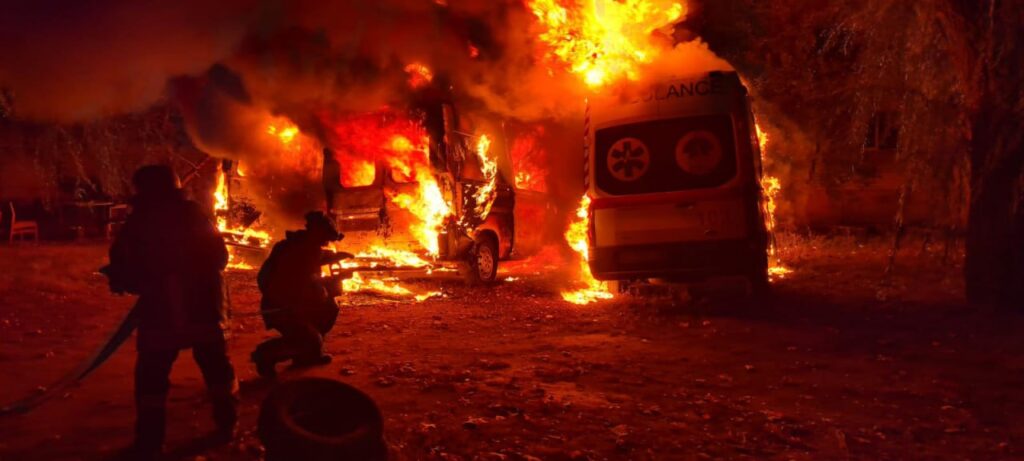
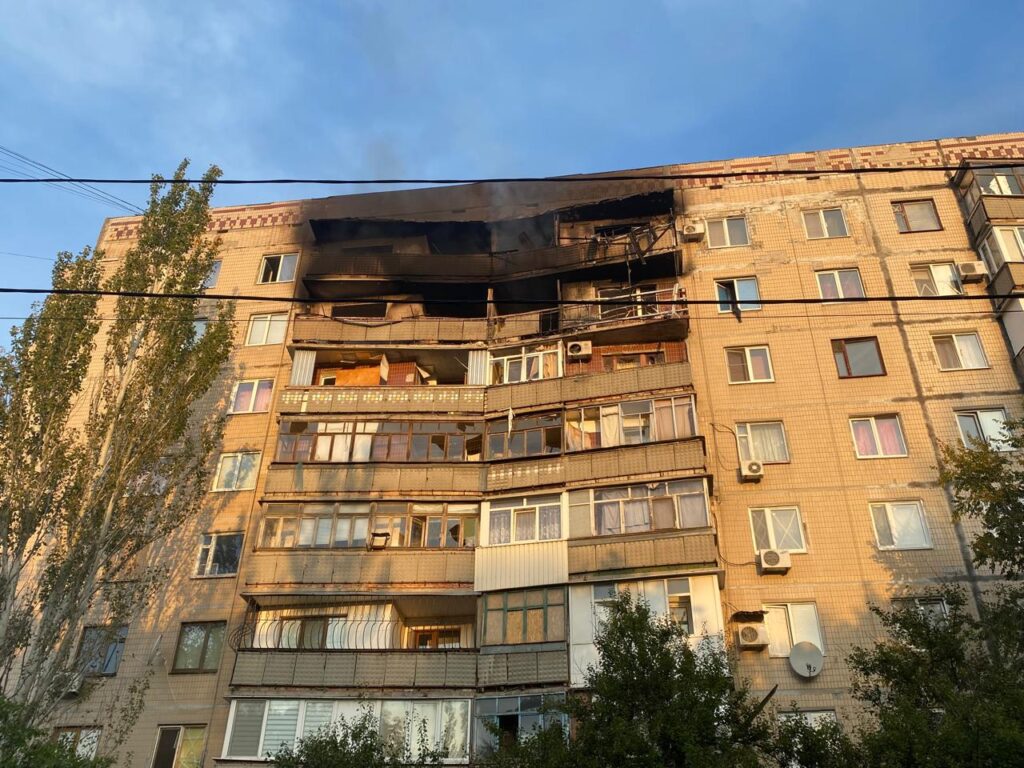
Russian FPV drones hit three ambulances and, separately, a residential high-rise in Kramatorsk late on 5 October, the Donetsk Oblast Prosecutor's Office said. The strike on the high-rise killed a woman and injured another, and three medical workers were wounded trying to save their vehicles. Prosecutors have opened war-crimes investigations.
Russian drones attack Ukrainian civilians every day, and Ukraine's UN envoy has cited "human safari" and repeat strikes on medics as grounds to strip Moscow of its Security Council seat. Kherson, Nikopol, and Kramatorsk are all cities where drone operators pick civilian targets in real time.
Drones aimed at ambulances
Between 22:00 and 22:25, the Russian army deliberately directed two FPV drones at ambulances parked on a Kramatorsk street, prosecutors said. Three workers of the ambulance service were injured while trying to save the vehicles after the first hit. They suffered blast injuries, shrapnel wounds to the body and limbs, burns, and concussions, and received medical care. Three ambulances were damaged.
FPV drones are flown by an operator watching a live camera feed until the moment of impact. Prosecutors called the strike targeted.
A residential high-rise in Kramatorsk damaged by a Russian drone strike that killed a woman on 5 October 2026. Photo: Donetsk Oblast Prosecutor's Office
A woman killed at home
At 22:10, a Russian drone hit a residential high-rise in the city. A 49-year-old woman was killed. Another resident, a 68-year-old woman, suffered a broken foot, shrapnel wounds to the body and limbs, and a concussion, according to prosecutors. The Kramatorsk district prosecutor's office has opened criminal proceedings over war crimes.
Explore further
Russian drone tears off 68-year-old man’s leg in Kherson’s daily “human safari”
Across Donetsk Oblast, Russian attacks killed three people on 5 October, in Sloviansk, Druzhkivka, and Sukhanivka, and injured 11, Donetsk Oblast head Vadym Filashkin said. His morning tally, posted before the prosecutors' report, did not include the Kramatorsk death.
A burned-out section of a residential high-rise in Kramatorsk after a Russian drone strike on 5 October 2026. Photo: Donetsk Oblast Prosecutor's Office
Kramatorsk under the drone hunt
Russian drone operators have hunted people in Kramatorsk for months. In June, a Russian pilot chose to kill a man he saw on a city street. Russia strikes the city daily, and in August it dropped eight FAB-250 bombs on Kramatorsk, killing one person and injuring 18.
The same drone hunting of civilians has run for years in Kherson, where Ukraine's Security Service has named 10 Russian servicemen it ties to the "human safari." A UN inquiry has traced the Kherson campaign up the chain of command. In April, ISW found Russians using such tactics across southern Ukraine, including in Nikopol.
Medics have been repeated targets. In March, a Russian FPV drone killed two medics in an ambulance in Kharkiv Oblast, and in February, Russian drones hit an ambulance and a shop there, killing three. In Kyiv, a Russian missile attack damaged a maternity hospital in September.
Le dossier de Djanick Michaud, qui est accusé d’agression sexuelle sur une personne mineure, était de retour à la cour ce lundi matin au palais de justice de Rimouski pour fixer la date de son procès, mais cette étape a été reportée au 19 octobre.
Ce temps permettra à la défense de produire une requête pour l’obtention de documents en possession de la plaignante. La requête précédera un procès de longue durée qui devrait se tenir au début de 2027 à Rimouski.
« Ça va prendre un terme spécial. On va devoir rencontrer la juge coordonnatrice », a mentionné le procureur de la Couronne, Me Alex Turcotte. Les termes spéciaux s’adressent aux procès de trois jours ou plus.
Il s’agit d’un 4e report à la même étape. La première fois, l’avocate de l’accusé, Me Marie-Pierre Boulet, avait mentionné vouloir poursuivre des discussions avec le ministère public.
Devant un juge seul
Rappelons que l’ex-candidat à la mairie de Rimouski et ancien attaché politique de Guy Caron, lorsqu’il était député néodémocrate de Rimouski, a changé son option après son enquête préliminaire tenue sous la forme d’un interrogatoire au préalable.
Michaud ne veut plus que son procès soit devant jury, mais plutôt devant un juge seul. Il a été cité à son procès sur les accusations telles que portées.
Le palais de justice de Rimouski (Photo Le Soir.ca- Olivier Therriault)
Contrairement à une enquête préliminaire traditionnelle, les procédures d’un interrogatoire au préalable se tiennent sans juge et sans public.
La défense peut interroger les témoins de son choix en présence du procureur de la Couronne afin de se préparer pour le procès à venir.
Autres accusations
Selon la dénonciation obtenue par Le Soir.ca, Djanick Michaud est aussi accusé d’incitation à des contacts de nature sexuelle sur une personne de moins de 16 ans et de voies de fait à l’égard de la même plaignante dont l’identité est protégée par une ordonnance de non-publication.
Les gestes reprochés se seraient produits entre le 1er septembre 2019 et le 10 octobre 2021.
Le dossier de Philippe Dorais, 26 ans, de Rimouski, accusé de conduite dangereuse ayant causé la mort de Steve Collin, le 14 mai 2025 à Saint-Anaclet-de-Lessard, était de retour à la cour ce lundi matin au palais de justice de Rimouski pour fixer la date de son enquête préliminaire.
Cette étape a été reportée au 6 novembre puisque le procureur de la Couronne, Me Alex Turcotte, doit communiquer avec la famille de la victime avant de faire un retour à l’avocate de l’accusé, Me Caroline Bérubé.
« Nous sommes en attente d’information du ministère public qui a des recherches à faire. Nous déciderons ensuite si l’enquête préliminaire sera nécessaire ou non », a indiqué Me Bérubé.
L’enquête préliminaire a deux fonctions, déterminer si l’accusé sera cité à son procès sur l’accusation telle que portée et permettre à la défense de pouvoir interroger certains témoins avant le procès afin de se préparer à cette étape.
Dorais a opté pour un procès devant une juge seul (sans jury).
Il a été libéré à la suite de sa première comparution, le 11 février 2026, date à laquelle les enquêteurs du poste de la MRC Rimouski-Neigette, en collaboration avec la division des crimes majeurs de Rimouski, ont procédé à son arrestation en lien avec la collision mortelle survenue le 14 mai 2025 à Saint-Anaclet-de-Lessard.
Collision avec une motocyclette
Rappelons que vers 22 h 15, les policiers du poste de la MRC Rimouski-Neigette avaient été appelés sur l’autoroute 20, près du km 616, pour une collision impliquant une motocyclette et un véhicule circulant en direction ouest.
La voiture du chauffard a littéralement encastré la moto conduite par Steve Collin. (Photo courtoisie)
Le décès du conducteur de la motocyclette avait été constaté sur les lieux. Le conducteur du véhicule avait été transporté au centre hospitalier pour soigner des blessures mineures.
Un enquêteur et un reconstitutionniste s’étaient rendus sur place afin d’éclaircir les circonstances de l’événement.
Les outils d’intelligence artificielle générative sont de plus en plus utilisés pour produire des images pédocriminelles réalistes. Au cours des six premiers mois de 2026, l’Internet Watch Foundation, ou IWF, a recensé 6 310 images générées par IA répondant à la définition légale britannique de matériel d’abus sexuel sur mineurs. C’est 40 % de plus […]
Andrew Mountbatten-Windsor is taking action over the warrants used to search two properties after his arrest in February, as part of a British investigation into his ties to Jeffrey Epstein.
The program would grant citizenship to people who make major investments in Argentina. Similar efforts have yielded significant income for small economies, but have also led to risks.
The country was shaken after nearly 30 people were killed in two separate mass shootings. South Africans are demanding greater government intervention.
Le Nouveau-Mexique demande à la justice américaine d’imposer à Meta une sanction pouvant atteindre 40 milliards de dollars américains dans une affaire liée à la protection des données personnelles et au scandale Cambridge Analytica. Lors d’une audience tenue le 1er octobre, les avocats de l’État ont demandé au juge Francis Mathew d’ordonner à Meta de […]
Trying to kick a tear-gas canister during clashes with the police on Thursday in Seine-Saint-Denis, near Paris. Students in about 1,000 French schools are protesting a lack of resources in education.
Hundreds were detained in New Delhi as demonstrators expressed anger over the removal of 130 million people from the rolls. The government denies accusations of “vote theft.”
The State Department cited unspecified security concerns in announcing the unusual move. A closely fought presidential election in Brazil takes place on Sunday.

 Connexion