Three deadly attacks by the Iran-backed Houthis in Yemen on an airport in the Saudi capital underscored the asymmetrical nature of their conflict with the kingdom.
Three deadly attacks by the Iran-backed Houthis in Yemen on an airport in the Saudi capital underscored the asymmetrical nature of their conflict with the kingdom.
Crown Prince Mohammed bin Salman of Saudi Arabia in Paris in August. Houthi strikes on the Saudi capital, Riyadh, have cast a shadow on his efforts to transform the kingdom into a global hub for business and tourism.
The strike on Saturday was the deadliest attack in a Gulf Arab country since the U.S.-Israeli war with Iran began in February, and forced the airport to temporarily suspend operations.
The strike on Saturday was the deadliest attack in a Gulf Arab country since the U.S.-Israeli war with Iran began in February, and forced the airport to temporarily suspend operations.
The escalating violence has brought the conflict in Yemen to the doorstep of the Saudi capital, and the kingdom has no easy options to curtail the increasingly sophisticated and targeted strikes.
The escalating violence has brought the conflict in Yemen to the doorstep of the Saudi capital, and the kingdom has no easy options to curtail the increasingly sophisticated and targeted strikes.
A still from a video obtained from social media and verified by The New York Times showing a blast at King Khalid Airport in Riyadh, Saudi Arabia, on Thursday.
The episode briefly disrupted operations on Tuesday at John Wayne Airport in Santa Ana, Calif., where the man went onto the tarmac, the authorities said.
The episode briefly disrupted operations on Tuesday at John Wayne Airport in Santa Ana, Calif., where the man went onto the tarmac, the authorities said.
A Delta Air Lines passenger stole a vehicle used to tow planes and crashed it on the tarmac at John Wayne Airport in Southern California on Tuesday, the authorities said.
Residents of Saudi Arabia’s capital reported hearing booms on Thursday, a day after the Saudi government said two women and a Sudanese man died in strikes on two airports.
Residents of Saudi Arabia’s capital reported hearing booms on Thursday, a day after the Saudi government said two women and a Sudanese man died in strikes on two airports.
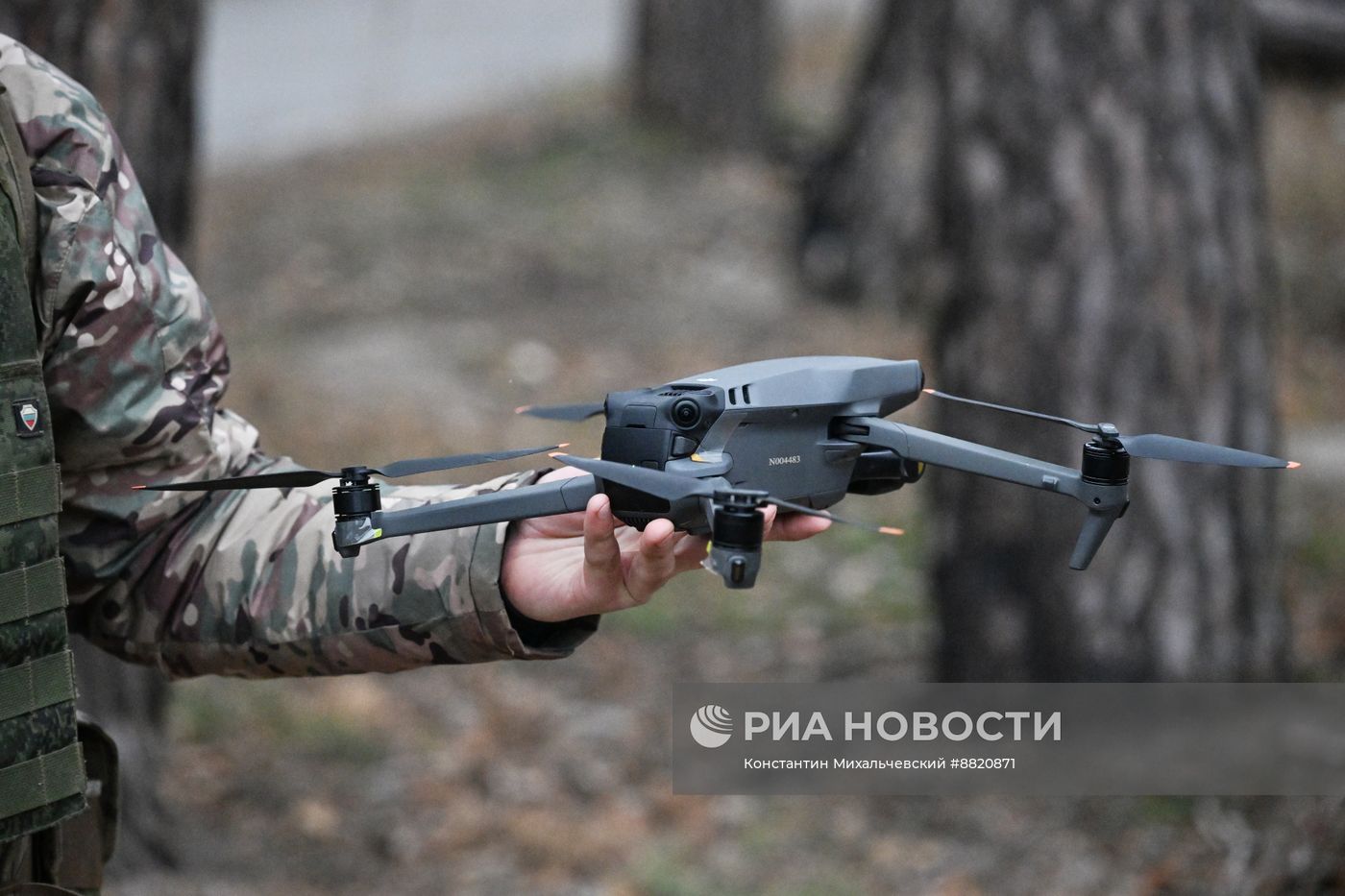
Germany is expanding drone detection at its airports with a new system operated by German air traffic control provider Deutsche Flugsicherung (DFS), the German Federal Ministry for Transport (BMV) announced on 5 October.
Germany has accused Russia of attempting a hybrid attack at Germany’s Leipzig/Halle Airport near a Ukrainian An-124 aircraft using a drone carrying explosives. Earlier, Finnish President Alexander Stubb said Europe must be prepared for “continued hybrid and sabotage att
Germany is expanding drone detection at its airports with a new system operated by German air traffic control provider Deutsche Flugsicherung (DFS), the German Federal Ministry for Transport (BMV) announced on 5 October.
Germany has accused Russia of attempting a hybrid attack at Germany’s Leipzig/Halle Airport near a Ukrainian An-124 aircraft using a drone carrying explosives. Earlier, Finnish President Alexander Stubb said Europe must be prepared for “continued hybrid and sabotage attacks” by Russia, adding that Russia seeks to sow panic through such actions.
On Monday, two more sites were added—Stuttgart and Hamburg. As of Monday, seven of Germany’s eight largest airports were equipped with the new drone detection system in their approach and departure areas.
Germany seeks responses to new hybrid threats
The Federal Ministry cited the reason for the new measure: drones near airports can affect air traffic very quickly.
Federal Transport Minister Steffen Bilger and Baden-Württemberg Transport Minister Nicole Razavi were briefed on the new system at Stuttgart Airport, where it is being put into operation, the ministry said. The system creates “an important technical basis for detecting potential threats at an early stage and quickly informing the competent authorities,” Bilger said.
“With today’s commissioning of the drone detection system at Stuttgart Airport, the federal government is fulfilling a key promise: it is not only talking about the dangers posed by unmanned aircraft, but is also following through with very concrete action. Protecting critical infrastructure and ensuring the safety of passengers at Stuttgart Airport require continuous adaptation to a changing security situation,” Razavi said, according to the ministry.
The new DFS system allows drones near airports to be detected at an early stage and information about possible threats to air traffic to be passed more quickly to the relevant authorities. This helps them assess risks and respond to them more quickly, the statement said.
DFS is responsible for detecting drones in approach and departure areas, while the Federal Police and other security services are responsible for preventing threats and defending against drones. The BMV, Federal Ministry of the Interior, DFS, Federal Police and airports coordinate their work to exchange information quickly and maintain a shared picture of the situation.
No further details about how the system operates have been disclosed.
The first stage of the expansion at Germany’s eight major commercial airports will be fully implemented this week, with the systems in Stuttgart and Hamburg being put into operation, the statement said.
Explore further
A drone came down beside a Bundeswehr air base, weeks after Berlin blamed Moscow for the Leipzig airport attack
The system will also be installed at the airport where a bomb-laden drone was found
The system will also be put into operation at Leipzig/Halle Airport this week, meaning that the first stage will be fully implemented at all eight of Germany’s largest commercial airports, according to the press release.
A quadcopter drone carrying a Semtex explosive flew directly toward a parked Ukrainian An-124 Ruslan cargo aircraft and struck its wing at Leipzig/Halle Airport in Germany on the evening of 4 August, Die Zeit reported on 10 August. The drone hit the aircraft at around 19:30 local time, bounced off the wing, and fell to the ground without detonating, according to the media outlet.
Ukrainian An-124 at Leipzig/Halle Airport in Germany, 5 August 2026. Photo: screenshot from Bild video
Germany has accused Russia of attempting the drone attack and announced further sanctions against Russian citizens and institutions, Tagesschau reported on 1 September.
At the crime scene, investigators found the drone configuration, explosives and detonation technology that had already appeared in other Russian hybrid operations and in Russia’s war against Ukraine, Federal Interior Minister Alexander Dobrindt said during a joint press conference with Federal Foreign Minister Johann Wadephul, the media outlet reported.
The German government assumes that Germany has been and will be a target of further such Russian attacks. Germany is not at war with Russia but is a “target of war,” Foreign Minister Wadephul said, according to the outlet.
An air traffic control issue, now resolved, disrupted some flights in Scotland, England and Northern Ireland, less than two weeks after a technical problem caused cancellations.
An air traffic control issue, now resolved, disrupted some flights in Scotland, England and Northern Ireland, less than two weeks after a technical problem caused cancellations.
A departure board displays delayed and canceled flights at London City Airport following disruptions caused by an air traffic control issue in Britain, on Monday.
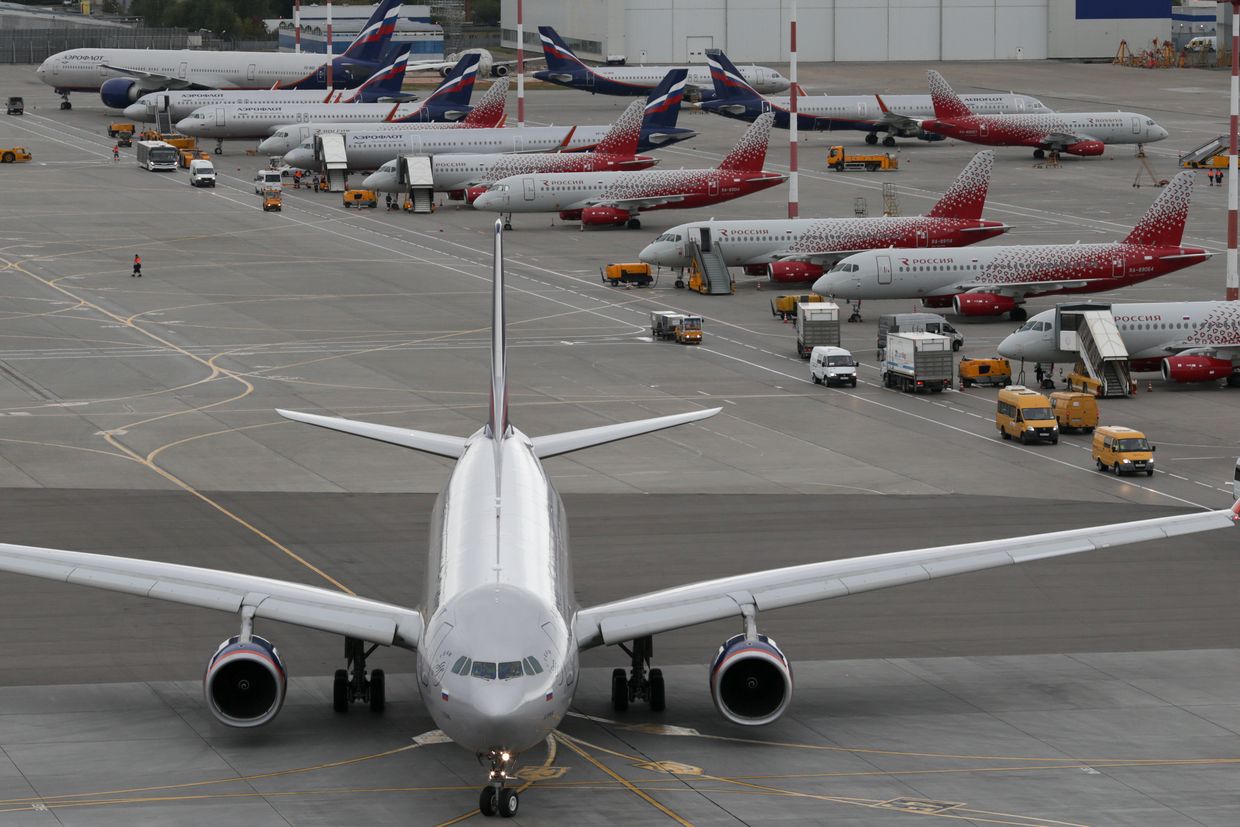
Russia had to shut its airports 993 times in August, as Ukrainian drones scrambled its skies. It was the worst month for Russian civil aviation since the full-scale war began in 2022, with restrictions affecting 32 airports, including those serving Moscow and St. Petersburg, Euronews reported, citing the aviation security firm Osprey.
Ukraine is closing Russia's skies without firing at a single airliner. The summer brought 2,182 temporary shutdowns, more than Russia log
Russia had to shut its airports 993 times in August,as Ukrainian drones scrambled its skies. It was the worst month for Russian civil aviation since the full-scale war began in 2022, with restrictions affecting 32 airports, including those serving Moscow and St. Petersburg, Euronews reported, citing the aviation security firm Osprey.
Ukraine is closing Russia's skies without firing at a single airliner. The summer brought 2,182 temporary shutdowns, more than Russia logged in all of 2025. August alone ran more than six times the 2025 monthly average, by the investigative outlet The Insider's count.
The fallout from Ukrainian attacks is economic: passenger traffic between Moscow and St. Petersburg has dropped by 20 to 23 percent, while rail demand has risen by about a fifth as travelers give up on flying.
The "Carpet" protocol grounds the planes
The closures are triggered by Russia's own defense response to Ukrainian attacks. When a drone is detected near an airport, Russia activates a protocol it calls "Kover", or "Carpet", an emergency procedure that grounds or reroutes every civil aircraft in the area. Ukraine has leaned into that reflex.
FlightRadar24 recorded an average of 86 flights canceled per day in the first three days of September, and on the worst nights around Moscow, between 77 and more than 100 flights were delayed or scrapped.
The disruption drains the economy
The point is exhaustion. Airport closures sit alongside rising insurance premiums, foreign carriers pulling out, and shrinking domestic mobility, said Mykhailo Samus of the Center for Army, Conversion and Disarmament Studies.
"Airport closures are the new reality for Russian aviation," he said.
Foreign airlines have begun diverting: Turkiye's Pegasus and the UAE's Flydubai both turned Moscow-bound flights back in early September.
Zelenskyy warns airlines and insurers
Zelenskyy made the strategy explicit on 1 September, warning airlines and insurers that Russian skies were no longer safe.
"We in Ukraine do not want innocent lives to be lost. The days of safety in Russia's skies are over," he said.
Major shutdowns at Russia's key airports on July 5–6 caused by Ukrainian drone attacks could cost Russian airlines around 20 billion rubles ($254 million), the pro-Kremlin outlet Kommersant reported on July 7, citing airline representatives and industry experts. Since the start of mass disruptions on July 5, a total of 485 flights were canceled, 88 were diverted to alternate airports, and another 1,900 were delayed across major hubs, according to Russia's aviation agency Rosaviatsiya.The drone a
Major shutdowns at Russia's key airports on July 5–6 caused by Ukrainian drone attacks could cost Russian airlines around 20 billion rubles ($254 million), the pro-Kremlin outlet Kommersant reported on July 7, citing airline representatives and industry experts.
Since the start of mass disruptions on July 5, a total of 485 flights were canceled, 88 were diverted to alternate airports, and another 1,900 were delayed across major hubs, according to Russia's aviation agency Rosaviatsiya.
The drone attacks prompted operational shutdowns that triggered widespread logistical and economic consequences. Over 94,000 passengers were housed in hotels, 43,000 refunds were processed, and hundreds of thousands of vouchers for food and drinks were issued.
The estimated financial toll includes direct airline losses from canceled Boeing 737-800 flights, which can run between 15 million and 23 million rubles ($190,000–$292,000) each depending on the route, as well as costs for delays, diversions, and passenger care.
Experts say the true cost could be far higher. Dmitry Datsykov of EXPO.UAV estimated tens of billions of rubles in additional indirect losses, including missed connections, taxi and hotel losses, and supply chain disruptions.
Ukraine has not publicly claimed responsibility for the disruptions but has acknowledged that its drone strategy aims to undermine Russian logistics and force the war's consequences closer to the Russian public.
The economic fallout comes amid growing scrutiny of Russia's transport sector. On July 7, President Vladimir Putin dismissed Transport Minister Roman Starovoit following the aviation chaos and a high-profile ammonia leak at the Ust-Luga port.
The Kremlin has increasingly struggled to protect critical infrastructure from Kyiv's deep-strike drone campaign, which in recent months has expanded to include refineries, radar plants, and now Russia's busiest airports.
Russia's largest airports experienced hours-long flight delays and cancellations on July 5, as authorities imposed temporary restrictions due to a reported threat of Ukrainian drone attacks, the pro-Kremlin Telegram channel Shot reported. Ukraine hasn't commented on the report. Kyiv's drone campaign, which has increasingly disrupted civilian air travel in Russia, is part of Ukraine's broader strategy to undermine Russia's logistics far beyond the front line.Some passengers in Russia reported wai
Russia's largest airports experienced hours-long flight delays and cancellations on July 5, as authorities imposed temporary restrictions due to a reported threat of Ukrainian drone attacks, the pro-Kremlin Telegram channel Shot reported.
Ukraine hasn't commented on the report. Kyiv's drone campaign, which has increasingly disrupted civilian air travel in Russia, is part of Ukraine's broader strategy to undermine Russia's logistics far beyond the front line.
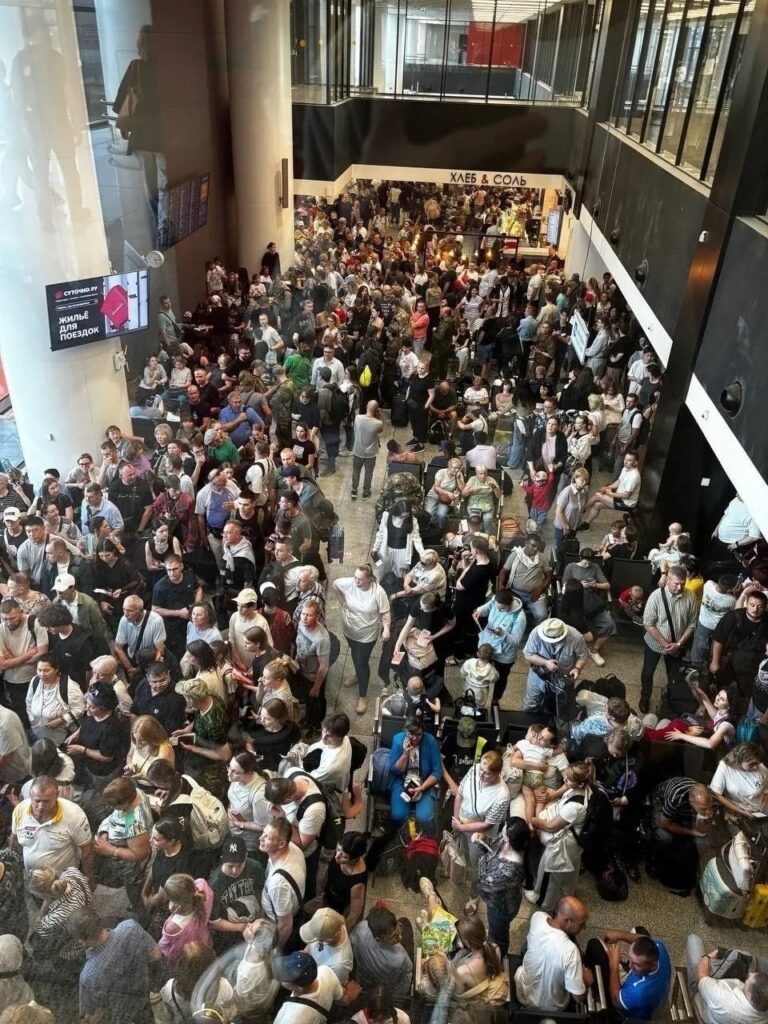
Some passengers in Russia reported waiting more than 10 hours on July 5 as their flights were being delayed, according to Shot.
Departures at Moscow's Sheremetyevo Airport were halted for several hours, delaying over 20 flights. At St. Petersburg's Pulkovo Airport, roughly 50 flights were delayed and more than 20 canceled.
Leningrad Oblast Governor Alexander Drozdenko said that two drones were shot down south of St. Petersburg, prompting a temporary suspension of operations at Pulkovo Airport.
The disruptions followed a wave of Ukrainian drone attacks overnight, which targeted military and industrial infrastructure in at least six Russian regions.
The Russian Defense Ministry said it intercepted 42 drones within three hours, mainly over the Belgorod, Bryansk, and Kursk oblasts near the Ukrainian border.
Novaya Gazeta Europe reported in May that at least 217 temporary airport closures have occurred across Russia since Jan. 1 due to drone threats, more than in 2023 and 2024 combined.
A similar wave of strikes ahead of Russia's Victory Day in May led to massive delays, affecting an estimated 60,000 travelers.

 Connexion