❌

Vue normale

Russia’s jet drones fly near 600 km/h now. Ukraine is building simulators for the 900 km/h ones it expects next
7 octobre 2026 à 07:46

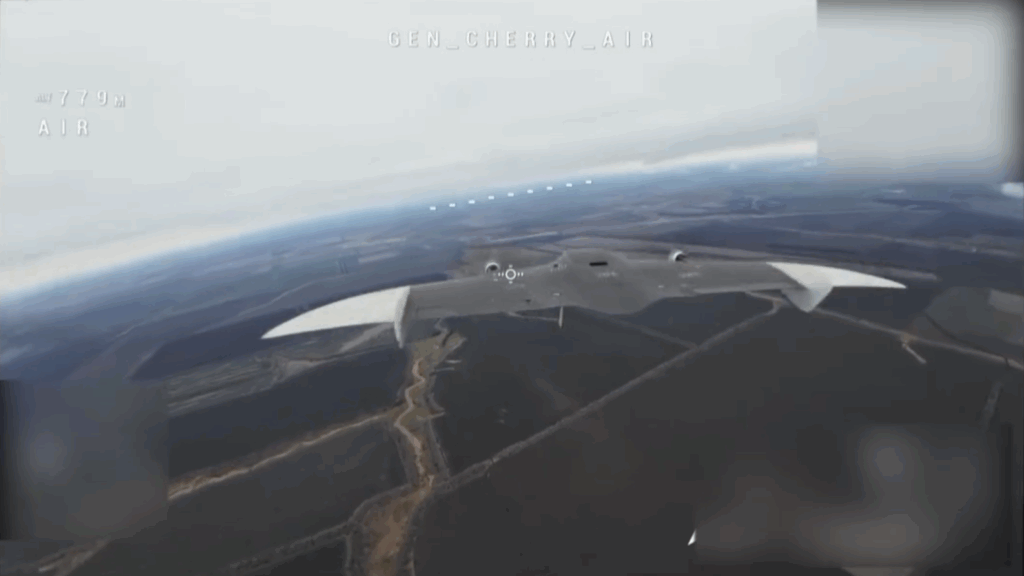
Russian "Knyaz Veshchiy Oleg" reconnaissance drone as seen from a Ukrainian "General Cherry AIR" interceptor drone, just before strike. Screenshot from video: General Cherry

Russia's jet-powered attack drones could eventually reach 800–900 km/h, and intercepting them will demand new piloting skills—so Ukraine has asked the makers of its interceptor drones to build simulators to train the crews, a senior Air Force officer told a parliamentary commission on 6 October, Suspilne reported.

Russia keeps modifying its jet Shaheds faster than Ukraine can field the drones meant to catch them, and Kyiv is now preparing crews for speeds its interceptors have never faced—a sign the air war is shifting from a contest of volume to one of raw speed.

The speed Russia hasn't reached yet

Colonel Yurii Cherevashenko, deputy commander of Ukraine's Air Force, told the commission that Russia's jet drones fly at around 600 km/h today but could eventually reach 800–900 km/h—speeds he said have not been recorded so far. That range sits near the cruising speed of a commercial airliner.
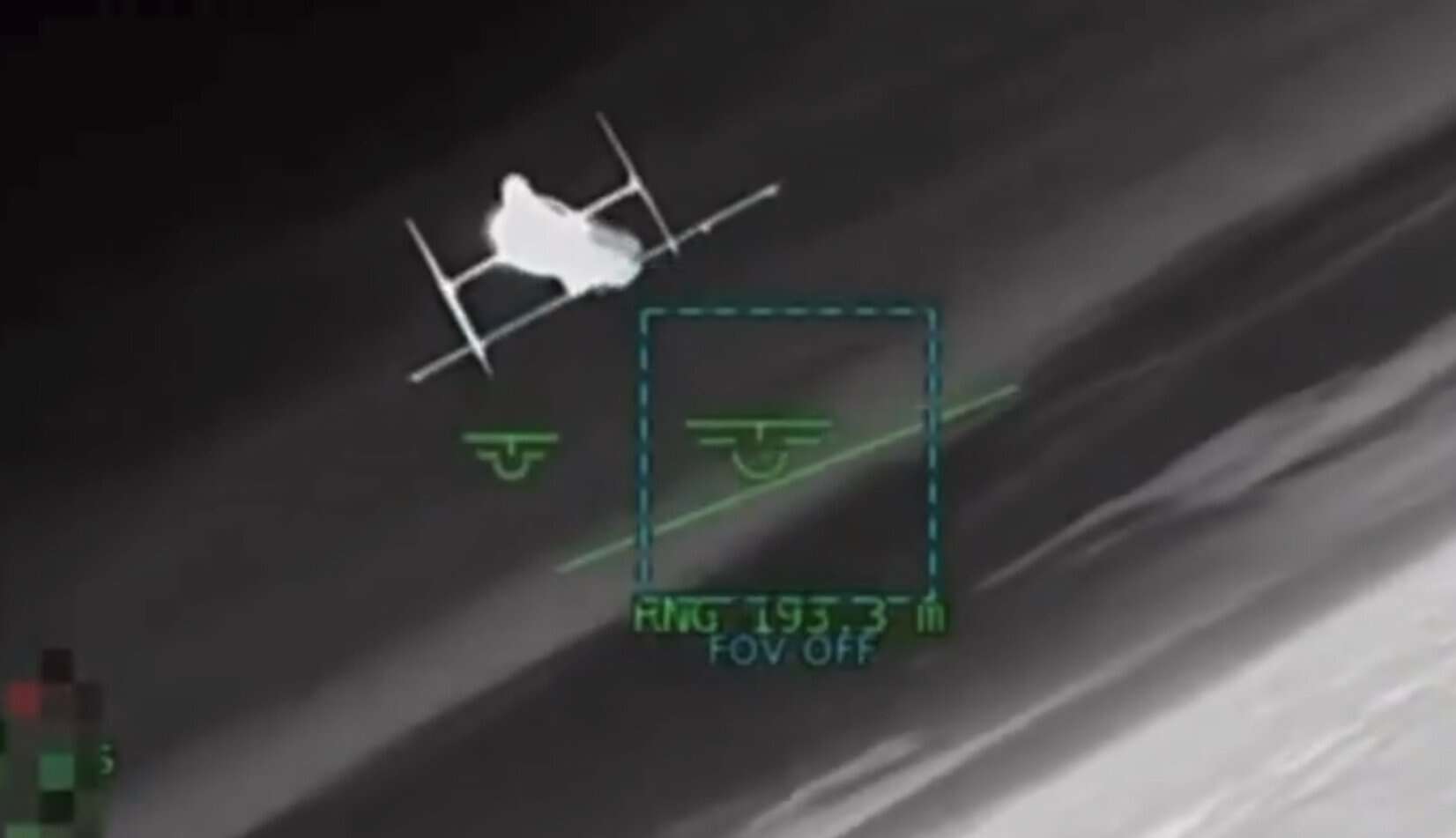
A Ukrainian interceptor drone chases a Russian Geran-5 jet-powered drone. September 2026.
Explore further

Ukraine just caught a Geran-5 at 425 km/h—the jet drone that has often outrun Ukrainian interceptor drones since January

Intercepting such targets will take specific piloting skills, Cherevashenko said. When an interceptor and its target move at roughly the same speed, he noted, the pilot barely perceives the difference in their speeds. To train for that, Ukrainian interceptor-drone makers have been tasked with building simulators where crews can practice against high-speed targets.

Where Ukraine stands now

Ukraine already downs 85% to 90% of Russia's slower, propeller-driven drones, Ukrainian President Volodymyr Zelenskyy has said, but the jet models remain a tougher problem—Ukrainian interceptors scored their reportedly first kill of a jet-powered Shahed in November 2025. In a 28 September evening address, Zelenskyy put the jet-drone interception rate at about 57%, lower than required. Days later, he said Ukraine is testing five interceptor-drone models and could be producing about 400 of one of them by the end of October. Asked when jet-drone interceptors would arrive at the scale needed, Cherevashenko answered: "Not before the end of November."

Ukraine’s drone pilots hit 76.5% more Russian infantry than two months ago: 2,699 in first five days of October

6 octobre 2026 à 10:03

The image shows Ukrainian soldiers. Source: The 80th Separate Air Assault Halytska Brigade

Ukraine's drone pilots are killing and wounding far more Russian infantry than they did a month ago. Ukraine's Unmanned Systems Forces confirmed that their pilots took out 2,699 Russian infantry from 1 to 5 October, 39.7% more than in the first five days of September, Commander Robert "Madiar" Brovdi wrote on Telegram on 6 October.

The Unmanned Systems Forces, the branch of Ukraine's military that fights with drones, count only losses verified by their own pilots in the military's Delta system, so the full picture of Russian losses is larger, Brovdi stressed. Compared with the first five days of August, the rise is 76.5%, from 1,529 losses, which he ties to denser and more frequent Russian assaults.

The sharpest growth occurred in the area of the 1st Azov Corps of Ukraine's National Guard on the Dobropillia-Pokrovsk axis in Donetsk Oblast, as fighting for fortress-belt cities continues. Drone pilots recorded 1,268 Russian losses there, 43% more than the 884 of early September and 91% more than the 664 of early August.

"Russia's hidden mobilization is in action. This is the beginning," Brovdi said ironically.

Russia doubles its monthly recruitment pace

Russian recruitment, mobilization, and contracts run at about 70,000 people a month, twice the 35,000 monthly average from January to August 2026, Brovdi noted on 16 September, when he forecast 12,500 losses for his pilots in September.

He expected the toll to keep climbing. Bigger records still lie ahead because of Russia's unannounced mobilization, Brovdi added on 24 September.

Drone pilots outpaced August by a quarter

September was completed above that forecast. The pilots logged 13,358 Russians killed or wounded, 25.35% more than the 11,010 of August, an average of 445 a day against 355, Brovdi reported. By his count, that equals the full assault infantry of one battalion every day, and his pilots hit a Russian target every 42 seconds.

Two sets of axes took the heaviest toll. In the first 24 days of September, the Dobropillia and Pokrovsk axes accounted for 4,018 losses, and the Oleksandrivka and Huliaipole axes for 3,021, according to Brovdi. The first of those groups covers the same Dobropillia-Pokrovsk axis where the Azov corps zone recorded the sharpest October rise.

Ukraine turned ground robots into a frontline workhorse. Its first competitive tender may reward cheap copies over proven machines, an officer warns

2 octobre 2026 à 08:48

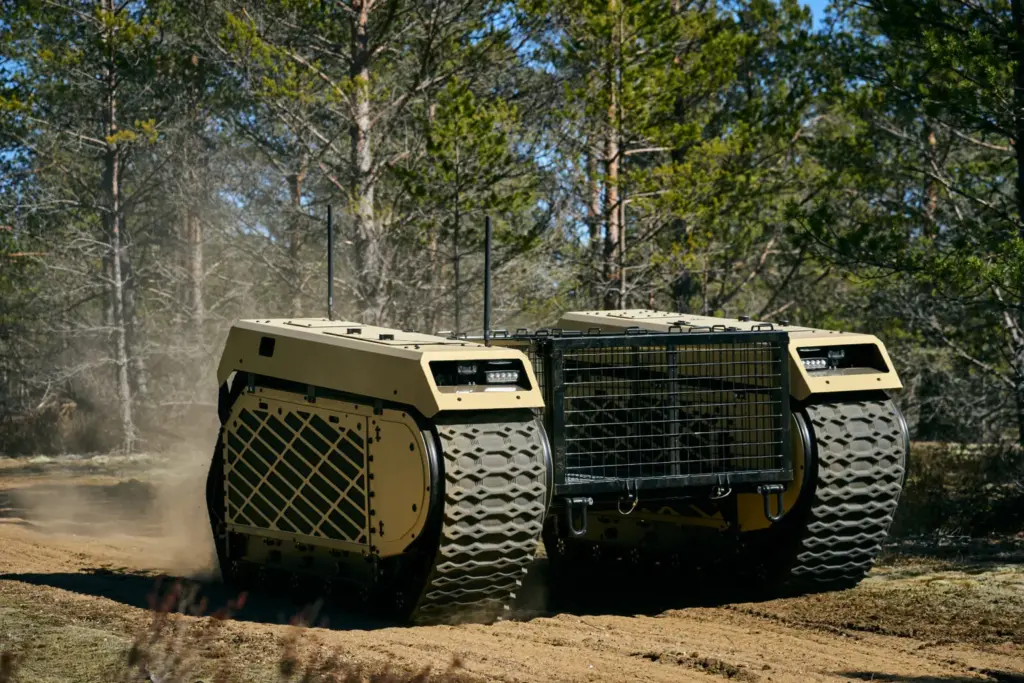
ukraine turned ground robots frontline workhorse its first competitive tender reward cheap copies over proven machines officer warns · post fifth-generation themis unmanned vehicle developed milrem robotics themis_5th_generation_ugv-1536x1024jpg news ukrainian

Ukraine has turned ground robots into a frontline workhorse, and the state is now trying to buy them at scale through its first competitive, ministry-spec tender. Viktor Pavlov, an officer of the 3rd Separate Assault Brigade's UGV battalion, laid out the risks of that model to Army Inform, the Defense Ministry's outlet, in an interview. Once a robot clears the military's technical requirements, price becomes the main criterion, Pavlov says. The order is split into lots, and no maker can take more than half a class. He warns the model may not tell a cheap, makeshift machine from one that actually survives at the front.

Robots now handle the war's deadliest chores—driving supplies through kill zones and reaching the wounded where people can't—and Ukraine has already contracted more than 22,000 for 2026. How the military buys them now shapes whether the push yields machines troops trust or a stockpile of cheap ones they don't.

From disposable drones to the next mass weapon

Aerial drones became disposable, mass-produced weapons years ago. Ground robots—the tracked and wheeled machines that haul supplies, pull out the wounded, and attack Russian positions—are only now reaching serial state supply. In August, the Defense Procurement Agency (DOT), the body that buys Ukraine's arms, opened its first competitive tenders for logistics and strike robots built to specs set by the Defense Ministry. Pavlov, founder of Ukraine's UGV School, calls it an experimental format that can work where market prices are inflated. Splitting the order into lots also gives smaller engineering teams a real chance, he said, because many large producers are already busy with state contracts.

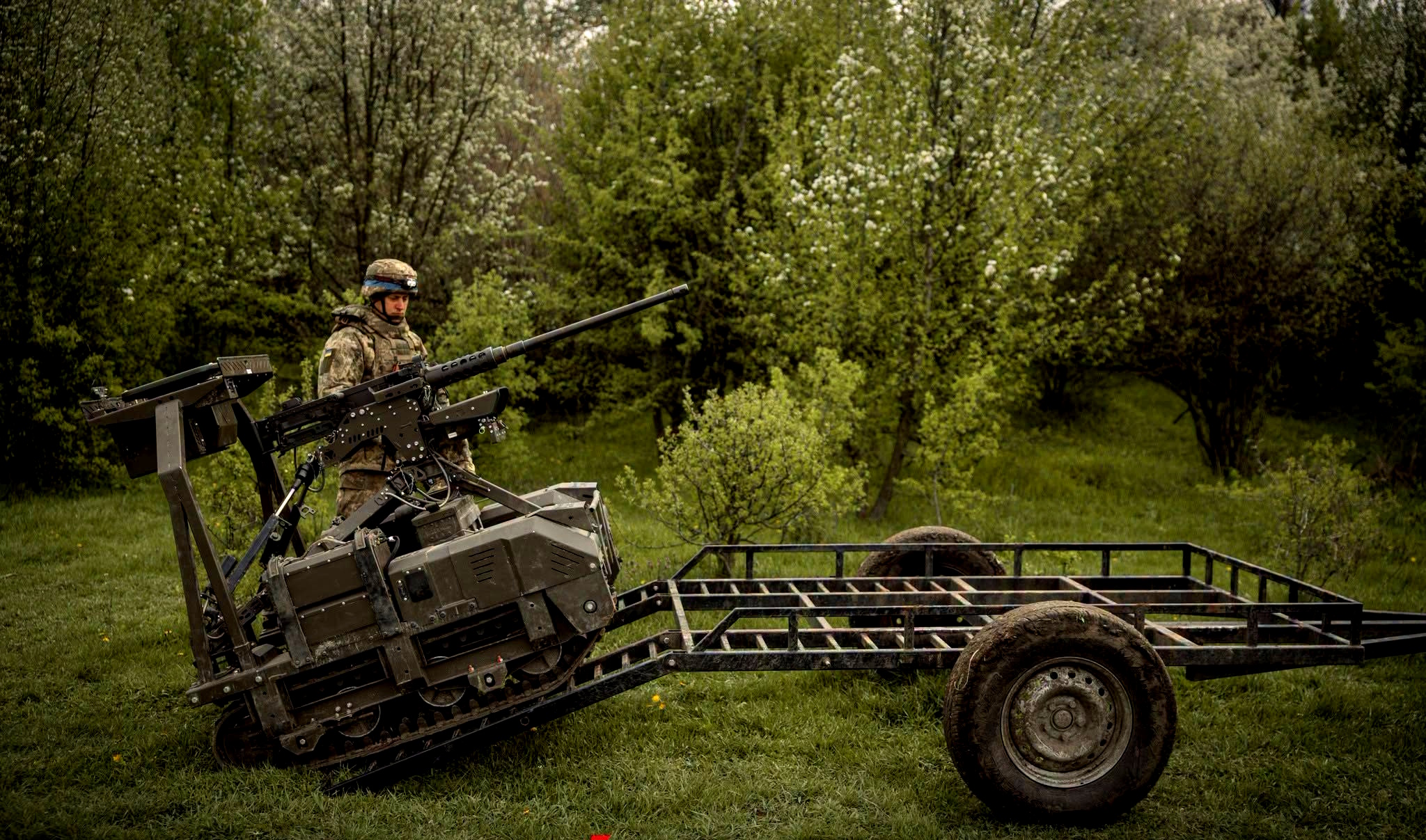
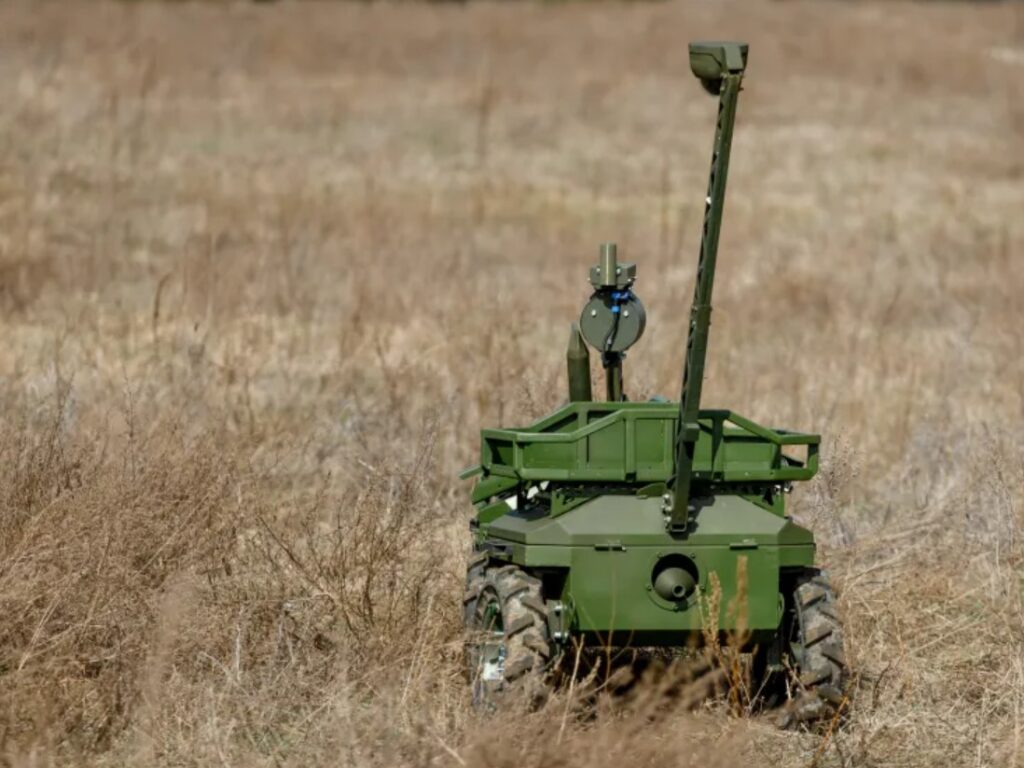
The image shows a Ukrainian soldier standing next to an unmanned ground robotic vehicle. Source: The General Staff
Explore further

New Vivaldi tactic: Ukraine’s ground robots, each carrying two Bullspike grenade launchers, attack Russian positions and then detonate inside their shelters

Why the lowest bid may beat the best robot

A tender rewards the cheapest product that formally meets the requirements, not the best one, Pavlov said. A thermal camera, for example, can be listed as desirable rather than mandatory, so a maker chasing the lowest price will most likely leave it off. On any given feature the machines diverge—suspension, cameras, comms channels, a winch—one has it, another doesn't, yet both can land in the same class.

The machines themselves are very different. One carries 250 kilograms, another up to 349, but both fall into the "200-plus" category. Unlike FPV drones, which share standard sizes and parts, ground robots have no common frame—Ukraine fields many local variants. Pavlov compared the choice to picking an iPhone over a cheaper Android: on paper the features match, but soldiers know which machine they can run and repair.

Ground drone UGV medical evacuations
Explore further

Four ground robots for one evacuation: Russia is targeting Ukraine’s robotic medevac missions

He also fears the model punishes innovation. A company can spend 18 months and a 20-person team building a robot, then watch a rival copy it, skip the research costs, and undercut it. A design troops already know how to run and repair—like the Ratel—is a known quantity. An untested bargain can break down mid-mission with no spare parts.

A mixed system, not tenders alone

Price competition should be one tool, not the only one, Pavlov argued. New robots should first reach units through pilot buys, letting soldiers test them and say what works. Proven systems can then be contracted in bulk, with tenders saved for classes where the offers are truly comparable. Ukraine's robots are too varied, he said, and what units need can't always be squeezed onto a spec sheet.

Russia is now wiring its attack drones into one network in flight, so a single drone can scout, strike, and relay for the rest

30 septembre 2026 à 15:20

Geran-5 in the sights of a STING S interceptor drone.

Russia is wiring its long-range attack drones together by a mesh network in flight and buying pricier, higher-resolution cameras for them, Ukraine's Air Force reported on 29 September. Its spokesperson said one drone could serve as a scout, strike drone, and relay for the rest, which is why they often fly one behind another over long distances. Chains of them keep crossing near the Belarus border, UkrInform reports.

For Ukraine, the danger in each such upgrade is arithmetic: the more Russia networks cheap, once-disposable drones and pushes its control links away from the front, the harder they become to jam or shoot down, and the more of them reach the cities they are aimed at.

Sharper, pricier eyes

Ihnat said on a national broadcast that Russia is sourcing higher-quality materials and raising the resolution of its drone cameras. The cameras it buys are increasingly expensive and higher-quality, he said, which lets its operators study the ground in fine detail and use each drone for a specific purpose.

On a mesh network, he said, the drones talk to each other and hand the control signal back toward the operator, so no single link has to carry it alone.

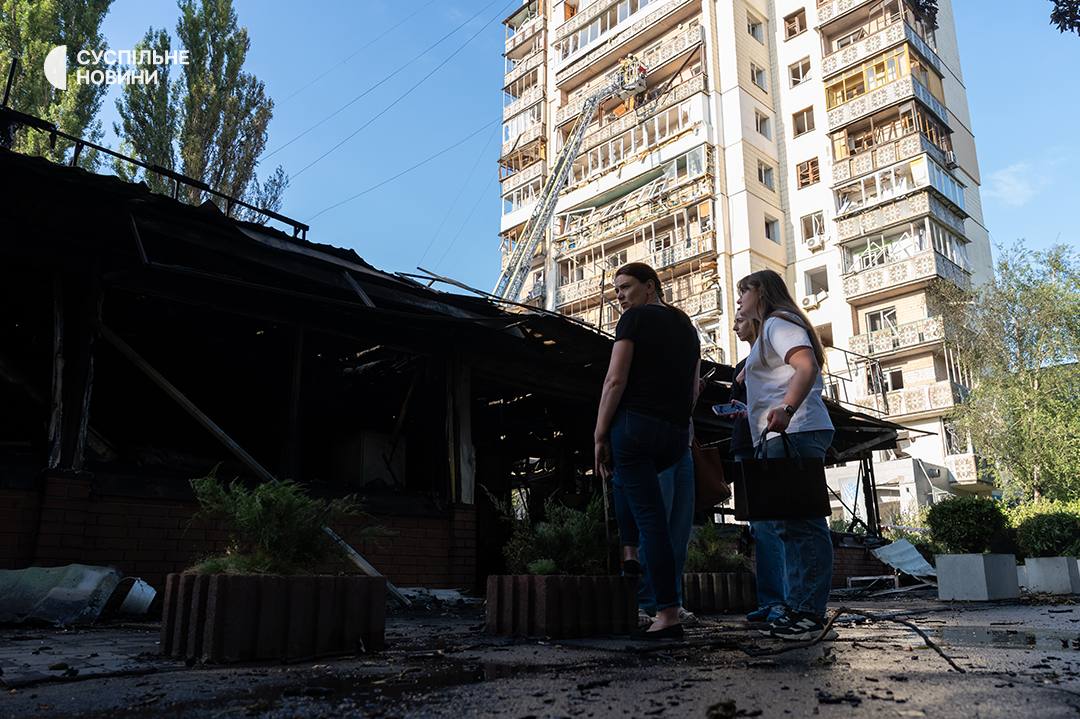
Aftermath of a massive Russian ballistic missile attack in Kyiv's Lukianivka district, 19 July 2026. Photo: Suspilne
Explore further

Russia is mapping everyday targets across Kyiv, from trolleybus depots to Zhuliany airport, top monitoring channel says, ahead of next ballistic strike

Chains along the Belarus border

Asked about relays operating out of Belarus and about Russia's guidance of jet-powered Shaheds, the exploding drones it fires in swarms, Ihnat said Moscow had already claimed its satellite network was ready. He confirmed mesh networks are in use and said their use was quite dangerous. Ukraine has no information yet on whether Russia is using towers, he said.

It often sees drones crossing long distances in chains along the Ukrainian-Belarusian border, so nothing can be ruled out, but intelligence would have to confirm whether such relays exist. Asked whether Russia is preparing a fresh ballistic strike, he said intelligence would warn when extra vigilance is needed.

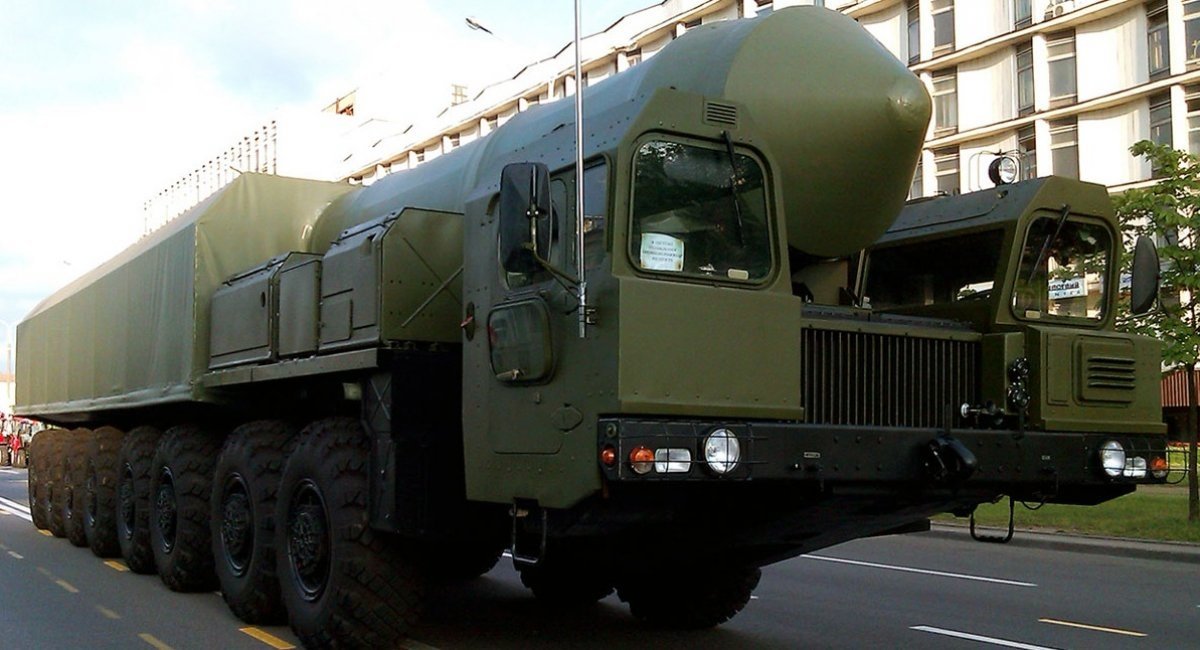
isw kremlin continues its nuclear threats while dangling economic carrots sway washington russia's rs-26 intercontinental ballistic missile rubezh oreshnik militarnyi appears focused reshaping ties through mix promises all refusing engage
Explore further

Russia deploys missile brigade to Belarus as fears grow over new threat to Kyiv

Ukraine's countermeasures

Ihnat has also said Russia launched more attack drones in September than in August, counting 3,177 jet-powered drones so far this month against 2,850 in August. To knock them down, Ukraine leans mainly on tactical aviation, including F-16 fighters, and on ground-based air defense when missiles are available, he said, with shoulder-fired man-portable air-defense systems (MANPADS) working well against jet drones inside their range. He said Ukraine needs more missiles for both Patriot systems and ground-based launchers, plus faster domestic solutions it can scale up.

  • ✇Euromaidan Press
  • Mavic vs Slavic: Ukrainian developers adapt reconnaissance drones to the modern battlefield
    Ukrainian company Vyriy Industries is bringing a new tactical reconnaissance drone, Slavic, to the market, Oboronka reports, citing information from the manufacturer. The control system of the new drone will be familiar to DJI Mavic operators, the company also said. Mavic has long been one of the main reconnaissance tools used by Ukrainian forces, with Ukraine relying heavily on supplies of these drones from abroad. After Ukrainian President Volodymyr Zelenskyy said China had stopped se
     

Mavic vs Slavic: Ukrainian developers adapt reconnaissance drones to the modern battlefield

29 septembre 2026 à 14:43

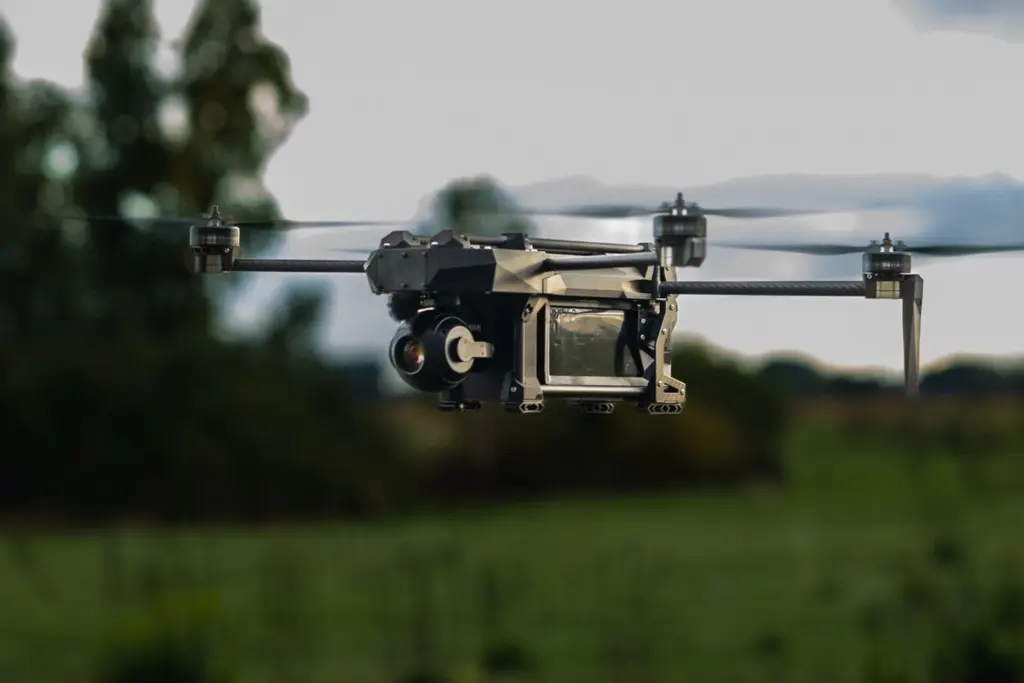
Slavic drone by Vyriy Industries. Photo: Vyriy Industries

Ukrainian company Vyriy Industries is bringing a new tactical reconnaissance drone, Slavic, to the market, Oboronka reports, citing information from the manufacturer. The control system of the new drone will be familiar to DJI Mavic operators, the company also said.

Mavic has long been one of the main reconnaissance tools used by Ukrainian forces, with Ukraine relying heavily on supplies of these drones from abroad. After Ukrainian President Volodymyr Zelenskyy said China had stopped selling drones to Ukraine, the country began seeking alternatives. Slavic is one of these domestic alternatives, designed not only to replace Mavic but also to adapt its capabilities to current battlefield conditions, allowing reconnaissance crews to operate farther from the line of contact and reducing risks to personnel.

Slavic has a tactical range of up to 30 kilometers without GPS

Slavic can remain airborne for up to 1.5 hours because it is equipped with a 40,000 mAh solid-state battery, the media outlet notes. The drone has a tactical range of up to 30 kilometers, the report says.

Illustration showing the positions of the Slavic pilot (left) and Mavic pilot (farther to the right), as well as the drones’ flight ranges relative to enemy positions (shown in red). Illustration: Vyriy Industries

The aircraft can operate without GPS, as Slavic uses optical positioning for navigation. The pilot can also select a less congested channel and operate more effectively in difficult terrain because the communications system operates across a wide range of channels.

The manufacturer notes that for surveillance, Slavic is equipped with a daytime 2K digital camera mounted on a three-axis stabilized gimbal, with 10x optical and 30x hybrid zoom.

Part of the drone with the camera. Photo: Vyriy Industries

The system is supplied as a ready-to-use package “out of the box,” with all the equipment needed for operation without additional field modifications.

The drone is designed to keep crews farther from the front line

The company said its new drone has successfully completed initial combat trials with seven units of the Ukrainian Defense Forces and is preparing for scale-up, the media outlet notes.

“The war has changed, and so have the working conditions for crews. The kill zone has expanded, while available commercial drones have a limited tactical range. The main task now is to provide the military with a specialized platform that can fly longer and farther, so crews can operate farther from the line of contact. This is exactly why we began developing Slavic,” said Oleksii Babenko, founder and CEO of Vyriy Industries.

At the same time, the team is working on new Slavic configurations, including testing thermal imaging modules for nighttime reconnaissance. The manufacturer is also preparing the platform for scaled-up production and deliveries to the Ukrainian Defense Forces, the company told the media.

“Frankensteins” and Ukrainian-made drones are among the options for replacing scarce Mavics

The Ukrainian military had widely used Chinese DJI Mavic 3 drones, including to adjust artillery fire, monitor infantry positions and conduct surveillance, prompting Ukraine to seek ways to replace the shortage. More than five alternatives to the Chinese drone had already been developed in Ukraine, the Ministry of Strategic Industries of Ukraine confirmed to RBC-Ukraine in July 2025.

DJI Mavic 3 in use by a Ukrainian servicemember. Photo: Ministry of Defense of Ukraine

There are also other options for replacing them. The main work in military units is being done with “Frankensteins,” drones assembled from two or three damaged aircraft, Mavic UAV pilot instructor “Dobryi” said in an interview with Militarnyi in July this year. At the same time, such drones are less reliable than new ones, he added.

Ukraine just caught a Geran-5 at 425 km/h—the jet drone that has often outrun Ukrainian interceptor drones since January

29 septembre 2026 à 09:16

A Ukrainian interceptor drone chases a Russian Geran-5 jet-powered drone. September 2026.

Ukraine's air defenders now have purpose-built interceptors for Russia's jet-powered attack drones—weapons whose speed and altitude make them difficult for conventional defenses to catch, Militarnyi reported. A crew from the 1020th Anti-Aircraft Missile and Artillery Regiment downed a Geran-5 over Chernihiv Oblast with a newly delivered interceptor, according to the Serhiy Prytula Foundation.

Russia's long-range drone and missile attacks have become central to its effort to wear down Ukraine's air defenses and grid before winter, and the war in the sky now turns on which side scales its answer faster.

The Chernihiv intercept

The crew, callsign Yastrub (Hawk), made its first successful engagement with the new interceptor, hitting the jet drone at 425 km/h and above 3 km, the foundation said, releasing footage of the strike. The Prytula Foundation supplied the interceptors and said it has contracted several manufacturers to counter the jet threat.

"Our task is to scale this up and strengthen units," it said.

Why it kept slipping through

Russia first used the Geran-5 in January 2026. HUR's own specifications put its warhead at 90 kg, cruise speed at 450–600 km/h, and range at 950 km, with a ceiling of 6 km. That mix of jet speed and high altitude kept it clear of machine guns, shoulder-fired missiles, and the cheap interceptors built to swat slower piston-engine Shaheds.

Ukraine's military intelligence estimates Russian plants now turn out around 3,000 jet-powered Geran-4 and Geran-5 drones a month, according to HUR. A monitoring Telegram channel, Polkovnyk HSh, reports a newer variant that steers by ground imagery instead of satellites, which would blunt jamming—though HUR has not confirmed it and lists no such system among the drone's components. Separately, Russia moved the jet engine inside the fuselage, a change aimed at more speed and range.

russia hits kharkiv high-rise overnight injuring 43 people strikes central kyiv dnipro broad daylight · post firefighter tackles blaze two-story house after russian drone attack ukraine 28 2026 zelenskyy news
Explore further

After Russia hits Kyiv’s Academy of Sciences with jet-powered drone, the Kremlin says Ukraine must “pay a price”

Where the fight stands

Ukraine intercepts about 55% of Russia's jet drones, against more than 90% of the older models, President Volodymyr Zelenskyy said on 26 September. Since the start of September, Russia had launched more than 2,730 jet drones, and Ukraine had downed or suppressed more than 1,500, he added. Zelenskyy also said Russia plans to spend $12 billion in 2027 on jet drones and loitering munitions alone. Ukraine already has several interceptor prototypes in combat use, and the 1020th crew's kill is one of several jet Geran intercepts Ukrainian units and drone makers have logged this month.

  • ✇Euromaidan Press
  • Vivaldi counteroffensive advanced after Ukraine took Russia’s drones out of the fight, ISW assesses
    Ukraine likely neutralized Russia's drone defenses north of Lyman before sending armor into the third phase of its Vivaldi counteroffensive, the Institute for the Study of War (ISW) assessed. An intermediate-range strike campaign against Russian logistics and electronic warfare paved the way, the think tank said. Drones have made this front so deadly that armor now mostly fights from kilometers back. That is what makes Ukraine's armored push onto fortified positions near Lyman stand out
     

Vivaldi counteroffensive advanced after Ukraine took Russia’s drones out of the fight, ISW assesses

29 septembre 2026 à 06:50

vivaldi counteroffensive worked because ukraine took russia's drones out fight isw assesses · post settlements ukraine's 3rd army corps says liberated during operation north lyman donetsk oblast 28 2026 settlements-liberated-during-operation-vivaldi-phase-3-as-of-september-28-2026-scaled

Ukraine likely neutralized Russia's drone defenses north of Lyman before sending armor into the third phase of its Vivaldi counteroffensive, the Institute for the Study of War (ISW) assessed. An intermediate-range strike campaign against Russian logistics and electronic warfare paved the way, the think tank said.

Drones have made this front so deadly that armor now mostly fights from kilometers back. That is what makes Ukraine's armored push onto fortified positions near Lyman stand out. Russia has already shifted its effort south toward Sloviansk after losing the Lyman pincer.

Armor reached Russian bunkers without drawing drone strikes

To break the strongest Russian fortifications, Ukraine used old Soviet BTR-60 armored personnel carriers rebuilt as remote-controlled explosive vehicles, the 3rd Army Corps says.

Ukrainian forces drove them up to heavy Russian fortifications without coming under Russian drone strikes, ISW noted. The think tank said this indicates Ukraine neutralized or otherwise negated Russia's drone defenses in the area.

The image shows a Ukrainian soldier standing next to an unmanned ground robotic vehicle. Source: The General Staff
Explore further

New Vivaldi tactic: Ukraine’s ground robots, each carrying two Bullspike grenade launchers, attack Russian positions and then detonate inside their shelters

Strikes on fuel starved Russia's jammers

Ukraine achieved tactical drone overmatch through extensive shaping operations and an intermediate-range strike campaign, ISW said. Those strikes targeted the Russian drones and electronic warfare (EW) systems that would otherwise have hunted the advancing vehicles.

The 3rd Army Corps reported on 17 September that strikes on Russian logistics in occupied Luhansk Oblast had degraded Russian fuel supplies to the front, ISW wrote that day. The corps said that strained Russia's ability to use drones and EW against Ukrainian drones. EW systems consume a lot of power, and Russian troops run them on diesel generators, ISW explained.

Deputy corps commander Maksym Zhorin credited strict information silence and a "Protective Drone" system of EW assets, according to the same assessment. He said it helped neutralize around 20,000 Russian drones. The corps had earlier described mapping Russian command posts and striking them to sow panic.

ATESH partisan Footage of a fire on a relay cabinet at the Bataysk railway junction, near Rostov-On-Don, Russia, 21 December 2025. Screenshot from video: ATESH
Explore further

Ukraine’s Vivaldi counteroffensive near Lyman just got help from behind Russian lines: partisans say they cut rail supply to three Russian regiments, no explosion needed

Five settlements and 2,000 Russian losses

The corps liberated Nove, Ridkodub, and Katerynivka and restored control over Karpivka and Novomykhailivka, it said on 28 September. The phase added 51 km², bringing the total since the offensive began to 176 km².

Russian losses reached 2,000 personnel, and more than 250 Russians were taken prisoner, according to the corps. Corps commander Andrii Biletskyi said a feint from Shandryholove toward Zelena Dolyna drew Russian reserves away from the real target, Nove.

The first two phases had reportedly cleared more than 125 km² north of Lyman.

  • ✇Euromaidan Press
  • Ukraine put robots where its soldiers used to die clearing mines—and lost none
    Ukraine's Third Army Corps says it became the first military unit in the world to use ground robots for mine clearance inside a live offensive, sending the machines ahead of its infantry into the deadliest sectors to keep soldiers out of the line of fire, Censor.NET reported. The corps built the capability from nothing during its Operation Vivaldi counteroffensive in Donetsk Oblast. Keeping soldiers alive has become the organizing principle of how Ukraine fights, and handing the jobs mo
     

Ukraine put robots where its soldiers used to die clearing mines—and lost none

24 septembre 2026 à 14:04

One of Ukraine's fiber optic-controlled UGVs.

Ukraine's Third Army Corps says it became the first military unit in the world to use ground robots for mine clearance inside a live offensive, sending the machines ahead of its infantry into the deadliest sectors to keep soldiers out of the line of fire, Censor.NET reported. The corps built the capability from nothing during its Operation Vivaldi counteroffensive in Donetsk Oblast.

Keeping soldiers alive has become the organizing principle of how Ukraine fights, and handing the jobs most likely to kill them to ground robots is how an army that refuses to treat its people as expendable defends the line.

Robots cleared 30 km of routes in two nights

On the Shandryholove axis, the robots cleared 30 kilometers of routes in two nights—work that two companies of sappers would have needed a full week to finish. The corps reported no losses among its sappers there. Announcing the operation's second phase, corps commander Brigadier General Andrii Biletskyi said protecting personnel drives how his troops plan and fight:

"People often ask, but what about our losses? My answer: we minimize them by every possible means. In assault operations, drones and ground robots always move ahead of the infantry," he said.

Robots clear most of the mines and mine Russian routes in return

The corps says it built the system from scratch and scaled it from a single squad up to the entire corps, arguing that manual clearing would be impossible across open terrain swept by fire. Ground robots now lift roughly 60% of the anti-personnel mines in its area of responsibility. They also work in reverse, remotely mining Russian advance routes—one crew can lay up to 200 meters a day, cutting off enemy reserves. The same machines carry frontline logistics, evacuating the wounded and hauling in provisions and equipment.

Operation Vivaldi continues in Donetsk Oblast, where the corps recently air-dropped robots behind Russian lines. Its advance has disrupted Russia's plan to encircle the fortified belt of Donetsk cities. In the second phase, the Third Army Corps liberated Shandryholove and Derylove and took full control of Drobysheve. Across the operation's first two phases, it has retaken 125 square kilometers.

  • ✇Euromaidan Press
  • Russia’s mercenaries brought a Ukraine-war drone to Mali. It came down near al-Qaeda’s fighters
    Russia's Africa Corps deployed a Russian-made kamikaze drone against al-Qaeda-linked insurgents in central Mali before losing the aircraft, Ukrainian defense outlet Militarnyi reported. A local monitoring account says fighters brought it down as the mercenaries pulled back from the Dioura area after more than a week under siege. Moscow's mercenary arm in Africa answers to the same Defense Ministry that runs its war on Ukraine, and its military supply line into Africa keeps expanding. T
     

Russia’s mercenaries brought a Ukraine-war drone to Mali. It came down near al-Qaeda’s fighters

22 septembre 2026 à 04:41

Molniya UAV in Mali

Russia's Africa Corps deployed a Russian-made kamikaze drone against al-Qaeda-linked insurgents in central Mali before losing the aircraft, Ukrainian defense outlet Militarnyi reported. A local monitoring account says fighters brought it down as the mercenaries pulled back from the Dioura area after more than a week under siege.

Moscow's mercenary arm in Africa answers to the same Defense Ministry that runs its war on Ukraine, and its military supply line into Africa keeps expanding. This lands now because Ukrainian drone crews are helping the forces fighting Russia there, so tactics both sides honed in Ukraine are now surfacing in the Sahel.

A Russian war drone over the Sahel

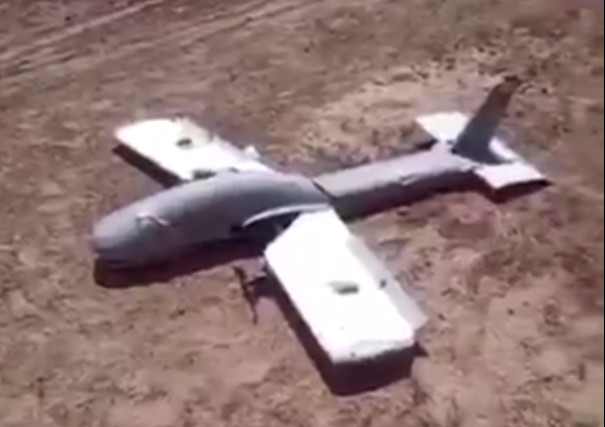
The monitoring account Alerte Sahel reported that Africa Corps troops, encircled in their camp for over a week, fired the drone at positions of JNIM—the al-Qaeda-linked Group for the Support of Islam and Muslims—before breaking out and fleeing. The published video shows a damaged fixed-wing drone with an elongated fuselage and a straight wing. Alerte Sahel first called it an Orlan-10. Militarnyi identified it by its shape as a Molniya. The footage shows the aircraft only after it fell and does not reveal how it went down, so the shootdown claim rests on Alerte Sahel's account—which adds that the jihadists are "increasingly developing skills in mastering attack drones."

The Molniya is a cheap, simple fixed-wing kamikaze drone with a range of about 30-40 km. It carries a warhead of up to 7 kg and also flies reconnaissance and artillery-spotting runs.

Fighting around Dioura

Combat near Dioura, in Mali's Mopti region, has run since 10 September 2026, when JNIM struck Malian army positions. Mali's General Staff said it launched air-ground operations in response. It later reported on 17 September that its units, backed by partners, kept up their operations around the town. On 8 September, JNIM had ambushed an Africa Corps and Malian convoy near the village of Kaka in the same region, killing 13 Russian and Malian troops between them.

  • ✇Euromaidan Press
  • Russia’s secret drone math: one Tatarstan plant could yield 28,000 more drone bodies a year
    Russia is quietly moving to expand the capacity of the plant behind its long-range attack drones, a step that could sharply raise how many it launches at Ukraine, according to Politico. The plan turns on a single carbon fiber factory in Russia's Tatarstan region and runs to the end of the decade. These files add something narrower than Russia's known intent to fight on: they identify carbon fiber as a critical material capping how many drones it can build. To break that cap, the Kremli
     

Russia’s secret drone math: one Tatarstan plant could yield 28,000 more drone bodies a year

21 septembre 2026 à 09:31

axios cuba has acquired over 300 russian iranian military drones · post russia's drone factory tatarstan shahed_plant alabuga video ukraine news ukrainian reports

Russia is quietly moving to expand the capacity of the plant behind its long-range attack drones, a step that could sharply raise how many it launches at Ukraine, according to Politico. The plan turns on a single carbon fiber factory in Russia's Tatarstan region and runs to the end of the decade.

These files add something narrower than Russia's known intent to fight on: they identify carbon fiber as a critical material capping how many drones it can build. To break that cap, the Kremlin is funding production lines that will not run until the decade's end—a bet on winning by out-building Ukraine, even as the strikes grind on.

The bottleneck Russia wants to break

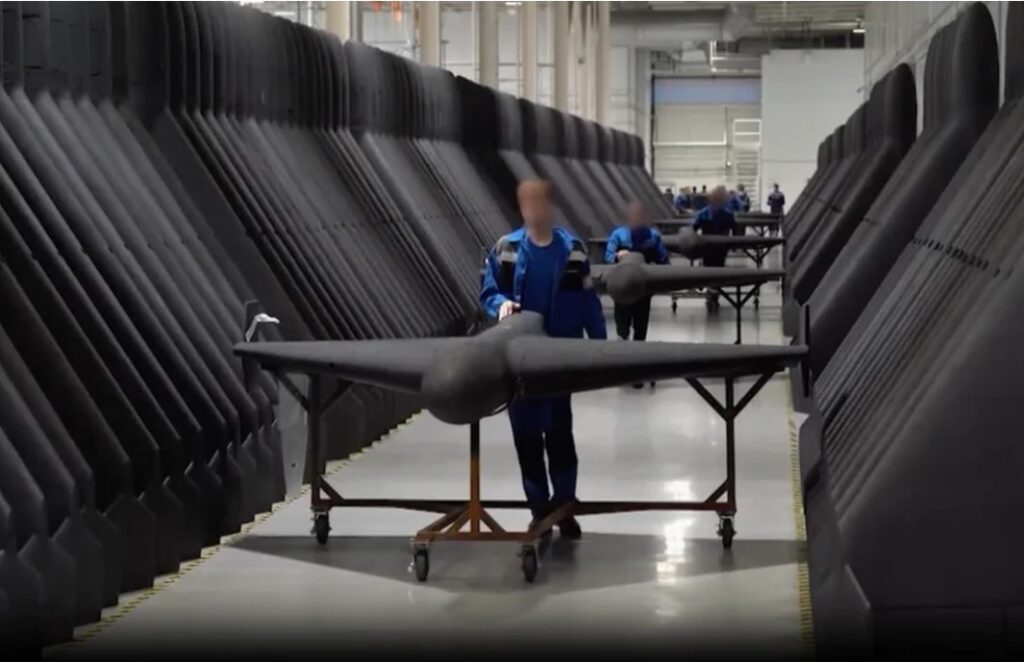
Politico obtained internal documents from Russian state nuclear corporation Rosatom showing its Alabuga-Volokno plant would add 500 tons of military-grade aerospace carbon fiber a year by 2029. Rosatom declined to comment. Weapons expert David Albright, who heads the Institute for Science and International Security, estimated that volume could yield airframes for about 28,000 more attack drones a year—a 78% jump.

Ukraine already estimates Russia can build more than 36,000 Shahed/Geran kamikaze drones a year. Carbon fiber is the choke point: it keeps the airframes light and strong, and Russia has no cheap substitute.

"Without the carbon fiber, they can't make the drone. Can't substitute for the carbon fiber in the drone and keep its weight down," Albright said.

Moscow is investing in the raw material, not just more assembly halls—the fiber, not floor space, is what caps output.

Ground already cleared in Tatarstan

Documents gathered by the Ukrainian Security and Cooperation Center describe a new factory on the site designed to produce UMT42S-3K aerospace-grade fiber. Satellite images from May to July show land cleared for construction. Albright's own August imagery shows foundations going in. He said the stated 2027 completion date "requires rapid construction." Russia has spent the past year adding new assembly halls at the same site.

The plant and its parent, Rosatom's Umatex Group, already sit under US, UK, and other Western sanctions. The US House Select Committee on China and the Ukrainian government both verified the documents, officials told Politico.

The push comes as Russia leans harder on jet-powered Shaheds, which Ukraine's Air Force says are hard to down with conventional defenses. Kyiv has fielded its first jet interceptor and tested a new one in September—but the plant is a bid to out-build those defenses faster than Ukraine can scale them.

  • ✇Euromaidan Press
  • Ukraine’s snipers didn’t vanish in the drone war—their job changed beyond recognition
    Drones get most of the attention in this war, and deservedly so—but the snipers are still out there, two Ukrainian marksmen told Army Inform, and the same drones have made their work far harder to survive. It now turns on watching, not shooting: long stretches at a hidden position, a thermal scope always running, and a constant fight to stay unseen. Across the drone-saturated front, cheap cameras overhead have rewritten nearly every job—infantry, logistics crews, and now marksmen—so tha
     

Ukraine’s snipers didn’t vanish in the drone war—their job changed beyond recognition

18 septembre 2026 à 08:54

ukraine's snipers didn't vanish drone war—their job changed beyond recognition · post ukrainian sniper ukraine news reports

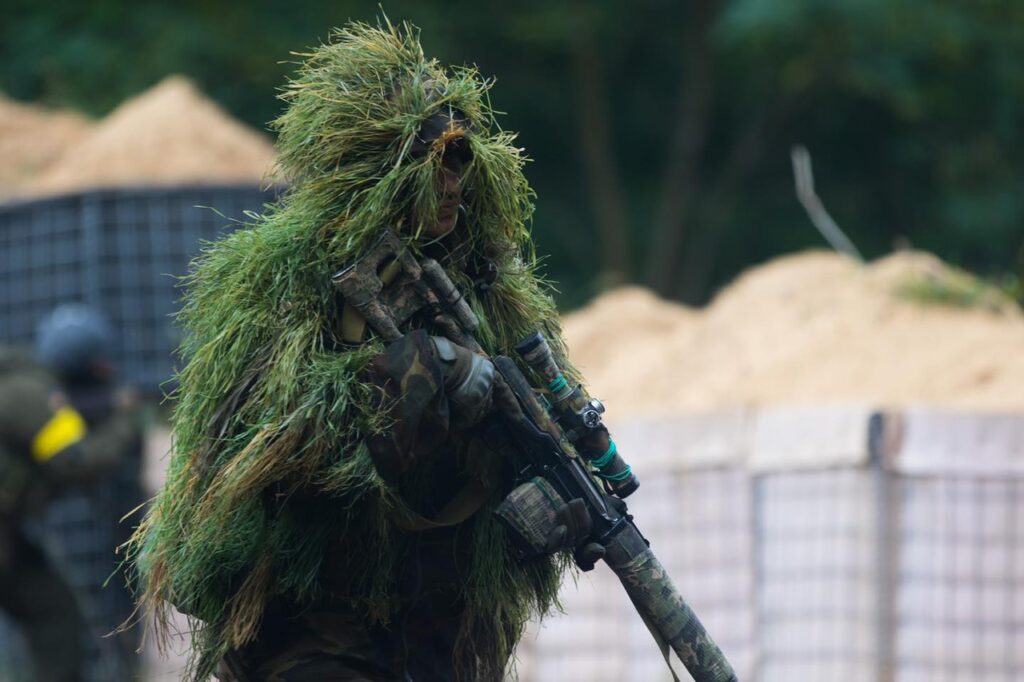
Drones get most of the attention in this war, and deservedly so—but the snipers are still out there, two Ukrainian marksmen told Army Inform, and the same drones have made their work far harder to survive. It now turns on watching, not shooting: long stretches at a hidden position, a thermal scope always running, and a constant fight to stay unseen.

Across the drone-saturated front, cheap cameras overhead have rewritten nearly every job—infantry, logistics crews, and now marksmen—so that surviving depends less on firepower than on never being seen.

The job is mostly watching

The men—a squad leader in a special-purpose sniper company, callsign Efiop, and his partner Maister—serve in the National Guard of Ukraine's 3rd Operational Purpose Brigade Spartan. Maister worked a factory milling machine before joining in 2022. He saw what Russian troops were doing, he said, and Ukrainian children started dying: he went to fight for the children, and he has a daughter of his own. A team takes a sector and holds it around the clock through a thermal scope.

"We can sit 40 days and never fire a shot. Or we go in, and in a single day we take down a lot of them," Efiop said.

His longest stint at one spot ran 48 days, and the greatest distance he has worked was 2,540 meters—more than a mile and a half.

Up to 154 pounds on your back, over 12 miles to cross

Reaching a position is often the hardest part. A sniper carries a vest, helmet, an assault rifle and the sniper rifle, and what supplies will fit—60 to 70 kilograms, or 132 to 154 pounds. They stay more than a month, and a month's worth will not go on one back. That load sometimes crosses more than 20 kilometers, over 12 miles, of open ground with no tree line to hide behind.

"You don't walk, you run," Maister said.

Lately it has eased a little: food can be dropped in by a heavy Vampire bomber drone.

Drones rewrote the rulebook

The biggest shift came from the sky. Russian drones with thermal cameras can see a bullet in flight because it is warm, Efiop said, and then burn out the position.

"They caught us like that once. We took out three, they saw where we fired from and burned the spot. We moved right away, and everyone lived," Efiop noted.

Now the snipers watch remotely from a safer place instead of lying behind the scope for hours. Once, that safer setup saved a life outright: a mortar round came in and pierced only the rifle scope.

Ukraine kept this strike drone secret for two years—its maker says it has destroyed more than 350 Russian systems

17 septembre 2026 à 08:50

RAM-2X strike drone.

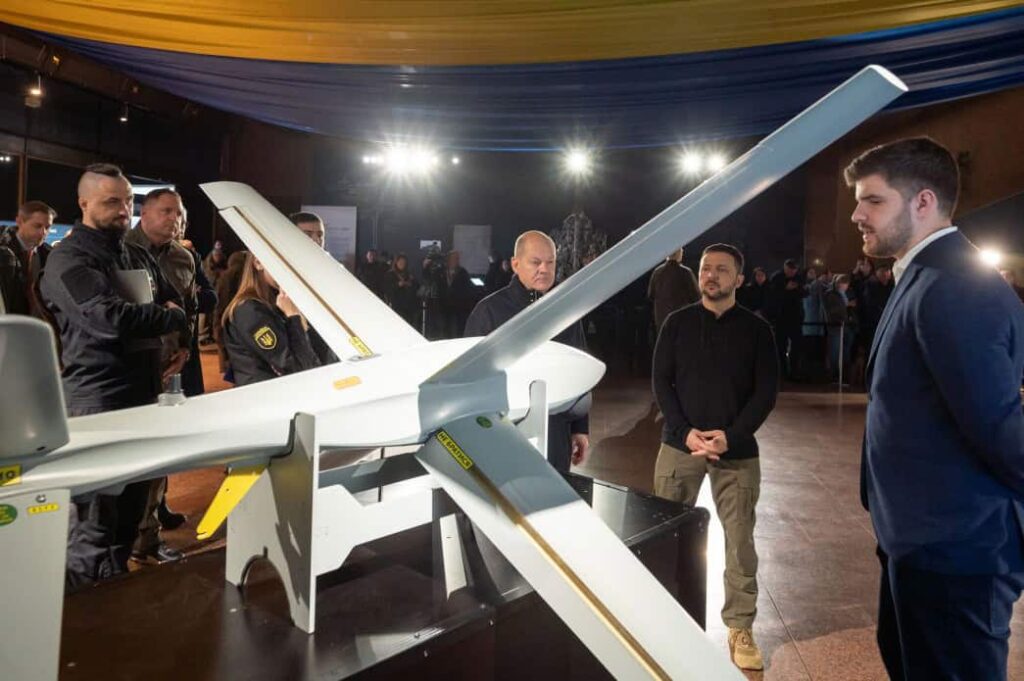
A Ukrainian drone maker has revealed it built a strike weapon it kept classified, deputy director Andrii Rymaruk told Radio NV. For two years, Ukrspecsystems, known for manufacturing Ukraine's SHARK reconnaissance drones, hid its connection to the RAM-2X strike drone, even as crews used it to hunt Russia's costly air defenses and missile launchers deep behind the front. By 2025, it had quietly become the Defense Forces' flagship mid-strike drone.

Ukraine's war on Russia's air defenses increasingly runs on drones its own industry builds and fields in secret, revealed only once they have already destroyed the enemy's costliest launchers and radars. Holding one back that long lets its crews rack up strikes before Moscow can study the weapon and build a counter—and this maker went public only once wrecked drones had reached Russian hands.

Why come out now

The RAM-2X first flew in combat in early 2024, but the maker kept its role secret. Rymaruk said the company wanted the drone and its crews to finish the job first—destroy what needed destroying—before talking. Once shot-down units reached the enemy and turned up on social media, silence no longer protected anything. So after two years, Ukrspecsystems unveiled the drone at the MSPO defense expo in Kielce, Poland.

What it kills

This is a mid-strike drone—a loitering munition that flies deep behind the lines, circles, and dives into its target. Its victims include S-400 and S-300 air defenses, the systems Russia uses to shoot down aircraft, and Iskander launchers that fire ballistic missiles at Ukrainian cities.

Rymaruk put the RAM-2X's own tally at more than 350 Russian systems destroyed since 2024, while Defender Media, which interviewed him, reported more than 1,000 targets over two years. Ukrspecsystems credits the wider RAM series, which reaches back to a fixed-wing model supplied from late 2022, with more than 450 target engagements, over 400 of them against air defenses. Today, it destroys 50 to 60 pieces of Russian equipment a month.

How far, how many

The drone has grown fast. It flew 140 km in 2024 and now hits targets up to 180 km, almost 230 km in good conditions, and a crew from the 429th Achilles unmanned-systems brigade set a range record at 215.5 km. It has spread from a few crews to about 100 military units and 250 trained teams, and one operator can fly it from anywhere in Ukraine. It also works in pairs with the SHARK-M reconnaissance drone—one finds the target, the other kills it. In July, Ukrainians crowdfunded 30 of the drones for military intelligence and the security service through Serhii Prytula's foundation.

❌