Russia has transferred 50 children from the occupied Antratsyt district of Luhansk Oblast to a so-called rehabilitation camp in Kalmykia, Ukraine’s Center for Countering Disinformation (CCD) reported on June 14.Kalmykia is about 1,170 km (726 miles) by air from Moscow, and its western border lies roughly 300 km (186 miles) from the nearest point on the Russia–Ukraine border. According to the center, while the "Lesnaya Skazka" ("Forest Fairy Tale") camp is officially described as hosting sports a
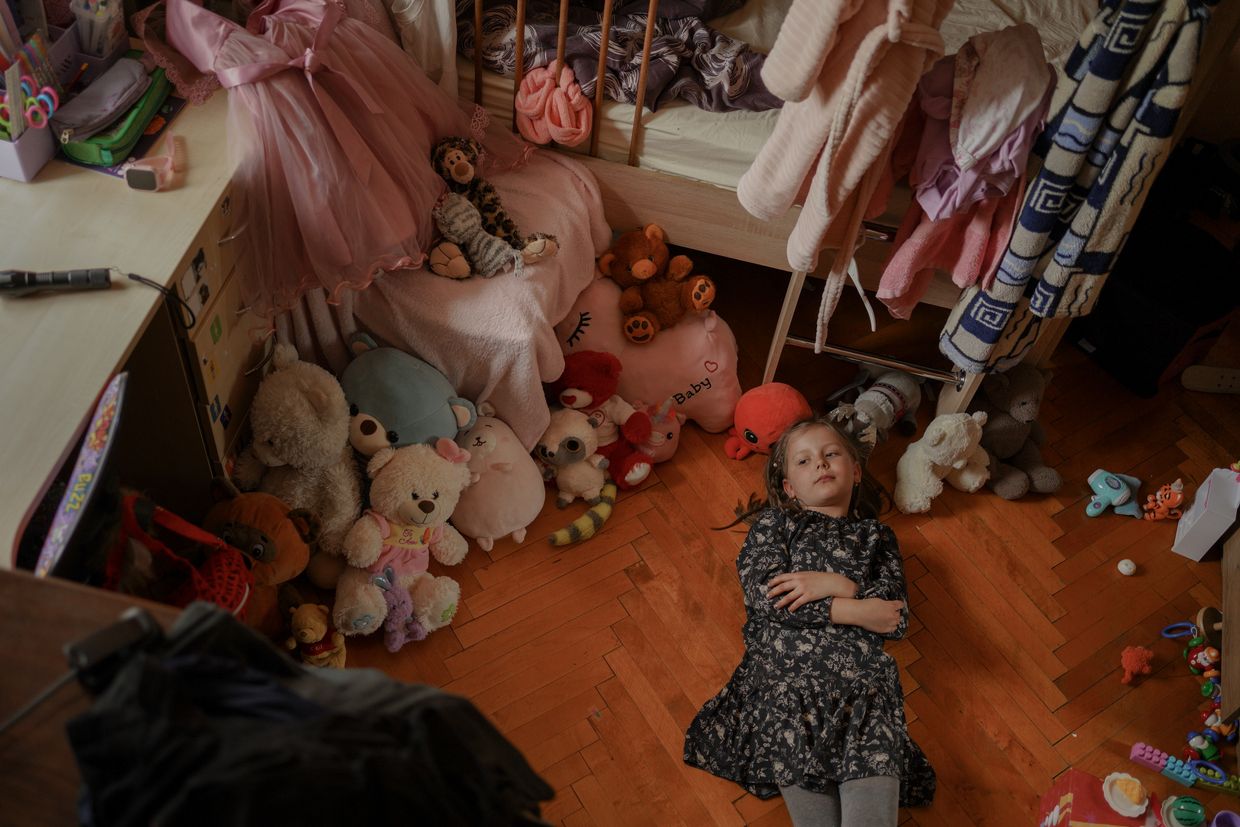
Russia has transferred 50 children from the occupied Antratsyt district of Luhansk Oblast to a so-called rehabilitation camp in Kalmykia, Ukraine’s Center for Countering Disinformation (CCD) reported on June 14.
Kalmykia is about 1,170 km (726 miles) by air from Moscow, and its western border lies roughly 300 km (186 miles) from the nearest point on the Russia–Ukraine border.
According to the center, while the "Lesnaya Skazka" ("Forest Fairy Tale") camp is officially described as hosting sports and creative activities, in fact, it functions as a site of "round-the-clock ideological brainwashing, systemic Russification, and an attempt to erase Ukrainian identity."
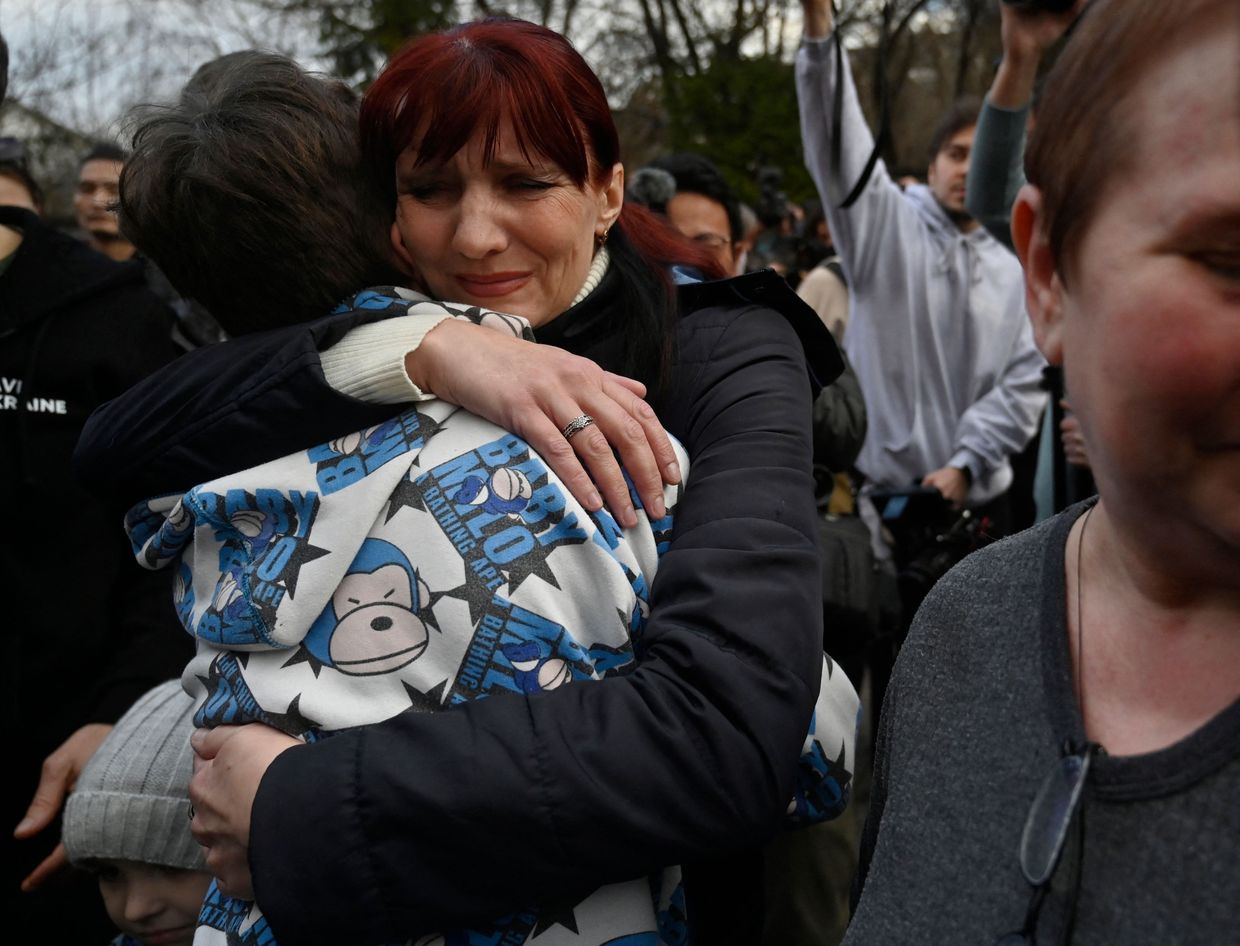
Since February 2022, at least 20,000 Ukrainian children have been abducted from Russian-occupied territories and sent to other Russian-controlled areas of Ukraine or to Russia itself, according to a Ukrainian national database, "Children of War." Only 1,359 children have been returned thus far.
The center compared the camp in Kalmykia to "Krasnaya Gvozdika," ("Red Carnation") a facility in occupied Zaporizhzhia Oblast, saying both are used not for recreation, but as tools of Russia’s war strategy.
“These camps have become instruments of assimilation where Ukrainian children are taught distorted history, exposed to Russian propaganda, and conditioned to show loyalty to the Putin regime,” the center said. “War and hostility are normalized, with children being groomed as human resources for future conflicts.”
The watchdog emphasized that separating children from their families, culture, and language places them under the full control of the occupying power — a practice it says constitutes a violation of international humanitarian law and forms part of Russia’s broader genocidal policy toward Ukraine.
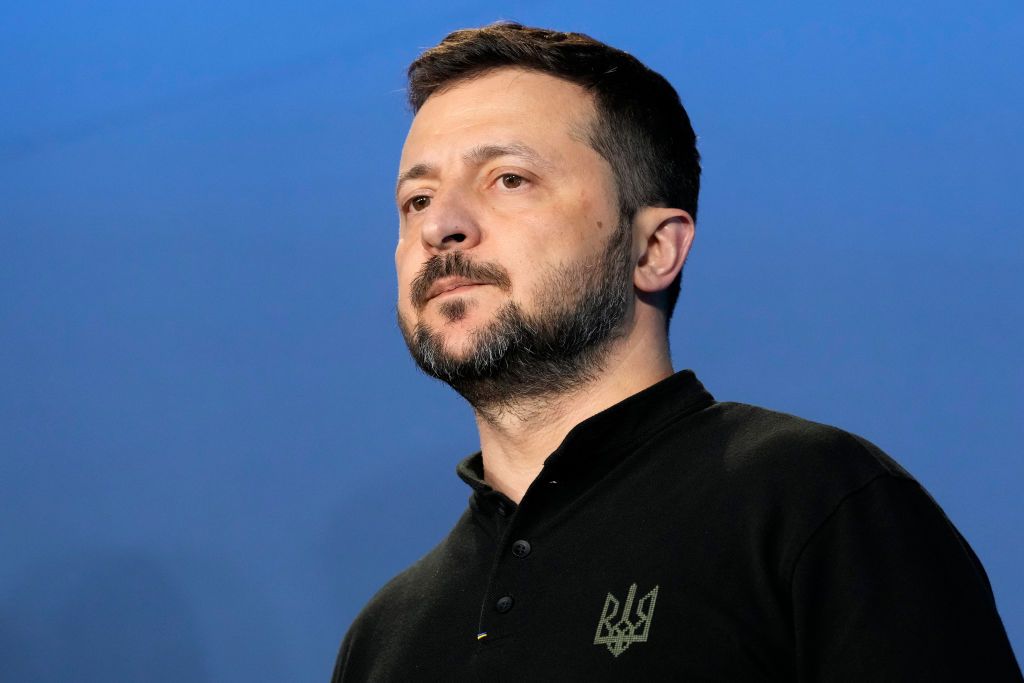
In response to Russia’s efforts to indoctrinate Ukrainian children, President Volodymyr Zelensky on June 10 imposed sanctions on 48 individuals and nine organizations associated with the deportation of Ukrainian children, according to a decision of Ukraine's National Security and Defense Council (NSDC).
Kyiv Pride held a parade with over 1,500 participants in the Ukrainian capital on June 14, which was met with counterprotests."Other Ukrainian Prides also participated — including Kharkiv Pride and Ukraine Pride. Kyiv’s student community was represented, among others, by the Student Parliament of Taras Shevchenko National University of Kyiv and Ukraine Global Scholars," Kyiv Pride said in a post to Facebook.On June 7, a drone charity event for Kyiv Pride took place outside the Foreign Ministry b
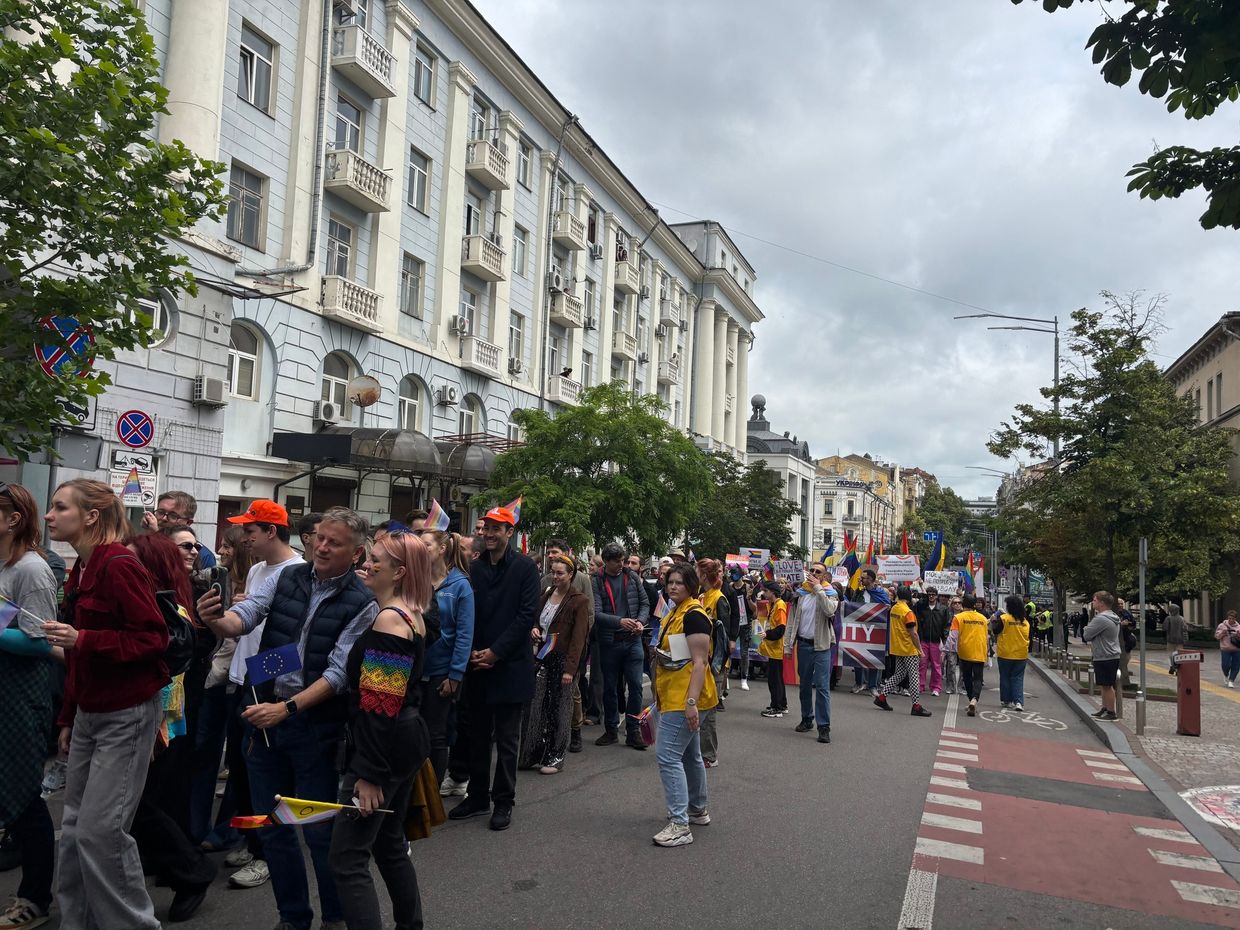
Kyiv Pride held a parade with over 1,500 participants in the Ukrainian capital on June 14, which was met with counterprotests.
"Other Ukrainian Prides also participated — including Kharkiv Pride and Ukraine Pride. Kyiv’s student community was represented, among others, by the Student Parliament of Taras Shevchenko National University of Kyiv and Ukraine Global Scholars," Kyiv Pride said in a post to Facebook.
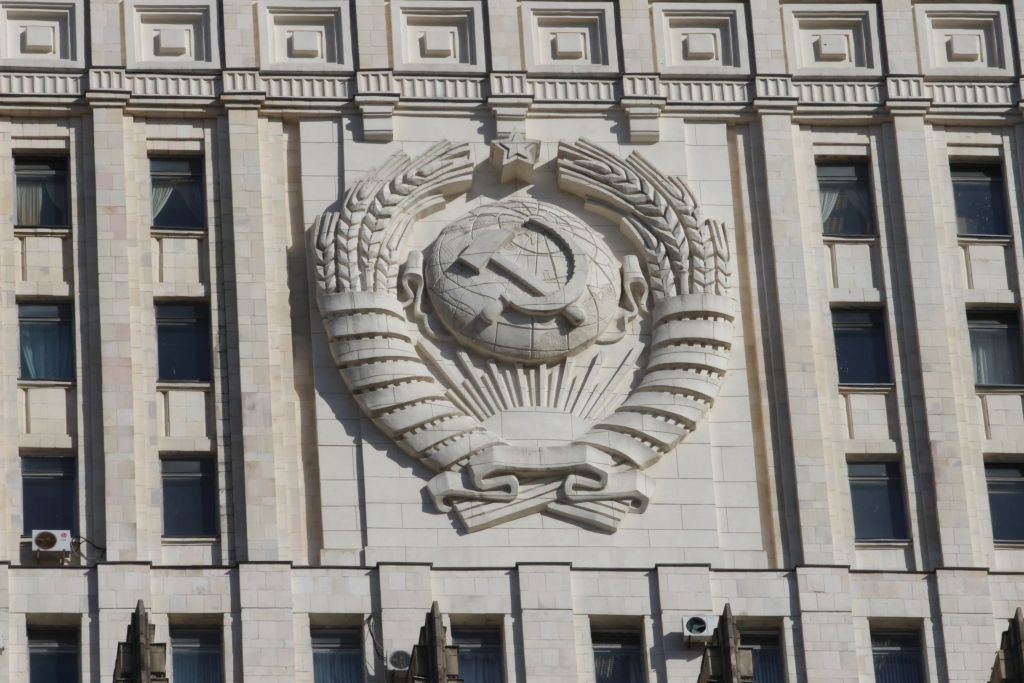
On June 7, a drone charity event for Kyiv Pride took place outside the Foreign Ministry building and was met with a nearby counterprotest.
The march was joined by representatives from the EU, Canada, the U.K., and various other countries, including France, Germany, and Spain.
The march was joined by the LGBT+ Military non-governmental organization (NGO) as Russia's war against Ukraine continues.
"Among the marchers was veteran Viktor Pylypenko, head of the NGO LGBT+ Military for Equal Rights. He drew public attention to the growing loss of military personnel and veterans who are dying at war — while their families remain unrecognized by law," Kyiv Pride said in its statement.
The march raised 20,000 hryvnia for the Serhiy Sternenko Foundation to purchase drones for the military.
Representatives, including Canada's ambassador to Ukraine, Natalka Cmoc, joined the event.
"Ambassadors, the Canadian embassy team, along with many diplomats, joined (the) Kyiv Pride march this morning," Cmoc said.
The Kyiv Pride event was met with a nearby counterprotest.
"With regret, we must note that those who incite violence still have broader access to public space and freely walk through the central streets, while participants of Kyiv Pride March are surrounded by police and restricted in their route. We continue to witness the spread of hate speech," Kyiv Pride said.
Kyiv Pride held a march in June 2024 for the first time since Russia began its full-scale war against Ukraine in February 2022.
Ukraine's military intelligence (HUR) destroyed three Russian air defense systems using drones in the occupied Zaporizhzhia Oblast on June 14, HUR says."Strike drone masters of the Department of Active Operations of the HUR of the Ukrainian defense ministry discovered and destroyed expensive air defense systems of the Russian invaders in the temporarily occupied territory of the Zaporizhzhia region," HUR reported in a post to Telegram.Ukraine's military regularly strikes military targets in Russ
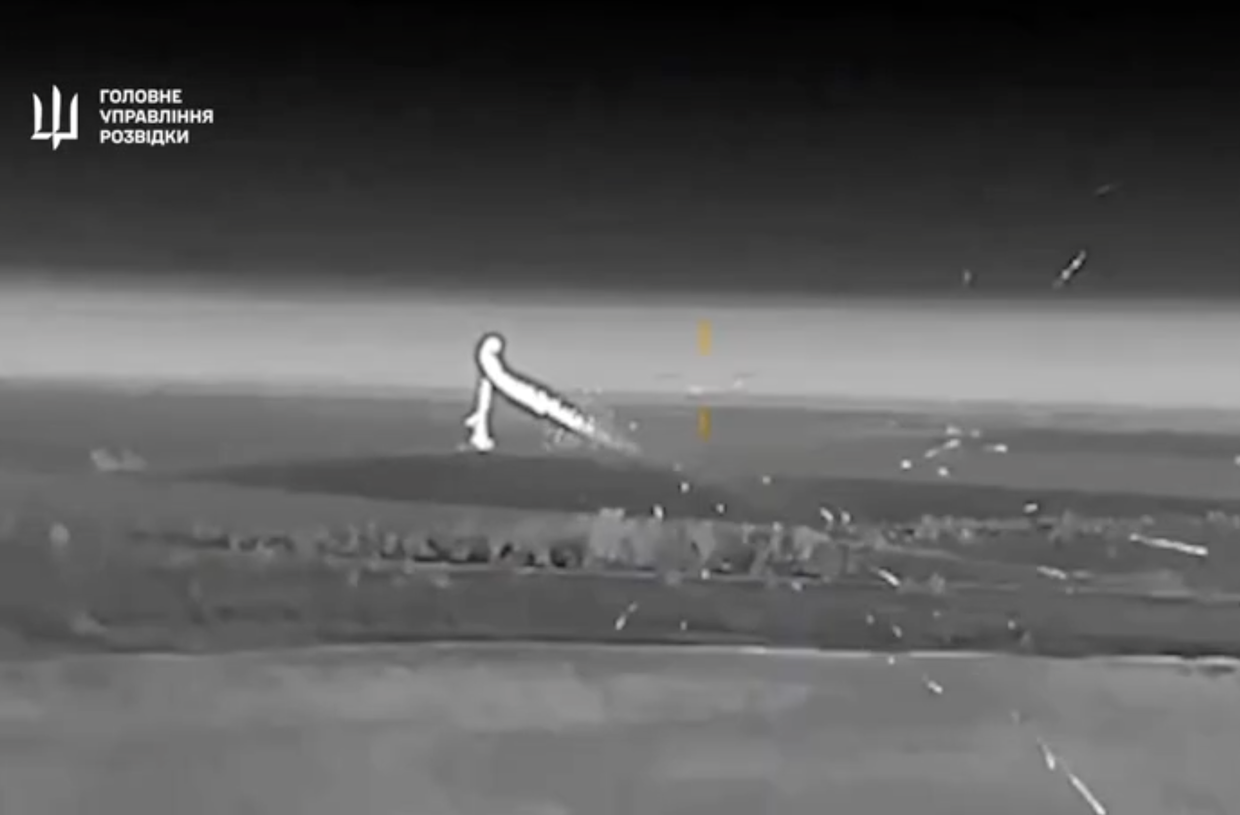
Ukraine's military intelligence (HUR) destroyed three Russian air defense systems using drones in the occupied Zaporizhzhia Oblast on June 14, HUR says.
"Strike drone masters of the Department of Active Operations of the HUR of the Ukrainian defense ministry discovered and destroyed expensive air defense systems of the Russian invaders in the temporarily occupied territory of the Zaporizhzhia region," HUR reported in a post to Telegram.
Ukraine's military regularly strikes military targets in Russian-occupied territories and deep within Russia in an attempt to diminish Moscow's fighting power as it continues its war against Ukraine.
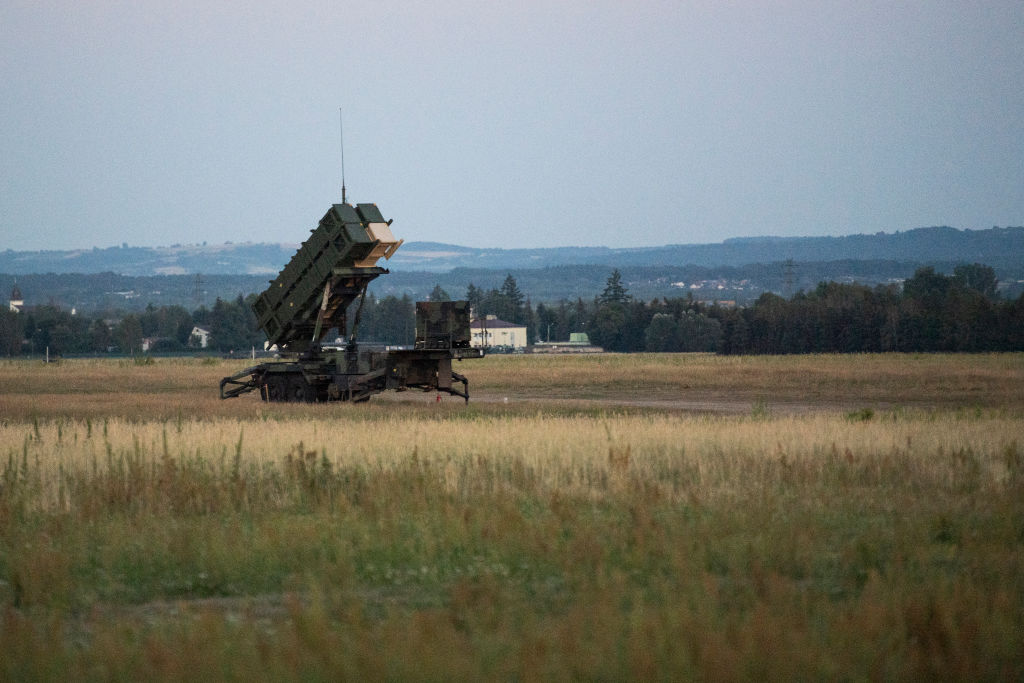
A Russian Buk-M3, a Pantsyr S1, and a 9S19 Imbir radar from the S-300V air defense system were destroyed in the Ukrainian drone attack.
"The video shows a stunning maneuver of a Ukrainian drone dodging a Muscovite anti-aircraft missile, as well as episodes of successful fire strikes," HUR's statement said.
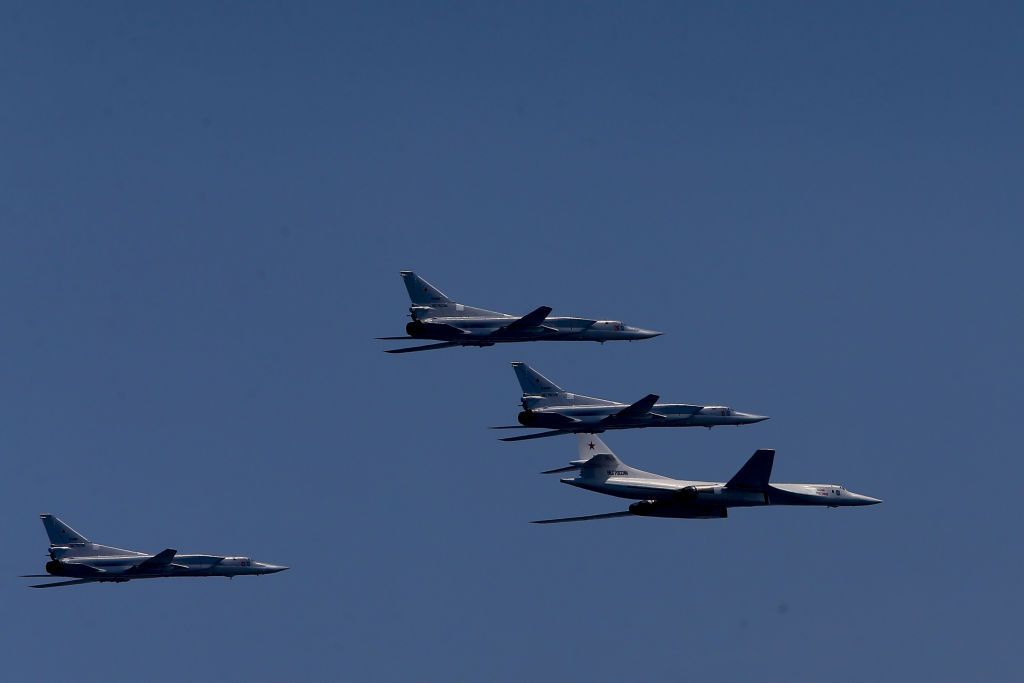
Kyiv claimed it disabled 34% of Russia's strategic bomber fleet in what is seen as one of the most daring operations during Russia's full-scale war.
Ukraine's military intelligence agency was behind explosions near Desantnaya Bay in Russia's far eastern Vladivostok on May 30, which reportedly damaged military personnel and equipment, a source in HUR told the Kyiv Independent.
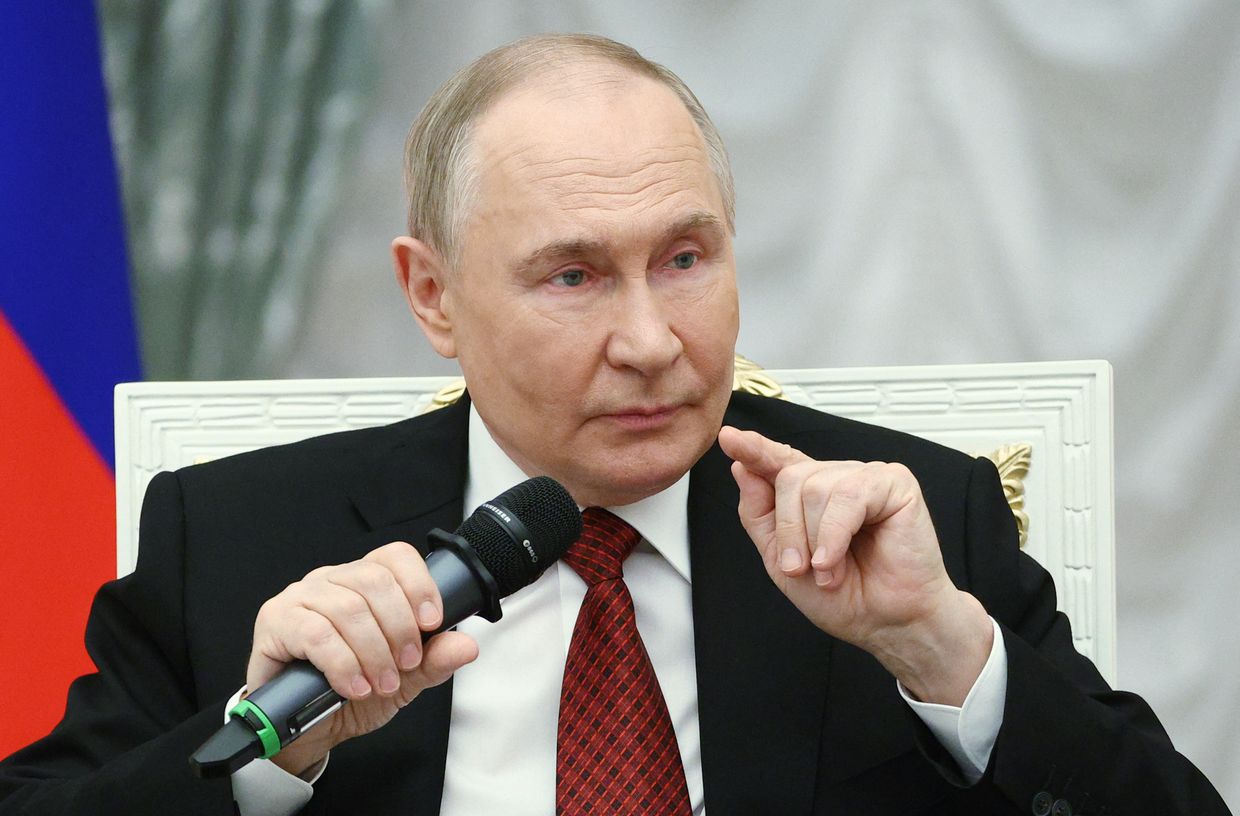
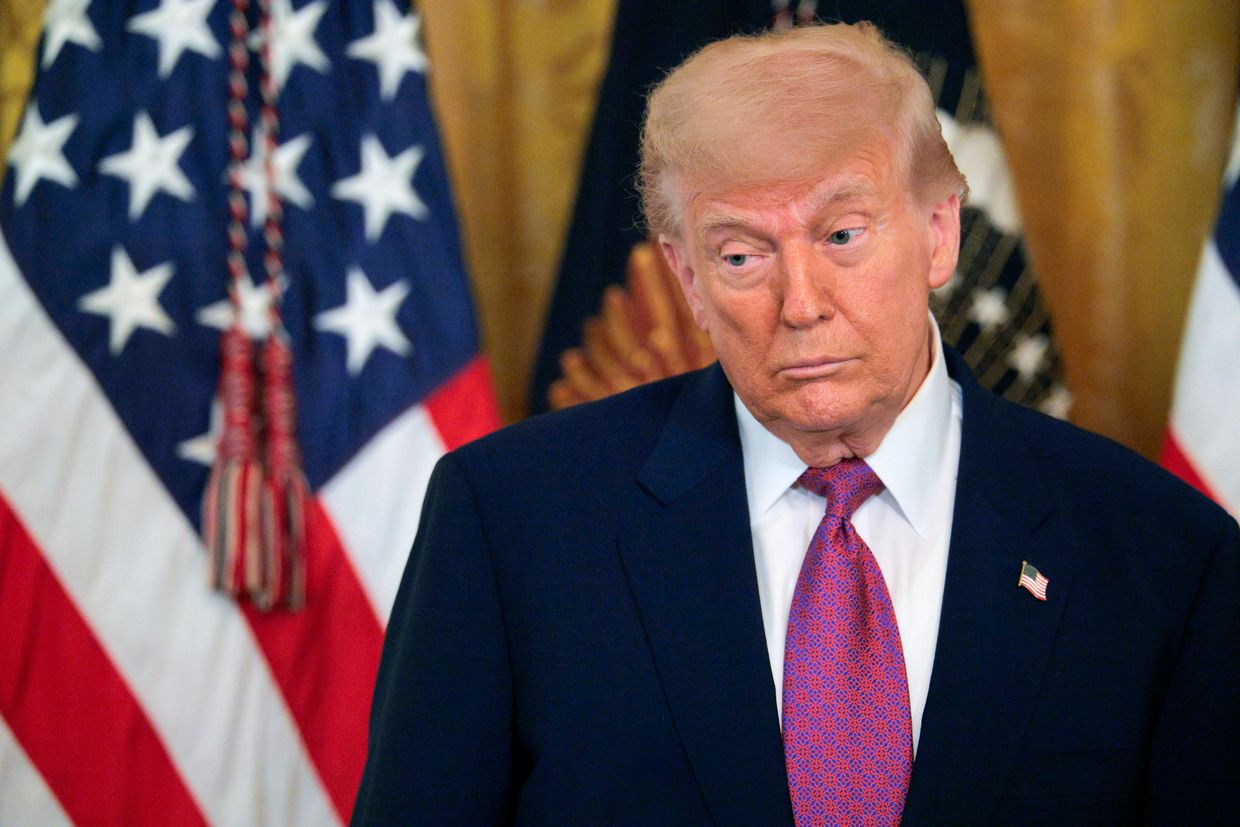
Editor's note: This is a developing story and is being updated.U.S. President Donald Trump and Russian President Vladimir Putin held a phone call on June 14 in which the two leaders discussed Ukraine and the conflict between Israel and Iran."Another telephone conversation between Russian President Vladimir... Putin and U.S. President Donald Trump," Russian state media reported, citing Putin's foreign policy aide Yuri Ushakov.The phone call took place on Trump's birthday, as the U.S. president ma
Editor's note: This is a developing story and is being updated.
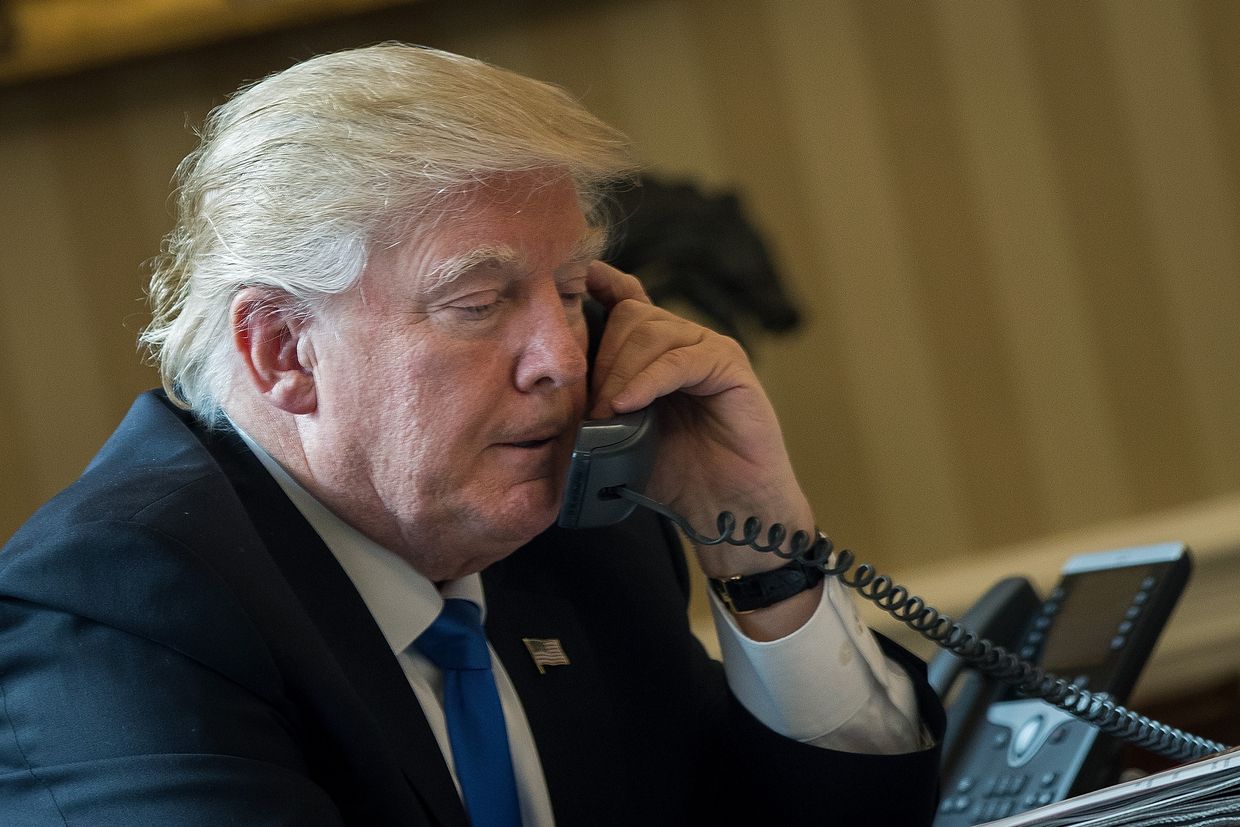
U.S. President Donald Trump and Russian President Vladimir Putin held a phone call on June 14 in which the two leaders discussed Ukraine and the conflict between Israel and Iran.
"Another telephone conversation between Russian President Vladimir... Putin and U.S. President Donald Trump," Russian state media reported, citing Putin's foreign policy aide Yuri Ushakov.
The phone call took place on Trump's birthday, as the U.S. president marks the occasion with a military parade in Washington.
The two leaders discussed Russia's ongoing war against Ukraine and the situation in the Middle East as Israel and Iran continue to exchange aerial attacks.
"The exchange of opinions naturally focused on the dangerous escalation of the situation in the Middle East," Ushakov said.
The phone call between Trump and Putin lasted 50 minutes, he said.
"Russia expressed its readiness to continue negotiations with the Ukrainians, as agreed, after June 22. Donald Trump took note of this information and once again noted his interest in a speedy end to the Russian-Ukrainian conflict," Ushakov said, according to Russian state media.
Trump later confirmed he held a phone call with Putin, saying that the main topic the two leaders covered was Iran.
"President Putin called this morning to very nicely wish me a Happy Birthday, but to more importantly, talk about Iran, a country he knows very well," Trump said in a post to Truth social.
Trump noted that the phone call between the two leaders lasted about one hour, with Putin congratulating Trump on his birthday.
"Much less time was spent talking about Russia/Ukraine, but that will be for next week. He is doing the planned prisoner swaps — large numbers of prisoners are being exchanged, immediately, from both sides," Trump said.
The latest round of prisoner swaps occurred on June 14. Ukraine mainly returned severely wounded and seriously ill soldiers, many of whom were captured during the defense of Mariupol in 2022.
Russia has intensified drone and missile attacks on Ukraine following two rounds of largely inconclusive peace talks between Moscow and Kyiv in Turkey on May 16 and June 2.
Israel and Iran continued to exchange attacks on June 14, more than 24 hours after Israel launched its first strikes on Iran's nuclear sites and military leadership.
Trump has said that the U.S. military is on high alert and watching for any kind of retaliation, adding that the U.S. will respond to defend itself or Israel if Iran strikes back.
The Security Service of Ukraine (SBU) has arrested two individuals in Kyiv accused of attempting to extort $200,000 from a European defense company, potentially jeopardizing the delivery of electronic warfare (EW) systems to Ukraine's military, the SBU reported on June 14.The suspects allegedly demanded the payment in exchange for facilitating the successful testing and adoption of five radio electronic warfare systems provided to Ukraine at no cost, according to statements released by the SBU a
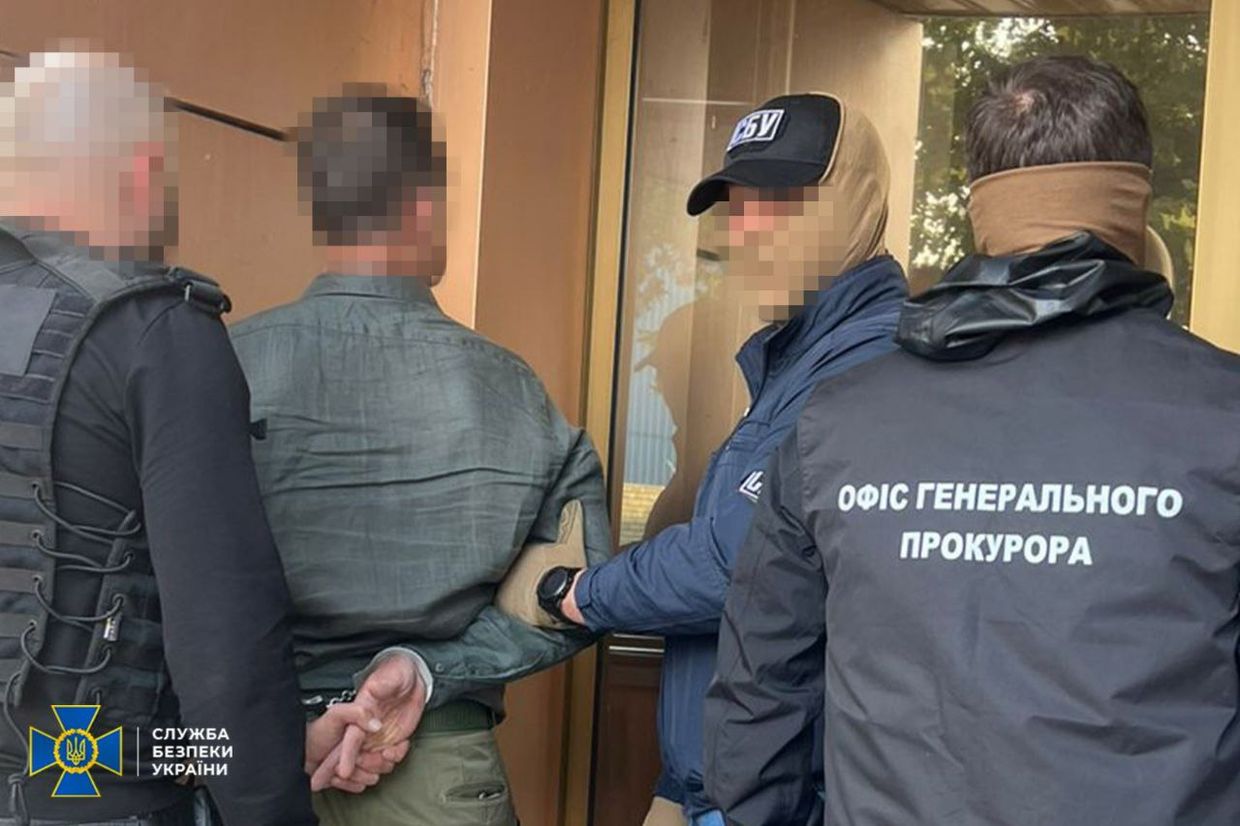
The Security Service of Ukraine (SBU) has arrested two individuals in Kyiv accused of attempting to extort $200,000 from a European defense company, potentially jeopardizing the delivery of electronic warfare (EW) systems to Ukraine's military, the SBU reported on June 14.
The suspects allegedly demanded the payment in exchange for facilitating the successful testing and adoption of five radio electronic warfare systems provided to Ukraine at no cost, according to statements released by the SBU and the Prosecutor General's Office.
The devices, supplied by a private foreign manufacturer, were financed by Ukraine's international partners. The producer had already delivered five systems to Ukraine, with additional contracts possible if the equipment performed well in combat conditions, the SBU said.
According to investigators, the suspects falsely claimed to have influence within Ukraine's Defense Ministry and promised to use their connections to ensure positive evaluations of the equipment.
"Under the guise of having contacts within the ministry, the men demanded $200,000 from the company in exchange for ensuring no obstacles during official trials of the equipment," the Prosecutor General's Office said in a statement.
Both men have been formally charged under Ukraine's Criminal Code for alleged obstruction of the Armed Forces and receiving unlawful benefits through influence peddling. The charges carry a possible sentence of up to eight years in prison and asset confiscation.
The arrests were made as part of a broader investigation led by the SBU and conducted under the procedural oversight of the Specialized Defense Prosecutor's Office. Authorities say the investigation is ongoing to identify all individuals involved.
Ukraine continues to rely heavily on international military assistance as it defends against Russia's full-scale invasion, now in its fourth year. Ukraine uses EW systems during Russian attacks on its cities and on the front line.
Kyiv and its Western partners launched an electronic warfare coalition in April, which consists of 11 countries and comes on top of other eight Western coalitions to support Ukraine. Other similar initiatives include an artillery coalition, a fighter jet coalition, and a demining coalition, organized within the framework of the Ramsteinformat.
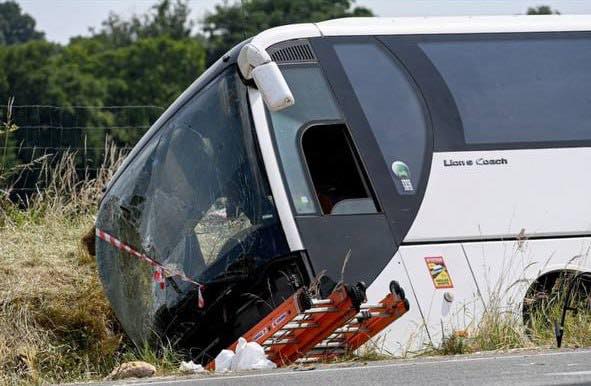
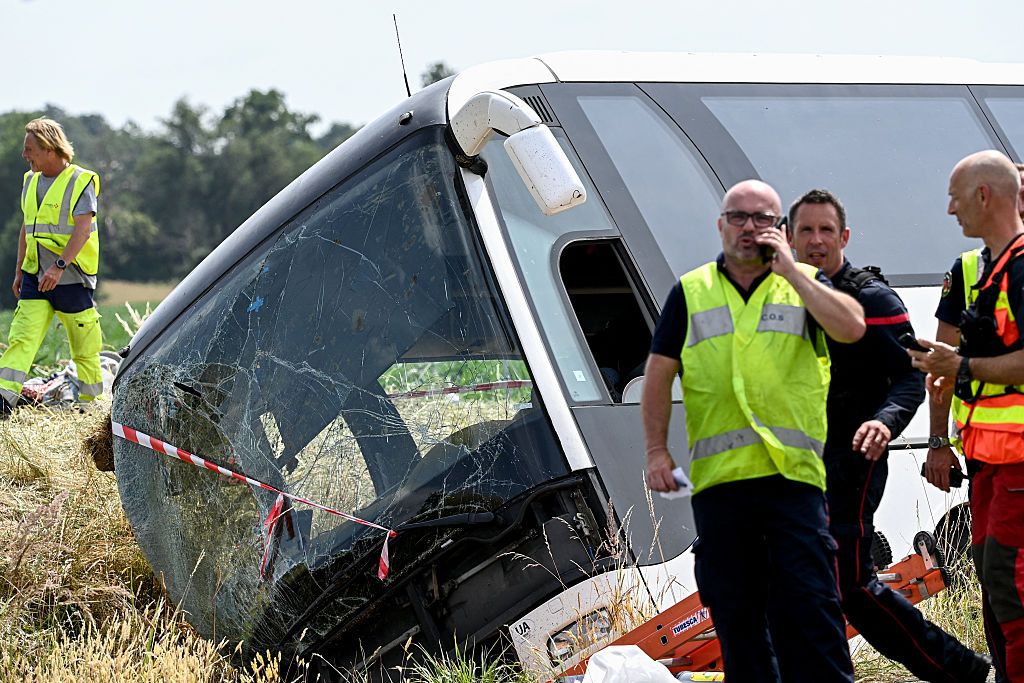
Nine Ukrainian students remain hospitalized following a deadly bus accident in France that killed three Ukrainian nationals and injured dozens more, Ukrainian officials confirmed on June 14. The group, made up of students and teachers from Chernivtsi Oblast, was returning from an academic exchange when their bus veered off the road in the Sarthe department of France on June 13.While en route to Paris, the bus veered off the road for reasons still under investigation and flipped into a ditch. In
Nine Ukrainian students remain hospitalized following a deadly bus accident in France that killed three Ukrainian nationals and injured dozens more, Ukrainian officials confirmed on June 14.
The group, made up of students and teachers from Chernivtsi Oblast, was returning from an academic exchange when their bus veered off the road in the Sarthe department of France on June 13.
While en route to Paris, the bus veered off the road for reasons still under investigation and flipped into a ditch. In addition to the four fatalities, French media reported nine people were seriously injured and 18 sustained minor injuries.
According to Ruslan Zaparaniuk, governor of Chernivtsi Oblast, nine Ukrainian students remain hospitalized, though their conditions are stable. "All other people have received the necessary support, food, and temporary shelter and are now in safe locations," he wrote on Facebook.
Zaparaniuk noted that Ukraine's Embassy in France is organizing the logistics to help the children return home and is assisting parents wishing to travel to France to visit their hospitalized children.
Ukraine's Embassy in France said that a diplomatic team, led by Ambassador Vadym Omelchenko, traveled to the crash site and remains in Sarthe to support victims and coordinate with French authorities.
According to the embassy, two people injured in the crash remain in critical condition. All other victims are receiving medical treatment and support from Ukrainian and French teams.
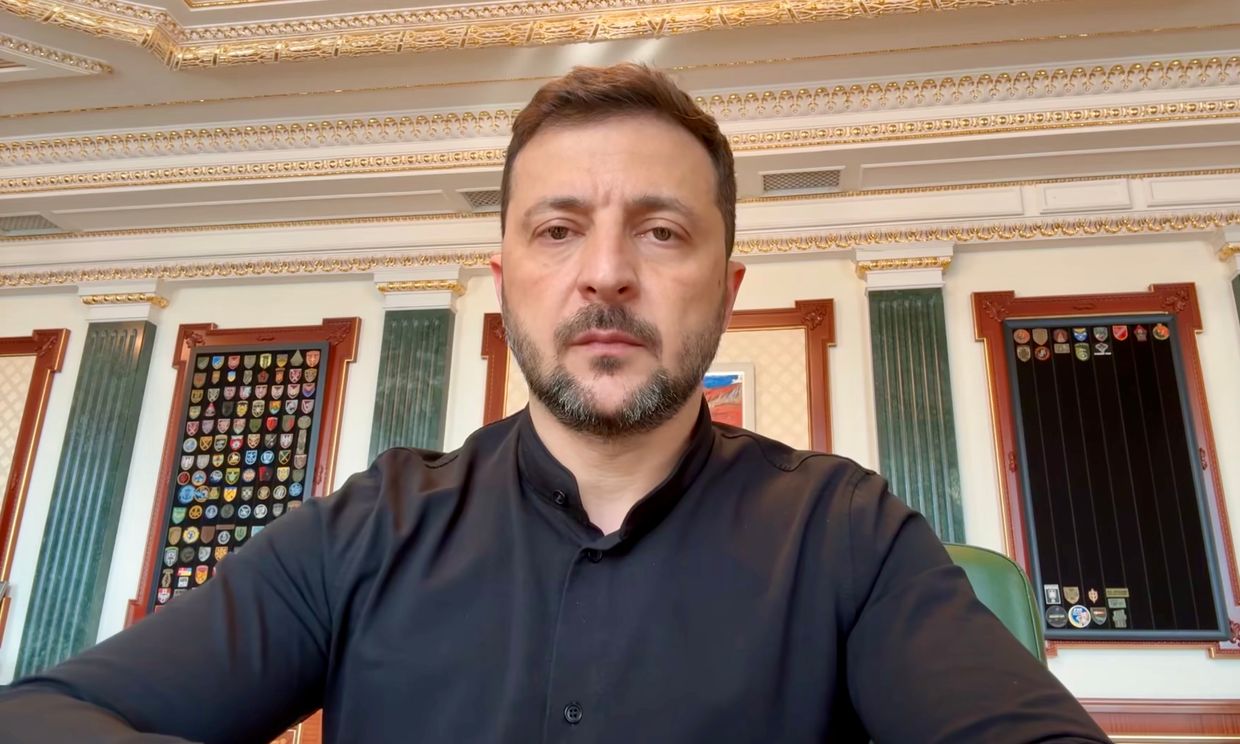
President Volodymyr Zelensky expressed condolences in a June 13 statement, calling the accident "terrible news" and thanking French authorities for their solidarity and rapid response.
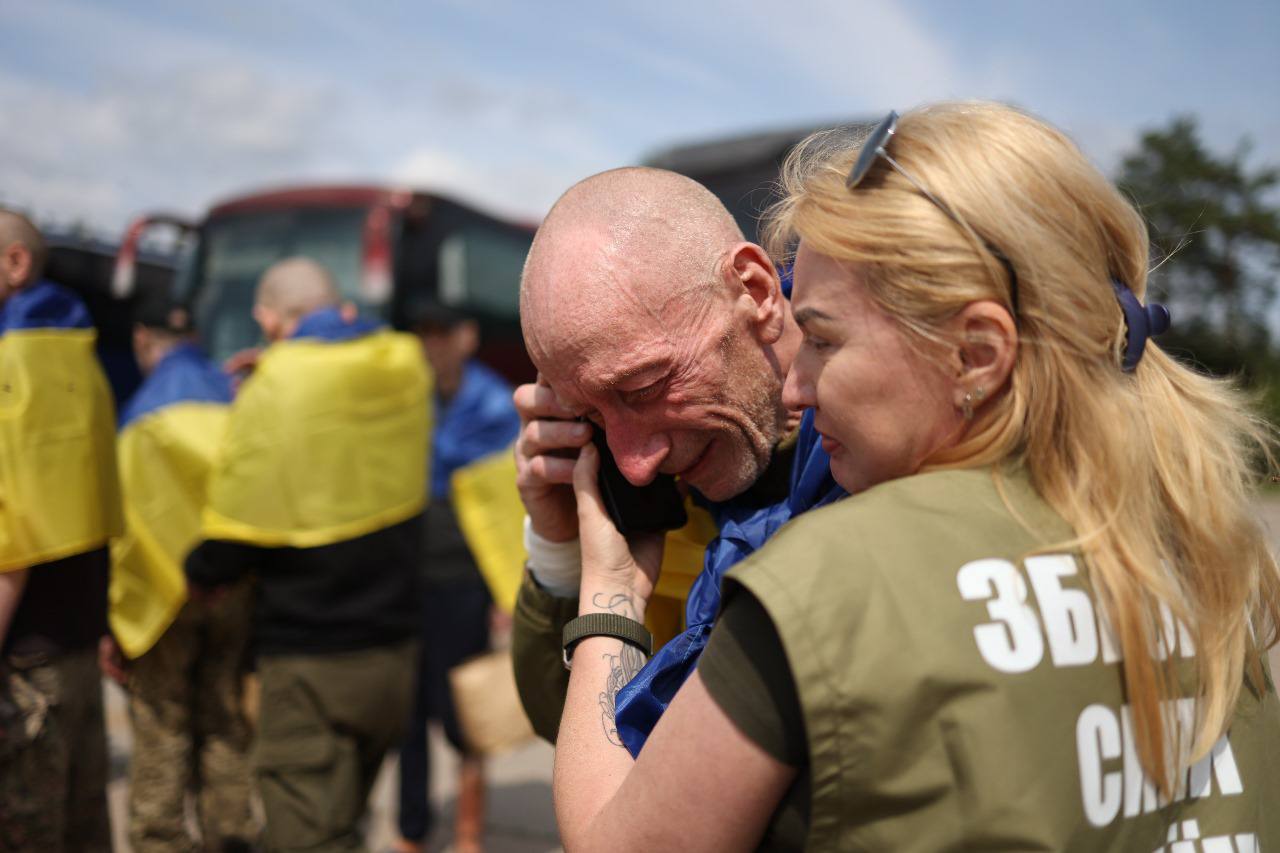
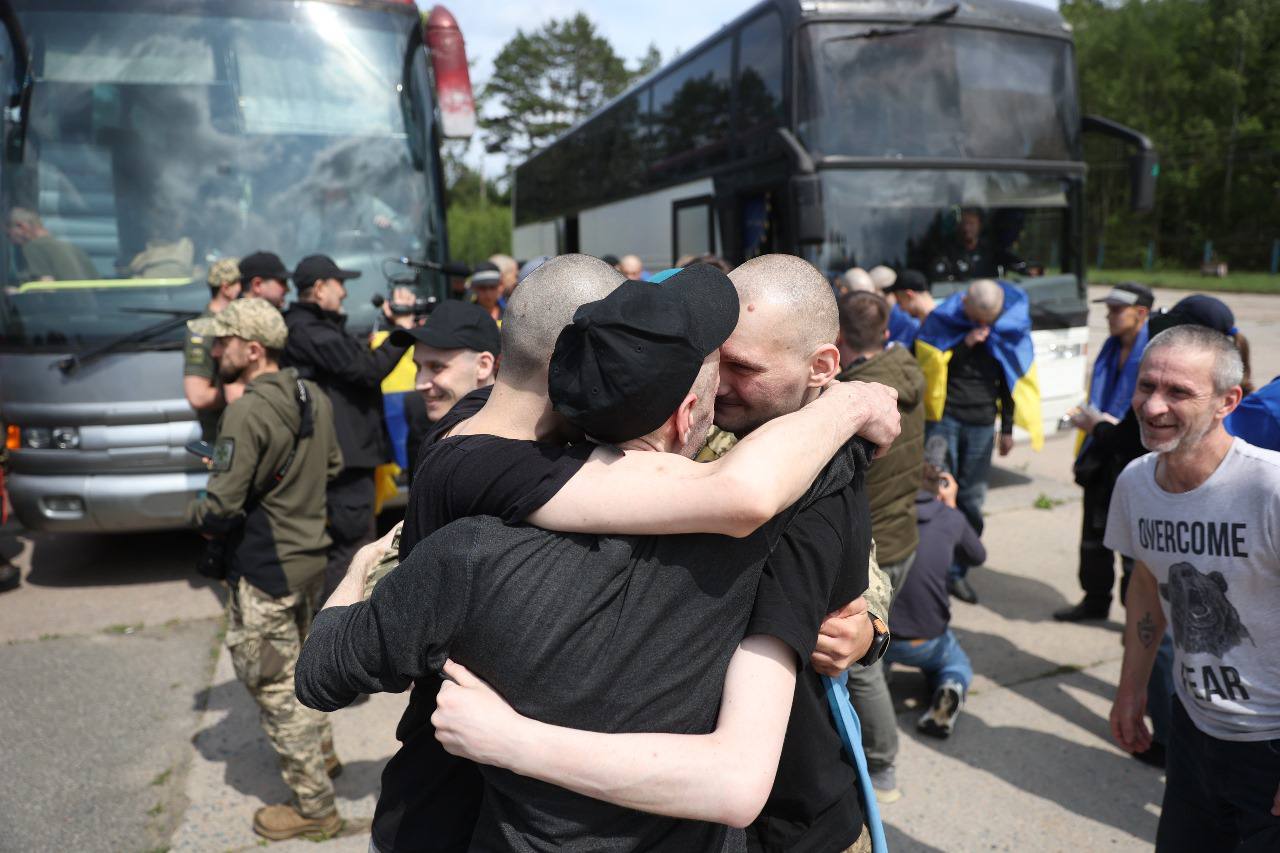
Kyiv is continuing efforts to bring home its citizens held captive by Russia, marking the fourth prisoner exchange in a week, President Volodymyr Zelensky announced on June 14."Today, among those returning to Ukraine, many have been in captivity since 2022," Zelensky said. "These include soldiers from the Armed Forces, National Guard, State Border Guard Service, and the State Special Transport Service."The exchanges are part of the agreement reached during talks held in Istanbul earlier this mon
Kyiv is continuing efforts to bring home its citizens held captive by Russia, marking the fourth prisoner exchange in a week, President Volodymyr Zelensky announced on June 14.
"Today, among those returning to Ukraine, many have been in captivity since 2022," Zelensky said. "These include soldiers from the Armed Forces, National Guard, State Border Guard Service, and the State Special Transport Service."
The exchanges are part of the agreement reached during talks held in Istanbul earlier this month, where both sides agreed to phased prisoner swaps and repatriation of fallen soldiers.
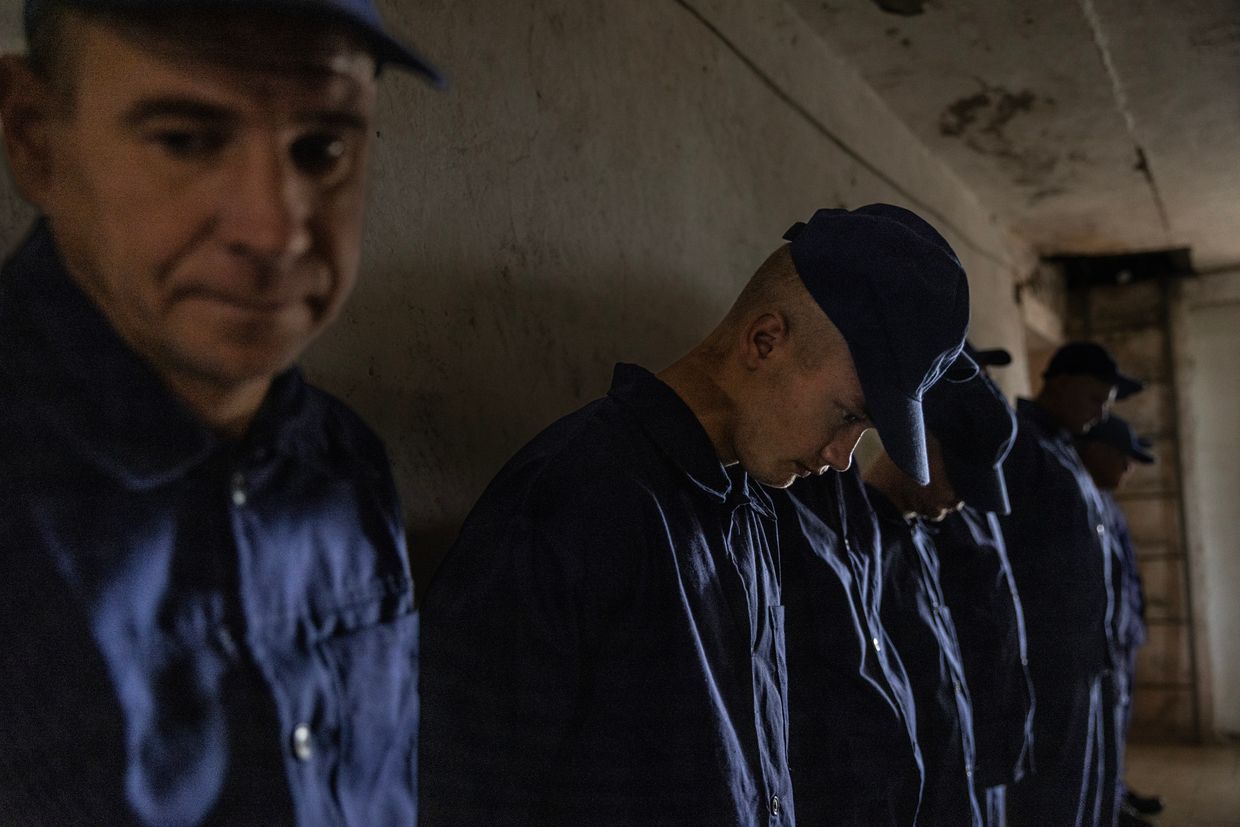
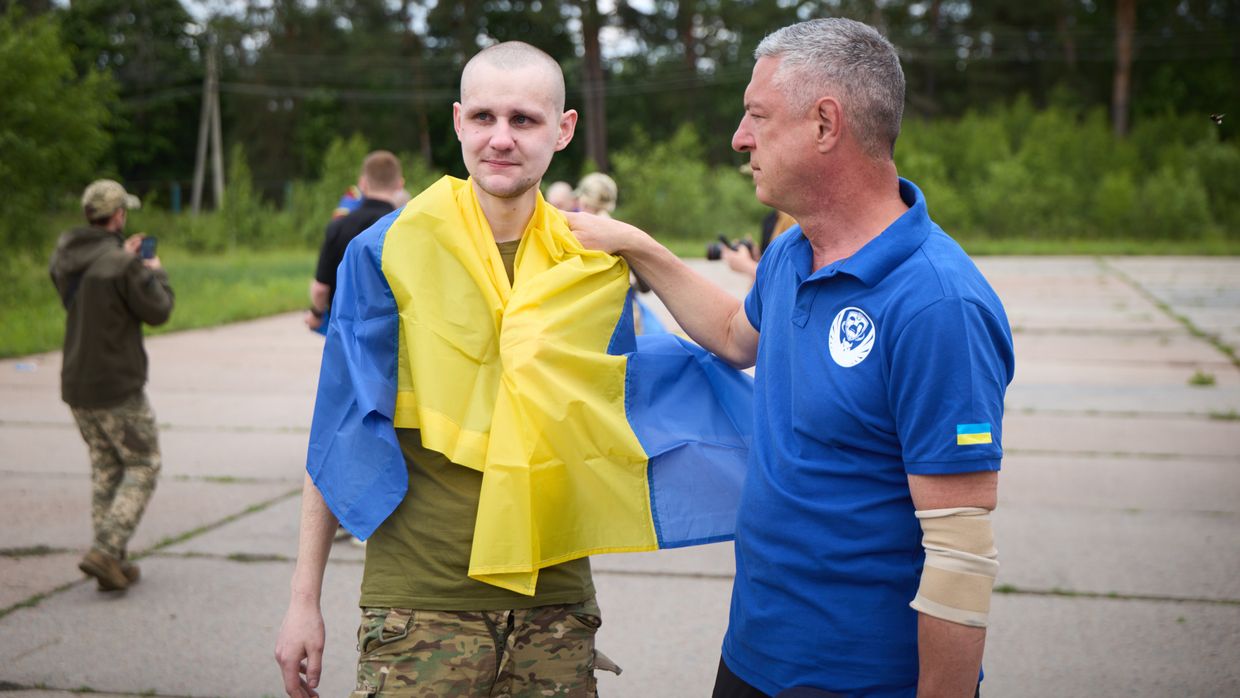
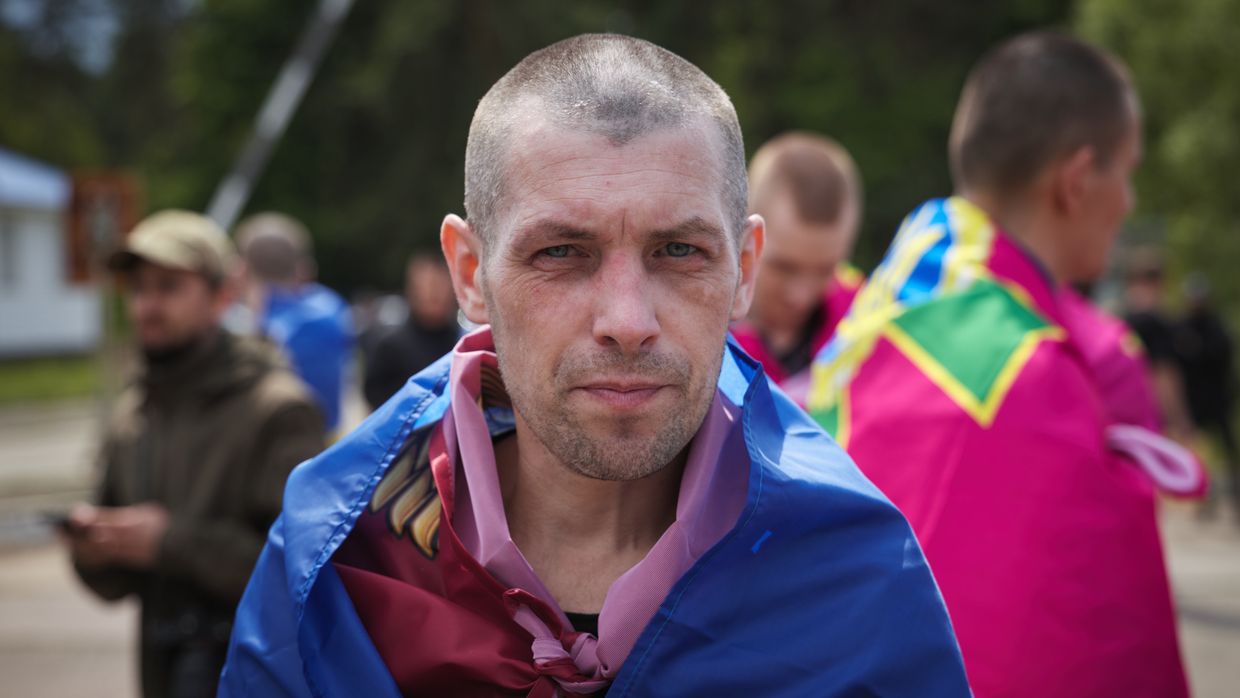
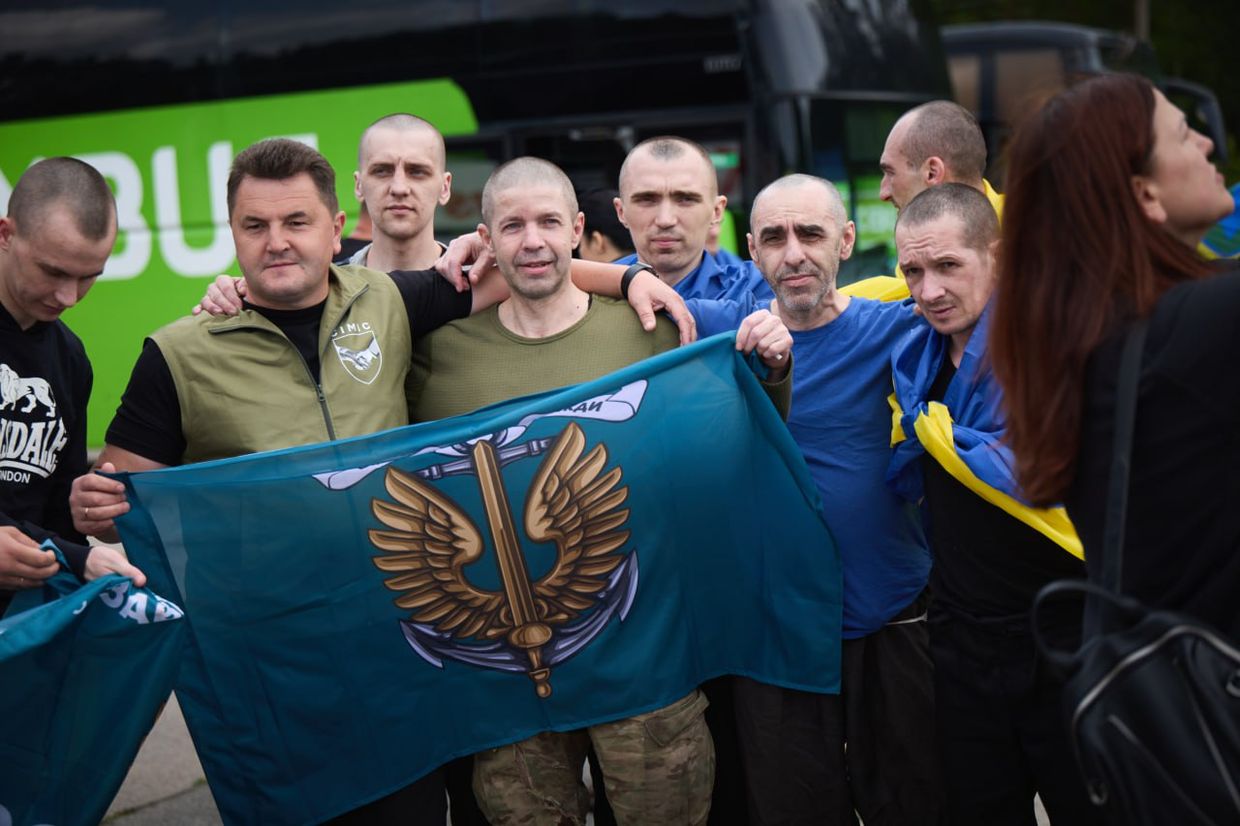
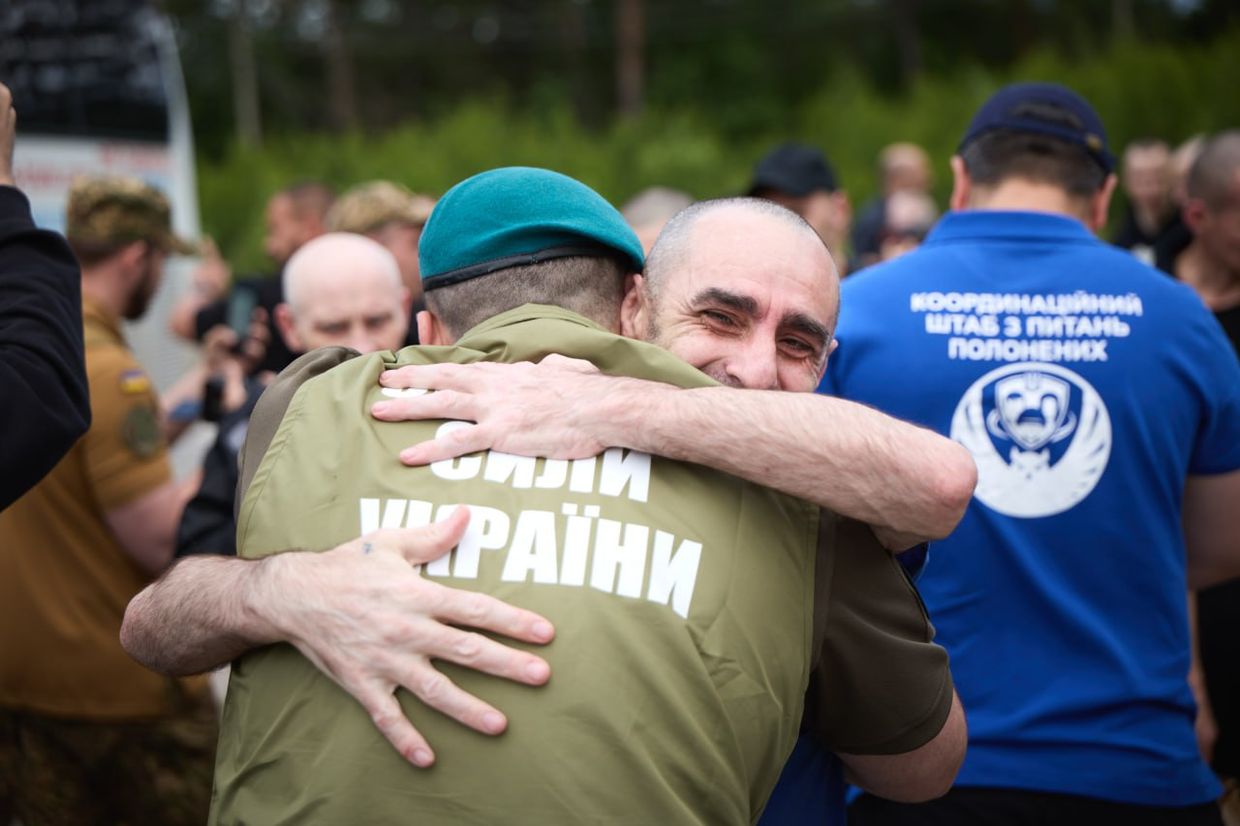
The latest group freed on June 14 mainly consists of severely wounded and seriously ill soldiers, many of whom were captured during the defense of Mariupol in 2022.
Most of the released defenders are officers, with some younger than 25 years old. These Ukrainian defenders served on multiple fronts including Donetsk, Zaporizhzhia, Luhansk, Kherson, Kharkiv, Sumy, and Kursk directions, the Coordination Headquarters for Prisoners of War stated.
Ukraine has earlier brought home service members from Russian captivity on June 12 and 10. Both swaps alsp prioritized severely injured and ill captives. The number of personnel released was not disclosed.
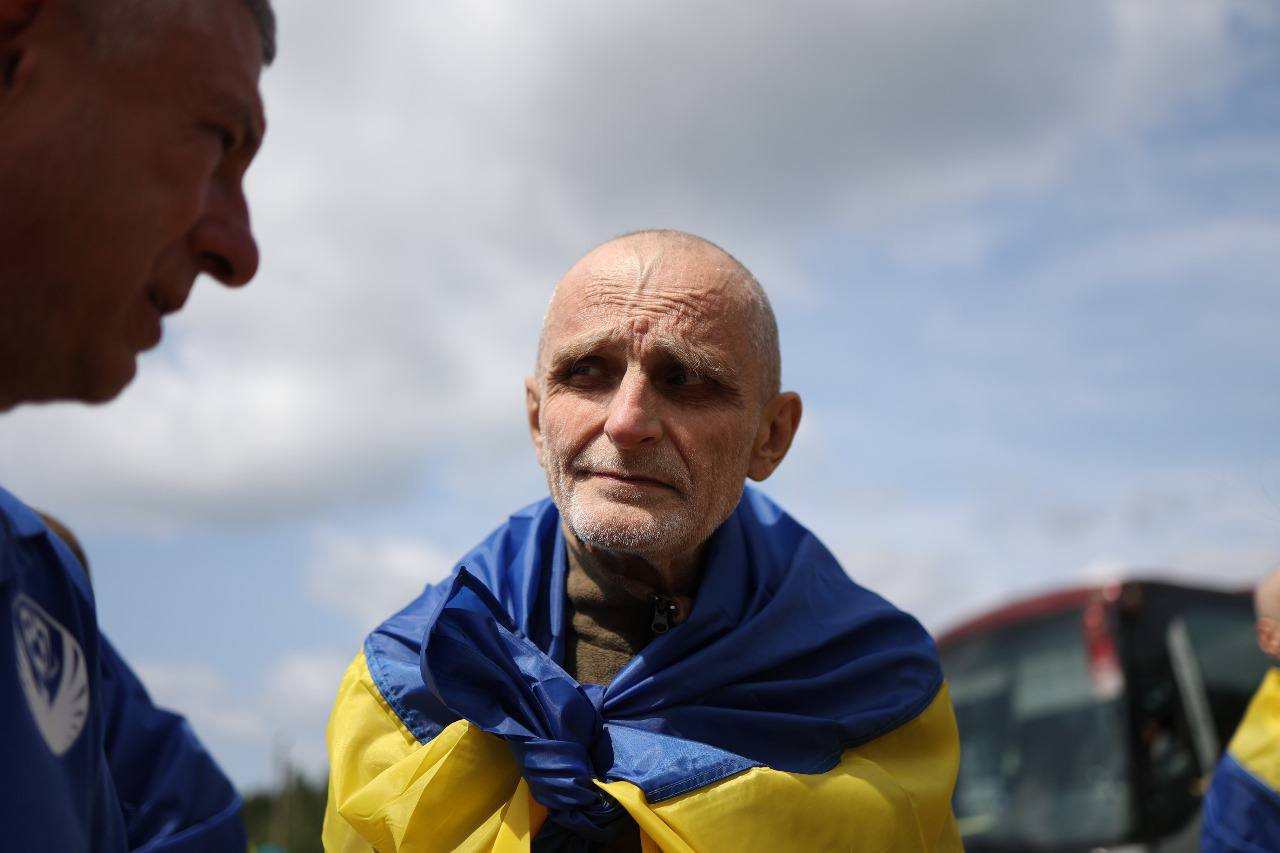
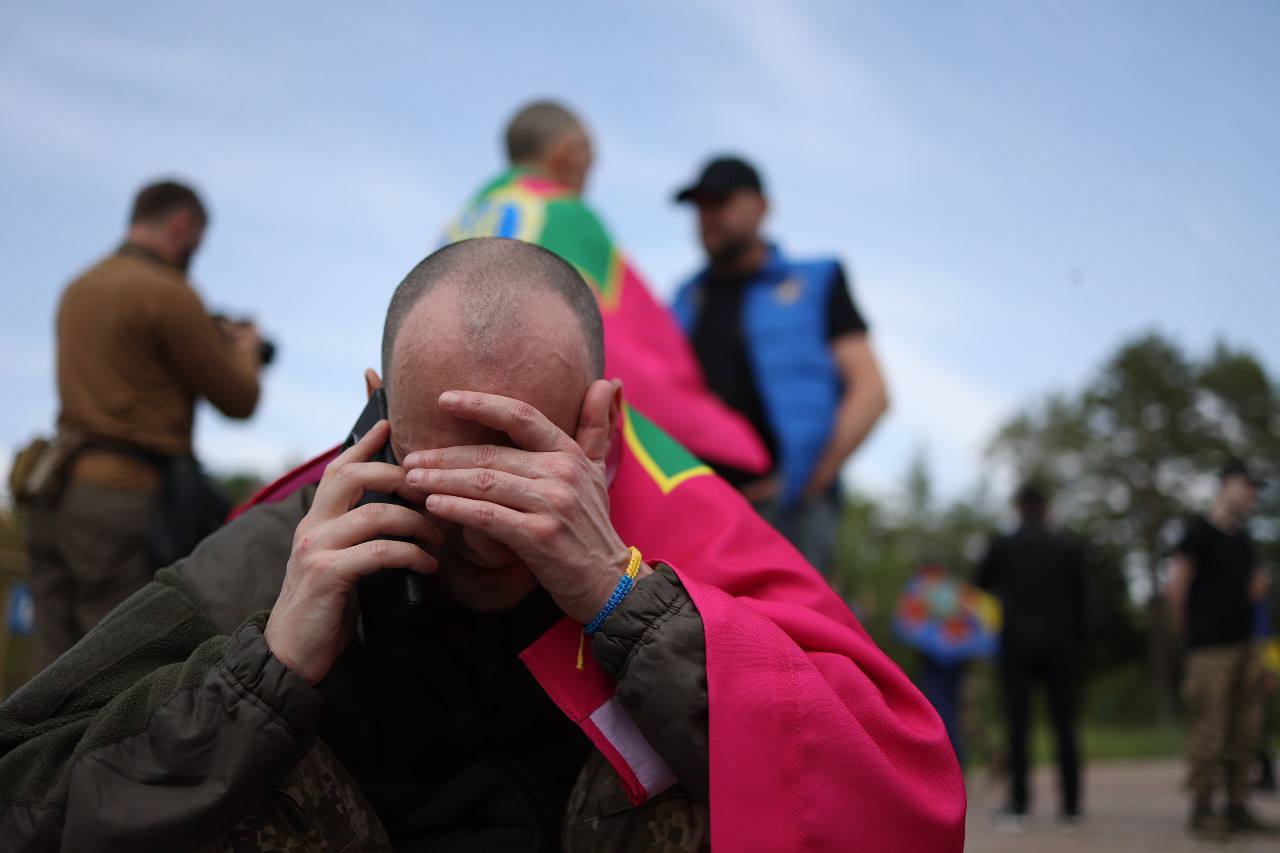
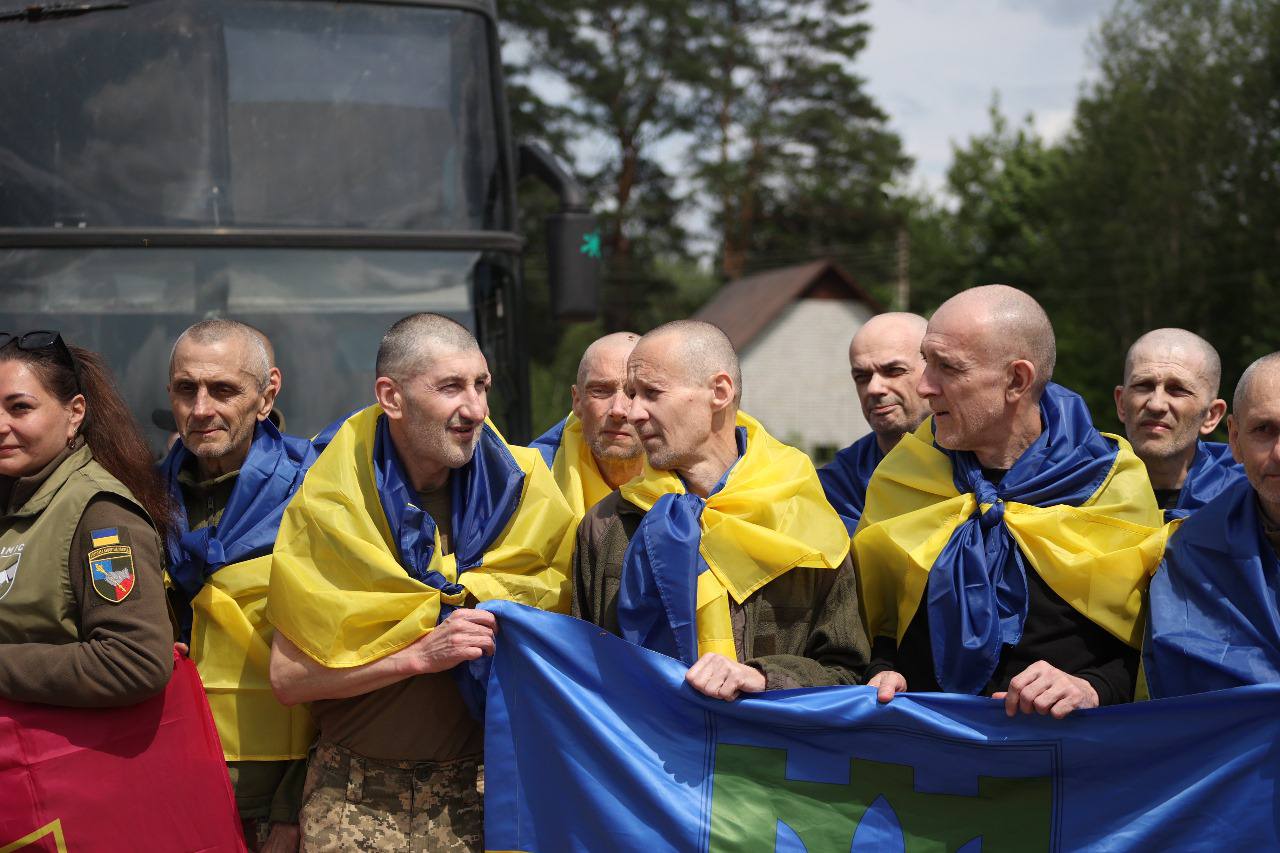
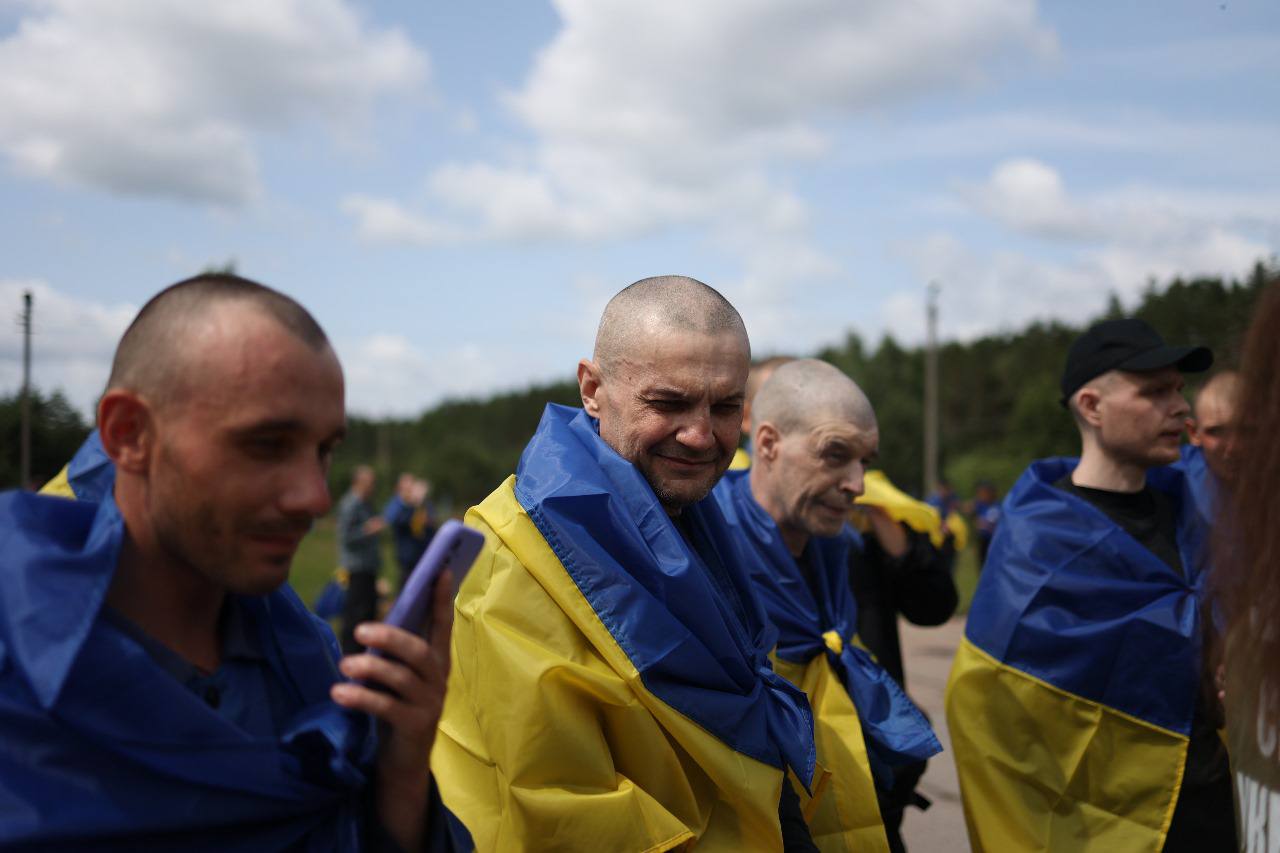
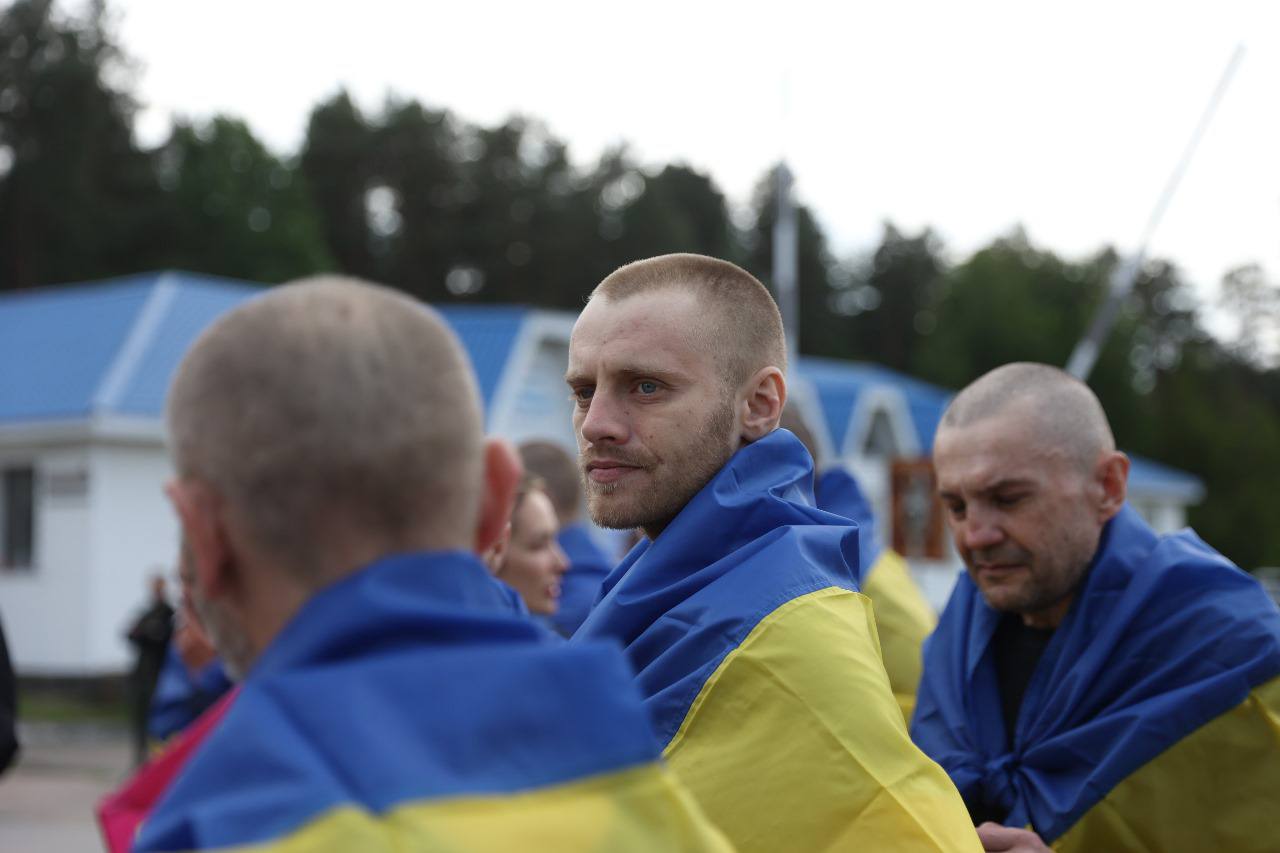
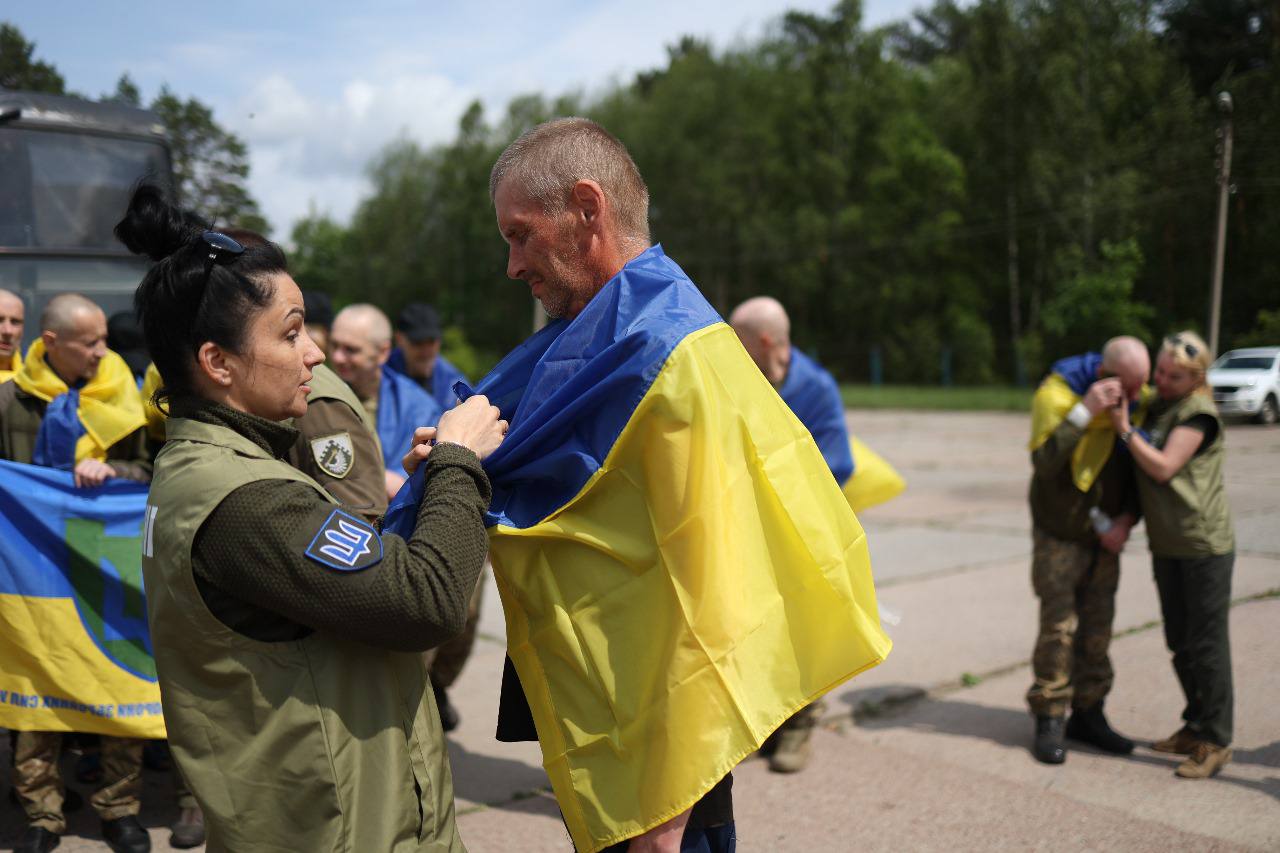
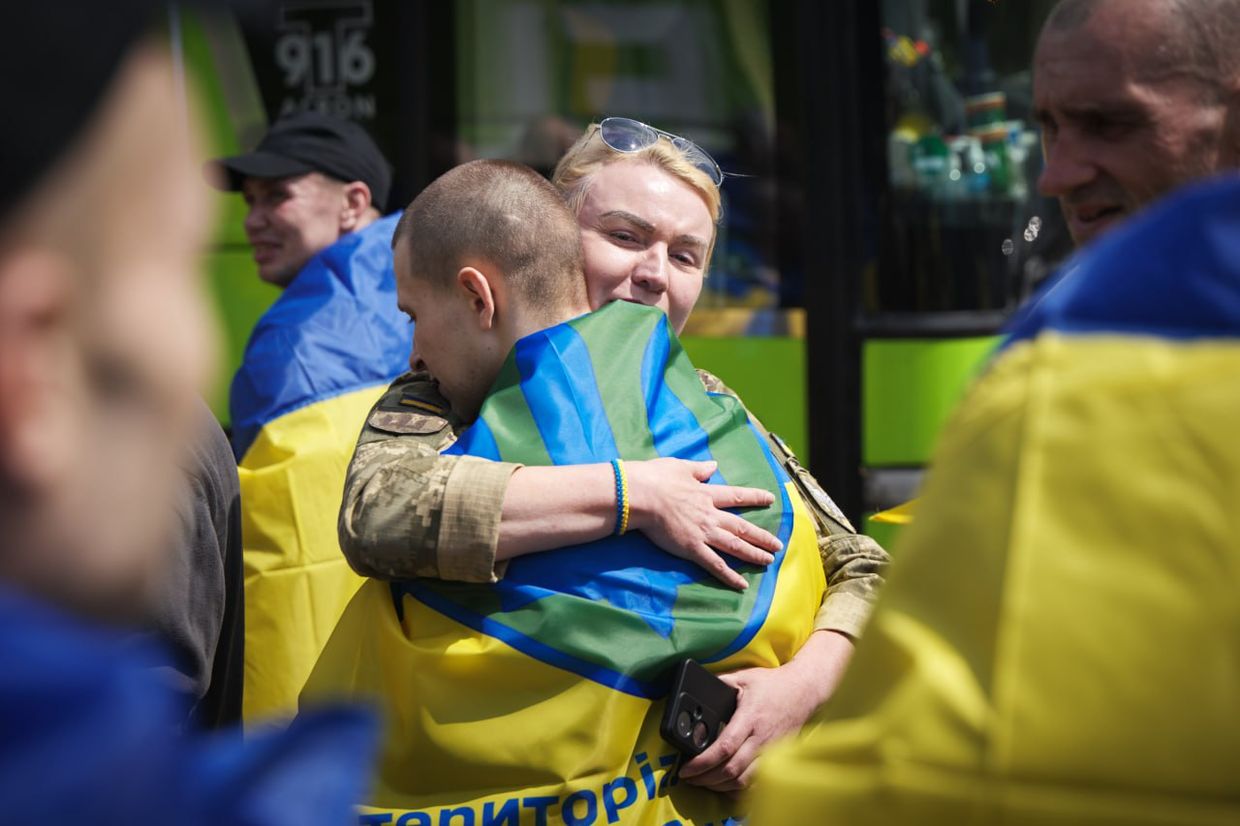
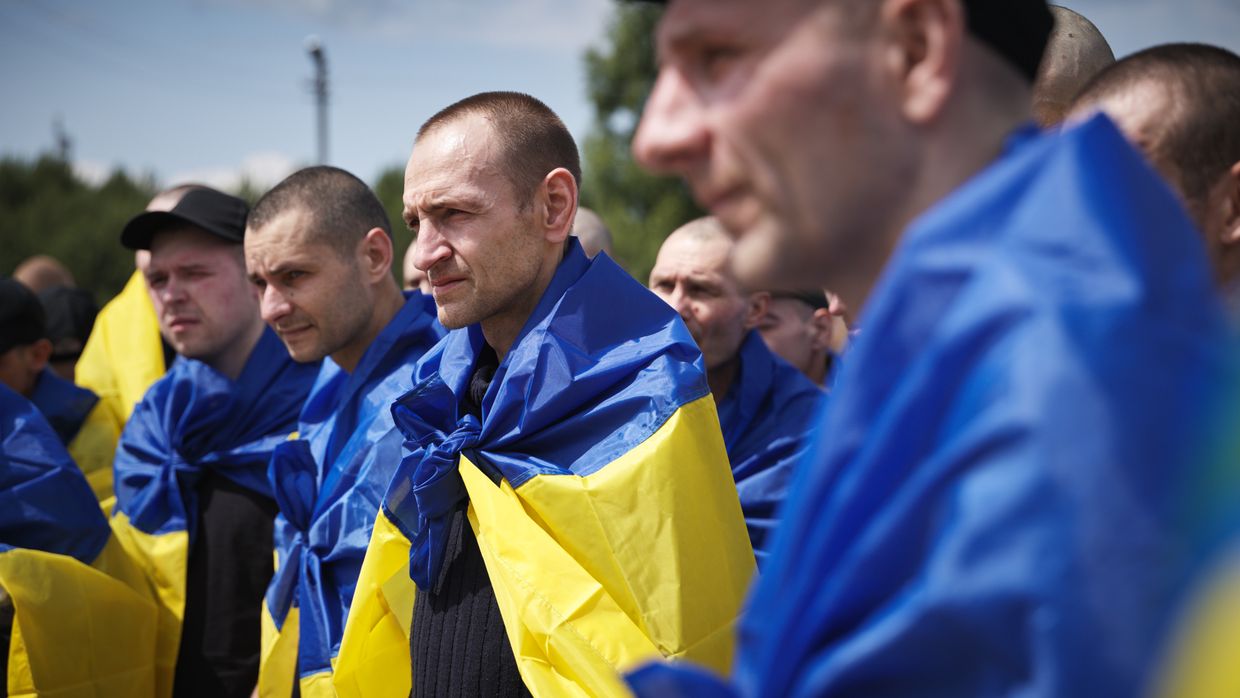
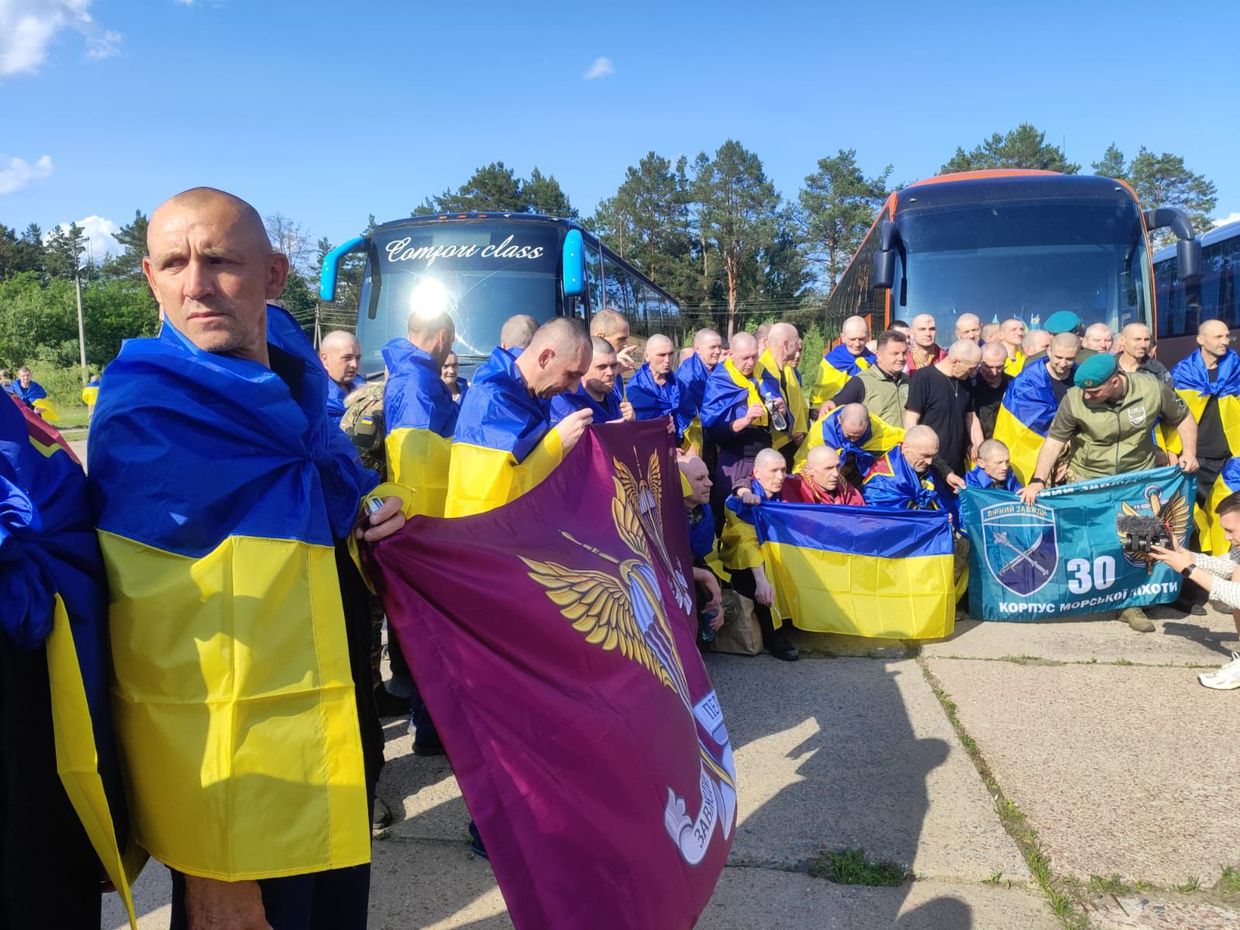
Ukrainian soldiers freed in a prisoner swap with Russia on June 14, 2025. (Volodymyr Zelensky / Telegram)
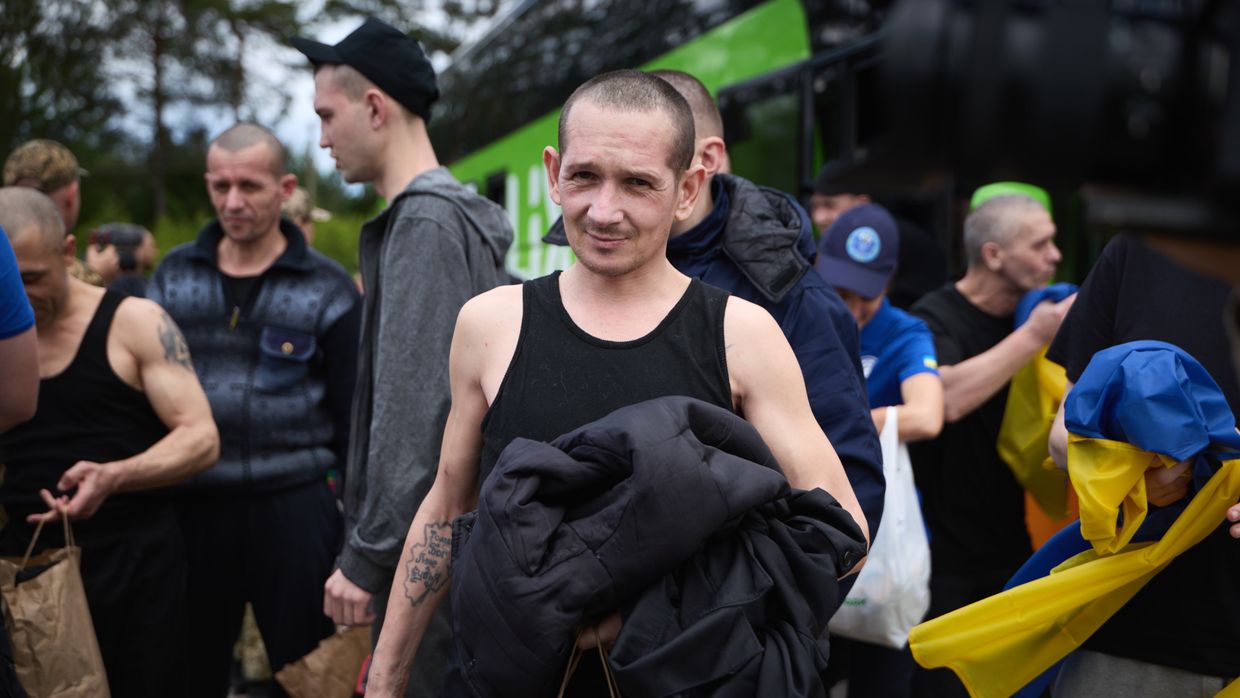
Ukrainian soldier freed in a prisoner swap with Russia on June 14, 2025. (Volodymyr Zelensky / Telegram)
Ukrainian soldier freed in a prisoner swap with Russia on June 14, 2025. (Volodymyr Zelensky / Telegram)
Ukrainian soldiers freed in a prisoner swap with Russia on June 14, 2025. (Volodymyr Zelensky / Telegram)
Ukrainian soldiers freed in a prisoner swap with Russia on June 14, 2025. (Volodymyr Zelensky / Telegram)
Ukrainian soldier freed in a prisoner swap with Russia on June 14, 2025. (Volodymyr Zelensky / Telegram)
Ukrainian soldier freed in a prisoner swap with Russia on June 14, 2025. (Volodymyr Zelensky / Telegram)
The Istanbul deal was reached during the second round of direct talks between the Ukrainian and Russian delegations on June 2 in Istanbul. While no political breakthrough was achieved, both sides agreed to a phased exchange of prisoners and the repatriation of fallen soldiers' bodies. As part of that agreement, Russia pledged to return the bodies of up to 6,000 Ukrainian service members.
Ukraine brought back the bodies of 2,412 Ukrainian nationals, including fallen service members, on June 13 and June 11, as well as 1,200 on June 14.
Amid the ongoing exchanges, Ukraine continues to push for an "all-for-all" formula to bring every captured Ukrainian soldier home, a proposal Moscow has so far rejected. The Coordination Headquarters said preparations are underway for the next phase of prisoner releases in the coming weeks as Kyiv maintains its commitment to recovering all those held captive.
The freed defenders will undergo medical examinations, receive physical and psychological rehabilitation, and be granted all entitled compensation for their time in captivity, according to the Coordination Headquarters.
In a conversation with journalists, Zelensky expressed hope that the prisoner exchanges would be completed by June 20 or 21.
Editor's note: This story was updated to include new details on the medical repatriation of Russian POWs, citing commentary from Ukraine's I Want to Live project.Ukraine has recovered the bodies of 1,200 fallen citizens, including military personnel, in the latest round of repatriation efforts coordinated with Russia under agreements reached during talks in Istanbul, Ukrainian officials said on June 14.This latest repatriation follows the return of 2,412 bodies earlier on June 13 and June 11, re
Editor's note: This story was updated to include new details on the medical repatriation of Russian POWs, citing commentary from Ukraine's I Want to Live project.
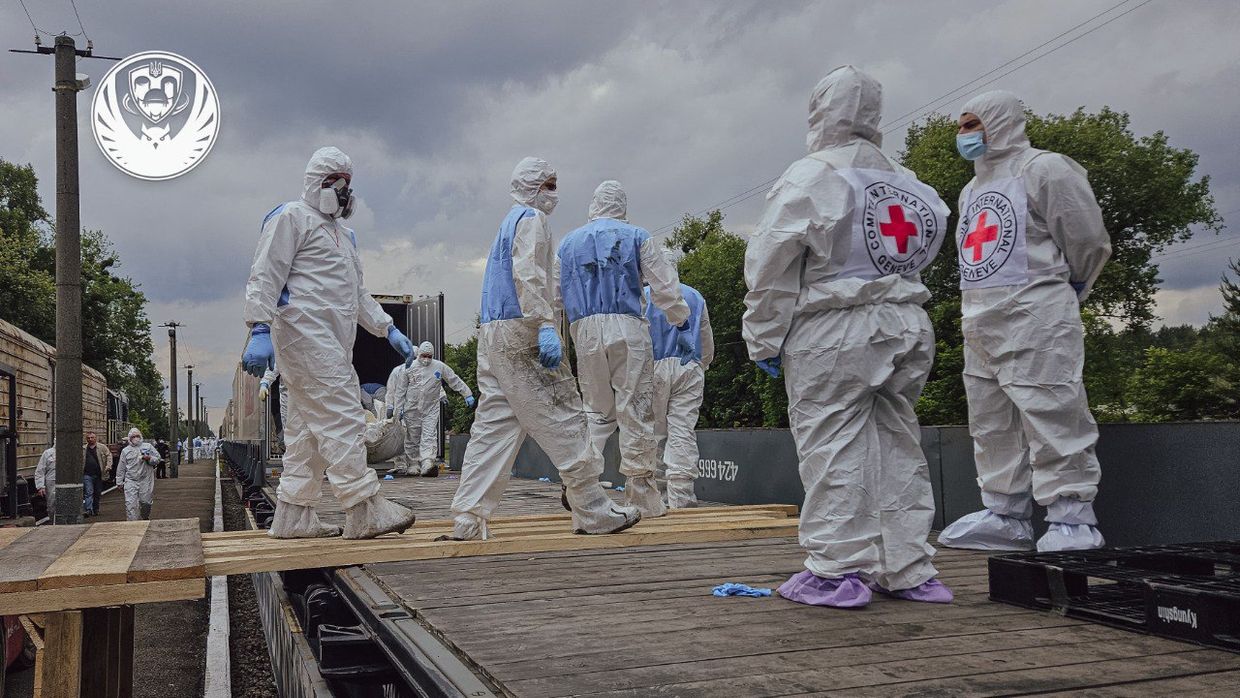
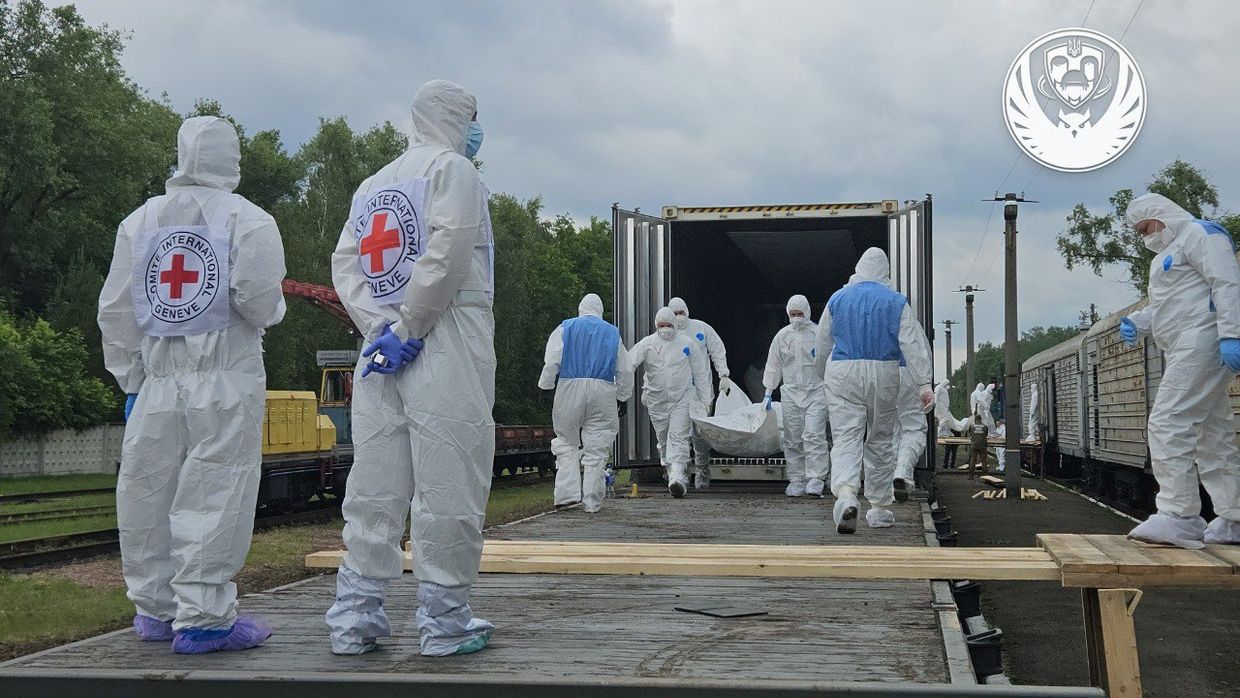
Ukraine has recovered the bodies of 1,200 fallen citizens, including military personnel, in the latest round of repatriation efforts coordinated with Russia under agreements reached during talks in Istanbul, Ukrainian officials said on June 14.
This latest repatriation follows the return of 2,412 bodies earlier on June 13 and June 11, reflecting an intensification of efforts after the June 2 Istanbul talks between the two sides.
The Coordination Headquarters for Prisoners of War said the bodies, which Russian authorities claim belong to Ukrainian nationals, were returned as part of an ongoing phased exchange process.
"The remains will now undergo forensic examination and identification procedures conducted by law enforcement investigators in cooperation with expert institutions under the Interior Ministry," the Coordination Headquarters said in a statement.
The repatriation operation was coordinated by the Coordination Headquarters for the Treatment of Prisoners of War (POWs) alongside the Security Service of Ukraine (SBU), the Ombudsman’s Office, the Armed Forces, the Interior Ministry, and other government and defense bodies. The International Committee of the Red Cross also provided assistance during the process.
In addition to repatriating bodies, Ukraine has begun implementing what officials described as the first stage of a "permanent humanitarian medical exchange" with Russia, also agreed to in Istanbul.
Under this arrangement, Ukraine has transferred wounded Russian POWs directly from the front lines, according to "I Want to Live," a government-run project that facilitates voluntary surrender by Russian and Belarusian soldiers.
"As part of this exchange, the Russian side received wounded prisoners of war directly from the front line," the project said in a statement.
At the Istanbul meeting on June 2, Ukrainian and Russian delegations agreed on a new prisoner exchange but failed to secure a ceasefire agreement. The previous talks on May 16 led to the largest prisoner swap of the war in late May, when approximately 1,000 captives were exchanged on each side. Since then, exchanges have continued, focusing especially on severely wounded and ill soldiers.
Ukraine has long pushed for an "all-for-all"prisoner exchange to bring home all Ukrainian captives, but Moscow has resisted such a comprehensive deal.
It is not immediately clear whether Ukraine released the bodies of Russian soldiers in return during this latest exchange. During the previous swap on June 11, Moscow announced it had repatriated the bodies of 27 Russian service members.
President Volodymyr Zelensky's office has confirmed plans for a high-stakes meeting with U.S. President Donald Trump at the upcoming G7 summit on June 17, according to the Kyiv Independent journalist who attended a closed-door briefing with Zelensky on June 13. "Both teams are working to ensure we meet," Zelensky said. The meeting would mark the third in-person encounter between the two leaders during Trump's second term in the White House. Their most recent meeting took place on April 26 at St
President Volodymyr Zelensky's office has confirmed plans for a high-stakes meeting with U.S. President Donald Trump at the upcoming G7 summit on June 17, according to the Kyiv Independent journalist who attended a closed-door briefing with Zelensky on June 13.
"Both teams are working to ensure we meet," Zelensky said.
The meeting would mark the third in-person encounter between the two leaders during Trump's second term in the White House. Their most recent meeting took place on April 26 at St. Peter's Basilica in the Vatican, where they spoke privately on the sidelines of Pope Francis' funeral. Both sides described the meeting as productive and constructive, though details remained sparse.
Earlier in February, Zelensky met Trump and Vice President JD Vance in the White House when the infamous tense Oval Office exchange erupted, with Trump criticizing Kyiv's perceived lack of gratitude for U.S. support
Zelensky said his priority is to discuss with Trump sanctions against Russia, peace talks, weapons purchase, and U.S.-Ukraine economic cooperation.
"The United States communicates with the EU on sanctions at the level of senators and congressmen. But I want to raise this issue personally with President Trump," Zelensky said.
"There are steps forward we can take — but we need the political will of the U.S. president, if he wants."
He added that Ukraine has long prepared a "strong" weapons package to purchase from Washington. "Only at the presidential level can we finalize it," Zelensky said ahead of the G7 summit.
Russian offensives in Sumy, Dnipropetrovsk oblasts
Zelensky said that heavy fighting is ongoing along Ukraine's northeastern border. Russian forces have concentrated around 53,000 troops in the Sumy sector, pushing into multiple settlements such as Andriivka, Kindrativka, and Oleksiivka.
According to the open-source monitoring group DeepState, Russian troops have been advancing along the border in Sumy Oblast, with the current front line lying just about 20 kilometers away from the regional capital of Sumy.
According to media reports, Russia exploited a thinning of Ukraine's front-line forces, which were later replaced by newer, under-equipped formations.
Zelensky said that Russia only pushed seven kilometers deep into Sumy, adding that the Russian army "has been stopped there."
Zelensky added that Ukrainian forces had successfully struck Russian positions in the neighboring Russian Kursk Oblast, near Tyotkino, to stall Russian momentum and split their offensive groups.
In Dnipropetrovsk Oblast, Zelensky confirmed that small Russian reconnaissance groups had briefly crossed into Ukrainian territory — likely for propaganda purposes. One six-man unit was reportedly eliminated one kilometer from the administrative border.
"For them (Russia), it's an important story, to take a photo, video," Zelensky said. "That's why they are launching small working groups to do just that."
Earlier, the Kremlin has claimed the operations in Dnipropetrovsk are part of an effort to create a so-called "buffer zone." Ukrainian officials have rejected these claims as disinformation.
When speaking about the recent escalation between Israel and Iran in the Middle East, Zelensky said that the subsequent regional tension had driven up oil prices, enhancing Russia's war financing through energy exports.
"This factor clearly doesn't help us," he said, adding that Ukraine will urge Washington to implement stricter price caps on Russian oil at the G7.
He further revealed that U.S. weapons previously allocated to Ukraine, including 20,000 air-defense interceptors used to counter Iranian-designed Shahed drones, were redirected to support Israel ahead of its recent strikes on Iran.
"That was a serious blow... We were counting on these missiles," Zelensky said.
Zelensky warned that Ukraine must not become "a bargaining chip" in larger geopolitical negotiations involving the U.S., Russia, and the Middle East. Russia and Iran have deepened their cooperation since 2022, with Iran supplying weapons and technology to boost Moscow's war machine.
"I was constantly afraid that we could become a bargaining chip, just one factor in the negotiations between the United States and the Russians. So, along with the situation with Iran, the situation with Ukraine was also a factor. They are really dependent on each other," he said.
Zelensky voiced concerns about a slowdown in Western diplomatic momentum, particularly around the "coalition of the willing" initiative led by France and the UK.
Earlier, media reported that the "coalition of the willing," aimed at offering post-ceasefire security guarantees to Ukraine, has faced delays due to the absence of U.S. commitment.
"Europe hasn't yet decided what to do if America steps back," he said. "Their energy depended on U.S. resolve. Without it, things slow down."
Still, Zelensky made clear that Ukraine would not accept any ultimatums from Moscow amid the uncertainty of Western support. He described the latest Russian ceasefire proposals as capitulation.
"They pretend to be ready for talks, but all they offer is an ultimatum," Zelensky said. "We won't go along with that. Not now, not ever."
Zelesnky also expressed optimism that the European Union's 18th sanctions package would pass later this month and said he would personally push for closer U.S.-EU coordination at the G7.
Zelensky confirmed that prisoner exchanges with Russia are continuing and that another round of direct peace talks with Moscow may take place soon after.
"We expect that they (prisoner swaps) can be completed on the 20th or 21st (of June)," he said.
Over the week, Ukraine and Russia held a series of exchanges under an agreement reached during peace talks in Istanbul. Most recently, on June 12, Ukraine brought home another group of severely wounded and seriously ill service members.
The June 12 operation followed a similar swap two days earlier, both conducted without immediate disclosure of the number of released prisoners.
The June exchanges are part of a phased prisoner swap arrangement agreed during the second round of direct talks between Ukrainian and Russian delegations in Istanbul on June 2. While no political breakthroughs emerged from the discussions, both sides agreed to continue exchanging POWs and repatriating the remains of fallen soldiers.
Efforts are underway to rapidly expand Ukraine's ability to counter Russian drone attacks, Commander-in-Chief of Ukraine's Armed Forces, Oleksandr Syrskyi, said on June 14.In a statement shared on Telegram, Syrskyi said he held a meeting focused on strengthening defenses against Russian strike drones, particularly Iranian-designed Shahed drones used by Russian forces to target Ukrainian cities."Task number one is scaling up the systems that already work effectively," Syrskyi said. "First and for
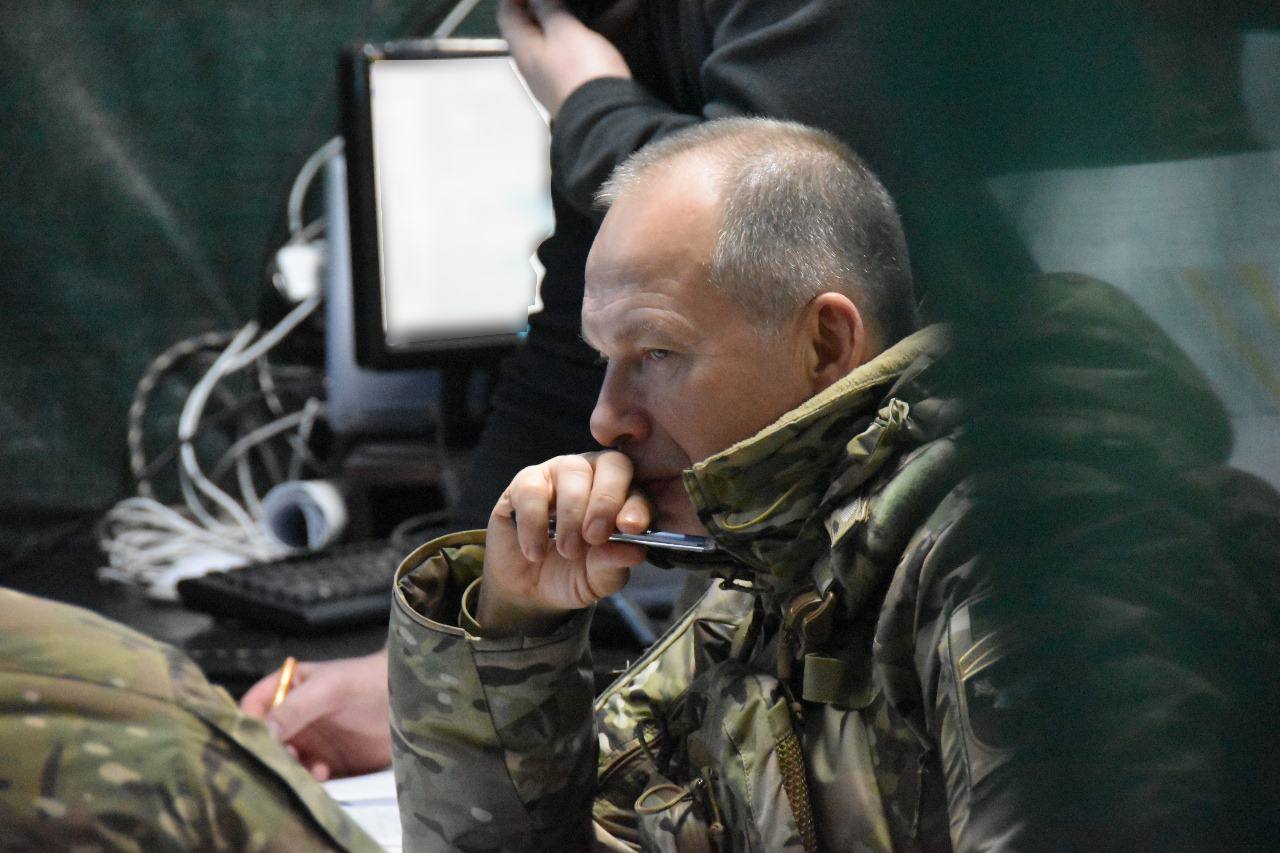
Efforts are underway to rapidly expand Ukraine's ability to counter Russian drone attacks, Commander-in-Chief of Ukraine's Armed Forces, Oleksandr Syrskyi, said on June 14.
In a statement shared on Telegram, Syrskyi said he held a meeting focused on strengthening defenses against Russian strike drones, particularly Iranian-designed Shahed drones used by Russian forces to target Ukrainian cities.
"Task number one is scaling up the systems that already work effectively," Syrskyi said. "First and foremost, that means increasing the number of drone interceptors."
Russia has been escalating drone attacks against Ukraine over the past weeks, launching record 400-500 UAVs (unmanned aerial vehicles) per night.
Syrskyi emphasized the need for a comprehensive approach that incorporates all available capabilities. "(Russia) is constantly modifying the characteristics of its Shaheds and changing their tactics," he said.
Ukrainian officials discussed ways to improve early detection of incoming drones and ensure their timely destruction. Syrskyi said he had set clear priorities and tasked military leaders accordingly.
Russia has repeatedly targeted Ukrainian cities with waves of attack drones, often striking energy infrastructure and residential buildings overnight. Ukraine's defense forces use a mix of electronic warfare, air defense systems, and drone-on-drone interception to repel the assaults.
Drones have become one of the defining tools of the full-scale war, used extensively by both Ukraine and Russia for surveillance, long-range strikes, and tactical battlefield advantage. In recent weeks, Russia has intensified its drone and missile attacks on Ukrainian cities and infrastructure.
Earlier on June 9, Ukraine's Air Force said it intercepted 479 drones and missiles during one of the largest attacks since the start of the war. Russia launched 499 weapons overnight, including 479 Shahed-type drones and multiple ballistic and cruise missiles.
Editor's Note: This story was updated to include confirmation from Ukraine's General Staff.Ukraine's General Staff confirmed on June 14 that overnight drone strikes targeted two major military-industrial facilities in Russia, according to a statement of the military. "As part of efforts to reduce (Russia's) ability to produce explosives and ammunition, the Ukrainian Armed Forces' drone systems, in coordination with other Defense Forces units, struck critical facilities of Russia's military-indus
Editor's Note: This story was updated to include confirmation from Ukraine's General Staff.
Ukraine's General Staff confirmed on June 14 that overnight drone strikes targeted two major military-industrial facilities in Russia, according to a statement of the military.
"As part of efforts to reduce (Russia's) ability to produce explosives and ammunition, the Ukrainian Armed Forces' drone systems, in coordination with other Defense Forces units, struck critical facilities of Russia's military-industrial complex overnight," Ukraine's General Staff said in a statement.
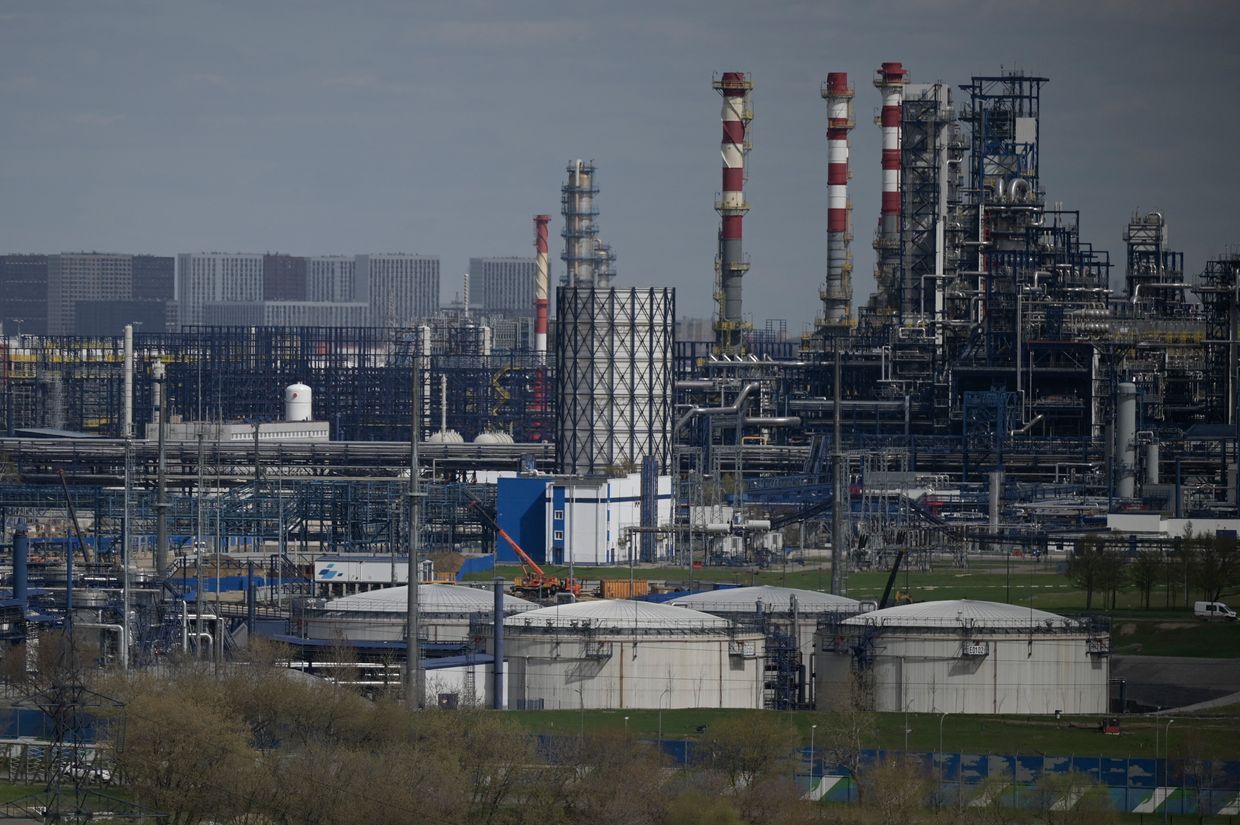
The strikes reportedly hit the Nevinnomyssk Azot chemical plant in Stavropol Krai and the Novokuybyshevsk Catalyst Plant in Samara Oblast. Both sites are described by Ukrainian officials as key suppliers of raw materials and components for Russia's weapons and fuel production.
Stavropol Governor Vladimir Vladimirov said drone debris fell in the city's industrial zone, confirming the strike was aimed at the Nevinnomyssk Azot plant. He initially reported one person injured, but later clarified there were no casualties. Footage circulating online showed explosions and drones flying over the city.
Nevinnomyssk Azot is among Russia's top producers of ammonia and nitrogen fertilizers, and hosts the country's only production lines for methyl acetate and high-purity acetic acid. It also operates Russia’s first melamine production facility, according to open-source data.
The plant, which produces up to one million tons of ammonia and over one million tons of ammonium nitrate annually, is "a critical element of Russia's military-industrial complex," Andrii Kovalenko, head of Ukraine's Center for Countering Disinformation at the National Security and Defense Council, said.
Kovalenko noted that ammonium nitrate is a key component for explosives and artillery shells. He added that the plant also synthesizes dual-use chemicals such as melamine, acetic acid, methanol, and potassium nitrate, frequently used in the production of grenade launchers, mines, and rocket charges.
Since 2024, the plant has been producing water-soluble fertilizers, which he said have been adapted to serve military chemical needs.
Ukraine's General Staff said the strike caused explosions and a fire at the site.
In Russia's Samara Oblast, a separate drone strike reportedly damaged the NovokuybyshevskCatalyst Plant, the country's largest specialized facility for producing catalysts used in petroleum refining and petrochemicals. The region's governor, Vyacheslav Fedorishchev, confirmed an attempted drone attack overnight on an industrial site in Novokuybyshevsk.
Kovalenko said the plant has a strategic role, stating that without its output, Russia's oil refineries, and by extension, its supply of aviation fuel, diesel for armored vehicles, and rocket propellant, would be severely affected.
Russia's Defense Ministry claimed it intercepted a total of 66 drones overnight across several regions, including 30 over Voronezh Oblast, 10 over Belgorod Oblast, 8 over Stavropol Krai, 6 over occupied Crimea, 1 over Samara Oblast, and 11 over the Azov Sea.
Editor's note: This story has been updated to include the latest injury figures confirmed by Zaporizhzhia Governor Ivan Fedorov.At least three people were killed and 11 injured in Russian attacks across Ukraine over the past day, Ukrainian officials said on June 14.According to Ukraine's Air Force, Russia launched 58 attack drones, primarily Shahed-type UAVs, and decoys from multiple directions. Air defenses destroyed 43 of the drones.In Donetsk Oblast, one civilian was killed and two others wer
Editor's note: This story has been updated to include the latest injury figures confirmed by Zaporizhzhia Governor Ivan Fedorov.
At least three people were killed and 11 injured in Russian attacks across Ukraine over the past day, Ukrainian officials said on June 14.
According to Ukraine's Air Force, Russia launched 58 attack drones, primarily Shahed-type UAVs, and decoys from multiple directions. Air defenses destroyed 43 of the drones.
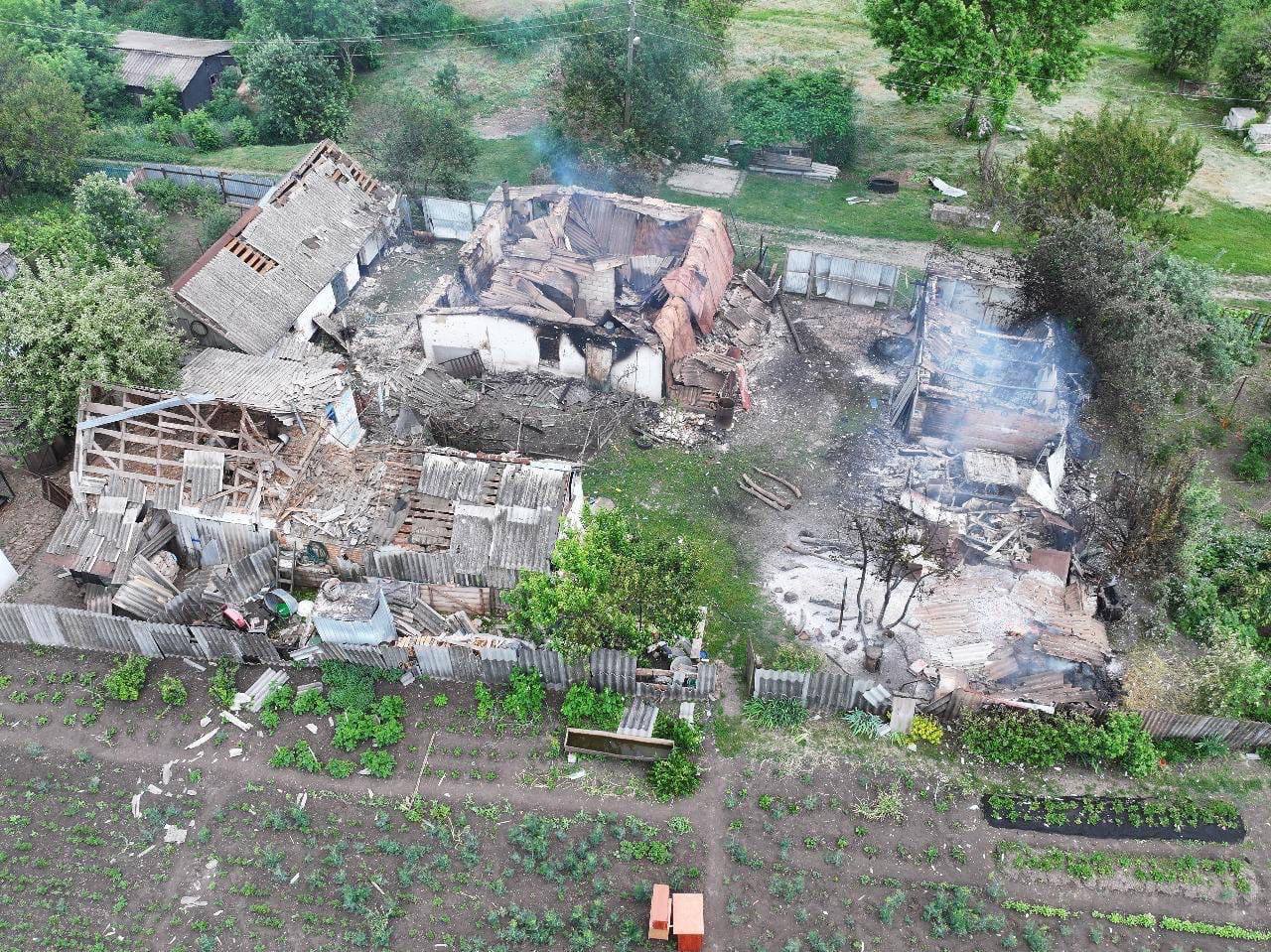
In Donetsk Oblast, one civilian was killed and two others were injured in Russian shelling of Yablunivka, Governor Vadym Filashkin said. Russian forces attacked settlements in the region 27 times over the past day.
In Kherson Oblast, five people were injured as Russia struck 23 settlements with drones, artillery, and airstrikes, Governor Oleksandr Prokudin reported. Residential buildings in Kherson city, Antonivka, and other towns were damaged, including a multi-story apartment block, six houses, a gas station, and some vehicles.
In Zaporizhzhia Oblast, at least one person was killed and four others injured in attacks targeting Zaporizhzhia and Polohy districts, Governor Ivan Fedorov said. Russian forces launched 438 strikes on 16 settlements, including 11 airstrikes and 266 drone attacks, mainly using FPV (first-person view) drones.
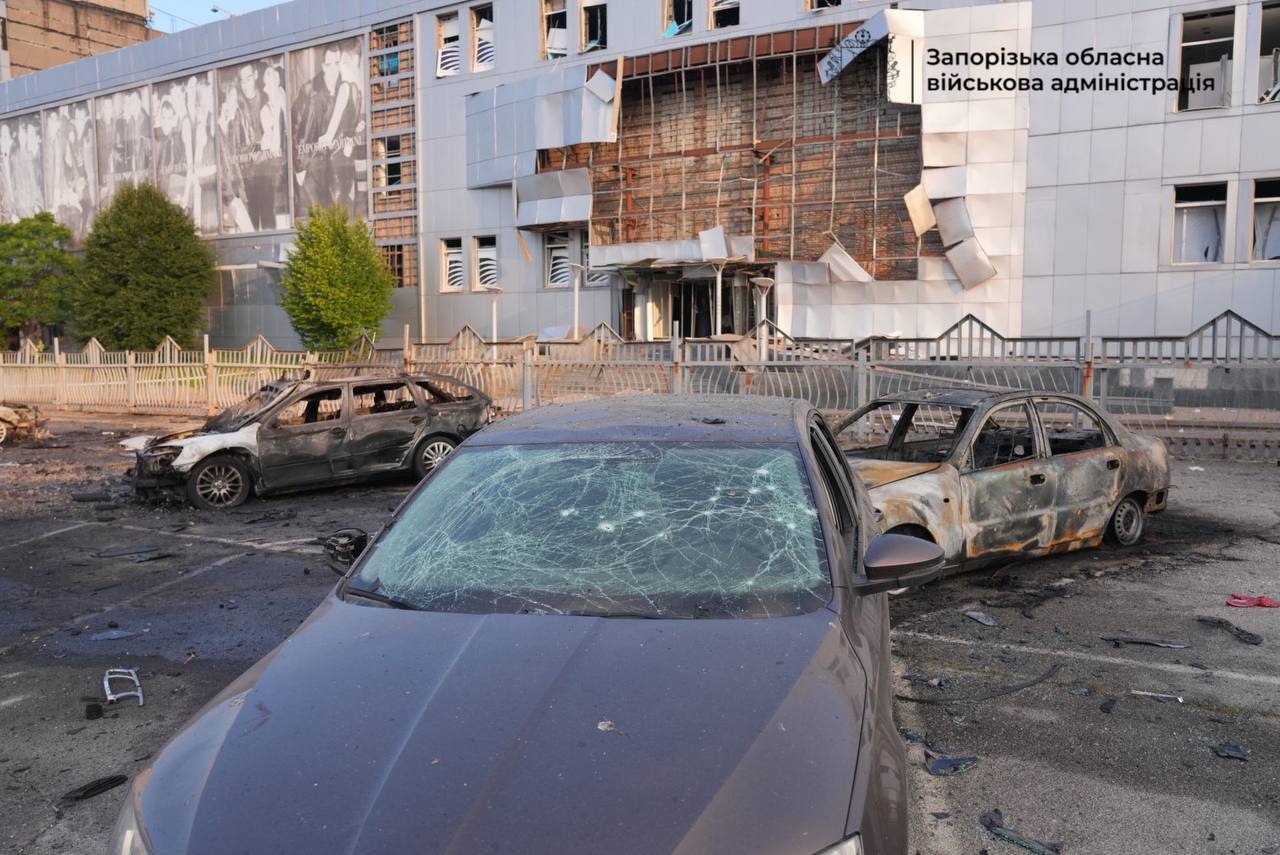
In a morning strike on Zaporizhzhia, more than 10 cars were burned at a parking lot, and at least 15 buildings were damaged. One person was injured.
According to Radio Free Europe/Radio Liberty, the Russian attack also destroyed a humanitarian aid warehouse in Zaporizhzhia. Over 100 metric tons of humanitarian supplies reportedly burned in the fire. The aid had recently arrived in five trucks and was intended for displaced people and residents of front-line areas. The damage is estimated at around $3 million.
Russia has lost 1,002,690 troops in Ukraine since the beginning of its full-scale invasion on Feb. 24, 2022, the General Staff of Ukraine's Armed Forces reported on June 14.The number includes 1,130 casualties that Russian forces suffered just over the past day.According to the report, Russia has also lost 10,937 tanks, 22,798 armored fighting vehicles, 51,928 vehicles and fuel tanks, 29,157 artillery systems, 1,417 multiple launch rocket systems, 1,185 air defense systems, 416 airplanes, 337 he
Russia has lost 1,002,690 troops in Ukraine since the beginning of its full-scale invasion on Feb. 24, 2022, the General Staff of Ukraine's Armed Forces reported on June 14.
The number includes 1,130 casualties that Russian forces suffered just over the past day.
According to the report, Russia has also lost 10,937 tanks, 22,798 armored fighting vehicles, 51,928 vehicles and fuel tanks, 29,157 artillery systems, 1,417 multiple launch rocket systems, 1,185 air defense systems, 416 airplanes, 337 helicopters, 40,586 drones, 3,337 cruise missiles, 28 ships and boats, and one submarine.
The United States is opposing a proposal by other Group of Seven nations to lower the price cap on Russian oil, Bloomberg reported on June 13.Citing unnamed sources, Bloomberg said the U.S. remains opposed to reducing the cap from $60 to $45 per barrel – a position it first took earlier this year when Treasury Secretary Scott Bessent declined to support a similar effort.The price cap, introduced in December 2022 as a measure to limit the Kremlin's ability to finance its war against Ukraine, proh
The United States is opposing a proposal by other Group of Seven nations to lower the price cap on Russian oil, Bloomberg reported on June 13.
Citing unnamed sources, Bloomberg said the U.S. remains opposed to reducing the cap from $60 to $45 per barrel – a position it first took earlier this year when Treasury Secretary Scott Bessent declined to support a similar effort.
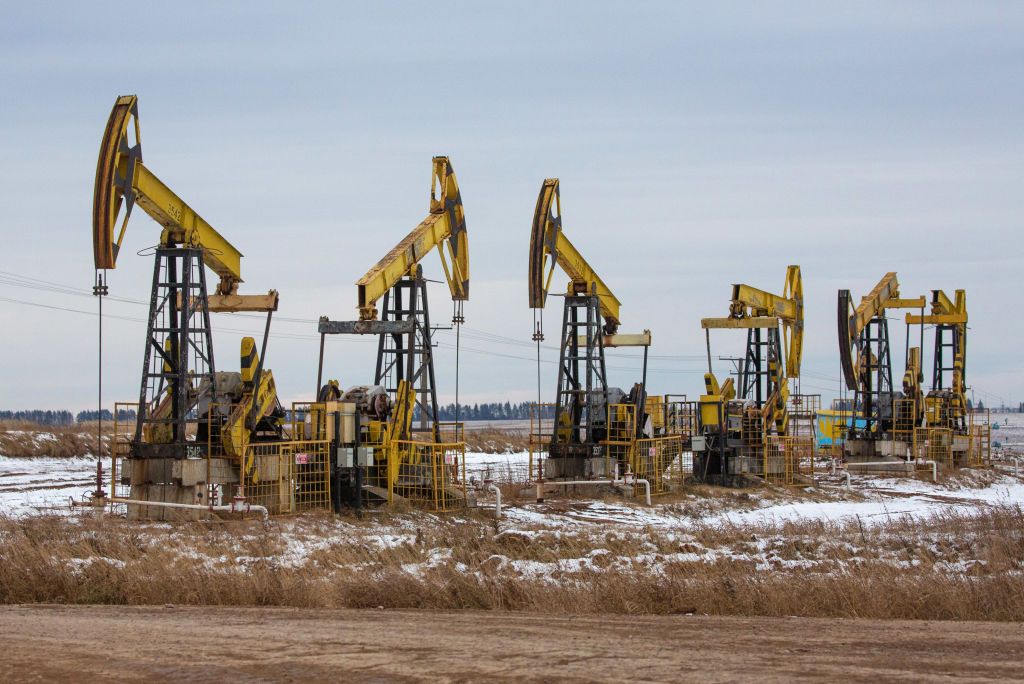
The price cap, introduced in December 2022 as a measure to limit the Kremlin's ability to finance its war against Ukraine, prohibits Western companies from shipping, insuring, or otherwise servicing Russian oil sold above $60 per barrel.
One source told Bloomberg that the EU and U.K. could explore lowering the cap without the U.S., as most of Russia's oil is transported in European waters. However, a unified G7 agreement would carry greater impact if it could be enforced by the U.S.
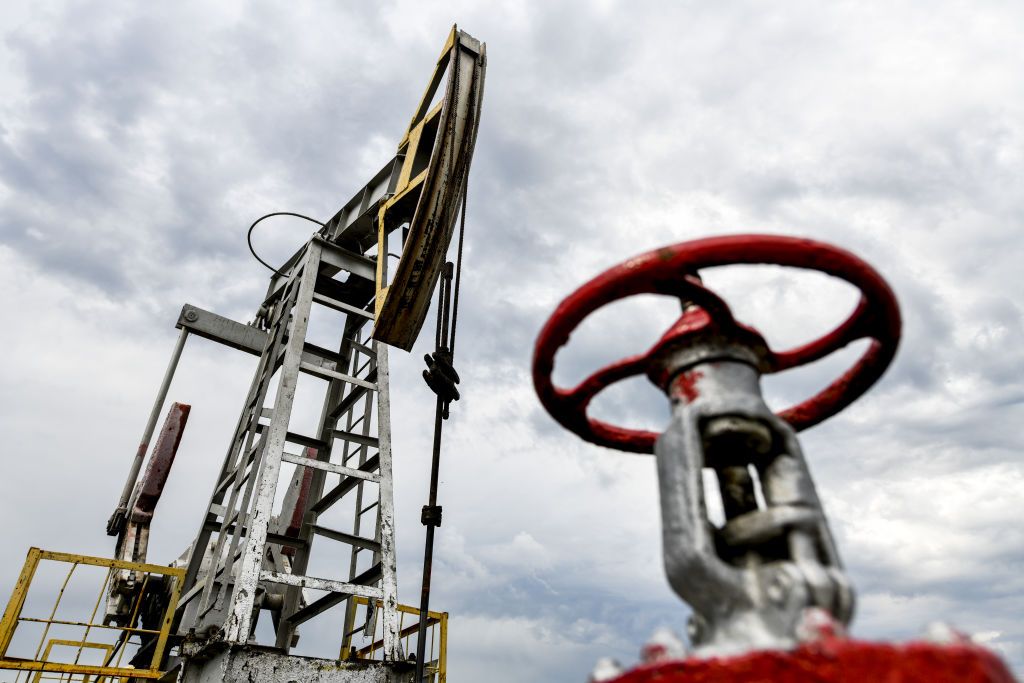
The price cap debate has become more urgent as oil prices, which had fallen below the $60 cap in recent months, surged following Israel's strikes against Iran in the past 24 hours.
G7 leaders will revisit the price cap discussion during the upcoming summit, hosted by Canada from June 15-17 in Kananaskis County, Alberta.
The summit agenda will also include topics such as support for Ukraine in the Russian war, global economic stability, digital transformation, and climate change.
The G7 currently includes Canada, France, Germany, Italy, Japan, the United Kingdom, and the United States. The European Union is also represented in the group.
Three Ukrainian nationals were killed in a bus accident in France on June 13, President Volodymyr Zelensky confirmed in a statement on Telegram."Terrible news about the tragic bus accident in France," Zelensky wrote.The accident occurred in the morning of June 13, near the Sarthe department of France. The bus was reportedly carrying Ukrainian nationals, including adults and children, who were returning from an educational exchange.While en route to Paris, the bus lost control and flipped into a
Three Ukrainian nationals were killed in a bus accident in France on June 13, President Volodymyr Zelensky confirmed in a statement on Telegram.
"Terrible news about the tragic bus accident in France," Zelensky wrote.
The accident occurred in the morning of June 13, near the Sarthe department of France. The bus was reportedly carrying Ukrainian nationals, including adults and children, who were returning from an educational exchange.
While en route to Paris, the bus lost control and flipped into a ditch.
Four adults were killed in total – three of whom were Ukrainian nationals. French media reported that nine people sustained serious injuries, while an additional 18 suffered minor injuries.
Zelensky added that Ukraine's Foreign Ministry promptly sent a team of diplomats and consuls, led by the ambassador to France, to assist survivors and support the victims’ families. The team is coordinating with French authorities and emergency services at the scene.
Foreign Minister Andrii Sybiha and Interior Minister Ihor Klymenko are providing regular updates on the victims' conditions and emerging details regarding the accident.
Zelensky thanked the French authorities, noting that "more than 50 emergency teams were deployed" in what he called "a true expression of French solidarity."
He also expressed his "condolences to all the families of the victims" and wished for a "speedy recovery of the injured children."
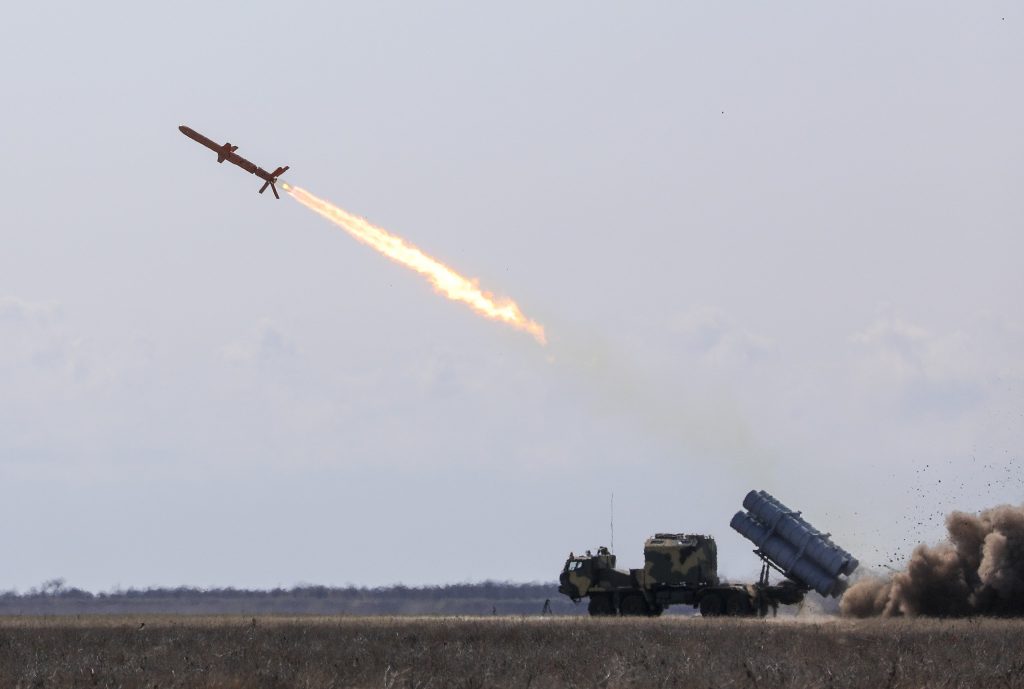
Ukraine’s domestically developed short-range Sapsan ballistic missile has successfully completed combat testing and is in the process of serial production, Ukrainian media reported on June 13.The missile, with a payload of 480 kg, completed testing in May after successfully striking a Russian military target at a range of nearly 300 km, Valentyn Badrak, head of the an independent Ukrainian think Center for Army, Conversion and Disarmament Studies told Liga.net.Ukraine's Defense Ministry reported
Ukraine’s domestically developed short-range Sapsan ballistic missile has successfully completed combat testing and is in the process of serial production, Ukrainian media reported on June 13.
The missile, with a payload of 480 kg, completed testing in May after successfully striking a Russian military target at a range of nearly 300 km, Valentyn Badrak, head of the an independent Ukrainian think Center for Army, Conversion and Disarmament Studies told Liga.net.
Ukraine's Defense Ministry reportedly dedicated a department to formulate and test the missile.
There is no reported timeline as to when the missiles can be seen in regular use on the battlefield.
Domestically produced long-range weapons are of key importance to Ukraine's defense strategy, as Western partners have been slowin delivering adequate weaponry amid increasing Russian attacks and offensives.
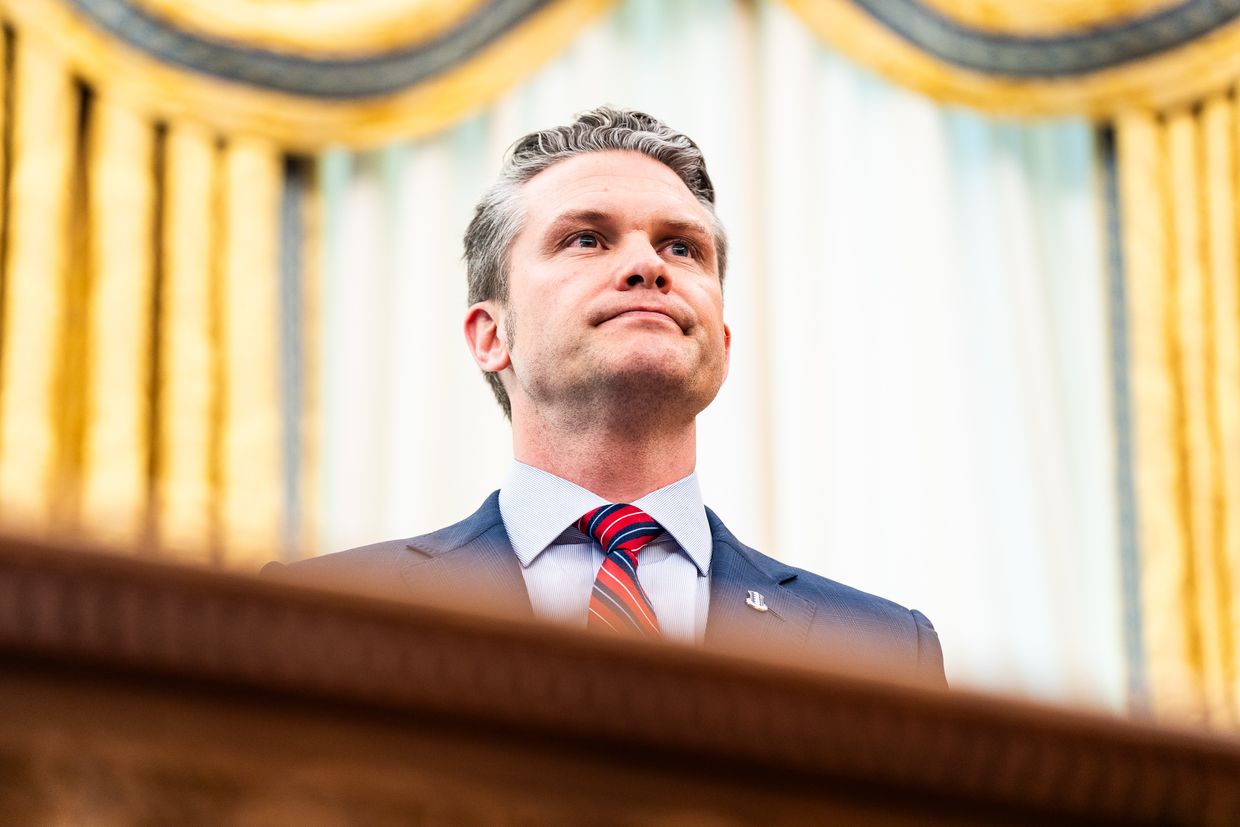
The news comes as U.S. Defense Secretary Pete Hegseth said in a congressional hearing on June 10 that the United States will reduce funding allocated for military assistance to Ukraine in its upcoming defense budget
In November 2024, President Volodymyr Zelensky announced that Ukraine has produced its first 100 missiles.
Since then, Ukraine has continued to increase domestic weapon production. Zelensky said on April 16 that over 40%of the weapons used at the front line are now produced in Ukraine, including over 95% of drones used at front line.
Zelensky also previously revealed that Ukraine had developed another domestic-made weapon, a missile-drone Palianytsia.
As Ukraine attempt to increase its defense production, Russia has continued to unleash large-scale attacks on Ukrainian cities, regularly launching hundreds of drones to overwhelm Ukrainian air defenses.
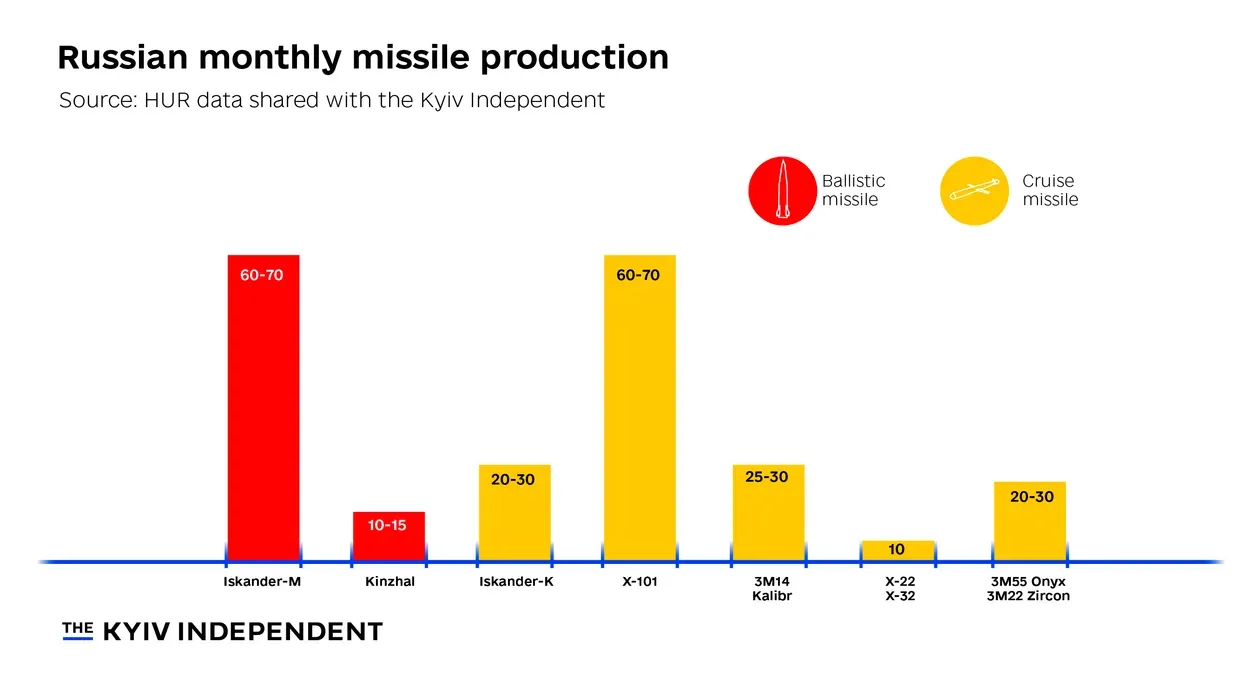
Ukraine's military intelligence (HUR) sharedwith the Kyiv Independent that Russia's production of ballistic missiles has increased by at least 66% over the past year.
Russian monthly missile production (Nizar al-Rifai/The Kyiv Independent)
Ukraine's Defense Minister Rustem Umerov said in late 2024 that Ukraine also resumed and scaled up serial production of Neptune cruise missiles, modifying them to have a greater range.
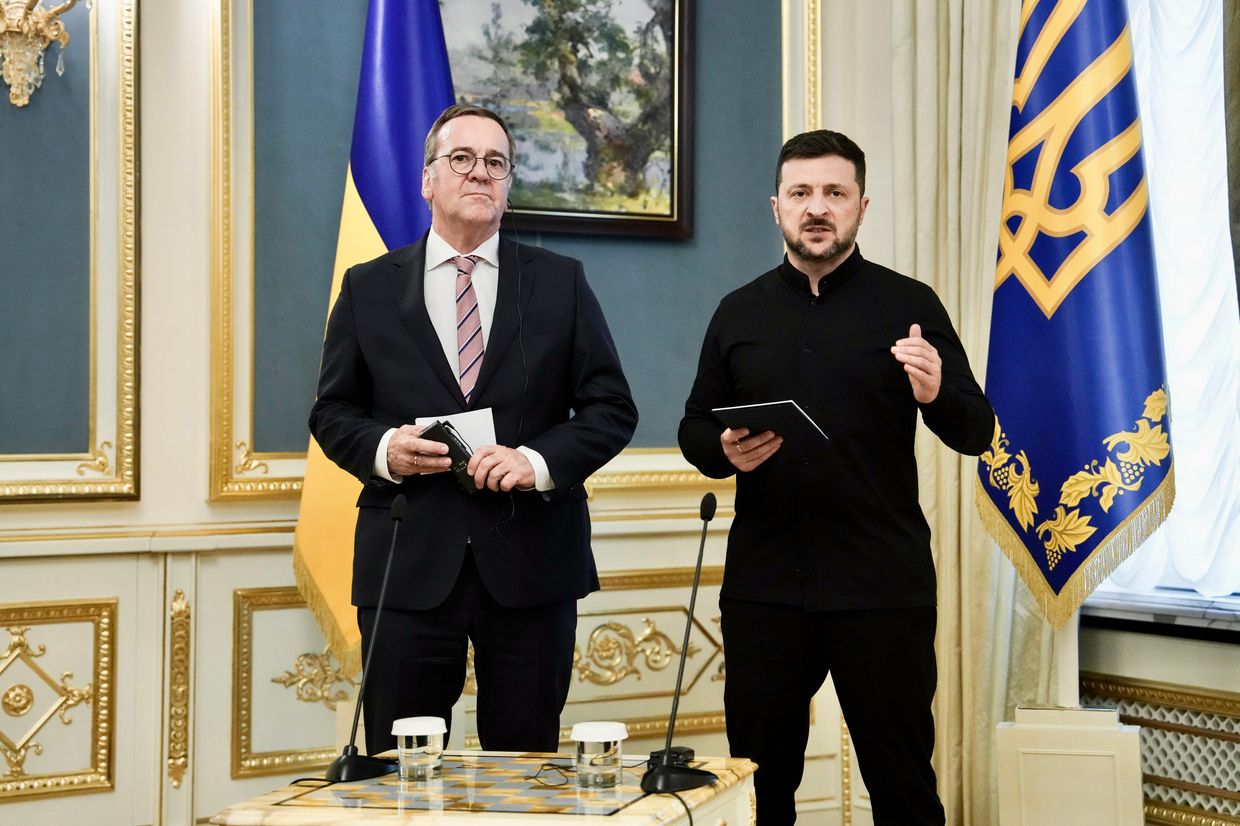
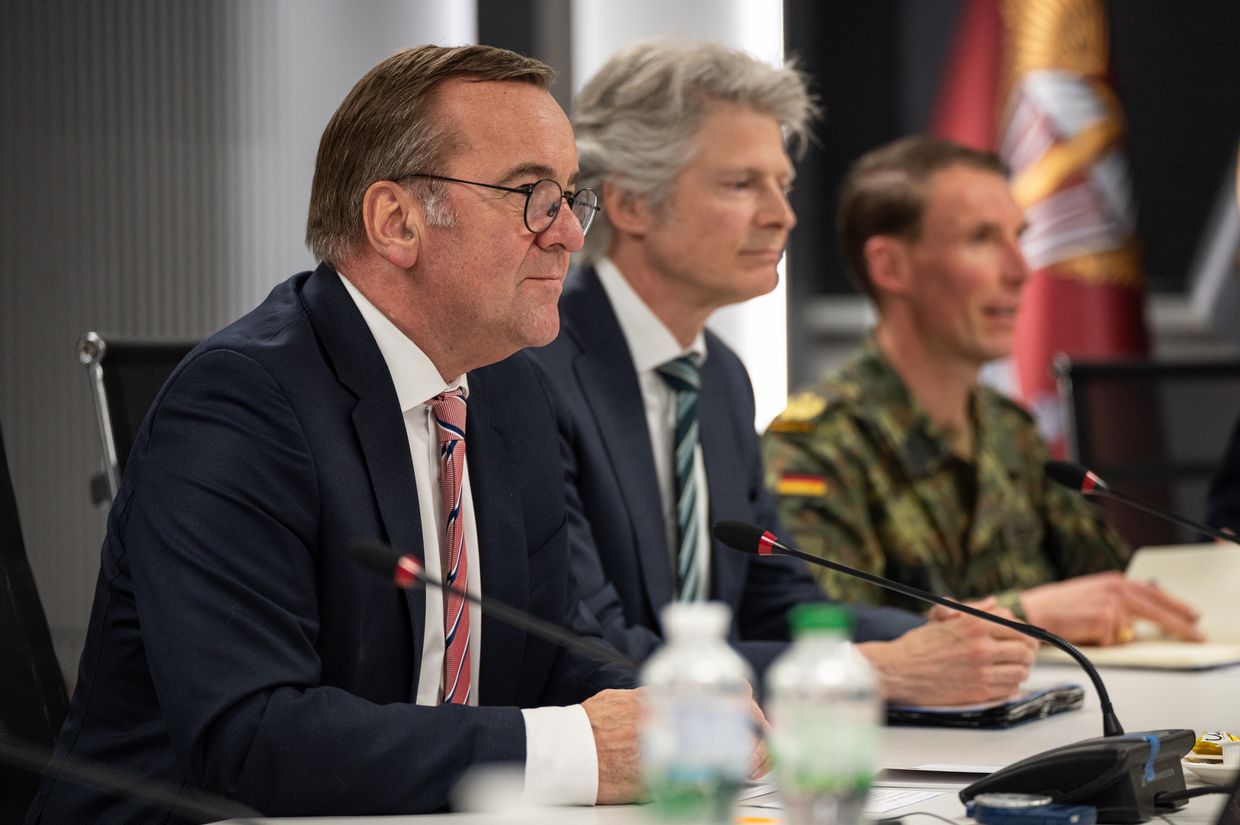
Kyiv has received a number of long-range missiles from partners, such as U.S.-made ATACMS, British Storm Shadow, or French SCALP/T. Despite Ukrainian requests, German Defense Minister Boris Pistorius saidon June 12 that Berlin has no plans to provide Taurus long-range missiles to Kyiv.
Editor's note: This is a developing story and is being updated.A Russian SU-25 fighter jet reportedly crashed over Donetsk Oblast on June 13, Russian social media channels reported. Videos posted on social media of the purported crash by bloggers with close ties to the Russian Air Force appear to show the plane crashing into a field after closely being followed by another fighter jet. The circumstances of the crash remain unclear as rumours swirl of Russian 'friendly fire' as a potential cause o
Editor's note: This is a developing story and is being updated.
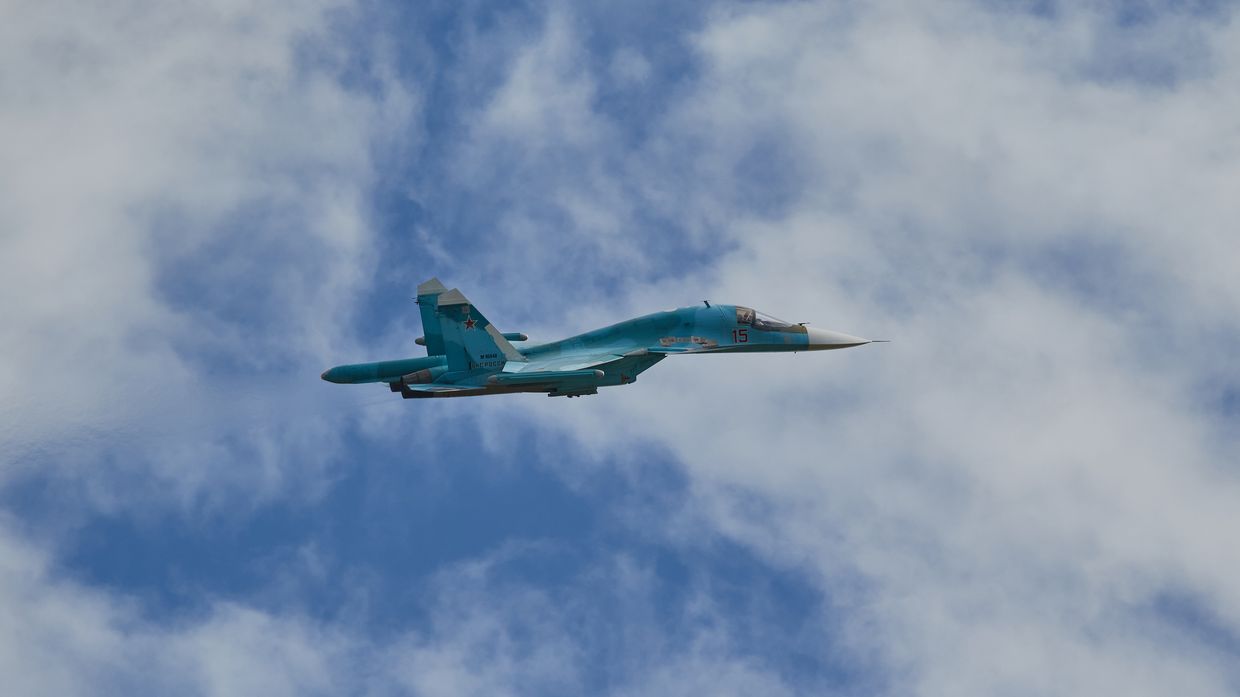
A Russian SU-25 fighter jet reportedly crashed over Donetsk Oblast on June 13, Russian social media channels reported.
Videos posted on social media of the purported crash by bloggers with close ties to the Russian Air Force appear to show the plane crashing into a field after closely being followed by another fighter jet. The circumstances of the crash remain unclear as rumours swirl of Russian 'friendly fire' as a potential cause of the crash.
The Kyiv Independent cannot independently verify the crash or the details surrounding it. Neither the Ukrainian nor Russian military have commented on the reported crash.
The Su-25, a Soviet-designed close-air support aircraft developed by Sukhoi in the late 1970s, is built for battlefield survivability. It features heavy armor and can withstand enemy fire.
The aircraft has been widely used in various conflicts, including in Afghanistan, Chechnya, and, more recently, in Ukraine, where both Russian and Ukrainian forces operate the platform.
Ukraine has downed multiple Russian Su-25s throughout the war. On Feb. 8, Ukraine's military reported shooting down a Russian Su-25 near the town of Toretsk in Donetsk Oblast.
In another instance, Russia's Defense Ministry said on on March 24 that Russian Su-25 attack aircraft crashed during a routine training flight in Primorye Krai in Russia's Far East.
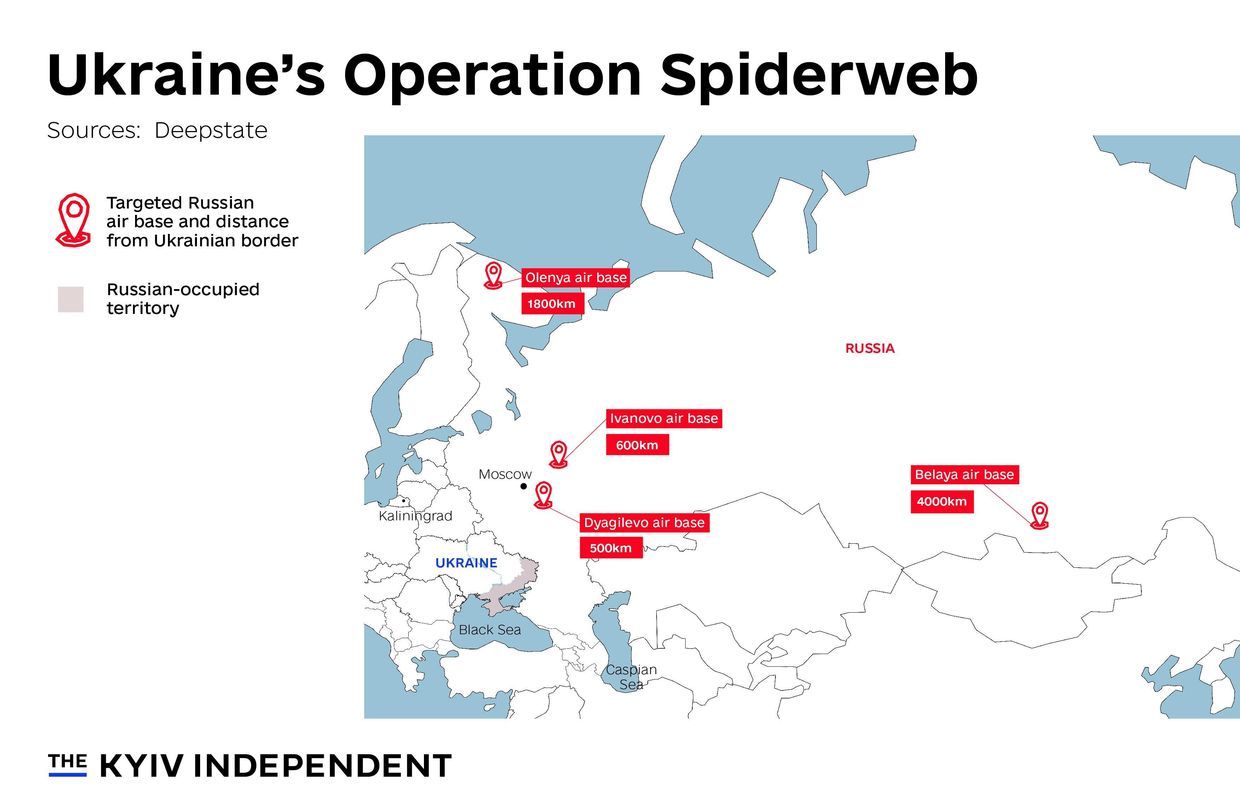
The incident comes less than two week following Ukraine's 'Operation Spiderweb' in which Ukrainian drones smuggled deep inside Russia and hidden inside trucks struck as many as 41 Russian heavy bombers at four airfields across the country.
Editor's note: This story has been updated with additional details.Iran's Islamic Revolutionary Guard Corps (IRGC) confirmed on June 13 that its aerospace commander, Amir Ali Hajizadeh, was killed in an Israeli air strike on a command facility, according to the Times of Israel. Hajizadeh was sanctioned by the European Union in 2022 for overseeing Tehran's supply of Shahed-type drones to Russia for use in its war against Ukraine, which have become a key component of Moscow's war against Ukraine.H
Editor's note: This story has been updated with additional details.
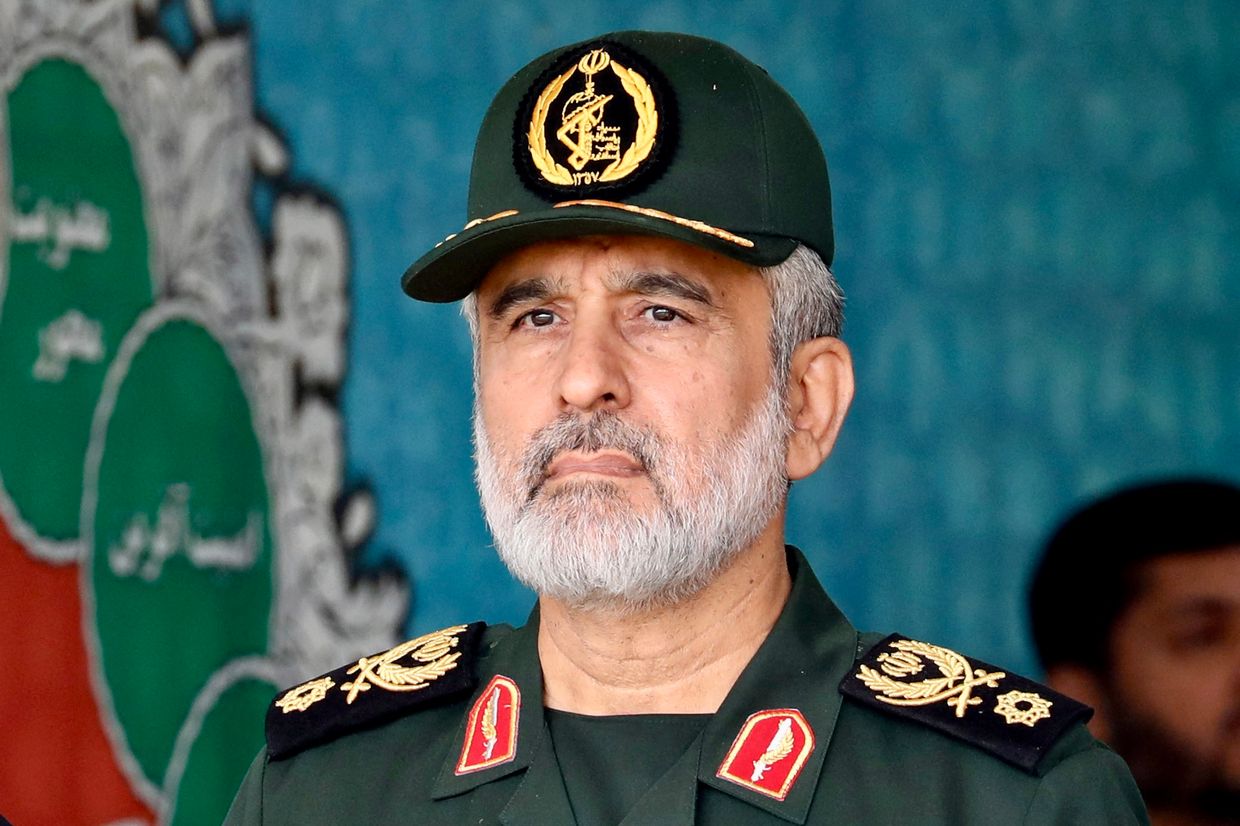
Iran's Islamic Revolutionary Guard Corps (IRGC) confirmed on June 13 that its aerospace commander, Amir Ali Hajizadeh, was killed in an Israeli air strike on a command facility, according to the Times of Israel.
Hajizadeh was sanctioned by the European Union in 2022 for overseeing Tehran's supply of Shahed-type drones to Russia for use in its war against Ukraine, which have become a key component of Moscow's war against Ukraine.
He played a central role in advancing Iran's drone and missile capabilities, meeting with then-Russian Defense Minister Sergei Shoigu in 2023 to showcase Iranian weapons.
The Israeli operation, described as "preemptive," involved 200 aircraft and the dropping of 330 munitions, targeting the country's nuclear program and killing top military officials.
Hajizadeh is also known for his role in the January 2020 downing of a Ukrainian civilian aircraft, which Iran later admitted was mistakenly shot down amid tensions with the U.S. All 176 people on board were killed.
Ukraine's Foreign Ministry issued a statement on June 13 expressing concern over the fallout from the Israeli operation but underscored that "the Iranian regime supports Russia in its illegal war of aggression" and supplies Moscow with "weapons to kill Ukrainians."
Along with North Korea, Iran has been a key ally to Russia during its full-scale war against Ukraine, providing thousands of Shahed strike drones and short-range ballistic missiles.
The drones, cheap and packed with explosives, have become a central weapon in Russia's aerial assaults on Ukraine since their introduction in late 2022.
Known for flying long distances before slamming into targets, they are now mass-produced by Russia and launched in near-nightly waves to overwhelm Ukrainian air defenses.
The Israeli strike took place amid escalating tensions in the Middle East, as well as U.S. negotiations with Tehran regarding its nuclear program. The Trump administration has acknowledged it knew about the operation in advance but denied any involvement.
Kyiv warned of the potential global repercussions of the strike, noting that regional instability could severely impact international security and financial markets, particularly oil.
Crude prices surged more than 10% following the attack, boosting revenues for Moscow, whose economy is heavily reliant on energy exports.
Russia has condemned Israel's attacks as "unprovoked aggression" and a violation of the U.N. Charter.
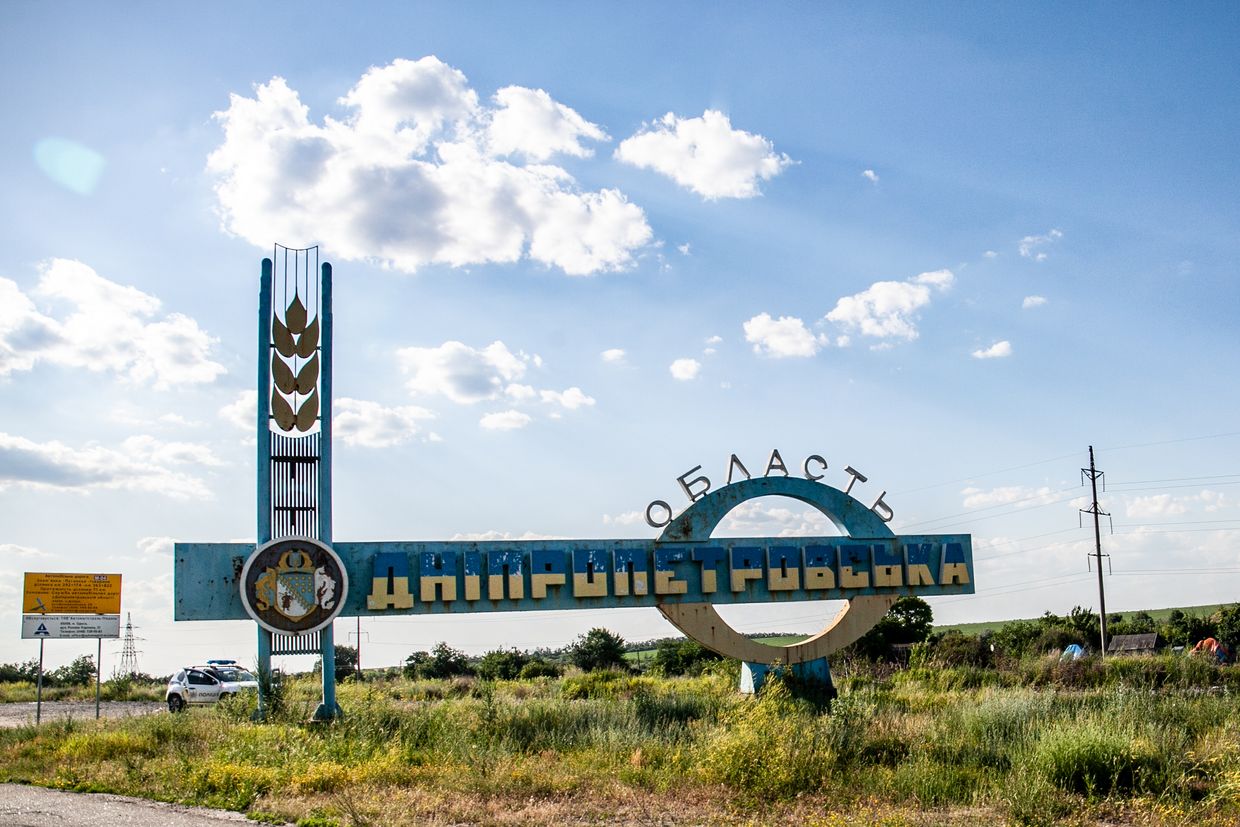
There is no confirmed information that Russian troops have entered Ukraine's Dnipropetrovsk Oblast, spokesperson Victor Tregubov of the Khortytsia group of forces told Ukrainian media outlet Suspilne on June 13, refuting earlier claims published by the New York Times (NYT).The NYT cited Ukrainian military sources claiming that Russian troops crossed the administrative boundary into Dnipropetrovsk Oblast for the first time since the war began.The reporting also referenced a map by the Institute f
There is no confirmed information that Russian troops have entered Ukraine's Dnipropetrovsk Oblast, spokesperson Victor Tregubov of the Khortytsia group of forces told Ukrainian media outlet Suspilne on June 13, refuting earlier claims published by the New York Times (NYT).
The NYT cited Ukrainian military sources claiming that Russian troops crossed the administrative boundary into Dnipropetrovsk Oblast for the first time since the war began.
The reporting also referenced a map by the Institute for the Study of War (ISW) indicating that Russian forces advancing in the region had allegedly secured a foothold.
Tregubov said the situation remains unchanged as of June 13. He indicated that no information suggests Russian forces have crossed the administrative border, but he noted that updated intelligence may be available later in the day.
Andrii Zadubiny, press officer of the Khortytsia forces, also rejected the claims.
"No enemy incursion into Dnipropetrovsk Oblast has been recorded. We refute this information," he told Suspilne. He suggested that ISW might be relying on Russian sources.
On June 8, Russia's Defense Ministry claimed that its forces had entered Dnipropetrovsk Oblast, a claim that has not been substantiated by Ukrainian authorities.
The Ukrainian monitoring group DeepState also reported no evidence of Russian forces entering the oblast. A map depicting Russian-occupied areas of Ukraine indicates that the Russian troops are only a couple of kilometers from the border.
To date, Dnipropetrovsk Oblast — a major industrial region in central Ukraine — has not seen confirmed Russian ground incursions, though it has remained under constant threat from missile and drone attacks.
In late April, Ukrainian authorities began mandatory evacuations of families with children from four front-line villages — Kolona Mezhova, Novopidhorodne, Raipole, and Sukhareva Balka — located just kilometers from Russian positions.
The latest developments come amid growing pressure on Ukrainian defenses across multiple fronts and continued failure of U.S.-mediated negotiations to produce a ceasefire agreement.
A Ukrainian MiG-29 fighter jet carried out a precision strike on Russian positions in the Zaporizhzhia direction, targeting a command post for drone operators and a combined ammunition and fuel depot, Ukraine's Air Force reported on June 13.The Air Force did not disclose the exact location of the strike but thanked international partners for providing the guided munitions used in the attack. "We thank our partners for their highly accurate and effective 'arguments'," the service wrote.0:00/1×A U
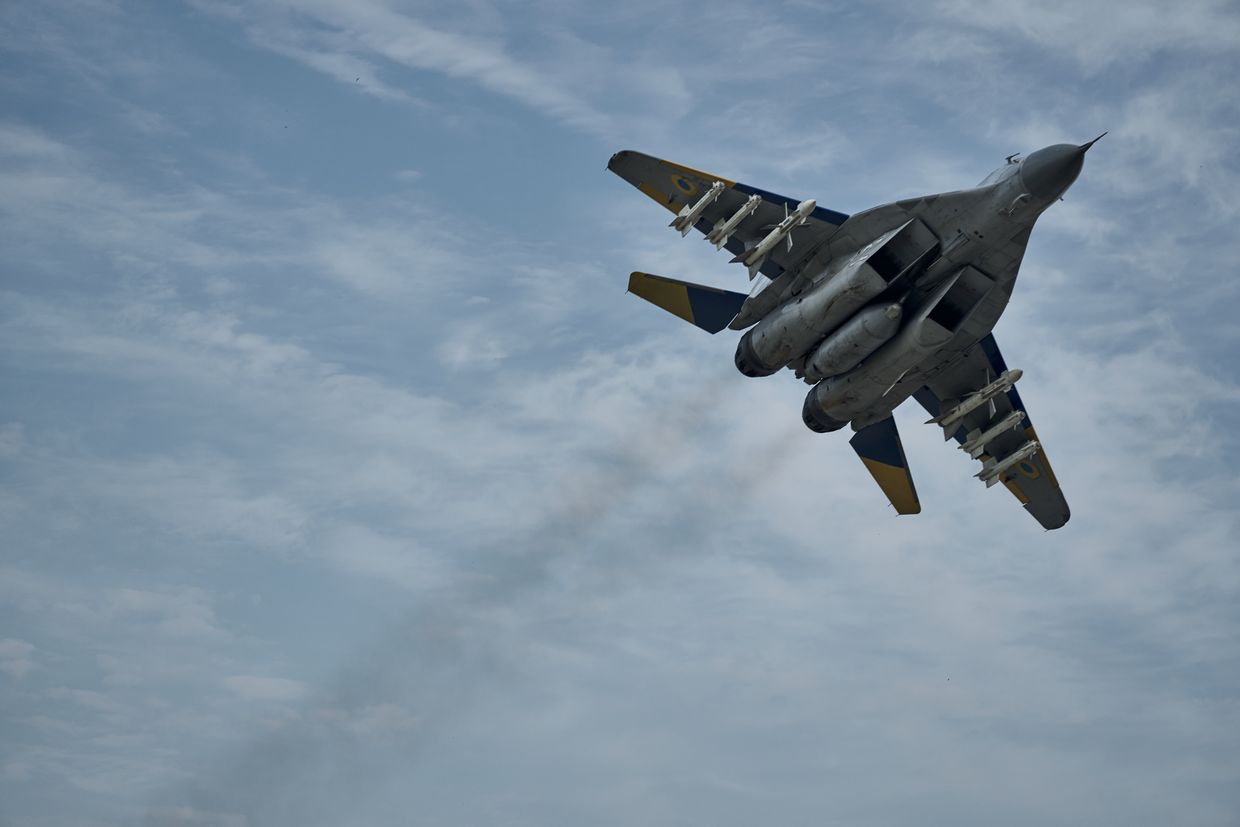
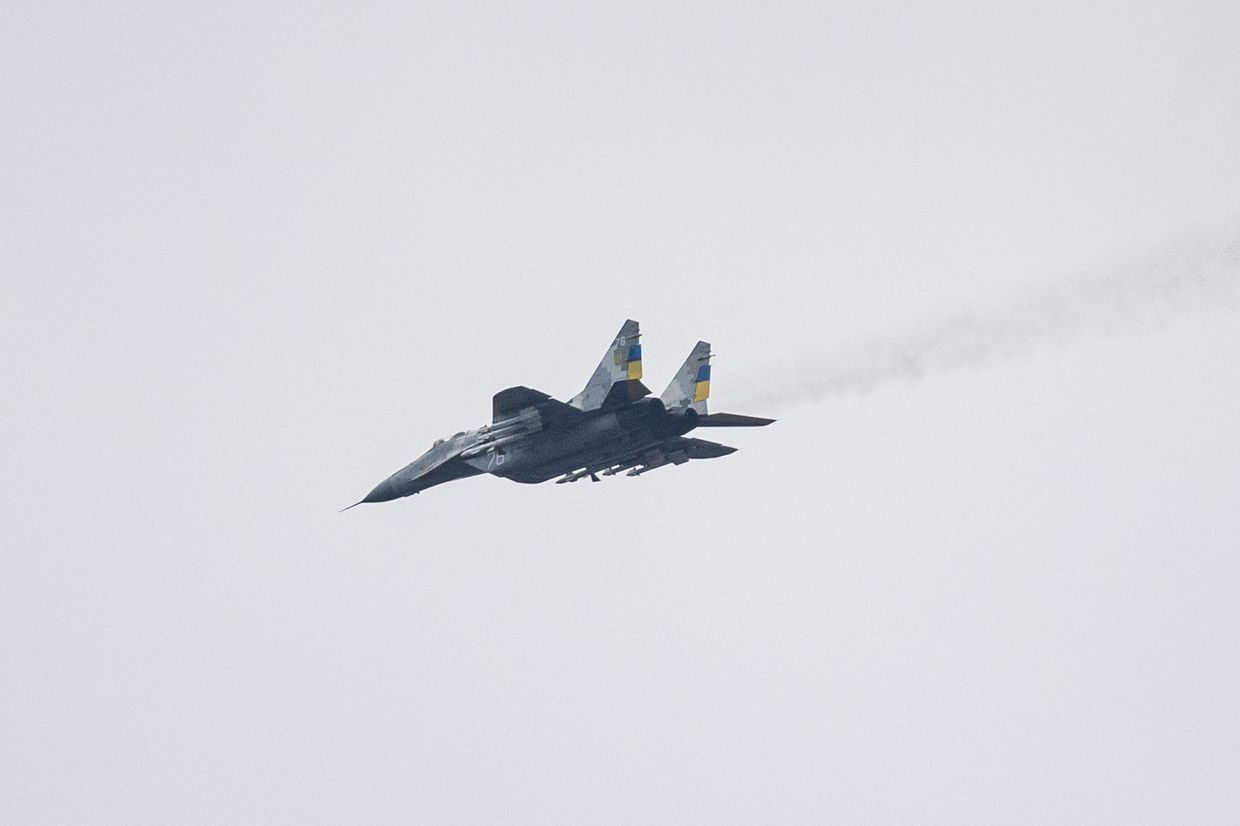
A Ukrainian MiG-29 fighter jet carried out a precision strike on Russian positions in the Zaporizhzhia direction, targeting a command post for drone operators and a combined ammunition and fuel depot, Ukraine's Air Force reported on June 13.
The Air Force did not disclose the exact location of the strike but thanked international partners for providing the guided munitions used in the attack.
"We thank our partners for their highly accurate and effective 'arguments'," the service wrote.
0:00
/
A Ukrainian MiG-29 fighter jet carried out a precision strike on Russian positions in the Zaporizhzhia area of southern Ukraine on June 13, 2025. (Ukraine's Air Force / Telegram)
The MiG-29, a Soviet-designed multirole fighter jet, remains a front-line platform in Ukraine's air force and has been adapted to carry Western-supplied precision-guided weapons.
Zaporizhzhia Oblast, located in southeastern Ukraine, remains one of the war's most contested areas. While the city of Zaporizhzhia is under Ukrainian control, southern parts of the region remain occupied by Russian forces.
Commander-in-Chief Oleksandr Syrskyi said on May 31 that Russia has intensified offensive operations across several key areas, including Zaporizhzhia, as part of a broader summer push.
Ukrainian forces have continued to conduct airstrikes and sabotage missions to degrade Russian supply lines and disrupt offensive preparations.
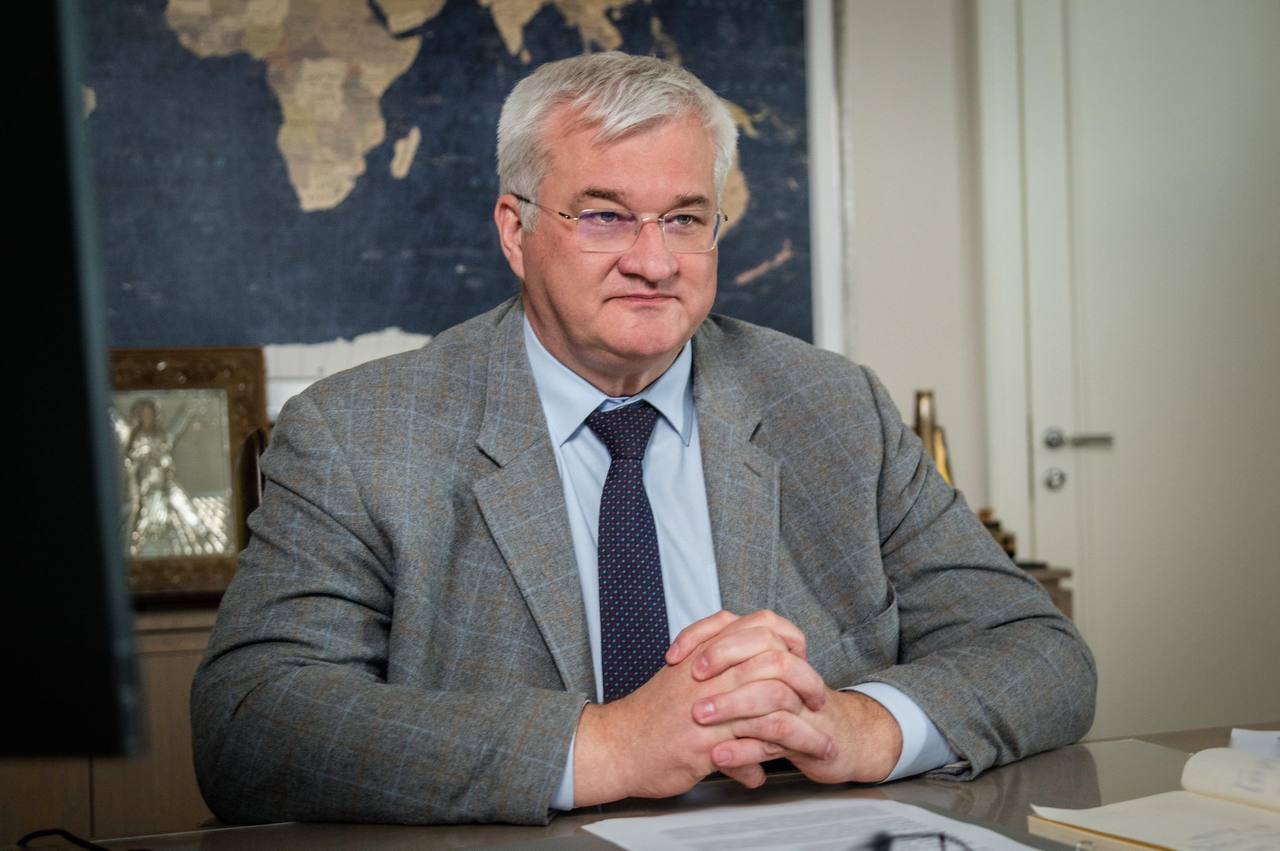
Foreign Minister Andrii Sybiha warned on June 13 that Russia has begun preparing strategic military reserves, signaling plans for military operations that may extend beyond Ukraine."According to our intelligence, Russia has started to prepare strategic reserves, which indicates plans for combat operations not only in Ukraine," Sybiha said during the Globsec conference in Prague, calling for urgent diplomatic and economic pressure. "Allies need full diplomatic mobilization to stop this war. This
Foreign Minister Andrii Sybiha warned on June 13 that Russia has begun preparing strategic military reserves, signaling plans for military operations that may extend beyond Ukraine.
"According to our intelligence, Russia has started to prepare strategic reserves, which indicates plans for combat operations not only in Ukraine," Sybiha said during the Globsec conference in Prague, calling for urgent diplomatic and economic pressure.
"Allies need full diplomatic mobilization to stop this war. This is not just a question for Ukraine. (Russian President Vladimir) Putin only understands strength, and right now it's crucial to apply sanctions in a timely manner, using them as economic weapons to pressure Russia," Sybiha said.
The comments come as Russia intensifies its military offensives and missile strikes across Ukraine, despite participating in two recent rounds of peace talks in Istanbul. The first talks were held on May 16, followed by a second meeting on June 2. While both rounds produced agreements on prisoner exchanges, they failed to secure a ceasefire.
President Volodymyr Zelensky said in a June 12 interview with Germany's Bild newspaper that Russia is using the talks to delay tougher U.S. sanctions, while continuing to escalate attacks on Ukrainian cities.
Russia also continues to issue nuclear threats to Western countries. Putin claimed on June 11 that Russia possesses the world's most advanced nuclear systems, with 95% of its strategic nuclear forces reportedly made up of modern equipment.
Putin emphasized the need to significantly strengthen Russia's ground forces. Russian defense spending has surged to 6.3% of GDP, the highest level since the Cold War, as Moscow continues to ramp up its military investment amid the ongoing war.
Ukraine has brought home the bodies of 1,200 Ukrainian soldiers and citizens as part of an agreement with Russia in Istanbul, the Coordination Headquarters for the Treatment of the Prisoners of War (POWs) announced on June 13.The repatriation comes after Ukraine brought back the bodies of 1,212 fallen service members earlier this week, with Moscow voicing readiness to release the remains of some 6,000 Ukrainians total during recent peace talks in Istanbul. The headquarters coordinated the operat
Ukraine has brought home the bodies of 1,200 Ukrainian soldiers and citizens as part of an agreement with Russia in Istanbul, the Coordination Headquarters for the Treatment of the Prisoners of War (POWs) announced on June 13.
The repatriation comes after Ukraine brought back the bodies of 1,212 fallen service members earlier this week, with Moscow voicing readiness to release the remains of some 6,000 Ukrainians total during recent peace talks in Istanbul.
The headquarters coordinated the operation with the Security Service of Ukraine (SBU), the Ombudsman's Office, the military, the Interior Ministry, and other state and defense bodies. The International Committee of the Red Cross has also provided assistance.
It is not immediately clear whether Ukraine released the bodies of Russian soldiers in return. During the previous exchange on June 11, Moscow claimed it had repatriated the bodies of 27 Russian service members.
At the Istanbul meeting on June 2, Russian and Ukrainian delegations agreed on a new exchange of POWs but failed to reach a ceasefire agreement.
The talks led to the most extensive prisoner swap in late May, involving 1,000 captives on each side. The exchanges continued this week, focusing on severely ill and wounded soldiers.
Russia accused Ukraine on June 7 of failing to uphold a proposed prisoner exchange, a charge Kyiv denied. Russian media published footage showing refrigerated containers allegedly holding the bodies of Ukrainian soldiers, suggesting Kyiv had rejected their return.
POW Coordination Headquarters deputy head Andrii Yusov told Ukrainian Pravda that the footage had been filmed inside Russia and not at a designated exchange site.
Kyiv has repeatedly urged Moscow to adopt an "all-for-all" prisoner exchange formula. While over 5,000 Ukrainians have been returned from Russian captivity since March 2022, Russia continues to resist a comprehensive swap.
German Defense Minister Boris Pistorius said Europe must begin preparing for a gradual reduction in U.S. military support for both the continent and Ukraine, Tagesschau reported on June 13."Yes, that's right. That would be so, and we have to deal with that," Pistorius told journalists in response to a question about the U.S. potentially scaling down its support. He noted that the discussions focus on a reduction in U.S. backing rather than a full halt.The comments come after U.S. Defense Secreta
German Defense Minister Boris Pistorius said Europe must begin preparing for a gradual reduction in U.S. military support for both the continent and Ukraine, Tagesschau reported on June 13.
"Yes, that's right. That would be so, and we have to deal with that," Pistorius told journalists in response to a question about the U.S. potentially scaling down its support. He noted that the discussions focus on a reduction in U.S. backing rather than a full halt.
The comments come after U.S. Defense Secretary Pete Hegseth announced that Washington would reduce the assistance allocated to Ukraine in the next year's federal budget.
"We now have to look at how much support drops and whether Europeans can compensate for it," Pistorius added.
While the U.S. has been Ukraine's leading military backer under former President Joe Biden, the Trump administration has yet to approve any aid packages and has become increasingly disengaged from peace talks.
Pistorius's comments come amid increasing uncertainty in transatlantic relations. U.S. Ambassador to NATO Matthew Whitaker confirmed on May 16 that the United States plans to begin discussions with European allies later this year about reducing its military presence on the continent.
Speaking at a security conference in Estonia, Whitaker said the talks would begin after the NATO summit in The Hague in June.
"Nothing has been determined," Whitaker said, according to Reuters. "But as soon as we do, we are going to have these conversations in the structure of NATO."
Whitaker emphasized that any drawdown would be closely coordinated to avoid creating security gaps. Still, he reiterated U.S. President Donald Trump's position that long-standing U.S. efforts to reduce its European military footprint must now be implemented.
"This is going to be orderly, but we are not going to have any more patience for foot-dragging in this situation," he said.
In February, Hegseth reportedly told NATO allies that "stark strategic realities" prevent the United States from being primarily focused on Europe's security. Leaks reported by the Atlantic in March revealed that both Hegseth and Vice President JD Vance privately criticized European defense spending, with Hegseth allegedly expressing his "loathing of European free-loading."
Trump called on NATO member states to increase defense spending up to 5% of GDP. Ahead of the upcoming NATO summit in The Hague on June 24–25, U.S. Secretary of State Marco Rubio said that member states will have agreed to a new goal of increasing defense spending.
"We are headed for a summit in six weeks in which virtually every member of NATO will be at or above 2%, but more importantly, many of them will be over 4%, and all will have agreed on a goal of reaching 5% over the next decade," Rubio told Fox News on May 15.
Such a move would mark a historic shift, with NATO partners collectively accounting for more than half of the alliance's military capacity, according to Rubio.
Since the beginning of Russia's full-scale war against Ukraine in 2022, NATO members have significantly increased their defense spending, with countries like Poland and the Baltic nations aiming to reach the 5% target in the coming years.
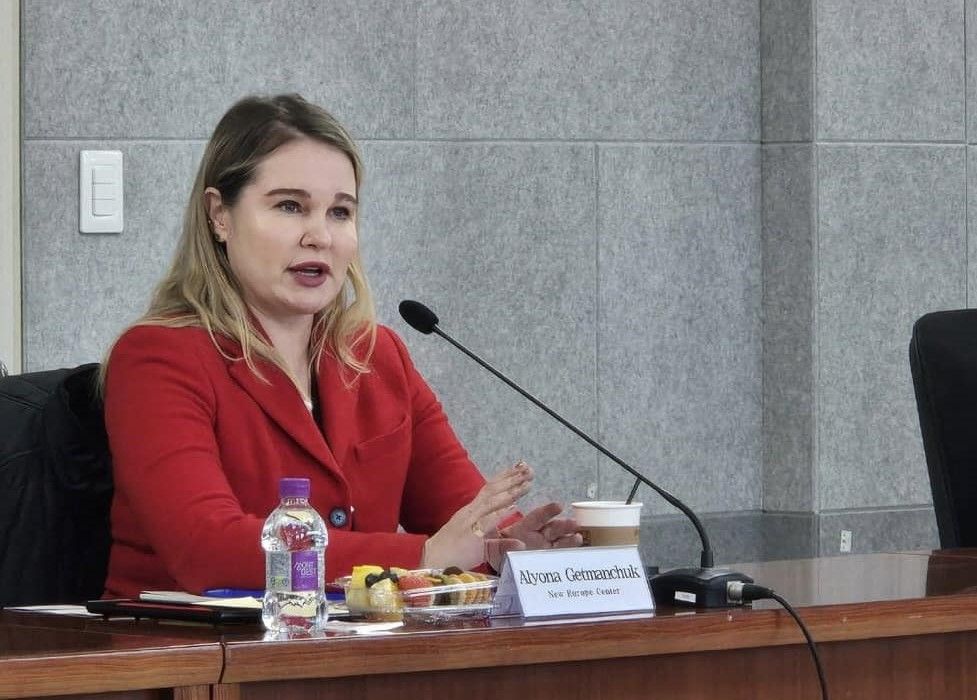
President Volodymyr Zelensky on June 13 appointed Aliona Hetmanchuk as the head of Ukraine's mission to NATO, replacing Nataliia Halibarenko.The appointment came "at a critical time for the future of Ukraine, for the future of NATO itself, and, of course, for Ukraine's future in NATO. I realize the responsibility," Hetmanchuk said on her Facebook page on June 13."As for this moment, we will be fully immersed in preparations for the summit in The Hague," she added, referring to the upcoming NATO
President Volodymyr Zelensky on June 13 appointed Aliona Hetmanchuk as the head of Ukraine's mission to NATO, replacing Nataliia Halibarenko.
The appointment came "at a critical time for the future of Ukraine, for the future of NATO itself, and, of course, for Ukraine's future in NATO. I realize the responsibility," Hetmanchuk said on her Facebook page on June 13.
"As for this moment, we will be fully immersed in preparations for the summit in The Hague," she added, referring to the upcoming NATO summit that will take place in the Netherlands on June 24 and 25, with Ukraine participating.
Hetmanchuk is a leading Ukrainian foreign policy expert with a background in journalism. She is the founder and director of the New Europe Center and a nonresident senior fellow at the Atlantic Council's Eurasia Center.
Previously, Hetmanchuk co-founded and directed the Institute of World Policy and has advised the Presidential Consultation Committee between Ukraine and Poland since 2016.
Ukraine applied for alliance membership in September 2022, several months after Russia launched its full-scale invasion. While NATO has repeatedly affirmed that Kyiv will eventually join, it has yet to extend a formal invitation.
NATO Secretary General Mark Rutte said on June 9 that the political commitment to Ukraine's future membership in NATO remains unchanged, even if it is not explicitly mentioned in the final communique of the upcoming summit in The Hague.
"The irreversible path of Ukraine into NATO is there, and it is my assumption that it is still there after the summit," Rutte said at Chatham House in London.
Rutte's comments follow reporting that this year's summit communique, set for release after the June 24–25 meeting, may exclude references to Ukraine. This would mark a notable departure from previous gatherings, where Kyiv's future in NATO took center stage.
Kyiv on June 13 expressed concern over the security situation in the Middle East after Israeli air strikes against Iran, but stressed that Tehran remains a "source of problems" in the region "and beyond."The statement follows what Israel called a "preemptive" strike against Iran overnight on June 13, targeting the country's nuclear program and reportedly killing top military officials."We would like to remind you that the Iranian regime supports Russia in its illegal war of aggression against Uk
Kyiv on June 13 expressed concern over the security situation in the Middle East after Israeli air strikes against Iran, but stressed that Tehran remains a "source of problems" in the region "and beyond."
The statement follows what Israel called a "preemptive" strike against Iran overnight on June 13, targeting the country's nuclear program and reportedly killing top military officials.
"We would like to remind you that the Iranian regime supports Russia in its illegal war of aggression against Ukraine and provides Moscow with weapons to kill Ukrainians," the Ukrainian Foreign Ministry said in a statement.
Along with North Korea, Iran has been a key ally to Russia during its full-scale war against Ukraine, providing thousands of Shahed strike drones and short-range ballistic missiles.
Ukraine has called upon the international community "to take joint and decisive action" and deter a "group of aggressive regimes — Russia, Iran, and North Korea."
Kyiv nevertheless also warned that further hostilities could destabilize the region with "negative consequences for international security and global financial stability, especially in oil markets."
Israeli strikes were quickly followed by a surge in oil prices, Russia's key export commodity, with Brent and Nymex crude prices jumping by more than 10%.
"We are convinced that restoring peace and stability in the Middle East will serve the interests not only of the region but also of the entire international community," the Ukrainian Foreign Ministry said.
Iran has pledged a response to Israeli air strikes and accused the United States of "also being responsible for the dangerous consequences of this reckless escalation." The Trump administration has acknowledged it knew about the operation in advance but denied any involvement.
According to the Israel Defense Forces (IDF), Tehran has already launched over 100 drones against Israel in response.
The attacks took place amid escalating tensions in the Middle East and U.S. President Donald Trump's push to find a diplomatic solution to Iran's nuclear aspirations. A round of indirect U.S.-Iranian negotiations in Oman was scheduled for June 15.
Russia has condemned Israel's attacks as "unprovoked aggression" and a violation of the U.N. Charter.
Ukraine has received another 1 billion euros ($1.1 billion) in macro-financial assistance from the European Union as part of a G7 loan, Prime Minister Denys Shmyhal announced on June 13."This is the fifth tranche of macro-financial assistance from the EU under the ERA Extraordinary Revenue Acceleration) initiative," Shmyhal wrote on social media. "The funds will be directed toward key expenditures of the state budget."Shmyhal thanked Ukraine's partners for their "consistent and reliable support,
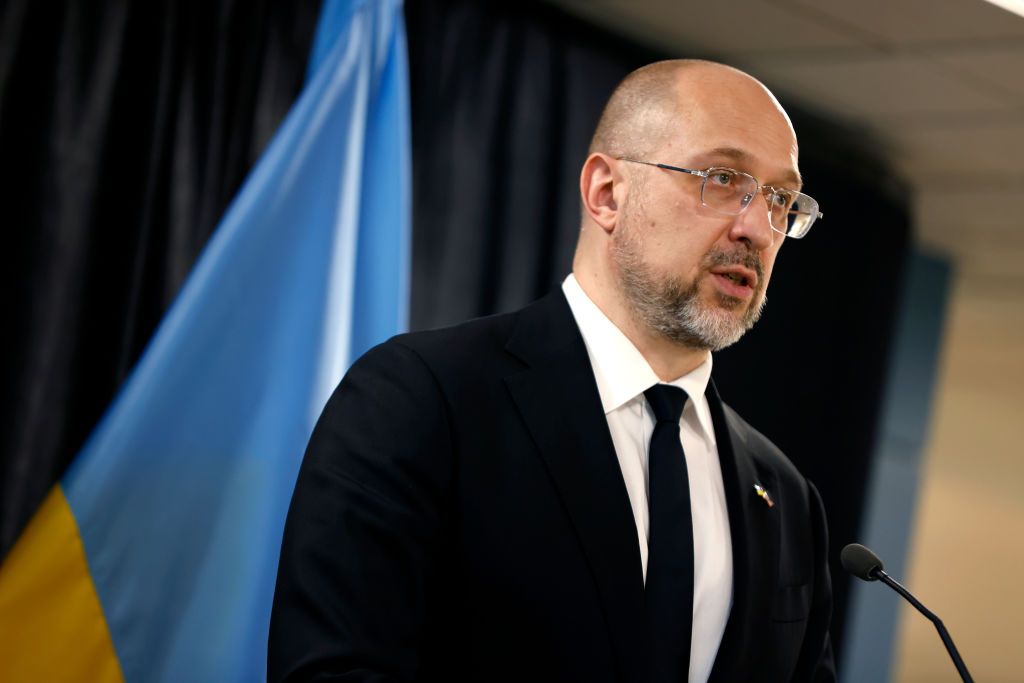
Ukraine has received another 1 billion euros ($1.1 billion) in macro-financial assistance from the European Union as part of a G7 loan, Prime Minister Denys Shmyhal announced on June 13.
"This is the fifth tranche of macro-financial assistance from the EU under the ERA Extraordinary Revenue Acceleration) initiative," Shmyhal wrote on social media. "The funds will be directed toward key expenditures of the state budget."
Shmyhal thanked Ukraine's partners for their "consistent and reliable support," adding, "Together, we will make (Russia) pay for all the damage caused to Ukraine."
According to Shmyhal, Ukraine has received a total of 7 billion euros ($8 billion) from the European Union under the ERA initiative, which is funded by the windfall profits generated from immobilized Russian sovereign assets.
The ERA mechanism, launched by the G7 and backed by the EU and the United States, is a $50 billion program designed to support Ukraine through loans repaid using future income from frozen Russian assets. Since Russia's full-scale invasion in 2022, G7 countries have frozen around $300 billion in Russian sovereign assets.
Ukraine received the previous 1-billion-euro tranche on May 8 as part of the fourth installment of EU aid under ERA.
Editor's note: This story was updated to include a comment from Ukrainian Foreign Ministry spokesperson Heorhii Tykhyi.Russia's Foreign Ministry expressed "extreme concern" on June 13 over Israel's recent strike on Iran, calling it a dangerous escalation that violated the United Nations Charter and international law.Moscow, which currently wages war against Ukraine, the largest conflict on the European continent since World War II, condemned Israel's attack as an "unprovoked aggression."Earlier
Editor's note: This story was updated to include a comment from Ukrainian Foreign Ministry spokesperson Heorhii Tykhyi.
Russia's Foreign Ministry expressed "extreme concern" on June 13 over Israel's recent strike on Iran, calling it a dangerous escalation that violated the United Nations Charter and international law.
Moscow, which currently wages war against Ukraine, the largest conflict on the European continent since World War II, condemned Israel's attack as an "unprovoked aggression."
Earlier on June 13, Israeli Prime Minister Benjamin Netanyahu said that Israeli forces had launched "Operation Rising Lion," a preemptive strike targeting Iran's nuclear program. In a televised address, Netanyahu claimed Israeli forces struck Iran's main nuclear enrichment site in Natanz and targeted key nuclear scientists.
In a statement, the Russian Foreign Ministry denounced Israel's overnight attacks as "unprovoked military strikes" targeting a sovereign U.N. member's nuclear facilities. The ministry said the international community "cannot remain indifferent" to such actions that undermine global and regional stability.
The statement called it "cynical" that the strikes occurred during a session of the International Atomic Energy Agency and just before another round of indirect Iran–U.S. talks in Oman, scheduled for June 15.
Moscow said this timing undermined diplomatic efforts aimed at reducing confrontations over Tehran's nuclear program.
The ministry accused Western countries of fueling "anti-Iranian hysteria" in international forums and warned that military solutions cannot resolve the Iranian nuclear issue. It urged all parties to show restraint to avoid a full-scale regional war.
Ukrainian Foreign Ministry spokesperson Heorhii Tykhyi responded to Russia's statement, saying it was "one of those awkward moments when the Russian Foreign Ministry comments on the Middle East but forgets to look at the mirror."
Russian condemnation comes as Moscow and Tehran continue to strengthen their ties. Iran's parliament ratified on May 21 a 20‑year strategic partnership agreement with Russia, deepening military and economic cooperation.
While the pact does not include mutual defense, it outlines joint military exercises, energy cooperation, and interbank links designed to circumvent Western sanctions.
Iran has also supplied Russia with thousands of Shahed drones and ballistic missiles used against Ukraine throughout Moscow's war.
Previously, Moscow claimed its willingness to remove excess nuclear material from Iran, converting it into reactor fuel in support of U.S.–Iran nuclear talks. Kremlin spokesperson Dmitry Peskov said Russia is prepared to assist if both Iran and the U.S. find its help valuable.
U.S. President Donald Trump on June 12 praised Russia's role in World War II, saying Russian President Vladimir Putin is "confused" why everyone "hates" Moscow.Speaking at a White House press conference, Trump recounted a conversation with French President Emmanuel Macron about World War II commemorations. "I said, 'You're celebrating our victory?' He said, 'Yes.' I said, "Your victory?'" Trump said. "And then I spoke to President Putin at the time. He lost 51 million people. He (sic!) fought wi
U.S. President Donald Trump on June 12 praised Russia's role in World War II, saying Russian President Vladimir Putin is "confused" why everyone "hates" Moscow.
Speaking at a White House press conference, Trump recounted a conversation with French President Emmanuel Macron about World War II commemorations.
"I said, 'You're celebrating our victory?' He said, 'Yes.' I said, "Your victory?'" Trump said.
"And then I spoke to President Putin at the time. He lost 51 million people. He (sic!) fought with us in World War II. Russia did fight. It's interesting, isn't it? It fought with us in World War II, and everyone hates it.
"And now everybody hates Russia and loves Germany and Japan. It's a strange world."
Trump said Putin had expressed confusion over the West's treatment of Russia post-war, citing the Soviet Union's wartime alliance with the U.S. and U.K.
"We were your ally," Putin allegedly told Trump. "Now everybody hates Russia."
Trump's remarks align with a Kremlin propaganda narrative that downplays the Soviet Union's World War II non-Russian casualties. According to Ukraine's Institute of National Remembrance, Ukraine alone lost more than 10 million people during the war and suffered immense destruction on its territory — a fact often overlooked in Kremlin-led historical revisionism.
Russia has frequently weaponized its version of World War II history to justify present-day aggression. The Kremlin has invoked anti-Nazi rhetoric and Soviet-era heroism to rationalize its full-scale invasion of Ukraine, launched in February 2022 — a war that has resulted in tens of thousands of deaths and the displacement of millions.
Trump has positioned himself as the only leader capable of ending the Russia-Ukraine war, but his reluctance to apply real pressure on Moscow has left Kyiv and its allies doubtful. The U.S. president has softened his tone on Russia while repeatedly threatening sanctions over its attacks on Ukraine — yet no new measures have been imposed.
Talking at the press conference about the war and the stalled peace efforts, Trump said he was "disappointed" with both Russia and Ukraine, adding that "deals could have been made."
Trump has previously said that he refrained from imposing additional sanctions in hopes of securing a peace deal between Kyiv and Moscow.
"If I think I'm close to getting a deal, I don't want to screw it up by doing that," he said on May 28, adding that a decision would come "in about two weeks."
Despite failed peace efforts in Istanbul and Russia's continued refusal to agree to a ceasefire, Trump reportedly asked Senate Republicans to delay voting on a bipartisan sanctions bill that would impose a 500% tariff on imports from countries buying Russian oil.
The legislation, introduced in April, has broad bipartisan support, including backing from Senate Minority Leader Chuck Schumer and House Speaker Mike Johnson.
Meanwhile, Russia continues its offensive in Ukraine and has shown no signs of seeking peace. It continues escalating its attacks on Ukrainian cities, causing numerous civilian casualties.
Editor's note: The story is being updated.Explosions could be heard across Crimea early on June 13, including in Sevastopol and Simferopol, the Crimean Wind Telegram channel reported amid Russian claims of Ukrainian drone attacks.Atesh partisans reported "precise hits" against Russian military facilities near Simferopol."Our agents report that due to the negligence of the (Russian) command, valuable equipment was damaged, probably an air defense missile system," the group said on Telegram."There
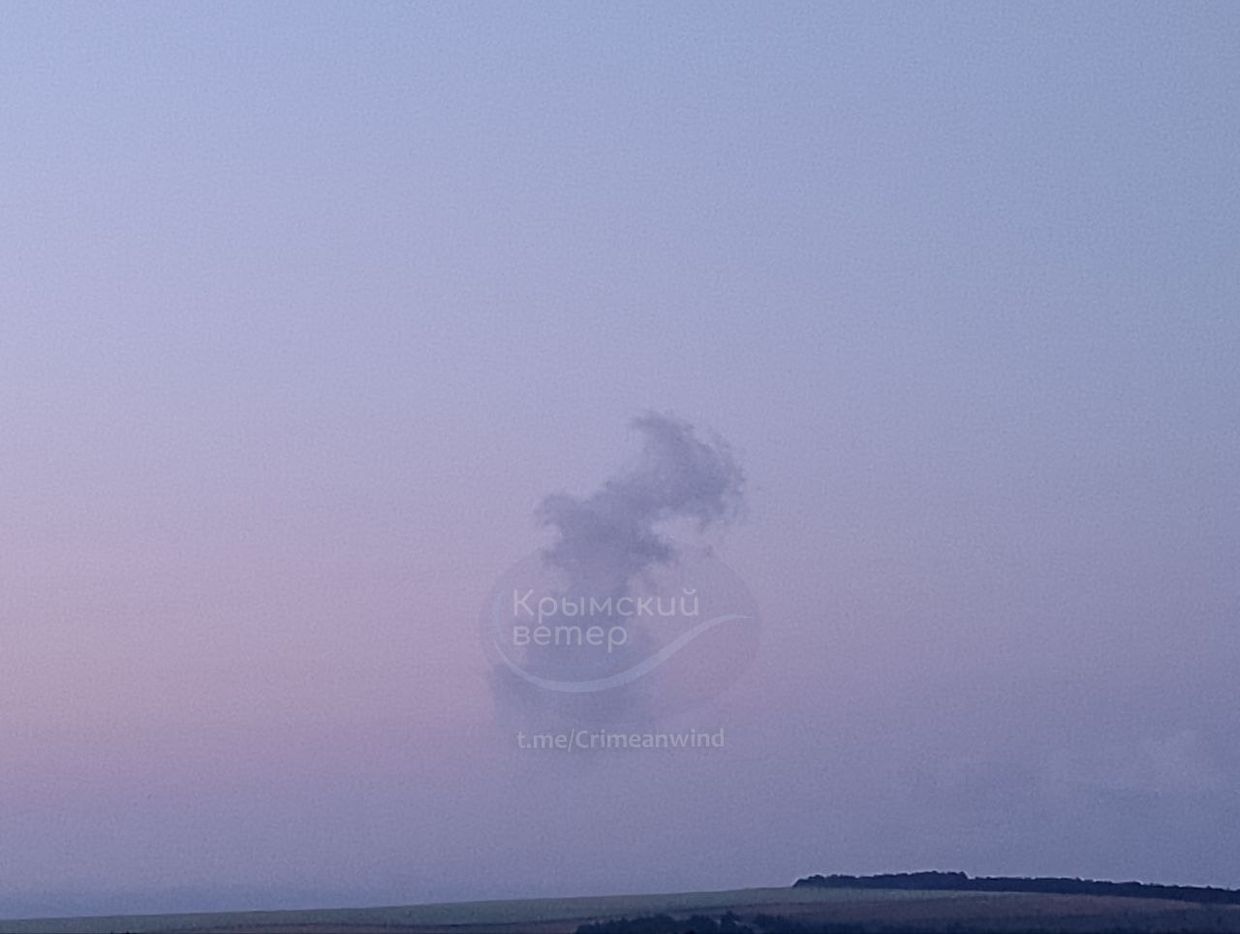
Explosions could be heard across Crimea early on June 13, including in Sevastopol and Simferopol, the Crimean Wind Telegram channel reported amid Russian claims of Ukrainian drone attacks.
Atesh partisans reported "precise hits" against Russian military facilities near Simferopol.
"Our agents report that due to the negligence of the (Russian) command, valuable equipment was damaged, probably an air defense missile system," the group said on Telegram.
"There are also losses among the troops," Atesh said, adding that the exact numbers are difficult to establish.
The pro-Ukrainian Crimean Wind Telegram channel reported a hit in Simferopol, Crimea's capital, sharing a photo of a plume of smoke rising in the vicinity of a local power station and of the village of Perevalne. Blasts in Yevpatoriia, Saki, Fedosia, and elsewhere were also reported.
Russia's Defense Ministry claimed its air defenses shot down 125 Ukrainian drones overnight on June 13, including 70 over Crimea and seven over the Black Sea. Russian officials did not comment on possible damage.
The Kyiv Independent could not verify the claims. Ukraine has not commented on the alleged attacks.
Russia has illegally occupied Crimea since 2014, transforming the peninsula into a heavily militarized stronghold to support its war against Ukraine.
Ukrainian forces have repeatedly targeted the peninsula with missiles and drones since the outbreak of the full-scale war in 2022. Most recently, Ukrainian drones attacked an ammunition depot used by Russia's 126th Coastal Defense Brigade near the village of Perevalne.
Global oil prices soared on June 13 after Israel launched a strike on Iran, triggering fears of a broader conflict in the energy-rich Middle East that could disrupt global supplies, the BBC reported. The spike threatens to undermine Western efforts to choke off a vital revenue stream for Russia, which relies heavily on oil profits to sustain its war in Ukraine.According to the BBC, Brent and Nymex crude prices jumped by more than 10% following the Israeli attack, reaching their highest levels s
Global oil prices soared on June 13 after Israel launched a strike on Iran, triggering fears of a broader conflict in the energy-rich Middle East that could disrupt global supplies, the BBC reported.
The spike threatens to undermine Western efforts to choke off a vital revenue stream for Russia, which relies heavily on oil profits to sustain its war in Ukraine.
According to the BBC, Brent and Nymex crude prices jumped by more than 10% following the Israeli attack, reaching their highest levels since January. Prices later stabilized but remained about 7.5% higher, with Brent at $74.50 a barrel and Nymex at $73.20.
The price surge comes at a crucial time for Ukraine and its Western allies, who are intensifying efforts to minimize the Kremlin's oil revenues — the backbone of Russia's wartime economy.
President Volodymyr Zelensky urged the European Union on June 11 to impose tougher sanctions on Russia, including a more aggressive price cap on oil exports.
"A ceiling of $45 per barrel of oil is better than $60, that's clear," Zelensky said at the Ukraine-Southeast Europe Summit in Odesa. "But real peace will come with a ceiling of $30. That's the level that will really change the mindset in Moscow."
The EU's current $60 per barrel cap, introduced in December 2022, prohibits Western companies from shipping, insuring, or servicing Russian oil sold above the threshold. While this measure has curtailed some of Russia's profits, the Kremlin continues to earn significant revenue, especially when market prices rise.
European Commission President Ursula von der Leyen said on June 10 that the EU is considering lowering the cap to $45, a move that will be discussed at the G7 summit in Canada between June 15 and 17. According to Reuters, most G7 countries, excluding the U.S. and Japan, are prepared to proceed with the reduction regardless of Washington’s stance.
Israeli Prime Minister Benjamin Netanyahu said early on June 13 that Israeli forces had launched "Operation Rising Lion," a preemptive strike targeting Iran's nuclear program. In a televised address, Netanyahu claimed Israeli forces struck Iran's main nuclear enrichment site in Natanz and targeted key nuclear scientists.
At least four civilians were killed and 24 injured over the past day in Russian attacks across Ukraine, Ukrainian officials said on June 13.According to the Ukrainian Air Force, Russia targeted the country with 55 Shahed-type attack drones and decoy unmanned aerial vehicles (UAVs), as well as four Iskander-M/KN-23 ballistic missiles launched from Russian territory. Ukraine's air defenses shot down 28 drones, while 15 were intercepted by electronic warfare or disappeared from radars.In Kherson Ob
At least four civilians were killed and 24 injured over the past day in Russian attacks across Ukraine, Ukrainian officials said on June 13.
According to the Ukrainian Air Force, Russia targeted the country with 55 Shahed-type attack drones and decoy unmanned aerial vehicles (UAVs), as well as four Iskander-M/KN-23 ballistic missiles launched from Russian territory.
Ukraine's air defenses shot down 28 drones, while 15 were intercepted by electronic warfare or disappeared from radars.
In Kherson Oblast, Governor Oleksandr Prokudin said Russian troops shelled and launched drone and air strikes on dozens of settlements, including Kherson city. The attacks hit residential areas and critical infrastructure, damaging four apartment buildings and 13 houses. One person was killed and seven were wounded.
In Kharkiv Oblast, Governor Oleh Syniehubov reported that seven civilians were injured, including an 11-year-old child, during Russian attacks on seven settlements. Russian forces used 16 unguided rockets, six guided bombs, and over 20 drones, including Shaheds and first-person view (FPV) units. Civilian infrastructure, including houses and factory buildings in Kupiansk, Izium, and Bohodukhiv districts, sustained significant damage.
In Sumy Oblast, two people were injured when a Russian drone struck civilian infrastructure in the Mykolaivka community, regional officials said. Over the past 24 hours, Russia carried out more than 50 attacks on 25 settlements using FPV drones, multiple-launch rocket systems, and guided bombs.
In Zaporizhzhia Oblast, Governor Ivan Fedorov said one person was killed and three injured in Russian attacks on the region. Russian forces launched nearly 500 strikes across the region, including 283 drone attacks, mainly FPV types, and 10 air strikes.
In Donetsk Oblast, Governor Vadym Filashkin said two civilians were killed, while five others were injured across the region.
NATO plans to enhance its missile defense systems on its eastern flank in response to a growing threat from Russia, Bloomberg reported on June 12, citing its undisclosed sources.For the first time, member states of NATO are reportedly considering combining the alliance's ballistic missile shield with other integrated missile defense assets. The talks are taking place behind closed doors and involve sensitive deliberations, Bloomberg reported, citing its sources.Moscow has long opposed NATO's mis
NATO plans to enhance its missile defense systems on its eastern flank in response to a growing threat from Russia, Bloomberg reported on June 12, citing its undisclosed sources.
For the first time, member states of NATO are reportedly considering combining the alliance's ballistic missile shield with other integrated missile defense assets. The talks are taking place behind closed doors and involve sensitive deliberations, Bloomberg reported, citing its sources.
Moscow has long opposed NATO's missile defense infrastructure, particularly the U.S.-built interceptors deployed in Poland and Romania, states neighboring Ukraine. The alliance has previously said those systems are intended to counter potential long-range threats from Iran, not Russia.
The so-called "NATO expansion to the east" is one of the key narratives used by Russian propaganda to justify its large-scale war against Ukraine.
The proposed integration of ballistic missile defense with NATO's broader air and missile defense network would address threats from any direction in the future. This shift suggests the effort would increasingly be focused on deterring Russian capabilities, according to Bloomberg's sources.
The move comes as NATO ramps up its defense posture more than three years after Russia launched its full-scale invasion of Ukraine. The alliance recently agreed on the most ambitious new weapons targets since the Cold War.
NATO Secretary General Mark Rutte called on alliance members to make a "quantum leap" in defense investment in response to the enduring threat from Russia. Speaking at Chatham House in London, Rutte urged allies to increase air and missile defense by 400%.
Talks on integrating the systems may wrap up ahead of the NATO summit in The Hague on June 24–25, but could continue afterward, the sources said. Ukraine is invited to attend the summit. It remains unclear whether the initiative will still officially cite Iran as a threat or move fully toward addressing Russia.
The effort is part of a broader strategy to reinforce NATO's eastern flank, but some officials have raised concerns about how it might affect peace efforts in Ukraine and whether the United States will fully support the integration, Bloomberg reported.
Previously, U.S. President Donald Trump echoed Russian claims that Kyiv provoked the invasion by pursuing its NATO ambitions.
Earlier, Bloomberg reported that NATO is deploying a new satellite surveillance system aimed at monitoring military activity in Ukraine and along the alliance's eastern borders. The system, known as Smart Indication and Warning Broad Area Detection (SINBAD), will use AI-powered analysis to scan large areas and detect potential threats with unprecedented frequency.
Russia has lost 1,001,560 troops in Ukraine since the beginning of its full-scale invasion on Feb. 24, 2022, the General Staff of Ukraine's Armed Forces reported on June 13.The number includes 1,220 casualties that Russian forces suffered just over the past day.According to the report, Russia has also lost 10,934 tanks, 22,791 armored fighting vehicles, 51,821 vehicles and fuel tanks, 29,105 artillery systems, 1,416 multiple launch rocket systems, 1,184 air defense systems, 416 airplanes, 337 he
Russia has lost 1,001,560 troops in Ukraine since the beginning of its full-scale invasion on Feb. 24, 2022, the General Staff of Ukraine's Armed Forces reported on June 13.
The number includes 1,220 casualties that Russian forces suffered just over the past day.
According to the report, Russia has also lost 10,934 tanks, 22,791 armored fighting vehicles, 51,821 vehicles and fuel tanks, 29,105 artillery systems, 1,416 multiple launch rocket systems, 1,184 air defense systems, 416 airplanes, 337 helicopters, 40,507 drones, 3,337 cruise missiles, 28 ships and boats, and one submarine.
Ukraine successfully brought back five children who had been forcibly taken to Russia as well as Russian-occupied territory, Presidential Office head Andriy Yermak announced on June 12.The children have been returned home under the President of Ukraine’s initiative, Bring Kids Back UA, according to Yermak."We are fulfilling the President's mission — to bring back every Ukrainian child," Yermak said in an statement.Since February 2022, at least 20,000 Ukrainian children have been abducted from Ru
Ukraine successfully brought back five children who had been forcibly taken to Russia as well as Russian-occupied territory, Presidential Office head Andriy Yermak announced on June 12.
The children have been returned home under the President of Ukraine’s initiative, Bring Kids Back UA, according to Yermak.
"We are fulfilling the President's mission — to bring back every Ukrainian child," Yermak said in an statement.
Since February 2022, at least 20,000 Ukrainian children have been abducted from Russian-occupied territories and sent to other Russian-controlled areas of Ukraine or to Russia itself, according to a Ukrainian national database, "Children of War." Only 1,359 children have been returned thus far.
Dmytro Lubinets, Ukrainian Parliament’s Commissioner for Human Rights, estimated that Russia has unlawfully deported up to 150,000 Ukrainian children, while the Children’s Ombudswoman, Daria Herasymchuk, puts the figure at 200,000–300,000.
In March 2023, the International Criminal Court (ICC) issued arrest warrants for Russian President Vladimir Putin and Children's Commissioner Maria Lvova-Belova, citing their involvement in the unlawful transfer of Ukrainian children. Russia dismissed the ICC's decision as "outrageous and unacceptable."
Under orders from Putin, children were transported via military aircraft in 2022, reclassified in Russian databases as native-born, and subjected to pro-Russian re-education before being adopted into Russian families. Ukrainian children had been transported to at least 21 regions throughout Russia.
Child abductions have played a key part of U.S.-Russia peace negotiations — all of which Russia has thus far rejected. Ukrainian officials have named their return as a key condition for any future peace agreement with Russia.
President Volodymyr Zelensky said on June 3 that during the Istanbul negotiations, Russian representatives dismissedthe issue of abducted Ukrainian children as a "show for childless European old ladies" and acknowledged deporting several hundred children.
CNN reported on June 11 that the Yale University-based Humanitarian Research Lab, which spearheads the Ukraine Conflict Observatory is preparing to shut down after its funding was terminated by the Trump administration.
A Yale study published on Dec. 3 detailed Russia's systematic program of deporting and forcibly assimilating Ukrainian children.
Russian independent media outlet Mediazona, in collaboration with the BBC Russian service, has confirmed the identities of 111,387 Russian military personnel killed in Ukraine.The publications' latest report covers the period of February 24, 2022 to June 6, 2025. Since it was last updated at the end of May, 1,762 additional Russian military personnel have been confirmed killed.The journalists note that the actual figures are likely significantly higher, as their verified information comes from p
Russian independent media outlet Mediazona, in collaboration with the BBCRussian service, has confirmed the identities of 111,387 Russian military personnel killed in Ukraine.
The publications' latest report covers the period of February 24, 2022 to June 6, 2025. Since it was last updated at the end of May, 1,762 additional Russian military personnel have been confirmed killed.
The journalists note that the actual figures are likely significantly higher, as their verified information comes from public sources such as obituaries, posts by relatives, memorial community tree-plantings, regional media reports, statements from local authorities, among other sources.
The outlet published the complete list of identified casualties for the first time in February, marking three years since Russia launched its full-scale invasion of Ukraine. According to the publication, volunteers manually enter and verify each record to prevent duplicate entries in the database.
The journalists' findings come as Russia surpassed 1 million losses on June 12, marking a symbolic, yet grim milestone in the 3-year-long war. The estimate, which is broadly in-line with estimates made by Western intelligence agencies, likely includes those killed, captured, wounded, and missing.
The confirmed death toll now includes 28,200 volunteers, 17,400 recruited prisoners, and nearly 12,300 mobilized soldiers, according to the media outlets. Over 5,100 officers have also been confirmed to have been killed.
Amid renewed summer offensives in multiple sectors of the front, Russia has steadily gained ground in eastern Ukraine and Kursk Oblast in recent months but at the cost of heavy casualties as well as equipment losses.
Ukraine's Coordination Headquarters for the Treatment of the Prisoners of War (POWs) said on June 12 said that more than 100,000 Russian families have contacted a Ukrainian-run initiative in search of information about missing Russian soldiers.
Moscow does not disclose its casualty figures, though a Defense Ministry official let slip in December that the department received 48,000 requests to identify missing soldiers.
Ylva Johansson, former European Commissioner for Home Affairs, will serve as the European Union's new special envoy for Ukrainians in the bloc, POLITICO reported on June 12.According to anonymous officials that spoke to POLITICO, Johansson will fill the newly created post, overseeing the Commission's long-term strategy for Ukrainian refugees currently residing in the European Union.Johansson, a former Swedish minister and European Commission official, previously visited Ukraine on several occasi
Ylva Johansson, former European Commissioner for Home Affairs, will serve as the European Union's new special envoy for Ukrainians in the bloc, POLITICO reported on June 12.
According to anonymous officials that spoke to POLITICO, Johansson will fill the newly created post, overseeing the Commission's long-term strategy for Ukrainian refugees currently residing in the European Union.
Johansson, a former Swedish minister and European Commission official, previously visited Ukraine on several occasions, including a refugee camp on the border with Romania. She received the Ukrainian order of merit in September 2024.
As special envoy, Johansson will be responsible for EU initiatives focused on helping Ukrainian refugees transition into permanent legal statuses or return home.
As part of these initiatives, the EU will launch "unity hubs" – information centers jointly managed with the Ukrainian government. The hubs will support Ukrainian refugees to integrate with EU host countries or repatriate to Ukraine.
Germany, which has has taken in more than 1 million Ukrainian refugees since the start of the full-scale invasion, recently committed to establishing unity hubs in Berlin. The unity hubs in Berlin will provide Ukrainians with access to educational and career opportunities both in Ukraine and Germany.
The European Commission also recently extended temporary protection Ukrainian refugees who fled to the EU following Russia's invasion of Ukraine.
According to Eurostat, 4.26 million Ukrainians currently hold temporary protection status in the EU as of April 2025.
Most Group of Seven (G7) nations are prepared to lower the Russian oil price cap from $60 to $45 a barrel even without support from the United States, Reuters reported on June 12, citing unnamed sources familiar with the matter.According to Reuters, the European Union and United Kingdom, backed by other European G7 countries and Canada, are ready to lead the charge in lowering the Russian oil price cap – even if U.S. President Donald Trump opts out.The price cap, which bans Western companies fro
Most Group of Seven (G7) nations are prepared to lower the Russian oil price cap from $60 to $45 a barrel even without support from the United States, Reuters reported on June 12, citing unnamed sources familiar with the matter.
According to Reuters, the European Union and United Kingdom, backed by other European G7 countries and Canada, are ready to lead the charge in lowering the Russian oil price cap – even if U.S. President Donald Trump opts out.
The price cap, which bans Western companies from shipping, insuring, or otherwise servicing Russian oil sold above $60 per barrel, was first introduced in December 2022 as a measure to limit the Kremlin's ability to finance its war against Ukraine.
The G7 had previously attempted to lower the Russian oil price cap; however, the proposal was dropped after U.S. Treasury Secretary Scott Bessent reportedly declined to support it.
It is unclear whether the U.S. will support the decision this time around. Japan's position is also undecided.
Participating country leaders will revisit the price cap discussion at the upcoming G7 summit. Canada, which holds the G7 presidency this year, will host the summit on June 15-17 in Kananaskis County, located in the western province of Alberta.
The summit agenda will include topics such as support for Ukraine in the Russian war, global economic stability, digital transformation, and climate change.
President Volodymyr Zelensky is expected to attend the summit and seek a meeting with U.S. President Donald Trump.
Ukrainian forces are gradually driving Russian troops back from parts of Sumy Oblast, President Volodymyr Zelensky said on June 12, amid escalating cross-border assaults in the region. "Today, there was a report from Commander-in-Chief (Oleksandr) Syrskyi — the front and, above all, the Pokrovsk direction, the Kursk operation, the border area of Sumy Oblast," Zelensky said in a video address. "Our units in Sumy Oblast are gradually pushing back the occupiers. Thank you to each of our soldiers, s
Ukrainian forces are gradually driving Russian troops back from parts of Sumy Oblast, President Volodymyr Zelensky said on June 12, amid escalating cross-border assaults in the region.
"Today, there was a report from Commander-in-Chief (Oleksandr) Syrskyi — the front and, above all, the Pokrovsk direction, the Kursk operation, the border area of Sumy Oblast," Zelensky said in a video address.
"Our units in Sumy Oblast are gradually pushing back the occupiers. Thank you to each of our soldiers, sergeants, and officers for this result."
The statement follows weeks of intensified Russian offensives along the northeastern border. Russian troops have advanced into Sumy Oblast since Ukraine's withdrawal from most of its positions in Russia's Kursk Oblast in March.
Since March, Russia has reportedly taken control of about 200 square kilometers (80 square miles) in northern Sumy Oblast, including roughly a dozen small villages. As of May 31, mandatory evacuations were ordered for 213 settlements.
In May, Russian President Vladimir Putin ordered his military to create a so-called "security buffer zone" along the border with Ukraine, while Zelensky said on May 28 that Moscow had massed 50,000 troops near Sumy.
In a separate interview with Bild on June 12, Zelensky dismissed Moscow's claims of significant territorial gains as "a Russian narrative" aimed at shaping global perceptions. He stressed that Ukrainian forces have managed to hold off a renewed offensive for nearly three weeks.
Sumy Oblast, which shares a long border with Russia, has been under near-constant attack since the start of the full-scale invasion in 2022.
On June 3, Russian strikes on the city of Sumy killed six people and injured 28 others, including children.
Kerch Airport in occupied Crimea is being repurposed from civilian to military use, according to a June 12 investigation by Radio Free Europe/Radio Liberty's Schemes project, citing satellite imagery and Russian real estate registry data.On March 4, 2025, the Russian-backed authorities officially transferred part of the airport's land to Russia's Defense Ministry for indefinite use, according to the investigation. Russia illegally annexed Crimea in 2014 after a discredited referendum under milit
Kerch Airport in occupied Crimea is being repurposed from civilian to military use, according to a June 12 investigation by Radio Free Europe/Radio Liberty's Schemes project, citing satellite imagery and Russian real estate registry data.
On March 4, 2025, the Russian-backed authorities officially transferred part of the airport's land to Russia's Defense Ministry for indefinite use, according to the investigation.
Russia illegally annexed Crimea in 2014 after a discredited referendum under military occupation. Since then, the peninsula has become a heavily militarized zone.
Satellite images from the Planet Labs imaging company show ongoing construction at the site, including the installation of protective and camouflage structures around the runway.
The changes suggest the airport is being converted into a military facility capable of supporting drone operations or housing short-range air defense systems such as the Pantsir-S1 or Tor-M2, according to aviation expert Anatoly Khrapchinsky.
The new runway will be suitable for drone launches, Khrapchinsky noted.
Kerch Airport has not hosted regular commercial flights since 2007 and was previously used as a truck holding area for freight vehicles crossing the nearby ferry. That function was relocated in March 2025, officially as part of a "reorganization."
The city of Kerch, situated near the strategic Kerch Strait, lies just across from Russia's Krasnodar Krai and is home to the crucial Crimean Bridge, built after Russia's illegal annexation of the peninsula in 2014.
Editor's note: This story has been updated to include Germany's announcement to supply Ukraine with $2.2 billion in additional military aid.Germany will deliver new IRIS-T air defense systems to Ukraine under a three-year supply plan, President Volodymyr Zelensky said during a joint press conference with German Defense Minister Boris Pistorius, who added Berlin has no plans to provide Taurus long-range missiles.The announcement comes amid escalating Russian aerial assaults, including a June 10 m
Editor's note: This story has been updated to include Germany's announcement to supply Ukraine with $2.2 billion in additional military aid.
Germany will deliver new IRIS-T air defense systems to Ukraine under a three-year supply plan, President Volodymyr Zelensky said during a joint press conference with German Defense Minister Boris Pistorius, who added Berlin has no plans to provide Taurus long-range missiles.
The announcement comes amid escalating Russian aerial assaults, including a June 10 missile and drone strike on Kyiv, one of the largest since the start of the full-scale invasion.
"We are grateful for the supply of IRIS-T air defense systems," Zelensky said on June 12. "We understand that deliveries are currently being planned... for the next three years. This is very important assistance."
The IRIS-T is a German-made medium-range surface-to-air missile system capable of intercepting drones, aircraft, and cruise missiles.
Pistorius confirmed the delivery timeline but firmly ruled out the possibility of sending Taurus missiles — weapons Kyiv has repeatedly requested to strike deep into Russian territory.
"You asked me whether we are considering this, and my answer is no," Pistorius said.
Before taking office, German Chancellor Friedrich Merz signaled openness to lifting former Chancellor Olaf Scholz's ban on the missiles. That stance has not yet resulted in a policy shift.
Ukraine has already received long-range missiles — including ATACMS from the U.S. and Storm Shadow and SCALP from the U.K. and France. Initially restricted to use within Ukrainian territory, Western allies only began easing those limitations in late 2024.
Germany is Ukraine's largest military donor in Europe. Pistorius said that Berlin will provide 9 billion euros ($10.4 billion) in aid this year, with investments in defense production being considered. The total includes an additional commitment in military aid worth 1.9 billion euros ($2.2 billion).
"Today, we discussed that this aid will continue," he said. "We agreed on additional investments in production... both in Ukraine and in Germany."
Zelensky visited Berlin on May 28 for talks with Merz, part of an ongoing effort to bolster Ukraine's defense industry amid uncertainty over U.S. support under President Donald Trump.
Russia has redeployed dozens of long-range bombers to more remote bases within the country, Russian independent media outlet Agentstvo reported on June 11, citing OSINT analyst AviVector.The relocation comes in the wake of Ukraine's Operation Spiderweb, the unprecedented mass drone strike on June 1 that targeted four Russian air bases deep inside the country. The Security Service of Ukraine (SBU) said 117 drones were launched from hidden positions across Russia, damaging 41 aircraft, including
Russia has redeployed dozens of long-range bombers to more remote bases within the country, Russian independent media outlet Agentstvo reported on June 11, citing OSINT analyst AviVector.
The relocation comes in the wake of Ukraine's Operation Spiderweb, the unprecedented mass drone strike on June 1 that targeted four Russian air bases deep inside the country.
The Security Service of Ukraine (SBU) said 117 drones were launched from hidden positions across Russia, damaging 41 aircraft, including Tu-95, Tu-22M3, and Tu-160 bombers.
According to Agentstvo, all Tu-160 bombers have been evacuated from Belaya airfield in Irkutsk Oblast and Olenya airfield in Murmansk Oblast. Some were relocated to Anadyr in Chukotka, Yelizovo in Kamchatka, and Borisoglebskoye in Tatarstan.
Tu-22M3 and Tu-95MS bombers were also redeployed. Eleven Tu-22M3s and all Tu-95MS aircraft near Murmansk reportedly relocated to the Ukrainka airfield in Amur Oblast, Engels-2 in Saratov Oblast, Borisoglebskoye in Tatarstan, and Mozdok in North Ossetia.
The reported relocation of bombers is the latest sign that Ukraine's drone warfare is forcing the Kremlin to rethink its strategic posture, even far from the front lines.
Western analysts and military officials praised Ukraine's ingenuity in the Spiderweb operation. NATO Admiral Pierre Vandier called the mission a modern reinvention of the "Trojan Horse," demonstrating Ukraine's growing technical sophistication and deep-strike capability.
President Volodymyr Zelensky claimed that roughly half of the targeted aircraft are damaged beyond repair. Russia has acknowledged losses but insisted all damaged aircraft will be restored.
More than 100,000 Russian families have contacted a Ukrainian-run initiative in search of information about missing Russian soldiers, Ukraine's Coordination Headquarters for the Treatment of the Prisoners of War (POWs) said on June 12.The announcement comes as Russia and Ukraine are conducting a series of the most extensive prisoner exchanges since the beginning of the large-scale war in 2022. The latest phase of the exchange occurred on June 12.The initiative, called "I Want to Find" (Russian:
More than 100,000 Russian families have contacted a Ukrainian-run initiative in search of information about missing Russian soldiers, Ukraine's Coordination Headquarters for the Treatment of the Prisoners of War (POWs) said on June 12.
The announcement comes as Russia and Ukraine are conducting a series of the most extensive prisoner exchanges since the beginning of the large-scale war in 2022. The latest phase of the exchange occurred on June 12.
The initiative, called "I Want to Find" (Russian: "Хочу найти"), has received 100,324 requests from Russian citizens seeking answers about relatives who vanished while serving in Russia's military, the Coordination Headquarters said.
The actual number of missing Russian troops is believed to be significantly higher. Since launching its full-scale invasion of Ukraine in February 2022, the Kremlin has largely concealed the scale of its military losses, forcing many families to search independently, Ukrainian officials said.
In May 2025 alone, the project received a record 12,320 inquiries — the highest monthly figure since the program began in January 2024.
Through the project, families can verify whether their relatives have been captured or killed, which may enable them to pressure Russian authorities to pursue prisoner exchanges. As of June, Ukraine has confirmed 2,415 Russian soldiers held in captivity, with 1,126 of them already exchanged for Ukrainian defenders, the Coordination Headquarters said.
"Many more Russians remain in captivity, but not all families know about the program or have submitted requests," the agency added.
A detailed analysis of the requests revealed that some of Russia's most severely depleted units include the 15th Separate Motorized Rifle Brigade (Military Unit 90600), which accounts for 2,277 missing personnel — the highest of any single unit. Of the 20 most-affected units, 17 are motorized rifle brigades, often deployed in Russia's most brutal infantry assaults, commonly referred to as "meat grinder" tactics.
The data also showed that 26% of missing soldiers were under the age of 30. The youngest reported missing was 18, and the oldest was 67.
The project has also uncovered a shift in public sentiment, claiming 75% of those submitting requests said they do not support Russia's war in Ukraine.
According to the Ukrainian General Staff, Russia has lost over 1 million troops since the start of its invasion — a figure reported for the first time on June 12, with 1,140 casualties recorded in just one day. The total reported Russian losses stand at 1,000,340 as of that date.
Editor's note: The story is being updated.Ukraine has brought home another group of service members from Russian captivity, President Volodymyr Zelensky announced on June 12, saying the latest exchange focused on "severely wounded and seriously ill warriors."The prisoners of war (POWs) were released as part of a prisoner exchange with Russia agreed upon during recent peace talks in Istanbul, Ukraine's Coordination Headquarters for the Treatment of the POWs said.The June 12 release follows a simi
Ukraine has brought home another group of service members from Russian captivity, President Volodymyr Zelensky announced on June 12, saying the latest exchange focused on "severely wounded and seriously ill warriors."
The prisoners of war (POWs) were released as part of a prisoner exchange with Russia agreed upon during recent peace talks in Istanbul, Ukraine'sCoordination Headquarters for the Treatment of the POWs said.
The June 12 release follows a similar exchange on June 10, which also prioritized severely injured and ill captives. As during the previous swap, the number of personnel released was not immediately disclosed.
Ukrainian service members released from Russian captivity under a prisoner exchange on June 12, 2025. (President Volodymyr Zelensky/X)
Ukrainian service members released from Russian captivity under a prisoner exchange on June 12, 2025. (President Volodymyr Zelensky/X)
Ukrainian service members released from Russian captivity under a prisoner exchange on June 12, 2025. (President Volodymyr Zelensky/X)
Ukrainian service members released from Russian captivity under a prisoner exchange on June 12, 2025. (President Volodymyr Zelensky/X)
Russia's Defense Ministry has also announced that its soldiers had been released from Ukrainian captivity as part of the swap, without disclosing their numbers.
Some of the POWs had been held by Russia for more than three years, according to the headquarters. Many of the released defenders had been classified as missing in action.
"This is part of a major exchange that continues in phases," the headquarters said in a statement. "These soldiers require urgent medical care and will receive full assistance, including psychological rehabilitation and financial compensation for their time in captivity."
0:00
/
Ukrainian service members released from Russian captivity under a prisoner exchange on June 12, 2025. (Ukraine's Coordination Headquarters for the Treatment of the POWs)
Soldiers from multiple Ukrainian military branches, including the Armed Forces, Air Assault Forces, Navy, Air Force, Territorial Defense Forces, National Guard, Border Guard Service, and the State Special Transport Service, were freed in the exchange. Many had served in combat operations across Donetsk, Luhansk, Kharkiv, Kherson, and Zaporizhzhia oblasts.
The Istanbul deal was reached during a second round of direct talks between the Ukrainian and Russian delegations on June 2. While no political breakthrough was achieved, both sides agreed to a phased exchange of prisoners and the repatriation of fallen soldiers’ remains.
Ukrainian service members released from Russian captivity under a prisoner exchange on June 12, 2025. (President Volodymyr Zelensky/X)
Ukrainian service members released from Russian captivity under a prisoner exchange on June 12, 2025. (President Volodymyr Zelensky/X)
As part of that agreement, Russia pledged to return the bodies of up to 6,000 Ukrainian service members.
Ukraine has brought back the bodies of 1,212 fallen service members on June 11. Vladimir Medinsky, aide to Russian President Vladimir Putin, claimed Ukraine released the remains of 27 Russian service members, while Kyiv did not confirm this.
The recent prisoner swap comes weeks after the largest such exchange of the war to date, which took place between May 23 and 25, with each side releasing 1,000 captives. Since Russia's full-scale invasion began, more than 5,000 Ukrainian POWs have been returned home, according to official figures.
Ukraine continues to push for an "all-for-all" formula to bring every captured Ukrainian soldier back, but Moscow has so far rejected such a comprehensive agreement. Meanwhile, the Coordination Headquarters said preparations are underway for the next phase of exchanges in the coming weeks.
On parle souvent du coût de la guerre pour la Russie: en dépenses pour la défense, en impact des sanctions, en hommes. On ne réfléchit pas assez au coût inverse, celui du risque politique qu’entraînerait, pour le pouvoir russe, l’arrêt des combats. Quelques notes rapides pour évoquer cet aspect rarement abordé.
Le premier risque politique est lié à la démobilisation des combattants actuellement engagés sur le front. La Russie a traité avec une grande violence l’ensemble des hommes qu’elle a
On parle souvent du coût de la guerre pour la Russie: en dépenses pour la défense, en impact des sanctions, en hommes. On ne réfléchit pas assez au coût inverse, celui du risque politique qu’entraînerait, pour le pouvoir russe, l’arrêt des combats. Quelques notes rapides pour évoquer cet aspect rarement abordé.
Le premier risque politique est lié à la démobilisation des combattants actuellement engagés sur le front. La Russie a traité avec une grande violence l’ensemble des hommes qu’elle a engagés dans la guerre. Les militaires sous contrat que comptait l’armée en 2022 ont été cloués au front par une transformation de leurs contrats en engagement à durée indéterminée, sans possibilité de démissionner. Les mobilisés, civils recrutés de force en 2022 et envoyés au front dans des conditions terribles, y demeurent toujours deux ans et demi plus tard. Les nouveaux soldats sous contrat bénéficient, certes, d’une rémunération confortable, mais ne sont ni correctement formés, ni correctement équipés, ni traités avec respect. Démobiliser ces hommes, même en les glorifiant, et les laisser revenir dans la vie civile, c’est prendre le risque de voir le récit des facettes sombres de la conduite de la guerre se diffuser dans la société. C’est aussi devoir faire face à des centaines de milliers d’hommes qui pourraient en vouloir à leur pouvoir politique, qui sont profondément traumatisés, et qui savent désormais manier les armes. Le Kremlin a en partie conscience du problème et met en place de modestes politiques d’intégration des vétérans dans la vie civile, mais vu le contour de ces dispositifs, ils risquent de se révéler très insuffisants. Le pouvoir russe s’est refusé jusqu’à maintenant de démobiliser le moindre combattant et essaiera, autant que possible, de reculer le moment de la démobilisation.
Le second risque politique est la conséquence d’une transformation du système de rentes et de rétributions liées à la guerre. La croissance affichée par l’économie russe est une croissance nourrie par la conduite de la guerre. L’économie s’est recentrée sur la commande militaire, les actifs économiques ont été redistribués et réorganisés pour faire face aux sanctions. La guerre et les sanctions ont frappé beaucoup d’acteurs économiques, mais représentent également une nouvelle rente pour beaucoup d’autres. Si la Russie veut maintenir l’apparence de solidité économique et garder la loyauté des élites, elle ne peut se permettre, dans les années qui viennent, de sortir de ce modèle économique centré sur la conduite de la guerre.
Le troisième risque politique est celui des territoires qui resteraient sous occupation russe. L’expérience d’intégration des territoires saisis par la force par la Fédération de Russie se limite aujourd’hui à la Crimée; or, celle-ci a été annexée dans des conditions très différentes, avec un usage limité de la violence et les faveurs d’une partie de la population. Installer l’État russe sur les territoires conquis depuis 2022 sera un défi d’une autre taille, car la population de ces régions a une forte conscience de vivre sous occupation militaire. La violence, notamment contre les civils, y est considérable: le pouvoir russe n’a pas le consentement des habitants de ces régions. A certains égards, la situation risque d’y être plus proche de la Tchétchénie en 1995 que de la Crimée en 2014. C’est une guerre diffuse que la Russie devra conduire dans les territoires annexés. Pour les républiques séparatistes du Donbass, j’ai beaucoup plus de difficultés pour l’instant à évaluer la situation et à faire des projections. Ces régions qui ont été dévastées et maltraitées depuis 10 ans, mais j’ai peu de sources fiables pour prendre le pouls de ce qui s’y passe et de la manière dont les habitants qui y vivent encore se projettent dans l’avenir.
Existe-t-il un risque réputationnel, où Poutine pourrait être accusé par son entourage de ne pas avoir atteint ses objectifs de guerre? Ce risque me semble limité, car en cas de cessez-le-feu ou d’un autre type d’accord, le pouvoir aura sécurisé sa victoire principale: arriver à faire admettre aux Occidentaux qu’ils sont impuissants face à la Russie.
Les trois risques structurels que j’ai pointés ici me semblent en revanche sérieux. Ils peuvent, me semble-t-il, amener la Russie à privilégier tout scénario où la guerre ne s’arrête pas vraiment, où le pouvoir peut garder un gros volume de forces armées mobilisé, investir dans la consolidation de l’industrie militaire et dans la production massive d’armes, maintenir une occupation militaire (plutôt qu’une administration civile) dans les territoires annexés.
On a souvent dit que la Russie n’avait pas intérêt à une négociation autre qu’une capitulation, parce qu’elle se voyait en train de gagner sur le front. Mais la Russie est aussi dans une situation politique interne qui la pousserait plutôt à éviter les scénarios de paix durable qui seraient paradoxalement aujourd’hui plus déstabilisateurs que la guerre. Le scénario le plus favorable au Kremlin, celui qui lui permettrait de garder le contrôle interne, serait celui d’une baisse de l’intensité de la guerre sans démobilisation, sans abandon de la rhétorique guerrière, et sans ralentissement de l’économie de guerre et du réarmement. Une guerre moins coûteuse en hommes et en armes, plus confortable pour l’économie, moins stressante pour la population, mais toujours une guerre.
Un cessez-le-feu instable et régulièrement violé serait peut-être le meilleur cadeau que l’on pourrait faire aujourd’hui au Kremlin.
Je suis un peu négligente dans la mise à jour de ce site, toutes mes excuses.
Je me permets de partager deux articles récents qui traitent tous deux du recrutements de combattants, en Russie et en Ukraine. Les deux partagent un point de départ: on ne mobilise pas des hommes pour combattre et perdre potentiellement la vie sur le front comme on mobilise une ressource financière, ou comme on sort des stocks un armement qui attendait d’être utilisé. Recruter des combattants engage fortement les
Je suis un peu négligente dans la mise à jour de ce site, toutes mes excuses.
Je me permets de partager deux articles récents qui traitent tous deux du recrutements de combattants, en Russie et en Ukraine. Les deux partagent un point de départ: on ne mobilise pas des hommes pour combattre et perdre potentiellement la vie sur le front comme on mobilise une ressource financière, ou comme on sort des stocks un armement qui attendait d’être utilisé. Recruter des combattants engage fortement les sociétés, avec leurs valeurs, mais aussi leurs peurs et tabous.
Dans The Conversation, je m’interroge sur les raisons pour lesquelles le pouvoir russe n’a pas encore pris la décision d’envoyer des conscrits sur le front.
Dans l’article du Grand Continent, je propose une analyse des difficultés de recrutement militaire en Ukraine, au-delà des analyses courantes – que je pense erronées – qui voient dans ces analyses une preuve de la démotivation des Ukrainiens.
Tribune parue sur le site web du journal Le Monde le 19 février 2024, et dans le journal papier du 21 février 2024.
Le décalage dans la perception de la mort de l’opposant entre les Russes et les Ukrainiens éclaire sur la complexité des relations entre ceux qui font pourtant face au même ennemi, Vladimir Poutine, analyse l’universitaire, spécialiste des sociétés postsoviétiques, dans une tribune au « Monde ».
Dans les fils de mes réseaux sociaux, ce 16 février, deux mondes. D’un côté, mes
Le décalage dans la perception de la mort de l’opposant entre les Russes et les Ukrainiens éclaire sur la complexité des relations entre ceux qui font pourtant face au même ennemi, Vladimir Poutine, analyse l’universitaire, spécialiste des sociétés postsoviétiques, dans une tribune au « Monde ».
Dans les fils de mes réseaux sociaux, ce 16 février, deux mondes. D’un côté, mes contacts russes, abasourdis, endeuillés, écrasés par le chagrin de l’annonce de la mort de l’opposant Alexeï Navalny dans la colonie pénitentiaire où il purgeait une peine infligée par l’appareil répressif russe. Des portraits de Navalny, des photos prises sur les sites de commémoration spontanée où les Russes viennent se recueillir. De l’autre, le fil de mes contacts ukrainiens, écrasés par l’inquiétude et la fatigue, bouillonnants de colère, partageant les nouvelles du front, commémorant les civils et les soldats tués dans les frappes russes, collectant de l’argent pour acheter des drones ou de l’équipement militaire. Aucune trace d’Alexeï Navalny dans ces messages, mis à part, de temps à autre, un commentaire ironique sur sa mort, maniant cet humour noir et cruel qui aide les Ukrainiens à tenir dans la guerre.
Ce décalage profondément troublant n’a rien d’anecdotique. Il permet de prendre la mesure de la complexité des relations entre les Ukrainiens et les Russes opposés à la guerre, qui font pourtant face au même ennemi, le Kremlin. La figure de Navalny est le révélateur d’une incompréhension profonde de l’autre, dont les racines plongent bien plus loin que 2022.
D’Alexeï Navalny les Russes retiennent l’indéniable courage, la ténacité dans l’opposition au régime poutinien, la capacité à insuffler une foi dans un avenir meilleur. Si sa personnalité et ses choix politiques n’ont pas toujours fait l’unanimité dans les cercles opposés à Poutine, depuis son retour en Russie, en 2021, Navalny a acquis une stature symbolique qui a gommé les doutes et les clivages. De sa prison, il était devenu le leader de l’opposition russe.
Les Ukrainiens, pourtant, ont bien des choses à reprocher à Navalny. La première d’entre elles est sa position ambiguë sur l’annexion de la péninsule de Crimée par la Russie, en 2014. Tout en reconnaissant une violation flagrante des normes internationales, sur la radio Echo de Moscou, l’opposant avait suggéré aux Ukrainiens de ne pas se faire d’illusions : « La Crimée restera une partie de la Russie et ne ferait plus, dans un avenir prévisible, partie de l’Ukraine. » Aux yeux des Ukrainiens, cette posture revenait à reconnaître de fait l’annexion.
Contentieux profond
Si Navalny a cherché, par la suite, à nuancer sa position, évoquant le projet de décider du sort de la péninsule par un référendum, les Ukrainiens étaient loin de se satisfaire de cette idée, qui entretenait la vision d’une Crimée peuplée par des citoyens russes et gommait la nature violente de l’imposition d’un gouvernement russe sur place. Ce n’est qu’en 2022, déjà derrière les barreaux, que l’opposant russe a radicalement modifié sa position, en condamnant l’agression armée conduite par la Russie, et affirmé son attachement à l’intégrité territoriale de l’Ukraine dans ses frontières de 1991, incluant donc la Crimée et les républiques autoproclamées du Donbass.
Cependant, derrière les déclarations publiques, les Ukrainiens perçoivent un contentieux plus profond. En 2014, la population russe est euphorique : 88 % approuvent l’annexion de la Crimée. Ce soutien ne descendra jamais au-dessous de 86 % dans les années qui suivent. Même dans les cercles critiques du pouvoir, la majorité a continué d’approuver l’annexion de la Crimée, et, en s’inscrivant dans cette majorité, Navalny a contribué à légitimer l’agression dans les milieux de l’opposition. Mais la responsabilité personnelle de l’opposant numéro un est, aux yeux des Ukrainiens, plus lourde encore. L’affiliation passée de Navalny aux mouvements nationalistes est connue, et lui a valu une exclusion du parti politique prodémocratique Iabloko, en 2007.
Entre 2007 et 2011, il a participé à des « Marches russes » – qu’il a parfois coorganisées –, manifestations annuelles de différentes mouvances nationalistes et ultranationalistes du pays. Internet garde la trace de sa violence verbale à l’égard des migrants en général, et des habitants du Caucase en particulier.
On reproche aussi à l’opposant son discours méprisant sur l’Ukraine. Ainsi, dans une vidéo de 2019, tout en reconnaissant l’élection démocratique de Volodymyr Zelensky, Navalny décrit un pays en déliquescence, dirigé par des élites qui sont « une bande de salopards tellement corrompus que nos propres salopards corrompus se sentent complexés ». Difficile de dire, dans ces positionnements, ce qui relève d’une conviction profonde, d’un bon mot lâché à la va-vite ou d’un ajustement stratégique aux préférences des citoyens russes.
Posture nationaliste grand-russe
Au fond, peu importe : ces éléments font de Navalny, aux yeux d’un certain nombre d’Ukrainiens, une autre tête du même monstre politique, une deuxième émanation d’un impérialisme russe profondément enraciné. Par son soutien à l’annexion de la Crimée, mais aussi par son dénigrement de ce qui est non russe, Navalny apparaît, aux yeux de certains Ukrainiens, comme coresponsable de l’agression de la Russie contre l’Ukraine. Si, bien évidemment, il n’est pas celui qui a orchestré l’invasion, il a été jugé responsable, parmi d’autres personnalités qui comptent aux yeux de la population, d’avoir contribué à légitimer l’idée de l’agression et l’idéologie qui la sous-tend.
Au-delà de la figure de Navalny, le reproche est adressé à ceux que l’on qualifie en Ukraine – les guillemets sont importants – de « bons Russes », ceux qui condamnent la guerre, mais partagent les idées impérialistes du pouvoir, qui s’opposent au Kremlin, mais font le choix de l’exil plutôt que du soulèvement, qui souhaitent la fin de la guerre, mais refusent d’y prendre part, laissant les Ukrainiens combattre le pouvoir russe et mourir à leur place.
Avec ces « bons Russes », pas de discussion possible. La possibilité d’un dialogue entre les deux sociétés repose, aux yeux des Ukrainiens, sur deux préalables : la reconnaissance et l’abandon de la posture impérialiste de la société russe vis-à-vis de ses voisins, d’une part ; l’engagement dans un combat contre le pouvoir poutinien, d’autre part.
Prendre le chemin de ce dialogue demanderait aux opposants russes de se détacher explicitement d’une partie de l’héritage de Navalny – la posture nationaliste grand-russe – pour embrasser l’autre dimension de cet héritage, à savoir le courage, la colère et l’inventivité de l’homme qui a défié le Kremlin.
Anna Colin Lebedev est maîtresse de conférences en science politique (UFR droit et science politique, université de Nanterre).
Lorsque L’Obs m’a demandé si j’accepterais de faire une note de lecture sur le dernier livre d’Emmanuel Todd, j’ai d’abord hésité. Qu’est-ce qu’une chercheuse – dont le domaine de compétence est par définition restreint – peut dire sur un essai qui se donne pour but d’embrasser le monde comme il va ? Mais devant l’insistance répétée de Todd à se déclarer historien et anthropologue (et non pas essayiste), je me suis dit que s’il jouait la légitimité scientifique, on lui devait une réponse scienti
Lorsque L’Obs m’a demandé si j’accepterais de faire une note de lecture sur le dernier livre d’Emmanuel Todd, j’ai d’abord hésité. Qu’est-ce qu’une chercheuse – dont le domaine de compétence est par définition restreint – peut dire sur un essai qui se donne pour but d’embrasser le monde comme il va ? Mais devant l’insistance répétée de Todd à se déclarer historien et anthropologue (et non pas essayiste), je me suis dit que s’il jouait la légitimité scientifique, on lui devait une réponse scientifique. Et même si la Russie et l’Ukraine ne sont pas au centre de son raisonnement, elles ne sont pas non plus à la périphérie, puisque le diagnostic qu’il pose sur ces deux pays fonde aussi son discours général sur la faillite des Etats-Unis, et plus globalement sur les failles occidentales.
Vous trouverez ma note de lecture sur le site de L’Obs . J’ai décidé d’en dire un peu plus ici et dans un fil Twitter. Pourquoi? Parce que quand vous dites qu’un livre est bon, on vous demande rarement de le prouver. Mais quand vous dites qu’il est mauvais, on exige des preuves détaillées. Ma critique se limite strictement à son analyse de la Russie et de l’Ukraine, car c’est sur ces deux pays que j’ai une compétence de chercheuse.
De manière générale, pour un auteur qui se dit anthropologue, historien, qui ne cesse de souligner son « tempérament scientifique » (p.33) et de prétendre présenter les résultats d’une recherche, le livre est d’une pauvreté affligeante en termes de sources et de méthodes. La première chose qui frappe est l’ignorance complète par l’auteur de recherches publiées sur le sujet qu’il aborde. Le chapitre Russie cite bien brièvement quelques livres sans en détailler le contenu (p.58-59), mais tous les ouvrages cités ont au moins un demi-siècle d’âge et datent probablement des lectures étudiantes de l’auteur. Leroy-Beaulieu (texte de 1881) a tout particulièrement les faveurs de l’auteur et fait l’objet d’une longue citation. Tout cela ne serait pas problématique si Todd utilisait aussi des travaux publiés depuis la chute de l’URSS. Vous en trouvez très exactement deux dans le chapitre consacré à la Russie: un papier de James Galbraith sur l’effet des sanctions (ok, pourquoi pas) , et UN livre : l’ouvrage de synthèse du géographe David Teurtrie « Russie, le retour de la puissance » qu’il cite au moins sept fois dans un seul chapitre. Je n’ai absolument rien contre ce livre, écrit par un chercheur et faisant donc partie du débat. C’est quand-même un peu juste au regard de l’énorme littérature produite en anthropologie, démographie, science politique et sociologie sur la Russie contemporaine, que ce soit en français, en anglais, en russe ou dans d’autres langues depuis la fin de l’URSS. Surtout quand on entend poser un diagnostic sur l’état du pays.
Todd ne souhaite pas s’encombrer de décennies de travaux basés sur des enquêtes poussées. A la place, il veut produire un travail original basé sur des statistiques. Soit; ce n’est pas illégitime. Mais le choix des indicateurs et les conclusions qu’il en tire interrogent: il ne sélectionne que des statistiques qui vont dans son sens, et en tire des conclusions infondées.
Todd mobilise quatre indicateurs : la mortalité infantile; le décès par alcoolisme; le taux d’homicides; le taux de suicide. L’ensemble de ces indicateurs vont dans le sens de sa démonstration. Oui, la mortalité infantile a fortement décru en Russie, et la comparaison avec les États Unis n’est pas à l’avantage des US. Oui, les taux d’alcoolisme et de suicide ont aussi diminué. Oui, le taux d’homicide est en baisse. Mais s’il s’agit de juger l’état d’une société, on pourrait opposer d’autres indicateurs à ces statistiques. En effet, si les homicides ont continuellement diminué (avant de monter d’ailleurs en 2022), le taux de crimes violents est en augmentation depuis 2017, selon les statistiques officielles. De même, l’alcoolisme a certes diminué en Russie, mais la consommation de drogue a augmenté, notamment chez les jeunes. Les estimations officielles parlent de +60% de narcodépendants chez les mineurs entre 2016 et 2021. Statistique contre statistique… La sociologue que je suis bute aussi sur la corrélation établie par Todd entre mortalité infantile et niveau de corruption dans la société. « La mortalité infantile, écrit-il, parce qu’elle reflète l’état profond d’une société, est sans doute en elle-même un meilleur indicateur de la corruption réelle que ces indicateurs fabriqués selon on ne sait trop quels critères. » Ce qui l’amène à conclure à un plus haut niveau de corruption aux États-Unis qu’en Russie. Cette corrélation n’est jamais expliquée, et pour la prouver Todd donne les exemples japonais et scandinaves, pays caractérisés à la fois par une faible mortalité infantile et une faible corruption. Il est facile de le contredire par d’autres exemples de pays où la mortalité infantile est très basse pour un index de corruption plutôt élevé (Estonie, Slovénie, Monténégro). La corrélation ne tient pas la route, et aucune autre argumentation ne vient l’étayer. C’est quoi d’ailleurs la définition de cet « état profond d’une société », aurait-on envie de demander à l’anthropologue?
Un autre des indicateurs fétiches de Todd est le nombre d’ingénieurs formés: la comparaison des USA et de la Russie, à l’avantage net de cette dernière, devrait démontrer la force du modèle russe et expliquer sa « supériorité dans la guerre » (que je ne commenterai pas). Là aussi, l’épaisseur et la complexité du monde social échappe à Todd. Oui, la Russie forme beaucoup d’ingénieurs, et a sans doute un système d’accès à l’enseignement supérieur plus ouvert que les Etats-Unis. Cependant, il ignore certainement ce qu’est cette formation d’ingénieur dans le contexte russe, et les nombreuses critiques qui lui sont faites : archaïsme des programmes et déconnexion des défis contemporains, corruption dans la délivrance des diplômes, taux d’insertion très bas (20% au milieu des années 2010) des ingénieurs dans des postes correspondant à leurs métiers. Les ingénieurs français « vont se perdre dans la banque et l’ »ingénierie financière » » (p.50), déplore-t-il. Les ingénieurs russes aussi!
Mais ce sont surtout les conclusions à l’emporte-pièce tirées de toutes ces statistiques (dont la fabrication n’est questionnée que quand elles vont à l’encontre de ses conclusions) qui laissent pantois: ces indicateurs montreraient un état de « paix sociale de l’ère Poutine » (p.63), une société stable et consolidée. Vraiment? Je suis parmi ceux qui prennent au sérieux l’attractivité de la promesse de stabilité et de prospérité faite par le pouvoir poutinien à la population. Cependant, il ne faut pas confondre la promesse formulée par un régime et la réalité du terrain qui est, on s’en doute, différente et plus complexe.
Enfin, le diagnostic de la Russie dans la guerre est totalement déconnecté des données réelles. L’Etat russe aurait « choisi de faire une guerre lente pour économiser les hommes ». Il aurait donc mobilisé « avec parcimonie » (p. 66) pour les préserver. Cette affirmation ignore à la fois les chiffres réels des hommes mobilisés (officiellement plus de 600 000, et non 120 000 comme il l’affirme) et la réalité de l’usage des soldats sur le front: une masse humaine envoyée en première ligne sans formation ni préparation. Là aussi, le discours du pouvoir russe fait office de preuve intangible.
Si le chapitre portant sur la Russie propose une vision partielle et partiale du pays, celui consacré à l’Ukraine est effarant, tant il est pétri de mépris et de méconnaissance totale du terrain. Pour l’analyse de la Russie, Todd s’appuyait sur pas grand-chose. Pour l’analyse de l’Ukraine, il ne s’appuie sur rien, si l’on exclut le même livre de David Teurtrie (qui n’a jamais été un spécialiste de l’Ukraine) et un article portant sur un sujet pérpihérique à la démonstration (l’émigration juive partant de l’URSS). La source principale du chapitre est… Wikipedia dont il tire les cartes de la population et du vote aux présidentielles. Là aussi: la littérature académique sérieuse, y compris critique, portant sur l’Ukraine, est abondante. Mais manifestement, Todd pense pouvoir écrire une analyse nouvelle de ce pays à grands coups de clichés non sourcés et quelques statistiques. Le dénigrement de l’Ukraine est omniprésent dans le texte. Celle-ci est présentée comme un État failli: j’avais consacré un fil à ce sujet l’an dernier. La langue ukrainienne est qualifiée de « langue des paysans » (p. 96), alors que le russe serait « la langue de la haute culture » (p. 111). Todd ignore complètement la situation linguistique de l’Ukraine, son bilinguisme très particulier qui a certes des dimensions régionales, mais aussi urbaines/rurales, générationnelles, professionnelles… Il reproduit le cliché – que j’ai déconstruit à plusieurs reprises – d’une Ukraine divisée entre un Ouest ukrainophone et un Est russophone. Il trace à tort un signe d’équivalence entre « Ukraine de l’est » et « Ukraine russophone »; entre citoyens russophones et citoyens pro-russes. La guerre dans le Donbass est étrangement absente de tout son raisonnement. Pour prouver l’absence de représentation politique de « l’Ukraine russophone » et la « fin de la démocratie ukrainienne » (p.97), il pointe le taux d’abstention élevé dans le Donbass lors des élections présidentielles en 2014. A aucun moment il ne lui vient à l’esprit que le Donbass connaît au moment de l’élection des actions armées de haute intensité sur son territoire et une fuite de la population pour éviter les combat, et que l’abstention peut y être liée. Bien d’autres dynamiques, notamment politiques et lingiustiques, sont liées à la guerre. Comment peut-on ignorer à ce point le contexte?
Le mépris de Todd est sélectif: ce qu’il reproche à l’Ukraine, il le pardonne à la Russie. Lorsque Todd évoque l’autorisation et l’usage commercial de la gestation pour autrui, cette donnée est pour lui un « signe de décomposition sociale » (p.72) de l’Ukraine, alors que le recours massif à la GPA commerciale en Russie ne lui pose manifestement aucun problème. Todd dénonce, de manière attendue, une « corruption qui atteignait des niveaux insensés » en Ukraine, oubliant de mentionner que la Russie était moins bien classée que l’Ukraine dans les classements de la perception de la corruption par Transparency International.
Voulant démontrer la domination d’Ukrainiens de l’ouest dans la classe politique ukrainienne, il produit une carte des lieux de naissance des élites politiques. La source est sans doute Wikipédia, mais ce n’est pas grave: Wikipédia peut être une bonne source quand elle n’est pas la seule. Cependant, sa démonstration tombe un peu à l’eau.« L’Ouest, l’Ukraine ultranationaliste, est surreprésenté au sein des élites politiques. L’Est et le Sud, l’Ukraine anomique, n’ont pour eux que les oligarques » (p.104). Ce n’est pas ce que sa propre carte montre. Ce que montrent les lieux de naissance des élites politiques, c’est par exemple que le président actuel Volodymyr Zelensky est originaire de l’Ukraine de l’Est. Que son prédécesseur, Petro Porochenko, est originaire de l’Ukraine du Sud et a fait une bonne partie de ses études à Odessa. Les deux présidents sont issus de milieux familiaux à préférence russophone. Aucune représentation de l’Est et du Sud dans les élites politiques, vraiment?
Je pourrais continuer et multiplier les exemples de méconnaissance, déformation, manipulation. Je m’arrête là. Cette note ne prétend pas à l’exhaustivité: elle rassemble juste suffisamment d’éléments pour pouvoir juger de la partie de son texte consacrée à la Russie et l’Ukraine. Je ne vais pas conclure en disant que l’auteur agit pour le solde d’une puissance étrangère; ce n’est pas mon rayon et je n’ai pas collecté d’éléments pour le prouver. Mais puisque Toddse dit chercheur, c’est sur ce terrain-là que porte ma lecture. Les chapitres consacrés à la Russie et à l’Ukraine ne respectent aucune norme de rigueur scientifique ou tout simplement de sérieux intellectuel. On y voit une ignorance complète de la recherche produite sur le sujet, des arrangements méthodologiques à la limite de la manipulation et des jugements de valeur manifestes. Les défauts de ces chapitres, on ne les pardonnerait pas à un étudiant de master. Je ne sais pas ce que cela implique pour le reste du livre, car ma compétence s’arrête là. Mais apparemment, ça n’empêche pas le bouquin de bien se vendre.
Ce carnet se devait de partager une histoire de Noël: la voici. Une histoire en apparence anecdotique, liée à une comédie romantique soviétique qui se passe la nuit du 31 décembre. Une histoire dont le sens politique est saisissant.
L’illusion mnésique
Tous ceux qui ont mis, de près ou de loin, un pied en Russie ces dernières décennies, ont entendu parler de L’ironie du sort, comédie romantique soviétique sortie en 1976 dont l’action se passe le soir du réveillon du Nouvel an. La publicati
Ce carnet se devait de partager une histoire de Noël: la voici. Une histoire en apparence anecdotique, liée à une comédie romantique soviétique qui se passe la nuit du 31 décembre. Une histoire dont le sens politique est saisissant.
L’illusion mnésique
Tous ceux qui ont mis, de près ou de loin, un pied en Russie ces dernières décennies, ont entendu parler de L’ironie du sort, comédie romantique soviétique sortie en 1976 dont l’action se passe le soir du réveillon du Nouvel an. La publication par l’anthropologue russe Alexandra Arkhipova d’un article déconstruisant une idée reçue liée à ce film classique, celle qui le présente comme une tradition de longue date des célébrations des fêtes de fin d’année en Russie, a jeté un certain trouble dans les réseaux sociaux russophones.
La comédie de Eldar Riazanov est souvent décrite comme un film qui accompagne le 31 décembre des Russes à chaque passage vers l’année nouvelle, ceci depuis de longues années, dans une continuité qui dépasse les changements de régime. Un élément fort de l’identité culturelle soviétique, puis russe. La page Wikipédia française du film reprend aussi ce cliché en parlant de « comédie culte du cinéma soviétique, dont la diffusion chaque année à la télévision le 31 décembre est devenue une tradition, même dans la Russie d’aujourd’hui« .
Faux, répond Arkhipova, statistiques des programmes TV à l’appui. Le film sorti en 1976 est, certes, diffusé l’année de sa sortie, puis en 1977 et 1979, mais ensuite il n’est montré que trois fois dans la décennie suivante. Pas de quoi en faire un film culte tout au long des dernières années soviétiques; surtout, pas de quoi déclarer que le film est depuis sa sortie un incontournable du programme des festivités télévisuelles.
L’analyse statistique des programmes de télévision montre que L’ironie du sort ne revient en grâce sur les principales chaînes de la télévision qu’au milieu des années 1990, en même temps que d’autres programmes qui jouent sur la nostalgie de l’époque soviétique. Mais c’est dans les années 2000 que sa diffusion explose (plusieurs dizaines de diffusion chaque 31 décembre, sur plusieurs chaînes) et que les chaînes de télévision lui attribuent ce caractère de film fondateur des traditions festives russes. L’ironie du sort, présentée comme un rituel partagé par le monde russophone, devient ainsi, par l’action des médias contrôlés par l’Etat, une tradition inventée au sens d’Hobsbawm et Ranger: une pratique récente à laquelle on attribue un caractère traditionnel afin d’en faire un réceptacle des valeurs du groupe ou un support de légitimité. Le groupe de référence ici, c’est la nation russe, mais au-delà, toutes les nations ayant fait partie de l’Union soviétique qui sont supposées avoir partagé ce rituel depuis les années 1970.
La publication de l’article d’Arkhipova qui montre la construction récente et artificielle de cette « tradition » a provoqué des remous dans les réseaux sociaux russophones. Beaucoup de commentateurs l’accusent avec indignation de manipuler les données, et jurent avoir regardé le film le 31 décembre de chaque année à l’époque soviétique, ce que les programmes de télévision de l’époque démentent. Ces faux souvenirs implantés dans l’esprit des spectateurs montrent bien la force du matraquage des grandes chaînes russes de télévision, capables de créer en quelques années des illusions mnésiques frappantes. La puissance du faux souvenir est intéressante en soi; elle l’est encore plus quand on comprend le rôle politique qui lui est attribuée.
La mythologisation consciente du film a lieu dans les années 2000, et c’est dans ces mêmes années qu’on voit se cristalliser une réhabilitation officielle du passé soviétique. Lorsqu’en 2010, Vladimir Poutine affirmait que celui qui ne regrettait pas la disparition de l’URSS n’avait pas de cœur, j’avais tendance à penser que c’est à l’Union soviétique telle qu’elle est montrée dans L’ironie du sort qu’il faisait référence: un univers quotidien reconnaissable, le décor familier des villes brejnéviennes, un univers urbain, rassurant, pacifique, plutôt centré sur la vie de famille. Le même que l’on retrouve par exemple sur les tableaux du peintre du Tatarstan Ilguiz Guimranov.
L’URSS de L’Ironie du sort est un pays à mille lieux de ce l’URSS imaginaire des observateurs occidentaux. C’est un univers idéologiquement neutre, riche en émotions, peuplé de personnages fragiles. Les hommes y sont plus vulnérables que virils, les femmes se montrent autonomes et directives. Aucune posture militariste, aucune référence à l’Occident, aucun bâtisseur de communisme en vue. Il m’est souvent arrivé d’utiliser ce film, ainsi qu’un autre film du même réalisateur, pour expliquer la répartition genrée des rôles sociaux à l’époque soviétique, mal comprise et méconnue dans les pays occidentaux. C’est sans doute parce qu’il est une comédie de Noël humaniste qui met en valeur des dimensions non controversées de l’histoire soviétique, que le film fait un retour sur les écrans au milieu des années 1990, quand la déception monte face à une transition démocratique qui ne tient pas ses promesses. Mais c’est un tournant différent qui est pris lorsqu’il a été décidé – et je n’ai pas assez creusé le sujet pour dire comment a été prise cette décision – d’en faire un symbole de célébration nationale, un symbole de la continuité entre le passé et le présent, une passerelle immuable de l’année qui s’écoule vers l’année nouvelle.
Un outil de soft power
L’ironie du sort n’est pas uniquement un symbole national: le film a aussi été un puissant support de soft power à l’extérieur des frontières russes, couplé à d’autres marqueurs doux du soviétisme comme les produits alimentaires nostalgiques ou les dessins animés pour enfants. La popularité du film dans les pays de l’ex-URSS a été considérable. L’ironie du sort a été ainsi diffusée dans les périodes de fêtes de fin d’année par des chaînes de télévision en Ukraine et en Moldavie, au Belarus et au Kazakhstan, en Lettonie ou en Lituanie, pour ne citer que ceux-là. Il n’existe pas à ma connaissance d’étude sur le public et la réception du film dans ces pays. La diffusion du film n’y avait cependant pas le même statut gravé dans le marbre qu’en Russie. Il me semble que le rituel a cependant circulé, s’est diffusé, soutenant l’idée d’un référentiel culturel commun, de l’appartenance à un même espace. Le « Monde russe » était en grande partie l’univers de L’ironie du sort.
Le glissement de la politique d’influence russe vers des actions plus belliqueuses a été suivie, à l’extérieur de la Russie, d’une prise de distance vis-à-vis des produits culturels tels que L’ironie du sort: destinés aux russophones, entretenant une nostalgie de l’époque soviétique, et conduisant à certains moments à des positions politiques pro-russes.
Au-delà de l’effet possible du film sur les esprits des citoyens, une autre dimension, invisible à la plupart des spectateurs russes, joue dans la méfiance vis-à-vis du film. L’universel soviétique dont L’ironie du sort est voulue l’incarnation, n’est pas si universel que cela. L’univers cosy et feutré qu’il décrit est celui, prospère, de Moscou et Leningrad; les héros du film sont des Russes des grandes villes; les références culinaires et musicales sont, elles aussi, étroitement russes. Aujourd’hui où la culture russe est de plus en plus vue dans les anciennes périphéries de l’Empire comme un outil d’homogénéisation et d’écrasement des cultures locales, L’ironie du sort peut être perçue comme un outil d’imposition d’une idée de centralité de la culture russe, un outil du maintien de la domination coloniale.
En Ukraine, le rejet du film ne s’est pas fondé dans un premier temps sur une critique de l’imposition culturelle. Suite à l’annexion de la Crimée et au début de la guerre dans le Donbass en 2014, la critique s’est concentrée sur certains acteurs du film qui avaient publiquement soutenu l’annexion et visité la Crimée occupée. La diffusion d’œuvres avec la participation de ces stars du cinéma a été interdite dans les médias ukrainiens. En 2014, l’initiative « Boycott du cinéma russe » a lancé une campagne publique contre le cinéma du pays agresseur, accusé de diffuser des messages d’héroïsation des bourreaux du régime soviétique. Dès 2017, la critique cible L’ironie du destin. Si l’interdiction de diffusion du film qui n’a pas été officiellement actée, il n’a plus sa place à la télévision ukrainienne depuis l’agression russe, tout comme d’autres productions russes. Seulement 12% d’Ukrainiens avouent en 2022 consommer des produits médiatiques russes. Si ce chiffre masque certainement une sous-déclaration, il nous renseigne clairement sur une chose: regarder un média russe n’est plus une pratique socialement approuvée en Ukraine.
Sur le terrain cependant, les choses sont bien plus complexes. Ce n’est pas tant le vieux classique L’ironie du sort qui donne du fil à retordre à l’Etat ukrainien, qu’un produit culturel russe nouveau: la série Parole de garçon (la traduction du titre est très mauvaise) mettant en scène des gangs criminels d’une ville de province dans les dernières années soviétiques.
Massivement visionnée sur des sites pirates par les jeunes Ukrainiens, la série est accusée par le Ministère de la culture ukrainien de promouvoir les valeurs de l’ennemi et d’être un outil de propagande utilisé par l’agresseur. Des personnalités ukrainiennes se joignent à la critique. « Toutes ces signes d’approbation et ces commentaires du genre ‘retournons en URSS’ sont aussi dangereux que la guerre elle-même« , affirme l’actrice ukrainienne Irma Vitovska.
Comment comprendre la popularité de la série, y compris en temps de guerre? Pour certains, la raison de son succès est l’identification – problématique – des jeunes des banlieues ukrainiennes, connaissant leur lot de misère et de violence, au monde des banlieues russes des années 1980. Pour d’autres, c’est l’absence de contenus de qualité produits récemment en Ukraine qui amène les adolescents à télécharger du contenu russe. En tout cas, le scandale provoqué par la popularité de cette série montre la complexité du paysage culturel ukrainien, mais aussi la politisation de plus en plus grande des produits culturels et de la consommation de la culture.
Ni le film de réveillon, ni la série pour jeune public, ne peuvent aujourd’hui être regardés indépendamment du contexte politique de la guerre.
Article publié par Le Grand Continent, dans le cadre du sommet en Vallée d’Aoste.
Est-il possible de penser l’après-guerre en Ukraine aujourd’hui ? Ce projet n’a rien d’évident, à un moment où la guerre est dans une phase difficile, et où il devient certain qu’elle demandera aux Ukrainiens comme aux partenaires de l’Ukraine du courage, des ressources et du temps, pour une durée qu’il est impossible d’anticiper aujourd’hui.
Pourtant, réfléchir à l’après-guerre, ce n’est pas seulement pense
Est-il possible de penser l’après-guerre en Ukraine aujourd’hui ? Ce projet n’a rien d’évident, à un moment où la guerre est dans une phase difficile, et où il devient certain qu’elle demandera aux Ukrainiens comme aux partenaires de l’Ukraine du courage, des ressources et du temps, pour une durée qu’il est impossible d’anticiper aujourd’hui.
Pourtant, réfléchir à l’après-guerre, ce n’est pas seulement penser l’avenir de ce pays, c’est aussi comprendre ce qui, dans le présent, construit cet avenir. Penser l’Ukraine de demain est donc une manière importante de soutenir celle d’aujourd’hui en comprenant mieux quelles sont ses fragilités et ses forces, ses héritages et ses transformations.
Qu’est-ce que l’après-guerre ?
Le concept même d’après-guerre, en apparence transparent, n’est pas une réalité empiriquement aisée à cerner. Les limites de la guerre sont ambiguës, et les sciences sociales se sont saisies ces dernières années de cette ambiguïté pour questionner la frontière entre la guerre et la paix. À rebours des conflits racontés par les manuels scolaires où l’on peut délimiter clairement un état de guerre et un état de paix, une déclaration de guerre qui fait office de moment zéro et la signature d’un document qui en marque l’arrêt, une période de violence à laquelle succède une période de non-violence, un grand nombre de conflits armés, qu’ils soient contemporains ou plus anciens, présentent des configurations plus fluides. Très souvent, l’usage de la violence armée n’est pas précédé d’une déclaration de guerre, d’autant qu’elle ne se limite pas forcément au temps de guerre. Les logiques et hiérarchies sociales construites dans la guerre trouvent leur fondement dans la structure sociale d’avant-guerre, et ne disparaissent pas dans l’après-guerre. Enfin, les situations de « ni guerre, ni paix »1, qui sont des états sociaux à la qualification incertaine, ont cessé d’être considérés comme anormales ou transitoires, pour être questionnées par les chercheurs dans la durée et dans leur configuration propre.
Devant une actualité du Proche-Orient qui occupe une grande partie de la couverture médiatique de l’actualité internationale, une inquiétude se fait entendre : celle du risque d’oublier l’Ukraine, occultée par une autre guerre. Le recentrement des médias sur le Proche-Orient n’est pourtant que le révélateur d’une question qui se pose depuis plusieurs mois déjà : celle de trouver la bonne manière de parler de la guerre en cours sur le continent européen. Il me semble que nos sociétés n’ont pas ou
Devant une actualité du Proche-Orient qui occupe une grande partie de la couverture médiatique de l’actualité internationale, une inquiétude se fait entendre : celle du risque d’oublier l’Ukraine, occultée par une autre guerre. Le recentrement des médias sur le Proche-Orient n’est pourtant que le révélateur d’une question qui se pose depuis plusieurs mois déjà : celle de trouver la bonne manière de parler de la guerre en cours sur le continent européen. Il me semble que nos sociétés n’ont pas oublié la guerre en Ukraine ; elles ont plutôt une difficulté croissante à la penser.
Depuis le début de l’agression russe en février 2022, j’ai été très fréquemment invitée par les médias, les associations, les groupes de réflexion à parler de la guerre. Mon observation personnelle – qui n’a pas la prétention d’aller au-delà – est que ces derniers mois, l’intensité des sollicitations n’a pas baissé, mais que le spectre des questions a considérablement rétréci, pour porter essentiellement sur la réussite ou l’échec des opérations militaires ukrainiennes ; sur le maintien et les fluctuations du soutien international à l’Ukraine ; sur la figure de Vladimir Poutine et sa puissance ; sur le soutien de la population russe au pouvoir.
Loin de moi l’idée d’accuser les médias, dont le travail est souvent remarquable dans cette guerre, de l’appauvrissement des questionnements. Il me semble plutôt que cette réorientation de la couverture médiatique révèle les failles de nos propres réflexions.
La guerre s’installe dans la durée : c’est un constat factuel que l’on fait au bout de un an et huit mois de conflit armé. Cependant, la frontière est mince entre ce constat et une certaine normalisation de la guerre que nous l’on accepte de voir installée dans le quotidien de l’actualité, voire dans le quotidien tout court. En 2022, la guerre semblait inacceptable ; en 2023, elle est décrite comme inévitable. Les drapeaux ukrainiens ont été enlevés petit à petit des bâtiments publics, mais aussi des fenêtres de nos concitoyens. Ce revirement n’est pas l’effet de notre indifférence : il est l’écho social de l’impossibilité à trouver une solution politique de la guerre.
La difficulté croissante à concevoir la fin de la guerre a transformé la couverture médiatique. Celle-ci ne porte plus tant sur les « enjeux » – la sortie de guerre – que sur le « jeu », à savoir les opérations armées, observées sous l’angle du succès et des échecs sur le champ de bataille. Il est alors logique que la question des armes présentes sur le front et de leurs livraisons prenne une place centrale dans les médias. Il est logique également qu’un manque de coups d’éclats dans le « jeu », d’événements que l’on puisse présenter comme des « victoires » ou des « défaites », crée l’impression d’une guerre enlisée, d’une actualité molle et répétitive. Une guerre qui peut donc bien être mise de côté pendant quelque temps, à la faveur d’une actualité plus brûlante, puisqu’au fond il ne s’y passe pas grand-chose.
« Il ne s’y passe pas grand-chose » : un constat qui est évidemment très loin du vécu de la guerre côté ukrainien. Les attaques russes de missiles et de drones ne se sont jamais arrêtées, continuant à faire des morts parmi les civils partout sur le territoire. Des cercueils ne cessent de revenir du front, posant avec de plus en plus d’acuité la question du coût humain de la guerre. Posant aussi à chaque civil ukrainien la question douloureuse : suis-je prêt à être le suivant à partir et à mourir sur le front ? Les Ukrainiens n’ont de cesse de collecter l’aide pour tout ce qui continue à manquer : véhicules, équipement militaire, matériel médical… Non, la guerre n’a jamais baissé d’intensité pour eux, et les nouvelles de l’attaque du Hamas contre Israël n’ont fait que s’intercaler entre les bilans des bombardements russes et les nouvelles du front. Les Ukrainiens n’ont pas le luxe de changer de focus médiatique. Leur guerre est un long tunnel sans haltes ni trêves, un tunnel dont il est pourtant indispensable de voir le bout pour continuer à avancer.
A plusieurs reprises, j’ai entendu les Ukrainiens exprimer la perception que le soutien militaire occidental était formaté pour être juste suffisant pour éviter l’effondrement, pour permettre au front de tenir, mais certainement pas pour gagner militairement la guerre. « On nous laisse survivre à petit feu », disent certains, et c’est une certaine manière de dire « on nous laisse mourir à petit feu ».
Paradoxalement, c’est la capacité de l’Ukraine à contenir l’avancée russe, ainsi que notre capacité à tenir le choc de la crise énergétique l’hiver dernier, qui ont eu pour effet d’émousser la conscience d’une guerre à nos portes. La guerre a cessé d’être une urgence qui nous concerne directement. Le président russe avait affirmé clairement en 2022 que l’Occident était son adversaire principal ; cette donnée-là se noie dans le détail du suivi des batailles. La capacité de l’Ukraine à tenir permet à nos sociétés de refaire de la guerre un problème localisé, un problème ukrainien, un problème extérieur à nos préoccupations. Une guerre qui serait de moins en moins la nôtre.
Les Ukrainiens n’ont de cesse, depuis le début de la guerre, de chercher de nouvelles manières de parler de leur pays. Ils ont compris que l’enjeu était de rendre palpable ce que nous partageons avec eux : une commune humanité, mais aussi des références culturelles communes et des questions de société similaires. Un exemple de ces initiatives : le Laboratoire de journalisme d’intérêt public a lancé un projet destiné à mieux faire comprendre ce qui se passe en Ukraine aux journalistes africains et latino-américains. Rapprocher les questionnements, créer des parallèles. Sans échapper à un certain nombre de clichés tenaces, l’Ukraine est devenue de mieux en mieux connue dans nos sociétés. On ne peut dire la même chose de la Russie.
La Russie est un autre impensé de la guerre. La finesse de notre expertise sur la Russie et de notre compréhension de ses dynamiques internes diminue. Il est vrai que le terrain russe est devenu de plus en plus fermé . Les rares journalistes occidentaux qui peuvent encore y exercer font un travail remarquable, dans des conditions très contraintes. Les chercheurs ne se rendent plus en Russie que de manière exceptionnelle, et craignent de faire prendre des risques à leurs interlocuteurs, même en les interrogeant à distance. Des projets émergent, cherchant d’autres manières d’approcher le terrain russe. Cependant, le riche travail d’analyse qui est fait par les uns et les autres semble se noyer parfois dans le flot des commentaires circulant dans les médias qui souffre de plusieurs biais : une focalisation sur la figure de Vladimir Poutine et occasionnellement d’une petite poignée de personnages dans son entourage, un souci de dénonciation qui se fait au détriment de la compréhension, un plaquage des grilles analytiques formatées pour les sociétés occidentales. Pour le dire brutalement, le Kremlin, les falsifications des élections et la soumission de la population font le gros des débats du moments. Or, penser un pays de 140 millions d’habitants étalé sur onze fuseaux horaires comme gouverné par une poignée de dignitaires, avec pour seule logique la soumission, ne peut être que très réducteur. Nous avons une difficulté à concevoir la Russie comme un système complexe, avec ses jeux d’équilibre, ses modes de répartition du pouvoir et de compétition interne, ses distributions de bénéfices et ses manières d’absorber les chocs. Comprendre finement ce qui se passe à l’intérieur de la Russie est pourtant un enjeu majeur, précisément pour penser la sortie de guerre et nos relations avec ce pays. Nous, chercheurs, avons une responsabilité sur cette question : c’est à nous de proposer de nouveaux cadrages et de nouveaux sujets, de partager nos questionnements et nos intuitions au-delà des institutions universitaires.
Pour recommencer à penser la guerre en Ukraine et à en parler, il est enfin indispensable de reprendre conscience du fait qu’elle ne peut pas être une nouvelle normalité. J’aurais pu dire « ne doit pas être », et rejoindre en cela le discours du droit international qui n’autorise pas à entériner une agression armée. Je préfère dire « ne peut pas être », car cette guerre n’est pas un état d’équilibre.
Ni pour l’Ukraine, ni pour la Russie, ni pour nos pays.

 Connexion
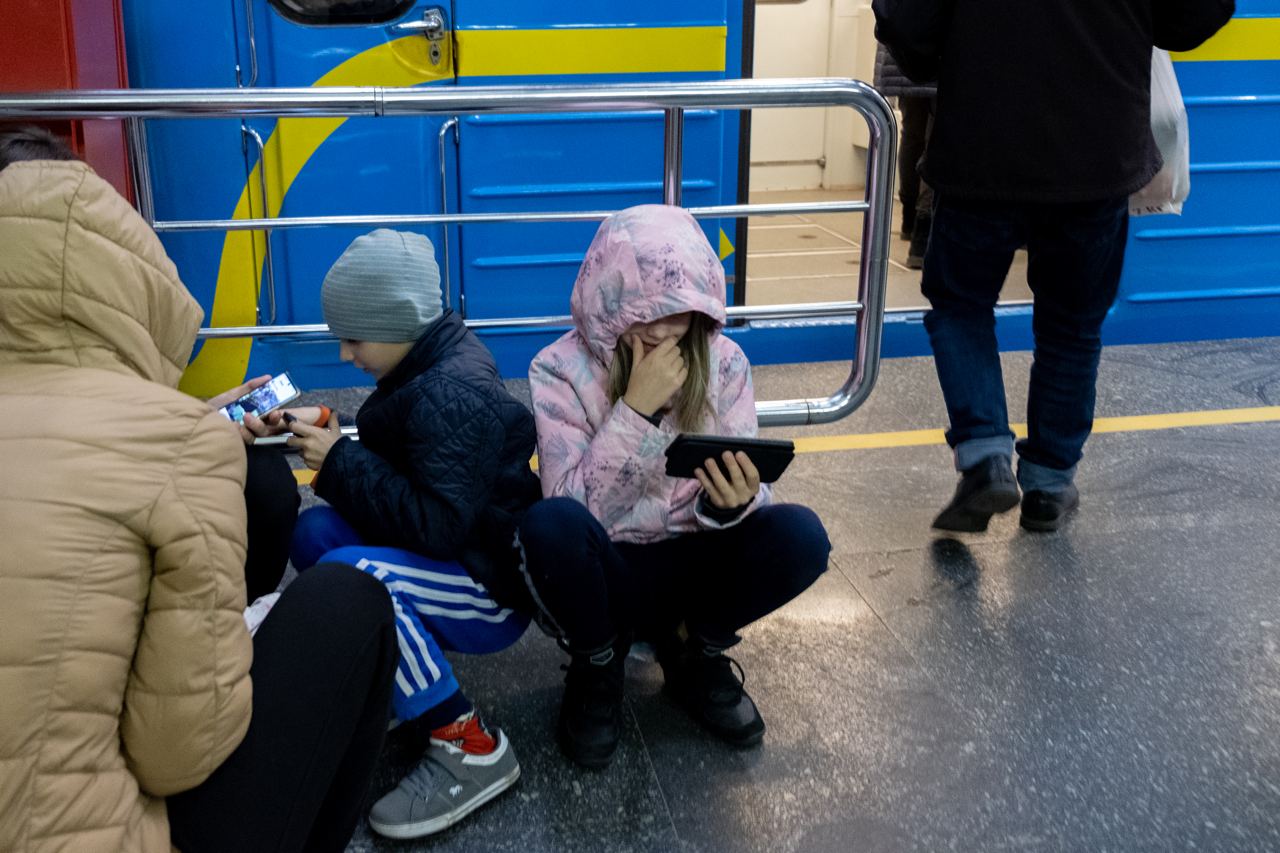
 The Kyiv IndependentElena Kalinichenko