❌

Vue lecture

Seeking to Broaden Ukraine Talks, U.S. Urges Russia to Include Europe

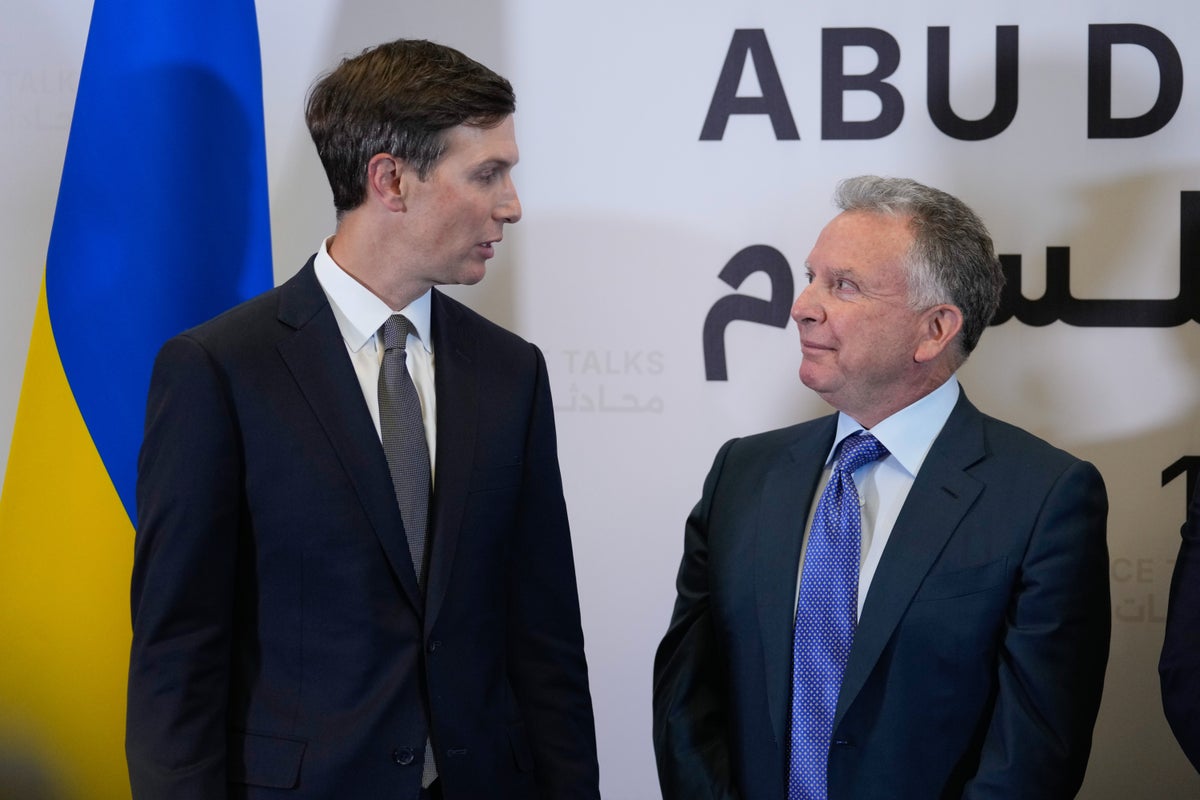
As a round of negotiations ended in Abu Dhabi, President Trump’s envoys said they would go to Moscow as the Kremlin demands discussions on European security structures.

© Altaf Qadri/Associated Press

Jared Kushner speaking alongside diplomats from the United States and Ukraine on Wednesday in Abu Dhabi, United Arab Emirates.
  •  

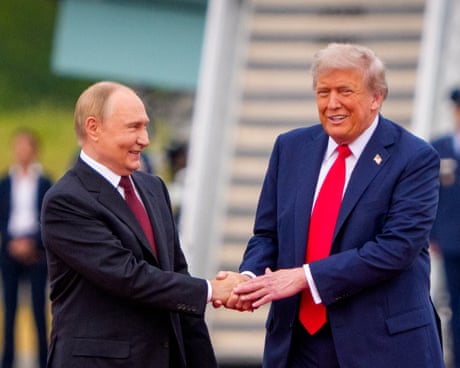
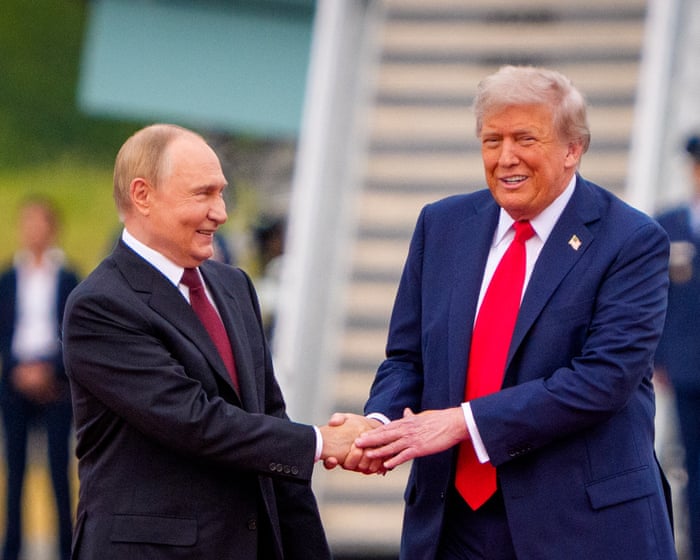
Trump could be about to sell out Ukraine. Europe must get its act together, fast | Paul Taylor

A deal giving Moscow a slice of Ukrainian territory and sanctions relief could be on the table in weeks – yet European leaders are busy squabbling

Donald Trump has lost substantial power over domestic policy after last week’s devastating midterm losses, but his ability to cement his legacy by upending US foreign policy remains largely intact.

There is every reason to fear a ”great betrayal” of Ukraine in the coming weeks, one that would reward Vladimir Putin for Russia’s war of aggression against Kyiv, and also do lasting damage to the European security order. Yet lilliputian European leaders are too busy squabbling over who should represent them in future peace talks to focus on how to prevent a sellout. Despite fundamental European interests being at stake in this week’s three-way US-Russia-Ukraine negotiations in Abu Dhabi, Europe is relegated to a side room, represented by a posse of officials from the UK, France, Germany, the EU and Nato.

Continue reading...

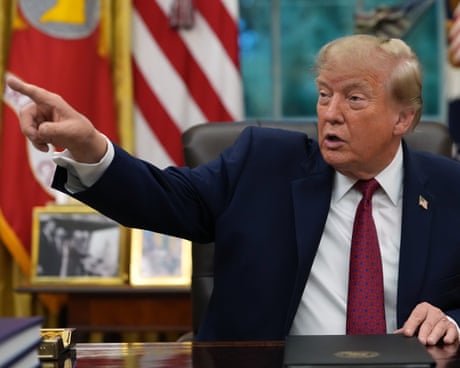
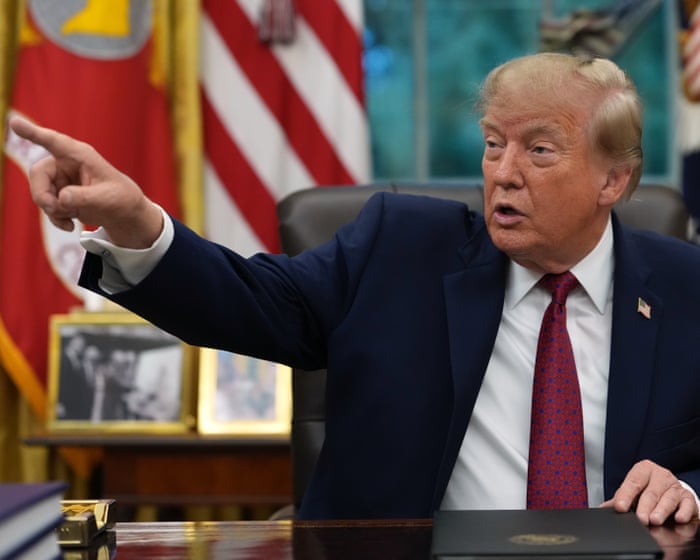
© Photograph: Andrew Harnik/Getty Images

© Photograph: Andrew Harnik/Getty Images

© Photograph: Andrew Harnik/Getty Images

  •  

Federal judge allows Trump’s $10bn defamation lawsuit against BBC to proceed

Trump-appointed judge Jeffrey T Kuntz partially denies British broadcaster’s motion to dismiss over edit

Federal judge Jeffrey T Kuntz ruled on Tuesday that Donald Trump’s lawsuit against the BBC can proceed, denying in part the British broadcaster’s motion to dismiss the case. The president’s $10bn defamation lawsuit stems from the BBC’s splicing together of disparate comments he made before the 6 January US Capitol insurrection, as rendered in a Panorama documentary called Trump: A Second Chance.

“Accepting the allegations in the complaint as true, the Court finds Trump plausibly pled damages where Trump alleges a defamatory documentary released toward the election caused reputational harm,” the Trump-appointed Florida district court judge wrote. “It would be difficult for the Court to accept a different framing without completely negating the significance and fragility of political elections.”

Continue reading...

© Photograph: Peter Macdiarmid/Getty Images

© Photograph: Peter Macdiarmid/Getty Images

© Photograph: Peter Macdiarmid/Getty Images

  •  

U.S. Forces in Europe Face Uncertainty as Pentagon Reviews Troop Levels

A U.S. Army unit in Germany is not sure what’s next as the Pentagon considers a major drawdown of forces in Europe.

© Leonhard Simon/Getty Images

A soldier on a U.S. Army Bradley fighting vehicle during a NATO military exercise near Hohenfels, Germany, last month.
  •  

France Blames Iran for Cyberattack on Refrigeration Systems

The French foreign minister said he had summoned the Iranian ambassador to France after a cyberattack on hundreds of supermarkets last month. Iran did not immediately respond.

© Fred Tanneau/Agence France-Presse — Getty Images

A supermarket last month in Névez, in western France, after a cyberattack that caused refrigerators to malfunction.
  •  

Trump is humiliated and angry – and Europe is where he’s free to lash out | Nathalie Tocci

The US president sees Europeans as the mirror image of his ‘woke’ domestic foes. They should brace for further betrayal this winter

Europeans have greeted the blue wave that crashed down on Donald Trump and his Republican party with jubilation and relief. Jubilation, because Trump’s second presidential administration has been the most destructive in the history of the transatlantic relationship. His disdain for Europe and his evident delight in attacking its governments – in particular that of Ukraine – have been hard to swallow.

Relief, because the midterm election results confirm that Europeans are not unique in being appalled by Trump’s actions: a large majority of Americans are too. I was in Washington immediately after the vote, and the mood was one of excitement and a newfound confidence. And like many Americans, in these results Europeans see hope that US democracy can be saved, American foreign policy moderated and the transatlantic partnership revived.

Nathalie Tocci is a professor of practice at the Johns Hopkins School of Advanced International Studies, Europe, and a senior fellow at Bocconi University’s Institute for European Policymaking

Continue reading...

© Photograph: Eric Lee/Reuters

© Photograph: Eric Lee/Reuters

© Photograph: Eric Lee/Reuters

  •  

Ukraine Peace Talks Resume This Week in Abu Dhabi

U.S.-led talks to end the war between Russia and Ukraine will resume this week in Abu Dhabi. A cease-fire won’t be on the table.

© Mauricio Lima for The New York Times

A Ukrainian drone crew after returning from the front line last month.
  •  

Donald Trump’s power is on the wane. What next for Russia, Israel – and the rest of us? | Simon Tisdall

With the global tide turning against him, the US president’s lame duck status could still aggravate old tensions and spark new explosions

It was a victory for the world, too. People in the many countries that suffered pain, loss and cruel indignities at the hands of Donald Trump over the past two chaotic, fearful years celebrated a moment of glorious, shared redemption. The monster, like others of his kind, still lurks in his gilded White House lair; far-right authoritarianism still casts a dark shadow over many nations. But the power of this most destructive of presidents is shattered, his malignant spell broken. The triumphant roar of US midterm voters was a rallying cry of democratic defiance that, echoing the American revolution of 250 years ago, reverberated around the globe.

For Iranians, Trump’s electoral humiliation raised hopes, perhaps misplaced, that his murderous war of choice against Tehran’s oppressive regime may soon cease. In Israel, many among the majority who voted for change last week will welcome the humbling of the foremost supporter of Benjamin Netanyahu’s as-yet-unvanquished extremist coalition. Ukrainians voiced optimism that a Democratic-controlled Congress will curb the sickening appeasement of Vladimir Putin’s Russia. In Europe, the beginning of the end of the Trump era brought a sense of relief – and hope that toxic transatlantic relations can be drained of Maga poison.

Continue reading...

© Photograph: Alex Brandon/AP

© Photograph: Alex Brandon/AP

© Photograph: Alex Brandon/AP

  •  

Bomb Threats and Cyberattacks in Europe Inject Unease Into Everyday Life

A cyberattack on supermarket fridges, bomb threats to planes and software vulnerabilities have Europe on edge as government officials encourage resilience and stockpiling.

© Marie Mannes/Reuters

A cyberattack damaged freezers at a store in Stockholm, part of a wave of such attacks in supermarkets across Europe.
  •  

Bomb Threats in Europe Probably a Coordinated Campaign, Ireland Says

Multiple flights in Europe were disrupted and several newsrooms in Ireland were evacuated after false bomb threats, the latest of a series of security incidents.

© Natalia Campos/Reuters

Outside RTÉ, the Irish national broadcaster, in Dublin on Friday after the staff there was evacuated over a bomb threat.
  •  

Wave of Hoax Bomb Threats to Flights in Europe Leaves Travelers Frustrated

Bomb threats have disrupted dozens of flights in Europe over the past week. At airports in Rome, Madrid and Warsaw, travelers were more frustrated than fearful.

© Attila Kisbenedek/Agence France-Presse — Getty Images

A plane operated by Wizz Air at a Budapest airport on Monday. The flight from London, originally bound for Sofia, Bulgaria, was diverted after a bomb threat.
  •  

European Countries Push, Again, To Deport Migrants to Rwanda

Five European nations are closing in on a plan to send rejected migrants to Rwanda following a failed U.K. deal with the country.

© Yuhi Irakiza/Associated Press

Kigali, Rwanda, last month. Germany, Austria, Denmark, the Netherlands and Greece are hoping that Rwanda may serve as a hub for deported migrants.
  •  

Global stocks fall amid ‘big worries over AI’ after Democrats’ midterms triumph

Asian and European markets follow US tech rout with many analysts predicting more waves of selling to come

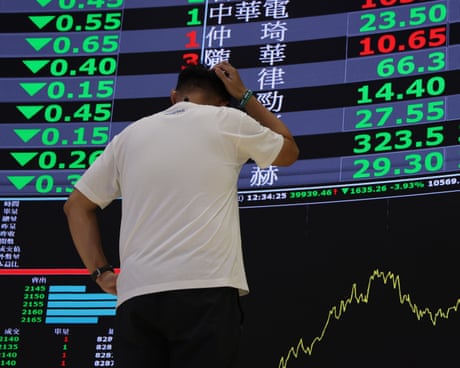
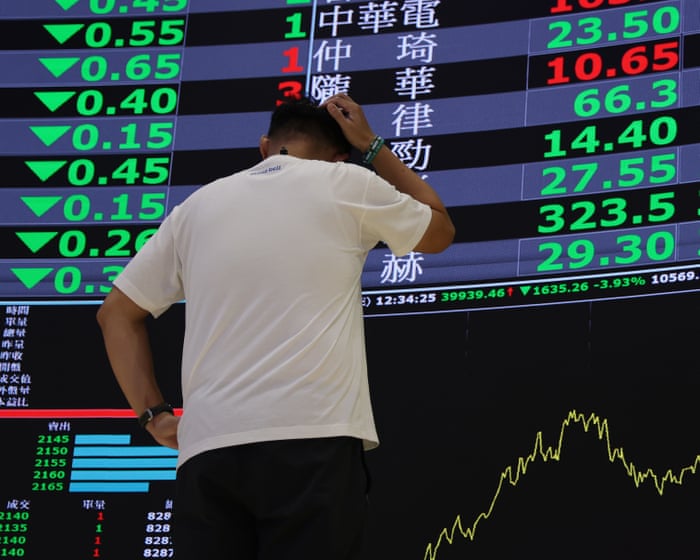
European and Asian stock markets fell sharply on Friday after the Democrats’ decisive victory in the midterms triggered a rout in US tech stocks a day earlier.

A sell-off on Wall Street on Thursday was followed by sharp falls in Asian stock markets on Friday. The investor sentiment then reached London, where the market was, at one stage, poised for its worst day since March.

Continue reading...

© Photograph: Ritchie B Tongo/EPA

© Photograph: Ritchie B Tongo/EPA

© Photograph: Ritchie B Tongo/EPA

  •  

Bomb Threats Disrupt European Flights and Rattle Passengers

Passengers recounted landing at a military base and being subjected to security checks and travel delays after threats that turned out to be hoaxes affected planes in Italy, Poland and Spain.

© Gonzalo Fuentes/Reuters

Passengers disembarking from an Aer Lingus plane at a military air base in Évreux, France, on Thursday after a fake bomb threat.
  •  

What to Know About the Bomb Threats Disrupting Flights in Europe

More threats were reported Friday after dozens of planes were targeted earlier this week. Officials have not reported finding any explosives, but the hoaxes have added to anxiety over hybrid attacks on the continent.

© Gonzalo Fuentes/Reuters

An Aer Lingus plane was diverted to Évreux military air base in France on Thursday.
  •  

Germany just caught the man suspected of ordering sabotage on Ukraine’s Starlink lifeline

A Starlink antenna

German special police units have arrested a Turkish citizen in Reutlingen district on suspicion of ordering the 23 September arson attack on a Starlink ground station in Poland, the Stuttgart Prosecutor General's Office and Baden-Württemberg's State Criminal Police Office announced on 3 November. Investigators say he hired the two men who allegedly set the fire, acting from Germany. A trail in the case leads to a Turkish crime gang whose members may have worked for Russian intelligence, Der Spiegel reported.

Starlink keeps Ukraine's drone units and front-line troops connected, and Poland has supplied 29,500 of the terminals they use. Until now, arrests in Europe's run of attacks on Starlink sites had reached only people suspected of carrying them out. This is the first suspect held as the one who ordered an attack, and Germany has opened its own terrorism case instead of only executing Poland's warrants. That may bring investigators a step closer to whoever paid for the fire.

Prosecutors say he gave the orders from Germany

According to the investigators, the man commissioned the two Turkish citizens detained in October to carry out the attack. He also allegedly arranged for another suspect to drive them to Poland on the night of 23 September. Police seized eight mobile phones and ammunition from him. A Stuttgart court ordered him held on strong suspicion of preparing a terrorist offense. Prosecutors gave no further details, citing the ongoing investigation.

The two alleged arsonists, aged 38 and 34, were detained in Nürtingen on 12 October under European arrest warrants issued by Poland, and their extradition proceedings are still under way. Warsaw blamed Russian intelligence for the fire. Tomasz Siemoniak, the minister coordinating Poland's special services, said those services increasingly turn to people tied to the criminal world.

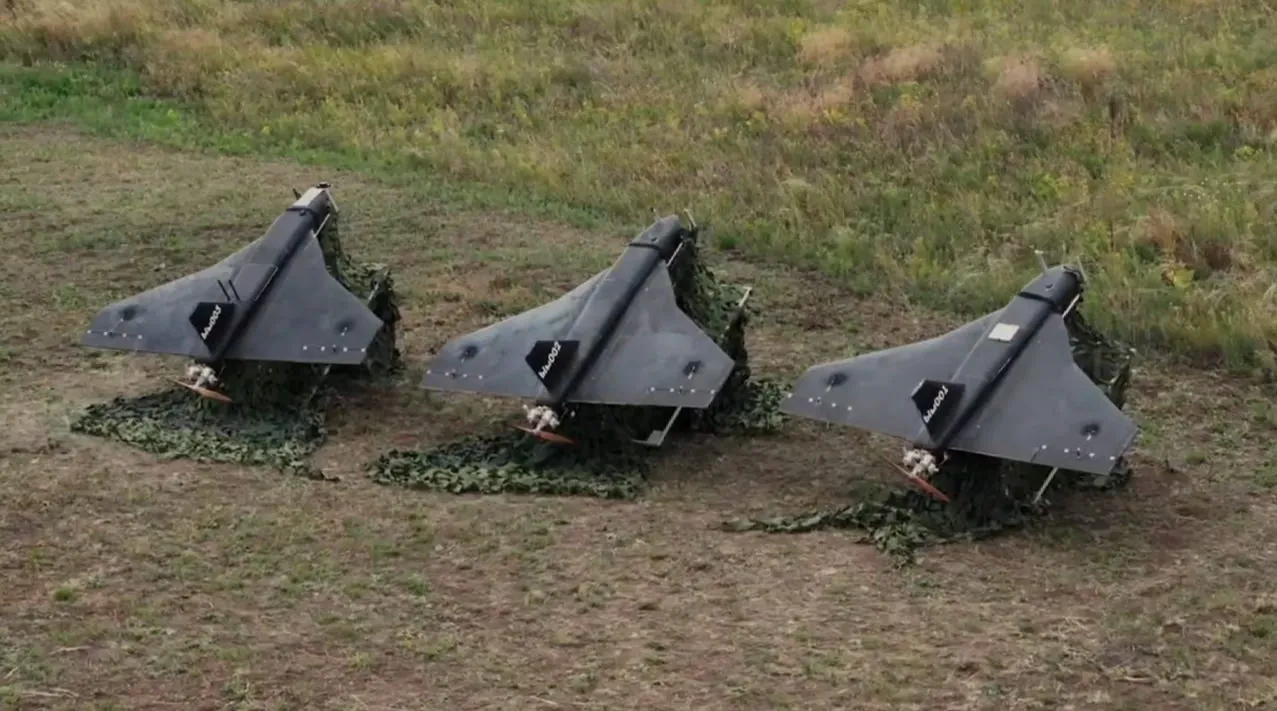
Three gray, triangular-wing drones sit on camouflage netting in a grassy field.
Explore further

ISW connects drone crashes in Moldova and Romania, a Starlink fire in Poland, and a Berlin airport shutdown into one Russian pattern

A Turkish gang whose leader Russia never handed over

In October, Der Spiegel first reported, citing independent sources in several countries, that the trail leads to the Daltons, a Turkish organized crime group also active in Germany. Gang members may have carried out the sabotage on behalf of Russian intelligence, the magazine wrote. The gang's alleged leader, Beratcan Gökdemir, was arrested in Russia in 2024, but Moscow never extradited him to Türkiye. German security sources told Der Spiegel that Russia even protected him, and it is unclear whether he is still there.

Germany's Interior Ministry warned in May that working with organized crime suits Russian services especially for “sabotage or killing operations,” Der Spiegel reported. Until now, Russia has mostly relied on petty criminals paid small sums, who know little about who is behind a job. On 27 October, Turkish police detained 85 suspected Daltons members, 30 of them minors, in 30 provinces. They said the gang recruited people through social media and directed them in a messaging group, and did not mention Starlink.

Three Starlink sites attacked in under a month

The fire in Wola Krobowska, south of Warsaw, was the first of three attacks on Starlink sites in Europe. In October, intruders burned antennas at a satellite ground station near Sofia, and a German court has ordered two 19-year-old Germans held pending extradition to Bulgaria. Sofia says the same pair struck another EU country on 18 October, the night guards foiled an attempt to burn Starlink antennas at a Lithuanian company. The Bulgarian and Lithuanian attacks are not part of the German arrest warrant, Der Spiegel noted.

  •  

What Trump’s Midterm Defeat Means for Iran and Oil Prices

Commentators abroad wondered what President Trump’s electoral losses might mean for oil prices, the war on Iran and the future of American politics.

© Doug Mills/The New York Times

President Trump walking offstage after a rally in Salina, Kan., on Sunday. The election results mean the Democrats will take control of the House and Senate.
  •  

$400 billion US tech giant helping Ukraine is now facing backlash on both sides of Atlantic
Yuliia Svyrydenko, Ukraine's Minister of Economy (left), and Louis Mosley, executive vice president for UK and Europe at Palantir (right), signing an agreement. London, 3 March 2024. Photo: Ukraine's Economy Ministry

An American company that is one of Ukraine’s defense-tech partners is now under fire on both sides of the Atlantic. Palantir, with a market value of around $400 billion, met a backlash in the US for backing Kyiv under the administration of Donald Trump, the firm’s head for the UK and Europe, Louis Mosley, told Bloomberg in London.

Palantir’s chief executive, Alex Karp, had previously said he had worked with former Ukrainian Defense Minister Mykhailo Fedorov for five years. On 1 September, Fedorov announced a new defense-tech company that Karp would be the first to invest in.

At the same time, Palantir is facing criticism in Europe over its support for Israel.

A company caught between two backlashes

Mosley played down the idea that Palantir is especially unpopular in Europe. The company had been built from the start to defend the West, he said, and believes in liberal democracy, the rule of law, and the values that make up the West.

Yet European governments are steadily pulling away from American technology firms, Bloomberg noted, as deteriorating relations with the Trump administration push them to reduce their dependence on US infrastructure.

Europe peels away

For example, France’s security services have replaced Palantir’s tools with those of a local firm, ChapsVision. In Britain, Palantir is at risk of losing a $443 million contract with the National Health Service, where its ties to Israel and the Gaza war, and concerns over access to government and health data, have drawn protests.

For some countries, Bloomberg noted, the company has come to stand for Trump’s assertive pro-American posture and for US technological dominance at the expense of their own sovereignty.

Deeply embedded, hard to unwind

Palantir, valued at around $400 billion and co-founded in 2003 by billionaires Peter Thiel and Karp, is wired into the government machinery of the US and other countries. Its products serve civilian agencies, intelligence services, police forces, and militaries around the world.

In 2025, NATO’s military command reached a deal with Palantir to deploy its Maven system, which uses artificial intelligence for surveillance and targeting.

  •  
❌