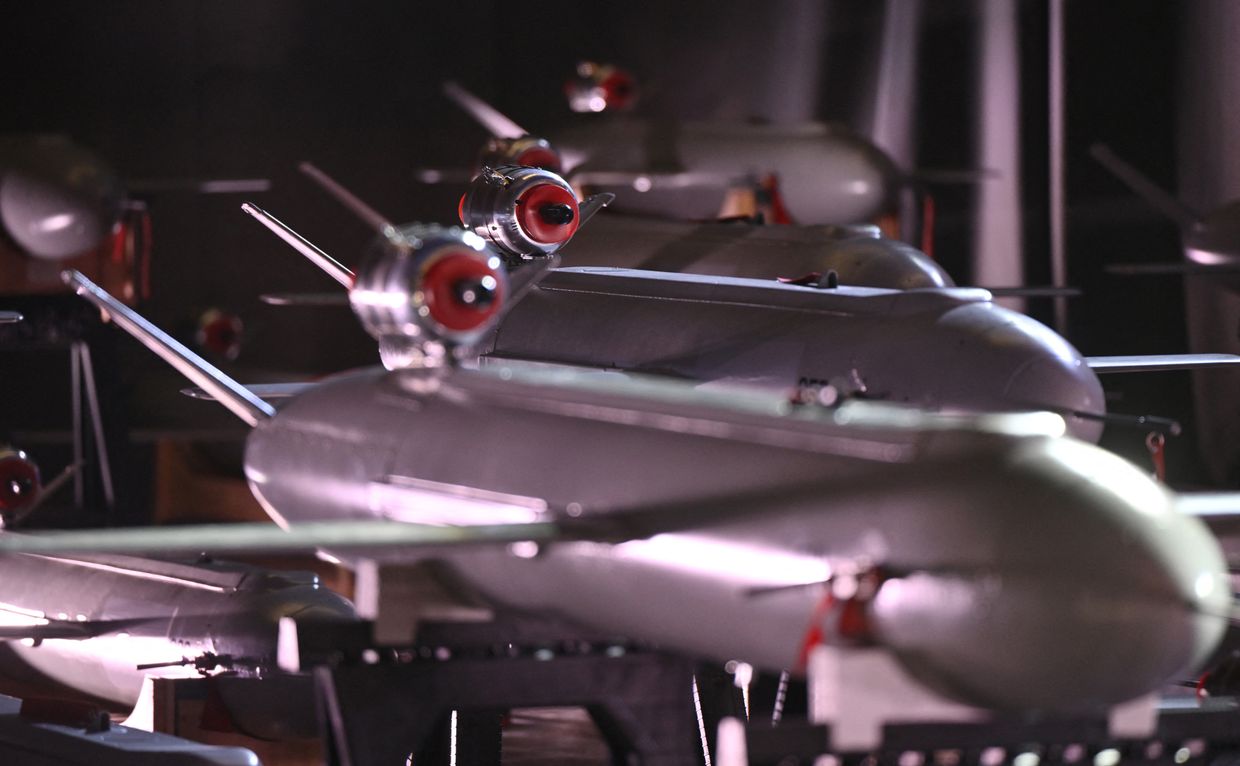
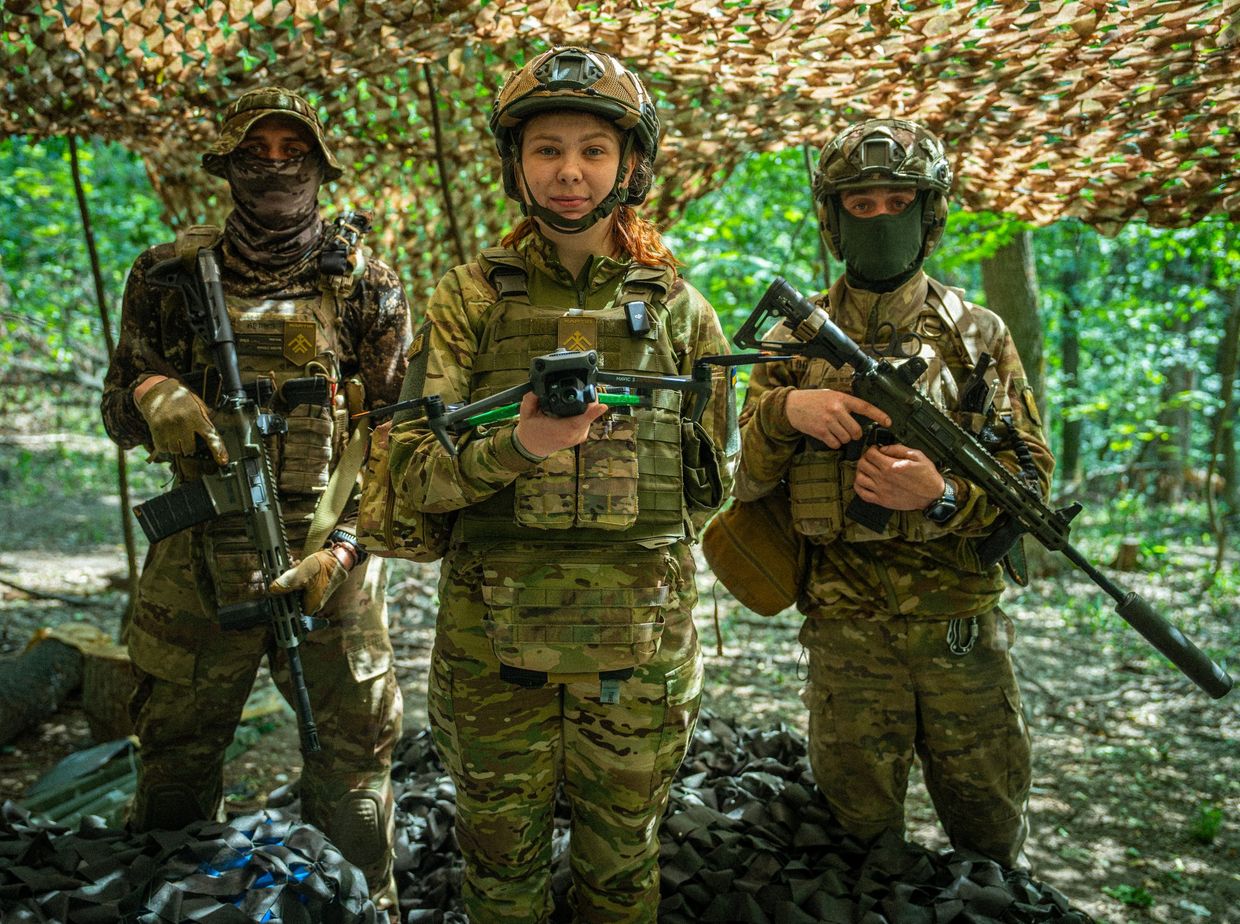
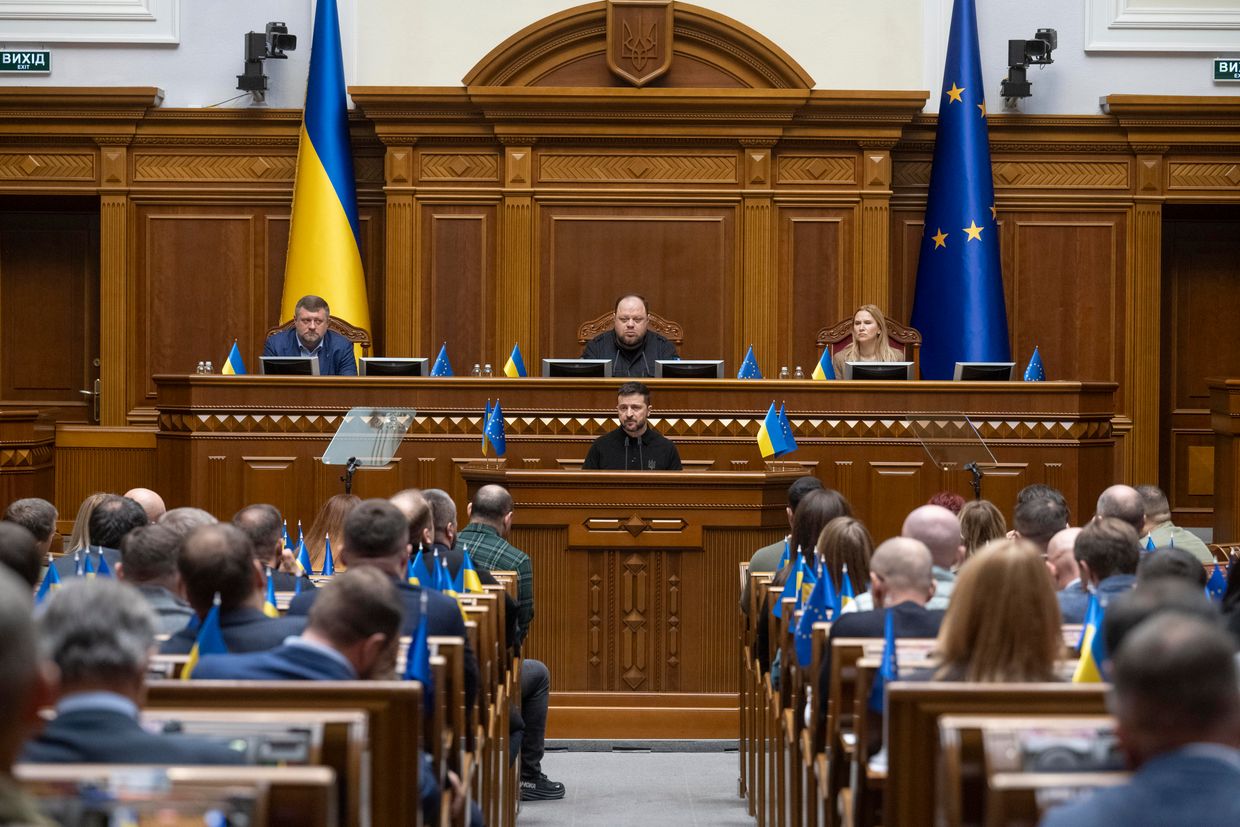
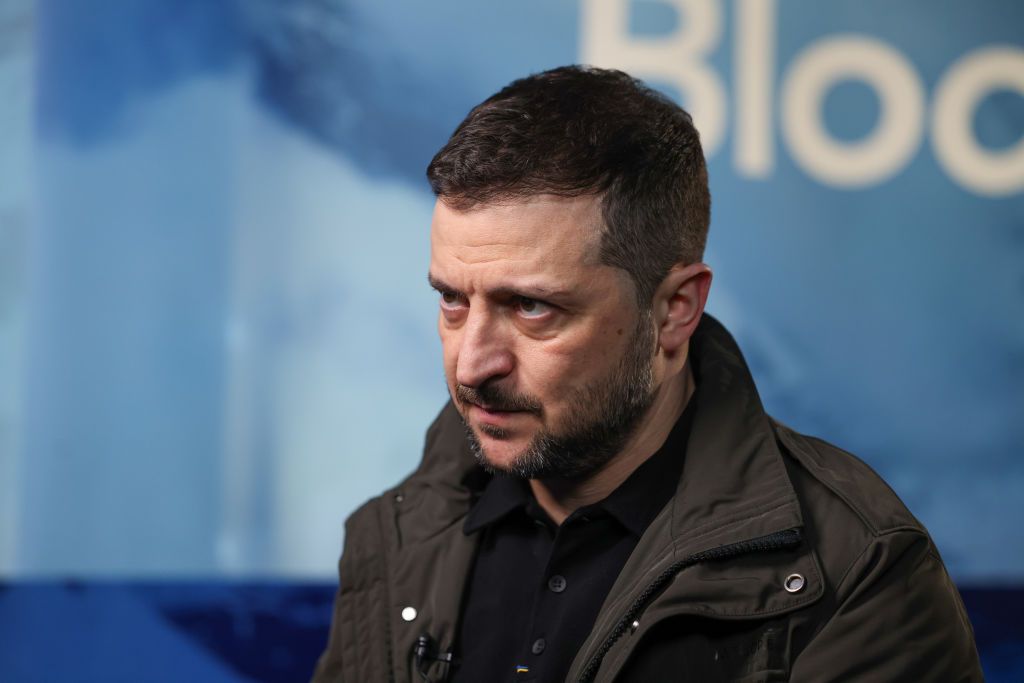
Ukraine provides over 40% of the weapons used to defend the nation's independence against Russia's full-scale invasion, President Volodymyr Zelensky said at the State and Business Forum in Kyiv on June 27.
As Ukraine scales up domestic defense production, Zelensky has been lobbying foreign partners to provide funding to help match its manufacturing capacity.
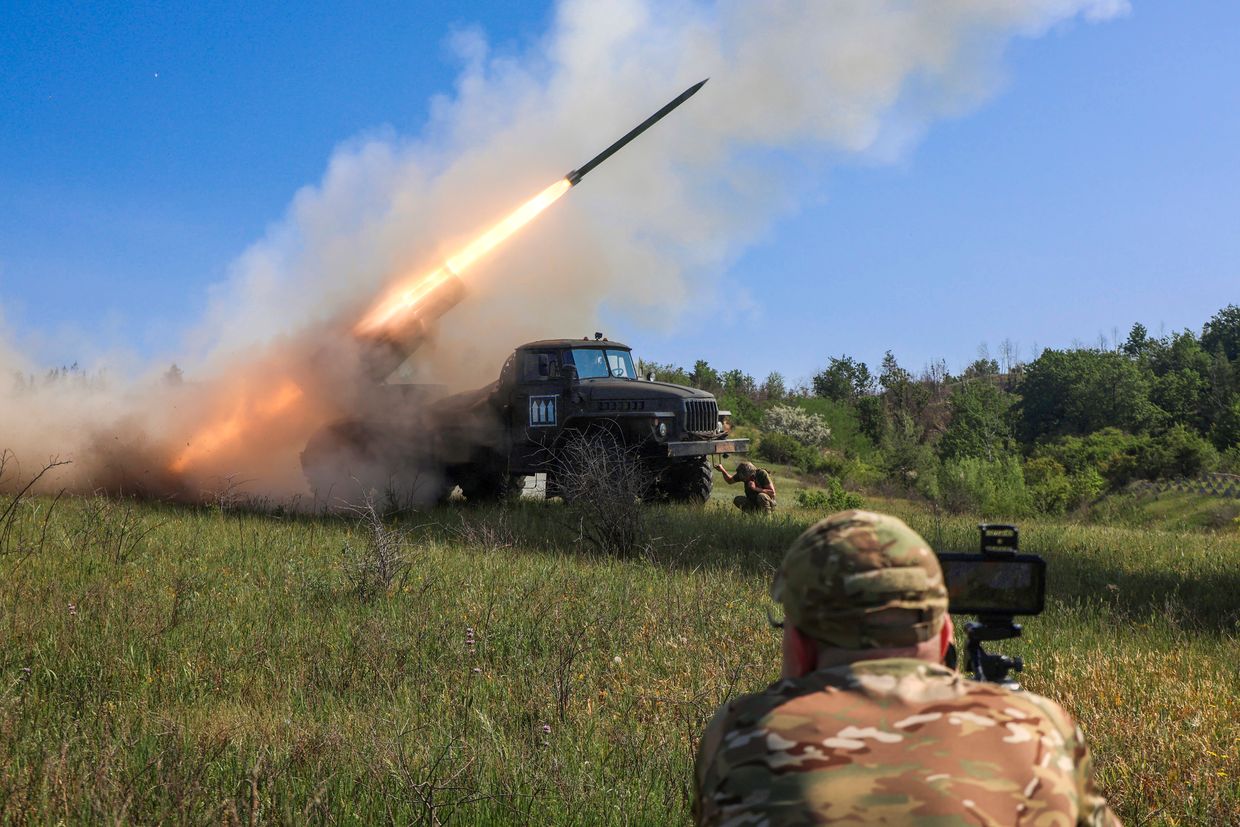
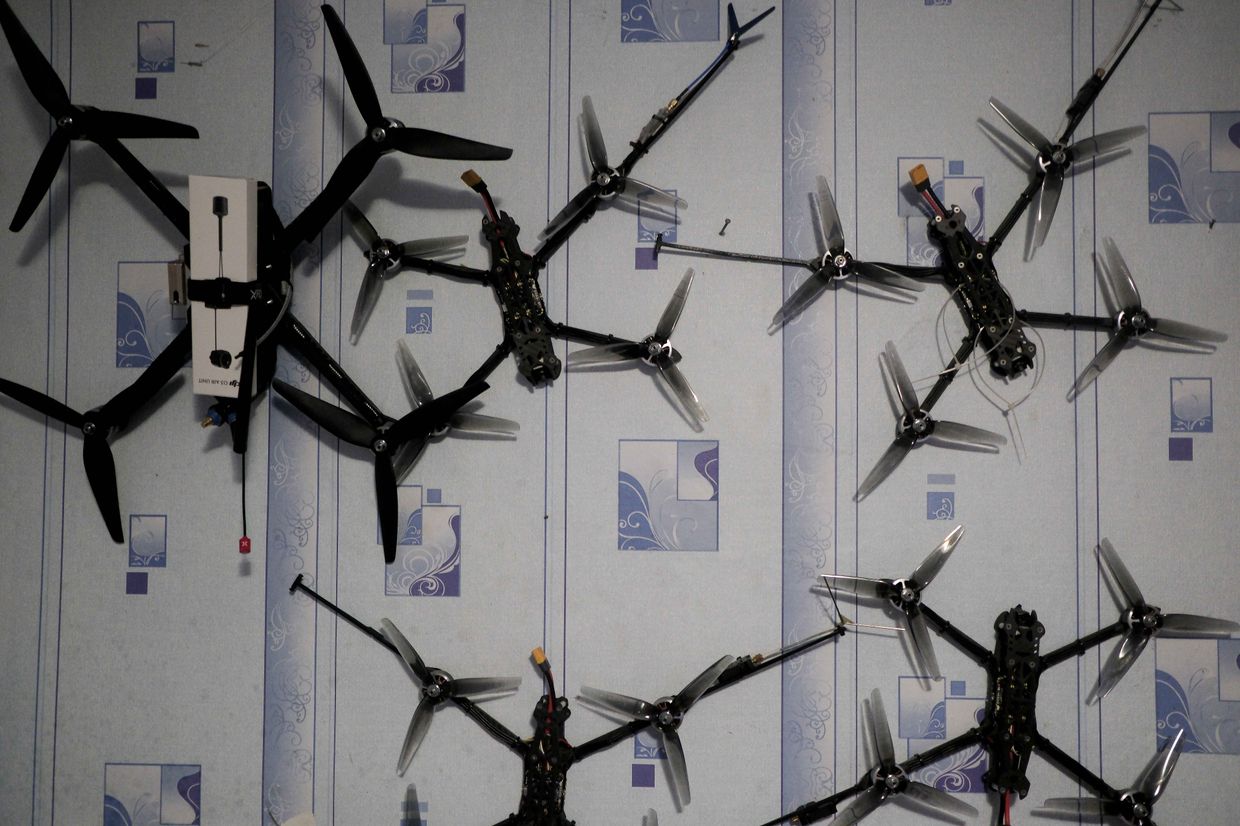
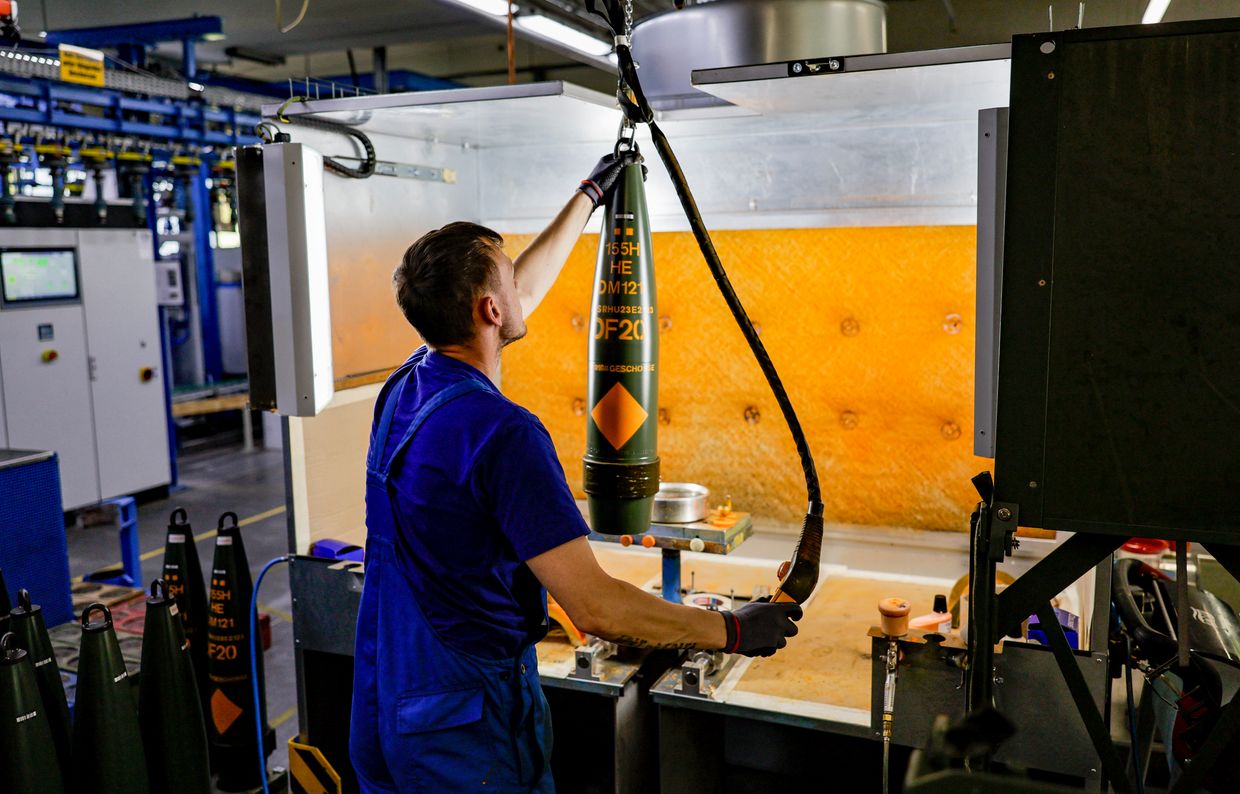
The government and Ukrainian businesses now provide more than 40% of the weapons the country uses in its fight against Russia, Zelensky said. Business-driven innovations in technology have helped Ukraine on the battlefield, particularly in drone development.
"Thanks to Ukrainian entrepreneurship and all the conditions we have created as a state, a new sector of our domestic manufacturing has emerged and immediately become one of the world’s most advanced — the production of drones of various types," Zelensky said.
"Hundreds of companies are now involved in weapons production in one way or another."
Zelensky's comments come a day after Defense Minister Rustem Umerov reported that Ukrainian companies have increased their industrial capacity in order to produce four million drones a year.
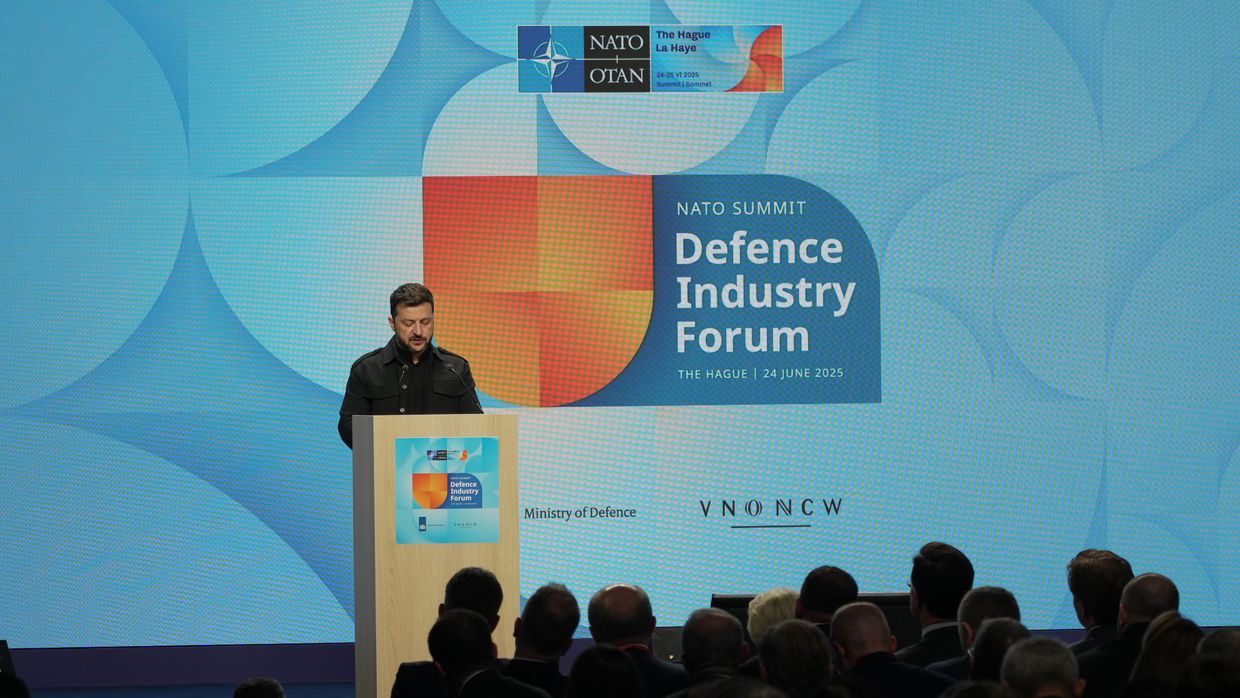
At the NATO summit in The Hague on June 24, Zelensky said Ukraine could potentially produce as many as eight million drones per year, but lacks the financial backing to achieve its full capacity. During the summit, Ukraine signed agreements on joint weapons production with the U.K. and Denmark in an effort to bridge the gap between Kyiv's capacity and current funds.
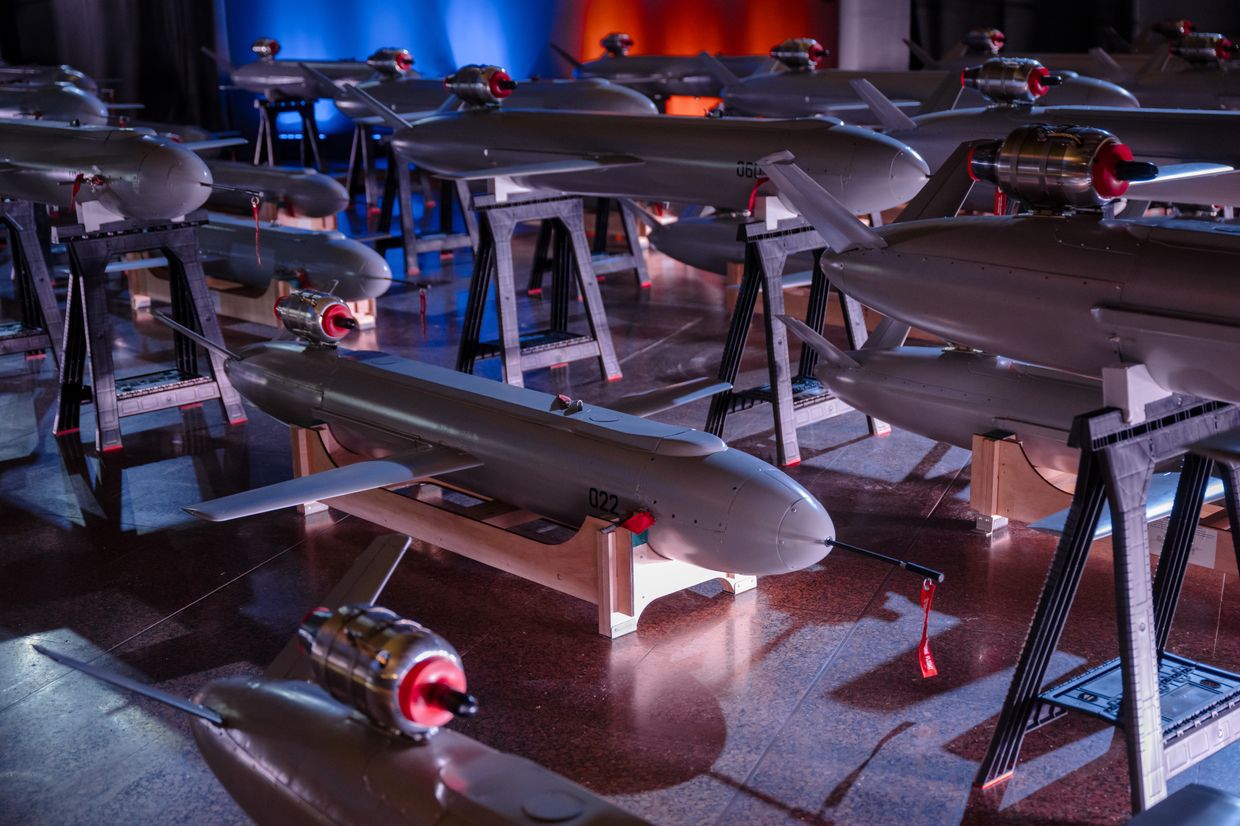
Ukraine has rapidly developed its drone capabilities since 2022, evolving from modifying commercial aircraft to producing military UAVs, attack drones, and reconnaissance systems at scale.
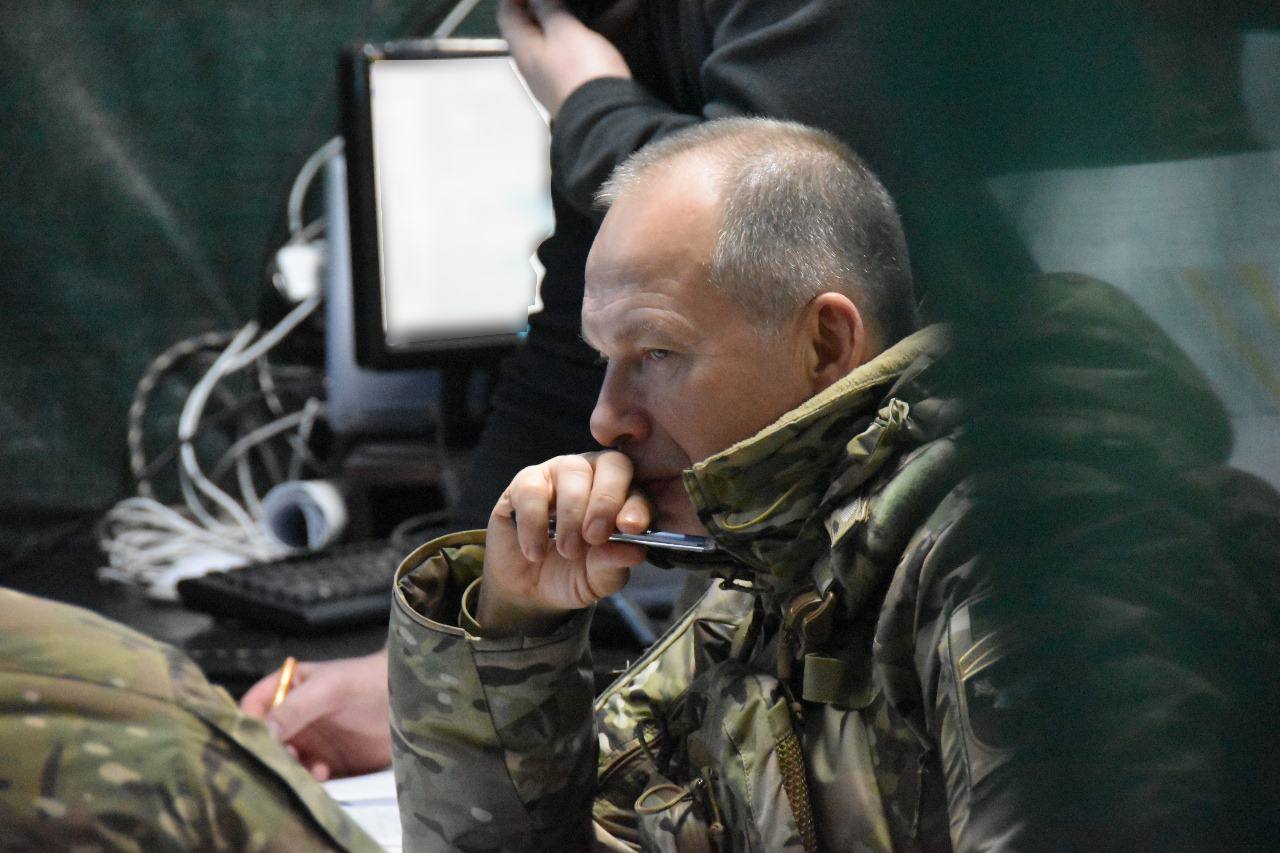
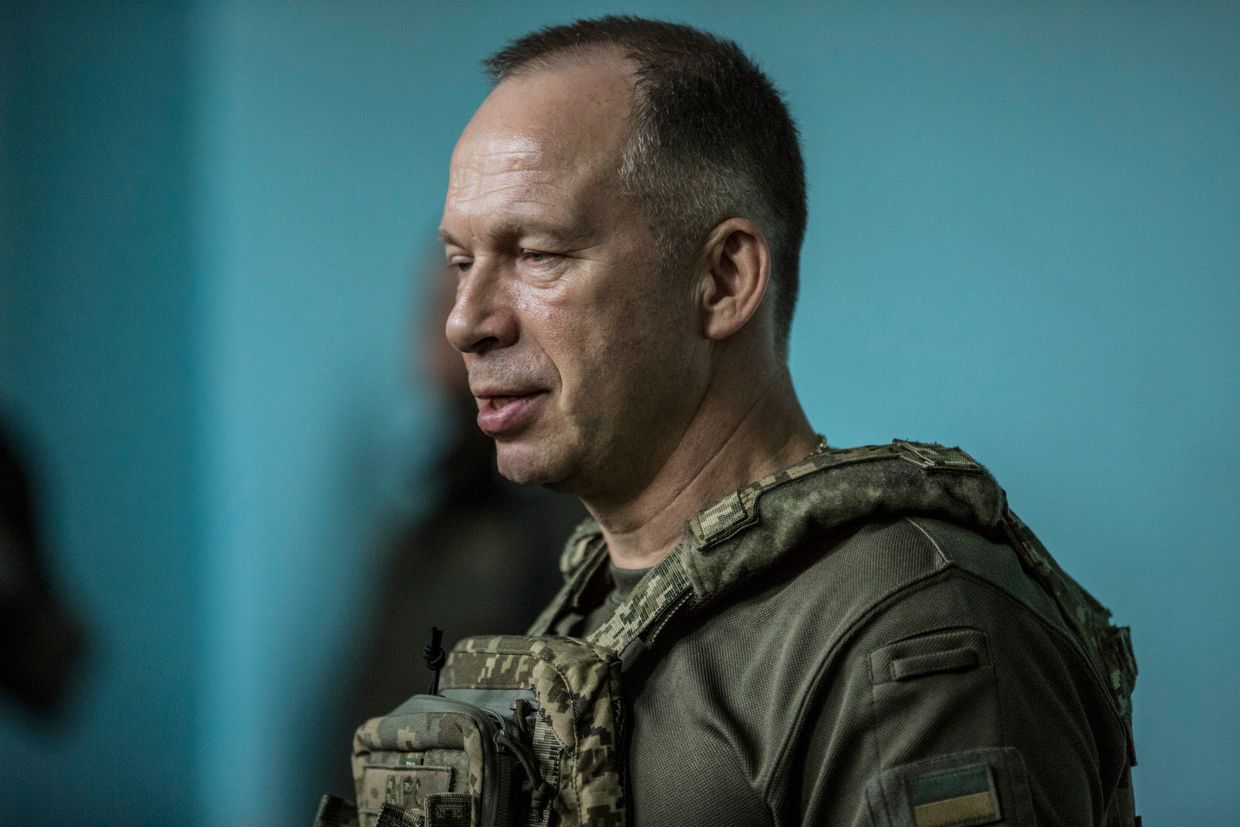
Pokrovsk remains the "hottest spot" along Ukraine's front lines, with Russia concentrating its largest group of personnel in that direction — a force numbering 111,000 troops, Commander-in-Chief Oleksandr Syrskyi reported on June 27.
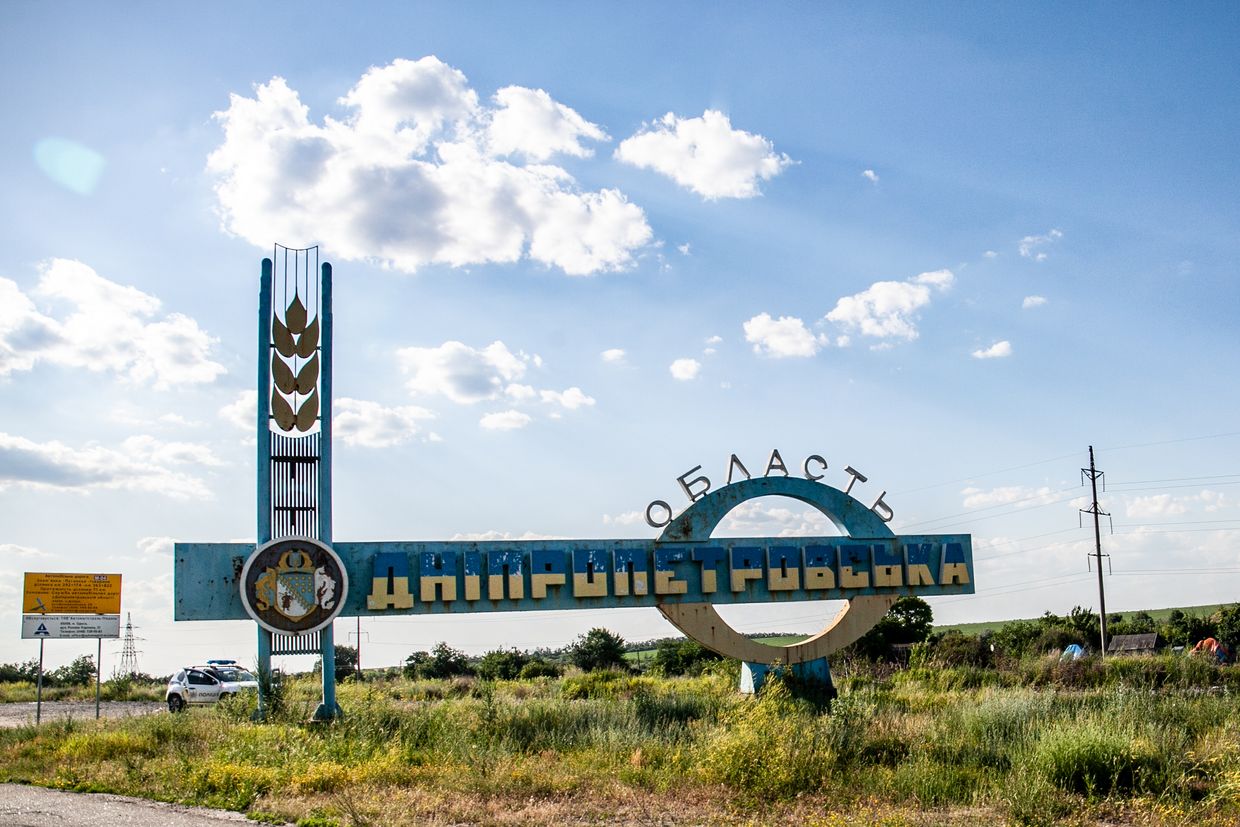
Russia has for months focused its offensive efforts on the embattled town of Pokrovsk in Donetsk Oblast and has recently been escalating attempts to break through to neighboring Dnipropetrovsk Oblast, a region that has not yet seen combat. Ukraine denied reports that Russian forces breached the regional border in May and June.
In May, Syrskyi reported that Ukraine had stabilized the situation in Pokrovsk.
After a working visit to the Pokrovsk sector, Syrskyi on June 27 said that the city is still "the hottest spot along the entire 1,200-kilometer front line" with nearly 50 combat clashes recorded per day. It's also where Russia has concentrated the bulk of its forces in Ukraine.
Russia has amassed "about 111,000 personnel" in the Pokrovsk sector, Syrskyi said, but Ukrainian forces are holding the line.
"The enemy continues to try to break through to the administrative border of Donetsk Oblast ... Russian sabotage and assault groups were particularly active here two weeks ago," Syrskyi said.
"But they were all destroyed or neutralized, and the remnants were pushed back from the administrative border. The situation is under control."
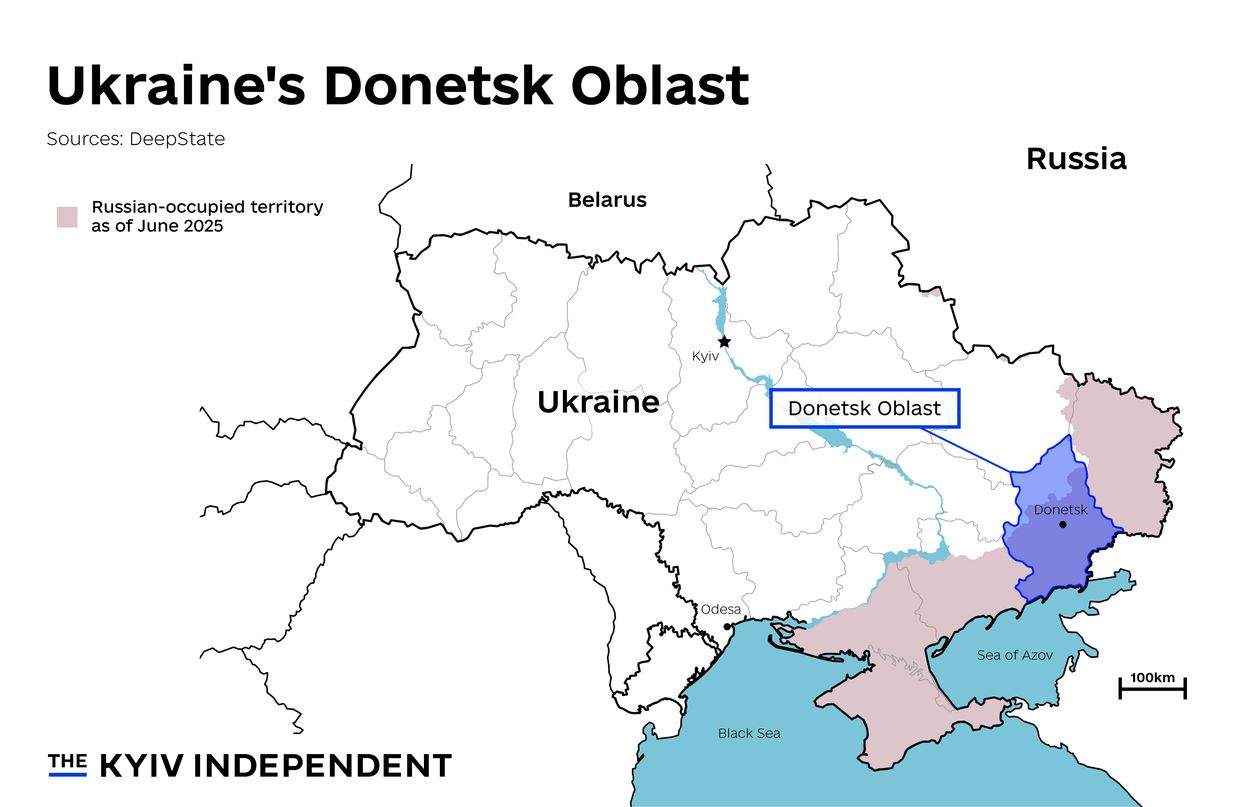
Ukraine's Donetsk Oblast (Nizar al-Rifai/The Kyiv Independent)
Russia is attempting to break into Dnipropetrovsk Oblast not only for operational reasons, but also for performative ones, Syrskyi said.
"To achieve a psychological effect: to put the infamous 'foot of the Russian soldier' there, plant a flag, and trumpet another pseudo-'victory.'"
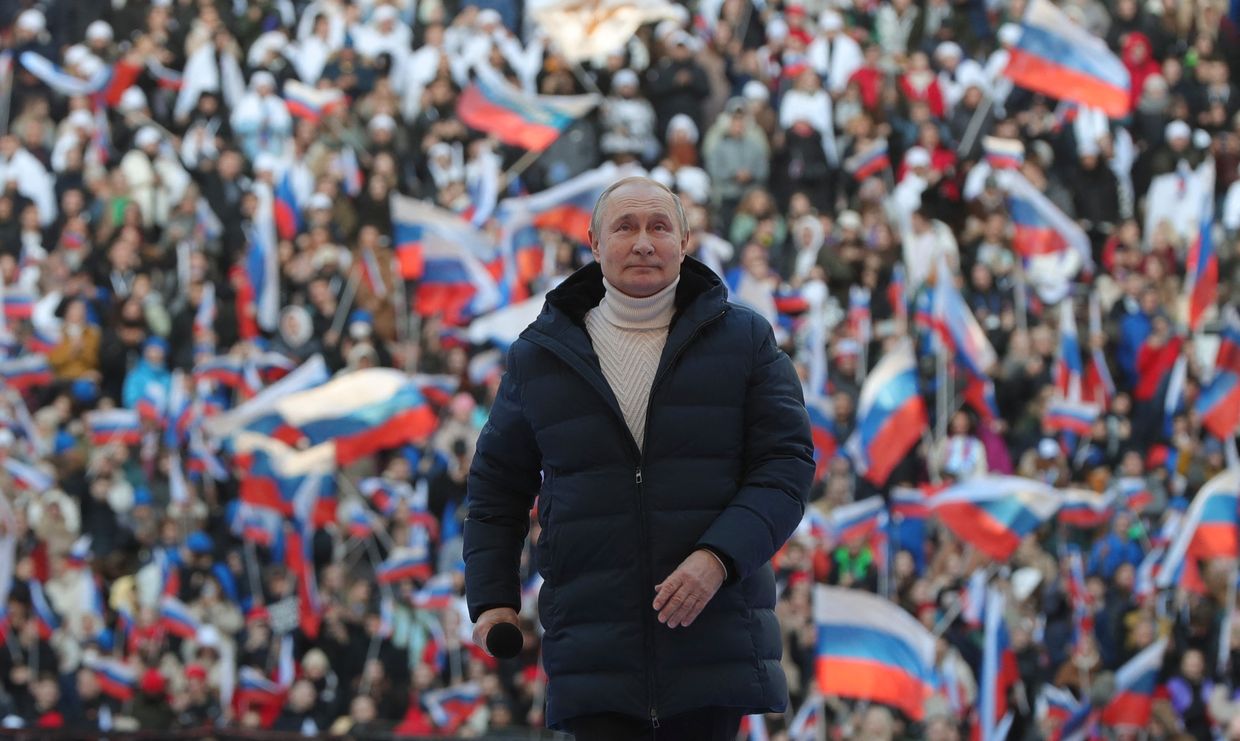
Syrskyi's comments echo recent remarks by Russian President Vladimir Putin, who claimed in a propaganda-heavy speech on June 20 that "wherever the foot of a Russian soldier steps is Russian land." President Volodymyr Zelensky fired back the next day, promising "Ukrainian drones for the foot of every Russian soldier."
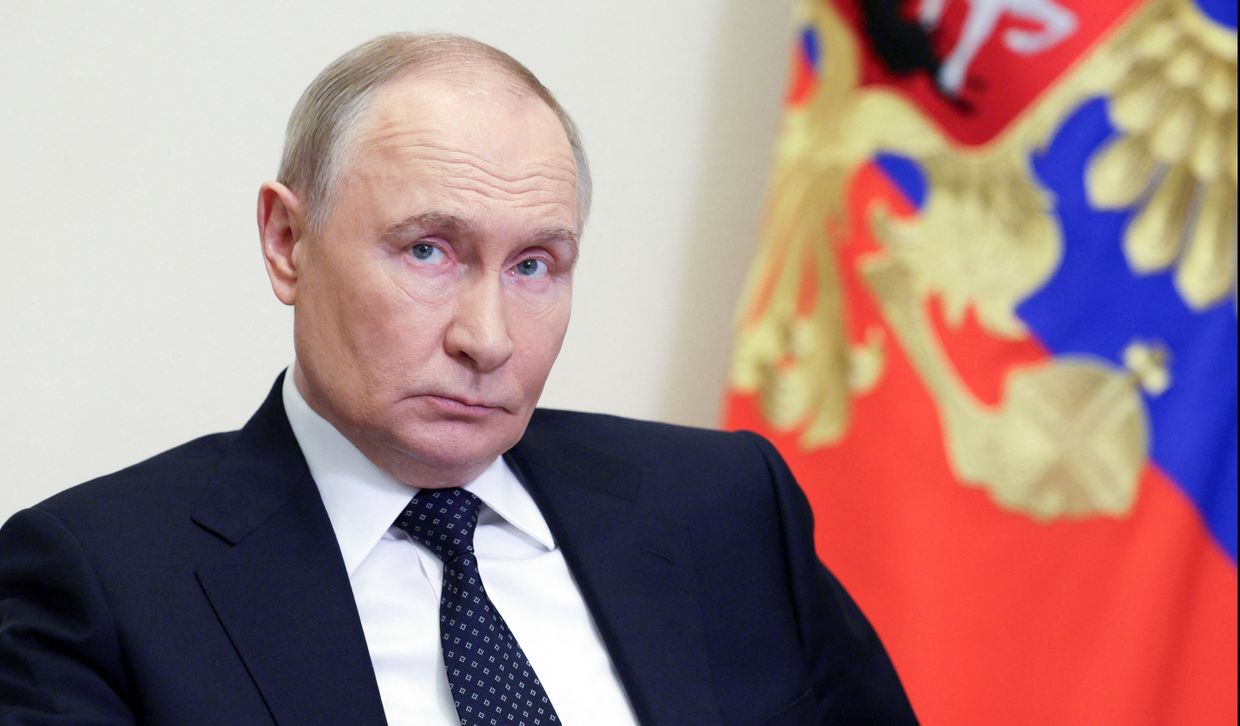
While Putin claimed on June 27 that Moscow is "ready" for a third round of peace talks with Kyiv, the Kremlin has sent no signal that it's ready to abandon its maximalist ambitions in Ukraine.
Russia's so-called "peace memorandum" demands that Ukraine recognize Russia's annexation of Crimea, as well as Kherson, Donetsk, Zaporizhzhia, and Luhansk oblasts — none of which are fully under Moscow's control.
Zelensky's Deputy Chief of Staff Pavlo Palisa said on June 6 that Russia aims to occupy all Ukrainian territory east of the Dnipro River and advance toward Odesa and Mykolaiv in a broader plan to sever Ukraine's access to the Black Sea amid a renewed summer offensive.
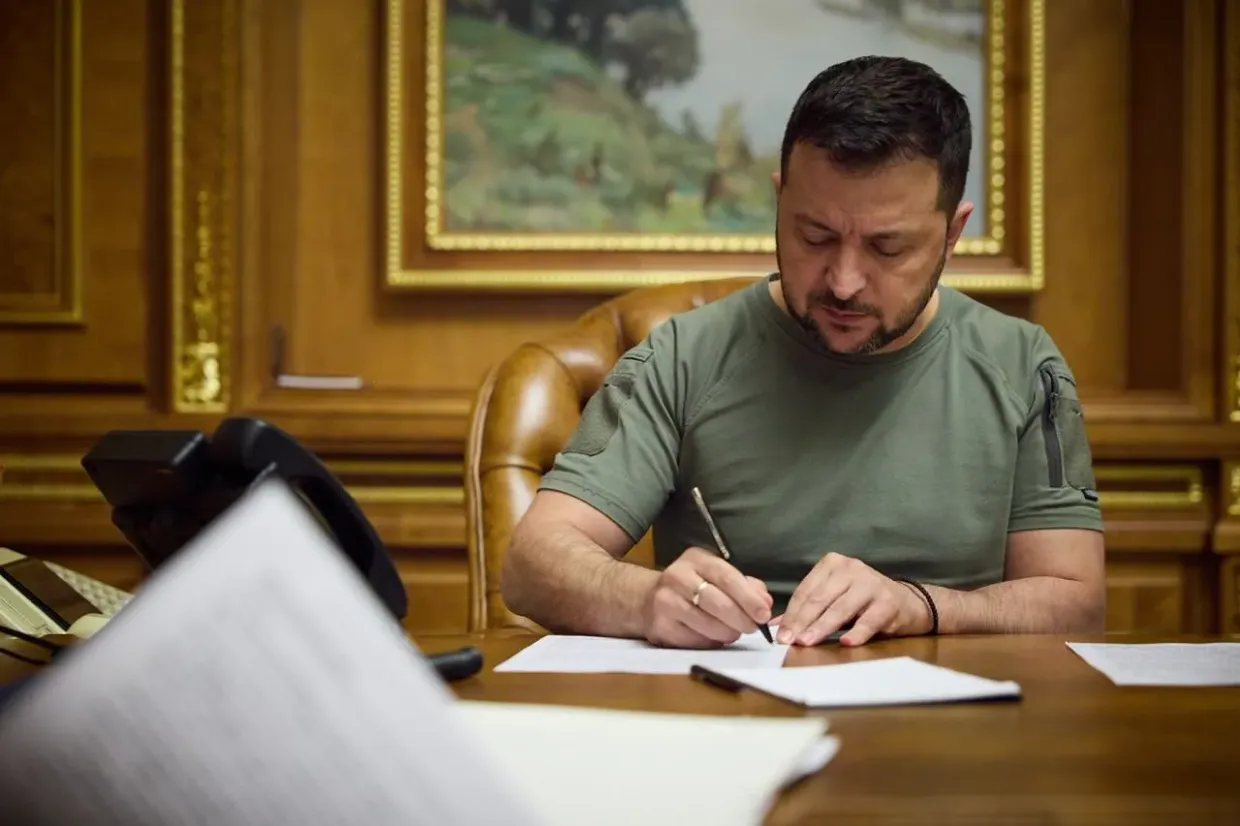
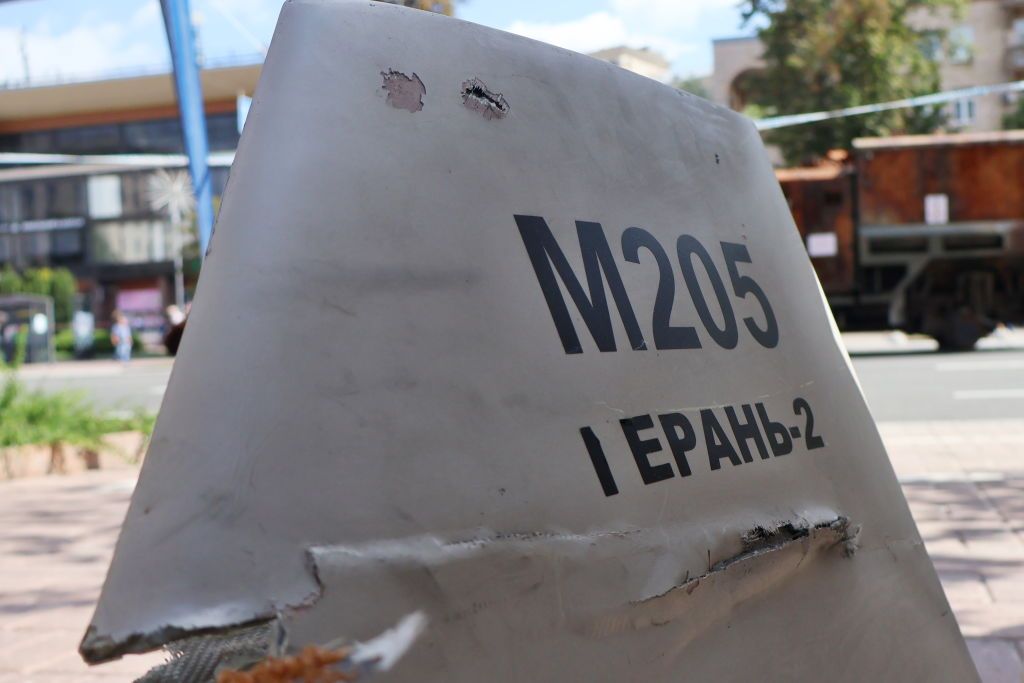
President Volodymyr Zelensky signed a decree on June 27 imposing sanctions on 52 Russian citizens as well as an additional 34 Russian companies and one Chinese entity involved in the production of Shahed-type drones and chip manufacturing machinery.
Ukraine introduced new restrictions as Russia has escalated drone attacks against Ukrainian cities over the past weeks, launching upwards of 400-500 unmanned aerial vehicles (UAVs) per night.
Individuals and legal entities subject to Ukrainian sanctions cannot do business and trade in Ukraine, cannot withdraw their capital from the country. In the meantime, their assets are blocked, as well as their access to public and defense procurement, and entry into the territory of Ukraine, among other restrictions.
Andrii Yermak, head of the Presidential Office, said on Telegram that the sanction primarily enterprises and individuals collaborating with a Shahed manufacturing facility located in the town of Yelbuga in Russia's Tatarstan.
Russia has launched thousands of cheap but effective Iranian-designed Shahed drones against Ukraine since the fall of 2022. Originally designed in Iran, Russia has since produced its own Shahed-type drones on Russian territory.
Drones have become one of the defining tools of the full-scale war, used extensively by both Ukraine and Russia for surveillance, long-range strikes, and tactical battlefield advantage.
Earlier in the day, Zelensky signeda decree to coordinate sanctions against Russia with international partners, particularly the European Union and the Group of Seven (G7).
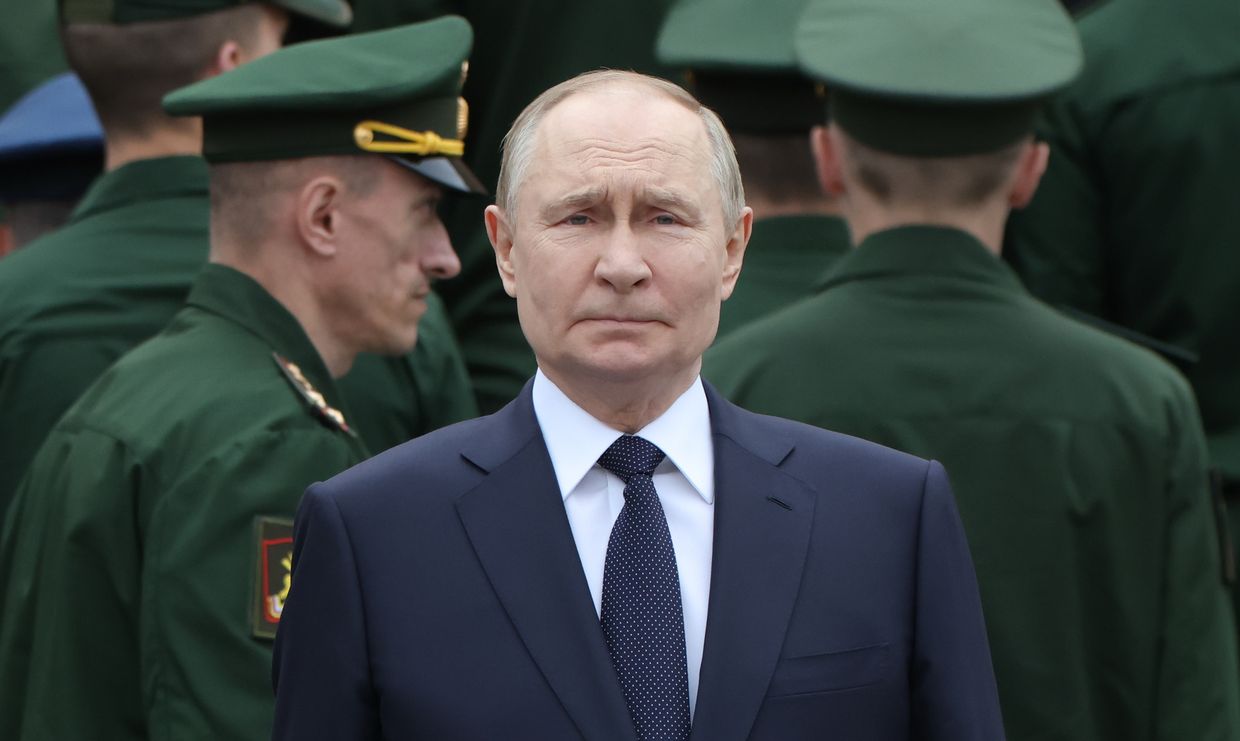
Russian President Vladimir Putin claimed on June 27 that Moscow plans to cut its military expenditure beginning next year, in a rebuke of NATO members' plans to increase defense spending to 5% of GDP.
Putin's claims will likely be met with harsh skepticism from Western officials as Russia's military spending has continued to increase throughout its ongoing invasion of Ukraine.
The Kyiv Independent cannot verify claims made by Putin. The Russian president did not provide any specifics as to how Moscow plans to cut military spending, but added there has yet to be an agreement between ministries.
"We are planning to reduce defence spending. For us, next year and the year after, over the next three-year period, we are planning for this," Putin told reporters during a visit to Belarus. "Europe is thinking about how to increase its spending, on the contrary. So who is preparing for some kind of aggressive actions? Us or them?" Putin continued.
Putin's comments comes as NATO allies are increasingly concerned about Russia's military capabilities, including future threats to alliance members as well as ongoing sabotage efforts.
On June 25, NATO member states agreed to a new defense spending benchmark, committing to allocate 5% of their GDP annually to defense and security-related expenditures by 2035.
The decision comes as NATO allies increasingly believe Russia could rebuild sufficient military capacity to challenge the alliance within five years, with NATO Secretary General Mark Rutte warning that allies must act urgently to prepare for future threats.
"We see Russia's deadly terror from the skies over Ukraine every day. We must be able to defend ourselves from such attacks," Rutte said during a press briefing on June 23. "Our security environment has changed, and not for the better. The threats we face today demand that we do far more," he added.
Various European intelligence agencies as well as officials have increasingly delivered dire warnings about the threat emanating from Russia and Europe's current lack of preparedness. German intelligence chief Bruno Kahl told a parliamentary hearing in October that Russia will have the military capabilities to be able to attack NATO by 2030.
In 2024, Russia’s military spending surpassed the combined defense budgets of all European nations. Russia’s total defense expenditures surged by 42% in real terms amounting to $462 billion, according to the data by the International Institute for Strategic Studies (IISS).
By comparison, total defense spending across Europe, including the U.K. and EU member states, increased by nearly 12% last year to $457 billion, slightly trailing Moscow’s budget.
The Moscow Times reported in December that the Kremlin had spentan unprecedented $43 billion in the third quarter of 2024 alone.
Russia is ready to hold a third round of peace talks on the war in Ukraine, Russian President Vladimir Putin told reporters on June 27, without specifying if he would directly participate in the negotiations.
"In general, we are ready for this (next round of peace talks), we need to coordinate the place and time," Putin said.
Putin added that the talks could potentially be held in Istanbul but the details have not yet been worked out. He added that another round of talks may bring peace closer as the terms for peace outlined in the countries' peace memorandumsremain "absolutely opposite."
The latest peace talks between Russia and Ukraine took place on June 2 in Istanbul, following an earlier meeting on May 16. Despite Ukraine's insistence on a 30-day ceasefire, Russiahas repeatedly rejected the offer, proposing only a temporary 2–3-day truce in limited areas to retrieve the bodies of fallen soldiers.
While no agreement on a comprehensive ceasefire has been reached, talks have led to a few major prisoner exchanges, including a 1,000-for-1,000 swap that took place in late May and a follow-up deal for up to 1,200 prisoners from each side.
Defense Minister Rustem Umerov said during a press briefing on June 26 that it was Ukraine's goal to organize a direct meeting between President Volodymyr Zelensky and Putin during the next round of negotiation.
In previous rounds, Putin had failed to show in-person sending lower-level officials to the meeting instead — despite Zelensky's willingness for in-person talks as well pressure from the United States.
On June 26, Turkish President Recep Tayyip Erdogan said Ankara is workingto organize a meeting between Zelensky and Putin, with U.S. President Donald Trump potentially joining the talks.
Putin said on June 27 that it was "quite possible" that a meeting between himself and the U.S. president could take place. "We will be happy to prepare it," he briefly added.
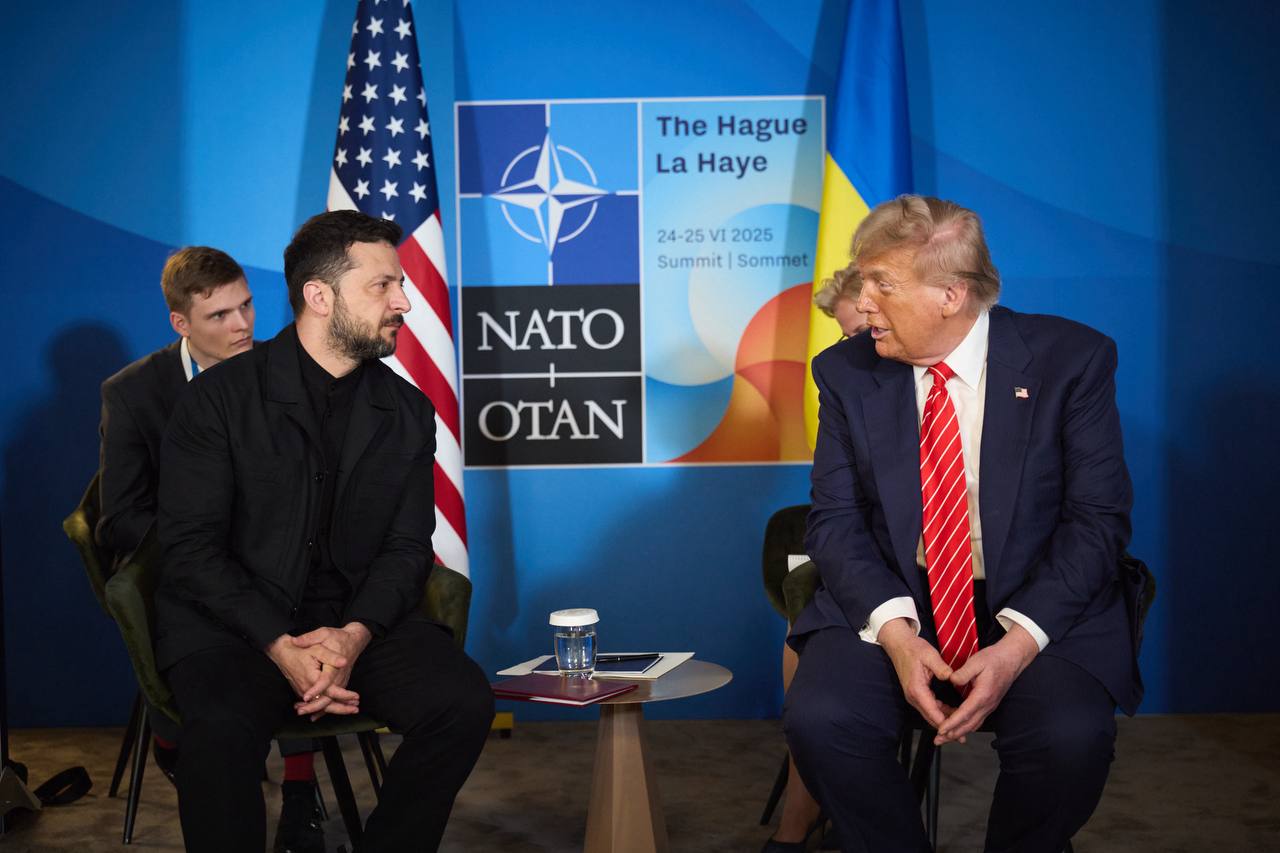
Zelensky and Trump met during the NATO summit on June 25, where the two leaders discussed battlefield developments, Kyiv's need for additionalair defense systems, and the potential for co-production of drones.
Zelensky has previously voiced openness to a trilateral meeting. On May 27, he told public broadcaster Suspilne that he was ready to sit down with both Trump and Putin.
Turkey previously hosted direct peace talks in March 2022 and has remained one of the few countries with open lines to both Kyiv and Moscow.
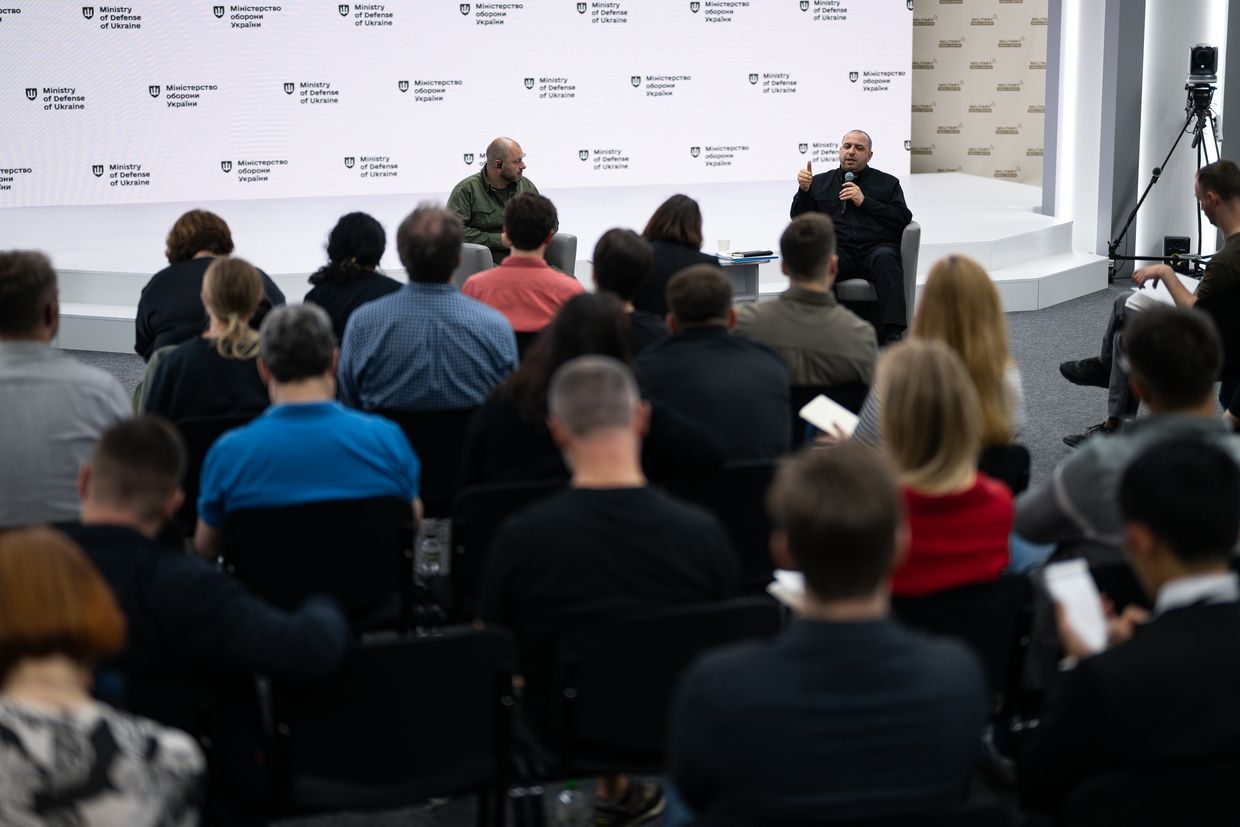
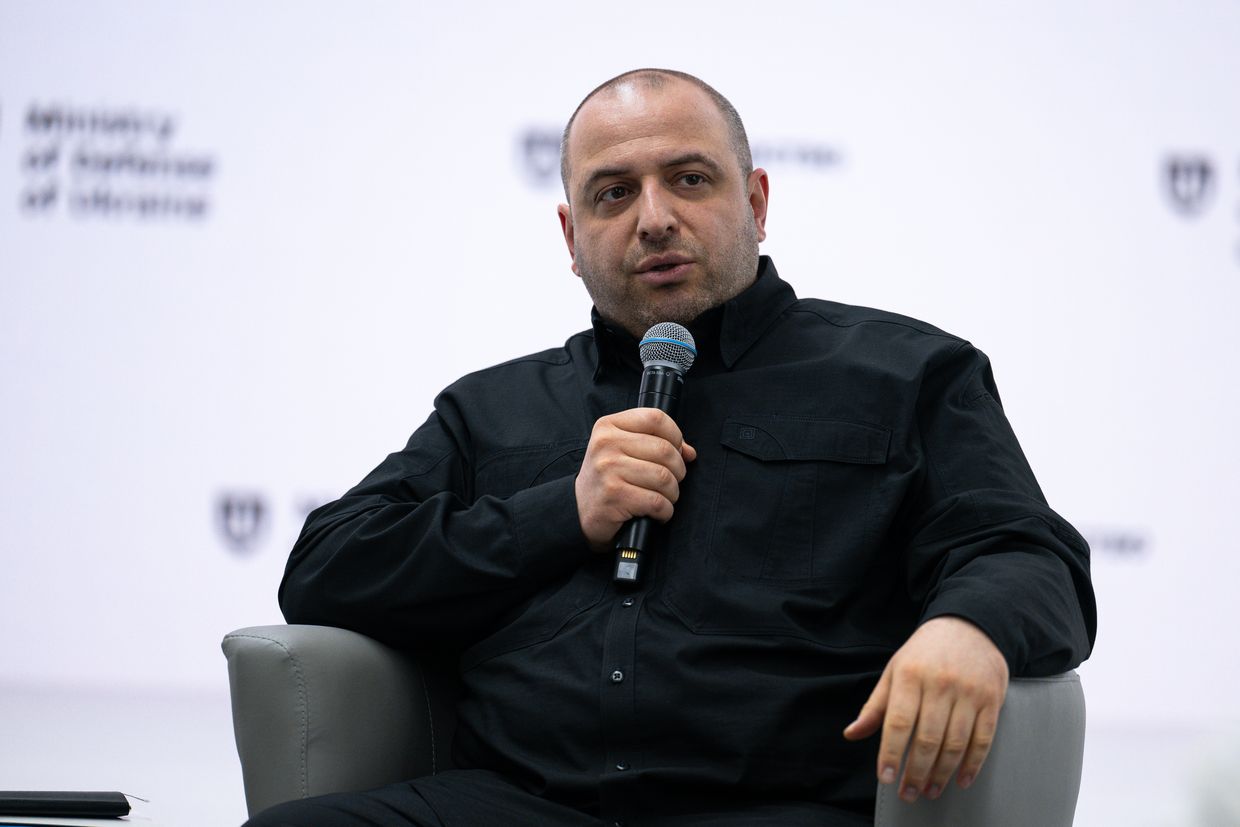
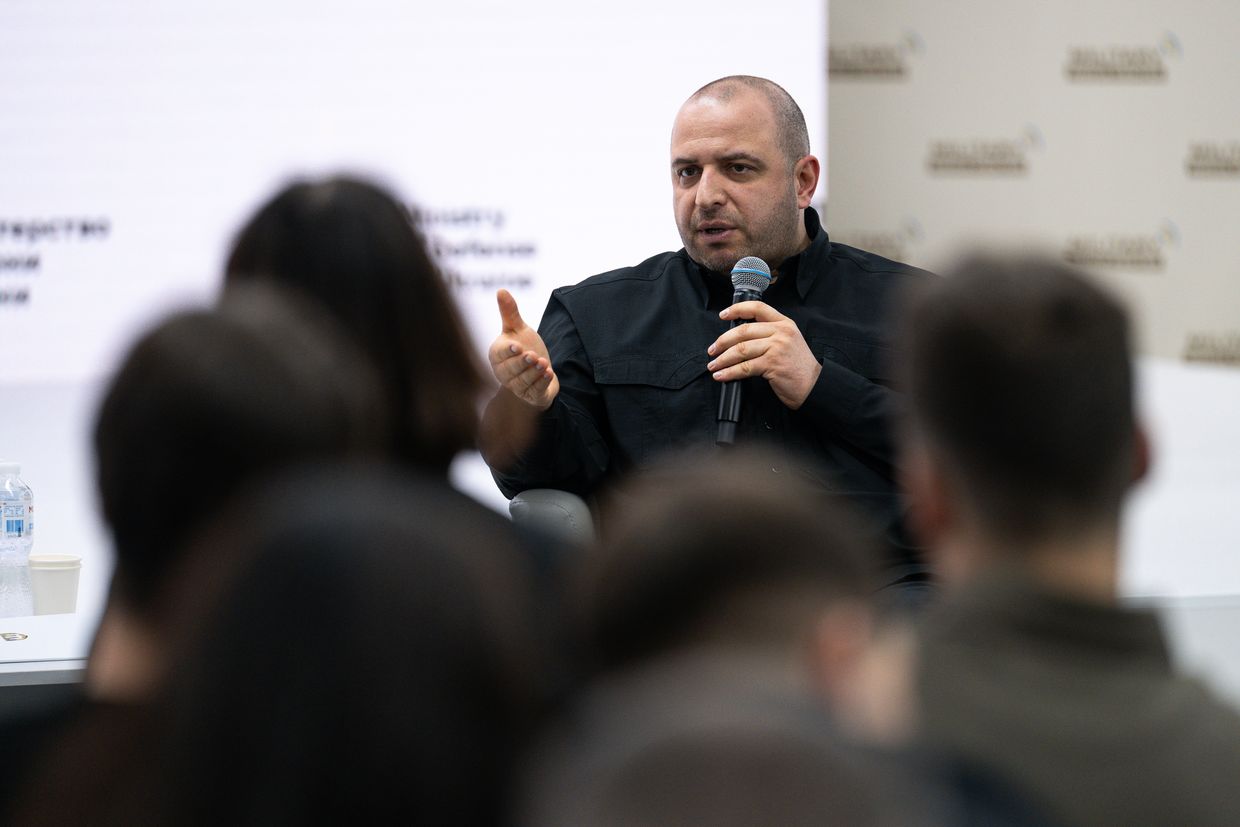
Ukrainian companies have increased their industrial capacity to produce four million drones a year, Defense Minister Rustem Umerov said at a June 26 press briefing.
The statement comes as Ukraine seeks to increase domestic arms production amid uncertainty over further U.S. support and reduced dependence on supplies from European partners.
Ukrainian manufacturers will supply four million drones to the front line this year, while the Ukrainian army has already received up to 1.5 million drones as of the end of June, according to Umerov.
The minister said that brigades made many requests for direct funding last year, with a commitment secured for 2025. The government is currently allocating Hr 2.5 billion ($60 million) per month for direct procurement teams, he added.
In the meantime, Umerov said that not all brigades spend money due to a lack of procurement specialists, so the Defense Procurement Agency (DPA) launched the DOT Chain Defense marketplace for Ukrainian soldiers
"The teams see a 'marketplace' of drones: each team orders what it needs, and the healthcare organization pays for it. This way we significantly reduce all the bureaucracy, and the teams get what they need ten times faster," Umerov said.
Russian drone strikes across Ukraine have been breaking records in recent weeks, with nearly 500 drones and missiles launched overnights.
Since the start of Russia’s full-scale invasion, Ukraine has focused heavily on developing and deploying advanced unmanned systems. As of April 2025, more than 95% of drones used by Ukrainian forces on the front line are domestically produced.
Both Ukraine and Russia have increasingly relied on drone warfare, employing aerial, naval, and ground-based drones for reconnaissance and combat operations – making technological innovation a critical component of the war.
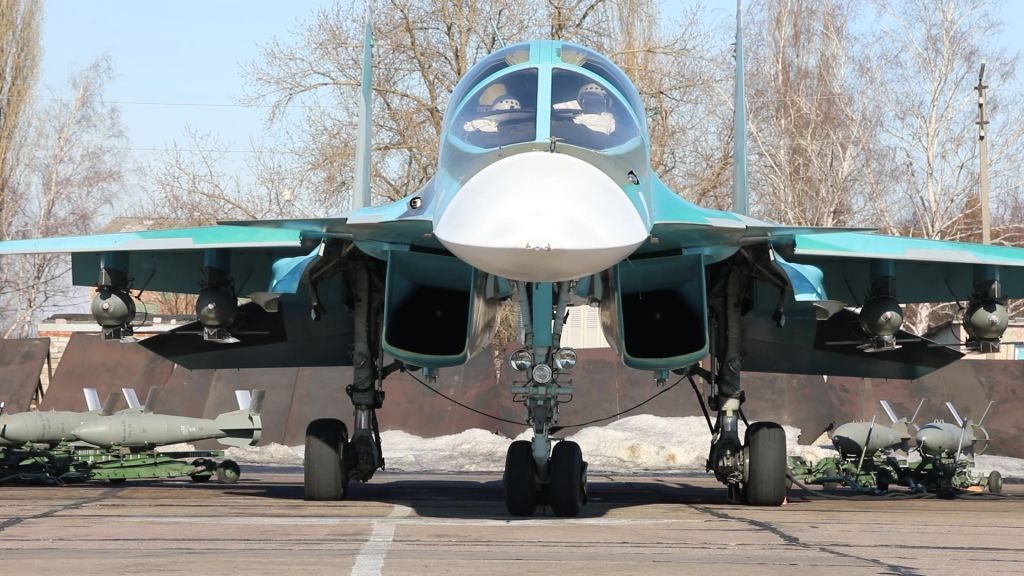
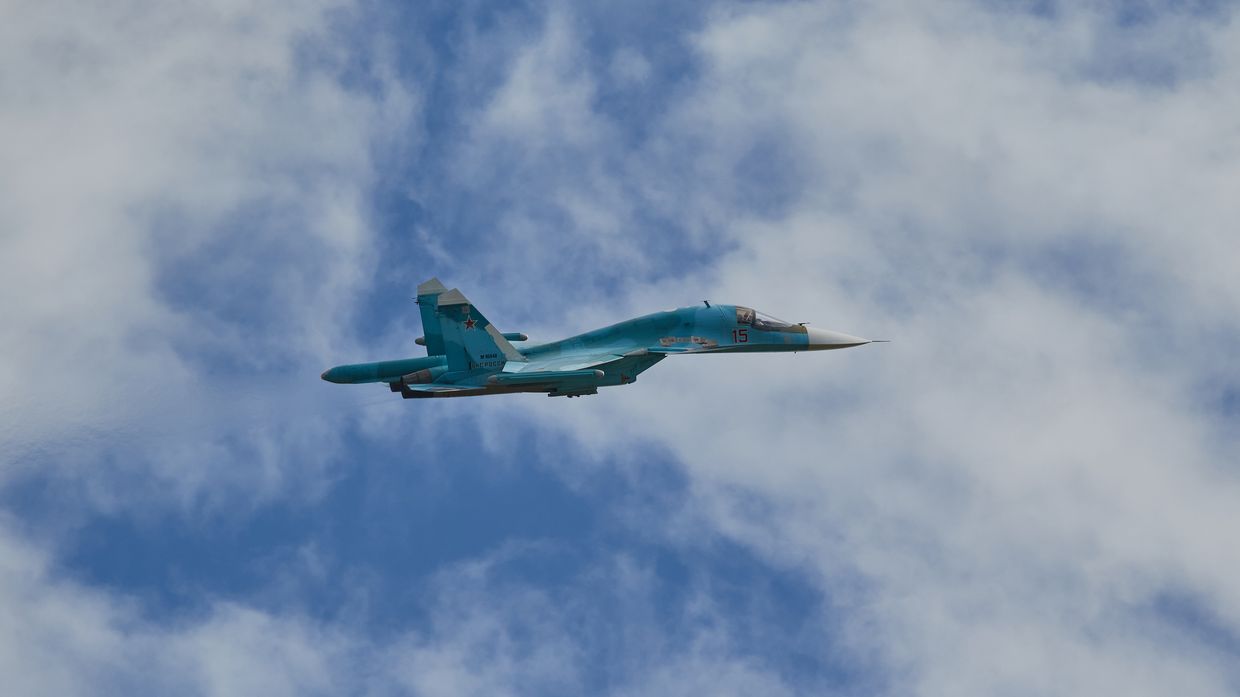
Ukrainian drones struck four Su-34 fighter jets at the Marinovka airfield in Russia's Volgograd Oblast overnight on June 27, Ukraine's General Staff said.
The operation was carried out by the Special Forces and the Security Service of Ukraine (SBU) in cooperation with other military units, according to the General Staff.
Volgograd Oblast is located some 900 kilometers (560 miles) southeast of Moscow.
According to preliminary data, two Russian fighter jets were destroyed, and the other two were damaged. Russia uses such aircraft to bomb Ukraine, particularly to drop guided aerial bombs, the General Staff said.
The attack also caused a fire in the airfield's technical and operational unit, a facility where combat aircraft are serviced and repaired, according to the General Staff.
The Kyiv Independent could not independently verify these claims.
As Russia intensifies aerial attacks on Ukraine and the civilian death toll climbs, Ukraine has stepped up its drone attacks on Russian territory. The recent surge in drone strikes aims to disrupt airport operations, overwhelm air defenses, and mount pressure against the Russian population.
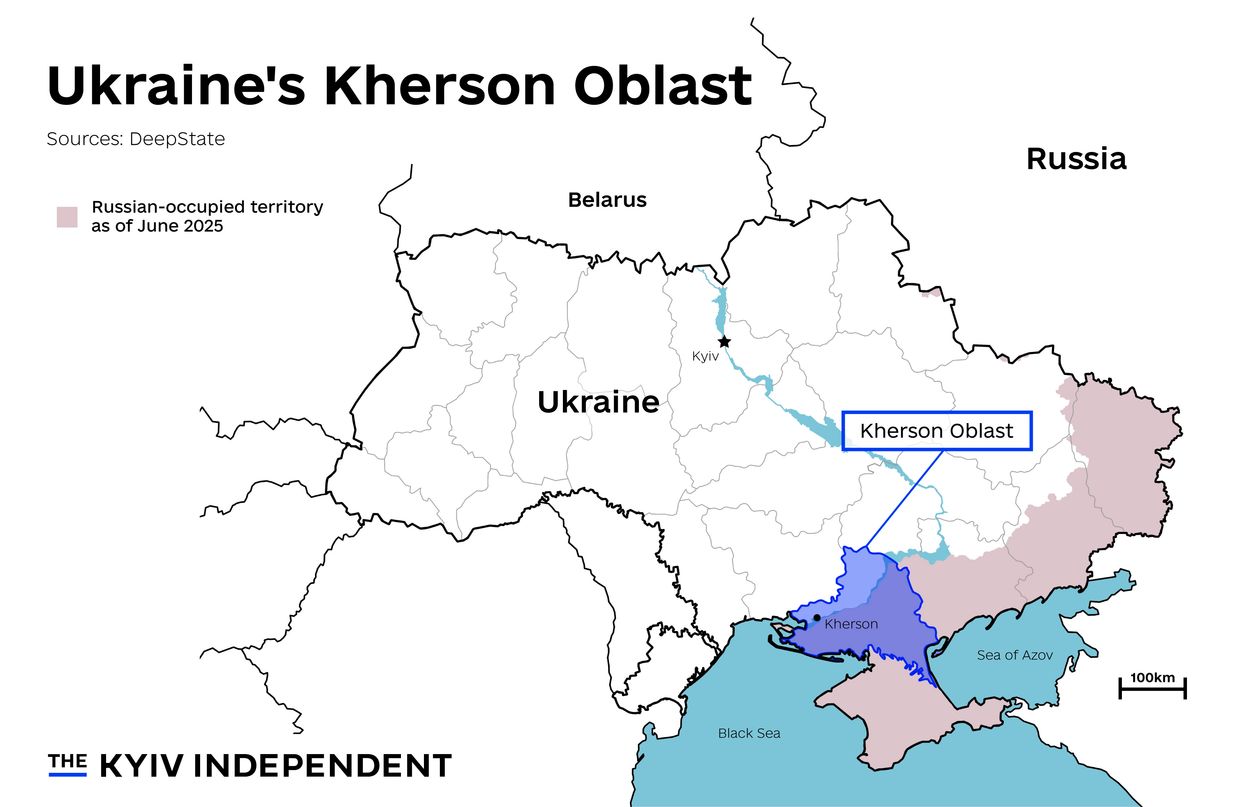
Russian forces struck a critical energy facility in Kherson Oblast, causing widespread power outages across several communities, Governor Oleksandr Prokudin said on June 27.
"Russia decided to plunge Kherson Oblast into darkness," Prokudin wrote on Telegram. He said the attack has disrupted electricity supply to multiple settlements.
Local power engineers are working to stabilize the situation, Prokudin said.
"I ask the residents of the region to prepare for a prolonged power outage. Power engineers are doing everything possible to stabilize the situation," he said.
Kherson and the surrounding regions have frequently come under Russian fire since Ukrainian forces liberated the city from occupation in November 2022. Russian troops continue to attack the area with artillery and drones from across the Dnipro River.
The Russian army consistently targeted Ukrainian energy infrastructure. Throughout 2024, Moscow launched 13 mass attacks with drones and missiles on Ukraine's energy infrastructure. Ukraine was forced to introduce emergency blackouts across the country.
Ukraine and Russia agreed to a partial 30-day energy truce, following consultations with the U.S. in Riyadh on March 25. Moscow violated the ceasefire more than 30 times, Foreign Ministry Spokesperson Heorhii Tykhyi said on April 16.
Ukraine's one-year military contract for volunteers aged 18 to 24 is proving effective on the battlefield, Defense Minister Rustem Umerov said at a June 26 press briefing, citing fresh reports from commanders across the front line.
Umerov said units made up of young contract soldiers had shown "resilience, professionalism, and confident actions in combat," challenging early skepticism about the new recruitment model.
"We saw them on the battlefield — and it's truly motivating."
The contract, launched in February, offers substantial benefits to young volunteers. It includes basic general military training, vocational training, and an adaptation course in an army unit. Volunteers will receive a one-time monetary aid payment of Hr 1 million ($24,000) and a monthly allowance of up to Hr 120,000 ($3,000).
The campaign initially faced backlash from some front-line troops and activists, who argued it created unfair disparities in pay and support. Now, the initiative is being credited with improving performance in specific units, Umerov said, citing internal military assessments received by the ministry two weeks ago.
Umerov, however, hasn't shared the number of soldiers recruited through the campaign.
The campaign is under constant evaluation based on financial, personnel, and training metrics. Umerov said the Defense Ministry is working to enhance the motivational package further, using data and feedback from participants and focus groups.
Despite pressure from international partners, particularly the United States, to lower Ukraine’s mobilization age from 25 to 18, service for those aged 18–24 remains voluntary. President Volodymyr Zelensky has consistently rejected compulsory mobilization starting at 18, warning that it could damage Ukraine's long-term future.
In a recent interview, Zelensky said Ukraine's Western allies have at times withheld new sanctions on Russia over Kyiv's refusal to lower the draft age. He stressed that the "weapons and technology," rather than raw manpower, were more decisive on the battlefield.
Ukraine faces personnel challenges as Russian forces continue to press along the front line. While a mobilization reform law lowered the draft age from 27 to 25 in 2024, the pace of new enlistment has slowed, leaving infantry units understaffed.
"The younger generation is a powerful human resource that deserves support and development," Umerov said.
Editor's note: This is a developing story and is being updated.
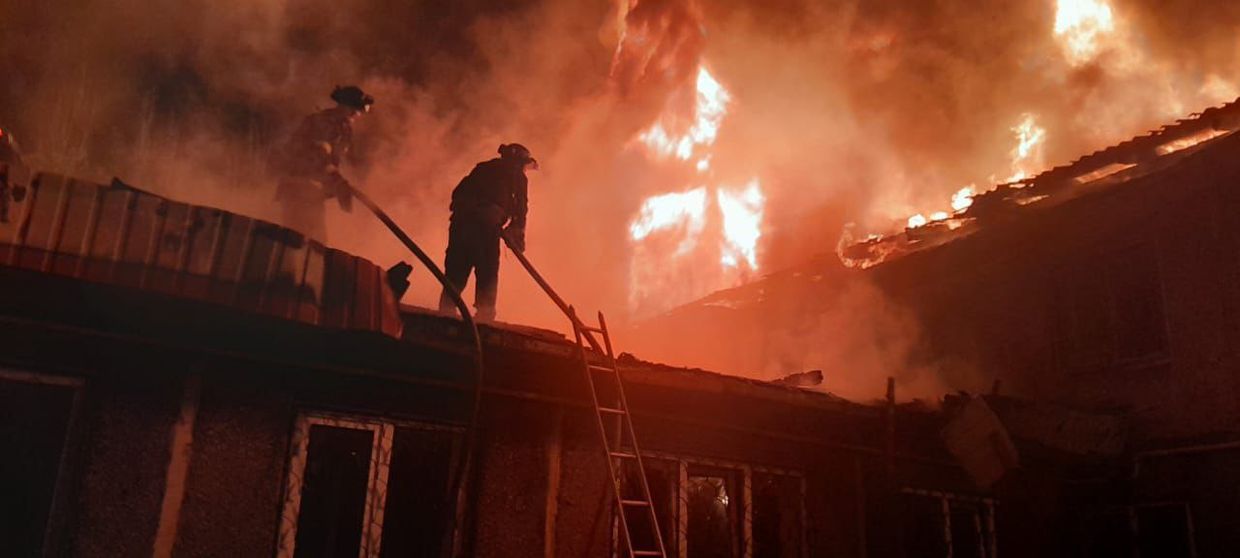
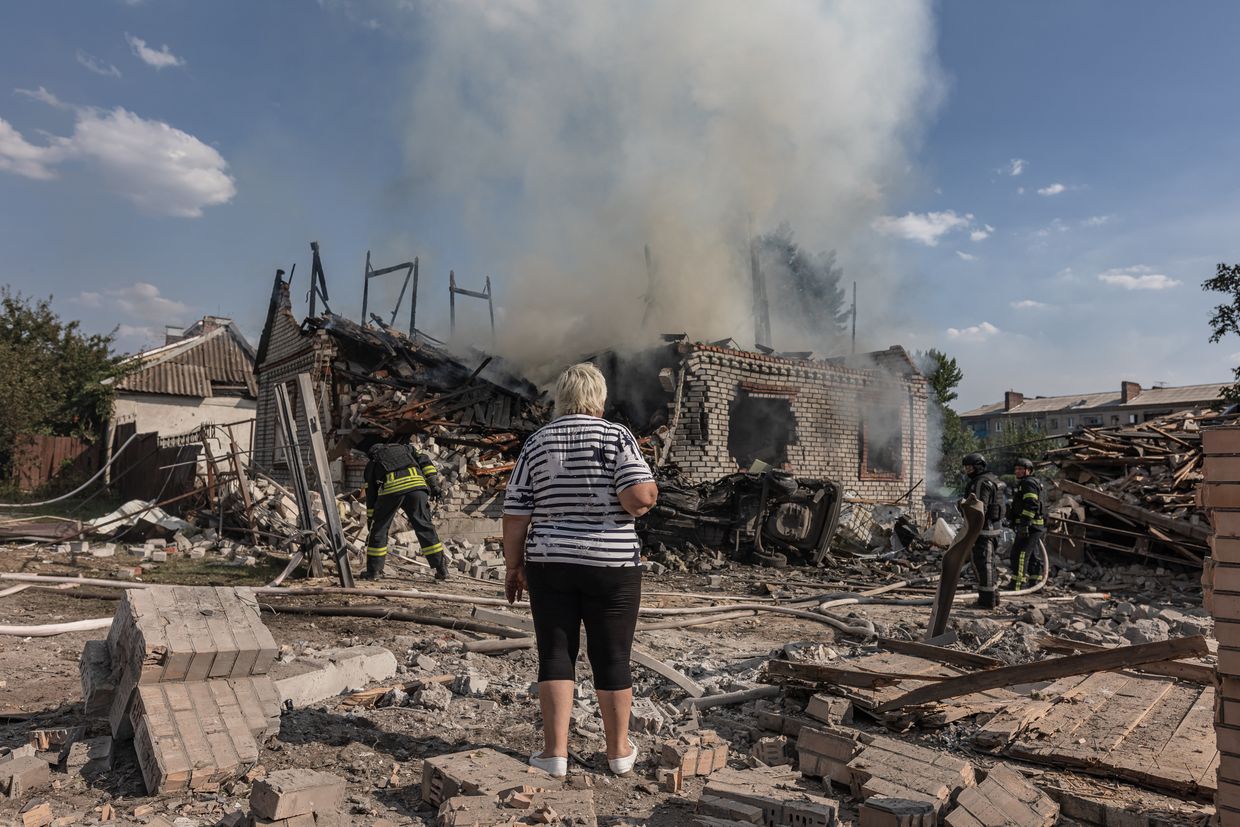
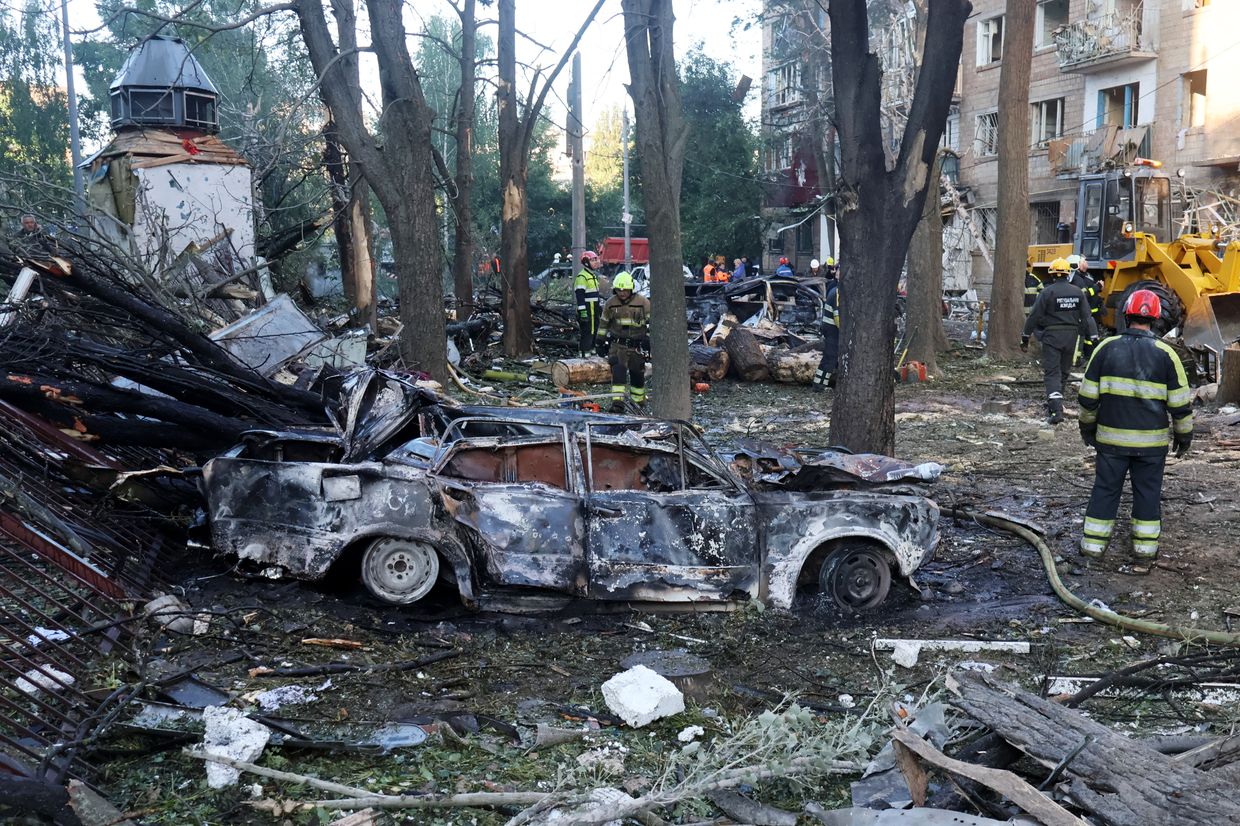
A Russian missile strike on the city of Samar in Ukraine's Dnipropetrovsk Oblast on June 27 killed five people and injured at least 25 others, Governor Serhii Lysak said.
In a statement posted to Telegram, Lysak said most of the injured were hospitalized. Four of the victims are in serious condition, while the others sustained moderate injuries. A fire broke out following the strike, and emergency services are continuing to work at the site.
"We're doing everything possible to assist those affected," Lysak said.
The attack comes just days after Russia launched one of the deadliest assaults on Dnipropetrovsk Oblast. On June 24, missiles struck multiple locations in the regional capital of Dnipro and in the oblast, killing at least 21 people and injuring over 300 others.
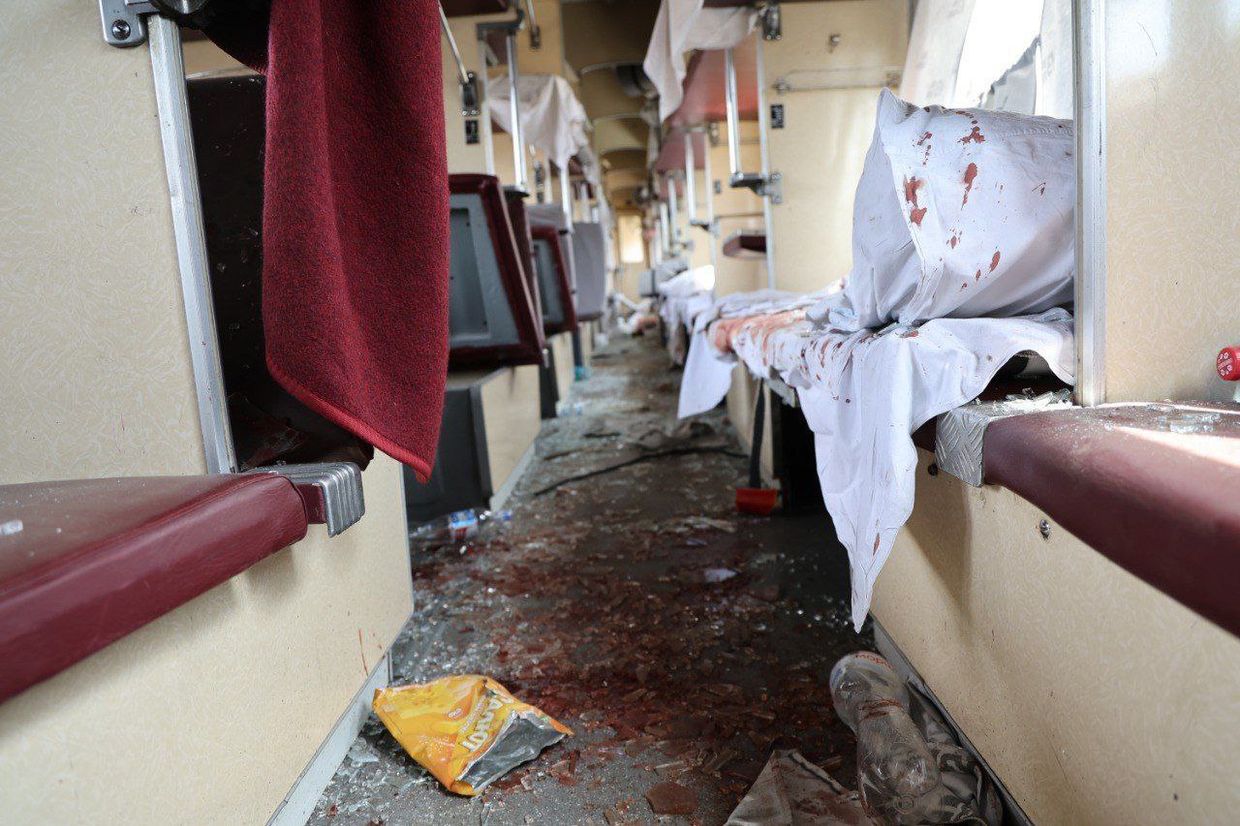
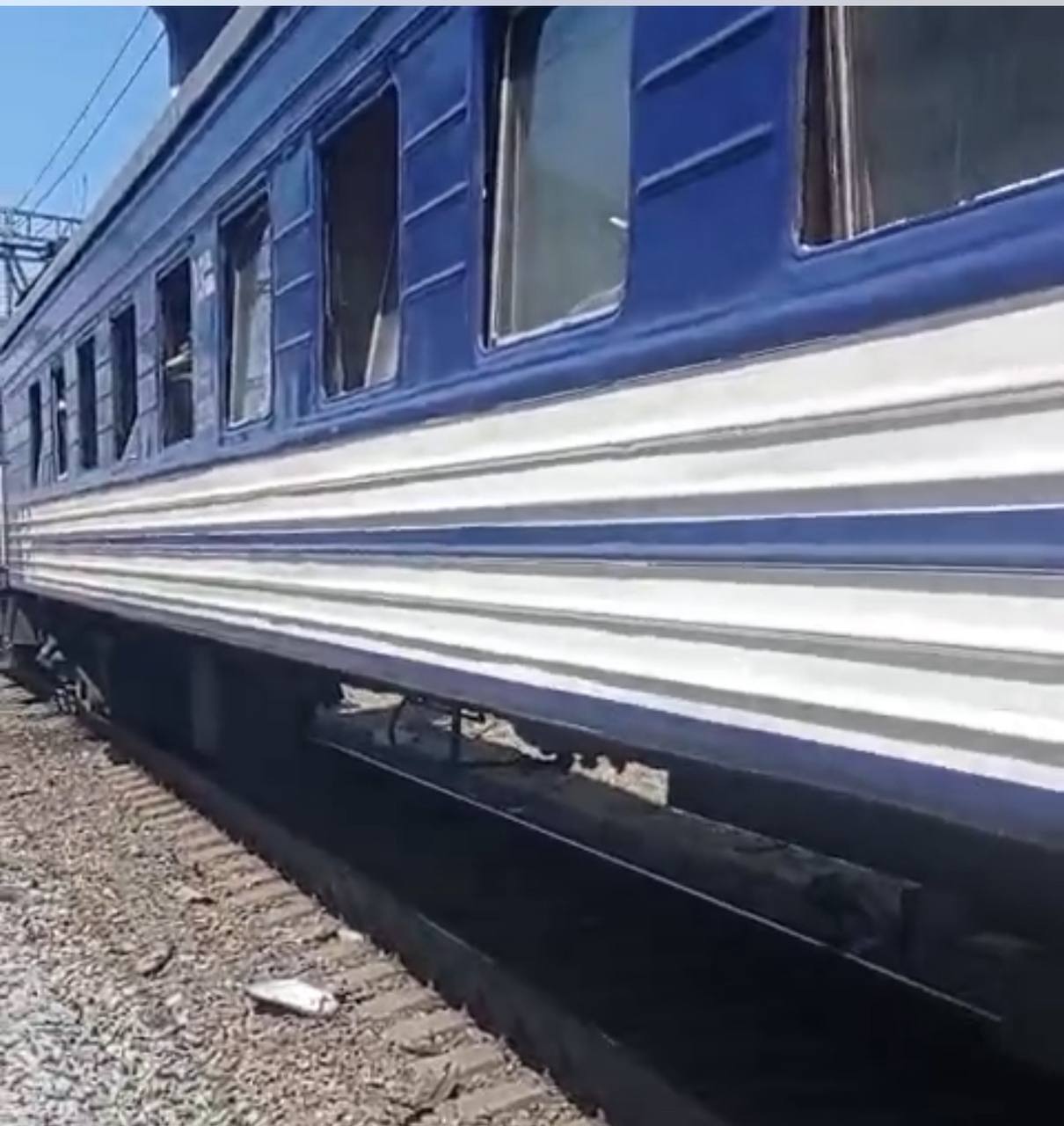
The strike hit civilian infrastructure, a dormitory, a gymnasium, and a train traveling from Odesa to Zaporizhzhia, as well as the nearby town of Samarske. Two people were killed and 14 others wounded there. At least 100 victims of the Dnipro attack remain hospitalized, Lysak said.
At least two civilians were killed and 13 were injured in Russian drone and missile attacks across Ukraine over the past day, local officials reported on June 27.
According to Ukraine's Air Force, Ukrainian air defense intercepted 365 of 371 incoming Russian air weapons, including 363 Shahed-type drones, two Kinzhal ballistic missiles, and six Kalibr cruise missiles.
In Kharkiv Oblast, Governor Oleh Syniehubov said one person was killed and four were wounded in Vovchanski Khutory and Pidlyman during a Russian attack. Infrastructure damage included houses and an agricultural facility. The region also endured heavy shelling.
In Donetsk Oblast, Governor Vadym Filashkin reported one death, while three people were injured across Pokrovsk, Kramatorsk, and Bakhmut districts. Damage was observed to houses, a farm, administrative buildings, gas pipelines, and vehicles.
In Kherson Oblast, Governor Oleksandr Prokudin said four people were injured as Russian drones and artillery struck social and residential infrastructure. Seven apartment buildings and 25 houses were damaged, along with utilities and vehicles.
In Zaporizhzhia Oblast, Governor Ivan Fedorov said one person was injured when an air-dropped bomb hit a settlement in the Huliaipole district.
In Kyiv Oblast, a person was injured near Fastiv during an overnight drone and missile attack. One house was damaged each in Boryspil and Fastiv districts, while a tire repair shop and five cars were hit in Bila Tserkva. No critical infrastructure was reportedly affected, and air defense forces shot down Russian drones and missiles.
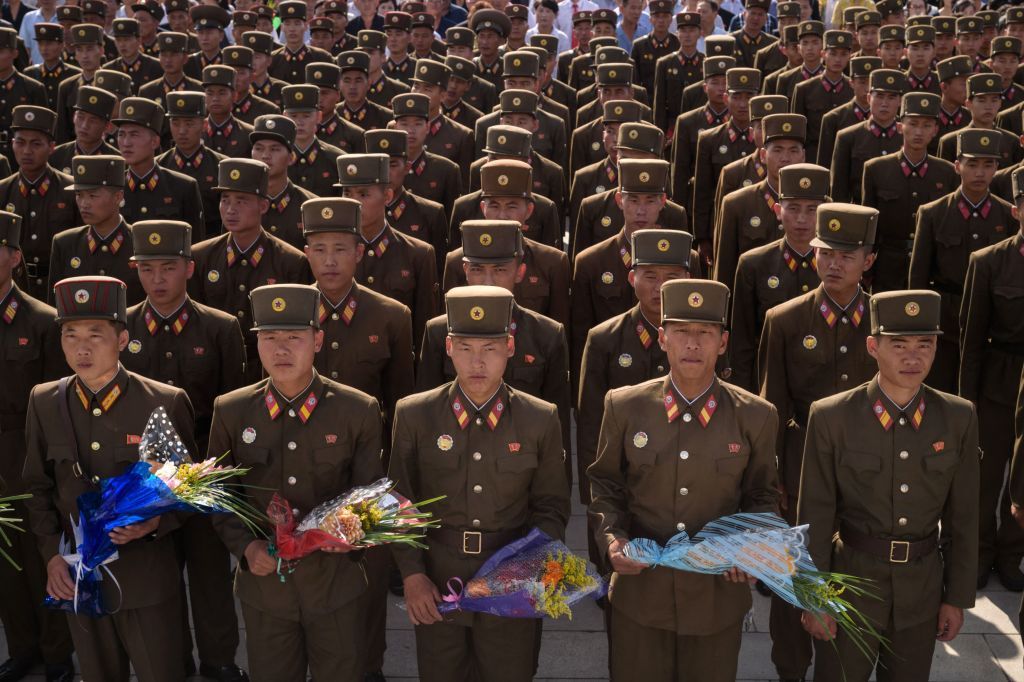
North Korea has already deployed around 11,000 elite troops to support Russia's war against Ukraine, accounting for more than 20% of North Korean leader Kim Jong Un's elite "personal reserve" force, Defense Minister Rustem Umerov said during a June 26 press briefing.
"These are soldiers specially selected based on physical, psychological, and other criteria," Umerov said. "These units have already suffered significant losses."
Umerov said intelligence indicates North Korea had considered sending additional forces to fight with Russia. However, according to Umerov, the move would further deplete its strategic reserves and increase risks to regime stability. There have been four known rotations of North Korean units deployed against Ukraine, according to Umerov.
According to a June 15 report from the United Kingdom's defense intelligence, North Korea has likely sustained more than 6,000 casualties in Russia since the deployment of troops to Kursk Oblast in fall 2024.
U.K. intelligence attributed the high casualty rate to large, highly attritional dismounted assaults.
Russia's growing military partnership with North Korea has raised concerns in Kyiv and among its allies. The two countries signed a Comprehensive Strategic Partnership Agreement in 2024. The treaty commits both countries to provide assistance if either is attacked.
Kim previously described the pact as having a "peaceful and defensive nature," framing it as a formal security guarantee between the longtime partners.
In practice, Umerov said, North Korea is bearing the military burden, while Russia has not upheld its reciprocal obligations, raising concerns within the North Korean regime.
"Russia's use of elite North Korean troops demonstrates not only a growing reliance on totalitarian regimes but also serious problems with its mobilization reserve," Umerov said. "Together with our partners, we are monitoring these threats and will respond accordingly."
Umerov added that Ukraine, working in coordination with its Western partners, is closely tracking the movement and deployment of North Korean units deployed to fight against Ukraine. He said Russia's dependence on foreign forces may signal critical shortages in its own recruitment and mobilization efforts.
According to South Korea's National Intelligence Service, North Korea is likely to send more troops to Russia over the summer. Pyongyang may also send up to 25,000 laborers to Russia to support drone production, according to the report.
The additional troop deployment would come on top of what Seoul estimates is already substantial support from North Korea, which includes the shipment of over 10 million artillery shells and ballistic missiles in exchange for economic and technical assistance from Moscow.
Ukraine's next goal in ongoing negotiations with Russia is to organize a direct meeting between President Volodymyr Zelensky and Russian President Vladimir Putin, Defense Minister Rustem Umerov said during a press briefing on June 26.
Speaking to journalists in Kyiv, Umerov, who was part of Ukrainian peace talks delegation, outlined a multi-stage negotiation process that began in January with an initiative from U.S. President Donald Trump. Umerov stressed that Ukraine welcomed the idea of a ceasefire from the outset and remains fully committed to a just peace.
"Ukraine has always remained consistent in its pursuit of peace," Umerov said. "We supported the U.S. initiative for a full ceasefire from the very beginning and demonstrated our commitment through multiple rounds of negotiations. But any dialogue must take place without ultimatums and with full respect for our country's sovereignty."
The talks unfolded in several rounds in Jeddah, Riyadh, Paris, London, and Istanbul. During the second round of negotiations in Riyadh, Ukraine communicated with Russia indirectly, through U.S. mediators. In Turkey, U.S. mediators were excluded from talks due to Russia's request, according to Umerov.
"President Zelensky's proposal to meet with Putin is aimed at showing Donald Trump that Moscow is not truly seeking peace," Mykola Kniazhytzkyi, a Ukrainian lawmaker from the European Solidarity party, told the Kyiv Independent.
"Its real goal is the destruction of Ukrainian statehood and the genocide of the Ukrainian people."
Oleksandr Merezhko, a lawmaker from Zelensky’s party and chair of the parliament's foreign affairs committee, called the proposal for a bilateral high-level meeting "an interesting political step." He said it is a logical move since "Putin decides everything in Russia."
However, the MP questioned the overall advisability of a direct meeting between Zelensky and Putin.
"It seems to me that it would be better to conduct such negotiations in a format involving not only Zelensky, but also the United States and the European Union," Merezhko said, adding that European leaders could help build a "balance of power," given the risk that the U.S. might potentially lean toward Russia.
He said that talks between the leaders should take place after the ceasefire, at least a temporary one, is in place.
"For them (Russia), negotiations are a tool of war. They have never conducted them in good faith and will never do this. In general, there is no need for negotiations, there is a need for pressure (from the West)," Merezhko said.
Umerov said Ukraine had accepted a U.S.-proposed full ceasefire across land, sea, and air in early March, but Russia has rejected the proposal.
While no agreement on a comprehensive ceasefire has been reached, talks have led to a few major prisoner exchanges, including a 1,000-for-1,000 swap that took place in late May and a follow-up deal for up to 1,200 prisoners from each side.
Umerov said the focus of recent negotiations has included humanitarian issues such as the release of civilians and children, as well as conditions for a meeting of Ukrainian and Russian leaders. He emphasized that the next stage must include top-level dialogue.
"After completing discussions on humanitarian issues, Ukraine plans to move forward to the topic of a leaders' summit for substantive dialogue," he said.
The latest peace talks between Russia and Ukraine took place on June 2 in Istanbul, following an earlier meeting on May 16. Both times, the Ukrainian delegation was led by Umerov. Despite Ukraine's insistence on a 30-day ceasefire, Russia proposed only a temporary 2–3-day truce in limited areas to retrieve the bodies of fallen soldiers. Umerov called this offer "insufficient" and accused Moscow of avoiding meaningful peace.
"Russia rejects even the very idea of stopping the killings," Umerov said following the June 2 talks. "That's why we appeal to the world: pressure is needed for real peace, not for an imitation of negotiations."
Zelensky has also criticized Moscow's limited ceasefire offers and called on Trump to follow through on promised sanctions if talks remain fruitless. Trump has repeatedly suggested that he is monitoring the peace process closely and warned that the U.S. response could change if Putin is not prepared to end the war.
No further U.S. sanctions were imposed after more than 100 days of Moscow's refusal to the proposed ceasefire.
A Chinese journalist was reportedly injured in a drone strike near Russia's border with Ukraine in Kursk Oblast, acting governor Alexander Khinshtein said on June 27.
According to Khinshtein, 63-year-old reporter Lu Yuguang from the Chinese television network Phoenix TV was wounded in a Ukrainian drone strike on the village of Korenevo in Russia's Kursk Oblast. He sustained an open head injury and a contusion on the parietal region of his skull, but later declined hospitalization after being examined at a regional hospital, Khinshtein wrote on Telegram.
"Fortunately, the journalist received skin wounds on the head. No other damage was found," the governor said, adding, "Please refrain from traveling to the border area, it can be dangerous."
If confirmed, this would be the first publicly reported case of a Chinese journalist being injured in Russia's Kursk Oblast as a result of cross-border drone strikes amid Moscow's full-scale war against Ukraine. The Kyiv Independent could not independently verify the claims.
Ukrainian forces launched a cross-border incursion into Russia's Kursk Oblast in August 2024, marking the first large-scale invasion of Russian territory by foreign troops since World War II. The move was intended to disrupt a planned Russian offensive targeting Ukraine's Sumy Oblast and to relieve pressure on the Donetsk front.
Since then, Ukraine claims it has inflicted 63,402 Russian troop casualties in the oblast, including 25,625 killed and 971 captured. Ukrainian forces also say they have destroyed or damaged over 5,664 pieces of Russian military equipment in the area.
Russia retook most of the lost territory during a renewed offensive in March 2025, supported by North Korean troops.
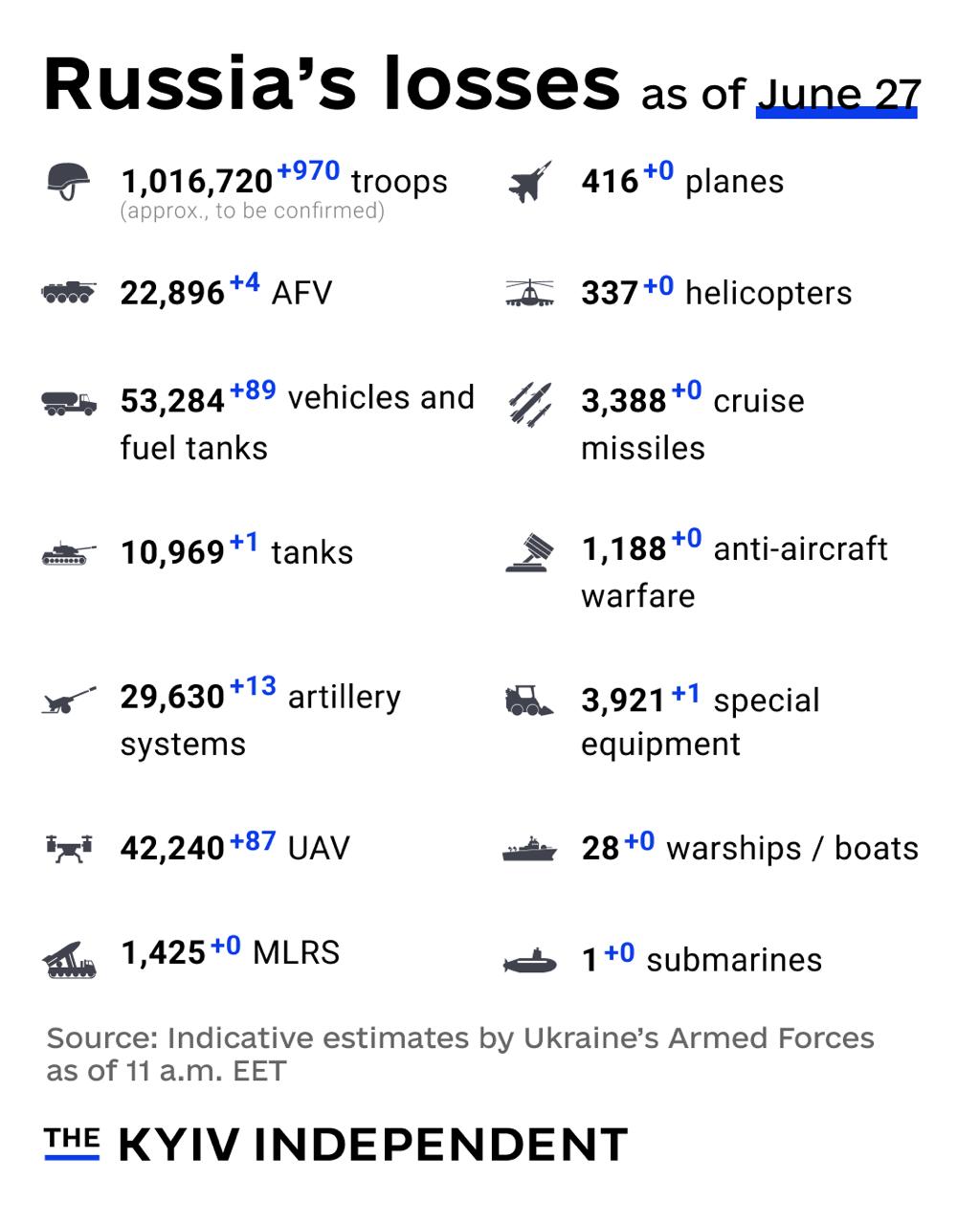
Russia has lost 1,016,720 troops in Ukraine since the beginning of its full-scale invasion on Feb. 24, 2022, the General Staff of Ukraine's Armed Forces reported on June 27.
The number includes 970 casualties that Russian forces suffered just over the past day.
These are the indicative estimates of Russia’s combat losses as of June 27, 2025, according to the Armed Forces of Ukraine.
According to the report, Russia has also lost 10,969 tanks, 22,896 armored fighting vehicles, 53,284 vehicles and fuel tanks, 29,630 artillery systems, 1,425 multiple launch rocket systems, 1,188 air defense systems, 416 airplanes, 337 helicopters, 42,240 drones, 3,388 cruise missiles, 28 ships and boats, and one submarine.
Short-range drone attacks have become one of the deadliest threats to civilians in Ukraine’s front-line regions, killing at least 395 people and injuring 2,635 between February 2022 and April 2025, according to a new bulletin by the UN Human Rights Monitoring Mission in Ukraine.
The report, "Deadly Drones: Civilians at Risk from Short-Range Drones in Frontline Areas of Ukraine," highlights the growing use of first-person-view (FPV) drones by Russian forces and their devastating impact on the civilian population.
The bulletin documents attacks in which drone operators deliberately targeted civilians engaging in daily activities — driving private cars, riding bicycles, walking outdoors, or evacuating others in clearly marked ambulances.
"Although individually less destructive than artillery or missiles, the sheer scale and increasing frequency of short-range drone attacks have made them one of the deadliest weapons in Ukraine," said Danielle Bell, head of the mission. "Over 3,000 civilian casualties — and the relentless frequency of these attacks — have not only caused immense human suffering but also instilled fear, severely disrupted daily life, and crippled access to essential services in several frontline communities."
The monitoring mission documented, verified, and analyzed 3,030 civilian casualties resulting from short-range drones between 24 February 2022 and 30 April 2025. The researchers conducted site visits to very high-risk areas, including the southern city of Kherson, Zolochiv in Kharkiv Oblast, and other front-line locations. Investigators interviewed survivors and witnesses of drone attacks, medical personnel, and humanitarian workers to assess the full impact of these strikes on civilian life.
Ukraine's Kherson Oblast (Nizar al-Rifai/The Kyiv Independent)
Casualties surged in late 2023 and early 2024, with numbers suddenly doubling in July 2024. April 2025 marked the deadliest month on record, with 42 civilians killed and 283 injured. Drone strikes continued into May and June.
On 23 June, a 65-year-old driver was killed in Kostiantynivka, Donetsk Oblast, when a drone struck a minibus. In Kharkiv region, a 58-year-old volunteer was killed on 22 May when a drone dropped a munition on a residential balcony. On 20 May, six civilians were injured when a drone hit a bus in Kherson Oblast.
The vast majority of casualties — 89% — occurred in territory controlled by the Ukrainian government. The UN says these attacks violate international humanitarian law, particularly the principles of distinction and precaution, and may in some cases constitute war crimes.
Russia is using financial incentives to recruit teachers, cultural workers, and coaches to work in occupied parts of Ukraine in a campaign aimed at reshaping local identity and fostering loyalty to Moscow’s regime, according to a report published by the Center for European Policy Analysis (CEPA) on June 26.
The Kremlin is offering up to two million rubles (around $22,000) to Russian teachers who agree to work for five years in occupied areas of Donetsk, Luhansk, Zaporizhzhia, and Kherson oblasts, and one million rubles for positions in Crimea.
The initiative, an extension of Russia’s “Zemskyi Uchitel” (Rural Teacher) program, which originally targeted underserved regions in Russia, was formally launched in the newly occupied Ukrainian territories in 2024 — though Russian educators began arriving as early as 2022.
Over 100 teachers have relocated to Crimea through the program, according to Ukraine’s Regional Center for Human Rights/ Most of them arrived from regions including Krasnodar, Altai Krai, Tomsk, Novosibirsk, Saratov, Tyumen, Ivanovo, and the Republic of Udmurtia.
“We have documented cases of teachers — and people assigned to managerial roles, such as school principals and deputy heads — arriving as early as 2022,” said Kateryna Rashevska of Ukraine’s Regional Center for Human Rights. “The first group came from Dagestan, arriving in the occupied Zaporizhzhia region, and by 2024, there were already 37 teachers from Dagestan working there.”
According to Rashevska, these teachers often lead courses in Russian language, history, and “basics of life safety and defense of the Motherland” — classes focused on conscription and military training. “These people are also involved in reprogramming Ukrainian children, attempting to raise them as Russian patriots and future members of the Russian armed forces,” she added.
In parallel, Russia is also exerting pressure on Ukrainian teachers in occupied areas to adopt the Russian curriculum. Those who refuse face serious consequences. "In Berdiansk, a school principal was deported for refusing to open the school under Russian standards," said Mariia Sulialina, head of Ukrainian NGO Almenda. Sulialina noted that teachers are now required to praise President Vladimir Putin and report "extremist behavior" among students — often defined as pro-Ukrainian views.
Human rights experts say these efforts amount to colonization and are violations of international law, including Article 49 of the Geneva Convention and Article 8 of the Rome Statute.
“Russia plans to move another 100 teachers into occupied areas in 2025 — a clear example of colonization,” Rashevska said. Despite existing legal tools, she added, “The International Criminal Court still doesn’t prioritize colonization… even though these federally coordinated programs involving teachers, cultural workers, and coaches create a clear chain of command.”
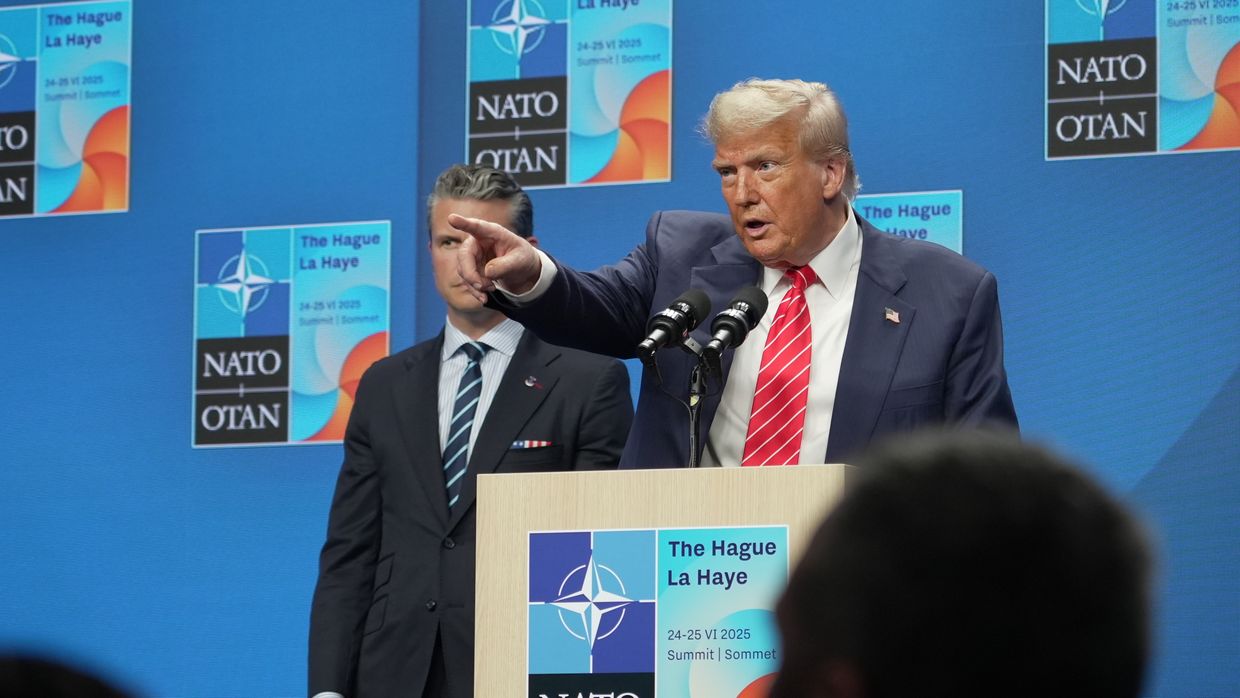
U.S. President Donald Trump promised during the NATO summit in The Hague that Russia would never attack the alliance while he is in office, the Washington Post reported on June 26, citing three unnamed European officials.
Speaking at a briefing in The Hague a day earlier, Trump, however, did not rule out that Russia has territorial ambitions beyond Ukraine.
"It's possible," he said.
Still, the U.S. president immediately downplayed Moscow's threat and aggression against Ukraine, saying Russian President Vladimir Putin was "misguided."
Trump's remarks came days after President Volodymyr Zelensky said that Ukraine's intelligence has proof that Russia is preparing new military operations in Europe and just a week after Putin declared "all of Ukraine is ours."
During the summit, NATO Secretary General Mark Rutte called on alliance members to be realistic about the threats posed by Russia and China. Previously, he warned that Russia could be ready to launch an attack against the alliance within five years.
Amid rising threats from Russia, NATO member states have agreed to a new defense spending benchmark, committing to allocate 5% of their gross domestic product annually to defense and security-related expenditures by 2035.
In early June, German intelligence chief Bruno Kahl said Russia may try to test NATO’s unity with provocations beyond Ukraine, as some Russian officials believe that the alliance's collective defense principle no longer works.
More than 20,000 Russian soldiers have been prosecuted for refusing to fight in Ukraine, a Russian independent media outlet Mediazona reported on June 26, citing online data from military courts.
As of late May, Mediazona had documented 20,538 such cases since September 2022 (when the Kremlin announced a first wave of partial mobilization) compared to 10,025 cases reported as of June 2024.
Of these, 18,159 were cases of soldiers going AWOL, 1,369 cases of failure to comply with an order, and 1,010 cases of desertion.
According to Mediazona, 17,721 of the accused have already been sentenced.
The Insider reported that Moscow uses a systematic program of "gulag-style" abuse directed at its soldiers in Ukraine in order to "maintain order" and punish perceived offenders.
Reports of Russian soldiers being abused by commanders and fellow troops have emerged since the full-scale war against Ukraine began.
Moscow has only intensified its war effort despite calls by Kyiv, the U.S., and European partners for an unconditional ceasefire as a first step toward a peace deal.
According to President Volodymyr Zelensky, Russia recruits around 40,000-45,000 men for its military every month.
Although Russia did go through phases of mobilization and has made great use of its prison population, most new recruits have for a while been volunteer contract soldiers, lured in by one-time signup bonuses often more than several years' average salary in poorer regions of Russia.
In late 2024, Russian President Vladimir Putin signed a decree to increase the size of Russia's Armed Forces to about 2.4 million, including 1.5 million military personnel.
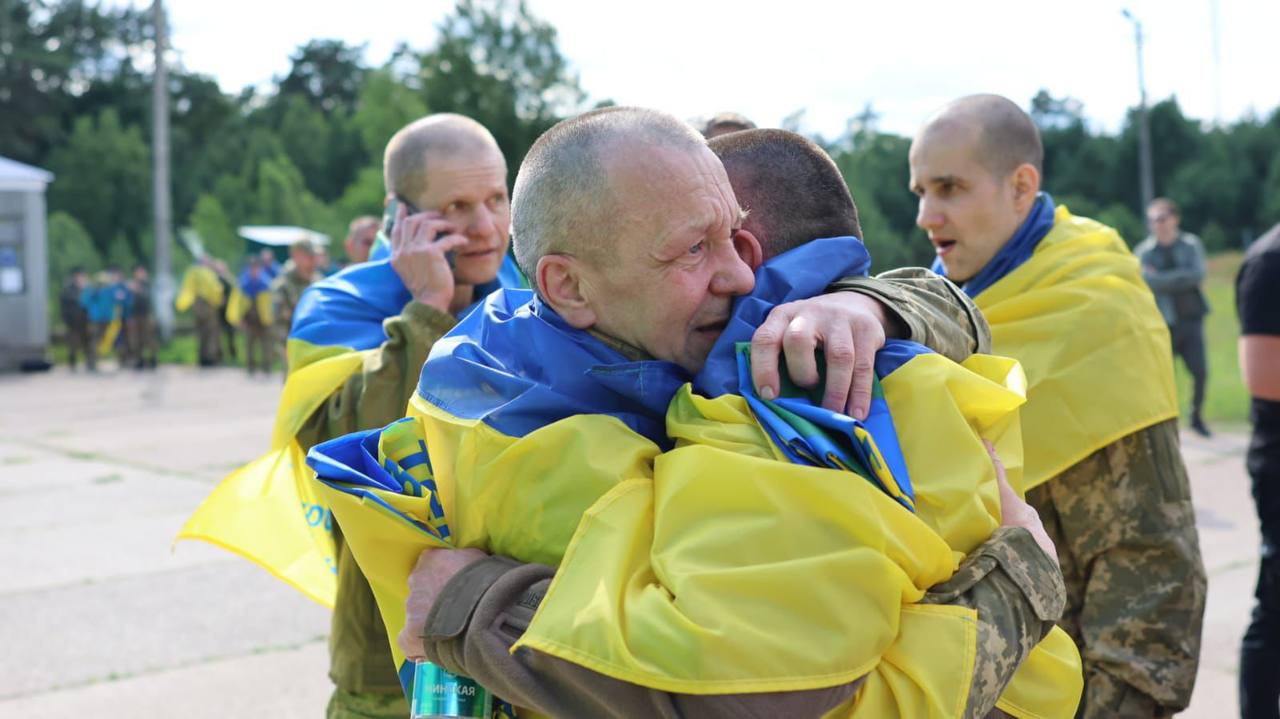
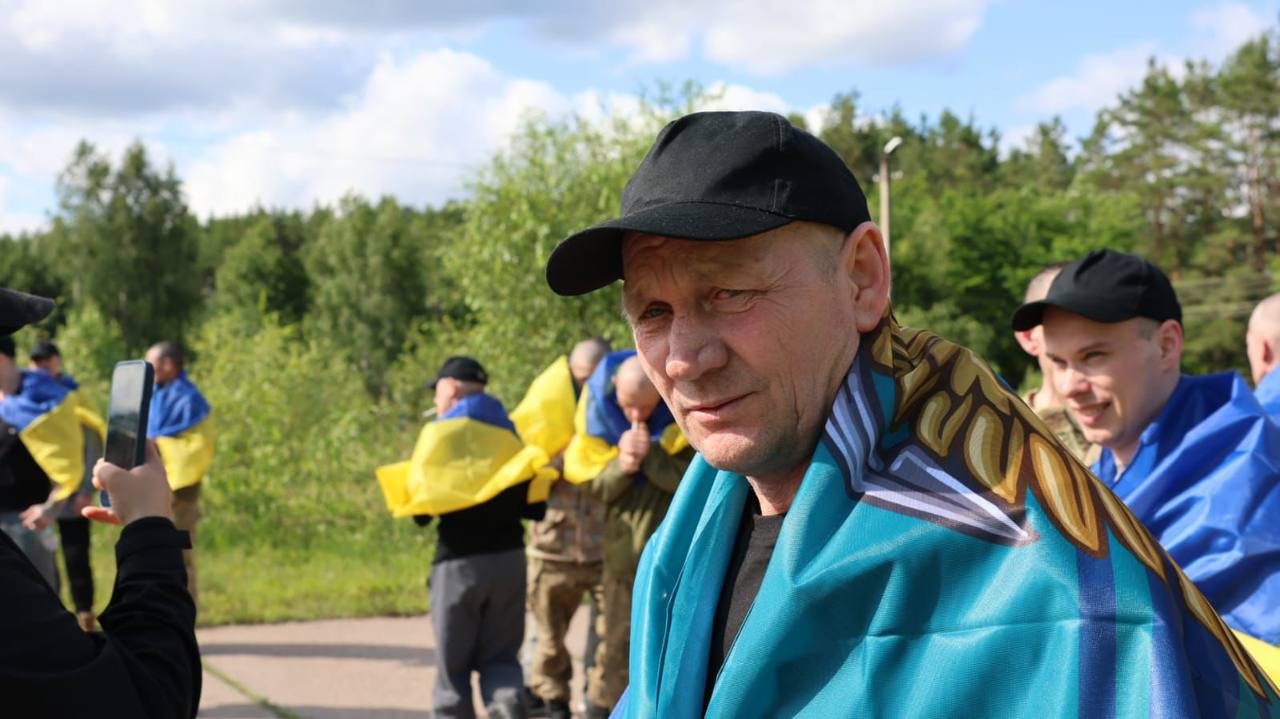
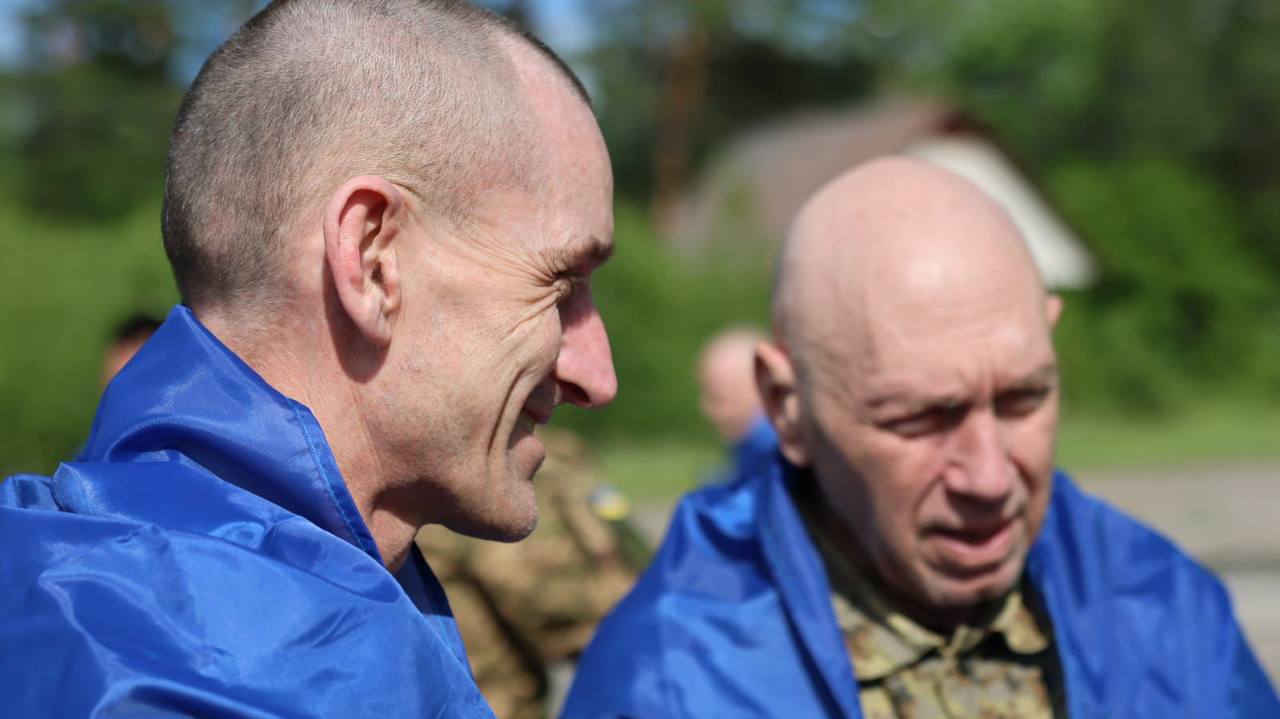
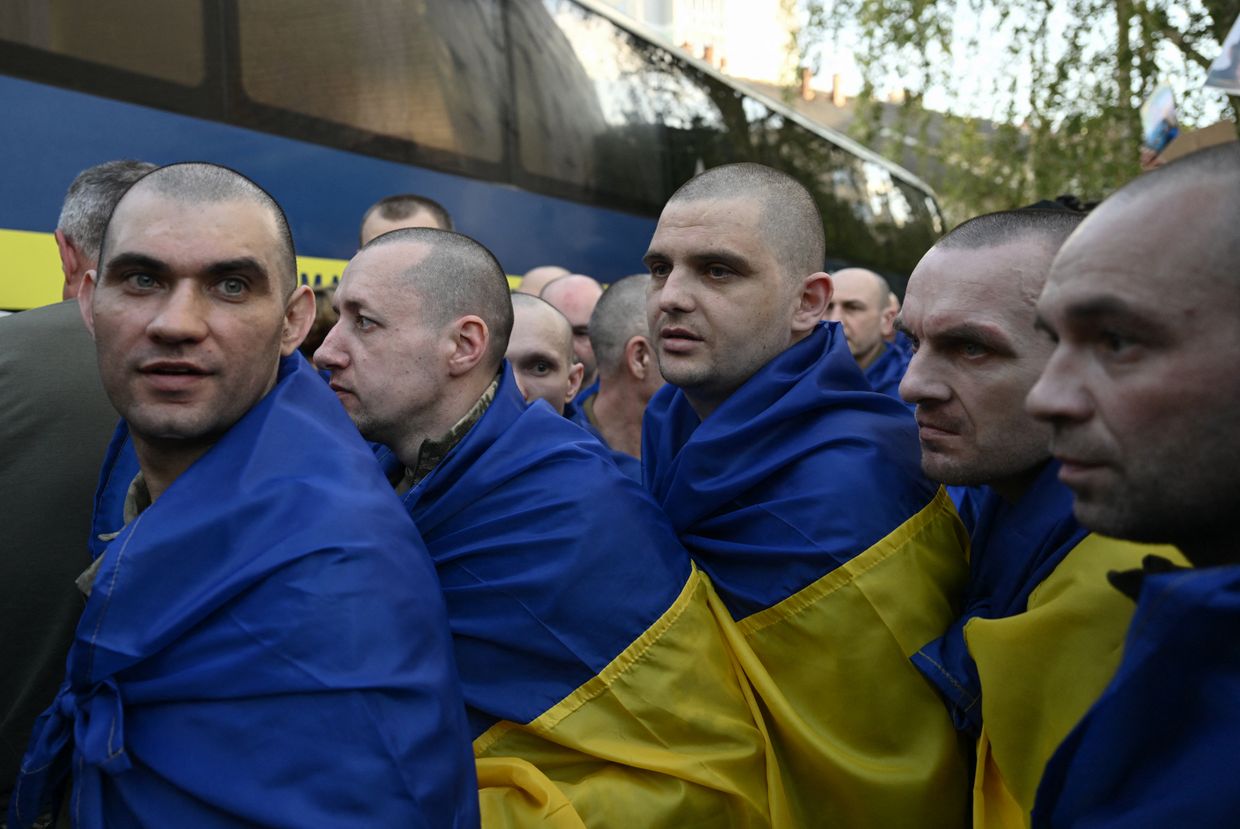
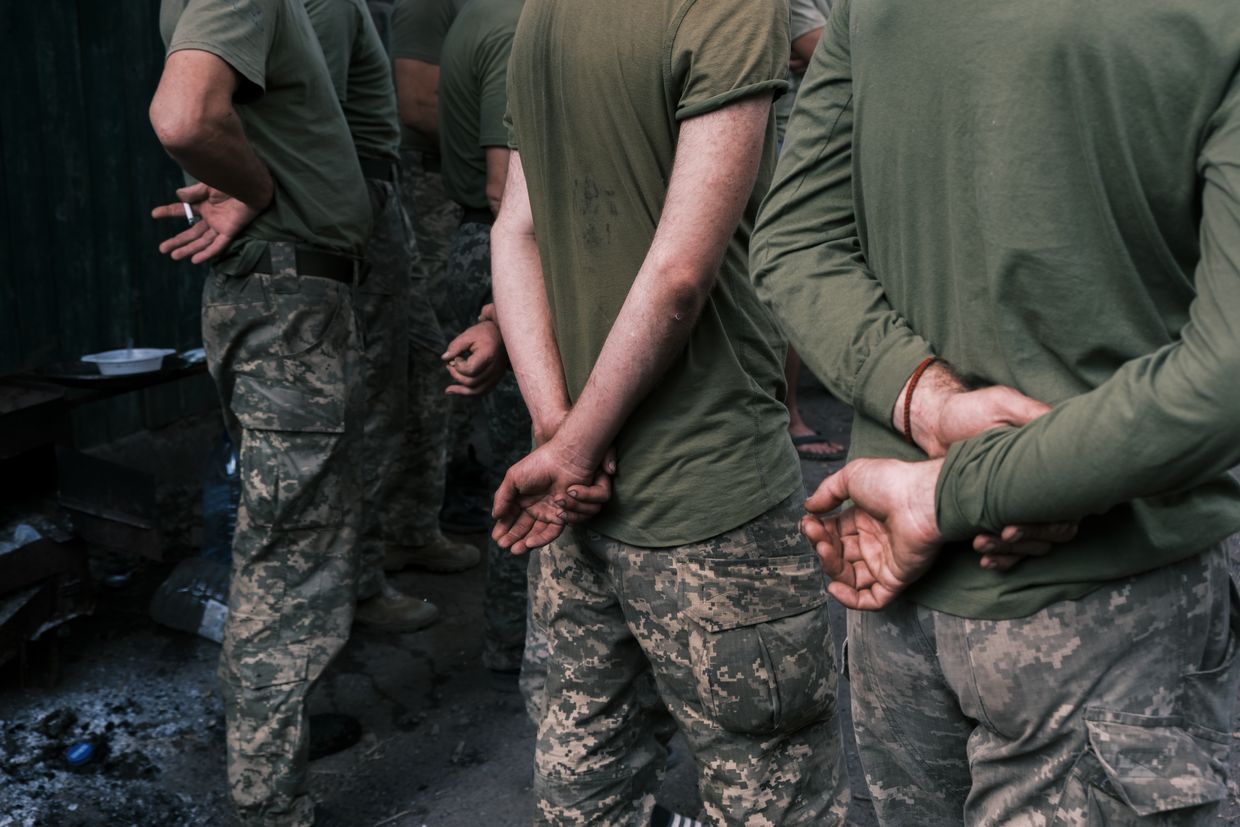
Ukraine has brought home a group of soldiers released from Russian captivity, President Volodymyr Zelensky said on June 26, marking yet another in a recent series of exchanges with Moscow.
"Today, soldiers of the Armed Forces, the National Guard, and the State Border Guard Service are returning home," Zelensky said without revealing their numbers.
The exchange follows six similar swaps carried out in recent weeks in accordance with agreements reached between Kyiv and Moscow at the second round of peace talks in Istanbul on June 2.
As in the other recent swaps, the latest one focused on severely ill and wounded POWs and also included a group of young soldiers under the age of 25, the Coordination Headquarters for the Treatment of Prisoners of War (POWs) said.
A Ukrainian soldier pictured after being released from Russian captivity on June 26, 2025. (President Volodymyr Zelensky/Telegram)
Ukrainian soldiers pictured after being released from Russian captivity on June 26, 2025. (President Volodymyr Zelensky/Telegram)
A Ukrainian soldier pictured after being released from Russian captivity on June 26, 2025. (President Volodymyr Zelensky/Telegram)
Most of those released had been in Russian captivity since 2022, with the youngest being a 24-year-old soldier taken prisoner during the battle for Mariupol. The oldest of the freed captives was 62.
The released soldiers fought elsewhere in Donetsk, Luhansk, Kherson, Kharkiv, Sumy, and Kyiv oblasts. Among those freed are several officers, according to the headquarters.
"We are doing everything possible to find each person and verify information about every name," Zelensky said. "We must bring all our people home."
Russia's Defense Ministry also announced a prisoner exchange with the Ukrainian side, without specifying the number of soldiers involved.
While no political breakthrough was achieved, both sides agreed to a phased exchange ofprisoners and the repatriation of fallen soldiers' bodies. As part of that agreement, Russia pledged to return the bodies of up to 6,000 Ukrainian service members and citizens.
Moscow has handed over 6,057 bodies to Ukraine in several stages over the past few days. President Volodymyr Zelensky later said Ukrainian authorities have confirmed that at least 20 of the bodies Russia returned as Ukrainian were actually Russian soldiers.
According to Zelensky, Moscow is using this tactic as a tool for manipulation to obscure the scale of its military losses from the public.
The June 2 agreements came after the largest-ever POW swap in late May, when 1,000 prisoners were exchanged on each side.
Ukraine repeatedly called for a prisoner exchange in an all-for-all format, but Russia continues to reject the offer.
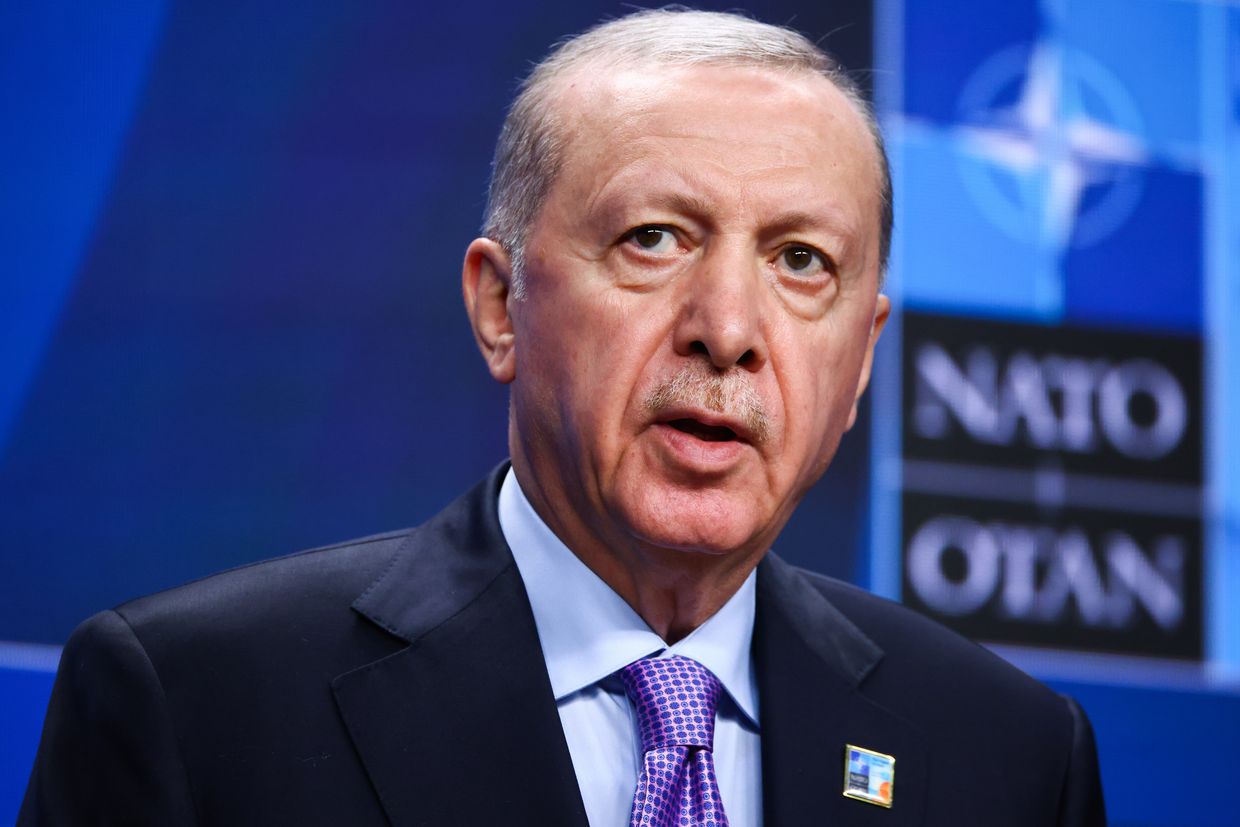
Turkish President Recep Tayyip Erdogan said Ankara is working to organize a meeting between President Volodymyr Zelensky and Russian President Vladimir Putin, with U.S. President Donald Trump potentially joining the talks, Reuters reported.
Speaking after his meeting with Trump, Erdogan said on June 26 that the U.S. president expressed interest in participating if the meeting were to take place in Turkey.
"He said,'If Russian President Vladimir Putin comes to Istanbul or Ankara for a solution, then I will also come,'" Erdogan told reporters. "We will hold the necessary contacts and, God willing, realize this meeting as soon as possible."
Zelensky and Trump met during the NATO summit on June 25, where the two leaders discussed battlefield developments, Kyiv's need for additionalair defense systems, and the potential for co-production of drones.
Zelensky has previously voiced openness to a trilateral meeting. On May 27, he told public broadcaster Suspilne that he was ready to sit down with both Trump and Putin.
Putin has claimed he is also willing to meet, but did not attend previous talks proposed in Istanbul, opting instead to send lower-level delegates to peace discussions held on May 16.
The Kremlin has long sought to portray Zelensky as "illegitimate", with spokesperson Dmitry Peskov in February claiming that any talks must consider "legal aspects" of his mandate.
Turkey previously hosted direct peace talks in March 2022 and has remained one of the few countries with open lines to both Kyiv and Moscow. The latest round of direct talks on June 2 was held in Istanbul.
North Korea is likely to send more troops to Russia as early as July or August to bolster Moscow's war effort against Ukraine, South Korea's National Intelligence Service (NIS) said during a closed-door briefing, Yonhap reported on June 26.
According to lawmakers briefed by the NIS, Pyongyang has already begun recruiting soldiers for deployment to Russia. The latest intelligence adds to growing concerns about the expanding scope of North Korea's involvement in Russia's war.
The additional troop deployment would come on top of what Seoul estimates is already substantial support from North Korea, including the transfer of over 10 million artillery shells, and ballistic missiles in exchange for economic and technical assistance.
Yonhap's reporting follows recent findings that Pyongyang may send up to 25,000 laborers to Russia to support drone production, specifically Shahed-type loitering munitions, at the Alabuga Special Economic Zone in Tatarstan, according to Japan's NHK broadcaster.
In return, Pyongyang reportedly seeks training in drone operations, signaling an effort to integrate advanced unmanned aerial capabilities into its own military arsenal.
The developments come amid intensifying diplomatic exchanges between the two authoritarian regimes. Russian Security Council Secretary Sergei Shoigu traveled to North Korea on June 17 under a special directive from President Vladimir Putin.
After meeting North Korean leader Kim Jong Un, Shoigu announced that Pyongyang had agreed to dispatch 1,000 sappers and 5,000 military engineers to Russia's Kursk Oblast.
North Korean combat units have already participated in front-line operations. Thousands of troops helped Russia repel a Ukrainian cross-border offensive into Kursk Oblast that began in August 2024.
Ukraine briefly held 1,300 square kilometers in the region before losing most of the territory during Russia's March 2025 counteroffensive, which was supported by Pyongyang. The U.K. defense intelligence estimates place North Korean casualties at over 6,000.
Kyrylo Budanov, Ukraine's military intelligence chief, said on June 9 that Russia and North Korea had agreed to begin domestic production of Shahed-136 drones on North Korean territory, further solidifying their military partnership.
During Russia's May 9 Victory Day Parade in Moscow, President Putin personally greeted North Korean troops in Red Square, underscoring the alliance's symbolic and operational depth.
Kim did not attend but remains one of the Kremlin's staunchest foreign backers.
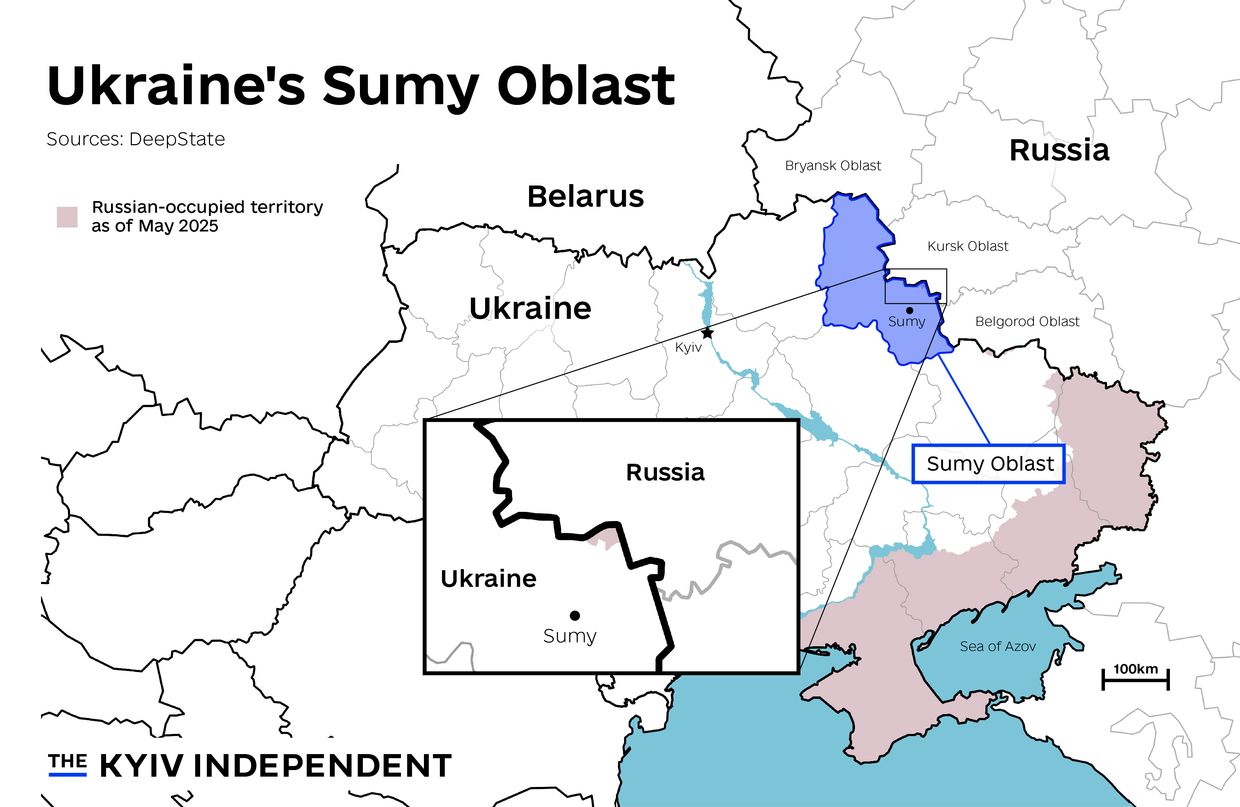
Ukraine has halted Russia's advance in Sumy Oblast, stabilizing the front line and blunting the momentum of Moscow's summer offensive, Commander-in-Chief Oleksandr Syrskyi said on June 26.
"Based on the results of May and June, we can say that this year's wave of the enemy's summer offensive from Russian territory is faltering," Syrskyi said, reporting that Russian troops in the northeastern border region had been stopped.
Moscow launched its new summer campaign in May, aiming to push deeper into Ukraine's northeast and eastern regions, disregarding Kyiv's calls for an unconditional ceasefire.
Russian forces had made modest gains, occupying around 449 square kilometers (173 square miles) in May, the highest monthly total in 2025, according to the open-source intelligence group DeepState.
In Sumy Oblast, however, the line of contact has stabilized. Syrskyi said Ukrainian troops are not only defending but also reclaiming ground using active defense tactics.
"In certain areas, our units are liberating Ukrainian territory," he said.
A map of Ukraine's Sumy Oblast (Nizar al-Rifal/The Kyiv Independent)
Syrskyi said Ukrainian operations in Russia's Glushkovsky district had forced Moscow to shift elite units, including Airborne Forces and Marine Corps brigades, into defensive positions, undermining their offensive capabilities in Sumy.
"In the North Slobozhansky and Kursk directions, we have once again pinned down about 50,000 Russian Armed Forces personnel," Syrskyi said. He provided no further details about how Ukraine had achieved this.
Ukraine launched a cross-border offensive into Russia's Kursk Oblast in August 2024, initially capturing 1,300 square kilometers before losing most of that territory in a Russian counterattack earlier this year.
Russian officials declared complete control over the region on April 26, though the claim was later disputed by Kyiv and contradicted by Russia's own local authorities.
Russia's broader offensive aims to seize the remaining administrative borders of Donetsk and Luhansk oblasts and carve out a buffer zone along the Sumy and Kharkiv frontiers.
Sumy Oblast, which borders Russia to the east, remains a strategic region. Since the beginning of the full-scale invasion, it has faced near-daily attacks.
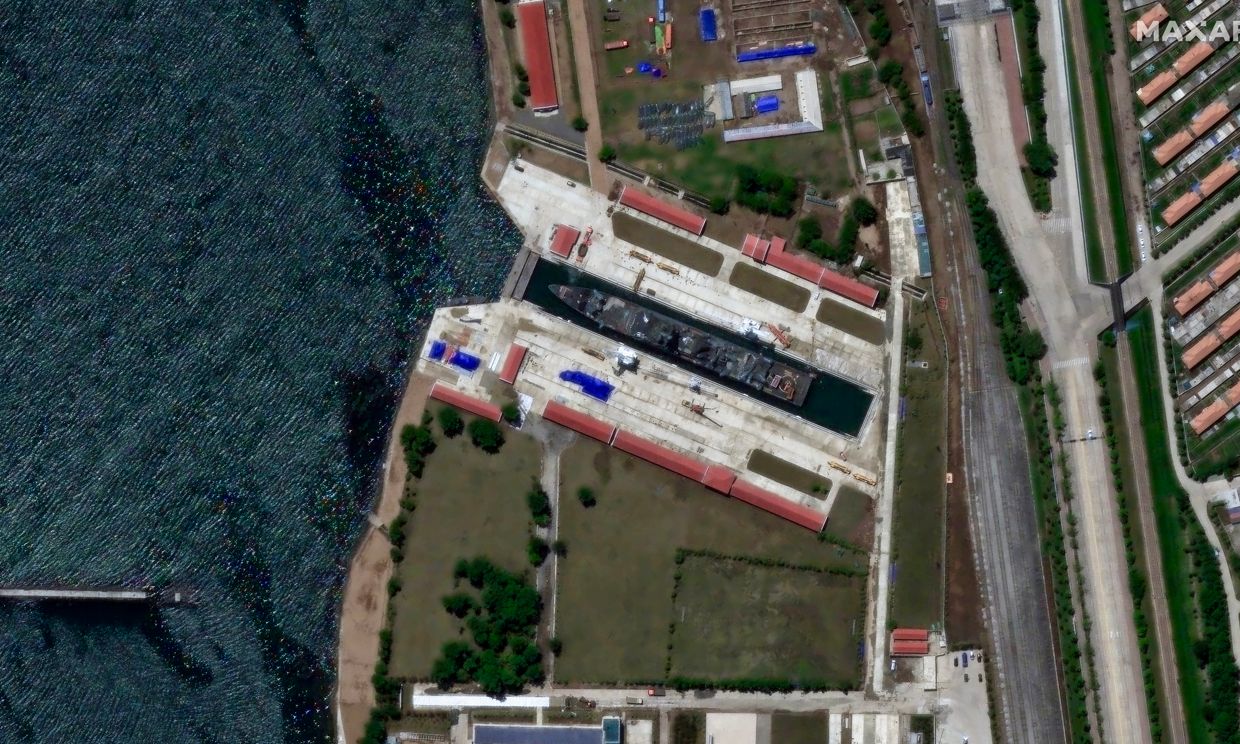
Russia appears to have provided North Korea with extensive assistance in designing and rapidly constructing two advanced destroyers, the most modern in Pyongyang's fleet, the Wall Street Journal (WSJ) reported on June 25.
The destroyers, part of the new Choe Hyon class, were built in just over a year — an unusually fast timeline that analysts say would have been impossible without foreign support.
Satellite imagery and launch footage suggest a clear Russian design influence, including the distinctive bow and stern structure found on Russia's Admiral Grigorovich-class frigates.
One of the destroyers, launched in April, was followed in May by a failed launch during which the second vessel capsized in front of North Korean leader Kim Jong Un.
The incident prompted outrage from Kim, who condemned the failed launch as a "criminal act" and placed blame on several state institutions, accusing relevant officials of "irresponsibility" which "could not be tolerated,"North Korean state-run Korean Central News Agency (KCNA) reported.
According to the agency, a malfunction in the launch mechanism caused the stern of the 5,000-ton destroyer to slide into the water too early, while the rest of the ship remained stuck.
Damage to the bottom of the ship threw it off balance, and the bow failed to move, resulting in "a serious accident."
The wreck was recovered in early June.
Mike Plunkett, a senior naval analyst at Janes, an open-source intelligence company, told the WSJ that the ships appeared to have signs of Russian involvement. He pointed to identical hull lines and profiles where the hull connects to the side, between the Korean and Russian vessels.
One of the destroyers appears to be equipped with the Russian Pantsir-M system, marking the first time this advanced air-defense system has been seen on a non-Russian warship.
Plunkett noted that the ventilation grilles for the engine room were sealed with metal plates, indicating the ships might not yet have engines.
The news comes amid deepening military ties between Russia and North Korea. According to a May 29 report by the Multilateral Sanctions Monitoring Team (MSMT), Pyongyang shipped up to 9 million artillery shells and at least 100 ballistic missiles to Russia in 2024 alone.
In fall 2024, North Korea's role in Russia's war grew as it sent thousands of troops to Russia's western border to assist in repelling a Ukrainian incursion.
The partnership has also expanded into drone cooperation. On June 9, Ukraine's military intelligence chief, Kyrylo Budanov, said the two nations had agreed to begin production of Iranian-designed Shahed-136 drones on North Korean territory.
U.S. President Donald Trump's proposed defense budget for fiscal year 2026 prioritizes drones and long-range missile systems over traditional air and naval platforms, Reuters reported on June 26.
The $892.6 billion request maintains the overall funding level from 2025 but shifts spending toward innovation and high-tech systems. The budget includes increased investment in small drones, a response to their proven battlefield value in Ukraine.
The proposal slashes procurement of key legacy systems. Trump's plan includes just 47 F-35 fighter jets, down from the 68 planned by the Biden administration, and only three warships.
The Pentagon will continue to purchase Joint Air to Surface Standoff Missile – Extended Range and Long Range Anti-Ship missiles for the U.S. Air Force. Fewer Precision Strike Missiles, meant to replace the ATACMS, are included in the main request.
The proposal also includes a 3.8% increase in military salaries, while decommissioning aging and costly aircraft and ships. The Navy's civilian workforce will be reduced by more than 7,000 employees to free up resources for technology and modernization.
The shift from traditional fleet expansion indicates a move towards asymmetric, precise warfare with drones playing a crucial battlefield role.
Ukraine's experience has informed several elements of the request. Since Russia's full-scale invasion in 2022, Kyiv has expanded drone production across all domains — air, land, and sea — with plans to manufacture 30,000 long-range drones in 2025.
Ukraine's hybrid strike platforms, such as the Palianytsia and Peklo missile-drones, have drawn international attention for their range and versatility.
The Dutch Defense Ministry will finance the production of 20 Ermine ground vehicles for Ukraine, German defense manufacturer Rheinmetall announced on June 25.
The contract, signed during the NATO summit in The Hague, marks the first order for the new-generation tactical platform. Ukraine will become the first country in the world to receive the Ermine.
The Ermine, developed by Rheinmetall Defence Nederland, is designed primarily for front-line evacuation missions.
The light buggies provide fast, maneuverable transport for wounded personnel in combat zones. Rheinmetall said the deliveries are expected to begin in 2026.
According to Rheinmetall, the Ermine is a "lightweight tactical system that combines the robustness of a diesel unit with many advantages of an electric drive."
It's a modular system that comes in four configurations — 4x4 quad, 4x4/6x6 buggy, or Unmanned Ground Vehicle (UGV).
The Ermine combines a diesel engine with an electric motor that allows for what Rheinmetall describes as "Silent Move & Silent Watch," and has a range of up 1,200 kilometers, and can carry up to a tonne.
"The electrical powertrain makes the Ermine almost silent. It is capable of driving up to 50 km silently through heavy terrain and up to 100 km on the road," the company said.
"The system offers its users significant tactical advantages in avoiding enemy reconnaissance."
The electrical engine can even provide charging points for soldiers out in the field.
An Ermine ground vehicle developed by Rheinmetall Defence Nederland mainly for front-line evacuation missions (Rheinmetall)
On June 24, Dutch Prime Minister Dick Schoof presented a new military aid package for Ukraine, including 100 drone radar systems, front-line vehicles, and 80 million euros (over $90 million) for the drone initiative.
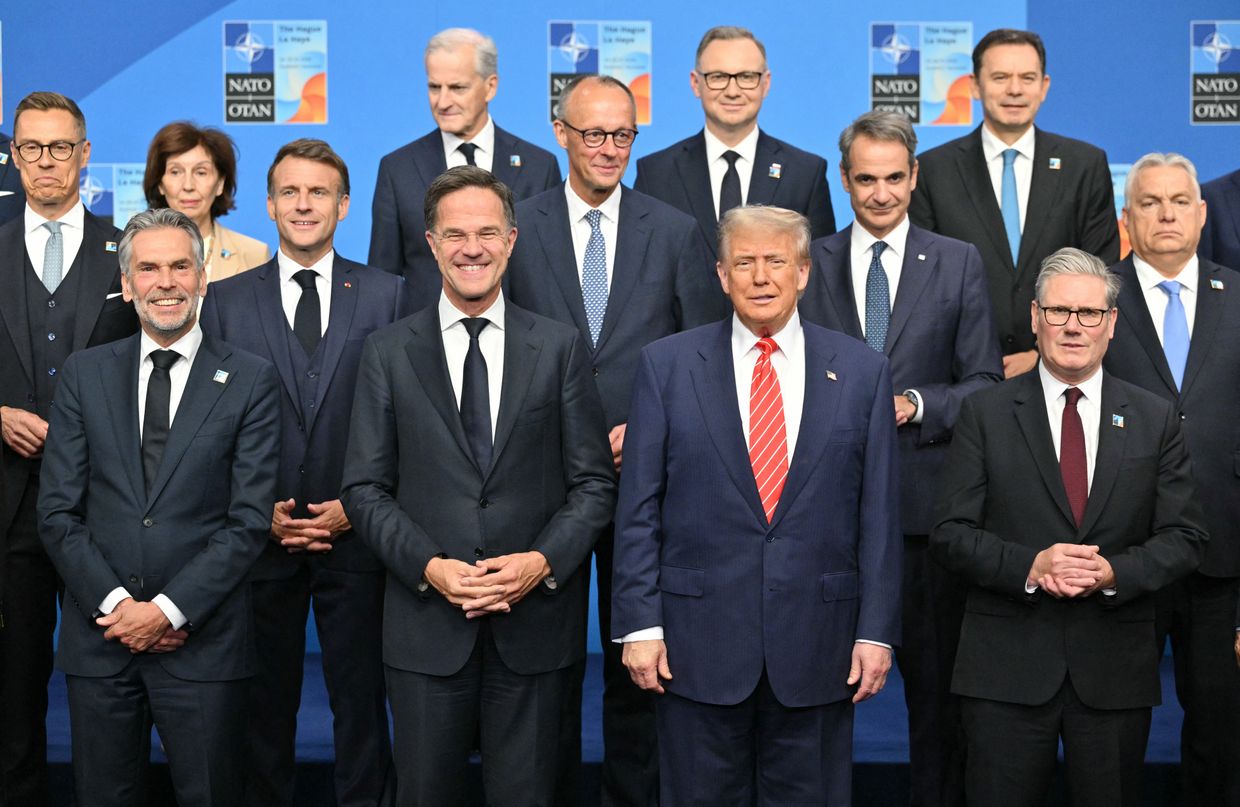
The NATO summit concluded on June 25 with a joint pledge by member states to raise defense spending to 5% of GDP by 2035. The updated target reflects shifting priorities within the Alliance as the war in Ukraine drags into its fourth year.
Unlike in previous years, the 2025 summit communique did not include an explicit condemnation of Russia's invasion. Still, the final statement reaffirmed support for Ukraine and said assistance to its defense industry will count toward the new spending benchmark.
President Volodymyr Zelensky met with U.S. President Donald Trump during the summit, where the two leaders discussed battlefield developments, Kyiv's need for additional air defense systems, and the potential for co-production of drones.
"They (Ukraine) do want to have the anti-missiles, as they call them, the Patriots, and we're going to see if we can make some available," Trump said. "They are very hard to get. We need them too. We are supplying them for Israel, and they are very effective."
Trump's remarks signal a potential boost to Ukraine's air defense capabilities, which have come under increasing strain amid intensifying Russian attacks.
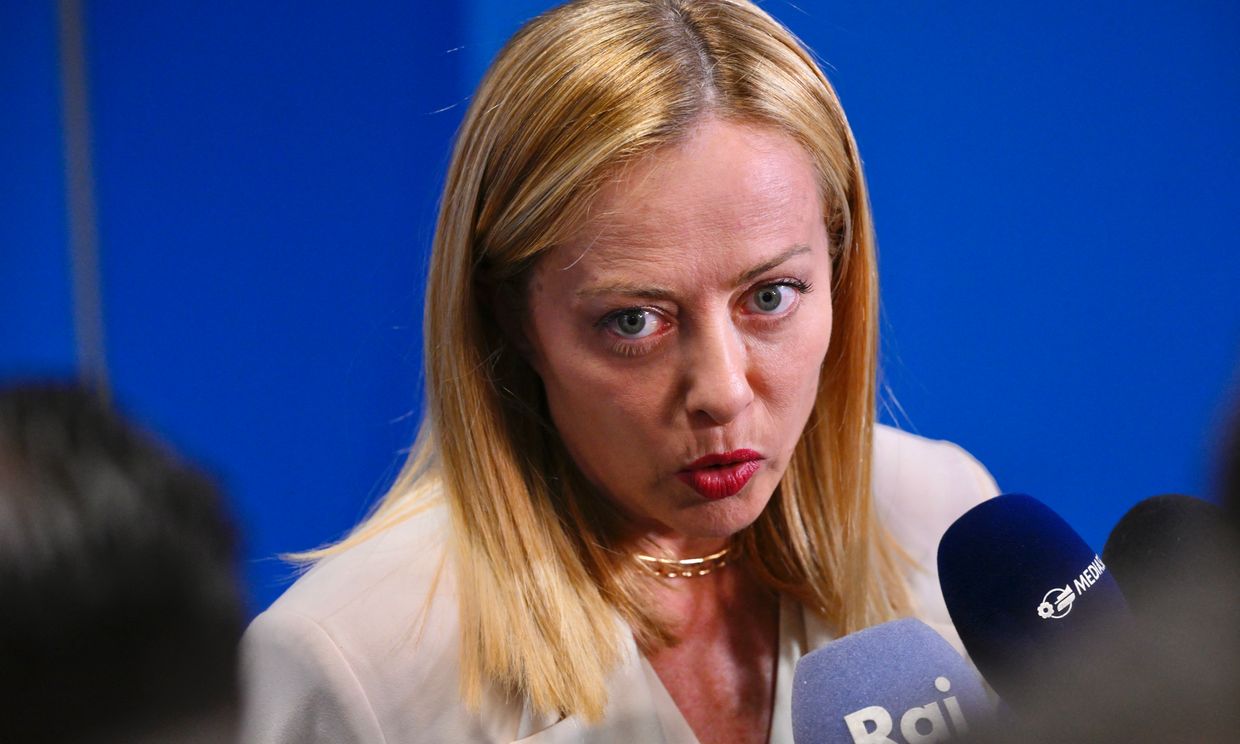
Italian Prime Minister Giorgia Meloni told U.S. President Donald Trump that the determination shown by the U.S. toward Iran should also be applied to ending Russia's war against Ukraine, she said on June 25 on the sidelines of the NATO summit in The Hague.
Meloni, a close Trump ally and the only European leader invited to his 2025 inauguration, welcomed the recently announced ceasefire between Israel and Iran.
She emphasized that sustained commitment is also needed in Ukraine, where Russian President Vladimir Putin last week declared "all of Ukraine is ours."
"I spoke about this with President of the United States Donald Trump, to whom I said the same determination is needed to achieve two other important ceasefires," Meloni said. "One in Ukraine, where Russia seems unwilling to take any steps forward, and one in Gaza."
On June 24, Trump announced that a ceasefire between Iran and Israel had taken effect following U.S. airstrikes on Iran's nuclear infrastructure.
The escalation followed Israel's June 13 attack that prompted Iran to retaliate with missile attacks on Tel Aviv and other cities, killing multiple civilians, including five Ukrainian citizens.
President Volodymyr Zelensky met with Trump during the summit, held amid concerns over waning U.S. support for Kyiv. Unlike in 2024, this year's communique did not directly condemn Russia's invasion, a shift that underscores changing political dynamics within the Alliance.
The leaders reaffirmed support for Ukraine's defense, saying national contributions toward Ukraine's military-industrial capacity will count toward NATO's new defense spending goal.
All 32 NATO member states agreed to a new benchmark, committing to raise defense spending to 5% of GDP by 2035. Meloni praised the decision as a sign of unity.
"I believe the unity of the alliance and its willingness to strengthen itself is more important, especially in the context we are in, and is clearly a very important element," she said.
The NATO summit comes just one week after Trump departed early from the G7 in Canada, delaying direct talks with Zelensky until June 25.
Russia has lost 1,015,750 troops in Ukraine since the beginning of its full-scale invasion on Feb. 24, 2022, the General Staff of Ukraine's Armed Forces reported on June 26.
The number includes 1,100 casualties that Russian forces suffered just over the past day.
According to the report, Russia has also lost 10,968 tanks, 22,892 armored fighting vehicles, 53,195 vehicles and fuel tanks, 29,617 artillery systems, 1,425 multiple launch rocket systems, 1,188 air defense systems, 416 airplanes, 337 helicopters, 42,153 drones, 3,388 cruise missiles, 28 ships and boats, and one submarine.
A Russian military court has convicted 184 Ukrainian prisoners of war (POWs) captured in Kursk Oblast of acts of terrorism, Mediazona reported on June 25.
Ukraine first launched a surprise offensive into Russia's Kursk Oblast in August 2024. Ukrainian officials have said the incursion forced Russia to move resources away from its offensives in Eastern Ukraine.
Russia's military prosecutors office convicts Ukrainian POWs captured in Kursk Oblast on a regular basis, independent Russian outlet Mediazona reported.
The POWs captured in Kursk were charged with carrying out a grave terrorist act by a group of individuals, as outlined by the Russian Criminal Code.
Junior Lieutenant Yevhen Hoch was convicted of allegedly carrying out an act of terrorism by taking part in Ukraine's Kursk Oblast incursion.
Russia has waged its war against Ukraine since 2014 and initiated a full-scale invasion in February 2022.
Russian authorities accused Hoch of interfering with civilian evacuations for three weeks amid Ukraine's Kursk offensive and for "intimidating them by openly carrying and using combat weapons."
Russia regularly convicts people of politically motivated charges in an effort to silence opposition to its war against Ukraine.
The Russian 2nd Western District Military Court has carried out the sentences against the 184 Ukrainian POWs since the beginning of the year.
Moscow has gone after journalists in Ukraine's Russian-occupied territories. Ukrainian Journalist Viktoriia Roshchyna disappeared in August 2023 and died after being tortured in Russian captivity. Roschyna's body was returned to Ukraine in February with missing organs.
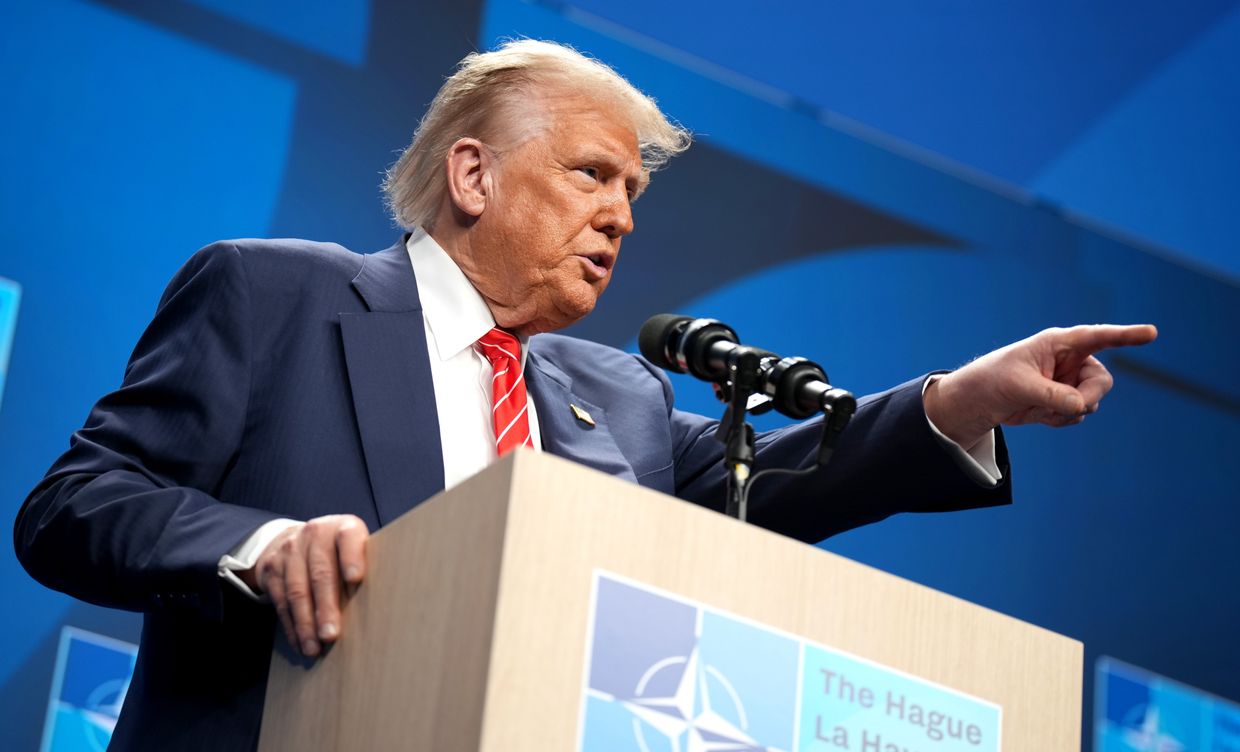
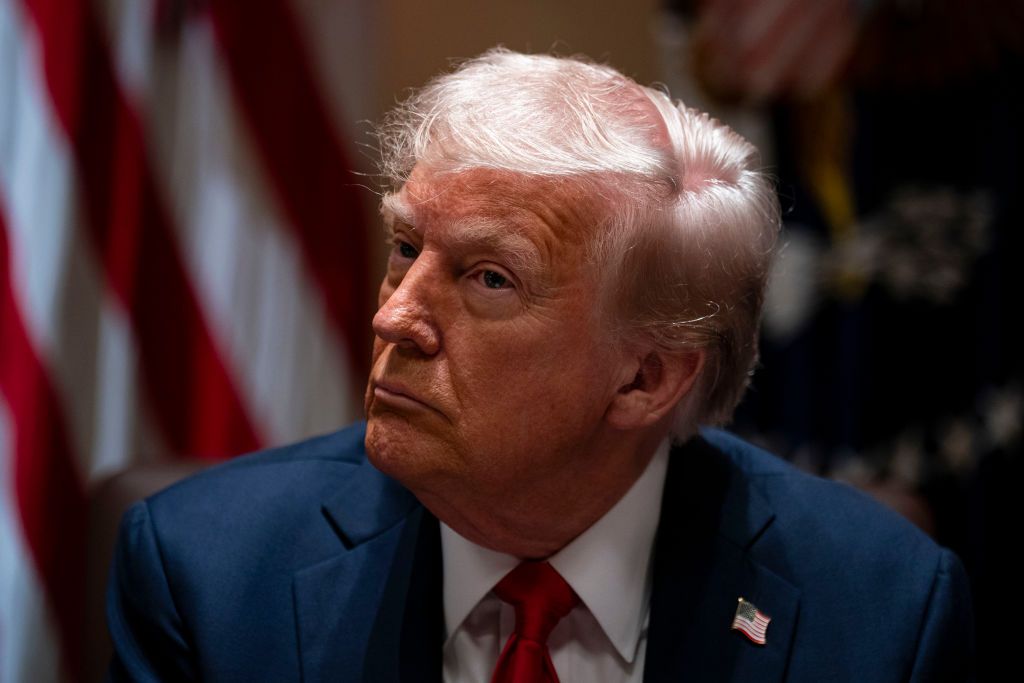
Speaking at a NATO press conference in The Hague on June 25, U.S. President Donald Trump said it was possible Russia could target other countries beside Ukraine.
When asked whether Russian President Vladimir Putin has territorial ambitions beyond Ukraine, Trump replied, "it's possible."
"I know one thing: He (Putin) would like to settle (the war). He'd like to get out of this thing. It's a mess for him," he added.
Trump's remarks came days after President Volodymyr Zelensky said that Ukraine's intelligence has proof that Russia is preparing new military operations in Europe and just a week after Putin declared "all of Ukraine is ours."
During The Hague summit, NATO Secretary General Mark Rutte called on alliance members to be realistic about the threats posed by Russia and China.
While Trump appeared to downplay concerns about Putin’s threat, he later said that the Russian leader "really has to end that war" against Ukraine. During his speech, he also referred to Russia’s all-out war as a "crisis," a term used by some Russian allies but criticized by Kyiv.
"I consider him (Putin) a person I think is misguided," Trump said.
The U.S. leader said his June 25 meeting with Zelensky, which preceded the briefing, "couldn’t have been nicer."
"I think it’s a great time to end it (war). I’m going to speak to Vladimir Putin, see if we can get it ended," Trump said. "He (Zelensky) is fighting a brave battle, it's a tough battle."
Separately, Trump acknowledged that Ukraine wants to receive Patriot missiles, saying that the U.S. is going to see "if we can make some available."
In recent weeks, Russia has intensified drone and missile attacks on Kyiv and other Ukrainian cities, killing and injuring hundreds of civilians.
Despite Kyiv's appeals, Trump has dismissed the request, accusing Zelensky of "always looking to purchase missiles" and falsely blaming Ukraine for provoking the war.
The front-line city of Kostiantynivka in Ukraine's Donetsk Oblast is facing a looming "humanitarian catastrophe" as ongoing Russian strikes destroy critical infrastructure and leave thousands without basic services, Governor Vadym Filashkin said on June 25.
Kostiantynivka, in eastern Donetsk Oblast, lies just 10 to 15 kilometers (6 to 9 miles) from several areas currently occupied by Russian forces, according to battlefield mapping site DeepState. The city has come under intensified attack in recent months as Moscow pushes westward beyond its gains around other nearby towns.
According to Filashkin, nearly half the city is without electricity due to shelling, and 1,900 households in the Santurynivka district have no access to gas, with restoration currently impossible. Water is supplied just once a day from 5 p.m. to 8 p.m., meeting only 20–25% of the city's needs.
Drone strikes have halted all city bus operations, while the suburban route to Druzhkivka, a nearby town, is operating on a limited basis, Filashkin said.
Yevhen Alkhimov, press officer of Ukraine's 28th Mechanized Brigade, which is fighting near Kostiantynivka, told the Kyiv Independent that "the greatest danger at the moment comes from first person view (FPV) drones, including fiber optic models."
"The enemy is trying to control all logistics and communication routes," he said, adding: "The Russians’ goal right now is not so much to destroy the city as it is to make it unsuitable for defense by controlling all the roads."
Alkhimov said Russian forces were deliberately targeting vehicles including civilian buses.
"They are trying to fully control all movement in the city using their drones," he said.
Ukraine's Donetsk Oblast (Nizar al-Rifai/The Kyiv Independent)
Authorities have installed seven large water tanks and 11 smaller containers throughout the city, in addition to 12 wells, six of which are equipped with filtration systems. Five "Points of Invincibility," Ukraine's emergency support hubs, are operational, with two more on standby.
Despite the risks, emergency crews, doctors, utility workers, and local officials continue to work in the city.
"Civilians still remain in the city, and life is becoming more and more difficult for them," Alkhimov said.
"There are fewer people left, the curfew is now longer, but nonetheless, people are still there, and it is truly very dangerous for them to stay in the city."
Filashkin urged those still in the city to evacuate.
Russia has intensified its offensive in eastern Ukraine while insisting that any peace negotiations must recognize its claimed annexation of four Ukrainian oblasts and Crimea. Russian forces do not fully control any of the four regions it seeks to claim.
Ukraine has ruled out ceding its territory as part of any peace agreement.
Editor's note: This story was updated with comments made by NATO Secretary General Mark Rutte.
NATO member states have agreed to a new defense spending benchmark, committing to allocate 5% of their gross domestic product annually to defense and security-related expenditures by 2035, according to a joint statement released on June 25 by alliance leaders meeting in the Netherlands.
The decision marks a significant increase from the current 2% guideline and reflects the alliance's response to the push from the U.S. and growing security threats, particularly the long-term challenge posed by Russia.
"We remain united and steadfast in our resolve to protect our one billion citizens," the statement reads. "Allies commit to invest 5% of GDP annually on core defense requirements as well as defense and security related spending."
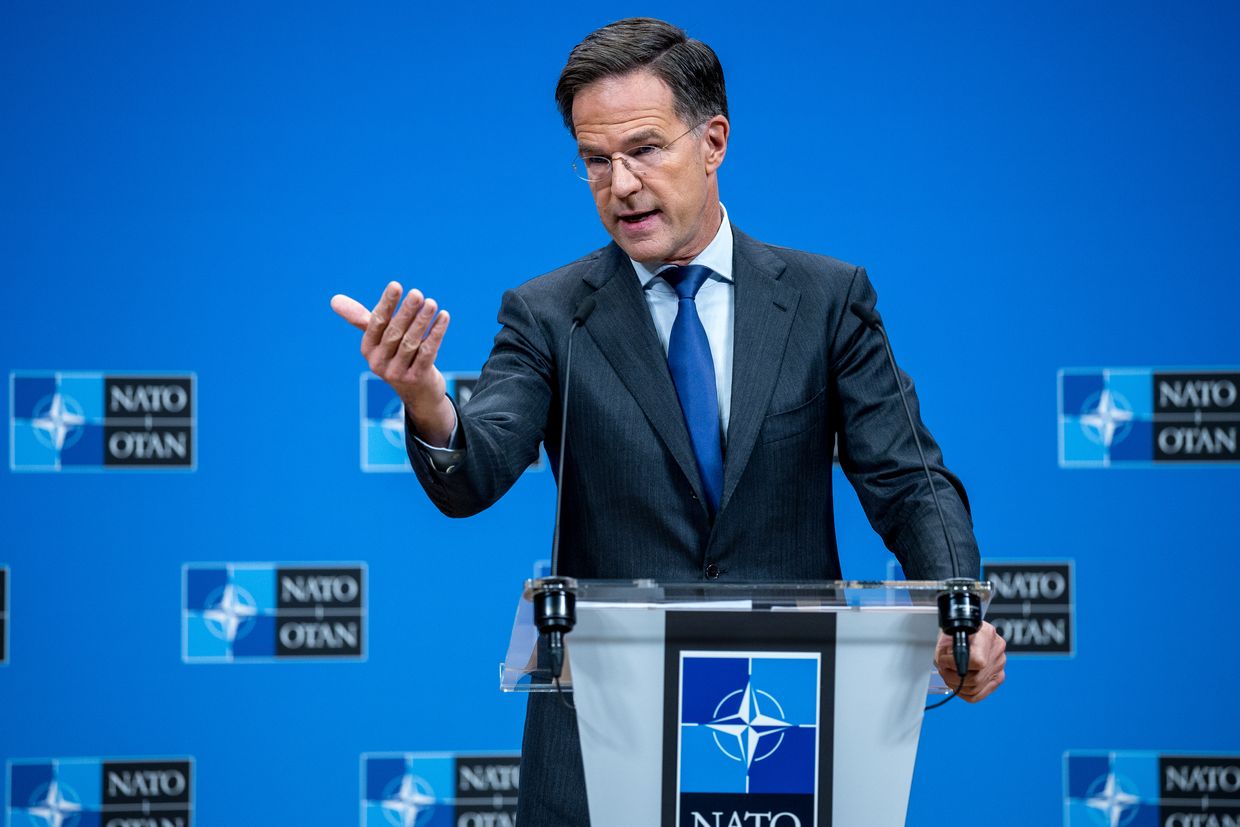
"The decision we make today makes NATO much stronger. It also makes NATO a much fairer alliance, with Europe and Canada stepping up," NATO Secretary General Mark Rutte said during a briefing on June 25.
Unlike in previous years, this year's NATO statement does not include a direct condemnation of Russia's actions, unlike the communique issued during the 2024 NATO summit in Washington, which explicitly condemned Russia's full-scale invasion of Ukraine.
But the leaders reaffirmed support for Ukraine, stating that direct contributions to Ukraine's defense and industrial capacity will be counted toward the 5% total.
When asked by a journalist whether the current trajectory of military aid from allies could help Ukraine "not only survive but win the war," Rutte said he is "optimistic."
"You can safely assume that the trajectory in the first almost six months now is really north of last year's," he said. "By the end of the year, it will end up north over $50 billion, which was pledged in 2024. I'm optimistic about that, but I won't make a concrete prediction."
He emphasized the importance of sustained and long-term support.
"We have to make sure Ukraine can stay in the fight, that it has what it needs... But we're also working to secure peace deal or a long-term ceasefire. And then we have to make sure that Ukraine has what it needs to prevent (Russian President) Vladimir Putin from effort ever trying this again in the future,” Rutte said.
Rutte added that part of the strategy includes supporting Ukraine's defense industrial base, which has an estimated $35 billion in spare capacity.
Rutte emphasized that NATO's immediate priority is to "keep (Ukraine) in the fight," noting that support includes "training, delivering military equipment, but also various streams of money going into Ukraine" to help it defend itself and lay the groundwork for a future peace deal or long-term ceasefire.
Politico earlier reported that the narrowed focus of the NATO summit in The Hague was designed to appease U.S. President Donald Trump.
"(Trump) has to get credit for the 5% — that's why we're having the summit," one unnamed European defense official told Politico.
Under the new framework, at least 3.5% of GDP will be directed toward core defense needs, including NATO capability targets, with the remaining 1.5% covering civil preparedness, infrastructure protection, innovation, and the defense industrial base.
Allies will submit annual plans outlining a credible path to reach the targets, with a mid-term review scheduled for 2029.
Trump has consistently accused NATO members of underfunding their militaries, pushing for raising defense spending target to 5% of GDP.
In 2024, only 23 alliance members met the 2% target, according to NATO estimates. Poland was ahead of all members with 4.12% of GDP allocated to defense, followed by Estonia (3.43%) and the U.S. (3.38%).
Rutte previously said on June 17 that all NATO countries are on track to meet the 2% threshold in 2025.
Ukraine's security service (SBU) has charged in absentia a former defense engineer with treason, accusing him of helping Russia target Ukrainian cities by developing navigation systems for cruise and ballistic missiles, the SBU said on June 25.
According to the agency, Oleh Borsuk, a 61-year-old Ukrainian national, fled to Russia in 2009 after resigning from a defense plant in Cherkasy Oblast. He later became deputy general director of Moscow-based design bureau "Navis," a major player in Russia's military-industrial complex.
Borsuk allegedly oversaw the development and modernization of satellite guidance systems (GPS/GLONASS) used in Russian missiles. In 2023 alone, under his leadership, nearly 3,200 satellite navigation units were produced, including those for Iskander tactical missile systems, the SBU said.
These systems are also used in missiles like the Kh-101, Kh-59, and Kalibr — weapons frequently deployed in Russian airstrikes against Ukrainian civilian infrastructure.
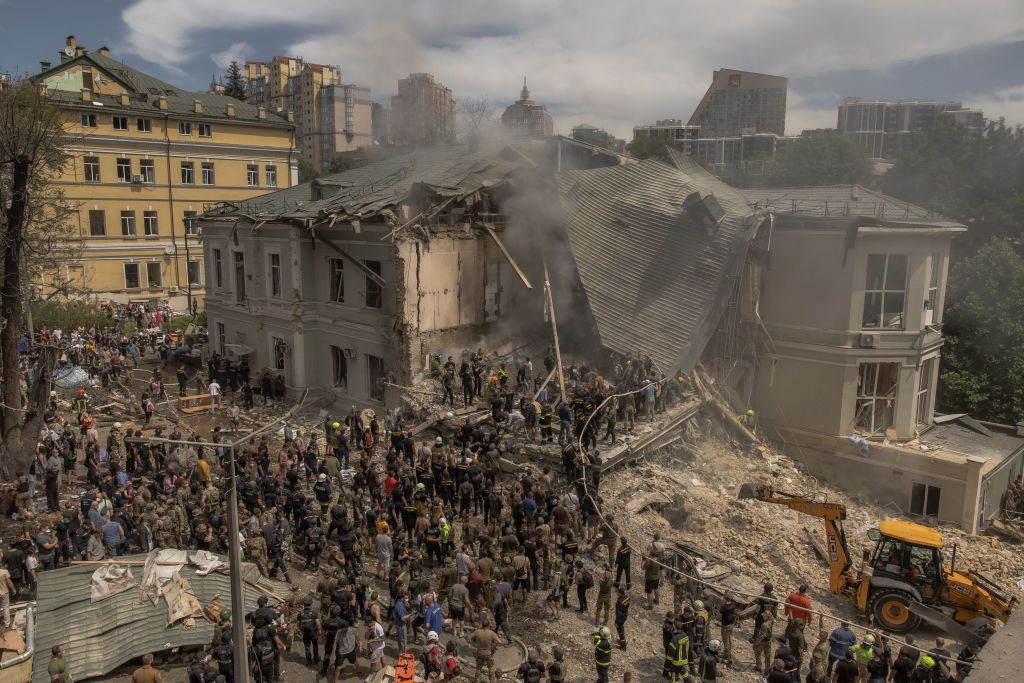
The deadliest attacks include the July 8, 2024, strike on the Okhmatdyt children hospital in Kyiv, which killed two adults, including a doctor, and injured more than 50 people, including children. The hospital was hit by a Kh-101 cruise missile in accordance with a programmed route.
Another devastating strike occurred on June 17, when a massive missile and drone assault on Kyiv killed 30 people and injured 172 others. One of the deadliest impacts was a direct hit on a residential building by a Russian Kh-101 cruise missile, which caused the complete collapse of an entire section of the nine-story residential building.
According to a spokesperson for Ukraine's Air Force Yurii Ihnat, the building was struck by a Kh-101 missile.
The SBU has charged Borsuk in absentia under Ukraine's Criminal Code for treason committed under martial law.
"Since the perpetrator is hiding in the territory of the Russian Federation, comprehensive measures are underway to bring him to justice for crimes against our state," the SBU said.
The U.K. has used interest generated from frozen Russian assets to purchase weapons for Ukraine, buying 350 air defense missiles worth £70 million ($87 million), The Guardian reported on June 25.
The move represents the U.K.'s first direct use of Russia-linked funds to buy weaponry for Kyiv.
The weapons purchase was funded through Britain's Extraordinary Revenue Acceleration (ERA) scheme, which captures interest from frozen Russian central bank assets.
According to The Guardian, the missiles, originally designed as air-to-air weapons, were converted by RAF engineers and MBDA UK in just three months to fire from ground-based systems.
Five additional Raven launcher systems will accompany the missiles to Ukraine, bringing the total to 13.
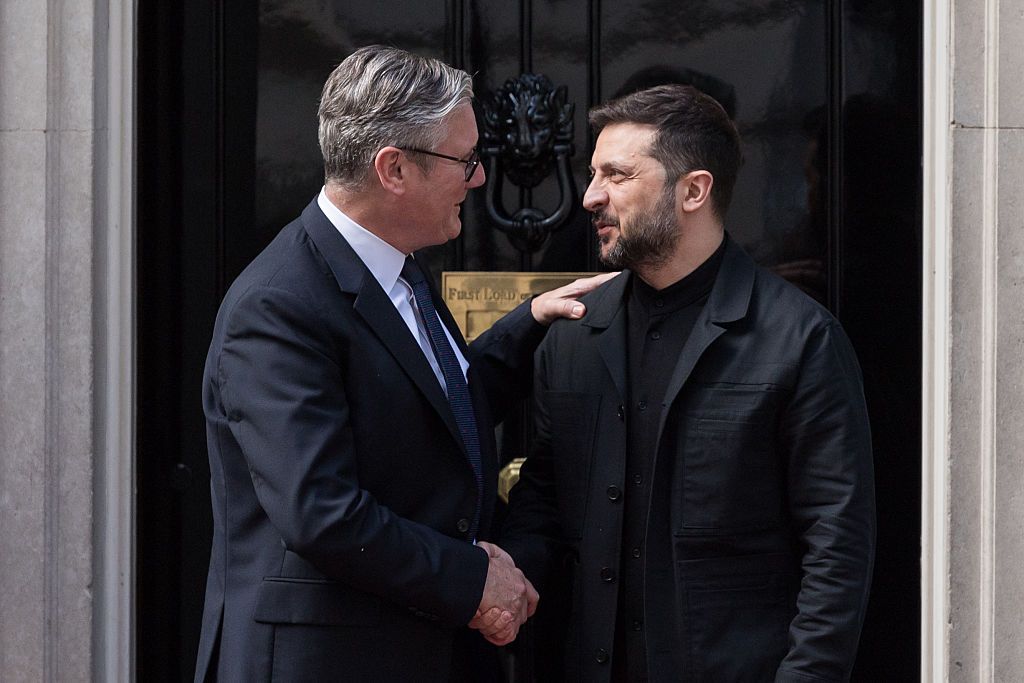
U.K. Prime Minister Keir Starmer announced the package ahead of NATO's annual summit.
"Russia, not Ukraine, should pay the price for Putin's barbaric and illegal war," he said.
The package is part of Britain's largest-ever annual military commitment to Ukraine of £4.5 billion ($5.6 billion), the Guardian reports.
It follows a £1.6 billion ($2.0 billion) deal in March for over 5,000 air defense missiles and a separate £350 million ($436 million) investment to increase drone deliveries tenfold.
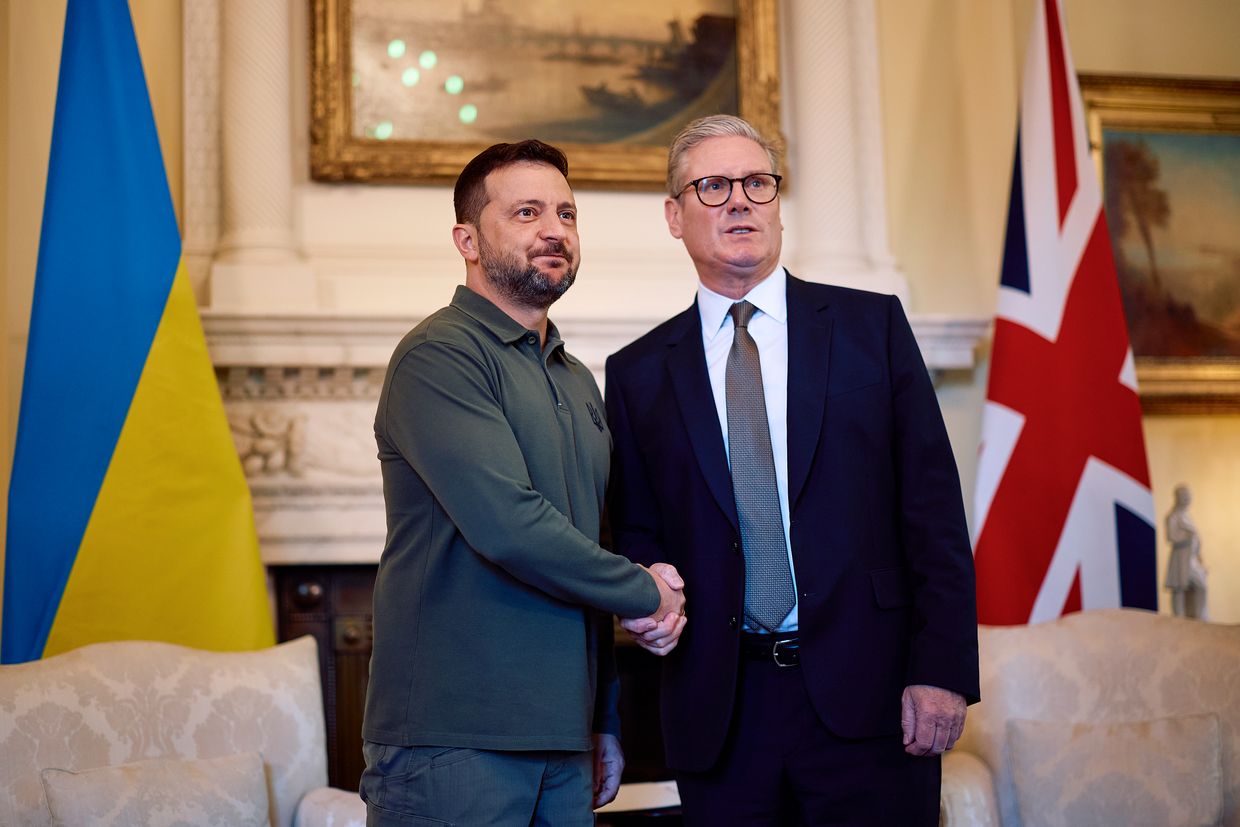
The announcement comes as Starmer and President Volodymyr Zelensky agreed to work closely on military production between the UK and Ukraine. On June 24, Ukraine's Defense Minister Rustem Umerov announced that Britain will finance Ukrainian-designed drones manufactured in the UK.
European countries cannot fully confiscate the frozen Russian assets due to concerns about international law and financial stability. The European Central Bank warned that such a move could undermine confidence in the euro as a reserve currency, since most of the assets are euro-denominated.
Instead, only the interest generated from these funds is currently being used to back a $50 billion loan package for Ukraine, while the principal amount of 300 billion euros ($348 billion) remains frozen but not seized.
In June, Ukraine received another 1 billion euros ($1.1 billion) from the EU as part of the G7 loan program backed by frozen Russian assets, Prime Minister Denys Shmyhal announced.
U.S. President Donald Trump has said President Volodymyr Zelensky is a "nice guy" ahead of a meeting at NATO summit in The Hague on June 25, saying they will be "discussing his difficulties."
The White House confirmed the meeting on June 24 but did not release further details. According to a diplomatic source cited by AFP, the talks between Zelensky and Trump were scheduled for early afternoon, with both sides finalizing the agenda.
The two leaders are expected to discuss Ukraine's planned purchase of a new defense package, including air defense systems, as well as additional sanctions on Russia and an international price cap on Russian oil.
Speaking at a press briefing at The Hague on June 25, Trump was asked by a reporter what he would be discussing during the meeting with Zelensky.
"Obviously we'll be discussing his difficulties, he's got a little difficulty," Trump replied.
"Zelensky is a nice guy, I'm going to meet him today. I don't know, I assume we're going to be discussing Ukraine. It seems the most likely," he added.
Trump did not elaborate on what he meant by "difficulties" but the NATO summit comes at a time when U.S. support for Kyiv is waning, and just a week after Russian President Vladimir Putin declared "all of Ukraine is ours."
This will be the first meeting between Zelensky and Trump since April, when they spoke briefly on the sidelines of Pope Francis' funeral in Rome.
A planned discussion at the G7 summit earlier this month fell through after both leaders left the event early, Trump due to escalating tensions in the Middle East, and Zelensky in response to drone and missile attack on Kyiv.
Upon arriving in The Hague on Monday, Andriy Yermak, head of the Ukrainian presidential office, said he held "substantive" talks with U.S. Secretary of State Marco Rubio to prepare for the Zelensky-Trump meeting, including its structure and key topics.
Zelensky is also scheduled to meet with NATO Secretary-General Mark Rutte and European Commission President Ursula von der Leyen during the summit.
In a recent interview with Sky News, Zelensky expressed uncertainty about Trump's ties to Putin but said he believes Trump understands that Ukraine is a U.S. ally and that "the real existential enemy of America is Russia."
U.S. Secretary of State Marco Rubio said in an interview with Politico on June 25 that U.S. President Donald Trump will resist European pressure to escalate sanctions on Russia, arguing that doing so could close the door to potential peace negotiations with Moscow.
Speaking with Politico on the sidelines of the NATO summit in The Hague, Rubio said Trump wants to keep open a diplomatic channel with Russian President Vladimir Putin, despite growing frustration from European leaders and President Volodymyr Zelensky over Russia's refusal to agree to a ceasefire.
"If we did what everybody here wants us to do, and that is come in and crush them with more sanctions, we probably lose our ability to talk to them about the ceasefire and then who's talking to them?" Rubio said.
Rubio acknowledged that Russia appears committed to pursuing its objectives by force.
"Our sense of it is that the Russians are going to try to achieve on the battlefield what they've demanded at the negotiating table, which is certain territories, administrative lines, and the like," he said. "We think it’s going to be a lot harder for them to achieve that than they think it's going to be."
Rubio added that Trump "will know the right time and place" for additional sanctions, but emphasized that imposing them too soon could signal that the U.S. has given up on a negotiated resolution.
Previously, Trump said he had refrained from imposing new sanctions on Russia because he believed a peace deal with Moscow might be within reach, warning he did not want to jeopardize negotiations by acting prematurely.
Speaking after two rounds of peace talks in Istanbul between Moscow and Kyiv that led to no ceasefire, Trump on June 5 declined to say when additional sanctions on Russia might be imposed, only noting there is a deadline "in (his) brain."
"If he (Trump) does it, you're almost admitting that this is not going to be negotiated anytime soon," he said. "We're going to continue to engage. In the sense that if there's an opportunity for us to make a difference and get them to the table, we're going to take it."
Zelensky and several European leaders are expected to ask Trump during meetings at the summit to increase economic pressure on Moscow.
Russian attacks across Ukraine killed at least 23 people and injured more than 300 others over the past 24 hours, local officials said on June 25.
According to the Ukrainian Air Force, Russian forces launched 71 Shahed-type attack drones and decoys from multiple directions, including Bryansk, Millerovo, Kursk, and occupied Crimea. Ukraine's air defenses destroyed 52 of them.
In Dnipropetrovsk Oblast, a ballistic missile attack killed at least 20 people, 18 in Dnipro and two in the Samarskyi district, in one of the deadliest single attacks in recent weeks, governor Serhii Lysak said.
Nearly 300 people were injured, and extensive damage was reported to high-rise buildings, houses, dormitories, cars, schools, hospitals, administrative offices, and a passenger train. Drone strikes overnight also hit Nikopol and caused a fire in Synelnykove district.
In Kharkiv Oblast, nine people were injured in strikes on Kharkiv city, Kupiansk, and surrounding villages, according to Governor Oleh Syniehubov. Russian forces used a mix of weaponry, including air-launched rockets, glide bombs, and various drones. Civilian infrastructure was damaged, including residential buildings, houses, and an industrial hangar.
In Zaporizhzhia Oblast, five peope were injured in attacks across the Zaporizhzhia, Vasylivka, and Polohy districts, Governor Ivan Fedorov reported. Russian forces conducted four missile strikes on Zaporizhzhia and eight airstrikes on several towns. Around 300 drones, and over 150 artillery strikes were recorded across 13 settlements.
In Donetsk Oblast, three civilians were killed in Pokrovsk, Zoloti Prudy, and Novoiavlenka, Governor Vadym Filashkin said. 11 more were wounded in the region over the past day.
A key military-industrial site in the Russian city of Taganrog linked to Moscow's production of combat drones and electronic warfare systems was damaged overnight, a Ukrainian official said on June 25, amid Russian reports of Ukrainian drones targeting the area.
"Something unknown flew into the Atlant-Aero plant in Taganrog," Andrii Kovalenko, head of the counter-disinformation center at Ukraine's National Security and Defense Council said.
"This is an important node in the Russian military-industrial complex, specializing in components for combat drones and control systems."
Kovalenko said the plant is involved in the production of "Orion" drones, electronic warfare complexes, and digital integration systems for strike FPV (first person view) drones and loitering munitions.
Russian authorities reported a wave of overnight Ukrainian drone attacks across multiple regions, including Rostov, which borders eastern Ukraine. Russia's Defense Ministry said its forces shot down 40 Ukrainian drones over several areas, including the Crimean Peninsula and seven over the Rostov region.
Rostov Governor Yuri Slyusar said on Telegram that while there were no casualties, the strikes allegedly caused a fire at a sports complex and damaged a high school and two residential buildings in Taganrog. In nearby Azov, a grain warehouse and industrial facility were hit, he added, without providing further detail.
The Kyiv Independent could not verify the claims.
Throughout Russia's full-scale invasion, Ukraine and Russia have extensively invested in dronetechnology, revolutionizing the way wars are fought.
Ukraine has ramped up its domestic drone production and long-range strike capabilities as it seeks to weaken Russian military infrastructure deep behind enemy lines. Earlier in June, Ukrainian drones targeted long-range Russian bombers in an operation dubbed "Spiderweb."
Russia has escalated its missile and drone attacks on Ukrainian cities, launching hundreds of drones during overnight assaults. Since February 2022, Moscow has launched 28,743 Shahed-type drones at Ukraine
Speaking at the NATO Defense Industry Forum in The Hague on June 24, President Volodymyr Zelensky said Ukraine can produce over 8 million drones of various types each year. He called for an increased investment from the allies to reach that potential.
Since the start of Russia’s full-scale invasion, Moscow has launched 28,743 Shahed-type drones at Ukraine — with 2,736, or roughly 9.5%, fired in June 2025 alone, President Volodymyr Zelensky said during a speech to the Dutch Parliament in The Hague.
Speaking on June 24, he stressed that Russia would never have been able to carry out such drone attacks without support from Iran, and Ukraine, in turn, could not have intercepted most of the drones without the help of its international partners.
Zelensky called for accountability and emphasized that rules must apply to all — including the Kremlin: "Putin pretends not to understand the rules that shape the modern world. And here, in The Hague, I want to say this very clearly to him: There is a rule — do not kill. There is a rule — do not treat people like beasts. There is a rule — do not destroy cities and villages. There is a rule — do not sponsor terror. There is a rule — do not steal children. And if you break these rules, you will be held accountable."
According to Zelensky, these principles — though difficult for Russia to grasp — form the foundation of international norms, from the UN Charter to Europe’s shared vision of life.
To achieve lasting peace, Zelensky outlined two key strategic priorities. First, he called for maximum isolation of Russia which includes full political isolation, comprehensive sanctions, and the termination of any cooperation that allows Russia to survive and continue waging war.
"Every loophole that allows them to keep going must be closed. We need a strong 18th EU sanctions package. We need tough, painful sanctions on Russian oil. Every reduction in Russia’s oil revenue helps bring peace closer," he said.
Zelensky argued that the most effective step would be imposing a $30-per-barrel price cap on Russian oil exports.
“The world must reach this threshold — not just to help stop Russia’s war against us, but to prevent any future military operations that Russia might launch against Europe and the Alliance,” he said. “Military plans must become prohibitively expensive for Russia. We must fully block their tanker fleet and cut them off from international banking. That’s what works.”
Second priority, according to Zelensky, is the need for stability in defense support. "Russia must see that Ukraine will not be left alone, and that Europe will not back down."
The Council of Europe and Ukraine will sign an agreement on June 25 to set up a special tribunal for the crime of Russian aggression, Yevheniya Kravchuk, a member of Ukraine's delegation to the Parliamentary Assembly of the Council of Europe (PACE), said on June 24.
The move marks a milestone in international efforts to hold President Vladimir Putin and other top Russian officials accountable for launching the full-scale war against Ukraine.
"What seemed like a dream of justice will soon become a reality. Ukraine, together with the Council of Europe, will sign an agreement that will bring Russia to justice," Kravchuk wrote on Facebook.
Ukrainian Deputy Prime Minister Olha Stefanishyna stressed that the special tribunal will have jurisdiction over the Russian president, prime minister, foreign minister, and other top officials.
"It is not a matter of debate anymore, only a matter of time. Some will get into the hands of justice sooner, some later, but they will all be held accountable. There are no exceptions," Stefanishyna told the Kyiv Independent. "It's critical to restore the international rule of law and prevent future acts of aggression."
The tribunal's jurisdiction covers all aspects of the crime of aggression, including the planning, preparation, initiation, or execution of acts of aggression, according to Stefanishyna.
"The tribunal's design makes it clear that the official status of the accused at the time of the crime does not exempt them from responsibility," she said. "Functional immunity does not apply here; high-ranking officials can be prosecuted even while holding office. The statute provides rules for conducting proceedings if the accused is absent."
The tribunal will be authorized to cooperate with the International Criminal Court (ICC) to ensure jurisdictional effectiveness and share information, Stefanishyna added.
President Volodymyr Zelensky has long advocated for the tribunal to ensure that Putin and other senior Russian officials face justice for launching the invasion three years ago.
Ukrainian prosecutors have documented thousands of war crimes committed by Russian forces, including attacks on civilians, cultural and medical sites, and acts of torture and deportation.
While war crimes, crimes against humanity, and genocide can be prosecuted against individuals at any level, the crime of aggression applies exclusively to state leaders responsible for planning and waging a war.
The ICC has already issued arrest warrants for Putin and Maria Lvova-Belova, the Russian official overseeing the forced deportation of Ukrainian children to Russia.
President Volodymyr Zelensky said during NATO summit on June 24 that Ukraine has the capacity to produce over 8 million drones of various types each year, but lacks the financial backing to reach that potential, a shortfall he said must be urgently addressed to defeat Russia's growing military network.
"Our defense production potential has surpassed $35 billion,” Zelensky said during a speech at the NATO Defense Industry Forum in The Hague. "This includes nearly 1,000 types of products... but around 40% of this potential lacks proper funding. For example, we can produce over 8 million drones of different types each year, but the financing allows for far fewer."
Zelensky urged allies to scale up investments in joint weapons production, including drone technologies, artillery, and interceptors. He argued that Ukraine's defense capabilities are not only key to defending its own territory, but essential to strengthening NATO's long-term security.
"We must lead in the drone race, both in strike drones and interceptors," he said. "Please increase your investments in Ukraine and joint weapons production. All the weapons we produce become part of a new, stronger European defense and security system."
The Ukrainian president emphasized that Russia is not acting alone, but as part of a broader network of state and non-state actors, including North Korea, Iran, and Chinese companies, which support its war effort against Ukraine and pose a long-term threat to Europe.
"The source of this war and the long-term threat to Europe is Russia," Zelensky said. "But in reality, we are not just facing Russia alone. We are facing a network of state and non-state actors."
Zelensky also called on NATO members to increase defense spending to 5% of GDP and to dedicate at least 0.25% of GDP to support Ukraine's military needs directly. He thanked countries such as Germany, Norway, Sweden, and the Netherlands for their elevated commitments, but urged others to follow suit.
Zelensky warned that Russia is planning "new military operations on NATO territory" and that the war in Ukraine must be stopped now to prevent broader European conflict.
"There are no signs that Putin wants to stop this war," Zelensky said. "So long as he kills, he lives. And our intelligence confirms this."
He also appealed for a crackdown on the supply chains that allow Russia to sustain its weapons manufacturing, referring to Western-origin components found in Russian missiles, drones, and armored vehicles.
"It's not just China, also Taiwan. Some of these parts come from European countries and from the United States," Zelensky said. "Every single tool delivered to Russia's defense sector helps prolong the war and is a crime against peace."
Zelensky's speech comes as NATO leaders gather in The Hague for a high-level summit on June 24-25. NATO leaders are expected to discuss raising the alliance's defensespending target to 5% of the GDP, a proposal the U.S. has championed but from which it considers itself exempt.
Editor's note: This is a developing story and is being updated.
Israel launched airstrikes on Iranian territory on June 24, defying U.S. President Donald Trump's call for calm just few hours after he announced a ceasefire between the two countries, according to the Times of Israel.
The attack comes less than an hour after Trump told reporters that "Israel needs to calm down" as he criticized both countries for undermining the ceasefire he says he brokered.
"We basically have two countries that have been fighting so long and so hard that they don't know what the f*ck they're doing," Trump said on June 24.
Hours after Trump said the ceasefire came into effect, Israel accused Tehran of launching missiles toward its territory — an allegation Iran denied.
Following Iran's alleged missile strike, Trump and Israeli Prime Minister Benjamin Netanyahu reportedly spoke on the phone and agreed that Israel would carry out a limited response. The air force strike targeted a single "symbolic" radar installation.
Ahead of Israel's strike, Trump wrote on Truth Social that all of the Israeli planes "turn around and head home, while doing a friendly 'Plane Wave" to Iran."
According to the Times of Israel, Israeli officials said Trump was still sending messages promising that Israel would not attack Iran "after he knew we would attack," a senior official told the Kan public broadcaster.
U.S. airstrikes on Iranian nuclear facilities demonstrated how precision military action can achieve rapid peace, U.S. Ambassador to NATO Matthew Whitaker said on June 24, speaking at the NATO Public Forum held alongside the alliance summit in The Hague.
"(The U.S. attack on Iran's nuclear facilities) shows how you get that peace through that strength, and that strength is amplified and enhanced by this alliance (NATO)," Whitaker said, referring to the June 21 American strikes on Iran's Fordow, Natanz and Esfahan nuclear sites, which U.S. President Donald Trump called a "spectacular success."
Whitaker emphasized that the U.S. remains a reliable ally and a cornerstone of NATO's deterrence. "The U.S. isn't going anywhere," he said. "The U.S. has certain capabilities that you want an alliance to have."
He added that recent U.S. military operations underscore the importance of defense investments by all member states. "If all of (NATO) countries elevate investments in their defense, I think we will have peace for generations,” Whitaker said.
The U.S. strikes on Iran came amid escalating tensions between Israel and Tehran. Trump said the strikes were intended to push Iran toward negotiations, warning that the alternative would be "tragedy for Iran far greater than we have witnessed."
Trump claimed that a ceasefire between Iran and Israel was achieved on June 24. Just hours later, Israel accused Tehran of launching missiles toward its territory — an allegation Iran denied.
Whitaker said the White House hopes the U.S. will also bring to an end Russia's war in Ukraine. He added that there is "no purely military solution" to the war in Ukraine.
Unlike past U.S. administrations, Trump has not introduced new sanctions against Russia despite increasing Russian missile and drone attacks on civilians.
On June 24, the first day of the NATO summit, Russia launched a ballistic missile strike on the Ukrainian city of Dnipro, killing at least three people and injuring more than 20, including two children, according to regional officials.
Editor's note: The story was updated after the White House confirmed the meeting between Ukraine's President Volodymyr Zelensky and his American counterpart Donald Trump.
U.S. President Donald Trump will meet his Ukrainian counterpart Volodymyr Zelensky during a NATO summit in The Hague, the White House confirmed on June 24.
The last time Zelensky and Trump met was in April on the sidelines of Pope Francis' funeral amid concerns that Washington would withdraw from mediating peace talks between Kyiv and Moscow.
The White House did not provide any further details about the meeting between the two leaders.
The talks between Zelensky and Trump were scheduled for the "early afternoon" on June 25, the source told AFP, adding that "the teams are finalizing the details" of the meeting.
Trump and Zelensky are expected to discuss Ukraine's "purchase of a defense package, a large part of which consists of air defense systems," according to the source.
The discussion will also focus on "sanctions against Russia, and a price cap on oil," the source added.
Earlier, Trump said that he "would probably meet" Zelensky in The Hague after the two presidents did not manage to talk during the G7 summit in Canada earlier in June, AFP reported on June 24.
When asked what he would say to Zelensky, Trump replied: "I'll say: 'How are you?' He's (Zelensky) in a tough spot, he shouldn't have been there at all".
Zelensky also said in an interview with Sky News that he planned to meet Trump in The Hague. Asked whether the meeting would be a formal discussion or an informal encounter, Zelensky said it was a matter of scheduling: "They are talking about timing. It's timing."
Zelensky's participation in the summit was confirmed by the European Council on June 20, following reports that he was reconsidering the visit due to uncertainties surrounding Trump's participation.
Upon arrival in The Hague on June 24, Andriy Yermak, head of Ukraine's presidential office, said he held a "substantive" discussion with U.S. Secretary of State Marco Rubio about the upcoming Zelensky-Trump meeting. Yermak said the two discussed the structure, agenda, and key topics for the meeting.
Zelensky is also scheduled to meet European Commission President Ursula von der Leyen and NATO Secretary-General Mark Rutte during the summit.
In the interview, Zelensky also addressed concerns about Trump's perceived closeness to Russian President Vladimir Putin.
"It is a complicated question because I truly do not know what relationship Trump has with Putin," Zelensky said. "I think what I know, you know, and the media knows. There are various signals about that."
He added that he believes Trump understands Ukraine is a U.S. ally and that "the real existential enemy of America is Russia."
"They will never be friends. They may be short-term partners, but they will never be friends," Zelensky said.
Zelensky expressed hope that Trump's approach to Russia is tactical, intended to pressure Putin into peace negotiations. "I would like this approach to be only a way to force Putin to the negotiating table and to end the war. And let us hope so," he said.
Zelensky was scheduled to meet Trump at the Group of Seven (G7) summit, held June 15-17. However, the U.S. president left the multilateral event early due to the renewed conflict between Israel and Iran.
Editor's note: This is a developing story and is being updated.
Russia launched a deadly missile attack on the Ukrainian city of Dnipro on June 24, striking civilian infrastructure and a passenger train, killing at least 17 people and injuring scores of others, local officials reported.
Dnipropetrovsk Oblast Governor Serhii Lysak said the morning strike ignited a large fire and also damaged a dormitory, a gymnasium, and an administrative building in the city.
The Russian military also struck the nearby town of Samarske, Lysak said. Casualties were reported in both locations.
"Unfortunately, there are dead and wounded everywhere," he said.
An school in Dnipro that was damaged in Russia's ballistic missile attack on June 24, 2025. (Dnipro.media)
Multiple cars got damaged in Dnipro during Russia's ballistic missile attack on June 24, 2025. (Dnipro.media)
Multiple cars got damaged in Dnipro during Russia's ballistic missile attack on June 24, 2025. (Dnipro.media)
In Samarske, two people were killed, and 14 injured. Eight were hospitalized, with half of them in critical condition.
"As of now, more than 160 people are known to have been injured. Unfortunately, 11 people have died," President Volodymyr Zelensky said in a post on social media, adding: "The rubble is still being cleared, so the death toll may, unfortunately, increase."
Around 8:30 p.m. local time, the death toll rose to 17, while the number of wounded increased to 279, including 27 children, Lysak reported.
Almost a hundred of the victims remain in hospital, according to Lysak.
Ukraine's national railway company, Ukrzaliznytsia, said that a train traveling from Odesa to Zaporizhzhia was damaged in the attack.
"Ukrzaliznytsia is preparing a replacement train in Dnipro to evacuate passengers to Zaporizhzhia," the company said in a statement.
A damaged passenger train at a station in Dnipro Oblast, Ukraine after a Russian missile strike on June 25, 2025. (Ukrzaliznytsia / Telegram)
In an update, Ukrzaliznytsia said no passengers or railway workers were killed in the attack, though several people sustained injuries and are receiving medical care.
The attack came as NATO leaders convened for a high-level summit in The Hague. NATO Secretary General Mark Rutte warned on June 23 that Russia remains the alliance's most immediate and long-term threat.
Speaking on the sidelines of the NATO summit in The Hague on June 24, NATO Secretary General Mark Rutte called on alliance members to be realistic about the threats posed by Russia and China, and urging them to stay the course in supporting Ukraine.
"Let's not be naive," Rutte said. "You see what China, North Korea and Iran are doing in supporting the war effort of Russia ... So this is all interconnected."
Rutte emphasized that while NATO faces multiple global challenges, from the war in Ukraine to tensions in the Middle East and Russian influence in Africa, the alliance must be able to focus on more than one crisis at a time.
"If you can only deal with one issue at a time, you should not be in politics or defense," he said.
Rutte said NATO's role is to ensure Ukraine has the military means to stay in the fight until "serious" peace negotiations begin.
"We have to make sure that Ukraine is in the strongest possible position when real talks start," he said. "I'm not talking about these talks led by some Russian historian (Vladimir Medinsky) who wants to go back 1,000 years... That's not serious business.”
The talks he referenced, led by Russian presidential aide Vladimir Medinsky and held in Istanbul in May-June, have yielded prisoner exchange agreements but no progress toward a ceasefire or settlement. Ukraine has offered a comprehensive roadmap, but Rutte said Russia had not come to the table with serious intent.
Instead, Russia continues to reject U.S. proposed comprehensive ceasefire, and insists on its longstanding maximalist demands.
"When the time comes for serious talks, we must ensure any long-term ceasefire or peace deal is durable — so that (Russian President) Vladimir Putin will never again try to seize even one square kilometer of Ukrainian territory," Rutte said.
Rutte also stressed that Ukraine is evolving from a security consumer into a security producer. He noted that the country's "largely untapped" defense industrial base, with a potential value of up to $35 billion, is increasingly attracting European investment.
"Ukraine has one of the largest defense industries in Europe," Rutte said, adding that many countries, including Norway, Denmark, and Lithuania, are now investing in it. "That helps Ukraine, and it helps us.”
Responding to concerns over Europe's reliance on the United States, Rutte said NATO must stop "worrying so much" about U.S. commitment and instead ramp up its own military capabilities.
"There is total commitment by the U.S. President and U.S. senior leadership," Rutte said, dismissing doubts about Washington's future role in NATO. "However, it comes with an expectation that we will finally deal with this huge bubbling issue, which is that we are not spending enough as Europeans and Canadians."
Rutte strongly backed the alliance's new 5% GDP defense investment benchmark, saying increased spending must translate into ammunition stockpiles, troop recruitment, and industrial output. "The Russians are producing in three months what NATO produces in a year," he said.
Earlier, U.S. President Donald Trump accused NATO members of underfunding their militaries, pushing for raising defense spending benchmark to 5% of GDP.
In 2024, only 23 alliance members met the 2% target, according to NATO estimates. Poland was ahead of all members with 4.12% of GDP allocated to defense, followed by Estonia (3.43%) and the U.S. (3.38%).
NATO Secretary General Mark Rutte said during a press briefing on June 23 that Russia remains the main threat to the alliance, citing Moscow's cooperation with China, North Korea, Iran, and Belarus.
"Moscow continues to wage war against Ukraine, with support of North Korea, Iran, and China, as well as Belarus," Rutte said.
The Secretary General told reporters that the alliance leaders are set to adopt a historic defense investment plan at the summit in The Hague on June 24-25, including a new benchmark of 5% of GDP for defense spending and a strengthened commitment to Ukraine.
"All leaders will take bold decisions to strengthen our collective defense, making NATO a stronger, fairer, and more lethal alliance," Rutte said at a press conference before the summit. “This is a leap that is ambitious, historic, and fundamental to securing our future.”
Rutte said the plan includes major increases in air defense systems, tanks, armored vehicles, and artillery, a response to the evolving threat landscape, particularly Russia's war against Ukraine.
"We see Russia's deadly terror from the skies over Ukraine every day. We must be able to defend ourselves from such attacks," Rutte added.
The Secretary General warned that NATO must act urgently to prepare for future threats, citing assessments that Russia could rebuild sufficient military capacity to challenge NATO within five years. "Our security environment has changed, and not for the better. The threats we face today demand that we do far more," he said.
Rutte emphasized that the new defense investment plan will be reviewed in 2029, with annual reporting to ensure credibility.
He stressed that NATO remains committed to supporting Kyiv and reaffirmed the alliance's long-standing position that "Ukraine's path to NATO membership is irreversible." According to Rutte, the allies have pledged over 35 billion euros ($40,6 billions) in military aid to Ukraine for the first half of 2025, up from 20 billion announced earlier this year.
President Volodymyr Zelensky is attending the summit and will hold multiple meetings with NATO leaders. However, NATO's Ukraine Council will not convene, a decision seen as part of efforts to keep the summit's focus narrow, a move aimed at appeasing U.S. President Donald Trump, according to Politico.
The summit, shortened to 24 hours, has only one major session on defense spending. European officials cited by Politicosaid the format was designed to deliver a clear win to Trump, who is expected to tout the 5% spending pledge as a personal success. The U.S. is reportedly exempting itself from the new benchmark.
While recent summits have centered on Russia's invasion of Ukraine, this year's joint communique may omit references to the war.
During the briefing, Rutte said that the final communique, agreed by NATO ambassadors, has "important language" about Ukraine, including defense spending up until 2035.
"This is a clear commitment by allies," Rutte said.
U.S. President Donald Trump announced on June 24 that a ceasefire between Iran and Israel had come into effect, following the U.S. strikes on Iranian nuclear facilities and retaliatory attack on U.S. military base in Qatar.
"The ceasefire is now in effect. Please do not violate it!" Trump said in a post on Truth Social on June 24.
The announcement follows days of intensifying conflict after the U.S. conducted airstrikes on Iranian nuclear facilities on June 21, targeting sites in Fordow, Natanz, and Esfahan.
In response, Iran launched multiple missiles at U.S. military bases in the region, including at least 10 toward the Al Udeid Air Base in Qatar and at least one toward a base in Iraq, Axios reported, citing an Israeli source.
The Pentagon confirmed that Iran fired several short- and medium-range missiles at Al Udeid, but said no American personnel were harmed. Trump downplayed the attack, calling it "limited and largely ineffective."
Israeli Prime Minister Benjamin Netanyahu said on June 24 that Israel has agreed to a U.S.-brokered ceasefire with Iran, thanking Trump for his support in defending Israel and "removing the Iranian nuclear threat," according to Reuters.
"Israel has achieved its goal of removing the Iranian nuclear and ballistic missile threat," Netanyahu said in a statement. "Israel thanks President Trump for his support and participation in removing the Iranian nuclear threat."
Iran is a key arms supplier to Russia, providing Shahed drones used in attacks on Ukrainian cities and pledging to send ballistic missiles. Israel, while home to a significant Russian-speaking population, has not joined Western sanctions against Moscow.
Tensions between Iran and Israel had already been rising after Iran launched missile strikes on Tel Aviv and other Israeli cities on June 13, killing multiple civilians, including five Ukrainian nationals. The attack came in retaliation for Israeli military action.
Trump, who has long styled himself as a dealmaker and peacemaker, has come under criticism for his failure to deliver on promises to reach a ceasefire between Russia and Ukraine. During his electoral campaign, he pledged to end the war between Russia and Ukraine within 24 hours of taking office. More than 100 days after Ukraine accepted a U.S.-backed proposal for a ceasefire, no progress has been made.
"It has been exactly 100 days since Ukraine unconditionally accepted the U.S. peace proposal to completely cease fire, put an end to the killing, and move forward with a genuine peace process," Ukrainian Foreign Minister Andrii Sybiha said on June 19. "Russia continues to choose war."
Ukraine backed the proposal during talks in Jeddah on March 11, agreeing to a 30-day unconditional ceasefire. Russia has rejected the offer, continuing its assault on Ukrainian cities and pushing for maximalist demands.
"It is time to act now and force Russia to peace," Sybiha said. "Peace through strength, increased sanctions, and enhanced capabilities for Ukraine."
Russia has lost 1,013,700 troops in Ukraine since the beginning of its full-scale invasion on Feb. 24, 2022, the General Staff of Ukraine's Armed Forces reported on June 24.
The number includes 1,200 casualties that Russian forces suffered just over the past day.
According to the report, Russia has also lost 10,966 tanks, 22,879 armored fighting vehicles, 52,961 vehicles and fuel tanks, 29,511 artillery systems, 1,424 multiple launch rocket systems, 1,188 air defense systems, 416 airplanes, 337 helicopters, 41,915 drones, 3,388 cruise missiles, 28 ships and boats, and one submarine.
Serbian President Aleksandar Vucic announced on June 23 that Serbia has halted all arms exports, citing national security and economic interests. He denied that the move was a response to mounting criticism over allegations that Serbian munitions have ended up in Ukraine.
Speaking after a meeting with senior military officials, Vucic said that Serbia is only sending ammunition to its own barracks and all exports are suspended, in line with Serbia's best interests.
Shortly after the announcement, Serbia's Defense Ministry issued a statement confirming the suspension of all arms and military equipment exports.
Vucic's decisions comes amid increasing criticism – particularly following claims that Serbian ammunition has been supplied to Ukraine.
In May 2025, Russia’s Foreign Intelligence Service (SVR) accused Belgrade of supplying weapons to Kyiv, despite Serbia's friendly ties with Moscow and declared neutrality in Russia's invasion.
According to a 2024 investigation by the Financial Times, Serbian ammunition has made its way to Ukraine through intermediaries, although Belgrade maintains it does not directly arm either side.
Since Russia’s full-scale invasion of Ukraine in 2022, Serbia has attempted to navigate a delicate diplomatic path between Moscow and the West.
In his most recent balancing act, Vucic refused to sign a declaration condemning the invasion – so as not to "betray Russia" – while simultaneously pledging to support Ukraine's reconstruction.

 Connexion
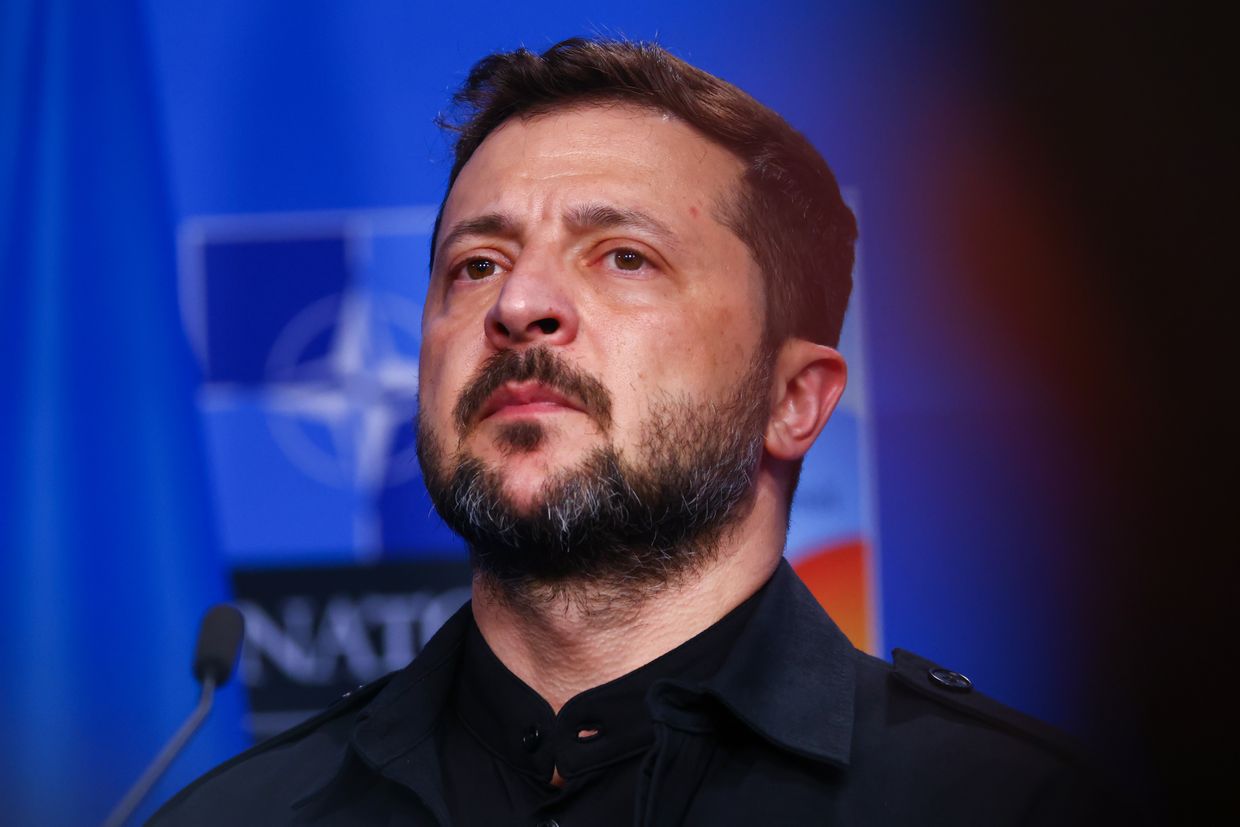
 The Kyiv IndependentThe Kyiv Independent news desk