❌

Vue normale

Russia just accidentally crashed its first Tu-95 bomber in 11 years. Its missiles will keep striking Ukraine anyway

Par : David Axe
30 septembre 2026 à 18:06

Russian missiles rain down on Ukraine: Kyiv, Dnipro, Lviv, Zaporizhzhia under fire

  • A Russian Tu-95 bomber crashed on takeoff in Russia's Far East on Tuesday, the type's first crash in 11 years
  • It's potentially the 11th Tu-95 the Russians have lost in the current wider war, and they can't build more
  • But Russia still has enough bombers to keep up its missile raids on Ukraine

A Russian air force Tupolev Tu-95 Bear bomber crashed on takeoff, apparently from Ukrainka air base in Amur Oblast in Russia's Far East. The Russian defense ministry said the plane was on a training flight without munitions and blamed a technical fault. The crash, while reportedly accidental, is still a win of sorts for Ukraine. Every bomber the Russians lose is a bomber they can't immediately replace—and sortie for missile strikes on Ukrainian cities.

The problem for Ukraine is that Russia still has bombers to spare. It'll take more than a few crashes or drone raids on Russian bomber bases to cut into Russia's capacity to bombard Ukraine.

That's why Ukraine needs missile-armed fighters, ground-based self-propelled guns, speedy interceptor drones, and long-range surface-to-air missiles such as American-made Patriots, among other air defenses. The Ukrainians can't prevent missile attacks by destroying bombers or waiting for bombers to crash; they need to shoot down missiles as they near their targets.

A Russian Tu-95MS Bear heavy bomber crashed on takeoff in Amur this evening during a training flight.

The airframe is a total loss, with no survivors reported. pic.twitter.com/tbujV6RVP5

— OSINTtechnical (@Osinttechnical) September 29, 2026

A security camera on the ground recorded a large aircraft plunging toward the ground in Amur Oblast on Tuesday night. Video from the crash site confirmed it was one of the Russians' four-engine, propeller-driven Tu-95s, aging workhorses in Russia's escalating campaign of missile and drone attacks on Ukrainian cities.

The crash killed six crew and left one survivor injured, according to Russian state media. It is the first Tu-95 to go down in 11 years, Defense Express notes, and the first known non-combat loss of the type since the full-scale invasion.

It's potentially the 11th Tu-95 Russia has lost since widening its war on Ukraine in February 2022. Ukrainian drones caught two Bears on the ground at Engels-2 air base in Saratov Oblast in July and August. On 1 June 2025, Ukraine's Operation Spiderweb—coordinated strikes on Russian bomber bases by more than 100 small drones smuggled across Russia in trucks—destroyed as many as four Bears at Olenya air base on the Kola Peninsula and another four at Belaya air base in Irkutsk Oblast.

Now the Russian air force may be down to somewhere between 36 and 44 working Tu-95s, depending on the count, the youngest of which rolled out of the factory in the 1990s. That matters because the Tu-95 is, like the jet-propelled Tupolev Tu-22M bomber, out of production. Vendors have gone out of business. The skilled workers who assembled the types retired decades ago.

While the Russians can still build one or two Tupolev Tu-160 jet bombers every year, slowly growing a fleet that currently stands at around 18 active planes, that's far too few new bombers to replace combat losses as the wider war grinds through its 56th month.

On September 8, four Tu-95MS from Olenya Air Base and two Tu-160M from Ukrainka Air Base conducted a combat mission against Ukraine.

The Tu-95MSs and Tu-160Ms launched Kh-101 cruise missiles from the airspace over the Leningrad and Smolensk oblasts. pic.twitter.com/xAZRc8EDO5

— AviVector (@avivector) September 8, 2026

Slow attrition

The Russians have also lost at least nine Tu-22Ms, and possibly far more: Defense Express estimates losses at up to 70% of the combat-ready fleet since 2022. All told, Russia's bomber force has shrunk to around 105 planes since the wider war began, or fewer.

Equally problematically for the Russians, the old Tu-95s and Tu-22Ms that carry out the majority of air-launched cruise missile strikes on Ukraine are wearing out from heavy use; not all are available for front-line use as more airframes spend more time in deep maintenance.
Explore further

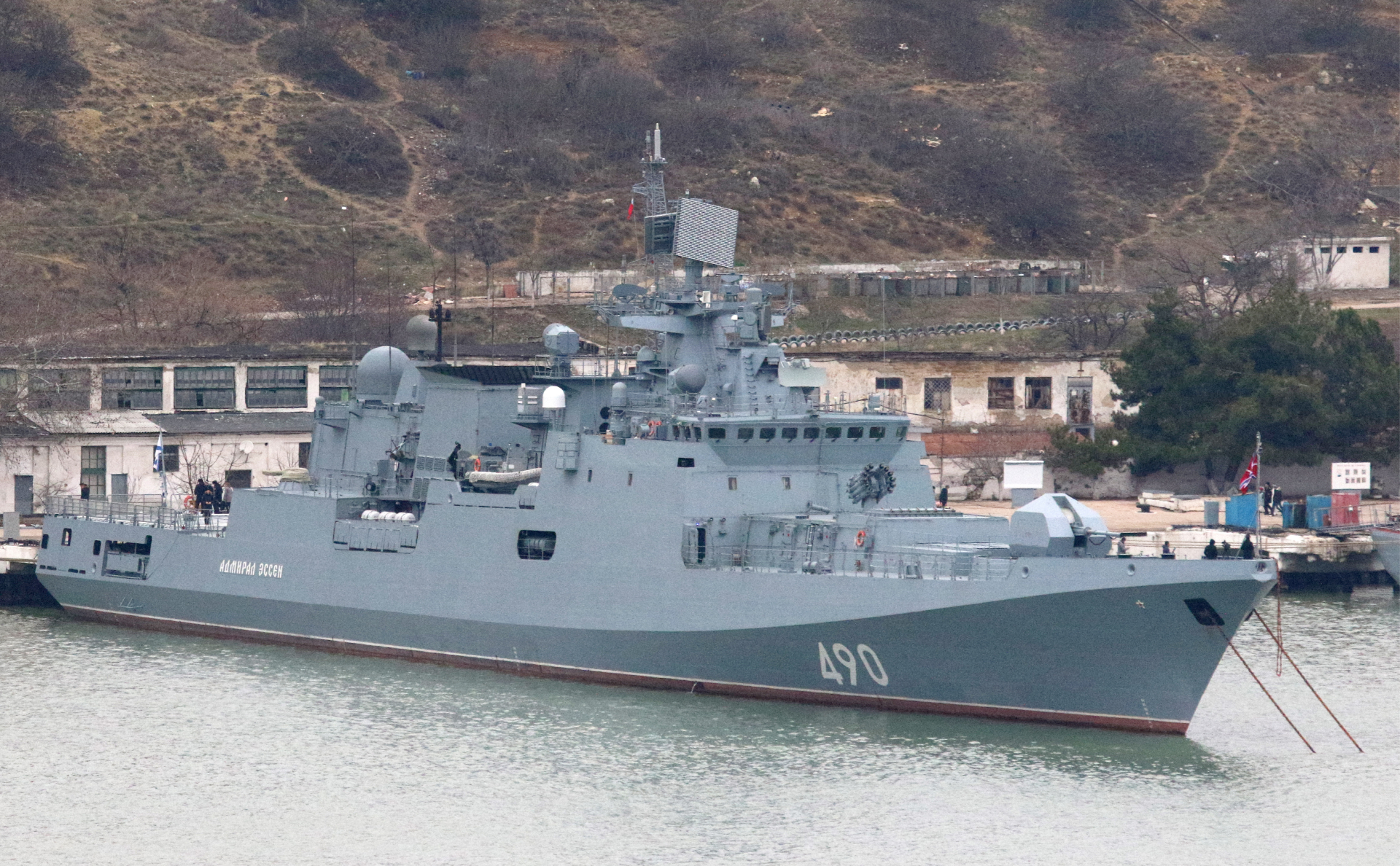
Ukraine is working down the short list of ships that shell its cities with cruise missiles. A Neptune reached one of them tied up at its own pier

But a Tu-95 carries as many as eight Kh-101 cruise missiles at a time; a Tu-22M carries up to three Kh-22s or Kh-32s. A Russian drone and missile strike might include just a dozen or so air-launched cruise missiles launched by a handful of bombers. A raid on 8 September involved just four Tu-95s and two Tu-160s.

The Russians don't need 105 bombers to sustain six-bomber raids once or twice a week, even as those bombers suffer more and more wear and tear. Ukraine would have to take out a lot more Russian bombers, and fast, to put a dent in Russian strikes.

Unless and until that unlikelihood happens, Ukraine will still need to defeat Russian raids inside Ukraine—by shooting down hundreds of incoming drones and missiles at a time. But that's getting harder as the Russians deploy faster jet-propelled Geran drones and more ground-launched Iskander missiles, combining them with the bomber-launched missiles in complex packages that routinely overwhelm ammunition-starved Ukrainian air defenses.
Robots won’t replace armored vehicles, says Ukrainian company that builds both. It reveals one job they can’t do

30 septembre 2026 à 17:48

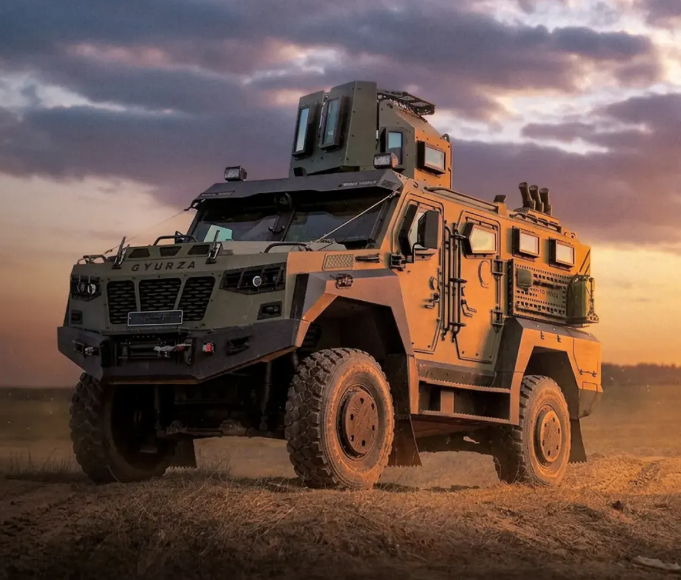
Ukraine's Gyurza-2 armored vehicle. Source: The Ukrainian Defense Ministry

Robots will not replace armored vehicles on the battlefield, says a company that builds both. Ground robots are a new tool that lets Ukraine distribute risk more smartly, but they cannot do everything a crewed armored vehicle can, above all pulling wounded soldiers out under fire, says Ukr Armo Tech's chief executive Hennadii Khirhii, in an interview with RBC-Ukraine.

Ukraine has a serious shortage of armored vehicles, from evacuation carriers to tracked fighting vehicles, with the focus shifting to hulls that offer heavy mine protection and built-in electronic warfare. For medical-evacuation armor alone, Khirhii says, the deficit is often put at 80 percent.

Robots can ease some of that, hauling ammunition and supplies to the front without risking a crew, but they are a complement, not a substitute, a view frontline commanders also confirm.

Robots share the load, not replace it

Where a robot can do the job, Khirhii says, there is no sense sending in heavy armor and the people inside it to face danger. For carrying ammunition or food, unmanned ground vehicles are useful. But evacuating the wounded is different: that usually needs, at least for the second leg, a protected medical vehicle in which care can begin on the move, with room for transfusions and resuscitation that a robot's capsule cannot provide.

"A UGV doesn't cancel the armored vehicle, just as the drone didn't cancel artillery," he says.

The limits show at evacuation

Ukraine has leaned hard into robotic logistics and casualty evacuation, running more than 100,000 such missions this year to keep medics and crews off exposed roads, but the robots themselves now draw Russian drone and artillery fire, and they cannot replace medical personnel.

One commander has called ground robots too slow for evacuation and easy targets, arguing brigades still need staffed evacuation teams and light-armored vehicles.

Commanders want both

The lesson from the front is not robots instead of armor, but robots alongside it. What matters, Khirhii says, is a smart combination of machines for each mission, with people's safety and the task's practicality first. The front today needs both armored vehicles and ground robots, he continues, and it needs a great amount of both.

Ukraine’s training facilities get boost: EU is funding centers where its army prepares soldiers, with Denmark putting in €33 million

30 septembre 2026 à 17:31

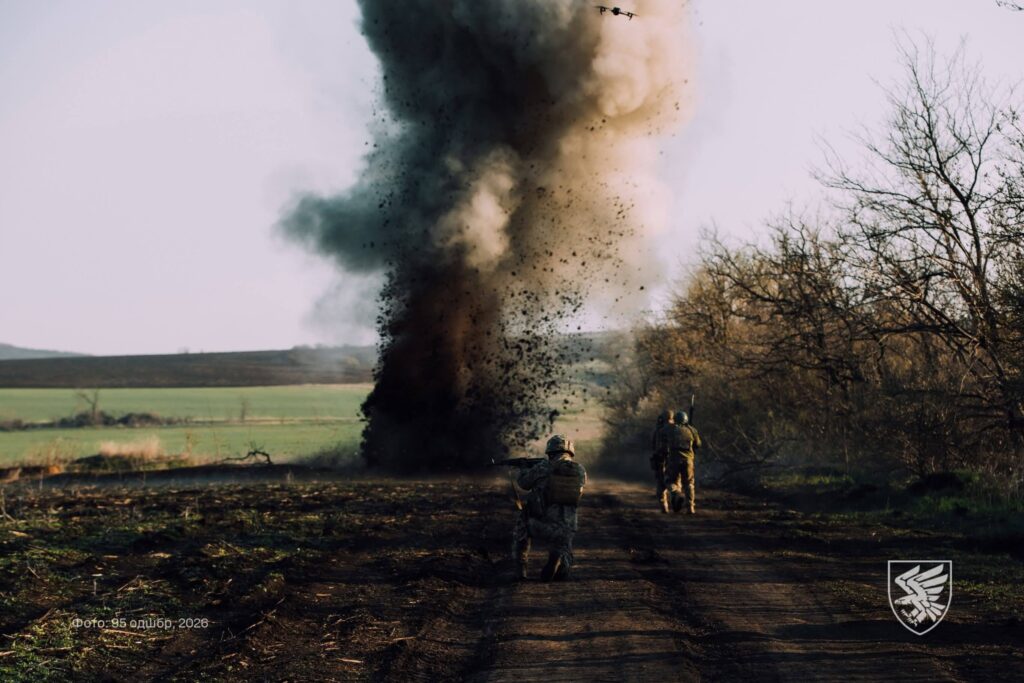
Ukrainian soldiers at the tactical training Source: The 95th Air Assault Brigade

The EU is putting money into the places inside Ukraine where the army trains its soldiers. The bloc will fund the modernization of several military training centers in Ukraine, upgrading facilities, housing, and equipment, with Denmark administering the funds and the Come Back Alive charity carrying out the work, the Defense Ministry said.

The Ministries of Defense of Ukraine and Denmark previously signed a Letter of Intent to implement a project to modernize one of the Armed Forces of Ukraine's training centers. Under this agreement, Denmark allocated about €33 million to training infrastructure, living and sanitary conditions, equipment, and drones for training defenders.

The money goes into the centers

The support will pay to modernize several training sites: better living quarters for the troops who cycle through them, upgraded facilities, and improved infrastructure, the ministry says.

The project runs under the EU's diplomatic and military-planning bodies, the European External Action Service, the Military Planning and Conduct Capability, and the bloc's military-assistance mission for Ukraine, with the Come Back Alive foundation carrying it out alongside the Defense Ministry.

Halan calls training a foundation

The aim is a modern environment for preparing soldiers.

"Modernized centers let us train the military on real combat experience," Deputy Defense Minister Liubov Halan says, thanking the EU and every partner country.

Training inside Ukraine, she says, is as fundamental to defense as ammunition and equipment, because weapons do not work without people trained to use them. The modernized sites, the ministry says, are meant to let Ukraine prepare its own forces to a higher standard, faster, and closer to the front.

Denmark administers the funds

The project is an EU initiative, open to any partner willing to contribute, with Denmark as the fund administrator. The ministry thanked the EU, Denmark, and Come Back Alive for support it says raises the quality of Ukraine's training.

Russia is now wiring its attack drones into one network in flight, so a single drone can scout, strike, and relay for the rest

30 septembre 2026 à 15:20

Geran-5 in the sights of a STING S interceptor drone.

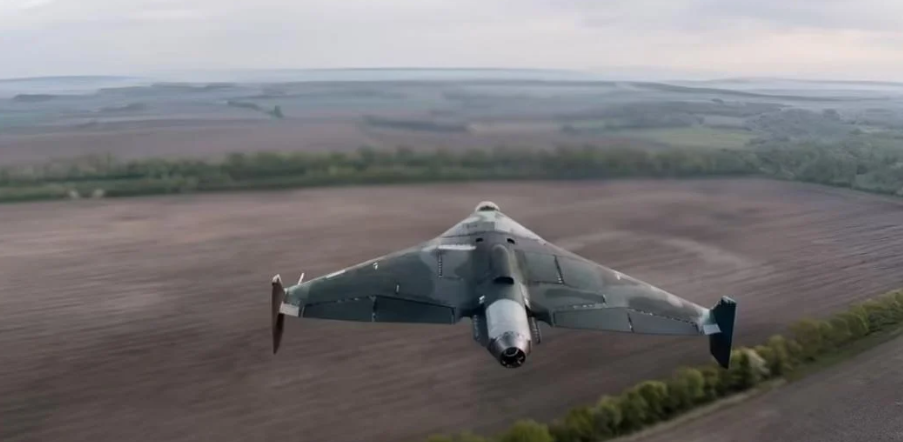
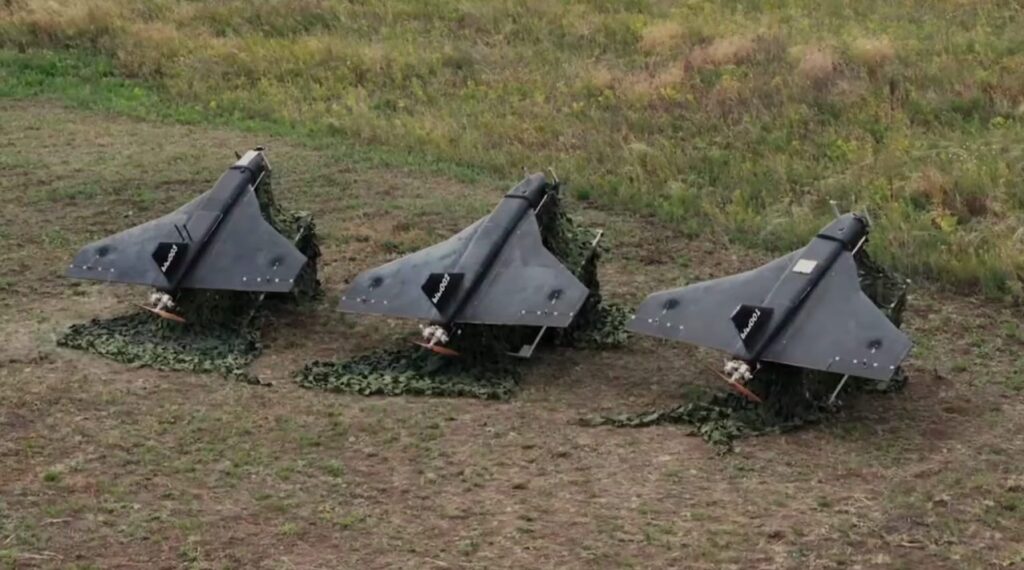
Russia is wiring its long-range attack drones together by a mesh network in flight and buying pricier, higher-resolution cameras for them, Ukraine's Air Force reported on 29 September. Its spokesperson said one drone could serve as a scout, strike drone, and relay for the rest, which is why they often fly one behind another over long distances. Chains of them keep crossing near the Belarus border, UkrInform reports.

For Ukraine, the danger in each such upgrade is arithmetic: the more Russia networks cheap, once-disposable drones and pushes its control links away from the front, the harder they become to jam or shoot down, and the more of them reach the cities they are aimed at.

Sharper, pricier eyes

Ihnat said on a national broadcast that Russia is sourcing higher-quality materials and raising the resolution of its drone cameras. The cameras it buys are increasingly expensive and higher-quality, he said, which lets its operators study the ground in fine detail and use each drone for a specific purpose.

On a mesh network, he said, the drones talk to each other and hand the control signal back toward the operator, so no single link has to carry it alone.

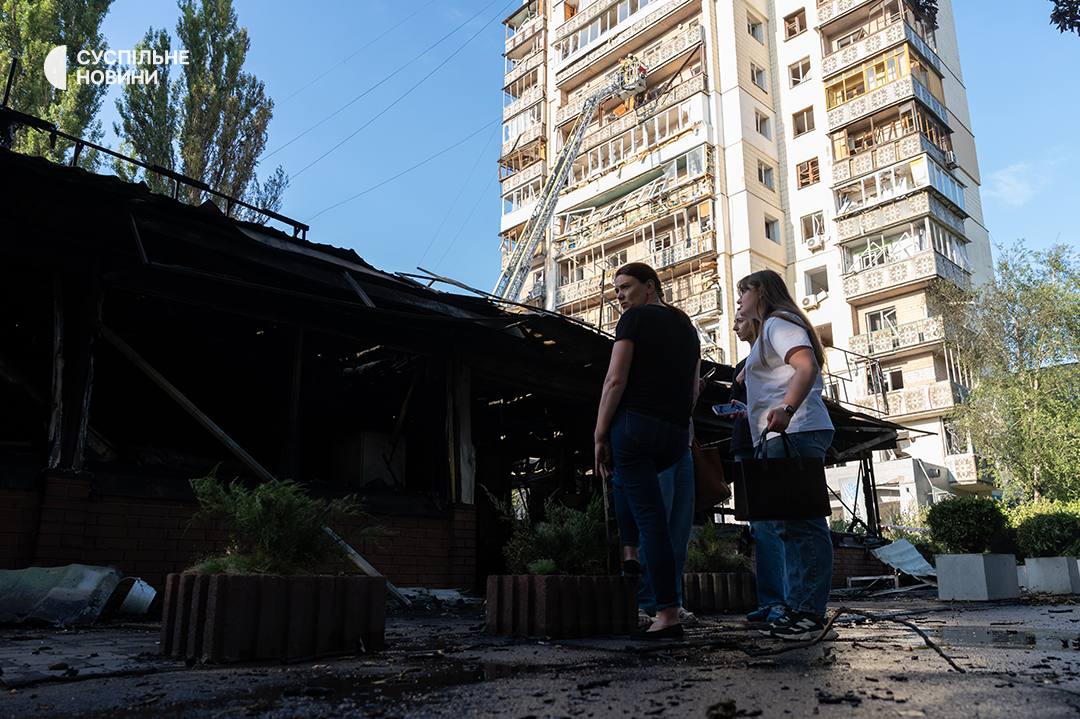
Aftermath of a massive Russian ballistic missile attack in Kyiv's Lukianivka district, 19 July 2026. Photo: Suspilne
Explore further

Russia is mapping everyday targets across Kyiv, from trolleybus depots to Zhuliany airport, top monitoring channel says, ahead of next ballistic strike

Chains along the Belarus border

Asked about relays operating out of Belarus and about Russia's guidance of jet-powered Shaheds, the exploding drones it fires in swarms, Ihnat said Moscow had already claimed its satellite network was ready. He confirmed mesh networks are in use and said their use was quite dangerous. Ukraine has no information yet on whether Russia is using towers, he said.

It often sees drones crossing long distances in chains along the Ukrainian-Belarusian border, so nothing can be ruled out, but intelligence would have to confirm whether such relays exist. Asked whether Russia is preparing a fresh ballistic strike, he said intelligence would warn when extra vigilance is needed.

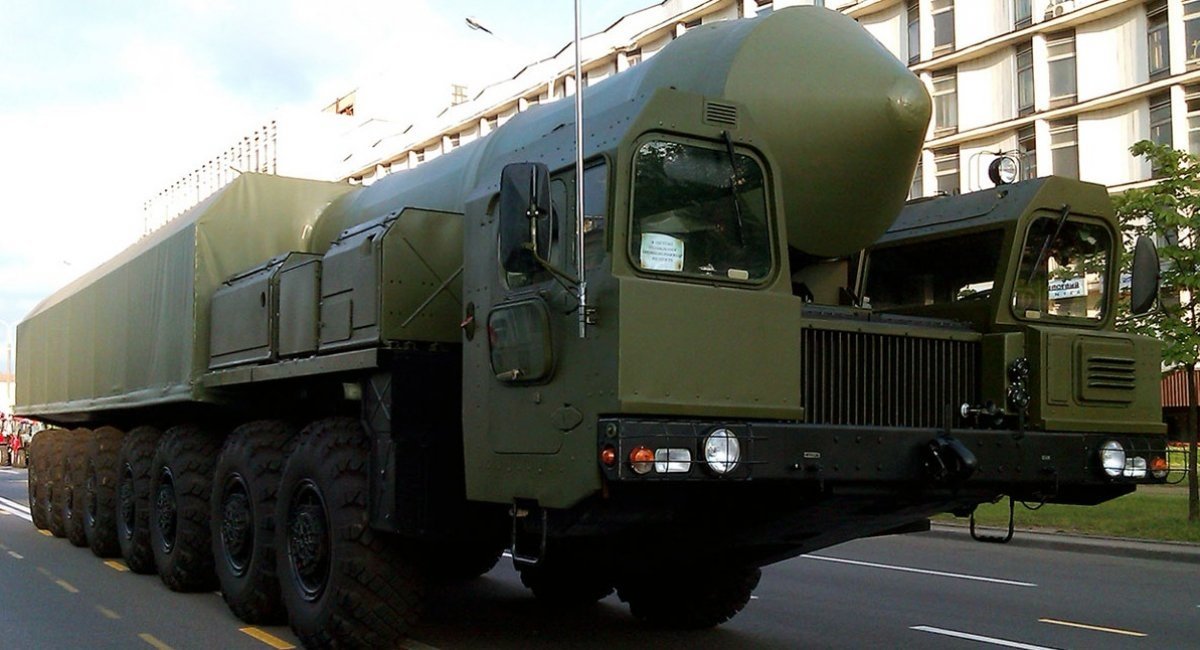
isw kremlin continues its nuclear threats while dangling economic carrots sway washington russia's rs-26 intercontinental ballistic missile rubezh oreshnik militarnyi appears focused reshaping ties through mix promises all refusing engage
Explore further

Russia deploys missile brigade to Belarus as fears grow over new threat to Kyiv

Ukraine's countermeasures

Ihnat has also said Russia launched more attack drones in September than in August, counting 3,177 jet-powered drones so far this month against 2,850 in August. To knock them down, Ukraine leans mainly on tactical aviation, including F-16 fighters, and on ground-based air defense when missiles are available, he said, with shoulder-fired man-portable air-defense systems (MANPADS) working well against jet drones inside their range. He said Ukraine needs more missiles for both Patriot systems and ground-based launchers, plus faster domestic solutions it can scale up.

Ukrainian combat simulator, used to train more than 500,000 troops, can now be ordered from NATO’s supply catalogs by single code

30 septembre 2026 à 15:12

L7 founder Ihor Bielov. Source: L7 Simulators

A Ukrainian combat simulator can now be found and ordered in NATO's supply catalogs by a single code. L7 Simulators, whose trainers have prepared more than 500,000 Ukrainian troops, has had its entire lineup NATO-codified, with each device assigned a 13-digit NATO Stock Number, Defender Media reports.

L7's more than 50 trainers, from the Browning M2 to the Stinger to the NLAW, now carry those codes, and the company can codify new ones itself, opening the door to government procurement in Ukraine and across the alliance. It is another Ukrainian defense maker stepping toward NATO's standards and supply chain.

Every trainer gets a NATO number

A NATO Stock Number is a unique 13-digit code, a kind of military barcode for supplies, that lets defense logistics systems across the alliance identify, catalog, and purchase equipment. Every simulator in L7's catalog now has one, and the firm has also won the status to assign numbers to its future products directly, rather than starting the process over for each one.

The code identifies, not certifies

The company is careful about what the step does and does not mean. Codification is not a certification that the product meets NATO's technical standards, L7 stresses, but rather a mechanism for unambiguously identifying an item within the shared defense-logistics system.

The firm entered that system in December 2024, when its UNITS training platform, already cleared for use by Ukraine's Defense Ministry, received the first number.

Half a million have trained on them

L7's range runs to more than 50 types of trainers, tied together in a single ecosystem the company calls UNITS: fire-training systems, anti-tank and air-defense simulators, and trainers for unmanned aircraft, with models for the Stinger, NLAW, Carl Gustaf, RPG-7, and SPG-9 among them.

The simulators are used by the armed forces, the National Guard, and other security agencies, and more than 500,000 service members have trained on them, with over 70,000 of them free of charge at the company's own training center.

Ukraine brings 14 more children home from Russian-occupied Kherson Oblast. One of them was being forced onto Russia’s military rolls

30 septembre 2026 à 13:38

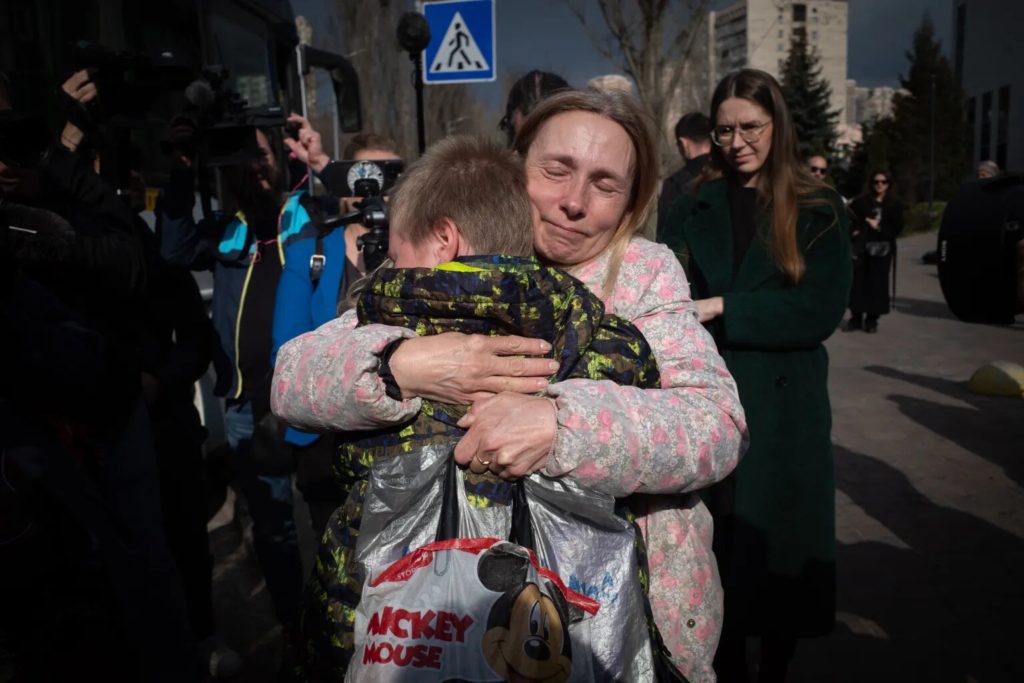
1-ukraine-kyiv-children-reunited-russia-R003578

Fourteen more Ukrainian children have crossed from Russian-occupied Kherson Oblast back onto Ukrainian-held ground, the oblast's military administration said on 29 September. They join a years-long effort to recover children from land Russia seized in 2022, with thousands more still deported or unaccounted for.

Ukrainian authorities say Russia has deported nearly 20,000 children since its 2022 full-scale invasion, and Zelenskyy insists the true figure is far higher. Those taken to Russia are placed in institutions or Russian families and pushed through Russian "re-education" aimed at erasing their Ukrainian identity.

These 14 add to roughly 2,000 children Ukraine has brought back since 2022—a recovery effort still dwarfed by the numbers Russia holds and keeps adding to.

Who made it out

The 14 are four boys and 10 girls, aged 6 to 17, said Oleksandr Prokudin, who heads the administration. Rescuers also brought back one young adult who had been deprived of parental care.

Each case shows what pushed the children toward the return. One 16-year-old boy was being forced onto Russia's military registration rolls under occupation, part of a pipeline that moves teenagers from a Russian passport toward conscription at 18. A 17-year-old girl had sought a Ukrainian education despite the risks and Russian control, Prokudin said. A 10-year-old girl, he added, had longed to come home and did all she could to reach safety.

The running tally

The children left through Bring Kids Back UA, the repatriation program President Volodymyr Zelenskyy launched in 2023, working with the Ukrainian charity Save Ukraine. That brings to 204 the number of children returned from occupied Kherson Oblast since the start of 2026, regional authorities said.

The wider deportation campaign

In 2023, the International Criminal Court in The Hague issued arrest warrants for Russian leader Vladimir Putin and his children's rights commissioner, Maria Lvova-Belova, over the illegal deportation of children from occupied Ukraine to Russia.

  • ✇404 Media
  • USPS To Put Cameras in Trucks That Scan Roads for ‘Community Safety’
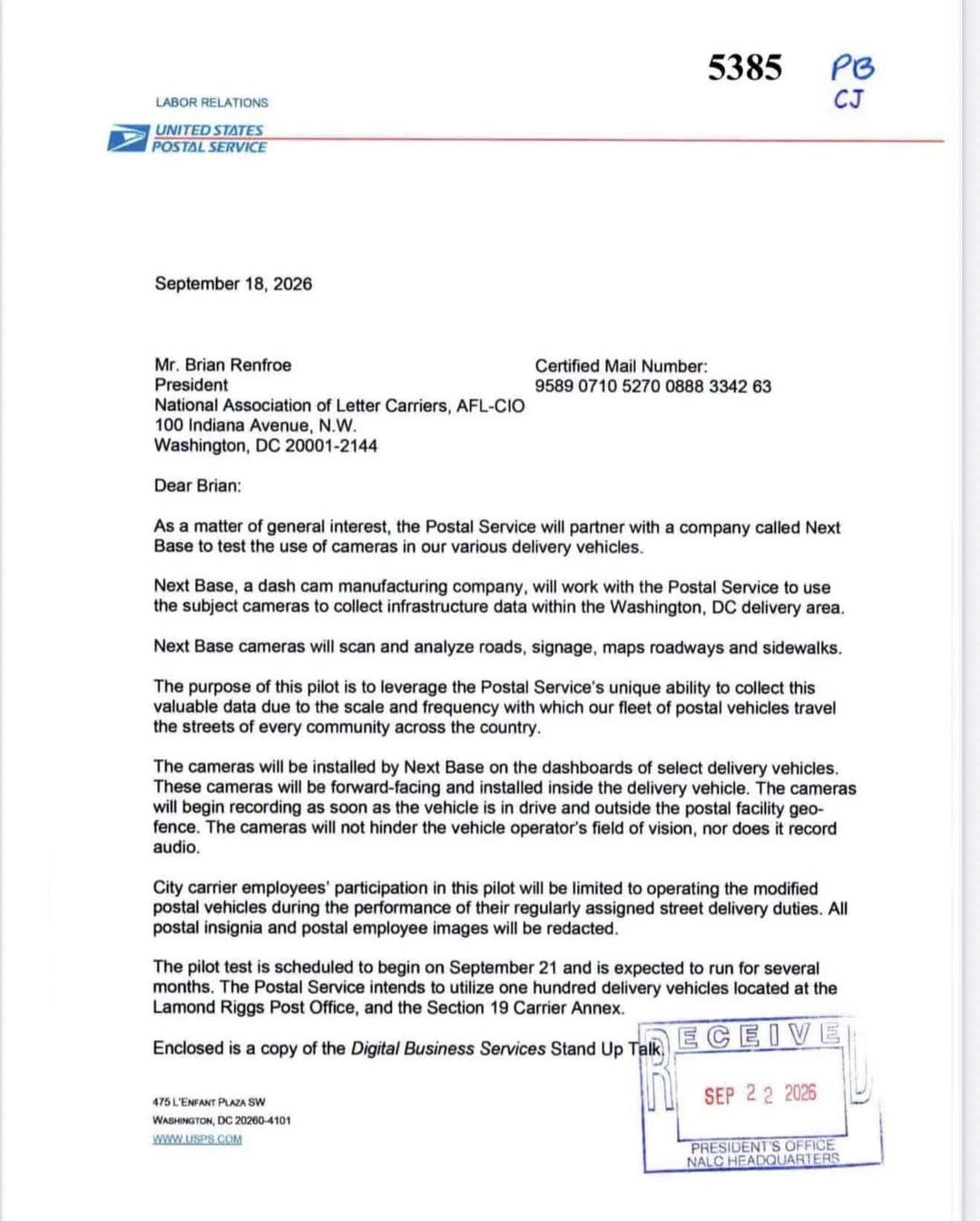
    The United States Postal Service is running a pilot program to put cameras in its mail carrier trucks that continuously scan roads and signs, map roadways and sidewalks, and improve “community safety,” according to a letter posted by a labor union and a statement from the agency to 404 Media. The idea is that, since the trucks are constantly traveling anyway, they can be used as a way to collect data, eventually potentially across the nation.“The purpose of this pilot is to leverage the Posta
     

USPS To Put Cameras in Trucks That Scan Roads for ‘Community Safety’

30 septembre 2026 à 12:15
USPS To Put Cameras in Trucks That Scan Roads for ‘Community Safety’

The United States Postal Service is running a pilot program to put cameras in its mail carrier trucks that continuously scan roads and signs, map roadways and sidewalks, and improve “community safety,” according to a letter posted by a labor union and a statement from the agency to 404 Media. The idea is that, since the trucks are constantly traveling anyway, they can be used as a way to collect data, eventually potentially across the nation.

“The purpose of this pilot is to leverage the Postal Service’s unique ability to collect this valuable data due to the scale and frequency with which our fleet of postal vehicles travel the streets of every community across the country,” the letter, posted by NALC Branch 238 to Facebook, reads.

The letter, written by the United States Postal Service (USPS) Labor Relations to Brian Renfroe, the president of the National Association of Letter Carriers, says the USPS will partner with Next Base, a dashcam company, for the pilot. At the moment, the cameras will be used in the Washington, DC area, and will be installed on a hundred vehicles, the letter says.

On its website, Next Base offers a variety of dash cams, marketed to ordinary drivers, fleet operators, and ride share drivers. Its website says Next Base’s cameras record in up to 4K, and can capture every “license plate” with precision. The cameras don’t run automatic license plate reader (ALPR) software, though.

USPS To Put Cameras in Trucks That Scan Roads for ‘Community Safety’
A company of the letter from NALC Branch 238.

The letter continues, “Next Base cameras will scan and analyze roads, signage, maps roadways [sic] and sidewalks.” It says the cameras will be forward-facing, installed inside the trucks, and will begin recording as soon as the vehicle is in drive and away from the postal facility. “The cameras will not hinder the vehicle operator’s field of vision, nor does it record audio,” it adds.

The pilot was slated to start on September 21, and is expected to last several months, the letter says.

A spokesperson for the USPS told 404 Media in an email “The Postal Service is conducting a limited pilot to assess whether vehicle-mounted cameras can help identify roadway conditions and support community safety. The pilot includes privacy safeguards and requires no additional action from employees. Findings will inform any future decisions.”

USPS trucks already have 360 degree cameras that capture the outside of the vehicle for a period of time.

Russia adds new weapon to its jet-powered drones, even more dangerous: 40-kilogram charge made to sever high-voltage pylons and iron bridges

30 septembre 2026 à 11:21

Russia's new "Geran-4 Siker" Shahed variant uses machine-vision AI for targeting. Source: Warhronika

Russia has a new warhead for its drones, and it is built to cut down power lines. For the first time, a jet drone has carried a shaped "cumulative-cutting" charge designed to sever high-voltage pylons and iron bridges, Serhii Beskrestnov, presidential adviser, known as Flash, said, as Russia opened its heaviest assault on Ukraine's power grid since last winter.

On 30 September, Russia launched its massed fall-winter campaign on Ukraine's energy infrastructure since the last heating season, hitting power sites across 11 regions overnight with missiles and drones, Prime Minister Serhii Koretskyi said.

The new warhead fits the aim: Flash says it is meant to bring down the high-voltage lines that carry the country's electricity. And Ukraine enters the winter exposed, with its energy resilience plans less than half complete.

A new charge targets the pylons

The device, which Flash calls a cumulative-cutting special load, is designed specifically to bring down high-voltage pylons and iron bridge structures.

"It consists of a main charge weighing 40 kilograms and four strike modules," he says.

In his reading, Russia intends to go after the major transmission lines that move power across the country, the backbone of the grid, rather than the substations it has struck before.

The campaign builds toward November

On 29 September, two senior Ukrainian officials told The Economist that Russia launched a three-part campaign of attacks on Kyiv, combining massive bombardments, sabotage, and the creation of political chaos. These efforts aimed at destabilizing the Ukrainian capital would peak by November, they said.

According to a representative of the Security Service of Ukraine, Russia has "thousands" of drones in its arsenal and is simultaneously expanding its stockpile of ballistic missiles. The plan is to "deploy the entire arsenal over the next two months," given that Ukraine lacks an effective weapon against jet-powered drones.

  • ✇Euromaidan Press
  • EU wants reforms before more money. Kyiv wants Europe to touch Russia’s frozen billions
    Ukraine will require $52.6 billion in external financing for its 2027 budget, with expected sources of financing identified for around $20 billion, while $32.6 billion remains uncovered, Finance Minister Serhii Marchenko said at a Ukraine Donor Platform meeting in Brussels on 29 September, according to the Cabinet of Ministers. Russia's war costs Ukraine far more than its economy can raise, so Kyiv has frozen nearly all spending except the army, pensions, and public wages. Foreign partn
     

EU wants reforms before more money. Kyiv wants Europe to touch Russia’s frozen billions

30 septembre 2026 à 11:11

Sergii Marchenko

Ukraine will require $52.6 billion in external financing for its 2027 budget, with expected sources of financing identified for around $20 billion, while $32.6 billion remains uncovered, Finance Minister Serhii Marchenko said at a Ukraine Donor Platform meeting in Brussels on 29 September, according to the Cabinet of Ministers.

Russia's war costs Ukraine far more than its economy can raise, so Kyiv has frozen nearly all spending except the army, pensions, and public wages. Foreign partners cover the rest, and much of that money comes tied to reforms Brussels wants in return.

Roughly $45 billion in 2027 defense spending has no partner guarantees. Adding that figure to the $32.6 billion financing gap puts the total at about $78 billion, according to Euronews.

"We're very happy with the €90 billion. But it's not sufficient," Marchenko said.

Euronews said Russian attacks had complicated tax collection. Marchenko said it was the first time since 2022 that Ukraine had realized its tax and customs administrations were underperforming. The Cabinet of Ministers reported separately that tax and customs revenues rose 14.5% year on year in January–August 2026.

Kyiv urges EU action on frozen Russian assets

Marchenko urged the EU to act on €210 billion in immobilized Russian central-bank assets, most of which are held at Euroclear in Belgium, and encouraged the bloc to consider a centralized, legally sound framework for the assets, according to Euronews.

Marchenko pressed the point at a European Policy Centre panel in Brussels on 28 September. "We need our friends, our European politicians, to be brave enough and to make some bold actions," he said.

"Unfortunately, the war is longer, the war is harder, and we need to provide some resolution of frozen Russian assets or provide other means for us to survive," he added.

The 28 September panel examined the idea of transferring the assets from Euroclear to an EU-owned custodian to mitigate risks for Belgium, according to Euronews. Sweden, the Netherlands, Spain, and Poland have also called for new options to use frozen Russian assets, Euronews reported.

EU's €90 billion loan

The EU agreed to the €90 billion loan after a proposal to use the Russian assets fell apart at a December 2025 summit, Euronews reported. The loan is based on joint EU borrowing and covers 2026 and 2027.

The package includes €30 billion in macroeconomic support and €60 billion for Ukraine's defense-industrial capacity and procurement, according to the EU Council.

Reforms slow EU support

European Commissioner for Enlargement Marta Kos said during the 29 September Ukraine Donor Platform meeting that Ukraine needed to deliver the agreed reforms for the EU to continue supporting it financially, Euronews reported.

EU officials are frustrated with Kyiv's requests for fresh money while reforms tied to existing support remain unfinished, and the European Commission has yet to validate the figures Ukraine shared, the outlet said.

Ukraine’s new ground robot switches from land to water in seconds. It just ran its first supply mission, 40 kilometers to positions others can’t reach

30 septembre 2026 à 10:55

Ukraine's new amphibious ground drone. Source: Ukraine's Defense Ministry

A Ukrainian ground robot drove toward the front, reached the water in its path, and kept going, swimming across with ammunition and food aboard and no soldier at risk. It ran the first logistics mission with an amphibious ground robot, covering more than 40 kilometers over land and water to resupply positions, the Defense Ministry said.

Water is one of the front's quiet chokepoints: rivers, canals, and marshes that stop ground robots and force risky detours, and that air resupply cannot always solve. The amphibious robot drives like a normal ground vehicle, then switches to swimming in seconds, letting one machine cross terrain that halts the rest.

It is the latest of Ukraine's battlefield-robot firsts, which this year have included air-dropping robots behind Russian lines.

Water stops the others

The robot was developed through Brave1, Ukraine's state-backed defense-innovation cluster, which links developers with the military and government.

The one such robot gains additional capabilities to carry out missions across different terrains.

A first-ever logistics mission on an amphibious UGV: the robot covered 40 kilometers across land and water.

Operators of the "Alter Ego" unit (93rd Brigade) deployed the robotic system across mixed terrain. Facing water obstacles, the UGV seamlessly switched to swimming mode to… pic.twitter.com/rH8waq04a4

— BRAVE1 (@BRAVE1ua) September 29, 2026

For this operation, the system was refined over several months in close cooperation with the military, taking into account real tasks, operational experience, and the specifics of frontline terrain. The Brave1 defense innovation cluster provided grant support for the system, helping bring the solution to practical use.

The ministry says it is "expanding the capabilities of robotic systems" so soldiers have more tools for the fight.

Robots with grenade launchers

Earlier, Ukraine employed a new tactic during its major Operation Vivaldi in Donetsk Oblast. During the 3rd Army Corps' offensive, fighters from the world's first experimental unit of unmanned ground-strike vehicles, "NC13", upgraded their kamikaze ground drones with grenade launchers.

During the operation, UGVs equipped with two Bullspike grenade launchers attacked Russian positions, then detonated directly inside their shelters. The occupiers believed they were being attacked by an entire assault group. In reality, they were being torn apart by robots from the 3rd Assault Corps.

Russian drone explodes in Moldova, day after its opposition moves to suspend its pro-EU president. Analyst says that’s no coincidence

30 septembre 2026 à 10:20

russian gerbera drones

A Russian drone exploded in Moldova on 30 September, detonating near the mast of a civilian mobile operator, TV8 reported. Despite previous such attacks, this one may have another purpose, according to Oleksandr Kovalenko, a Ukrainian military analyst.

Moldova, which borders Ukraine and is not in NATO, has become a regular waypoint and casualty of Russia's drone war, with wreckage turning up repeatedly this year. What sets this strike apart is its timing, days into a fight over the country's pro-EU president.

A drone hits a telecoms mast

Police were alerted at 5:43 a.m. to a drone flying low over Bender, in Transnistria, the general police inspectorate said. It came down near Hîrbovăț and detonated against the mast of a civilian mobile operator, leaving blast marks along about 12 meters of the structure, with the metal deformed and scorched. Service was not disrupted. Police cordoned off the area, and specialists were examining the debris.

A second drone follows

Hours later, at 10:26, Moldova's air-monitoring system detected a second drone crossing its airspace, jet-powered and heading toward the northern town of Soroca, Moldova's Defense Ministry reported, according to European Pravda.

Flights were suspended over the country's north and center. Parliament speaker Igor Grosu condemned the strike: "Russia will answer for its war crimes," he says.

An analyst ties it to the impeachment

Meanwhile, Russian drones entering Moldova on this day is no coincidence, he argues, coming as the opposition moves against President Maia Sandu.

On 29 September, 46 opposition lawmakers registered a motion to suspend her, a step that would need 67 of parliament's 101 votes to pass and, if approved, a referendum within 30 days, Moldova Live reported.

Kovalenko contends pro-Russian forces are running a destabilization campaign they will reinforce with periodic drone attacks, pressing a message at Moldovans: "if you don't want war, get rid of Sandu."

  • ✇Euromaidan Press
  • Russia struck a school in Sumy with a 250-kilogram bomb while children in grades 1–4 were studying there
    The Russian army deliberately struck a school in Sumy with a 250-kilogram aerial bomb while students—children in grades 1–4—were there, Serhii Kryvosheienko, head of the Sumy City Military Administration, reported on 29 September. The strike was one of a series of mass attacks on Ukrainian territory over the past 24 hours. Across Ukraine, children now begin the school year in bomb shelters, because Russian missiles, drones, and glide bombs keep hitting schools, hospitals, and homes far
     

Russia struck a school in Sumy with a 250-kilogram bomb while children in grades 1–4 were studying there

30 septembre 2026 à 08:56

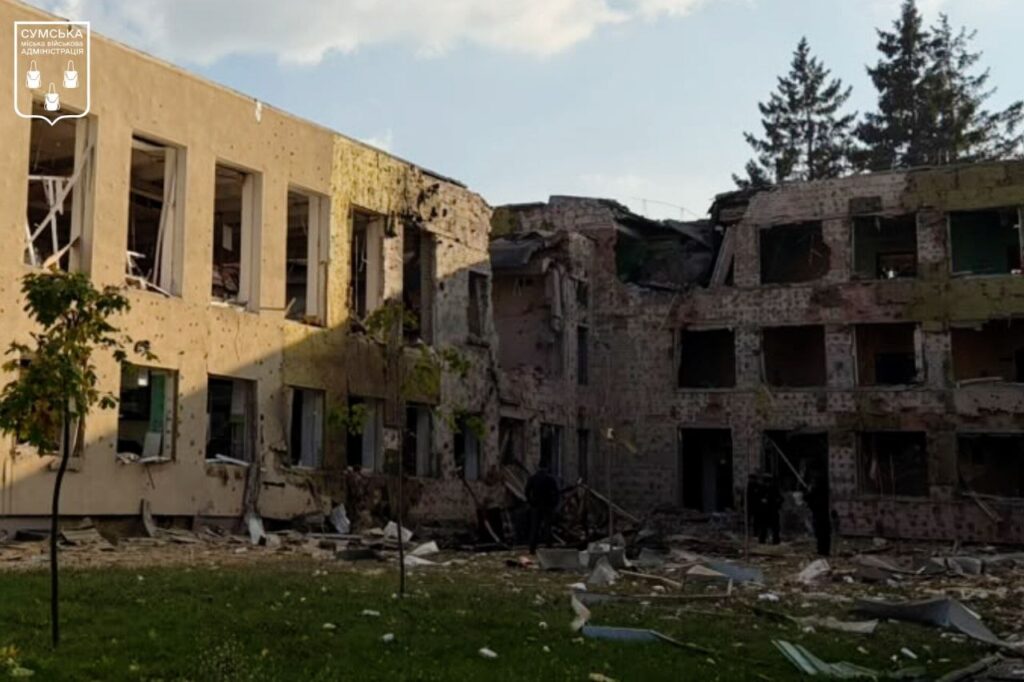
A school in Sumy where Russian forces carried out a strike while elementary school children were studying, 29 September 2026. Photo: Sumy City Military Administration

The Russian army deliberately struck a school in Sumy with a 250-kilogram aerial bomb while students—children in grades 1–4—were there, Serhii Kryvosheienko, head of the Sumy City Military Administration, reported on 29 September. The strike was one of a series of mass attacks on Ukrainian territory over the past 24 hours.

Across Ukraine, children now begin the school year in bomb shelters, because Russian missiles, drones, and glide bombs keep hitting schools, hospitals, and homes far from the front. The first eight months of 2026 brought more civilian casualties than all of last year, the UN says, and places where children gather are part of that toll.

Kryvosheienko said the Russians aimed the bomb at the school on purpose.

"With no pity or compassion whatsoever, they strike at children? There is nothing human in the enemy! He is not fighting on the battlefield—he is destroying a nation," Kryvosheienko said.

About 40 students were in the school's shelter at the time, a school employee told Suspilne correspondents. Preliminary reports indicate the children were not injured, Suspilne said.

Ukrainian President Volodymyr Zelenskyy confirmed the strike on the school.

"Four KABs struck the city center, right at the school building, where classes were underway. Thank you to the teachers and the school administration: the children and teachers were in the shelter, a total of 100 people were evacuated in time," he wrote.

Two people were killed in Sumy, and children are among those injured

Over the past 24 hours, Russian forces carried out more than 60 strikes on 25 population centers in 13 territorial communities of Sumy Oblast, the Sumy Regional Military Administration reported. Two people were killed and 15 others were injured, including two children, according to the administration's figures for each community. Over the course of the day, the oblast was under an air-raid alert for 22 hours and two minutes.

In particular, a 74-year-old man and a 70-year-old woman were killed in the Sumy community as a result of strikes by guided aerial bombs (KABs), the report said. Four people were injured and three people sustained trauma as a result of the Russian attack, including a one-year-old girl. A six-year-old girl was also injured, while a 49-year-old man sustained injuries in a UAV attack.

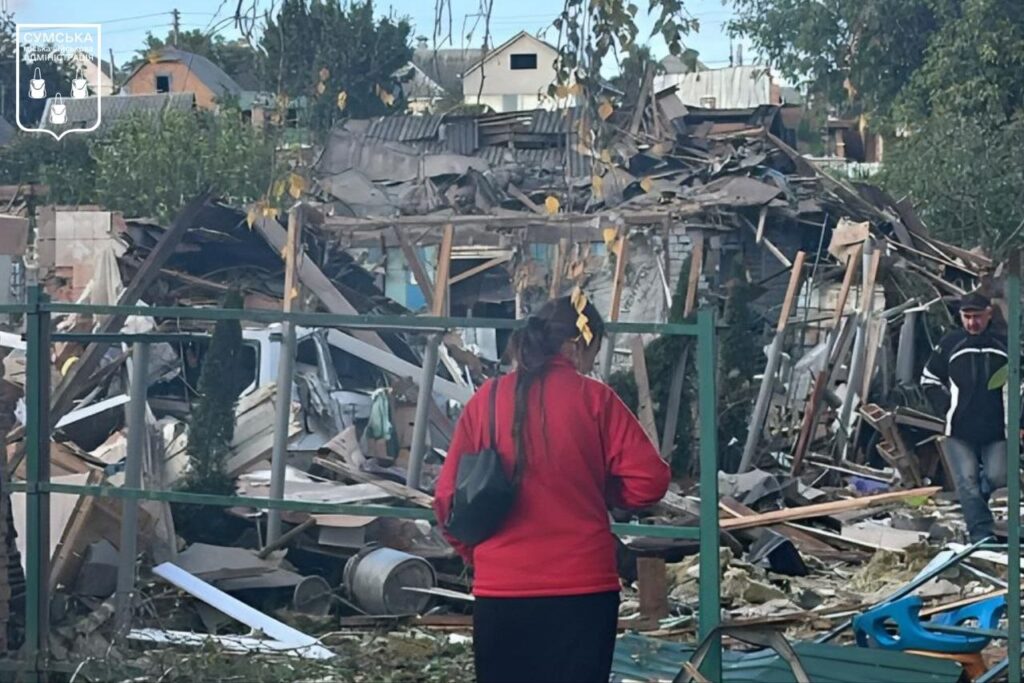
Aftermath of the Russian attack on Sumy Oblast, Ukraine, 29 September 2026. Photo: Sumy City Military Administration

Over the past 24 hours, the Russians attacked Mykolaiv Oblast with Shahed/Gerbera-type attack UAVs, killing a 56-year-old man, the Mykolaiv Regional State Administration reported. The attack destroyed one detached house, damaged two others and four outbuildings, and caused fires, according to the report.

An 8-year-old girl and an 85-year-old woman suffered acute stress reactions as a result of Russian shelling

Russian forces attacked Kharkiv and 10 population centers in Kharkiv Oblast, according to Oleh Syniehubov, head of the Kharkiv Regional Military Administration. Two people were hurt, both with acute stress reactions.

In Kharkiv, an 8-year-old girl suffered an acute stress reaction, as did an 85-year-old woman in the village of Ohurtsivka, Syniehubov reported.

The Russians used various types of weapons against Kharkiv Oblast: one guided aerial bomb (KAB), one multiple rocket launcher system (MLRS), five Molniya-type UAVs, seven FPV drones, and eight UAVs whose type is still being determined, according to the report.

In Kharkiv, Russian shelling damaged the windows of an apartment building, two cars, a private house, and the roof of a shopping center. A car was also damaged in the village of Myronivka, and three cars in the village of Mali Fesky.

A car damaged in the Russian attack on Kharkiv Oblast, Ukraine, 29 September 2026. Photo: Kharkiv Regional Military Administration

The Russians also injured six residents of Donetsk Oblast: three people in Bilbasivka, one person in Sloviansk, one person in Shabelkivka, and one person in Druzhkivka, Donetsk Regional State Administration head Vadym Filashkin reported on his social media.

Over the past day, 18 population centers in Kherson Oblast came under Russian airstrikes, drone attacks, and artillery shelling, leaving five people injured, says Oleksandr Prokudin, head of the Kherson Regional Military Administration. He adds that Russian forces targeted critical and social infrastructure as well as residential areas, damaging two detached houses in particular.

Russian forces carried out 686 strikes on Zaporizhzhia Oblast

Over the past 24 hours, the Russians carried out 686 strikes on 51 population centers in Zaporizhzhia Oblast, but no civilians were injured, co-chair of the Zaporizhzhia Regional Defense Council Ivan Fedorov reported, adding that:

  • Russian forces carried out 22 airstrikes on 18 population centers.
  • 530 UAVs of various modifications, predominantly FPV drones, attacked 37 population centers.
  • Five MLRS strikes were recorded against Orikhiv, Novoandriivka, and Kosivtseve.
  • 129 artillery strikes hit 19 population centers.
  • 44 reports were received concerning damage to infrastructure, homes, and vehicles.
A house damaged in the Russian attack on Zaporizhzhia, Ukraine, 29 September 2026. Photo: Zaporizhzhia Regional Defense Council

Seven facilities in Zhytomyr Oblast were damaged during the evening and overnight hours leading into 30 September, says Vitalii Bunechko, head of the Zhytomyr Regional Military Administration. Food and processing industry enterprises as well as energy facilities came under Russian attack. Four cars also burned as a result of the attack, Bunechko added.

The Russian army attacked three districts of Dnipropetrovsk Oblast with UAVs, Dnipropetrovsk Regional Military Administration head Oleksandr Hanzha wrote on social media. The attacks damaged infrastructure, and a fire broke out in one of the communities, he said, adding that there were no casualties.

Air defense forces neutralized three Russian UAVs over Cherkasy Oblast, with no casualties, Ihor Taburets, head of the Cherkasy Regional Military Administration, reported. However, the fall of an enemy target caused a fire at an infrastructure facility, which was quickly extinguished, he added.

  • ✇Euromaidan Press
  • Kyiv’s supermarkets are the new front line as Russia hunts civilian life before winter
    Russia is preparing to make daily life in Kyiv harder before winter, aiming at the ordinary places civilians use rather than at military sites, The Economist reported. Ukrainian officials say the push blends bombing, sabotage, and disinformation, and expect it to peak in November. Every winter of its full-scale invasion, Russia has tried to freeze Ukrainians into surrender, and each year the strikes reach deeper into ordinary life. The civilian casualties recorded in 2026 have already p
     

Kyiv’s supermarkets are the new front line as Russia hunts civilian life before winter

30 septembre 2026 à 08:15

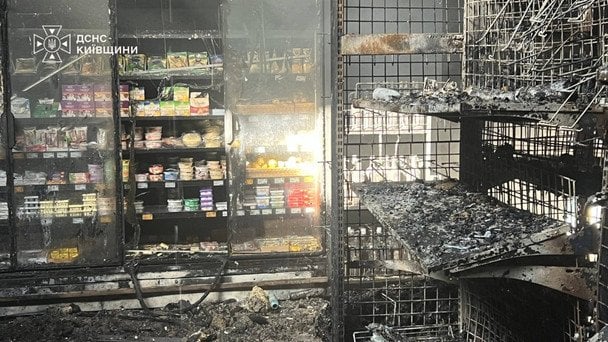
Aftermath of the Russian strike on a store in Kyiv Oblast, September 30, 2026.

Russia is preparing to make daily life in Kyiv harder before winter, aiming at the ordinary places civilians use rather than at military sites, The Economist reported. Ukrainian officials say the push blends bombing, sabotage, and disinformation, and expect it to peak in November.

Every winter of its full-scale invasion, Russia has tried to freeze Ukrainians into surrender, and each year the strikes reach deeper into ordinary life. The civilian casualties recorded in 2026 have already passed the whole of last year, the UN says.

From the power grid to the grocery store

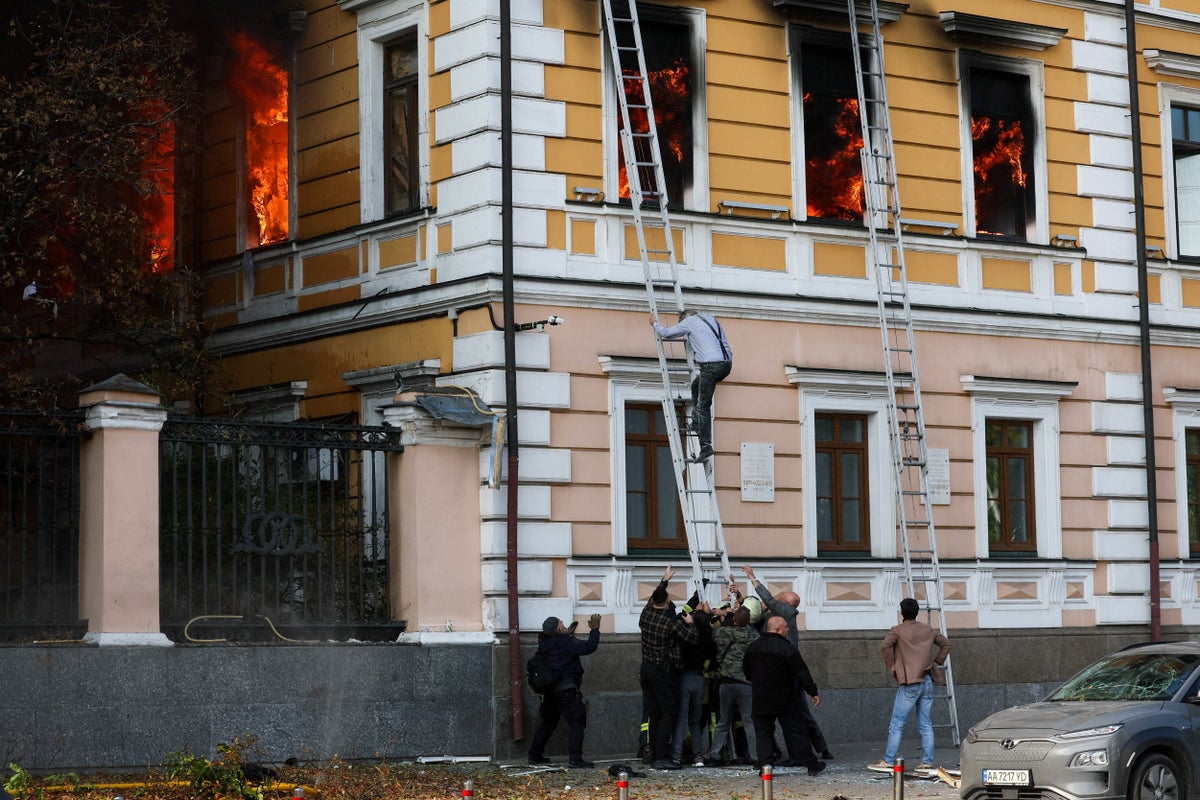
Russia has already turned its drones on Kyiv's supermarkets, food warehouses, and data centers this year. On 28 September, a Russian jet drone struck the National Academy of Sciences in central Kyiv. The strike killed two people, the Academy said. Survivors climbed from the windows of the burning building. A senior Ukrainian official told The Economist the Kremlin now wants shoppers too afraid to enter a store. Russia is also keeping its winter routine, hitting electricity, water, and sewage systems.

Cheaper jet drones that stream live to their pilots

Most of the damage now comes from Russia's cheap jet drones, The Economist said. Pilots guide them onto targets and watch a live video feed. They are hard to stop, and Russia's ballistic missiles are deadlier still as Ukraine's supply of Patriot interceptors dwindles. Ukrainian President Volodymyr Zelenskyy said Kyiv had agreed a new Patriot interceptor package, but it remains short of interceptors of its own. A security official told The Economist that Russia has thousands of drones stockpiled and plans to use its entire ballistic missile stock within two months.

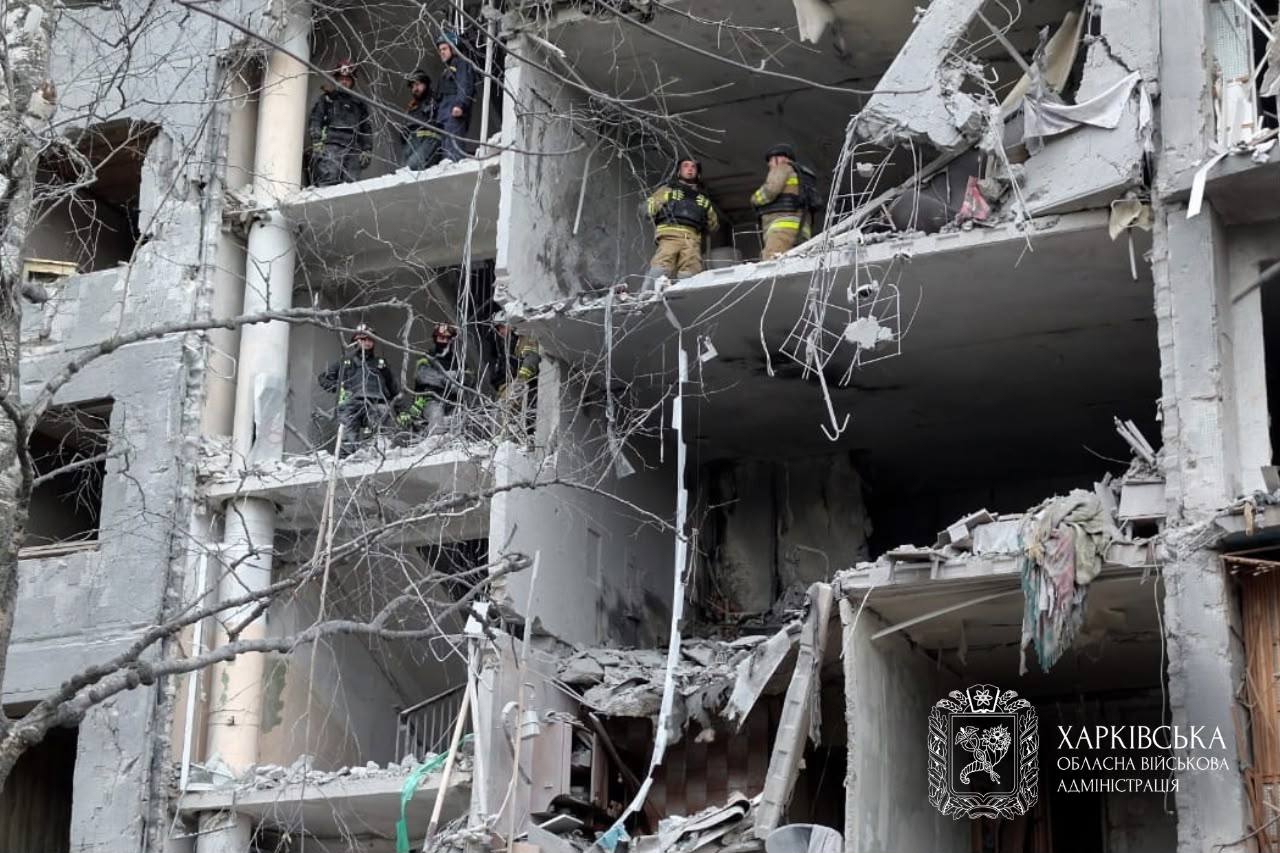
russia hits kharkiv high-rise overnight injuring 43 people strikes central kyiv dnipro broad daylight · post rescuers destroyed floors apartment building hit ukraine 28 2026 synehubov5319173733626879672 news ukrainian reports
Explore further

War is costing Ukraine $155 billion per year. With Western aid running late, Kyiv is freezing everything but army, pensions, and public wages

Sabotage, chaos, and a city that won't switch off

Ukraine's counter-intelligence services say they foil seven or eight Russian plots a week, and officials believe some sleeper cells remain. The campaign's third element, disinformation, targets war fatigue and corruption scandals. Russia runs the same plan every year, hoping its bot farms will push Ukrainians onto the streets to demand surrender, said Andrii Kovalenko, who heads the Center for Countering Disinformation at the National Security and Defense Council.

"It's nonsense," he told The Economist, adding that someone is feeding the idea to Putin so they can steal more money.

Kyiv is also far harder to shut down than Moscow assumes, Kovalenko said. The city's internet is too decentralized for a handful of strikes to knock out, The Economist noted. Energy expert Olha Babii said the test is how fast crews restore power, not whether it can be destroyed. The capital is emptying, its population down from about 3.7 million to 3.3 million by The Economist's count.

Russian troops seize drone-dropped food in occupied Oleshky, accusing recipients of cooperating with Ukraine. Some people go missing, a local official says

30 septembre 2026 à 07:45

local-resident-walks-to-a-box-still-attached-to-a-drone.jpg

Russian troops have taken food packages that Ukrainian forces dropped for Oleshky residents, accusing those who receive them of cooperating with Ukraine, Tetiana Hasanenko, head of the Oleshky City Military Administration, told Ukrinform on 30 September. She added that soldiers also question residents about where they got food not made in Russia.

The southeastern part of Kherson Oblast has remained under Russian occupation since 2022, with residents facing deteriorating security, shortages of food and medical care, and restrictions on their ability to leave. The UN Human Rights Monitoring Mission in Ukraine has documented the deterioration in Oleshky and neighboring Hola Prystan, where Russian forces have also taken residents away, including from the town's boarding institution.

Aid becomes a reason for questioning

Hasanenko said the latest delivery was the largest so far. Some residents received one or several packages, while others received nothing, she said.

"If it's food not made in Russia, [they ask]: 'Where did you get it?' And they say: if the Armed Forces drop food for you, it means you're cooperating with them," Hasanenko added.

Russian forces shoot down drones carrying provisions and confiscate or resell the food, Oleksandr Prokudin, head of the Kherson Oblast Military Administration, said. He added that Russian forces detain Oleshky residents, take them "into the basement," and beat them for receiving humanitarian packages. In Ukrainian wartime usage, being taken "to the basement" means being thrown behind bars by Russian forces.

"People are being taken. One of our families disappeared without a trace. We don't know where they are—they were taken to a basement, and that's it. Whether they are alive or not is unknown," Hasanenko said.

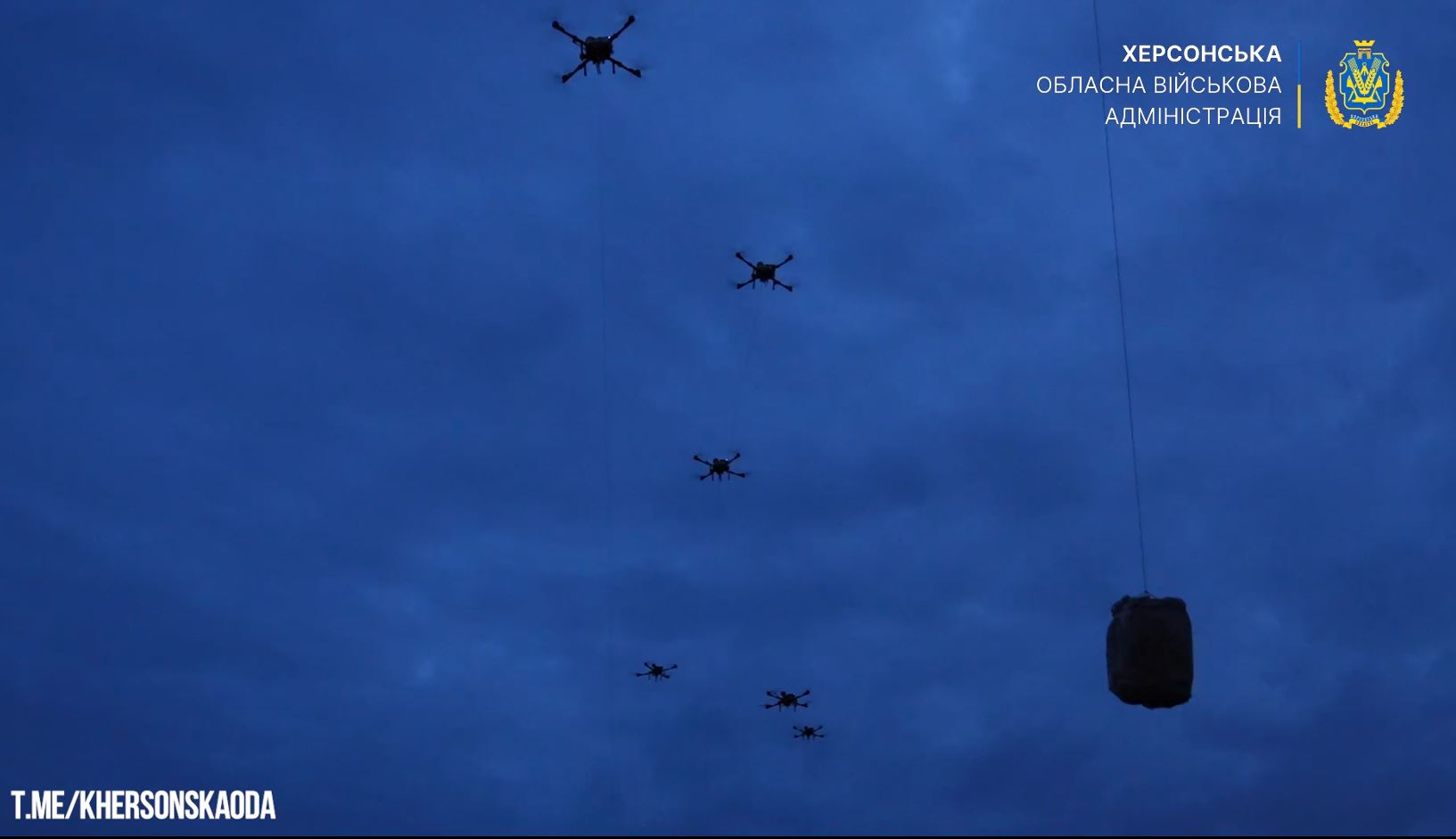
russia holds 2000 people hostage oleshky without food water—ukraine flew 4000 kg locals across dnipro · post drones carry packages starving residents russian-occupied kherson oblast 2026 lifting boxes ukraine news
Explore further

Russia holds 2,000 people hostage in Oleshky without food or water—Ukraine flew 4,000 kg of food to locals across the Dnipro

Residents risk mined routes to escape

People who escaped Oleshky on foot through mined territory had lost 10–15 kg, Hasanenko said in a 29 September interview with Ukrinform. She said people leaving the city or searching for food must cross mined territory, and some did not return. She also described Russian soldiers entering residents' homes, moving in, and demanding food and alcohol.

In a 4 June interview with Ukrinform, Hasanenko said Russia had not organized an evacuation from Oleshky and that residents who left did so at their own risk. She said people understood that each attempt to leave could be "a one-way trip."

Residents rely on drone deliveries

About 2,000 people, including nearly 50 children, remain in Oleshky, a city across the Dnipro from liberated Kherson, Prokudin said. He said they are surviving without food, electricity, or water and have been effectively prevented from leaving the city. Ukrainian forces have been using drones to deliver food to residents since March, he said. The deliveries are one of the few ways food reaches residents who remain cut off from the city's regular supply routes.

The UN mission reported on 25 June that no food had been delivered to Oleshky between 26 May and 24 June, after months of limited deliveries by private suppliers. Recently, Ukrainian forces delivered about four tonnes of food by drone to 100 locations across the city, Prokudin said.

  • ✇Euromaidan Press
  • Most drone interceptors ram or explode. This Ukrainian one just throws a net—six shots to a module
    A Ukrainian defense company has shown a new way to knock FPV drones out of the sky, unveiling a net-firing interceptor at the IT Arena tech conference in Lviv, dev.ua reported. The system, called Mangal and developed by Phantom Defense, is still a prototype—the company says the first production units could reach the market in a few months. Ukraine's counter-drone work has turned into a crowded contest, with firms racing to field jammers, interceptor drones, and net-throwers that can blu
     

Most drone interceptors ram or explode. This Ukrainian one just throws a net—six shots to a module

30 septembre 2026 à 06:31

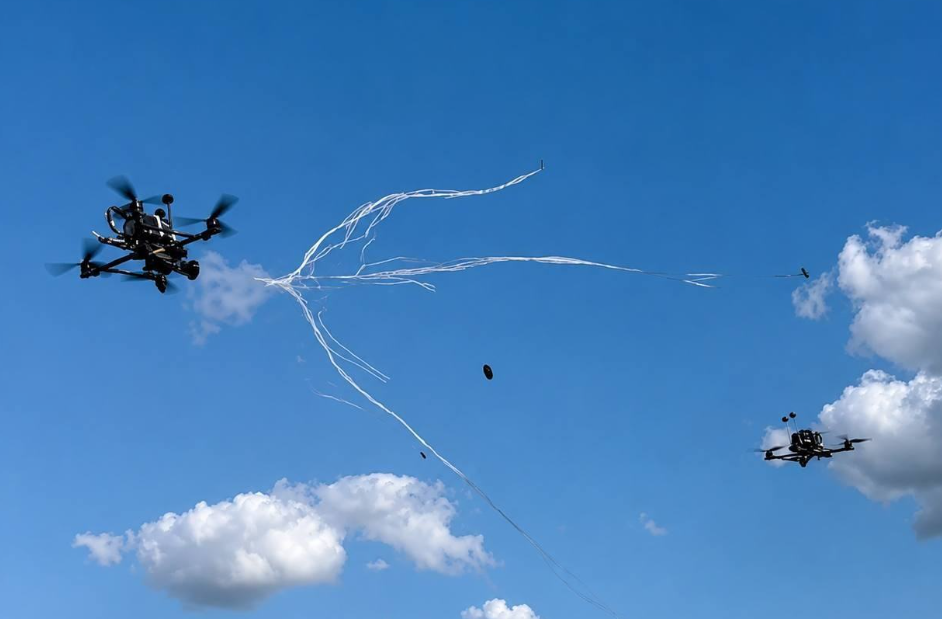
Modular FPV drone interceptor “Mangal” by Phantom Defence. September 2026.

A Ukrainian defense company has shown a new way to knock FPV drones out of the sky, unveiling a net-firing interceptor at the IT Arena tech conference in Lviv, dev.ua reported. The system, called Mangal and developed by Phantom Defense, is still a prototype—the company says the first production units could reach the market in a few months.

Ukraine's counter-drone work has turned into a crowded contest, with firms racing to field jammers, interceptor drones, and net-throwers that can blunt Russia's growing use of cheap FPVs.

What Mangal does

Phantom Defense designed the modular launcher to defend positions, vehicles, and other targets against enemy drones. It fires a special net weighted with sinkers. The net opens the moment it fires, tangling the drone and dragging it down. One module holds six charges. Two cameras give the crew a clearer view, and the system can detect targets on its own, which speeds up how fast an operator spots a threat. Crews can fix Mangal in place to guard checkpoints, trenches, or infrastructure, or bolt it onto a vehicle.

Why a net

FPV drones—aircraft a pilot flies straight into a target—have become a routine danger along the front. A small, fast drone is hard to hit with a single round. A net spreads as it travels, so it is more forgiving to aim. Neither Phantom Defense nor the outlets covering the launch have said how far Mangal's net can reach.

he Ukrainian company WINFLY unveiled the WINFLY Spider, an interceptor equipped with a net-launcher. Source: Militarnyi
Explore further

Ukraine’s newest interceptor doesn’t ram its target. It nets it for $27, then flies home to catch another

Other net-based counters

Other developers are turning to nets too. The WINFLY Spider is an interceptor drone that snares a target in a net and returns to its launch point intact, at about $27 a shot. That lets one aircraft make repeated intercepts instead of being spent on a single kill. Scan Horizon comes from Postup Solutions, a firm registered in Wrocław, Poland, and pairs a net launcher from Ukrainian company Ptashka Drones. Its net reaches about 30 meters. Contra Drone, meanwhile, has shown interceptor missiles that can reportedly carry net warheads alongside other options.

The EU sanctioned Russia’s Starlink rival but not the company that builds it. Experts call that the gap that matters

30 septembre 2026 à 03:56

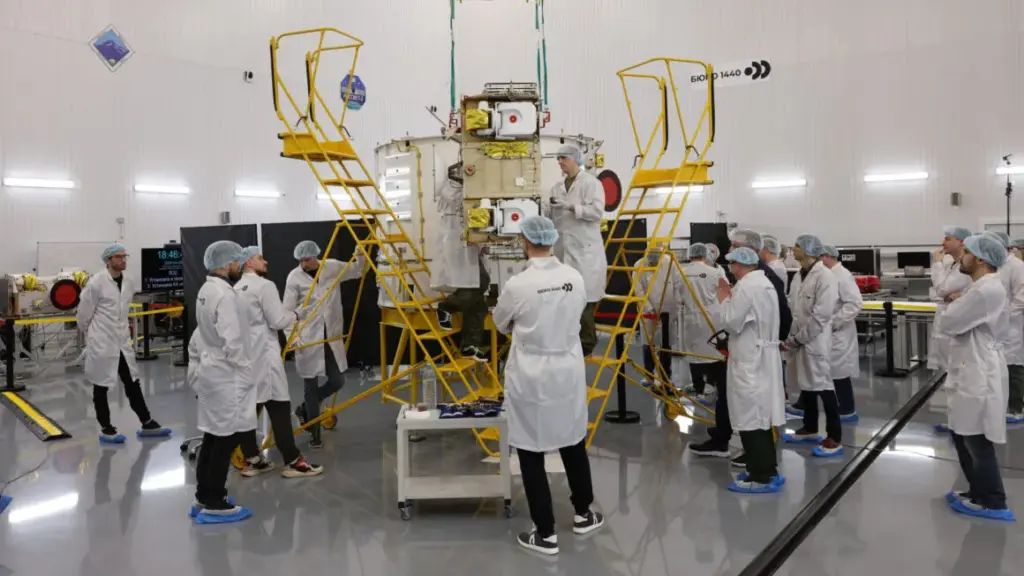
Employees of Russian company Bureau 1440 work on a Rassvet communications satellite.

The company that actually assembles Russia's homegrown answer to Starlink has been left off every Western sanctions list, a US research group and a Ukrainian anti-corruption watchdog separately told Euromaidan Press this month.

Both landed on the same gap—the manufacturer, Bureau 1440, and its leaders remain untouched by the West, even though Kyiv has already placed the firm on Ukraine's own sanctions list. They differ on how much a Western designation would achieve, not on where the opening is.

The company no Western government has sanctioned

Rassvet is Russia's low-Earth-orbit satellite constellation, built by the private firm Bureau 1440 to give Moscow's troops communications independent of SpaceX. Bureau 1440 launched its first 16 satellites in March 2026, building the network after SpaceX cut off the Russian units' unauthorized Starlink access. C4ADS, a US-based research organization, confirmed to Euromaidan Press that Bureau 1440 and its leadership sit outside every Western sanctions regime, and called designating the manufacturer the single most visible and effective step available.

Viktoriia Vyshnivska, a senior analyst at the Independent Anti-Corruption Commission (NAKO), a Ukrainian watchdog, was more measured. "We shouldn't expect a magical effect," she said, but sanctions would make the Western boards and components Bureau 1440 depends on harder and costlier to source. Many of those goods are already banned under EU export controls, she noted—yet the manufacturer itself remains off the lists.

The EU named the network but not the firm

The EU has already moved once. Its 21st sanctions package, adopted on 23 July, targeted the Rassvet network but stopped short of the manufacturer, leaving Bureau 1440 and its chief executive off the lists. On 28 August, Ukrainian Foreign Minister Andrii Sybiha said Kyiv had sent a formal note to the UN's telecom agency requesting that Ukraine be excluded from Rassvet's coverage. Days later, he urged EU ministers to sanction the project. Ukraine gave partners a list of nine entities tied to it, Militarnyi reported, citing sources.

For years Ukraine could find, jam, or knock out the communication links Russian forces leaned on. Rassvet may be the first it cannot. Vyshnivska put the useful window to slow it at about a year. Russia, by Ukrainian calculations, needs five to eight years to see it through.

Euromaidan Press examined how Russia built Rassvet, and how far it still has to go.

❌