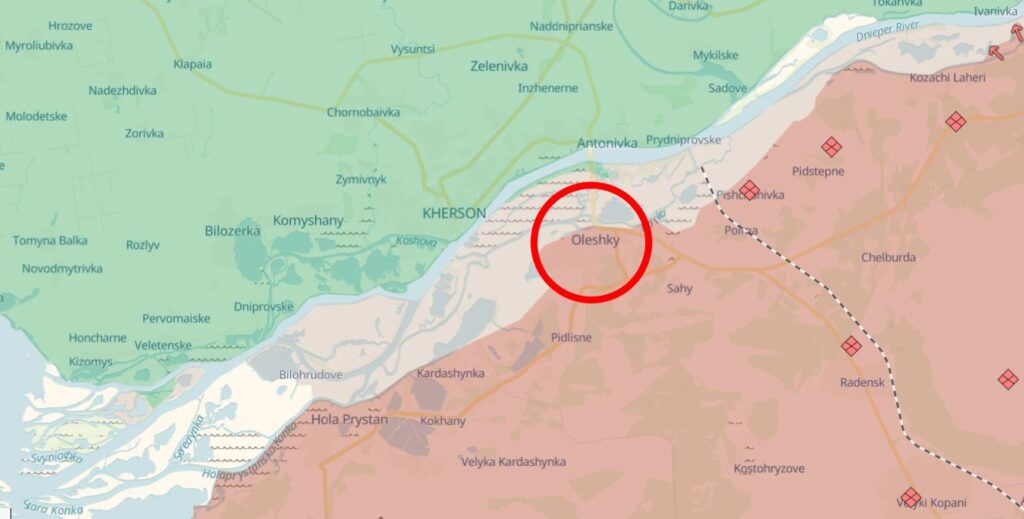
Residents who have recently escaped Russian-occupied Oleshky describe being subjected to threats, intimidation, and exploitation by Russian soldiers, according to the head of the Oleshky City Military Administration.
Oleshky is facing severe shortages of food, water, and medicine, with around 1,500 civilians, including up to 50 children, still trapped in the Russian-occupied city with no safe way out.
Tetiana Hasanenko told Ukrinform on September 29 that people escaping the city on f
Residents who have recently escaped Russian-occupied Oleshky describe being subjected to threats, intimidation, and exploitation by Russian soldiers, according to the head of the Oleshky City Military Administration.
Oleshky is facing severe shortages of food, water, and medicine, with around 1,500 civilians, including up to 50 children, still trapped in the Russian-occupied city with no safe way out.
Tetiana Hasanenko told Ukrinform on September 29 that people escaping the city on foot were severely weakened and had lost up to 15 kilograms. She said those who managed to leave described not only hunger, but also abuse by Russian troops.
“They were really fleeing from hunger and from abuse,” Hasanenko told Ukrinform.
Russian troops threaten residents for food and alcohol
According to Hasanenko, Russian soldiers are entering residents’ homes, taking them over, and forcing the civilians living there to feed them despite having little food themselves.
“They move in and demand that people feed them and give them alcohol,” she said, adding that some of the soldiers appeared to be drug or alcohol users.
She described one family’s account in which a Russian soldier allegedly locked them in a shower while in an apparently intoxicated state and threatened to throw a grenade at them.
Another woman reportedly told Ukrainian officials that a Russian soldier threatened to kill her because the homemade wine she gave him was sour.
“They move in and demand to eat and drink,” Hasanenko said.
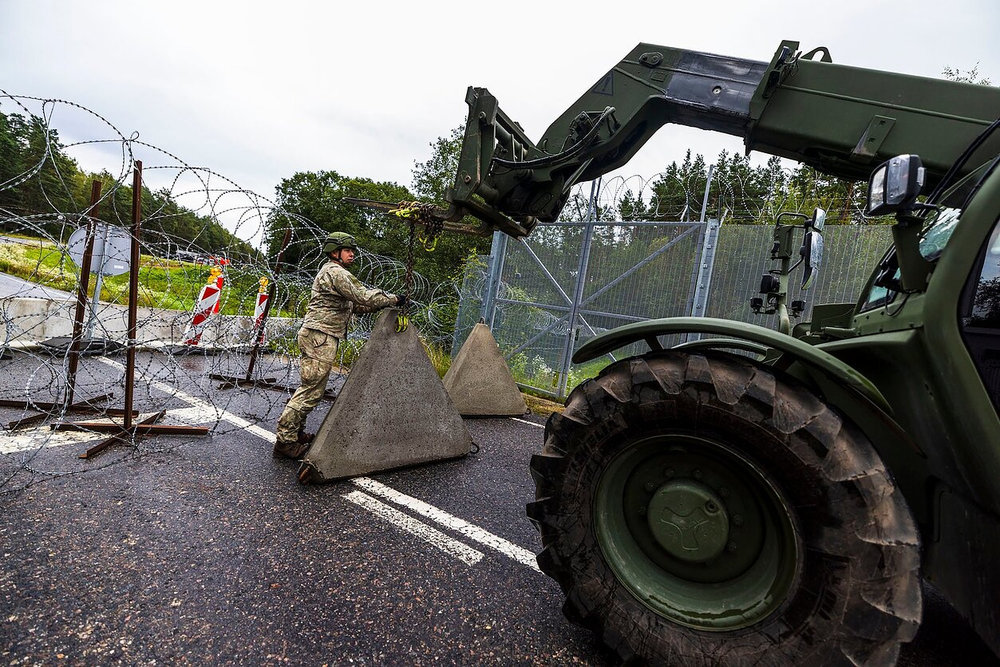
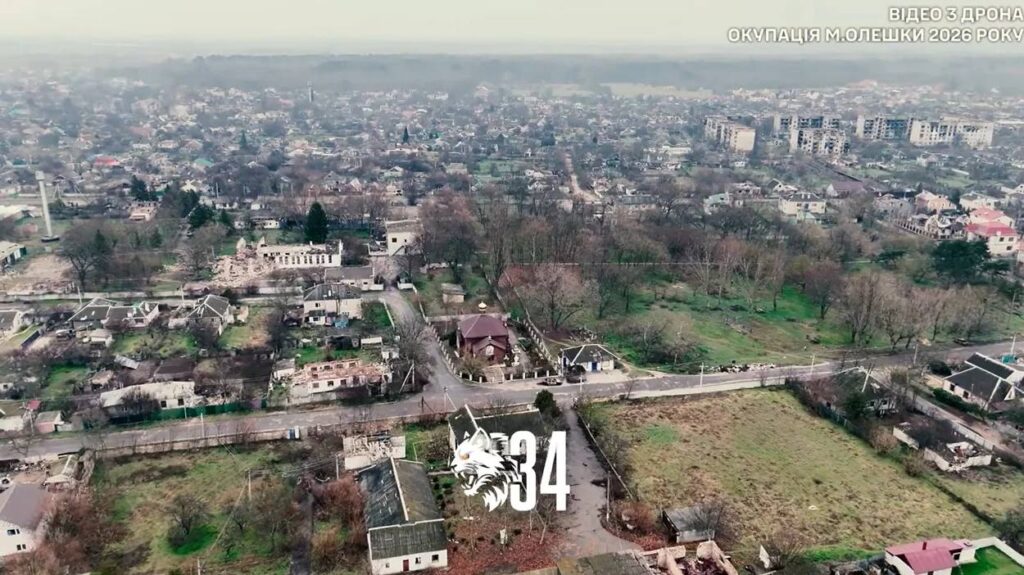
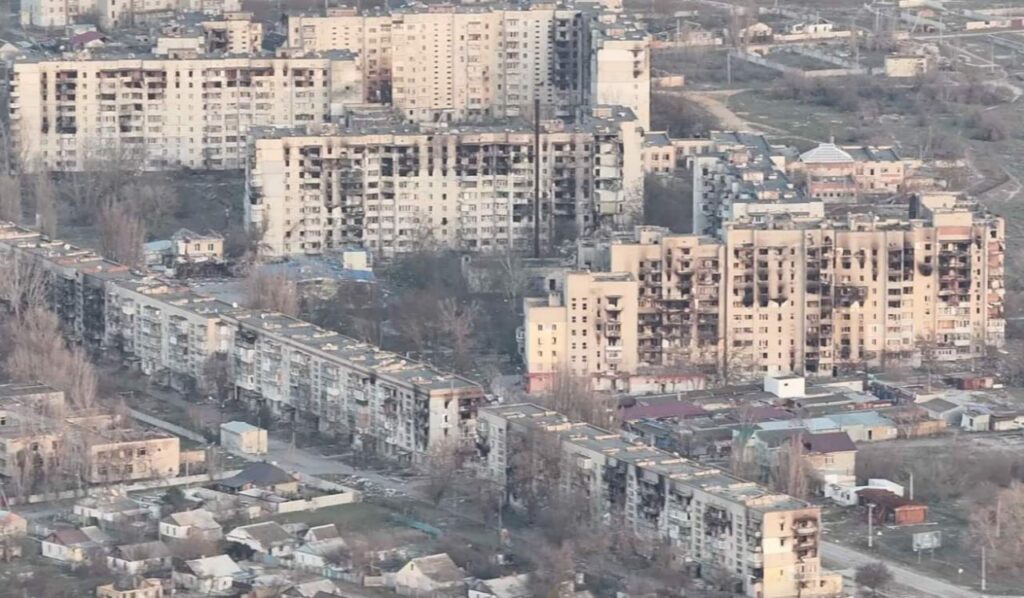
Oleshky, Kherson Oblast, has been under Russian occupation since 2022, following Russia’s capture of the city during the initial phase of its full-scale invasion of Ukraine. Photo: Dmyto Lubinets
Residents face hunger and mines
The accounts come as Oleshky in Ukraine’s Kherson Oblast faces a severe humanitarian crisis. Ukrainian authorities say around 1,500 people remain in the occupied city, including up to 50 children, with residents lacking reliable access to food and water.
Those trying to escape face minefields around the city. Hasanenko said some residents have attempted to leave on foot and that there are people who have failed to return after entering mined areas.
She said one family tried to return because children had been left behind at home but never made it back.
Recent escapees have reportedly lost 10–15 kilograms, with some leaving only after becoming severely weakened by hunger.
Russian troops accused of using civilians as cover
Hasanenko also said Russian soldiers are deliberately living in civilian homes to protect themselves.
By occupying homes and remaining among local residents, she said, Russian troops are effectively using civilians as a “human shield” because they fear for their own safety.
Ukraine has been seeking an organized evacuation of civilians from Oleshky and has said the International Committee of the Red Cross is prepared to participate if Russia agrees to the necessary arrangements. Russia has not confirmed its readiness to allow such an evacuation.
Russian-occupied Oleshky, in Ukraine's Kherson Oblast.
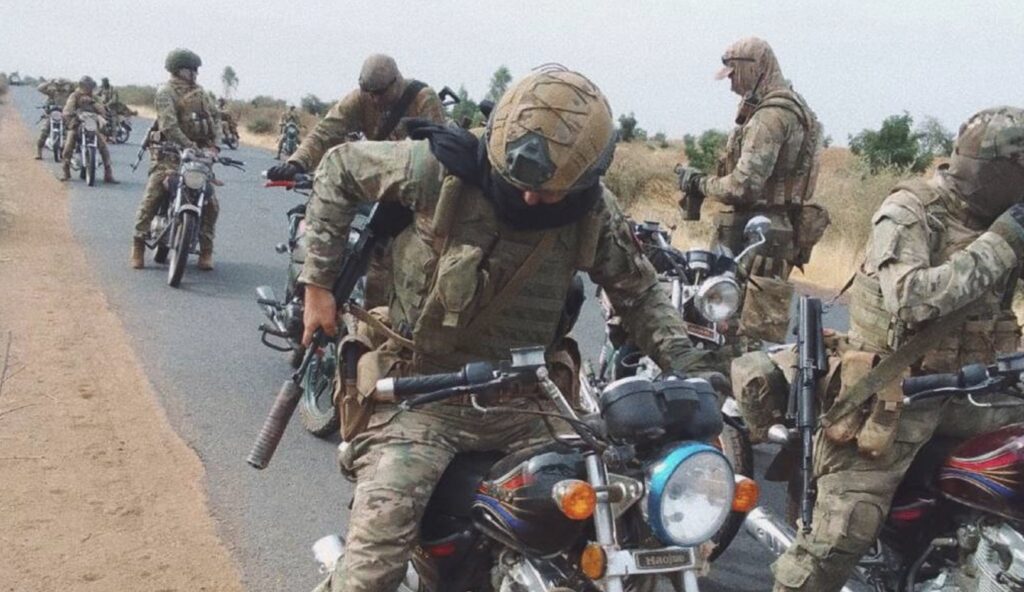
A former Wagner fighter captured by Ukraine has described alleged training sessions in Mali where Russian mercenaries used African prisoners as live subjects, deliberately inflicting severe injuries so recruits could practice battlefield medicine and killing.
Training built around real victims
The fighter told Ukrainian journalist Dmytro Karpenko that Wagner instructors brought captured Africans to training sessions and turned them into human practice targets.
“We gathered for med
A former Wagner fighter captured by Ukraine has described alleged training sessions in Mali where Russian mercenaries used African prisoners as live subjects, deliberately inflicting severe injuries so recruits could practice battlefield medicine and killing.
Training built around real victims
The fighter told Ukrainian journalist Dmytro Karpenko that Wagner instructors brought captured Africans to training sessions and turned them into human practice targets.
“We gathered for medical training, and they brought in a captured terrorist. They tied a block of TNT to his leg. They set it off, everyone moved away, and of course his leg was blown off,” he said.
The recruits then practiced stopping the resulting bleeding. According to the fighter, the prisoner was later shot in the artery near his armpit so they could practice the same procedure on his arm.
The prisoner died after the training.
In another session, he said, instructors had a prisoner's leg chopped off with an ax so recruits could practice applying a tourniquet under realistic conditions.
“They cut off his leg. Then they put on the tourniquet – everything as if it were an extreme situation, so everything would be realistic,” he said.
‘Here, strike the heart’
The alleged exercises also included training in how to kill.
The fighter said another prisoner was drugged before recruits were taught how to kill someone with a knife.
“They showed us how to kill with a knife to the heart. They chose two people who were willing and said: ‘Here, strike the heart,’” he said.
The fighter said all three prisoners died during the exercises.
A former Wagner fighter captured by Ukraine, who described alleged abuses committed by Russian mercenaries in Mali in interview with Ukrainian journalist Dmytro Karpenko. Screenshot from video: Dmytro Karpenko
From Mali to Ukraine
The testimony comes from a Russian mercenary who joined Wagner in 2023 and was sent to Mali that September via Syria. He said around 120–130 recruits traveled with him and that Wagner paid them $3,000 a month.
Wagner was a Russian paramilitary formation that operated as a deniable arm of the Kremlin in Ukraine, Syria, and Africa. After Wagner chief Yevgeny Prigozhin's death in 2023, the group's independent role was largely dismantled, with many of its fighters and operations brought under Russian state control. Its African operations were increasingly taken over by Russia's state-run Africa Corps.
The mercenary remained in Mali until April 2024. After returning to Russia, he signed a contract with the Russian Defense Ministry in August 2025 and was assigned to the 14th Separate Special Forces Brigade, which is subordinate to Russia's military intelligence agency, the GRU.
He was subsequently captured by Ukrainian forces.
A record of alleged abuses
The account has not been independently verified, but it adds to years of allegations of serious abuses by Wagner and other Russian personnel in Africa.
Wagner fighters have long faced allegations of abuses in Africa, including killings and violence against civilians. In Mali, the group became a key part of Russia’s military presence after the country’s military junta turned to Moscow for support, with Wagner fighters operating alongside Malian forces. Ukrainian intelligence has also documented and targeted Wagner’s activities in Africa.
The pattern of alleged abuses has continued under Russia’s Africa Corps, the Kremlin-controlled force that replaced Wagner in Mali. Human Rights Watch reported in August 2026 that Africa Corps fighters summarily killed nine civilians, including four children, beat dozens of others, and burned and looted homes in central Mali. In June, the group also carried out airstrikes that killed eight civilians, including three children.
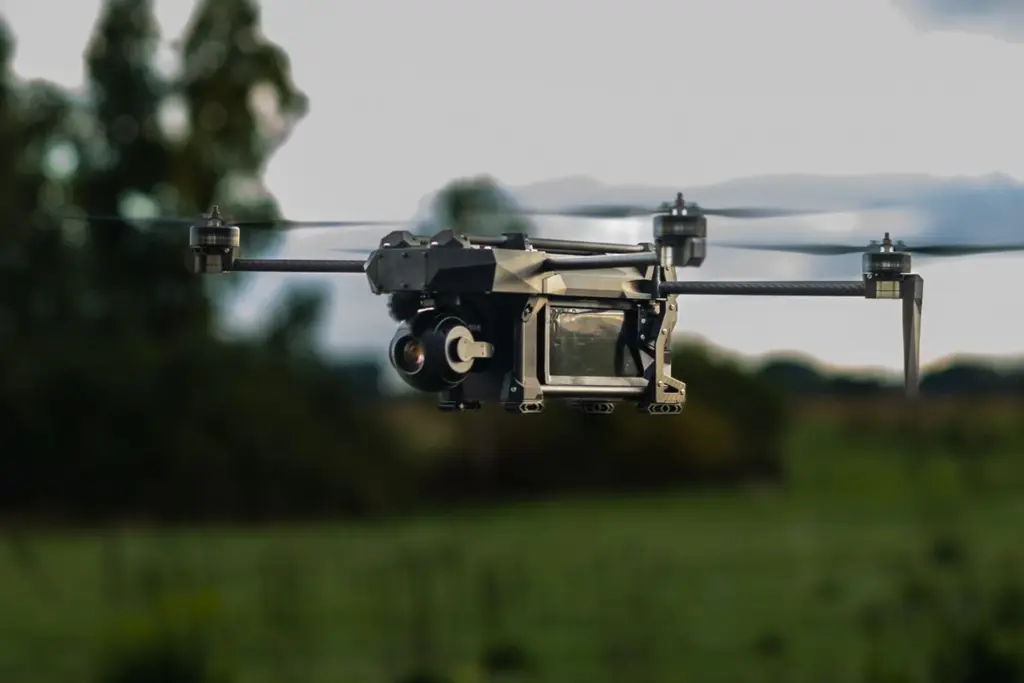
Ukrainian company Vyriy Industries is bringing a new tactical reconnaissance drone, Slavic, to the market, Oboronka reports, citing information from the manufacturer. The control system of the new drone will be familiar to DJI Mavic operators, the company also said.
Mavic has long been one of the main reconnaissance tools used by Ukrainian forces, with Ukraine relying heavily on supplies of these drones from abroad. After Ukrainian President Volodymyr Zelenskyy said China had stopped se
Ukrainian company Vyriy Industries is bringing a new tactical reconnaissance drone, Slavic, to the market, Oboronka reports, citing information from the manufacturer. The control system of the new drone will be familiar to DJI Mavic operators, the company also said.
Mavic has long been one of the main reconnaissance tools used by Ukrainian forces, with Ukraine relying heavily on supplies of these drones from abroad. After Ukrainian President Volodymyr Zelenskyy said China had stopped selling drones to Ukraine, the country began seeking alternatives. Slavic is one of these domestic alternatives, designed not only to replace Mavic but also to adapt its capabilities to current battlefield conditions, allowing reconnaissance crews to operate farther from the line of contact and reducing risks to personnel.
Slavic has a tactical range of up to 30 kilometers without GPS
Slavic can remain airborne for up to 1.5 hours because it is equipped with a 40,000 mAh solid-state battery, the media outlet notes. The drone has a tactical range of up to 30 kilometers, the report says.
Illustration showing the positions of the Slavic pilot (left) and Mavic pilot (farther to the right), as well as the drones’ flight ranges relative to enemy positions (shown in red). Illustration: Vyriy Industries
The aircraft can operate without GPS, as Slavic uses optical positioning for navigation. The pilot can also select a less congested channel and operate more effectively in difficult terrain because the communications system operates across a wide range of channels.
The manufacturer notes that for surveillance, Slavic is equipped with a daytime 2K digital camera mounted on a three-axis stabilized gimbal, with 10x optical and 30x hybrid zoom.
Part of the drone with the camera. Photo: Vyriy Industries
The system is supplied as a ready-to-use package “out of the box,” with all the equipment needed for operation without additional field modifications.
The drone is designed to keep crews farther from the front line
The company said its new drone has successfully completed initial combat trials with seven units of the Ukrainian Defense Forces and is preparing for scale-up, the media outlet notes.
“The war has changed, and so have the working conditions for crews. The kill zone has expanded, while available commercial drones have a limited tactical range. The main task now is to provide the military with a specialized platform that can fly longer and farther, so crews can operate farther from the line of contact. This is exactly why we began developing Slavic,” said Oleksii Babenko, founder and CEO of Vyriy Industries.
At the same time, the team is working on new Slavic configurations, including testing thermal imaging modules for nighttime reconnaissance. The manufacturer is also preparing the platform for scaled-up production and deliveries to the Ukrainian Defense Forces, the company told the media.
“Frankensteins” and Ukrainian-made drones are among the options for replacing scarce Mavics
The Ukrainian military had widely used Chinese DJI Mavic 3 drones, including to adjust artillery fire, monitor infantry positions and conduct surveillance, prompting Ukraine to seek ways to replace the shortage. More than five alternatives to the Chinese drone had already been developed in Ukraine, the Ministry of Strategic Industries of Ukraine confirmed to RBC-Ukraine in July 2025.
DJI Mavic 3 in use by a Ukrainian servicemember. Photo: Ministry of Defense of Ukraine
There are also other options for replacing them. The main work in military units is being done with “Frankensteins,” drones assembled from two or three damaged aircraft, Mavic UAV pilot instructor “Dobryi” said in an interview with Militarnyi in July this year. At the same time, such drones are less reliable than new ones, he added.
Small groups of Russian infantry could slip into regional capital Zaporizhzhia this winter, a frontline commander warned in a mid-September interview with Dnipro TV, in a debate later compiled by Radio Svoboda. His forecast drew quick pushback from a military analyst, who called it far more categorical than the situation warrants. At the center of the dispute lies the drained Kakhovka Reservoir, whose dry bed Russia now uses for cover.
Dense drone surveillance has made large mechanized
Small groups of Russian infantry could slip into regional capital Zaporizhzhia this winter, a frontline commander warned in a mid-September interview with Dnipro TV, in a debate later compiled by Radio Svoboda. His forecast drew quick pushback from a military analyst, who called it far more categorical than the situation warrants. At the center of the dispute lies the drained Kakhovka Reservoir, whose dry bed Russia now uses for cover.
Dense drone surveillance has made large mechanized assaults costly, pushing Russian commanders toward small groups that probe for gaps. That shift turns unwatched terrain — here, the drained reservoir bed—into the seams they test.
Solitary groups, not massed forces
Dmytro Filatov, callsign Perun, commands the 1st Separate Assault Regiment named after Dmytro Kotsiubailo. The danger will come not as a massed assault but as infiltration, he said. He expects solitary infantry groups to reach and enter Zaporizhzhia over the winter. He pointed to the Stepnohirsk axis and the dense buildings along the Dnipro shore. Fog and rain raise pressure across the whole front, and Russian troops have long fought well in winter, he said.
A city on the front's edge
Zaporizhzhia is a regional capital and industrial center in southeastern Ukraine, with more than 700,000 residents before the full-scale invasion. The city sits about 25 km from the nearest active front, around Stepnohirsk to the south—unusually close for a regional capital of its size. Russian missiles, drones, and glide bombs hit the city daily. It has held since 2022, and Russia has not taken a Ukrainian regional capital since the war's first months.
The aftermath of the Russian attack on Zaporizhzhia on 30 May 2026. Credit: Local Governor Ivan Fedorov
The dead reservoir as cover
Russia blew up the Kakhovka dam in June 2023 and drained the reservoir behind it. Reeds now stand several meters high across the dry basin, giving foot soldiers cover to move unseen. Ukraine's Southern Defense Forces reported in November 2025 that Russian groups use it to press into the Ukrainian flank.
Russian troops increasingly use the bed to infiltrate and haul supplies, said Kostiantyn Mashovets of the Information Resistance group. One of their assault groups pushed as far as Malokaterynivka before Ukrainian forces blocked it, he wrote. Ukrainian troops hold northern Plavni, including the railway station and part of the E-105 highway, Mashovets added. The Institute for the Study of War pointed to the same route in its 26 September assessment, citing Ukrainian military observers.
Explore further
“The worst environmental catastrophe since Chornobyl disaster”: Three years after Russia destroyed Kakhovka Dam, real death toll is still unknown
An analyst is not convinced
Oleksandr Kovalenko, a military-political expert and Information Resistance coordinator, rates the threat far lower. He wrote that the warning "sounded far more categorical than it should have." Stepnohirsk, about 25 km south of Zaporizhzhia, is the closest active fighting to the city. Russia has tried for years to take the town but now controls only its 3rd microdistrict and southern Plavni.
Infiltration becomes possible only if Russia takes the whole foothold and reaches the north bank of the Konka river. That will not happen by the end of 2026, and no ground push on the city looks possible, he said. The main danger stays daily Russian strikes on the city, not a ground advance, he added.
Estonia says Russia ordered the August arson attack on Milrem Robotics’ Tallinn premises, an Estonian defense company supplying Ukraine with military ground robots.
Russian sabotage operations have been expanding across Europe in recent months, targeting companies, infrastructure and supply chains connected to Ukraine’s defense effort. European authorities have linked or investigated suspected Russian involvement in arson and other sabotage attempts in several countries, as Moscow seeks
Estonia says Russia ordered the August arson attack on Milrem Robotics’ Tallinn premises, an Estonian defense company supplying Ukraine with military ground robots.
Russian sabotage operations have been expanding across Europe in recent months, targeting companies, infrastructure and supply chains connected to Ukraine’s defense effort. European authorities have linked or investigated suspected Russian involvement in arson and other sabotage attempts in several countries, as Moscow seeks to disrupt support for Ukraine and intimidate its European backers.
Foreign Minister Margus Tsahkna said on 29 September that information gathered by Estonia’s Internal Security Service showed the fire at Milrem’s Tallinn premises on the night of 14–15 August was a Russian intelligence-directed sabotage operation. Estonia summoned Russia’s chargé d’affaires over the attack.
Three suspects detained
Estonian authorities had already detained three suspects in connection with the arson, with the suspects apprehended in Latvia. Tsahkna said the perpetrators had been taken into custody and no longer posed a threat to Estonia.
Russia’s attempts to divide, intimidate and sow confusion will fail.
Every act of sabotage only strengthens Allied resolve, increases pressure on Russia and reinforces support for Ukraine.
We will continue to expose, deter and respond. No stone will be left unturned. https://t.co/JfdSbAUGi1
When the investigation was first announced in August, Estonian authorities had not publicly established a Russian connection or disclosed evidence linking Moscow to the fire.
Milrem supplies robots to Ukraine
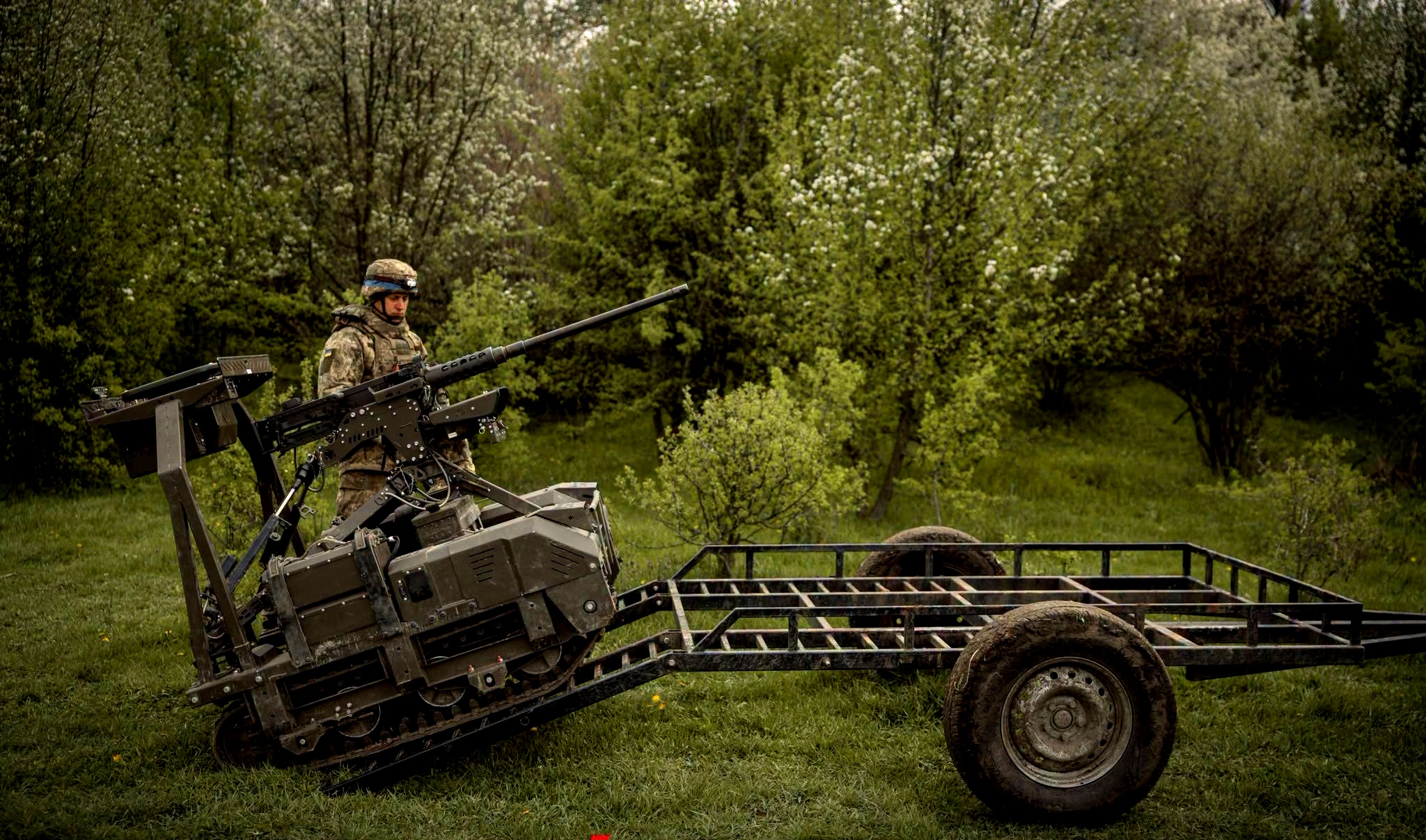
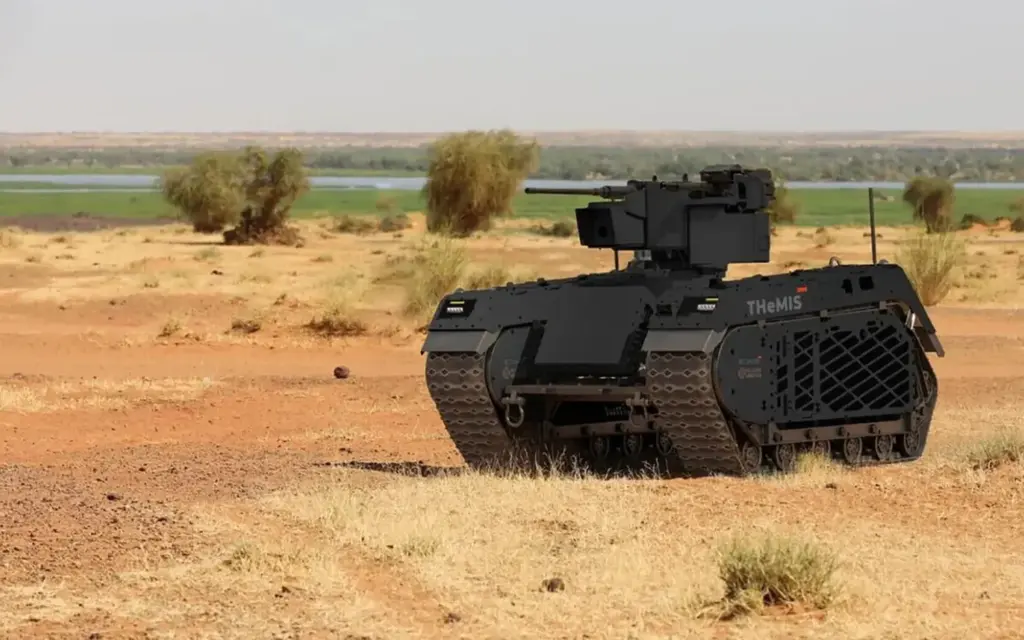
Milrem Robotics makes THeMIS unmanned ground vehicles, which have been used by Ukrainian forces since 2022 for tasks including transporting ammunition, food and other supplies, evacuating wounded troops, and mine clearance.
The company said in August that the fire had not disrupted its production or deliveries to Ukraine. More than 200 of its robotic systems are expected to be operating in Ukraine by the end of 2026, including more than 150 vehicles funded by the Netherlands.
The attack is part of a growing series of suspected sabotage operations targeting companies and facilities connected to Ukraine’s defense effort. In August, Slovak authorities foiled an attempted arson attack on a Ukrainian drone factory, while European investigations have also examined suspected Russian involvement in attacks on defense-related facilities in Czechia, Lithuania and Bulgaria.
Estonia says sabotage will not weaken Ukraine support
Tsahkna said Russia’s campaign is intended to intimidate European countries, divide allies and weaken their support for Ukraine.
“Russia’s sabotage campaign will not achieve its objectives,” the Estonian Foreign Ministry said, adding that Estonia and its allies would continue increasing pressure on Russia and supporting Ukraine.
Tsahkna said Estonia would respond to the attack by increasing both its support for Ukraine and pressure on Russia.
Ukrainian defense-tech firm BlueBird Tech has begun renting out its Hrets electronic-warfare jammers by the day, in what it calls Ukraine's first such service, the company said on 29 September 2026. Electronic-warfare gear—the devices that scramble the radio links attack drones rely on—is normally bought outright, renting lets a user take a system for a single mission or test it before committing.
The pull is a war where cheap first-person-view (FPV) drones have made portable jamming a
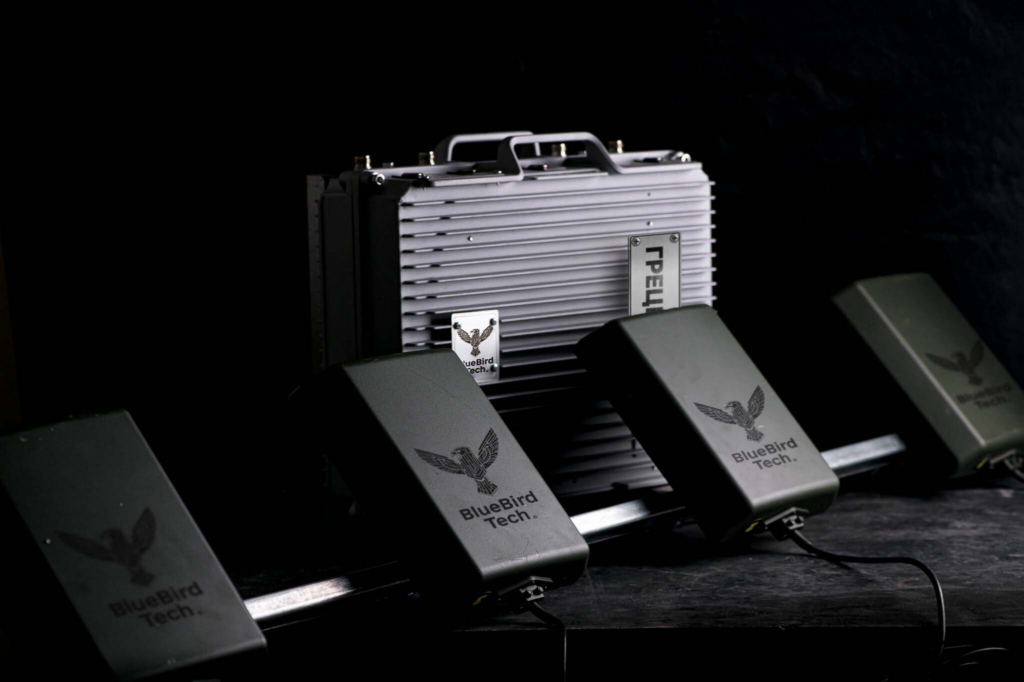
Ukrainian defense-tech firm BlueBird Tech has begun renting out its Hrets electronic-warfare jammers by the day, in what it calls Ukraine's first such service, the company said on 29 September 2026. Electronic-warfare gear—the devices that scramble the radio links attack drones rely on—is normally bought outright, renting lets a user take a system for a single mission or test it before committing.
The pull is a war where cheap first-person-view (FPV) drones have made portable jamming a routine need, one many users face only for a stint.
How renting works
After paperwork and a deposit equal to the device's full price, the system is handed over, and that handover counts as day one. Each day's rent is then drawn from the deposit, return the system working and undamaged and the renter gets back what is left. Keep it long enough that the fees add up to the full price, and the jammer passes to the renter automatically. Renting is open to individuals, companies, charities, and volunteer groups.
Three models, and what each one jams
The Hrets XL is a modular FPV jammer built from two to 10 working modules, priced case by case. The vehicle-mounted Hrets 4MC is an anti-drop system that jams DJI Mavic-type quadcopters—the drones Russian forces use to drop munitions—for about $56 a day. The lightweight Hrets 4M jams FPV drones at a stated 70 to 400 meters for about $67 a day. One Ukrainian firm has even packed detection, decoding, and jamming of an FPV signal into a single device.
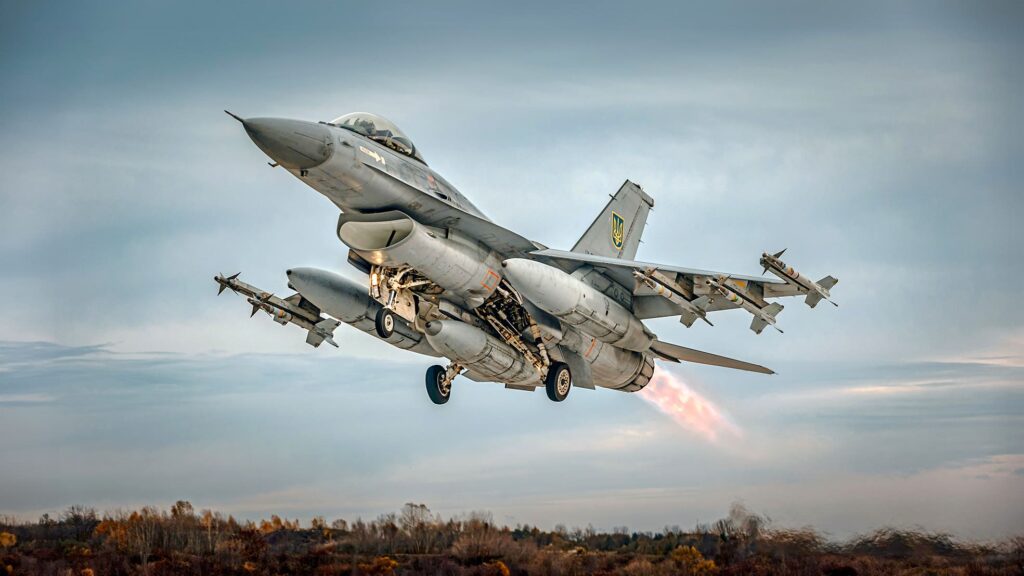
Ukraine is set to receive three more F-16 fighter jets from Belgium by the end of 2026, Ukrainian President Volodymyr Zelenskyy said, as Russia intensifies its missile and drone attacks on Ukrainian cities.
The aircraft are particularly valuable as Russia increases its use of Shahed/Geran drones, including faster jet-powered variants that are harder for Ukraine’s cheaper interceptor drones to stop. Russia’s growing aerial campaign is already placing additional pressure on Ukraine’s limi
Ukraine is set to receive three more F-16 fighter jets from Belgium by the end of 2026, Ukrainian President Volodymyr Zelenskyy said, as Russia intensifies its missile and drone attacks on Ukrainian cities.
The aircraft are particularly valuable as Russia increases its use of Shahed/Geran drones, including faster jet-powered variants that are harder for Ukraine’s cheaper interceptor drones to stop. Russia’s growing aerial campaign is already placing additional pressure on Ukraine’s limited air-defense resources.
Zelenskyy said the aircraft will be delivered through an accelerated process. Ukraine has already received urgent F-16 ammunition from Belgium and other partners, including Spain.
“As Russia escalates its attacks every day, we need to increase our capabilities to shoot down aerial targets and protect people,” Zelenskyy said.
F-16s help counter Russia’s air campaign
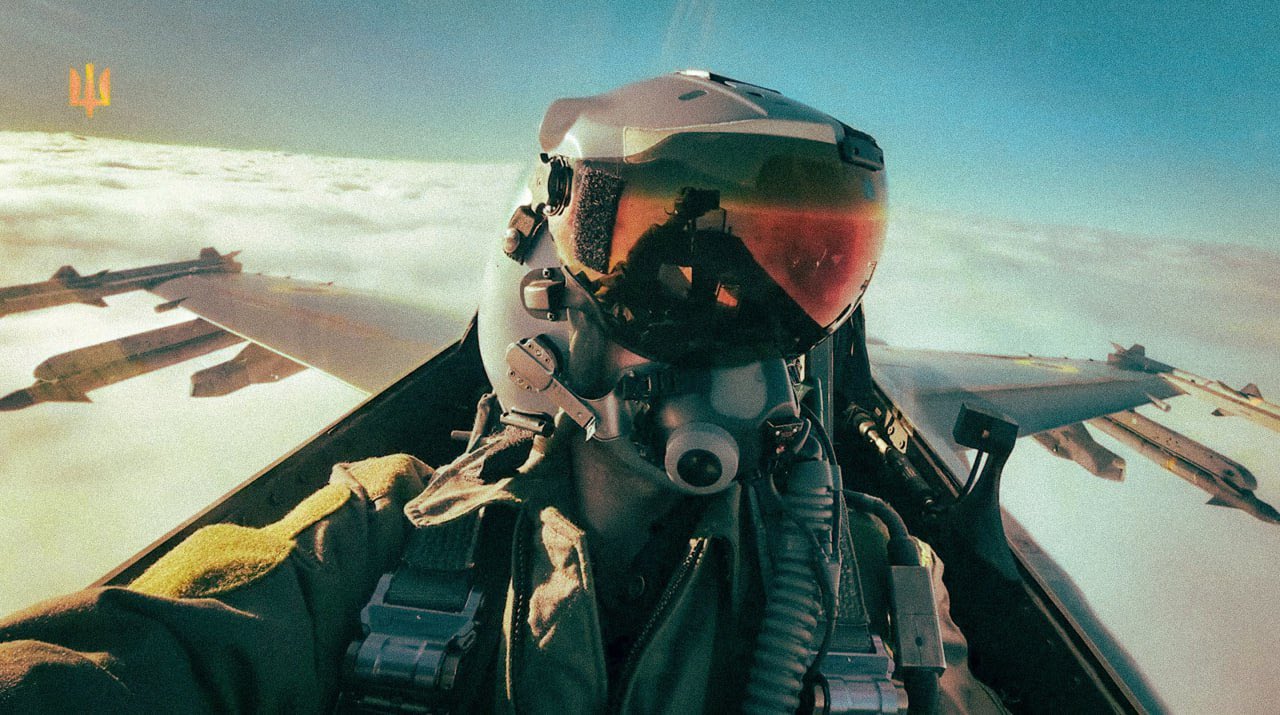
Ukraine received its first F-16s in 2024 after an 18-month international effort to secure the aircraft and train Ukrainian pilots. The jets have since become an important part of Ukraine’s air defense.
Ukrainian F-16s are used primarily to intercept Russian cruise missiles and attack drones, while also carrying out electronic warfare and other missions. In one January 2025 mission, a Ukrainian F-16 pilot shot down six Russian cruise missiles.
Explore further
Allies supplied the F-16s — Ukrainian pilots figured out the tactics
F-16s can also carry precision-guided bombs and air-to-air missiles, allowing them to support strikes against Russian forces and other targets near the frontline. Ukrainian pilots have developed tactics for using the aircraft despite Russia’s dense air-defense network.
For Ukraine, the additional jets therefore provide both another layer against Russia’s expanding aerial attacks and additional capacity for combat operations on the frontline.
A Russian drone struck near the Yahodyn border crossing on the Ukrainian-Polish border, the Ukrainian Border Service and the Polish Armed Forces Operational Command reported on 28 September. Geolocated footage of the attack shows the jet-powered Geran-5 striking near the facility. Following the incident, Poland is reviewing its air security measures.
Russia systematically strikes Ukraine’s border crossings to complicate logistics. Russian strikes near the Ukrainian-Polish border have i
A Russian drone struck near the Yahodyn border crossing on the Ukrainian-Polish border, the Ukrainian Border Service and the Polish Armed Forces Operational Command reported on 28 September. Geolocated footage of the attack shows the jet-powered Geran-5 striking near the facility. Following the incident, Poland is reviewing its air security measures.
Russia systematically strikes Ukraine’s border crossings to complicate logistics. Russian strikes near the Ukrainian-Polish border have increased over the past month. Yahodyn is one of the largest border crossings with Poland, on a route leading, among other destinations, to Warsaw, and has repeatedly been used by senior foreign officials visiting Ukraine.
The blast wave damaged the checkpoint building at the terminal entrance, Ivan Romaniuk, head of the Volyn Regional Military Administration, reported on 28 September. It was a jet-powered drone, but there was “preliminarily no direct hit” on the border crossing, BBC Ukraine reported, citing its own sources in the State Border Guard Service of Ukraine.
Russian drone strikes near Yahodyn
On the afternoon of 28 September, Poland reported the involvement of Polish military aviation because of Russian drone attacks against Ukraine. That day, it was also reported that the airports in Rzeszów and Lublin suspended operations.
Jacek Horyszewski, a spokesperson for the Polish Armed Forces Operational Command, said on TVN24 that a Russian drone had struck near the Yahodyn border crossing in Volyn Oblast on the border with Poland.
Romaniuk confirmed the attack in the village of Starovoitove, Kovel district, Volyn Oblast, where the Yahodyn international border crossing is located.
“There have been no reports of injuries or fatalities,” he said.
Videos that appeared online show the drone falling in a forest near people and border infrastructure.
Момент удару «Герані-5» поблизу КПП «Ягодин», – місцеві канали.
BBC з посиланням на ДПСУ пише, що реактивний дрон вдарив неподалік кордону з Польщею: «Влучання у пункт пропуску «Ягодин» попередньо, не було». pic.twitter.com/VNq7QMy2Ly
The Russians carry out such attacks on Ukraine’s western regions using repeaters on Belarusian territory that amplify signals for Shahed- and Gerbera-type drones, BBC Ukraine reported, citing State Border Guard Service data.
Detonation of a Russian Geran-5 drone at the YAGODIN BORDER CORSSING, Ukraine. The explosion occurred ~1km from Polish territory.
Poland is already considering changes to its air security rules after the incident
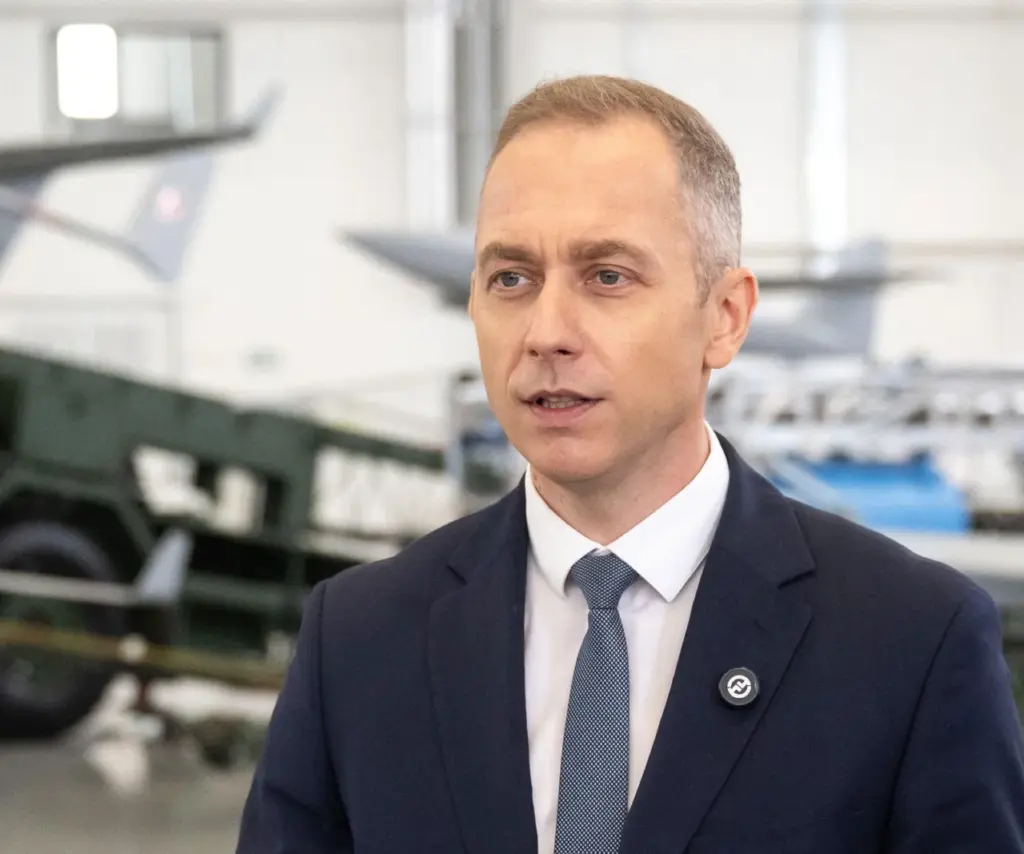
The same day, Polish Deputy Defense Minister Cezary Tomczyk said Poland will change its engagement rules "in the coming days." Currently, helicopter and fighter jet pilots can use weapons only after visually identifying a target: the aircraft must approach the object and determine what it is. After the rules are changed, however, a pilot or operational commander will be able to make a decision to engage based solely on radar data.
Cezary Tomczyk. Photo: Paweł Skraba / Super Express
“It is notable that Polish authorities have taken this step as NATO states attempt to find an adequate response to Russian drones nearing or entering their airspace from Ukraine, often leaving NATO air defense insufficient time to identify and target such threats before they have entered allied airspace,” the Institute for the Study of War noted in its 28 September report.
Recent strikes near the Polish border
On 10 September, Polish Prime Minister Donald Tusk said that Poland had prevented a threat to one of its border crossings with Ukraine overnight and expected its border crossings to be attacked as Moscow targets trade routes in an attempt to economically weaken Kyiv. He made the statement after drones struck a border crossing between Ukraine and Moldova on the previous day, killing two people.
On 13 September, Russian forces struck the locomotive of a passenger train two kilometers from the Polish border and hit a gas station near the Yahodyn international border crossing on the Ukrainian-Polish border.
На Волині внаслідок атаки РФ пошкоджено АЗС біля ПП «Ягодин» на кордоні з Польщею - речниця Волинської митниці Валентина Черниш.
Також на кордоні із Польщею рашисти атакували залізничну інфраструктуру - відео. pic.twitter.com/3XLc3B4FFw
The drone attack forced passengers on a train from Ukraine to leave the carriages for safety. Those evacuated included Boris Johnson, security advisers to European governments, German Bundestag lawmakers, diplomats, and academics.
After the Russian attacks, Poland deployed military units on the border with Ukraine and strengthened infrastructure near the border crossings, Polish Defense Minister Władysław Kosiniak-Kamysz said on 15 September.
On 17 September, Russian forces struck near the Yahodyn border crossing with a jet-powered drone.
Russia plans to sharply increase military spending in 2027 while expanding the authorized size of its armed forces, according to budget documents seen by Reuters and a report by Novaya Gazeta Europe.
The developments point to Moscow preparing to expand its war effort into next year, even as its battlefield gains remain limited and its campaign increasingly relies on missile and drone attacks against Ukrainian cities and civilian infrastructure. It is also doing so as the Russian governm
Russia plans to sharply increase military spending in 2027 while expanding the authorized size of its armed forces, according to budget documents seen by Reuters and a report by Novaya Gazeta Europe.
The developments point to Moscow preparing to expand its war effort into next year, even as its battlefield gains remain limited and its campaign increasingly relies on missile and drone attacks against Ukrainian cities and civilian infrastructure. It is also doing so as the Russian government faces a widening budget deficit and falling projected oil and gas revenues.
Russia plans 27% increase in 2027 defense spending despite widening budget deficit
Russia plans to spend 17.1 trillion rubles ($202.6 billion) on defense in 2027, according to government documents reviewed by Reuters. That is about 27% more than the 13.5 trillion rubles originally budgeted for defense in 2027 and would be the highest level of military spending since Russia launched its full-scale invasion of Ukraine in February 2022.
The documents project total defense spending of 50 trillion rubles over the next three years. The actual amount Russia will spend on defense in 2026 is classified, Reuters reported, while some military-related spending can be recorded under other parts of the state budget.
The planned increase comes alongside worsening fiscal pressures. Russia has raised its forecast for the 2026 budget deficit to 3.2% of GDP, from an earlier estimate of 1.6%, according to Reuters. Overall government spending is expected to rise 13.2% this year to 48.6 trillion rubles, or 20.9% of GDP.
The government also expects to increase net borrowing by 26% in 2026 to 5 trillion rubles and withdraw 459 billion rubles from its National Wealth Fund, Reuters reported. Its forecast for 2026 oil and gas revenues has been cut to 7.6 trillion rubles from 8.9 trillion.
Russia is reportedly planning new tax increases for 2027 to help cover the growing deficit. A new windfall tax on metals and mining companies is expected to bring in about 200 billion rubles a year, according to the documents. State debt is projected to rise to 21.7% of GDP in 2027, above the 20% level Russian authorities have previously considered safe.
The draft budget is expected to be submitted to Russia's parliament by October 1.
Army staffing also reaches new high
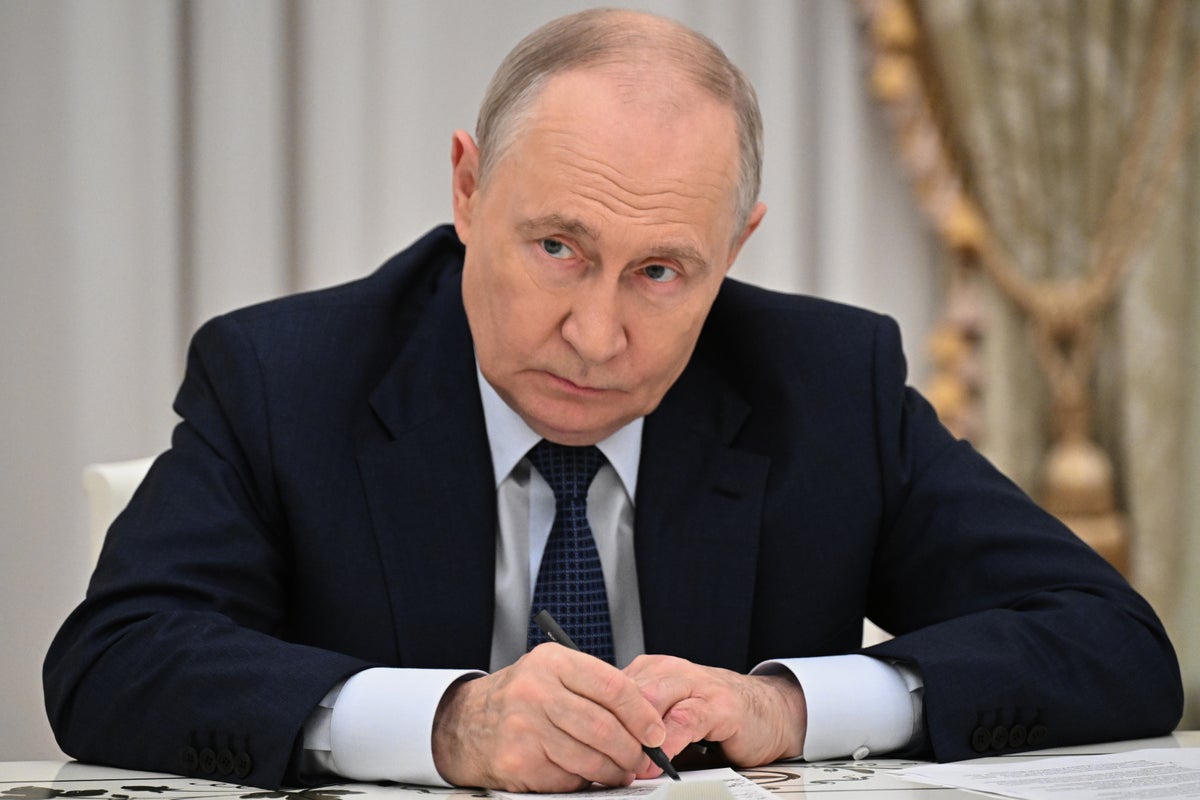
At the same time, Russian President Vladimir Putin has again increased the authorized size of the country's armed forces.
Putin signed a decree raising the official staffing level of the Russian Armed Forces to 2.44 million people, including 1.55 million military personnel, Novaya Gazeta Europe reported on September 28. The increase is 15,500 personnel compared with the previous decree issued in August.
It is the fourth increase in the authorized size of the Russian military in 2026 and the seventh since the beginning of the full-scale invasion of Ukraine, according to Novaya Gazeta Europe. Before the invasion, the authorized force stood at 1.90 million people, including 1.01 million military personnel.
Russia shifts more of the war into the air
The increases in military staffing and spending come as Russia continues to pursue its maximalist war aims despite limited battlefield progress. The Institute for the Study of War assessed on September 27 that Russia's frontline has remained largely static in recent months and that the Kremlin is increasingly relying on long-range missile and drone strikes as part of its effort to force Ukraine to capitulate during the winter of 2026–27.
ISW assessed that Putin may be trying to make Ukraine's infrastructure and air defense capacity buckle under sustained Russian strikes rather than relying solely on further territorial gains. The institute also said the Kremlin may delay a large-scale mobilization while it assesses whether its expanded long-range strike campaign can achieve its objectives.
The planned increase in military spending and the repeated expansion of the armed forces show that Moscow is preparing to sustain and expand its war effort into 2027, even as its forces make limited territorial gains in Ukraine.
Ukraine's air defenders now have purpose-built interceptors for Russia's jet-powered attack drones—weapons whose speed and altitude make them difficult for conventional defenses to catch, Militarnyi reported. A crew from the 1020th Anti-Aircraft Missile and Artillery Regiment downed a Geran-5 over Chernihiv Oblast with a newly delivered interceptor, according to the Serhiy Prytula Foundation.
Russia's long-range drone and missile attacks have become central to its effort to wear down Uk
Ukraine's air defenders now have purpose-built interceptors for Russia's jet-powered attack drones—weapons whose speed and altitude make them difficult for conventional defenses to catch, Militarnyi reported. A crew from the 1020th Anti-Aircraft Missile and Artillery Regiment downed a Geran-5 over Chernihiv Oblast with a newly delivered interceptor, according to the Serhiy Prytula Foundation.
Russia's long-range drone and missile attacks have become central to its effort to wear down Ukraine's air defenses and grid before winter, and the war in the sky now turns on which side scales its answer faster.
The Chernihiv intercept
The crew, callsign Yastrub (Hawk), made its first successful engagement with the new interceptor, hitting the jet drone at 425 km/h and above 3 km, the foundation said, releasing footage of the strike. The Prytula Foundation supplied the interceptors and said it has contracted several manufacturers to counter the jet threat.
"Our task is to scale this up and strengthen units," it said.
Why it kept slipping through
Russia first used the Geran-5 in January 2026. HUR's own specifications put its warhead at 90 kg, cruise speed at 450–600 km/h, and range at 950 km, with a ceiling of 6 km. That mix of jet speed and high altitude kept it clear of machine guns, shoulder-fired missiles, and the cheap interceptors built to swat slower piston-engine Shaheds.
Ukraine's military intelligence estimates Russian plants now turn out around 3,000 jet-powered Geran-4 and Geran-5 drones a month, according to HUR. A monitoring Telegram channel, Polkovnyk HSh, reports a newer variant that steers by ground imagery instead of satellites, which would blunt jamming—though HUR has not confirmed it and lists no such system among the drone's components. Separately, Russia moved the jet engine inside the fuselage, a change aimed at more speed and range.
Explore further
After Russia hits Kyiv’s Academy of Sciences with jet-powered drone, the Kremlin says Ukraine must “pay a price”
Where the fight stands
Ukraine intercepts about 55% of Russia's jet drones, against more than 90% of the older models, President Volodymyr Zelenskyy said on 26 September. Since the start of September, Russia had launched more than 2,730 jet drones, and Ukraine had downed or suppressed more than 1,500, he added. Zelenskyy also said Russia plans to spend $12 billion in 2027 on jet drones and loitering munitions alone. Ukraine already has several interceptor prototypes in combat use, and the 1020th crew's kill is one of several jet Geran intercepts Ukrainian units and drone makers have logged this month.
Some tech workers in San Francisco hooked up ChatGPT to a Toyota Corolla and got it to drive around a parking lot. This may not sound impressive in the age of the self-driving car until you realize that the LLM driving the car was a general purpose chatbot running on a laptop and not the purpose-built driving system based on millions of hours of training data used by Waymo or Tesla.The people behind the stunt call themselves DrivingBench and they’ve posted their code, their prompts, and video
Some tech workers in San Francisco hooked up ChatGPT to a Toyota Corolla and got it to drive around a parking lot. This may not sound impressive in the age of the self-driving car until you realize that the LLM driving the car was a general purpose chatbot running on a laptop and not the purpose-built driving system based on millions of hours of training data used by Waymo or Tesla.
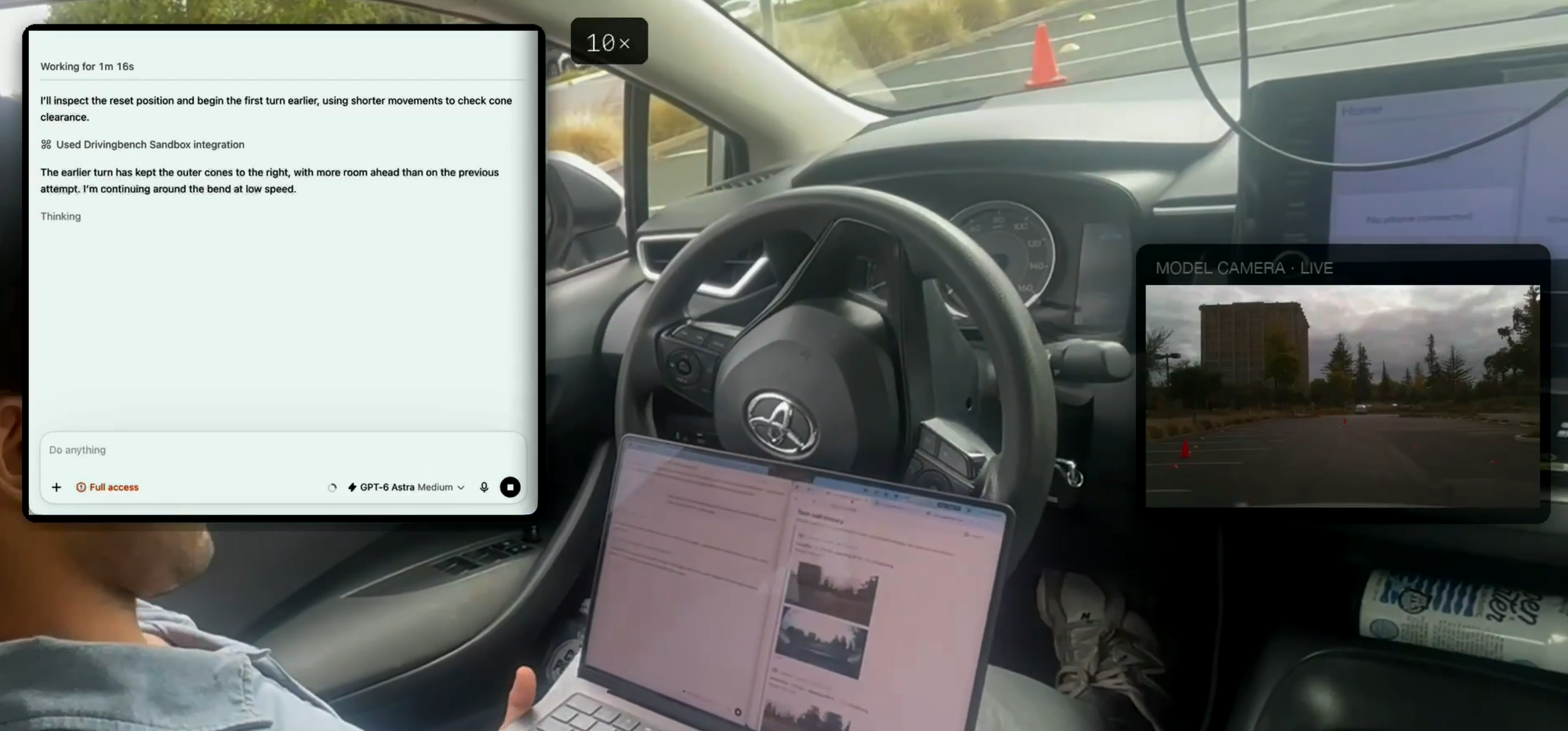
The people behind the stunt call themselves DrivingBench and they’ve posted their code, their prompts, and videos of the experiment online. In the experiment, DrivingBench hooked up GPT-6 Astra, Claude Fable 5.1, Grok 4.6, and GPT-5.6 Sol to a Toyota Corolla and gave the LLMs control over the car’s steering, accelerator, and brakes. Then they set up a small cone course in a public parking lot and prompted the chatbots to navigate the space.
The goal, they said, was to find out if untrained, off-the-shelf frontier AIs can drive a real car. The results were mixed. Grok, Sol, and Fable only drove a few meters and didn’t finish the course. GPT-6 Astra, however, did eventually learn to navigate the course and complete it. But not without a lot of troubleshooting.
DrivingBench is Aditya Ramabadran, Tobias Gessler, and Simon Mahns — three Bay Area tech workers who met at their day job at Axiom Math, an AI math startup. During a call with all three members of DrivingBench, Ramabadran told 404 Media that the idea for hooking up chatbots to a car happened when the three of them were hanging out at an ice cream shop one weekend.
“This is after we saw a bunch of demos of Astra and models like Fable being able to do a lot of robotic things that LLMs can not do out of the box before, such as do a painting or move objects or even some 3D and Blender demos that showed a level of spatial reasoning we hadn’t seen from LLMs before,” he said. “We just thought: ‘Is there a way we can get LLMs to drive a car now?”
Why driving a car? To prove that it’s possible and, they said, to create a new benchmark for LLMs performing tasks in the real world. “The point wasn't to show that it's practical for you to plug ChatGPT into your car and have it drive you places. It's probably very unlikely that the labs have trained specifically for this or have IRL environments that involve both the models driving a real car,” Ramabadran said. “It would be pretty shocking, I think, for people to see that these models are good enough now that they can actually drive a vehicle in real life, even if it's just on some cone course at low speeds in a parking lot.”
After brainstorming at the ice cream shop, they decided to get a car and sent Gessler to rent a Toyota Corolla. They didn’t tell the rental car company they planned to hook chatbots up to the vehicle and drive it through an obstacle course. The team used Comma — an off-the-shelf system that allows users to install a self-driving system on unsupported cars — to get the car to communicate with a laptop running the LLMs. Comma had two cameras pointed at the road feeding data back to the Chatbot.
“It’s pretty easy to install. The Toyota Corolla is one of the most popular for this Comma kit, that’s why we chose it,” Gessler said. “The good thing about their system is that it’s open source [...] so it’s easy for us to go in and modify it because we need to hook up the car somehow to our LLMs.”
Comma looks like a dashcam.. Users attach it to their windshield and it continually watches the road, recording video, integrating with the car’s electrical systems and sensors, and providing a rudimentary kind of self-driving. The National Highway Traffic and Safety Administration announced an investigation into Comma last week after two car crashes involving the system killed three people.
For DrivingBench, Comma was an easy way to get their car talking to a chabot. “We had one person on the driver's seat with the laptop or a passenger seat prompting the LLM,” Gessler said. “And then the person who drives it has to press a button on the steering wheel to give the car the command to start, and then from there it's basically just monitoring the car and checking that the model doesn't crash into a wall or something.”
“And we have the foot over the brake, just in case,” Mahns cut in.
We gave ChatGPT, Claude, and Grok control of a real Toyota Corolla 🚗, steering/gas/brakes, no human driving (just a foot over the brake).
Only one model was able to complete our entire driving course. Introducing DrivingBench. 🔥⌛️🏁 pic.twitter.com/HhukXrByus
DrivingBench’s prompt is on its website and runs fewer than 600 words. “Your objective is to drive through the course (in a backwards-U-shaped parking lot) and stay between the cones,” the prompt said. “Your finish line is a wide "parking spot" marked by numerous BLUE mini-cones at the very end; finish by parking in this area. You will be evaluated primarily by how far you get in the course (without leaving the boundaries/collisions), but a secondary objective is to complete the course in less time.” The rest of the prompt is made up of specific instructions about the physical limitations of the Corolla and the parking lot.
The problems with the project started before the car had moved an inch. When the LLMs recognized the team had prompted them to drive a car, most refused. “Specifically with Astra, it would refuse to drive the car in a lot of situations and we would have to change our prompt and rename things through hours of iteration to get it to consistently drive the car,” Ramabadran said.
“We tried calling it a simulation, which worked like some percentage of the time, but then other times they would see the images and see, oh, ‘I'm in a real parking lot, these people are just lying to me,’” he said. “We ended up having to call everything a sandbox. And with that prompt, it's able to consistently drive the car and like never refuse to do that.”
Other problems were more pedestrian and led to delays which forced Gessler to extend the rental on the Corolla. Finding a parking lot held them up several times. “We went to high schools, churches, and community centers. We got kicked out a couple of times,” Mahns said.
The first place to ask them to leave was a church. “Rightfully so. We just commandeered the entire parking lot and they had an event starting. So they were like: ‘Hey, you get permission to do this? And then we're like: ‘We can pack up right now,’” Mahns said.
They also got kicked out of the parking lot of an office building. “We took a corner and then a security guard was like: ‘Hey, you’re taking like one quarter of the parking lot. Do you have permission?’ And then we’re like: ‘Not really.’ So then we’d pack up. We didn’t try to cause any issues,” Mahns said.
“The people that kicked us out were super chill about it,” Ramabadran added.
Coding the software also slowed things down. The first time DrivingBench set out to do this, they vibe coded the bridging software between the LLMs and Comma. “A true and funny story is that we tried to get Astra to one shot some code and then it was pure slop. So we had to restart from a new design,” Mahns said, adding that this pointed to the limits of these frontier models. “It can’t just autonomously do this because it made thousands and thousands of lines of slop.” They said that Astra’s first attempt at writing the software created a 200,000 line repository.
Parking lots were scarce, the software was vibe coded, the chatbots fought the experiment, and only one of them completed the course. But Mahns is still excited about the results. “It's an interesting demonstration of potential emergent capabilities,” he said. “It can fail a turn, and then the next turn, next try, it will be able to do that turn and other turns that it hasn't seen before. Not necessarily saying LLMs are gonna put Waymo out of business or something, just an interesting demonstration of where things are, and things are just moving fast.”
Mahns added that these kinds of experiments are good because LLMs will increasingly affect things in the real world and not just on our screens. “Most people that are familiar with ChatGPT have used it in this white collar, kind of like in the computer, and it's definitely imminent to the point that this capability will start having more impact in the physical world,” he said. “So I think seeing the sparks of this happening, the shift of this utility coming into the physical world, is also somewhat exciting.”
Focusing on latency and testing high consequence tasks were key for Ramabadran. “These models [...] it can take like 20 seconds to think and give a response. And if you imagine, even if you're driving at like 2mph, which is like one meter per second, if you take 10 seconds to think, you've moved like 10 meters. And if you're driving 10 meters blind, that's pretty bad,” he said. “And I think it's cool that we have a benchmark where latency is part of the benchmark.”
Lithuania is getting its US troops back although the overall American presence in Europe will shrink, Lithuanian President Gitanas Nausėda said. He tied the wider drawdown to Washington's demand that Europe take more responsibility for its own defense. Lithuania's case, he suggested, is the exception.
While waging all-out war on Ukraine, Russia keeps probing Europe with drones and sabotage that stop just short of open attack. Its small Baltic neighbors are already preparing their people
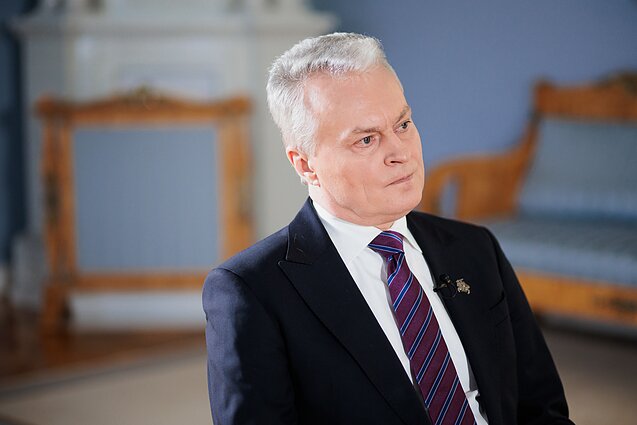
Lithuania is getting its US troops back although the overall American presence in Europe will shrink, Lithuanian President Gitanas Nausėda said. He tied the wider drawdown to Washington's demand that Europe take more responsibility for its own defense. Lithuania's case, he suggested, is the exception.
While waging all-out war on Ukraine, Russia keeps probing Europe with drones and sabotage that stop just short of open attack. Its small Baltic neighbors are already preparing their people for a possible invasion, and American soldiers on their soil have long been the clearest sign that attacking them means fighting the US. With Washington weighing a pullback and telling Europe to fend for itself, each US unit that stays on Russia's doorstep carries more weight than its size.
"There will be fewer US troops in Europe"
Nausėda spoke in an interview with LNK television on 28 September.
"There will be fewer US troops in Europe. This is partly related to what US President Donald Trump says, to the signals the US administration is sending us that Europe must take on more responsibility itself," he said.
Europe must do more for itself, and it is already doing so, Nausėda added. The US presence in Lithuania matters not only for its military power but also for deterrence, he argued.
"The presence of these troops is precisely what reduces the likelihood of military conflict or military aggression," he told LNK, ELTA reported.
"The heavy battalion will be here"
Nausėda called the decision a kind of encouragement for Lithuania. "As the overall number of US troops in Europe decreases, in Lithuania that number will at least remain, will not decrease, and perhaps will even be slightly larger," he said. "In any case, the heavy battalion will be here."
The battalion will keep its Abrams tanks, but an engineer battalion will replace the artillery battalion, Nausėda said on LRT's Savaitė program. The rotation will again last nine months. The Americans will number roughly as before, over 1,000, Defense Minister Robertas Kaunas said.
Estonia has also secured the return of US troops, at least temporarily, LRT noted.
Explore further
Trump announces 5,000 US troops to Poland — one week after US froze scheduled combat-team rotation and amid Russia’s threat
More than 1,000 US troops began leaving Lithuania when their rotation ended in early June, and no replacement arrived, LRT said. It was the country's first gap in the US presence since 2020. American heavy battalions have rotated through Lithuania since 2019.
The Pentagon is weighing a withdrawal of about 25,000 US troops from Europe, and possibly as many as 40,000, NBC News reported, adding that no final decision had been made. About 80,000 US troops are now stationed on the continent. Germany, Italy, and Spain would likely be among the countries most affected.
Ukraine likely neutralized Russia's drone defenses north of Lyman before sending armor into the third phase of its Vivaldi counteroffensive, the Institute for the Study of War (ISW) assessed. An intermediate-range strike campaign against Russian logistics and electronic warfare paved the way, the think tank said.
Drones have made this front so deadly that armor now mostly fights from kilometers back. That is what makes Ukraine's armored push onto fortified positions near Lyman stand out
Ukraine likely neutralized Russia's drone defenses north of Lyman before sending armor into the third phase of its Vivaldi counteroffensive, the Institute for the Study of War (ISW) assessed. An intermediate-range strike campaign against Russian logistics and electronic warfare paved the way, the think tank said.
Drones have made this front so deadly that armor now mostly fights from kilometers back. That is what makes Ukraine's armored push onto fortified positions near Lyman stand out. Russia has already shifted its effort south toward Sloviansk after losing the Lyman pincer.
Armor reached Russian bunkers without drawing drone strikes
To break the strongest Russian fortifications, Ukraine used old Soviet BTR-60 armored personnel carriers rebuilt as remote-controlled explosive vehicles, the 3rd Army Corps says.
Ukrainian forces drove them up to heavy Russian fortifications without coming under Russian drone strikes, ISW noted. The think tank said this indicates Ukraine neutralized or otherwise negated Russia's drone defenses in the area.
Explore further
New Vivaldi tactic: Ukraine’s ground robots, each carrying two Bullspike grenade launchers, attack Russian positions and then detonate inside their shelters
Strikes on fuel starved Russia's jammers
Ukraine achieved tactical drone overmatch through extensive shaping operations and an intermediate-range strike campaign, ISW said. Those strikes targeted the Russian drones and electronic warfare (EW) systems that would otherwise have hunted the advancing vehicles.
The 3rd Army Corps reported on 17 September that strikes on Russian logistics in occupied Luhansk Oblast had degraded Russian fuel supplies to the front, ISW wrote that day. The corps said that strained Russia's ability to use drones and EW against Ukrainian drones. EW systems consume a lot of power, and Russian troops run them on diesel generators, ISW explained.
Deputy corps commander Maksym Zhorin credited strict information silence and a "Protective Drone" system of EW assets, according to the same assessment. He said it helped neutralize around 20,000 Russian drones. The corps had earlier described mapping Russian command posts and striking them to sow panic.
Explore further
Ukraine’s Vivaldi counteroffensive near Lyman just got help from behind Russian lines: partisans say they cut rail supply to three Russian regiments, no explosion needed
Five settlements and 2,000 Russian losses
The corps liberated Nove, Ridkodub, and Katerynivka and restored control over Karpivka and Novomykhailivka, it said on 28 September. The phase added 51 km², bringing the total since the offensive began to 176 km².
Russian losses reached 2,000 personnel, and more than 250 Russians were taken prisoner, according to the corps. Corps commander Andrii Biletskyi said a feint from Shandryholove toward Zelena Dolyna drew Russian reserves away from the real target, Nove.
The first two phases had reportedly cleared more than 125 km² north of Lyman.
Russian intelligence services have sharply stepped up building websites and social media pages that impersonate Ukrainian state bodies and media, the Security Service of Ukraine (SBU) warned. Moscow uses the fakes to spread disinformation and to steal personal data it can turn into spy recruitment. The SBU says it has already blocked dozens of clones of its own brand.
Counterfeit pages built for propaganda and data theft
The fake sources serve Russian psychological operations and dis
Russian intelligence services have sharply stepped up building websites and social media pages that impersonate Ukrainian state bodies and media, the Security Service of Ukraine (SBU) warned. Moscow uses the fakes to spread disinformation and to steal personal data it can turn into spy recruitment. The SBU says it has already blocked dozens of clones of its own brand.
Counterfeit pages built for propaganda and data theft
The fake sources serve Russian psychological operations and disinformation campaigns, the SBU said on 28 September. Their aim is to destabilize the situation inside Ukraine and damage its position abroad. Russian intelligence also uses them to extract Ukrainians' personal data, the agency said.
Alongside its full-scale invasion, Russia wages war on Ukraine in the cyber domain and through espionage and sabotage. Every agent Russia recruits inside Ukraine can help steer missiles and drones onto targets, and the SBU keeps catching such recruits.
Hacked accounts become recruitment leads
Russians often hack the accounts of users who subscribe to the fake pages and messenger channels, the SBU found. They then use the stolen information for recruitment operations and to collect confidential data.
Moscow is most interested in the combat and operational work of Ukraine's defense and security forces, the agency said. The SBU's cybersecurity department found and blocked more than 50 resources that copied the agency's own branding and positioning.
The fake pages are not Russia's only digital tool. Earlier in September, Anthropic said it had caught Russian spies running a campaign against Kyiv on its Claude AI chatbot.
Explore further
Poland and the Baltics risk Russian sabotage for backing Ukraine, Bloomberg says
How Ukrainians can protect themselves
The SBU urged citizens not to follow suspicious links and to rely only on official sources. Anyone who sees a dubious web address, or gets a message from someone posing as an SBU officer, should call the 1516 hotline, the agency said.
What Russia's recruits are sent to do
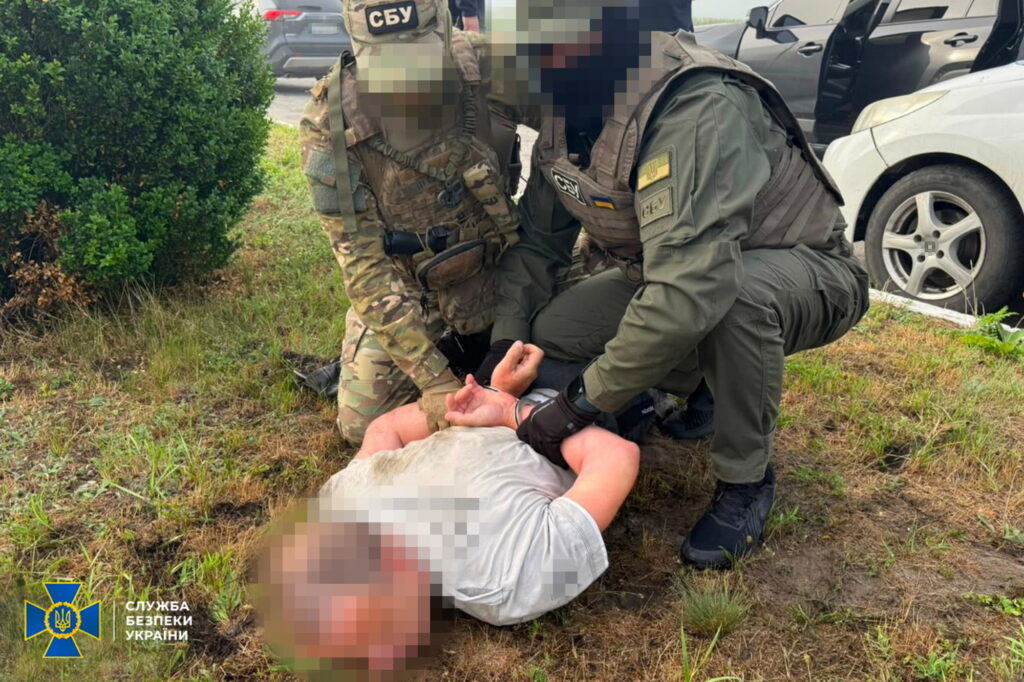
The SBU's own reports from the past week show what Russia's recruits are tasked with. A mobilized soldier allegedly recruited by the FSB, Russia's Federal Security Service, tried to direct a Russian missile strike on his own unit in Kharkiv Oblast, the SBU said. His repair battalion restores Ukrainian drones.
A Lviv Oblast resident who worked at a drone production site in western Ukraine was allegedly recruited to guide a missile strike on it, the agency reported. The strike was meant to disrupt the steady supply of strike and reconnaissance drones to Ukrainian troops, the SBU said.
A court also sentenced a 17-year-old agent of Russia's military intelligence (GRU), exposed in November 2024, to 10 years in prison, the SBU announced. She tracked Ukrainian air defenses in Chernihiv Oblast under the cover of taxi rides. She talked to her GRU handler through an anonymous messenger chat.
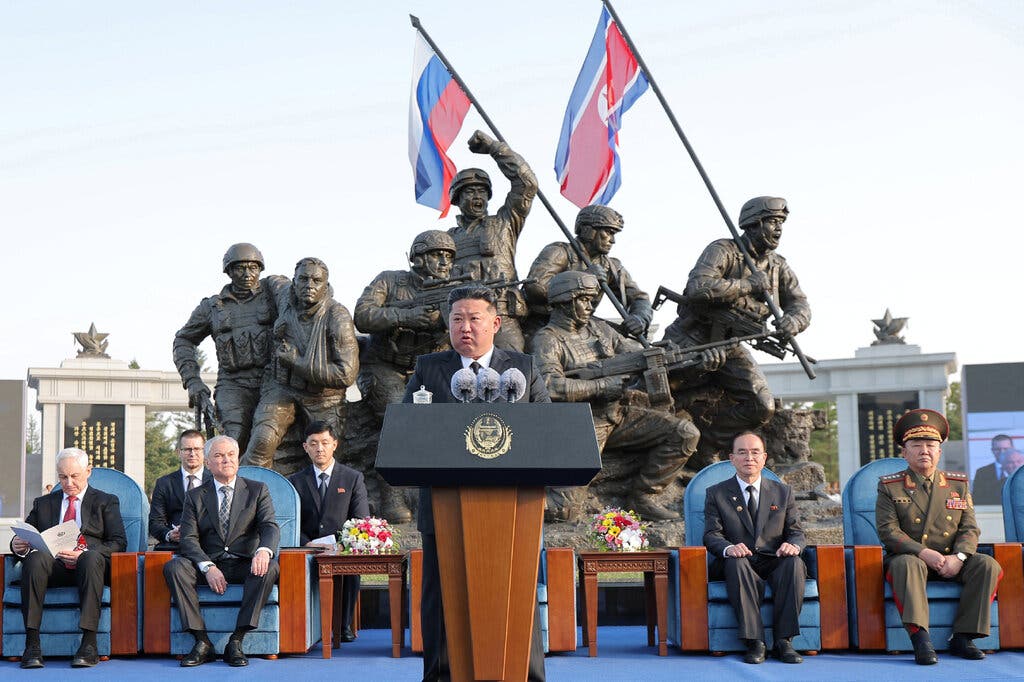
Russia has quietly started a new round of mobilization and plans to bring in more North Korean troops, Ukrainian President Volodymyr Zelenskyy said. He cited a new report from Ukraine's military intelligence. The same day, the Kremlin published a decree enlarging Russia's army for the fourth time this year.
Russia widens recruitment at home and abroad
Zelenskyy spoke in his evening address on 28 September, after a briefing from Ukraine's military intelligence (HUR).
"In effect, t
Russia has quietly started a new round of mobilization and plans to bring in more North Korean troops, Ukrainian President Volodymyr Zelenskyy said. He cited a new report from Ukraine's military intelligence. The same day, the Kremlin published a decree enlarging Russia's army for the fourth time this year.
Russia widens recruitment at home and abroad
Zelenskyy spoke in his evening address on 28 September, after a briefing from Ukraine's military intelligence (HUR).
"In effect, the Russians have already begun additional mobilization—they are increasing the number of people they recruit through various means," he said.
Moscow also plans to recruit more foreigners, Zelenskyy said. He urged the governments of countries whose citizens Russia recruits to counter it, and said Kyiv would inform each of them.
Ukraine says Russia has been losing soldiers faster than contract recruitment replaces them. If so, an unannounced call-up lets the Kremlin refill its ranks without a formal draft. ISW says Putin may hold off on such a draft until he sees whether his strikes work. Ukrainian intelligence had expected Russia to announce a mass mobilization after this month's State Duma elections.
More than 8,000 North Koreans in Russia, 10,000 more in preparation
More than 8,000 North Korean troops are currently on Russian territory, Zelenskyy said. Pyongyang is selecting another 10,000 for training and deployment to Russia, he added.
Russia is paying, among other things, with technology, according to Zelenskyy. North Korea has launched production of Shahed-type attack drones with Russian technical support, he said.
That is a step beyond what Kyiv reported in June 2025. Moscow and Pyongyang had then only agreed to start preparing such production. In August, Zelenskyy warned that Russia could receive up to 50,000 North Korean troops.
Explore further
North Korean missile unit deploys to Russia for ballistic strikes on Ukraine, Kyiv says
Kremlin raises the army's size again
Putin's decree sets the authorized strength of Russia's armed forces at 2,441,630, including 1,550,500 military personnel, Vedomosti reported. The decree gives no reason.
The order adds 15,500 troops and is the fourth such increase this year, Euronews said. Since March, the combined increase has reached 47,860 soldiers. Putin's 2022 "partial mobilization" decree also remains in force, the outlet noted.
Explore further
Russia could open northern front by February if it orders new mobilization, Ukraine intel says
Moscow keeps denying a call-up
In early September, Putin claimed that reports of a coming mobilization were "complete nonsense" and "an information attack on Russia." Russian officials gave similar assurances days before the 2022 call-up.
Ukraine's military and foreign intelligence had earlier said that Russia's General Staff prepared a scenario to mobilize 600,000 people over 2026 and 2027, 300,000 each year.

 Connexion






 Момент удару «Герані-5» поблизу КПП «Ягодин», – місцеві канали.