Vue normale

“Russian airspace will effectively be closing”: Zelenskyy warns airlines Russian skies are no longer safe
1 septembre 2026 à 16:40

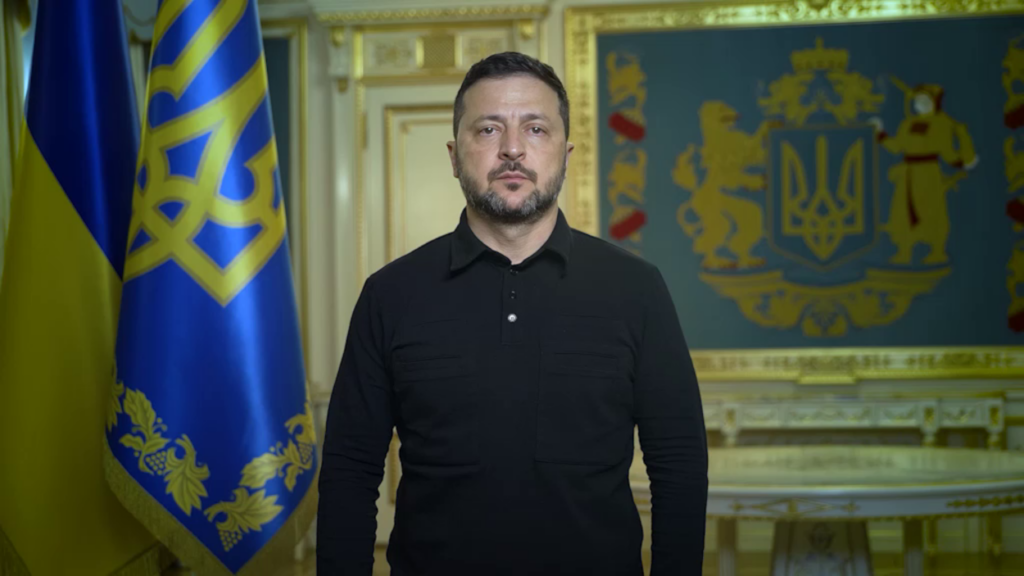
Ukrainian President Volodymyr Zelenskyy during his evening address, 1 September 2026. Screenshot from video: Zelenskyy

Ukrainian President Volodymyr Zelenskyy warned airlines, insurers, and other aviation stakeholders on 1 September that Russian airspace is becoming increasingly dangerous as Ukrainian drones operate deeper inside the country.

The warning comes as Ukraine has increasingly carried out long-range drone strikes deep inside Russia, targeting military, energy, industrial, and other infrastructure. Russian authorities have repeatedly reported temporary airport closures and flight disruptions during drone attacks as part of air defense measures.

“We want to warn every airline that uses Russian airspace, every insurer, and everyone who still uses Russia’s key airports: Russian airspace is becoming completely unsafe,” Zelenskyy said.

“Russian airspace will effectively be closing”

Zelenskyy said Ukraine does not intend to threaten civilian aviation or civilian aircraft, but warned that the growing presence of drones over Russia means airlines must account for the risks.

“We in Ukraine do not want innocent lives to be lost. That is why we are warning our partners: the safe days in Russia’s skies are over,” he said.

Zelenskyy accused Russian authorities of failing to properly inform airlines about the risks, saying they have not adequately communicated the growing danger posed by drones in Russian airspace.

“Although the Russian authorities are not properly informing people about this, Russian airspace will effectively be closing,” Zelenskyy said, arguing that Russia’s war against Ukraine is making its own airspace unsafe.

Zelenskyy warned that the growing scale of Ukrainian drone operations over Russia will have to be factored into aviation risks. “There will simply be drones in Russia’s skies on a scale that has to be taken into account,” he said.

He called on foreign ambassadors in Ukraine and Russia to relay the warning to their governments, and said Ukraine’s Foreign Ministry and other institutions would provide international organizations with information about the risks to Russian airspace.

“Drone-infested skies are no place for civilian aviation,” Zelenskyy said.

Ukraine closed its skies in 2022. Russia has kept flying

The warning highlights a stark difference between the two countries. Ukraine has kept its airspace closed to civilian aviation since Russia launched its full-scale invasion in February 2022. 

The risk is familiar to Ukraine. Russian forces have repeatedly attacked Ukrainian airports and aviation infrastructure during the full-scale invasion, making the continued operation of civilian aviation impossible.

Russia is also responsible for the 2014 downing of Malaysia Airlines Flight MH17 over occupied eastern Ukraine, which killed all 298 people aboard, showing the danger Russia’s military activities can pose to civilian aviation. 

Russia, meanwhile, has continued operating major airports and regular passenger flights despite Ukrainian drones increasingly reaching deep into its territory. EASA has warned that Russian air defenses responding to Ukrainian drone and missile attacks could pose risks to civilian aircraft, including through misidentification, particularly around major airports.

Russian airports increasingly disrupted by Ukrainian drones

Russian authorities have repeatedly restricted or suspended flights at Moscow and other airports during Ukrainian drone attacks. The disruptions have generally come as Russia activates air defenses against drones targeting military, energy, industrial, and logistics infrastructure.

Russia has also moved toward broader restrictions on civilian aviation. In June, Russia imposed new restrictions on light aircraft around Moscow and neighboring regions, while regular passenger and charter flights remained exempt.

The result is a growing disruption to Russian aviation even as Moscow continues to keep its main passenger airspace open: Ukrainian drones are not being used to target civilian aircraft, but their increasing presence is making normal aviation operations more difficult and forcing Russia to restrict or suspend flights during attacks.

  • ✇Euromaidan Press
  • Russia’s Starlink rival falters as latest satellite batch stalls in low orbit, ISW says
    The Rassvet communications satellites Moscow launched in July are likely to have shorter operational lifespans than planned because atmospheric drag increases at their current altitudes, the Institute for the Study of War (ISW) reported. Moscow accelerated Rassvet’s deployment after its forces lost unauthorized Starlink access in February. A complete network could support battlefield communications and remotely controlled strikes against Ukraine, but existing satellites
     

Russia’s Starlink rival falters as latest satellite batch stalls in low orbit, ISW says

1 septembre 2026 à 15:57

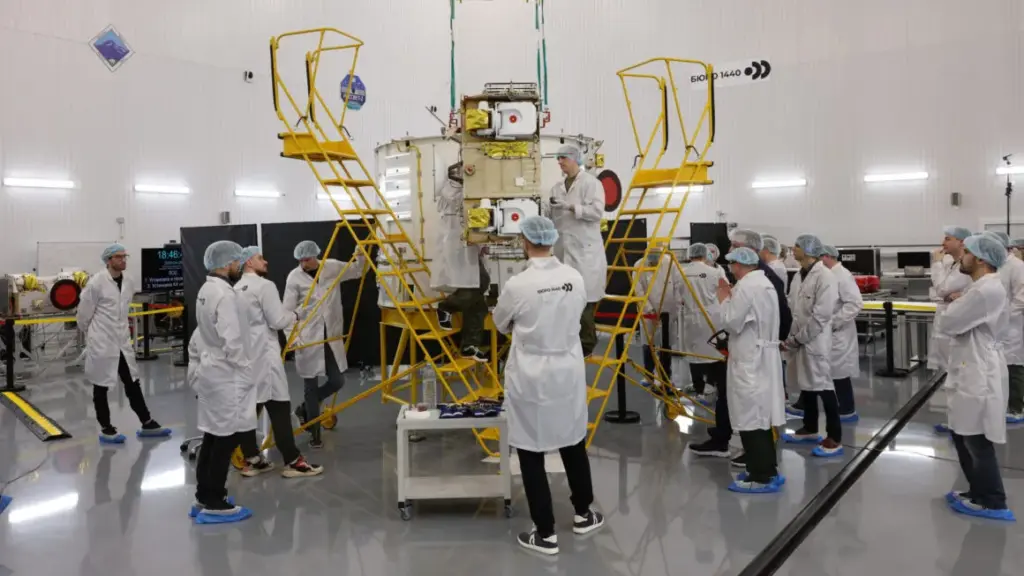
Employees of Russian company Bureau 1440 work on a Rassvet communications satellite.

The Rassvet communications satellites Moscow launched in July are likely to have shorter operational lifespans than planned because atmospheric drag increases at their current altitudes, the Institute for the Study of War (ISW) reported.

Moscow accelerated Rassvet’s deployment after its forces lost unauthorized Starlink access in February. A complete network could support battlefield communications and remotely controlled strikes against Ukraine, but existing satellites provide only brief connectivity windows. The latest setback will likely delay continuous coverage, ISW assessed.

Russian forces had relied heavily on unauthorized Starlink terminals for frontline communications, drone operations, and command-and-control. Ukraine and SpaceX blocked them on 5 February, disrupting Russian communications and assaults across several sectors. A Russian-controlled network could reduce Moscow’s dependence on SpaceX and illicit supply chains for terminals.

None of the 16 satellites launched on 19 July had reached 550 kilometers as of 31 August, according to N2YO tracking data cited by ISW. Many remained between 300 and 400 kilometers, some were gradually losing altitude, and at least two were reportedly heading toward atmospheric reentry.

ISW identified 550 kilometers as the altitude reached by the successful first-batch satellites, while reporting 870 kilometers as Rassvet’s intended operational altitude. At lower altitudes, satellites must use more fuel to counter greater atmospheric drag, shortening their operating lives.

Of the 32 Rassvet satellites launched in 2026, only 12—all from the first batch launched on 24 March—reached sustainable altitudes. They remained at roughly 550 kilometers and provided two daily connectivity windows over Ukraine totaling up to 90 minutes, ISW reported.

Russia needs at least 200–300 working satellites for stable, round-the-clock coverage, presidential defense-technology adviser Serhii “Flash” Beskrestnov assessed. Bureau 1440 plans “dozens” more launches and “hundreds” more satellites, but Russia depends on the scarce, costly Soyuz-2.1b rocket.

Only six to eight Soyuz-2.1b launches of all types have occurred since 2022, limiting Russia to a maximum of 128 Rassvet satellites over four years at that rate, ISW assessed.

Ukraine struck the Progress Space Rocket Center, which builds Soyuz-type vehicles, on 14–15 August and attempted to strike Plesetsk Cosmodrome on 23 August, ISW noted. Both Rassvet batches launched from Plesetsk, showing Ukraine can threaten the rockets and launch infrastructure required to expand the constellation, the institute assessed.

What is Rassvet?

Rassvet, meaning “Dawn,” is a low-Earth-orbit broadband constellation developed by Bureau 1440 as Russia’s domestic alternative to Starlink. Its 5G-based satellites are intended to provide high-speed, low-latency internet independently of SpaceX.

Although initially designed for civilian communications, a mature network could provide Russian forces with battlefield connectivity, command-and-control links, and connections to long-range drones. Moscow aims to place 292 satellites in orbit by the end of 2027 and 924 by 2035.

  • ✇Euromaidan Press
  • Fired Ukraine defense chief Fedorov launches defense-tech company with Palantir CEO backing
    Former Ukrainian Defense Minister Mykhailo Fedorov has announced the launch of a new defense technology company, with Palantir CEO Alex Karp set to become its first major investor. The venture comes after Fedorov’s five months as defense minister ended with his dismissal in July, a decision that triggered weeks of protests demanding his return. He is now taking his focus on drones, AI and other military technologies into the private sector, while partnering with a compa
     

Fired Ukraine defense chief Fedorov launches defense-tech company with Palantir CEO backing

1 septembre 2026 à 15:15

Former Ukrainian Defense Minister Mykhailo Fedorov and Palantir CEO Alex Karp announce the launch of Fedorov’s new defense technology company. Screenshot from video: Mykhailo Fedorov

Former Ukrainian Defense Minister Mykhailo Fedorov has announced the launch of a new defense technology company, with Palantir CEO Alex Karp set to become its first major investor.

The venture comes after Fedorov’s five months as defense minister ended with his dismissal in July, a decision that triggered weeks of protests demanding his return. He is now taking his focus on drones, AI and other military technologies into the private sector, while partnering with a company whose growing role in warfare and government data has also drawn criticism.

Fedorov announced the venture on X on 1 September with little other information, saying more details would be released soon.

In a video released alongside the announcement, Karp said he and Fedorov had worked together for five years and that he was excited to help turn Ukraine’s experience of modern warfare into products for allied countries.

“Our ambitious new project will strengthen Ukraine and help build a safer future for the entire world,” Fedorov wrote.

From digital minister to defense reformer

Fedorov, 35, became one of the most prominent figures in Ukraine’s drive to use technology to transform its military during the full-scale war. Before becoming defense minister, he served as minister of digital transformation, where he helped build Ukraine’s digital government infrastructure and became closely associated with the country’s rapid adoption of drones and other military technologies.

He became defense minister in February 2026 and spent roughly five months in the post before President Volodymyr Zelenskyy dismissed him on 15 July as part of a broader government reshuffle. The dismissal reportedly followed a prolonged conflict between Fedorov and then-Commander-in-Chief Oleksandr Syrskyi over the direction of Ukraine’s military. Zelenskyy later said the relationship between the two had broken down.

Fedorov had pushed for a more technology-driven military, including greater use of drones, robotics, artificial intelligence and data-based decision-making. During his tenure, his team also pursued changes to defense procurement and logistics.

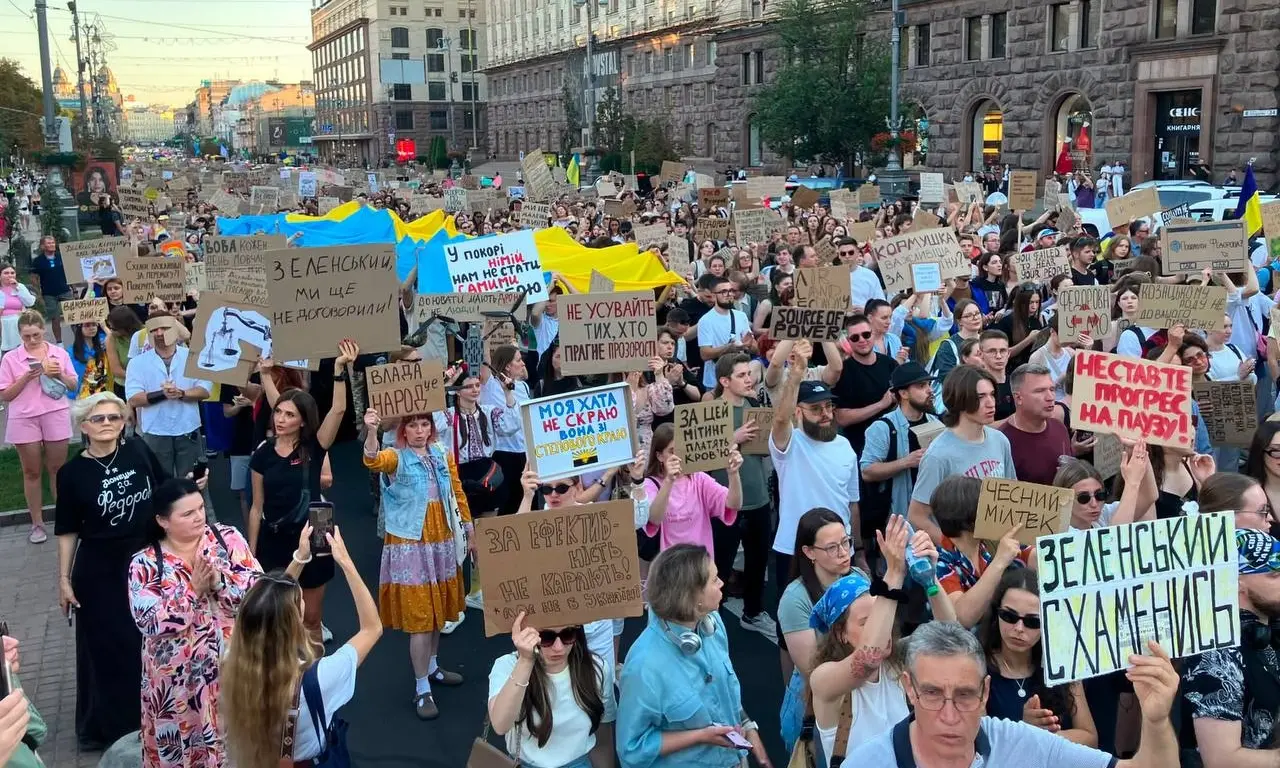
His dismissal triggered rare wartime protests across Ukraine. Demonstrators in Kyiv and several other major cities demanded his reinstatement, arguing that his removal threatened the military-technology reforms they credited with improving Ukraine’s ability to fight Russia.

The protests continued for roughly a month but failed to reverse the decision. Parliament approved Yevhenii Khmara as defense minister on 19 August.

The movement later lost momentum after Fedorov called for wartime elections, a position that protesters rejected amid the ongoing war. The episode nevertheless made his dismissal an unusually public political dispute, with supporters defending his record while Zelenskyy and others pointed to disagreements over military leadership and policy.

A column of protesters demanding reinstatement of Mykhailo Fedorov as Defense MInister walks in vul. Khreschatyk in Kyiv, 1 August 2026. Photo: Serge Kostezh/Kyivpost
Explore further

The Fedorov protesters lost. But they backed a man for what he built, not what he promised—and that may be new in Ukraine.

What Fedorov did after leaving office

Since leaving the Defense Ministry, Fedorov has remained focused on defense technology rather than returning to another Ukrainian government position.

In late August, Italian Defense Minister Guido Crosetto said he had offered Fedorov a position as an adviser on modern warfare and defense innovation. Fedorov agreed to provide advice remotely and on a non-staff basis, while keeping his main work focused on Ukraine’s defense-tech sector.

Fedorov has also been working to establish a defense-tech investment fund and has been seeking US investors for it. During a working trip to Washington in August, he pitched a fund that would not only invest in existing Ukrainian defense-tech companies but also build new ones around technologies he considers critical to the war.

He identified three priorities: battlefield robots that can replace soldiers in the most dangerous positions, jet-powered interceptor drones capable of countering Russia’s faster attack drones, and inexpensive AI-enabled missiles.

Fedorov also proposed helping the United States develop an attack-drone fleet in exchange for additional Patriot interceptor missiles for Ukraine. He described the idea as a potential trade, but it is his own proposal rather than an agreement with the US government, and he no longer holds a government position that would allow him to negotiate such a deal.

In a recent Reuters interview, Fedorov also emerged as a more outspoken critic of Ukraine’s wartime trajectory, saying that “it looks as though we’re gradually, slowly losing.” His comments came after his dismissal and amid his continuing disagreements with the military leadership over the direction of Ukraine’s war effort.

The new company announced on 1 September appears to build on this work, moving from plans to invest in and create defense-tech companies toward establishing a company of Fedorov’s own.

Why Palantir matters

Karp’s involvement connects Fedorov’s new venture to one of the world’s largest defense and intelligence technology companies.

Palantir develops software for large-scale data analysis, artificial intelligence and military and government operations. Its products are used to integrate data from different sources and support operational planning and decision-making. Palantir has also worked with Ukraine during the full-scale war, including on AI and data-analysis initiatives.

The company has become increasingly involved in military technology, while also facing criticism over its work with governments and armed forces. Its ties to Israel and its role in military applications, particularly in relation to the war in Gaza, have generated protests and scrutiny over the use of AI and data technologies in warfare.

Palantir has faced separate concerns in the UK over its access to sensitive government and health data, with critics questioning how effectively safeguards around such information can be independently verified.

For Fedorov, the partnership marks a shift from trying to change Ukraine’s military from inside government to building defense technology outside it. For Karp and Palantir, the investment offers a direct connection to a former Ukrainian defense minister whose team worked on military technologies during a war that has rapidly changed how drones, AI, robotics and data are used on the battlefield.

Germany blames Moscow for Leipzig drone attack, closes consulate and cultural center among sweeping diplomatic measures

1 septembre 2026 à 14:43

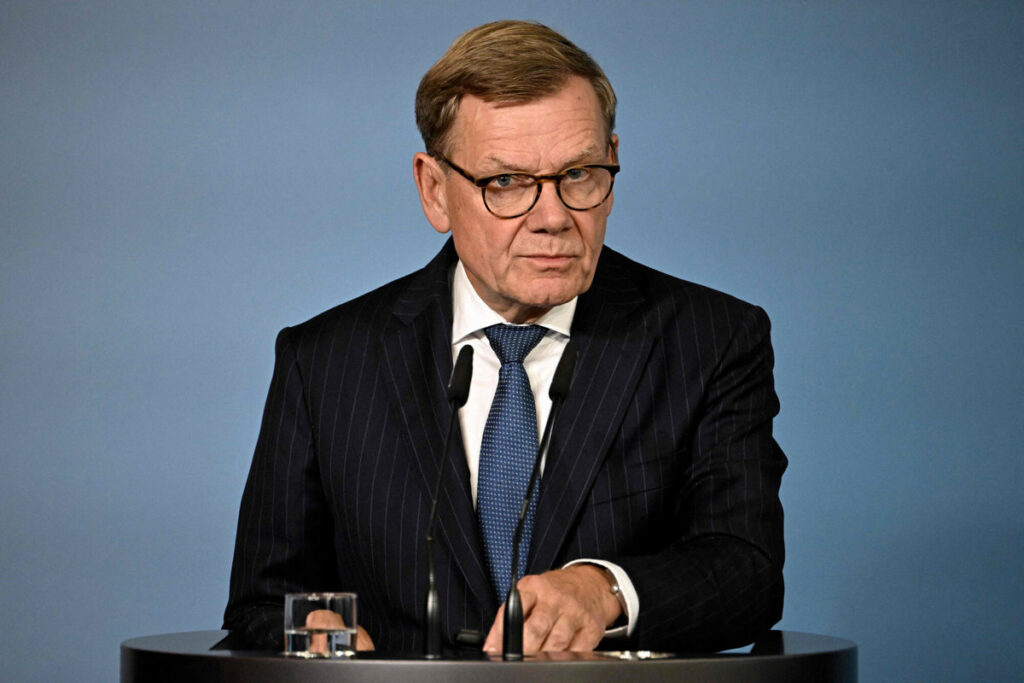
German Foreign Minister Johann Wadephul stands behind a lectern during a press conference.

An explosives-laden drone aimed at a Ukrainian cargo aircraft at Leipzig/Halle Airport was part of a Russian state operation, Interior Minister Alexander Dobrindt said on 1 September.

Germany has moved from suspecting foreign sabotage to formally blaming Russia for the Leipzig attack. The finding has prompted diplomatic and security measures against Moscow while the criminal investigation continues.

Police investigations, the attack pattern, and intelligence findings established Russian responsibility, Dobrindt said. The drones' configuration, components, explosives, and detonation systems resembled those used in other Russian hybrid operations—covert sabotage and disruption below the threshold of open war—and in Russia's war against Ukraine, Foreign Minister Johann Wadephul said.

The first drone, carrying explosives, was found near a Ukrainian cargo aircraft on the evening of 4 August and defused. Investigators believe a DHL freighter may have collided with a second drone while aborting its landing after the airport closed; that drone was never recovered. A third drone was found on 14 August in a field at Kabelsketal, where investigators subsequently discovered roughly 50 grams of suspected military explosive.

Leipzig/Halle is an international freight hub used by Ukrainian Antonov aircraft and NATO's strategic airlift program, through which allies charter heavy transport aircraft to move oversized military cargo.

Berlin will close the Bonn consulate on 18 September, end the operating agreement for the Russian House, a Moscow-backed cultural center, tighten entry controls for Russian nationals, seek to add more targets to EU sanctions lists, and pressure Russia's shadow fleet—opaquely owned tankers used to move Russian oil outside Western restrictions. Wadephul also summoned the Russian ambassador. Russia's Berlin embassy will remain open.

Russian Foreign Ministry spokesperson Maria Zakharova told Interfax that Moscow would respond to Germany's “anti-Russian action,” without specifying how.

NATO Secretary General Mark Rutte said the alliance stood in full solidarity with Germany, and European Commission President Ursula von der Leyen described Berlin's measures as a strong response.

Dobrindt said Germany expects further Russian hybrid attacks. The Leipzig incident follows a widening campaign of suspected Russian sabotage across Europe, including a 2024 incendiary-device attack at the same airport that Western security officials suspected Russian intelligence organized.

How the Leipzig attack unfolded

Euromaidan Press reported on 12 August, citing Die Zeit, that footage showed an explosives-laden quadcopter striking the wing of a parked Ukrainian Antonov An-124 before falling without detonating. The article also noted that a US Defense Department official told CNN that Washington assessed the drone belonged to Russian intelligence.

On 25 August, EP reported, citing Tagesschau’s NDR/WDR/SZ investigation, that investigators had expanded the case to three drones and found the third with suspected military explosive nearby in Kabelsketal, 10 days after the original attempt.

  • ✇Euromaidan Press
  • Russian air attack interrupts lessons on first day of school in Ukraine
    Ukrainian president Volodymyr Zelenskyy marked the start of the academic year with children at a Kyiv Oblast school rebuilt after Russian forces destroyed it in 2022, before an air attack forced their first lessons into the shelter on 1 September 2026, the Kyiv Oblast Military Administration said. Knowledge Day, Ukraine’s traditional start of the academic year, fell during the full-scale invasion for the fifth time. Russia’s war now determines whether children can learn
     

Russian air attack interrupts lessons on first day of school in Ukraine

1 septembre 2026 à 12:04

President Volodymyr Zelenskyy watches as a pupil in an embroidered shirt speaks at a school event decorated with Ukrainian-colored balloons.

Ukrainian president Volodymyr Zelenskyy marked the start of the academic year with children at a Kyiv Oblast school rebuilt after Russian forces destroyed it in 2022, before an air attack forced their first lessons into the shelter on 1 September 2026, the Kyiv Oblast Military Administration said.

Knowledge Day, Ukraine’s traditional start of the academic year, fell during the full-scale invasion for the fifth time. Russia’s war now determines whether children can learn alongside their classmates: local security and shelter access govern classroom returns, while about 200,000 pupils near the front will remain fully remote.

Around three million pupils began the 2026–2027 academic year, including roughly 240,000 first-graders, 10% fewer than a year earlier, Member of Parliament Iryna Borzova of the Verkhovna Rada’s Committee on Youth and Sports told Ukrinform. Most will learn in person or through a blended format, but some 200,000 children near the front will study entirely online, she said.

More than 82% of school pupils and preschoolers can access shelters, Education Minister Andrii Butenko said. The government has allocated UAH 6 billion this year to expand access to shelters and other educational safety infrastructure.

Russian forces destroyed the school Zelenskyy visited in March 2022. It reopened only last autumn with a shelter and backup power, according to the Kyiv Oblast Military Administration.

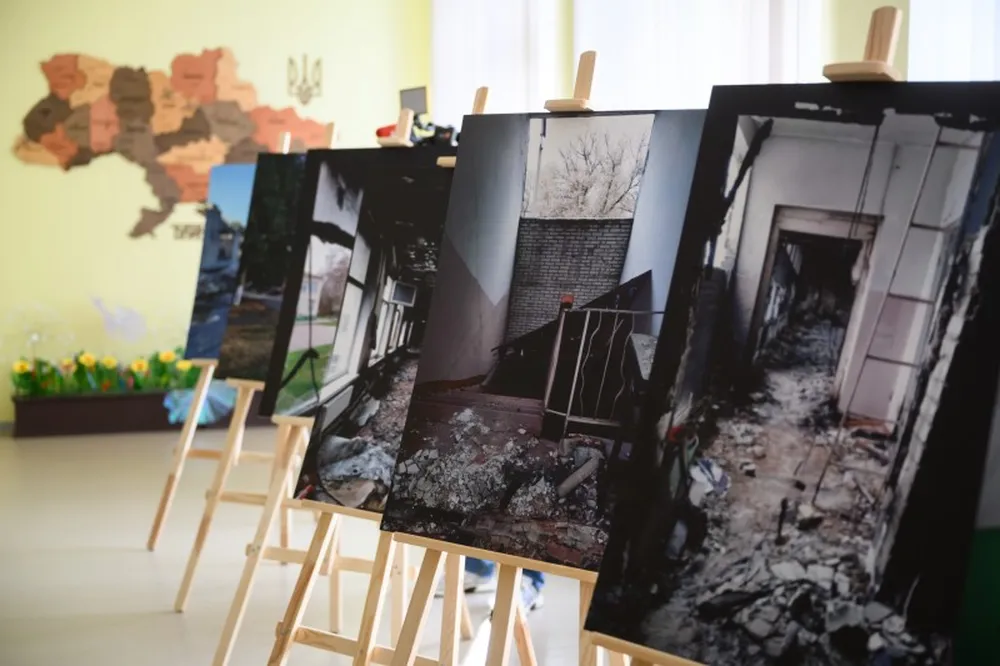
Photographs of burned and rubble-filled school interiors displayed on easels inside the rebuilt school.
An exhibition shows damage inflicted when Russian forces destroyed the Kyiv Oblast school in March 2022. The school reopened in autumn 2025. Photo: Office of the President of Ukraine

Zelenskyy said Russia had spent the preceding two weeks attacking infrastructure partly to disrupt the start of the academic year.

Ahead of Knowledge Day, Kyiv Oblast Military Administration head Tymur Tkachenko advised schools in high-risk communities not to hold mass opening ceremonies. Each school was to decide whether to proceed based on the security situation in its community.

“First and foremost, there must be safety,” Tkachenko said. If a ceremony went ahead, he recommended holding it directly in a shelter where possible. For events outside shelters, attendance was not to exceed the capacity of the nearest protective facility, and schools were told to avoid large gatherings of pupils, parents, and staff.

How Russia’s invasion has devastated Ukrainian education

Ukraine’s 2026 Knowledge Day began after six consecutive days of Russian attacks on Kyiv and its surrounding region, culminating overnight in a massed missile and drone strike. Eight people were killed, and seven were injured, including three children, while civilian infrastructure was damaged across five Kyiv districts.

Russia’s invasion has turned school safety and reconstruction into central parts of Ukraine's education policy. By September 2024, more than 3,500 educational institutions had been damaged and nearly 400 destroyed, with the World Bank estimating that almost $14 billion would be needed to rebuild them.

Attacks on Ukraine’s energy system have also left classrooms without heat or electricity, forcing prolonged holidays and renewed distance learning.

  • ✇Euromaidan Press
  • Latvia blocks Russian and Belarusian books, clothes and toys
    On 1 September 2026, Latvia banned imports of Russian- and Belarusian-made books, clothing, toys, and other consumer goods, including shipments routed through third countries, Latvian Public Media reported. The restricted goods were worth approximately €12.5 million ($14.5 million) in 2025, or 6.5% of Latvia’s remaining imports from the two countries. Although modest economically, the measure goes beyond EU-wide sanctions and advances Riga’s effort to deny Moscow and Mi
     

Latvia blocks Russian and Belarusian books, clothes and toys

1 septembre 2026 à 08:52

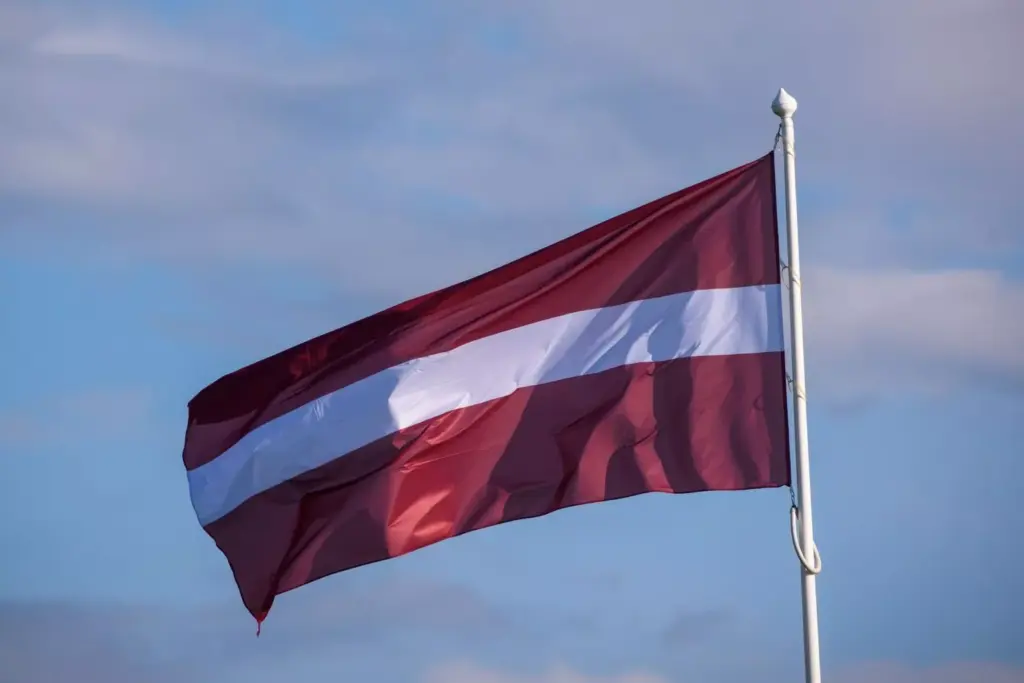
Latvian flag flying from a white flagpole against a blue, lightly clouded sky.

On 1 September 2026, Latvia banned imports of Russian- and Belarusian-made books, clothing, toys, and other consumer goods, including shipments routed through third countries, Latvian Public Media reported.

The restricted goods were worth approximately €12.5 million ($14.5 million) in 2025, or 6.5% of Latvia’s remaining imports from the two countries. Although modest economically, the measure goes beyond EU-wide sanctions and advances Riga’s effort to deny Moscow and Minsk revenue during Russia’s war against Ukraine.

The restrictions cover the following:

  • Books, newspapers, and other printed material
  • Clothing, textiles, footwear, and headwear
  • Toys, games, and sporting equipment.

Latvia’s Cabinet approved the final product list on 25 August following a Foreign Ministry proposal, completing restrictions parliament authorized on 23 July.

The ban applies regardless of whether the products arrive directly or through another country. Russian- and Belarusian-made goods may still transit Latvia on their way to other EU markets, Meduza reported.

Food and beverages are not covered. The restrictions are scheduled to remain in force until 1 July 2027 and will be reviewed annually.

The Foreign Ministry said the measure is also intended to limit the entry of Russian propaganda material. The targeted products accounted for only 0.05% of Latvia’s total imports in 2025, according to Euronews.

How Latvia has been cutting off trade with Russia and Belarus

Latvia’s combined imports from Russia and Belarus have already fallen by 91%, from €2.13 billion ($2.47 billion) in 2022 to €193 million ($224 million) in 2025, according to Latvian Public Media. Much of that decline followed the country’s departure from Russian energy supplies and the Baltic states’ disconnection from the Russian and Belarusian electricity grids.

The latest prohibition blocks consumer goods that Brussels has not collectively banned.

Latvian Prime Minister Andris Kulbergs previously pledged to eliminate the country’s remaining commercial links with Russia and Belarus, although pharmaceutical exporters were expected to remain exempt.

In August, Latvia also resumed publishing a monthly register of businesses trading with either country, naming 171 companies. Inclusion on the list does not itself indicate a sanctions violation.

  • ✇Euromaidan Press
  • Russia promised a scramjet superweapon. Ukraine says Zircon runs on solid fuel
    Russia's Zircon runs on two solid-propellant motors, a booster and a sustainer, Ukraine's military intelligence (HUR) said in a breakdown of the missile's structure and components. That leaves no room for the scramjet Moscow advertised, Defense Express wrote. Russia presented Zircon as a hypersonic missile capable of penetrating modern air defenses. HUR says it instead uses solid-propellant motors, which Defense Express reads as demolishing Moscow's claims about a super
     

Russia promised a scramjet superweapon. Ukraine says Zircon runs on solid fuel

1 septembre 2026 à 08:34

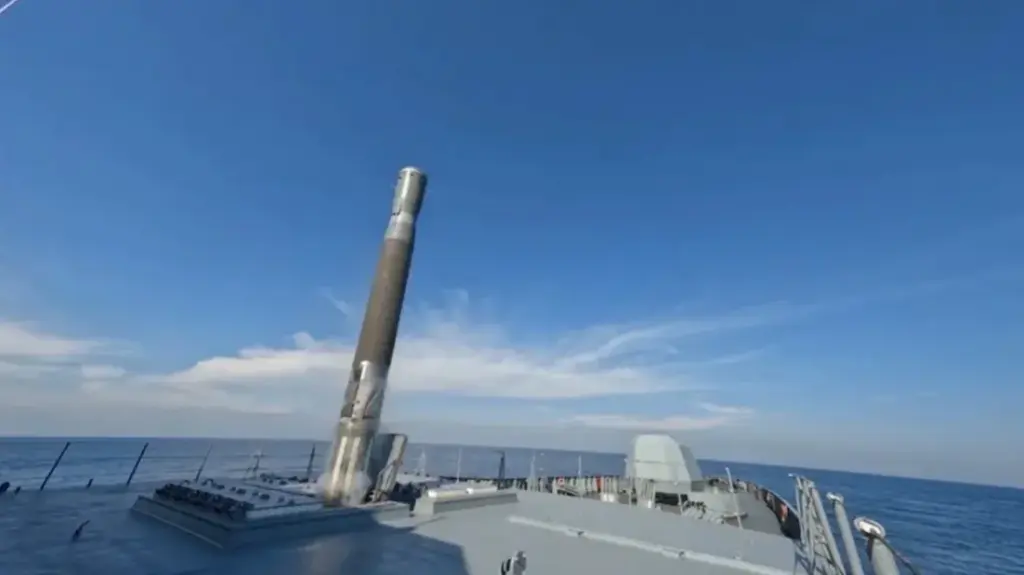
russia touted zircon hypersonic superweapon ukraine says its technology far less exotic · post missile launch warship russian defense ministry militarnyi polish_20260120_110147292jpg news ukrainian reports

Russia's Zircon runs on two solid-propellant motors, a booster and a sustainer, Ukraine's military intelligence (HUR) said in a breakdown of the missile's structure and components. That leaves no room for the scramjet Moscow advertised, Defense Express wrote.

Russia presented Zircon as a hypersonic missile capable of penetrating modern air defenses. HUR says it instead uses solid-propellant motors, which Defense Express reads as demolishing Moscow's claims about a superweapon. The intelligence agency also listed an Altera programmable chip and a TriQuint amplifier among the missile's components, the same finding investigators keep making in Russian weapons.

HUR published an interactive 3D model of Zircon through its War&Sanctions database, the latest in a series on Russian ballistic weapons. The agency said the recorded maximum speed to date does not exceed Mach 6.8—about seven times the speed of sound—and that the missile does not hold it through the whole flight. Russia claims Mach 9 at some stages of flight. Zircon carries a roughly 120-kilogram warhead.

Side-view 3D model of Russia’s 3M22 Zircon missile against a black background.
A 3D render of a 3M22 Zircon. Source: HUR, Ukraine's military intelligence agency

Defense Express reported that a 2010 contract with solid-fuel specialist NPO Iskra indicates that this propulsion system was planned from the earliest stages of Zircon's development.

Built for ships, moved onto a coastal launcher

Zircon is a Russian anti-ship missile developed for surface ships and nuclear-powered submarines. Russia later adapted it for Bastion-M coastal launchers amid difficulties operating its Black Sea Fleet, HUR said.

Ukrainian forensic experts first confirmed Russia had fired a Zircon at Kyiv in February 2024. Defense Express reported that Ukraine intercepted two more over the capital the following month. Russia has continued using Zircon against land targets: in February 2026, it launched four at Ukraine’s power grid, of which Ukrainian air defenses downed two.

What solid-fuel propulsion changes

Solid fuel does not make Zircon slow: Mach 6.8 is still hypersonic. A scramjet draws oxygen from the atmosphere to sustain hypersonic flight; Zircon instead flies on self-contained rocket motors. HUR calls it a ballistic missile rather than the hypersonic cruise missile Russia advertised, and notes its onboard computer is the type fitted to all Russian ballistic missiles. Defense Express says the trajectory may be aeroballistic and the motor possibly dual-pulse, given the range Russia wanted from a missile that had to fit a ship's launch silo.

Russian President Vladimir Putin claimed in 2019 that the missile could reach Mach 9 and travel 1,000 kilometers, up from earlier official figures of Mach 6 to 8 and 400 to 500 kilometers. A year earlier, the former head of its manufacturer said it flew on a jet engine, Defense Express said.

In February 2024, Kyiv's forensic institute concluded from the debris that the engine was air-breathing rather than solid-fuel, and Defense Express went further the following month, reporting from its own sources that Russia had built a working scramjet. The outlet has since appended a correction to that article, noting that HUR found a solid-fuel 3L2211 motor from NPO Iskra where the scramjet was supposed to be.

The US chips inside Zircon

HUR identified two components from US manufacturers inside Zircon: a programmable gate array from Altera, now part of Intel, and a TGA2704 amplifier from TriQuint Semiconductor, now Qorvo. It also mapped 70 companies involved in its production, along with their personnel and foreign manufacturing equipment.

The finding fits a wider pattern. Investigators have found Western electronics in Russia's UMPK glide-bomb kits and traced at least 28 foreign parts from 15 companies in the Kh-101 that struck Kyiv's Okhmatdyt children's hospital.

A 2026 examination found 62 US-made parts in an Iskander missile, while a Russian Geran drone combined a Soviet missile with Western electronics and a Chinese modem.

  • ✇Euromaidan Press
  • Drone attack damages Russia’s Baltic oil port as drone crosses Latvia into Estonia
    Russian authorities reported damage and a fire at Ust-Luga port during an overnight drone attack on 1 September. One drone crossed Latvian and Estonian airspace, prompting NATO to scramble Turkish F-16s. The attack hit a major outlet for Russian energy exports. Reuters reported that Ust-Luga loads about 700,000 barrels of crude a day and exported 32.9 million metric tons of oil products in 2025. Its terminals also serve shadow-fleet tankers used to bypass sanctions.
     

Drone attack damages Russia’s Baltic oil port as drone crosses Latvia into Estonia

1 septembre 2026 à 06:26

A thick gray plume of smoke rises above a distant tree line beneath a pink early-morning sky.

Russian authorities reported damage and a fire at Ust-Luga port during an overnight drone attack on 1 September. One drone crossed Latvian and Estonian airspace, prompting NATO to scramble Turkish F-16s.

The attack hit a major outlet for Russian energy exports. Reuters reported that Ust-Luga loads about 700,000 barrels of crude a day and exported 32.9 million metric tons of oil products in 2025. Its terminals also serve shadow-fleet tankers used to bypass sanctions.

Leningrad Oblast Governor Alexander Drozdenko said emergency crews were working in Ust-Luga’s port zone while the damage was being assessed. He later claimed Russian air defenses downed 52 drones over Leningrad Oblast and reported no casualties.

Drozdenko did not identify the damaged facility or specify the scale of the fire.

Militarnyi published an image attributed to the Exilenova+ monitoring channel showing a blaze near the port. The image’s time and precise location have not been independently verified.

🇷🇺 🔥 **𝗗𝗥𝗢𝗡𝗘𝗦 𝗛𝗜𝗧 𝗨𝗦𝗧-𝗟𝗨𝗚𝗔 𝗣𝗢𝗥𝗧 𝗔𝗡𝗗 𝗧𝗢𝗟𝗬𝗔𝗧𝗧𝗜 𝗢𝗩𝗘𝗥𝗡𝗜𝗚𝗛𝗧, 𝗙𝗜𝗥𝗘𝗦 𝗕𝗥𝗘𝗔𝗞 𝗢𝗨𝗧 𝗔𝗧 𝗕𝗢𝗧𝗛

🔥 Drones struck the port zone of Ust-Luga in Leningrad region overnight into September 1, sparking a fire, governor Alexander Drozdenko… pic.twitter.com/lGEesBMOBN

🇺🇦 Vortex Report (@VortexReportX) September 1, 2026

There was no immediate information on whether the attack disrupted port operations. Ukraine had not claimed responsibility at the time of publication.

The regional warnings coincided with a broader drone attack on western Russia that included Ust-Luga, although authorities did not specifically link the drones approaching or entering NATO airspace to the port strike.

Baltic states issue warnings as NATO fighters scramble, while Finland restricts traffic

Estonia warned residents in eight counties and scrambled Turkish fighter jets serving in NATO’s Baltic Air Defense Mission, which protects the skies of Estonia, Latvia, and Lithuania.

Estonian Air Force Commander Brigadier General Riivo Valge said around a dozen drones had moved near the country’s border. One briefly entered southeastern Estonia, while another approached Narva before turning back into Russia. The fighters did not open fire, and the warnings were lifted by about 5:30 a.m.

Latvia issued two warnings overnight, first in the Ludza municipality and then in the Alūksne municipality. Latvia’s Armed Forces said a drone crossed Latvian airspace and continued into Estonia, where NATO fighters searched for it. The Latvian alerts ended at around 4:20 a.m.

Finland’s Armed Forces introduced temporary air and sea restrictions over the eastern Gulf of Finland at 3:37 a.m.

The military lifted both restrictions shortly after 6 a.m., saying no drones had strayed into Finland.

Repeated strikes on Ust-Luga

Ust-Luga lies around 110 kilometers west of St. Petersburg and some 900 kilometers from Ukraine. It is the endpoint of the Baltic Pipeline System-II, which carries Russian crude to the port for export. The area hosts facilities operated by Russian gas producer NOVATEK and fertilizer maker EuroChem.

Ukraine began its series of 2026 attacks on Ust-Luga overnight on 24–25 March. The Security Service of Ukraine, the country’s counterintelligence agency, and the military’s elite Special Operations Forces confirmed that they had struck NOVATEK’s gas-condensate complex, which processes liquid hydrocarbons into fuels.

Further attacks followed in late March. They set fuel-storage tanks ablaze, damaged a pier and pumping equipment, and temporarily halted port operations, according to Russian Telegram channel Astra.

On 7 April, Ukraine’s General Staff, the military’s senior command, confirmed another strike on Ust-Luga’s oil terminal, saying three oil storage tanks were destroyed. Another attack on 14 August again caused damage and a fire, Drozdenko reported at the time.

  • ✇Euromaidan Press
  • Former Ukrainian president has made offer to Zelenskyy amid Russia’s new type of war on Kyiv
    Former Ukrainian President Petro Poroshenko, leader of the opposition European Solidarity party, has offered to unite with President Volodymyr Zelenskyy in a new type of government. He has explained his initiative as necessary to save the country and adopt crisis-response measures amid a new phase of the war. Russia's strike campaign has become a governance problem as much as a military one. Each attack on Kyiv costs the city about $12 million, and they now arrive a
     

Former Ukrainian president has made offer to Zelenskyy amid Russia’s new type of war on Kyiv

1 septembre 2026 à 05:58

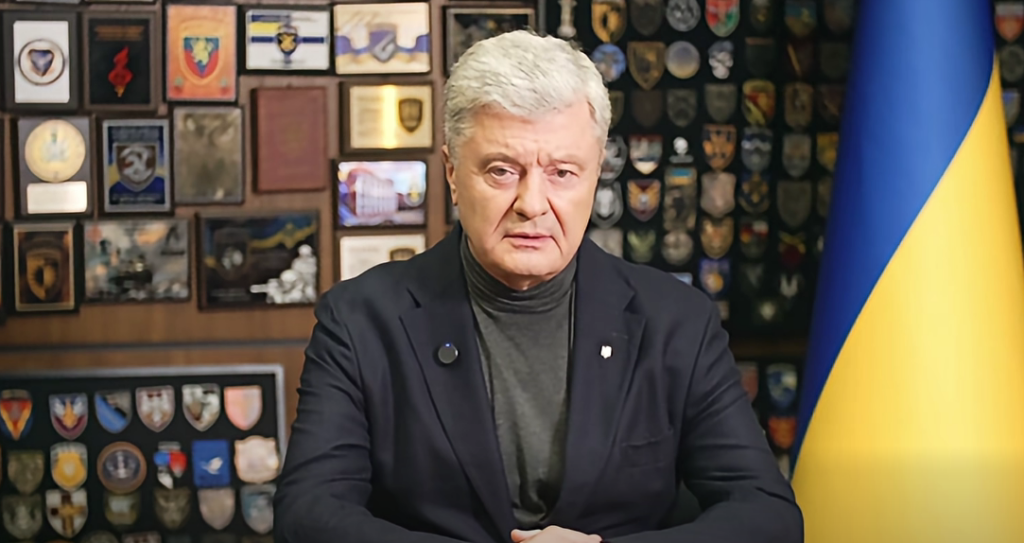
Former Ukrainian President Petro Poroshenko, leader of the opposition European Solidarity party. Source: European Solidarity

Former Ukrainian President Petro Poroshenko, leader of the opposition European Solidarity party, has offered to unite with President Volodymyr Zelenskyy in a new type of government. He has explained his initiative as necessary to save the country and adopt crisis-response measures amid a new phase of the war.

Russia's strike campaign has become a governance problem as much as a military one. Each attack on Kyiv costs the city about $12 million, and they now arrive almost twice a week. Agriculture Minister Taras Vysotskyi said on 28 August that, roughly speaking, 90% of retail chains' food logistics had been destroyed in the latest attacks, which included jet-powered drones that trigger an air alert in Kyiv every hour.

"We are the opposition, but we are ready to cooperate with the authorities in the legislative provision of all necessary decisions, up to the creation of a coalition and a government of national unity," he said.

Speaking in a video address on 31 August, he set out five issues to solve for the parliamentary session.

One: keep the capital running

The current barrage has forced Kyiv to a near-standstill, with alerts sounding through the working day. If they are permanent, Poroshenko argued, the rules for how the city runs must change, and the government, military, transport operators, and business must agree on a single published procedure. When the capital is shut down for hours, much of the economy stops with it, and the lost billions never reach the army, he added.

"Let us say honestly what Putin is doing. He wants to switch Kyiv off. To make people finally say: it is impossible to live here," Poroshenko said.

Two: give parents a school plan

The school year opens on 1 September under a rule allowing in-person classes only where a school has a shelter with room for everyone. Kyiv's administration told UNN that 94% of city schools have basic shelters, but capacity limits set the ceiling, forcing shifts or blended formats when a shelter cannot hold every child at once.

"Tomorrow is 1 September. Thousands of parents still do not understand how their children will study, especially where there are no proper shelters," Poroshenko said.

Three: return Kyiv's money

Kyiv has lost revenue to the central budget even as its defense costs climb, a dispute with the government that predates the barrage. Poroshenko demanded the return of about $180 million to the budget, along with the personal income tax paid by combat brigades.

"This week Kyiv is forced to carry out a budget sequester for the first time," he explained, cutting spending on doctors, teachers, and the socially vulnerable to fund the city's own defense.

Four: scale up war-risk insurance

Russia's strikes have hit businesses faster than any recovery system can answer, with warehouses and logistics hubs among the targets this month. Business needs war-risk insurance, money for rapid recovery after strikes, new logistics, and the ability to invest in its own protection, including private air defense, Poroshenko said.

Five: fund energy resilience now

Putin has named energy as his main target, the former president pointed out, and the coming winter is the pressure point. Kyiv's small, maneuverable generation, cogeneration, and backup power for hospitals, water utilities, and communications must be installed now, he added.

Russia’s 6-day attack on Kyiv that started two days after CIA head’s visit to Moscow, culminates with massive ballistic missile strike on eve of school year

1 septembre 2026 à 02:18

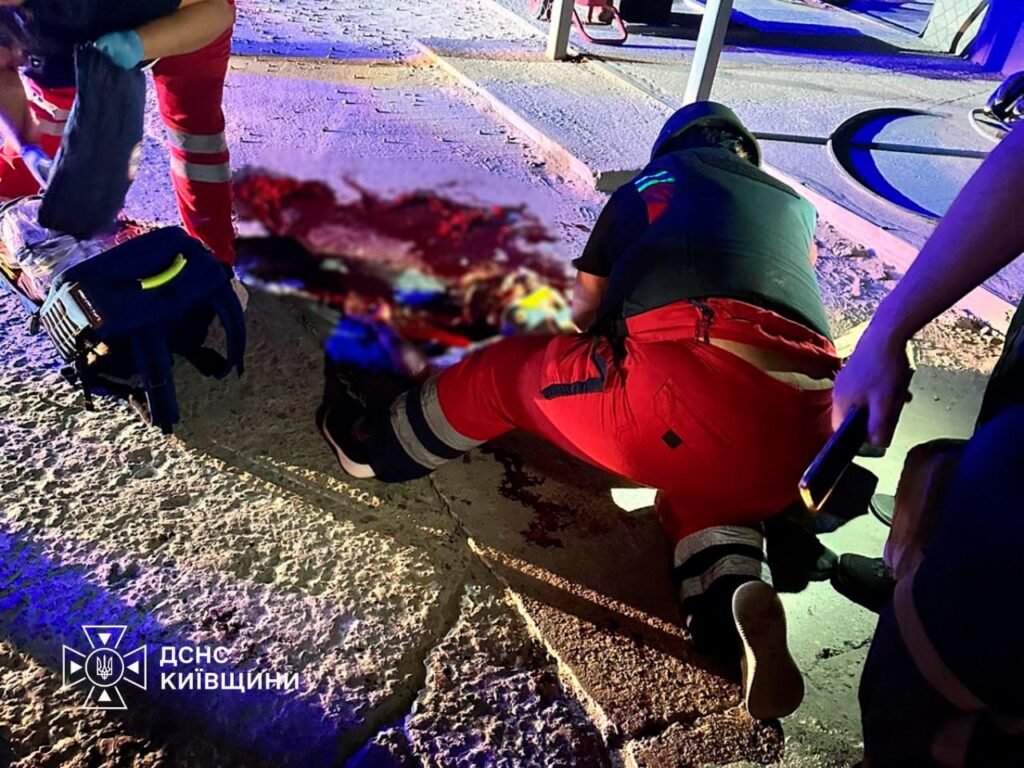
Ukrainian rescuers are helping the victims of a Russian 1 September attack. Source: The State Emergency Service

On 1 September — the day Ukraine marks Knowledge Day, when schoolchildren and students are meant to begin the new academic year — Russia launched a massive attack on Kyiv and its region with ballistic missiles and jet-powered drones. Moscow used different types of its fast, deadly weapons, including ship-launched Kalibr, and hypersonic Zircon missiles, and jet-powered drones to target the Ukrainian capital.

This attack was the culmination of a 6-day assault on the capital and region that began on 27 August. It started two days after CIA Director John Ratcliffe arrived in Moscow on 25 August. US President Donald Trump announced that the visit was linked with US-initiated peace efforts to end the war against Ukraine. Throughout this 5-day period, air raid sirens sounded every hour in the capital and region, paralyzing life in Kyiv, according to Sky News.

As early as the day after the 5-day attack began, Agriculture Minister Taras Vysotsky stated that Russia had destroyed about 90% of the food logistics infrastructure of retail chains, according to UkrInform.

Russia injures three children and continues the attack

As a result of the "ballistic" attack on Kyiv and the region, hits from enemy missiles and strike drones were recorded at 28 locations, and debris from downed targets fell at 10 locations, according to the Air Force of Ukraine.

In addition, some enemy missiles did not reach their targets, and the locations of those missiles are being clarified.

"Unfortunately, as a result of the Russian attack, there are dead and injured. The attack continues, with more than ten Russian drones in the airspace," the military reported.

According to the Kyiv City Military Administration, civilian infrastructure was damaged in 5 of Kyiv's 10 districts — Holosiivskyi, Darnytskyi, Dniprovskyi, Sviatoshynskyi, and Solomianskyi.

"As a result of the attack, unfortunately, 8 people died. Another 7 people were injured, including 3 children," the Kyiv authorities said.

Railway workers are still receiving treatment and remain hospitalized

Russia struck a railway facility, a critical link in the country's logistics chain, as its airways have been closed since 2022.

Oleksandr Pertsovskyi, head of the board of Ukrzaliznytsia (Ukrainian Railways), stated that Russia carried out a targeted ballistic attack on Kyiv's railway infrastructure. Russia killed six railway workers.

According to him, another employee was injured and is in the hospital, where they are receiving the necessary care.

He added that dozens of employees managed to take shelter and survive the attack. They are now being helped to recover from what they experienced.

Pertsovskyi noted that the strike caused "extensive destruction," including the complete destruction of one workshop, and that efforts to extinguish fires at the facility were still ongoing.

He said that, due to the attack's consequences, movement was temporarily restricted on two railway sections, but it was later restored.

Earlier, a source close to the Russian president told The Economist that Vladimir Putin most likely regarded Ratcliffe's visit as a sign of American weakness. He already interpreted former CIA Head Bill Burns' meeting with Russian authorities in 2021 the same way, where he warned about the consequences of Russia's war against Ukraine. Three months after the meeting, Russia launched the full-scale invasion.

❌