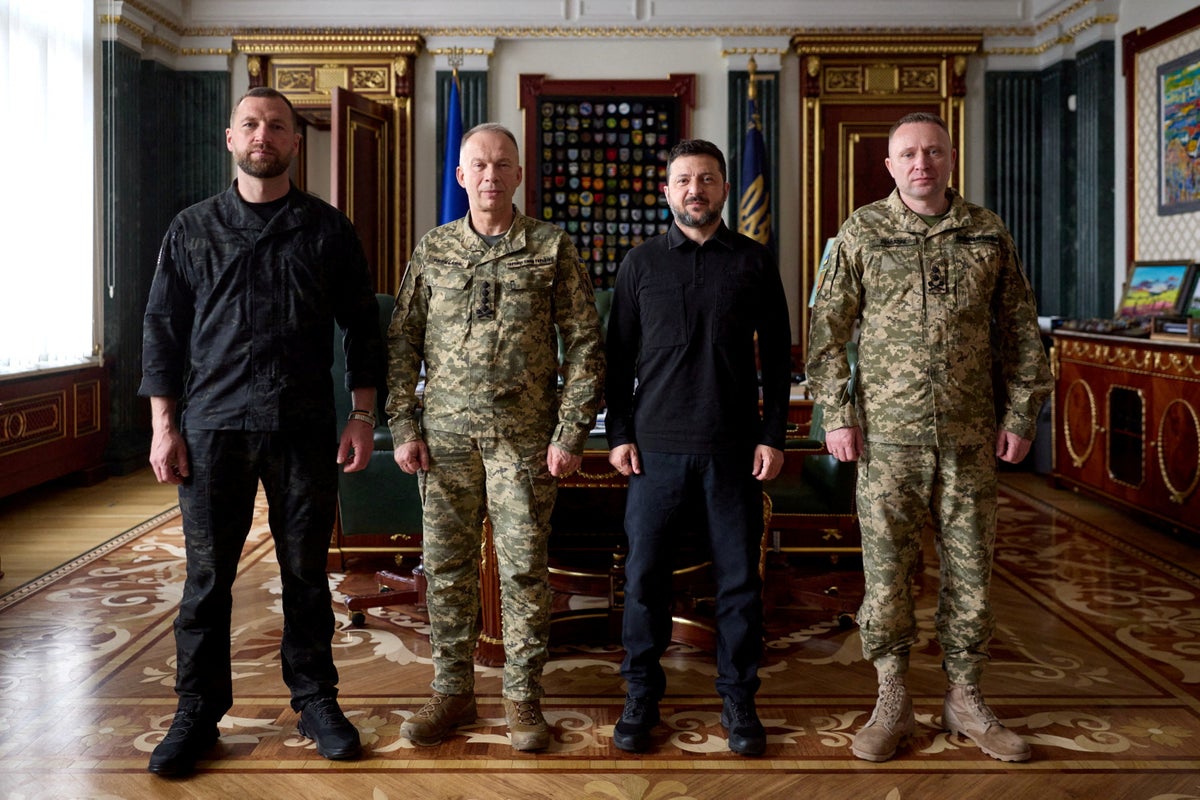
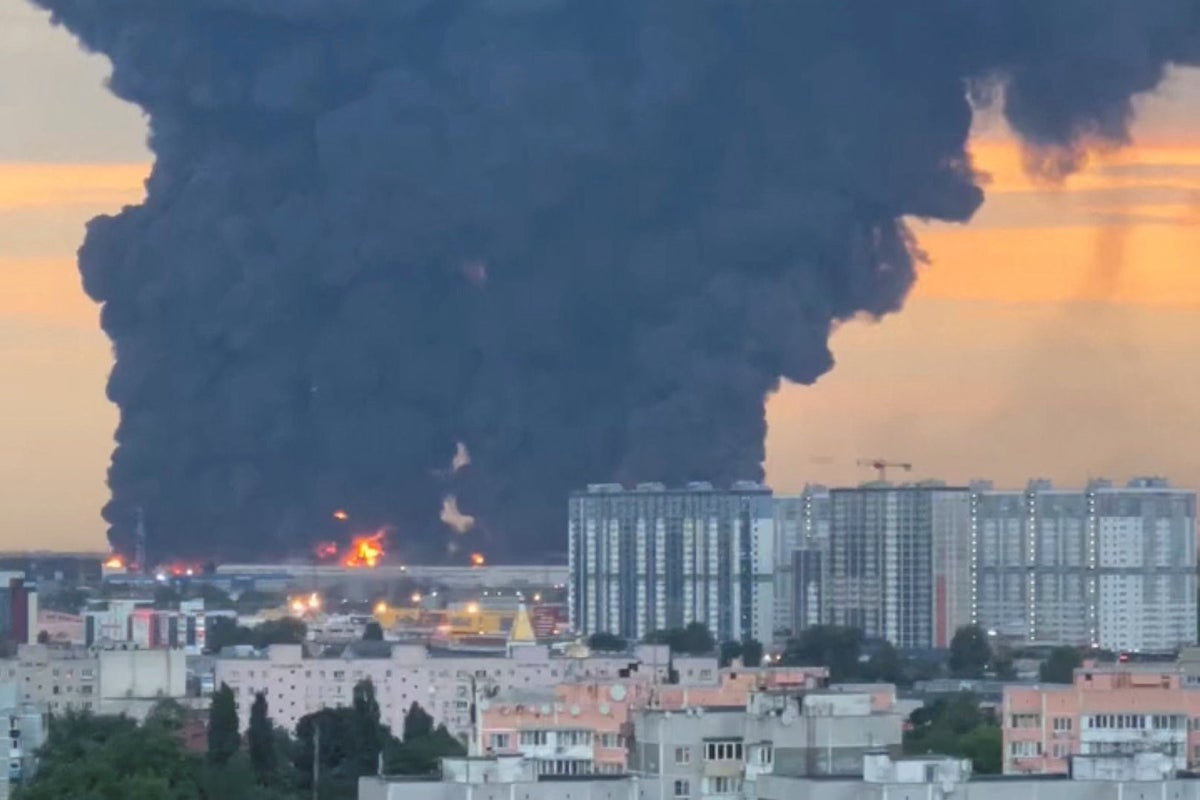
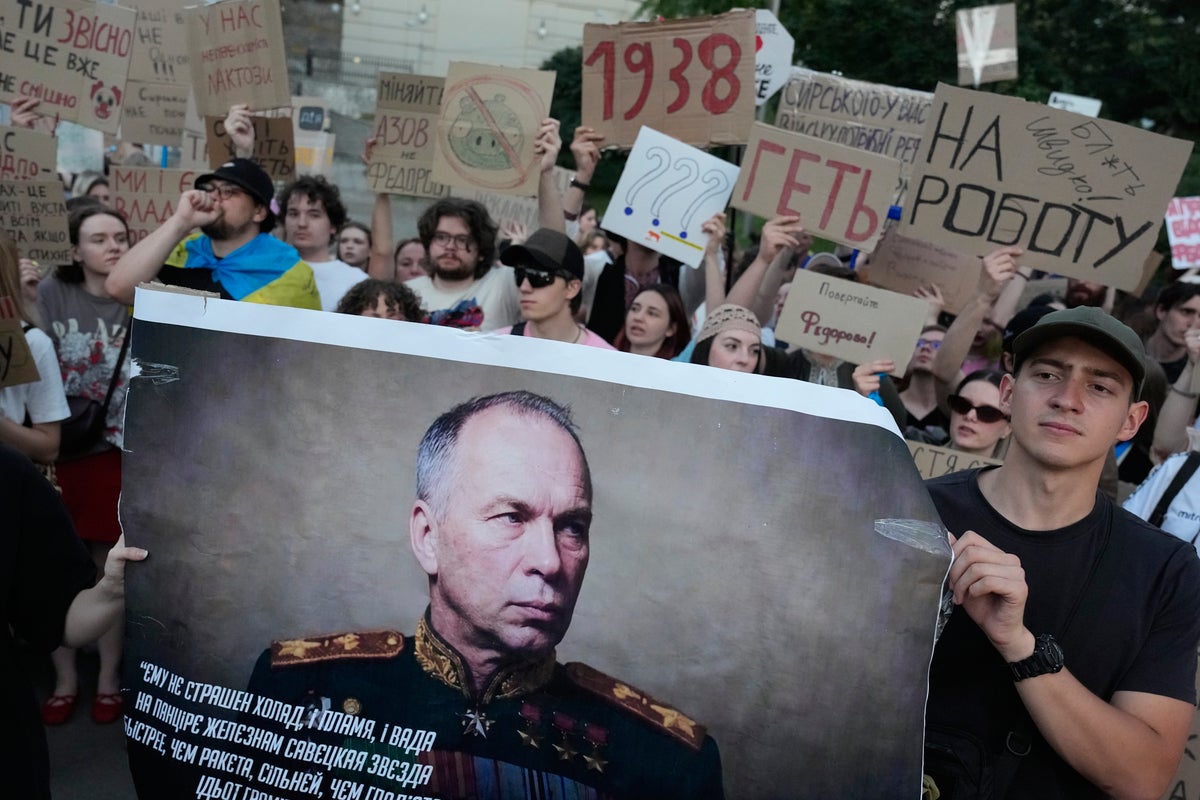
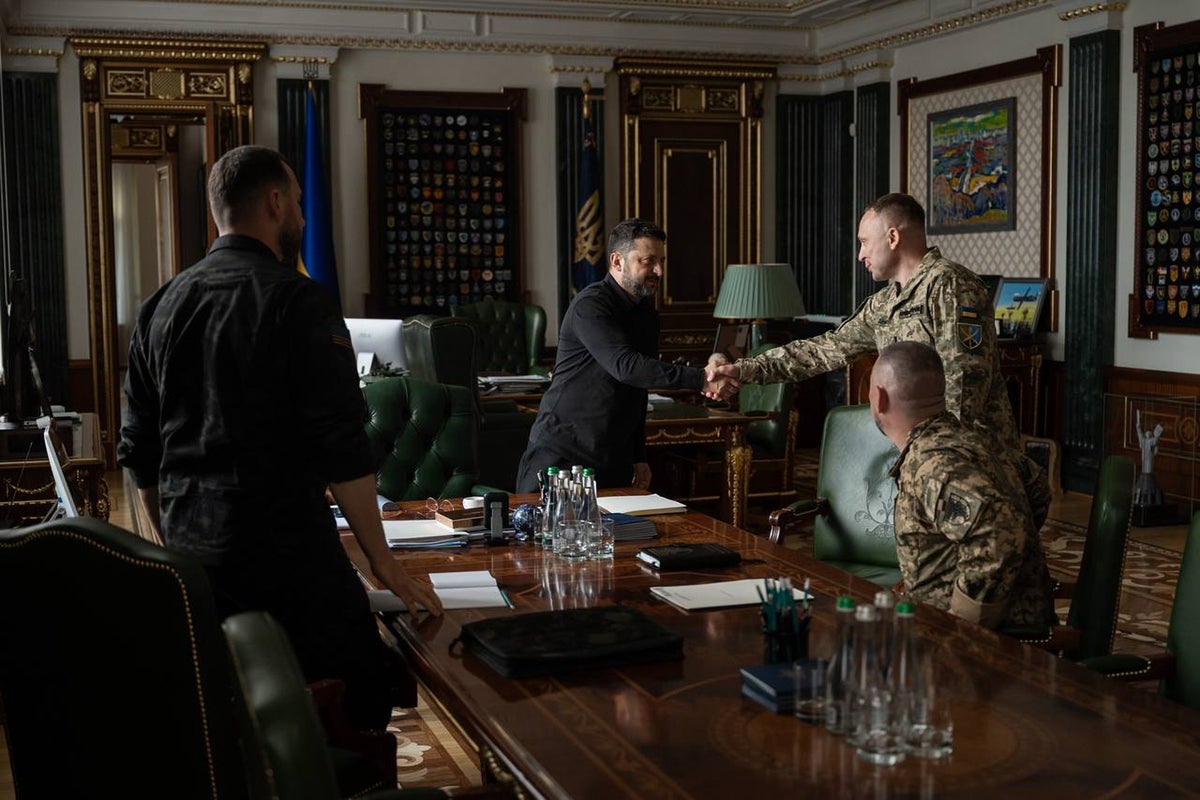
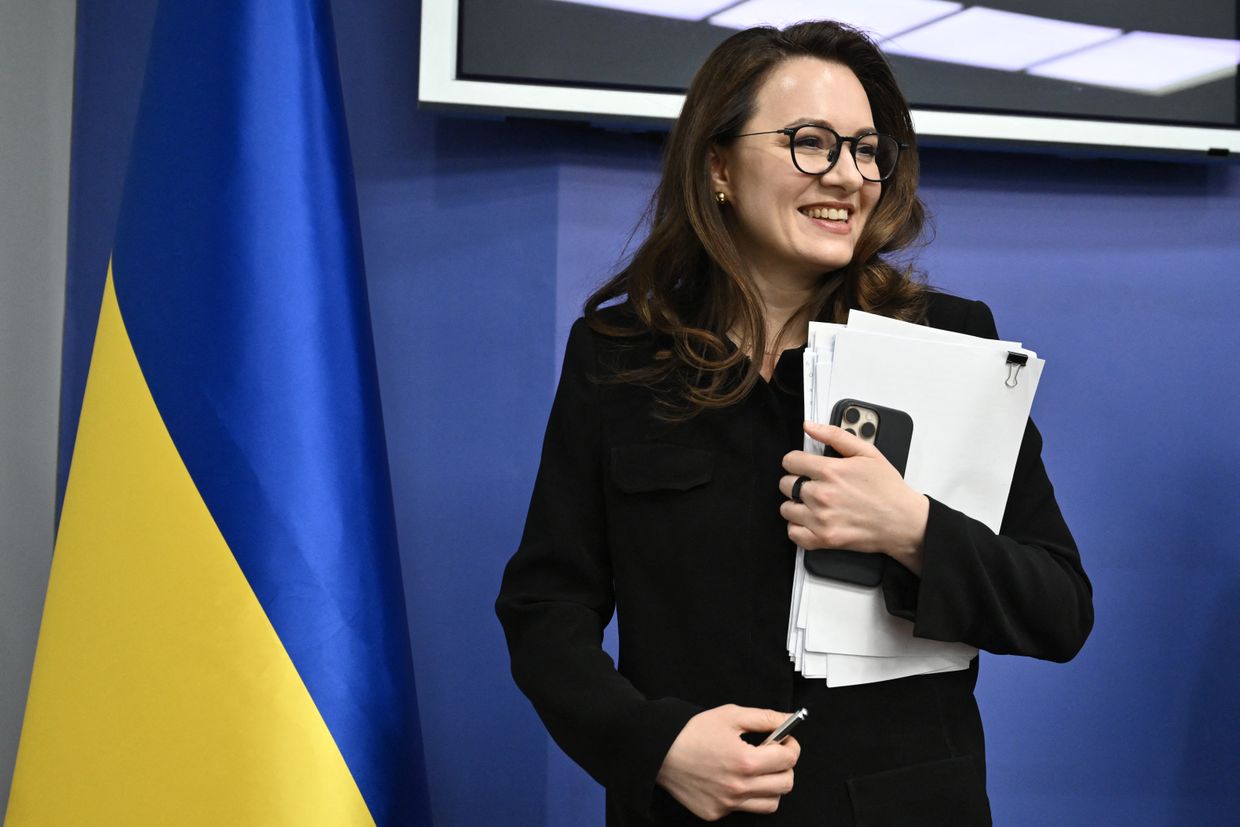
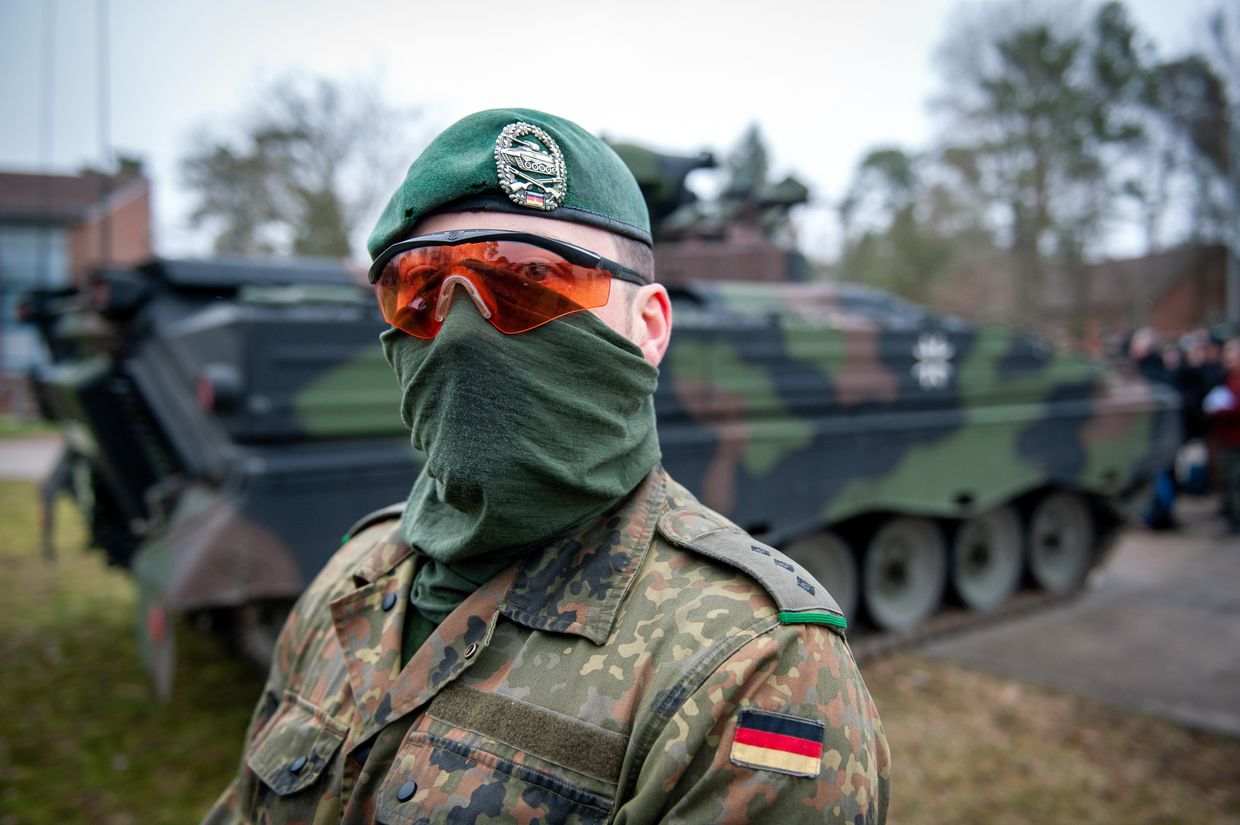
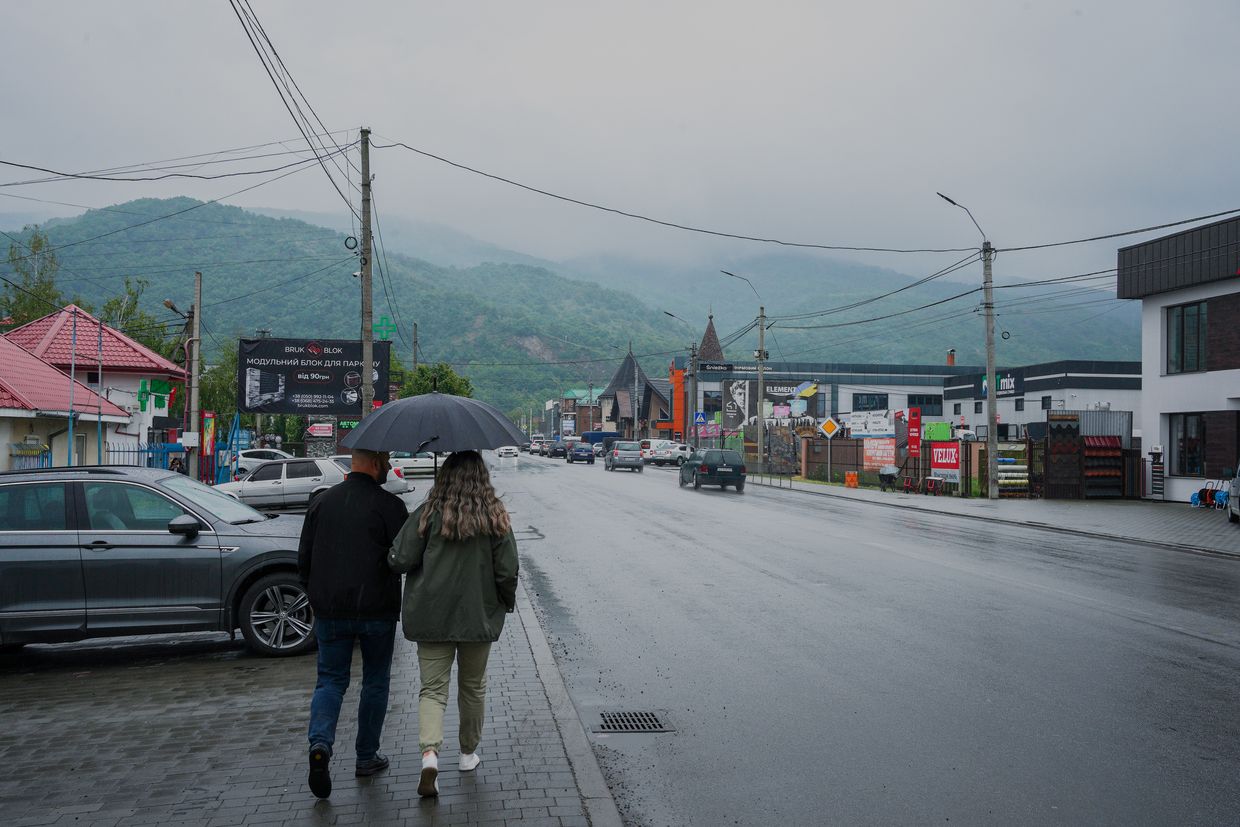
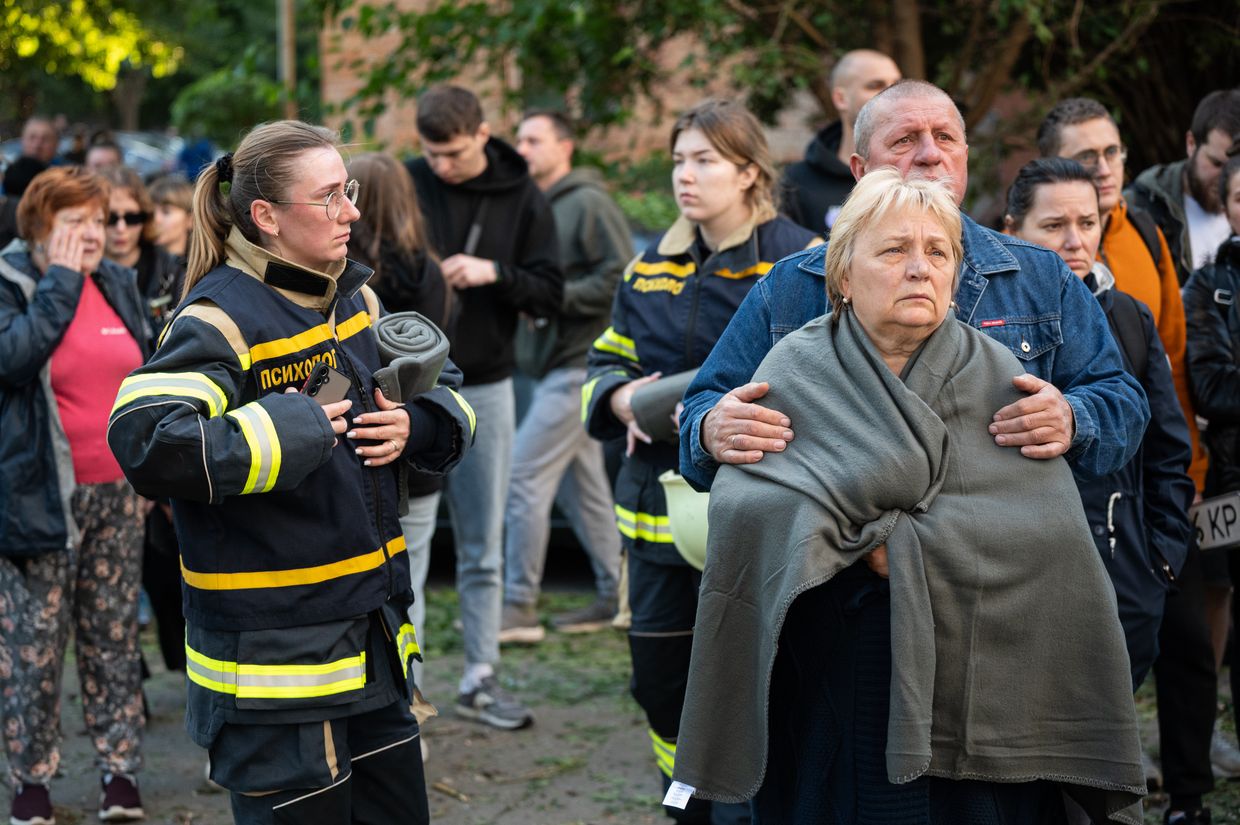
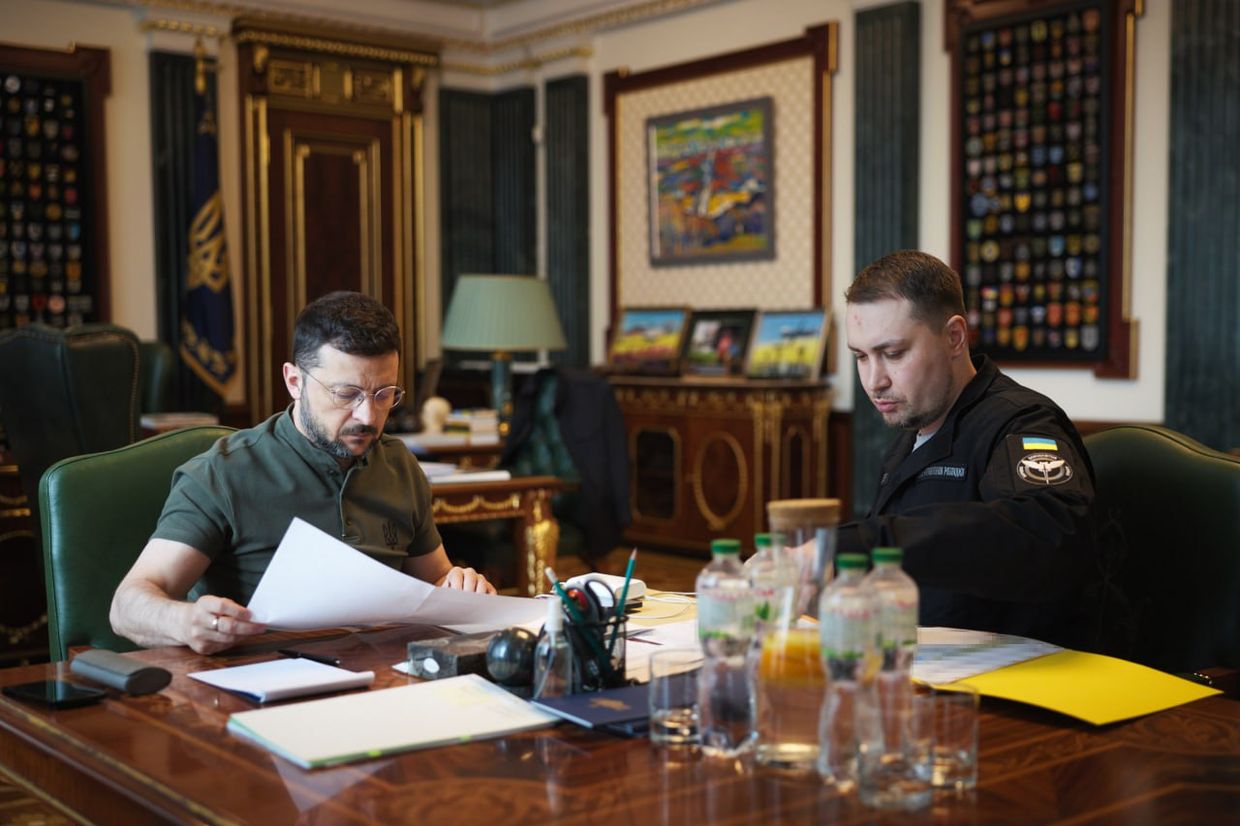
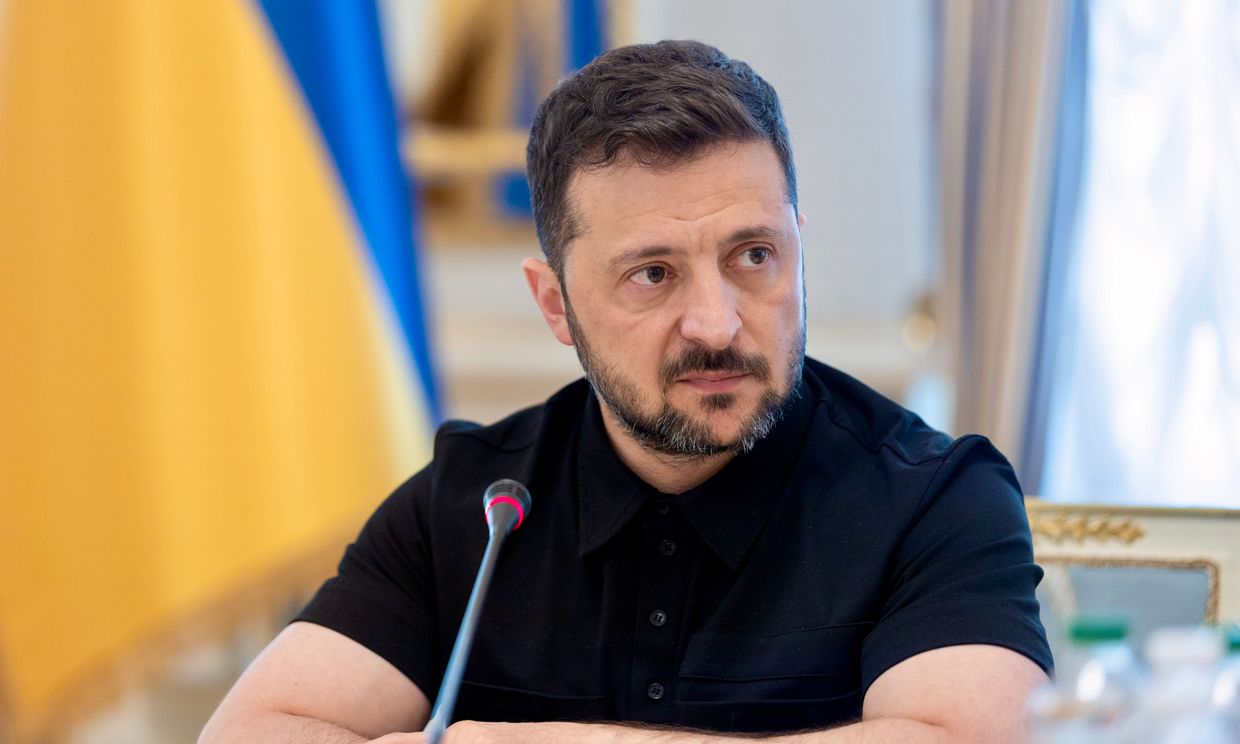
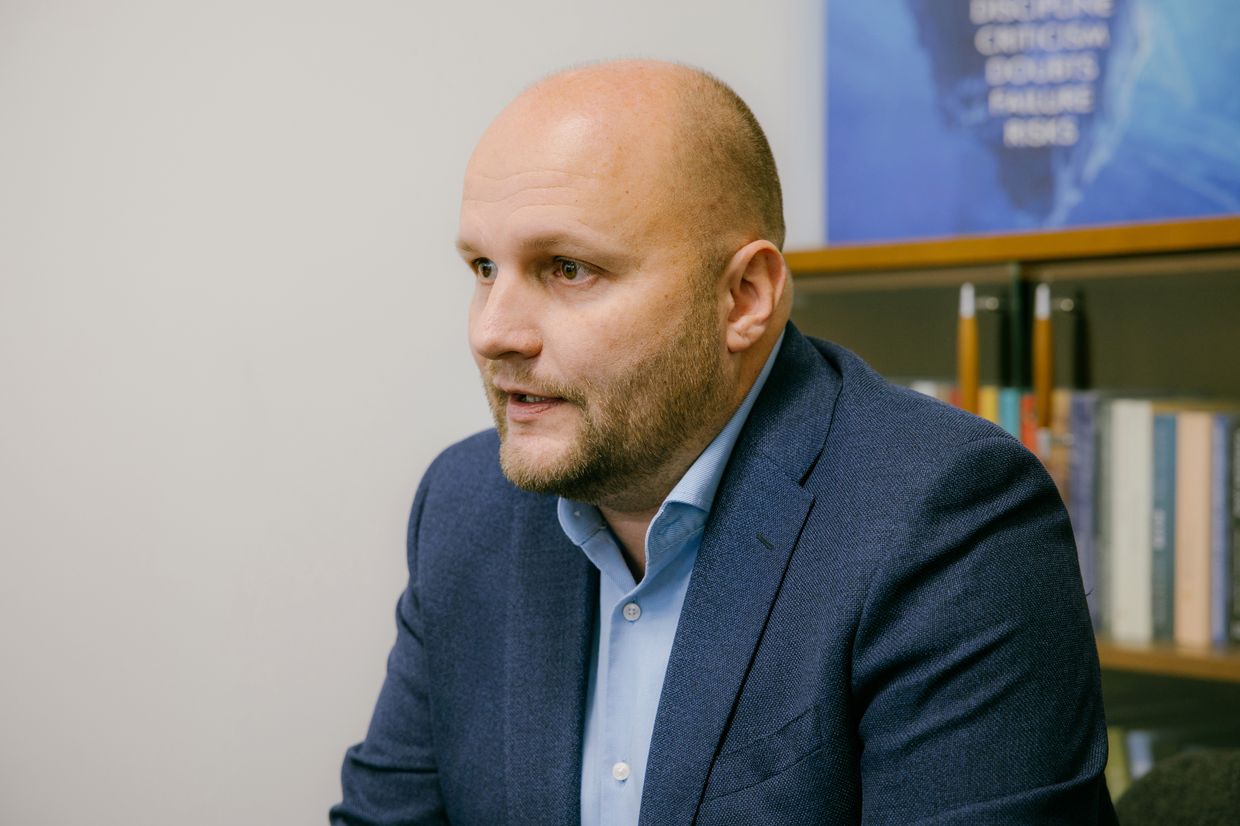
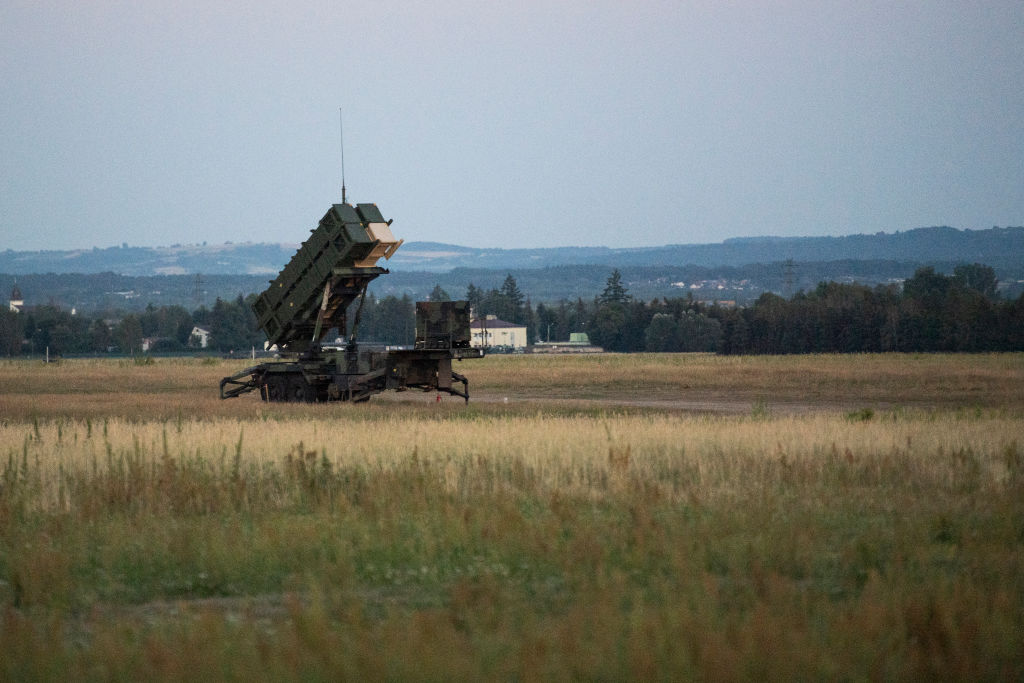
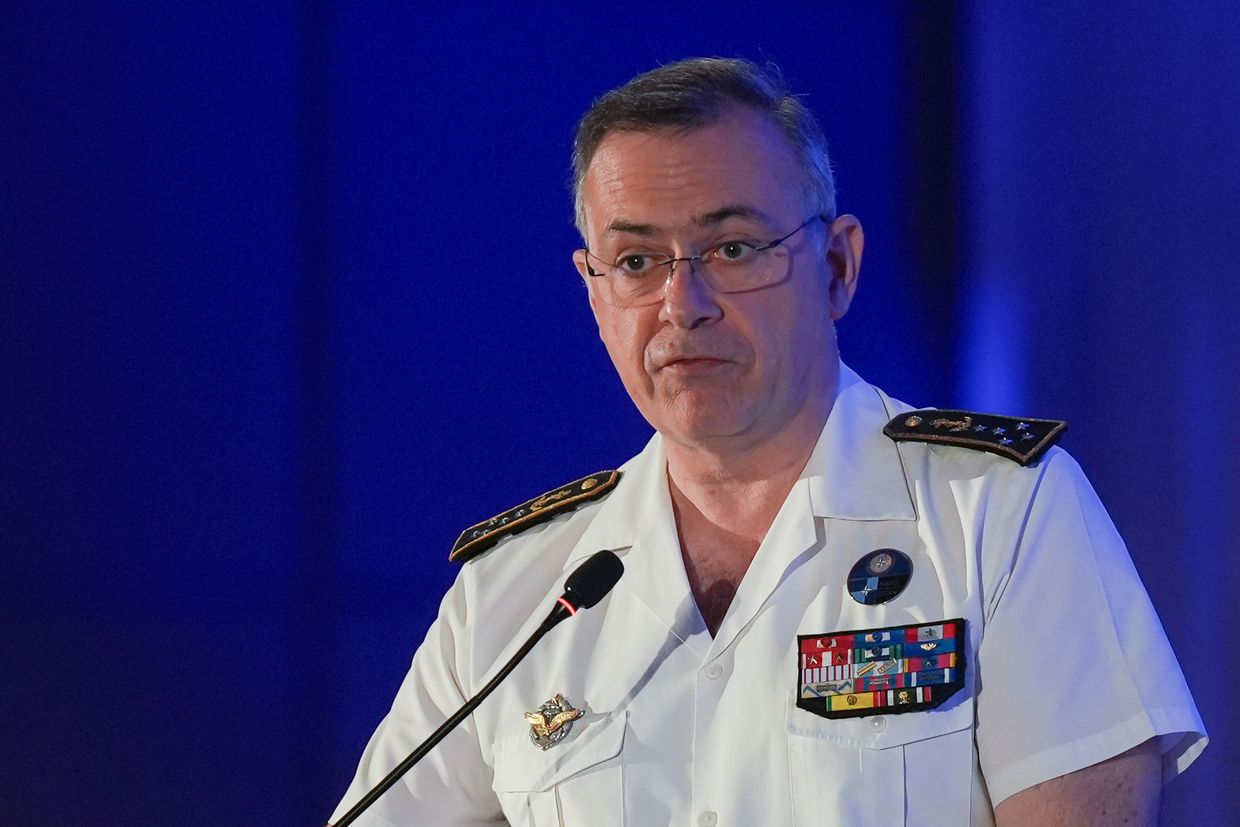
Major General Mykhailo Drapatyi’s appointment as head of the military has met wide approval in Ukraine, with many disliking the rigid Soviet-style of General Oleksandr Syrskyi, writes Askold Krushelnycky in Kyiv
Major General Mykhailo Drapatyi’s appointment as head of the military has met wide approval in Ukraine, with many disliking the rigid Soviet-style of General Oleksandr Syrskyi, writes Askold Krushelnycky in Kyiv
La Commission européenne a infligé une amende de 880 millions $ au site AliExpress, une filiale du géant chinois Alibaba.
Elle reproche au site de commerce en ligne de ne pas avoir pris de mesures suffisantes pour détecter et retirer des produits illégaux, dangereux ou contrefaits.
C’est la plus lourde amende imposée par l’Union européenne en vertu du règlement européen sur les services numériques.
En mai, la Commission avait infligé une amende de 320 millions $ à Temu, un autre
La Commission européenne a infligé une amende de 880 millions $ au site AliExpress, une filiale du géant chinois Alibaba.
Elle reproche au site de commerce en ligne de ne pas avoir pris de mesures suffisantes pour détecter et retirer des produits illégaux, dangereux ou contrefaits.
C’est la plus lourde amende imposée par l’Union européenne en vertu du règlement européen sur les services numériques.
En mai, la Commission avait infligé une amende de 320 millions $ à Temu, un autre site chinois de vente en ligne, pour des raisons similaires.
In the flatlands of Italy’s Po Valley, the decommissioned Caorso nuclear power plant can be seen for miles, the reactor looming into the sky. When Alessandro Maffini, now an assistant professor at the Polytechnic University of Milan, was growing up in the 1990s, the plant's distant silhouette captured his imagination. “The physical presence of that thing was so significant to me as a child. It was a very visible, tangible, concrete presence,” Maffini remembers. “It was like a white Duomo, there
In the flatlands of Italy’s Po Valley, the decommissioned Caorso nuclear power plant can be seen for miles, the reactor looming into the sky. When Alessandro Maffini, now an assistant professor at the Polytechnic University of Milan, was growing up in the 1990s, the plant's distant silhouette captured his imagination. “The physical presence of that thing was so significant to me as a child. It was a very visible, tangible, concrete presence,” Maffini remembers. “It was like a white Duomo, there on the horizon, always in the background.” For many others, though, it was a specter of disaster, a ghost nuclear plant — shuttered, alongside all of Italy’s nuclear power stations, in the wake of the Chernobyl accident.
“If that plant explodes, we’re all dead,” Maffini’s mother used to intone, looking out at the defunct Caorso station, once the largest in Italy. As Maffini rode his bike six miles across the countryside to get a closer look at the plant from a nearby overpass, his mother’s doom-laden words rang in his ears. Her warning scared him. It also made him want to learn more. When he left home to go to university, Maffini decided to work in nuclear physics. “Radioactivity is a strange thing,” he says. “You can’t see it, you can't hear it, you can't smell it. It leaves a lot of room for imagination, for speculation, for fear.”
Four decades on from Chernobyl, and Italy has some of the highest energy bills in Europe. The country is scrambling to disentangle itself from its dependence on Russian gas in the wake of Russia’s invasion of Ukraine, and build out its energy sovereignty. War in Iran, and a growing European consensus that turning away from nuclear power was, in the words of European Commission president Ursula von der Leyen, a “strategic mistake,” has given more impetus to the Italian government’s argument that the country needs to move past its qualms.
Last year, the Italian cabinet approved a new draft law reintroducing the prospect of returning to nuclear power. “The government has approved another important measure to ensure clean, safe, low-cost energy that can guarantee energy security and strategic independence,” the Prime Minister Giorgia Meloni announced.
Italy is already surrounded on all sides by nuclear power plants: Slovenia’s Krsko plant is 90 miles away from the border, and there are four French nuclear power plants within 110 miles. Italy is the world’s second-largest importer of electricity, with nuclear power, largely imported from France, making up 5% of its energy basket. Italy also plays host to more U.S. nuclear warheads than any other European country. An estimated 35 thermonuclear gravity bombs are stored at two NATO airbases in northern Italy, according to the Nuclear Threat Initiative.
Now, as data centers spring up in Italy’s industrial north, the country’s energy needs are expected to increase exponentially and the government is turning, albeit cautiously, to a long-held Italian taboo. Since the spring of 1986, when the most serious accident in nuclear history unfolded in Unit 4 of the Chernobyl Nuclear Power Plant in northern Ukraine, the Italian population has lived in fear of nuclear energy. It voted to shutter its once-burgeoning nuclear industry in 1987, and in 2011, after the Fukushima nuclear accident, when 94% of voters rejected government plans to revive the industry.
It is a fear that has transformed Italy’s energy fortunes, making it reliant on imports and vulnerable to volatility and price shocks.
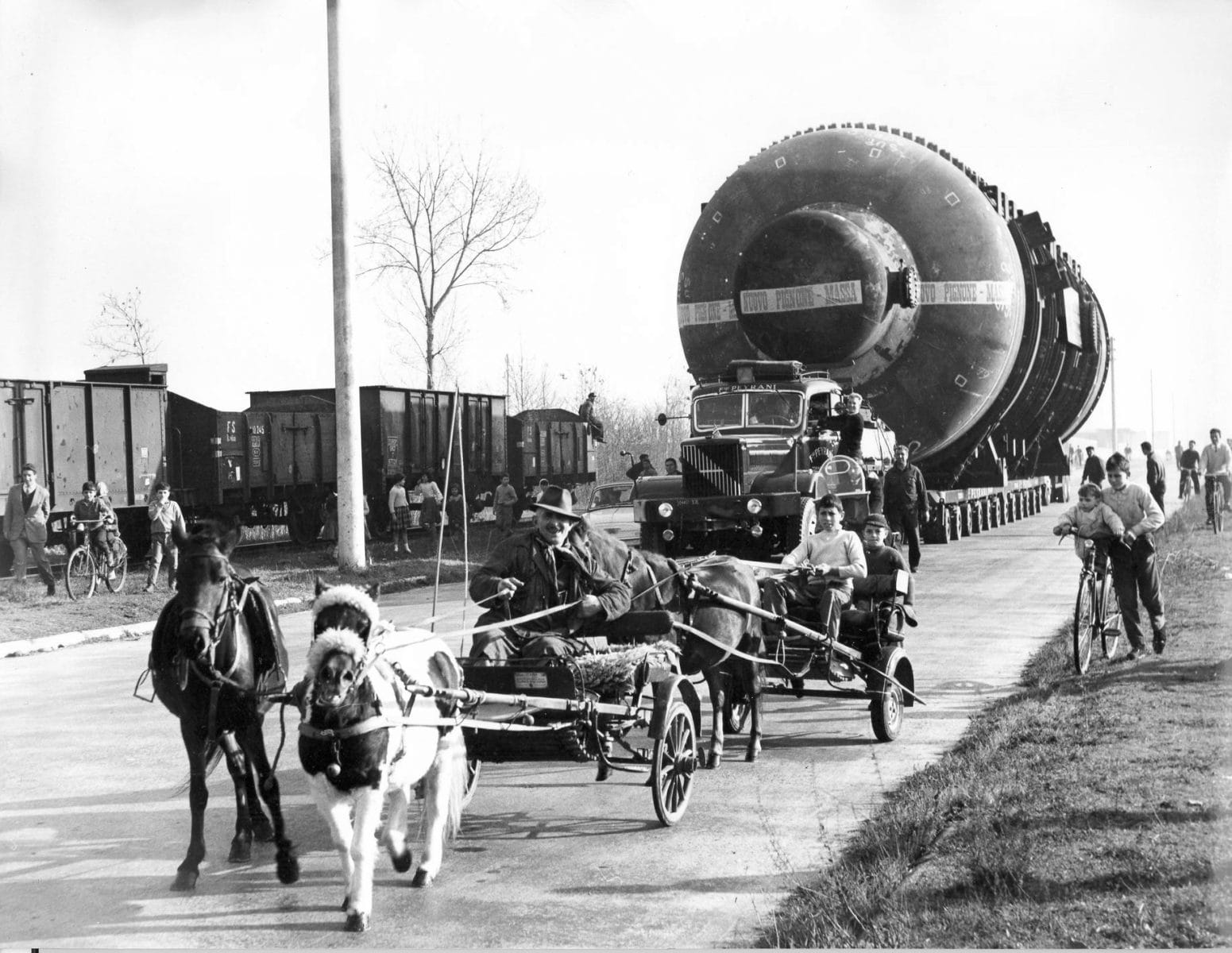
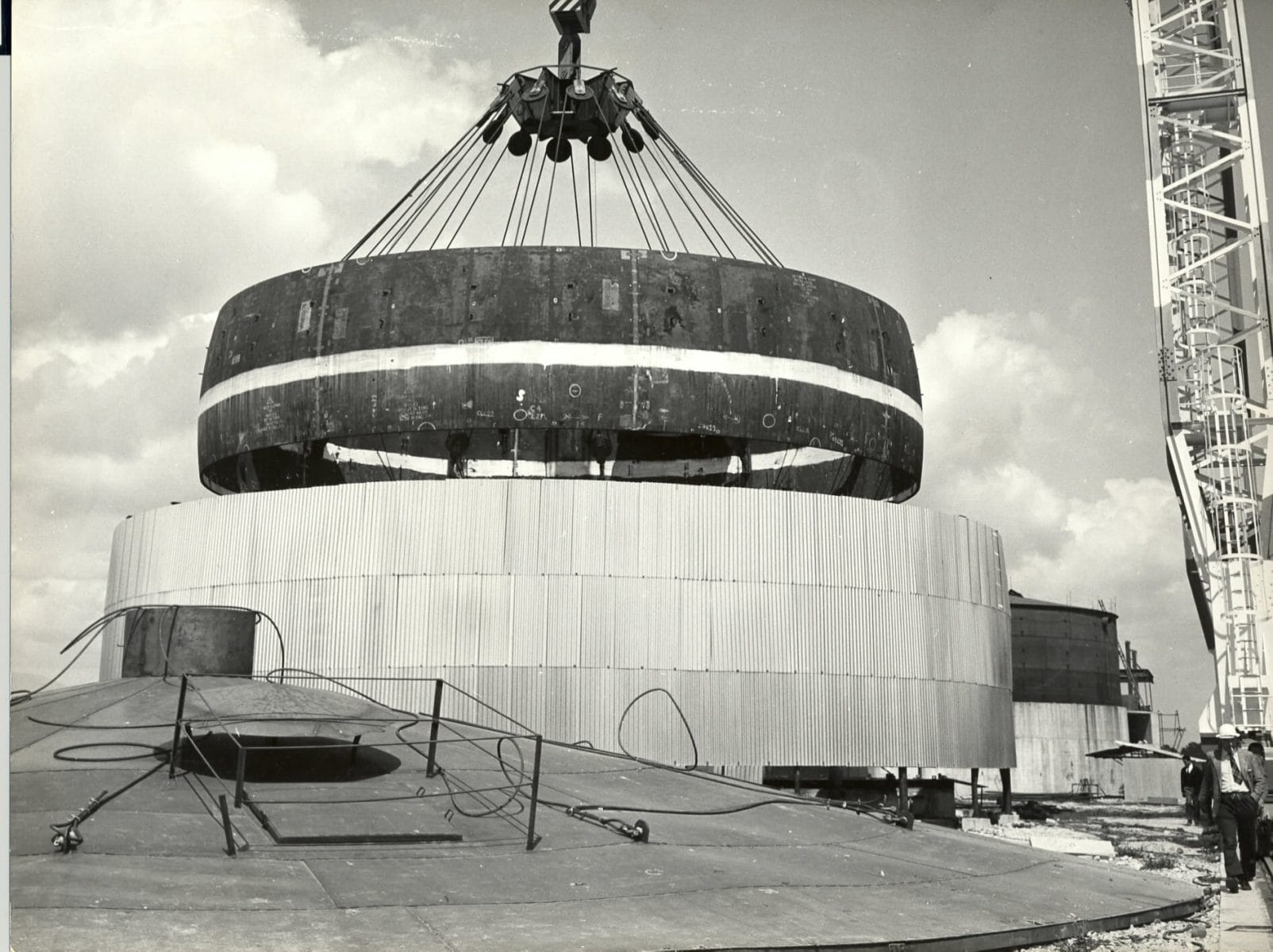
The Latina nuclear power plant during its construction in the late '50s and early '60s. Photos courtesy of SOGIN.
“The international crises of recent years have clearly demonstrated the risk of excessive dependence on imported fossil fuels or vulnerable supply chains,” said Fiorella Corrado, communications chief at Italy’s environment and energy ministry. “The government approaches this issue with great respect for the country's history and the democratic choices expressed by citizens. The 1987 and 2011 referendums profoundly impacted the national energy strategy at very different historical moments. Precisely for this reason, the point is not to ignore those choices, but to acknowledge that today's technological, climatic, industrial, and geopolitical context has radically changed.”
For Meloni’s government, the argument is not so much whether Italy needs to revive its nuclear industry, it’s whether the country is ready to shake its demons, to shake the cultural memory of what happened at Chernobyl forty years ago, a thousand miles away from Rome.
In the early hours of April 28, 1986, in the control room of the Latina nuclear power plant south of Rome, a young technician called Ruggero Dell’Aquila was working the night shift. “Everything was perfectly quiet,” he recalled. As morning broke, teletype messages from Northern Europe began to rattle in. A clerk came down from the control room with reports from the Forsmark Nuclear Power Plant in Sweden. Their monitoring stations were registering radiation spikes far above background levels, and no one knew why.
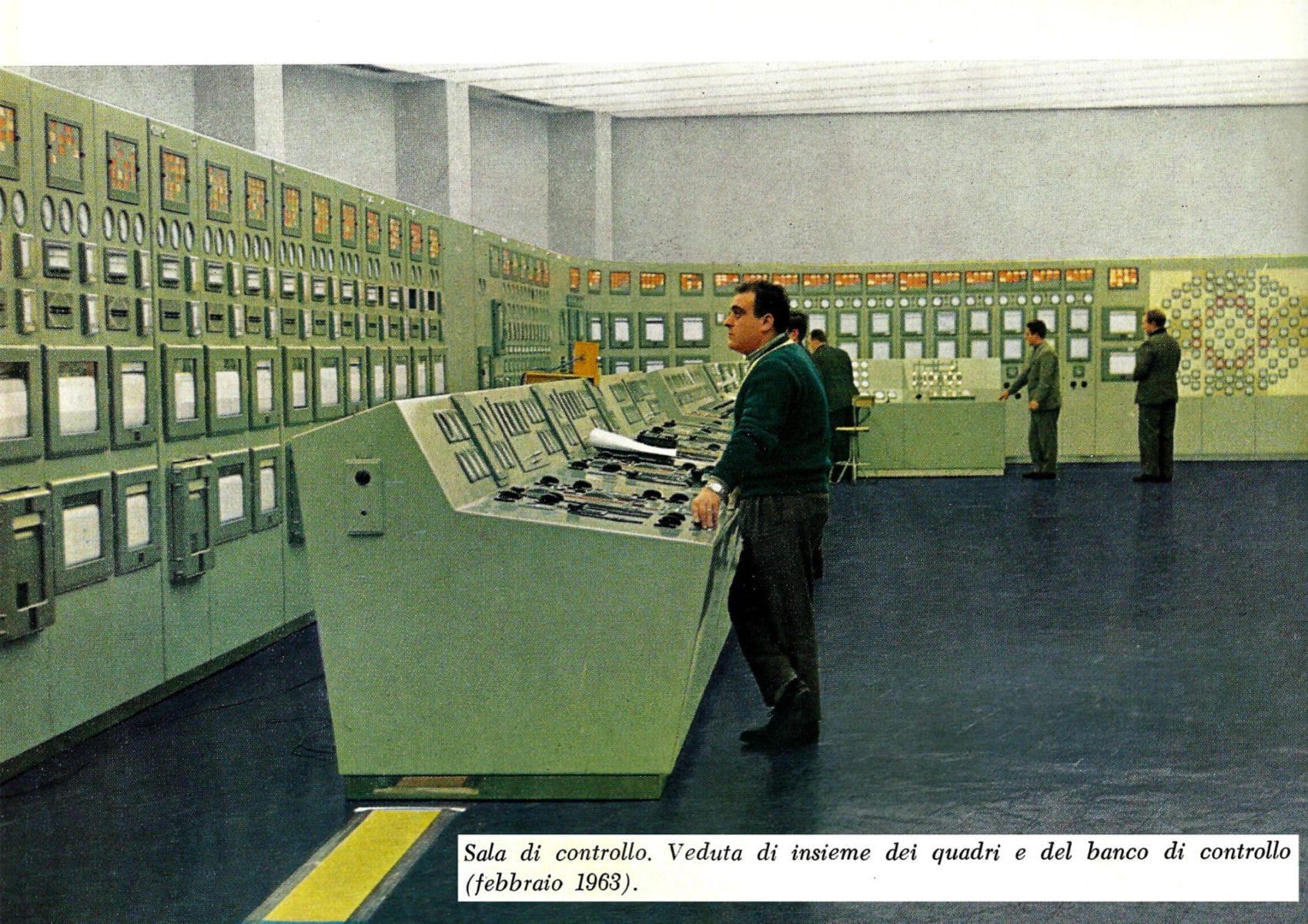
Inside the control room of the Latina power plant, 1963. Photo courtesy of Pionieri Del Nucleare.jpg
That evening, nuclear physicist Sergio Malossi, a director at the Latina plant responsible for monitoring radioactive risk, drove home. His mind was turning over what the clerks had been reporting. “He came in extremely agitated,” remembers his daughter, Roberta Malossi, who was 16 at the time. “We knew he was worried about something going wrong at the facility, but we didn’t understand.” Malossi says that her father’s first paranoid thought was that there had been a malfunction in his own plant, that radiation was leaching into the air, and that it was somehow his fault.
At 9 p.m. Moscow time — aperitivo hour in Latina — the Soviet Union announced there had been an accident at the Chernobyl nuclear plant. In the ensuing days, Italian news was full of dire warnings.
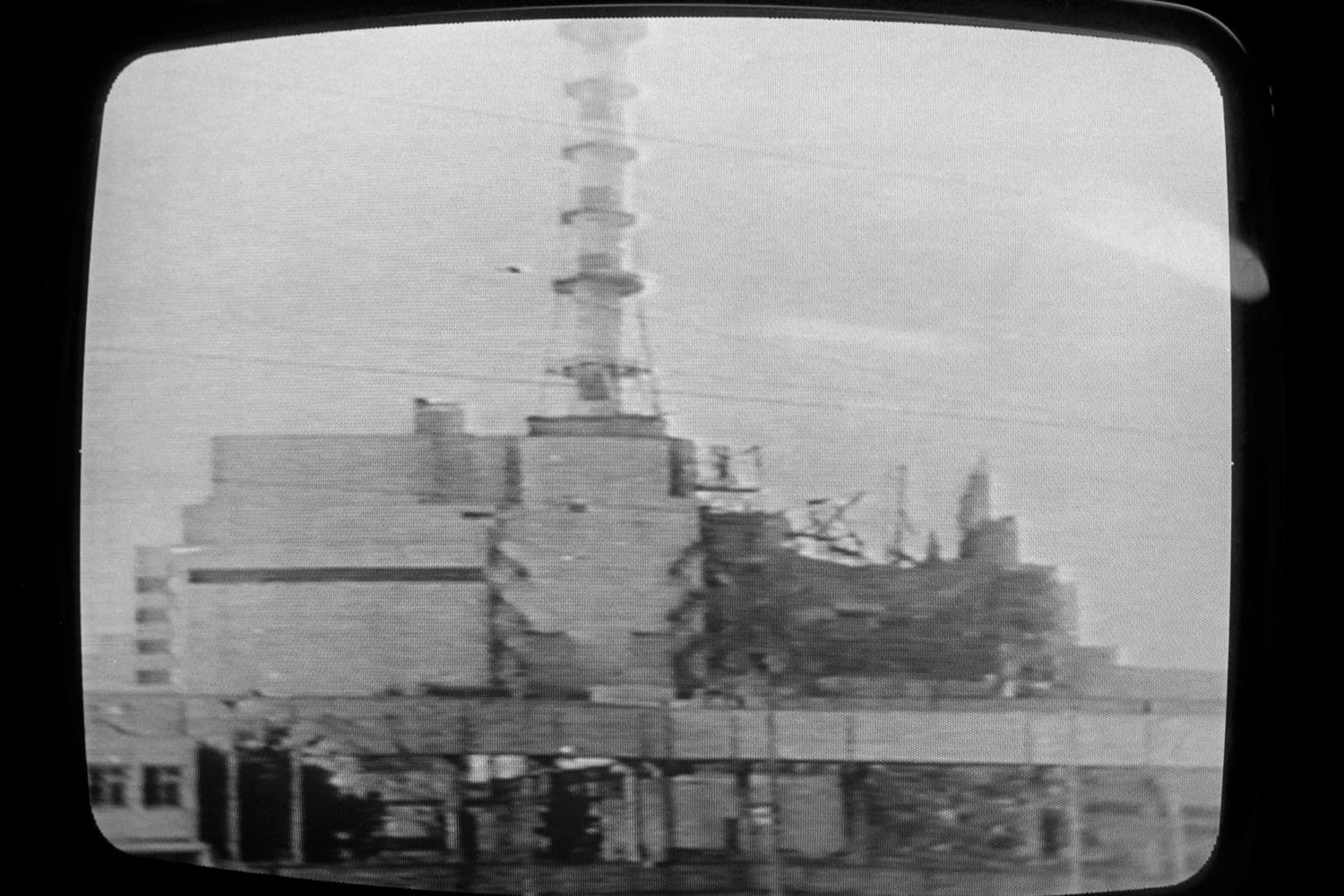
On April 30, 1986, Soviet television aired this image of the Chernobyl plant, claiming there was “no destruction, no major fires, and no mass casualties.” AFP via Getty Images.
“Television was showing these clouds that would soon reach Italy. Everyone was terrified. The only information we got was from state TV, and the news was shocking,” said Monica Tommasi, President of Friends of the Earth Italy, who was a child at the time. Radiation, the news said, would rain down on the population. “The fear from the sky,” ran one La Repubblica headline. “The cloud above us, the doubt within us,” ran another.
On the night of April 30, 1986, Italy’s nuclear monitoring stations began recording increases in radioactivity. The cloud moved over the Valley of the Po, and while the government called for calm, the country began to descend into panic. In the minds of the Italian people, the worst had happened, explained Luca Romano, a writer and activist campaigning for the return of nuclear power in Italy. “Nuclear annihilation, death by radiation, the radioactive cloud and the nuclear holocaust, had arrived,” he said. Nuclear armageddon was a fear that had gripped the West for decades. This was not a nuclear war, but in the Italian collective consciousness, that didn’t make a difference.
The reality was, says Barbara Curli, Professor of Contemporary History at the University of Turin, that “Italy was only marginally affected by the cloud.”
The cloud in northern Italy meant radioactivity levels peaked briefly, but ten days later they had fallen dramatically back down. Because this spike was short-lived, the total radiation exposure remained low. A United Nations committee report recorded that northern Italy received an additional radiation dose of about 380 microsieverts in the year following Chernobyl — less than a fifth of the normal background radiation humans absorb in a year; equivalent to taking about six transatlantic flights. It was much smaller than the doses received by neighboring countries like Bulgaria, Austria and Greece, and in the south of Italy the dose was lower still.
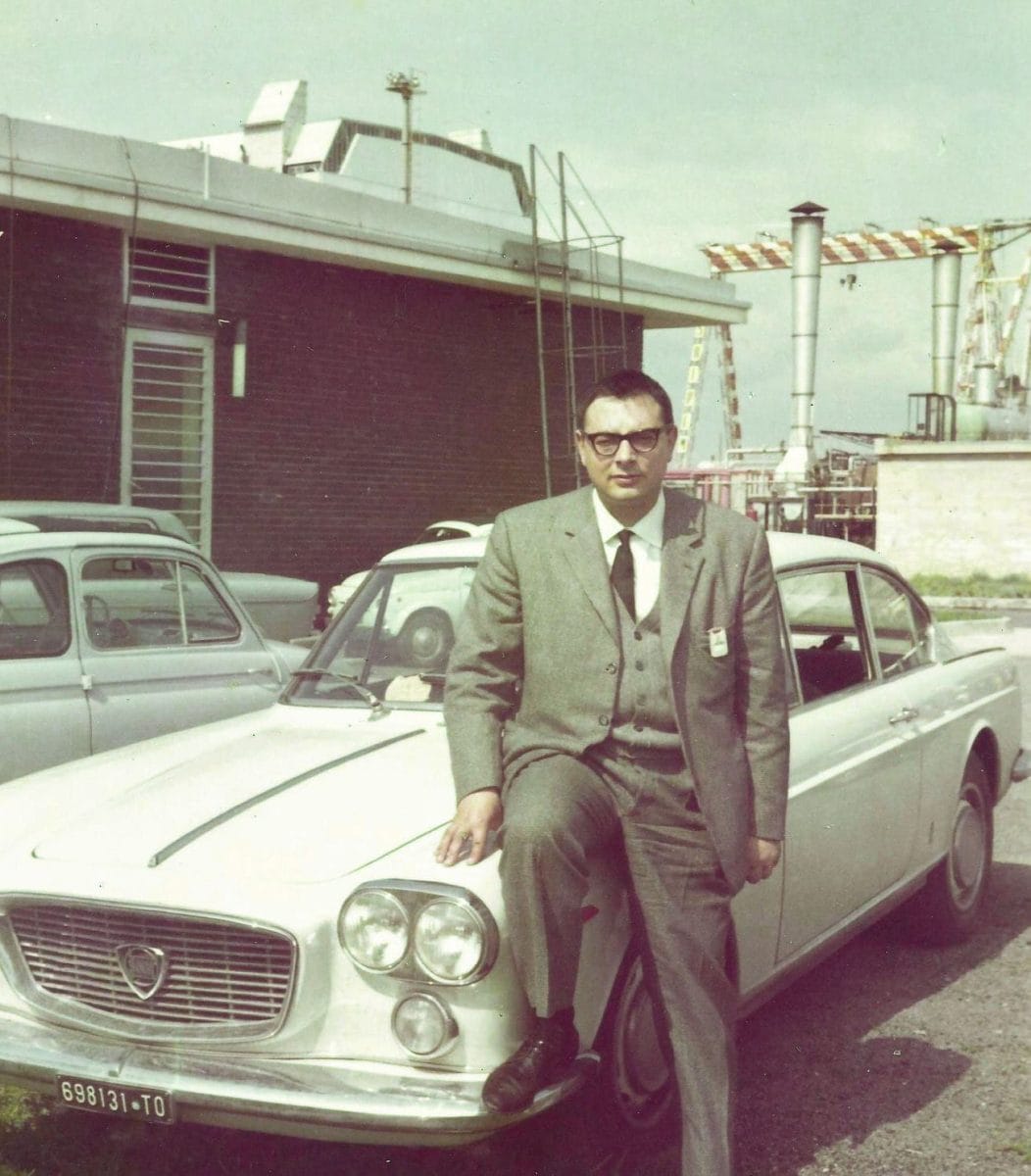
Nuclear Physicist Sergio Malossi, Long-time Director of the Department of Medical Physics at the Latina Nuclear plant. Photo courtesy of Pionieri del Nucleare di Latina.
Down by the Latina power plant, though, the community was shaken by events in Chernobyl, and rumors and misinformation began to spread about the fallout. The friends and family of the technician, Ruggero Dell’Aquila, started asking him if a Chernobyl-style disaster could happen at Latina, too. “Everyone was afraid, asking — ‘can it explode, can it explode?’” he recalled.
The reality was, a Chernobyl-style explosion was not possible at Latina, because its reactor lacked the unstable characteristics of the Soviet design. But this was not such an easy concept to explain.
“The problem was that a slew of journalists took over, telling lies,” Malossi said, recalling paranoid rumours about radioactivity causing mutations in nature. People started telling stories, Malossi said, about “frogs with three heads, animals and fish with four tails. Strange things. When in fact absolutely nothing like that was happening.”
The government advised people to avoid fresh vegetables and dairy products, particularly for children. Farmers destroyed crops and poured away milk. Sergio Malossi ignored the warnings, having measured radiation levels in the air himself. “My father and others from the plant brought the vegetables home and we ate them,” his daughter recalled.
It was these warnings — delivered amid a lack of clear information — that shifted public attitudes toward nuclear energy, said Renzo Colombo, 65, who was just beginning a career in nuclear engineering when the explosion happened. Now a member of Nucleare e Ragione, a nonprofit that promotes a rational approach to nuclear energy in Italy, he recalls how quickly fear took hold. “A real phobia was born, a panic about radioactivity,” he said. “And this panic marked the next 25 years.”
The months after the accident were a shadowy, uncertain period for Italians working in the nuclear industry. “I have to be honest, I felt a little guilty,” said Colombo. “As a nuclear engineer, I thought ‘what have we done?’ My colleagues and I always thought we were designing something useful for humanity. And at that moment we felt betrayed by our own profession.”
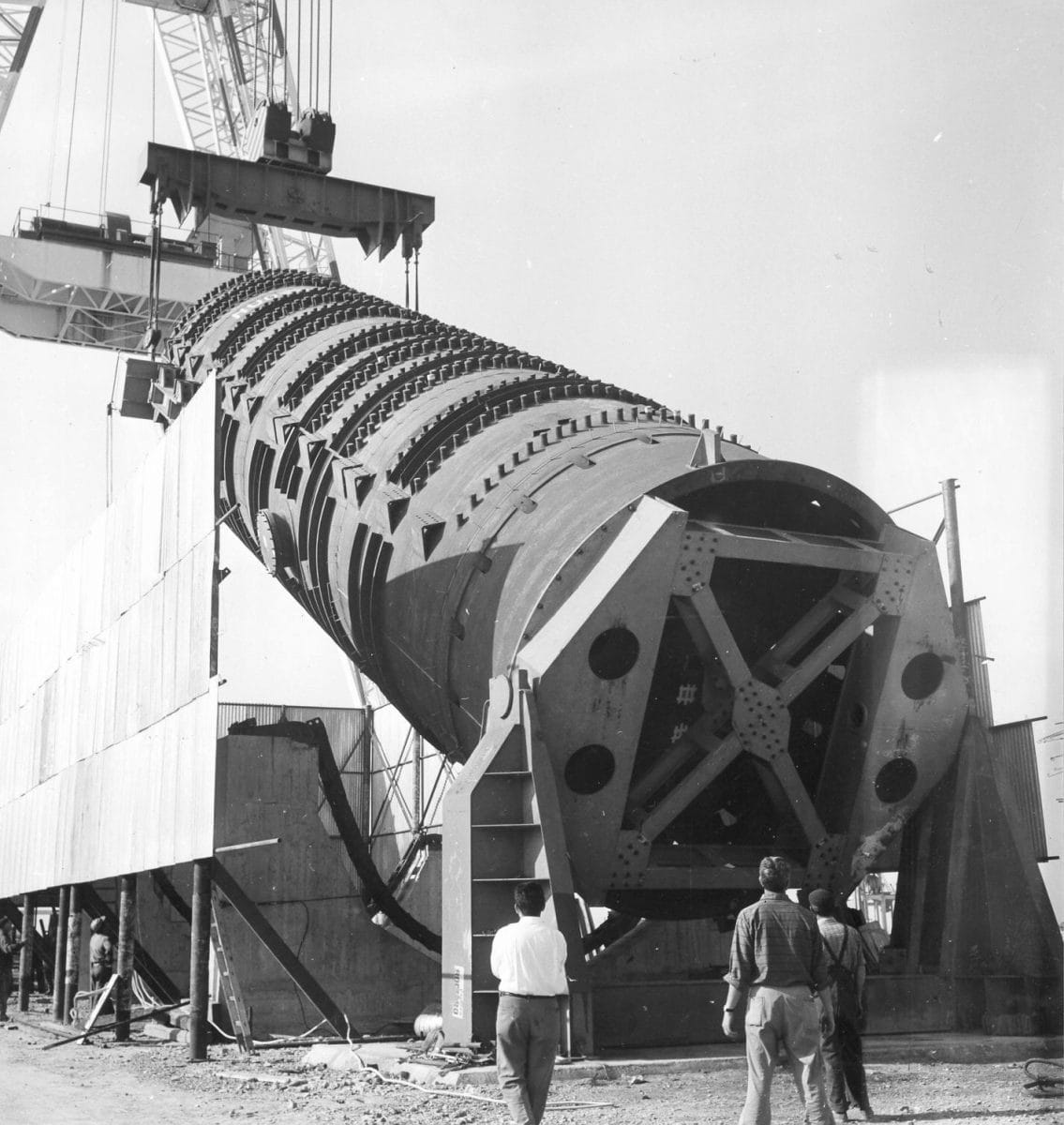
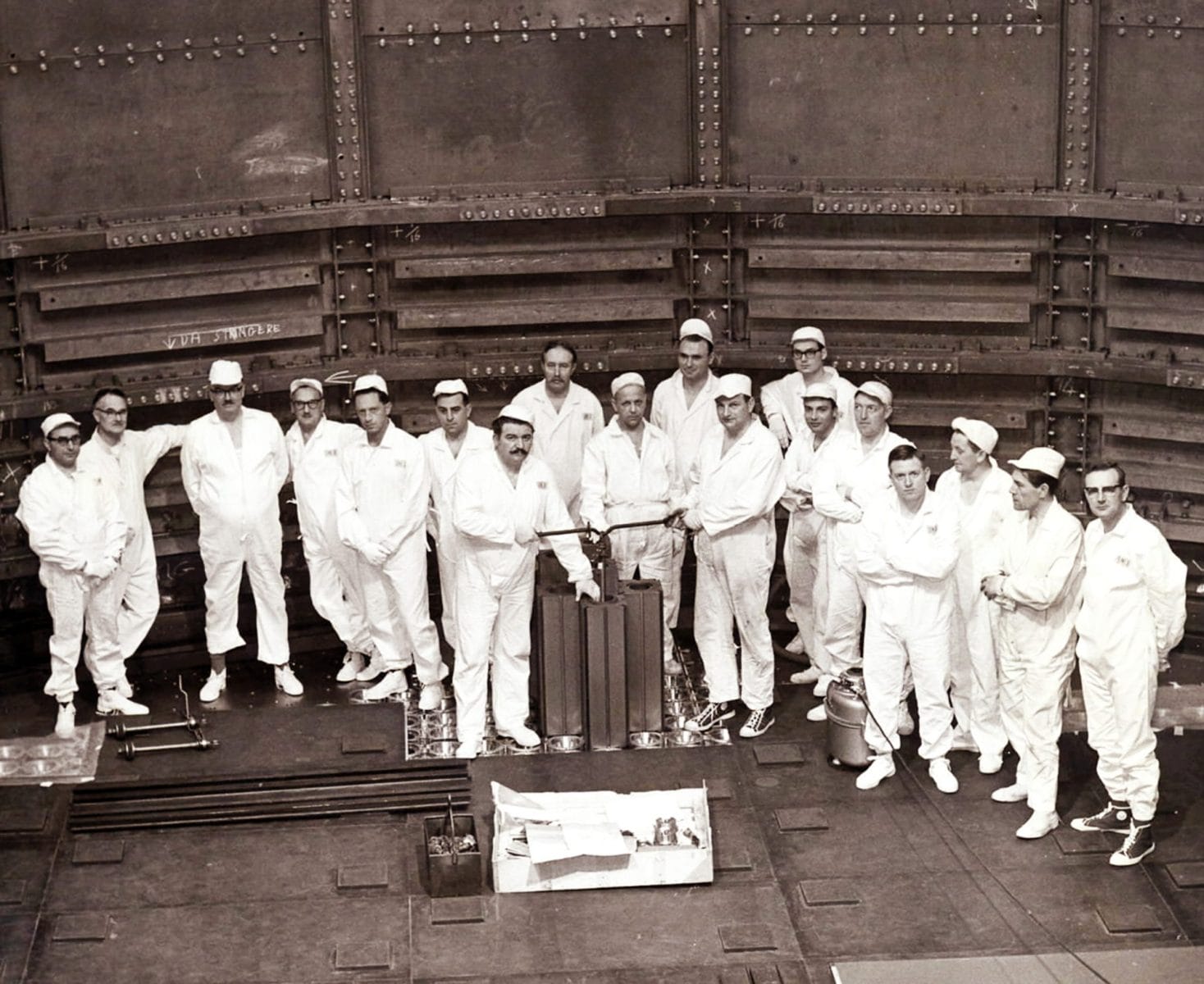
Workers at Latina nuclear plant during its construction in 1961. Photo courtesy Pionieri del Nucleare di Latina.
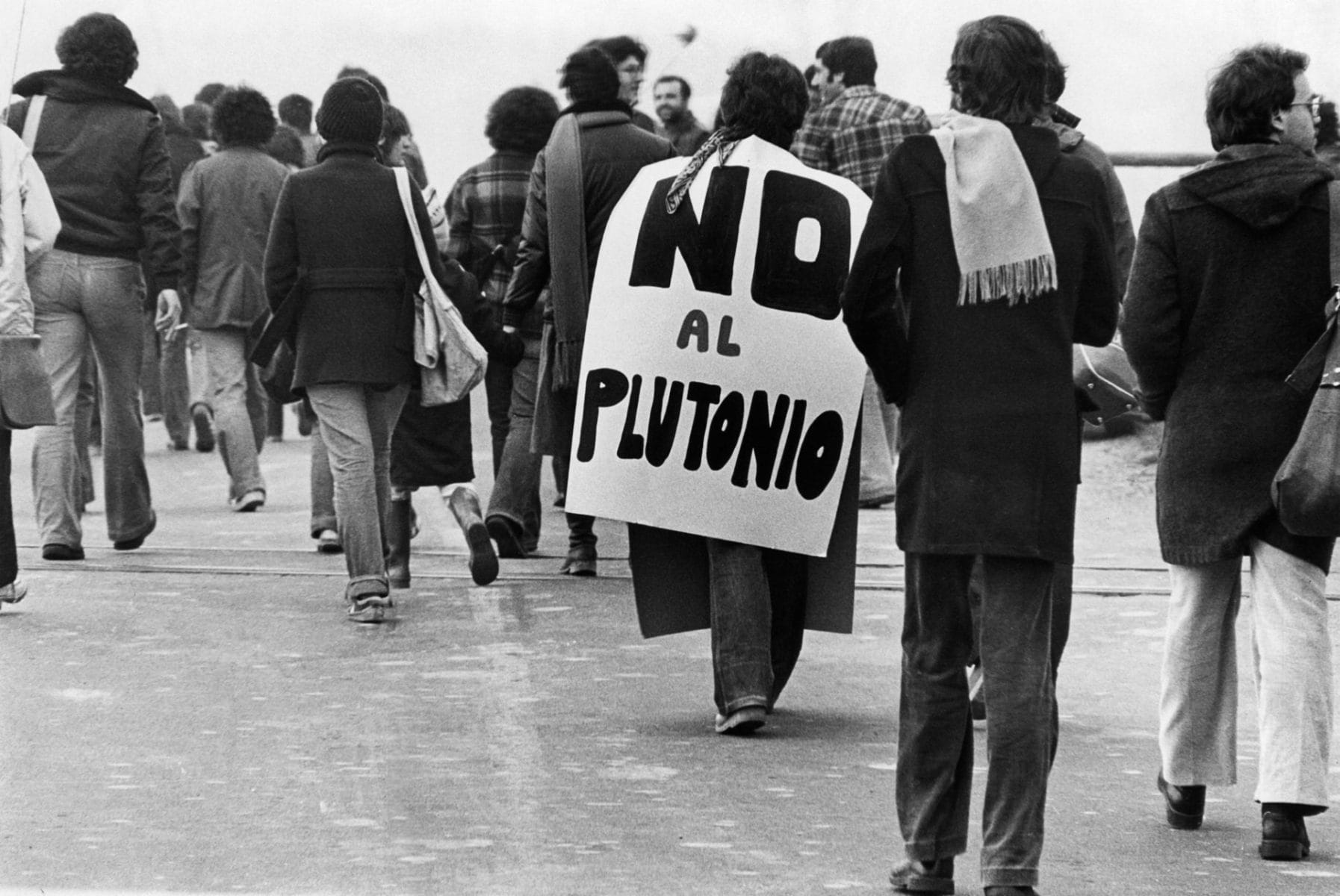
Outside Italy’s nuclear plants, crowds began to gather. A coalition of environmental groups and political parties started pushing for people to vote against nuclear power in an upcoming referendum.
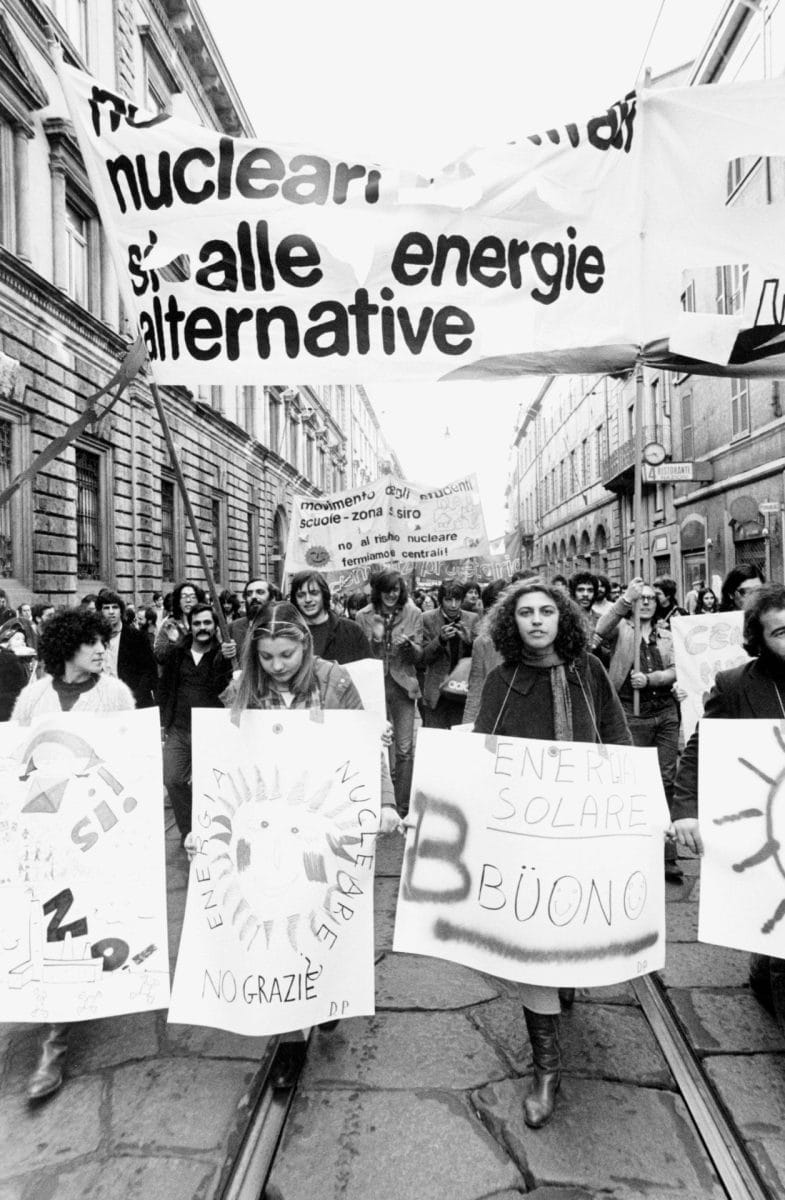
This movement was not new. “Many years before Chernobyl, an environmentalist culture was born — and it didn’t just concern nuclear power, but risky industry in general,” explained Curli, the Turin historian. The anti-nuclear environmental movement, which spread across Europe in the 1970s, was particularly potent in Italy — a country rocked by violent political turmoil, organized crime, and corruption scandals. Public fears, explained Curli, were sharpened by the Seveso disaster, an accident at an industrial plant in the north of Italy in 1976 that exposed tens of thousands of people to a toxic cloud of chemicals. Nuclear power, she said, “was not perceived by public opinion as a credible policy because there's this underlying distrust in institutions.”
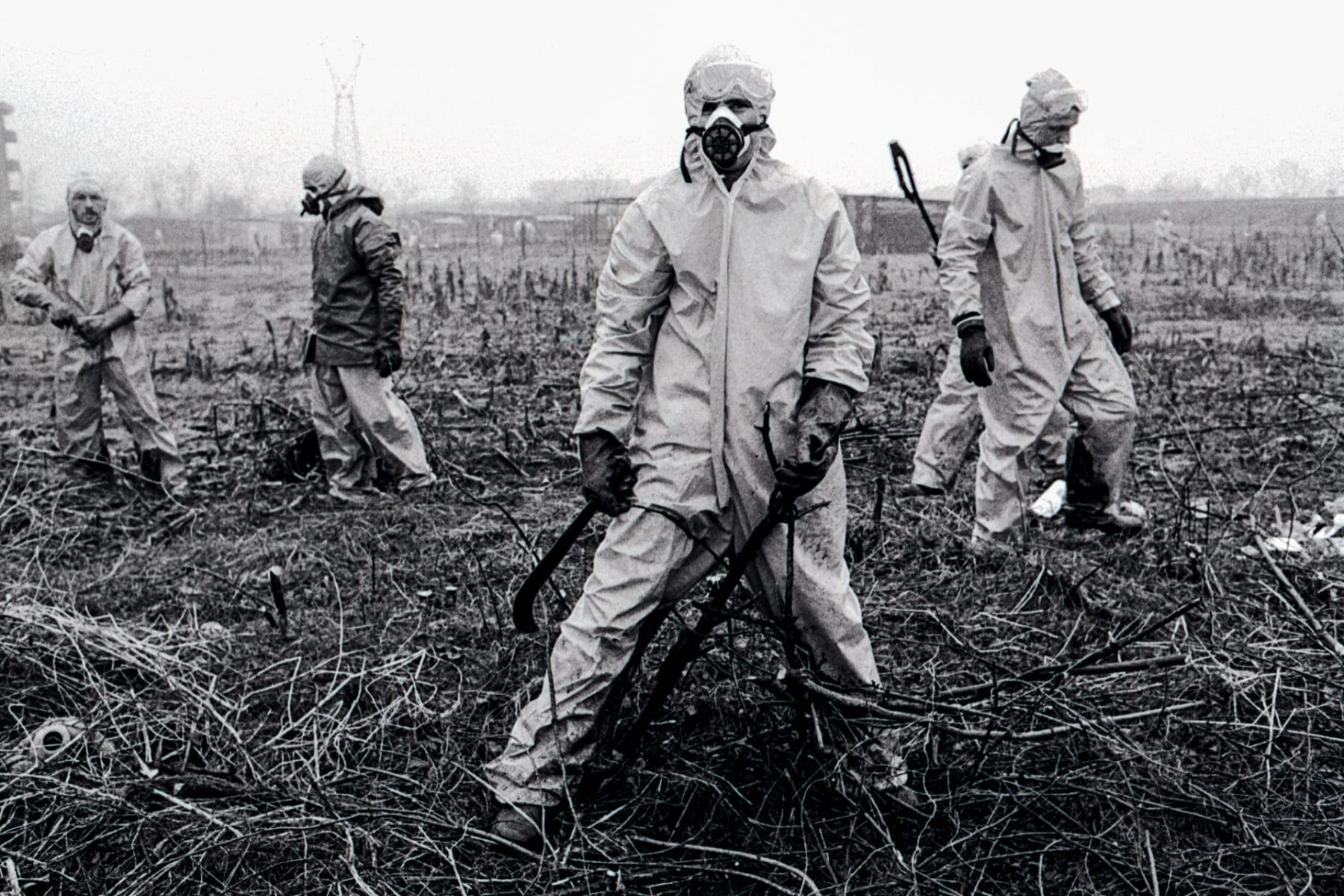
Workers in protective suits clean up the land and homes contaminated by the industrial accident at Seveso chemical manufacturing plant in 1976. Alberto Roveri/Archivio Alberto Roveri/Mondadori Portfolio via Getty Images.
In 1977, almost a decade before Chernobyl, a 10,000-strong crowd of protesters showed up at Montalto di Castro, to protest against a large new nuclear plant that was planned. A Time magazine correspondent described the activists as “an improbable mix of elegant members of the Italian nobility, radical students in American Indian garb, middle-class citizens and Christian Democratic and Communist politicians.”
Demonstrators taking part in an anti-nuclear demonstration. Turin, 1980s. Alberto RoveriMondadori via Getty Images.Anti-nuclear protest, Milan, 1980s. Universal Archive / Universal Images Group via Getty Images.Anti-nuclear protest, Rome, 1980s. Universal Archive / Universal Images Group via Getty Images.
In the wake of Chernobyl, Renzo Colombo was working at that very same plant, helping to build the thermohydraulic cycle. By then, the station was nearly complete. “It was a beautiful plant,” Colombo said. “I loved working there.”
In November 1987, 18 months after the Chernobyl accident, the Italian government held a referendum on nuclear energy. Nearly 80% of Italians voted in favor of measures that would end the country’s use of atomic energy.
One morning, following the referendum, the Montalto di Castro plant’s director called the workers to a meeting. Colombo remembers him saying: “‘Ragazzi, gather round, I need to talk to you. I’ve just been to the ministry, and Italy has decided that we are closing all nuclear activity and will focus on coal and gas instead.’” The room went silent. “I was young,” said Colombo. “But there were people there who were older and had devoted years of their life to the nuclear field. There was just this urge to cry.”
The effect of the referendum was all-encompassing: construction was halted, and over the next three years Italy’s nuclear plants were shut down for good; its nuclear engineers scattered — many going to work abroad, or, like Colombo, re-training to work in other industries.
It was hailed as a victory for Italian environmentalism, says Curli. But the result was that there was a push to “gasify” Italy. That is, she says, “to choose the gas route — less expensive, and less demanding than nuclear power. But this made Italy almost completely dependent on Russian gas, Libyan gas, Algerian gas.” The Montalto di Castro site was converted into a fossil-fuel powered plant, running on gas and fuel oil.
Decades on from that post-Chernobyl referendum — and a second referendum in the wake of the Fukushima nuclear accident in 2011 — Italy remains in the process of dismantling its nuclear power stations, even as it now contemplates a return to nuclear power.
In the vast, cavernous belly of the Latina nuclear power plant, three workers in hazmat suits hammer away at pieces of the shielding cylinders that once protected the rest of the plant from radiation emitted from the reactor. From the viewing gallery, they look tiny in the enormous space, and the vastness of their task feels Sisyphean.
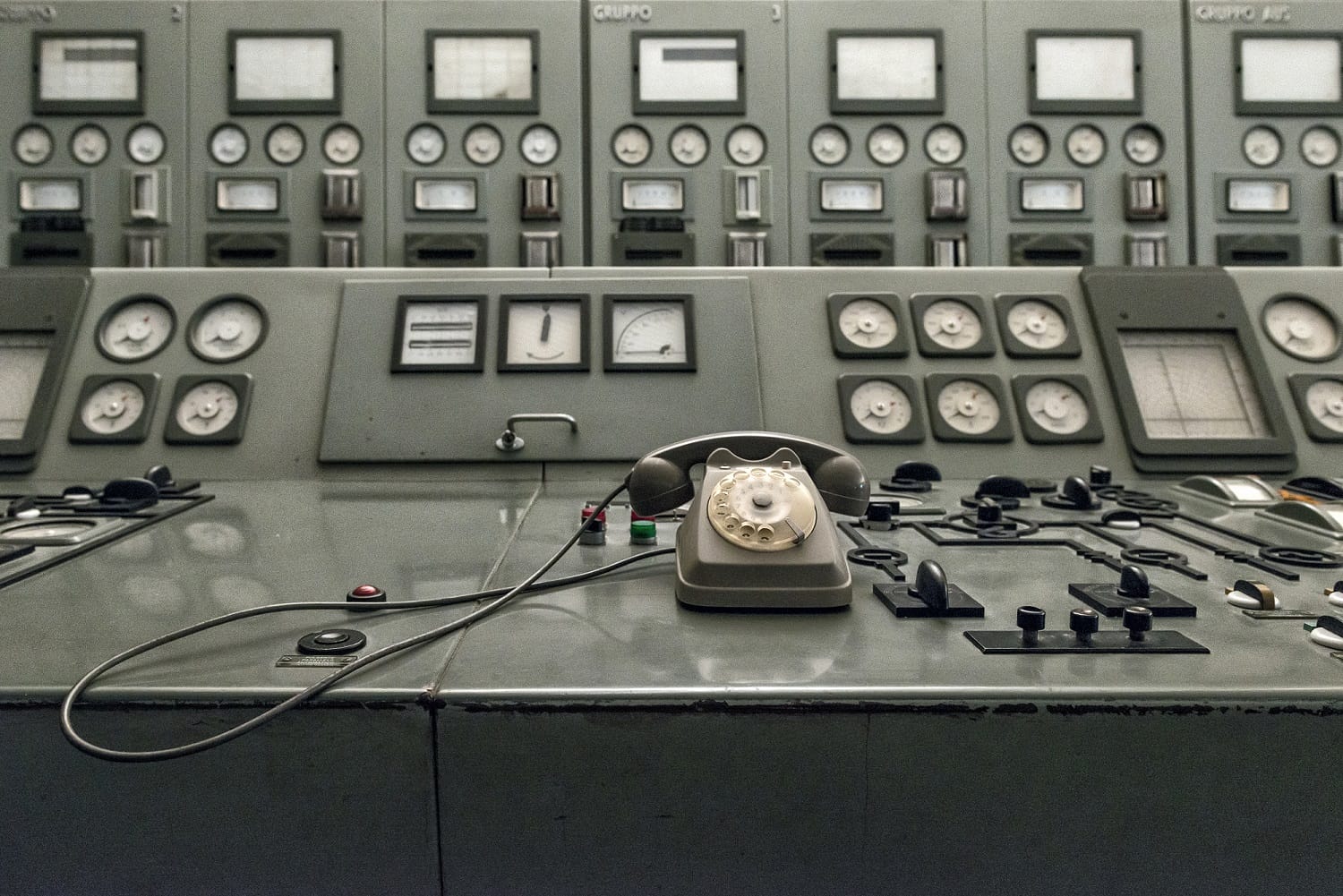
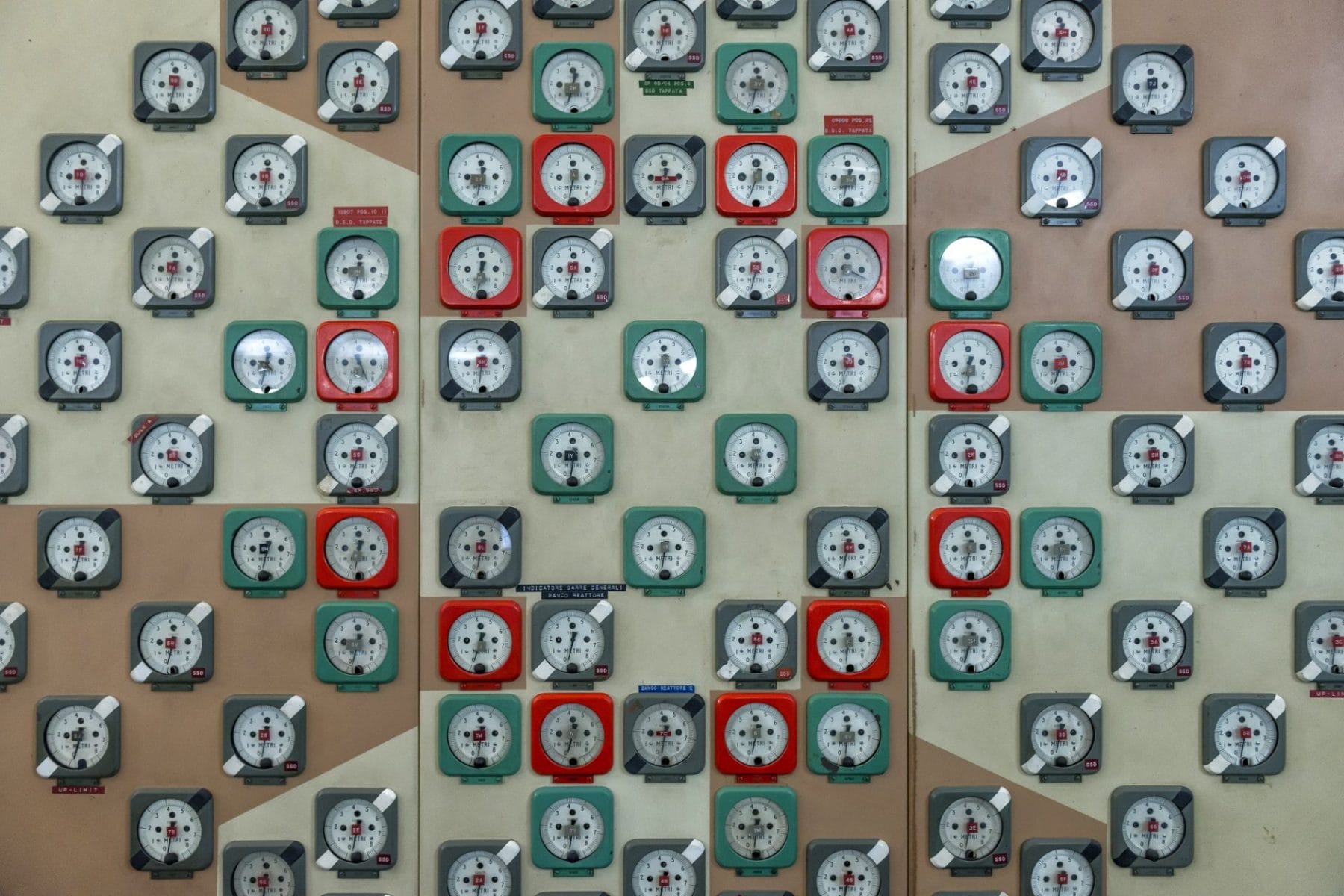
Watching them work is Enrico Bastianini, director of operations at the Latina plant. As I walk with Bastianini through the plant, we come to the old control room. When it first opened in 1963, the Latina plant was the largest nuclear power station in Europe — a feat of Italian and British engineering (the reactor was of UK design) and a symbol of Italy’s post-war industrial growth.
“We were emerging from the destruction of the war, and this was progress. And it was what allowed us to escape the economic hardships of war, and have low-cost energy,” Bastianini says.
Now, over 60 years on from when the plant opened, more than half of its existence has been spent being taken apart. Critics of nuclear power often focus on precisely this point: the long and complex process of dismantling nuclear plants, and the problem of managing radioactive waste, some of which takes millennia to decay.
There are two phases to the process of taking apart the plant. “The first phase allows us to dismantle everything that’s nuclear except the reactor. That’s because the reactor contains a huge amount of graphite,” Bastianini explains. “When we have a national repository, it can be removed. But for now, it’s safest if it stays in the first phase.”
Bastianini leads me into a deposit room where radioactive material is being stored in steel containers, inside an earthquake-resistant facility. These containers are only for temporary storage.
There were attempts in the early 2000s to establish a national nuclear waste repository at a salt mine in Basilicata in southern Italy, but huge protests forced the government to abandon its plans. Today, SOGIN, the state-owned Italian company in charge of decommissioning nuclear sites, is still actively searching for a suitable location for a permanent repository and faces considerable opposition.
Rumours and anxiety swirl around the Latina plant itself — just as they did in the 1980s, when Malossi heard stories of radioactive fish with four tails. Last April, an article by the Italian magazine L’Espresso published claims that the Latina plant could leach radioactive material into the soil. The plant vigorously denies these claims — a spokesperson for SOGIN said the company periodically checks the quality of vegetables, milk and fodder as well as air, soil and groundwater for radiation and that “as always, the results of the analyses confirm radiologically negligible environmental impacts.”
The old control room of the Latina nuclear plant. Photos courtesy of SOGIN
In the gloaming of a summer evening in Umbria, Monica Tommasi drives me through the twilight-darkened hills surrounding the medieval city of Orvieto. This land is rich in archeological and ecological heritage — filled with ancient tunnels, Etruscan caves, untapped archeological sites, wild places where wolves and boar roam. Tommasi is the President of Amici Della Terra — "Friends of the Earth" in Italian — an organization that was once the Italian chapter of the international Friends of the Earth network before breaking away in 2014. "We left, because we argued a lot," she said of the split, describing how the network "wanted to put turbines and panels everywhere, and we couldn't be in favour of that approach."
The International Friends of the Earth association was born from the anti-nuclear movement in America, where the group successfully lobbied to shut down two reactors, and has since 1969 made anti-nuclear campaigning a core part of its identity.
But Tommasi remembers precisely when she first began to reconsider nuclear power. “I started thinking about it in 2011, when I began to see that the government was investing heavily in solar and wind power, which would invade and industrialize the natural landscape,” she recalled. Many of these green transition projects have been fraught with problems in Italy — wind farm companies accused of corruption and profiteering, of erecting wind farms in areas where there’s little wind, and laying waste to nature.
For the first time, Tommasi began to think about ways to decarbonize “that don’t destroy the environment where people live and the landscape around them.”. She became intrigued by the nuclear option. “We needed to start reasoning and changing our minds,” she said.
Tommasi now advocates for a national conversation about nuclear power. “This choice must be accompanied by a public debate,” she told me, “but it isn’t happening because everyone is still afraid.”
“The future of Italy's energy sector must lie in nuclear,” she said, adding that if Italy was to continue pursuing solar and wind energy alone, “it means destroying all the natural areas that are still left.”
I asked the government to respond to allegations about how criminality, speculation and land-grabs in the renewable energy sector might be affecting Italians’ opinions on nuclear power.
“We do not believe it is appropriate to frame the energy debate by ideologically pitting nuclear power against renewables, nor should we use any administrative or criminal issues in certain sectors to discredit a technology as a whole,” said Fiorella Corrado, communications chief at Italy’s environment and energy ministry. “Nuclear power is not an alternative to renewables, but their best ally,” she said.
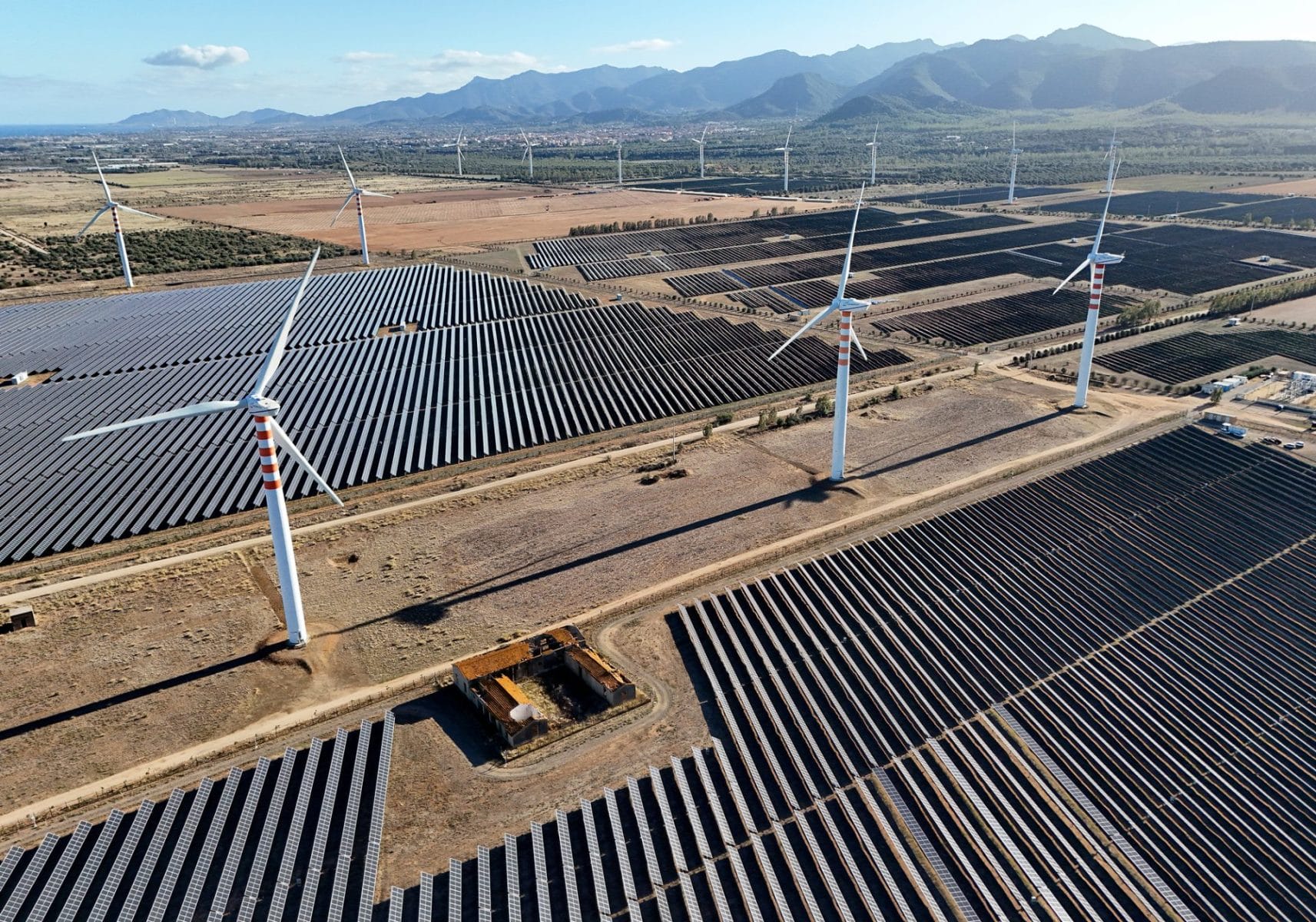
Wind turbines and solar panels near Cagliari, Sardinia, 2024. The island relies largely on coal but must phase it out by 2028 as Italy transitions to cleaner energy. Giovanni Grezzi / AFP via Getty Images.
On a warm autumn day in Rome, several thousand people gathered for an annual “climate pride” march. They brandished homemade cardboard wind turbines that spun in the breeze. Vincenzo Migliucci, 83, was among them. He worked for more than three decades for ENEL, Italy’s energy corporation, and he’s been anti-nuclear for much of his life. After the Chernobyl accident, he protested outside the nuclear plant under construction in Montalto di Castro almost every day, picketing the workers as they went through the gates.
“The wrath of God happened,” he said, referring to Chernobyl. “And when a true estimate is made, we’ll one day see how many disasters Chernobyl caused.”
Migliucci is against nuclear power plants of all types — arguing for solar panels instead — and is particularly concerned about what happens to the plants after they become obsolete and must, like the Latina plant, be slowly dismantled over decades. “The decommissioning costs a fortune; the nuclear waste repositories cost a fortune,” he said.
Subscribe to our coda currents newsletter
Insights from the Coda newsroom on the global forces that shape local crises.
He began telling me some of the stories that surround Italy’s shuttered nuclear plants. “Near the Garigliano power plant,” he told me, “a child was born with only one eye.” His own eyes widened as he pressed a finger into the middle of my forehead. “Sheep and cattle,” he said, “were born with six legs, or entirely red in colour. It’s not a myth, it’s real.”
Younger generations of Italians don’t have the same collective impressions around nuclear power, nor around Chernobyl or its aftermath, explained Luca Romano, a young pro-nuclear influencer with a quarter of a million followers on Instagram. Romano makes videos with his partner, Luiza Munteanu, about the advantages of nuclear power. The main problem he runs up against, he says, is that “we have a very low scientific literacy, the level of debate is abysmal.” And culturally, he adds, “Italy has always been a country that looks backwards rather than forwards.”
In May, the director general of the International Atomic Energy Agency visited Italy’s Lombardy region, and signed a Memorandum of Understanding with the governor to cooperate on applying nuclear science for development across the region. The choice of Lombardy was significant. It is home to Milan, and is at the heart of Italy’s digital infrastructure. Speckled with no fewer than 60 data centers, with more cropping up, Lombardy has opened itself up to Silicon Valley. Microsoft is investing billions in the area to boost its AI and cloud computing infrastructure. Amazon Web Services has committed to spending over $1 billion to expand its data center operations around Milan.
How northern Italy’s growing AI infrastructure will be powered, though, is still a problem to be solved — one that cuts to the heart of Italy’s energy dependence. Since Giorgia Meloni became prime minister in October 2022 — which coincided with the launch of ChatGPT a month later — the Italian government has been broaching the topic of nuclear power as essential to Italy's energy future. “World population and economic growth will significantly increase energy demand,” Meloni said at a sustainability summit in Abu Dhabi. “Not least due to the growing requirements arising from the development of generative artificial intelligence.”
Artificial intelligence is a “highly relevant topic,” said Corrado, the communications chief at Italy’s environment and energy ministry. “As more things run on electricity, the economy goes digital, and data centers and AI expand, demand for steady, low-emissions power will rise. Nuclear energy can help as a reliable, controllable source that works alongside renewables.”
In August, it emerged that the government had set aside €7.5 million purely for pro-nuclear communication and information campaigns directed at regions where new plants may be built. One focus of the Meloni administration is on the prospect of building small modular reactors, sometimes called “mini nukes.” They are compact fission plants, a fraction of the size of the traditional, cathedral-like nuclear power stations. They have a smaller core, and proponents argue their safety features mean there’s minimal chance of an epic, Chernobyl-scale nuclear disaster, something the government is keen to get across to voters.
Currently, only China and Russia have these small reactors up and running, but mini nuclear plants have attracted significant attention in Silicon Valley. OpenAI’s Sam Altman was chairman of Oklo, a nuclear startup focused on SMRs, while U.S. nuclear startup Kairos has signed an agreement with Google to develop these reactors to power its data centers. This month, the European Commission unveiled a strategy for rolling out small modular reactors and bringing them “online” by the 2030s.
Soon, Italy may take the first steps towards the reconstruction of a nuclear industry that has been abandoned for decades. “I believe it won't be easy to relaunch nuclear energy,” said Barbara Curli, the Turin historian. “Knowing a little about the history of nuclear power in Italy and its political dimension, I'd be quite skeptical about the possibility of relaunching nuclear power here in Italy — but let’s see.”
A little under 1,500 miles away, in the Chernobyl exclusion zone, among wild boar, birds, and deer, radiation levels in some areas have dipped below around 0.3 microsieverts per hour, lower than background radiation levels in many European cities. Not least the eternal city of Rome.
Why Did We Write This Story?
As the U.S.-Israel war against Iran enters its second month, strikes on nuclear facilities have raised the stakes of an already catastrophic conflict. The WHO is now openly preparing for a nuclear incident it hopes will never come. Whether or not this escalates further, the fear already has a life of its own.
That is something we follow closely at Coda: how fear settles into collective memory and shapes policy long after the original crisis has passed, or even when the disaster people dreaded never fully arrived.
Isobel Cockerell takes us to Italy, one of the only industrialized nations to have dismantled its entire nuclear energy program after Chernobyl, despite being barely touched by the fallout.
This story is about nuclear power, but it is also about how fear can shape the world more than the event that caused it.
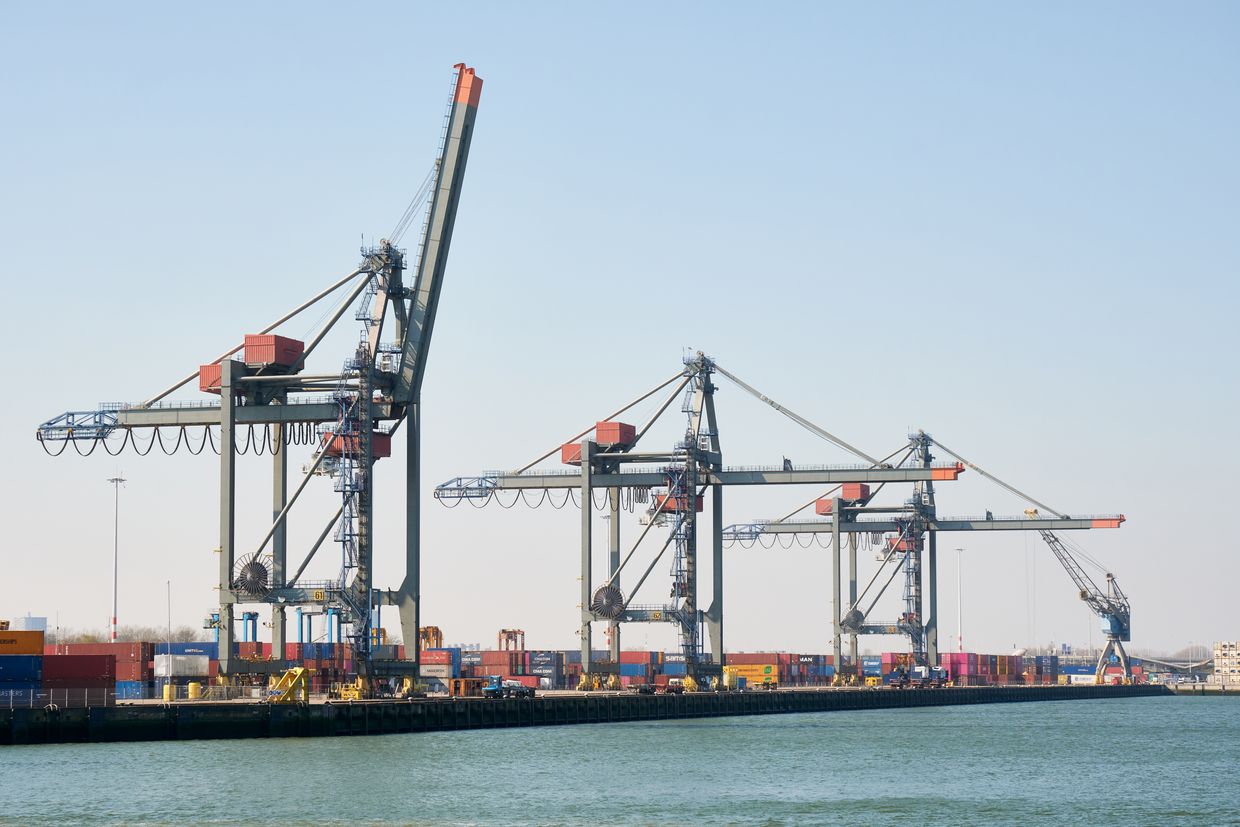
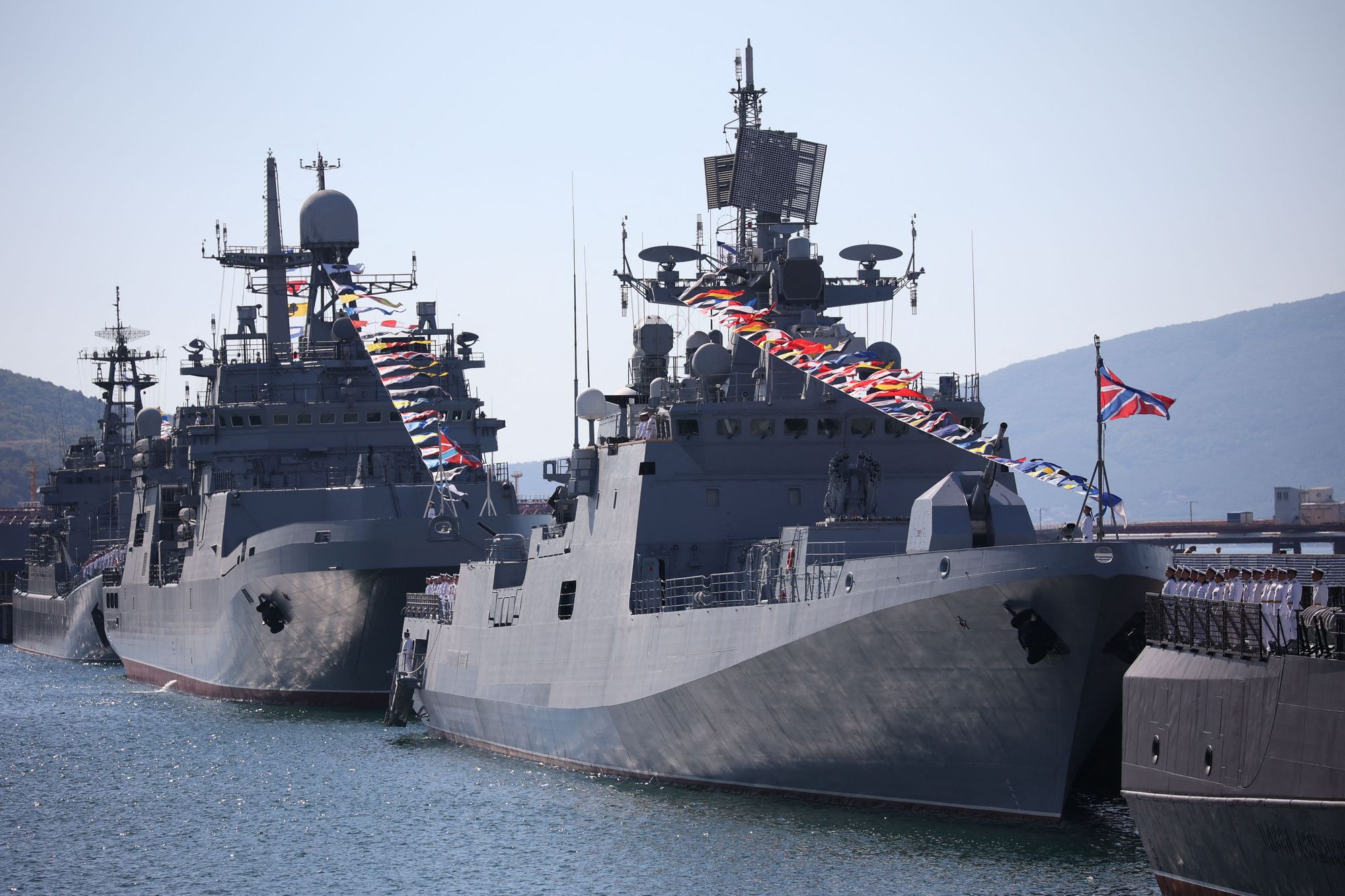
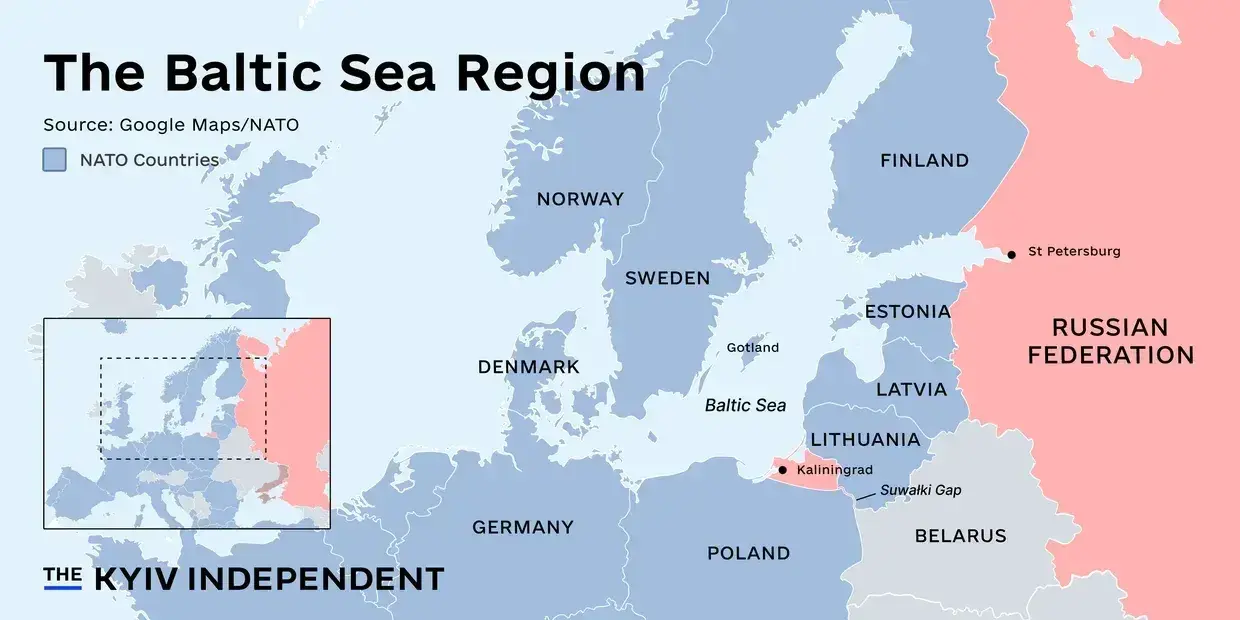
In anticipation of a potential war with Russia, the port of Rotterdam in the Netherlands has begun reserving space for NATO ships carrying military cargo and is mapping out logistics routes for weapons transfers, the Financial Times reported on July 8.The decision comes as NATO allies increasingly warn of the risk of a large-scale war with Russia within five years. Rotterdam has previously handled weapons shipments, but this marks the first time that it will designate a special berth for militar
In anticipation of a potential war with Russia, the port of Rotterdam in the Netherlands has begun reserving space for NATO ships carrying military cargo and is mapping out logistics routes for weapons transfers, the Financial Times reported on July 8.
The decision comes as NATO allies increasingly warn of the risk of a large-scale war with Russia within five years. Rotterdam has previously handled weapons shipments, but this marks the first time that it will designate a special berth for military use.
Part of the container terminal will be repurposed to ensure the safe transfer of ammunition and other equipment between vessels. Military supply logistics will be coordinated with the port of Antwerp in neighboring Belgium.
"We see each other less and less as competitors," Boudewijn Siemons, Chief Executive of the Port of Rotterdam Authority, said, referring to the port of Antwerp.
"If large volumes of military goods would have to be shipped, we'd look to Antwerp or other ports to take over some capacity and the other way around."
Siemons added that not all terminals are equipped to handle military-grade cargo, making the logistical coordination crucial, particularly for shipments from the U.S., U.K., and Canada.
In May, the Dutch Defense Ministry confirmed that space would be allocated for military supplies at NATO's request. The move is part of broader efforts by European allies to reduce dependence on the U.S. for defense logistics.
Russia's military spending has surged amid its full-scale invasion of Ukraine. According to the International Institute for Strategic Studies, Moscow's 2024 defense budget rose by 42% in real terms, reaching $462 billion, surpassing the combined total of all European countries.
NATO Secretary General Mark Rutte said on July 5 that a Chinese military move against Taiwan could prompt Beijing to encourage Russia to open a second front against NATO states.
Rutte has repeatedly warned that Russia could rebuild its military capabilities fast enough to pose a direct threat to NATO territory, urging allied governments to act swiftly and decisively.
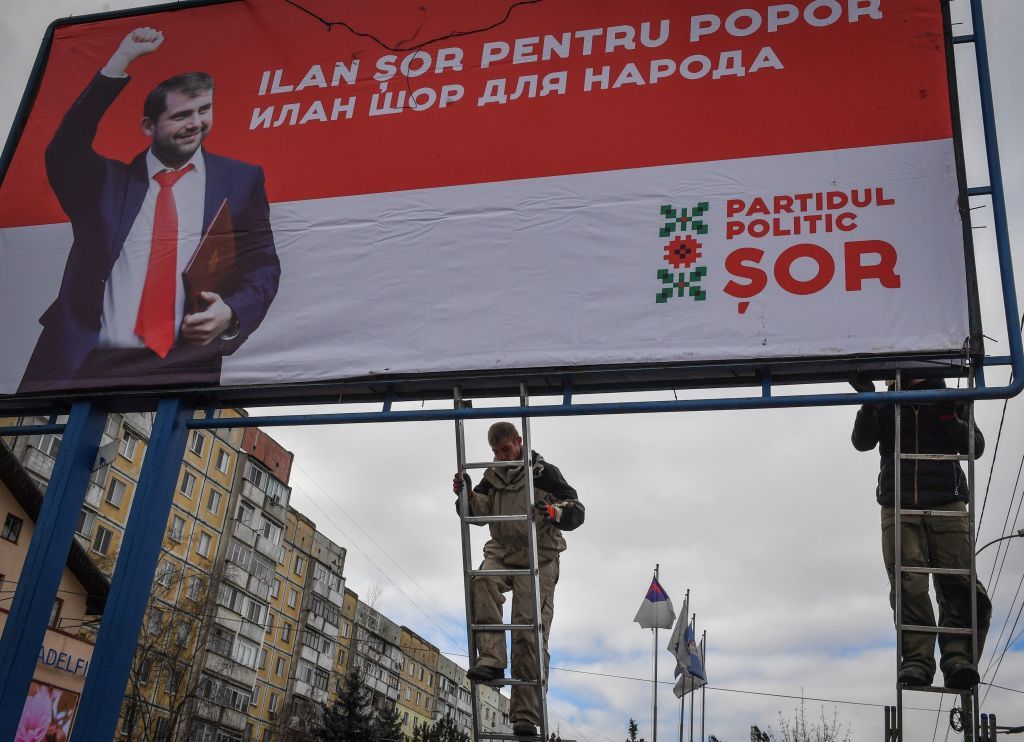
Moldova's Victory bloc, a pro-Russian political alliance, plans to participating in the country's September parliamentary elections, the bloc's founder Ilan Shor announced on July 6. Shor, an exiled pro-Kremlin oligarch, established the Victory bloc in August 2024. The bloc includes his own Shor party, which is banned in Moldova. Victory will submit documents in the coming days registering the bloc for participation in the September vote, Shor said. "Our main goal in these elections is to overth
Moldova's Victory bloc, a pro-Russian political alliance, plans to participating in the country's September parliamentary elections, the bloc's founder Ilan Shor announced on July 6.
Shor, an exiled pro-Kremlin oligarch, established the Victory bloc in August 2024. The bloc includes his own Shor party, which is banned in Moldova.
Victory will submit documents in the coming days registering the bloc for participation in the September vote, Shor said.
"Our main goal in these elections is to overthrow the fascist regime and hold early democratic elections within the next six months," Shor said.
The candidate list will be headed by Evghenia Gutul, the head of Moldova's Gagauzia region, who is currently on trial for illegally funding the banned Shor party. Gutul maintains ties to Moscow and is currently under U.S. sanctions.
The upcoming September elections carry high stakes for Moldova, one of the pooerest countries in Europe. Moldovan President Maia Sandu said on July 4 that Chisinau's European path rests on the outcome of the vote.
European Commission President Ursula von der Leyen pledged on July 4 that the European Union will help Moldova defend itself against hybrid threats by "agents of autocracy" as elections approach.
Moldova was granted EU candidate status in 2022. Sandu's ruling Party of Action and Solidarity aims to maintain its parliamentary majority and move the country closer to full membership by 2030.
Editor's Note: This story has been updated with additional details from Ukraine's Foreign Ministry. A bus carrying Ukrainian children veered off the road and overturned on a Hungarian highway on July 6, leaving 21 people injured, Ukraine's embassy in Hungary reported.The accident occurred at around 5 a.m. local time between the settlements of Kunszentmarton and Tiszafoldvar. According to preliminary information, the driver lost control of the bus and veered off the road into a ditch. Further det
Editor's Note: This story has been updated with additional details from Ukraine's Foreign Ministry.
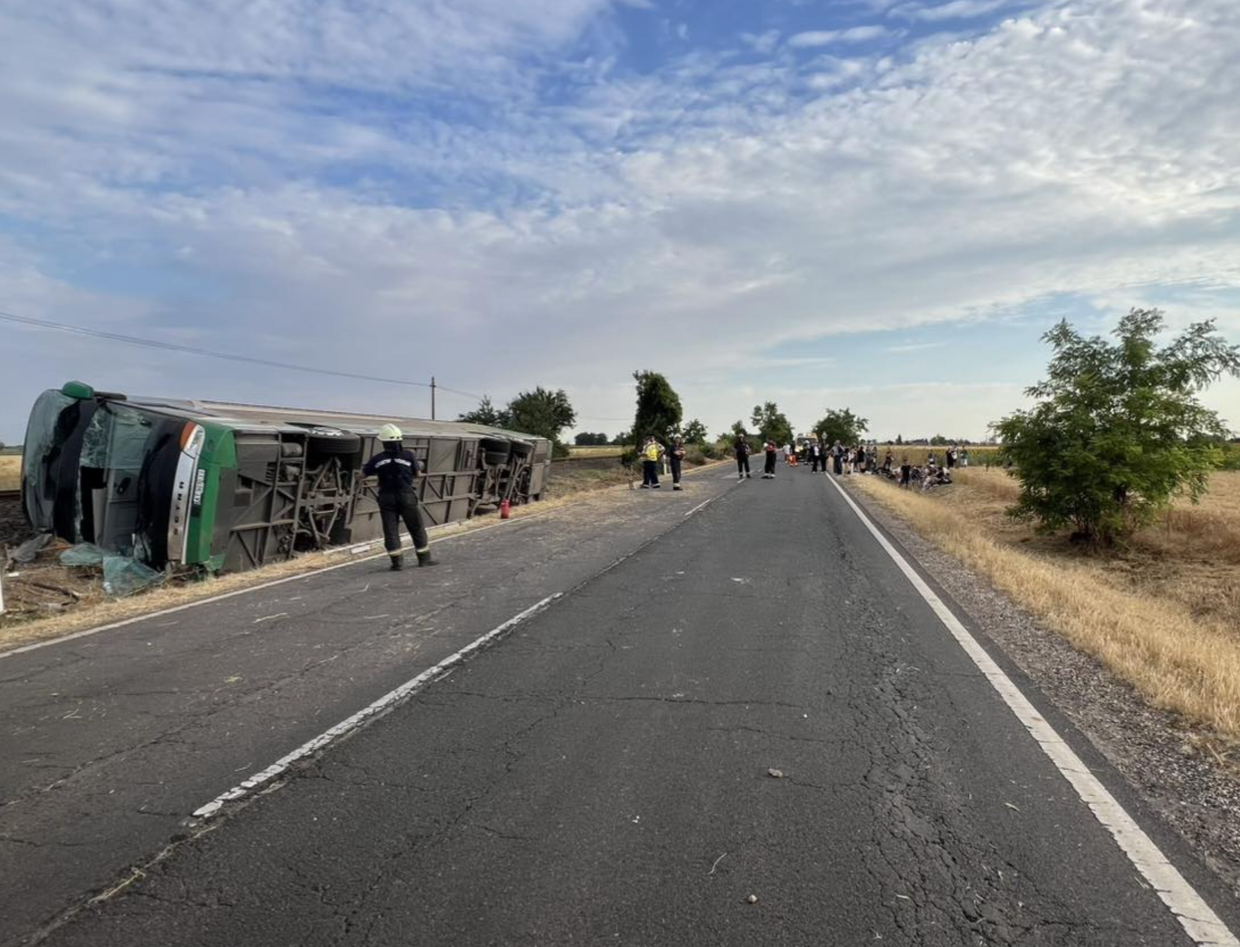
A bus carrying Ukrainian children veered off the road and overturned on a Hungarian highway on July 6, leaving 21 people injured, Ukraine's embassy in Hungary reported.
The accident occurred at around 5 a.m. local time between the settlements of Kunszentmarton and Tiszafoldvar. According to preliminary information, the driver lost control of the bus and veered off the road into a ditch. Further details as to the cause of the crash have not yet been determined.
The bus was carrying a children's ensemble from the Ukrainian city of Lviv to Ohrid in North Macedonia for a dance festival. There were 77 people aboard at the time of the accident, including two drivers, chaperones, and ensemble members.
Twenty-one people were injured, with four of them reported to be in serious condition. Two of the seriously injured victims are teenagers (ages 14 and 18) while the other two are adults (ages 67 and 71). Four more children suffered moderate injuries, while the remaining victims suffered minor injuries.
No one was killed, according to the embassy's statement.
The victims were transferred to hospitals in the towns of Szolnok, Kecskemetre, and Szentes.
Rescuers are working at the crash site, along with Ukrainian Ambassador Fegyir Sandor and consuls assisting Ukrainian citizens.
The rest of the passengers are staying temporarily at the Kunszentmarton Cultural Center, where they have been provided food and a place to rest. Those suffering moderate and mild injuries will join the main group at this location.
The bus carrier is reportedly taking measures to prevent additional accidents.
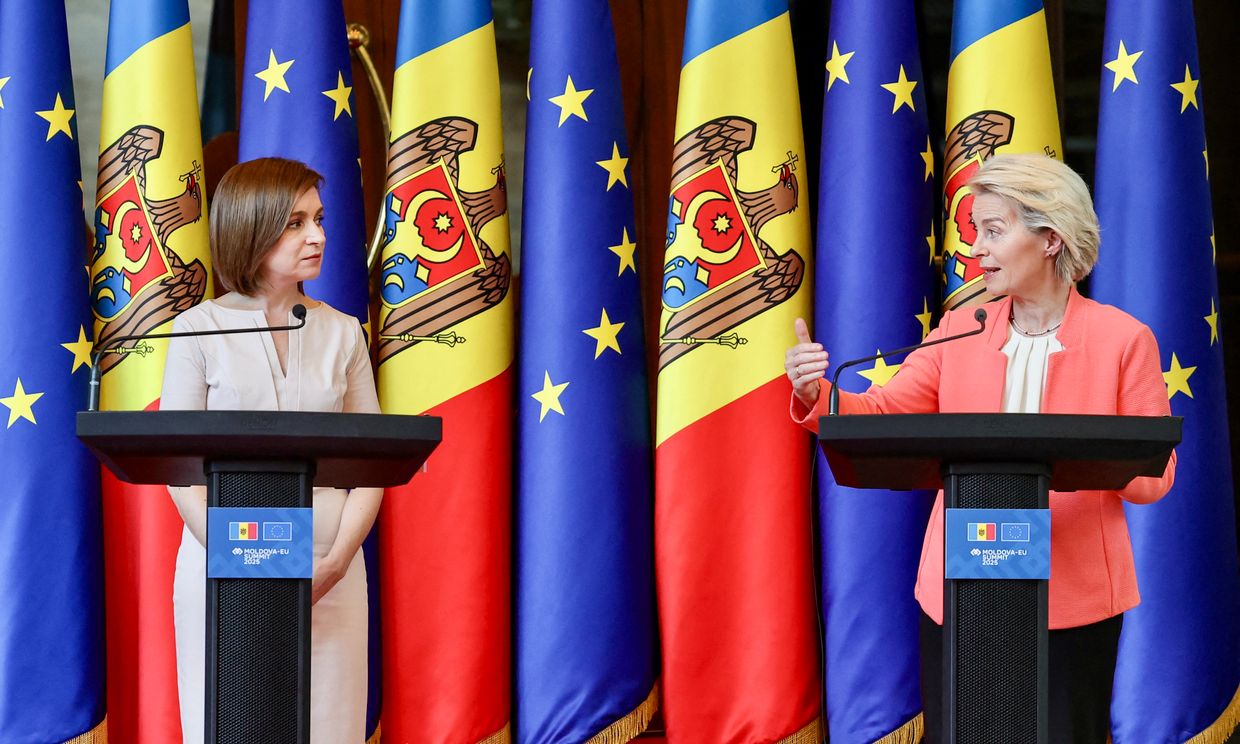
European Commission President Ursula von der Leyen pledged on July 4 that the European Union will help Moldova defend itself against hybrid threats by "agents of autocracy.""We are committed to protecting you against the hybrid attacks and the energy shocks that your country has been a victim of," von der Leyen said following the EU-Moldova summit in Chisinau."Who is behind those attacks is clear to all of us here. These are the same agents of autocracy trying to undermine our democracies everyw
European Commission President Ursula von der Leyen pledged on July 4 that the European Union will help Moldova defend itself against hybrid threats by "agents of autocracy."
"We are committed to protecting you against the hybrid attacks and the energy shocks that your country has been a victim of," von der Leyen said following the EU-Moldova summit in Chisinau.
"Who is behind those attacks is clear to all of us here. These are the same agents of autocracy trying to undermine our democracies everywhere in Europe."
Von der Leyen praised Moldova's support for Ukraine and the EU, noting its acceptance of hundreds of thousands of Ukrainian refugees and its assistance with European wildfire response efforts.
The visit was made in show of solidarity with Moldova, one of Europe's poorest countries, as it prepares for high-stakes parliamentary elections on Sept. 28.
The pro-European government of President Maia Sandu faces a challenge from the pro-Russian Socialist Party, amid growing fears of destabilization ahead of the vote.
Sandu has accused Russia of using its military presence in Moldova's Russian-occupied Transnistria region to stir unrest and derail the country's EU aspirations. On June 12, she warned that Moscow could provoke a crisis in Transnistria to influence the election outcome.
Transnistria has been under Russian-backed separatist control since the early 1990s, with approximately 1,000 to 1,500 Russian troops still stationed in the region.
On June 11, Transnistrian authorities declared a 30-day state of emergency after a sharp drop in natural gas supplies. The unrecognized region has faced mounting energy shortages since January, when Russian energy giant Gazprom halted deliveries in what many see as an attempt to destabilize the situation in Moldova.
Moldova was granted EU candidate status in 2022. Sandu's ruling Party of Action and Solidarity aims to maintain its parliamentary majority and move the country closer to full membership by 2030.
Moldovan Prime Minister Dorin Recean earlier told the Financial Times that Russia plans to send 10,000 troops to Transnistria and establish a pro-Kremlin government in Moldova.
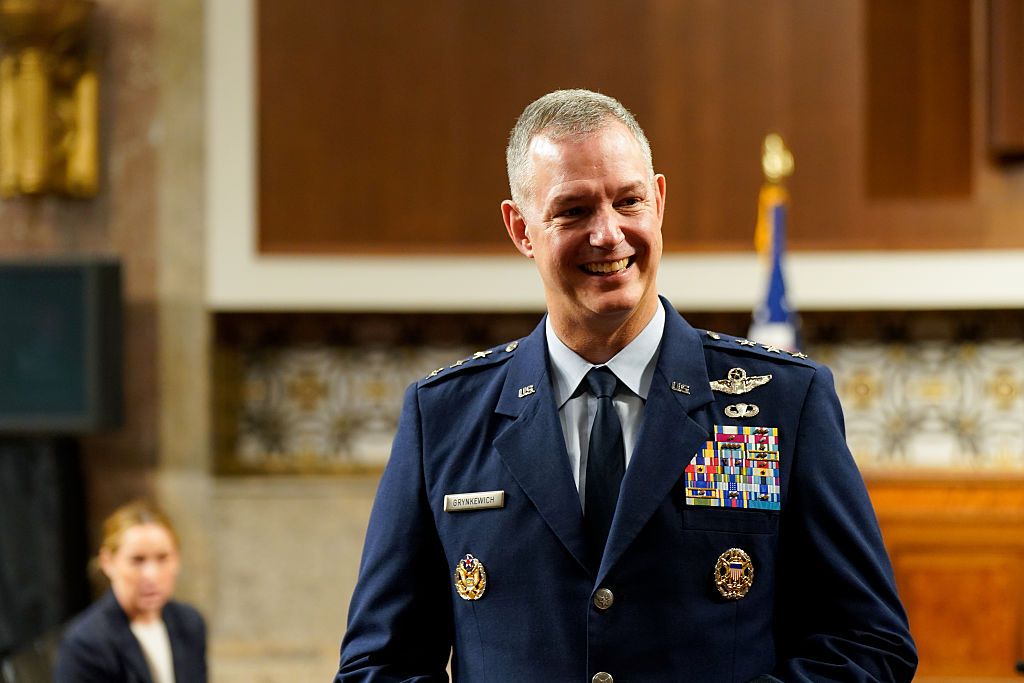
U.S. Air Force General Alexus G. Grynkewich assumed command as the 21st Supreme Allied Commander Europe (SACEUR) on July 4 during a ceremony at Supreme Headquarters Allied Powers Europe.NATO Secretary General Mark Rutte presided over the handover, commending outgoing U.S. Army General Christopher G. Cavoli for his contributions to modernizing NATO's collective defense and bolstering support for Ukraine.Rutte highlighted Cavoli's efforts to strengthen NATO’s presence in the Baltic Sea in response
U.S. Air Force General Alexus G. Grynkewich assumed command as the 21st Supreme Allied Commander Europe (SACEUR) on July 4 during a ceremony at Supreme Headquarters Allied Powers Europe.
NATO Secretary General Mark Rutte presided over the handover, commending outgoing U.S. Army General Christopher G. Cavoli for his contributions to modernizing NATO's collective defense and bolstering support for Ukraine.
Rutte highlighted Cavoli's efforts to strengthen NATO’s presence in the Baltic Sea in response to threats to critical undersea infrastructure and credited him with conceiving and establishing NATO’s new command in Germany to enhance assistance to Ukraine. He also noted Cavoli's role in refocusing the Alliance on collective defense following the 2022 Madrid Summit, where NATO adopted a new Strategic Concept in response to Russia’s full-scale invasion of Ukraine.
Cavoli played a central role in developing and securing approval for NATO’s regional defense plans at the 2023 Vilnius Summit—a significant overhaul of the Alliance’s military posture since the Cold War.
His tenure also included the integration of Finland and Sweden into NATO’s military structures, expanding the Alliance’s strategic reach. In 2024, Cavoli oversaw "Steadfast Defender," NATO’s largest military exercise since the Cold War, involving approximately 90,000 troops practicing large-scale reinforcement across the eastern flank and validating a new high-readiness force model.
Rutte specifically acknowledged Cavoli's leadership in rapidly reinforcing NATO's Baltic Sea presence during threats to underwater infrastructure and for establishing the NATO Security Assistance and Training for Ukraine (NSATU), which continues to support Ukraine.
The secretary general welcomed General Grynkewich, noting that, as a former fighter pilot, he brings "a deep understanding of the threats we face from the skies, and across other domains." Rutte added that Grynkewich’s recent role as Director of Operations of the Joint Staff provides him with broad experience in advancing military and security priorities amid global challenges.
Allied Command Operations—responsible for planning and executing all NATO operations—now falls under General Grynkewich's command, a position first held by General Dwight D. Eisenhower.
Germany is weighing a massive defense procurement plan worth up to 25 billion euros ($29.4 billion) to supply thousands of combat vehicles for NATO's expanding force structure, Bloomberg reported on July 4, citing unnamed sources familiar with the matter. The proposed purchases are part of a broader pan-European effort to boost deterrence against Russia, as Western leaders warn of the growing risk of a large-scale war within five years.Berlin is reportedly considering purchasing up to 2,500 GTK
Germany is weighing a massive defense procurement plan worth up to 25 billion euros ($29.4 billion) to supply thousands of combat vehicles for NATO's expanding force structure, Bloomberg reported on July 4, citing unnamed sources familiar with the matter.
The proposed purchases are part of a broader pan-European effort to boost deterrence against Russia, as Western leaders warn of the growing risk of a large-scale war within five years.
Berlin is reportedly considering purchasing up to 2,500 GTK Boxer armored vehicles and up to 1,000 Leopard 2 battle tanks. The purchase would equip up to seven new brigades that Germany has pledged to form under NATO's force generation plans for the next decade.
The Leopard 2 tanks are produced by KNDS Deutschland and Rheinmetall, while the Boxer is made by ARTEC, a joint venture of the same companies. Leopard 2 tanks have been supplied to Ukraine and tested in combat.
Final pricing and quantities are still under negotiation, and the projected cost could fall below 25 billion euros ($29.4 billion) depending on procurement timelines and contract terms.
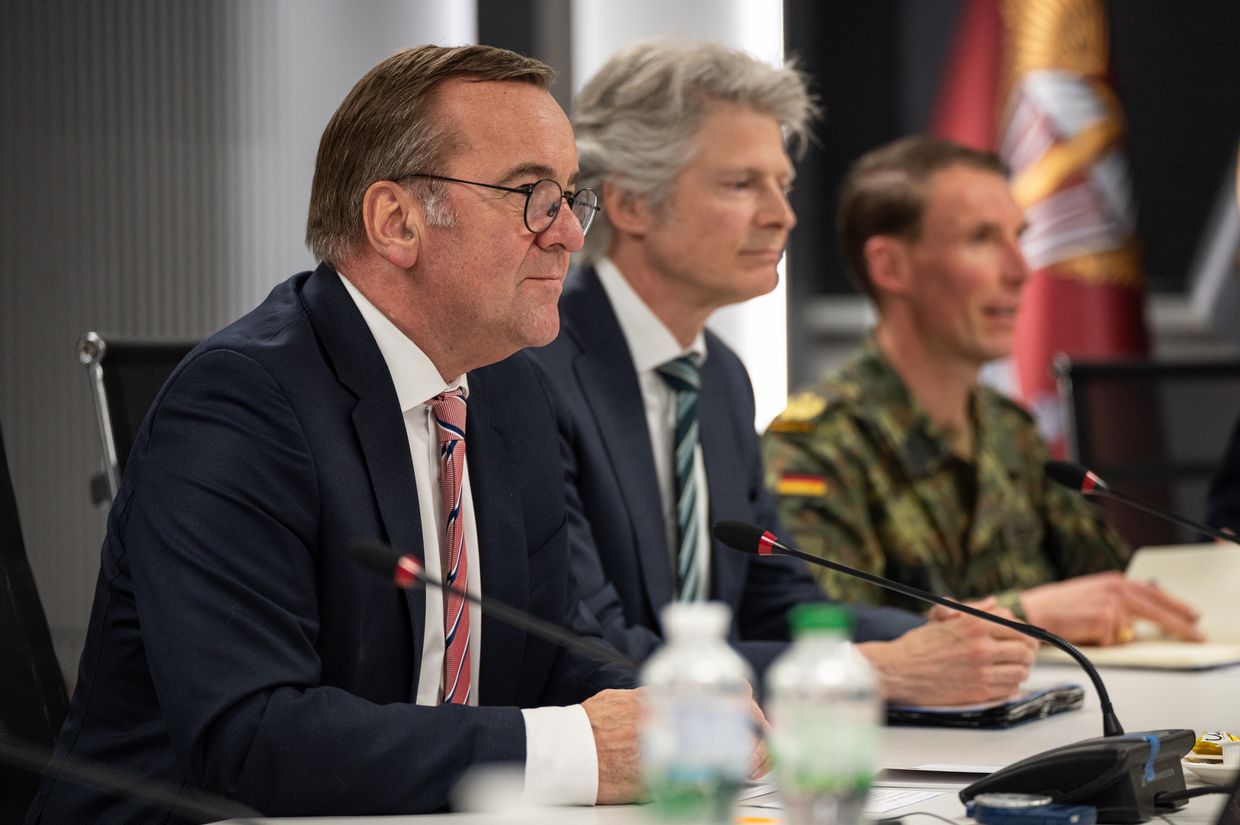
German Defense Minister Boris Pistorius and top Bundeswehr officials are reviewing the plans, with legislative approval expected by the end of the year, Bloomberg reported.
Germany has faced pressure from NATO and Washington to meet its alliance commitments, including the newly adopted pledge to spend at least 5% of GDP on defense by 2035.
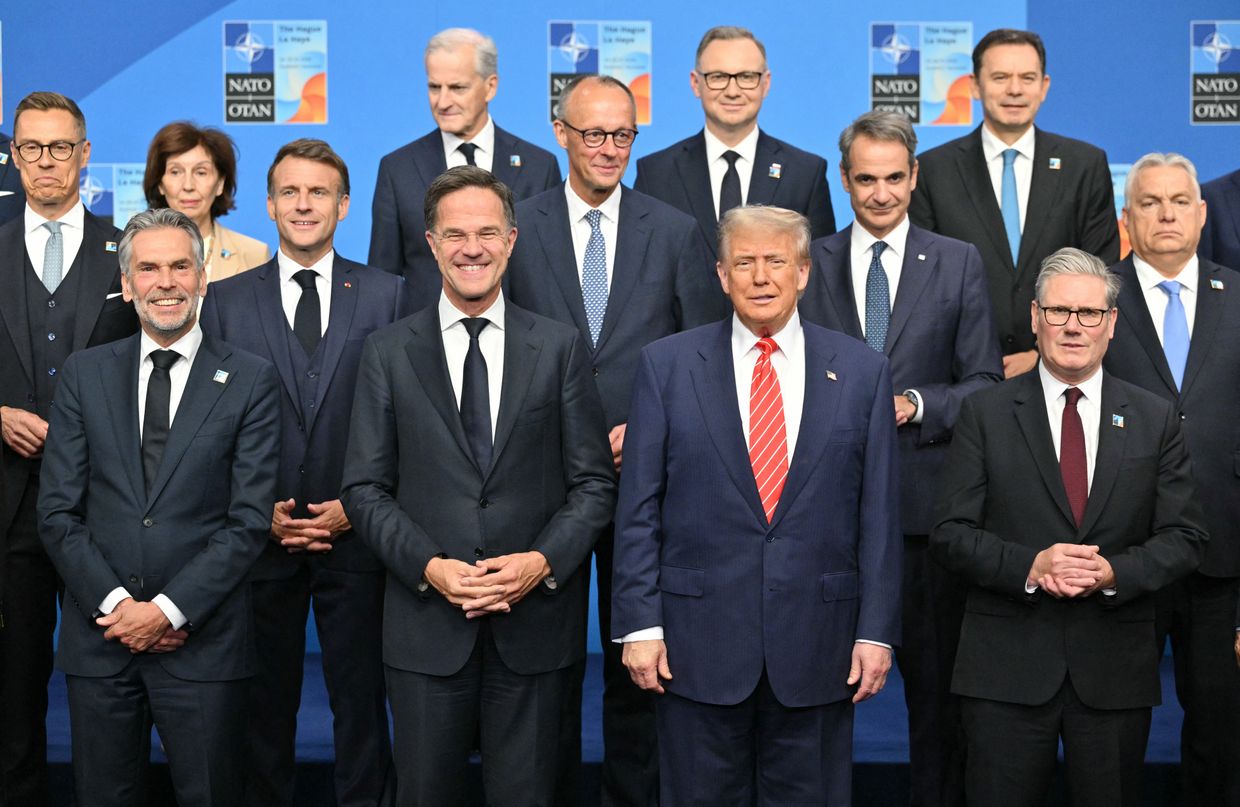
The initiative, endorsed on June 25 at the NATO summit, reflects concern over Russia's wartime economy, military buildup, and destabilization efforts across Europe.
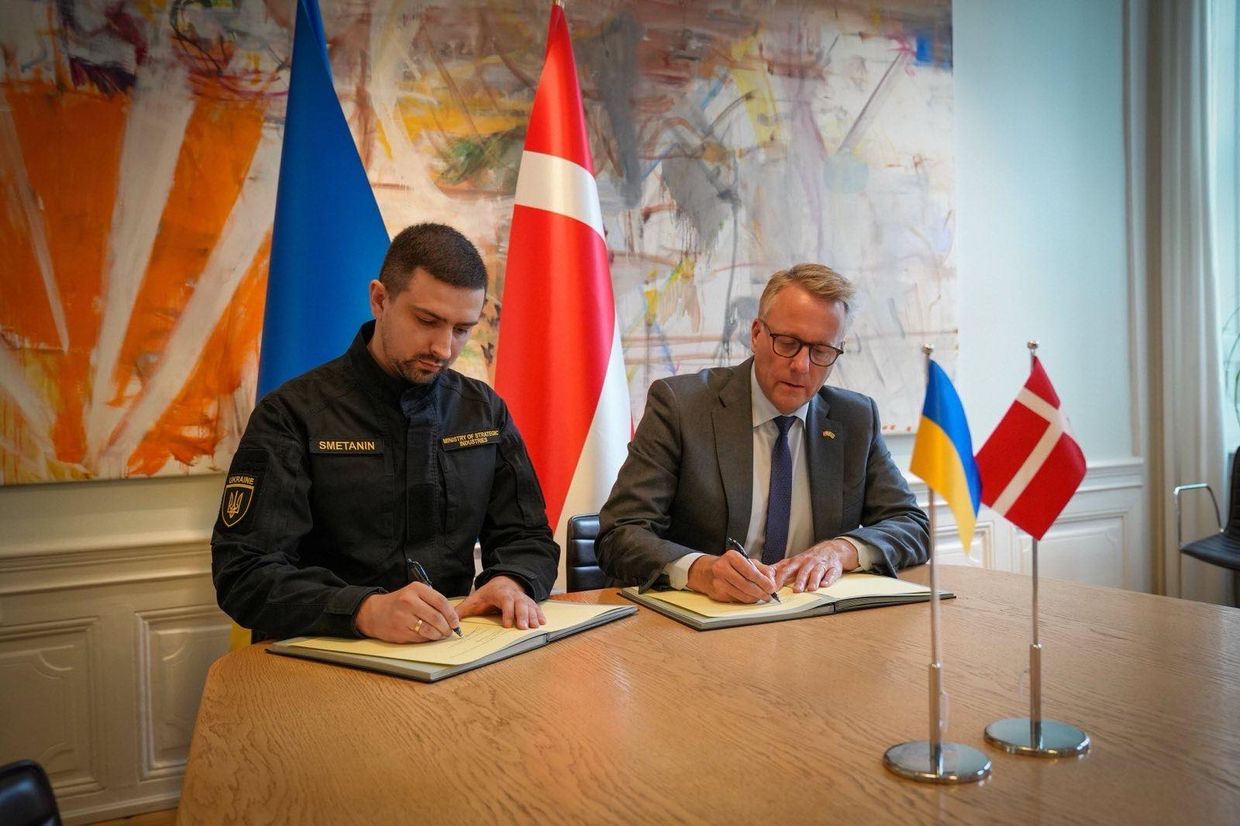
Kyiv and Copenhagen signed a landmark agreement on July 4 that allows Ukrainian defense companies to open production facilities in Denmark, Strategic Industries Minister Herman Smetanin announced. "This is a unique case of international cooperation for the Ukrainian defense industry," Smetanin wrote on Facebook, following the signing ceremony in Copenhagen alongside Danish Industry Minister Morten Bodskov.The deal marks the first time Ukrainian defense technologies will be exported abroad specif
Kyiv and Copenhagen signed a landmark agreement on July 4 that allows Ukrainian defense companies to open production facilities in Denmark, Strategic Industries Minister Herman Smetanin announced.
"This is a unique case of international cooperation for the Ukrainian defense industry," Smetanin wrote on Facebook, following the signing ceremony in Copenhagen alongside Danish Industry Minister Morten Bodskov.
The deal marks the first time Ukrainian defense technologies will be exported abroad specifically for supply to Ukraine's own Armed Forces, he said.
A year ago, Denmark became the first country to fund weapons production by Ukrainian manufacturers. Now, it has become the first to host Ukrainian arms production lines on its territory, Smetanin added.
"Today, it has become the first country to which Ukraine exports its own defense technologies for production, scaling, and supply to the Ukrainian army," he said.
The agreement is part of Ukraine's broader effort to internationalize its defense production. President Volodymyr Zelensky announced on June 21 that Kyiv would soon begin exporting defense technologies and opening weapons production lines in partner countries.
To scale up domestic and international production, Zelensky has called on foreign partners to finance new projects and match Ukraine's rapidly growing manufacturing capacity.
Denmark has been a key backer of Ukraine since the start of Russia's full-scale invasion in 2022. In February 2024, Copenhagen signed a 10-year bilateral security agreement with Kyiv, pledging long-term defense cooperation until Ukraine secures NATO membership.
The Trump administration's decision to halt deliveries of key military aid to Ukraine has caught European partners off guard and prompted urgent requests for clarification, Bloomberg reported on July 2, citing unnamed sources.The pause affects the delivery of several weapons critical to Ukraine's defense, including Patriot air defense missiles, precision-guided artillery shells, Hellfire missiles, and munitions for F-16 fighter jets. The White House confirmed the hold, describing it as part of a
The Trump administration's decision to halt deliveries of key military aid to Ukraine has caught European partners off guard and prompted urgent requests for clarification, Bloomberg reported on July 2, citing unnamed sources.
The pause affects the delivery of several weapons critical to Ukraine's defense, including Patriot air defense missiles, precision-guided artillery shells, Hellfire missiles, and munitions for F-16 fighter jets.
The White House confirmed the hold, describing it as part of a broader reassessment of U.S. military stockpiles. Since U.S. President Donald Trump took office in January, the U.S. has not approved any new military aid packages for Ukraine.
According to Bloomberg, some European allies hope the Trump administration will soften or reverse the decision. The timing of the pause has raised particular concern as Ukraine faces one of the most intense waves of Russian missile and drone attacks since the start of the war.
In his evening address on July 2, President Volodymyr Zelensky said Ukrainian and U.S. officials are working through the aid issue at a "working level," including discussions on critical air defense support.
Ukraine's Defense Ministry said it has not received any formal notification of delays or cancellations but has requested urgent consultations with U.S. defense officials.
The Foreign Ministry also summoned U.S. Charge d'Affaires John Ginkel, warning that "any hesitation" in military support would encourage further Russian aggression.
The Kremlin welcomed the decision, with spokesperson Dmitry Peskov saying, "The fewer weapons that are supplied to Ukraine, the closer the end of the (war)."
NATO Secretary General Mark Rutte expressed understanding of Washington's desire to safeguard its stockpiles but said that "Ukraine cannot do without all the support it can get."
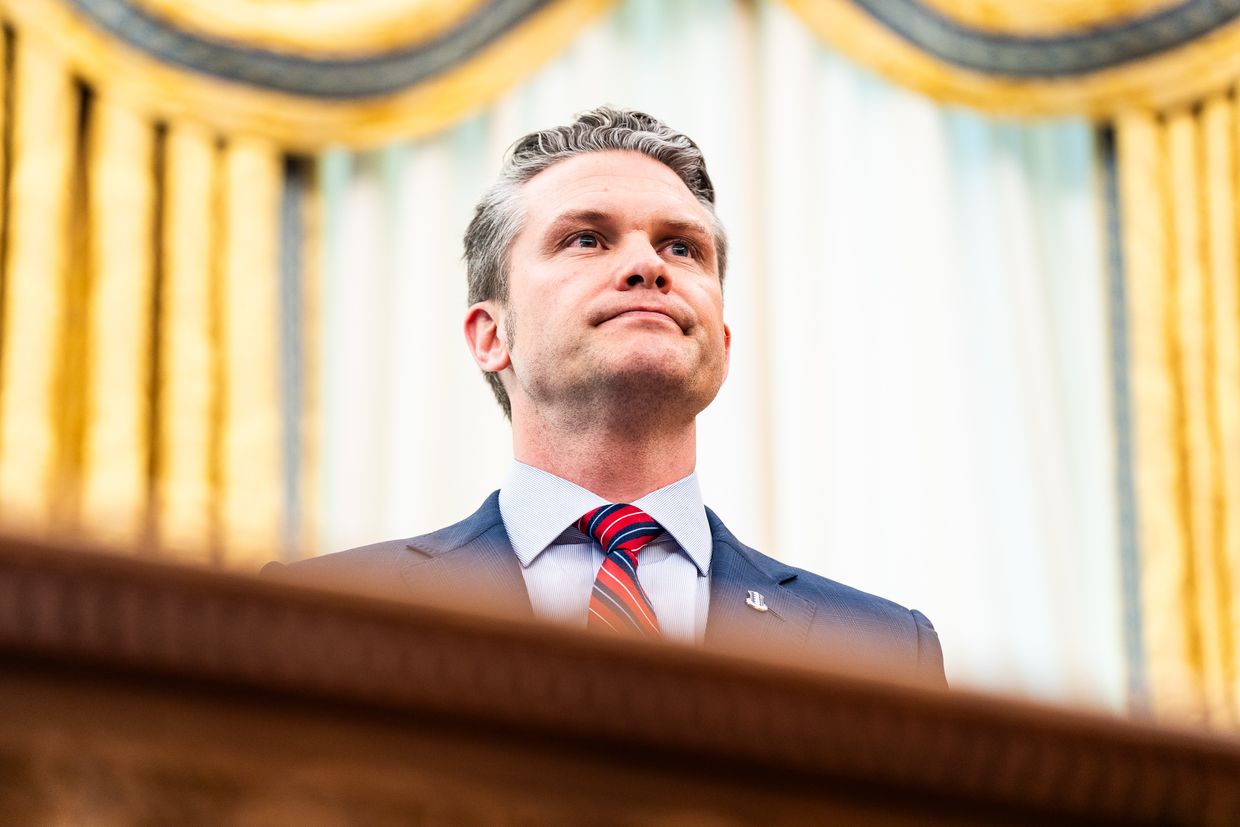
U.S. Defense Secretary Pete Hegseth previously signaled a shift in policy, indicating that future defense budgets would prioritize domestic needs over military support for Ukraine.
President Volodymyr Zelensky said on July 1 that he had signed the ratification documents establishing the Special Tribunal for the Crime of Aggression against Ukraine, marking a major step toward prosecuting Russia's leadership.Ukraine and the Council of Europe signed the agreement establishing the Special Tribunal on June 25 during a ceremony in Strasbourg. Zelensky and Council of Europe Secretary General Alain Berset signed it after more than three years of advocacy and diplomacy."The agreeme
President Volodymyr Zelensky said on July 1 that he had signed the ratification documents establishing the Special Tribunal for the Crime of Aggression against Ukraine, marking a major step toward prosecuting Russia's leadership.
Ukraine and the Council of Europe signed the agreement establishing the Special Tribunal on June 25 during a ceremony in Strasbourg. Zelensky and Council of Europe Secretary General Alain Berset signed it after more than three years of advocacy and diplomacy.
"The agreement must now be swiftly ratified so that the process of creating the tribunal can begin," Zelensky said in a statement. He also instructed Ukraine's government to urgently submit necessary legislative changes to parliament to ensure Kyiv's full implementation of the agreement.
"I ask members of parliament to treat this as an immediate priority," Zelensky added, urging lawmakers to pass the needed legislation without delay.
The tribunal, once established, would specifically target Russia's top political and military leadership for the crime of aggression, defined as the illegal use of force by one state against another, which existing international bodies, like the International Criminal Court (ICC), are not able to prosecute due to jurisdictional limitations.
Zelensky also called on the Foreign Ministry and the Presidential Office to finalize a roadmap with international partners for the tribunal's launch.
"Already this year, Russia must begin to feel that accountability for the crime of aggression is inevitable," he said. "Aggression is a crime, and Russia's truly inevitable punishment for this crime is in the global interest of everyone in the world who wants their people to live in peace."
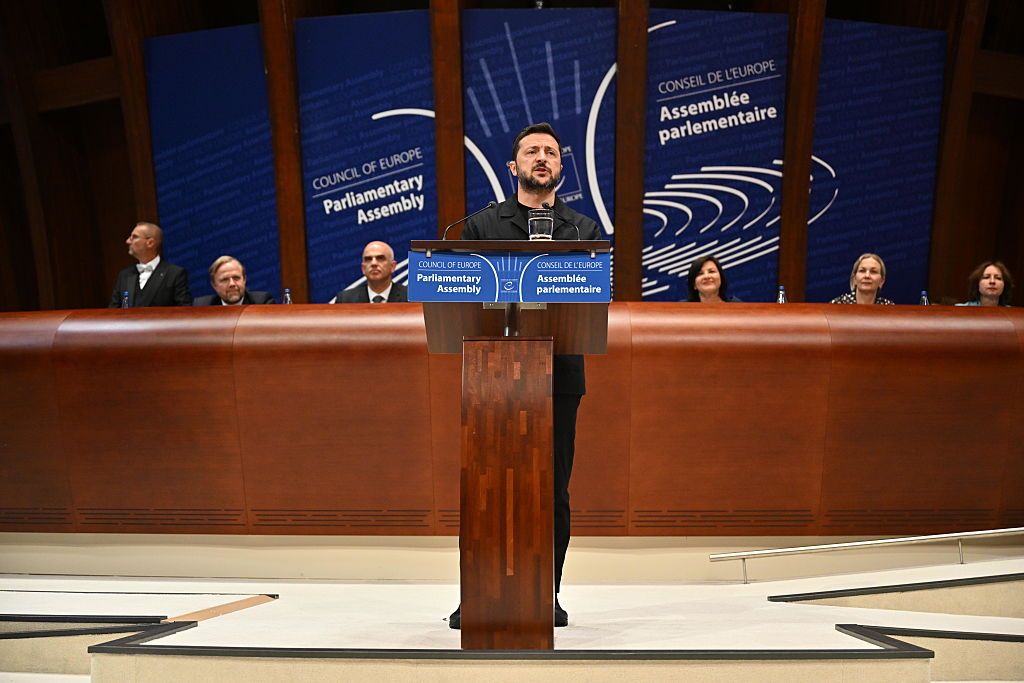
Speaking at the Parliamentary Assembly of the Council of Europe (PACE) on June 25, Zelensky thanked the body for championing the idea from its inception and pushing forward international accountability for Russia's invasion.
"It was here in this assembly, that the first call for such a tribunal was made," Zelensky said. "The idea was born here – and now it’s gaining real support from partner countries in Europe and beyond."
The tribunal is designed to close a legal gap that currently prevents the ICC from prosecuting Russia for the crime of aggression, although the court has issued arrest warrants for Russian President Vladimir Putin and Russian children's rights commissioner Maria Lvova-Belova in connection with the deportation of Ukrainian children.
Alongside the tribunal, the Council of Europe has also helped establish the Register of Damage, which has received over 34,000 claims from Ukrainians documenting losses and harms caused by the war.
Zelensky has repeatedly stressed the need for full justice and has called for the prosecution of all Russian officials responsible for planning and executing the war.
German Foreign Minister Johann Wadephul pledged on June 30 that Berlin is exploring "every possible path" to provide Ukraine with additional air defense systems, amid intensifying Russian missile and drone attacks, according to RBK-Ukraine. Speaking at a press conference during his visit to Kyiv, Wadephul said Germany is working with its defense industry, European allies, and the U.S. to urgently secure more systems for Ukraine's air shield."We are going down every path available," Wadephul said
German Foreign Minister Johann Wadephul pledged on June 30 that Berlin is exploring "every possible path" to provide Ukraine with additional air defense systems, amid intensifying Russian missile and drone attacks, according to RBK-Ukraine.
Speaking at a press conference during his visit to Kyiv, Wadephul said Germany is working with its defense industry, European allies, and the U.S. to urgently secure more systems for Ukraine's air shield.
"We are going down every path available," Wadephul said. "The German defense industry is trying to expand its capacity. We're speaking with our European partners, and I believe we must also move forward with the United States."
He added that he remains in close contact with German Defense Minister Boris Pistorius to assess whether existing systems from Germany's own stockpiles can be redirected to Ukraine.
Wadephul's visit came just a day after Russia launched its largest aerial assault on Ukraine to date, firing 477 drones and 60 missiles in a 24-hour period. In a video message posted on social media earlier on June 30, the German minister described Ukraine as "a country once again haunted by war," and reaffirmed Germany's solidarity.
"Germany stands by Ukraine," Wadephul said. "We must not allow freedom to be lost here. We have to support this country and ensure that a ceasefire is finally achieved. (Russian President Vladimir) Putin must realize he cannot continue this war and must negotiate a peace solution."
Ukrainian Foreign Minister Andrii Sybiha welcomed Wadephul's visit in a post on X, saying the two discussed how to counter Russian aggression and deepen bilateral ties.
Glad to welcome my German colleague and friend @AussenMinDe Johann Wadephul.
We spoke about steps to counter Russian aggression against Ukraine, neutralise the threats posed to Europe by the aggressive Russian regime, and ways to further strengthen the ties between our nations.… pic.twitter.com/38ZX97SfXb
Sybiha said they also spoke about Germany's role in Ukraine's development of long-range capabilities and drones, calling it "win-win cooperation"— as well as Berlin's support for the 18th EU sanctions package and Ukraine's path to EU membership.
"I am grateful to Minister Wadephul for his moral clarity and personal contribution to Ukraine's resilience," Sybiha added.
Wadephul is expected to meet with President Volodymyr Zelensky later during his visit.
The German foreign minister emphasized that witnessing the destruction firsthand is critical to understanding Ukraine's suffering and the urgency of sustained international support.
"This is indeed a difficult situation," Wadephul said. "And that is why German solidarity is so important right now."
Police aggressively dispersed protestors at an anti-government rally in Belgrade, whereover 100,000 demonstrators gathered on June 28 to demand snap elections. The rally marks the latest mass action in a protest movement that started last fall, with activists calling for an end to corruption and the 12-year rule of Serbian President Aleksandar Vucic.Crowds in Belgrade on June 28 chanted "We want elections!" — a key demand of the movement that Vucic has consistently refused. His term ends in 2027
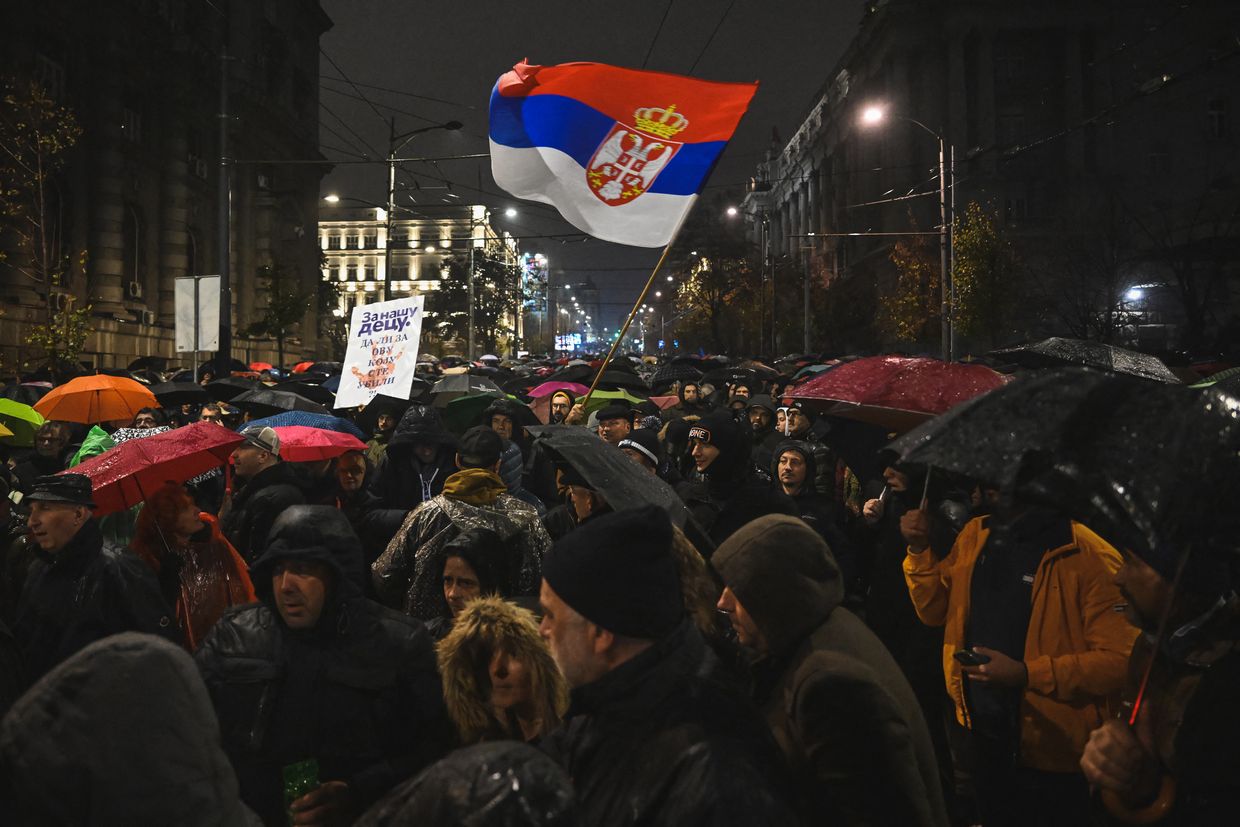
Police aggressively dispersed protestors at an anti-government rally in Belgrade, whereover 100,000 demonstrators gathered on June 28 to demand snap elections.
The rally marks the latest mass action in a protest movement that started last fall, with activists calling for an end to corruption and the 12-year rule of Serbian President Aleksandar Vucic.
Crowds in Belgrade on June 28 chanted "We want elections!" — a key demand of the movement that Vucic has consistently refused. His term ends in 2027, which is also the date of the next scheduled parliamentary elections.
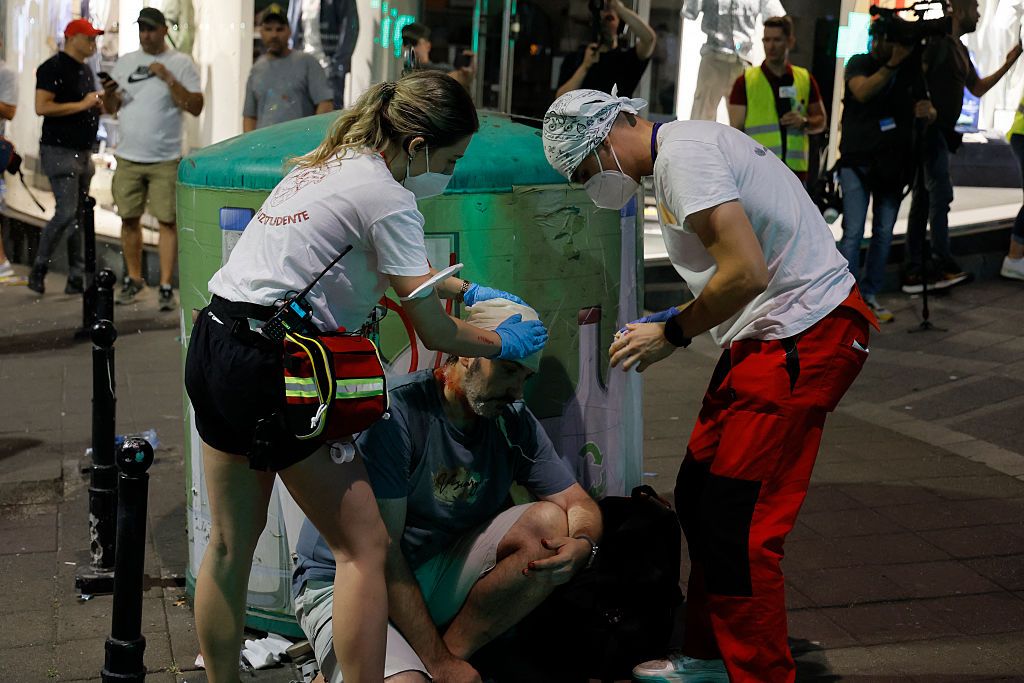
Police officers in riot gear used tear gas, pepper spray, and stun grenades to forcibly dispersed crowds, according to multiple media outlets. Dozens of protestors were detained, though the police did not provide an exat number.
Serbian Interior Minister Ivica Dacic claimed that demonstrators attacked the police.
Protestors reportedly threw eggs, plastic bottles, and other objects at riot officers blocking the crowd from entering a city park where Vucic supporters were staging a counterprotest. Vucic reportedly bused in groups of his own supporters from around the country ahead of the rally.
Vucic, a right-wing populist leader with authoritarian tendencies and warm ties with Russia, has repeatedly accused foreign states of inciting the protests in order to topple his government. He is provided no evidence to support these claims.
The current wave of protests in Serbia began in November, when a train station roof in the town of Novi Sad collapsed, killing 15. The disaster was blamed on government corruption.
While Vucic has alleged that Western powers are trying to trigger a "Ukrainian-style revolution in Serbia," the Serbian protests are not markedly pro-Ukrainian or pro-Russian. Unlike mass demonstrations in Slovakia, where activists explicitly condemned the government's Kremlin-friendly agenda, the Serbian movement is focused on Vucic's corrupt leadership.
Since Russia's full-scale invasion of Ukraine in 2022, Serbia has attempted to navigate a delicate diplomatic path between Moscow and the West. It has positioned itself as neutral in the Russia-Ukraine war and balanced its status as an EU candidate with its longstanding ties to Russia.
Vucic made his first official visit to Ukraine on June 11.
Ukraine is preparing to request European Union sanctions against Bangladeshi entities over importing wheat stolen from Russian-occupied Ukrainian territories, Ukraine's ambassador to India told Reuters.In comments for Reuters published on June 27, Oleksandr Polishchuk said that Bangladesh had failed to respond to Ukrainian diplomatic appeals to stop the trade, prompting Kyiv to escalate the matter to the EU level."It's a crime," Polishchuk told Reuters. "We will share our investigation with our
Ukraine is preparing to request European Union sanctions against Bangladeshi entities over importing wheat stolen from Russian-occupied Ukrainian territories, Ukraine's ambassador to India told Reuters.
In comments for Reuters published on June 27, Oleksandr Polishchuk said that Bangladesh had failed to respond to Ukrainian diplomatic appeals to stop the trade, prompting Kyiv to escalate the matter to the EU level.
"It's a crime," Polishchuk told Reuters. "We will share our investigation with our European Union colleagues, and we will kindly ask them to take the appropriate measures."
Russian forces have seized millions of tons of Ukrainian grain from occupied areas, with at least 180,000 tons looted through the port of Mariupol alone, Ukrainian Prime Minister Denys Shmyhalsaid in October 2024.
The Ukrainian Embassy in New Delhi sent multiple letters to Bangladesh's Foreign Ministry this year, requesting rejection of more than 150,000 tonnes of grain allegedly stolen and shipped from the Russian port of Kavkaz, according to documents reviewed by Reuters, shared by people familiar with the matter.
According to Polishchuk, Ukrainian intelligence showed that entities in Russia mask grain obtained from occupied Ukrainian territories by mixing it with Russian wheat before shipping it to other countries.
Bangladesh's Food Ministry, in comments to Reuters, denied the imports, saying that they banned grain deliveries originating from occupied Ukrainian territory.
Ukraine's agricultural sector has suffered approximately $80 billion in losses due to Russia's full-scale invasion, Agriculture Minister Vitalii Koval said in February.
The losses include direct damage, disrupted logistics, higher fertilizer and fuel costs, land reclamation expenses, demining costs, and impacts from occupied territories.
Ukraine will receive €42.5 million ($45.7 million) from international partners to repair the protective arch over the Chornobyl nuclear plant's destroyed reactor, Environment and Natural Resources Minister Svitlana Hrynchuk announced on June 26.A Russian Shahed-type drone struck the New Safe Confinement over Chornobyl's destroyed 4th reactor on February 14. The structure built to contain radioactive material was damaged, no serious radiation leaks were caused.France pledged €10.6 million ($11.4
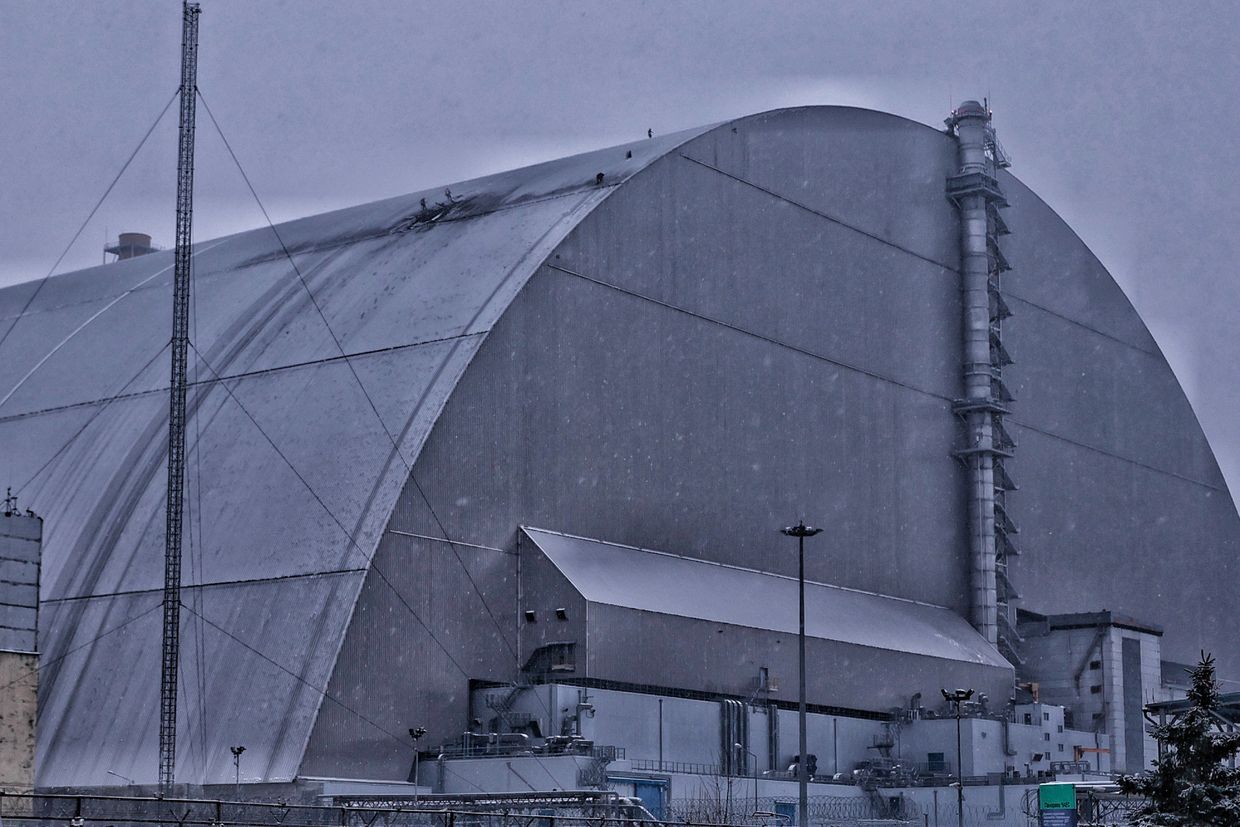
Ukraine will receive €42.5 million ($45.7 million) from international partners to repair the protective arch over the Chornobyl nuclear plant's destroyed reactor, Environment and Natural Resources Minister Svitlana Hrynchuk announced on June 26.
A Russian Shahed-type drone struck the New Safe Confinement over Chornobyl's destroyed 4th reactor on February 14.
The structure built to contain radioactive material was damaged, no serious radiation leaks were caused.
France pledged €10.6 million ($11.4 million), the United Kingdom committed €6.9 million ($7.4 million), and the European Commission contributed €25 million ($26.9 million) toward the repairs.
"This is further evidence that Ukraine does not face its challenges alone, but has reliable friends," Hrynchuk wrote on Facebook.
The funding was announced at the European Bank for Reconstruction and Development (EBRD) headquarters in London during a meeting of the Chornobyl International Cooperation Account Assembly of Contributors – the governing body of the fund created to address Chornobyl Nuclear Power Plant issues.
Ukraine has already surveyed the building's structure and completed preparatory work, Hrynchuk said. In March, €400,000 ($430,000) was allocated from the special fund for this purpose.
The assembly discussed plans for temporary repairs and further work to fully restore the arch's integrity and functionality.
Chornobyl was the site of the world's worst nuclear disaster in 1986, contaminating areas across Ukraine, Belarus, and Russia.
After an protective structure was built over the destroyed reactor to contain radioactive material in the months following the disaster, the current arch, an international project built as a more permanent solution, was completed in 2017.
Hungary's government announced on June 26 that 95% of participants in a national consultation opposed Ukraine's accession to the EU, Hungarian news outlet Telex reported. The poll, promoted by Prime Minister Viktor Orban's government, has already drawn criticism over its credibility and turnout. Telex reported that the system could be manipulated — testing showed that users were able to vote twice using different email addresses. According to Telex, 2,278,000 people participated in the consultat
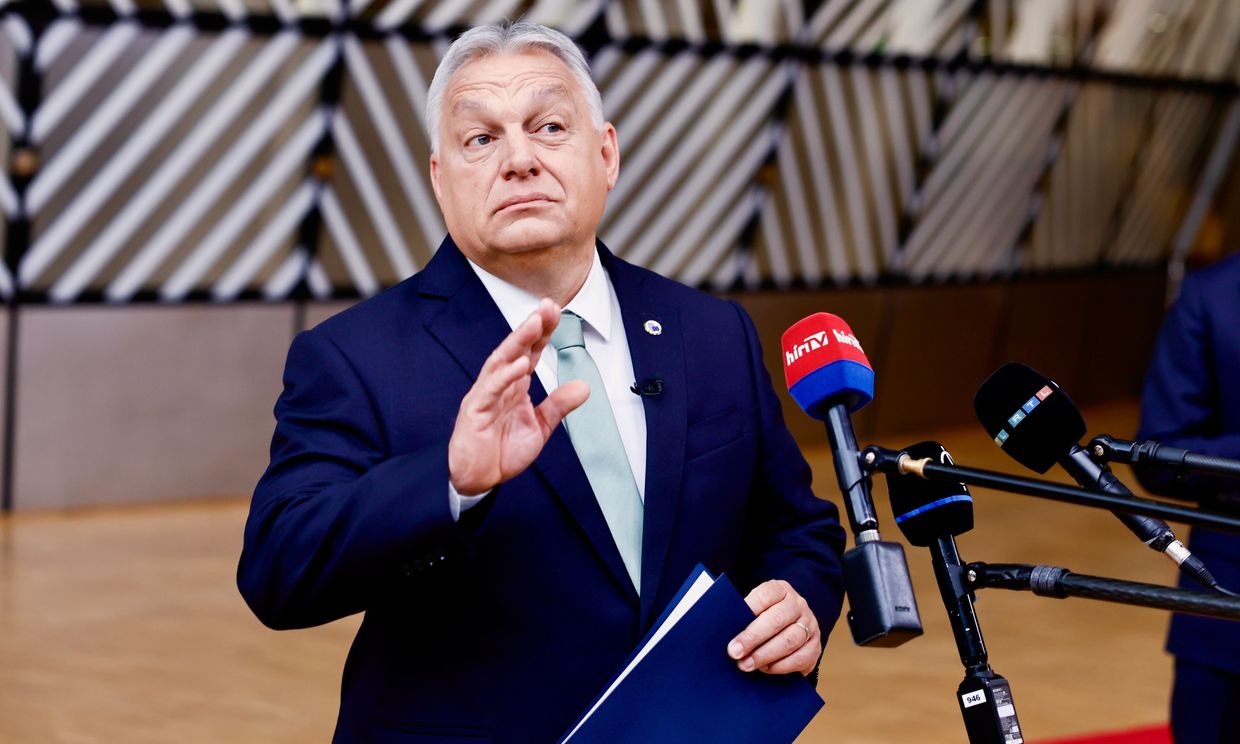
Hungary's government announced on June 26 that 95% of participants in a national consultation opposed Ukraine's accession to the EU, Hungarian news outlet Telex reported.
The poll, promoted by Prime Minister Viktor Orban's government, has already drawn criticism over its credibility and turnout. Telex reported that the system could be manipulated — testing showed that users were able to vote twice using different email addresses.
According to Telex, 2,278,000 people participated in the consultation — approximately 29% of the electorate that voted in the 2024 European Parliament elections. Of those, the government claimed 95% voted against Ukraine joining the EU, while only 5% supported the bid.
Ukraine applied for EU membership shortly after Russia launched its war in 2022 and was granted candidate status within months. As an EU member, Hungary has veto power over further progress.
The consultation results were released on the eve of the European Council summit, giving Orban leverage to delay Ukraine's membership. But the process itself has drawn skepticism.
Government spokesman Gergely Gulyas claimed printed ballots were notarized and secure, and that electronic votes, which made up 10% of the total, were being verified. However, he could not confirm whether the system could detect if someone voted both by mail and online.
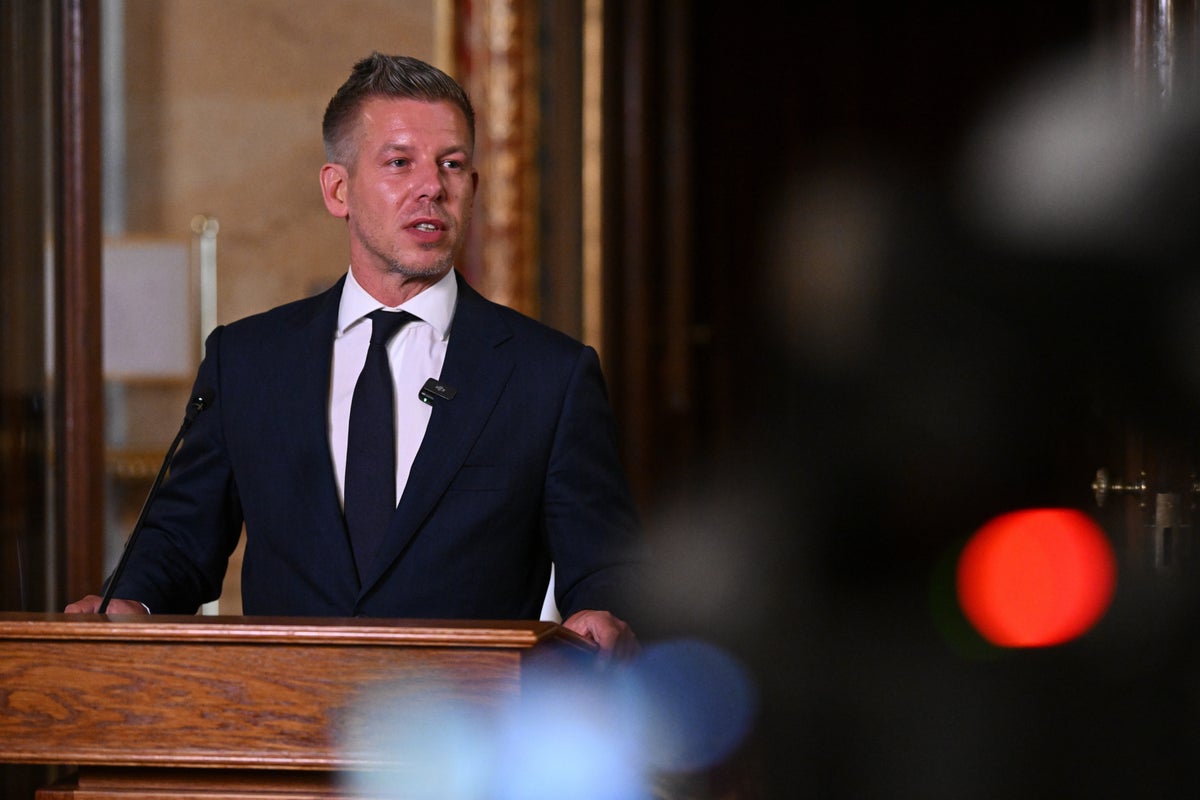
Opposition leader Peter Magyar on June 22 dismissed the consultation as a "government propaganda campaign" and cited internal data from Magyar Posta indicating that only 3-7% of mailed ballots were returned.
"It's the lowest-ever turnout for any such consultation," Magyar wrote on social media.
Since 2010, Orban's government has conducted more than a dozen similar national consultations — non-binding letter campaigns with leading questions designed to reinforce government positions.
Previous campaigns targeted topics like LGBTQ rights and EU migration policy. In one 2023 consultation, voters were asked whether they supported Brussels' alleged plans to create "migrant ghettos" in Hungary — 99% voted no, with turnout under 20%.
On April 22, Orban said he voted against Ukraine's accession to the EU in the consultation, publicly sharing photos of himself marking "against" on the poll ballot. He warned earlier this year that allowing Kyiv to join the EU would "destroy" Hungary.
Orban, the EU's most openly pro-Russian leader, has blocked or delayed military aid to Ukraine, maintained close ties with President Vladimir Putin, and echoed Kremlin talking points.
Hungary's opposition and Western critics view his administration as increasingly authoritarian, citing the erosion of press freedom, judicial independence, and electoral fairness.
Despite the low turnout and widespread allegations of manipulation, Orban is expected to use the consultation's outcome to justify future obstruction of Ukraine's EU integration.
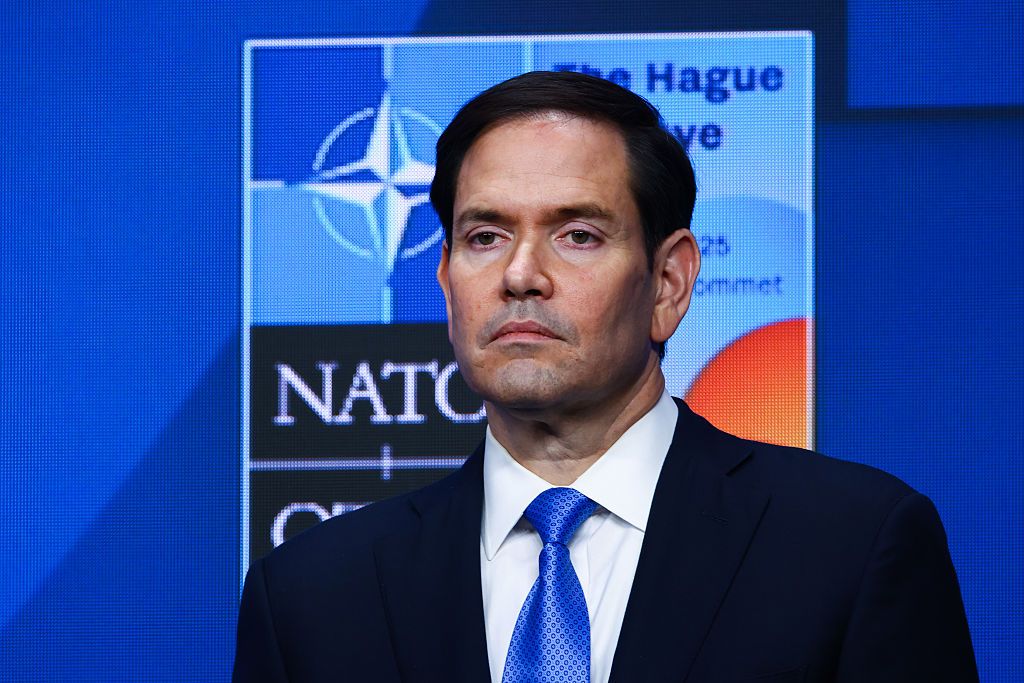
United States Secretary of State Marco Rubio surprised NATO allies this week with conflicting messages on Russia sanctions, delivering a tougher stance in private than in his public remarks, Politico reported on June 25.Rubio met with NATO foreign ministers on June 25 during a private dinner at the alliance's annual summit. According to sources who spoke with Politico, Rubio acknowledged that Russia was the main obstacle preventing peace talks to end the war in Ukraine.He reportedly said the U.S
United States Secretary of State Marco Rubio surprised NATO allies this week with conflicting messages on Russia sanctions, delivering a tougher stance in private than in his public remarks, Politico reported on June 25.
Rubio met with NATO foreign ministers on June 25 during a private dinner at the alliance's annual summit. According to sources who spoke with Politico, Rubio acknowledged that Russia was the main obstacle preventing peace talks to end the war in Ukraine.
He reportedly said the U.S. Senate would likely consider new sanctions legislation after completing work on President Donald Trump's spending bill.
However, just hours later, Rubio softened his position on Russia during an exclusive interview with Politico, calling for a more cautious approach.
"If we did what everybody here wants us to do, and that is come in and crush them with more sanctions, we probably lose our ability to talk to them about the ceasefire and then who's talking to them?" Rubio said.
He also added that Trump would know the "time and place" to change course.
When asked about the apparent shift in tone, a senior U.S. official insisted Rubio's messaging has remained consistent in conversations with allies.
"The secretary has been very consistent in meeting and calls with his counterparts on three key point," the official said.
"One is that the president believes strongly that the only way this war ends is through negotiations; second, as soon as the U.S. imposes new sanctions on Russia the opportunity for the U.S. to be involved in those negotiations closes; and third, that the Senate, in America anyway, is an independent body that at some point is going to move on those sanctions,."
At the NATO dinner, Rubio reportedly faced criticism from Polish Foreign Minister Radoslaw Sikorski, who claimed that Russian President Vladimir Putin was disrespecting Trump by violating the ceasefire.
It has been more than 100 days since Ukraine agreed to a U.S.-backed complete ceasefire, while Russia continues to reject it.
Sikorski also reportedly denounced Moscow's repeated attacks on Kyiv and other Ukrainian cities, which have intensified in recent weeks, saying such strikes "should not come for free" — implying that the U.S. and Europe should do more to support Ukraine.
Meanwhile, Rubio has delivered different messages in public and behind closed doors. Despite the shifting rhetoric, Baltic and Nordic countries reportedly view him as a pragmatic ally within the Trump administration — one who has a realistic understanding of the threats posed by Russia and China, according to a second European official cited by POLITICO.
Ukraine and the Council of Europe signed a historic agreement on June 25 to establish a Special Tribunal for the Crime of Aggression, marking a major step toward holding Russia's leadership accountable for launching the full-scale invasion in 2022.The agreement was signed by President Volodymyr Zelensky and Council of Europe Secretary General Alain Berset during a ceremony in Strasbourg, France – following more than three years of diplomatic efforts and deliberation.Speaking at the Parliamentary
Ukraine and the Council of Europe signed a historic agreement on June 25 to establish a Special Tribunal for the Crime of Aggression, marking a major step toward holding Russia's leadership accountable for launching the full-scale invasion in 2022.
The agreement was signed by President Volodymyr Zelensky and Council of Europe Secretary General Alain Berset during a ceremony in Strasbourg, France – following more than three years of diplomatic efforts and deliberation.
Speaking at the Parliamentary Assembly of the Council of Europe (PACE), Zelensky thanked the assembly and underscored the importance of justice.
"Everyone responsible for this war must be held to account," he said. "Every war criminal must face justice – including Putin... the crime of aggression must be recorded, judged, and punished."
Zelensky also praised PACE for its "real leadership" in taking a stand against Russia and developing the tribunal.
"It was here in this assembly, that the first call for such a tribunal was made," Zelensky said. "The idea was born here – and now it’s gaining real support from partner countries in Europe and beyond."
The Special Tribunal will be established within the framework of the Council of Europe and will have the mandate to prosecute senior Russian leaders for the crime of aggression – defined as the decision to use armed force against another state, in violation of the United Nations Charter.
President Zelensky has long advocated for the creation of the tribunal, emphasizing the need to bring Russian President Vladimir Putin and other senior officials to justice. Ukrainian prosecutors have documented thousands of war crimes committed by Russian forces, including attacks on civilians, cultural landmarks, medical facilities, and reports of torture and forced deportations.
The tribunal is intended to close a key legal gap in existing international accountability mechanisms.
While the International Criminal Court (ICC) has jurisdiction to investigate war crimes, crimes against humanity, and genocide in Ukraine – and has already issued arrest warrants for Putin and Maria Lvova-Belova, the Russian official overseeing the forced deportation of Ukrainian children to Russia – it cannot examine the crime of aggression due to jurisdictional constraints.
The new tribunal will complement the ICC's efforts by specifically targeting high-level officials responsible for starting the war – such as Putin and his inner circle.
In addition to the special tribunal, the Council of Europe’s Ukraine-related work includes the Register of Damage – an initiative that has already received more than 34,000 claims detailing losses and harms resulting from Russia's full-scale invasion.
The establishment of the register, and now the special tribunal, are important steps to ensure justice for Ukraine and its people.
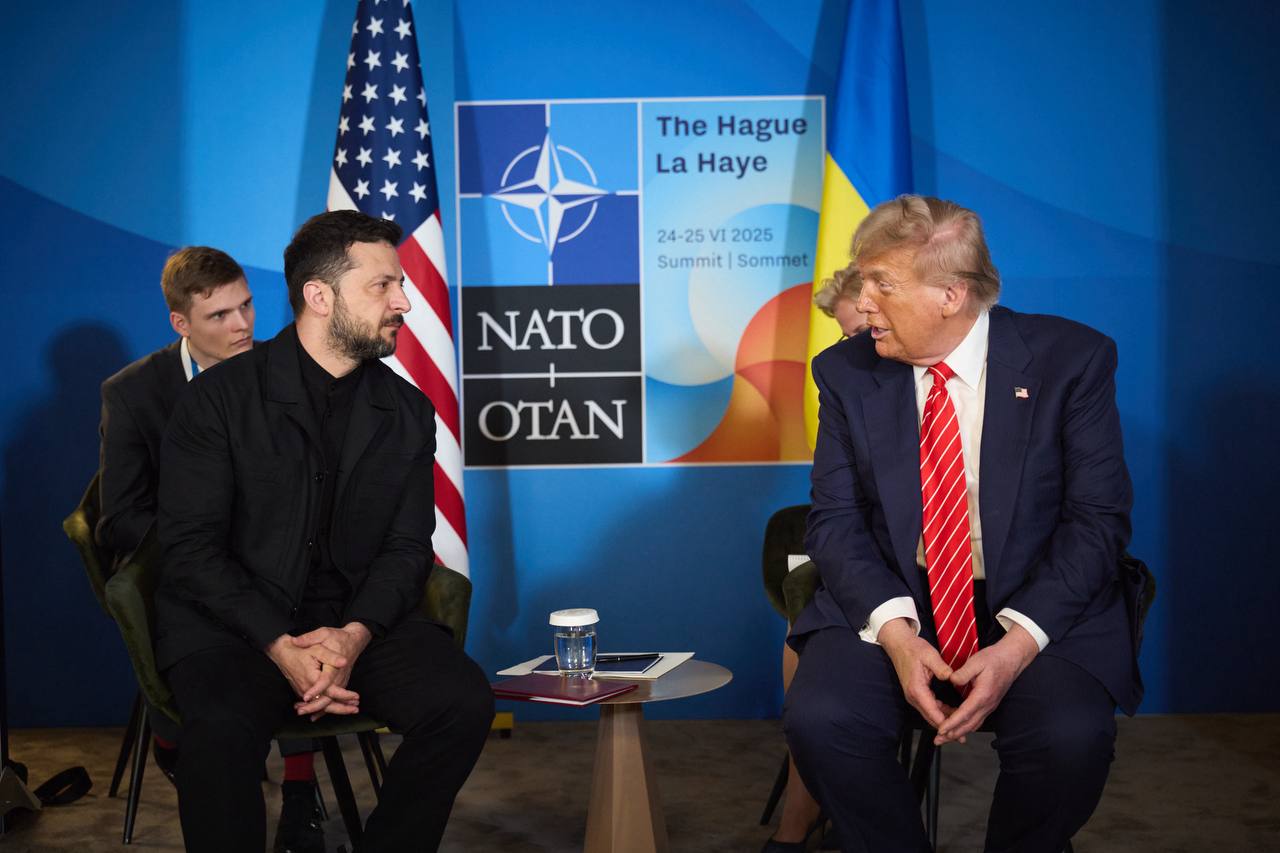
Speaking at a NATO press conference in The Hague on June 25, U.S. President Donald Trump said it was possible Russia could target other countries beside Ukraine.When asked whether Russian President Vladimir Putin has territorial ambitions beyond Ukraine, Trump replied, "it's possible.""I know one thing: He (Putin) would like to settle (the war). He'd like to get out of this thing. It's a mess for him," he added.Foreign officials and EU diplomats have increasingly called for the preparation for a
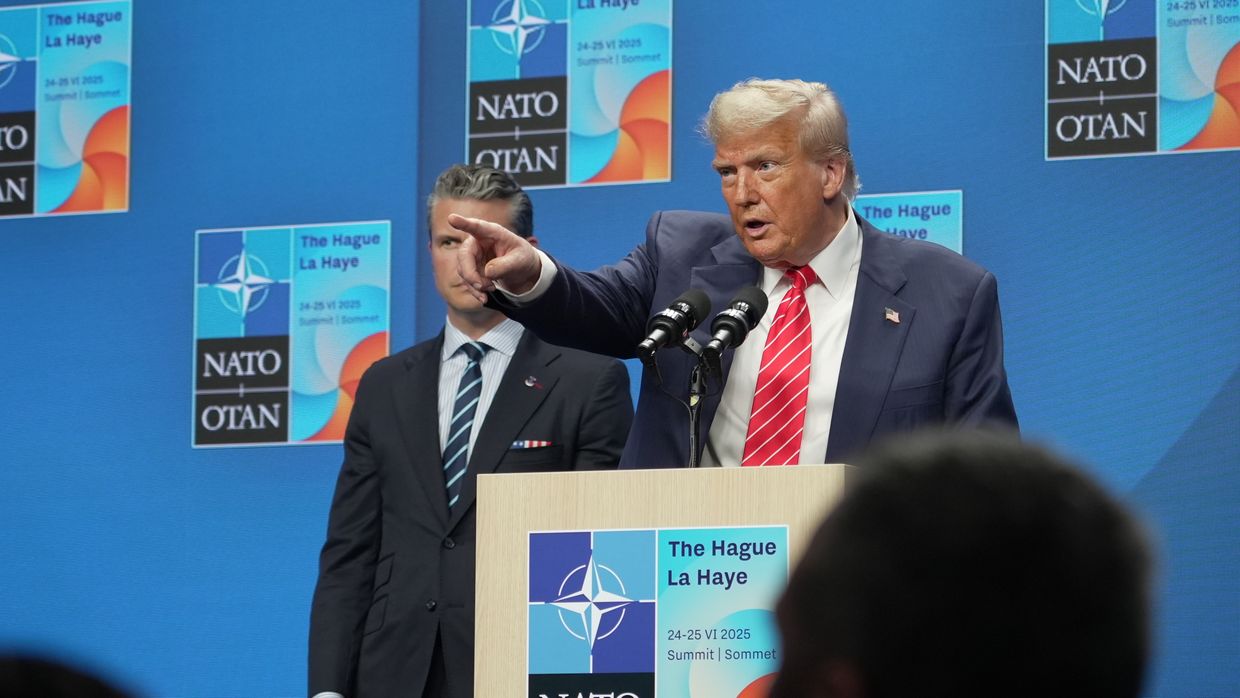
Speaking at a NATO press conference in The Hague on June 25, U.S. President Donald Trump said it was possible Russia could target other countries beside Ukraine.
When asked whether Russian President Vladimir Putin has territorial ambitions beyond Ukraine, Trump replied, "it's possible."
"I know one thing: He (Putin) would like to settle (the war). He'd like to get out of this thing. It's a mess for him," he added.
Trump's remarks came days after President Volodymyr Zelensky said that Ukraine's intelligence has proof that Russia is preparing new military operations in Europe and just a week after Putin declared "all of Ukraine is ours."
During The Hague summit, NATO Secretary General Mark Rutte called on alliance members to be realistic about the threats posed by Russia and China.
While Trump appeared to downplay concerns about Putin’s threat, he later said that the Russian leader "really has to end that war" against Ukraine. During his speech, he also referred to Russia’s all-out war as a "crisis," a term used by some Russian allies but criticized by Kyiv.
"I consider him (Putin) a person I think is misguided," Trump said.
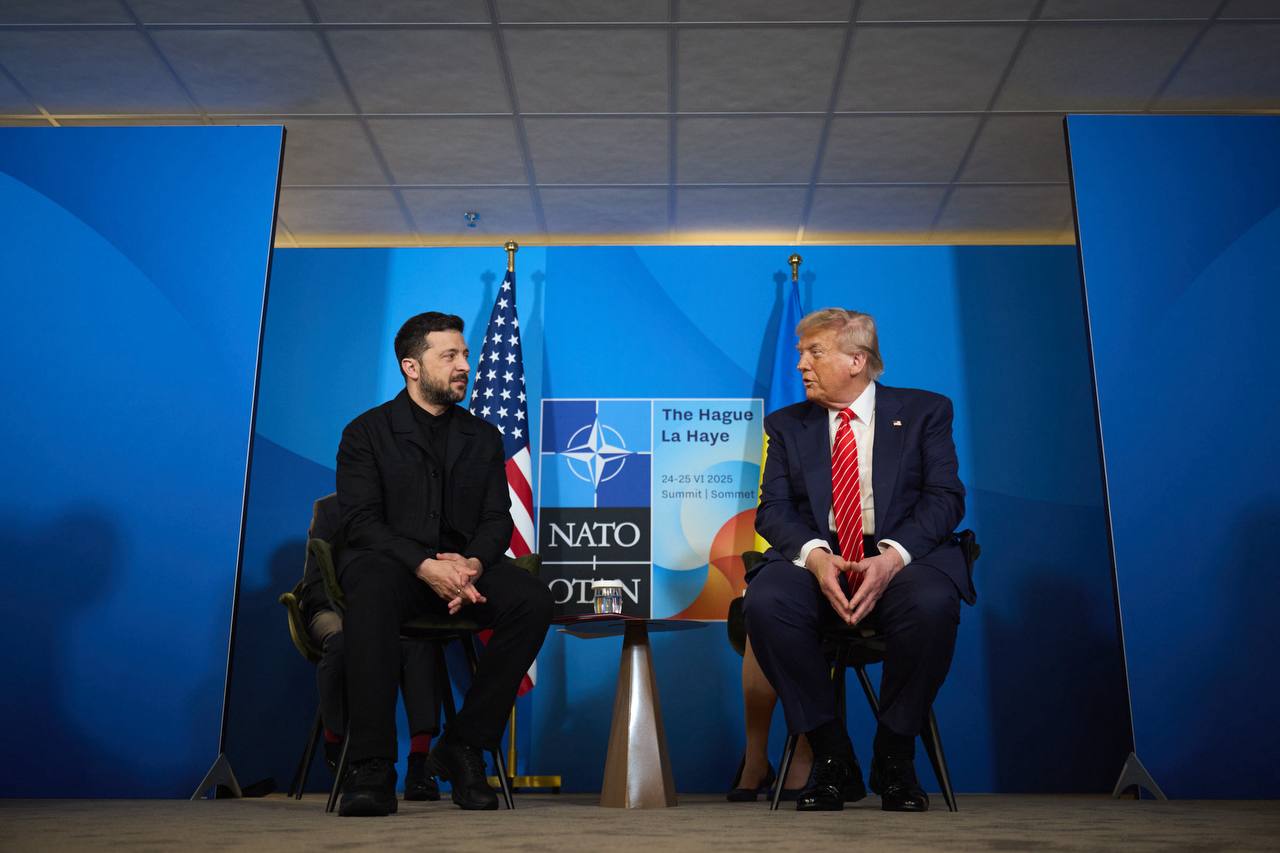
The U.S. leader said his June 25 meeting with Zelensky, which preceded the briefing, "couldn’t have been nicer."
"I think it’s a great time to end it (war). I’m going to speak to Vladimir Putin, see if we can get it ended," Trump said. "He (Zelensky) is fighting a brave battle, it's a tough battle."
Separately, Trump acknowledged that Ukraine wants to receive Patriot missiles, saying that the U.S. is going to see "if we can make some available."
In recent weeks, Russia has intensified drone and missile attacks on Kyiv and other Ukrainian cities, killing and injuring hundreds of civilians.
Despite Kyiv's appeals, Trump has dismissed the request, accusing Zelensky of "always looking to purchase missiles" and falsely blaming Ukraine for provoking the war.
The Council of Europe and Ukraine will sign an agreement on June 25 to set up a special tribunal for the crime of Russian aggression, Yevheniya Kravchuk, a member of Ukraine's delegation to the Parliamentary Assembly of the Council of Europe (PACE), said on June 24.The move marks a milestone in international efforts to hold President Vladimir Putin and other top Russian officials accountable for launching the full-scale war against Ukraine."What seemed like a dream of justice will soon become a
The Council of Europe and Ukraine will sign an agreement on June 25 to set up a special tribunal for the crime of Russian aggression, Yevheniya Kravchuk, a member of Ukraine's delegation to the Parliamentary Assembly of the Council of Europe (PACE), said on June 24.
The move marks a milestone in international efforts to hold President Vladimir Putin and other top Russian officials accountable for launching the full-scale war against Ukraine.
"What seemed like a dream of justice will soon become a reality. Ukraine, together with the Council of Europe, will sign an agreement that will bring Russia to justice," Kravchuk wrote on Facebook.
Ukrainian Deputy Prime Minister Olha Stefanishyna stressed that the special tribunal will have jurisdiction over the Russian president, prime minister, foreign minister, and other top officials.
"It is not a matter of debate anymore, only a matter of time. Some will get into the hands of justice sooner, some later, but they will all be held accountable. There are no exceptions," Stefanishyna told the Kyiv Independent. "It's critical to restore the international rule of law and prevent future acts of aggression."
The tribunal's jurisdiction covers all aspects of the crime of aggression, including the planning, preparation, initiation, or execution of acts of aggression, according to Stefanishyna.
"The tribunal's design makes it clear that the official status of the accused at the time of the crime does not exempt them from responsibility," she said. "Functional immunity does not apply here; high-ranking officials can be prosecuted even while holding office. The statute provides rules for conducting proceedings if the accused is absent."
The tribunal will be authorized to cooperate with the International Criminal Court (ICC) to ensure jurisdictional effectiveness and share information, Stefanishyna added.
President Volodymyr Zelensky has long advocated for the tribunal to ensure that Putin and other senior Russian officials face justice for launching the invasion three years ago.
Ukrainian prosecutors have documented thousands of war crimes committed by Russian forces, including attacks on civilians, cultural and medical sites, and acts of torture and deportation.
While war crimes, crimes against humanity, and genocide can be prosecuted against individuals at any level, the crime of aggression applies exclusively to state leaders responsible for planning and waging a war.
The ICC has already issued arrest warrants for Putin and Maria Lvova-Belova, the Russian official overseeing the forced deportation of Ukrainian children to Russia.
A majority of Europeans would oppose following the U.S.' lead if President Donald Trump pushed Ukraine to cede territories or lifted sanctions on Russia as part of a peace agreement, a new poll published on June 23 has found.Despite the self-imposed deadline of 100 days to end the war in Ukraine, Trump is now 155 days into his presidency and Russian attacks have only escalated.Trump has still yet to take any concrete steps to pressure Moscow into ending its war but has floated several concession
A majority of Europeans would oppose following the U.S.' lead if President Donald Trump pushed Ukraine to cede territories or lifted sanctions on Russia as part of a peace agreement, a new poll published on June 23 has found.
Despite the self-imposed deadline of 100 days to end the war in Ukraine, Trump is now 155 days into his presidency and Russian attacks have only escalated.
Trump has still yet to take any concrete steps to pressure Moscow into ending its war but has floated several concessions that Ukraine could be forced to make including ceding territory, while at the same time announcing no new military aid packages for Kyiv.
The survey, conducted by the European Council on Foreign Relations, found that even in countries with pro-Russian governments like Hungary, more people opposed the idea than supported it.
Respondents in 12 countries (Denmark, Estonia, France, Germany, Hungary, Italy, Poland, Portugal, Romania, Spain, Switzerland and the U.K.) were asked about three scenarios — the U.S. pushing Ukraine to cede territory, lifting sanctions on Russia, and withdrawing all military support.
Majorities in all countries opposed their own governments following the U.S. lead except for Hungary in the case of withdrawing all military support.
Opposition was highest in Denmark, the U.K., Poland, Spain and Portugal, and lowest in Hungary, Romania and Italy.
"A benevolent interpretation is that Europeans support an autonomous European policy to support Ukraine and they don’t want to blindly follow Trump’s lead," the report's authors said.
"But another reading of that data is that Europeans want Ukrainians to continue fighting on their behalf."
The wide-ranging survey also asked about attitudes to increasing defense spending and compulsory military service.
Majorities supported increased defense spending in Poland (70%), Denmark (70%), and the U.K. (57%), with large minorities in Germany (47%), Spain (46%), and France (45%).
When asked about compulsory military service, France (62%), Germany (53%), and Poland (51%) were the strongest supporters but crucially, not in the age bracket most likely to be called up — 18 to 29-year-olds.
Europeans are also becoming increasingly despondent about the U.S. under the leadership of Trump, with large majorities in the U.K. (74%) and Germany (67%) believing the U.S. political system is "broken."
Ukraine's state defense conglomerate Ukroboronprom and European aerospace giant Airbus have signed a trilateral cooperation memorandum at the Le Bourget International Air Show, the company announced on June 23.The agreement launches initiatives to develop maintenance and repair capabilities for Airbus aircraft operating in Ukraine among specialists at Ukroboronprom's enterprises.As part of the deal, Airbus will send representatives to Ukraine to train local specialists, who will then become cert
Ukraine's state defense conglomerate Ukroboronprom and European aerospace giant Airbus have signed a trilateral cooperation memorandum at the Le Bourget International Air Show, the company announced on June 23.
The agreement launches initiatives to develop maintenance and repair capabilities for Airbus aircraft operating in Ukraine among specialists at Ukroboronprom's enterprises.
As part of the deal, Airbus will send representatives to Ukraine to train local specialists, who will then become certified instructors for aircraft maintenance.
"Trust in our defense industrial complex, particularly Ukroboronprom and its enterprises, is growing among global high-tech companies," said Oleh Hulyak, Ukroboronprom Director General, in a press release. "This proves we have chosen the right path for development and international cooperation."
Hulyak expects new partnerships with foreign partners in aviation and other areas of the company's work.
Ukroboronprom is a leading strategic manufacturer of weapons and military hardware in Ukraine. The association unites about 100 enterprises that develop and manufacture weapons, military equipment and ammunition, including missiles, drones, armored vehicles.
The company reported a consolidated net profit of Hr 1.31 billion ($31.5 million) for the previous year as its enterprises tripled production volumes in 2024 compared to 2023, with a 36% increase in contracts.
In 2024, Ukroboronprom was rankedfor the first time in history among the top 50 global defense companies by Defense News, according to Strategic Industries Minister Alexander Kamyshin.
President Volodymyr Zelensky is expected to attend the summer plenary session of the Parliamentary Assembly of the Council of Europe (PACE), scheduled for June 23-27 in Strasbourg, France.According to the draft agenda, Zelensky is slated to address the assembly on June 26, though his attendance has not yet been confirmed.While the content of Zelenky's speech has not been disclosed, the PACE summer session is expected to focus on women's rights in Europe as well as the war in Gaza.Legal and human
President Volodymyr Zelensky is expected to attend the summer plenary session of the Parliamentary Assembly of the Council of Europe (PACE), scheduled for June 23-27 in Strasbourg, France.
According to the draft agenda, Zelensky is slated to address the assembly on June 26, though his attendance has not yet been confirmed.
While the content of Zelenky's speech has not been disclosed, the PACE summer session is expected to focus on women's rights in Europe as well as the war in Gaza.
Legal and human rights issues related to Russia’s ongoing war against Ukraine, and a corresponding resolution, are also listed on the agenda.
The spring session, which took place in April 2025, focused predominantly on Georgia, Turkey, and Ukraine.
Ahead of the PACE session, Zelensky is also set to attend next week's NATO summit in The Hague on June 24. He is expected to meet with European Commission President Ursula von der Leyen and NATO Secretary-General Mark Rutte.
PACE is the parliamentary arm of the Council of Europe, an international organization of 46 countries, including Ukraine, that promotes democratic values and human rights. Russia was expelled from the body in early 2022 in response to its invasion of Ukraine.
Since the start of the full-scale invasion in 2022, the assembly has issued a number of resolutions regarding Russia, calling for the establishment of an international special tribunal to hold Russia accountable for war crimes and recognizing Putin as an illegitimate dictator.
Most recently, PACE adopted a resolution addressing the ongoing Russian war of aggression against Ukraine, stressing the urgent need to ensure accountability and avoid impunity for the serious breaches of international law committed.
Ukrainian intelligence has proof that Russia is preparing new military operations in Europe, said President Volodymyr Zelensky on June 22 after a report from military intelligence (HUR) chief Kyrylo Budanov."We are observing a continued intellectual decline within the Russian leadership and have evidence that they are preparing new military operations on European territory," Zelensky said on X.Zelensky added that Ukraine will inform foreign partners regarding the information obtained by intellig
Ukrainian intelligence has proof that Russia is preparing new military operations in Europe, said President Volodymyr Zelensky on June 22 after a report from military intelligence (HUR) chief Kyrylo Budanov.
"We are observing a continued intellectual decline within the Russian leadership and have evidence that they are preparing new military operations on European territory," Zelensky said on X.
Zelensky added that Ukraine will inform foreign partners regarding the information obtained by intelligence. The statement follows earlier warnings by Kyiv that Russia may be preparing aggression beyond Ukraine's borders.
The president did not provide further details on the planned Russian operations, their dates, or countries that might be targeted.
"We are preparing joint decisions for defense, in particular with the United Kingdom and the European Union," Zelensky wrote.
Zelensky confirmed that Ukraine will continue its efforts to weaken Russia's army.
"We’re aware of... (Russia's) key vulnerabilities and will strike accordingly to defend our state and people, as well as to significantly reduce Russia’s capacity for aggression," the president said.
Since its full-scale invasion of Ukraine in 2022, Russia has ramped up sabotage operations across Europe, aiming to destabilize the security situation in countries supporting Kyiv against Russian aggression.
Ukrainian foreign intelligence warned in May that Russia would be able to restore its combat capabilities and launch aggression against Europe between two and four years after hostilities in Ukraine ended.
Foreign officials and EU diplomats have increasingly called for the preparation for a potential full-scale conflict between NATO and Russia. On June 2, the United Kingdom announced its largest defense spending increase since the Cold War in the face of "the war in Europe," according to U.K. Prime Minister Keir Starmer.
The European Commission has proposed that Ukraine join the European Union's mobile roaming area starting January 1, 2026, providing Ukrainian users the ability to make phone calls, texts, and use mobile data in the bloc's 27 countries at no extra charge. "We want Ukrainian citizens to stay connected to their loved ones across the EU, as well as in their home country. That's why we propose that Ukraine join our roaming family," European Commission President Ursula von der Leyen said in a statemen
The European Commission has proposed that Ukraine join the European Union's mobile roaming area starting January 1, 2026, providing Ukrainian users the ability to make phone calls, texts, and use mobile data in the bloc's 27 countries at no extra charge.
"We want Ukrainian citizens to stay connected to their loved ones across the EU, as well as in their home country. That's why we propose that Ukraine join our roaming family," European Commission President Ursula von der Leyen said in a statement.
The proposal, first announced on June 16, will serve as a means of integration into the European Union's "Roam like at Home" provision in affect between all EU nations. The proposed change will impact the over four million Ukrainian refugees living in the EU.
Ukraine's full integration in the roaming provisions will replace voluntary measures that "allowed for roaming without surcharges and affordable international calls for EU and Ukrainian citizens abroad," according to the European Commission. The current measure will extend to December 31, 2025, ahead of the planned integration.
If approved, Ukraine will become the only country outside of the EU to join the bloc's "Roam like at Home" policy.
The move, which awaits European Council approval, comes as Ukraine continues to implement reforms in pursuing membership in the European Union.
Ukraine applied for EU membership at the onset of Russia's full-scale invasion in 2022. The country has made quick progress, achieving candidate status within months, with the initial negotiations formally launching in June 2024.
Since the start of 2025, Ukraine has opened three negotiation clusters under Poland's rotating presidency.
Poland lead the EU Council's presidency until June, and Denmark will take over the role in July. Ukraine aims to open the remaining three negotiation clusters in the second half of 2025 under the Danish chairmanship, the President Volodymyr Zelensky said.
There are six accession negotiation clusters, consisting of several individual chapters. Negotiations prepare a candidate country to become an EU member.
The EU’s Commissioner for Enlargement, Oliver Varhelyi, said that Ukraine could potentially join the bloc by 2029 if it successfully implements necessary reforms.
Spain has rejected a U.S.-backed proposal for NATO members to raise defense spending to 5% of GDP, becoming the first alliance country to oppose the plan, Reuters reported on June 19.The rejection adds pressure to the transatlantic debate ahead of the NATO summit in The Hague on June 24–25, which has beenreduced to a single session focused on defense spending and alliance capabilities. In a letter to NATO Secretary General Mark Rutte, Spanish Prime Minister Pedro Sanchez called the proposed tar
Spain has rejected a U.S.-backed proposal for NATO members to raise defense spending to 5% of GDP, becoming the first alliance country to oppose the plan, Reuters reported on June 19.
The rejection adds pressure to the transatlantic debate ahead of the NATO summit in The Hague on June 24–25, which has beenreduced to a single session focused on defense spending and alliance capabilities.
In a letter to NATO Secretary General Mark Rutte, Spanish Prime Minister Pedro Sanchez called the proposed target "unreasonable" and warned it would undermine broader European efforts to build an integrated defense ecosystem.
"Committing to a 5% target would not only be unreasonable, but also counterproductive," Sanchez wrote, arguing it would "move Spain further away from optimal spending."
Spain estimates that its armed forces require spending equal to 2.1% of GDP to meet national military objectives, below the U.S.-endorsed threshold but above NATO's 2% benchmark.
U.S. President Donald Trump has repeatedly accused NATO members of underfunding their militaries, pushing for raising defense spending benchmark to 5% of GDP.
While no other NATO members have formally rejected the proposal, most have remained noncommittal. Poland, the Netherlands, and Sweden have expressed willingness to consider the 5% target.
In 2024, only 23 alliance members met the 2% target, according to NATO estimates. Poland was ahead of all members with 4.12% of GDP allocated to defense, followed by Estonia (3.43%) and the U.S. (3.38%).
Rutte said on June 17 that all NATO countries are on track to meet the 2% threshold in 2025.
Spain, governed by a Socialist-led coalition, maintains a sharply different defense posture than the U.S. administration.
While Madrid supports Ukraine, it has taken a more cautious stance on the Middle East, including distancing itself from U.S. policy on Israel.
The Slovak police sought to detain ex-Defense Minister Jaroslav Nad over alleged misconduct during the donation of ammunition to Ukraine in 2022, the Slovak newspaper Dennik N reported on June 18, citing two undisclosed sources.According to his social media, Nad is currently vacationing in Canada. The Slovak police reportedly also seek to detain a former Defense Ministry official and have detained an ex-head of the Konstrukta Defense state company in a move denounced by Nad's opposition Democrat
The Slovak police sought to detain ex-Defense Minister Jaroslav Nad over alleged misconduct during the donation of ammunition to Ukraine in 2022, the Slovak newspaper Dennik N reported on June 18, citing two undisclosed sources.
According to his social media, Nad is currently vacationing in Canada. The Slovak police reportedly also seek to detain a former Defense Ministry official and have detained an ex-head of the Konstrukta Defense state company in a move denounced by Nad's opposition Democrats party as politically motivated.
The police operation reportedly concerns 120 mm rounds that Slovakia donated to Ukraine at the onset of Russia's full-scale invasion in 2022. The Slovak Defense Ministry allegedly initially sold the obsolete ammunition to a private company, only to later purchase it through Konstrukta Defense for a higher price for swift deliveries to the war-torn nation.
Nad was the defense minister between 2020 and 2023, during which time Slovakia decisively supported Ukraine against Russian aggression and provided substantial military aid.
Bratislava's foreign policy radically shifted after the election victory of left-nationalist Robert Fico in September 2023, who halted military aid from Slovak military stocks, adopted more hostile rhetoric toward Kyiv, and sought close energy ties with Russia.
Nad dismissed the allegations as a "theater," portraying it as the government's attempt to distract the public from internal problems.
"Today's theater didn't shock or upset me in the slightest," Nad said on Facebook.
"I'll keep reminding myself of how proud I am of the support we gave to Ukraine. I'd make the same decision again — without hesitation."
Fico has long criticized Western military aid to Ukraine and the defense assistance provided to Kyiv under the previous Slovak government. In a separate case last year, Slovak Defense Minister Robert Kalinak denounced last year a decision to send MiG-29 jets to Ukraine as "treason."
Satellite images reveal that Russia has expanded and modernized at least five nuclear-related facilities near European borders in recent years, Swedish broadcaster SVT reported on June 16, citing new imagery obtained from Planet Labs. One of the most notable developments is in Kaliningrad, where the suspected nuclear weapons storage site has undergone significant reconstruction. Images taken in May 2025 show the addition of triple-layered fencing, new buildings, and advanced communications equip
Satellite images reveal that Russia has expanded and modernized at least five nuclear-related facilities near European borders in recent years, Swedish broadcaster SVT reported on June 16, citing new imagery obtained from Planet Labs.
One of the most notable developments is in Kaliningrad, where the suspected nuclear weapons storage site has undergone significant reconstruction.
Images taken in May 2025 show the addition of triple-layered fencing, new buildings, and advanced communications equipment. Polish Foreign Minister Radoslaw Sikorski previously said that up to 100 tactical nuclear warheads might be stored at the site.
Kaliningrad, a militarized Russian exclave between Poland and Lithuania, is a key concern for NATO because of its advanced missile systems and expanding nuclear infrastructure.
A map of the Baltic Sea Region. (Lisa Kukharska / The Kyiv Independent)
The Osipovichi base in Belarus, a former Soviet nuclear storage facility, is also being renovated. Satellite imagery shows new air defense installations and a modernized loading platform for rail-based logistics.
In Novaya Zemlya, a remote Arctic archipelago long linked to Soviet-era nuclear testing, several new buildings have appeared, reinforcing its role as a potential site for future test activities.
On the Kola Peninsula, near the borders with Finland and Norway, Russia has built about 50 storage bunkers for submarine-launched ballistic missiles and constructed a specialized pier for loading those missiles onto submarines, according to the imagery.
Swedish Defense Minister Pal Jonson responded to the findings, saying Stockholm is "closely monitoring" Russian nuclear capabilities. Sweden officially joined NATO in March 2024 after years of non-alignment, citing escalating Russian threats as a primary reason.
The Kremlin has repeatedly used nuclear threats to pressure Ukraine and Western countries since the start of its full-scale invasion in February 2022.
German Defense Minister Boris Pistorius said Europe must begin preparing for a gradual reduction in U.S. military support for both the continent and Ukraine, Tagesschau reported on June 13."Yes, that's right. That would be so, and we have to deal with that," Pistorius told journalists in response to a question about the U.S. potentially scaling down its support. He noted that the discussions focus on a reduction in U.S. backing rather than a full halt.The comments come after U.S. Defense Secreta
German Defense Minister Boris Pistorius said Europe must begin preparing for a gradual reduction in U.S. military support for both the continent and Ukraine, Tagesschau reported on June 13.
"Yes, that's right. That would be so, and we have to deal with that," Pistorius told journalists in response to a question about the U.S. potentially scaling down its support. He noted that the discussions focus on a reduction in U.S. backing rather than a full halt.
The comments come after U.S. Defense Secretary Pete Hegseth announced that Washington would reduce the assistance allocated to Ukraine in the next year's federal budget.
"We now have to look at how much support drops and whether Europeans can compensate for it," Pistorius added.
While the U.S. has been Ukraine's leading military backer under former President Joe Biden, the Trump administration has yet to approve any aid packages and has become increasingly disengaged from peace talks.
Pistorius's comments come amid increasing uncertainty in transatlantic relations. U.S. Ambassador to NATO Matthew Whitaker confirmed on May 16 that the United States plans to begin discussions with European allies later this year about reducing its military presence on the continent.
Speaking at a security conference in Estonia, Whitaker said the talks would begin after the NATO summit in The Hague in June.
"Nothing has been determined," Whitaker said, according to Reuters. "But as soon as we do, we are going to have these conversations in the structure of NATO."
Whitaker emphasized that any drawdown would be closely coordinated to avoid creating security gaps. Still, he reiterated U.S. President Donald Trump's position that long-standing U.S. efforts to reduce its European military footprint must now be implemented.
"This is going to be orderly, but we are not going to have any more patience for foot-dragging in this situation," he said.
In February, Hegseth reportedly told NATO allies that "stark strategic realities" prevent the United States from being primarily focused on Europe's security. Leaks reported by the Atlantic in March revealed that both Hegseth and Vice President JD Vance privately criticized European defense spending, with Hegseth allegedly expressing his "loathing of European free-loading."
Trump called on NATO member states to increase defense spending up to 5% of GDP. Ahead of the upcoming NATO summit in The Hague on June 24–25, U.S. Secretary of State Marco Rubio said that member states will have agreed to a new goal of increasing defense spending.
"We are headed for a summit in six weeks in which virtually every member of NATO will be at or above 2%, but more importantly, many of them will be over 4%, and all will have agreed on a goal of reaching 5% over the next decade," Rubio told Fox News on May 15.
Such a move would mark a historic shift, with NATO partners collectively accounting for more than half of the alliance's military capacity, according to Rubio.
Since the beginning of Russia's full-scale war against Ukraine in 2022, NATO members have significantly increased their defense spending, with countries like Poland and the Baltic nations aiming to reach the 5% target in the coming years.
NATO plans to enhance its missile defense systems on its eastern flank in response to a growing threat from Russia, Bloomberg reported on June 12, citing its undisclosed sources.For the first time, member states of NATO are reportedly considering combining the alliance's ballistic missile shield with other integrated missile defense assets. The talks are taking place behind closed doors and involve sensitive deliberations, Bloomberg reported, citing its sources.Moscow has long opposed NATO's mis
NATO plans to enhance its missile defense systems on its eastern flank in response to a growing threat from Russia, Bloomberg reported on June 12, citing its undisclosed sources.
For the first time, member states of NATO are reportedly considering combining the alliance's ballistic missile shield with other integrated missile defense assets. The talks are taking place behind closed doors and involve sensitive deliberations, Bloomberg reported, citing its sources.
Moscow has long opposed NATO's missile defense infrastructure, particularly the U.S.-built interceptors deployed in Poland and Romania, states neighboring Ukraine. The alliance has previously said those systems are intended to counter potential long-range threats from Iran, not Russia.
The so-called "NATO expansion to the east" is one of the key narratives used by Russian propaganda to justify its large-scale war against Ukraine.
The proposed integration of ballistic missile defense with NATO's broader air and missile defense network would address threats from any direction in the future. This shift suggests the effort would increasingly be focused on deterring Russian capabilities, according to Bloomberg's sources.
The move comes as NATO ramps up its defense posture more than three years after Russia launched its full-scale invasion of Ukraine. The alliance recently agreed on the most ambitious new weapons targets since the Cold War.
NATO Secretary General Mark Rutte called on alliance members to make a "quantum leap" in defense investment in response to the enduring threat from Russia. Speaking at Chatham House in London, Rutte urged allies to increase air and missile defense by 400%.
Talks on integrating the systems may wrap up ahead of the NATO summit in The Hague on June 24–25, but could continue afterward, the sources said. Ukraine is invited to attend the summit. It remains unclear whether the initiative will still officially cite Iran as a threat or move fully toward addressing Russia.
The effort is part of a broader strategy to reinforce NATO's eastern flank, but some officials have raised concerns about how it might affect peace efforts in Ukraine and whether the United States will fully support the integration, Bloomberg reported.
Previously, U.S. President Donald Trump echoed Russian claims that Kyiv provoked the invasion by pursuing its NATO ambitions.
Earlier, Bloomberg reported that NATO is deploying a new satellite surveillance system aimed at monitoring military activity in Ukraine and along the alliance's eastern borders. The system, known as Smart Indication and Warning Broad Area Detection (SINBAD), will use AI-powered analysis to scan large areas and detect potential threats with unprecedented frequency.

 Connexion