Serbian President Aleksandar Vucic announced on June 23 that Serbia has halted all arms exports, citing national security and economic interests. He denied that the move was a response to mounting criticism over allegations that Serbian munitions have ended up in Ukraine.Speaking after a meeting with senior military officials, Vucic said that Serbia is only sending ammunition to its own barracks and all exports are suspended, in line with Serbia's best interests.Shortly after the announcement, S
Serbian President Aleksandar Vucic announced on June 23 that Serbia has halted all arms exports, citing national security and economic interests. He denied that the move was a response to mounting criticism over allegations that Serbian munitions have ended up in Ukraine.
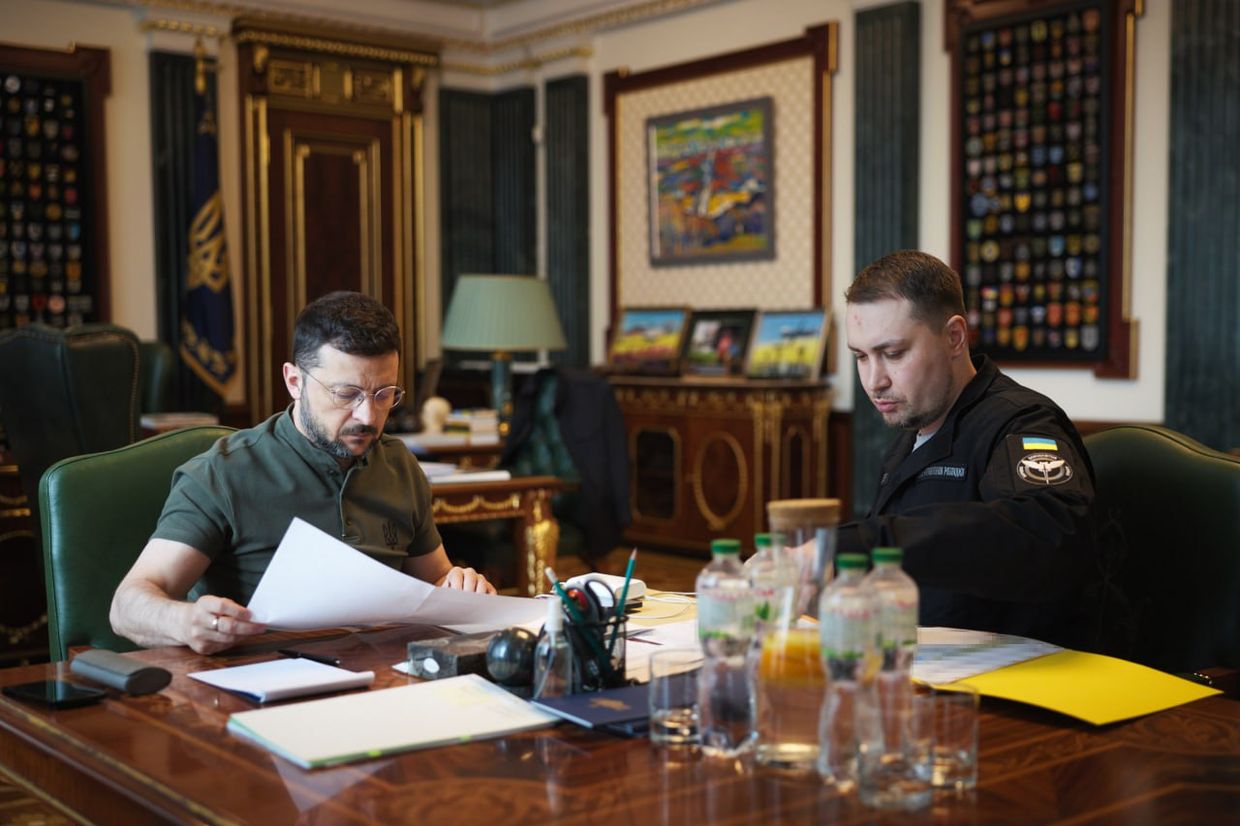
Speaking after a meeting with senior military officials, Vucic said that Serbia is only sending ammunition to its own barracks and all exports are suspended, in line with Serbia's best interests.
Shortly after the announcement, Serbia's Defense Ministry issued a statement confirming the suspension of all arms and military equipment exports.
Vucic's decisions comes amid increasing criticism – particularly following claims that Serbian ammunition has been supplied to Ukraine.
In May 2025, Russia’s Foreign Intelligence Service (SVR) accused Belgrade of supplying weapons to Kyiv, despite Serbia's friendly ties with Moscow and declared neutrality in Russia's invasion.
According to a 2024 investigation by the Financial Times, Serbian ammunition has made its way to Ukraine through intermediaries, although Belgrade maintains it does not directly arm either side.
Since Russia’s full-scale invasion of Ukraine in 2022, Serbia has attempted to navigate a delicate diplomatic path between Moscow and the West.
In his most recent balancing act, Vucic refused to sign a declaration condemning the invasion – so as not to "betray Russia" – while simultaneously pledging to support Ukraine's reconstruction.
Ukraine's Armed Forces struck the Atlas oil depot in Russia's Rostov Oblast overnight on June 23, the General Staff reported. The attack ignited a fire at the site, with Ukrainian forces saying the strike had reached its intended target. The facility supplies fuel and lubricants to Russian military units.Yuri Slyusar, the acting governor of Rostov Oblast, confirmed that a fire occurred at an industrial facility after the attack. He added that no one was injured.The full extent of the damage is s
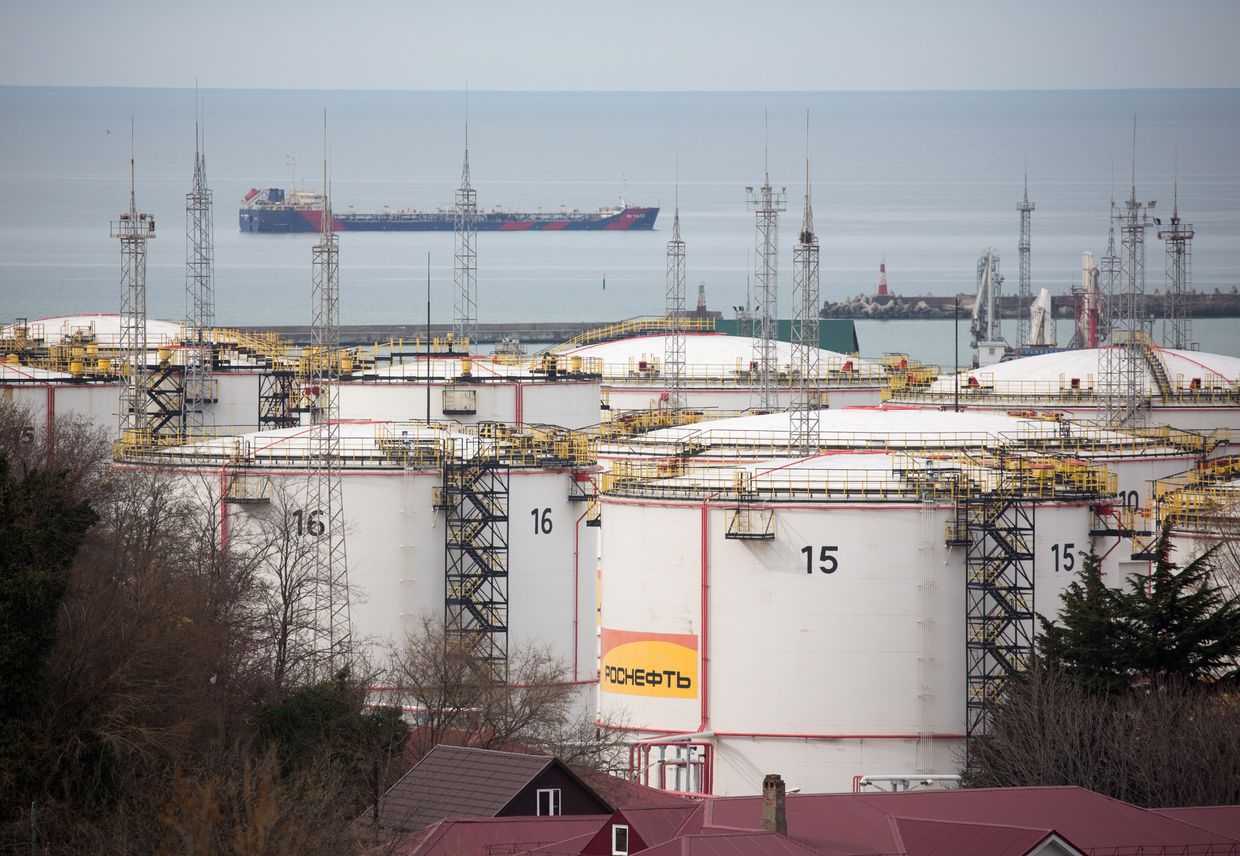
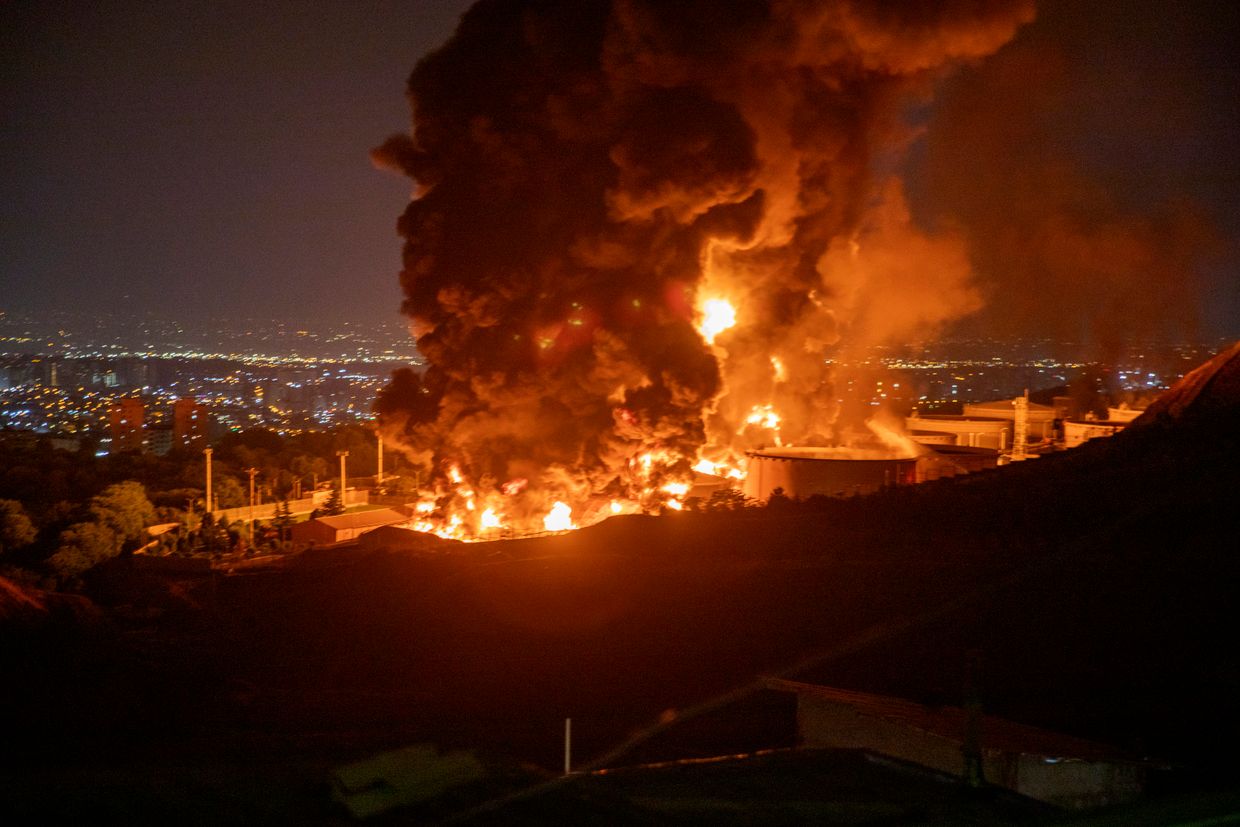
Ukraine's Armed Forces struck the Atlas oil depot in Russia's Rostov Oblast overnight on June 23, the General Staff reported.
The attack ignited a fire at the site, with Ukrainian forces saying the strike had reached its intended target. The facility supplies fuel and lubricants to Russian military units.
Yuri Slyusar, the acting governor of Rostov Oblast, confirmed that a fire occurred at an industrial facility after the attack. He added that no one was injured.
The full extent of the damage is still being assessed, according to the military.
Located near the Azov Sea and bordering Ukraine, Rostov Oblast plays a crucial logistical role for Russia's war effort due to its proximity to front-line operations. The same depot was previously targeted in November 2024.
"The defense forces continue to take all measures to undermine the military and economic potential of the Russian occupiers and force the Russian Federation to stop its armed aggression against Ukraine," the General Staff said.
The strike is part of Ukraine's broader campaign aimed at disrupting Russian supply chains and degrading its capacity to sustain the full-scale invasion.
Fuel depots, rail infrastructure, and ammunition stockpiles inside Russia and occupied territories have increasingly become targets for long-range drone and missile strikes.
Ukraine's state defense conglomerate Ukroboronprom and European aerospace giant Airbus have signed a trilateral cooperation memorandum at the Le Bourget International Air Show, the company announced on June 23.The agreement launches initiatives to develop maintenance and repair capabilities for Airbus aircraft operating in Ukraine among specialists at Ukroboronprom's enterprises.As part of the deal, Airbus will send representatives to Ukraine to train local specialists, who will then become cert
Ukraine's state defense conglomerate Ukroboronprom and European aerospace giant Airbus have signed a trilateral cooperation memorandum at the Le Bourget International Air Show, the company announced on June 23.
The agreement launches initiatives to develop maintenance and repair capabilities for Airbus aircraft operating in Ukraine among specialists at Ukroboronprom's enterprises.
As part of the deal, Airbus will send representatives to Ukraine to train local specialists, who will then become certified instructors for aircraft maintenance.
"Trust in our defense industrial complex, particularly Ukroboronprom and its enterprises, is growing among global high-tech companies," said Oleh Hulyak, Ukroboronprom Director General, in a press release. "This proves we have chosen the right path for development and international cooperation."
Hulyak expects new partnerships with foreign partners in aviation and other areas of the company's work.
Ukroboronprom is a leading strategic manufacturer of weapons and military hardware in Ukraine. The association unites about 100 enterprises that develop and manufacture weapons, military equipment and ammunition, including missiles, drones, armored vehicles.
The company reported a consolidated net profit of Hr 1.31 billion ($31.5 million) for the previous year as its enterprises tripled production volumes in 2024 compared to 2023, with a 36% increase in contracts.
In 2024, Ukroboronprom was rankedfor the first time in history among the top 50 global defense companies by Defense News, according to Strategic Industries Minister Alexander Kamyshin.
Ukraine's largest private energy company DTEK and British clean energy group Octopus Energy have launched a program to install rooftop solar panels and battery storage systems at Ukrainian businesses and public institutions, DTEK said in a press release on June 23.The program, called RISE (Resilient Independent Solar Energy), was announced at Octopus Energy's Tech Summit in London and aims to raise 100 million euros ($115 million) to finance 100 energy projects over three years, helping stabiliz
Ukraine's largest private energy company DTEK and British clean energy group Octopus Energy have launched a program to install rooftop solar panels and battery storage systems at Ukrainian businesses and public institutions, DTEK said in a press release on June 23.
The program, called RISE (Resilient Independent Solar Energy), was announced at Octopus Energy's Tech Summit in London and aims to raise 100 million euros ($115 million) to finance 100 energy projects over three years, helping stabilize the grid, lower electricity costs and protect customers from outages, the company said.
DTEK’s facilities have been repeatedly targeted since the start of Russia’s full-scale invasion as Moscow sought to cripple Ukraine's energy infrastructure. The company was forced to shut down its gas production facilities in Poltava Oblast in March.
"About 70% of Ukraine's thermal generation capacity has been damaged, destroyed or seized since the full-scale invasion," said DTEK CEO Maksym Timchenko in the press release.
“This has created not only an urgent need to rebuild but also an opportunity to accelerate the shift to a decentralized, renewable energy system,” he added.
The alternative energy systems will be installed by D.Solutions, DTEK's business unit operating under the Yasno retail brand.
Installed equipment will run on Octopus Energy's AI-powered Kraken operating system, enabling businesses to optimize energy use in real time, reduce consumption during peak hours and sell surplus electricity back to the grid.
"They (DTEK) are rebuilding at pace and pioneering a decentralized, smart energy system powered by homegrown renewables," said Greg Jackson, Octopus Energy Group founder and CEO.
According to DTEK, Ukraine's commercial and industrial energy market has an untapped potential of 300 megawatts annually, valued at 200 million euros ($229 million). DTEK's Yasno brand serves over 60,000 business customers and can generate projects worth 30 million euros per year.
DTEK previously announced plans to build one of Europe's largest energy storage facilities with six installations across the country, totaling 200 megawatts to power 600,000 households. The company secured a $72 million loan from three Ukrainian banks.
Three people were killed and at least 12 others injured after a Russian ballistic missile strike hit the city of Bilhorod-Dnistrovskyi in Odesa Oblast on June 23, Governor Oleh Kiper reported. The attack targeted a local educational institution, destroying the building and leaving several people, including members of the teaching staff, possibly trapped under the rubble. No children were present at the time due to summer holidays, Kiper said.As of 4:00 p.m. local time, three of the wounded were
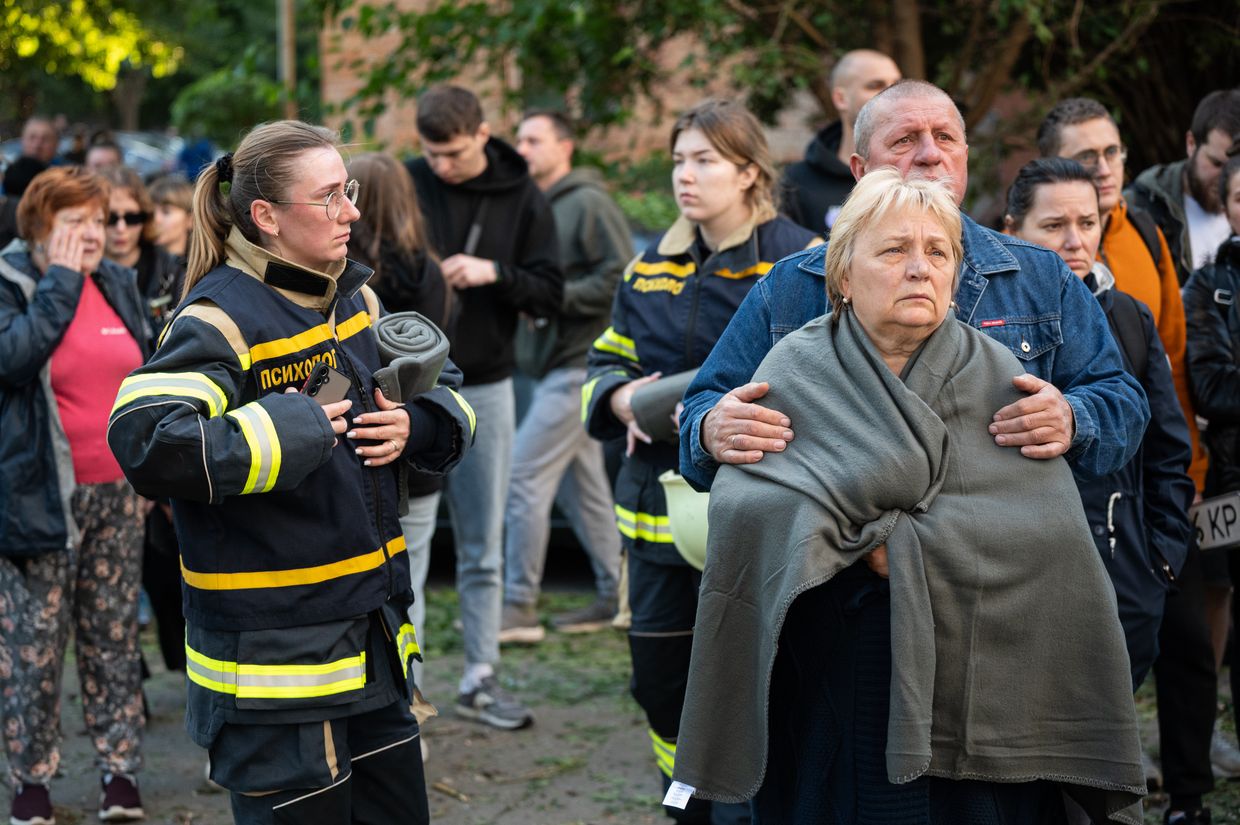
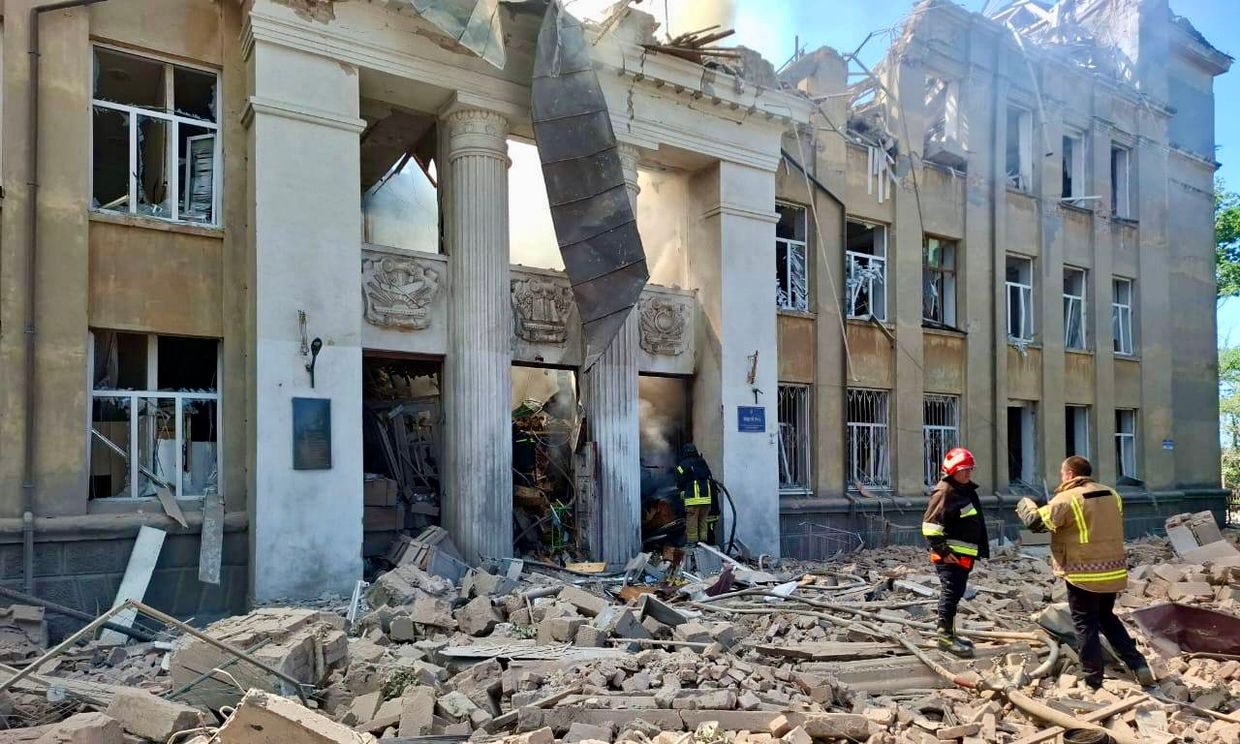
Three people were killed and at least 12 others injured after a Russian ballistic missile strike hit the city of Bilhorod-Dnistrovskyi in Odesa Oblast on June 23, Governor Oleh Kiper reported.
The attack targeted a local educational institution, destroying the building and leaving several people, including members of the teaching staff, possibly trapped under the rubble. No children were present at the time due to summer holidays, Kiper said.
As of 4:00 p.m. local time, three of the wounded were reported in serious condition, while the others — including two teenagers — were being treated for moderate injuries. The Air Force reported tracking two high-speed ballistic targets heading toward the city shortly before the strike.
Later in the day, Kiper reported that a 60-year-old woman died of her wounds at the hospital. Eight victims remained hospitalized as of 9:00 p.m. local time, while the rest were receiving outpatient care.
Bilhorod-Dnistrovskyi, a historic Black Sea city known for its Akkerman Fortress, lies near the mouth of the Dniester River.
Under international humanitarian law, the deliberate targeting of civilian infrastructure such as schools is forbidden and may constitute a war crime. Russia has repeatedly struck non-military sites throughout its full-scale invasion.
Earlier the same day, Russia launched another mass missile and drone attack on Kyiv, killing at least eight people and injuring 33 others, including four children, according to city officials.
Ukraine has returned the remains of three Russians who were handed over to Kyiv as part of an exchange of fallen soldiers' bodies, Interior Minister Ihor Klymenko told Interfax Ukraine on June 23.Ukraine has said the practice of passing off the bodies of Russian soldiers as Ukrainian is part of an attempt to obscure the scale of its military losses from the Russian public, and at least 20 such incidents have been recorded during recent repatriations conducted under the Istanbul agreements.Russi
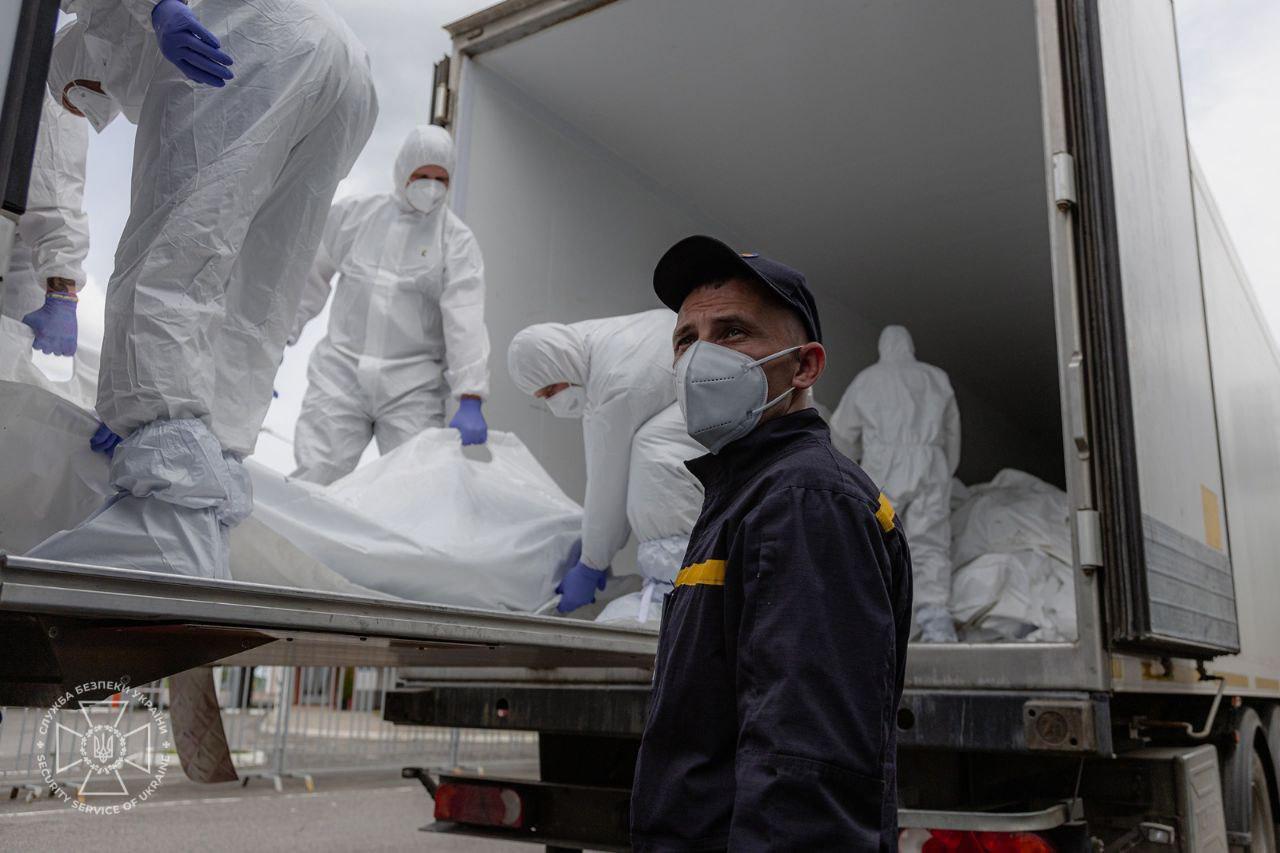
Ukraine has returned the remains of three Russians who were handed over to Kyiv as part of an exchange of fallen soldiers' bodies, Interior Minister Ihor Klymenko told Interfax Ukraine on June 23.
Ukraine has said the practice of passing off the bodies of Russian soldiers as Ukrainian is part of an attempt to obscure the scale of its military losses from the Russian public, and at least 20 such incidents have been recorded during recent repatriations conducted under the Istanbul agreements.
Russia did not comment on the discovery made by the Ukrainian side, while Klymenko said during a press conference on June 23 that it could be done to "sow chaos" during the identification of the soldiers' bodies.
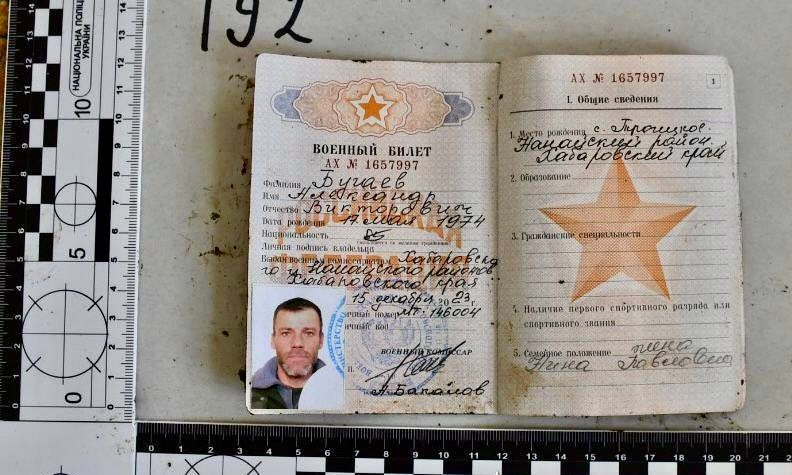
Personal badges, chevrons, documents, military uniforms elements, and footwear typical of the Russian Armed Forces were found during the bodies examination transferred by Russia to Ukraine, Ukraine's Interior Ministry said.
According to Klymenko, the bodies were transferred to Russia after confirmation that they belong to Russians. The other 17 bodies have not yet been handed over to Moscow, as examinations continues.
"We are waiting for the DNA of relatives. Therefore, we want the relatives (of Russians) to submit their DNA so that we can confirm," Klymenko told Interfax Ukraine. "I gave an order to prohibit the release of these bodies to the Russians until there is a 100% confirmation."
The Interior Ministry's experts conduct up to 10,000 examinations per month to identify individuals, and one fragment of remains can be examined up to five times, Klymenko said.
"The bodies of our heroes come back extremely mutilated. There are objective reasons for this, such as an ongoing war and widespread use of weapons. At the same time, we have recorded cases when the remains of one person were returned during different stages of repatriation, which complicates our work," Klymenko said.
The June 2 negotiations in Istanbul resulted in the most expansive prisoner and body exchange agreement of the full-scale war, although no ceasefire was reached.
Ukraine received a total of 6,057 bodies of its fallen soldiers as part of the phased exchange. Russia, according to Kremlin aide and negotiator Vladimir Medinsky, took back 78.
Explaining the difference between the two numbers, President Volodymyr Zelensky on June 20 said that the bodies of the vast majority of Russian soldiers currently killed on the battlefield remain in Russian hands.
"They were advancing, and their dead remained in the territory where they were," he said.
Russia accused Kyiv on June 7 of rejecting a proposed body return, publishing footage allegedly showing Ukrainian corpses stored in refrigeration units. Ukraine dismissed the claims, saying the footage was filmed on Russian territory, not at a designated handover site.
Kyiv has consistently called for an "all-for-all" exchange of prisoners of war, but Moscow has so far refused to agree to a comprehensive swap.
Russian President Vladimir Putin has condemned U.S. strikes on Iran as "completely unprovoked aggression," more than three years into his completely unprovoked full-scale invasion of Ukraine.Putin made the comments at the Kremlin during a meeting with Iran's Foreign Minister Abbas Araghchi on June 23, after U.S. President Donald Trump's announcement of successful air strikes on three nuclear facilities in Iran, Fordow, Natanz, and Esfahan, conducted in coordination with Israel over the weekend."
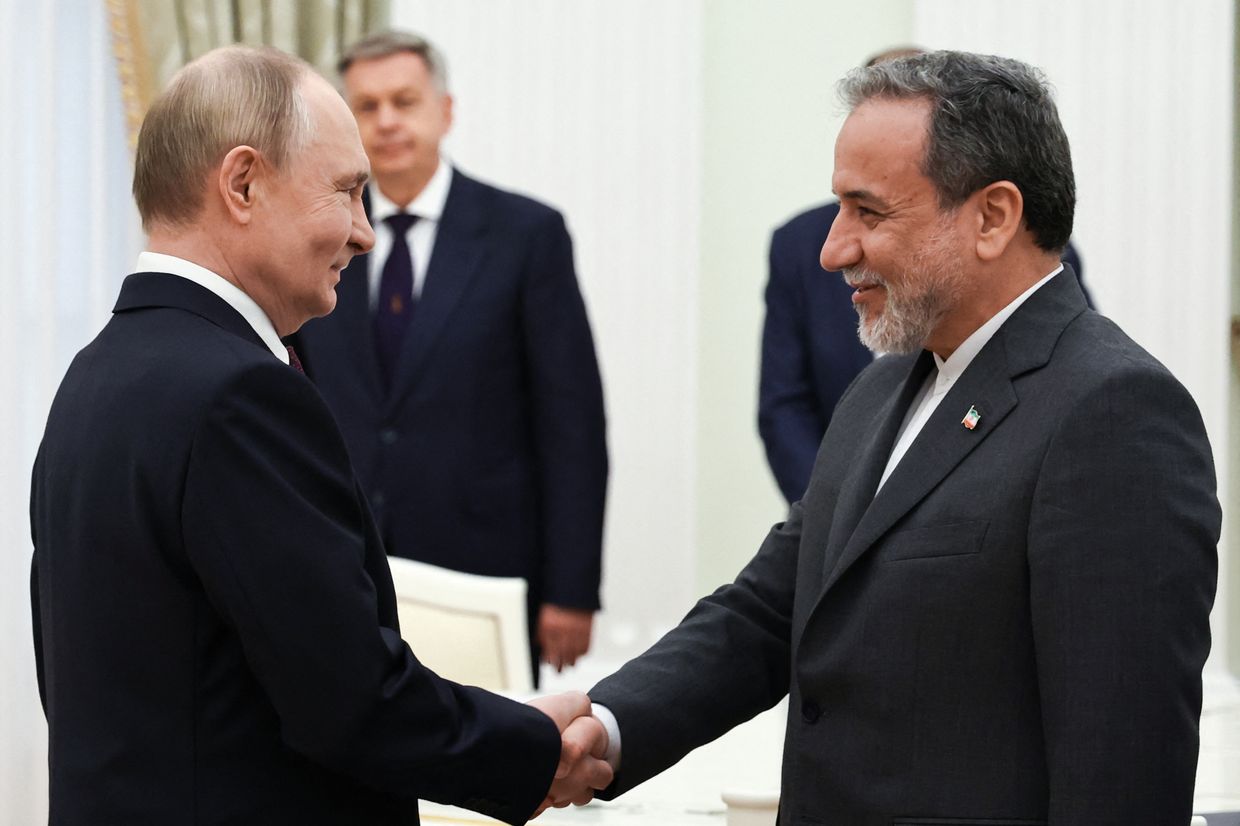
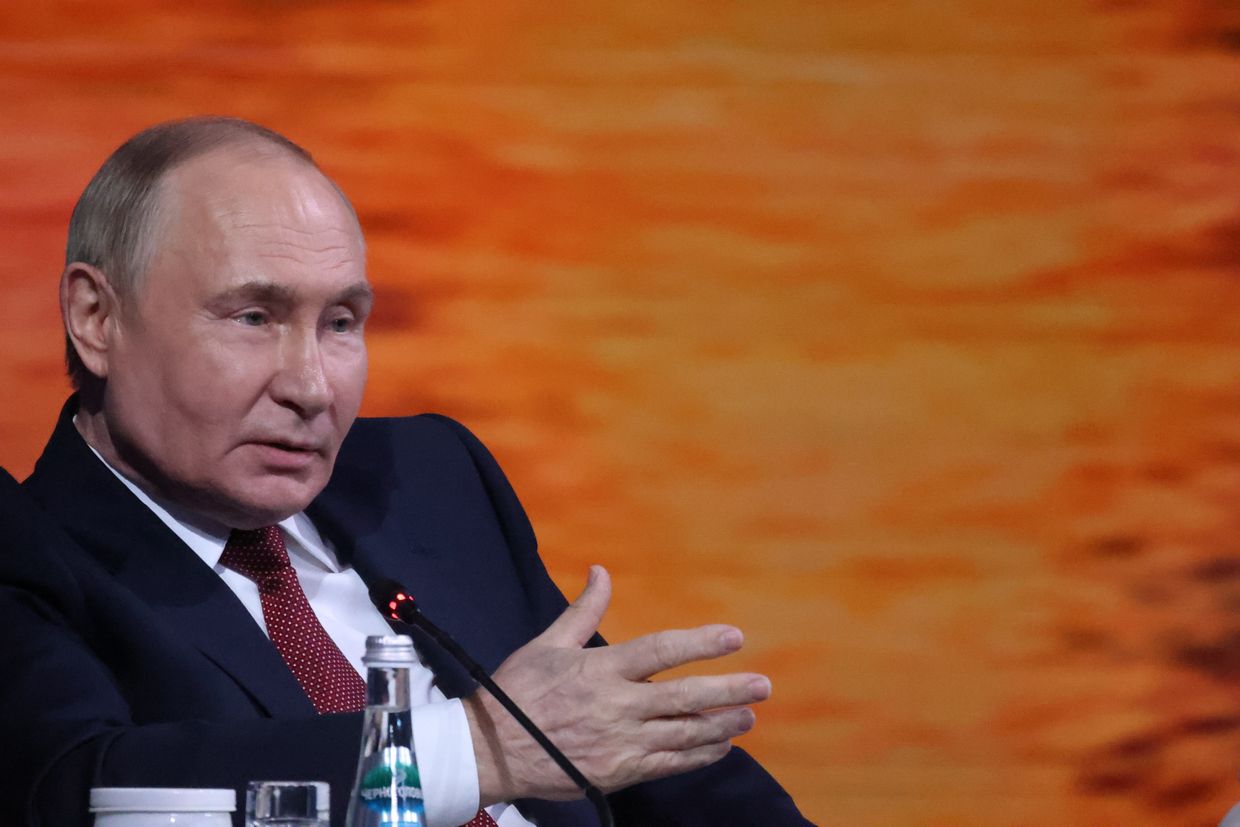
Russian President Vladimir Putin has condemned U.S. strikes on Iran as "completely unprovoked aggression," more than three years into his completely unprovoked full-scale invasion of Ukraine.
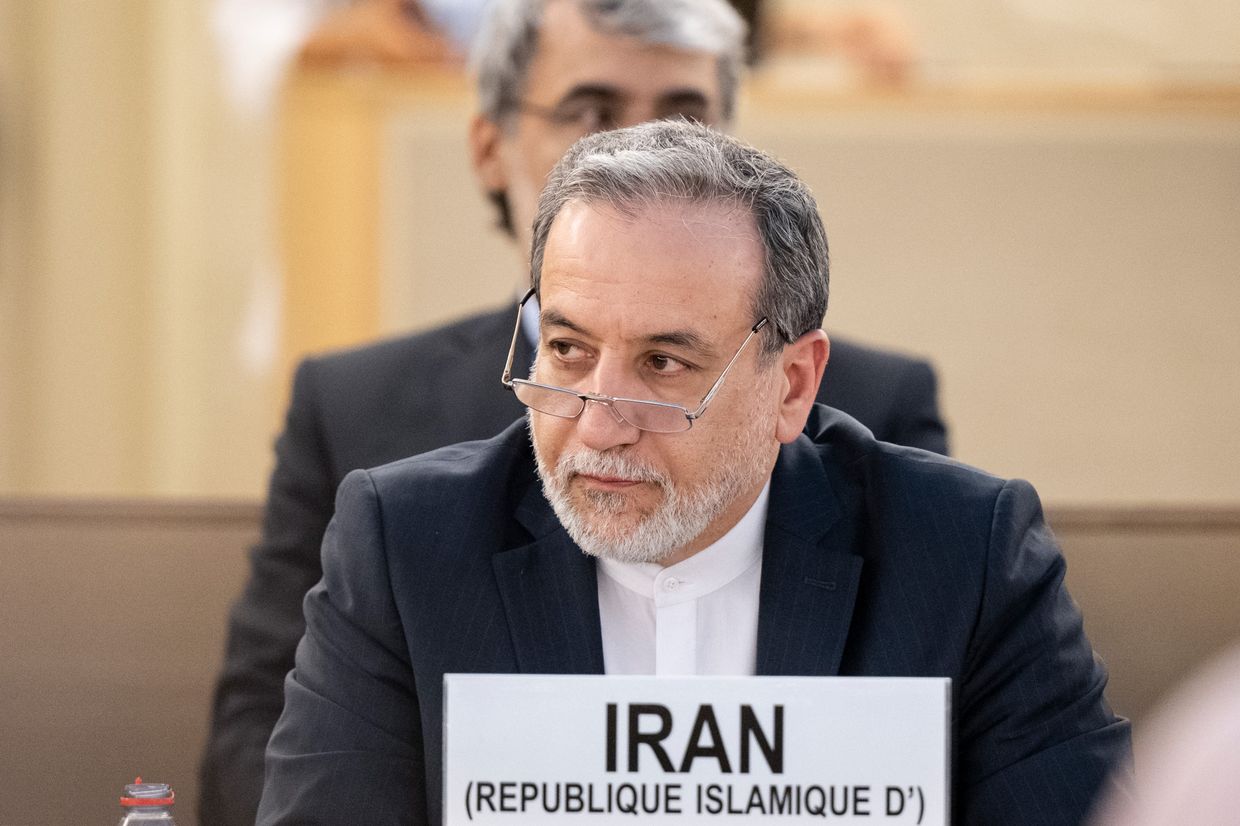
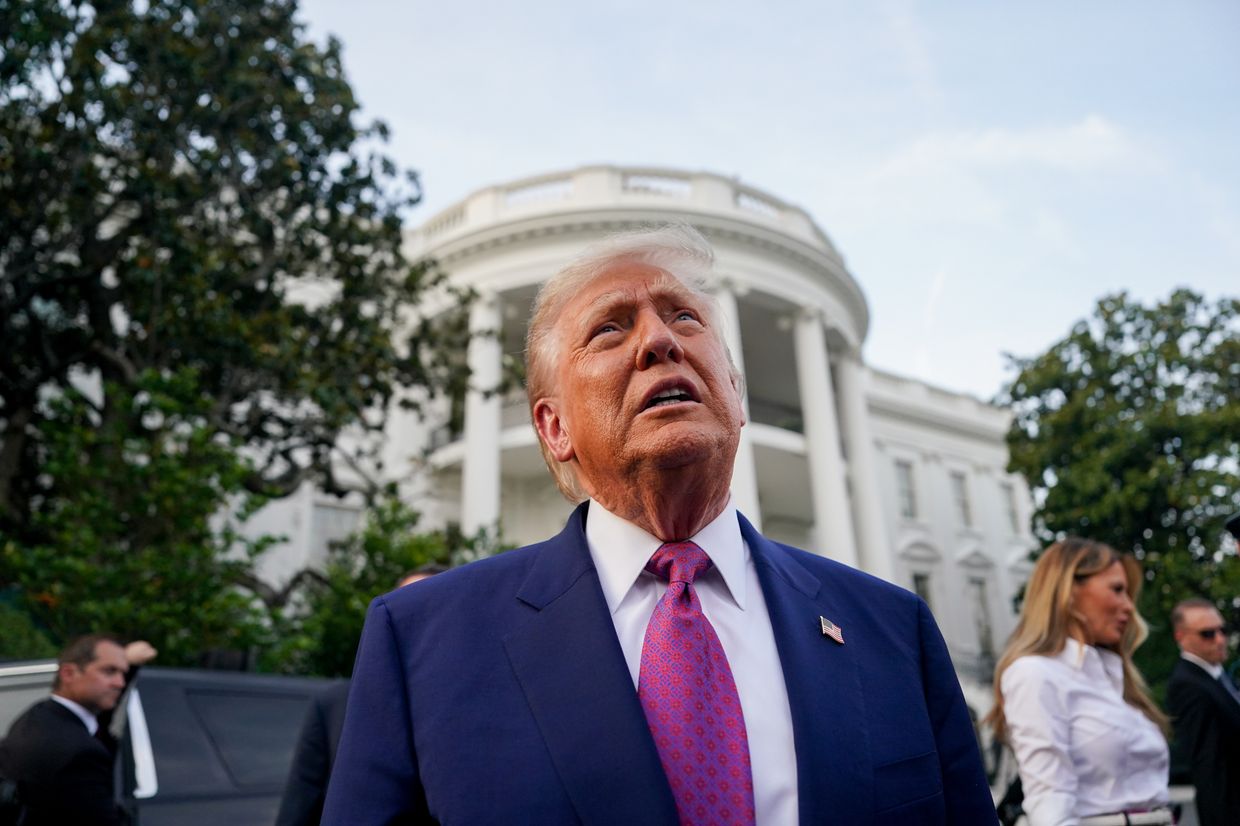
Putin made the comments at the Kremlin during a meeting with Iran's Foreign Minister Abbas Araghchi on June 23, after U.S. President Donald Trump's announcement of successful air strikes on three nuclear facilities in Iran, Fordow, Natanz, and Esfahan, conducted in coordination with Israel over the weekend.
"The completely unprovoked aggression against Iran has no basis and no justification," Putin said, adding that Russia "is making efforts to provide assistance to the Iranian people."
Since Russia launched its full-scale invasion of Ukraine, Moscow has killed tens of thousands of Ukrainian civilians, and the true extent of the death toll is simply not known.
Russia's full-scale invasion of Ukraine was a clear and direct violation of both international law and the UN Charter.
Earlier on June 23, President Volodymyr Zelensky on highlighted Russia's hypocrisy for describing U.S. strikes on Iran as "grossly violating international law" just hours before launching yet another deadly mass missile and drone strike on Ukraine.
"After the strikes on Iran's nuclear facilities, there was an uproar from Moscow," Zelensky said.
"The Russian leadership demonstratively condemned the 'missile and bomb' actions. Today, Moscow is silent — after its own army launched a cynical attack using Russian-Iranian 'Shaheds' and missiles on civilian infrastructure in Kyiv and other cities."
Moscow on June 22 condemned the recent U.S. strikes against Iranian nuclear facilities.
"The irresponsible decision to subject the territory of a sovereign state to missile and bomb strikes, no matter what arguments are used, is grossly violating international law, the U.N. Charter, and the resolutions of the U.N. Security Council," the Russian Foreign Ministry said in a statement.
Overnight on June 23 a devastating Russian missile and drone strike on Kyiv killed at least 7 people and injured dozens more, including children.
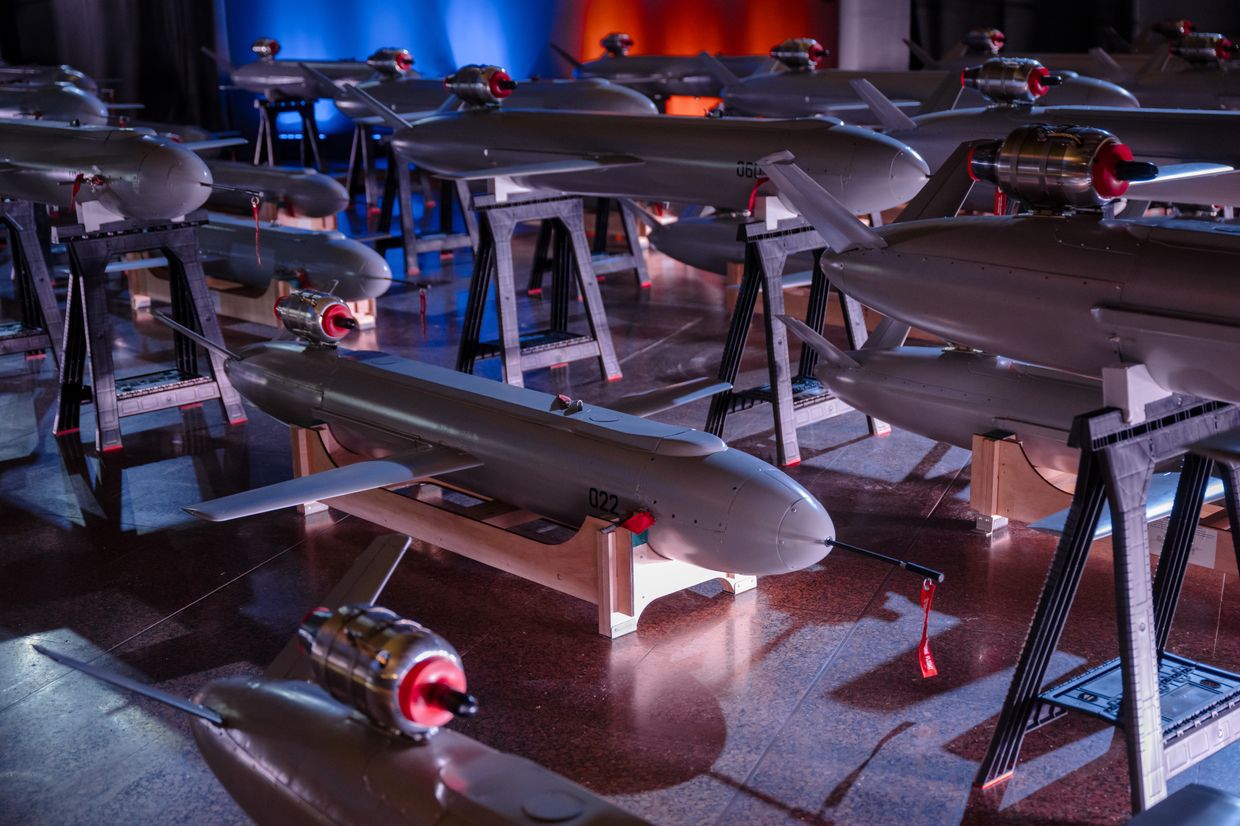
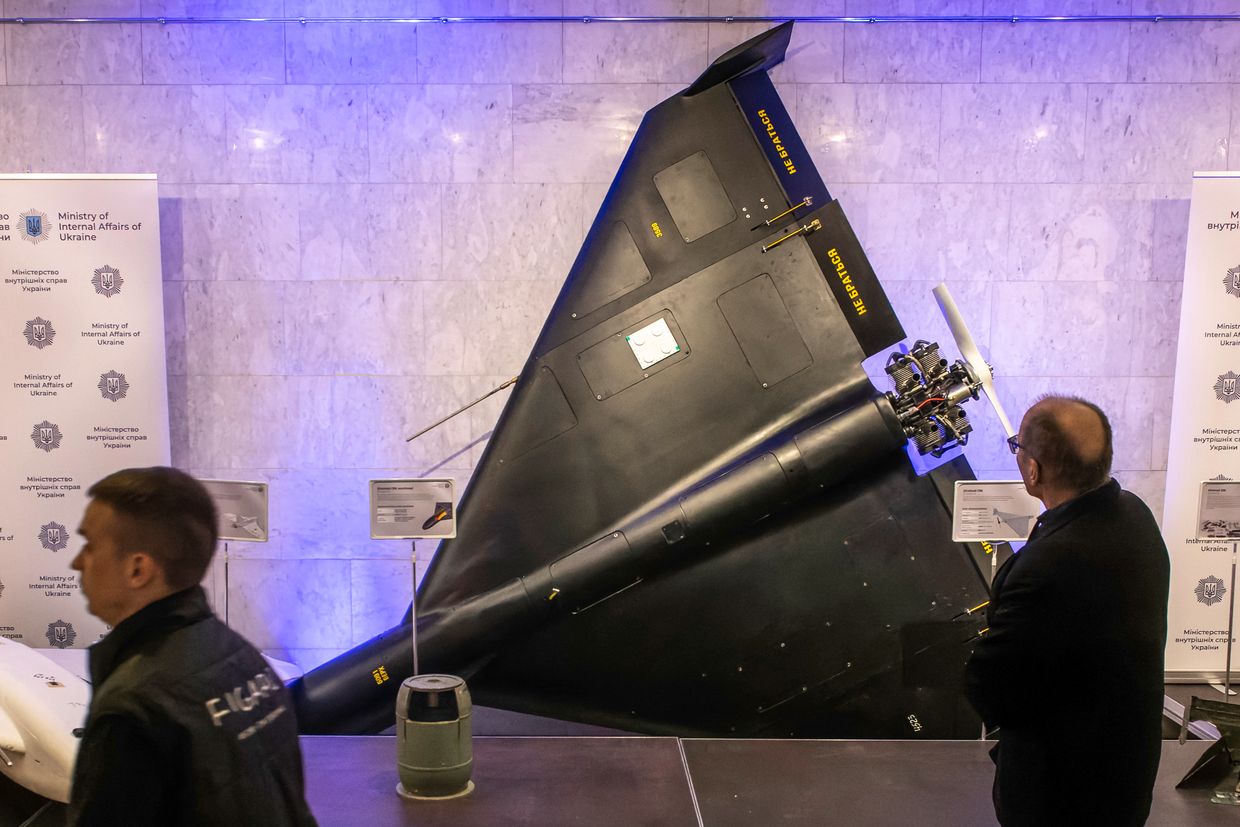
The attack was one of the largest air assaults on the capital this year, with 368 aerial weapons launched, including 159 Iranian-made Shahed drones and 16 missiles, according to Ukraine's Air Force.
Russia has deepened military and political ties with Tehran since and Iran has supplied Moscow with thousands of Shahed-type attack drones used in routine strikes on Ukrainian cities, as well as short-range ballistic missiles.
Russia and Iran have cooperated to develop their own nuclear programs as both countries face Western sanctions. Russia supplied Iran with the Middle East's first nuclear power plant despite objections from the West.
Russia has lost around 1,012,500 troops in Ukraine since the beginning of its full-scale invasion on Feb. 24, 2022, the General Staff of Ukraine's Armed Forces reported on June 23.The number includes 1,010 casualties Russian forces suffered just over the past day.According to the report, Russia has also lost 10,965 tanks, 22,872 armored fighting vehicles, 52,861 vehicles and fuel tanks, 29,490 artillery systems, 1,423 multiple launch rocket systems, 1,188 air defense systems, 416 airplanes, 337
Russia has lost around 1,012,500 troops in Ukraine since the beginning of its full-scale invasion on Feb. 24, 2022, the General Staff of Ukraine's Armed Forces reported on June 23.
The number includes 1,010 casualties Russian forces suffered just over the past day.
According to the report, Russia has also lost 10,965 tanks, 22,872 armored fighting vehicles, 52,861 vehicles and fuel tanks, 29,490 artillery systems, 1,423 multiple launch rocket systems, 1,188 air defense systems, 416 airplanes, 337 helicopters, 41,717 drones, 28 ships and boats, and one submarine.
President Volodymyr Zelensky on June 23 highlighted Russia's hypocrisy for describing U.S. strikes on Iran as "grossly violating international law" just hours before launching yet another deadly mass missile and drone strike on Ukraine."After the strikes on Iran's nuclear facilities, there was an uproar from Moscow," Zelensky said. "The Russian leadership demonstratively condemned the 'missile and bomb' actions. Today, Moscow is silent — after its own army launched a cynical attack using Russian
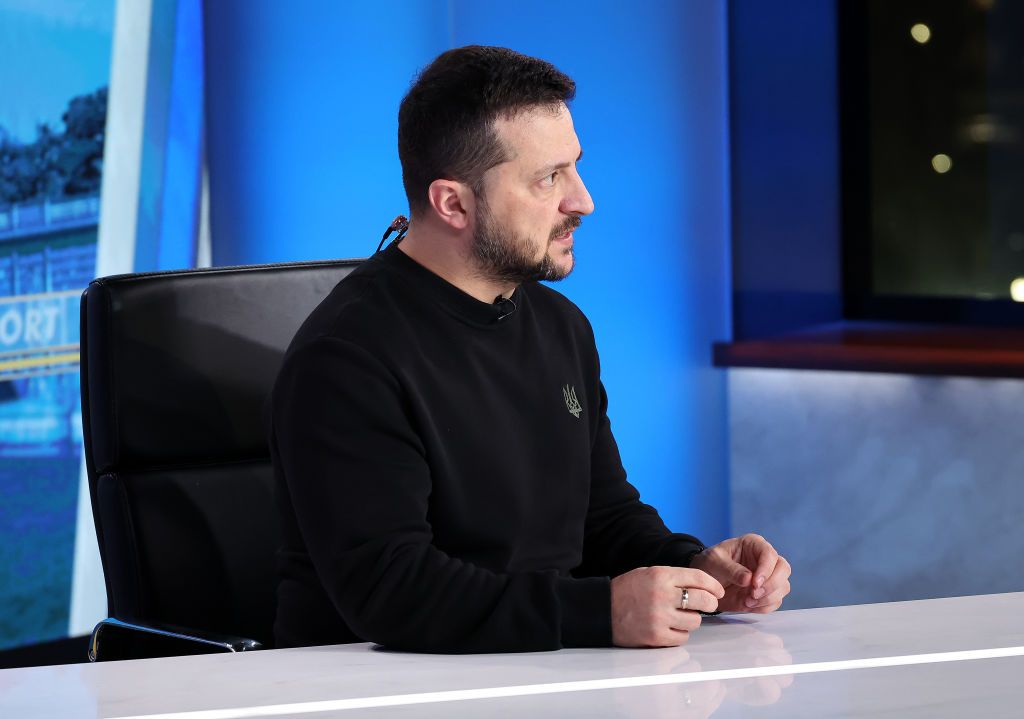
President Volodymyr Zelensky on June 23 highlighted Russia's hypocrisy for describing U.S. strikes on Iran as "grossly violating international law" just hours before launching yet another deadly mass missile and drone strike on Ukraine.
"After the strikes on Iran's nuclear facilities, there was an uproar from Moscow," Zelensky said.
"The Russian leadership demonstratively condemned the 'missile and bomb' actions. Today, Moscow is silent — after its own army launched a cynical attack using Russian-Iranian 'Shaheds' and missiles on civilian infrastructure in Kyiv and other cities."
Moscow on June 22 condemned the recent U.S. strikes against Iranian nuclear facilities.
"The irresponsible decision to subject the territory of a sovereign state to missile and bomb strikes, no matter what arguments are used, is grossly violating international law, the U.N. Charter, and the resolutions of the U.N. Security Council," the Russian Foreign Ministry said in a statement.
Overnight on June 23 a devastating Russian missile and drone strike on Kyiv killed at least 7 people and injured dozens more, including children.
The attack was one of the largest air assaults on the capital this year, with 368 aerial weapons launched, including 159 Iranian-made Shahed drones and 16 missiles, according to Ukraine's Air Force.
After the strikes on Iran's nuclear program facilities, there was a lot of uproar from Moscow — the Russian leadership performatively condemned the “missile-and-bomb” actions. Today, Moscow is silent after the Russian army carried out a completely cynical strike using… pic.twitter.com/xq6TUsfWM2
— Volodymyr Zelenskyy / Володимир Зеленський (@ZelenskyyUa) June 23, 2025
Air defenses intercepted most, but not all. The attack hit six locations directly, causing destruction in 25 separate sites across Kyiv and the wider region.
Governor of Kyiv Oblast Tymur Tkachenko reported 6 people were killed, with 25 other injured in Kyiv alone, including four children.
In his remarks, Zelensky also warned of a growing alliance between Russia, Iran, and North Korea — a "coalition of killers," he said, and urged countries near these regimes to consider whether they can defend themselves if such a bloc continues to spread terror.
"Each country neighboring Russia, Iran, and North Korea should ask whether their own defenses are enough if this axis of evil preserves and remains unchecked," he said.
Zelensky, speaking ahead of meetings with British officials during his visit to the U.K., said he would push for stronger collective air defense and tougher sanctions on Russia.
Zelensky's comments came just a day after Ukraine's Foreign Ministry called for the dismantling of Iran's nuclear program following U.S. air strikes on Iranian nuclear sites.
"Iran is complicit in the crime of aggression against Ukraine," the ministry said in a June 22 statement. "The Iranian regime is providing military assistance to Russia, including the supply of UAVs and technologies that Russia consistently uses to kill people and destroy critical infrastructure."
The statement followed U.S. President Donald Trump's announcement of successful air strikes on three nuclear facilities in Iran, Fordow, Natanz, and Esfahan, conducted in coordination with Israel.
Moscow, which condemned the U.S. and Israeli strikes on Iran, has long cooperated with Tehran on nuclear and military matters. Russia supplied Iran with its first nuclear power plant and has relied on Iranian drones throughout its invasion of Ukraine.
Russian attacks have killed at least 13 civilians and injured 57 across multiple oblasts over the past day, Ukrainian officials reported on June 23.According to the Ukrainian Air Force, Russia deployed 368 aerial weapons, including 352 attack drones, 11 Iskander-M/KN-23 ballistic missiles, and 5 Iskander-K cruise missiles, striking primarily Kyiv. Ukraine's air defenses destroyed 354 of them.In Kyiv Oblast, Governor Mykola Kalashnyk said a person was killed in Bilotserkivka district, two were ho
Russian attacks have killed at least 13 civilians and injured 57 across multiple oblasts over the past day, Ukrainian officials reported on June 23.
According to the Ukrainian Air Force, Russia deployed 368 aerial weapons, including 352 attack drones, 11 Iskander-M/KN-23 ballistic missiles, and 5 Iskander-K cruise missiles, striking primarily Kyiv. Ukraine's air defenses destroyed 354 of them.
In Kyiv Oblast, Governor Mykola Kalashnyk said a person was killed in Bilotserkivka district, two were hospitalized, and two others received on-site medical aid. Attacks damaged houses in three districts: Boryspil, Bila Tserkva, where a medical facility in a hotel was destroyed, and Bucha, damaging several houses and vehicles.
In Kyiv city, Mayor Vitali Klitschko and Kalashnyk reported 6 killed and 25 injured, including a pregnant woman and a child rescued from a damaged 25-story building in the Shevchenkivskyi district.
In Kherson Oblast, Governor Oleksandr Prokudin said Russian drone, artillery, and air attacks hit numerous settlements, including Kherson city. Infrastructure damage included seven apartment buildings, 14 houses, a gas pipeline, a garage, and vehicles. One person was killed, and six were wounded. Early June 22, three more people were injured across the oblast.
In Donetsk Oblast, Governor Vadym Filashkin reported that a Russian attack killed two residents in Siversk and Myrne, with five more wounded. The numbers exclude casualties in occupied Mariupol and Volnovakha.
In Chernihiv Oblast, Russian missile and drone strikes killed at least three people and injured 11 others, including four teenagers, Governor Viacheslav Chaus said. The attacks damaged houses, businesses, and infrastructure across multiple districts, including Chernihiv, Nizhyn, Pryluky, Korukivka, and Novhorod-Siverskyi.
President Volodymyr Zelensky is expected to attend the summer plenary session of the Parliamentary Assembly of the Council of Europe (PACE), scheduled for June 23-27 in Strasbourg, France.According to the draft agenda, Zelensky is slated to address the assembly on June 26, though his attendance has not yet been confirmed.While the content of Zelenky's speech has not been disclosed, the PACE summer session is expected to focus on women's rights in Europe as well as the war in Gaza.Legal and human
President Volodymyr Zelensky is expected to attend the summer plenary session of the Parliamentary Assembly of the Council of Europe (PACE), scheduled for June 23-27 in Strasbourg, France.
According to the draft agenda, Zelensky is slated to address the assembly on June 26, though his attendance has not yet been confirmed.
While the content of Zelenky's speech has not been disclosed, the PACE summer session is expected to focus on women's rights in Europe as well as the war in Gaza.
Legal and human rights issues related to Russia’s ongoing war against Ukraine, and a corresponding resolution, are also listed on the agenda.
The spring session, which took place in April 2025, focused predominantly on Georgia, Turkey, and Ukraine.
Ahead of the PACE session, Zelensky is also set to attend next week's NATO summit in The Hague on June 24. He is expected to meet with European Commission President Ursula von der Leyen and NATO Secretary-General Mark Rutte.
PACE is the parliamentary arm of the Council of Europe, an international organization of 46 countries, including Ukraine, that promotes democratic values and human rights. Russia was expelled from the body in early 2022 in response to its invasion of Ukraine.
Since the start of the full-scale invasion in 2022, the assembly has issued a number of resolutions regarding Russia, calling for the establishment of an international special tribunal to hold Russia accountable for war crimes and recognizing Putin as an illegitimate dictator.
Most recently, PACE adopted a resolution addressing the ongoing Russian war of aggression against Ukraine, stressing the urgent need to ensure accountability and avoid impunity for the serious breaches of international law committed.
Editor's note: This is a developing story and is being updated as new details emerge.Russia launched a mass missile and drone attack on Kyiv overnight on June 23, killing at least nine people and injuring 33 others, including four children, local officials reported.Kyiv Independent journalists heard explosions and kamikaze drones flying overhead from around 1 a.m. Louder explosions from ballistic missiles were heard an hour later, with the attack lasting around 3.5 hours in total.The heaviest da
Editor's note: This is a developing story and is being updated as new details emerge.
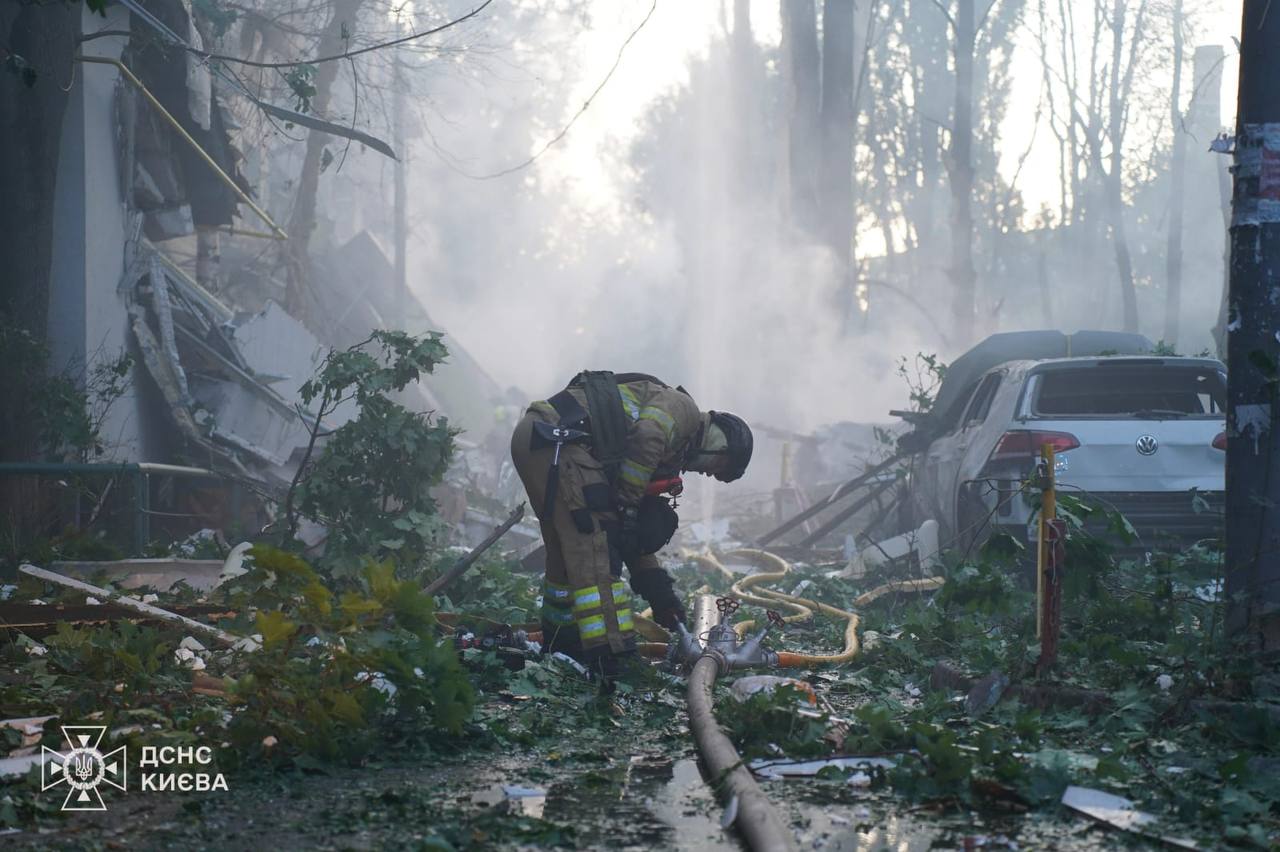
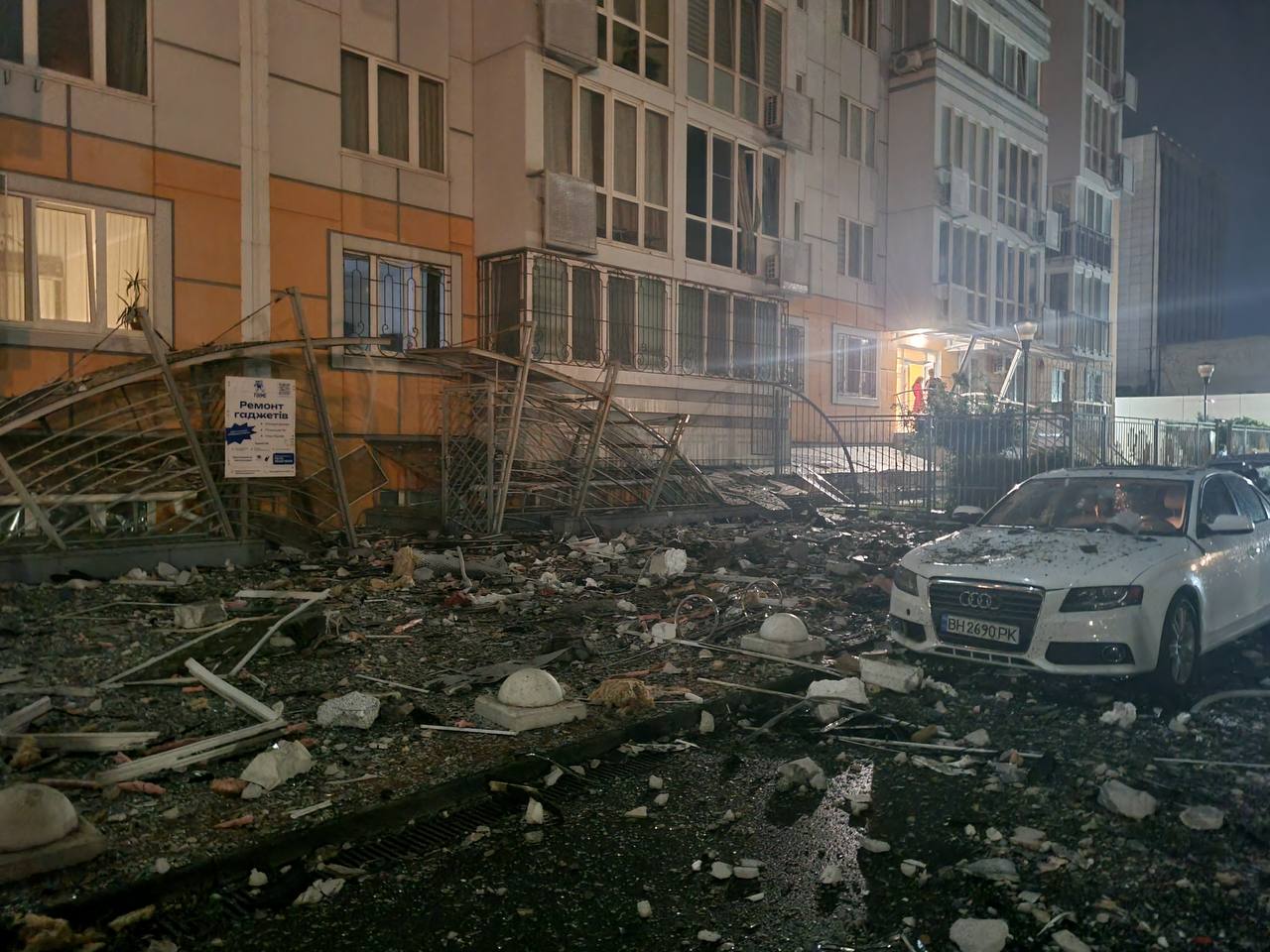
Russia launched a mass missile and drone attack on Kyiv overnight on June 23, killing at least nine people and injuring 33 others, including four children, local officials reported.
Kyiv Independent journalists heard explosions and kamikaze drones flying overhead from around 1 a.m. Louder explosions from ballistic missiles were heard an hour later, with the attack lasting around 3.5 hours in total.
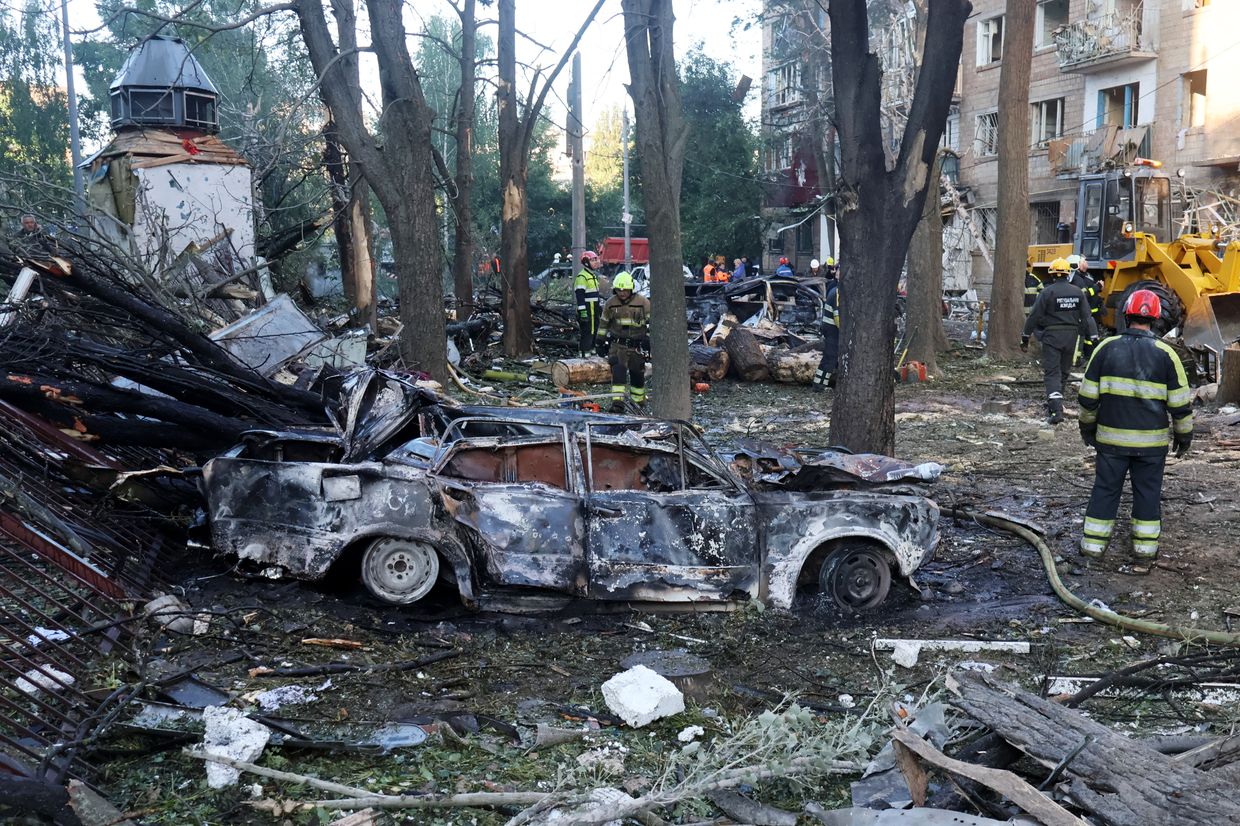
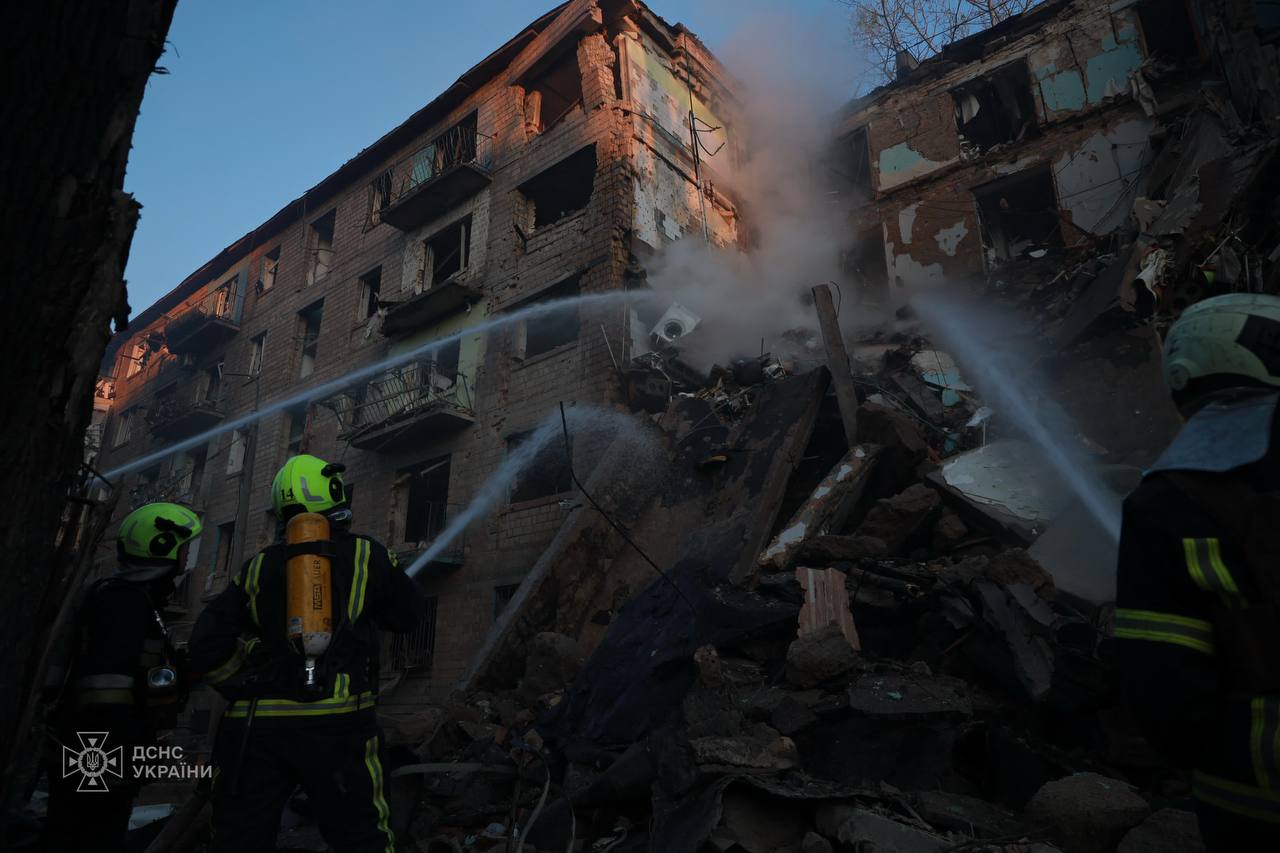
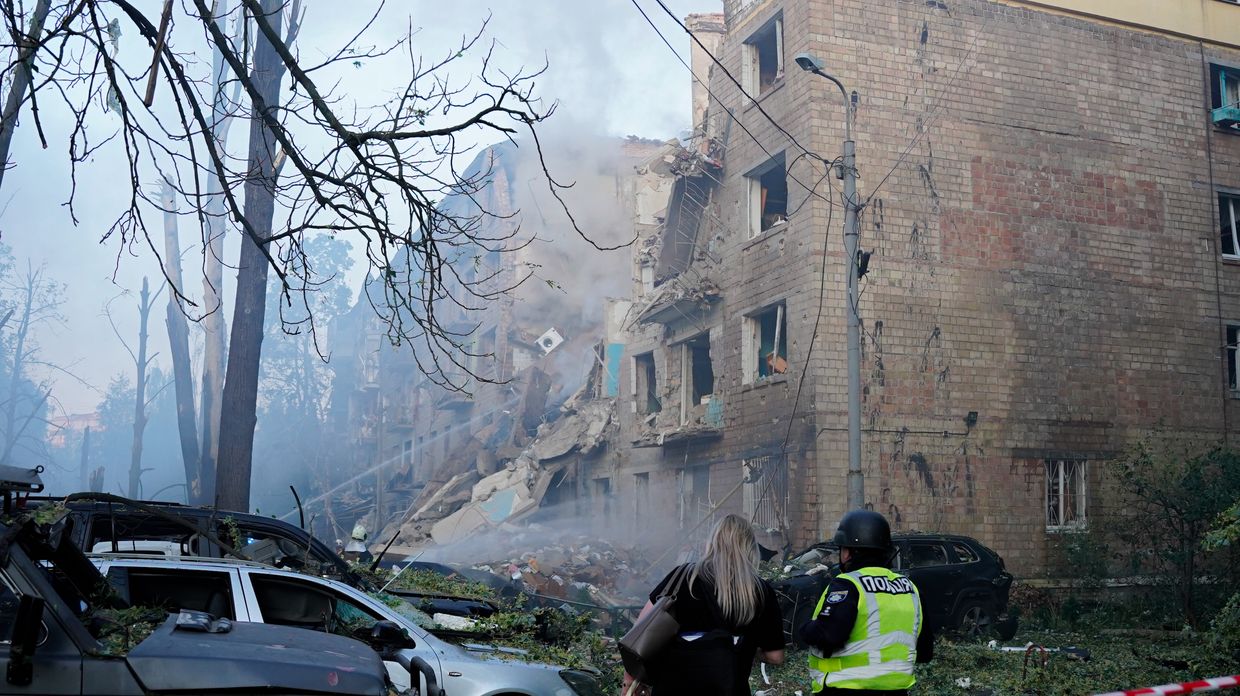
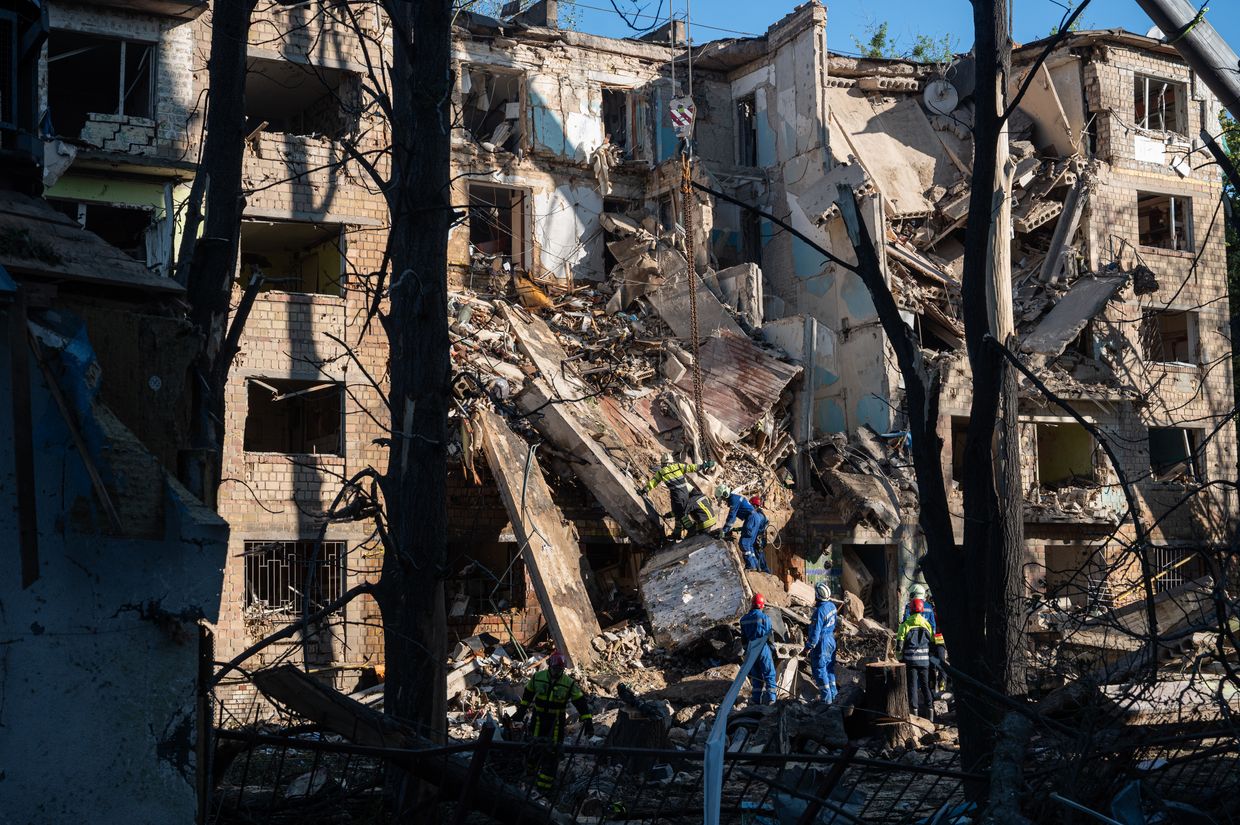
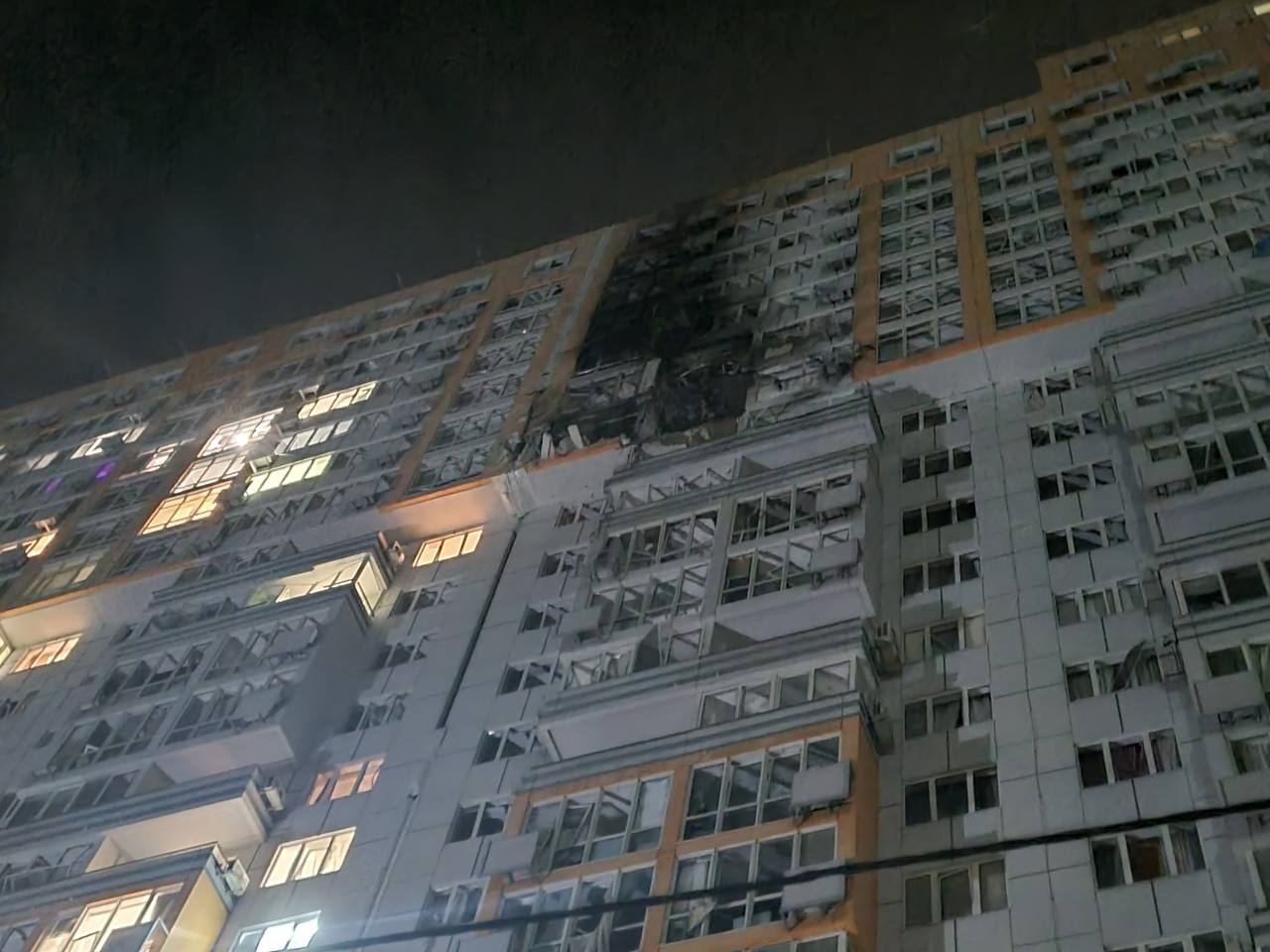
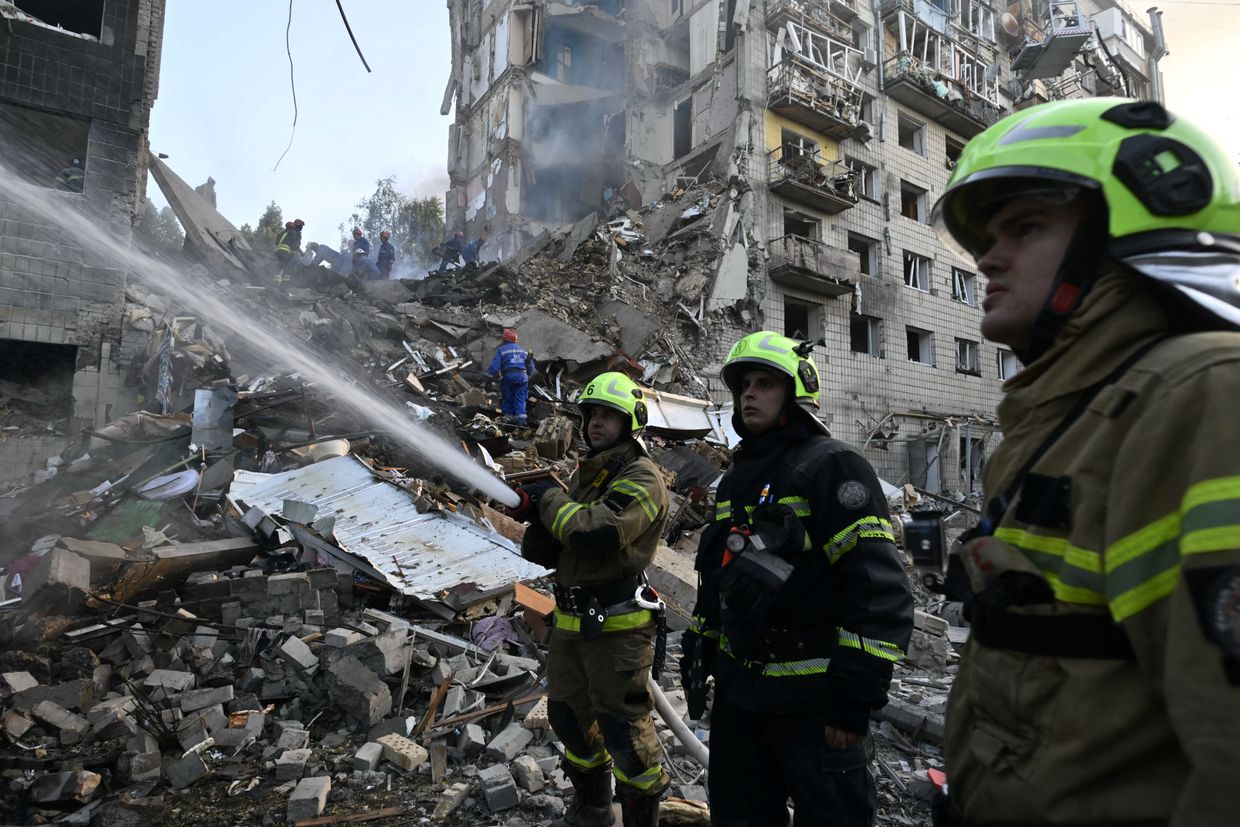
The heaviest damage occurred in the Shevchenkivskyi district of the city, when a five-story building partially collapsed after being hit by a ballistic missile, Ukraine's military reported. At least nine people died as a result, and more may be trapped under the rubble.
An 11-year-old girl was confirmed as the ninth victim of the strike, Tymur Tkachenko, head of the Kyiv City Military Administration, said. Her mother's body was recovered earlier from the rubble.
0:00
/
The scene of the damaged building in Shevchenkivskyi district (Vitalii Klitschko/Telegram)
Student Veronika Sherinova, who lives in a nearby building, said she didn't sleep all night — first because she was hiding from the attack, then because the missile strike shattered the windows in her home and neighboring apartments.
"Most of my former classmates lived in this building (that was hit), most of my friends and acquaintances, too," she told the Kyiv Independent at the site of the strike. "We got dressed right away and went over."
"When my mom and I arrived, I saw them coming out in just their underwear, covered in blood, wounded. It was impossible to look at. It was pure shock. We were all in a state of shock."
At first, she just wanted to help clear the shattered glass and debris. But after seeing the extent of the destruction, Sherinova realized that some of the people she knew might not have survived the attack.
"The strike hit exactly the floors where our friends lived," she said. "Unfortunately, they didn’t survive. My other friends did — they were on the first floor," she added, her eyes filling with tears.
"It was a miracle they came out without a single scratch. But the upper floors were just blown away, there wasn’t even a chance for anyone up there to survive."
A woman and policeman stand in front of the partially collapsed residential building after a Russian attack on June 23, 2025 in Kyiv, Ukraine (Ihor Kuznietsov/Novyny LIVE/Global Images Ukraine via Getty Images)
According to Sherinova, the Russian strike killed a family living on the upper floor — a father, mother, and grandfather — but their teenage son survived.
"We suspected it right away, but we didn’t want to believe it until the very end. But then we found out that they were the first ones they carried out," she said. "The boy is in shock right now; he doesn’t realize what’s happened. He’s just not reacting at all."
She said her two other friends who lived in the building left for abroad immediately after the strike.
"They went abroad — they took a bus and left right away."
State Emergency Service spokesperson Svitlana Vodolaha told journalists at the site that when rescuers arrived, they had been told only a few people would be affected there.
"As it turned out, the information we had was not reliable — there were more people here than we had been told. At this moment, we still don’t have complete information on how many people might be trapped under the rubble," Vodolaha said.
"That’s why we’ll keep working until the very end, until we’re completely sure no one is left under the debris."
Shortly after their arrival, rescuers pulled 10 people from under the rubble, including two children and a pregnant woman, Vodolaha said.
A wounded woman with smartphone stands near the partially destroyed building on June 23, 2025 in Kyiv, Ukraine (Ihor Kuznietsov/Novyny LIVE/Global Images Ukraine via Getty Images)
Vodolaha did not rule out the use of cluster munitions in this attack. After arriving at the site, Kyiv Independent journalists observed holes in the building across from the one that was hit, resembling those from the previous strike on the capital on June 17.
Cluster munitions are banned under international law by more than 100 countries due to their indiscriminate nature and the long-term threat they pose to civilians, especially when unexploded submunitions remain hidden in residential areas.
"It’s possible as such incidents have happened not only during today’s attack but at other times as well," Vodolaha said.
"I think everyone has noticed how our attacks have become longer and more intense, even across the capital," she added. "That’s why this morning we were working simultaneously at 15 locations."
Fifteen-year-old Roman Turko arrived at the site in the morning after the attack with his friend. His uncle lived in the destroyed building but, luckily, wasn’t home when the strike happened.
"He’s currently serving (in the military), he’s a border guard. He was on duty, so luckily he wasn’t home," Turko told the Kyiv Independent. "His apartment doesn’t really exist anymore: The balcony is gone, the walls are gone."
"If he had been there, it probably would have been the end for him."
After surviving such a heavy attack, Sherinova is now considering leaving Kyiv, at least for a while. But she says it feels like there’s nowhere left to hide from the Russian war.
"There’s a kindergarten nearby where my mom works. It has a shelter, and that’s where we usually go when we see reports of (Russian) jets taking off or a possible strike."
"But today it happened so suddenly, we wouldn’t have had time to run anywhere. We just stepped into the hallway, crouched down, and covered our eyes and ears," she said.
"It’s hitting everywhere, strikes are happening everywhere. I still can’t believe it happened to me, to my neighborhood, where I was born and have lived my whole life."
"I just can’t believe it. I’m still in such a state of shock, looking at all of this and not believing it really happened."
In the wider Kyiv Oblast, a woman was killed and eight others injured in Bila Tserkva, the Kyiv Oblast Military Administration reported.
Casualties were also reported in other areas around the capital in Kyiv Oblast, including Bucha, a town just northwest of Kyiv.
According to the Ukrainian Air Force, Russia deployed 368 aerial weapons, including 352 attack drones, 11 Iskander-M/KN-23 ballistic missiles, and 5 Iskander-K cruise missiles, striking primarily Kyiv. Ukraine's air defenses destroyed 354 of them.
The residential building damaged by a Russian attack as teams continue search and rescue effort in Kyiv, Ukraine on June 23, 2025 (Danylo Antoniuk/Anadolu via Getty Images)
Russian forces reportedly struck six locations directly, with debris falling in 25 sites across Kyiv and its surrounding region.
Earlier, it was reported that a high-rise apartment building was damaged as a result of the attack in the area, as well as an exit at the Sviatoshyn metro station and a nearby bus shelter.
Reports indicate that the Darnytskyi, Podilskyi, Solomianskyi, Shevchenkivskyi, and Sviatoshynskyi districts had been affected by the attack.
Fires also broke out in the Podilskyi district, where debris struck a residential building and a vehicle.
A large fire was also reported at a four-story office building in the Solomianskyi district. The fire reportedly covered an area of 800 square meters, the State Emergency Service said, with firefighting efforts ongoing.
Drone strike debris also landed in an open area of a stadium in Sviatoshynskyi without causing injuries or fire.
President Volodymyr Zelensky condemned the attack, noting that while Moscow had previously criticized strikes on Iran's nuclear program, it remained silent following its own "cynical" bombardment of Kyiv with Shahed drones and missiles.
"Only in Kyiv, five apartment buildings were damaged. These are ordinary residential buildings," he said, adding that one person was also killed in Bila Tserkva after a Shahed drone hit a hospital.
Zelensky said the attack damaged sites in four Ukrainian regions and involved 352 drones—including 159 Shaheds—and 16 missiles, possibly including North Korean ballistic missiles.
"Every country near Russia, Iran, and North Korea should be thinking about whether they can protect life if this coalition of killers continues spreading terror," Zelensky said.
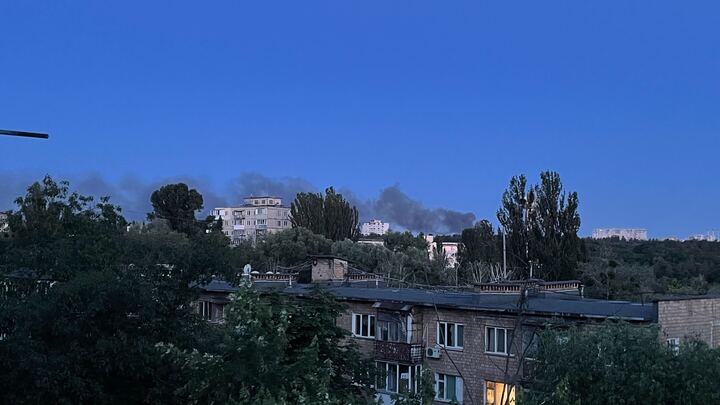
The view in Kyiv seen outside of a window as Russia launches another large-scale attack on Kyiv on June 23, 2025. At least five people have been injured in the attack, local officials reported. (Olena Zashko/The Kyiv Independent)
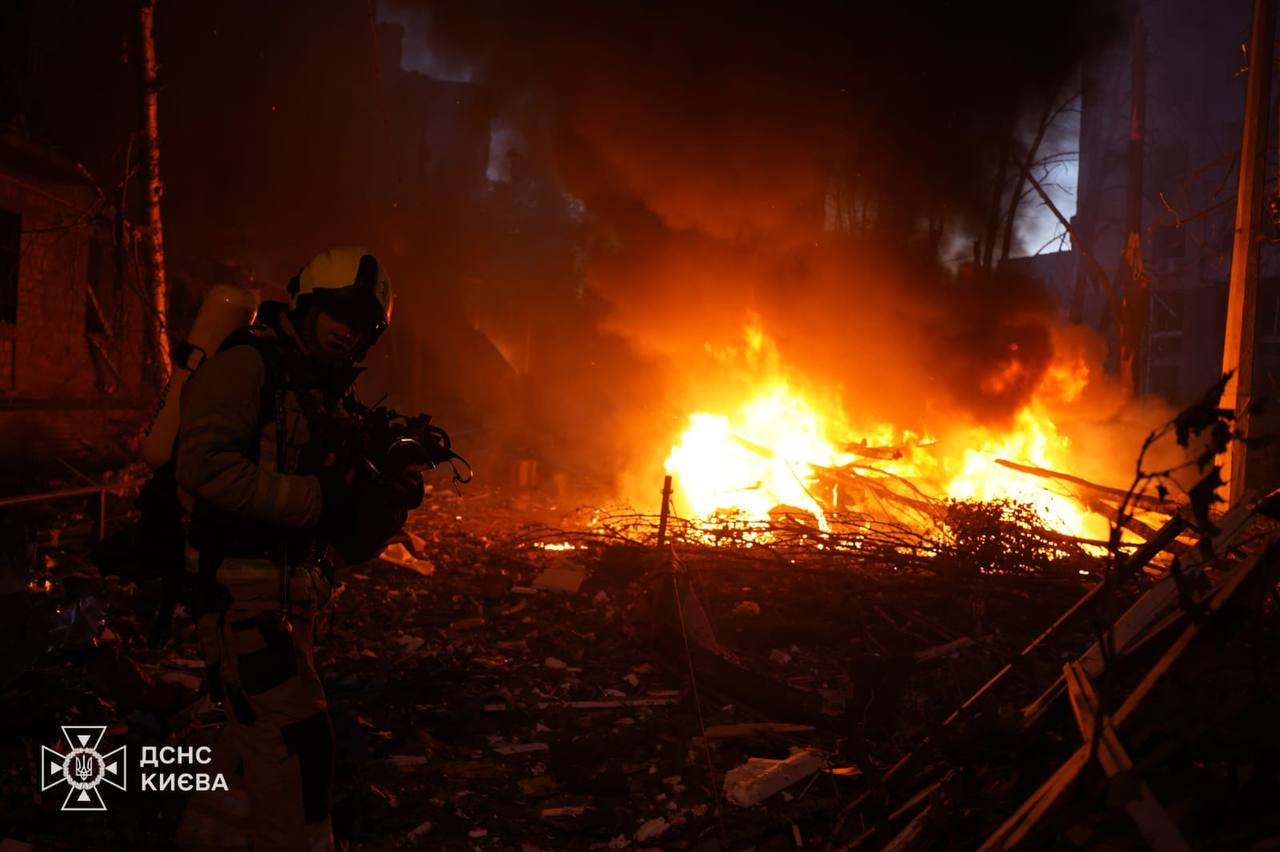
A fire burns in the aftermath of a Russian attack on Kyiv on June 23, 2025. (Ukraine's State Emergency Service/Telegram)
A firefighter extinguishes burning debris in the aftermath of a Russian attack on Kyiv on June 23, 2025. (Ukraine's State Emergency Service/Telegram)
The attack on the capital comes just days after Russia launched one of its largest attacks on Kyiv, killing 28 people and injuring 134 others.
Russia's latest round of large-scale attacks comes as Commander-in-Chief Oleksandr Syrskyi warned on June 21 that Russian forces are attempting to advance along almost the entire front in eastern Ukraine while trying to establish a buffer zone in northeastern Sumy Oblast.
Norway will invest $400 million in Ukraine's defense industry to support drone and air defense missile production, President Volodymyr Zelensky said in his nightly address on June 22.The announcement followed a visit to Ukraine by Norwegian Defense Minister Tore Onshuus Sandvik."Today, Norway’s Minister of Defense visited Ukraine. A decision has been reached to invest $400 million in our production – new funding, primarily for drones," Zelensky said.Zelensky added that the two countries are also
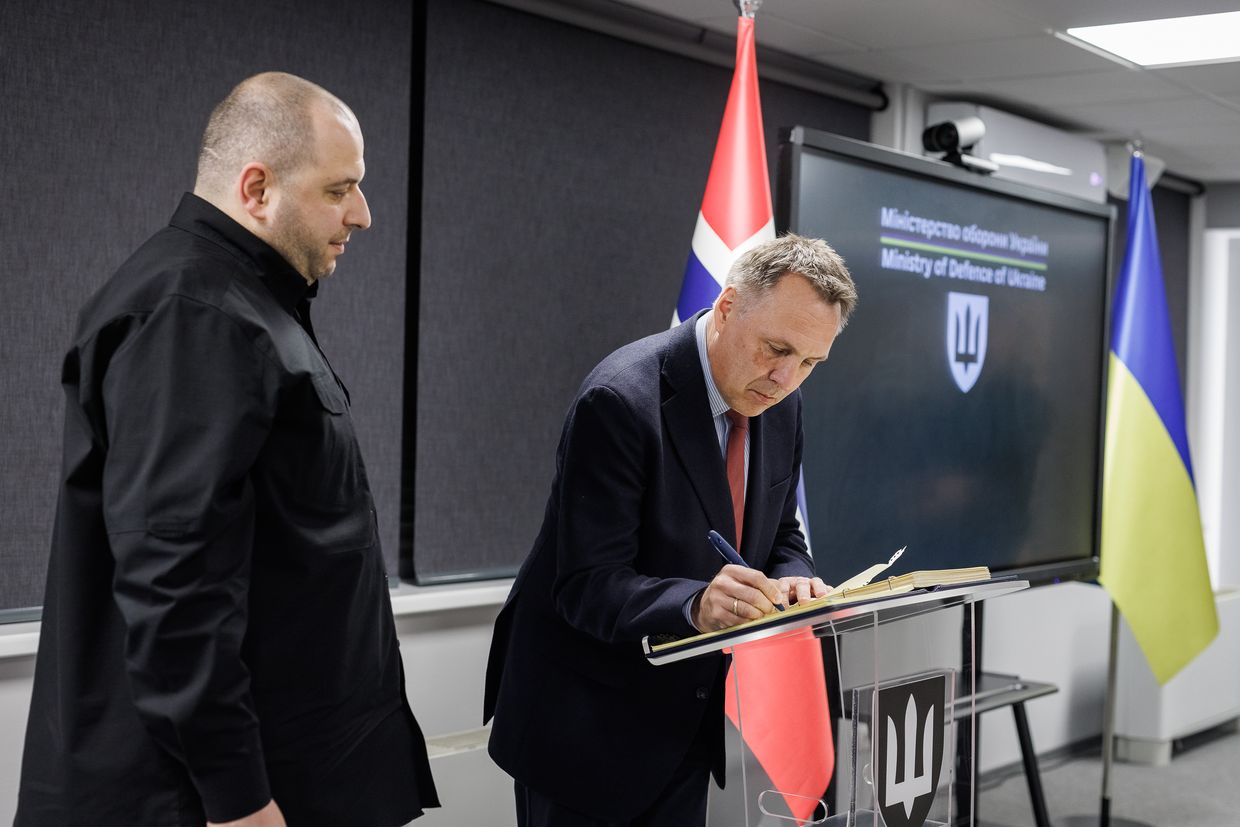
Norway will invest $400 million in Ukraine's defense industry to support drone and air defense missile production, President Volodymyr Zelensky said in his nightly address on June 22.
The announcement followed a visit to Ukraine by Norwegian Defense Minister Tore Onshuus Sandvik.
"Today, Norway’s Minister of Defense visited Ukraine. A decision has been reached to invest $400 million in our production – new funding, primarily for drones," Zelensky said.
Zelensky added that the two countries are also working together to establish joint air defense production inside Ukraine.
"We are working together to create all the necessary conditions to produce air defense systems in Ukraine — jointly with partners, jointly with Norway," Zelensky said.
He added that Norway's largest defense company – Kongsberg Defence & Aerospace – has already opened an office in Ukraine as part of the cooperation.
"We are expediting all processes to the maximum extent," Zelensky said.
On X, Norway's defense ministry confirmed that Kongsberg has signed agreement with a major Ukrainian company to jointly develop and produce missiles for air defense systems in Ukraine.
The collaboration will focus on producing missiles for the National Advanced Surface-to-Air Missile System, or NASAMS.
"The Norwegian NASAMS system saves lives in Ukraine every day, and is crucial in protecting critical infrastructure. That is why it is important for the Norwegian Government to finance this development of cheaper missiles for the NASAMS system in Ukraine," said Minister Sandvik.
The announcement marks deepening ties between Kyiv and Oslo as Ukraine seeks to expand its domestic defense industry amid Russia’s ongoing full-scale invasion and reduced military aid from the United States.
Editor's note: This is a developing story.Russia launched a missile attack on June 22 on the training ground of a Ukrainian mechanized brigade, where military personnel were being trained, the Ground Forces reported."Unfortunately, there are dead and wounded," the statement read. The Ground Forces said that greater personnel losses were avoided thanks to the timely security measures taken when the air raid alert was issued.Around 5:30 p.m., the Ground Forces initially said that three people were
Russia launched a missile attack on June 22 on the training ground of a Ukrainian mechanized brigade, where military personnel were being trained, the Ground Forces reported.
"Unfortunately, there are dead and wounded," the statement read. The Ground Forces said that greater personnel losses were avoided thanks to the timely security measures taken when the air raid alert was issued.
Around 5:30 p.m., the Ground Forces initially said that three people were killed in the attack and 11 were wounded.
The number of injured was later updated, at around 7:30 p.m., to 14 people.
A special commission has been set up at the Ground Forces Command to investigate the incident, according to the statement. Law enforcement agencies are also working at the scene.
It is the second officially confirmed Russian attack in June that led to military casualties in the training facilities, adding to a chain of such attacks in the past few months.
Former Ground Forces Commander Mykhailo Drapatyi had promised to ensure new safety standards on the training grounds and hold accountable those responsible for the deaths after a Russian strike on March 1 on the training ground in Dnipropetrovsk during exercises.
Yet on May 20, another Russian missile strike against a shooting range in Sumy Oblast killed six service members and injured over 10, according to Ukraine's National Guard.
After another Russian attack on June 1 on a Ukrainian military training ground killed 12 and injured 60, Drapatyi submitted his resignation as the Ground Forces Commander. He was appointed Commander of the Joint Forces on June 3.
Ukraine's swift release of the statement and casualty number in the latest Russian attack stands out, as both Ukraine and Russia rarely acknowledge successful enemy attacks against their military facilities.
Ukrainian intelligence has proof that Russia is preparing new military operations in Europe, said President Volodymyr Zelensky on June 22 after a report from military intelligence (HUR) chief Kyrylo Budanov."We are observing a continued intellectual decline within the Russian leadership and have evidence that they are preparing new military operations on European territory," Zelensky said on X.Zelensky added that Ukraine will inform foreign partners regarding the information obtained by intellig
Ukrainian intelligence has proof that Russia is preparing new military operations in Europe, said President Volodymyr Zelensky on June 22 after a report from military intelligence (HUR) chief Kyrylo Budanov.
"We are observing a continued intellectual decline within the Russian leadership and have evidence that they are preparing new military operations on European territory," Zelensky said on X.
Zelensky added that Ukraine will inform foreign partners regarding the information obtained by intelligence. The statement follows earlier warnings by Kyiv that Russia may be preparing aggression beyond Ukraine's borders.
The president did not provide further details on the planned Russian operations, their dates, or countries that might be targeted.
"We are preparing joint decisions for defense, in particular with the United Kingdom and the European Union," Zelensky wrote.
Zelensky confirmed that Ukraine will continue its efforts to weaken Russia's army.
"We’re aware of... (Russia's) key vulnerabilities and will strike accordingly to defend our state and people, as well as to significantly reduce Russia’s capacity for aggression," the president said.
Since its full-scale invasion of Ukraine in 2022, Russia has ramped up sabotage operations across Europe, aiming to destabilize the security situation in countries supporting Kyiv against Russian aggression.
Ukrainian foreign intelligence warned in May that Russia would be able to restore its combat capabilities and launch aggression against Europe between two and four years after hostilities in Ukraine ended.
Foreign officials and EU diplomats have increasingly called for the preparation for a potential full-scale conflict between NATO and Russia. On June 2, the United Kingdom announced its largest defense spending increase since the Cold War in the face of "the war in Europe," according to U.K. Prime Minister Keir Starmer.
Iran's Foreign Minister Abbas Araghchi confirmed that he plans to travel to Russia on June 22 to meet with Russian President Vladimir Putin following the recent U.S. strikes on Iranian nuclear facilities.The statement was made during Araghchi's press conference in Istanbul on June 22, according to Associated Press."We enjoy a strategic partnership and we always consult with each other and coordinate our positions," Araghchi said with reference to Russia.Araghchi also said that there is "no red l
Iran's Foreign Minister Abbas Araghchi confirmed that he plans to travel to Russia on June 22 to meet with Russian President Vladimir Putin following the recent U.S. strikes on Iranian nuclear facilities.
The statement was made during Araghchi's press conference in Istanbul on June 22, according to Associated Press.
"We enjoy a strategic partnership and we always consult with each other and coordinate our positions," Araghchi said with reference to Russia.
Araghchi also said that there is "no red line" that the U.S. has not crossed in its recent actions against Iran.
Earlier that day, Russia condemned the U.S. strikes against Iranian nuclear facilities, calling them a violation of international law and Iran's sovereignty, a statement in stark contrast to Russia's full-scale war against Ukraine.
The Russian Foreign Ministry urged a response from the U.N. Security Council, saying that "the confrontational actions of the U.S. and Israel must be collectively rejected."
Tehran provides Moscow with ballistic missiles and thousands of Shahed attack drones for its war against Ukraine as part of Russia and Iran's close strategic partnership.
Russia and Iran have cooperated to develop their own nuclear programs as both countries face Western sanctions. Russia supplied Iran with the Middle East's first nuclear power plant despite objections from the West.
The Ukrainian military leadership aims to overhaul the draft office system amid numerous reports of abuses since the start of Russia's invasion in 2022, Commander-in-Chief Oleksandr Syrskyi told journalists on June 21.To "clean up the system", 136 officers and 325 other service members from the draft offices involved in misconduct were transferred to other positions in the army, Syrskyi said at a briefing attended by the Kyiv Independent.Mobilization of men through the draft offices remains the
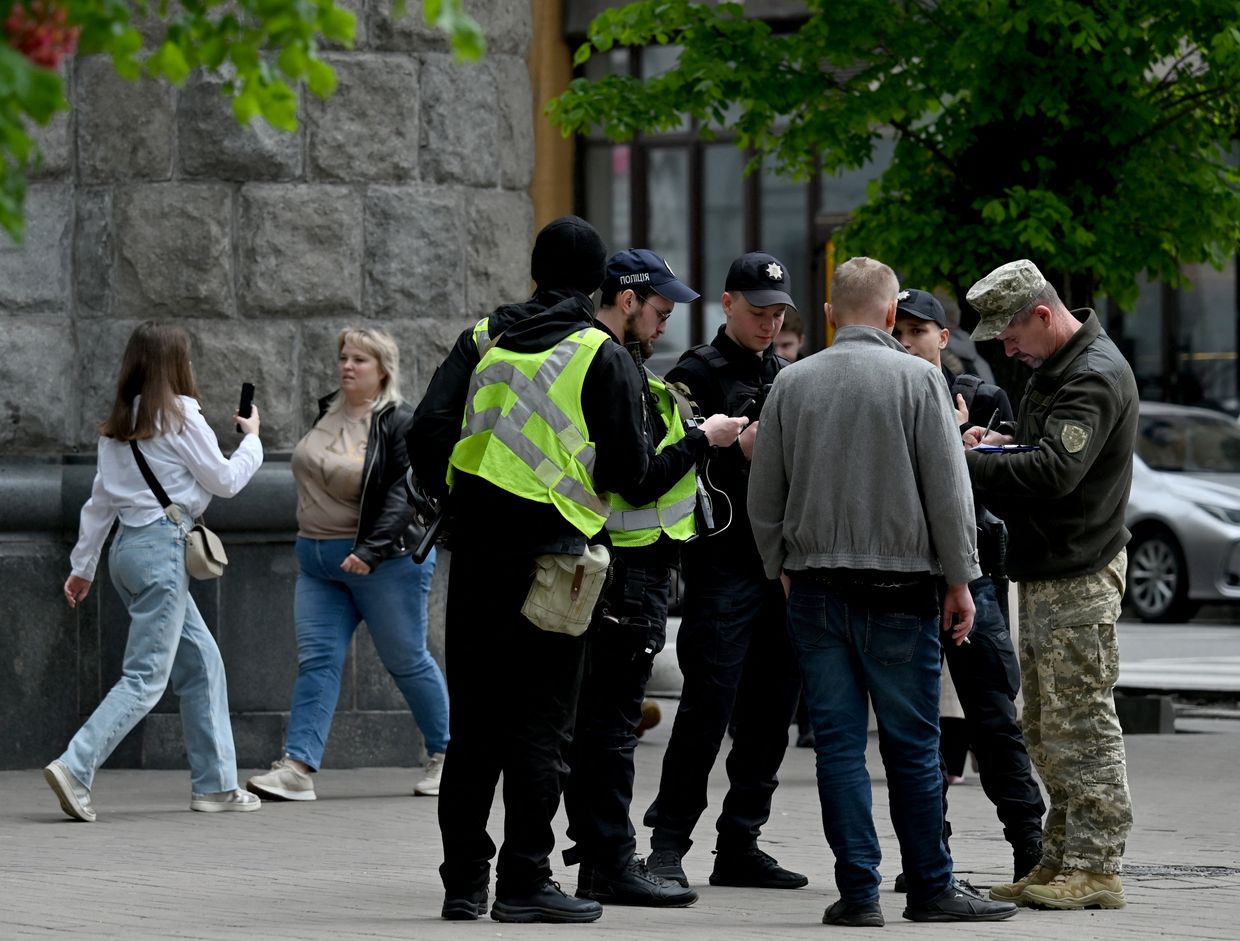
The Ukrainian military leadership aims to overhaul the draft office system amid numerous reports of abuses since the start of Russia's invasion in 2022, Commander-in-Chief Oleksandr Syrskyi told journalists on June 21.
To "clean up the system", 136 officers and 325 other service members from the draft offices involved in misconduct were transferred to other positions in the army, Syrskyi said at a briefing attended by the Kyiv Independent.
Mobilization of men through the draft offices remains the main source of manpower for the Ukrainian army which defends against Russia's much more numerous forces in a war of attrition, Syrskyi added.
Draft offices are often accused, at times justly, of forced conscription without compliance with fundamental civil rights and ill-treatment of conscripts in recruitment centers. These reports are used by Russian propaganda to help escalate social tensions in Ukraine and further damage Ukraine's recruitment efforts.
"Cases of forced detention of citizens (by the draft officers) are absolutely unacceptable," Syrskyi said during the briefing.
Ukrainian leadership expects the newly appointed commander of Ukraine's Ground Forces, Brigadier General Hennadii Shapovalov, to "overcome problematic issues," Syrskyi added.
Shapovalov's appointment on June 17 followed the resignation of Mykhailo Drapatyi earlier this month after a Russian missile strike killed at least 12 Ukrainian soldiers at a training ground in Dnipropetrovsk Oblast.
Inspections are underway in the draft centers to send draft officers without battlefield experience to the front, replacing them with soldiers wounded in battles, Syrskyi said.
Draft offices should fulfill their duties and "disallow these shameful cases that sometimes occur," according to Syrskyi.
"Corrupt officials and violators of the law in the mobilization process must be exposed. All necessary measures should be taken against such violators," Syrskyi added.
Ukraine is downing approximately 82% of Russian Shahed-type drones during Russian massive aerial attacks on Ukrainian cities despite a serious shortage of surface-to-air missiles, Commander-in-Chief Oleksandr Syrskyi told journalists on June 21.Ukraine needs to have many times more surface-to-air missiles and anti-aircraft missile systems to ensure reliable defense of cities and critical infrastructure facilities, Syrskyi said at a briefing attended by the Kyiv Independent.Russian attacks agains
Ukraine is downing approximately 82% of Russian Shahed-type drones during Russian massive aerial attacks on Ukrainian cities despite a serious shortage of surface-to-air missiles, Commander-in-Chief Oleksandr Syrskyi told journalists on June 21.
Ukraine needs to have many times more surface-to-air missiles and anti-aircraft missile systems to ensure reliable defense of cities and critical infrastructure facilities, Syrskyi said at a briefing attended by the Kyiv Independent.
Russian attacks against Ukraine have surged in May and June as Moscow has launched several record-breaking mass strikes against Kyiv and other cities. The latest attack on June 17, primarily targeting the capital, killed 30 people and injured over 170.
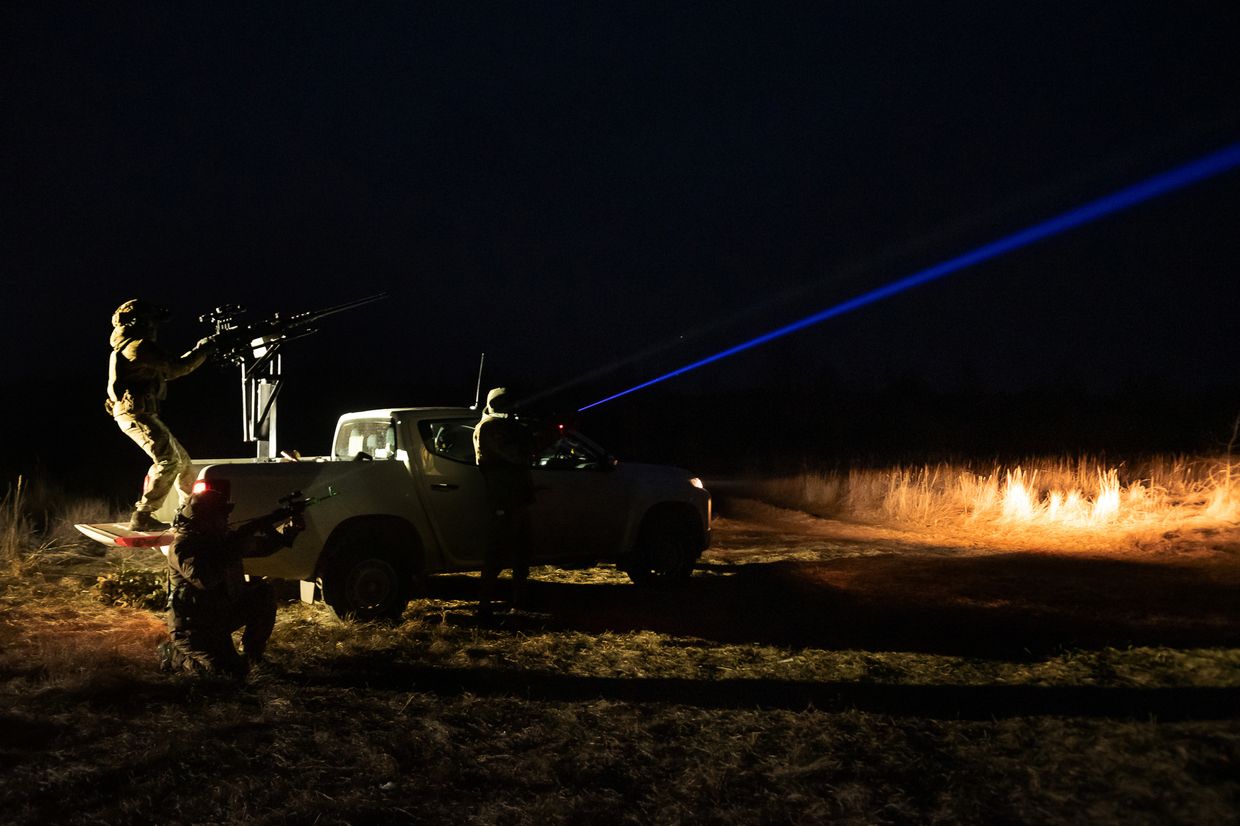
"Since we have to save anti-aircraft guided missiles, mobile fire groups are the priority for defending from the Shaheds," Syrskyi said.
Despite Russia's changing tactics of massive air attacks, mobile fire groups account for the largest share of destroyed drones. The fire groups' effectiveness is up to 40%, according to Syrskyi.
Aviation is used almost every night to repel Russian air attacks, featuring the Defense Forces' helicopter crews and fighter aircraft of the Air Force, which includes U.S.-made F-16 and French Mirage-2000 aircraft.
"One promising area in countering Shaheds is the use of light aircraft," Syrskyi said, adding that "there are new projects thanks to financial and material assistance from our foreign partners."
"We are receiving modern light aircraft, which have modern weapons and navigation, which will increase the effectiveness in countering Russian strike drones."
Syrskyi stressed that "cooperation with partners, primarily Canadian ones, enables us to obtain modern surveillance and targeting systems that enhance the combat capabilities of our helicopters."
Regular Air Force reports show that the majority of Russian drones are intercepted during overnight attacks, some by air defenses and others by electronic warfare systems. However, these reports do not always clarify how many of the intercepted drones were actual attack drones and which were only decoys launched to overwhelm air defenses.
Ukraine works to develop other means of protection against Russian air raids in the non-front-line oblasts as it scales up the use of interceptor drones.
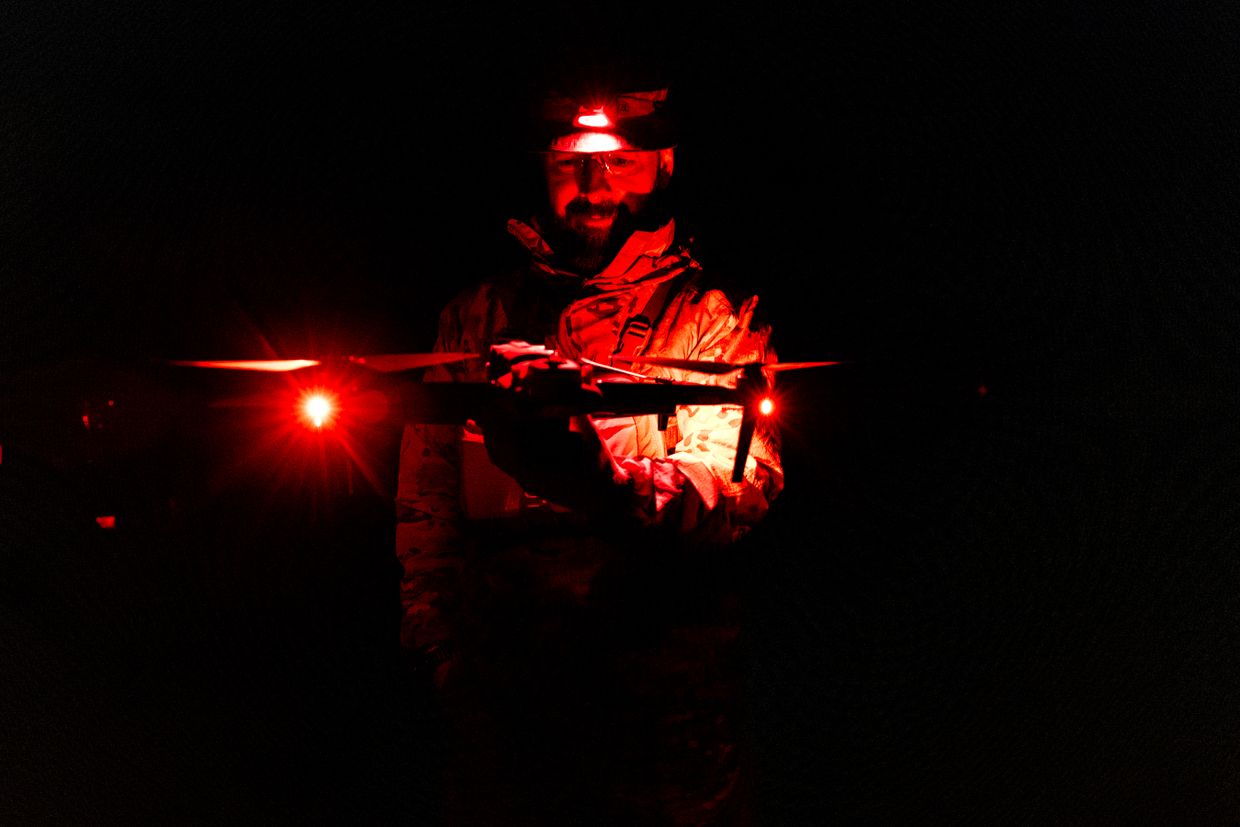
Syrskyi said that over five types of interceptor drones have been cleared for use in the army, and new units are being formed and taught to operate them. Some of these Air Force units have already downed dozens of Russian Shaheds, according to Syrskyi.
The effective use of interceptor drones is hindered by the lack of tactical radar systems in Ukraine, such as Israel-made radars by RADA Electronic Industries and their analogues.
Syrskyi said the Ukrainian army needs hundreds of tactical radar systems instead of the few currently in service for radar reconnaissance, which is key to the use of interceptor drones.
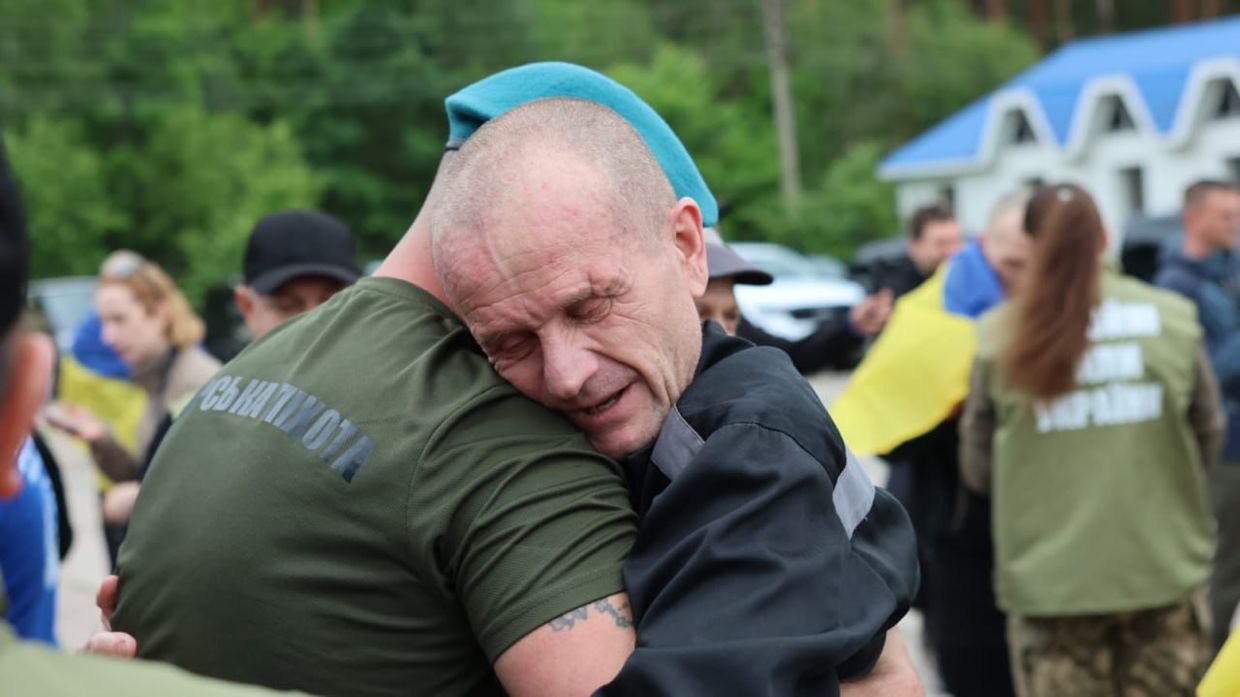
Serhii Dobrovolskyi, a Ukrainian soldier who had been in Russian captivity since 2023, has died just a month after his release at the end of May as part of a 1000-for-1000 prisoner swap, an official from the soldier's home region announced on June 21.The case is the latest in a chain of Ukrainian soldiers' unexpected deaths after their return from Russian captivity, highlighting the effects of "widespread and systematic" torture of prisoners of war (POWs) in Russian prisons, reported by the U.N.
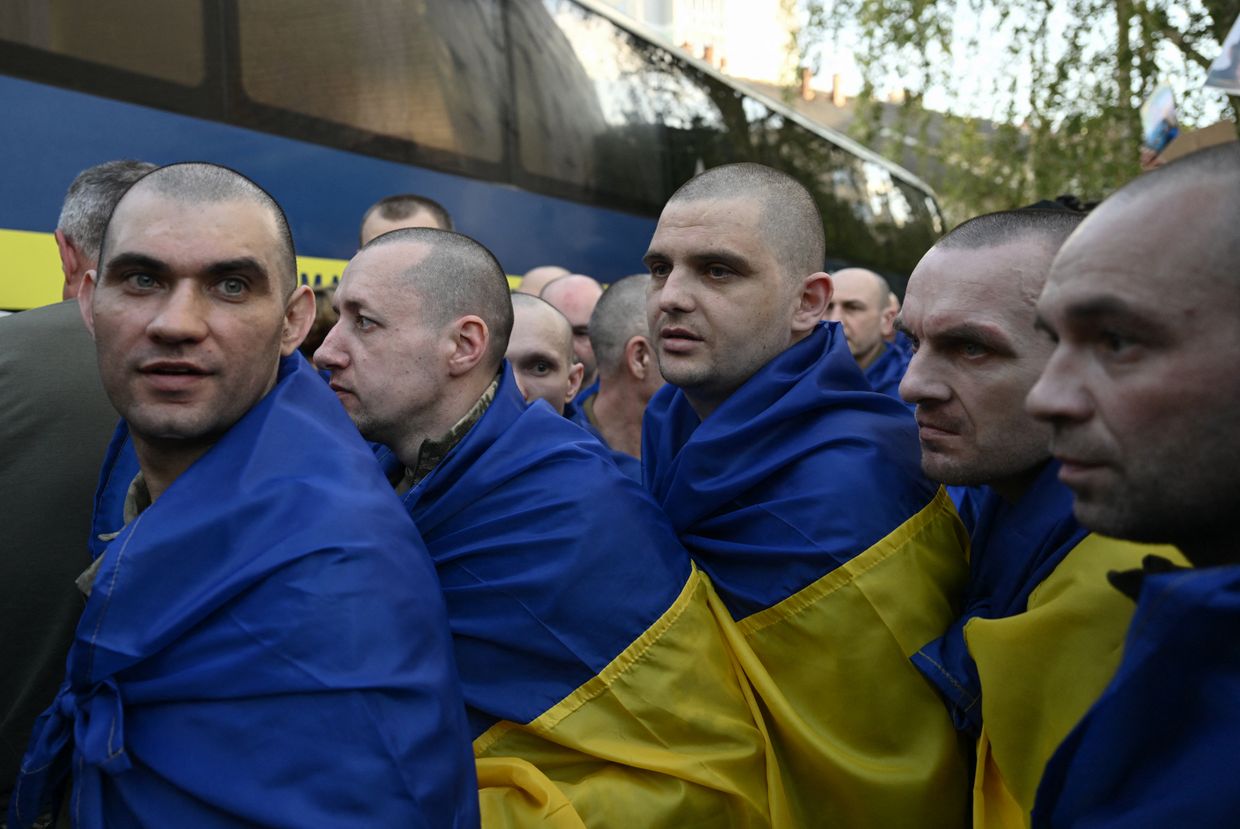
Serhii Dobrovolskyi, a Ukrainian soldier who had been in Russian captivity since 2023, has died just a month after his release at the end of May as part of a 1000-for-1000 prisoner swap, an official from the soldier's home region announced on June 21.
The case is the latest in a chain of Ukrainian soldiers' unexpected deaths after their return from Russian captivity, highlighting the effects of "widespread and systematic" torture of prisoners of war (POWs) in Russian prisons, reported by the U.N.
"Serhii Dobrovolskyi was released from captivity at the end of May this year. A few days ago, he was met by his fellow townspeople in his hometown," wrote the head of the soldier's native Zdolbuniv district in Rivne Oblast, Vladyslav Sukhliak, on Facebook. The exact cause of death was not immediately announced.
A video posted by the Zdolbuniv city council on June 17 shows Dobrovolskyi being greeted in Zdolbuniv by a crowd chanting the Ukrainian anthem as the soldier is hugging his mother. He was also presented with a korovai, a round bread loaf, as part of the symbolic Ukrainian tradition of welcome with bread and salt.
"Finally, after almost two years, the mother hugged her son," the Zdolbuniv city council commented on the video.
Sukhliak added that Dobrovolskyi was 43 years old at the time of death. "The war with the damned (Russian) occupiers takes lives and health of the defenders," he wrote.
Earlier in June, another Ukrainian soldier returned from Russian captivity had died unexpectedly.
Dmytro Shapovalov, a 32-year-old defender of Ukraine who was exchanged in 2023 after over a year in Russian prisons, had died on June 9, according to the Ukrainian public broadcaster Suspilne.
His sister Anastasiia said that Shapovalov endured torture, hunger, and psychological pressure in captivity. After his release, Shapovalov returned to military service. He died in his sleep, presumably from heart failure, Suspilne reports.
After his death, a representative of the Coordination Headquarters managing the prisoner swaps, Yuliia Pavliuk, published a video showing Shapovalov eating an apple on the day of his release.
"I had just been dreaming about an apple for a year," Shapovalov says in the video.
In 2023, a high-ranking officer from the "Azov" brigade, Oleh Mudrak, died at 35 years old, months after his release from Russian captivity. As a POW, he survived the Olenivka camp explosion and endured a dramatic weight loss in just 100 days, as seen in the photos published by Stanislav Aseyev, a Ukrainian writer and activist.
Treatment of "Azov" fighters in Russian prisons is notoriously brutal due to their nationalistic values and Russian propaganda that worked for years to smear the unit's reputation both in Russia and internationally.
Some Azov fighters died from torture in Russian captivity or were sentenced to decades in prison for alleged war crimes. Many of them were among the 54 Ukrainian prisoners killed in an explosion in Olenivka penal colony in the Russian-occupied part of Donetsk Oblast on July 28, 2022.
Ukraine accused Russia of orchestrating the explosion, while Russia has been systematically preventing international organizations from conducting an independent investigation on the site of the attack.
The U.N. reported widespread torture of Ukrainian POWs in Russia and brutal conditions of their detention over the past years.
Russian forces are attempting to advance along almost the entire front in eastern Ukraine while trying to establish a buffer zone in northeastern Sumy Oblast, Commander-in-Chief Oleksandr Syrskyi told journalists on June 21.The comments come as Moscow launched a new summer offensive against Ukraine, disregarding calls by Kyiv and its Western partners for an unconditional ceasefire.The offensive's goal is to reach the administrative borders of Donetsk and Luhansk oblasts in the east, and create a
Russian forces are attempting to advance along almost the entire front in eastern Ukraine while trying to establish a buffer zone in northeastern Sumy Oblast, Commander-in-Chief Oleksandr Syrskyi told journalists on June 21.
The comments come as Moscow launched a new summer offensive against Ukraine, disregarding calls by Kyiv and its Western partners for an unconditional ceasefire.
The offensive's goal is to reach the administrative borders of Donetsk and Luhansk oblasts in the east, and create a buffer zone in the border areas of the Sumy and Kharkiv oblasts, Syrskyi said at a meeting attended by the Kyiv Independent.
As of mid-June, Ukrainian defenders are fighting close to 695,000 Russian troops in Ukraine across a 1,200-kilometer (750-mile) front, the commander said, adding that Moscow recruited about 440,000 contract soldiers this year.
According to the open-source intelligence group DeepState, Russian forces occupied approximately 449 square kilometers (173 square miles) in May, the highest monthly figure this year.
Ukraine has managed to stop the Russian advance in Sumy Oblast at the moment, Syrskyi noted. "The situation there has been stabilized... we have recaptured Andriivka, and advanced between 200 and 700 meters in Yunakivka in a week," he said.
Russian forces are also attempting to fully oust Ukrainian troops from Russia's home territory in the Kursk and Belgorod oblasts.
"We control about 90 square kilometers (35 square miles) in the Glushkovsky district of Russia's Kursk Oblast," Syrskyi said.
Ukraine launched the cross-border offensive into Kursk Oblast — bordering Ukraine's Sumy Oblast — last August, initially seizing 1,300 square kilometers (500 square miles) but losing the vast majority of this territory in a Russian counteroffensive earlier this year.
Moscow initially declared to have fully liberated the region on April 26, but this claim was rejected by Ukraine and later disputed by Russian officials themselves.
Kyiv has said the incursion was meant to preempt a Russian offensive into Sumy Oblast and force Russia to redirect troops fighting in Donetsk Oblast.
Syrskyi stressed that at one point, the Kursk operation drew in almost 63,000 Russian soldiers, which, in addition to North Korean soldiers, amounted to about 70,000 troops deployed in the region.
"In April 2025, Russian units – and this, I remind you once again, is about 60 thousand people... were tasked with moving to new sectors and reinforcing Russian assault groups in the Pokrovsk, Toretsk, Lyman, Zaporizhzhia, and Kherson directions," Syrskyi said.
"But our actions in the Glushkovsky district of Russia's Kursk Oblast thwarted these plans." At the moment, about 10,000 Russian soldiers are fighting in the Glushkovsky district, the commander added.
Syrskyi also said Russian assault units approached the administrative border of Dnipropetrovsk Oblast but were thrown back.
"As for our plans and intentions. Of course, we will not simply remain in a blind defense... Therefore, we combine defensive actions with active defense and active offensive operations," Syrskyi said.
For this purpose, the Ukrainian military is scaling up its assault units, which were created at the beginning of the Kursk operation and are currently deployed in all areas of the front, he added.
Ukrainian strikes deep inside Russian territory between January and May have cost Russia over $10 billion, including $1.3 billion in direct damage to industrial facilities and infrastructure, Commander-in-Chief Oleksandr Syrskyi told journalists on June 21. The indirect damage caused by the disruption of Russian industrial activities is estimated at $9.5 billion, putting the cost-to-result ratio of Ukrainian deep strikes at 1:15, Syrskyi said at a briefing attended by the Kyiv Independent.Kyiv h
Ukrainian strikes deep inside Russian territory between January and May have cost Russia over $10 billion, including $1.3 billion in direct damage to industrial facilities and infrastructure, Commander-in-Chief Oleksandr Syrskyi told journalists on June 21.
The indirect damage caused by the disruption of Russian industrial activities is estimated at $9.5 billion, putting the cost-to-result ratio of Ukrainian deep strikes at 1:15, Syrskyi said at a briefing attended by the Kyiv Independent.
Kyiv has ramped up drone attacks against Russian military and industrial sites far behind the border as part of its DeepStrike strategy, seeking to undermine Moscow's ability to wage war.
The attacks targeted Russia's oil refining sector, the fuel and lubricants facilities, energy and transport support, and strategic lines of communication.
"Remember that during negotiations, the Russian side listed a halt to strikes against the oil refining industry as one of the conditions. This shows that our strikes are truly effective," Syrskyi said.
Oil and gas exports are among Russia's key revenue sources and play a crucial role in sustaining its war effort.
"Of course, we will continue (attacking deep inside Russian territory). We will increase the scale and the depth," the commander added, stressing that the attacks target solely military facilities.
Ukraine has increased the production of long-range drones with the support of Western partners and developed new tactics in striking Russia behind the lines.
In one of the most audacious attacks, the Security Service of Ukraine (SBU) on June 1 struck dozens of Russian bombers and other aircraft across four different air bases in an operation dubbed Spiderweb. SBU drones were smuggled to Russia in trucks and then deployed to attack airfields thousands of kilometers from the Russia-Ukraine border.
Editor's note: The article was updated after three bodies were found in Kramatorsk following a Russian attack.Russian strikes across Ukrainian regions killed at least seven civilians and injured at least 23 over the past day, regional authorities reported on June 22.Russia launched two Iskander-M or North Korean KN-23 ballistic missiles, an S-300 anti-aircraft missile, and 47 Shahed-type attack drones and decoy drones against Ukraine overnight, primarily targeting Chernihiv Oblast, Ukraine's Air
Editor's note: The article was updated after three bodies were found in Kramatorsk following a Russian attack.
Russian strikes across Ukrainian regions killed at least seven civilians and injured at least 23 over the past day, regional authorities reported on June 22.
Russia launched two Iskander-M or North Korean KN-23 ballistic missiles, an S-300 anti-aircraft missile, and 47 Shahed-type attack drones and decoy drones against Ukraine overnight, primarily targeting Chernihiv Oblast, Ukraine's Air Force said.
Ukrainian air defenses reportedly shot down 18 drones, while 10 disappeared from radars or were intercepted by electronic warfare. Seven hits by Russian aerial weapons were recorded overnight in Chernihiv, Sumy, and Odesa oblasts.
In Chernihiv Oblast, a civilian was killed in a Russian drone attack against the Nizhyn district, Governor Viacheslav Chaus reported.
In Dnipropetrovsk Oblast, Russian drone and artillery attacks against the Nikopol district injured seven people and damaged multiple houses and civilian infrastructure, Governor Serhii Lysak reported. A 63-year-old man has been hospitalized and is in moderate condition.
Russian attacks across Donetsk Oblast killed three people and injured 13, according to Governor Vadym Filashkin and the media. This included a civilian killed and three injured in Sloviansk, and another killed and two injured in Kostiantynivka.
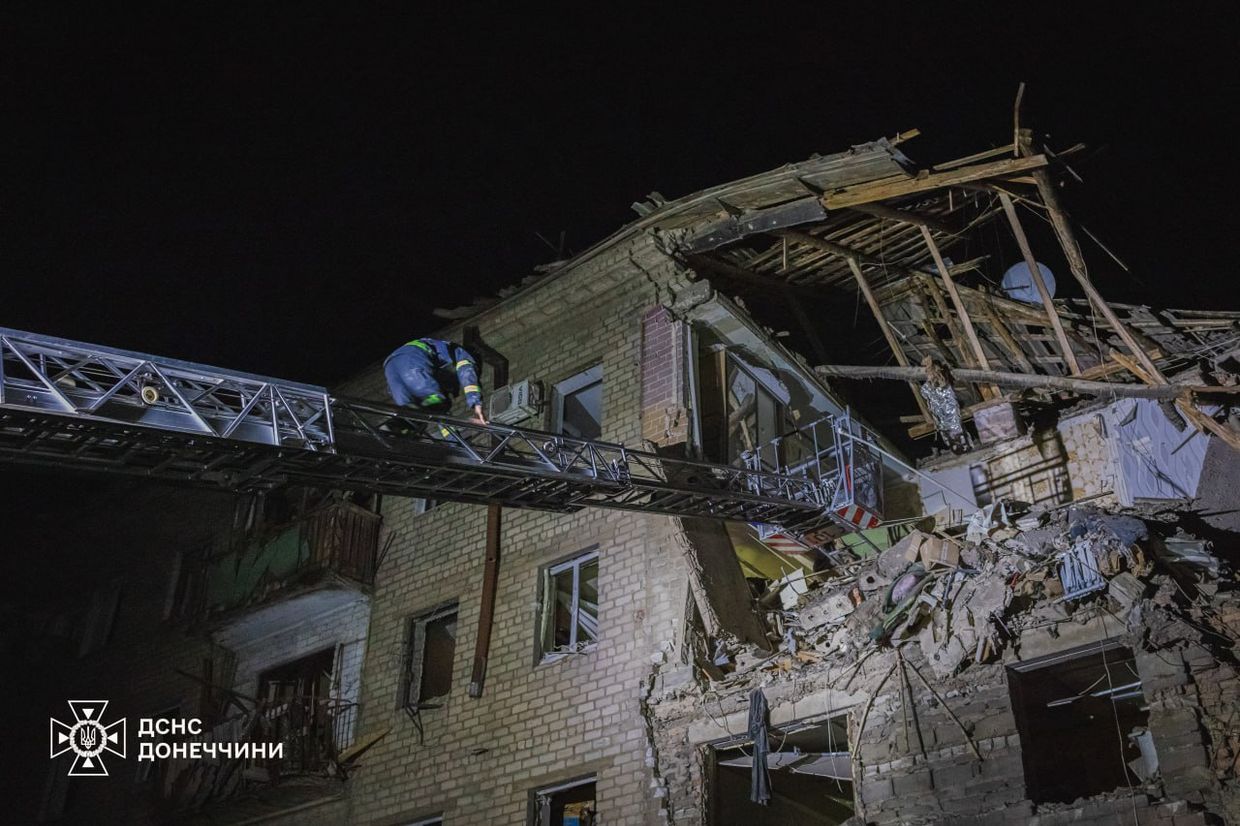
Later on June 22, emergency workers found four bodies of people killed when a Russian missile hit a four-story residential building in Kramatorsk. Four people were injured, and one other resident may be trapped under the rubble, the State Emergency Service said.
In Kharkiv Oblast, a Russian attack killed a 77-year-old man in the village of Staryi Saltiv, Governor Oleh Syniehubov said.
Russian attacks against Kherson Oblast wounded three civilians, said the regional governor, Oleksandr Prokudin. Five multi-story apartment buildings and 11 houses were damaged.
Russia has lost 1,011,490 troops in Ukraine since the beginning of its full-scale invasion on Feb. 24, 2022, the General Staff of Ukraine's Armed Forces reported on June 22.The number includes 1,100 casualties that Russian forces suffered just over the past day.According to the report, Russia has also lost 10,964 tanks, 22,867 armored fighting vehicles, 52,734 vehicles and fuel tanks, 29,432 artillery systems, 1,421 multiple launch rocket systems, 1,188 air defense systems, 416 airplanes, 337 he
Russia has lost 1,011,490 troops in Ukraine since the beginning of its full-scale invasion on Feb. 24, 2022, the General Staff of Ukraine's Armed Forces reported on June 22.
The number includes 1,100 casualties that Russian forces suffered just over the past day.
According to the report, Russia has also lost 10,964 tanks, 22,867 armored fighting vehicles, 52,734 vehicles and fuel tanks, 29,432 artillery systems, 1,421 multiple launch rocket systems, 1,188 air defense systems, 416 airplanes, 337 helicopters, 41,579 drones, 3,376 cruise missiles, 28 ships and boats, and one submarine.
Russia's weapons arsenal includes over 1,950 strategic missiles and thousands of drones, the news outlet RBC-Ukraine reported on June 21, citing a statement from Ukraine's military intelligence agency (HUR). According to HUR, the figures reflect Russia's stockpiles as of June 15. Throughout May and June, Russia has launched a series of mass missile and drone attacks against Ukrainian cities — including a large-scale strike against Kyiv on June 17 that left 30 dead and over 170 injured. Russia ha
Russia's weapons arsenal includes over 1,950 strategic missiles and thousands of drones, the news outlet RBC-Ukraine reported on June 21, citing a statement from Ukraine's military intelligence agency (HUR).
According to HUR, the figures reflect Russia's stockpiles as of June 15.
Throughout May and June, Russia has launched a series of mass missile and drone attacks against Ukrainian cities — including a large-scale strike against Kyiv on June 17 that left 30 dead and over 170 injured. Russia has repeatedly shattered its own drone record in attacks on Ukraine in the past month.
Russia's missile stocks include up to 500 Iskander-M ballistic missiles, HUR told RBC-Ukraine, as well as up to 150 hypersonic Kinzhal missiles. Moscow also has up to 60 North Korean-made KN-23 ballistic missiles.
In addition to ballistics, Russia possesses up to 300 Iskander-K cruise missiles, up to 260 Kh-101 cruise missiles, up to 280 Kh-22/Kh-32 cruise missiles, and over 400 Kalibr cruise missiles.
Russia produces up to 195 missiles per month, HUR said.
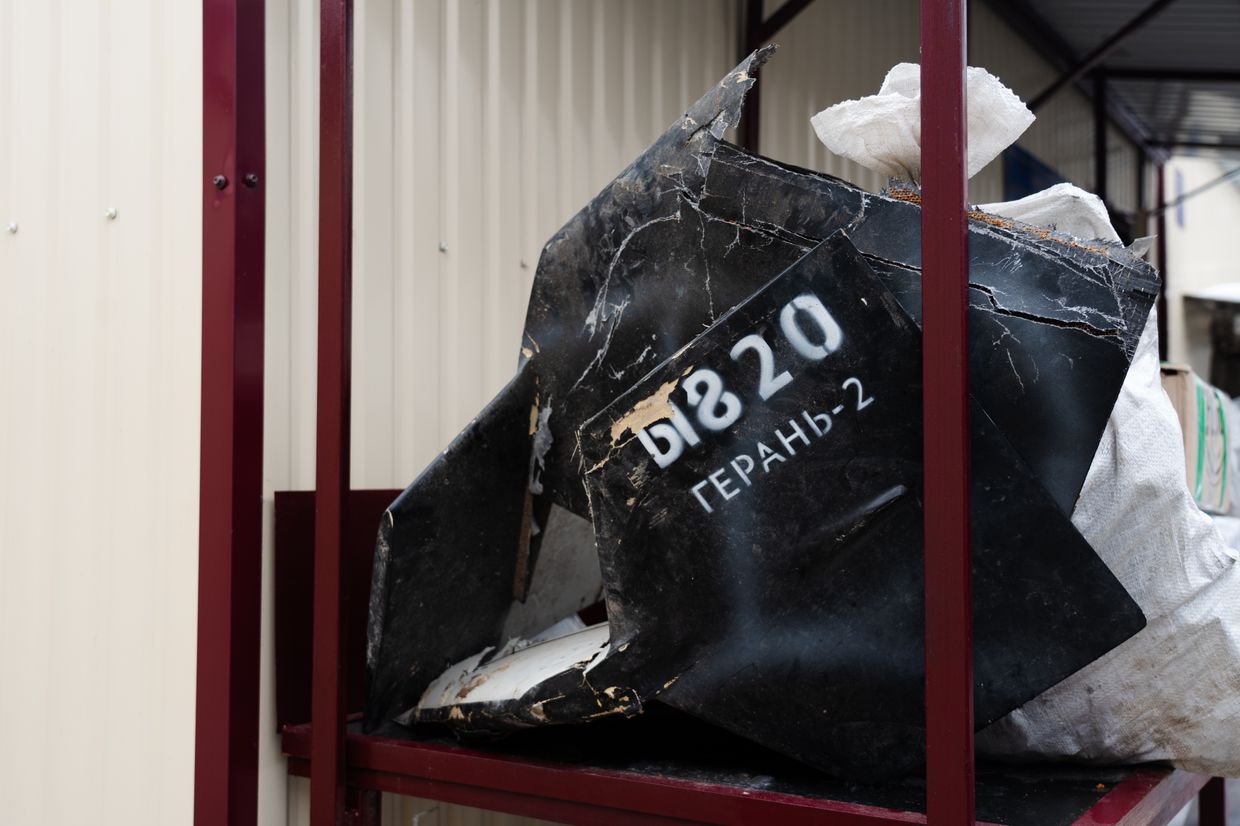
Moscow also aims to ramp up drone production from 170 to 190 units per day, according to HUR. As of June 15, Russia had over 6,000 Shahed-type attack drones and over 6,000 Gerberas, a cheap decoy version that imitates the Shahed.
Russia's arsenal highlights Ukraine's urgent need for additional air defense systems, something President Volodymyr Zelensky has been continuously lobbying Western partners to provide.
Zelensky announced on June 20 that Ukraine is boosting production of interceptor drones to combat the growing numbers of Shahed UAVs launched by Russia each night. Ukraine is also producing its own missiles and recently announced that its domestically produced Sapsan ballistic missile had entered serial production.
The president hopes to secure additional funding for defense production from allies at the upcoming NATO summit.
Russia has paired its intensifying nightly attacks with escalated rhetoric about its territorial ambitions in Ukraine. Russian President Vladimir Putin on June 20 declared that "all of Ukraine" belongs to Russia, suggesting the Kremlin is looking to expand its illegal occupation .
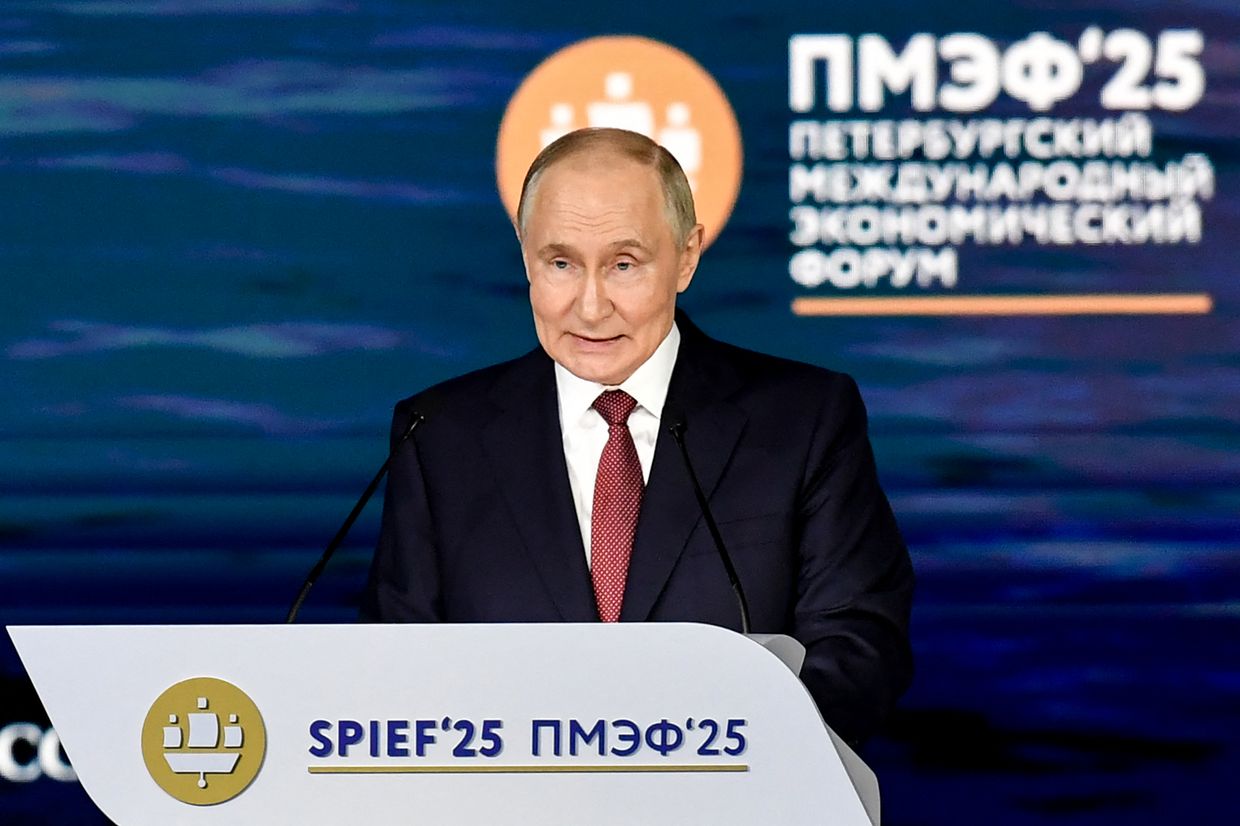
President Volodymyr Zelensky on June 21 responded to Russian President Vladimir Putin's recent statements on Ukraine, saying that Ukraine intends to defend itself and that the government had made several decisions to bolster security in light of the Kremlin's threats.Putin said "all of Ukraine" belongs to Russia in a speech on June 20 at the St. Petersburg International Economic Forum, pointing to Moscow's maximalist territorial ambitions in Ukraine. "Wherever the foot of a Russian soldier steps
President Volodymyr Zelensky on June 21 responded to Russian President Vladimir Putin's recent statements on Ukraine, saying that Ukraine intends to defend itself and that the government had made several decisions to bolster security in light of the Kremlin's threats.
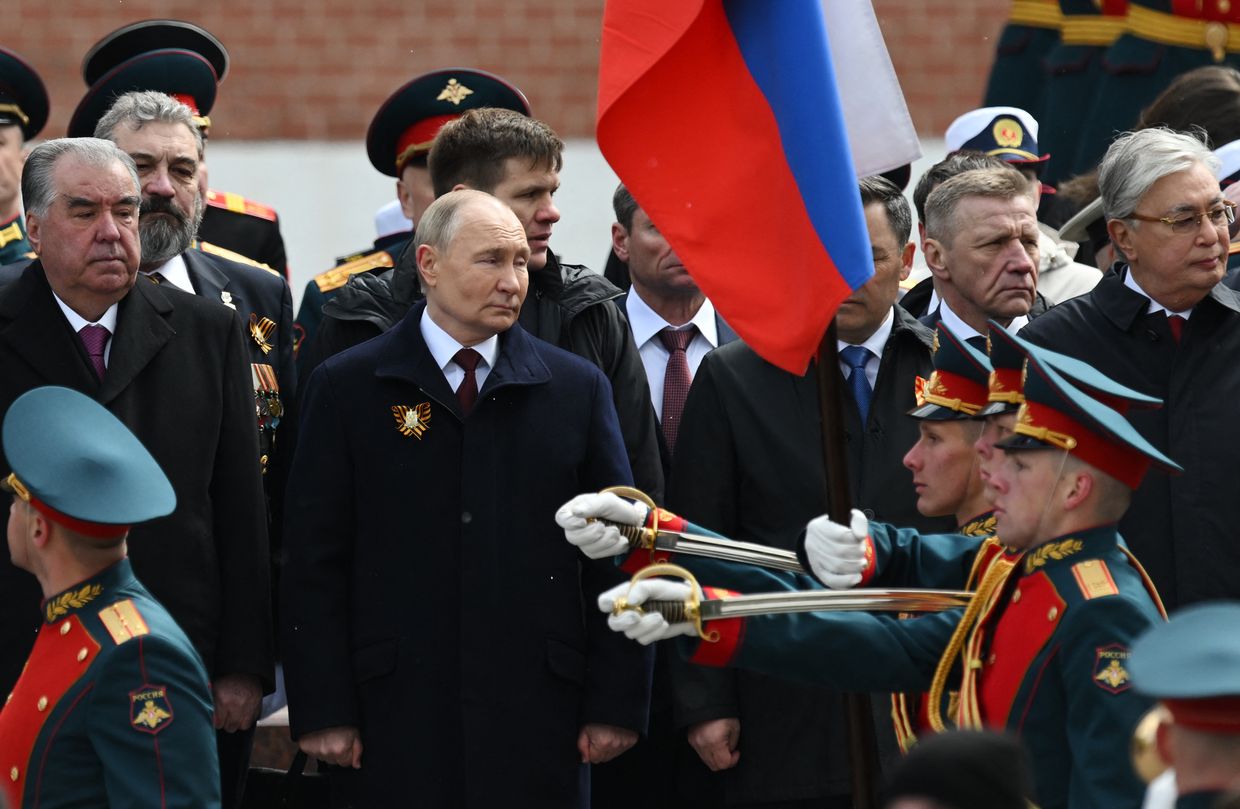
Putin said "all of Ukraine" belongs to Russia in a speech on June 20 at the St. Petersburg International Economic Forum, pointing to Moscow's maximalist territorial ambitions in Ukraine.
"Wherever the foot of a Russian soldier steps is Russian land," he said.
In his evening address on June 21, Zelensky described Putin's speech as a "performance" but said Ukraine was taking the threats seriously.
"But when a murderer says he wants to kill, we take it seriously and will respond together with our partners," Zelensky said.
"I hope with all our partners," he added, likely referring to the United States' diminishing support for Ukraine under U.S. President Donald Trump.
Zelensky said he held meetings with Vasyl Maliuk, head of the Security Service of Ukraine (SBU), Commander-in-chief Oleksandr Syrskyi, and Foreign Minister Andrii Sybiha about how to bolster Ukraine's defense and international support.
"Of course, we will find Ukrainian drones for the foot of every Russian soldier," he said. "Of course, Ukraine will defend itself."
The Ukrainian government has made several decisions in light of Russia's overt threats, Zelensky said. These include a complete diplomatic overhaul and transformation of Ukraine's Foreign Ministry, intensified efforts to coordinate international sanctions, and more funding for drone development.
Kyiv's instructions for the SBU remain confidential, Zelensky said.
Ukraine's Defense Ministry has officially approved the new domestically produced unmanned ground vehicle, known as the Termit, for front-line use, the ministry announced on June 21.The tracked robot is a next-generation version of Ukraine's existing ground-based unmanned systems already deployed across the front. These systems have supported operations by transporting supplies, conducting reconnaissance, and carrying explosives in contested areas.Termit, the newest model in the series, features
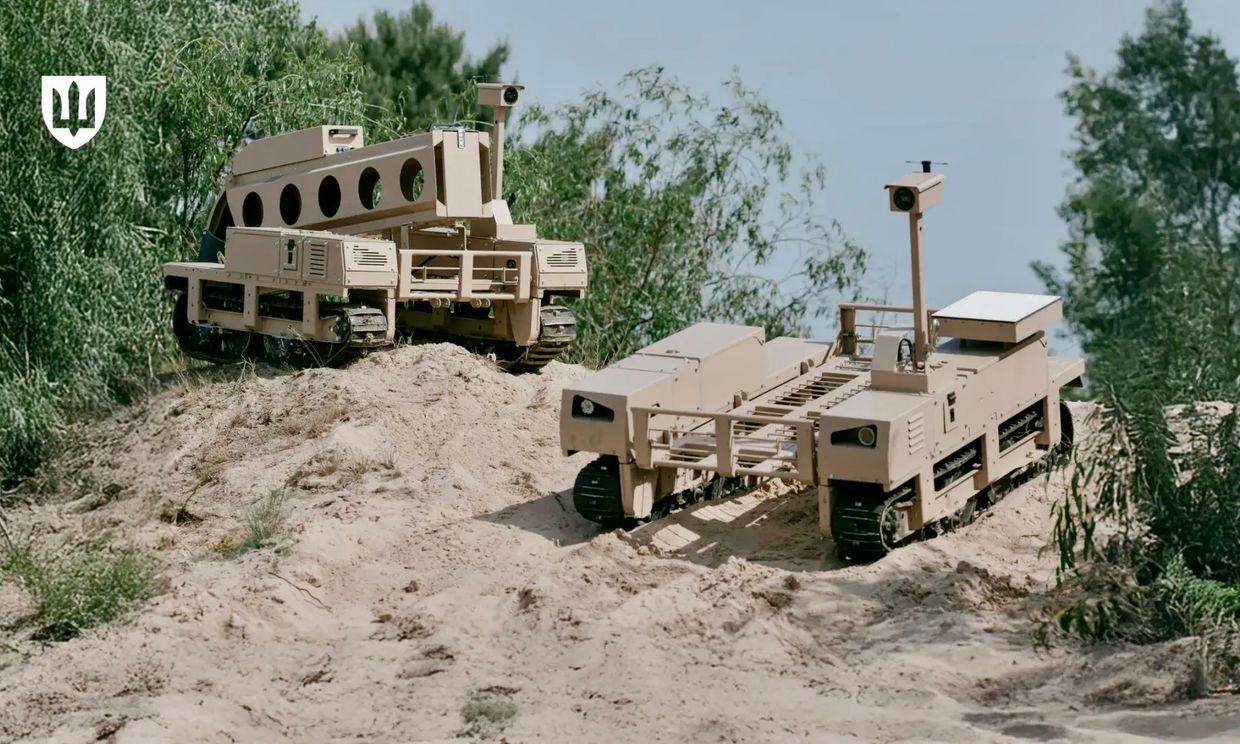
Ukraine's Defense Ministry has officially approved the new domestically produced unmanned ground vehicle, known as the Termit, for front-line use, the ministry announced on June 21.
The tracked robot is a next-generation version of Ukraine's existing ground-based unmanned systems already deployed across the front. These systems have supported operations by transporting supplies, conducting reconnaissance, and carrying explosives in contested areas.
Termit, the newest model in the series, features improved mobility and modularity. The drone can carry up to 300 kilograms and operates on various terrains thanks to its low profile, tracked design, and improved weight distribution.
Its traction battery system allows for several hours of continuous movement over dozens of kilometers. According to the Defense Ministry, Termit drones can be equipped with combat modules, used for medical evacuations, or for transporting specialized equipment as needed.
Ground drones such as Termit are being used more frequently to minimize soldier exposure to front-line risks. Since Russia's full-scale invasion in 2022, Kyiv has prioritized the development of unmanned systems across all domains — air, sea, and land.
President Volodymyr Zelensky has called for the production of at least 30,000 long-range drones in 2025, alongside expanded investment in strike-capable hybrids such as the Palianytsia and Peklo missile-drone platforms.
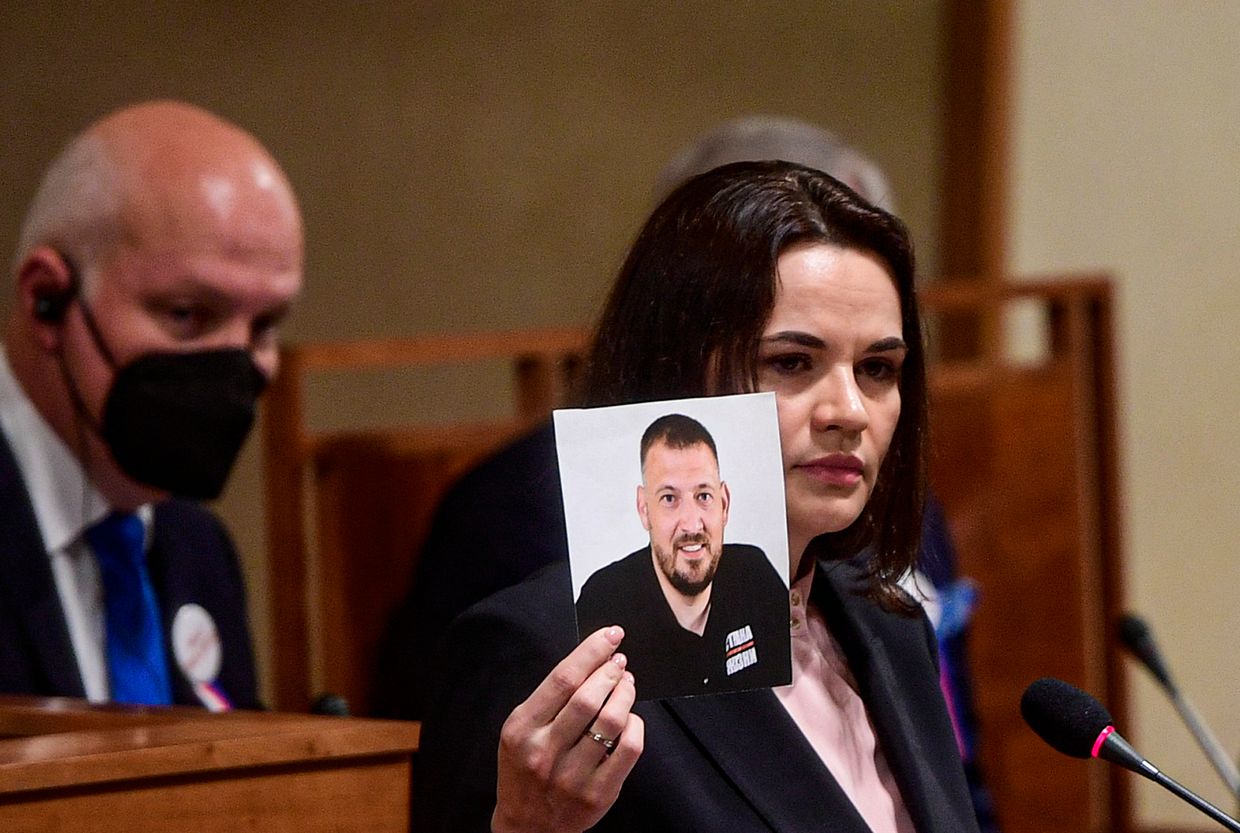
Editor's note: This item has been expanded with additional details.Belarusian opposition leader and political prisoner Siarhei Tsikhanouski was released on June 21, shortly after dictator Alexander Lukashenko met in Minsk with U.S. President Donald Trump's special envoy for Ukraine, Keith Kellogg.Tsikhanouski , a popular blogger who planned to challenge Lukashenko in the 2020 presidential election, was arrested shortly before the vote and later sentenced to 18 years in prison on politically moti
Editor's note: This item has been expanded with additional details.
Belarusian opposition leader and political prisoner Siarhei Tsikhanouski was released on June 21, shortly after dictator Alexander Lukashenko met in Minsk with U.S. President Donald Trump's special envoy for Ukraine, Keith Kellogg.
Tsikhanouski , a popular blogger who planned to challenge Lukashenko in the 2020 presidential election, was arrested shortly before the vote and later sentenced to 18 years in prison on politically motivated charges. Amnesty International recognized Tsikhanouski as a prisoner of conscience.
His wife, Sviatlana Tsikhanouskaya, stepped in and became the main opposition candidate against Lukashenko.
At least 13 political detainees, including prominent blogger Ihar Losik, were also released on June 21, Belarusian independent outlet Nasha Niva reported.
The other released prisoners include three Polish citizens, two Latvian citizens, one Estonian citizen, a Swedish citizen, a U.S. citizen, and two Japanese citizens, according to Lukashenko's press secretary.
In a post on social media, Tsikhanouskaya welcomed the news but highlighted that "1,150 political prisoners remain behind bars."
My husband Siarhei is free! It’s hard to describe the joy in my heart.
We’re not done. 1150 political prisoners remain behind bars. All must be released. pic.twitter.com/MhngqBHFq3
— Sviatlana Tsikhanouskaya (@Tsihanouskaya) June 21, 2025
Kellogg's deputy, John Coale, said the released political prisoners had been transferred to Vilnius and expressed gratitude to the Lithuanian government for facilitating their relocation.
"President Trump's strong leadership led to the release of 14 prisoners from Belarus today. Thanks to the Lithuanian government for its cooperation and assistance — they remain a true friend and ally," Coale wrote on X.
According to official results of the 2020 election, Lukashenko won with 80% of the vote, while Tsikhanouskaya received just 10%. Evidence indicates that the election was heavily rigged, and Tsikhanouskayacould have realistically won the vote.
As a result, hundreds of thousands took to the streets in Belarus in 2020 to demand a fair election. Thousands were arrested, and many were beaten and tortured. At least seven demonstrators were killed during the protests.
Minsk has faced repeated Western sanctions since the brutal crackdown on pro-democracy protests.
Lukashenko, in power since 1994, is a close ally of Russian President Vladimir Putin and has allowed Russia to use Belarusian territory for military operations against Ukraine.
"You have caused quite a stir in the world with your arrival," Lukashenko told Kellogg during their meeting at the Palace of Independence, according to state-run outlet Belta.
"But I wonder why. Can't we have a normal dialogue and talk about our affairs – about relations between Belarus and the United States of America?"
Kellogg is the highest-ranking U.S. official to visit Belarus in recent years, following former Secretary of State Mike Pompeo's 2020 trip under Trump's first term.
Since Russia's full-scale invasion of Ukraine in February 2022, Lukashenko's regime has played a key logistical role in supporting Moscow's campaign, offering its territory for troop deployments and weapons stockpiles.
President Volodymyr Zelensky on June 20 called on U.S. President Donald Trump to "make the right choice for history" by standing with Ukraine against Russian aggression.Zelensky said Moscow is attempting to influence the U.S. president amid the escalating conflict between Israel and Iran."(Russian President Vladimir) Putin really wants us to be without America," Zelensky said during a briefing attended by the Kyiv Independent. "For President Trump right now, the Israel-Iran issue is definitely a
President Volodymyr Zelensky on June 20 called on U.S. President Donald Trump to "make the right choice for history" by standing with Ukraine against Russian aggression.
Zelensky said Moscow is attempting to influence the U.S. president amid the escalating conflict between Israel and Iran.
"(Russian President Vladimir) Putin really wants us to be without America," Zelensky said during a briefing attended by the Kyiv Independent. "For President Trump right now, the Israel-Iran issue is definitely a higher priority."
The Ukrainian president cautioned that Moscow lacks the capability to meaningfully support Iran but will "pretend" otherwise to gain influence with Washington.
"I think this is also a sign to President Trump. And I really don't want him (Trump) to make a deal with the Russians that is not in our favor," he said.
Zelensky said that U.S. support remains essential for Ukraine's defense and long-term security. While some European countries have committed to backing Ukraine, he said, the loss of American support would be the most difficult scenario.
"So that President Trump makes the right choice for history," Zelensky said. "Because it's the right thing to be with us. Because Putin is the aggressor. And in any case, the aggressor loses."
He added that the Ukrainian delegation is actively working with U.S. officials, including a recent conversation between Economy Minister Yulia Svyrydenko and U.S. Treasury Secretary Scott Bessent regarding the minerals agreement and securing new military assistance.
"We handed over a specific weapons package we need, including Patriot systems, and we are awaiting feedback," Zelensky added. "We are ready to find the money for this entire package."
The president said these items — military aid, sanctions, and coordinated diplomatic pressure on the Kremlin — would be key topics in a potential meeting with Trump.
"We need greater certainty and greater pressure from the world on Putin — this is necessary for diplomacy," he said. "And I would like to discuss these formats with him."
Putin offered to mediate between Israel and Iran after speaking with both Israeli Prime Minister Benjamin Netanyahu and Iranian President Masoud Pezeshkian on June 13.
Russia condemned Israel's strikes, which targeted Iran's nuclear and military infrastructure using 200 aircraft and 330 munitions. Iran retaliated with missile strikes on Tel Aviv and other cities, killing five Ukrainian citizens on June 14.
Zelensky traveled to the G7 Leaders' Summit in Canada on June 17, hoping for a one-on-one meeting with Trump. The U.S. president left the summit early, citing the escalating Israel-Iran crisis.
Despite rejecting Putin's offer to mediate in the Middle East conflict, Trump has not imposed any new sanctions on Russia, even as the Kremlin continues to reject ceasefire proposals in its war against Ukraine.
Russia is using the return of war dead as a tool for manipulation to obscure the scale of its military losses from the public, President Volodymyr Zelensky said during a briefing on June 20 attended by the Kyiv Independent.According to Zelensky, Ukrainian authorities have confirmed that at least 20 of the bodies Russia returned as Ukrainian were actually Russian soldiers."Sometimes these bodies even have Russian passports," Zelensky said. He also cited the case of a deceased Israeli citizen figh
Russia is using the return of war dead as a tool for manipulation to obscure the scale of its military losses from the public, President Volodymyr Zelensky said during a briefing on June 20 attended by the Kyiv Independent.
According to Zelensky, Ukrainian authorities have confirmed that at least 20 of the bodies Russia returned as Ukrainian were actually Russian soldiers.
"Sometimes these bodies even have Russian passports," Zelensky said. He also cited the case of a deceased Israeli citizen fighting on Russia's side, whom Moscow had passed off as a Ukrainian soldier.
"Putin is afraid to admit how many people have died. Because if the moment comes when he needs to mobilize, his society will be afraid," he said.
Zelensky's remarks follow the June 2 prisoner and body exchange agreement in Istanbul, the most extensive of the full-scale war. Under that deal, Ukraine recovered 6,057 bodies of its fallen soldiers. Russia, according to Kremlin aide Vladimir Medinsky, took back only 78.
Explaining the difference between the two numbers, Zelensky said that the bodies of the vast majority of Russian soldiers currently killed on the battlefield remain in Russian hands.
"They were advancing, and their dead remained in the territory where they were," he said.
According to the president, exchanges of bodies and even severely wounded soldiers have taken place on the battlefield, but such exchanges are typically not publicized.
President Volodymyr Zelensky presents evidence to the media in Kyiv on June 21, 2025, showing that Russia handed over the bodies of its own soldiers during exchanges. (Presidential Office)
President Volodymyr Zelensky presents evidence to the media in Kyiv on June 21, 2025, showing that Russia handed over the bodies of its own soldiers during exchanges. (Presidential Office)
Interior Minister Ihor Klymenko earlier confirmed a case in which the remains of Alexander Viktorovich Bugaev, a Russian soldier from the 39th Separate Guards Motorized Rifle Brigade, were returned to Ukraine disguised as a Ukrainian casualty.
"This shows how little human life means to Russia. Or maybe it's just a way to avoid paying compensation to the families. But they will have to pay anyway: we are returning these bodies," Klymenko said on June 19.
Ukraine's General Staff said on June 21 that Russian forces have sustained over 1,010,000 casualties — killed and wounded — since launching the full-scale invasion in February 2022.
Independent Russian outlet Mediazona, along with the BBC Russian Service, has verified the identities of 111,387 Russian soldiers killed, emphasizing that the actual number is likely much higher.
Russia has continued to deny the scale of its losses, often inflating Ukrainian casualties and spreading false narratives. Zelensky warned that this is part of a broader propaganda effort to "break the reality in which we live," in which Russian forces are suffering far greater losses.
The June 2 negotiations in Istanbul led to the most extensive prisoner and body exchange agreement of the full-scale war, although no ceasefire was achieved.
On June 7, Russia accused Kyiv of rejecting a proposed body return, releasing footage that allegedly showed Ukrainian corpses stored in refrigeration units. Ukraine dismissed these claims, saying that the footage was shot on Russian territory, not at a designated handover site.
Kyiv has consistently called for an "all-for-all" exchange of prisoners of war, but Moscow has so far refused to agree to a comprehensive swap.
Russia is systematically recruiting migrant workers from Central Asia to fight in its war against Ukraine as "cannon fodder," Ukraine's military intelligence (HUR) reported on June 21. Citizens of Uzbekistan, Tajikistan, and other countries in the region are increasingly being drawn into Russia's war effort under duress or with misleading promises, HUR said. Many of those recruited are reportedly killed on the front lines.According to HUR, Russia's security services target migrant workers who ar
Russia is systematically recruiting migrant workers from Central Asia to fight in its war against Ukraine as "cannon fodder," Ukraine's military intelligence (HUR) reported on June 21.
Citizens of Uzbekistan, Tajikistan, and other countries in the region are increasingly being drawn into Russia's war effort under duress or with misleading promises, HUR said.
Many of those recruited are reportedly killed on the front lines.
According to HUR, Russia's security services target migrant workers who arrive in the country seeking employment, offering short-term military contracts with promises of fast cash. These individuals often lack legal protections and face coercion, with few realistic alternatives.
Among the identified victims are Uzbek nationals Umarov Syroziddin Sabirjanovich and Kholbuvozoda Muhammad Faizullo, who served in motorized rifle units and died during combat operations in Ukraine.
"Mobilized migrants are formed into separate units, which are mainly used in the most dangerous areas of the front line," HUR said. Survivors may face criminal charges in their home countries for serving in a foreign military, carrying the risk of long prison sentences.
Radio Free Europe/Radio Liberty previously reported that migrant workers are funneled into combat roles for financial reasons, with recruitment networks offering salaries unattainable in civilian life.
Russia has also intensified pressure on its naturalized migrant population.
On May 20, Investigative Committee head Alexander Bastrykin said that 20,000 naturalized migrants had been dispatched to Ukraine for failing to register for military service.
With public memory raw from the unpopular 2022 partial mobilization that prompted over 261,000 Russians to flee, the Kremlin has refrained from another mass draft.
Instead, it is relying on a combination of forced recruitment, enlistment bonuses, and targeted campaigns among vulnerable communities.
At least 13 civilians were injured in Russian attacks across Ukraine over the past 24 hours, regional authorities reported on June 21. Russia launched 272 drones overnight, including Iranian-designed Shahed-type suicide drones, along with two ballistic missiles and six cruise missiles, Ukraine's Air Force said.Ukrainian air defenses intercepted 140 drones, three Iskander-K cruise missiles, one Kinzhal air-to-air missile, and one Kalibr cruise missile. Another 112 drones reportedly dropped off ra
At least 13 civilians were injured in Russian attacks across Ukraine over the past 24 hours, regional authorities reported on June 21.
Russia launched 272 drones overnight, including Iranian-designed Shahed-type suicide drones, along with two ballistic missiles and six cruise missiles, Ukraine's Air Force said.
Ukrainian air defenses intercepted 140 drones, three Iskander-K cruise missiles, one Kinzhal air-to-air missile, and one Kalibr cruise missile. Another 112 drones reportedly dropped off radars — likely used as decoys to overwhelm Ukrainian systems.
The Air Force said the combined attack was repelled using aviation, mobile fire groups, electronic warfare units, and anti-aircraft missile systems.
In Kherson Oblast, Russian strikes on residential areas and social infrastructure injured seven civilians, Governor Oleksandr Prokudin said. Kherson and surrounding settlements west of the Dnipro River face near-daily Russian attacks.
In Donetsk Oblast, three people were wounded in Russian strikes, Governor Vadym Filashkin reported. The region remains one of the most heavily targeted areas amid ongoing Russian offensive operations.
In Poltava Oblast, one person was moderately injured after Russian attacks damaged energy infrastructure and open areas, according to local officials.
A 75-year-old woman was injured in Sumy Oblast after a drone strike, regional authorities said. A woman was also wounded in Zaporizhzhia Oblast, Governor Ivan Fedorov reported, without specifying the nature of the attack.
The strikes come amid Russia's ongoing refusal to accept ceasefire proposals as it intensifies coordinated aerial assaults across Ukraine.
President Vladimir Putin claimed on June 20 that Russia's economy is strong despite war and sanctions, brushing off mounting warnings from his own officials about stagnation and looming recession.Speaking at the St. Petersburg International Economic Forum, Putin was asked about reports that the ongoing war in Ukraine was "killing" the Russian economy."Rumors of my death are greatly exaggerated," he replied, quoting American writer Mark Twain.The president claimed that Russia has outpaced global
President Vladimir Putin claimed on June 20 that Russia's economy is strong despite war and sanctions, brushing off mounting warnings from his own officials about stagnation and looming recession.
Speaking at the St. Petersburg International Economic Forum, Putin was asked about reports that the ongoing war in Ukraine was "killing" the Russian economy.
"Rumors of my death are greatly exaggerated," he replied, quoting American writer Mark Twain.
The president claimed that Russia has outpaced global economic growth over the past two years, allegedly expanding by over 4% annually.
"Our most important task is to ensure the economy's transition to a balanced growth trajectory," Putin said. "At the same time, some specialists and experts point to the risks of stagnation and even recession. This should not be allowed under any circumstances."
The statement came just a day after Central Bank Governor Elvira Nabiullina warned on that Russia's wartime economic momentum is fading fast. She said the economy is approaching the limits of its growth potential, adding that previously effective tools are now exhausted.
Economy Minister Maxim Reshetnikov echoed the concerns, telling a separate forum audience on June 19 that Russia is "on the verge of a transition to recession." He emphasized that recession is not inevitable and that "everything depends on our decisions."
Moscow has experienced rapid inflation and historically high interest rates amid its full-scale invasion of Ukraine. The central bank raised rates repeatedly to combat inflation, but on June 6, it made its first cut in nearly two years, from 21% to 20%.
Putin has criticized the central bank's tight monetary policy for choking off private investment, especially in non-defense sectors.
Despite Putin's optimistic rhetoric, analysts attribute Russia's economic slowdown to sustained international sanctions, falling oil prices, rising wartime spending, and supply disruptions.
Russia's ever-mounting losses on the battlefield which recently passed the 1 million mark are also likely contrbuting to the economic turmoil as the Kremlin is having to pay people to sign up to fight rather than introduce what would be a hugely unpopular mass mobilization.
According to an analysis by economist Janis Kluge, Russia's daily bill just for sign-up bonuses is $24 million.
Russia has lost 1,010,390 troops in Ukraine since the beginning of its full-scale invasion on Feb. 24, 2022, the General Staff of Ukraine's Armed Forces reported on June 21.The number includes 1,060 casualties that Russian forces suffered just over the past day.According to the report, Russia has also lost 10,955 tanks, 22,865 armored fighting vehicles, 52,617 vehicles and fuel tanks, 29,393 artillery systems, 1,421 multiple launch rocket systems, 1,188 air defense systems, 416 airplanes, 337 he
Russia has lost 1,010,390 troops in Ukraine since the beginning of its full-scale invasion on Feb. 24, 2022, the General Staff of Ukraine's Armed Forces reported on June 21.
The number includes 1,060 casualties that Russian forces suffered just over the past day.
According to the report, Russia has also lost 10,955 tanks, 22,865 armored fighting vehicles, 52,617 vehicles and fuel tanks, 29,393 artillery systems, 1,421 multiple launch rocket systems, 1,188 air defense systems, 416 airplanes, 337 helicopters, 41,422 drones, 3,369 cruise missiles, 28 ships and boats, and one submarine.
President Volodymyr Zelensky said on June 20 that Ukraine is rapidly developing interceptor drones to defend against increasingly frequent Russian drone attacks.In his nightly address, Zelensky said the new drones would help strengthen Ukraine's defenses against Iranian-designed Shahed drones, which Russia has been deploying in growing numbers in recent weeks."We are... making separate efforts on interceptor drones, which must strengthen our defense against Shahed attacks," he said, adding that
President Volodymyr Zelensky said on June 20 that Ukraine is rapidly developing interceptor drones to defend against increasingly frequent Russian drone attacks.
In his nightly address, Zelensky said the new drones would help strengthen Ukraine's defenses against Iranian-designed Shahed drones, which Russia has been deploying in growing numbers in recent weeks.
"We are... making separate efforts on interceptor drones, which must strengthen our defense against Shahed attacks," he said, adding that Ukraine's domestic drone production is "already delivering results."
Zelensky also noted that "production volumes of interceptors are already increasing."
Russian drone strikes across Ukraine have been breaking records in recent weeks, with nearly 500 drones and missiles launched overnight on June 9 – highlighting the urgent need for effective countermeasures.
To support Kyiv's defense industry, Zelensky said that Ukraine is working with international partners to secure additional funding and is preparing new agreements ahead of next week’s NATO summit.
Since the start of Russia’s full-scale invasion, Ukraine has focused heavily on developing and deploying advanced unmanned systems. As of April 2025, more than 95% of drones used by Ukrainian forces on the front line are domestically produced.
Both Ukraine and Russia have increasingly relied on drone warfare, employing aerial, naval, and ground-based drones for reconnaissance and combat operations – making technological innovation a critical component of the war.
President Volodymyr Zelensky is set to attend a NATO summit in The Hague next week, the European Council confirmed on June 20.European Commission President Ursula von der Leyen and NATO Secretary-General Mark Rutte are set to meet Zelensky on June 24.Zelensky was reportedly reconsidering attending the NATO summit, as questions remain over U.S. President Donald Trump's participation, the Guardian reported on June 17, citing unnamed Ukrainian officials.A schedule released by the European Council o
President Volodymyr Zelensky is set to attend a NATO summit in The Hague next week, the European Council confirmed on June 20.
European Commission President Ursula von der Leyen and NATO Secretary-General Mark Rutte are set to meet Zelensky on June 24.
Zelensky was reportedly reconsidering attending the NATO summit, as questions remain over U.S. President Donald Trump's participation, the Guardian reported on June 17, citing unnamed Ukrainian officials.
A schedule released by the European Council on June 20 confirms Zelensky's planned participation at the event.
A Ukrainian official told the Guardian that Kyiv is in a "permanent hazard" of becoming a victim of "Trump's short attention span," adding that Russia has exploited this uncertainty with fresh aerial attacks.
There were "all sorts of promises for this summit," including U.S. arms, the source said.
Zelensky was scheduled to meet U.S. President Donald Trump at the Group of Seven (G7) Summit, held June 15-17.
Trump left the multilateral event early due to the renewed conflict between Israel and Iran.
Zelensky met with various leaders, including French President Emmanuel Macron and Canadian Prime Minister Mark Carney.
Zelensky left the summit early, citing Russia's mass drone and missile attack on Kyiv.
On June 17, a Russian drone and missile attack on Kyiv killed 30 people and injured another 172. The nearly nine-hour-long strike saw Moscow's forces launch large numbers of drones and missiles at Ukraine's capital.
Foreign Minister Andrii Sybiha condemned the attack, describing it as a "massive and brutal strike" timed deliberately to coincide with the G7 summit.
Russia's memorandum on a peace proposal is the "best offer Ukraine can get today," Russia's envoy to the United Nations (UN), Vasily Nebenzya, said at a UN Security Council meeting on June 20."During the direct Russian-Ukrainian talks that were held, we presented our memorandum on a peaceful settlement. It consists of two parts: conditions for a comprehensive long-term peace and conditions for a ceasefire," Nebenzya said."This is the best offer Ukraine can get today. We advise accepting it as th
Russia's memorandum on a peace proposal is the "best offer Ukraine can get today," Russia's envoy to the United Nations (UN), Vasily Nebenzya, said at a UN Security Council meeting on June 20.
"During the direct Russian-Ukrainian talks that were held, we presented our memorandum on a peaceful settlement. It consists of two parts: conditions for a comprehensive long-term peace and conditions for a ceasefire," Nebenzya said.
"This is the best offer Ukraine can get today. We advise accepting it as things will only get worse for Kyiv, from here on out," he said.
At Istanbul peace talks on June 2, Russian negotiators told the Ukrainian delegation that their so-called "peace memorandum" is an ultimatum Kyiv cannot accept, President Volodymyr Zelensky said in an interview published on June 10.
"They even told our delegation: we know that our memorandum is an ultimatum, and you will not accept it," Zelensky said. "Thus, the question is not the quality of the Istanbul format, but what to do about the Russians' lies."
"In Istanbul, we also agreed on a large-scale exchange of prisoners of war," Nebenzya said at the UN Security Council meeting on Ukraine.
Aside from agreeing on large-scale prisoner exchanges, peace negotiations between Ukraine and Russia have been largely inconclusive as Moscow continues to issue maximalist demands toward Kyiv.
Nebenzya noted that Ukraine and Russia should resume direct peace talks in Turkey after June 22, despite Russia's intensified drone and missile attacks on Ukraine.
On June 17, a Russian drone and missile attack on Kyiv killed 30 people and injured another 172. The nearly nine-hour-long strike saw Moscow's forces launch large numbers of drones and missiles at Ukraine's capital.
Russia's statements diverged from those of other speakers at the UN Security Council meeting on June 20.
"We call on Russia to agree to an unconditional ceasefire. Russia initiated this war; we call on Russia to end it," Barbara Woodward, the U.K.'s Permanent Representative to the UN, said.
Russia has illegally laid claim to five Ukrainian regions despite not controlling all of the territory. The regions include Donetsk, Luhansk, Zaporizhzhia, and Kherson oblasts, as well as the Autonomous Republic of Crimea.
President Volodymyr Zelensky on June 20 condemned Russia's attempts to advance in Sumy Oblast, as Moscow intensifies its rhetoric of maximalist demands toward Ukraine."The Russians had various plans and intentions there — absolutely insane, as usual. We are holding them back and eliminating these killers, defending our Sumy Oblast," Zelensky said in his evening address.Russian President Vladimir Putin, earlier on June 20, claimed that "all of Ukraine" belonged to Russia, citing the Kremlin's pro
President Volodymyr Zelensky on June 20 condemned Russia's attempts to advance in Sumy Oblast, as Moscow intensifies its rhetoric of maximalist demands toward Ukraine.
"The Russians had various plans and intentions there — absolutely insane, as usual. We are holding them back and eliminating these killers, defending our Sumy Oblast," Zelensky said in his evening address.
Russian President Vladimir Putin, earlier on June 20, claimed that "all of Ukraine" belonged to Russia, citing the Kremlin's propaganda talking points. Moscow regularly claims that Russians and Ukrainians are "one people."
Putin singled out Sumy, saying that "the city of Sumy is next, the regional center. We don't have a task to take Sumy, but I don't rule it out."
Ukraine's northeastern Sumy Oblast borders Russia and regularly faces Russian shelling as well as drone and missile attacks.
"There was a meeting of the Staff — a very detailed report on the frontline. Particular attention was paid to the Sumy Oblast, to operations in the border areas. I am grateful to our units for their resilience," Zelensky said.
Ukraine continues efforts to work with its allies to increase investment in defense production, he said.
"The volume of support this year is the largest since the start of the full-scale war," Zelensky noted.
Ukraine and Russia held direct peace talks in Turkey on May 16 and June 2. The efforts were largely inconclusive, with Moscow reiterating maximalist demands towards Ukraine.
The two sides were able to agree on large-scale prisoner exchanges. Despite the efforts, Russia has intensified drone and missile attacks on Ukraine.
On June 17, a Russian drone and missile attack on Kyiv killed 30 people and injured another 172. The nearly nine-hour-long strike saw Moscow's forces launch large numbers of drones and missiles at Ukraine's capital.
Ukraine's Unmanned Systems Forces (USF) announced on June 20 the establishment of a new command group that will unite the branch with other top drone units in the country's military.Drones have become one of the defining tools of the full-scale war, used extensively by both Ukraine and Russia for surveillance, long-range strikes, and tactical battlefield firepower.The new formation will unite all military units of the USF with the Drone Line, a project launched by President Volodymyr Zelensky in
Ukraine's Unmanned Systems Forces (USF) announced on June 20 the establishment of a new command group that will unite the branch with other top drone units in the country's military.
Drones have become one of the defining tools of the full-scale war, used extensively by both Ukraine and Russia for surveillance, long-range strikes, and tactical battlefield firepower.
The new formation will unite all military units of the USF with the Drone Line, a project launched by President Volodymyr Zelensky in February this year to coordinate and expand five of the country's strongest drone units.
The new command umbrella was created to "improve the efficiency of management, transform the Forces, and adapt to the requirements of modern warfare," according to the statement.
The units will operate within a single chain of command, with a defined structure and a common vision of unmanned aerial vehicle (UAV) tactics in order to harmonize approaches, establish joint work, and use unmanned systems more effectively in combat, the USF said.
The Unmanned Systems Forces were created as a separate branch of Ukraine's military in June 2024.
At that time, Ukraine's strongest existing drone units served in other branches of the defense forces, including the Ground Forces, National Guard, and the Security Service of Ukraine.
The newly-created group will be led by Major Robert Brovdi, better known by his callsign Magyar, whom Zelensky appointed as the commander of the USF in early June.
Brovdi had previously served as commander of the eponymous Magyar's Birds Unmanned Systems Brigade, a founding member of the Drone Line initiative and one of the most consistently high-performing drone units in the Ukrainian military.
A world-first phenomenon, Ukraine's Unmanned Systems Forces works to improve the country's drone operations, creating drone-specific units, ramping up training, increasing drone production, and advancing innovation.
Following in Ukraine's footsteps, Russian President Vladimir Putin announced the creation of his country's own individual drone branch on June 12.
Colonel Vadym Sukharevskyi, previously deputy commander-in-chief of Ukraine's Armed Forces, was named the first commander of the USF on June 10, 2024.
Brovdi replaced Sukharevskyi, who was dismissed on June 3.
According to military personnel who spoke anonymously to Ukrainian news outlet Suspilne, Sukharevskyi's relationship with Commander-in-Chief Oleksandr Syrskyi was tense from the beginning of the USF's formation.
Sukharevskyi's appointment was a decision by president Zelensky, not Syrskyi, sources said.
People close to both Syrskyi and Sukharevskyi also claimed the two men avoided face-to-face interactions.
Editor's Note: This story was updated with comments from Foreign Minister Andrii Sybiha.Russian President Vladimir Putin said "all of Ukraine" belonged to Russia in a speech on June 20 at the St. Petersburg International Economic Forum, amid increasingly aggressive official statements about Moscow's final territorial ambitions in Ukraine.Putin's claim was based on the false narrative often pushed both by himself as leader and by Russian propaganda that Russians and Ukrainians are "one people."Th
Editor's Note: This story was updated with comments from Foreign Minister Andrii Sybiha.
Russian President Vladimir Putin said "all of Ukraine" belonged to Russia in a speech on June 20 at the St. Petersburg International Economic Forum, amid increasingly aggressive official statements about Moscow's final territorial ambitions in Ukraine.
Putin's claim was based on the false narrative often pushed both by himself as leader and by Russian propaganda that Russians and Ukrainians are "one people."
The narrative has long figured prominently in Putin's rhetoric, often brought up as justification for its aggression in Ukraine.
In July 2021, just half a year before the full-scale invasion, the Russian leader stoked fears of a larger attack when he wrote and published an essay on the "historical unity of Russians and Ukrainians."
In response to the speech in St Petersburg, Foreign Minister Andrii Sybiha condemned Putin’s comments as "cynical," saying it showed “complete disregard for U.S. peace efforts."
"While the United States and the rest of the world have called for an immediate end to the killing, Russia's top war criminal discusses plans to seize more Ukrainian territory and kill more Ukrainians," he wrote in a post on X.
Putin made several other statements at the forum, some contradictory, about Moscow's aims in the war going forward.
"Wherever the foot of a Russian soldier steps is Russian land," Putin said, directly implying Russia's intention to continue occupying more than just the five Ukrainian regions that Moscow has illegally laid claim to: Donetsk, Luhansk, Zaporizhzhia, and Kherson oblasts, as well as the Autonomous Republic of Crimea.
Sybiha said that "Russian soldier's foot" brings only "death, destruction, and devastation." He accused Putin of indifference toward his own troops, calling him “a mass murderer of his own people.”
"He already disposed one million Russian soldiers in a senseless bloodbath in Ukraine without achieving a single strategic goal. One million soldiers. Two million feet," the minister said.
"And, while Putin is busy sending Russian feet to invade other countries, he is bringing Russians inside the country to their knees economically."
As per the "peace memorandum" presented by the Russian delegation at the last round of peace talks in Istanbul on June 2, Moscow demands Kyiv recognize the oblasts as Russian and hand over all territory not yet controlled by Russian forces into occupation, including the regional capitals of Kherson and Zaporizhzhia.
Asked whether Russia aimed to seize the regional center of Sumy in Ukraine's northeast, Putin said that while such a mission has not been assigned, he wouldn't rule it out.
Russian ground attacks into Sumy Oblast have intensified along the northeastern border in the past weeks, having first crossed the border after Ukraine's withdrawal from most of its positions in Kursk Oblast in March.
Russian troops have moved 10-12 kilometers (6-8 miles) deep into the region, according to Putin.
"The city of Sumy is next, the regional center. We don't have a task to take Sumy, but I don't rule it out," Putin said.
Sybiha urged the West to ramp up military aid to Ukraine, tighten sanctions against Russia, designate Moscow a terrorist state, and "isolate it fully."
"His cynical statements serve only one purpose: to divert public attention away from the complete failure of his quarter-century rule," the minister added.
Since March, Russia has reportedly taken control of about 200 square kilometers (80 square miles) in northern Sumy Oblast, including roughly a dozen small villages, according to open-source conflict mapping projects.
As of May 31, mandatory evacuations had been ordered for 213 settlements.
In May, Russian President Vladimir Putin ordered his military to create a so-called "security buffer zone" along the border with Ukraine, while Zelensky said on May 28 that Moscow had massed 50,000 troops near Sumy.
In a separate interview with Bild on June 12, Zelensky dismissed Moscow's claims of significant territorial gains as "a Russian narrative" aimed at shaping global perceptions. He stressed that Ukrainian forces have managed to hold off a renewed offensive for nearly three weeks.
When asked if Moscow requires the complete capitulation of Kyiv and the Ukrainian leadership, Putin denied this, saying that Russia instead demands the "recognition of the realities on the ground."
The statement follows a consistent line from Russian officials since the return of U.S. President Donald Trump brought new momentum to the idea of a quick negotiated peace in Ukraine.
Projecting a winning position on the battlefield and gaining confidence from Trump's frequent anti-Ukrainian rhetoric and refusal to approve further military aid to Kyiv, Moscow has stuck to maximalist demands, refusing the joint U.S.-Ukraine proposal of a 30-day unconditional ceasefire along the front line.
On June 18, in an interview to CNN, Russian ambassador to the U.K. Andrei Kelin said that while Russian forces were advancing on the battlefield and taking more Ukrainian, there was no incentive to stop, and that Kyiv must either accept Moscow's peace terms now or "surrender" after losing much more.
President Volodymyr Zelensky signed a decree on June 20, imposing sanctions on 56 individuals and 55 Russian, Chinese, and Belarusian companies involved in the production of Russian drones and sanctions circumvention.Ukraine introduced new restrictions as Russia has escalated drone attacks against Ukrainian cities over the past weeks, launching record 400-500 unmanned aerial vehicles (UAVs) per night.Individuals and legal entities subject to Ukrainian sanctions cannot do business and trade in Uk
President Volodymyr Zelensky signed a decree on June 20, imposing sanctions on 56 individuals and 55 Russian, Chinese, and Belarusian companies involved in the production of Russian drones and sanctions circumvention.
Ukraine introduced new restrictions as Russia has escalated drone attacks against Ukrainian cities over the past weeks, launching record 400-500 unmanned aerial vehicles (UAVs) per night.
Individuals and legal entities subject to Ukrainian sanctions cannot do business and trade in Ukraine, cannot withdraw their capital from the country. In the meantime, their assets are blocked, as well as their access to public and defense procurement, and entry into the territory of Ukraine, among other restrictions.
The new package of sanctions targets individuals and entities involved in the development and production of Russian drones such as Geran, Orlan-10, SuperCam, and first-person-view (FPV) drones, according to a decree published on the Presidential Office's website.
The Belarusian Precision Electromechanics Plant and six Chinese enterprises located in Hong Kong and in the provinces of Shandong and Shenzhen are among the sanctioned entities.
The sanctions list includes equipment suppliers to Alabuga Machinery, a Russian manufacturer of machine tools and gears, and individuals who import components for the sanctioned Kronshtadt JSC, a drone producer that developed Banderol UAVs with jet engines.
Russia has repeatedly targeted Ukrainian cities with waves of attack drones, often striking energy infrastructure and residential buildings overnight. Ukraine's defense forces use a mix of electronic warfare, air defense systems, and drone-on-drone interception to repel the assaults.
Drones have become one of the defining tools of the full-scale war, used extensively by both Ukraine and Russia for surveillance, long-range strikes, and tactical battlefield advantage.
A Russian soldier deployed in Ukraine may have been involved in an act of cannibalism, audio intercepted by Ukraine's military intelligence agency (HUR) and released on June 20 suggests. In the recording posted by HUR on Telegram, a Russian commander is heard telling a subordinate that one soldier, referred to by the call sign "Brelok," killed and consumed his fellow service member "Foma" over a two-week period.Ukraine's military intelligence described the alleged incident as further evidence of
A Russian soldier deployed in Ukraine may have been involved in an act of cannibalism, audio intercepted by Ukraine's military intelligence agency (HUR) and released on June 20 suggests.
In the recording posted by HUR on Telegram, a Russian commander is heard telling a subordinate that one soldier, referred to by the call sign "Brelok," killed and consumed his fellow service member "Foma" over a two-week period.
Ukraine's military intelligence described the alleged incident as further evidence of what it called the "moral and psychological collapse" of Russian forces.
"Nobody ran away. 'Brelok' took him out and then ate him for two f*cking weeks," a speaker identified by HUR as a commander of a reconnaissance unit from Russia's 68th Motorized Rifle Division can be heard saying in the intercept.
According to HUR, both soldiers served in the 52nd Separate Reconnaissance Battalion, which is reportedly operating near the villages of Zapadne and Lyman Pershyi in the Kupiansk direction of Kharkiv Oblast.
The intercepted speaker adds that "Brelok" was later found dead himself.
"They say he was a 200 (military slang for a killed soldier), f*ck. Well, he ate his comrade, so that's something to think about," the voice says.
The Kyiv Independent cannot independently verify the authenticity of the leaked recording or confirm the events described in it. No visual or documentary evidence has been presented to support the claims, which are based solely on the intercepted audio provided by HUR.
But Russia's recruitment system for the war in Ukraine has heavily relied on the country's prisons as a source of manpower, leading to its ranks being filled by all manner of criminals, even cannibals.
Moscow has been recruiting convicts for its war since the summer of 2022, first under the auspices of the Wagner Group and later under the Russian Defense Ministry.
Initially, prisoners, even those convicted of violent crimes, were promised a pardon after completing a six-month military contract. Since January 2024, Russian army recruits drawn from prisons no longer receive pardons but are released on parole, and are expected to fight until the war is over.
In May 2024, the Moscow Times reported that Russian cannibal Dmitry Malyshev, who was sentenced to 25 years in prison for murder and several other serious crimes, joined one of Russia’s Storm V penal military units.
Malyshev was reportedly recruited to the army together with serial killer Aleksandr Maslennikov, sentenced to 23 years in prison for the "double murder and dismemberment of women."
Previously, Ukraine said there were cases of mistreatment and breakdown of discipline within Russia's own ranks. A group of Russian soldiers fighting near Kursk Oblast surrendered to Ukrainian paratroopers in May, saying abuse within their own units was "worse than captivity," according to a video posted by Ukraine's Airborne Assault Forces.
The soldiers said they had been subjected to inhumane treatment, psychological pressure, and threats while still inside Russian territory.
Reporting by investigative outlets, the Insider and Foreign Policy, has documented systemic abuse of Russian troops throughout the full-scale invasion.
These include so-called "punishment squads," beatings, confinement pits, and hazing that borrows heavily from Soviet-era gulag practices.
Russian drone attacks against Ukraine might decrease due to Iranian Shahed production capabilities being targeted in Israeli strikes, Estonian military intelligence commander Ants Kiviselg said on June 20, according to the ERR broadcaster.The comments come as Russian drone strikes across Ukraine have been breaking records in recent weeks, with nearly 500 drones and missiles launched overnight on June 9."While it can be assessed that Russia has been able to largely localize and transfer the produ
Russian drone attacks against Ukraine might decrease due to Iranian Shahed production capabilities being targeted in Israeli strikes, Estonian military intelligence commander Ants Kiviselg said on June 20, according to the ERR broadcaster.
The comments come as Russian drone strikes across Ukraine have been breaking records in recent weeks, with nearly 500 drones and missiles launched overnight on June 9.
"While it can be assessed that Russia has been able to largely localize and transfer the production of Shahed and Geran-type drones to Russia, it can be assumed that some critical nodes for drone production continue to come from Iran," Kiviselg said.
Israel initiated a series of air strikes against Iranian military and nuclear facilities on June 13, with Tehran responding with waves of drone and missile attacks, further escalating tensions in the Middle East.
Iran has been a key ally to Moscow and provided the country with ballistic missiles and thousands of Shahed "kamikaze" drones for its war against Ukraine. Russia has also launched production of its own Shahed equivalents called Geran.
While Israeli strikes targeted and destroyed a Geran-type drone factory in Isfahan, Ukrainian forces have been attacking the Russian plant in Alabuga in Tatarstan, the Estonian intelligence chief noted.
"So there is a possibility that in the near future we may see a certain decline in the use of drones," Kiviselg said. Estonian intelligence is nevertheless convinced that Moscow is planning steps to not only maintain, but also "increase" its drone production.
Russia has been regularly deploying Shahed-type drones for nighttime attacks on Ukrainian cities and infrastructure, overwhelming Ukrainian air defenses with massive swarms.
Ukraine's intelligence has warned that the Russian defense industry seeks to ramp up the production of the strike drones, aiming to deliver 500 unmanned aircraft per month for Russia's war effort.
In turn, the Ukrainian side has also increasingly invested in its drone capabilities, and more than doubled its production of long-range drones in 2024 compared to the previous year.
Editor's note: The story is being updated.Ukraine has brought home another group of prisoners of war released from Russian captivity, President Volodymyr Zelensky said on June 20, following another prisoner exchange a day earlier."Most of the warriors returning today from Russian captivity had been held for over two years. And now, at last, they are home," Zelensky said on X, without revealing how many captives were exchanged.Russia's Defense Ministry also said that a group of Russian soldiers h
Ukraine has brought home another group of prisoners of war released from Russian captivity, President Volodymyr Zelensky said on June 20, following another prisoner exchange a day earlier.
"Most of the warriors returning today from Russian captivity had been held for over two years. And now, at last, they are home," Zelensky said on X, without revealing how many captives were exchanged.
Russia's Defense Ministry also said that a group of Russian soldiers had been released by the Ukrainian side, without specifying the number of personnel involved.
This week's exchanges follow four similar swaps carried out last week in accordance with Ukraine-Russia agreements reached at peace talks in Istanbul on June 2.
The latest swap was another in a series focusing on seriously ill and wounded prisoners, Ukraine's Coordination Headquarters for the Treatment of the Prisoners of War (POW) said.
"These are defenders of Mariupol, Donetsk, Luhansk, Zaporizhzhia, Kherson, Kharkiv, and Chernihiv regions. Warriors of the Armed Forces, the National Guard, and the Border Guard Service," Zelensky said.
The released POWs included privates and non-commissioned officers, some of whom were captured after the siege of Mariupol in 2022, according to the Coordination Headquarters. The oldest one is 60 years old, said Ombudsman Dmytro Lubinets.
While no political breakthrough was achieved at the Istanbul negotiations, both sides agreed to a phased exchange of prisoners and the repatriation of fallen soldiers' bodies. As part of that agreement, Russia pledged to return the bodies of up to 6,000 Ukrainian service members and citizens.
Moscow has handed over 6,057 bodies to Ukraine in several stages over the past few days, though Kyiv later said that these remains also included fallen Russian soldiers.
The June 2 agreements came after the largest known POW swap in late May, when 1,000 prisoners were exchanged on each side.
Ukraine repeatedly called for a prisoner exchange in an all-for-all format, but Russia continues to reject the offer.
Editor's note: This story was updated to include Russian President Vladimir Putin's remarks at the St. Petersburg International Economic Forum. Russia's wartime economic momentum is fading fast, with key resources nearly exhausted, Russian Central Bank Governor Elvira Nabiullina said, warning that the country can no longer rely on the same tools that sustained growth in the first two years of the full-scale war against Ukraine, the Moscow Times reported on June 19.Speaking at the St. Petersburg
Editor's note: This story was updated to include Russian President Vladimir Putin's remarks at the St. Petersburg International Economic Forum.
Russia's wartime economic momentum is fading fast, with key resources nearly exhausted, Russian Central Bank Governor Elvira Nabiullina said, warning that the country can no longer rely on the same tools that sustained growth in the first two years of the full-scale war against Ukraine, the Moscow Times reported on June 19.
Speaking at the St. Petersburg International Economic Forum, Nabiullina said that the Russian economy had been expanding on the back of "free resources," including labor, industrial capacity, bank capital reserves, and liquid assets from the National Wealth Fund (NWF) — all of which are now reportedly nearing depletion.
"We grew for two years at a fairly high pace because free resources were activated," she said. "We need to understand that many of those resources have truly been exhausted."
Speaking at the same forum, Russian President Vladimir Putin ordered officials "not to allow stagnation or recession" in the Russian economy under any circumstances.
"We must consistently change the structure of our economy," he said.
The comments come after Russia's ambassador to the U.K., Andrei Kelin, claimed in an interview with CNN this week that Russia is spending "only 5–7%" of its federal budget on the war. Kelin claimed that Russia can continue waging its war, saying Moscow "is winning."
According to the state statistics agency Rosstat, Russia's unemployment rate has dropped to a historic low of 2.3%. At the same time, mass emigration and large-scale wartime recruitment have created a labor shortage estimated at 2 million people. Industrial capacity utilization has surged beyond 80%, the highest in modern Russian history.
Russia's economy is now "on the verge of a transition to recession," Russian Economy Minister Maxim Reshetnikov said at the same forum. Official data show that GDP growth slowed from 4.1% in late 2023 to just 1.4% in the first quarter of 2024, with the economy contracting quarter-on-quarter for the first time since 2022.
Business profits in March fell by one-third overall and dropped by half in the critical oil and gas sector. Industrial growth stagnated at 1.2% year-over-year between January and April, while civilian sectors of the economy began shrinking. Retail turnover growth slowed from 7.2% in December to just 2.4% in April.
An anonymous Russian analyst told Novaya Gazeta Europe that government technocrats are effectively telling Putin it's time to choose between "war or economy."
During its invasion of Ukraine, Russia has faced rising inflation due to record military spending, pushing the central bank to maintain high interest rates. Under government pressure, the bank cut the rate slightly from 21% to 20% earlier in June, despite concerns about weakened private investment.
Officials have scaled back key development projects and reduced shipments of metals and oil products. Early hopes for recovery in 2025, driven by talks with the U.S., have faded as inflation and sanctions weigh heavily on growth.
Editor's note: This story has been updated to include the joint statement issued by the ministers of the Baltic states, Nordic countries, and Poland.A coalition of European Union countries is pushing to bar Russian citizens who participated in the war against Ukraine from entering the Schengen Area, citing serious security concerns, Estonian broadcaster ERR reported on June 19.The call comes as Russia increased its hybrid operations targeting the European Union. EU security agencies have repeat
Editor's note: This story has been updated to include the joint statement issued by the ministers of the Baltic states, Nordic countries, and Poland.
A coalition of European Union countries is pushing to bar Russian citizens who participated in the war against Ukraine from entering the Schengen Area, citing serious security concerns, Estonian broadcaster ERR reported on June 19.
The call comes as Russia increased its hybrid operations targeting the European Union. EU security agencies have repeatedly warned of Russian-linked sabotage operations, including arson attacks, orchestrated by Moscow as part of hybrid warfare strategies.
Interior ministers from the Baltic states, Nordic countries, and Poland met in Tallinn on June 19, where they issued a joint statement confirming their intent to prevent entry into the visa-free Schengen zone for Russians who took part in the war against Ukraine, ERR reported.
"There are hundreds of thousands of Russian citizens who have fought against Ukraine," Estonian Interior Minister Igor Taro said following the meeting. "We must take a clear stance; these individuals cannot freely travel across Schengen."
"We will not issue them residence permits or visas," he added. "This group, which has been killing and destroying, poses a very significant security threat to all of us."
The ministers emphasized that this restriction should remain in place even after active hostilities cease in Ukraine.
"Member States should take all necessary measures to ensure that individuals who are or have been contracted by the Russian armed forces or other armed groups acting on behalf of the regime are not allowed to undermine our security or move freely within the Schengen Area," the joint statement read.
The high-level meeting also included European Commissioner for Home Affairs and Migration Magnus Brunner, as well as representatives from the EU border agency Frontex.
The Schengen Area allows for visa-free travel across 29 European countries for up to 90 days in any 180-day period. While several EU member states have imposed national restrictions on Russian travelers, others continue processing applications, keeping access routes open.
Latvia has been among the most vocal proponents of stricter visa policies for Russian nationals. Latvian Foreign Minister Baiba Braze urged on May 25 all EU countries to suspend visa issuance to Russians, citing escalating security threats from Moscow.
"Latvia calls on the EU countries to halt visa issuance for Russian citizens, citing security concerns," Braze wrote on X. She noted that Schengen visa approvals for Russian nationals had surged by 25% in 2024 compared to 2023.
Latvia imposed entry restrictions in September 2022 as part of a coordinated effort with Lithuania, Estonia, and Poland. Czechia followed suit in October 2022.
Concerns over the abuse of Schengen visas and diplomatic privileges have intensified amid a wave of suspected Russian sabotage and espionage on EU soil. Polish and Czech authorities have recently led an effort to limit the movement of Russian diplomats within the bloc, targeting individuals allegedly working under diplomatic cover for Russian intelligence services.
Russian attacks across Ukrainian regions killed two civilians and injured at least 39, including minors, over the past day, regional authorities reported on June 20.Russian forces launched 86 Shahed-type attack drones and decoys against Ukraine overnight, the Air Force said. Ukrainian air defenses reportedly shot down 34 drones, while 36 disappeared from radars or were intercepted by electronic warfare.Russia launched "massive" drone attacks against Odesa overnight, authorities reported, resulti
Russian attacks across Ukrainian regions killed two civilians and injured at least 39, including minors, over the past day, regional authorities reported on June 20.
Russian forces launched 86 Shahed-type attack drones and decoys against Ukraine overnight, the Air Force said. Ukrainian air defenses reportedly shot down 34 drones, while 36 disappeared from radars or were intercepted by electronic warfare.
Russia launched "massive" drone attacks against Odesa overnight, authorities reported, resulting in one civilian killed and at least 14 injured, including three emergency workers.
The attack drones struck over 10 targets, including seven residential buildings, and led to multiple large-scale fires. At the site of one of the attacks, a 23-story residential building caught fire between the 18th and 20th floors, and led to the evacuation of over 600 people.
In Dnipropetrovsk Oblast, two men aged 39 and 64 were injured in Russian attacks, Governor Serhii Lysak said. Two industrial facilities, two schools, and four houses were damaged during strikes against the Nikopol district overnight.
In Donetsk Oblast, one person was killed and another injured in Kostiantynivka, while five others were injured elsewhere in the region, according to Governor Vadym Filashkin.
Russian attacks against Kharkiv and eight other settlements in Kharkiv Oblast injured six people, two of them minors, Governor Oleh Syniehubov reported. Multiple residential buildings, houses, a school, warehouses, and other property were damaged.
In Kherson Oblast, 11 people were wounded in Russian strikes, said the regional governor, Oleksandr Prokudin. Seventeen houses were damaged.
Regime change in Iran is "unacceptable" and the assassination of Supreme Leader Ayatollah Ali Khamenei would "open Pandora's box," Kremlin spokesperson Dmitry Peskov told Sky News in an interview published June 20.Russia, which signed a strategic partnership with Iran in January, has reportedly grown increasingly alarmed as the United States weighs deeper involvement in Israel's military campaign against Tehran. Earlier, U.S. President Donald Trump suggested the option of assassinating Iran's Su
Regime change in Iran is "unacceptable" and the assassination of Supreme Leader Ayatollah Ali Khamenei would "open Pandora's box," Kremlin spokesperson Dmitry Peskov told Sky News in an interview published June 20.
Russia, which signed a strategic partnership with Iran in January, has reportedly grown increasingly alarmed as the United States weighs deeper involvement in Israel's military campaign against Tehran.
Earlier, U.S. President Donald Trump suggested the option of assassinating Iran's Supreme Leader Khamenei remains on the table, though he said the U.S. does not plan to act on it "for now."
The comment followed reporting that Israel had earlier proposed a plan to kill Khamenei — a proposal Trump initially rejected, according to a U.S. official cited by AP.
Peskov warned that any attempt at regime change in Tehran or threats to its leadership would "open Pandora's box," deepening instability across the Middle East and beyond.
"(Regime change in Iran) is unimaginable," Peskov said. "It should be unacceptable, even talking about that should be unacceptable for everyone." He added that the killing of Khamenei would promote extremist sentiment inside Iran and provoke unpredictable consequences.
"The situation is extremely tense and is dangerous not only for the region but globally," Peskov said. "An enlargement of the composition of the participants of the conflict is potentially even more dangerous. It will lead only to another circle of confrontation and escalation of tension in the region."
Russia has been a close regional ally of Iran, while Tehran supplied drones and ballistic missiles for Moscow's war against Ukraine. Meanwhile, Israel has maintained a delicate balance, refraining from joining Western sanctions against Moscow while condemning Iran's role in supporting Russia's war effort.
Asked on whether Moscow would respond to a possible strike against Khamenei, Peskov declined to specify, saying any reaction would come from "inside Iran."
Peskov also commented on Trump's dismissive response to Russian President Vladimir Putin's offer to mediate between Israel and Iran. The U.S. president reportedly told Putin to "mediate your own conflict" in reference to the Russia-Ukraine war. Peskov shrugged off the remark, calling Trump's language "unique" and urging mutual tolerance.
Tensions have risen between the U.S. and Iran following a wave of Israeli air strikes on Iranian territory, beginning June 13. The attacks targeted nuclear infrastructure and senior Iranian commanders, prompting Iranian missile strikes on Tel Aviv and other Israeli cities.
Tehran claimed that at least 224 Iranian civilians were killed on June 16, though the figures remain unverified.
Russia has offered to mediate the crisis, with Putin reportedly reaching out to both Iranian President Masoud Pezeshkian and Israeli Prime Minister Benjamin Netanyahu. Tel Aviv, according to the Kremlin, is reluctant to accept the proposal, while the EU leaders rejected it, citing Russia's aggression in Ukraine and its close military ties to Iran.
Russia has lost 1,009,330 troops in Ukraine since the beginning of its full-scale invasion on Feb. 24, 2022, the General Staff of Ukraine's Armed Forces reported on June 20.The number includes 1,090 casualties that Russian forces suffered just over the past day.According to the report, Russia has also lost 10,954 tanks, 22,860 armored fighting vehicles, 52,501 vehicles and fuel tanks, 29,374 artillery systems, 1,421 multiple launch rocket systems, 1,188 air defense systems, 416 airplanes, 337 he
Russia has lost 1,009,330 troops in Ukraine since the beginning of its full-scale invasion on Feb. 24, 2022, the General Staff of Ukraine's Armed Forces reported on June 20.
The number includes 1,090 casualties that Russian forces suffered just over the past day.
According to the report, Russia has also lost 10,954 tanks, 22,860 armored fighting vehicles, 52,501 vehicles and fuel tanks, 29,374 artillery systems, 1,421 multiple launch rocket systems, 1,188 air defense systems, 416 airplanes, 337 helicopters, 41,299 drones, 3,369 cruise missiles, 28 ships and boats, and one submarine.
Editor's note: This is a developing story and is being updated.Russian forces struck residential buildings in Odesa overnight on June 20, killing a civilian and injuring at least 14 others, including three emergency workers, the Prosecutor General's Office reported.The attack, which the service described as "massive," rang out around 1 a.m. local time. The attack drones struck over 10 targets, including seven residential buildings, and led to multiple large-scale fires. At the site of one of the
Editor's note: This is a developing story and is being updated.
Russian forces struck residential buildings in Odesa overnight on June 20, killing a civilian and injuring at least 14 others, including three emergency workers, the Prosecutor General's Office reported.
The attack, which the service described as "massive," rang out around 1 a.m. local time. The attack drones struck over 10 targets, including seven residential buildings, and led to multiple large-scale fires.
At the site of one of the attacks, a 23-story residential building caught fire between the 18th and 20th floors, and led to the evacuation of over 600 people.
In a separate attack on a four-story building within the city, three firefighters were injured when structural elements collapsed on the responders. The building is described as being "completely engulfed in flames," according to the State Emergency Service.
The three injured firefighters are currently hospitalized in stable condition. Additional information on the attacks, as well as casualties, is being clarified as search efforts under rubble and debris continue.
Firefighters extinguish a fire at a residential building in Odesa on June 20, 2025 following a Russian drone attack that injured at least 13 people, including three firefighters. (Ukraine State Emergency Service/Telegram)
The aftermath of a Russian drone attack on a residential building in Odesa on June 20, 2025. The attacks on the city injured at least 13 people, including three firefighters. (Odesa Oblast Governor Oleh Kiper/Telegram)
In addition to the buildings, Odesa's main train station also had infrastructure damaged as a result of the drone attack, Ukraine's railway agency Ukrzaliznytsia reported.
Odesa, a port city on Ukraine’s Black Sea coast with a population of around 1 million, has been a frequent target of Russian attacks throughout the full-scale war.
"The overhead contact line and the rail and sleeper grid were affected," the agency wrote in a statement, adding that no injuries had been reported.
On June 10, a missile and drone attack on Odesa killed two people and injured eight.
Russia has continued to increase the frequency and severity of its attacks on Ukrainian cities, while rejecting a ceasefire in Ukraine. Overnight on June 17, Russia launched one of its largest attacks on Kyiv since the start of full-scale war in February 2022, killing 30 people and injuring 172 others.
Fred Grandy, a 62-year-old American artist and volunteer who was killed in Russia's mass missile attack against Kyiv on June 17, appears to be the first U.S. civilian killed by a Russian strike on Ukraine, the New York Times (NYT) reported on June 19. Russia launched a massive assault on Kyiv overnight on June 17, pounding the capital with hundreds of kamikaze drones and multiple missiles in a nine-hour attack that left 30 dead and around 172 injured. Among the vicitms was Grandy, a U.S. citizen
Fred Grandy, a 62-year-old American artist and volunteer who was killed in Russia's mass missile attack against Kyiv on June 17, appears to be the first U.S. civilian killed by a Russian strike on Ukraine, the New York Times (NYT) reported on June 19.
Russia launched a massive assault on Kyiv overnight on June 17, pounding the capital with hundreds of kamikaze drones and multiple missiles in a nine-hour attack that left 30 dead and around 172 injured.
Among the vicitms was Grandy, a U.S. citizen who arrived in Kyiv in May to volunteer to clear away rubble after Russian attacks. He had hoped to volunteer in Ukraine for five or six months, his sister told the NYT.
"He was a person who wanted to make a difference so badly," Grandy's sister Siestka Reed said. "I talked to him about five days ago, and he told me that he felt he was right where he should be."
During the attack, Kyiv Mayor Vitali Klitschko reported that a 62-year-old U.S. citizen had died near one of the attack sites, but the details of their death remained unclear. The U.S. State Department and Ukrainian authorities later confirmed that a U.S. citizien had been killed, the NYT reported.
According to Ukrainian authorities, Grandy died after sustaining shrapnel wounds.
Before arriving in Kyiv, Grandy had worked as a bartender, bouncer, and builder. He was also an artist, fashioning bird houses and planters out of reclaimed wood and flowers out metal. According to his family, his desire to volunteer in Ukraine stemmed from his dismay at U.S. Presidend Donald Trump's lack of support for Kyiv.
Grandy was upset by Trump's treatment of President Volodymyr Zelensky and withdrawal of military support, Reed told the NYT.
"He thought, you just don't let a bully do that stuff, and you don't just abandon people," Reed said.
"Then he saw how hard they fought to save their country, or are fighting still. It was just hard to understand walking away, you know? And he just believed that people need a hand up."
Russian drone and missile attacks are not new, but in May and June, mass strikes on civilian targets surged. Russia has launched a number of record-breaking attacks on Ukrainian cities in recent weeks, resulting in hundreds of casualties.
Moscow's escalating aerial assaults have even directly harmed U.S. enterprises and individuals. An office used by the U.S. aerospace and defense giant Boeing was hit in a mass strike on Kyiv launched overnight June 9-10. The Financial Times (FT) reported that Russia deliberately targeted the site.
Grandy's death marks the first time a U.S. civilian has been killed in a Russian aerial attack against Ukraine.
Meanwhile, Trump's interest in securing a ceasefire in Ukraine appears to have fizzled out. He left the G7 Leaders Summit in Canada early, jettisoning a much-anticipated meeting with Zelensky, and barely responded to the mass attack on Kyiv.

 Connexion
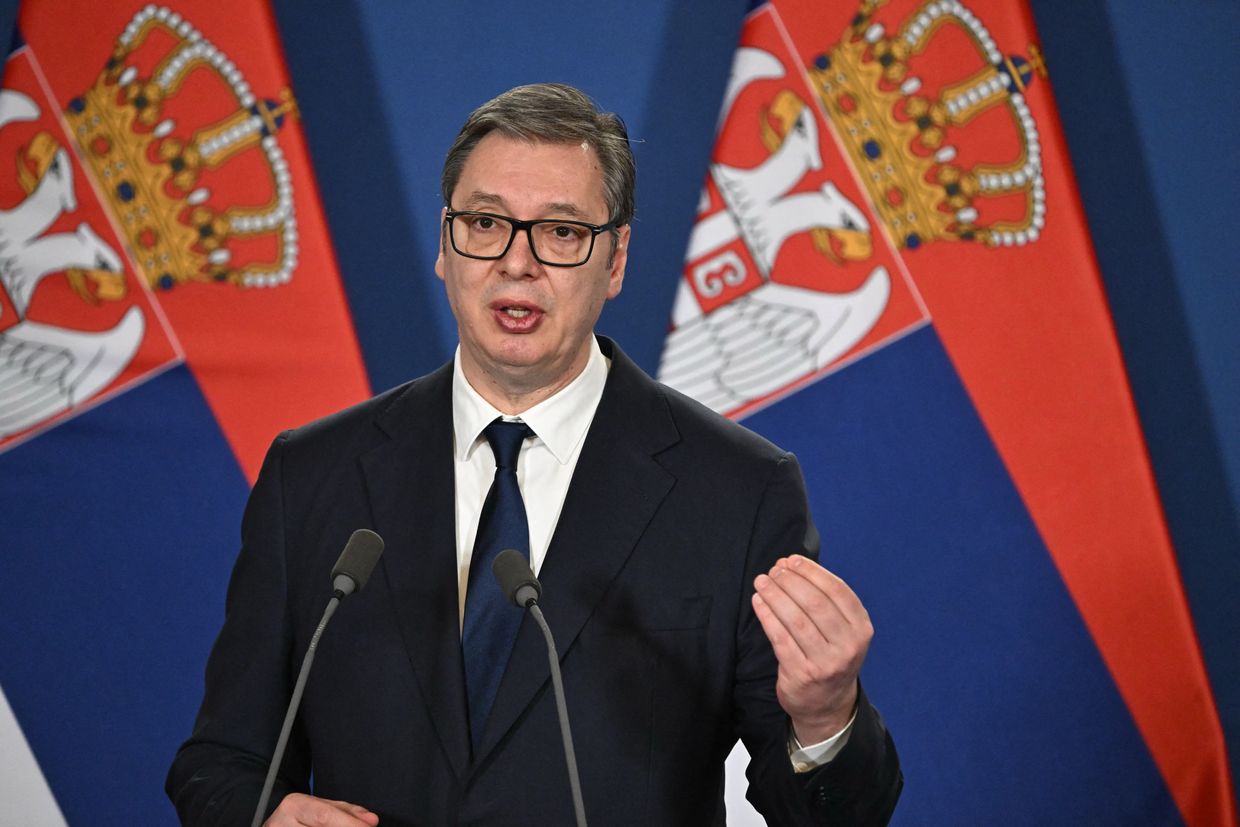
 The Kyiv IndependentAnna Fratsyvir