Smoke rises above the town of Al-Mansouri in southern Lebanon on Wednesday. The release of Lebanese prisoners would come amid talks to disarm Hezbollah and end Israeli occupation of southern Lebanon.
A group of 18-year-old students registering to vote at what was then the Atlanta Division of the University of Georgia on Jan. 15, 1954. Georgia extended the right even before the adoption of the 26th Amendment.
Ukraine has asked the EU to spend billions from its support loan on Patriot air-defense missiles, a request European Commission President Ursula von der Leyen confirmed the bloc is weighing. How far the money would stretch depends on a price only Washington controls.
Russia keeps firing more ballistic missiles at Ukrainian cities than the country can shoot down, the warheads hardest for its air defenses to stop. Only a US-made Patriot system can catch them, and their in
Ukraine has asked the EU to spend billions from its support loan on Patriot air-defense missiles, a request European Commission President Ursula von der Leyen confirmed the bloc is weighing. How far the money would stretch depends on a price only Washington controls.
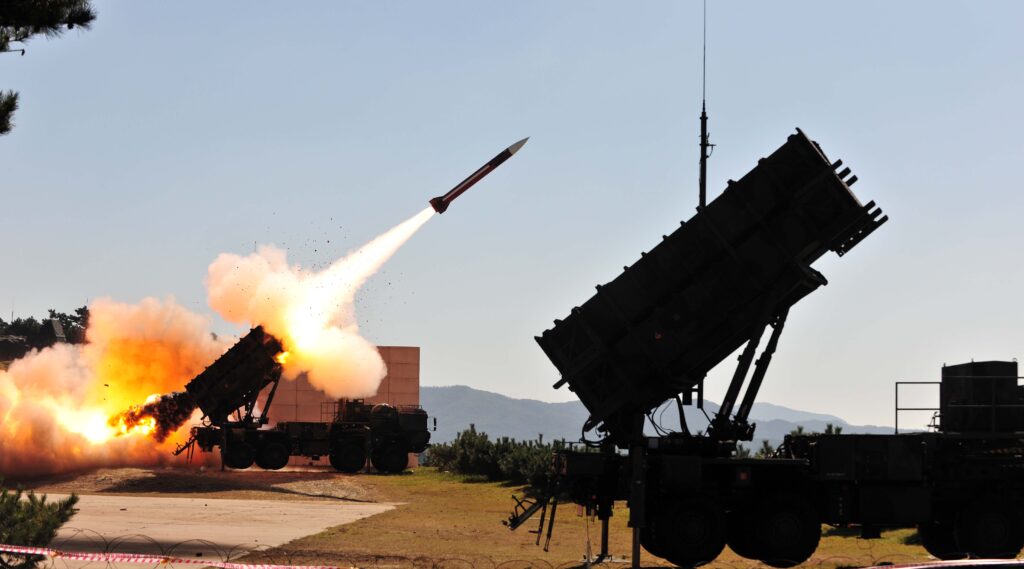
Russia keeps firing more ballistic missiles at Ukrainian cities than the country can shoot down, the warheads hardest for its air defenses to stop. Only a US-made Patriot system can catch them, and their interceptors remain in short supply worldwide, so who pays for them and Washington that agrees or disagrees to sell them now shapes how many cities stay covered.
The exemption Kyiv needs
The European Commission has already received a payment request covering Ukraine's air defenses, including the PAC-3 interceptors that arm Patriot systems. Von der Leyen put it at "several billion euros" and said member states were reviewing it, without naming a figure.
Suspilne, citing its own sources, reported that the request seeks just over $2.3 billion, with another $4.6 billion from the loan's defense tranche going to arms manufactured in Ukraine and the EU, mostly drones.
The money would come from the EU's $104 billion support loan for 2026–27. Because PAC-3 is US technology, spending loan money on it needs an EU exemption. National representatives will take up the decision on 7 September.
What the money actually buys
Defense Express has calculated how many interceptor missiles Ukraine can get with the loan. At the $4–5 million per round the US Army pays, $2.3 billion would fund 460-580 interceptors. At the $6.61 million export price Germany paid in late 2024, about 315. At up to $12.3 million each, the US cleared for Saudi Arabia on 30 January 2026, just 190.
Why money isn't the real problem
For Ukraine, the harder question is not price but whether it can get the missiles at all. Even 315 rounds would equal about half the world's current yearly output, which the sole producer, Lockheed Martin, is straining to lift from around 600 a year to 2,000 by 2030.
Kyiv has been short of interceptors for months. In August, Zelenskyy said Ukraine reached a deal with the US for monthly Patriot deliveries, but that it still needs at least around 5% of American output to get through winter. EU Foreign Policy Chief Kaja Kallas has urged member states to hand over interceptors, especially those with shelf lives nearing their end.
The pro-democracy dissident was accused of urging Western politicians like Nancy Pelosi and Marco Rubio to pressure Hong Kong by imposing sanctions on the city.
The pro-democracy dissident was accused of urging Western politicians like Nancy Pelosi and Marco Rubio to pressure Hong Kong by imposing sanctions on the city.
Joshua Wong in Washington in 2019. His efforts to lobby Western politicians to pressure Hong Kong are at the center of his latest national security case.
Amid a trade war, Canada’s Liberals swept three special votes and new polling suggested strong support for Prime Minister Mark Carney and his retaliatory tariffs against the U.S.
Amid a trade war, Canada’s Liberals swept three special votes and new polling suggested strong support for Prime Minister Mark Carney and his retaliatory tariffs against the U.S.
Government bond yields are hitting multi-decade highs, reflecting anxiety about debt levels, deficits and inflation. The effects will extend to mortgages, business loans and other types of credit.
Government bond yields are hitting multi-decade highs, reflecting anxiety about debt levels, deficits and inflation. The effects will extend to mortgages, business loans and other types of credit.
Ukraine's former defense minister Mykhailo Fedorov has offered to help the United States build a fleet of attack drones if Washington sends Ukraine the Patriot interceptor missiles it needs to get through winter, he told the Financial Times. The idea is Fedorov's own proposal, not a deal, and he holds no government post that would let him negotiate one for Kyiv. He is in Washington mainly to raise American money for a fund that would both invest in Ukrainian defense-tech c
Ukraine's former defense minister Mykhailo Fedorov has offered to help the United States build a fleet of attack drones if Washington sends Ukraine the Patriot interceptor missiles it needs to get through winter, he told the Financial Times. The idea is Fedorov's own proposal, not a deal, and he holds no government post that would let him negotiate one for Kyiv. He is in Washington mainly to raise American money for a fund that would both invest in Ukrainian defense-tech companies and build new ones of its own.
Over the past year, Ukraine's partners have shifted from handing over weapons off their shelves to funding and co-producing Ukrainian-designed drones and missiles, inside and outside the country.
What the fund would do
Fedorov used his working trip to Washington to line up venture funds, entrepreneurs and tech companies as backers, Suspilne reported. The fund would not simply invest in existing Ukrainian defense-tech firms, he wrote; it would also create new companies around the technologies the front line needs most. He set out three targets: battlefield robots to replace soldiers in the most dangerous positions, jet-powered interceptor drones to bring down Russia's faster new attack drones, and cheap missiles that use artificial intelligence. He did not say what his own role would be, or whether he would profit. He said the next step is to assemble a team and launch the first projects.
Explore further
The Fedorov protesters lost. But they backed a man for what he built, not what he promised—and that may be new in Ukraine.
The interceptors behind the offer
Fedorov framed the drone help as a straight swap.
"I'm ready to make that trade," he told the FT.
Ukraine is running low on interceptor missiles for its Patriot batteries, one of the few air-defense systems able to reliably stop Russia's ballistic missiles. Fedorov declined to say whether he would meet anyone from the Trump administration.
Ukraine's ex-minister turns open critic
President Volodymyr Zelenskyy dismissed Fedorov on 15 July, after six months in the job. Fedorov said a feud with Commander-in-Chief Oleksandr Syrskyi, who he says blocked his reforms, drove the split, Zelenskyy removed Syrskyi on 21 July as protests spread. in an interview with Reuters published on 25 August.
"it looks as though we're gradually, slowly losing," he said in an interview with Reuters.
The administration has revoked funding for bike paths, and encouraged removing some. A cycling advocate said it is playing on the idea of “that dork on a bike.”
The administration has revoked funding for bike paths, and encouraged removing some. A cycling advocate said it is playing on the idea of “that dork on a bike.”
After a drop in demand driven by a nationwide outbreak of cyclosporiasis, California growers are plowing lettuce back into the soil and laying off workers.
After a drop in demand driven by a nationwide outbreak of cyclosporiasis, California growers are plowing lettuce back into the soil and laying off workers.
Canada’s minister in charge of trade with the U.S. was responding to comments by Jamieson Greer, the U.S. trade representative. But that was before any mention of Lake Ontario.
Canada’s minister in charge of trade with the U.S. was responding to comments by Jamieson Greer, the U.S. trade representative. But that was before any mention of Lake Ontario.
A year into a government review of the purchase of as many as 88 F-35s, one premier says buying American warplanes makes no sense in the face of President Trump’s latest tariffs.
A year into a government review of the purchase of as many as 88 F-35s, one premier says buying American warplanes makes no sense in the face of President Trump’s latest tariffs.
The F-35 Lightning, made by American defense contractor Lockheed-Martin, costs between $82.5 million and $109 million per plane, depending on the variant.
The former political prisoner Luis Manuel Otero Alcántara is unpacking 4,000 paintings he brought to Miami from Cuba and dodging criticism from exiles who once welcomed him.
The former political prisoner Luis Manuel Otero Alcántara is unpacking 4,000 paintings he brought to Miami from Cuba and dodging criticism from exiles who once welcomed him.
A 15-year-old using social media apps in Australia in July, more than half a year after the country had implemented a ban on children under 16 using many platforms.
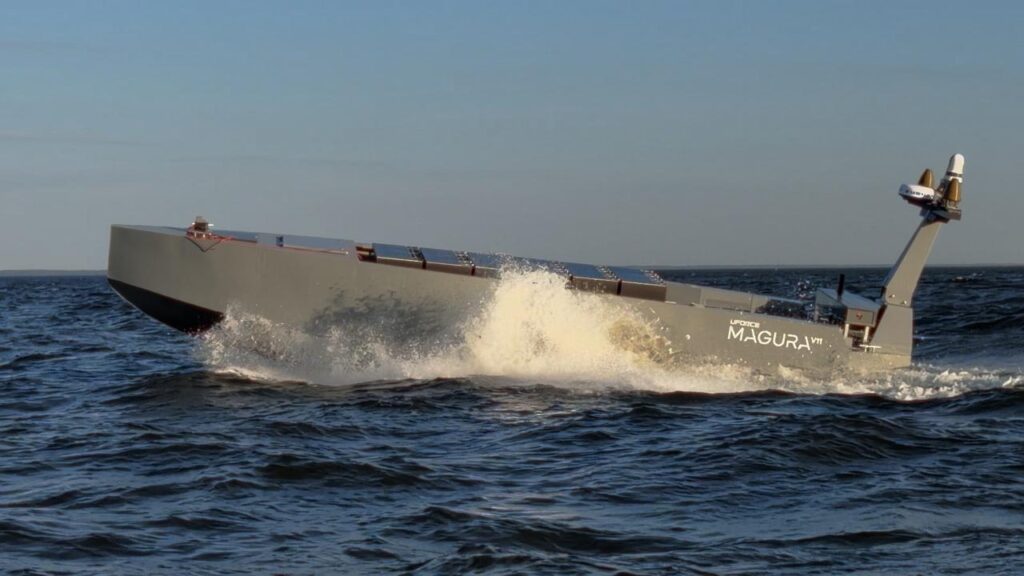
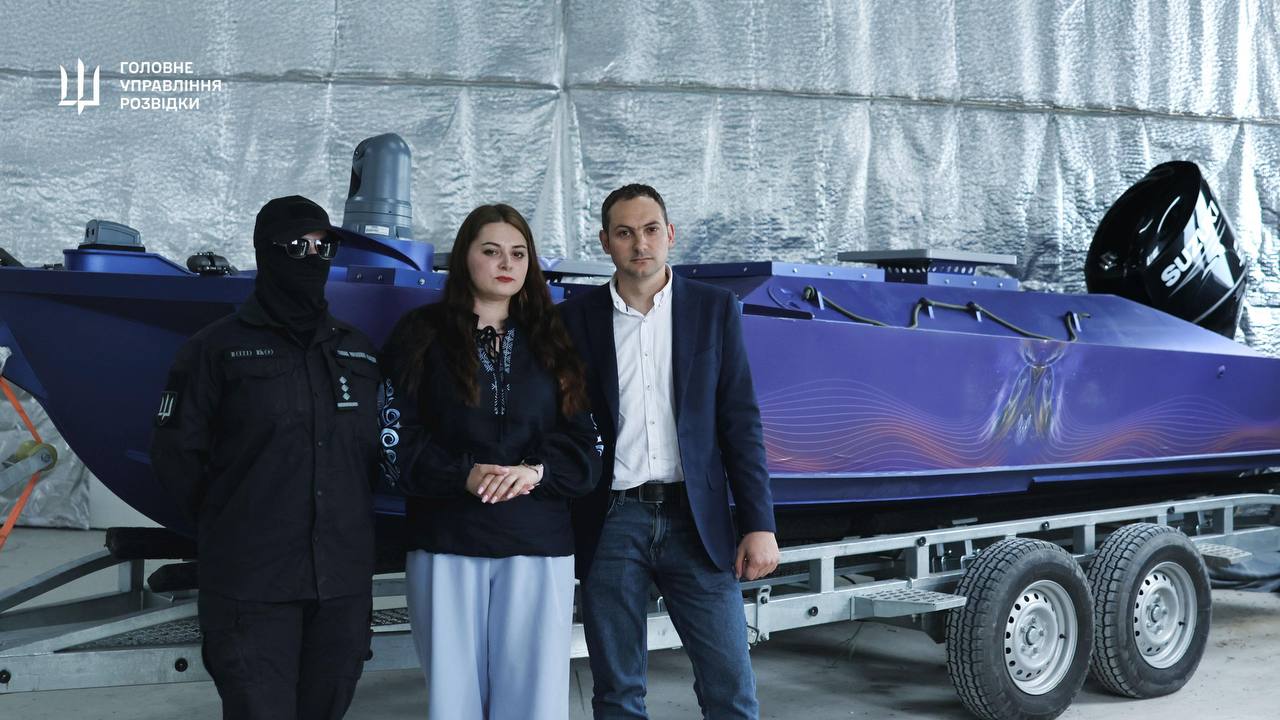
Ukraine has unveiled the largest robot boat in its Magura sea-drone family, and this one is built to carry and launch other drones instead of ramming enemy ships, the company UFORCE told Militarnyi. UFORCE showed the new V11 during Ukraine's Independence Day drone parade, signaling a move from single-use attack craft toward a floating base at sea.
Ukraine has fought its Black Sea war with throwaway robot boats—cheap, one-way, built to hit a ship and go down with it. Shi
Ukraine has unveiled the largest robot boat in its Magura sea-drone family, and this one is built to carry and launch other drones instead of ramming enemy ships, the company UFORCE told Militarnyi. UFORCE showed the new V11 during Ukraine's Independence Day drone parade, signaling a move from single-use attack craft toward a floating base at sea.
Ukraine has fought its Black Sea war with throwaway robot boats—cheap, one-way, built to hit a ship and go down with it. Shifting toward reusable platforms that keep other machines running far from any coast marks a different bet.
A floating base, not a battering ram
The V11 is the biggest drone in its class. Earlier, Magura boats were made to hit warships. This one is a transport platform that carries other unmanned systems and gear. Its main feature is the ability to launch a larger number of unmanned systems straight from its deck, turning one boat into a mobile base for them. The company refers to the drone as both the V11 and the MV11.
Explore further
American defense company Red Cat announces serial production of copy of Ukraine’s Magura V7 and says it’s their own development
What the V11 can do
UFORCE says the drone carries up to 2,200 kg (about 4,850 pounds) and can stay at sea for up to seven days. The company built it for reconnaissance, surveillance, support of landing operations, and resupplying fuel and equipment to other naval drones.
"It is a platform that provides multi-domain capability: one carrier that carries and launches other unmanned systems far from shore for operations across all domains," said Oleh Rogynskyy, CEO of UFORCE.
He said the investment the company attracts works for Ukraine's Defense Forces.
From strikes to a US production line
UFORCE's design and engineering office in Portugal developed the V11, drawing on international investment and aiming at the needs of Ukraine's Defense Forces. Its work there was first reported in September 2025.
Explore further
Meet the Magura W6: Ukraine’s latest threat to Russian warships
In July, the company and the US firm ReconCraft signed a memorandum for the licensed production of Magura naval drones in the US. Ukraine's Magura boats have forced Russia's Black Sea Fleet back to safer ports, and some versions have even shot down Russian fighter jets.
Business owners are preparing for financial pain after the latest U.S.-Canada trade talks collapsed. But many Canadians are embracing a show of resistance.
Business owners are preparing for financial pain after the latest U.S.-Canada trade talks collapsed. But many Canadians are embracing a show of resistance.
Experts warn that a campaign aimed at avoiding military escalation could instead provoke it, as Iranian leaders vow retaliation across the oil-rich Gulf.
Experts warn that a campaign aimed at avoiding military escalation could instead provoke it, as Iranian leaders vow retaliation across the oil-rich Gulf.
Detailed accounts of the final hours of the negotiations show that, while the United States offered Canada what it said was the best deal of any country, what Canada had to give up in exchange was seen as unthinkable.
Detailed accounts of the final hours of the negotiations show that, while the United States offered Canada what it said was the best deal of any country, what Canada had to give up in exchange was seen as unthinkable.
Visitors to Martha’s Vineyard can now traverse a property once owned by Jackie Kennedy Onassis. Known as the Squibnocket Pond Reservation, the 330-acre reserve opened last year and added a new trail in July.
Visitors to Martha’s Vineyard can now traverse a property once owned by Jackie Kennedy Onassis. Known as the Squibnocket Pond Reservation, the 330-acre reserve opened last year and added a new trail in July.
Analysts say Tehran could intensify the dispute militarily after the United States announced new efforts to squeeze Iran’s economy. One Iranian official vowed that “not a single drop of oil” would leave the gulf.
Analysts say Tehran could intensify the dispute militarily after the United States announced new efforts to squeeze Iran’s economy. One Iranian official vowed that “not a single drop of oil” would leave the gulf.
Motorists drive past an anti-American billboard in Tehran on Monday. President Trump has threatened Iran with “economic warfare and isolation on an unprecedented scale.”
The discussions, reported by the Syrian state news agency, came days after Israel struck an air base in Syria’s northwest, the latest in a series of military interventions.
The discussions, reported by the Syrian state news agency, came days after Israel struck an air base in Syria’s northwest, the latest in a series of military interventions.
President Javier Milei of Argentina, left, with Flávio Bolsonaro, who hopes to be Brazil’s next president, last month. Mr. Milei’s strident support of Mr. Bolsonaro’s candidacy led to a rift with the current Brazilian president.
A combine harvester threshing wheat in a field in Seeluebbe, Germany, this month. Yields in the country are down for several crops, including wheat, because of drought and heat.
Officials are investigating after multiple strains of E. coli and a type of salmonella sickened dozens of people across the United States. Two people were infected with both salmonella and E. coli.
Officials are investigating after multiple strains of E. coli and a type of salmonella sickened dozens of people across the United States. Two people were infected with both salmonella and E. coli.
After U.S. prosecutors accused Gov. Rubén Rocha Moya of protecting the Sinaloa cartel, he said he would step down to focus on his defense. On Friday, he declared he was back and faced much criticism.
After U.S. prosecutors accused Gov. Rubén Rocha Moya of protecting the Sinaloa cartel, he said he would step down to focus on his defense. On Friday, he declared he was back and faced much criticism.
At least five of the people flown to Liberia under the Trump administration’s third-country deportation program resisted leaving the plane. They were then flown to Equatorial Guinea.
At least five of the people flown to Liberia under the Trump administration’s third-country deportation program resisted leaving the plane. They were then flown to Equatorial Guinea.
Canadian negotiators were in Washington to finalize a deal that would stave off new tariffs and improve the terms of existing ones, but Mark Carney faces a tough sell back home.
Canadian negotiators were in Washington to finalize a deal that would stave off new tariffs and improve the terms of existing ones, but Mark Carney faces a tough sell back home.
The ArcelorMittal Dofasco steel plant in Hamilton, Ontario. President Trump hit the Canadian steel industry with tariffs of up to 50 percent last year.
In Tehran last month. Before the latest round of sanctions was announced, Iranians were already contending with sky-high inflation and other economic hardships.
The transportation secretary’s six-part YouTube series is fueling ethical concerns over family adventures funded in large part by corporate sponsors regulated by his department.
The transportation secretary’s six-part YouTube series is fueling ethical concerns over family adventures funded in large part by corporate sponsors regulated by his department.
Japan had tried to dissuade the U.S. from imposing sanctions on Tomoko Akane, president of the International Criminal Court, but the White House pressed ahead.
Japan had tried to dissuade the U.S. from imposing sanctions on Tomoko Akane, president of the International Criminal Court, but the White House pressed ahead.
While President Trump has declared that the two countries effectively have a deal, a Canadian trade official said progress continued ahead of the Saturday deadline.
While President Trump has declared that the two countries effectively have a deal, a Canadian trade official said progress continued ahead of the Saturday deadline.
Dominic LeBlanc, the Canadian minister in charge of U.S. trade, arriving to meet with Jamieson Greer, the U.S. trade representative, on Thursday in Washington.
President Trump appeared to suggest that the United States would impose economic penalties on countries that do business with Iran, though he did not specify what actions he would take.
President Trump appeared to suggest that the United States would impose economic penalties on countries that do business with Iran, though he did not specify what actions he would take.
Ukraine has brought another 103 servicemembers home from Russian captivity in the first stage of a new prisoner exchange, the Coordination Headquarters for the Treatment of Prisoners of War reported on 19 August 2026. Most of the returning defenders are wounded or seriously ill after captivity that, for some, reached back to 2022, the year of Russia's full-scale invasion. The United States and the United Arab Emirates helped organize the swap, the headquarters said.
Ami
Ukraine has brought another 103 servicemembers home from Russian captivity in the first stage of a new prisoner exchange, the Coordination Headquarters for the Treatment of Prisoners of War reported on 19 August 2026. Most of the returning defenders are wounded or seriously ill after captivity that, for some, reached back to 2022, the year of Russia's full-scale invasion. The United States and the United Arab Emirates helped organize the swap, the headquarters said.
Amid Moscow's full-scale invasion, prisoner swaps have become one of the few channels that still functions between Kyiv and Moscow, and each one hinges on how many enemy captives one side can put on the table for the next round. Thousands of Ukrainian soldiers and, separately, civilians remain in Russian hands, and each release still returns only a fraction of the people whose families are waiting for them.
Who came home
The freed group covers nearly every branch of Ukraine's forces. It includes members of the Armed Forces, the Navy, Territorial Defense, the National Guard and the State Border Guard Service. Alongside soldiers and sergeants, several officers were released.
The SBU said the return of the 103 Ukrainian defenders was coordinated by the Joint Center for the Search and Release of Prisoners of War, the Coordination Headquarters for the Treatment of POWs, and other authorized agencies.
The Coordination HQ detailed the composition. The Defense Ministry accounted for 92 of those freed, and the Interior Ministry for 11. Two of the returnees are officers, the rest enlisted personnel and NCOs. Interior Minister Ivan Vyhivskyi said his ministry's 11 broke down into five National Guardsmen and six border guards.
The defenders had been captured across the Donetsk, Luhansk, Kharkiv, Zaporizhzhia, Dnipropetrovsk, Kherson and Sumy directions, as well as at Mariupol. The single largest share, 72, fell on the Donetsk front. The youngest freed defender was born in 2000, and the oldest is 59.
Freed Ukrainian prisoners of war and officials pose with military flags after returning from Russian captivity, 19 August 2026. Photo: Security Service of Ukraine
Years behind Russian bars
The captures span the entire full-scale war. One of those freed had been held since 2022, 16 since 2023, and 48 since 2024. Another 31 were seized in 2025 and seven this year. By the same tally, the International Committee of the Red Cross had confirmed the captivity of 102 of the group before the handover, with a single case verified through other sources.
A previous swap in late June returned 160 defenders, all of them held since 2022.
Freed Ukrainian servicemen wrapped in national flags gather after returning from Russian captivity, 19 August 2026. Photo: Coordination Headquarters for the Treatment of Prisoners of War
Wounded and ill
The released defenders will undergo full medical examinations, receive physical and psychological rehabilitation, and obtain the state payments provided by law. The head of the President's Office, Kyrylo Budanov, said doctors were already doing everything necessary for the returnees, most of whom came back with wounds and serious illness.
Their condition fits a wider pattern Ukrainian officials have described, in which Russia starves most captives and executes many surrendered soldiers on the battlefield.
Released Ukrainian defenders hold State Border Guard Service flags after their return from Russian captivity, 19 August 2026. Photo: Ivan Vyhivskyi / Interior Ministry
"We remember everyone still in captivity"
President Volodymyr Zelenskyy said the freed included men who had defended Mariupol.
"We remember every man and every woman still held captive. We are doing everything possible to bring all our people home," he said.
Freed Ukrainian servicemen wrapped in national flags gather after returning from Russian captivity, 19 August 2026. Photo: Coordination Headquarters for the Treatment of Prisoners of War
The Security Service of Ukraine noted the swap ran through the joint center it operates to coordinate the search and release of prisoners. Oleh Ivashchenko, chief of the Main Directorate of Intelligence (HUR) and head of the Coordination Headquarters, met the returning defenders in person.
The parent company, Dreyer’s Grand Ice Cream, voluntarily recalled five flavors nationwide. No injuries linked to the recalled products have been reported.
The parent company, Dreyer’s Grand Ice Cream, voluntarily recalled five flavors nationwide. No injuries linked to the recalled products have been reported.
The US plan to sell Türkiye F-35 stealth fighter jets has stalled, blocked by a Russian missile system Ankara bought years ago, Semafor reported. Lawmakers in Washington won't clear the deal while Türkiye keeps the hardware. The lone buyer in talks hasn't budged, and destroying the system is now on the table.
Russia has long used arms exports to pull buyers into its orbit, and the war it started raised the price of those ties—leaving governments that bought Russian air
The US plan to sell Türkiye F-35 stealth fighter jets has stalled, blocked by a Russian missile system Ankara bought years ago, Semafor reported. Lawmakers in Washington won't clear the deal while Türkiye keeps the hardware. The lone buyer in talks hasn't budged, and destroying the system is now on the table.
Russia has long used arms exports to pull buyers into its orbit, and the war it started raised the price of those ties—leaving governments that bought Russian air defense to clash with the supplier that sold it.
The Russian system is in the way
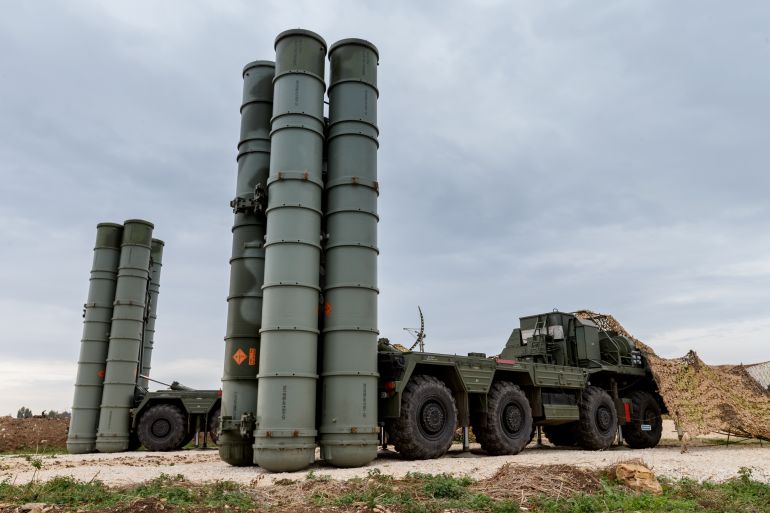
US sanctions law bars Türkiye from the F-35 program while it retains the Russian S-400, Semafor reported. That system is a long-range air defense, built to shoot down planes and missiles. Ankara already paid for six of the jets. They have sat in the United States since Washington expelled Türkiye from the F-35 program in 2019. US President Donald Trump announced plans to sell the jets more than a month ago, and nothing has moved since.
Explore further
Türkiye wants to send Ukraine old US-made cluster munitions—one human rights group is fighting to stop it
No buyer, no easy exit
One way out is to sell the S-400 to another country. Türkiye reportedly opened talks with the United Arab Emirates (UAE) last month, but they don't appear to have progressed. American lawmakers insist Ankara must give up the system entirely first.
Republican Senator Rick Scott told Semafor that Türkiye shouldn't get the jets unless it becomes a true partner—"so if they have the S-400, they cannot have the F-35." Senate Foreign Relations Committee Chairman Jim Risch, a longtime opponent, said the process is "at a standstill."
Explore further
Erdoğan asks Putin to take back Russian S-400 SAM systems in move to win Trump’s favor
Israel and Congress are the live block
The sharper obstacle sits in Washington, Semafor reported. A vote to sell would pit Israel against a NATO ally, and many of Trump's own allies want the S-400 scrapped completely. Israeli Prime Minister Benjamin Netanyahu warned the jets could "destroy the power balance in the Middle East." The outlet said AIPAC, the leading pro-Israel lobby in Washington, is pressing Congress to keep the block.
Selling it still runs through Moscow
Any resale carries its own catch: Russia must approve the transfer of the S-400, giving the Kremlin a reason to block it. The only option that bypasses Moscow is to disable or destroy the system outright. Türkiye earlier tried to return the systems to Moscow, hoping to thaw relations with Washington. It didn't work.
The Trump administration says Ankara hasn't met all the conditions to buy the jets, and the State Department wants the S-400 issue settled with guarantees first.
The Gordie Howe International Bridge, connecting Windsor, Ontario, and Detroit, on the day after it opened last month. President Trump had threatened to block the bridge’s opening.
It was the second federal appellate decision to take issue with the administration’s custom of leaving interim prosecutors in place to lead U.S. attorney’s offices to circumvent congressional approval.
It was the second federal appellate decision to take issue with the administration’s custom of leaving interim prosecutors in place to lead U.S. attorney’s offices to circumvent congressional approval.

 Connexion












 SBU
SBU