❌

Vue normale

The drones that wrecked the road to Kramatorsk are still hunting. Ukraine’s answer: a Frankenstein bulldozer bristling with spikes

Par : David Axe
6 novembre 2026 à 09:44

A Ukrainian Wisent.

  • The road to Kramatorsk from the south is clogged with wrecked vehicles
  • It's the job of the engineers from the Ukrainian 100th Mechanized Brigade to clear those wrecks
  • For that, the engineers ride in a special armored bulldozer

The Ukrainian army's 100th Mechanized Brigade holds positions in or around Oleksiievo-Druzhkivka, which straddles the H20 highway threading between the ruins of Kostiantynivka northwest through Druzhkivka toward Kramatorsk, one of the last two big free cities in eastern Ukraine's Donetsk Oblast.

This axis is arguably the locus of the most intensive fighting in Ukraine right now as the Russians throw troops and vehicles at Ukrainian defenses in the hope of breaking through to Kramatorsk and neighboring Sloviansk from the south. It should come as no surprise that the H20 and adjacent roads are choked with the burned-out husks of Russian and Ukrainian vehicles.

It's a problem, and the 100th Mechanized Brigade is solving it with sheer brute force. The brigade has attached a dozer blade to one of its drone-proofed armored vehicles, and is deploying the vehicle as a combat bulldozer. The dozer "push[es] the most difficult obstacle from the road and clears the way for other equipment," the 100th Mechanized Brigade stated.

🇺🇦 An armored combat vehicle from the 100th Brigade of the Ukrainian Armed Forces, converted into a bulldozer for clearing roads of damaged ground drones and vehicles. pic.twitter.com/m2L9pLFzh3

— MAKS 26 🇺🇦👀 (@Maks_NAFO_FELLA) November 4, 2026

Danger is constant. The same drones that littered the roads with destroyed vehicles also threaten the engineers whose job it is to clear the scorched hulks.

The 100th Mechanized Brigade is proud of its road-clearing engineers. It recently posted a drone video depicting the dozer in action in Druzhkivka, motoring out from under the partial protection of overhead anti-drone netting to shove destroyed vehicles off the H20.

The 100th, like many Ukrainian mechanized brigades, has an engineer battalion that supports its infantry and tank battalions. The engineers ride in an array of specialized vehicles for digging trenches, clearing earthen obstacles and mines, and towing damaged vehicles. And they can also convert practically any armored vehicle into a do-it-yourself combat engineer vehicle, or CEV, by attaching a dozer blade, like the one made by U.K. firm Pearson Engineering.

Pearson's General Purpose Blade "is suitable for clearing obstacles, urban roadblocks and rubble and it can also be used to move earth and fill craters," the company explained.

It's hard to say on the basis of one grainy drone video what kind of vehicle the 100th Mechanized Brigade fitted with a dozer blade for road-clearing duty. The brigade rides in Marder and M-2 infantry fighting vehicles, YPR-765 armored personnel carriers, and T-64, T-72, and T-80 tanks, among other types.

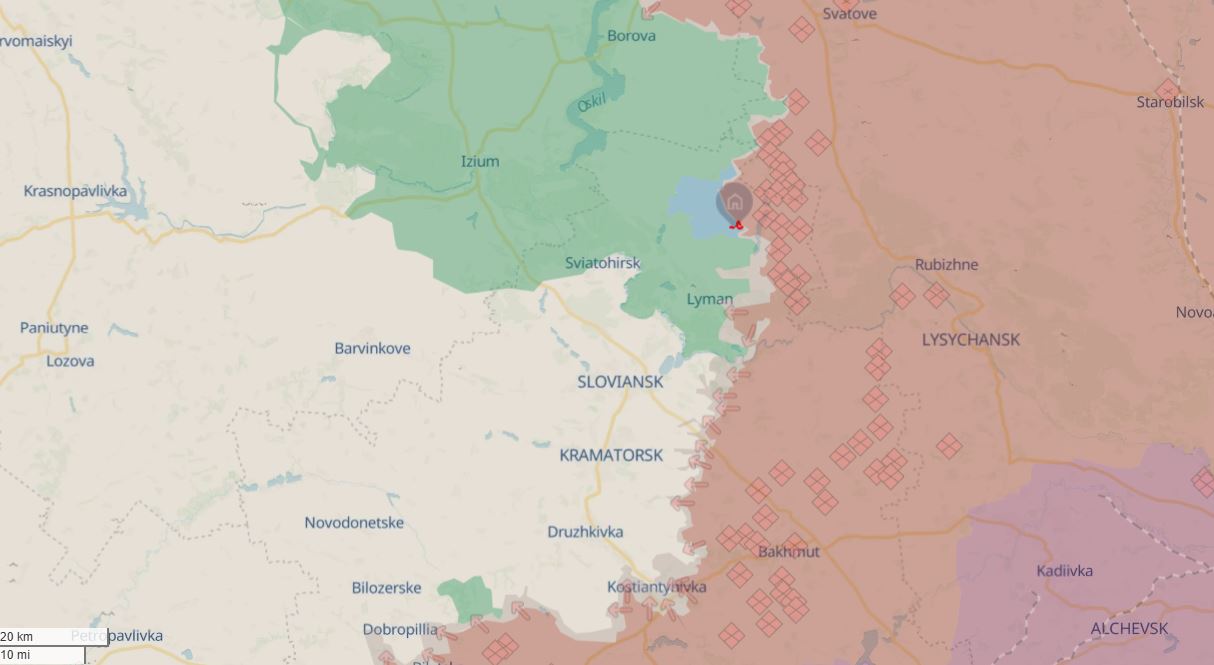
Front-line changes in Ukraine from 6 October to 4 November 2026
Map: Euromaidan Press

Special vehicles

If the unit has specialized CEVs, it's unclear what kind. The most common CEVs in Ukrainian service include the German Wisent and the Soviet IMR-2. The Ukrainians received a number of newer CEVs in the lead-up to their failed 2023 counteroffensive, including American Assault Breachers and Finnish Leopard 2Rs. But these vehicles suffered heavy losses while trying to lead tanks and fighting vehicles across dense Russian minefields. It seems no Assault Breachers or Leopard 2Rs are left in Ukrainian service.

Combat engineer vehicles, whether purpose-made or improvised, are in high demand on both sides of Russia's wider war on Ukraine. To take some of the pressure off, and safeguard human crews, the Ukrainians in particular are migrating some of the traditional tasks of a CEV to unmanned systems.
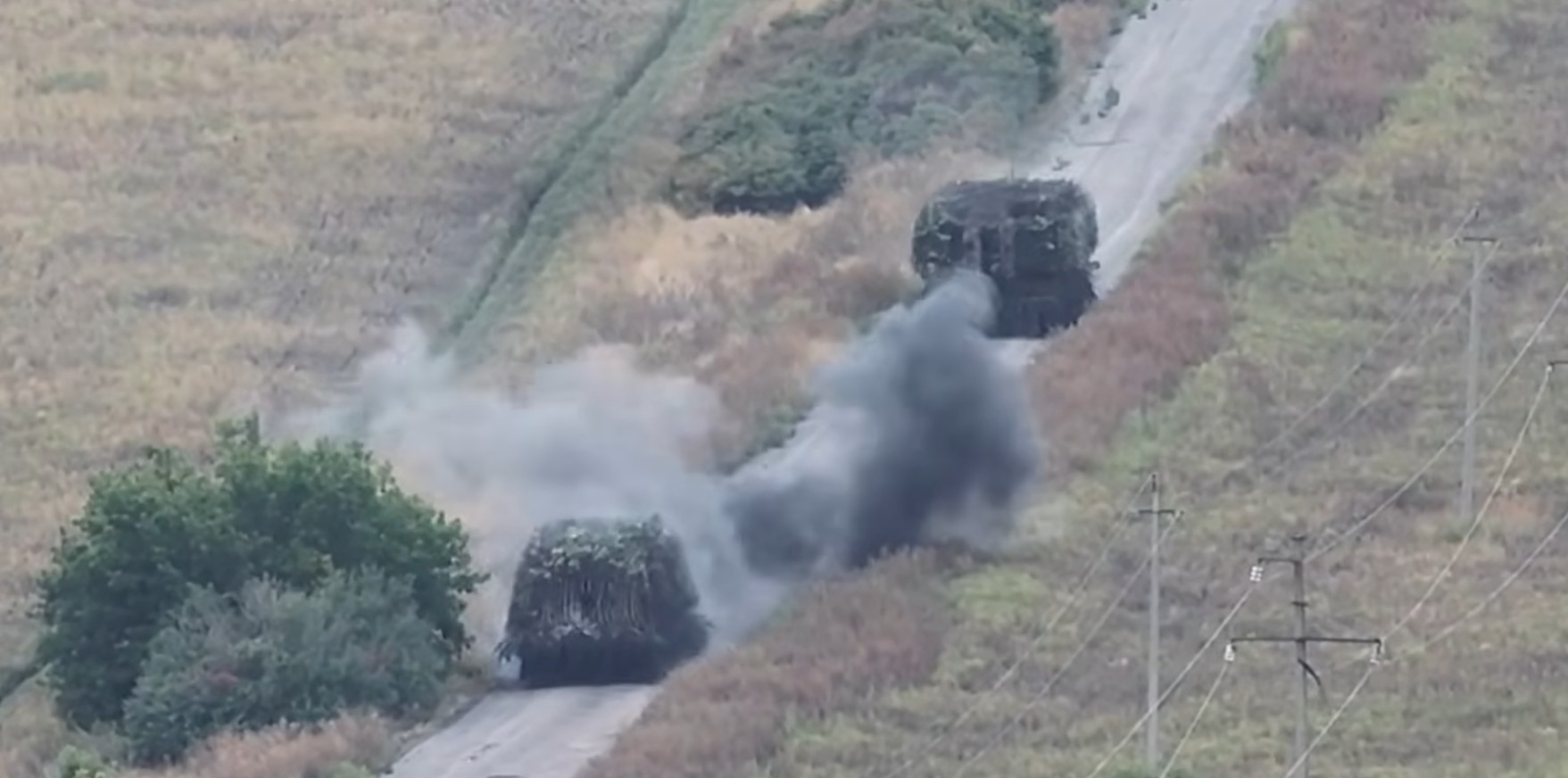
475th Assault Regiment tanks under drone escort.
Explore further

Ukraine is now sending its tanks into battle with drone escorts: they can drive into a Russian kill zone and come back alive

These capabilities were dramatically on display when the Ukrainian 3rd Army Corps launched Operation Vivaldi, its ultimately successful effort to push back a pair of Russian field armies along the northern approach to Sloviansk and Kramatorsk, back in the spring.

Where before, engineering vehicles may have cleared the Russian minefields, the 3rd Army Corps sent in heavy ground robots equipped with mine-clearing metal flails. Other Ukrainian units have experimented with aerial drones as de facto route-clearance systems. Heavy bomber drones have flown ahead of vehicle columns, dropping grenades to clear Russian ambush drones that sit on the road, waiting to take off and ambush passing vehicles.

But no aerial drone can shove a multi-ton wreck off a road. And while remote-controlled heavy vehicles may eventually be up to the task, they're still fairly rare in the Ukrainian inventory. So for now, it takes a crewed bulldozer to scrape wreckage off the most important roads faster than drone strikes can add to the wreckage.

A three-ton bomb fell on an aid queue on Monday—two days later, rescuers have found 37 dead. And now Russia strikes Ukraine’s power stations

4 novembre 2026 à 05:39

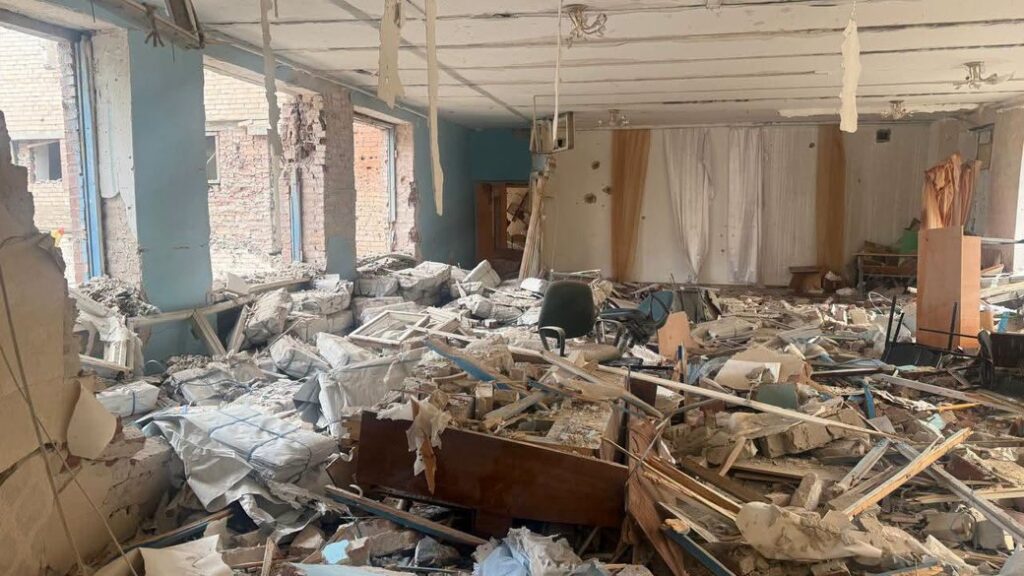
Rescuers search the rubble of the underground school in Komyshuvakha, Zaporizhzhia Oblast, Ukraine, November 2026

The death toll from Russia's bombing of an aid distribution point in Komyshuvakha rose to 37, the Zaporizhzhia Oblast Military Administration reported on 4 November. Russian attacks on 3 and 4 November killed and wounded civilians across seven oblasts. Moscow also kept hitting Ukraine's power system and aimed drones at a substation serving a nuclear plant.

Russia is running two campaigns at once this autumn: one against people in front-line towns, the other against the grid the whole country relies on. Ukraine says it intercepted a Russian plan for this winter that lists 60 critical infrastructure sites as targets for up to 1,000 missiles, drones, and bombs. Nuclear plants now produce roughly half of Ukraine's electricity, and the substations that feed them have been targeted before. Hitting those links can black out the country without striking a reactor.

Komyshuvakha's toll keeps rising

On the third day of searches, rescuers had identified 12 of the dead, while 59 people were still listed as missing, Ukraine's National Police reported. Some of the missing may be among those already found, and up to 38 more people may lie under the rubble. Ivan Fedorov, head of Ukraine's State Agency for Restoration and Infrastructure Development, said Russia hit people collecting humanitarian aid with a FAB-3000, a three-ton aerial bomb, on 2 November. Five people were injured.

On 2 November, Russian forces struck a school in Komyshuvakha, Zaporizhzhia Oblast, killing 26 people. Source: Ukraine's State Emergency Service
Explore further

Russia strikes school where civilians recieved aid in Zaporizhzhia Oblast days after Oleshky truce. Nine more bombs hit its shelter, killing at least 26

The underground school was built to a single standard design and checked by every relevant service, but no underground school in Ukraine is designed to withstand a FAB-3000, Fedorov told a briefing, Ukrinform reported. “These were launches of nine aerial bombs, some of them quite rare 'three-thousanders',” he said. Latvian Foreign Minister Baiba Braže called for an extraordinary meeting of the UN Security Council over the strike. Latvia chairs the Council this month.

Russia kills civilians in Zaporizhzhia, Dnipropetrovsk, and Donetsk oblasts

Two Russian strikes on Vilniansk killed a woman, 52, and a man, 63, and injured a man, 59, the oblast administration reported on 4 November. A fire broke out in a five-story apartment building. Russian shelling also killed a 53-year-old man in Bilenke, in the same district. Over the previous day, Russia killed two people and injured three in Zaporizhzhia and its district, striking 51 towns and villages 857 times, Fedorov wrote.

outages
Explore further

One of largest Russian attacks yet on Ukraine’s energy system forces emergency blackouts across regions and leaves Kyiv without water

On 3 November, Russian drones, artillery, and missiles killed two people in Dnipro and injured 38 across Dnipropetrovsk Oblast, oblast head Oleksandr Hanzha reported. Fourteen people hurt in Dnipro are still in hospital, four in serious condition. Overnight, a Russian strike set an enterprise in Dnipro on fire and injured two men.

Aftermath of a Russian attack on Dnipro, Ukraine, 3 November 2026
Aftermath of a Russian attack on Dnipro, Ukraine, 3 November 2026. Photo: Dnipropetrovsk Oblast Military Administration

On 3 November in Donetsk Oblast, Russia killed one person in Kramatorsk and one in Yasnohirka, where four guided bombs also injured five, oblast head Vadym Filashkin said. Three more people were wounded in Sloviansk.

Russian drones also wounded a 69-year-old woman in Sumy Oblast and, on 3 November, three people at a farm business in Zhytomyr Oblast's Liubar community. In Rivne Oblast, a Russian attack hit a gas station and hurt a man on 3 November, and a woman was injured overnight. In Kherson, a man stepped on a Russian mine.

russia blacked out europe's largest nuclear plant 15 times since occupying 2022 · post zaporizhzhia power energoatom znpp russian-occupied (znpp) again lost external 40th anniversary chornobyl disaster said same day
Explore further

Russia won’t start a nuclear war. It might cause a nuclear disaster.

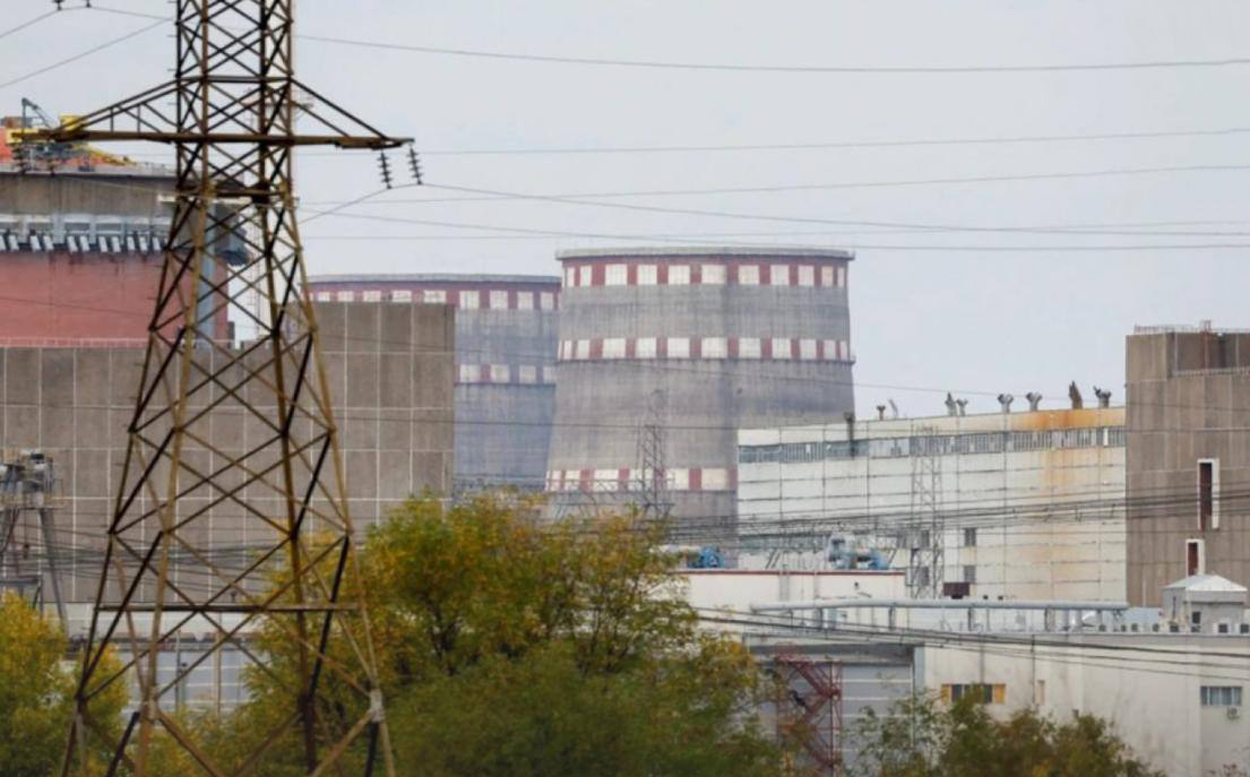
Drones sent at a substation serving the Khmelnytskyi nuclear plant

During the 3 November mass attack, Russia sent three drones at a substation critical to the stable operation of the Khmelnytskyi nuclear plant, First Deputy Prime Minister and Energy Minister Denys Shmyhal said. He called it “a serious step of escalation.” Ukraine informed the International Atomic Energy Agency (IAEA), which had not commented.

Overnight on 4 November, Russia hit an energy facility, a shopping center, and homes in Odesa Oblast, the oblast administration reported. Critical infrastructure in Vinnytsia was also damaged. By late morning, Ukraine's Air Force was still tracking Russian jet-powered drones heading for Bila Tserkva, south of Kyiv.

Russia’s Rubicon hunts Ukrainian drone pilots. In Vivaldi, it became the target, and its morale fell sharply, says the Ukrainian general

20 octobre 2026 à 08:23

russia's rubicon built hunt ukrainian drone pilots vivaldi became target its morale broke says general · post left right major dmytro rohoziuk acting commander ukraine’s third army corps; brigadier andrii

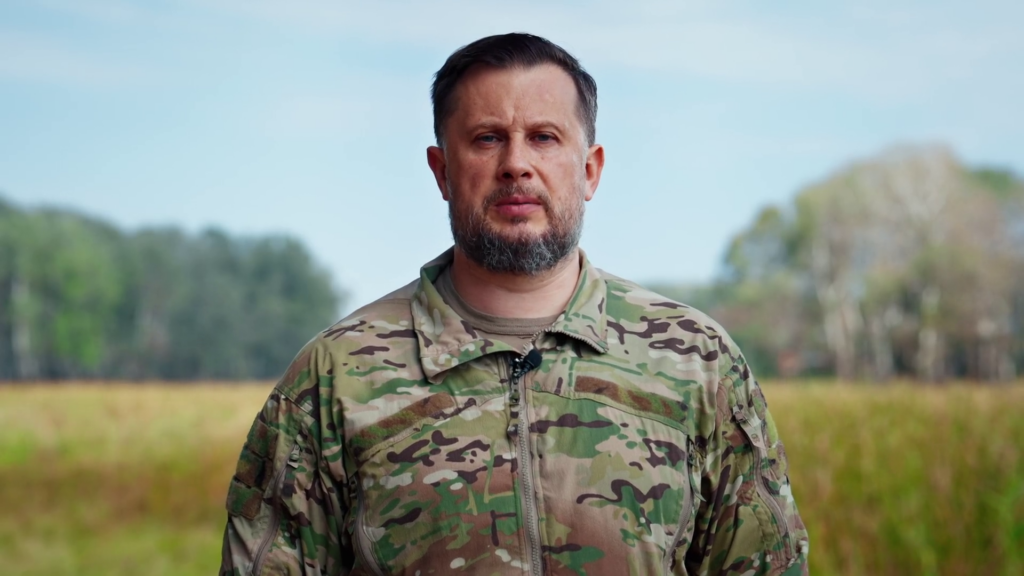
Russia’s Rubicon drone unit, which is sent to hunt Ukrainian drone pilots, was not used to being hunted itself, Brigadier General Andrii Biletskyi told journalists on 19 October. He was summing up Operation Vivaldi, which his Third Army Corps fought in northern Donetsk Oblast from May to mid-October. Once its pilots realized they were being killed, Rubicon’s morale dropped sharply, he said.

Russia has fought for 12 years to take all of Donetsk Oblast, and Sloviansk and Kramatorsk anchor the fortress belt of cities Ukraine still holds there. Vivaldi retook 277 km² in northern Donetsk Oblast. Biletskyi says it destroyed Russia’s bridgehead on the Chornyi Zherebets River and forced Moscow to drop its plan to bypass Lyman from the north and encircle the two cities. On that front, the Third Corps had flagged Rubicon, Russia’s elite drone unit, as a threat.

Hunting the hunters

Once a Rubicon position was found, the Third Assault Brigade and the KRAKEN drone regiment committed any number of FPV and bomber drones to destroy its crews, Biletskyi said.

The brigade’s commander, Yaroslav Levenets, said his troops prepared for Rubicon’s arrival and concentrated on killing its pilots. He gave no details.

“Not stable in defense,” Levenets said of Rubicon’s troops.

They dislike sitting in trenches, he said, and under pressure they grow nervous and change positions.

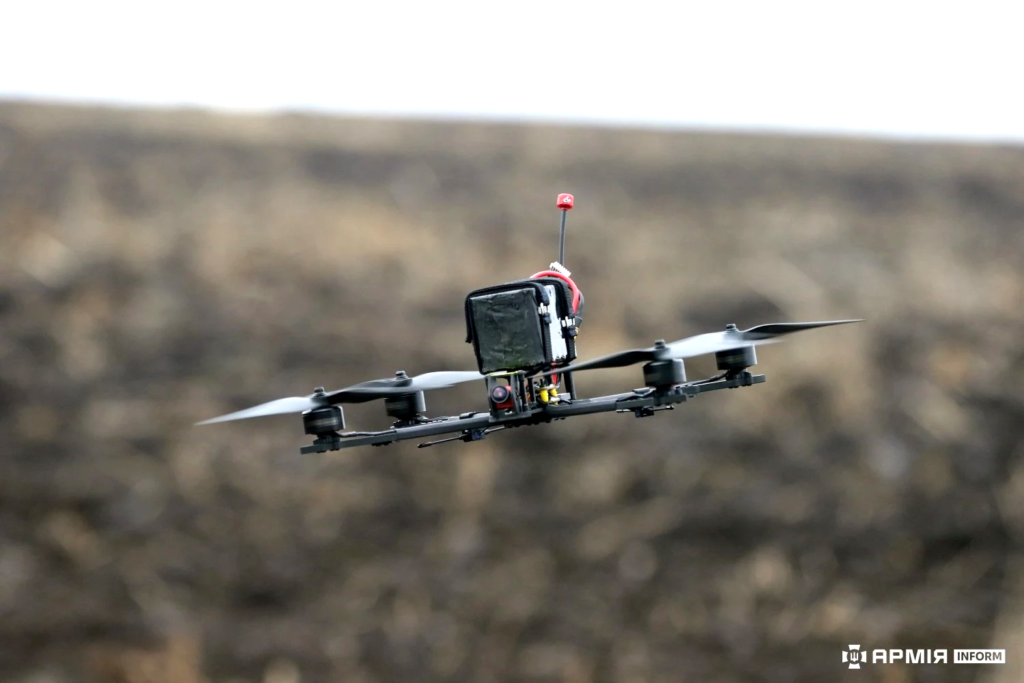
An FPV drone.
An FPV drone. Illustrative photo: ArmyInform

Named for four seasons

Biletskyi said the name was chosen at the very start of planning, in winter 2025–2026, many months before the operation began. The original plan had four stages, one for each season, and later grew to slightly more, ArmyInform reported.

When he first unveiled the operation in September, he put it this way:

“Vivaldi, as is known, has four seasons. And this is only the first one.”

He credited two planners, known by the call signs Yurist and Leshyi. Leshyi, an assault soldier wounded seven times who later moved to staff work, was killed. Yurist was seriously wounded.

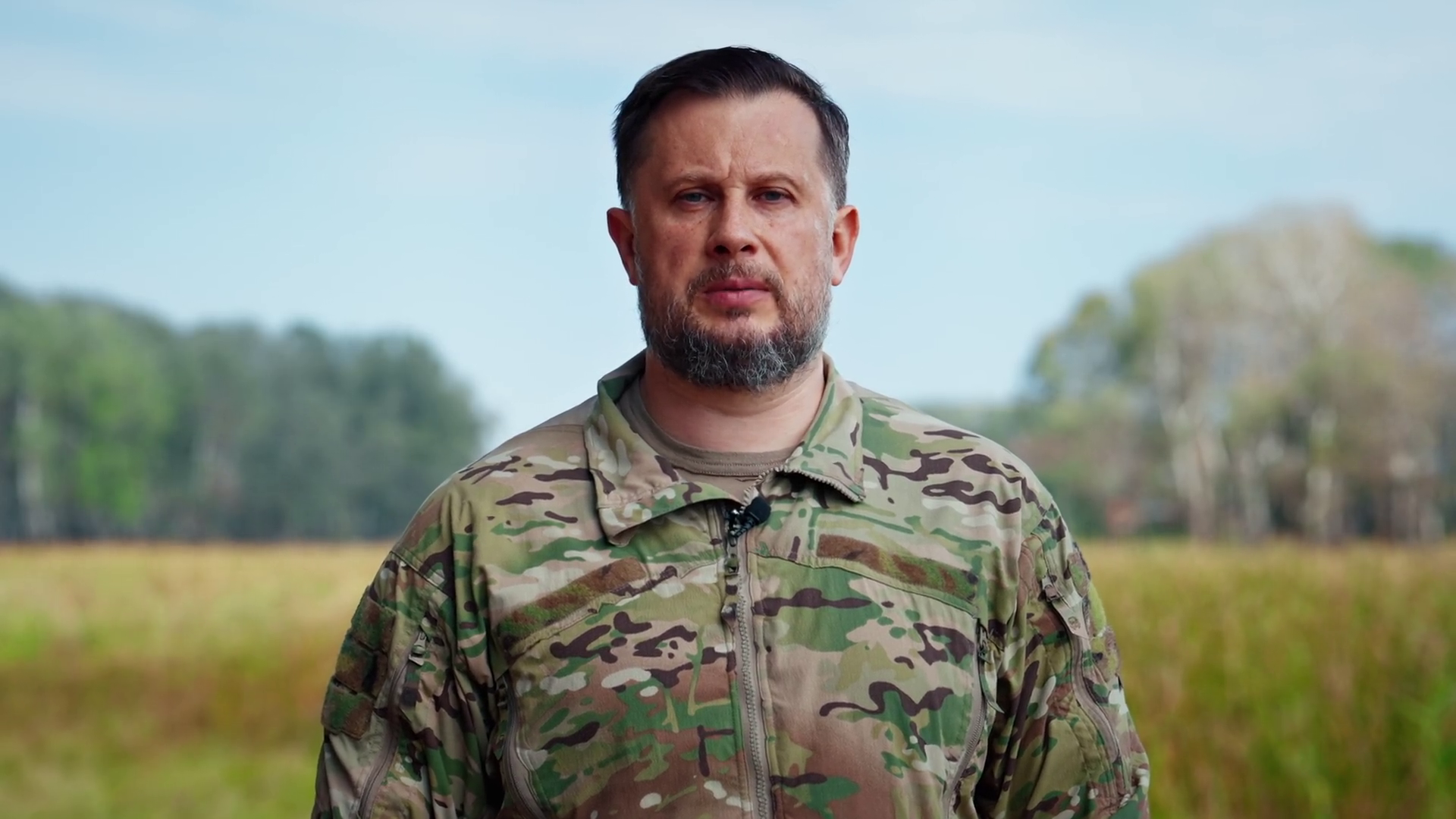
Ukraine's Third Army Corps commander Brigadier General Andrii Biletskyi announcing new developments in "Operation Vivaldi," 20 September 2026. Screenshot from video: Ukraine's Third Army Corps
Explore further

Ukraine blocks Russia from outflanking its fortress cities in Donbas, retaking 277 square kilometers and hitting 8,000 Russian troops

A new hand at the Third Corps

Major Dmytro Rohoziuk is now acting commander of the Third Army Corps, the corps press service said on 20 October. The press service said the move is not a transfer, and Biletskyi keeps his formal post as corps commander while he leads the “Center” grouping of the Third, 11th, and 19th corps.

Major Dmytro Rohoziuk, acting commander of Ukraine’s Third Army Corps.
Major Dmytro Rohoziuk, acting commander of Ukraine’s Third Army Corps. Photo: Armed Forces of Ukraine

Rohoziuk took over the 60th Mechanized Brigade in October 2025. Its previous commander was arrested in January after the State Bureau of Investigation accused him of embezzling about $1 million in weapons procurement. The brigade fought in all four phases of Vivaldi and retook Kolodiazi without street fighting.

Ukrainian troops capture a Russian infiltrator carrying a Russian flag during Operation Vivaldi in northern Donetsk Oblast.
Ukrainian troops capture a Russian infiltrator carrying a Russian flag during Operation Vivaldi in northern Donetsk Oblast. Photo: Third Army Corps

Biletskyi also declined command of the Ground Forces, which oversee mobilization.

“There’s no point taking on something you don’t truly believe you can improve,” he said.

Biletskyi’s count

Russian losses in Vivaldi topped 8,000 troops, and about 270 Russian soldiers were taken prisoner, Biletskyi said. More than 20 officers surrendered, including a chief of staff and three company commanders.

The territory matters less than disrupting Russia’s strategic plan, he said. Russian forces still press toward Dobropillia, where Ukraine is counterattacking.

Ukraine has liberated more territory than Russia has captured since the beginning of fall—a trend that has persisted throughout 2026, Zelenskyy says

19 octobre 2026 à 10:36

ukraine has liberated more territory than russia captured since beginning fall—a trend persisted throughout 2026 zelenskyy says · post ukrainian president volodymyr during evening address 1 image_2026-09-01_23-48-46 news reports

Ukrainian forces have liberated more territory since the beginning of the fall than Russian troops have captured during the same period. This trend has persisted throughout 2026, Ukrainian President Volodymyr Zelenskyy said in his 18 October address. He also reported that Dobropillia, Kostiantynivka, and five other settlements remain under Ukrainian control.

Russia systematically exaggerates its battlefield gains. A recent briefing by Valery Gerasimov, chief of the General Staff of the Russian Armed Forces, in which he claimed that Russian forces had captured 92 settlements since the beginning of September, as well as Kostiantynivka and Dobropillia, and advanced to within 5 kilometers of Zaporizhzhia, was based on “outright lies, manipulation, and exaggerations,” Ukrainian General Staff spokesperson Andrii Kovaliov said.

Ukraine also continues to defend areas near Kramatorsk, Zelenskyy said. He dismissed Russian claims about Zaporizhzhia.

“We are destroying Russians 20 kilometers from Zaporizhzhia, not five, as someone in Russia is fantasizing to Putin,” Zelenskyy said.

Ukrainian forces continue to hold back Russian assaults and destroy groups of occupying troops attempting to infiltrate Dobropillia, the president said. The Defense Forces are also defending positions elsewhere in Donetsk Oblast and in Kharkiv and Zaporizhzhia oblasts.

Zaporizhzhia axis: Russians seek to move artillery closer to the city

Russia seeks to advance on the Zaporizhzhia axis to bring the regional capital within range of its tube artillery, hold forward positions, and protect rear areas from Ukrainian strikes, the Institute for the Study of War (ISW) said on 18 October.

The aftermath of a Russian strike on Zaporizhzhia on 10 October 2026
The aftermath of a Russian strike on Zaporizhzhia on 10 October 2026. Photo: Ukraine's National Police

Maksym Kravchuk, spokesperson for Ukraine's Southern Group of Forces, refuted Gerasimov’s claims that Russian forces had captured Malokaterynivka, located south of Zaporizhzhia, stressing that the settlement remains under Ukrainian control, the Center for Countering Disinformation said on 18 October. Ukrainian troops recorded a video directly from Malokaterynivka to confirm this.

As of 18 October, Russian forces had advanced or infiltrated to within 24 kilometers of Zaporizhzhia, ISW said.

Dobropillia remains under Ukrainian control despite Russian assaults

Dobropillia is now a fortress anchoring Ukrainian positions along the highway leading northeast toward Kramatorsk. Russia first tried to take Dobropillia in August 2025 and is now trying again.

Russia is redeploying reinforcements to the Dobropillia axis and continues to send assault infantry through the village of Nove Shakhove despite heavy losses. Russian command will likely try to encircle or at least envelop Dobropillia and cut off Ukrainian supply routes from the direction of Bilozerske, Ukrainian military analyst Kostiantyn Mashovets wrote on 9 October.

Mashovets sees the push as the southern flank of a Russian effort to envelop the whole Sloviansk–Kramatorsk urban area.

ukraine retook kolodiazi north lyman its drones hit 200-plus russian vehicles operation vivaldi’s last phase commander says · post northern donetsk oblast neighboring areas territory during vivaldi blue 2022 green
Explore further

Ukraine retook Kolodiazi north of Lyman as its drones hit 200-plus Russian vehicles in Operation Vivaldi’s last phase, Ukrainian drone officer says

Dobropillia remains under Ukrainian control, Zelenskyy said. On 18 October, footage located by analysts showed a Russian soldier hoisting a flag in the town's southeast after an infiltration, yet ISW has found no sign that Russian troops have dug in there.

Russia claimed to have captured Kostiantynivka, but ISW found no evidence

Ukrainian troops in and around Kostiantynivka are stopping Russia from locking in its gains in the city or pushing on toward Druzhkivka and Kramatorsk, ISW said on 17 October.

Russian officials claimed that capturing Kostiantynivka was an important step toward establishing control over the Sloviansk–Druzhkivka–Kramatorsk urban agglomeration and the entire Donetsk Oblast, ISW said in August. The Kremlin also claimed that Russian forces had captured the city as early as 5 July, the institute added.

Ruins of a street in Kostiantynivka, Donetsk Oblast, 9 April 2026
Ruins of a street in Kostiantynivka, Donetsk Oblast, 9 April 2026. Photo: UA Land Forces

A Russian military blogger claimed that Russian forces had full control over Kostiantynivka, but ISW found no evidence to support this claim, the institute said in its 16 October assessment. Russian troops had only infiltrated parts of southern and central Kostiantynivka without consolidating positions, and there was no evidence of their presence in its northern part, ISW added.

  • ✇Euromaidan Press
  • Ukraine detains a gas station worker and a Telegram commenter suspected of scouting targets for Russian strikes
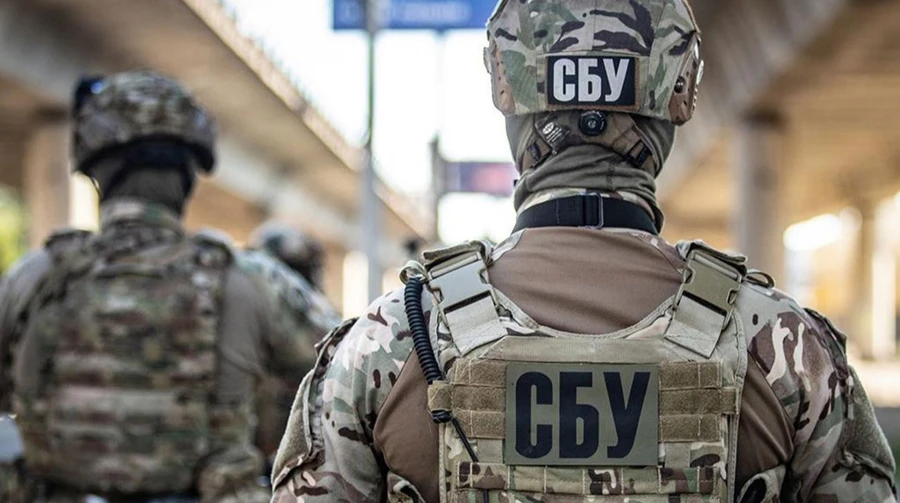
    Ukraine’s Security Service (SBU) detained two men suspected of scouting targets for Russian strikes on Sloviansk and Dnipro, the agency reported on 14 October. Catching both early let it secure Ukrainian reserve command posts and the gas stations the alleged agents had been hunting, the agency added. Sloviansk anchors the northern end of the Fortress Belt, the chain of fortified cities that has held Ukraine’s defense of Donetsk Oblast since 2014. Russia is pushing to seize them, and its
     

Ukraine detains a gas station worker and a Telegram commenter suspected of scouting targets for Russian strikes

15 octobre 2026 à 09:07

bomb-maker working russia's military intelligence zaporizhzhia loses freedom 15 years · post security service ukraine officers during operation sbu news ukrainian reports

Ukraine’s Security Service (SBU) detained two men suspected of scouting targets for Russian strikes on Sloviansk and Dnipro, the agency reported on 14 October. Catching both early let it secure Ukrainian reserve command posts and the gas stations the alleged agents had been hunting, the agency added.

Sloviansk anchors the northern end of the Fortress Belt, the chain of fortified cities that has held Ukraine’s defense of Donetsk Oblast since 2014. Russia is pushing to seize them, and its aircraft bombed a residential area of Sloviansk on 11 October. Where Ukrainian convoys stop and troops gather is exactly what Russian handlers allegedly asked these suspects to supply.

A gas station worker suspected of filming convoys

The first suspect worked at a gas station complex in Sloviansk, Donetsk Oblast. Russian intelligence allegedly reached him through a former classmate who left for Russia after the full-scale invasion and now works for its special services, the SBU said. He then allegedly used his phone to secretly film Ukrainian army convoys at or near gas stations. He was allegedly supposed to send the photos and videos to Russia to help it prepare a targeted strike. He also allegedly drove his own car around other gas stations and bridges that the Defense Forces use for logistics.

Spotted through Telegram comments

The second suspect, a former Pokrovsk resident, moved to Dnipro in 2024 and settled in a dormitory. Russian intelligence noticed him through pro-Kremlin comments he posted in Telegram chats, investigators say. A female handler in Russia allegedly tasked him with guiding missile and drone attacks on places in the city where Ukrainian troops and equipment were concentrated. He allegedly scouted on foot or took public transport to reach outlying districts.

An example of a fake summons
Explore further

Ukrainians think their own security service is calling—it’s Russia recruiting saboteurs

Officers seized computers and smartphones containing evidence of the men’s alleged work for Russia. Both are suspected of treason under martial law and of unauthorized dissemination of information on Ukrainian troop movements or deployment, under Articles 111(2) and 114-2(2) of the Criminal Code. They remain in custody without bail and face up to life imprisonment with confiscation of property. The SBU’s office for Donetsk and Luhansk oblasts ran the operation under the Donetsk Oblast Prosecutor’s Office.

Russia is back at Dobropillia a year after it failed there. Now it’s the southern jaw of a pincer on Donbas’s last big free cities

Par : David Axe
14 octobre 2026 à 19:36

1st Azov Corps in training.

  • Russian reinforcements are surging toward Dobropillia in eastern Ukraine's Donetsk Oblast
  • The Russians have a plan: take Dobropillia and close the southern jaw of a pincer around Kramatorsk and Sloviansk
  • Ukrainian forces aren't powerless to resist, but many of their own best troops are busy attacking elsewhere

The Russians are pouring troops into a key sector just southeast of the town of Dobropillia in eastern Ukraine's Donetsk Oblast, threatening to overwhelm Ukrainian defenses and march one settlement closer to Kramatorsk and Sloviansk, the last two big free cities in Donetsk.

But the Russians' push toward Dobropillia isn't without cost. Russian losses in this sector are "colossal," according to the mapper Playfra. And every soldier the Kremlin deploys along the Dobropillia axis is a soldier it can't deploy elsewhere.

And that may help explain why the Russians are falling back in two other key sectors, in northern Donetsk Oblast and in neighboring Dnipropetrovsk Oblast. The Dobropillia axis is the Russians' clear priority. For the Ukrainians, that's an opportunity to attack elsewhere.

Dobropillia 🇷🇺 ORBAT - Summer 2026

Similar to last year, Russia has significantly reinforced the Dobropillia direction, seeking to capture the town itself while simultaneously developing the southeastern approach toward Druzhkivka and Kramatorsk.

To that end, the “Center”… pic.twitter.com/pDhRRlfbGW

— Unit Observer (@WarUnitObserver) September 10, 2026

Dobropillia, a former mining town with a pre-war population of around 28,000, is now a fortress. It anchors Ukrainian positions along the highway that threads northeast to Kramatorsk.

Russia has attacked here before. In August 2025, Russian troops pushed a salient toward the Dobropillia–Kramatorsk highway, and Ukrainian counterattacks cut it apart. By October that year, President Volodymyr Zelensky put Russian losses on the Dobropillia front at about 13,000.

Ukrainian military analyst Kostiantyn Mashovets describes the push on Dobropillia as the southern flank of a Russian operation to envelop the whole Sloviansk–Kramatorsk urban area. The other approaches are harder going. From the southeast, the Russians are blocked by stubborn Ukrainian forces still clinging to positions in the ruins of Kostiantynivka. From the north, starting this spring, the Ukrainian 3rd Army Corps rolled back 18 months of Russian gains.

For an army that's been struggling to complete its conquest of Donetsk, to say nothing of breaking through in other front-line oblasts, Dobropillia has become the priority.

And that's why the Russians are channeling fresh forces into the Dobropillia sector. Part of the 41st Combined Arms Army and units of its 90th Guards Tank Division are now fighting there, Mashovets wrote on 9 October, and the Russian command keeps feeding fresh assault infantry into the sector through the village of Nove Shakhove despite heavy losses. The open-source account Unit Observer tracked the buildup as early as September.

Potentially tens of thousands of troops from those formations join the main forces of the 2nd and 51st Combined Arms Armies, according to Mashovets, as well as elements of the Russian naval infantry, facing the Ukrainian 1st Azov Corps and 19th Army Corps around Dobropillia.

The reinforcements give Russian commanders more options. Mashovets expects the 51st CAA to push south and southwest of Dobropillia and the 2nd CAA toward Raksha and Sviatohorivka, enveloping the town and cutting its supply routes from Bilozerske before any direct assault. The neighboring 8th CAA is fighting around Kostiantynivka. The Russians' immediate goal is "to maintain this offensive pressure from summer into the fall," Unit Observer wrote, setting conditions for a possible siege of Kramatorsk next year.

The outlook for the Ukrainian defenders of Dobropillia is "worsening," Playfra warned on 13 October:

The Russians have a seemingly infinite manpower pool here and a clear numerical advantage, which allows them to significantly increase the flow of infiltrators and, as such, the chance of some passing through Ukrainian defenses.

This leads to especially deep Russian infiltrations, which in turn slowly but surely destabilize the situation for the Ukrainians, which are progressively forced to abandon their most advanced positions.

The Ukrainians aren't without options, Playfra explained. They should double down on their current strategy of saturating the fields around Dobropillia with drones in a ring at least 2 to 3 km deep, forestalling large-scale Russian movements until the winter strips the leaves off the trees, depriving the Russians of their best cover from overhead surveillance. This could buy Dobropillia "much more time," Playfra predicted.

Mashovets puts a date on how long Dobropillia has to hold. If it and Druzhkivka, the town just south of Kramatorsk, hold until mid-to-late December, he wrote, the whole Russian plan for Sloviansk and Kramatorsk would collapse and have to be rewritten almost from scratch.

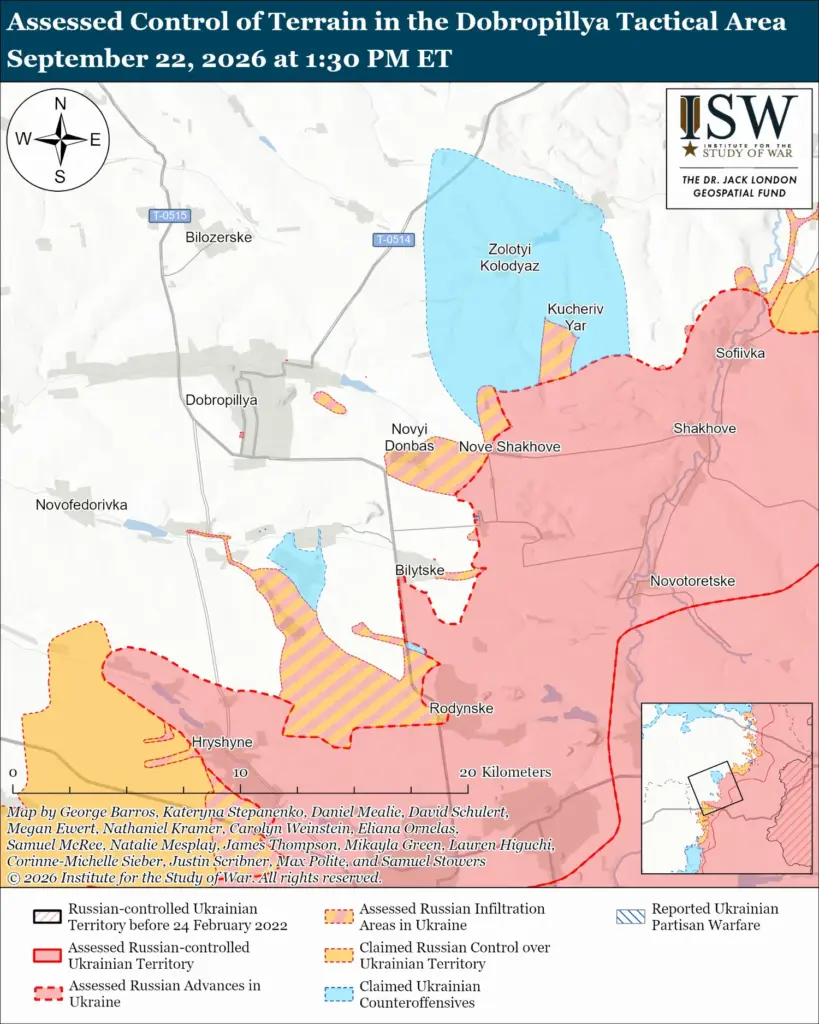
Map of Dobropillia and nearby towns, with Russian-controlled territory shaded pink mainly to the east and south, striped areas marking Russian infiltration, and blue areas marking claimed Ukrainian counteroffensives.
ISW’s map of the Dobropillia area on 22 September 2026 shows Russian-controlled and infiltration areas near the city. Source: Institute for the Study of War.

Help isn't coming

Just don't expect a lot of Ukrainian reinforcements along the Dobropillia axis. Many of Ukraine's best troops are busy attacking.

Taking advantage of the surge of Russian manpower in the direction of Dobropillia, Ukrainian forces have counterattacked where the Russians are weakest: in northern Donetsk Oblast and also in Dnipropetrovsk Oblast, just south of Donetsk.

Russian forces advance on Dobropillia
Map: Euromaidan Press

In months of carefully planned assaults supported by ground robots and intensive drone strikes, Ukrainian forces have liberated hundreds of square kilometers in northern Donetsk and Dnipropetrovsk. The Ukrainian 3rd Army Corps' Operation Vivaldi in northern Donetsk largely removed the immediate northern threat to Sloviansk and neighboring Kramatorsk.

But it didn't do anything to help in the direction of Dobropillia, where the Russians have many more troops, much more firepower, and—equally importantly—a singular focus: closing the southern jaw around the last big free cities in Donetsk.

3rd Army Corps.
Explore further

Ukraine’s 3rd Army Corps took the lessons of the failed 2023 counteroffensive into Operation Vivaldi. It fought small, and won.

Ukraine blocks Russia from outflanking its fortress cities in Donbas, retaking 277 square kilometers and hitting 8,000 Russian troops

14 octobre 2026 à 16:47

Ukraine's Third Army Corps commander Brigadier General Andrii Biletskyi announcing new developments in "Operation Vivaldi," 20 September 2026. Screenshot from video: Ukraine's Third Army Corps

Ukraine has completed its Operation Vivaldi, aimed at protecting its fortress belt cities of Donetsk Oblast, which helped Kyiv preserve the region from Russian occupation for 12 years. Brigadier General Andrii Biletskyi, the commander of the Third Army Corps behind the operation, has reported that the fourth phase secured 101 km² of territory. Among the latest achievements is the liberation of three settlements—Zelena Dolyna, Lypove, and Kolodiazi.

The operation's main objective was to move Ukrainian troops into more advantageous defensive positions, Biletskyi said in the first days after the operation was made public. Vivaldi has now summed up the results of all four phases: Ukraine has established full control over 16 settlements, liberated 277 km² of territory, and inflicted 8,000 casualties on Russian forces.

Ukraine worked against Russia's deadline

During Operation Vivaldi, Ukrainian forces have prevented Russian troops from outflanking the Sloviansk-Kramatorsk agglomeration and cutting the Kharkiv–Sloviansk highway, a key supply route for Ukraine’s forces in Donbas, Biletskyi says.

“We thwarted the offensive of the Zapad grouping and forced it to redeploy some units of the 1st Tank Army, which eased pressure on Kupiansk-Vuzlovyi,” Biletskyi announces.

Previously, the Institute for the Study of War noted that Russian President Vladimir Putin was confident that Russian forces would be able to seize the entire Donetsk Oblast by the end of 2026 — the Kremlin’s latest deadline for achieving this goal.

Ukraine’s military was on a mission to prevent this.

Season one: clearing russian infiltration groups

On 15 September 2026, Ukraine’s Third Army Corps announced Operation Vivaldi in northern Donetsk Oblast. During the first phase, Ukrainian troops cleared Russian groups from 75 km² of territory and liberated another 10 km².

The Third Army Corps said it had struck Russian supply routes and fuel infrastructure, prompting Russia to relocate its fuel and lubricant reserves to Voronezh Oblast. According to the corps, Russian forces lost around 1,500 troops, more than 12,000 drones, and hundreds of pieces of equipment.

Season two: liberation of Shandryholove and Derylove

On 20 September, the Third Army Corps reported the liberation of Shandryholove and Derylove and the establishment of full control over Drobysheve.

During the second season, Russian forces lost another 800 troops, bringing their total losses across the first two seasons to more than 3,000, according to the corps.

During the first two seasons of the operation, Ukrainian troops and attached units regained control of 125 km² of territory, including 50 km² that had been fully liberated.

Two soldiers of Ukraine’s Third Army Corps silhouetted among bare trees at twilight; one holds a radio to his mouth.
Soldiers of Ukraine’s Third Army Corps. Source: Ukraine’s Third Army Corps

The first phase of Vivaldi involved eliminating Russian groups that had infiltrated Ukrainian positions, explained the commander of a battalion in the 125th Brigade, callsign Darwin, per ArmyInform. After clearing those groups, the Defense Forces moved on to the operation’s second phase, using reconnaissance drones to detect Russian forces, he added.

For this, Ukraine used UAVs and ground robotic systems.

“The Third Army Corps was the first in the world to begin deploying ground robotic systems by air. Our heavy bombers deliver kamikaze ground robotic systems more than 10 kilometers behind enemy lines,” Biletskyi noted.

Season three: advances near Novе and Ridkodub

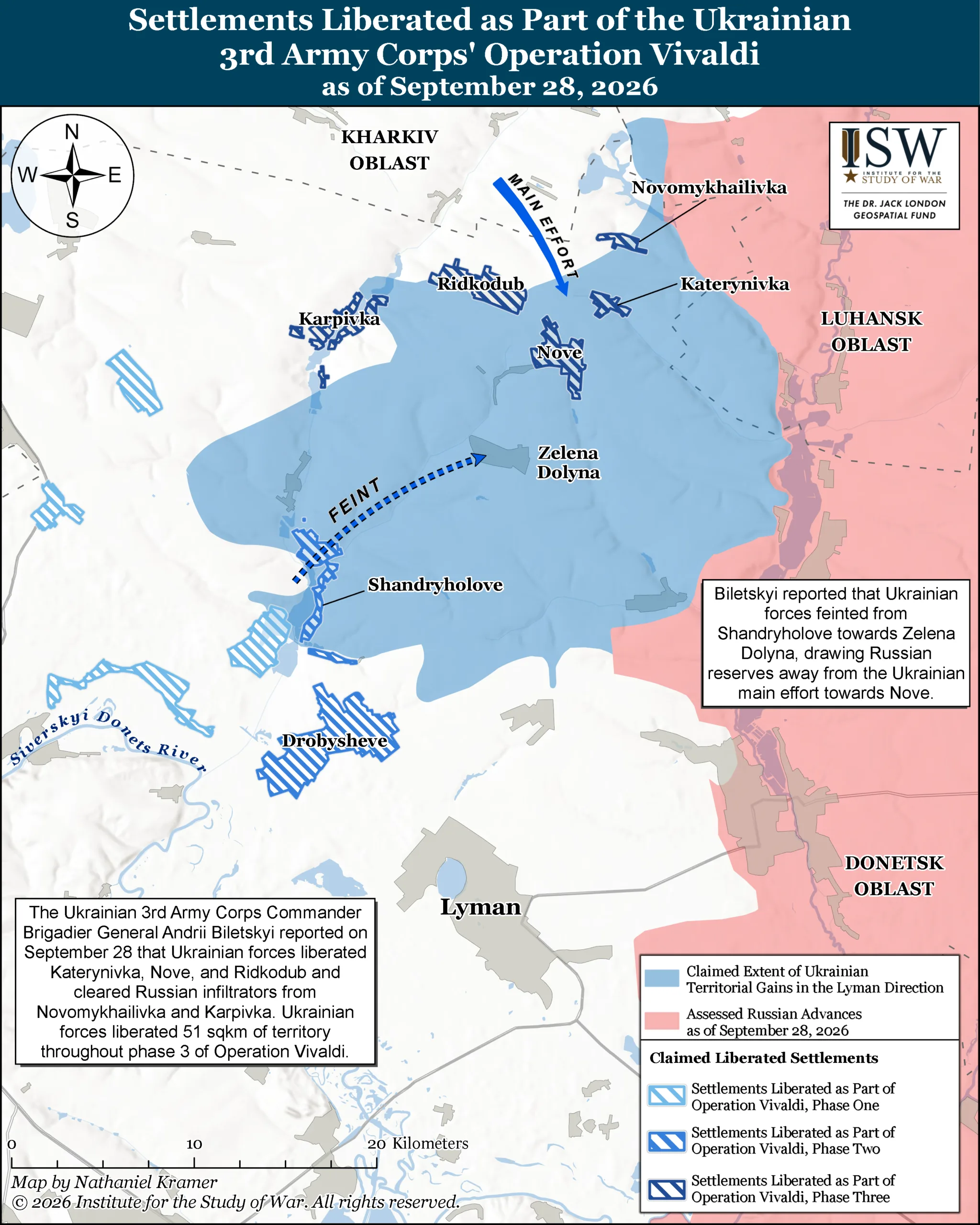
On 28 September, the Third Army Corps reported the liberation of Nove, Ridkodub, and Katerynivka and the restoration of control over Karpivka and Novomykhailivka. Ukrainian forces regained another 51 km² of territory, bringing the total area liberated since the start of the offensive to 176 km². Russian forces lost around 2,000 troops, and more than 250 were taken prisoner, the corps said in its summary of the operation’s third phase.

Map of settlements Ukraine's 3rd Army Corps says it liberated north of Lyman, as of 28 September 2026.
Settlements Ukraine's 3rd Army Corps says it liberated during Operation Vivaldi north of Lyman, Donetsk Oblast, Ukraine, as of 28 September 2026. Map: ISW

“The Russians were convinced that the main axis of attack was Shandryholove–Zelena Dolyna. This led it to squander its reserves in counterattacks along that very axis. The Russians slept through the actual strike, which was focused on capturing Nove,” Biletskyi said.

Operation Vivaldi aimed to disrupt Russia’s plans in Donetsk Oblast

The need for Operation Vivaldi arose amid Russian attempts to encircle Ukraine’s fortified belt in Donetsk Oblast. Ukrainian forces conducted preparatory efforts aimed at degrading Russia’s offensive capabilities, including strikes on Russian drone operators, the Institute for the Study of War reported on 9 October.

Ukrainian counterattacks in the Lyman direction and east of Sloviansk and Kramatorsk were intended to complicate Russian efforts to seize the fortified belt in Donetsk Oblast, the report noted.

The corps advanced gradually, reclaiming small areas instead of attempting a large-scale breakthrough.

  • ✇Euromaidan Press
  • Russia bombs Sloviansk’s warming center as the day’s attacks wound four Red Cross workers
    A Russian attack on Sloviansk on 13 October wounded members of a Ukrainian Red Cross team, the Ukrainian Red Cross Society reported. The same day, a Russian bomb hit the city’s invincibility point, one of the state-run hubs where residents warm up and charge phones when power goes out. Help is getting harder to reach in Sloviansk. Public transport stopped after a Russian strike on two buses in nearby Kramatorsk killed 30 people on 8 October. From 1 November, a curfew from 16:00 to 11:00
     

Russia bombs Sloviansk’s warming center as the day’s attacks wound four Red Cross workers

14 octobre 2026 à 06:24

The Russian army struck an invincibility center in Donetsk Oblast with a bomb on 13 October 2026. Photo: Vadym Liakh/Facebook

A Russian attack on Sloviansk on 13 October wounded members of a Ukrainian Red Cross team, the Ukrainian Red Cross Society reported. The same day, a Russian bomb hit the city’s invincibility point, one of the state-run hubs where residents warm up and charge phones when power goes out.

Help is getting harder to reach in Sloviansk. Public transport stopped after a Russian strike on two buses in nearby Kramatorsk killed 30 people on 8 October. From 1 November, a curfew from 16:00 to 11:00 will cover nearly all of Donetsk Oblast’s free territory. The people providing help are hit too. Russian drones struck three ambulances in Kramatorsk on 5 October. In August, a Russian strike destroyed a World Health Organization humanitarian warehouse in Dnipro.

Team had moved from Lyman

Three members of the society’s Lyman city branch were hurt. The branch had moved to Sloviansk because of the security situation and kept working there. All three were hospitalized with shrapnel wounds and burns. The building where the team worked took heavy damage, and a fire caused by the attack damaged the organization’s property.

The society’s Donetsk Oblast branch later added that a fourth person suffered a concussion, and that all four were hospitalized. The Red Cross condemned attacks on civilian infrastructure and humanitarian workers.

Bomb hit the warming center

The strike came at 12:45 in the Lisnyi microdistrict, Sloviansk city military administration head Vadym Liakh wrote. He later identified the weapon as a FAB-250, a 250-kg air-dropped bomb. Eight people were injured, and five apartment blocks were damaged, Liakh said. He described the warming center’s building as damaged, while Suspilne Donbas reported it destroyed.

Aftermath of the Russian attack on Sloviansk
The aftermath of the Russian attack on Sloviansk, Donetsk Oblast, 13 October 2026. Photo: Donetsk Regional Organization of the Ukrainian Red Cross Society/Facebook

Two Russian strikes on Sloviansk that day killed at least one person, Donetsk Oblast head Vadym Filashkin wrote. Liakh said a Russian attack on the Semenivka neighborhood killed a 55-year-old woman. On 14 October, Filashkin reported that Russian attacks killed three people across Donetsk Oblast on 13 October, in Sloviansk, Druzhkivka, and Starovarvarivka.

Warehouses, a home-improvement store, a farm: Russia’s strikes aimed past the grid at Ukraine’s civilian economy

9 octobre 2026 à 05:44

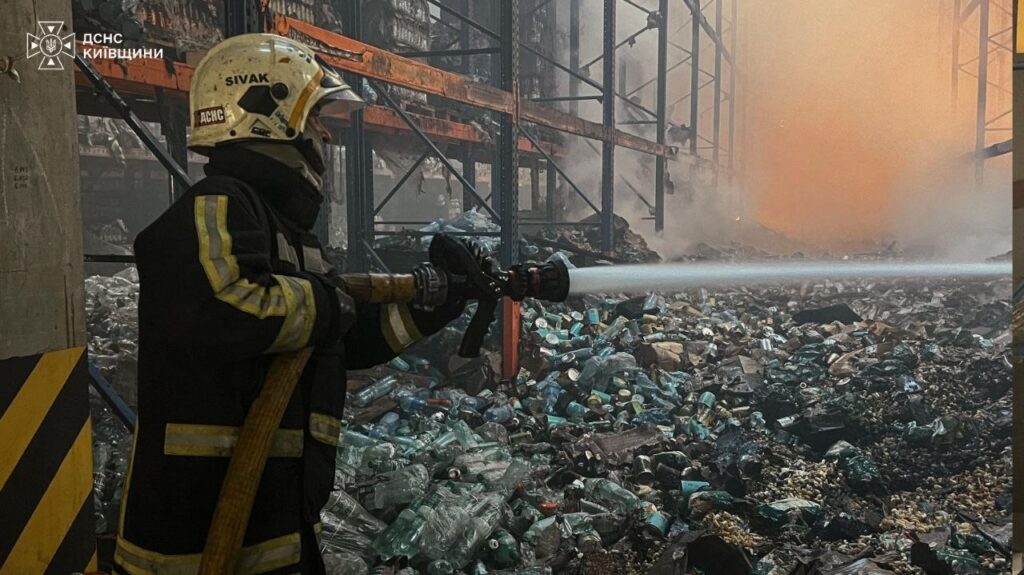
just power plants russia’s drones also went after warehouses groceries hardware chain · post firefighter puts out fire warehouse burned food drink stock hit russian attack bucha district kyiv oblast

Russian drones hit Ukraine's power grid, warehouses, a food warehouse, a home-improvement store, and a farm overnight on 9 October, Ukrainian officials and emergency services reported. The strikes triggered emergency power cuts in Kyiv and other regions and killed at least three people across the country.

As Russia continues its daily terror attacks, it has likely begun its winter strike campaign early, aiming to make civilian life in Ukraine unbearable, ISW assessed. Those strikes now reach beyond the grid to the businesses that store and sell goods, adding to damage Ukraine's Economy Ministry expects to reach up to $10 billion this year.

Power cut in Kyiv and other regions

Russia launched 136 drones overnight, 93 of them jet-powered, Ukraine's Air Force said. Air defenses downed or suppressed 114. Drones hit eight locations, and debris fell at seven more.

DTEK, Ukraine's largest private energy company, introduced emergency power cuts on Kyiv's right bank and in the Bucha and Vyshhorod districts on the grid operator's orders. Ukrenergo, the national grid operator, imposed emergency outages in some regions, citing the strain Russian attacks put on the system. Planned schedules were suspended there. Hourly cuts across parts of Ukraine had already been set for the whole day.

A Ukrainian air defense crew with a heavy machine gun in Cherkasy Oblast
A Ukrainian air defense crew with a heavy machine gun in Cherkasy Oblast. Illustrative photo: Suspilne Cherkasy

The cuts came a day after a Russian strike knocked out several grid elements supplying Kyiv, leaving many consumers without power. Russia has sharply stepped up attacks on Ukraine's energy system in recent weeks, deliberately targeting power lines and transformers, Ukraine's Energy Ministry said.

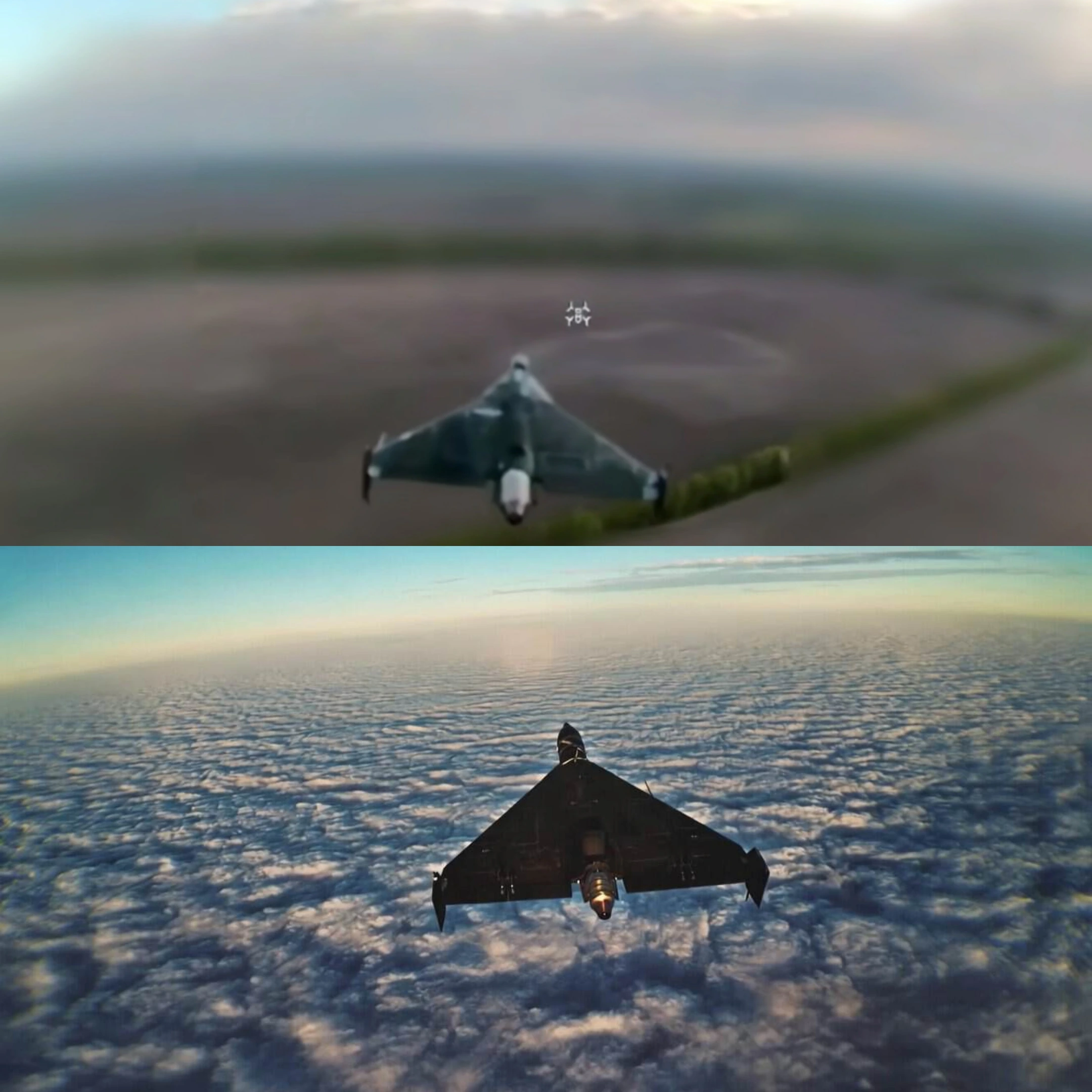
Geran-4" is an evolution of the earlier "Geran-3" model
Explore further

Ukraine’s war leadership sets new electronic warfare tasks as Russia’s jet-powered drones slip past nearly half of its air defenses

Warehouses and a store

In the Bucha district of Kyiv Oblast, Russia hit warehouses and injured three people, Ukraine's State Emergency Service said. One was hospitalized. Rescuers were searching for a woman who may be under the rubble.

In Odesa, a strike damaged the roof of a warehouse storing food and started a fire, the region's emergency service reported. In the south of the oblast, Russia damaged buildings at holiday resorts and destroyed a café.

A food warehouse damaged by a Russian attack on Odesa, 9 October 2026
A food warehouse damaged by a Russian attack on Odesa, 9 October 2026. Photo: State Emergency Service of Ukraine in Odesa Oblast

Near Chernihiv, Russia hit a site just outside the city after 03:00, the city council said. A Suspilne correspondent at the scene reported that a drone hit the Epicenter store, part of a large Ukrainian home-improvement chain. Russian forces also struck a farm in the Kulykivka community. No one was hurt in Chernihiv Oblast.

Russia has already destroyed more than two-fifths of Ukraine's modern warehouse space.

Three killed overnight

In Zaporizhzhia, Russia struck near an apartment building, killing a man, the Zaporizhzhia Oblast administration said. The number of injured rose to nine, including a 14-year-old girl, regional prosecutors said. One strike landed near an after-school education center.

In Ivano-Frankivsk, falling drone debris started a fire, and a man born in 1959 was killed, Ivano-Frankivsk Oblast head Svitlana Onyshchuk said.

Rescuers work at a damaged building in Ivano-Frankivsk after a Russian drone attack, 9 October 2026
Rescuers work at a damaged building in Ivano-Frankivsk after a Russian drone attack, 9 October 2026. Photo: State Emergency Service of Ukraine

In Shyroka Balka, Kherson Oblast, a Russian drone dropped explosives on a house at about 06:20, killing a 74-year-old woman and injuring a 68-year-old man, regional prosecutors reported.

Russia injured three women in a Kharkiv suburb, Kharkiv Oblast head Oleh Syniehubov said. In the Nikopol district, a 24-year-old woman was injured, Dnipropetrovsk Oblast head Oleksandr Hanzha said.

Poland scrambled military aircraft as Russia struck targets in western Ukraine, its Operational Command said.

The past day's toll

Over the past 24 hours, Russia killed two people and injured 18 in Zaporizhzhia and the Zaporizhzhia district, regional council head Ivan Fedorov said. In Sumy Oblast, one man was killed and 14 people were injured, including two 12-year-old boys, the regional administration reported.

In Kherson Oblast, four people were injured, including a child, Kherson Oblast head Oleksandr Prokudin said. In Mykolaiv Oblast, a Russian drone injured two children aged three months and one year, acting oblast head Heorhii Reshetilov said. Three people were injured in Kharkiv Oblast, Syniehubov reported.

In Donetsk Oblast, Russia killed 35 people and injured 25 on 8 October, Donetsk Oblast head Vadym Filashkin said. Thirty-two of them died in Kramatorsk, most in a Russian bomb strike on two passenger buses.

Ukraine reruns its Vivaldi playbook outside Kramatorsk and pushes Russia back across the Siverskyi Donets, ISW says

9 octobre 2026 à 04:14

after vivaldi near lyman ukraine pushes across siverskyi donets east sloviansk kramatorsk · post assessed control terrain direction 8 2026 slovyansk-direction-october-8-2026 news ukrainian reports

Ukrainian forces are advancing east of Sloviansk and Kramatorsk, and even Russian milbloggers now acknowledge it, the Institute for the Study of War (ISW) said on 8 October. The gains may follow months of groundwork like the one that preceded Operation Vivaldi near Lyman, which Ukraine says returned 176 km² to its control. Russian commentators are already doubting that Moscow can reach the two cities.

Russia's years-long push on the Fortress Belt, the chain of cities anchoring Ukraine's defense in Donetsk Oblast, has been stalling since Vivaldi began. Unable to take those cities, Russia keeps hitting them from the air. On 8 October, a Russian bomb killed 30 people on two buses in Kramatorsk.

Across the Siverskyi Donets

Russian milbloggers said Ukrainian forces liberated Ozerne and advanced east of Pyskunivka toward Kryva Luka, ISW reported. They also acknowledged that Ukrainian troops drove Russian forces out of Pyskunivka. Ukrainians are now counterattacking toward Kryva Luka from the west and northwest, from across the river.

vivaldi counteroffensive worked because ukraine took russia's drones out fight isw assesses · post settlements ukraine's 3rd army corps says liberated during operation north lyman donetsk oblast 28 2026 settlements-liberated-during-operation-vivaldi-phase-3-as-of-september-28-2026-scaled
Explore further

Vivaldi counteroffensive advanced after Ukraine took Russia’s drones out of the fight, ISW assesses

ISW called the repeated Russian claims of a river crossing notable, because the Siverskyi Donets is a significant natural obstacle. Kryva Luka is a dominant height just south of the river. From there, Ukraine could launch further counterattacks. Ukrainian forces appear to have pushed Russian troops off both banks in this area, ISW assessed.

The heights Russia wanted

After Vivaldi cleared ground near Lyman in September, Russia shifted its push south toward Mykolaivka and Sloviansk. Russian forces likely see Mykolaivka, just east of Sloviansk, as a primary objective, ISW said. Its heights would favor an offensive on the city. Ukrainian pushes northeast and southeast of the town now deny Russia that terrain.

East of Kramatorsk, milbloggers claimed Ukrainians liberated Malynivka and advanced between Fedorivka Druha and Holubivka. They also reported gains into southern Minkivka and near Fedorivka. The lines remain tangled. Geolocated footage shows Ukrainian forces striking a Russian position in central Tykhonivka after what ISW assesses was a Russian infiltration.

ISW said the counterattacks may point to a broader Ukrainian goal: pushing Russian forces east, away from the Sloviansk–Kramatorsk area and toward the Siverskyi Donets–Donbas Canal.

The Vivaldi playbook

The counterattacks have run for weeks. On 29 September, Ukrainian military observer Kostiantyn Mashovets reported them in the same areas, saying Russia's 3rd Combined Arms Army had failed to make significant gains. ISW assesses that the attacks build on months of shaping meant to wear down Russia's offensive capacity.

vivaldi's secret weapon targeting robots third corps reconnaissance mapped russian command nodes hit cause panic · post graphic ukraine's army / telegram під час операції вівальді нрк десантували щоб порушити
Explore further

Vivaldi’s secret weapon was the targeting, not the robots: Third Corps reconnaissance mapped Russian command nodes, then hit them to cause panic

Before Vivaldi, Ukrainian forces targeted Russian drone operators, gaining drone superiority before the counteroffensive. They used the same approach ahead of their Oleksandrivka counterattacks in early 2026.

Moscow appears to see the pattern. A Ukrainian military official said on 7 October that Russia is moving drone units and Spetsnaz from quieter sectors to the Sloviansk–Kramatorsk direction. Ukraine also reorganized its command in and around Donetsk Oblast in early September, which may be blunting Russian attacks from the east, ISW said.

"Distant" and "doomed"

One Russian milblogger called an advance toward the Sloviansk–Kramatorsk area a "distant" prospect, ISW reported. A Russian offensive from Siversk toward Sloviansk may be "doomed" to failure or heavy losses unless Russia retakes the forests south of Lyman, he said.

The counterattacks east of the two cities appear to support Vivaldi, ISW assessed. Together with Russia's defeat north of the river, they could disrupt Russia's offensive toward Sloviansk from the east entirely.

If Ukraine holds Kryva Luka and keeps Russia off the Mykolaivka heights, Moscow's pincer on Sloviansk and Kramatorsk loses the ground it was built on.

  • ✇Euromaidan Press
  • Russia kills 30 in strike on two passenger buses in Kramatorsk
    Russian forces struck the eastern Ukrainian city of Kramatorsk on the morning of 8 October, hitting two route buses carrying residents and killing dozens of civilians. The Donetsk Oblast prosecutor's office opened a war-crimes investigation. Russia has turned everyday movement in frontline Donetsk Oblast into a lethal risk, striking city buses, ambulances, and cars in places its army has not been able to capture. A route bus run turned deadly The attack came at around 10:00, catch
     

Russia kills 30 in strike on two passenger buses in Kramatorsk

8 octobre 2026 à 09:32

russia kills 33 strike two passenger buses kramatorsk · post aftermath shelling 8 2026 illia andreiev / ukraine news ukrainian reports

Russian forces struck the eastern Ukrainian city of Kramatorsk on the morning of 8 October, hitting two route buses carrying residents and killing dozens of civilians. The Donetsk Oblast prosecutor's office opened a war-crimes investigation.

Russia has turned everyday movement in frontline Donetsk Oblast into a lethal risk, striking city buses, ambulances, and cars in places its army has not been able to capture.

A route bus run turned deadly

The attack came at around 10:00, catching two route buses in the impact zone. The prosecutor's office said the attackers likely used a UMPB D-30SN. HUR, Ukraine's military intelligence, describes it as a guided glide bomb that can fly up to 100 km when released from an altitude of 12–15 km and carries a warhead equal to a FAB-250 aerial bomb.

30 people were killed and 18 injured after a Russian bomb hit two passenger buses carrying civilians in Kramatorsk, Donetsk Oblast.

The buses caught fire, and the force of the attack also damaged nearby homes and cars. Some victims were so badly burned that police had to recover… pic.twitter.com/FqLdM0HN1B

— Euromaidan Press (@EuromaidanPress) October 8, 2026

The toll rose through the day, from 12 dead in the first reports to 30 killed and 20 wounded by 14:55, Donetsk Oblast head Vadym Filashkin said. Across Donetsk Oblast, Russian attacks killed 33 people that day, including the 30 in Kramatorsk and three in nearby Bilenke, the State Emergency Service said. Ukrainian President Volodymyr Zelenskyy said the strike would not go unanswered.

Buses pulled off the roads

Filashkin ordered the Kramatorsk and Sloviansk city military administrations to suspend public transport, citing the sharp deterioration in security. Buses had become an attractive target for Russian forces, he said, and the authorities could not risk the lives of passengers and drivers. He also urged everyone still in Donetsk Oblast to leave for safer parts of Ukraine. Kramatorsk is a frequent target of Russian attacks. Russia had not commented on the strike as of publication.

Aftermath of the shelling of Kramatorsk on 8 October 2026
Aftermath of the shelling of Kramatorsk on 8 October 2026. Photo: Illia Andreiev/Kramatorsk Post

The city has been under daily fire. On 5 October, Russian FPV drones hit ambulances and an apartment block in Kramatorsk, killing a woman and wounding four, the prosecutor's office reported. Over the previous day, Russian forces shelled Donetsk Oblast settlements 31 times and 256 people left the front line, Filashkin said.

❌