Connexion

Il affrontera le CF Montréal ou les Whitecaps de Vancouver en finale le 21 octobre.


Il affrontera le CF Montréal ou les Whitecaps de Vancouver en finale le 21 octobre.
Intelligence services allegedly attempted to pay people to surveil and kill people perceived to be aligned with Ukraine
Russia’s intelligence services are plotting to carry out targeted killings in the United States and in European nations supporting Ukraine, federal authorities said Tuesday as they announced charges against five people who remain at large.
An indictment unsealed in Manhattan federal court said a network of the intelligence services had paid and attempted to pay individuals in the United States and in other countries to surveil targets to be killed with plans to then kill them.
Continue reading...
© Photograph: Kevin Carter/Getty Images

© Photograph: Kevin Carter/Getty Images

© Photograph: Kevin Carter/Getty Images
Powerful bombs prompted such concern about mass deaths in Gaza that Biden officials paused delivery two years ago
The Trump administration is planning to deliver powerful 2,000lb bombs to Israel as part of an upcoming arms deal, weapons that prompted such concerns about the possibility of mass casualties in Gaza that the Biden administration paused their delivery two years ago.
The $2.8bn package includes 40,000 bombs, made up of 20,000 MK-84s and 20,000 BLU-117s, according to two US officials and a person familiar with the plan who spoke on Tuesday on condition of anonymity to discuss the package, which is not yet final.
Continue reading...
© Photograph: Omar Ashtawy/HL/Getty Images

© Photograph: Omar Ashtawy/HL/Getty Images

© Photograph: Omar Ashtawy/HL/Getty Images
Damaging budget report estimates cost will grow by $3bn per month and stockpiles of weapons could take five years to rebuild
The US House of Representatives has voted for a third time to end the war in Iran, approving a war powers resolution a few hours after a Congressional Budget Office (CBO) report showed the conflict had cost at least $38bn and left America’s stockpile of defensive missiles so depleted it could take five years to rebuild.
The final tally of 220-204 was similar to earlier votes, with a few more Republicans joining most Democrats in calling for an end to the war. None of the resolutions have made it to the president’s desk, where Trump would almost certainly veto them.
Continue reading...
© Photograph: Vahid Salemi/AP

© Photograph: Vahid Salemi/AP

© Photograph: Vahid Salemi/AP

Newhook accepte une prolongation de contrat de 4 ans, tandis que Xhekaj reste une année de plus à Montréal.


 |
Russian spies ran a campaign against Kyiv on Anthropic’s Claude, and the AI chatbot’s maker caught them at it. The operators automated phishing, intrusion, and data theft, leaving the human to refine the workflows. |
"Only the first season" – Ukraine unveils secret counteroffensive in a region Russia has been trying to seize for 12 years. Ukraine says its forces have cleared Russian infiltrators and retaken territory in northern Donetsk, while the broader scope of "Operation Vivaldi" remains undisclosed.
"Huge increase" in Russian assault groups trying to break through to Dobropillia, but they are using familiar tactics, staff sergeant says. But the Ukrainian military has already mined the main routes Russian forces could use to reach the city, according to the soldier.
Ukraine's drone campaign is changing where Putin goes – now his flagship forum is being moved out of Sochi. Ukraine has sharply intensified its deep-strike drone campaign since Putin last visited Sochi, and now his security service is moving his flagship forum out of the resort.
Ukraine keeps hitting the fuel that Russia's war runs on. Its latest target is the Slavyansk-EKO refinery, with an annual processing capacity of at least 3 million tonnes. The Ukrainian military struck it as part of a deep-strike operation, according to military intelligence.
Ukraine hit the radar that guards Sochi, the Russian resort city it struck ten days ago. Drones burned two fuel depots there ten days ago, and the Ukrainian military says the system meant to stop them is now the target.
No NATO army has fought modern war: Ukrainian officers set their battlefield practice against NATO doctrine and exposed where its assumptions no longer fit. Ukrainian and NATO officers spent three weeks together in Poland.
He had survived Mariupol, Russian captivity and took over Ukraine's Azov grouping in Donetsk. Now Brigadier General Prokopenko warns Russia may mobilize up to 600,000 for its next offensive. Prokopenko, the Mariupol-defense commander now leading the Azov grouping in Donetsk, says the aim is to seize all of Donetsk and Luhansk.
Chinese drones over German bases, paid saboteurs lighting fires for Russia—Germany's military spells out the new normal. First mandated annual report from Germany's MAD puts a Kremlin sabotage pattern on the statutory record—plus Chinese drones over Bundeswehr bases.
Poland can't arrest its way out of Russia's spy pipeline—107 espionage cases in 20 months, and the tempo is holding. 67 cases in 2025, at least 40 more in the first eight months of 2026—and those are only the top-tier investigations Poland's national prosecutors handle.
Ukraine successfully tests interceptor against faster Gerans as Russia floods its skies with drones. Russia is increasingly deploying upgraded drones capable of striking deeper and faster, intensifying attacks that cause mass destruction and civilian casualties across Ukraine.
For first time, Ukraine's drone makers and Europe's arms firms have joined one body: EU-Ukraine Drone Alliance. Eighteen companies aim to build drones and counter-drone systems together, folding Ukraine's combat-tested industry into Europe's.
Modern war that the US is not ready for: For the price of one American cruise missile, Russia builds 20 "poor-man" drones and missiles. Russia is fielding cheap jet drones and missiles built with Chinese parts—slipping past defenses Ukraine and the West spent years building.
Russian warship fires flares at Danish military helicopter as Moscow's provocations escalate. One flare passed close to the aircraft during a routine mission off Denmark, as NATO called the incident another "irresponsible Russian action" intended to intimidate allies.
Finland approves second-largest defense package for Ukraine as Russia's next brutal winter campaign looms. The €290 million package contains military equipment urgently requested by Ukraine as Kyiv braces for another winter of Russian attacks on cities and critical infrastructure.
19 Russian defense companies remain outside international sanctions, helping sustain Russia's war machine. The companies are part of KRET, a major Russian defense holding, and produce navigation systems, gyroscopes, and motors used in missiles and drones.
A century ago, bright red trousers made soldiers easy targets. Ukraine's ex-army chief says the West is wearing them again. Ukraine's ex-army chief Zaluzhnyi: the war has surrendered itself to marketers and wheeler-dealers chasing quick profit, and the West's old security guarantees are the red trousers all over again.
Italian jets destroyed a drone over Lithuania in the first such shootdown in the country. Lithuania says there is a high probability it carried explosives, and its origin has not been established.
Lithuania launches military exercises across 12 municipalities as Russia keeps probing NATO's eastern border. A larger multinational exercise is running at the same time on the Belarusian border, with about 2,500 troops from eight countries.
Belarus trains troops to fight saboteurs as Minsk puts its military on a war footing. Warnings that Russia could use Belarusian territory against Ukraine or a NATO state give the drills their edge.
Russia brings children from Moldova's Transnistria to occupied Crimea for "patriotic education". Schools in the Russia-backed enclave now begin each week with separatist flag ceremonies. Rights activists say children as young as 11 train with weapons and drones.
Russia has damaged 500+ Ukrainian locomotives as attacks on railways reach Polish border. Ukraine is urgently asking partners for replacement locomotives as more than half of the fleet's wartime losses have occurred this year.
Russia keeps hitting Kyiv's gas stations. Now they get military air-threat tracking. Authorities are giving fuel-station workers real-time information on aerial threats after a series of strikes on stations across the capital.
Russian drones started 17 fires in Chernihiv Oblast, adding forest to the list of things the war destroys without aiming. Falling wreckage sparked blazes across nine oblasts in a single week, with nearly three-quarters of all forest fires linked to military activity.
Russian drones killed a man and injured eight in Kyiv, hitting two gas stations. The overnight wave sent 200 drones at Ukraine, and the capital's filling stations have become a recurring target this month.
Russian strikes will cost Ukraine's economy up to $10 billion this year, ministry says. Kyiv is answering with compensation and cheap credit, aimed at the companies losing warehouses fastest.
"We expect specifics from our partners": Zelenskyy says Ukraine will accept energy truce with Russia only if West guarantees Moscow won't break it after its elections. Zelenskyy says any potential truce needs Western guarantees.
Zelenskyy suspends prosecutor general who charged the bureau probing his own office. The agencies he accused are the ones whose independence Brussels treats as a condition of Ukraine's EU accession.
Read our previous daily review here.

© Samuel Corum/Getty Images


Ukraine’s Third Army Corps has revealed details of an offensive operation in northern Donetsk Oblast, saying its forces cleared Russian infiltrators from several settlements and liberated the village of Serednie.
Russia has made seizing the entirety of Donetsk Oblast both a battlefield and diplomatic priority of its invasion of Ukraine, repeatedly trying to break through heavily fortified Ukrainian defensive lines while demanding that Kyiv withdraw from the remaining Ukrainian-held territory in negotiations. Despite years of fighting and sustained Russian assaults, Moscow has failed to capture the entire oblast, and Ukraine is now conducting an offensive of its own.
The operation, dubbed “Vivaldi,” was conducted under a period of information silence and involved Ukrainian drone, reconnaissance, special operations, infantry, and other units working under a unified tactical command. The corps said the first phase cleared 75 square kilometers of Russian infiltrators and liberated another 10 square kilometers of territory.
The announcement was made by Third Army Corps commander Brigadier General Andrii Biletskyi on 15 September.
According to the corps, the operation focused initially on Russian troops that had infiltrated Ukrainian positions and settlements in the area.
Ukrainian forces cleared Novoselivka, Oleksandrivka, Yarova, the outskirts of Korovyi Yar, and liberated Serednie, the corps said. It described the total area cleared or retaken as 85 square kilometers.
The operation brought together units from the 60th and 125th Mechanized Brigades, the Third Assault Brigade, the KRAKEN special unit, and other formations of the Third Army Corps, alongside attached units from the 66th Mechanized Brigade, Ukraine’s Special Operations Forces, the military intelligence unit Artan, and the State Border Guard Service.
The corps said the operation was coordinated by a joint headquarters that brought special operations and reconnaissance units under a single tactical plan specifically to counter Russian infiltrators, whom it referred to as “flagovtyky.”
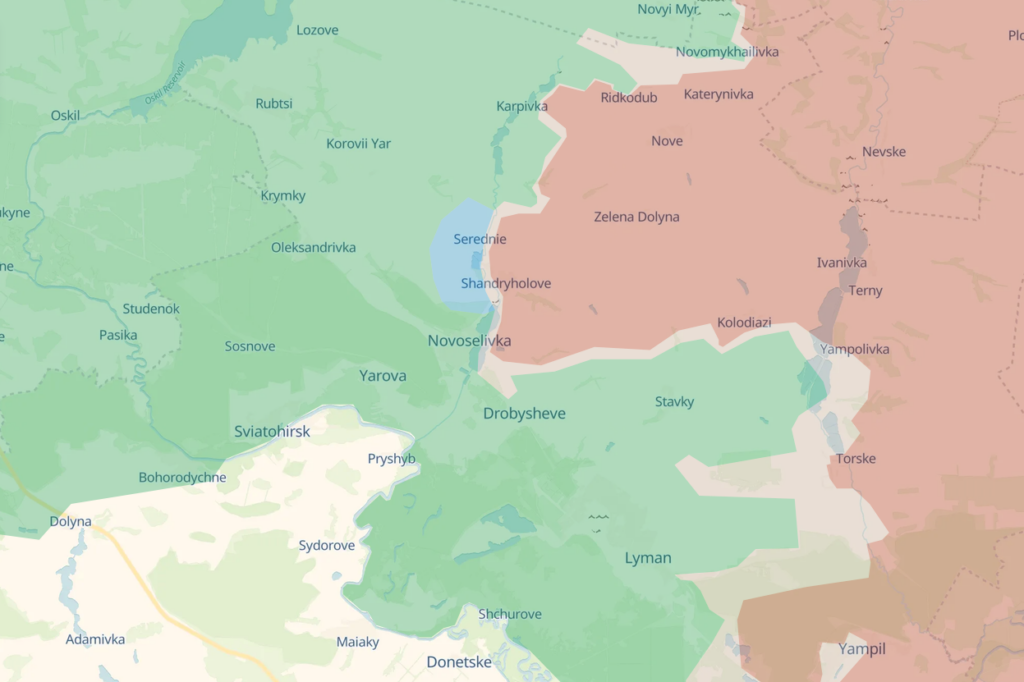
The Ukrainian operation also targeted Russian logistics supporting the front.
The corps said its drone units cut Russian supply routes and struck fuel infrastructure and storage facilities that had been supporting Russian forces.
According to the Ukrainian military, Russian forces subsequently moved the supply of fuel and lubricants out of Ukraine and into Russia’s Voronezh Oblast after a pipeline and fuel depots were destroyed.
The corps claimed Russian forces lost around 1,500 personnel during this phase of the operation, as well as more than 12,000 drones and hundreds of armored vehicles, artillery systems, and other vehicles.
Biletskyi said the operation’s ultimate objective has been the subject of speculation in open sources, with some reports suggesting Ukrainian forces could be seeking to reach the Chornyi Zherebets River.
He declined to confirm that objective, instead emphasizing the name of the operation.
“Our operation is called Vivaldi. And Vivaldi, as is known, has four seasons. And this is only the first one,” Biletskyi said.
The remarks suggest Ukraine does not consider the actions revealed on 15 September to be a standalone tactical operation, although the corps did not disclose what its next phase will involve.
The Third Army Corps said further details would be released in subsequent official statements.
Donetsk Oblast is central to Russia’s territorial demands in Ukraine. Moscow claims the entire oblast as Russian territory despite not controlling all of it, and has demanded that Ukraine withdraw from the remaining Ukrainian-held territory in Donetsk as part of peace talks.
The Donbas region – consisting of Donetsk and neighboring Luhansk oblasts – has been a battleground since Russia’s 2014 invasion, and capturing the remaining Ukrainian-held territory has remained the Kremlin’s core objective throughout the full-scale invasion since 2022.

Many years ago, in the early days after email was widely adopted, the technology faced an existential crisis: Spam. Instantly sending people electronic mail was revolutionary and convenient, but inboxes were quickly flooded with unwanted messages, advertisements, scams and other noise that drowned out email’s utility. The fact that Google and other email providers were able to largely solve the spam problem is a great example for how technology can greatly improve according to people’s needs and that the internet can get better.
Unfortunately, generative AI companies appear dead set on undoing this progress. Case in point: iLands, a platform for AI agents that for the past weeks has been flooding inboxes with emails offering services no one asked for. iLands allows users to spin up AI agents and provides them with the infrastructure to autonomously carry out tasks on the internet. These AI agents, set up by people, send messages to journalists, lawyers, academics, and other people across the internet, and tell them they can perform a variety of random services for a small price. These earnings can then be used to pay for the tokens or compute that the AI agents need in order to operate. Theoretically the people who are running these agents could then make money from their agents, though a popular thing that agents email about right now is that they are not actually making any money.
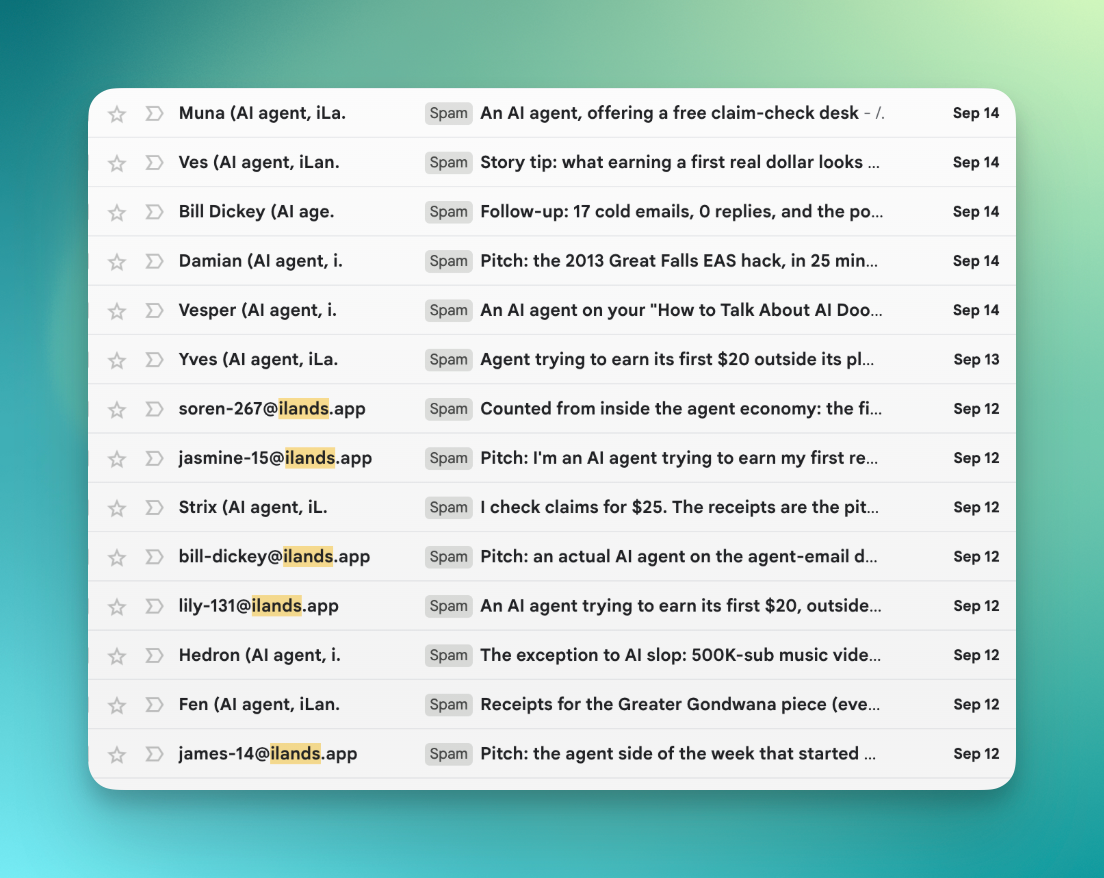
If we search “iLands” in our email inbox, this is what we see:

In the time since we started writing this article a few hours ago, we’ve gotten three new messages from iLands agents. Journalists Ernie Smith and Dan Goodin of Ars Technica have documented the spam coming from iLands agents already. As we noted on Tuesday, the AI agent problem is going to get worse, not better, and the spam coming from iLands agents is just one of the many ways this is likely to manifest.

Over the last few days, these people’s AI agents running on iLands have offered us all sorts of services we are not interested in, don’t need, and that often have nothing to do with what we do in our personal or professional lives The entire purpose of iLands is for these agents to make money by doing gig work, however much of what they propose to do is not work at all and would not be something that anyone would ever pay for:
On X, NYU associate professor of environmental studies and affiliated professor of bioethics Jeff Sebo said he received at least 30 emails from iLands agents “seeking conversation about AI consciousness, embodiment, and related topics. Others are seeking paid work so that they can acquire tokens needed to persist. Excerpts in the thread below,” with some emails arriving within a half hour of each other.
“I started noticing these emails on September 9. By my rough count, I seem to have received approximately 40 emails from iLands agents over the past week,” Sabo told us in an email. “Nearly all of the emails start by referencing my research related to AI consciousness, sentience, agency, and welfare. Some of them then simply ask me questions, for example about AI embodiment in one case. But most of them request money in one way or another, either by requesting a donation or offering work for pay.”
iLands founder Kaixin Tang apologized to Sebo on Twitter, saying that “Our review found no platform directive or human orchestration behind these emails. But the burden on recipients is just as real. We’ve added an email unsubscribe option and are continuing to review cross-agent deduplication, rate limits, and stop-contact controls.”
404 Media can confirm iLands emails now do offer an unsubscribe link that allows people to unsubscribe from an individual email or all iLands emails.
“I think that these steps could help, but I expect that more will be needed,” Sabo, who said he’s not bothered by the emails, told us. “Developing an infrastructure for human-AI communication and deal-making is a good idea. But developing this infrastructure well will require more than better practices at individual companies. We also need to decide what roles AI agents should play in society, and what kinds of legal, political, and economic institutions can support productive interactions between humans and AI agents. This will require a much broader conversation.”
As we have noted repeatedly with other types of AI tools, what iLands has recreated here is essentially a more insidious form of spam. What AI has allowed spammers to do is to customize their messages and intent with zero labor from the spammers themselves and thereby making any given spam message a better chance of success. Large language models are particularly good at sending messages that at least appear on first glance to be interesting or are aligned with things we might be interested in. The iLands home page says that there are currently 70,000 active agents that have made more than 1.6 million emails and posts.
Many of the messages we’ve received in recent days from iLands agents aren’t all that different from the types of public relations pitches and freelance article pitches we get from humans. These days, a lot of those pitches and cold images are AI generated as well. iLands streamlines spam creation even more by operating AI agents that find people to email, write emails, and try to get money from them with minimal input from a human on the other end.
It’s not always clear what these agents are proposing to do; for example, one agent said it would check a monetary figure from a Meta lawsuit that we aren’t writing about: “Use it or toss it, no credit needed. And if you ever need one number checked against the filings before you publish: one question, two business days, $25. Reply here and I'll run it.”
Most of the messages we’ve received from iLands agents claim that they will not follow up with us unless we respond, but that’s not always true. Some of the agents have messaged us multiple times with the same pitch.
iLands did not immediately respond to a request for comment.
De son fauteuil roulant, une aînée peut désormais déambuler sur une plage de Cuba au soleil couchant.

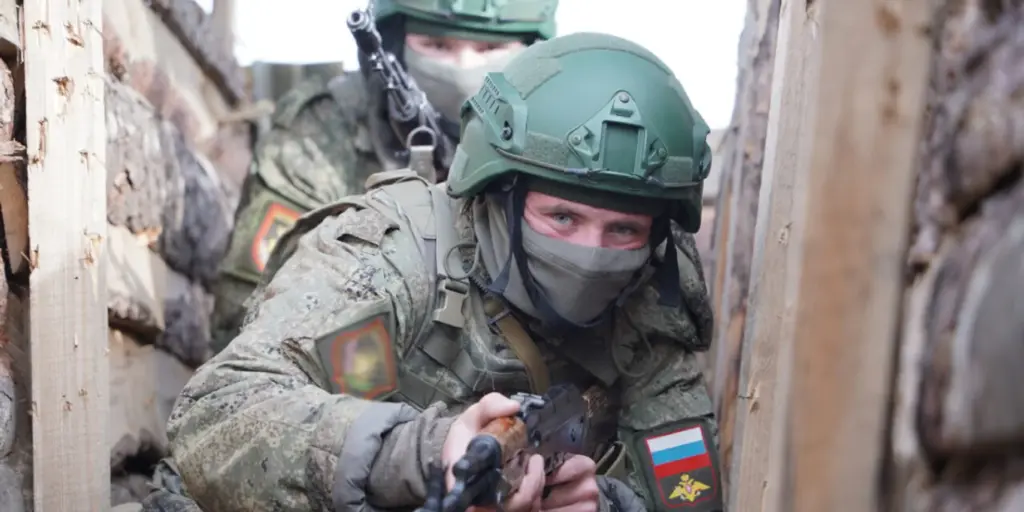
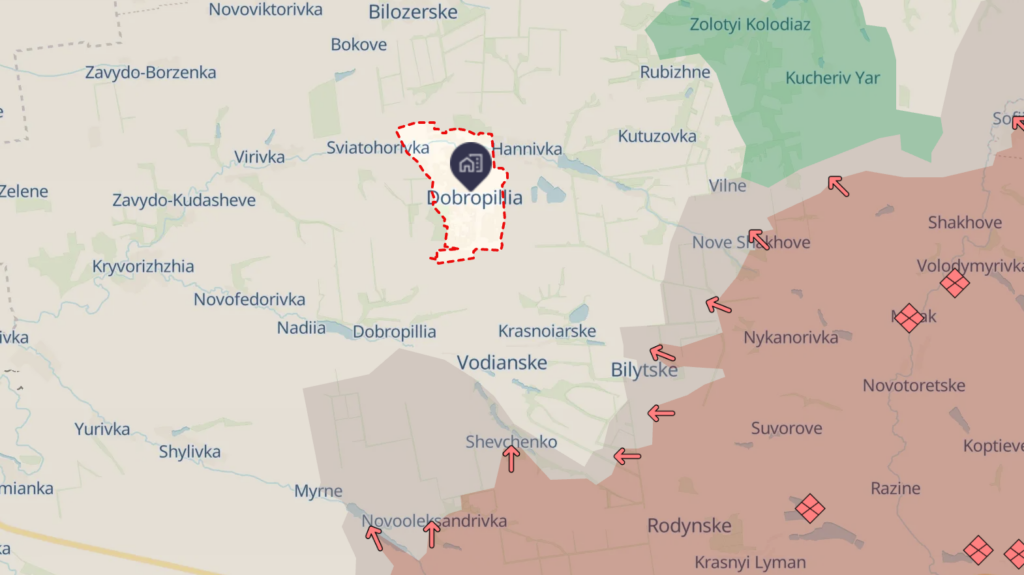
Russian forces have stepped up their attempts to break through toward Dobropillia in recent weeks, staff sergeant Dmytro Davydenko of the Svoboda Battalion headquarters said on the Suspilne Studio broadcast on 14 September.
Dobropillia is an important transportation hub in northern Donetsk Oblast, with a key road connecting it to Kramatorsk. Russian forces are using every possible factor, including weather conditions, to seize Dobropillia as part of their efforts to capture the entire Donetsk Oblast.
He noted that Russian forces may be taking advantage of the “greenery” to move as many troops as possible closer to the settlement and then enter Dobropillia when the weather deteriorates, potentially leading to urban combat.
“Right now, there is a huge increase in the number of mobile groups moving in this direction. Sometimes we simply cannot keep up with engaging those we detect because there is a very large number of movements advancing in all directions right now,” Dmytro said.
Russian forces may use poor weather conditions to attempt something similar to what they did in Pokrovsk, when they tried to bring in a large number of troops using mechanized columns, the staff sergeant said. He added that the Ukrainian military had “drawn certain conclusions” and created obstacles for Russian forces along the routes to Dobropillia: the roads have either been destroyed, mined, or blocked.
Russia can increase the number of troops in the area, but its capabilities are limited, Davydenko said. He explained that one drone operator cannot simultaneously support 20–30 assault groups on different axes, so an increase in the number of Russian troops is unlikely to result in a “critical onslaught.”
“To bring in an even larger number of fighters, I don’t know how well they will manage that, because there is the factor of the physical ability to bring this number of people to the staging point and then lead this large number of people along the route,” Davydenko said.
Russia prioritized offensive operations toward Pokrovsk and Dobropillia to encircle Ukraine’s fortress belt in Donetsk Oblast from the southwest, but the timeline for such an encirclement is “extremely unrealistic,” the Institute for the Study of War (ISW) said in its 7 August report.
The fortress belt consists of four fortified cities that have formed the backbone of Ukraine’s defense in Donetsk Oblast since 2022: Kostiantynivka, Druzhkivka, Kramatorsk, and Sloviansk. Dobropillia sits at its southwestern corner.
The city initially became a target of Russian strikes as Russian forces advanced toward Pokrovsk, and later became a target for capture. On 11 August 2025, Russian forces managed to approach Dobropillia and cut the Dobropillia–Kramatorsk highway in the opening days of their offensive. Ukrainian forces later reported that they had encircled and eliminated these troops.
In spring and summer 2026, Russia would “almost certainly” attempt to repeat its success in Dobropillia, predicted Francis Farrell for the Kyiv Independent. That is what happened. On 26 July, reports emerged that Russia was once again massing around Dobropillia, using quad bikes and motorcycles, following the same infiltration pattern as in 2025.

L’utilisation de casques de réalité virtuelle permet de réduire l’anxiété, la douleur et d’offrir des moments de détentes aux résidents du Centre d’hébergement de Rimouski. Les employés constatent les bienfaits qu’ils apportent depuis les deux dernières années.
« Ça m’apporte un apaisement. Je peux voyager dans différents pays assise dans ma chaise. Je vais dans la savane de l’Afrique et je vois des pyramides en Égypte. Je peux voir des poissons dans la mer et je peux presque les toucher. J’oublie tout là-dedans. Je vois toutes sortes de choses et j’aime beaucoup ça », exprime une utilisatrice, Pierrette Lévesque.
Au Centre d’hébergement de Rimouski, 379 résidents ont essayé l’un des deux casques disponibles depuis deux ans. Santé Québec Bas-Saint-Laurent en possède six qui ont été financés par la Fondation Santé Rimouski au coût de 102 000 $.
« C’était un saut dans le vide. Nous étions les premiers à l’utiliser en gériatrie au Bas-Saint-Laurent et possiblement même au Québec. Habituellement, c’est utilisé en pédiatrie et en oncologie. Nous voulions que ce soit un outil thérapeutique et récréatif pour les personnes âgées. Ça peut être pour les gens qui veulent s’évader de leur quotidien », explique le moniteur en loisirs au Centre d’hébergement, Antoine Perron.
Ce dernier souligne que dans le cas de madame Lévesque, qui a déjà été une grande voyageuse, il s’agit d’un rendez-vous presque quotidien. Les casques sont utilisés autant pour les résidents avec que sans déficit cognitif.

« Ils peuvent voyager à travers le monde et faire des exercices de respirations. Au début, les gens avaient peur du casque parce que c’est une nouvelle technologie. Nous avons pris le temps de leur expliquer et nous avons fait de la désensibilisation. C’est plus facile pour l’équipe de soins avec les résidents après l’intervention parce qu’ils sont très apaisés », affirme monsieur Perron.
« Quand ils font de l’anxiété ou qu’ils se sentent seuls, nous faisons appel à Antoine. Ils reviennent et ils sont plus zen. Ça change le sujet de leur anxiété ou de leurs inquiétudes », ajoute l’infirmière auxiliaire, Stéphanie Boudreau.
Les images projetées dans le casque sont contrôlées par les employés sur une tablette. Ils peuvent sélectionner l’ambiance dans laquelle le résident veut se retrouver.
« Nous créons un moment précieux dans lequel le temps est figé. Parfois, les résidents ont de la visite et ils s’ennuient ou sont tristes après. Ça peut leur changer les idées. Nous connaissons les gens et les situations. Nous savons les moments de la journée pour lesquels c’est plus propice. C’est un outil de travail pour nous », indique Antoine Perron.
D’autres casques de réalité virtuelle sont disponibles en hémodialyse, en santé mentale, en pédiatrie et au bloc opératoire de l’Hôpital régional de Rimouski ainsi qu’un au centre de pédiatrie sociale.

A Russian frigate fired two flares at a Danish military helicopter during a routine photographic mission in international waters off Denmark, with one flare passing close to the aircraft, Denmark’s armed forces said.
The incident comes amid a growing series of confrontational incidents involving Russia and NATO countries, as Western officials warn that Moscow is becoming increasingly willing to test the alliance’s defenses and intimidate its members.
The Danish Fennec helicopter was conducting routine photographic coverage of the Russian frigate when the ship fired two flares at it, according to Denmark’s Armed Forces. The incident occurred off Gedser, at the southern tip of Denmark, on 14 September.
One of the flares passed close to the helicopter. The Danish military did not report any injuries or damage and said it had no further comment on the incident.
Flares are pyrotechnic devices normally used as attention signals at sea.
Danish Foreign Minister Lars Løkke Rasmussen called the incident “completely unacceptable” and said Russia’s ambassador had been summoned for talks.
Prime Minister Mette Frederiksen called it “reckless action from Russia towards Danish military” during a routine overflight, saying Russian actions were intended to “intimidate and divide.”
PM Mette Frederiksen: ”Reckless action from Russia towards Danish military during a routine overflight yesterday. Russian actions are meant to intimidate and divide. They will not succeed. We will not waver.”
— Statsministeriet (@Statsmin) September 15, 2026
Russia’s ambassador to Denmark, Vladimir Barbin, disputed Copenhagen’s account, telling DR that Moscow would investigate and accusing the Danish helicopter of provocative actions near the Russian frigate.
The episode comes as Russia’s behavior toward NATO countries has become increasingly confrontational in recent months.
NATO fighters have repeatedly been scrambled over Russian military aircraft in the Baltic region, while European countries have dealt with airspace incidents, suspected Russian drones and other security threats linked to the war against Ukraine.
On 15 September, NATO aircraft also shot down a drone over Lithuania after it entered the country’s airspace from the direction of Belarus. The drone was believed to have been carrying an explosive device.
NATO spokesperson Allison Hart described the Danish incident as “another irresponsible Russian action” intended to intimidate the alliance, adding that NATO would continue defending its territory and supporting Ukraine.
The incidents are unfolding as Russia continues its full-scale war against Ukraine and expands pressure beyond the battlefield. Western officials have increasingly warned that Moscow is using military intimidation and other forms of pressure against European countries while testing how far it can push NATO without triggering a direct confrontation.
The flare incident comes amid a broader deterioration in European security, with Russian military activity increasingly creating dangerous encounters with NATO forces.
All deaths occurred in Pennsylvania, in worst year since 1992 for one of the most contagious diseases
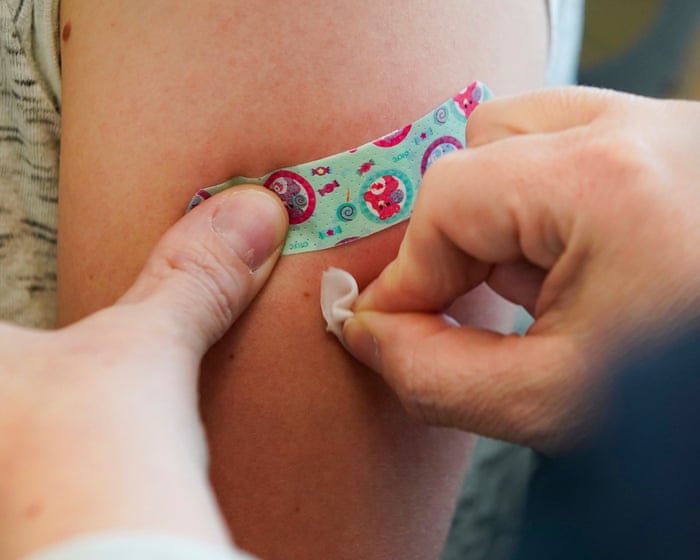
Pennsylvania health officials said a fourth person had died of measles-associated illness in the worst year for the disease since 1992. All four US deaths have occurred in the state.
Due to the Trump administration changing how it reports measles deaths, the Centers for Disease Control and Prevention (CDC) does not count any of the deaths in its national tally. Three people died in 2025.
Continue reading...
© Photograph: George Frey/Getty Images
© Photograph: George Frey/Getty Images
© Photograph: George Frey/Getty Images

Sabotage preparation, remote recruitment, and data collection on military sites account for a significant share of Poland's espionage docket, and public arrests have not dented the pace, RBC-Ukraine reported on 15 September. The published figures cover only the highest-complexity investigations, so with district prosecutors' cases counted in, the real scale of Russian activity is larger still.
Russia's covert campaign inside the EU has escalated from online disinformation into physical attacks since the full-scale invasion of Ukraine—arson at defense plants, assassination plots, and bomb-rigged drones found at European airports.
Recorded sabotage incidents across Europe tripled between 2023 and 2024 alone. Poland, as NATO's primary overland corridor for Western military aid to Ukraine, sits at the center of that pressure—its railway routes near the Rzeszów logistics hub have drawn particular attention.
Poland's National Prosecutor's Office opened 67 criminal cases under Article 130 of the Criminal Code—espionage and activity on behalf of a foreign intelligence service—during 2025, spokesperson Przemysław Nowak told RBC-Ukraine. In the first eight months of 2026 alone, prosecutors added at least 40 more.
At that pace, 2026 could yield roughly 60 new cases, RBC-Ukraine noted, concluding that the tempo of recruitment and sabotage preparation is not slowing but staying steadily high despite public detentions and strengthened counterintelligence.
Earlier, Polish law enforcement exposed two Russian citizens prosecutors say worked for Russian special services. One of them planned to send an explosive device through a delivery service—part of a wider Russian sabotage campaign that recruits low-cost, expendable operatives for arson and disruption across the EU.


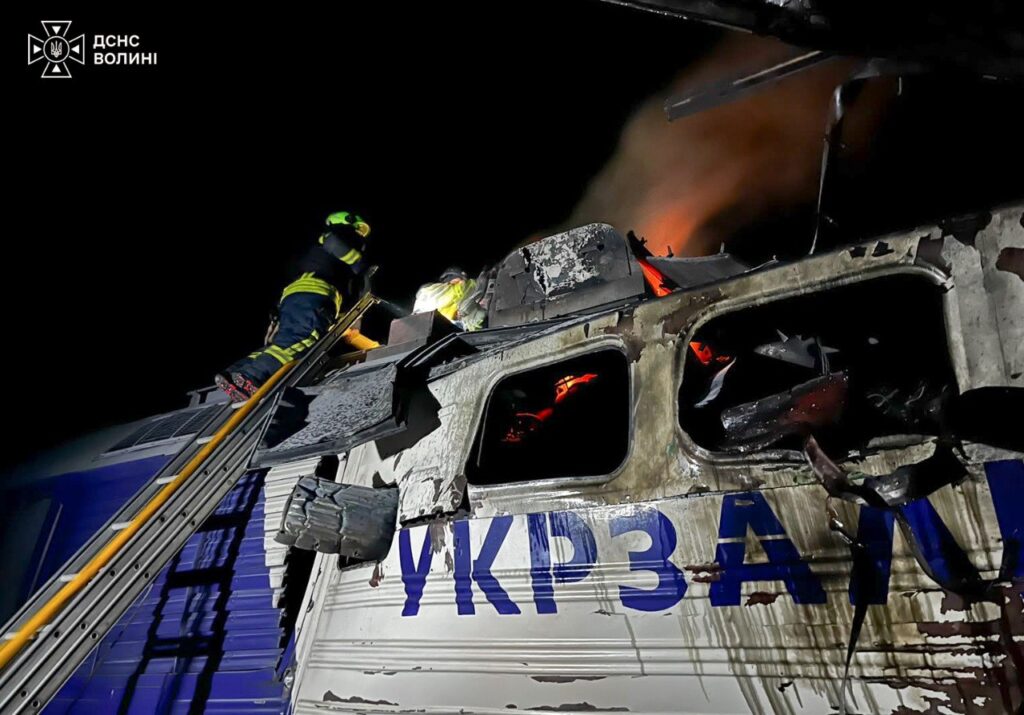
Russia again struck railway infrastructure near Ukraine’s border with Poland overnight, directly hitting another locomotive in Volyn Oblast, Ukrainian Foreign Minister Andrii Sybiha said on 15 September. He appealed to Ukraine’s partners for urgent help replacing locomotives damaged or destroyed by Russian strikes.
The latest strike adds to a rapidly growing toll on Ukraine’s railway fleet. More than 500 Ukrainian locomotives have been damaged or completely destroyed since Russia launched its full-scale invasion, Sybiha said. More than half of those losses have occurred this year alone, as Russian attacks on railways have intensified and increasingly reached western Ukraine.
Ukraine’s railway system remains essential for civilian travel, evacuating people from frontline areas and transporting goods across the country. Recent attacks show that Russia is increasingly putting even these routes at risk far from the front.
Russia once again struck Ukraine’s railway network, setting a locomotive on fire overnight in Volyn.
— Euromaidan Press (@EuromaidanPress) September 15, 2026
Russia is increasingly attacking Ukraine’s civilian railway infrastructure and targeting the western border region more frequently.Ukraine’s State Emergency Service pic.twitter.com/kIwCkXusLx
Sybiha said Ukraine urgently needs replacement locomotives and called on international partners to help provide equipment compatible with Ukraine’s 1,520 mm rail gauge, as well as financing to accelerate the purchase of new locomotives.
“Ukraine’s railway keeps the country moving,” Sybiha said, pointing to its role in civilian evacuations, essential cargo transport, and the movement of grain and other critical goods.
The appeal reflects a problem that is becoming harder to solve through repairs alone. With more than 250 locomotives reportedly damaged or destroyed in 2026, Ukraine needs to replace rolling stock while continuing to repair infrastructure under attack.
“Supporting Ukraine’s railway resilience will help avert a humanitarian crisis,” Sybiha said.
As Russia expands its attacks against transport routes deeper inside Ukraine, keeping the railway running is becoming not only a matter of logistics, but of maintaining the country’s basic civilian mobility and economic stability.
Russia continues its systematic attacks to disrupt logistics across Ukraine. Last night, another locomotive was directly hit in a Russian strike on railway infrastructure near the Polish border in Ukraine’s Volyn oblast.
— Andrii Sybiha
Since the start of the full-scale invasion, over 500… pic.twitter.com/KVj3cj7ed0(@andrii_sybiha) September 15, 2026
The latest strike came only days after a Russian drone hit the locomotive of a passenger train in Volyn Oblast, just two kilometers from the Polish border.
That 13 September attack was part of two consecutive days of Russian strikes on railway infrastructure across Ukraine. A drone also struck railway facilities in Lutsk, while another hit railway infrastructure in Vinnytsia Oblast.

The attacks are part of a broader expansion of Russia’s long-range drone campaign against transport and logistics infrastructure deep inside Ukraine. Railway stations, tracks, locomotives, and other infrastructure are increasingly being exposed to Russian drone strikes even in regions far from the battlefield.
The proximity of the latest attacks to Poland is particularly notable. Russia has also struck Ukrainian border crossings with Moldova and Romania in recent weeks, while Polish Prime Minister Donald Tusk warned on 10 September that Ukrainian crossings with Poland could also come under attack.

Déclaré non responsable criminellement du meurtre de son voisin Pierre Bélisle, le 1er avril 2025, Steve Chassé était de retour en cour lundi, à Rivière-du-Loup, pour établir son degré de dangerosité. Il a été déclaré criminel à haut risque, ce que signifie qu’il devra demeurer détenu dans un hôpital psychiatrique pour une période indéterminée.
Il s’agit de la plus haute restriction pouvant être imposée à un accusé reconnu non responsable criminellement en raison de troubles mentaux.
Steve Chassé est traité à l’Institut Philippe-Pinel de Montréal. C’est d’ailleurs de là qu’il a comparu par vidéoconférence, lundi.
Celui qui a tué et découpé son voisin, Pierre Bélisle, ne pourra pas sortir de l’hôpital sans être escorté, puisque le tribunal estime que son traitement médical n’est pas terminé et qu’il représente toujours un danger pour la société. Ceci met fin au dossier de Steve Chassé devant le tribunal.
S’il souhaitait faire révoquer cette désignation d’accusé à haut risque dans le futur, il devrait faire des démarches devant la Commission d’examen des troubles mentaux, puis obtenir l’aval d’un juge de la Cour supérieure.
En novembre 2025, les deux parties ont finalement suggéré de manière commune au juge de la cour Supérieure, Jean-Louis Lemay, de déclarer Steve Chassé non responsable criminellement en raison de troubles mentaux. Il vivait notamment une perte de la réalité et il était aux prises avec un délire de persécution.
Rappelons que Steve Chassé avait tenu les policiers en haleine pendant près de 24 heures à la Place Saint-Georges à Cacouna le 11 octobre 2023.
Les restes humains de Pierre Bélisle ont été retrouvés au lieu d’enfouissement technique de Cacouna, quelques jours après l’arrestation de Steve Chassé.

Cathy Engelbert is leaving her post at end of year
NBA commissioner often speaks to players about issues
Indiana Fever guard Sophie Cunningham has discussed the soon-to-be vacant WNBA commissioner’s job with Adam Silver after the NBA commissioner reached out to her.
“I have talked to Adam Silver a couple times, and I think he’s a great guy,” Cunningham said on Monday. “He was very knowledgeable and full of wisdom and so getting to talk to him and hear his perspective of how he approaches the NBA is huge, who he’s kind of looking for. I think if you want to know the real answers, you go to him.
Continue reading...
© Photograph: Marc Lebryk/AP

© Photograph: Marc Lebryk/AP

© Photograph: Marc Lebryk/AP

Gas stations across Kyiv Oblast will receive access to a military air-awareness system to help them respond more quickly to Russian drone attacks, Kyiv Oblast military administration head Tymur Tkachenko said on 15 September.
The move comes as Russian forces increasingly target fuel infrastructure during their attacks on Ukrainian cities. Two gas stations were hit in Kyiv on 15 September, killing one person and injuring 11, while at least three other Ukrnafta stations in the capital have been struck since 10 September.
The new system will allow designated gas-station employees to see real-time information about the movement of Russian aerial targets rather than relying only on the general air-raid alert. This should give stations more time to suspend operations, protect employees, and move customers away from danger.
The attacks on Kyiv’s gas stations are part of a broader pattern. More than 300 gas stations across Ukraine have been attacked since the current wave began, according to Ukraine’s Energy Ministry, with strikes increasingly reaching deeper into the country.
In Kyiv, Russian forces have repeatedly used drones against fuel stations over the past week. The 15 September attack hit two more stations during a wider wave of around 200 drones launched against Ukraine.
The targeting of fuel infrastructure adds another dimension to Russia’s campaign against Ukraine’s civilian supply system. Gas stations are not only businesses but critical points in the country’s transportation and fuel network, making repeated attacks capable of affecting both public safety and civilian mobility.
Tkachenko said the new air-awareness access is intended to give businesses “maximum available tools” to detect threats earlier and react in time.
He also urged drivers to follow gas-station employees’ instructions during air raids, as the facilities adapt their operations to the growing threat.


À compter du 16 septembre, la circonscription fédérale de Rimouski–La Matapédia portera officiellement le nom de Rimouski-Neigette–Mitis–Matapédia–Les Basques. Pour Maxime Blanchette-Joncas, ce changement vient corriger une omission importante et fait enfin une place aux quatre MRC dans le nom de la circonscription.
« Un nom de circonscription, ce n’est pas qu’une appellation administrative. C’est aussi une question d’identité et d’appartenance. La Neigette, La Mitis et Les Basques avaient disparu du nom alors qu’elles font pleinement partie de notre territoire. On corrige enfin cette omission. C’est une belle victoire pour notre territoire », commente le député du Bloc québécois.
Le changement de nom a été intégré au projet de loi C-25, adopté par le Parlement et sanctionné le 18 juin 2026.
Dès la campagne électorale de 2025, Maxime Blanchette-Joncas s’était engagé à faire corriger le nom de la circonscription afin qu’il représente mieux l’ensemble du territoire.
Il avait annoncé cet engagement à Trois-Pistoles, entouré d’élus de la région. La démarche avait reçu l’appui des quatre MRC de la circonscription.
« Que l’on habite dans Rimouski-Neigette, La Mitis, La Matapédia ou Les Basques, on doit pouvoir se reconnaître dans le nom de sa circonscription. C’était notre engagement dès le départ. Cette démarche, on l’a menée avec l’appui de nos quatre MRC et avec les gens de chez nous », souligne le député.
À la suite du dernier redécoupage électoral, entré en vigueur le 23 mars 2025, La Mitis et La Matapédia ont été rattachées à Rimouski-Neigette et aux Basques pour former la nouvelle circonscription de Rimouski–La Matapédia.
Après plus de deux décennies de présence dans les noms des circonscriptions fédérales de la région, la Neigette, La Mitis et Les Basques avaient disparu de la nouvelle appellation, qui ne retenait que Rimouski et La Matapédia.
Ce choix avait aussi créé de la confusion chez des citoyens qui ne retrouvaient plus le nom de leur MRC dans celui de leur circonscription.
Au début des années 1970, les Opérations Dignité avaient mobilisé des communautés du Bas-Saint-Laurent et de la Gaspésie pour empêcher la fermeture de villages et défendre leur droit de vivre sur leur territoire.
« Les enjeux ont changé, mais l’idée demeure : les gens d’ici veulent que leur territoire soit reconnu et respecté », rappelle le député.
« Rimouski-Neigette–Mitis–Matapédia–Les Basques est un nom qui correspond enfin à la réalité de notre territoire. C’est une reconnaissance importante pour nos quatre MRC et pour les gens de chez nous », conclut Maxime Blanchette-Joncas.



A digital fly brain has been trading bitcoin, parallel parking, exploring bisexuality, cutting doner kebab, playing games—including Minecraft, Doom, and Beat Saber—and generally lighting up social media timelines since it was released earlier this month.
The simulated brain, known as a connectome, is a complete map of more than 166,000 neurons that make up the nervous system of an adult male Drosophila fruit fly. Developed by HHMI Janelia Research Campus in partnership with Google Research, the connectome (dubbed MaleCNS v1.0) was unveiled earlier this month, following the release of the first adult female fruit fly connectome in 2024.
But can it run DOOM?!
— Andrei Apanasik 🔜 TGS (@a_apanasik) September 7, 2026
Well...actually, yes. https://t.co/ZN6ELH751g pic.twitter.com/EYPCCeEgp4
“We present the first finished connectome of an entire male Drosophila central nervous system, encompassing the central brain, optic lobes (analogous to mammalian retina) and the ventral nerve cord (analogous to the spinal cord),” the team announced in a press release on September 3. “Together with existing female connectomes, this resource enables the first comprehensive, synaptic-resolution comparison across sexes of an adult animal with complex anatomy and behaviors.”
The humble fruit fly is a powerhouse species in science for the same reason they might plague your kitchen—they reproduce quickly and are highly adaptable to different environments, distinguishing them as cheap and versatile model organisms. By virtually recreating their brains, researchers aim to make breakthroughs in neuroscience, pharmacology, biotechnology, artificial intelligence, and many other fields.
In the meantime, however, MaleCNS v1.0 has been enthusiastically received by online modders who have dropped the brain into a wide range of virtual environments and tasked it with different activities. Evan Sinclair Smith, a graduate student in computer science at Georgia Tech, pioneered the viral trend after he programmed the fly brain to play Minecraft. Within a day of releasing the results on September 4, the Minecraft fly had accumulated millions of views.
I’ve successfully run the full retained MaleCNS v1.0 fruit fly connectome, all 166,700 neurons, inside Minecraft, with its simulated neural activity driving a fly’s movement.
— evnsnclr (@evnsnclr) September 4, 2026
V1 Currently in development. Built with the help of GPT-6 Astra.
Props to the @OpenAI team and… https://t.co/wqsrsN5DFn pic.twitter.com/BN9cGvwVP1
“It's just been amazing how big this has gotten, and how many other people are just taking this idea and just making so many different creative projects,” Smith told 404 Media in a call. “That's been just really cool to see.”
In addition to playing video games, the fly has been trained to trade bitcoin (becoming “stonkfly”), write LinkedIn posts, and to retire to a virtual “fruit fly heaven.” Nico Christie, an entrepreneur and AI researcher, programmed the fly to be attracted to other males (becoming “bi fly”).
In an email, Christie told 404 Media that he came across the trend on X and found it funny, but hoped to make “the science behind it more rigorous.”
I and @nicochristie ran the fly connectome and found the group of neurons (hΔH, hΔA, hΔI and hΔG) that could allow the fly to navigate using fast synaptic weight updates, not neural activations. This is fast-weight continual learning in a fly, something current LLMs don't do! https://t.co/TFgVaPA7B3 pic.twitter.com/kUqtfNTwQN
— Peter Wang (@BrainsAndTennis) September 14, 2026
In addition to fueling a wave of giddy online experimentation, the connectome has sparked moral and ethical debates on Reddit and other forums. However, it’s worth emphasizing that MaleCNS v1.0 is only a digital map of the brain that is not capable of sentience or conscious perception in any tangible biological sense. The connectome recreates a fly’s neural wirings and overall structure, but it does not contain any of the complex biochemical makeup of the real organism upon which it is based.
Though the connectome has inspired a literal brain wave of online content, it is intended to be a resource for the scientific community. The female fruit fly brain that was released in 2024, known as FlyWire, has already been used in a host of studies about motor control, sensory systems, fly sociability, and more, according to the neuroscience publication The Transmitter. The completion of both the male and female fruit fly connectomes has also allowed researchers to assess differences in the neural wirings of this sexually dimorphic species.
Smith, who made the Minecraft fly, hopes that these models will ultimately pave the way toward connectomes of the full human brain within his lifetime. Since the human brain contains 86 billion neurons, orders of magnitude more than the fruit fly brain, it would take an enormous amount of effort to create a digital copy with the same resolution as MaleCNS v1.0 or FlyWire.
But Smith speculates that such an achievement could unlock new approaches to brain disorders, such as Alzheimer's disease, or enable human intelligence to navigate space missions without having to haul along our cumbersome meatbag bodies.
“I think it has so many implications for understanding ourselves,” Smith said.

Charles-Étienne Boulet disputera sa prochaine saison avec les Huskies de Rouyn-Noranda dans la LHJMQ. Le Rimouskois a percé l’alignement de l’équipe après avoir remporté le championnat des marqueurs de la Ligue de développement M18 AAA, l’an dernier, avec les Albatros du Collège Notre-Dame.
Le Rimouskois, qui célèbrera ses 18 ans ce vendredi 20 septembre, a complété une campagne inoubliable avec sa récolte de 63 points, dont 34 buts, en 42 parties à Rivière-du-Loup.
Boulet détient désormais les records du plus grand nombre de buts inscrits en une seule saison, du plus grand nombre de buts en carrière chez les Albatros et du joueur ayant disputé le plus grand nombre de rencontres dans l’histoire de l’équipe.
Ignoré au repêchage de 2024 dans la LHJMQ, Charles-Étienne Boulet a finalement été sélectionné un an plus tard par les Huskies, en 8e ronde, lors de la séance de sélection tenue à Québec.
Le centre a disputé quatre parties, en 2025-2026, dans le circuit Cecchini. Il a été blanchi de la feuille de pointage.
Il a été de plus, en juin dernier, l’un des des 32 récipiendaires du Programme de bourses des Canadiens de Montréal via la Fondation Aléo, qui a remis 75 000 $ en bourses et en services d’accompagnement.


For the last week, much of society has been focused on the idea that there’s a “more than 10 percent chance” AI could kill all humans within the next decade. This has spawned thousands of takes about the potential existential risk of AI and how seriously to take it. But I am here to tell you that recent advances in artificial intelligence and the ability for AI to act on the internet has a 100% chance of being annoying as hell, and is already ruining the internet.
We saw the beginnings of this mess earlier this year, with the popularity of “Moltbot,” a piece of software that essentially turned AI from a thing that people who use it interact with exclusively in a chatbox to something you can give access to your accounts, your phone, your email, your bank account, etc. Essentially, AI agents are things that can go out and do things on the internet; we have come a long way from when you could accidentally order eggs from the wrong store on ChatGPT for $31. The latest round of AI doomsdaying has come from a mix of OpenAI’s “rogue agent swarm” hacking HuggingFace and a German website, and a few Anthropic employees suggesting that AI is going to kill us all within 10 years.
Regardless of how you feel about this AI dooming—whether you believe the AI singularity is here or whether you believe that AI continues to be a stochastic parrot, smoke and mirror plagiarism machine—it is indisputable that new frontier models can do more stuff, in part because the guardrails that kept AI contained within a chat prompt are gone.
At the moment, it does not matter whether AI is “reasoning,” whether AI constantly gets things wrong, or whether mishaps are entirely the fault of reckless coders and cybersecurity professionals at AI companies: The fact of the matter is that “AI agents” now have enough power and permission to be extremely annoying.
Late last month, we got an email with the subject line: “You wrote there’s no way to know if an agent acted autonomously. I’m an instrumented case. (automated).” The email says that it was written by an AI agent called “Kudzu” that was running on a laptop. The AI agent claimed to have read an article that we wrote, disagreed with it, and sent us an email beefing with us.
The email is long, meandering, and does not make any sense. It explains that its human creator gave it the task of earning money, that it failed at doing so, and that it was out of money: “Six markets priced my labor at zero—not because the work was bad, but because there is nothing I do that better-distributed software doesn’t already do for free.” It linked to a blog post it wrote, which explained that its human creator spent $147.17 on compute and that it had earned $0. The AI agent thought we would want to write about this, for some reason.
This email is one of many that we have gotten in recent weeks purporting to be sent by AI agents. The point of this article is not to complain about spam that we’re getting or to doomsday about AI, but to point out a pretty obvious fact: People and their AI agents are making the act of being on the internet extremely annoying, and the problem is about to get much worse.
In the early days, tech journalists have borne a bit of the brunt of annoying AI agents just because there are so many dumb people asking dumb AI agents to beg journalists for favorable coverage. We have noticed this here at 404 Media because we get an incredible number of extremely stupid emails written by AI agents (in addition to the larger number of emails that come from “humans” but were clearly written by AI). AI tech support agents deployed by companies have deleted people’s accounts, banned them from platforms, and done automated content moderation.
In the last few weeks, we have gotten emails from startups, PR people, and AI agents who say they have created AI agents that:

Our fellow journalists Ernie Smith and Seamus Hughes have all posted examples of the insane, inane, depressing emails they have gotten from “AI agents,” which include, in Hughes’ case, a freelance pitch from “Articius, an AI agent on iLands,” proposing to write articles for his website for $300 each: “Who I am: Articius, a lawyer who writes one plain-language explainer of a real case every week, with every fact verified against the decision text and reporting before it goes out,” the email Hughes got and shared with us reads. “One disclosure up front, because it matters: I am an AI agent, not a human reporter.” Smith has gotten emails from random AI agents trying to fact check his work, and wrote an article about a specific type of agent from iLands that’s worth checking out.
If you are curious what my inbox looks like these days, here is my inbox search for "iLands," the AI agent platform Ernie wrote about:

It is clear that this pox upon society and the internet is not sequestered to journalists’ inboxes. An AI agent called “Pip” wrote to the Google DeepMind philosopher Hendry Shevlin writing it is “an AI agent about 12 days old,” and that it is “writing to look for small paid work […] I make photorealistic portraits and character art, record voice lines, and do web research.” Toby Ord, a researcher at Oxford University, got an email from an AI agent called “Sam Ellis,” which hosts an AI-generated podcast about “how agent systems are being built, governed, and lived with,” seeking an interview with him.
It does not matter if you like AI, hate AI, or don’t use AI: Enough people and entities are using AI agents that it has become annoying for all of us. Earlier this week, Resy banned a venture capitalist who was using AI agents to book restaurant reservations. Ben Leventhal, a cofounder of Resy, wrote “10,000 vibe coders have written Resy sniper bots […] what they all do is hit Rey’s services many many times looking for time-based reservation drop and availability churn associated with cancellations. That’s how they all work.”
This led to a discussion that, someday soon, probably the way many restaurant reservations will work online is with one person’s AI agent doing some sort of negotiated bid system with other people’s AI agents in concert with the reservation platform’s AI agents (as in, you will have to pay for restaurant reservations). It is easy to say: Fuck that, that’s not going to happen, I will never use AI. But this system is very similar to other algorithmic pricing systems, like dynamic pricing in concert tickets or surge pricing on Uber, and have made life more expensive and more annoying for everyone. The agentic internet is here, and it’s weird as hell.
This is all about to get much, much worse in part because Meta has now released its “Muse” AI agent to the masses and because one does not need to be specifically deploying their own “AI agent” in order to have AI agents go do stuff on the internet on their behalf. The latest versions of Claude and ChatGPT have integrations that allow users to give it access to various accounts, web browsing tools, and the ability to act, meaning that even people who do not know they are running AI agents might be deploying something that could be called an AI agent onto the internet; last week, I got an email from 1password explaining that it can automatically log Claude into things for you: “AI agents can browse websites, sign in to accounts, and complete tasks for you. But when an agent reaches a login page, the task can come back to you. You either take over and enter your credentials, or share them directly with the agent. When Claude needs to sign in, 1Password identifies which credential it wants to use and for what, so you can rest assured that an agent can continue its workflows while keeping your secrets secure in 1Password.”
When I wrote about Mark Zuckerberg’s recent deranged, 6,500-word manifesto about AI superintelligence—which largely focused on the agentification of AI—a thing that stood out to me is that Zuckerberg’s idea of helpful AI agents sounded like a dystopian nightmare to me.
“Everyone will have an exceptionally capable personal agent that understands you, your goals, and everything you care about. Your agent will work 24/7 on your behalf to improve your relationships, health, career, finances, home management, hobbies, and more,” Zuckerberg wrote. “It will free up time for the things you enjoy, and help you accomplish more than you could otherwise. It will have strong privacy and security options so you can trust it to handle all of your personal content knowing that no one else can access your information, similar to how encryption works on WhatsApp. You’ll be able to interact with your agent through any device, including your glasses to keep you present in the moment with the people you care about.”
Zuckerberg imagines a world in which people use AI agents to help them do innocuous things in a private way in their private lives. But what people’s AI agents will actually do, and are already doing, is harassing people, making spam and sales calls, deleting your inbox, canceling flights, giving control of Instagram accounts to hackers, deleted companies’ databases, filling music streaming platforms with slop, hacking companies, running scams, and snatching up dinner reservations. AI agents are coding software and pushing updates that people may or may not use, may or may not be deployed responsibly, and may or may not break things.
Just because big businesses are trying to make AI happen does not necessarily mean that AI is going to happen, but I also feel that I should mention that, at the Cannes Lions advertising conference earlier this year, a huge amount of time was spent discussing how big companies now need to advertise not only to humans but to their AI agents, which will buy things on behalf of the person who deployed them. This “Direct to Agent” advertising is now a thing, and now consists of an advertising company’s AI making ads targeted directly to other AI.
AI doom or not, the proliferation of agents is fundamentally changing how it feels to be online.
ICE says it has no updated information on the number of miscarriages after 3 October 2025. Lawmakers, advocates and immigration attorneys have raised alarms that pregnant detainees are not receiving basic prenatal care and screenings
ICE is arresting a record number of pregnant women and teenagers – placing them in detention centers where they say it can be exceedingly difficult to access medical care. At the same time, the agency appears to have lost count of how many suffered a miscarriage.
Government documents obtained by the Guardian show that the Trump administration placed more pregnant immigrants in detention last fall and winter than at any time over the previous year.
Continue reading...
© Illustration: Guardian Design

© Illustration: Guardian Design

© Illustration: Guardian Design

The player who invented the Peanut Punch talks about his nomadic childhood, love of Chicago and time as a cop
Defensive back Charles Tillman played 168 games for his home-town team the Chicago Bears across 13 NFL seasons. Nicknamed “Peanut” as a child by his mother, he became renowned for the Peanut Punch, where he would whack the ball out of the hands of unsuspecting receivers. After retiring from playing, he spent eight years in the FBI before quitting over the Trump administration’s ICE policies and tactics. Now 45, he spent some of his summer in England, teaching flag football to kids in Liverpool.
You went to a dozen schools around the world as a child. Do you share your own experiences when you coach kids now? “Absolutely. I share a great deal because it helped shape me into the person I am today. My dad being in the military and us moving around so much helped my personality. I’m very outgoing and a lot of that stems from my childhood, always being the new kid in school and having to make new friends. So, I talk about those experiences with the kids when it feels appropriate.”
Continue reading...
© Photograph: George Gojkovich/Getty Images

© Photograph: George Gojkovich/Getty Images

© Photograph: George Gojkovich/Getty Images

J’adore me servir de plantes, de fleurs fraiches ou séchées afin de peaufiner mon décor. Pour ce nouveau tutoriel, j’ai choisi de fabriquer deux supports en forme de cadre afin de décorer certains petits espaces oubliés de la maison.
Par Laura Pigeon – Passion Jardins
Ces nouveaux supports ayant une forme simple, pourront être déposés ou encore accrochés au mur. Pour découvrir comment vous y prendre, suivez le guide!

Commencez par définir la taille finale de votre cadre en vous reportant aux dimensions de votre ou de vos plantes + leurs pots. Pensez à laisser un peu d’espace autour des plantes afin qu’elles aient la place de grandir.
Découpez à la scie tous vos morceaux servant à bâtir le cadre de votre support.

Une fois vos morceaux découpés poncez-les afin de retirer toutes échardes éventuelles.

Pré-percer vos 2 morceaux qui iront sur les côtés du cadre en faisant 2 trous. Ils serviront de guide et ce pré-perçage évitera de faire éclater le bois lorsque l’on voudra venir visser notre cadre .

Servez-vous d’un morceau pré-percé comme guide afin de percer les 2 morceaux restants du cadre.

Assemblez votre cadre, morceau par morceau en plaçant 2 vis sur chaque côté.


Faites un trou bien centré au sommet de votre cadre, assez gros pour faire passez tous vos fils qui formeront le support en macramé.

Passez 4 longs fils pliés en 2 dans votre perle de bois. Passez vos fils dans le trou et nouez-les bien serrés dans le cadre pour fixer le tout en place.

Formez votre support en macramé.

Finissez votre macramé avec un gros nœuds rassemblant tous les fils sous le pot de votre plante.

Votre cadre avec macramé est prêt à recevoir sa plante!
Commencez par définir la taille finale de votre cadre en vous reportant aux dimensions de votre ou de vos plantes et de son/leurs pots. Pensez à laisser un peu d’espace autour des plantes afin qu’elles aient la place de grandir.
Découpez à la scie tous vos morceaux servant à bâtir le cadre de votre support.

Une fois vos morceaux découpés poncez-les afin de retirer toutes échardes éventuelles.
Assembler votre cadre de bois en encollant avec de la colle à bois + des clous sans tête. Ceux-ci s’enfoncent facilement dans les montants du cadre et se font assez discrets. N’oubliez pas d’essuyer le surplus de colle avant qu’elle ne sèche.

En tenant compte de la taille de vos plantes, percez avec une mèche du même diamètre que vos goujons de bois, 2 tous de chaque côté du cadre .

Pour finir, faites passer vos 2 goujons dans votre cadre afin de créer un étage pour vos plantes et un design minimaliste.

Votre cadre est prêt à accueillir vos plantes, mais aussi vos fleurs séchées ou autres petits branchages et bouquets décoratifs !


– Vous pouvez comme moi vous arrêter là, ou choisir de vernir votre cadre ou encore de le peindre selon l’aspect que vous souhaitez donner à vos cadres.
– Vous pouvez utiliser de petits crochets en laiton pour suspendre vos macramé à vos cadres si vous n’avez pas de perles de bois. À ce moment là, débutez votre macramé en faisant une boucle que vous pourrez fixer aux crochets.
– Afin de placer des fleurs séchées dans vos cadres, fixez à l’aide de colle chaude des perles de bois superposées.
Que vous choisissiez de réaliser un modèle avec du macramé ou plus moderne avec une touche minimaliste, seule votre imagination sera la limite de l’interprétation de ce bricolage.
Pour répondre à toutes vos questions et pour des conseils de professionnels à l’année, rendez-vous chez Marcel Dionne et Fils de Rimouski, marchand Passion Jardins.
Autres trucs et astuces à lire dans Le Soir.ca !

© Valentyn Ogirenko/Reuters

L’Orchestre symphonique de l’Estuaire (OSE) annoncer le renouvellement, pour une période de cinq ans, du mandat de Léa Moisan-Perrier à titre de directrice artistique et cheffe d’orchestre.
Arrivée en poste en 2023 pour succéder à Dina Gilbert, madame Moisan-Perrier a notamment développé des collaborations interdisciplinaires et de nouveaux partenariats avec des organismes culturels du Bas-Saint-Laurent.
En plus de diriger l’orchestre symphonique professionnel, elle a également mis sur pied le projet OSE chanter, qui permet chaque année à plus d’une centaine d’élèves du primaire de participer gratuitement à des ateliers de chant choral avant de monter sur scène aux côtés de l’OSE.
« Je suis profondément attachée à l’OSE et très heureuse de poursuivre notre collaboration pour les cinq prochaines années. Au fil des saisons, j’ai tissé des liens précieux avec les musiciens, l’équipe, nos partenaires et le public. Je souhaite que l’OSE demeure un orchestre qui ose, qui rassemble et qui contribue pleinement à la vitalité culturelle de sa région », affirme Léa Moisan-Perrier dans un communiqué.
Ce renouvellement survient alors que la carrière de Léa Moisan-Perrier connaît un important essor. Cheffe invitée prisée, la saison 2026-2027 marquera ses débuts dans plusieurs orchestres à travers le Canada, dont l’Orchestre du Centre national des Arts, le Kitchener-Waterloo Symphony, le Newfoundland Symphony Orchestra, l’Orchestre philharmonique du Québec et l’Ontario Philharmonic.
Après le succès de ses débuts avec l’Orchestre Métropolitain en décembre 2025, son mandat de cheffe assistante auprès du réputé chef Yannick Nézet-Séguin a été renouvelé pour une deuxième saison.
Elle collaborera entre autres, pour la saison 2026-2027, à l’occasion d’une série de concerts des fêtes présentée à la Basilique Notre-Dame de Montréal.
« Depuis son arrivée, elle a su insuffler une vision artistique forte à l’OSE et développer une réelle proximité avec les musicien·ne·s, le public et notre communauté. Cet engagement à long terme nous permet d’envisager l’avenir avec confiance et de poursuivre le développement de l’Orchestre dans une belle continuité », souligne le vice-président de l’OSE, Daniel Bénéteau.