An island that appeared to suddenly materialize, then vanish, on Williston Lake in British Columbia over the summer was rediscovered on the massive reservoir on Monday. Once you’ve taken that all in, let’s ask the important question: How the heck did that happen? The existence of the disappearing island—a floating mass of trees and vegetation that measures about 230 feet by 460 feet—sparked international attention last month after Rocky Avery, a local resident, posted a viral video of it that
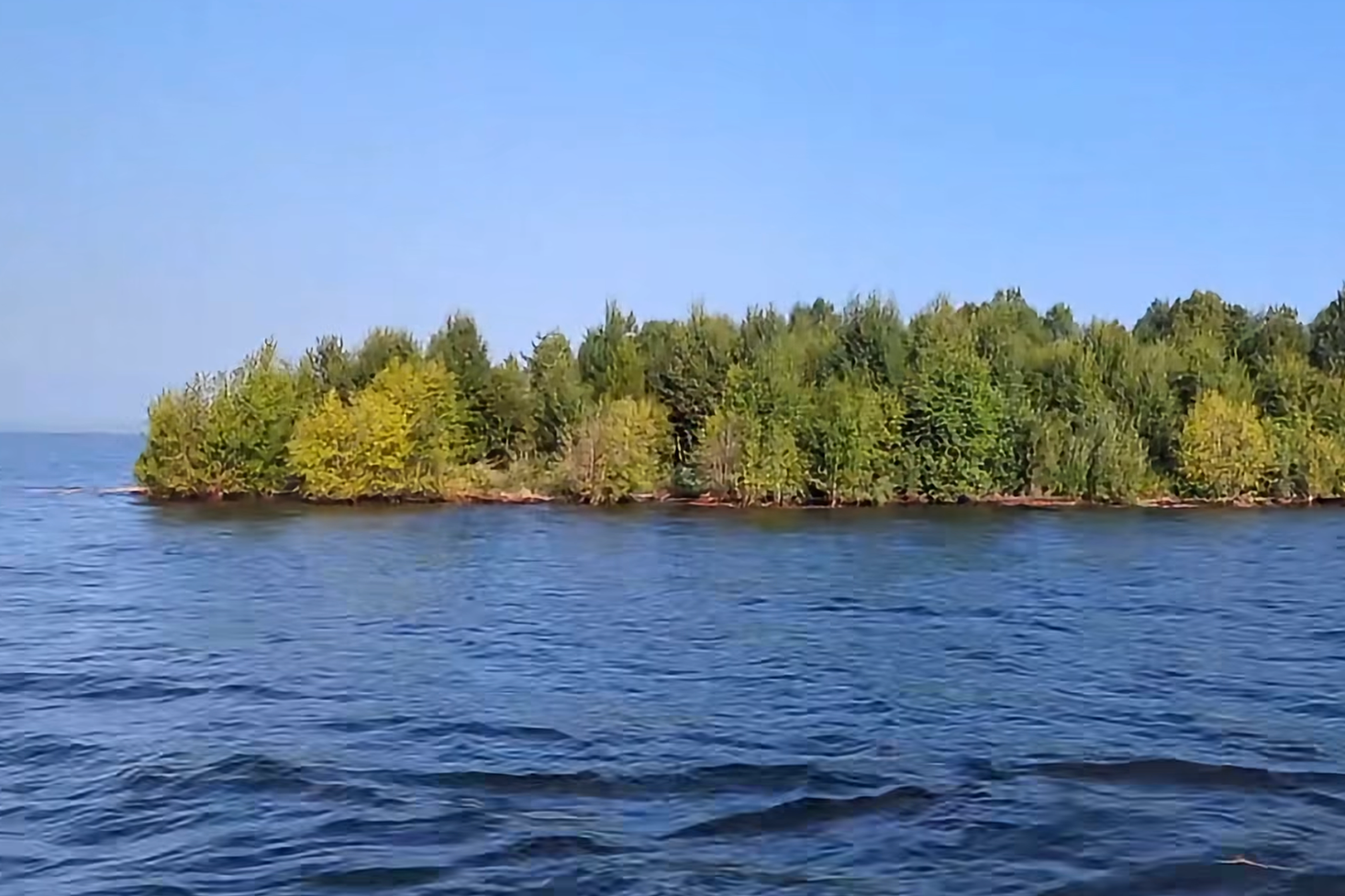
An island that appeared to suddenly materialize, then vanish, on Williston Lake in British Columbia over the summer was rediscovered on the massive reservoir on Monday.
Once you’ve taken that all in, let’s ask the important question: How the heck did that happen?
The existence of the disappearing island—a floating mass of trees and vegetation that measures about 230 feet by 460 feet—sparked international attention last month after Rocky Avery, a local resident, posted a viral video of it that was sent to him by one of his boater friends, according to CBC News.
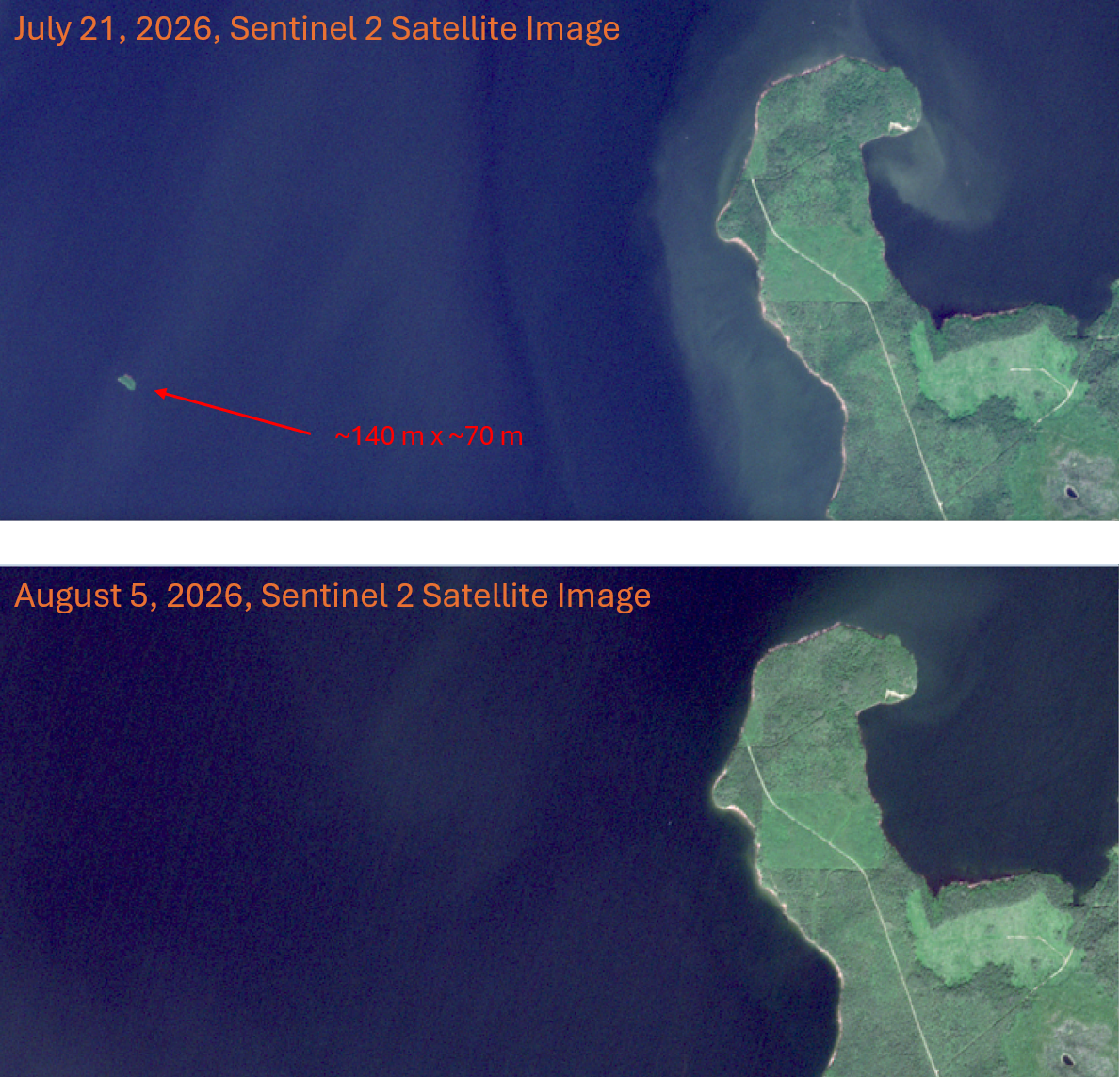
Bob Gammer, a spokesperson for BC Hydro, was initially suspicious that the video might be AI, but confirmed it was authentic after spotting the island drifting about 60 miles west of the W.A.C. Bennett Dam in satellite images taken on July 21. In satellite images from August 5th and circulated last week, it was no longer visible, sparking a search over the past few days that led to its rediscovery about 20 miles northwest of where it had previously been spotted.
“We had some earlier satellite imagery that confirmed that this wasn't just a hoax or some kind of AI thing, and that it really was real,” Gammer told 404 Media in a call. “Since then we've had more photos from people on their boats on the water sailing right up to this island, and additional satellite imagery that puts it all together to say that this is a real thing. It’s a sizable island.”
Satellite images provided by BC Hydro to CBC. Image: BC Hydro
As it turns out, this isn’t a new phenomenon—though Gammer said it hasn’t been reported on Williston Lake before. Floating islands form on shorelines over many years, as natural rafts made of driftwood can allow plants and trees to grow above the water. These platforms can then detach in certain conditions, such as stormy weather or flooded shores, allowing them to meander into the water.
Williston Lake is a reservoir created by the massive W.A.C. Bennett Dam, which stands more than 600 feet high. Due to high snowpack and precipitation, the dam was opened in June and July, filling the reservoir for the first time in 14 years, according to Gammer. These high water levels, in addition to strong winds, likely dislodged the island, allowing it to float freely in the water.
“This is all brand new to us,” Gammer said. “We've never seen anything like this on the reservoir.”
BC Hydro is urging boaters to keep their distance and not to step on the island. Despite its size, the forested mass is structurally flimsy and hazardous to walk on. Other than birds, no animals have been spotted on the island. However, animals have accidentally been swept away on these natural rafts; indeed, many species have crossed oceans and reached new continents this way.
The island doesn’t pose any risk to the dam or vessels, and its journey around the lake is now being monitored by BC Hydro through satellite images and eyewitness reports. This waterborne woodland may disintegrate over time, or become reattached to the shoreline. If it survives until winter, it could be frozen into the ice and perhaps thaw out again in spring.
“It's a break from everyday reality, and so it's really captured a lot of attention,” Gammer said. “There's a lot of media interest, and it's been great to be able to tell the story. And who knows how long this will last? I mean, in terms of its news value, I'm sure it'll disappear within a few days. But the island will be there for a while. We'll be monitoring it, and if there's anything exciting about it, we may be able to tell that story too.”
Welcome back to the Abstract! These are the studies this week that went interstellar, entombed the sky, hit the gas, and renewed the world.First, scientists predict that there are thousands of objects from alien star systems lurking in the outer reaches of the solar system. Then: ancient air is hidden in glassy Moon beads, the “worst energy policy in the world,” and a mysterious Mississippian luxury.As always, for more of my work, check out my book First Contact: The Story of Our Obsession with
Welcome back to the Abstract! These are the studies this week that went interstellar, entombed the sky, hit the gas, and renewed the world.
First, scientists predict that there are thousands of objects from alien star systems lurking in the outer reaches of the solar system. Then: ancient air is hidden in glassy Moon beads, the “worst energy policy in the world,” and a mysterious Mississippian luxury.
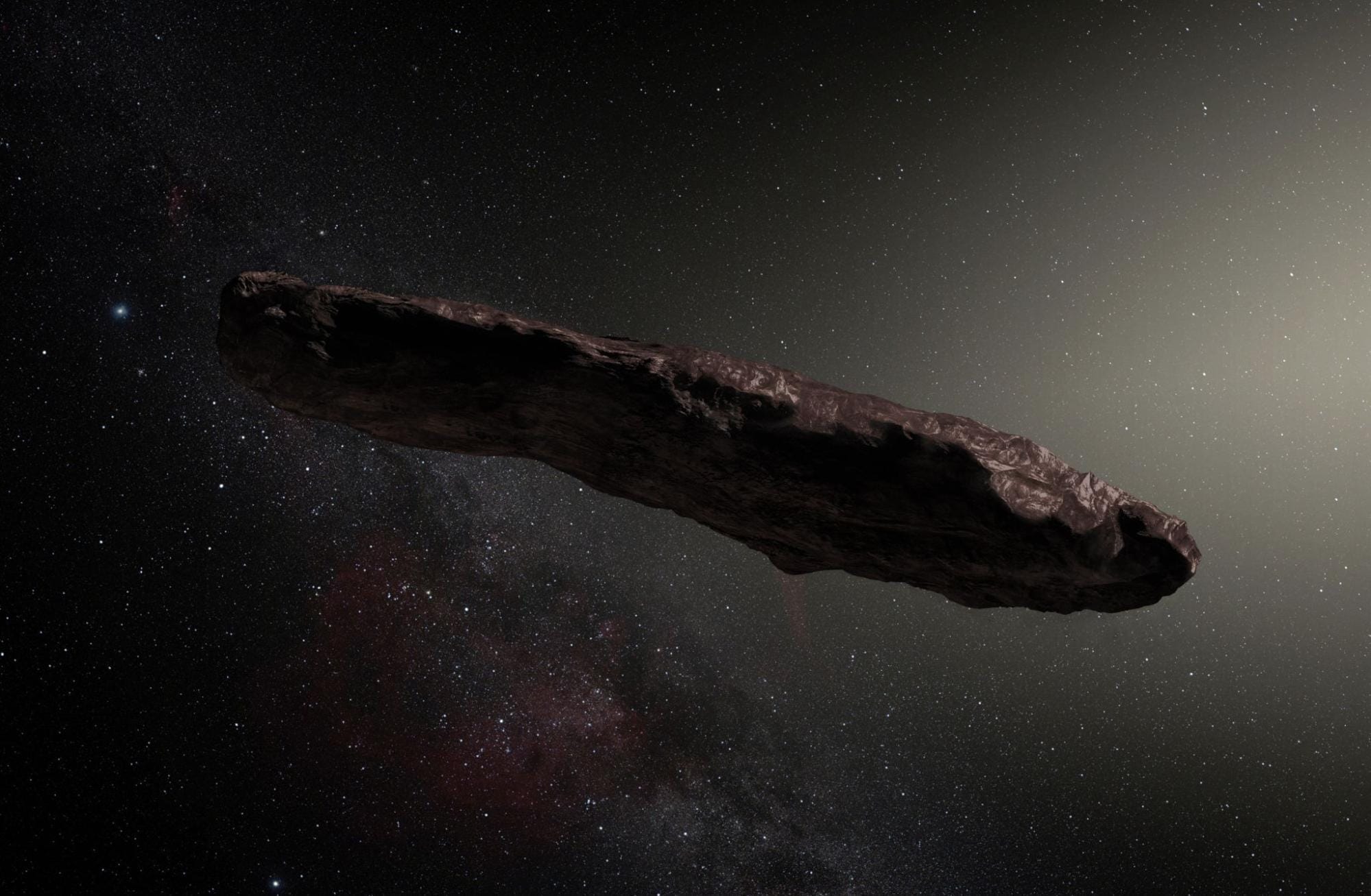
Over the past decade, three interstellar objects have been spotted streaking through our solar system. It’s likely that dozens more of these interlopers will be discovered in the coming years. These objects travel so fast that they can escape the gravitational clutches of the Sun, which is why they are only visible for weeks before hurtling back out to speed-run the galaxy.
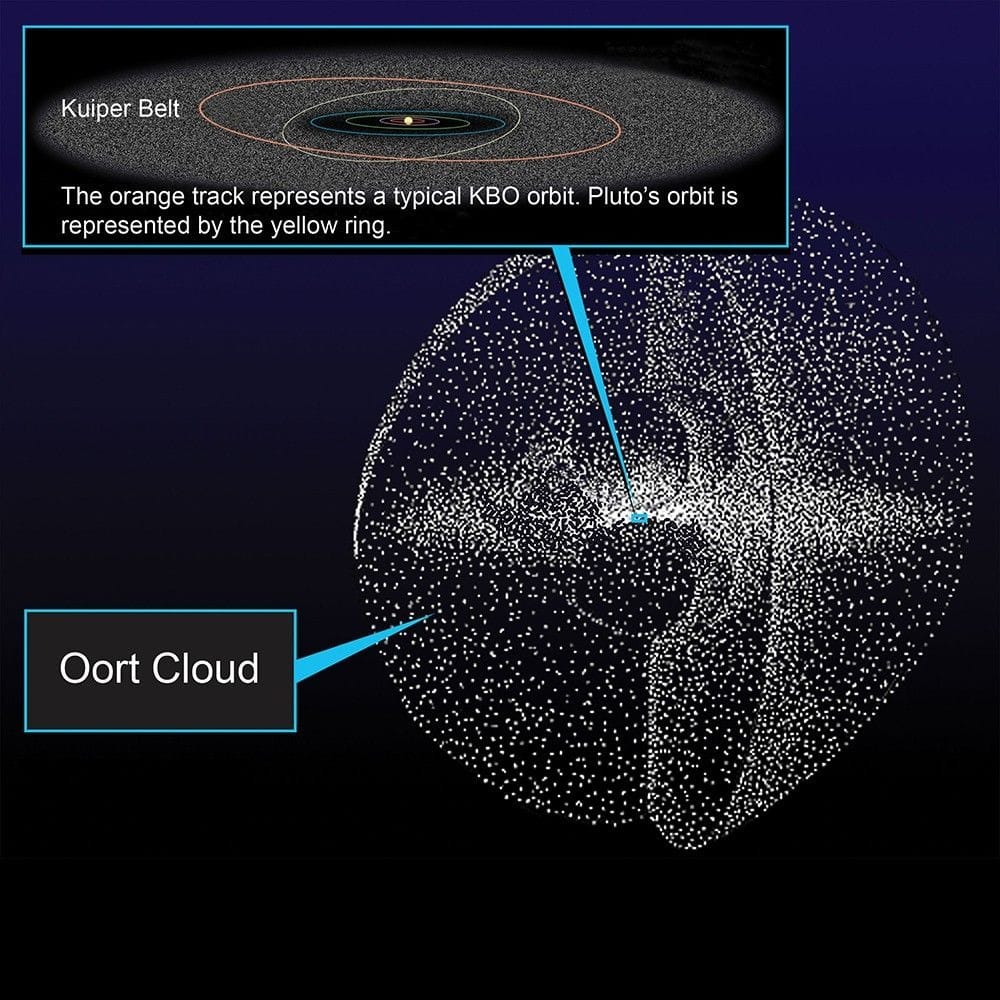
But while some interstellar objects (ISOs) leave in a hurry, others may be here to stay, lurking in the outermost reaches of the solar system, known as the Oort cloud, reports a new study.
Over the course of its 4.6-billion year lifespan, the Sun has wandered close enough to other stars to collect thousands of non-native objects from the fringes of those passing systems. It may have also sent off many of its homegrown objects to join alien star systems during these encounters, like some kind of stellar gift exchange.
Concept art showing the scale and spherical shape of the Oort Cloud. Image: NASA
“The Solar System has long been suspected to contain captured, non-native material,” said researchers led by Sean Raymond of the Bordeaux Astrophysics Laboratory. “The recent ISO discoveries have now confirmed directly that extraterrestrial material regularly passes through the Solar System.”
Drawing on these discoveries, Raymond and his colleagues ran models to predict how many ISOs might be exchanged between stars during close encounters, called stellar flybys. The Sun is estimated to have had at least one or two of these meetups during its life so far, which could be “responsible for a large fraction of the captured ISOs currently residing in the Solar System.”
“Given that flybys are unavoidable in the Galactic field, most stars should host sparse Oort clouds populated with ISOs captured during stellar flybys,” the team said.
The Oort cloud — composed of frozen comet-like objects — extends for about three light years away from the Sun, so it’s not currently possible to send a spacecraft to go out to sift for ISOs in these distant wilds. Still, it’s neat to know there are so many interstellar hitchhikers riding in the Sun’s backseat.
A memory of an ancient ephemeral sky on the Moon may be locked inside glass beads scattered across the lunar surface, according to a new study.
The Moon is airless, but there’s evidence that it was surrounded by a transient atmosphere billions of years ago, which was fed by volcanic eruptions in its early history. Rocks crashing into the surface may have also vaporized material and created brief, gassy skies over time.
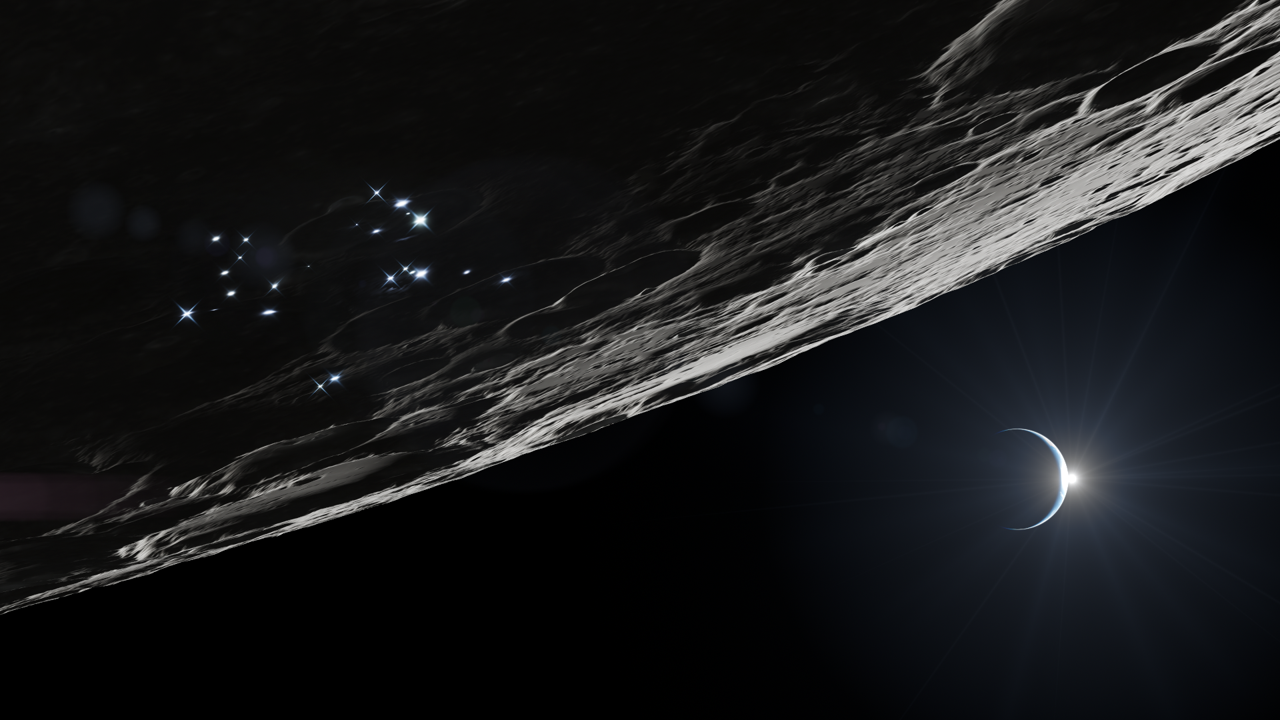
Scientists have now examined glass beads that were scooped up from the far side of the Moon by China’s Chang’e 6 sample-return mission, and delivered back to Earth in the summer of 2024 (that’s so Brat). The lunar glass, which was forged by rocks crashing into the surface, captured the chemical signatures of the vapor plume created by those impacts, capturing a whiff of a long-lost transient atmosphere.
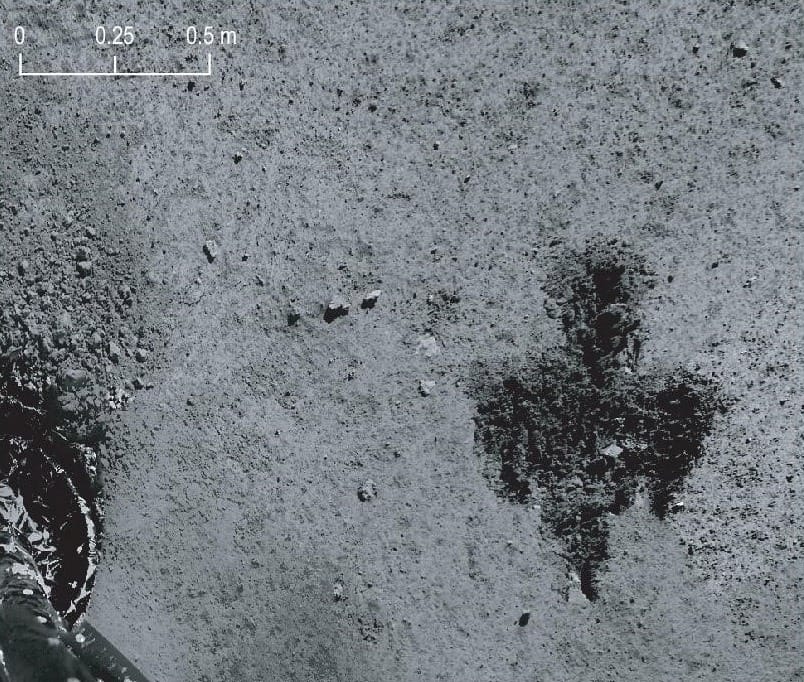
The scoop left by Chang’e-6 sample collection on the Moon, which included the glass beads. Image: Chunlai Li, Hao Hu, Meng-Fei Yang
“Chang’e 6 (CE6) mission has returned the first lunar samples from the farside of the Moon,” said researchers led by Ziyan Han of Nanjing University. “The returned CE6 lunar regolith contains impact glass beads that could have recorded impact-induced vaporization on the Moon's farside and may serve as barometers, providing critical constraints on the global distribution of the Moon's transient atmosphere.”
The team noted that these fleeting impact-induced atmospheres might exist on other airless bodies in the solar system, and beyond it. For this reason, the researchers warned that atmospheres detected around exoplanets “may not always solely represent stable, long-lived atmospheres” which could “complicate the interpretation of atmospheric data as evidence of long-term planetary habitability on the rocky exoplanets.”
There you have it—just some ancient glass beads that contain the breath of past lunar skies. Carry on.
How bad does an energy policy have to be for experts to declare it the worst in the world? Buckle up because we are hitting the gas.
In an editorial published in Science this week, a pair of researchers lament the widespread rollout of consumer fossil fuel subsidies in response to the spike in gas and oil prices caused by the U.S.-Israel war with Iran. While it’s understandable for governments to want to ease financial hardships, the team stressed that these subsidies are a major setback to confronting the climate crisis and they fumble the chance to present the Iran war as a clear example of why we need to reduce global reliance on fossil fuels.
“Consumer fuel subsidies are the worst kind of energy policy: they boost the most polluting kind of energy—fossil fuels—with a policy that is wasteful and deceptively hard to reverse,” said authors Paasha Mahdavi of the University of California, Santa Barbara and Michael L. Ross of the University of California, Los Angeles.
“The Iran war represents a once-in-a-generation opportunity to accelerate the transition away from fossil fuels,” the team continued. “But short-term measures that governments are taking—to help their citizens cope with unaffordable gasoline and diesel prices—will have long-term effects. Making fossil fuels cheaper now will have catastrophic consequences in the future.”
To channel the old joke from The Simpsons: “It’s the worst energy policy in the world…so far.”
Let’s close with a finely-aged dessert. And I mean, really aged—this decadent treat is 1,000-years-old.
Humans have been consuming the delectable fruits of the cacao tree for many thousands of years in Central and South America, and the plant made its way into parts of North America, such as the American Southwest. Now, archaeologists have discovered cacao was also consumed as far east as the Etowah Site in Georgia, an ancient city built by the Mississippian culture, revealing the unexpected spread of the delicacy deep into the Southeast.
“There is very little material evidence of connections between people living in Mississippian places like Etowah and those living in Central America,” said researchers led by Adam King of the University of South Carolina. “As a result, the possibility that the Mississippian world had access to cacao has always seemed remote.”
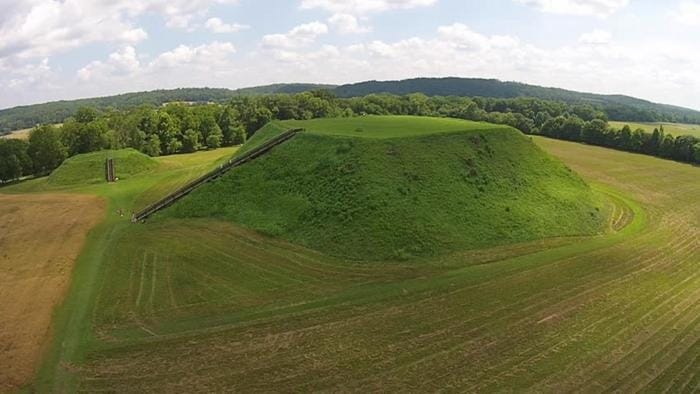
Etowah Indian Mounds State Historic Site. Image: Archaeo-Geophysical Associates
But one should never underestimate the power of chocolate, and this study bears that wisdom out. When the team analyzed ancient DNA sequences of residue found on Etowah pottery, they detected notes of cacao.
“Despite the fact that Etowah is separated from potential sources of cacao by great distances, ancient DNA confirms the site’s inhabitants consumed cacao,” the team said. The researchers speculated that Etowah may have sourced its cacao from trade routes to Mexico or the American Southwest, but noted that no “direct connections to Mexico nor the American Southwest are supported by archaeological evidence for now.”
“These results ask us to reopen lines of research long closed, especially regarding contacts between the impressive civilizations of Central and South America and the great Mississippian civilization of the Eastern Woodlands,” King and his colleagues said in the study.
As to the cultural role of cacao, the study suggested that “at Etowah and possibly across the Mississippian world, cacao consumption played a role in world renewal rites of intensification.”
Given the previous story about fossil fuels subsidies, we need all the world renewal rites we can get, so eat dessert first.
Scientists have discovered a thermal “anomaly” deep underground on Mars that could help explain the red planet’s divided geography and shed light on whether it once hosted alien life, according to a study published Wednesday in Nature.Using a novel approach involving three Martian orbiters, the team peered into the interior of the planet and detected that its mantle—the layer between its crust and the core—is 400 to 750°F hotter in the southern hemisphere compared with its northern half.The t
Scientists have discovered a thermal “anomaly” deep underground on Mars that could help explain the red planet’s divided geography and shed light on whether it once hosted alien life, according to a study published Wednesday in Nature.
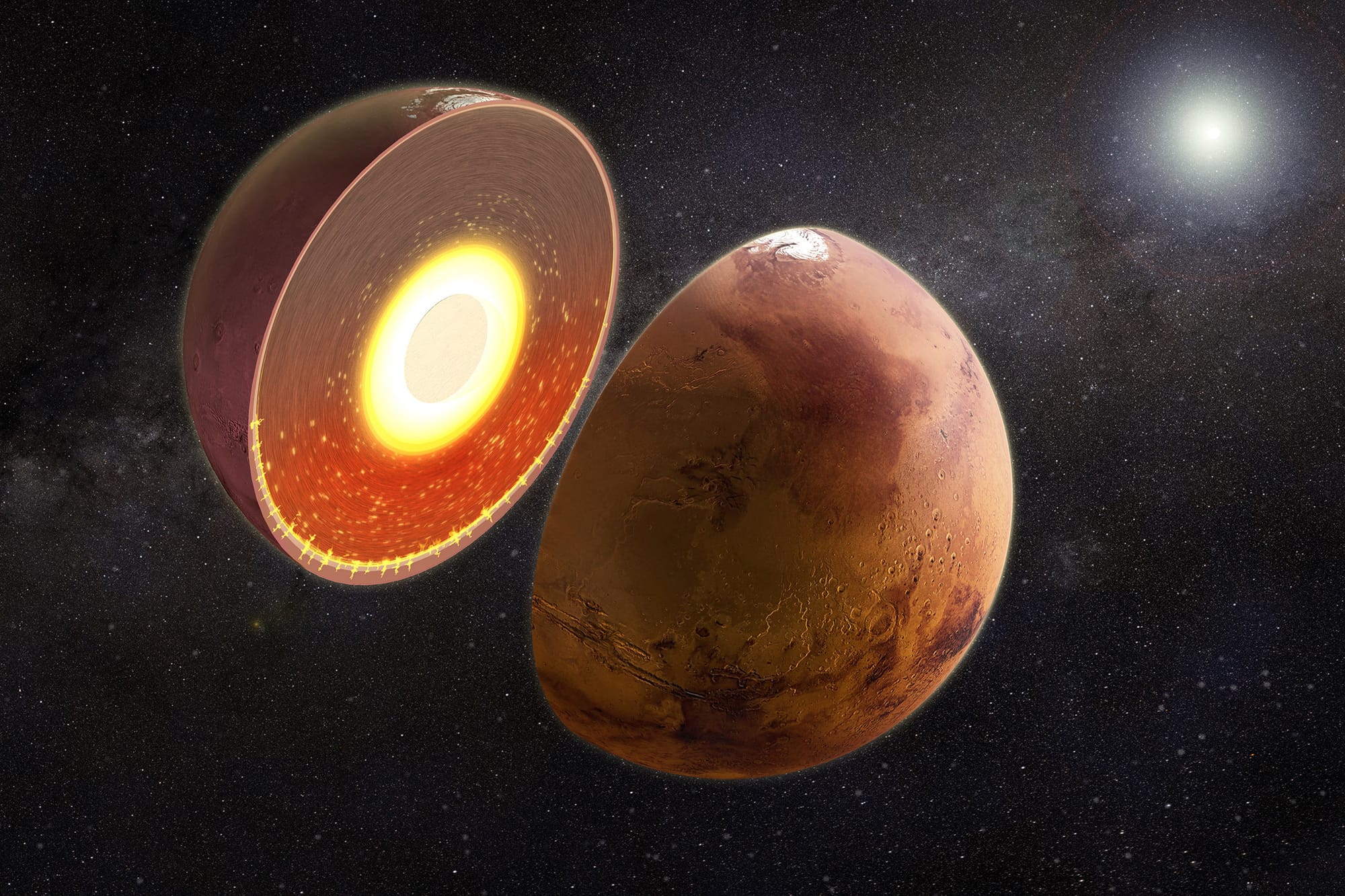
Using a novel approach involving three Martian orbiters, the team peered into the interior of the planet and detected that its mantle—the layer between its crust and the core—is 400 to 750°F hotter in the southern hemisphere compared with its northern half.
The temperature anomaly could help explain the longstanding mystery of the so-called “Martian dichotomy,” the term for the bizarre difference between the Martian north and south hemispheres. Whereas Mars’ northern half is dominated by lowlands that may have once hosted a giant ocean, the southern half is covered in highlands that are miles higher in average elevation.
For decades, scientists have puzzled over whether this dichotomy originates from an ancient impact, or if it might have emerged from early internal processes in the mantle, such as convection or plate tectonics. By tracking tiny changes on Mars during its orbit around the Sun, scientists detected much higher temperatures in the planet’s southern mantle; the crustal dichotomy is at least partly a reflection of a similarly divided interior.
The origin of the dichotomy “is still an ongoing question in Mars science, and a pretty fundamental one,” said Nick Wagner, a planetary scientist at Brown University who co-authored the study, in a call with 404 Media. “This study doesn't provide an answer to it, but adds another line of evidence to figure out what is actually going on underneath Mars.”
To get a look under Mars’ hood, Wagner and his colleagues used a novel approach called tidal tomography. The team analyzed 16 years of tracking data from three NASA orbiters—Mars Global Surveyor, Mars Odyssey, and Mars Reconnaissance Orbiter—to measure the slight gravitational wobbles of Mars during its orbit around the Sun.
The results exposed a clear asymmetry in temperatures between the hemispheres that mirrors the crustal dichotomy. While it will take a lot of future research to narrow down the exact cause of this thermal anomaly, the team suggested that it might be due to present-day activity in the mantle, known as convection, or perhaps it acts as insulation under the highlands that has lasted for billions of years.
“I was kind of surprised how sharp the result was, and how confident it was,” said Wagner. “But maybe we shouldn't be surprised, because Mars seems to be dominated by these large scale variations from the north to south, so it makes sense that these variations also extend into the mantle.”
This hypothesis is not mutually exclusive to the idea that an ancient impact may have contributed to the crustal dichotomy, and it will take more research to tease out the causes of Mars’ strange structure.
“The Mars interior is still really unknown,” Wagner noted.
Tidal tomography has been used to glimpse the interiors of Earth and the Moon, but this is the first time the approach has been applied to Mars. The technique allows scientists to remotely probe a celestial body’s interior without having to land spacecraft on the surface, which could make it “a powerful tool for future missions seeking to characterize the interiors of planetary bodies,” according to the study.
Unraveling the full complexity of Mars—from its atmosphere down to its core—will yield insights into its past and present habitability, and whether it ever hosted life. Some four billion years ago, the Martian surface was home to rivers and lakes, and perhaps an enormous ocean, providing the right conditions for life as we know it on Earth. NASA’s Perseverance rover, which is exploring a dried-up lakebed, has discovered tantalizing compounds that could have been made by ancient microbes, but could also have a geological origin.
To determine if Mars has ever been home to aliens, scientists need to reconstruct its complete evolution, including its internal dynamics.
“Habitability is a complicated thing,” Wagner said. “There's a lot of different things that feed into it: heat, chemistry, water. Earth is special for a lot of reasons, habitability included, but I think what gets undersold, potentially, is the geodynamics of it. And what I mean by that is [Earth has] plate tectonics—a way for the surface of Earth to transfer material with its interior and regulate its carbon, regulate its nitrogen and its oxygen. As far as we know, Mars doesn't have plate tectonics, and it never did.”
“I'm wondering how this anomaly plays into the idea of Mars maybe having the ability to have plate tectonics at one point, or maybe not having the ability,” he concluded. “It's another piece in this puzzle to figure out what past Mars looked like, both habitability-wise, but also just for pure science.”
Welcome back to the Abstract! These are the studies this week that pottered around, ate well, shone bright, and went long in the tooth.First, scientists identified a Bronze Age tradition of pottery as one of the earliest “brands,” revealing that humanity’s love for reliable commodities has deep roots. Then: a meal fit for a galaxy, a multi-camera view of the Sun, and a dizzying deep dive into a narwhal tusk. As always, for more of my work, check out my book First Contact: The Story of Our Obsess
Welcome back to the Abstract! These are the studies this week that pottered around, ate well, shone bright, and went long in the tooth.
First, scientists identified a Bronze Age tradition of pottery as one of the earliest “brands,” revealing that humanity’s love for reliable commodities has deep roots. Then: a meal fit for a galaxy, a multi-camera view of the Sun, and a dizzying deep dive into a narwhal tusk.
Brands have completely taken over the modern world, from established corporate trademarks to the proliferation of online influencers. But the allure of brands is nothing new, according to a study about an ancient style of pottery called Qurayyah Painted Ware that was a progenitor of branding some 3,200 years ago.
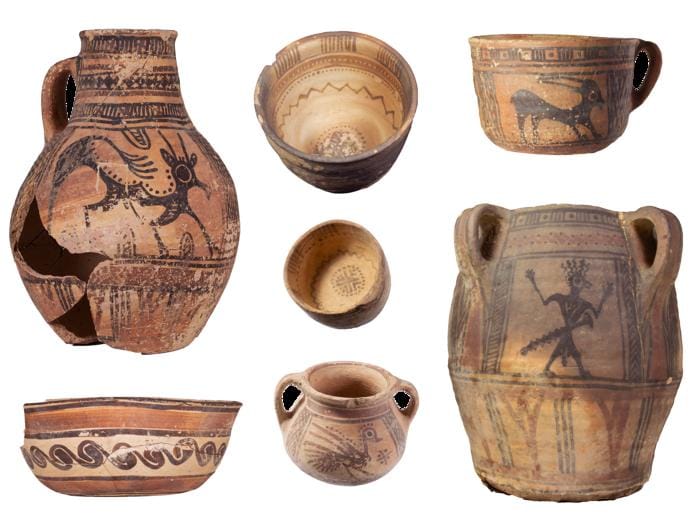
This brand of pottery was popular in what is now Saudi Arabia during the Bronze Age. The tradition is distinguished by distinctive black-and-red geometric designs and stylized animal and human figures. These unique visual properties, along with a consistent production technique and quality, suggest that it was an early branded commodity that was made to be recognizable to the wider community.
“It is now understood that brands and proto-brands existed well before modern economies,” said researchers led by Marta Luciani of the University of Vienna. “In this contribution we analyze the process by which the commodity itself—decorated pottery vessels—was developed into a brand not by added symbols but on the virtue of its visual identity, material consistency, technological continuity, centralized production, export circulation, local imitation, intentional commercial scope, and cultural reputation.”
As such, the study “offers the first investigation of the dynamics leading to the genesis of a brand,” the team concluded.
Now, that’s a vintage brand. Who wants to do the sponsored endorsement on socials?
Our home galaxy, the Milky Way, extends across 100,000 light years and contains hundreds of billions of stars. How did it get so swole? The answer is a healthy diet made up of smaller galaxies that the Milky Way has swallowed over time, adding to its starry heft.
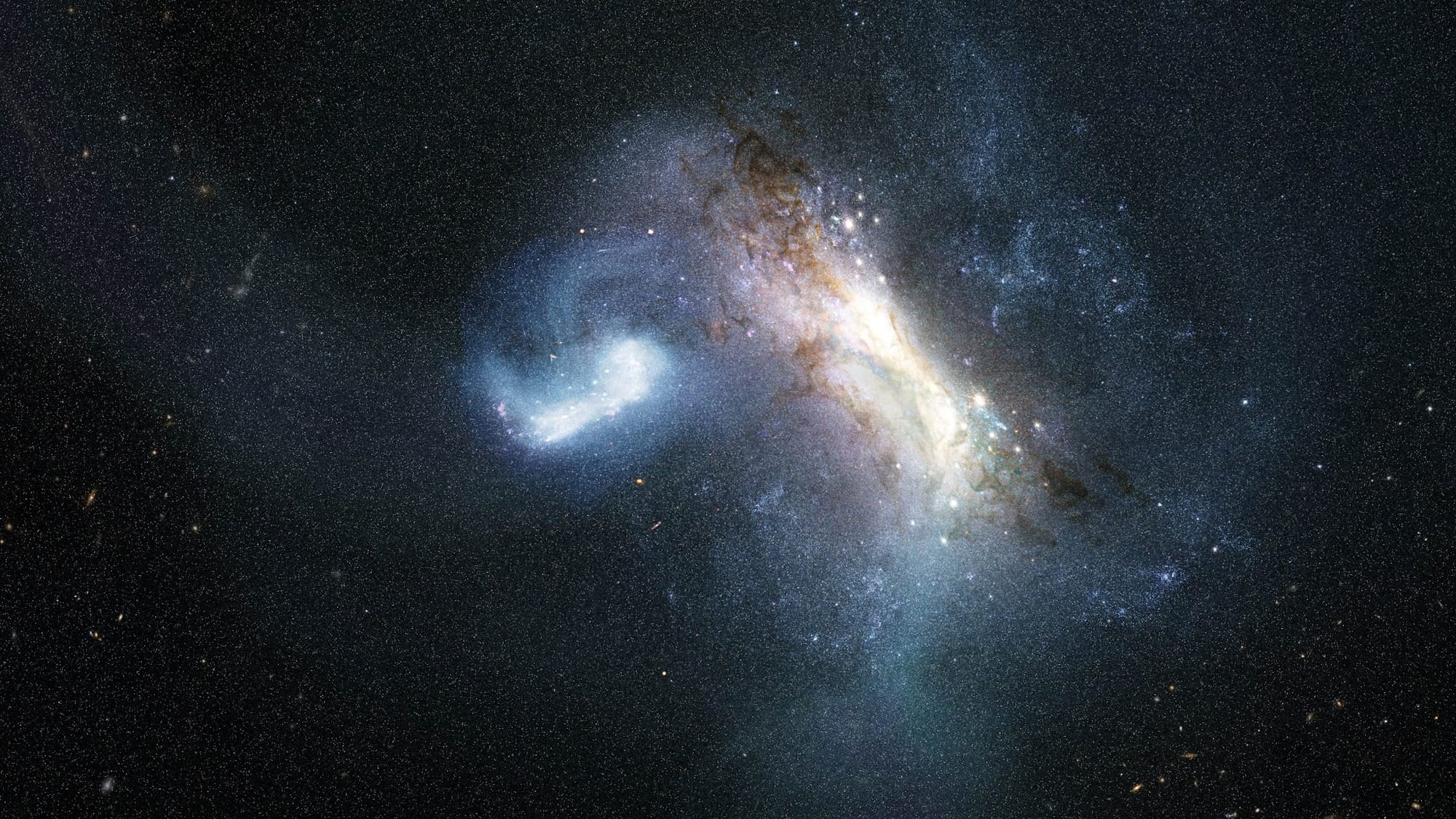
Now, scientists have identified the digested remains of a galaxy that served as cosmic baby food for the Milky Way during its infancy some 12 billion years ago. By studying stars at the center of the galaxy using the Hubble Space Telescope, the team was able to reconstruct this ancient merger between the Milky Way and a dwarf galaxy that has been gifted with the amazing name “Low-energy-Kraken-Heracles” (LKH) after its constituent parts.
Concept art of Low-energy-Kraken-Heracles merging with the Milky Way 12 billion years ago. Image: NASA, ESA, Joseph Olmsted (STScI)
“Our conclusions are strongly supported by cosmological simulations, which typically predict between one and four substantial mergers in the history of a Milky Way-like galaxy,” said researchers led by Davide Massari of the Observatory of Bologna. “The identification of a third merger event in the inner Galaxy puts to rest earlier debates and, honouring previous works, we name the progenitor system Low-energy-Kraken-Heracles, or LKH for short.”
The study explains the origins of a group of metal-poor stars in the galactic center suggesting that they are leftovers from the LKH galaxy, which was about as massive as 500 million Suns. This merger occurred before the engulfment of another fantastically-named galaxy, Gaia-Sausage-Enceladus, which occurred about 10 billion years ago and significantly influenced the Milky Way’s evolution.
It goes to show that you are what you eat (in this case, yummy primordial galaxies).
It’s time, once again, to pay tribute to the almighty Sun. Our star regularly barfs out enormous streams of solar plasma known as coronal mass ejections (CMEs), which radiate across the solar system and can wreak havoc on satellites and even ground infrastructure in some cases.
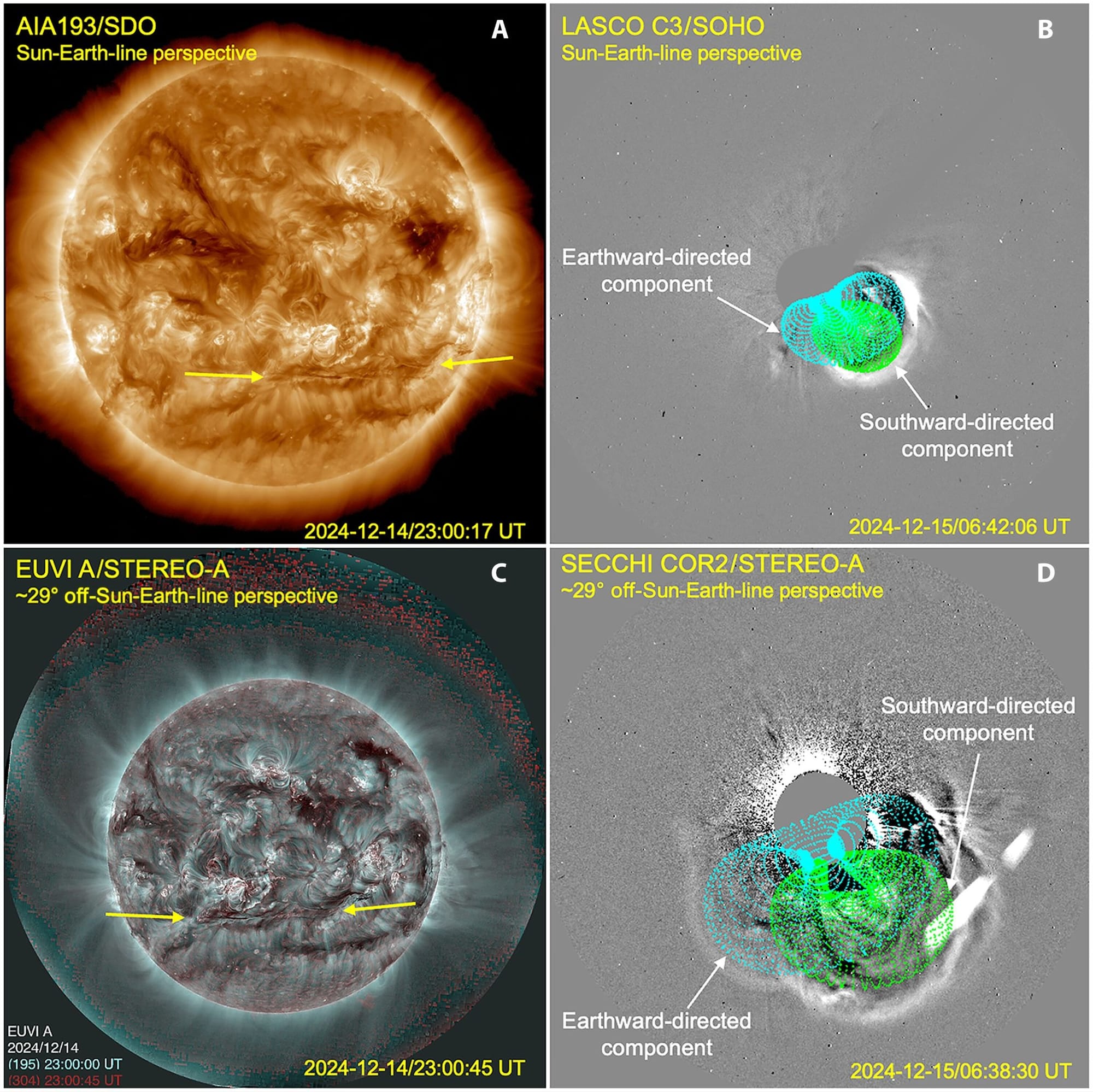
But while these solar blowouts are common, their underlying mechanics are still poorly understood. Now, scientists report unprecedented observations of a CME that occurred in December 2024, which was captured by 17 spacecraft. In particular, measurements from NASA’s Europa Clipper, which is on its way to study Jupiter’s icy ocean moon, revealed “a structure far more complex than could be inferred from single-point observations,” according to the study.
“This study demonstrates the power of coordinated multipoint observations to uncover the true complexity of CME evolution in the inner heliosphere,” said researchers led by
Adrienn Luspay-Kuti of Johns Hopkins University Applied Physics Laboratory. “Such structure would not have been resolvable from Sun-Earth line observations alone. As human exploration extends toward Mars, such comprehensive heliospheric coverage will be critical for protecting spacecraft and crew.”
As if future crews to Mars don’t have enough to worry about, they’ll also have to take cover from projectile star vomit. At least the complex workings of CMEs are gradually becoming illuminated, though we may never fully understand these mercurial outbursts.
Speaking of structures that get more complicated under close inspection, may I interest you in a narwhal’s tusk? These elegant elongated ornaments have inspired many myths and legends due to their unicorn-like appearance, and they have also enraptured scientists for generations.
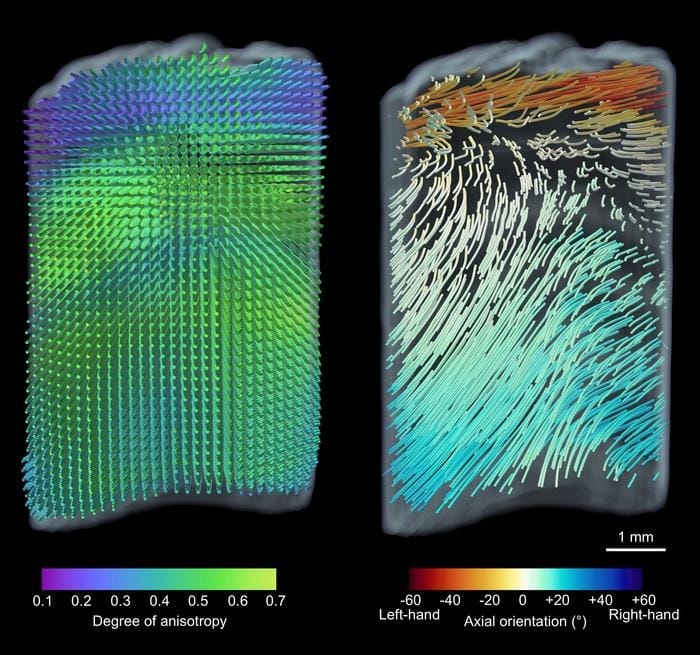
A team has now unraveled the mysterious layers of the narwhal tusk using advanced X-ray imaging techniques, which allowed them to resolve its structure on atomic, nano, and micro scales. The examination of the tusk confirmed that it consists of a left-facing helix, whereas another interior structure twists to the right. This mesh is sculpted with small deviations that mirror the iconic twisted spiral of the tusk.
This 3D image shows how the mineralized collagen fibrils – the microscopic building blocks that give the tooth its strength – are arranged. Image: Adrian Rodriguez Palomo / Nature Communications
“To finally solve the narwhal helical tusk puzzle, we combine multimodal imaging and multiscale orientation analysis, enabling accurate mapping of the tusk from the atomic to the macroscopic scale,” said researchers led by Adrian Rodriguez-Palomo of Aarhus University.
“The structural anisotropy and the ensuing anisotropic mechanics mean that the tusk can grow straight, unlike, e.g., the curved elephant tusk, providing the narwhal with its majestic, evocative defining characteristic,” the team concluded. “The formation of such a structure remains unknown, as we lack crucial information on narwhal tusk growth and development.”
Shout out to all the aspiring narwhal scientists out there—looks like there’s more work to do.
🌘Subscribe to 404 Media to get The Abstract, our newsletter about the most exciting and mind-boggling science news and studies of the week. Microbes from Earth could survive on parts of the Moon for at least a week, a discovery that suggests that the lunar surface is not as hostile as previously assumed and has implications for upcoming human missions, reports a study published on Wednesday in Sciences Advances.Astronauts haven’t walked on the Moon since the Apollo era, but that may change soon.
Subscribe to 404 Media to get The Abstract, our newsletter about the most exciting and mind-boggling science news and studies of the week.
Microbes from Earth could survive on parts of the Moon for at least a week, a discovery that suggests that the lunar surface is not as hostile as previously assumed and has implications for upcoming human missions, reports a study published on Wednesday in Sciences Advances.
Astronauts haven’t walked on the Moon since the Apollo era, but that may change soon. The US-led Artemis program and a Chinese-Russian space partnership both aim to land crews on the lunar south pole during the 2030s. This polar region has been selected because it contains water ice in permanently shadowed regions, which is an essential resource for life support and other mission operations.
Whereas most of the Moon appears to be inhospitable due to extreme temperatures and intense radiation, these shady polar spots are sheltered from harmful ultraviolet light. To assess how long life could survive there, a team analyzed the region’s topography and surface conditions and compared it with the survival bounds of common earthly microbes. The results revealed that “significant lunar polar areas likely have surface conditions amenable to microbial survival,” according to their study.
“Recent studies have shown how unique the conditions are on the surface of the lunar poles and we realized that it was worth studying how amenable those might be to survival for certain microbes, particularly in the context of recent work on how hardy some bacteria and fungi are when exposed to space conditions,” said Prabal Saxena, a research space scientist at NASA Goddard Space Flight Center who led the study, in an email to 404 Media.
“The fun thing is that we were able to leverage expertise of people we knew or were down the hall from us to explore this question,” he added, because NASA Goddard has “experts on lunar surface evolution, biochemistry, clean room microbiology, lunar surface topography/lighting and planetary protection on our team who all helped make the study happen!”
With this interdisciplinary approach, the team modeled conditions at various sites that are under consideration for crewed Artemis landings using remote-sensing observations from NASA’s Lunar Reconnaissance Orbiter. They then selected bacteria and fungi that are abundant on spacecraft, and would be most likely to be transported to the lunar surface during future missions, and assessed whether they could survive in any of those regions.
In regions known as the Nobile Rim and Connecting Ridge, there are “significant places where microbes may be able to survive” the team said in the study. In particular, the fungi Aspergillus proved to be extremely resilient in the models, persisting for up to seven Earth days in some shadowed regions.
“Aspergillus was our champion, and possesses characteristics (thick walls and dark pigments that protect them from X-rays, cosmic radiation, and UV-C radiation) that make it especially well suited to survive in regions of the lunar poles,” Saxena said.
These organisms would likely enter a dormant cryptobiotic state, rather than flourishing and growing across the lunar surface. Still, the fact that they can endure long periods at all is a testament to the adaptability of Earth life, as well as a reality that should be factored into mission planning in order to prevent contamination of the lunar surface and potential health risks to a crew.
“I think we suspected some microbes might survive for a very small amount of time in places like permanently shadowed regions—that's pretty intuitive since those regions only receive indirect light and radiation, and are persistently very cold,” said Saxena. “However, after modeling the conditions, the spatial regions and extent in time of survival was definitely surprising.”
“While we're only looking at survival in this study—and not growth or reproduction—this makes us think it's worth thinking about certain regions of the Moon in a different way scientifically and operationally with respect to microbial life,” he added.
The team also noted that microbial life from Earth could potentially arrive on the Moon through meteoric exchanges of rocks across space, raising the possibility that microbes have already survived, even for short periods, on the lunar surface.
“We know that the Earth 'talks' to the Moon through particle and meteorite transfer, and that meteorites from other sources constantly slam into the Moon, so it is a possibility” Saxena said. “In many ways, the Moon is a potential time capsule of the Earth, Sun and space environment over time. We should go explore it to see what secrets are waiting to be discovered!”
🌘
Subscribe to 404 Media to get The Abstract, our newsletter about the most exciting and mind-boggling science news and studies of the week.
Welcome back to the Abstract! We’re back to our regularly-scheduled programming this week, so here are the studies that flooded the zone, joined the chorus, reminisced about the past, and gave live birth.First, scientists reconstruct a devastating series of floods that swept across Europe in the 1340s, offering lessons for our present-day climate crisis. Then: the affairs of amorous amphibians, the mystery of memory, and the case of the Triassic mommy.As always, for more of my work, check out my
Welcome back to the Abstract! We’re back to our regularly-scheduled programming this week, so here are the studies that flooded the zone, joined the chorus, reminisced about the past, and gave live birth.
First, scientists reconstruct a devastating series of floods that swept across Europe in the 1340s, offering lessons for our present-day climate crisis. Then: the affairs of amorous amphibians, the mystery of memory, and the case of the Triassic mommy.
In the summer of 1342, central Europe was devastated by the Magdalena Flood, one of the worst natural disasters of the medieval period. This brutal deluge killed thousands of people, wiped out whole villages, and spread economic turmoil and disease. Its frightening depths are recorded by high watermarks on some buildings in Germany, which are often over 20 feet above ground, a sobering reminder of the horrible event.
Now, scientists have discovered that this catastrophe was part of a series of 16 major floods that swept over Europe from 1342 to 1343, many of which have been overlooked or forgotten. By poring over contemporary sources from the time such as chronicles, annals, administrative records, and correspondence, the team reconstructed the timing and intensity of this period.
“It is…surprising that, out of the 16 events described here, only the Magdalena Flood survived in public memory,” said researchers led by Andrea Kiss of the Vienna University of Technology.
“This may be because it was the first time in the German areas when numerous flood marks and memorial plaques were mounted by local authorities and as a community effort and warning on the walls of iconic buildings whereas, for example, no flood marks were set for the Candlemas Flood in Prague,” they continued. “The establishment of such material markers has been shown to play a crucial role in shaping long-term risk awareness and collective memory.”
The high water mark at the "Packhof" in Hannoversch Münden memorializing the St. Mary Magdalene's flood in 1342. Image: Axel Hindemith
Extreme weather events, including floods, are becoming more frequent and intense due to climate change. Hopefully, these historic watermarks will not be surpassed by future floods, but the team warned that “sequences of very large floods, more extreme than those in recent decades, are possible and may occur again” and that current flood management is “not necessarily prepared for such sequences.”
As I’ve noted before, any study based on historical documents is likely to have a banger supplementary materials section, and this one is no exception. The authors pulled together dozens of accounts from people who endured these challenging times with entries that bear witness to submerged castles and towns, and expose the search for meaning in the aftermath. Some blame the stars, or unbalanced elements, or “the sins/ungratefulness of people” (always a classic).
“People barely escaped in the uppest parts of houses; but many people and animals died, as they could not – had no time – run to the hills,” reads one eerie fragment, translated from Latin and written in Magdeburg in 1342.
At least the survivors had time to recover and rebuild, because we all know nothing else bad happened in Europe in the 1340s. Oh wait.
Thanks to the surge of interest in Homer’s Odyssey, we all know what a problem it can be when too many suitors occupy too small a space. It turns out that this is also a real-world issue for female frogs, who can experience “choice overload” when confronted with a cacophony of different male mating calls at once, according to a new study.
“During a breeding season, males gather in dense choruses, sometimes numbering in the hundreds and often including multiple species, where males call to attract females and deter rivals,” said researchers led by Claire Hemingway of the University of Tennessee, Knoxville. “These advertising calls can be remarkably loud, reaching a peak sound pressure level (SPL) of up to 108 dB at 50 centimeters.”
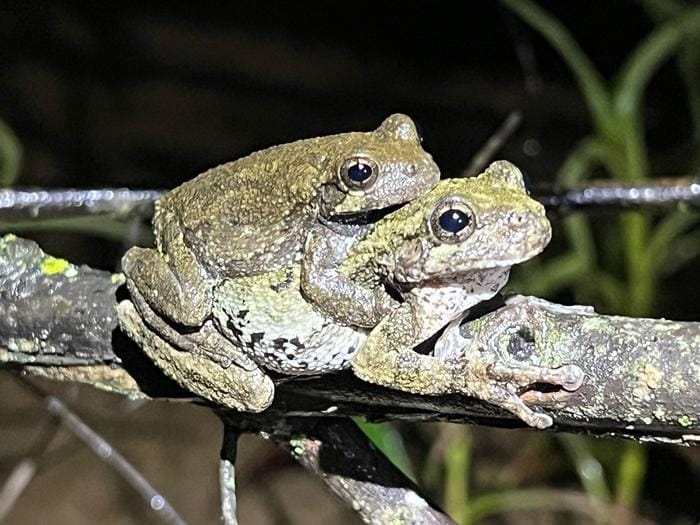
Cope’s gray treefrogs mate in “amplexus” position. Image: Jessie Tanner
That’s quite an earful. How’s a frogette supposed to find her prince in the noise? To answer that question, the researchers placed a series of female Cope's gray treefrogs (Hyla chrysoscelis) in a small enclosure and serenaded them with recorded male calls from speakers in different locations. Females prefer longer calls, and hoped toward those sounds when fewer calls were played at once. But they became unable to identify the extended songs as more voices were added to the choir.
“We found that as the number of calling males increased, receivers became less likely to choose the preferred target signal, took longer to decide, and became more likely to defer their decision,” the team said. “Together, these findings provide support that choice overload exerted a strong influence on female decision-making.”
Time to tap into the frog dating market. An app called Ribbit? I’m spitballing here.
The ephemeral nature of memories is a touchstone of human experience—and a major mystery in neuroscience. How can we recall memories from long ago, even though the brain is constantly replacing its circuits?
To shed light on this question, researchers studied the brains of mice placed in artificial hibernation. This state was of interest because memories are related to neural connectivity in the hippocampus, a brain region that effectively flatlines during hibernation, with activity dropping by 70 percent.
Mice lose half their synapses in this deep sleep, making it a natural test of memory retention after a significant disruption of brain connectivity. Yet when the mice in this test awoke from their slumber, they were able to remember the location of treats in a maze that they had explored before the experiment.
The results revealed that despite this “profound reduction in neuronal activity… mice retained previously acquired memories and preserved neuronal representations of experience,” said researchers co-led by Y. J. Lin of the Okinawa Institute of Science and Technology.
“Rather than relying solely on the strength of individual synapses, the brain may store memories through higher-order structural architecture embedded within the neuronal network,” the team concluded.
The team has a lot more smart scientific stuff to say, but my basic takeaway is: Memories are brain ghosts.
Almost all mammals give birth to live young—a reproductive strategy called viviparity—with the exception of platypuses and echidnas, which insist on laying eggs. Now, scientists have discovered that the origins of mammalian viviparity are far older than previously known, thanks to newly identified features in a fossilized “cynodont,” a mammal ancestor that lived 236 million years ago in the late Triassic period.
The team examined adult fossils of the cynodont species Chiniquodon theotonicus and identified a preserved “neonatal line,” which is a growth ring associated with viviparity. The discovery pushes the timeline of birth in mammal ancestors back by a whopping 90 million years.
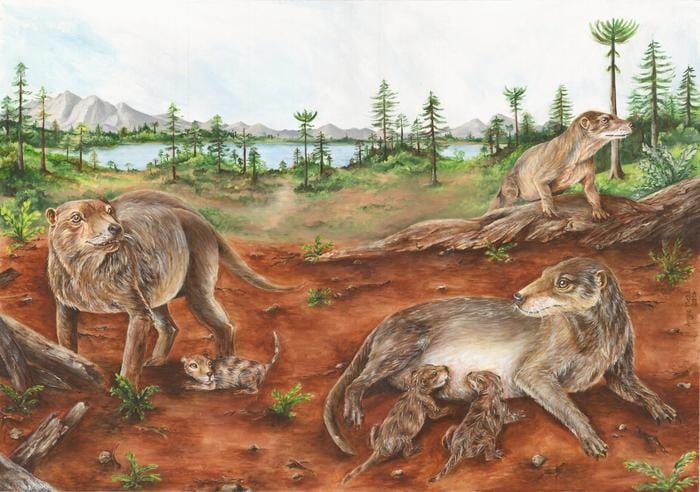
Concept art of Chiniquodon theotonicus nursing young. Image: María de los Ángeles Miceli Baro
“Our results provide evidence of viviparity in Chiniquodon theotonicus, which ties in with recent findings showing that other remarkable features of present-day mammals” originated with these early Triassic ancestors, said researchers led by Leandro Carlos Gaetano of the National Scientific and Technical Research Council in Argentina.
“If Chiniquodon theotonicus was viviparous, as our results suggest, this invites a revisiting of the evolutionary history of this reproductive mode,” they concluded.
🌘Subscribe to 404 Media to get The Abstract, our newsletter about the most exciting and mind-boggling science news and studies of the week. Ancient people of Colombia used collective labor to build a massive canal network that spans 2,000 square miles, a discovery that challenges the assumption that colossal works require top-down hierarchical social organization, reports a study published on Monday in Communications Sustainability.From the first century BC to the 11th century, Colombian peoples
Subscribe to 404 Media to get The Abstract, our newsletter about the most exciting and mind-boggling science news and studies of the week.
Ancient people of Colombia used collective labor to build a massive canal network that spans 2,000 square miles, a discovery that challenges the assumption that colossal works require top-down hierarchical social organization, reports a study published on Monday in Communications Sustainability.
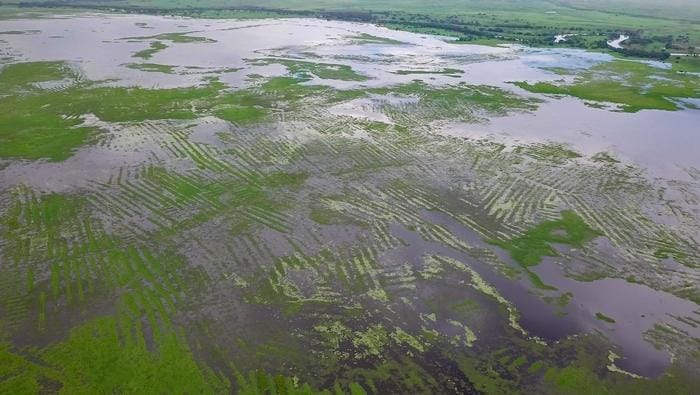
From the first century BC to the 11th century, Colombian peoples living in the La Mojana lowlands sculpted their wetland environment by building raised fields, ridges, and canals, which are today referred to as the Zenú hydraulic systems after the culture that built them. These multipurpose structures absorbed water during heavy rains and released it during dry seasons, creating a water management system that prevented both flooding and droughts. The vast network also provided water to communities for plant cultivation and access to fish.
For years, researchers have debated whether the immense work was built through top-down social organization at the direction of elite leaders, or if people could have collectively labored to construct it through bottom-up organization.
Now, a team of scientists has used satellite imagery to map a 1,200-acre patch of the system in unprecedented detail. With that sample, they built a model to estimate the population and labor costs of construction in that area. Assuming that about 1,600 people inhabited this area and half of them were part of the workforce, the structures could have been built in under six weeks, about half the dry season, which is a low labor cost that would not have required top-down organization.
“La Mojana is a special case study, in that it is the first to demonstrate in concrete, quantitative terms that these massive works are compatible with bottom-up, community-driven organisation,” said Jasmine Vieri, a research associate at the McDonald Institute of Archaeological Research at the University of Cambridge who led the study, in an email with 404 Media. “But it is also part of a much broader paradigm shift in how archaeology interprets evidence for hierarchy or top-down power.”
“As human beings, we tend to understand the world through our own lens, and many of us now live in hierarchical societies, where large-scale infrastructure, monumental architecture, or luxury goods are often commissioned by, or concentrated in the hands of a few,” she continued.
“Archaeological evidence from other regions and periods keeps revealing cases where people came together to achieve ambitious, collective goals through cooperation rather than coercion.”
The team’s sample included roughly 1,600 ridges and 63 housing platforms, most of which were about 4.5-feet tall when they were initially constructed. Though the exact dates of construction are unclear, these systems were constructed before the emergence of metal tools, such as shovels, though they may have used wood tools.
Based on this level of technology and workforce numbers, the team estimated that the largest raised ridge in the sample, which stretches for a third of a mile, would have taken a family of five months to complete, whereas a workforce of 800 could have built it in a matter of hours. But some of the smaller ridge structures could have been built by a single family over the course of a few days. The results suggest that the whole system in this sample could have been renewed once a generation, with just a few days of annual work.
“We entered the project with an open mind, although we did consider collective labour one feasible model from the start,” Vieri said. “However, when we did obtain the estimates, even we were surprised at how low they were, running through them several times just to confirm they were correct.”
The study was co-authored by Fernando Montejo Gaitán of the Colombian Institute of Anthropology and History, who has spent decades researching these ancient waterways and is part of REVERSEACTION, a project funded by the European Research Council focused on complex technologies in stateless societies.
Understanding how these people built such massive works is not just a matter of reconstructing the past, it’s also an adaptation strategy for the future, according to the study.
“Instead of focusing on futile attempts at blocking water, policymakers should consider borrowing the pre-Hispanic solution of working with the inundation rather than against it,” Vieri said. “Modern dikes built by the Colombian government are intended to prevent seasonal flooding, but are often breached by high-volume currents, destroying human lives and livelihoods.”
“In contrast, the pre-Hispanic raised fields functioned to redistribute the flow of water, enabling human settlement and cultivation above the water level throughout the wet season,” she continued. “Raised fields simultaneously buffer against severe droughts by storing and gradually releasing water during the drier months.”
For more than a millennium, people in this region used this strategy to go with the flow, without the need for top-down direction. Hopefully, future work might uncover more insights about the role of social organization in massive works, and the possibility that large structures might have emerged from small collectives.
“Answering these questions would contribute much to broader archaeological debates on the relationship between infrastructural scales and political organisation,” Vieri said. “In fact, a key outcome of our research is an open-source pipeline that can be readily be applied to the study of agricultural systems in other regions, enabling cross-comparative research into testing the strength of the evidence for bottom-up, multi-scalar, or top-down social organisation across different time periods or communities.”
🌘
Subscribe to 404 Media to get The Abstract, our newsletter about the most exciting and mind-boggling science news and studies of the week.
Welcome back to another special edition of the Abstract! As I mentioned in last week’s newsletter, I have saved up some of the most mind-boggling studies from 2026 so far to share while I’m out on vacation. With that said, here are the studies this year that hit the bottle, went hog wild, slithered into prominence, and double-detonated.First, a tale of survival on the high seas from a trash-bound crab. Then: a hybrid emerges from radioactive fallout, a snake in the grass (and lots of other plac
Welcome back to another special edition of the Abstract! As I mentioned in last week’s newsletter, I have saved up some of the most mind-boggling studies from 2026 so far to share while I’m out on vacation.
With that said, here are the studies this year that hit the bottle, went hog wild, slithered into prominence, and double-detonated.
First, a tale of survival on the high seas from a trash-bound crab. Then: a hybrid emerges from radioactive fallout, a snake in the grass (and lots of other places), and a surprise from a space jellyfish.
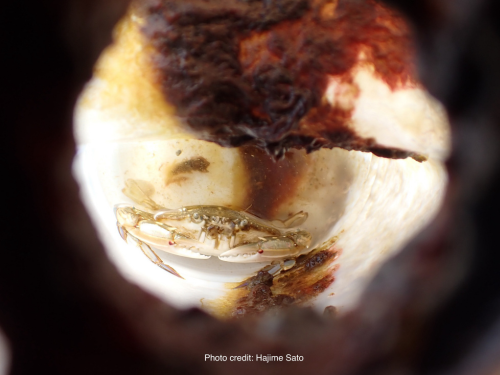
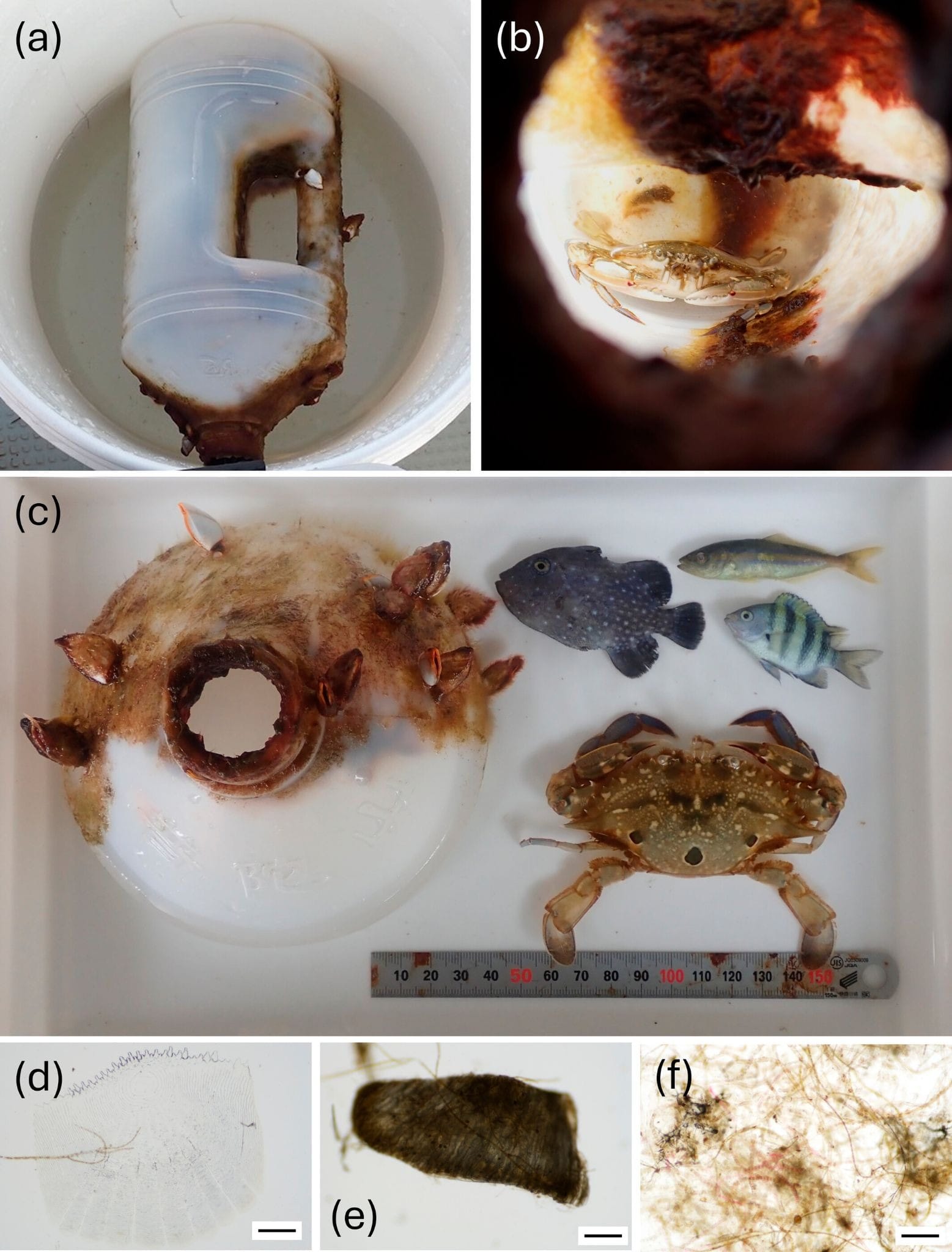
In the summer of 2022, scientists conducting a boat survey off the coast of Sesoko Island, Japan came across a floating bottle of Shaoxing cooking wine carrying a lonely female crab.
It appears that this three-spot swimming crab (Portunus sanguinolentus) entered the bottle as a youngster and then grew too large to get back out again. Judging by its size, the crab spent at least one or two months drifting across the seas, like a crustacean Odysseus consigned to Poseidon’s whims. Though the scientists released the crab, she did not get to enjoy her freedom for long as she was promptly dissected in order to reconstruct her journey, according to a study published in April.
“We hypothesized that the crab survived by hunting juvenile fish that entered the bottle,” said researchers led by Hajime Sato of Hiroshima University. “The stomach contents revealed that the crab consumed the same fish species…observed near the bottle. Green and brown algae…most likely growing inside the bottle, were also identified in the diet.”
(a) A plastic bottle immediately after being collected offshore Sesoko Island, Okinawa, Japan on July 15, 2022. (b) A large, live swimming crab, Portunus sanguinolentus, entrapped inside the bottle. (c) Several juvenile fishes were collected together with the bottle. Stomach contents of the crab included (d) fish scale, (e) fish bone fragment, and (f) algal fragments. The scale bar indicates 300 μm. Image: Hajime Sato.
The team likened the crab to the story “The Salamander” by the writer Masuji Ibuse, which tells the tale of a salamander that grew too large to escape its burrow. The story also reminds me of one of my favorite anecdotes from a study: Anacondas will sometimes slither into chicken coops, feed on all the poultry, and then become so engorged that they’re unable to escape.
In addition to offering a timeless warning about feasting in confined spaces, the study is a testament to the negative impacts of anthropological debris on wildlife. Who knows how many other animals are out there in the wild, trapped in our trash?
“The bottle was made of high-density polyethylene (HDPE), which is buoyant in seawater and can persist in the environment for several decades (>28 years) while retaining its shape,” the researchers noted. “Given its narrow-neck design, we hypothesize that such bottles may have similar impacts on other crustaceans and fishes associated with drifting objects.”
“Although little evidence has suggested that drifting debris has an immediate and direct impact on crab populations,” they concluded, “shouldn't we listen faithfully and carefully to the tragic messages from small marine organisms?”
In other words, not every message in a bottle is an antiquated handwritten letter—some are living symbols of our changing world.
The tale of the bottled crab is not the only study this year that sounds like a dark children’s allegory—indeed, it’s not even the only one from Japan.
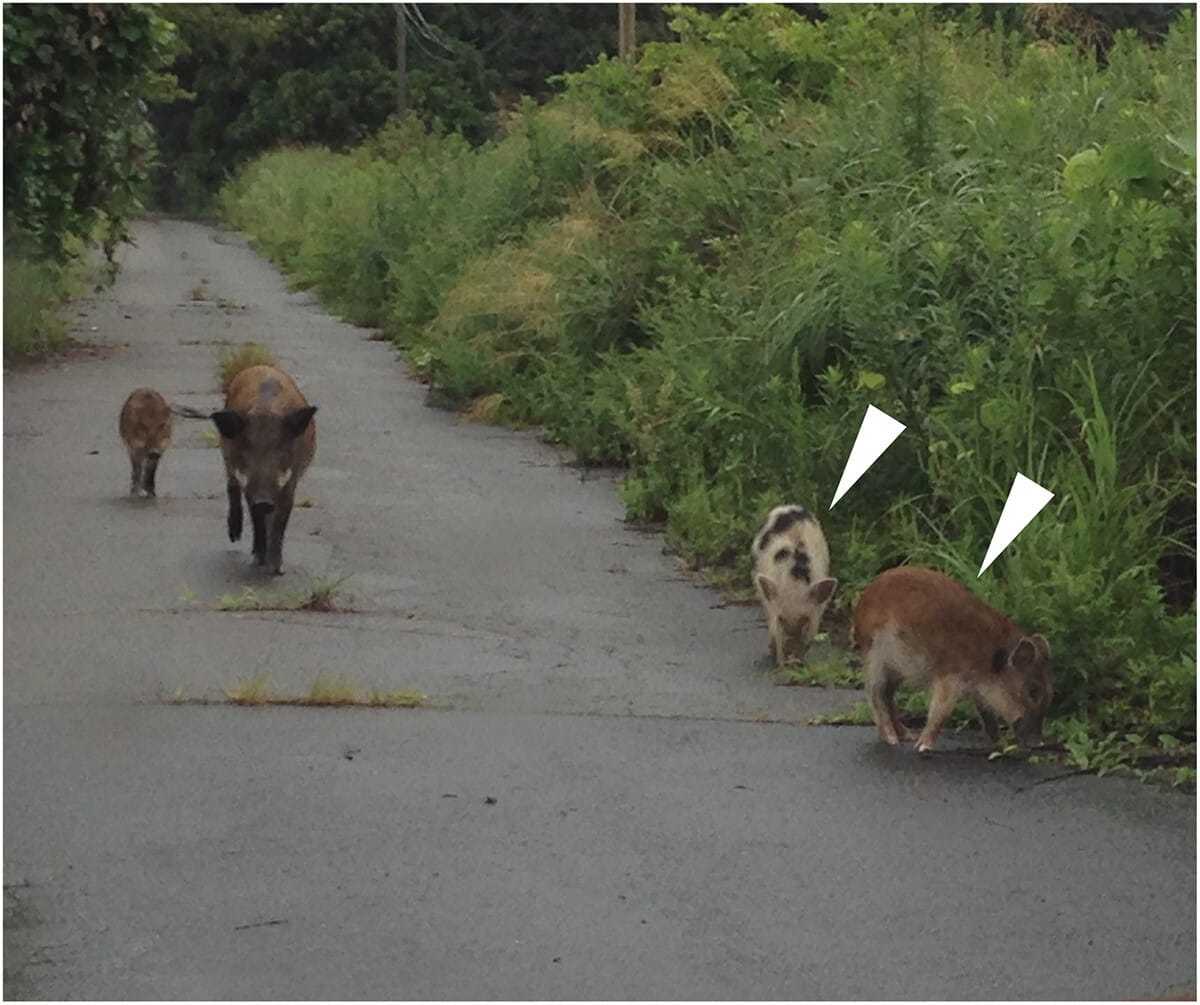
In January, researchers reported on the emergence of hybrid pig lineages made up of domestic swine that escaped in the wake of the 2011 Fukushima Daiichi Nuclear Power Plant disaster and began breeding with wild boars.
The feral swine have introduced genes into wild boar populations through a hybridization process known as genetic introgression. The hybrid population has skyrocketed both due to the relative absence of human interference in the fallout zone, and because swine breed much more often, and produce larger litters, than wild boars.
Photograph of suspected hybrids between domestic swine and a wild boar, taken in the evacuation zone on August 31, 2017. Arrows indicate individuals with varying coat colors that are suspected to be hybrids. Image: Hiroko Ishiniwa/Mukogawa Women’s University
Genes “introduced by escaped swine following the FDNPP accident have persisted and spread within wild boar populations through repeated backcrossing and range expansion,” said researchers led by Donovan Anderson of Hirosaki University. “The results underscore the ecological significance of hybrid individuals as indicators of post-accident population recovery and gene flow dynamics in a contaminated landscape.”
Did I mention that the hybrid hogs are also radioactive? Their bodies contain high levels of cesium isotopes from their habitat, even after more than a decade. This phenomenon of radioactive wildlife has been observed at other contaminated sites, such as Chernobyl, offering yet another eerie glimpse of the persistent human impact on the natural world.
It’s time to return to one of my all-time favorite beats—SNAKE NEWS. Snakes have evolved into a dazzling array of species that range in length from a few inches to 36 feet and occupy wildly different habitats. But the origins of these legless lifeforms have long been shrouded in mystery, as scientists have debated whether early snakes first emerged in water, in underground burrows, on land, or falling from the sky (just kidding).
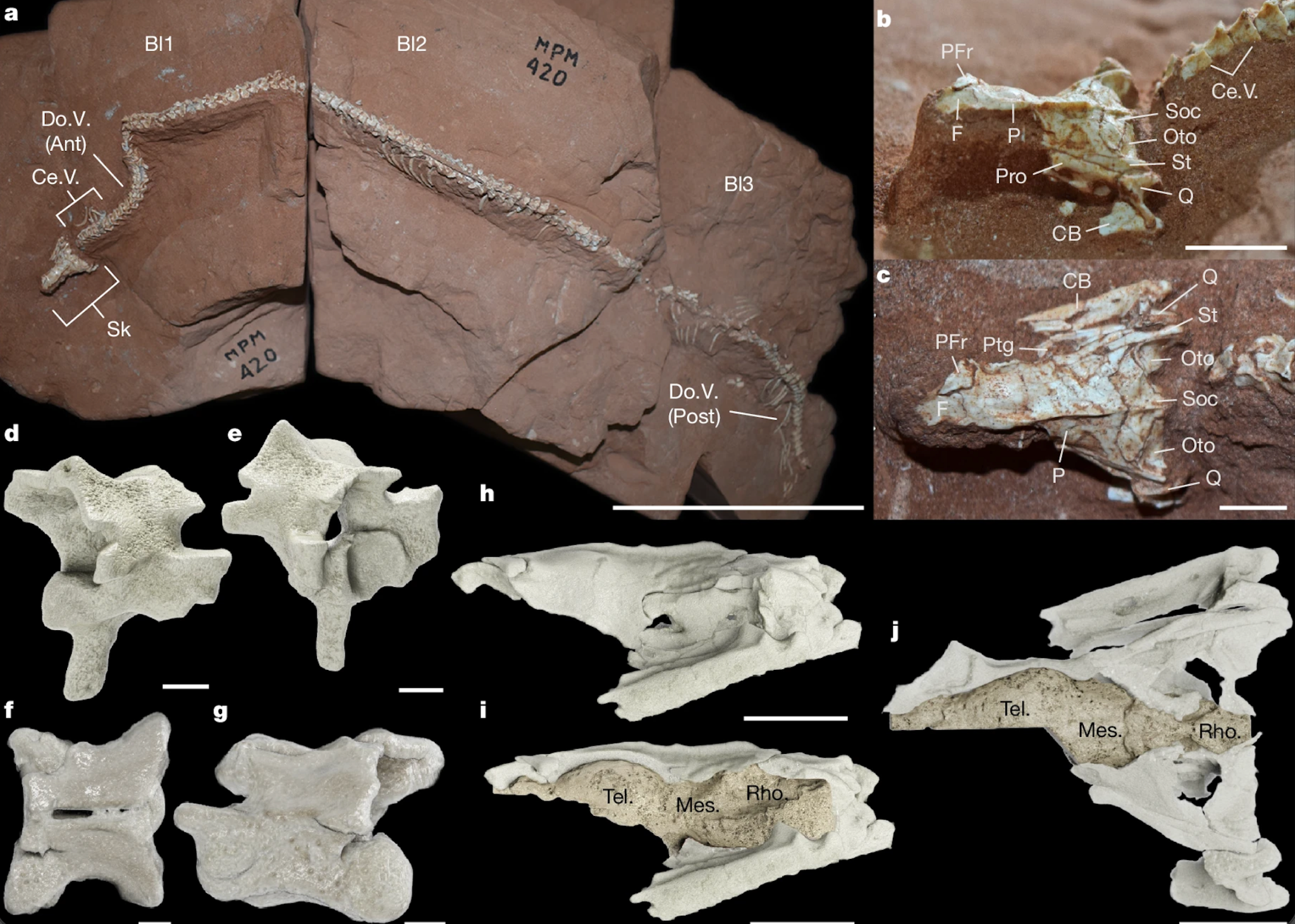
Scientists have now discovered that the answer is basically: all of the above. By studying rare fossilized remains of snakes—including one exceptionally-preserved new species that lived 85 million years ago—a team found that the earliest snakes lived in burrows (fossorial), above ground (non-fossorial), and in marine habitats, challenging the idea that they slithered into existence from one type of environment, according to a study published in July.
Newly discovered Cretaceous snake Tametara mirim from Brazil, which clarified snake origins. Image: Simões, Tiago R. et al. “
“Snake origins therefore were not shaped by a single, linear event as traditionally thought,” said researchers led by Tiago R. Simões of Princeton University. “Instead, early snake evolution involved repeated shifts in habitat use and sensory ecology, characterizing a dynamic ecological history in which multiple lineages independently explored fossorial and non-fossorial lifestyles.”
How appropriate that the evolutionary history of this amazing group should be non-linear and, dare I say, serpentine. This has been SNAKE NEWS.
What’s better than one star blowing up? That’s right: two stars blowing up right next to each other, a situation that has been reported for the first time in a study published in July.
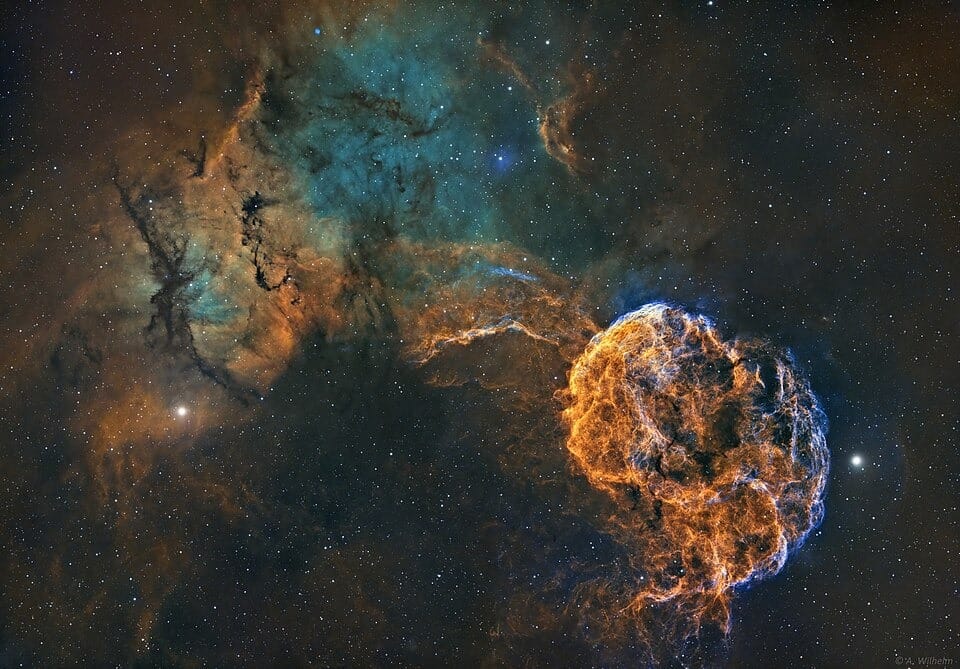
For more than a century, astronomers have marvelled at a vast dust cloud called IC 443, also known as the Jellyfish Nebula, which is all that is left of a massive star that went supernova thousands of years ago.
Located about 6,000 light years from Earth, this beautiful nebula has been visible to telescopes since the 19th century. But a team only recently discovered that another supernova remnant, called G189.6+3.3, appears to occupy the same space thanks to long term gamma-ray observations captured by NASA’s Fermi telescope. The results suggest that the objects were once a pair of stars that orbited each other in a binary system before they both exploded.
IC 443, aka the Jellyfish Nebula. Image: Wikipedia/Siderevs nuncivs
“IC 443 is one of the most extensively studied supernova remnants in the Galaxy, yet the surrounding region remains shrouded in mystery,” said researchers led by Miltiadis Michailidis of Stanford University. “Here we show that 16 years of Fermi-LAT observations uncover…gamma-ray emission from G189.6+3.3, a source long hidden in the shadow of the much brighter IC 443.”
The discovery “bolsters the hypothesis that these two remnants are part of a binary system, both resulting from separate supernova events,” an observation that has “no known analogue” in all of observational astronomy.
It’s a reminder that even the most famous and well-observed celestial objects can still contain amazing hidden surprises for those patient enough to look.
🌘Subscribe to 404 Media to get The Abstract, our newsletter about the most exciting and mind-boggling science news and studies of the week. Scientists have designed a virtual model of an alien cell and dropped it onto a hypothetical exoplanet to see how it behaves, an approach that could help astronomers recognize signs of extraterrestrial life on distant worlds, according to a recent study published in Monthly Notices of the Royal Astronomical Society.The results revealed new insights about how
Subscribe to 404 Media to get The Abstract, our newsletter about the most exciting and mind-boggling science news and studies of the week.
Scientists have designed a virtual model of an alien cell and dropped it onto a hypothetical exoplanet to see how it behaves, an approach that could help astronomers recognize signs of extraterrestrial life on distant worlds, according to a recent study published in Monthly Notices of the Royal Astronomical Society.
The results revealed new insights about how microbes that produce methane gas, known as methanogens, might evolve on different exoplanets, such as Earth-sized ocean worlds or a class of hypothetical giant “Hycean planets” that host global oceans and hydrogen-rich atmospheres.
Predicting the impacts that methanogens might have on their environments could help scientists recognize potential signs of life, known as biosignatures, in the skies of worlds outside of our solar system.
Whereas many past studies have speculated about what forms of life might evolve on a particular type of exoplanet, this approach flips the idea on its head by starting with a general cell model and then considering how it might evolve in different biospheres.
“This is a kind of plausible life that's very unconstrained by Earth-based conditions,” said Arwen Nicholson, an astrophysicist at Exeter University who led the study, in a call with 404 Media. “We can put it into different environments, and then see: What other effects does it have?”
The idea, she explained, is to simplify one aspect of the hugely complex search for alien life .
“This is a generalized idea of what biology would roughly do that we can then put in different places to try and start getting biosignature predictions ideally for different planets, or to understand what we're seeing from the telescopes,” said Nicholson.
It’s possible that the first lifeforms to emerge on Earth were methanogens that thrived some four billion years ago when our planet was far more depleted in oxygen. These microbes still exist in a wide variety of ecological niches today. Unlike photosynthetic life, which requires sunlight for energy, methanogens can run on chemical energy in a process known as chemosynthesis. As a result, methanogens are adaptable and provide a useful model for considering the emergence of life in a diverse array of habitats, including dark regions that receive no direct starlight.
“We do know that the Earth's early biosphere did have this big component of it that was producing methane and consuming methane,” Nicholson said. “That gives us a starting point to look at other planets. It's a reaction we know works. It works on Earth, and it's something that is thought to work in environments that are very different to Earth.”
To that end, the team developed a baseline model of a spherical methanogen microbial cell and tinkered with different cell sizes, life cycles, and environmental effects that might evolve in various alien biospheres.
The results revealed a host of insights, including that a planet’s levels of hydrogen and methane are sensitive to the microbe’s particular features. In this way, “life will act to ‘erase’ abiotic aspects of their environment” by transforming the composition of gasses in the atmosphere in ways that could be detectable to astronomers, according to the study.
The team also speculated that resource competition on alien worlds would likely favor methanogens that are smaller and longer-lived, which could outcompete similar species that are shorter-lived, larger, or require more energy. But while these clues may help scientists spot likely biosignatures in the future, it will be a challenge to actually predict what sort of lifeform is producing those signals.
“You could have different life forms in your ocean and they would look the same in terms of a biosignature,” Nicholson said. “You could have a single film of some algae covering the whole ocean, or a little amoeba, or maybe something else. I thought that was quite interesting. It almost frees us up from making too many assumptions of what alien life would look like, because how are we going to know?”
“We can use spherical microbes as a representation, but even if we found a biosignature, even if it all made sense, and we found life, we still wouldn't actually know what they look like,” she added.
Nicholson and her colleagues plan to continue this line of research by modeling simplified cells of photosynthetic life and predicting their impact on different exoplanet environments. Ultimately, these studies will help scientists distinguish between genuine biosignatures and complex atmospheric chemistry that arises from geological activity.
It’s also worth preparing for the rather excruciating possibility that we find clear biosignatures on some farflung exoplanet and are never able to learn much more about them. In science fiction, we are used to aliens showing up on Earth or sending us obviously artificial messages. But it’s more likely that we would discover gassy signs of life in a distant world’s skies and then have to accept that we might never learn its specific nature.
“We don't live in sci-fi,” said Nicholson. “Sci-fi is super cool. I love it too. But the reality is, we're looking at a habitable planet like our own. If we find anything, they will be life forms embedded in their world, just like we're embedded in our world.”
“It's a super exciting time to be in astrobiology again with all of this data, and it's super neat that people are so interested in it as well,” she concluded.
🌘
Subscribe to 404 Media to get The Abstract, our newsletter about the most exciting and mind-boggling science news and studies of the week.
Welcome to a special edition of the Abstract! I’m out on vacation for the next two weeks, which means it’s time to break out all of the weird and wild studies that have come out so far in 2026, but that slipped through the cracks for one reason or another. I’ve been saving these gems up for a special occasion and hope you enjoy the roundups this week and next!So without further delay, here are the studies this year that put aliens on lockdown, bedazzled their axes, undulated spermily, and captur
Welcome to a special edition of the Abstract! I’m out on vacation for the next two weeks, which means it’s time to break out all of the weird and wild studies that have come out so far in 2026, but that slipped through the cracks for one reason or another. I’ve been saving these gems up for a special occasion and hope you enjoy the roundups this week and next!
So without further delay, here are the studies this year that put aliens on lockdown, bedazzled their axes, undulated spermily, and captured shooting stars.
First, scientists come up with a game plan to protect Earth from invasive extraterrestrial species. Then: a trove of rare decorative tools, GIGANTIC SPERM, and a long-sought solution to a Venusian mystery.
Well, folks: It’s finally time to build a quarantine on the Moon for aliens.
That’s the upshot of a study published in May that argues for the establishment of “a lunar biocontainment facility” to house extraterrestrial samples en route to Earth until they are deemed safe.
The U.S. and China's space programs both aim to bring back samples from the surface of Mars in the coming years, and many missions have already delivered rocks from asteroids. The new study anticipates a disastrous scenario in which samples from nearby celestial bodies might contain dangerous extraterrestrial life.
“If samples from Mars or other celestial bodies harbor dormant or active biological entities, then Earth’s biosphere could become exposed to a potentially invasive novel organism with unpredictable pathogenicity or ecological effects,” said Frederick I. Moxley of Strategic Threat and Analysis Research Laboratories, LLC, and Anthony Ricciardi of McGill University.
“For example, if extraterrestrial life exists, its molecular architecture could reflect atypical biochemistry (such as chirality reversal or alternative nucleic acid analogs) that is hazardous to Earth’s ecosystems and even to human biology,” the team added.
The team pointed to earthly analogs, such as viral strains that have broken containment or species that thrive in habitats that are completely different from the ones in which they originally evolved. If life on Earth can be this adaptable and unpredictable, why should we expect anything different from life elsewhere?
“The Moon must not merely serve as a stepping stone for exploration, but also as a preemptive shield between Earth and potential forms of extraterrestrial contamination…ensuring that exploration does not come at the expense of Earth’s biosphere” the team said. “The formalization of such precautionary lunar quarantine protocols will not only safeguard our planet, but also affirm humanity’s maturity as an interplanetary civilization.”
Moreover, “the economic cost for a lunar biocontainment facility is negligible compared to the potential ecological devastation of an invasive extraterrestrial organism.”
There you have it: We can’t afford not to build an alien Moon quarantine.
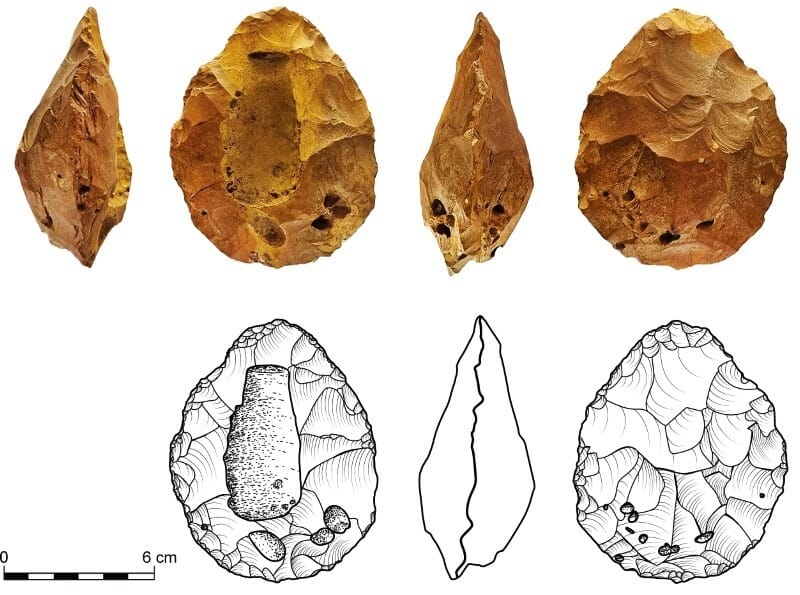
Some 500,000 years ago, early humans collected fossils and geodes and crafted them into handaxes, according to a study published in March that suggested these decorative tools had symbolic significance to their makers.
From 2024 to 2025, archaeologists discovered an unprecedented trove of ten fossil-bearing handaxes in what is today the Sakhnin Valley in Israel, which were made by the influential early human Homo erectus. While previous digs have unearthed the occasional handaxe containing fossils, this is the first site to yield a whole hoard of them.
“To our knowledge, no other archaeological context besides Sakhnin Valley has yielded more than a single extraordinary specimen,” said authors Ran Barkai of Tel Aviv University and Muataz Shalala, a local independent researcher who found the site.
“We propose that these handaxes served as tools and mediators between humans and the cosmos, conceived as objects of potency enhanced by the primeval fossil imprints and unique geological features within the stone,” the team said. “The richly embellished rocky landscape of Sakhnin Valley, particularly with its abundant geodes, may have encouraged early humans to express their profound and extraordinary relationships with the cosmos via stones.”
The human appreciation for cool rocks knows no bounds. Given that there’s no obvious functional advantage to the fossil-bearing stones beyond aesthetics, It’s tantalizing to imagine what these geological rarities meant to the bygone humans who selected them.
Here’s a fun fact to share at a party: Fruit flies have the longest sperm in nature. Measuring anywhere from several millimeters to more than two inches depending on the species, these bugs offer an extreme example of “sperm gigantism,” a phenomenon seen across many animal species.
Now, scientists have probed the mystery of how these “ultralong sperm” avoid getting all tangled up in their journey through the female reproductive tract, according to a study published in June.
Using in vivo imagery and mathematical models, researchers revealed how two-millimeter-long sperm from the fruit fly Drosophila melanogaster autonomously organizes themselves en route to prospective fertilization.
Illustration of collective flows of fruit fly sperm. Image: Lucy Reading-Ikkanda/Simons Foundation
“Giant sperm have evolved in several animal taxa for >100 million years—a testament to the enduring success of sperm gigantism as a sexual strategy,” said researchers co-led by Jasmin Imran Alsous of the Flatiron Institute and Brato Chakrabarti of International Centre for Theoretical Sciences in India.
Fruit fly sperm seamlessly forms “collective flows” that are “primarily associated with the dense packing of sperm, rather than the specific geometry of the confining organs,” the team found.
Who knew fruit fly sperm could be so mesmerizing? Nature continues to astonish in the most unexpected places.
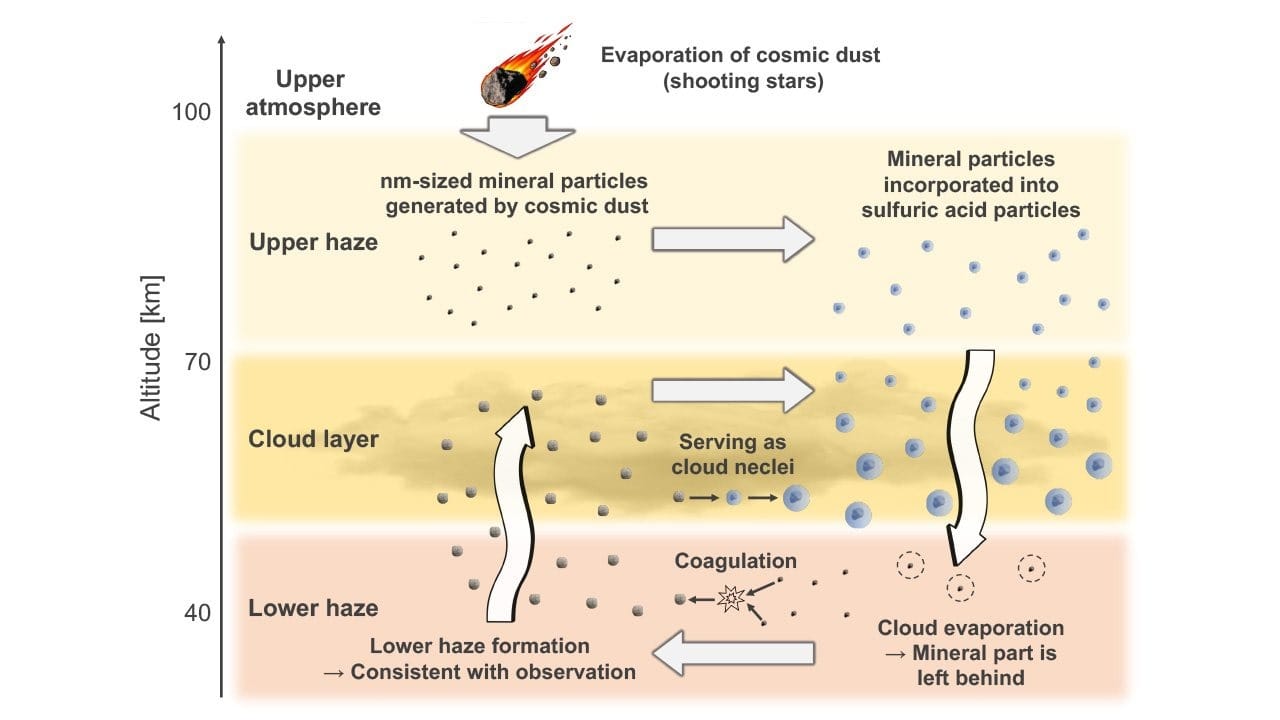
For more than a half-century, scientists have pondered the origin of the so-called “lower haze” on Venus, a particle-rich layer of clouds at about 20 to 30 miles of altitude that was first detected by spacecraft in the 1970s.
In April, a team finally solved the mystery; turns out it’s just a light sprinkling of cosmic dust from bygone shooting stars that broke up and dispersed in the Venusian skies. In addition to providing an ethereal explanation for the phenomenon on Venus, the new results may also inform our understanding of exoplanet atmospheres.
“On planets like Earth, where surface liquid water exists, rain constantly scavenges involatile particles from the air,” said researchers led by Hiroki Karyu of Tohoku University. “However, as observed in our Solar System, planets with surface liquid water are truly unique; most planets possess dry atmospheres where liquid droplets evaporate before reaching the surface.”
“In such worlds, the lower haze originating from cosmic dust can accumulate in the hot lower atmosphere, enhancing cloud formation” and “substantially [impacting] the planet’s climate,” the team added. “These effects establish cosmic dust as an essential component of planetary climates, a role that is also likely to be important for exoplanets.”
No big deal, Venus is just marinating in cosmic crumbs that can shed light on alien skies. Go on with your day.
Scientists have proposed the existence of a fifth “dark dimension” that governs the behavior of both dark energy and dark matter—and which may be observationally detected in the near future, according to a recent preprint study. The dark dimension hypothesis could potentially provide an elegant solution to some of the biggest mysteries in science, including the nature of dark matter, an unidentified substance that makes up most mass in the universe, and dark energy, the term for whatever is c
Scientists have proposed the existence of a fifth “dark dimension” that governs the behavior of both dark energy and dark matter—and which may be observationally detected in the near future, according to a recent preprint study.
The dark dimension hypothesis could potentially provide an elegant solution to some of the biggest mysteries in science, including the nature of dark matter, an unidentified substance that makes up most mass in the universe, and dark energy, the term for whatever is causing the universe to expand at an accelerating rate.
The idea arose from string theory, a decades-old framework that suggests the universe contains many dimensions beyond the four dimensions that we can perceive as humans—time, and three-dimensional space. In a series of studies published over the past several years, a group of string theory experts have suggested that one of these dimensions could simultaneously govern dark matter and dark energy, and that this dimension changes over time.
“The question was whether or not this extra dimension is frozen or can evolve,” said Cumrun Vafa, the Timken University Professor in the physics department at Harvard University and an author on these studies, including the newest preprint, in a call with 404 Media. “The fifth dimension is somehow related to the value of dark energy, so it's natural that when the value of the extra dimension changes, the value of dark energy also changes.”
When Vafa and his colleagues started to develop this idea, the conventional wisdom was that dark energy had a fixed value, according to the standard model of cosmology, a well-corroborated set of assumptions that explains most laws and phenomena in the universe.
“We were scrutinized by our colleagues for predicting that string theory requires dark energy to change, whereas dark energy looks constant,” said Vafa. “This is not good for our field because you are predicting string theory is inconsistent with observation.”
But the assumption that dark energy has a fixed value, a central tenet of the standard model, has been challenged by the Dark Energy Spectroscopic Instrument (DESI), a major survey of the universe based at the Kitt Peak National Observatory in Arizona, which released its first results in 2025.
To the surprise of many scientists, the DESI release hinted that the value of dark energy may shift over time, a discovery that was in line with predictions of a dark dimension put forward by Vafa’s team.
“We didn't write a model to fit the data, but rather we had a model based on theory,” said Vafa. “Now that fits the data automatically. That is why I believe in it. It's easy to write a model after you know the data to try to fit it somehow. This is not what we did.”
“Our model is still the best model, as far as I know, that fits the DESI results,” he added.
In their newest preprint, which is currently in the process of peer review, Vafa and his colleagues expand on the workings of this possible dark dimension in light of the DESI data. According to string theory, the universe has many dimensions that are “compactified” into subatomic scales that are not detectable by current instruments, which is why we have not discovered them. The hypothetical dark dimension, however, may be enlarged to a micron scale range.
This would allow gravitons, which are the hypothetical particles that mediate the force of gravity, to spill over into the dark dimension, where they would become dark matter particles. In this view, dark matter is not made of some new form of exotic particle. Instead, it’s made up of gravitons that also exist in our familiar universe and have traversed into the dark dimension.
“We are using the extra dimension to our benefit to explain what dark matter is,” Vafa said. “We don't need to introduce a new particle or particles. We are just saying it's the usual gravity.”
As this dark dimension evolves, so does the mass of these dark matter particles in that realm; Vafa’s team predicts they are becoming lighter. Likewise, the value of dark energy weakens over time. In this way, dark matter and dark energy—long thought to be likely unrelated—arise from the properties of the same extra dark dimension.
It’s a trippy and esoteric concept, and it may soon be put to the test. If a dark dimension does exist, then it should manifest as tiny deviations in Newton's gravitational force at micrometer scales. A team at the Institute for Quantum Optics and Quantum Information in Vienna is currently designing an experiment to test this idea, which could yield results in the coming years.
Moreover, if dark matter particles are just gravitons that wandered into a dark dimension, then there should be some subtle observational hints of “a fifth force” in the dark sector. For example, scientists plan to test the hypothesis by closely watching the movements of stars in interacting galaxies, which are held together by dark matter halos, to search for a dark fifth force.
When the galaxies come near each other, “the visible matter attracts the visible matter of the other galaxy, and dark matter of one also attracts the dark matter of the other galaxy as well,” Vafa explained. “But there's extra force between the dark matter compared to the visible matter because of this fifth force, so you get a more attractive force pulling the dark matter towards each other more than the visible part.”
“There are multiple fronts where things can come together,” he concluded. “Of course, the most exciting would be the confluence of all of these together, that somehow they agree. That would be really remarkable.”

 Connexion