The government says Japan needs to adapt to the new methods of warfare like drones and artificial intelligence used in Ukraine and the Middle East and strengthen its defense industry
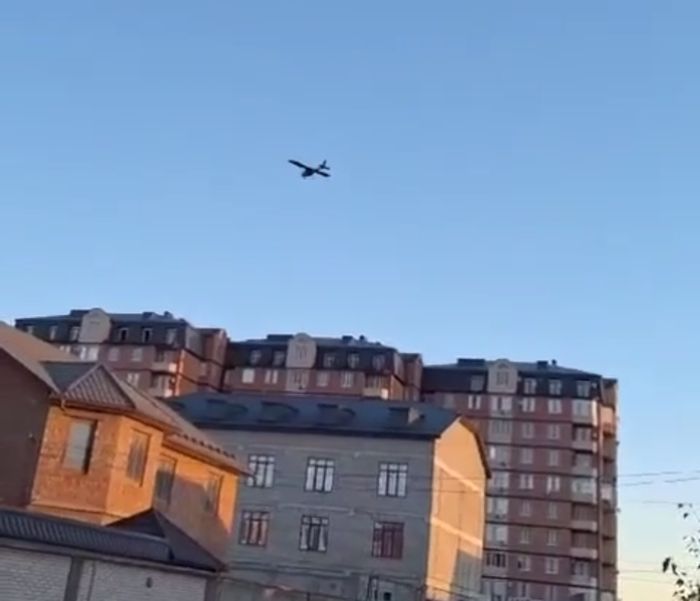
It was unclear what the drone was targeting and why it crashed in the crowded resort spot, but it has been a deadly summer for civilians caught up in the Russian-Ukrainian war.
Donald Trump a annoncé le mois dernier de nouveaux droits de douane, de 10% ou de 12,5%, pour remplacer la surtaxe mondiale de 10% imposée l’an dernier et qui arrivait à échéance.
25 États américains ont déposé hier une plainte auprès du Tribunal de commerce international des États-Unis pour contester ces tarifs imposés par Washington.
Ils soutiennent que le gouvernement Trump n’a pas, comme il le prétend, décrété ces tarifs pour combattre le travail forcé, mais plutôt pour rétablir des droits de douane proches de ceux que les tribunaux avaient déjà annulés par deux fois.
A plane with 147 Venezuelans landed on Monday in the South American country amid criticism over the deaths of deportees housed in a collapsed building during June’s quakes.
28 cas de rougeole ont été déclarés au Québec depuis le début de l’été.
Le dernier cas a été signalé le 1er juillet.
Or, le ministère de la santé considère qu’une éclosion est terminée lorsque 32 jours se sont écoulés depuis le dernier cas.
Dans l’ensemble du Canada, plus de 1100 cas ont été déclarés depuis janvier.
Marie-Pier Burelle, porte-parole de l’Agence de la santé publique du Canada, a indiqué à InfoBref que le pays avait récemment connu «sa plus importante éclosion de rougeole depuis plusieurs décennies», mais que seule «une transmission limitée» persiste désormais.
Fin 2024, le Canada a vu une importante recrudescence de la rougeole à la suite de l’importation du virus au pays.
L’éclosion qui s’est alors déclenchée a été la plus importante au pays depuis plusieurs décennies.
«La transmission a atteint un sommet au printemps 2025, raconte Marie-Pier Burelle. Elle a touché principalement des personnes non vaccinées ou insuffisamment vaccinées.»
Le Canada a perdu en novembre 2025 son statut de pays ayant éliminé la rougeole, statut qu’il détenait depuis presque 30 ans.
L’essentiel des nouvelles en 2 minutes? C’est ce qu’offre chaque jour l’infolettre InfoBref Matinaux entrepreneurs, gestionnaires, professionnels et investisseurs. Essayez-la: inscrivez-vous gratuitement ici ou en cliquant Infolettres en haut à droite
«Les efforts soutenus de santé publique [des provinces, du fédéral et des municipalités] ont depuis permis de réduire considérablement le nombre de cas.»
Parmi les moyens déployés, Marie-Pier Burelle cite:
la sensibilisation aux maladies évitables par la vaccination
la lutte contre la désinformation en matière de santé
Alors que le nombre de cas de rougeole atteint un sommet aux États-Unis, Marie-Pier Burelle reconnait que «le risque d’importation de cas au Canada par l’entremise des voyages internationaux demeure, particulièrement pendant les périodes de déplacements accrus [comme la saison estivale]».
Les voyageurs non vaccinés contre la rougeole risquent de la contracter à l’étranger, explique-t-elle, et ils peuvent introduire la maladie au Canada.
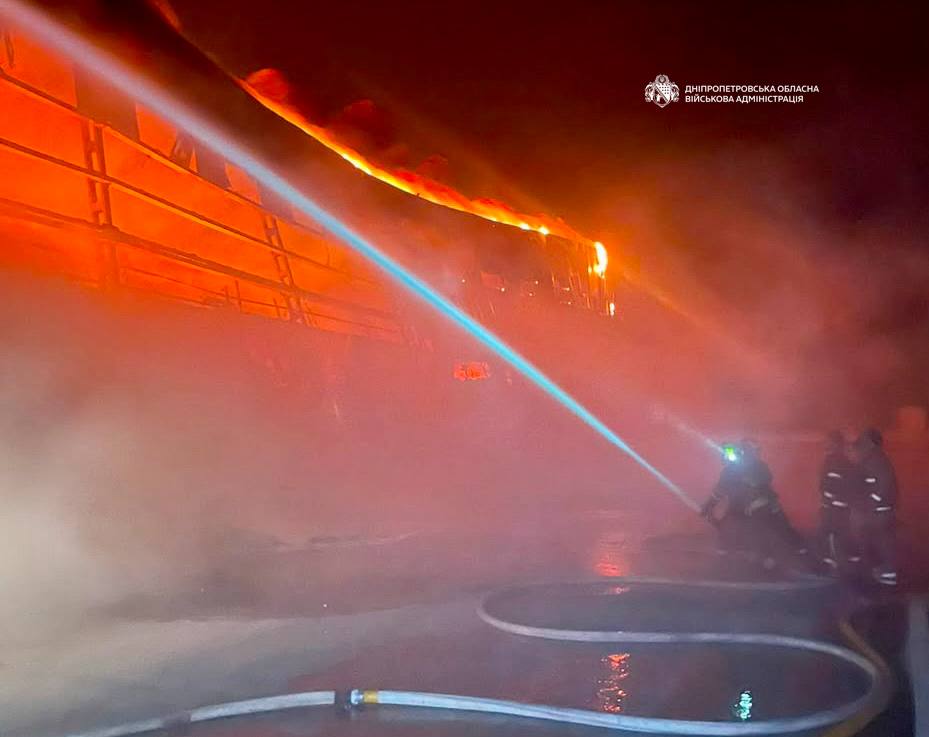
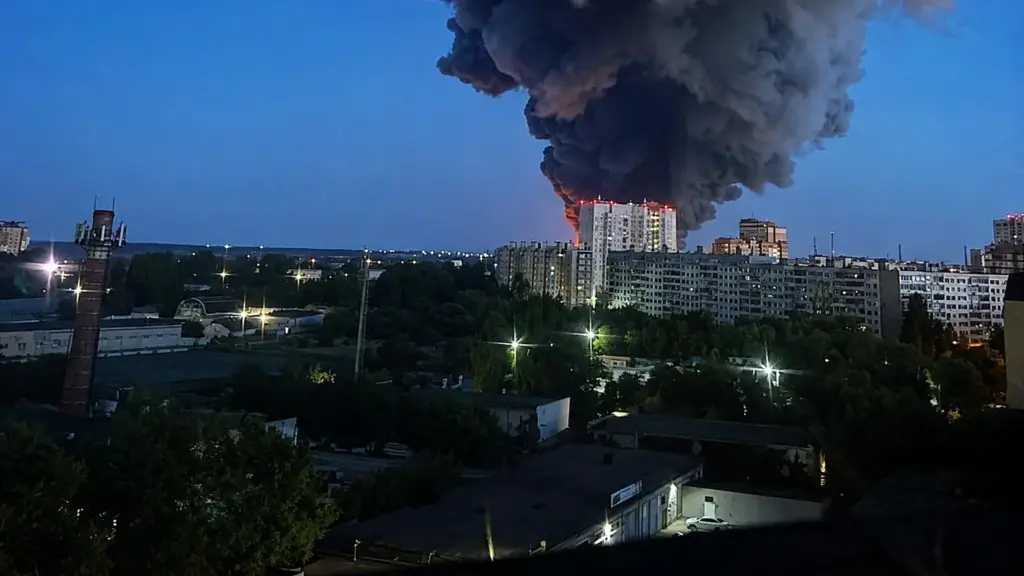
A Russian drone hit food warehouses outside Dnipro. They caught fire in a suburb of Dnipro, Oleksandr Hanzha, the head of the Dnipropetrovsk Oblast Military Administration, reported.
It is the latest in a Russian pattern of striking warehouses and food logistics that supply daily life in Ukraine.
"A large-scale fire in a suburb of Dnipro. Food warehouses caught fire because of an enemy drone attack," Hanzha said, adding that information about casualties was still being clarified.
The region is the rear of the eastern front
Dnipropetrovsk Oblast borders Donetsk Oblast, where much of the war's heaviest fighting takes place, making the region the immediate rear of the eastern front. That position has made the oblast and the city of Dnipro frequent targets of Russian drones and missiles.
The strike fits a pattern against Ukrainian food and logistics
A drone hitting food warehouses continues a Russian terror campaign of striking the civilian infrastructure that keeps Ukrainian daily life running. Russia has repeatedly hit warehouses, sorting centers, and food and retail infrastructure across the country, from postal depots to supermarket storage, in strikes that damage supply chains and endanger the workers inside.
On 1 August, Russia killed a warehouse worker at Ukraine's largest online retailer with a guided jet-powered drone. The operator deliberately streamed a drone at a Rozetka building where 270 people were working at the time with a jet-powered Shahed.
Attacks on civilian objects are prohibited
If a strike targets civilian objects with no military purpose, it violates international humanitarian law. The Rome Statute and the Geneva Conventions' Additional Protocol I protect civilian objects from attack, permitting strikes only against military targets, and prohibit disproportionate attacks that cause excessive civilian harm relative to any military advantage.
Therefore, even if there was a military target nearby, it is necessary to assess the expected military advantage and whether the harm to civilian objects was excessive.
One of Ukraine's most respected generals has said out loud that the country's constitutional goal of NATO membership will never happen. Valerii Zaluzhnyi, Ukraine's ambassador to Britain, does not see Kyiv's path to NATO membership, he said in a discussion on Euro-Atlantic integration at a meeting of ambassadors in Kyiv, European Pravda reports.
The statement is striking because of who made it and from where. Zaluzhnyi, the former commander-in-chief, is, as ambassador to a leading NATO member, formally part of the machinery pursuing the alliance path.
"I know NATO very well. For about 12 years, I personally worked on us mastering NATO standards and listened every year to fairy tales that said that any moment now we'd join NATO. Unfortunately, we will never join it," he said.
His case against joining
Zaluzhnyi argued the obstacle runs both ways. Ukraine cannot join at the level of development its Armed Forces have reached, "an organization that holds the doctrines of the Second World War," he said, dismissing NATO's capabilities despite the membership of Britain, the US, and others.
He was blunt about the alliance's trajectory. NATO will most likely stay in the same form it is now, he said, and would need 12 years, as Ukraine has, to reach the standards required to match even half the Russian level.
Despite this assessment, Zaluzhnyi acknowledged that "Ukraine needs technologies that are currently still held by NATO countries, including in areas such as anti-ballistic missile defense and space capabilities."
What he proposes instead
That view aligns Ukraine's security future with the European defense architecture now under discussion, the coalition of the willing, and the anti-ballistic coalitions Ukraine has helped assemble, rather than with the transatlantic alliance.
Zaluzhnyi's remarks are his own assessment, delivered in a diplomatic discussion, and Ukraine's official policy remains the constitutional Euro-Atlantic course.
Les 36 cyclistes inscrits au 11e Vélo Tour de la Gaspésie s’élanceront, ce mardi matin, pour un périple de près de 700 kilomètres au profit de l’Association du cancer de l’Est du Québec (ACEQ).
À la veille du départ, les organisateurs rappellent aux automobilistes de redoubler de prudence jusqu’au 8 août, particulièrement sur les routes 132 et 299, où circuleront les participants.
Le coup d’envoi se donnera à 7 h 30 au Sanctuaire Sainte-Anne-de-la-Pointe-au-Père, à Rimouski. Les cyclistes parcourront la distance en cinq jours avant de revenir au Site historique maritime de la Pointe-au-Père, samedi, vers 17 h.
La première étape mènera le groupe vers Sainte-Angèle-de-Mérici, Amqui, Sainte-Florence et Pointe-à-la-Croix.
Au fil des cinq journées, l’itinéraire passera notamment par Dalhousie, Carleton-sur-Mer, Cascapédia, le secteur du mont Albert, Marsoui, Cap-Chat, Sainte-Félicité et Baie-des-Sables avant le retour à Rimouski.
Les participants rouleront en pelotons et seront accompagnés de véhicules d’escorte clairement identifiés afin d’assurer leur sécurité.
Les organisateurs demandent aux usagers de la route de faire preuve de patience, de ralentir à l’approche des groupes de cyclistes et de respecter les consignes des accompagnateurs tout au long du parcours.
Encourager les participants
Le comité organisateur invite également la population à venir saluer les cyclistes au départ, lors de leur passage dans les différentes municipalités ainsi qu’à leur arrivée, samedi.
Les personnes qui souhaitent appuyer la cause pourront faire un don à l’Association du cancer de l’Est du Québec.
Des cyclistes au départ du 10e Vélo Tour de la Gaspésie à Rimouski. (Photo tirée de Facebook)
Les fonds recueillis serviront à financer les services offerts aux personnes atteintes de cancer ainsi qu’à leurs proches.
One of the worst consequences of Russia's war, and of Iran's tactics, is that potential aggressors worldwide now see how much damage ballistic missiles can do to human life. So the global ballistic threat will grow, and anti-ballistic defenses must grow with it, Ukrainian President Volodymyr Zelenskyy says, according to UNIAN.
Ukraine has put a number on the shield it wants to build itself against ballistic missiles: 100 systems. These systems are planned to be built as part of its FREYJA anti-ballistic project.
Zelenskyy frames the project as an answer to a threat spreading beyond Ukraine.
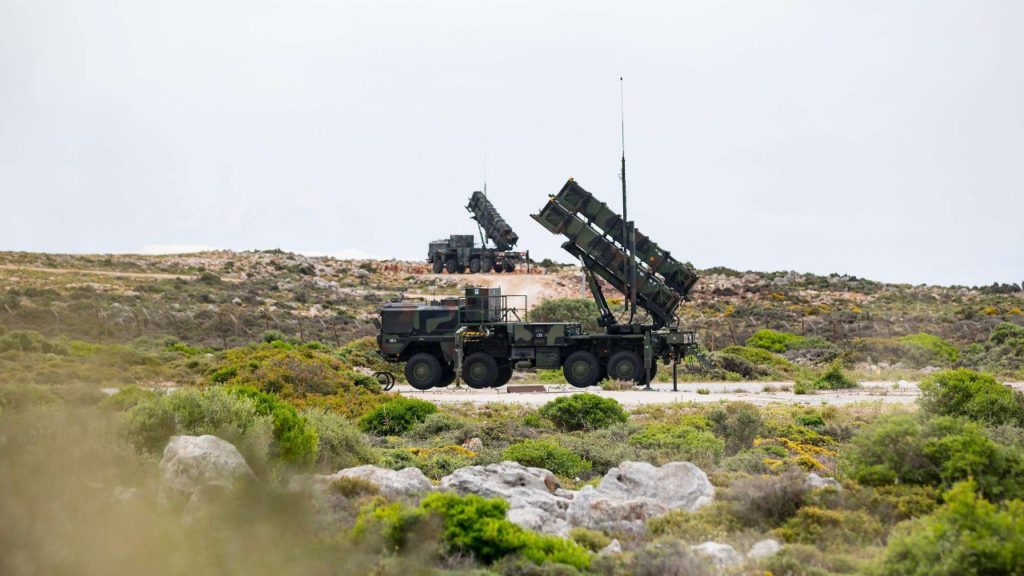
FREYJA is Ukraine's own interceptor, recycling a Soviet S-300 missile with a German seeker at roughly $700,000 per shot, a fraction of a $3.8 million Patriot, though its maker, Fire Point, does not target a first ballistic intercept until late 2027.
FREYJA as a shared European system
Zelenskyy pitches the Ukrainian project as Europe's future shield.
"Our FREYJA can become a common system for Europe that provides integrated protection. FREYJA will be fast to produce and tested by war," he said, offering to share all the know-how with partners if the system proves itself.
The project already has a coalition. Ten nations joined the European Anti-Ballistic Coalition in July, per Euromaidan Press, with Ukraine contributing the missile and partners supplying radars, command systems, and components Ukraine does not make.
The shield is a bet against a shortage
The 100-systems goal collides with the interceptor shortage that FREYJA is meant to solve. FREYJA has three tracks, including a transatlantic dimension and Ukraine's relationship with the US, Zelenskyy said, without disclosing details, and Ukraine needs both funding and certain components to build it.
In the meantime, Ukraine leans on the countries that already have Patriots. While Ukraine builds FREYJA and runs short on its current anti-ballistic systems, those partners that lack the production Ukraine needs but hold Patriot missiles today can invest those interceptors into Ukraine's defense, Zelenskyy said, welcoming them into the anti-ballistic coalition. The 100-system shield is the long game, while the borrowed Patriots are what keep Ukrainian skies covered until it exists.
A drone came down on a beach full of Russian holidaymakers, and the evidence points to Russia's own air defense bringing it there. On 3 August, drones attacked Krasnodar Krai, and one crashed onto a beach in Arkhipo-Osipovka near Gelendzhik, killing at least six people, three of them children, and injuring around 40, Krasnodar Governor Veniamin Kondratyev said.
Russian outlet Agentstvo and OSINT analysts assessed that the drone likely fell because of Russian air-defense fire rather than a direct hit, citing gunfire audible in footage before the drone dived and an abrupt change in its flight path.
The beach sits directly in front of the Rassvet resort, a facility of NPO Mashinostroyeniya, one of Russia's key missile-manufacturing enterprises.
The warning system did not sound
Survivors say they had no notice. Local residents and holidaymakers complained that no air-raid alert sounded at all, though warning systems are installed in the village, and the Russian channel Astra also noted that no alert was heard in the region during the attack, per the reports.
People on the beach were in the open, with little chance to take cover, even if they had been warned. The absence of a siren in a resort packed at the height of the summer season left sunbathers and swimmers with no warning that a drone was overhead and being fired at.
The target was a missile maker's resort
NPO Mashinostroyeniya develops cruise missiles for the Russian army, and its Rassvet recreation base was the apparent target roughly 300 meters from where the drone came down, the Supernova Telegram channel reported.
Ukraine strikes Russian military-industrial sites across the country, and a missile-development enterprise is a legitimate military target. What turned a strike near a defense plant into a mass-casualty event on a beach was, by the analysts' account, Russian air defense knocking the drone down over the crowd rather than away from it. Ukraine had not commented on the strike.
The dynamic is one Ukraine knows intimately in reverse
Russian air-defense missiles and the debris of intercepted drones regularly fall on Ukrainian cities, killing civilians, and Ukraine has long documented how interception over populated areas kills the people it is meant to protect.
Russia's biggest online retailer is trying to stop its own workers from filming air defenses. From 3 August, Wildberries has allowed warehouse employees to bring only button mobile phones without cameras to work, a decision taken after staff began filming drones and the aftermath of their strikes and spreading the material, Russian Telegram channels reported.
The ban is a reaction to Ukrainian strikes. On 31 July, employees received a message stating that photo and video recording during air-raid alerts at the warehouses supposedly poses a security threat, could reveal the location of air-defense forces, and violates Russian law, according to "Ostorozhno, novosti".
Wildberries said that after workers were allowed to bring smartphones onto warehouse grounds, cases of filming drones and their attacks, and sharing that footage, were recorded.
The camera ban follows a month of burning warehouses
The timing ties the ban directly to Ukraine's campaign. Ukrainian drones destroyed eight Wildberries warehouses in July, about 15.4% of the marketplace's total storage, killing one employee at its Elektrostal facility.
Workers inside those facilities filmed the strikes as they happened, and the footage spread across social media, documenting the fires and the damage in real time. The camera ban is Wildberries' answer to remove the phones that turned its own employees into witnesses.
The stated reason is security, the effect is silence
Wildberries framed the ban as protection. To "eliminate such risks," from 3 August, only button phones without cameras are allowed at logistics centers, the company said, adding that such devices let workers stay in touch with family while meeting security requirements.
The security rationale doubles as information control. Footage of burning warehouses is evidence of a campaign hurting a flagship Russian company, and by stripping cameras from the workforce, Wildberries removes the most direct source of that evidence. The move is a quiet admission of how much the strikes have landed: a company does not confiscate its workers' phone cameras over attacks that are not doing damage.
Le Hilaire-Journault sera mis à l’eau ce mardi 4 août et il devrait prendre la mer en direction de Rimouski cette semaine. Les travaux pour mettre à jour le futur traversier qui assurera la liaison maritime entre Rimouski et Forestville auront finalement pris deux mois.
Il s’agit du double de temps que le promoteur Louis-Olivier Carré avait prévu au départ. Ce dernier est en Grèce, d’où le navire a été acheté, depuis le début du mois de juin.
« Nous avons un bateau exceptionnel. Je crois que les gens vont être étonnés et surpris par sa qualité. Je vois juste du positif. Le ber est rendu sous le bateau. Nous attendons l’autorisation pour le mettre à l’eau. Ça va bien. Enfin, nous y sommes. Ça a été toute une épreuve », dit-il.
Plus de travaux ont été nécessaires que prévu, mais les travailleurs ont également dû composer avec la météo.
« Il fait 48 degrés Celsius en Grèce. Les gens travaillent juste cinq à six heures par jour. Ça prend deux jours pour faire une journée normale de travail. On ne peut pas forcer les gens, c’est la loi quand il fait plus de 36 degrés », indique monsieur Carré.
Ce dernier précise qu’en plus des travaux d’amélioration effectués depuis deux mois, de la préparation pour traverser l’océan a également été faite.
« Il y a eu la sécurisation des portes. Une société de plastification est venue à bord et ils nous ont ajouté une liste de tâches à effectuer. Si on ne s’y conforme pas, nous n’avons pas l’autorisation de faire le voyage. Les gens en Grèce sont vraiment coopérants. Nous sommes dans l’endroit au monde où il y a le plus de bateaux. Si nous avons besoin d’une pièce, nous l’avons dans la journée. »
La grande traversée
Lors du grand départ de la Grèce, le Rimouskois sera à bord du bateau pendant trois jours jusqu’à Malte et il prendra ensuite l’avion pour revenir au Canada.
« Je veux m’assurer que tout est à mon goût pour les trois premiers jours. »
Le président-directeur général des Industries Rilec et promoteur du projet, Louis-Olivier Carré. (Photo courtoisie)
Le Hilaire-Journault, lui, devrait prendre une vingtaine de jours pour traverser l’Atlantique. Un arrêt pour mettre du carburant est également prévu aux Açores après celui de Malte. Le dédouanage se fera à Halifax.
« Je regarde l’état de la mer trois fois par jour et nous avons des conditions de navigation exceptionnelles sur l’Atlantique », indique Louis-Olivier Carré.
Période de rodage
Le bateau devrait donc être au port de Rimouski d’ici la fin du mois d’août et des traverses de rodage sont prévues en septembre et en octobre en vue d’une saison complète pour l’année 2027 qui devrait commencer en mai prochain.
« Ça va nous permettre de voir où sont nos lacunes et ce qu’il faut améliorer. En 2027, nous allons être parfaits », exprime monsieur Carré.
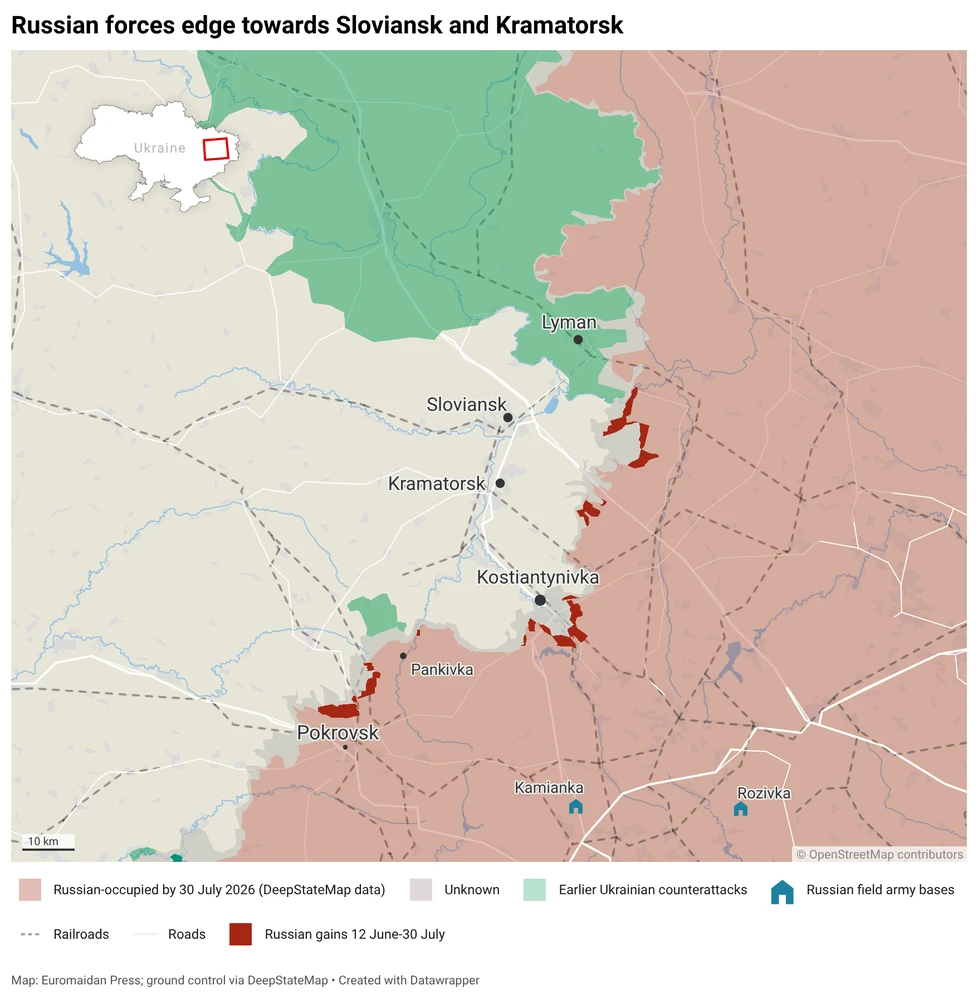
Russian forces are creeping toward Sloviansk and Kramatorsk from the north
It could be months before the Russians can lay siege to Sloviansk, but it's unclear Ukrainian forces can stop them
Russian bombardment of the supply lines leading to and through the twin cities complicates the Ukrainian defense
A doomed Russian tank assault on 22 July along the southern approaches to the twin cities of Kramatorsk and Sloviansk, the last big free cities in eastern Ukraine’s Donetsk Oblast, was ultimately a sideshow. The Russians’ main effort, in their long and bloody campaign to capture all of Donetsk, is playing out in the north, not the south.
The front northeast of Sloviansk “has been the most successful for the Russian army throughout 2026,” mapper Clément Molin noted.
Russian encroachment on Sloviansk and Kramatorsk, the last free cities in Donbas. Map by Euromaidan Press
The bad news for Ukraine is that its forces in the area—parts of six brigades including the 53rd, 54th and 63rd Mechanized Brigades and the 81st Air Mobile Brigade and the 117th and 120th Territorial Defense Brigades—are “insufficient,” according to Molin.
Worse, relentless Russian bombardment of the roads and paths leading to and through Sloviansk means the Ukrainians may struggle to sustain any additional brigades in the area. Assuming there are any free brigades, of course.
For months, the situation on the Sloviansk front has been deteriorating
The new Chief of the General Staff of the Ukrainian Army, Mykhailo Drapaty, must respond as the first Russian units have reached approximately 10 km east of Sloviansk and Kramatorsk.
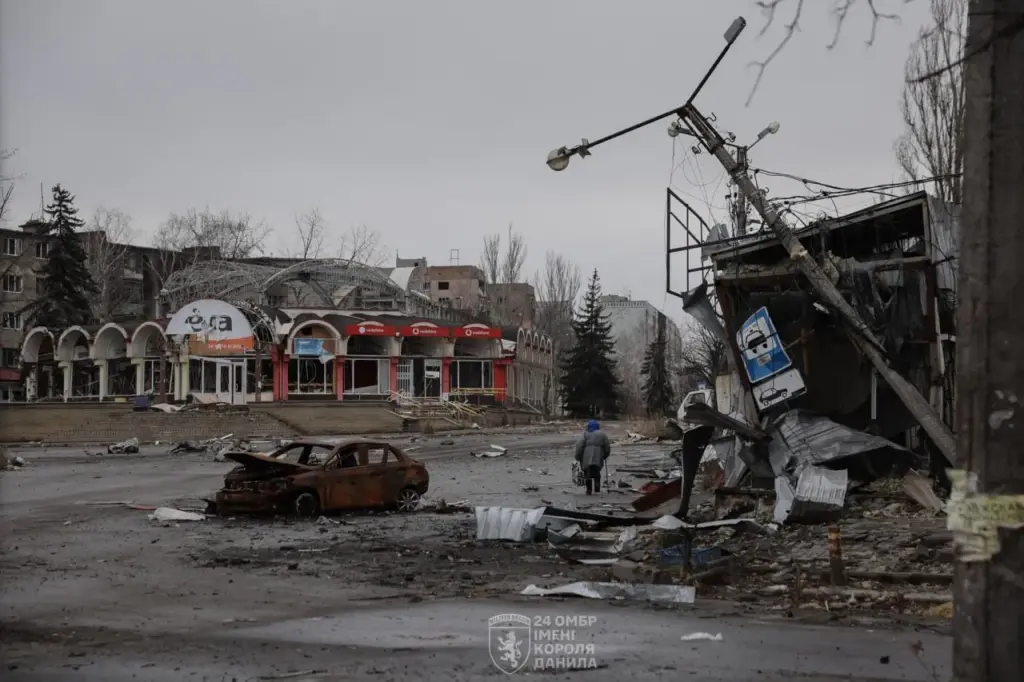
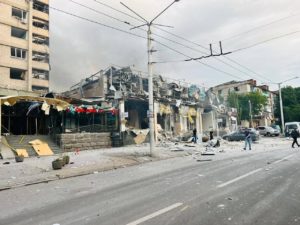
The bombardment is intensifying. On 31 July, a Russian warplane struck the Sloviansk Chemical Plant, deep inside the city, with a 1,500-kg KAB-1500 precision glide bomb. “The city has come under increasingly heavy attacks in recent days,” AMK Mapping noted.
But the same difficult terrain, crisscrossed by the Donets Canal and dense Ukrainian fortifications, complicates Russian attacks. There are few protected approaches toward Sloviansk from the Russians’ main bases in the ruins of Siversk, 31 km to the east. And one big town town stands between the Russians and the free city: Mykolaivka.
And the Ukrainians are bombarding Russian supply lines with the same intensity that the Russians are bombarding Ukrainian supply line. It’s for those reasons that Molin expects the Russians to eventually lay siege to Sloviansk and neighboring Kramatorsk from the northeast.
But not anytime soon. “It is highly unlikely that the battle for Sloviansk will begin this year, not least because the fighting in Mykolaivka is likely to be prolonged,” Molin predicted.
Russia attacked the Slovyansk Chemical Plant with a KAB-1500 glide-bomb a short time ago.
The slow pace of the Russian advance belies the worsening conditions in Sloviansk and Kramatorsk. Out of a combined pre-war population of around 440,000, just 90,000 people remain in the twin cities. The other 350,000 have fled.
As the cities slowly empty, all eyes turn to the tiny village of Rai-Oleksandrivka, 14 km east of Sloviansk. “This small village, seemingly insignificant at first glance, is actually of strategic importance, as the surrounding high ground overlooks the city of Sloviansk,” Molin explained.
“In recent weeks, Russian forces have been consolidating their hold on the village and the surrounding heights, even though Ukrainian troops still maintain positions in many areas,” Molin wrote.
Explore further
Russia took the cages off its newest tanks. The new Arena-M shield bought them a few minutes.
Russian forces are already relentlessly bombarding Ukrainian supply lines in the area with air-launched glide bombs. As Russian ground forces advance closer to Sloviansk and consolidate along key heights such as those around Rai-Oleksandrivka, they can begin aiming more tube artillery at the same supply lines, compounding the Ukrainians’ logistical problems.
The coming battle is neither won nor lost yet. But time is running out for Ukrainian forces to reset the battlefield in their favor.
If the Ukrainian command can prioritize the front, and push enough supplies to front-line positions, it might yet save Sloviansk and Kramatorsk. As Ukrainian Pres. Volodymyr Zelensky completes his reshuffle of key civilian and military leaders and a new command, that command’s attention “must shift to the Donbas,” Molin stressed.
Despite WestJet and the union representing about 44-hundred flight attendants reaching a tentative deal, many passengers are left frustrated passengers as they scrambled to change their travel plans at the end of the long weekend.
Un an après l’ouverture en grandes pompes du magasin Costco à Rimouski, le 5 août 2025, la directrice générale du Service de développement économique et touristique à la Ville de Rimouski, Marina Soubirou, estime que la présence du géant américain sur le territoire amène des retombées positives pour l’économie rimouskoise, même si elles ne sont pas encore chiffrées.
« Rimouski ne subi pas la présence de Costco. Nos commerçants du centre-ville ont pris des mesures afin d’en tirer profit, notamment en augmentant leur présence sur les réseaux sociaux. Le sondage que la Chambre de commerce et de l’industrie Rimouski-Neigette est en train de faire devrait nous fournier un peu plus de données. De notre côté, les échos que nous avons de nos entreprises sont plutôt positifs, notamment pour le tourisme. Un premier constat, c’est que plus de consommateurs locaux choisissent de magasiner à Rimouski au lieu de quitter la région. En plus, nous avons une clientèle accrue provenant de la Gaspésie et des Maritimes », commente madame Soubirou.
La directrice avoue que certains commerces ont subi une baisse de leurs ventes.
« C’est quand même léger et pour des catégories de produits qui sont comparables à ce qui est offert chez Costco, mais ce n’est vraiment pas marquant. La majorité des commerces au centre-ville est spécialisée. Ils rapportent une hausse de l’achalandage. Le taux d’inoccupation commerciale entre 2024 et 2025 a baissé de 3%. C’est un bon indicateur. Nous n’avons pas encore les données pour 2026, mais ça confirme que notre cadre urbain est dynamique ».
Pas le fruit du hasard
Marina Soubirou indique que les retombées positives de la présence de Costco ne sont pas le fruit du hasard.
« Nos commerçants ont anticipé la venue de Costco. Ils ont investi, ils ont innové dans leur pratique et ils ont innové dans leur façon de faire. Ils ont su miser sur leurs forces, notamment le service personnalisé, en misant sur une expérience client très distinctive. Il y a eu du travail d’embellissement de vitrines au centre-ville. Les entreprises ont aussi amélioré leur présence numérique sur les réseaux sociaux ».
Le maire Guy Caron et la directrice générale du Service de développement économique et touristique à la Ville de Rimouski, Marina Soubirou (Photo Le Soir.ca)
Autre point favorable, selon madame Soubirou, les commerces collaborent davantage entre eux. « Je trouve que c’est quelque chose qui se renforce. On voit des commerçants collaborer entre eux pour organiser des événements ou des fêtes. Cela rend le centre-ville très vivant et attractif. Il y a aussi des entreprises locales qui ont trouvé des occasions d’affaires pour distribuer leurs produits chez Costco. Rimouski, pour moi, n’a pas subi l’arrivée de Costco ».
Capitale régionale
Marina Soubirou estime que l’arrivée de Costco est un signe de plus que Rimouski devient de plus en plus une capitale régionale avec un pôle de services qui rayonne largement au-delà des frontières de la région.
« Le résultat, un an après l’ouverture de Costco, eest que notre pôle commercial est plus complet. Nous avons une offre encore plus diversifiée et notre centre-ville continue d’être vivant et attractif. Il se distingue de plus en plus. Cela démontre le dynamisme et le rayonnement de la communauté. Nous avons des commerçants actifs. »
The area under Russian control across Ukraine grew by only 36 square kilometers, which is roughly 60% of Manhattan, in July 2026, according to the Ukrainian battlefield monitoring group DeepState.
DeepState recorded the meager increase as Moscow shifts toward sending small groups and lone soldiers through Ukrainian lines under drone cover.
The new tactics have produced few territorial gains.
Russia’s stalled Donetsk advance loses pace
DeepState said the 36-square-kilometer figure covers the entire front, not just Donetsk Oblast. It also includes corrections to data from May and June. Without those corrections, Russia’s July gains would total about 88 square kilometers.
DeepState’s figure could change again because some Ukrainian gains have not yet been added to the map for security reasons.
"At its current pace, Russia has no chance of capturing all of Donetsk Oblast, even in 2027," DeepState said.
That forecast could change if Russia launches another wave of mobilization in the fall, DeepState cautioned. Moscow's pace of advance also depends on how widely it deploys North Korean troops.
Russia made only limited progress in the hardest-hit sectors, including near Rodynske and Kostiantynivka and toward Sloviansk and Kramatorsk—the heart of Ukraine’s “fortress belt".
Dense drone coverage has also changed the battlefield. Russia’s next large attacks are unlikely to resemble the mass “meat-wave” assaults previously seen near Selydove and Kurakhove, DeepState said. Ukrainian drone crews often hunt lone Russian soldiers across vast parts of the frontline.
Russia loses more troops for shrinking gains
Russia’s limited gains on the ground came during its worst month for casualties in 2026. Ukraine’s General Staff estimated that Russian forces lost42,860 troops killed or wounded in July alone, or roughly 1,380 casualties per day. However, the figures cannot be independently verified.
Then commander-in-chief Oleksandr Syrskyi stated that Russia’s losses during the first half of 2026 exceeded the number of recruits for the first time since 24 February 2022.
The Kremlin has still not dropped its territorial demands. Russian officials insist that Ukraine surrender the entire Donbas, seeing the region as a political prize. DeepState previously noted that capturing the rest of Donetsk Oblast would take Moscow two more years of fighting and cause "a colossal number of losses."
Bloomberg reported in May that Russian leader Vladimir Putin wanted to end Russia’s war by the end of 2026, with Moscow controlling all of Donbas. Kremlin spokesperson Dmitry Peskov denied Putin had set such a deadline.
Boris B. Nadezhdin, 63, appeared in a video standing in front of the Eiffel Tower. He said he was “alive and free, but, unfortunately, not yet in Russia.”
Boris Nadezhdin, a Russian opposition politician, at his home in Moscow in June. His departure means antiwar Russians have one fewer advocate in the country’s ever-shrinking public sphere.
Russia is changing the drones it attacks with, and hiding the ships it can no longer use. Russian forces are using more jet-powered drones in their air attacks, effectively betting on them, Ukrainian Navy spokesman Dmytro Pletenchuk said, according to UkrInform.
The shift is toward faster, harder-to-stop drones. Russia is reducing the number of ordinary drones and increasing the jet-powered ones, betting on them first and foremost.
Jet-powered Shaheds fly faster than propeller models, giving air defenses less time to react, and Russia has used them in recent strikes, including the 1 August attack that killed a warehouse worker at the retailer Rozetka. Ballistic missiles, Pletenchuk added, remain the main challenge.
The Black Sea Fleet no longer goes to sea
Russia also still claims control of waters it cannot use. The Russians believe they exercise operational control over the Black Sea, but if you look at it purely in terms of sea sorties, they are absent, Pletenchuk said.
"The Azov Sea is out of the question now, and the Black Sea, effectively, the same," he stressed.
Russian aviation remains present and is a problem because it allows Russia to at least map the situation and makes the sea dangerous, but the fleet itself has been driven from the water.
Russia is afraid to repair its own ships
The most striking detail is what has happened to ship maintenance. Russia has repair facilities in occupied Crimea, but does not dare enter and repair ships there, because it has already learned how such repairs end.
They end with the Navy and the Armed Forces adding the "final touches," he said, so Russia periodically tows ships between bays to keep them from being finished off. Novorossiysk has some repair capacity, but docking there is very risky because a ship under repair becomes a stationary target. In practice, no one does it there either. As for small craft like Raptor and Grachonok boats, they are caught during rotations to the occupied spits and destroyed when they come into view, he added, sometimes turning back mid-route, the only patrol vessels Russia still uses.
L’équipe masculine U17 du Sélect de l’école Paul-Hubert de Rimouski a remporté lechampionnat national américain de futsal dans sa catégorie. L’événement était présenté du 29 juillet au 2 août à Las Vegas, au Nevada.
C’est grâce à un but marqué à trois secondes de la fin des prolongations en finale que les Rimouskois ont pu mettre la main sur le titre dans un match qui s’est terminé par la marque de 6-5. Lors de la ronde préliminaire, ils avaient dominé avec trois victoires (5-0, 5-3 et 5-4).
Le Sélect était qualifié pour cette prestigieuse compétition après avoir obtenu sa qualification grâce à son parcours au Northeast Regional Championship US Futsal, disputé en février dernier à Atlantic City, au New Jersey. La formation masculine avait alors décroché une médaille d’argent.
Les équipes féminines U17 et U16 avaient également réussi à se qualifier en terminant respectivement au premier et deuxième rang lors de cette même compétition et avaient aussi reçu une invitation pour le championnat national américain, mais elles ont décliné. Plusieurs de ces joueuses ont pris part au tournoi international Costa Blanca Futsal Cup qui se tenait à Benidorm, en Espagne, du 1er au 5 juillet.
French historical theme park company Puy du Fou, known for large-scale reenactment shows, continued pursuing a venture with associates of sanctioned Russian oligarch Konstantin Malofeyev after the EU blacklisted him, newly obtained documents indicate. The project included a planned park in Russian-occupied Crimea, The Guardian reported.
The records cast doubt on Puy du Fou’s portrayal of the later activity as an orderly withdrawal. They also detail a proposed ruble payment structure intended to limit the sanctions’ effect. The revelations come as the company seeks approval for a £600 million theme park in Oxfordshire, England.
Records show project continued after sanctions
The partnership itself was already public. Puy du Fou planned parks near Moscow and in occupied Crimea with Malofeyev’s investment fund.
Malofeyev founded Tsargrad, a Russian Orthodox nationalist media company. The EU and US sanctioned him as a leading financier of Russian-backed separatists in eastern Ukraine.
In the meantime, the oligarch has built a network of universities aimedat spreading Russian nationalist ideology.
Nicolas de Villiers and Malofeyev had signed terms for a joint venture on 12 July 2014.
The EU sanctioned Malofeyev 18 days later, citing his alleged financial backing for Russia’s annexation of Crimea.
Puy du Fou told the Guardian that it stopped working with Malofeyev as the sanctions regime took effect. It said withdrawing from its Russian projects and partners took slightly more than a year.
However, the records show Puy du Fou staff considering how to keep the project alive after the sanctions. It was named Tsargrad—the same name Malofeyev uses for his media company.
Staff proposed ruble payment structure
A September 2014 proposal envisioned Malofeyev financing a Russian entity. That company would transfer operating proceeds to Puy du Fou International through a ruble-denominated account. Notes said the account would “avoid probable effect of sanctions.”
A later phase envisioned an offshore company jointly owned by Malofeyev and Puy du Fou. It would hold the shows’ intellectual property and distribute dividends from the Russian venture.
The Guardian found no evidence that the proposed structure was implemented.
Still, a January 2015 budget allocated 23.5 million rubles, then almost £500,000, for casting, offices, and other costs. Records also indicate that Puy du Fou partly funded payments to employees of Malofeyev’s Marshall Capital. The United States sanctioned Malofeyev’s company in December 2014.
Correspondence about the project continued into July and August 2015. A sanctions lawyer told the Guardian that restrictions applied immediately and had no automatic wind-down period.
Puy du Fou declined to say whether it obtained a sanctions license authorizing the wind-down activity. It said it never paid a sanctioned entity and complied with French and EU law.
Political affinities behind the partnership
The partnership also reflected political and cultural affinities. The Guardian linked their relationship to shared traditionalist Catholic beliefs and far-right hostility toward Muslims and LGBTQ+ rights.
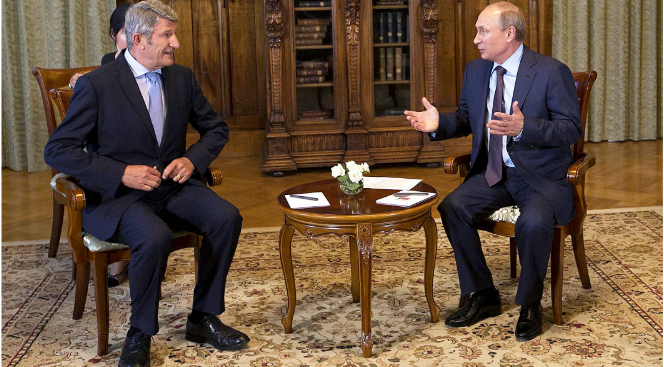
Philippe and Nicolas de Villiers met Russian President Vladimir Putin in occupied Yalta in August 2014. Philippe criticized Western sanctions and praised Putin, while Nicolas described the Russian leader as having “sweet words and sweet eyes.”
Philippe no longer runs Puy du Fou but remains a director. A 2023 Institute of Innovative Governance report, which mapped 83 pro-Kremlin figures in France. The report's findings described the former minister as a pro-Russian politician, flagging his business ties to Malofeyev, including the Crimea park contract.
La Seigneurie, propriété des Appartements Pierre-Brochu de Sayabec, confirme la réalisation de travaux dans le cadre du projet « Mieux vivre sans obstacle ». L’initiative vise à améliorer l’accessibilité des installations et à offrir un milieu de vie plus sécuritaire pour l’ensemble de ses résidents.
Les travaux réalisés ont notamment permis l’installation de systèmes d’ouverture de porte automatisés avec boutons pressoirs dans l’ensemble des logements de la résidence.
Cette adaptation répond à un besoin concret, alors que le poids important des portes constituait un obstacle pour plusieurs personnes souhaitant préserver leur autonomie dans leurs déplacements quotidiens.
Soutenir le maintien à domicile des aînés
Grâce à cette initiative, la résidence contribue à soutenir le maintien à domicile des aînés dans un environnement favorisant leur autonomie et leur sécurité.
Ces améliorations permettront également aux occupants de demeurer dans leur communauté plus longtemps, réduisant ainsi le risque de devoir se tourner vers des ressources d’hébergement spécialisées situées à l’extérieur du territoire.
« Le besoin a été exprimé par les résidents et leurs familles, et nous avons souhaité y répondre concrètement afin de leur permettre de préserver leur autonomie et de demeurer dans un milieu de vie où ils se sentent bien. Cette démarche démontre l’importance d’être à l’écoute de notre communauté et d’adapter nos installations aux réalités vécues par nos résidents », souligne Cyndie Dumais, la directrice générale et responsable du projet.
La réalisation de cette initiative a été rendue possible grâce à l’appui financier de partenaires engagés, notamment la MRC de La Matapédia, qui a joué un rôle déterminant dans sa concrétisation, ainsi que le Fonds d’aide au développement des collectivités de Desjardins, qui a également contribué à sa réalisation.
Cette collaboration illustre l’importance de la mobilisation collective pour soutenir le bien-être de nos aînés.
Avec la concrétisation de « Mieux vivre sans obstacle », Les Appartements Pierre-Brochu poursuit son engagement à développer des infrastructures accessibles et à mettre en place des solutions favorisant le bien-être de ses résidents.
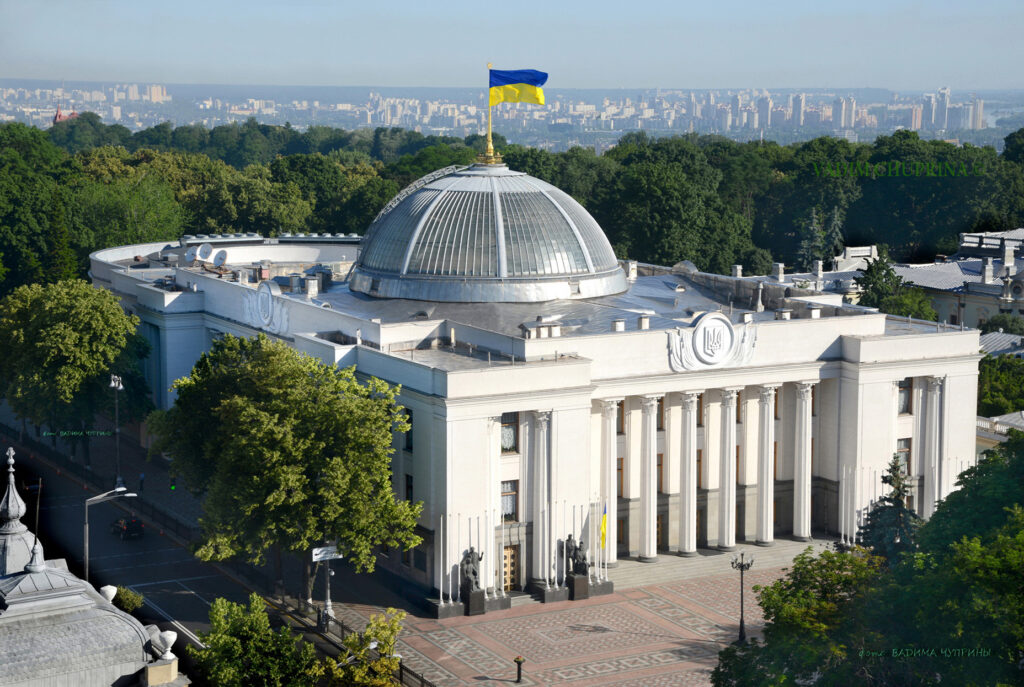
Ukraine's parliament wants a permanent seat at the center of the EU's legislature. Kyiv plans to open a representation in the European Parliament in the near future, mirroring the European Parliament's own representation already established in Ukraine, Speaker Ruslan Stefanchuk announced during a meeting of Ukraine's ambassadors, according to UkrInform.
Stefanchuk thanked colleagues in the European Parliament, noting that many initiatives began there with votes on resolutions, and that the most important decisions in support of Ukraine are prepared through cooperation with European Parliament President Roberta Metsola.
"In the very near future, we set ourselves the goal of opening a representation of Ukraine's Parliament in the European Parliament, just as the European Parliament has already opened its representation in Ukraine," he said.
The office builds on a working relationship
The representation would give permanence to an alliance that has produced results. The European Parliament has been one of the most consistent voices for Ukraine, passing resolutions on aid, sanctions, and accountability, and a standing parliamentary office in Brussels would allow Ukraine's legislature to coordinate directly with the body throughout the accession process.
The move fits Ukraine's broader push to embed itself in EU institutions as a candidate country, turning ad hoc parliamentary cooperation into a permanent presence.
Nordic, Baltic, and G7 tracks
Stefanchuk laid out other parliamentary directions. Cooperation with the Nordic and Baltic states, among Ukraine's most reliable partners, holds great prospects, and visits to Reykjavik and Helsinki are planned to strengthen that interaction, he said.
The G7 parliamentary dimension is another platform where Ukraine has steady support. Stefanchuk said he places great hopes in the G7 Speakers' Summit on 10 to 12 September in Paris, where Ukraine will participate as a full member for the fifth time.
The Crimea Platform stays on the agenda
Stefanchuk also stressed the Crimea Platform track, the diplomatic format Ukraine created to keep the occupied peninsula's return on the international agenda. He urged ambassadors to help secure the participation of their host countries' parliamentary speakers in the fifth Inter-Parliamentary Crimea Platform Forum, to be held in London in December.
Le fournisseur américain d’Internet par satellite Hughes Network Systems s’est placé sous la protection du chapitre 11 de la loi américaine sur les faillites. L’entreprise, qui exploite le service Hughesnet, affirme que ses activités se poursuivront normalement pendant sa restructuration. La procédure ne signifie donc pas une fermeture immédiate. Hughes cherche plutôt à réorganiser ses […]

 Connexion











 Army, Mykhailo Drapaty, must respond as the first Russian
  units have reached approximately 10 km east of Sloviansk and Kramatorsk.
 (@AMK_Mapping_)