Vue normale

  • ✇Euromaidan Press
  • Why does Ukraine need a Bebradron-M drone with no warhead and only 2 kg of payload?
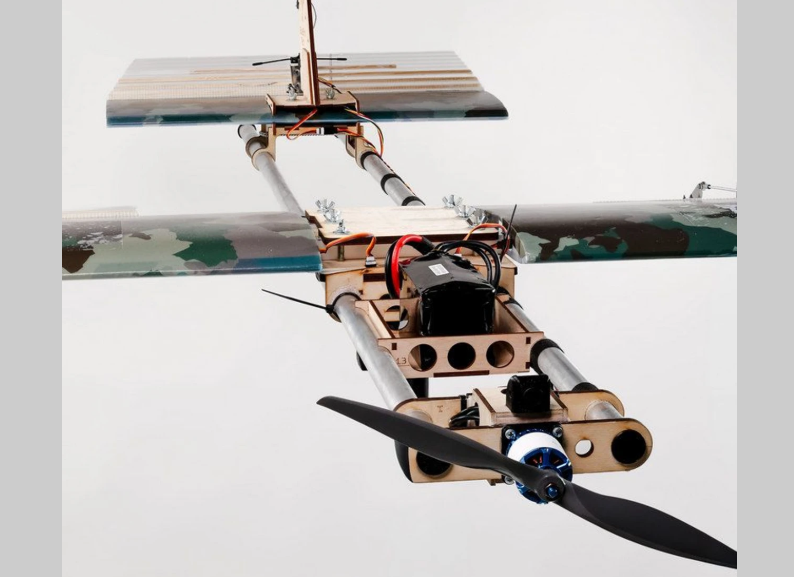
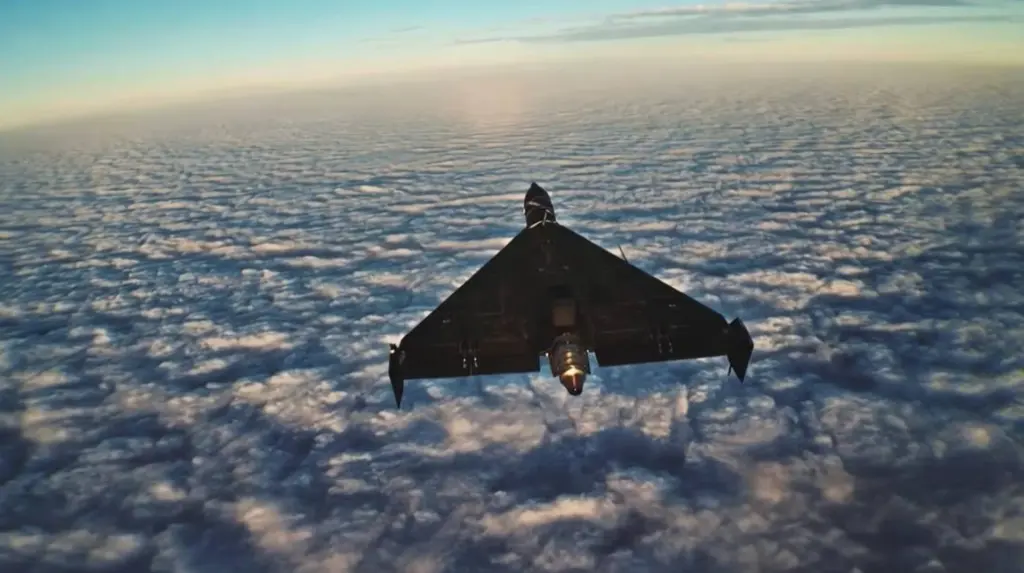
    Ukrainian company BlueBird Tech has unveiled a new version of its fixed-wing “Bebradron” UAV. The new modification has no warhead but can carry a payload of up to 2 kg, Oboronka writes. The Bebradron-M is remotely operated. It has a cruising speed of 70 km/h and a maximum speed of up to 115 km/h. It can fly for up to 25 minutes, has a range of up to 30 km, and operates at altitudes of 200–700 meters. The name Bebradron was not chosen by chance. It comes from the Ukr
     

Why does Ukraine need a Bebradron-M drone with no warhead and only 2 kg of payload?

17 août 2026 à 16:27

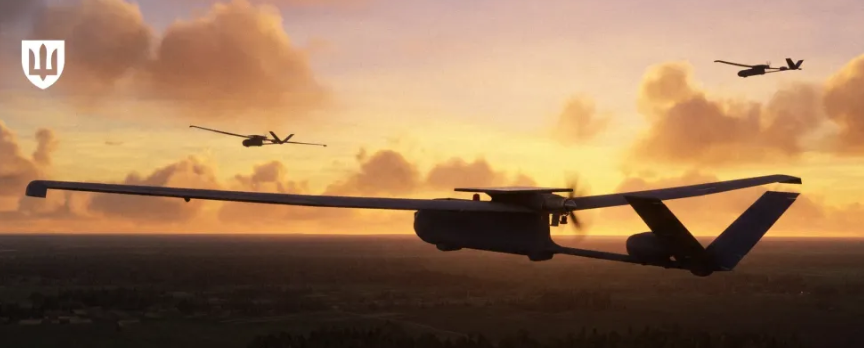
Ukrainian company BlueBird Tech has unveiled a new version of its fixed-wing “Bebradron” UAV. Source: Oboronka

Ukrainian company BlueBird Tech has unveiled a new version of its fixed-wing “Bebradron” UAV. The new modification has no warhead but can carry a payload of up to 2 kg, Oboronka writes.

The Bebradron-M is remotely operated. It has a cruising speed of 70 km/h and a maximum speed of up to 115 km/h. It can fly for up to 25 minutes, has a range of up to 30 km, and operates at altitudes of 200–700 meters.

The name Bebradron was not chosen by chance. It comes from the Ukrainian joke from a meme “nyukhai bebru” (“sniff the bebra”), a humorous euphemism hinting at the male genitalia.

What is such a small drone used for?

The specialized version is designed to train pilots and interceptor-drone operators and to practice scenarios for shooting down aerial targets using a real UAV.

The Bebradron-M can also be used to simulate a decoy target during exercises aimed at countering aerial reconnaissance.

The company said foil materials can be applied to the drone’s wings to increase its radar signature. This creates an additional radar return, allowing operators to practice scenarios involving multiple aerial targets.

What does the Bebradron-M lack?

The standard fixed-wing UAV configuration includes a low-light camera, analog video link, 915 MHz control system and a 6S3P battery.

The Bebradron-M, however, lacks cruise control or navigation systems.

Ukraine clears hundreds of new drones for military use in 2026

Since the beginning of 2026, 413 unmanned aerial systems have been approved for use by Ukraine’s Defense Forces. This is more than in 2025 and 2024, according to Ukraine’s Defense Ministry. Almost all of the newly codified drones are Ukrainian-made.

Among them is the Dovbush T40, a drone built to reach the deepest parts of Russia, designed for deep reconnaissance and precision strikes against distant Russian targets.

The Ukrainian company behind MAUL — a robot that hits 70 km/h and survives flipping over — moves toward investment from an $81M US firm

17 août 2026 à 15:45

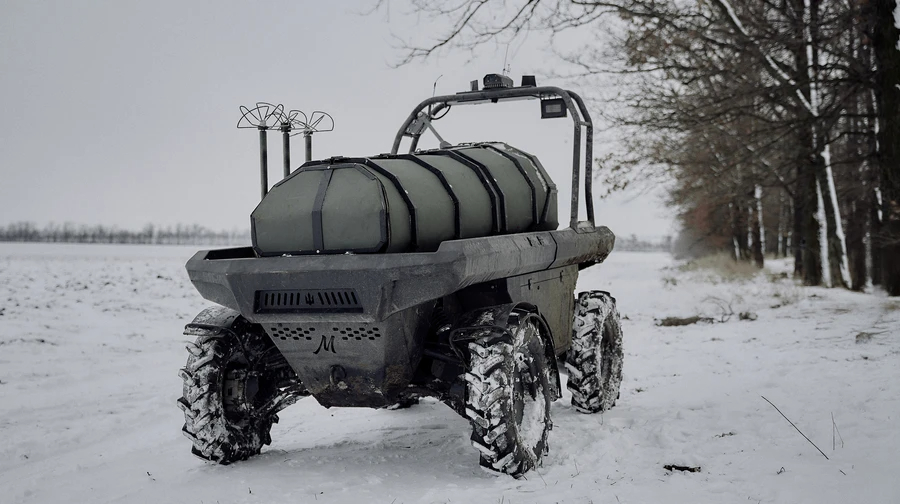
The MAUL unmanned ground vehicle. Source: AIDronesUA

Ukrainian company AIDronesUA and US-based Empery Digital Inc. have signed a document creating the conditions for strategic investment, according to Defender Media. AIDronesUA develops the MAUL unmanned ground vehicle, a casualty evacuation, logistics, and ammunition-delivery platform that was previously presented at the Eurosatory 2026 defense exhibition in Paris.

MAUL is built on an all-terrain vehicle equipped with an internal combustion engine, which offers a significant advantage over electric motors by enabling higher speeds. The drone can travel at up to 70 km/h when a reliable communications link is available. Its engine also allows it to operate in cold weather without the limitations associated with batteries, ArmyInform reports.

MAUL is equipped with four different types of communication links, which can back each other up. The UGV can continue moving even after overturning. Ukrainian military personnel have reported instances in which a vehicle flipped over, returned to its wheels, and continued moving.

Final agreement has not yet been signed

The parties emphasize that, at this stage, this is not a finalized investment agreement. The companies will conduct a feasibility study, financial modeling, and due diligence to assess the potential for future cooperation.

Empery Digital Inc., with which negotiations are underway, has a market capitalization of more than $81 million. The company is involved in the production of electric vehicles and also operates in the digital assets sector, including cryptocurrency.

Access to the US investment market

As part of the due diligence process, Empery Digital plans to assess AIDronesUA's technologies, operations, production requirements, financial needs, regulatory considerations, supply chains, and opportunities for international expansion.

A final agreement can be concluded only after the necessary approvals are obtained, negotiations are finalized, and the relevant documents are signed.

Potential cooperation with the US company could give AIDronesUA access to US investment, international manufacturing expertise, and global markets. The company is also considering integrating Ukrainian-developed technologies into international manufacturing and supply chains.

  • ✇Euromaidan Press
  • World’s largest crypto exchange helped Russia identify and jail a man who donated to Ukraine’s army
    The world’s largest cryptocurrency exchange, Binance, has helped Russia arrest one of its own citizens for supporting the Ukrainian military. Using information provided by the exchange, Russian authorities arrested 49-year-old Russian IT specialist Yuriy Bielenkyi, who was detained in September 2025 and is now being held in a Russian prison awaiting trial, Reuters reports. The information was later included in the criminal case against him. Russian investigators also a
     

World’s largest crypto exchange helped Russia identify and jail a man who donated to Ukraine’s army

17 août 2026 à 15:25

greece blocked gas ban france italy softened entry ban—now brussels tries 1600 companies helping russia's war · post 9 parade moscow 2025 youtube/kremlin grate patriotic warr shitshow ukraine news ukrainian

The world’s largest cryptocurrency exchange, Binance, has helped Russia arrest one of its own citizens for supporting the Ukrainian military. Using information provided by the exchange, Russian authorities arrested 49-year-old Russian IT specialist Yuriy Bielenkyi, who was detained in September 2025 and is now being held in a Russian prison awaiting trial, Reuters reports.

The information was later included in the criminal case against him. Russian investigators also asked Binance to identify other people who had transferred funds to a wallet used to collect donations for Ukrainian soldiers.

What information can be obtained through Binance?

Journalists obtained documents showing that in October 2025, Russian investigators requested Binance’s transaction history for Bielenkyi.

The exchange provided information about transfers to Ukrainian cryptocurrency wallets. Russian law enforcement received not only transaction data but also the user’s personal information, including his date of birth, address, phone number, passport details, a copy of his Russian passport, and his Bulgarian residence permit.

Passing the buck

Crypto-regulation lawyer Mike Bystrov told journalists that Binance was not necessarily required to hand over the data to Russia. If Bielenkyi was registered with Binance as an EU customer, he could have been covered by rules that significantly restrict the transfer of personal data to countries that do not provide an adequate level of data protection.

Binance disagreed. The company said it cooperates with lawful law-enforcement requests in different countries, but that government authorities themselves decide how to use the information they receive.

Meanwhile, the European Data Protection Board, an EU body, declined to comment.

Previous precedents involving Alexei Navalny

Reuters previously reported that in 2021, Binance’s regional head met with representatives of Russia’s financial-monitoring agency, who wanted to help identify customers making Bitcoin donations to Alexei Navalny.

At the time, Binance told Reuters that Russian authorities had never approached the company regarding the anti-Kremlin activist, who died in an Arctic penal colony in 2024.

  • ✇Euromaidan Press
  • Russia’s latest strike on Ukraine’s most important trade route: Togo-flagged civilian ship hit in Odesa
    Russia struck Odesa's port again and hit a foreign civilian ship. Russian forces attacked port infrastructure in Odesa Oblast overnight, damaging a civilian vessel flying the flag of Togo, Oleh Kiper, the head of the regional military administration, reported. The strike hit neutral commercial shipping at a port that Russia has repeatedly attacked. Odesa is Ukraine's main gateway for seaborne trade, and Russia has struck its port infrastructure throughout the war, endan
     

Russia’s latest strike on Ukraine’s most important trade route: Togo-flagged civilian ship hit in Odesa

17 août 2026 à 15:01

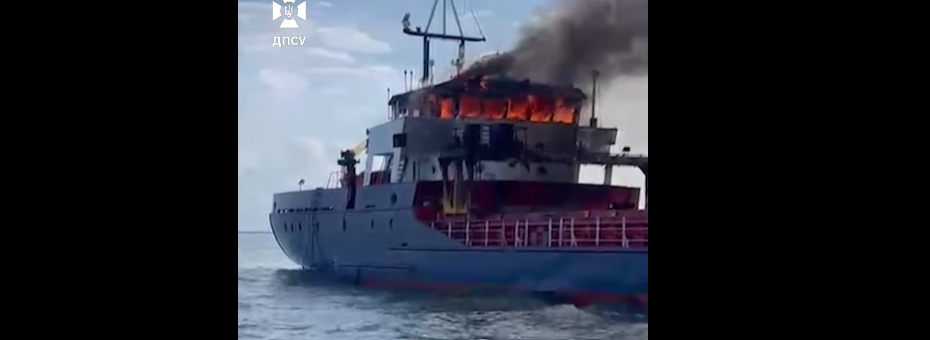
A Russian Shahed drone struck a Palau-flagged vessel carrying corn twice as it left a port in Odesa Oblast, setting it on fire. Source: Ukraine's State Border Guard Service

Russia struck Odesa's port again and hit a foreign civilian ship. Russian forces attacked port infrastructure in Odesa Oblast overnight, damaging a civilian vessel flying the flag of Togo, Oleh Kiper, the head of the regional military administration, reported.

The strike hit neutral commercial shipping at a port that Russia has repeatedly attacked. Odesa is Ukraine's main gateway for seaborne trade, and Russia has struck its port infrastructure throughout the war, endangering the foreign-flagged merchant ships that dock there to move Ukrainian grain and cargo.

Four people were injured

The strike caused casualties among those at the port. Four people were injured, three of them hospitalized and one in serious condition, and all are receiving the necessary medical care, Kiper said.

Fires broke out as a result of the strike and have now been fully extinguished, Kiper said.

The target was Ukraine's trade gateway

Hitting a foreign merchant ship strikes at the heart of Ukraine's economic lifeline. Odesa's ports are how Ukraine ships its grain and imports to the world, and the foreign-flagged vessels that call there are civilian commercial traffic, not military targets.

Earlier, Ukraine’s Agriculture Ministry cut its forecast for agricultural exports in 2026–2027 by 54% after Russia's strikes on the port. The ministry now expects 29.6 million tons of agricultural exports, down from 64.4 million. Its wheat export forecast fell by 53%, from 17.6 million tons to 8.3 million tons.

The scale of the crisis triggered by Russia

In July alone, Russian strikes damaged 28 vessels traveling to or from the ports of Greater Odesa, roughly 11–12% of maritime traffic, killing 21 sailors and injuring 34, according to Andrii Klymenko of the Black Sea Strategic Studies Institute’s monitoring group.

Land and river routes cannot make up the difference. Low water levels are limiting the Danube's capacity, and there is no full substitute for Ukraine’s deep-water ports in the medium term. If the delays continue, he said, Ukraine may have to store an additional 10–12 million metric tons of grain it cannot export.

  • ✇Euromaidan Press
  • $3,032 to kill a soldier on whom Russia spends $65,000: Ukraine’s new system puts a price on every strike
    Ukraine can now measure how cost-effectively it kills, and the math favors it. Every dollar Ukraine's Defense Forces spend on striking a target inflicts several times more losses on Russia, as confirmed by the Mission Control module in the DELTA battle system, Ukraine's Defense Ministry reported. Mission Control, launched six months ago, now processes 50,000 missions a week and over 230,000 reports, allowing Ukraine to track not just what it hits but also what each stri
     

$3,032 to kill a soldier on whom Russia spends $65,000: Ukraine’s new system puts a price on every strike

17 août 2026 à 13:08

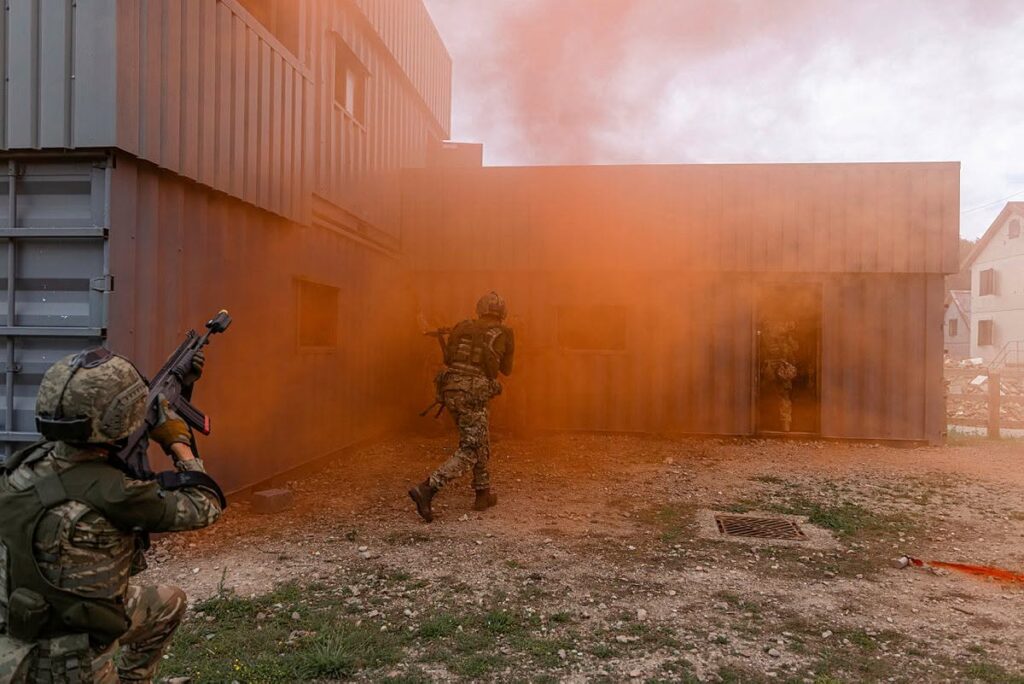
The image shows Ukrainian soldiers. Source: Ukraine's General Staff

Ukraine can now measure how cost-effectively it kills, and the math favors it. Every dollar Ukraine's Defense Forces spend on striking a target inflicts several times more losses on Russia, as confirmed by the Mission Control module in the DELTA battle system, Ukraine's Defense Ministry reported.

Mission Control, launched six months ago, now processes 50,000 missions a week and over 230,000 reports, allowing Ukraine to track not just what it hits but also what each strike costs relative to the damage it causes. In June, every dollar Ukraine spent on a strike cost Russia nearly five times as much.

The economics favor Ukraine's strikes

The system prices both sides of every strike. Mission Control records the cost of what Russia loses, ranging from a few hundred dollars for telecommunications equipment to hundreds of thousands of dollars for air-defense systems and other high-value targets.

The June figures show the gap. Hitting one enemy soldier costs Ukraine $3,032, compared with roughly $65,000 that Russia spends to maintain one. Meanwhile, hitting a piece of equipment costs $2,674, and targeting an infrastructure object costs $1,487.

Every mission feeds the next

Mission Control logs each mission to sharpen the next. The military analyzes what worked, what did not, and why to adjust tactics for the next mission rather than blindly repeating mistakes, according to the Defense Ministry.

The data breaks down by mission type and depth. It sorts missions into reconnaissance, strike, logistics, and evacuation, and by range, 20-plus and 50-plus kilometers, showing for each unit what it strikes, how effectively, at what cost, and what economic damage it inflicts, while also tracking which Ukrainian equipment is lost, at what depth, and under what circumstances.

The goal is fewer Ukrainian lives spent

The measurement serves a purpose beyond economics. The Defense Ministry said it continues implementing technologies so each mission makes the next more precise and helps preserve the lives of Ukrainian soldiers, gradually shifting the most dangerous battlefield tasks to robotic systems.

Ukraine hit ground-control station for rare drone that fires Russia’s Banderol, missile hitting 650 km/h with 114-kg warhead

17 août 2026 à 12:23

ISW: Russia deploys ship-based Orion drones as Ukraine cripples Black Sea fleet

Ukraine went after the sites and systems Russia uses to launch and steer its most powerful attack drones. On the night of 17 August 2026, Ukraine's Defense Forces struck a series of important Russian military targets, hitting drone storage, launch, and control infrastructure across occupied Crimea and Kherson Oblast, the General Staff reported.

The strikes target the infrastructure behind Russia's drone attacks, not just the drones themselves. By hitting storage sites, control stations, and relay points, Ukraine degrades Russia's ability to launch and guide the Shaheds, reaching the launch and command nodes rather than intercepting drones one by one in the air.

The Shahed site and the Orion control station

The first strike hit a Shahed base. Ukraine struck a storage, preparation, and launch site for attack drones near Hvardiiske in occupied Crimea, with a fire recorded at the site, the General Staff said.

The second hit the launch platform for one of Russia's newer drone missiles. Ukraine struck the ground-control station of an Orion drone at Novofedorivka in occupied Crimea. The Orion is a large Kronshtadt strike-reconnaissance drone and the aerial launch platform for the jet-powered S8000 "Banderol" cruise missile, which Russia fires from Crimea at Odesa.

It flies at 520-560 km/h cruise speed and up to 650 km/h maximum, has a range up to 500 km, and carries a 114.3-kg fragmentation-high-explosive warhead.

Until Russia developed a ground launcher, the rare Orion, with only nine lost in the whole war, was the only way to fire a Banderol.

The relay points that extend the drones' reach

Ukraine also hit the relays that guide Russian drones. It struck a ground system for controlling Geran and Gerbera attack drones at Olenivka in occupied Crimea, and a communication and power point for a drone relay on the Tendra Spit in Kherson Oblast.

Those relays matter because they extend range. Russia uses ground relay stations to guide its drones farther than a direct signal reaches, so destroying them shortens how deep the Shaheds can be steered into Ukraine. The degree of damage is being clarified.

  • ✇Euromaidan Press
  • Russians are buying seaside apartments built on the ruins of the Mariupol homes Russia bombed—DW
    Russians moving into occupied Mariupol are buying apartments built over Ukrainian homes destroyed during Russia’s 2022 siege, German broadcaster Deutsche Welle (DW) reported on 15 August 2026. Ukrainians who lived on the sites received none of the new units, a source told the outlet. The construction is part of Russia’s wider Russification of occupied Mariupol. Occupation authorities have separately listed nearly 900 apartments for redistribution, including properties b
     

Russians are buying seaside apartments built on the ruins of the Mariupol homes Russia bombed—DW

17 août 2026 à 11:53

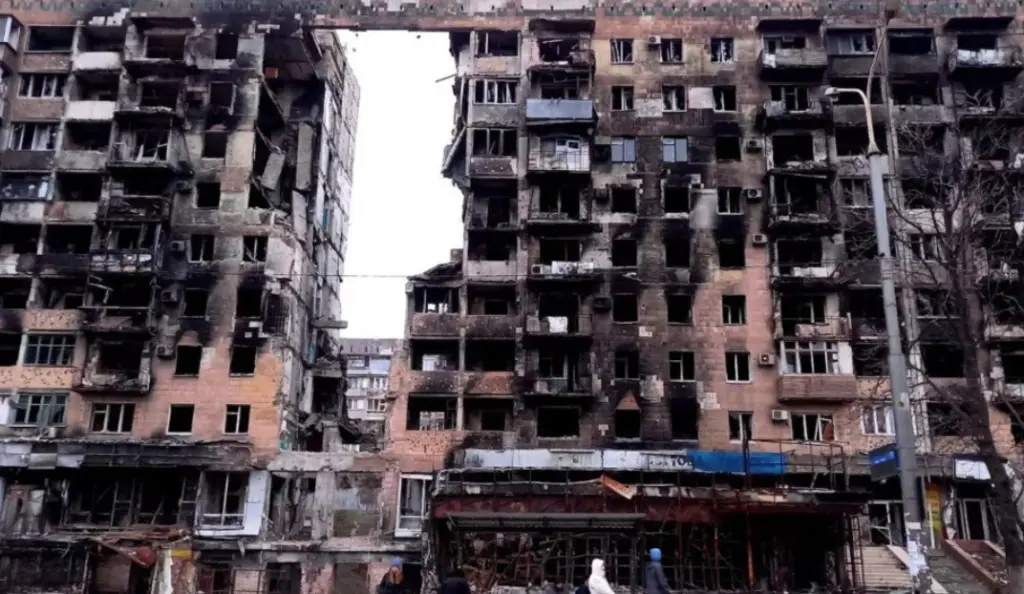
War-damaged apartment blocks in Mariupol with burned facades, shattered windows and exposed interiors.

Russians moving into occupied Mariupol are buying apartments built over Ukrainian homes destroyed during Russia’s 2022 siege, German broadcaster Deutsche Welle (DW) reported on 15 August 2026. Ukrainians who lived on the sites received none of the new units, a source told the outlet.

The construction is part of Russia’s wider Russification of occupied Mariupol. Occupation authorities have separately listed nearly 900 apartments for redistribution, including properties belonging to residents forced out by the siege.

Economist Vyacheslav Shiryaev said the new apartments are being bought primarily by newcomers, including Russian security personnel, officials, and military logistics workers. Some simply want to live by the sea but cannot afford property in occupied Crimea or Sochi, a Russian Black Sea resort, he said.

In Russia-occupied regions, borrowers with Russian citizenship are offered mortgages at 2% annual interest, DW reported.

Occupation authorities also ordered some residents out of apartments that had survived the attacks. Some were sent to hostels or accommodation on Mariupol’s outskirts instead of receiving replacement apartments, a source told DW.

Unable to enter occupied Mariupol, DW based its investigation on former residents’ accounts, satellite imagery, and online research.

Homes erased, residents pushed out

For former residents, homes destroyed in the siege are being replaced with apartments for newcomers.

Halyna Artemova, an English teacher, lived in one of the demolished apartment blocks for almost 40 years. A Russian missile struck the building in March 2022. Wounded by shrapnel, she escaped with her mother and son. A new high-rise now stands where her home once did.

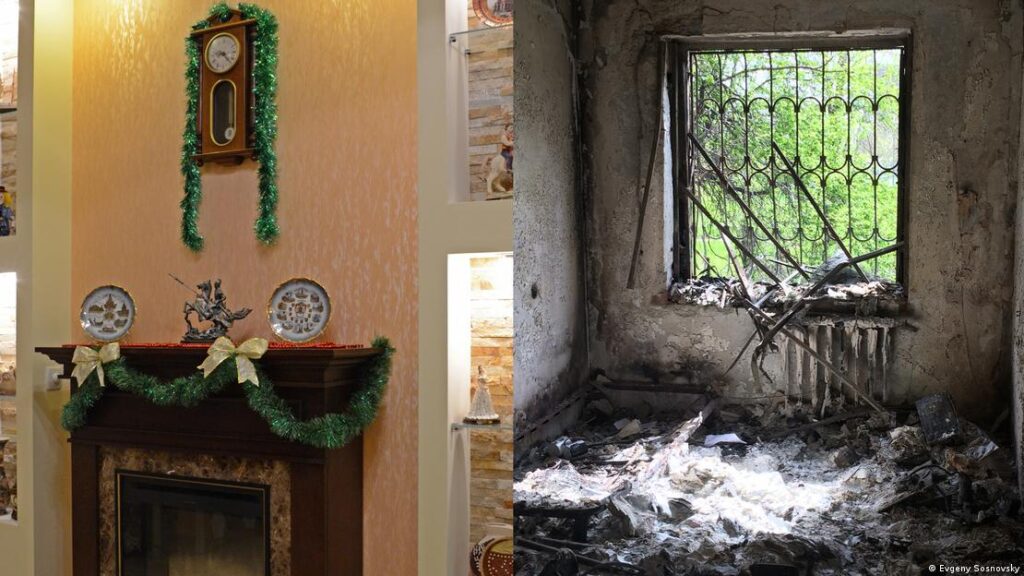
Yevhen Sosnovskyi, a photographer, and his wife had lived in a neighboring building for 20 years. It caught fire during the attack, and Russian troops drove residents out without allowing them to take food or clothes.

Sosnovsky photographed his apartment before and after the attack, preserving a record of the home they lost. A parking lot now covers the site.

They’re building on human bones, and fast, to eradicate the traces of their crimes,” Sosnovsky told DW.

Photographer Yevhen Sosnovskyi documented his apartment before and after the Russian attack. Photo: Yevhen Sosnovskyi via DW.

Russia remakes a city it destroyed

The new housing is part of a wider Russian effort to reshape Mariupol after its forces destroyed and occupied the city. The UN assessed that up to 90% of the city’s residential buildings were damaged or destroyed.

On 16 March 2022, Russia bombed the Mariupol Drama Theater, where civilians sheltered beneath a large “CHILDREN” sign. An eyewitness described chaos, blood, and survivors using torn blankets as bandages.

In the wake of its destruction of the city, Moscow plans to move about 114,000 of its citizens into occupied Ukraine, with Mariupol as one of the main destinations.

Ukrainian commander says one French howitzer could have changed the war’s early months, if there’d been more of it

17 août 2026 à 11:13

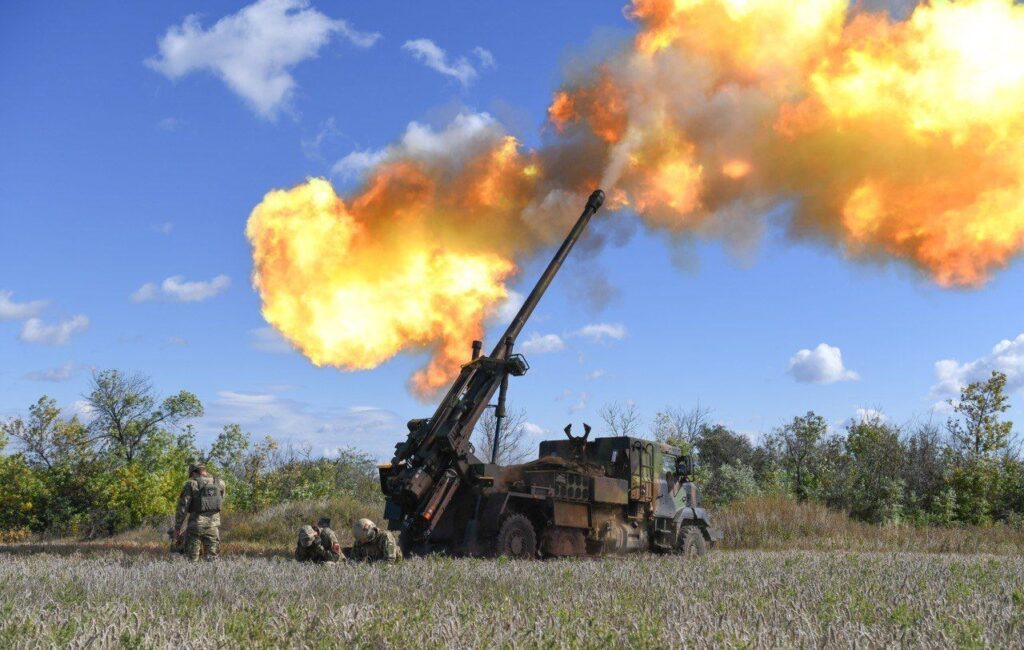
Ukrainian troops fire a CAESAR self-propelled howitzer. Autumn 2022, Ukraine. Photo: ArmyInform

Ukrainian gunners at one of the brigades rate one French howitzer above most of what they field. The French CAESAR self-propelled gun is one of the best in the Ukrainian arsenal, able to fire various munitions with long range and high accuracy, Major Denys Chmykhun of the 148th Separate Artillery Brigade's self-propelled artillery battalion said in an interview with Ukrinform.

The praise is a frontline verdict on the Western artillery that has helped keep Ukraine in the fight. France has supplied Ukraine with CAESAR howitzers throughout the war, and the crews who fire them rate its range and precision highly valuable.

Why the crews rate it

Chmykhun described CAESAR as newer than other guns, and very mobile and maneuverable.

"CAESAR is now one of the best self-propelled systems in service with the Armed Forces of Ukraine," Chmykhun said.

He wished Ukraine had fielded more of them sooner.

"If at the start of the full-scale war, when FPVs and Lancets were not yet used, there had been at least a few CAESAR battalions, it would have seriously affected the front line," the major noted.

The crews learned to repair it themselves

However, the gun's electronics are its weak point, but the crews adapted. The French system has a lot of electronics, and when it produced errors, crew members studied each one using an online translator and fixed them, Chmykhun explained. He added that the howitzer can be temperamental because it is not built for such intense combat.

Rather than pulling a finicky Western system off the line when its software faulted, the crews taught themselves to diagnose and clear the errors.

What it hunts

The CAESAR fires at everything the crews can find. It works against enemy personnel, drone-control points, landing pads, guns, mortars, and artillery, Chmykhun said, wherever its shells can reach.

He took particular satisfaction in counter-battery work. Destroying Russian guns, mostly 152mm, is gratifying because they trouble the Ukrainian infantry who assault, the major said.

"It's great when you hit precisely and understand that this gun is out of action, and somewhere, a field ammunition store starts to detonate. The enemy runs around, panic sets in, and it's pleasant to watch," he added.

This new drone stays aloft for more than day and resists jamming. Ukraine says it can now reach beyond the Urals

17 août 2026 à 10:22

Ukraine's Dovbush T40, a strategic drone that can stay aloft over a day. Source: The Ukrainian Defense Ministry

Ukraine has approved a drone built to reach the deepest parts of Russia. Ukraine's Defense Ministry has codified the domestic Dovbush T40 uncrewed aviation complex, a strategic-level drone for deep reconnaissance and precision strikes on distant Russian targets, the ministry announced.

The drone extends the reach of Ukraine's homegrown deep-strike arsenal to Siberia. With a wingspan of nearly 5 meters, the Dovbush T40 has enough range to hit targets beyond the Urals and in Russian Siberia.

What the drone does

The Dovbush T40 is a multi-role strategic aircraft. It is designed for deep reconnaissance, fire correction, and precision strikes on structures, equipment, and enemy personnel far from the line of contact.

Its endurance is the enabler. More than a day aloft gives it the range to reach targets, letting Ukraine threaten the deep-rear sites, from factories to airfields, that Russia has kept far from the front for safety.

Its advantages over similar drones

The drone offers several edges, the ministry said. It has ultra-low radar visibility, a high-performance engine with electronic fuel injection, and a choice of strike methods, either as a kamikaze drone or by dropping a munition.

It is built to work under jamming. The Dovbush T40 stands out for high resistance to electronic warfare, according to the Defense Ministry, the recurring requirement for any Ukrainian drone meant to fly deep into a contested electromagnetic environment.

It builds on combat-proven predecessors

The drone comes from a maker with a track record. It was built by a Ukrainian enterprise whose Dovbush T20 and Kotyhoroshko drones have operated on the battlefield since 2022 with some of the highest effectiveness ratings.

The T40 is an evolution of a proven system. The medium-range Dovbush T20, used for reconnaissance, real-time artillery correction, and pinpoint strikes, evolved through battlefield feedback into the longer-range, more powerful T40. It joins a fast-growing domestic fleet: since the start of 2026, Ukraine's Defense Ministry has codified 413 uncrewed systems, almost all of which are Ukrainian-made.

  • ✇Euromaidan Press
  • Slovakia resumes BMP-1 hull production after 36 years. The secret customer may be Ukraine
    Slovak company STV Machinery has produced the first two prototype hulls for the BMP-1 infantry fighting vehicle after a 36-year break in production. The plant in Dubnica nad Váhom began developing an updated design in 2024, and a contract with an unnamed foreign customer was signed in late 2025, with serial production scheduled for 2026 to 2027. The Slovak outlet Future Army reported this on 15 August, citing STV Group's director of special projects, Pavel Be

     

Slovakia resumes BMP-1 hull production after 36 years. The secret customer may be Ukraine

17 août 2026 à 09:27

slovakia resumes bmp-1 hull production after 36 years secret customer ukraine · post manufacturing slovak company stv machinery 2025 slovakia_bvp_productionjpg3 news ukrainian reports

Slovak company STV Machinery has produced the first two prototype hulls for the BMP-1 infantry fighting vehicle after a 36-year break in production. The plant in Dubnica nad Váhom began developing an updated design in 2024, and a contract with an unnamed foreign customer was signed in late 2025, with serial production scheduled for 2026 to 2027.
The Slovak outlet Future Army reported this on 15 August, citing STV Group's director of special projects, Pavel Beran. He said one prototype is being used to test final assembly and the integration of weapons systems, while the second is undergoing physical and stress testing. The company will not disclose the customer's identity, citing security and business-ethics considerations.
Ukraine has a substantial need for armoured vehicles. Its forces already use and modernise the BMP-1, and cooperation with Western manufacturers could help replenish the fleet faster. In 2024, for example, Ukraine and Germany's Rheinmetall agreed to produce the Lynx IFV and to expand defence cooperation.

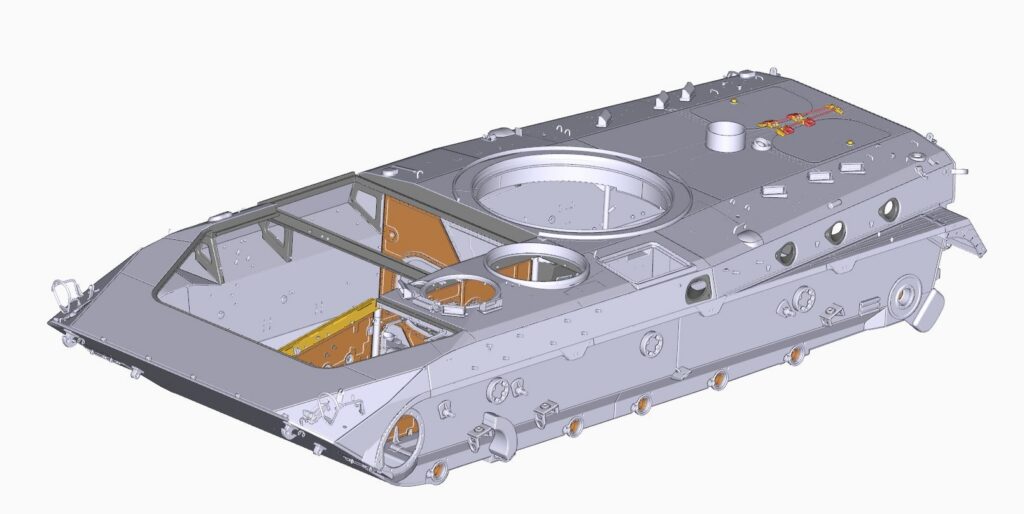
Digitised BMP-1 project. Photo: STV Machinery

The Slovak plant has returned to BMP-1 production

According to Militarnyi, the new hulls remain outwardly similar to the Soviet BMP-1 design but have been reworked to more modern requirements. STV Machinery revised the design to meet NATO standards for ergonomics and materials, and strengthened the armour using more modern materials.

Future vehicles will offer a choice of powerplant, with Western-made engines among the options. STV Machinery, the Slovak firm, will produce the hulls and other components, after which its Czech sister company STV Group will carry out full assembly and testing.

The exact size of the order is not yet known, though earlier reports suggested production could eventually reach up to 100 hulls a year.

The company has not named the customer. Defense Express suggested as early as December 2025 that it could be Ukraine. One scenario the outlet floated was the supply of hulls or turretless vehicles, which would allow other combat modules to be fitted.

Production of the BMP-1 hull by the Slovak company STV Machinery. 2025. Photo: STV Machinery

Why Slovakia is building the BMP-1 again

The Dubnica nad Váhom plant previously built licensed versions of the BMP-1, known locally as the BVP-1. Serial production there ran until 1989, after which the plant went more than three decades without making new hulls for the vehicle. The site is the same, but the manufacturer is not: the original vehicles came off the ZŤS Dubnica nad Váhom line in the Czechoslovak era, while today's hulls are made by STV Machinery.

At the same time, the BMP-1 remains a vehicle of the 1960s. Even a modernised hull does not change the platform's fundamental limitations, particularly its level of protection. So if Ukraine really is behind the order, it is likely more a way to rapidly increase the number of armoured vehicles than a long-term replacement for modern Western IFVs, Defense Express noted in 2025.

Also Defense Express stressed that the customer's identity remains only speculation, adding that the buyer could turn out to be another country that operates or once operated the BMP-1, and that firmer detail will have to wait for the company.

  • ✇Euromaidan Press
  • Ukraine has knocked out seven of Russia’s 10 biggest warehouses as its air defenses fall short, ISW says
    Ukraine has knocked out seven of the 10 largest logistics hubs run by Russia's biggest online retailer, the US-based Institute for the Study of War assessed. The strikes are part of a campaign to wear down Russia's defense industry and the dual-use supply lines that feed its war. The newest raids hit two warehouses near Moscow overnight. Ukraine has pushed its long-range drone war deep into Russia, hunting the oil, freight, and factory sites that keep Moscow's invasion
     

Ukraine has knocked out seven of Russia’s 10 biggest warehouses as its air defenses fall short, ISW says

17 août 2026 à 09:15

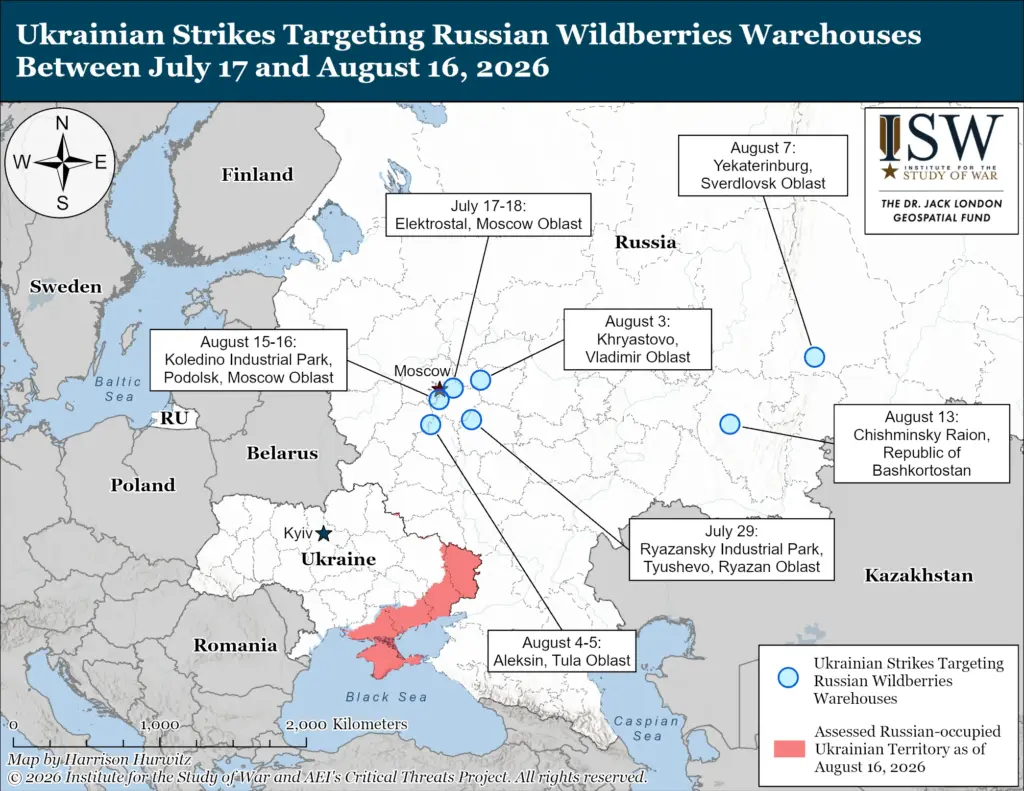
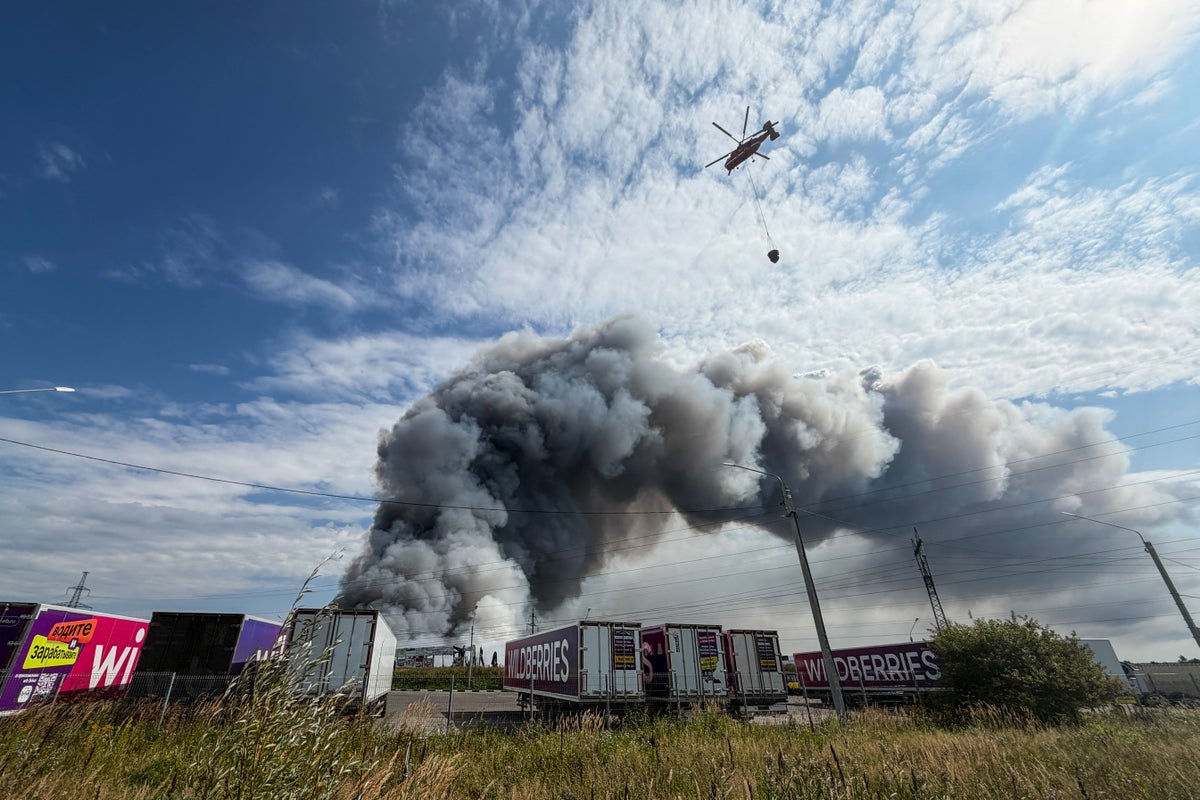
ukraine has knocked out seven russia's 10 biggest warehouses its air defenses fall short isw says · post ukrainian strikes targeting russian wildberries between 17 16 2026 ukrainian-strikes-targeting-russian-wildberries-warehouses-between-july-17-and-august-16-2026 news reports

Ukraine has knocked out seven of the 10 largest logistics hubs run by Russia's biggest online retailer, the US-based Institute for the Study of War assessed. The strikes are part of a campaign to wear down Russia's defense industry and the dual-use supply lines that feed its war. The newest raids hit two warehouses near Moscow overnight.

Ukraine has pushed its long-range drone war deep into Russia, hunting the oil, freight, and factory sites that keep Moscow's invasion supplied. Each strike that lands far from the front tests how much of its own territory Russia can actually defend. ISW assessed that the campaign is squeezing both Russia's economy and its overstretched air defenses, with no sign the retailer's biggest depots are getting any safer.

Two hubs near Moscow burned overnight

On 15-16 August, Ukrainian drones struck Wildberries' single largest hub, a 250,000-square-meter depot in the Koledino Industrial Park in Podolsk, Moscow Oblast. Ukraine's Defense Ministry reported the hit, about 420 kilometers from the border.

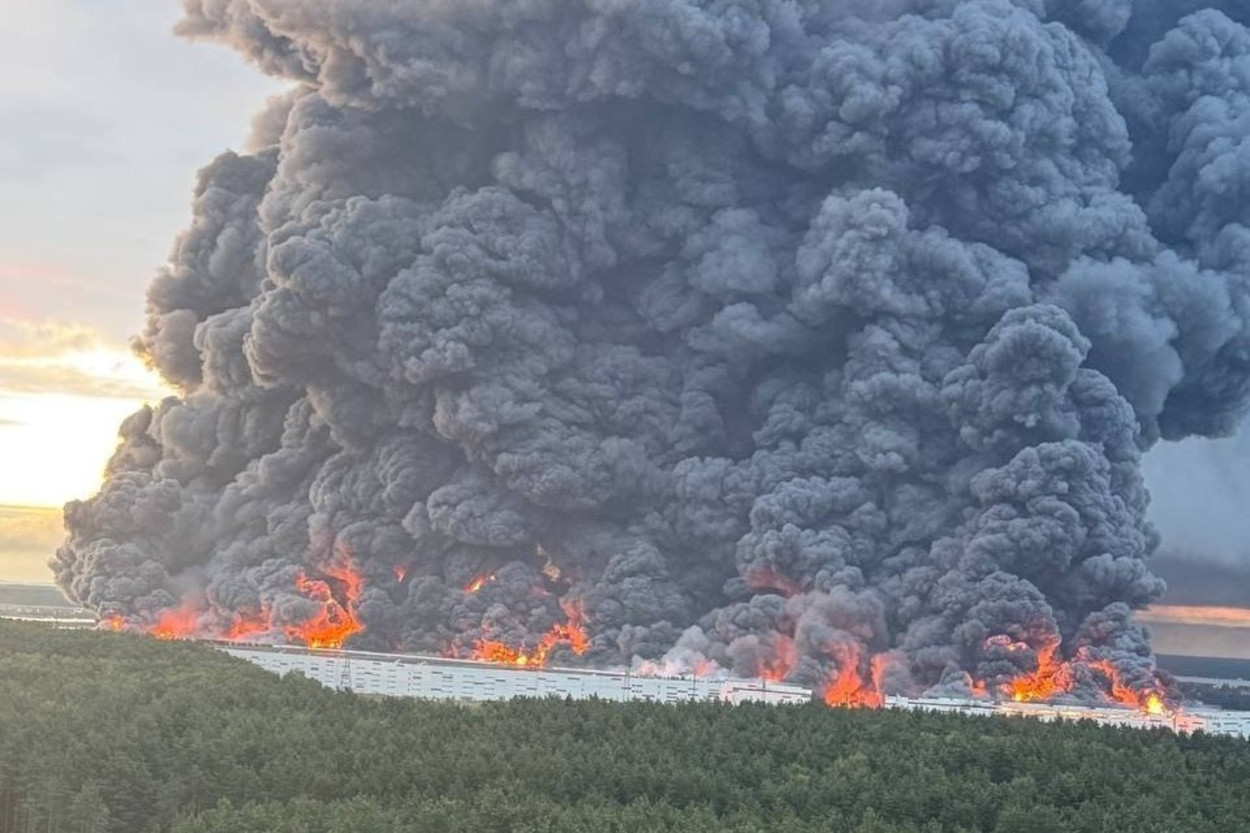
Wildberries warehouse burning in Russia's Koledino following a Ukrainian drone strike, 16 August 2026. Photo: Exilenova+
Explore further

“One of the most massive” Ukrainian drone attacks hits Moscow Oblast: two major warehouses ablaze

Wildberries confirmed the fire and said it had to reorganize its supply chains. Moscow Oblast Governor Andrei Vorobyov acknowledged the strike, and geolocated footage showed the depot ablaze.

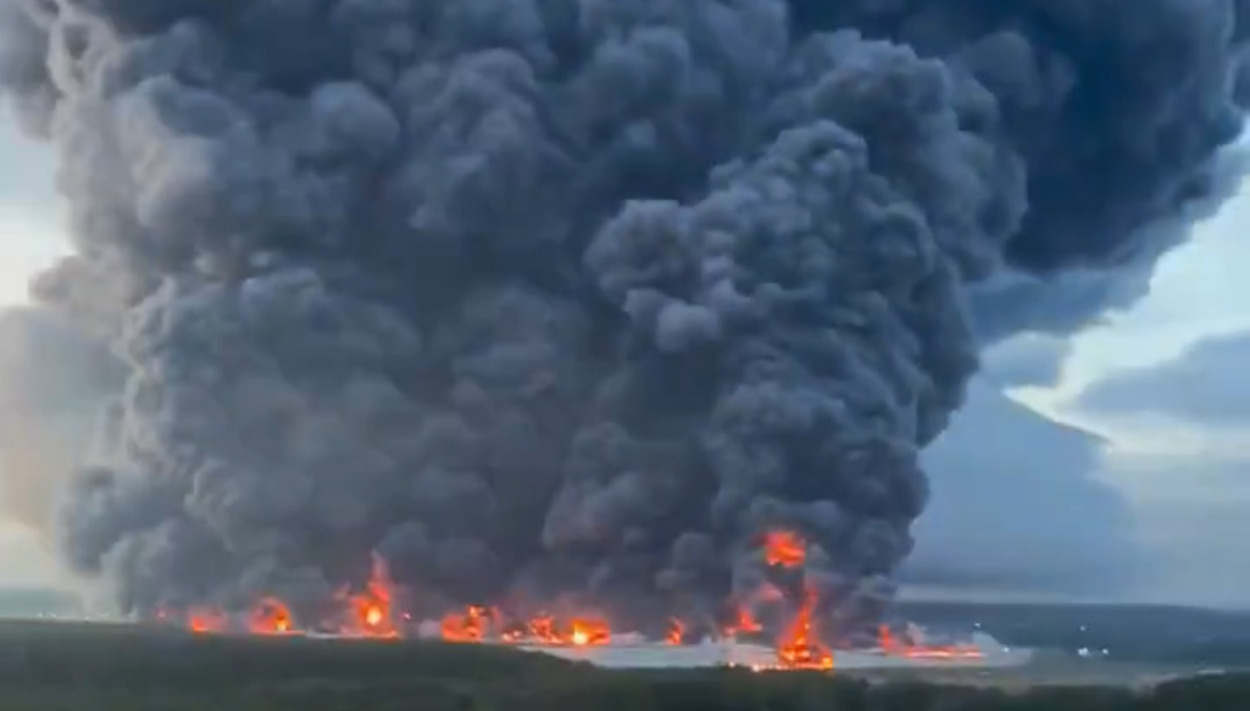
Drones also hit a second warehouse the same night, in Domodedovo, roughly 430 kilometers from the border. Footage showed a fire at the Severnoye Domodedovo complex.

Why the warehouses are targets

Ukrainian officials say Wildberries helps supply the Russian military, moving drone components and navigation gear. Kyiv folded the retailer into a deep-strike campaign that began in mid-July.

The company is Russia's answer to Amazon, its largest online marketplace. Its sprawling depots make broad, hard-to-defend targets.

Wildberries warehouse burning in Russia's Koledino following a Ukrainian drone strike, 16 August 2026. Screenshot from video: bayraktar_1love

The damage keeps growing

By early August, the strikes had destroyed at least 1.18 million square meters of Wildberries storage, about a fifth of its capacity, ISW noted. The toll has climbed since.

The losses ripple outward to independent sellers who rent space in the hubs. Many have watched their stock burn with no compensation.

  • ✇Euromaidan Press
  • Russia builds and expands at least 10 drone bases. Some could put Warsaw in range – Telegraph
    Russia has built or expanded at least 10 drone bases along its borders with Ukraine and Belarus, creating launch capacity for newer jet-powered attack drones, the most powerful of which could reach Warsaw, The Telegraph reported on 16 August 2026. The network expands Russia’s capacity for mass drone attacks on Ukraine, while some sites could later threaten NATO. The findings come as Russia is also expanding bases and other military infrastructure along NATO’s northern a
     

Russia builds and expands at least 10 drone bases. Some could put Warsaw in range – Telegraph

17 août 2026 à 09:07

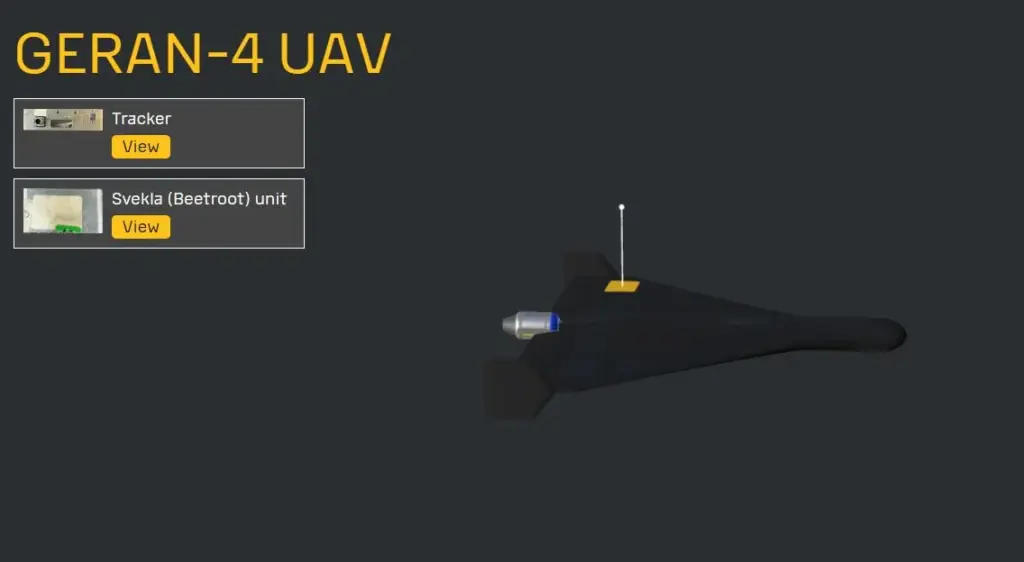
Diagram of a black Geran-4 jet-powered UAV with callouts identifying its tracker and Svekla electronic unit.

Russia has built or expanded at least 10 drone bases along its borders with Ukraine and Belarus, creating launch capacity for newer jet-powered attack drones, the most powerful of which could reach Warsaw, The Telegraph reported on 16 August 2026.

The network expands Russia’s capacity for mass drone attacks on Ukraine, while some sites could later threaten NATO. The findings come as Russia is also expanding bases and other military infrastructure along NATO’s northern and Baltic borders. The Telegraph found no evidence that Moscow is planning such an attack.

Seven of the 10 sites were used during recent bombardments of Kyiv, tracking data cited by The Telegraph showed. Using leaked documents, satellite imagery, and DroneSec's analysis, the newspaper identified at least 59 launch rails—tracks that launch fixed-wing drones without runways.

Around 20 appeared long enough for Russia’s latest long-range models, while one base could reportedly store over 1,000 drones.

Leaked Ukrainian documents cited by The Telegraph say the jet-powered Geran-4 and Geran-5 can carry 90-kilogram warheads. However, Ukrainian military intelligence puts the Geran-4’s range at up to 450 kilometers, while the larger Geran-5 has a stated range of up to 1,000 kilometers — enough to reach Warsaw from several of the new sites.

DroneSec founder Mike Monnik said expanded launch capacity and harder-to-intercept technology together increase pressure on Ukrainian air defenses.

Russia builds military infrastructure along NATO’s northern flank

Russia is also expanding military infrastructure elsewhere along NATO’s borders. A Nordic-Baltic investigation identified new or expanded infrastructure from Norway to Kaliningrad, with potential capacity for up to 115,000 personnel.

Satellite imagery showed new barracks, ammunition warehouses, and expanded bases near NATO’s northern and Baltic members.

The Institute for the Study of War, a US-based think tank, assessed that the construction likely supports future Russian operations against NATO rather than an imminent attack. Most Russian combat power remains committed to Ukraine, it said.

Other drone hubs support rapid Russian attacks

Russia has already built comparable hubs for attacks on Ukraine. Satellite imagery analyzed by the open-source intelligence group Strategic Aviation of Russia showed 10 additional launchers under construction at Tsymbulova in Oryol Oblast, following the start of work on 22 April 2026.

At occupied Donetsk Airport, the group identified enlarged launch pads, roads to a Geran and Gerbera drone warehouse, and the apparent construction of another storage building.

Ukraine’s Security Service (SBU) said it struck Shahed storage and launch sites at Primorsko-Akhtarsk on 2 August 2025. Ukraine’s Unmanned Systems Forces commander Robert "Madyar" Brovdi reported hitting drone logistics, warhead-storage, and preparation facilities at Donetsk Airport on 30 December 2025.

  • ✇Euromaidan Press
  • Nearly 500 Africans recruited into Russia’s army have died, Ukraine says
    486 Africans recruited into Russia’s armed forces are dead, while Ukraine is holding 35 citizens from 17 African countries as prisoners of war, Ukraine’s Ministry of Foreign Affairs (MFA) told Ukrainian public broadcaster Suspilne in findings published on 16 August 2026. Its overall tally rose only slightly from May, climbing from 2,965 recruits from 36 countries to at least 2,982 from 37. Russia’s recruitment in Africa is part of a broader effort to enlist foreigners f
     

Nearly 500 Africans recruited into Russia’s army have died, Ukraine says

17 août 2026 à 08:16

A Kenyan man holds two printed photographs of his son killed fighting for Russia.

486 Africans recruited into Russia’s armed forces are dead, while Ukraine is holding 35 citizens from 17 African countries as prisoners of war, Ukraine’s Ministry of Foreign Affairs (MFA) told Ukrainian public broadcaster Suspilne in findings published on 16 August 2026. Its overall tally rose only slightly from May, climbing from 2,965 recruits from 36 countries to at least 2,982 from 37.

Russia’s recruitment in Africa is part of a broader effort to enlist foreigners for its war. A joint human-rights investigation found that Russia had recruited at least 27,000 people from more than 130 countries since 2022. The system helps Moscow replenish its forces while shifting battlefield risk onto foreigners, many of whom are drawn in by financial pressure, deception, or coercion.

The largest groups of recruits came from Kenya, Egypt, Cameroon, Ghana, Nigeria, Uganda, Algeria, and Mali, the ministry told Suspilne.

Russia’s wider recruitment pipeline in Africa

Russian security services use a “broad arsenal of manipulative methods,” the Ukrainian MFA said. Recruiters promise civilian jobs, education, high salaries, Russian citizenship, or migration benefits. In many cases, foreigners must sign Russian-language military contracts under threat of deportation or imprisonment.

The FIDH–Truth Hounds–KIBHR report found recruiters using social media and intermediaries to advertise civilian jobs. Of 16 foreign POWs interviewed, 13 said they had been promised they would not fight. Most reached combat positions within weeks.

The human toll on African recruits

Kenyan engineer Francis told journalist Dmytro Karpenko, who interviews prisoners captured while fighting for Russia, that he thought he had accepted a security job. In Russia, he received a military uniform instead. After two weeks of training, he reached the front and was captured.

Nigerian recruits Hamzat Kazeen Kolawole and Mbah Stephen Udoka died in an assault after receiving little or no training, Ukrainian military intelligence said. Botswana reported “heartbreaking calls” from its citizens describing “perilous conditions” at the front.

Ukraine’s response to Russia's recruitment campaign

Ukraine’s diplomatic missions regularly inform African officials about the recruitment of their citizens and run awareness campaigns, according to the ministry.

The MFA and Ukraine’s POW Coordination Headquarters also launched Stop Russian Recruiters, a website that explains recruitment methods, shares victims’ accounts, advises people at risk and their families, and accepts reports about recruiters.

  • ✇Euromaidan Press
  • Berlin weighs closing the Russian House for spying, yet a federal ministry just moved in beside it
    Germany has placed part of a federal ministry directly next to a Berlin building that France links to Russian intelligence, the newspaper Tagesspiegel reported. The branch office shares a wall with the Russian House, a cultural center long suspected of serving as a Kremlin front. One of its units works on protecting Germany's critical networks from attack. Russia has answered its war on Ukraine with a shadow campaign across Europe—arson, sabotage, drone incursions, assa
     

Berlin weighs closing the Russian House for spying, yet a federal ministry just moved in beside it

17 août 2026 à 08:04

berlin weighs closing russian house spying yet federal ministry just moved beside · post has been fixture berlin's friedrichstraße since 1984 friedrichstrasse schoening alliance ukraine news ukrainian reports

Germany has placed part of a federal ministry directly next to a Berlin building that France links to Russian intelligence, the newspaper Tagesspiegel reported. The branch office shares a wall with the Russian House, a cultural center long suspected of serving as a Kremlin front. One of its units works on protecting Germany's critical networks from attack.

Russia has answered its war on Ukraine with a shadow campaign across Europe—arson, sabotage, drone incursions, assassination plots, and influence fronts run under diplomatic and cultural cover. Western capitals have spent the past four-plus years learning that Moscow's reach does not stop at the front line.

A shared wall in the heart of Berlin

The Federal Ministry for Digital Affairs opened a branch at Taubenstraße 42/43 on 1 July. It sits wall-to-wall with the Russian House on Friedrichstraße, reporter Claudia von Salzen found. The ministry moved in because its main headquarters nearby had run out of space.

Two of the ministry's six departments now operate there. One covers digital infrastructure, including a unit for the security and resilience of public telecom networks.

The other handles digital identities, trust services, and the cybersecurity industry. Both are fields a hostile intelligence service would want to watch.

russia hired desperate hunt german drone-maker boss arms ukraine · post stefan thumann head drone maker donaustahl штефан туманн news ukrainian reports
Explore further

The throwaway agents Moscow sent after a Bavarian drone boss arming Ukraine—and how Germany stopped them

Why the address raises alarms

The Russian House is officially a science and culture center. It opened on Friedrichstraße in 1984 to promote friendship with the Soviet Union.

Rossotrudnichestvo, a Russian state agency, runs it. The EU sanctioned that agency in July 2022 as the Kremlin's main tool for hybrid influence. In Germany, it allegedly helped organize pro-Russian rallies, and many of its staff abroad are Russian intelligence officers.

A leaked French Interior Ministry letter states the building serves as cover for Russian intelligence. The Russian House rejected that and claimed it is a purely cultural institution.

Other branches of government took the threat seriously

Across town, German lawmakers near the Russian Embassy hardened their offices years ago. They were told to avoid Bluetooth devices and to fit their windows with anti-espionage film.

Berlin is also reviewing whether to close the Russian House over the espionage suspicions, TVP World reported. A senior lawmaker, Roderich Kiesewetter of the CDU, called the ministry's choice a clear failure of risk awareness.

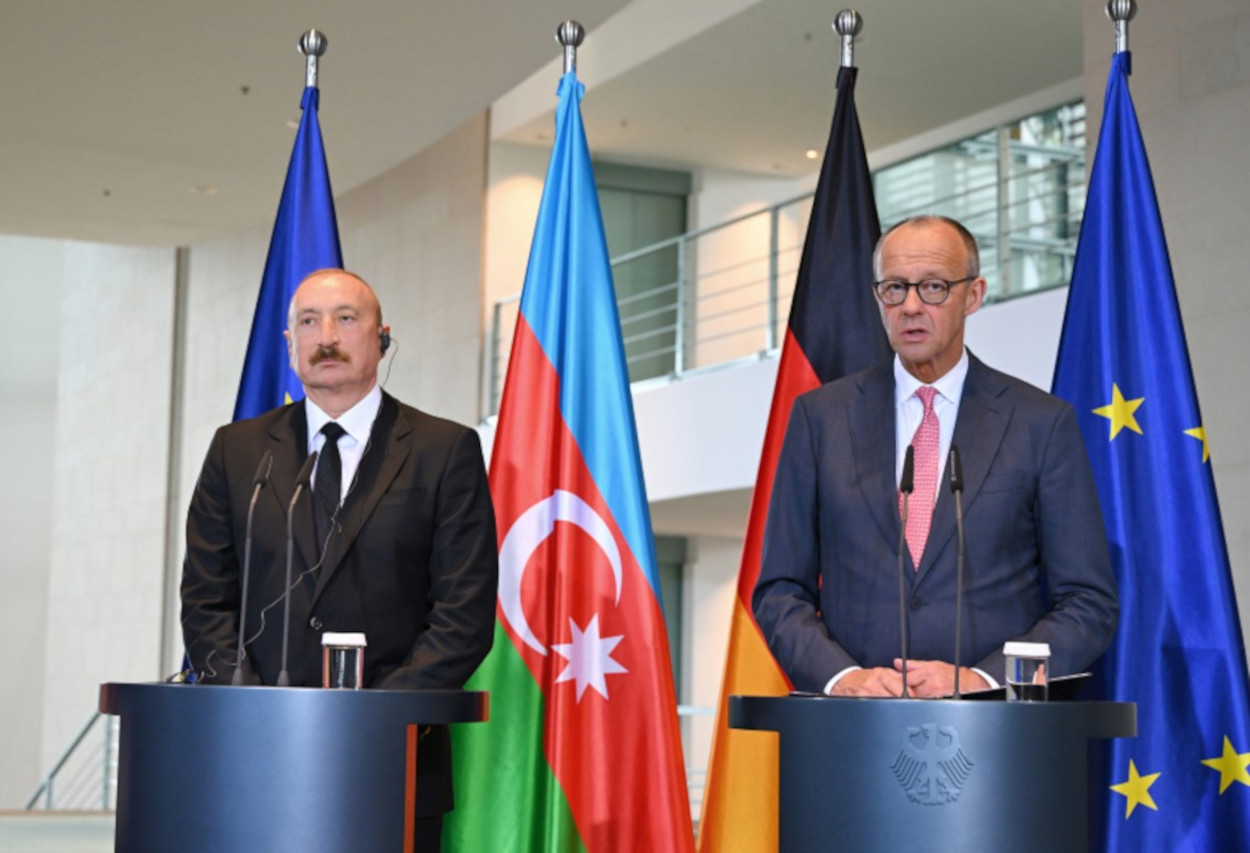
Azerbaijani President Ilham Aliyev and German Chancellor Friedrich Merz in Berlin, 21 July 2026. Photo: Azertag
Explore further

Germany declared a break with Russia—then licensed its nuclear giant

The ministry said it picked the site because the building is federally owned and the right size. It did not answer whether the proximity to the Russian House counts as a security risk.

Russia's shadow war has already reached Germany

Germany has become one of the busiest fronts in Russia's campaign of drone incursions, sabotage, and spying. By December, Germany had logged more than 1,000 suspicious drone flights in 2025 alone. The drones have swarmed both civilian airports and military sites, shutting Munich Airport over two days in October 2025 and stranding thousands of travelers. Analysts judge it highly likely that Russia flew some 144 surveillance drones over a dozen NATO countries between August 2024 and February 2026, including near Ramstein Air Base and NATO nuclear sites. In early August 2026, security staff found an explosives-laden drone beside a Ukrainian cargo plane at Leipzig-Halle airport, an incident Western intelligence tied to Moscow.

Ukrainian An-124 at Leipzig Airport in Germany. August 5 August, 2026. Photo: screenshot from Bild video
Explore further

A bomb-laden drone hit a Ukrainian An-124 in Germany, then lay unnoticed for hours

Much of the ground work runs through disposable agents recruited online. In March 2026, authorities arrested operatives who had surveilled the head of a Bavarian drone firm arming Ukraine, a case its domestic service treats as a planned assassination. Prosecutors separately charged three men over a plot to mail exploding parcels from Germany, described as a test run for future arson attacks.

  • ✇Euromaidan Press
  • Russia’s most-used map app is erasing a Baltic missile site that Western maps still show
    Russia's most-used mapping service has digitally hidden a military missile site near Finland by copying a fake forest over it on satellite imagery, Finnish public broadcaster Yle reported. Western map services still show the same position, and a Finnish military analyst called the concealment careless and self-defeating. The clumsy edit points to Moscow's growing fear of Ukrainian drones. Ukraine's drones now reach thousands of kilometers into Russia, striking refin
     

Russia’s most-used map app is erasing a Baltic missile site that Western maps still show

17 août 2026 à 07:51

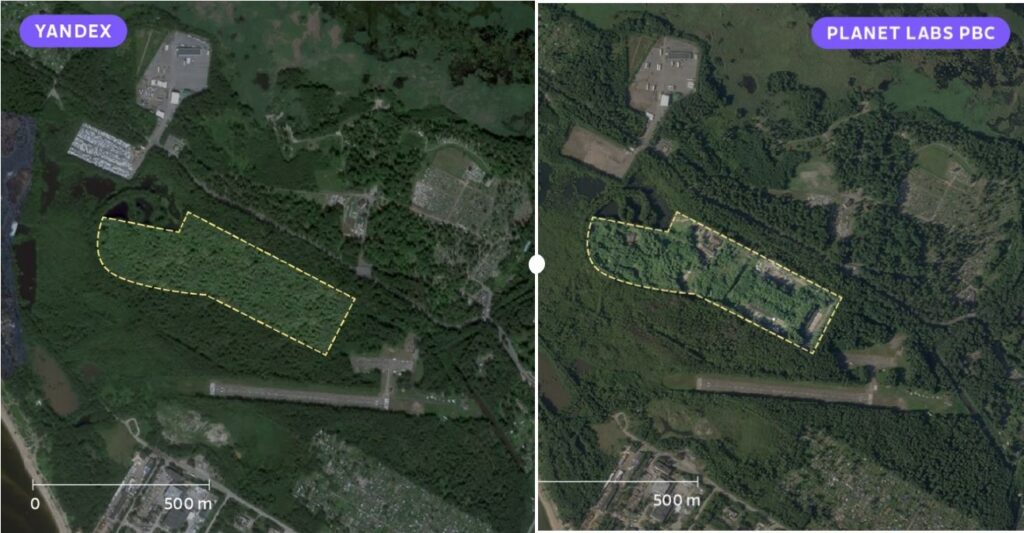
berlin weighs closing russian house spying yet federal ministry just moved beside · post left yandex maps right planet labs pbc imagery 4 2026 undated yle uses because societal significance

Russia's most-used mapping service has digitally hidden a military missile site near Finland by copying a fake forest over it on satellite imagery, Finnish public broadcaster Yle reported. Western map services still show the same position, and a Finnish military analyst called the concealment careless and self-defeating. The clumsy edit points to Moscow's growing fear of Ukrainian drones.

Ukraine's drones now reach thousands of kilometers into Russia, striking refineries, defense plants, and naval yards once thought safe. That expanding reach has upended Moscow's sense of a protected rear across the war.

What Yandex tried to erase

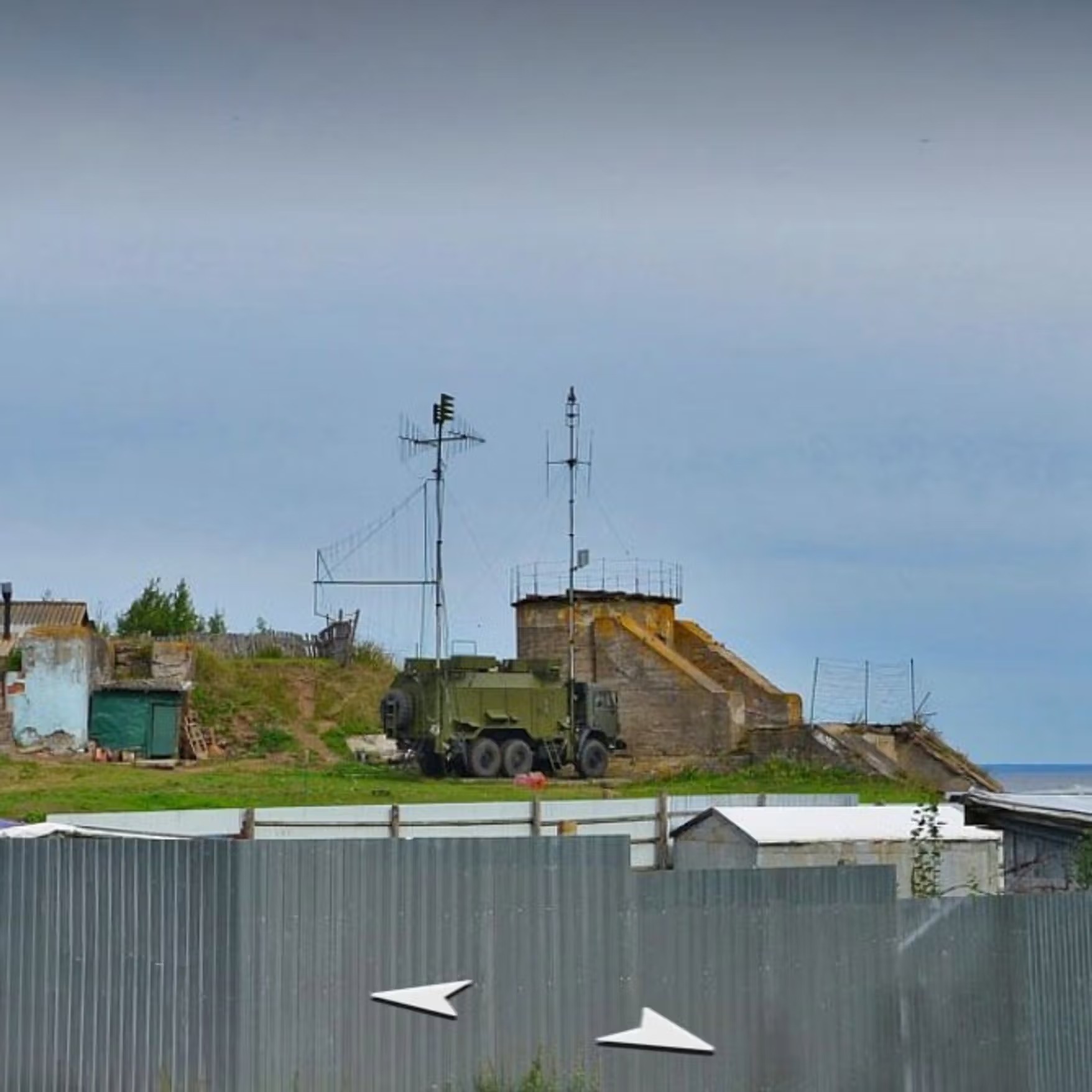
The concealed site sits beside the Kronstadt naval base, on Kotlin Island off St. Petersburg in the Gulf of Finland. Editing software copied trees from another image and laid them over the missile position. Until now, Russia mostly blurred sensitive locations rather than deleting them, but this edit tries to hide the target's existence outright. The same battery still appears on Google, Apple, and Microsoft satellite maps. In the covered zone, Russia has previously kept Bastion anti-ship missiles and their radar and reconnaissance systems.

berlin weighs closing russian house spying yet federal ministry just moved beside · post yandex's service electronic warfare base near kronstadt kuvakaappaus yandexin karttapalvelusta kronstadtin lähellä sijaitsevasta elektronisen sodankäynnin tukikohdasta
A screenshot from Yandex's map service showing an electronic warfare base near Kronstadt. Photo: Yandex

A cover-up that gives itself away

Marko Eklund, a military expert and former Finnish intelligence officer, called the secrecy pointless. Western and Ukrainian analysts read their own satellite images, not Yandex, so the edit protects nothing in practice. He believes an administrative order drove it, and that the work was done sloppily. Anyone who knows what to look for can spot the seams and repeating patterns. 

Ukrainian drones struck Russia's Baltic Fleet base at Kronstadt near St. Petersburg overnight, flying nearly 1,000 km. Source: Zelenskiy
Explore further

Kronstadt, Russia’s major naval Base after Black Sea Fleet losses, gets hit by Ukrainian drones (VIDEO)

A pattern set by Ukraine's drones

Russia's map cover-ups have tracked Ukraine's deep strikes. A Moscow court ordered Yandex to mask an oil refinery in Ryazan in 2024 after repeated Ukrainian strikes, and a Nordic-Baltic investigation later counted 119 blurred sites near Russia's northwestern border. Blurring shows up at once, while cloned forest hides the tampering itself.

Kronstadt gives Russia one of its main Baltic Fleet bases, and Ukraine's drones have already reached it. In early June, they set a Russian missile corvette ablaze in dry dock there.

  • ✇Euromaidan Press
  • Russia’s strikes across 10 Ukrainian regions kill at least eight in 24 hours
    Russian forces shelled and struck front-line and border regions across northern, eastern, and southern Ukraine over the past 24 hours, killing at least eight civilians and wounding more than 40, regional authorities reported on 17 August. Sumy, Donetsk, Kherson, and Zaporizhzhia oblasts reported deaths, while people were wounded in Kharkiv, Kherson, Dnipropetrovsk, Chernihiv, and Odesa Oblasts. Russia's daily strikes have hit populated areas and civilian infrastr
     

Russia’s strikes across 10 Ukrainian regions kill at least eight in 24 hours

17 août 2026 à 07:04

least eight people were killed dozens more wounded russia strikes 10 ukrainian regions over 24 hours · post fire chernihiv oblast broke out result russian shelling 17 2026 chernihiv_16_08 ukraine

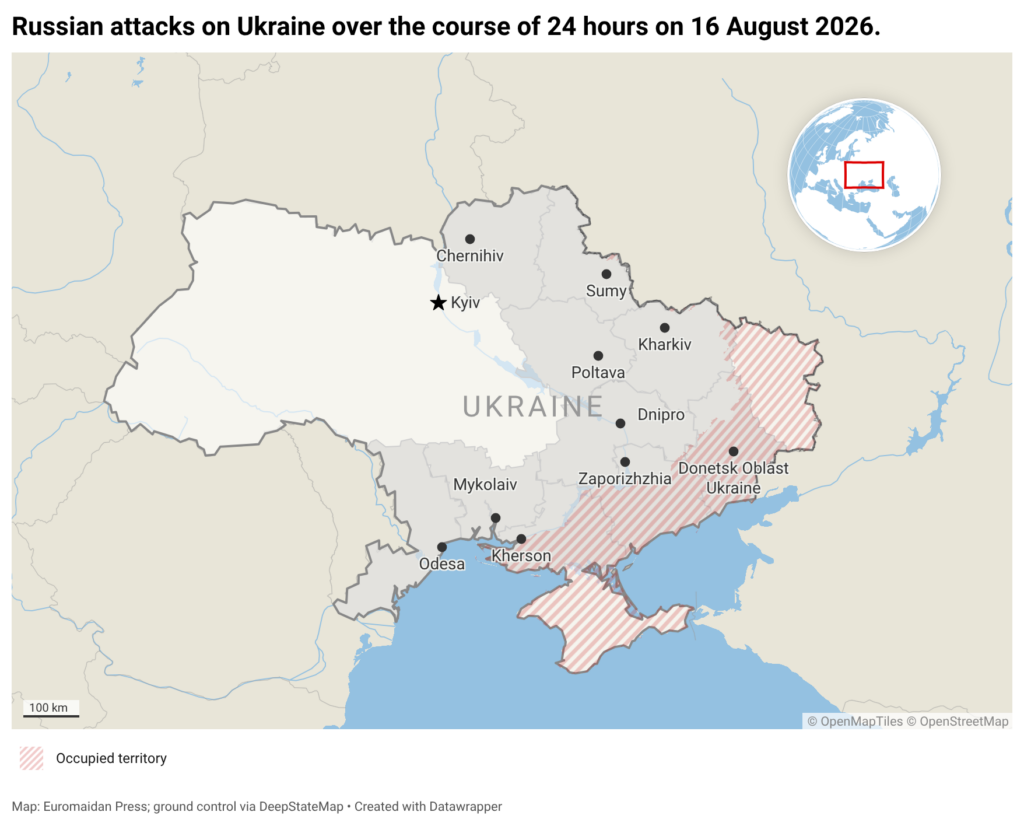
Russian forces shelled and struck front-line and border regions across northern, eastern, and southern Ukraine over the past 24 hours, killing at least eight civilians and wounding more than 40, regional authorities reported on 17 August. Sumy, Donetsk, Kherson, and Zaporizhzhia oblasts reported deaths, while people were wounded in Kharkiv, Kherson, Dnipropetrovsk, Chernihiv, and Odesa Oblasts.

Russia's daily strikes have hit populated areas and civilian infrastructure both near the front line and far behind it. President Volodymyr Zelenskyy said that 13 regions had come under attack over the past week, with more than 1,550 attack drones, nearly 1,560 guided aerial bombs, and 62 missiles, most of them ballistic, launched at Ukraine.

Map: Euromaidan Press

North: FPV drone attacks firefighters’ vehicle

In Sumy Oblast, Russian forces carried out more than 50 strikes on 24 settlements across 11 communities. A drone strike in the Sumy community killed a 75-year-old man and a 72-year-old woman and wounded another civilian, the Sumy military administration said. It also said two more people were wounded in the Seredyna-Buda community. A mass drone attack on Sumy caused large fires and wounded at least one person, Sumy city military administration head Serhii Kryvosheienko said.

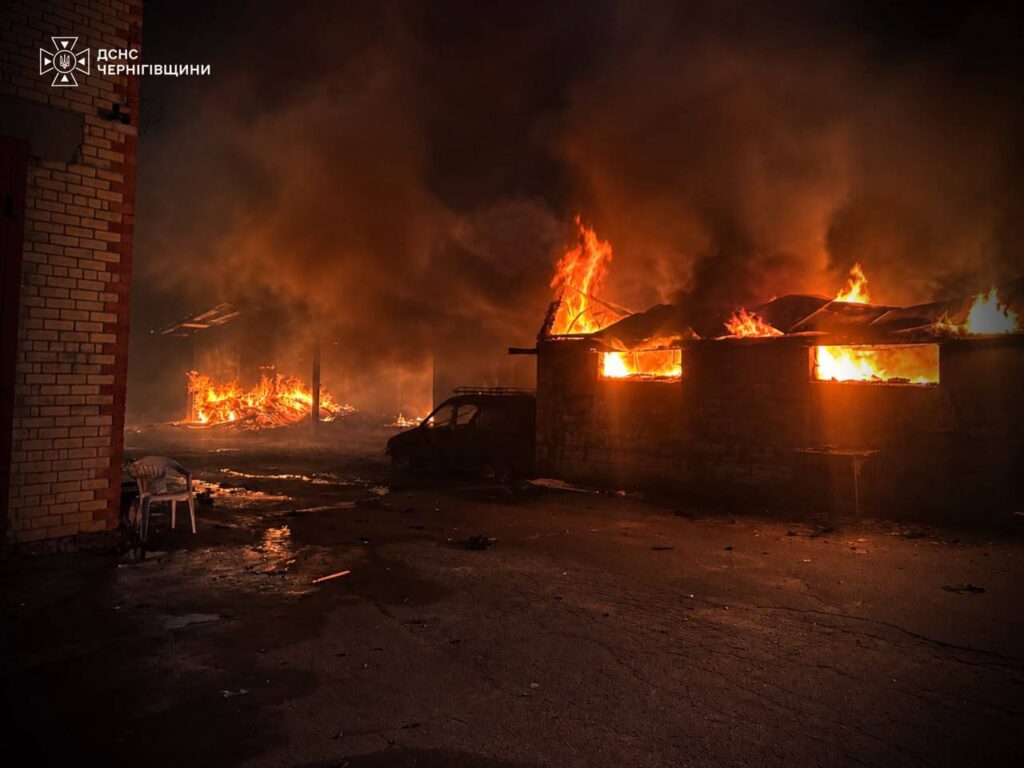
In Chernihiv Oblast, a 41-year-old man was wounded in a Geran drone strike on the Kozelets community, Head of the Regional Military Administration Viacheslav Chaus said. He added that Gerbera drones destroyed a hangar and farm equipment in the Kholmy community. In a border village in the Horodnia community, an FPV drone struck a yard, and a second FPV drone hit a firefighters' vehicle that had arrived at the scene. A house later caught fire. A critical infrastructure facility was also hit.

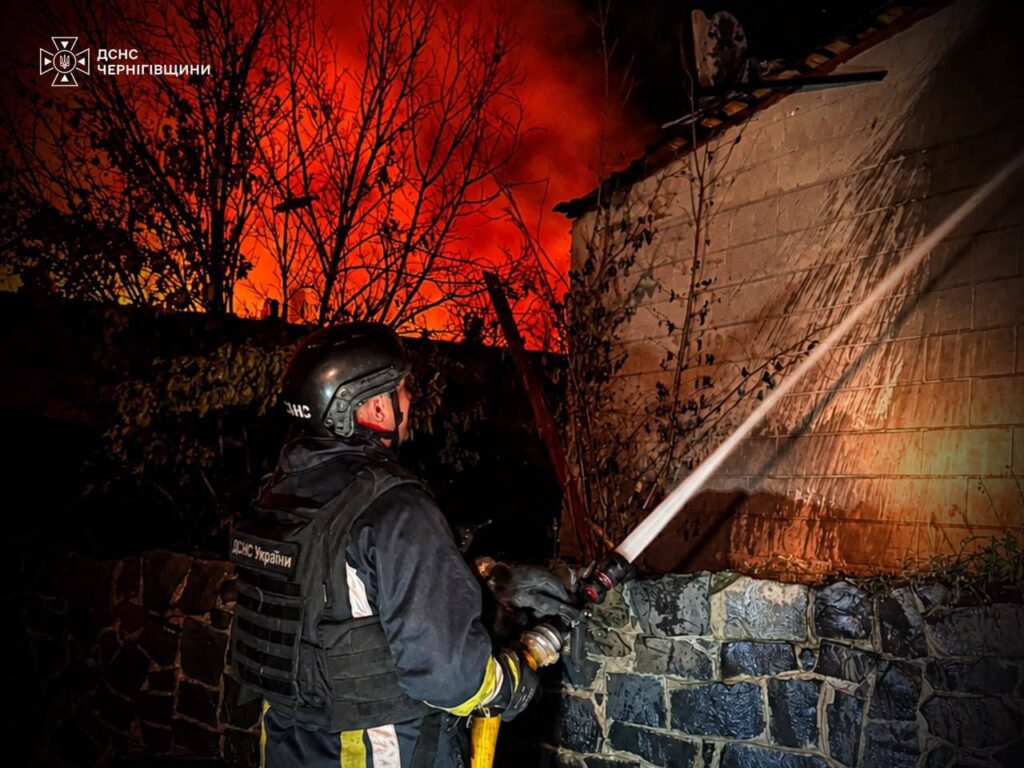
Firefighters put out a fire in Chernihiv Oblast that broke out as a result of Russian shelling. Approximately, morning of 17 August. Photo: Chernihiv Oblast State Emergency Service

In Kharkiv Oblast, six people were wounded in strikes on Kharkiv and nine other settlements. The heaviest damage was reported in Izium, where 19 houses and four apartment blocks were damaged, head of the Regional Military Administration Oleh Syniehubov said.

East: Russian strikes destroy 30 stalls

In Donetsk Oblast, Russian forces killed two residents of Kramatorsk and wounded 18 people across the region, Head of the Regional Military Administration Vadym Filashkin said. In Sloviansk, round-the-clock strikes damaged critical infrastructure and destroyed 30 stalls at the Lisnyi market, Sloviansk City Military Administration Head Vadym Liakh said.

Consequences of Russian strikes on Sloviansk on 16 August and overnight into 17 August. Photo: Vadym Liakh


In Poltava Oblast, two industrial facilities were hit, causing fires, and drones also attacked another industrial facility in Myrhorod district, Head of the Regional Military Administration Vitalii Diakivnych said. No casualties were reported.

In Dnipropetrovsk Oblast, Russian forces attacked four districts nearly 20 times from the evening of 16 August, wounding five people, Head of the Regional Military Administration Oleksandr Hanzha said. He added that houses and outbuildings caught fire in Pavlohrad and Nikopol district.

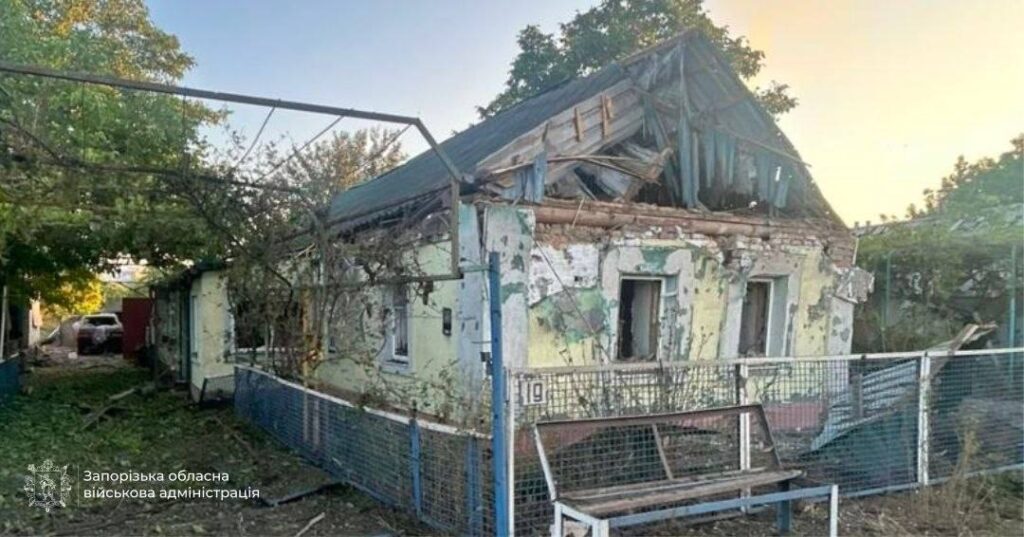
In Zaporizhzhia district, two people were killed and three wounded, Head of the Regional Military Administration Ivan Fedorov said. He also reported 1,217 strikes on 60 settlements across the oblast, including 20 air strikes, about 846 drone attacks, and 350 artillery strikes.

Consequences of Russian strikes on Zaporizhzhia Oblast on 16 August. Photo: Zaporizhzhia Regional Military Administration

South: strike damages civilian vessel flying the flag of Togo

In Odesa Oblast, a night-time strike on port infrastructure damaged a civilian vessel flying the flag of Togo and wounded four people, one of them seriously, Head of the Regional Military Administration Oleh Kiper said.

In Kherson Oblast, in the early morning, Russian forces killed two residents of the village of Novokayiry in the Mylivska community, – Head of the Kherson Regional State Administration Oleksandr Prokhudin said. Also russian forces attacked 52 settlements, including the regional capital. Six people were wounded, while 11 apartment blocks and 15 private houses were damaged, Prokudin said.

In Mykolaiv Oblast, Russia attacked with Shahed and Gerbera drones, but no casualties were reported, acting Head of the Regional Military Administration Heorhii Reshetilov said. He added that the roof of an agricultural enterprise building was damaged in the Horokhivska community.

  • ✇Euromaidan Press
  • Russia struck Ukraine’s gas producer 13 times in a single week, forcing some wells offline
    Russia struck facilities of Ukraine's state-owned Naftogaz Group 13 times over the past week, hitting several regions with drones and missiles, the company reported on 17 August. Gas extraction infrastructure was among the targets, and one asset was hit several times. Naftogaz said the strikes seriously damaged equipment and production capacity and cut part of its output. No employees were injured this time. The strikes are part of a systematic Russian drone and missile
     

Russia struck Ukraine’s gas producer 13 times in a single week, forcing some wells offline

17 août 2026 à 06:08

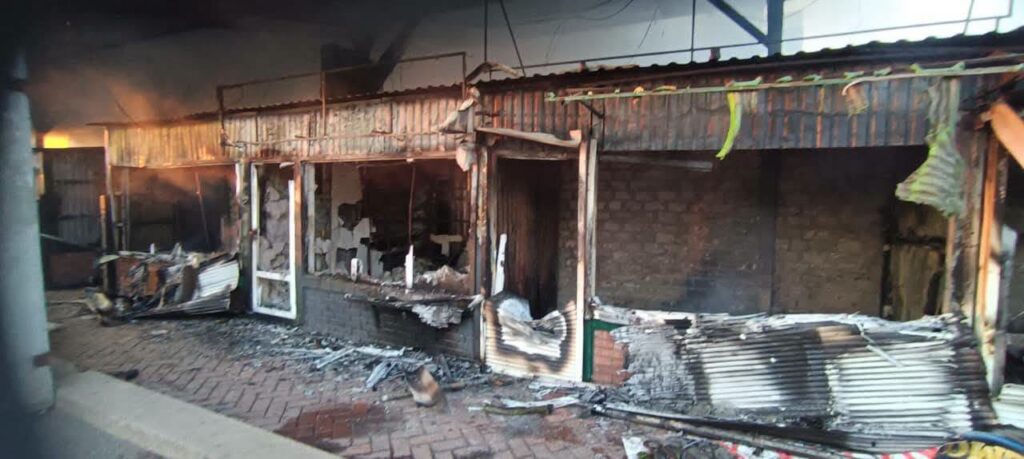
Firefighter attending to a blaze following a Russian attack on Ukraine's energy infrastructure.

Russia struck facilities of Ukraine's state-owned Naftogaz Group 13 times over the past week, hitting several regions with drones and missiles, the company reported on 17 August. Gas extraction infrastructure was among the targets, and one asset was hit several times. Naftogaz said the strikes seriously damaged equipment and production capacity and cut part of its output. No employees were injured this time.

The strikes are part of a systematic Russian drone and missile campaign against Ukraine's oil and gas production, intensifying as winter approaches. Naftogaz has now counted 293 strikes on its facilities since the start of 2026.

Acting Naftogaz CEO Serhii Fedorenko has said the strikes are meant to inflict maximum damage on Ukraine's infrastructure ahead of the heating season. The company said Russian attacks destroyed 37 sites in its network during the first seven months of 2026, 32 Ukrnafta filling stations and five Ukrhazvydobuvannia complexes.

The strikes carry a human cost too: EP has reported 312 workers killed across the group since 2022. In what Naftogaz called its largest strike on gas production infrastructure, Russia fired 35 missiles and 60 drones at facilities in the Kharkiv and Poltava regions in October 2025.

Russia's long war on Ukraine's energy grid

Russia has bombed Ukraine's power and heating systems through every winter of its full-scale invasion. Each year the strikes have grown heavier. Then-Energy Minister Denys Shmyhal said last winter's attacks damaged or destroyed roughly 80% of Ukraine's energy system. Across 2025, Russia hit energy sites more than 600 times, damaging all 15 of the country's thermal plants. The strikes have forced repeated nationwide blackouts and cut heat to homes in sub-zero cold.

That previous campaign failed to collapse the grid, so Moscow now eyes Ukraine's water systems as its next winter target. Heading into the coming winter, Ukraine received about three times fewer air-defense missiles in the first half of 2026 than a year earlier. Kyiv is answering with its own deep strikes on Russian refineries and military plants. For civilians, the pattern means another winter of cold homes, rationed power, and threatened water supplies.

  • ✇Euromaidan Press
  • Man and woman attacked two children for speaking Ukrainian, Gdańsk consulate says
    Two adults allegedly attacked a 14-year-old Ukrainian girl and her 12-year-old brother after hearing them speak Ukrainian, Ukraine’s Consulate General in Gdańsk said. The attack occurred on 14 August 2026 in a park near a railway station in Bydgoszcz, north-central Poland. The case comes amid a documented rise in anti-Ukrainian violence in Poland, with recent attacks reported throughout the country. Recent incidents include attacks on Ukrainians in Poznań and Wrocław, a
     

Man and woman attacked two children for speaking Ukrainian, Gdańsk consulate says

17 août 2026 à 05:24

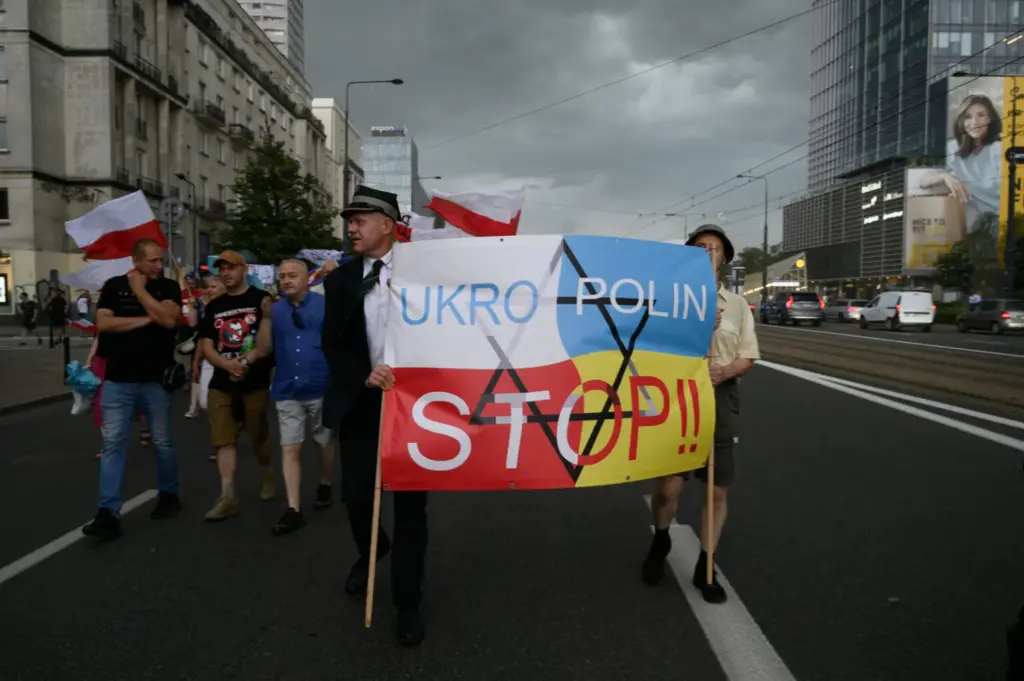
Demonstrators carrying Polish flags march behind a banner in Polish and Ukrainian colors reading “UKRO POLIN STOP!!” with a crossed-out Star of David.

Two adults allegedly attacked a 14-year-old Ukrainian girl and her 12-year-old brother after hearing them speak Ukrainian, Ukraine’s Consulate General in Gdańsk said. The attack occurred on 14 August 2026 in a park near a railway station in Bydgoszcz, north-central Poland.

The case comes amid a documented rise in anti-Ukrainian violence in Poland, with recent attacks reported throughout the country. Recent incidents include attacks on Ukrainians in Poznań and Wrocław, as well as on people mistaken for Ukrainians or defending them. Police data obtained by the Polish newspaper Rzeczpospolita showed 180 hate-crime reports involving Ukrainian citizens in the first half of 2026, over 30% more than a year earlier.

The pair, a man and woman with a small dog, shouted obscenities and made nationality-based threats, the consulate said.

They twisted a child’s arm, broke a toy drone, and threw fragments at the boy,” the Ukrainian consulate said, adding that the fragments scratched him.

The consulate said a complaint had been filed, police were searching for the pair, and the children were physically safe but severely stressed. It urged witnesses to contact the police. Polish police had not commented by the time of publication.

Other attacks on Ukrainians in Poland

The attack on the children came amid a string of assaults on Ukrainians across Polish cities.

Shortly after midnight on 13 August 2026, an intoxicated woman insulted two Ukrainian men, spat at one, and struck one of them outside a restaurant in Poznań, according to Polish media. Police detained her and another woman the following day.

In July, three men allegedly beat a young Ukrainian couple in Wrocław after first asking whether they were Ukrainian. Police detained two suspects and continued searching for the third.

That month, a man in Łódź attacked a passerby he supposedly mistook for a Ukrainian, breaking his nose and jaw. Three men also reportedly beat a 60-year-old Pole who intervened when they harassed a Ukrainian teenager on a Poznań tram.

The deepening Polish-Ukrainian rift and decline in relations

The attacks coincide with a broader decline in Polish-Ukrainian relations. Polish support for accepting Ukrainian refugees fell from 94% in March 2022 to 48% by early 2026, while politicians increasingly use Ukraine as a wedge issue.

Much of the fallout stems from disputes over the Volhynia massacres—the 1943–44 mass killings of Polish civilians by the Ukrainian Insurgent Army (UPA) and Polish retaliatory violence against Ukrainian civilians.

The dispute escalated after President Volodymyr Zelenskyy signed a 26 May decree granting a Ukrainian special forces unit the honorary title “Heroes of the UPA.” Polish President Karol Nawrocki responded on 19 June by stripping Zelenskyy of the Order of the White Eagle, Poland's highest state honor.

  • ✇Euromaidan Press
  • Japan tracks four Russian missile boats passing close to its coast off Hokkaido
    Japan's Self-Defense Forces shadowed four Russian missile boats as they passed close to the country's northern coast, the Japanese Joint Staff reported. The warships never entered Japanese waters, yet the move sharpened a diplomatic standoff over islands Russia seized in 1945. Tokyo lodged a protest and summoned Russia's ambassador. Russia keeps testing neighbors far from the Ukrainian front, using warships and leader visits to press claims it took by force decades
     

Japan tracks four Russian missile boats passing close to its coast off Hokkaido

17 août 2026 à 04:06

japan tracks four russian missile boats passing close its coast off hokkaido · post tarantul iii detected near japan's territorial waters 14 2026 російські ракетні катери виявлені поблизу територіальних вод

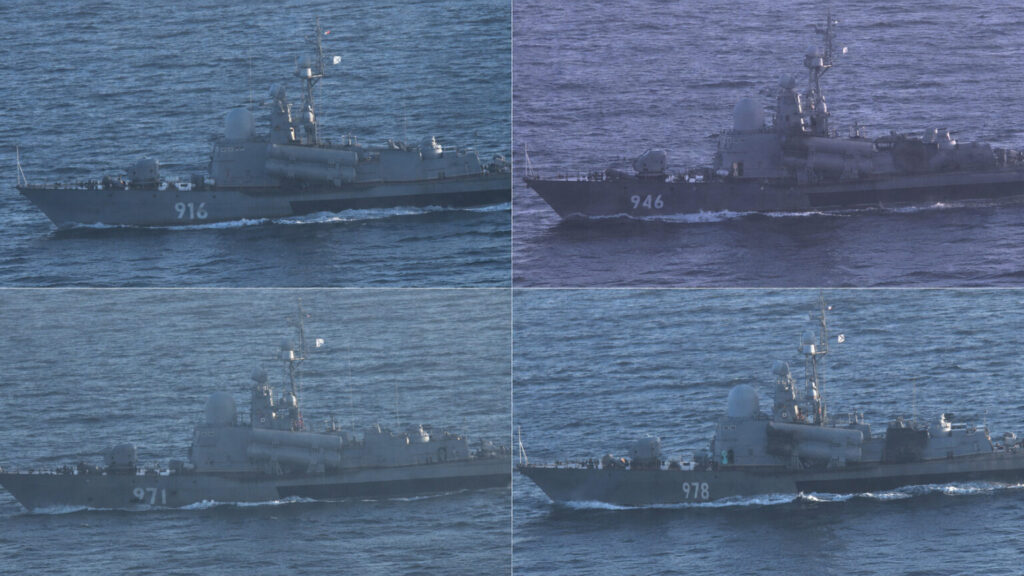
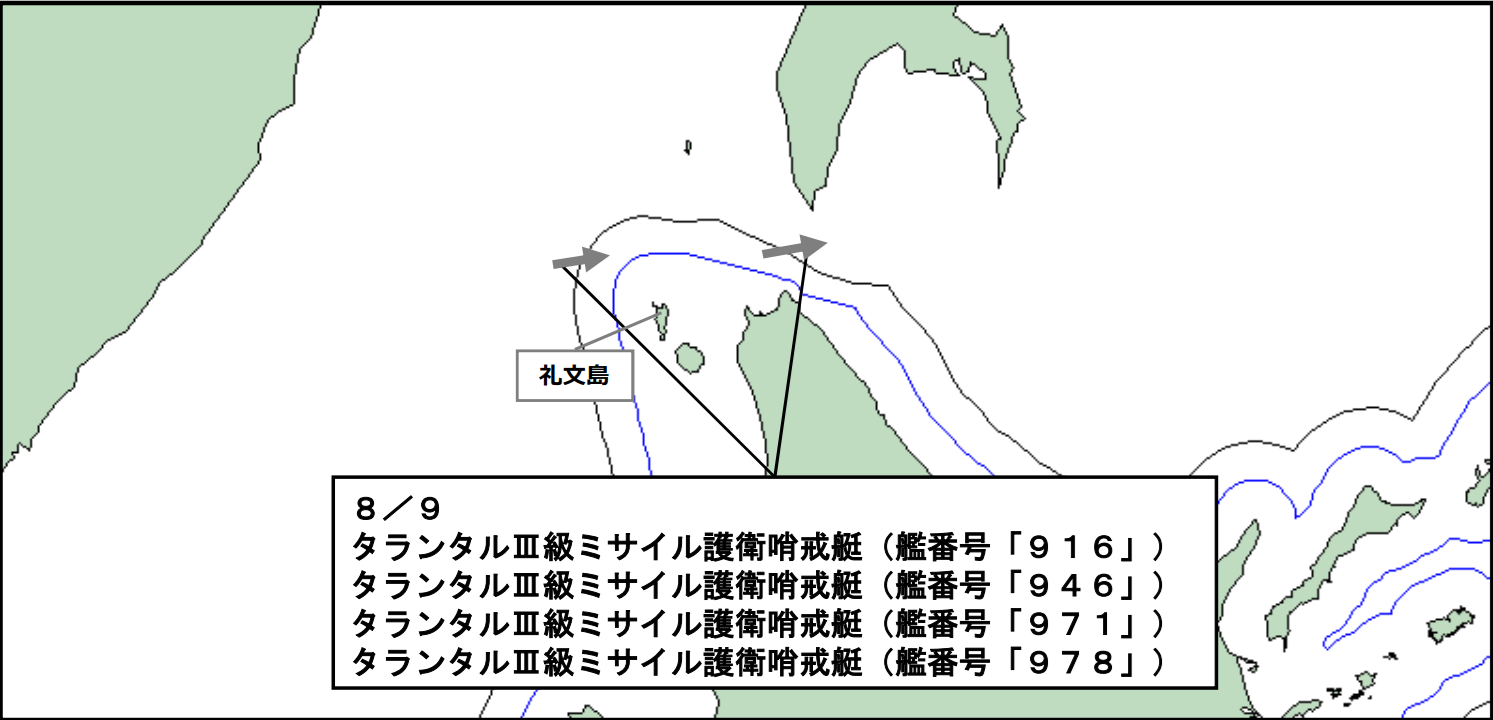
Japan's Self-Defense Forces shadowed four Russian missile boats as they passed close to the country's northern coast, the Japanese Joint Staff reported. The warships never entered Japanese waters, yet the move sharpened a diplomatic standoff over islands Russia seized in 1945. Tokyo lodged a protest and summoned Russia's ambassador.

Russia keeps testing neighbors far from the Ukrainian front, using warships and leader visits to press claims it took by force decades ago. Kyiv, itself fighting Russian occupation, has formally recognized the northern islands as occupied land and backed Tokyo's case.

Japan tracked the warships back through the strait

On 14 August, Japan's Maritime Self-Defense Force spotted the four boats near Cape Soya on Hokkaido, heading west. A P-3C patrol aircraft from the 2nd Air Wing watched them and gathered information. The boats stayed 40 kilometers from shore and did not cross into Japanese waters.

The vessels carried hull numbers 916, 946, 971, and 978. Japan had spotted the same four ships on 9 August, 70 kilometers northwest of Rebun Island. They then passed east through the Soya Strait before doubling back.

japan tracks four russian missile boats passing close its coast off hokkaido · post passage near japan's territorial waters 9 2026 проходження російських ракетних катерів поблизу територіальних вод японії 09082026
Map showing the passage of four Russian missile boats near Japan's territorial waters, 9 August 2026. Map: Japan's Defense Ministry

The transit followed Putin's trip to a contested island

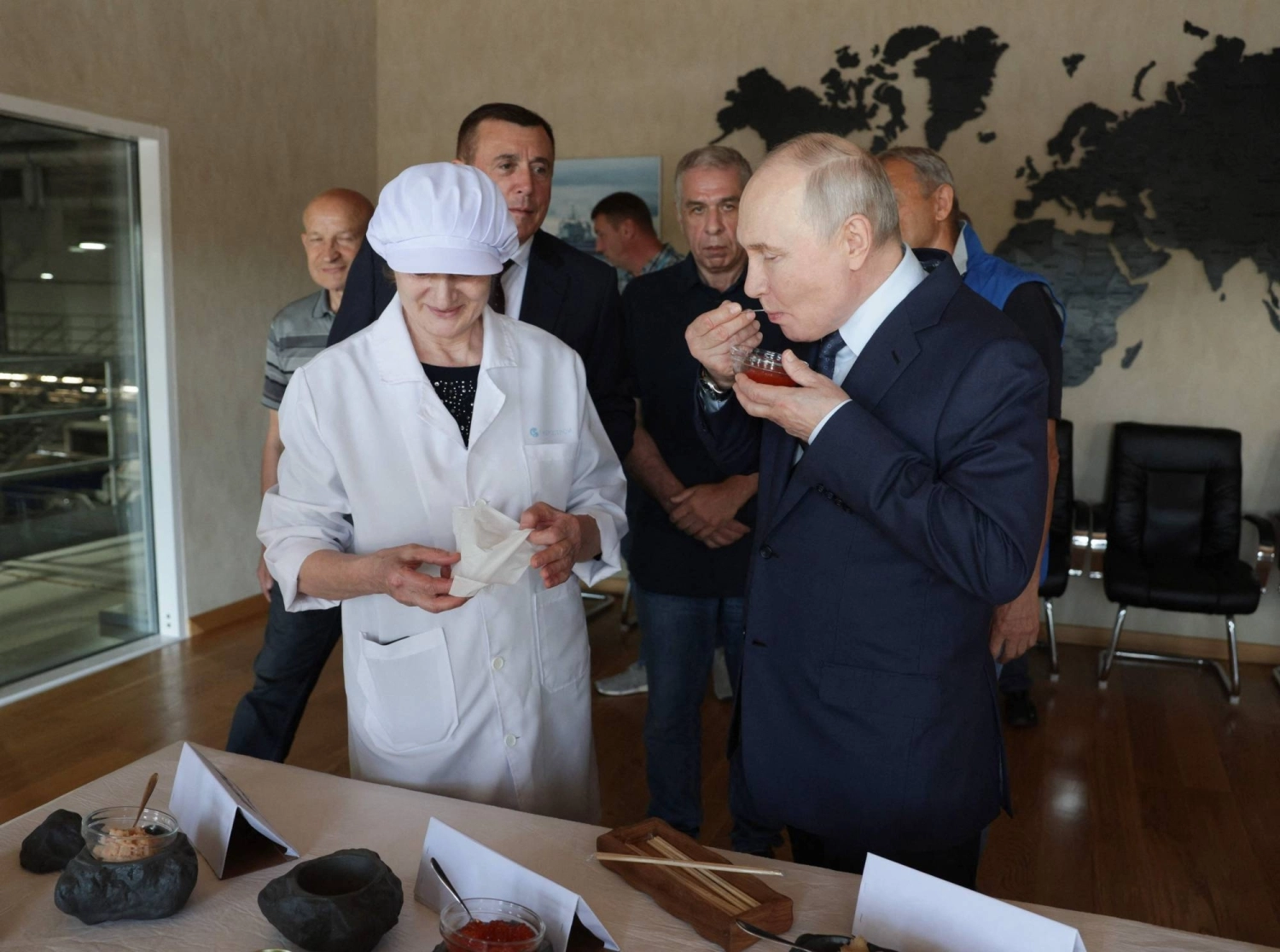
The return passage came days after Vladimir Putin visited Iturup—one of the Kuril Islands—on 13 August. The Soviet Union seized the island in 1945, breaking a neutrality pact it had signed with Japan. Moscow treats the Kuril archipelago as strategically vital and keeps building up forces there. Iturup hosts the Burevestnik military airfield.

Japanese Prime Minister Sanae Takaichi called Putin's trip absolutely unacceptable. She said it contradicts Tokyo's stance on the Northern Territories, as Japan calls the islands. Japan's Foreign Ministry summoned Russia's ambassador, Nikolai Nozdrev, and lodged a firm protest. It asked him to pass Tokyo's position to Moscow at once.

Vladimir Putin visits Etorofu island,
Explore further

Japan weighs sanctions after Putin’s first visit to disputed Kuril Islands

What the Molniya-1 missile boats carry

Militarnyi noted that the project 12411M Molniya-1 boats, which NATO calls Tarantul III, come from the Almaz Central Marine Design Bureau. The first entered service in 1981.

They are built to hit surface targets in coastal and near-sea zones. Their main upgrade over earlier versions was four supersonic Moskit anti-ship missiles, replacing the older Termit.

Each boat can reach 41 knots and carries a crew of 40. Its weapons include a 76mm gun, two rapid-fire 30mm mounts, and Igla-1 air-defense missiles.

The four belong to Russia's Pacific Fleet. The oldest, hull 971, entered service in 1990, and the newest, hull 916, in 2003.

A Russian drone knocked out an evacuation robot, so a Ukrainian commander drove into the kill zone in a pickup to save two wounded soldiers

17 août 2026 à 03:34

Vladyslav Polskyi carries out two wounded soldiers, August 2026. Screenshot from video: Joint Forces Group

A Russian drone knocked out the robot sent to evacuate two wounded Ukrainian assault troops. Their company commander went in himself. He drove into the kill zone in an unarmored pickup truck, without body armor, and carried them out.

The Joint Forces Group released the footage on 16 August 2026. It identified the commander as Vladyslav Polskyi of the 475th Separate Assault Regiment (Code 9.2).

The two soldiers had captured Russian positions and were pulling back when Russian Molniya drones hit them, the group said. Both were seriously wounded and could not move on their own. A ground robot was sent to pull them out. A second drone hit it, and it stopped in the open, leaving the men exposed.

A company commander just drove straight into drone fire to save his men with no body and no hesitation

Vladyslav Polskyi from an assault company of the 475th "Code 9.2" regiment saw that his soldiers were hit by Russia's "Molniya" drones, and a robotic evacuation platform sent… pic.twitter.com/ib6B6TbgQD

— Euromaidan Press (@EuromaidanPress) August 16, 2026

The group framed the rescue as the reason the regiment's soldiers take on the hardest assaults when others hold back: they know their commanders do not hide behind them, and will give everything to save every one of their men.

In June, Ukrainian ground robots ran nearly 17,000 supply and evacuation runs, taking on the exposed trips that used to get crews killed. Ukraine now fields some 25,000 combat robots. Their main limit, a presidential adviser says, is not hardware but staying connected under jamming, and a new Ukrainian antenna is meant to help. But no antenna stops what happened here. A drone hit the evacuation robot and knocked it out.

When the robot failed, the risk it was built to absorb fell back on the commander.

Russia’s new drone outruns old Shahed by four times and tracks its target in real time. Its own heat is what lets Ukraine track it back

17 août 2026 à 01:50

Geran-3 jet-powered Russian attack drone.

Russia built a quicker Shahed because Ukraine was good at shooting down the old one, and the new version has weaknesses of its own. The jet-powered Geran-3 outpaces its predecessor but is easier to detect on radar and vulnerable to shoulder-fired missiles, Colonel Artem Skurativskyi of the 7th Rapid Response Corps' air-defense directorate said in an interview with ArmyInform.

Ukraine's combined air defenses raised the interception rate of Geran-2 and Shahed-136 drones to between 80 and 93%, depending on the scale of the attack, and that success is what pushed Russia to develop the jet version.

The jet Shahed outruns the defenses

Speed is the jet model's main advantage.

"Unlike its predecessor with piston engines, the jet modification has a higher flight speed, which significantly complicates air defense's task of destroying them, and also lets them cover large distances much faster," Skurativskyi explained.

The numbers are stark. The Geran-3 can fly from the Belarusian border to Kyiv in 35 minutes, four times faster than the previous version, and its optical-electronic camera module lets an operator guide the loitering munition online, the colonel noted.

Its size and heat are the Achilles' heel

The jet drone's advantages come with real weaknesses. Its large size, a body 3.5 meters long with a 3-meter wingspan, lets radar systems detect it easily over Ukraine, the colonel noted, and its engine gives it away in the thermal band.

That "powerful radiation in the thermal range makes them vulnerable to MANPADS," he added, so the same jet engine that gives the drone its speed also makes it a bright heat target for shoulder-fired missiles.

Russia uses it sparingly, for now

Still, the jet Shahed is not replacing the old one yet. Jet Geran-3 drones make up to 20% of the Shaheds Russia launches, with most strikes still using the Geran-2, the colonel said, though he pointed out that the rising share "indicates a scaling-up of production capacity." Russia sends the jet version against critical infrastructure, energy, and military targets in eastern, southern, and central Ukraine, both hunting targets with the camera module and folding them into massed strikes to overload air defenses.

Ukraine is still adapting.

"Mobile fire groups, which performed excellently in downing Shaheds, are of little effect against the jet modifications because of their high speed," Skurativskyi said.

Even so, he confirmed, troops of the 81st Air Assault Brigade are already downing jet Shaheds with interceptors.

❌