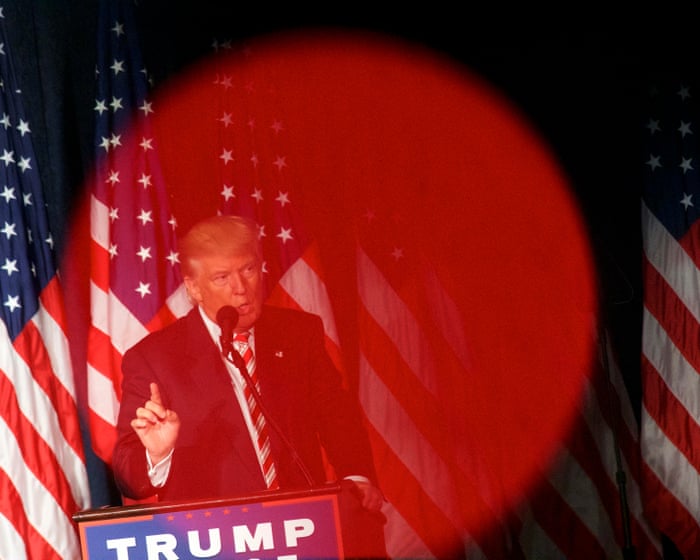
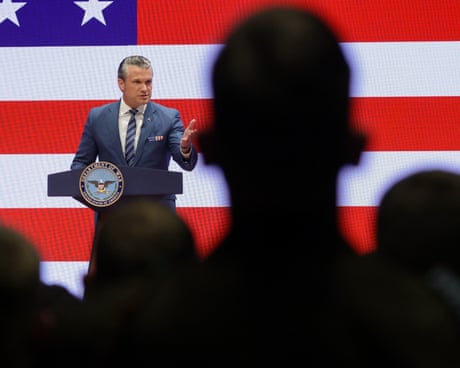
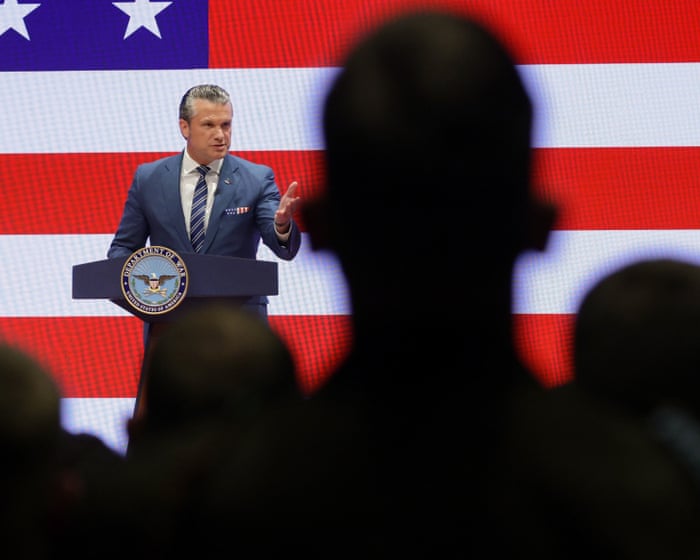
Nidal Hasan sentenced to death by military jury in 2013 for carrying out deadly shooting attack at army base in TexasDonald Trump has approved the execution by US army firing squad of Nidal Hasan, who was sentenced to death for killing 13 people at Fort Hood in 2009, chief Pentagon spokesperson Sean Parnell said in a social media post.Hasan, who was an army psychiatrist, would become the first US soldier to be executed by the US military in more than 60 years. Continue reading...
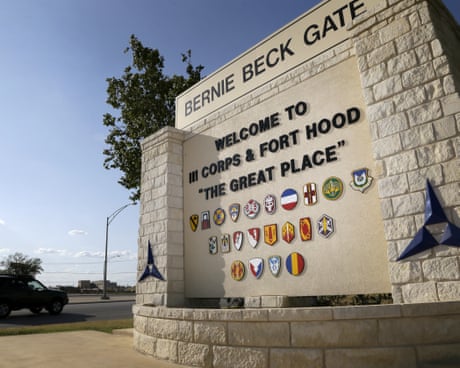
Nidal Hasan sentenced to death by military jury in 2013 for carrying out deadly shooting attack at army base in Texas
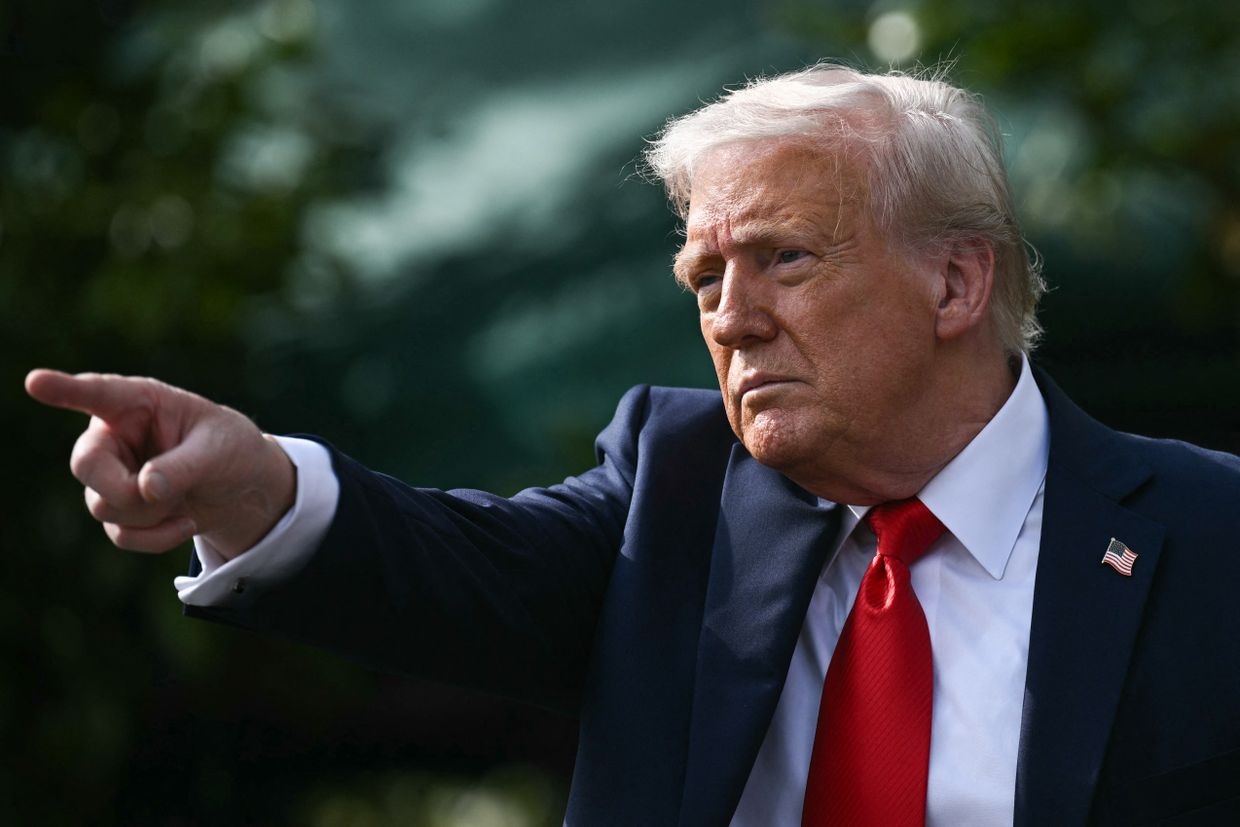
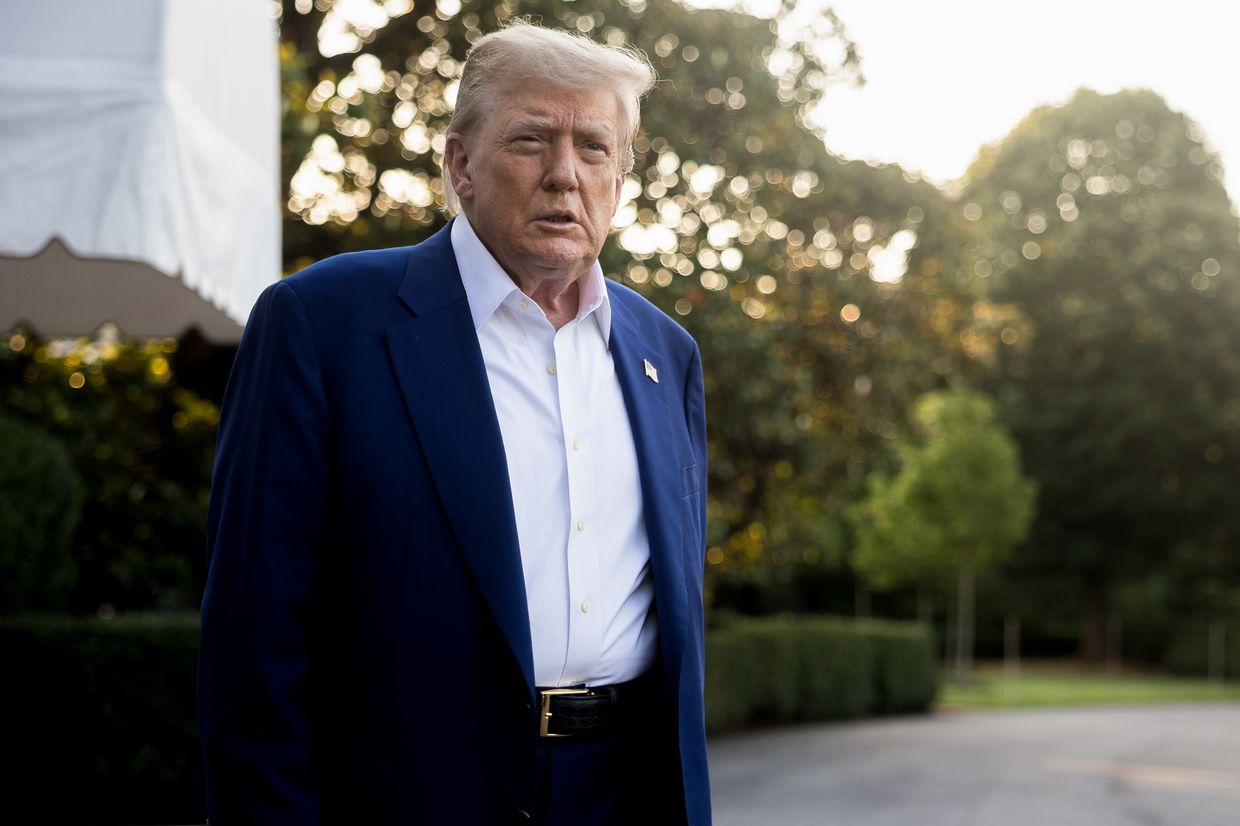
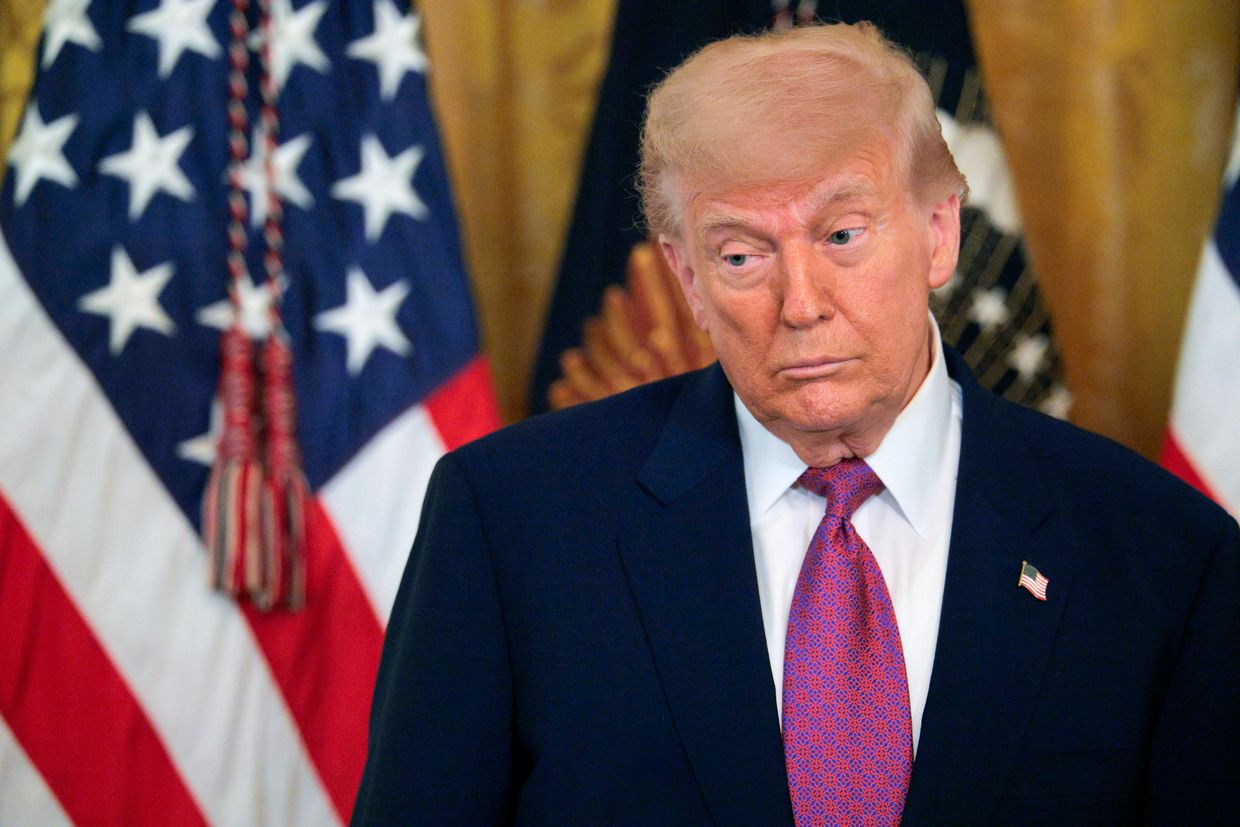
Donald Trump has approved the execution by US army firing squad of Nidal Hasan, who was sentenced to death for killing 13 people at Fort Hood in 2009, chief Pentagon spokesperson Sean Parnell said in a social media post.
Hasan, who was an army psychiatrist, would become the first US soldier to be executed by the US military in more than 60 years.
President’s U-turn comes after Democrats and Republicans condemned use of tax dollars for pro-Trump adsDonald Trump said on Monday he would pay for taxpayer-funded, pro-Trump ads “with money I raised for MAGA, Inc.”, a political action committee, after the television advertisements glorifying himself sparked a major backlash.In a social media post, Trump characterized the ads, which cost at least $1.5m in federal funds, as “a positive promotion for our Great U.S.A.” and called them “a rather sta
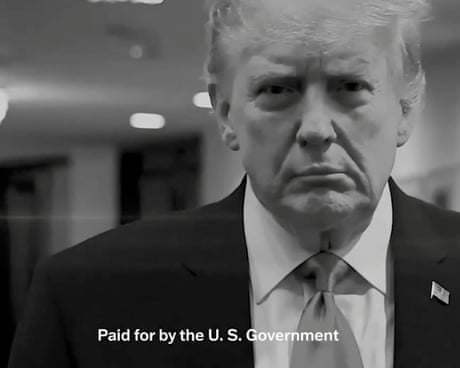
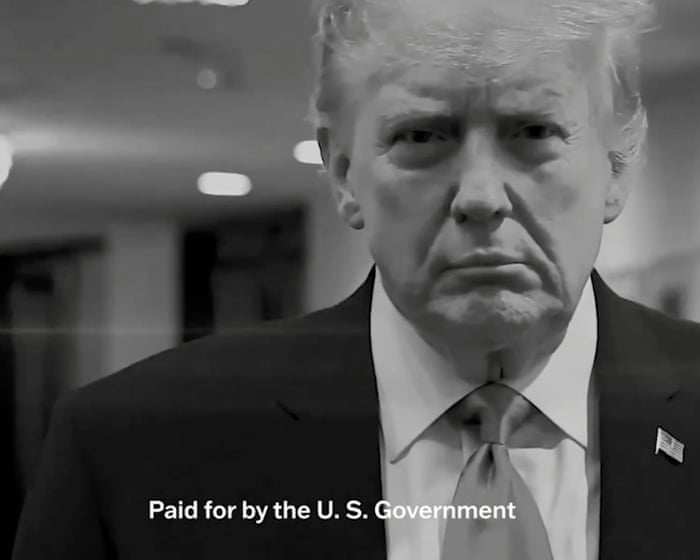
President’s U-turn comes after Democrats and Republicans condemned use of tax dollars for pro-Trump ads
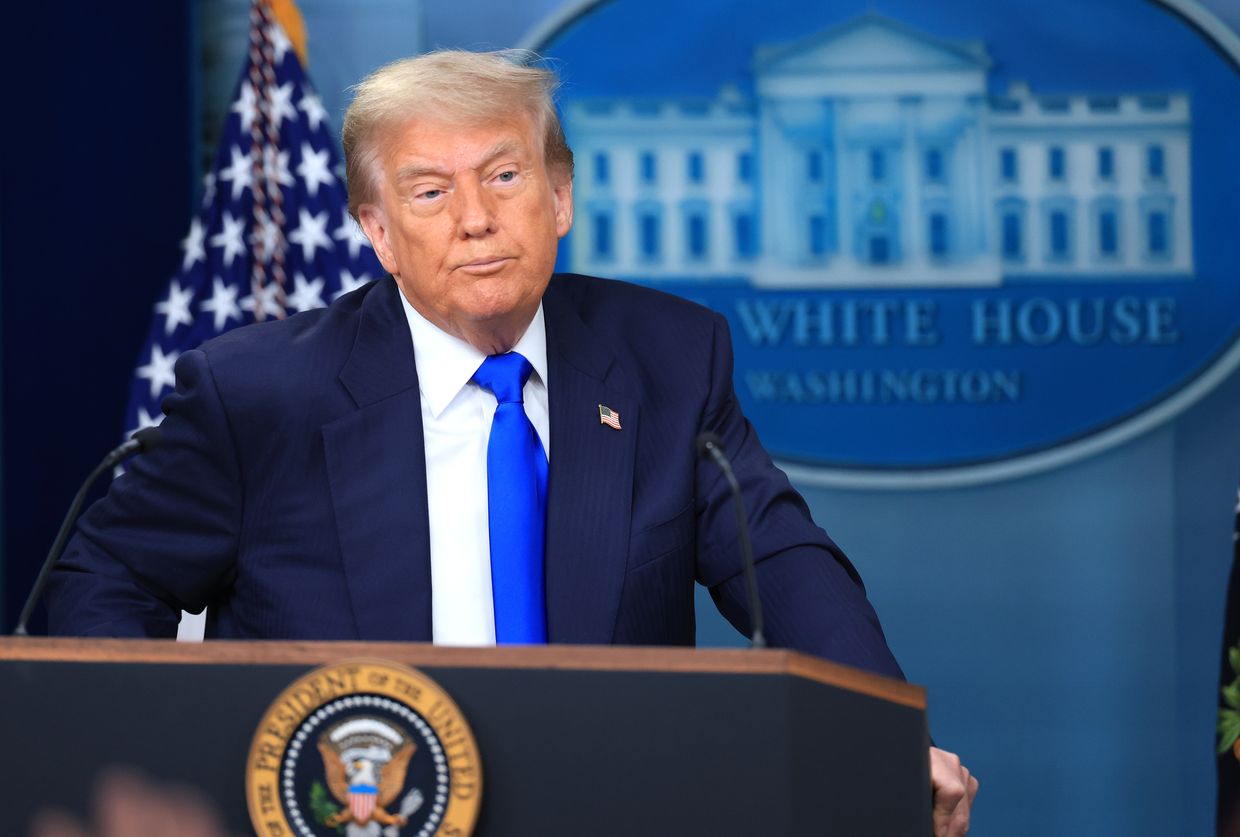
Donald Trump said on Monday he would pay for taxpayer-funded, pro-Trump ads “with money I raised for MAGA, Inc.”, a political action committee, after the television advertisements glorifying himself sparked a major backlash.
In a social media post, Trump characterized the ads, which cost at least $1.5m in federal funds, as “a positive promotion for our Great U.S.A.” and called them “a rather standard thing to do”.
President says ‘I’m doing great’ despite polls showing 32% approval rating and loss of support from 2024 votersDonald Trump’s approval ratings reached a record low on Monday, according to new opinion polls.A new Reuters/Ipsos poll shows Trump’s approval rating at a record-low 32%. That polling included the president losing support among independent voters and Latinos, who had backed him in 2024. The dip could prove dire for the Republican party a month ahead of the midterm elections that will de
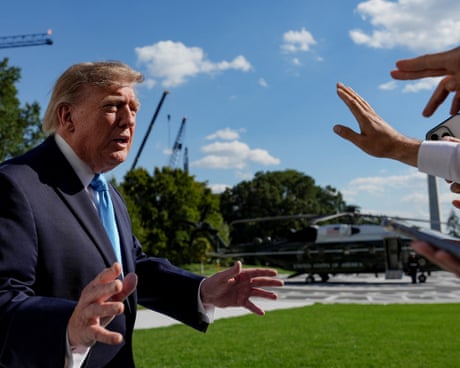
President says ‘I’m doing great’ despite polls showing 32% approval rating and loss of support from 2024 voters
Donald Trump’s approval ratings reached a record low on Monday, according to new opinion polls.
A new Reuters/Ipsos poll shows Trump’s approval rating at a record-low 32%. That polling included the president losing support among independent voters and Latinos, who had backed him in 2024. The dip could prove dire for the Republican party a month ahead of the midterm elections that will determine control of Congress.
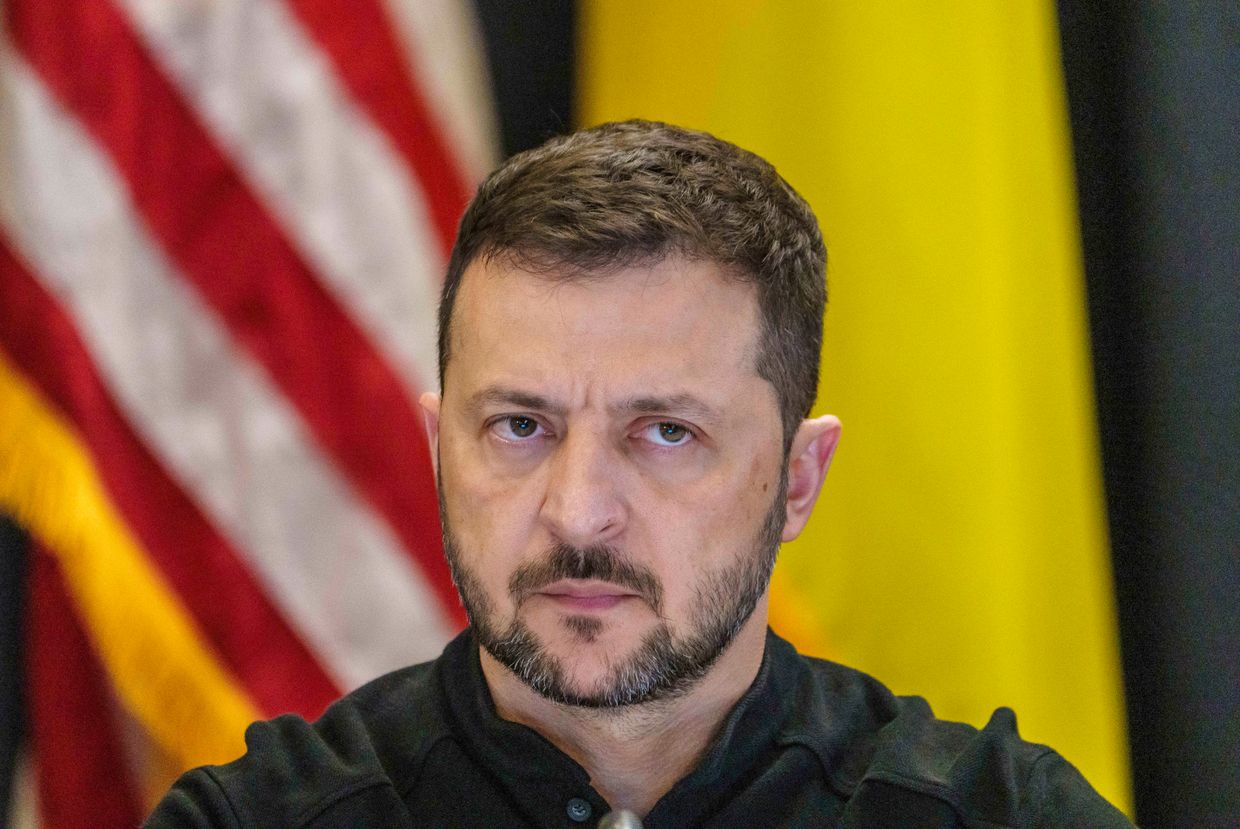
Ukraine is working on a satellite system of its own, something similar to SpaceX's Starlink, Ukrainian President Volodymyr Zelenskyy said on 4 October, Interfax-Ukraine reported. He argued Kyiv should be free to turn Starlink on Russian military targets, warning that China and other states will share comparable satellite technology with Moscow within months. Ukraine's battlefield communications still ride on a network owned by Elon Musk, who has clashed with Kyiv and once limited its warti
Ukraine is working on a satellite system of its own, something similar to SpaceX's Starlink, Ukrainian President Volodymyr Zelenskyy said on 4 October, Interfax-Ukraine reported. He argued Kyiv should be free to turn Starlink on Russian military targets, warning that China and other states will share comparable satellite technology with Moscow within months. Ukraine's battlefield communications still ride on a network owned by Elon Musk, who has clashed with Kyiv and once limited its wartime use.
Low-orbit satellite internet has turned into a frontline utility that a single company or government can switch on or off, and both armies are now racing to own that link instead of renting it. Control of the network decides whose drones can see the battlefield and fly through the jamming to strike it—leverage Kyiv has gone without while its connection rode on hardware it does not run.
Working on a Starlink of its own
Zelenskyy said there was groundwork in place and that Ukraine was working on a system similar to Starlink. He called it fair for Ukraine to aim Starlink at military sites inside Russia. The timing is the reason, he said: some states will share the technology with Russia late this year or early next, and the Chinese are among them. Moscow is already fielding its own Starlink-style constellation, Rassvet, though for now it reaches Ukraine only in brief passes.
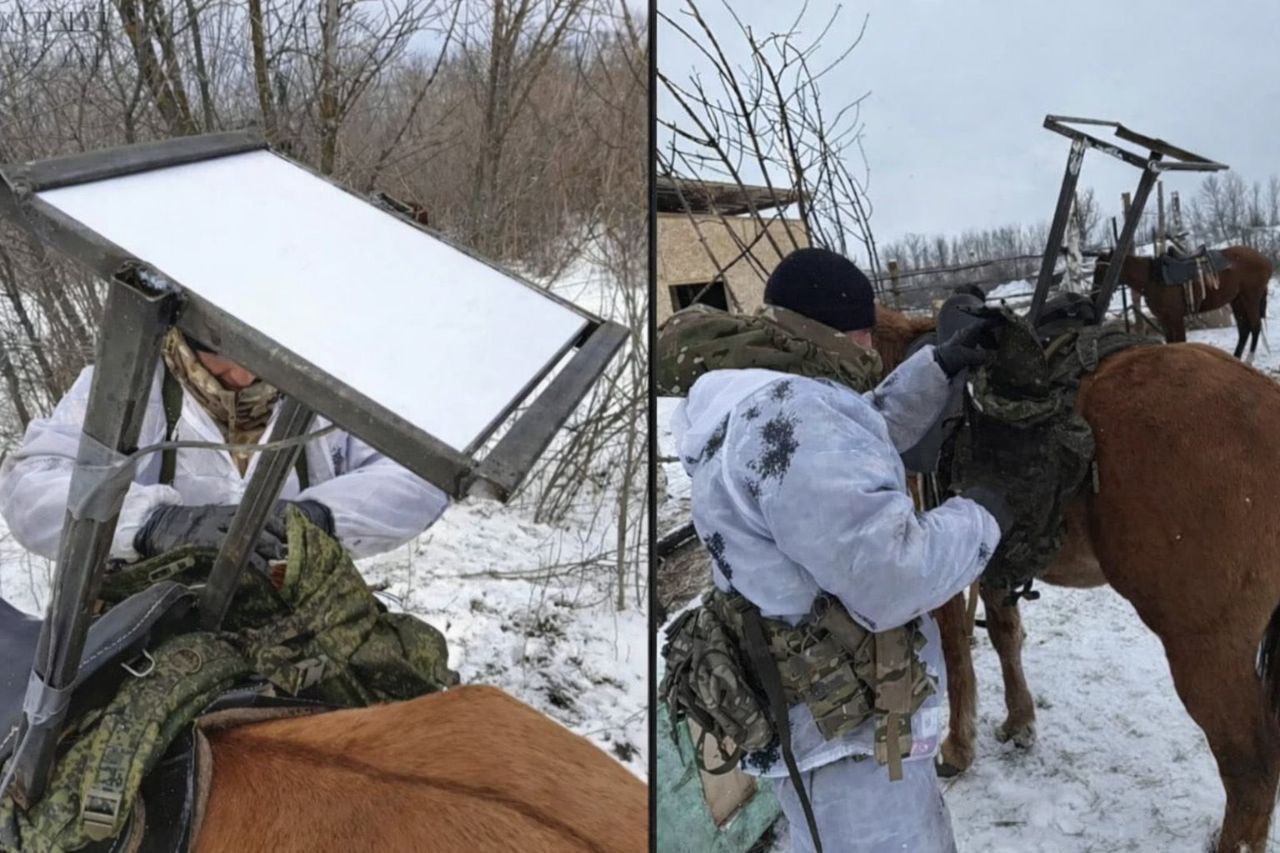
Ukraine's troops and drones lean heavily on Starlink, a network Kyiv neither owns nor controls. Musk has used that control against Kyiv before: in 2022 SpaceX refused a Ukrainian request to extend Starlink over occupied Crimea for a drone strike on Russia's warships, and it has since restricted the network's use for drone operations.
Sanctions, and satellites of its own
Zelenskyy has asked US President Donald Trump several times to sanction the Russian and Chinese companies building Russia's Rassvet network, most recently at the UN General Assembly in New York, he said in a recent Financial Times interview.
Explore further
The EU sanctioned Russia’s Starlink rival but not the company that builds it. Experts call that the gap that matters
Denys Shtilerman, co-founder and chief designer at Ukrainian defense company Fire Point, told the Financial Times in May that the firm had launched two satellites this year and planned dozens more in 2027, aiming to reduce reliance on the US government and Western tech companies. To strike deep inside Russia and gather intelligence, he has said, Ukraine needs its own constellation covering all of Russia.
The vice-president’s recent remarks seek to maintain a posture of strength while they inadvertently expose political realitiesJD Vance has parachuted into the midterm election campaign on a rescue mission in a new guise: a risk management consultant. Speaking in the flat language of the expert hired to identify threats, weaknesses and losses affecting a business’s reputation, he has presented his executive summary for limiting vulnerabilities and a scenario for averting disaster.“There’s a lot o
The vice-president’s recent remarks seek to maintain a posture of strength while they inadvertently expose political realities
JD Vance has parachuted into the midterm election campaign on a rescue mission in a new guise: a risk management consultant. Speaking in the flat language of the expert hired to identify threats, weaknesses and losses affecting a business’s reputation, he has presented his executive summary for limiting vulnerabilities and a scenario for averting disaster.
“There’s a lot of good that’s been done, but there’s a lot of work left to do,” he informed his clients on 15 September about the words to use. “Give us another chance, or give us another couple of years, to continue to work on the amazing things that we’ve been doing for the past two years.” He turned the focus to harm reduction rather than total agreement and then shifted the equation to a negative binary choice. “Even if you don’t agree with us on every issue, the other party is consumed by craziness.”
This live blog is now closed.Sign up for the Breaking News US emailAsk our reporters your questions about the Iran war and the US midtermsAs the supreme court hears oral arguments this morning, it’s worth noting that if the justices side with Boulder or decide that the case is not in their jurisdiction, then it would continue in state court.But if the fossil fuel industry convinces the justices, the decision could apply not only to the Boulder case, but also to the many other climate cases broug
As the supreme court hears oral arguments this morning, it’s worth noting that if the justices side with Boulder or decide that the case is not in their jurisdiction, then it would continue in state court.
But if the fossil fuel industry convinces the justices, the decision could apply not only to the Boulder case, but also to the many other climate cases brought by state and local governments around the US that we mentioned earlier.
Our ‘genius’ president is revealing his ignorance of economics, fueling concerns about the threat he poses to the worldDonald Trump recently made a bold claim about his abilities, writing on Truth Social: “The only control or ‘guardrails’ that AI needs is a STRONG AND SMART (High IQ!) PRESIDENT, and the U.S.A. has that, in spades!”But in the days before and after that post, Trump made one mind-boggling statement after another, including one that raised the possibility of cutting off all trade wi
Our ‘genius’ president is revealing his ignorance of economics, fueling concerns about the threat he poses to the world
Donald Trump recently made a bold claim about his abilities, writing on Truth Social: “The only control or ‘guardrails’ that AI needs is a STRONG AND SMART (High IQ!) PRESIDENT, and the U.S.A. has that, in spades!”
But in the days before and after that post, Trump made one mind-boggling statement after another, including one that raised the possibility of cutting off all trade with dozens of the US’s trading partners. The president’s statements had many experts questioning not just his intelligence, but also whether he – and the outlandish policies he was proposing – were a clear and present danger to both the US economy and the world economy. Public respect for Trump’s economic sense has fallen so low that just 7% of Americans think he should take the lead in regulating AI, according to a recent WSJ poll.
In today’s newsletter: As Americans get ready to vote on whether the Republican party remains in control of Congress, our Washington editor talks about the disconnect between Trump and his supportersGood morning. Later today, Donald Trump will be in the state of Nebraska to rev up supporters as he kicks off a campaign blitz of rallies ahead of the midterm elections on 3 November.If his early speeches are anything to go by, cornhuskers can anticipate poll denial, accusations of veganism and an ex
In today’s newsletter: As Americans get ready to vote on whether the Republican party remains in control of Congress, our Washington editor talks about the disconnect between Trump and his supporters
Good morning. Later today, Donald Trump will be in the state of Nebraska to rev up supporters as he kicks off a campaign blitz of rallies ahead of the midterm elections on 3 November.
If his early speeches are anything to go by, cornhuskers can anticipate poll denial, accusations of veganism and an expletive ratio that my nine-year-old would love. And Nebraskans may love it, too: aside from one “blue dot” district in Omaha, Republicans argue their support is steady in the state that has easily backed Trump three times.
UK politics | The Greens in England and Wales have formally adopted a policy that equates Zionism with racism and calls for Israel to be replaced by a single Palestinian state.
Schools | Lawyers and campaigners have condemned the “horrifying” scale of child-on-child sexual abuse in schools after a Guardian investigation revealed thousands of sexual offences against under-13s are reported to police each year.
Brazil | Brazil’s presidential race will go to a second round after the far-right candidate, Flávio Bolsonaro, beat the incumbent leftwing president, Luiz Inácio Lula da Silva, but failed to secure the outright majority he needed to avoid a runoff.
Environment | A study of Europe’s summer paints a grim picture for the future, with doctors and climate scientists calling on governments to stop burning fossil fuels, shade buildings, green cities, and install air conditioning in hospitals, schools and care homes.
US military | The US Air Force has pulled its bombers from RAF Fairford following an investigation into an alleged planned terror attack at the base.
Tuesday | ABC News is suing the Federal Communications Commission (FCC) over its licence review, and on Thursday its hearing will take place. The broadcaster claims the review, ordered by Donald Trump in April over comedian Jimmy Kimmel’s comments about the US president, is a “retaliatory campaign” in violation of its first amendment rights.
Wednesday | Kemi Badenoch is to speak at the Conservative party conference in Birmingham. This day also marks the third anniversary of the 7 October attacks by Hamas. In London, the Met are asking organisers of a pro-Palestinian student march to move the event.
Thursday | Holborn and St Pancras will hold its byelection. The seat belongs to former prime minister and Labour party leader Keir Starmer, who held it from 2015 until his resignation in September.
Beni Rae Harmony, 24, has been ‘a trusted voice for the Maga movement’ as a correspondent, White House saysThe White House has defended a newly hired press aide who posed for a holiday photograph in 2021 wearing a “Fuck Joe Biden” T-shirt and holding a rifle.Beni Rae Harmony, the new assistant White House press secretary, announced on Friday that she was going to work for Donald Trump just days after covering him as a correspondent for Real America’s Voice, a partisan rightwing outlet originally
Beni Rae Harmony, 24, has been ‘a trusted voice for the Maga movement’ as a correspondent, White House says
The White House has defended a newly hired press aide who posed for a holiday photograph in 2021 wearing a “Fuck Joe Biden” T-shirt and holding a rifle.
Beni Rae Harmony, the new assistant White House press secretary, announced on Friday that she was going to work for Donald Trump just days after covering him as a correspondent for Real America’s Voice, a partisan rightwing outlet originally created as a video podcast platform for the US president’s former adviser Steve Bannon.
Clayton had said AI was a ‘gamechanger’ but also posed ‘a threat’ during his confirmation hearingDonald Trump on Sunday named Jay Clayton, the director of national intelligence, to also serve as the new White House AI czar.Clayton, who leads the US’s 18 intelligence agencies, previously served as the top federal prosecutor in Manhattan and led the Securities and Exchange Commission during Trump’s first term. Continue reading...
Clayton, who leads the US’s 18 intelligence agencies, previously served as the top federal prosecutor in Manhattan and led the Securities and Exchange Commission during Trump’s first term.
Rallies have been mainstay of president’s brand but even some in his own party fear voters are sick of the sight of him“Get your asses in that car.” That was Donald Trump’s order, he later recalled, to his motorcade after foul weather grounded Air Force One in Texas on Thursday. The 85-mile dash to Oklahoma at nearly 100mph was proof that nothing can keep Trump from a Trump rally.Which might not be the good news for Republicans it once was. As the US president embarked on a 32-day campaign blitz
Rallies have been mainstay of president’s brand but even some in his own party fear voters are sick of the sight of him
“Get your asses in that car.” That was Donald Trump’s order, he later recalled, to his motorcade after foul weather grounded Air Force One in Texas on Thursday. The 85-mile dash to Oklahoma at nearly 100mph was proof that nothing can keep Trump from a Trump rally.
Which might not be the good news for Republicans it once was. As the US president embarked on a 32-day campaign blitz aimed at helping them defend narrow congressional majorities in next month’s midterms, some fear that he is driving them towards an electoral wipeout.
Trump supporters may be surprised to learn the state takeover of means of production is not driven by the leftAmericans will never accept the Democratic party’s slide to the left, or so desperate Republicans are hoping.With the midterm elections fast upon us, Zohran Mamdani’s promise of a few city-run bodegas in New York City will scare the bejeezus out of middle America. Disgust over the democratic socialists’ unicorn-and-puppy promises of a world without capitalism will keep the Republicans in
Trump supporters may be surprised to learn the state takeover of means of production is not driven by the left
Americans will never accept the Democratic party’s slide to the left, or so desperate Republicans are hoping.
With the midterm elections fast upon us, Zohran Mamdani’s promise of a few city-run bodegas in New York City will scare the bejeezus out of middle America. Disgust over the democratic socialists’ unicorn-and-puppy promises of a world without capitalism will keep the Republicans in power.
The US president has taken credit for far-right victories across Latin America, but those wins have had more to do with fears of gang crime than his meddlingDonald Trump has enjoyed very few foreign policy victories since returning to power. From failed wars to failed peace processes, his second term in office has been marked by one costly blunder on the world stage after another. In Latin America, though, the US president has a different story to tell.His administration’s national security stra
The US president has taken credit for far-right victories across Latin America, but those wins have had more to do with fears of gang crime than his meddling
Donald Trump has enjoyed very few foreign policy victories since returning to power. From failed wars to failed peace processes, his second term in office has been marked by one costly blunder on the world stage after another. In Latin America, though, the US president has a different story to tell.
His administration’s national security strategy outlined how the US wanted to “restore American preeminence in the Western Hemisphere”. It was a brazen document, laying out how his government would interfere in the political life of countries it considered part of its sphere of influence, rewarding governments and movements that are “broadly aligned with our principles and strategy”.
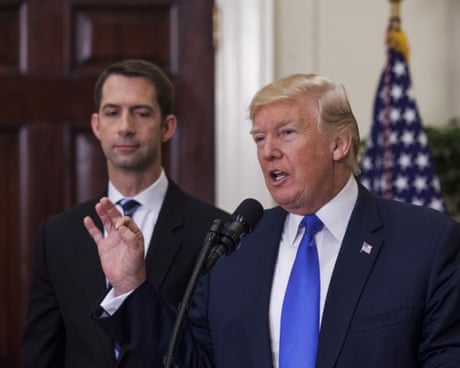
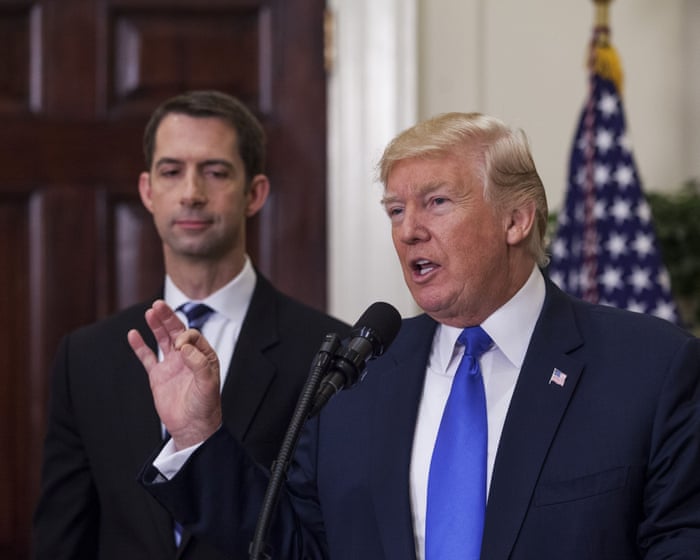
US president urges Americans to call Tom Cotton to support bill to make daylight saving time permanentDonald Trump on Saturday put pressure on the US senator Tom Cotton of Arkansas to support a bill to make daylight saving time permanent, urging Americans to call what appeared to be the personal cellphone number of his fellow Republican and the chair of the Senate intelligence committee.The Sunshine Protection Act passed the House in July, but it faces roadblocks in the Senate, where some Republ
US president urges Americans to call Tom Cotton to support bill to make daylight saving time permanent
Donald Trump on Saturday put pressure on the US senator Tom Cotton of Arkansas to support a bill to make daylight saving time permanent, urging Americans to call what appeared to be the personal cellphone number of his fellow Republican and the chair of the Senate intelligence committee.
The Sunshine Protection Act passed the House in July, but it faces roadblocks in the Senate, where some Republicans are strongly opposed to it. Proponents, including the president and his administration, argue that the change would provide more daylight during the times that Americans are most active. Detractors say permanent daylight saving time would lead to darker and potentially more hazardous winter mornings when children will be waiting for school buses and parents will be driving to work in darkness.
The US defense secretary who hates ‘beardos, weirdos and wimps’ has announced an Office of Religious Affairs at the PentagonApart from money and McDonald’s, there’s nothing Donald Trump seems to love more than a “big, beautiful” wall. The government is currently spending billions of taxpayer dollars to fulfill the president’s fantasy of lining the US-Mexico border with 30ft steel bollard walls and high-tech surveillance.What the Trump administration is apparently not so keen on is the wall of se
The US defense secretary who hates ‘beardos, weirdos and wimps’ has announced an Office of Religious Affairs at the Pentagon
Apart from money and McDonald’s, there’s nothing Donald Trump seems to love more than a “big, beautiful” wall. The government is currently spending billions of taxpayer dollars to fulfill the president’s fantasy of lining the US-Mexico border with 30ft steel bollard walls and high-tech surveillance.
What the Trump administration is apparently not so keen on is the wall of separation between church and state. While the president may hawk bibles as a side hustle, he is not exactly devout; he serves only mammon. The top levels of his government, however, are stuffed full of religious fanatics who appear hellbent on remaking the country as a Christian theocracy.
These graphics explain what the Democrats would need to do to flip the Senate and House of RepresentativesA turning point in Donald Trump’s second term will soon arrive. On 3 November, voters across the US will decide whether to keep the president’s Republican allies in control of Congress, or return Democrats to the majority.Many indicators of voter sentiment suggest the Democrats are favored to take back control of the House of Representatives, and potentially the Senate. Winning either would
These graphics explain what the Democrats would need to do to flip the Senate and House of Representatives
A turning point in Donald Trump’s second term will soon arrive. On 3 November, voters across the US will decide whether to keep the president’s Republican allies in control of Congress, or return Democrats to the majority.
Many indicators of voter sentiment suggest the Democrats are favored to take back control of the House of Representatives, and potentially the Senate. Winning either would be a significant victory for the party and give it the power to block Trump’s legislative agenda and more aggressively investigate his administration.
Ukraine is about to tell Washington exactly which Russian targets it wants punished under America's new sanctions law, the Associated Press reported. A senior Ukrainian diplomat said Kyiv will hand the Trump administration and Congress a wish list of companies, ships, and people this week—and at the top are the firms supplying parts for Russia's answer to Starlink.
The law requires Washington to act but lets the president waive the sanctions if he certifies that doing so serves US natio
Ukraine is about to tell Washington exactly which Russian targets it wants punished under America's new sanctions law, the Associated Press reported. A senior Ukrainian diplomat said Kyiv will hand the Trump administration and Congress a wish list of companies, ships, and people this week—and at the top are the firms supplying parts for Russia's answer to Starlink.
The law requires Washington to act but lets the president waive the sanctions if he certifies that doing so serves US national interests, and the first choice falls due in weeks. For Ukraine, a measure that names no targets changes nothing on the ground—which is why the fight now is over whose names make the list before the clock runs out.
A list topped by Russia's Starlink clone
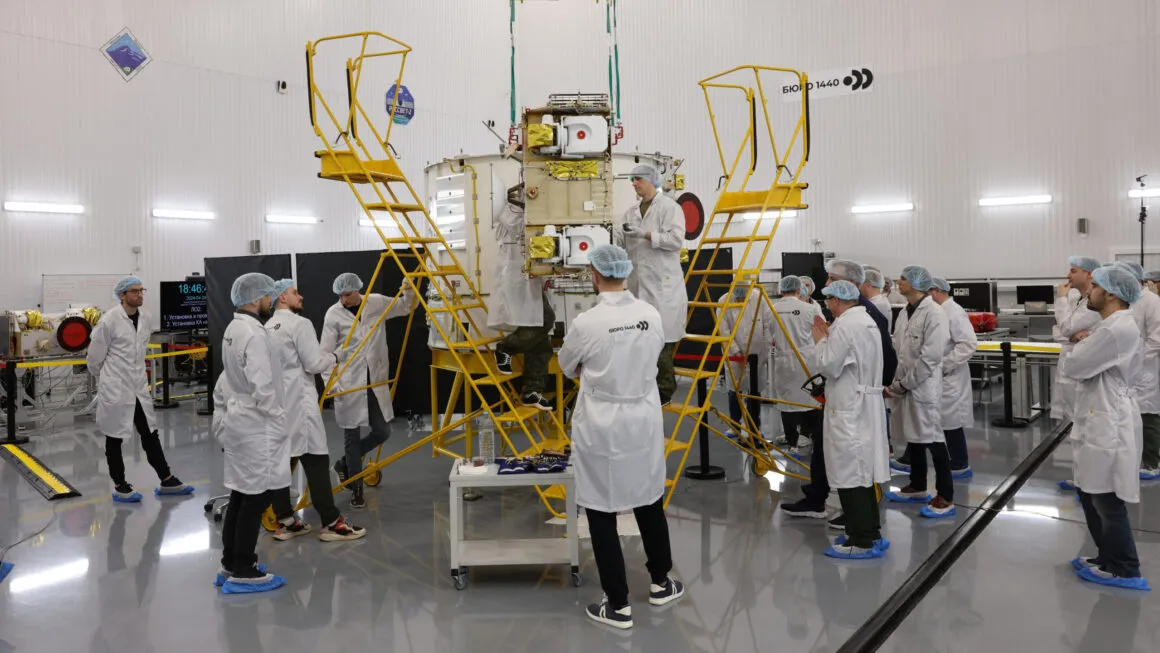
Denys Sienik, chargé d'affaires at Ukraine's embassy in Washington, said the priority is a group of Russian firms making components for Rassvet, Moscow's homegrown satellite network, which Russia hopes to complete by the end of the year—though its own officials have put the start of service in 2027. Bureau 1440, the firm building Rassvet, is not itself on US sanctions lists, but its parent company, ICS Holding, is under US blocking sanctions, according to Militarnyi. The suppliers feeding the network parts are not sanctioned, and those are the ones Kyiv wants added to the list.
Russia sped up the project after Ukraine and SpaceX cut off the Starlink terminals its troops had used without authorization at the front. If Russia completes the constellation, Sienik said, it could strike Ukraine at will with real-time information—a danger he warned would bite hardest this winter. "If these entities are not sanctioned, it will actually make this program possible for Russia and that will be a game-changer," he told reporters, Reuters reported. Kyiv wants access to Starlink inside Russia, too, so it can strike targets there.
Euromaidan Press has reported how such a network would change the battlefield: the satellites transmit in high-frequency bands that are hard to jam, and a relay overhead would feed drones and missiles fresh coordinates mid-flight, letting them fly low under air defenses that struggle to see them.
Oil tankers and attacks on US firms
Ukraine is pushing for tougher action against Russia's shadow fleet, too—the aging tankers that sell its oil around Western restrictions—and is asking the administration and American industry to publicly condemn Russian attacks on US companies' operations inside Ukraine, Sienik said.
The deadline Washington is now facing
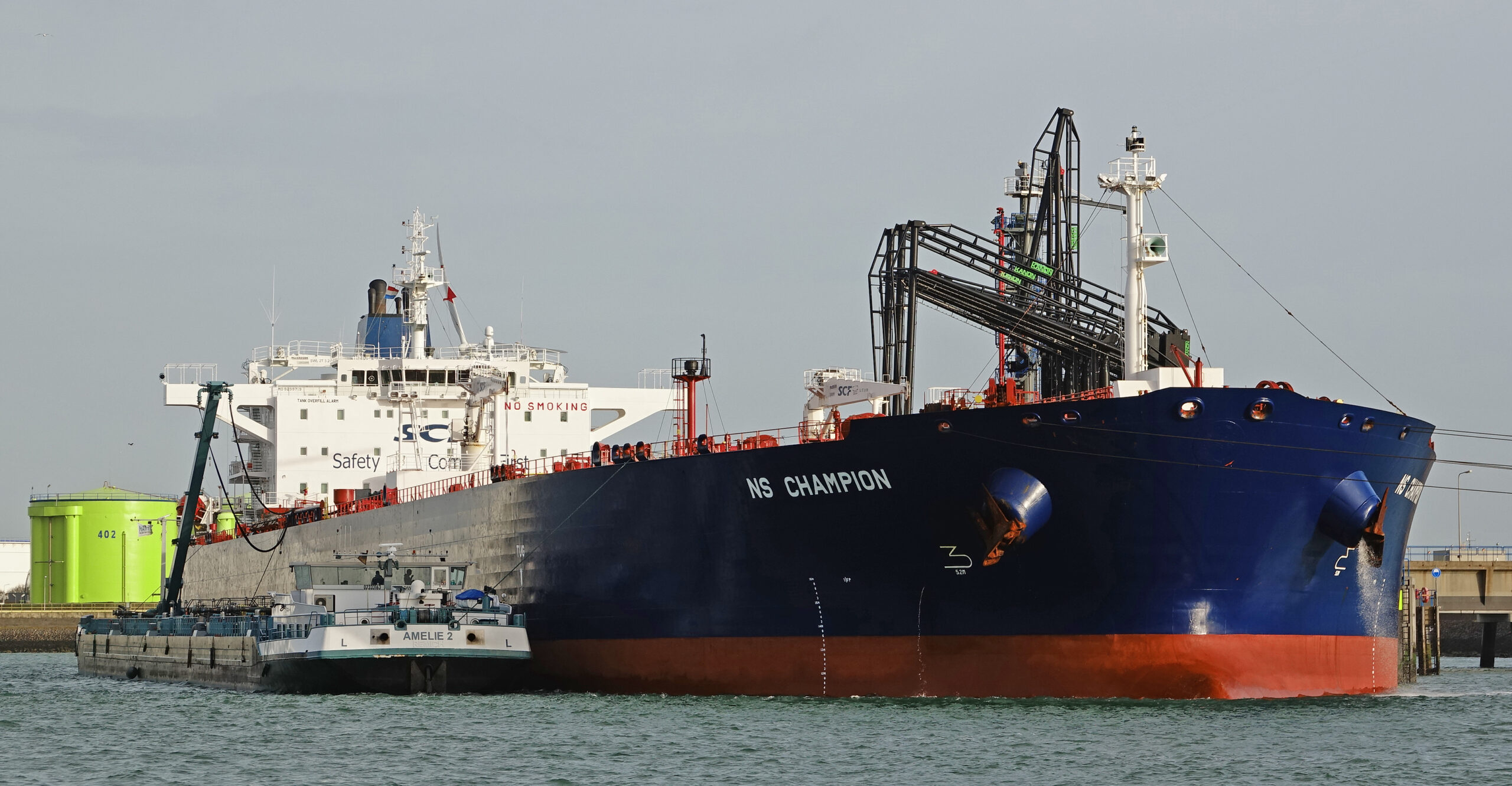
The requests arrive as the administration faces an 18 October deadline to decide which Russian entities, if any, to sanction under the Lindsey O. Graham Sanctioning Russia and Iran Act, which US President Donald Trump signed into law on 18 September. The law directs the White House to impose tariffs on Russia's biggest oil buyers and to block its banks, officials, and tankers—but lets the president waive those measures, which is why Kyiv is lobbying for the toughest list it can get.
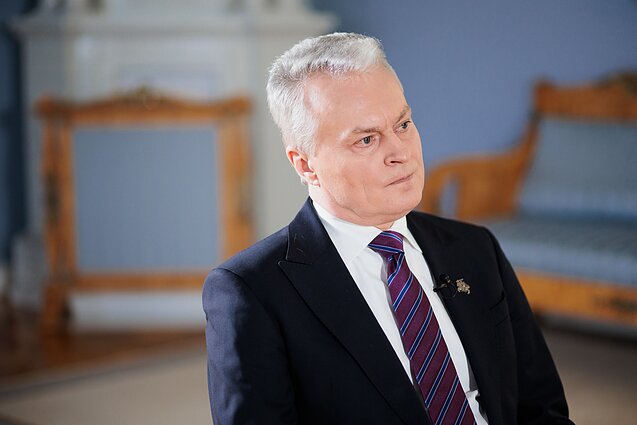
Lithuania is getting its US troops back although the overall American presence in Europe will shrink, Lithuanian President Gitanas Nausėda said. He tied the wider drawdown to Washington's demand that Europe take more responsibility for its own defense. Lithuania's case, he suggested, is the exception.
While waging all-out war on Ukraine, Russia keeps probing Europe with drones and sabotage that stop just short of open attack. Its small Baltic neighbors are already preparing their people
Lithuania is getting its US troops back although the overall American presence in Europe will shrink, Lithuanian President Gitanas Nausėda said. He tied the wider drawdown to Washington's demand that Europe take more responsibility for its own defense. Lithuania's case, he suggested, is the exception.
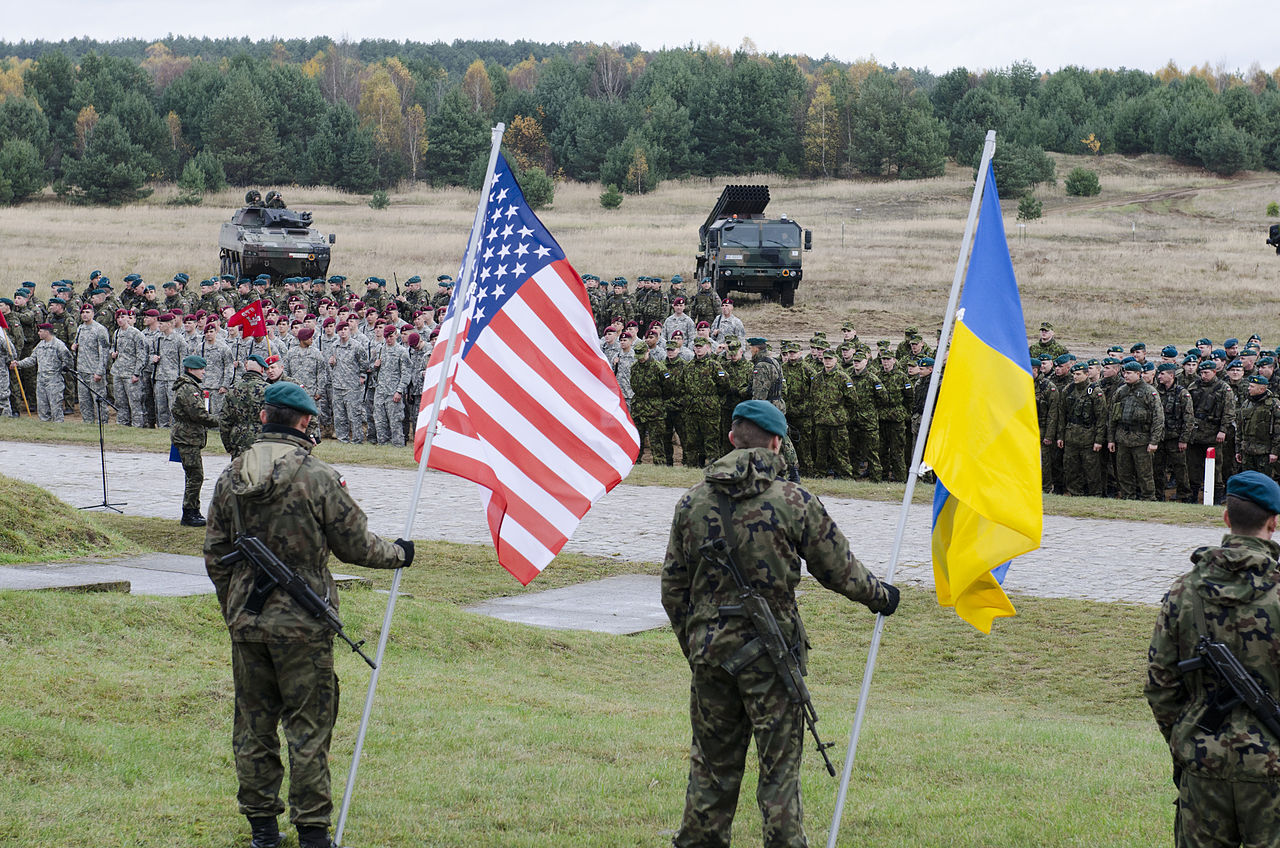
While waging all-out war on Ukraine, Russia keeps probing Europe with drones and sabotage that stop just short of open attack. Its small Baltic neighbors are already preparing their people for a possible invasion, and American soldiers on their soil have long been the clearest sign that attacking them means fighting the US. With Washington weighing a pullback and telling Europe to fend for itself, each US unit that stays on Russia's doorstep carries more weight than its size.
"There will be fewer US troops in Europe"
Nausėda spoke in an interview with LNK television on 28 September.
"There will be fewer US troops in Europe. This is partly related to what US President Donald Trump says, to the signals the US administration is sending us that Europe must take on more responsibility itself," he said.
Europe must do more for itself, and it is already doing so, Nausėda added. The US presence in Lithuania matters not only for its military power but also for deterrence, he argued.
"The presence of these troops is precisely what reduces the likelihood of military conflict or military aggression," he told LNK, ELTA reported.
"The heavy battalion will be here"
Nausėda called the decision a kind of encouragement for Lithuania. "As the overall number of US troops in Europe decreases, in Lithuania that number will at least remain, will not decrease, and perhaps will even be slightly larger," he said. "In any case, the heavy battalion will be here."
The battalion will keep its Abrams tanks, but an engineer battalion will replace the artillery battalion, Nausėda said on LRT's Savaitė program. The rotation will again last nine months. The Americans will number roughly as before, over 1,000, Defense Minister Robertas Kaunas said.
Estonia has also secured the return of US troops, at least temporarily, LRT noted.
Explore further
Trump announces 5,000 US troops to Poland — one week after US froze scheduled combat-team rotation and amid Russia’s threat
More than 1,000 US troops began leaving Lithuania when their rotation ended in early June, and no replacement arrived, LRT said. It was the country's first gap in the US presence since 2020. American heavy battalions have rotated through Lithuania since 2019.
The Pentagon is weighing a withdrawal of about 25,000 US troops from Europe, and possibly as many as 40,000, NBC News reported, adding that no final decision had been made. About 80,000 US troops are now stationed on the continent. Germany, Italy, and Spain would likely be among the countries most affected.
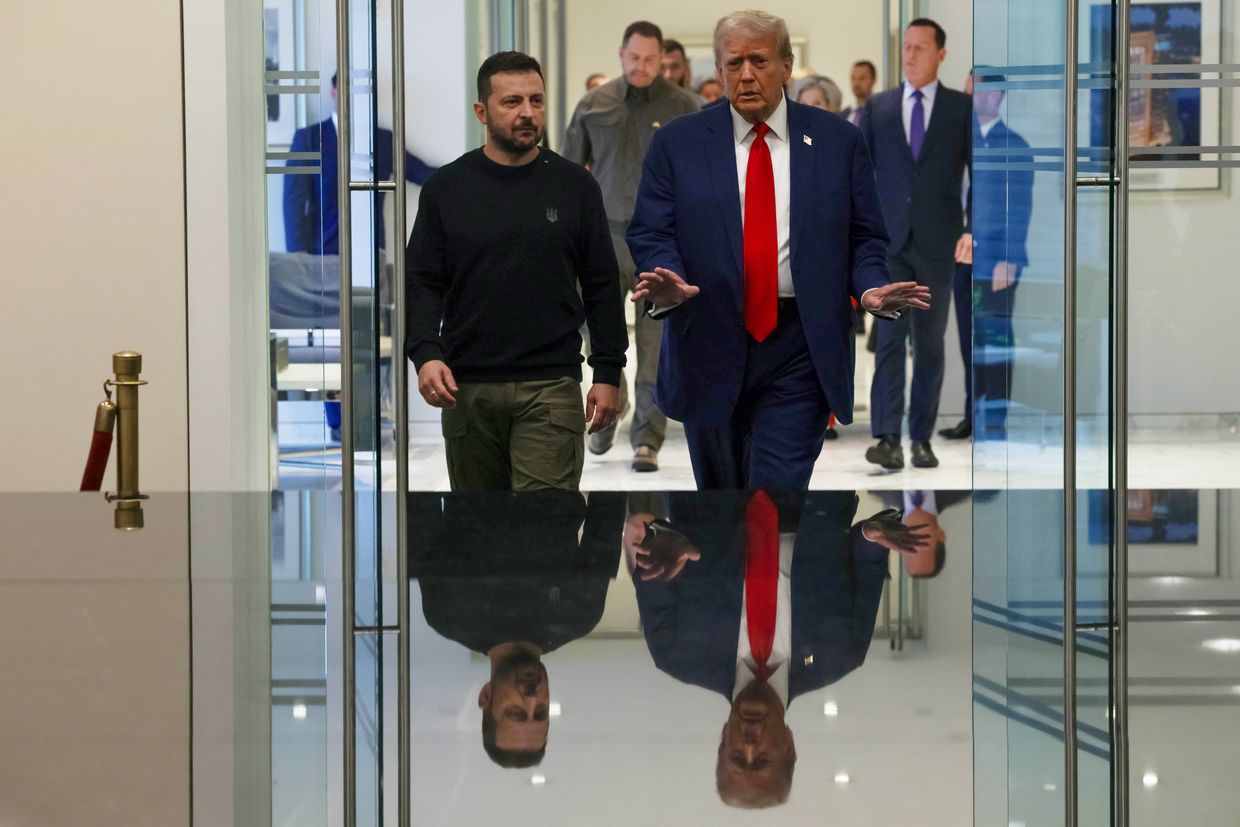
US President Donald Trump repeatedly asked Ukrainian President Volodymyr Zelenskyy to stop attacks on Russian oil refineries during a phone call on 20 September, Axios reported, citing a person familiar with the conversation. The two leaders are due to meet in New York today, 22 September, during the UN General Assembly.
For Ukraine, the strikes are a way to disrupt the fuel supply supporting Russia's military. Trump is now linking the attacks to global diesel prices. The International
US President Donald Trump repeatedly asked Ukrainian President Volodymyr Zelenskyy to stop attacks on Russian oil refineries during a phone call on 20 September, Axios reported, citing a person familiar with the conversation. The two leaders are due to meet in New York today, 22 September, during the UN General Assembly.
For Ukraine, the strikes are a way to disrupt the fuel supply supporting Russia's military. Trump is now linking the attacks to global diesel prices. The International Energy Agency (IEA) said disruptions to Russia's refining system following intensified Ukrainian attacks have compounded diesel supply losses.
Trump backed the strikes two months ago
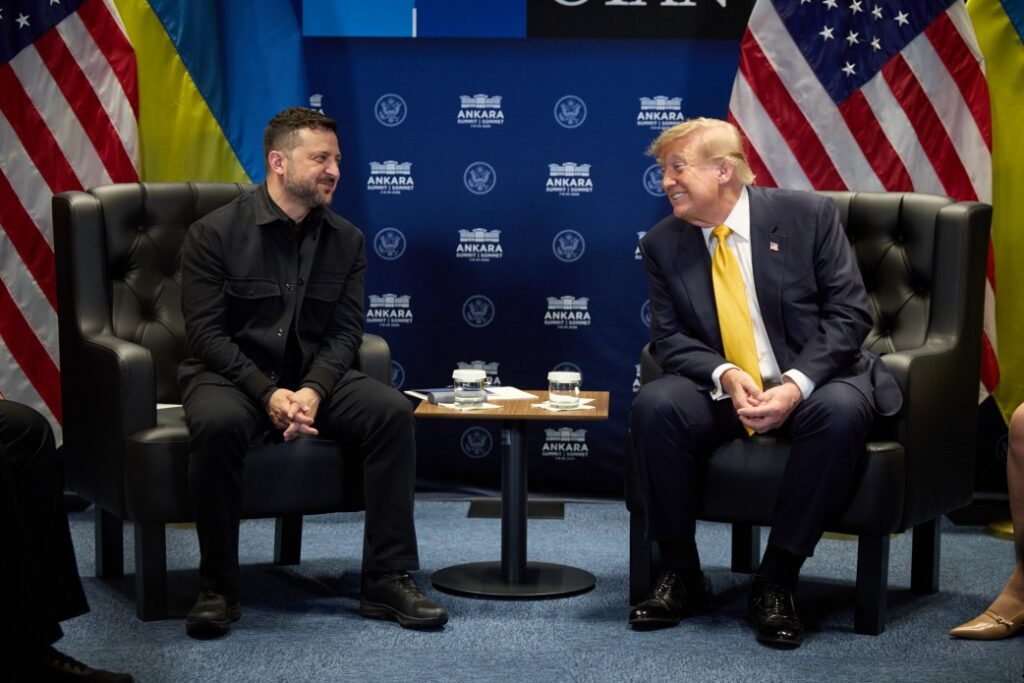
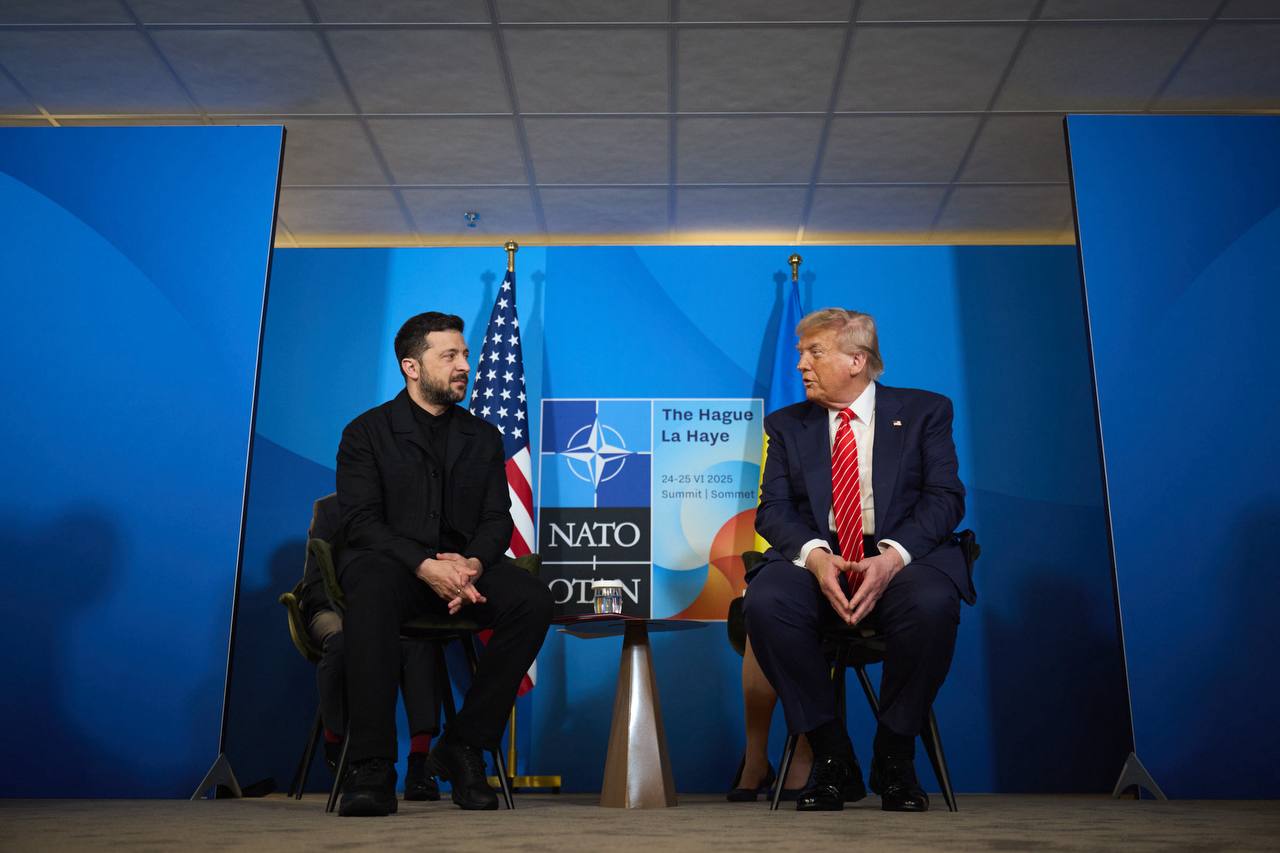
At a NATO summit on 8 July, speaking alongside Zelenskyy, Trump said Ukrainian strikes on Russian oil refineries could help end the war. "It's an escalation, but it's also an escalation that can help lead to an end," he said. Secretary of State Marco Rubio said Ukraine's ability to strike deep into Russian territory was one of the changes in the war in recent months and said the escalation could create space for negotiations.
On 13 September, Trump called on Zelenskyy to stop the attacks.
"Mr. Zelenskyy has to do one thing: he has to stop knocking out diesel fuel in Russia," Trump said. "There are plenty of other targets. Don't hit diesel fuel. That's hurting the world."
Trump added that the rise in prices was not caused by the Iran conflict. "This isn't done by the Middle East, this is done by what's happening with Russia and Ukraine," he said.
On 20 September, Trump raised the demand again in his call with Zelenskyy. "The word diesel came up many times" during the conversation, a person familiar with the call told Axios.
What is driving diesel prices
US diesel prices had reached $6.06 per gallon by 13 September, up from $3.71 a year earlier. The IEA said in June that global energy markets were contending with their largest supply disruption in history because of the near-closure of the Strait of Hormuz, though it also noted that a US-Iran agreement to reopen the strait had begun easing prices from their April peak. A Bipartisan Policy Center analysis attributed the diesel surge to the Iran conflict and did not address Ukrainian strikes.
Ukraine's refinery campaign has also disrupted Russian fuel production. The General Staff of the Armed Forces of Ukraine said on 4 July that attacks had disabled 42.7% of Russia's oil-refining capacity. Russia's gasoline production fell an estimated 25% year-on-year in the week of 15–21 June, while Moscow has extended its ban on diesel exports through at least September.
Zelenskyy confirms Tuesday meeting
After the call, Zelenskyy said it had been "an important conversation" and that today's meeting "could change a lot." He said there was "diplomatic momentum" and that Ukraine was ready "to take really serious steps." He also said the call covered ideas for de-escalation and fundamental security issues including energy and food security.
Rustem Umerov, head of Ukraine's Foreign Intelligence Service and Kyiv's chief negotiator, told Axios that US envoys Steve Witkoff and Jared Kushner had helped with the peace talks, where the number of stumbling blocks had fallen from "dozens to essentially one or two key issues." Umerov was rebutting a Kyiv Independent report that Kyiv was frustrated with Witkoff, which he called false.
The US House of Representatives has approved sweeping new sanctions on Russia and the countries and companies that help finance its war, sending the measure to the president to sign into law, The Hill reported. The vote breaks a nearly two-year stretch in which Congress passed no major measure to back Ukraine. It also hands Washington fresh power to choke the oil money that keeps Moscow's war running.
For most of the full-scale war, US backing for Kyiv came through emergency spending ba
The US House of Representatives has approved sweeping new sanctions on Russia and the countries and companies that help finance its war, sending the measure to the president to sign into law, The Hill reported. The vote breaks a nearly two-year stretch in which Congress passed no major measure to back Ukraine. It also hands Washington fresh power to choke the oil money that keeps Moscow's war running.
For most of the full-scale war, US backing for Kyiv came through emergency spending battles, not laws built to cut off Moscow's income. Washington's long wager that negotiations would end the fighting kept its sharpest economic tools on the shelf. That bet has now shifted toward squeezing the customers who keep the Kremlin's oil trade alive.
The vote and what comes next
In the House, 58 Democrats broke from their party's leaders on 16 September to join most Republicans. The bill passed 262-159, with 203 Republicans and one independent also voting yes, and seven Republicans joining 152 Democrats against.
Whether the full weight of the bill lands is now Trump's call. A White House official said he planned to sign it, and the White House had pushed House Republican leaders to move it. The bill directs him to impose the tariffs and mandates sanctions on Putin, senior officials, and Russian banks, though he can waive them by certifying that it serves US national interests, and how far he goes stays uncertain.
His posture on Russia keeps shifting. Days before the vote, he urged Kyiv to stop striking Russian oil refineries. He said the strikes were pushing diesel prices up worldwide. Those same strikes drain the war economy this bill sets out to squeeze.
Explore further
US sanctions relief for Russian oil shipments appears to end with no renewal issued
What the sanctions do
The bill directs Washington to impose tariffs of up to 100% on the five biggest buyers of Russian crude, the five biggest buyers of its gas, and the five countries doing most to help Moscow evade oil sanctions—a target aimed squarely at China and India. Countries whose Russian gas imports are less than 15% of everything Russia exports in gas, and that take significant steps to cut them, would be exempt from the gas-based tariff. There is no such carve-out for crude.
It also blacklists Russian officials, banks, and the aging tankers of Russia's shadow fleet, the vessels that move sanctioned crude around Western restrictions. The measure also extends US sanctions on Iran's energy and weapons sectors, a piece Trump asked for. That is why the bill's full name is the Lindsey O. Graham Sanctioning Russia and Iran Act.
Explore further
US sanctions 13 Iran-Belarus-China entities supplying Iran’s IRGC. That’s three of four “Axis of Upheaval” states
Why a stalled bill finally moved
For more than a year, the package sat frozen. It had a veto-proof majority of co-sponsors, but the White House wanted room to negotiate with Moscow, and the bill never reached a vote. Its author, Senator Lindsey Graham of South Carolina, spent more than a year negotiating the measure before he died in July. Lawmakers in both parties revived and fast-tracked it in his name, and Trump dropped his resistance and signaled he would sign.
Not everyone wanted it. Most House Democrats voted against, saying the bill hands the president broad new tariff powers and lets him waive away the sanctions it claims to impose. Nearly a dozen Republicans privately pressed leaders to strip the new powers out, alarmed they could push up prices at home before the midterm elections. Their leaders moved it through anyway. Ukrainian President Volodymyr Zelenskyy had lobbied for weeks, even watching an early Senate vote from the chamber.
"To Vladimir Putin—we have your number,"said Senator Richard Blumenthal, who co-wrote the bill, after the vote. "And to Ukraine—you are not alone."
Kyiv's response
Ukraine welcomed the vote within hours. Foreign Minister Andrii Sybiha thanked the House for its bipartisan leadership and said Ukraine honors Graham's legacy. Parliament speaker Ruslan Stefanchuk thanked both chambers of Congress and House Speaker Mike Johnson. He singled out Blumenthal for carrying the bill through after Graham's death. What matters for Ukraine, Stefanchuk said, is that pressure on Russia's war funding is turning into concrete decisions.
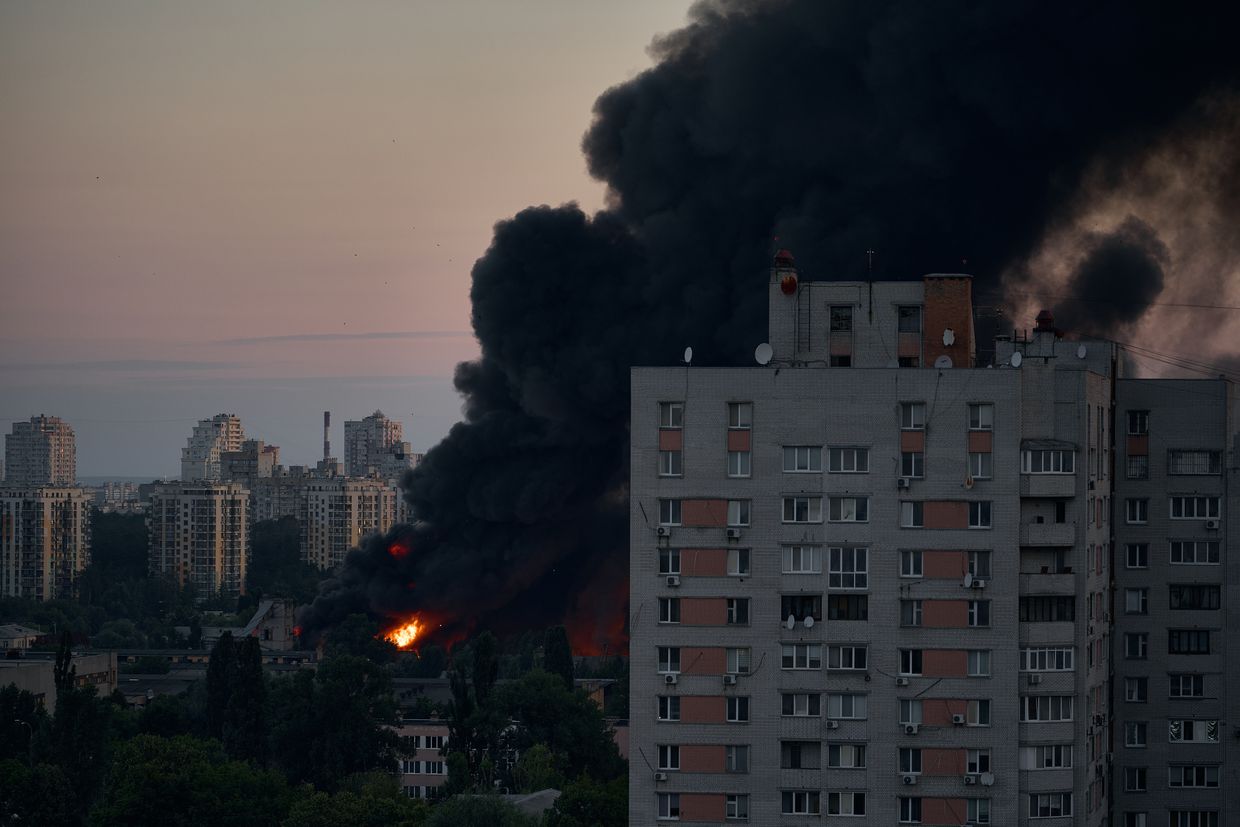
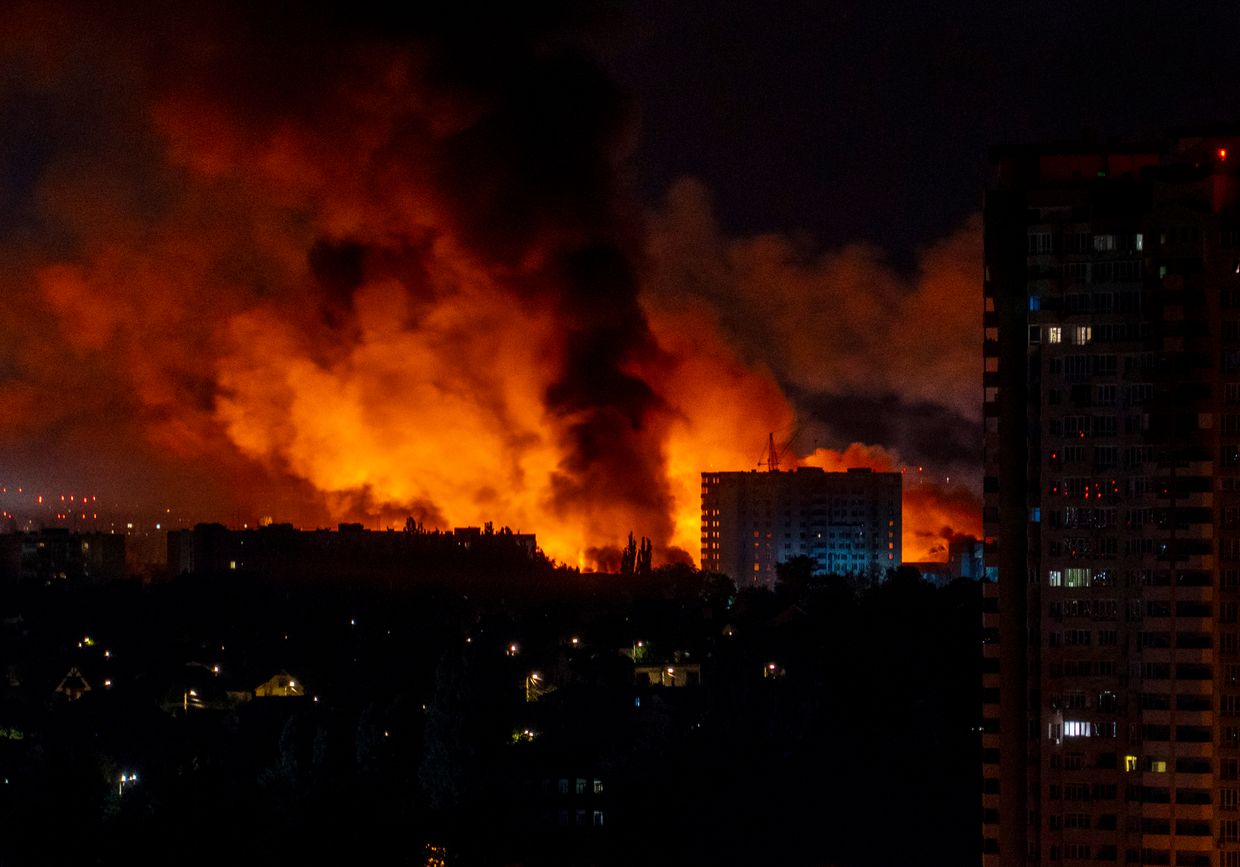
President Zelenskyy called the timing symbolic: the House voted during another Russian missile and drone attack on Ukraine. The bill and other strong sanctions steps are "an extremely powerful instrument capable of stopping this terrorist war," he said.
Mark Carney avait expliqué la semaine dernière que plusieurs raisons l’avaient poussé à suspendre les négociations commerciales avec les États-Unis.
Parmi ces raisons, Carney a cité la volonté de Washington d’exempter les entreprises américaines des règles sur l’étiquetage bilingue et l’affichage en français.
Donald Trump et plusieurs membres de son gouvernement ont soutenu depuis qu’ils n’avaient jamais fait une telle demande.
Howard Lutnick, ministre américain du commerce, a mê
Mark Carney avait expliqué la semaine dernière que plusieurs raisons l’avaient poussé à suspendre les négociations commerciales avec les États-Unis.
Parmi ces raisons, Carney a cité la volonté de Washington d’exempter les entreprises américaines des règles sur l’étiquetage bilingue et l’affichage en français.
Donald Trump et plusieurs membres de son gouvernement ont soutenu depuis qu’ils n’avaient jamais fait une telle demande.
Howard Lutnick, ministre américain du commerce, a même laissé entendre hier que le gouvernement canadien aurait suspendu les négociations pour nuire au Parti québécois et à son projet d’indépendance, à l’approche des élections québécoises.
Le président américain a signé hier un décret pour le renommer «lac d’Amérique», en représailles à l’annonce récente de contre-tarifs douaniers par le Canada.
Mais ce changement ne s’appliquerait qu’aux documents et aux services fédéraux américains.
Lorsque Trump avait renommé l’an dernier le golfe du Mexique en «golfe de l’Amérique», certains services de cartographie avaient adopté ce changement.
Le lac Ontario est l’un des cinq Grands Lacs situés entre le Canada et les États-Un
Le président américain a signé hier un décret pour le renommer «lac d’Amérique», en représailles à l’annonce récente de contre-tarifs douaniers par le Canada.
Mais ce changement ne s’appliquerait qu’aux documents et aux services fédéraux américains.
Lorsque Trump avait renommé l’an dernier le golfe du Mexique en «golfe de l’Amérique», certains services de cartographie avaient adopté ce changement.
Le lac Ontario est l’un des cinq Grands Lacs situés entre le Canada et les États-Unis.
Ses rives bordent l’Ontario et l’État de New York.
Le gouvernement fédéral a présenté des mesures en représailles aux droits de douane américains entrés en vigueur samedi dernier.
À compter du 8 septembre, le Canada imposera des taxes à l’importation de 15%, 25% ou 50% sur environ 700 produits américains.
Secteurs les plus touchés
acier
produits laitiers
électroménagers
matériel agricole
pâtes et papiers
électronique
Ces contres-tarifs ne visent que des produits frappés par des tarifs américains.
Ils s’ap
Le gouvernement fédéral a présenté des mesures en représailles aux droits de douane américains entrés en vigueur samedi dernier.
À compter du 8 septembre, le Canada imposera des taxes à l’importation de 15%, 25% ou 50% sur environ 700 produits américains.
Secteurs les plus touchés
acier
produits laitiers
électroménagers
matériel agricole
pâtes et papiers
électronique
Ces contres-tarifs ne visent que des produits frappés par des tarifs américains.
Ils s’appliqueront à presque 28 milliards $ d’exportations annuelles des États-Unis vers le Canada.
C’est un montant équivalent à celui des exportations canadiennes vers les États-Unis visées par les nouveaux tarifs américains.
Réponse américaine à la riposte canadienne
Donald Trump avait dès lundi, avant qu’on connaisse le détail des contre-tarifs, menacé de porter à 50% en janvier prochain les tarifs américains sur les voitures, les camions, les pièces automobiles et l’acier canadiens.
Mark Carney a suspendu vendredi soir les négociations commerciales avec les États-Unis.
Il a expliqué que des modifications demandées par Washington étaient «inéquitables, non rentables et remettaient en cause la fiabilité de tout accord».
Selon Carney, les négociateurs américains voulaient:
restreindre les ententes commerciales que le Canada pourrait conclure avec d’autres pays;
maintenir des droits de douane trop élevés sur le secteur automobile;
exempter les entreprise
Mark Carney a suspendu vendredi soir les négociations commerciales avec les États-Unis.
Il a expliqué que des modifications demandées par Washington étaient «inéquitables, non rentables et remettaient en cause la fiabilité de tout accord».
Selon Carney, les négociateurs américains voulaient:
restreindre les ententes commerciales que le Canada pourrait conclure avec d’autres pays;
maintenir des droits de douane trop élevés sur le secteur automobile;
exempter les entreprises américaines de l’obligation d’afficher et d’étiqueter leurs produits en français.
Le premier ministre fédéral a résumé samedi: «quand vous êtes attaqués, c’est que vous êtes en guerre», avant d’affirmer: «nous avons été attaqués».
Le gouvernement américain applique depuis samedi des tarifs douaniers de 50% sur de nombreux produits canadiens:
les produits laitiers
les alcools
des matériaux de construction
d’autres produits très variés, dont des appareils électroniques, des meubles et des bâtons de hockey
Ces tarifs affecteraient 5% des exportations canadiennes aux États-Unis.
La proportion est de 9% pour les exportations venant du Québec.
Le gouvernement canadien a l’intention d’imposer le 8
Le gouvernement américain applique depuis samedi des tarifs douaniers de 50% sur de nombreux produits canadiens:
les produits laitiers
les alcools
des matériaux de construction
d’autres produits très variés, dont des appareils électroniques, des meubles et des bâtons de hockey
Ces tarifs affecteraient 5% des exportations canadiennes aux États-Unis.
La proportion est de 9% pour les exportations venant du Québec.
Le gouvernement canadien a l’intention d’imposer le 8 septembre des droits de douane d’un montant total équivalent, «au dollar près», sur les exportations américaines vers le Canada.
Ces contre-tarifs viseraient notamment les produits laitiers, l’acier et les appareils électroniques.
À la suite du report de l’instauration de nouveaux droits de douane américains, le gouvernement fédéral a confirmé hier qu’il finalisait un accord avec Washington.
Mark Carney s’est toutefois contenté d’évoquer des «progrès substantiels», en soulignant qu’«il reste encore du travail important à accomplir».
Aucun des deux gouvernements n’a dévoilé le contenu de l’accord qui serait en cours de finalisation. Seules indications:
Dominic LeBlanc, ministre responsable du commerce Cana
À la suite du report de l’instauration de nouveaux droits de douane américains, le gouvernement fédéral a confirmé hier qu’il finalisait un accord avec Washington.
Mark Carney s’est toutefois contenté d’évoquer des «progrès substantiels», en soulignant qu’«il reste encore du travail important à accomplir».
Aucun des deux gouvernements n’a dévoilé le contenu de l’accord qui serait en cours de finalisation. Seules indications:
Dominic LeBlanc, ministre responsable du commerce Canada–États-Unis, a indiqué que le système de gestion de l’offre resterait intact.
Tim Houston, premier ministre de la Nouvelle-Écosse, a dit que Carney avait demandé aux provinces de remettre en vente l’alcool américain.
Dans une publication sociale en fin de soirée mardi, le président américain a indiqué qu’il reportait de trois jours l’instauration de nouveaux droits de douane américains sur de nombreux produits canadiens.
Ces tarifs douaniers, de 50%, avaient été annoncés le mois dernier et devaient entrer en vigueur aujourd’hui.
D’intenses négociations commerciales entre le Canada et les États-Unis ont eu lieu ces derniers jours.
Trump a justifié le report de l’entrée en vigueur par le fait que
Dans une publication sociale en fin de soirée mardi, le président américain a indiqué qu’il reportait de trois jours l’instauration de nouveaux droits de douane américains sur de nombreux produits canadiens.
Ces tarifs douaniers, de 50%, avaient été annoncés le mois dernier et devaient entrer en vigueur aujourd’hui.
D’intenses négociations commerciales entre le Canada et les États-Unis ont eu lieu ces derniers jours.
Trump a justifié le report de l’entrée en vigueur par le fait que les deux pays seraient parvenus à une entente, qui resterait cependant à finaliser par écrit.
Paul St-Pierre Plamondon a annoncé hier que si le Parti québécois remporte les élections en octobre:
il consultera les Québécois sur l’indépendance du Québec;
mais il n’organisera pas de référendum sur la question tant que Donald Trump sera président des États-Unis.
Le second mandat de Trump doit se terminer en janvier 2029.
Le mandat du prochain gouvernement québécois doit, lui, se terminer en octobre 2030.
Le chef péquiste soutient que l’avenir politique du Québec exige
Paul St-Pierre Plamondon a annoncé hier que si le Parti québécois remporte les élections en octobre:
il consultera les Québécois sur l’indépendance du Québec;
mais il n’organisera pas de référendum sur la question tant que Donald Trump sera président des États-Unis.
Le second mandat de Trump doit se terminer en janvier 2029.
Le mandat du prochain gouvernement québécois doit, lui, se terminer en octobre 2030.
Le chef péquiste soutient que l’avenir politique du Québec exige «un débat éclairé et serein», et que ce débat ne doit pas «être confisqué par les coups d’éclat d’un président imprévisible».
Le gouvernement américain avait imposé le mois dernier de nouveaux droits de douane de 50% sur de nombreux produits canadiens.
Il est prévu qu’ils entrent en vigueur mercredi prochain.
Dominic LeBlanc, ministre fédéral responsable du commerce Canada–États-Unis, et Jamieson Greer, ministre américain du commerce international, se sont rencontrés hier pour la troisième fois en trois semaines.
Selon plusieurs médias, LeBlanc et Greer pourraient conclure une entente au cours des pro
Le gouvernement américain avait imposé le mois dernier de nouveaux droits de douane de 50% sur de nombreux produits canadiens.
Il est prévu qu’ils entrent en vigueur mercredi prochain.
Dominic LeBlanc, ministre fédéral responsable du commerce Canada–États-Unis, et Jamieson Greer, ministre américain du commerce international, se sont rencontrés hier pour la troisième fois en trois semaines.
Selon plusieurs médias, LeBlanc et Greer pourraient conclure une entente au cours des prochains jours.
Une telle entente pourrait être soumise lundi à Donald Trump, deux jours avant l’entrée en vigueur des nouveaux tarifs douaniers.
Donald Trump a annoncé le mois dernier de nouveaux droits de douane, de 10% ou de 12,5%, pour remplacer la surtaxe mondiale de 10% imposée l’an dernier et qui arrivait à échéance.
25 États américains ont déposé hier une plainte auprès du Tribunal de commerce international des États-Unis pour contester ces tarifs imposés par Washington.
Ils soutiennent que le gouvernement Trump n’a pas, comme il le prétend, décrété ces tarifs pour combattre le travail forcé, mais plutôt pour rétablir
Donald Trump a annoncé le mois dernier de nouveaux droits de douane, de 10% ou de 12,5%, pour remplacer la surtaxe mondiale de 10% imposée l’an dernier et qui arrivait à échéance.
25 États américains ont déposé hier une plainte auprès du Tribunal de commerce international des États-Unis pour contester ces tarifs imposés par Washington.
Ils soutiennent que le gouvernement Trump n’a pas, comme il le prétend, décrété ces tarifs pour combattre le travail forcé, mais plutôt pour rétablir des droits de douane proches de ceux que les tribunaux avaient déjà annulés par deux fois.
Donald Trump a annoncé hier qu’un accord avait été conclu sur le désarmement complet du mouvement palestinien Hamas et de tous les autres groupes armés dans la bande de Gaza.
C’était l’un des points qui bloquaient la mise en œuvre de la deuxième phase du plan de paix américain pour Gaza.
Le président américain a précisé que l’armée israélienne quittera le territoire palestinien lorsque le Hamas sera désarmé.
Le Hamas n’avait pas encore confirmé publiquement l’accord hier soir.
Donald Trump a annoncé hier qu’un accord avait été conclu sur le désarmement complet du mouvement palestinien Hamas et de tous les autres groupes armés dans la bande de Gaza.
C’était l’un des points qui bloquaient la mise en œuvre de la deuxième phase du plan de paix américain pour Gaza.
Le président américain a précisé que l’armée israélienne quittera le territoire palestinien lorsque le Hamas sera désarmé.
Le Hamas n’avait pas encore confirmé publiquement l’accord hier soir.
U.S. President Donald Trump is considering sending Ukraine an additional Patriot air defense system, a move that would mark his administration's first major weapons transfer to Kyiv, the Wall Street Journal (WSJ) reported on July 8, citing two defense officials. The report is the latest in a series of contradictory messages from the Trump White House in recent days regarding military aid to Ukraine. While the Pentagon on July 2 announced a halt in weapons shipments to Kyiv due to dwindling U.S.
U.S. President Donald Trump is considering sending Ukraine an additional Patriot air defense system, a move that would mark his administration's first major weapons transfer to Kyiv, the Wall Street Journal (WSJ) reported on July 8, citing two defense officials.
The report is the latest in a series of contradictory messages from the Trump White House in recent days regarding military aid to Ukraine. While the Pentagon on July 2 announced a halt in weapons shipments to Kyiv due to dwindling U.S. stockpiles, Trump later claimed he wasn't responsible for the decision and wanted to send more weapons to Ukraine.
A U.S. defense official told the WSJ that Trump has asked the Pentagon to look into options for supplying Ukraine with more arms, including a Patriot air defense system. Officials are also reportedly exploring whether other nations can send Patriots to Kyiv.
The claim dovetails with recent media reports about the administration's plans to bolster Ukraine's air defenses. Axios reported on July 8 that the White House is pursuing a plan to have Germany sell another Patriot battery to Ukraine, with the U.S. and European allies splitting the cost of the purchase. Sources told the outlet that Trump also pledged to send 10 Patriot interceptor missiles to Kyiv.
If the U.S. provides Ukraine with an additional Patriot system, it would mark the first time Trump has approved a major military aid package to Kyiv that wasn't previously greenlighted by former U.S. President Joe Biden.
Washington has thus far provided Kyiv with three Patriots, a former Pentagon official told the WSJ. Germany has also sent three, while a group of European countries provided one. According to the official, not all systems are in use at the same time due to maintenance issues.
The U.S.-made air defense systems are in high demand around the world. Each system consists of two or three launchers, a radar, a command and control element, and interceptor missiles. Patriot missiles are also in short supply globally: Ukraine faces an urgent need for the munitions amid increased Russian aerial attacks, and the Guardian reported on July 8 that even the U.S. has only 25% of the interceptors required by its defense readiness plans.
According to one of the officials who spoke to the WSJ, the U.S. military would be able to supply an additional Patriot to Ukraine if ordered by the White House.
U.S. President Donald Trump said on July 8 he was "not happy" with Russian President Vladimir Putin. "We get a lot of bullsh*t thrown at us by Putin," he said at a cabinet meeting. "He's very nice all the time, but it turns out to be meaningless."Trump has vacillated for months between criticizing Putin and praising the Kremlin. So far, he has failed to increase military aid to Ukraine or sanction Russia despite Moscow's refusal to accept a ceasefire.During his election campaign, Trump repeated
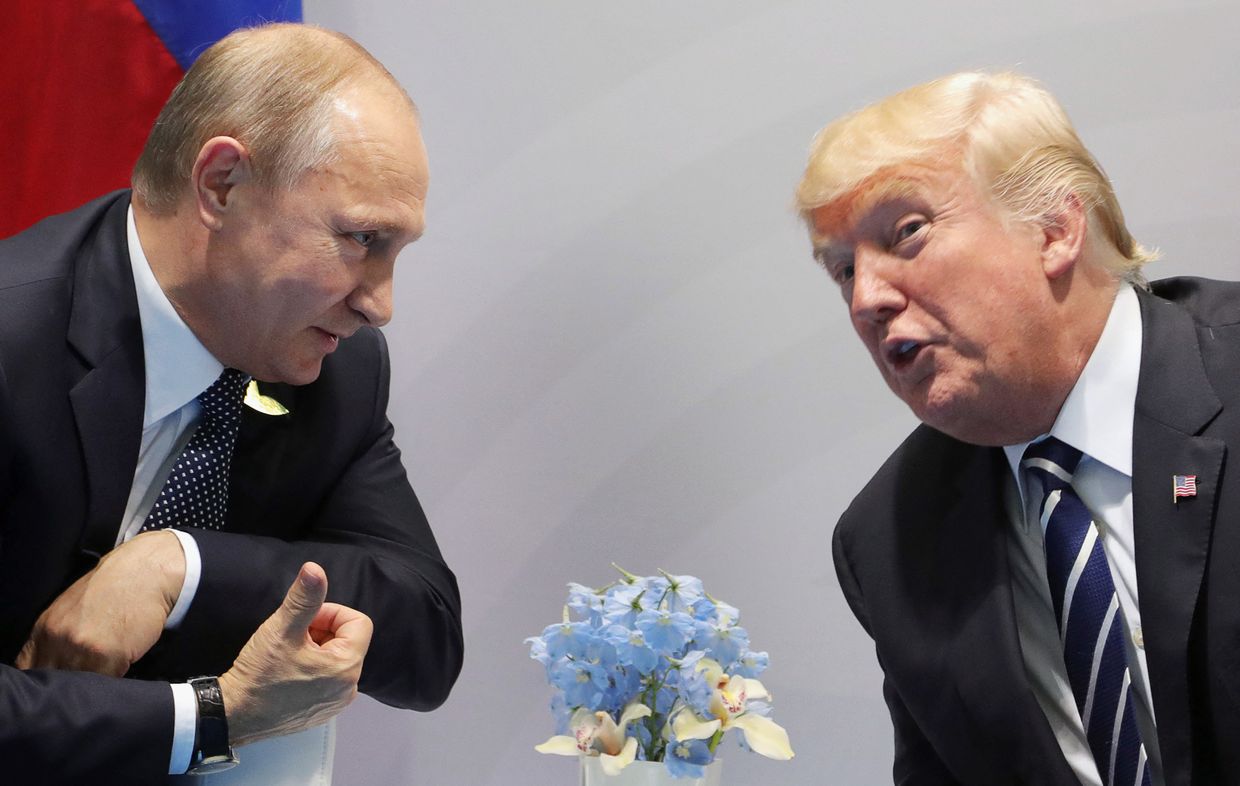
U.S. President Donald Trump said on July 8 he was "not happy" with Russian President Vladimir Putin.
"We get a lot of bullsh*t thrown at us by Putin," he said at a cabinet meeting. "He's very nice all the time, but it turns out to be meaningless."
Trump has vacillated for months between criticizing Putin and praising the Kremlin. So far, he has failed to increase military aid to Ukraine or sanction Russia despite Moscow's refusal to accept a ceasefire.
During his election campaign, Trump repeatedly pledged to end the war in Ukraine within "24 hours." However, his efforts to broker a peace deal between Ukraine and Russia have seen no progress.
Trump also addressed U.S. legislation on sanctions, saying the Senate's Russia sanctions bill was "totally optional" for him to implement or terminate.
"I'm looking at it very strongly," Trump said.
The bill would impose 500% tariffs on imports from countries purchasing Russian oil, gas, uranium, and other products. It was introduced in April but has seen no progress since then.
Earlier, Trump signaled growing openness to tougher measures against Moscow, ABC News reported on June 29.
According to Senator Lindsey Graham, Trump privately told him it was "time to move" the Russia sanctions bill.
"I’m confident the president is ready for us to act," Graham said.
The Senate is expected to vote on the bill after Congress returns from a break in July.
"(Putin is) killing a lot of people — his soldiers and their soldiers mostly. And it's now up to 7,000 a week," Trump said on July 8, referring to Russia's battlefield losses.
In recent weeks, Trump has been critical of the Russian president. Following a phone call with Putin on July 3, Trump said he was "very disappointed," signaling growing frustration with the Kremlin.
When asked by a journalist on July 8 whether he would take action, Trump responded: "Wouldn't be telling you... We want to have a little surprise."
Trump also commented on the the current pause in weapons deliveries to Ukraine. He pointed to the previous transfer of advanced systems, including Javelin anti-tank missiles and Patriot air defense systems, calling them "the best equipment in the world."
His remarks come after the United States halted military aid shipments to Ukraine on July 2 amid an internal Pentagon review of stockpile capacity. The freeze coincided with a surge in Russian aerial attacks, leaving Ukraine increasingly vulnerable amid a shortage of U.S.-supplied air defense systems.
The U.S. halted weapons shipments to Ukraine amid a capability review, the White House and Pentagon previously confirmed, with Trump later denying the pause.
On July 7, the Pentagon said it would renew shipments, saying the additional defensive weapons were intended to help Ukraine protect itself while the U.S. works toward "a lasting peace."
U.S. President Donald Trump has promised to send 10 Patriot interceptors to Ukraine - a smaller number than had been paused previously while en route to the country, Axios reported on July 8, citing its sources. Trump has also suggested that Germany sell one of its Patriot batteries to Ukraine, according to three sources cited by Axios. They said the U.S. and European allies would split the cost of the purchase.The discussion comes as Ukraine is calling upon its allies, particularly the United S
U.S. President Donald Trump has promised to send 10 Patriot interceptors to Ukraine - a smaller number than had been paused previously while en route to the country, Axios reported on July 8, citing its sources.
Trump has also suggested that Germany sell one of its Patriot batteries to Ukraine, according to three sources cited by Axios. They said the U.S. and European allies would split the cost of the purchase.
The discussion comes as Ukraine is calling upon its allies, particularly the United States, to support Ukrainian air defense by supplying "life-saving" Patriot systems and relevant missiles.
The Pentagon said on July 2 that some military assistance to Ukraine had been halted as the U.S. Defense Department conducts a review of foreign aid deliveries.
On July 7, the Pentagon said it would renew shipments, saying the additional defensive weapons were intended to help Ukraine protect itself while the U.S. works toward "a lasting peace."
Merz called Trump to request the release of the paused interceptors, according to Axios. During the call, Trump proposed that Germany sell one of its own Patriot batteries to Ukraine.
While no agreement has been reached, officials on both sides say negotiations are ongoing. German officials maintain that Berlin has already sent a higher share of its available Patriot systems to Ukraine than any other NATO country, including the U.S.
Russia has escalated its aerial campaign against Ukraine in recent weeks, launching large-scale missile and drone attacks that have killed and injured hundreds of civilians across multiple cities.
The suspension of U.S. arms deliveries, which include Patriots and precision-guided munitions, drew criticism from Kyiv. During a July 4 phone call with Ukrainian President Volodymyr Zelensky, Trump said he was not responsible for halting the aid, according to the Wall Street Journal.
He reportedly told Zelensky that a review of U.S. munitions stockpiles was initiated after last month's U.S. strikes on Iranian nuclear sites, but denied ordering a full pause in shipments.
NBC News reported that Defense Secretary Pete Hegseth halted the shipments unilaterally on July 2, despite internal Pentagon assessments that the move would not jeopardize U.S. military readiness.
Special Envoy Keith Kellogg and Ukrainian Defense Minister Rustem Umerov are set to meet in Rome later this week to discuss resuming the stalled military aid, Politico reported on July 7.
Editor's Note: Read the latest developments to this story. Ukraine's ambassador to the U.S. has been informed by President Volodymyr Zelensky that she is to be dismissed, a source in the President's Office confirmed to the Kyiv Independent on July 8.Oksana Markarova has held the post since April 2021, and played a central role in coordinating U.S. military and financial support during the early phases of Russia's full-scale invasion.But her future in the role was thrown into doubt earlier this w
Ukraine's ambassador to the U.S. has been informed by President Volodymyr Zelensky that she is to be dismissed, a source in the President's Office confirmed to the Kyiv Independent on July 8.
Oksana Markarova has held the post since April 2021, and played a central role in coordinating U.S. military and financial support during the early phases of Russia's full-scale invasion.
But her future in the role was thrown into doubt earlier this week when it was revealed that Zelensky and U.S. President Donald Trump discussed a potential change during a recent phone call, a source in the President's Office told the Kyiv Independent on July 7.
According to the source, the topic of replacing her was raised by Kyiv, suggesting the move could be "useful for both sides." The source added that there are multiple "strong candidates" in the running.
The source added that there are multiple "strong candidates" in the running.Prime Minister Denys Shmyhal, Deputy Prime Minister Olha Stefanishyna, Defense Minister Rustem Umerov, and Energy Minister Herman Halushchenko are among the candidates, Bloomberg previously reported.
The possible reshuffle comes at a moment of renewed tension between Kyiv and Washington. The U.S. Defense Department recently paused shipments of critical weapons systems, including Patriot missiles and precision-guided munitions, sparking concern in Kyiv.
The discussion about Ukraine's representation in Washington also coincides with longstanding speculation about a broader government reshuffle.
U.S. President Donald Trump told President Volodymyr Zelensky during a phone call on July 4 that he was not responsible for the suspension of U.S. arms shipments to Ukraine, The Wall Street Journal (WSJ) reported on July 7, citing unnamed sources familiar with the matter.The suspension of aid, which includes Patriot air defense missiles and precision-guided munitions, has drawn criticism from Kyiv amid an intensifying Russian aerial campaign that has killed and injured hundreds of civilians in r
U.S. President Donald Trump told President Volodymyr Zelensky during a phone call on July 4 that he was not responsible for the suspension of U.S. arms shipments to Ukraine, The Wall Street Journal (WSJ) reported on July 7, citing unnamed sources familiar with the matter.
The suspension of aid, which includes Patriot air defense missiles and precision-guided munitions, has drawn criticism from Kyiv amid an intensifying Russian aerial campaign that has killed and injured hundreds of civilians in recent weeks.
According to WSJ, Trump told the Ukrainian president that he had ordered a review of Pentagon munitions stockpiles following last month's U.S. strikes on Iran's nuclear sites, but he did not direct the military to halt weapons deliveries.
NBC News reported on July 4 that Defense Secretary Pete Hegseth unilaterally halted the shipment to Ukraine on July 2, despite internal Pentagon assessments showing the aid would not compromise U.S. military readiness.
According to Politico, U.S. Special Envoy Keith Kellogg and Defense Minister Rustem Umerov are scheduled to meet in Rome later this week to discuss restarting U.S. military aid to Ukraine.
Trump did not acknowledge a halt in U.S. weapons shipments to Ukraine. On July 7, he said the U.S. would provide Ukraine with "more weapons," pointing to the scale of Russia's attacks.
"They have to be able to defend themselves, they're getting hit very hard now," Trump told reporters alongside a U.S. and Israeli delegation at the White House.
The comments follow Trump's July 3 call with Russian President Vladimir Putin, after which he said he was "very disappointed" with the Kremlin's continued refusal to end hostilities.
The following day, Trump and Zelensky spoke by phone in what the U.S. president described as a "very strategic" conversation focused on Ukraine's need for air defenses.
Two rounds of direct talks between Russia and Ukraine held in Istanbul in May and June led only to prisoner exchanges, with no breakthrough on ending hostilities. Moscow has maintained maximalist conditions while rejecting calls for an unconditional ceasefire.
The United States will send "more weapons" to Ukraine amid intensified Russian strikes, U.S. President Donald Trump told reporters on July 7, adding that he is disappointed in Russian President Vladimir Putin."We're gonna send some more weapons we have to them, they have to be able to defend themselves, they're getting hit very hard now," Trump said alongside a U.S. and Israeli delegation at the White House.The U.S. halted weapons shipments to Ukraine amid a capability review, the White House an
The United States will send "more weapons" to Ukraine amid intensified Russian strikes, U.S. President Donald Trump told reporters on July 7, adding that he is disappointed in Russian President Vladimir Putin.
"We're gonna send some more weapons we have to them, they have to be able to defend themselves, they're getting hit very hard now," Trump said alongside a U.S. and Israeli delegation at the White House.
The U.S. halted weapons shipments to Ukraine amid a capability review, the White House and Pentagon previously confirmed, with Trump later denying the pause.
Trump previously said he was disappointed in Putin for not making progress to end Russia's war against Ukraine, following a phone call between the two leaders on July 3.
On July 7, Trump again said he was unhappy with Putin for failing to cooperate with U.S. efforts to end the war in Ukraine.
"It's a horrible thing, and I'm not happy with President Putin at all," Trump said. "I'm disappointed frankly that President Putin hasn't stopped."
He noted that the additional assistance the U.S. will supply to Ukraine will mainly consist of defense weapons amid increased Russian attacks.
"They're getting hit very hard. We're gonna have to send more weapons, your defensive weapons primarily, but they're getting hit very, very hard. So many people are dying in that mess," Trump said.
Later on July 7 the Pentagon released a statement confirming more weapons would be sent to Ukraine.
"At President Trump's direction, the Department of Defense is sending additional defensive weapons to Ukraine to ensure the Ukrainians can defend themselves while we work to secure a lasting peace and ensure the killing stops," it read.
"Our framework for POTUS to evaluate military shipments across the globe remains in effect and is integral to our America First defense priorities."
President Volodymyr Zelensky has previously said he and Trump discussed supplying Ukraine with additional Patriot missile systems following a phone call between the two on July 4.
Zelensky described his recent phone call with Trump as "the best conversation in all this time" in an evening address on July 5.
"Patriot (missiles) are key to protection from ballistic (missiles). We discussed several other important issues that our teams will work out in detail at meetings in the near future," he said.
Trump described his July 3 conversation with Putin as disappointing, saying that the call "didn't make any progress" in stopping Russia's war against Ukraine.
"I'm very disappointed with the conversation I had today with President Putin," Trump told journalists. "Because I don't think he's there. And I'm very disappointed. I don't think he's looking to stop this fighting."
Pentagon spokesperson Sean Parnell confirmed on July 2 that some military assistance to Ukraine has been halted as the U.S. Defense Department conducts a review of foreign aid deliveries.
"This capability review... is being conducted to ensure U.S. military aid aligns with our defense priorities... We see this as a common-sense, pragmatic step towards having a framework to evaluate what munitions are sent and where," Parnell said.
Despite the Pentagon announcement, Trump did not acknowledge a halt in U.S. weapons shipments to Ukraine.
"Why did you pause weapons shipments to Ukraine?" a reporter asked Trump as the U.S. president prepared to board Air Force One on July 3.
President Volodymyr Zelensky and U.S. President Donald Trump discussed a potential change in Ukraine's ambassador in Washington during a recent phone call, a source familiar with the conversation told the Kyiv Independent.Oksana Markarova has held the post since April 2021, and played a central role in coordinating U.S. military and financial support during the early phases of Russia's full-scale invasion. According to the source, the topic of replacing her was raised by Kyiv, suggesting the mov
President Volodymyr Zelensky and U.S. President Donald Trump discussed a potential change in Ukraine's ambassador in Washington during a recent phone call, a source familiar with the conversation told the Kyiv Independent.
Oksana Markarova has held the post since April 2021, and played a central role in coordinating U.S. military and financial support during the early phases of Russia's full-scale invasion.
According to the source, the topic of replacing her was raised by Kyiv, suggesting the move could be "useful for both sides." The source added that there are multiple "strong candidates" in the running.
When contacted by the Kyiv Independent, a spokesperson for Stefanishyna said they "do not comment on rumors."
The possible reshuffle comes at a moment of renewed tension between Kyiv and Washington. The U.S. Defense Department recently paused shipments of critical weapons systems, including Patriot missiles and precision-guided munitions, sparking concern in Kyiv.
The discussion about Ukraine's representation in Washington also coincides with longstanding speculation about a broader government reshuffle.
Rumors about replacing Shmyhal as prime minister have circulated since last summer. Although Zelensky replaced several officials in September 2024, Shmyhal remained in office.
Halushchenko, one of the potential ambassadorial candidates, has faced criticism in parliament. Lawmakers from the Energy Committee, led by lawmaker Inna Sovsun, introduced a motion to dismiss him in January, citing alleged corruption.
Shmyhal has served as Ukraine's Prime Minister since March 2020, overseeing national governance during a period marked by reforms and wartime crises. Before his premiership, he held key roles as Ivano-Frankivsk Oblast Governor and Vice Prime Minister.
Stefanishyna is a seasoned Ukrainian diplomat and expert in European integration who has held high-level government roles since 2020. In September 2024, she was appointed Deputy Prime Minister for European and Euro-Atlantic Integration, and Justice Minister.
Umerov is Ukraine's current Defence Minister, appointed in September 2023. He started his political career as a member of the Parliament for the opposition party Voice (Holos). Umerov played a major role in peace talks with Russia in the early phase of the full-scale war.
The ambassadorial review comes as Kyiv seeks to strengthen its diplomatic ties with Washington.
Zelensky described his July 5 phone call with Trump as "the best conversation in all this time." The U.S. president echoed the sentiment, calling the exchange "very strategic."
U.S. President Donald Trump said on July 6 that his administration is "helping a lot" when it comes to Ukraine, defending his approach to the ongoing war."I am helping Ukraine. I'm helping it a lot," Trump told reporters when asked in Washington why the U.S. does not support Ukraine as strongly as it supports Israel.The comment follows a growing outcry in Kyiv over the U.S. Defense Department's decision to pause deliveries of key weapons, including Patriot air defense missiles and precision-guid
U.S. President Donald Trump said on July 6 that his administration is "helping a lot" when it comes to Ukraine, defending his approach to the ongoing war.
"I am helping Ukraine. I'm helping it a lot," Trump told reporters when asked in Washington why the U.S. does not support Ukraine as strongly as it supports Israel.
The comment follows a growing outcry in Kyiv over the U.S. Defense Department's decision to pause deliveries of key weapons, including Patriot air defense missiles and precision-guided munitions.
Ukrainian officials have warned that the delay leaves the country more vulnerable to intensified Russian missile and drone attacks, which have killed and injured hundreds of civilians in recent weeks.
While Trump has repeatedly said he wants to end the war and support Ukraine, his administration has not imposed new sanctions on Russia since he took office in January and has yet to approve additional military assistance packages.
Instead, the Trump administration has prioritized military action in the Middle East. The U.S. launched air strikes on three nuclear sites in Iran on June 21, a move critics say stands in contrast to Washington's cautious posture toward Moscow.
Speaking on Air Force One on July 5, Trump expressed frustration over his July 3 phone call with Russian President Vladimir Putin.
"It just seems like he wants to go all the way and just keep killing people," Trump said.
Trump also spoke with President Volodymyr Zelensky on July 4 in what the U.S. president later described as a "very strategic" call. Trump said the two discussed Ukraine's urgent need for air defenses.
"They're going to need something because they're being hit pretty hard," Trump said, adding that supplying Patriot systems was a possibility.
Despite those comments, there have been no new authorizations for weapons deliveries, and Trump's administration has continued to avoid direct economic pressure on Moscow.
Two rounds of direct talks between Russia and Ukraine held in Istanbul in May and June led only to prisoner exchanges, with no breakthrough on ending hostilities. Moscow has maintained maximalist conditions while rejecting calls for an unconditional ceasefire.
U.S. President Donald Trump said on July 6 that his administration will impose an additional 10% tariff on countries aligning themselves with what he described as the BRICS group's "anti-American policy.""There will be no exceptions to this policy," Trump wrote on the social network Truth Social.The announcement coincided with the BRICS summit in Brazil, where member states, including Russia, China, and India, adopted a declaration condemning strikes on Iran and Israel's operations in Gaza. The
U.S. President Donald Trump said on July 6 that his administration will impose an additional 10% tariff on countries aligning themselves with what he described as the BRICS group's "anti-American policy."
"There will be no exceptions to this policy," Trump wrote on the social network Truth Social.
The announcement coincided with the BRICS summit in Brazil, where member states, including Russia, China, and India, adopted a declaration condemning strikes on Iran and Israel's operations in Gaza.
The document did not explicitly name the U.S. but criticized actions perceived as destabilizing. On June 21, the country carried out strikes on three major Iranian nuclear sites: Fordow, Natanz, and Isfahan.
Trump's latest trade threat escalates tensions with the BRICS group, which has increasingly sought to reduce dependence on the U.S. dollar and shift toward a multipolar world order.
Kirill Dmitriev, head of Russia's sovereign wealth fund, described the summit as the start of a new "Global South" era, highlighting the group's aim to reshape the global order.
Though Russian President Vladimir Putin said in October 2024 that there are no immediate plans to create a BRICS currency, he highlighted the group's goal of financial sovereignty.
In January, Trump warned of 100% tariffs on BRICS members if they attempt to adopt a new or existing currency to replace the U.S. dollar in international trade.
Russian Foreign Minister Sergey Lavrov attended the BRICS summit in person, while Putin participated via video due to an outstanding International Criminal Court (ICC) warrant. Brazil, the summit's host, is an ICC member and obligated to arrest Putin if he enters the country.
The declaration also condemned incidents on Russian railway infrastructure and called for a negotiated settlement in the war against Ukraine. However, it avoided urging Russia to halt its full-scale invasion.
BRICS expanded in 2024, admitting Egypt, Ethiopia, Iran, and the United Arab Emirates as new members. In October 2024, Putin hosted a BRICS forum in Kazan, attended by 36 world leaders.
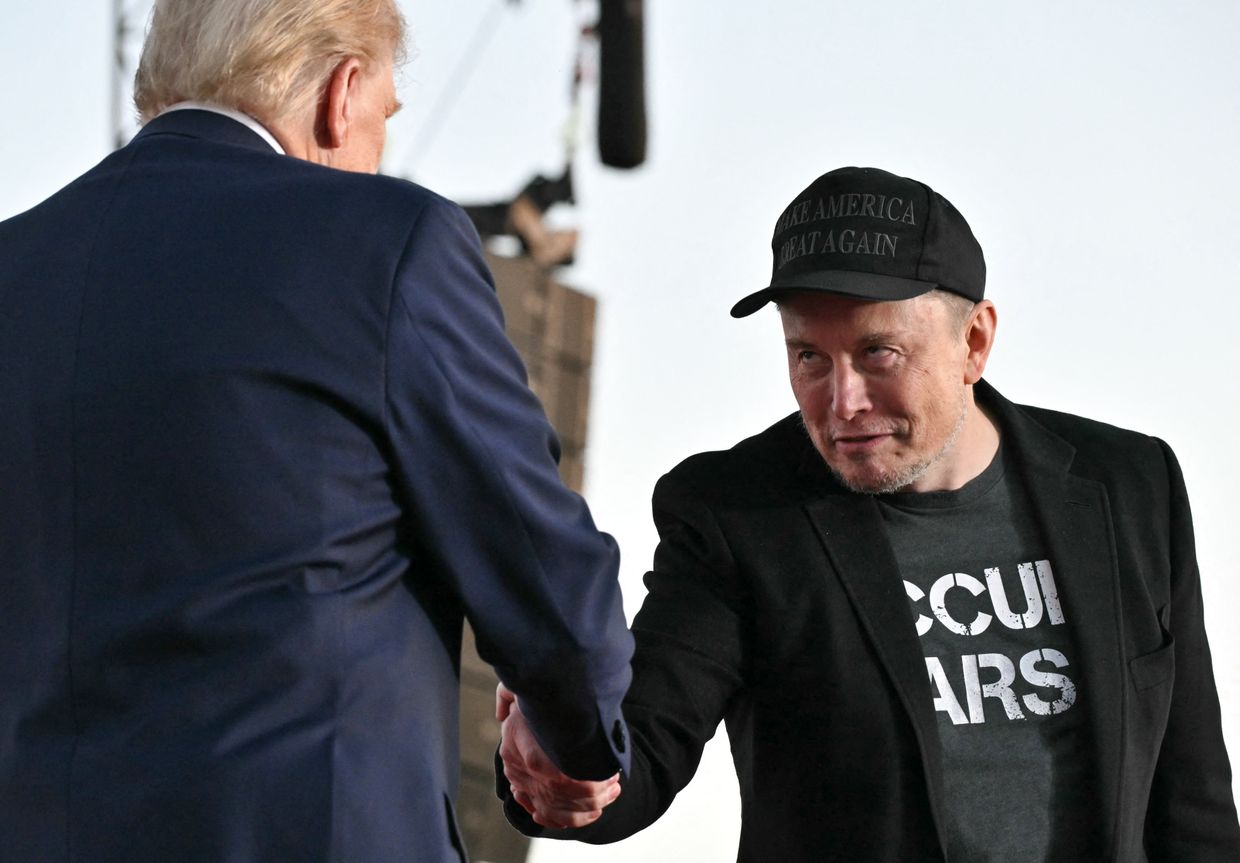
U.S. President Donald Trump on July 6 commented on tech billionaire Elon Musk's plan to create a new political party, calling it "ridiculous" and warning that third-party movements have historically failed in the United States. "I think creating a third party is ridiculous... we've had tremendous success with the Republican Party," Trump told reporters on July 6 before boarding Air Force One in Morristown. "The Democrats have lost their way, but it's always been a two-party system, and I think c
U.S. President Donald Trump on July 6 commented on tech billionaire Elon Musk's plan to create a new political party, calling it "ridiculous" and warning that third-party movements have historically failed in the United States.
"I think creating a third party is ridiculous... we've had tremendous success with the Republican Party," Trump told reporters on July 6 before boarding Air Force One in Morristown. "The Democrats have lost their way, but it's always been a two-party system, and I think creating a third party just adds to the confusion."
These comments came after Musk unveiled plans on July 5 to launch a new political force in the U.S. called the "America Party."
Musk said the party's goal is to "give you back your freedom" and offer an alternative to the entrenched Republican and Democratic systems, a few weeks after a public split with Trump.
The strained relationship between Musk and Trump began to deteriorate significantly after a period when Musk publicly supported Trump's re-election bid and held a high-profile role in the U.S. government's Department of Government Efficiency (DOGE).
Musk's new party announcement followed Trump signing a major tax and spending bill into law, the One Big Beautiful Bill Act, legislation that Musk had strongly criticized.
Trump later commented further in a Truth Social post, saying that third parties bring "complete and total disruption and chaos" and criticizing Musk.
"I am saddened to watch Elon Musk go completely 'off the rails,' essentially becoming a TRAIN WRECK over the past five weeks," Trump wrote.
Trump also linked Musk's political shift to his frustration over the recently passed Republican bill eliminating the federal electric vehicle mandate.
"It is a Great Bill but, unfortunately for Elon, it eliminates the ridiculous Electric Vehicle (EV) Mandate, which would have forced everyone to buy an Electric Car in a short period of time. I have been strongly opposed to that from the very beginning," Trump added.
Musk led DOGE until May 30 and had been a key figure in dismantling U.S. foreign aid institutions, including USAID, which delivered billions in aid to Ukraine.
Weeks after a high-profile public falling out with U.S. President Donald Trump, tech mogul Elon Musk announced the creation of a new political party in the United States, dubbed the "America Party." Musk said on July 5 that the party's aim is to "give you back your freedom" and challenge the traditional two-party Republican and Democratic system.The announcement came a day after Trump signed his sweeping tax cut and spending bill into law, a legislative act that Musk has fiercely opposed. It rem
Weeks after a high-profile public falling out with U.S. President Donald Trump, tech mogul Elon Musk announced the creation of a new political party in the United States, dubbed the "America Party."
Musk said on July 5 that the party's aim is to "give you back your freedom" and challenge the traditional two-party Republican and Democratic system.
The announcement came a day after Trump signed his sweeping tax cut and spending bill into law, a legislative act that Musk has fiercely opposed. It remains unclear if the America Party has been formally registered with election authorities, but Musk indicated it would launch "next year."
Musk's decision follows a poll he conducted on X on July 4, asking his followers if he should create a new political party.He cited the overwhelming support, writing: "By a factor of 2 to 1, you want a new political party and you shall have it! When it comes to bankrupting our country with waste & graft, we live in a one-party system, not a democracy."
The strained relationship between Musk and Trump began to deteriorate significantly after a period where Musk publicly supported Trump's re-election bid and held a high-profile role in the U.S. government's Department of Government Efficiency (DOGE).
In May, Musk announced his departure from DOGE, citing the end of his "scheduled time." Initially, Trump praised him as "one of the greatest business leaders and innovators the world has ever produced."
However, tensions escalated sharply on May 22 after the U.S. House of Representatives passed the "One Big Beautiful Bill Act," a significant tax-cut and spending bill that Trump signed into law on Friday.
Musk vehemently condemned the legislation, calling it a "massive, outrageous, pork-filled Congressional spending bill is a disgusting abomination." He argued that the bill's spending would exacerbate the "already gigantic budget deficit" and "burden American citizens with crushingly unsustainable debt."
Adding to the friction earlier this week, Trump threatened to cut off billions of dollars in federal subsidies to Musk's companies and even hinted at the possibility of deporting the South Africa-born entrepreneur.
Europe must dramatically ramp up its defenses against a resurgent Russia, NATO Secretary General Mark Rutte said in an interview with the New York Times published on July 5, crediting U.S. President Donald Trump for driving the alliance to unprecedented levels of commitment.Rutte, who assumed his role late last year after 14 years as Prime Minister of the Netherlands, has been navigating NATO through a period marked by Russia's expansionist ambitions and questions about the reliability of the Un
Europe must dramatically ramp up its defenses against a resurgent Russia, NATO Secretary General Mark Rutte said in an interview with the New York Times published on July 5, crediting U.S. President Donald Trump for driving the alliance to unprecedented levels of commitment.
Rutte, who assumed his role late last year after 14 years as Prime Minister of the Netherlands, has been navigating NATO through a period marked by Russia's expansionist ambitions and questions about the reliability of the United States as an ally.
"Russia is reconstituting itself at a pace and a speed which is unparalleled in recent history," he told the outlet, adding that "...they are now producing three times as much ammunition in three months as the whole of NATO is doing in a year. This is unsustainable, but the Russians are working together with the North Koreans, with the Chinese and Iranians, the mullahs, in fighting this unprovoked war of aggression against Ukraine."
He emphasized the interconnectedness of security across different regions, noting that a secure Arctic is vital due to increased Chinese and Russian activity, and a secure Atlantic is "crucial" for the U.S. "If the Arctic, if the Atlantic Ocean, if Europe is not secure, the U.S. has a big problem," Rutte said, arguing that Russia is ultimately aiming to attack the U.S.
The Secretary General strongly dismissed Russian Foreign Minister Sergey Lavrov's comments that NATO's new defense spending targets would "bankrupt" members.
"I know Sergey Lavrov very well. He has been foreign minister of Russia since the birth of Jesus Christ, and I’ve never taken him seriously. When you talk about fake news, listen to Sergey Lavrov," Rutte told the NYT. He believes Lavrov's comments are "clearly evidence that the deterrence is working."
Rutte acknowledged concerns about the defense industrial output across the alliance, adding that, "we simply lack the defense industrial base to produce the weapons we need to make sure that we can deter the Russians or the North Koreans or whoever to attack us." He underscored the importance of not just financial investment, but also having sufficient personnel and industrial capacity to effectively utilize weaponry.
On the subject of Ukraine, Rutte confirmed that European allies have significantly increased their financial commitment. "The Europeans have now cobbled together $35 billion in military aid this year to deliver to Ukraine, which is more than last year," he said. He viewed this as a logical and fair shift, with the U.S. expecting Europeans to "take more of the burden when it comes to the concrete support to Ukraine."
While acknowledging the complex discussions surrounding peace talks, Rutte recognized President Donald Trump's role in initiating dialogue with Russian President Vladimir Putin.
"He is the one who broke the deadlock with Putin. When he became president in January, he started these discussions with Putin, and he was the only one who was able to do this. This had to happen. A direct dialogue between the American president and the president of the Russian Federation."
However, Rutte admitted that subsequent peace talks in Istanbul involved Russia sending a less serious delegation, leading to the conclusion that "we are not there yet, and that means that in the meantime you have to make sure that Ukraine has what it needs to stay in the fight."
Despite some perceived divergences in approach between NATO and the U.S. regarding peace talks, Rutte insisted on the American administration's commitment to the conflict's importance.
"The American administration completely takes the view and shares it with the Europeans that this war in Ukraine is crucial for the defense of NATO territory going forward and that we have to make sure that Ukraine is in the strongest possible position to stop the Russians from taking more territory, and that when it comes to a cease-fire or, even better, a peace deal, that Ukraine with some help will be able to prevent Putin from ever attacking Ukraine again in the future."
President Volodymyr Zelensky described his recent phone call with U.S. President Donald Trump as "the best conversation in all this time" in an evening address on July 5."Patriot (missiles) are key to protection from ballistic (missiles). We discussed several other important issues that our teams will work out in detail at meetings in the near future," Zelensky said.The two leaders spoke on July 4, agreeing to strengthen Ukraine's air defenses amid intensified Russian strikes, Zelensky said earl
President Volodymyr Zelensky described his recent phone call with U.S. President Donald Trump as "the best conversation in all this time" in an evening address on July 5.
"Patriot (missiles) are key to protection from ballistic (missiles). We discussed several other important issues that our teams will work out in detail at meetings in the near future," Zelensky said.
The two leaders spoke on July 4, agreeing to strengthen Ukraine's air defenses amid intensified Russian strikes, Zelensky said earlier.
A day prior to speaking with Zelensky, Trump held a phone call with Russian President Vladimir Putin in an effort to discuss ending Russia's war against Ukraine.
"This was probably the best conversation in all this time, it was maximally productive. We discussed the topic of air defenses. I am grateful for the readiness to help," Zelensky said, describing his phone call with Trump.
Relations between Ukraine and the U.S. have previously been strained as the White House pushed Kyiv to sign a lucrative bilateral minerals deal and tried to broker a peace deal with Moscow that did not rule out major concessions for Ukraine.
Zelensky's phone call with the U.S. leader followed media reports and announcements from Washington of a pause in military assistance to Ukraine. Trump, on July 3, denied that Washington has stopped supplying weapons to Kyiv.
Trump described his July 3 conversation with Putin as disappointing, saying that the call "didn't make any progress" in stopping Russia's war against Ukraine.
"I'm very disappointed with the conversation I had today with President Putin," Trump told journalists. "Because I don't think he's there. And I'm very disappointed. I don't think he's looking to stop this fighting."
Editor's note: This story has been updated with additional comments by U.S. President Donald Trump.U.S. President Donald Trump said on July 5 that Russian President Vladimir Putin does not appear interested in ending the war in Ukraine, according to a comment made onboard Air Force One.Trump reiterated that he was "very unhappy" with the July 3 phone call between the two leaders. "It just seems like he wants to go all the way and just keep killing people. It's not good. I wasn't happy with it,"
Editor's note: This story has been updated with additional comments by U.S. President Donald Trump.
U.S. President Donald Trump said on July 5 that Russian President Vladimir Putin does not appear interested in ending the war in Ukraine, according to a comment made onboard Air Force One.
Trump reiterated that he was "very unhappy" with the July 3 phone call between the two leaders.
"It just seems like he wants to go all the way and just keep killing people. It's not good. I wasn't happy with it," Trump told reporters.
The call, which lasted about an hour, was confirmed by the Kremlin to have focused on Ukraine. Putin reportedly told Trump that Russia would continue pursuing its "goals" in the war.
Trump's remarks follow a sharp escalation in Russian missile and drone attacks across Ukraine that have killed and injured hundreds of civilians in recent weeks.
The strikes have hit multiple regions, destroying civilian infrastructure amid persistent calls from Ukraine, the U.S., and Europe for an unconditional ceasefire.
When asked if he can end Russia's war against Ukraine, Trump said, "I don’t know. I can’t tell you whether or not that’s going to happen."
Trump agreed when asked if ending the war is a priority, saying, "Yes. I’d like to see it happen."
The day after his call with Putin, the U.S. president spoke by phone with President Volodymyr Zelensky and said the two had a "very strategic" conversation.
"We talked about different things... I think it was a very, very strategic call," Trump said. When asked about supplying Patriot air defense systems to Ukraine, he replied, "Yeah, we might."
"They're going to need something because they're being hit pretty hard," Trump added.
The statement comes as the U.S. Defense Department has paused deliveries of several key weapons systems, including Patriot missiles and precision-guided munitions, prompting concern in Kyiv.
While Trump has said he wants to help Ukraine, his administration has not imposed new sanctions on Russia since taking office and has not approved additional aid packages.
The U.S. president has instead directed strikes against Iran, targeting three nuclear facilities in June in response to regional escalations, a move critics say contrasts with his cautious approach toward Moscow.
When asked why he appears tougher on Tehran than Moscow, Trump told reporters, "No, I think I'm tougher on Russia than I am on Iran."
Despite two rounds of face-to-face talks between Moscow and Kyiv in May and June in Istanbul, no agreement on a ceasefire has been reached. The negotiations have only resulted in prisoner exchanges, as Moscow continues to push for maximalist demands in peace talks.
President Volodymyr Zelensky and U.S. President Donald Trump held a phone conversation on July 4, agreeing to strengthen Ukraine's air defenses, Zelensky announced on Telegram.The call came as Russia escalated its aerial campaign across Ukraine, including an overnight July 4 attack that struck Kyiv and several other regions, injuring at least 23 civilians and sparking dozens of fires in the capital."Today we discussed the situation: Russian air strikes and, more broadly, the situation on the fro
President Volodymyr Zelensky and U.S. President Donald Trump held a phone conversation on July 4, agreeing to strengthen Ukraine's air defenses, Zelensky announced on Telegram.
The call came as Russia escalated its aerial campaign across Ukraine, including an overnight July 4 attack that struck Kyiv and several other regions, injuring at least 23 civilians and sparking dozens of fires in the capital.
"Today we discussed the situation: Russian air strikes and, more broadly, the situation on the front lines. President Trump is very well informed," Zelensky said.
"We discussed air defense options and agreed to work on increasing airspace protection. We agreed on a meeting between our teams."
Zelensky said the two leaders also discussed Ukraine's defense industry potential and explored possibilities for direct cooperation with U.S. partners.
"We are ready for direct projects with America and believe that this is extremely necessary for security, especially with regard to drones and related technologies," he added.
Trump told Zelensky that the U.S. is willing to assist Ukraine with air defense amid intensified Russian strikes, Axios reported, citing unnamed sources. The call between the two presidents reportedly lasted about 40 minutes.
This conversation followed a phone call between Trump and Russian President Vladimir Putin on July 3, during which the Kremlin said Putin reaffirmed that "Russia will continue to pursue its goals" in its war against Ukraine despite U.S. calls for a ceasefire.
Trump told reporters on July 3 that he was "very disappointed" by the conversation with Putin.
"I don't think he's there... I don't think he's looking to stop this fighting."
The call also followed the U.S. Defense Department's decision to pause shipments of key weapons systems to Ukraine, including Patriot missiles and precision-guided artillery rounds. Kyiv has warned that the delay threatens to weaken its air defenses and emboldens Moscow.
Despite repeated expressions of frustration about Russia's continued aggression, Trump's administration has yet to impose new sanctions or approve additional aid for Ukraine since taking office in January.
While Russia and Ukraine resumed direct talks in Istanbul this year, the two rounds of negotiations — on May 16 and June 2 — have yielded only prisoner exchanges and no progress toward a ceasefire.
U.S. President Donald Trump said he was "very disappointed" with Russian President Vladimir Putin following a phone call on July 3, during which the two leaders discussed the ongoing war in Ukraine. Trump told reporters he "didn't make any progress" and accused Putin of showing no willingness to stop the fighting.Trump also said that he is planning to talk to President Volodymyr Zelensky on July 4. "I'm speaking to President Zelensky tomorrow in the early morning, and I'm very disappointed with
U.S. President Donald Trump said he was "very disappointed" with Russian President Vladimir Putin following a phone call on July 3, during which the two leaders discussed the ongoing war in Ukraine.
Trump told reporters he "didn't make any progress" and accused Putin of showing no willingness to stop the fighting.
Trump also said that he is planning to talk to President Volodymyr Zelensky on July 4.
"I'm speaking to President Zelensky tomorrow in the early morning, and I'm very disappointed with the conversation I had today with President Putin," Trump told journalists. "Because I don't think he's there. And I'm very disappointed. I don't think he's looking to stop this fighting."
Later on July 4, Kremlin spokesperson Dmitry Peskov said Russia "is paying close attention to all of Trump's statements," but added Moscow will continue its full-scale war in Ukraine because "it is not yet possible to achieve goals through diplomatic means."
The hour-long conversation between Trump and Putin marked the sixth time the two leaders have spoken since Trump took office in January. According to Kremlin aide Yury Ushakov, Putin reiterated that "Russia will continue to pursue its goals," refusing to back down from what the Kremlin calls the "root causes” of the conflict.
The White House did not issue a readout of the call. Trump provided few additional details, only saying the discussion covered "a lot of things" and confirming no progress had been made on securing a ceasefire.
The call came just hours before one of the largest Russian aerial assaults on Ukraine in recent months. According to Zelensky, air raid sirens began sounding across Ukraine almost simultaneously with media reports about the Trump-Putin call.
"Russia is once again demonstrating that it is not going to end the war and terror," Zelensky said. "The first air raids in our cities and regions began yesterday, almost simultaneously with the start of media discussions of President Trump's phone call with Putin."
Overnight on July 4, Russian forces launched more than 550 aerial weapons, including over 330 Iranian-type Shahed drones and multiple types of missiles, across Ukraine, with Kyiv as the main target. At least 23 people were injured in the capital, where fires broke out in multiple districts and air pollution reached dangerous levels.
Zelensky renewed calls for increased military assistance from Ukraine's partners, especially the delivery of U.S.-made Patriot missile systems.
"Patriots and their missiles are real defenders of life," he said.
Despite Ukraine's urgent appeals, the U.S. Defense Department has paused shipments of Patriot systems and other key munitions, citing the need to replenish domestic stockpiles. Ukrainian officials have warned that such delays threaten to embolden Russia and intensify attacks on civilians.
Three Democratic Senators have launched an investigation into U.S. President Donald Trump's refusal to impose new sanctions against Russia, the legislators announced in a joint statement on July 3. Since taking office in January, Trump has passed no new sanctions against Moscow. In some cases, he has even eased restrictions, even as Russia intensifies its full-scale war against Ukraine. Senate Democrats Jeanne Shaheen, Elizabeth Warren, and Chris Coons called on the administration to impose new
Three Democratic Senators have launched an investigation into U.S. President Donald Trump's refusal to impose new sanctions against Russia, the legislators announced in a joint statement on July 3.
Since taking office in January, Trump has passed no new sanctions against Moscow. In some cases, he has even eased restrictions, even as Russia intensifies its full-scale war against Ukraine.
Senate Democrats Jeanne Shaheen, Elizabeth Warren, and Chris Coons called on the administration to impose new penalties on the Kremlin and said they planned to investigate Trump's "five-month pause" on sanctions.
"Americans should be asking why a president who says he wants to end a major war is instead letting the aggressor run rampant," the senators said in a joint statement issued July 3.
The statement followed an analysis by the New York Times (NYT), published July 2, which found that Washington's slowed momentum on sanctions created more opportunities for shell companies to funnel sanctioned goods into Russia.
Former U.S. President Joe Biden imposed an average of 170 new sanctions per month on entities tied to Moscow between 2022-2024, according to the NYT. Overall, the Biden administration slapped 6,200 penalties on individuals, businesses, ships, and aircraft connected to Russia.
Without new sanctions to maintain pressure on Moscow, the effects of the Biden sanctions regime have begun to erode, the NYT reported. An analysis of trade records and other data. showed that over 130 companies in China and Hong Kong are advertising sales of sanctioned computer chips to Russia. Despite this illegal activity, none of the companies have been sanctioned.
"On top of halting key assistance to Ukraine, President Trump has blocked regular updates to our sanctions and export controls for five months and counting—enabling a growing wave of evaders in China and around the world to continue supplying Russia's war machine," Senators Shaheen, Warren, and Coons said in their statement.
The senators called on Trump to "actively enforce the existing sanctions against Russia" and urged the administration to partner with EU and G7 nations to mount pressure on Moscow.
"Instead of taking clearly available steps to pressure the aggressors, President Trump is doing nothing and we will be investigating this missed opportunity to push for an end to this war," they said.
Along with letting U.S. sanctions on the Kremlin go stagnant, the Trump administration has removed sanctions on Karina Rotenberg, the wife of a key ally of Russian President Vladimir Putin, and notably exempted Russia from its sweeping "Liberation Day" tariffs.
reportedly obstructed bipartisan congressional efforts to target the Russian economy. Trump has asked Republican senators to weaken a proposed sanctions bill and has urged delays in a vote on the legislation.
The bipartisansanctions bill, introduced by Republican Senator Lindsey Graham and Senate Democrat Richard Blumenthal, seeks to impose a 500% tariff on imports from countries that continue purchasing Russian oil and raw materials.
U.S. President Donald Trump brushed off a reporter's question on July 3 about pausing weapons deliveries to Ukraine, claiming Washington is "giving weapons" to Kyiv. The Pentagon previously confirmed that the U.S. has already halted some military aid shipments to Ukraine in order to conduct what it calls a "capability review" of its own stockpiles. "Why did you pause weapons shipments to Ukraine?" a reporter asked Trump as the president prepared to board Air Force One."We haven't," Trump replied
U.S. President Donald Trump brushed off a reporter's question on July 3 about pausing weapons deliveries to Ukraine, claiming Washington is "giving weapons" to Kyiv.
The Pentagon previously confirmed that the U.S. has already halted some military aid shipments to Ukraine in order to conduct what it calls a "capability review" of its own stockpiles.
"Why did you pause weapons shipments to Ukraine?" a reporter asked Trump as the president prepared to board Air Force One.
Trump then offered a contradictory answer, saying the U.S. is "trying to help" Ukraine while also claiming that former U.S. President Joe Biden depleted the country's weapons stocks with military aid to Kyiv and that Washington must defend its own interests.
"But we've given so many weapons — but we are giving weapons, and we're working with (Ukraine), we're trying to help them," Trump said.
"But we haven't... You know, Biden emptied out our whole country giving them weapons and we have to make sure that we have enough for ourselves."
Trump then asked the reporter which media outlet he represented.
Reports that the U.S. had suddenly paused some weapons shipments — including deliveries of desperately needed air defense missiles — left officials in Kyiv scrambling for answers. Trump's response provides little clarity and even less reassurance to Ukrainians facing increasingly deadly Russian missile attacks night after night.
The decision to halt the shipments "was made to put America's interests first following a (U.S. Defense Department) review of our nation's military support and assistance to other countries across the globe," White House Deputy Press Secretary Anna Kelly said in a statement after Politico broke the story on July 1.
The Washington Post later reported that a shipment of U.S. weapons, including advanced air defense systems and precision missiles, was halted in Poland where it was awaiting delivery to Ukraine.
U.S. State Department Spokesperson Tammy Bruce, like Trump, insisted that the U.S. was not pulling support from Ukraine.
"This is not — I will reinforce this — this is not a cessation of us assisting Ukraine or of providing weapons," Bruce told reporters at a briefing.
"This is one event in one situation, and we'll discuss what else comes up in the future. But be wary of painting too broad a brush there."
Trump's remarks about the weapons shipments followed an update on his July 3 phone call with Russian President Vladimir Putin.
"We had a call. It was a pretty long call. We talked about a lot of things," he said.
U.S. President Donald Trump told reporters on July 3 that he "didn't make any progress" on ending the war in Ukraine during his call with Russian President Vladimir Putin earlier in the day."We had a call. It was a pretty long call. We talked about a lot of things," Trump said ahead of his flight to an Iowa event.When asked if he had made any progress with Putin on the call, Trump responded: "No, I didn't make any progress with him today at all."The two leaders held an hour-long conversation ear
U.S. President Donald Trump told reporters on July 3 that he "didn't make any progress" on ending the war in Ukraine during his call with Russian President Vladimir Putin earlier in the day.
"We had a call. It was a pretty long call. We talked about a lot of things," Trump saidahead of his flight to an Iowa event.
When asked if he had made any progress with Putin on the call, Trump responded: "No, I didn't make any progress with him today at all."
The two leaders held an hour-long conversation early in the on July 3 focused on Russia's war in Ukraine and the situation in the Middle East. The call marks the sixth conversation between the two men since Trump took office in January.
Kremlin aide Yury Ushakov told reporters earlier in the day that Putin said "Russia will continue to pursue its goals" in the war against Ukraine.
"Our president said that Russia will pursue its goals, specifically addressing the root causes that led to the current situation, and will not back down from these objectives," Ushakov added.
The White House did not provide a read out of the meeting, and Trump did not provide further comment on the phone call.
Since taking office, Trump has attempted to broker a ceasefire between Ukraine and Russia to no avail. Despite two rounds of negotiations between Kyiv and Moscow, Putin has refused to implement a ceasefire, citing his maximalist demands.
While Trump has expressed frustration with Russia's continued aggression, his administration has not imposed new sanctions nor taken steps to pressure the Kremlin directly.
Putin's message came amid a surge of Russian drone and missile attacks across Ukraine that have killed and injured hundreds of civilians in recent weeks.
The strikes have destroyed numerous infrastructure as Russia intensifies its assault despite repeated calls from Kyiv, Washington, and European leaders for an unconditional ceasefire.
The phone call also came just a day after the U.S. Defense Department paused shipments of key weapons systems to Ukraine, including Patriot air defense missiles and precision-guided munitions. Ukraine's Foreign Ministry has warned that the delay undermines defense efforts and risks emboldening Russia to escalate further.
President Volodymyr Zelensky, speaking from Denmark earlier in the day, said that achieving peace would require direct talks between national leaders.
The president described Trump and Putin as "completely different people" but emphasized that only Putin makes decisions in Russia.
"In Russia, only Putin makes decisions, which is why we need a meeting at the leadership level if we want to have peace," Zelensky said.

 Connexion