❌

Vue normale

Russia is using inaccurate missiles that can miss by hundreds of meters to attack Ukrainian cities – and plans to scale them up
18 septembre 2026 à 15:26

russia's arctic bases sit near-naked air defenses vanish guard moscow refineries burning inland · post s-400 defense missile launcher vehicles 2018 file sergei malgavko/tass rferl ukraine news ukrainian reports

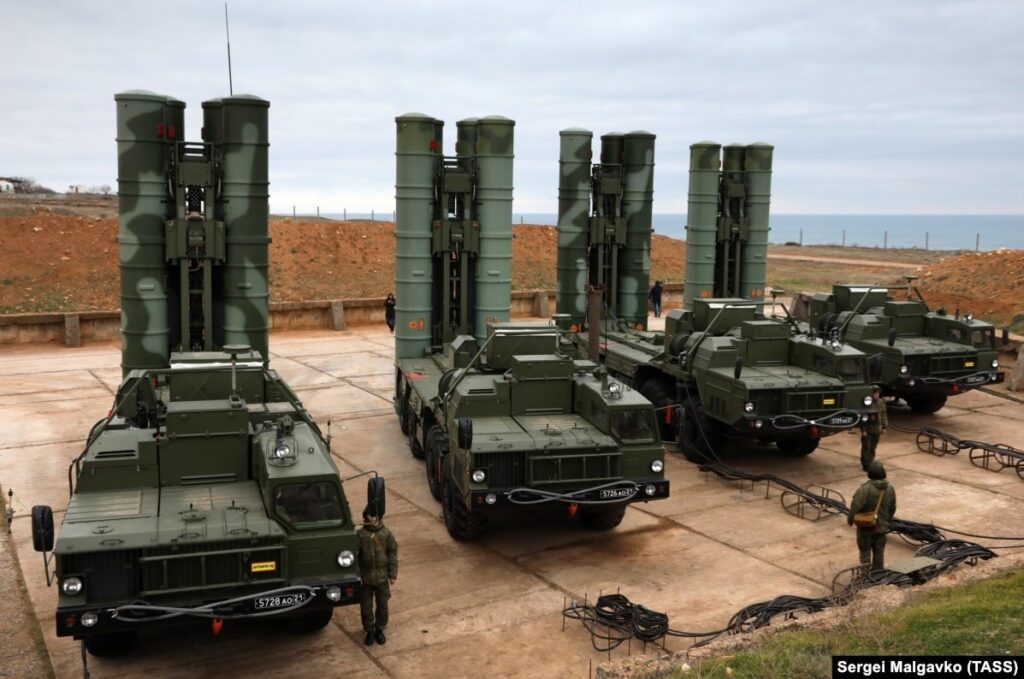
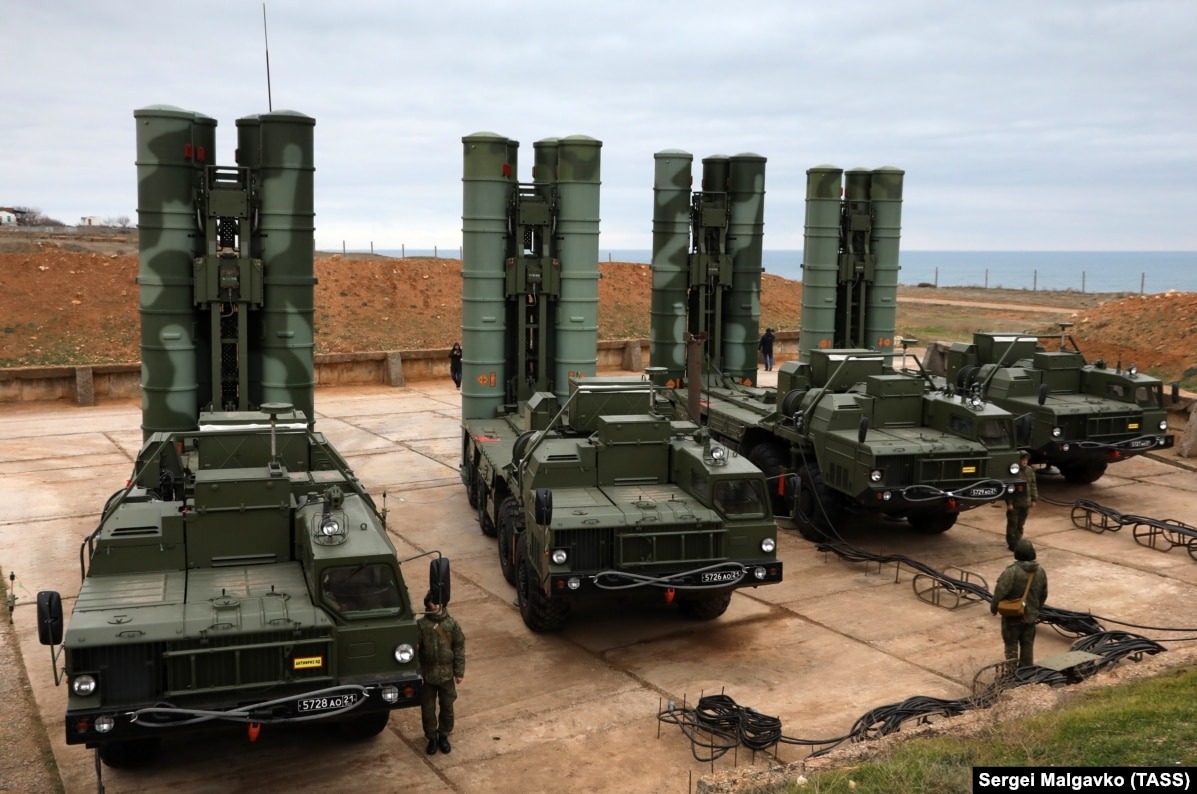
Russia has begun using large numbers of a missile originally designed as a training target for air-defense crews, despite the weapon being significantly less accurate than the ballistic missiles Russia normally uses for precision strikes. The RM48U is now being launched against targets in Ukraine from S-400 air-defense systems.

The development comes as Russia has sharply increased its use of ballistic missiles against Ukrainian cities in recent months, while Ukraine faces a critical shortage of the interceptors needed to defend against them. Russian forces had more than tripled their monthly ballistic missile launches between April and July, according to Ukrainian military intelligence, as Ukraine's stocks of Patriot interceptors have dwindled.

More than half of the 228 ballistic and hypersonic missiles Russia launched in July and the first eight days of August were RM48Us, according to Ukrainian data reviewed by Reuters in an investigation published on 18 September.

A training missile turned into an inaccurate weapon

The RM48U was originally developed as a training target to help Russian air-defense crews practice intercepting incoming threats. It was not designed as a precision ground-attack missile.

Ukrainian investigators told Reuters that the missile is less powerful and less accurate than the Iskander, Russia's main short-range ballistic missile. They estimate that RM48Us deviate from their intended targets by around 300 meters on average.

The missiles nevertheless follow a high-speed ballistic trajectory when used in combat, making them difficult for Ukrainian air defenses to intercept.

Russia launches the RM48U from S-400 systems, repurposing part of its air-defense arsenal for offensive strikes.
russia's arctic bases sit near-naked air defenses vanish guard moscow refineries burning inland · post s-400 defense missile launcher vehicles 2018 file sergei malgavko/tass rferl ukraine news ukrainian reports
Explore further

Ukraine strikes two Russian S-400 launchers in Bryansk. The same systems were used to attack Kyiv overnight.

Russia is using inaccurate missiles at scale

The number of RM48U launches increased sharply during the summer.

Russia launched 158 ballistic and hypersonic missiles against Ukraine in July, according to Ukrainian data reviewed by Reuters. Of those, 87 were RM48Us.

Russia then launched another 36 RM48Us among 70 ballistic and hypersonic missiles fired during the first eight days of August.

July was the highest month for Russian ballistic and hypersonic missile launches since the start of the full-scale invasion, according to the Ukrainian data.

The surge in RM48U use also coincided with a major decline in Russia's use of Iskanders. Russia launched more than 100 Iskanders in June but only 38 in July.

The shift indicates that Russia is using the less capable RM48U to sustain its ballistic missile campaign to continue causing indiscriminate destruction in Ukrainian cities while conserving more capable weapons.

RUSI analyst Sidharth Kaushal told Reuters that this allows Russia to preserve missiles such as Iskanders, as well as other more advanced weapons, for future attacks.

Less accurate does not mean less dangerous

The RM48U's poor accuracy has already had deadly consequences.

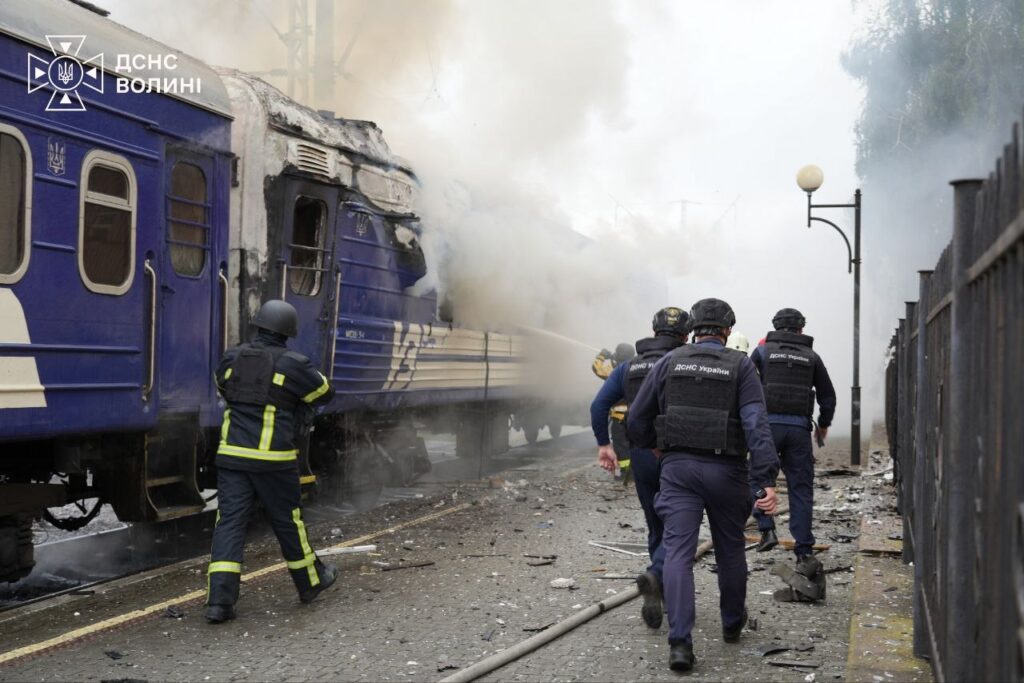
Ukrainian investigators concluded that an RM48U struck a railway platform in the Brovary district of Kyiv Oblast on 5 August, killing eight people. 

According to Ukrainian prosecutors cited by Reuters, the missile's warhead also scatters metal fragments over a wide area.

The attack illustrates the danger of Russia using a weapon that was never designed for precision strikes in populated areas. Even when the missile misses its intended target, its large deviation can leave civilians and civilian infrastructure within the affected area.

Russia denies deliberately targeting civilians and says it strikes military and other strategic targets.

Russia plans to produce more

Ukraine's military intelligence told Reuters that Russia plans to produce 480 RM48U missiles in 2026, more than twice the 200 produced last year.

That would give Russia a growing supply of a relatively simple ballistic weapon that can be used alongside its more sophisticated missiles.

The large-scale deployment of the RM48U represents a new development in Russia's ballistic campaign: a missile built to serve as a training target for air-defense crews is now being used as an offensive weapon against Ukraine.

At a time when Ukraine is struggling to replenish the scarce interceptors needed to stop Russia’s ballistic missiles, Moscow is expanding the range of weapons it can use to strike Ukrainian cities, killing more civilians and destroying more civilian infrastructure with each escalation.


“A warning to companies that remain”: Russia takes control of Nestlé and Auchan’s assets – companies that stayed in Russia following the full-scale invasion of Ukraine

18 septembre 2026 à 12:03

putin at the eastern economic forum in vladivostok on 5 september 2025

Russia has placed the Russian assets of French retailer Auchan, Swiss food giant Nestlé, and the former Leroy Merlin chain under temporary management, stripping the companies of effective control over their businesses in the country.

Foreign companies have long been urged to leave Russia because their continued operations generate revenue for a state waging war against Ukraine. They also face growing risks of asset seizure, legal and financial liabilities, and reputational damage as the Kremlin increasingly uses foreign-owned businesses as political leverage.

Russian President Vladimir Putin signed the decree on 17 September, transferring the assets to L.E.V. Management, a little-known Russian company. The decree also covers Russian assets linked to French logistics companies FM Logistic and Bati Logistics.

The measure does not formally change ownership. However, the companies' Russian assets are now controlled by the Kremlin-appointed administrator, and similar temporary-management arrangements have previously preceded forced sales or transfers to Russian buyers.

L.E.V. Management is headed by Andrei Krayushkin, a Russian Interior Ministry major general who previously served as first deputy head of the ministry's migration department.

According to Reuters, the Kremlin justified the move by pointing to the companies' ties to countries Russia considers "unfriendly." Kremlin spokesperson Dmitry Peskov said the countries involved are actively supporting Ukraine and participating in actions against Russia.

Companies warned they could lose their assets

The move comes after years of warnings to Western companies that remained in Russia carried an increasing risk of expropriation.

Denys Svyrydenkov, a representative of the B4Ukraine coalition, told Euromaidan Press that the organization had repeatedly contacted Auchan, Nestlé, and Leroy Merlin, warning them that their Russian assets could be seized.

"We repeatedly warned these companies about the serious and growing risks of continuing to operate in Russia, including the possibility of losing their businesses through nationalisation," Svyrydenkov said.

According to Svyrydenkov, the companies defended their continued presence in Russia by arguing that they provided essential goods and protected the livelihoods of Russian employees.

He rejected both arguments, saying Russia is largely self-sufficient in food and that Western sanctions do not prevent food or humanitarian goods from reaching the country. He also pointed to Russia's severe labor shortage and historically low unemployment, arguing that alternative employment opportunities are widely available.

"By staying, they were effectively running businesses that were no longer truly theirs," Svyrydenkov said.

Auchan and Nestlé remained in Russia

The three companies took different approaches after Russia launched its full-scale invasion of Ukraine in February 2022.

Auchan did not leave Russia and continued operating its large retail network. It currently has around 230 stores across 100 Russian cities. The chain's Russian turnover reached 127 billion rubles ($1.5 billion) in the first half of 2026, according to The Moscow Times.

Nestlé also remained, but reduced its Russian operations. The company halted investments, withdrew some brands including KitKat and Nesquik, and said it did not intend to profit from its Russian business. It still operates six production sites in Russia, making products including coffee, confectionery, baby food, and pet food.

Leroy Merlin's owner announced its departure from Russia in 2023. Its Russian legal entity was renamed Le Monlid, while its stores now operate under the Lemana Pro brand.

Nestlé said on 18 September that it was assessing its options and would take "all necessary steps" to protect its rights and ensure business continuity, particularly for its employees.

auchan mall russia newsru 95f5d5a4-920d-11ef-a84f-02420a0000c9_930
Auchan mall in Russia. Illustrative image: News.ru

A warning to companies still operating in Russia

The seizure reflects a broader pattern that has emerged since Russia began using temporary administration to take control of Western-owned businesses.

Companies including Danone, Carlsberg and Finnish energy firm Fortum have previously seen their Russian assets placed under state control. Reuters reported that Russia had seized more than $50 billion in foreign assets by 2025.

Svyrydenkov said the latest move was "more than predictable," arguing that Russia has repeatedly used Western companies' exposure to its domestic market as leverage.

"The Kremlin's seizure of the Russian assets of Auchan, Nestle and the former Leroy Merlin reinforces a reality that has been evident for years: Russia is a hostile and unpredictable environment where foreign companies' assets remain at the mercy of an authoritarian regime," he said.

He warned that companies remaining in Russia face the possibility of sudden expropriation while also continuing to generate economic activity inside a country waging war against Ukraine.

"The latest asset seizures should serve as a warning to all companies still operating in Russia: waiting for the Kremlin to decide the fate of your business is not a risk-management strategy," Svyrydenkov said.

Thousands are starving in occupied Oleshky. People have no food, no way out, and Russian forces bomb incoming aid

17 septembre 2026 à 17:54

Oleshky, Kherson Oblast, has been under Russian occupation since 2022, following Russia’s capture of the city during the initial phase of its full-scale invasion of Ukraine. Photo: Dmyto Lubinets

Oleshky, a Ukrainian city under Russian occupation in Kherson Oblast, is facing a severe humanitarian crisis, with more than 6,000 people, including around 200 children, potentially trapped there, according to Ukrainian Ombudsman Dmytro Lubinets.

Civilians are going without food, drinking water, medicine, and other basic necessities while facing daily shelling and drone attacks, Lubinets said.

The crisis has become so desperate that some residents are trying to escape on their own without waiting for an organized evacuation, crossing mined fields because they see no other way out. They risk being killed by mines or Russian drones, but are attempting to leave because staying in Oleshky has become even more dangerous.

“People need to be saved,” Lubinets said, describing the city as a “death trap.”

Thousands remain trapped

Lubinets said his office has received 176 appeals concerning the humanitarian situation in the temporarily occupied territories of Kherson Oblast and has verified 358 people who urgently need assistance to safely leave the area.

He stressed that these are only people his office has managed to identify. Based on the population of Oleshky and the surrounding area, more than 6,000 people may still remain there, including around 200 children, he said.

The civilians remaining in the city are effectively in a “gray zone,” according to Lubinets. They face daily shelling and drone attacks while lacking food, drinking water, medicine, and other essential assistance.

“The stories make your blood run cold. And so there is only one task — to get our people out of this deadly danger,” Lubinets said.

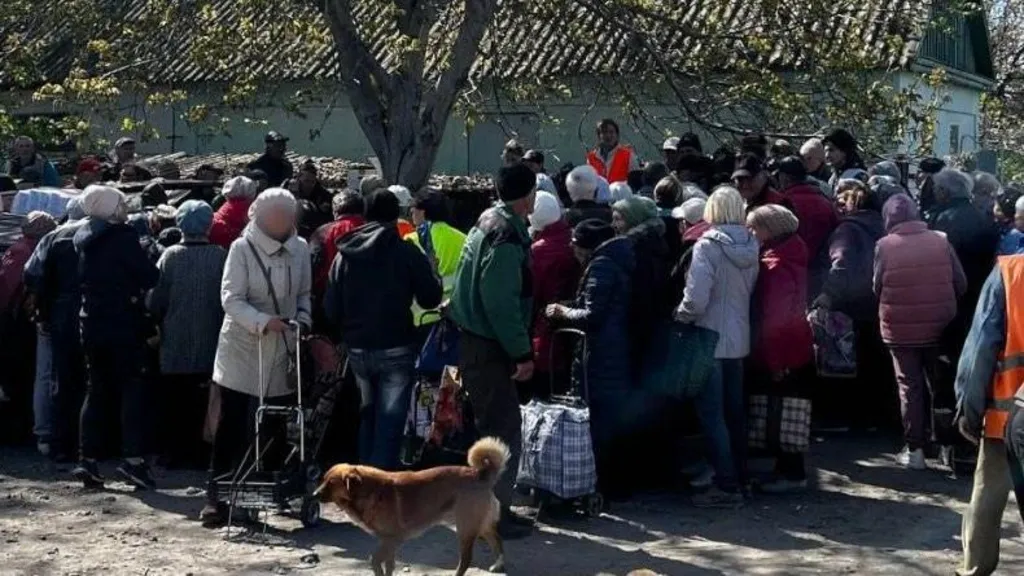
Residents, many elderly and carrying shopping trolleys, gather outdoors in occupied Oleshky, Kherson Oblast.
People in Oleshky wait for food supplies. Hola Prystan is near Oleshky. Photo: BBC

“There is real hunger there”

Other reporting indicates that the shortages have persisted for months. According to Kherson Regional Military Administration head Oleksandr Prokudin, food deliveries to Oleshky have almost completely stopped, while Russian forces prevent residents from evacuating.

Natalia Soboleva, an Odesa volunteer who tracks the situation in Oleshky, told Espreso that residents are gathering grass and searching through destroyed basements for food.

“There is hunger there, real hunger,” she said.

The blockade has also affected humanitarian efforts. Soboleva said Russian forces attacked humanitarian vehicles attempting to bring food and water into the city. During the latest reported attempt on 1 September, Russian troops shelled four volunteer vehicles.

The crisis in Oleshky has been independently documented by international organizations and media. The UN, Human Rights Watch and the OSCE have all reported severe shortages of food and medical care, dangerous conditions for civilians, and restrictions on humanitarian aid and evacuation.

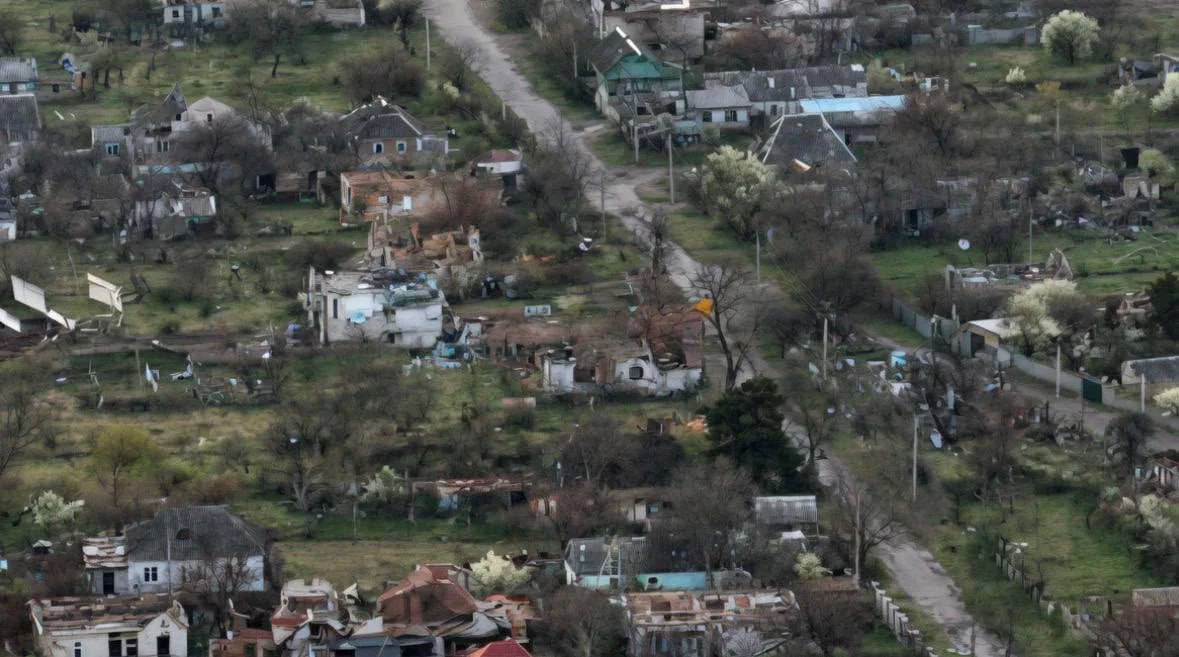
Occupied Oleshky.
Explore further

International monitors confirm Russia’s blockade of occupied Oleshky, where the living starve and the dead go unburied

Russia has not confirmed evacuation, so civilians risk mines to escape

The ombudsman said some people are now trying to leave independently. They are crossing mined areas despite the risk of being killed by a mine or targeted by a drone because they do not see another way to escape.

This desperation has also been documented by Human Rights Watch, which said there is no organized evacuation route from Oleshky and that people attempting to leave face Russian military checkpoints and a dangerous journey through occupied territory.

Lubinets said Ukraine has been pressing for an organized humanitarian evacuation.

Ukraine and Russia had previously reached agreements and established clear procedures for such a mission, he said. Lubinets also secured the International Committee of the Red Cross’ readiness to participate within its mandate.

Ukraine prepared a list of people for evacuation and coordinated with its Security and Defense Forces to establish a ceasefire during the humanitarian mission.

But Russia has not confirmed its readiness to carry out the evacuation, according to Lubinets.

Explore further

Mined in, starved out, hunted from above—life in the towns Russia demands at the peace table

Months ago, he said, he informed international organizations, including the United Nations and the ICRC headquarters in Geneva, about the critical situation and called for assistance to prevent mass deaths.

Lubinets said his office continues to collect and verify information and coordinate with the ICRC, international organizations and Ukrainian authorities. It is also continuing to press Russia for an urgent evacuation of civilians remaining in Oleshky.

The situation is difficult to independently verify because Oleshky is under Russian occupation and access to the city is severely restricted. But reports of the humanitarian crisis have been corroborated by the UN, Human Rights Watch, the OSCE and other international organizations, as well as Ukrainian and international media.

EU pledges €3.3 billion for Ukraine, von der Leyen says “more is coming” as Russia’s escalating air war makes life in Ukrainian cities increasingly difficult

17 septembre 2026 à 16:40

EU Commission President Ursula von der Leyen says Europe will provide Ukraine with another €3.3 billion for missiles and drones as Russia intensifies attacks on Kyiv and seeks to make daily life in Ukraine's cities impossible.

Ukraine has repeatedly appealed to its partners for more air defense as Russia develops increasingly sophisticated ways to attack Ukrainian cities, while Ukraine’s stocks of air-defense interceptors have fallen to critically low levels.

Following a call with President Volodymyr Zelenskyy, von der Leyen said the EU would disburse the funds on 18 September. She also said the EU had approved funding for Patriot air defense systems through its Ukraine Support Loan.

Ukraine needs more air defense

Russia has increasingly combined large numbers of attack drones with ballistic and cruise missiles, forcing Ukraine to defend vast areas while facing shortages of high-end interceptors.

The most difficult targets are Russia’s ballistic missiles, which can reach Ukrainian cities within minutes and require specialized systems such as Patriot to intercept. Ukraine has repeatedly called for more Patriot batteries and interceptors as Russia increases missile attacks.

Ukraine also needs additional air defense capabilities to counter Russia’s increasingly sophisticated drone attacks. Russia is deploying faster, more advanced Geran-type drones that are more difficult to intercept, increasing pressure on Ukraine’s already limited air-defense stocks.

Von der Leyen said the EU had approved funding for Patriot systems last week, but acknowledged that “clearly more is needed.”

The new €3.3 billion package will fund the procurement of missiles and drones for Ukraine, strengthening its ability to defend against Russian attacks.

I just had a phone call with President @ZelenskyyUa.

Tomorrow we will disburse €3.3 billion for missile and drones in Ukraine.

Full read-out ↓https://t.co/UYDT9vn3zC

— Ursula von der Leyen (@vonderleyen) September 17, 2026

Europe proposes joint air defense development

Von der Leyen also announced that the EU is prepared to use remaining funds from its Security Action for Europe (SAFE) program to launch a new joint EU-Ukraine defense initiative.

The proposed program would focus on developing a European air and missile defense system, building on the jointly developed anti-ballistic Freya system.

The goal is to combine Ukraine’s battlefield experience and defense innovation with European technology and industrial capacity, according to von der Leyen.

The announcement comes as Ukraine is trying to strengthen its air defenses ahead of another winter of Russian attacks, when strikes against energy and other critical infrastructure could have an especially severe impact on civilians.

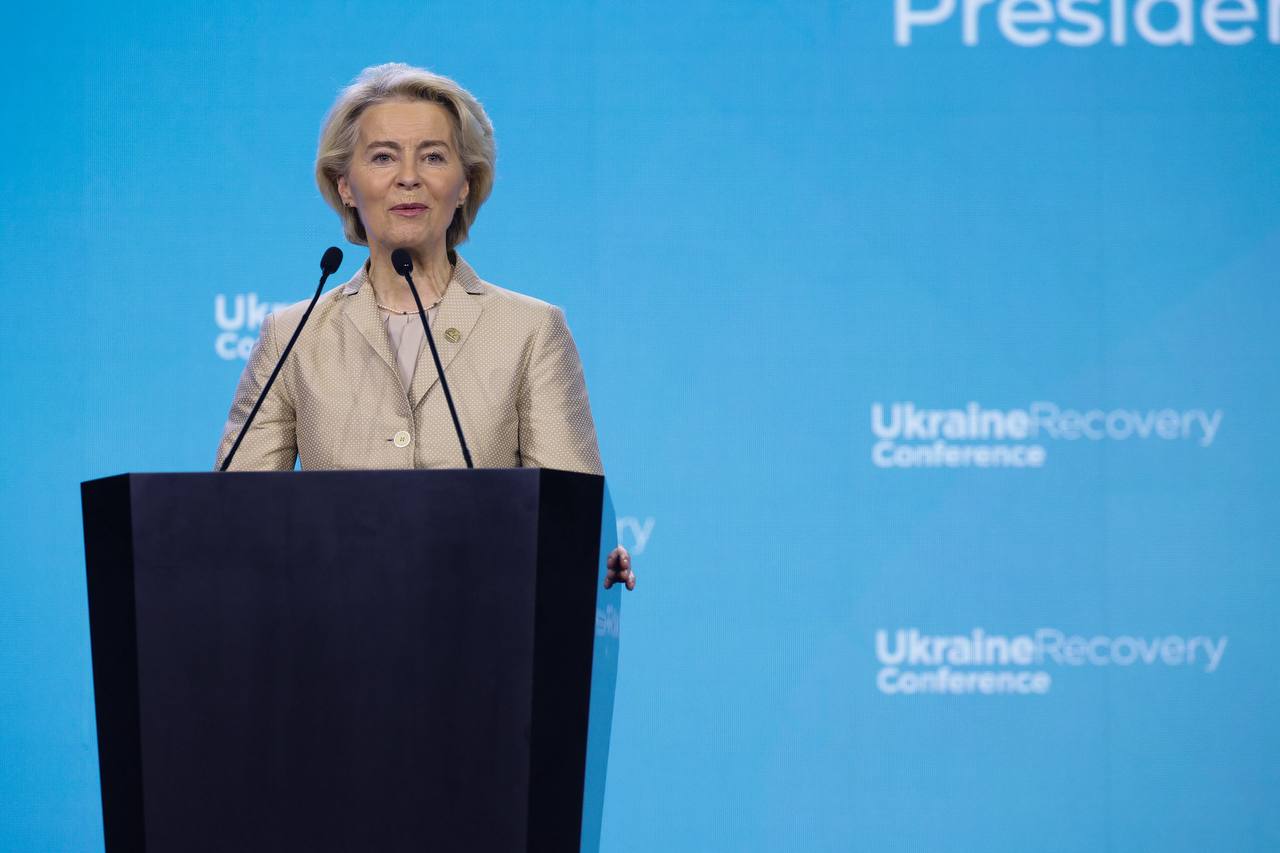
title · post ursula von der leyen during ukraine recovery conference gdańsk poland 2026 news ukrainian reports
Explore further

The EU has billions in unspent defense funds. It wants to use them for projects with Ukraine

Von der Leyen calls for broader support

Von der Leyen said the EU has already mobilized nearly €15 billion for Ukraine in 2026, with additional support planned. She added that “more is coming.”

She also said Ukraine needs to complete reforms in the Verkhovna Rada to unlock further funding and continue its path toward EU membership.

“Europe is stepping up,” von der Leyen said. “Now others must step up their support too.”

  • ✇Euromaidan Press
  • Russia’s war has devastated Donetsk Oblast, with losses already exceeding $26 billion
    Donetsk Oblast’s preliminary economic losses from Russia’s full-scale invasion exceeded 1.08 trillion hryvnias ($26 billion) as of 1 August 2026, according to data provided by the Donetsk Regional Military Administration to Radio Free Europe/Radio Liberty’s Donbas.Realities project. Donetsk Oblast has been at the center of Russia’s war against Ukraine since 2014, with the frontline running through the region and Ukrainian-controlled towns facing daily Russian attacks since 2022. Only ab
     

Russia’s war has devastated Donetsk Oblast, with losses already exceeding $26 billion

17 septembre 2026 à 16:01

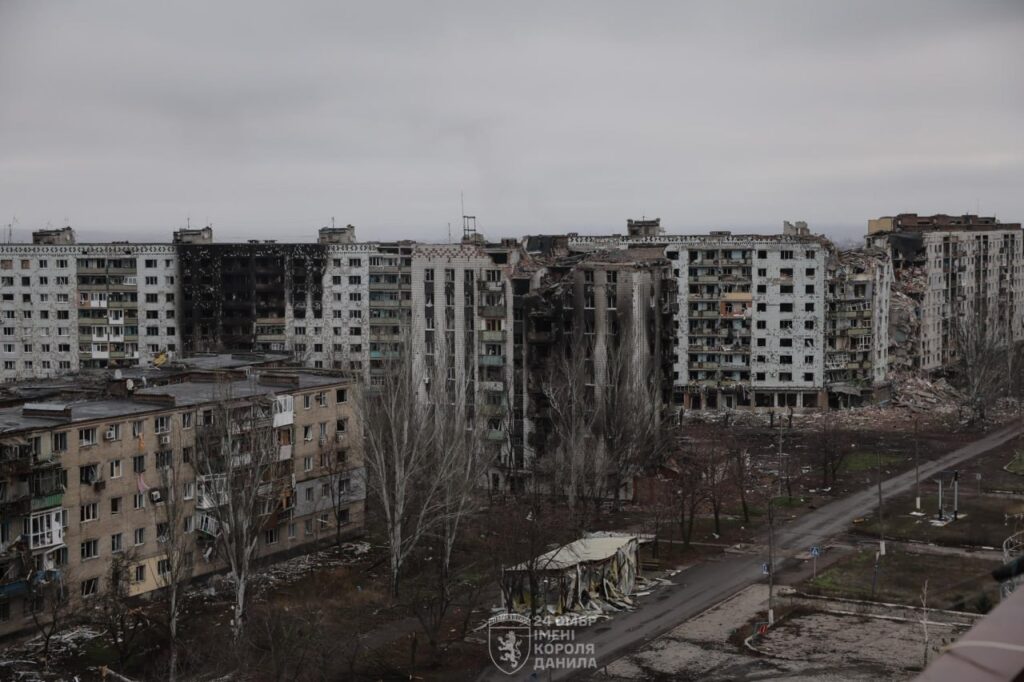
Damaged residential buildings in Kostiantynivka, Donetsk Oblast, 9 April 2026. Photo: UA Land Forces

Donetsk Oblast’s preliminary economic losses from Russia’s full-scale invasion exceeded 1.08 trillion hryvnias ($26 billion) as of 1 August 2026, according to data provided by the Donetsk Regional Military Administration to Radio Free Europe/Radio Liberty’s Donbas.Realities project.

Donetsk Oblast has been at the center of Russia’s war against Ukraine since 2014, with the frontline running through the region and Ukrainian-controlled towns facing daily Russian attacks since 2022. Only about 30% of the oblast remains under Ukrainian control.

Industry accounts for most losses

According to the administration, businesses in the region’s real economy suffered more than 1.08 trillion hryvnias in losses, including lost profits, Donbas.Realities reported.

Industry accounted for 909.4 billion hryvnias ($22 billion) of the estimate, while the electricity and gas sectors suffered 156.5 billion hryvnias ($3.8 billion) in losses.

Agriculture accounted for 11.8 billion hryvnias ($285 million), transport for 1.5 billion hryvnias ($36 million), and other sectors for another 1 billion hryvnias ($24 million).

The losses among businesses operating in the social sphere were separately estimated at 100 million hryvnias ($2.4 million).

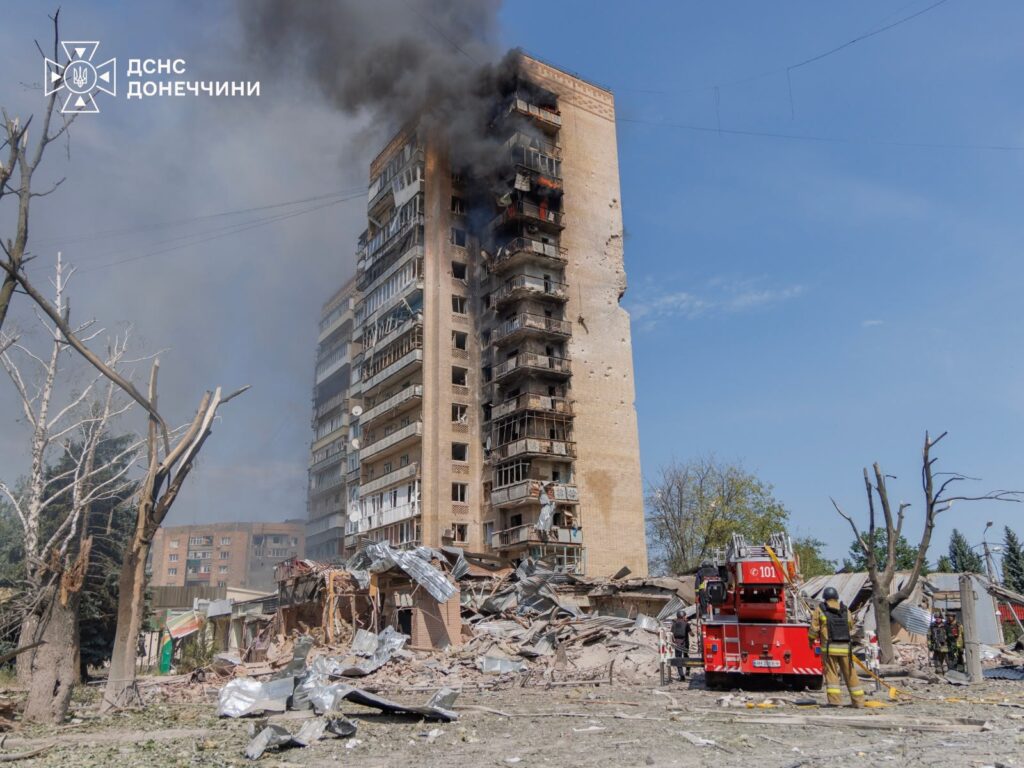
Emergency workers responding to the aftermath of a Russian airstrike on a residential building in Kramatorsk, Donetsk Oblast, Ukraine, on 4 August 2026. Photo: Ukraine's State Emergency Service

Full extent of damage remains unknown

The administration said its Department of Economy is collecting and consolidating information on losses caused by Russia’s invasion.

The regional administration said the figure is likely incomplete, as ongoing fighting and the scale of destruction make it impossible to determine the full extent of the damage.

“Determining the full extent of material damage caused in Donetsk Oblast is currently impossible,” the administration said, citing ongoing hostilities, the scale of destruction, limited access to damaged or destroyed sites, and the loss of documentation from occupied territories and areas of active fighting.

The administration emphasized that the figures are preliminary estimates and do not represent the region’s full material losses.

A final assessment can only be made after the security situation stabilizes and temporarily occupied territories are liberated, allowing authorities to properly document and assess the damage, it said.

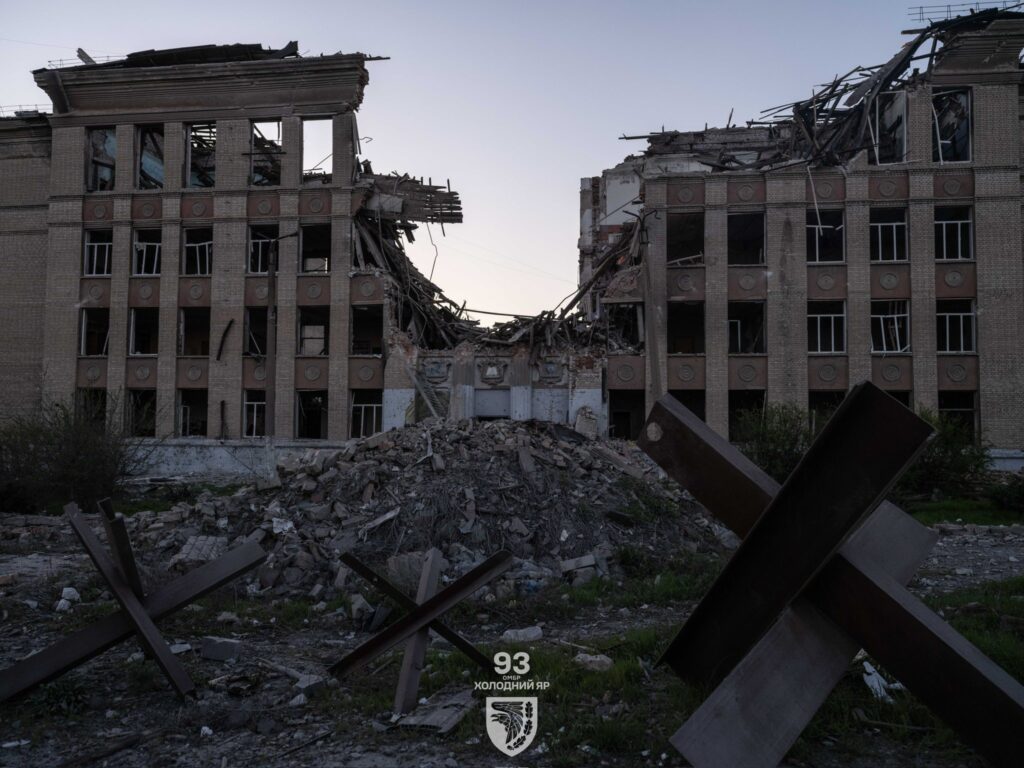
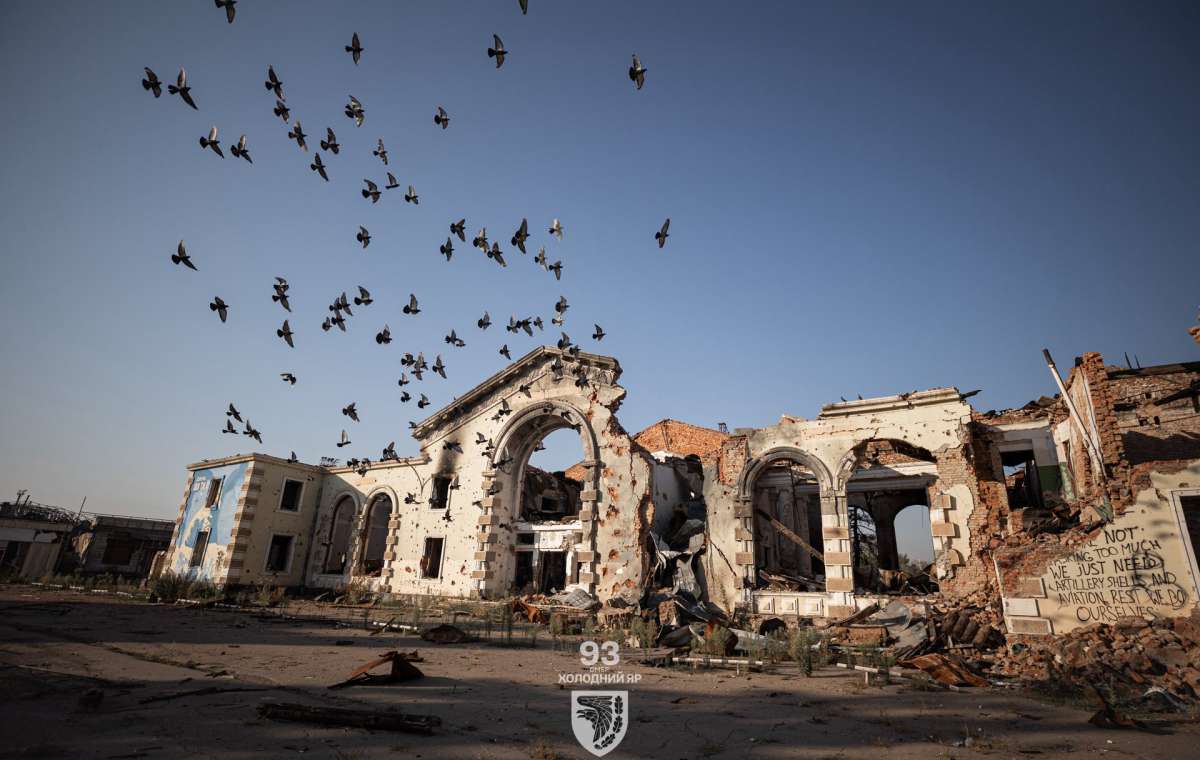
Ruins in Kostyntynivka, Donetsk Oblast, May 2025.
Ruins in Kostyntynivka, Donetsk Oblast, May 2025. Photo: 93rd Brigade

Most of Donetsk Oblast remains under Russian control

About 30% of Donetsk Oblast remains under Ukrainian control, according to the regional administration.

The region has been a major battlefield throughout the full-scale war, with Russian forces continuing to attack Ukrainian-controlled areas while large parts of the region remain occupied.

The scale of the damage in Donetsk Oblast forms part of the much broader economic cost of Russia’s invasion. At the beginning of 2026, Ukrainian authorities and international organizations estimated Ukraine’s overall losses since the start of the full-scale invasion at more than $195 billion, Donbas.Realities reported.

  • ✇Euromaidan Press
  • Russia kills captain of Tanzanian-flagged ship in latest attack on civilian shipping in Black Sea
    Russia killed the captain of a Tanzanian-flagged civilian vessel and wounded three crew members in a drone strike in the Black Sea on 17 September, Ukraine’s Ministry for Restoration, Infrastructure and Transport said. The ministry said Russia is “systematically attacking Ukrainian ports, port infrastructure and civilian commercial vessels,” threatening both people and international shipping in the Black Sea. The vessel was heading toward one of Ukraine’s ports when it was attacked.
     

Russia kills captain of Tanzanian-flagged ship in latest attack on civilian shipping in Black Sea

17 septembre 2026 à 15:20

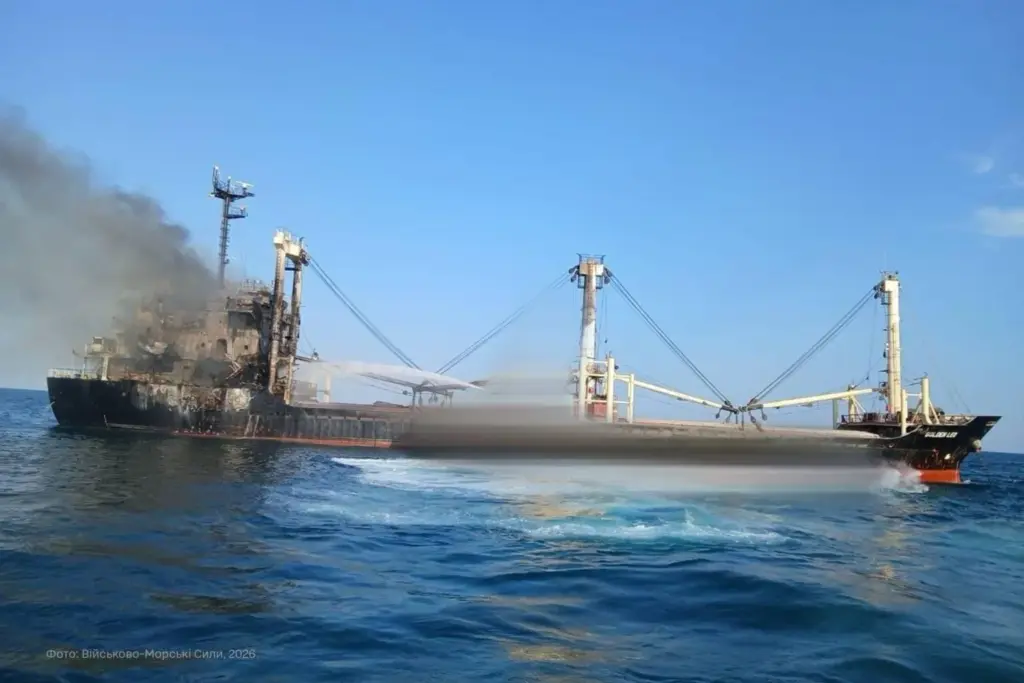
russian black sea attacks low danube waters push eu seek alternative routes ukrainian grain exports · post civilian bulk carrier golden leo ablaze after missiles hit left odesa cargo corn

Russia killed the captain of a Tanzanian-flagged civilian vessel and wounded three crew members in a drone strike in the Black Sea on 17 September, Ukraine’s Ministry for Restoration, Infrastructure and Transport said.

The ministry said Russia is “systematically attacking Ukrainian ports, port infrastructure and civilian commercial vessels,” threatening both people and international shipping in the Black Sea.

The vessel was heading toward one of Ukraine’s ports when it was attacked. The condition of the ship is still being assessed.

Foreign vessels repeatedly targeted

The latest attack follows a series of Russian strikes on foreign-flagged vessels serving Ukrainian ports.

In July, Russia struck the Turkish-owned bulk carrier GOLDEN LEO with cruise missiles as it left Odesa carrying grain, killing 10 people.

Russia also attacked two foreign-flagged cargo ships with drones in June, killing one sailor and injuring five others as the vessels were leaving Ukrainian ports.

In August, a Russian strike on port infrastructure in Odesa damaged a Togo-flagged civilian vessel and injured four people.

Attacks threaten Ukraine’s maritime trade

The repeated attacks have also disrupted Ukraine’s maritime trade route.

In July, Russian strikes on civilian cargo ships brought traffic through the Black Sea corridor close to a standstill at the height of the harvest, with shipowners temporarily stopping vessels from entering Ukrainian ports.

The Ukrainian ministry called for an international response and coordinated action to strengthen the protection of civilian shipping and the security of international logistics routes.

  • ✇Euromaidan Press
  • Ukraine receives 252 bodies as repatriation remains one of the few functioning channels with Russia
    Ukraine has received the bodies of 252 people killed in the war, the Coordination Headquarters for the Treatment of Prisoners of War reported on 17 September. The return of the dead remains one of the few channels that still functions between Kyiv and Moscow during Russia’s war against Ukraine. Each handover allows families of missing Ukrainians to identify and bury their relatives. According to the Russian side, the bodies belong to Ukrainian citizens, including military personnel.
     

Ukraine receives 252 bodies as repatriation remains one of the few functioning channels with Russia

17 septembre 2026 à 14:35

Ukraine receives the bodies of 252 people killed in the war as part of a repatriation from Russia, 17 September 2026. Photo: Coordination Headquarters for the Treatment of Prisoners of War

Ukraine has received the bodies of 252 people killed in the war, the Coordination Headquarters for the Treatment of Prisoners of War reported on 17 September.

The return of the dead remains one of the few channels that still functions between Kyiv and Moscow during Russia’s war against Ukraine. Each handover allows families of missing Ukrainians to identify and bury their relatives.

According to the Russian side, the bodies belong to Ukrainian citizens, including military personnel. Ukrainian authorities will now carry out forensic examinations and identification procedures to establish the identities of those returned, the Coordination Headquarters said.

Bodies to undergo identification

The repatriation was carried out through joint work by Ukraine’s Coordination Headquarters for the Treatment of Prisoners of War, the Security Service of Ukraine’s Joint Center, the Armed Forces, Interior Ministry, Ombudsman’s Office, Missing Persons Commissioner’s Secretariat, State Emergency Service, and other security and defense structures.

The International Committee of the Red Cross assisted with the repatriation.

Ukrainian military personnel are transporting the bodies to designated state facilities, where law enforcement and forensic experts will conduct the necessary examinations and identification.

Repatriations continue amid stalled peace talks

The latest repatriation follows the return of 261 bodies to Ukraine on 13 August. 

The return of fallen Ukrainian soldiers has accelerated since peace talks resumed in early 2025 and has become a recurring process, making repatriation operations one of the few areas of continued humanitarian cooperation between Ukraine and Russia amid the war.

  • ✇Euromaidan Press
  • No missiles intercepted again: Russia strikes Kyiv water infrastructure amid warnings of harsher winter attacks
    Russia launched a large-scale missile and drone attack on Ukraine overnight on 17 September, striking Kyiv, Zaporizhzhia, and Odesa Oblast, among other regions. The attack damaged civilian infrastructure in Kyiv, including apartment buildings and educational facilities, while water infrastructure was also affected. Kyiv mayor Vitali Klitschko reported 20 people injured, including at least two children. Water infrastructure hit as winter concerns grow The overnight strikes affected
     

No missiles intercepted again: Russia strikes Kyiv water infrastructure amid warnings of harsher winter attacks

17 septembre 2026 à 11:44

Apartment buildings in Kyiv damaged from an overnight Russian attack on 17 September 2026. Photo: Ukraine's State Emergency Service

Russia launched a large-scale missile and drone attack on Ukraine overnight on 17 September, striking Kyiv, Zaporizhzhia, and Odesa Oblast, among other regions.

The attack damaged civilian infrastructure in Kyiv, including apartment buildings and educational facilities, while water infrastructure was also affected. Kyiv mayor Vitali Klitschko reported 20 people injured, including at least two children.

Water infrastructure hit as winter concerns grow

The overnight strikes affected Kyiv’s water infrastructure, temporarily disrupting water supply on the left bank and reducing pressure in some areas on the right bank.

Kyivvodokanal said its specialists restored operations and that water supply is now fully functioning across the capital.

The damage comes as Ukrainian authorities have warned that Russia could target critical water infrastructure as winter approaches, potentially adding another major threat to civilians alongside attacks on Ukraine’s electricity and heating systems.

Russia has repeatedly used winter strikes to target Ukraine’s critical infrastructure, particularly electricity and heating, leaving civilians without power, heat, and basic services during freezing weather. 

This winter is expected to bring a heavier campaign: Russia has intensified its attacks since the summer, increasingly targeting food-related infrastructure and supplies in addition to energy facilities.

No missiles intercepted, once again

Russia launched ballistic and cruise missiles alongside 157 Shahed-type attack drones and decoy drones, according to Ukraine’s Air Force.

The ballistic missiles included Iskander-M, S-400 and North Korean KN-23 missiles launched from Russia’s Bryansk and Voronezh oblasts. Russia also launched four Kalibr cruise missiles and Oniks missiles.

Ukraine’s air defenses reported destroying or suppressing 131 aerial targets, but none of the ballistic weapons were among those intercepted. The 131 targets consisted of seven Bandеrol/Dan-T missiles and 124 Shahed, Gerbera, and other drones.

Once again, Ukraine intercepted none of the Russian ballistic missiles, underscoring the country’s shortage of high-end air-defense interceptors needed to defend against Russia’s increasing ballistic missile attacks.

However, Ukraine’s General Staff reported strikes on two of the S-400 systems that Russia uses to launch ballistic missiles from Bryansk Oblast. 

russia's arctic bases sit near-naked air defenses vanish guard moscow refineries burning inland · post s-400 defense missile launcher vehicles 2018 file sergei malgavko/tass rferl ukraine news ukrainian reports
Explore further

Ukraine strikes two Russian S-400 launchers in Bryansk. The same systems were used to attack Kyiv overnight.

Kyiv hit across several districts

Kyiv police reported damage in the Darnytskyi, Dniprovskyi, and Solomianskyi districts.

Apartment buildings, educational facilities, a municipal building, vehicles, and railway tracks were damaged. Most of the 16 injured people were residents of a damaged 16-story apartment building in Dniprovskyi district.

The victims included a 10-year-old girl and a 12-year-old boy.

Kyiv’s military administration also reported a strike on a warehouse building in Podilskyi district.

Russian attacks on Kyiv have injured 20 people today, with five hospitalized.

A blast wave damaged apartment buildings in the Dniprovskyi district, while a car caught fire at another location.

Scenes like these are becoming a daily occurrence in the capital.

📷Ukraine’s State… pic.twitter.com/bez0pOPghN

— Euromaidan Press (@EuromaidanPress) September 17, 2026

The Air Force said Russian missiles and attack drones hit 36 locations across Ukraine, while debris from intercepted targets fell at five locations.

Russia damaged the Berestyn station building and a Kyiv commuter stop in an overnight strike on the railways

A Russian drone hit the station at Berestyn in Kharkiv Oblast before dawn on 17 September, and passengers and staff sat out the attack in shelters, Ukraine's national… pic.twitter.com/OaeAaO58eX

— Euromaidan Press (@EuromaidanPress) September 17, 2026

Russia also hits Odesa and Zaporizhzhia

Russia’s overnight attack on Odesa Oblast continued for much of the night, injuring seven people, including children aged four and 13, Odesa Oblast Governor Oleh Kiper reported.

One Russian drone struck a high-rise apartment building in Odesa, destroying 10 apartments on the 14th–16th floors and damaging 11 cars. Three people were injured there, including the four-year-old child. 

Other strikes damaged at least five residential buildings, a kindergarten, a dormitory, a restaurant’s outdoor area, warehouses, garages, and cars. An elderly woman and the 13-year-old child were among four other people injured.

A Russian overnight attack on Odesa Oblast injured 7 people, including 2 children, after a strike hit a 19-story apartment building.

A private home in the region was also destroyed, while a kindergarten, cars, garages, and warehouses were damaged.

Once again, Russian strikes… pic.twitter.com/pHZQlDOcKM

— Euromaidan Press (@EuromaidanPress) September 17, 2026

Zaporizhzhia was also hit by Russian missiles, with three people injured – a woman and two men. The missiles struck industrial facilities, partially damaging buildings and causing a fire at one site.

Later in the day, Russia attacked the village of Storchove in Zaporizhzhia Oblast with guided aerial bombs. One bomb hit a private house and outbuildings, killing a 51-year-old woman and injuring a 70-year-old man. The strike destroyed property the family had accumulated over decades, according to the Zaporizhzhia Regional Military Administration.

Russia also struck a passenger bus in Zaporizhzhia with an FPV drone near a public transport stop. Five people were injured. A regional official said Russia had “once again chosen not a military target, but people who were simply traveling about their business.”

A Russian FPV drone struck a passenger bus carrying people in Zaporizhzhia, right near a public transport stop. Three people were reportedly injured.

“Russians once again chose not a military target, but people who were simply going about their daily lives,” a Zaporizhzhia… pic.twitter.com/VRZcch4PRH

— Euromaidan Press (@EuromaidanPress) September 17, 2026
  • ✇Euromaidan Press
  • Ukraine strikes two Russian S-400 launchers in Bryansk. The same systems were used to attack Kyiv overnight.
    Ukrainian forces struck two Russian S-400 launchers in Russia’s Bryansk Oblast on 16–17 September, Ukraine’s General Staff reported. These same systems were used to launch missiles at Kyiv last night. Ukraine faces severe shortages of high-end air-defense interceptors capable of countering Russia’s ballistic missiles, making strikes on the launchers themselves increasingly important. Russia has used S-400 systems to launch missiles at Ukrainian cities, including Kyiv, so destroying thes
     

Ukraine strikes two Russian S-400 launchers in Bryansk. The same systems were used to attack Kyiv overnight.

17 septembre 2026 à 10:09

russia's arctic bases sit near-naked air defenses vanish guard moscow refineries burning inland · post s-400 defense missile launcher vehicles 2018 file sergei malgavko/tass rferl ukraine news ukrainian reports

Ukrainian forces struck two Russian S-400 launchers in Russia’s Bryansk Oblast on 16–17 September, Ukraine’s General Staff reported. These same systems were used to launch missiles at Kyiv last night.

Ukraine faces severe shortages of high-end air-defense interceptors capable of countering Russia’s ballistic missiles, making strikes on the launchers themselves increasingly important. Russia has used S-400 systems to launch missiles at Ukrainian cities, including Kyiv, so destroying these systems can reduce Russia’s ability to carry out future attacks.

S-400 missile systems hit

The General Staff said Ukrainian Defense Forces struck two S-400 launchers near Vygonichi in Bryansk Oblast as part of a series of attacks on Russian military targets.

The strikes took place as Russia launched another major overnight attack against Ukraine. According to Ukraine’s Air Force, Russian forces used S-400, Iskander-M and KN-23 ballistic missiles launched from Bryansk and Voronezh oblasts, among other weapons.

The S-400 is a Russian long-range surface-to-air missile system designed to detect and engage aircraft and missiles. It was originally designed for air defense, but Russia has also used S-400 systems to launch ballistic missiles for strikes against Ukrainian cities, including Kyiv.

Kyiv Oblast was among the main targets of last night’s Russian attack.

Smoke rises from a Russian Bastion missile system position in occupied Crimea after a Ukrainian strike on 16 August 2026. Screenshot from video: Ukrainian Navy
Explore further

One alternative to air defense: Ukraine strikes Russian Bastion system used to attack Ukrainian cities from Crimea

Ukraine targets Russian military infrastructure

The S-400 launchers were among several Russian military targets struck by Ukrainian forces on 16–17 September, the General Staff reported.

Near occupied Donetsk, Ukrainian forces hit a Russian site used to store, prepare, and launch attack drones. They also struck Russian logistics warehouses in Kurakhivka, Nova Mariivka, and Luhansk.

Ukrainian forces additionally hit Russian personnel concentration areas near Strilkove in occupied Kherson Oblast and Druzhne in occupied Luhansk Oblast.

The General Staff said operations against key Russian military targets are continuing.

  • ✇Euromaidan Press
  • Ukrainian partisans claim sabotage at Russian plant supplying missiles Moscow uses to bomb Ukrainian cities
    Pro-Ukrainian partisan movement ATESH says it sabotaged the power supply to a Russian semiconductor plant in Voronezh that produces electronic components used in Russia’s missiles and air defense systems. Targeting such suppliers can hit Russia’s ability to sustain its missile campaign: disrupting production of critical electronic components can slow the replenishment of weapons used to strike Ukrainian cities. In a statement published on 16 September, ATESH said one of its agents in
     

Ukrainian partisans claim sabotage at Russian plant supplying missiles Moscow uses to bomb Ukrainian cities

16 septembre 2026 à 09:17

Fire apparently breaking out at an electrical substation supplying the VZPP-S plant in Voronezh. Photo: ATESH

Pro-Ukrainian partisan movement ATESH says it sabotaged the power supply to a Russian semiconductor plant in Voronezh that produces electronic components used in Russia’s missiles and air defense systems.

Targeting such suppliers can hit Russia’s ability to sustain its missile campaign: disrupting production of critical electronic components can slow the replenishment of weapons used to strike Ukrainian cities.

In a statement published on 16 September, ATESH said one of its agents infiltrated an electrical substation near the Voronezh Semiconductor Devices Plant-Sbor­ka (VZPP-S) and destroyed the main distribution cabinet supplying the facility. The movement said the agent escaped the city after the operation.

VZPP-S is a Russian producer of semiconductor devices, integrated circuits and power modules. Ukraine’s military intelligence lists the company as part of Russia’s defense-industrial supply chain and says it has produced electronic components for Kh-101 cruise missiles, Iskander-K missiles and Pantsir-S1 air defense systems.

ATESH claimed the sabotage caused a major voltage surge and shut down production workshops. The movement said full power was not restored for several weeks, causing delays in deliveries of components for Russian weapons and, consequently, delays in missile and air defense production.

The movement’s claims have not been independently verified.

Ukrainian partisans claim they knocked out power to a Russian plant supplying electronics for Kh-101 and Iskander-K missiles.

The target is part of the industrial chain that keeps Russia’s missile strikes on Ukrainian cities supplied – and ATESH says production was disrupted for… pic.twitter.com/afbJonCxQT

— Euromaidan Press (@EuromaidanPress) September 16, 2026

ATESH is a pro-Ukrainian partisan movement operating in Russian-occupied territories and inside Russia. It says it recruits local residents and Russian military personnel to conduct sabotage, gather intelligence and pass information to Ukraine. The movement regularly publishes claims of attacks and acts of sabotage against Russian military and defense-industrial targets, though individual operations are often difficult to independently verify.

The plant has already been targeted

The reported sabotage comes after the VZPP-S facility was struck in a Ukrainian attack in June.

Ukraine’s military intelligence says VZPP-S produces components for the Kh-101, including transistor assemblies and matrices used in the missile’s electronic systems. It also says the company supplies semiconductor components for the onboard computer of the 9M727 cruise missile used by the Iskander-K system, as well as components for the Pantsir-S1’s television channel.

Ukraine's General Staff has confirmed the attack on the chip plant in Voronezh.

Videos from the site show at least two distinct fires at the facility.https://t.co/5gQVb99HwK

📹via @bayraktar_1love https://t.co/4lluMzWHRA pic.twitter.com/yBoyuuhbGq

— Euromaidan Press (@EuromaidanPress) June 22, 2026

The company itself describes VZPP-S as a major Russian producer of electronic components, with more than 900 products in serial production.

ATESH said it delayed publication of its claim to protect its agent.

  • ✇Euromaidan Press
  • Ukraine’s Vivaldi counteroffensive disrupts Russia’s plan to encircle Donetsk Fortress Belt – ISW
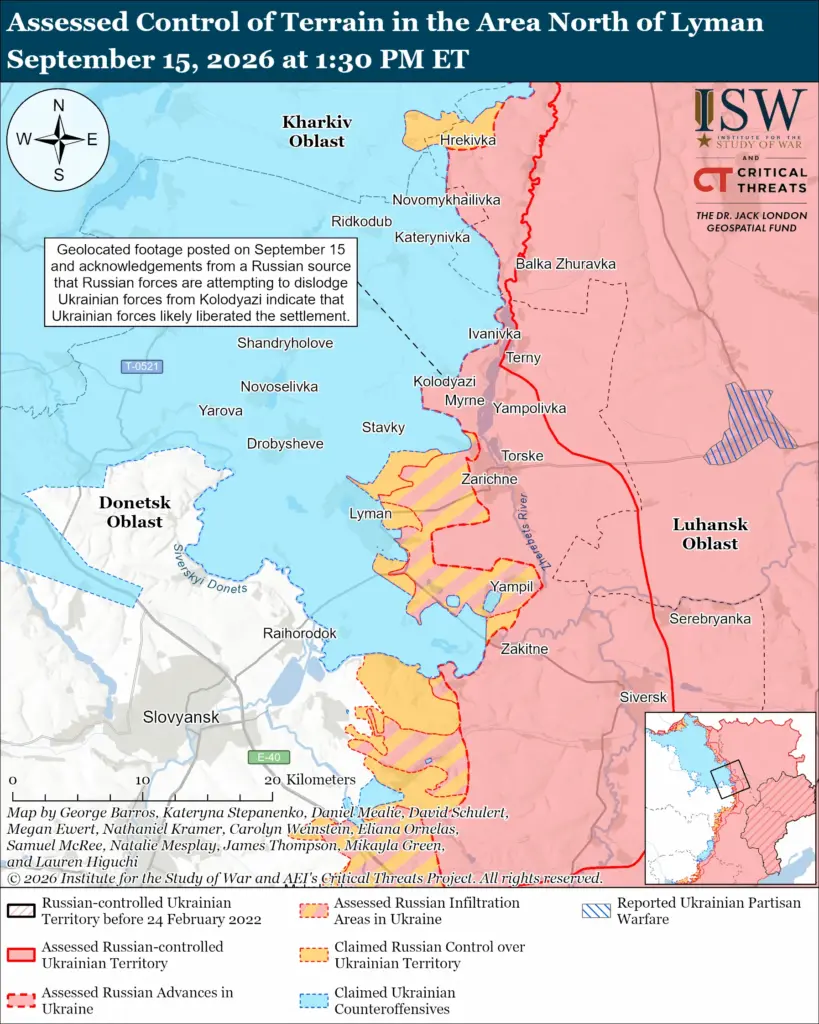
    Ukraine’s Operation Vivaldi has disrupted Russia’s plan to encircle Ukraine’s heavily fortified “Fortress Belt” in Donetsk Oblast, the Institute for the Study of War (ISW) assessed, adding that Ukrainian forces have likely made additional gains beyond those publicly disclosed by Kyiv. The assessment comes a day after Ukraine’s Third Army Corps publicly confirmed that it is conducting a counteroffensive against Russian forces north and northwest of Lyman. ISW said the Ukrainian gains hav
     

Ukraine’s Vivaldi counteroffensive disrupts Russia’s plan to encircle Donetsk Fortress Belt – ISW

16 septembre 2026 à 07:07

Ukraine's Third Army Corps commander Brigadier General Andrii Biletskyi announcing "Operation Vivaldi," 15 September 2026. Screenshot from video: Ukraine's Third Army Corps

Ukraine’s Operation Vivaldi has disrupted Russia’s plan to encircle Ukraine’s heavily fortified “Fortress Belt” in Donetsk Oblast, the Institute for the Study of War (ISW) assessed, adding that Ukrainian forces have likely made additional gains beyond those publicly disclosed by Kyiv.

The assessment comes a day after Ukraine’s Third Army Corps publicly confirmed that it is conducting a counteroffensive against Russian forces north and northwest of Lyman. ISW said the Ukrainian gains have rendered Russia's plan to encircle the Fortress Belt from the north and south unfeasible.

Third Army Corps commander Brigadier General Andrii Biletskyi said on 15 September that Ukrainian forces had cleared Russian infiltrators from several settlements and liberated Serednie. The corps said its forces had cleared 75 square kilometers of Russian infiltrators and de-occupied another 10 square kilometers during the first phase of the operation.

Biletskyi said the operation, dubbed “Vivaldi,” was conducted under information silence and warned that the first phase was only one of four planned “seasons.”

Ukraine’s gains appear larger than initially disclosed

ISW assessed that Ukrainian forces have likely made additional gains beyond those announced by Biletskyi, with Russian sources beginning to acknowledge the deterioration of their position in the area.

In particular, Russian forces have been shelling Ukrainian positions in Kolodyazi, northeast of Lyman, according to geolocated footage. A prominent Russian milblogger also acknowledged that Russian forces were trying to push Ukrainian troops out of Kolodyazi – what ISW described as a “coy acknowledgement” that Ukrainian forces have likely liberated the settlement.

Russian sources have continued to report worsening conditions for Russian forces both north and south of Kolodyazi.

ISW also corroborated the Third Army Corps’ account of growing Russian logistical problems, noting that Ukrainian strikes have disrupted supplies for Russian forces in the Borova and Lyman directions. The corps said the pressure was severe enough that Russia moved some logistics and support elements across the state border into Russia’s Voronezh Oblast.

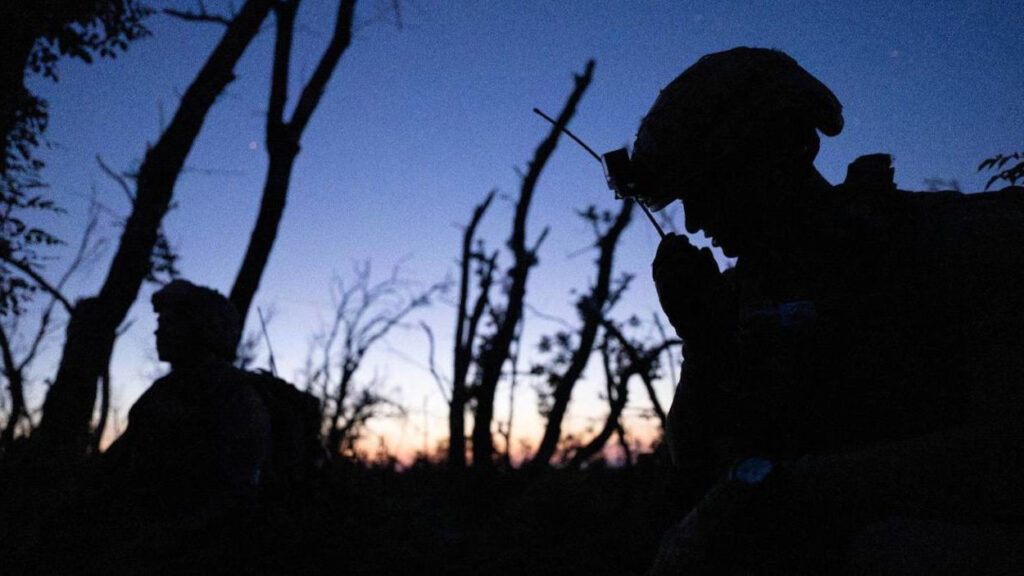
Soldiers of Ukraine's Third Army Corps. Photo: Ukraine's Third Army Corps
Explore further

“Only the first season” – Ukraine unveils secret counteroffensive in a region Russia has been trying to seize for 12 years

Vivaldi disrupts Russia’s plan for the Fortress Belt

The operation’s broader significance lies in its effect on Russia’s campaign in Donetsk.

Russia has made capturing the remaining Ukrainian-held parts of Donetsk Oblast a central military objective, with its forces seeking to advance toward the heavily fortified cities of the Donetsk “Fortress Belt” from several directions.

The Russian military had also sought to create a northern route around the Fortress Belt through the Lyman area. ISW now assesses that Ukraine’s gains north of Lyman have made that plan unfeasible.

The institute said the Ukrainian counteroffensive will delay Russia’s planned offensive toward Sloviansk, the major objective Moscow had been expected to pursue after capturing Lyman.

Map: ISW

Russian sources acknowledge setbacks

According to ISW, a prominent Kremlin-affiliated Russian milblogger similarly acknowledged that Ukraine’s gains will delay the Russian offensive toward Sloviansk and warned that the northern flank of Russian forces operating southeast of Lyman and east of Kramatorsk is now vulnerable to Ukrainian counterattacks and interdiction.

The Russian milblogger also claimed that Russian forces had lost positions south of Lyman and were struggling to recapture positions inside the city itself.

Russian sources have blamed the setbacks on the military’s culture of producing “beautiful reports” – exaggerated accounts of battlefield advances that can distort higher-level operational planning.

Another prominent milblogger reportedly claimed that some Russian commanders were attempting to conceal losses by rapidly assembling assault groups from inadequately trained personnel to retake lost positions.

Russia still presses its offensive elsewhere

Despite the setbacks around Lyman, ISW said Russian forces continue prioritizing frontal attacks against the Fortress Belt from the south and efforts to encircle it from the southwest, rather than advancing toward the cities from the east.

The institute said Russia may still be adjusting to the loss of the Lyman salient and the initiative in the area. It also assessed that Russian forces could seek to cut Ukrainian ground lines of communication to the Fortress Belt from the west.

For Ukraine, meanwhile, the counteroffensive is also undermining Russia’s ability to present advances in Donetsk as evidence of battlefield momentum.

And the full extent of Vivaldi remains unknown.

Biletskyi said the 85 square kilometers publicly disclosed by the corps represented only the first “season” of the operation, invoking Vivaldi’s Four Seasons.

“Vivaldi, as is known, has four seasons. And this is only the first one,” Biletskyi said on 15 September.

  • ✇Euromaidan Press
  • Russian general killed in Ukraine weeks after telling Putin Kostiantynivka was captured
    Russian Major General Anton Grunis, the commander who told Russian President Vladimir Putin that Russian forces had fully captured Kostiantynivka despite Ukrainian troops still defending the city, has been killed in the war against Ukraine, according to Russian media reports. Grunis was awarded the Hero of Russia title just weeks before his death, after commanding Russian forces on the Kostiantynivka front. He had reported the city’s supposed capture to Putin in July, even as Ukrainian
     

Russian general killed in Ukraine weeks after telling Putin Kostiantynivka was captured

16 septembre 2026 à 05:42

Russian Major General Anton Grunis. Screenshot from video: Madyar / Telegram

Russian Major General Anton Grunis, the commander who told Russian President Vladimir Putin that Russian forces had fully captured Kostiantynivka despite Ukrainian troops still defending the city, has been killed in the war against Ukraine, according to Russian media reports.

Grunis was awarded the Hero of Russia title just weeks before his death, after commanding Russian forces on the Kostiantynivka front. He had reported the city’s supposed capture to Putin in July, even as Ukrainian forces continued to hold positions there.

Robert “Madyar” Brovdi, commander of Ukraine’s Unmanned Systems Forces (SBS), confirmed Grunis’s death on 16 September, saying Ukrainian forces killed the general on 12 September in occupied Donetsk Oblast.

Madyar said the operation was carried out by the “Rarog” unit of Ukraine’s 427th Separate Regiment of Unmanned Systems. 

Several Russian sources have also confirmed Grunis’s death, according to Ukrainska Pravda and RBC-Ukraine.

Madyar said Grunis is the seventh confirmed Russian commander at the brigade, division, or army level killed by Ukraine’s SBS “Birds” units.

The Russian general who told Putin that Russian forces had captured Kostiantynivka has been killed in Ukraine.

Major General Anton Grunis reported the city’s supposed capture to Vladimir Putin in July, in a major announcement Russia presented as a battlefield victory. Ukrainian… pic.twitter.com/ba3kzsBJ9p

— Euromaidan Press (@EuromaidanPress) September 16, 2026

The general who declared Kostiantynivka captured

Grunis commanded Russia’s 4th Separate Guards Motor Rifle Brigade, which has been fighting on the Kostiantynivka front, according to Ukrainska Pravda.

In July, Grunis personally reported to Putin that Russian forces had supposedly fully captured Kostiantynivka. Russia’s Chief of the General Staff Valery Gerasimov made a similar claim.

Ukraine rejected the announcement, saying its troops were still conducting defensive operations inside the city. Kostiantynivka remains contested as of 16 September.

RBC-Ukraine reported that Russian troops have entered parts of the city, but Ukrainian forces continue to hold positions in its southern, central, and northern areas. Ukraine’s General Staff reported 18 Russian attacks on the Kostiantynivka axis over the previous day.

Kostiantynivka is the southernmost major city in Ukraine’s fortified defensive belt in Donetsk Oblast, with Druzhkivka, Kramatorsk, and Sloviansk farther north. Russia has been trying to capture it since 2025.

Destroyed Kostiantynivka
Explore further

Kostiantynivka: Why one city in Donbas matters so much that Putin lies about having captured it

Killed weeks after receiving Hero of Russia title

Grunis was awarded Russia’s highest state decoration shortly before his death. On 27 August, Russian Defense Minister Andrei Belousov presented him with the Gold Star of the Hero of the Russian Federation for what Russia described as his “courage and heroism,” according to Ukrainska Pravda.

Grunis graduated from the Kazan Suvorov Military School in 1996 and fought in Chechnya and against Georgia, Ukrainska Pravda reported. He retired from active service in 2021 but returned to the Russian military after the start of the full-scale invasion.

The 4th Separate Guards Motor Rifle Brigade was formed in 2014 from Russian-backed armed formations in occupied Luhansk, including the Prizrak group, before being integrated into Russia’s regular military structure, according to Ukrainska Pravda.

“Only the first season” – Ukraine unveils secret counteroffensive in a region Russia has been trying to seize for 12 years

15 septembre 2026 à 16:34

Soldiers of Ukraine's Third Army Corps. Photo: Ukraine's Third Army Corps

Ukraine’s Third Army Corps has revealed details of an offensive operation in northern Donetsk Oblast, saying its forces cleared Russian infiltrators from several settlements and liberated the village of Serednie.

Russia has made seizing the entirety of Donetsk Oblast both a battlefield and diplomatic priority of its invasion of Ukraine, repeatedly trying to break through heavily fortified Ukrainian defensive lines while demanding that Kyiv withdraw from the remaining Ukrainian-held territory in negotiations. Despite years of fighting and sustained Russian assaults, Moscow has failed to capture the entire oblast, and Ukraine is now conducting an offensive of its own.

The operation, dubbed “Vivaldi,” was conducted under a period of information silence and involved Ukrainian drone, reconnaissance, special operations, infantry, and other units working under a unified tactical command. The corps said the first phase cleared 75 square kilometers of Russian infiltrators and liberated another 10 square kilometers of territory.

The announcement was made by Third Army Corps commander Brigadier General Andrii Biletskyi on 15 September. 

Ukraine targets Russian infiltration

According to the corps, the operation focused initially on Russian troops that had infiltrated Ukrainian positions and settlements in the area.

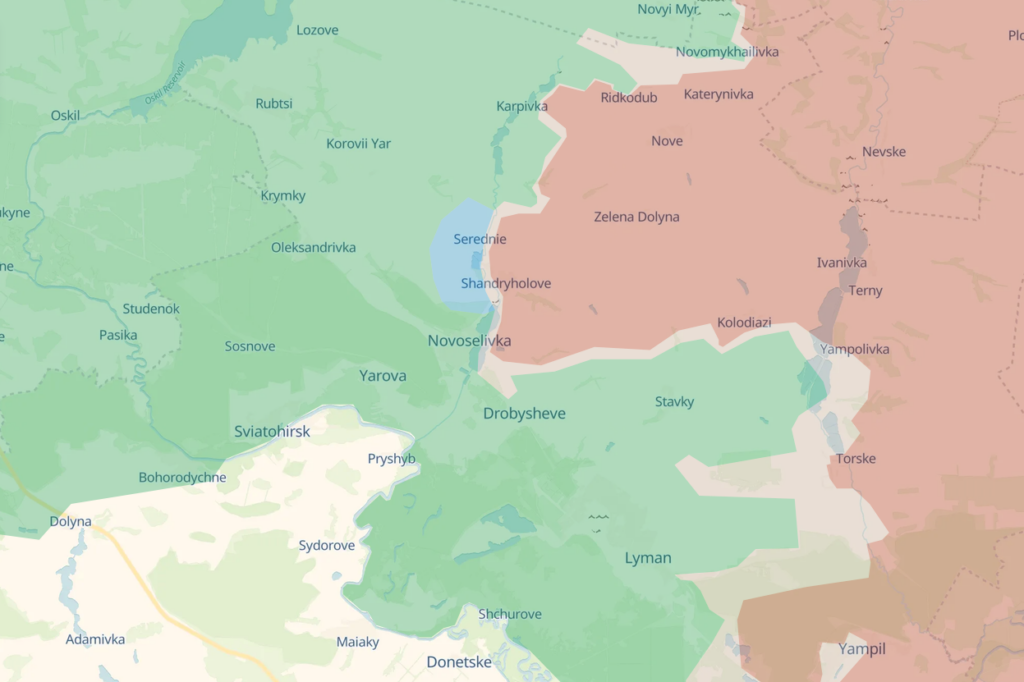
Ukrainian forces cleared Novoselivka, Oleksandrivka, Yarova, the outskirts of Korovyi Yar, and liberated Serednie, the corps said. It described the total area cleared or retaken as 85 square kilometers.

The operation brought together units from the 60th and 125th Mechanized Brigades, the Third Assault Brigade, the KRAKEN special unit, and other formations of the Third Army Corps, alongside attached units from the 66th Mechanized Brigade, Ukraine’s Special Operations Forces, the military intelligence unit Artan, and the State Border Guard Service.

The corps said the operation was coordinated by a joint headquarters that brought special operations and reconnaissance units under a single tactical plan specifically to counter Russian infiltrators, whom it referred to as “flagovtyky.”

Frontline situation around Serednie, northern Donetsk Oblast, Ukraine, 15 September 2026. Map: DeepState

Russian logistics pushed back across the border

The Ukrainian operation also targeted Russian logistics supporting the front.

The corps said its drone units cut Russian supply routes and struck fuel infrastructure and storage facilities that had been supporting Russian forces.

According to the Ukrainian military, Russian forces subsequently moved the supply of fuel and lubricants out of Ukraine and into Russia’s Voronezh Oblast after a pipeline and fuel depots were destroyed.

The corps claimed Russian forces lost around 1,500 personnel during this phase of the operation, as well as more than 12,000 drones and hundreds of armored vehicles, artillery systems, and other vehicles.

‘This is only the first season’

Biletskyi said the operation’s ultimate objective has been the subject of speculation in open sources, with some reports suggesting Ukrainian forces could be seeking to reach the Chornyi Zherebets River.

He declined to confirm that objective, instead emphasizing the name of the operation.

“Our operation is called Vivaldi. And Vivaldi, as is known, has four seasons. And this is only the first one,” Biletskyi said.

The remarks suggest Ukraine does not consider the actions revealed on 15 September to be a standalone tactical operation, although the corps did not disclose what its next phase will involve.

The Third Army Corps said further details would be released in subsequent official statements.

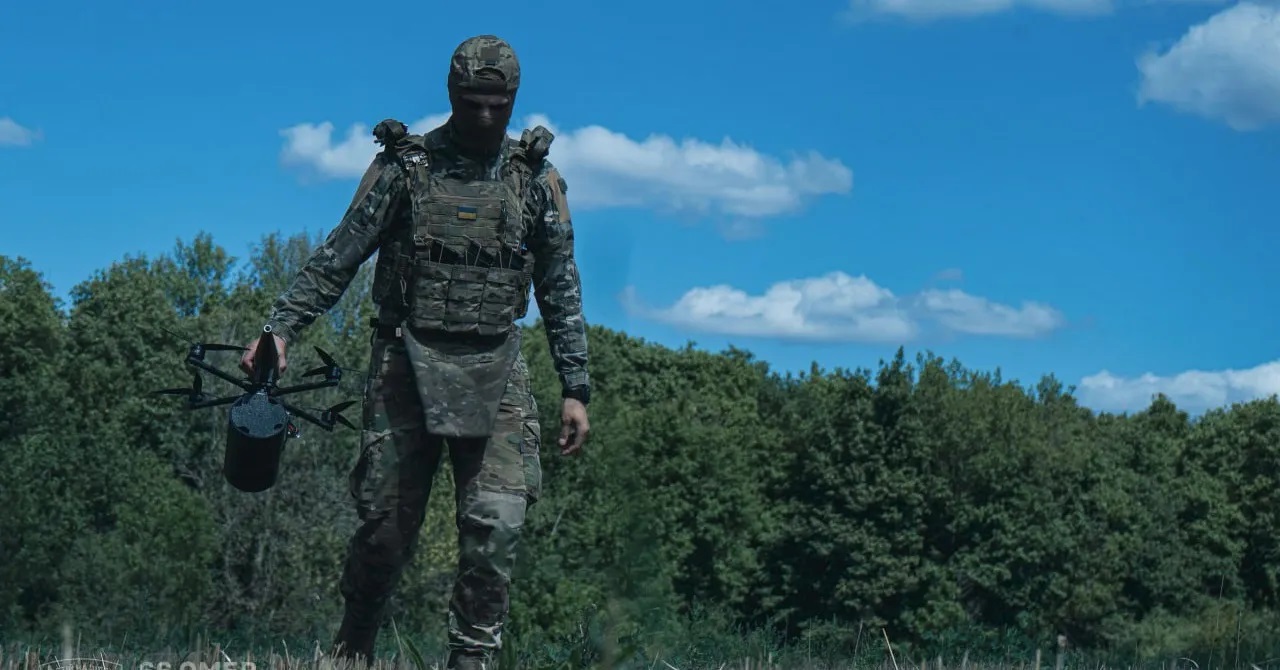
A Ukrainian soldier carries an FPV drone.
Explore further

Ukraine’s secret counteroffensive takes the pressure off Sloviansk

Donetsk remains Russia’s main territorial objective

Donetsk Oblast is central to Russia’s territorial demands in Ukraine. Moscow claims the entire oblast as Russian territory despite not controlling all of it, and has demanded that Ukraine withdraw from the remaining Ukrainian-held territory in Donetsk as part of peace talks.

The Donbas region – consisting of Donetsk and neighboring Luhansk oblasts – has been a battleground since Russia’s 2014 invasion, and capturing the remaining Ukrainian-held territory has remained the Kremlin’s core objective throughout the full-scale invasion since 2022.

  • ✇Euromaidan Press
  • Russian warship fires flares at Danish military helicopter as Moscow’s provocations escalate
    A Russian frigate fired two flares at a Danish military helicopter during a routine photographic mission in international waters off Denmark, with one flare passing close to the aircraft, Denmark’s armed forces said. The incident comes amid a growing series of confrontational incidents involving Russia and NATO countries, as Western officials warn that Moscow is becoming increasingly willing to test the alliance’s defenses and intimidate its members. Flare passed close to Danish heli
     

Russian warship fires flares at Danish military helicopter as Moscow’s provocations escalate

15 septembre 2026 à 15:03

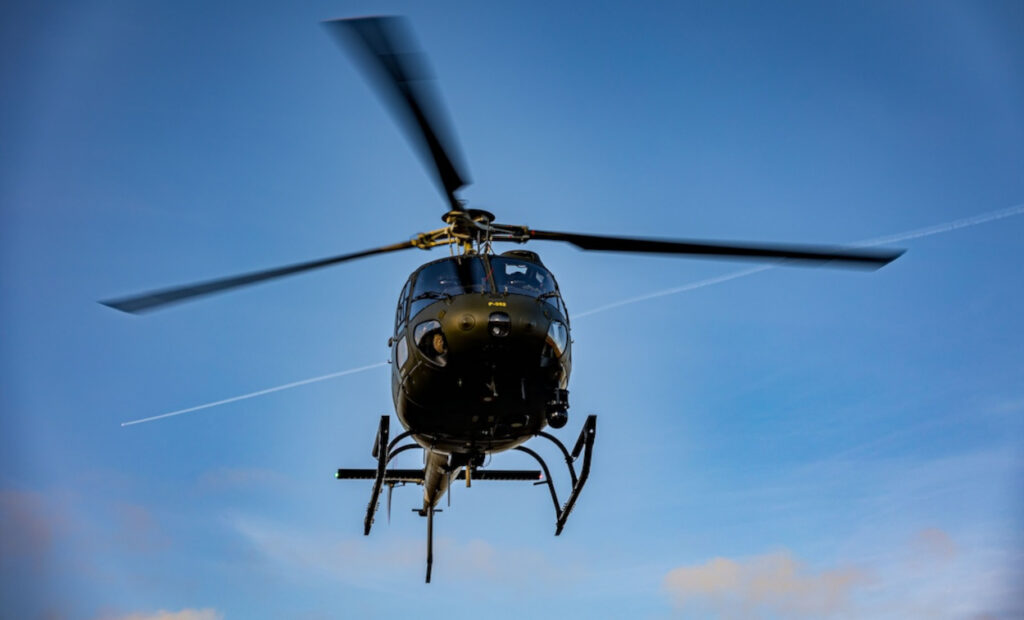
A Danish military helicopter, illustrative image. Photo: Denmark’s Armed Forces

A Russian frigate fired two flares at a Danish military helicopter during a routine photographic mission in international waters off Denmark, with one flare passing close to the aircraft, Denmark’s armed forces said.

The incident comes amid a growing series of confrontational incidents involving Russia and NATO countries, as Western officials warn that Moscow is becoming increasingly willing to test the alliance’s defenses and intimidate its members.

Flare passed close to Danish helicopter

The Danish Fennec helicopter was conducting routine photographic coverage of the Russian frigate when the ship fired two flares at it, according to Denmark’s Armed Forces. The incident occurred off Gedser, at the southern tip of Denmark, on 14 September.

One of the flares passed close to the helicopter. The Danish military did not report any injuries or damage and said it had no further comment on the incident.

Flares are pyrotechnic devices normally used as attention signals at sea.

Danish Foreign Minister Lars Løkke Rasmussen called the incident “completely unacceptable” and said Russia’s ambassador had been summoned for talks.

Prime Minister Mette Frederiksen called it “reckless action from Russia towards Danish military” during a routine overflight, saying Russian actions were intended to “intimidate and divide.”

PM Mette Frederiksen: ”Reckless action from Russia towards Danish military during a routine overflight yesterday. Russian actions are meant to intimidate and divide. They will not succeed. We will not waver.”

— Statsministeriet (@Statsmin) September 15, 2026

Russia’s ambassador to Denmark, Vladimir Barbin, disputed Copenhagen’s account, telling DR that Moscow would investigate and accusing the Danish helicopter of provocative actions near the Russian frigate.

Another incident in a growing pattern

The episode comes as Russia’s behavior toward NATO countries has become increasingly confrontational in recent months.

NATO fighters have repeatedly been scrambled over Russian military aircraft in the Baltic region, while European countries have dealt with airspace incidents, suspected Russian drones and other security threats linked to the war against Ukraine.

On 15 September, NATO aircraft also shot down a drone over Lithuania after it entered the country’s airspace from the direction of Belarus. The drone was believed to have been carrying an explosive device.

NATO spokesperson Allison Hart described the Danish incident as “another irresponsible Russian action” intended to intimidate the alliance, adding that NATO would continue defending its territory and supporting Ukraine.

The incidents are unfolding as Russia continues its full-scale war against Ukraine and expands pressure beyond the battlefield. Western officials have increasingly warned that Moscow is using military intimidation and other forms of pressure against European countries while testing how far it can push NATO without triggering a direct confrontation.

The flare incident comes amid a broader deterioration in European security, with Russian military activity increasingly creating dangerous encounters with NATO forces.

  • ✇Euromaidan Press
  • Finland approves second-largest defense package for Ukraine as Russia’s next brutal winter campaign looms
    Finland will send Ukraine its 34th package of military assistance, worth around €290 million, as Ukraine continues to defend itself against Russia’s full-scale invasion. The package comes as Ukraine faces sustained Russian attacks and prepares for another winter of war, when the demands on its military and air defenses are expected to grow further. Kyiv continues to rely on its European partners to replenish equipment and strengthen its ability to withstand Russia’s prolonged campaign.
     

Finland approves second-largest defense package for Ukraine as Russia’s next brutal winter campaign looms

15 septembre 2026 à 14:09

Finland will send Ukraine its 34th package of military assistance, worth around €290 million, as Ukraine continues to defend itself against Russia’s full-scale invasion.

The package comes as Ukraine faces sustained Russian attacks and prepares for another winter of war, when the demands on its military and air defenses are expected to grow further. Kyiv continues to rely on its European partners to replenish equipment and strengthen its ability to withstand Russia’s prolonged campaign.

Finland responds to Ukraine’s urgent needs

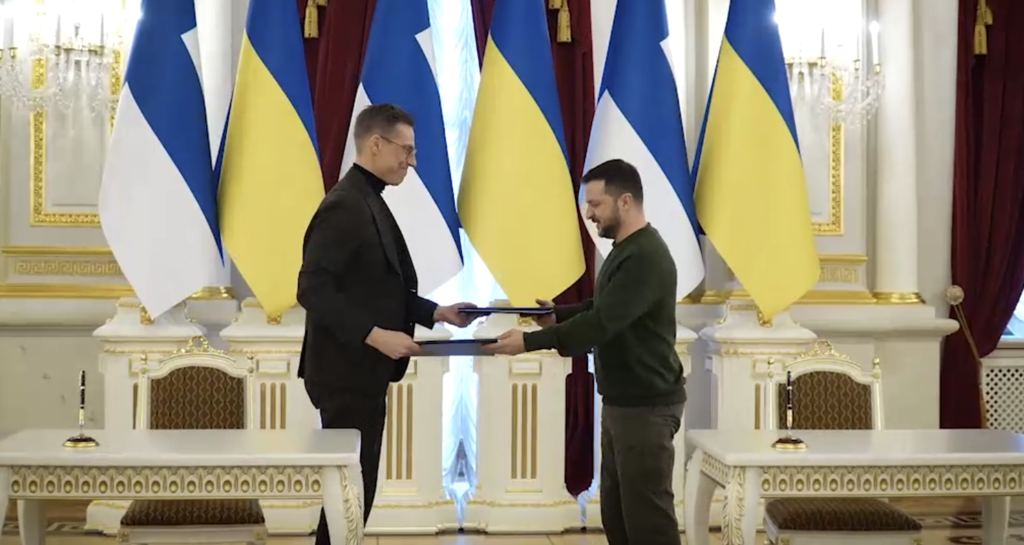
Finnish President Alexander Stubb approved the package on 15 September following a proposal from the government. It is the second-largest defense package Finland has provided to Ukraine since Russia launched its full-scale invasion.

The Finnish Ministry of Defense said the package contains military equipment that Ukraine has urgently requested.

Finland is withholding details about the contents, delivery method and schedule for operational security reasons and to ensure the equipment reaches Ukraine safely.

The latest package brings the total value of Finnish defense equipment delivered to Ukraine since the start of the full-scale invasion to approximately €3.6 billion.

Finnish Defense Minister Antti Häkkänen said Finland has based its military assistance throughout the war on Ukraine’s needs, combining equipment from Finnish military stocks with purchases from the country’s defense industry.

Ukraine faces another difficult winter

The timing of the new package is particularly important as Ukraine approaches its fifth winter since Russia launched its full-scale invasion.

Russia has repeatedly used the colder months to intensify attacks on Ukraine’s energy system and other critical infrastructure, seeking to put additional pressure on the Ukrainian population while the country continues fighting at the front.

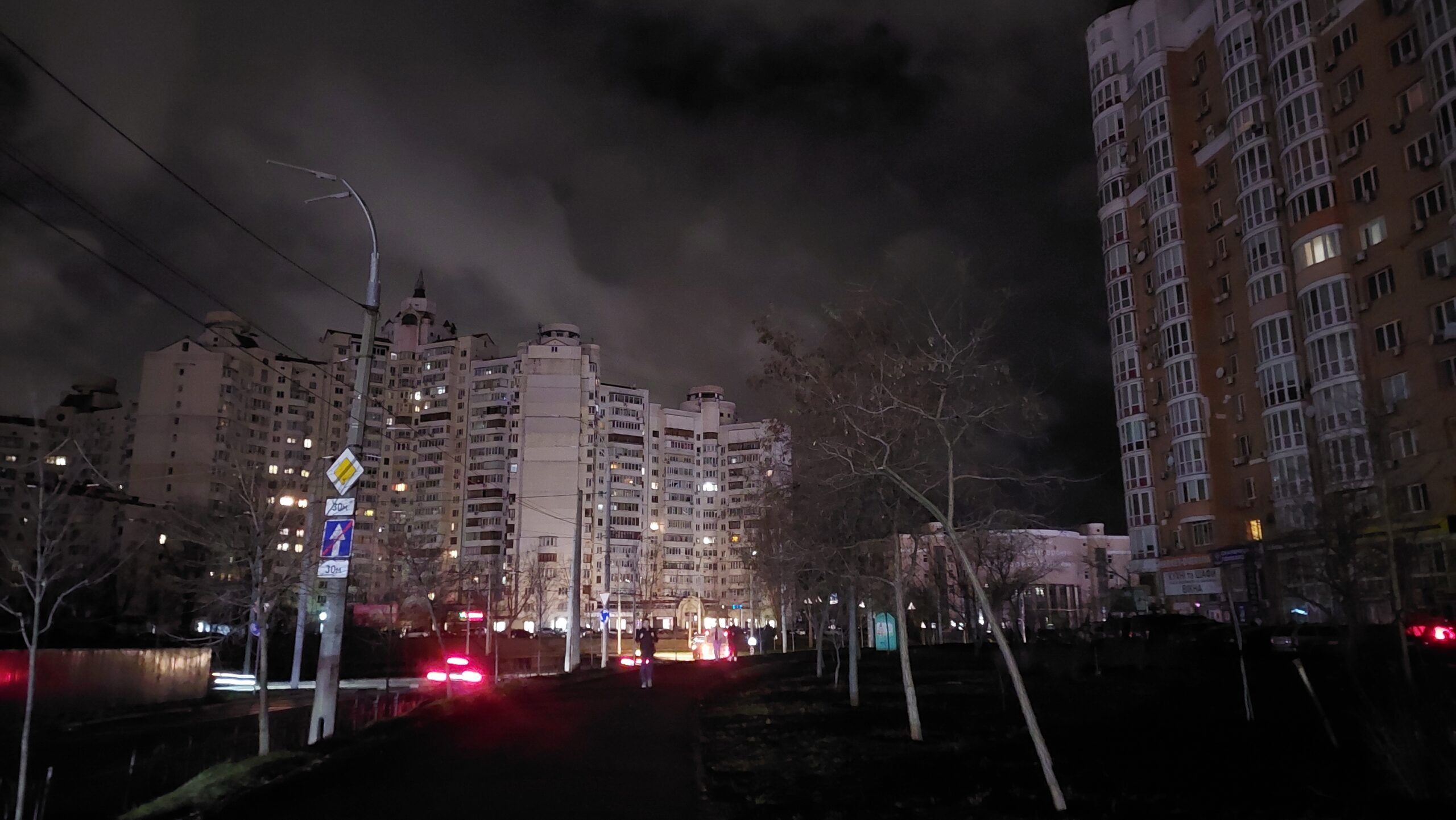
During blackouts, apartment blocks in Kyiv are mostly dark, with scattered lights from apartments with battery-powered sources. Generators power businesses on the ground floor. Street lights are largely off.
Explore further

Behind the black windows: How Kyiv survives a winter in the dark

Ukrainian officials and European partners have warned that Russia is preparing to maintain or intensify its attacks during the coming winter. Ukraine therefore needs to enter the season with sufficient military equipment to defend its cities and infrastructure while continuing operations against Russian forces.

The winter also creates additional demands on Ukraine’s civilian and military systems. Damage to energy infrastructure can affect heating, electricity and water supplies, while continued Russian attacks require Ukraine to devote resources to protecting infrastructure and responding to strikes.

Finland also supports its own defense industry

Some of the equipment in the new package will be procured from Finnish defense companies rather than taken from existing military stocks.

Häkkänen said this allows Finland to support Ukraine while also strengthening the capacity of its domestic defense industry.

Finland said both Ukraine’s needs and the resources of the Finnish Defense Forces were taken into account when approving the package.

The new delivery underscores Finland’s continued commitment to helping Ukraine sustain its defense as Russia’s war enters another winter.

  • ✇Euromaidan Press
  • Russia has damaged 500+ Ukrainian locomotives as attacks on railways reach Polish border
    Russia again struck railway infrastructure near Ukraine’s border with Poland overnight, directly hitting another locomotive in Volyn Oblast, Ukrainian Foreign Minister Andrii Sybiha said on 15 September. He appealed to Ukraine’s partners for urgent help replacing locomotives damaged or destroyed by Russian strikes. The latest strike adds to a rapidly growing toll on Ukraine’s railway fleet. More than 500 Ukrainian locomotives have been damaged or completely destroyed since Russia launch
     

Russia has damaged 500+ Ukrainian locomotives as attacks on railways reach Polish border

15 septembre 2026 à 13:09

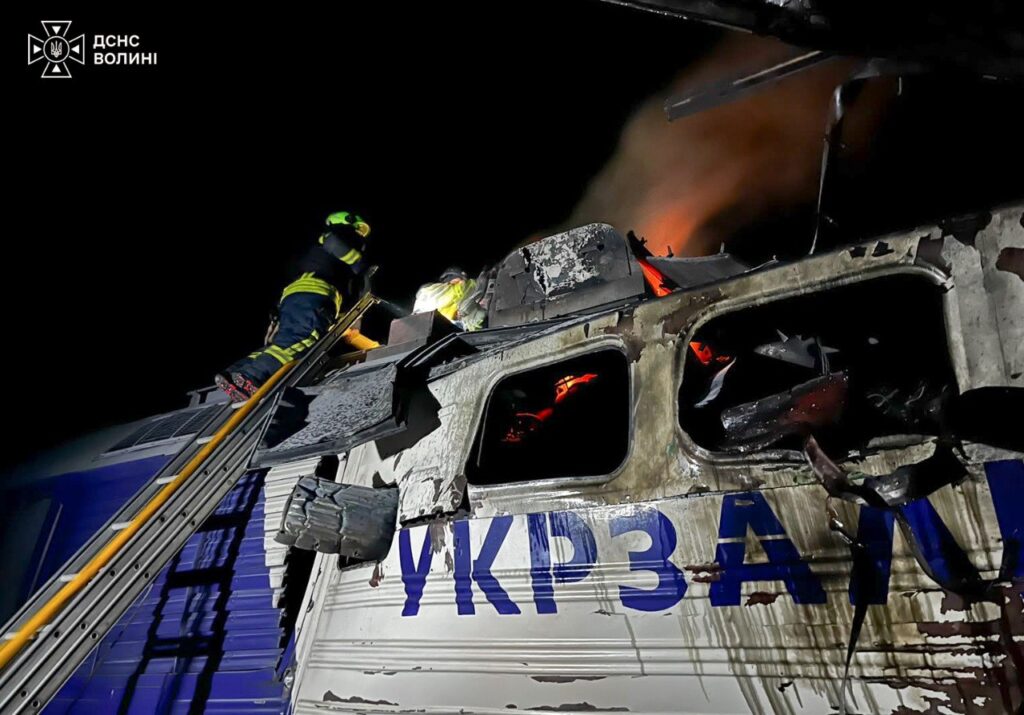
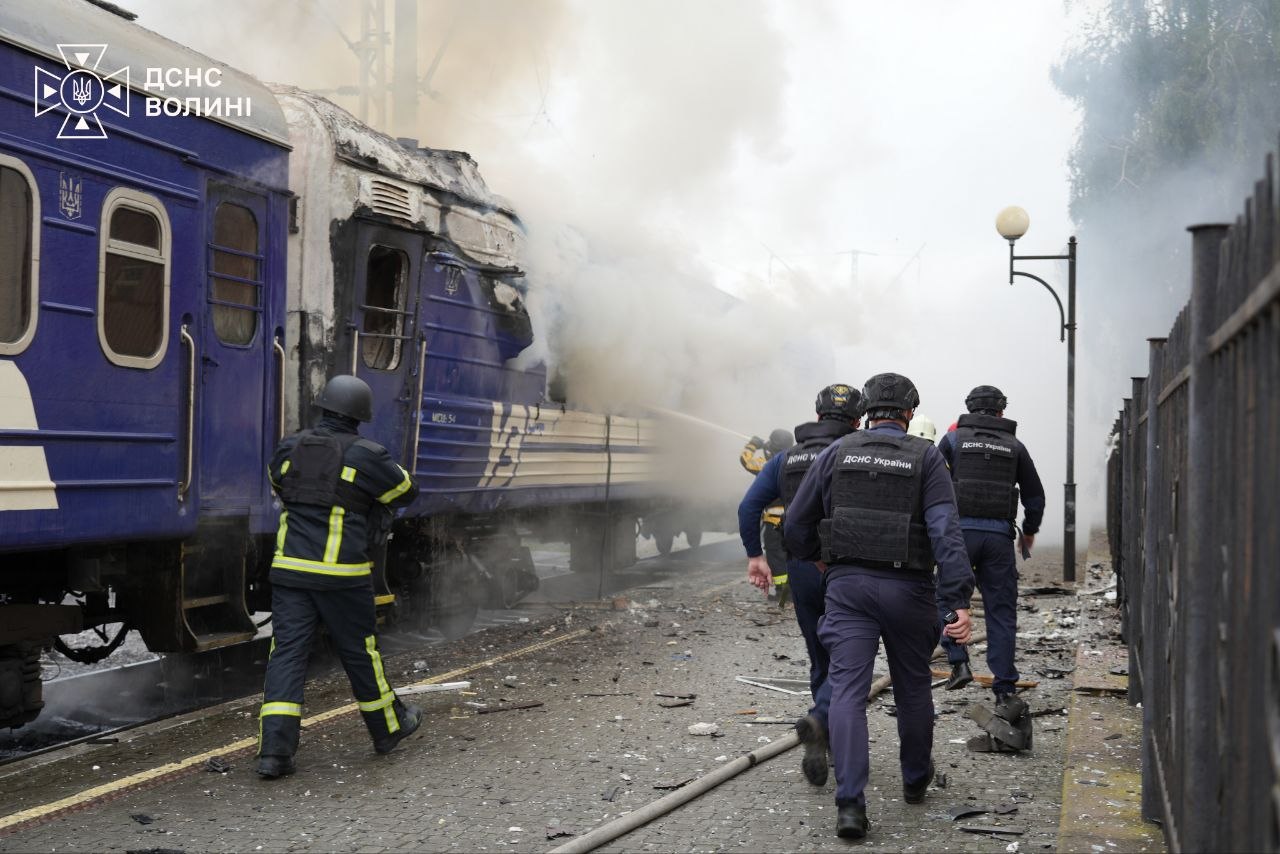
A locomotive damaged by a Russian strike on railway infrastructure in Ukraine’s Volyn Oblast near the Polish border, 15 September 2026. Photo: Ukraine's State Emergency Service

Russia again struck railway infrastructure near Ukraine’s border with Poland overnight, directly hitting another locomotive in Volyn Oblast, Ukrainian Foreign Minister Andrii Sybiha said on 15 September. He appealed to Ukraine’s partners for urgent help replacing locomotives damaged or destroyed by Russian strikes.

The latest strike adds to a rapidly growing toll on Ukraine’s railway fleet. More than 500 Ukrainian locomotives have been damaged or completely destroyed since Russia launched its full-scale invasion, Sybiha said. More than half of those losses have occurred this year alone, as Russian attacks on railways have intensified and increasingly reached western Ukraine.

Ukraine’s railway system remains essential for civilian travel, evacuating people from frontline areas and transporting goods across the country. Recent attacks show that Russia is increasingly putting even these routes at risk far from the front.

Russia once again struck Ukraine’s railway network, setting a locomotive on fire overnight in Volyn.

Russia is increasingly attacking Ukraine’s civilian railway infrastructure and targeting the western border region more frequently.

📷Ukraine’s State Emergency Service pic.twitter.com/kIwCkXusLx

— Euromaidan Press (@EuromaidanPress) September 15, 2026

Ukraine asks partners for locomotives

Sybiha said Ukraine urgently needs replacement locomotives and called on international partners to help provide equipment compatible with Ukraine’s 1,520 mm rail gauge, as well as financing to accelerate the purchase of new locomotives.

“Ukraine’s railway keeps the country moving,” Sybiha said, pointing to its role in civilian evacuations, essential cargo transport, and the movement of grain and other critical goods.

The appeal reflects a problem that is becoming harder to solve through repairs alone. With more than 250 locomotives reportedly damaged or destroyed in 2026, Ukraine needs to replace rolling stock while continuing to repair infrastructure under attack.

“Supporting Ukraine’s railway resilience will help avert a humanitarian crisis,” Sybiha said.

As Russia expands its attacks against transport routes deeper inside Ukraine, keeping the railway running is becoming not only a matter of logistics, but of maintaining the country’s basic civilian mobility and economic stability.

Russia continues its systematic attacks to disrupt logistics across Ukraine. Last night, another locomotive was directly hit in a Russian strike on railway infrastructure near the Polish border in Ukraine’s Volyn oblast.

Since the start of the full-scale invasion, over 500… pic.twitter.com/KVj3cj7ed0

— Andrii Sybiha 🇺🇦 (@andrii_sybiha) September 15, 2026

Russia is taking aim at trains and railway infrastructure

The latest strike came only days after a Russian drone hit the locomotive of a passenger train in Volyn Oblast, just two kilometers from the Polish border.

That 13 September attack was part of two consecutive days of Russian strikes on railway infrastructure across Ukraine. A drone also struck railway facilities in Lutsk, while another hit railway infrastructure in Vinnytsia Oblast.

Emergency responders work at the scene after a Russian drone struck a passenger train in Lutsk, Ukraine, on 12 September 2026. Photo: Ukraine's State Emergency Service
Explore further

Russia strikes passenger train near Polish border as drone swarms reach deeper into western Ukraine

The attacks are part of a broader expansion of Russia’s long-range drone campaign against transport and logistics infrastructure deep inside Ukraine. Railway stations, tracks, locomotives, and other infrastructure are increasingly being exposed to Russian drone strikes even in regions far from the battlefield.

The proximity of the latest attacks to Poland is particularly notable. Russia has also struck Ukrainian border crossings with Moldova and Romania in recent weeks, while Polish Prime Minister Donald Tusk warned on 10 September that Ukrainian crossings with Poland could also come under attack.

  • ✇Euromaidan Press
  • Russia keeps hitting Kyiv’s gas stations. Now they get military air-threat tracking
    Gas stations across Kyiv Oblast will receive access to a military air-awareness system to help them respond more quickly to Russian drone attacks, Kyiv Oblast military administration head Tymur Tkachenko said on 15 September. The move comes as Russian forces increasingly target fuel infrastructure during their attacks on Ukrainian cities. Two gas stations were hit in Kyiv on 15 September, killing one person and injuring 11, while at least three other Ukrnafta stations in the capital hav
     

Russia keeps hitting Kyiv’s gas stations. Now they get military air-threat tracking

15 septembre 2026 à 12:33

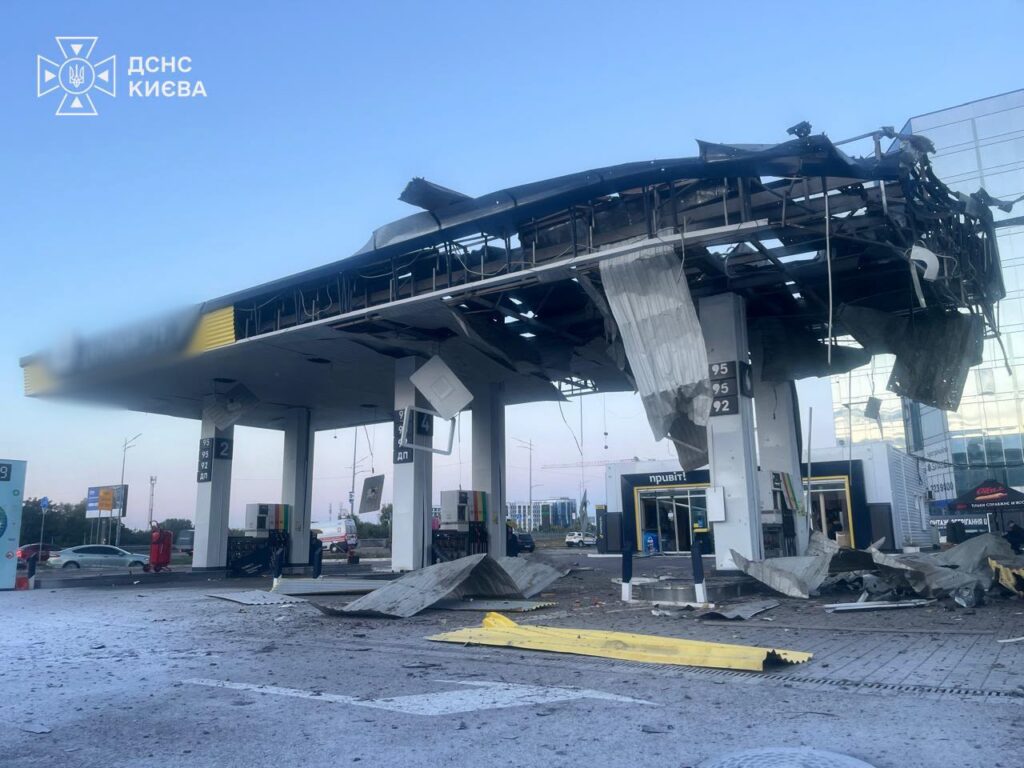
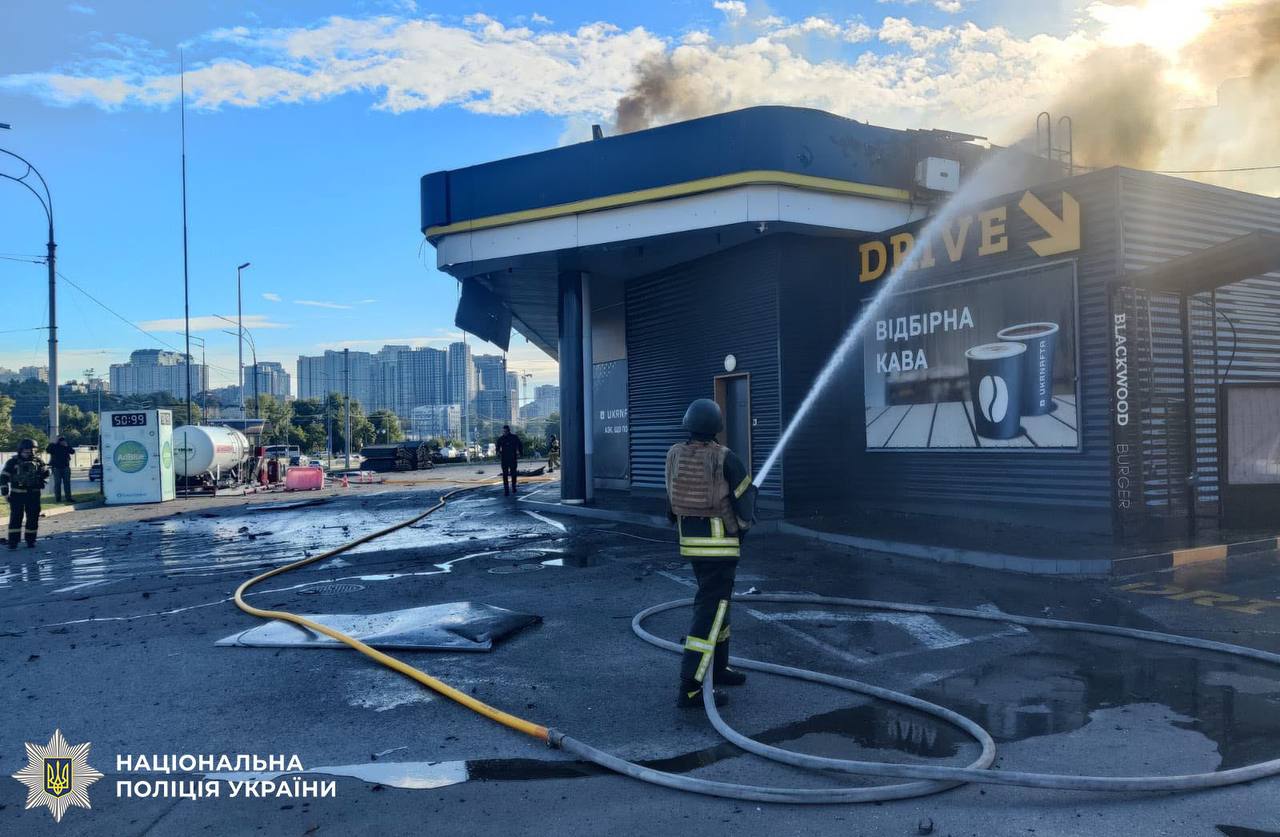
A gas station in Kyiv after being struck by a Russian drone on 15 September 2026. Photo: Ukraine's State Emergency Service

Gas stations across Kyiv Oblast will receive access to a military air-awareness system to help them respond more quickly to Russian drone attacks, Kyiv Oblast military administration head Tymur Tkachenko said on 15 September.

The move comes as Russian forces increasingly target fuel infrastructure during their attacks on Ukrainian cities. Two gas stations were hit in Kyiv on 15 September, killing one person and injuring 11, while at least three other Ukrnafta stations in the capital have been struck since 10 September.

The new system will allow designated gas-station employees to see real-time information about the movement of Russian aerial targets rather than relying only on the general air-raid alert. This should give stations more time to suspend operations, protect employees, and move customers away from danger.

Gas stations are becoming a recurring target

The attacks on Kyiv’s gas stations are part of a broader pattern. More than 300 gas stations across Ukraine have been attacked since the current wave began, according to Ukraine’s Energy Ministry, with strikes increasingly reaching deeper into the country.

In Kyiv, Russian forces have repeatedly used drones against fuel stations over the past week. The 15 September attack hit two more stations during a wider wave of around 200 drones launched against Ukraine.

russian drones killed man injured eight kyiv hitting two gas stations · post firefighter extinguishes burning shop ukrnafta station struck drone ukraine 15 2026 police5280922930982363336 news ukrainian reports
Explore further

Russian drones killed a man and injured eight in Kyiv, hitting two gas stations

The targeting of fuel infrastructure adds another dimension to Russia’s campaign against Ukraine’s civilian supply system. Gas stations are not only businesses but critical points in the country’s transportation and fuel network, making repeated attacks capable of affecting both public safety and civilian mobility.

Tkachenko said the new air-awareness access is intended to give businesses “maximum available tools” to detect threats earlier and react in time.

He also urged drivers to follow gas-station employees’ instructions during air raids, as the facilities adapt their operations to the growing threat.

  • ✇Euromaidan Press
  • Ukraine successfully tests interceptor against faster Gerans as Russia floods its skies with drones
    Ukraine has successfully tested another interceptor designed to counter Russia’s increasingly common jet-powered Geran attack drones, President Volodymyr Zelenskyy said on 15 September. The test comes as Russia rapidly expands the use of faster jet-powered Gerans, creating a new problem for Ukraine’s air defenses: these drones give defenders less time to detect and engage them while allowing Russia to maintain large-scale attacks. A successful interceptor could give Ukraine a cheaper, s
     

Ukraine successfully tests interceptor against faster Gerans as Russia floods its skies with drones

15 septembre 2026 à 11:57

money engineering what stands between ukraine russia's fastest drones zelenskyy says · post russia’s new “geran-4 seeker” shahed variant geran-4 news ukrainian reports

Ukraine has successfully tested another interceptor designed to counter Russia’s increasingly common jet-powered Geran attack drones, President Volodymyr Zelenskyy said on 15 September.

The test comes as Russia rapidly expands the use of faster jet-powered Gerans, creating a new problem for Ukraine’s air defenses: these drones give defenders less time to detect and engage them while allowing Russia to maintain large-scale attacks. A successful interceptor could give Ukraine a cheaper, scalable way to counter that threat without relying as heavily on scarce high-end air-defense missiles.

Zelenskyy said Commander-in-Chief Mykhailo Drapatyi reported the successful test, during which the new interceptor struck a Russian Geran drone.

The system still reportedly needs further work, including improvements to some aspects of its control. But the successful test marks another step in Ukraine’s effort to develop a new layer of air defenses against Russia’s faster drones.

Russia is making its drone attacks faster and larger

Russia has sharply expanded its use of jet-powered Gerans in recent months, adding a faster and more difficult-to-intercept threat to its large-scale drone campaign.

Geran is Russia’s designation for its domestically produced Shahed-derived attack drones, with newer jet-powered variants representing a major upgrade over the earlier propeller-driven models.

Zelenskyy recently said Russia launched around 2,100 drones against Ukraine last week, alongside nearly 1,700 guided aerial bombs and 78 missiles. The attacks have increasingly targeted energy facilities, railway infrastructure, businesses, and residential areas.

The newer Gerans are faster than earlier Shahed-derived drones and can reach targets deep inside Ukraine. Their speed gives Ukrainian air defenses less time to detect, track, and engage them.

Russia has also changed how it uses its drones. Rather than concentrating attacks almost exclusively overnight, Russian forces have increasingly launched waves during the day as well, keeping Ukrainian cities under repeated air-raid alerts.

The result is a growing challenge not only of interception, but of scale. Ukraine must defend a large territory against increasingly large drone barrages while preserving more sophisticated air-defense missiles for ballistic missiles and other threats.

Geran-5 (Above) and Geran-4 (Below)
Geran-5 (above) and Geran-4 (below). Image: TurDef

Ukraine is building a new layer of air defense

Ukraine has already been racing to develop such systems. In late August, Defense Minister Yevhen Khmara said four potential interceptor systems capable of shooting down jet-powered Gerans had undergone field testing. Ukraine was aiming to bring them to the required level and eventually produce thousands of units.

Today’s announcement shows that effort continues to produce concrete results.

Ukraine is also expanding other parts of its counter-drone network. Zelenskyy said the country is increasing purchases of electronic warfare equipment and reorganizing mobile fire groups and air-defense positions.

The goal is to build enough layers to cope with Russia’s evolving drone campaign: electronic warfare, mobile fire teams, traditional air defenses, and increasingly specialized interceptors.

Russia is making its drones faster and launching them at greater scale. Ukraine’s response is now moving beyond adapting existing defenses toward developing weapons specifically designed to catch them.

  • ✇Euromaidan Press
  • Ukraine’s drone campaign is changing where Putin goes – now his flagship forum is being moved out of Sochi
    Russian President Vladimir Putin has moved his flagship foreign policy conference from Sochi to Moscow Oblast amid growing concerns over Ukraine’s long-range drone strikes, the Financial Times reported on 15 September. The decision is likely an indirect acknowledgment of the impact of Ukraine’s ongoing deep-strike drone campaign. Russian officials may not publicly admit that Ukrainian drones pose a serious threat, but their actions suggest otherwise: Putin has increasingly avoided areas
     

Ukraine’s drone campaign is changing where Putin goes – now his flagship forum is being moved out of Sochi

15 septembre 2026 à 11:11

Russian President Vladimir Putin has moved his flagship foreign policy conference from Sochi to Moscow Oblast amid growing concerns over Ukraine’s long-range drone strikes, the Financial Times reported on 15 September.

The decision is likely an indirect acknowledgment of the impact of Ukraine’s ongoing deep-strike drone campaign. Russian officials may not publicly admit that Ukrainian drones pose a serious threat, but their actions suggest otherwise: Putin has increasingly avoided areas within range of Ukrainian drones, and now a major Kremlin event is being moved out of Sochi because of security concerns.

The annual Valdai Discussion Club meeting was originally planned for Sochi, but the venue was changed after Putin’s security service insisted on the move, according to four people familiar with the decision cited by the FT. Some 120 guests had already received invitations to the Black Sea resort before being informed of the change in August.

Putin has not visited Sochi since the Valdai conference there in early October 2025. Since then, Ukraine has significantly stepped up its long-range drone campaign against Russia. The change is stark compared with 2021, when Putin visited the Black Sea resort 24 times, according to the FT.

Ukraine is targeting the defenses behind Russia’s rear

Ukraine has repeatedly demonstrated its ability to strike targets in Russia’s rear. Its drones have reached energy and logistics infrastructure thousands of kilometers from Ukraine, while Sochi and other areas of Russia’s Black Sea coast have come under repeated attack.

The latest strike came on 13–14 September, when Ukraine’s Defense Forces hit the 92N6 multifunction radar of a Russian S-400 air defense system in Sochi, according to Ukraine’s General Staff. The radar tracks aerial targets and guides the S-400’s missiles, making it a critical component of the system defending the area.

The strike followed a 4 September Ukrainian attack on Sochi that hit two fuel depots and an air defense position near the Abkhazia border. Satellite imagery later showed nine destroyed fuel storage tanks and damage at the air defense position.

Fires broke out at two fuel depots in and beside Sochi, southern Russia, after drones struck overnight

One is a Rosneft depot in the resort's Adler district, the other a Lukoil site on the federal territory of Sirius, reported the Russian news Telegram channel Astra, which… pic.twitter.com/JqXiw2pRYG

— Euromaidan Press (@EuromaidanPress) September 4, 2026

Putin’s movements show the threat is changing

The relocation also fits a broader pattern in Putin’s movements. The Russian president has spent much of his time in Moscow, St Petersburg and his residence near Lake Valdai in Novgorod Oblast, while making more trips east of the Urals – areas farther from Ukraine’s long-range drone reach.

The Valdai forum will still take place from 28 September to 1 October, but now in Moscow Oblast rather than Sochi. Putin traditionally attends the final day and holds a lengthy question-and-answer session.

The Kremlin does not need to say Ukrainian drones are a serious threat. Moving Putin’s major foreign-policy forum away from Sochi says it for them.

  • ✇Euromaidan Press
  • Ukraine’s fight against Russia reaches Africa as Ukrainian drone specialists support forces battling Moscow
    Ukraine is expanding its military activity beyond the war’s main battlefield, with Ukrainian drone specialists helping forces fighting Russian troops in Mali and operating in other parts of Africa, according to CNN. The deployments mark a growing effort by Kyiv to challenge Russia in regions where Moscow has expanded its own military presence. Ukrainian forces are using expertise developed during the full-scale invasion, particularly in drone warfare, to support partners operating again
     

Ukraine’s fight against Russia reaches Africa as Ukrainian drone specialists support forces battling Moscow

13 septembre 2026 à 12:27

Tuareg rebels Mali Ukraine Wagner

Ukraine is expanding its military activity beyond the war’s main battlefield, with Ukrainian drone specialists helping forces fighting Russian troops in Mali and operating in other parts of Africa, according to CNN.

The deployments mark a growing effort by Kyiv to challenge Russia in regions where Moscow has expanded its own military presence. Ukrainian forces are using expertise developed during the full-scale invasion, particularly in drone warfare, to support partners operating against Russian troops.

Around 15 Ukrainian drone specialists are reportedly deployed in northern Mali, where they are supporting the Tuareg-led Azawad Liberation Front in its fight against Russian forces and Mali’s military government. Several Ukrainian specialists are also reportedly operating in Sudan and Libya, according to a Ukrainian intelligence source cited by CNN.

Ukrainian drone specialists in Mali

The Ukrainian personnel in northern Mali are not directly fighting on the front line, CNN reported. Instead, they are helping train local forces and supporting their drone operations against Russian and Malian government forces.

The cooperation centers on the Tuareg-led Azawad Liberation Front, which has been fighting Mali's military government and Russian forces operating alongside it.

Ukraine's involvement with the Tuareg rebels dates back to at least 2024. After a July 2024 ambush near Tinzaouaten killed dozens of Wagner and Malian troops, Ukrainian military intelligence spokesperson Andriy Yusov said the rebels had received “necessary information.” Kyiv later denied that it had provided substantial assistance.

The relationship has since developed further. CNN reported that Ukrainian specialists assisted the rebels during fighting earlier this year, when Tuareg and al-Qaeda-linked militants attacked Russian forces and forced them to withdraw from the area around Kidal.

The cooperation does not reflect a broader political or ideological alignment between Kyiv and the Tuareg. Ukrainian personnel told CNN that the two sides are working together because they face a common enemy: Russian forces.

“Culture and religion are different, but when you are being attacked by the same idiots, ideological differences fade into the background,” a Ukrainian Defense Intelligence source told CNN.

The source said that operations against Russian forces abroad can also serve Kyiv’s war effort at home by putting additional pressure on Moscow.

“It puts pressure on them. This whole story has both psychological and real results,” he said.

The Ukrainian presence in Mali also appears to have a training role extending beyond the Tuareg. A Ukrainian Defense Intelligence source familiar with the operations told CNN that troops from Chad, Niger and Burkina Faso had previously traveled to Mali to receive drone training from Ukrainian soldiers.

Challenging Russia's African foothold

Russia has significantly expanded its military presence in Africa since the withdrawal of French and other Western forces from the Sahel.

The Africa Corps, which grew out of Wagner after the death of Wagner chief Yevgeny Prigozhin, has become an important instrument of Moscow's influence in the region. Russian forces provide military support to authoritarian governments including Mali's while helping protect regimes that have pushed out Western forces.

For Ukraine, supporting forces fighting Russia in Africa provides another way to put pressure on Moscow outside Ukraine.

A Ukrainian intelligence source told CNN that overseas deployments also allow Kyiv to use the military expertise it has accumulated during the war as a tool of foreign policy and build security relationships with other countries.

Russian soldiers.
Explore further

Russia’s Africa Corps fighters killed in Mali ambush amid accusations of civilian killings

Ukraine's military footprint extends further

Mali and Sudan are part of a wider Ukrainian effort to deploy military expertise abroad.

Ukraine has also developed a military presence in Libya. An RFI investigation published in March reported that more than 200 Ukrainian officers and technical specialists were based at three locations in western Libya with the approval of the Tripoli-based government.

CNN has now confirmed, citing Ukrainian sources, that Ukrainian naval-drone specialists have used a military base in Misrata to launch attacks against Russian shadow-fleet vessels while training Libyan forces.

The Arctic Metagaz Russian shadow fleet vessel on fire in the Mediterranean following a reported marine drone strike.
Explore further

Ukrainian troops in Libya: a launchpad for Mediterranean strikes on Russian shadow fleet – RFI

Ukrainian teams have also traveled to several Middle Eastern countries to train local forces in countering Shahed-type drone attacks from Iran, which intensified its drone campaign after the start of the US-Iran war earlier this year. Such deployments build on Ukraine's extensive experience defending against Russia's large-scale drone campaigns.

The activities point to a broader shift in how Ukraine is using its wartime capabilities. Drone warfare developed to defend Ukrainian territory is increasingly being used to build partnerships, support forces fighting Russia and pursue Russian military and economic interests far beyond the front line.

For Moscow, that creates a new challenge as it tries to expand its own military footprint abroad.

  • ✇Euromaidan Press
  • Russia strikes passenger train near Polish border as drone swarms reach deeper into western Ukraine
    Russia struck a passenger train just two kilometers from Ukraine’s border with Poland on 13 September, as Moscow continued a second day of attacks on Ukraine’s railway network and expanded strikes against transport and logistics infrastructure far from the front line. Russia is increasingly using its expanding drone fleet to reach transport, logistics, industrial and civilian infrastructure deep inside Ukraine. Western regions, long considered safer because of their distance from the fr
     

Russia strikes passenger train near Polish border as drone swarms reach deeper into western Ukraine

13 septembre 2026 à 09:10

Emergency responders work at the scene after a Russian drone struck a passenger train in Lutsk, Ukraine, on 12 September 2026. Photo: Ukraine's State Emergency Service

Russia struck a passenger train just two kilometers from Ukraine’s border with Poland on 13 September, as Moscow continued a second day of attacks on Ukraine’s railway network and expanded strikes against transport and logistics infrastructure far from the front line.

Russia is increasingly using its expanding drone fleet to reach transport, logistics, industrial and civilian infrastructure deep inside Ukraine. Western regions, long considered safer because of their distance from the front, are now seeing strikes on railways and border crossings, making even civilian travel and routes out of the country increasingly dangerous.

The latest attack took place in Ukraine’s north-western Volyn Oblast, near the Yahodyn border crossing with Poland. According to Ukraine’s state railway operator Ukrzaliznytsia, a Russian drone struck the locomotive of a passenger train.

A monitoring team detected the threat in advance and warned the train crew, preventing casualties. The railway operator said trains to Warsaw and back were already running again after the strike, although with significant delays.

A gas station was also struck in a Russian drone strike near the Yahodyn crossing, causing a large fire, according to UNN, adding to the danger around a key transport route between Ukraine and Poland.

Poland also issued an air-raid alert for areas near the Ukrainian border, including Włodawa, Łęczyński and Świdnik counties and the cities of Chełm and Krasnystaw.

The attacks came alongside Russian strikes on railway infrastructure in several other parts of Ukraine.

A Russian drone struck a Kyiv–Warsaw passenger train just two kilometers from Ukraine’s border with Poland on 13 September, as Russia continued a second day of attacks on Ukraine’s railway network.

The strike hit the train’s locomotive in Volyn Oblast near the Yahodyn border… pic.twitter.com/vb9FuOJTQ5

— Euromaidan Press (@EuromaidanPress) September 13, 2026

Update: Diplomatic train may have been Russian drone’s target

Update 19:00: Ukrzaliznytsia later said a diplomatic train carrying security advisers from several EU member states and former European leaders, including former UK Prime Minister Boris Johnson, had been at Yahodyn shortly before the strike. Another train at the station during the attack carried former CIA Director David Petraeus.

Ukrzaliznytsia said the Russian drone may have been targeting the diplomatic train, which departed earlier than scheduled as railway staff adjusted train movements in real time because of the ongoing threat of Russian strikes. The operator said it continues to change routes and schedules as tracks are damaged or blocked by attacks.

Russia targets railways across Ukraine

Ukrzaliznytsia said this was the second consecutive day of Russian attacks on the railway network.

On 12 September, Russian drones struck railway facilities in Lutsk, Volyn Oblast, including a passenger train, as well as Fastiv, Kyiv Oblast. Passengers were evacuated after the threat was detected.

Ukrzaliznytsia said its monitoring center and railway personnel remain on heightened alert as Russia continues targeting the network. Evacuations and diversions have caused delays on several routes, including services toward Dnipro, Zaporizhzhia and Kryvyi Rih.

Russia also attacked a railway infrastructure site in Vinnytsia Oblast on 13 September, according to Ukraine’s State Emergency Service. 

Russia’s drone campaign is expanding

Russian attacks are increasingly reaching critical infrastructure and civilian areas across Ukraine. Ukrainian President Volodymyr Zelenskyy said Russia struck energy facilities, railway sites, businesses and residential buildings during the latest wave of attacks, including missile and drone strikes on Odesa.

Zelenskyy said Russia had launched around 2,100 drones against Ukraine in the past week, alongside nearly 1,700 guided aerial bombs and 78 missiles.

He said Russia is using jet-powered Geran drones to “destroy the economy and destroy people’s lives.”

Russia has sharply increased its use of upgraded Geran attack drones in recent months, which are faster than earlier versions and can cover the long distances needed to strike targets deep inside Ukraine. Their growing speed and scale are putting additional pressure on Ukraine’s air-defense system, which has to detect and intercept large numbers of drones across the country.

“Russia’s terrorism is a common threat for many,” Zelenskyy said, arguing that the threat must be defeated in Ukraine rather than allowed to spread further into Europe.

Border crossings increasingly targeted

The strike near Yahodyn comes after Russia began targeting Ukrainian border crossings farther from the front line.

Since late August, Russian forces have struck at least five Ukrainian crossings with Moldova and NATO member Romania. The crossings handle civilian traffic, trade and logistics that are increasingly important to Ukraine as the war continues.

On 9 September, Russian drones struck the Starokozache crossing with Moldova, killing two civilians and injuring three others. One Russian drone entered Moldovan airspace and flew toward Romania, prompting NATO aircraft conducting air-policing duties to scramble.

Russia also struck the Orlivka ferry crossing on the Romanian border twice in early September.

The attacks prompted growing concern in Poland. On 10 September, Polish Prime Minister Donald Tusk said Poland expected Russia could target Ukrainian border crossings with Poland as Moscow expands its strikes against transport and logistics routes.

Tusk said Poland had received intelligence indicating that similar attacks could occur against crossings involving other countries. He also warned that Poland and Europe needed to prepare for different scenarios along Europe’s eastern flank.

The strike near Yahodyn came only three days after that warning.

Polish Prime Minister Donald Tusk
Explore further

Poland expects Russia to target border crossings as attacks on Ukraine escalate – Russia has already hit crossings with Moldova and Romania

“Russia is trying to expand the geography of its terror”

Ukrainian Foreign Minister Andrii Sybiha said Russia was deliberately expanding the geography of its attacks.

“Moscow tries to expand the geography of its terror,” Sybiha said, arguing that Russia is trying to turn the entire territory of Ukraine into a battlefield as it fails to achieve its objectives on the front.

He said Moscow was targeting “civilians, trains, and the infrastructure that keeps the country moving.”

Sybiha called for stronger air defenses, interceptors and counter-drone capabilities, as well as measures targeting Russia’s drone production and supply chains.

In a separate statement after the Yahodyn attack, Sybiha said Russia’s strikes near the Polish border were “not just a continuation of its attacks on our state borders.”

“This is Putin’s terror ‘knocking’ directly on the doors of the EU and NATO. Russian barbarians are at your gate, dear partners,” he said, urging European countries to respond with stronger sanctions.

Moscow tries to expand the geography of its terror. Unable to achieve its goals on the battlefield, Russia attempts to make the entire territory of Ukraine a battlefield and turns to systematic attacks against civilians, trains, and the infrastructure that keeps the country… pic.twitter.com/Kw85G0DEHM

— Andrii Sybiha 🇺🇦 (@andrii_sybiha) September 12, 2026

Attacks moving closer to NATO

Estonian Foreign Minister Margus Tsahkna said members of his ministry had been stuck at the same Ukrainian-Polish border crossing only hours before the latest images emerged because of the Russian drone threat.

“Russia’s attacks are becoming more intense and moving ever closer to NATO and the EU,” Tsahkna said.

❌