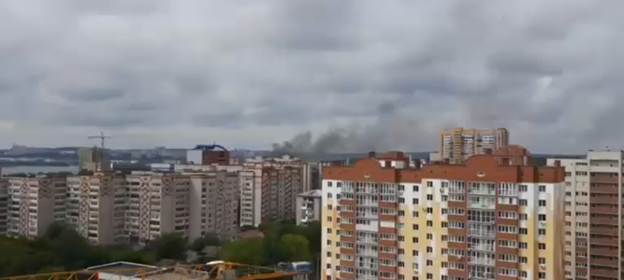
Belarus is building railway infrastructure capable of receiving military trains near the village of Yakimauka in Homiel Oblast, according to Radio Free Europe/Radio Liberty. Project documentation obtained by the Belarusian Association of Railway Workers confirms that separate railway infrastructure is being designed for a facility officially called "Construction of a training ground in Homiel Oblast," with the Military Design Institute named as the client.
Minsk backed
Belarus is building railway infrastructure capable of receiving military trains near the village of Yakimauka in Homiel Oblast, according to Radio Free Europe/Radio Liberty. Project documentation obtained by the Belarusian Association of Railway Workers confirms that separate railway infrastructure is being designed for a facility officially called "Construction of a training ground in Homiel Oblast," with the Military Design Institute named as the client.
Minsk backed Russia's aggression against Ukraine and opened its military infrastructure and airspace to the Russian army for the war and for strikes on Ukrainian cities. The first ballistic missiles in 2022 to Kyiv Oblast were launched from the territory of Belarus, killing dozens of civilians.
The site under construction lies about 40 kilometers from the Ukrainian border, and Belarus's three existing air assault brigades sit in Vitsebsk, Brest, and Maryina Horka, none of them on the southern frontier.
The documents specify 60 wagons
The project includes a separate access track designed for up to 60 wagons and a freight platform with a ramp for unloading wheeled and tracked equipment, according to the documentation. The exact location of the new training ground is not yet known.
A new base against "threats from Ukraine"
Large-scale construction of a military base has been underway near Homiel since late 2023, and the 37th Separate Air Assault Brigade of Belarus's Special Operations Forces is likely to be deployed there. Part of the new military town was finished in June 2026, and rail construction continues.
Belarus has formed one battalion of the brigade and plans a second this year, along with combat support, artillery, air defense, and reconnaissance units, Special Operations Forces commander Colonel Aliaksandr Iliukevich said, according to Dzerkalo Tyzhnia.
The government of Alexander Lukashenka established this brigade to “strengthen the southern sector,” ostensibly to counter threats from Ukraine. The eastern part of the new facility is designated on Belarusian state cadastral maps as a “military camp,” while the western section is marked as a “training and tactical field.”
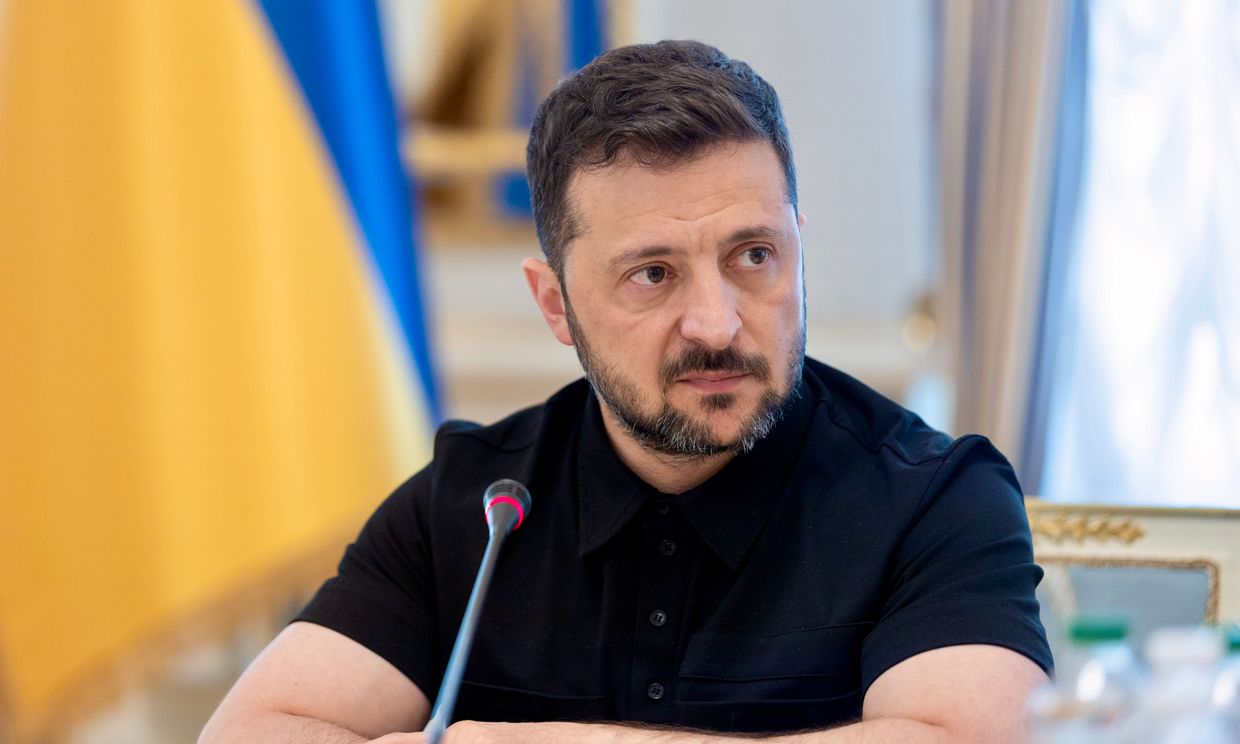
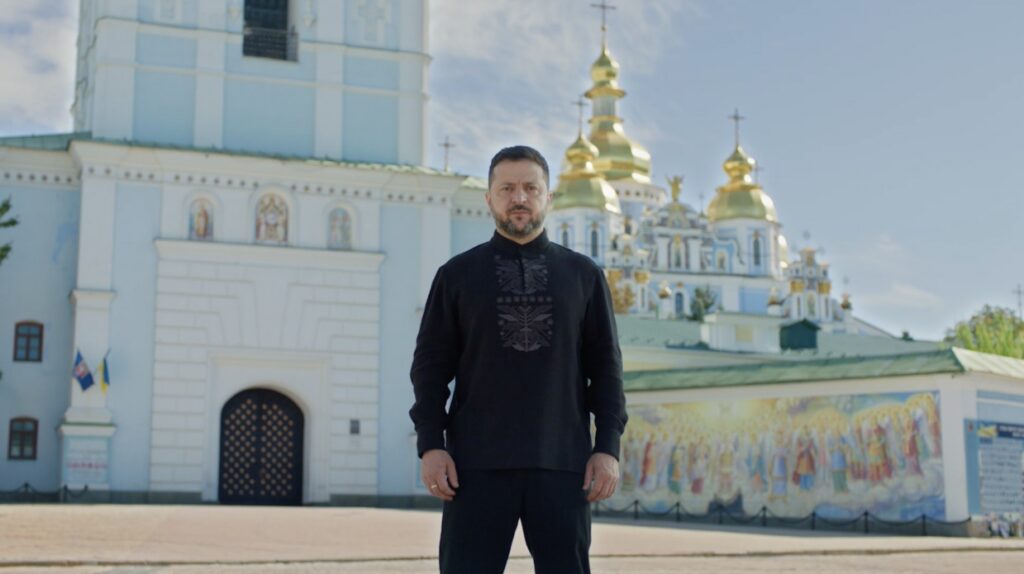
Ukraine celebrated 35 years of independence on 24 August, and Ukrainian President Volodymyr Zelenskyy marked the day with an address listing what the invasion has cost Russia, published by the President's Office. He said Putin is mortal and out of time to understand Ukraine, and said Ukraine will not hand over Donbas or save the Kremlin half a million soldiers. He also asked partners for sanctions and weapons strong enough to force an end to the war.
Russia has been inv
Ukraine celebrated 35 years of independence on 24 August, and Ukrainian President Volodymyr Zelenskyy marked the day with an address listing what the invasion has cost Russia, published by the President's Office. He said Putin is mortal and out of time to understand Ukraine, and said Ukraine will not hand over Donbas or save the Kremlin half a million soldiers. He also asked partners for sanctions and weapons strong enough to force an end to the war.
Russia has been invading Ukraine since 2014 and fighting a full-scale war on it since 2022, and Ukraine now supplies a growing share of the missiles and drones it fights back with, while the air defense shielding its cities still hangs on decisions taken in Washington and European capitals—which is what makes a holiday speech a statement of what Kyiv will not trade and what it needs built or delivered next.
The losses he read back to Moscow
President Zelenskyy turned from his own citizens to Russia partway through the speech.
"You wanted to take all our Ukraine, all our land; instead, you lost your oil refineries, your fleet, your profits, your entire generation that you sent into the meat grinder," he said.
A country that wanted Ukraine erased from the map, he added, is now absent from the international agenda of the future civilization.
For five years now, Russia has tried to exhaust and break Ukrainians — cutting light and heat, destroying homes, Kyiv Mayor Klitschko said on Ukraine's 35th Independence Day
"The aggressor failed to understand one fundamental thing: above all else, Ukrainians love freedom," he… pic.twitter.com/NvVVKSKIK1
He set Moscow's self-image against its filling stations.
"For 27 years, the head of Russia has talked about greatness, while Russia is standing in lines for gasoline," Zelenskyy said.
Moscow and St. Petersburg brought back gasoline rationing this month, and Rosneft capped fills at every station in the country.
On the Russian leader he was blunt.
"Putin hopes that we are tired. But we know that he is mortal," he said, adding that Putin never understood Ukraine and now will not have the time to.
A fifth Independence Day at war
Before the holiday, Russian ballistic missiles hit Kyiv and its main airport hub twice in 24 hours. A solution to Russian ballistic terror must be found, Zelenskyy said, and that gamble must not pay off.
Russia does not want peace, it wants mobilization, the president said. Ukraine will not let Moscow seize the initiative or convince Europe that surrendering Donbas ends the war. Russia keeps pushing back the dates for taking all of Donetsk Oblast and will keep pushing them back, he said.
The president called Ukraine's defense industry a giant that forges independence around the clock, and demanded more from it. Mid-range strikes cut Russian logistics and long-range weapons cut Russian profits, he said, listing Moscow, Tuapse, Tula, Ryazan, Olenya, and Omsk among the places already hit.
Explore further
Ukraine’s drones hit two Russian fighters and a spy drone—and blinded radars from occupied Crimea to Rostov
Ukraine's home-built Flamingo cruise missiles should stop being a rare species and arrive en masse: "They must 'winter' in Russia," Zelenskyy noted.
Previously, Flamingos have hit defense plants more than 1,000 km from the border, though they still appear in strikes in small numbers.
"China should no longer remain silent"
Ukraine is not asking anyone to fight for it, the president said — only for everything needed to stop the war before Putin starts the next one. He wants sanctions that make Russians howl and Moscow at a negotiating table, and said Washington has lost its illusions about Russian intentions. Europe must be Europe, he said: united, ambitious, brave.
"China should no longer remain silent," he added, saying Beijing must cool the ardor of someone who puts on a sailor's uniform and cap and talks about a nuclear strike—a description that fits Putin.
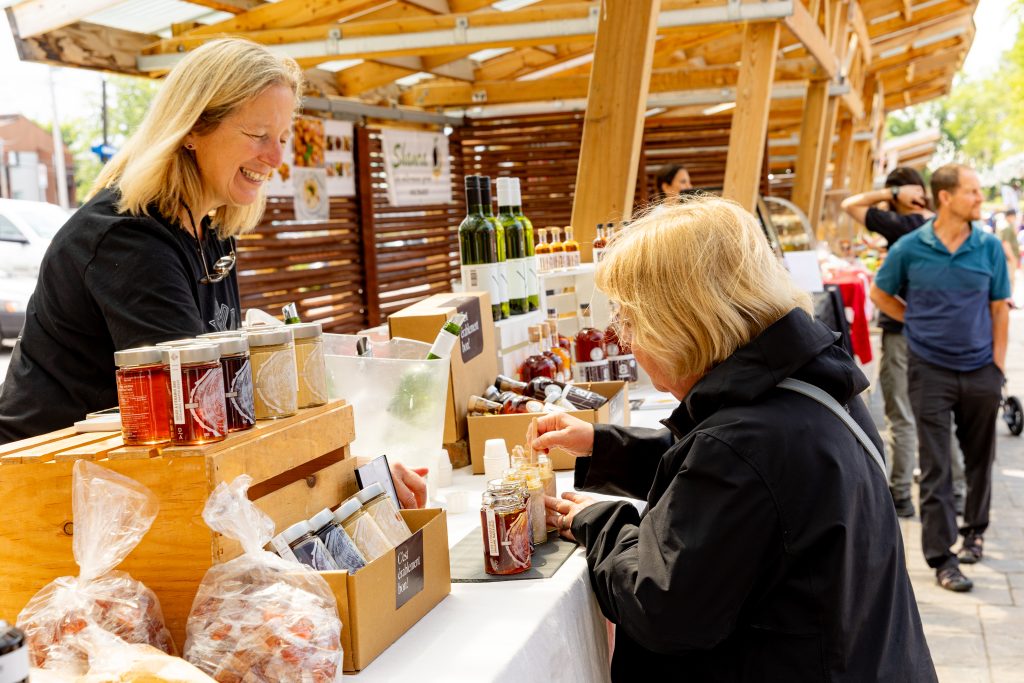
Les récoltes sont en abondance dans les kiosques au Marché public de Rimouski. On croule sous les végétaux de toutes sortes: tomates, maïs, fleurs, bleuets, concombres, carottes.
Présentez-vous ce samedi 22 août de 10h et 14h, au parc de la Gare de Rimouski, pour rencontrer tous nos exposants :
Diwan pizza
Pommes de terre Bérubé
Les Cornus de l’Est
La Sage Camomille
La Cabottine – Saveurs Indigènes
Florent charcuteries artisanales
Érablière de la Picard
Gaïa épicerie
Les récoltes sont en abondance dans les kiosques au Marché public de Rimouski. On croule sous les végétaux de toutes sortes: tomates, maïs, fleurs, bleuets, concombres, carottes.
Présentez-vous ce samedi 22 août de 10h et 14h, au parc de la Gare de Rimouski, pour rencontrer tous nos exposants :
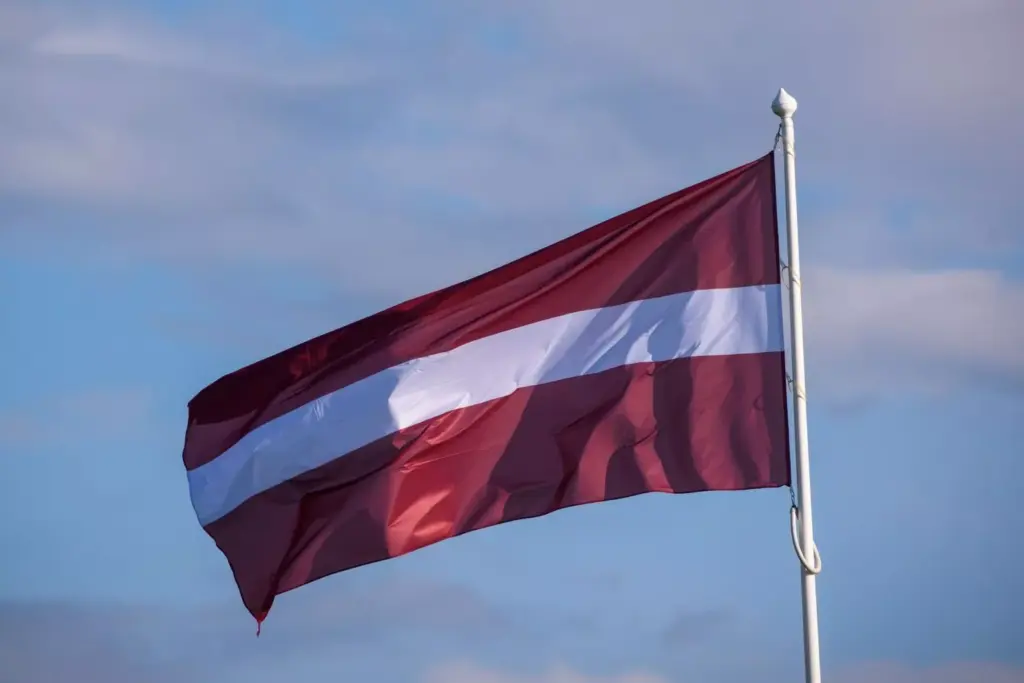
Latvia has resumed publishing monthly lists of locally registered companies trading goods with Russia or Belarus after a nearly three-year pause, public broadcaster LSM reported on 20 August 2026.
Prime Minister Andris Kulbergs has pledged to sever its remaining economic ties with Russia and Belarus, but substantial trade remains legal because EU sanctions are not a full embargo. The monthly register makes that commerce visible by identifying the companies involved.
Latvia has resumed publishing monthly lists of locally registered companies trading goods with Russia or Belarus after a nearly three-year pause, public broadcaster LSM reported on 20 August 2026.
Prime Minister Andris Kulbergs has pledged to sever its remaining economic ties with Russia and Belarus, but substantial trade remains legal because EU sanctions are not a full embargo. The monthly register makes that commerce visible by identifying the companies involved.
The Central Statistical Bureau, Latvia's national statistics agency, published the names of 171 companies for July. A subsequent analysis by Latvian news agency LETA found that more than two-thirds operated in logistics, food and agriculture, or medicine.
The disclosure is, in effect, a form of naming and shaming. Yet the statistics bureau stopped publishing a similar list in autumn 2023 because names without transaction details could not support objective conclusions. The register is not a sanctions blacklist, and inclusion does not indicate a sanctions violation.
Under an amendment adopted on 18 June 2026, Latvia’s tax authority must send the data to the statistics bureau each month. The change also lifted tax-confidentiality rules that had kept company names private, LSM reported.
The explanatory note accompanying the law said disclosure was intended to support Ukraine. The amendment's authors argued that Latvian companies should not contribute to Russian and Belarusian state revenues while Russia’s invasion continues, according to LSM.
Latvia seeks to cut its remaining trade
The Prime Minister said in June that Latvia must sever its remaining economic ties with Russia and Belarus. However, he indicated that pharmaceutical exporters would likely be exempted on national-security grounds.
Latvia’s exports to Russia and Belarus each fell only about 7% in 2025, while imports from Russia plunged by more than two-thirds, according to official data cited by Euromaidan Press.
EU sanctions do not prohibit all trade
The EU renewed its economic sanctions on Russia through July 2027, preserving restrictions on trade, finance, and energy, as well as on goods and technology with both civilian and military uses, Euromaidan Press reported in June.
The Council of the EU says its trade restrictions exclude health, pharmaceutical, food, and agricultural products to avoid harming Russian civilians. Those exclusions allow EU companies to continue lawful trade with Russia even while other parts of its economy remain under sanctions over the invasion of Ukraine.
[en]
Le 3 février 2025, je rentre du judo et je descends récupérer Oscar à l’eclau. Il aime rester installé sur la plate-forme devant la chatière condamnée: bonne vue sur le jardin, et effluves de l’extérieur.
En arrivant, je suis surprise par un matou gris et blanc de l’autre côté de la vitre. Je le surprends aussi. Il a pas l’air commode: oreilles aplaties, balafré, bajoues de compét’ – et il souffle. “Toi, t’es pas castré, ça c’est sûr!”
J’ai le réflexe de prendre une pho
Le 3 février 2025, je rentre du judo et je descends récupérer Oscar à l’eclau. Il aime rester installé sur la plate-forme devant la chatière condamnée: bonne vue sur le jardin, et effluves de l’extérieur.
En arrivant, je suis surprise par un matou gris et blanc de l’autre côté de la vitre. Je le surprends aussi. Il a pas l’air commode: oreilles aplaties, balafré, bajoues de compét’ – et il souffle. “Toi, t’es pas castré, ça c’est sûr!”
J’ai le réflexe de prendre une photo, je récupère Oscar, je laisse quelques croquettes de l’autre côté de la chatière et je braque la caméra de surveillance dessus. Le lendemain, je verrai qu’il a mangé les croquettes.
Les chats errants n’ont pas une belle vie, contrairement à ce que voudrait faire croire le mythe populaire de la liberté et de “la nature“. Les bonnes âmes qui mettent une gamelle dehors ont bonne conscience et sont tout attendries, mais la réalité est une vie de bagarres, de dangers, de kilomètres parcourus poussés par leurs hormones, un risque de maladies plus élevé et évidemment, pas de soins médicaux. Non, il n’y a pas de soins médicaux dans la nature, c’est vrai, et le résultat c’est de la souffrance, encore de la souffrance, des vies qui se terminent misérablement dans les buissons, oui, dans la souffrance.
Il y a quelques années, j’avais tenter d’attirer un des matous errants du quartier, les oreilles déformées par la gale, le pas boiteux vu son âge avançant, pour le castrer. J’ai échoué. Je ne sais pas ce qu’il est devenu. Sans doute mort dans un coin.
Donc quand j’ai vu Juju, j’ai passé à l’action. Quand j’ai vu qu’il revenait, j’ai lancé l’opération “rendez-vous croquettes sur le rebord de la fenêtre”.
J’ai vérifié s’il était pucé, j’ai mis des affiches dans le quartier, j’ai mis des annonces sur internet. J’ai vu que je pouvais le toucher, même s’il avait peur. Une voisine aussi. J’ai préparer le terrain pour qu’on puisse le castrer quand je l’attrapais – vétérinaire, WCs aménagés pour pouvoir l’y enfermer quelques heures le cas échéant. Quand tout était prêt, j’ai attendu que l’opportunité se présente.
Elle s’est présentée le mercredi 26 février 2025, vers midi et demie. Dire que ça s’est bien passé serait mentir. J’ai pu le saisir mais au moment de l’approcher de la cage de transport, il a commencé à se débattre comme un beau diable. Je ne sais pas combien de temps ça a duré, mais j’ai tenu bon et lui aussi. La fenêtre était ouverte, je savais que si je le lâchais, il y avait toutes les chances que l’opportunité ne se représente plus. Lui luttait pour sa vie. A un moment il a failli m’échapper et je l’ai rattrapé par une patte. Il m’a mordue. J’ai réussi à fermer la fenêtre avec le pied et je l’ai laissé filer dans l’espace coworking.
Par chance, il s’était planqué quelque part d’accessible et était plus paralysé de peur que bête sauvage. Après avoir pansé mes doigts, je l’ai attrapé et mis dans les WC. La suite a été moins aventureuse: un peu d’aide pour le choper avec une couverture et mettre le tout dans la grosse grosse cage de transport que j’avais achetée pour les trajets Lausanne-chalet avec Oscar, direction véto, récupération, convalescence, apprivoisement.
Direction véto.Après le véto.
Je n’avais pas prévu de le garder. Mon projet était de le remettre dehors, avec abri et gamelle à puce (j’en avais profité pour le faire pucer). J’avais prévu de le relâcher. Une personne de l’immeuble était peut-être intéressée à tenter de l’adopter. On ferait les choses en douceur.
Mais vu comment s’était passée sa capture, je me suis dit qu’il valait mieux le garder quelques jours dedans avant de le laisser filer. Pas dit qu’il revienne, après avoir eu la peur de sa vie. En plus, c’était quand même mieux pour lui après l’intervention.
On me demande régulièrement pourquoi “Julius”. Avant sa capture, j’avais vaguement réfléchi à un nom temporaire pour lui. Oscar était mon premier chat à avoir un “nom d’humain”, et ça m’a un peu inspirée. Je voulais un nom qui colle pour un matou barreur et un peu patibulaire. Victor? Julius? Je n’y ai pas beaucoup pensé, je ne cherchais pas vraiment de nom, j’avais juste pris quelques secondes pour envisager des possibilités, puis je n’y ai plus repensé. En le récupérant chez le vétérinaire, l’assistante me demande “quel nom mettre sur le dossier”. Je suis prise de court, je me souviens de “Julius”, je me dis “bah, s’il est sympa on pourra dire Juju”. Autant vous dire que “Julius” est inusité, même ça reste son “vrai nom”.
Mon projet initial de le remettre dehors a été mis au rebut dès le premier soir. Juju était terré au fond de sa cage de transport, n’en était pas sorti. J’ai tenté une caresse. Sous ma main, j’ai vu se fermer ses yeux, sa posture se détendre, et sa tête se poser. J’ai gratté un peu sous le cou, et il a tendu le menton pour en profiter. Cet instant-là, j’ai décidé que je n’allais pas prendre le risque de le remettre dehors, et qu’il valait la peine de tenter de le resocialiser pour adoption. Surtout que j’avais quelqu’un sur les rangs. Je me suis dit qu’un chat qui se détendait sous les caresses d’une main inconnue après la journée qu’il avait eue, il avait du potentiel.
La tentative d’adoption n’a pas fonctionné. Juju est un nocturne — et aussi, ce que je n’avais pas réalisé à l’époque, il y avait certainement une minette en chaleur dehors, ce qui expliquait les bagarres terribles qui avaient déchiré nos nuits de février, et simplement, la présence de Juju, qui normalement ne venait pas par ici. Le jour, il restait planqué, craintif, prudent. La nuit, l’appel de l’extérieur et probablement des hormones l’amenait à miauler, miauler, miauler, miauler. De plus, après des années d’errance, il y avait quand même pas mal à reconstruire pour qu’il surmonte sa crainte de l’humain. C’est un gros investissement et mine de rien, ça nécessite des compétences en matière de comportement qui ne sont pas toujours simples à acquérir sur le tas.
Je l’ai récupéré, en bas dans ma salle de réunion, ou au moins, s’il passait la nuit à miauler, même si ce n’était pas rigolo pour lui, il n’empêchait personne de dormir.
Je ne prévoyais pas de le garder. J’avais Oscar, et j’avais décidé que tant qu’Oscar était là, je ne prendrais pas de deuxième chat. J’avais aussi décidé qu’après Oscar, je m’octroierais une “pause chat“, après avoir enchaîné des années de soins pour deux très vieux chats. J’ai donc commencé à réfléchir au profil de la maison d’accueil ou de l’adoptant qu’il lui faudrait. Et je suis arrivée à la conclusion, dans un contexte où choisir l’option la moins lourde pour moi était un critère important, que partir du principe que je gardais Juju serait paradoxalement beaucoup plus simple à gérer que de lui chercher un foyer à la hauteur de ses besoins.
Cette décision prise et sa garde organisée, je suis partie au chalet le 17 mars avec Oscar pour profiter de mes vacances tant attendues, les premières depuis bien trop longtemps… Mais ça, c’est une autre histoire !
Juju s’est super bien bien adapté. C’est un chat super câlin, super tolérant, qui aime les caresses et les genoux. Il ronronne bien. Il est plutôt bonne pâte. Il me fait penser à Quintus, côté tempérament. Un peu plus craintif. Mais il apprend à faire confiance si on prend le temps de lui montrer qu’il n’a rien à craindre. Ses oreilles aplaties, c’est leur position naturelle. Elles doivent avoir été implantées bizarrement. Comme dit une copine “il est en mode avion”. Elle l’a aussi surnommé “le chavion”.
Il continue à courir le quartier chaque nuit, parfois jusqu’à Prilly Centre et même en-dessous, parfois juste autour du pâté d’immeubles. Son tracker m’a montré que son coeur de territoire n’était certainement pas ici, mais plus au sud. Avec le temps, il va moins par là-bas, et reste plus proche d’ici. Il n’aime pas les trajets en voiture, pas du tout. Il est plutôt chill avec les autres chats, pas dans le genre “je suis le roi” comme Oscar (qui le poursuit sans merci quand il en a l’occasion… Juju a appris qu’il suffisait de s’éloigner un peu vu la vitesse de déplacement de papy), mais si on vient le chercher dans son espace vital, il le défendra. J’ai déjà perdu le compte des abcès et mises sous antibios.
Seule ombre au tableau: il s’est bien enrobé. C’est un euphémisme. J’ai honte, vraiment. Comme dit sa véto “au moins vous êtes pas dans le déni, c’est déjà ça!” Comme je n’ai pas envie d’avoir un nouveau chat diabétique tout de suite (et aussi parce que le diabète n’est pas la seule menace qui pèse sur le chat obèse), on va prendre ça en main plus sérieusement. Il a déjà des croquettes Metabolic, mais cela ne semble pas tout à fait suffisant. Pour marquer le coup, ce matin je lui ai appris à monter sur la balance (merci les Churu).
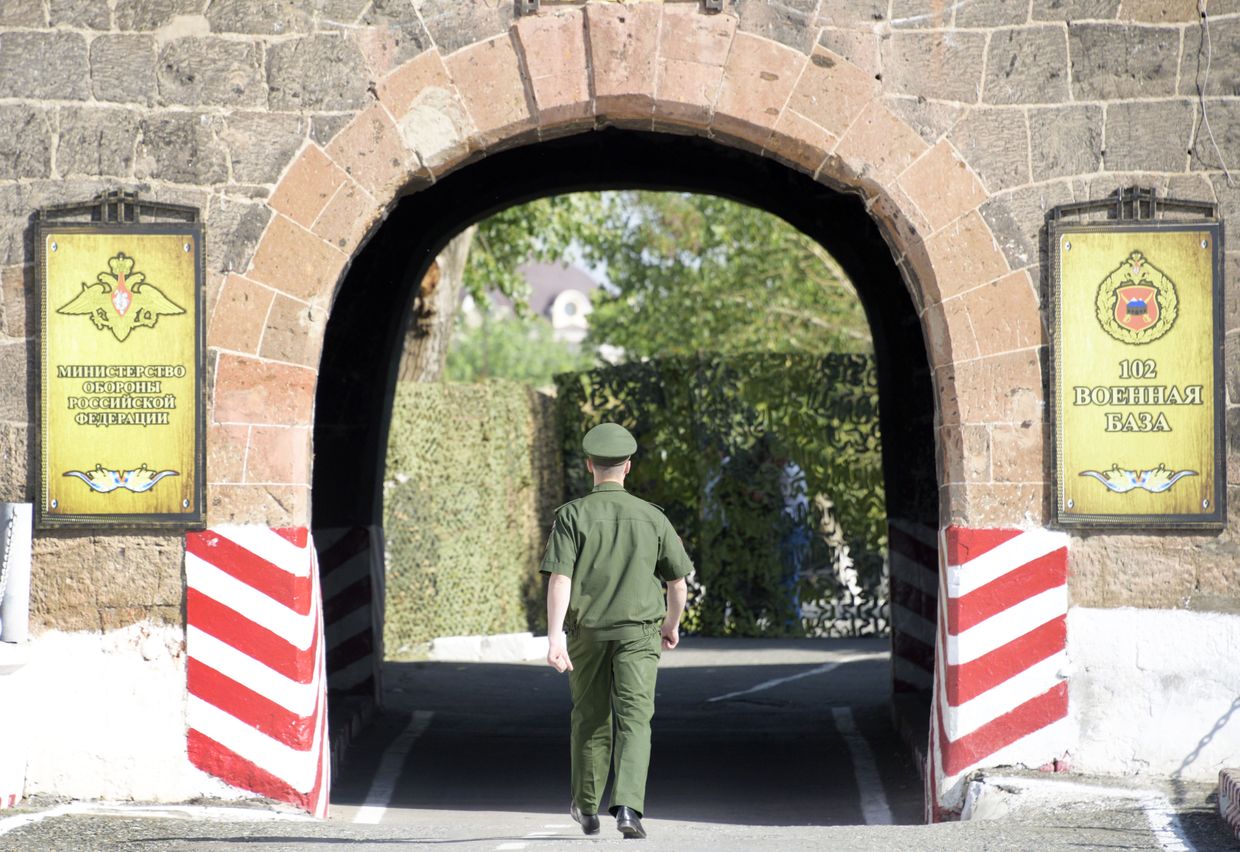
Ukraine's military intelligence (HUR) on July 7 published what it claimed was a Russian army order to increase its military presence at a base in Armenia, two days after HUR's warning of such a move was denied by Yerevan.HUR first made the claim on July 5, saying Russia was increasing its forces at the Gyumri base to exert greater influence in the South Caucasus and "destabilize the global security situation."Armenia's Foreign Ministry denied the claim on the same day.In a post on social media o
Ukraine's military intelligence (HUR) on July 7 published what it claimed was a Russian army order to increase its military presence at a base in Armenia, two days after HUR's warning of such a move was denied by Yerevan.
HUR first made the claim on July 5, saying Russia was increasing its forces at the Gyumri base to exert greater influence in the South Caucasus and "destabilize the global security situation."
Armenia's Foreign Ministry denied the claim on the same day.
In a post on social media on July 7, HUR published a document which it said was a "order from the commander of the troops of the Southern Military District of the Russian Armed Forces on the 'replenishment' of the Russian military base in Armenia."
"The telegram lists a list of measures for the urgent “replenishment” of the units of the Russian unit by selecting personnel from among the servicemen of the 8th, 18th, 49th and 58th combined arms armies of the Southern Military District of the Russian Armed Forces," HUR said.
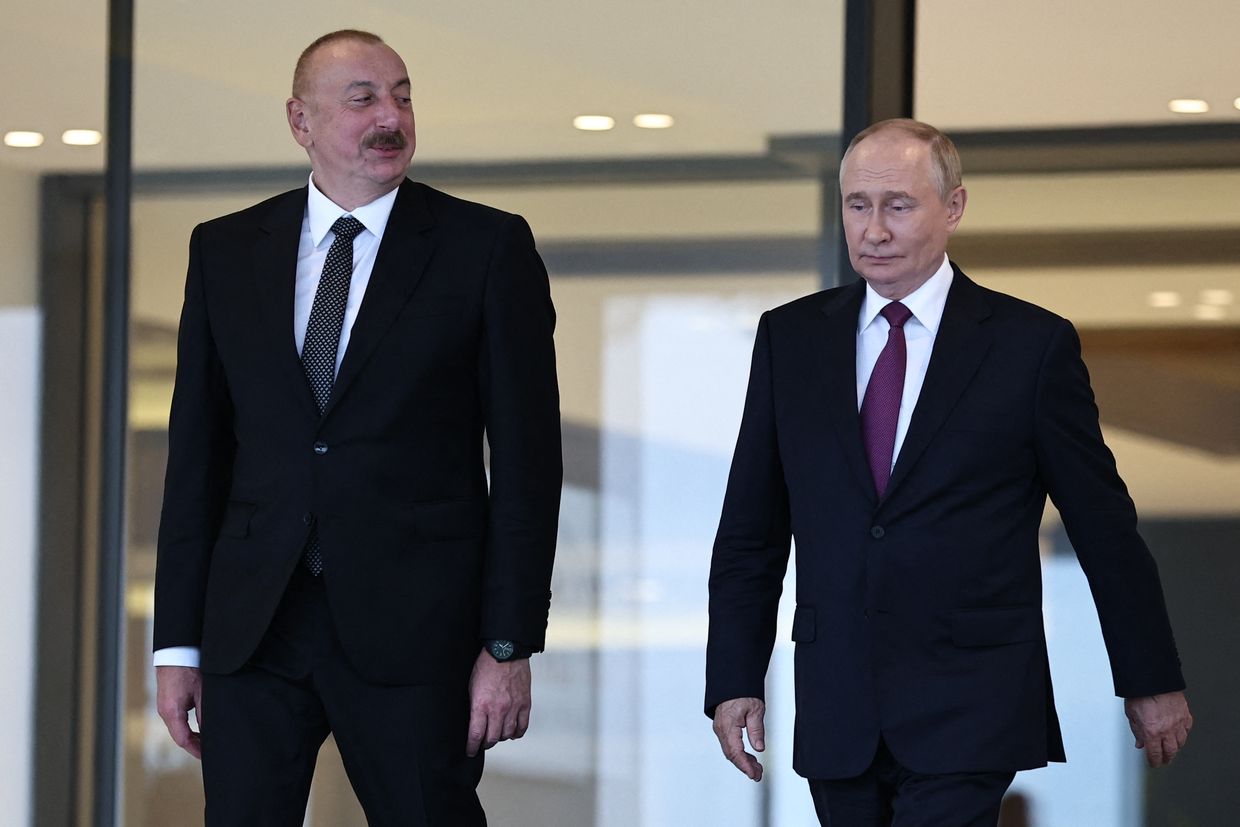
The news comes amid a major deterioration in Russian-Azerbaijani relations after a deadly June 27 operation in Russia's Yekaterinburg, where Russian security forces killed two Azerbaijani nationals and injured several others in a raid linked to a 2001 murder case.
Armenia has had a historically close relationship with Russia but the relations between Yerevan and Moscow have recently deteriorated.
Russia's leverage over both Baku and Yerevan has diminished dramatically since Azerbaijani troops captured Nagorno-Karabakh, an Armenian-controlled region in Azerbaijan, in 2023.
Russian peacekeepers later withdraw from the region, and now Baku and Yerevan are negotiating a permanent peace deal.
Armenia, which has lambasted Moscow for failing to help it during the Nagorno-Karabakh conflict, is drifting closer to the West.
Armenian Prime Minister Nikol Pashinyan has suspended the country's membership in a Russian-led military alliance and announced plans to join the European Union. Recently there has also been a crackdown on the pro-Russian opposition in Armenia.
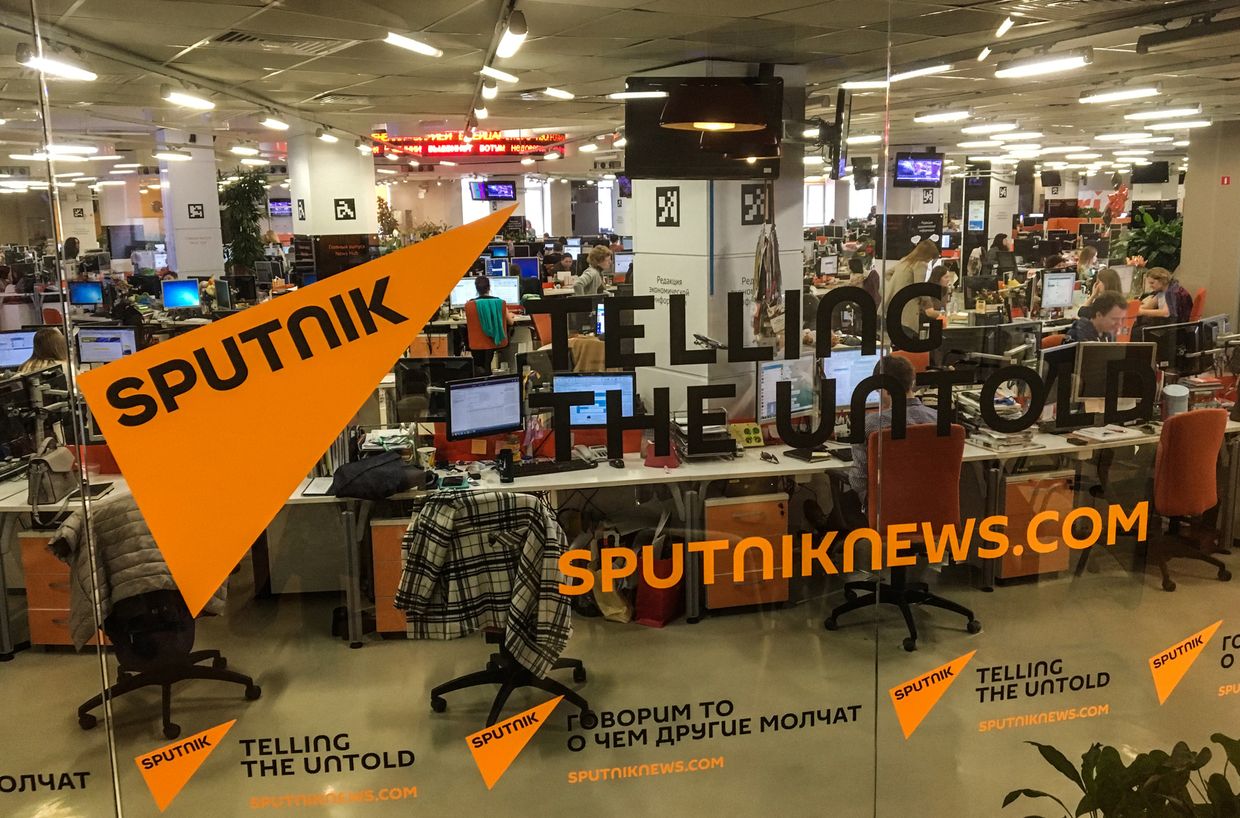
Russian state-funded propaganda media outlet Sputnik will cease operations in Azerbaijan, Russia Today media group CEO Dmitry Kiselyov said on July 3, according to the Russian state news agency RIA Novosti."We regret to say that, as of today, the conditions for Sputnik Azerbaijan to continue its activities in this country are not in place," Kiselyov said.The move comes amid a major deterioration in Russian-Azerbaijani relations.Kiselyov's comments followed the detention of several Sputnik Azerba
Russian state-funded propaganda media outlet Sputnik will cease operations in Azerbaijan, Russia Today media group CEO Dmitry Kiselyov said on July 3, according to the Russian state news agency RIA Novosti.
"We regret to say that, as of today, the conditions for Sputnik Azerbaijan to continue its activities in this country are not in place," Kiselyov said.
The move comes amid a major deterioration in Russian-Azerbaijani relations.
Kiselyov's comments followed the detention of several Sputnik Azerbaijan employees by Azerbaijani police on June 30. Authorities said two of the detainees were operatives of Russia's Federal Security Service (FSB), prompting a formal protest from Moscow.
Kiselyov called the charges "far-fetched," saying the staff had worked to "develop cooperation between Azerbaijan and Russia." He added that legal action would be taken to defend them.
Sputnik, a key pillar of the Kremlin's global propaganda network, has long been accused by Western governments and media watchdogs of spreading disinformation and pro-Russian narratives.
These developments follow a deadly June 27 operation in Russia's Yekaterinburg, where Russian security forces killed two Azerbaijani nationals and injured several others in a raid linked to a 2001 murder case.
On June 28, Azerbaijan's Foreign Ministry issued a rare public rebuke, calling the operation "ethnically motivated" and part of a "systematic pattern" of unlawful treatment of Azerbaijani nationals in Russia.
The diplomatic rupture deepened further after Azerbaijani authorities arrested eight Russian citizens the next day, presenting them in court handcuffed and visibly injured. They were accused of participating in organized crime, cyberattacks, and drug smuggling from Iran.
The closure of Sputnik's bureau marks a new low in relations between the two former Soviet states, which have seen escalating tensions despite longstanding ties.
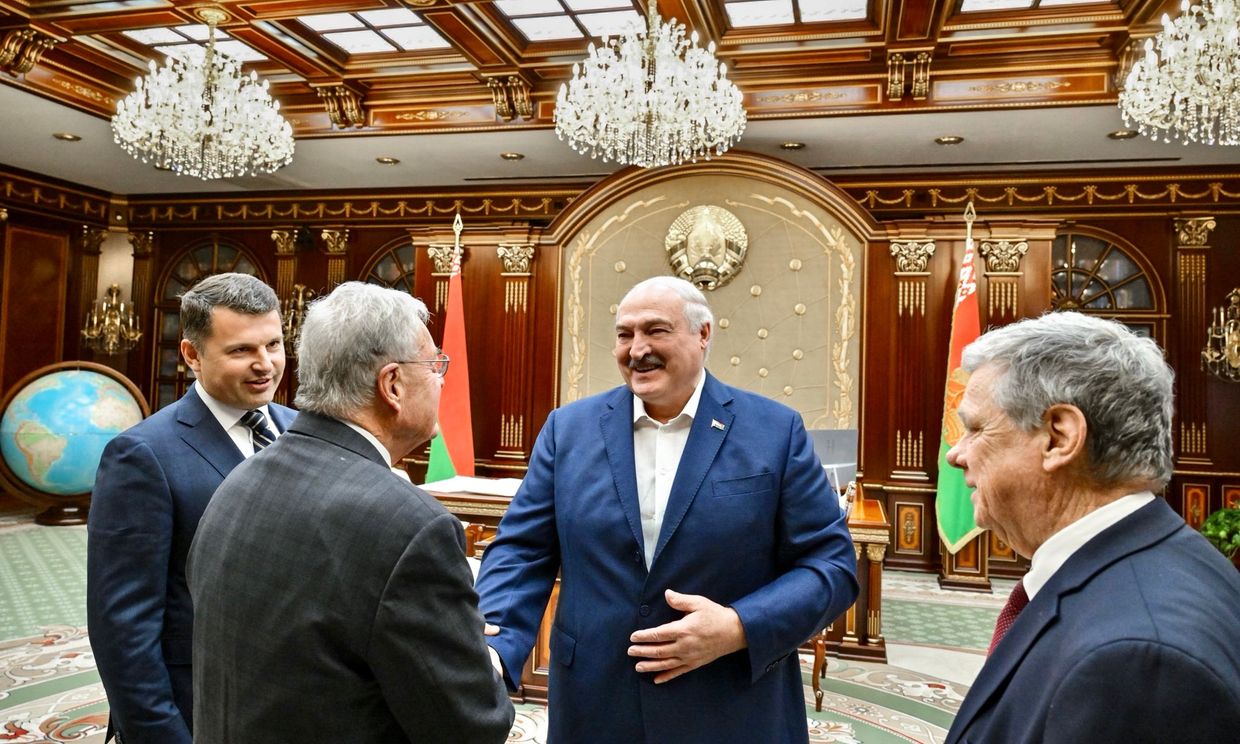
U.S. Special Envoy for Ukraine Keith Kellogg denied on July 1 that he agreed to "work on" halting Ukraine's drone attacks on Russia, contradicting Belarusian dictator Alexander Lukashenko's claim.Speaking at a state event on Belarus's Independence Day, Lukashenko said he relayed Russian President Vladimir Putin's position to Kellogg during their June 21 meeting in Minsk.According to Lukashenko, the Russian president is willing to consider a ceasefire in Ukraine if Ukrainian forces stop conductin
U.S. Special Envoy for Ukraine Keith Kellogg denied on July 1 that he agreed to "work on" halting Ukraine's drone attacks on Russia, contradicting Belarusian dictator Alexander Lukashenko's claim.
Speaking at a state event on Belarus's Independence Day, Lukashenko said he relayed Russian President Vladimir Putin's position to Kellogg during their June 21 meeting in Minsk.
According to Lukashenko, the Russian president is willing to consider a ceasefire in Ukraine if Ukrainian forces stop conducting drone strikes on Russian territory.
"I conveyed this position to the Americans," Lukashenko said on July 1. "We will work on it, said (the U.S. special envoy), in this direction."
Kellogg pushed back on the claim, writing on X that the quote was "taken out of context" and misrepresented the substance of their talks.
"At no point did I make comments related to Ukraine's prosecution of the war outside of a total ceasefire," he said. "In my conversation with Lukashenko, we discussed a full and unconditional ceasefire."
The June meeting between Kellogg and Lukashenko marked the highest-level U.S. visit to Belarus since former Secretary of State Mike Pompeo's 2020 trip. Belarusian state media widely portrayed Kellogg's visit as a sign of thawing relations.
Shortly after the talks, Belarus released opposition leader and political prisoner Siarhei Tsikhanouski, who had been jailed since the 2020 presidential election.
Lukashenko has ruled Belarus since 1994 and remains a key ally of the Kremlin. His regime has allowed Russian troops and equipment to use Belarusian territory to attack Ukraine since the start of the full-scale invasion in February 2022.
Armenian authorities should "seriously" consider banning the broadcast of Russian television channels in Armenia, Armenian Parliament Speaker Alen Simonyan said on July 1, citing concerns over interference and deteriorating ties."We must very seriously discuss the suspension of the Russian television channel broadcast in the territory of Armenia," Simonyan told reporters, according to Armenpress. He criticized recent content aired by Russian state broadcasters, which the Armenian government has
Armenian authorities should "seriously" consider banning the broadcast of Russian television channels in Armenia, Armenian Parliament Speaker Alen Simonyan said on July 1, citing concerns over interference and deteriorating ties.
"We must very seriously discuss the suspension of the Russian television channel broadcast in the territory of Armenia," Simonyan told reporters, according to Armenpress. He criticized recent content aired by Russian state broadcasters, which the Armenian government has denounced as harmful to bilateral ties.
The remarks come as Armenia continues to pivot away from Moscow's sphere of influence and seeks to bolster ties with the West.
Simonyan suggested that individuals connected to Armenian-Russian oligarch Samvel Karapetyan may be financing efforts to meddle in Armenia's internal matters.
"If there are channels that allow themselves to interfere in Armenia’s domestic affairs, perhaps we ought to respond likewise, by at least banning their entry into the homes of our society," he said.
Tensions between Armenia and Russia have mounted since Moscow's failure to intervene during Azerbaijan's military operation in Nagorno-Karabakh in September 2023, which resulted in the mass displacement of ethnic Armenians.
In April, Armenian President Vahagn Khachaturyan signed a law initiating the country's formal accession process to the European Union.
Though symbolic, the legislation marks a significant political shift, embedding European integration into Armenian law. The bill, passed by parliament in March, was backed by 64 lawmakers and opposed by seven.
Armenian Prime Minister Nikol Pashinyan has said that EU membership would require a referendum, while the Kremlin warned that joining both the EU and the Russian-led Eurasian Economic Union (EAEU) is "simply impossible." The EAEU, established in 2015, includes Russia, Belarus, Kazakhstan, Armenia, and Kyrgyzstan.
Belarusian dictator Alexander Lukashenko announced on July 1 that the Russian-made Oreshnik missile system will be deployed in Belarus by the end of 2025. Speaking at a ceremony marking Independence Day, Lukashenko said the decision was made in coordination with Russian President Vladimir Putin during a meeting in Volgograd."The first Oreshnik positions will be in Belarus. You’ve seen how Oreshnik works: the same missiles, the same strikes — but without nuclear warheads, without radioactive cont
Belarusian dictator Alexander Lukashenko announced on July 1 that the Russian-made Oreshnik missile system will be deployed in Belarus by the end of 2025. Speaking at a ceremony marking Independence Day, Lukashenko said the decision was made in coordination with Russian President Vladimir Putin during a meeting in Volgograd.
"The first Oreshnik positions will be in Belarus. You’ve seen how Oreshnik works: the same missiles, the same strikes — but without nuclear warheads, without radioactive contamination of the land and air. This weapon will be stationed in Belarus by the end of the year," Lukashenko said.
Lukashenko, who has ruled since 1994 and claimed victory in a seventh consecutive presidential election in January, argued that hosting such weaponry would not make Belarus a target, adding that such concerns are being "imposed from outside." He claimed that countries possessing nuclear weapons have historically avoided military aggression and said the presence of such systems in Belarus is intended solely as a deterrent.
He also said he had delivered a warning to U.S. officials, stating that while nuclear weapons in Belarus are securely stored in accordance with international standards, any unauthorized incursion into Belarusian territory would trigger a "swift and forceful response."
The Belarusian leader emphasized that any use of the Oreshnik system would not involve nuclear warheads and that maintaining modern military capabilities is critical for national defense.
Russia first launched the experimental Oreshnik missile during a strike on the Ukrainian city of Dnipro on Nov. 21. Putin claimed the attack was in retaliation for Ukraine's use of U.S. and British long-range missiles against Russian territory.
Although little is publicly known about the missile, defense experts believe Oreshnik is not a wholly new development but likely an upgraded version of Russia’s RS-26 missile, also known as the Rubezh, which was first produced in 2011.
Lukashenko reportedly thanked Moscow for supporting the deployment of advanced weapons systems to Belarus and said the introduction of Oreshnik would serve as a tool for domestic stability. "I’m confident that even those of our supporters who don’t yet understand this will come to realize it — without a war. That’s why Oreshnik will be on Belarusian soil. To prevent uprisings," he said.
Siarhei Tsikhanouski, a Belarusian oppositionist recently released from prison, thanked the U.S. on June 22 for brokering his release and appealed to President Donald Trump to help free other political prisoners in Belarus."President Trump now has the power and opportunity to free all political prisoners in Belarus with a single word. And I ask him to do so, to say that word," Tsikhanouski said in Vilnius during his first press conference after the release.Tsikhanouski, a popular blogger who pla
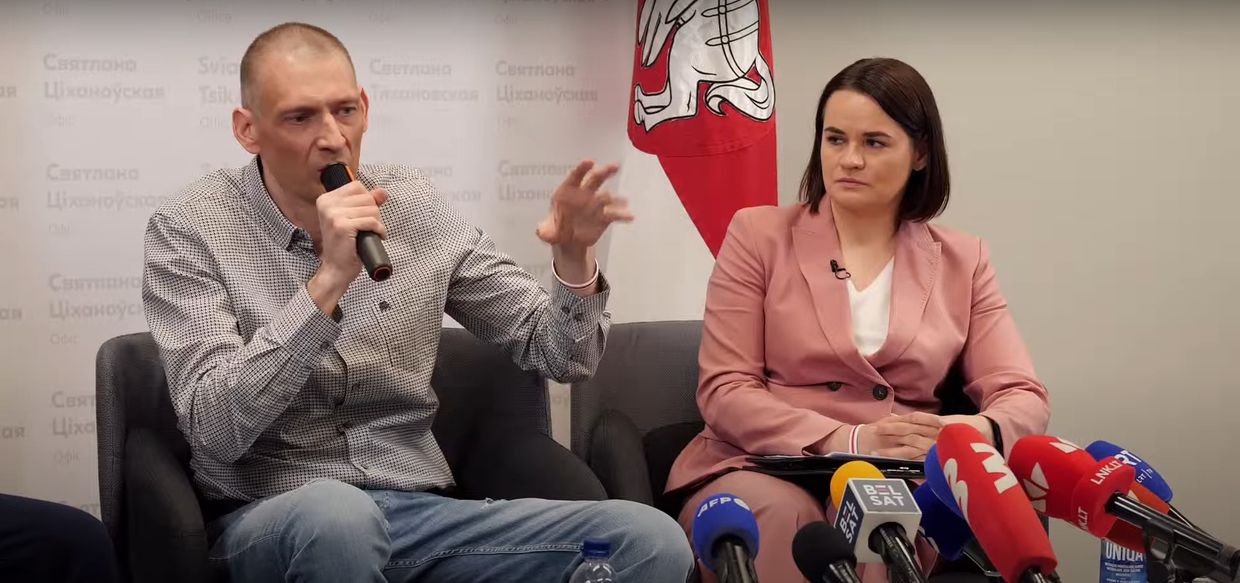
Siarhei Tsikhanouski, a Belarusian oppositionist recently released from prison, thanked the U.S. on June 22 for brokering his release and appealed to President Donald Trump to help free other political prisoners in Belarus.
"President Trump now has the power and opportunity to free all political prisoners in Belarus with a single word. And I ask him to do so, to say that word," Tsikhanouski said in Vilnius during his first press conference after the release.
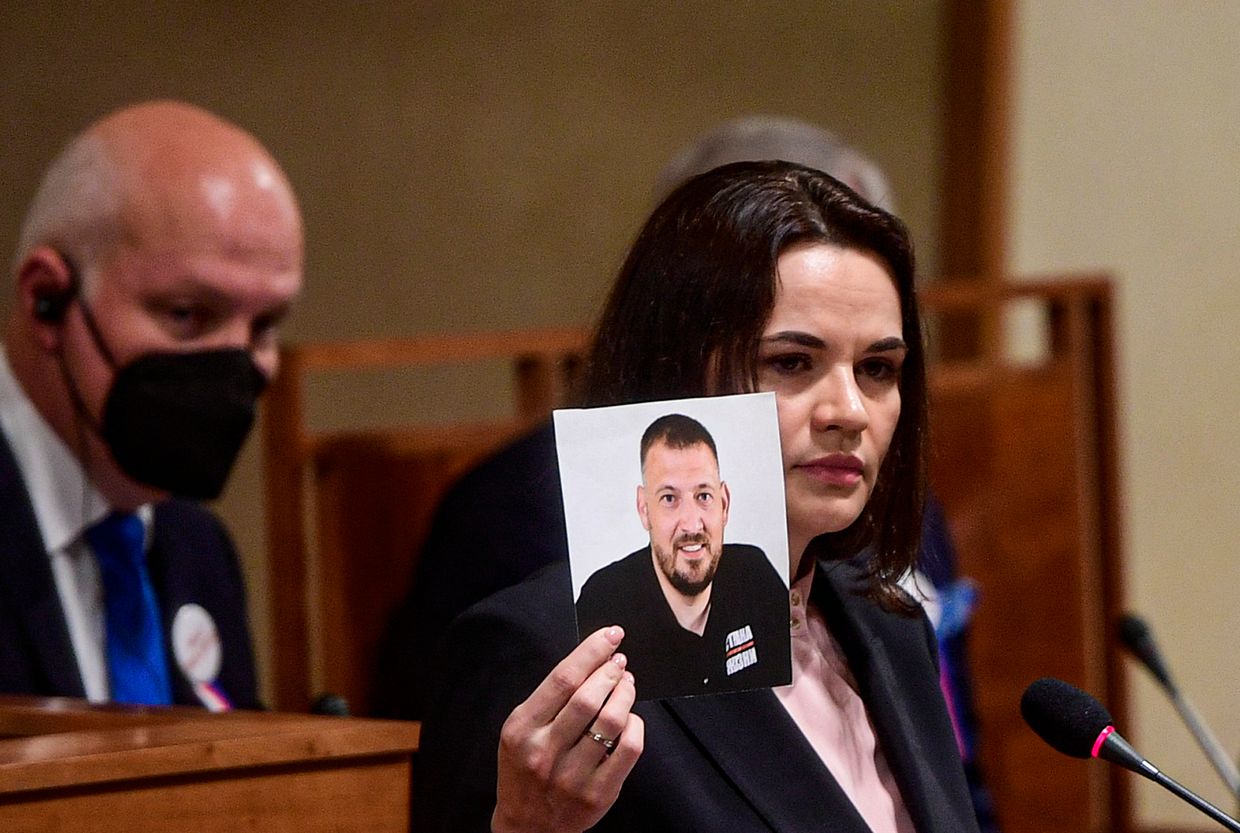
Tsikhanouski, a popular blogger who planned to challenge Belarusian dictator Alexander Lukashenko in the 2020 presidential election, was arrested shortly before the vote and later sentenced to 18 years in prison on politically motivated charges.
The opposition leader and at least 13 other detainees were released from Belarusian prisons on June 21 after Lukashenko met U.S. Special Envoy for Ukraine, Keith Kellogg, in Minsk.
Speaking at the press conference alongside his wife and opposition leader, Sviatlana Tsikhanouskaya, Tsikhanouski affirmed that both of them "will continue to support Ukraine and call all of the perpetrators accountable."
Tsikhanouski confirmed that he used to do business both in Ukraine and in Russia but refuted allegations of pro-Russian sympathies, affirming his support for Ukraine and President Volodymyr Zelensky.
"I believe Crimea is Ukrainian. Zelensky has the hardest fate and a heavy load that no other president has. Zelensky is my hero," Tsikhanouski said.
He also said that Sviatlana Tsikhanouskaya remains the leader of the Belarusian opposition, and he will not challenge that.
Tsikhanouskaya stepped in as the opposition candidate in 2020 after her husband's arrest, but was forced into exile after Lukashenko declared victory in what was broadly seen as massive election fraud.
"Do you think that anybody who serves in prison automatically becomes a leader? We have 1,200 such leaders," Tsikhanouski added, referring to the number of political prisoners who remain in prison under Lukashenko's regime.
"Belarus can't be free until the Putin regime collapses. If it wasn't for (Russian President Vladimir) Putin, we would not be sitting here; it would have been over (after the Belarus' popular protests against Lukashenko) in 2020-2021," Tsikhanouski said.
Lukashenko, in power since 1994, is a close ally of Putin and has allowed Russia to use Belarusian territory for military operations against Ukraine.
The Belarusian dictator has maintained a tight grip over his country by electoral fraud, surveillance, and brutal crackdown on free press, civil society, and political opposition, prompting Western countries to impose sanctions on Belarus.
Editor's note: This item has been expanded with additional details.Belarusian opposition leader and political prisoner Siarhei Tsikhanouski was released on June 21, shortly after dictator Alexander Lukashenko met in Minsk with U.S. President Donald Trump's special envoy for Ukraine, Keith Kellogg.Tsikhanouski , a popular blogger who planned to challenge Lukashenko in the 2020 presidential election, was arrested shortly before the vote and later sentenced to 18 years in prison on politically moti
Editor's note: This item has been expanded with additional details.
Belarusian opposition leader and political prisoner Siarhei Tsikhanouski was released on June 21, shortly after dictator Alexander Lukashenko met in Minsk with U.S. President Donald Trump's special envoy for Ukraine, Keith Kellogg.
Tsikhanouski , a popular blogger who planned to challenge Lukashenko in the 2020 presidential election, was arrested shortly before the vote and later sentenced to 18 years in prison on politically motivated charges. Amnesty International recognized Tsikhanouski as a prisoner of conscience.
His wife, Sviatlana Tsikhanouskaya, stepped in and became the main opposition candidate against Lukashenko.
At least 13 political detainees, including prominent blogger Ihar Losik, were also released on June 21, Belarusian independent outlet Nasha Niva reported.
The other released prisoners include three Polish citizens, two Latvian citizens, one Estonian citizen, a Swedish citizen, a U.S. citizen, and two Japanese citizens, according to Lukashenko's press secretary.
In a post on social media, Tsikhanouskaya welcomed the news but highlighted that "1,150 political prisoners remain behind bars."
My husband Siarhei is free! It’s hard to describe the joy in my heart.
We’re not done. 1150 political prisoners remain behind bars. All must be released. pic.twitter.com/MhngqBHFq3
— Sviatlana Tsikhanouskaya (@Tsihanouskaya) June 21, 2025
Kellogg's deputy, John Coale, said the released political prisoners had been transferred to Vilnius and expressed gratitude to the Lithuanian government for facilitating their relocation.
"President Trump's strong leadership led to the release of 14 prisoners from Belarus today. Thanks to the Lithuanian government for its cooperation and assistance — they remain a true friend and ally," Coale wrote on X.
According to official results of the 2020 election, Lukashenko won with 80% of the vote, while Tsikhanouskaya received just 10%. Evidence indicates that the election was heavily rigged, and Tsikhanouskayacould have realistically won the vote.
As a result, hundreds of thousands took to the streets in Belarus in 2020 to demand a fair election. Thousands were arrested, and many were beaten and tortured. At least seven demonstrators were killed during the protests.
Minsk has faced repeated Western sanctions since the brutal crackdown on pro-democracy protests.
Lukashenko, in power since 1994, is a close ally of Russian President Vladimir Putin and has allowed Russia to use Belarusian territory for military operations against Ukraine.
"You have caused quite a stir in the world with your arrival," Lukashenko told Kellogg during their meeting at the Palace of Independence, according to state-run outlet Belta.
"But I wonder why. Can't we have a normal dialogue and talk about our affairs – about relations between Belarus and the United States of America?"
Kellogg is the highest-ranking U.S. official to visit Belarus in recent years, following former Secretary of State Mike Pompeo's 2020 trip under Trump's first term.
Since Russia's full-scale invasion of Ukraine in February 2022, Lukashenko's regime has played a key logistical role in supporting Moscow's campaign, offering its territory for troop deployments and weapons stockpiles.
Latvia's parliament adopted a bill on June 19 that prohibits citizens of Russia and Belarus from purchasing real estate in the country, Latvian media reported.The bill — which carves out exceptions for EU and Latvian permanent residence holders, Belarusian refugees, and repatriates — establishes the new restrictions under the pretenses of protecting the country's national security. In addition to citizens, the bill prohibits entities that are at least 25% owned by Russian or Belarusian nationals
Latvia's parliament adopted a bill on June 19 that prohibits citizens of Russia and Belarus from purchasing real estate in the country, Latvian media reported.
The bill — which carves out exceptions for EU and Latvian permanent residence holders, Belarusian refugees, and repatriates — establishes the new restrictions under the pretenses of protecting the country's national security.
In addition to citizens, the bill prohibits entities that are at least 25% owned by Russian or Belarusian nationals from purchasing property.
"This is a step to limit the influence and presence in Latvia of persons and companies that are adverse to the country,” said Agnese Krasta, an Estonian member of parliament and one of the authors of the initiative.
Latvia, which borders both Russia and Estonia, is widely viewed as one of the most likely targets for a future Russian attack on NATO or the European Union. As the war in Ukraine continues to rage on, Latvia has taken action to increase civil preparedness measures and has drafted plans to relocate a quarter of its population in the case of war.
EU intelligence and security agencies have warned of mounting Russian sabotage operations, including several arson attacks believed to have been coordinated by Moscow.
Latvia joins Finland in imposing a ban on Russians from buying, as Baltic and Nordic countries continue to impose restrictions on Russia over its aggression in the region.
In September 2022, Latvia imposed entry restrictions on Russian citizens as part of a jointagreement with Lithuania, Estonia, and Poland.
Since the start of Russia's full-scale invasion in 2022, Latvia has been one of Ukraine's most vocal backers.
The Baltic state ranks among Europe's top defense spenders, allocating over 3% of GDP to defense in 2025, according to NATO estimates.
U.S. Special Envoy for Ukraine Keith Kellogg will meet Belarusian President Alexander Lukashenko in the coming days, Reuters reported on June 17, citing four sources familiar with the matter.Kellogg will meet Lukashenko in a visit to Belarus as peace talks to bring an end to Russia's war against Ukraine remain inconclusive, Reuters reported.In February, U.S. Deputy Assistant State Secretary Christopher W. Smith visited Belarus alongside two other U.S. officials to conduct a prisoner swap in a si
U.S. Special Envoy for Ukraine Keith Kellogg will meet Belarusian President Alexander Lukashenko in the coming days, Reuters reported on June 17, citing four sources familiar with the matter.
Kellogg will meet Lukashenko in a visit to Belarus as peace talks to bring an end to Russia's war against Ukraine remain inconclusive, Reuters reported.
In February, U.S. Deputy Assistant State Secretary Christopher W. Smith visited Belarus alongside two other U.S. officials to conduct a prisoner swap in a similar unannounced visit.
Lukashenko has been in power since 1994 and has been accused of staging fraudulent elections in Belarus. The leader declared a seventh consecutive presidential election victory in January.
Kellogg has given the impression that the meeting could help reinitiate largely unsuccessful peace talks between Ukraine and Russia, two sources told Reuters.
Lukashenko is seen as a key ally of Russian President Vladimir Putin as Russia faces isolation in response to its full-scale war against Ukraine.
The White House has discussed ways to weaken Russia's influence on Minsk and bring Belarus closer to the United States, one of the sources said.
On Feb. 12, Smith drove to Belarus from Lithuania following a phone call with Lukashenko. The small U.S. delegation visited a border town where three political prisoners were transferred, including one U.S. citizen and two Belarusian citizens, the New York Times reported.
Lukashenko assured he was ready to decrease repression in Belarus, Smith said, adding that the U.S. wants Belarus to be less reliant on Russia.
Belarus has faced Western sanctions following a presidential election in 2020 that international observers condemned as fraudulent. The sham election garnered mass protests that rejected the results.
Minsk refused to invite a mission from the Organization for Security and Cooperation in Europe (OSCE) to observe the country's Jan. 26 presidential election.
Belarus further isolated itself from the West as it supports Russia in its ongoing war against Ukraine.
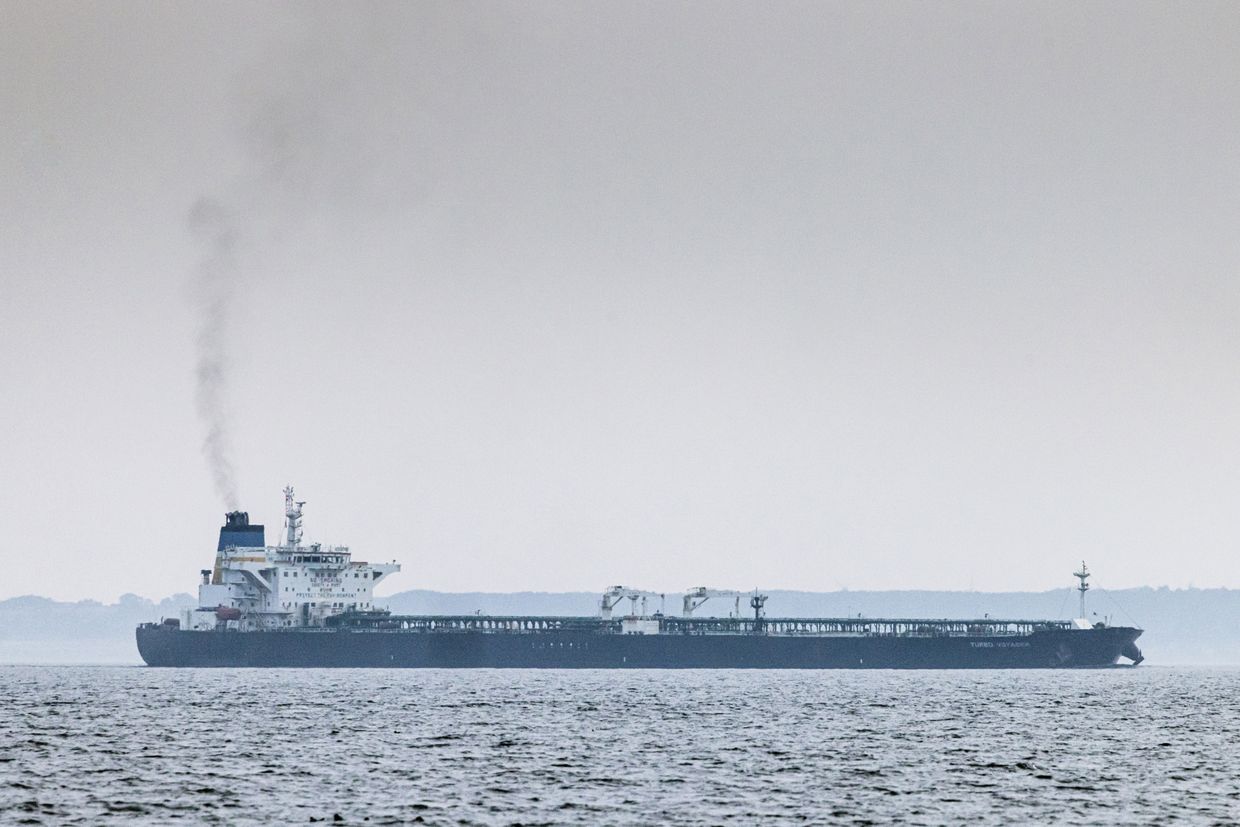
An uninsured Russian Aframax-class tanker has been illegally conducting ship-to-ship oil transfers in international waters near Greece and Cyprus since July 2024, Ukraine's military intelligence (HUR) reported on June 16.According to the agency, the vessel, operating without Western insurance, is part of Russia's expanding shadow fleet used to bypass G7 and EU sanctions on Russian oil exports. HUR said such transfers "pose an environmental threat, allow the aggressor to conceal the origin of oil
An uninsured Russian Aframax-class tanker has been illegally conducting ship-to-ship oil transfers in international waters near Greece and Cyprus since July 2024, Ukraine's military intelligence (HUR) reported on June 16.
According to the agency, the vessel, operating without Western insurance, is part of Russia's expanding shadow fleet used to bypass G7 and EU sanctions on Russian oil exports.
HUR said such transfers "pose an environmental threat, allow the aggressor to conceal the origin of oil, evade international control, and ensure its supply to third countries in circumvention of sanctions."
Ukraine has identified the tanker as IMO 9247443 and listed it on the War&Sanctions platform, along with 159 other tankers allegedly belonging to Russia's shadow fleet and 55 captains involved in sanction-busting operations.
Despite price caps and Western restrictions, Russia continues to profit from oil and gas exports, which remain a vital revenue source. According to HUR estimates, roughly one-third of those profits are expected to fund Russia's war against Ukraine in 2025.
In May, the EU approved its 17th sanctions package, targeting nearly 200 shadow fleet vessels. The U.S. Treasury had earlier sanctioned over 180 tankers, which together accounted for nearly half of Russia's offshore oil shipments.
While the Biden administration ramped up pressure on Russia's oil trade early in 2024, U.S. President Donald Trump has since declined to impose new sanctions, despite Moscow's continued refusal to agree to a ceasefire.
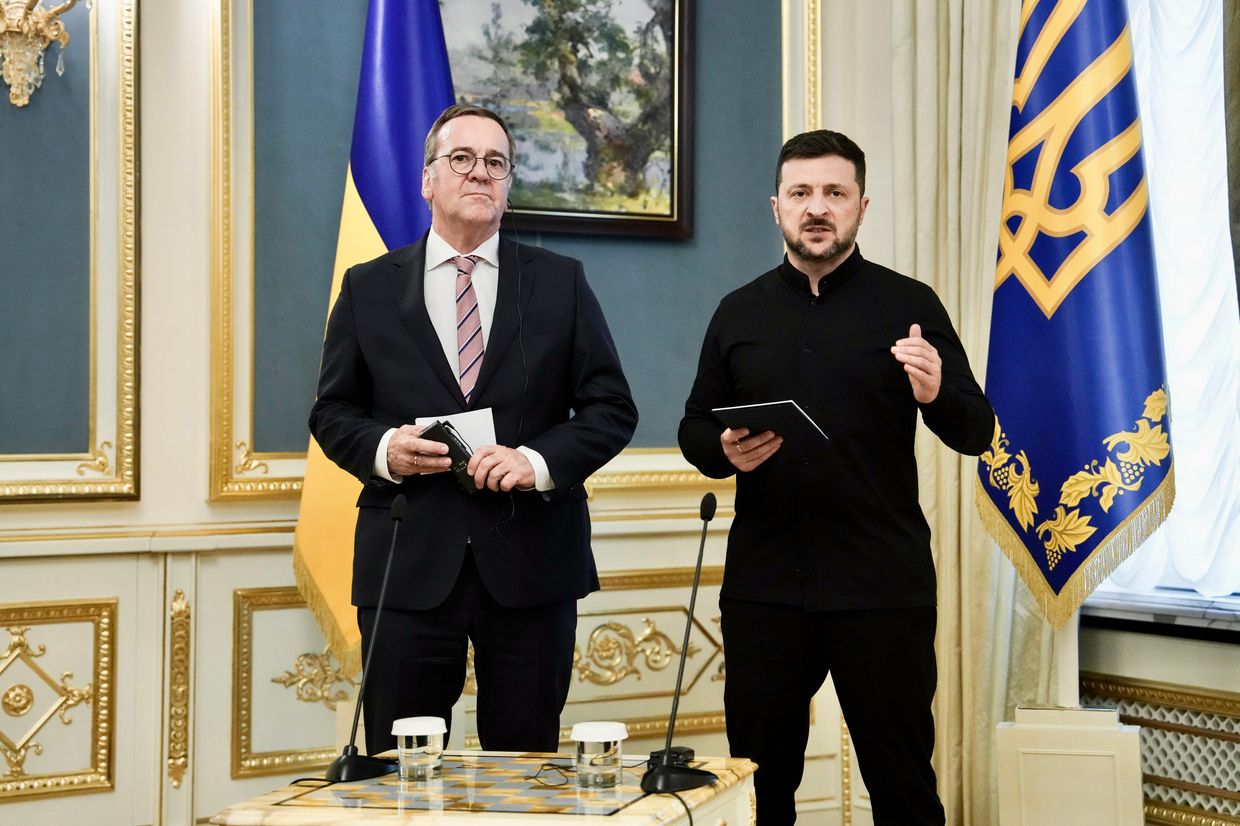
German Defense Minister Boris Pistorius said Europe must begin preparing for a gradual reduction in U.S. military support for both the continent and Ukraine, Tagesschau reported on June 13."Yes, that's right. That would be so, and we have to deal with that," Pistorius told journalists in response to a question about the U.S. potentially scaling down its support. He noted that the discussions focus on a reduction in U.S. backing rather than a full halt.The comments come after U.S. Defense Secreta
German Defense Minister Boris Pistorius said Europe must begin preparing for a gradual reduction in U.S. military support for both the continent and Ukraine, Tagesschau reported on June 13.
"Yes, that's right. That would be so, and we have to deal with that," Pistorius told journalists in response to a question about the U.S. potentially scaling down its support. He noted that the discussions focus on a reduction in U.S. backing rather than a full halt.
The comments come after U.S. Defense Secretary Pete Hegseth announced that Washington would reduce the assistance allocated to Ukraine in the next year's federal budget.
"We now have to look at how much support drops and whether Europeans can compensate for it," Pistorius added.
While the U.S. has been Ukraine's leading military backer under former President Joe Biden, the Trump administration has yet to approve any aid packages and has become increasingly disengaged from peace talks.
Pistorius's comments come amid increasing uncertainty in transatlantic relations. U.S. Ambassador to NATO Matthew Whitaker confirmed on May 16 that the United States plans to begin discussions with European allies later this year about reducing its military presence on the continent.
Speaking at a security conference in Estonia, Whitaker said the talks would begin after the NATO summit in The Hague in June.
"Nothing has been determined," Whitaker said, according to Reuters. "But as soon as we do, we are going to have these conversations in the structure of NATO."
Whitaker emphasized that any drawdown would be closely coordinated to avoid creating security gaps. Still, he reiterated U.S. President Donald Trump's position that long-standing U.S. efforts to reduce its European military footprint must now be implemented.
"This is going to be orderly, but we are not going to have any more patience for foot-dragging in this situation," he said.
In February, Hegseth reportedly told NATO allies that "stark strategic realities" prevent the United States from being primarily focused on Europe's security. Leaks reported by the Atlantic in March revealed that both Hegseth and Vice President JD Vance privately criticized European defense spending, with Hegseth allegedly expressing his "loathing of European free-loading."
Trump called on NATO member states to increase defense spending up to 5% of GDP. Ahead of the upcoming NATO summit in The Hague on June 24–25, U.S. Secretary of State Marco Rubio said that member states will have agreed to a new goal of increasing defense spending.
"We are headed for a summit in six weeks in which virtually every member of NATO will be at or above 2%, but more importantly, many of them will be over 4%, and all will have agreed on a goal of reaching 5% over the next decade," Rubio told Fox News on May 15.
Such a move would mark a historic shift, with NATO partners collectively accounting for more than half of the alliance's military capacity, according to Rubio.
Since the beginning of Russia's full-scale war against Ukraine in 2022, NATO members have significantly increased their defense spending, with countries like Poland and the Baltic nations aiming to reach the 5% target in the coming years.
Editor's note: This story has been updated to include Germany's announcement to supply Ukraine with $2.2 billion in additional military aid.Germany will deliver new IRIS-T air defense systems to Ukraine under a three-year supply plan, President Volodymyr Zelensky said during a joint press conference with German Defense Minister Boris Pistorius, who added Berlin has no plans to provide Taurus long-range missiles.The announcement comes amid escalating Russian aerial assaults, including a June 10 m
Editor's note: This story has been updated to include Germany's announcement to supply Ukraine with $2.2 billion in additional military aid.
Germany will deliver new IRIS-T air defense systems to Ukraine under a three-year supply plan, President Volodymyr Zelensky said during a joint press conference with German Defense Minister Boris Pistorius, who added Berlin has no plans to provide Taurus long-range missiles.
The announcement comes amid escalating Russian aerial assaults, including a June 10 missile and drone strike on Kyiv, one of the largest since the start of the full-scale invasion.
"We are grateful for the supply of IRIS-T air defense systems," Zelensky said on June 12. "We understand that deliveries are currently being planned... for the next three years. This is very important assistance."
The IRIS-T is a German-made medium-range surface-to-air missile system capable of intercepting drones, aircraft, and cruise missiles.
Pistorius confirmed the delivery timeline but firmly ruled out the possibility of sending Taurus missiles — weapons Kyiv has repeatedly requested to strike deep into Russian territory.
"You asked me whether we are considering this, and my answer is no," Pistorius said.
Before taking office, German Chancellor Friedrich Merz signaled openness to lifting former Chancellor Olaf Scholz's ban on the missiles. That stance has not yet resulted in a policy shift.
Ukraine has already received long-range missiles — including ATACMS from the U.S. and Storm Shadow and SCALP from the U.K. and France. Initially restricted to use within Ukrainian territory, Western allies only began easing those limitations in late 2024.
Germany is Ukraine's largest military donor in Europe. Pistorius said that Berlin will provide 9 billion euros ($10.4 billion) in aid this year, with investments in defense production being considered. The total includes an additional commitment in military aid worth 1.9 billion euros ($2.2 billion).
"Today, we discussed that this aid will continue," he said. "We agreed on additional investments in production... both in Ukraine and in Germany."
Zelensky visited Berlin on May 28 for talks with Merz, part of an ongoing effort to bolster Ukraine's defense industry amid uncertainty over U.S. support under President Donald Trump.
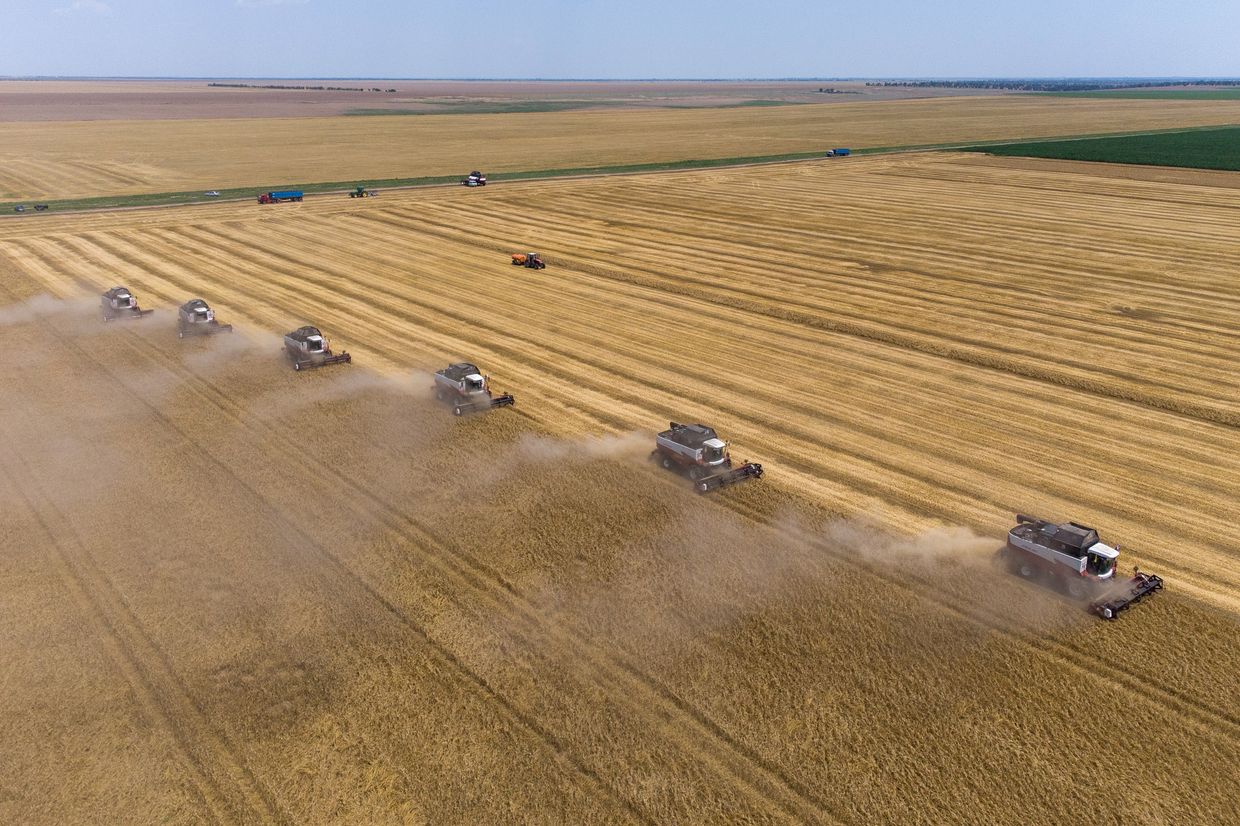
The Council of the EU on June 12 approved fresh tariffs on fertilizers and remaining agricultural goods from Russia and Belarus, aiming to reduce Russian export revenues.The measures target those goods that have not yet been subject to additional customs duties and will enter into force on July 1. The tariffs on fertilizers will increase gradually over the next three years.The step comes as the EU readies additional sanctions against Russia as it continues to wage its all-out war against Ukraine
The Council of the EU on June 12 approved fresh tariffs on fertilizers and remaining agricultural goods from Russia and Belarus, aiming to reduce Russian export revenues.
The measures target those goods that have not yet been subject to additional customs duties and will enter into force on July 1. The tariffs on fertilizers will increase gradually over the next three years.
"Polish Presidency motto is 'Security, Europe!' and these measures increase our economic security by reducing dependencies from Russia," said Michal Baranowski, the trade undersecretary at the Polish Economy Ministry.
"We are further reducing Russia’s export revenues and therefore its ability to finance its brutal war. This is united Europe at its best," he said in a statement.
The new tariffs will apply to goods that made up around 15% of all agricultural imports from Russia in 2023. Fertilizer tariffs will focus on certain nitrogen-based products, the Council said in a statement.
Russian fertilizers accounted for more than a quarter of all of the EU's imports in this sector in 2023, worth almost $1.5 billion.
Apart from stifling Russia's trade revenue, the step also aims to reduce the EU's dependence on Russian and Belarusian goods, protect European farmers, and diversify the supply.
The EU adopted higher tariffs on cereals, oilseeds, and some other products from Russia and Belarus in May 2024. Earlier this year, the European Commission proposed imposing similar measures on all remaining agricultural products from the two countries.
Il n’a jamais été simple de parler du Bélarus en France sans tomber dans le cliché. La formulation « dernière dictature d’Europe » a encore été reprise par les médias aujourd’hui pour évoquer le scrutin présidentiel qui s’est tenu dimanche, et j’en veux un peu aux journalistes pour cette paresse intellectuelle.« Dernière dictature d’Europe » était une formule confortable pour se rassurer sur le processus de démocratisation qui aurait été en voie de généralisation sur le continent européen; certe
Il n’a jamais été simple de parler du Bélarus en France sans tomber dans le cliché. La formulation « dernière dictature d’Europe » a encore été reprise par les médias aujourd’hui pour évoquer le scrutin présidentiel qui s’est tenu dimanche, et j’en veux un peu aux journalistes pour cette paresse intellectuelle. « Dernière dictature d’Europe » était une formule confortable pour se rassurer sur le processus de démocratisation qui aurait été en voie de généralisation sur le continent européen; certes, à des vitesses variables, mais quand-même quasiment certain. Le Bélarus faisait alors office d’épouvantail et de dernier bastion d’un monde en cours de disparition. Cela empêchait de voir les dynamiques réelles sur place (et de s’interroger par exemple sur la manière dont la stabilité, les politiques sociales et le progrès économique pouvaient atrophier la sensibilité politique). Cela faisait aussi du bien à l’égo européen. Nous n’en sommes plus là aujourd’hui, bien évidemment, et dans un contexte de montée d’attractivité des autoritarismes, le Belarus est plutôt un cas d’école qui devrait attirer notre attention. Dire que l’élection présidentielle qui vient de s’écouler était un simulacre, c’est à la fois vrai et stérile, parce que c’est une manière de dire « point, à la ligne, on passe à autre chose » qui neutralise toute volonté de compréhension. Malheureusement, la guerre conduite par la Russie contre l’Ukraine m’a empêché d’être suffisamment vigilante sur le Bélarus pour livrer une analyse approfondie. Ce que je dis est à prendre avec des pincettes; ce sont des pistes à creuser. Un régime politique autoritaire fonctionne grâce à un certain dosage de coercition et d’adhésion; il doit non seulement mettre en place une répression suffisamment forte pour bloquer les oppositions, mais aussi distribuer suffisamment de bénéfices pour susciter l’adhésion. Plus le ratio est en faveur des bénéfices, plus le pouvoir est stable; plus il penche du côté répressif, plus le régime est fragile. Pendant longtemps, le régime politique du Belarus s’est attaché à distribuer beaucoup de bénéfices à la population, notamment à travers des politiques sociales, des politiques de développement et une promesse de stabilité et de prévisibilité. Les Bélarusses vivaient – économiquement – plutôt mieux que beaucoup de leurs voisins, et en avaient conscience. Le prix politique à payer apparaissait donc comme acceptable. Evidemment, le soutien de la Russie était et reste l’exosquelette du régime bélarusse, aussi bien d’un point de vue politique qu’économique. Les protestations massives de 2020 étaient intervenues dans le contexte d’une certaine fragilisation du modèle, et notamment d’une perception du régime comme moins protecteur, mais aussi en décalage avec les demandes de la société. Les répressions violentes qui ont suivi et qui se sont maintenues tout au long des années suivantes ont fait basculer le ratio répression/bénéfices en faveur de la répression. Cette période violente va compter dans l’histoire politique bélarusse: on ne le perçoit pas encore, mais elle a donné naissance à une expérience différente, moins marginale de l’opposition politique, de la répression et de la prison. Elle a aussi permis de structurer une opposition à l’étranger et de lui donner des canaux de prise de parole. Derrière les apparences de « il ne se passe rien », le Belarus est en réalité bien plus prêt qu’en 2020 à entamer une transition politique, avec une nouvelle génération de citoyens jetés avec violence dans la politique. Cependant, et paradoxalement, c’est la guerre en Ukraine qui a redonné de la stabilité au régime bélarusse. En effet, dans un contexte où la Russie essaie de toutes ses forces de faire du Bélarus un cobelligérant, il y a des choses que Loukachenko a réussi à protéger. Certes, des unités armées russes et des complexes d’armement sont désormais basés au Belarus, qui sert de base aux attaques contre l’Ukraine. Cependant, aucune unité armée bélarusse ne combat aux côtés de la Russie contre l’Ukraine. Pensez au paradoxe: des soldats nord-coréens, mais pas de soldats bélarusses, alors que le pays se déclare être le plus proche allié de la Russie. Le territoire du Bélarus reste un territoire en paix. Cela, les citoyens savent qu’ils le doivent en partie à Loukachenko… mais aussi en partie aux Ukrainiens qui ne désespèrent pas de retourner les Bélarusses contre Moscou, et qui ne les perçoivent pas de la même manière que les Russes. La politique menée par Loukachenko vis-à-vis de la Russie a été caractérisée par un de mes anciens collègues bélarusses par la formule suivante: « on dit oui à tout, puis on bureaucratise au maximum le processus pour finalement ne rien faire ». C’est aussi une stratégie que les Bélarusses appliquent au quotidien vis-à-vis de leur Etat. Il y a une certaine résilience stratégique de la société bélarusse qu’on ferait bien de souligner. Ne nous laissons pas tromper par cette apparence de calme plat: le Bélarus n’est pas la Russie et suivra une dynamique qui lui sera propre.

 Connexion



 !
!