Editor's note: This is a developing story and is being updated.Ukrainian forces reportedly struck a Russian logistics hub and an oil depot in Russian-occupied Luhansk and a military base in occupied Donetsk on June 30 and July 1, with fires breaking out in the two cities."Russian logistics in temporarily occupied Luhansk are burning," head of Ukraine's Center for Countering Disinformation Andrii Kovalenko said.The drone attack was reported by the local media, publishing what appear to be videos
Editor's note: This is a developing story and is being updated.
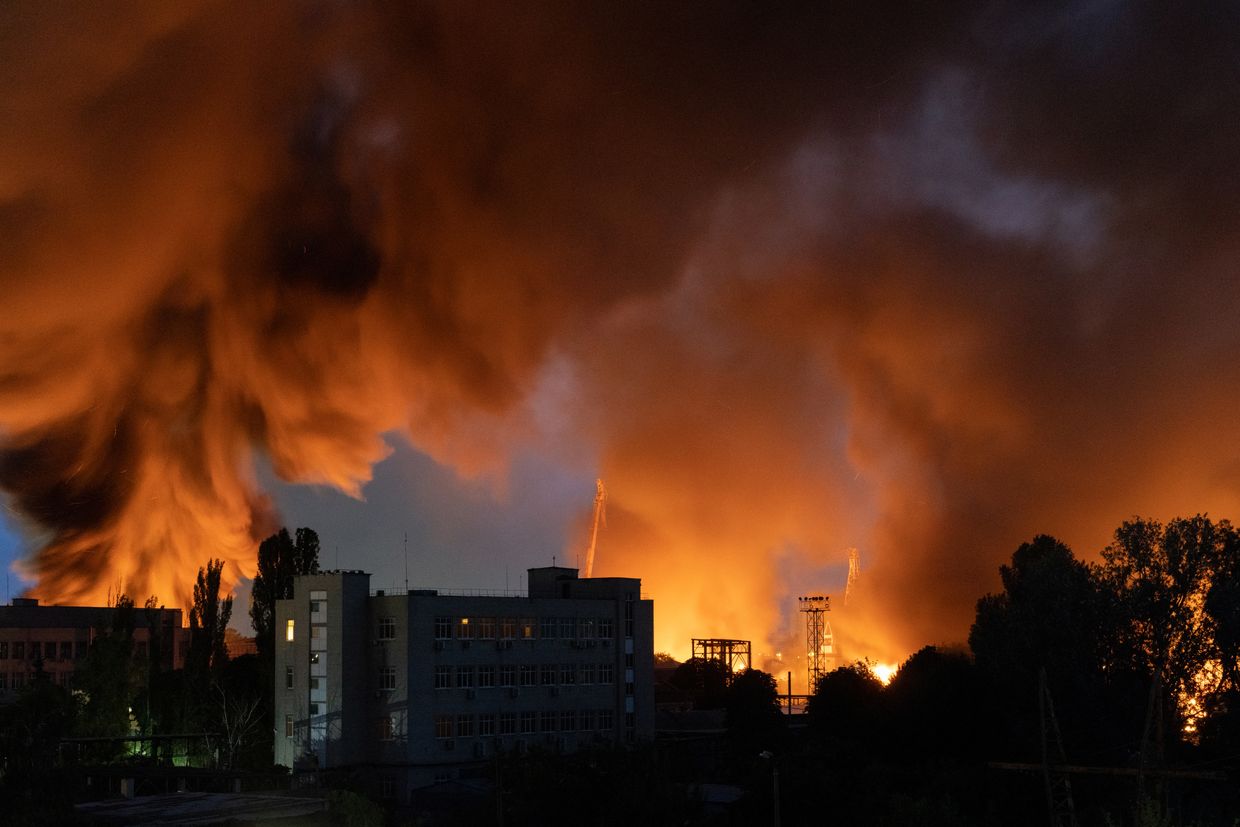
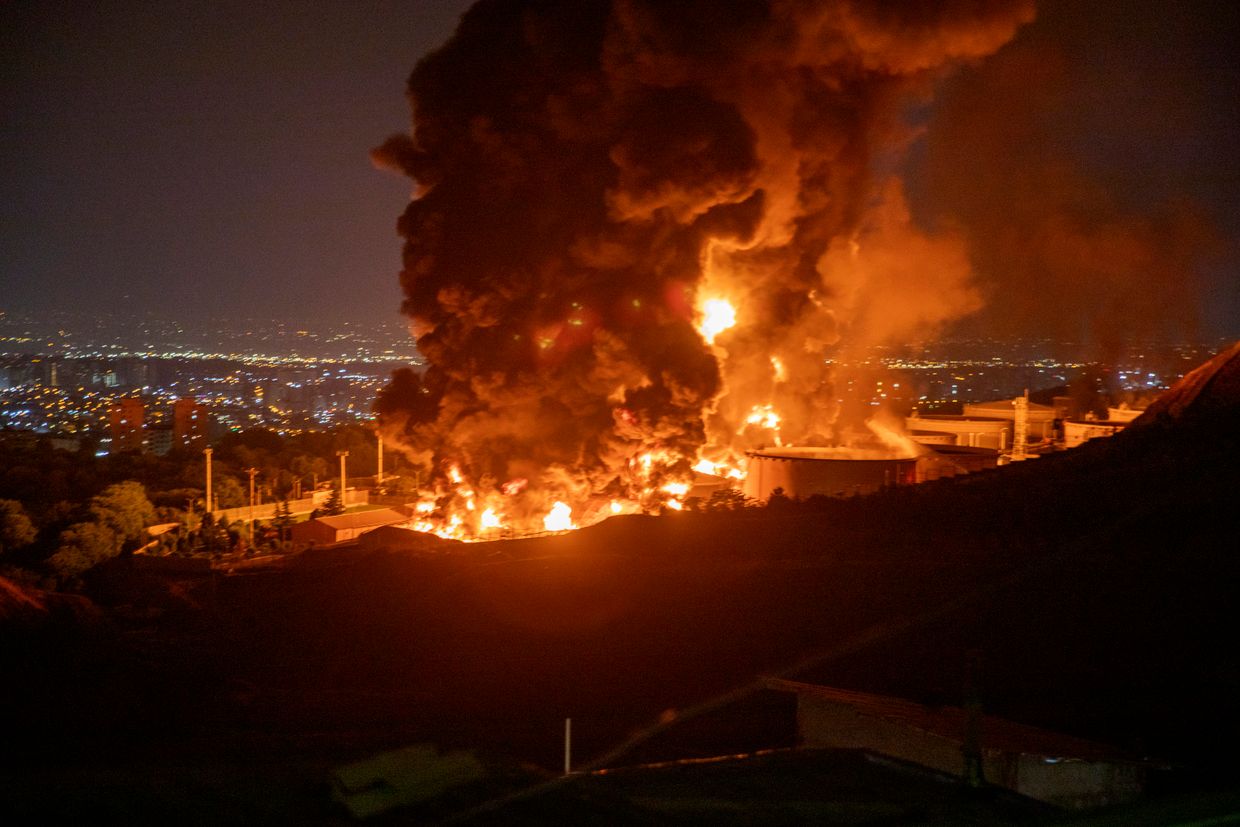
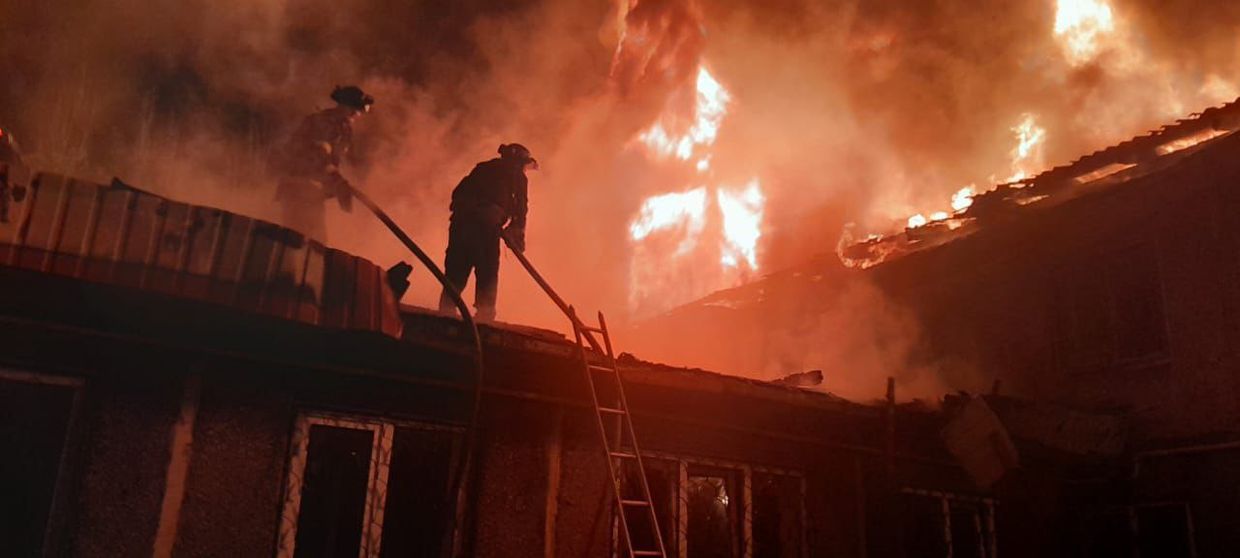
Ukrainian forces reportedly struck a Russian logistics hub and an oil depot in Russian-occupied Luhansk and a military base in occupied Donetsk on June 30 and July 1, with fires breaking out in the two cities.
"Russian logistics in temporarily occupied Luhansk are burning," head of Ukraine's Center for Countering Disinformation Andrii Kovalenko said.
The drone attack was reported by the local media, publishing what appear to be videos of the burning logistics hub and the sound of drones.
Leonid Pasechnik, head of the Russian occupation authorities in Luhansk Oblast, reported that air defenses shot down 35 of the 40 drones over Luhansk Oblast. Drone wreckage fell on the premises of an oil depot, and a woman was injured, Pasechnik claimed.
Ukraine's Luhansk Oblast (Nizar al-Rifai/The Kyiv Independent)
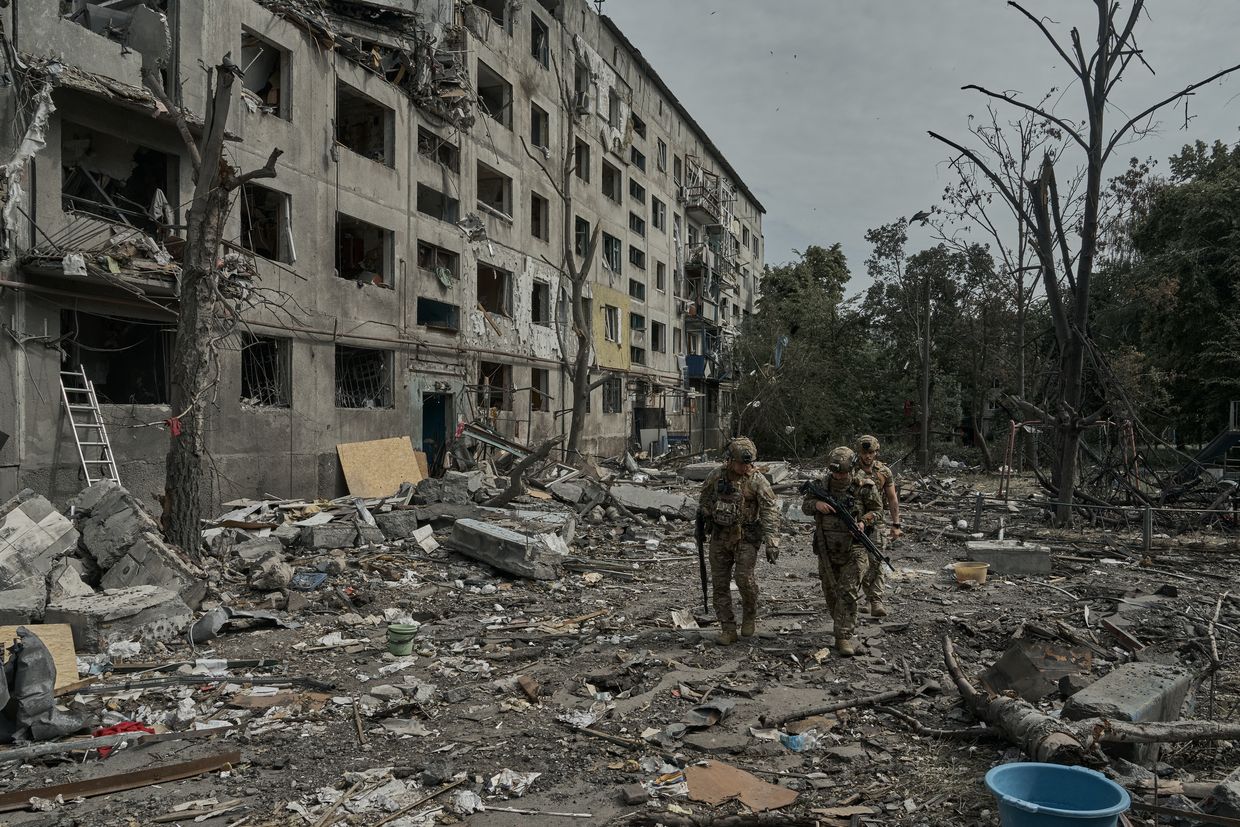
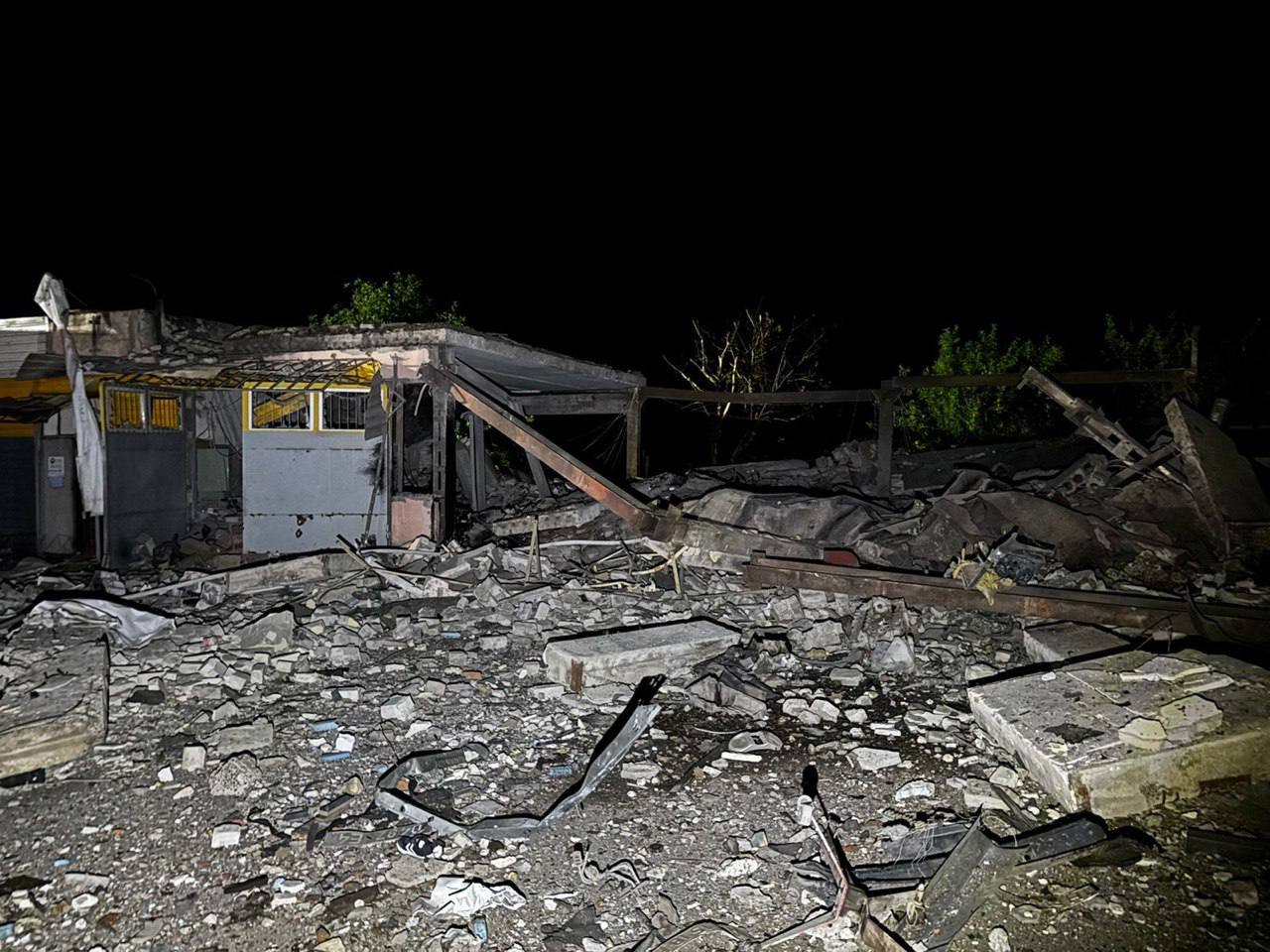
Overnight Ukrainian attacks were also reported in occupied Donetsk, with Telegram news channels sharing apparent footage of damaged buildings and fires in the city.
Denis Pushilin, the head of the Russian occupation authorities in Donetsk Oblast, claimed that one person was killed and three were injured in the attack. Ukrainian news channel Supernova+ reported that the attack targeted the headquarters of Russia’s 8th Combined Arms Army.
The Ukrainian military has not commented on the claims, which could not be independently verified.
Videos from occupied Donetsk after Ukrainian strike on the evening of June 30. Ukrainian analysts and media report a military facility was hit, while the “DPR” head says a woman was killed and three civilians injured
Ukraine's military regularly strikes military targets in Russian-occupied territories and deep within Russia in an attempt to diminish Moscow's fighting power as it continues its war against Ukraine.
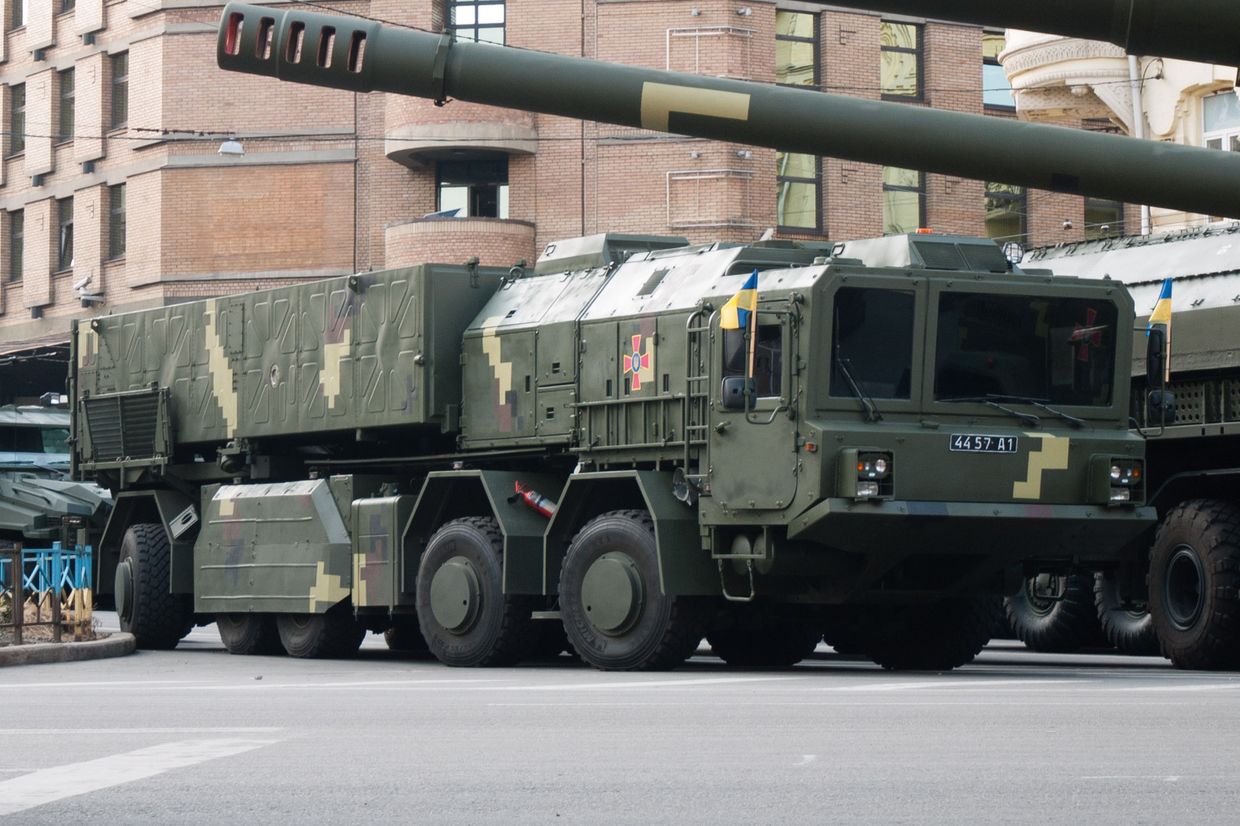
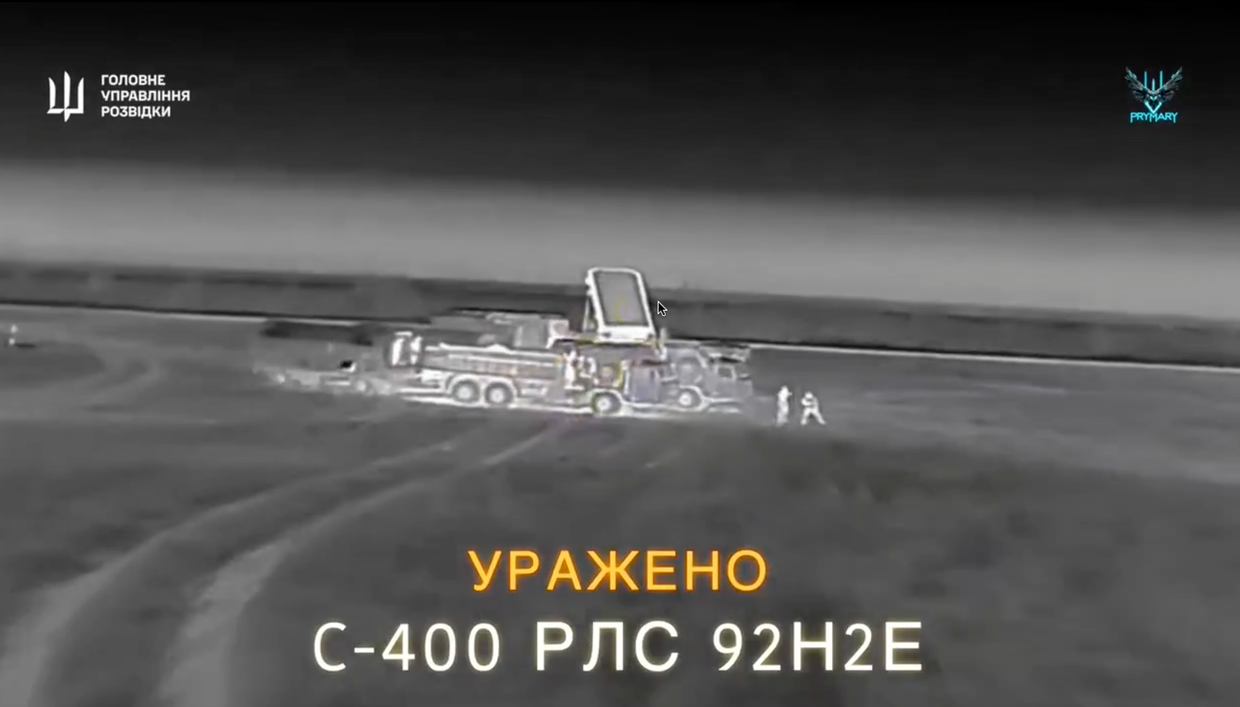
Ukraine's military intelligence (HUR) destroyed three Russian air defense systems using drones in the occupied Zaporizhzhia Oblast on June 14.
"Strike drone masters of the Department of Active Operations of the HUR of the Ukrainian defense ministry discovered and destroyed expensive air defense systems of the Russian invaders in the temporarily occupied territory of the Zaporizhzhia region," HUR reported in a post to Telegram.
A Russian Buk-M3, a Pantsyr S1, and a 9S19 Imbir radar from the S-300V air defense system were destroyed in the Ukrainian drone attack.
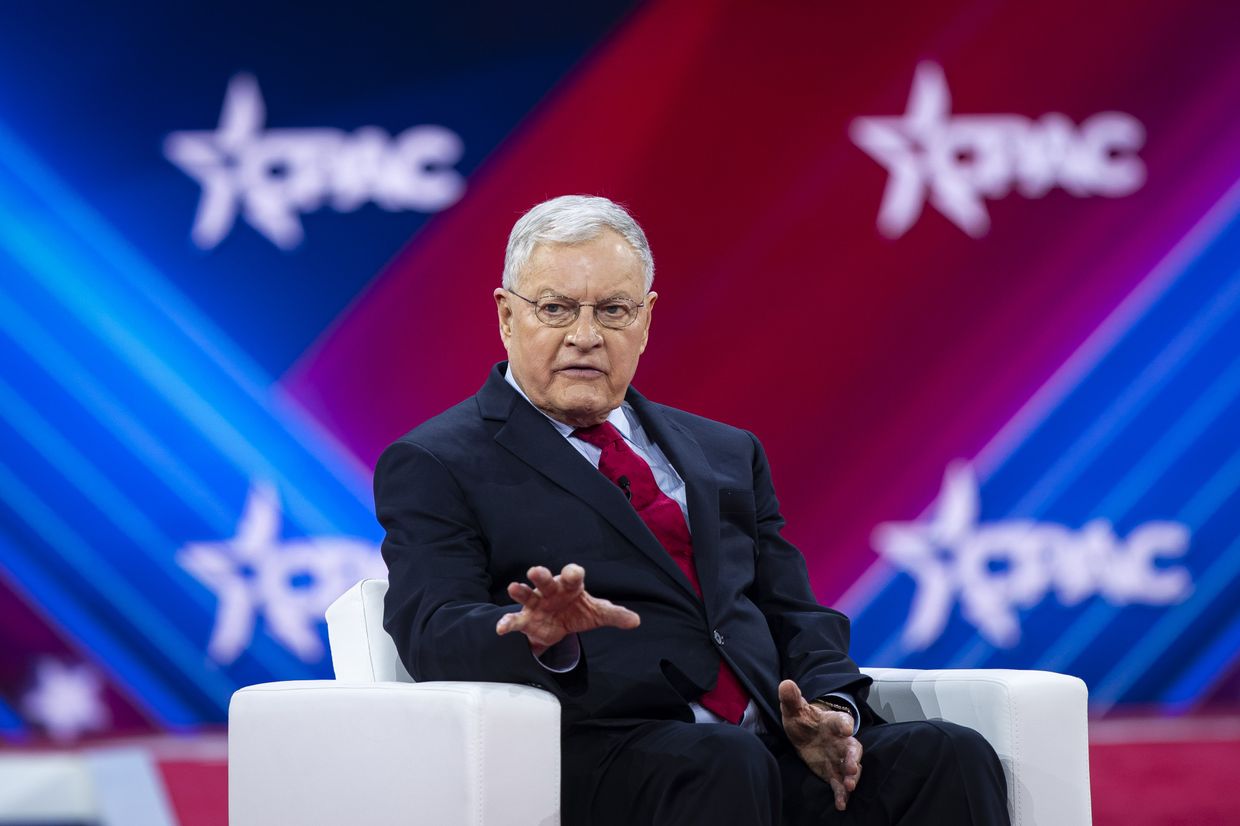
U.S. Special Representative Keith Kellogg has pushed back against Russian claims that Ukraine and the United States are responsible for delaying peace negotiations, arguing that it is Moscow that continues to obstruct efforts to end the war it initiated."Peskov’s recent comments on the state of negotiations are Orwellian. Russian claims that it is the U.S. and Ukraine stalling peace talks are unfounded," Kellogg said on X, citing reporting by the Kyiv Independent.""President Trump has been consi
U.S. Special Representative Keith Kellogg has pushed back against Russian claims that Ukraine and the United States are responsible for delaying peace negotiations, arguing that it is Moscow that continues to obstruct efforts to end the war it initiated.
"Peskov’s recent comments on the state of negotiations are Orwellian. Russian claims that it is the U.S. and Ukraine stalling peace talks are unfounded," Kellogg said on X, citing reporting by the Kyiv Independent."
"President Trump has been consistent and adamant about making progress to end the war. We urge an immediate ceasefire and a move to trilateral talks to end the war. Russia cannot continue to stall for time while it bombs civilian targets in Ukraine.
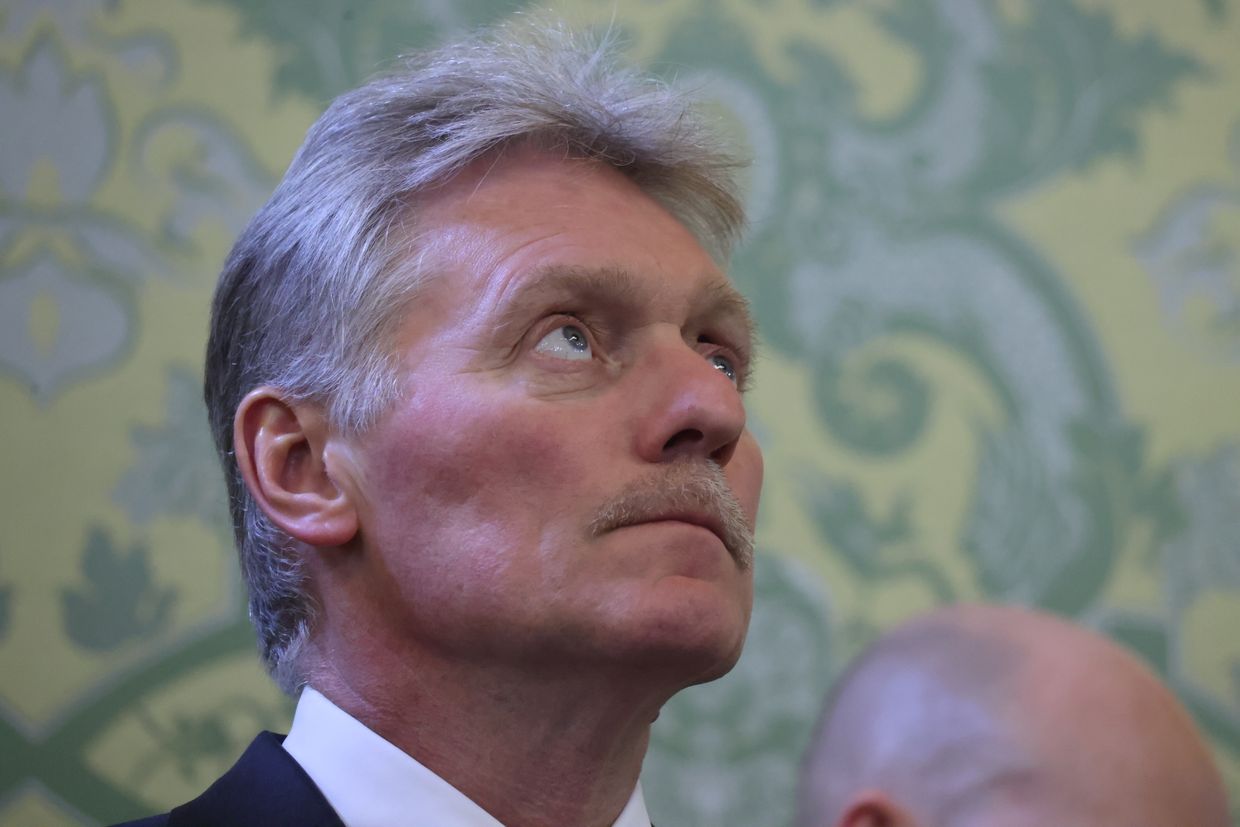
Kremlin spokesperson Dmitry Peskov on June 29 accused Washington and Kyiv of holding up progress, stating that future developments in peace talks depend on Ukraine’s stance, the effectiveness of U.S. mediation, and the situation on the battlefield.
“A lot depends, naturally, on the position of the Kyiv regime,” Peskov said in a televised interview with Belarus 1 TV, according to Reuters. “It depends on how effectively Washington's mediating efforts continue,” he added.
Peskov’s recent comments on the state of negotiations are Orwellian. Russian claims that it is the US and Ukraine stalling peace talks are unfounded. President Trump has been consistent and adamant about making progress to end the war. We urge an immediate ceasefire and a move to… pic.twitter.com/vCQoF1XEtd
Despite those remarks, Russia has rejected a U.S.-backed ceasefire proposal and continued its attacks on Ukrainian cities launching record numbers of drones against Ukrainian cities. Earlier this month, Russian President Vladimir Putin openly stated that “all of Ukraine is ours,” raising further doubts about the Kremlin’s willingness to engage in meaningful negotiations.
Peskov’s interview aired as the war moves into its fourth summer with no comprehensive ceasefire in place. Although two rounds of peace talks between Russia and Ukraine took place in Istanbul this year—on May 16 and June 2—the discussions have not led to any breakthrough on ending hostilities.
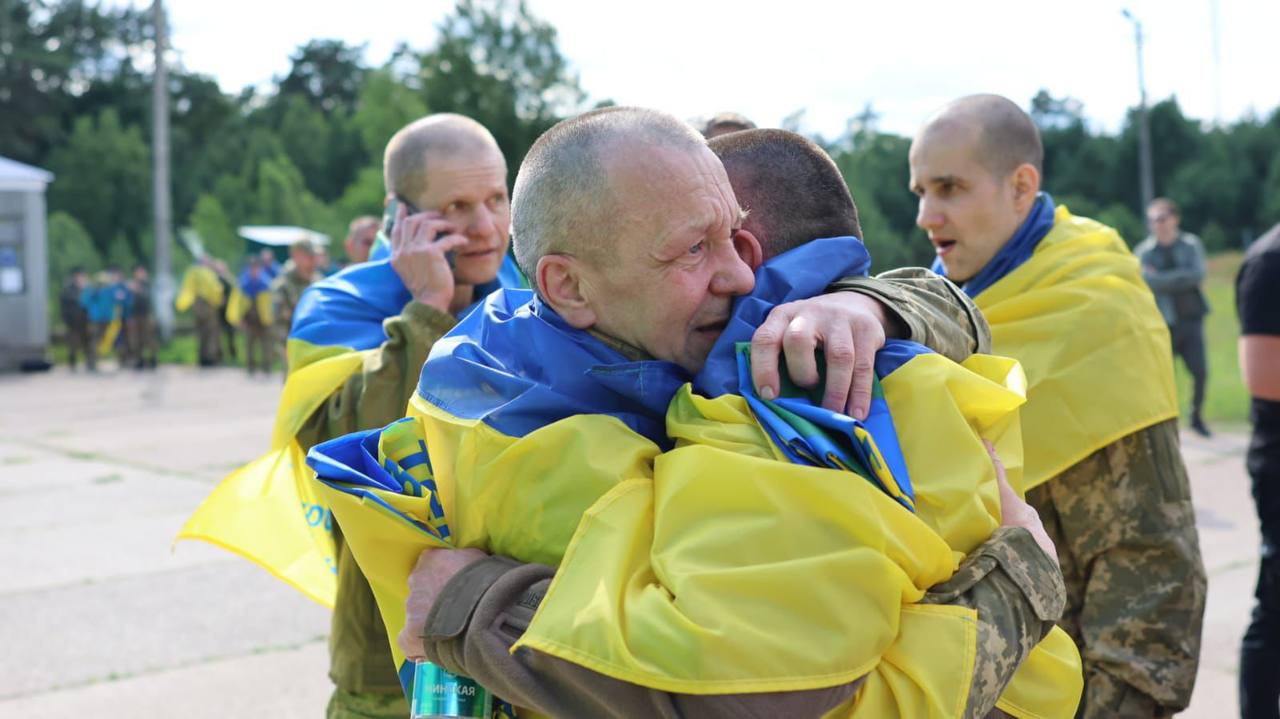
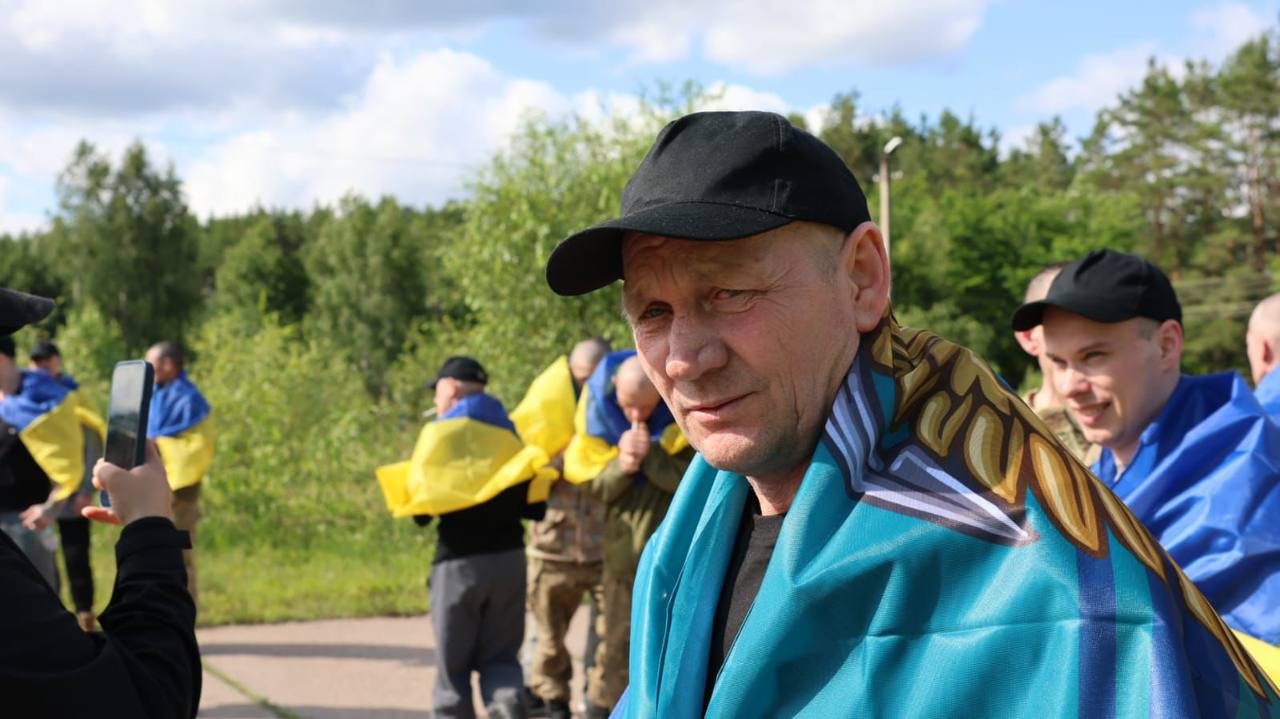
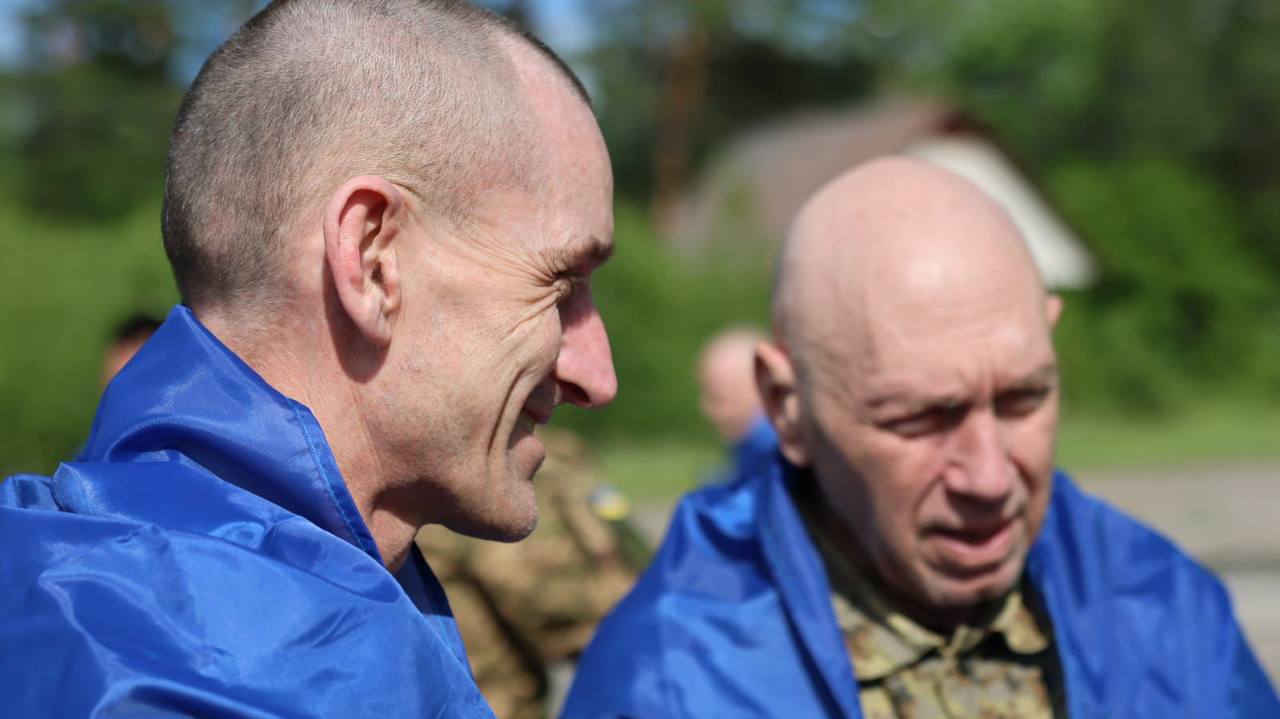
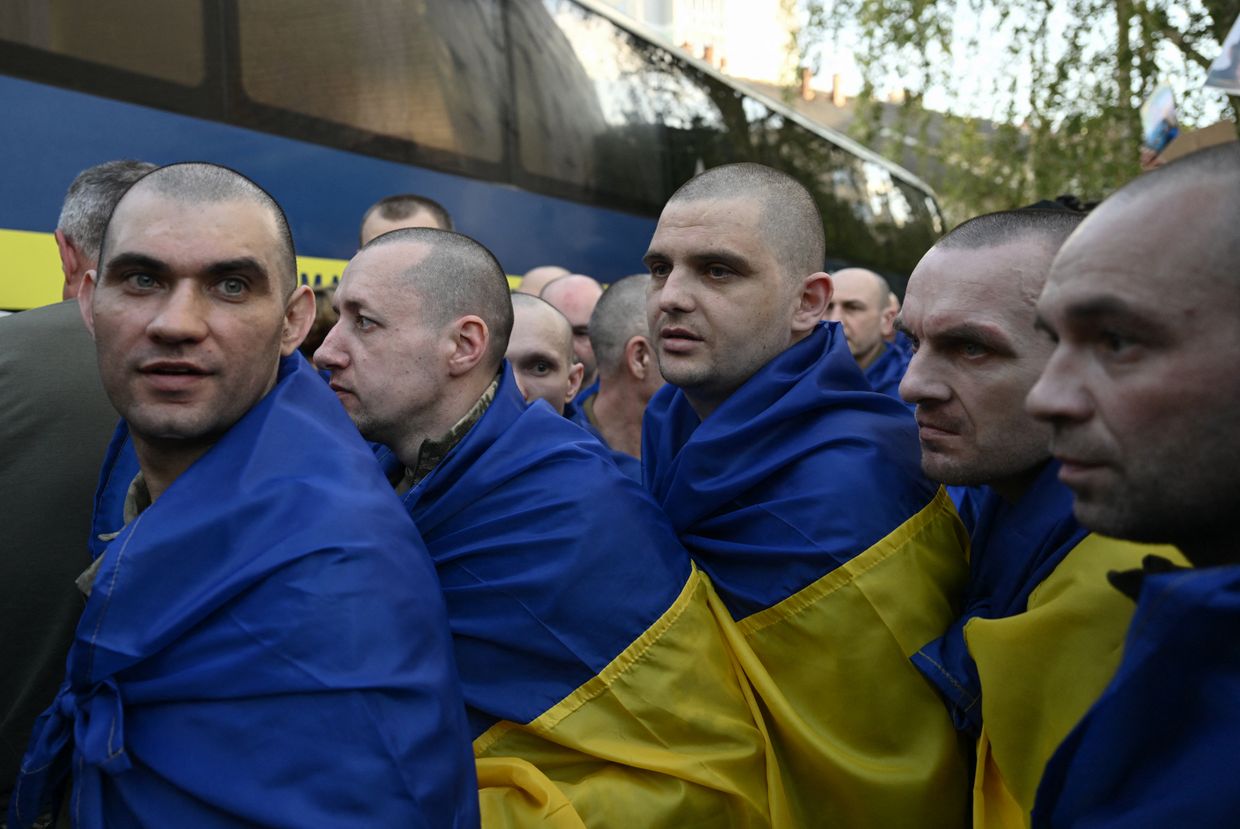
While the Istanbul meetings led to notable prisoner exchanges, they produced no tangible progress toward peace.
Ukrainian forces have stabilized the situation in Sumy Oblast and pushed the Russian army further away from Sumy, the region's capital, Ukraine's General Staff reported on June 30.Moscow launched its new summer campaign in May, aiming to push deeper into Ukraine's northeastern and eastern regions and disregarding Kyiv's calls for an unconditional ceasefire.Ukrainian troops advanced near the village of Oleksiivka, located less than 30 kilometers (18 miles) from the city of Sumy, and liberated the
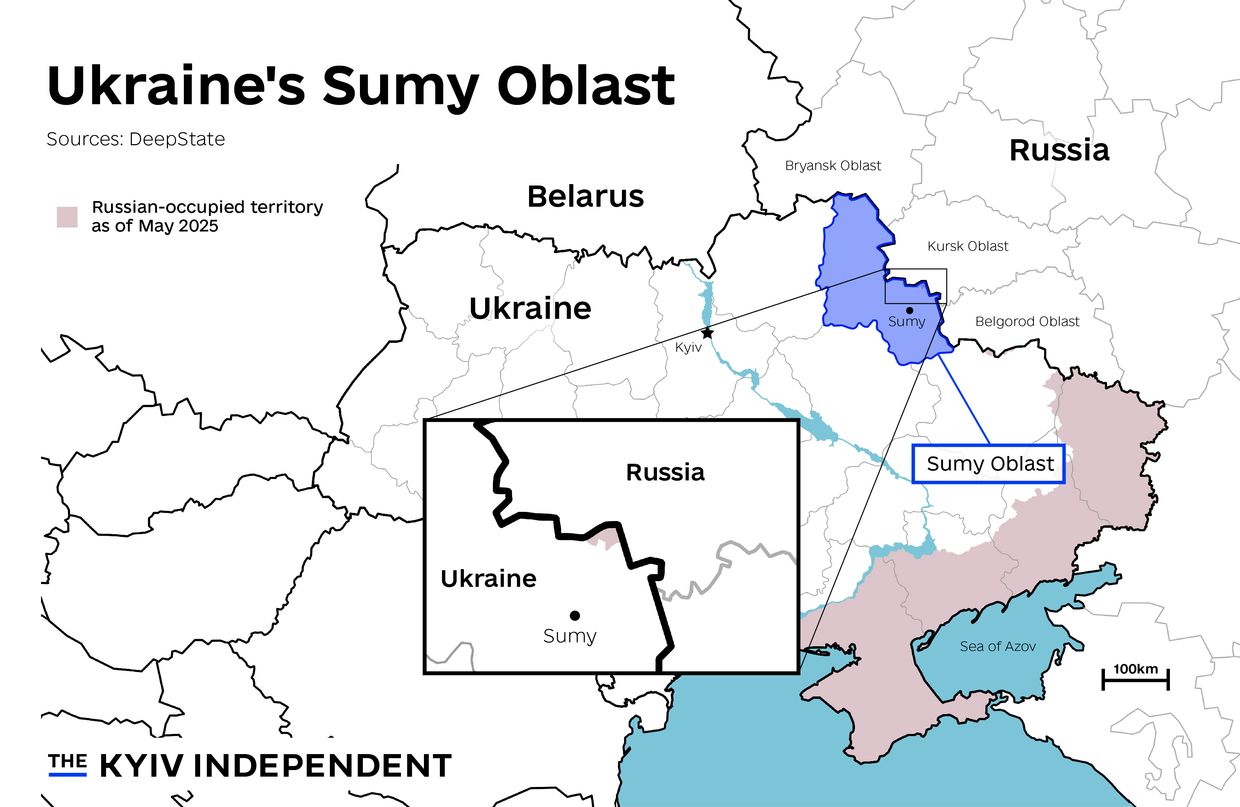
Ukrainian forces have stabilized the situation in Sumy Oblast and pushed the Russian army further away from Sumy, the region's capital, Ukraine's General Staff reported on June 30.
Moscow launched its new summer campaign in May, aiming to push deeper into Ukraine's northeastern and eastern regions and disregarding Kyiv's calls for an unconditional ceasefire.
Ukrainian troops advanced near the village of Oleksiivka, located less than 30 kilometers (18 miles) from the city of Sumy, and liberated the village of Andriivka, which had been captured by Russia in early June, the statement read.
In the meantime, Ukraine also stopped the Russian advance along the Yunakivka-Yablunivka-Novomykolayivka-Oleksiivka-Kindrativka line and the border with Russia near Kursk Oblast, according to the General Staff.
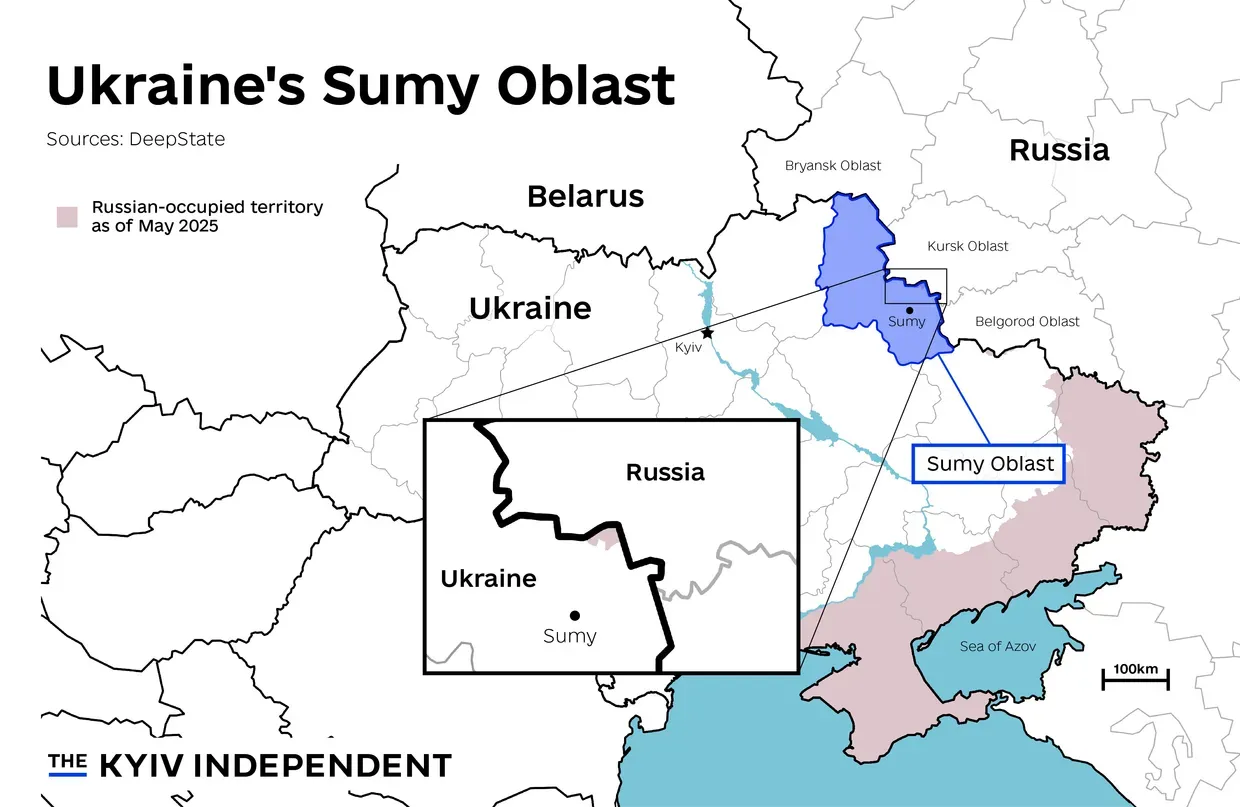
A map of Ukraine's Sumy Oblast (Nizar al-Rifal/The Kyiv Independent)
Russia has deployed its best brigades on this section of the front line and is using long-range artillery, aircraft, and attack drones, the General Staff said.
President Volodymyr Zelensky also said on June 30 that Ukrainian troops had halted the Russian offensive in Sumy Oblast.
"The Russian plan for an offensive in Sumy Oblast is not succeeding — thanks to every Ukrainian unit operating in the area," Zelensky said after a meeting with the military leadership and Defense Minister Rustem Umerov.
The Russian offensive's goal is to reach the administrative borders of Donetsk and Luhansk oblasts in the east and create a buffer zone in the border areas of Sumy and Kharkiv oblasts, Commander-in-Chief Oleksandr Syrskyi told journalists on June 21.
Russian forces are also attempting to fully oust Ukrainian troops from Russia's Kursk and Belgorod oblasts.
Ukraine launched a cross-border offensive into Kursk Oblast — bordering Ukraine's Sumy Oblast — last August, initially seizing 1,300 square kilometers (500 square miles) but losing the vast majority of this territory in a Russian counteroffensive earlier this year.
Moscow initially declared that it had fully liberated the region on April 26, but this claim was rejected by Ukraine and later disputed by Russian officials themselves.
The Ukrainian military on June 30 denied the latest reports that Russian troops had entered Dnipropetrovsk Oblast. Since June 29, the Ukrainian battlefield monitoring group DeepState has marked a "gray" zone in Ukraine's Dnipropetrovsk Oblast, identifying potential fighting in this section of the front line. Near the village of Dachne in Dnipropetrovsk Oblast, the zone extends almost a kilometer into the region. Meanwhile, Kremlin propagandists claimed on Telegram that Russian troops had capture
The Ukrainian military on June 30 denied the latest reports that Russian troops had entered Dnipropetrovsk Oblast.
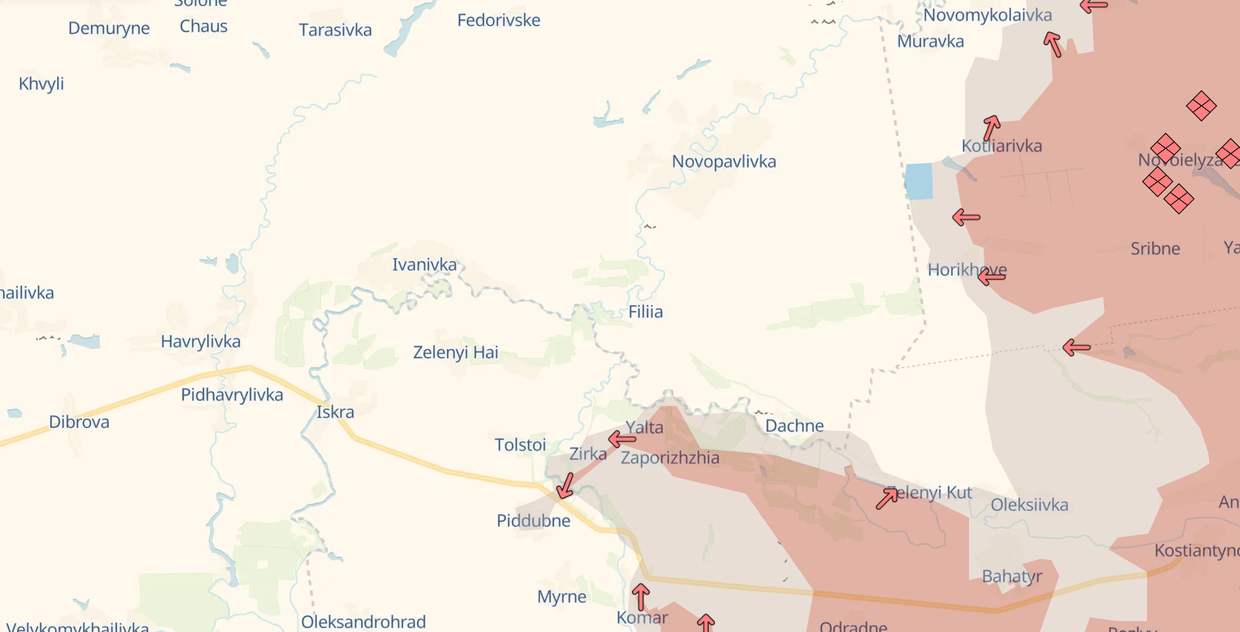
Since June 29, the Ukrainian battlefield monitoring group DeepState has marked a "gray" zone in Ukraine's Dnipropetrovsk Oblast, identifying potential fighting in this section of the front line. Near the village of Dachne in Dnipropetrovsk Oblast, the zone extends almost a kilometer into the region.
Meanwhile, Kremlin propagandists claimed on Telegram that Russian troops had captured Dachne.
The reports were denied by spokespeople of two Ukrainian brigades and the Khortytsia group of forces on June 30, Suspilne reported.
The estimated Russian advance in Donetsk Oblast as of June 29, 2025. (DeepState/OpenStreet Map)
"There are very active battles in the villages located near the administrative border of the region," Viktor Tregubov, spokesperson for Ukraine's Khortytsia group of forces, told Suspilne, adding that Ukraine is holding the defense line near the villages of Yalta, Komar, and Shevchenkove.
Tregubov added that Russian troops had not entered Dnipropetrovsk Oblast as of noon on June 30.
The press service of the 3rd brigade of the National Guard, stationed in the nearby Pokrovsk sector of the front line, also denied the information about the breakthrough.
Nazar Voitenkov, spokesperson for the 33rd Separate Mechanized Brigade, based in Zaporizhzhia Oblast, also said that the Russian army had made no advances into Dnipropetrovsk Oblast.
"We are holding the defense line. The line is constantly changing, but the enemy has not broken through," Voitenkov said.
Andrii Kovalenko, head of Ukraine's counter-disinformation center, said on Telegram that fighting is taking place near the region's administrative border, and Russian FPV (first-person-view) drones are also flying into Dnipropetrovsk Oblast,
But despite the heavy battles, there is no breakthrough, he added.
The statements come as Russian troops continue their offensive in Donetsk Oblast, pushing closer to Dnipropetrovsk Oblast — a major industrial region in central Ukraine.
In mid-June, Ukraine's military also denied reports that Russian troops had entered the region, with President Volodymyr Zelensky saying that Ukrainian troops had intercepted Russian reconnaissance units attempting to breach Dnipropetrovsk Oblast.
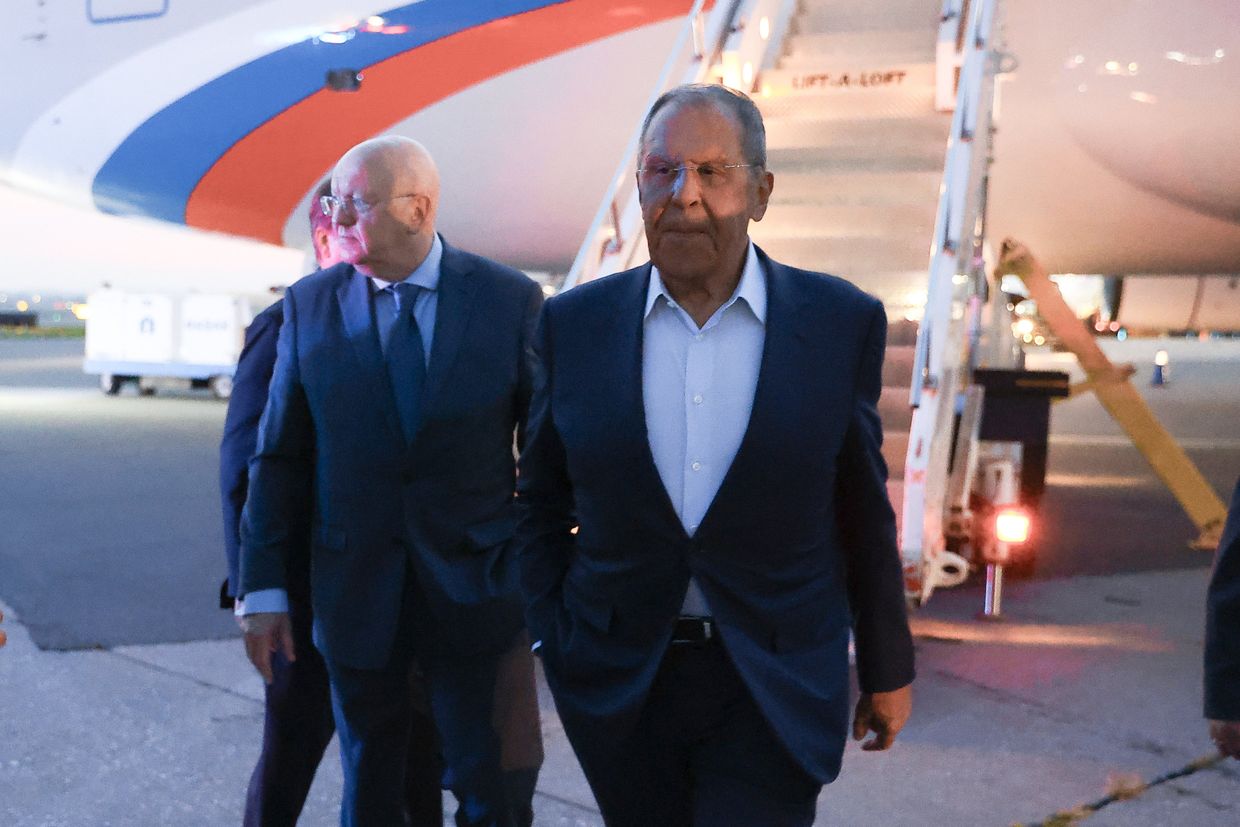
NATO's increased defense spending will lead to the "collapse" of the alliance, Russian Foreign Minister Sergei Lavrov said on June 30, despite Russian officials recently warning that Moscow's own military expenditure is driving the country towards recession.Lavrov's comments come after NATO leaders last week approved a new defense spending benchmark, committing members to spend at least 5% of GDP on defense and security-related expenditures by 2035, a goal long pushed by the U.S. and endorsed by
NATO's increased defense spending will lead to the "collapse" of the alliance, Russian Foreign Minister Sergei Lavrov said on June 30, despite Russian officials recently warning that Moscow's own military expenditure is driving the country towards recession.
Lavrov's comments come after NATO leaders last week approved a new defense spending benchmark, committing members to spend at least 5% of GDP on defense and security-related expenditures by 2035, a goal long pushed by the U.S. and endorsed by NATO Secretary General Mark Rutte.
The week previously, and in a rare public sign that all is not well in Russia, two high-ranking Moscow officials issued separate warnings about the state of the country's economy.
Russian Central Bank Governor Elvira Nabiullina and Economy Minister Maxim Reshetnikov both highlighted that amid the Kremlin's full-scale war against Ukraine, the tools Moscow once relied on to maintain wartime growth are nearly exhausted.
Polish Foreign Minister Radoslaw Sikorski on June 26 said an arms race between Russia and NATO could lead to Russian President Vladimir Putin's downfall.
"Since (Polish Foreign Minister Radoslaw Sikorski) is such a predictor, he probably foresees that a catastrophic increase in the budget of NATO countries, according to my estimates, will also lead to the collapse of this organization," Lavrov reportedly said.
Putin last week announced that Moscow plans to cut its military expenditure beginning next year, in a rebuke of NATO members' plans to increase defense spending to 5% of GDP.
"We are planning to reduce defence spending. For us, next year and the year after, over the next three-year period, we are planning for this," Putin said, though he did not provide concrete details.
"Europe is thinking about how to increase its spending, on the contrary. So, who is preparing for some kind of aggressive actions? Us or them?"
Western officials and analysts point to Russia's surging military expenditures amid its ongoing full-scale invasion of Ukraine. In 2024, Russia's defense budget reportedly rose 42% in real terms, reaching $462 billion, surpassing the combined spending of all European nations, according to the International Institute for Strategic Studies.
NATO allies have cited Russia's military buildup, sabotage campaigns, and continued aggression against Ukraine as reasons to accelerate defense investments. Rutte warned that Russia could rebuild its military capacity to threaten NATO territory within five years, urging members to act with urgency.
German Foreign Minister Johann Wadephul pledged on June 30 that Berlin is exploring "every possible path" to provide Ukraine with additional air defense systems, amid intensifying Russian missile and drone attacks, according to RBK-Ukraine. Speaking at a press conference during his visit to Kyiv, Wadephul said Germany is working with its defense industry, European allies, and the U.S. to urgently secure more systems for Ukraine's air shield."We are going down every path available," Wadephul said
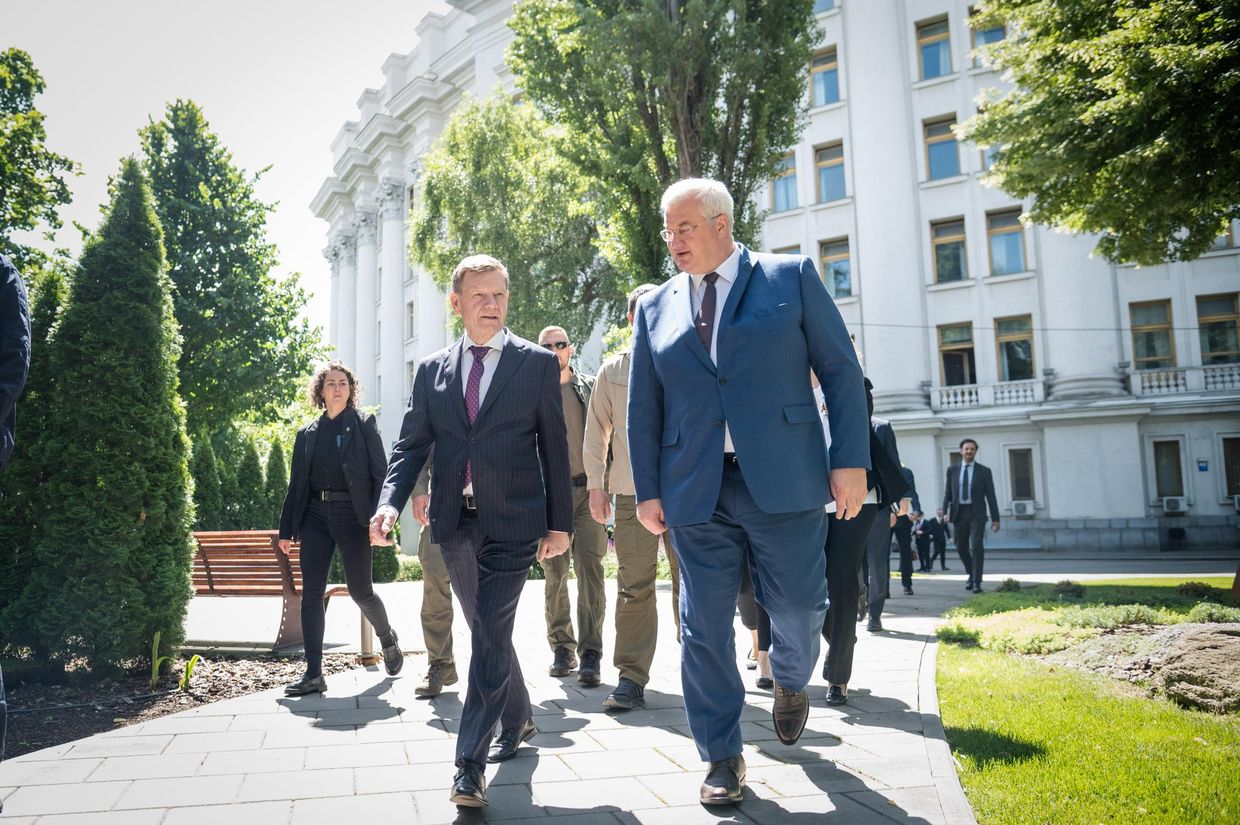
German Foreign Minister Johann Wadephul pledged on June 30 that Berlin is exploring "every possible path" to provide Ukraine with additional air defense systems, amid intensifying Russian missile and drone attacks, according to RBK-Ukraine.
Speaking at a press conference during his visit to Kyiv, Wadephul said Germany is working with its defense industry, European allies, and the U.S. to urgently secure more systems for Ukraine's air shield.
"We are going down every path available," Wadephul said. "The German defense industry is trying to expand its capacity. We're speaking with our European partners, and I believe we must also move forward with the United States."
He added that he remains in close contact with German Defense Minister Boris Pistorius to assess whether existing systems from Germany's own stockpiles can be redirected to Ukraine.
Wadephul's visit came just a day after Russia launched its largest aerial assault on Ukraine to date, firing 477 drones and 60 missiles in a 24-hour period. In a video message posted on social media earlier on June 30, the German minister described Ukraine as "a country once again haunted by war," and reaffirmed Germany's solidarity.
"Germany stands by Ukraine," Wadephul said. "We must not allow freedom to be lost here. We have to support this country and ensure that a ceasefire is finally achieved. (Russian President Vladimir) Putin must realize he cannot continue this war and must negotiate a peace solution."
Ukrainian Foreign Minister Andrii Sybiha welcomed Wadephul's visit in a post on X, saying the two discussed how to counter Russian aggression and deepen bilateral ties.
Glad to welcome my German colleague and friend @AussenMinDe Johann Wadephul.
We spoke about steps to counter Russian aggression against Ukraine, neutralise the threats posed to Europe by the aggressive Russian regime, and ways to further strengthen the ties between our nations.… pic.twitter.com/38ZX97SfXb
Sybiha said they also spoke about Germany's role in Ukraine's development of long-range capabilities and drones, calling it "win-win cooperation"— as well as Berlin's support for the 18th EU sanctions package and Ukraine's path to EU membership.
"I am grateful to Minister Wadephul for his moral clarity and personal contribution to Ukraine's resilience," Sybiha added.
Wadephul is expected to meet with President Volodymyr Zelensky later during his visit.
The German foreign minister emphasized that witnessing the destruction firsthand is critical to understanding Ukraine's suffering and the urgency of sustained international support.
"This is indeed a difficult situation," Wadephul said. "And that is why German solidarity is so important right now."
Russian attacks across multiple Ukrainian regions over the past 24 hours have killed at least six people and injured 26 others, according to local officials. The strikes involved drones, artillery, and guided bombs, hitting residential areas and critical infrastructure.According to Ukraine's Air Force, Ukrainian air defense hit 74 out of 107 drones launched overnight by Russia. In Kharkiv Oblast, two people were killed and eight injured following attacks on six settlements, Governor Oleh Syniehu
Russian attacks across multiple Ukrainian regions over the past 24 hours have killed at least six people and injured 26 others, according to local officials. The strikes involved drones, artillery, and guided bombs, hitting residential areas and critical infrastructure.
According to Ukraine's Air Force, Ukrainian air defense hit 74 out of 107 drones launched overnight by Russia.
In Kharkiv Oblast, two people were killed and eight injured following attacks on six settlements, Governor Oleh Syniehubov said. Damage was reported to houses, vehicles, and civilian infrastructure across Kharkiv, Kupiansk, and Chuhuiv districts.
In Kherson Oblast, Russian forces struck residential areas and civilian infrastructure in over two dozen localities, killing two people and injuring eight others, according to Governor Oleksandr Prokudin. Damage included houses, utility systems, and communications infrastructure.
In Zaporizhzhia Oblast, one person was killed in Vasylivka district. Governor Ivan Fedorov said Russian forces launched 375 strikes on 10 settlements, damaging houses and vehicles.
In Dnipropetrovsk Oblast, three people were injured in Kryvyi Rih following drone strikes and artillery attacks, Governor Serhii Lysak reported. Fires broke out, and damage was recorded at a farm and in residential areas.
In Donetsk Oblast, at least one person was killed and four others injured, Governor Vadym Filashkin said. Multiple residential buildings, a church, and a pharmacy were damaged across Pokrovsk, Kramatorsk, and Bakhmut districts.
In Sumy Oblast, Russian attacks injured three civilians, regional authorities said. Nearly 80 strikes targeted 29 settlements, damaging houses, educational institutions, and public buildings.
Ukrainian Foreign Minister Andrii Sybiha on June 30 rebuked Slovakia's foreign minister after he suggested the international community might "perhaps even forgive" Russia's actions and reengage in dialogue with Moscow to end the war in Ukraine."Russia's sense of impunity is the root cause of its crimes," Sybiha wrote in a post on X. "It's naive to expect a criminal to stop if their crime is forgiven instead of punished. Russia will hit your other cheek as well. And those who have lost no one in
Ukrainian Foreign Minister Andrii Sybiha on June 30 rebuked Slovakia's foreign minister after he suggested the international community might "perhaps even forgive" Russia's actions and reengage in dialogue with Moscow to end the war in Ukraine.
"Russia's sense of impunity is the root cause of its crimes," Sybiha wrote in a post on X. "It's naive to expect a criminal to stop if their crime is forgiven instead of punished. Russia will hit your other cheek as well. And those who have lost no one in this war have no right to make such statements."
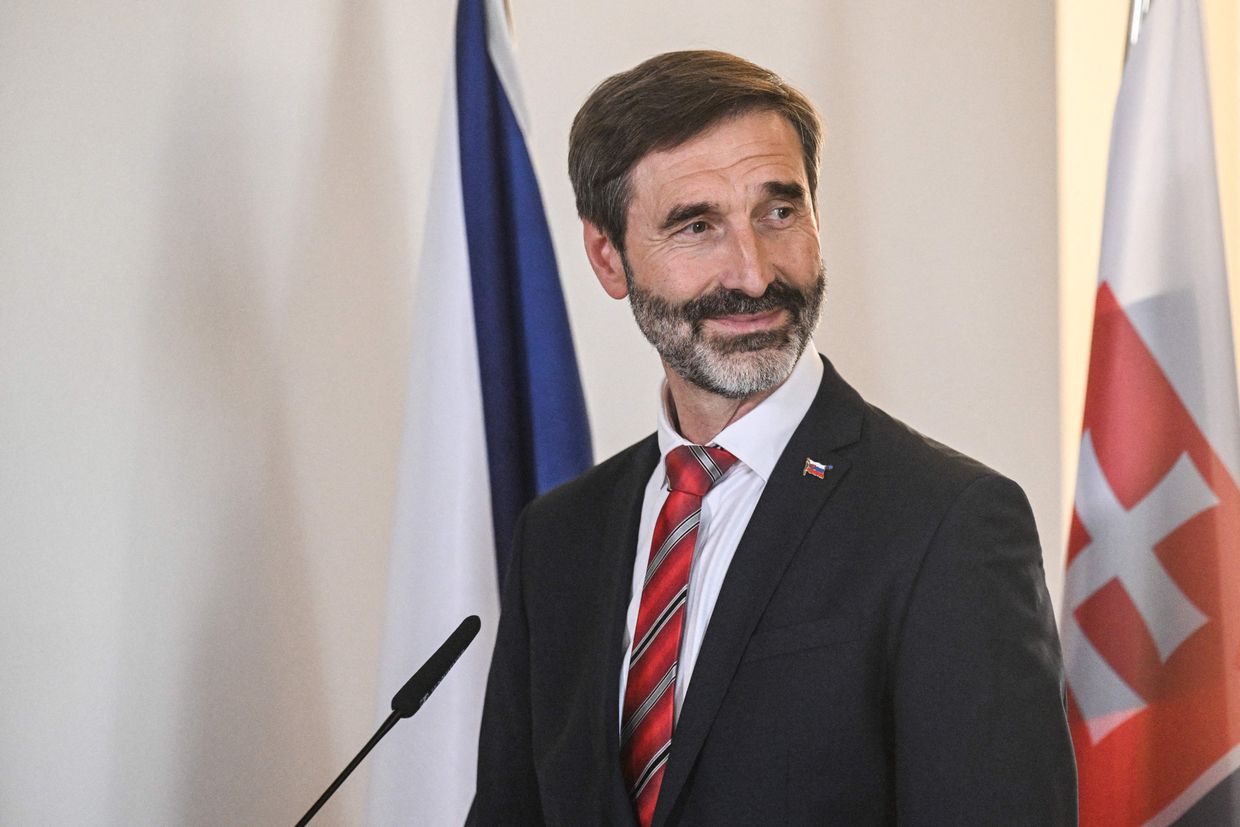
Sybiha's remarks came in response to comments made by Slovak Foreign Minister Juraj Blanar during a domestic media interview on June 29. Blanar argued the war in Ukraine could not be resolved militarily and called for a return to diplomacy, suggesting Russia could be forgiven.
"Let us return to respect for international law and seek ways to communicate with the Russian Federation," he said. "And perhaps even forgive everything that has happened."
Juraj, Russia's sense of impunity is the root cause of its crimes. It's naive to expect a criminal to stop if their crime is forgiven instead of punished. Russia will hit your other cheek as well. And those who have lost no one in this war have no right to make such statements. pic.twitter.com/ALLzGT6ugP
Slovakia recently requested a delay in adopting the European Union's 18th sanctions package against Russia, citing the need for further clarification on how it would impact member states, particularly in light of the EU's RePowerEU initiative to end dependence on Russian fossil fuels by 2030.
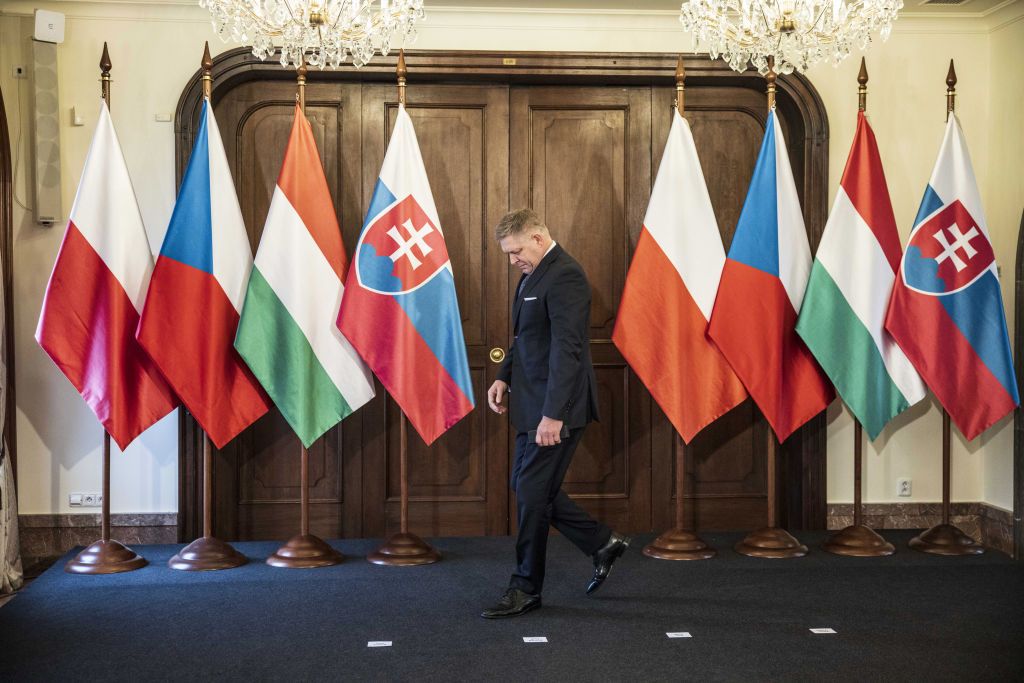
Fico's administration has distanced itself from the pro-Ukraine consensus within the EU and NATO. Since taking office in 2023, he has halted Slovak military aid to Ukraine and pursued diplomatic engagement with Russia. Earlier this year, Fico attended Russia's Victory Day Parade in Moscow and met with President Vladimir Putin — a gesture most Western leaders avoided.
Fico has dismissed the idea of meeting with President Volodymyr Zelensky, telling Slovak broadcaster STVR that Zelensky "hates me" and that such a meeting "has no significance."
Ukraine has consistently emphasized that peace can only come through justice and accountability for Russian war crimes and aggression, a position echoed by many Western governments.
Editor's note: The story was updated with comments made by Russia's Defense Ministry. The Crimean Bridge was temporarily closed late on June 29 following reports of explosions and active air defense fire in the city of Kerch, according to local Telegram channels.Witnesses reported hearing multiple blasts and observing Russian air defense systems in action. "Explosions heard in Kerch, Russian air defense is firing, and the lighting on the Crimean Bridge has been turned off," the Crimean Wind Tele
Editor's note: The story was updated with comments made by Russia's Defense Ministry.
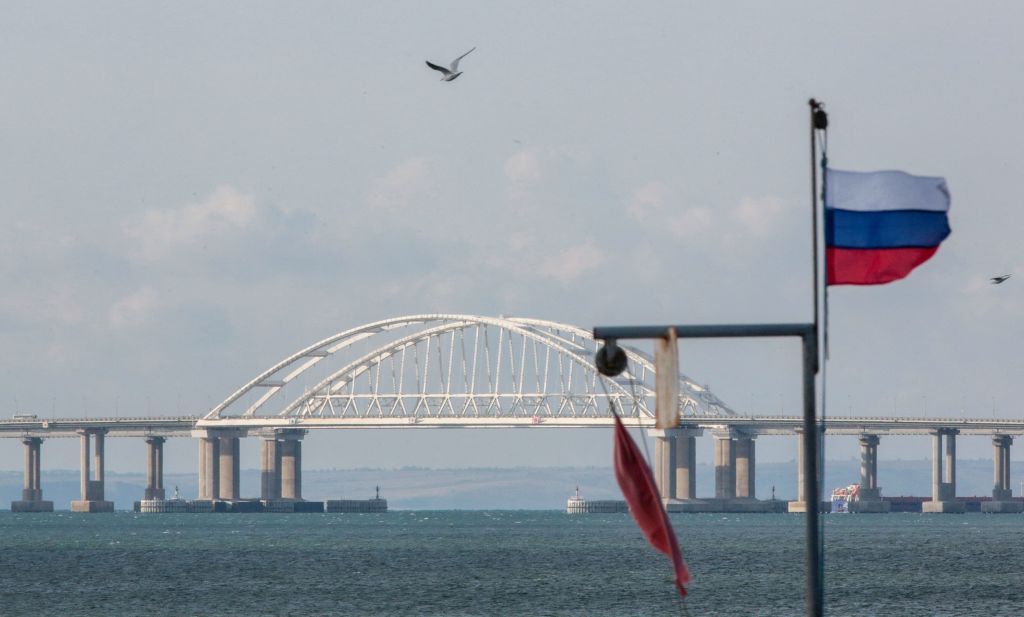
The Crimean Bridge was temporarily closed late on June 29 following reports of explosions and active air defense fire in the city of Kerch, according to local Telegram channels.
Witnesses reported hearing multiple blasts and observing Russian air defense systems in action. "Explosions heard in Kerch, Russian air defense is firing, and the lighting on the Crimean Bridge has been turned off," the Crimean Wind Telegram channel reported.
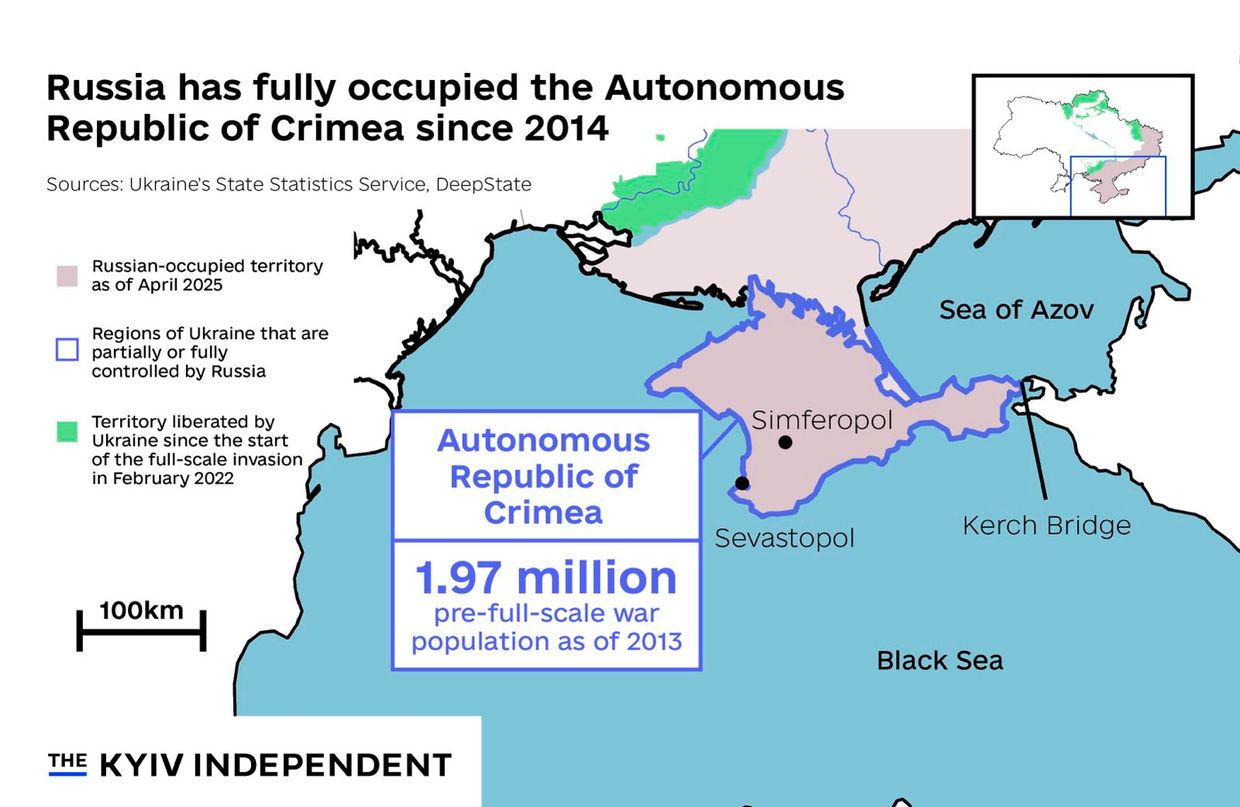
Ukraine has frequently targeted the Crimean Bridge over the course of the Russian full-scale invasion. Constructed after Russia's illegal occupation of Crimea in 2014, it is a critical supply and transport route for Russian forces to the occupied Ukrainian territories.
A map showing Russian control over Crimea and Ukrainian land on the Black Sea coast. (Nizar al-Rifai/The Kyiv Independent)
Traffic on the bridge was briefly halted, though it remains unclear whether the closure was precautionary or due to damage. Traffic reportedly resumed just over an hour later.
Russia's Defense Ministry said on June 30 that its air defense systems shot down five Ukrainian drones overnight over the Sea of Azov. It did not report any damage in Kerch or to the Crimean Bridge.
The incident follows a series of Ukrainian attacks on the Crimean Bridge. On June 3, Ukraine's Security Service (SBU) confirmed it had carried out a third strike targeting the bridge, detonating 1,100 kilograms of explosives beneath its underwater supports.
"God loves the Trinity, and the SBU always brings what is conceived to the end and never repeats itself," SBU Chief Vasyl Malyuk said in a statement at the time. The operation, he added, had been planned over several months and caused "severe" damage to the bridge's foundations without harming civilians.
Russian media later claimed a Ukrainian intelligence agent involved in preparing the explosive had been detained by the Federal Security Service (FSB).
The bridge, also known as the Kerch Bridge, previously suffered damage in Ukrainian attacks in October 2022 and July 2023. Despite these strikes, Russia has worked to maintain the bridge's operational status due to its strategic and symbolic importance.
After months of diplomatic stalling, the Kremlin on June 29 blamed Kyiv and Washington for the lack of progress in peace talks, with Kremlin spokesman Dmitry Peskov saying the pace of negotiations hinges on Ukraine's position, the effectiveness of U.S. mediation, and battlefield developments."A lot depends, naturally, on the position of the Kyiv regime," Peskov told Belarus 1 TV, in comments reported by Reuters, adding: "It depends on how effectively Washington's mediating efforts continue."Russ
After months of diplomatic stalling, the Kremlin on June 29 blamed Kyiv and Washington for the lack of progress in peace talks, with Kremlin spokesman Dmitry Peskov saying the pace of negotiations hinges on Ukraine's position, the effectiveness of U.S. mediation, and battlefield developments.
"A lot depends, naturally, on the position of the Kyiv regime," Peskov told Belarus 1 TV, in comments reported by Reuters, adding: "It depends on how effectively Washington's mediating efforts continue."
Russia has repeatedly refused to a U.S.-proposed ceasefire agreement, has escalated attacks on Ukrainian civilians, and Russian President Vladimir Putin declared earlier this month that "all of Ukraine is ours."
Peskov made the remarks in a televised interview, as the full-scale war enters its fourth summer with no comprehensive ceasefire in sight, and two mostly inconclusive rounds of peace talks.
Russia and Ukraine have held two rounds of face-to-face talks in Istanbul this year, first on May 16 and again on June 2, following more than three years without direct negotiations. The meetings resulted in significant prisoner exchanges, but no significant steps toward a ceasefire.
During the June 2 meeting, both sides presented proposals for ending the war, but Putin later described them as "absolutely opposite" memorandums.
Ukraine's delegation, led by Defense Minister Rustem Umerov, demanded an unconditional 30-day ceasefire, a position supported by Western partners, while Russia insisted on a 2–3-day limited truce to recover the bodies of fallen soldiers.
"Russia rejects even the very idea of stopping the killings," Umerov said after the talks. "That's why we appeal to the world: pressure is needed for real peace, not for an imitation of negotiations."
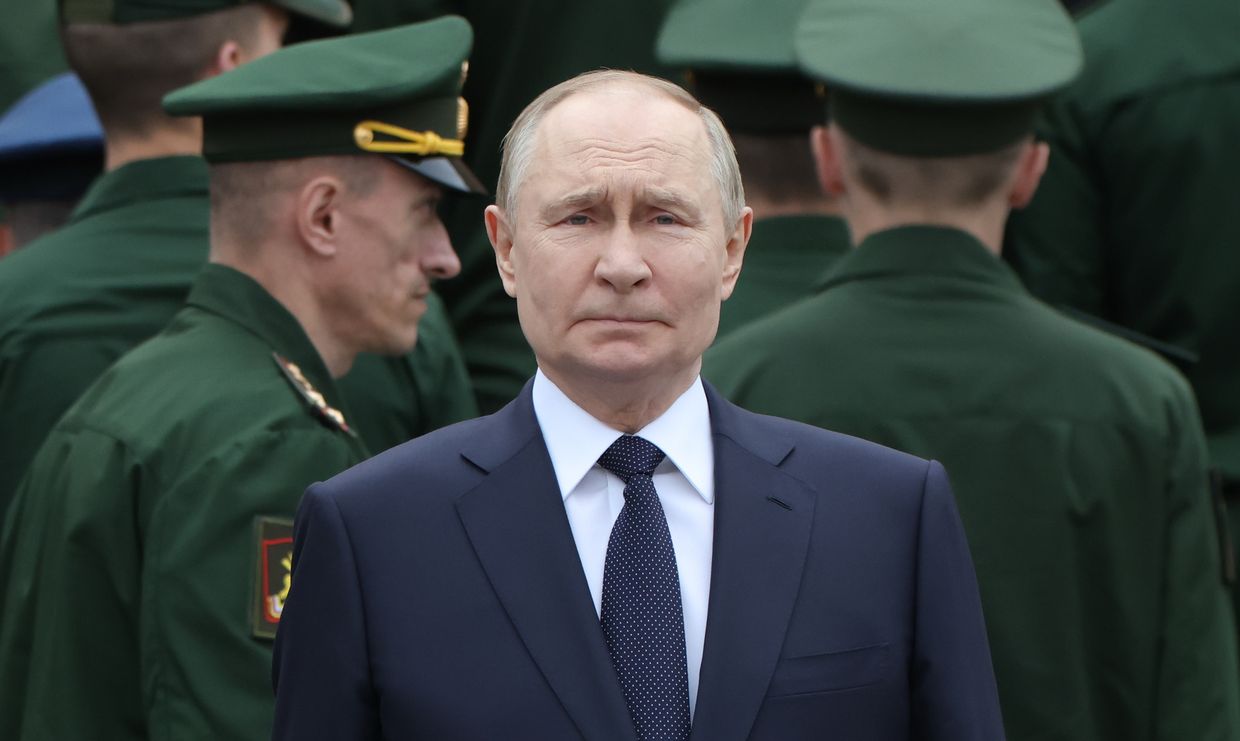
Despite the deadlock, Russia said it is open to a third round of negotiations. "In general, we are ready for this," Putin told reporters on June 27, suggesting Istanbul could again serve as the venue.
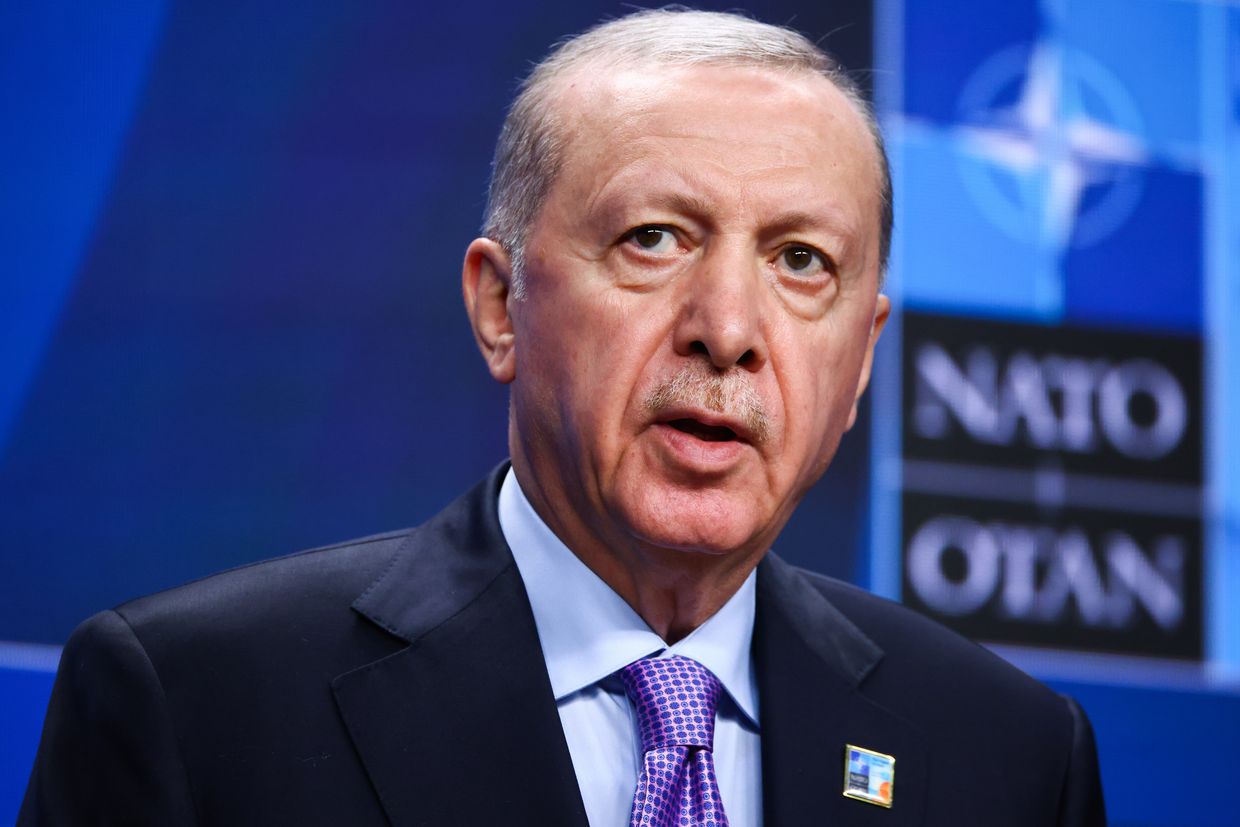
Turkish President Recep Tayyip Erdogan confirmed Ankara's willingness to host, and said efforts are underway to arrange a direct meeting between Putin and President Volodymyr Zelensky — possibly with U.S. President Donald Trump joining the talks.
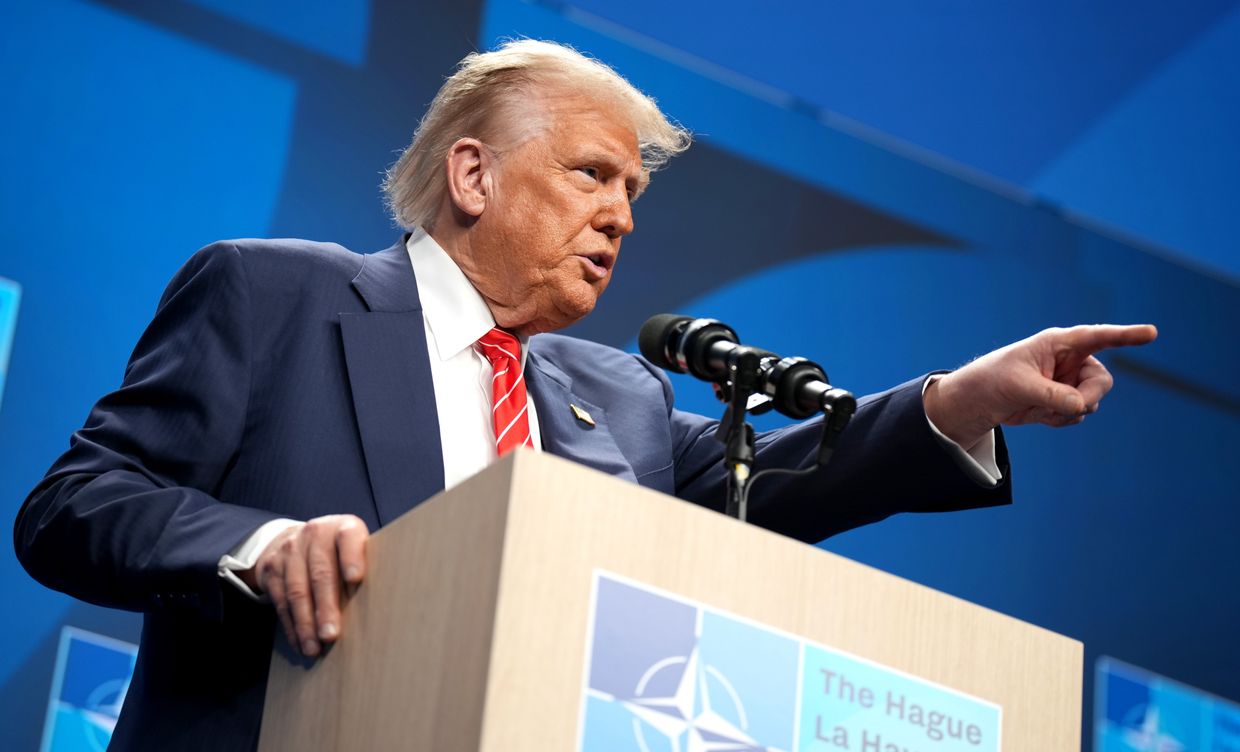
Zelensky has expressed support for a trilateral format and discussed the idea during the recent NATO summit in Brussels, where he and Trump also spoke about enhanced U.S. military assistance and co-production of air defense systems and drones.
So far, Trump has not imposed the additional sanctions on Russia he promised if peace efforts failed. "If the Istanbul meeting brings nothing, that clearly means strong new sanctions are urgently needed," Zelensky said on June 2.
While the Kremlin continues to reject a broad ceasefire, its forces are advancing in Ukraine's southeast, gaining territory in Donetsk and Dnipropetrovsk oblasts, and intensifying missile and drone strikes on civilians.
Russia has lost around 1,020,010 troops in Ukraine since the beginning of its full-scale invasion on Feb. 24, 2022, the General Staff of Ukraine's Armed Forces reported on June 30.The number includes 1,070 casualties that Russian forces suffered just over the past day.According to the report, Russia has also lost 10,980 tanks, 22,922 armored fighting vehicles, 53,593 vehicles and fuel tanks, 29,718 artillery systems, 1,427 multiple launch rocket systems, 1,190 air defense systems, 420 airplanes,
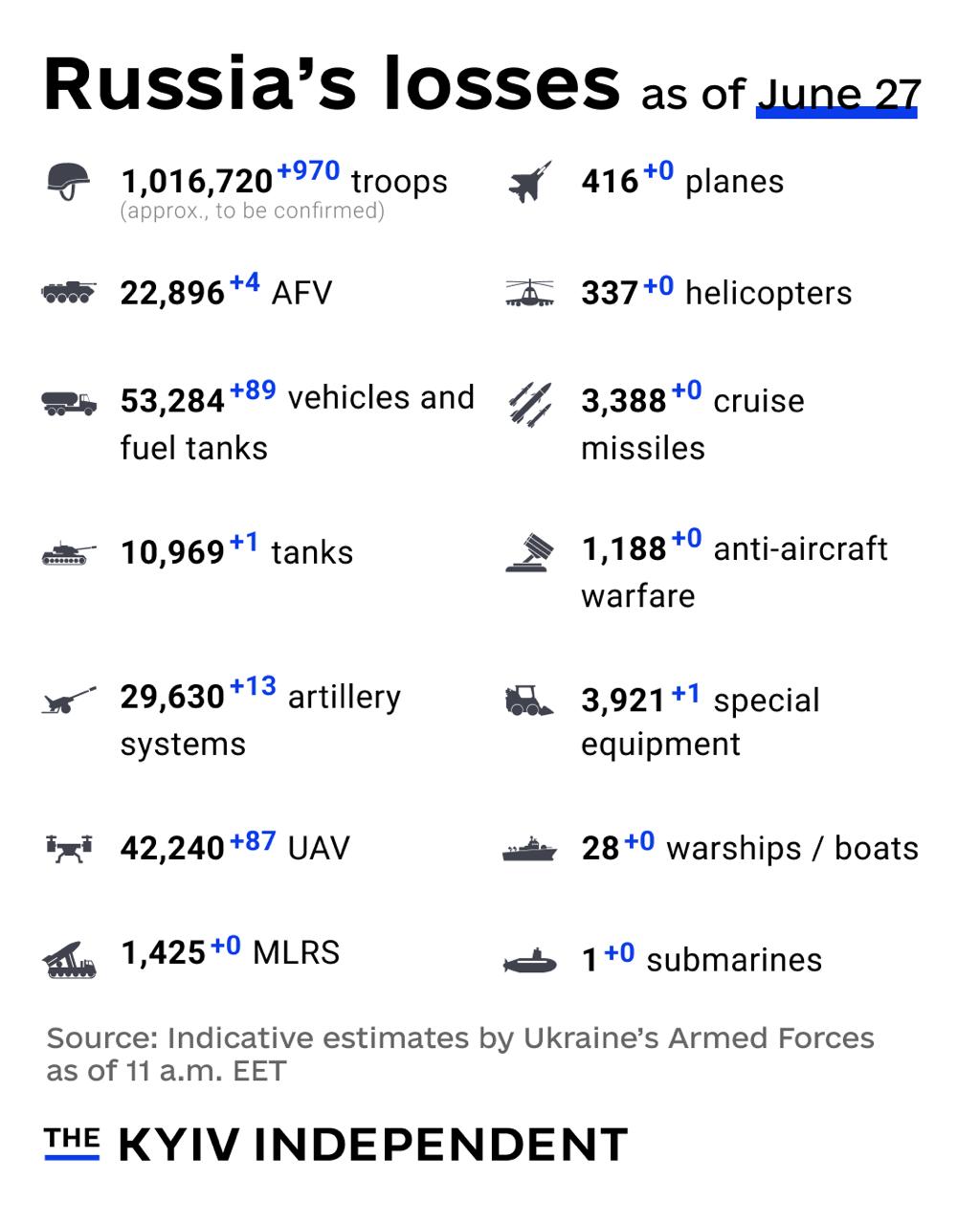
Russia has lost around 1,020,010 troops in Ukraine since the beginning of its full-scale invasion on Feb. 24, 2022, the General Staff of Ukraine's Armed Forces reported on June 30.
The number includes 1,070 casualties that Russian forces suffered just over the past day.
According to the report, Russia has also lost 10,980 tanks, 22,922 armored fighting vehicles, 53,593 vehicles and fuel tanks, 29,718 artillery systems, 1,427 multiple launch rocket systems, 1,190 air defense systems, 420 airplanes, 340 helicopters, 42,796 drones, 28 ships and boats, and one submarine.
North Korean leader Kim Jong-un met with Russian Culture Minister Olga Lyubimova in Pyongyang on June 29 to discuss expanding bilateral cooperation in culture and the arts, according to North Korea’s state-run Korean Central News Agency (KCNA).The meeting took place at the headquarters of the ruling Workers' Party of Korea's Central Committee and was also attended by Russian Ambassador to North Korea Alexandr Matsegora, KCNA reported. Lyubimova led a Russian culture ministry delegation to Pyongy
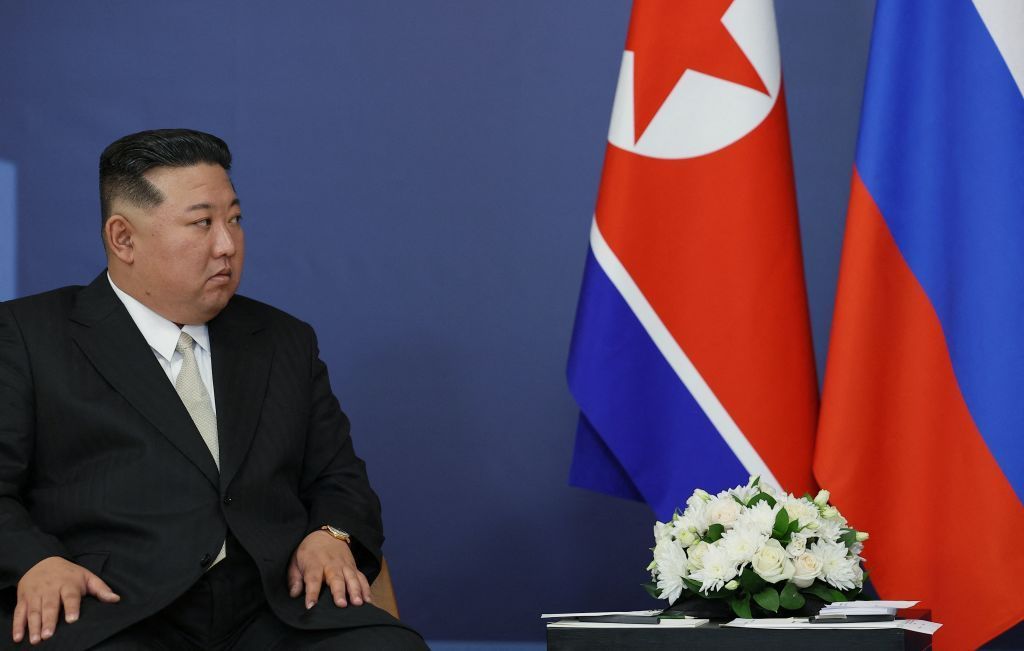
North Korean leader Kim Jong-un met with Russian Culture Minister Olga Lyubimova in Pyongyang on June 29 to discuss expanding bilateral cooperation in culture and the arts, according to North Korea’s state-run Korean Central News Agency (KCNA).
The meeting took place at the headquarters of the ruling Workers' Party of Korea's Central Committee and was also attended by Russian Ambassador to North Korea Alexandr Matsegora, KCNA reported.
Lyubimova led a Russian culture ministry delegation to Pyongyang, arriving on June 28 at the invitation of North Korea’s culture ministry to mark the first anniversary of the countries' comprehensive strategic partnership treaty.
During the meeting, Kim noted what he described as "broad and in-depth exchanges and cooperation" across various sectors since the treaty’s signing. He said these developments "have made tangible contributions to the mutual development and well-being of the two countries' peoples," according to KCNA.
Kim also emphasized the role of cultural and artistic exchange in reinforcing public sentiment and bilateral ties. "It is important for the cultural sector to guide the relations between the two countries," he said. Lyubimova, for her part, added that cultural cooperation between the countries had reached its highest level to date.
Kim’s daughter, known as Ju-ae, appeared beside him during the meeting with Lyubimova, marking her second known presence at a diplomatic event, following her attendance at a Russian Embassy function in Pyongyang in May.
The visits and meetings come amid growing North Korea-Russia engagement across multiple sectors, including military cooperation.
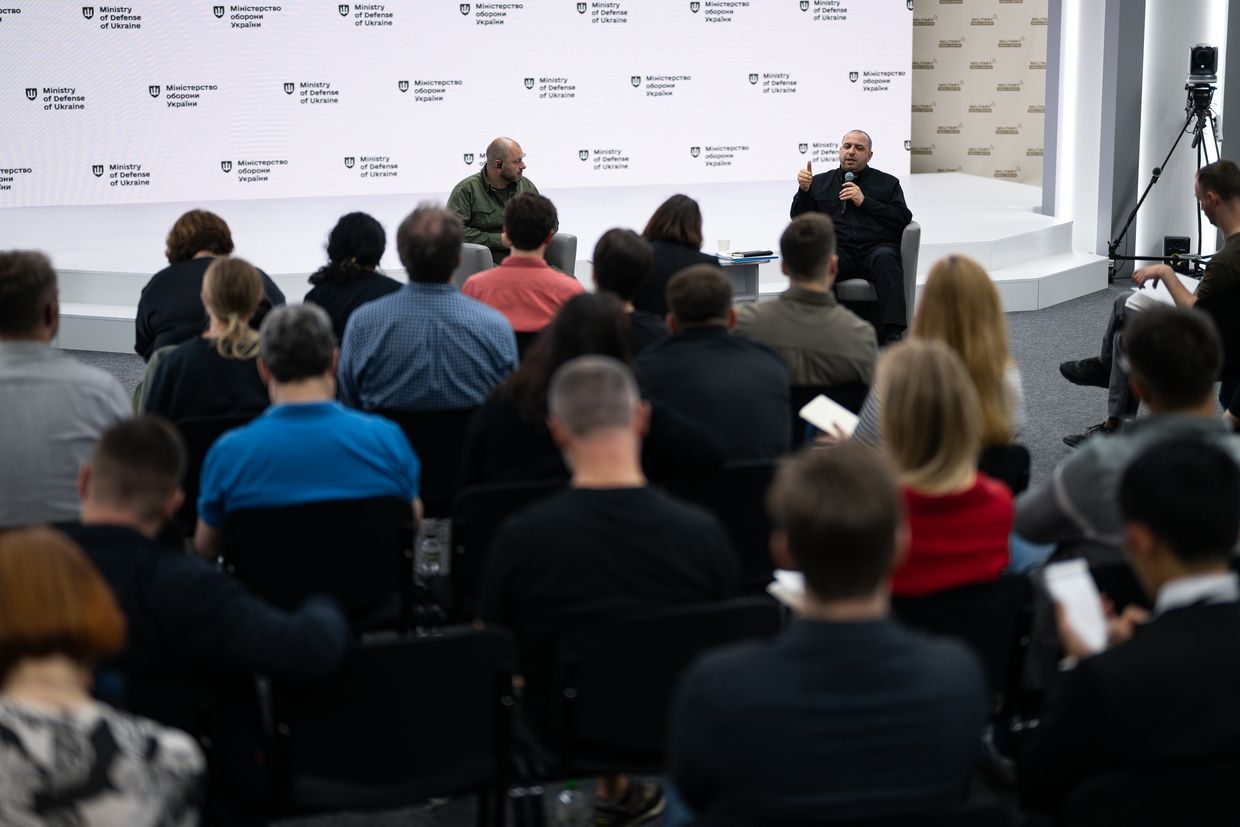
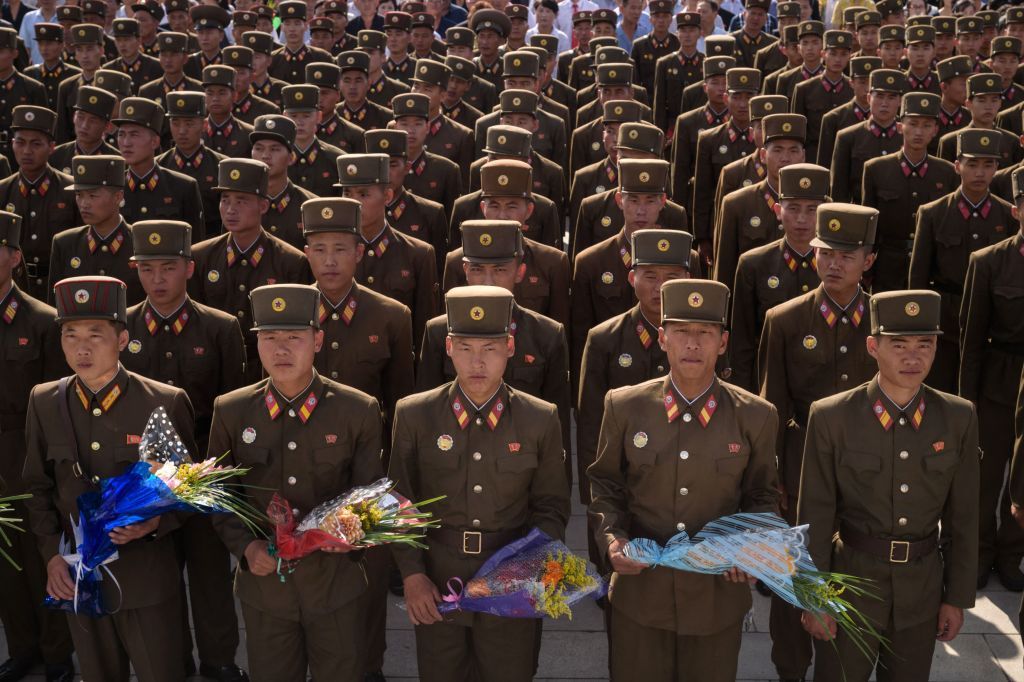
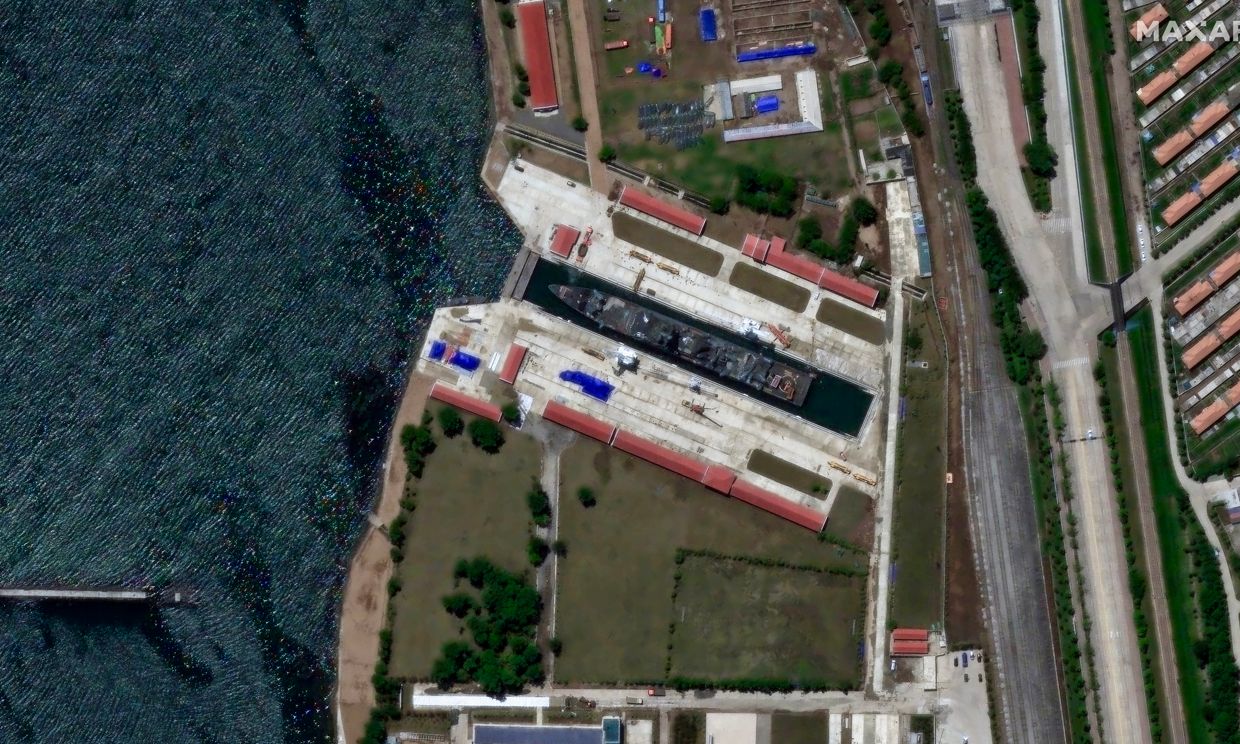
Since the two countries sinced a mutual defense treaty last June, North Korea has deployed around 11,000 elite troops to support Russia’s war against Ukraine, making up over 20% of Kim Jong-un’s "personal reserve" force, Ukrainian Defense Minister Rustem Umerov said at a June 26 press briefing.
"These are soldiers specially selected based on physical, psychological, and other criteria," Umerov said. "These units have already suffered significant losses."
Umerov added that North Korea had considered sending more troops, but doing so could further weaken its strategic reserves and pose risks to regime stability. He noted there have been four known rotations of North Korean units in Ukraine.
According to U.K. defense intelligence, North Korea has likely suffered over 6,000 casualties since troops were first deployed to Russia’s Kursk Oblast in fall 2024.
Slovakia’s Foreign Minister Juraj Blanar has suggested that the international community may need to "perhaps" forgive Russia’s actions and resume dialogue with Moscow as a means to end the war in Ukraine. His remarks came after Slovakia requested that the adoption of the 18th package of EU sanctions against Russia be postponed until a decision is made on the consequences for the member states from RePowerEU, the European Commission's initiative to end dependence on Russian fossil fuels by 2030 i
Slovakia’s Foreign Minister Juraj Blanar has suggested that the international community may need to "perhaps" forgive Russia’s actions and resume dialogue with Moscow as a means to end the war in Ukraine.
His remarks came after Slovakia requested that the adoption of the 18th package of EU sanctions against Russia be postponed until a decision is made on the consequences for the member states from RePowerEU, the European Commission's initiative to end dependence on Russian fossil fuels by 2030 in response to Russia's invasion of Ukraine.
Blanar, speaking to domestic media, said the ongoing war cannot be resolved on the battlefield and stressed the importance of diplomacy and international law. "Let us return to respect for international law and seek ways to communicate with the Russian Federation," he said on June 29. "And perhaps even forgive everything that has happened."
The comments mark another example of how Slovakia’s current leadership is diverging from the broader pro-Ukraine stance of the EU and NATO.
Under Prime Minister Robert Fico, Bratislava has adopted a more conciliatory tone toward Moscow, including continuing diplomatic engagement while most Western nations cut ties following Russia’s full-scale invasion in 2022.
Earlier this year, Fico attended Russia’s Victory Day Parade in Moscow, where he met with President Vladimir Putin. However, he dismissed the idea of engaging with President Volodymyr Zelensky.
"I see no reason to meet with the Ukrainian president," Fico said in a recent interview with Slovak broadcaster STVR. "My meeting with President Zelensky has no significance because he hates me," he added. Zelensky has not yet responded to Fico's claims.
While Fico halted Slovak military support for Ukraine upon taking office in 2023, he has paradoxically voiced support for Ukraine’s European Union membership. "Ukraine's EU membership brings more advantages than disadvantages for Slovakia," the prime minister said.
The Director of Russia’s Foreign Intelligence Service (SVR), Sergey Naryshkin, told Russian state media on June 29 that he had agreed to remain in open contact with Central Intelligence Agency (CIA) Director John Ratcliffe, following a recent phone call between the two."I had a phone call with my American counterpart, and we reserved for each other the possibility to call each other at any time and discuss issues of interest to us," Naryshkin said. He did not specify when the conversation took p
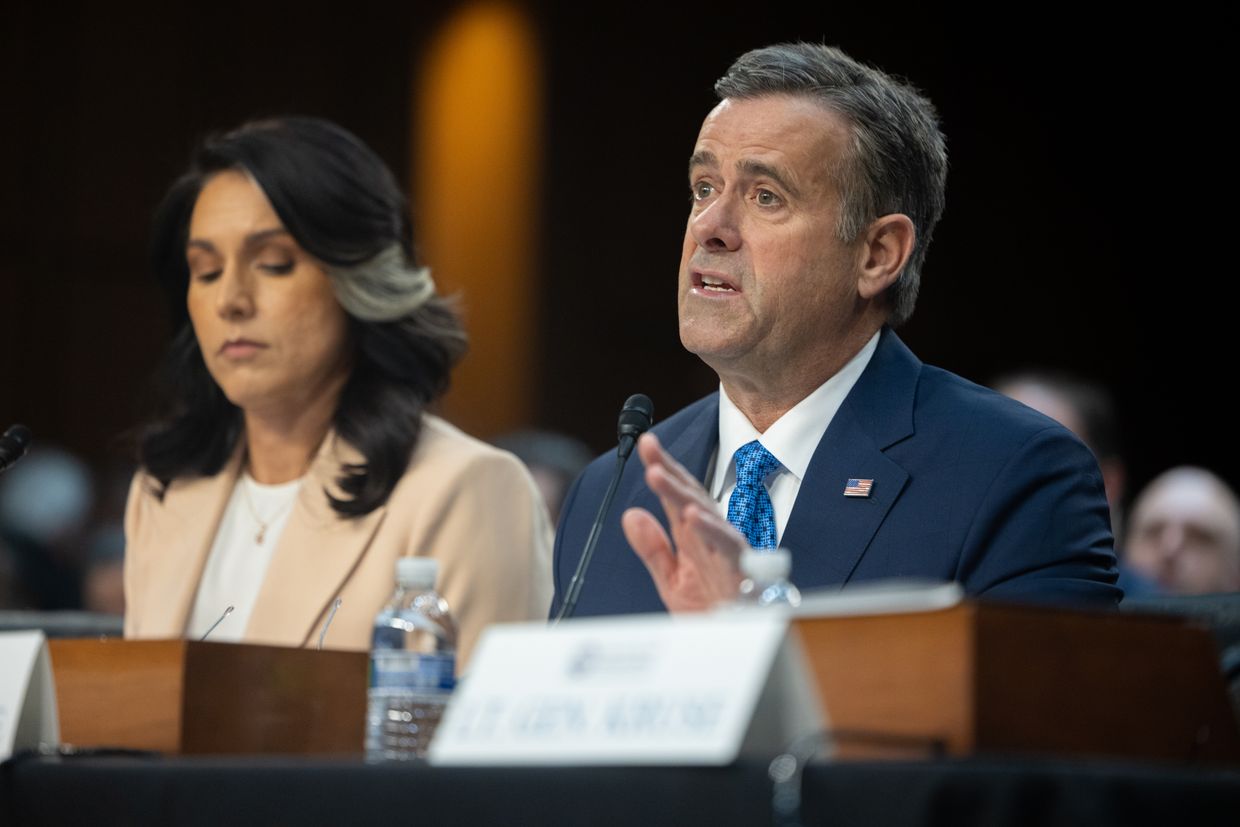
The Director of Russia’s Foreign Intelligence Service (SVR), Sergey Naryshkin, told Russian state media on June 29 that he had agreed to remain in open contact with Central Intelligence Agency (CIA) Director John Ratcliffe, following a recent phone call between the two.
"I had a phone call with my American counterpart, and we reserved for each other the possibility to call each other at any time and discuss issues of interest to us," Naryshkin said. He did not specify when the conversation took place, and Ratcliffe has not publicly confirmed the call.
Russian state media claimed the last known exchange between the two intelligence chiefs occurred in March.
The remarks come amid broader efforts by the administration of U.S. President Donald Trump to normalize relations between Washington and Moscow. During a phone call on Feb. 12, Presidents Trump and Vladimir Putin agreed to reset U.S.-Russia ties and revive dialogue on "topics of mutual interest," including a potential resolution to the war in Ukraine.
That call was followed by the first round of bilateral talks, held on Feb. 18 in Saudi Arabia—the first official meeting between U.S. and Russian officials in over three years. Both sides pledged to begin restoring diplomatic relations and to appoint senior teams tasked with negotiating a Ukraine peace agreement.
Despite these efforts, progress on peace has been limited.
Two earlier rounds of talks between Moscow and Kyiv in Istanbul failed to produce a ceasefire. On June 5, Trump declined to say when or if further sanctions on Russia might be imposed, stating only that there is a deadline “in (his) brain.”
U.S. Secretary of State Marco Rubio later told Politico that Trump would resist European pressure to toughen sanctions, arguing that doing so could jeopardize the fragile window for negotiations with the Kremlin.
Russia has lost around 1,018,940 troops in Ukraine since the beginning of its full-scale invasion on Feb. 24, 2022, the General Staff of Ukraine's Armed Forces reported on June 29.The number includes 1,220 casualties that Russian forces suffered just over the past day.According to the report, Russia has also lost 10,976 tanks, 22,915 armored fighting vehicles, 53,508 vehicles and fuel tanks, 29,689 artillery systems, 1,425 multiple launch rocket systems, 1,189 air defense systems, 420 airplanes,
Russia has lost around 1,018,940 troops in Ukraine since the beginning of its full-scale invasion on Feb. 24, 2022, the General Staff of Ukraine's Armed Forces reported on June 29.
The number includes 1,220 casualties that Russian forces suffered just over the past day.
According to the report, Russia has also lost 10,976 tanks, 22,915 armored fighting vehicles, 53,508 vehicles and fuel tanks, 29,689 artillery systems, 1,425 multiple launch rocket systems, 1,189 air defense systems, 420 airplanes, 337 helicopters, 42,624 drones, 28 ships and boats, and one submarine.
Editor's Note: This is a developing story and is being updated.Russia launched its largest aerial attack on Ukraine since the start its full-scale war overnight on June 29, launching 477 drones and 60 missiles towards Ukrainian cities, Ukraine’s Air Force said. Russian missile and drone attack terrorized Ukraine overnight as air raid alarms sounded across the country, including western regions far from the front lines.Yuriy Ihnat, a spokesperson for Ukraine's Air Force, confirmed to the Associat
Editor's Note: This is a developing story and is being updated.
Russia launched its largest aerial attack on Ukraine since the start its full-scale war overnight on June 29, launching 477 drones and 60 missiles towards Ukrainian cities, Ukraine’s Air Force said.
Russian missile and drone attack terrorized Ukraine overnight as air raid alarms sounded across the country, including western regions far from the front lines.
Yuriy Ihnat, a spokesperson for Ukraine's Air Force, confirmed to the Associated Press that the attack had become "the most massive airstrike" since the beginning of Russia's full-scale in February 2022.
Russia's bombardments — a fact of life after three years of full-scale war — have intensified dramatically in May and June, with mass attacks becoming more frequent and more deadly.
Ukraine's Air Force warned late in the evening on June 28 that Russia had launched three Tu-95 bombers from the Olenya military airfield in Murmansk Oblast. The Air Force also warned that multiple groups of Russian drones were heading towards various regions.
Several hours later, the Air Force reported that a Russian MiG-31K — a jet capable of carrying Kinzhal ballistic missiles — took off from Savasleyka airfield in Russia's Nizhny Novgorod Oblast. The Air Force followed this up with warnings that cruise missiles were bound for several regions, including Ternopil, Lviv, and Ivano-Frankivsk oblasts in western Ukraine.
The Operational Command of the Polish Armed Forces said it scrambled fighter jets and activated ground-based air defense units in response to the Russian aerial attacks in western Ukraine.
Explosions and strikes were reported in Mykolaiv, Kremenchuk, Zaporizhzhia, Cherkasy Oblast, Ivano-Frankivsk, and Lviv as waves of attacks came throughout the night. Some regional officials shared preliminary reports of damage and casualties even as air defense continued to operate in the area.
Civilian infrastructure was damaged and at least three people were injured in attacks on Cherkasy Oblast, Governor Ihor Taburets reported.
In Kremenchuk, Poltava Oblast, an undisclosed enterprise was hit, causing a fire, according to Governor Volodymyr Kohut.
A production facility at an unnamed enterprise in Zaporizhzhia was hit during an overnight missile attack, Governor Ivan Fedorov said. No casualties were reported.
After the alarms died down, officials in Lviv Oblast said that Russia attempted to strike critical infrastructure in the region. According to Lviv Mayor Andrii Sadovyi, these efforts were largely unsuccessful.
"Despite the complexity of this overnight combined attack, no one was injured and no civilian buildings were damaged in Lviv," he wrote on Telegram.
Mykolaiv Oblast Governor Vitalii Kim reported that Russia targeted the city overnight with ballistic missiles and Shahed drones, hitting an infrastructure facility. The strike caused a fire but no casualties.
The mass missile and drone attack comes a day after Russian President Vladimir Putin told reporters that Moscow is ready to hold another round of peace talks.
Ukrainian and Russian delegations have now held two direct talks in Istanbul, but the discussions have yielded few results outside of coordinated prisoner swaps.
Moscow refuses to budge on its maximalist ambitions in Ukraine and is unwilling to enter a ceasefire unless Kyiv preemptively agrees to surrender all foreign military aid. Putin on June 20 declared that "all Ukraine is ours" in a bombastic speech at the St. Petersburg Economic Forum.
Russian ballistics and kamikaze drones have targeted Kyiv and other Ukrainian cities with renewed ferocity, killing dozens of civilians and injuring hundreds more. Just this week, a Russian missile struck a passenger train in Dnipro, leaving 21 dead and over 300 wounded.
Chairman of the Verkhovna Rada Ruslan Stefanchuk said on June 28 that Ukraine's parliament is preparing a draft bill to hold elections following the end of the martial law period enacted as a result of the war. "We are working on this draft law, because for the next elections, a new special draft law is needed that will regulate the so-called post-war elections," Stefanchuk said on Ukraine's marathon TV broadcast. "We are preparing various basic scenarios so that people can exercise their fundam
Chairman of the Verkhovna Rada Ruslan Stefanchuk said on June 28 that Ukraine's parliament is preparing a draft bill to hold elections following the end of the martial law period enacted as a result of the war.
"We are working on this draft law, because for the next elections, a new special draft law is needed that will regulate the so-called post-war elections," Stefanchuk said on Ukraine's marathon TV broadcast.
"We are preparing various basic scenarios so that people can exercise their fundamental constitutional right to vote. And this must take place in Ukraine. And I believe we will be able to find the right legislative compromise," he added.
The reason for separate legislation on a post-war election, Stefanchuk previously said, was due to the fact that Ukraine's Constitution does not not provide clarity on the details of holding elections following the end of a martial law period.
No details on the bill or timeline for implementation were provided.
Russia's full-scale invasion and the subsequent declaration of martial law in Ukraine meant elections have been impossible to hold, and President Volodymyr Zelensky's term has been extended, something constitutional lawyers say is allowed under Ukrainian law.
Despite criticism, Ukraine's parliament, the Verkhovna Rada, passed a resolution on Feb. 25 to hold elections after "a comprehensive, just, and sustainable peace is secured" in the country.
While polling shows a vast majority of Ukrainian citizens do not support holding elections before a full peace deal, the lack of elections has stirred some controversy with Ukraine's allies.
At the start of his second term in office, U.S. President Donald Trump urged Ukraine to hold elections — something that Ukraine has thus far refused to do citing the difficulties of holding elections amid active warfare, as well as security implications.
Zelensky has previously said he is willing to step down in exchange for a peace agreement.
Russian propaganda has widely used the issue of elections in Ukraine to discredit the Ukrainian leadership. Mocow has repeatedly claimed that Zelensky is no longer a legitimate president, as his first term was originally meant to end on May 20, 2024.
Editor's note: This is a developing story and is being updated.Ukraine's military intelligence (HUR) struck on June 28 the 1060th Material-Technical Support Center in the city of Bryansk, Ukraine's General Staff said. The facilities store a Russian missile and drone arsenal, Ukrainska Pravda reported, citing a source in HUR.Local residents reported hearing explosions and gun fire throughout the morning of June 28. Pictures posted on social media show smoke billowing from the area of where the ce
Editor's note: This is a developing story and is being updated.
Ukraine's military intelligence (HUR) struck on June 28 the 1060th Material-Technical Support Center in the city of Bryansk, Ukraine's General Staff said.
The facilities store a Russian missile and drone arsenal, Ukrainska Pravda reported, citing a source in HUR.
Local residents reported hearing explosions and gun fire throughout the morning of June 28. Pictures posted on social media show smoke billowing from the area of where the centre, formerly the the 120th arsenal of the Main Missile and Artillery Directorate, is located in an industrial area in the southern part of the city.
The General Staff said it was assessing the strike as extent of the damage was not immediately clear.
Bryansk Oblast Governor Alexander Bogomaz acknowledged a drone attack on the region overnight claiming that four civilians were injured in the attack, damaging ten homes and a vehicle.
Later in the morning, Bogomaz claimed that all the drones had been downed by Russian air defense unit in a separate attack, claiming that no damage had been inflicted. He did not mention the Main Missile and Artillery Directorate in his comments.
The Kyiv Independent cannot immediately verify the reports or claims made by Russian officials.
Bryansk Oblast, located in Russia's far-west, borders Ukraine's Chernihiv and Sumy Oblast, and has been the target of various Ukrainian strikes.
Ukraine's military regularly conducts strikes onto Russian and Russian-occupied territory.
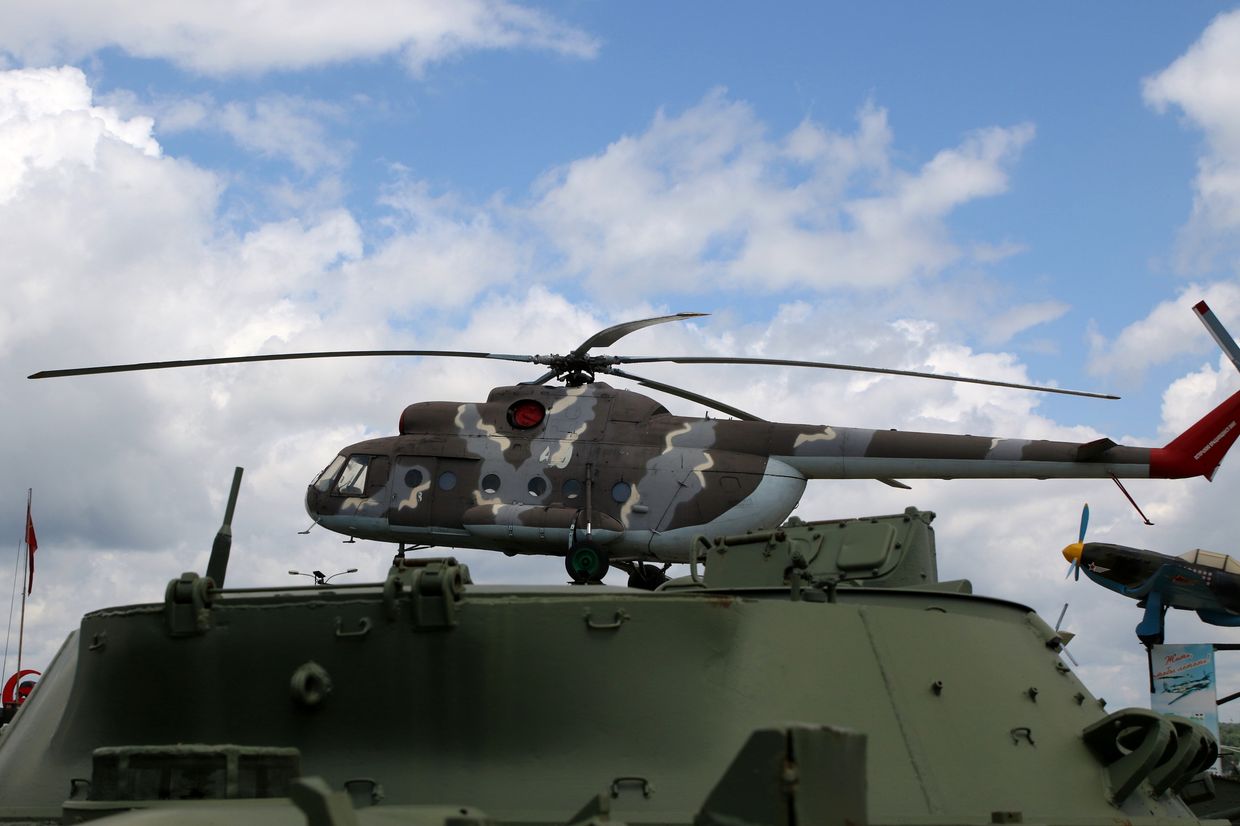
Drones operated by the Security Service of Ukraine (SBU) struck the Kirovske military airfield in occupied Crimea overnight on June 28, the SBU told the Kyiv Independent. The attack destroyed Mi-8, Mi-26 and Mi-28 attack helicopters, and a Pantsyr-S1 self-propelled anti-aircraft missile and gun system, the SBU claimed.
German fighter jets were scrambled to intercept a Russian Il-20 reconnaissance aircraft over the Baltic Sea near NATO airspace on the morning of June 27, the German tabloid Bild reported.The incident adds to a series of aerial provocations reported by NATO allies since the start of Russia's full-scale invasion of Ukraine in 2022 as Moscow is suspected of using the aircraft to spy on the alliance's positions.The Russian Il-20M, which took off from Kaliningrad with its transponder switched off, wa
German fighter jets were scrambled to intercept a Russian Il-20 reconnaissance aircraft over the Baltic Sea near NATO airspace on the morning of June 27, the German tabloid Bild reported.
The incident adds to a series of aerial provocations reported by NATO allies since the start of Russia's full-scale invasion of Ukraine in 2022 as Moscow is suspected of using the aircraft to spy on the alliance's positions.
The Russian Il-20M, which took off from Kaliningrad with its transponder switched off, was headed west toward international airspace near Poland and Germany when it was detected by NATO radar systems.
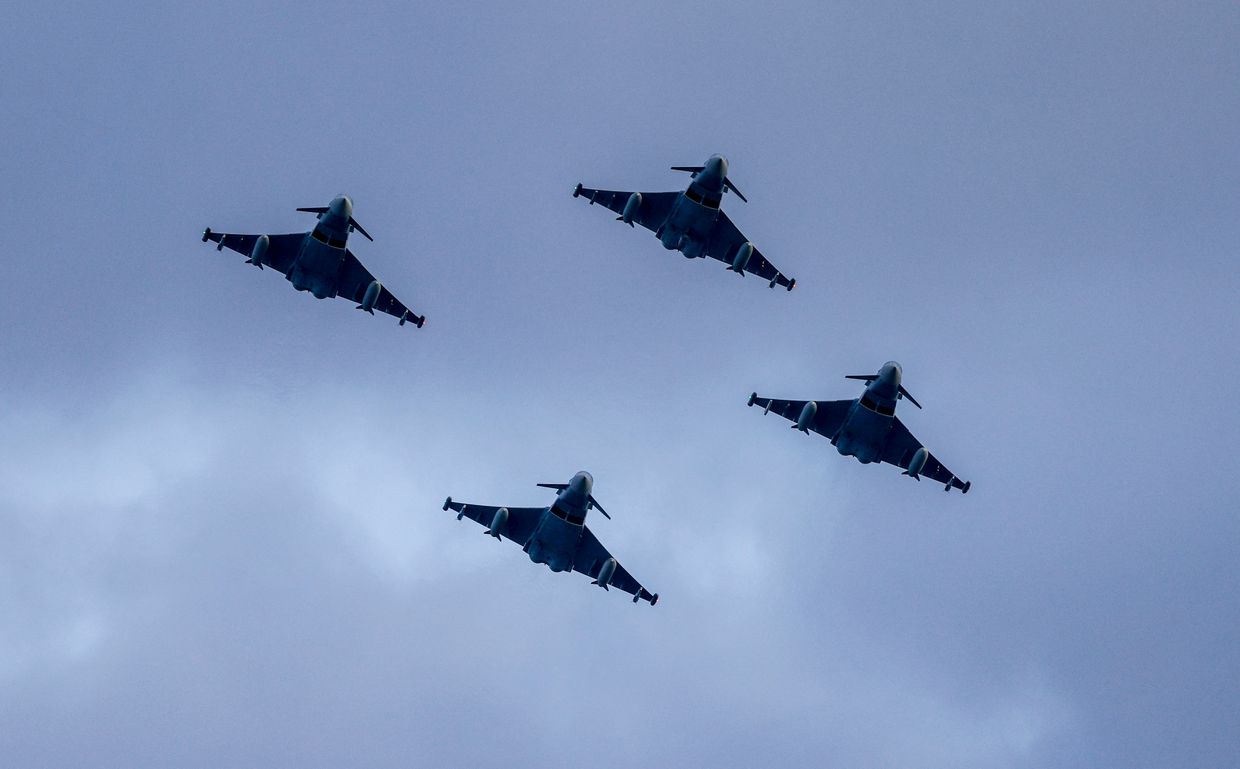
NATO alerted the German Armed Forces’ Quick Reaction Team (QRT), prompting the launch of two Eurofighter jets to intercept the aircraft.
The German jets made visual contact with the Russian plane approximately 100 kilometers off the German coast and took a photograph of it. Despite the interception, the Il-20M did not alter its course.
The Russian aircraft eventually veered north, just 40 kilometers from the Baltic Sea island of Usedom, avoiding a breach of German airspace.
According to Bild, this was the ninth such interception mission conducted by German forces in 2025.
As Russia continues its aggression against Ukraine and poses an increasing threat to NATO, German Chancellor Friedrich Merz said in an interview with Süddeutsche Zeitung published on June 27 that he would refrain from phone calls with Russian President Vladimir Putin given the intensified attacks on Ukraine.
Merz’s predecessor, Olaf Scholz, was the first EU leader from a country supporting Ukraine to resume direct contact with Putin since the start of the full-scale invasion, speaking with him by phone in November 2024.
Editor's note: The previously published footage, provided by an SBU source, was allegedly related to a different operation and was deleted after the mistake was identified.Drones operated by the Security Service of Ukraine (SBU) struck the Kirovske military airfield in occupied Crimea overnight on June 28, the SBU told the Kyiv Independent.The attack destroyed Mi-8, Mi-26 and Mi-28 attack helicopters, and a Pantsyr-S1 self-propelled anti-aircraft missile and gun system, the SBU claimed.According
Editor's note: The previously published footage, provided by an SBU source, was allegedly related to a different operation and was deleted after the mistake was identified.
Drones operated by the Security Service of Ukraine (SBU) struck the Kirovske military airfield in occupied Crimea overnight on June 28, the SBU told the Kyiv Independent.
The attack destroyed Mi-8, Mi-26 and Mi-28 attack helicopters, and a Pantsyr-S1 self-propelled anti-aircraft missile and gun system, the SBU claimed.
According to the SBU, Ukraine targeted Russian aviation, air defense systems, as well as ammunition, reconnaissance and attack drones storage facilities.
Secondary explosions were heard at the airfield during the night.
The Kyiv Independent could not verify these claims.
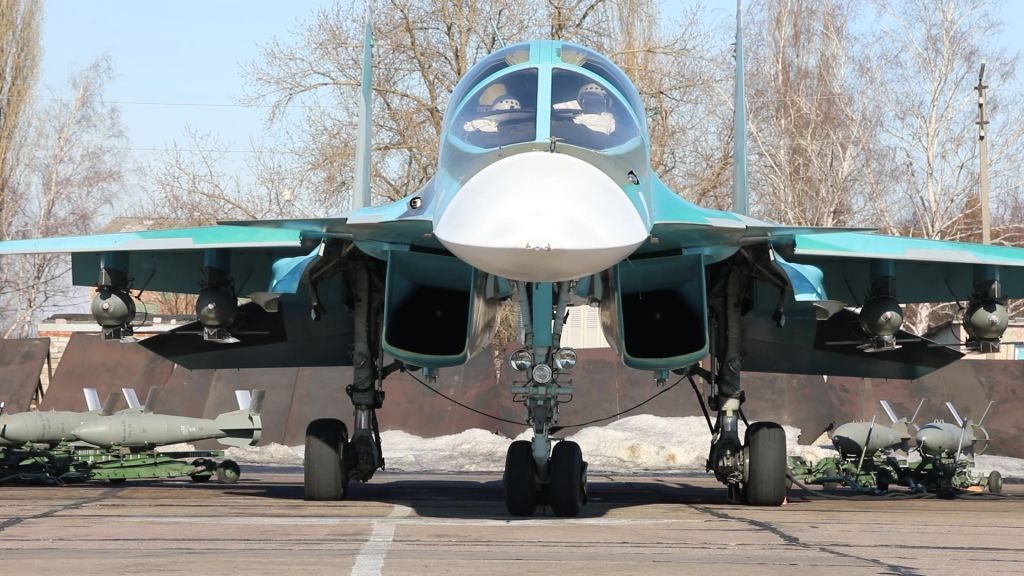
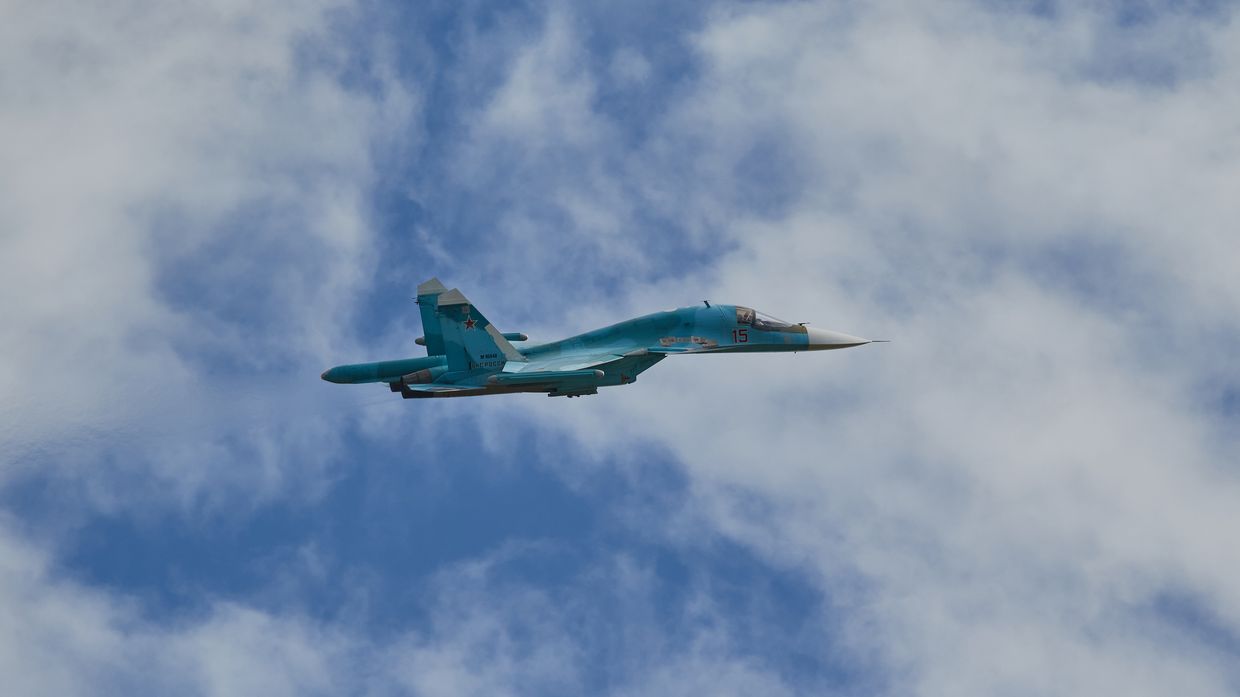
Earlier on June 27, Ukrainian drones struck four Su-34 fighter jets at the Marinovka airfield in Russia's Volgograd Oblast, according to the military.
Preliminary reports indicate that two Russian fighter jets were destroyed in the June 27 attack, and the other two were damaged. Russia uses the aircraft to bomb Ukraine.
Since the start of its full-scale war in February 2022, Russia has lost 420 airplanes and 337 helicopters, Ukraine's General Staff said in its latest update on June 28. The Kyiv Independent could not verify these figures.
Russia is returning outdated T-62 tanks to service due to mounting equipment losses in its full-scale war against Ukraine and a shortage of modern military equipment, Ukraine's military intelligence (HUR) said on June 28."The key factors limiting the ability to produce modern armored vehicles in Russia are a lack of industrial capacity and a shortage of imported high-tech components," the agency said.According to HUR, the restoration of T-62 tanks is primarily carried out at a facility in the vi
Russia is returning outdated T-62 tanks to service due to mounting equipment losses in its full-scale war against Ukraine and a shortage of modern military equipment, Ukraine's military intelligence (HUR) said on June 28.
"The key factors limiting the ability to produce modern armored vehicles in Russia are a lack of industrial capacity and a shortage of imported high-tech components," the agency said.
According to HUR, the restoration of T-62 tanks is primarily carried out at a facility in the village of Atamanovka in Russia's far-eastern Zabaykalsky Krai.
Russia transferred 21 T-62 tanks from its eastern military district to the European part of the country, the intel claimed.
HUR said that Russia’s stockpile of Soviet-era tanks from the 1970s is being depleted, while most T-62s are even in worse condition after decades of open-air storage without maintenance.
Some of these tanks can also be used at the front as stationary firing points to reinforce defensive positions.
"Due to a severe shortage of modern main battle tanks such as the T-90M and T-72B3M, the deployment of T-62s is seen as a temporary but necessary measure," the statement read.
Since the start of its full-scale war in February 2022, Russia has lost 10,970 tanks, Ukraine's General Staff said in its latest update on June 28.
The Kyiv Independent could not verify these numbers.
Russia launched its new Grom-1 bomb missile at Dnipropetrovsk Oblast for the first time on June 28, but it was shot down by Ukrainian air defenses, Governor Serhii Lysak said.The attack comes as Russian troops continue their offensive in neighboring Donetsk Oblast, pushing closer to Dnipropetrovsk Oblast — a major industrial region in central Ukraine.In mid-June, Ukraine's military denied reports that Russian troops had entered the region, with President Volodymyr Zelensky saying that Ukrainian
Russia launched its new Grom-1 bomb missile at Dnipropetrovsk Oblast for the first time on June 28, but it was shot down by Ukrainian air defenses, Governor Serhii Lysak said.
The attack comes as Russian troops continue their offensive in neighboring Donetsk Oblast, pushing closer to Dnipropetrovsk Oblast — a major industrial region in central Ukraine.
In mid-June, Ukraine's military denied reports that Russian troops had entered the region, with President Volodymyr Zelensky saying that Ukrainian troops had intercepted Russian reconnaissance units attempting to breach Dnipropetrovsk Oblast.
Explosions in Dnipro were heard around 11:30 a.m. local time, shortly after the Ukrainian Air Force reported that Russia had launched guided aerial bombs.
The strike was later confirmed to have been launched from the Russian-occupied part of Zaporizhzhia Oblast.
"The target flew more than 100 kilometers and was shot down by air defense outside the city of Dnipro," the statement read.
Authorities are verifying the wreckage of the downed weapon.
To date, neither Russian guided aerial bombs nor the Grom-1 bomb missile had previously reached the city of Dnipro.
The Grom-1 is described to be a hybrid of a guided aerial bomb and a missile, developed from the Kh-38 missile platform, with an estimated range of up to 120 kilometers.
Russia regularly uses guided aerial bombs to attack front-line areas in Ukraine's east and south, as well as regional centers such as Kharkiv, Sumy, and Zaporizhzhia.
As Moscow intensifies its attacks on Ukrainian cities, earlier this week on June 24, Russian forces struck civilian infrastructure and a passenger train with ballistic missiles, killing at least 21 people and injuring more than 300 others.
The Atesh partisan group set fire to a signal cabinet that helps control traffic on a railway line near the Russian-occupied city of Yasynuvata in Donetsk Oblast, a route used for Russia's military logistics, the group claimed on Telegram on June 28.Yasynuvata lies some 22 kilometers (12.5 miles) from the occupied city of Donetsk and is considered to be a major railway junction in the region.According to the group, the sabotaged section is located near Russian military units, warehouses, and ind
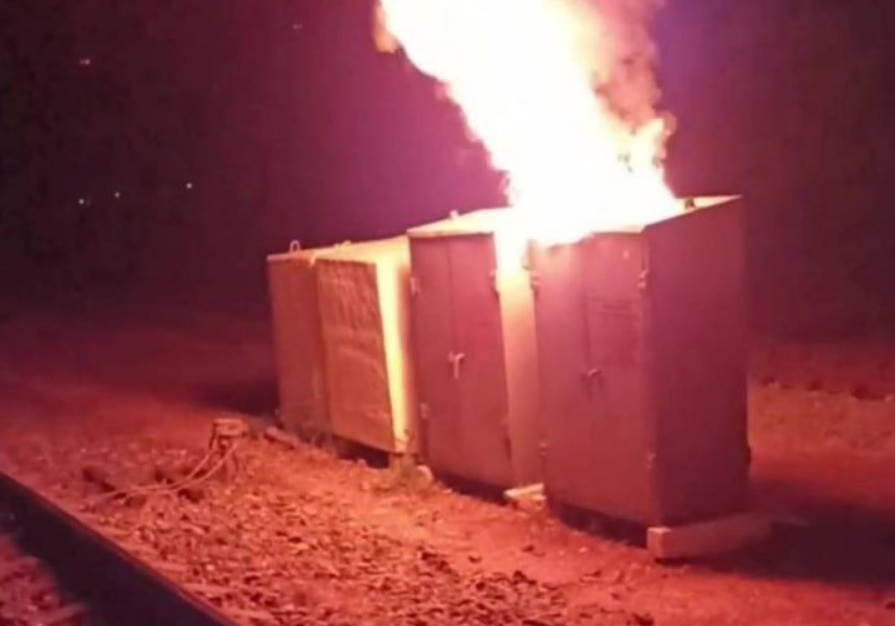
The Atesh partisan group set fire to a signal cabinet that helps control traffic on a railway line near the Russian-occupied city of Yasynuvata in Donetsk Oblast, a route used for Russia's military logistics, the group claimed on Telegram on June 28.
Yasynuvata lies some 22 kilometers (12.5 miles) from the occupied city of Donetsk and is considered to be a major railway junction in the region.
According to the group, the sabotaged section is located near Russian military units, warehouses, and industrial facilities.
Atesh said the attack disrupted the delivery of a train carrying fuel for Russian forces.
"On Ukraine's Constitution Day, we remind the occupiers that this is an independent and free country. And Donetsk will always be Ukrainian," the statement read.
The Kyiv Independent could not verify these claims.
The Atesh partisan group regularly conducts sabotage attacks in Russia and Ukraine's Russian-occupied territories.
In early June, Atesh claimed to have destroyed a signal cabinet on the new Volnovakha-Mariupol railway, which had been recently built by occupying Russian forces.
Russian attacks against Ukraine killed 10 people and injured at least 50 others over the past day, regional authorities said on June 28.Ukrainian forces downed 21 out of the 23 drones, including Shahed-type attack drones and decoys, launched by Russia overnight, the Air Force reported.One drone was intercepted by electronic warfare or disappeared from radars, according to the statement. Russia usually launches decoys alongside real drones to overwhelm Ukraine's air defense.A Russian drone attack
Russian attacks against Ukraine killed 10 people and injured at least 50 others over the past day, regional authorities said on June 28.
Ukrainian forces downed 21 out of the 23 drones, including Shahed-type attack drones and decoys, launched by Russia overnight, the Air Force reported.
One drone was intercepted by electronic warfare or disappeared from radars, according to the statement. Russia usually launches decoys alongside real drones to overwhelm Ukraine's air defense.
A Russian drone attack on the city of Odesahit a high-rise building,killing a married couple and injuring at least 14 other people, including three children,Governor Oleh Kiper said.
A Russian missile strike on the city of Samar in Dnipropetrovsk Oblast killed five people and injured at least 25 others, Governor Serhii Lysak said.
Three men aged 30, 36 and 53 were injured in a Russian attack on Chuhuiv in Kharkiv Oblast, according to Governor Oleh Syniehubov.
Russian attacks near Polohy and Vasylivka in Zaporizhzhia Oblastinjured a man and a woman, Governor Ivan Fedorov reported.
Russian troops injured a man by dropping an explosive device on the Bilopillia community in Sumy Oblast, local authorities reported.
Two people were killed in Kostiantynivka and Ivanopillia in Donetsk Oblast, Governor Vadym Filashkin said. Two others suffered injuries in the region over the past day.
In Kherson Oblast, Russian forces targeted 42 settlements, including the regional center of Kherson. One person was killed, and three others injured, Governor Oleksandr Prokudin reported.
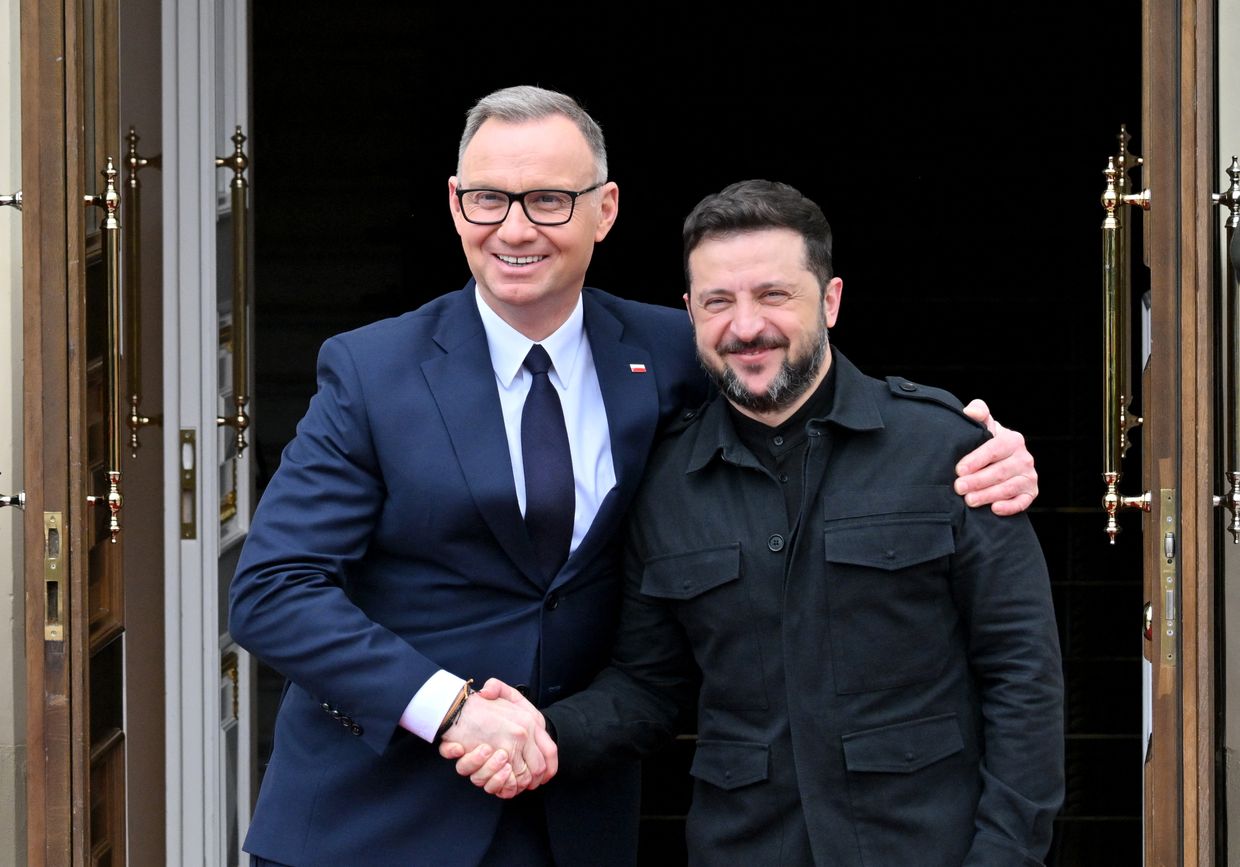
Outgoing Polish President Andrzej Duda arrived in Kyiv to meet with President Volodymyr Zelensky as part of a farewell gesture ahead of his departure from office in August, Duda announced on social media."President Duda has stood by Ukraine's side during the most difficult times of Russia's full-scale aggression," Foreign Minister Andrii Sybiha said on X on June 28, which is also Ukraine's Constitution Day. "We are grateful to him and all Poles who have shown true solidarity with Ukraine."Upon
Outgoing Polish President Andrzej Duda arrived in Kyiv to meet with President Volodymyr Zelensky as part of a farewell gesture ahead of his departure from office in August, Duda announced on social media.
"President Duda has stood by Ukraine's side during the most difficult times of Russia's full-scale aggression," Foreign Minister Andrii Sybiha said on X on June 28, which is also Ukraine's Constitution Day.
"We are grateful to him and all Poles who have shown true solidarity with Ukraine."
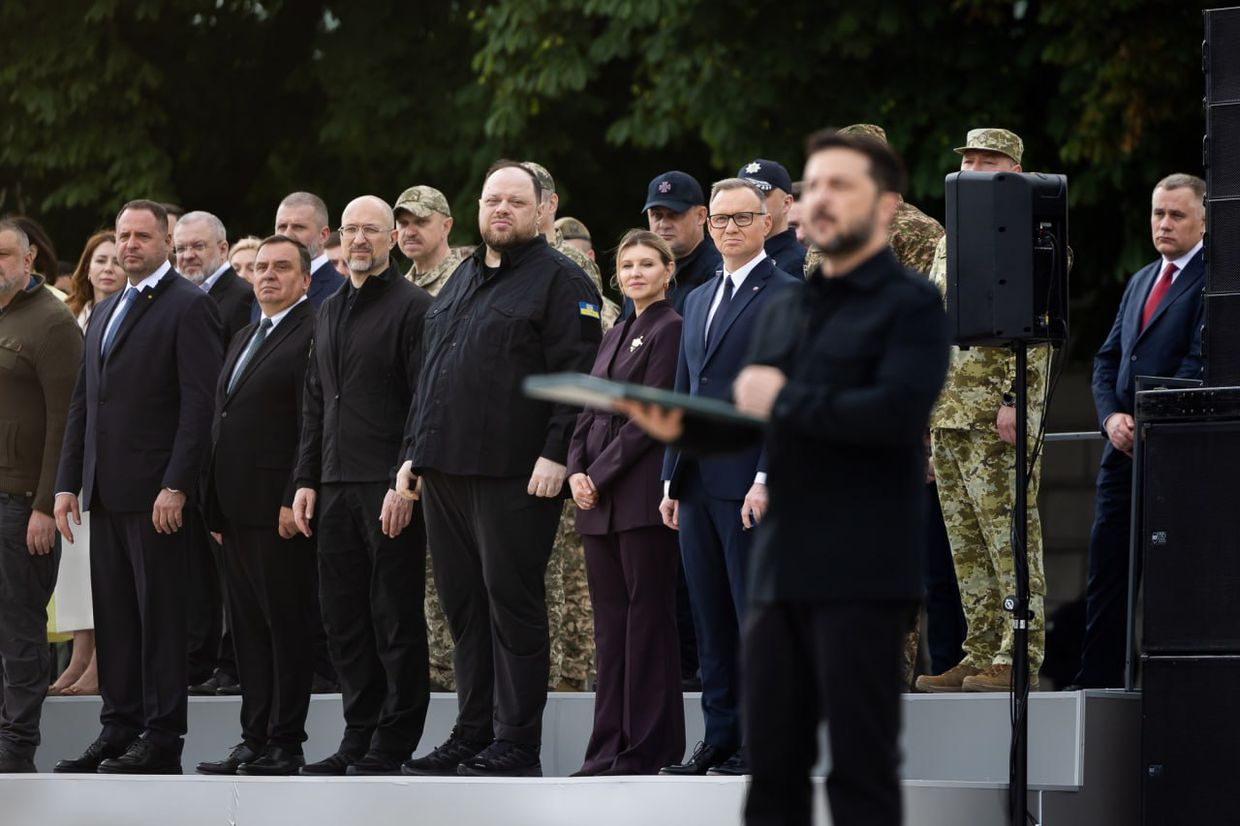
Upon his arrival, Duda joined Zelensky in a wreath-laying ceremony honoring fallen soldiers at an event marking Ukraine’s Constitution Day.
The two leaders discussed the further development of relations between Kyiv and Warsaw at the EU level and in coordination with NATO partners.
President Volodymyr Zelensky, Polish President Andrzej Duda, First Lady Olena Zelenska, and Ukrainian officials are seen during an official event marking Ukraine’s Constitution Day at Sofiyska Square in Kyiv on June 28, 2025. (Volodymyr Zelensky/Telegram)
"In recent months, we have been implementing some fairly substantial Ukrainian-Polish agreements on defense cooperation," the Ukrainian president said.
Zelensky also awarded Duda the Order of Freedom, one of Ukraine’s highest honors.
"Andrzej has been with Ukraine since the first days of the war, always side by side, a reliable ally and a true friend. This is undoubtedly the level of relations we want to preserve and strengthen with Poland," Zelensky said.
Since Russia launched its full-scale invasion in 2022, Poland has emerged as one of Ukraine’s most committed allies, providing weapons, sheltering millions of refugees, and rallying international support.
Russia has lost around 1,017,720 troops in Ukraine since the beginning of its full-scale invasion on Feb. 24, 2022, the General Staff of Ukraine's Armed Forces reported on June 28.The number includes 1,000 casualties that Russian forces suffered just over the past day.According to the report, Russia has also lost 10,970 tanks, 22,908 armored fighting vehicles, 53,415 vehicles and fuel tanks, 29,665 artillery systems, 1,425 multiple launch rocket systems, 1,189 air defense systems, 420 airplanes,
Russia has lost around 1,017,720 troops in Ukraine since the beginning of its full-scale invasion on Feb. 24, 2022, the General Staff of Ukraine's Armed Forces reported on June 28.
The number includes 1,000 casualties that Russian forces suffered just over the past day.
According to the report, Russia has also lost 10,970 tanks, 22,908 armored fighting vehicles, 53,415 vehicles and fuel tanks, 29,665 artillery systems, 1,425 multiple launch rocket systems, 1,189 air defense systems, 420 airplanes, 337 helicopters, 42,477 drones, 28 ships and boats, and one submarine.
Editor's Note: This is a developing story. Russia attacked the southern city of Odesa overnight on June 28, killing two people and injuring at least 14 others, Ukraine's State Emergency Service reported. The drone attack hit a 21-story building, causing a fire on the 7th, 8th, and 9th floors that left residents trapped in their apartments. First responders rescued five people, including a small child.Two people, a married couple, were killed in the attack, Odesa Oblast Governor Oleh Kiper report
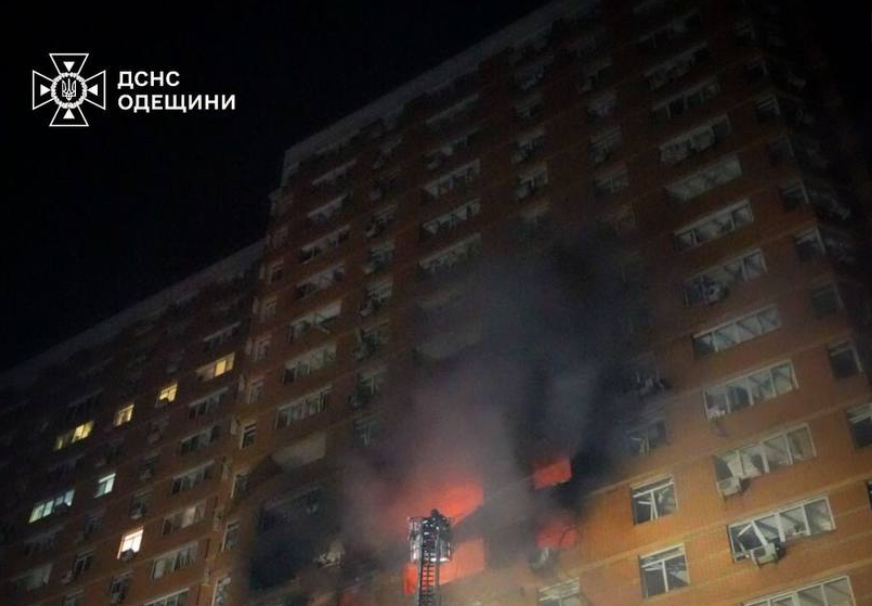
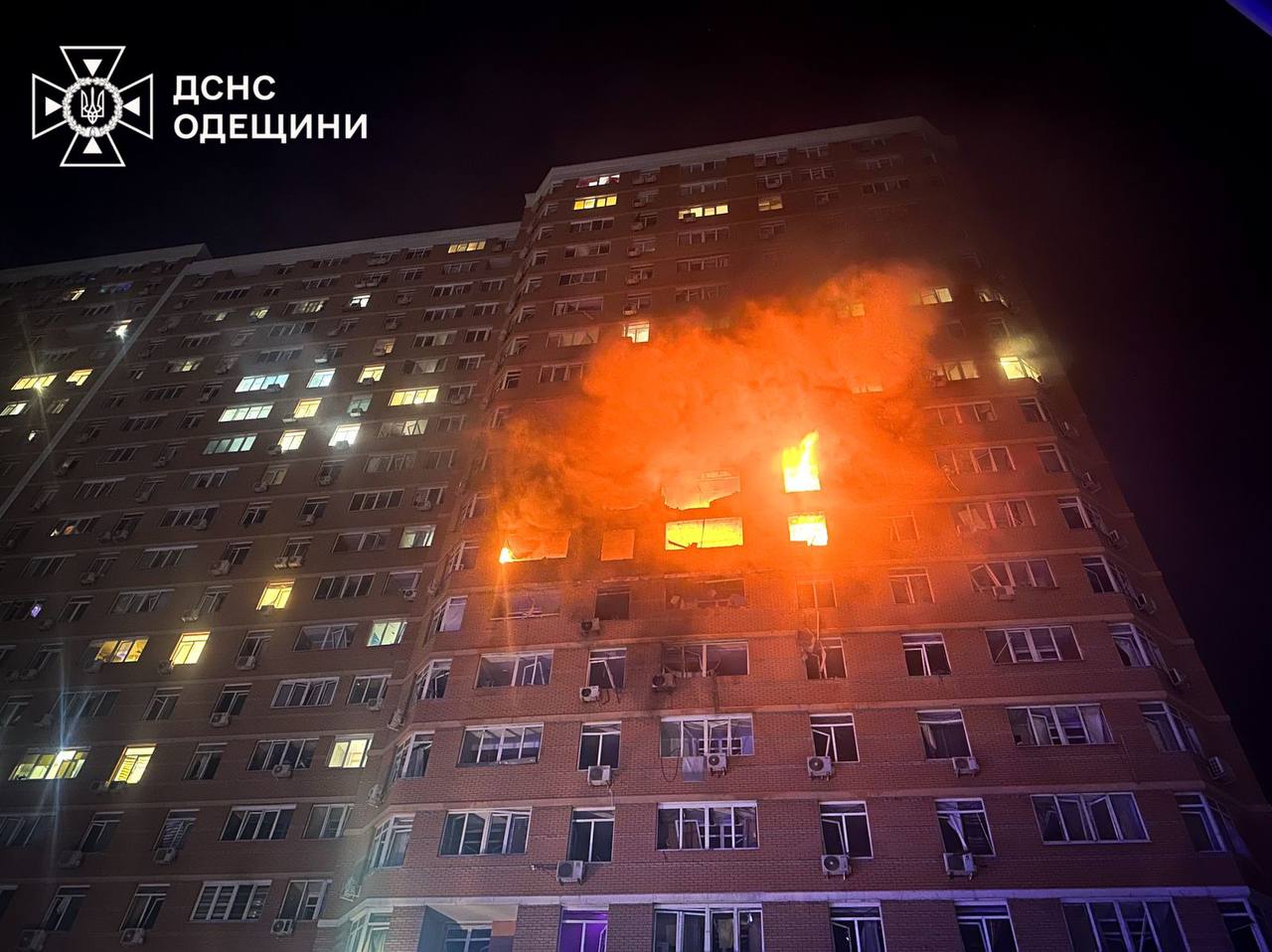
Russia attacked the southern city of Odesa overnight on June 28, killing two people and injuring at least 14 others, Ukraine's State Emergency Service reported.
The drone attack hit a 21-story building, causing a fire on the 7th, 8th, and 9th floors that left residents trapped in their apartments. First responders rescued five people, including a small child.
Two people, a married couple, were killed in the attack, Odesa Oblast Governor Oleh Kiper reported. Emergency workers recovered their bodies from the damaged building.
At least 14 other civilians were injured, including three children. Both are receiving treatment in medical facilities, Kiper said.
Ongoing air raid alarms throughout the night complicated rescue efforts, the State Emergency Service said.
Odesa, a port city on Ukraine's Black Sea coast with a population of around 1 million, has been a frequent target of Russian attacks since the full-scale invasion. A massive Russian drone strike on June 20 killed one civilian and injured 14 others, including three first responders.
Russian missile and drone attacks on Ukrainian cities have intensified dramatically in May and June.
Ukraine provides over 40% of the weapons used to defend the nation's independence against Russia's full-scale invasion, President Volodymyr Zelensky said at the State and Business Forum in Kyiv on June 27. As Ukraine scales up domestic defense production, Zelensky has been lobbying foreign partners to provide funding to help match its manufacturing capacity. The government and Ukrainian businesses now provide more than 40% of the weapons the country uses in its fight against Russia, Zelensky sai
Ukraine provides over 40% of the weapons used to defend the nation's independence against Russia's full-scale invasion, President Volodymyr Zelensky said at the State and Business Forum in Kyiv on June 27.
As Ukraine scales up domestic defense production, Zelensky has been lobbying foreign partners to provide funding to help match its manufacturing capacity.
The government and Ukrainian businesses now provide more than 40% of the weapons the country uses in its fight against Russia, Zelensky said. Business-driven innovations in technology have helped Ukraine on the battlefield, particularly in drone development.
"Thanks to Ukrainian entrepreneurship and all the conditions we have created as a state, a new sector of our domestic manufacturing has emerged and immediately become one of the world’s most advanced — the production of drones of various types," Zelensky said.
"Hundreds of companies are now involved in weapons production in one way or another."
Zelensky's comments come a day after Defense Minister Rustem Umerov reported that Ukrainian companies have increased their industrial capacity in order to produce four million drones a year.
At the NATO summit in The Hague on June 24, Zelensky said Ukraine could potentially produce as many as eight million drones per year, but lacks the financial backing to achieve its full capacity. During the summit, Ukraine signed agreements on joint weapons production with the U.K. and Denmark in an effort to bridge the gap between Kyiv's capacity and current funds.
Ukraine has rapidly developed its drone capabilities since 2022, evolving from modifying commercial aircraft to producing military UAVs, attack drones, and reconnaissance systems at scale.
Pokrovsk remains the "hottest spot" along Ukraine's front lines, with Russia concentrating its largest group of personnel in that direction — a force numbering 111,000 troops, Commander-in-Chief Oleksandr Syrskyi reported on June 27. Russia has for months focused its offensive efforts on the embattled town of Pokrovsk in Donetsk Oblast and has recently been escalating attempts to break through to neighboring Dnipropetrovsk Oblast, a region that has not yet seen combat. Ukraine denied reports tha
Pokrovsk remains the "hottest spot" along Ukraine's front lines, with Russia concentrating its largest group of personnel in that direction — a force numbering 111,000 troops, Commander-in-Chief Oleksandr Syrskyi reported on June 27.
Russia has for months focused its offensive efforts on the embattled town of Pokrovsk in Donetsk Oblast and has recently been escalating attempts to break through to neighboring Dnipropetrovsk Oblast, a region that has not yet seen combat. Ukraine denied reports that Russian forces breached the regional border in May and June.
In May, Syrskyi reported that Ukraine had stabilized the situation in Pokrovsk.
After a working visit to the Pokrovsk sector, Syrskyi on June 27 said that the city is still "the hottest spot along the entire 1,200-kilometer front line" with nearly 50 combat clashes recorded per day. It's also where Russia has concentrated the bulk of its forces in Ukraine.
Russia has amassed "about 111,000 personnel" in the Pokrovsk sector, Syrskyi said, but Ukrainian forces are holding the line.
"The enemy continues to try to break through to the administrative border of Donetsk Oblast ... Russian sabotage and assault groups were particularly active here two weeks ago," Syrskyi said.
"But they were all destroyed or neutralized, and the remnants were pushed back from the administrative border. The situation is under control."
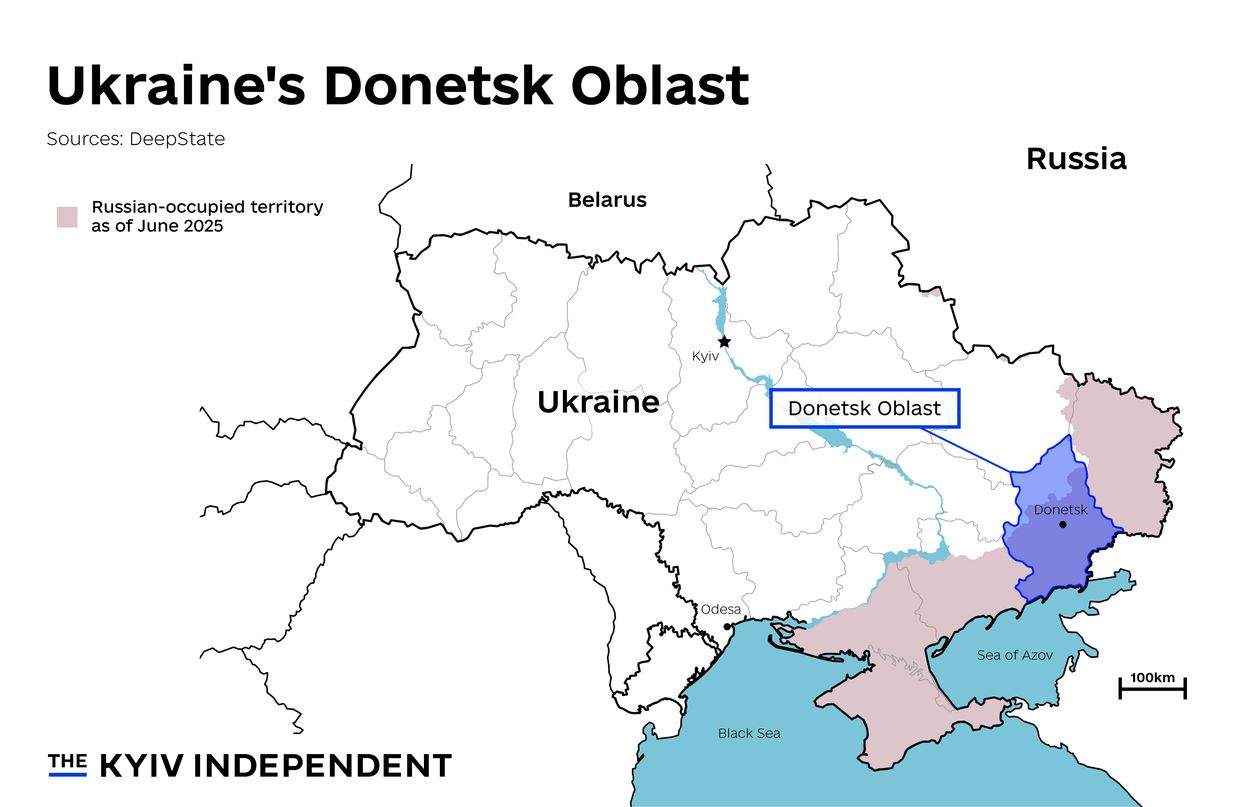
Ukraine's Donetsk Oblast (Nizar al-Rifai/The Kyiv Independent)
Russia is attempting to break into Dnipropetrovsk Oblast not only for operational reasons, but also for performative ones, Syrskyi said.
"To achieve a psychological effect: to put the infamous 'foot of the Russian soldier' there, plant a flag, and trumpet another pseudo-'victory.'"
Syrskyi's comments echo recent remarks by Russian President Vladimir Putin, who claimed in a propaganda-heavy speech on June 20 that "wherever the foot of a Russian soldier steps is Russian land." President Volodymyr Zelensky fired back the next day, promising "Ukrainian drones for the foot of every Russian soldier."
While Putin claimed on June 27 that Moscow is "ready" for a third round of peace talks with Kyiv, the Kremlin has sent no signal that it's ready to abandon its maximalist ambitions in Ukraine.
Russia's so-called "peace memorandum" demands that Ukraine recognize Russia's annexation of Crimea, as well as Kherson, Donetsk, Zaporizhzhia, and Luhansk oblasts — none of which are fully under Moscow's control.
Zelensky's Deputy Chief of Staff Pavlo Palisa said on June 6 that Russia aims to occupy all Ukrainian territory east of the Dnipro River and advance toward Odesa and Mykolaiv in a broader plan to sever Ukraine's access to the Black Sea amid a renewed summer offensive.
President Volodymyr Zelensky signed a decree on June 27 imposing sanctions on 52 Russian citizens as well as an additional 34 Russian companies and one Chinese entity involved in the production of Shahed-type drones and chip manufacturing machinery.Ukraine introduced new restrictions as Russia has escalated drone attacks against Ukrainian cities over the past weeks, launching upwards of 400-500 unmanned aerial vehicles (UAVs) per night.Individuals and legal entities subject to Ukrainian sanction
President Volodymyr Zelensky signed a decree on June 27 imposing sanctions on 52 Russian citizens as well as an additional 34 Russian companies and one Chinese entity involved in the production of Shahed-type drones and chip manufacturing machinery.
Ukraine introduced new restrictions as Russia has escalated drone attacks against Ukrainian cities over the past weeks, launching upwards of 400-500 unmanned aerial vehicles (UAVs) per night.
Individuals and legal entities subject to Ukrainian sanctions cannot do business and trade in Ukraine, cannot withdraw their capital from the country. In the meantime, their assets are blocked, as well as their access to public and defense procurement, and entry into the territory of Ukraine, among other restrictions.
Andrii Yermak, head of the Presidential Office, said on Telegram that the sanction primarily enterprises and individuals collaborating with a Shahed manufacturing facility located in the town of Yelbuga in Russia's Tatarstan.
Russia has launched thousands of cheap but effective Iranian-designed Shahed drones against Ukraine since the fall of 2022. Originally designed in Iran, Russia has since produced its own Shahed-type drones on Russian territory.
Drones have become one of the defining tools of the full-scale war, used extensively by both Ukraine and Russia for surveillance, long-range strikes, and tactical battlefield advantage.
Earlier in the day, Zelensky signeda decree to coordinate sanctions against Russia with international partners, particularly the European Union and the Group of Seven (G7).
Russian President Vladimir Putin claimed on June 27 that Moscow plans to cut its military expenditure beginning next year, in a rebuke of NATO members' plans to increase defense spending to 5% of GDP.Putin's claims will likely be met with harsh skepticism from Western officials as Russia's military spending has continued to increase throughout its ongoing invasion of Ukraine. The Kyiv Independent cannot verify claims made by Putin. The Russian president did not provide any specifics as to how Mo
Russian President Vladimir Putin claimed on June 27 that Moscow plans to cut its military expenditure beginning next year, in a rebuke of NATO members' plans to increase defense spending to 5% of GDP.
Putin's claims will likely be met with harsh skepticism from Western officials as Russia's military spending has continued to increase throughout its ongoing invasion of Ukraine.
The Kyiv Independent cannot verify claims made by Putin. The Russian president did not provide any specifics as to how Moscow plans to cut military spending, but added there has yet to be an agreement between ministries.
"We are planning to reduce defence spending. For us, next year and the year after, over the next three-year period, we are planning for this," Putin told reporters during a visit to Belarus. "Europe is thinking about how to increase its spending, on the contrary. So who is preparing for some kind of aggressive actions? Us or them?" Putin continued.
Putin's comments comes as NATO allies are increasingly concerned about Russia's military capabilities, including future threats to alliance members as well as ongoing sabotage efforts.
On June 25, NATO member states agreed to a new defense spending benchmark, committing to allocate 5% of their GDP annually to defense and security-related expenditures by 2035.
The decision comes as NATO allies increasingly believe Russia could rebuild sufficient military capacity to challenge the alliance within five years, with NATO Secretary General Mark Rutte warning that allies must act urgently to prepare for future threats.
"We see Russia's deadly terror from the skies over Ukraine every day. We must be able to defend ourselves from such attacks," Rutte said during a press briefing on June 23. "Our security environment has changed, and not for the better. The threats we face today demand that we do far more," he added.
Various European intelligence agencies as well as officials have increasingly delivered dire warnings about the threat emanating from Russia and Europe's current lack of preparedness. German intelligence chief Bruno Kahl told a parliamentary hearing in October that Russia will have the military capabilities to be able to attack NATO by 2030.
In 2024, Russia’s military spending surpassed the combined defense budgets of all European nations. Russia’s total defense expenditures surged by 42% in real terms amounting to $462 billion, according to the data by the International Institute for Strategic Studies (IISS).
By comparison, total defense spending across Europe, including the U.K. and EU member states, increased by nearly 12% last year to $457 billion, slightly trailing Moscow’s budget.
The Moscow Times reported in December that the Kremlin had spentan unprecedented $43 billion in the third quarter of 2024 alone.
Russia is ready to hold a third round of peace talks on the war in Ukraine, Russian President Vladimir Putin told reporters on June 27, without specifying if he would directly participate in the negotiations."In general, we are ready for this (next round of peace talks), we need to coordinate the place and time," Putin said.Putin added that the talks could potentially be held in Istanbul but the details have not yet been worked out. He added that another round of talks may bring peace closer as
Russia is ready to hold a third round of peace talks on the war in Ukraine, Russian President Vladimir Putin told reporters on June 27, without specifying if he would directly participate in the negotiations.
"In general, we are ready for this (next round of peace talks), we need to coordinate the place and time," Putin said.
Putin added that the talks could potentially be held in Istanbul but the details have not yet been worked out. He added that another round of talks may bring peace closer as the terms for peace outlined in the countries' peace memorandumsremain "absolutely opposite."
The latest peace talks between Russia and Ukraine took place on June 2 in Istanbul, following an earlier meeting on May 16. Despite Ukraine's insistence on a 30-day ceasefire, Russiahas repeatedly rejected the offer, proposing only a temporary 2–3-day truce in limited areas to retrieve the bodies of fallen soldiers.
While no agreement on a comprehensive ceasefire has been reached, talks have led to a few major prisoner exchanges, including a 1,000-for-1,000 swap that took place in late May and a follow-up deal for up to 1,200 prisoners from each side.
Defense Minister Rustem Umerov said during a press briefing on June 26 that it was Ukraine's goal to organize a direct meeting between President Volodymyr Zelensky and Putin during the next round of negotiation.
In previous rounds, Putin had failed to show in-person sending lower-level officials to the meeting instead — despite Zelensky's willingness for in-person talks as well pressure from the United States.
On June 26, Turkish President Recep Tayyip Erdogan said Ankara is workingto organize a meeting between Zelensky and Putin, with U.S. President Donald Trump potentially joining the talks.
Putin said on June 27 that it was "quite possible" that a meeting between himself and the U.S. president could take place. "We will be happy to prepare it," he briefly added.
Zelensky and Trump met during the NATO summit on June 25, where the two leaders discussed battlefield developments, Kyiv's need for additionalair defense systems, and the potential for co-production of drones.
Zelensky has previously voiced openness to a trilateral meeting. On May 27, he told public broadcaster Suspilne that he was ready to sit down with both Trump and Putin.
Turkey previously hosted direct peace talks in March 2022 and has remained one of the few countries with open lines to both Kyiv and Moscow.
Ukrainian companies have increased their industrial capacity to produce four million drones a year, Defense Minister Rustem Umerov said at a June 26 press briefing.The statement comes as Ukraine seeks to increase domestic arms production amid uncertainty over further U.S. support and reduced dependence on supplies from European partners.Ukrainian manufacturers will supply four million drones to the front line this year, while the Ukrainian army has already received up to 1.5 million drones as of
Ukrainian companies have increased their industrial capacity to produce four million drones a year, Defense Minister Rustem Umerov said at a June 26 press briefing.
The statement comes as Ukraine seeks to increase domestic arms production amid uncertainty over further U.S. support and reduced dependence on supplies from European partners.
Ukrainian manufacturers will supply four million drones to the front line this year, while the Ukrainian army has already received up to 1.5 million drones as of the end of June, according to Umerov.
The minister said that brigades made many requests for direct funding last year, with a commitment secured for 2025. The government is currently allocating Hr 2.5 billion ($60 million) per month for direct procurement teams, he added.
In the meantime, Umerov said that not all brigades spend money due to a lack of procurement specialists, so the Defense Procurement Agency (DPA) launched the DOT Chain Defense marketplace for Ukrainian soldiers
"The teams see a 'marketplace' of drones: each team orders what it needs, and the healthcare organization pays for it. This way we significantly reduce all the bureaucracy, and the teams get what they need ten times faster," Umerov said.
Russian drone strikes across Ukraine have been breaking records in recent weeks, with nearly 500 drones and missiles launched overnights.
Since the start of Russia’s full-scale invasion, Ukraine has focused heavily on developing and deploying advanced unmanned systems. As of April 2025, more than 95% of drones used by Ukrainian forces on the front line are domestically produced.
Both Ukraine and Russia have increasingly relied on drone warfare, employing aerial, naval, and ground-based drones for reconnaissance and combat operations – making technological innovation a critical component of the war.
Ukrainian drones struck four Su-34 fighter jets at the Marinovka airfield in Russia's Volgograd Oblast overnight on June 27, Ukraine's General Staff said. The operation was carried out by the Special Forces and the Security Service of Ukraine (SBU) in cooperation with other military units, according to the General Staff. Volgograd Oblast is located some 900 kilometers (560 miles) southeast of Moscow.According to preliminary data, two Russian fighter jets were destroyed, and the other two were da
Ukrainian drones struck four Su-34 fighter jets at the Marinovka airfield in Russia's Volgograd Oblast overnight on June 27, Ukraine's General Staff said.
The operation was carried out by the Special Forces and the Security Service of Ukraine (SBU) in cooperation with other military units, according to the General Staff.
Volgograd Oblast is located some 900 kilometers (560 miles) southeast of Moscow.
According to preliminary data, two Russian fighter jets were destroyed, and the other two were damaged. Russia uses such aircraft to bomb Ukraine, particularly to drop guided aerial bombs, the General Staff said.
The attack also caused a fire in the airfield's technical and operational unit, a facility where combat aircraft are serviced and repaired, according to the General Staff.
The Kyiv Independent could not independently verify these claims.
As Russia intensifies aerial attacks on Ukraine and the civilian death toll climbs, Ukraine has stepped up its drone attacks on Russian territory. The recent surge in drone strikes aims to disrupt airport operations, overwhelm air defenses, and mount pressure against the Russian population.
Russian forces struck a critical energy facility in Kherson Oblast, causing widespread power outages across several communities, Governor Oleksandr Prokudin said on June 27."Russia decided to plunge Kherson Oblast into darkness," Prokudin wrote on Telegram. He said the attack has disrupted electricity supply to multiple settlements.Local power engineers are working to stabilize the situation, Prokudin said. "I ask the residents of the region to prepare for a prolonged power outage. Power enginee
Russian forces struck a critical energy facility in Kherson Oblast, causing widespread power outages across several communities, Governor Oleksandr Prokudin said on June 27.
"Russia decided to plunge Kherson Oblast into darkness," Prokudin wrote on Telegram. He said the attack has disrupted electricity supply to multiple settlements.
Local power engineers are working to stabilize the situation, Prokudin said.
"I ask the residents of the region to prepare for a prolonged power outage. Power engineers are doing everything possible to stabilize the situation," he said.
Kherson and the surrounding regions have frequently come under Russian fire since Ukrainian forces liberated the city from occupation in November 2022. Russian troops continue to attack the area with artillery and drones from across the Dnipro River.
The Russian army consistently targeted Ukrainian energy infrastructure. Throughout 2024, Moscow launched 13 mass attacks with drones and missiles on Ukraine's energy infrastructure. Ukraine was forced to introduce emergency blackouts across the country.
Ukraine and Russia agreed to a partial 30-day energy truce, following consultations with the U.S. in Riyadh on March 25. Moscow violated the ceasefire more than 30 times, Foreign Ministry Spokesperson Heorhii Tykhyi said on April 16.
Ukraine's one-year military contract for volunteers aged 18 to 24 is proving effective on the battlefield, Defense Minister Rustem Umerov said at a June 26 press briefing, citing fresh reports from commanders across the front line.Umerov said units made up of young contract soldiers had shown "resilience, professionalism, and confident actions in combat," challenging early skepticism about the new recruitment model."We saw them on the battlefield — and it's truly motivating."The contract, launch
Ukraine's one-year military contract for volunteers aged 18 to 24 is proving effective on the battlefield, Defense Minister Rustem Umerov said at a June 26 press briefing, citing fresh reports from commanders across the front line.
Umerov said units made up of young contract soldiers had shown "resilience, professionalism, and confident actions in combat," challenging early skepticism about the new recruitment model.
"We saw them on the battlefield — and it's truly motivating."
The contract, launched in February, offers substantial benefits to young volunteers. It includes basic general military training, vocational training, and an adaptation course in an army unit. Volunteers will receive a one-time monetary aid payment of Hr 1 million ($24,000) and a monthly allowance of up to Hr 120,000 ($3,000).
The campaign initially faced backlash from some front-line troops and activists, who argued it created unfair disparities in pay and support. Now, the initiative is being credited with improving performance in specific units, Umerov said, citing internal military assessments received by the ministry two weeks ago.
Umerov, however, hasn't shared the number of soldiers recruited through the campaign.
The campaign is under constant evaluation based on financial, personnel, and training metrics. Umerov said the Defense Ministry is working to enhance the motivational package further, using data and feedback from participants and focus groups.
Despite pressure from international partners, particularly the United States, to lower Ukraine’s mobilization age from 25 to 18, service for those aged 18–24 remains voluntary. President Volodymyr Zelensky has consistently rejected compulsory mobilization starting at 18, warning that it could damage Ukraine's long-term future.
In a recent interview, Zelensky said Ukraine's Western allies have at times withheld new sanctions on Russia over Kyiv's refusal to lower the draft age. He stressed that the "weapons and technology," rather than raw manpower, were more decisive on the battlefield.
Ukraine faces personnel challenges as Russian forces continue to press along the front line. While a mobilization reform law lowered the draft age from 27 to 25 in 2024, the pace of new enlistment has slowed, leaving infantry units understaffed.
"The younger generation is a powerful human resource that deserves support and development," Umerov said.
Editor's note: This is a developing story and is being updated.A Russian missile strike on the city of Samar in Ukraine's Dnipropetrovsk Oblast on June 27 killed five people and injured at least 25 others, Governor Serhii Lysak said.In a statement posted to Telegram, Lysak said most of the injured were hospitalized. Four of the victims are in serious condition, while the others sustained moderate injuries. A fire broke out following the strike, and emergency services are continuing to work at th
Editor's note: This is a developing story and is being updated.
A Russian missile strike on the city of Samar in Ukraine's Dnipropetrovsk Oblast on June 27 killed five people and injured at least 25 others, Governor Serhii Lysak said.
In a statement posted to Telegram, Lysak said most of the injured were hospitalized. Four of the victims are in serious condition, while the others sustained moderate injuries. A fire broke out following the strike, and emergency services are continuing to work at the site.
"We're doing everything possible to assist those affected," Lysak said.
The attack comes just days after Russia launched one of the deadliest assaults on Dnipropetrovsk Oblast. On June 24, missiles struck multiple locations in the regional capital of Dnipro and in the oblast, killing at least 21 people and injuring over 300 others.
The strike hit civilian infrastructure, a dormitory, a gymnasium, and a train traveling from Odesa to Zaporizhzhia, as well as the nearby town of Samarske. Two people were killed and 14 others wounded there. At least 100 victims of the Dnipro attack remain hospitalized, Lysak said.
At least two civilians were killed and 13 were injured in Russian drone and missile attacks across Ukraine over the past day, local officials reported on June 27.According to Ukraine's Air Force, Ukrainian air defense intercepted 365 of 371 incoming Russian air weapons, including 363 Shahed-type drones, two Kinzhal ballistic missiles, and six Kalibr cruise missiles.In Kharkiv Oblast, Governor Oleh Syniehubov said one person was killed and four were wounded in Vovchanski Khutory and Pidlyman duri
At least two civilians were killed and 13 were injured in Russian drone and missile attacks across Ukraine over the past day, local officials reported on June 27.
According to Ukraine's Air Force, Ukrainian air defense intercepted 365 of 371 incoming Russian air weapons, including 363 Shahed-type drones, two Kinzhal ballistic missiles, and six Kalibr cruise missiles.
In Kharkiv Oblast, Governor Oleh Syniehubov said one person was killed and four were wounded in Vovchanski Khutory and Pidlyman during a Russian attack. Infrastructure damage included houses and an agricultural facility. The region also endured heavy shelling.
In Donetsk Oblast, Governor Vadym Filashkin reported one death, while three people were injured across Pokrovsk, Kramatorsk, and Bakhmut districts. Damage was observed to houses, a farm, administrative buildings, gas pipelines, and vehicles.
In Kherson Oblast, Governor Oleksandr Prokudin said four people were injured as Russian drones and artillery struck social and residential infrastructure. Seven apartment buildings and 25 houses were damaged, along with utilities and vehicles.
In Zaporizhzhia Oblast, Governor Ivan Fedorov said one person was injured when an air-dropped bomb hit a settlement in the Huliaipole district.
In Kyiv Oblast, a person was injured near Fastiv during an overnight drone and missile attack. One house was damaged each in Boryspil and Fastiv districts, while a tire repair shop and five cars were hit in Bila Tserkva. No critical infrastructure was reportedly affected, and air defense forces shot down Russian drones and missiles.
North Korea has already deployed around 11,000 elite troops to support Russia's war against Ukraine, accounting for more than 20% of North Korean leader Kim Jong Un's elite "personal reserve" force, Defense Minister Rustem Umerov said during a June 26 press briefing."These are soldiers specially selected based on physical, psychological, and other criteria," Umerov said. "These units have already suffered significant losses."Umerov said intelligence indicates North Korea had considered sending a
North Korea has already deployed around 11,000 elite troops to support Russia's war against Ukraine, accounting for more than 20% of North Korean leader Kim Jong Un's elite "personal reserve" force, Defense Minister Rustem Umerov said during a June 26 press briefing.
"These are soldiers specially selected based on physical, psychological, and other criteria," Umerov said. "These units have already suffered significant losses."
Umerov said intelligence indicates North Korea had considered sending additional forces to fight with Russia. However, according to Umerov, the move would further deplete its strategic reserves and increase risks to regime stability. There have been four known rotations of North Korean units deployed against Ukraine, according to Umerov.
According to a June 15 report from the United Kingdom's defense intelligence, North Korea has likely sustained more than 6,000 casualties in Russia since the deployment of troops to Kursk Oblast in fall 2024.
U.K. intelligence attributed the high casualty rate to large, highly attritional dismounted assaults.
Russia's growing military partnership with North Korea has raised concerns in Kyiv and among its allies. The two countries signed a Comprehensive Strategic Partnership Agreement in 2024. The treaty commits both countries to provide assistance if either is attacked.
Kim previously described the pact as having a "peaceful and defensive nature," framing it as a formal security guarantee between the longtime partners.
In practice, Umerov said, North Korea is bearing the military burden, while Russia has not upheld its reciprocal obligations, raising concerns within the North Korean regime.
"Russia's use of elite North Korean troops demonstrates not only a growing reliance on totalitarian regimes but also serious problems with its mobilization reserve," Umerov said. "Together with our partners, we are monitoring these threats and will respond accordingly."
Umerov added that Ukraine, working in coordination with its Western partners, is closely tracking the movement and deployment of North Korean units deployed to fight against Ukraine. He said Russia's dependence on foreign forces may signal critical shortages in its own recruitment and mobilization efforts.
According to South Korea's National Intelligence Service, North Korea is likely to send more troops to Russia over the summer. Pyongyang may also send up to 25,000 laborers to Russia to support drone production, according to the report.
The additional troop deployment would come on top of what Seoul estimates is already substantial support from North Korea, which includes the shipment of over 10 million artillery shells and ballistic missiles in exchange for economic and technical assistance from Moscow.
Ukraine's next goal in ongoing negotiations with Russia is to organize a direct meeting between President Volodymyr Zelensky and Russian President Vladimir Putin, Defense Minister Rustem Umerov said during a press briefing on June 26.Speaking to journalists in Kyiv, Umerov, who was part of Ukrainian peace talks delegation, outlined a multi-stage negotiation process that began in January with an initiative from U.S. President Donald Trump. Umerov stressed that Ukraine welcomed the idea of a cease
Ukraine's next goal in ongoing negotiations with Russia is to organize a direct meeting between President Volodymyr Zelensky and Russian President Vladimir Putin, Defense Minister Rustem Umerov said during a press briefing on June 26.
Speaking to journalists in Kyiv, Umerov, who was part of Ukrainian peace talks delegation, outlined a multi-stage negotiation process that began in January with an initiative from U.S. President Donald Trump. Umerov stressed that Ukraine welcomed the idea of a ceasefire from the outset and remains fully committed to a just peace.
"Ukraine has always remained consistent in its pursuit of peace," Umerov said. "We supported the U.S. initiative for a full ceasefire from the very beginning and demonstrated our commitment through multiple rounds of negotiations. But any dialogue must take place without ultimatums and with full respect for our country's sovereignty."
The talks unfolded in several rounds in Jeddah, Riyadh, Paris, London, and Istanbul. During the second round of negotiations in Riyadh, Ukraine communicated with Russia indirectly, through U.S. mediators. In Turkey, U.S. mediators were excluded from talks due to Russia's request, according to Umerov.
"President Zelensky's proposal to meet with Putin is aimed at showing Donald Trump that Moscow is not truly seeking peace," Mykola Kniazhytzkyi, a Ukrainian lawmaker from the European Solidarity party, told the Kyiv Independent.
"Its real goal is the destruction of Ukrainian statehood and the genocide of the Ukrainian people."
Oleksandr Merezhko, a lawmaker from Zelensky’s party and chair of the parliament's foreign affairs committee, called the proposal for a bilateral high-level meeting "an interesting political step." He said it is a logical move since "Putin decides everything in Russia."
However, the MP questioned the overall advisability of a direct meeting between Zelensky and Putin.
"It seems to me that it would be better to conduct such negotiations in a format involving not only Zelensky, but also the United States and the European Union," Merezhko said, adding that European leaders could help build a "balance of power," given the risk that the U.S. might potentially lean toward Russia.
He said that talks between the leaders should take place after the ceasefire, at least a temporary one, is in place.
"For them (Russia), negotiations are a tool of war. They have never conducted them in good faith and will never do this. In general, there is no need for negotiations, there is a need for pressure (from the West)," Merezhko said.
Umerov said Ukraine had accepted a U.S.-proposed full ceasefire across land, sea, and air in early March, but Russia has rejected the proposal.
While no agreement on a comprehensive ceasefire has been reached, talks have led to a few major prisoner exchanges, including a 1,000-for-1,000 swap that took place in late May and a follow-up deal for up to 1,200 prisoners from each side.
Umerov said the focus of recent negotiations has included humanitarian issues such as the release of civilians and children, as well as conditions for a meeting of Ukrainian and Russian leaders. He emphasized that the next stage must include top-level dialogue.
"After completing discussions on humanitarian issues, Ukraine plans to move forward to the topic of a leaders' summit for substantive dialogue," he said.
The latest peace talks between Russia and Ukraine took place on June 2 in Istanbul, following an earlier meeting on May 16. Both times, the Ukrainian delegation was led by Umerov. Despite Ukraine's insistence on a 30-day ceasefire, Russia proposed only a temporary 2–3-day truce in limited areas to retrieve the bodies of fallen soldiers. Umerov called this offer "insufficient" and accused Moscow of avoiding meaningful peace.
"Russia rejects even the very idea of stopping the killings," Umerov said following the June 2 talks. "That's why we appeal to the world: pressure is needed for real peace, not for an imitation of negotiations."
Zelensky has also criticized Moscow's limited ceasefire offers and called on Trump to follow through on promised sanctions if talks remain fruitless. Trump has repeatedly suggested that he is monitoring the peace process closely and warned that the U.S. response could change if Putin is not prepared to end the war.
No further U.S. sanctions were imposed after more than 100 days of Moscow's refusal to the proposed ceasefire.
A Chinese journalist was reportedly injured in a drone strike near Russia's border with Ukraine in Kursk Oblast, acting governor Alexander Khinshtein said on June 27.According to Khinshtein, 63-year-old reporter Lu Yuguang from the Chinese television network Phoenix TV was wounded in a Ukrainian drone strike on the village of Korenevo in Russia's Kursk Oblast. He sustained an open head injury and a contusion on the parietal region of his skull, but later declined hospitalization after being exam
A Chinese journalist was reportedly injured in a drone strike near Russia's border with Ukraine in Kursk Oblast, acting governor Alexander Khinshtein said on June 27.
According to Khinshtein, 63-year-old reporter Lu Yuguang from the Chinese television network Phoenix TV was wounded in a Ukrainian drone strike on the village of Korenevo in Russia's Kursk Oblast. He sustained an open head injury and a contusion on the parietal region of his skull, but later declined hospitalization after being examined at a regional hospital, Khinshtein wrote on Telegram.
"Fortunately, the journalist received skin wounds on the head. No other damage was found," the governor said, adding, "Please refrain from traveling to the border area, it can be dangerous."
If confirmed, this would be the first publicly reported case of a Chinese journalist being injured in Russia's Kursk Oblast as a result of cross-border drone strikes amid Moscow's full-scale war against Ukraine. The Kyiv Independent could not independently verify the claims.
Ukrainian forces launched a cross-border incursion into Russia's Kursk Oblast in August 2024, marking the first large-scale invasion of Russian territory by foreign troops since World War II. The move was intended to disrupt a planned Russian offensive targeting Ukraine's Sumy Oblast and to relieve pressure on the Donetsk front.
Since then, Ukraine claims it has inflicted 63,402 Russian troop casualties in the oblast, including 25,625 killed and 971 captured. Ukrainian forces also say they have destroyed or damaged over 5,664 pieces of Russian military equipment in the area.
Russia retook most of the lost territory during a renewed offensive in March 2025, supported by North Korean troops.
Russia has lost 1,016,720 troops in Ukraine since the beginning of its full-scale invasion on Feb. 24, 2022, the General Staff of Ukraine's Armed Forces reported on June 27.The number includes 970 casualties that Russian forces suffered just over the past day.These are the indicative estimates of Russia’s combat losses as of June 27, 2025, according to the Armed Forces of Ukraine.According to the report, Russia has also lost 10,969 tanks, 22,896 armored fighting vehicles, 53,284 vehicles and fue
Russia has lost 1,016,720 troops in Ukraine since the beginning of its full-scale invasion on Feb. 24, 2022, the General Staff of Ukraine's Armed Forces reported on June 27.
The number includes 970 casualties that Russian forces suffered just over the past day.
These are the indicative estimates of Russia’s combat losses as of June 27, 2025, according to the Armed Forces of Ukraine.
According to the report, Russia has also lost 10,969 tanks, 22,896 armored fighting vehicles, 53,284 vehicles and fuel tanks, 29,630 artillery systems, 1,425 multiple launch rocket systems, 1,188 air defense systems, 416 airplanes, 337 helicopters, 42,240 drones, 3,388 cruise missiles, 28 ships and boats, and one submarine.
Short-range drone attacks have become one of the deadliest threats to civilians in Ukraine’s front-line regions, killing at least 395 people and injuring 2,635 between February 2022 and April 2025, according to a new bulletin by the UN Human Rights Monitoring Mission in Ukraine. The report, "Deadly Drones: Civilians at Risk from Short-Range Drones in Frontline Areas of Ukraine," highlights the growing use of first-person-view (FPV) drones by Russian forces and their devastating impact on the civ
Short-range drone attacks have become one of the deadliest threats to civilians in Ukraine’s front-line regions, killing at least 395 people and injuring 2,635 between February 2022 and April 2025, according to a new bulletin by the UN Human Rights Monitoring Mission in Ukraine.
The report, "Deadly Drones: Civilians at Risk from Short-Range Drones in Frontline Areas of Ukraine," highlights the growing use of first-person-view (FPV) drones by Russian forces and their devastating impact on the civilian population.
The bulletin documents attacks in which drone operators deliberately targeted civilians engaging in daily activities — driving private cars, riding bicycles, walking outdoors, or evacuating others in clearly marked ambulances.
"Although individually less destructive than artillery or missiles, the sheer scale and increasing frequency of short-range drone attacks have made them one of the deadliest weapons in Ukraine," said Danielle Bell, head of the mission. "Over 3,000 civilian casualties — and the relentless frequency of these attacks — have not only caused immense human suffering but also instilled fear, severely disrupted daily life, and crippled access to essential services in several frontline communities."
The monitoring mission documented, verified, and analyzed 3,030 civilian casualties resulting from short-range drones between 24 February 2022 and 30 April 2025. The researchers conducted site visits to very high-risk areas, including the southern city of Kherson, Zolochiv in Kharkiv Oblast, and other front-line locations. Investigators interviewed survivors and witnesses of drone attacks, medical personnel, and humanitarian workers to assess the full impact of these strikes on civilian life.
Ukraine's Kherson Oblast (Nizar al-Rifai/The Kyiv Independent)
Casualties surged in late 2023 and early 2024, with numbers suddenly doubling in July 2024. April 2025 marked the deadliest month on record, with 42 civilians killed and 283 injured. Drone strikes continued into May and June.
On 23 June, a 65-year-old driver was killed in Kostiantynivka, Donetsk Oblast, when a drone struck a minibus. In Kharkiv region, a 58-year-old volunteer was killed on 22 May when a drone dropped a munition on a residential balcony. On 20 May, six civilians were injured when a drone hit a bus in Kherson Oblast.
The vast majority of casualties — 89% — occurred in territory controlled by the Ukrainian government. The UN says these attacks violate international humanitarian law, particularly the principles of distinction and precaution, and may in some cases constitute war crimes.
Russia is using financial incentives to recruit teachers, cultural workers, and coaches to work in occupied parts of Ukraine in a campaign aimed at reshaping local identity and fostering loyalty to Moscow’s regime, according to a report published by the Center for European Policy Analysis (CEPA) on June 26. The Kremlin is offering up to two million rubles (around $22,000) to Russian teachers who agree to work for five years in occupied areas of Donetsk, Luhansk, Zaporizhzhia, and Kherson oblasts
Russia is using financial incentives to recruit teachers, cultural workers, and coaches to work in occupied parts of Ukraine in a campaign aimed at reshaping local identity and fostering loyalty to Moscow’s regime, according to a report published by the Center for European Policy Analysis (CEPA) on June 26.
The Kremlin is offering up to two million rubles (around $22,000) to Russian teachers who agree to work for five years in occupied areas of Donetsk, Luhansk, Zaporizhzhia, and Kherson oblasts, and one million rubles for positions in Crimea.
The initiative, an extension of Russia’s “Zemskyi Uchitel” (Rural Teacher) program, which originally targeted underserved regions in Russia, was formally launched in the newly occupied Ukrainian territories in 2024 — though Russian educators began arriving as early as 2022.
Over 100 teachers have relocated to Crimea through the program, according to Ukraine’s Regional Center for Human Rights/ Most of them arrived from regions including Krasnodar, Altai Krai, Tomsk, Novosibirsk, Saratov, Tyumen, Ivanovo, and the Republic of Udmurtia.
“We have documented cases of teachers — and people assigned to managerial roles, such as school principals and deputy heads — arriving as early as 2022,” said Kateryna Rashevska of Ukraine’s Regional Center for Human Rights. “The first group came from Dagestan, arriving in the occupied Zaporizhzhia region, and by 2024, there were already 37 teachers from Dagestan working there.”
According to Rashevska, these teachers often lead courses in Russian language, history, and “basics of life safety and defense of the Motherland” — classes focused on conscription and military training. “These people are also involved in reprogramming Ukrainian children, attempting to raise them as Russian patriots and future members of the Russian armed forces,” she added.
In parallel, Russia is also exerting pressure on Ukrainian teachers in occupied areas to adopt the Russian curriculum. Those who refuse face serious consequences. "In Berdiansk, a school principal was deported for refusing to open the school under Russian standards," said Mariia Sulialina, head of Ukrainian NGO Almenda. Sulialina noted that teachers are now required to praise President Vladimir Putin and report "extremist behavior" among students — often defined as pro-Ukrainian views.
Human rights experts say these efforts amount to colonization and are violations of international law, including Article 49 of the Geneva Convention and Article 8 of the Rome Statute.
“Russia plans to move another 100 teachers into occupied areas in 2025 — a clear example of colonization,” Rashevska said. Despite existing legal tools, she added, “The International Criminal Court still doesn’t prioritize colonization… even though these federally coordinated programs involving teachers, cultural workers, and coaches create a clear chain of command.”
U.S. President Donald Trump promised during the NATO summit in The Hague that Russia would never attack the alliance while he is in office, the Washington Post reported on June 26, citing three unnamed European officials.Speaking at a briefing in The Hague a day earlier, Trump, however, did not rule out that Russia has territorial ambitions beyond Ukraine."It's possible," he said. Still, the U.S. president immediately downplayed Moscow's threat and aggression against Ukraine, saying Russian Pres
U.S. President Donald Trump promised during the NATO summit in The Hague that Russia would never attack the alliance while he is in office, the Washington Post reported on June 26, citing three unnamed European officials.
Speaking at a briefing in The Hague a day earlier, Trump, however, did not rule out that Russia has territorial ambitions beyond Ukraine.
"It's possible," he said.
Still, the U.S. president immediately downplayed Moscow's threat and aggression against Ukraine, saying Russian President Vladimir Putin was "misguided."
Trump's remarks came days after President Volodymyr Zelensky said that Ukraine's intelligence has proof that Russia is preparing new military operations in Europe and just a week after Putin declared "all of Ukraine is ours."
During the summit, NATO Secretary General Mark Rutte called on alliance members to be realistic about the threats posed by Russia and China. Previously, he warned that Russia could be ready to launch an attack against the alliance within five years.
Amid rising threats from Russia, NATO member states have agreed to a new defense spending benchmark, committing to allocate 5% of their gross domestic product annually to defense and security-related expenditures by 2035.
In early June, German intelligence chief Bruno Kahl said Russia may try to test NATO’s unity with provocations beyond Ukraine, as some Russian officials believe that the alliance's collective defense principle no longer works.
More than 20,000 Russian soldiers have been prosecuted for refusing to fight in Ukraine, a Russian independent media outlet Mediazona reported on June 26, citing online data from military courts.As of late May, Mediazona had documented 20,538 such cases since September 2022 (when the Kremlin announced a first wave of partial mobilization) compared to 10,025 cases reported as of June 2024.Of these, 18,159 were cases of soldiers going AWOL, 1,369 cases of failure to comply with an order, and 1,010
More than 20,000 Russian soldiers have been prosecuted for refusing to fight in Ukraine, a Russian independent media outlet Mediazona reported on June 26, citing online data from military courts.
As of late May, Mediazona had documented 20,538 such cases since September 2022 (when the Kremlin announced a first wave of partial mobilization) compared to 10,025 cases reported as of June 2024.
Of these, 18,159 were cases of soldiers going AWOL, 1,369 cases of failure to comply with an order, and 1,010 cases of desertion.
According to Mediazona, 17,721 of the accused have already been sentenced.
The Insider reported that Moscow uses a systematic program of "gulag-style" abuse directed at its soldiers in Ukraine in order to "maintain order" and punish perceived offenders.
Reports of Russian soldiers being abused by commanders and fellow troops have emerged since the full-scale war against Ukraine began.
Moscow has only intensified its war effort despite calls by Kyiv, the U.S., and European partners for an unconditional ceasefire as a first step toward a peace deal.
According to President Volodymyr Zelensky, Russia recruits around 40,000-45,000 men for its military every month.
Although Russia did go through phases of mobilization and has made great use of its prison population, most new recruits have for a while been volunteer contract soldiers, lured in by one-time signup bonuses often more than several years' average salary in poorer regions of Russia.
In late 2024, Russian President Vladimir Putin signed a decree to increase the size of Russia's Armed Forces to about 2.4 million, including 1.5 million military personnel.
Ukraine has brought home a group of soldiers released from Russian captivity, President Volodymyr Zelensky said on June 26, marking yet another in a recent series of exchanges with Moscow."Today, soldiers of the Armed Forces, the National Guard, and the State Border Guard Service are returning home," Zelensky said without revealing their numbers.The exchange follows six similar swaps carried out in recent weeks in accordance with agreements reached between Kyiv and Moscow at the second round of
Ukraine has brought home a group of soldiers released from Russian captivity, President Volodymyr Zelensky said on June 26, marking yet another in a recent series of exchanges with Moscow.
"Today, soldiers of the Armed Forces, the National Guard, and the State Border Guard Service are returning home," Zelensky said without revealing their numbers.
The exchange follows six similar swaps carried out in recent weeks in accordance with agreements reached between Kyiv and Moscow at the second round of peace talks in Istanbul on June 2.
As in the other recent swaps, the latest one focused on severely ill and wounded POWs and also included a group of young soldiers under the age of 25, the Coordination Headquarters for the Treatment of Prisoners of War (POWs) said.
A Ukrainian soldier pictured after being released from Russian captivity on June 26, 2025. (President Volodymyr Zelensky/Telegram)
Ukrainian soldiers pictured after being released from Russian captivity on June 26, 2025. (President Volodymyr Zelensky/Telegram)
A Ukrainian soldier pictured after being released from Russian captivity on June 26, 2025. (President Volodymyr Zelensky/Telegram)
Most of those released had been in Russian captivity since 2022, with the youngest being a 24-year-old soldier taken prisoner during the battle for Mariupol. The oldest of the freed captives was 62.
The released soldiers fought elsewhere in Donetsk, Luhansk, Kherson, Kharkiv, Sumy, and Kyiv oblasts. Among those freed are several officers, according to the headquarters.
"We are doing everything possible to find each person and verify information about every name," Zelensky said. "We must bring all our people home."
Russia's Defense Ministry also announced a prisoner exchange with the Ukrainian side, without specifying the number of soldiers involved.
While no political breakthrough was achieved, both sides agreed to a phased exchange ofprisoners and the repatriation of fallen soldiers' bodies. As part of that agreement, Russia pledged to return the bodies of up to 6,000 Ukrainian service members and citizens.
Moscow has handed over 6,057 bodies to Ukraine in several stages over the past few days. President Volodymyr Zelensky later said Ukrainian authorities have confirmed that at least 20 of the bodies Russia returned as Ukrainian were actually Russian soldiers.
According to Zelensky, Moscow is using this tactic as a tool for manipulation to obscure the scale of its military losses from the public.
The June 2 agreements came after the largest-ever POW swap in late May, when 1,000 prisoners were exchanged on each side.
Ukraine repeatedly called for a prisoner exchange in an all-for-all format, but Russia continues to reject the offer.
Turkish President Recep Tayyip Erdogan said Ankara is working to organize a meeting between President Volodymyr Zelensky and Russian President Vladimir Putin, with U.S. President Donald Trump potentially joining the talks, Reuters reported.Speaking after his meeting with Trump, Erdogan said on June 26 that the U.S. president expressed interest in participating if the meeting were to take place in Turkey. "He said,'If Russian President Vladimir Putin comes to Istanbul or Ankara for a solution, th
Turkish President Recep Tayyip Erdogan said Ankara is working to organize a meeting between President Volodymyr Zelensky and Russian President Vladimir Putin, with U.S. President Donald Trump potentially joining the talks, Reuters reported.
Speaking after his meeting with Trump, Erdogan said on June 26 that the U.S. president expressed interest in participating if the meeting were to take place in Turkey.
"He said,'If Russian President Vladimir Putin comes to Istanbul or Ankara for a solution, then I will also come,'" Erdogan told reporters. "We will hold the necessary contacts and, God willing, realize this meeting as soon as possible."
Zelensky and Trump met during the NATO summit on June 25, where the two leaders discussed battlefield developments, Kyiv's need for additionalair defense systems, and the potential for co-production of drones.
Zelensky has previously voiced openness to a trilateral meeting. On May 27, he told public broadcaster Suspilne that he was ready to sit down with both Trump and Putin.
Putin has claimed he is also willing to meet, but did not attend previous talks proposed in Istanbul, opting instead to send lower-level delegates to peace discussions held on May 16.
The Kremlin has long sought to portray Zelensky as "illegitimate", with spokesperson Dmitry Peskov in February claiming that any talks must consider "legal aspects" of his mandate.
Turkey previously hosted direct peace talks in March 2022 and has remained one of the few countries with open lines to both Kyiv and Moscow. The latest round of direct talks on June 2 was held in Istanbul.
North Korea is likely to send more troops to Russia as early as July or August to bolster Moscow's war effort against Ukraine, South Korea's National Intelligence Service (NIS) said during a closed-door briefing, Yonhap reported on June 26.According to lawmakers briefed by the NIS, Pyongyang has already begun recruiting soldiers for deployment to Russia. The latest intelligence adds to growing concerns about the expanding scope of North Korea's involvement in Russia's war. The additional troop d
North Korea is likely to send more troops to Russia as early as July or August to bolster Moscow's war effort against Ukraine, South Korea's National Intelligence Service (NIS) said during a closed-door briefing, Yonhap reported on June 26.
According to lawmakers briefed by the NIS, Pyongyang has already begun recruiting soldiers for deployment to Russia. The latest intelligence adds to growing concerns about the expanding scope of North Korea's involvement in Russia's war.
The additional troop deployment would come on top of what Seoul estimates is already substantial support from North Korea, including the transfer of over 10 million artillery shells, and ballistic missiles in exchange for economic and technical assistance.
Yonhap's reporting follows recent findings that Pyongyang may send up to 25,000 laborers to Russia to support drone production, specifically Shahed-type loitering munitions, at the Alabuga Special Economic Zone in Tatarstan, according to Japan's NHK broadcaster.
In return, Pyongyang reportedly seeks training in drone operations, signaling an effort to integrate advanced unmanned aerial capabilities into its own military arsenal.
The developments come amid intensifying diplomatic exchanges between the two authoritarian regimes. Russian Security Council Secretary Sergei Shoigu traveled to North Korea on June 17 under a special directive from President Vladimir Putin.
After meeting North Korean leader Kim Jong Un, Shoigu announced that Pyongyang had agreed to dispatch 1,000 sappers and 5,000 military engineers to Russia's Kursk Oblast.
North Korean combat units have already participated in front-line operations. Thousands of troops helped Russia repel a Ukrainian cross-border offensive into Kursk Oblast that began in August 2024.
Ukraine briefly held 1,300 square kilometers in the region before losing most of the territory during Russia's March 2025 counteroffensive, which was supported by Pyongyang. The U.K. defense intelligence estimates place North Korean casualties at over 6,000.
Kyrylo Budanov, Ukraine's military intelligence chief, said on June 9 that Russia and North Korea had agreed to begin domestic production of Shahed-136 drones on North Korean territory, further solidifying their military partnership.
During Russia's May 9 Victory Day Parade in Moscow, President Putin personally greeted North Korean troops in Red Square, underscoring the alliance's symbolic and operational depth.
Kim did not attend but remains one of the Kremlin's staunchest foreign backers.
Ukraine has halted Russia's advance in Sumy Oblast, stabilizing the front line and blunting the momentum of Moscow's summer offensive, Commander-in-Chief Oleksandr Syrskyi said on June 26."Based on the results of May and June, we can say that this year's wave of the enemy's summer offensive from Russian territory is faltering," Syrskyi said, reporting that Russian troops in the northeastern border region had been stopped.Moscow launched its new summer campaign in May, aiming to push deeper into
Ukraine has halted Russia's advance in Sumy Oblast, stabilizing the front line and blunting the momentum of Moscow's summer offensive, Commander-in-Chief Oleksandr Syrskyi said on June 26.
"Based on the results of May and June, we can say that this year's wave of the enemy's summer offensive from Russian territory is faltering," Syrskyi said, reporting that Russian troops in the northeastern border region had been stopped.
Moscow launched its new summer campaign in May, aiming to push deeper into Ukraine's northeast and eastern regions, disregarding Kyiv's calls for an unconditional ceasefire.
Russian forces had made modest gains, occupying around 449 square kilometers (173 square miles) in May, the highest monthly total in 2025, according to the open-source intelligence group DeepState.
In Sumy Oblast, however, the line of contact has stabilized. Syrskyi said Ukrainian troops are not only defending but also reclaiming ground using active defense tactics.
"In certain areas, our units are liberating Ukrainian territory," he said.
A map of Ukraine's Sumy Oblast (Nizar al-Rifal/The Kyiv Independent)
Syrskyi said Ukrainian operations in Russia's Glushkovsky district had forced Moscow to shift elite units, including Airborne Forces and Marine Corps brigades, into defensive positions, undermining their offensive capabilities in Sumy.
"In the North Slobozhansky and Kursk directions, we have once again pinned down about 50,000 Russian Armed Forces personnel," Syrskyi said. He provided no further details about how Ukraine had achieved this.
Ukraine launched a cross-border offensive into Russia's Kursk Oblast in August 2024, initially capturing 1,300 square kilometers before losing most of that territory in a Russian counterattack earlier this year.
Russian officials declared complete control over the region on April 26, though the claim was later disputed by Kyiv and contradicted by Russia's own local authorities.
Russia's broader offensive aims to seize the remaining administrative borders of Donetsk and Luhansk oblasts and carve out a buffer zone along the Sumy and Kharkiv frontiers.
Sumy Oblast, which borders Russia to the east, remains a strategic region. Since the beginning of the full-scale invasion, it has faced near-daily attacks.

 Connexion
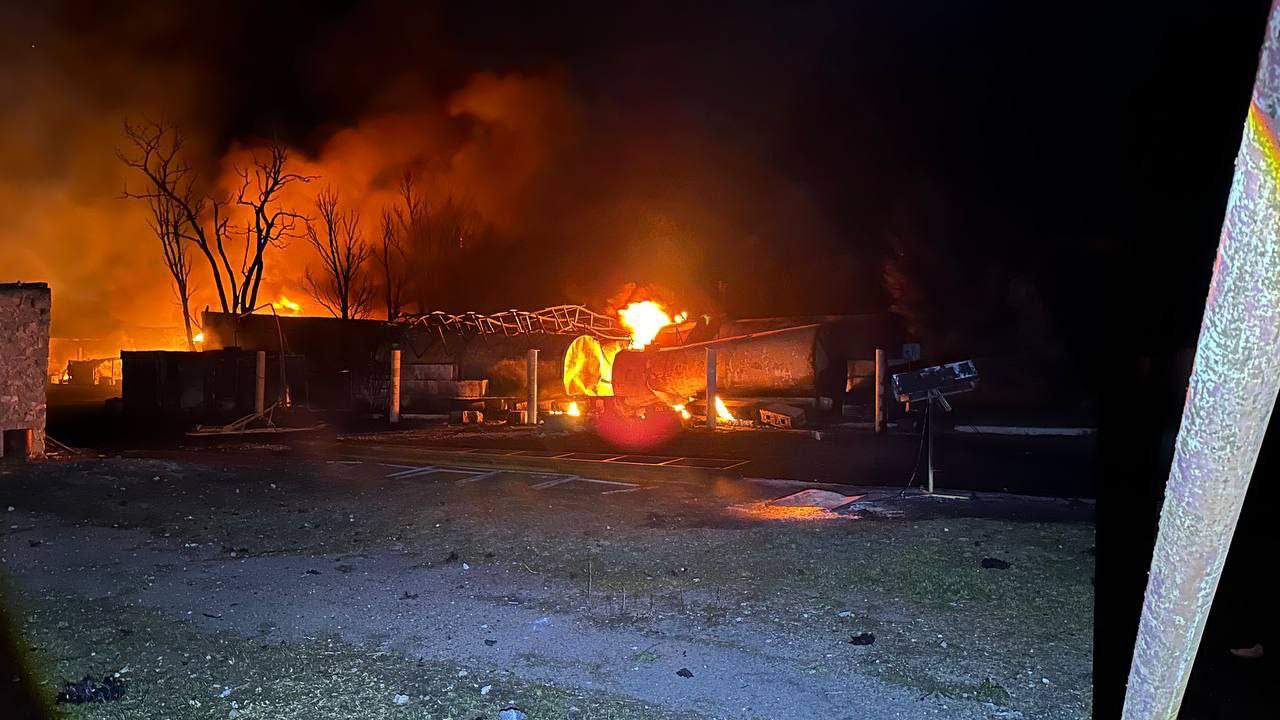
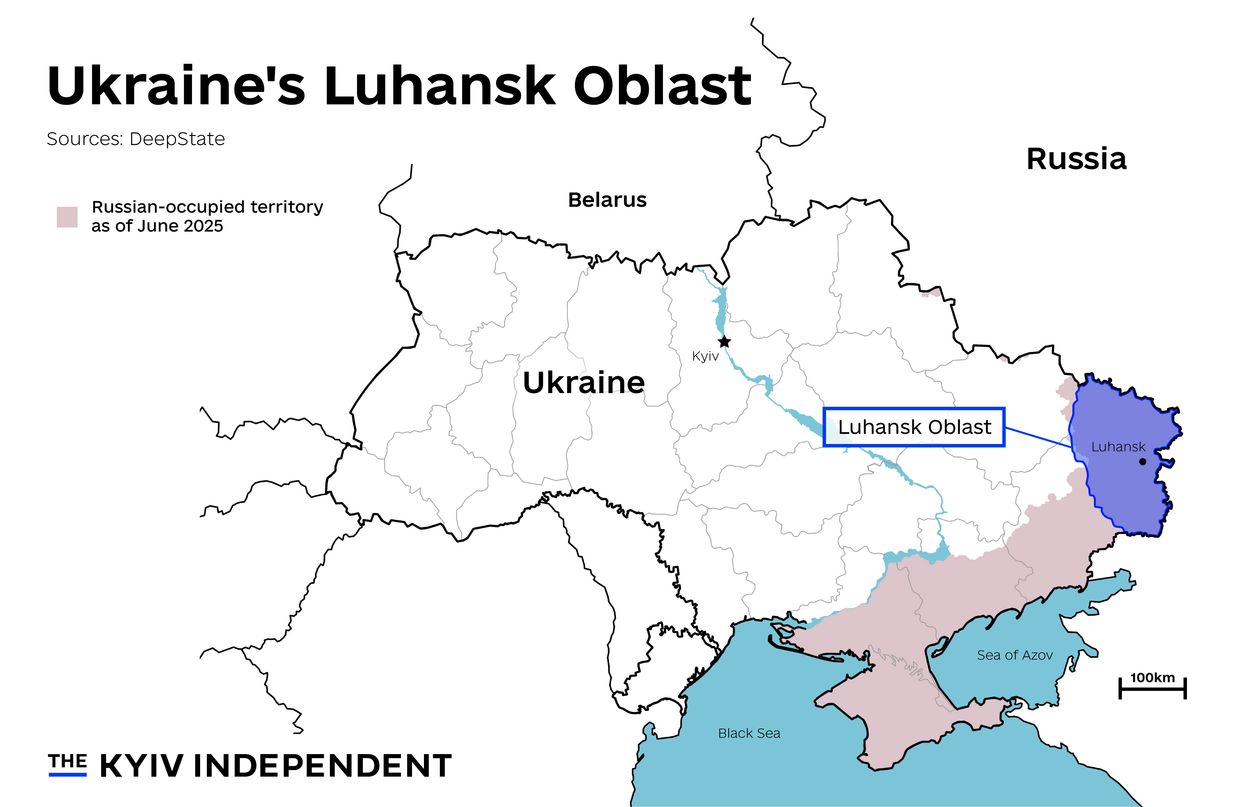
 The Kyiv IndependentThe Kyiv Independent news desk