Vue lecture

Ukraine’s chief prosecutor fled. Politicians still choose the man who can prosecute them.
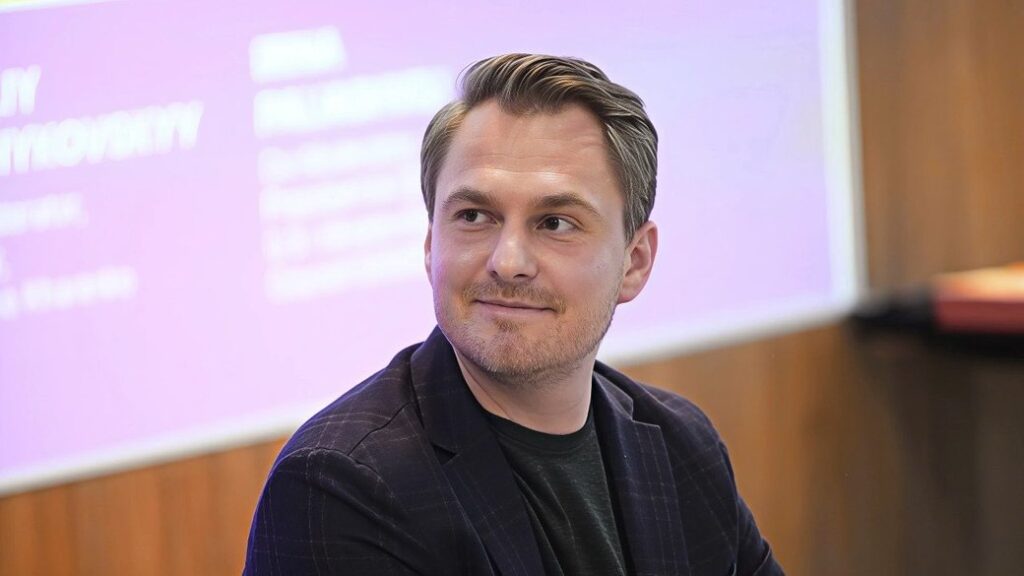
Ruslan Kravchenko, former Prosecutor General of Ukraine. Facebook

At 2:30 in the morning of 14 September, one week after he first claimed his innocence and then resigned, Ukraine's prosecutor general Ruslan Kravchenko crossed the border and left the country. Hours before he went, he used his office to sign a criminal suspicion against the chief of the anti-corruption bureau investigating him. His wife had crossed a day earlier.

Such was the unglorious fate of President Zelenskyy's man, the prosecutor general who in July 2025 nearly leashed Ukraine's independent anti-corruption agencies. Saved by mass street protests, the anti-graft institutions built after the Euromaidan revolution rebounded, and went first after President Zelenskyy's friend Tymur Mindich, then after his right hand Andriy Yermak.

And now they had reached the prosecutor general himself: in Ukraine, the one official who can veto any anti-corruption case against a member of parliament.

"For the first time in Ukraine, after a suspicion was announced, it was the prosecutor who fled abroad, not the suspect," anti-corruption campaigner Daria Kaleniuk wrote as it happened.
Victor Pshonka Yanukovych
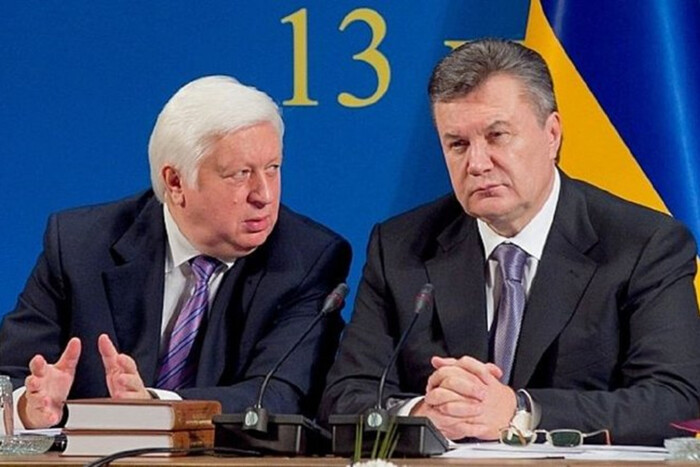
Victor Pshonka, the prosecutor general who helped Yanukovych consolidate authoritarian power (left) and ex-President Viktor Yanukovych. Photo from open sources

Things are, of course, far better than in 2014, when then Prosecutor General Pshonka criminalized the Euromaidan revolution and pursued the political rivals of then President Yanukovych, before both fled to Russia. Papers later found in Pshonka's abandoned mansion, published by Ukrainska Pravda, showed his office drawing up plans to arrest MPs and open thousands of criminal cases against Maidan activists, using prosecution, in the office's own notes, as a political instrument.

But things are still not as good as in 2019, the one time the office worked the other way. That year Ukraine's new chief prosecutor, Ruslan Riaboshapka, named fresh suspects in the PrivatBank case, which ran into Ihor Kolomoisky, the oligarch whose television channel had helped put Zelenskyy in office. He also refused to sign charges against Zelenskyy's political opponent Petro Poroshenko, calling them groundless.
Ukraine launches large-scale reform for its post-Soviet prosecutor's offices system
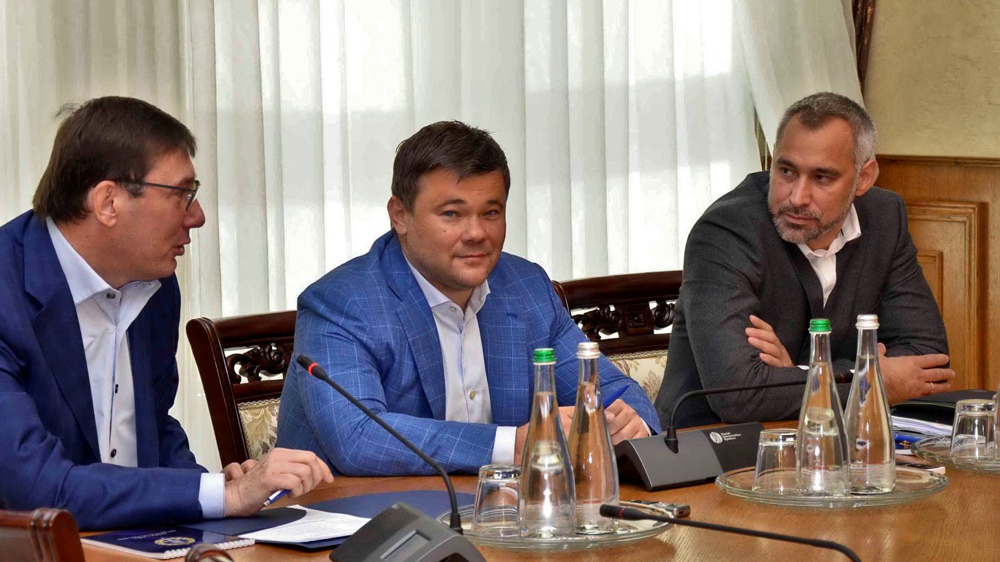
Head of president's office Andriy Bohdan (C) presents Ruslan Riaiboshapka (R) as a new Prosecutor General together with previous PG Yuriy Lutsenko. Kyiv, 30 August 2019. Photo: gp.gov.ua

Signature-gathering for Riaboshapka's dismissal began the next day. Parliament removed him in March 2020, and his successor rolled back the reforms he had tried to launch. David Arakhamia, the head of Zelenskyy's parliamentary faction, later named the refusal to charge Poroshenko as the last drop.

It keeps repeating. The official whose job is to hold the powerful to account ends up serving them instead.

Of the prosecutors general who followed Riaboshapka, two left under a cloud.

Andriy Kostin resigned in 2024 after investigators exposed a nationwide market in fake disability certificates used to dodge mobilization, a scheme that reached prosecutors inside his own service. And now Kravchenko, whom Ukraine's anti-corruption agencies had begun investigating over the alleged protection of an international network of fraudulent call centers.

2023: Ukrainian Prosecutor General Andrii Kostin during a meeting with Ukrainian representatives of law enforcement agencies in Kherson Oblast.

It keeps repeating. The official whose job is to hold the powerful to account ends up serving them instead. The problem is structural, and so is the fix: the same mechanism behind Ukraine's working post-Euromaidan reforms. A bill to have independent experts vet candidates for the Prosecutor General exists; it has sat in parliament since June, untouched.

Whether Zelenskyy's Servant of the People party, which holds the Rada majority, will let it move is unclear. What hangs on the answer is whether Ukraine finishes becoming a state of law, or stays a state of protection.

Unlimited power, total political control

Iryna Korzhenkova
Iryna Korzhenkova, parliamentary analyst at Chesno

For the office meant to guarantee that everyone, including those in power, is equal before the law, real powers are necessary. The problem in Ukraine, said Iryna Korzhenkova, a parliamentary analyst at the Chesno movement for political transparency, is that those powers come bundled with total political control.

The president appoints the prosecutor general with the Rada's consent, under a procedure that provides neither transparent selection nor any assessment of competence. He can be dismissed by a simple 226-vote majority. No prosecutor general has served a full term, and the average tenure is under two years.

"The position that is supposed to keep politicians in check works as their insurance policy instead," Korzhenkova told Euromaidan Press.

Capturing the office is a tempting political prize. Under Article 482-2 of the Criminal Procedure Code, only the prosecutor general can register a criminal case against a sitting MP, and only he can approve a search, a wiretap, or a detention against one.

Since MPs lost their formal immunity in 2020, in the same reform that handed the prosecutor general sole power to open cases against them, this has become a kind of modified immunity: one politically appointed person can decline to open a case, and no court can challenge the refusal. This was the case in 2020, when then Prosecutor General Iryna Venediktova rejected a draft suspicion against an MP handed to her by NABU, reversing only under public pressure.
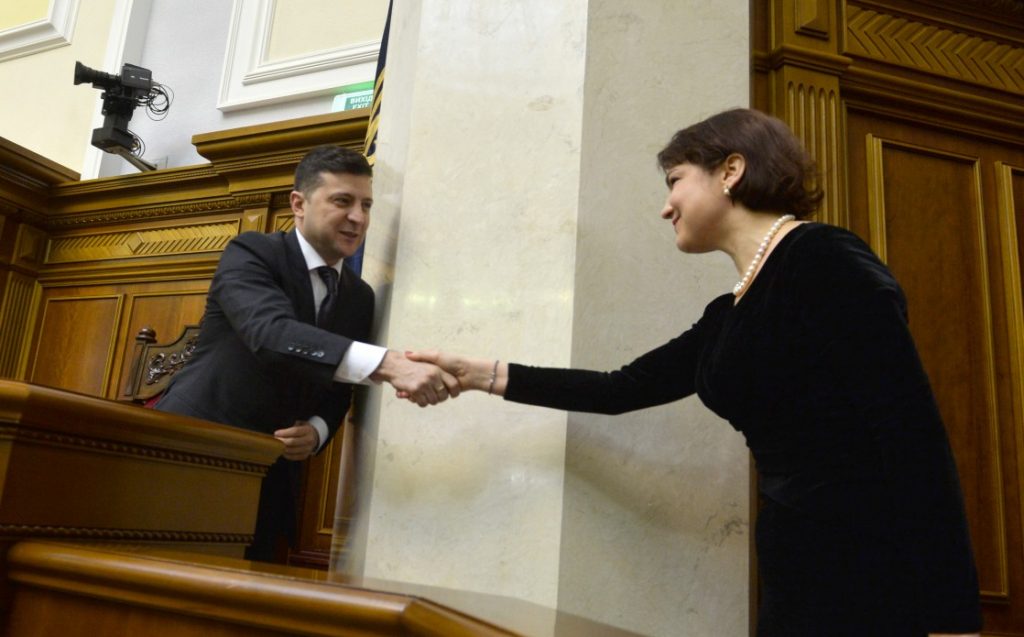
President Zelenskyy shakes hands with Iryna Venediktova, newly appointed Prosecutor General. Photo: president.gov.ua
March 2020: President Zelenskyy shakes hands with Iryna Venediktova, newly appointed Prosecutor General. Photo: president.gov.ua

So valuable is the office that in 2016 parliament stripped out the need for a law degree altogether, to fit the president's man, Poroshenko ally Yuriy Lutsenko; the press called it "the personal law of Lutsenko."

His appointment came as the old guard crushed a reform born on the wings of Euromaidan: a team of reformist prosecutors who had just exposed the "diamond prosecutors," senior officials caught with bags of cash and gems linked to the sitting prosecutor general, was purged, and the case died.

Explore further

How Ukraine’s old guard killed the prosecution reform

A demand the EU has made since 2014

Depoliticizing this chair has been an EU condition for Ukraine's membership path since 2014, and a live one since negotiations on the Fundamentals cluster, the first stage of accession talks and the one covering rule of law, opened in June.

This is why the day that Kravchenko fled, the EU issued a reminder that Ukraine promised to reform the Prosecutor General's Office and introduce a contest for the chair.

"The prosecutor general is the gateway to the criminal justice system for everyone in power," Korzhenkova explained.

Today, that gateway is held by the political majority: appointed by Zelenskyy, dismissable by his Servant of the People party, which controls parliament. Any case against that majority has to pass a filter the majority appoints.

EU summit Ukraine cyprus zelenskyy
Ukrainian President Volodymyr Zelenskyy, European Commission President Ursula von der Leyen, and European Council President António Costa meet during the informal EU summit in Cyprus, 23 April 2026. Credit: President.gov.ua

The EU's interest in prying the office loose is twofold, she said.

  1. Brussels sends Ukraine money and must be sure that money stolen gets prosecuted;
  2. and it has watched the reform reverse in Poland and Bulgaria, which is why it now wants the guarantees written in before the fact.

The internal price is steeper still: war raises the cost of a dependent prosecution, with defense procurement, mobilization, and aid flows all resting on it.

Europe's own standard, set out by the Council of Europe in its 2014 charter on prosecutors, prescribes no single model. Governments may have a hand in choosing the prosecutor general, so long as the method earns public confidence and the term is stable enough to make the office "independent of political changes."

On dismissal it is blunter: protection from "arbitrary or politically motivated dismissal" is "particularly relevant" for prosecutors general, and the law "should clearly define the conditions of their pre-term dismissal."

Ukraine fails at both ends, and, as Korzhenkova puts it, no version that leaves the president's discretion untouched can meet that standard.

The international expert lifehack
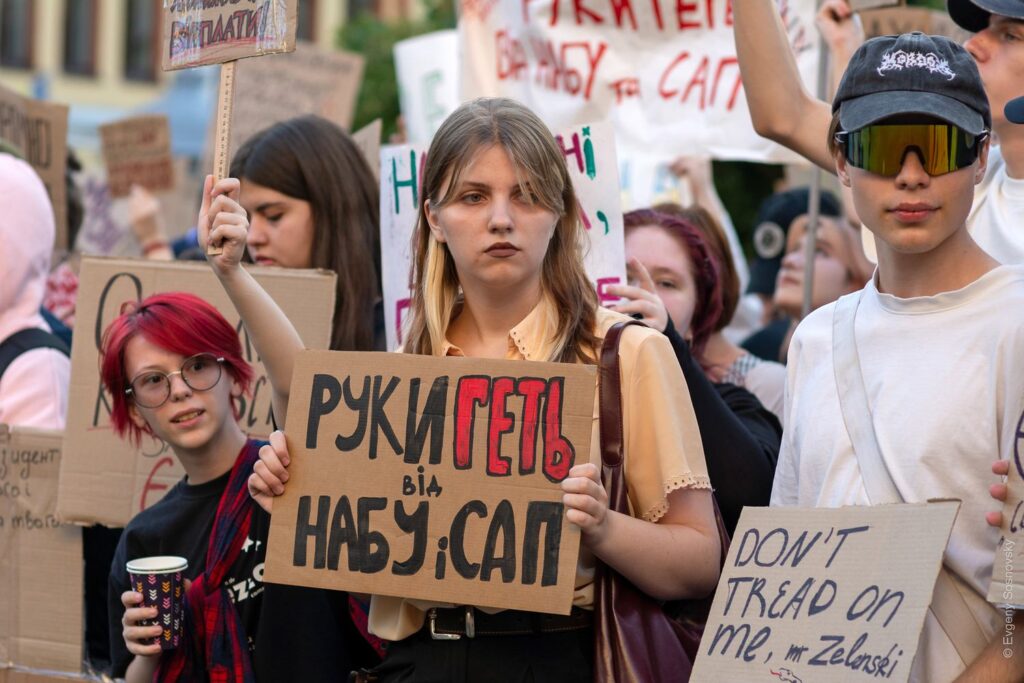
Ukraine protests against corruption NABU SAPO Zelenskyy Kyiv
"Hands off NABU and SAPO," says a cardboard poster of a young woman at protests against a law to curb the independence of Ukraine's anti-corruption agencies in Kyiv, late July 2025. Photo: Evgeny Sosnovsky

But how do you clean an office when cronyism runs through the class that appoints it? Ukraine has a partial answer, from the part of its post-Euromaidan reforms that worked.

The directors of the National Anti-Corruption Bureau (NABU), Special Anti-Corruption Prosecutor's Office (SAPO), and the National Agency on Corruption Prevention are chosen through open competitions in which a panel of independent experts, foreign ones among them with a decisive vote, can veto compromised candidates.

The Ukrainian half of a commission can be captured. The foreigners with a decisive vote are the part no Ukrainian official can phone up and instruct.

The success of those agencies, now breaking up the very rings of cronyism they were built to reach, is why the Venice Commission and Ukraine's Western partners have consistently defended the model.

In a 2021 joint statement, the EU, US, and partner embassies called the international experts' role "temporary but crucial," aimed at resisting "the influence of vested interests." When Zelenskyy's team moved to strip NABU and SAPO of their independence in July 2025, the G7 ambassadors publicly welcomed the reversal that restored it.

Those independently selected agencies produced Operation Midas, the case that reached Mindich and forced out Yermak, and, weeks later, Operation Forrest Gump.

Composite image showing NABU anti-corruption operation: investigators reviewing documents at table, tactical officer conducting search, and stacks of seized currency bills from November 2025 raids into alleged $100 million kickback scheme at Energoatom nuclear operator
Composite image depicting NABU investigators examining documents, conducting searches, and seizing cash during raids targeting corruption schemes during Operation Midas. November 2025.

The High Anti-Corruption Court (HACC), created in 2018 through the same kind of expert council, reaches officials the courts never could: it convicted the highest-ranking judge in the country, Vsevolod Kniaziev, over part of a $2.7 million bribe. Before it existed, all of Ukraine's general courts together had delivered roughly 40 verdicts in NABU and SAPO cases; in seven years the specialized court has delivered 431, against 601 people, and for the first time a sitting MP drew a real prison term.
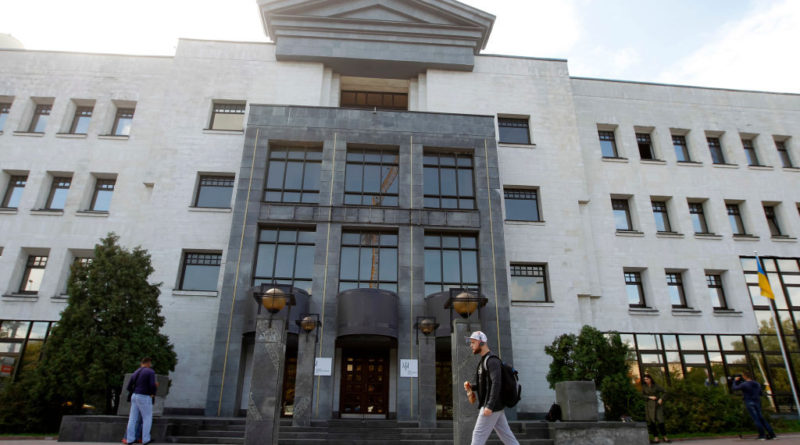
The High Anti-Corruption Court of Ukraine
Explore further

Ukraine’s Anti-Corruption Court is breaking the cycle of impunity

The foreign vote is not a hypothetical safeguard. At an August hearing for Olha Stefanishyna, the former deputy prime minister for European integration, a SAPO prosecutor read out messages in which, they say, she steered the very commissions that select Ukraine's watchdog agencies. To the head of the 2022 panel choosing the NABU director: "Do what you want, I need numbers 60 and 62 from the list. Postpone the sessions, I shouldn't have to think for you." Her influence reached three commissions at once.

ukraine anti-corruption
In 2015, the National Anti-Corruption Bureau and the Specialized Anti-Corruption Prosecutor’s Office were established in Ukraine to fight the top-level corruption. In 2019, the High Anti-Corruption Court completed the chain. The NABU agents are in the photo. Photo: nabu.gov.ua

She calls the case a storm in a teacup, and the charges are unproven. But it is the reformers' own argument: the Ukrainian half of a commission can be captured. The foreigners with a decisive vote are the part no Ukrainian official can phone up and instruct.

The model is no panacea, Korzhenkova warns:

"The international experts are not the motor of reform. They are a circuit breaker. They can keep out the worse candidate. They cannot make those in power want to do better."

The anti-corruption court convicts, but whether the guilty serve time is another matter. Of its 398 convictions in seven years, more than half were settled by plea bargain, others ended in fines or suspended sentences, and a stack of cases had simply run out the clock before any verdict. As of the last public tally, in spring 2026, only about 80 of the convicted had actually drawn real jail time.

For years, the court sat short of judges, which Ekonomichna Pravda read as quietly convenient for those in power: an understaffed court slows cases and lets them lapse without the visible fight of dismantling it. Most of the vacancies were only filled in August 2026, when the EU tied the appointments to money Ukraine needed.

What the bill would do, and the perennial objection

Ukraine's Prosecutor General Ruslan Kravchenko has resigned. Photo: Facebook
Ukraine's former Prosecutor General Ruslan Kravchenko. Photo: his facebook

Full depoliticization would mean amending the constitution, which martial law rules out, and the EU mandates no specific route. So the reformers' instrument is an ordinary law, bill 15343.

It adds a filter to the current system: the president would pick not freely, as now, but from candidates pre-selected by an open competition run by a six-member commission, three of them vetted by Ukraine's international partners. Four votes choose a candidate, two of them the internationals'.

And it moves the power to discipline and dismiss a sitting prosecutor general to the High Council of Justice, the body that governs Ukraine's judges, itself reformed in 2021 through the same international-expert vetting, and the one disciplinary body not under the prosecutor general's own control.

If the mechanism works, and Ukraine has used it for its anti-corruption prosecution, bureau, and court, the obvious question is why the prosecutor general was left out.

The answer is not constitutional, though a constitutional objection has been raised. A legal analysis on the site Sud.ua argued the model has no analog in most of the EU and breaks the constitution: the president is reduced to a technical executor of the commission's choice, and the judges' council is handed power over the head of the prosecution, which is not the judiciary. Foreign experts with a veto over a constitutional office, one commentator wrote, are a gift to any populist and to Moscow.
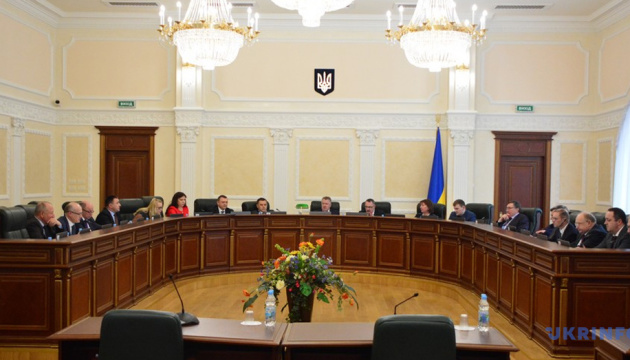
The High Council of Justice, the key body of the judicial government, was considered the main enemy of real reform and was relaunched in 2021. Photo: ukrinform.ua

But this is the argument Ukraine's powerful always reach for when the anti-corruption bodies get close.

In 2020, when NABU accused the judge Pavlo Vovk of running a scheme to seize control of the courts, the same sovereignty-and-separation-of-powers reasoning was deployed to shield him, and EP reported at the time that the prosecutor general's own office was accused of moving to disrupt the case against him. The office meant to prosecute the powerful was protecting them instead, which is the whole reason reformers want it taken out of political hands.

There is no legal reason the reform cannot be done, Korzhenkova says. The same constitutional objections applied to the Constitutional Court and the High Council of Justice, both reformed through international vetting; the filter was added anyway.

"The constitutional argument suddenly appeared only for the prosecutor general," she said.

The real reason for the stall is political: the prosecutor general is the last great lever that decides who gets prosecuted, and the majority that would have to give up control of it is the same majority those prosecutions would reach.

The Rada's own tempo shows it. To save the system from a scandal, it found 317 votes to dismiss Kravchenko in a single day and installed an acting prosecutor general by decree. To limit the system, it has left the bill untouched for three months; in early September the relevant committee declined even to put it on the agenda, and moved only after individual MPs pushed.

At least 50 members of the current parliament, Chesno documents, are themselves under criminal suspicion.

What happens now
Kravchenko's replacement Anton Kovalskyi has worked in prosecution for 15 years. Photo: Khmelnytskyi regional prosecutor's office

The interim answer is Anton Kovalskyi, the Khmelnytskyi Oblast chief prosecutor, appointed acting prosecutor general by decree on 17 September, chosen the old way: hand-picked, from at least four candidates, with no public account of why him.

The Anti-Corruption Action Center laid out the rest in a dossier: property registered to relatives, a wife from Russia whose year-old sole proprietorship reported earnings of over UAH 500,000 ($11k) a month, a deputy whose father-in-law fled to Russia and was convicted in absentia of collaboration.

Asked whether the reform bill would have produced a different result, Korzhenkova declined to guess, and said the guessing is the problem. "I don't know, and neither does anyone else, and that is exactly it."

Under an open competition, his selection would have been vetted by international experts; everyone could have submitted data on the candidates.

The bill would not have guaranteed a good prosecutor general, but it would at least have made the appointed one checkable. This is what the Rada majority is, for now, declining to allow.

The case that finally reached Kravchenko had a name. NABU and SAPO called it Carthage: a scheme, run out of the Prosecutor General's Office itself, to shield a network of fraudulent call centers, with five officials handed suspicions.

Carthage put investigators inside his building, and Carthage he was answering when, on his way out, he turned the office's power to prosecute the man using it against him and signed a suspicion against Semen Kryvonos, the NABU director.
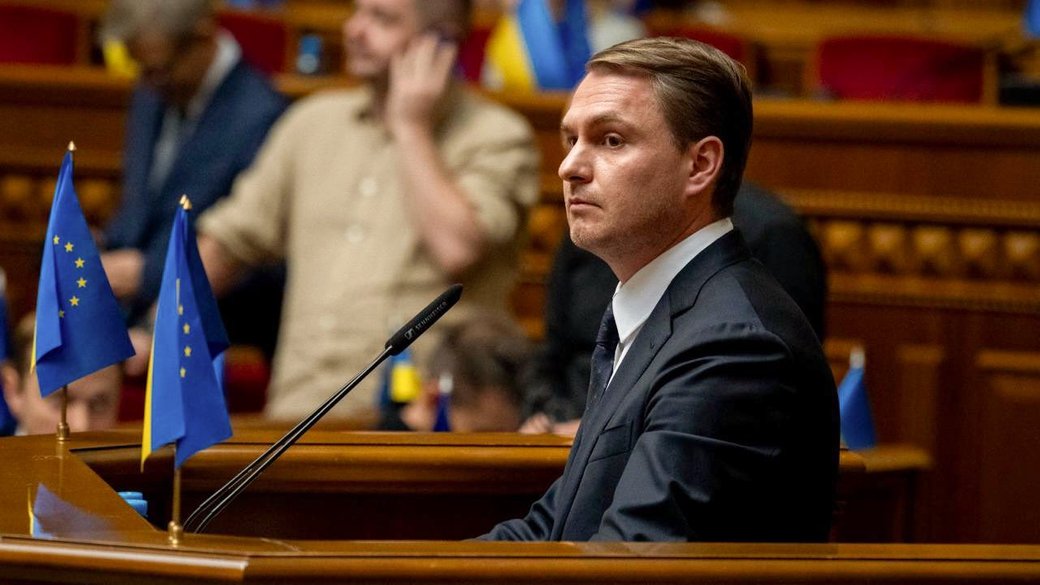
Ukraine's Prosecutor General Ruslan Kravchenko has resigned. Photo: Facebook
Explore further

Ukraine’s prosecutor general resigns as the watchdogs he was appointed to leash close in

Kryvonos says it never reached him; the office itself later conceded that the suspicion was legally void.

Kravchenko's last act as prosecutor general was a business trip he wrote for himself, five days in Paris for a hearing of the PACE parliamentary network, and he left by car on 13 September. He was due back on the 18th. He did not return, and his former office says it does not know whether he has asked for asylum in the EU.

Ukraine has spent a decade building institutions that reach the powerful. The prosecutor general's office is the one it never got to. The man who ran it signed his own exit papers and was across the border by half past two in the morning.

  •  

Hospitals Shut Youth Gender Clinics in Deal with Trump Administration

At least six hospitals have struck agreements with the Trump administration to pay fines and stop providing gender-transition treatments to minors.

© Mark Mirko/Hartford Courant, via Getty Images

Several Connecticut families have filed a legal challenge against Connecticut Children’s Medical Center for ending medical care for transgender adolescents last year.
  •  

Fermeture de Roudoudou : une concurrence déloyale

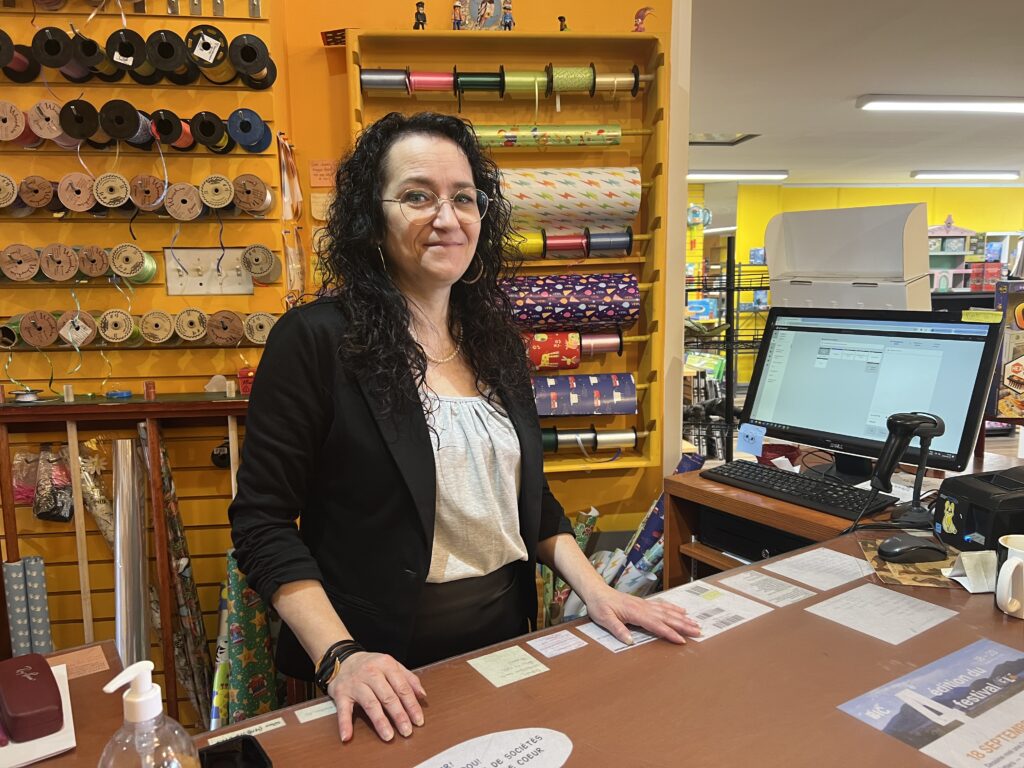
La gérante de la boutique Roudoudou, Pascale Vachon, déplore que la concurrence soit maintenant déloyale pour les petits commerces spécialisés. Le magasin fermera ses portes dans les prochaines semaines après 33 ans d’affaires au centre-ville de Rimouski.

« Ça ne roule pas. À la fin de la journée, il faut être capable de payer nos affaires et les employés. Nos représentants qui nous vendent la marchandise ne nous aident pas. Ils nous tirent dans les pieds en rentrant nos produits dans les pharmacies, les librairies et les papeteries. Même Canac vend des jouets à Noël. Nous allons ravoir des magasins généraux comme dans le temps », exprime-t-elle.

Madame Vachon se désole de constater que le monde du jouet s’éteint tranquillement et que la situation vécue par son commerce n’est pas unique. Le P’tit Futé de Rimouski a également cessé ses activités il y a plus de deux ans.

« Tous les magasins de jouets ferment, Benjo, Toys “R” Us, etc. Ils sont en train de tuer le jouet et je vois des propriétaires de compagnie de distribution qui se plaignent sur Internet parce que nous faisons faillite et que nous ne sommes pas capables de les payer. »

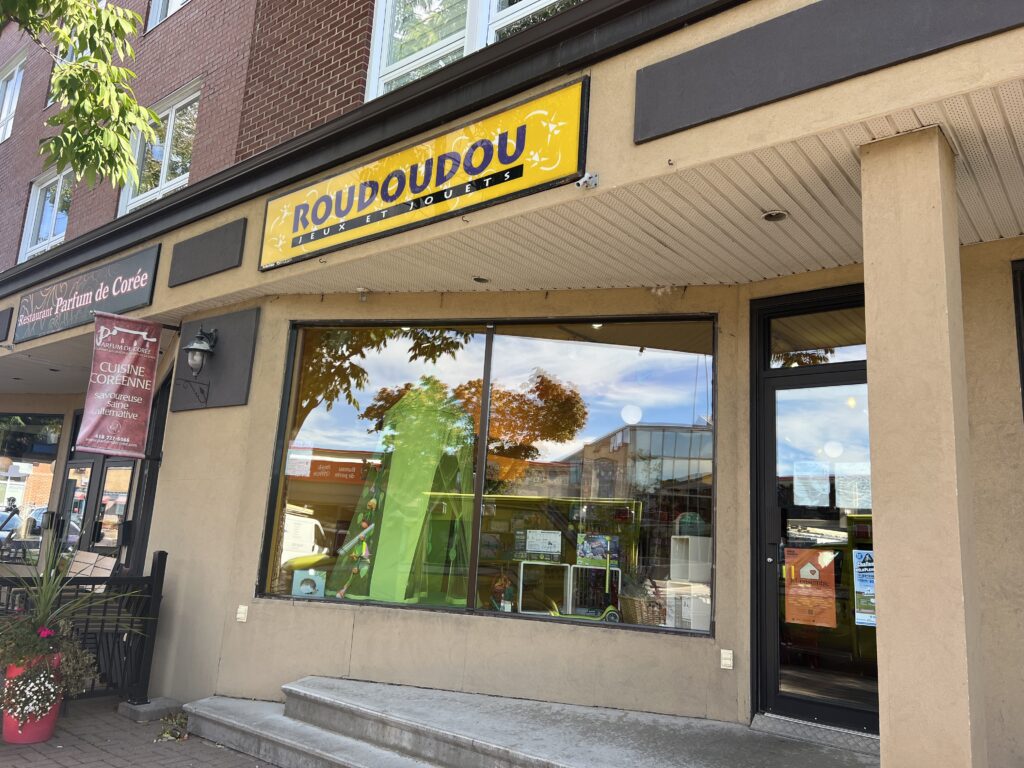
La vente de fermeture est commencée depuis le 19 septembre. (Photo Le Soir.ca-Annie Levasseur)

Cette dernière soutient que la vente en ligne prend beaucoup de place avec des plateformes comme Amazon, mais qu’elle enregistrait très peu de transactions sur le site Internet de Roudoudou.

« SI j’avais une commande en ligne par mois, c’était beau. Il ne faut pas juste que tu sois en ligne, il faut que tu sois un géant. Les gens pensent que ça va coûter moins cher, mais quand je faisais mes prix, je regardais Amazon et mes compétiteurs et j’étais toujours en bas. »

L’évolution de la technologie

Selon Pascale Vachon, l’évolution de la technologie entraîne un important désintérêt des jeunes envers les jouets.

« Les parents ploguent leurs enfants sur les écrans en très bas âge. Ils sont surstimulés et lorsqu’ils ont huit ans, c’est comme s’ils n’étaient plus des enfants, ils sont rendus des préadolescents. Si tu lui donnes des blocs, il trouve ça plate et il ne sait pas quoi faire avec ça. »

La façade de la boutique située sur la rue Saint-Germain Ouest, (Photo Le Soir.ca-Annie Levasseur)

La Rimouskoise a été gérante du commerce, qui appartient au montréalais Philip Strauss, pendant les 25 dernières années. Depuis l’annonce de la fermeture, les commentaires des clients sont nombreux.

« Les gens sont très déçus, mais je n’ai parlé qu’à des clients. Ils me disent que ça leur rappelle des souvenirs de leur enfance transmis de génération en génération. Samedi, le lendemain de l’annonce, la moitié des personnes qui étaient ici n’étaient pas des clients. Nous n’avons pas senti que les gens de Rimouski tiennent à leurs magasins. Ce n’est pas normal de faire 300 $ de ventes un vendredi. »

La fermeture de Roudoudou entraîne six pertes d’emplois. Pour l’instant, un seul employé a réussi à se relocaliser. Le commerce sera ouvert pour encore deux semaines ou jusqu’à ce que la marchandise soit écoulée.

  •  

Andy Burnham, U.K.’s New Prime Minister, Prepares for U.N. Spotlight

Andy Burnham appears likely to promote support for Ukraine and hold to tough lines on Israel and the war on Iran.

© Pool photo by Henry Nicholls

Andy Burnham was just over a month into his tenure as Britain’s prime minister when he visited Kyiv, Ukraine, last month. The U.N. General Assembly will be his first major meeting of world leaders.
  •  

Quel avenir pour les soins de santé au Bas-Saint-Laurent?

On l’a vu à Trois-Pistoles, mais aussi au Témiscouata, au Kamouraska, à Mont-Joli : d’un bout à l’autre du Bas-Saint-Laurent, des communautés se sont mobilisées pour leurs soins de santé. À Trois-pistoles, c’est la crainte de perdre le service d’urgence la nuit qui a soulevé une mobilisation. Qu’est-ce qu’on souhaite pour l’avenir? Charles Alexandre Tisseyre en discute avec le maire de Trois-Pistoles, Maurice Vaney.

  •  

US supreme court declines to intervene in custody fight over baby born via surrogate

Par : Maya Yang

Surrogate who rejected abortion request had asked justices to halt court order recognizing LA couple as legal parents

The supreme court has refused to get involved with a custody dispute between an Alaska surrogate and a California couple whose child was born with a rare and serious heart defect.

On Tuesday, Justice Elena Kagan denied an emergency request from McKenna West, an Alaska nurse and surrogate who had asked the US’s highest court to halt a California court order recognizing the couple, Omar Ahmed and Nausheen Gilkar, as the boy’s legal parents.

Continue reading...

© Photograph: LM Otero/AP

© Photograph: LM Otero/AP

© Photograph: LM Otero/AP

  •  

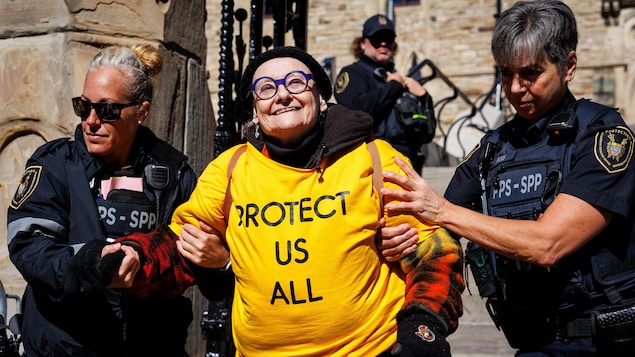
Seniors arrested during climate protest on Parliament Hill

Several seniors were arrested and charged with trespassing on Parliament Hill as they called for stronger government action to address climate change. Members of a self-described "climate caravan" tried to deliver hundreds of photos and stories about the effects of wildfires and flooding. (Sept. 22, 2026)

  •  

Kamala Harris returns to Michigan to campaign for Abdul El-Sayed for Senate

Former VP, who lost state to Trump in 2024 elections, is lending her popularity to unite fractured party

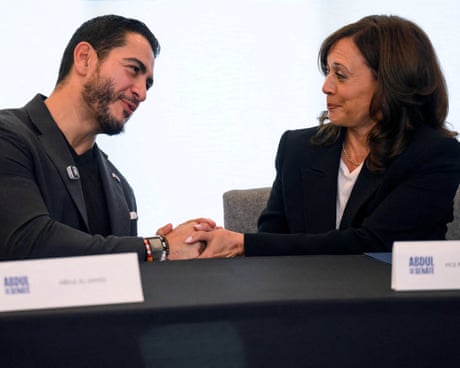
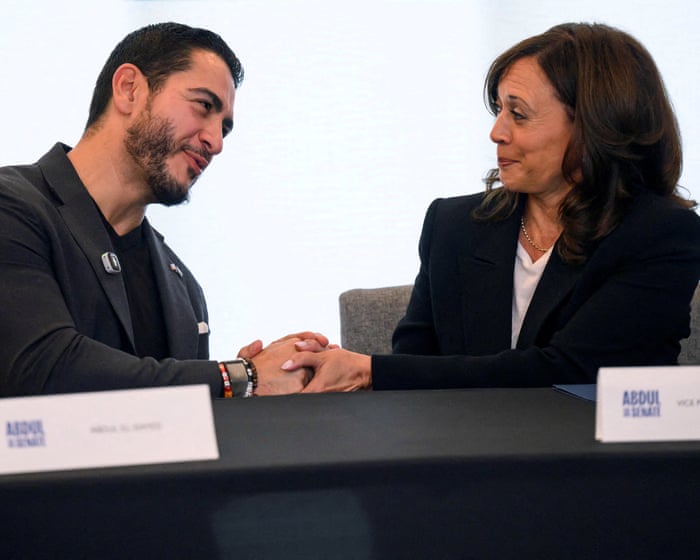
Kamala Harris returned to Michigan on Tuesday to campaign for Abdul El-Sayed, lending her popularity among Black voters to a progressive Senate nominee still working to unite a party fractured by a bruising primary – and the former vice-president’s loss to Donald Trump in the state.

Appearing with El-Sayed at a Detroit birth center, Harris used a roundtable on Black maternal health to frame that November’s contest against the Republican Mike Rogers as a fight over women’s access to care.

Continue reading...

© Photograph: David Guralnick/Reuters

© Photograph: David Guralnick/Reuters

© Photograph: David Guralnick/Reuters

  •  

Spain allows US extradition case against pro-Palestine aid donor to proceed

Lawyers for James ‘Fergie’ Chambers, wanted over alleged support for Hamas, say client is being persecuted

The Spanish government has decided to allow the Trump administration’s controversial extradition request to extradite wealthy activist James “Fergie” Chambers to continue in the country’s courts.

Chambers, a US citizen and wealthy donor to leftwing and humanitarian projects, is currently imprisoned in Madrid. It is the first known case of the US seeking to extradite a citizen over alleged support for Hamas, an accusation tied to money Chambers has donated to support Palestinians, including the Sameer Project, in Gaza.

Continue reading...

© Photograph: Chedly Ben Ibrahim/NurPhoto via Getty Images

© Photograph: Chedly Ben Ibrahim/NurPhoto via Getty Images

© Photograph: Chedly Ben Ibrahim/NurPhoto via Getty Images

  •  

Japan’s leader aims to highlight her country’s push for a more pivotal global role.

© Laurent Cipriani/Associated Press

Prime Minister Sanae Takaichi of Japan was expected to meet with President Trump on Tuesday and address the U.N. General Assembly in New York.
  •  

Trump Threatens Annihilation in Iran in UN Speech and Lays Out Winner-Takes-All Vision

President Trump’s speech at the U.N. General Assembly amounted to a rejection of the founding concept of the United Nations.

© Dave Sanders for The New York Times

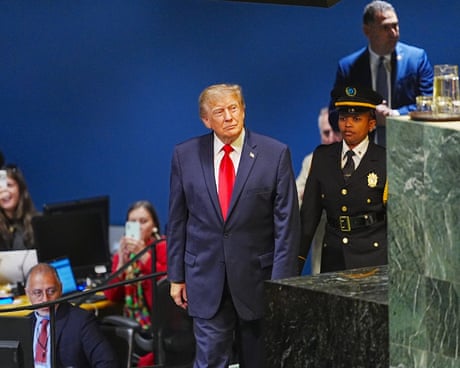
President Trump spoke at the United Nations on Tuesday, threatening to “annihilate the Islamic republic” if a deal to end the war against Iran did not come to pass.
  •  

Trump Threatens Annihilation in Iran in UN Speech and Lays Out Winner-Takes-All Vision

President Trump’s speech at the U.N. General Assembly amounted to a rejection of the founding concept of the United Nations.

© Dave Sanders for The New York Times

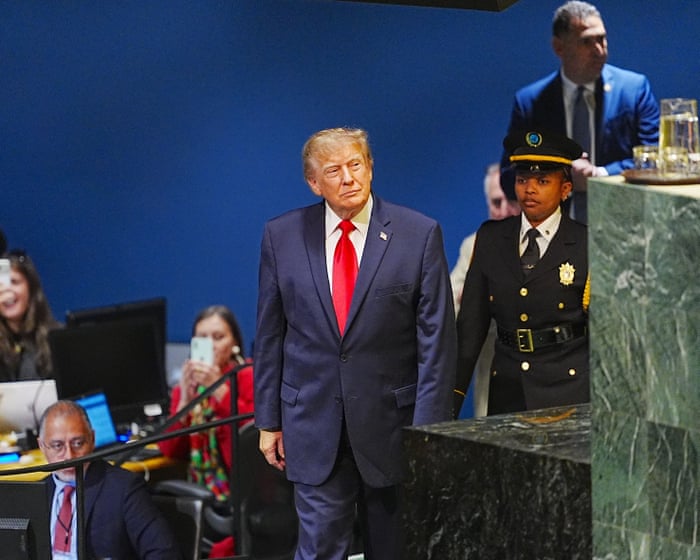
President Trump spoke at the United Nations on Tuesday, threatening to “annihilate the Islamic republic” if a deal to end the war against Iran did not come to pass.
  •  

Republican Senator Urges Congress to Investigate Donald Trump Jr.

In a letter, John Curtis of Utah called for the Senate Judiciary Committee to subpoena the sons of President Trump and former President Joseph R. Biden Jr.

© Eric Lee for The New York Times

Donald Trump Jr. with his wife Bettina Anderson in July. Senator John Curtis called for the Senate to investigate whether he exploited his access to his father for personal gain, spurred by reports that a Russian oligarch funded a lavish wedding after-party.
  •  

Trump Officials Eject 750,000 From Obamacare Markets, Claiming Fraud

Vice President JD Vance said the measure would save the government $2.2 billion.

© Doug Mills/The New York Times

Vice President JD Vance at the White House earlier this month. “We’re actually making sure that the people receiving Obamacare subsidies are actually entitled to receive them,” he said on Tuesday.
  •  

Cinéma 4 : une 51e saison marquée par la variété

Cinéma 4 de Rimouski a entamé, le dimanche 20 septembre, sa 51e saison avec une programmation automnale variée qui fera voyager les cinéphiles à travers des œuvres de partout dans le monde.

« Nous avons une programmation de 12 films pour la session d’automne. Nous en avons du Québec, de la France, de l’Italie, de l’Espagne et même du Japon. C’est très varié cette année et nous en sommes très contents. Il y a des drames historiques, policiers et psychologiques. Une autre programmation sera offerte pour l’hiver-printemps », affirme la présidente du conseil d’administration de Cinéma 4, Véronique Le Hir.

Les films sont présentés tous les dimanches, à 17 h et à 19 h 30, à l’auditorium D-114 du Cégep de Rimouski.

« Nous étions auparavant à la salle Georges-Beaulieu, mais elle est devenue une salle consacrée à l’enseignement de la musique. Nous avons donc déplacé nos activités », indique madame Le Hir.

Des films de répertoire

Depuis ses débuts, Cinéma 4 a pour objectif de présenter des films de réalisateurs indépendants qui ne sont généralement pas offerts dans les cinémas commerciaux.

« C’est toujours du cinéma indépendant pour lequel les critiques ont été intéressantes et qui sort du créneau des films commerciaux. Ce ne sont pas des documentaires. Ce sont des films de fiction qui ont été primés ou mis en nominations dans différents festivals. Nous les présentons toujours en version originale et ils sont sous-titrés en français au besoin », mentionne Véronique Le Hir.

L’organisme à but non lucratif est géré par un conseil d’administration. Il a commencé à projeter des films en 1971 au Centre civique de Rimouski et a été incorporé quatre ans plus tard. Cinéma 4 a dû prendre une pause entre 2020 et 2024 en raison de la pandémie, puisque les locaux du Cégep de Rimouski n’étaient pas ouverts au public.

« Nous avons remarqué, l’hiver dernier, une très belle progression de la fréquentation. Pour la saison 2025-2026, nous avons enregistré 1 600 entrées. Après l’arrêt des activités, plusieurs personnes ignoraient que nous avions recommencé. Il a fallu refaire de la promotion et regagner notre public. Il y a vraiment des cinéphiles avertis dans la région. Ils suivent les sorties », explique la présidente.

Le public de Cinéma 4 provient principalement de Rimouski-Neigette, mais les amateurs de cinéma se déplacent aussi de La Mitis et des Basques pour assister aux projections.

« Ce sont des films présentés dans les grands centres, mais qui souvent ne se rendent pas dans les autres régions du Québec. Ça vient donc chercher un public qui apprécie le cinéma de répertoire. »

L’horaire et les billets pour la programmation d’automne sont disponibles au cinema4rimouski.com.

L’entrée est gratuite pour les 17 ans et moins ainsi que les personnes étudiantes du Cégep de Rimouski, de l’Institut maritime du Québec et de l’Université du Québec à Rimouski sur présentation de la carte étudiante. Pour les autres, le prix d’une entrée est de 8 $. Le film Vivaldi et moi sera présenté le dimanche 27 septembre.

  •  

Mexico Becomes Latest Country to Restrict Phones in Schools

President Claudia Sheinbaum has sharply limited the use of cellphones and screens in schools. The measures will go into effect in November.

© Daniel Becerril/Reuters

A student in Puerto Vallarta, Mexico, in February.
  •  

SSU detains Russian strike spotter on Sloviansk front

Counterintelligence officers of the Security Service of Ukraine (SSU) detained an agent of Russian military intelligence, commonly known as the GRU, in the Donetsk region who was directing guided aerial bombs and attack drones toward the Sloviansk sector of the front.

  •  

Kiev et Washington veulent que la guerre s'arrête "avant l'hiver", assure Volodymyr Zelensky

Par : FRANCE 24
Évoquant "une rencontre productive avec Donald Trump" en marge de l'Assemblée générale de l'ONU à New York, le président ukrainien a déclaré que leurs deux pays voulaient que la guerre avec la Russie prenne fin "avant l'hiver". Ils ont discuté de "potentielles étapes de désescalade susceptibles d'ouvrir la voie à la diplomatie", mais aussi "d'un moratoire énergétique", précise Volodymyr Zelensky.

  •  

$16 bn or lives of Ukrainians: Kyiv is furious after EU took two of Russia’s richest men off its sanctions list

eu remains ambitious opening all ukraine clusters several capitals hold back · post ukrainian flags flying front european parliament brussels eastnewsua colors flag cities protest against russian invasion news reports

The EU locked in its sanctions on Russia for an unprecedented three years this week, and paid for it by letting two of the country's richest men off the list. Alisher Usmanov and Mikhail Fridman were delisted at the insistence of Slovakia, France, and Luxembourg, DW reported.

France pushed to remove Usmanov, a Kremlin-linked metals and telecoms magnate, as part of a secret deal to free prisoners held in Azerbaijan, and Luxembourg pushed to remove Fridman, who is pursuing the country for about $16 billion in arbitration over the losses his sanctions caused, the Financial Times reported.

Kyiv's reaction was immediate and furious

Foreign Minister Andrii Sybiha called the decision shameful and unjustified and urged EU states to impose their own national sanctions on the pair.

"In Moscow, they celebrate, because they got what they wanted: a sense of impunity, humiliation of the European Union, and division among Europeans," he wrote on X.

President Volodymyr Zelenskyy, who raised the issue with European Commission chief Ursula von der Leyen in New York, called the delisting "suicidal and counterproductive."

"Wars end with resolve and strength, not concessions to the aggressor's cronies," he said, thanking von der Leyen for agreeing to work on adding more Russian names to the lists.

At the same time, he stated that he "is grateful to Ursula for her willingness to work on adding more Russian individuals to the EU sanctions lists."

The step was a bargain of durability for names. Rather than roll the sanctions over for the usual six months, the EU previously extended them to 22 September 2029, keeping some 2,600 Russians and companies, including President Vladimir Putin, frozen out for three years, after weeks of deadlock that at one point nearly let the whole regime lapse.

The deal came only after the bloc pushed its deadline back a week to buy time, and its Irish presidency called the result a difficult compromise.

  •  

Man missing after reportedly jumping off cruise ship bound for California

Carnival spokesperson confirms onboard cameras captured male passenger going overboard on way from Mexico

A 56-year-old man is missing after he reportedly jumped off a Carnival cruise ship on Saturday.

A Carnival spokesperson confirmed in a statement that cameras on the ship captured a male passenger going overboard the Panorama, according to several news reports.

Continue reading...

© Photograph: Khairil Azhar Junos/Shutterstock

© Photograph: Khairil Azhar Junos/Shutterstock

© Photograph: Khairil Azhar Junos/Shutterstock

  •  

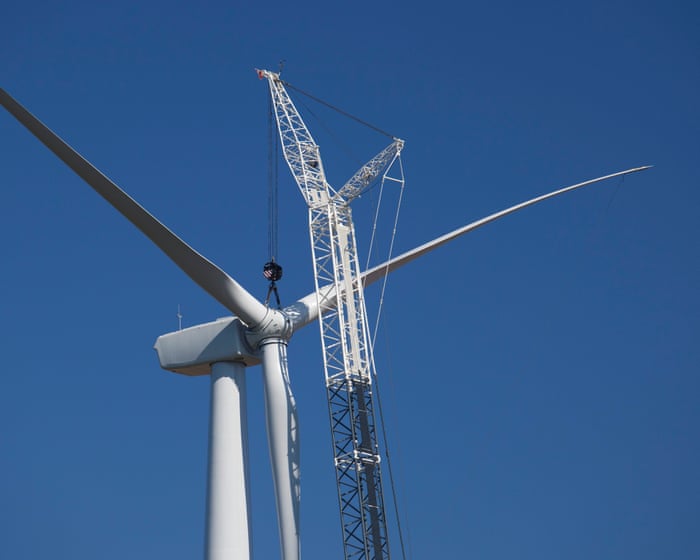
California and New York sue over Trump push to halt wind energy projects

US officials have begun to buy back wind leases as president seek to block renewables in favor of fossil fuels

Democratic attorneys general from California and New York have sued the Trump administration over its plans to buy back offshore wind leases as Donald Trump seeks to discourage the expansion of wind energy in favor of fossil fuels.

California attorney general Rob Bonta said he was suing over removal of a project off his state’s coast planned by Chicago-based Invenergy. The Trump administration said in June it was buying back the company’s US offshore wind leases for four wind projects on the east and west coasts.

Continue reading...

© Photograph: UCG/Universal Images Group/Getty Images

© Photograph: UCG/Universal Images Group/Getty Images

© Photograph: UCG/Universal Images Group/Getty Images

  •  

Trump invades the UN with a brutish speech | Ted Widmer

Gone was any shred of US idealism. It was a spectacle of raw power – a power that is likely to only diminish in the years ahead

Expectations were low for Donald Trump’s address to the UN on Tuesday, and yet somehow it was even worse than expected. He does not perform well in formal settings, like chambers of government, preferring a blingier room, like Mar-a-Lago, or an outdoor rally. For years, he has made no secret of his hostility to the UN, and the very principles of international order that define it.

In recent years, that hostility has deepened into something more like a full-on assault, with frequent attacks on the International Criminal Court (perhaps out of fear that he will someday be indicted), on the UN’s climate agenda, and on Unesco (which the US decided to withdraw from in July 2025).

Continue reading...

© Photograph: Selcuk Acar/Anadolu/Getty Images

© Photograph: Selcuk Acar/Anadolu/Getty Images

© Photograph: Selcuk Acar/Anadolu/Getty Images

  •  

Patrick Clancy interview on 60 Minutes fails to provide big ratings boost for CBS

Amid show’s major overhaul by Bari Weiss, Sunday’s episode draws third-smallest audience for a second episode in the past 25 years

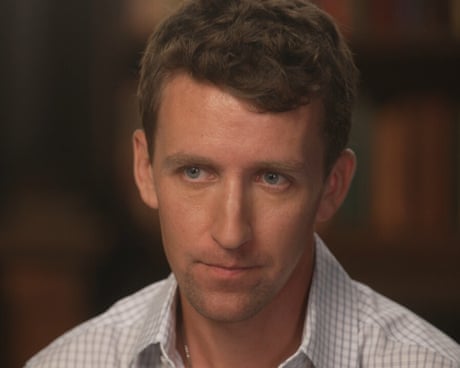
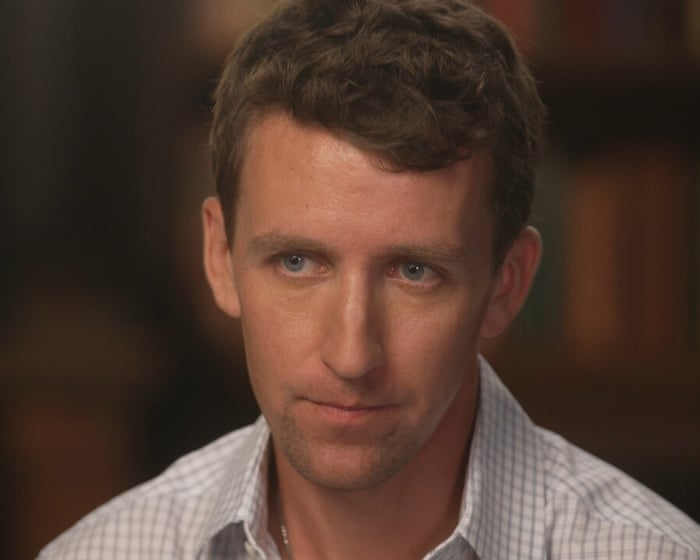
60 Minutes’ blockbuster interview with Patrick Clancy, the ex-husband of Lindsay Clancy, failed to provide a major ratings boost for the Sunday show, according to audience figures released Tuesday.

Sunday night’s episode of the newsmagazine show drew an average of 6.77m total viewers, the third-smallest audience in the past 25 years for the second episode of a season, adding to a disappointing debut for Bari Weiss, who, as CBS editor-in-chief, rewired the show, firing several high-profile correspondents in the run-up to the new season.

Continue reading...

© Photograph: CBS News

© Photograph: CBS News

© Photograph: CBS News

  •  

RD Congo : Démonstration de force de l'UPDS à Kinshasa

En RD Congo, les militants de la majorité au pouvoir ont défilé en masse pour soutenir le président Félix Tshisekedi. Une mobilisation organisée une semaine après celle de l’opposition. Objectif affiché : montrer le soutien du camp présidentiel au projet de changement de Constitution.

  •  
❌