Vue lecture

North Korean ballistic missile kills 7 steelworkers on their way to shelter, shuts down Zaporizhstal plant
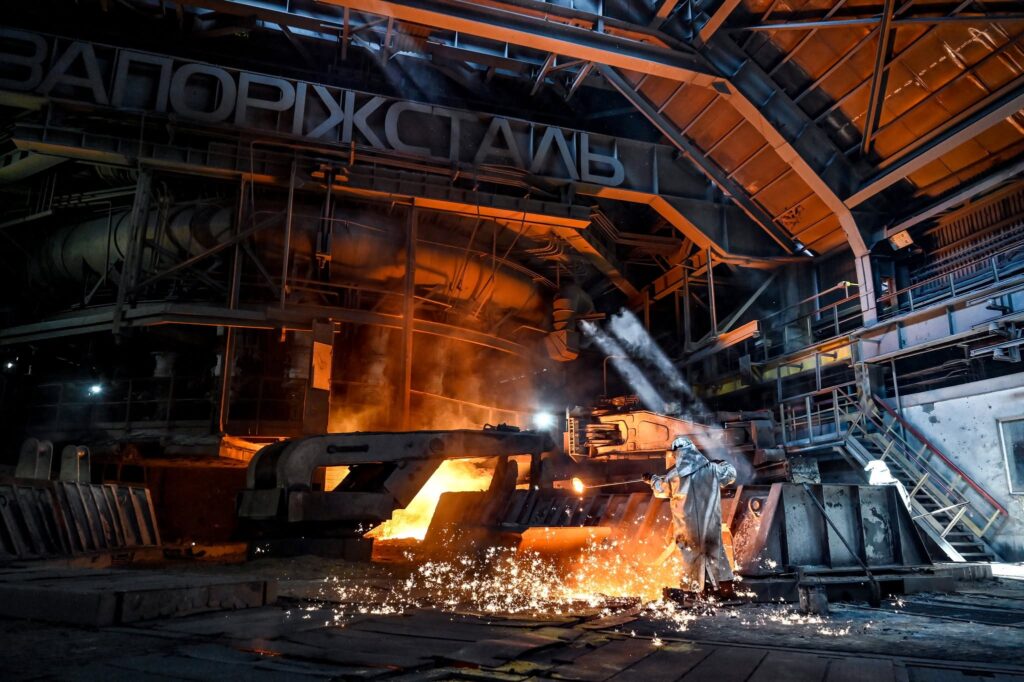
Inside the Zaporizhstal steel plant. Photo: Zaporizhstal on Facebook

A Russian ballistic strike on Zaporizhzhia, Ukraine, killed seven employees of the Zaporizhstal steel plant and injured 21 others, Ukrainian steelmaker Metinvest, the plant’s majority owner, said on 11 August.

The workers were on their way to a shelter after an air raid alert was announced when the strike hit the industrial site, according to the company. 

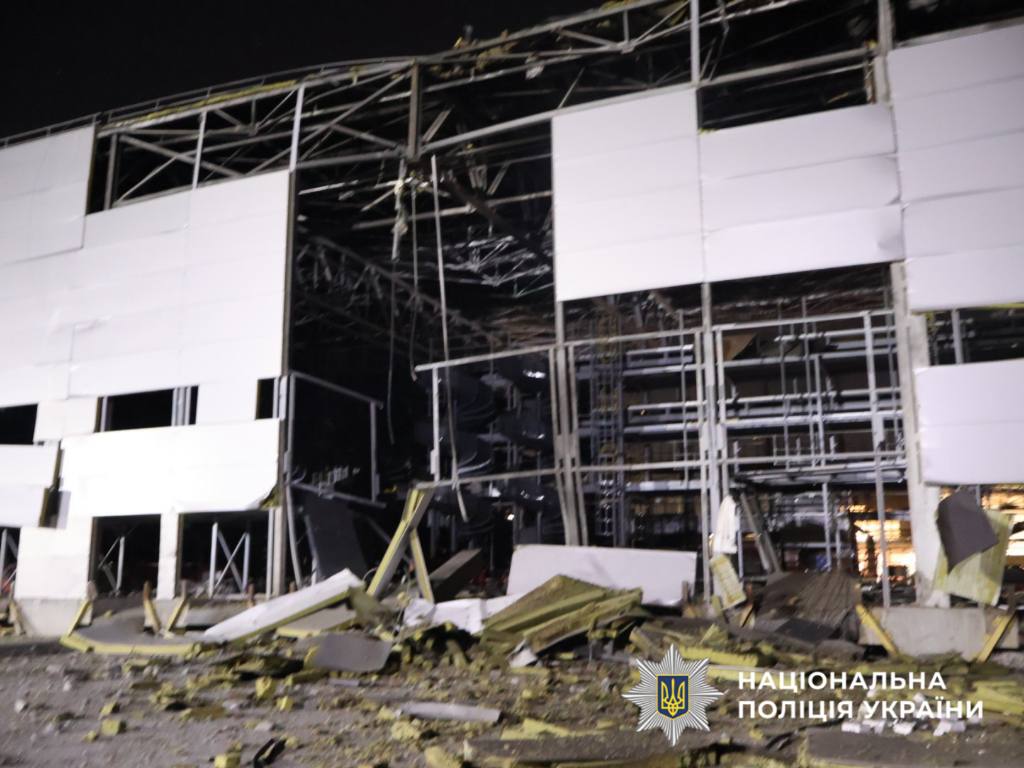
Metinvest said the attack also damaged energy facilities and infrastructure, as well as the main and auxiliary facilities of the plant’s coke and blast-furnace operations.

Russia’s ballistic missile strikes leave very little time between threat detection and impact for people to react and reach shelter. Several people have been killed from strikes across the country while on their way to bomb shelters. 

Zaporizhstal shuts down after strike

Metinvest said Zaporizhstal has been completely shut down following the attack, while its other production sites in the city are operating at reduced capacity.

Company specialists are assessing the damage and determining the scope and timeline of repairs. Emergency and restoration work is already underway, according to the statement.

The company said its Zaporizhzhia facilities are civilian industrial sites that employ tens of thousands of people and produce steelmaking and coke-chemical products.

Metinvest said it is providing medical assistance and support to the 21 injured employees and staying in contact with the families of those killed and wounded.

The company's facilities will fly flags at half-mast on 11 and 12 August in mourning for the seven Zaporizhstal workers killed in the attack.

North Korean missiles used against Zaporizhzhia

Ukrainian President Volodymyr Zelenskyy said Zaporizhzhia was targeted overnight with North Korean ballistic missiles, Russian Zircon missiles and guided aerial bombs.

Zelenskyy said the attack was designed to cause maximum damage to civilian infrastructure.

Ukraine's military intelligence said on 5 August that a North Korean missile unit had begun deploying to western Russia, potentially adding up to 120 ballistic missiles and six launchers to Russia's arsenal.

According to Ukrainian intelligence representative Andrii Cherniak, North Korea has supplied Russia with around 150 KN-23 and KN-24 missiles since late 2023, including a recent batch of 40 missiles.

The missiles have been linked to attacks with high civilian casualties, including a July strike on Radushne in Dnipropetrovsk Oblast that killed an entire family.

Ballistic threat is growing

The strike comes as Russia has increasingly relied on ballistic missiles in attacks on Ukrainian cities. Unlike drones and cruise missiles, ballistic missiles travel at very high speeds and are much harder for Ukraine to intercept, particularly because Kyiv has a limited supply of the advanced air defense interceptors needed to counter them, mainly US-made Patriot systems.

Ukraine has reported that most ballistic missiles launched in recent mass attacks have penetrated its air defenses, contributing to severe destruction and civilian casualties.
  •  

Two Russian refineries burn – Orsk hit by drones 1,500 km out, Komsomolsk ablaze 6,500 km east

“Orsknefteorgsintez” Orsk Oil Refinery

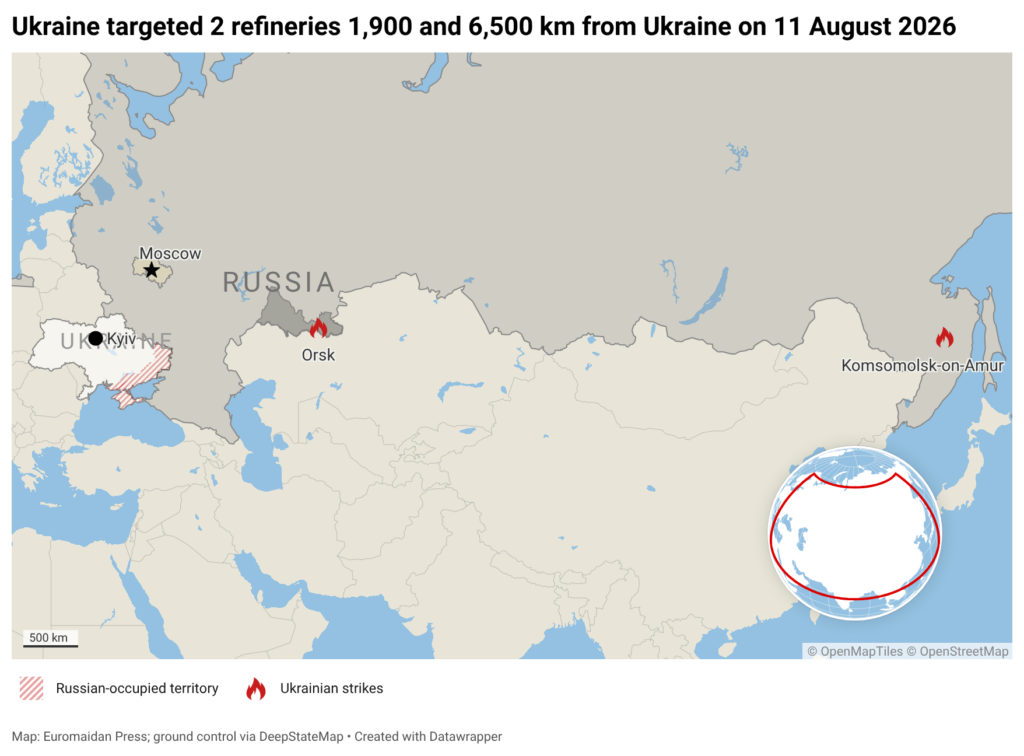
Two Russian oil refineries caught fire on 11 August, but the two incidents tell very different stories. In Orsk, in Orenburg Oblast, drones sparked a blaze that Ukrainian monitoring channels quickly linked to Kyiv's long-range campaign. Meanwhile, thousands of kilometers farther east, a Rosneft plant in Komsomolsk-on-Amur burned for reasons that remain unexplained.

A drone strike deep in Orenburg Oblast

Early on 11 August, residents of Orsk reported explosions near the Orsknefteorgsintez refinery, and a large fire soon followed. OSINT analysts at the Telegram channel Exilenova+ reported the strike. By their assessment, the drones flew more than 1,500 kilometers from Ukraine's border to reach Orsk. Preliminary findings pointed to damage at the plant's hydrocracking complex. Modernized in recent years, the unit can process 1.6 million tonnes a year.

Russian officials confirmed the attack, though they did not name the target at first. Orsk Mayor Artem Vorobyov urged residents to stay indoors and away from windows. Orenburg Governor Yevgeny Solntsev, meanwhile, activated the "Kovyor" (Carpet) airspace-safety plan across a 100-kilometer radius. Authorities also imposed temporary flight restrictions at the Orsk airport.

"The strike drones covered more than 1,500 kilometers from Ukraine's border to reach Orsk—among the deepest targets yet in the refinery campaign," Exilenova+, via OSINT monitoring

An unexplained blaze in the Far East

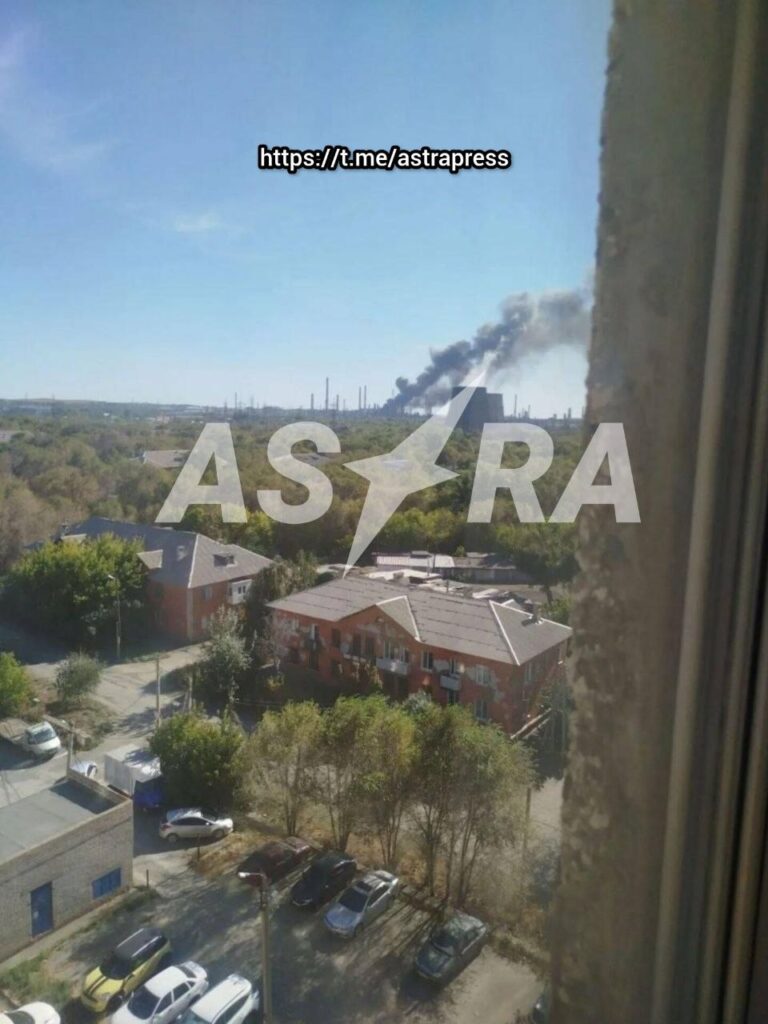
Far to the east, the picture is murkier. Around 11:00 local time, residents of Komsomolsk-on-Amur reported a fire near the city's refinery. ASTRA then geolocated the footage to Rosneft's RN-Komsomolsk plant. Notably, Ukrainian analysts cautioned that the fire does not appear to stem from a drone strike. After all, the site sits roughly 6,500 kilometers from Ukraine—far beyond the range of Kyiv's long-range drones. Coverage from the Kyiv Independent, meanwhile, flagged no clear cause.

The plant's press service reported no injuries, as relayed by Russian state agency TASS. Commissioned in 1942, the RN-Komsomolsk refinery has a design capacity of about 8 million tonnes of crude per year. In fact, it supplies more than 60% of the petroleum products across Russia's Far Eastern Federal District. Moreover, it produces gasoline, diesel, marine fuel, and other products for the region.

Ukraine's campaign against Russian oil refineries

The Orsk plant is no stranger to such strikes. Drones previously hit Orsknefteorgsintez on 3 October and 11 November 2025, and again on 29–30 April 2026. Since 2022, Ukraine has widened its deep-strike campaign against Russian oil refineries, fuel depots, and pipelines. Such targets power the Kremlin's army and bankroll the war through oil exports. Increasingly, Russian oil refineries have become the signature target of Ukraine's long-range war. Just the night before, on 10 August, Ukraine's General Staff confirmed a strike on the TANECO refinery in Tatarstan. A fire broke out there, too.

As of publication, Kyiv had not claimed the 11 August Orsk strike. Still, the timing fit a familiar pattern—a long-range campaign aimed at the fuel that keeps Russia's war machine moving.

  •  

With Ukraine short of Patriot interceptors, Russia sees no reason to enter real negotiations, ISW says

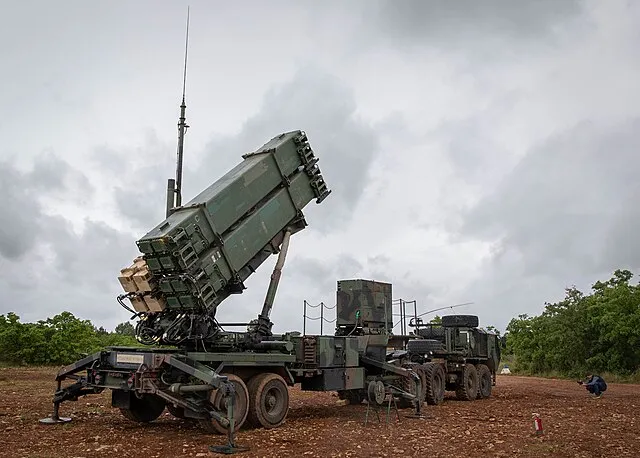
A Patriot air defense launcher raised into firing position on a military trailer.

Russia has rebuilt its missile industry around the weapons most likely to pierce Ukraine's thinning air defenses. The Institute for the Study of War (ISW) made that case on 10 August. Kyiv's Patriot interceptor shortage, it assessed, now hands Moscow no reason to negotiate. Because Kyiv can no longer reliably stop ballistic missiles, the Kremlin sees a clear military path to its maximalist aims.

Factories retooled around the missiles that get through

Since April 2026, Russian plants have prioritized ballistic and cruise missiles built to evade interception. HUR Deputy Head Major General Vadym Skibitskyi reported the shift. Monthly ballistic launches have more than tripled between April and July, he said. Meanwhile, output of key missile types runs 10 to 20% above plan. Moscow also met its full-year Zircon and Onyx targets by 3 August. To free capacity, it suspended the less accurate Kinzhal and Kh-32 lines. Skibitskyi flagged a newer twist, too: S-400 launchers now fire specially developed RM-48U rounds along a ballistic path. Russia is also striking Ukraine's defense plants, he warned, to choke off Kyiv's own ballistic-missile program.

Fired fresh, not from the stockpile

Crucially, these strikes draw on newly built missiles rather than war reserves. That approach lets Moscow sustain larger, more frequent salvos. Its stockpile stays intact for the occasional very large barrage. Unmanned Systems Forces commander Major Robert "Magyar" Brovdi put numbers on the trend. Russia can already loose a simultaneous salvo of 77 missiles, and it is pushing toward 200. He stressed that he meant weapons of all types, not ballistics alone. Kalibr cruise missiles, by contrast, are piling up unused. Moscow is shipping them to fleets beyond the Black Sea as Ukrainian crews down nearly all of them. Repeated strikes have meanwhile driven the Black Sea Fleet back to the port of Novorossiysk.

"The Patriot shortage hands Russia an opening to do serious damage over the winter — and a reason to keep meaningful talks at bay," - Institute for the Study of War assessed

Why the Patriot interceptor shortage stalls negotiations

This reprioritization feeds a winter strategy meant to break Ukraine's will to fight, ISW assessed. The Patriot is still the only system Kyiv fields that can down Russian ballistic missiles. And Kyiv has warned partners it cannot close the interceptor gap before the cold months. As a result, the Kremlin thinks it can hammer cities without paying a battlefield price. That calculation could drag the war into 2027, ISW noted. Putin's theory of victory still rests on outlasting Ukraine's defenses and Western resolve. On 9 August, Deputy Foreign Minister Mikhail Galuzin restated Moscow's line. Any "freeze" that ignores the war's "root causes" is unacceptable, he said — shorthand for the Kremlin's original demands.

  •  

Russian ballistic missiles struck the grounds of a Kyiv children’s hospital and set a warehouse ablaze — overnight strikes across Ukraine killed at least 9

kyiv oblast

Russia struck the capital with ballistic missiles early on 11 August. One of them came down on the grounds of a Kyiv children's hospital in the Shevchenkivskyi district. Rescuers also fought a warehouse fire nearby that left one man injured.

The Kyiv children's hospital strike

Two craters opened on the hospital grounds, while the impact shattered windows and ruptured a gas line, rescuers reported. Utility crews sealed the leak within the hour. Staff at the Kyiv children's hospital had moved patients into the shelter before the strike, so it hurt no one there.

"Luckily, the children and medics were in the shelter — there were no casualties," - State Emergency Service reported

A warehouse ablaze and one man hurt

At a second address in the same district, a strike ignited a fire across 1,200 square meters of warehouse space. Crews first contained the flames, then put them out. Medics soon treated the lone casualty, a 28-year-old man. Earlier, the Air Force had warned of the ballistic threat before the missiles arrived.

Kyiv Oblast also under fire

The wider Kyiv Oblast took damage as well. In the Bucha district, the strike wrecked warehouse buildings and three trucks, although it caused no casualties. Officials said the enemy had again hit the region with ballistic missiles and attack drones.

A far deadlier night beyond Kyiv

Elsewhere, the toll climbed sharply. In Zaporizhzhia, a combined missile and guided-bomb strike killed six people and injured 19, regional authorities reported. Across the oblast, meanwhile, Russian forces launched 938 strikes on 58 settlements in a single day, injuring 52 residents in total. Officials also logged 341 reports of damage to homes, vehicles, and infrastructure.

In central Dnipropetrovsk Oblast, drones and artillery hit five districts more than 20 times. The strikes killed three people, among them a 15-year-old boy, and hurt five others, including a 7-year-old girl. To the northeast, an attack on Zlatopil in Kharkiv Oblast damaged civilian infrastructure and injured a resident.

Meanwhile, in Mykolaiv, drones hurt a 75-year-old woman and damaged homes and an industrial site, and officials described her condition as satisfactory. In nearby Snihurivka, six more drone strikes damaged houses, a shop, and a car, though they caused no injuries.

The strikes add to a wave of Russian attacks on Ukrainian cities this summer. The capital had already endured ballistic missiles days earlier, on the night of 8 August. That evening, explosions also echoed through Kyiv and Dnipro during a mass drone assault.

  •  

Local residents hang “thousand thanks” banner as Ukrainian firefighters help stop wildfire from reaching their French village

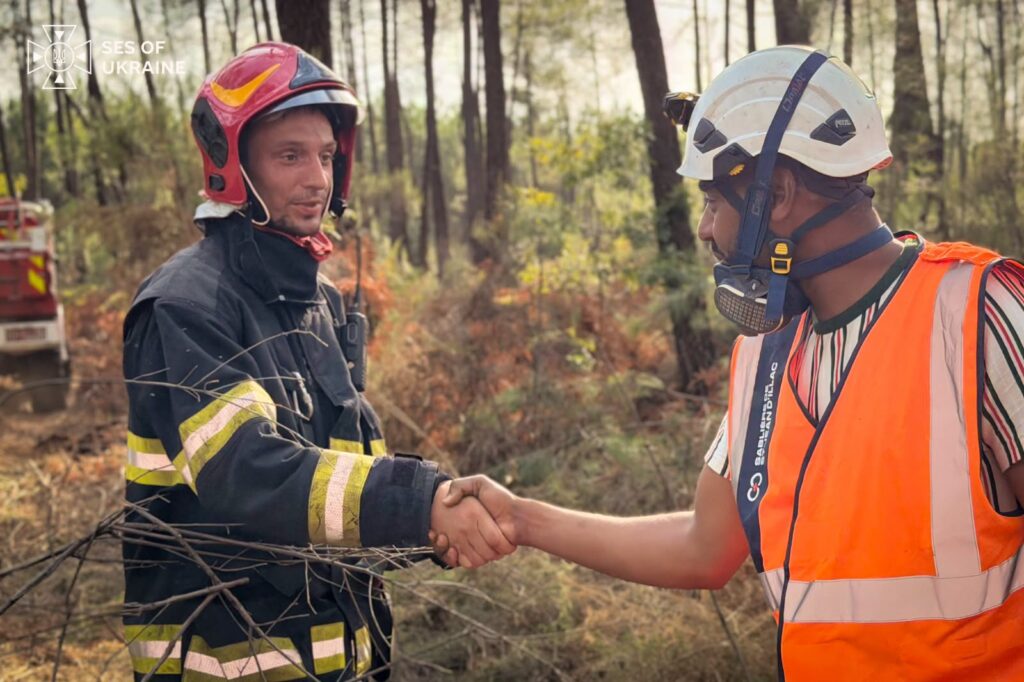
A Ukrainian and a French firefighter are shaking hands during the mission in France. Source: The Ukrainian State Emergency Service

Ukrainian rescuers helped extinguish a wildfire in an allied country. The firefighters stopped a large fire that engulfed about a hectare of forest and threatened a settlement in France, Ukraine's State Emergency Service (DSNS) reported on Facebook.

The deployment marks Ukraine's shift from aid recipient to contributor. A country that has received enormous humanitarian and civil-protection support through the EU since Russia's full-scale war is now sending its own rescuers abroad, as part of the deepening integration.

The fire threatened a village

The blaze risked spreading to where people live. A report of the fire came from the head of a coordination center: the flames had engulfed about a hectare of forest and, driven by wind gusts and heat, could have spread toward a settlement.

Ukrainian and French forces fought together. The Ukrainian State Emergency Service's combined detachment deployed six water tankers on the ground, supported from the air by three French aircraft, two planes, and a helicopter.

A banner reads "Thousand thanks" in French, apparently addressed to Ukrainian firefighters currently helping put out fires in France. Source: The Ukrainian State Emergency Service
The fire was contained

The joint effort stopped the blaze before it reached the village. The fire was extinguished due to the speed of the Ukrainian rescuers and the aviation support, and its spread deeper into the forest and toward the settlement was prevented.

The ground-and-air coordination is standard European wildfire practice: aircraft slow and box in a fire from above while ground crews with tankers put it out, and here Ukrainian tankers worked under French planes.

Ukraine as a contributor, not only a recipient

The deployment is a marker of a larger change in Ukraine's place within Europe. Long the destination for European fire trucks, generators, and rescue equipment sent to help it withstand Russia's war, Ukraine now has its emergency service working alongside allies on its soil.

For a country still under daily attack, sending rescuers to fight fires in France is a statement of belonging, that Ukraine is not only a place Europe helps but a partner that helps back.

  •  

Ukraine’s new AI platform trains weapons on five million frames of drone footage. Partner countries can use it too

another russian shadow fleet tanker wrecked sea baby drones black · post drone video moment explosion strikes dashan untitlesd-1 ukraine news ukrainian reports

Ukraine is turning millions of hours of battlefield footage into fuel for its defense industry's AI. Ukraine's Defense Ministry has announced that it has opened Avengers Labs, a platform for training artificial intelligence models, to Ukrainian defense companies.

The platform is a new piece of the defense-tech ecosystem Ukraine has built around its war. Alongside the Brave1 cluster that funds and codifies weapons and the Test in Ukraine framework that trials them in combat, Avengers Labs supplies the raw material for AI, a vast, curated dataset of Russian military targets that a single private company could never assemble on its own.

The data comes from the battlefield

Avengers Labs was developed by the Center for Innovation and Development of Defense Technologies, the team behind the DELTA battle-management system, and most of its data comes from DELTA and is constantly expanded.

The dataset captures the enemy in detail. It contains images of tanks, artillery, air-defense systems, infantry, and aerial targets, including Shahed drones and reconnaissance UAVs, a labeled library of what Russian forces look like from a drone's camera. According to the ministry, the system can significantly speed up the development of AI solutions for unmanned systems.

The AI already works in combat

A system trained on Avengers data is already in the field, analyzing over 100,000 drone video streams a month and detecting about 70% of enemy targets in real time, day and night.

The models enable more autonomous drones. Trained on Avengers data, they support automatic trajectory correction after an operator marks a target, and independent target detection by a drone in a defined area according to set mission logic, steps toward drones that find and strike targets with less human input, according to the ministry.

Partner-country firms can join too

Access extends beyond Ukraine, under vetting. The first Ukrainian defense companies have signed licensing agreements to use Avengers Labs, and companies from Ukraine's partner countries can also join, per the ministry.

The screening guards against leakage to the enemy. To gain access, companies must pass checks confirming no ties to the aggressor state, no business in Russia, no sanctions, and no activity in occupied territories.

  •  

July was Ukraine’s deadliest month for civilians since 2022 — and Russia is scaling its ballistic missile salvos toward 200 at once

Shahed R-60 missile decoy Flash

Russia can currently fire a simultaneous salvo of 77 ballistic missiles, and it aims to lift that ceiling to 200. Robert "Magyar" Brovdi, who commands Ukraine's Unmanned Systems Forces, told the Associated Press. He called the plan one of Ukraine's gravest weak points.

Kyiv's only reliable shield against ballistic missiles is the US-made Patriot, and its interceptor stocks are critically low. During mass barrages, dozens of warheads therefore slip through and reach their targets. Only a handful of countries can build such interceptors, and all are short, defense analysts have warned. The AP, for its part, could not independently verify Brovdi's numbers.

Ballistic missiles remain the hardest to stop

That shortfall has already turned lethal. Intensified strikes made July the deadliest month for Ukrainian civilians since April 2022, the UN human-rights office in Ukraine documented. Air defenses downed just 29 of the 195 ballistic missiles Russia fired that month, roughly 15%. Another 40 fell short on their own. Yet the largest single-night launches recorded so far run to only a few dozen. That is well below the salvo of 77 that Brovdi describes, and a fraction of the 200 Moscow is reaching for.

"Even if they only manage half of that, it will all be flying at us."
- Robert "Magyar" Brovdi, commander, Ukraine's Unmanned Systems Forces

Production running ahead of plan

His warning tracks Ukrainian intelligence. Russia's defense industry is overfulfilling its monthly targets, hitting 110% to 120% on the main missile types. So said Deputy Military Intelligence Chief Vadym Skibitskyi in an interview with RBC-Ukraine. He put July output for the Kh-101 cruise missile at 140% of plan, the Kalibr at 111%, and the Kh-35 at 200%. A pause in strikes, he judged, is unlikely.

The pivot to jet-powered drones

Moscow's factories are also retooling around drones. Russia plans to assemble 11,000 strike drones of various types in August 2026, Skibitskyi said. That mix spans the Geran-1 through Geran-5, the Harpia, and several Gerbera variants. Output dipped in July as the industry shifted toward the turbojet Geran-4 and Geran-5.

Those jet models fly faster and demand different interceptors or short-range air defense. They already made up half of one recent attack. The concentration of jet-powered Shaheds, meanwhile, has climbed 2.5 times in recent weeks, Brovdi added. Taken together, the assessments point one way: more missiles and faster drones, launched in larger waves, against defenses Ukraine is scrambling to rebuild.

  •  

Russian electric locomotive was named target of Ukrainian partisan operation. It carried military supplies toward Kharkiv front

An explosion. Credit: UkrInform

Ukrainian partisans say they crippled a locomotive moving Russian military supplies to the front. Agents of the ATESH movement carried out a sabotage operation near Voronezh, destroying the cab of an electric locomotive used to support military transport, ATESH reported.

Disabling a single locomotive cripples the entire supply line. The locomotive was supposed to continue its journey toward the Kupiansk direction, and after the cab was damaged, operating the machine at its former pace became impossible, disrupting the schedule for forming and dispatching the next trains.

The target was a rail supply line to the front

ATESH said the sabotage hit a link in Russia's military logistics chain. The locomotive was part of the rail transport that moves Russian military cargo, and it was bound for the Kupiansk direction, one of the active sectors of the front in Kharkiv Oblast.

Russia depends heavily on railways to supply its forces. Its army moves ammunition, fuel, weapons, and heavy equipment to the front largely by rail, so the locomotives and the lines they run on are critical arteries of its war effort. A partisan network can reach them behind the front lines at a vulnerable point.

One damaged locomotive slows the whole chain

ATESH framed the value of the strike in terms of the cascade it sets off. The loss of even one link in the mainline causes delays in the delivery of ammunition, fuel, weapons, and heavy equipment.

Those delays compound at the front. When rear supply operations are interrupted, units lose combat effectiveness and suffer significant personnel losses, ATESH said, casting a single sabotaged locomotive as a blow that reaches the soldiers, depending on what it was carrying.

The strike fits ATESH's partisan campaign

Euromaidan Press cannot independently verify the Voronezh sabotage, which is ATESH's own account. But rail sabotage is a documented feature of the war behind Russian lines, and the movement's focus on the logistics that feed the front reflects a real vulnerability in an army that runs on rail.

  •  

Poles protest in 22 cities as attacks on Ukrainians escalate

poland

Demonstrators gathered in 22 Polish cities on Sunday, 9 August, to protest a rise in violence against Ukrainians, with most rallies beginning after 17:00, RMF24 reported.

The Sunday rallies followed a demonstration two days earlier, on Friday, 7 August, under the slogan "My Poland doesn't hit, insult, or incite," when organizers submitted a petition signed by more than 11,000 people to the prime minister's office and the Ministry of Interior and Administration, demanding decisive measures against violent attacks on Ukrainian citizens.

Nationwide campaign led by pro-democracy group

The Committee for the Defense of Democracy organized the nationwide campaign. Organizers said the demonstrations respond to increasingly frequent verbal and physical attacks on people targeted because of their origin, language, or appearance. The rallies were also meant to show solidarity with those experiencing violence and discrimination.

A slogan from Auschwitz

The phrase that became the demonstrations' slogan, "Don't be indifferent," was spoken by Marian Turski on 27 January 2020, during commemorations of the 75th anniversary of the liberation of the Auschwitz-Birkenau concentration camp. Turski, a former prisoner of the camp, used the speech to urge people not to accept cruel treatment of minorities, violations of human rights, and historical falsehoods.

Recent incidents

The number of attacks on Ukrainians in Poland has sharply increased in recent weeks. In Kraków, a 39-year-old man who had verbally insulted two people of Ukrainian nationality turned himself in at a police station on 8 August and was detained, according to reporting cited a day before the Sunday protests.

Separately, Tobiasz Bocheński, a member of the European Parliament and former candidate for mayor of Warsaw, said that if the Law and Justice party came to power, it would ensure the deportation of Ukrainian men of conscription age who are not legally employed in Poland. Poland's Ministry of Interior and Administration said such statements amount to populism.

  •  

Zelenskyy’s Kosovo comments in Belgrade prompt flag removal in Prishtina

The flag came down from a building in central Prishtina on 9 August, Mayor Përparim Rama said in a Facebook post, after President Volodymyr Zelenskyy remarked on Kosovo during his visit to Serbia. Rama said "the state of Kosovo must be respected."

    "Our compassion and solidarity will always be on the side of peoples facing war, violence, and persecution," Rama wrote. "Because we, better than many others, know what it means to fight for freedom, dignity, and the right to exist as a state."

    What Zelenskyy said in Belgrade

    The exchange was reciprocal: Zelenskyy reaffirmed Ukraine's refusal to recognize Kosovo's unilateral declaration of independence, while Vučić reiterated Serbia's backing for Ukraine's territorial integrity, including Crimea.

    At the 8 August joint news conference in Belgrade, Zelenskyy said Ukraine's position had not shifted. "Our position on what you said, about the unilateral declaration of Kosovo's independence, remains unchanged," he said. "We have always emphasized this, and Ukraine's policy has not changed. Likewise, we are grateful to our partners for respecting Ukraine's territorial integrity and sovereignty, including, of course, Crimea's belonging to Ukraine. This position of Serbia is also unchanged, including in the UN General Assembly."

    Vučić's position

    Vučić, in turn, tied his support for Ukraine's territorial integrity to Serbia's own stance on Kosovo. "We support the UN Charter, UN resolutions, and that means the territorial integrity of all UN members, which means the territorial integrity of Ukraine as well," he said. "Likewise, we are very grateful to Ukraine for supporting the territorial integrity of the Republic of Serbia. And as far as we are concerned, we will continue this principled policy. There are no 'buts' about this. This is being stated very clearly and firmly now."

    Kosovo's recognition status

    Kosovo is a partially recognized state on the Balkan Peninsula, in the Kosovo and Metohija region, with a population of about 1.7 million, according to Suspilne. Its capital and largest city is Prishtina. Kosovo is recognized by 22 of the European Union's 27 member states. Ukraine does not recognize Kosovo's independence.

    •  

    Russia plans to make upcoming winter unsurvivable for Ukrainian civilians: Moscow is hitting Ukraine’s gas extraction sites to make heating impossible in cold

    Blaze at Ukrainian gas facility following Russian strike, 3 October, 2025

    Russia is trying to knock out Ukraine's gas production before the cold comes. Russia carried out massive strikes on the assets of the Naftogaz Group in eastern, western, and central Ukraine, the company reported.

    The strikes target Ukraine's ability to produce the gas it needs for winter. The Russians aim to inflict maximum damage on Ukrainian production and other critical infrastructure to make preparation for the heating season impossible, acting Naftogaz chairman Serhii Fedorenko said, calling the intensity of attacks on oil-and-gas infrastructure sharply higher in recent days.

    The strikes hit extraction across the country

    Russia targeted the sites where Ukraine pulls gas from the ground. On the night of 9 August, the extraction assets of Ukrnafta and a company drilling site came under massive attack, with Russian forces using dozens of strike drones against the extraction infrastructure.

    The damage stopped production. There is substantial destruction at the site; part of the equipment has been put out of commission, and the asset's operation has been halted. However, safety measures meant that workers at the attacked facilities were unhurt.

    Fuel stations and production sites were also hit

    The campaign extended to Naftogaz's retail and production network. On 7 and 8 August, seven UKRNAFTA filling complexes in Dnipropetrovsk, Zaporizhzhia, and Mykolaiv oblasts came under drone attack, and a worker at one station was injured and is in hospital receiving care.

    Central Ukraine was struck, too. On 8 August, Russia attacked Naftogaz production facilities in the central part of the country with jet-powered drones, and the facility suffered serious destruction, though staff were in shelter at the time of the strike.

    The target is the heating season

    The strikes match the warning from First Deputy Prime Minister and Energy Minister Denys Shmyhal, who has said Russia's aim this winter is to destroy the systems Ukrainians need to survive the cold, from power to water, Politico reported. Damaging gas production now, months before winter, is meant to leave Ukraine unable to heat itself when temperatures drop, turning the coming season into another front against civilians in Russia's war.

    •  

    Third one down: Ukraine keeps destroying Russia’s $1.8 million Starlink jammers

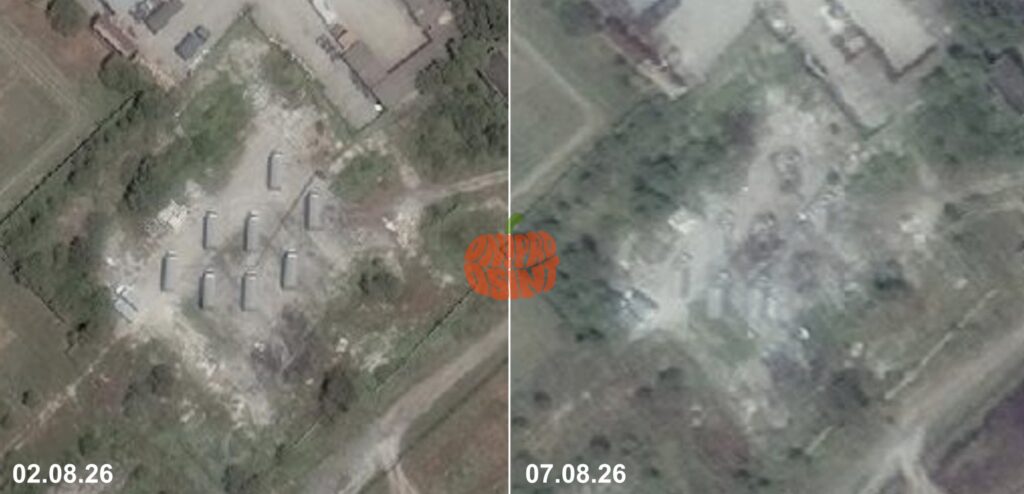
    third one down ukraine keeps destroying russia's $18 million starlink jammers · post satellite images russian volna kupol garant starlink-jamming site gelendzhik krasnodar krai russia 2 (left) 7 2026 (right)

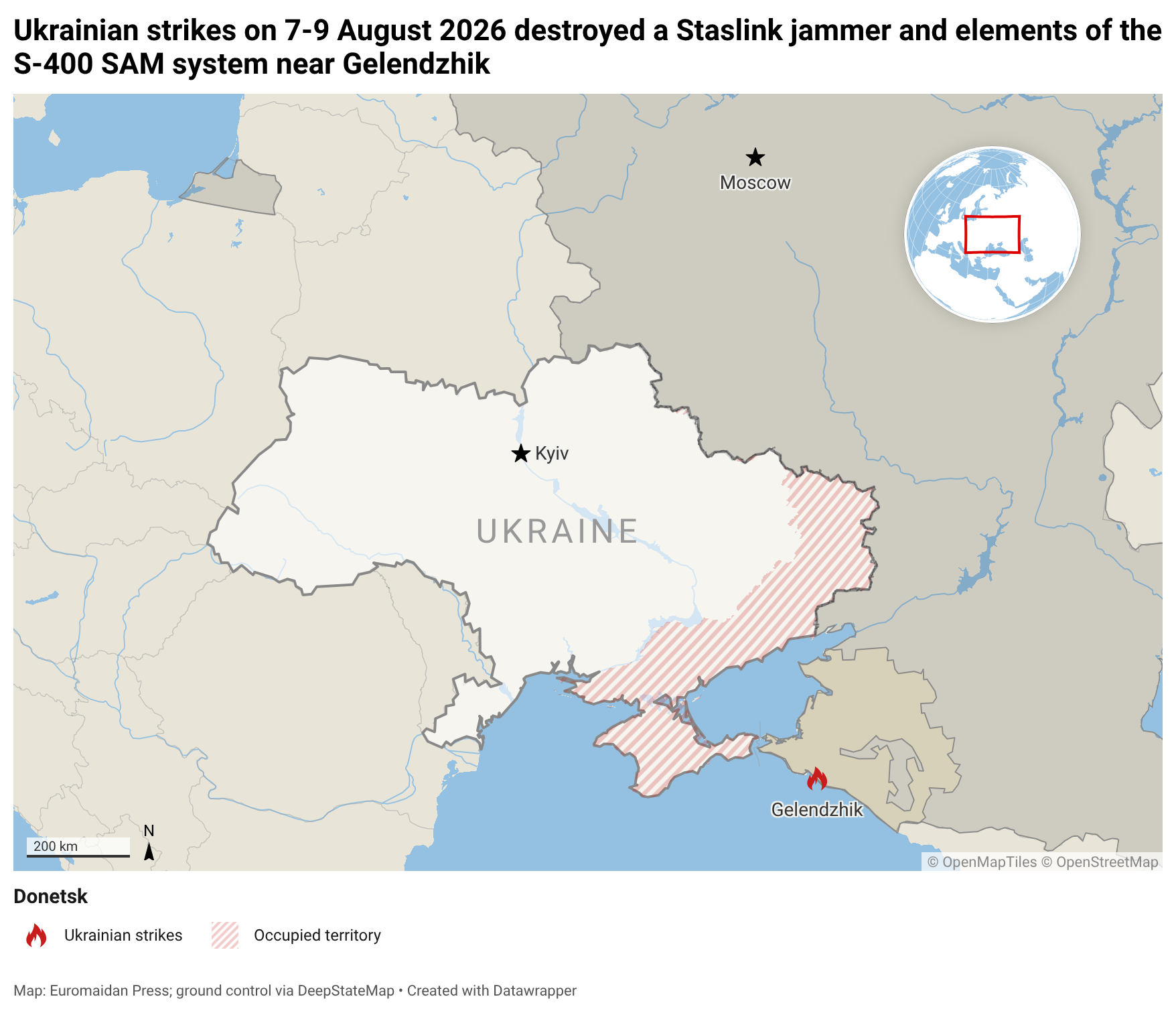
    Satellite imagery has confirmed that Ukraine's Defense Forces destroyed a Russian electronic-warfare system built to jam Starlink at Gelendzhik in southern Russia, the Ukrainian defense outlet Militarnyi reported. Ukrainian drones hit the machine on the grounds of a Russian border-guard base during their sweep of the Black Sea coast. It is one more of these costly jammers Russia has lost, even as Ukraine's long-range drones cannot use Starlink over Russia.

    Ukraine's deep strikes, targeting oil production, e-commerce, and military production, now reach hundreds to thousands of kilometers into Russia. At the same time, Ukrainian drone crews increasingly aim at the air-defense batteries, radars, and jammers in the occupied territory and the adjacent Russian regions — the hardware Moscow relies on to keep those drones out. Such attacks make subsequent Ukrainian strikes more successful.

    Satellites caught the before and after

    Satellite images published by the OSINT community Dnipro Osint show the site cleared at Gelendzhik, in Russia's Krasnodar Krai. The Volna Kupol Garant complex is gone. Researchers called it the third destruction of this jammer recorded in open sources. The strike landed on the grounds of military unit 2156, the Novorossiysk border detachment of Russia's FSB Border Service.

    Ukrainian drones likely hit it alongside a 7 August strike on cargo ships near Novorossiysk and Gelendzhik. Geolocated photos from residents point to a repeat strike on the base on 8 August.

    A Volna Kupol Garant system burns.
    Explore further

    Ukraine’s newest drones don’t need Starlink. Russia spends $1.5 million to jam it anyway.

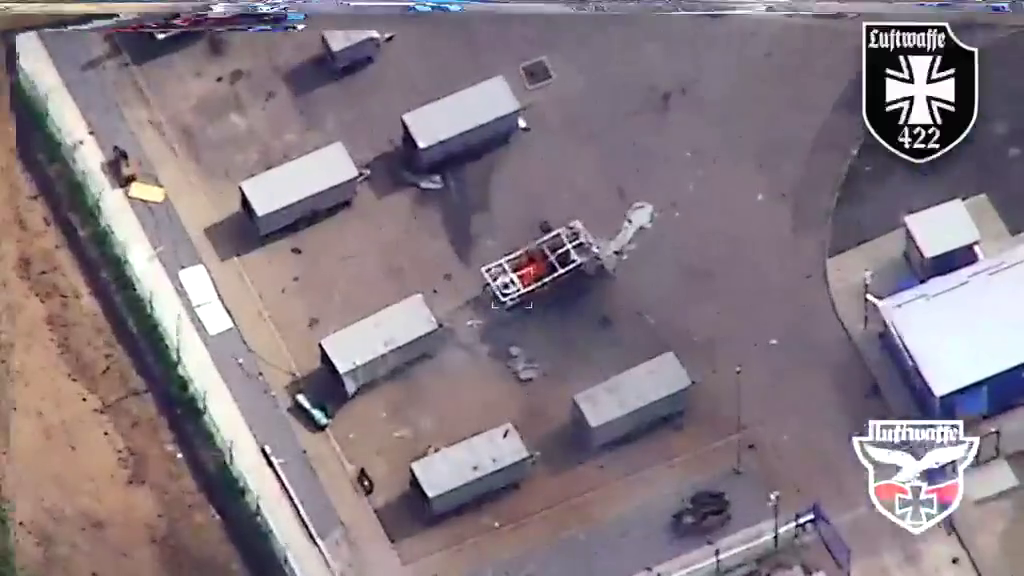
    The Volna Kupol Garant is built from trailers carrying satellite antennas. It tracks a passing Starlink satellite and beams a strong signal that scrambles the terminals below across up to 20 km². Starlink is the SpaceX satellite-internet network that Ukrainian drones rely on to reach their operators. Each unit costs about $1.8 million. A same-named firm registered in occupied Simferopol builds it. The developer also makes the Volna 3M jammer that Russia has fitted to Mi-8AMTSh helicopters to block drone satellite navigation.

    Ukraine has knocked out these jammers before. The 422nd Unmanned Systems Regiment, the Security Service of Ukraine's (SBU) Alpha special-operations center, and other Ukrainian units have struck such systems, including in occupied Crimea. The complex's weakness is its own power: beaming enough energy to reach a satellite makes it loud and easy to find. 

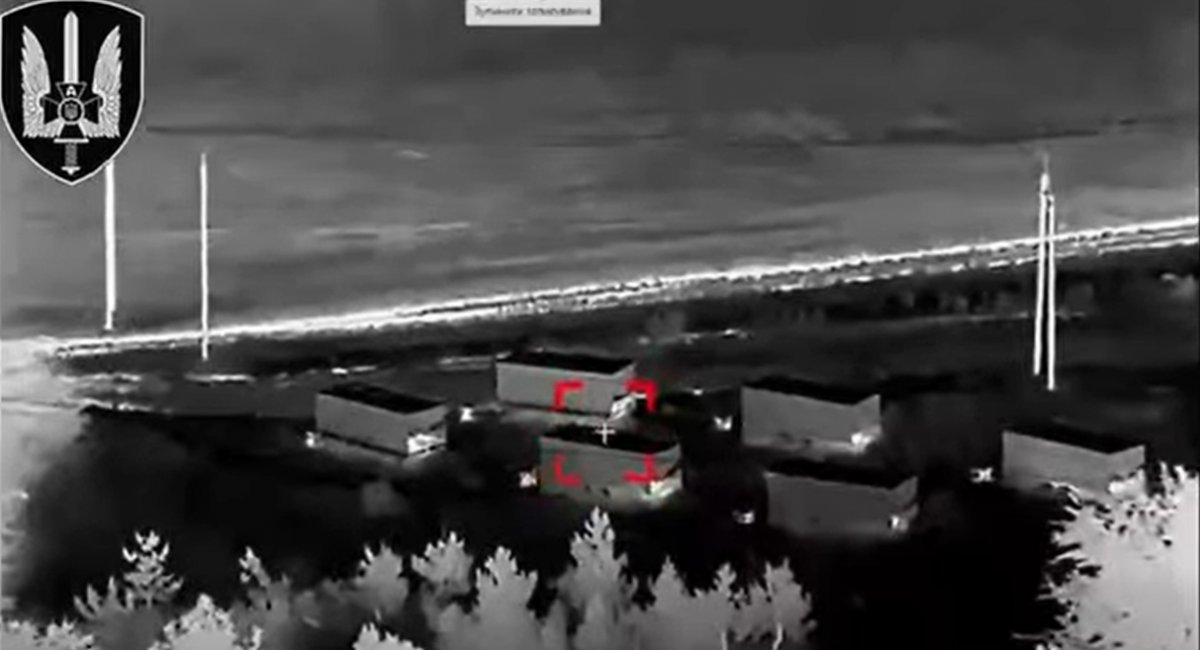
    Russian Volna Kupol Garant system, meant to jam Starlink signals in a 20-kilometer area, shortly before being struck by a Ukrainian attack drone. (Video Still: 422nd Separate Unmanned Systems Battalion "Luftwaffe")
    Explore further

    Russians deploy massive $1.5M Starlink jammers, Ukrainians are blowing them up

    And deep inside Russia, there is little Ukrainian Starlink to jam — SpaceX geofences the network to Ukrainian territory, and Elon Musk has refused Kyiv's push to use it for strikes into Russia so far.

    The wider hunt

    Ukraine's drone crews have spent 2026 tearing into Russia's air defenses and rear. The same run of Black Sea strikes that wrecked this jammer also burned a Russian S-400 air-defense system on the Gelendzhik coast. 

    •  

    Russia parked an S-400 on a Black Sea shore. Ukraine’s drones knew exactly where

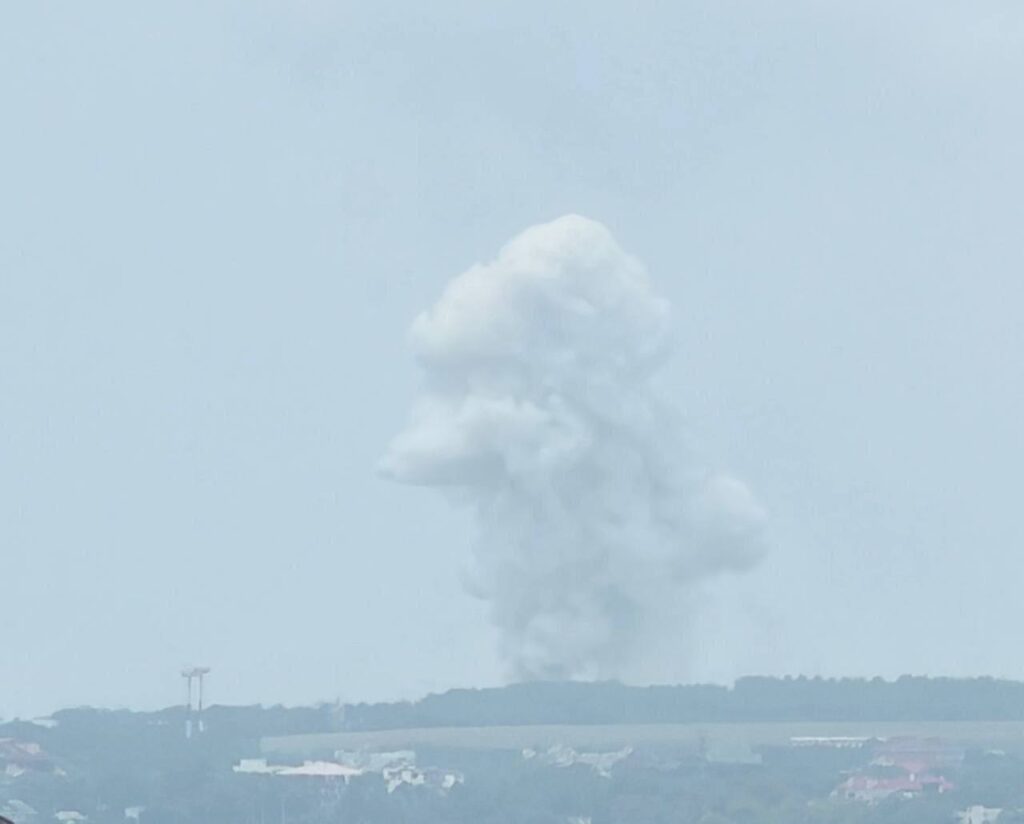
    russia parked s-400 black sea shore ukraine's drones knew exactly where · post plume smoke rises over gelendzhik russia's krasnodar krai 8 2026 explosion channel ukraine context 5458504568653157712 news ukrainian

    Ukraine's drone forces burned a long-range Russian S-400 air-defense system on the Black Sea coast and knocked out more air defenses, radars, and cargo ships in a single overnight raid, Unmanned Systems Forces (SBS) commander Robert "Madyar" Brovdi said. One of the struck batteries guarded the stretch of coast in the area of Putin's reported seaside palace. 

    Each strike like this feeds a long Ukrainian campaign to take apart Russia's air defenses — partly to clear a path for Ukraine's deeper drone and missile strikes, partly to destroy the launchers that rain ballistic missiles on Kyiv. 

    The battery that guarded Putin's coast

    Overnight on 8–9 August, Ukraine's Unmanned Systems Forces struck the S-400 Triumf system at Gelendzhik, on Russia's Krasnodar Krai coast of the Black Sea. The 413th Reid Regiment carried out the strike, and the position burned for three hours beside seaside catacombs, Brovdi wrote. Brovdi said the battery had fired six missiles on the morning of 8 August, between 9:25 and 12:51.

    Gelendzhik sits on the Black Sea headland that holds the palace complex, long reported as Putin's private residence. 

    Russia has turned the S-400 into a terror weapon against Kyiv, firing its ballistic 48N6DM missiles at the capital. Those missiles reach ground targets more than 200 km away. Bryansk Oblast borders Ukraine and is within reach of Kyiv. Gelendzhik lies far across the Black Sea, well beyond it, so its battery worked as air defense over the coast.
    blackouts donetsk
    Explore further

    Ukraine drones hit Crimea’s S-300/S-400 near Kerch—and knocked out power across four occupied territories overnight

    The regiment that torched the Gelendzhik battery had hunted these launchers before. Overnight on 6 July, during a Russian mass strike on Ukraine, the 413th Reid operators found and destroyed an S-400 launcher in Bryansk Oblast, the unit said. That launcher was firing ballistic missiles at ground targets. The regiment called Bryansk a standard launch area for ballistic missiles aimed at Kyiv, and said the strike saved Ukrainian civilian lives.

    Four more systems down inside Russia

    Ukrainian drones destroyed four more Russian air-defense assets the same night, all on Russian soil, Brovdi said. Crews hit a Tor system in Rostov Oblast and a Pantsir-S1 point-defense system at Yeysk in Krasnodar Krai. They also struck two radar stations in Rostov Oblast, the Podlyot-K1 and the Kasta 2E2. The 1st Separate Center of the drone forces ran the inland strikes, the Unmanned Systems Forces reported.

    air defense zoo ukraine's drones took out russian pantsir tor buk s-300v one night over occupied south · post pantsir-s1 (l) (r) systems sights ukrainian zaporizhzhia oblast 6 2026 unmanned
    Russian Pantsir-S1 (L) and Tor (R) air defense systems in the sights of Ukrainian drones in occupied Zaporizhzhia Oblast, 6 March 2026. Photo: Ukraine's Unmanned Systems Forces via Militanryi.

    Three shadow-fleet ships hit at sea

    At sea, the SBS drone pilots hit three vessels of Russia's shadow fleet in the Black Sea — one oil tanker and two dry-cargo ships. That fleet is the aging tankers and cargo ships that move Russian oil around Western sanctions. The 413th Reid Regiment and the 412th Nemesis Brigade carried out the strikes. 

    Ukraine's drones had already hit 12 more shadow-fleet ships across the Black and Azov seas earlier in August.

    •  

    Russia’s morning strike on a Kharkiv high-rise kills two men and wounds 21

    russia's morning strike kharkiv high-rise kills two men wounds 21 · post firefighters work damaged after russian kharkiv's saltivka district 9 2026 2 syniehubov 5458525575338203373 ukraine news ukrainian reports

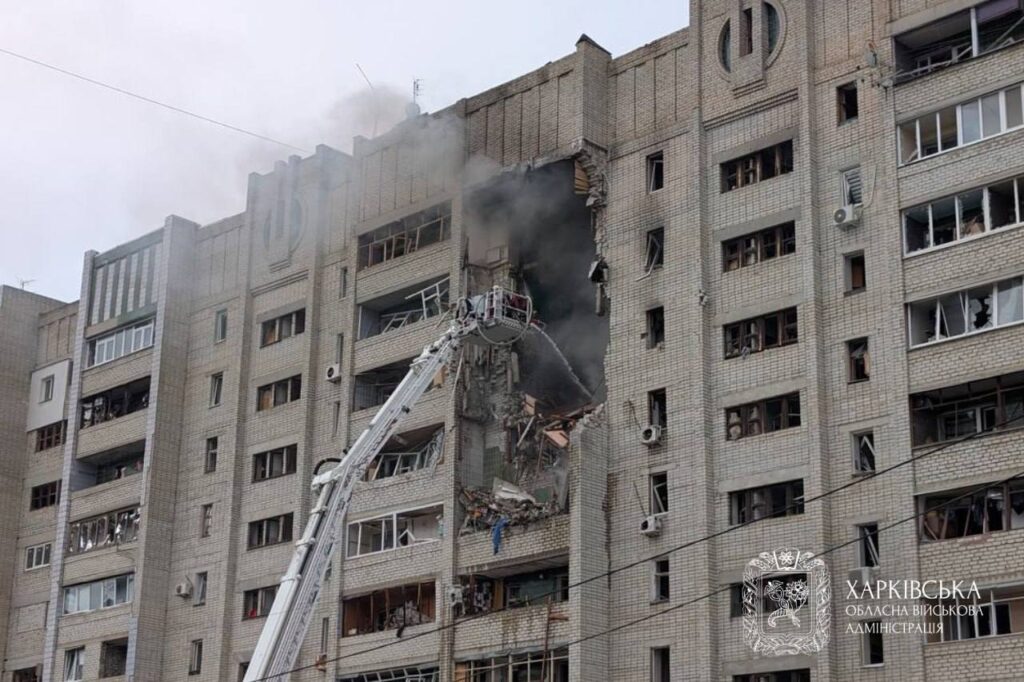
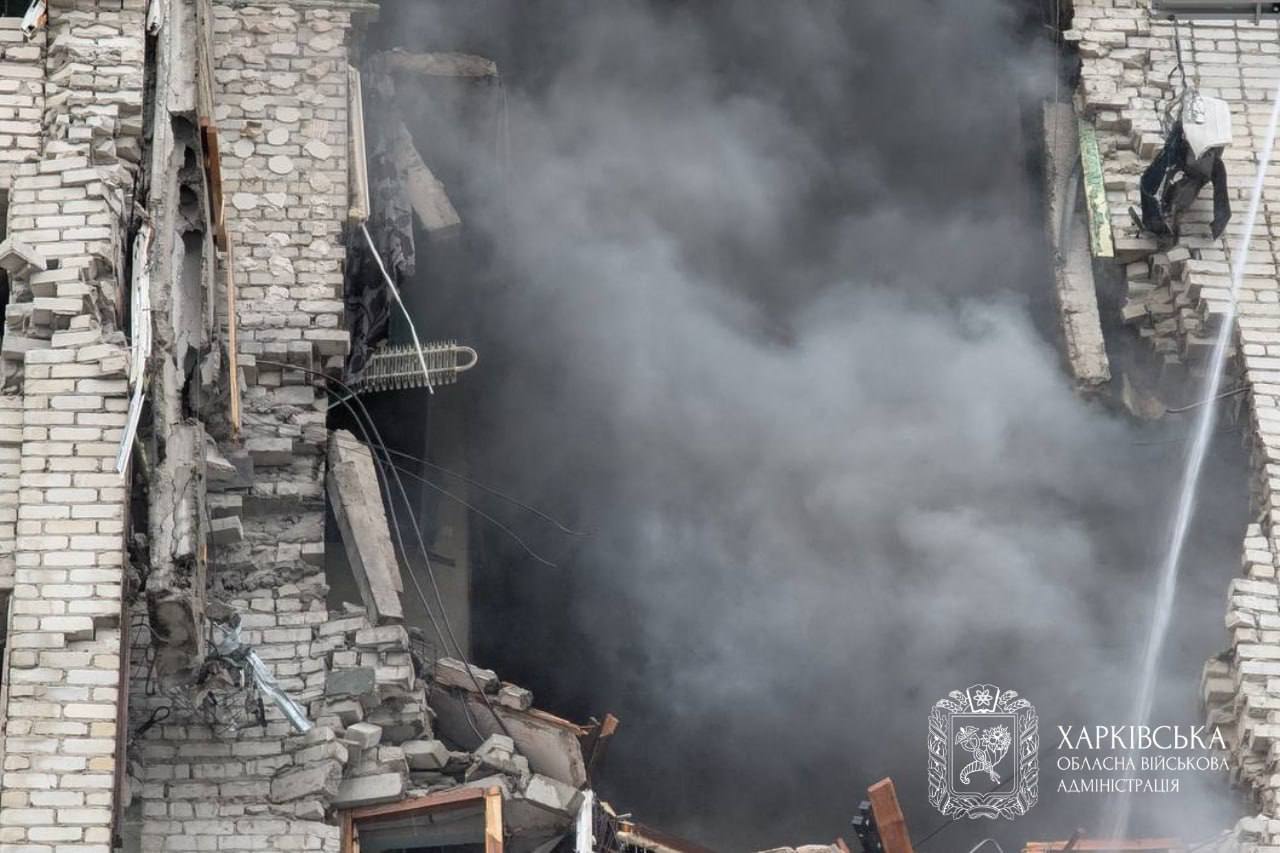
    Russian forces struck a residential high-rise in Kharkiv's Saltivka district on the morning of 9 August 2026, killing two people and injuring more than 20 others, according to city and oblast officials. The strike collapsed several upper floors and trapped residents inside. Firefighters carried people down from the top stories while a second strike hit a neighboring building.

    Russia hits Ukrainian cities and their apartment blocks night after night, pairing cheap attack drones with a growing volume of cruise missiles that thinning air defenses struggle to stop. Kharkiv, Ukraine's second-largest city, is situated in northeastern Ukraine, with its outskirts roughly 25-30 km from the Russian border, resulting in regular Russian attacks on locals.

    A missile through the upper floors

    Kharkiv Mayor Ihor Terekhov reported the strike on Saltivka shortly after 07:00. He said Russia had hit a multi-apartment residential building. Minutes later he confirmed the blast destroyed floors 7 through 10, with wounded people inside.

    Oleh Syniehubov, head of the Kharkiv Oblast Military Administration, first described a Russian drone strike that killed two. His administration later clarified that a missile hit the high-rise, and that Russia also struck an office building nearby.

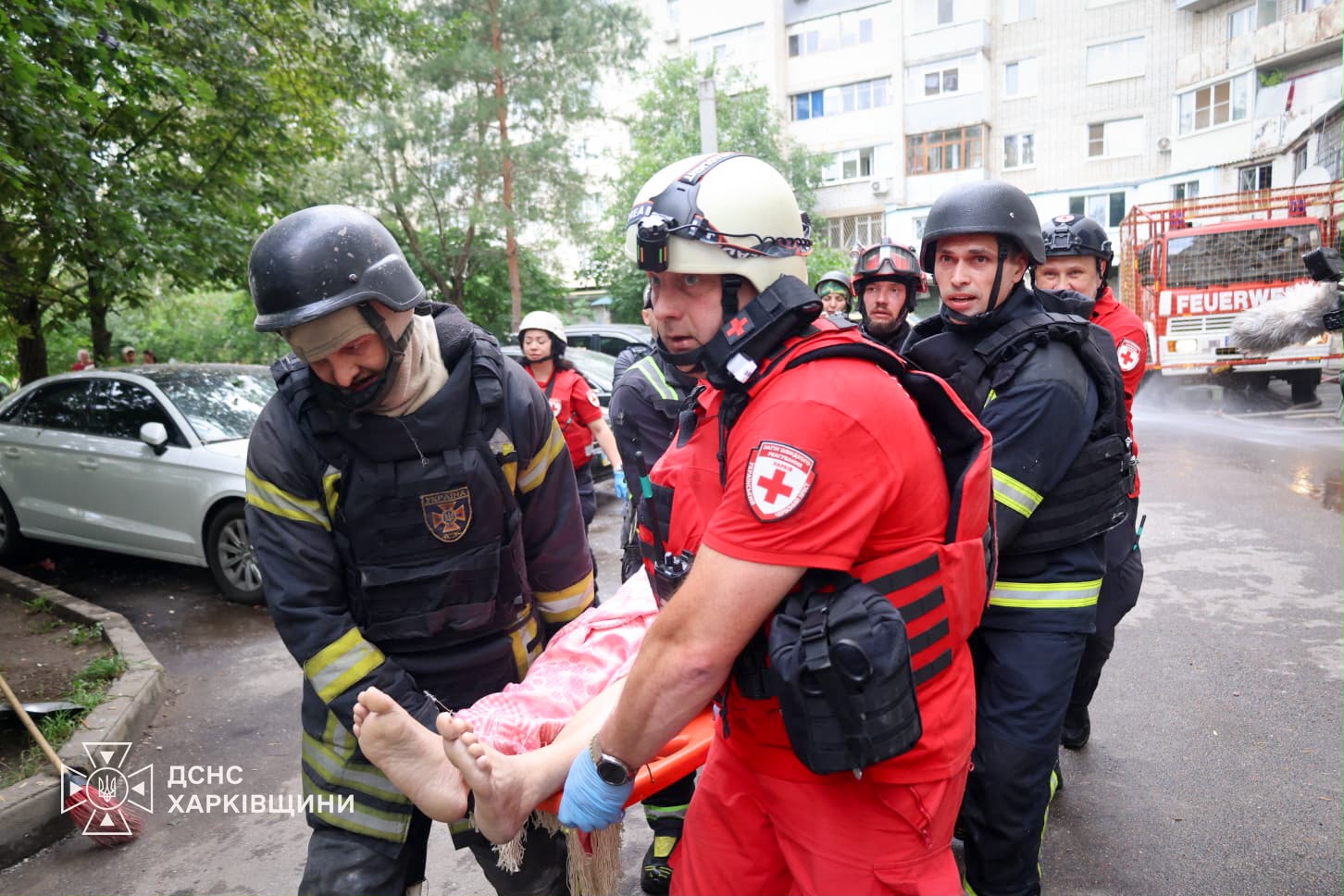
    Residents were trapped behind the collapse, and crews began a rescue operation. Firefighters brought seven people down from the upper floors, the State Emergency Service reported. The destroyed ceilings sat between the seventh and tenth floors.

    russia's morning strike kharkiv high-rise kills two men wounds 21 · post destroyed upper floors apartment building struck russia kharkiv's saltivka district 9 2026 1 syniehubov 5458525575338203375 ukraine news ukrainian
    The destroyed upper floors of the apartment building struck by Russia in Kharkiv's Saltivka district, 9 August 2026. Photo: Kharkiv Oblast Military Administration

    As the rescue got underway, Russia struck again. Terekhov said a neighboring high-rise was hit, writing that Russia "is deliberately striking residential buildings" and urging people to shelter. A third impact followed in one of the district's parks.

    russia's morning strike kharkiv high-rise kills two men wounds 21 · post rescuers medics carry injured woman site russian kharkiv's saltivka district 9 2026 3 dsns 5458755953088993681 ukraine news ukrainian
    Rescuers and medics carry an injured woman from the site of the Russian strike in Kharkiv's Saltivka district, 9 August 2026. Photo: State Emergency Service of Ukraine

    Russia regularly employs the double-tap tactic — striking a site, then hitting it again once rescuers arrive — to maximize casualties among first responders.

    Two dead, 21 wounded, a boy of five among them

    Terekhov counted a dozen wounded at first, then confirmed two people killed at the site. Syniehubov gave the fuller account: two men, aged 50 and 66, killed, and at least 21 people injured.

    Among the wounded was a five-year-old boy. 11 people suffered blast injuries and two had carbon monoxide poisoning. Another eight, including a child, had acute stress reactions, and medics hospitalized four.

    By late morning, Syniehubov said crews were still clearing the collapsed floors to be sure no one remained underneath. Specialists would then judge whether the building could still be used.

    Russians killed two more civilians in Kharkiv this morning

    The aerial attack targeted an apartment block, also injuring 21 other people.

    📹 TG/DSNS pic.twitter.com/gN9IgRUayP

    — Euromaidan Press (@EuromaidanPress) August 9, 2026

    A day of strikes across the oblast

    Over the past 24 hours, Russia struck Kharkiv and 12 settlements across the oblast, killing three people and wounding or shocking 25, the regional administration said.

    In Izium, shelling injured eight people. Russia killed a 68-year-old man in Kivsharivka, near Kupiansk, and wounded a 47-year-old woman in Mykhailivka. In Lozova, a 60-year-old woman was hurt, and a transit evacuation point there took in 227 more people.

    •  

    The Hill: US Army fired general leading its Poland-based corps that coordinates support to Ukraine. Former official cites drinking problem

    The Pentagon, headquarters of the United States Department of Defense, in January 2008.

    The US Army has suddenly removed the general in charge of the corps that helps coordinate American support to Ukraine. The Army abruptly fired Lieutenant General Charles Costanza, commander of V Corps, roughly two months before his scheduled departure, ABC News reports.

    The corps he led is central to the US role on NATO's front line with Russia. Costanza had commanded V Corps since April 2024, a corps partly based in Poland that has taken on an increasingly prominent role since Russia's full-scale war against Ukraine, helping coordinate US military support for Ukraine and managing the American presence on NATO's eastern flank.

    The reason has not been made public

    The Army confirmed the removal but not its cause. A service spokesperson said the circumstances remained unclear, and the Army said the matter was "referred to the appropriate authority in accordance with Army regulations," according to The Hill.

    Reporting points away from politics. Two US officials told journalists that the removal was not political and was not initiated by Defense Secretary Pete Hegseth, with one source citing conduct that could ground a commander's removal at any level and a former defense official citing alcohol problems. Brigadier General John Mountford, the deputy commander for readiness, has begun his service as acting commander.

    It comes amid a wider shake-up of the top brass

    The timing places it in a turbulent period for US military leadership. Costanza's removal comes amid a broader shake-up in which more than two dozen senior officers have been removed or sidelined under Hegseth, often without public explanation.

    The backdrop is US force posture in Poland

    The command change lands amid questions over the US presence in Poland. This year, the Pentagon canceled a planned deployment of a Fort Hood-based armored brigade to Poland, and after the cancellation drew criticism in Warsaw, President Donald Trump announced the US would deploy 5,000 troops in the country.

    •  

    Russia’s blockade could halve Ukraine’s grain exports. Kyiv is asking the EU for €220 million

    A Russian Shahed drone struck a Palau-flagged vessel carrying corn twice as it left a port in Odesa Oblast, setting it on fire. Source: Ukraine's State Border Guard Service

    Ukraine's Ministry of Agrarian Policy and Food has asked the European Commission for €220 million ($253 million) in grants to keep its small and medium farmers afloat, after Russian strikes on the Greater Odesa ports severed the sea route that carries most of the country's agricultural exports. The money would cover interest on loans issued under the state "Affordable Loans 5-7-9%" program, the ministry's press service said.

    The request marks the point where Russia's Black Sea campaign stopped being a shipping story and became a farm-finance one. With the corridor all but stalled, the ministry projects exports for the 2026/2027 season could fall by almost half, from 64.4 million to about 29.6 million tonnes. Grain the farmers have already harvested is piling up in silos the ministry expects to be full by October, and without cash from those sales, producers cannot finance the autumn sowing that plants next year's crop.

    How €220 million turns into €4 billion in loans

    The grant is small next to the hole it is meant to plug. Ukraine estimates its farm sector will take in roughly €6.4 billion this season against €11.2 billion in operating costs, and will need about €4 billion in working capital just to keep running. The €220 million would not cover that gap directly. Instead, by subsidizing interest, it is designed to unlock a credit portfolio of up to €4 billion ($4.6 billion) at a rate to farmers of no more than 10%, open to small and medium producers that meet the program's environmental and social criteria. Wheat exports alone could otherwise drop from 17.6 million to 8.3 million tonnes.

    The blockade behind the request

    Through July, Russia intensified strikes on civilian cargo ships in the Black Sea corridor, killing crew members and, on 22 July, halting traffic entirely — not a single vessel passed that day, at the height of the harvest. Ukraine's government called it "deliberate economic and humanitarian terror." Around 90% of Ukraine's farm exports normally move through three Odesa Oblast ports, and Agriculture Minister Taras Vysotskyi has said the rail, road, and Danube routes that remain can carry only about half the lost volume.

    The squeeze is already reaching the fields. Oilseed and grain prices have fallen about 30% as unsold stock backs up inside the country, and the ministry puts direct losses to the sector this year at between $1.5 billion and $3 billion. The government has lowered minimum export prices on some products to keep trade moving, and Prime Minister Serhii Koretskyi has said it is expanding a separate program of grain-backed loans so farmers can borrow against stored crops rather than sell them cheap.

    Whether Brussels funds the €220 million request, and how fast, will help decide how much of this year's harvest gets planted — and how much stays stranded in silos while the ports stay shut.

    •  

    Ukraine’s missile, Europe’s sensors—FREYJA enters active development on an early-2027 clock

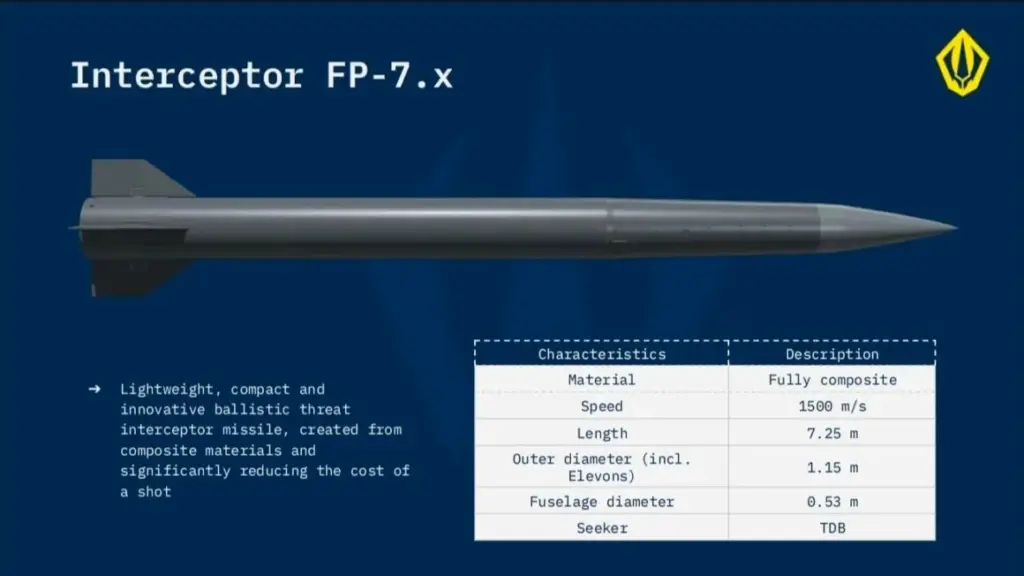
    Fire Point concept graphic showing the FP-7.x interceptor missile beside a table of proposed specifications.

    Ukraine expects the joint European FREYJA interceptor program to deliver "concrete results" by the turn of 2026–2027, President Volodymyr Zelenskyy said on 6 August. The program "is already actively underway," he added. 

    Under the program, Ukraine would manufacture the interceptor and launcher, while European partners would provide radars, sensors, and other critical components.

    Zelenskyy said FREYJA is intended to intercept ballistic missiles and would benefit countries across Europe. He said its successful development would place Ukraine among the few countries with an anti-ballistic system of their own.

    The FREYJA project seeks to address Ukraine's growing shortage of interceptors capable of stopping Russian ballistic missiles. FREYJA will not solve the immediate shortage, but it could reduce Europe's long-term reliance on scarce US-made Patriot interceptors. Recent Russian attacks have shown the consequences of that shortage.

    How the FREYJA interceptor would help Ukraine

    Ten countries are involved in FREYJA, and Zelenskyy said more partners had agreed to join the effort. Leading European defense companies will contribute the radars, sensors, and other technology the system requires, he said.

    This joint venture connects Ukraine's wartime missile production with technologies held by established European manufacturers. Earlier Euromaidan Press reporting described the project as pairing a Ukrainian Fire Point interceptor with European radar, guidance, and sensor technology.

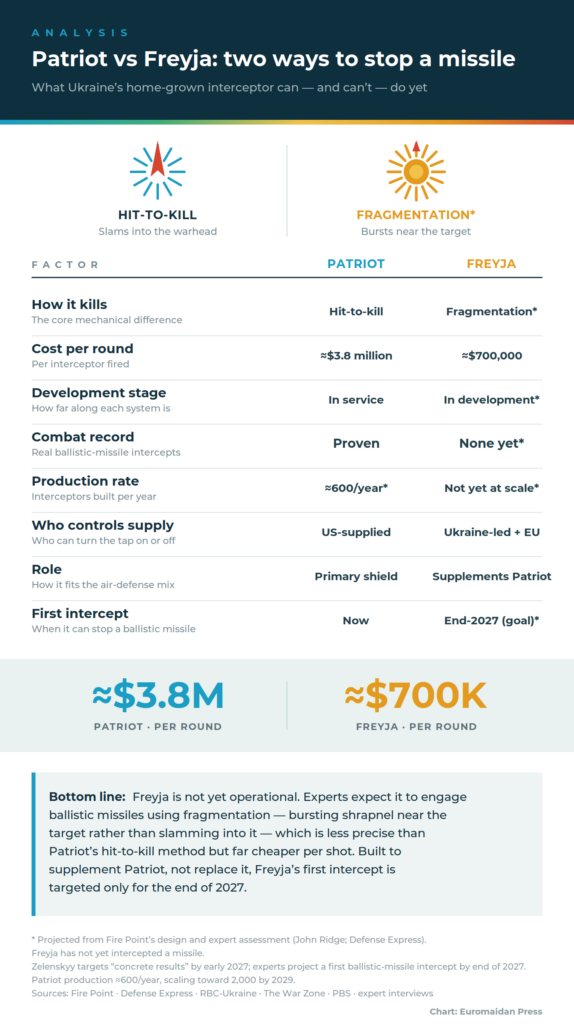
    Image: Euromaidan Press

    Euromaidan Press noted that each FREYJA round cost about $700,000, compared with roughly $4 million for a PAC-3 interceptor. However, FREYJA is not a one-for-one Patriot equivalent and has not yet demonstrated a ballistic-missile interception. The lower price could matter if Ukraine can manufacture it at scale.

    Zelenskyy's timetable concerns "concrete results," not a fully operational or mass-produced system.

    Ukraine needs FREYJA amid growing interceptor shortage

    The need for FREYJA was on display during Russia's overnight attack on 5 August. Moscow launched 24 ballistic and four anti-ship missiles, and Ukraine reported intercepting none of them. Air defenders neutralized 98 of 115 drones, but missiles and drones still struck 26 locations. 17 people were killed.

    July 2026 had already shown the same deterioration. Ukraine only downed two of 36 ballistic missiles in two major attacks, roughly one in eighteen, as Patriot stocks ran low.

    Washington offers no quick relief. Trump's July promise of a Patriot production license remains in its early stages, according to the system's manufacturers. Asked about more Patriot interceptors on 6 August, Trump replied that the United States also needed missiles.

    The mismatch leaves Ukraine pursuing two tracks: pressing partners for scarce Patriots now while building FREYJA for a less dependent European defense later.

    •  

    Nawrocki: where “Muscovites are beaten,” Poland helps. Russian Foreign ministry hits back

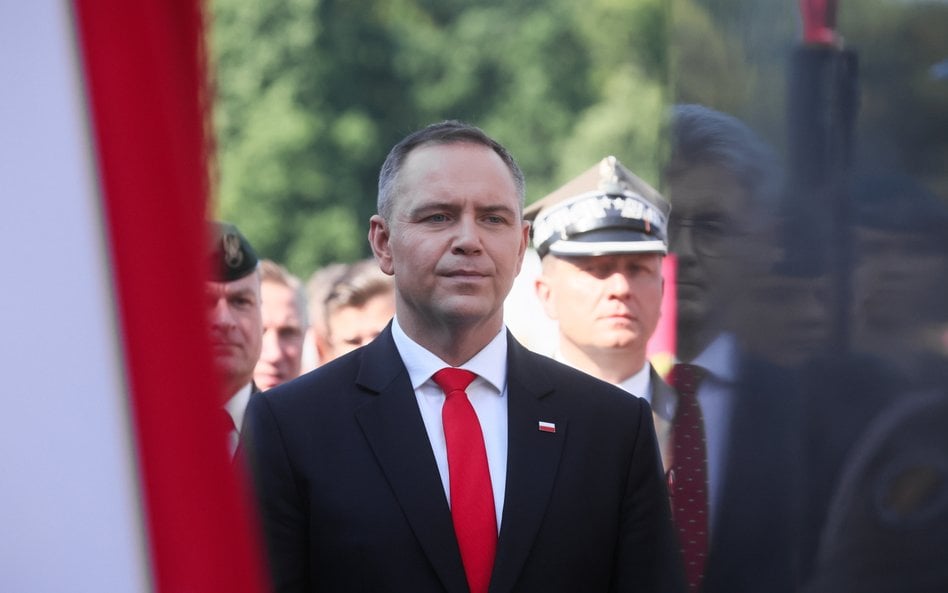
    rzeczpospolita fourth year russia-ukraine war poland’s leader sides aggressor polish president karol nawrocki pap/leszek szymański 1699304a7cc0b825fd6ed95fba7ddad5 (1) editorial published 27 stated russia’s all-out against ukraine has taken position aligns commentary

    Polish President Karol Nawrocki used a speech marking his first year in office to restate that Poland will keep backing Ukraine's war against Russia—and to frame that backing as cold strategic interest rather than solidarity, warning in the same speech that continued help does not extend to tolerating Ukrainian nationalist symbols" on Polish soil. He spoke on 6 August at a ceremony in the courtyard of the Presidential Palace in Warsaw, reported by RMF FM.

    The remarks land at the hottest point yet in a Polish-Ukrainian memory row that has stripped Kyiv of much goodwill from its most important frontline ally. Poland's interest, Nawrocki said, is that Ukrainians fight "as long as possible and as effectively as possible" against Russia, keeping it far from Poland—help offered not out of shared cause but because a Ukraine that bleeds Russia serves Warsaw. Coming from the country most vital to Ukraine's supply lines, it is a statement of support recast as conditional self-interest.

    Support as strategy, not solidarity

    "Poland's interest is that Ukraine and Ukrainian soldiers cope as well as possible with the post-Soviet Russian Federation and keep it as far from Poland as possible. That is obvious; that is the Polish state's strategy," Nawrocki said. "Let them kill the Soviets who attacked them—it does not hurt us Poles at all. In this they can always count on our help, because where a Muscovite is beaten, Poland helps, even if it does not take part directly in this war."

    The register was deliberate. Nawrocki, a historian who ran the Institute of National Remembrance before winning the presidency, used the pejoratives "Soviets" and "Muscovites" for Russians throughout, casting Polish aid as a matter of keeping the fight on the far side of the border.

    The red line: no Bandera flags

    The support came fenced. "It is also Poland's strategic interest that Bandera flags do not fly in Warsaw or anywhere in Poland," Nawrocki said, promising to help "but always saying: Poland first, Poles first"—not, he added, "thoughtlessly sending fleet after fleet without analysis, on phone calls and smiles."

    The condition points straight at the dispute that has consumed the relationship since May, when Zelenskyy signed a decree granting a special-forces unit the honorary title "Heroes of the UPA," the insurgent army Poland's parliament holds responsible for the Volhynia killings of tens of thousands of Poles and has declared a genocide. Nawrocki stripped Zelenskyy of the Order of the White Eagle in response; in July he pressed parliament to ban the UPA's red-and-black flag by law.

    Moscow moves to widen the gap

    Russia moved to pry the crack open within hours. Foreign ministry spokeswoman Maria Zakharova derided Nawrocki as a former Gdansk war-museum director whose "clinical Russophobia," she claimed, was affecting his judgment, and reminded him that Russia and Poland share a border "with no Ukraine and no Ukrainians between us"—the erasure of Ukraine stated plainly, from Moscow's own podium.

    That is the move Warsaw itself has warned about. Polish officials have cautioned that Russia would seek to exploit the Ukraine tensions, and Polish services recently detained a group accused of recruiting Ukrainians for paid anti-Ukrainian rallies on Russian instructions. The memory feud, as one Polish advocate for Ukraine told Euromaidan Press in June, is theater that serves only one audience—the one in the Kremlin.

    •  

    Des mots sur un carnet à Paris [en]

    [en]

    C’est moche pour l’accessibilité, je sais.

    Transcription IA non vérifiée (22.07.2026):

    1er juillet 2026, 21h15

    Ça fait longtemps que je n’écris plus à la main. Encore plus longtemps que je n’écris plus à la main avec soin. Depuis mes TMS en 2002 ou 2003, ce n’est pas confortable. Ça crampe, ça tétanise. Je regarde un peu de haut ces exercices qui disent de faire à la main. Je tape à l’aveugle plus vite que mon ombre. Bref : se passe-t-il vraiment autre chose dans mon cerveau quand j’écris à la main ? Avec mes “petits problèmes linguistiques” depuis mon accident, je me pose la question, à nouveau, de l’utilité de ce genre d’exercice. Pourquoi pas. Écrire à la main, c’est me reconnecter à un rapport plus primitif de mon rapport à l’expression écrite : le seul que j’avais jusqu’au milieu de mon adolescence, quand j’ai appris à taper ; et le principal, jusqu’à la fin de mes études, justement autour de 2002-2003. C’est moins rapide et moins confortable, mais en ces temps post-commotion, je me réconcilie — tant bien que mal — avec le temps lent.

    Je suis à Paris. Une semaine pour deux journées de formation à l’IGB. La dernière était aujourd’hui. Mon cerveau est cuit [?], et c’était fascinant et ultra riche, comme toujours à l’IGB. C’est le genre de formation où je prends des notes à la main, relativement illisibles, parce que les schémas de boucles interactionnelles entre les différents protagonistes des situations abordées, c’est quand même assez galère à faire à l’ordi. Avec ma logo la semaine dernière, j’ai évoqué ce que je ressens un peu comme une récalcitrance à l’effort cognitif, parfois. Il y a des articles un peu pointus que je veux lire, mais je rechigne à la perspective de cet effort. Un peu peur d’en faire trop, aussi, bien sûr. On s’est dit que ce serait peut-être un exercice utile de m’y mettre, de façon contrôlée : limité dans le temps, lentement, et — sa suggestion — en surlignant les points clés ou prenant des notes. Ça m’a parlé — et travaillé.

    J’ai passé une décennie de ma vie à lire en prenant des notes — quand j’étais aux études. Je prenais aussi des notes de livres que je lisais “en plus”, par intérêt. Prendre des notes m’aide à comprendre. Quand j’écoute aussi, d’ailleurs. C’est ce qui m’a amenée à live-bloguer, en fait. Je peinais à rester concentrée sur des conférences (le TDAH était très loin d’être sur mon radar !) et j’ai fait l’expérience, un peu par hasard, qu’en prenant des notes ça allait beaucoup mieux. Pas très étonnant en fait, après avoir fait ça quasi quotidiennement sur les bancs de l’uni.

    Alors oui, si on se dit que je dois peut-être “ré-entraîner” mon cerveau à certaines choses, lire en prenant des notes pourrait être une pratique intéressante à revisiter.

    Ce qui est marrant, c’est que je n’ai pas arrêté de lire des choses “difficiles”, après mes études. Mais j’ai lâché la discipline de la prise de notes, en partie je pense car elle n’était plus forcément nécessaire en vue des raisons par lesquelles je lisais, aussi un peu en partie parce que c’est un effort en plus, et parce qu’avec les supports numériques dans lesquels on peut “rechercher”, les notes semblent un peu moins utiles — en tant que résumé permettant d’accéder au contenu.

    Mais le travail cognitif de tri de l’information, de synthèse, d’organisation des idées, il se produit. Et au fil de toutes ces dernières années, j’ai parfois senti, en toile de fond, que je pourrais perdre un peu en rigueur, que les choses que j’avais lues et comprises finissaient par manquer de précision, qu’avec le temps il me manquait quelques bouts — rien de très grave — et qu’évidemment je n’allais que rarement replonger dans la source (si tant est que j’étais capable de la retrouver, malgré les miracles de la loupe et des images…)

    Alors oui, écrire comme exercice, prendre des notes, pourquoi pas. Je me dis que je pourrais mettre au propre mes notes IGB par exemple. Il y a quelques articles écrits par un psychologue français sur la question de “l’énergie” dans le TDAH qui m’intéressent et qui méritent une lecture attentive, d’autant plus que je suis aux prises avec ces questions de “gestion de l’énergie” de façon criante depuis mon accident — je suis d’ailleurs au milieu d’un programme en ergothérapie sur la gestion.

    “Journaler”, c’est aussi une pratique que je souhaite reprendre. Ma mémoire épisodique est souvent un peu confuse, et c’est pire depuis mon accident. Prendre quelques notes en fin de journée m’aide à ne pas me sentir en dérive temporelle. Il y a dix-huit mois, quand j’ai pris deux semaines de vacances pour réaménager mon chez-moi, j’ai eu envie de me mettre au scrapbooking. Peut-être qu’il y a une idée à creuser là. Écrire à la main, c’est peut-être aussi quelque chose qui pourrait être pour moi une forme de “repos”. Le rythme plus lent, la linéarité, je sens en effet que c’est différent de taper ou dicter sur l’ordi ou le tél. Chaque mot écrit est écrit.

    On verra.

    J’étais partie pour faire une page. J’en ai fait cinq. J’arrête là pour aujourd’hui.

    •  
    ❌