The US condemned the genocide and military rule there, but now that Trump craves its rare earths, that’s all changed. For democracy activists, that’s a disaster
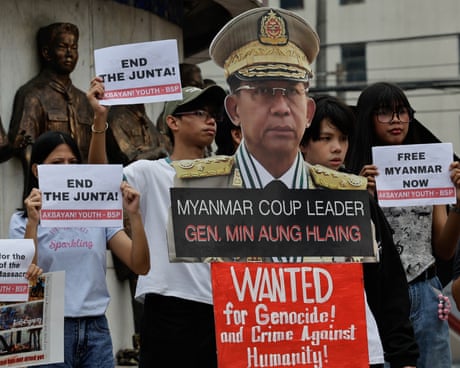
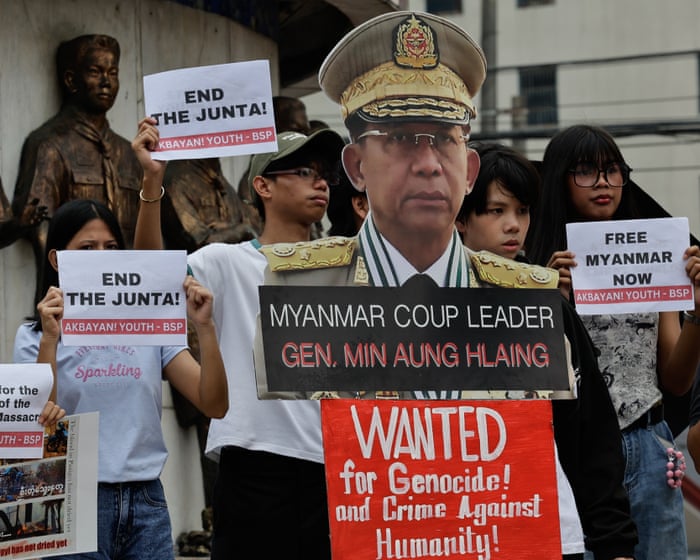
Marco Rubio was once adamant that the US had to do everything in its power to end what he described as the “ethnic cleansing” of the Rohingya in Myanmar. In a 2017 letter he signed along with 20 other US senators, Rubio called for “strong multilateral sanctions against specific senior Burmese military officials associated with the gross human rights abuses”. Those responsible for the atrocities should be prosecuted, he argued.
In the years since, the Myanmar military’s crimes have only increased. What was then deemed ethnic cleansing of the Rohingya is now widely viewed, including by the US, as genocide. What little democracy existed in Myanmar was eradicated in 2021 when Aung San Suu Kyi was arrested and imprisoned and her party’s election victory overturned, and the military took full control.
For years everyone has been dancing around Trump’s unpredictability, his bullying and his threats. It’s past time to reassert our values
In two weeks, Donald Trump faces his moment of truth; transformational midterm elections that will drastically influence the rest of his presidency, for better or for worse.
Assuming that he cannot find a way around the constitutional ban on him running for a third time in 2028, he now has a limited time left to make sure he leaves office the most consequential president ever. Again, for better, or worse.
Zoe Daniel is a three-time ABC foreign correspondent and former independent member for Goldstein
Senator Bernie Sanders of Vermont has made a point of investing in Republican-leaning states. He rallied in Tampa for Ms. Nixon, the underdog Democratic nominee for Florida Senate.
Senator Bernie Sanders, independent of Vermont, with Angie Nixon, the Democratic candidate for Senate in Florida, during a campaign stop on Saturday in Tampa, Fla.
Senator Darline Graham, appointed to fill the Senate seat of her late brother, Lindsey, gently disagreed with the president’s decision to exempt Russia from the sanctions legislation.
The White House inquiry is focused on diverging accounts from Richard Grenell and Alina Habba Mildon about a $17 million transfer from a government account in the African country to a Texas defense firm.
The White House inquiry is focused on diverging accounts from Richard Grenell and Alina Habba Mildon about a $17 million transfer from a government account in the African country to a Texas defense firm.
Minnesota lawmaker’s attorneys asked for return of seized items and the preservation of any recordings of search
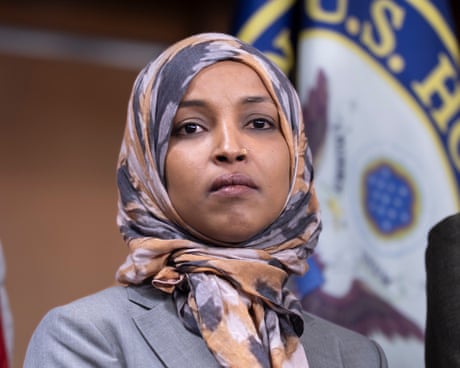
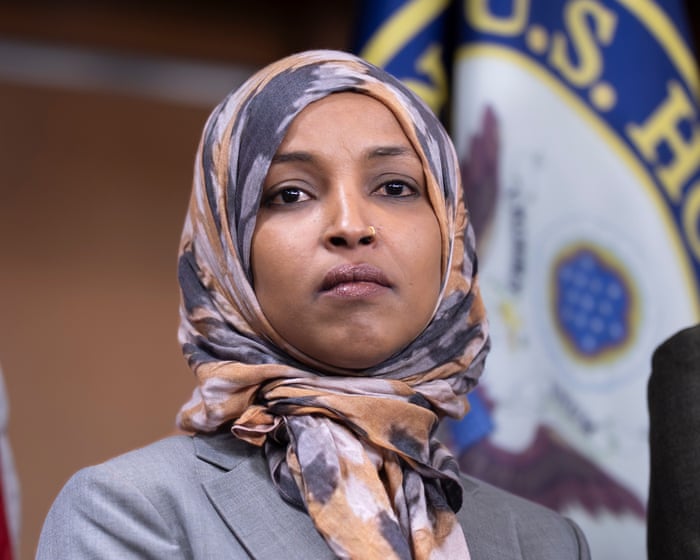
Ilhan Omar’s attorneys have asked the US Department of Justice to return property that federal agents removed days earlier from her home during a search.
The lawyers for the Minnesota Democrat contended that the seizure as “neither justified nor lawful”, according to a letter that the Associated Press reported on Friday.
US President Donald Trump has suspended the tariffs and sanctions on the biggest buyers of Russian oil set by the Lindsey Graham Act, the law he signed himself in September. He says the move serves US national interests, according to an executive order published on the White House site.
The act required the president, within 30 days, to impose 100% tariffs on all goods from the five biggest buyers of Russian oil, to sanction a range of Russian entities and to put 500% tariffs on all Russian energy imports to the US. The deadline for those measures fell on 18 October.
Trump has used the president’s power under Section 115 of the Graham Act, which allows him to waive sanctions, restrictions, and duties by certifying to Congress in writing that doing so serves US national interests and submitting a report explaining why. The act does not, however, allow him to cancel sanctions that have already been announced.
Moscow calls it historic, Kyiv calls it a gift to Putin
The two capitals read the same order in opposite ways. Kirill Dmitriev, an envoy for Russian leader Vladimir Putin, called it “an important and truly historic moment” on X, claiming the sanctions had mainly harmed the US economy and world markets.
“Economic cooperation between Russia and the US serves the interests of both nations, contributes to global economic stability and lays the foundation for building trust and achieving lasting peace,” Dmitriev writes.
President Volodymyr Zelenskyy answered from under fire. Russia struck Ukraine’s energy system on 17 October, and at that very moment Washington chose “to completely ignore the Lindsey Graham law, which was supposed to impose real, effective pressure on Russia to end this war,” he says.
A law its own backers say is being gutted
The waiver lands amid a bipartisan revolt in Congress. Seven Republican and Democratic senators had already warned on 11 October that Trump’s move to allow Russian diesel imports had broken the law Congress passed after the full-scale invasion, urging the administration to reverse it so US money would not help finance Russia’s war.
Meanwhile, Zelenskyy argued the law can still work if Washington lets it.
“This law could, and still can, help a great deal. But the law has actually to work, and every vote for it matters,” he said, warning that the step only pushes Moscow to strike harder.
The world must not give up ground and must try to end the war, Zelenskyy added.
“To end it, and not give Putin every reason to continue it indefinitely,” he stressed, thanking everyone who “is truly fighting for peace and helping Ukraine," he stated.
The word from the Ukrainian opposition
The Ukrainian opposition also commented on Trump’s decision. Iryna Herashchenko, co-chair of the European Solidarity parliamentary faction, said that “the most cynical and stupid decisions are usually made by rulers on Saturday night,” when public attention is scattered, and people are preparing for the weekend.
“Rehabilitating Putin harms not only Ukraine but also the US itself, strengthens the axis of authoritarian regimes, and undermines international security,” she claimed.
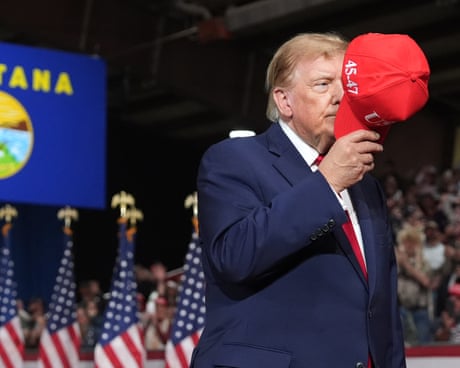
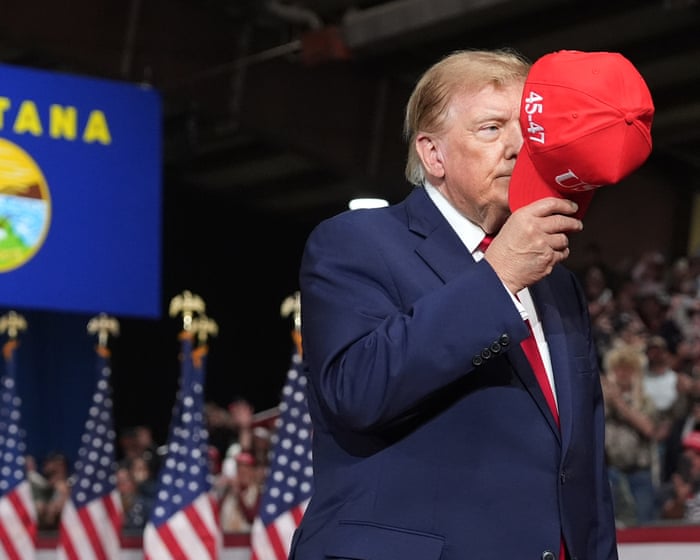
President has hit red states to drum up Republican support – and his increasingly strange performances are on full display
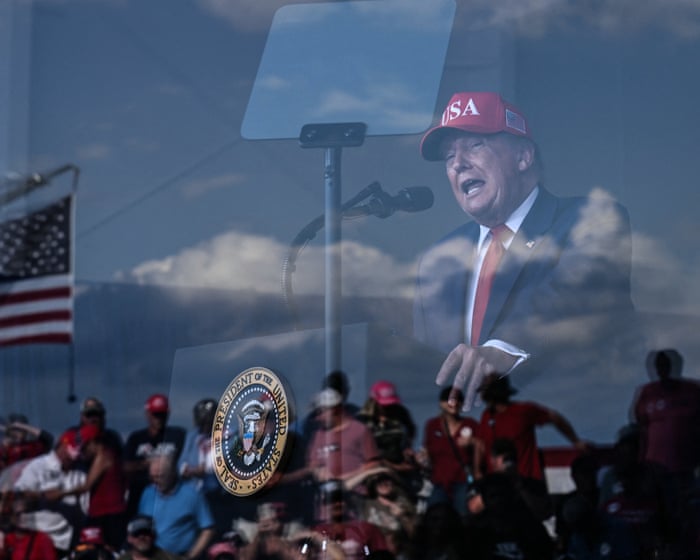
Montana, Tennessee, Alaska. In the run-up to an election, a Republican president typically wouldn’t be campaigning in these traditionally red states.
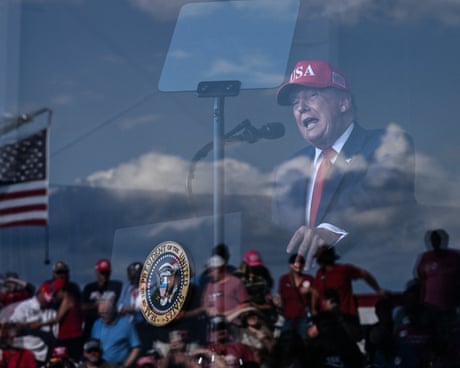
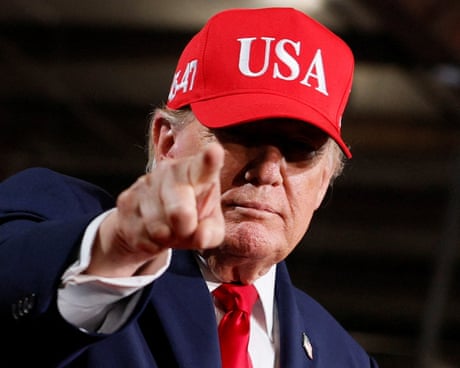
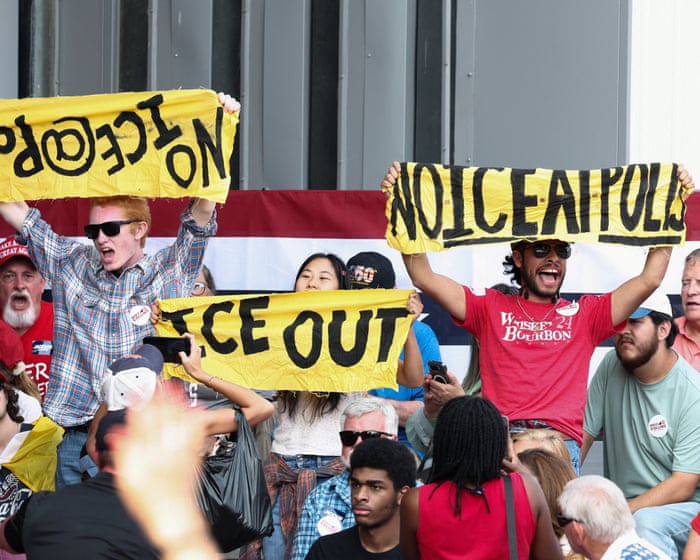
These aren’t normal times, however, and Donald Trump, an unpopular president leading an unpopular party, has held rallies in those states in the last week, seeking to drum up support. But a series of eccentric performances from the president means his behavior has been the focus, rather than any of the candidates he is backing.
Voting rights advocates fear the Trump administration may use the federal government to cast doubt on the election, discourage participation or try to delegitimize results.
Cabinet members are seldom major figures in campaigns, but the defense secretary’s forays into politics and his bravado in defense of an unpopular war have made him a target.
In the final weeks of a midterm congressional battle in which voters’ opposition to the war with Iran has become a major issue, Democrats are increasingly making Mr. Hegseth a main character in their campaign messaging.
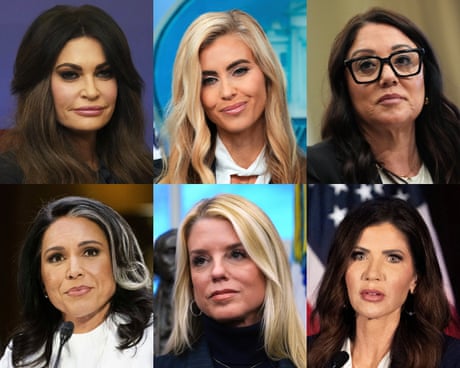
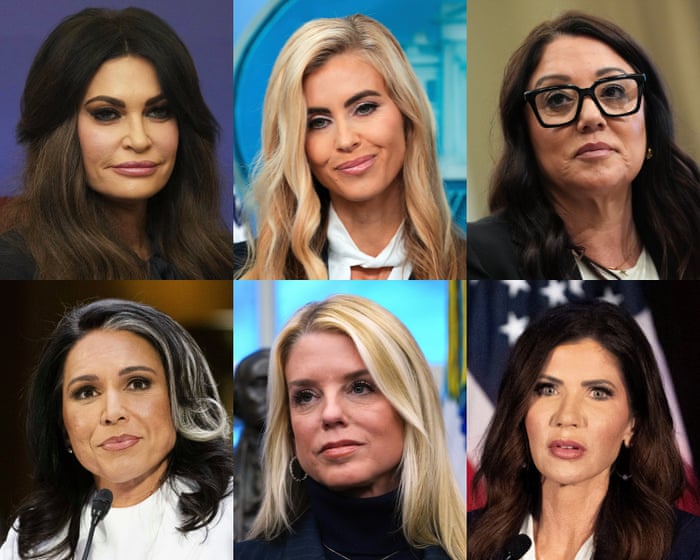
Half of the women on Trump’s team have been replaced by men, while men facing misconduct allegations remain
Donald Trump is not, by any measure, a feminist. He has said so himself. But the president has often pointed to his hiring and promoting of women in an attempt to stave off criticism of both his policies and personal conduct over the years.
During his second term, however, there is one common characteristic among most of those who have departed the Trump administration.
President signed the legislation championed by late senator Lindsey Graham last month but has waived the restrictions as they were due to come into effect
Donald Trump has put on hold a sweeping new sanctions package targeting the Russian economy, telling Congress the pause on the legislation passed by both chambers was in the national interest.
In an executive order on Friday, the US president said he was waiving many sanctions, restrictions and duties on Russia, in a move that comes as he has been publicly criticising Ukrainian president Volodymyr Zelenskyy, including suggesting that Ukraine needs a new leader.
Escalating a standoff with Judge Ana C. Reyes, the Justice Department demanded that she recuse herself from a case in which she had ordered several Trump officials to testify.
A criminal investigation into the lawmaker’s immigration process advanced after federal investigators reviewed family text messages from a seized phone.
State and local officials said that they received thousands of names lacking key identifying information, and that many of the names were paired with addresses over which they had no jurisdiction.
Justice department warns election officials of prosecution if they ‘knowingly tabulate ballots’ cast by noncitizens
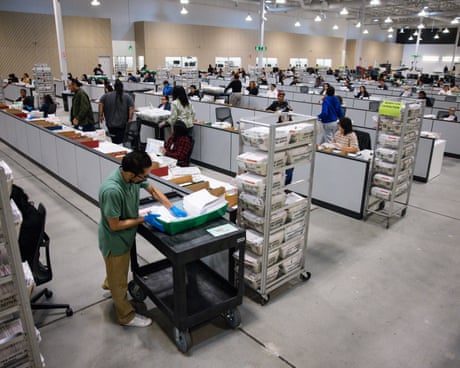
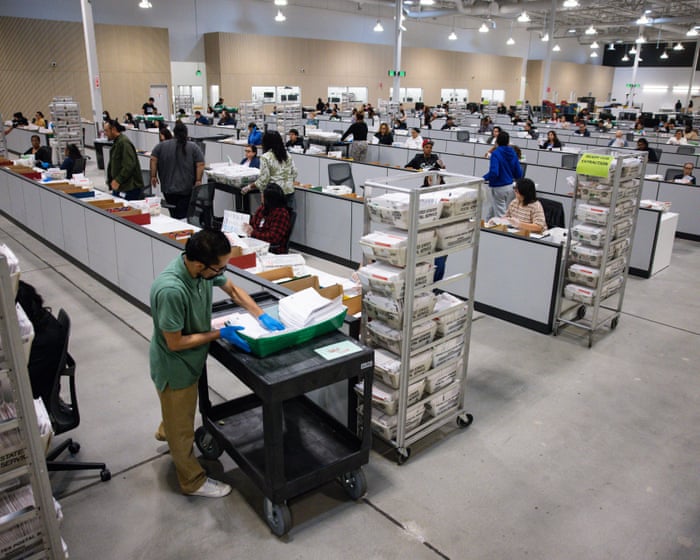
The Trump administration is escalating its fight with California ahead of next month’s midterm elections, warning that local officials who process and tabulate ballots submitted by suspected noncitizen voters are putting themselves at risk of criminal investigation and potential prosecution.
The letter on Friday from senior justice department officials and obtained first by the Associated Press is the latest salvo in an ongoing tussle with heavily Democratic California, coming just a day after the Trump administration sued the state to prevent it from counting mail-in ballots from people the federal government has identified as “likely” noncitizens until their immigration status can be confirmed.
President appears at rally for struggling Mike Collins, dismisses critics and touts ‘most successful’ two-year run
At a rally in north Georgia, Donald Trump again claimed that the 2020 election in Georgia was fraudulent, alleging that the election of US senator Jon Ossoff was illegitimate.
Ossoff, who faces US congressman Mike Collins in November, does not represent Georgia’s values, Trump said.
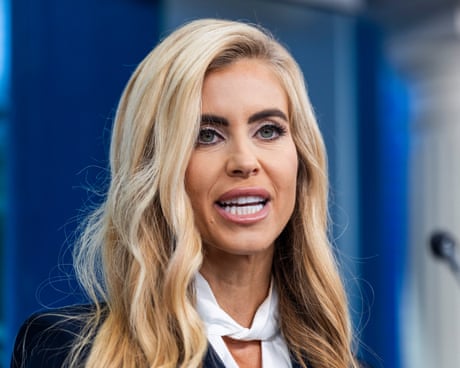
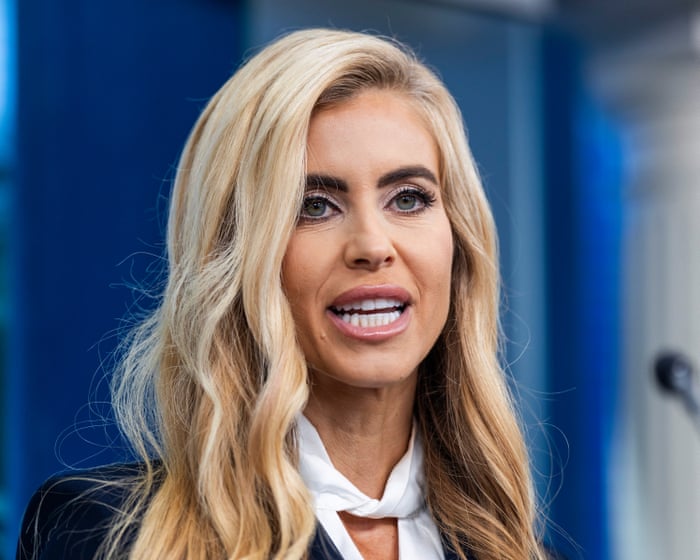
The president reportedly chose Zacharia after seeing her on television, but her first press briefing and disastrous interviews sealed her fate
And so Katie Zacharia joins the mayfly ranks of Liz Truss, Anthony Scaramucci, New Coke, CNN+ and Quibi. To say she burned twice as bright and half as long would be too kind. She went out like a firework on a soggy night.
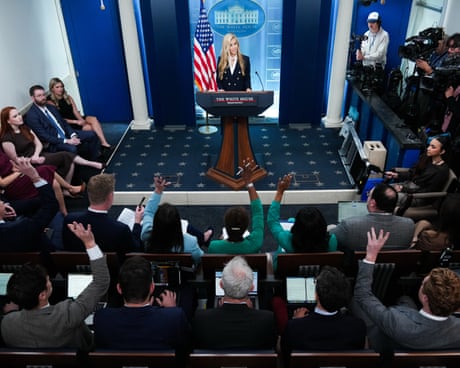
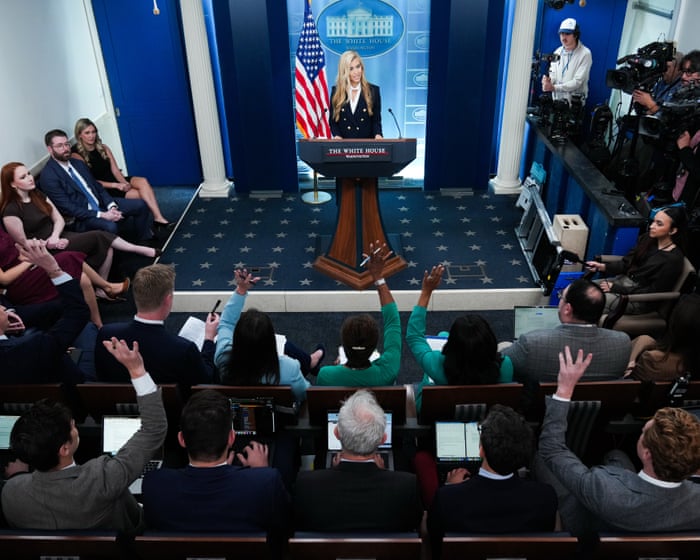
The White House confirmed on Friday that Zacharia was leaving her role as press secretary after just five days on the job. No one was surprised after a lacklustre press briefing debut and scrutiny over her legal credentials.
A three-judge panel appeared unconvinced by claims that a federal law requiring the president to preserve and hand over his presidential papers was unconstitutional.
Her abrupt firing after just five days reopened the contest for one of the Trump administration’s most prominent roles
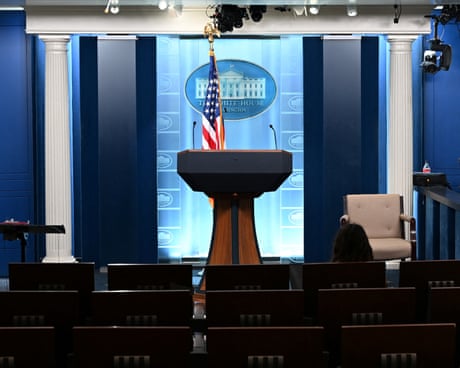
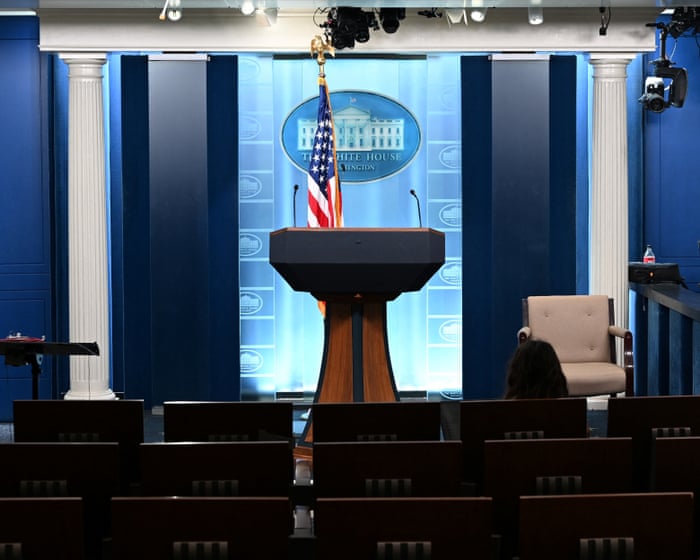
The White House is without a press secretary again after the ousting of Katie Zacharia, just five days into her appointment as Donald Trump’s spokesperson.
Zacharia’s departure comes just months after Karoline Leavitt unexpectedly resigned as the White House press secretary to focus on her family.
Elon Musk approached US President Donald Trump with a proposal to limit the speed of Starlink satellite communications in Ukraine, disrupting Kyiv’s ability to counter Russian drone attacks, The Telegraph reported on 16 October, citing four sources familiar with the discussions.
The restrictions had immediate consequences for Ukraine’s defenses, forcing some drone missions against Russian positions to be called off and threatening the ability to intercept Russian jet-powered drones as they targeted Ukrainian cities at the time.
According to The Telegraph, Trump agreed with Musk’s suggestion, paving the way for the Pentagon to impose restrictions on Starshield, the military-grade version of SpaceX’s satellite network used by Ukrainian forces.
The report contradicts Musk’s public claim that the US military and ultimately Trump were responsible for deciding any limits on the system. However, Trump denied that either he or Musk was responsible for Ukraine losing access, while an anonymous US official told AFP that the president had not requested the reduction in service.
The reported restrictions come amid tensions between Washington and Kyiv over Ukrainian strikes on Russian oil refineries. The episode has raised concerns about Ukraine’s dependence on privately controlled communications infrastructure and the risk that changes to US support could weaken its battlefield capabilities.
Starshield is the military-grade version of Starlink, SpaceX’s satellite internet network. It allows Ukrainian drone operators to maintain communications with aircraft moving at high speeds, supporting both defensive interception missions and strikes against Russian targets.
The speed limit imposed on Ukrainian drones using Starshield was around 160 kph, making it difficult for them to intercept Russian jet-powered drones and missiles traveling at roughly twice that speed.
According to The Telegraph, a senior source said Musk had become concerned about potential backlash from European consumers following the restrictions. A high-ranking European official and two Ukrainian sources reportedly corroborated the account that Musk and Trump were both involved in the decision.
The Pentagon has not publicly explained the restrictions. The report’s account also remains disputed: Trump said on 16 October that he did not believe either he or Musk was responsible for Ukraine losing access, while an anonymous US official cited by AFP said the president had not requested the reduction.
Explore further
“Trump and Musk must be held accountable”: US senator warns Starlink network failing over Ukraine could cripple its shield against Russian missiles and drones
Ukraine says Starshield capabilities are being restored
Ukrainian President Volodymyr Zelenskyy said on 16 October that restrictions on SpaceX’s Starshield satellite communications system had disrupted several military operations, including efforts to intercept Russian jet-powered Geran drones attacking Ukrainian cities.
Zelenskyy said Ukraine did not use Starlink to support attacks inside Russia, but relied on the system to intercept drones targeting civilians, conduct mid-range strikes against Russian military targets in occupied Ukrainian territory, and deliver food and water to frontline troops using drones.
“When the speed was reduced, we were unable to intercept a certain number of jet-powered ‘shaheds,’ [Gerans - ed.]” Zelenskyy wrote on X, adding that Ukrainian forces had lost the ability to carry out some operations while the restrictions were in place.
Zelenskyy said Ukraine’s Defense Ministry was in contact with partners and had received signals from the White House that the capabilities would be restored. However, he stressed that speeds had not yet returned to their previous levels, although restoration was underway.
We don’t use Starlink for our responses inside Russia. We use Starlink to intercept jet-powered “shaheds” that attack our civilians and kill families.
Starlink wasn’t turned off – its speed was reduced. And when the speed was reduced, we were unable to intercept a certain number…
— Volodymyr Zelenskyy / Володимир Зеленський (@ZelenskyyUa) October 16, 2026
Europe warns against dependence on Musk’s network
The latest episode has renewed European concerns about relying on Musk and SpaceX for critical communications infrastructure. Polish Foreign Minister Radosław Sikorski warned Musk on social media that European customers were watching his actions, The Telegraph reported.
The European Union is developing its own satellite communications system, IRIS², intended to provide an alternative to Starlink, according to The Telegraph. The system is planned to become operational by 2030, leaving Ukraine and European governments dependent on existing providers in the meantime.
The report adds to concerns that decisions made in Washington or by private technology providers could directly affect Ukraine’s ability to defend itself against Russian attacks.
American officials say they have identified similar influence campaigns by Russia and others in years past, all trying to create discord over contentious topics.
Zacharia hosted widely panned first briefing on Tuesday and faced scrutiny after admitting she didn’t pass bar exam
Donald Trump’s new press secretary, Katie Zacharia, was fired on Friday, just five days after she assumed the role, according to a White House official.
Zacharia confirmed her departure from the White House on Friday evening.
Donald Trump has urged Katie Zacharia, his new White House press secretary, to “reconsider” taking the job after she faced intense scrutiny from news outlets, including the rightwing cable network Fox News.
Speaking with reporters outside the White House on Friday, the US president said Zacharia had been “treated very badly by the media” after she stumbled through a 14-minute press conference on Tuesday and questions arose over her legal credentials.
The old certainties have gone. We will have to spend whatever it takes to protect ourselves in this new and dangerous world
Donald Trump must find it oddly frustrating. He keeps showing the world exactly who he is, and yet the world keeps refusing to believe it. As clearly as he can, he is announcing that he is not the leader of the free world, that he is not even a reliable member of the democratic west, that he is in fact an ally of its enemies – but the west, including Britain, either doesn’t fully get the message or can’t quite bring itself to draw the obvious conclusion.
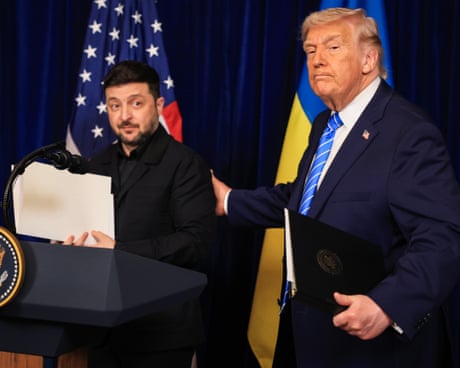
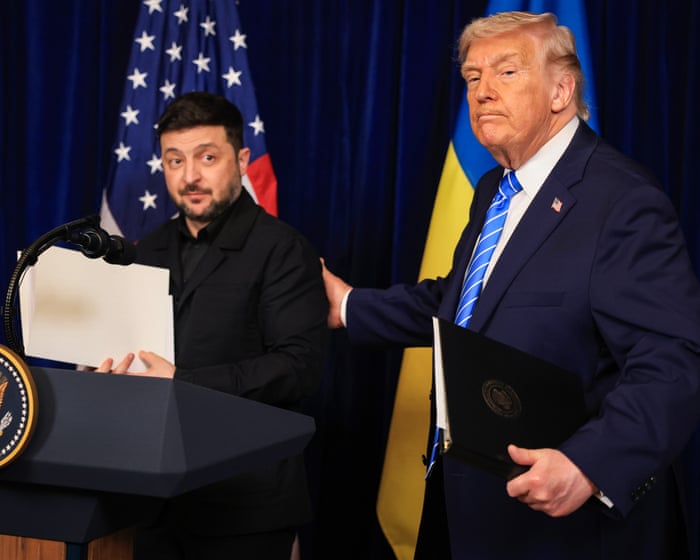
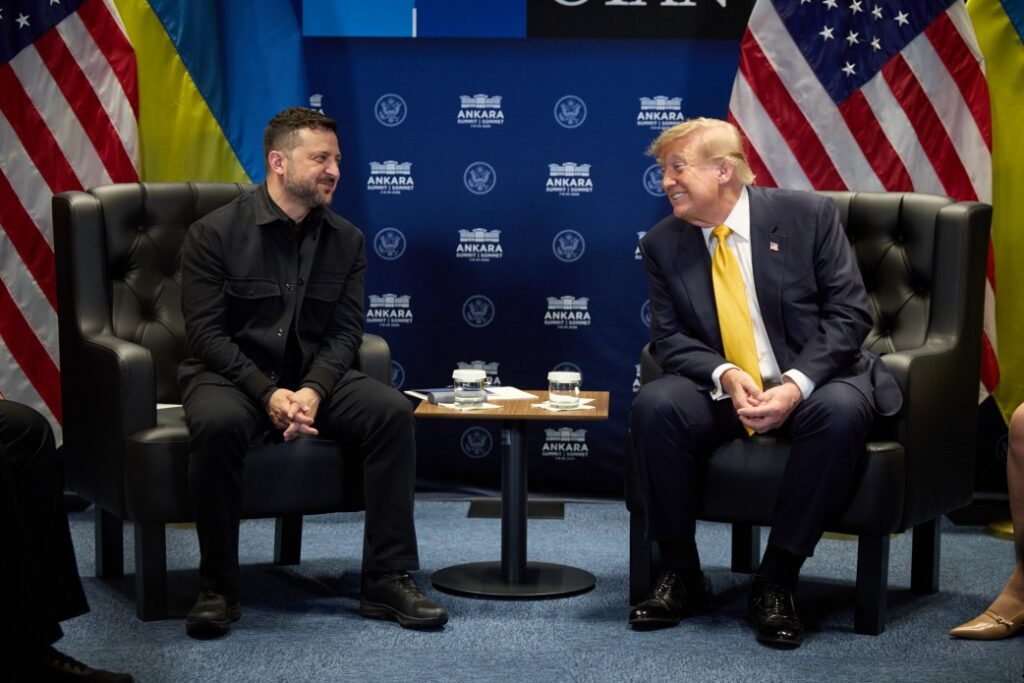
Trump had another go this week, finding multiple ways to declare that in the war between Russia and Ukraine, he is no mediator or peace broker but a partner of Vladimir Putin. In fairness to him, the US president had loudly issued that declaration within weeks of his return to the White House when, in February 2025, he delivered an on-camera dressing down of Volodymyr Zelenskyy in the Oval Office, seeking to humiliate the Ukrainian leader by telling him “you don’t have the cards”, even as JD Vance demanded their visitor show gratitude. That should have made Trump’s position sufficiently plain, but in the past few days he has all but put it up in lights.
Jonathan Freedland is a Guardian columnist
US midterms: Trump, war and America’s future
On Thursday, 5 November join Jonathan Freedland, Devika Bhat, Professor Adam Smith in London and David Smith and leading US commentator Tara Setmayer live from the US to discuss the results and their implications for the future of Trump, the US and global politics.
Book tickets here or at guardian.live
Where the two presidents’ war of words will end is anybody’s guess. But if it continues, it could threaten the crucial operational help that Ukraine still gets from the United States.
A bipartisan group of 22 House lawmakers is urging President Donald Trump to fully implement the new Russia sanctions law and revoke a license allowing certain Russian diesel transactions. In a letter sent on 15 October, they copied Secretary of State Marco Rubio and Treasury Secretary Scott Bessent and requested details on planned sanctions, tariffs and waivers.
Their request comes as the law’s first requirements fall due on 18 October, while lawmakers from both parties challengethe administration’s decision to allow certain Russian diesel transactions. Some restrictions take effect automatically, while others require presidential action. The law does not specify a penalty for the president missing the deadline.
What the Russia sanctions law requires
Congress passed the Lindsey O. Graham Sanctioning Russia and Iran Act of 2026 by votes of 86–11 in the Senate and 262–159 in the House. Trump signed it on 18 September. Graham, a Republican senator from South Carolina, died in July.
Restrictions taking effect automatically on 18 October include a ban on US banks and broker-dealers processing transfers to or from the Russian government, a ban on new US investment in Russia, a ban on new US investment in Russia’s energy sector, and a ban on US energy exports to Russia.
Other measures require presidential action by the same date. The law directs Trump to review and sanction Russian officials, oligarchs and shadow-fleet vessels, sanction the Bank of Russia, specified Russian banks and state-owned companies, and impose tariffs of up to 500% on Russian goods. Tariffs of up to 100% can apply to goods from countries among the five largest importers of Russian oil or gas, or among the top five countries facilitating Russian oil sanctions evasion.
Trump may waive sanctions, restrictions and tariffs under the law if he first certifies in writing to Congress that a waiver is in the US national interest and submits a report explaining its basis.
The diesel license at the center of the dispute
House members also urged Trump to revoke General License 135, which the Treasury Department issued on 9 October and that is valid until 7 April 2027. It permits certain transactions involving Russian-origin diesel, including imports into the United States. Trump said Russia would immediately supply more than 300,000 tons of diesel to US and global markets and predicted prices would fall sharply, according to a 9 October Truth Social post.
On 13 October, a bipartisan group of 12 senators also urged Trump to rescind the deal and revoke the license. Seven senators said the deal conflicted with a 2022 law banning Russian energy imports.
The Graham Act says nothing in its provisions affects the Treasury secretary’s existing authority to issue general licenses. That provision does not resolve whether the diesel license complies with the separate 2022 law.
A White House official told Newsweek the administration would comply with the Graham Act. Bessent said the administration would use “all the legal authorities we have” and called the deal “good for the American people,” Fox News reported on 11 October.
How the sanctions could be lifted
Separately, the law sets a process for terminating sanctions, restrictions or duties against Russia. Trump must report to Congress that Russia has signed a peace agreement accepted by Ukraine’s government and ceased military hostilities against Ukraine, as well as activities to overthrow, dismantle or subvert its government. Congress has 30 days to block termination through a joint resolution of disapproval, or 60 days for reports submitted between 10 July and 7 September.
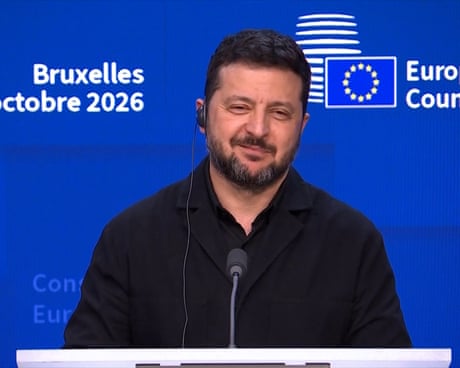
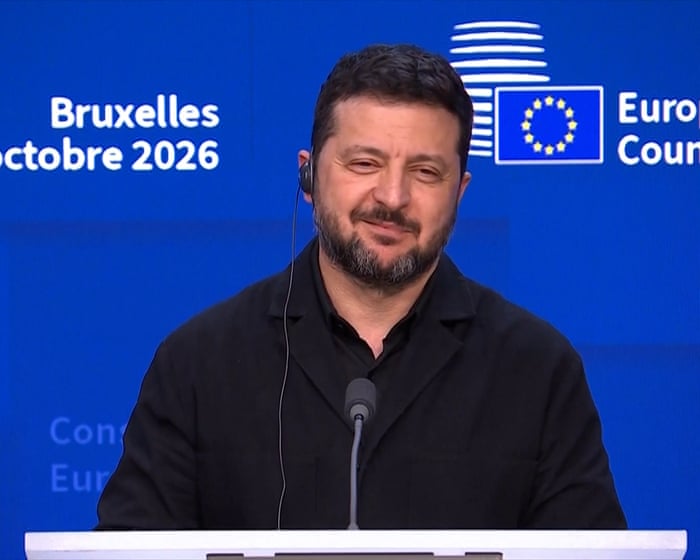
Ukraine's president, Volodymyr Zelenskyy, was asked by Sky News at a press conference in Brussels, Belgium, if he felt he was being made a 'scapegoat' by his US counterpart, Donald Trump, for domestic problems including high diesel prices before midterm elections. Zelenskyy paused for 15 seconds, before he eventually smiled and said: 'This is my answer.'
White House officials instructed Pentagon leaders to limit Starshield, SpaceX’s military-grade satellite service used by Ukrainian forces, Reuters reported on 15 October, citing three officials. The report came a day after a senior US official told Axios the Trump administration had nothing to do with the alleged Starlink restrictions.
Ukrainian forces rely on US-controlled satellite technology for battlefield operations and for intercepting Russian drones aimed at Ukrainian cities, so the latest restrictions have raised questions about how reliably they can depend on it.
Senior US official denies president requested restrictions
Asked about the order, a senior US official replied, “No such request was ever made by the president.” The White House did not respond to questions about whether other administration officials might have made the request.
Ukrainian officials contacted the White House, State Department and Pentagon on 13 and 14 October and were told it was a White House decision
European allies question Starlink restrictions
European officials raised concerns about the restrictions. German Foreign Minister Johann Wadephul criticized the throttling and said Ukraine must continue to receive full support, Spiegel reported on 15 October. Wadephul said Germany had questions for the US, noting that Germany finances part of the Starlink technology used in Ukraine.
On 16 October, UK Defense Secretary Wes Streeting said US Defense Secretary Pete Hegseth had assured him in a face-to-face meeting that Starlink was back up and running, the Guardian reported. However, a Ukrainian Defense Ministry source said that military-grade terminals were working in motion again, but only at speeds of up to 160 km/h.
New data-speed restrictions disrupted drone missions
The military Starshield package previously had no data-speed restrictions, Ukraine’s 7th Rapid Response Corps told Novynarnia. Ukrainian officials said that after the restrictions were imposed, terminals disconnected when drones exceeded 160 km/h and sometimes at 80 km/h.
The Corps also reported 10–20-second connection drops at 110–120 km/h on the Huliaipole front, which made drones harder to control. One unit had to cancel some missions.
The restrictions came as US President Donald Trump pressed Kyiv to stop striking Russian oil refineries, blaming them for soaring energy prices ahead of November’s midterm elections. Ukraine suspects SpaceX imposed the restrictions to pressure Kyiv over the refinery strikes, but that motive has not been confirmed.
US President Donald Trump called Ukraine’s renewed strikes on Russian oil refineries a disgrace in an interview with Newsmax and questioned President Volodymyr Zelenskyy’s will to settle the war on 15 October. His statements came after he made a deal with Russian President Vladimir Putin to allow Russian diesel back into the US ahead of the mid-term elections in the US.
Kyiv says its long-range strikes have knocked out more than half of Russia's refining capacity, one of the few levers it controls on Moscow's war income, according to Ukraine's Defense Ministry. This is part of efforts to reduce the aggressor's capabilities to launch assaults, including the latest, during which four Russian regions fired 39 Iskander-M, North Korean KN-23, hypersonic Zircon, and supersonic anti-ship cruise Oniks missiles, Zelenskyy said.
Trump criticizes Zelenskyy over oil prices while remaining silent on Russian strikes
Earlier, Zelenskyy said that Ukraine stopped refinery strikes for three days to meet US wishes after Trump announced an “energy ceasefire” on 11 October. At the same time, Russia struck a Kharkiv heat-and-power plant within hours of the announcement, he emphasized.
Meanwhile, in the interview with Newsmax, Trump said Zelenskyy is only pushing world oil prices higher.
“Well, I think that’s a disgrace,” he said.
He added that Ukraine has other options: “There are a lot of targets that you can hit.”
At the same time, Trump didn't say a word about Russian strikes on Ukraine's civilian buildings and power infrastructure ahead of the winter.
Trump compares Zelenskyy to a circus showman
The US leader said he is “not a big fan” of Zelenskyy. He claimed both sides “would like to see it end,” but that he finds Zelenskyy “more difficult to deal with than Putin.”
Explore further
US weighs relief for sanctioned shadow fleet tankers, days after freeing Russian diesel
He also said that he believes the depletion of US ammunition stockpiles is linked to the aid provided to Ukraine under the Biden administration, rather than the war with Iran.
Ukraine has repeatedly offered to help the US counter Iranian drones during the operation. The New York Times reported that a Ukrainian team departed the day after the US made such a request.
Nevertheless, despite Kyiv’s offers and actions, Trump once again compared Zelenskyy to P. T. Barnum, the 19th-century American circus showman, saying that he received a tremendous number of Patriots and Tomahawks.
However, there is no public confirmation that Tomahawk missiles were transferred to Ukraine during the Biden administration.
With his war in Iran and siding with Russia, it’s hard to think of someone who has done more to make the world a safer place
It might have been more, shall we say, diplomatic if Donald Trump had taken some deep breaths after finding out he had been overlooked for the Nobel peace prize for the second year running before virtually declaring war on Norway. But maybe we should just be grateful he refrained from rubbishing the South African human rights activist Navi Pillay, who picked up the award, and shelved his plans to livestream the execution of the Norwegian prize committee. There again, you can understand his frustration. It’s hard to think of someone who has done more to make the world a safer place. Where would we be had not The Donald started a war with Iran which he shows no sign of knowing how to finish and which has forced up the price of global energy? And it was so good to see him intervening so positively in Russia’s war with Ukraine by appearing to side with the aggressor. These are just the things everyone is looking for in a Nobel peace laureate. The president is also put out that no one has noticed he has personally ended eight global conflicts; though it would be helpful if he could let us know which ones. Are they ones he has personally started – Trump appears disappointed that Argentina hasn’t invaded the Falklands again – or ones that only he knows about. During a press conference at Chequers in 2025, he claimed to have brought about a lasting peace between Albania and Azerbaijan. Maybe there are other wars going on we just don’t know about. Perhaps Australia and New Zealand have been bombing each other for years with neither side noticing. And perhaps the border between France and Italy has been a no-go zone ever since the fight between Zinedine Zidane and Marco Materazzi in the 2006 World Cup final. Still, Trump looks a cert to retain Gianni Infantino’s Fifa peace prize – if only because it seems likely to be scrapped, making him the only winner.
In Maine, Troy Jackson, the Democratic nominee for US Senate, and Susan Collins, the five-term Republican incumbent traded barbs on Thursday in their final debate ahead of the November midterms.
This was the fourth showdown between the pair. Collins has tried to cast Jackson as an inexperienced state lawmaker, and attempted to yoke him to the former nominee, Graham Platner, who dropped out of the race earlier this year following allegations of rape and sexual assault (which he still denies). Meanwhile, Jackson accused his opponent of corruption, and castigated her for her “moderate” persona in Congress.
Thousands of vetted and approved refugees are suffering as Trump restricts quotas and prioritizes white South Africans
Donald Trump plans to once more severely restrict the number of refugees admitted to the US, announcing a limit of just 17,500 people in fiscal year 2027 – and that, again, those let in will be “primarily” white South Africans.
Refugee rights groups are alarmed and infuriated at the decision last month by the US president to exclude almost every other demographic.
Donald Trump has called Ukraine’s renewed strikes on Russian oil refineries “a disgrace” and criticised Volodymyr Zelenskyy after an energy ceasefire between Russia and Ukraine failed to take hold.
Ukraine resumed strikes on Russian oil refineries after Zelenskyy said Kyiv was abandoning a ceasefire unilaterally declared by Trump on Sunday, having briefly halted its attacks to demonstrate its readiness for peace talks. Russia had continued its strikes on Ukrainian power plants.
This quarter’s campaign finance report shows that the world’s richest man is the top political donor of this midterm election. Our reporter Theodore Schleifer explains how Elon Musk came back from a brief rift with President Trump and Republicans to become a central player in the party’s campaign to hold Congress.
Republican Senate and House candidates are being out-raised by their Democratic rivals, but the party has received a huge boost from groups tied to Elon Musk and President Trump.
“I’m sure you know who Andrew Tate is,” said Suzanna Bridges, a conservative Catholic who sees misogyny laced into Trump world. “This administration is pushing for that kind of man right now — hyper, hypermasculine.”
The race’s fourth and final debate centered on whether Senator Susan Collins, the Republican incumbent, was as independent as she claimed to be from President Trump.

 Connexion