Le calme est revenu dans un secteur paisible de l’arrondissement de Saint-Léonard, dans le nord-est de Montréal. Les deux éperviers de Cooper qui ont intimidé des résidants, au mois d’août, se sont éloignés. Mais pendant quelques jours, ils ont fait sentir leur présence et soulevé bien des questionnements.
Le calme est revenu dans un secteur paisible de l’arrondissement de Saint-Léonard, dans le nord-est de Montréal. Les deux éperviers de Cooper qui ont intimidé des résidants, au mois d’août, se sont éloignés. Mais pendant quelques jours, ils ont fait sentir leur présence et soulevé bien des questionnements.
Washington Post report also reveals Jon Husted staffer Stephen Woytek created pro-Rhodesia playlist on Spotify The Republican senator for Ohio, Jon Husted, has fired an aide who was discovered to have used a photo of Nazi SS soldiers as his Facebook profile photo.Stephen Woytek was appointed as Husted’s political director last month in the senator’s knife-edge re-election contest against former Democrat senator Sherrod Brown. According to the Washington Post, Husted had decided to “part ways” wi
Washington Post report also reveals Jon Husted staffer Stephen Woytek created pro-Rhodesia playlist on Spotify
The Republican senator for Ohio, Jon Husted, has fired an aide who was discovered to have used a photo of Nazi SS soldiers as his Facebook profile photo.
Stephen Woytek was appointed as Husted’s political director last month in the senator’s knife-edge re-election contest against former Democrat senator Sherrod Brown. According to the Washington Post, Husted had decided to “part ways” with Woytek, 25, after learning that his Facebook profile showed he followed a military re-enactment group called LAH Living History Unit, which portrays the 1st SS Panzer division.
La fin de l’été, c’est aussi la rentrée scolaire pour les apprentis prêtres, qui sont particulièrement nombreux à faire leur entrée au Grand Séminaire de Montréal cette année. Incursion dans une école pas comme les autres.
La fin de l’été, c’est aussi la rentrée scolaire pour les apprentis prêtres, qui sont particulièrement nombreux à faire leur entrée au Grand Séminaire de Montréal cette année. Incursion dans une école pas comme les autres.
“This is the first day that Iran really started winning the war,” a Yemeni official said of Houthi territorial gains that give Tehran leverage over a second major waterway.
“This is the first day that Iran really started winning the war,” a Yemeni official said of Houthi territorial gains that give Tehran leverage over a second major waterway.
David Rush accused of stealing hundreds of gold bars worth over $40m and hiding them in his basementFederal prosecutors have reached a tentative plea agreement with a former CIA officer accused of stealing hundreds of gold bars worth more than $40m from the US spy agency and hiding them in his basement, court records show.David Rush and federal justice department prosecutors have a “plea agreement in principle”, the parties said in a Friday court filing. The parties also asked a judge to extend
David Rush accused of stealing hundreds of gold bars worth over $40m and hiding them in his basement
Federal prosecutors have reached a tentative plea agreement with a former CIA officer accused of stealing hundreds of gold bars worth more than $40m from the US spy agency and hiding them in his basement, court records show.
David Rush and federal justice department prosecutors have a “plea agreement in principle”, the parties said in a Friday court filing. The parties also asked a judge to extend the 17 September deadline for three weeks through 8 October to allow them time to “resolve the matter prior to an indictment”.
The disease is a form of pneumonia caused by Legionella bacteria, which can grow in warm water and spread through mist produced by cooling towersOne person has died from legionnaires’ disease, and four more have been sickened in New York City amid a new cluster of cases only weeks after local health officials had declared a separate deadly Manhattan outbreak of the illness over.On Thursday, New York City officials announced that their municipal health department launched an investigation into a
The disease is a form of pneumonia caused by Legionella bacteria, which can grow in warm water and spread through mist produced by cooling towers
One person has died from legionnaires’ disease, and four more have been sickened in New York City amid a new cluster of cases only weeks after local health officials had declared a separate deadly Manhattan outbreak of the illness over.
On Thursday, New York City officials announced that their municipal health department launched an investigation into a community cluster in parts of Melrose and Morrisania in the South Bronx, including ZIP codes 10451 and 10456.
Ukraine's 3rd Army Corps has retaken 150–240 sq km north of Lyman since May
It erased 18 months of Russian groundwork for a northern march on Sloviansk
Almost nobody reported it for three months—not even Russian war correspondents
The fighting continues north of Lyman, but on Ukraine's terms
On 22 May, a mechanized battalion of Ukraine's 3rd Assault Brigade—backed by at least two more brigades, the 60th Mechanized and the 66th, attached to the 3rd Army Corp
Ukraine's 3rd Army Corps has retaken 150–240 sq km north of Lyman since May
It erased 18 months of Russian groundwork for a northern march on Sloviansk
Almost nobody reported it for three months—not even Russian war correspondents
The fighting continues north of Lyman, but on Ukraine's terms
On 22 May, a mechanized battalion of Ukraine's 3rd Assault Brigade—backed by at least two more brigades, the 60th Mechanized and the 66th, attached to the 3rd Army Corps for the operation—attacked Russian positions around the village of Nove, 15 km north of the town of Lyman in eastern Ukraine's Donetsk Oblast. Russian drones were heavily jammed that day. Roughly five Ukrainian vehicles were hit, most by fiber-optic drones—the only kind still able to fly.
Nobody outside the Ukrainian army reported it for three months. The first fragmentary accounts surfaced in late August; the full picture only this week. By then the 3rd Army Corps had taken back somewhere between 150 and 240 sq km and wrecked Russian plans for a northern siege of Sloviansk, one of the last two big free cities in Donetsk. Observer Thorkill, writing in Polish, called it a success on an operational scale.
The presence of that Ukrainian armor around Nove, which at the time anchored the right flank of a 100 sq km salient held by regiments of the Russian 20th Combined Arms Army, was an ominous sign for the Russians. After months of careful preparation by the 3rd Army Corps, the Armed Forces of Ukraine (AFU) were strong north of Lyman. Russian forces were weak.
This has effectively been a 20-month operation. Ukrainian forces spent that stretch building one of the biggest bunny-ears situations of the war: russian forces pushed in deep enough that abandoning the position became politically and institutionally difficult, but never wide… pic.twitter.com/QxhzWv2v8V
"The moment AFU could start moving vehicles through the area, the battle was basically over," mapper Vitaly wrote three months later. "Vehicles didn't win it, they showed up because the conditions that had made vehicle movement impossible were already gone." Ukrainian drones were everywhere. And Russian drones, effectively jammed by electronic warfare, could barely fly.
Not everyone reads those months the same way. Thorkill, who tracked the sector throughout, puts the breakthrough at 17 to 18 August, and writes that for most of July and early August the 3rd Corps' attacks were repelled by the Russian 144th Motor Rifle Division. On that account the slow months were not a steady advance. What turned them, he says, is not clear: someone on the Ukrainian side made the difference north of Kolodiazi. He is candid about the limits of what can be seen. Some sources say the Russians withdrew, others deny it, others say they were partly cut off. What he can confirm from satellite imagery is that Ukrainian forces retook Serednie and Zelena Dolyna.
Overextended and pummeled by drones, the Russians barely clung to their salient north of Lyman, which sat between the Nitrius and Zherebets rivers. They were especially exposed at its western edge, where they had pushed across the Nitrius. The Russians had hoped the salient would be a "base for an offensive on Lyman, which could have allowed further offensives to Izium and Sloviansk [and] threatened the northern supply road to Donbas," according to mapper Clément Molin.
The main offensive axis comes from Nove and goes all the way south. We know there are two main support axes, one east and on west. The one east is recent and there are very few proofs, we just know that they nearly reached the Zherebet river.
Instead, the salient became a trap as the Ukrainian 3rd Army Corps relentlessly—but quietly—exploited the fragility of the Russian 20th Combined Arms Army. The Russians have now been pushed back toward the Zherebets, leaving behind their uncounted dead ... and their ambitions for a quick northern march on Lyman and then Sloviansk and neighboring Kramatorsk.
It had taken Russian forces 18 months to set the conditions for a push toward Sloviansk from the north. In the three months beginning with that mechanized assault around Nove, the Russians "apparently lost 1.5 years of progress in the area," Vitaly concluded. Estimates of the ground retaken vary: Molin puts it at more than 200 sq km, the AKM Mapping account at 151, and Konrad Muzyka of Rochan Consulting at around 240.
The appearance of Ukrainian armor around Nove in late May was a strong indication that the 3rd Army Corps had the momentum. But that doesn't mean the Corps' eventual victory in the battle for the Lyman salient was a foregone conclusion. On paper, the Russians have a manpower and firepower advantage in Donetsk.
Situation near Nove as of 23 August. Map: Euromaidan Press
A bridgehead too far
The 20th Combined Arms Army advanced too far, too fast. And the terrain favored the Ukrainian defenders, who could pluck at the Russians' supply lines from entrenched positions until the time was right for a counterattack.
"Russia putting itself inside a deep, narrow pocket only made the final phase easier," Vitaly explained. "Once AFU had enough control over the surrounding movement, every new Russian mission sent into the area walked into a reinforced perception trap—troops committed to hold positions that existed far more convincingly in reports than as a functioning front."
The silence
What kept the trap working was that nobody talked about it. The Ukrainian general staff said nothing. Pro-Ukrainian analysts, who normally map every advance within hours, held their tongues until late August. So did the Russians.
Observer Andrew Perpetua, who has followed Ukraine's other quiet operations around Kupiansk and in southern Donetsk, called this one tighter still. The Lyman operation "seemed even more protected since even the most in the know and honest Russian reporters seem to be missing it. Or at least silent about it," he wrote. "It was honestly shocking to watch how out of the loop the Russians really were, which I think is in large part due to the collective action of OSINT to avoid speaking about the situation."
Perpetua's reading is that the lying is heaviest exactly where Russian forces are being pushed back. Nearby Sviatohirsk is the case in point. Vladimir Putin recently announced its capture. On 7 September, the commander of the 3rd Army Corps, Brig. Gen. Andrii Biletskyi, walked around the town on camera.
Explore further
Ukraine’s secret counteroffensive is more successful than we thought
The 3rd Army Corps cut across the salient around three weeks ago, reaching the northern edge of Kolodiazi and trapping an unknown number of Russian stragglers between the Ukrainian vanguard and the old Russian bridgehead. Most of the encircled Russians appear to have escaped. "There is a large area where there may still be Russian soldiers," Molin warned. "Most of the villages westwards have been cleared, but not the treelines."
On 24 August the Ukrainians mounted a second mechanized attack, so the operation has not stopped. But the 3rd Army Corps is likely shifting from attacking to consolidating and defending—and clearing out the Russian stragglers that, left alone, could sow chaos in the new gray zone that was once a Russian salient.
Russian channels have started to admit the problem. Rybar wrote of "problems near Lyman," conceding that Ukrainian units have been attacking southward from Ridkodub for months and that Russian forces "do not even control the airspace immediately near the front line." The fighting continues, but on Ukraine's terms, for now.
How much it changes is the one thing the analysts do not agree on. "This is one of the most important victory for Ukraine in 2026," Molin wrote, a victory that "will delay the offensive on northern Donbas." Thorkill, in the same post that called it an operational-scale success and rated it larger than the 7th Rapid Reaction Corps' gains near Velyka Novosilka in July, ends on the opposite note: it will not, he writes, affect in any way the situation of Ukrainian forces on the direction that matters most at present, the Kramatorsk agglomeration.
The plan — quickly challenged by a local court — came days after Colombia’s president and the U.S. secretary of state, Marco Rubio, discussed stronger measures against drug trafficking.
The plan — quickly challenged by a local court — came days after Colombia’s president and the U.S. secretary of state, Marco Rubio, discussed stronger measures against drug trafficking.
The wild feline made its home in the park before being euthanized in 2022 after showing signs of declining healthThe city of Los Angeles will memorialize its most famous mountain lion with a bronze sculpture at Griffith Park, the 4,200-acre (1,700-hectare) stretch of land the cougar once roamed.Known as “P-22”, the number assigned by the team of biologists that first identified him, the lion gained national fame after photographer Steve Winter captured an iconic image of him prowling through Gri
The wild feline made its home in the park before being euthanized in 2022 after showing signs of declining health
The city of Los Angeles will memorialize its most famous mountain lion with a bronze sculpture at Griffith Park, the 4,200-acre (1,700-hectare) stretch of land the cougar once roamed.
Known as “P-22”, the number assigned by the team of biologists that first identified him, the lion gained national fame after photographer Steve Winter captured an iconic image of him prowling through Griffith Park with the Hollywood sign in the background.
La Ville de Montréal et le Syndicat des cols bleus regroupés vont entrer dans une phase de conciliation, dans l’espoir de renouveler la convention collective et d’éviter les journées de grève prévues durant le Championnat du monde de cyclisme sur route.
La Ville de Montréal et le Syndicat des cols bleus regroupés vont entrer dans une phase de conciliation, dans l’espoir de renouveler la convention collective et d’éviter les journées de grève prévues durant le Championnat du monde de cyclisme sur route.
Le marché immobilier continue d’évoluer, mais certaines propriétés réussissent toujours à tirer leur épingle du jeu grâce à leur emplacement, leur caractère distinctif ou leur potentiel exceptionnel. L’équipe Nouvel R, composée des courtiers Rose-Marie Lebrun et William Turcotte-Moisan, présente actuellement une sélection de résidences qui méritent une attention particulière.Publireportage présenté par Nouvel’R Immobilier
Quartier Sainte-Luce – coup de coeur
258, Route 132 Ouest, 689 900 $
Le marché immobilier continue d’évoluer, mais certaines propriétés réussissent toujours à tirer leur épingle du jeu grâce à leur emplacement, leur caractère distinctif ou leur potentiel exceptionnel. L’équipe Nouvel R, composée des courtiers Rose-Marie Lebrun et William Turcotte-Moisan, présente actuellement une sélection de résidences qui méritent une attention particulière.
Publireportage présenté par Nouvel’R Immobilier
Quartier Sainte-Luce – coup de coeur
258, Route 132 Ouest, 689 900 $
Superbe propriété construite en 2008 offrant 3 chambres à coucher, avec possibilité d’en aménager jusqu’à 5, parfaite pour une famille à la recherche d’espace et de confort. Dès votre arrivée, vous serez charmés par la vue exceptionnelle sur le fleuve Saint-Laurent, un décor unique qui se transforme au fil des saisons et offre de magnifiques couchers de soleil. La propriété comprend une salle de bain complète, une salle d’eau ainsi qu’un vaste sous-sol non aménagé qui vous permettra de créer les espaces dont votre famille a réellement besoin : chambres supplémentaires, salle familiale, bureau ou espace de jeux.
Nouveauté: quartier Luceville
36 Rue Irenée-Thibeault, 399 000 $
Découvrez cette propriété entièrement rénovée au goût du jour, offrant un intérieur lumineux, moderne et fonctionnel. La cuisine se démarque par ses nombreuses armoires, son grand îlot central et son espace convivial ouvert sur les aires de vie. La propriété offre trois chambres et deux salles de bain. Le sous-sol aménagé procure une belle superficie supplémentaire et plusieurs possibilités selon vos besoins. À l’extérieur, profitez d’un terrain de bonne dimension, de deux terrasses et d’un espace agréable pour la belle saison. Une propriété soigneusement remise au goût du jour, prête à accueillir ses nouveaux propriétaires! La propriété est présentement louée jusqu’au 30 juin 2027.
Nouveauté: quartier Pointe-au-Père
612 Rue des Vétérans, 379 000 $
Découvrez ce charmant jumelé situé dans le secteur de Pointe-au-Père. Lumineux et soigneusement entretenu, il offre une aire de vie conviviale avec de beaux planchers de bois, une cuisine fonctionnelle ainsi que trois chambres à coucher et deux salles de bain complètes. La thermopompe assure un confort optimal en toute saison. À l’extérieur, profitez d’une terrasse agréable, d’un terrain bien aménagé et d’une entrée asphaltée. Un secteur familial apprécié, à proximité d’un CPE, d’une école primaire, des services et de différents centres d’activités. Une propriété idéale pour une famille!
Nouveauté: quartier Sacré-Cœur
766 Rue des Pruches, 349 900 $
Magnifique jumelé entièrement rénové au goût du jour, offrant un intérieur lumineux et chaleureux. Son aire de vie se distingue par une superbe mezzanine qui ajoute du cachet et une belle impression d’espace. La propriété comprend deux chambres à coucher, avec possibilité d’en aménager une troisième selon vos besoins. La cuisine ainsi que les deux salles de bain ont été entièrement rénovées avec soin. À l’extérieur, vous profiterez d’une entrée asphaltée et d’une jolie cour coquette, facile à entretenir. Une propriété clé en main, moderne et accueillante, idéale pour ceux qui souhaitent s’installer sans travaux à prévoir.
Dans un marché où les occasions de qualité demeurent recherchées, ces propriétés témoignent de la diversité et du dynamisme du secteur immobilier régional.
Rose-Marie Lebrun et William Turcotte-Moisan et l’équipe de NOUVEL’R accompagnent leurs clients dans la vente et l’acquisition de propriétés partout dans la région.
A Ukrainian ground robot that usually hauls ammunition and supplies to the front carried a different load out of it this time: wounded civilians. The 20th "K-2" Unmanned Systems Brigade sent the unmanned vehicle to evacuate people hurt when a Russian FPV drone struck their house, and its soldiers walked the entire route to shield them from more drones.
On a front where Russian FPV drones hunt anything that moves, Ukraine has handed its ground robots the jobs that get so
A Ukrainian ground robot that usually hauls ammunition and supplies to the front carried a different load out of it this time: wounded civilians. The 20th "K-2" Unmanned Systems Brigade sent the unmanned vehicle to evacuate people hurt when a Russian FPV drone struck their house, and its soldiers walked the entire route to shield them from more drones.
On a front where Russian FPV drones hunt anything that moves, Ukraine has handed its ground robots the jobs that get soldiers killed: hauling ammunition, clearing mines, and dragging out the wounded. Its units ran more than 100,000 such robot missions in the first eight months of 2026, and Zelenskyy has pushed to contract at least 50,000 more of the machines.
A Ukrainian civilian home took a direct Russia's FPV hit, and the wounded had nowhere safe to run
Ukrainian troops sent in a ground robot to pull them out, with no human driver risking their lives. Usually, such machines haul ammo or supplies "K-2" Brigade pic.twitter.com/NTFE93sLFS
An FPV drone hit the civilian house and left casualties who had to be moved out of the danger zone, K-2 explained, and an ordinary evacuation would have been too risky, so the unit used an unmanned ground vehicle instead.
"Its task is not cargo. Its task is people," the brigade said.
Soldiers guard the whole route
The robot did not go alone. As the footage shows, K-2 soldiers escorted the vehicle along its entire path so they could protect the wounded from Russian drones if the machine came under attack.
That risk is real: Ukraine's evacuation robots have themselves become targets, with Russian forces striking anything that moves on a front where the drone kill zone can stretch a dozen kilometers back from the line.
Near Kupiansk, a robot that once ran a dozen missions now survives three or four before it is destroyed, according to a robot-unit commander.
Earlier, Tetiana Chornovov, the commander of a platoon of anti-tank guided missile systems, said that Ukraine still didn't have a proper system for getting its wounded off the battlefield. Chornovol believes that creating separate staffed evacuation units within brigades is the most necessary reform now, each with an autonomous team and special transport.
Ukraine's former top general, now its ambassador to Britain, says Russia's jet-powered Geran drone is a glimpse of where war is heading, where high technology keeps getting cheaper. Valerii Zaluzhnyi told a London defense-technology showcase that an expensive Cold War missile had evolved into a cheap weapon that can be fired in bulk, Interfax-Ukraine reports.
During his tenure as Commander-in-Chief, Zaluzhnyi acknowledged that it had been a mistake to believe that the s
Ukraine's former top general, now its ambassador to Britain, says Russia's jet-powered Geran drone is a glimpse of where war is heading, where high technology keeps getting cheaper. Valerii Zaluzhnyi told a London defense-technology showcase that an expensive Cold War missile had evolved into a cheap weapon that can be fired in bulk, Interfax-Ukraine reports.
During his tenure as Commander-in-Chief, Zaluzhnyi acknowledged that it had been a mistake to believe that the sheer number of casualties inflicted on Russia could bring the war to a halt, per UkrInform. By 2025, he had turned that lesson into a doctrine. Given Ukraine’s population, he argued, it cannot win a war of attrition and can wage only a high-tech war of survival. His doctrine was later echoed by former minister Mykhailo Fedorov and the current Yevhen Khmara.
The drone has become a missile in all but name, Zaluzhnyi said, and that is the point. Now, such missiles are affordable to any side, not only to wealthy countries.
The jet Geran flips the economics
The danger such cheap weapons pose is financial as much as military: if a country spends far more on each interceptor than the enemy spends on each target, its defense cannot scale, and the rich risk losing to the poor, Zaluzhnyi believes.
Future wars, he argued, will be decided less by who fields the more sophisticated systems than by who can turn them out cheaply and in volume.
Ukraine needs its own component base
Ukraine has already built much of a modern defense industry on exactly that logic, Zaluzhnyi continued, with combat driving its makers to develop the unmanned systems that now do much of the killing on the ground.
"No other country can offer more relevant experience for developing new weapons, modernizing them, and the ways of using them," he said.
The bottleneck, he added, is components: much of the parts base for Ukrainian weapons still sits abroad, capping how far production can scale and modernize.
He urged partners to pour long-term private investment into Ukrainian defense production, framing it as a two-way deal. Backing Ukraine's makers, he argued, both weakens Russia and builds the partners' own defenses, with Ukraine's battlefield experience as the foundation for weapons fit for the wars to come.
David J. Rush was fired from the C.I.A. after the F.B.I. found 303 gold bars in his Virginia home. Officials have said he created a fake classified program to funnel himself millions of dollars.
David J. Rush was fired from the C.I.A. after the F.B.I. found 303 gold bars in his Virginia home. Officials have said he created a fake classified program to funnel himself millions of dollars.
This is Behind the Blog, where we share our behind-the-scenes thoughts about how a few of our top stories of the week came together. This week, we discuss AI doomers, 9/11 posting, and Barbie.JOSEPH: I do always get emotional on 9/11 because it’s the moment everything changed. Rather than repeat those feelings that I’m sure you’ve heard a million times from various people, I’ll point to a couple of reporting projects that I think capture the day really well.
This is Behind the Blog, where we share our behind-the-scenes thoughts about how a few of our top stories of the week came together. This week, we discuss AI doomers, 9/11 posting, and Barbie.
JOSEPH: I do always get emotional on 9/11 because it’s the moment everything changed. Rather than repeat those feelings that I’m sure you’ve heard a million times from various people, I’ll point to a couple of reporting projects that I think capture the day really well.
Ukraine is getting closer to home-built interceptors designed to hunt down Russia's fast jet Gerans. Those interceptors have shown very positive early results, and the harder job now is producing enough of them to match the speed at which Ukraine downs the slower drones, Serhii Bratchuk, spokesperson for the Ukrainian Volunteer Army, said on Radio NV.
The jet-powered Geran is the problem Ukraine has been racing to solve. It flies too fast for the mobile gun teams and li
Ukraine is getting closer to home-built interceptors designed to hunt down Russia's fast jet Gerans. Those interceptors have shown very positive early results, and the harder job now is producing enough of them to match the speed at which Ukraine downs the slower drones, Serhii Bratchuk, spokesperson for the Ukrainian Volunteer Army, said on Radio NV.
The jet-powered Geran is the problem Ukraine has been racing to solve. It flies too fast for the mobile gun teams and light interceptors that bring down the slower, piston-engine version. Alongside ballistic missiles, those drones have already done strategic damage: they helped Russia destroy about 90 percent of Ukraine's modern warehouse capacity.
A working interceptor changes that only if Ukraine can field it in numbers, which is why Bratchuk framed the fight ahead as one of production rather than invention.
Interceptors show early promise
However, Bratchuk would not put a date on their release, saying that "right now, our developers are testing our jet interceptor drones."
"We can't talk about details, but from what I know and what I see, the results are very positive, and we are counting on them," he shared.
Four Ukrainian companies already have interceptor drones in field trials, and President Zelenskyy has said that 67 firms in all are working to shoot down the jet drones en masse.
Production must catch up
Ukraine has to lift jet-drone interception to the level it has reached against the conventional Gerans, Bratchuk said, the ones Ukrainians nickname "mopeds" for their buzzing engines. Only then, he argued, can Ukraine say it is closing the sky to the fast drones as it has to the slow ones.
Russia keeps firing both types, in the south and elsewhere, and often at night, precisely to overload Ukraine's air defenses.
Russia scales, and Ukraine must too
Bratchuk gave Russia its due on the one thing that will decide this contest, its ability to turn out weapons in volume.
"Credit to the Russians. They know how to scale," he said.
Ukraine has to learn the same lesson, he argued, and he believes it can, having pulled off fast build-ups before.
"There are examples where we really do learn fast and scale up the relevant processes. So when it comes to jet interceptor drones, we very much want that scaling," he added.
Keeping people in charge means little if supercomputers determine the evidence, choices and time on which their decisions dependIf there were a 10% chance that AI could wipe out humanity, no responsible government would leave its development to companies racing to build it. Yet until recently, that seemed to be the case. The warning was all the more ominous because it was made by a researcher at Anthropic, the trillion-dollar AI company behind the Claude chatbot. The dangers of AI-enabled pandem
Keeping people in charge means little if supercomputers determine the evidence, choices and time on which their decisions depend
If there were a 10% chance that AI could wipe out humanity, no responsible government would leave its development to companies racing to build it. Yet until recently, that seemed to be the case. The warning was all the more ominous because it was made by a researcher at Anthropic, the trillion-dollar AI company behind the Claude chatbot. The dangers of AI-enabled pandemics or attacks on nuclear systems are real. Countries need not agree on democracy or trade policy to accept this.
The US and China will hold, reportedly, their first bilateral AI-safety talks before a planned White House summit between Donald Trump and Xi Jinping. Despite their tech rivalry, neither Washington nor Beijing can make the most advanced AI safe on their own. A US-China settlement won’t be able to say how AI works everywhere. Countries deploying AI must help write the global rulebook. The odds on an extinction event are shortening. This week Anthropic said that it identified five cases in which attempts were made using its models to support biological weapons development. It banned the accounts. In one case, a platform sent requests rejected by Claude to a rival with weaker safeguards. AI safety, clearly, cannot be that of the least responsible model.
Do you have an opinion on the issues raised in this article? If you would like to submit a response of up to 300 words by email to be considered for publication in our letters section, please click here.
More than 150 Russian mission staff and their family members must leave Germany after Berlin ordered Russia's last consulate in the country to close, The Moscow Times reported, citing the Russian embassy. The German government published no figure of its own and expelled nobody by name. What it did was close institutions, a step ZDF judges the hardest-hitting of the German diplomatic measures. Berlin ordered the earlier closures for a different reason: Russia had restric
More than 150 Russian mission staff and their family members must leave Germany after Berlin ordered Russia's last consulate in the country to close, The Moscow Times reported, citing the Russian embassy. The German government published no figure of its own and expelled nobody by name. What it did was close institutions, a step ZDF judges the hardest-hitting of the German diplomatic measures. Berlin ordered the earlier closures for a different reason: Russia had restricted German missions first.
Western officials have attributed roughly 200 acts of arson, surveillance, cyberattack, and attempted killing across Europe to Russia since the full-scale invasion, and the campaign has continued through every round of protests and sanctions so far. A Bundeswehr colonel has said his own country was late to read those incidents as a single campaign, which is the distance a shut mission and departing staff now mark.
The response Berlin chose, and the one it did not
German Foreign Minister Johann Wadephul announced the measures on 1 September with Interior Minister Alexander Dobrindt, after Berlin blamed Russian services for an explosive-laden drone at Leipzig/Halle airport. The Bonn consulate closes on 18 September, and the agreement covering the Russian House of Science and Culture, Moscow's state-run cultural center in Berlin, is rescinded. Germany will also propose more Russians for EU sanctions lists, tighten entry checks, and press harder on the shadow fleet of tankers moving sanctioned Russian oil, he said.
German police vehicles and officers on the apron beneath the wing of a Ukrainian cargo aircraft at Leipzig/Halle airport, Germany, August 2026. Photo: Hendrik Schmidt/dpa/picture alliance
Measured against what was on the table, the package is restrained. Berlin declined to expel individual diplomats, rejected a blanket entry ban for Russian citizens, refused to designate Russia a terrorist state, and kept Moscow's ambassador in Berlin. Wadephul called the closure a serious restriction of Russian capabilities in Germany, and said he had thought it through.
Explore further
Germany suspects Russian intelligence behind arson attack as hybrid warfare threat grows across Europe
Where the figure of 150 comes from
The embassy's statement is where the number originates, and it counts families alongside staff. It described the Leipzig find as a broken drone of unclear origin that harmed nobody, and said hundreds of thousands of German citizens and Russians living in Germany lose access to consular services because of it.
German officials had put the scope differently, describing a double-digit number of affected staff. Every registered consulate employee must go, along with every Russian House worker seconded from Russia, and Berlin refused to let consulate staff transfer to the embassy.
"Russian House" cultural center in Chișinău, Moldova. Photo: Russian House Chișinău
Why the Bonn consulate
The target was not chosen at random. Citing internal information from Brussels circles, Bild reported that EU diplomats regarded it as a support point for hybrid operations against the Benelux countries, EU institutions, and NATO headquarters in Belgium. Citing security circles, the paper put 15 to 20 intelligence officers at the consulate under diplomatic cover. Germany withdrew the operating permits of four other Russian consulates in May 2023, which leaves Moscow with its embassy alone. The Bonn site stays in Russian ownership after the staff leave.
Moscow's answer
Russia's foreign ministry withdrew consent for Germany's consulate general in St Petersburg on 7 September, matching the deadline Berlin had set for Bonn. The Goethe-Institut branches in Russia close as well—Germany's state cultural institute, the counterpart to Moscow's Russian House—and their seconded staff must leave by 13 September.
Explore further
Germany will close Russia’s Bonn consulate after attributing Leipzig Airport drone attack to Moscow
Five weeks from a drone near a runway to two consulates ordered shut
On the night of 4 August and into 5 August, a drone carrying explosives turned up beside a Ukrainian An-124 at Leipzig/Halle, where it lay unnoticed for hours.
Four weeks later, on 1 September, Berlin blamed Moscow and set out its measures.
The next day German officials gave their own order of magnitude at a government briefing, and it was a double-digit number rather than three figures.
On 4 September the closure order and its 18 September deadline were public, with the Russian embassy confirming them.
On 5 September, with the attribution four days old, German investigators suspected Russian intelligence behind an arson attack on a defense company.
Two days after that, on 7 September, Moscow ordered the closure of the German consulate in St Petersburg and the Goethe institutes.
On 9 September, Romania revealed it had tracked a Russian agent filming NATO bases and Ukrainian Antonov cargo planes for seven months.
On 10 September, the Russian embassy put its own number on the outcome: more than 150 people leaving.
Over the past quarter-century, the US supreme court has repeatedly failed to protect first amendment rights. We are suffering the consequencesCongress ratified the first amendment in 1791 but the supreme court didn’t breathe life into it until after the first world war, when prosecutions of antiwar protesters led the justices Oliver Wendell Holmes and Louis Brandeis – and then, fortunately, other justices as well – to realize that US democracy would be undermined, not strengthened, by allowing t
Over the past quarter-century, the US supreme court has repeatedly failed to protect first amendment rights. We are suffering the consequences
Congress ratified the first amendment in 1791 but the supreme court didn’t breathe life into it until after the first world war, when prosecutions of antiwar protesters led the justices Oliver Wendell Holmes and Louis Brandeis – and then, fortunately, other justices as well – to realize that US democracy would be undermined, not strengthened, by allowing the government to suppress disfavored political opinions.
Repression during the cold war led the court to better protect the freedom of association, and government efforts to cover up official ineptitude and criminality during the Vietnam war spurred the court to better protect the freedom of the press. It took time, but in each of these instances the court responded to wartime repression by developing new legal doctrine that more robustly protected first amendment freedoms.
Le maire de Rimouski, Guy Caron, indique que le permis de construction pour le projet Le Phare sera émis dès que les ingénieurs du promoteur et de la Ville se seront entendus sur la manière de sécuriser la connexion de la tour aux infrastructures souterraines de la Ville.
« Au point de vue urbanistique, tout est réglé. La question qui reste à régler, c’est de s’assurer que la connexion avec les infrastructures souterraines se fasse correctement. Nos ingénieurs sont en discussion avec ceux du
Le maire de Rimouski, Guy Caron, indique que le permis de construction pour le projet Le Phare sera émis dès que les ingénieurs du promoteur et de la Ville se seront entendus sur la manière de sécuriser la connexion de la tour aux infrastructures souterraines de la Ville.
« Au point de vue urbanistique, tout est réglé. La question qui reste à régler, c’est de s’assurer que la connexion avec les infrastructures souterraines se fasse correctement. Nos ingénieurs sont en discussion avec ceux du Phare pour s’assurer que le tout soit résolu d’une manière soutenable pour un bâtiment de cette importance. Ce ne sera pas logique d’aller de l’avant, de construire et d’être obligés de démolir parce que la connexion avec l’infrastructure souterraine ne serait pas adaptée à la réalité d’un immeuble de 17 étages. On veut s’assurer que tout soit correct. C’est une question de discussion entre les ingénieurs présentement », explique monsieur Caron.
Rappelons que le promoteur, le Groupe DTM, a fait sa demande de permis en avril dernier pour son projet immobilier Le Phare qui sera situé entre la Caisse Desjardins, sur la rue Julien-Réhel et le Pôle Santé Rimouski, sur la rue Saint-Germain Est.
Son président-directeur général, Miguel Perreault, a déjà mentionné qu’il aurait souhaité entamé la construction au cours de l’été. Selon le plan original, l’ouverture était prévue pour 2028.
140 unités de logement
Évalué entre 40 et 50 M$, Le Phare prévoit la construction d’un tour résidentielle de 17 étages comprenant environ 140 unités de logement en copropriété pour la vente ou la location.
En avril dernier, le conseil municipal de Rimouski a adopté un règlement autorisant la construction d’une tour de 17 étages de 53,2 mètres alors que la réglementation en place limitait la hauteur du bâtiment à 40 mètres.
Les conseillers de Saint-Germain, Terrasses Arthur-Buies et Le Bic, Élise Gagnon, Antoine Durette-Landry et Alain Martineau ont voté contre le règlement qui a été adopté à la majorité.
The plaza at Leimert Park, a historically Black neighborhood, was at the center of a controversy over a Latino running club’s plans to hold a race there.
Ukrainian President Volodymyr Zelenskyy and Canadian Prime Minister Mark Carney attended a presentation of Ukrainian drones, Ukrainian-Canadian developments, and defense-component manufacturers in Calgary on 10 September, the Ukrainian presidential readout said.
The event followed the signing of documents on defense and security cooperation, which Kyiv calls the first step toward a Drone Deal on the American continent. That deal would take cooperation beyond individual
Ukrainian President Volodymyr Zelenskyy and Canadian Prime Minister Mark Carney attended a presentation of Ukrainian drones, Ukrainian-Canadian developments, and defense-component manufacturers in Calgary on 10 September, the Ukrainian presidential readout said.
The event followed the signing of documents on defense and security cooperation, which Kyiv calls the first step toward a Drone Deal on the American continent. That deal would take cooperation beyond individual Ukrainian-Canadian production projects toward a broader industrial model pairing Ukrainian technology with Canadian manufacturing capacity.
The systems shown included the Vampire 4S, a heavy multirotor that drops munitions at night and that Russian troops call Baba Yaga, and SkyFall's P1-SUN interceptor, designed to bring down Shahed-type drones and priced at about $1,000 at this year's World Defence Show. The lineup also included the Shrike FPV drone and the Hor reconnaissance UAV. Companies also presented projects involving drones, ground robotics, and secure communications.
The systems and joint projects
The presentation featured Himera radio sets alongside the four drone systems. Zelenskyy and Carney were also shown the remote operation of the Ratel ground robotic complex and uncrewed maritime systems from UFORCE and Scorpena.
A Ukrainian developer shows a ground robotic system to Mark Carney and Volodymyr Zelenskyy at the presentation of Ukrainian drones and joint Ukrainian-Canadian developments in Calgary, Canada, 10 September 2026. Photo: Office of the President of Ukraine
Airlogix plans to produce the Hor reconnaissance UAV with Canada's Sentinel. Ai Drones UA and Bombardier Recreational Products (BRP) showed a prototype ground robotic complex, while Himera and Quantropi presented secure communications solutions. The announcements at the event covered future cooperation between GTH and General Dynamics Mission Systems–Canada, JK Land Vehicles and General Dynamics Land Systems, and a training program between SkyFall and Calian.
The readout said that 21 Canadian companies took part and that they already integrate their components into Ukrainian systems.
Volodymyr Zelenskyy and Mark Carney talk with Ukrainian developers and Canadian servicemen beside displayed equipment at the presentation in Calgary, Canada, 10 September 2026. Photo: Office of the President of Ukraine
Canada's drone problem
Canada's armed forces hold 2,000 drones today and will need millions, Carney said in Calgary. A new national drone marketplace is meant to build the capacity for those millions inside two years, with Ukrainian firms teaching Canadian ones while Canadian manufacturing and AI expertise flows back the other way.
A third of all the drones Canada builds will go to Ukraine's defense, Carney pledged. The presidential readout puts the share at 30% of the drones the joint program is to produce.
Ukraine has not had enough of the right weapons to shoot down Russia's jet-powered drones, President Volodymyr Zelenskyy said at a press conference with Canadian Prime Minister Mark Carney in Calgary on 10 September. He put the remaining obstacles at time and money rather than engineering, and used the appearance to press partners for joint production. Russia attacks Ukrainian cities with drones every night, and the defense against the fastest of them is still being bui
Ukraine has not had enough of the right weapons to shoot down Russia's jet-powered drones, President Volodymyr Zelenskyy said at a press conference with Canadian Prime Minister Mark Carney in Calgary on 10 September. He put the remaining obstacles at time and money rather than engineering, and used the appearance to press partners for joint production. Russia attacks Ukrainian cities with drones every night, and the defense against the fastest of them is still being built.
Russia has spent this year rebuilding its air campaign around whatever Ukraine intercepts least, and aiming it at supply chains, industry, and housing across the country. Ukraine answers with hardware it can design in months and cannot yet fund in the quantities the nights demand, which is why it now asks partners for production lines alongside finished weapons.
"We did not have enough means"
Zelenskyy was answering a question about the Russian drone found at Leipzig airport in Germany and the drone that delayed his own flight out of Moldova.
"We have to be very frank: we did not have enough means to destroy all these fast drones," he said. "Yes, we are on the way, more than 60 companies are already working on this. Yes, we will get a result, but it takes time."
Three days earlier, he noted that only three to five of the firms show real results.
Explore further
Germany blames Moscow for Leipzig drone attack, closes consulate and cultural center among sweeping diplomatic measures
The bottleneck is money
He then went past the engineering.The problem is not only technology, he said, but the funding to build thousands of interceptors every single day.
That arithmetic sends Ukraine abroad with its blueprints.
"That is why we talk about joint production, about production lines in one country or another," Zelenskyy said.
Russia now builds about 3,000 jet-powered drones a month, by Ukrainian military intelligence's count, and fired some 800 of them in four days at the end of August. They fly faster than propeller Shaheds and are harder to bring down, which has stretched air raid alerts nationwide. Ukraine's Air Force cannot yet rely on usual interceptor drones against them.
One drone, of the kind that turned up at Leipzig or crossed Moldova, is not a problem for Ukraine, Zelenskyy said. Thousands of fast drones a day are.
Explore further
One Russian drone held up seven flights in Moldova, Zelenskyy’s trip to Norway for King Harald V’s funeral among them
What a night without enough interceptors looks like
The same night, Russia sent 161 long-range attack drones at Ukraine, decoys among them, along with a cruise missile.That is an ordinary night now, and its damage spreads thin across the map instead of landing in one place.
A Russian strike set a nine-story apartment block alight in Kyiv, burning the facade up to the fifth floor and a flat on the second. Firefighters carried seven people out and handed seven more to medics. Russian drones injured eight people in the capital overnight.
North of the city, Russia burned warehouses in the Bucha district, then struck the same site again while the crews were still dousing the flames.
In Dnipro, the drones kept coming back, more than ten times from the evening on, damaging a plant and a row of garages and injuring seven people.
Farther out, Russia injured a mother and her son in Zaporizhzhia and damaged a plant in Zhytomyr Oblast, and the waves ran west far enough that NATO jets went up over Romania.
Representatives from the University of Michigan faced tough questions and a lot of vitriol from the citizens of Ypsilanti Township Wednesday night. The University partnered with America’s nuclear weapons scientists at Los Alamos National Laboratories (LANL) to build a hyperscale data center in the Township and residents are pissed. On Wednesday night the University hosted a town hall meant to ameliorate people’s anger and concerns. It didn’t work.LANL and U of M want to build a $1.2 billion 2
Representatives from the University of Michigan faced tough questions and a lot of vitriol from the citizens of Ypsilanti Township Wednesday night. The University partnered with America’s nuclear weapons scientists at Los Alamos National Laboratories (LANL) to build a hyperscale data center in the Township and residents are pissed.
On Wednesday night the University hosted a town hall meant to ameliorate people’s anger and concerns. It didn’t work.
LANL and U of M want to build a $1.2 billion 220,000 hyperscale data center in Ypsilanti Township. The residents are worried about electricity costs, water usage, and noise like other communities across the country considering data centers. But citizens and leaders of the Township are also worried that this particular data center would further nuclear weapon research. They’ve also said the University has condescended to them during the entire process, lied, and ignored them.
Judging by footage of the Wednesday night’s town hall, U of M didn’t win anyone over and openly deepened citizens’ anger and mistrust. U of M faculty director Patricia Hurn delivered a prepared statement while people in the audience shouted at her. “This facility is going to be used for many different purposes including improving cancer care, strengthening the power grid, accelerating drug discovery, and sustainable computing,” she said over jeers from the crowd.
“Many of us are interested in finding the generalized cure for cancer,” Hurn said. The crowd laughed and mocked her. She pressed on. “And many of us want to drop infant mortality. Some of us want clean energy.
“How about healthcare?” Someone shouted from the crowd.
“All of those things are going to require — and some of you are listening to me so I’ll just keep talking to you — some of us want those answers and we know that to get them is going to take really strong and big abilities to do computing,” she said.
Steven Ceccio, the project’s lead engineer, attempted to address some of the practical concerns surrounding the project. “The project is tremendously smaller in scope and size than these commercial data centers,” he said, pointing to a slide that compared the size of the proposed LANL data center to The Barn in nearby Saline Township, a massive $56 billion 1.4 gigawatt OpenAI project.
Later in the night, a man named Andy called Ceccio out. He said he worked in data centers all around the country. “I think it’s convenient that this is 1/20th the size of a data center when you’re comparing it to The Barn that’s going over in Saline. That’s an aberration. That’s not a normal sized data center. When you compare the data center that you’re about to build to the average data center in the United States, you’re at the very top of that bracket,” Andy said.
“I’ve been to beautiful data centers, absolutely gorgeous, they poured tons of money into them. But they’re still loud. And they still have emissions and they still have generators,” Andy added. “They don’t belong in residential areas next to schools and apartments. When you go to these facilities they’re in the middle of nowhere because that’s where they belong.”
Throughout the evening, representatives from the University avoided calling the project a data center. “The biggest difference besides its size is its purpose. It’s really a scientific computing center, it’s not a commercial activity — Los Alamos and U of M are nonprofit activities and we’re using this to advance scientific research and development,” Ceccio said.
Los Alamos did not attend the meeting. “If Los Alamos cared so much why aren’t they here?” A woman named Jamie asked at the town hall.
The laboratory sent a letter to be read at the meeting in lieu of attending in person, meant to address community concerns. The letter called supercomputing an essential tool. “It allows researchers to model, analyze, and test complex systems, and it powers discovery faster and with more precision than our Manhattan project founders could have thought possible,” it said.
LANL stressed that there would be no plutonium on site in Ypsialanti Michigan and that no weapons would be produced there. “Instead, the facility would use advanced computing to model complex systems, run sophisticated simulations, and analyze massive datasets,” the letter said. LANL pointed to its work modeling wildfire behavior, tracking diseases, and strengthening the power grid.
But LANL also conceded that the data center would also be used as part of nuclear weapons research and development. “As part of Los Alamos’ national security mission, some computational research conducted using the facility could relate to nuclear modernization,” it said. This work uses modeling and simulation to help scientists assess the safety, security, and reliability of the nation’s existing nuclear stockpile without nuclear testing. It is computational research — not the manufacturing, sample, testing, or production of nuclear weapons.”
In several public meetings of the Ypsilanti Township board, both residents and leaders have speculated that the Los Alamos data center might be a target in a drone strike. Douglas Winters, the attorney for Ypsilanti Township, even called the proposed site a high-value target. “It is important to emphasize that neither Los Alamos, the University of Michigan, nor any state or federal agency has classified it that way,” LANL’s letter said, adding that the Township board and city attorney had “created that terminology without basis.”
“It’s kind of a silly thing to say that, somehow, I made up the term ‘high-value target,’” Winters told 404 Media. “Or, somehow, they don’t recognize that Los Alamos — the worldwide name associated with the atomic bomb [...] would not be considered a high-value target when they have $1.2 billion worth of computers that they describe as being the biggest, baddest, and fastest in the world.”
Anger built as the town hall went on.
Jennifer Burnside said she lives “roughly two miles from the proposed site.” She said she had worked at the University for 10 years and was shocked at how it was behaving. “There is an outside power that is coming into a community that does not play by the same rules. They’re not beholden to the community and do not have to answer for their actions,” she said. “It feels like we’re being taken advantage of. We don’t want this data center and we should not have it forced upon us.”
“I live about two and a half miles from the proposed site in a fairly poor neighborhood. Most of us couldn’t afford to move out if we wanted to if this thing is as heinous as we think it will be,” a man named Corey said. “I think the thrust of your argument this evening has been: ‘You’ve heard that it’ll be really really really really bad. It’ll only be really bad.’ And that’s not good enough for us.”
Corey added that the University had made themselves into cartoon-style mustache twirling villains. “There is no trust, we don’t believe you,” he said. “We don’t want Los Alamos here, they’re one of the biggest villains of the 20th century,” he said. “We want them far far away from us and everyone else.”
“You guys know where you fucked up, right? You didn’t do this two years ago. Why didn’t you approach the community first?” A Township resident named Eric said. “You’re asking us to come aboard when the water’s already poisoned. No pun intended.”
Ypsilanti Township resident and University of Michigan graduate Shalina Nicohl Rankin said that the University needed to show up with the board of regents next time. “This is our home. We said loudly and clearly that we do not wantyou here. We did not invite you,” she said. “I was taught leaders and best [a reference to the University’s motto]. Leaders and best, but you crawl into bed with Los Alamos, one of the most despicable companies on the face of the Earth. Who is known for giving people cancer and developing nuclear bombs and you bring it into our backyard.”
Fielding questions about nuclear weapons research, engineer Ceccio lamented that the weapons existed. “I would love to live in a world where we have no nuclear weapons. I would love to live in a world where we have no nuclear proliferation [...] and I would do everything I can to make that world happen,” he said. “But right now, some of the institutions of our country are here for our national security and Los Alamos is one of them. And I, for one, am proud to be part of them to help in this important mission.”
The people of Ypsilanti Township were not proud and made it clear that they did not feel like their concerns were considered. The final speaker of the evening was Township supervisor Brenda Stumbo. She said the University had repeatedly lied to the Township’s citizens and leaders. “It started with a lie,” Stumbo said. “People are leaving. They're selling their homes because of the thought of Los Alamos being here. That’s a fact. The emotion and the rage is fear. We don’t deserve this. Please, change your mind.”
The town hall ran three hours and the University has promised to hold another October first. Winters told 404 Media he wouldn’t be attending. “Maybe they should come to our September 15 board meeting,” he said.
The University of Michigan did not return 404 Media’s request for comment.
In Denmark, the sea can’t breathe
For more than four months, Brian, a commercial fisherman in his late 40s, had been waiting for the weather conditions to be right for us to go fishing outside Bagenkop, a small harbor town on the southern tip of the Danish island of Langeland.
“One more problem has come up,” Brian told me over the phone in early May. “I have lost my fishing license." He was no longer allowed to sell fish for a living. Instead of preparing his boat to go out to sea and to
For more than four months, Brian, a commercial fisherman in his late 40s, had been waiting for the weather conditions to be right for us to go fishing outside Bagenkop, a small harbor town on the southern tip of the Danish island of Langeland.
“One more problem has come up,” Brian told me over the phone in early May. “I have lost my fishing license." He was no longer allowed to sell fish for a living. Instead of preparing his boat to go out to sea and to show me how fishing in Denmark had changed over his lifetime, Brian was now removing the registration number from its hull.
Across Denmark, coastal fishing communities are shrinking as catches decline. At the same time, warming seas, overfishing and pollution are putting increasing pressure on marine ecosystems.
“Plenty of fish in the sea”? Not anymore, say UN experts, with 35% of the world’s marine fish stocks being fished faster than they can be biologically replaced. Today, more than half of the fish we consume worldwide comes from fish farms.
This summer, sea temperatures along Denmark’s beaches reached 28 degrees Celsius, a record high. On September 2, the UN Environment Program warned that the world is likely to cross 1.5 C of warming above pre-industrial levels within the next few years. As the climate warms, the pressure on marine ecosystems grows.
In August, Iceland voted not to restart accession talks with the European Union, in part because of concern that it would lose sovereign control of its fishing industry. While fishing is not as major a part of Denmark’s GDP as it is Iceland’s, the EU’s impact has meant independent Danish fishermen have struggled to survive in the face of corporate competition.
For Brian, though, it’s about more than regulations. It is about watching the ocean he grew up with slowly disappear.
Nets covered in black slime
His story reflects a larger shift happening along the Danish coastline. Coastal fishermen, once a central part of the country’s history, are a vanishing breed.
For Brian, it was never about the money. Even when he was a teenager and he told his father he wanted to be a fisherman, his father said it was a bad idea. But the pull of the sea was irresistible. His life as a fisherman began as a hobby, accumulating experience and knowledge just by spending as much time as possible on water. He learned how to read the currents, the weather, and fish movements through experience rather than education. In 2019, despite the uncertainty surrounding the industry, he bought a commercial fishing boat. “When I started as a teenager, there were fish everywhere,” he said. But over the years, the numbers have dwindled starkly. Every few years, another Danish harbor became economically unsustainable. First Bogense, then Kerteminde, later Nyborg and Spodsbjerg. Each one of them followed the same pattern: fewer fish, declining landings, and growing questions about whether it was possible for small fisheries to continue their operations.
While working on this story, I spoke to ten small-scale Danish fisheries across the country. Half of them said they do not expect to still be fishing five years from now. In 2019, they said, ten nets could bring in between 150-200 kilos of plaice on a single trip. Two years later, the same nets would return with only two kilos. As the catches became smaller, so did the possibility of keeping a commercial license. Brian no longer caught and sold enough fish to keep his permit.
One day still stands out to him as perhaps the single worst he has experienced at sea. He had three nets in the water. The first one he hauled in looked normal. The second held fewer fish than expected. Then he started pulling in the third — the net was completely empty and covered in thick, black slime.
Marine biologist Stiig Markager told me that what Brian saw was a tell-tale sign of oxygen depletion. In 2025, around 40% of Danish marine areas were affected by low oxygen levels. Oxygen depletion happens when too many nutrients, mainly nitrogen and phosphorus from agriculture and wastewater, enter the sea. These nutrients fuel large algae blooms.
When the algae die and sink to the seabed, bacteria begin decomposing them, consuming enormous amounts of oxygen in the process. Climate change exacerbates the problem. “Warmer water contains less oxygen. At the same time, biological processes speed up when temperatures rise.” In practice that means algae grow faster, oxygen is consumed more quickly, and deep waters struggle to recover. Together, these processes reinforce each other. “When oxygen disappears, it damages the seabed ecosystem,” Markager said.
A new global study argues that aquatic deoxygenation is approaching an “unsafe space” and should be considered a potential tenth planetary boundary. The global ocean has lost around 2% of its oxygen over the past 50 years. The consequences for marine life are catastrophic, forcing either flight or suffocation.
Marine biologists have studied oxygen depletion in the Danish seas for decades. But, Brian says, “fishers are often the first people to see the effects of that depletion, directly in their nets.” It is a first-hand experience, fishers say, that is often discounted or ignored. Many independent coastal fishers say they feel increasingly excluded from political conversations about the ocean, despite spending their working lives at sea.
Source: DCE – Danish Centre for Environment and Energy, Aarhus University, Oxygen depletion in Danish waters, 2014–2025.
“It feels like we’re not really welcome anymore,” Brian said. He believes small-scale fisheries like his are being pushed out while decisions about the seas are increasingly made by those on land. “I think they don’t want so many people out there seeing what’s actually happening.”
For years, debates about oxygen depletion in Denmark have become deeply political. Marine scientist Stiig Markager says that the results of environmental research have repeatedly clashed with agricultural and political interests. “There is complete opposition from agriculture and from Venstre (a major center-right political party) to making research publicly available,” he said. “There is a clear political strategy from Venstre that there must be no interference with agriculture.”
According to Markager, tensions between environmental researchers and agricultural interests intensified during the early 2000s, as scientists linked nitrogen runoff from farming to oxygen depletion in Danish waters. Despite decades of plans and political promises, Markager says, the recovery many researchers hoped for never fully arrived.
For this story, I also contacted both the Minister of Environment and the Minister for Food, Agriculture and Fisheries to ask for an interview about the state of Danish waters and the future of small-scale fishing. Neither had time to answer questions.
“When I started as a teenager, there were fish everywhere.” Brian said in BK Kar“Fishers are often the first people to discover oxygen depletion, directly in their nets,” Brian explained."I have lost my fishing license," Brian said on a phone call.
What remains is behind glass
One harbor that has felt the impact of the changing nature of Danish waters is Bønnerup Strand, which has transformed from a fishing town into a tourist destination. The harbor now features an ice cream shop, a hot dog kiosk, a seafood restaurant, and a mini golf course. The iconic blue Danish fishing boats are conspicuous only by their absence. Instead, boats built for leisure, not commercial fishing, are docked at the harbor.
Along the quay, an outdoor exhibition has been installed behind glass panels. It started last year, created by a local group of volunteers trying to preserve what Bønnerup Strand used to be. The pictures show fishing nets piled high, men in blue overalls, boats unloading their catch, and fish laid out in crates.
Movement. Noise. Purpose. It was a harbor bustling with life. Hans, in his 60s now, was once a fisherman in Bønnerup Strand. He walks past the diorama and tells me that twenty years ago “there were 60 or 70 fishing boats here, now there are two.” Some of the independent fishers chose to leave, their lives no longer making economic sense. Others lost their licenses. The rest have disappeared, not all at once, but gradually. Some left before it was too late, others had their boats seized by the bank when their revenue became too low. “Quite a lot of my colleagues had their boats taken by them," says Hans, referring to banks who repossessed boats because independent fishermen no longer made enough money to pay for them.
You could say that the gradual suffocation of the Danish seas began in 1909 with the invention of the artificial nitrogen fertilizer that transformed global agriculture. Artificial fertilizer rapidly became central to modern-day farming. By 1959, nearly 75% of farms were using fertilizer to increase crop production. At first, the growing amounts of nitrogen entering the sea did not appear harmful. During the 1960s and 70s, the extra nutrients actually increased algae and plankton growth, creating more food for some fish species. “There were actually more fish,” says Markager, the marine scientist, “but by the mid-1980s, the consequences had become impossible to ignore.”
Fish auction hall, Esbjerg, 1968. Tonny Sørensen. Esbjerg harbor, 1972. Knud Rasmussen.Fish auction, Esbjerg, 1934. Gustav Bjerknæs .
On October 8, 1986, on Danish television fishermen in Gilleleje were seen pulling dead lobsters from the sea. The images became the subject of alarmed national conversation. For the first time, the public saw what oxygen depletion meant for life beneath the surface of the sea.
Hans, the fisherman from Bønnerup Strand, told me he was part of the television coverage himself. “Fishers had talked about pollution long before the dead lobsters,” he said. “But suddenly people started paying attention.” The public outrage pushed Denmark to act. In 1987, the country introduced its first Water Environment Plan, aiming to reduce phosphorus emissions from wastewater by 80% and nitrogen emissions by 50% within five years. For many fishers and marine scientists, it became the first real sign that the environmental crisis in Danish waters was finally being taken seriously. During the 1990s, nitrogen and phosphorus pollution declined significantly. Water in several fjords and coastal areas became clearer, and conditions slowly began improving. For a moment, it appeared the damage could still be reversed.
But by the early 2000s, many coastal fisheries were once again experiencing declining catches and, with it, a growing uncertainty about the future. Hans was one of those affected. Coming from a family that had fished for five generations, the harbor was never a tourist destination for Hans. It was a way of life. But on a sunny Friday in April back 2005, he sailed out to Kattegat for plaice. He knew it was over. “I said to my employee: “this is the last trip. I start working on land from Monday.”” He had made the decision months earlier, as the numbers of fish dwindled and regulations tightened.
It wasn’t an easy choice, but he had four children to think of. Climate change had taken away his livelihood. “You can’t do anything about it,” he said. “If you think too much about it, you go crazy.” Researchers describe this kind of environmental grief as solastalgia, the distress caused by watching a familiar environment change beyond recognition. Unlike homesickness, solastalgia happens while still remaining in the same place. For coastal fishers, the sea remains physically present, but the ecosystem they once knew and depended on, is disappearing.
Adapting has always been part of the job, says Hans. “There has always been a species that disappeared and then another one came.” But eventually, nothing was replacing what was lost anymore.
Hans in his shop, Møllefisk.
In 2002, marine scientists Stiig Markager and Peter Bondo Christensen from DMU, the Danish Environmental Research Institute, published research showing that around 75% of Denmark’s nitrogen emissions originated from agriculture through waterways and atmospheric pollution. The findings intensified tensions between marine scientists, politicians, and agricultural organizations about who was responsible for the declining marine environment.
In response to the worsening marine crisis, Denmark established DMU in 1989 to monitor oxygen depletion, nutrient pollution, and ecological changes beneath the surface. But their findings were inconvenient. By 2007, after nearly two decades as an independent institution, DMU was folded into Aarhus University as part of a wider restructuring of Denmark’s research sector. The decision sparked criticism from several environmental researchers and organizations, who feared the changes could weaken the independence of Danish environmental monitoring.
“Agriculture succeeded in closing DMU,” former researcher Bo Normander told the media. “Nature has lost.” In 2015, the Danish government introduced the controversial Landbrugspakke, easing environmental regulations on fertilizer use in an effort to increase agricultural production.
Critics warned that the policy could worsen nitrogen pollution in Danish waters at a time when oxygen depletion remained a recurring problem. In the years that followed, researchers from Aarhus University reported rising nitrogen emissions instead of the reductions politicians had promised. Markager argues that despite decades of environmental warnings, nitrogen pollution reductions largely stalled. While nitrogen pollution in Danish waters declined significantly after the first Danish Water Environment Plans in the 1980s and 1990s, researchers say the reductions have largely stagnated over the last 20-25 years.
Now, Denmark is trying to reverse that trend. In the first week of September, the country passed a historic new law changing how agricultural nitrogen is regulated. The law will take effect in 2027 and represents a significant tightening of the rules introduced in 2015.
Under the system introduced in 2015, farmers were allowed to fertilize closer to what was considered the agronomic optimum for their crops, while still operating within nationally defined nitrogen quotas and other rules. The new system moves in the opposite direction. Instead of relying primarily on broad national rules, nitrogen regulation will increasingly take the environmental sensitivity of individual areas into account.
Where a farm is located will thus matter much more. The requirements will vary depending on factors such as whether fields drain towards vulnerable rivers or coastal waters, and whether they lie above areas important for groundwater and drinking-water protection. For farmers, this means that the amount of nitrogen they can use will become more restricted in areas where the surrounding environment is particularly vulnerable.
For fishermen like Brian and Hans, the law represents a change they have long been asking for: an attempt to redress the damage done to Danish seas.
“I don’t think we’ll have fish out here ever again.” said Hans Fisker, owner Møllefisk at Bønnerup Strand“Quite a lot of my colleagues had their boats taken by them." Boat on land, Bønnerup Strand.
But understanding how the water became polluted is more complicated than it first appears. Much of the pollution data commonly referred to in public debates focuses on point-source pollution, which emanates from identifiable sources like wastewater treatment plants, industrial discharge, and fish farms, and is generally easier to measure. But most nitrogen pollution in Danish waters actually comes from diffuse sources, mainly agricultural runoff carried from fields through rainwater, rivers, groundwater, and the atmosphere. Unlike point sources, diffuse pollution is far harder to measure directly and comes with greater uncertainty in the data. As a result, wastewater pollution can often appear to be the biggest issue, even though agriculture remains the dominant source of nitrogen input into Danish waters.
For Hans, the consequences appear almost irreversible. These days, the fish often do not return. “There are still plaice here, but they’re too thin. They don’t gain weight.” Scientists point to several overlapping causes, and the suggested solutions are just as diverse. Activists call for stricter rules, fishers say there are already too many. Farmers reject blame, and governments insist wastewater is already being purified. Plenty of fingers are being pointed, but the problem remains.
Hans doesn’t expect it to change. “I don’t think we’ll have fish out here ever again.” These days, he’s on the other side of the industry, buying catch from fisheries and selling it to customers. “People have to get used to the fact that we don’t always have everything available on demand. With a changing climate, fish shops may no longer offer cod, salmon, or plaice like we’ve been used to.” Instead, he says, squid is becoming the new normal.
Still, while independent fisheries disappear, the demand for fish continues to grow. Instead of restoring the ocean, parts of the fishing industry are increasingly moving onto land.
In northern Denmark, companies like Skagen Salmon are now raising fish entirely inside closed artificial systems, where the water, oxygen, and temperature are carefully controlled. Outside, Skagen Salmon looks like a factory. No windows, just a large grey box near the coastline.
If the building had windows, the fish inside could look out at the sea. But these fish will never see, taste, or feel those waters. Instead, they are raised in artificial tanks until they reach market size. They are then slaughtered and sold to supermarkets and fish shops across the country.
https://youtu.be/XKDIe7PXMCw
Video from Skagen Salmon recirculating aquaculture system (RAS), by Victoria Jensen.
“This is the first day that Iran really started winning the war,” a Yemeni official said of Houthi territorial gains that give Tehran leverage over a second key waterway.
“This is the first day that Iran really started winning the war,” a Yemeni official said of Houthi territorial gains that give Tehran leverage over a second key waterway.
The health toll on first responders who rushed to Ground Zero on September 11, 2001 continues to mount. Many have been diagnosed with cancers and other illnesses linked to their exposure to dust, smoke and chemicals, with others not surviving to reach the 25th anniversary of the attacks.
The health toll on first responders who rushed to Ground Zero on September 11, 2001 continues to mount. Many have been diagnosed with cancers and other illnesses linked to their exposure to dust, smoke and chemicals, with others not surviving to reach the 25th anniversary of the attacks.
Callsign Bilyi, a former air-assault soldier, stepped on a PMN-2 anti-personnel mine in July 2025 during a combat mission in Kharkiv Oblast. Callsign Terri, a former industrial worker from Kharkiv Oblast, lost part of his lower leg after stepping on a petal mine near a position in the same oblast shortly before. Both underwent amputations, rehabilitation, and prosthetic fitting, then chose to return to Khartiia, the National Guard formation they had served with, according
Callsign Bilyi, a former air-assault soldier, stepped on a PMN-2 anti-personnel mine in July 2025 during a combat mission in Kharkiv Oblast. Callsign Terri, a former industrial worker from Kharkiv Oblast, lost part of his lower leg after stepping on a petal mine near a position in the same oblast shortly before. Both underwent amputations, rehabilitation, and prosthetic fitting, then chose to return to Khartiia, the National Guard formation they had served with, according to Ukrainska Pravda.
Over 100,000 amputations have been performed in Ukraine over four years of war, and the fighting has added as many as 390,000 disabilities, according to the World Health Organization. While the figure does not distinguish soldiers from civilians, these two men show one route back into the war for soldiers who cannot return to the ground: the screens of a drone-saturated battlefield, where what they learned on foot still counts.
Both men could have been discharged, they told Ukrainska Pravda, and chose instead to keep serving in ISTAR (intelligence, surveillance, target acquisition, and reconnaissance). The operator watches drone feeds, tracks friendly and enemy positions, and passes targets to strike teams.
Bilyi's path back to service
Bilyi says the job needs what he already had: "An ISTAR operator should have combat experience, to understand where things are, to know what a position looks like. If you come in without it, they show you a picture. But if you have never felt what that is, it is not the same."
He moved to Khartiia at the end of 2024 and was wounded on his first mission with the unit. His tourniquet remained on his leg for two days before scouts carried him out. Bilyi returned to Khartiia on 12 May 2026, less than a year later, fitted with an electronic Allux prosthesis.
Bilyi. Photo: Vladyslav Klymenko / Khartiia
"I've gotten used to it. Sometimes I forget I don't have a leg," Bilyi said.
Part of why he returned was to set an example for the men in his unit: "He serves on a prosthetic, so why should I be down? You can keep moving forward."
From the trenches to the monitors: Terri's shift in perspective
Terri was wounded on his third frontline mission at the end of June 2025. His tourniquet was on for 25 hours before his amputation, and the next day, he refused when a doctor suggested removing his knee as well. He returned this summer, choosing ISTAR over a posting with ground robots.
Terri. Photo: Vladyslav Klymenko / Khartiia
Sitting at the screens changed how he understood the war. As a foot soldier, he had felt frustrated with drone crews when resupply failed.
"Back then I thought, why aren't they dropping us water," he said. "But when I sat down at the monitors and saw how it all works, I realized we'd blamed the guys for nothing."
Hi everyone,
Many thanks for your support and for your donations.
We’ve got quite a bit of news this month.
As usual, the features and improvements presented in this blog post are a preview. They’re still being worked on and are planned for the next version of Linux Mint.
XApp
The XApp project started within Linux Mint but it has grown a lot since then. Its libraries, tools and applications are used in many desktops and distributions.
It was given a new website to make it easier to discover all
Many thanks for your support and for your donations.
We’ve got quite a bit of news this month.
As usual, the features and improvements presented in this blog post are a preview. They’re still being worked on and are planned for the next version of Linux Mint.
XApp
The XApp project started within Linux Mint but it has grown a lot since then. Its libraries, tools and applications are used in many desktops and distributions.
It was given a new website to make it easier to discover all its components: https://xapp-project.org
Library
Thingy, known as the “Library” in the desktop, was redesigned.
Until now, documents were grouped by application. For instance, PDF files and all the other document types supported by XReader were grouped together under “Document Viewer”.
The library now organizes documents by type instead. It no longer matters which applications are installed or which formats they support.
The sidebar comes with predefined groups for common types of documents. You can choose which groups are visible and change their order.
You can also create your own groups and decide which types of files they contain.
For instance, you could create a group for a particular project, limited to a work directory and grouping multiple document types.
The library also lets you remove individual items from the list or clear the entire list of recently opened documents at once.
Xepub
Xepub is a new EPUB reader.
It provides a reading experience similar to what you would find on a Kindle or a Kobo.
In the desktop it will appear as your “Book Reader”.
You can navigate between chapters, search the contents of the book, add bookmarks and quickly navigate between them.
When you reopen a book, Xepub remembers where you were, so you can simply continue reading.
If you select a word, a menu gives you quick access to search engines, so you can look it up in a dictionary, find it on Wikipedia or translate it.
The search engines are fully configurable in the preferences.
You can change their URLs or add anything you might find useful.
If you select a passage, it gets highlighted as an annotation. You can give it the color of your choice and add a note.
And of course, you can adjust the zoom level, choose your preferred fonts and customize the reading experience to your liking.
Clockenstein
It’s alive!
Say hello to your “Calendar”.
Clockenstein is a brand new calendar application and the latest addition to the XApp family.
It supports multiple calendars and works with local calendars, Google Calendar and CalDAV services such as Nextcloud.
You can create and edit events and choose which calendar they belong to.
Down in the laboratory, there’s a little more going on.
When we worked on Clockenstein, one of the things we really wanted was to always know what was going on with remote calendars. Are they connected? Are they synchronized? And if something goes wrong, why?
Clockenstein keeps track of the state of each remote calendar and reports connection and synchronization issues in the application. If a calendar can’t be reached, you can still see its events, but it becomes read-only until the connection is restored.
Clockenstein has its own daemon and its own notification agent. So it doesn’t matter whether the Calendar application is open or not.
The daemon keeps remote calendars synchronized and keeps an eye on upcoming events for calendars that have reminders enabled.
When a reminder is due, the notification agent presents it on the desktop. You can dismiss it or snooze it to be reminded again later.
Finally, Clockenstein provides interfaces for desktop environments to interact with it, and even to replace its notification agent. The Cinnamon clock applet is fully compatible with these interfaces, so just like in the past, you’ll see your calendar events directly from the panel.
Sponsorships:
Linux Mint is proudly sponsored by:
Gold Sponsors: Silver Sponsors:
Bronze Sponsors:
Donations in July:
A total of $15,693 were raised thanks to the generous contributions of 438 donors:
$1000 (3rd donation), Marci S. $696 (3rd donation), Michael S. $278 (8th donation), $250 (4th donation), Chris K. $232, Lutz D. $200 (2nd donation), Gary B. $200, John L. $174 (26th donation), Naoise G. aka “Gaff” $155, finn G. P. $145, adam S. $139, Simon D. $139, Valerio R. $120 (6th donation), George C. $116 (22nd donation), Jiří B. $116 (8th donation), Matthias Rainer $116 (4th donation), Bernard S. $116, Dirk U. $116, Lily S. $116, Markus B. $106 (2nd donation), Steven M. $100 (40th donation), Wolfgang P. $100 (36th donation), John Mc aka “Land Research Project“ $100 (21st donation), James F. $100 (2nd donation), Mark R. $100 (2nd donation), Mark S. $100 (2nd donation), Network Informatics Inc $100, Alan F. $100, Anon $100, Arun S. $100, CliffordL H. $100, Parker J. $100, Patrick S. $100, Randolph M. $100, TERRY B. $100, William B. $93 (7th donation), Jean-francois R. $87, Justin J $81 (7th donation), Flavio Silva Pita Correia $81, Thomas Z. $80, Tina H. $70 (3rd donation), Dainius B. $58 (27th donation), Bernard H. $58 (8th donation), Anthony G M. $58 (7th donation), Hannu H. $58 (6th donation), António Salsinha – Graphic Designer $58 (6th donation), Boris I. $58 (6th donation), Danilo Cesari aka “Dany” $58 (5th donation), David W. $58 (5th donation), Derek M. $58 (4th donation), Pgm R. $58 (3rd donation), Ronald K. $58 (2nd donation), Bernhard S. $58 (2nd donation), Florian W. $58 (2nd donation), Frank J. $58 (2nd donation), LAW $58 (2nd donation), Sebastian K. $58 (2nd donation), Stichting Elektoor $58 (2nd donation), Tim N. $58, A.E.M. J. $58, Adam K. $58, Adrian Q. $58, András L. $58, Anonymous $58, Arnaldo P. $58, Beat B. $58, Christoph N. $58, Daniel R. $58, Dirk H. $58, Frank H. $58, Ivars J. aka “neredzams“ $58, Jonas T. $58, Jorma J. M. $58, MARC V. D. $58, Marco K. $58, mccormack V. $58, Peter T. $58, Philip L. $58, Raymond D. $58, Rodney S. $58, Sebastian G. $58, Telaneo $58, Tristan P. $58, Walter E. $57, Dennis R. $52 (6th donation), Marius M. $51, Geoffrey P. $50 (30th donation), Thomas T. aka “FullTimer1489” $50 (22nd donation), Mothy $50 (18th donation), Anthony C. aka “Ciak” $50 (14th donation), John Eady $50 (10th donation), Khalid T. aka “k9750” $50 (8th donation), Michelle and Daniel Grady aka “Pug Masters” $50 (6th donation), Frank B. $50 (4th donation), Dr. S. K. $50 (3rd donation), Henry B. $50 (3rd donation), Marek N. $50 (3rd donation), Paul C. $50 (2nd donation), Marcus H. $50, Barry K. $50, Christopher V. $50, Craig W. $50, David H. $50, Edward N. $50, Eric M. $50, George D. $50, George P. $50, James L. $50, John aka “isivisi” $50, John M. $50, Kye L. $50, sian M. $50, Tree B. $49, aka “bsod” $46, Daniel D. M. $44 (4th donation), maurice A. $40, Robert H. $40, Robert J. F. J. $35 (15th donation), H ScottB $35 (3rd donation), Arttu H. $35 (3rd donation), Ingo T. $35 (3rd donation), Jeste S. $35 (3rd donation), Pauli K. $35 (2nd donation), Jean P. R. $35 (2nd donation), Jonathan R. $35 (2nd donation), Kase E. $35, arturo C. $35, Dorian B. $35, R H. $34, James M. $30, Gilbert W. $30, Jon B. $30, Justin H. $30, Matthew T. $30, Roman P. $29 (3rd donation), Hans Peter S. $29 (2nd donation), Mike W. $29, J.Wolf $29, Marek K. $29, Nele S. H. S. $26 (20th donation), Alessandro S. $26, Philipp S. $25 (65th donation), Linux Mint Sverige $25 (22nd donation), John W. $25 (18th donation), John N. $25 (12th donation), Colin S. $25 (7th donation), David P. $25 (2nd donation), Daryl R. $25 (2nd donation), Rick A. $25, PAULO R. R. $24 (2nd donation), persson M. $23 (79th donation), Bryan F. $23 (73rd donation), Peter E. $23 (40th donation), Stefan W. $23 (35th donation), Benjamin W. aka “UncleBens” $23 (14th donation), Wolfgang N. $23 (8th donation), Holger B. $23 (7th donation), Curt S. $23 (6th donation), Jens R. $23 (6th donation), Michael L. $23 (4th donation), Adam B. aka “Neomodus” $23 (4th donation), Fritz P. $23 (3rd donation), Antonio S. $23 (2nd donation), AndererAldi $23 (2nd donation), Eric S. $23 (2nd donation), Hartmut H. $23 (2nd donation), Jens L. $23 (2nd donation), Krzysztof P. $23 (2nd donation), Manuel %. Z. B. $23 (2nd donation), Markus R. $23 (2nd donation), Matthias H. $23 (2nd donation), Thomas B. $23 (2nd donation), Vincent V. $23, Alexander N. $23, Ben M. $23, Benito V. $23, Christian S. $23, Christopher L. $23, Dario G. $23, Dennis D. $23, EFTHYMIOS K. $23, Erich E. $23, Gerard D. $23, Heimo K. $23, Jan B. $23, Jantelms FSA $23, Johann M. $23, John K. $23, José I. $23, Jürgen P. $23, Klaus-Dieter M. $23, LazyFox.ca aka “A Third Place for the Internet“ $23, Louise M. $23, Luca A. $23, Maks B. $23, Markus F. $23, Mathilde M. $23, Matthias S. $23, Michael M. $23, Norbert K. $23, Pasquale P. $23, Paula S. $23, Philippe H. $23, R.V. I. C. $23, Reinhard H. $23, Rüdiger K. $23, Thomas L. $23, Torbjorn T. $23, Torsten A. $23, Ulrich T. $23, Ursula H. $22 (2nd donation), Marko H. $21 (120th donation), Johann J. $20 (13th donation), Randall W. $20 (11th donation), Orlando O. $20 (9th donation), Jerry G. $20 (7th donation), Edward F. $20 (7th donation), Oleksandr N. $20 (6th donation), Juan V. $20 (4th donation), Perry B. $20 (4th donation), Theodore K. $20 (3rd donation), Edward P. $20 (3rd donation), Jeffrey J. $20 (3rd donation), Michael S. $20 (2nd donation), David M. $20 (2nd donation), Dylan H. aka “D-Guy“ $20 (2nd donation), Justin M. H. $20 (2nd donation), Kellee C. $20 (2nd donation), Vincent A. B. $20, Armen V. $20, Bill M. $20, Bruce S. $20, Carl A. D. F. $20, Carlos C. $20, Chris D. $20, Christopher M. $20, Clemens K. $20, Conner M. $20, Devin G. $20, Duane L. $20, Geoffrey C. $20, George W. $20, hatem A. N. Y. $20, Ivan G. $20, John M. $20, John P. $20, Joseph T. $20, Mark B. $20, Mark J. $20, Patrick K. $20, Peter L. $20, Philip S. $20, Ralph F. $20, Rick L. $20, Steven H. $20, Steven T. $20, Thomas S. $20, Tomá %. $20, William A. C. I. $20, William M. $17 (94th donation), Andreas S. $17, Jevgenijs D. $17, raoul A. $17, Vojtch D. $17, Yosef F. $16 (2nd donation), Jan H. $15 (3rd donation), Harris B. $15, Brian S. $15, Dushyant S. $15, Indrapramit B. $15, Pierce A. C. $14 (3rd donation), Aleksandre A. $12 (59th donation), Daniel S. $12 (51st donation), Tugaleres.com $12 (32nd donation), Adian K. $12 (21st donation), Marc V. K. $12 (19th donation), Abe Z. $12 (18th donation), Artem Ignatyev aka “ZaZooBred” $12 (10th donation), Jacques V. $12 (9th donation), Christoph B. $12 (7th donation), Ja P. $12 (7th donation), Stefan B. $12 (6th donation), Iker L. $12 (6th donation), Lyuben R. $12 (5th donation), Bartomiej T. $12 (5th donation), Thomas G. $12 (4th donation), Arne A $12 (4th donation), Jewgeni Smirnow $12 (3rd donation), Andreas L. $12 (3rd donation), Heinz S. aka “Heiner“ $12 (3rd donation), Judian G. $12 (3rd donation), MAH aka “Myne” $12 (3rd donation), Timothy C. $12 (3rd donation), Zlatko $12 (2nd donation), David P. B. $12 (2nd donation), Koski M. K. aka “Wintageman“ $12 (2nd donation), Mitja S. $12 (2nd donation), Péter A. $12 (2nd donation), Thomas H. $12, Alessandro F. $12, andre K. $12, ANDRIS B. $12, Anton G. $12, Bartosz W. aka “barthossius” $12, Bob B. $12, Bogusław P. $12, Carina G. $12, Christopher H. $12, Daniel G. $12, Eckhard H. $12, Egbert N. $12, Egil B. R. $12, evangelos K. $12, Fabian R. $12, Frank Z. $12, Giuseppe A. $12, Günter K. $12, Helen W. $12, Henri H. $12, Hernando C. $12, Jakub C. $12, JEROME G. $12, Johann H. $12, Jordan L. $12, Lars-Erik E. $12, Marc S. $12, Markus H. $12, Michal L. $12, Paweł M. $12, Philipp W. $12, Roland B. $12, Stephan R. $12, Tamas P. $12, Tim B. $12, Tomislav B. $12, Uwe D. $12, Wolfgang R. $12, Wouter V. N. $12, www.barcelonataxitour.com $12, Yvan R. $10 (124th donation), Thomas C. $10 (66th donation), Philip Woodward $10 (31st donation), Wilson G. $10 (15th donation), Mariusz B. $10 (9th donation), Lars K. aka “laku3008” $10 (8th donation), Michael G. $10 (8th donation), Urszula S. $10 (7th donation), Selwyn A. $10 (4th donation), kamil P. $10 (4th donation), Ulf W. $10 (2nd donation), ANDREW EDMUND JOHN $10 (2nd donation), David S. $10 (2nd donation), Giovani D. M. $10 (2nd donation), Kenneth H. $10 (2nd donation), Krzysztof aka “O Linuksie Przy Kawie“ $10 (2nd donation), Larry E. $10 (2nd donation), Victor M. aka “Bull” $10, Abram M. $10, Agustin J. C. S. $10, Amazon Marketing Agency – Vancouver $10, Bill W. $10, Clay $10, Constantinescu V. $10, Cristian C. P. $10, David L. $10, Edgar J. E. C. $10, Eduardo L. R. $10, Eliecer C. T. $10, Hector R. $10, IGOR Z. $10, J. Wubben aka “Invirtuate“ $10, John A. $10, John P. $10, John R. P. $10, Leslie C. S. $10, Lyndsay F. $10, Michael G. $10, Michel B. $10, Narayan T. $10, Nechaev D. $10, Noel P. $10, none $10, Oleksandr S. aka “electrino” $10, Oscar C. $10, Robert K. $10, Rodrigo S. D. S. $10, roger B. $10, sotirios T. $10, Stephen B. $10, Three Butterflies $10, Timothy K. A. $10, Tyler E. $10, VANDLE U. $10, Wesley H. $9 (2nd donation), SAMUEL K. $160 from 38 smaller donations
Canada has sanctioned eight people over Russia's deportation of Ukrainian children and their indoctrination and militarization, Ukrinform reported on 11 September. It is the second Canadian package this year built around the removal of children from occupied areas. The measure surfaced during Ukraine's presidential visit to Canada, at a moment when Kyiv's own register counts far more children taken than brought home.
Taking children out of occupied Ukraine is the charge
Canada has sanctioned eight people over Russia's deportation of Ukrainian children and their indoctrination and militarization, Ukrinform reported on 11 September. It is the second Canadian package this year built around the removal of children from occupied areas. The measure surfaced during Ukraine's presidential visit to Canada, at a moment when Kyiv's own register counts far more children taken than brought home.
Taking children out of occupied Ukraine is the charge on which the International Criminal Court issued an arrest warrant for Russia's president in 2023, and the removals feed into an occupation school system that now teaches 582,000 children a Russian curriculum. A warrant reaches one man, while the officials, camp organizers, and school directors who handle the children day to day get named only one list at a time.
Eight names, and what Ottawa says they did
Canada's foreign ministry says all eight took part, now or earlier, in unlawfully deporting and transferring Ukrainian children, and in subjecting them to indoctrination and militarization. The department published the eight names without setting out the posts they hold. Its own register dates the listing's entry into force to 4 September.
The listing is an administrative measure, not a criminal charge. In most cases, people in Canada and Canadians abroad may not deal in a listed person's property or provide them financial services. Breaking those rules is a criminal offense, investigated by the border agency and the federal police.
Explore further
Canada pledges more than $1 billion for Ukraine’s critical air defense as Russia intensifies missile and drone attacks
Canada's Ukraine-related listings cover more than 3,500 individuals and entities across its Russia, Ukraine, Belarus, and Moldova regulations. Its separate ship list reached 731 vessels in June, listed for shadow-fleet work moving sanctioned Russian oil, gas, and arms. The previous expansion, in August, hit a manufacturer of armored vehicles.
Ukraine's presidential sanctions commissioner has placed Canada among the leaders of the past year on both the quality and the number of its sanctions decisions.
Thousands of children taken, about 2,000 home
Russia has deported or displaced 20,651 Ukrainian children since February 2022, and Ukraine has brought just over 2,000 of them home through the Bring Kids Back UA initiative. Officials believe the real figure is far higher.
Russian authorities have moved groups of Ukrainian teenagers through military-patriotic camps, occupation schools, and youth movements in occupied areas and inside Russia, and Ukraine has named the people running that work.
The sanctions came to light while Ukrainian President Volodymyr Zelenskyy was in Canada for talks with Canadian Prime Minister Mark Carney.
Digital spaces that simulate indulgences like shopping and ordering food have taken off worldwide. Experts in human behavior say there are real reasons for their appeal.
Digital spaces that simulate indulgences like shopping and ordering food have taken off worldwide. Experts in human behavior say there are real reasons for their appeal.
Francis Fukuyama's “The End of History and the Last Man” is one of the most insightful books for understanding the strangeness and instability of this political moment.Fukuyama wrote his landmark book more than 30 years ago, and it’s typically remembered as a triumphalist argument, heralding the permanent victory of liberal democracy at the end of the Cold War. But that’s not quite right. Fukuyama also talked about the serious weaknesses he saw in liberal democracy — how it may not fully satisfy
Francis Fukuyama's “The End of History and the Last Man” is one of the most insightful books for understanding the strangeness and instability of this political moment.
Fukuyama wrote his landmark book more than 30 years ago, and it’s typically remembered as a triumphalist argument, heralding the permanent victory of liberal democracy at the end of the Cold War. But that’s not quite right. Fukuyama also talked about the serious weaknesses he saw in liberal democracy — how it may not fully satisfy the human soul — and his warnings feel very prescient now.
So I wanted to have Fukuyama on the show to talk through the ideas in his book and how he sees them today, at a time when liberal democracy seems increasingly imperiled around the world. Fukuyama is a political scientist at Stanford University and the author of a number of other great books of political theory, as well as a new memoir, “In the Realm of the Last Man.”
This episode of “The Ezra Klein Show” was produced by Jack McCordick. Fact-checking by Michelle Harris, with Julie Beer. Our senior engineer is Jeff Geld, with additional mixing by Isaac Jones, Aman Sahota and Gautam Sirkishan. Our recording engineer is Aman Sahota. Cinematography by Marina King. Video editing by Kristen Williamson, Dani Dillon and Brandon Belk-Yee. Our executive producer is Claire Gordon. The show’s production team also includes Marie Cascione, Annie Galvin, Rollin Hu, Kristin Lin, Emma Kehlbeck and Jan Kobal. Original music by Pat McCusker. Audience strategy by Shannon Busta. The director of New York Times Opinion Shows is Annie-Rose Strasser.
Five-set matches are physically punishing, occasionally absurd and increasingly under threat. They also produce much of what makes grand slam tennis greatTuesday night’s quarter-final match between Ben Shelton and Carlos Alcaraz had everything a US Open spectacle could ask for: huge stakes, knife-edge drama, top-shelf competition and an American hero who comes through in the end. The only fault to find was really the matter of time. The first ball wasn’t struck until 11.05 in the evening, and Sh
Five-set matches are physically punishing, occasionally absurd and increasingly under threat. They also produce much of what makes grand slam tennis great
Tuesday night’s quarter-final match between Ben Shelton and Carlos Alcaraz had everything a US Open spectacle could ask for: huge stakes, knife-edge drama, top-shelf competition and an American hero who comes through in the end. The only fault to find was really the matter of time. The first ball wasn’t struck until 11.05 in the evening, and Shelton’s clinching ace didn’t come until 3.33 in the morning – marking, after a total of 4hr 28min on court, the latest-ending US Open match by a whopping 43 minutes.
Somewhat predictably, the discourse among media and fans following the late-night match has swiftly moved on from the USTA’s misadventures in scheduling to a referendum on the five-set match and whether it should be put out to pasture. For the record: that would be a colossal unforced error.
Mon Carnet, le podcast · Débrief transatlantique – iPhone Duo, l’IA peut-elle nous tuer et Meta lance Muse Cette semaine, Jérôme Colombain (Monde Numérique) à Paris et Bruno Guglielminetti à Montréal reviennent longuement sur la première keynote de John Ternus à la tête d’Apple et, surtout, sur l’arrivée de l’iPhone Duo, le premier téléphone pliable […]
Mon Carnet, le podcast · Débrief transatlantique – iPhone Duo, l’IA peut-elle nous tuer et Meta lance Muse Cette semaine, Jérôme Colombain (Monde Numérique) à Paris et Bruno Guglielminetti à Montréal reviennent longuement sur la première keynote de John Ternus à la tête d’Apple et, surtout, sur l’arrivée de l’iPhone Duo, le premier téléphone pliable […]
Mon Carnet, le podcast · Mon Carnet du 11 septembre 2026 Mon Carnet, le podcast de Bruno GuglielminettiVendredi 11 septembre 2026 Le grand magazine francophone de l’actualité numérique Débrief de l’actualité tech avec Jérôme Colombain (2:45) Entrevues :Luc Dupont : Campagne électorale sur les réseaux sociaux (31:55)Valérian Giesz : Nouvel ordinateur quantique à Montréal (55:25) […]
Mon Carnet, le podcast · Mon Carnet du 11 septembre 2026 Mon Carnet, le podcast de Bruno GuglielminettiVendredi 11 septembre 2026 Le grand magazine francophone de l’actualité numérique Débrief de l’actualité tech avec Jérôme Colombain (2:45) Entrevues :Luc Dupont : Campagne électorale sur les réseaux sociaux (31:55)Valérian Giesz : Nouvel ordinateur quantique à Montréal (55:25) […]
La Ville de Montréal ne pourra pas démanteler le campement d’itinérants installé sous le viaduc Van Horne, dans le quartier du Mile End. Mercredi, la Cour d’appel a rejeté sa demande visant à lever l’interdiction de démantèlement.
La Ville de Montréal ne pourra pas démanteler le campement d’itinérants installé sous le viaduc Van Horne, dans le quartier du Mile End. Mercredi, la Cour d’appel a rejeté sa demande visant à lever l’interdiction de démantèlement.
 Connexion


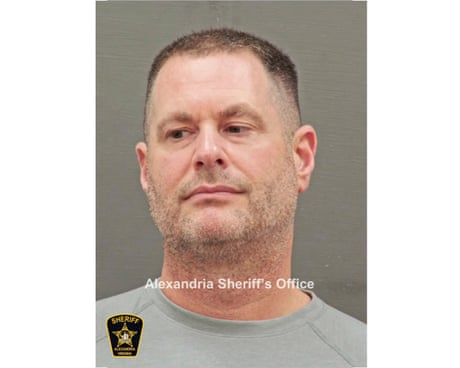




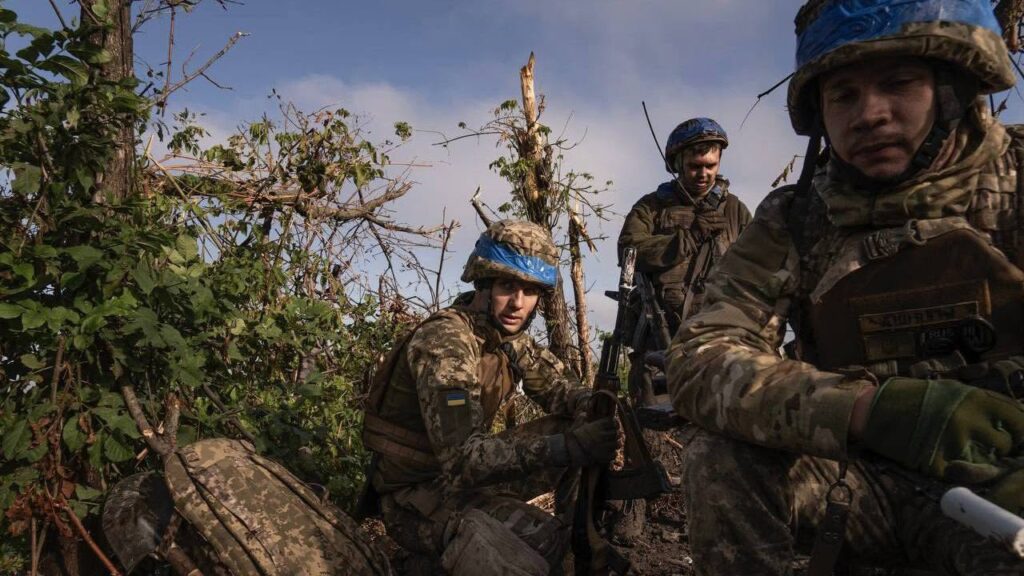
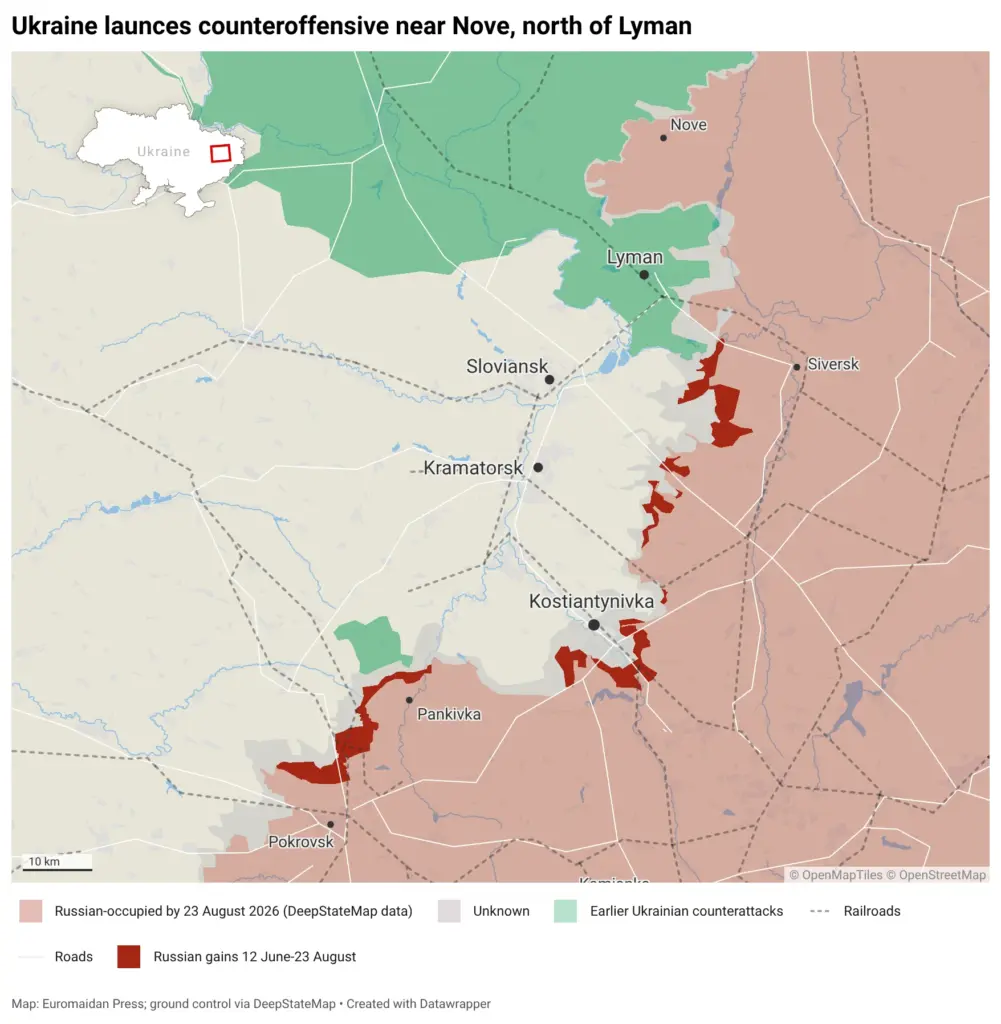







"K-2" Brigade pic.twitter.com/NTFE93sLFS



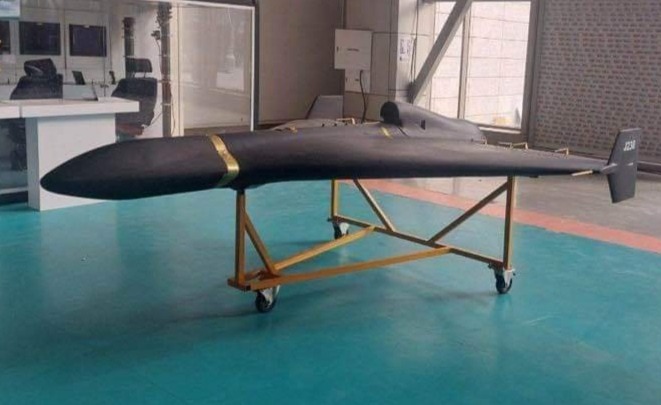


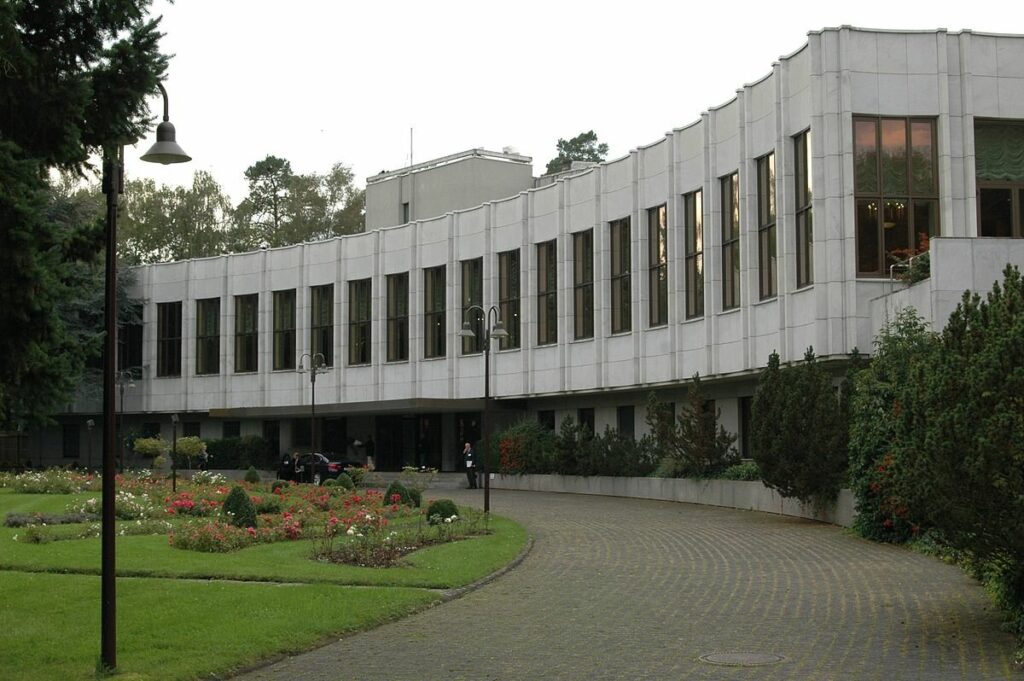
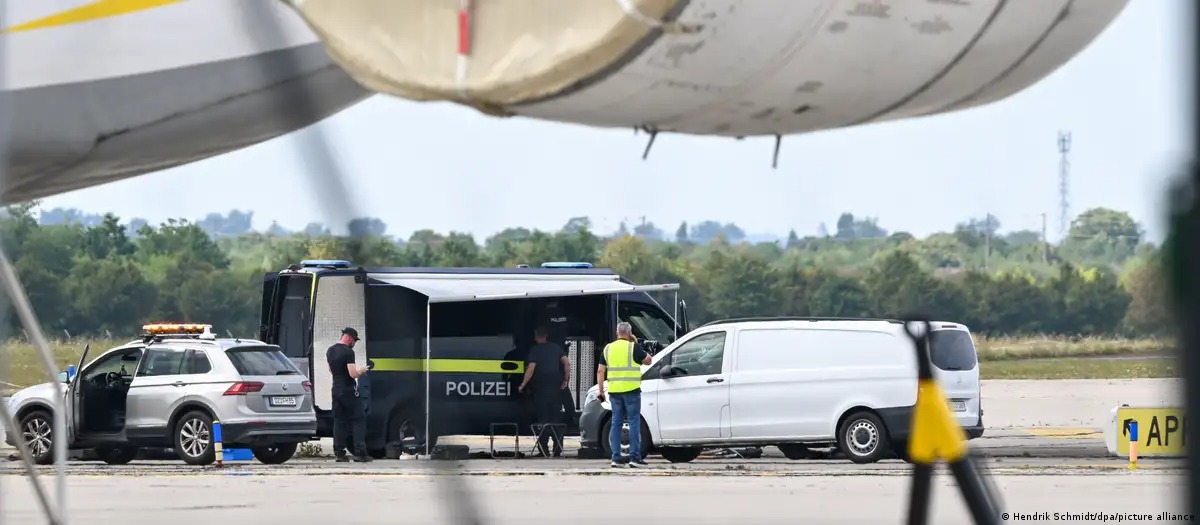















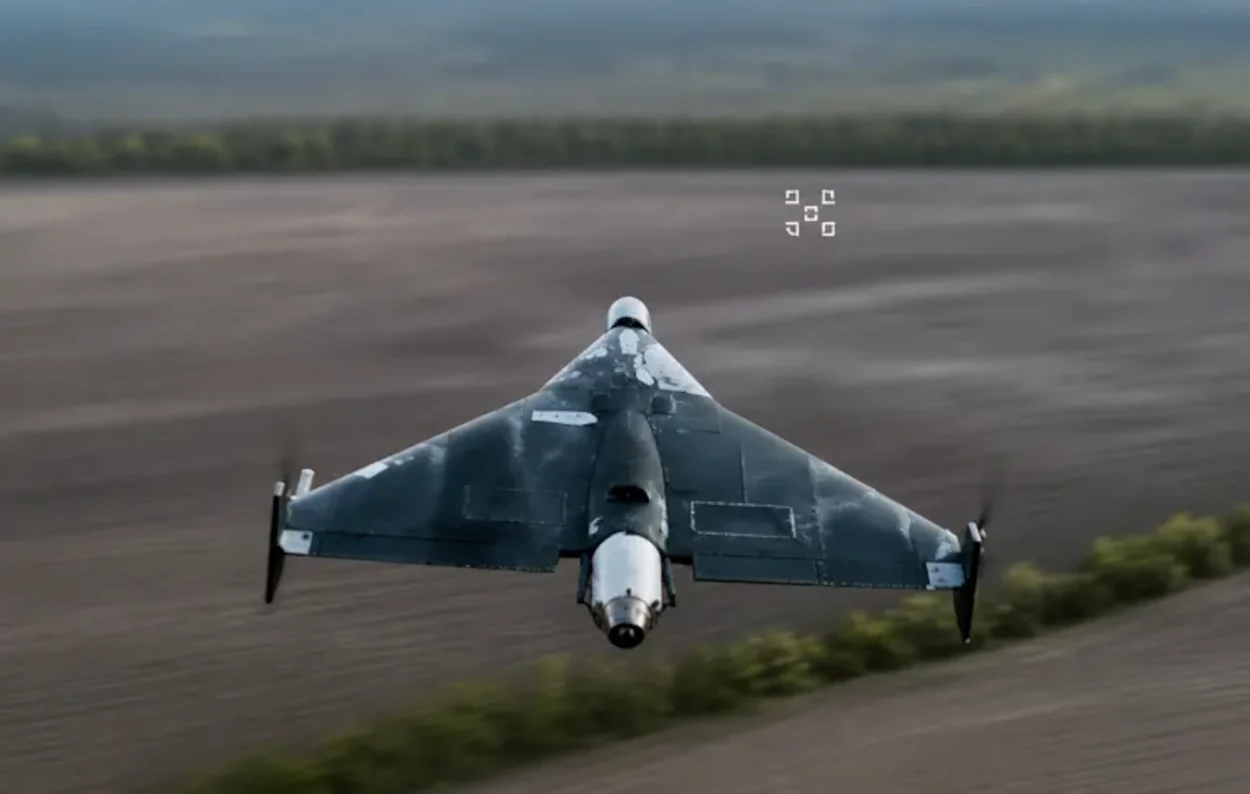








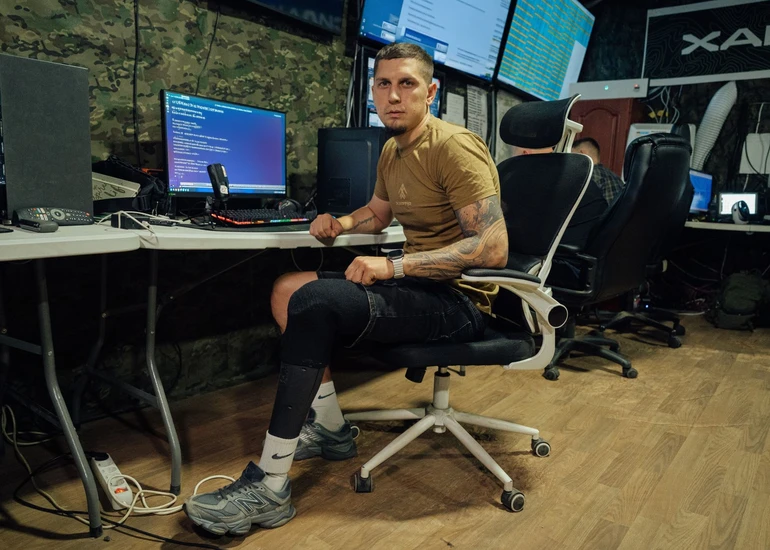
















 $1000 (3rd donation), Marci S.
 $696 (3rd donation), Michael S.
 $278 (8th donation),
  $174 (26th donation), Naoise G. aka “Gaff”
 $155, finn G. P.
 $145, adam S.
 $139, Simon D.
 $139, Valerio R.
 $116 (22nd donation), Jiří B.
 $116 (8th donation), Matthias Rainer
 $116 (4th donation), Bernard S.
 $100, Alan F.
 $93 (7th donation), Jean-francois R.
 $70 (3rd donation), Dainius B.
 $58 (27th donation), Bernard H.
 $58 (6th donation), António Salsinha – Graphic Designer
 $58 (2nd donation), Tim N.
 $58, Adam K.
 $58, András L.
 $58, Ivars J. aka “neredzams“
 $58, Telaneo
 $50 (10th donation), Khalid T. aka “k9750”
 $50 (6th donation), Frank B.
 $50 (3rd donation), Marek N.
 $46, Daniel D. M.
 $25, PAULO R. R.
 $23, EFTHYMIOS K.
 $23, Maks B.
 $20 (7th donation), Oleksandr N.
 $20, hatem A. N. Y.
 $20, Thomas S.
 $15, Dushyant S.
 $15, Indrapramit B.
 $12 (32nd donation), Adian K.
 $12 (6th donation), Lyuben R.
 $12 (4th donation), Jewgeni Smirnow
  $12, Tomislav B.
 $10 (7th donation), Selwyn A.
 $10 (2nd donation), ANDREW EDMUND JOHN
  $10 (2nd donation), Kenneth H.
 $10 (2nd donation), Victor M. aka “Bull”
 $10, Constantinescu V.
 $10, Cristian C. P.
 $10, Nechaev D.
 $10, VANDLE U.