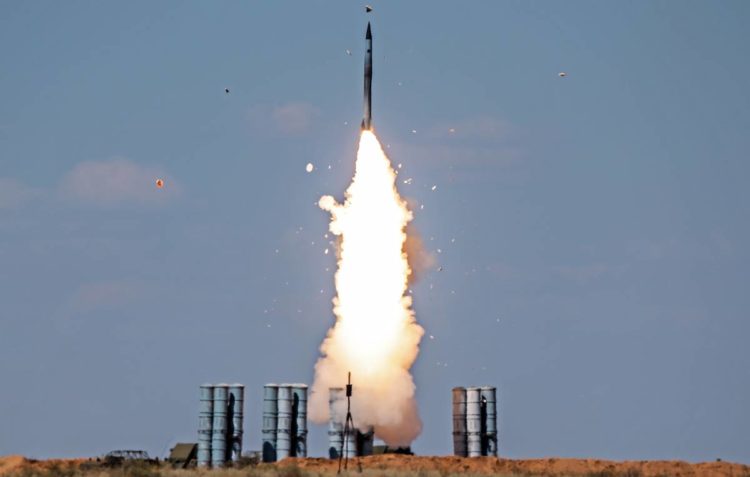
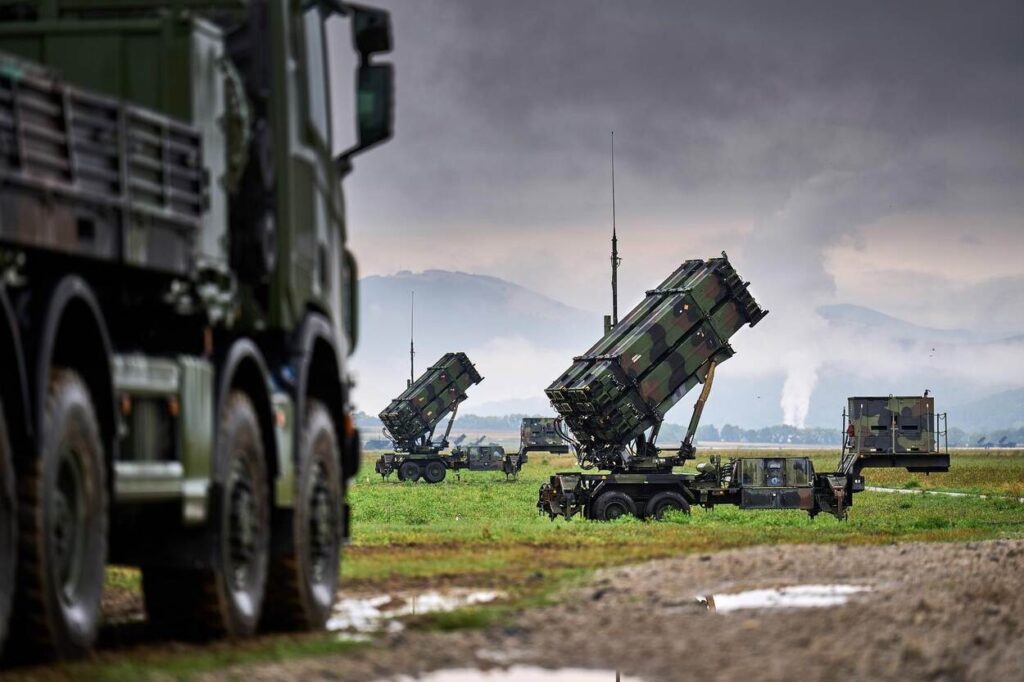
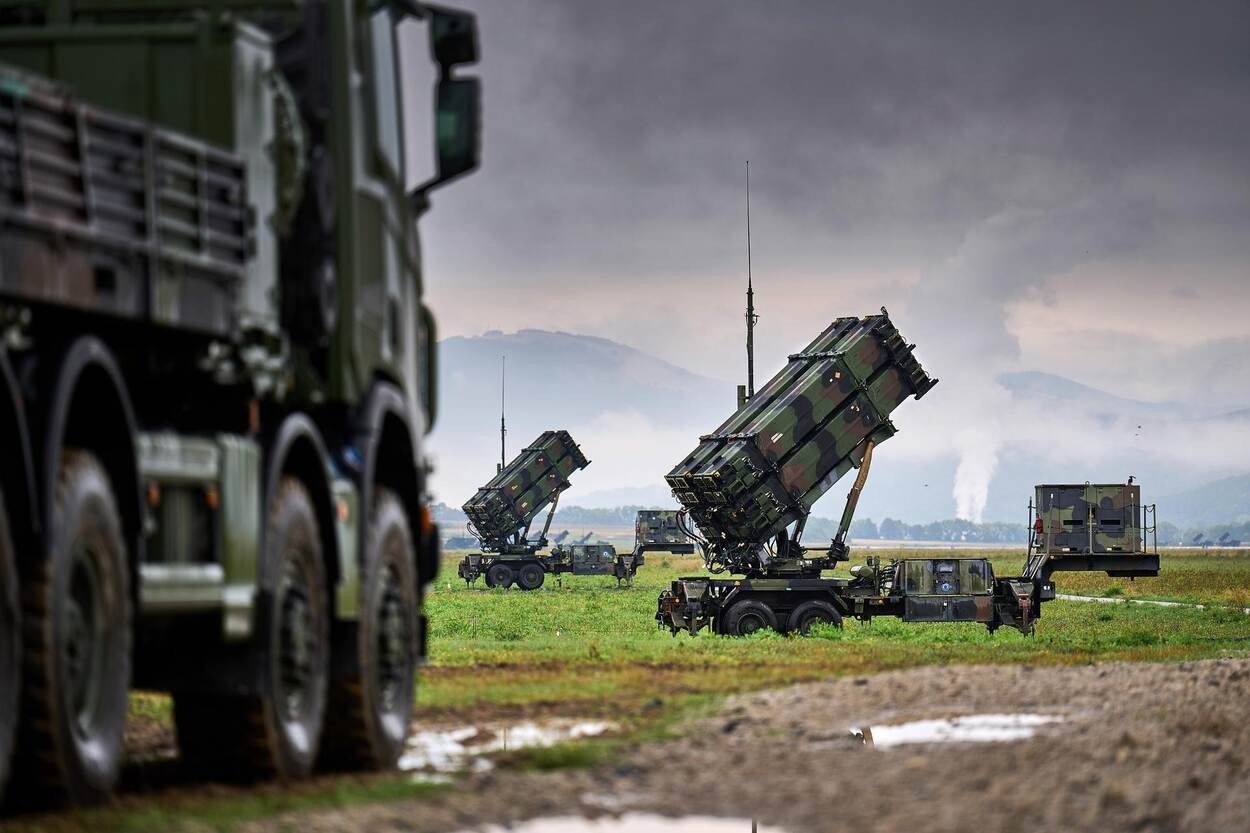
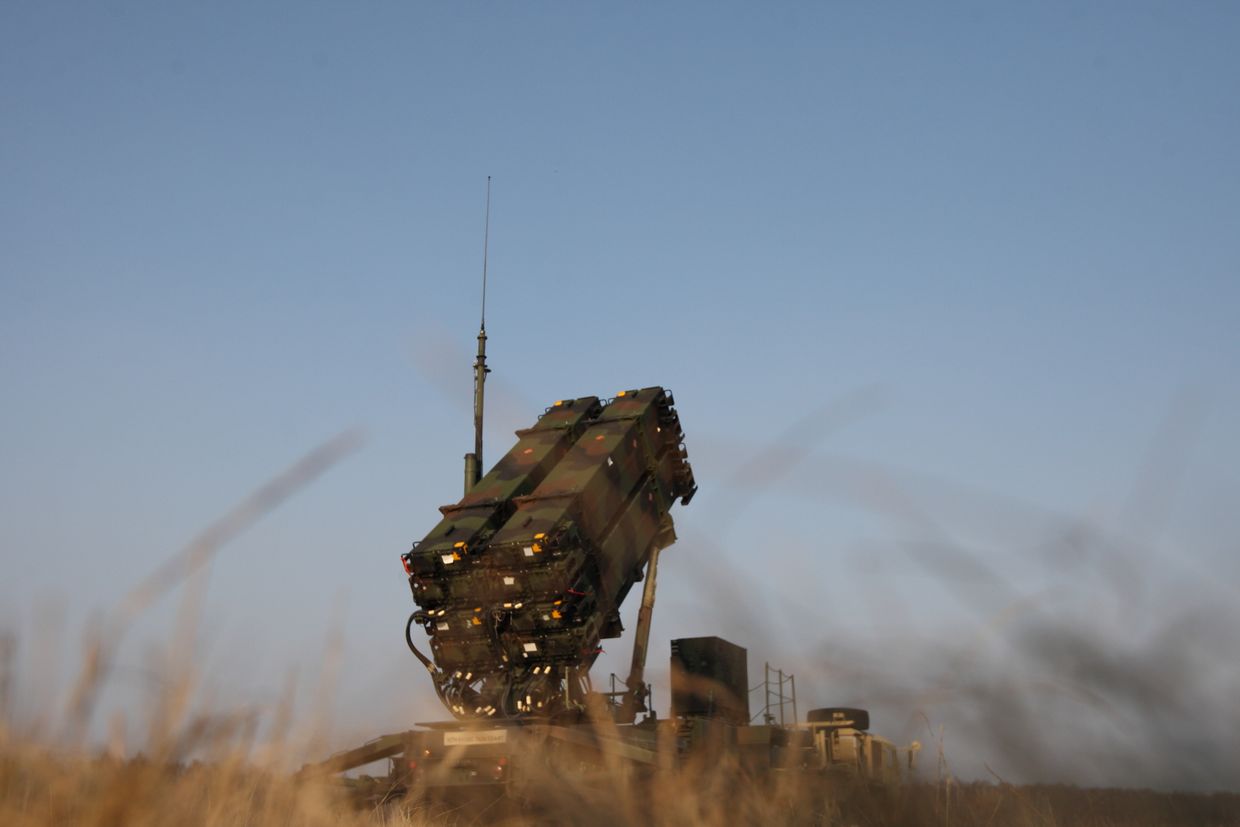
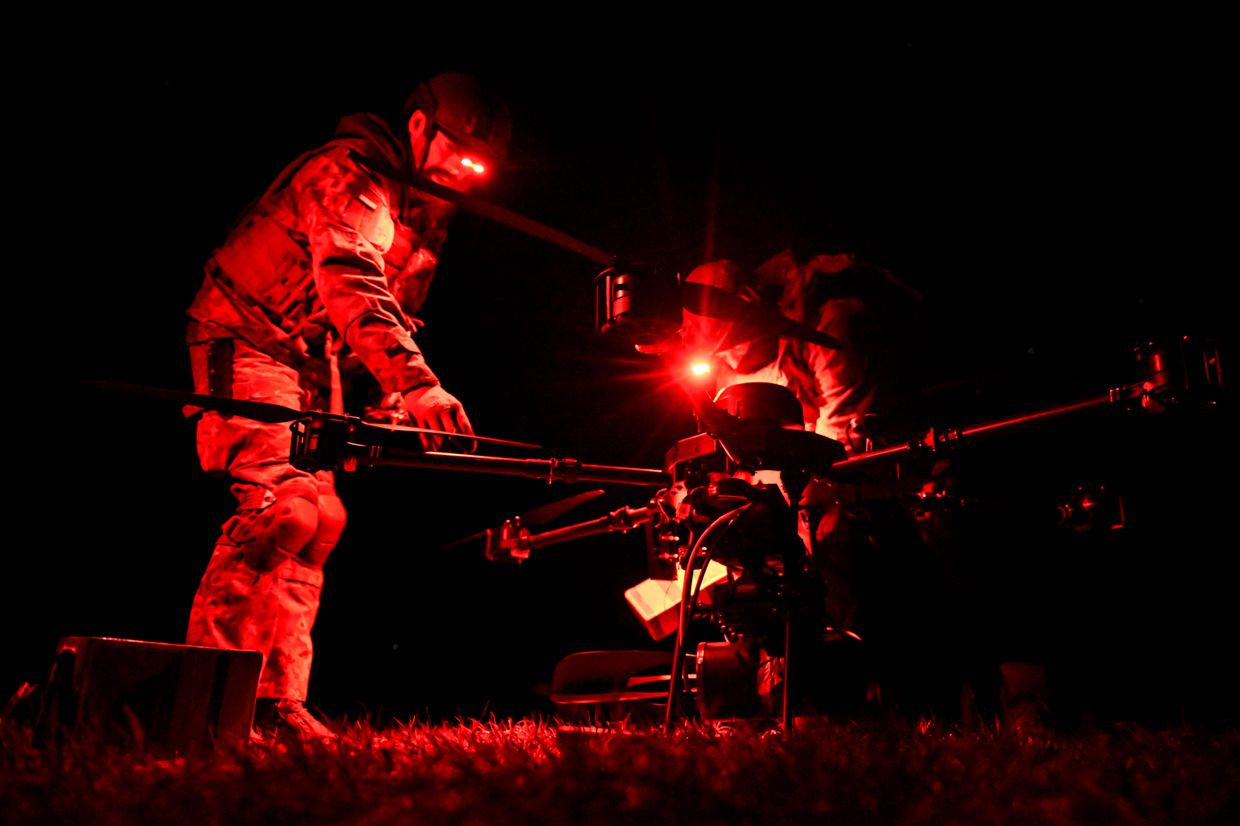
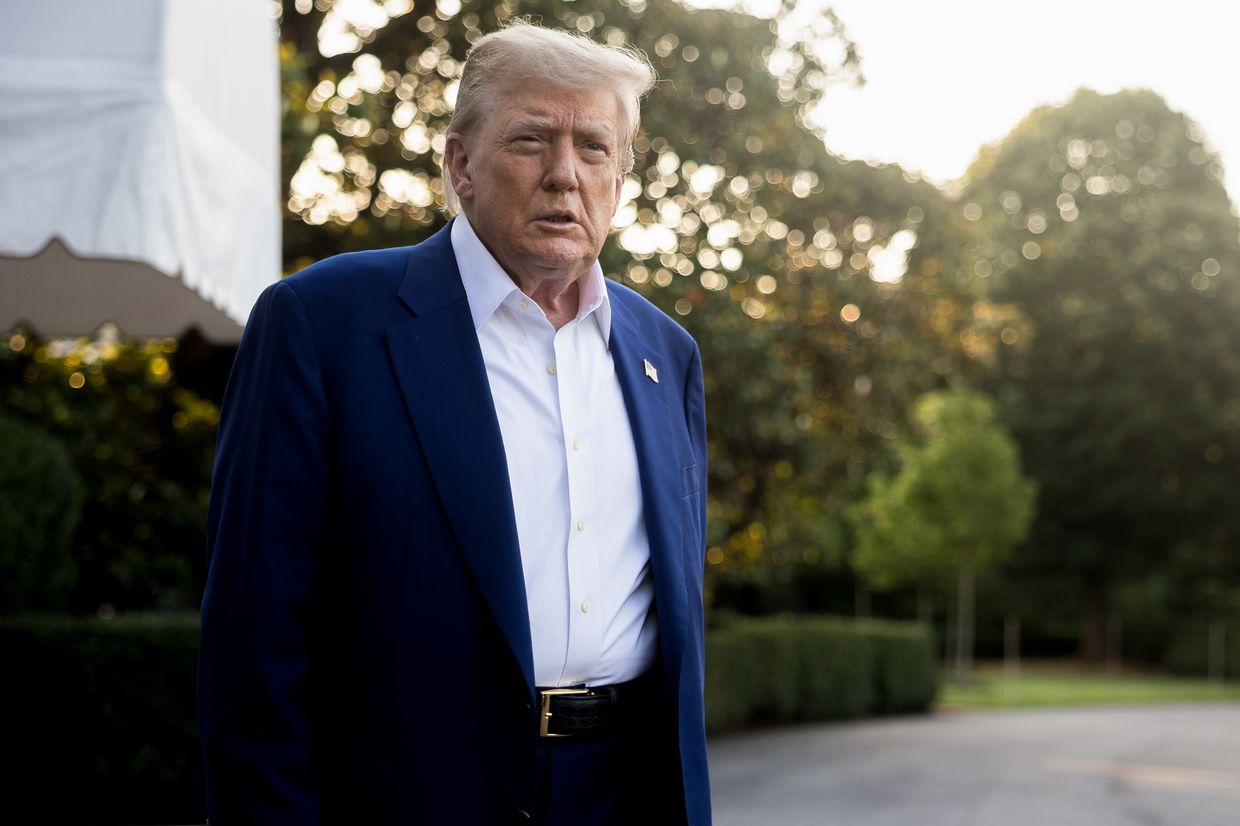
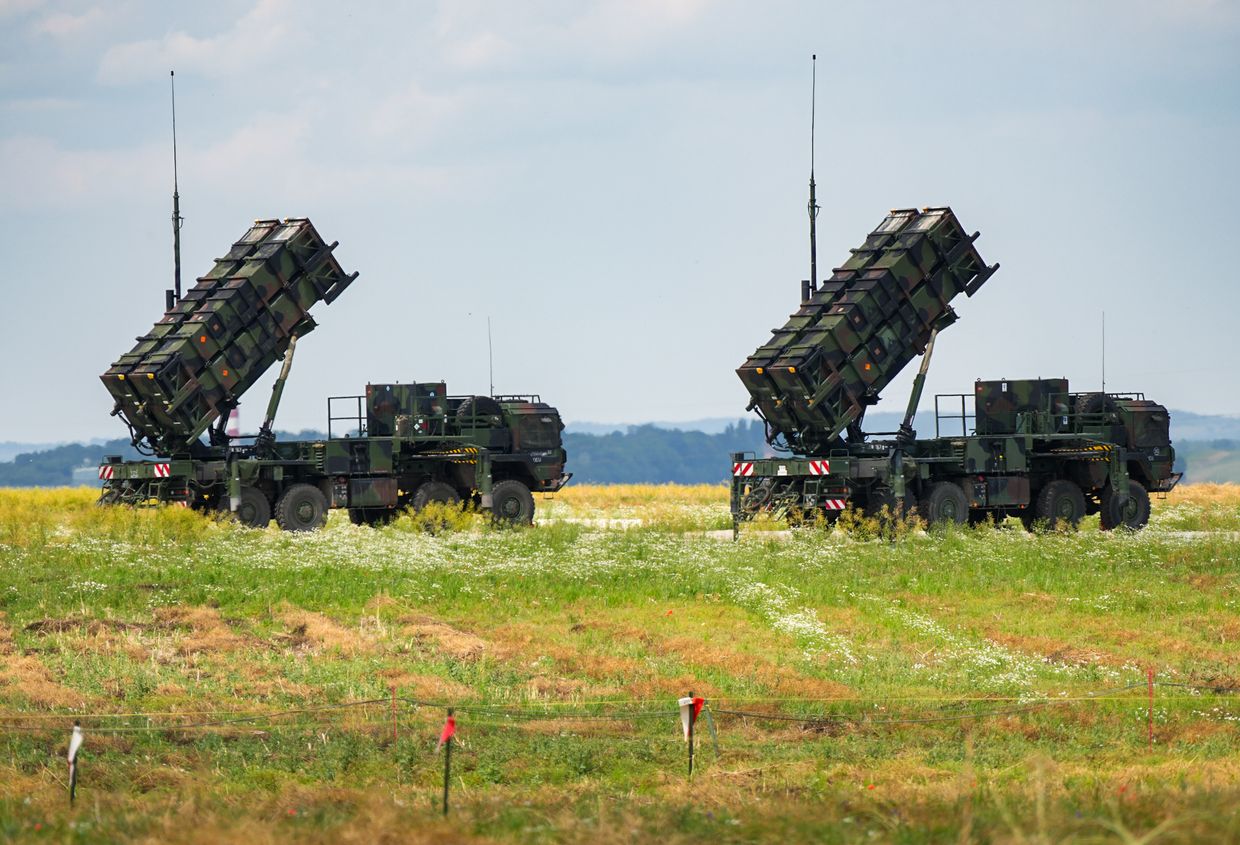
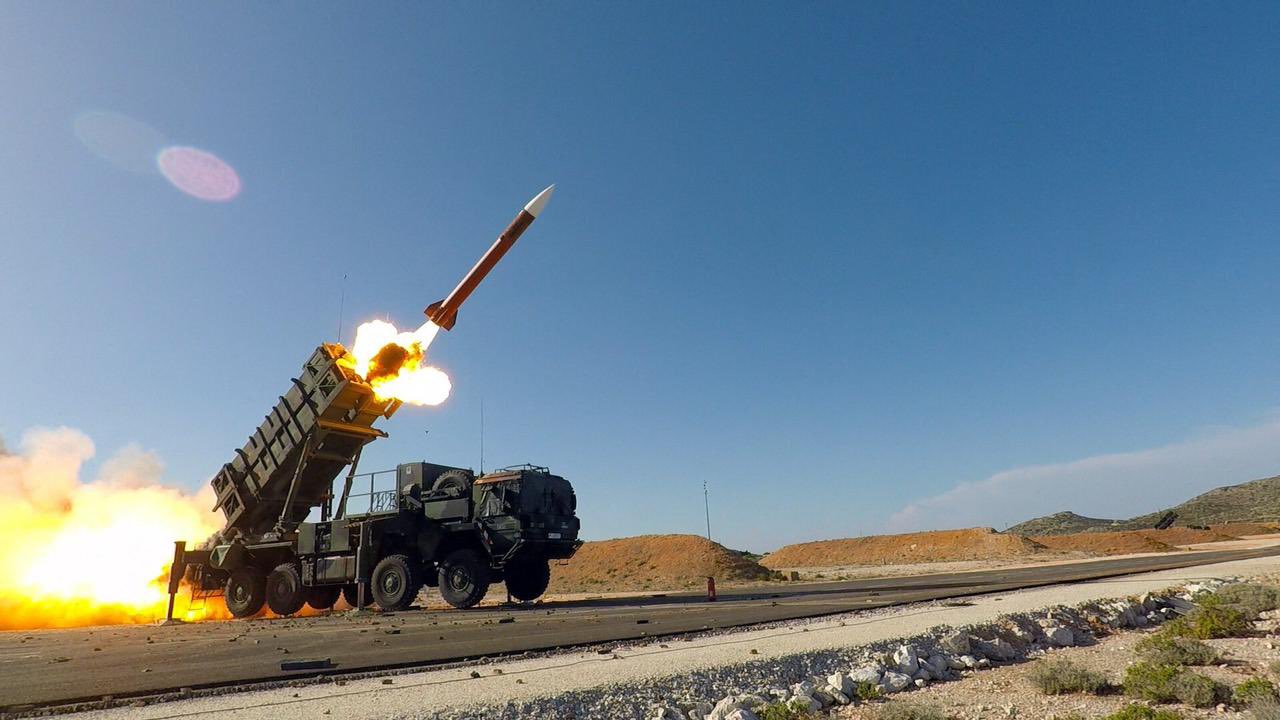
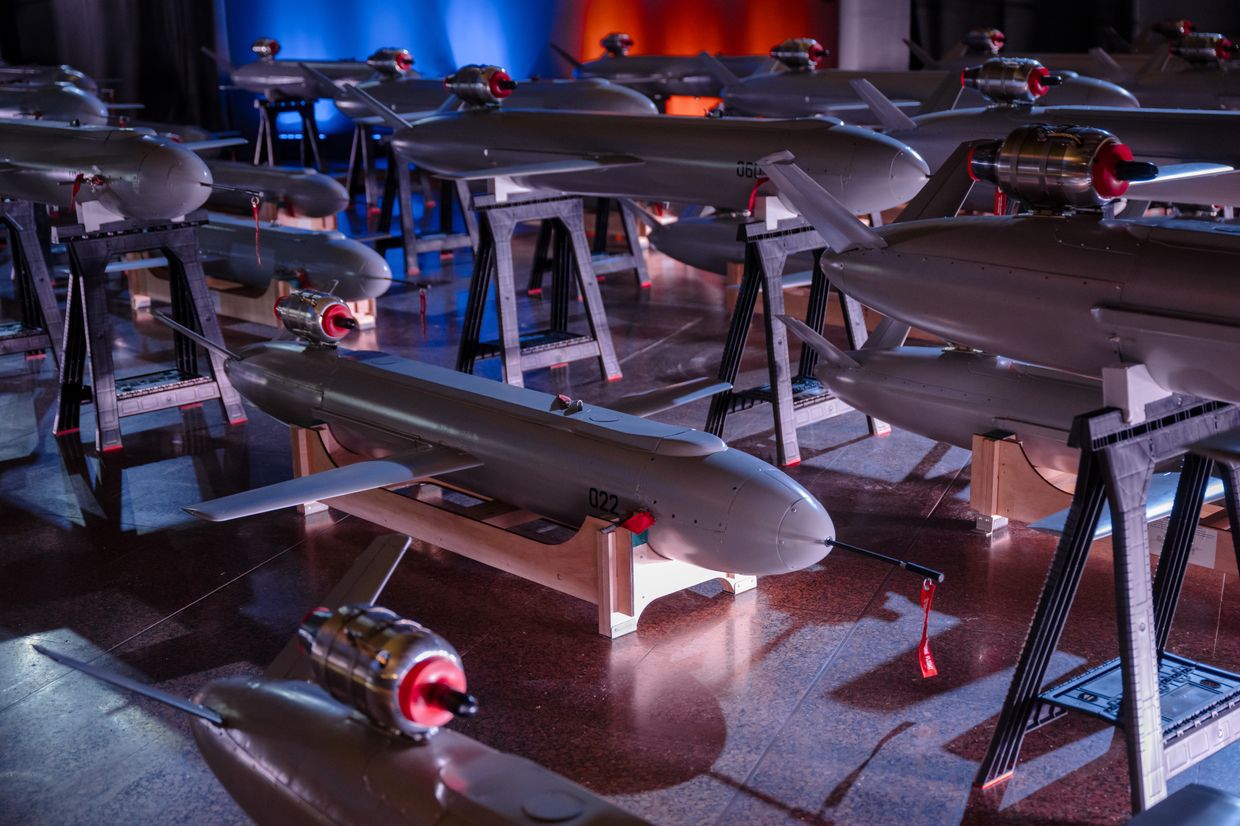
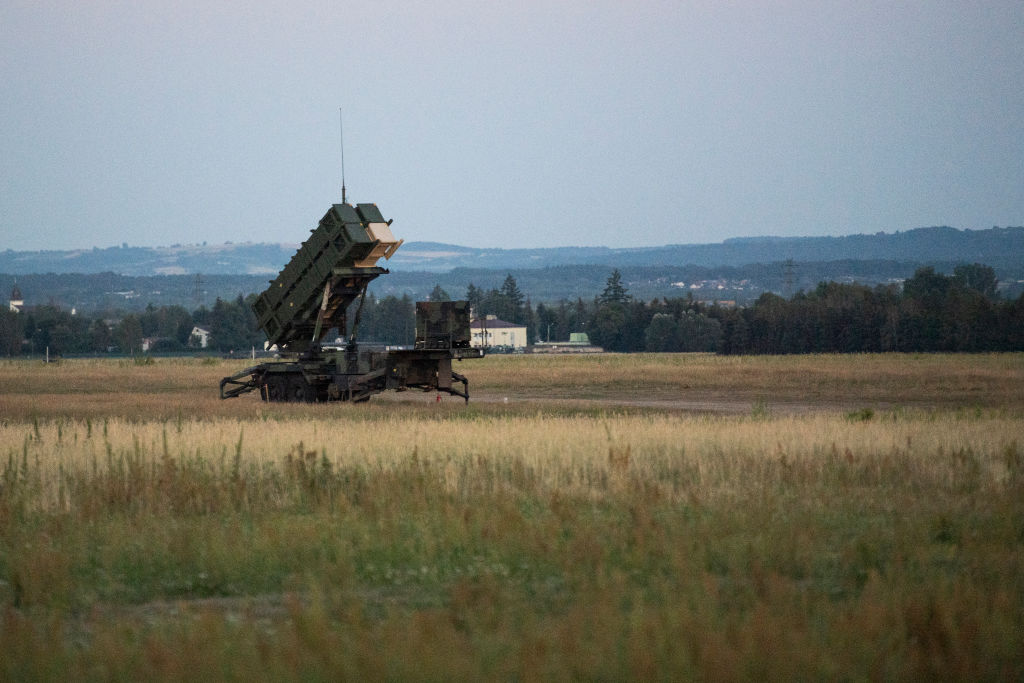
The United States and Ukraine are working together to put fresh missiles into Ukraine's aging Soviet-era S-300 air defenses, retired US Army colonel Robert Hamilton told PBS NewsHour. These long-range systems shoot down aircraft, but the missiles that feed them have been depleted. The effort—retrofitting old rounds or building a newer variant—would revive launchers Ukraine already owns.
Ukraine's air defense runs on a shrinking supply of interceptors, with Russian b
The United States and Ukraine are working together to put fresh missiles into Ukraine's aging Soviet-era S-300 air defenses, retired US Army colonel Robert Hamilton told PBS NewsHour. These long-range systems shoot down aircraft, but the missiles that feed them have been depleted. The effort—retrofitting old rounds or building a newer variant—would revive launchers Ukraine already owns.
Ukraine's air defense runs on a shrinking supply of interceptors, with Russian ballistic and drone strikes outpacing what allies can ship. The chokepoint is production capacity, not willingness—and Hamilton frames the S-300 rebuild as one of the slower-burn fixes that ease the strain on scarce Western systems rather than replace them.
A working system near the end of 2026
Hamilton, who heads the Delphi Global Research Center, said the joint effort should come online near the end of 2026 and could turn out "100 or a couple of hundred" anti-aircraft missiles a year. He described the work as an effort to "essentially retrofit or upgrade the old S-300 missiles or a newer variant of the S-300" and give the system better capabilities.
Explore further
Ukraine drones hit Crimea’s S-300/S-400 near Kerch—and knocked out power across four occupied territories overnight
In September 2024, then-US Defense Secretary Lloyd Austin announced at the Ramstein contact group that Washington, in partnership with several European companies, was working with Ukraine to "design and build a substitute" for the Soviet S-300 and the R-27 air-to-air missile used by fighter jets. He never spelled out what that substitute would be.
Why Ukraine's S-300s ran law
When Russia launched its full-scale invasion in 2022, Ukraine held roughly 25-30 S-300PT/PS battalions in varying states of readiness. As the missiles ran out, Kyiv came to lean on Western air defense systems and interceptors while Russia keeps launching mass strikes.
Explore further
“Very good results” – Wave of Ukrainian strikes across Russia and Caspian Sea overnight target warships, air defenses, logistics
Anything Ukraine can build or rebuild on its own soil is a supply that no foreign stockpile or political fight can cut off.
That same logic is pushing Kyiv toward co-producing Patriots with US firms and fielding its own ballistic interceptor—a race to turn air defense into a domestic industry before the next winter of strikes.
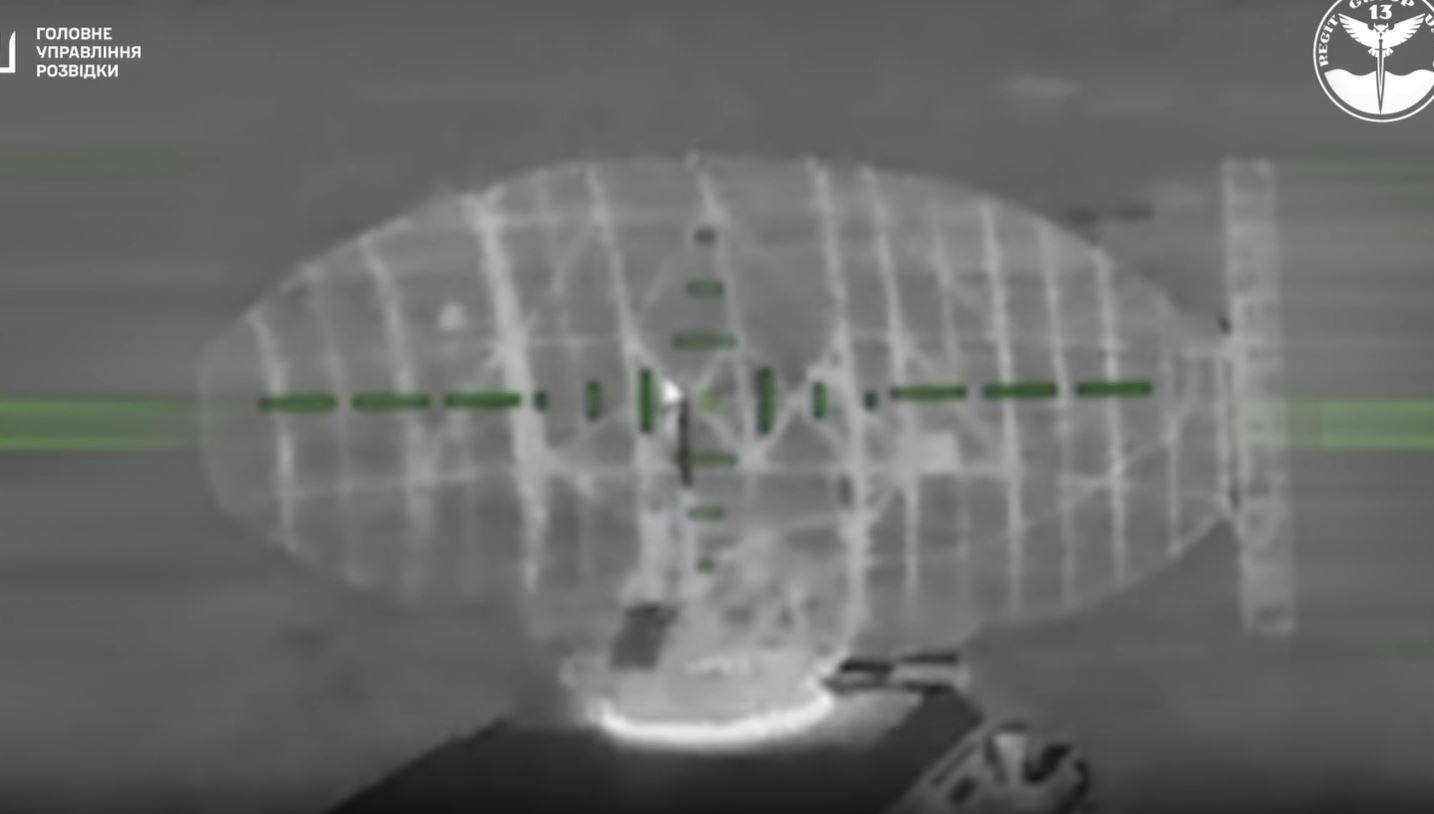
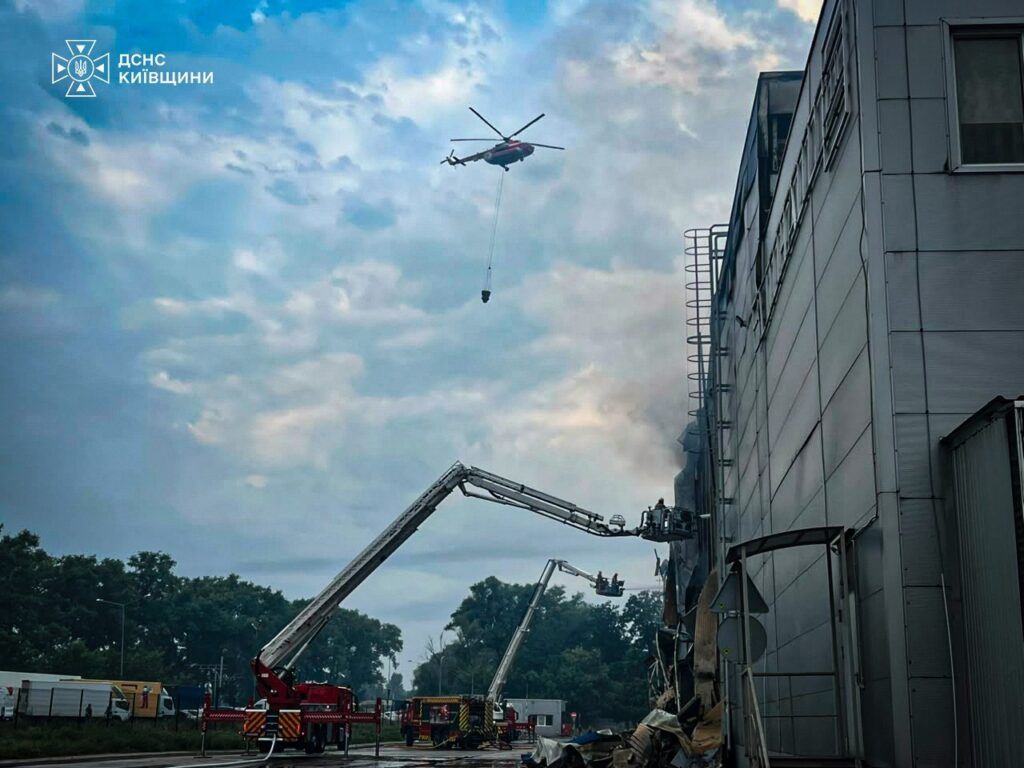
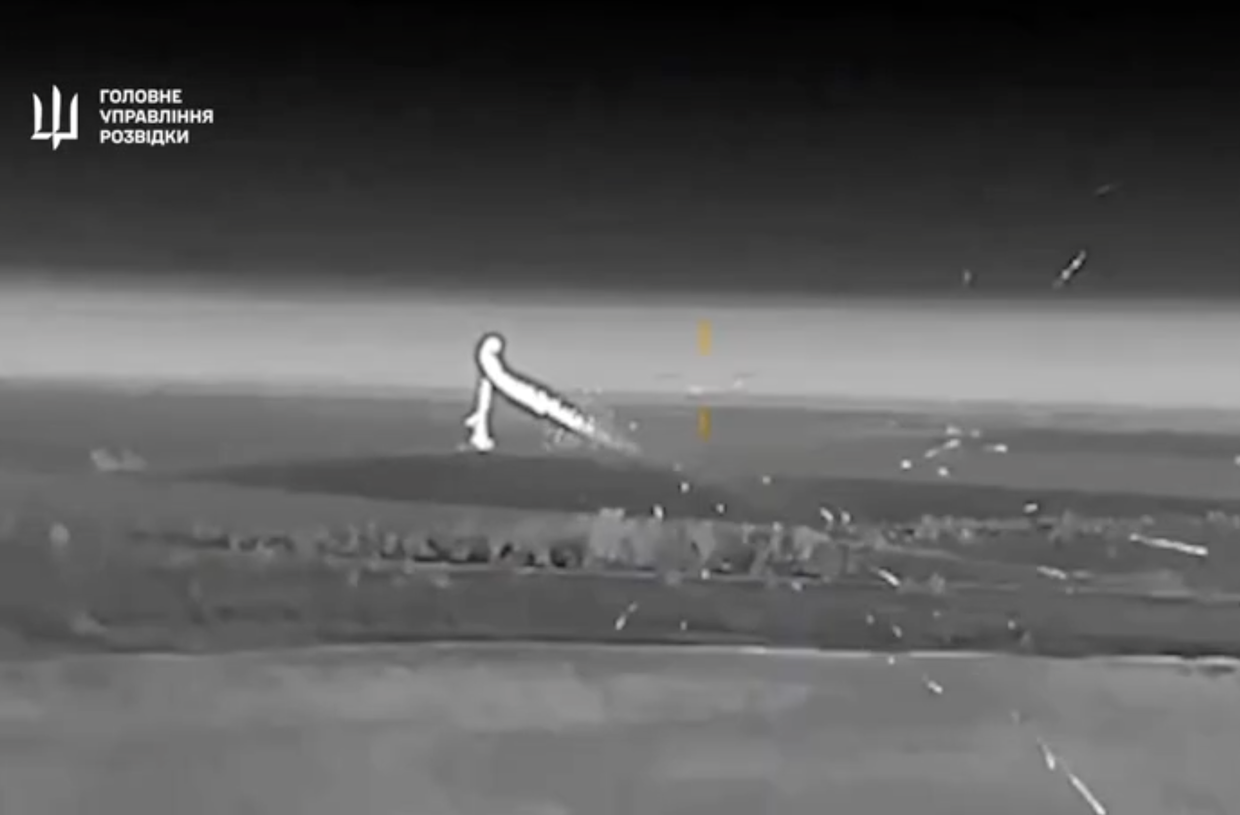
Ukraine's Main Directorate of Intelligence (HUR) destroyed a Pantsir-S1 air defense system worth an estimated $15 million and a military crane in occupied Crimea, HUR reported. The agency's Group 13 used maritime drones as drone carriers to deliver the strikes on ground targets. Separately, monitoring channels reported explosions across the peninsula from Kerch to Sevastopol overnight on 7 August, hitting the airfield Russia uses to launch Shaheds at Ukrainian cities.
T
Ukraine's Main Directorate of Intelligence (HUR) destroyed a Pantsir-S1 air defense system worth an estimated $15 million and a military crane in occupied Crimea, HUR reported. The agency's Group 13 used maritime drones as drone carriers to deliver the strikes on ground targets. Separately, monitoring channels reported explosions across the peninsula from Kerch to Sevastopol overnight on 7 August, hitting the airfield Russia uses to launch Shaheds at Ukrainian cities.
The strikes on air defense run alongside a broader isolation campaign. Ukraine's drones have hit 201 shadow fleet vessels in three weeks, the Kerch Strait supply route is blocked indefinitely, and Ukraine's defense minister said the drone campaign is turning Crimea into an island. Earlier this week, the SBU damaged two FSB coast guard ships in Kerch that had been guarding the Crimean Bridge.
FPV drones launched from Magura platforms destroy air defense
HUR's Group 13 used Magura naval platforms as floating carriers for FPV drones. The drones flew from the platforms to strike a camouflaged Pantsir-S1 and a military crane on land, the agency's video shows. HUR estimated the destroyed air defense system at $15 million.
HUR did not specify the exact location but said the operation took place in early August 2026. The Pantsir-S1 is a short-range gun-and-missile system Russia deploys to protect higher-value assets such as S-400 batteries and command posts. Each one destroyed leaves a gap in the layered coverage Russia relies on over the peninsula.
The agency noted that Group 13 operators recently struck a Podlyot radar control vehicle and a Parol-4 radar interrogator in Crimea as well.
The Pantsir kill adds to a months-long campaign that has destroyed nearly 200 Russian air defense assets in the first half of 2026 alone by the Unmanned Systems Forces.
Overnight strikes sweep peninsula from Kerch to Sevastopol
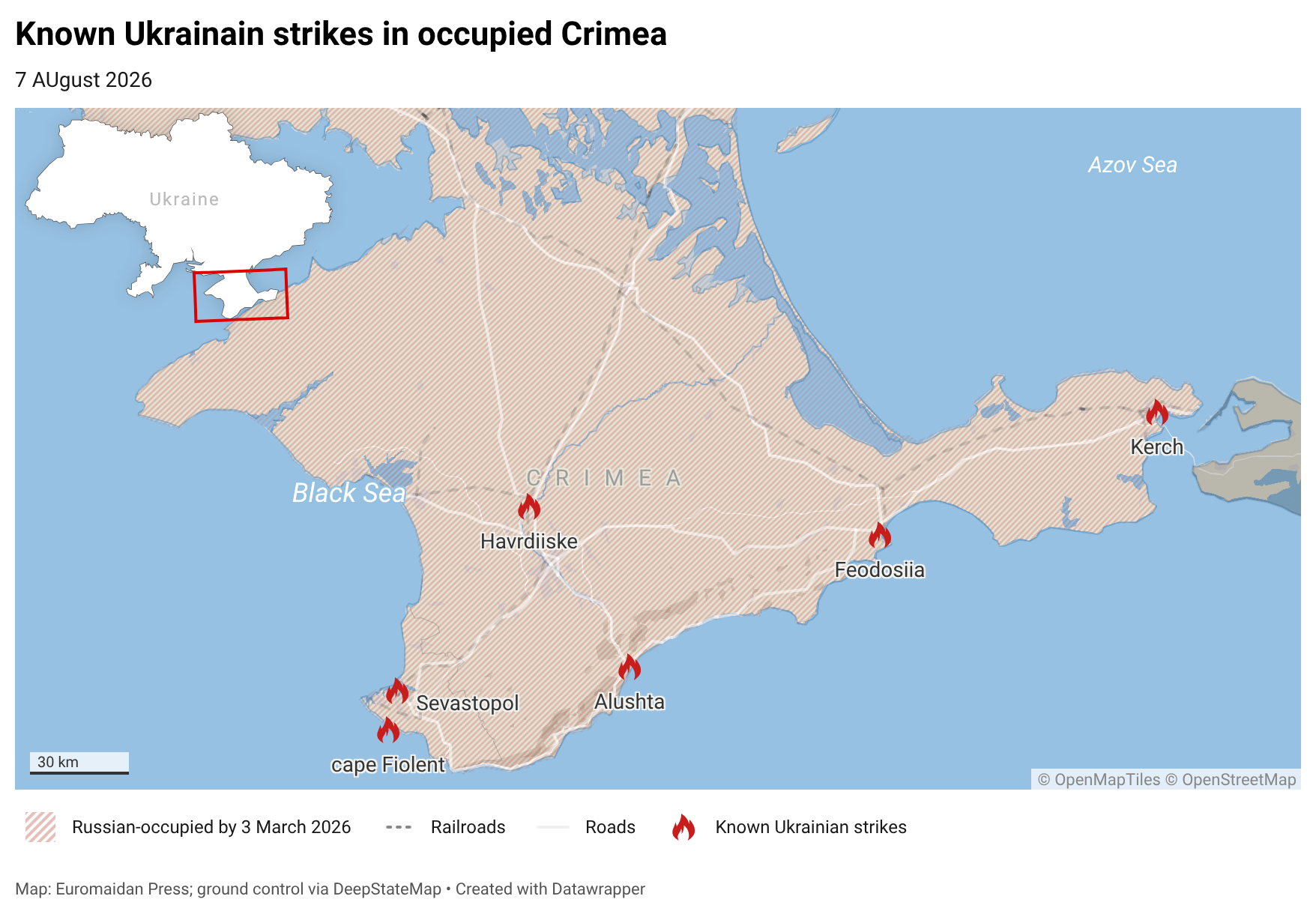
Separately, overnight on 7 August, Ukraine struck at least six locations across occupied Crimea.
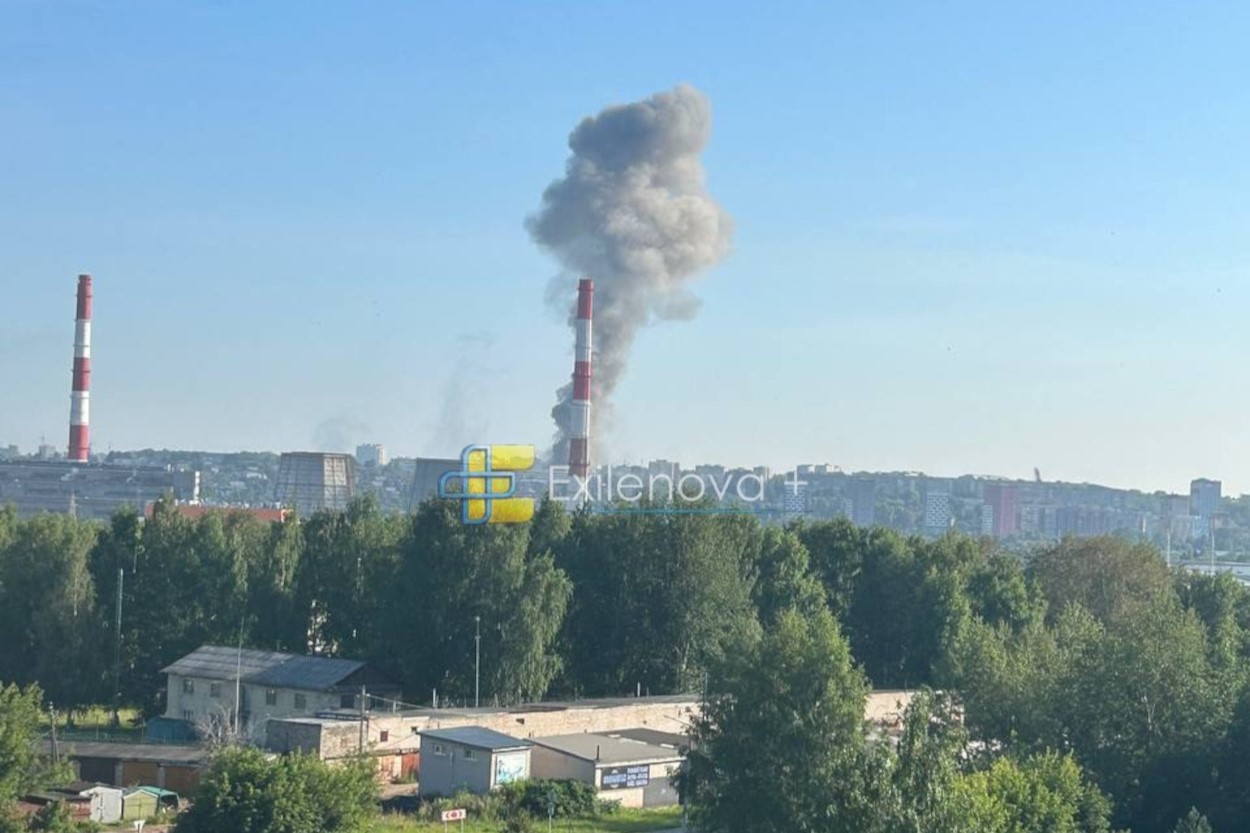
Monitoring Telegram channel Krymsky Veter reported explosions and gunfire in Kerch at 02:38. Near Alushta, four strong explosions were heard in the village of Malorichenske close to a large power substation. In Sevastopol, mobile fire groups engaged targets without an air-raid alert, and residents reported a powerful explosion near Cape Fiolent.
Explore further
Ukraine’s sea drone that never touched the shore struck two Russian radars in occupied Crimea
The heaviest strikes hit the Hvardiiske military airfield, which Russia uses to launch Shahed attack drones against Ukrainian cities. Hits landed in two waves, from 03:30 to 03:39 and from 04:34 to 04:47. A fuel and lubricants depot caught fire, and small-arms ammunition began detonating, Krymsky Veter reported. Residents described two fire sites visible for kilometers. The Crimean Bridge was temporarily closed during the strikes.
In Feodosia, initial reports of a strike on the oil depot were corrected: the hit likely landed on a concentration of Russian military equipment at the former 13th military compound on the Kerch Highway. Krymsky Veter noted the same compound was struck on 22 June. A vessel also burned at sea off Gelendzhik overnight.
No official confirmation of the strikes' results has been issued.
Latvia will open military mobilization centers in four cities and build anti-tank barriers in its capital this week as the Baltic NATO member rehearses wartime call-up procedures, Latvian Public Media (LSM) reported. The drills come as multiple Western intelligence agencies have warned that Russia may test NATO's eastern flank with a limited military provocation within years.
Russia's full-scale war against Ukraine has pushed NATO's eastern flank from threat assessm
Latvia will open military mobilization centers in four cities and build anti-tank barriers in its capital this week as the Baltic NATO member rehearses wartime call-up procedures, Latvian Public Media (LSM) reported. The drills come as multiple Western intelligence agencies have warned that Russia may test NATO's eastern flank with a limited military provocation within years.
Russia's full-scale war against Ukraine has pushed NATO's eastern flank from threat assessments to physical preparations, with the Baltic states racing to close a defense gap that most European rearmament plans do not fill until 2030.
Latvia rehearses crisis conscription
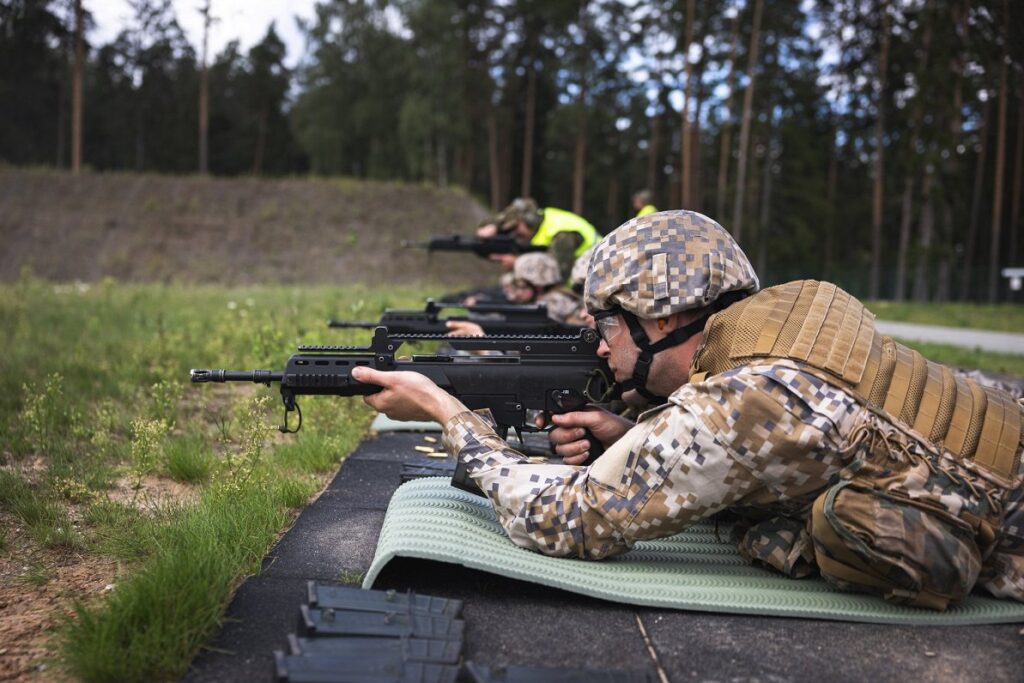
On 8 August, Latvia's National Armed Forces (NBS) will deploy mobilization centers in Rīga, Kuldīga, Valmiera, and Alūksne. The purpose is to train and improve procedures for calling up and conscripting Latvian citizens in a crisis. Citizens who applied for voluntary reserve training will report to the centers and travel to the Infantry School in Alūksne for a three-week military course.
The course, running from 8 to 29 August, will train 114 reservists in weapons handling, combat shooting, communications, topography, terrain orientation, field combat, and advanced first aid. After completing the program, reservists will take the soldier's oath, receive a reserve soldier's certificate and a mobilization order. Reserve soldiers must refresh their skills every four years.
Both women and men — Latvian citizens aged 18 to 60 with at least primary education, intermediate Latvian, no criminal record, and good health — can apply.
Today, on 7 August, a separate exercise in the capital will test Riga's ability to erect anti-mobility engineering structures — physical obstacles designed to slow enemy forces in urban environments.
Explore further
What Moscow does to foreign embassies, Latvia will now do to Russia’s
The drills are the latest in a series of concrete defense steps Latvia has taken as the threat from Russia grows.
Latvia's military chief warned in June that Russia could exploit its drone advantage to attack the Baltics by the end of 2028. In July, Latvia hardened security at its hydroelectric dam and gas storage facility after intelligence flagged specific Russian threats, and its prime minister asked NATO for more troops and air defense.
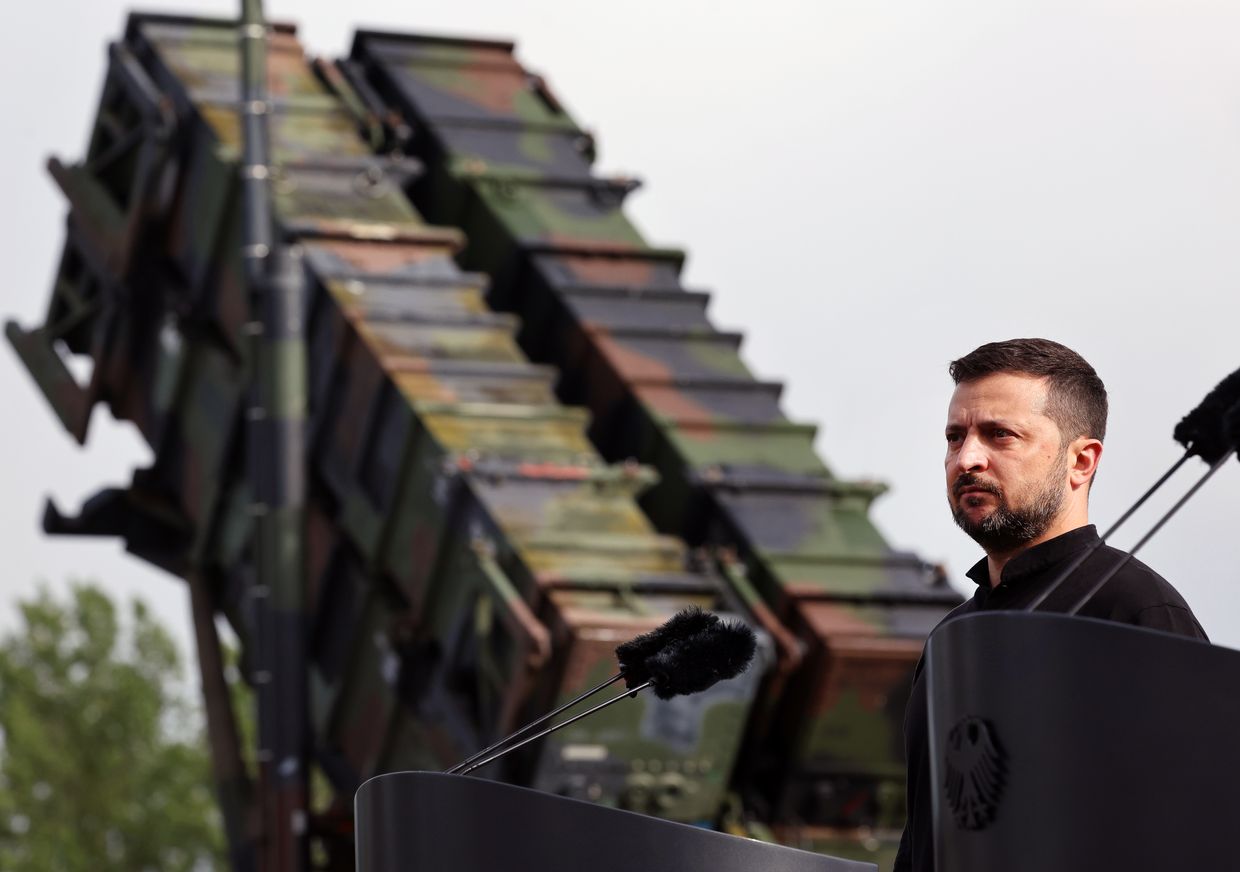
US negotiators have quietly kept a deal to let Ukraine help build Patriot interceptor missiles alive, even after US President Donald Trump publicly cast doubt on it, Reuters reported. Four people familiar with the talks said Washington never ordered them stopped. Ukraine, running low on air defenses, urgently wants the missiles to blunt Russia's growing ballistic strikes.
Russian daily drone attacks forced Kyiv to chase air defense from every direction at once, includin
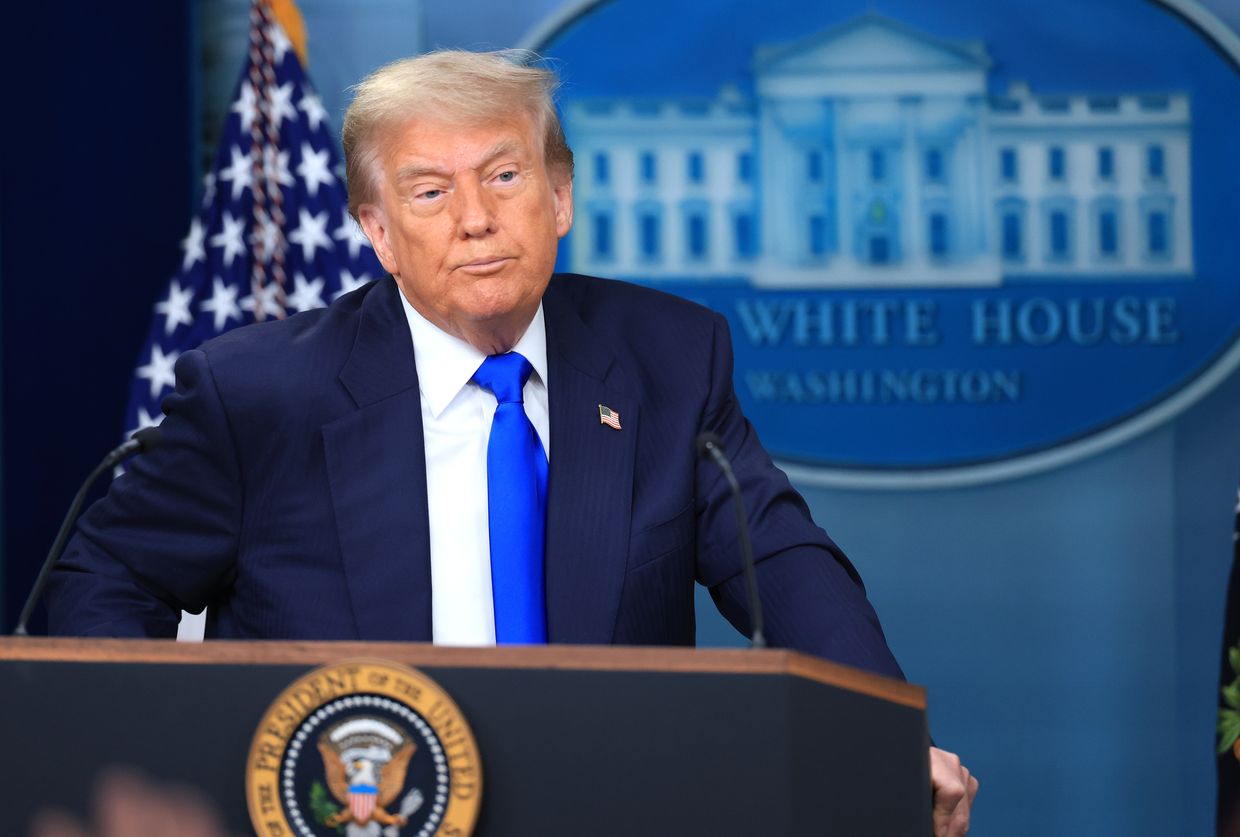
US negotiators have quietly kept a deal to let Ukraine help build Patriot interceptor missiles alive, even after US President Donald Trump publicly cast doubt on it, Reuters reported. Four people familiar with the talks said Washington never ordered them stopped. Ukraine, running low on air defenses, urgently wants the missiles to blunt Russia's growing ballistic strikes.
Russian daily drone attacks forced Kyiv to chase air defense from every direction at once, including home-grown interceptors. But this year, Moscow has increasingly turned to ballistic missiles, the hardest weapons for Ukraine to stop. US-supplied PAC-3 interceptors fired by Patriot systems are among the few weapons that can reliably shoot them down, and Ukraine has now run out.
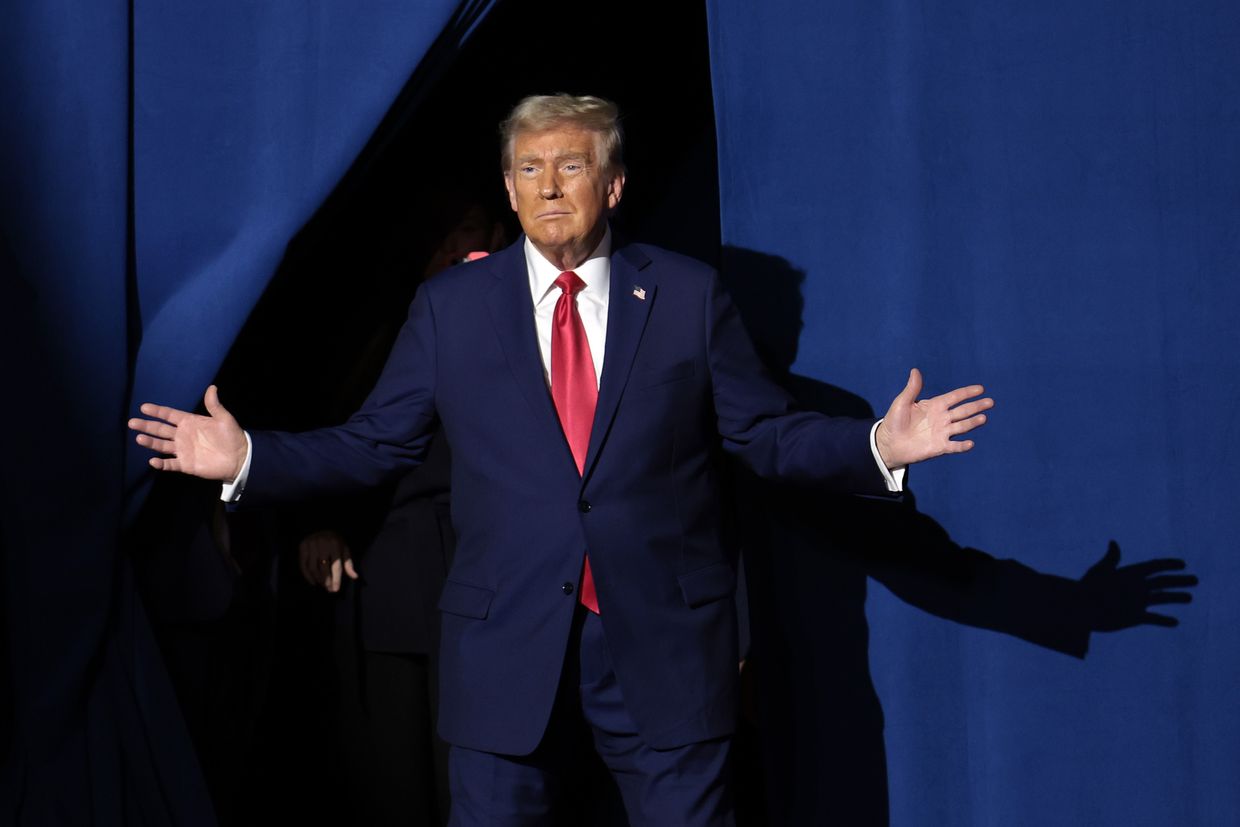
President Donald Trump greets Ukraine's President Volodymyr Zelenskyy at his Mar-a-Lago club, Sunday, Dec. 28, 2025, in Palm Beach, Fla. AP Photo/Alex Brandon/Eastnews
The talks Trump seemed to kill
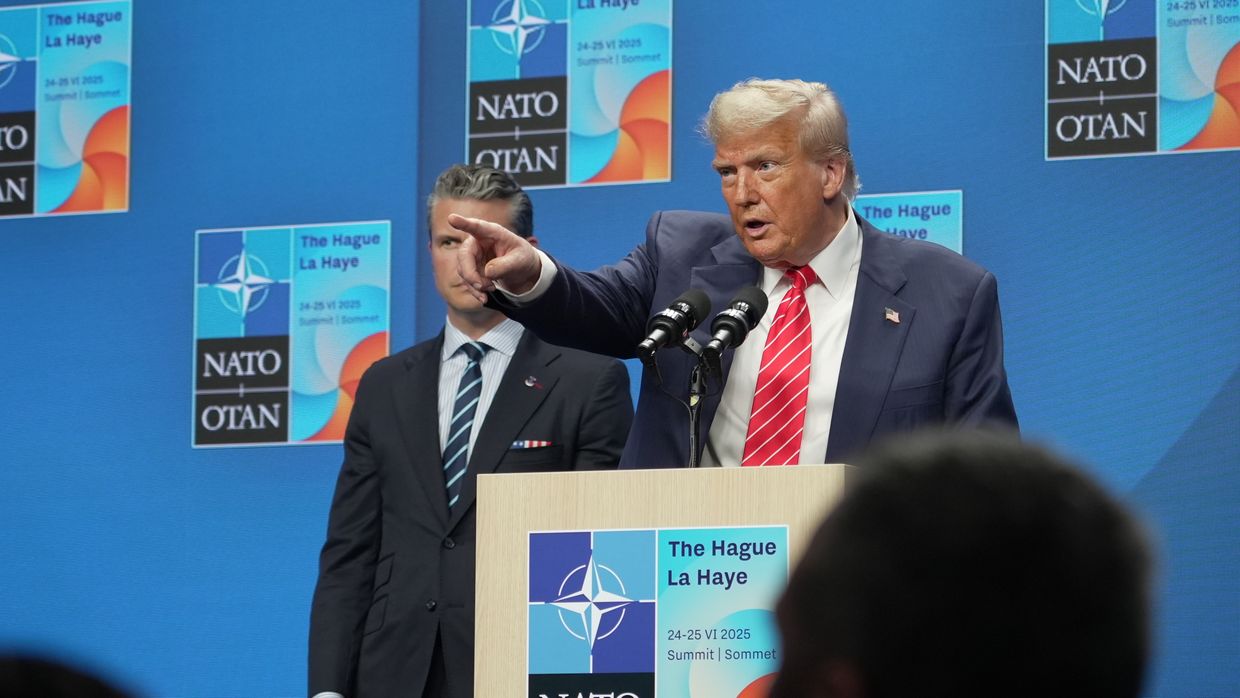
Last week, Trump appeared to reverse course, telling reporters the US had not agreed to let Ukraine build Patriots and must be "very careful about letting somebody build them."
According to Reuters, two sources tied that to a tense White House meeting with Zelenskyy. Yet the negotiations pressed on.
"No order was given to halt the discussions," one source said, adding that talks continued with US arms makers and military officials.
Matthew Whitaker, Washington's envoy to NATO, is leading the drive for a deal. He visited Kyiv last month to weigh options with Ukrainian officials and weapons executives. His spokesperson framed the trip around drone collaboration that would benefit US forces, without naming the Patriot plan.
A senior administration official told Reuters that any agreement must protect US technology.
Reuters: The Patriot deal Trump denied is quietly still alive
What Ukraine could build
The options include making Patriot components in Ukraine and shipping them to Germany for final assembly, the sources said. A US official called that the most feasible route. Germany already produces an older Patriot model, and the advanced PAC-3, the newest Patriot interceptor, is expected to follow.
Ukraine could instead join an existing US-European Patriot program, or build a cheaper version of the PAC-3.
It might also tap Lockheed Martin's new lower-cost interceptor, the PAC-3 ACE, unveiled last month.
A promise made, then pulled back
During a meeting with Zelenskyy in Ankara last month, Trump said the US would license Ukraine to make PAC-3s. His later reversal caught many off guard, including Zelenskyy. In a follow-up call, US Vice President JD Vance assured him that deals between presidents would hold, one source said.
Explore further
Reuters: The Patriot deal Trump denied is quietly still alive
Ukraine's clock is running
Even with a deal, Ukraine would not receive newly built interceptors for a year or more. So Kyiv is urging allies to hand over some of theirs and exploring swaps to get missiles sooner.
Earlier, Zelenskyy warned that Ukraine had run out of Patriots. That day, it intercepted just one of 27 ballistic missiles Russia fired.
Global stocks of high-end interceptors have shrunk since the Iran war, with Patriots once bound for Ukraine diverted to US forces and Gulf allies.
Estonia will use part of a new European Union loan to arm Ukraine with drones, drawing on a loan worth up to €2.34 billion, according to ERR. The loan will also rebuild its own air defense and ammunition stocks, and all of it must be spent by 2030.
As Moscow continues its all-out war in Ukraine, the EU's northeast is rearming fast, bracing for a Russia that regional military chiefs expect to be combat-ready again within two years.
What the loan buys
Estonia signed the f
Estonia will use part of a new European Union loan to arm Ukraine with drones, drawing on a loan worth up to €2.34 billion, according to ERR. The loan will also rebuild its own air defense and ammunition stocks, and all of it must be spent by 2030.
As Moscow continues its all-out war in Ukraine, the EU's northeast is rearming fast, bracing for a Russia that regional military chiefs expect to be combat-ready again within two years.
What the loan buys
Estonia signed the financing deal with the European Commission under SAFE (Security Action for Europe), a €150 billion EU program that raises money jointly on the markets and lends it to member states on cheap terms to fast-track defense spending, its finance ministry said.
A share of Estonia's up-to-€2.34 billion will go to Ukraine as drones. The rest strengthens air defense, buys military vehicles, and refills artillery shells and other ammunition. The credit runs 45 years, and every purchase and delivery must be finished by 2030. Estonia filed its final application in November 2025.
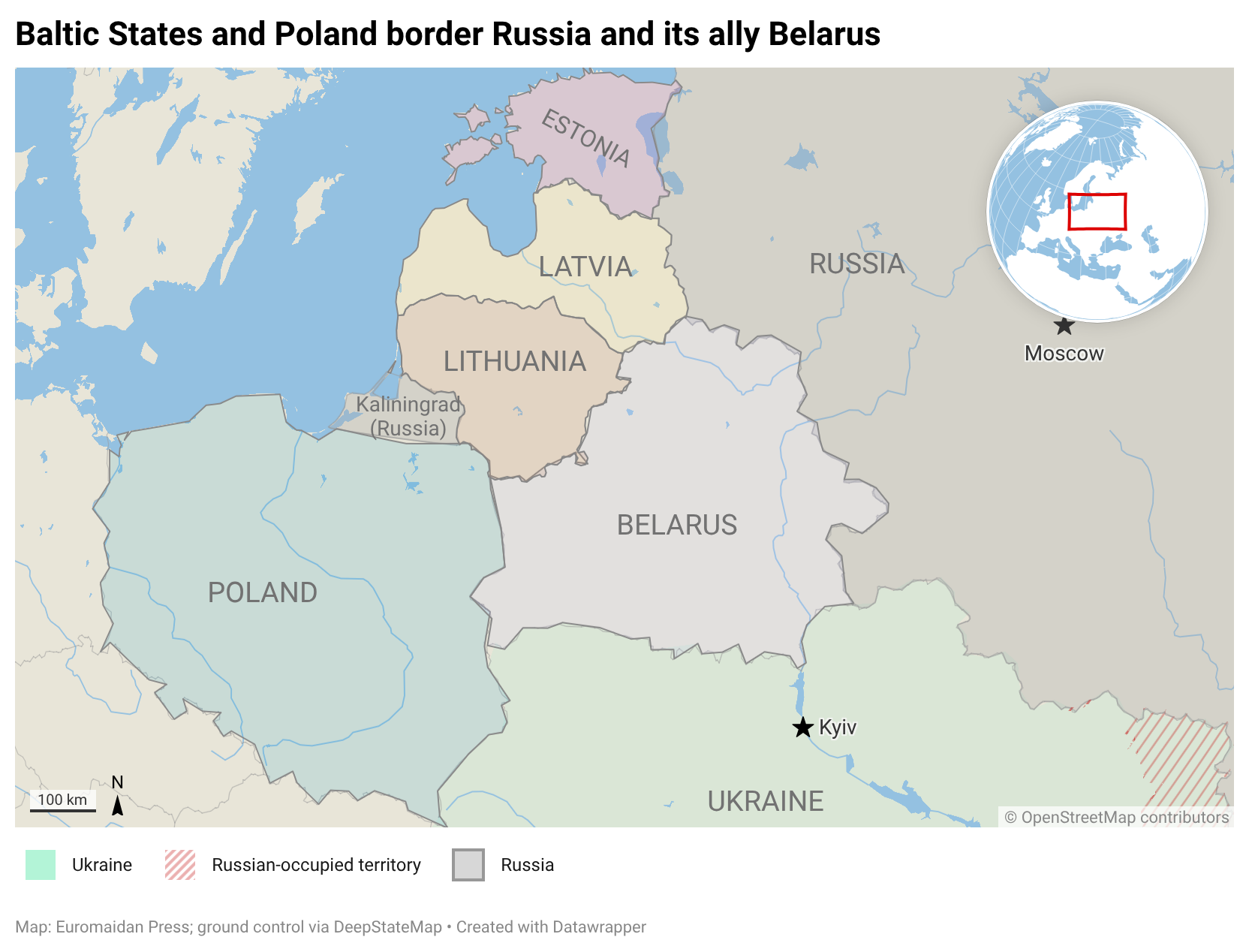
The Baltic region. Map: Euromaidan Press
Why the loan helps
Borrowing through SAFE lets Estonia raise money on better terms than it could alone, because the EU issues debt at lower rates. The bloc raises the money jointly and splits it among members. Estonia will hold defense spending above 5% of GDP, and the loan eases the strain that puts on its budget.
Explore further
“Ukraine is becoming a security provider for Europe”: Ukraine signs Drone Deals with Estonia, the Netherlands, and Denmark as Europe taps Kyiv’s battlefield-tested weapons technology
Estonia, a NATO and EU state of about 1.3 million people, shares a 294-kilometer border with Russia and treats Moscow's war on Ukraine as a direct threat to its own security. It has studied that war closely for years and is now racing to rebuild its air defenses and ammunition stocks.
Kadri Peters, a deputy secretary general at Estonia's Defense Ministry, said the fast-changing security situation in Europe demands stronger, quicker defense from the whole alliance. She said large-scale purchases ahead will directly affect Estonia's security and the wider region.
Explore further
US soldiers left for a “summer rotation.” Estonia doesn’t know how many are coming back—or when
In July, Estonia and the United States agreed to resume weapons deliveries in the coming months, after a pause tied to the war in Iran, with long-range ATACMS ballistic missiles the exception. In May, Washington had warned European allies of long delays as it drained its own stocks, mainly of HIMARS rocket ammunition and NASAMS air-defense missiles. The same shortages hit Ukraine the hardest: it currently struggles to shoot down Russian ballistic missiles for lack of US-made PAC-3 interceptors.
Estonia has been backing Kyiv since the beginning of Russia's full-scale invasion in 2022. It co-leads an IT coalition that has funneled over €1.4 billion into Ukraine's drone programs, and has moved to tap Kyiv's battlefield-tested drone technology for its own forces.
There is a reason Ukraine cannot simply blow up the launchers firing ballistic missiles at its cities. Russia's Iskander launchers are extremely hard to catch, and interfering with the missiles' production is nearly as difficult, presidential adviser Serhii "Flash" Beskrestnov said on the national telethon, according to UNIAN.
The launchers survive by never staying still or coming within reach. Iskander launchers head to their firing positions only when a combat task is
There is a reason Ukraine cannot simply blow up the launchers firing ballistic missiles at its cities. Russia's Iskander launchers are extremely hard to catch, and interfering with the missiles' production is nearly as difficult, presidential adviser Serhii "Flash" Beskrestnov said on the national telethon, according to UNIAN.
The launchers survive by never staying still or coming within reach. Iskander launchers head to their firing positions only when a combat task is set, sometimes moving along forest roads for five hours to avoid detection by satellites, then deploying fast, firing, and fleeing.
They launch from 140 to 150 kilometers behind the front line, which is why catching one on the march or at its firing position is so hard.
The launcher is a fleeting target
Beskrestnov described a weapon designed to be gone before it can be hit.
"The deployment of the Iskander happens very quickly. Then the launch. The Iskander fires and then flees the position," he said.
The forest-road approach and the 140- to 150-kilometer standoff are deliberate. By staying beyond HIMARS' range and moving under tree cover to evade satellites, the launcher gives Ukraine almost no window to detect, target, and strike it before it fires and moves on.
Attacking the factories is hard too
Ukraine's other option, hitting production, faces its own obstacles. The missiles are made deep underground, where they are not easy to attack, Beskrestnov said.
He also claimed sanctions do not work well against the Iskander because it is "probably the only product made 100% from Russian resources and Russian electronics." That claim sits awkwardly against Ukraine's own documented findings.
Ukraine's sanctions commissioner, Vladyslav Vlasiuk, reported that an Iskander fired at Kyiv Oblast on 10 July held more than 140 foreign components, 62 of them American. Meanwhile, Ukraine's Defense Intelligence has said that without foreign parts, Russia cannot build the missile at all. Ukraine has repeatedly struck the plants making Iskander components, precisely because those production nodes are vulnerable.
The launcher problem compounds the shortage of defenses against the missiles themselves. With Ukraine short of the Patriot interceptors that are the only reliable defense against Iskander ballistic missiles, and the launchers nearly impossible to catch, Russia can keep firing them at a pace Ukraine cannot fully answer, striking cities from safe forest positions deep behind the front.
Ukraine's president has aired a pointed suspicion about why its air-defense missiles are running short. On 5 August, Volodymyr Zelenskyy said political motives may be one reason for the reduced supply of anti-ballistic missiles, including a wish to make Ukraine more compliant, he said at a meeting of the National Security and Defense Council.
The claim points a finger at Ukraine's partners over a shortage now measured in civilian deaths. Since the start of 2026, Ukraine
Ukraine's president has aired a pointed suspicion about why its air-defense missiles are running short. On 5 August, Volodymyr Zelenskyy said political motives may be one reason for the reduced supply of anti-ballistic missiles, including a wish to make Ukraine more compliant, he said at a meeting of the National Security and Defense Council.
The claim points a finger at Ukraine's partners over a shortage now measured in civilian deaths. Since the start of 2026, Ukraine has begun receiving three times fewer anti-ballistic missiles, Zelenskyy said.
The deficit left Ukraine without the possibility to down any of Russia's missiles on 5 August, leading to the deaths of 17 people in Kyiv Oblast.
His suggestion that the cut may be deliberate leverage escalates a supply problem into a question about his allies' intentions.
The official reason is the Middle East
Zelenskyy first cited the explanation Ukraine has been given. The reduction was connected to war, or today it would be fair to say hostilities and wars in the Middle East, the official reason received from partners, primarily the US and also European partners, he said.
But he did not treat that as the whole story. He suggested the cut may have other causes beyond the diversion of missiles to the Middle East, where US air-defense stocks have been drawn down through the war involving Iran.
The suggestion of political pressure
Zelenskyy then made the pointed claim.
"Maybe these are also political steps to make Ukraine more compliant. In my view, not without that," he said, stating that Ukraine is in a situation of shortage of missiles able to intercept ballistics.
It is a notable accusation to level publicly, implying that a partner may be throttling the weapons Ukraine needs to survive Russian strikes in order to pressure Kyiv at the negotiating table. Zelenskyy offered it as his own view, hedged with "maybe," rather than as an established fact.
The response is to build and to beg
Zelenskyy turned the complaint into instructions. He urged the Defense Ministry and Foreign Ministry to do everything possible to ensure that partners increase supplies of relevant air-defense missiles, and told defense-industry enterprises to speed up work on Ukraine's own anti-ballistic project.
Ukraine has publicly shown off a homemade air-defense weapon that turns American anti-tank missiles into a drone-killer, The Defence Blog reported. The launcher stacks spare parts from three countries onto an ordinary military truck. It hands Ukraine a cheaper way to knock down the Russian attack drones that hit its cities.
Ukraine has become a proving ground for cheap air defense, forced there by a Russian bombing campaign that leans on mass and low cost. Then what
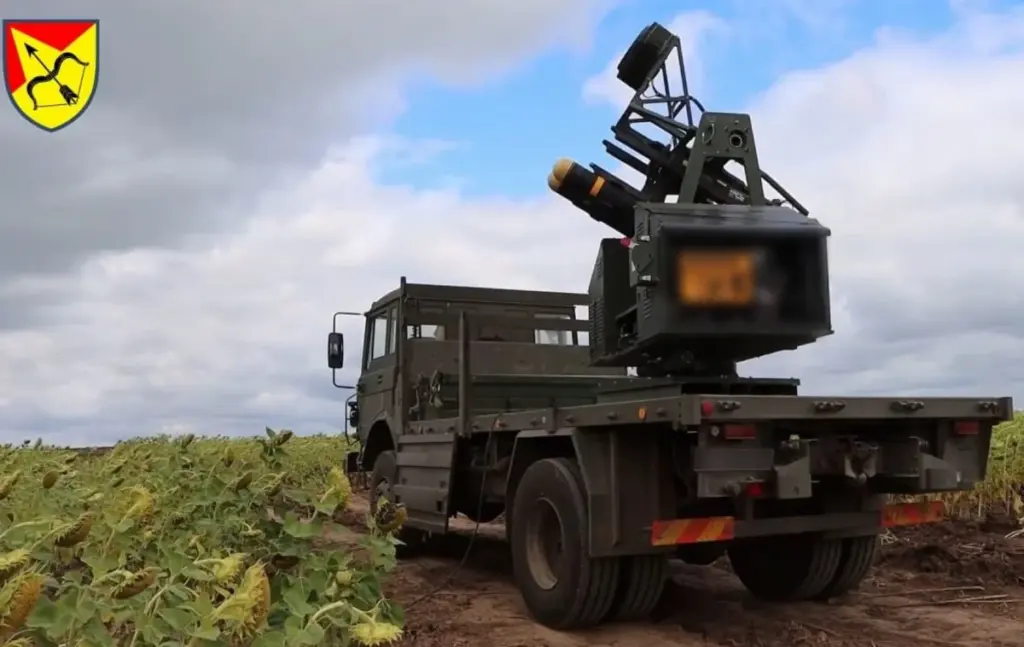
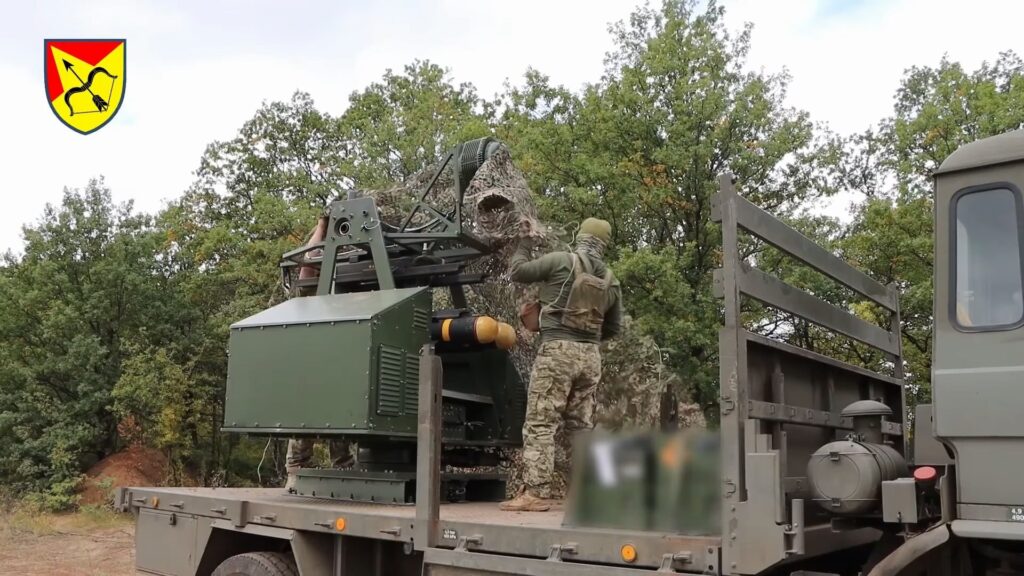
Ukraine has publicly shown off a homemade air-defense weapon that turns American anti-tank missiles into a drone-killer, The Defence Blog reported. The launcher stacks spare parts from three countries onto an ordinary military truck. It hands Ukraine a cheaper way to knock down the Russian attack drones that hit its cities.
Ukraine has become a proving ground for cheap air defense, forced there by a Russian bombing campaign that leans on mass and low cost. Then what works over Ukrainian cities is increasingly getting copied abroad.
Three countries' parts, one Ukrainian drone-killer
Ukraine's 302nd Anti-Aircraft Missile Brigade released an official video of the weapon, called STASH. Clips had leaked online for months, but this is the first time the military has shown it openly.
High-quality images of another variant of Ukraine's STASH short-range air defense system, this time mounted on a DAF YA 4442 truck and operated by the 302nd Anti-Aircraft Missile Brigade.
The STASH system can carry up to four AGM-114L Longbow Hellfire missiles for engaging UAVs.… pic.twitter.com/ewCiLHoJlj
The build is a patchwork. The missile is American. The radar comes from RADA, an Israeli maker of defense electronics. The truck is a Dutch DAF, a type that the Netherlands has long supplied to Ukraine. Crews bolted them together into a single launcher.
Why a tank missile now hunts drones
The missile at the core is the Hellfire, built to punch through tanks and armored vehicles when fired from helicopters. Ukraine repurposed it to shoot things out of the sky instead.
Explore further
Ukraine’s private air defense has quadrupled since spring: businesses are now shooting down Shaheds over their own sites
Not just any Hellfire, though. This is the radar-guided Longbow version (AGM-114L), not the common laser-guided one. After launch, the missile picks out its target and stays on it without further help from the crew. The crew does not have to keep pointing anything at the drone. They can fire without staying locked in place to guide the missile. The Israeli radar spots small, low-flying drones that slip past standard air-defense sets.
What it can and can't do
The weapon reaches about 10 kilometers (6.2 miles). That makes it a short-range system, built to guard one specific site rather than cover wide stretches of sky the way Patriot batteries do.
The STASH air defense system mounted on a truck chassis. Ukraine, August 2026. Screenshot from a video by the 302nd Anti-Aircraft Missile Brigade.
It is built to stop Russia's Shahed and Geran attack drones—including the newer jet-powered versions that now fly too fast for Ukraine's cheap interceptor drones to chase down. What it cannot reach are Russia's cruise and ballistic missiles, which travel much faster still.
The cost math behind the welding
A single Patriot interceptor runs into the millions of dollars. A Shahed-type drone sets Russia back just a few tens of thousands of dollars, and it launches them in swarms of hundreds during a single night. Trading costly missiles for cheap drones is a losing exchange, and it drains Ukraine's limited stock of interceptors.
STASH is how Ukraine tries to rebalance those numbers. It leans on anti-tank missiles that are cheaper and more available than purpose-built interceptors, carried on plain trucks rather than the permanent emplacements a full battery demands. Ukraine has been chasing cheaper ways to stop drones for a while now.
Explore further
EU releases another €3.47 billion for Ukraine’s “urgent needs” – drones, missiles, air defense, and Gripen jets
Not the first improvisation
STASH is not brand-new. It draws its missile and radar from a prior system, Tempest, built by the American contractor V2X and reportedly already flying with Ukraine's Air Force. Footage of Tempest downing drones at night surfaced in January 2026. STASH appears to strip that idea down, swapping the buggy-style chassis for a simpler truck or trailer launcher—less mobile, but cheaper to run and better for guarding fixed sites.
Ukraine has welded mismatched gear together like this before, pairing donated missiles with whatever launchers and trucks it can find.
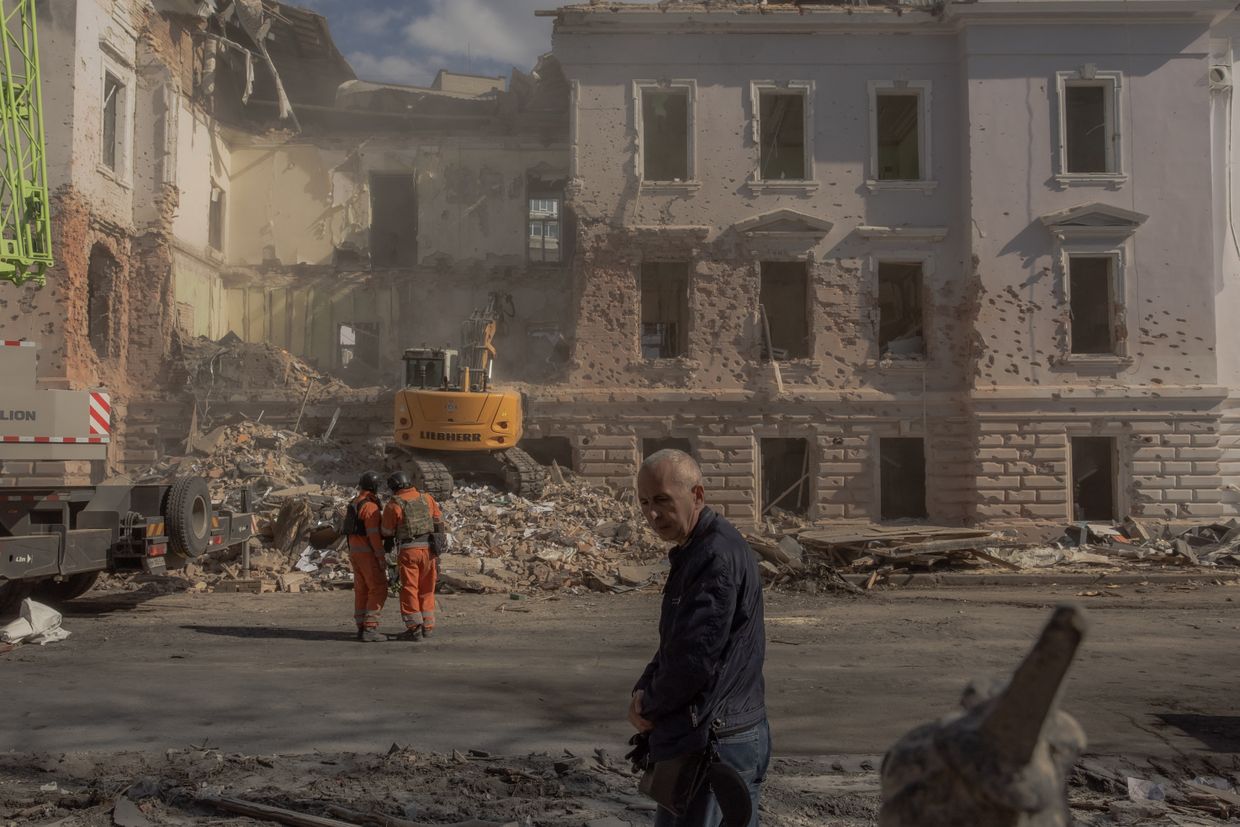
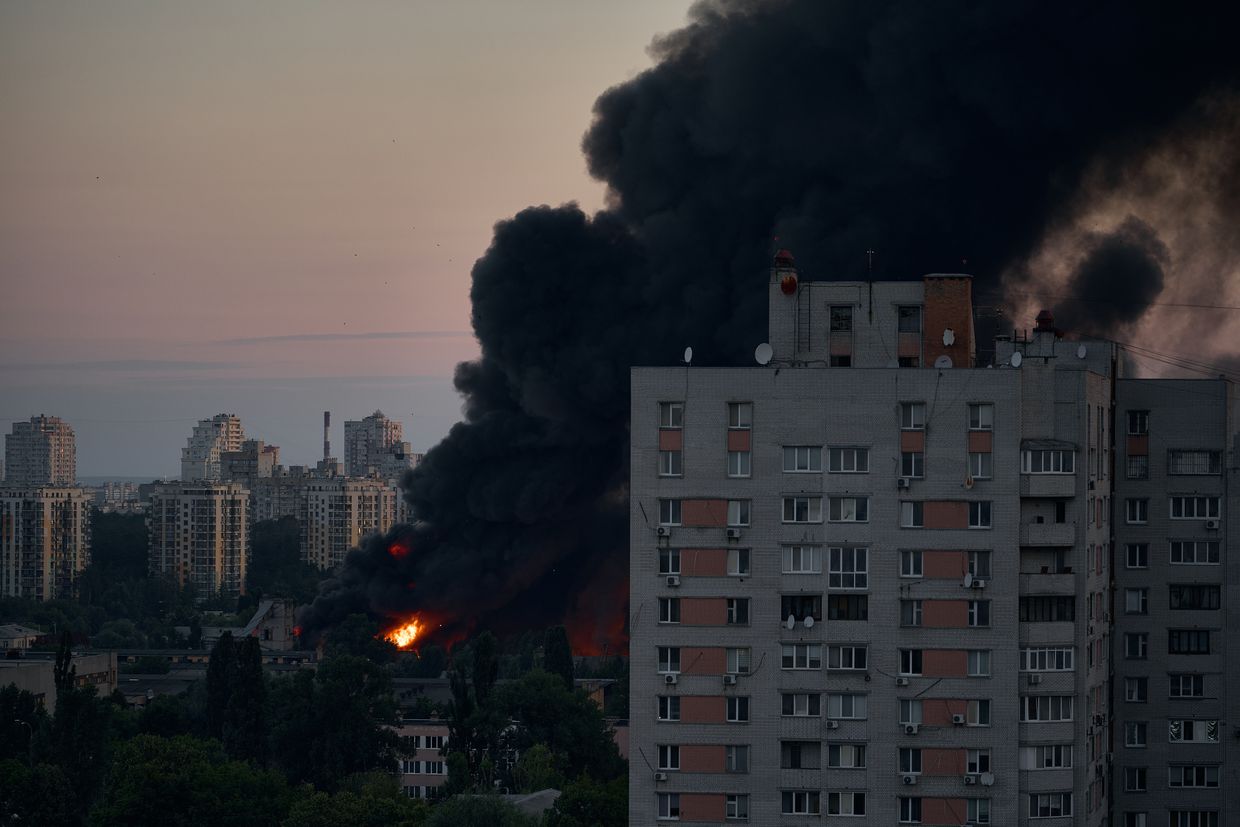
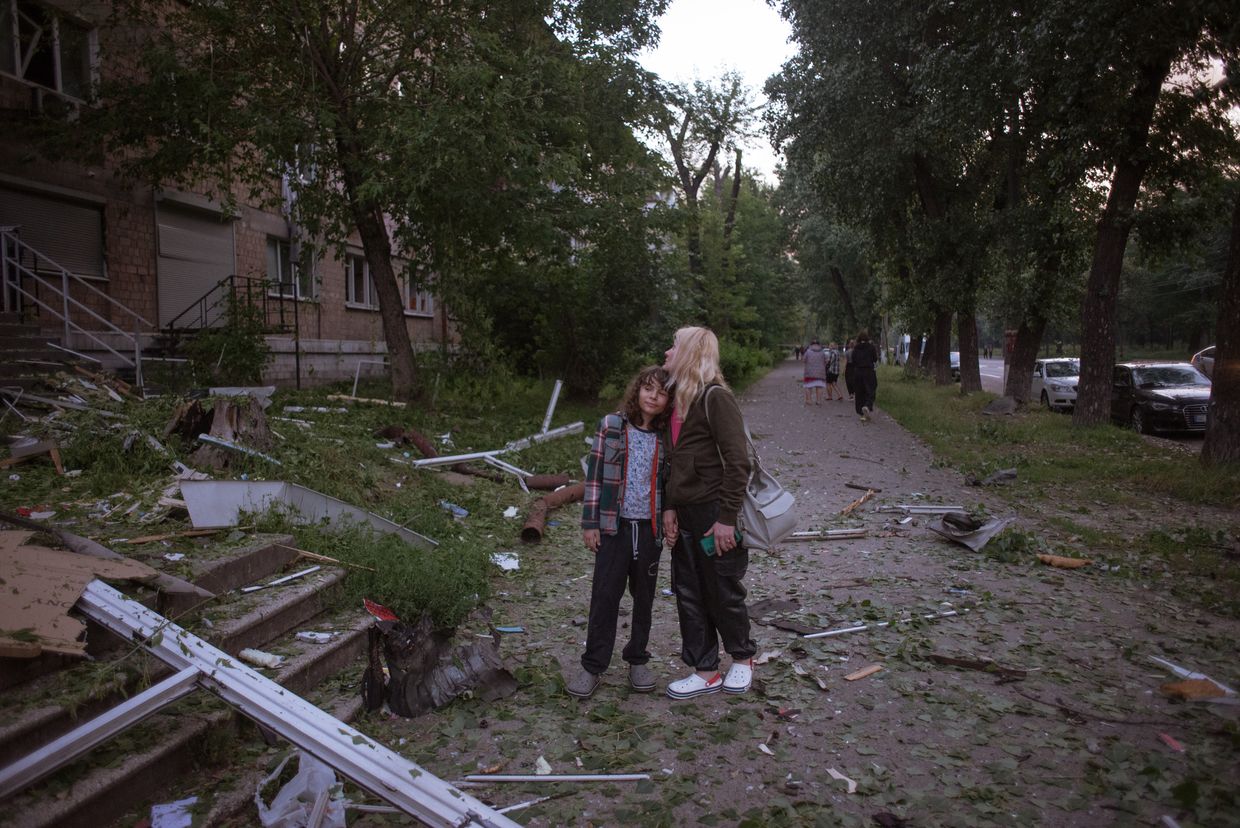
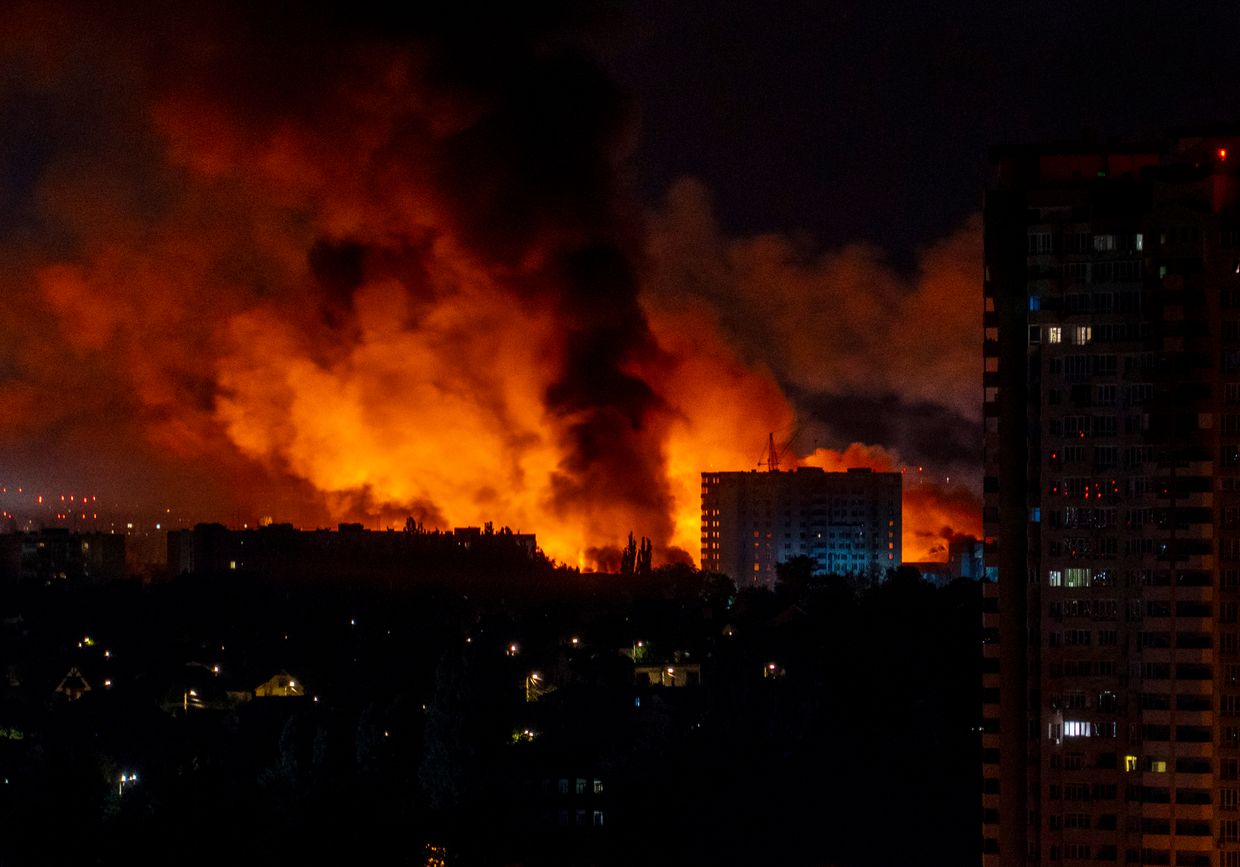
Russia's overnight missile-and-drone barrage on Kyiv and its surrounding region on 5 August destroyed the warehouses and production sites of several of Ukraine's largest retail and logistics companies, killed 17 people and wounded 44 more, and laid bare the country's dwindling ability to intercept ballistic missiles, according to Ukrainian officials.
Russia's main target on 5 August: Ukraine's warehouses
Russia has spent this year pushing its air war toward the balli
Russia's overnight missile-and-drone barrage on Kyiv and its surrounding region on 5 August destroyed the warehouses and production sites of several of Ukraine's largest retail and logistics companies, killed 17 people and wounded 44 more, and laid bare the country's dwindling ability to intercept ballistic missiles, according to Ukrainian officials.
Russia's main target on 5 August: Ukraine's warehouses
Russia has spent this year pushing its air war toward the ballistic missiles that Ukrainian defenses struggle most to stop, launching more of them than Ukraine can shoot down while its Patriot interceptor stocks run dry, and pairing them with drone waves that keep reaching homes, transit and the warehouses that feed the country.
Three Russian ballistic missiles destroyed the largest distribution center operated by Rozetka, Ukraine’s biggest online retailer, near Kyiv overnight on 5 August. Rozetka co-founder Iryna Chechotkina said the warehouse had processed more than 100,000 online orders each day and was beyond repair.
By dawn, the attack had torn through the civilian logistics network moving parcels, groceries, household goods and construction materials across the capital and its suburbs. At least 17 people were killed and 44 injured in the broader barrage, according to President Volodymyr Zelenskyy.
Russia launched a massed missile and drone attack on Kyiv and Kyiv Oblast overnight, killing 14 people and injuring 27.
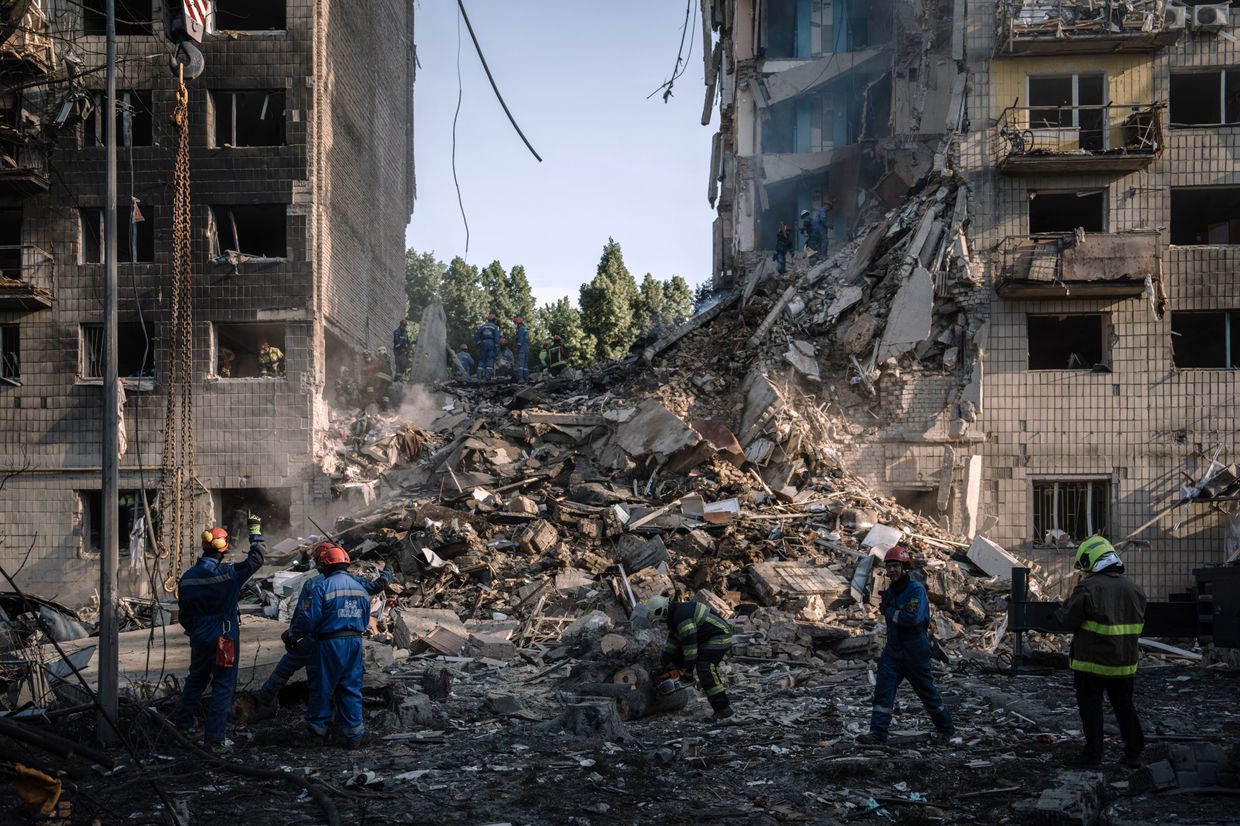
Fires burned across three raions. A residential building collapsed in Kyiv's Holosiivskyi district, where rescuers are searching for people under the rubble…
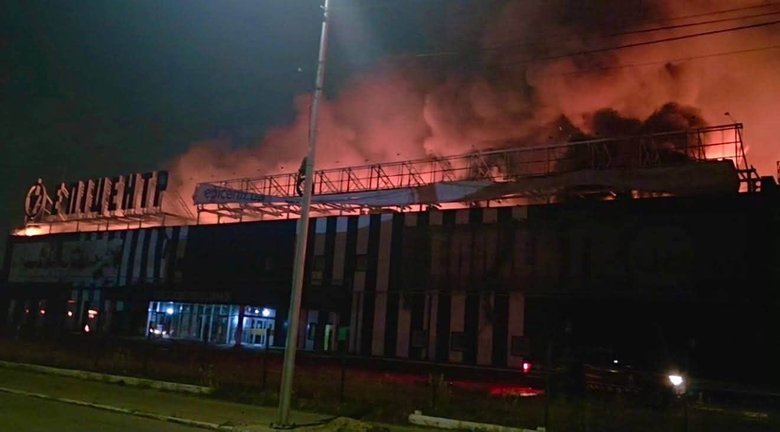
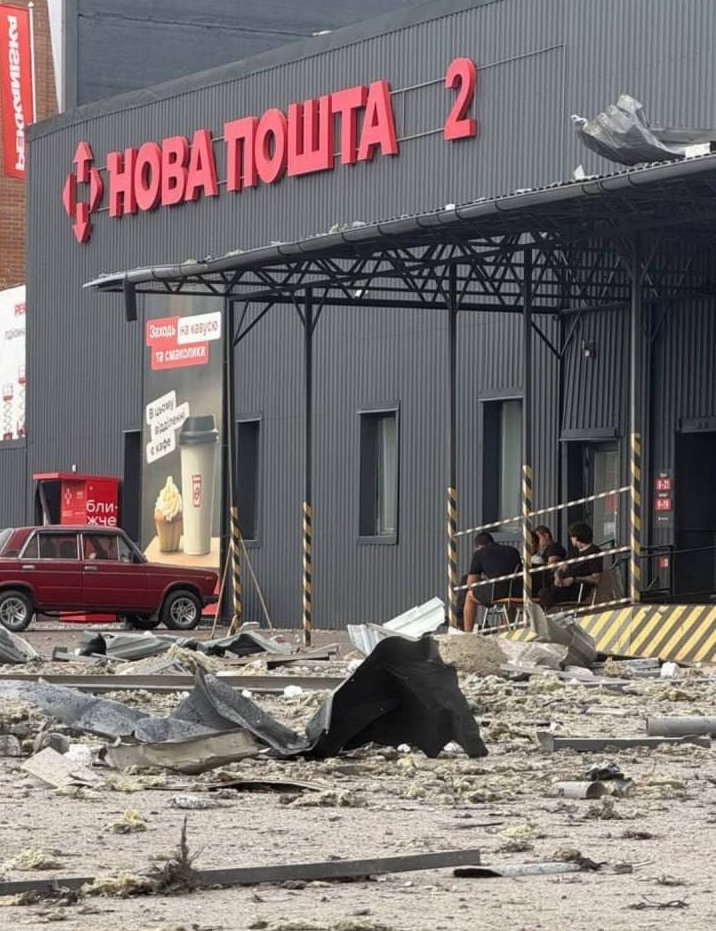
In its 5 August 2026 strikes, Russia destroyed a sorting center owned by Nova Poshta, Ukraine’s largest private parcel carrier, as well as major facilities operated by Epicentr, the country’s largest home-improvement retailer. Sites belonging to Novus and Fozzy Group, two major Ukrainian grocery retailers, were also damaged.
Nova Poshta saidcluster munitions—bombs that scatter smaller explosives across a wide area—destroyed its Kyiv sorting center. Three people were killed and eight injured. Two of those killed were drivers for a partner carrier, while the third worked for a contractor.
Debris covers the grounds of a Nova Poshta sorting center in Kyiv after a Russian strike on 5 August 2026. Source: Kyiv24 via Censor.NET.
Epicentr lost two major warehouse complexes and much of its ceramic-tile production. One employee was killed, and three were hospitalized at the company’s complex in Kalynivka. Its logistics center on Kyiv’s Viskozna Street burned completely, while another Russian missile destroyedthe factory's kilns.
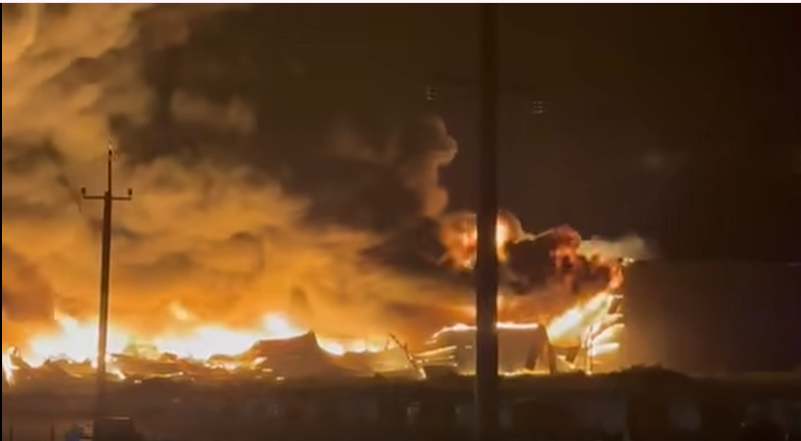
During a separate overnight attack on 3-4 August, a Russian drone destroyeda Biosphere warehouse storing household and personal-care products in Dnipro, although all employees reached shelter and no one was injured.
Fire engulfs a warehouse complex in Dnipro after a Russian drone strike overnight on 3–4 August 2026. The complex included a 20,000-square-meter warehouse operated by Biosphere. Source: screenshot from a video posted by Andriy Zdesenko, Biosphere’s founder and CEO, on Facebook
The Kyiv attack extended beyond commercial facilities. Russia's attack killed eight people waiting for a delayed train at Kvitneva station, a commuter stop near Brovary, east of Kyiv. Missiles also hit homes and offices, damaged an ambulance and caused an ammonia leak at a non-residential site.
8 Passengers waiting for a delayed train were killed at "Kvitneva" station in Kyiv Oblast
Radio Svoboda published footage from the "Kvitneva" station in the Kyiv Oblast, where 8 people were killed as a result of a Russian missile strike.
An earlier Euromaidan Press report detailedthe destruction across Kyiv and the surrounding region.
Why Ukraine intercepted none of the missiles
Russia launched 24 ballistic missiles and four Zircon and Oniks anti-ship missiles, high-speed weapons designed primarily to strike naval targets but also used against Ukrainian cities.
Ukraine intercepted none of the 28, the Ukrainian Air Force said. Air defenses shot down or electronically disabled 98 of the 115 accompanying drones.
Missiles and 17 drones struck 26 locations, while debris fell at another six.
Zelenskyy said ballistic-missile interceptors could have saved those killed. Ukraine’s stocks of Patriot missiles, its only reliable defense against Russian ballistic weapons, arecritically depleted.
A global interceptor shortage means manufacturers cannot produce advanced air-defense missiles fast enough to meet demand.
Russia exploited the same gap on 1 August 2026, when itfired27 ballistic missiles at Kyiv and Ukraine intercepted only one.
Moscow may point to recent Ukrainian strikes on Wildberries logistics centers to frame its attacks as retaliation. Ukrainian officials say the Russian retailer transports military goods, including drone components and navigation equipment. The Kremlin denies that Wildberries carries military cargo.
Ukraine’s acting Foreign Minister Andrii Sybiha rejected any comparison between the attacks. "Russian attacks cannot be justified by anything, including any actions by Ukraine," he said.
The United States has only about 25% of the Patriot missile interceptors it needs to meet Pentagon military plans, a shortage that led U.S. President Donald Trump's administration to pause a major transfer of weapons to Ukraine, the Guardian reported on July 8.The decision to halt the delivery, made on July 2, followed an internal review showing low stockpiles of critical air defense systems. The depletion was largely due to recent U.S. operations in the Middle East, including the interception o
The United States has only about 25% of the Patriot missile interceptors it needs to meet Pentagon military plans, a shortage that led U.S. President Donald Trump's administration to pause a major transfer of weapons to Ukraine, the Guardian reported on July 8.
The decision to halt the delivery, made on July 2, followed an internal review showing low stockpiles of critical air defense systems. The depletion was largely due to recent U.S. operations in the Middle East, including the interception of Iranian missiles after strikes on the American Al Udeid airbase in Qatar, according to the Guardian.
According to officials familiar with the matter, the Pentagon's munitions tracker, used to measure the minimum supplies needed for U.S. war plans, showed Patriot interceptor levels had fallen below acceptable levels. That prompted concerns that sending more to Ukraine could put U.S. defense readiness at risk, the Guardian wrote.
The freeze reportedly affected Ukraine's two key arms transfer methods: drawdowns from Pentagon stockpiles and the Ukraine Security Assistance Initiative (USAI), through which the Defense Department orders new weapons from contractors.
Because U.S. orders take priority, Ukrainian requests for new weapons, including Patriot missiles, face years-long delays.
The pause came at a critical time for Kyiv, as Russia intensifies large-scale aerial attacks on Ukrainian cities. With limited options to acquire precision-guided and other key munitions, Ukrainian forces have increasingly relied on Western-supplied air defenses to counter the growing threat.
For its latest aid package, the U.S. had planned to send dozens of Patriot interceptors, along with Hellfire missiles, air-to-air Sparrows, GMLRS rockets, and anti-tank weapons, according to the Guardian.
NBC News reported on July 4 that U.S. Defense Secretary Pete Hegseth unilaterally halted a weapons shipment to Ukraine despite internal military assessments showing the aid would not compromise American military readiness.
The assessment concluded that while some munitions stockpiles, including precision weapons, were low, they had not fallen below critical thresholds.
Amid the ongoing questions over Washington's weapons pause, Trump has apparently promised to send 10 Patriot interceptors to Ukraine, Axios reported on July 8. Sources also told the Wall Street Journal (WSJ) that Trump claimed he wasn't behind the decision to halt arms to Kyiv in a recent phone call with President Volodymyr Zelensky.
U.S. President Donald Trump has promised to send 10 Patriot interceptors to Ukraine - a smaller number than had been paused previously while en route to the country, Axios reported on July 8, citing its sources. Trump has also suggested that Germany sell one of its Patriot batteries to Ukraine, according to three sources cited by Axios. They said the U.S. and European allies would split the cost of the purchase.The discussion comes as Ukraine is calling upon its allies, particularly the United S
U.S. President Donald Trump has promised to send 10 Patriot interceptors to Ukraine - a smaller number than had been paused previously while en route to the country, Axios reported on July 8, citing its sources.
Trump has also suggested that Germany sell one of its Patriot batteries to Ukraine, according to three sources cited by Axios. They said the U.S. and European allies would split the cost of the purchase.
The discussion comes as Ukraine is calling upon its allies, particularly the United States, to support Ukrainian air defense by supplying "life-saving" Patriot systems and relevant missiles.
The Pentagon said on July 2 that some military assistance to Ukraine had been halted as the U.S. Defense Department conducts a review of foreign aid deliveries.
On July 7, the Pentagon said it would renew shipments, saying the additional defensive weapons were intended to help Ukraine protect itself while the U.S. works toward "a lasting peace."
Merz called Trump to request the release of the paused interceptors, according to Axios. During the call, Trump proposed that Germany sell one of its own Patriot batteries to Ukraine.
While no agreement has been reached, officials on both sides say negotiations are ongoing. German officials maintain that Berlin has already sent a higher share of its available Patriot systems to Ukraine than any other NATO country, including the U.S.
Russia has escalated its aerial campaign against Ukraine in recent weeks, launching large-scale missile and drone attacks that have killed and injured hundreds of civilians across multiple cities.
The suspension of U.S. arms deliveries, which include Patriots and precision-guided munitions, drew criticism from Kyiv. During a July 4 phone call with Ukrainian President Volodymyr Zelensky, Trump said he was not responsible for halting the aid, according to the Wall Street Journal.
He reportedly told Zelensky that a review of U.S. munitions stockpiles was initiated after last month's U.S. strikes on Iranian nuclear sites, but denied ordering a full pause in shipments.
NBC News reported that Defense Secretary Pete Hegseth halted the shipments unilaterally on July 2, despite internal Pentagon assessments that the move would not jeopardize U.S. military readiness.
Special Envoy Keith Kellogg and Ukrainian Defense Minister Rustem Umerov are set to meet in Rome later this week to discuss resuming the stalled military aid, Politico reported on July 7.
A former deputy chief of the Russian army's General Staff, Colonel General Khalil Arslanov, was sentenced to 17 years in prison on July 7 over a scheme involving the theft of over 1 billion roubles ($12.7 million) from Defense Ministry contracts, Russia's state-owned TASS news agency reported.A closed-door military court found Arslanov and others guilty of embezzling millions from state contracts with Voentelecom, a company providing telecommunications services to the Russian military. Arslanov
A former deputy chief of the Russian army's General Staff, Colonel General Khalil Arslanov, was sentenced to 17 years in prison on July 7 over a scheme involving the theft of over 1 billion roubles ($12.7 million) from Defense Ministry contracts, Russia's state-owned TASS news agency reported.
A closed-door military court found Arslanov and others guilty of embezzling millions from state contracts with Voentelecom, a company providing telecommunications services to the Russian military.
Arslanov was also convicted of extorting a 12 million rouble ($152,400) bribe from the head of a military communications company. Two co-defendants, Colonel Pavel Kutakhov and military pensioner Igor Yakovlev, received seven and six years in prison, respectively.
Arslanov, a former head of the Russian military's communications unit, served as deputy chief of the army's General Staff from 2013 until his removal in 2020 and was named a colonel general in 2017.
This high-profile conviction is the latest in a series of corruption scandals that have implicated top echelons of the Russian military establishment over the past year. Russia has significantly stepped up prosecutions of senior defense officials.
Just last week, on July 1, former Russian Deputy Defense Minister Timur Ivanov was sentenced to 13 years in a penal colony after being found guilty of corruption. It was the harshest verdict in a series of high-level military corruption cases until Arslanov's sentencing on July 7.
Authorities initially detained Ivanov in April 2024 on bribery allegations, later adding embezzlement charges in October. His trial, like Arslanov's, was held behind closed doors reportedly due to national security concerns.
Ivanov's co-defendant, Anton Filatov, a former logistics company executive, received a 12.5-year sentence.According to state media, the embezzled amount totaled 4.1 billion roubles ($48.8 million), primarily funneled through bank transfers to two foreign accounts. Ivanov pleaded not guilty.
The court stripped him of all state honors and ordered the confiscation of property, vehicles, and cash valued at 2.5 billion roubles, including a luxury apartment in central Moscow, a three-storey English-style mansion, and a high-end car collection featuring brands like Bentley and Aston Martin.
Four Alliance 90/Greens party members have sent an open letter to German Chancellor Friedrich Merz calling for a significant increase in military aid to Ukraine, Bild reported on July 5, citing a copy of the document.The news comes as Russia’s expanded drone production has enabled Moscow to launch as many as 500 drones in a single night against Ukraine on multiple occasions each week.The letter's authors — Robin Wagener, Sara Nanni, Sebastian Schafer, and Anton Hofreiter — demanded that certain
Four Alliance 90/Greens party members have sent an open letter to German Chancellor Friedrich Merz calling for a significant increase in military aid to Ukraine, Bild reported on July 5, citing a copy of the document.
The news comes as Russia’s expanded drone production has enabled Moscow to launch as many as 500 drones in a single night against Ukraine on multiple occasions each week.
The letter's authors — Robin Wagener, Sara Nanni, Sebastian Schafer, and Anton Hofreiter — demanded that certain budget items be adjusted, particularly regarding support for Ukraine. They believe that the planned increase in Germany's defense funding for Kyiv from $8.4 billion in 2024 to $9.8 billion in 2025 is insufficient, according to Bild.
The signatories emphasized the need to strengthen Ukraine's air defense systems urgently.
"Without further air defense and assured supplies, Russian dictatorship over Ukraine becomes more likely," the letter read.
The lawmakers also noted that the situation has deteriorated as Russia continues to carry out large-scale attacks on Ukraine, and the United States, for its part, has partially suspended its military aid.
The signatories reminded Merz that, thanks to the Greens party's support in the previous Bundestag, assistance to Ukraine had significantly increased.
Before becoming chancellor, Merz, elected for the CDU/CSU conservative alliance, signaled he could overturn the ban of his predecessor, Social Democrat Olaf Scholz, on delivering Taurus to Ukraine.
The Taurus is a powerful cruise missile capable of striking targets at a distance of 500 kilometers (300 miles), more than the long-range capabilities Ukraine received from other partners.
However, the German government has not approved sending Taurus missiles to Ukraine so far.
Ukraine has been using U.S.-made ATACMS for over a year, and U.K.-French Storm Shadow/SCALP for more than two, initially being allowed to deploy them only against Russian targets on Ukrainian territory.
Only in late 2024, the Biden administration and other allies eased the restrictions, allowing Ukraine to use long-range missiles against Russian military targets on Russian territory.
Europe must dramatically ramp up its defenses against a resurgent Russia, NATO Secretary General Mark Rutte said in an interview with the New York Times published on July 5, crediting U.S. President Donald Trump for driving the alliance to unprecedented levels of commitment.Rutte, who assumed his role late last year after 14 years as Prime Minister of the Netherlands, has been navigating NATO through a period marked by Russia's expansionist ambitions and questions about the reliability of the Un
Europe must dramatically ramp up its defenses against a resurgent Russia, NATO Secretary General Mark Rutte said in an interview with the New York Times published on July 5, crediting U.S. President Donald Trump for driving the alliance to unprecedented levels of commitment.
Rutte, who assumed his role late last year after 14 years as Prime Minister of the Netherlands, has been navigating NATO through a period marked by Russia's expansionist ambitions and questions about the reliability of the United States as an ally.
"Russia is reconstituting itself at a pace and a speed which is unparalleled in recent history," he told the outlet, adding that "...they are now producing three times as much ammunition in three months as the whole of NATO is doing in a year. This is unsustainable, but the Russians are working together with the North Koreans, with the Chinese and Iranians, the mullahs, in fighting this unprovoked war of aggression against Ukraine."
He emphasized the interconnectedness of security across different regions, noting that a secure Arctic is vital due to increased Chinese and Russian activity, and a secure Atlantic is "crucial" for the U.S. "If the Arctic, if the Atlantic Ocean, if Europe is not secure, the U.S. has a big problem," Rutte said, arguing that Russia is ultimately aiming to attack the U.S.
The Secretary General strongly dismissed Russian Foreign Minister Sergey Lavrov's comments that NATO's new defense spending targets would "bankrupt" members.
"I know Sergey Lavrov very well. He has been foreign minister of Russia since the birth of Jesus Christ, and I’ve never taken him seriously. When you talk about fake news, listen to Sergey Lavrov," Rutte told the NYT. He believes Lavrov's comments are "clearly evidence that the deterrence is working."
Rutte acknowledged concerns about the defense industrial output across the alliance, adding that, "we simply lack the defense industrial base to produce the weapons we need to make sure that we can deter the Russians or the North Koreans or whoever to attack us." He underscored the importance of not just financial investment, but also having sufficient personnel and industrial capacity to effectively utilize weaponry.
On the subject of Ukraine, Rutte confirmed that European allies have significantly increased their financial commitment. "The Europeans have now cobbled together $35 billion in military aid this year to deliver to Ukraine, which is more than last year," he said. He viewed this as a logical and fair shift, with the U.S. expecting Europeans to "take more of the burden when it comes to the concrete support to Ukraine."
While acknowledging the complex discussions surrounding peace talks, Rutte recognized President Donald Trump's role in initiating dialogue with Russian President Vladimir Putin.
"He is the one who broke the deadlock with Putin. When he became president in January, he started these discussions with Putin, and he was the only one who was able to do this. This had to happen. A direct dialogue between the American president and the president of the Russian Federation."
However, Rutte admitted that subsequent peace talks in Istanbul involved Russia sending a less serious delegation, leading to the conclusion that "we are not there yet, and that means that in the meantime you have to make sure that Ukraine has what it needs to stay in the fight."
Despite some perceived divergences in approach between NATO and the U.S. regarding peace talks, Rutte insisted on the American administration's commitment to the conflict's importance.
"The American administration completely takes the view and shares it with the Europeans that this war in Ukraine is crucial for the defense of NATO territory going forward and that we have to make sure that Ukraine is in the strongest possible position to stop the Russians from taking more territory, and that when it comes to a cease-fire or, even better, a peace deal, that Ukraine with some help will be able to prevent Putin from ever attacking Ukraine again in the future."
President Volodymyr Zelensky described his recent phone call with U.S. President Donald Trump as "the best conversation in all this time" in an evening address on July 5."Patriot (missiles) are key to protection from ballistic (missiles). We discussed several other important issues that our teams will work out in detail at meetings in the near future," Zelensky said.The two leaders spoke on July 4, agreeing to strengthen Ukraine's air defenses amid intensified Russian strikes, Zelensky said earl
President Volodymyr Zelensky described his recent phone call with U.S. President Donald Trump as "the best conversation in all this time" in an evening address on July 5.
"Patriot (missiles) are key to protection from ballistic (missiles). We discussed several other important issues that our teams will work out in detail at meetings in the near future," Zelensky said.
The two leaders spoke on July 4, agreeing to strengthen Ukraine's air defenses amid intensified Russian strikes, Zelensky said earlier.
A day prior to speaking with Zelensky, Trump held a phone call with Russian President Vladimir Putin in an effort to discuss ending Russia's war against Ukraine.
"This was probably the best conversation in all this time, it was maximally productive. We discussed the topic of air defenses. I am grateful for the readiness to help," Zelensky said, describing his phone call with Trump.
Relations between Ukraine and the U.S. have previously been strained as the White House pushed Kyiv to sign a lucrative bilateral minerals deal and tried to broker a peace deal with Moscow that did not rule out major concessions for Ukraine.
Zelensky's phone call with the U.S. leader followed media reports and announcements from Washington of a pause in military assistance to Ukraine. Trump, on July 3, denied that Washington has stopped supplying weapons to Kyiv.
Trump described his July 3 conversation with Putin as disappointing, saying that the call "didn't make any progress" in stopping Russia's war against Ukraine.
"I'm very disappointed with the conversation I had today with President Putin," Trump told journalists. "Because I don't think he's there. And I'm very disappointed. I don't think he's looking to stop this fighting."
U.S. Air Force General Alexus G. Grynkewich assumed command as the 21st Supreme Allied Commander Europe (SACEUR) on July 4 during a ceremony at Supreme Headquarters Allied Powers Europe.NATO Secretary General Mark Rutte presided over the handover, commending outgoing U.S. Army General Christopher G. Cavoli for his contributions to modernizing NATO's collective defense and bolstering support for Ukraine.Rutte highlighted Cavoli's efforts to strengthen NATO’s presence in the Baltic Sea in response
U.S. Air Force General Alexus G. Grynkewich assumed command as the 21st Supreme Allied Commander Europe (SACEUR) on July 4 during a ceremony at Supreme Headquarters Allied Powers Europe.
NATO Secretary General Mark Rutte presided over the handover, commending outgoing U.S. Army General Christopher G. Cavoli for his contributions to modernizing NATO's collective defense and bolstering support for Ukraine.
Rutte highlighted Cavoli's efforts to strengthen NATO’s presence in the Baltic Sea in response to threats to critical undersea infrastructure and credited him with conceiving and establishing NATO’s new command in Germany to enhance assistance to Ukraine. He also noted Cavoli's role in refocusing the Alliance on collective defense following the 2022 Madrid Summit, where NATO adopted a new Strategic Concept in response to Russia’s full-scale invasion of Ukraine.
Cavoli played a central role in developing and securing approval for NATO’s regional defense plans at the 2023 Vilnius Summit—a significant overhaul of the Alliance’s military posture since the Cold War.
His tenure also included the integration of Finland and Sweden into NATO’s military structures, expanding the Alliance’s strategic reach. In 2024, Cavoli oversaw "Steadfast Defender," NATO’s largest military exercise since the Cold War, involving approximately 90,000 troops practicing large-scale reinforcement across the eastern flank and validating a new high-readiness force model.
Rutte specifically acknowledged Cavoli's leadership in rapidly reinforcing NATO's Baltic Sea presence during threats to underwater infrastructure and for establishing the NATO Security Assistance and Training for Ukraine (NSATU), which continues to support Ukraine.
The secretary general welcomed General Grynkewich, noting that, as a former fighter pilot, he brings "a deep understanding of the threats we face from the skies, and across other domains." Rutte added that Grynkewich’s recent role as Director of Operations of the Joint Staff provides him with broad experience in advancing military and security priorities amid global challenges.
Allied Command Operations—responsible for planning and executing all NATO operations—now falls under General Grynkewich's command, a position first held by General Dwight D. Eisenhower.
U.S. Defense Secretary Pete Hegseth unilaterally halted a weapons shipment to Ukraine on July 2 despite internal military assessments showing the aid would not compromise American military readiness, NBC News reported on July 4, citing three U.S. officials.The pause in aid, which included critical air defense systems and ammunition, reportedly caught the State Department, members of Congress, Ukraine, and key European allies off guard.Ukraine suffered one of the largest attacks on July 4, with P
U.S. Defense Secretary Pete Hegseth unilaterally halted a weapons shipment to Ukraine on July 2 despite internal military assessments showing the aid would not compromise American military readiness, NBC News reported on July 4, citing three U.S. officials.
The pause in aid, which included critical air defense systems and ammunition, reportedly caught the State Department, members of Congress, Ukraine, and key European allies off guard.
Ukraine suffered one of the largest attacks on July 4, with President Volodymyr Zelensky calling for more air defense to protect civilians in the cities. The attack on Kyiv killed one person and injured 23 more.
A senior U.S. military review had concluded that while some munitions stockpiles, including precision weapons, were low, they had not fallen below critical thresholds, according to NBC. Despite this, Hegseth opted to stop the shipment. This is reportedly his third such move since February.
"We are not at any lower point, stockpile-wise, than we’ve been in the three-and-a-half years of the Ukraine conflict," Congressman Adam Smith the top Democrat on the House Armed Services Committee, said. Smith, who said his staff reviewed the Pentagon's figures, called the justification "disingenuous."
The shipment reportedly included dozens of Patriot interceptors, 155 mm artillery rounds, Hellfire missiles, guided missile systems (GMLRS), Stinger and AIM air-to-air missiles, and grenade launchers.
Two sources told NBC that some of the weapons had already been loaded onto trucks in Poland when the halt was ordered.
Zelensky recently called Patriot systems "real defenders of life," since Patriot missile systems are the best air defense in Ukraine's arsenal. They are considered to be the most effective measure against Russian ballistic missiles like Iskander and Kinzhal.
Pentagon spokesman Sean Parnell described earlier the decision as part of a broader "capability review" to ensure U.S. forces remain equipped.
The halt has initiated debate over the future of U.S. support for Ukraine.
Lawmakers from both parties, including Republican Congressman Michael McCaul, expressed frustration at the lack of advance notice. "Now is the time to show Putin we mean business," McCaul wrote on X.
Republican Congressman Joe Wilson also reacted to the halt, warning of its consequences amid Russia's ongoing strikes.
"As Americans begin to enjoy the sounds of fireworks in celebration of our Nation's Independence, war criminal (Russian President Vladimir) Putin, who is losing his pathetic war, resorts to scorched earth tactics across Ukrainian cities that predate Moscow's existence," Wilson wrote.
Wilson said he is "confident the Department of Defense will advance President Trump’s objectives stated at The Hague to send additional air defense and approved weapons to help stop this absolute depravity, as allies have and must continue doing at a rapid pace."
Republican Congressman Brian Fitzpatrick has requested an emergency White House briefing, warning the decision could cost lives.
Trump has denied that the U.S. paused shipments on July 3, contradicting both Pentagon confirmation and reporting.
"We haven't," Trump told a reporter. "We're giving weapons." He also claimed the Biden administration had "emptied out our whole country" and insisted Washington must prioritize its own defense.
President Volodymyr Zelensky called for more air defence for Ukraine after a massive drone and missile attack on Ukraine's capital overnight on July 4.According to Zelensky, as U.S. President Donald Trump and Russian President Vladimir Putin were talking on the phone on July 3, air raid sirens blared across Ukraine. "Moreover, the first air raids in our cities and regions began yesterday almost simultaneously with the start of media discussions of President Trump's phone call with Putin," Zelens
President Volodymyr Zelensky called for more air defence for Ukraine after a massive drone and missile attack on Ukraine's capital overnight on July 4.
According to Zelensky, as U.S. President Donald Trump and Russian President Vladimir Putin were talking on the phone on July 3, air raid sirens blared across Ukraine.
"Moreover, the first air raids in our cities and regions began yesterday almost simultaneously with the start of media discussions of President Trump's phone call with Putin," Zelensky wrote.
"This was one of the most large-scale air attacks – deliberately massive and cynical... Russia is once again demonstrating that it is not going to end the war and terror."
The overnight attack struck Kyiv and several other regions, injuring at least 23 people and setting off dozens of fires in Ukraine's capital. Russian forces launched more than 550 aerial weapons, including over 330 Iranian-type Shahed drones and multiple types of missiles, including ballistic missiles, Zelensky said.
Firefighting efforts and debris removal are still ongoing after another Russian strike. This was one of the most large-scale air attacks – deliberately massive and cynical. In total, 550 targets were launched, including at least 330 Russian-Iranian “shaheds”, along with missiles,… pic.twitter.com/vnn31oST0z
— Volodymyr Zelenskyy / Володимир Зеленський (@ZelenskyyUa) July 4, 2025
Kyiv was the main target. Ukraine's military said it shot down 270 aerial threats, while 208 additional drones were jammed by electronic warfare. Interceptor drones also downed dozens more, Zelensky said, calling their growing use a key defense priority.
Zelensky stressed the need for continued and increased military aid from allies, especially air defenses. "Patriots and their missiles are real defenders of life," Zelensky said. "It is very important to maintain the support of partners in ballistic missile defense."
Despite Russia's escalating attacks and Ukraine's desperate need for air defense munitions, the U.S. has decided to halt shipments of Patriot missiles and other promised weapons to Kyiv, claiming it needs to secure its own stockpiles.
Kyiv residents and emergency crews at the site of Russian attack on July 4, 2025. Russia targeted the capital throughout the night with drones and missiles, causing fires across the city. (Ukraine's State Emergency Service / Telegram)
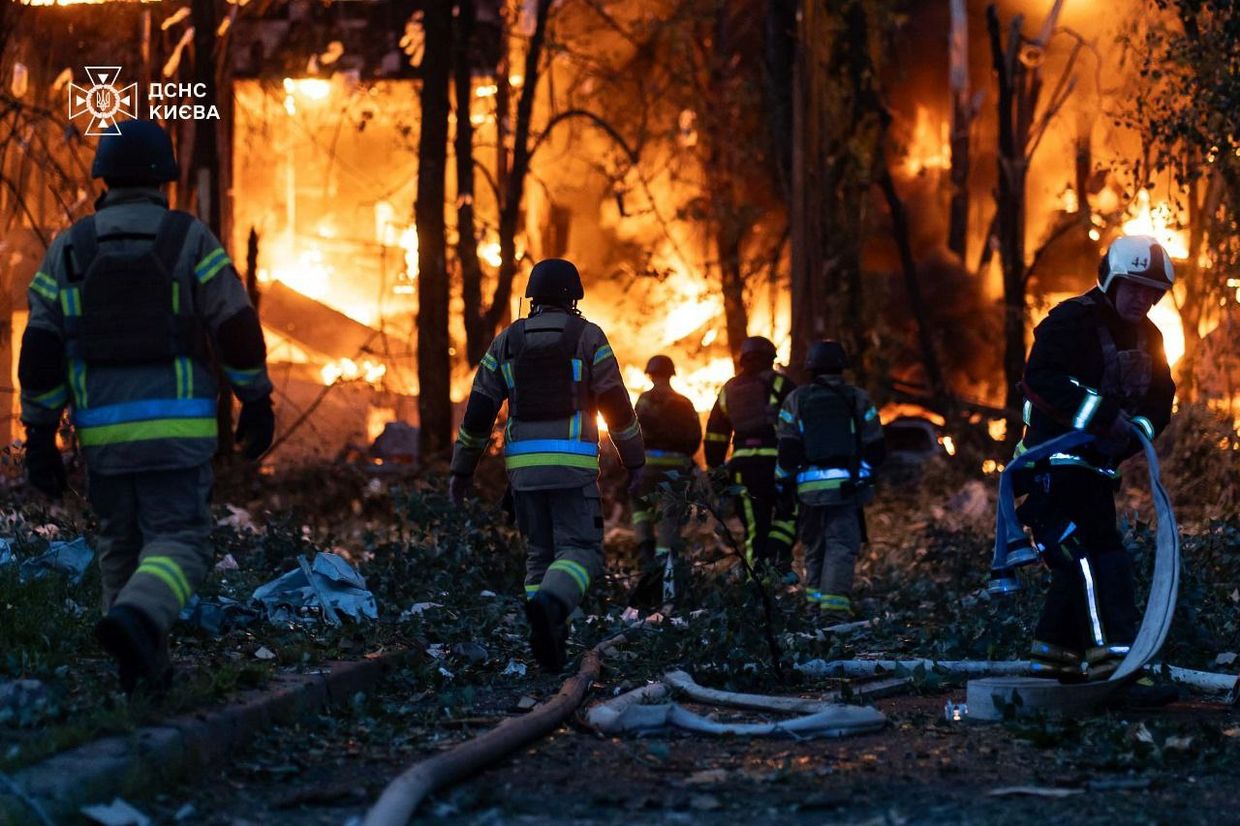
Firefighters respond at an attack site in Kyiv after Russia launched a mass attack overnight on July 4, 2025. (Ukraine's State Emergency Service / Telegram)
Smoke rises over the residential district after a Russian drone and missile attack in Kyiv, Ukraine, on July 4, 2025. (Yurii Stefanyak / Global Images Ukraine via Getty Images)
Beyond Kyiv, strikes also hit the Dnipropetrovsk, Sumy, Kharkiv, Chernihiv, and Kyiv oblasts, according to Zelensky. Fires and damage were reported in nearly every district of the capital, including residential buildings, schools, medical facilities, and railway infrastructure.
Local authorities described the night as "terroristic." Kyiv Mayor Vitali Klitschko reported fires in at least five districts. Air quality in the city remained dangerously poor by morning, as noted by the Ministry of Environmental Protection.
Meanwhile, Russian state media reported that during the Trump-Putin call, Putin reiterated his determination to continue pursuing the Kremlin's goals in Ukraine, despite mounting international calls for a ceasefire.
Zelensky called on Ukraine's allies, particularly the United States, to apply massive and immediate pressure on Russia. "We need to ensure that for every such attack on people and lives, they (Russia) feel the corresponding sanctions and other blows to their economy, their earnings, their infrastructure," he said. "Only this can bring faster change."
U.S. President Donald Trump brushed off a reporter's question on July 3 about pausing weapons deliveries to Ukraine, claiming Washington is "giving weapons" to Kyiv. The Pentagon previously confirmed that the U.S. has already halted some military aid shipments to Ukraine in order to conduct what it calls a "capability review" of its own stockpiles. "Why did you pause weapons shipments to Ukraine?" a reporter asked Trump as the president prepared to board Air Force One."We haven't," Trump replied
U.S. President Donald Trump brushed off a reporter's question on July 3 about pausing weapons deliveries to Ukraine, claiming Washington is "giving weapons" to Kyiv.
The Pentagon previously confirmed that the U.S. has already halted some military aid shipments to Ukraine in order to conduct what it calls a "capability review" of its own stockpiles.
"Why did you pause weapons shipments to Ukraine?" a reporter asked Trump as the president prepared to board Air Force One.
Trump then offered a contradictory answer, saying the U.S. is "trying to help" Ukraine while also claiming that former U.S. President Joe Biden depleted the country's weapons stocks with military aid to Kyiv and that Washington must defend its own interests.
"But we've given so many weapons — but we are giving weapons, and we're working with (Ukraine), we're trying to help them," Trump said.
"But we haven't... You know, Biden emptied out our whole country giving them weapons and we have to make sure that we have enough for ourselves."
Trump then asked the reporter which media outlet he represented.
Reports that the U.S. had suddenly paused some weapons shipments — including deliveries of desperately needed air defense missiles — left officials in Kyiv scrambling for answers. Trump's response provides little clarity and even less reassurance to Ukrainians facing increasingly deadly Russian missile attacks night after night.
The decision to halt the shipments "was made to put America's interests first following a (U.S. Defense Department) review of our nation's military support and assistance to other countries across the globe," White House Deputy Press Secretary Anna Kelly said in a statement after Politico broke the story on July 1.
The Washington Post later reported that a shipment of U.S. weapons, including advanced air defense systems and precision missiles, was halted in Poland where it was awaiting delivery to Ukraine.
U.S. State Department Spokesperson Tammy Bruce, like Trump, insisted that the U.S. was not pulling support from Ukraine.
"This is not — I will reinforce this — this is not a cessation of us assisting Ukraine or of providing weapons," Bruce told reporters at a briefing.
"This is one event in one situation, and we'll discuss what else comes up in the future. But be wary of painting too broad a brush there."
Trump's remarks about the weapons shipments followed an update on his July 3 phone call with Russian President Vladimir Putin.
"We had a call. It was a pretty long call. We talked about a lot of things," he said.
U.S. weapons already in Poland en route to Ukraine have been halted, including advanced air defense systems and precision missiles, the Wall Street Journal reported on July 2.The Pentagon confirmed the halt in a July 2 briefing, citing an ongoing "capability review" aimed at ensuring U.S. military assistance "aligns with its strategic defense priorities."The shipment in Poland includes over two dozen PAC-3 Patriot missiles, more than two dozen Stinger air-defense systems, Hellfire air-to-ground
U.S. weapons already in Poland en route to Ukraine have been halted, including advanced air defense systems and precision missiles, the Wall Street Journal reported on July 2.
The Pentagon confirmed the halt in a July 2 briefing, citing an ongoing "capability review" aimed at ensuring U.S. military assistance "aligns with its strategic defense priorities."
The shipment in Poland includes over two dozen PAC-3 Patriot missiles, more than two dozen Stinger air-defense systems, Hellfire air-to-ground missiles, and over 90 AIM air-to-air missiles intended for use with Ukraine's F-16 fighter jets, according to U.S. administration and congressional officials cited by the Wall Street Journal.
"We see this as a common-sense, pragmatic step towards having a framework to evaluate what munitions are sent and where," Pentagon spokesperson Sean Parnell said.
The decision has sparked backlash from both sides of the political aisle in Washington. Republican Rep. Brian Fitzpatrick, co-chair of the Congressional Ukraine Caucus, called the pause "unacceptable," while Democratic Senator Richard Blumenthal labeled it "fallacious and maybe even disingenuous."
The pause comes at a critical moment for Ukraine, which faces intensified Russian missile and drone strikes. On June 29, Russia launched the largest aerial assault against Ukraine since the start of its full-scale invasion in February 2022, targeting civilian infrastructure and cities far beyond the frontline.
NATO Secretary General Mark Rutte, speaking on July 2, emphasized the urgency of continued Western support for Kyiv. "I totally understand that the U.S. always has to make sure its interests are covered," he said. "But in the short term, Ukraine cannot do without all the support it can get."
The Pentagon has not provided a timeline for when the held-back shipments might resume.
Pentagon spokesperson Sean Parnell confirmed on July 2 that some military assistance to Ukraine has been halted as the U.S. Defense Department conducts a review of foreign aid deliveries."This capability review... is being conducted to ensure U.S. military aid aligns with our defense priorities... We see this as a common-sense, pragmatic step towards having a framework to evaluate what munitions are sent and where," Parnell said.The White House earlier confirmed the pause in shipments, citing a
Pentagon spokesperson Sean Parnell confirmed on July 2 that some military assistance to Ukraine has been halted as the U.S. Defense Department conducts a review of foreign aid deliveries.
"This capability review... is being conducted to ensure U.S. military aid aligns with our defense priorities... We see this as a common-sense, pragmatic step towards having a framework to evaluate what munitions are sent and where," Parnell said.
The White House earlier confirmed the pause in shipments, citing a broader reassessment of U.S. military stockpiles amid media reports of the halt in military assistance.
The weapons reportedly being held back include two dozen Patriot air defense missiles, over two dozen Stinger air-defense systems, precision artillery rounds, Hellfire missiles, drones, and more than 90 AIM air-to-air missiles launched from F-16 fighter jets.
New U.S. military aid packages have not been approved since U.S. President Donald Trump was inaugurated in January, raising concern among Ukraine's allies.
"Ultimately, our job here at the Department of Defense is to pursue the president's 'America First' agenda and make sure that we achieve peace through strength throughout the world," Parnell said at a Pentagon press briefing.
The U.S. Defense Department will not provide updates on the timeline and quantity or type of munitions provided to Ukraine, he added.
"What we've done here at the Department of Defense is create a framework to analyze what munitions we're sending (and) where," Parnell said.
A bipartisan group of U.S. lawmakers has voiced their opposition to the decision to halt military aid shipments to Ukraine.
"We must build up our own Defense Industrial Base here in the U.S. while simultaneously providing the needed assistance to our allies who are defending their freedom from brutal invading dictators. To not do both is unacceptable," Republican Rep. Brian Fitzpatrick, the co-chair of the Congressional Ukraine Caucus, said.
Democratic Senator Richard Blumenthal, a member of the Senate Armed Services Committee, described the military aid pause as "fallacious and maybe even disingenuous."
NATO Secretary General Mark Rutte said on July 2 that he understands the White House's need to safeguard its own defense capabilities, but underscored that Ukraine urgently requires sustained support.
"I totally understand that the U.S. always has to make sure its interests are covered... When it comes to Ukraine, in the short term, Ukraine cannot do without all the support it can get," Rutte said.
The Washington Post reported that the military aid was already in Poland, being prepared for delivery to Ukraine.
A bipartisan group of U.S. lawmakers are voicing their opposition to the Trump administration's decision to halt shipments of some air defense missiles and other weapons previously promised to Kyiv.The U.S. Defense Department (DOD) made the decision to pause the aid deliveries after conducting a review of U.S. munitions stocks, reportedly concerned about dwindling levels of artillery rounds, air defense missiles, and precision munitions.Among the items being held back from Ukraine are over two d
A bipartisan group of U.S. lawmakers are voicing their opposition to the Trump administration's decision to halt shipments of some air defense missiles and other weapons previously promised to Kyiv.
The U.S. Defense Department (DOD) made the decision to pause the aid deliveries after conducting a review of U.S. munitions stocks, reportedly concerned about dwindling levels of artillery rounds, air defense missiles, and precision munitions.
Among the items being held back from Ukraine are over two dozen Patriot air defense missiles, over two dozen Stinger air-defense systems, precision artillery rounds, Hellfire missiles, drones, and more than 90 AIM air-to-air missiles that Ukraine launches from F-16 fighter jets. The Washington Post reported that the weapons were already in Poland being prepped for delivery to Ukraine.
Republican Rep. Brian Fitzpatrick, the co-chair of the Congressional Ukraine Caucus, lambasted the decision in a post on X.
I will be aggressively looking into this matter and will be demanding accountability. We must build up our own Defense Industrial Base here in the U.S. while simultaneously providing the needed assistance to our allies who are defending their freedom from brutal invading… https://t.co/pRTOMCghWh
— Rep. Brian Fitzpatrick 🇺🇸 (@RepBrianFitz) July 2, 2025
Fitzpatrick, a staunch ally of Ukraine who has previously visited the front line, said he "will be aggressively looking into this matter and will be demanding accountability."
"We must build up our own Defense Industrial Base here in the U.S. while simultaneously providing the needed assistance to our allies who are defending their freedom from brutal invading dictators. To not do both is unacceptable," the Congressman added.
In a letter to U.S. President Donald Trump about the reported halt of air defense deliveries, Fitzpartick requested an emergency briefing from the White House and DOD on the shipments.
"Ukraine's courage must continue to be met with action, and the United States must continue to lead with clarity and purpose," Fitzpartick wrote.
Another Republican House member, Rep. Michael McCaul, said he is examining "very intensely" whether the Pentagon’s freeze breaches legislation on aid to Ukraine passed in 2024, Politico reported.
As Trump continues to call for a ceasefire from Moscow, McCaul said that the decision comes "at the wrong time."
"If you want to get (Russian President Vladimir Putin) to the negotiating table in good faith, you have to put leverage and pressure on him, and that would be (Senator) Lindsey Graham’s economic sanctions and the flow of weapons," McCaul said. "If you take the flow of weapons out, yeah, then you’re not, you don’t have the leverage over Putin to negotiate."
Other Republican members of Congress have thus far dismissed concerns over the reported halts, stating that they are waiting to be briefed with additional information before speaking about the reports.
On the other side of the isle, Democratic lawmakers have also lambasted the real world implications of halting military aid for Ukraine.
Senator Richard Blumenthal, a member of the Senate Armed Services Committee, said in an interview that more civilians are "going to lose more lives, more people will be maimed and injured — more homes, hospitals, schools will be destroyed," calling the decision, "fallacious and maybe even disingenuous."
Since his inauguration in January, Trump has not approved any additional military aid packages for Ukraine. Defense Secretary Pete Hegseth also announced recently that the U.S. will reduce the total aid it sends to Ukraine in its upcoming defense budget.
In his evening address on July 2, President Volodymyr Zelensky said Ukrainian and U.S. officials are working through the aid issue at a "working level," including discussions on critical air defense support. Head of the Presidential Office Andriy Yermak held a late night phone call with Rep. Brian Mast, Chair of the House Committee on Foreign Affairs.
Ukraine's Defense Ministry said it has not received any formal notification of delays or cancellations but has requested urgent consultations with U.S. defense officials.
The Foreign Ministry also summoned U.S. Charge d'Affaires John Ginkel, warning that "any hesitation" in military support would encourage further Russian aggression.
The Kremlin welcomed the decision, with spokesperson Dmitry Peskov saying, "The fewer weapons that are supplied to Ukraine, the closer the end of the (war)."
NATO Secretary General Mark Rutte expressed understanding of Washington's desire to safeguard its stockpiles but said, "Ukraine cannot do without all the support it can get."
The United States' reported decision to suspend some arms deliveries to Ukraine could help bring Russia's war in Ukraine to an end, the Kremlin said on July 2, according to Russian state-controlled media."The fewer weapons that are supplied to Ukraine, the closer the end of the... (Russia-Ukraine war)," Kremlin spokesperson Dmitry Peskov told reporters.Peskov's comments came after Politico reported that the U.S. Defense Department has paused shipments of key air defense and precision munitions t
The United States' reported decision to suspend some arms deliveries to Ukraine could help bring Russia's war in Ukraine to an end, the Kremlin said on July 2, according to Russian state-controlled media.
"The fewer weapons that are supplied to Ukraine, the closer the end of the... (Russia-Ukraine war)," Kremlin spokesperson Dmitry Peskov told reporters.
Peskov's comments came after Politico reported that the U.S. Defense Department has paused shipments of key air defense and precision munitions to Ukraine over concerns about declining U.S. stockpiles.
Among the withheld items are Patriot air defense missiles, precision artillery rounds, Hellfire missiles, and other munitions used by Ukraine's F-16 fighter jets.
Ukraine's Foreign Ministry summoned U.S. Charge d'Affaires John Ginkel on July 2 to voice concern over the reported pause in weapons shipments.
Deputy Foreign Minister Mariana Betsa warned during the meeting that "any delay or hesitation in supporting Ukraine's defense capabilities will only encourage Russia to continue war and terror, rather than pursue peace."
According to Politico, Pentagon policy chief Elbridge Colby ordered the halt in June following a review of U.S. ammunition levels. The White House confirmed the decision, saying it was part of a broader reassessment of American military aid to foreign partners.
"(The decision) was made to put America's interests first following a DOD review of our nation's military support and assistance to other countries across the globe," White House Deputy Press Secretary Anna Kelly said in a statement.
The move comes as Ukraine faces intensifying Russian attacks. In June, Russia launched a record 5,337 Shahed-type attack drones at Ukrainian targets, the highest monthly total since the start of the full-scale invasion in February 2022.
The U.S. has not approved any new military aid packages after U.S. President Donald Trump took office in January. Defense Secretary Pete Hegseth has also signaled that future U.S. defense budgets will reduce the scale of assistance to Ukraine.
At a NATO summit in The Hague in late June, Trump said Washington was considering whether it could help provide more Patriot missiles to Kyiv but emphasized that U.S. and Israeli needs take precedence.
"They are very hard to get. We need them too," Trump said after meeting with President Volodymyr Zelensky.
The Kremlin has long argued that Western arms shipments to Ukraine only prolong the conflict and raise the risk of escalation, while continuing to attack Ukrainian cities and advance on the battlefield.
A person claiming to be a Russian officer said he had received an order to open fire at an aerial target last December that turned out to be an Azerbaijani airliner, Azerbaijani news outlet Minval reported on July 1, citing audio and a written statement it had received.An Embraer 190AR plane operated by Azarbaijan Airlines crashed in Kazakhstan on Dec. 25, 2024, after coming under fire over Grozny, Chechnya. Thirty-eight people were killed.Azerbaijani authorities laid blame on Russia, with an in
A person claiming to be a Russian officer said he had received an order to open fire at an aerial target last December that turned out to be an Azerbaijani airliner, Azerbaijani news outlet Minval reported on July 1, citing audio and a written statement it had received.
An Embraer 190AR plane operated by Azarbaijan Airlines crashed in Kazakhstan on Dec. 25, 2024, after coming under fire over Grozny, Chechnya. Thirty-eight people were killed.
Azerbaijani authorities laid blame on Russia, with an investigation pointing to a Russian Pantsir-S1 air defense system mistakenly targeting the plane amid a reported Ukrainian drone attack.
Minval wrote it had received three audio recordings, an anonymous letter, and an explanatory note by a man signed as Captain Dmitry Paladichuk, a Russian air defense crew captain who claims to have relayed the order to shoot down the plane.
In the purported explanatory note, Paladichuk said he had no reliable means of communication with the Russian military command other than a cell connection. A radar detected a target at 8:11 a.m. local time, after which Paladichuk was reportedly ordered to destroy the aircraft — which was not visible due to thick fog — over the phone.
The captain claimed that after the first projectile missed the target, he had given the order to fire again. Paladichuk did not explicitly name the Azerbaijani flight in his explanatory letter.
Minval wrote that it could not confirm the authenticity of the written statement but could do so for the three leaked voice messages, which also confirmed the command to shoot down the plane and the subsequent damage.
Russian independent news outlets Agentstvo and the Insider confirmed Paladichuk's identity as an air defense officer who served in various units, including the 14th Army of the Air Force and Air Defense in Novosibirsk.
The Insider also wrote that the note appears to be authentic, and pointed out that the speed of the plane, revealed in the leaked materials, shows that the Russian command must have known the target was not a drone.
The incident led to a public clash between Azerbaijan and Russia, otherwise close political and economic partners. Azerbaijani President Ilham Aliyev accused Moscow of suppressing evidence and criticized his Russian counterpart, Vladimir Putin, for not openly admitting guilt.
Putin offered condolences for the incident taking place in the Russian airspace, but stopped short of admitting Russian responsibility.
New details of the case emerge just as Russian-Azerbaijani relations sour yet again. Over 50 Azerbaijanis were detained as part of a murder investigation in Yekaterinburg on June 27, two of whom died in custody.
Baku called their deaths "ethnically motivated" and "unlawful" killings. A few days later, Azerbaijani authorities raided an office of the Russian propaganda outlet Sputnik in Baku, detaining who they say are Russian spies.
Former Russian Deputy Defense Minister Timur Ivanov was sentenced on July 1 to 13 years in a penal colony after being found guilty of corruption—the toughest sentence so far in a string of graft investigations involving high-level defense officials.Authorities detained Ivanov in April 2024 on bribery allegations, later adding embezzlement charges in October. Over a dozen individuals, including two other former deputy ministers, have been implicated in separate investigations.The trial was held b
Former Russian Deputy Defense Minister Timur Ivanov was sentenced on July 1 to 13 years in a penal colony after being found guilty of corruption—the toughest sentence so far in a string of graft investigations involving high-level defense officials.
Authorities detained Ivanov in April 2024 on bribery allegations, later adding embezzlement charges in October. Over a dozen individuals, including two other former deputy ministers, have been implicated in separate investigations.
The trial was held behind closed doors due to national security concerns. Ivanov’s co-defendant, Anton Filatov, a former logistics company executive, received a 12.5-year sentence. According to state media, the embezzled amount totaled 4.1 billion roubles ($48.8 million), largely funneled through bank transfers to two foreign accounts.
Ivanov pleaded not guilty. The court stripped him of all state honors and ordered the confiscation of property, vehicles, and cash worth 2.5 billion roubles. Reports in Russian media described his and his wife’s assets, including a luxury apartment in central Moscow, a three-storey English-style mansion outside the city, and a high-end car collection featuring brands such as Bentley and Aston Martin.
Prominent Russian war correspondents known as "Z-bloggers" have publicly condemned the corruption exposed within the defenae sector, especially as the war in Ukraine continues. One of them, Alexander Kots, acknowledged that 13 years is a long sentence but argued that corrupt officials should face trial during wartime as "traitors to the Motherland."
Since 2016, Ivanov oversaw large logistics contracts at the defence ministry, including those tied to property, housing, and medical support.
He served under Sergei Shoigu, who was replaced as defence minister last year but remains influential as the secretary of Russia’s Security Council. Authorities have also arrested two of Shoigu’s other former deputies in separate cases. In April, a court sentenced Lieutenant-General Vadim Shamarin, the former deputy head of the army’s general staff, to seven years for accepting bribes worth hundreds of thousands of dollars.
The wave of prosecutions reflects what appears to be President Vladimir Putin’s effort to address corruption, inefficiency, and waste in Russia’s expansive military budget, which accounts for 32% of federal spending this year.
The U.S. Defense Department (DOD) has halted shipments of some air defense missiles and other weapons previously promised to Kyiv out of concerns over the size of U.S. stockpiles, Politico reported on July 1, citing sources familiar with the matter. The suspension comes as Ukraine faces a shortage of air defense munitions along with increasingly intense and deadly Russian bombardments. In June 2025, Russia launched 5,337 Shahed-type drones at Ukraine, shattering its previous monthly record. Pent
The U.S. Defense Department (DOD) has halted shipments of some air defense missiles and other weapons previously promised to Kyiv out of concerns over the size of U.S. stockpiles, Politico reported on July 1, citing sources familiar with the matter.
The suspension comes as Ukraine faces a shortage of air defense munitions along with increasingly intense and deadly Russian bombardments. In June 2025, Russia launched 5,337 Shahed-type drones at Ukraine, shattering its previous monthly record.
Pentagon policy chief Elbridge Colby made the decision to pause the aid deliveries after conducting a review of U.S. munitions stocks, three sources told Politico. Colby was reportedly concerned about dwindling levels of artillery rounds, air defense missiles, and precision munitions.
Among the items being held back from Ukraine are Patriot air defense missiles, precision artillery rounds, Hellfire missiles, drones, and other missiles that Ukraine launches from F-16 fighter jets.
Colby made the decision in June, amid a surge in Russian mass aerial attacks against Ukraine. The White House later confirmed the pause.
The Pentagon's decision "was made to put America's interests first following a DOD review of our nation's military support and assistance to other countries across the globe," White House Deputy Press Secretary Anna Kelly said in a statement issued after Politico published the story.
"The strength of the United States Armed Forces remains unquestioned — just ask Iran," she said.
Since his inauguration in January, U.S. President Donald Trump has not approved any additional military aid packages for Ukraine. Defense Secretary Pete Hegseth also announced recently that the U.S. will reduce the total aid it sends to Ukraine in its upcoming defense budget.
At the NATO summit in The Hague in late June, Trump said he would "see" if the U.S. could supply Kyiv with additional missiles for its Patriot systems.
"They (Ukraine) do want to have the anti missiles, as they call them, the Patriots, and we're going to see if we can make some available," he said after meeting with President Volodymyr Zelensky.
"They are very hard to get. We need them too. We are supplying them for Israel, and they are very effective."
But according to a source who spoke to Politico, plans to reduce and redirect air defense munitions and other weapons for Ukraine have been in the works for months. The administration is looking to redirect artillery shells, tank shells, and air defense systems to Israel or back to Washington.
"They have proposed repeatedly since March to pause the shipments," the person said.
Colby, the reported architect of the decision, has previously advocated for reducing U.S. military assistance to Ukraine to prioritize deterrence efforts in Asia.
North Korea is already using Russia Pantsir S-1 air defense systems in Pyongyang, Kyrylo Budanov, head of Ukraine's military intelligence (HUR), said in an interview with Hromadske Radio on July 1. The arrival of Pantsir missiles is another sign that North Korea is improving its weapons technology and military might through cooperation with Russia. The two nations signed a defense treaty in June 2024, and North Korea has supplied arms and troops to Moscow in exchange for training and advanced mi
North Korea is already using Russia Pantsir S-1 air defense systems in Pyongyang, Kyrylo Budanov, head of Ukraine's military intelligence (HUR), said in an interview with Hromadske Radio on July 1.
The arrival of Pantsir missiles is another sign that North Korea is improving its weapons technology and military might through cooperation with Russia. The two nations signed a defense treatyin June 2024, and North Korea has supplied arms and troops to Moscow in exchange for training and advanced military technology.
"I can tell you that, for example, the first Pantsir S-1 installations have already appeared in Pyongyang," Budanov told Hromadske Radio.
"They are already on combat duty there, guarding their capital. And the Russians are retraining Korean personnel, and soon the Koreans will be working autonomously on this technology."
The Pansir S-1 is the same air defense system Russia uses to guard its military-industrial facilities. It carries an estimated price tag of around $15 million.
North Korea is "currently significantly increasing its military power" through direct cooperation with Russia, Budanov said. It benefits from Russia's ongoing technology transfers and the "real combat experience" personnel gained by fighting alongside Russian troops against Ukraine.
Budanov also said Ukraine expects "a significant increase" in the number of North Korean citizens in Russia. Some of these citizens will sign up for the Russian military, making it seem less like an official transfer of North Korean personnel and more like voluntary registration from invidivual citizens.
The day before Budanov's comments, North Korean leader Kim Jong Un publicly honored his country's soldiers who were killed fighting in Russia's war against Ukraine. The ceremony coincided with a visit by Russian Culture Minister Olga Lyubimova, illustrating the deepening military alliance between Moscow and Pyongyang continues.
President Volodymyr Zelensky and German Foreign Minister Johann Wadephul met in Kyiv on June 30, where the two leaders discussed Germany supplying additional IRIS-T air defense systems, joint weapons production, and strengthening sanctions against Russia, Zelensky said.Wadephul earlier said Germany is working with its defense industry, European allies, and the U.S. to secure more air defense systems for Ukraine."We are going down every path available... The German defense industry is trying to e
President Volodymyr Zelensky and German Foreign Minister Johann Wadephul met in Kyiv on June 30, where the two leaders discussed Germany supplying additional IRIS-T air defense systems, joint weapons production, and strengthening sanctions against Russia, Zelensky said.
Wadephul earlier said Germany is working with its defense industry, European allies, and the U.S. to secure more air defense systems for Ukraine.
"We are going down every path available... The German defense industry is trying to expand its capacity. We're speaking with our European partners, and I believe we must also move forward with the United States," he said.
Zelensky met with executives of German defense companies alongside Wadephul during the visit to Ukraine's capital.
"We discussed sanctions pressure on Russia, the potential for supplying new IRIS-T systems, and joint weapons production — both in Ukraine and in Germany," Zelensky said in a post to social media.
Zelensky noted Germany signalled it believes that Ukraine's future is in NATO amid Russia's war against Ukraine.
"We will continue to develop relevant military hubs and increase the presence of German companies in Ukraine. We had an in-depth discussion on interceptor drones. I am grateful for the willingness to help," Zelensky said.
Earlier in the visit, Wadephul noted that he remains in close contact with German Defense Minister Boris Pistorius to assess whether existing systems from Germany's own stockpiles can be redirected to Ukraine.
Norway will send F-35 fighter jets to Poland in the fall to protect the Rzeszow-Yasenka airport, one of the key transportation hubs for NATO military aid to Ukraine, Norwegian Defense Ministry announced on June 30.The news came as Russia has escalated attacks against Ukrainian cities over the past weeks, launching record 400-500 unmanned aerial vehicles (UAVs) per night.Norway is thus strengthening its contribution to NATO's air and missile defense, while the main goal of the mission is to suppo
Norway will send F-35 fighter jets to Poland in the fall to protect the Rzeszow-Yasenka airport, one of the key transportation hubs for NATO military aid to Ukraine, Norwegian Defense Ministry announced on June 30.
The news came as Russia has escalated attacks against Ukrainian cities over the past weeks, launching record 400-500 unmanned aerial vehicles (UAVs) per night.
Norway is thus strengthening its contribution to NATO's air and missile defense, while the main goal of the mission is to support the protection of Polish airspace and a key logistics center for assistance to Ukraine, the statement read.
"This is a vital contribution. We are helping ensure that support to Ukraine reaches its destination, and that Ukraine can continue its fight for freedom," Norwegian Defense Minister Tore Sandvik said.
The Rzeszow-Jasionka airport is located less than 100 kilometers (62 miles) from the Ukrainian border and transports a significant percentage of Western materiel bound for the front lines in Ukraine. Polish Prime Minister Donald Tusk said that 90% of aid for Ukraine was going through the airport in Rzeszow as of Novermber 2024.
It is also a main stopover point for foreign leadership traveling to Kyiv on official visits.
In January, German Defense Minister Boris Pistorius announced that Berlin will deploy the promised Patriot air defenses around the Polish airport to protect it.
Editor's note: The previously published footage, provided by an SBU source, was allegedly related to a different operation and was deleted after the mistake was identified.Drones operated by the Security Service of Ukraine (SBU) struck the Kirovske military airfield in occupied Crimea overnight on June 28, the SBU told the Kyiv Independent.The attack destroyed Mi-8, Mi-26 and Mi-28 attack helicopters, and a Pantsyr-S1 self-propelled anti-aircraft missile and gun system, the SBU claimed.According
Editor's note: The previously published footage, provided by an SBU source, was allegedly related to a different operation and was deleted after the mistake was identified.
Drones operated by the Security Service of Ukraine (SBU) struck the Kirovske military airfield in occupied Crimea overnight on June 28, the SBU told the Kyiv Independent.
The attack destroyed Mi-8, Mi-26 and Mi-28 attack helicopters, and a Pantsyr-S1 self-propelled anti-aircraft missile and gun system, the SBU claimed.
According to the SBU, Ukraine targeted Russian aviation, air defense systems, as well as ammunition, reconnaissance and attack drones storage facilities.
Secondary explosions were heard at the airfield during the night.
The Kyiv Independent could not verify these claims.
Earlier on June 27, Ukrainian drones struck four Su-34 fighter jets at the Marinovka airfield in Russia's Volgograd Oblast, according to the military.
Preliminary reports indicate that two Russian fighter jets were destroyed in the June 27 attack, and the other two were damaged. Russia uses the aircraft to bomb Ukraine.
Since the start of its full-scale war in February 2022, Russia has lost 420 airplanes and 337 helicopters, Ukraine's General Staff said in its latest update on June 28. The Kyiv Independent could not verify these figures.
Ukrainian drones struck air defense equipment in Russian-occupied Crimea, damaging radar units and components of the S-400 Triumph system, Ukraine's military intelligence agency (HUR) claimed on June 26. The drone strike was carried out by the agency's "Ghosts" unit, HUR said. Video footage of the operation published on HUR's official Telegram channel shows the trajectory of multiple drones as they approach and hit their targets. The attack damaged "critical and expensive components" of Russia's
Ukrainian drones struck air defense equipment in Russian-occupied Crimea, damaging radar units and components of the S-400 Triumph system, Ukraine's military intelligence agency (HUR) claimed on June 26.
The drone strike was carried out by the agency's "Ghosts" unit, HUR said. Video footage of the operation published on HUR's official Telegram channel shows the trajectory of multiple drones as they approach and hit their targets.
The attack damaged "critical and expensive components" of Russia's S-400 Triumph air defense system, including two 92N2E multifunctional control radars, two 91N6E detection radars, and an S-400 launcher, according to HUR.
"Radars are the 'eyes' of the enemy's air defense system. Without them, anti-aircraft systems become combat ineffective," HUR wrote.
The Kyiv Independent could not verify these claims.
0:00
/
Video footage of an alleged Ukrainian drone strike on a Russian S-400 air defense radar system in occupied Crimea, June 2025. (Ukraine's military intelligence agency / Telegram)
Earlier this month, the Atesh partisan group reported that a Ukrainian drone attack hit Russian military facilities near Simferopol. The group claimed on June 13 that Ukrainian drone attacks likely hit a Russian air defense system.
Ukraine has previously carried out successful attacks on S-400 radar systems in Crimea and other regions, including Russia's Belgorod Oblast. Kyiv regularly launches strikes on military and industrial targets in both Russia and Russian-occupied regions of Ukraine.
Russia has illegally occupied Crimea since 2014, transforming the peninsula into a heavily militarized stronghold. Moscow uses the region to support its war in Ukraine, launching missiles from the Black Sea and exploiting the peninsula as a key logistics and transport hub.
The Kerch Airport in Crimea has also been repurposed from civilian to military use, with Moscow-backed proxies transferring part of the airport's land to the Russian Defense Ministry in spring 2025, according to an investigation by Radio Liberty/Radio Free Europe.
Ukraine's Autonomous Republic of Crimea (Nizar al-Rifai/The Kyiv Independent)
Editor's note: This is a developing story and is being updated.Explosions were reported in Moscow overnight on June 26, prompting airport closures, with Russia's Defense Ministry claiming 50 Ukrainian drones were downed across the country.Moscow Mayor Sergey Sobyanin said emergency services were at the sites where two drones were downed.According to the Shot Telegram channel, which appears to be close to Russian security forces, debris from a downed drone struck a residential building."Alarms we
Editor's note: This is a developing story and is being updated.
Explosions were reported in Moscow overnight on June 26, prompting airport closures, with Russia's Defense Ministry claiming 50 Ukrainian drones were downed across the country.
Moscow Mayor Sergey Sobyanin said emergency services were at the sites where two drones were downed.
According to the Shot Telegram channel, which appears to be close to Russian security forces, debris from a downed drone struck a residential building.
"Alarms went off everywhere," a local resident told the channel.
Ukraine's military regularly strikes military targets deep within Russia in an attempt to diminish Moscow's fighting power as it continues its war against Ukraine.
Russia's Defense Ministry later claimed 50 Ukrainian drones had been downed across the country, two of which were "flying towards Moscow."
The Kyiv Independent could not independently verify these claims.
Kaluga airport and Moscow's Vnukovo airport had flight restrictions imposed amid the drone attack, Artyom Korenyako, a spokesperson for Russia's state aviation agency Rosaviatsia, said early on June 26.
"The airport is temporarily not accepting or sending flights. Aircraft crews, air traffic controllers, and airport services must take all necessary measures to ensure flight safety," he said.
Ukrainian drones have forced at least 217 temporary airport closures across Russia since Jan. 1, independent Russian outlet Novaya Gazeta Europe reported on May 14, citing data from Russia's state aviation agency Rosaviatsia.
The figure already surpassed the combined total for all of 2023 and 2024, underscoring Kyiv's growing ability to put pressure on Russia, even in areas far from the border with Ukraine.
According to Serhii Bratchuk, spokesperson for the Ukrainian Defense Army's Southern Division, the surge in disruptions reflects a strategic shift in Ukraine's drone campaign.
"Moscow is the biggest aviation hub in the Russian Federation — flights go everywhere, not only across Russia, but worldwide," he told the Kyiv Independent last month.
"This is about the potential disintegration of Russian regions and the weakening of internal control."
Ukraine has also had remarkable success using first person view (FPV) drones — on June 1, Ukraine launched a game-changing drone attack on four key Russian military airfields, damaging 41 planes, including heavy bombers and rare A-50 spy planes.
Kyiv claimed it disabled 34% of Russia's strategic bomber fleet in what is seen as one of the most daring operations during Russia's full-scale war.
Washington will "see" whether it can supply Kyiv with additional missiles for its Patriot air defense systems, U.S. President Donald Trump said during the NATO summit in The Hague on June 25 as Russia escalates its air strikes against Ukraine."They (Ukraine) do want to have the anti missiles, as they call them, the Patriots, and we're going to see if we can make some available," Trump said."They are very hard to get. We need them too. We are supplying them for Israel, and they are very effective
Washington will "see" whether it can supply Kyiv with additional missiles for its Patriot air defense systems, U.S. President Donald Trump said during the NATO summit in The Hague on June 25 as Russia escalates its air strikes against Ukraine.
"They (Ukraine) do want to have the anti missiles, as they call them, the Patriots, and we're going to see if we can make some available," Trump said.
"They are very hard to get. We need them too. We are supplying them for Israel, and they are very effective."
After the meeting with Trump earlier in the day, Zelensky said that the two discussed the purchase of American air defense systems to shield Ukrainian cities and critical infrastructure.
In recent weeks, Moscow has intensified its drones and missiles strikes. As NATO leaders gathered for the summit, Russia launched an attack on the city of Dnipro, killing at least 19 people and injuring more than 300 others.
"Ukraine is ready to buy this equipment and support American weapons manufacturers. Europe can help. We also discussed the potential for co-production of drones. We can strengthen each other," Zelensky added.
Previously, despite Kyiv's appeals, Trump has dismissed the request, accusing Ukraine's president of "always looking to purchase missiles" and falsely blaming Ukraine for provoking the war.
The Patriot is a high-precision, U.S.-made surface-to-air missile platform capable of intercepting aircraft, cruise missiles, and ballistic threats. Zelensky has repeatedly said Ukraine needs at least seven more systems to defend its most at-risk regions.
In early June, he confirmed that Trump's administration diverted 20,000 anti-drone missiles originally intended for Ukraine to American forces in the Middle East.
Since the start of Russia’s full-scale invasion, Moscow has launched 28,743 Shahed-type drones at Ukraine — with 2,736, or roughly 9.5%, fired in June 2025 alone, Zelensky said.
Editor's note: This story was updated with comments made by NATO Secretary General Mark Rutte.NATO member states have agreed to a new defense spending benchmark, committing to allocate 5% of their gross domestic product annually to defense and security-related expenditures by 2035, according to a joint statement released on June 25 by alliance leaders meeting in the Netherlands.The decision marks a significant increase from the current 2% guideline and reflects the alliance's response to the pus
Editor's note: This story was updated with comments made by NATO Secretary General Mark Rutte.
NATO member states have agreed to a new defense spending benchmark, committing to allocate 5% of their gross domestic product annually to defense and security-related expenditures by 2035, according to a joint statement released on June 25 by alliance leaders meeting in the Netherlands.
The decision marks a significant increase from the current 2% guideline and reflects the alliance's response to the push from the U.S. and growing security threats, particularly the long-term challenge posed by Russia.
"We remain united and steadfast in our resolve to protect our one billion citizens," the statement reads. "Allies commit to invest 5% of GDP annually on core defense requirements as well as defense and security related spending."
"The decision we make today makes NATO much stronger. It also makes NATO a much fairer alliance, with Europe and Canada stepping up," NATO Secretary General Mark Rutte said during a briefing on June 25.
Unlike in previous years, this year's NATO statement does not include a direct condemnation of Russia's actions, unlike the communique issued during the 2024 NATO summit in Washington, which explicitly condemned Russia's full-scale invasion of Ukraine.
But the leaders reaffirmed support for Ukraine, stating that direct contributions to Ukraine's defense and industrial capacity will be counted toward the 5% total.
When asked by a journalist whether the current trajectory of military aid from allies could help Ukraine "not only survive but win the war," Rutte said he is "optimistic."
"You can safely assume that the trajectory in the first almost six months now is really north of last year's," he said. "By the end of the year, it will end up north over $50 billion, which was pledged in 2024. I'm optimistic about that, but I won't make a concrete prediction."
He emphasized the importance of sustained and long-term support.
"We have to make sure Ukraine can stay in the fight, that it has what it needs... But we're also working to secure peace deal or a long-term ceasefire. And then we have to make sure that Ukraine has what it needs to prevent (Russian President) Vladimir Putin from effort ever trying this again in the future,” Rutte said.
Rutte added that part of the strategy includes supporting Ukraine's defense industrial base, which has an estimated $35 billion in spare capacity.
Rutte emphasized that NATO's immediate priority is to "keep (Ukraine) in the fight," noting that support includes "training, delivering military equipment, but also various streams of money going into Ukraine" to help it defend itself and lay the groundwork for a future peace deal or long-term ceasefire.
Politico earlier reported that the narrowed focus of the NATO summit in The Hague was designed to appease U.S. President Donald Trump.
"(Trump) has to get credit for the 5% — that's why we're having the summit," one unnamed European defense official told Politico.
Under the new framework, at least 3.5% of GDP will be directed toward core defense needs, including NATO capability targets, with the remaining 1.5% covering civil preparedness, infrastructure protection, innovation, and the defense industrial base.
Allies will submit annual plans outlining a credible path to reach the targets, with a mid-term review scheduled for 2029.
Trump has consistently accused NATO members of underfunding their militaries, pushing for raising defense spending target to 5% of GDP.
In 2024, only 23 alliance members met the 2% target, according to NATO estimates. Poland was ahead of all members with 4.12% of GDP allocated to defense, followed by Estonia (3.43%) and the U.S. (3.38%).
Rutte previously said on June 17 that all NATO countries are on track to meet the 2% threshold in 2025.
The U.K. has used interest generated from frozen Russian assets to purchase weapons for Ukraine, buying 350 air defense missiles worth £70 million ($87 million), The Guardian reported on June 25.The move represents the U.K.'s first direct use of Russia-linked funds to buy weaponry for Kyiv.The weapons purchase was funded through Britain's Extraordinary Revenue Acceleration (ERA) scheme, which captures interest from frozen Russian central bank assets.According to The Guardian, the missiles, origi
The U.K. has used interest generated from frozen Russian assets to purchase weapons for Ukraine, buying 350 air defense missiles worth £70 million ($87 million), The Guardian reported on June 25.
The move represents the U.K.'s first direct use of Russia-linked funds to buy weaponry for Kyiv.
The weapons purchase was funded through Britain's Extraordinary Revenue Acceleration (ERA) scheme, which captures interest from frozen Russian central bank assets.
According to The Guardian, the missiles, originally designed as air-to-air weapons, were converted by RAF engineers and MBDA UK in just three months to fire from ground-based systems.
Five additional Raven launcher systems will accompany the missiles to Ukraine, bringing the total to 13.
U.K. Prime Minister Keir Starmer announced the package ahead of NATO's annual summit.
"Russia, not Ukraine, should pay the price for Putin's barbaric and illegal war," he said.
The package is part of Britain's largest-ever annual military commitment to Ukraine of £4.5 billion ($5.6 billion), the Guardian reports.
It follows a £1.6 billion ($2.0 billion) deal in March for over 5,000 air defense missiles and a separate £350 million ($436 million) investment to increase drone deliveries tenfold.
The announcement comes as Starmer and President Volodymyr Zelensky agreed to work closely on military production between the UK and Ukraine. On June 24, Ukraine's Defense Minister Rustem Umerov announced that Britain will finance Ukrainian-designed drones manufactured in the UK.
European countries cannot fully confiscate the frozen Russian assets due to concerns about international law and financial stability. The European Central Bank warned that such a move could undermine confidence in the euro as a reserve currency, since most of the assets are euro-denominated.
Instead, only the interest generated from these funds is currently being used to back a $50 billion loan package for Ukraine, while the principal amount of 300 billion euros ($348 billion) remains frozen but not seized.
In June, Ukraine received another 1 billion euros ($1.1 billion) from the EU as part of the G7 loan program backed by frozen Russian assets, Prime Minister Denys Shmyhal announced.
Since the start of Russia’s full-scale invasion, Moscow has launched 28,743 Shahed-type drones at Ukraine — with 2,736, or roughly 9.5%, fired in June 2025 alone, President Volodymyr Zelensky said during a speech to the Dutch Parliament in The Hague.Speaking on June 24, he stressed that Russia would never have been able to carry out such drone attacks without support from Iran, and Ukraine, in turn, could not have intercepted most of the drones without the help of its international partners.Zel
Since the start of Russia’s full-scale invasion, Moscow has launched 28,743 Shahed-type drones at Ukraine — with 2,736, or roughly 9.5%, fired in June 2025 alone, President Volodymyr Zelensky said during a speech to the Dutch Parliament in The Hague.
Speaking on June 24, he stressed that Russia would never have been able to carry out such drone attacks without support from Iran, and Ukraine, in turn, could not have intercepted most of the drones without the help of its international partners.
Zelensky called for accountability and emphasized that rules must apply to all — including the Kremlin: "Putin pretends not to understand the rules that shape the modern world. And here, in The Hague, I want to say this very clearly to him: There is a rule — do not kill. There is a rule — do not treat people like beasts. There is a rule — do not destroy cities and villages. There is a rule — do not sponsor terror. There is a rule — do not steal children. And if you break these rules, you will be held accountable."
According to Zelensky, these principles — though difficult for Russia to grasp — form the foundation of international norms, from the UN Charter to Europe’s shared vision of life.
To achieve lasting peace, Zelensky outlined two key strategic priorities. First, he called for maximum isolation of Russia which includes full political isolation, comprehensive sanctions, and the termination of any cooperation that allows Russia to survive and continue waging war.
"Every loophole that allows them to keep going must be closed. We need a strong 18th EU sanctions package. We need tough, painful sanctions on Russian oil. Every reduction in Russia’s oil revenue helps bring peace closer," he said.
Zelensky argued that the most effective step would be imposing a $30-per-barrel price cap on Russian oil exports.
“The world must reach this threshold — not just to help stop Russia’s war against us, but to prevent any future military operations that Russia might launch against Europe and the Alliance,” he said. “Military plans must become prohibitively expensive for Russia. We must fully block their tanker fleet and cut them off from international banking. That’s what works.”
Second priority, according to Zelensky, is the need for stability in defense support. "Russia must see that Ukraine will not be left alone, and that Europe will not back down."
President Donald Trump refused to give a clear commitment to NATO’s Article 5 — the alliance’s collective defense clause — as he departed for a pivotal summit in The Hague, raising fresh concerns about his stance on one of NATO’s core principles.When pressed by reporters aboard Air Force One on whether he would uphold the mutual defense obligation, Trump replied, “It depends on your definition of Article 5,” adding, "There’s numerous definitions of Article 5. You know that, right? But I’m commit
President Donald Trump refused to give a clear commitment to NATO’s Article 5 — the alliance’s collective defense clause — as he departed for a pivotal summit in The Hague, raising fresh concerns about his stance on one of NATO’s core principles.
When pressed by reporters aboard Air Force One on whether he would uphold the mutual defense obligation, Trump replied, “It depends on your definition of Article 5,” adding, "There’s numerous definitions of Article 5. You know that, right? But I’m committed to being their friends, you know, I’ve become friends with many of those leaders, and I’m committed to helping them."
Although Article 5 is central to NATO’s security framework, Trump has previously expressed skepticism about honoring it, often criticizing member states for not contributing enough to shared defense efforts.
Asked to elaborate, he said, "I’m committed to saving lives. I care about life and safety." He added that he would explain his position in full once at the summit: "I’ll give you an exact definition when I get there — I just don’t want to do it from the back of a plane."
Trump’s remarks come as NATO faces what its leadership describes as its most significant threat in decades.
At a press briefing on June 23, NATO Secretary General Mark Rutte said Russia remains the primary danger to the alliance, citing its growing alignment with China, North Korea, Iran, and Belarus.
"Moscow continues to wage war against Ukraine, with support of North Korea, Iran, and China, as well as Belarus," Rutte said.
He added that NATO leaders plan to adopt a "historic" defense investment plan at the June 24–25 summit in The Hague, including a new 5% of GDP benchmark for defense spending and stronger backing for Ukraine.
"All leaders will take bold decisions to strengthen our collective defense, making NATO a stronger, fairer, and more lethal alliance," Rutte said. “This is a leap that is ambitious, historic, and fundamental to securing our future.”
Their last meeting was in April at Pope Francis' funeral, amid concerns over the U.S. role in peace talks between Kyiv and Moscow. Details of the June 25 meeting are still being finalized, but the talks are expected in the "early afternoon," a source told AFP.
Ukraine and the United Kingdom have reached an agreement to jointly produce drones, Defense Minister Rustem Umerov announced on June 24.Britain will finance the procurement of Ukrainian-designed drones manufactured in the UK, he added. The deal comes as Ukraine has rapidly developed its drone capabilities since 2022, evolving from modifying commercial aircraft to producing military UAVs, attack drones, and reconnaissance systems at scale.The agreement was reached between President Volodymyr Zele
Ukraine and the United Kingdom have reached an agreement to jointly produce drones, Defense Minister Rustem Umerov announced on June 24.
Britain will finance the procurement of Ukrainian-designed drones manufactured in the UK, he added.
The deal comes as Ukraine has rapidly developed its drone capabilities since 2022, evolving from modifying commercial aircraft to producing military UAVs, attack drones, and reconnaissance systems at scale.
The agreement was reached between President Volodymyr Zelensky and British Prime Minister Keir Starmer, Umerov said.
Under the three-year program, the UK will finance the procurement of a wide range of Ukrainian drones to be produced by British defense companies.
"This will enable British defense companies to rapidly design and produce state-of-the-art drones on a large scale," Umerov wrote on Facebook.
According to Umerov, all production will be directed to meet the needs of Ukraine's Defense Forces. After the war ends, the UK and Ukraine will share the produced drones between themselves.
The initiative will support the scaling of advanced technologies, increased drone production, and the integration of Ukrainian and British defense industries, Ukraine’s defense minister wrote.
Ukraine has ramped up domestic drone production over the recent years of its war with Russia, as well as the development of new missiles.
Various aerial, naval, and ground drones have been developed and often successfully used for reconnaissance, combat, and other tasks throughout the full-scale war with Russia.
In January 2025, Umerov announced that the United Kingdom would finance the production of air defense systems and long-range weapons in Ukraine.
NATO Secretary General Mark Rutte said during a press briefing on June 23 that Russia remains the main threat to the alliance, citing Moscow's cooperation with China, North Korea, Iran, and Belarus. "Moscow continues to wage war against Ukraine, with support of North Korea, Iran, and China, as well as Belarus," Rutte said.The Secretary General told reporters that the alliance leaders are set to adopt a historic defense investment plan at the summit in The Hague on June 24-25, including a new ben
NATO Secretary General Mark Rutte said during a press briefing on June 23 that Russia remains the main threat to the alliance, citing Moscow's cooperation with China, North Korea, Iran, and Belarus.
"Moscow continues to wage war against Ukraine, with support of North Korea, Iran, and China, as well as Belarus," Rutte said.
The Secretary General told reporters that the alliance leaders are set to adopt a historic defense investment plan at the summit in The Hague on June 24-25, including a new benchmark of 5% of GDP for defense spending and a strengthened commitment to Ukraine.
"All leaders will take bold decisions to strengthen our collective defense, making NATO a stronger, fairer, and more lethal alliance," Rutte said at a press conference before the summit. “This is a leap that is ambitious, historic, and fundamental to securing our future.”
Rutte said the plan includes major increases in air defense systems, tanks, armored vehicles, and artillery, a response to the evolving threat landscape, particularly Russia's war against Ukraine.
"We see Russia's deadly terror from the skies over Ukraine every day. We must be able to defend ourselves from such attacks," Rutte added.
The Secretary General warned that NATO must act urgently to prepare for future threats, citing assessments that Russia could rebuild sufficient military capacity to challenge NATO within five years. "Our security environment has changed, and not for the better. The threats we face today demand that we do far more," he said.
Rutte emphasized that the new defense investment plan will be reviewed in 2029, with annual reporting to ensure credibility.
He stressed that NATO remains committed to supporting Kyiv and reaffirmed the alliance's long-standing position that "Ukraine's path to NATO membership is irreversible." According to Rutte, the allies have pledged over 35 billion euros ($40,6 billions) in military aid to Ukraine for the first half of 2025, up from 20 billion announced earlier this year.
President Volodymyr Zelensky is attending the summit and will hold multiple meetings with NATO leaders. However, NATO's Ukraine Council will not convene, a decision seen as part of efforts to keep the summit's focus narrow, a move aimed at appeasing U.S. President Donald Trump, according to Politico.
The summit, shortened to 24 hours, has only one major session on defense spending. European officials cited by Politicosaid the format was designed to deliver a clear win to Trump, who is expected to tout the 5% spending pledge as a personal success. The U.S. is reportedly exempting itself from the new benchmark.
While recent summits have centered on Russia's invasion of Ukraine, this year's joint communique may omit references to the war.
During the briefing, Rutte said that the final communique, agreed by NATO ambassadors, has "important language" about Ukraine, including defense spending up until 2035.
"This is a clear commitment by allies," Rutte said.
Ukrainian President Volodymyr Zelensky met with U.K. Prime Minister Keir Starmer at Downing Street on June 23, ahead of the NATO summit in The Hague.Zelensky had earlier paid a visit to King Charles III at Windsor Castle before joining Starmer to discuss continued British support for Ukraine’s defense.During a joint visit to a U.K. military training site for Ukrainian personnel, Starmer said he and Zelensky held "an excellent bilateral meeting" and had agreed to an "industrial military co-produc
Ukrainian President Volodymyr Zelensky met with U.K. Prime Minister Keir Starmer at Downing Street on June 23, ahead of the NATO summit in The Hague.
Zelensky had earlier paid a visit to King Charles III at Windsor Castle before joining Starmer to discuss continued British support for Ukraine’s defense.
During a joint visit to a U.K. military training site for Ukrainian personnel, Starmer said he and Zelensky held "an excellent bilateral meeting" and had agreed to an "industrial military co-production agreement." He described the deal as "a massive step forward in the contribution that we can continue to make." Zelensky added the agreement "will be very strong and will transform both nations," though specific details were not disclosed.
Addressing Ukrainian troops, Starmer said it was "really humbling" to witness their "level of professionalism, commitment and bravery." Around 58,000 Ukrainian service members have been trained under the international program based in the U.K.
Zelensky thanked the U.K for its consistent backing since the start of Russia’s full-scale invasion in 2022. “We are very thankful to the UK... for such big support of Ukraine from the very beginning of this war,” he said. He noted that the UK-based training initiative has “strengthened our army” and enabled Ukraine to “survive and fight.”
The visit precedes the NATO summit in The Hague, where allies are set to unveil new defense spending targets. NATO Secretary General Mark Rutte said member states will aim to spend five percent of GDP on defense — a move he called “a quantum leap that is ambitious, historic and fundamental to securing our future.”
Under a compromise deal, members will commit to allocating at least 3.5 percent of GDP to core military expenditures and 1.5 percent to broader security areas such as cybersecurity and infrastructure.
Ukraine's state defense conglomerate Ukroboronprom and European aerospace giant Airbus have signed a trilateral cooperation memorandum at the Le Bourget International Air Show, the company announced on June 23.The agreement launches initiatives to develop maintenance and repair capabilities for Airbus aircraft operating in Ukraine among specialists at Ukroboronprom's enterprises.As part of the deal, Airbus will send representatives to Ukraine to train local specialists, who will then become cert
Ukraine's state defense conglomerate Ukroboronprom and European aerospace giant Airbus have signed a trilateral cooperation memorandum at the Le Bourget International Air Show, the company announced on June 23.
The agreement launches initiatives to develop maintenance and repair capabilities for Airbus aircraft operating in Ukraine among specialists at Ukroboronprom's enterprises.
As part of the deal, Airbus will send representatives to Ukraine to train local specialists, who will then become certified instructors for aircraft maintenance.
"Trust in our defense industrial complex, particularly Ukroboronprom and its enterprises, is growing among global high-tech companies," said Oleh Hulyak, Ukroboronprom Director General, in a press release. "This proves we have chosen the right path for development and international cooperation."
Hulyak expects new partnerships with foreign partners in aviation and other areas of the company's work.
Ukroboronprom is a leading strategic manufacturer of weapons and military hardware in Ukraine. The association unites about 100 enterprises that develop and manufacture weapons, military equipment and ammunition, including missiles, drones, armored vehicles.
The company reported a consolidated net profit of Hr 1.31 billion ($31.5 million) for the previous year as its enterprises tripled production volumes in 2024 compared to 2023, with a 36% increase in contracts.
In 2024, Ukroboronprom was rankedfor the first time in history among the top 50 global defense companies by Defense News, according to Strategic Industries Minister Alexander Kamyshin.
Norway will invest $400 million in Ukraine's defense industry to support drone and air defense missile production, President Volodymyr Zelensky said in his nightly address on June 22.The announcement followed a visit to Ukraine by Norwegian Defense Minister Tore Onshuus Sandvik."Today, Norway’s Minister of Defense visited Ukraine. A decision has been reached to invest $400 million in our production – new funding, primarily for drones," Zelensky said.Zelensky added that the two countries are also
Norway will invest $400 million in Ukraine's defense industry to support drone and air defense missile production, President Volodymyr Zelensky said in his nightly address on June 22.
The announcement followed a visit to Ukraine by Norwegian Defense Minister Tore Onshuus Sandvik.
"Today, Norway’s Minister of Defense visited Ukraine. A decision has been reached to invest $400 million in our production – new funding, primarily for drones," Zelensky said.
Zelensky added that the two countries are also working together to establish joint air defense production inside Ukraine.
"We are working together to create all the necessary conditions to produce air defense systems in Ukraine — jointly with partners, jointly with Norway," Zelensky said.
He added that Norway's largest defense company – Kongsberg Defence & Aerospace – has already opened an office in Ukraine as part of the cooperation.
"We are expediting all processes to the maximum extent," Zelensky said.
On X, Norway's defense ministry confirmed that Kongsberg has signed agreement with a major Ukrainian company to jointly develop and produce missiles for air defense systems in Ukraine.
The collaboration will focus on producing missiles for the National Advanced Surface-to-Air Missile System, or NASAMS.
"The Norwegian NASAMS system saves lives in Ukraine every day, and is crucial in protecting critical infrastructure. That is why it is important for the Norwegian Government to finance this development of cheaper missiles for the NASAMS system in Ukraine," said Minister Sandvik.
The announcement marks deepening ties between Kyiv and Oslo as Ukraine seeks to expand its domestic defense industry amid Russia’s ongoing full-scale invasion and reduced military aid from the United States.
Ukraine is downing approximately 82% of Russian Shahed-type drones during Russian massive aerial attacks on Ukrainian cities despite a serious shortage of surface-to-air missiles, Commander-in-Chief Oleksandr Syrskyi told journalists on June 21.Ukraine needs to have many times more surface-to-air missiles and anti-aircraft missile systems to ensure reliable defense of cities and critical infrastructure facilities, Syrskyi said at a briefing attended by the Kyiv Independent.Russian attacks agains
Ukraine is downing approximately 82% of Russian Shahed-type drones during Russian massive aerial attacks on Ukrainian cities despite a serious shortage of surface-to-air missiles, Commander-in-Chief Oleksandr Syrskyi told journalists on June 21.
Ukraine needs to have many times more surface-to-air missiles and anti-aircraft missile systems to ensure reliable defense of cities and critical infrastructure facilities, Syrskyi said at a briefing attended by the Kyiv Independent.
Russian attacks against Ukraine have surged in May and June as Moscow has launched several record-breaking mass strikes against Kyiv and other cities. The latest attack on June 17, primarily targeting the capital, killed 30 people and injured over 170.
"Since we have to save anti-aircraft guided missiles, mobile fire groups are the priority for defending from the Shaheds," Syrskyi said.
Despite Russia's changing tactics of massive air attacks, mobile fire groups account for the largest share of destroyed drones. The fire groups' effectiveness is up to 40%, according to Syrskyi.
Aviation is used almost every night to repel Russian air attacks, featuring the Defense Forces' helicopter crews and fighter aircraft of the Air Force, which includes U.S.-made F-16 and French Mirage-2000 aircraft.
"One promising area in countering Shaheds is the use of light aircraft," Syrskyi said, adding that "there are new projects thanks to financial and material assistance from our foreign partners."
"We are receiving modern light aircraft, which have modern weapons and navigation, which will increase the effectiveness in countering Russian strike drones."
Syrskyi stressed that "cooperation with partners, primarily Canadian ones, enables us to obtain modern surveillance and targeting systems that enhance the combat capabilities of our helicopters."
Regular Air Force reports show that the majority of Russian drones are intercepted during overnight attacks, some by air defenses and others by electronic warfare systems. However, these reports do not always clarify how many of the intercepted drones were actual attack drones and which were only decoys launched to overwhelm air defenses.
Ukraine works to develop other means of protection against Russian air raids in the non-front-line oblasts as it scales up the use of interceptor drones.
Syrskyi said that over five types of interceptor drones have been cleared for use in the army, and new units are being formed and taught to operate them. Some of these Air Force units have already downed dozens of Russian Shaheds, according to Syrskyi.
The effective use of interceptor drones is hindered by the lack of tactical radar systems in Ukraine, such as Israel-made radars by RADA Electronic Industries and their analogues.
Syrskyi said the Ukrainian army needs hundreds of tactical radar systems instead of the few currently in service for radar reconnaissance, which is key to the use of interceptor drones.
Failure to provide stronger military and financial support for Ukraine could leave Europe vulnerable to growing Russian influence, meaning Europeans might have to "start learning Russian," the EU's top diplomat, Kaja Kallas, said, the Guardian reported on June 17."We know that Russia responds to strength and nothing else," Kallas said. She called Ukraine "Europe's first line of defense" and emphasized the need for continued sanctions against Russia and more aid to Kyiv.The comments come as Russi
Failure to provide stronger military and financial support for Ukraine could leave Europe vulnerable to growing Russian influence, meaning Europeans might have to "start learning Russian," the EU's top diplomat, Kaja Kallas, said, the Guardian reported on June 17.
"We know that Russia responds to strength and nothing else," Kallassaid. She called Ukraine "Europe's first line of defense" and emphasized the need for continued sanctions against Russia and more aid to Kyiv.
The comments come as Russian forces are intensifying their attacks on Ukrainian cities and the Kremlin continues to reject a push by Kyiv and its Western allies for an unconditional ceasefire.
"To quote my friend, NATO Secretary General Mark Rutte: if we don’t help Ukraine further, we should all start learning Russian," Kallas said.
Kallas cited a sharp increase in Russia's military spending, noting that Moscow is now allocating more money to defense than the EU combined, and more than its own health care, education, and social policies put together.
"This is a long-term plan for a long-term aggression," she said.
In light of this, Kallas urged governments to adopt NATO's new target of spending 5% of GDP on defense, warning of Russia's hybrid warfare tactics, including airspace violations, attacks on critical infrastructure, and covert sabotage operations within EU borders.
The 5% defense spending target is expected to be formally adopted during the upcoming NATO summit, which will take place on June 24 and 25 in The Hague. U.S. President Donald Trump has insisted that the European allies increase their defense budgets.
Earlier, Kallas said Russian President Vladimir Putin "cannot be trusted" to mediate peace while continuing to bomb Ukrainian cities and civilians, as Moscow suggested to mediate negotiations between Israel and Iran amid growing escalation.
"Clearly, President Putin is not somebody who can talk about peace while we see actions like this," she said during a June 17 briefing, after a massive Russian missile and drone strike on Kyiv killed at least 28 people and wounded over 130.
Kallas also reiterated her call for the EU to move forward with tightening the oil price cap on Russian exports, even without U.S. backing. She warned that the ongoing Israel-Iran crisis could cause oil prices to spike, boosting Russia's war revenues.
The EU is currently preparing its 18th sanctions package against Moscow, targeting energy, defense, and banking sectors. The 17th round of sanctions came into effect in May.
Ukraine's military intelligence (HUR) destroyed three Russian air defense systems using drones in the occupied Zaporizhzhia Oblast on June 14, HUR says."Strike drone masters of the Department of Active Operations of the HUR of the Ukrainian defense ministry discovered and destroyed expensive air defense systems of the Russian invaders in the temporarily occupied territory of the Zaporizhzhia region," HUR reported in a post to Telegram.Ukraine's military regularly strikes military targets in Russ
Ukraine's military intelligence (HUR) destroyed three Russian air defense systems using drones in the occupied Zaporizhzhia Oblast on June 14, HUR says.
"Strike drone masters of the Department of Active Operations of the HUR of the Ukrainian defense ministry discovered and destroyed expensive air defense systems of the Russian invaders in the temporarily occupied territory of the Zaporizhzhia region," HUR reported in a post to Telegram.
Ukraine's military regularly strikes military targets in Russian-occupied territories and deep within Russia in an attempt to diminish Moscow's fighting power as it continues its war against Ukraine.
A Russian Buk-M3, a Pantsyr S1, and a 9S19 Imbir radar from the S-300V air defense system were destroyed in the Ukrainian drone attack.
"The video shows a stunning maneuver of a Ukrainian drone dodging a Muscovite anti-aircraft missile, as well as episodes of successful fire strikes," HUR's statement said.
Kyiv claimed it disabled 34% of Russia's strategic bomber fleet in what is seen as one of the most daring operations during Russia's full-scale war.
Ukraine's military intelligence agency was behind explosions near Desantnaya Bay in Russia's far eastern Vladivostok on May 30, which reportedly damaged military personnel and equipment, a source in HUR told the Kyiv Independent.
Efforts are underway to rapidly expand Ukraine's ability to counter Russian drone attacks, Commander-in-Chief of Ukraine's Armed Forces, Oleksandr Syrskyi, said on June 14.In a statement shared on Telegram, Syrskyi said he held a meeting focused on strengthening defenses against Russian strike drones, particularly Iranian-designed Shahed drones used by Russian forces to target Ukrainian cities."Task number one is scaling up the systems that already work effectively," Syrskyi said. "First and for
Efforts are underway to rapidly expand Ukraine's ability to counter Russian drone attacks, Commander-in-Chief of Ukraine's Armed Forces, Oleksandr Syrskyi, said on June 14.
In a statement shared on Telegram, Syrskyi said he held a meeting focused on strengthening defenses against Russian strike drones, particularly Iranian-designed Shahed drones used by Russian forces to target Ukrainian cities.
"Task number one is scaling up the systems that already work effectively," Syrskyi said. "First and foremost, that means increasing the number of drone interceptors."
Russia has been escalating drone attacks against Ukraine over the past weeks, launching record 400-500 UAVs (unmanned aerial vehicles) per night.
Syrskyi emphasized the need for a comprehensive approach that incorporates all available capabilities. "(Russia) is constantly modifying the characteristics of its Shaheds and changing their tactics," he said.
Ukrainian officials discussed ways to improve early detection of incoming drones and ensure their timely destruction. Syrskyi said he had set clear priorities and tasked military leaders accordingly.
Russia has repeatedly targeted Ukrainian cities with waves of attack drones, often striking energy infrastructure and residential buildings overnight. Ukraine's defense forces use a mix of electronic warfare, air defense systems, and drone-on-drone interception to repel the assaults.
Drones have become one of the defining tools of the full-scale war, used extensively by both Ukraine and Russia for surveillance, long-range strikes, and tactical battlefield advantage. In recent weeks, Russia has intensified its drone and missile attacks on Ukrainian cities and infrastructure.
Earlier on June 9, Ukraine's Air Force said it intercepted 479 drones and missiles during one of the largest attacks since the start of the war. Russia launched 499 weapons overnight, including 479 Shahed-type drones and multiple ballistic and cruise missiles.
NATO plans to enhance its missile defense systems on its eastern flank in response to a growing threat from Russia, Bloomberg reported on June 12, citing its undisclosed sources.For the first time, member states of NATO are reportedly considering combining the alliance's ballistic missile shield with other integrated missile defense assets. The talks are taking place behind closed doors and involve sensitive deliberations, Bloomberg reported, citing its sources.Moscow has long opposed NATO's mis
NATO plans to enhance its missile defense systems on its eastern flank in response to a growing threat from Russia, Bloomberg reported on June 12, citing its undisclosed sources.
For the first time, member states of NATO are reportedly considering combining the alliance's ballistic missile shield with other integrated missile defense assets. The talks are taking place behind closed doors and involve sensitive deliberations, Bloomberg reported, citing its sources.
Moscow has long opposed NATO's missile defense infrastructure, particularly the U.S.-built interceptors deployed in Poland and Romania, states neighboring Ukraine. The alliance has previously said those systems are intended to counter potential long-range threats from Iran, not Russia.
The so-called "NATO expansion to the east" is one of the key narratives used by Russian propaganda to justify its large-scale war against Ukraine.
The proposed integration of ballistic missile defense with NATO's broader air and missile defense network would address threats from any direction in the future. This shift suggests the effort would increasingly be focused on deterring Russian capabilities, according to Bloomberg's sources.
The move comes as NATO ramps up its defense posture more than three years after Russia launched its full-scale invasion of Ukraine. The alliance recently agreed on the most ambitious new weapons targets since the Cold War.
NATO Secretary General Mark Rutte called on alliance members to make a "quantum leap" in defense investment in response to the enduring threat from Russia. Speaking at Chatham House in London, Rutte urged allies to increase air and missile defense by 400%.
Talks on integrating the systems may wrap up ahead of the NATO summit in The Hague on June 24–25, but could continue afterward, the sources said. Ukraine is invited to attend the summit. It remains unclear whether the initiative will still officially cite Iran as a threat or move fully toward addressing Russia.
The effort is part of a broader strategy to reinforce NATO's eastern flank, but some officials have raised concerns about how it might affect peace efforts in Ukraine and whether the United States will fully support the integration, Bloomberg reported.
Previously, U.S. President Donald Trump echoed Russian claims that Kyiv provoked the invasion by pursuing its NATO ambitions.
Earlier, Bloomberg reported that NATO is deploying a new satellite surveillance system aimed at monitoring military activity in Ukraine and along the alliance's eastern borders. The system, known as Smart Indication and Warning Broad Area Detection (SINBAD), will use AI-powered analysis to scan large areas and detect potential threats with unprecedented frequency.

 Connexion